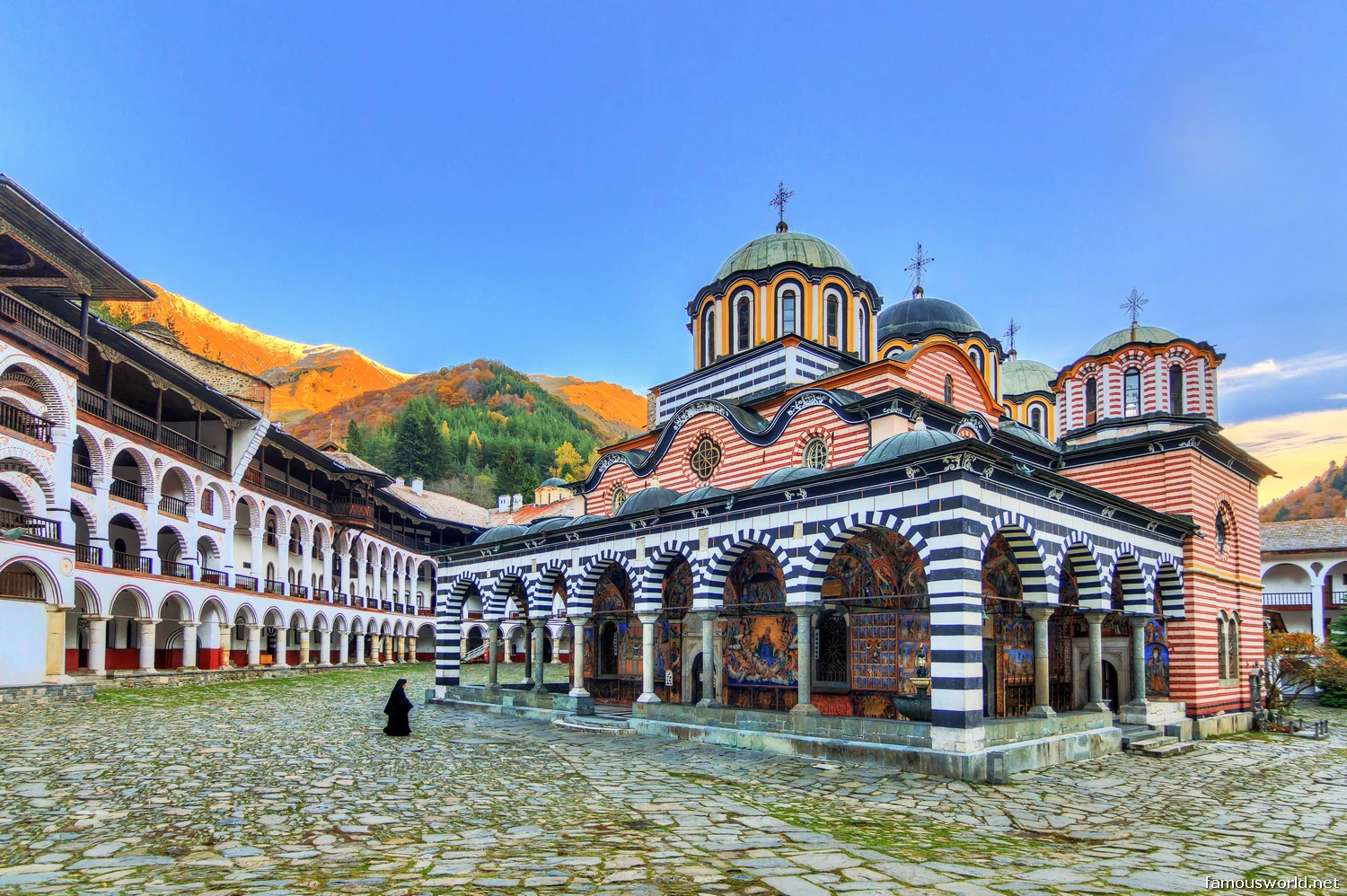
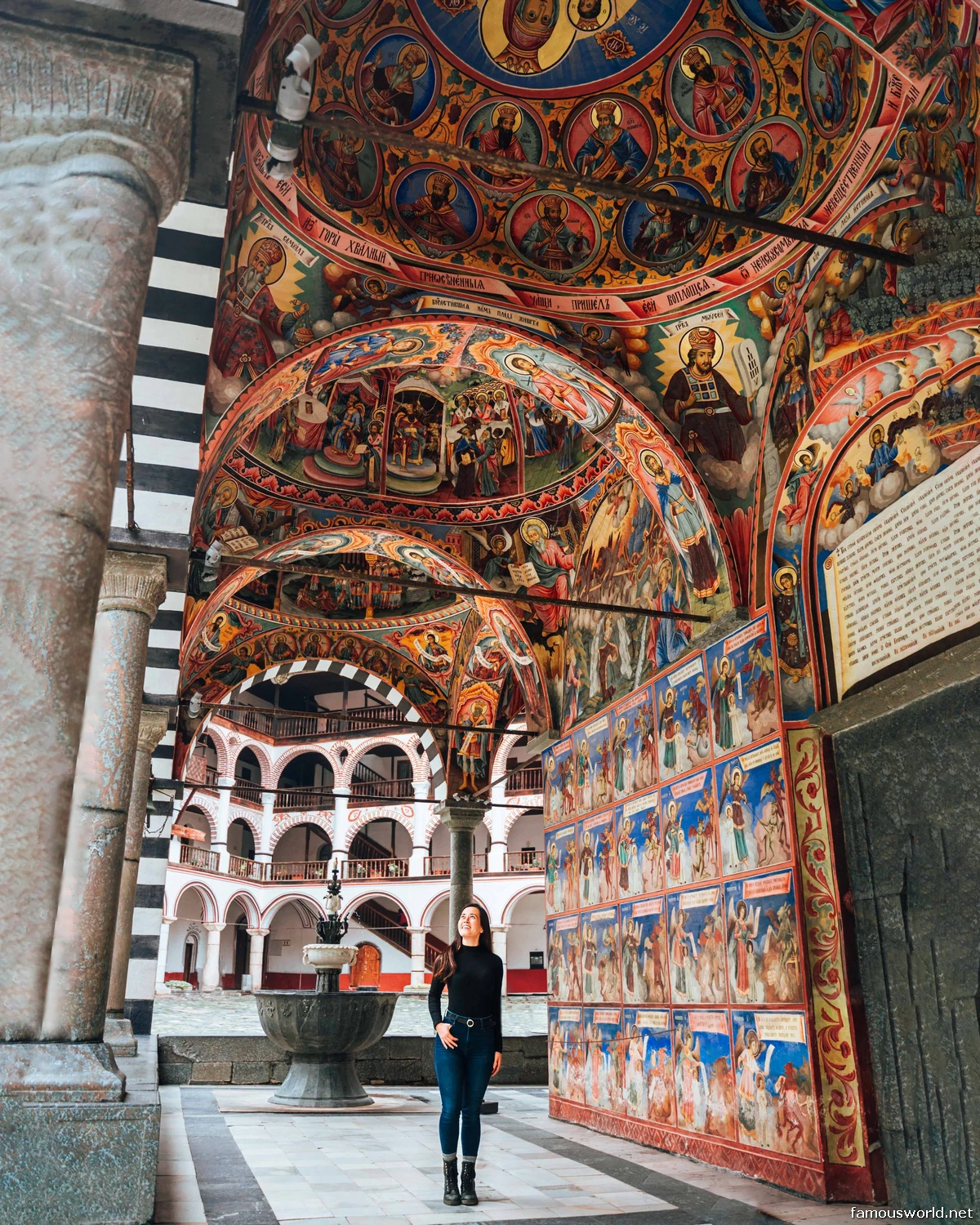
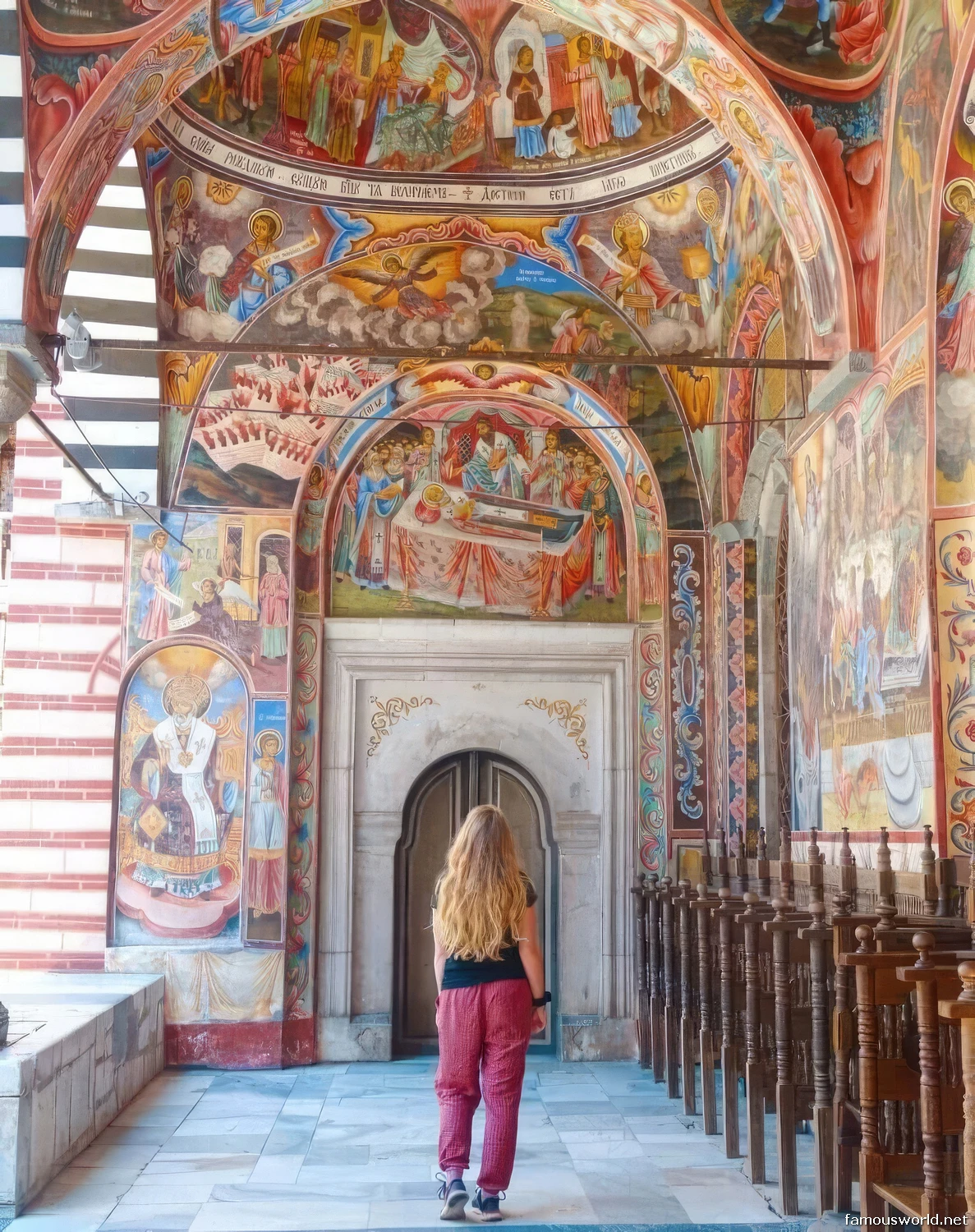
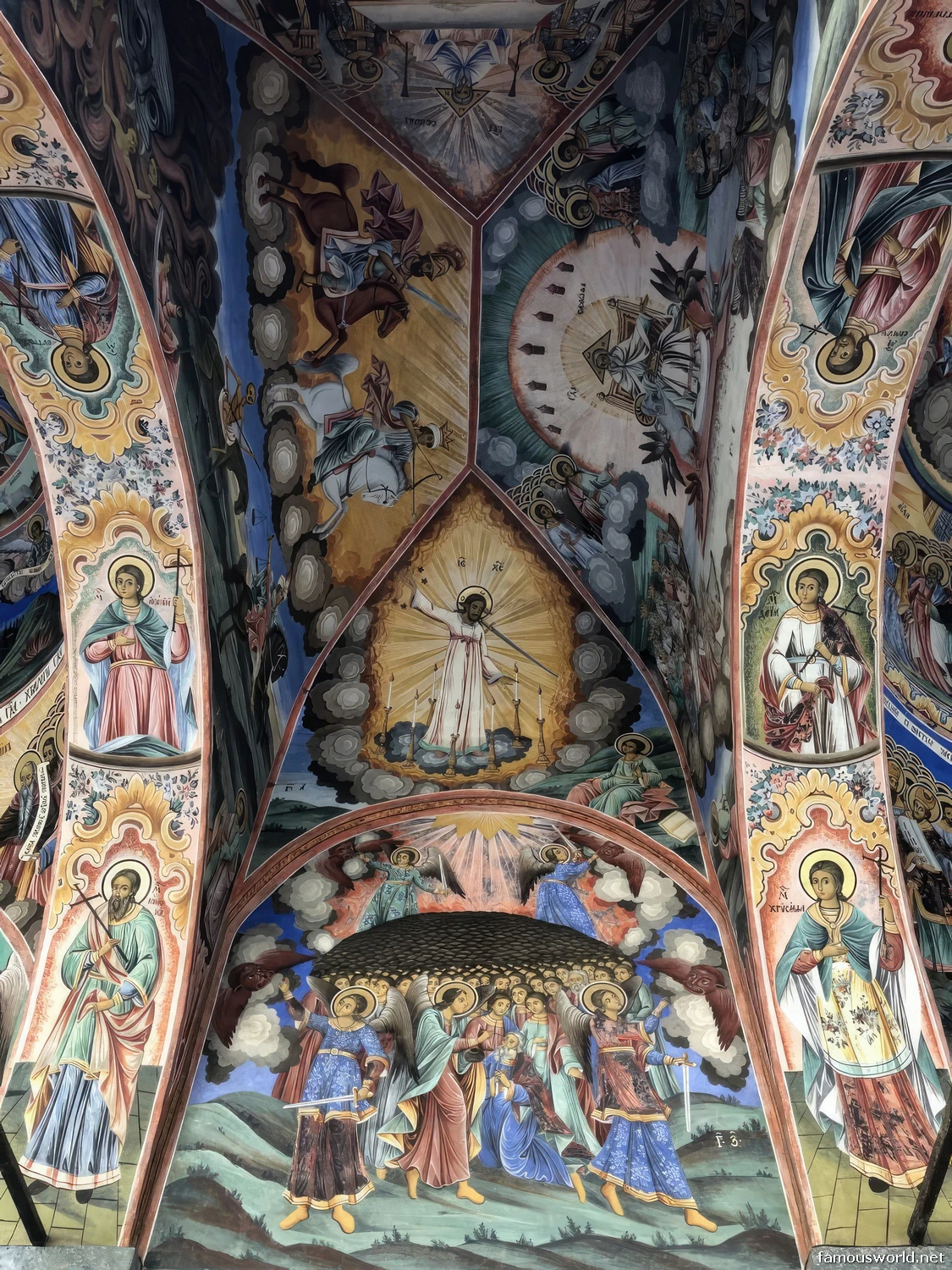

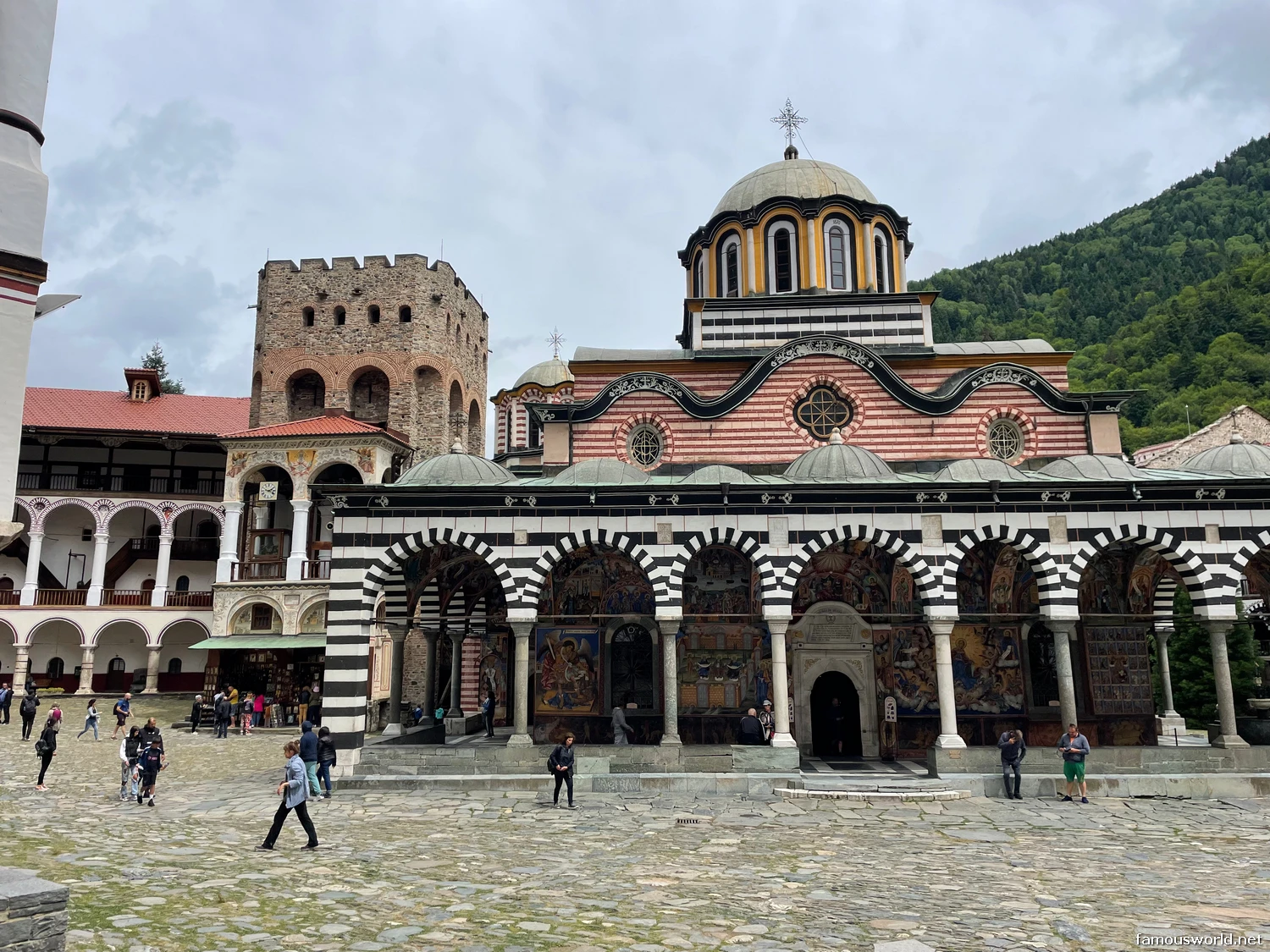
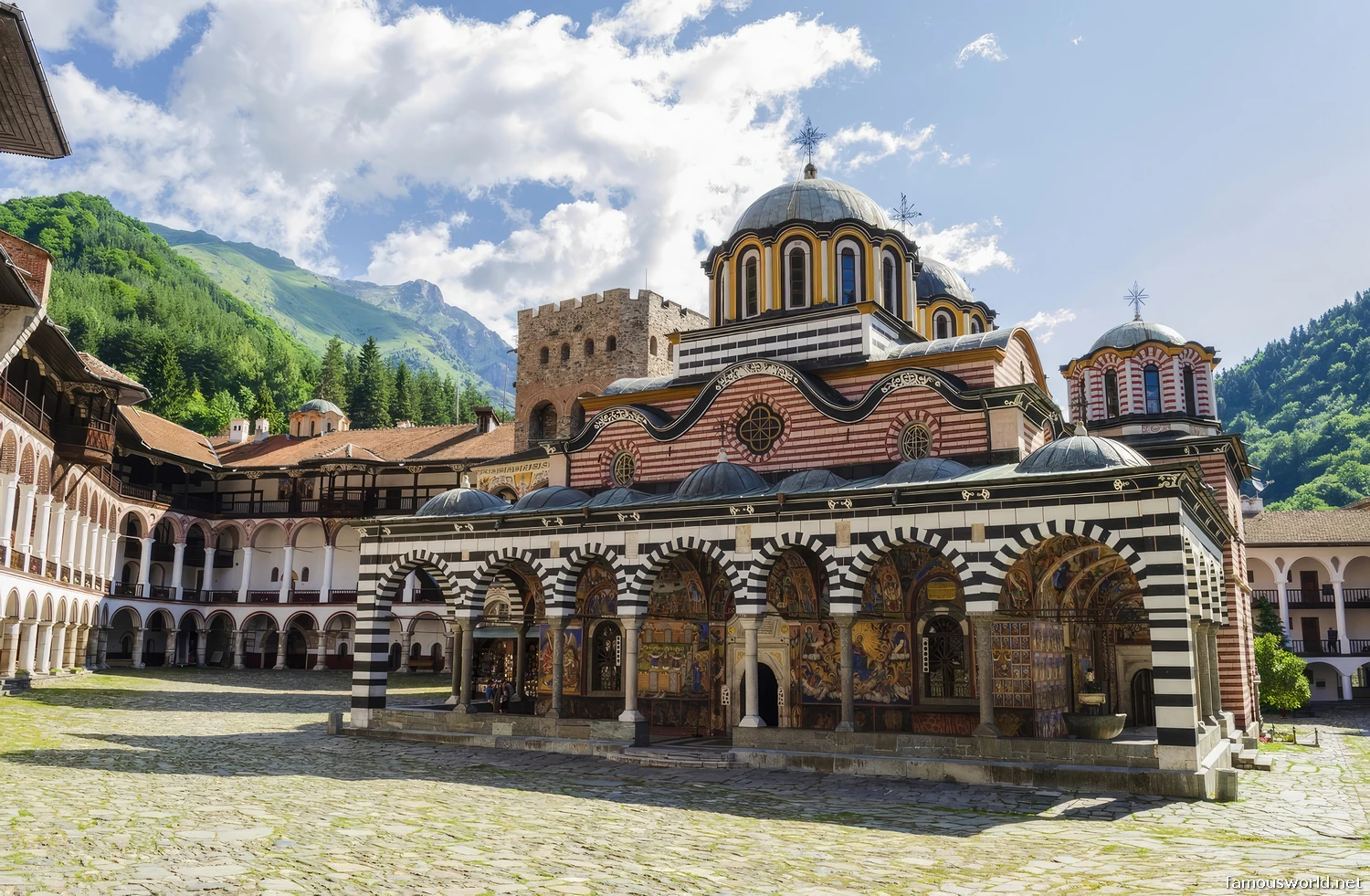
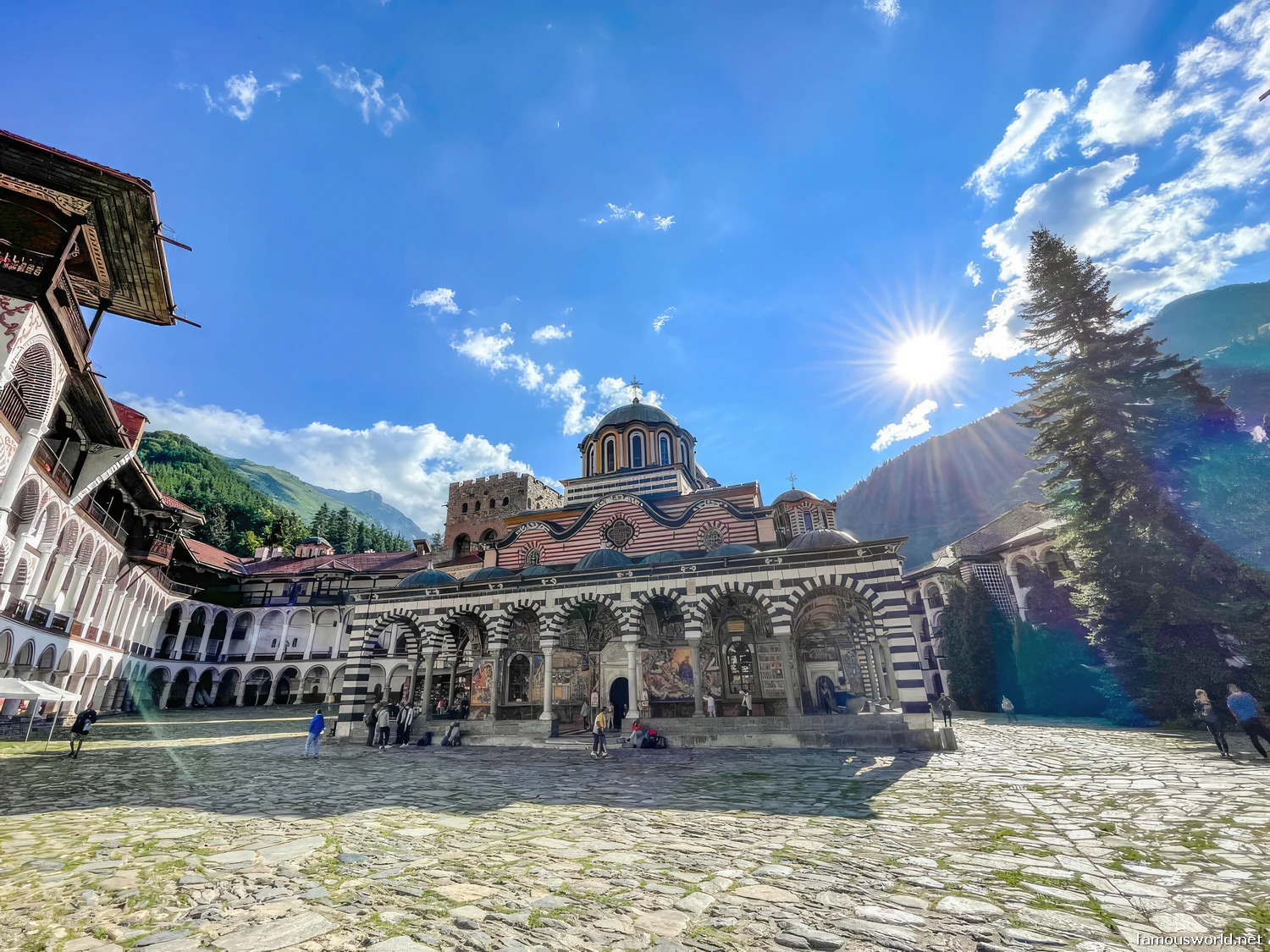
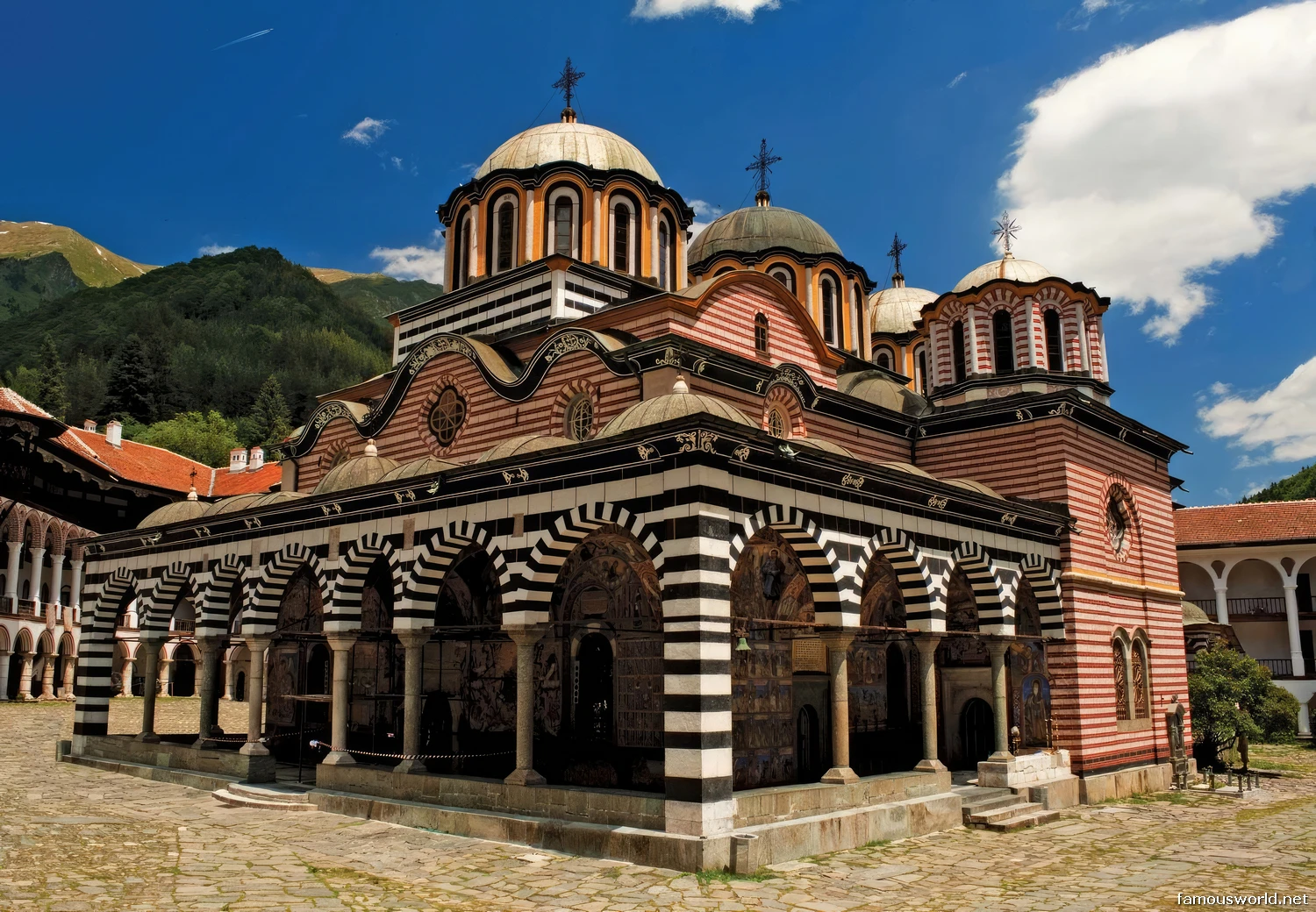
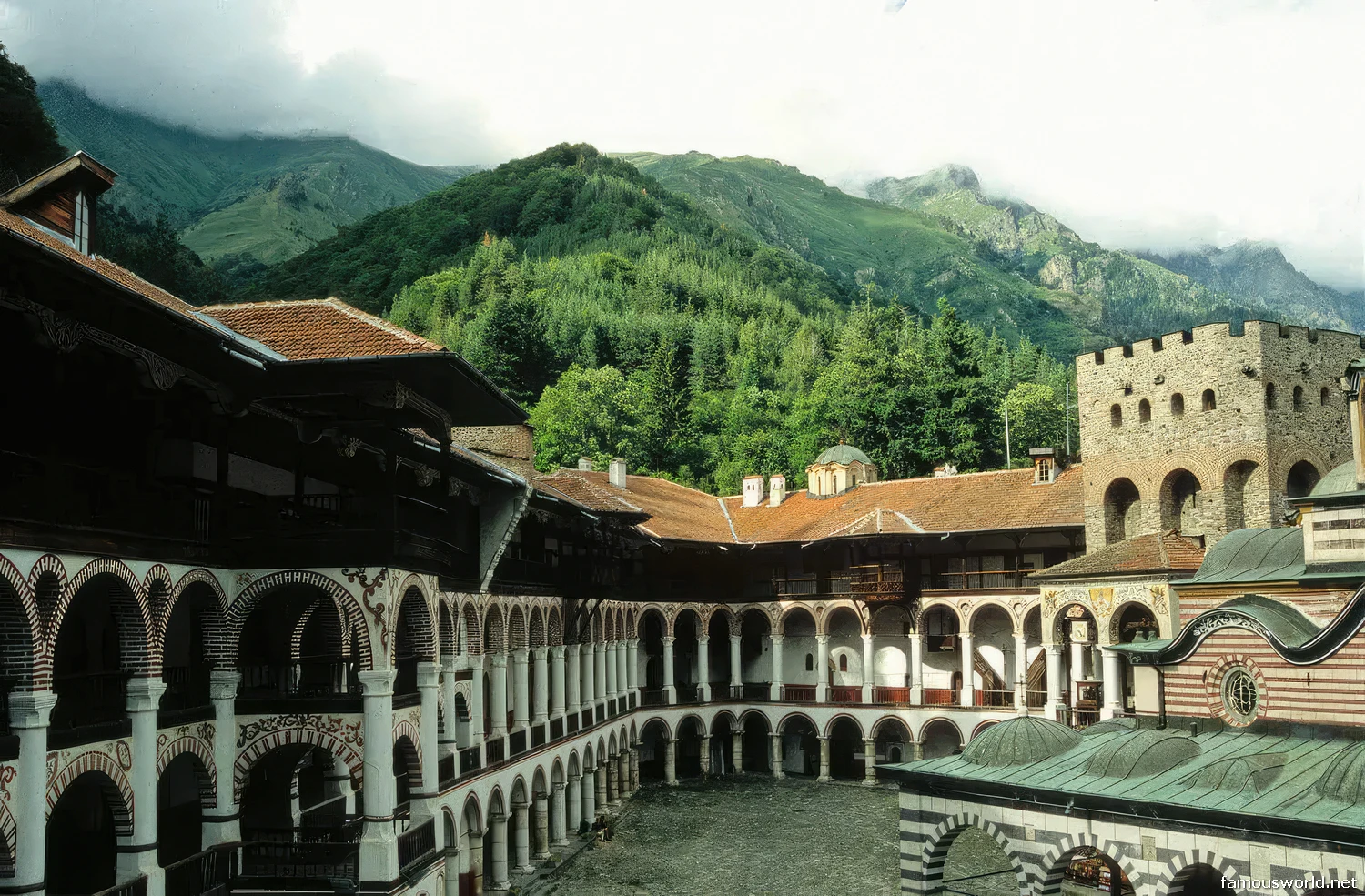
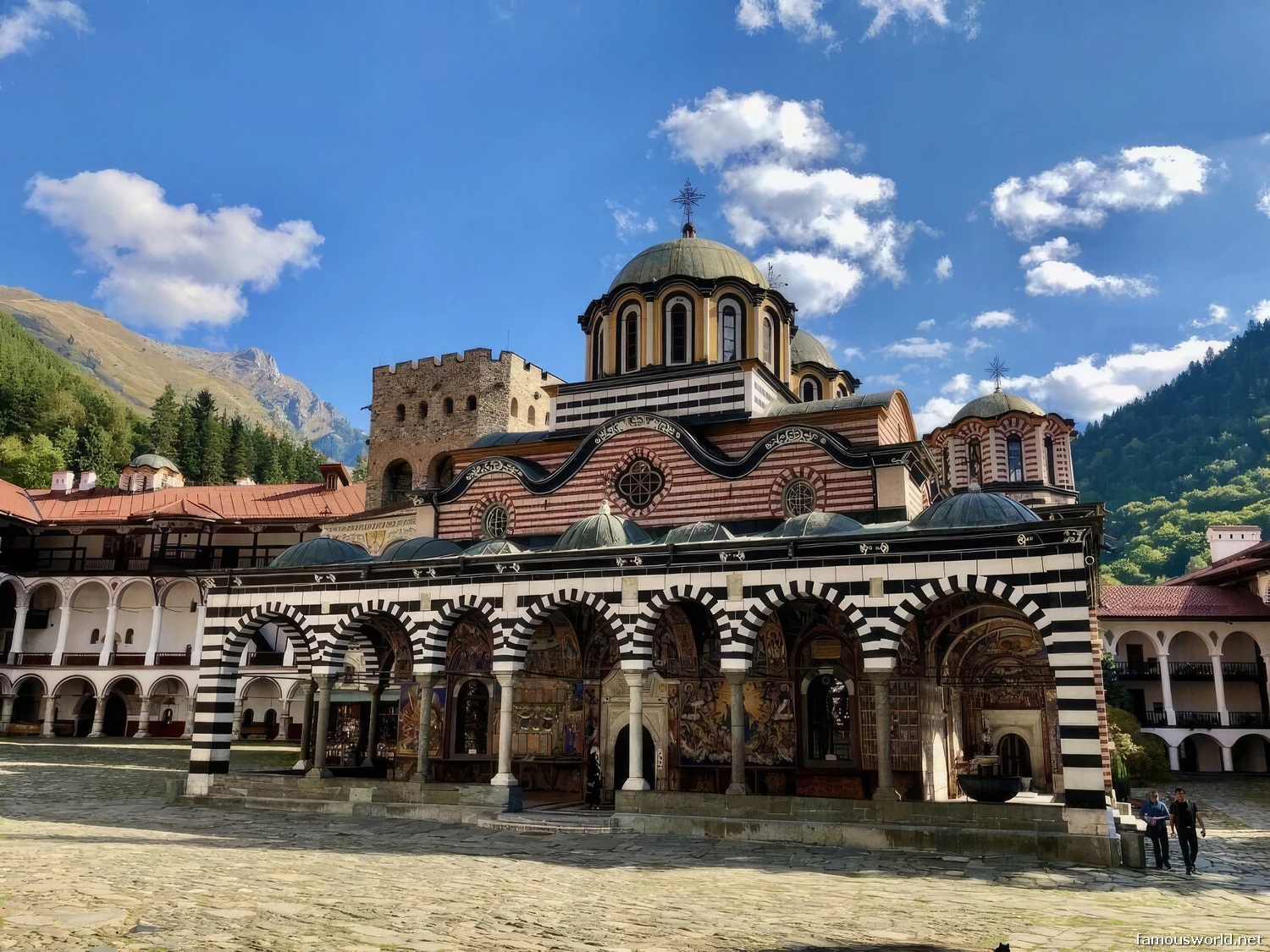
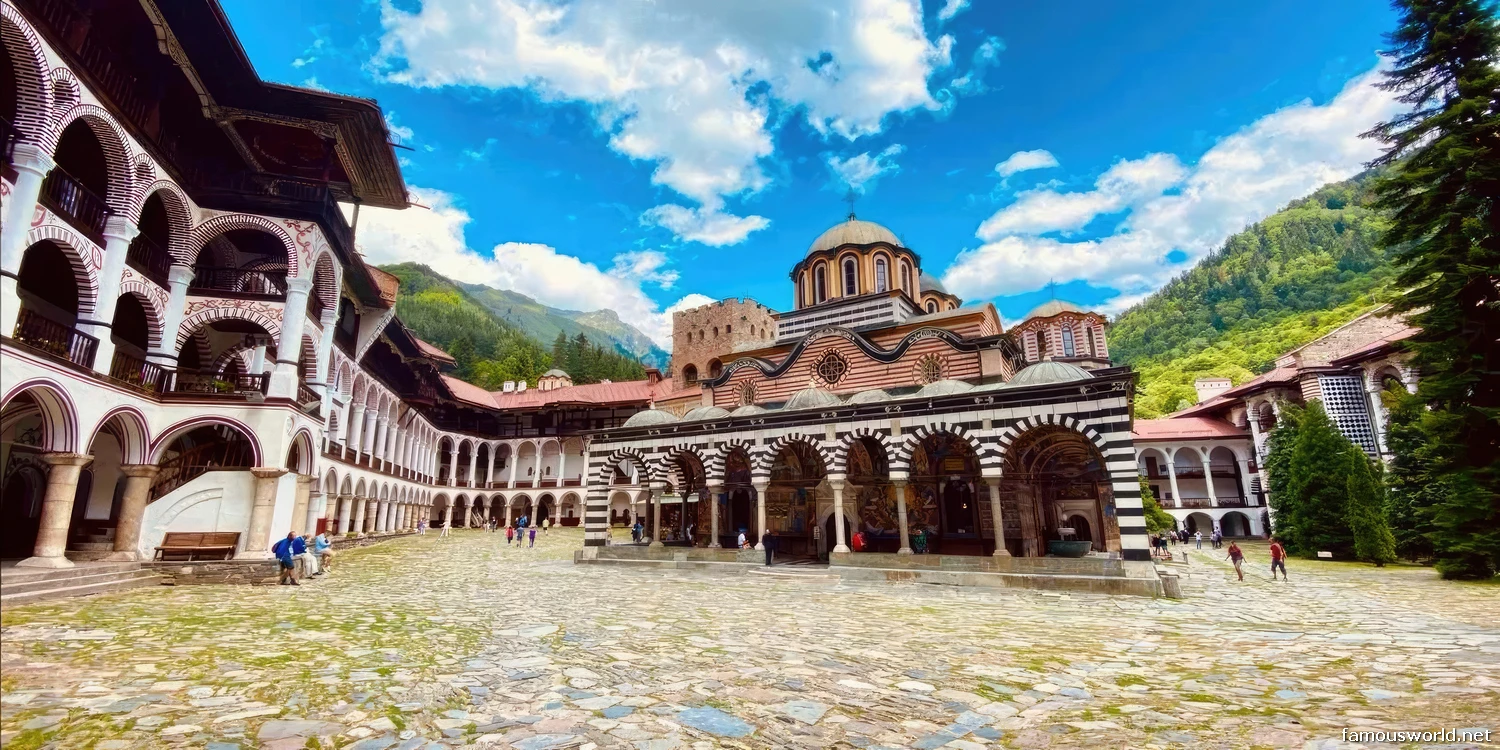
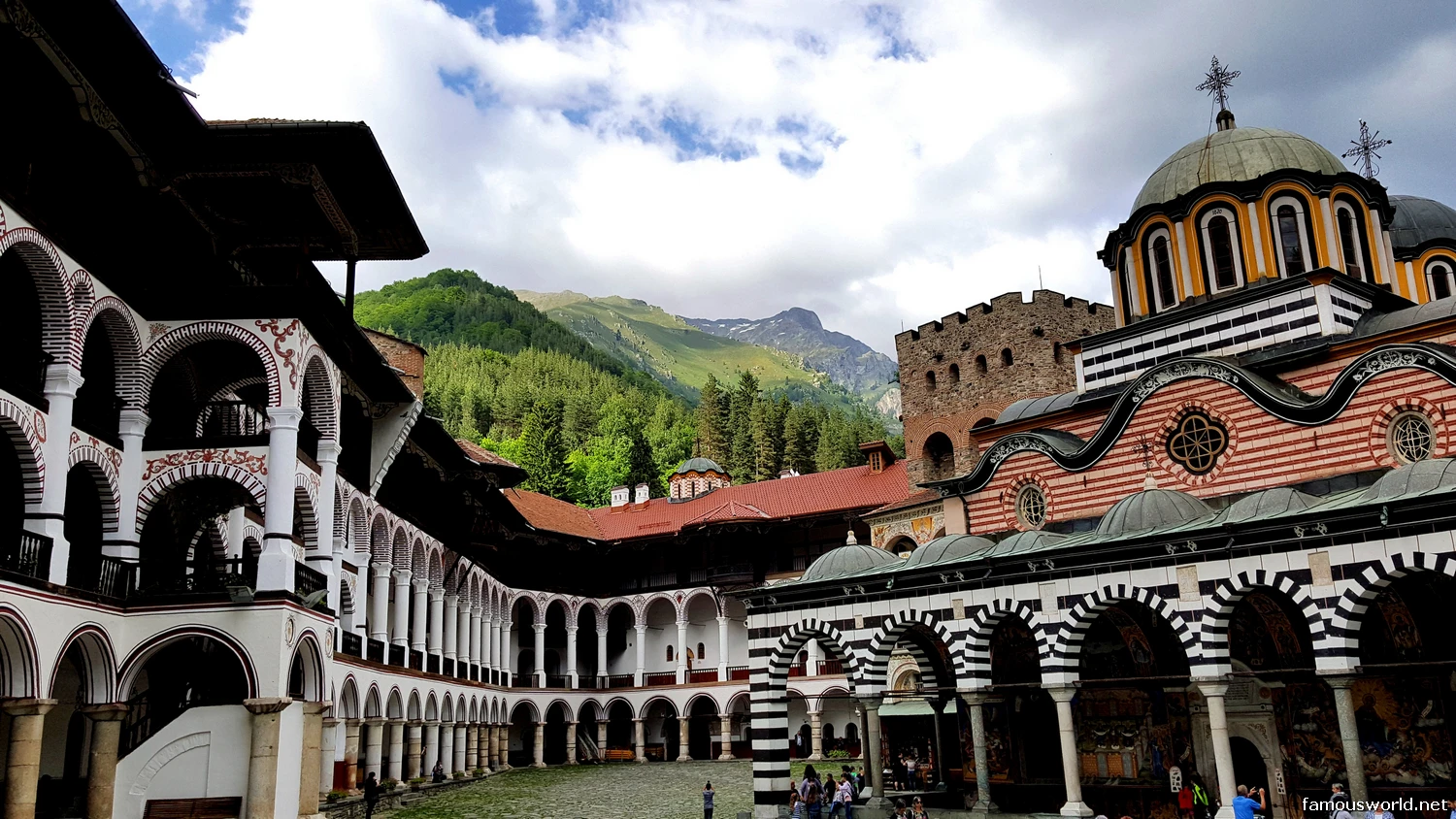
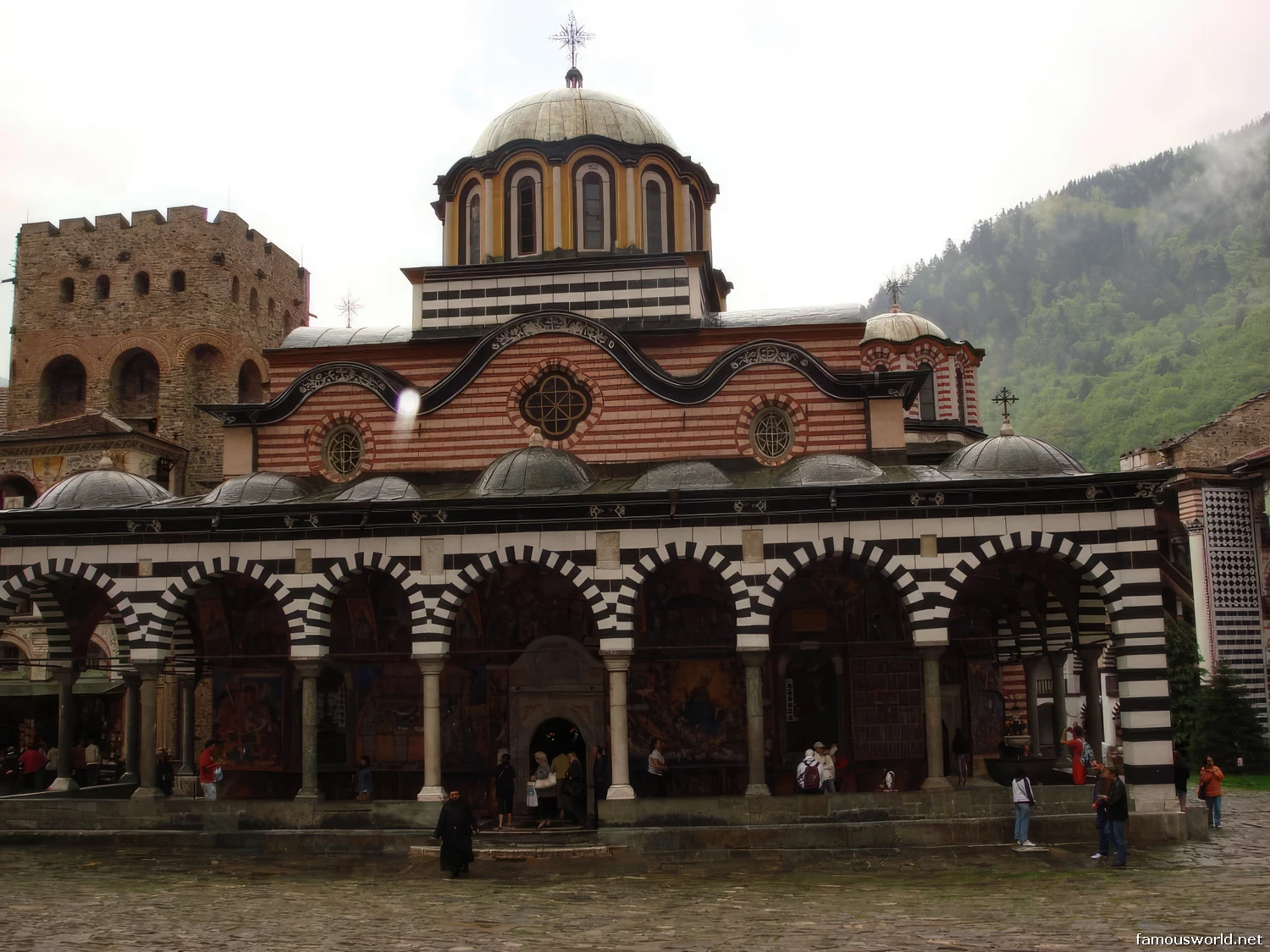
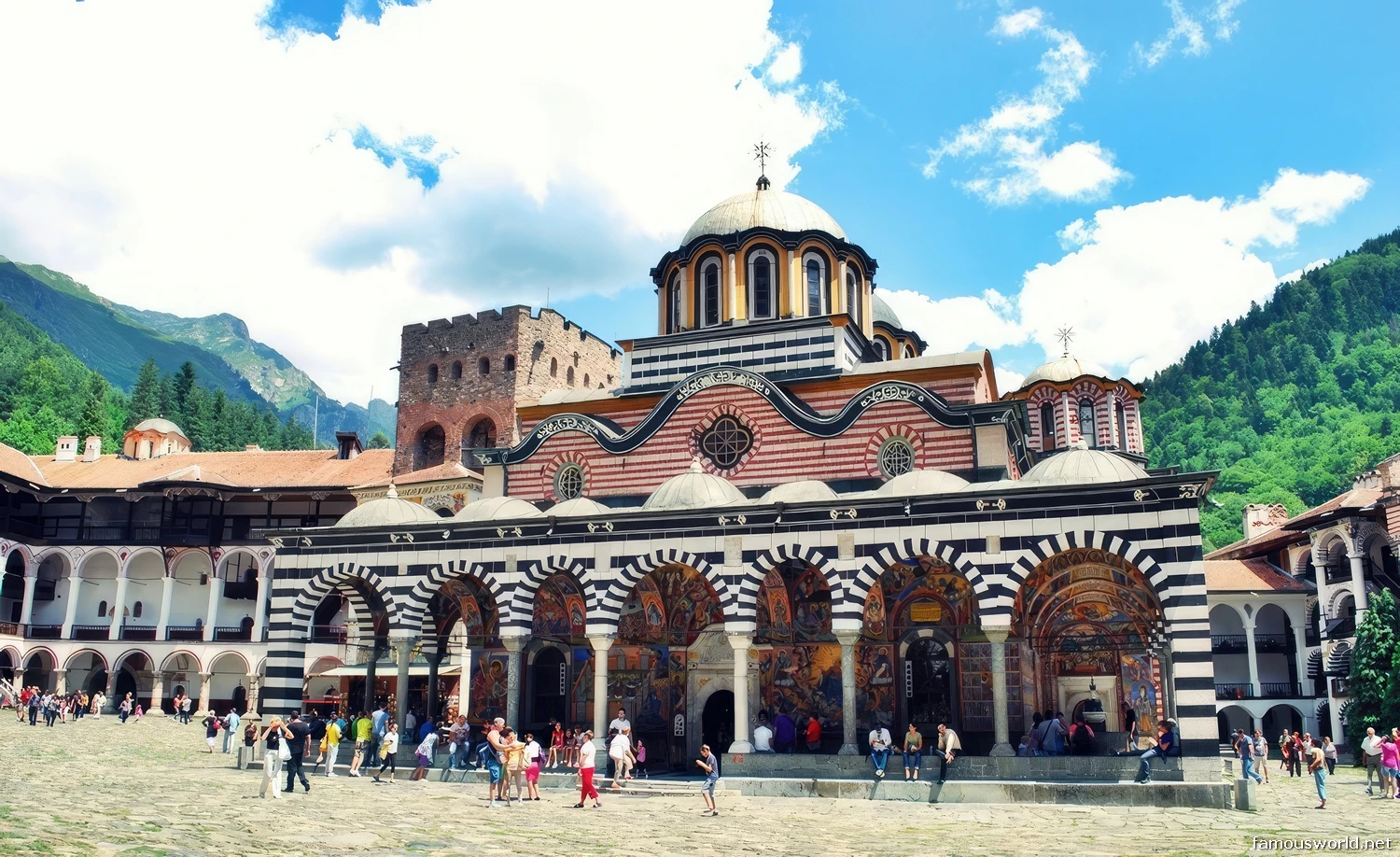
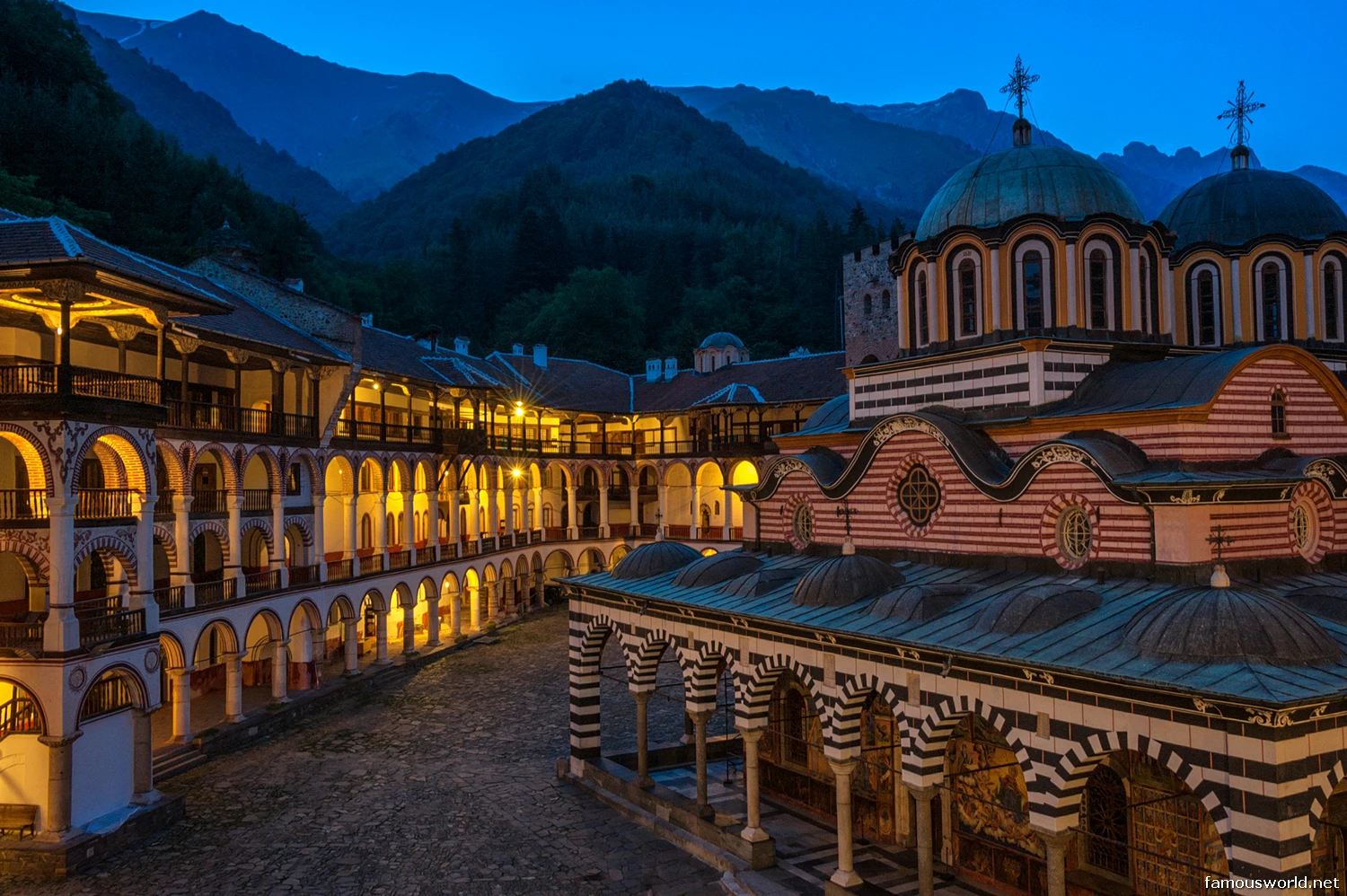
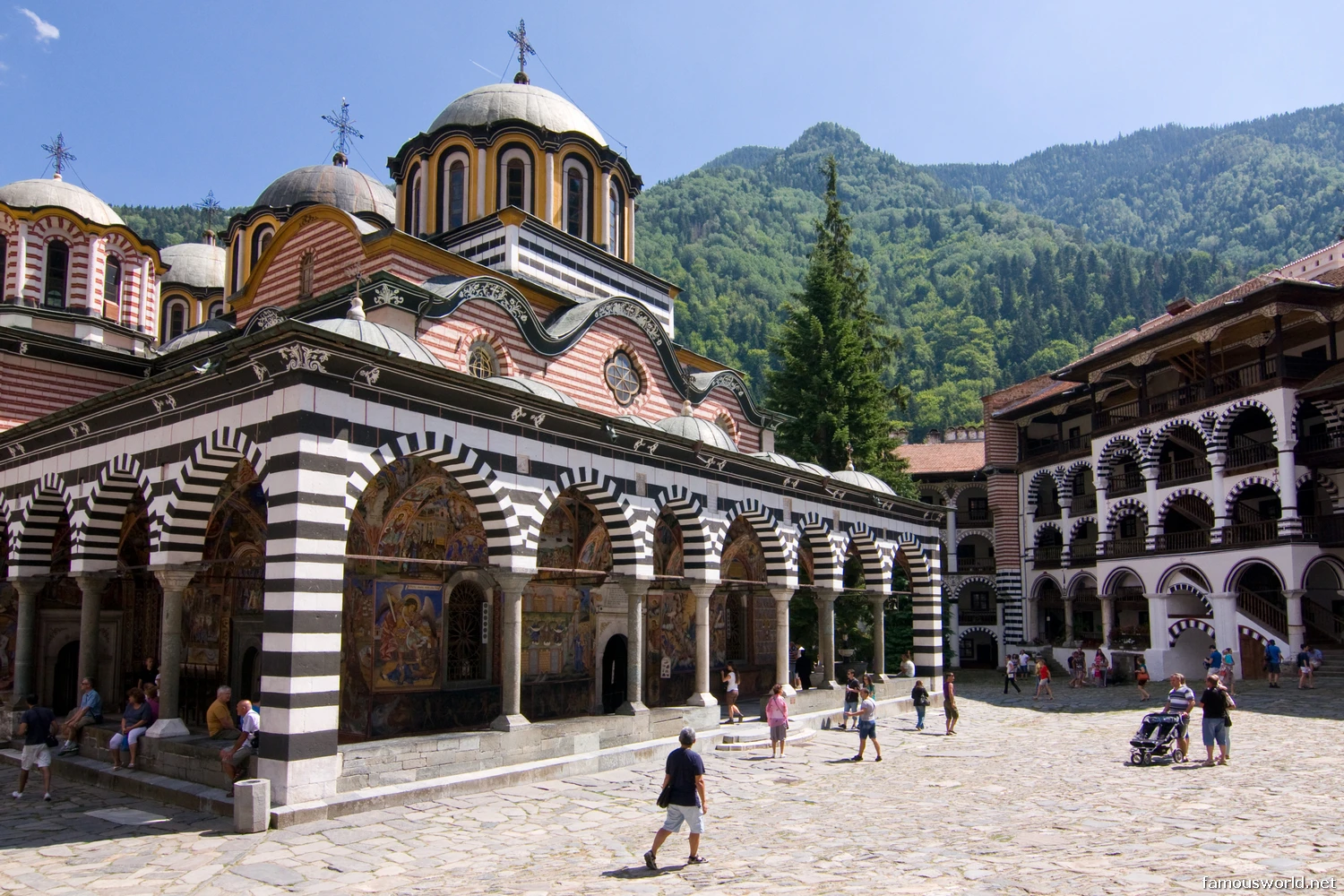
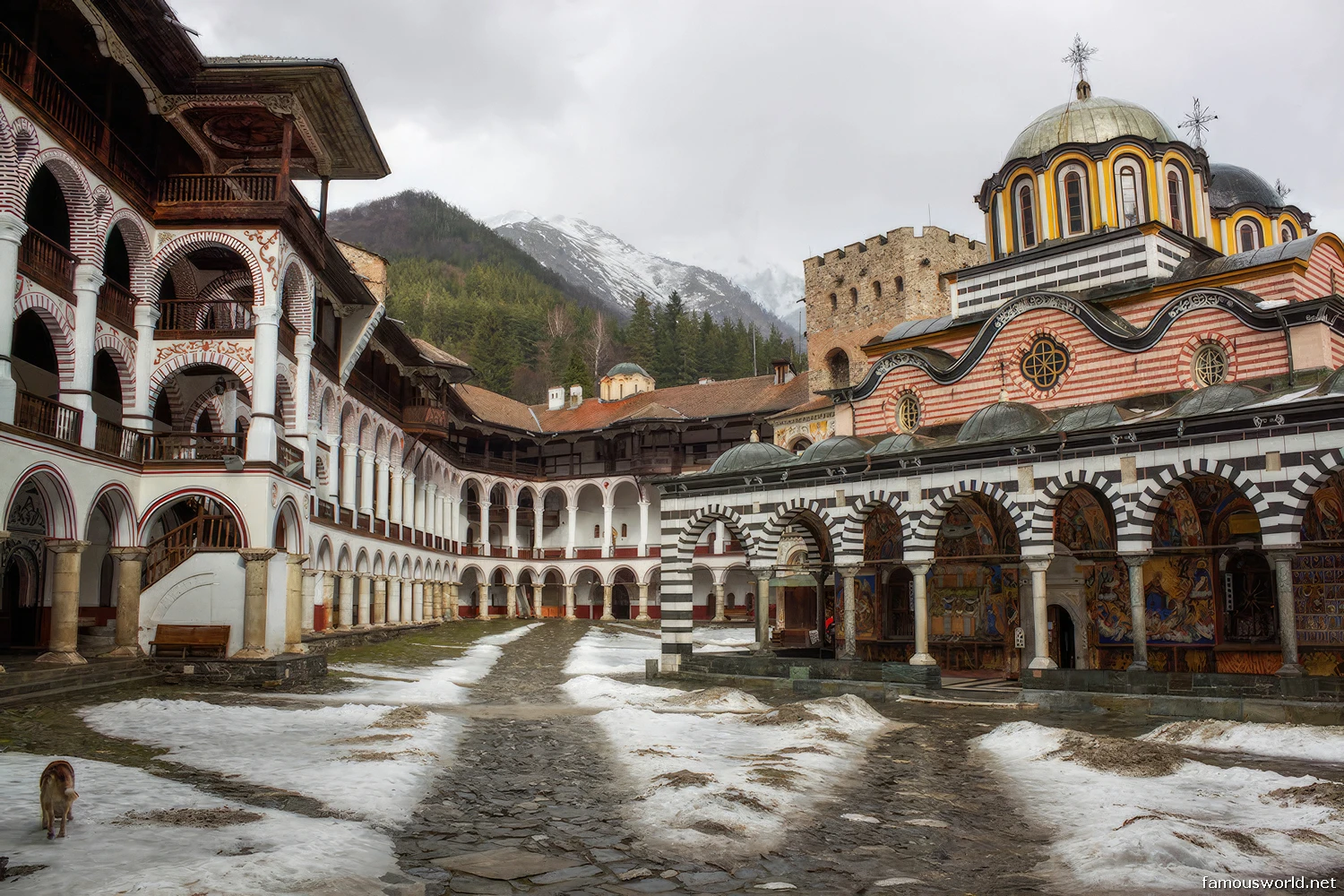
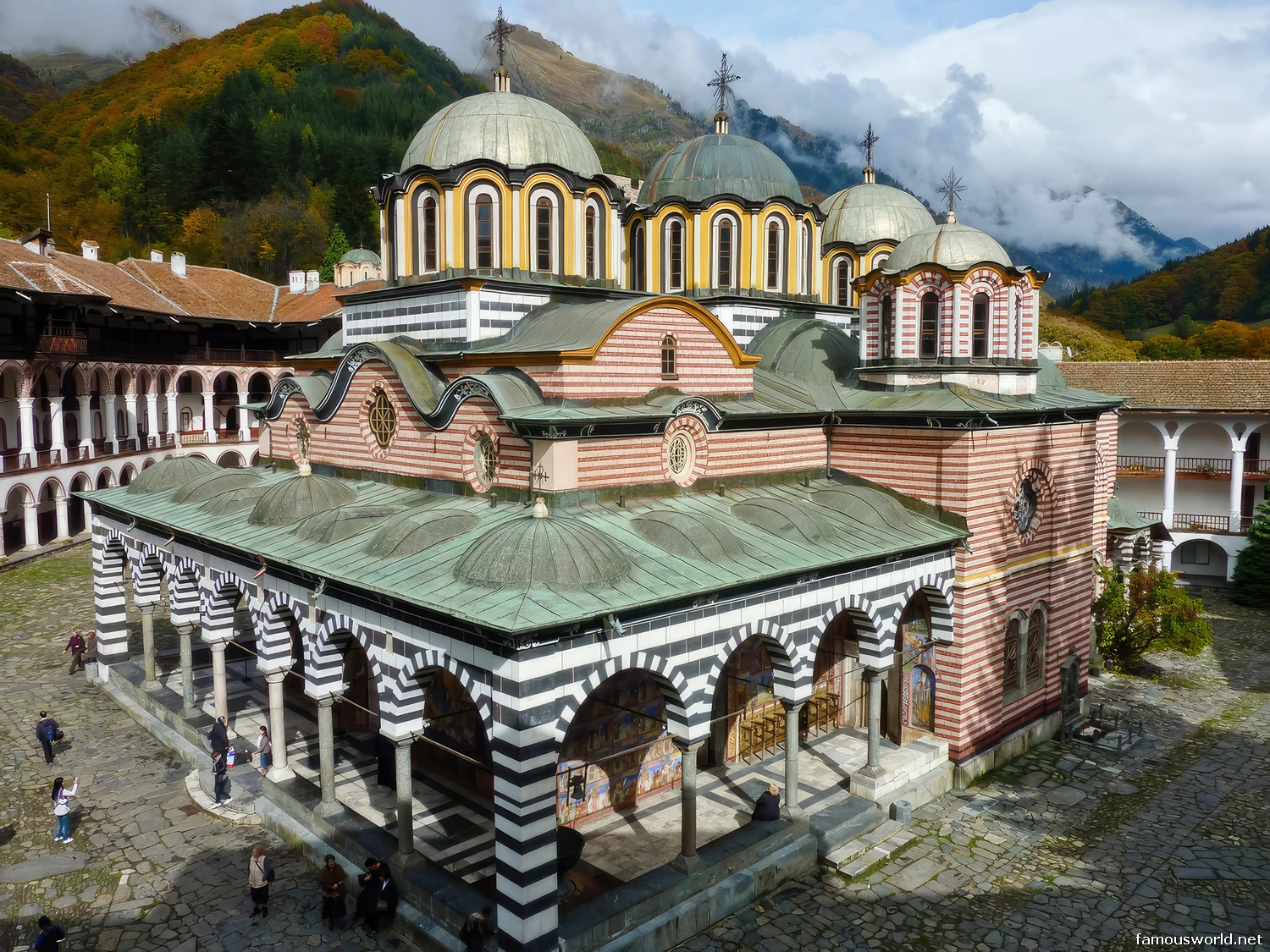
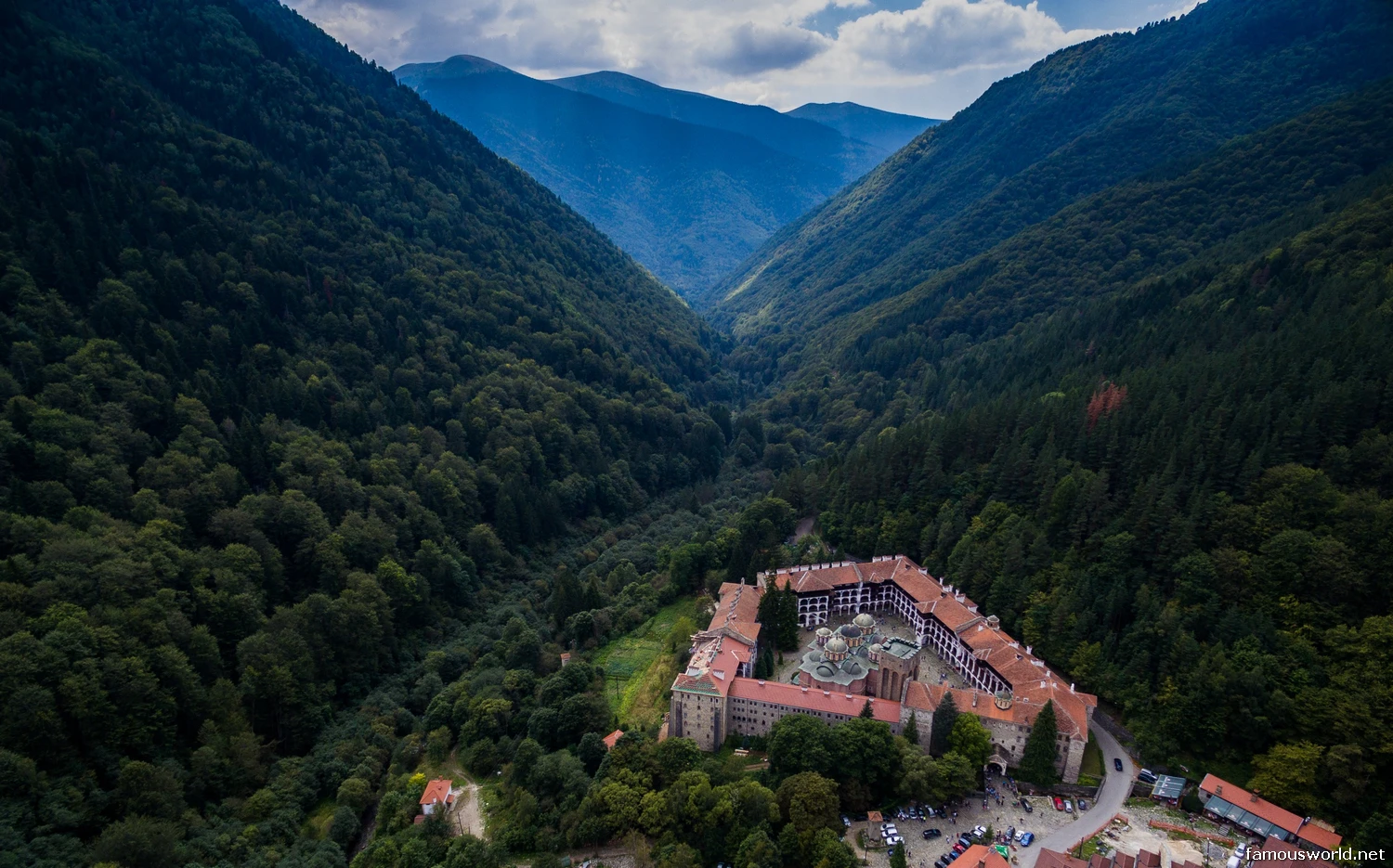
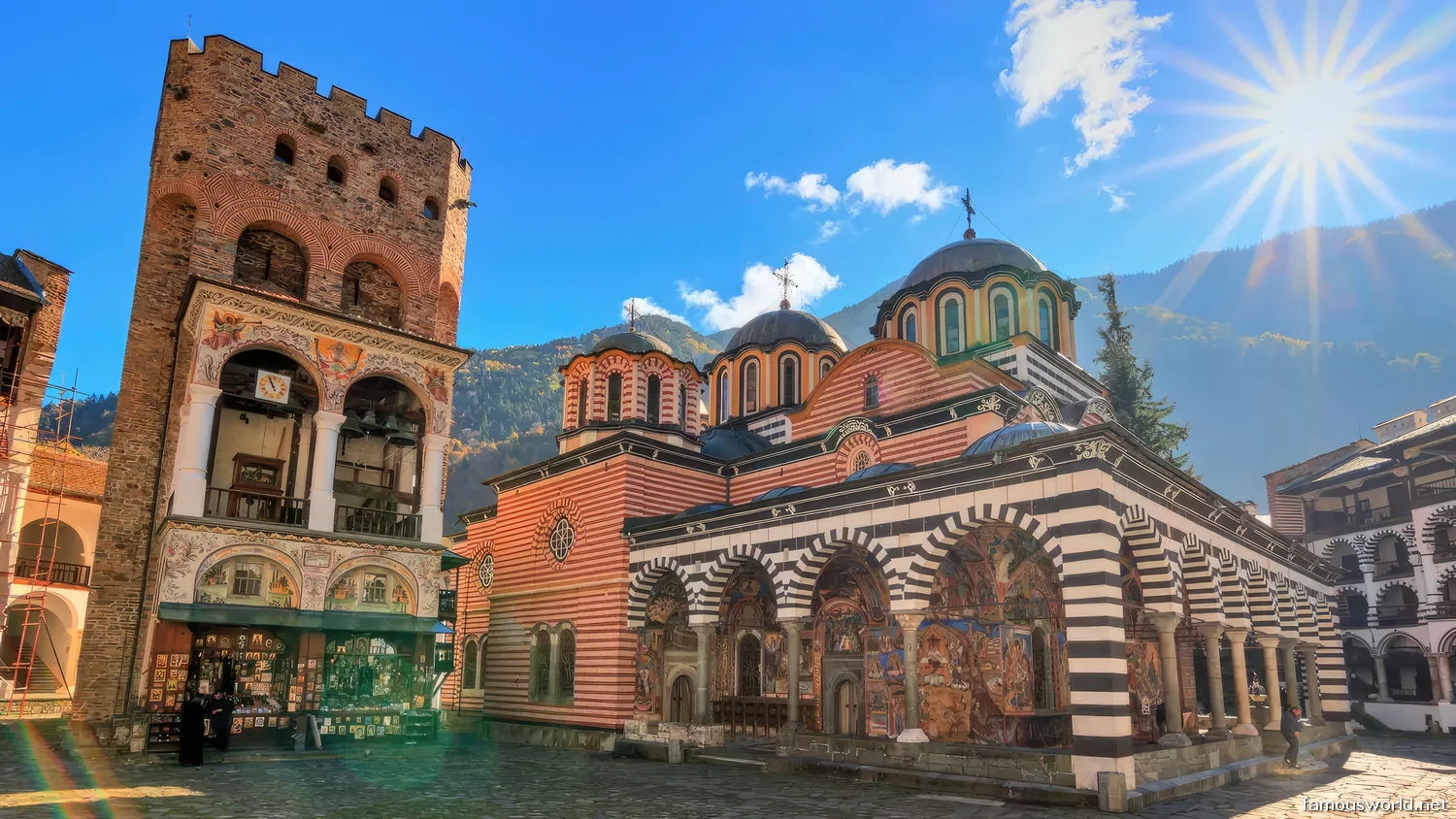
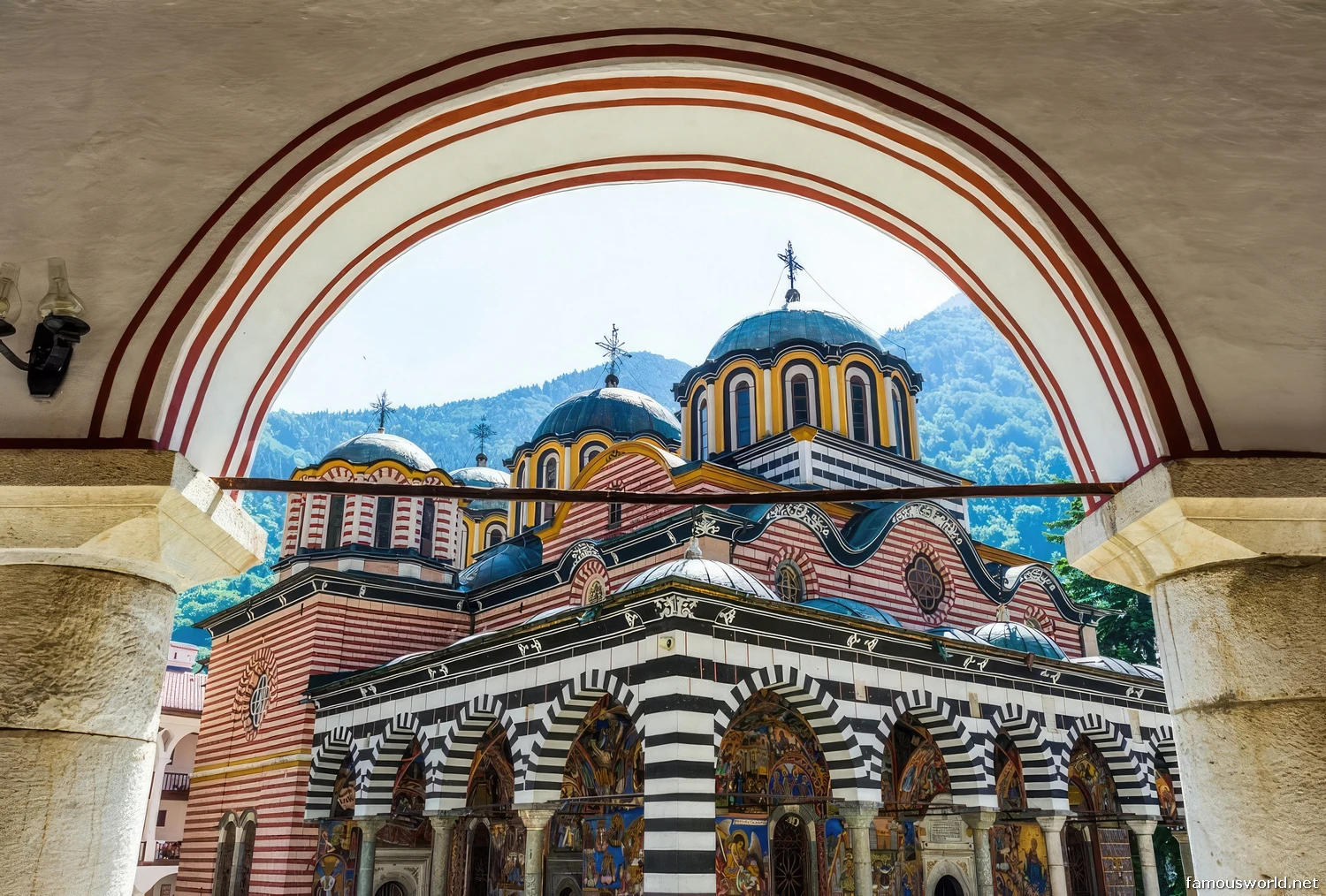
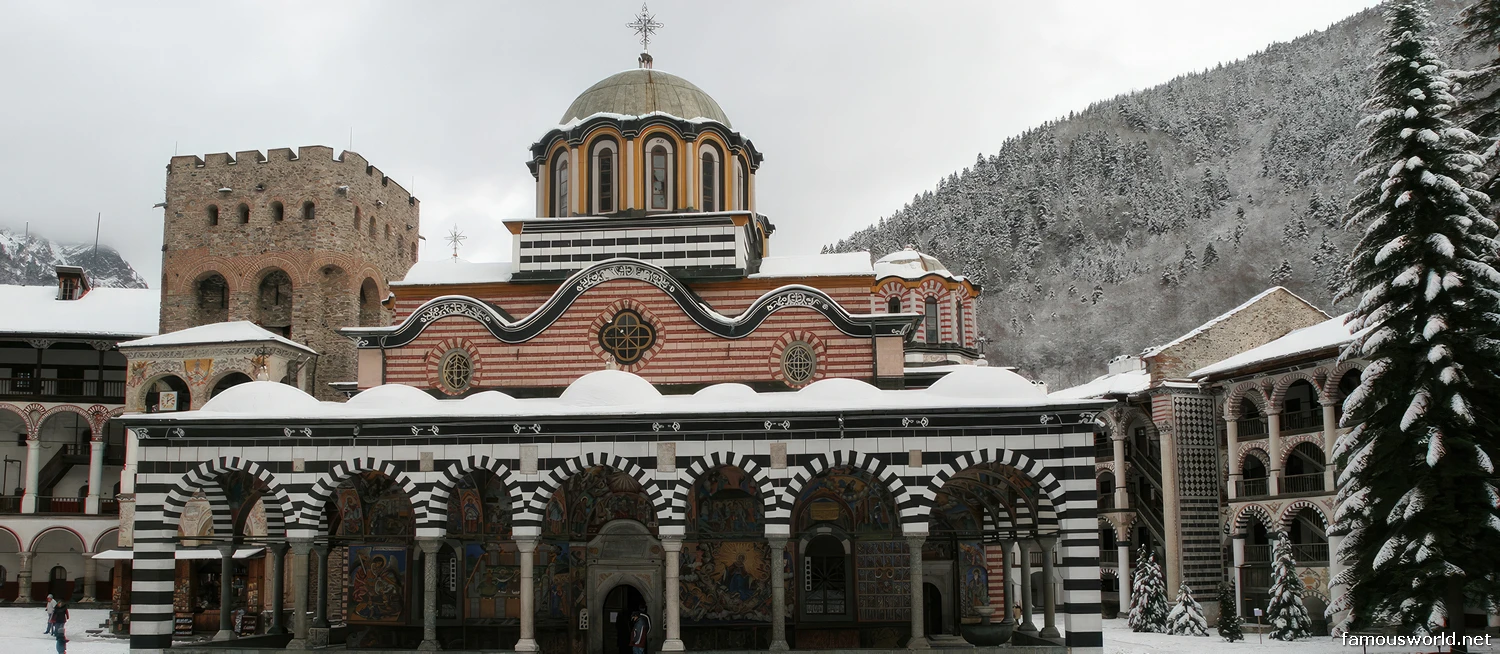
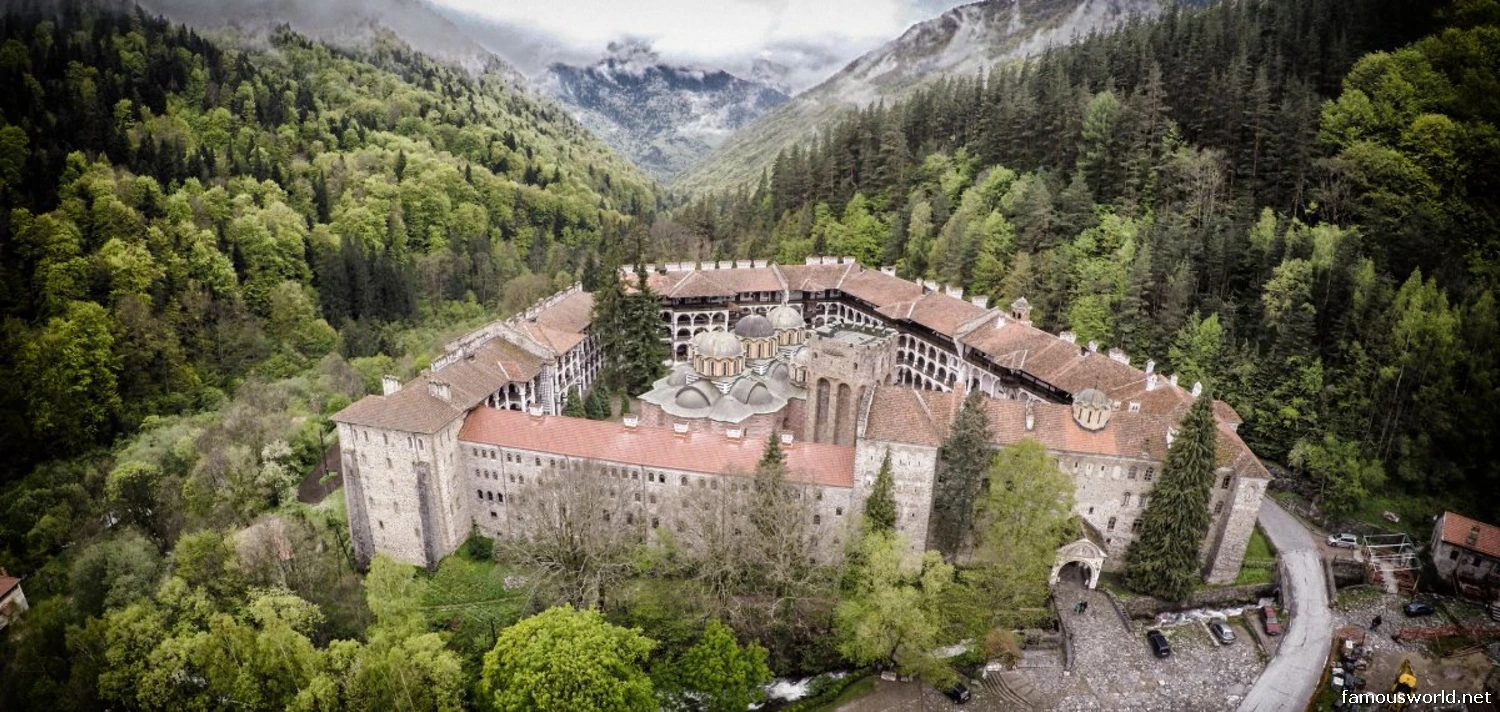
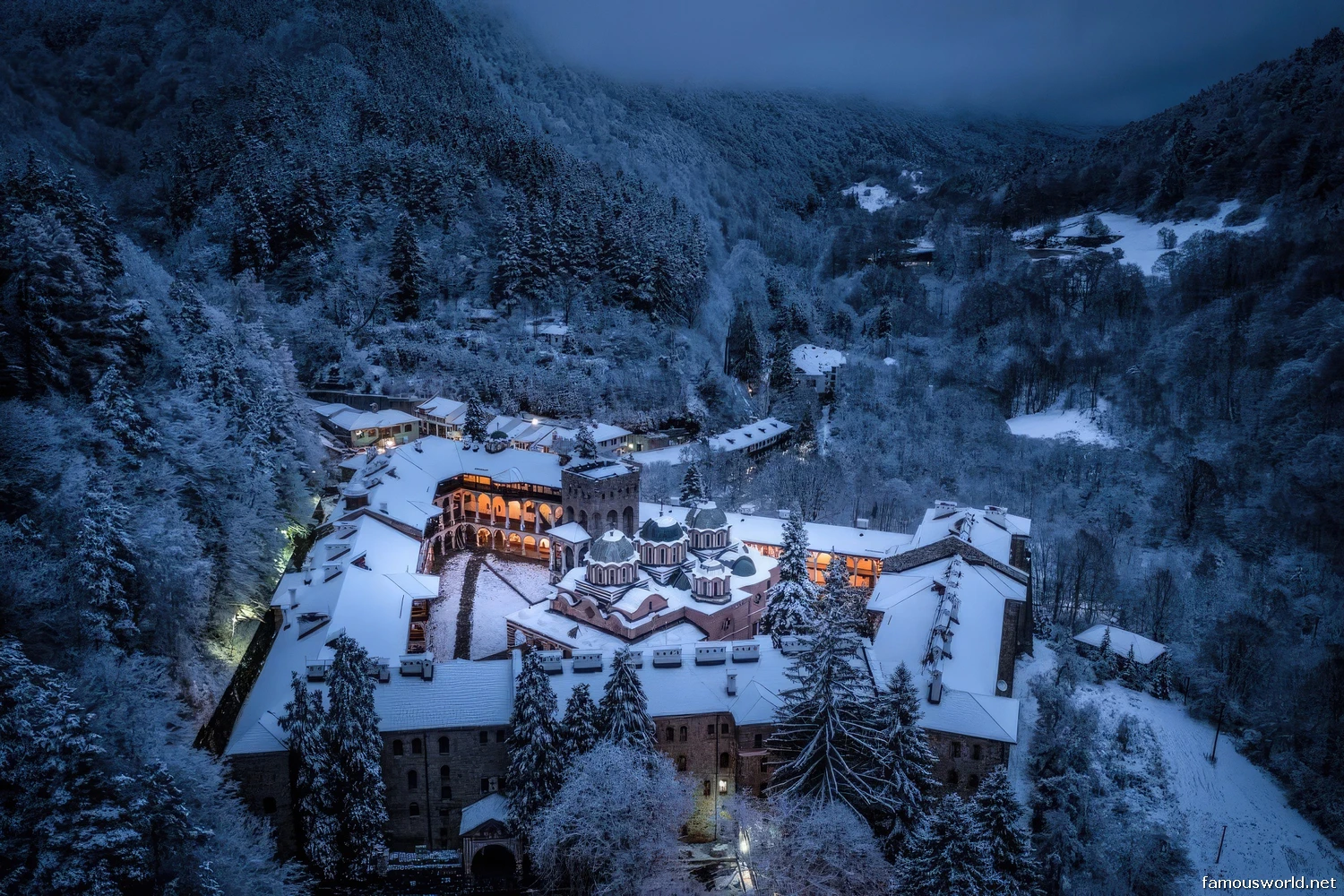
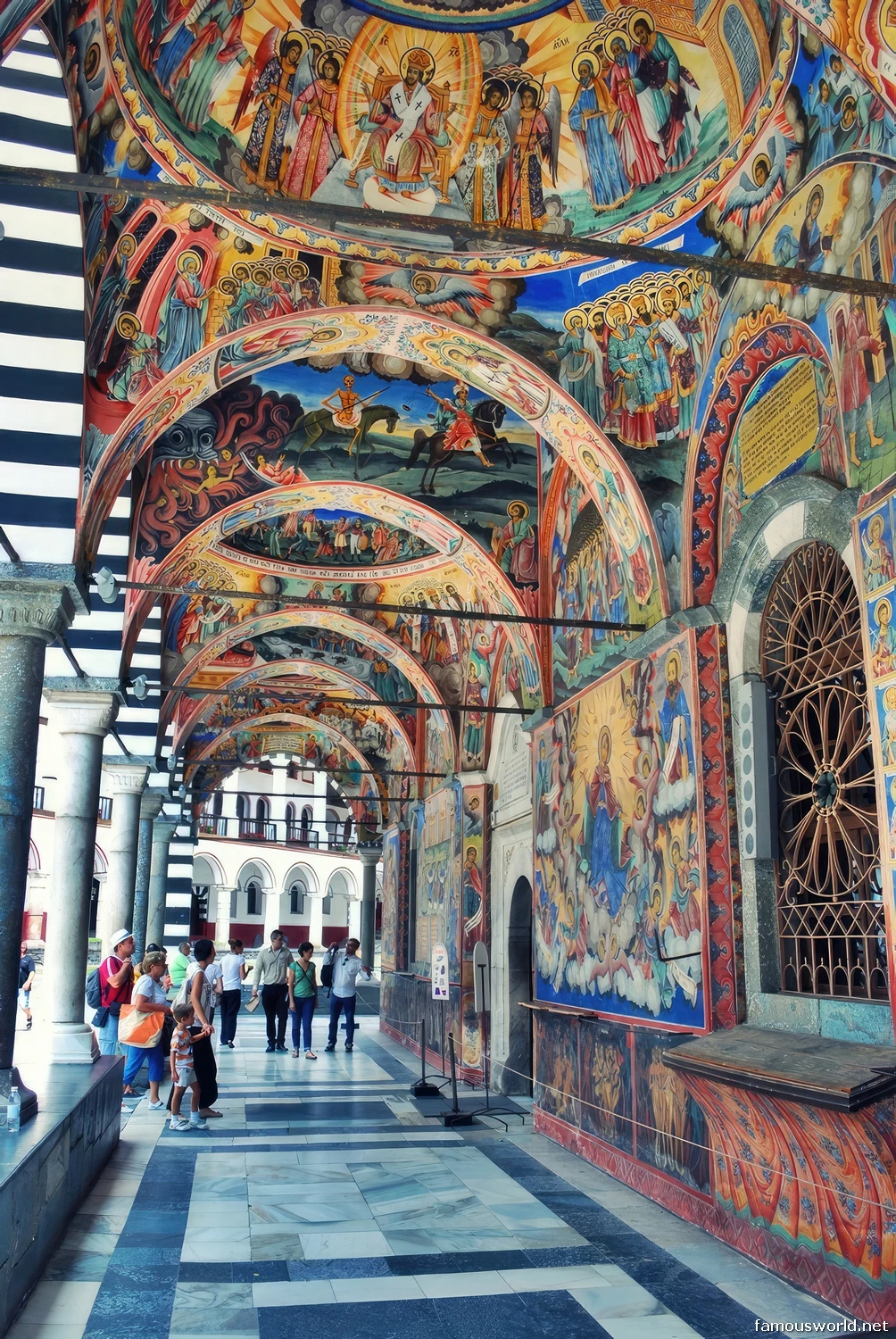
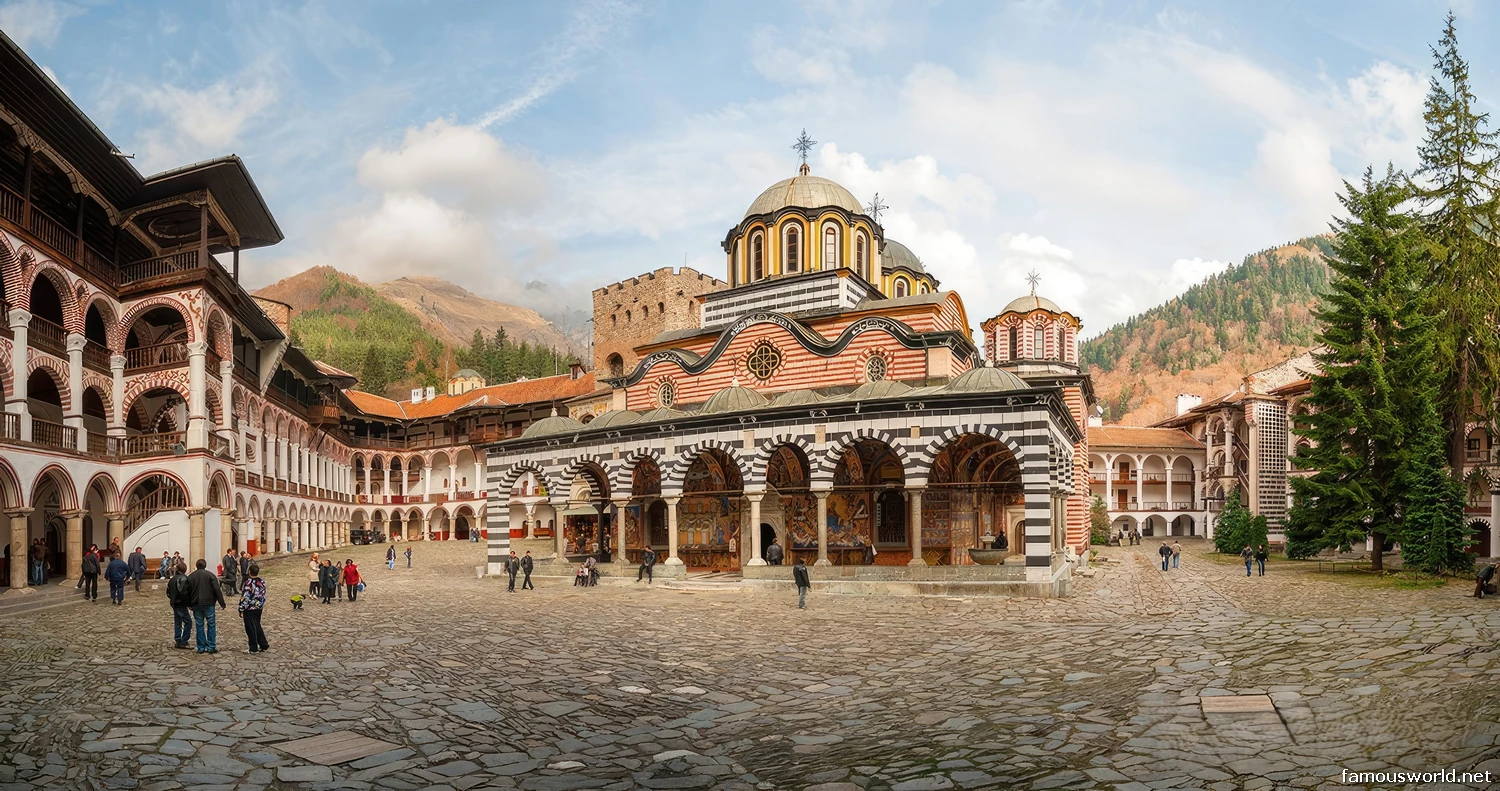
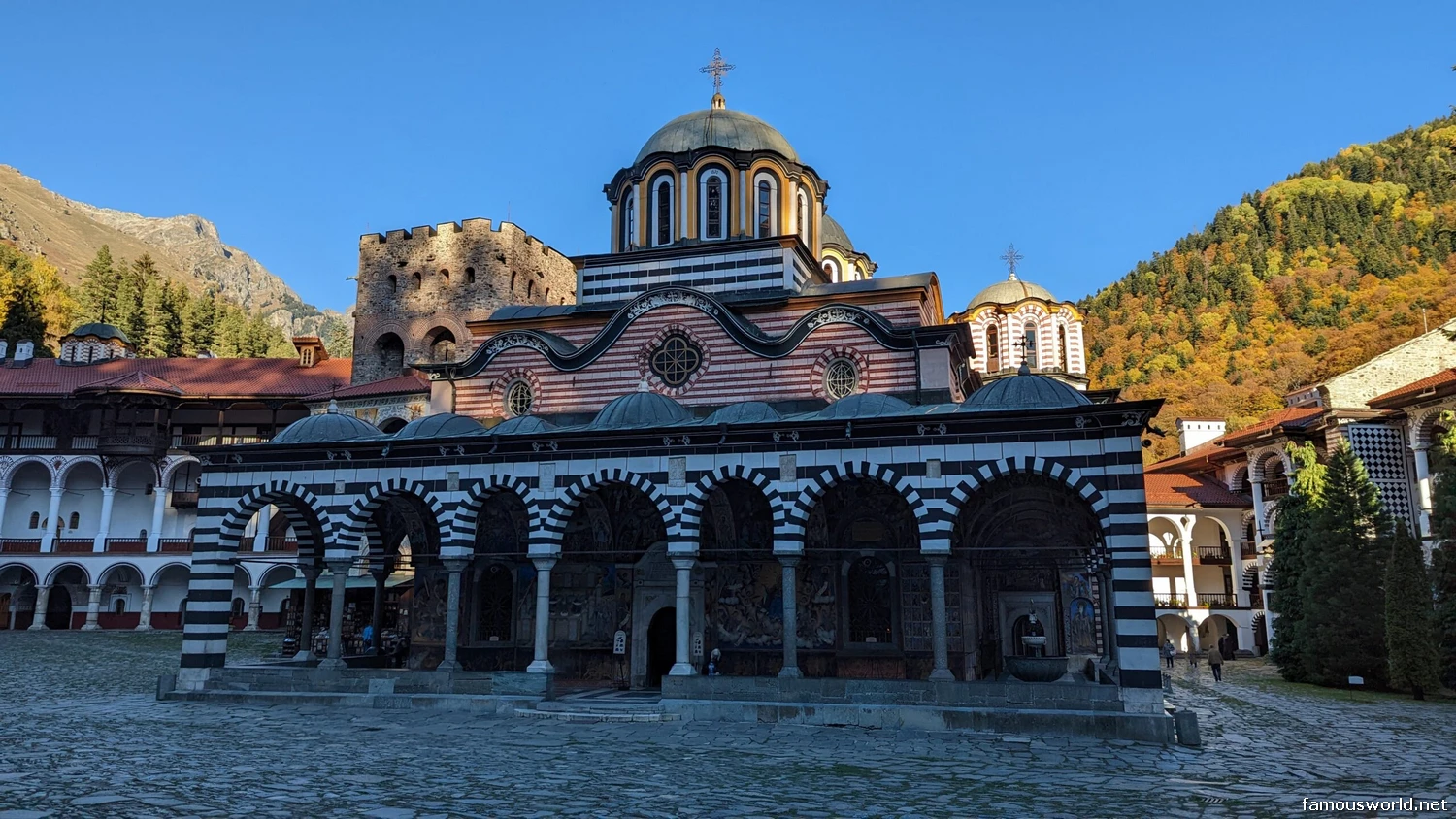
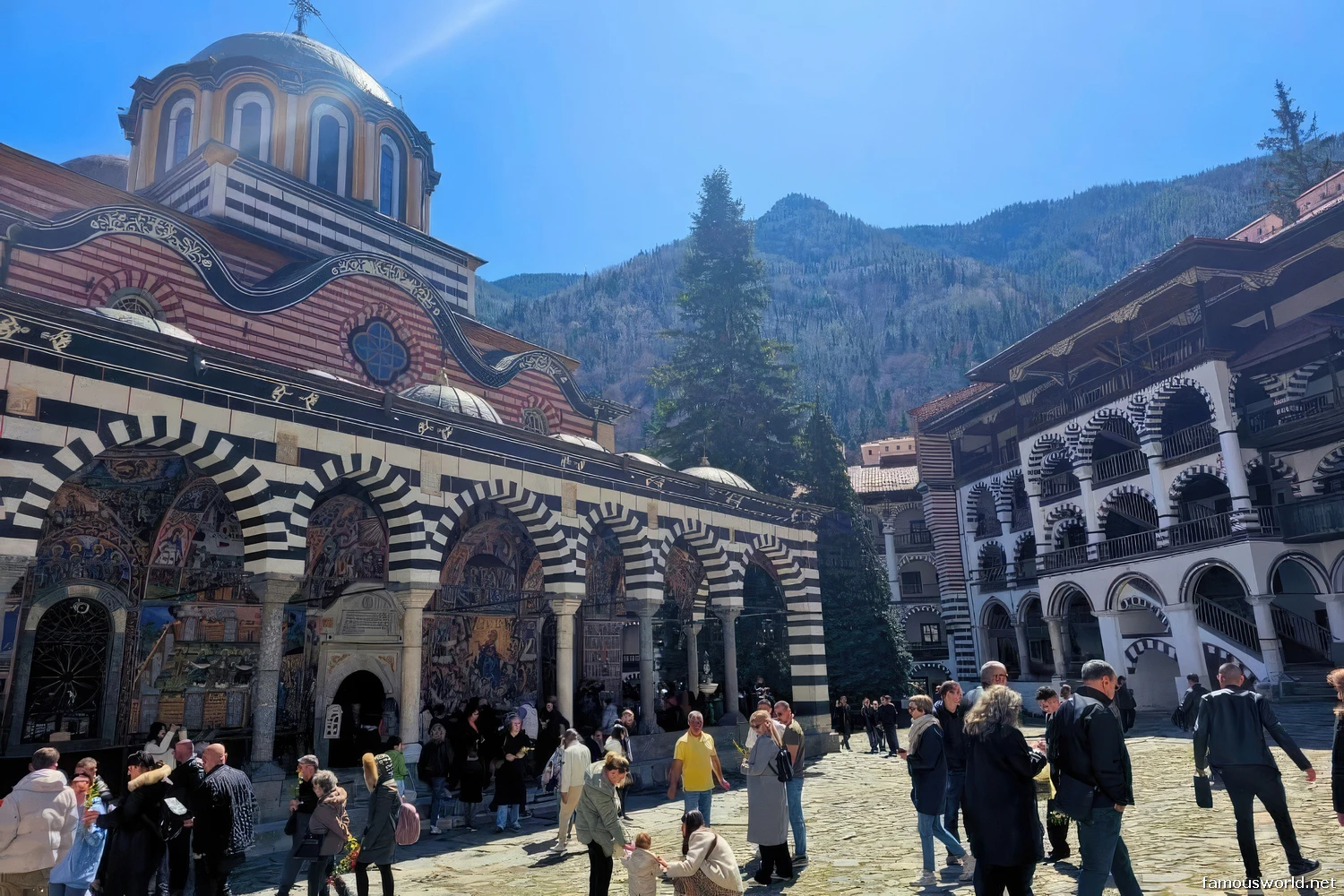
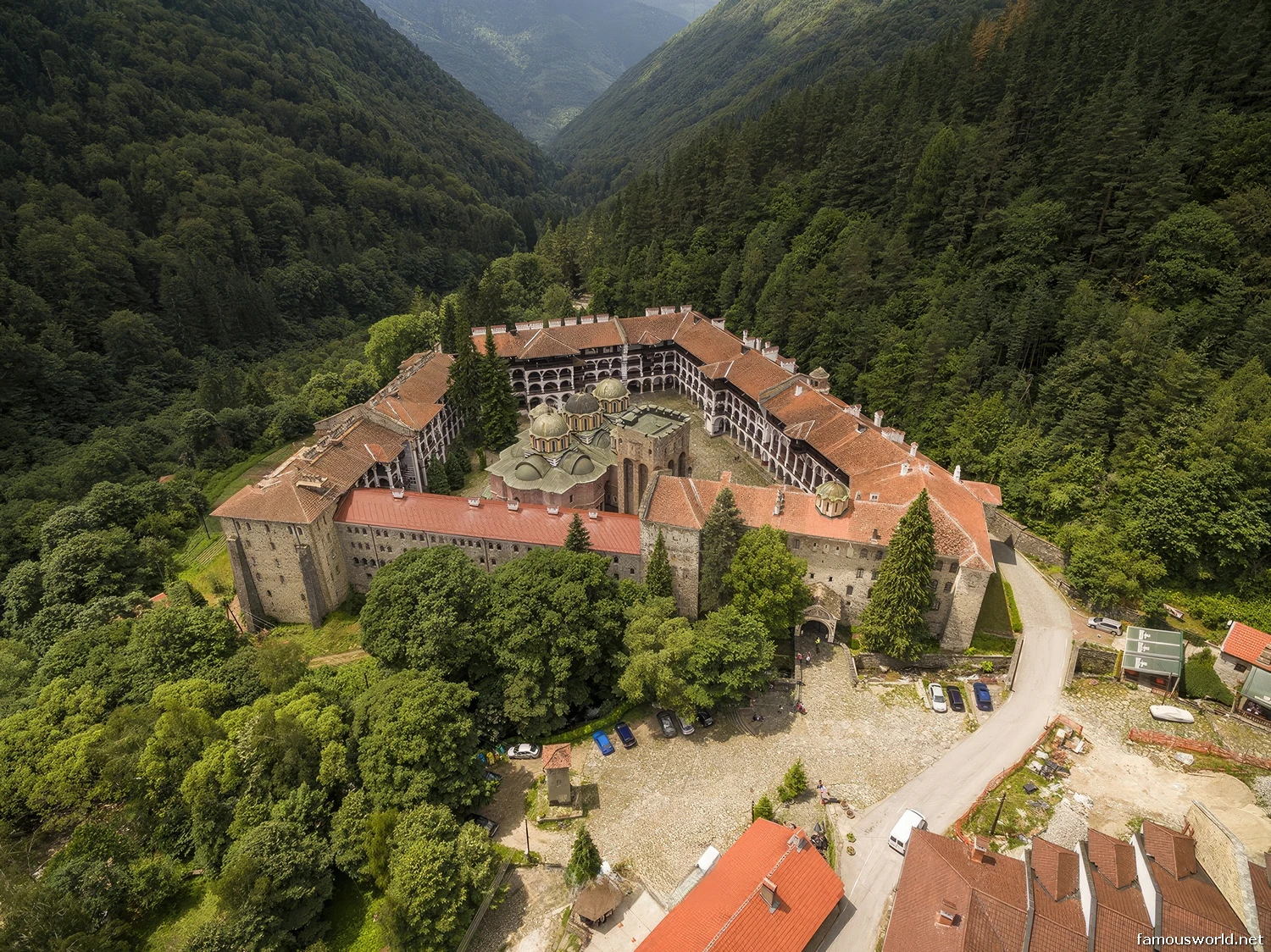
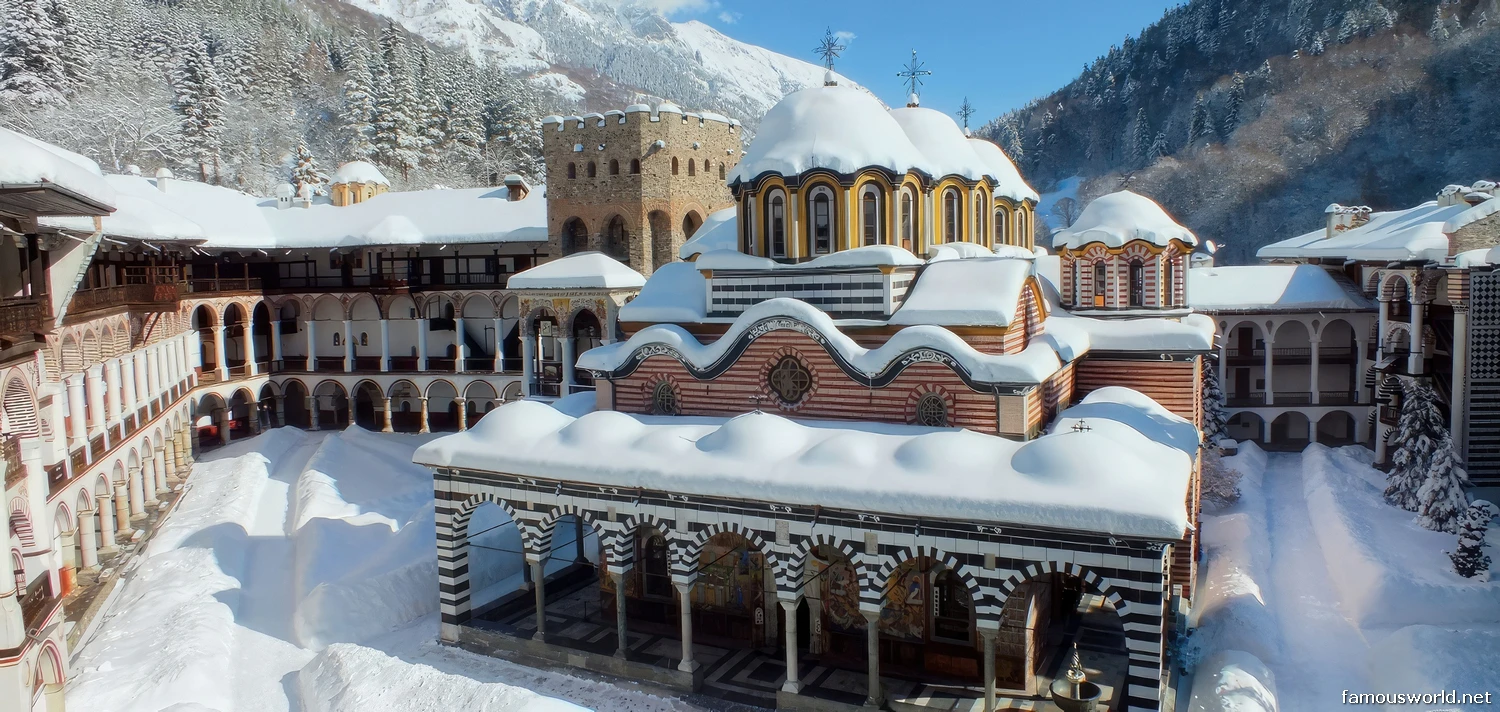
Deep in the forested heart of the Rila Mountains, the Monastery of Saint Ivan of Rila is the undisputed spiritual, cultural, and architectural crown of Bulgaria. This fortress-like sanctuary, founded in the 10th century by a hermit saint, has been a beacon of faith and Bulgarian identity for over a thousand years. Its most stunning incarnation, rebuilt in the 19th century, is a masterpiece of Bulgarian National Revival architecture. With its vast, arcaded courtyard, towering stone walls, and a main church covered in breathtakingly vibrant frescoes, the monastery is a place of profound peace and national pride. As a UNESCO World Heritage site, it is not just a destination but a pilgrimage into the soul of Bulgaria.
Listen to an introduction about Rila Monastery

Name and Location
- Name: The Monastery of Saint Ivan of Rila (Манастир “Свети Иван Рилски”), commonly known as Rila Monastery (Рилски манастир).
- Location: In a deep valley of the Rila Mountains in southwestern Bulgaria, approximately 117 km (73 miles) south of the capital, Sofia.
How to Get There
The monastery’s remote mountain location requires a dedicated journey.
- By Car: This is the most flexible option. The drive from Sofia takes approximately 1.5 to 2 hours and is well-signposted. A car allows you to explore the beautiful surrounding nature park at your own pace.
- By Guided Tour/Shuttle: This is the most popular and practical method for international tourists. Numerous companies in Sofia offer daily bus tours and shuttles, often combining the trip with the Boyana Church.
- By Public Bus: A direct public bus typically runs once per day from the Ovcha Kupel bus station in Sofia. This is a budget-friendly option, but it has a very strict schedule, giving you limited time at the monastery before the return trip.
Landscape and Architecture
The monastery is a stunning, self-contained complex that blends fortress-like defense with harmonious architectural beauty.
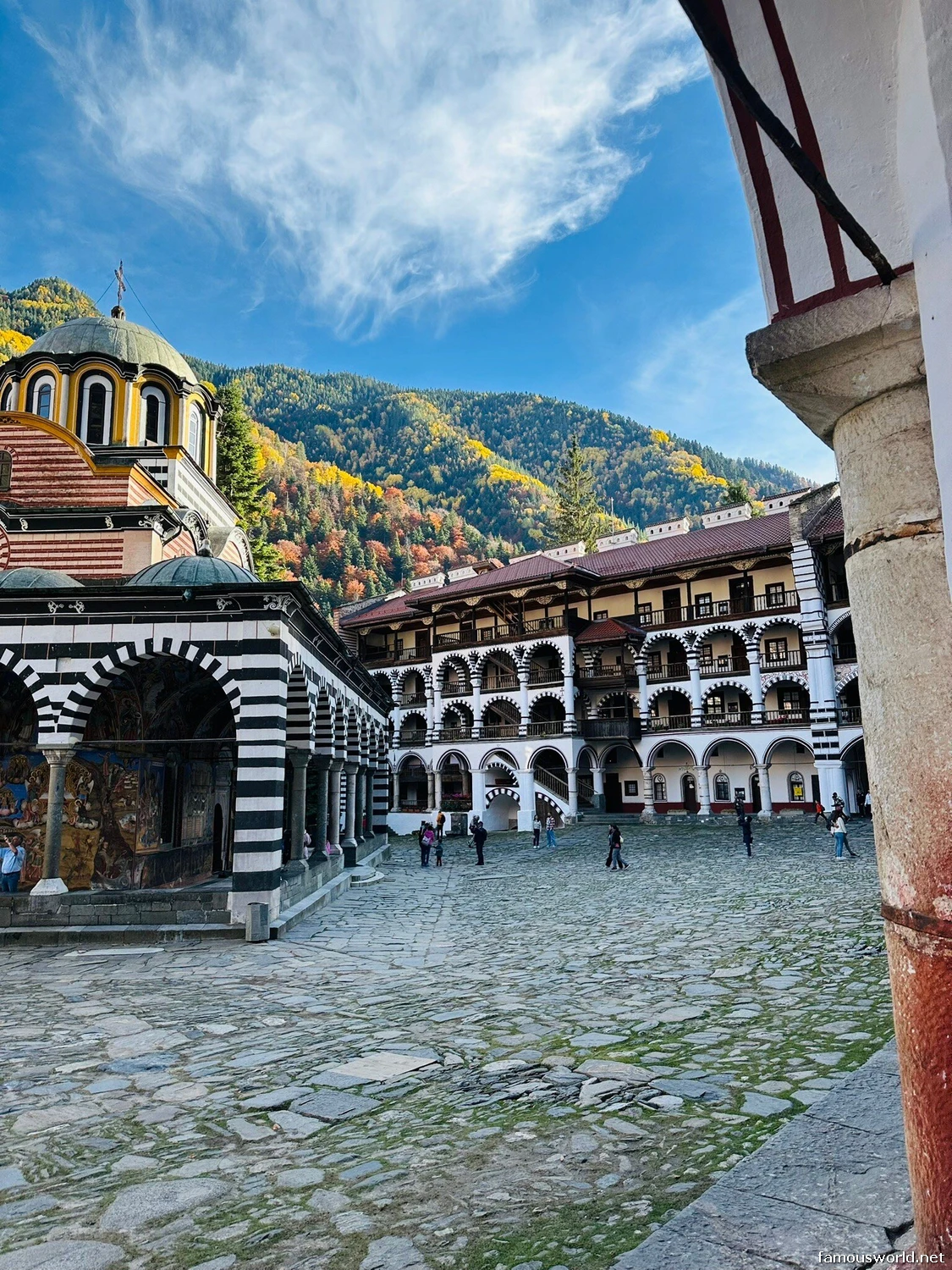
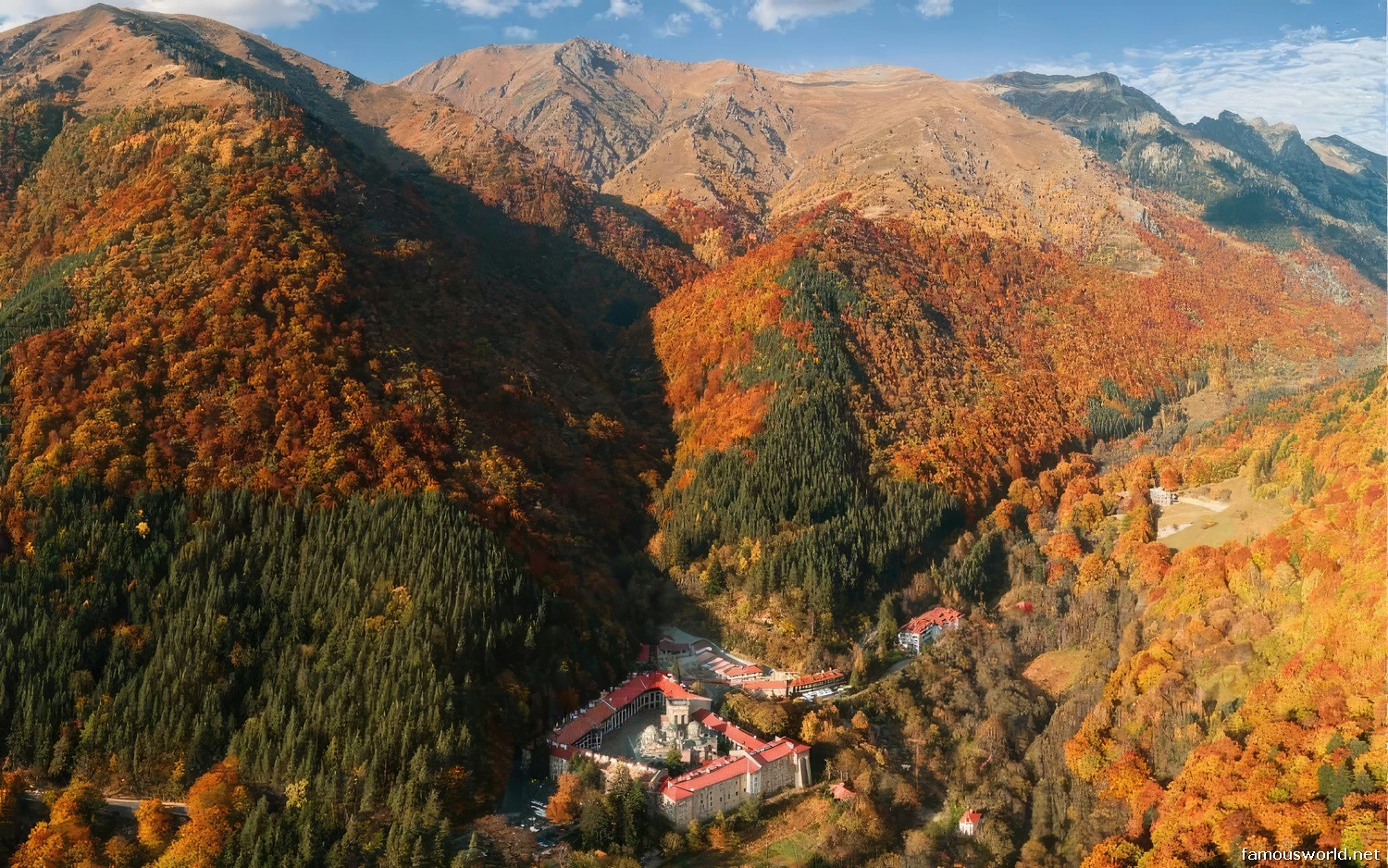
- Mountain Sanctuary: The complex is set in a peaceful, forested valley at an altitude of 1,147 meters (3,763 ft), surrounded by the peaks of the Rila Mountains Nature Park.
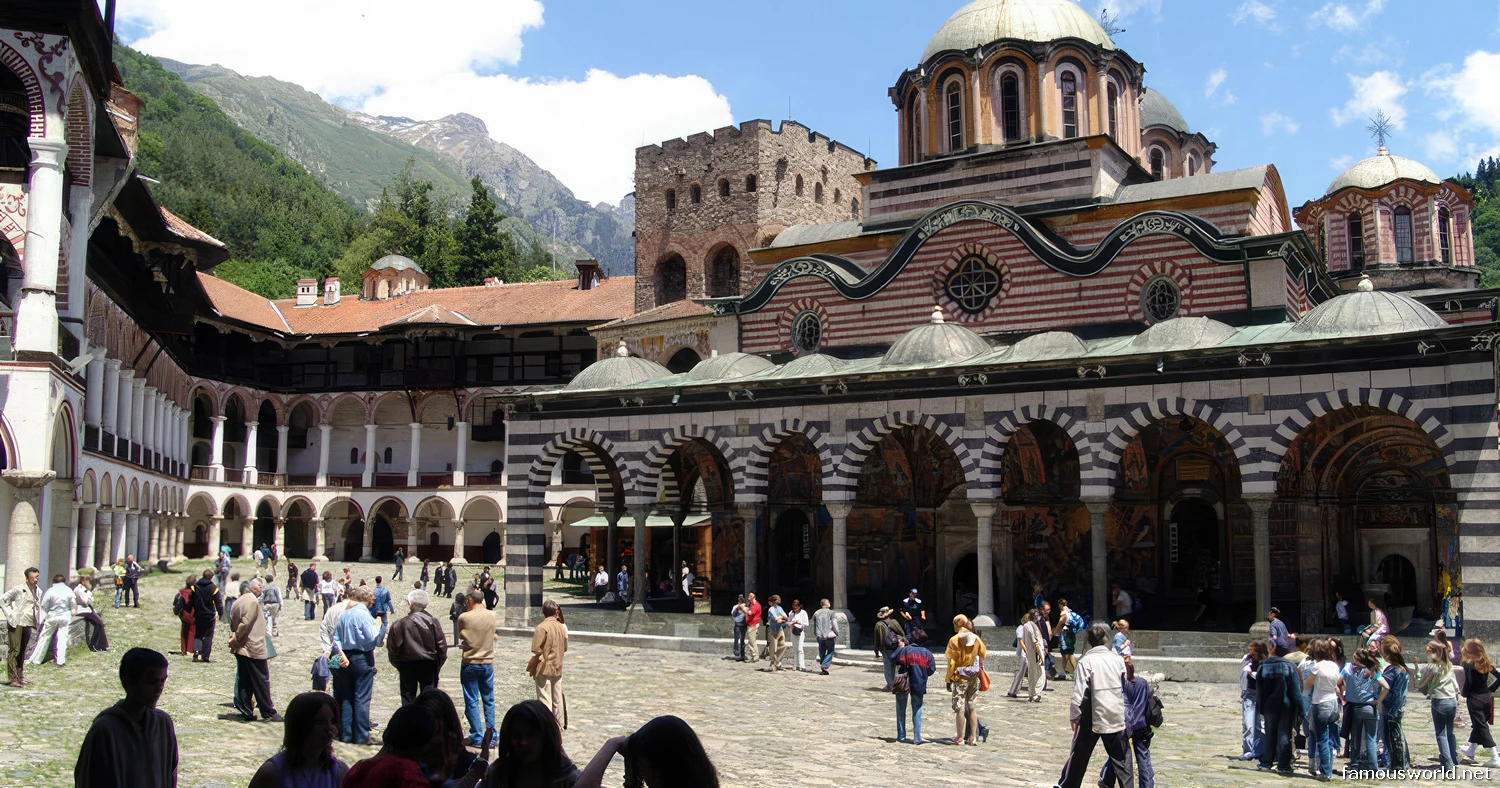
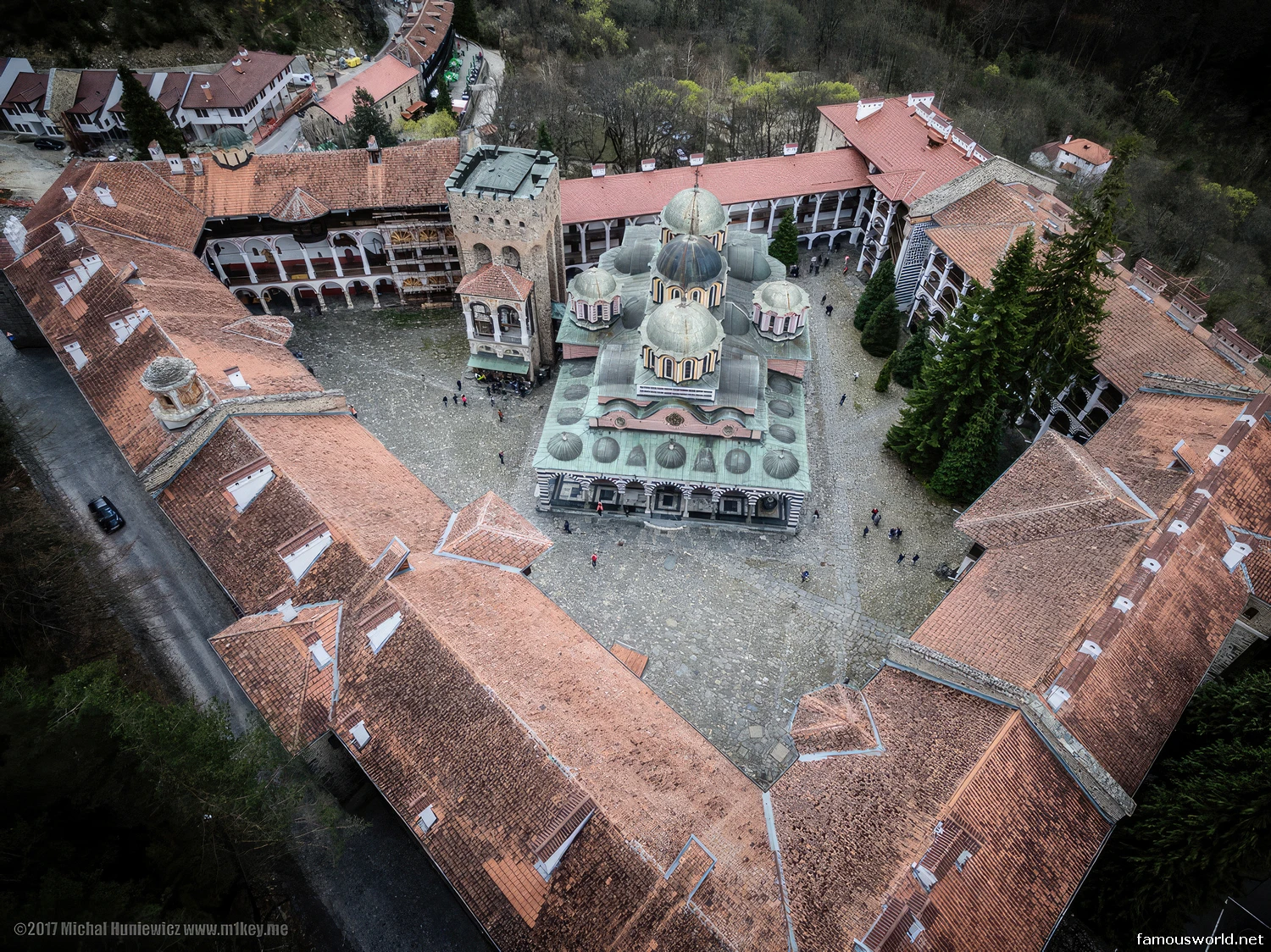
- Fortress Exterior: From the outside, the monastery resembles a formidable fortress, with 24-meter-high (78 ft) stone walls and minimal windows, designed for defense.
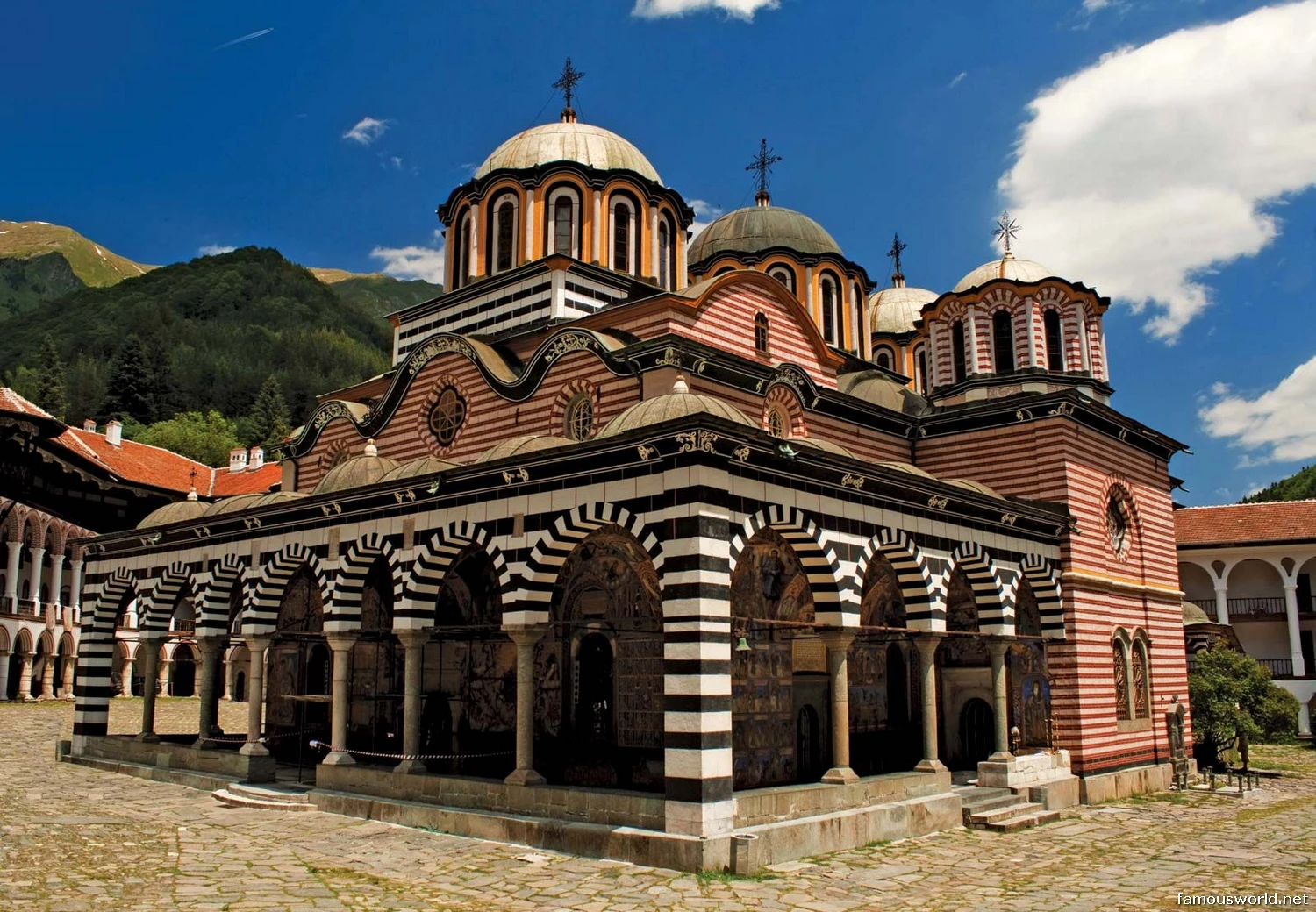
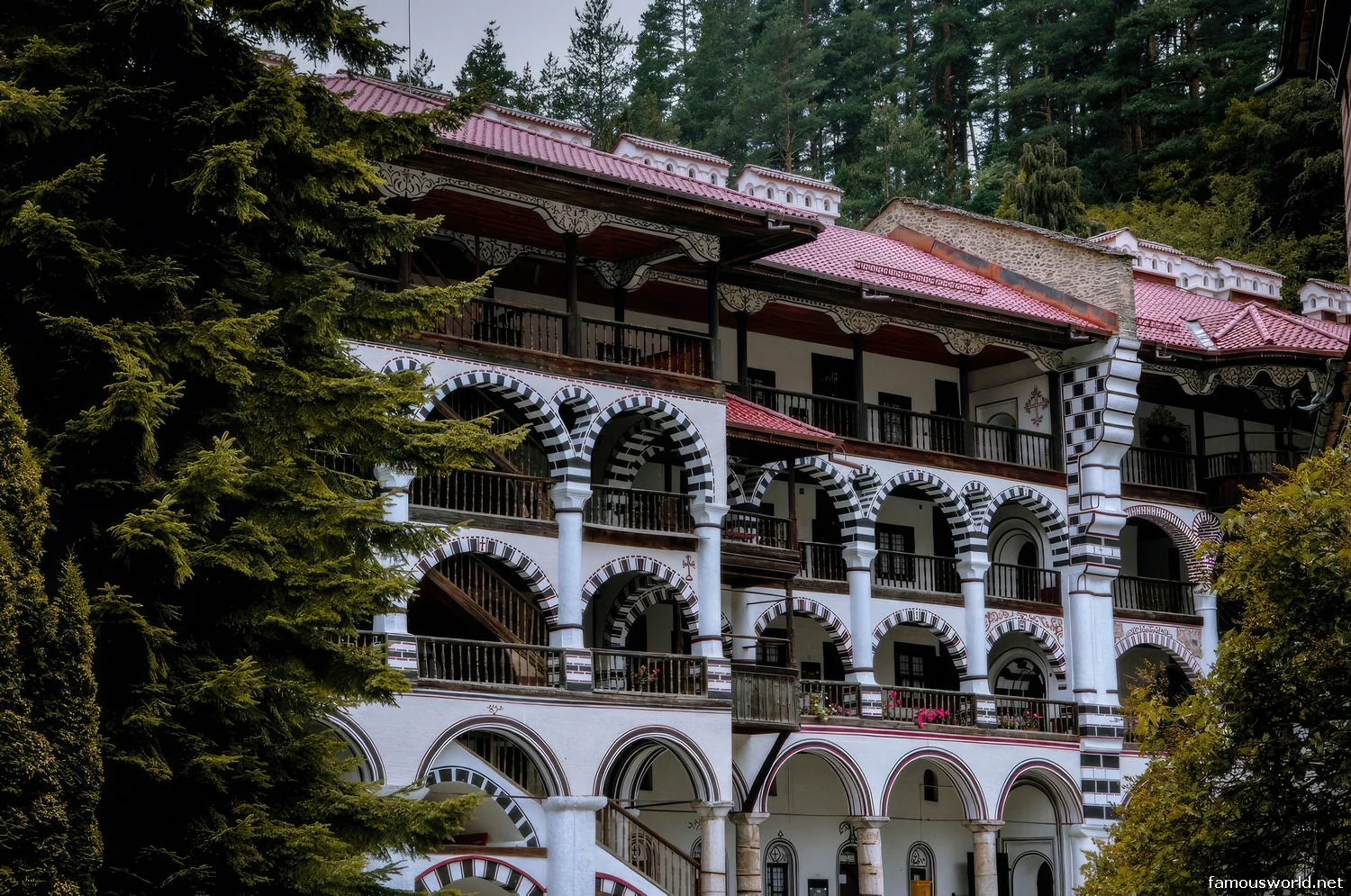
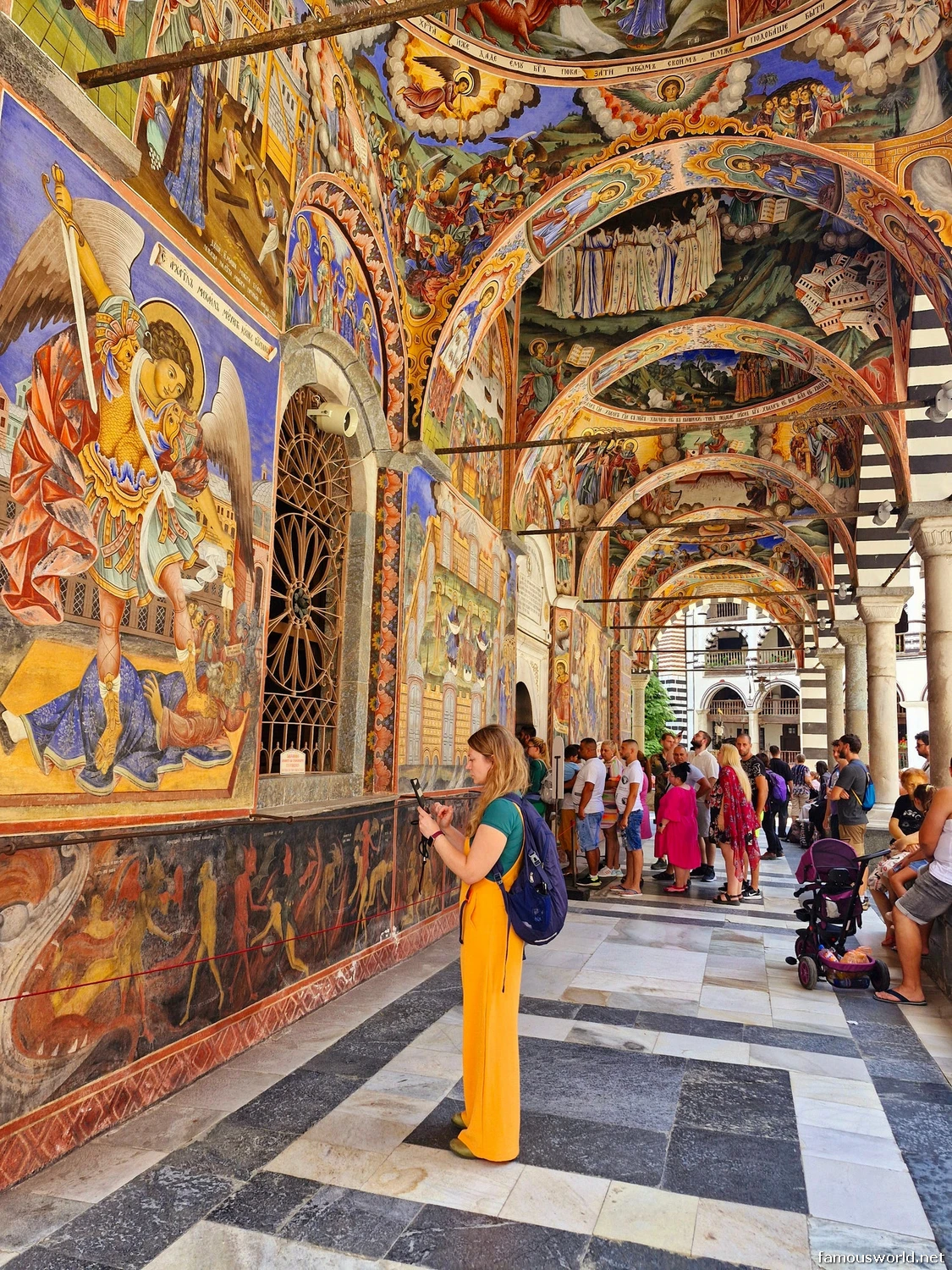
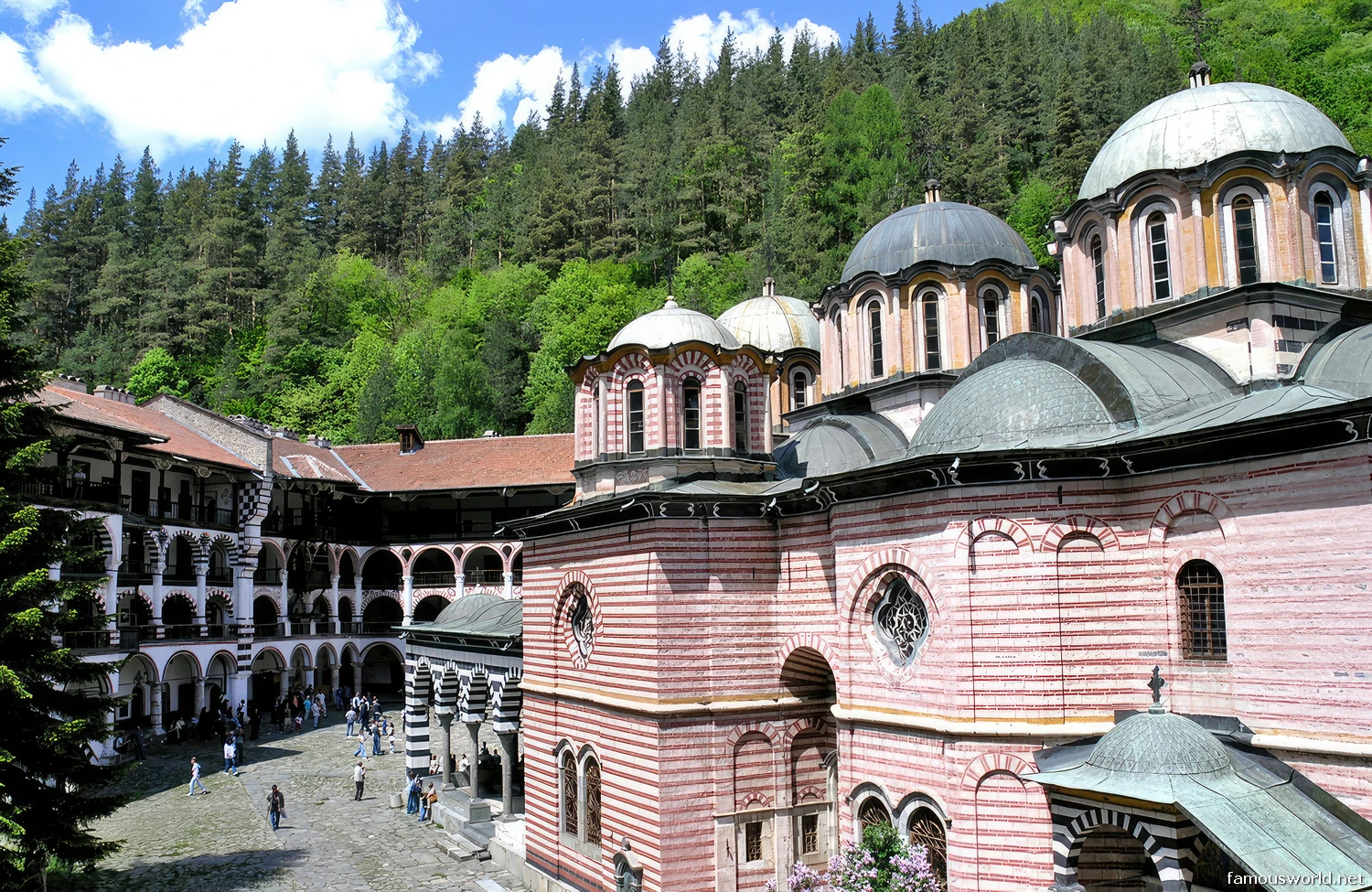
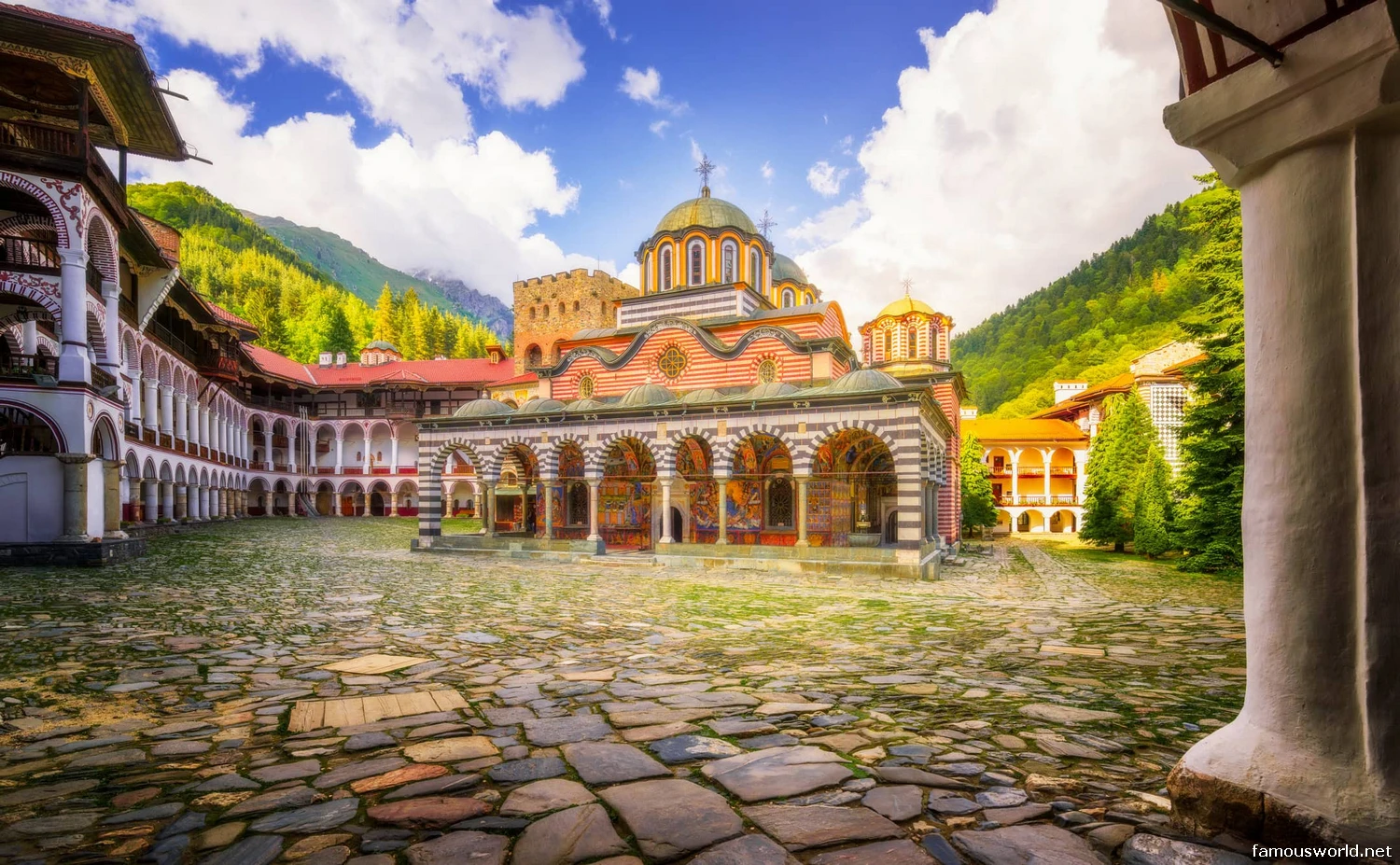
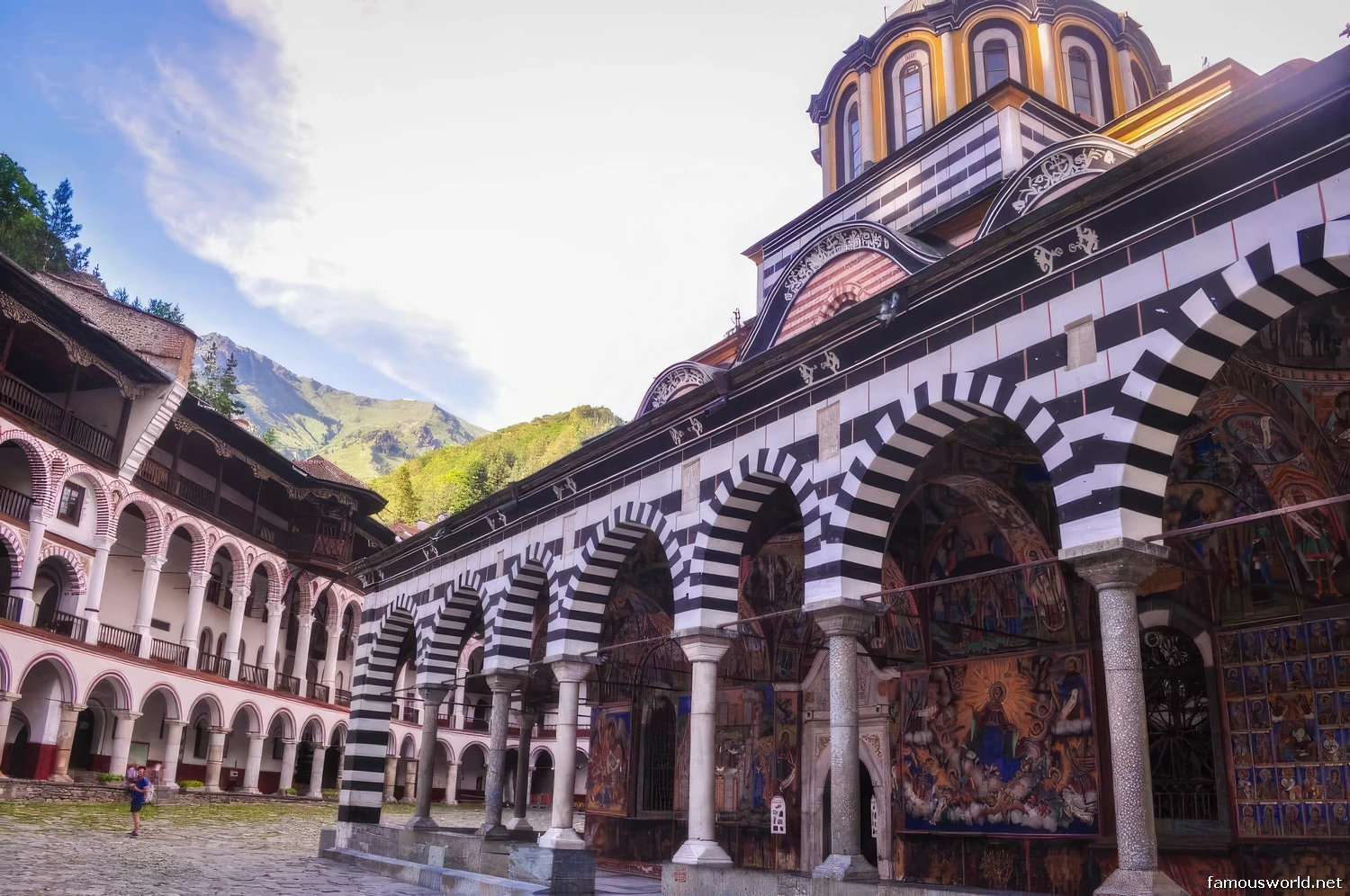
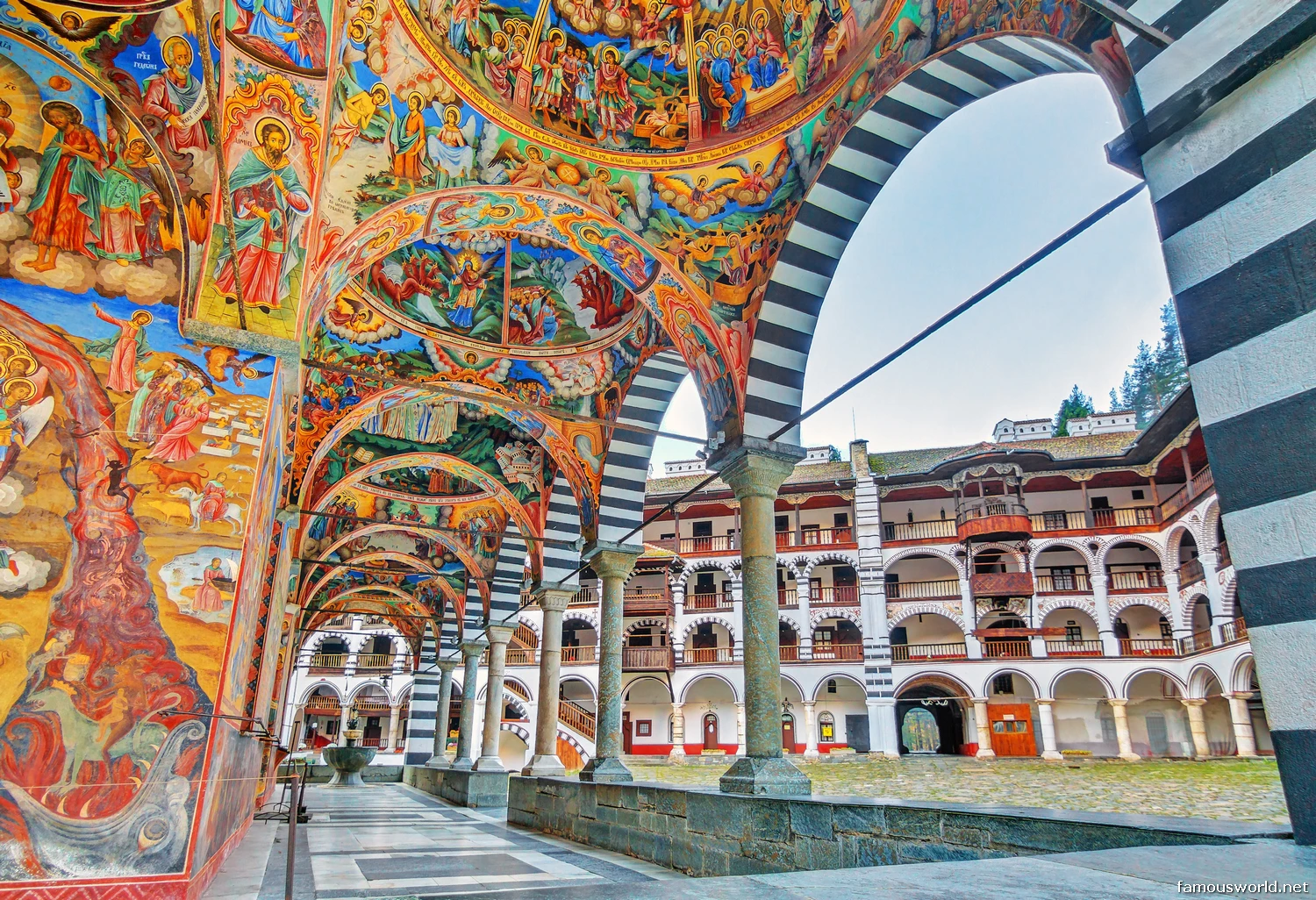
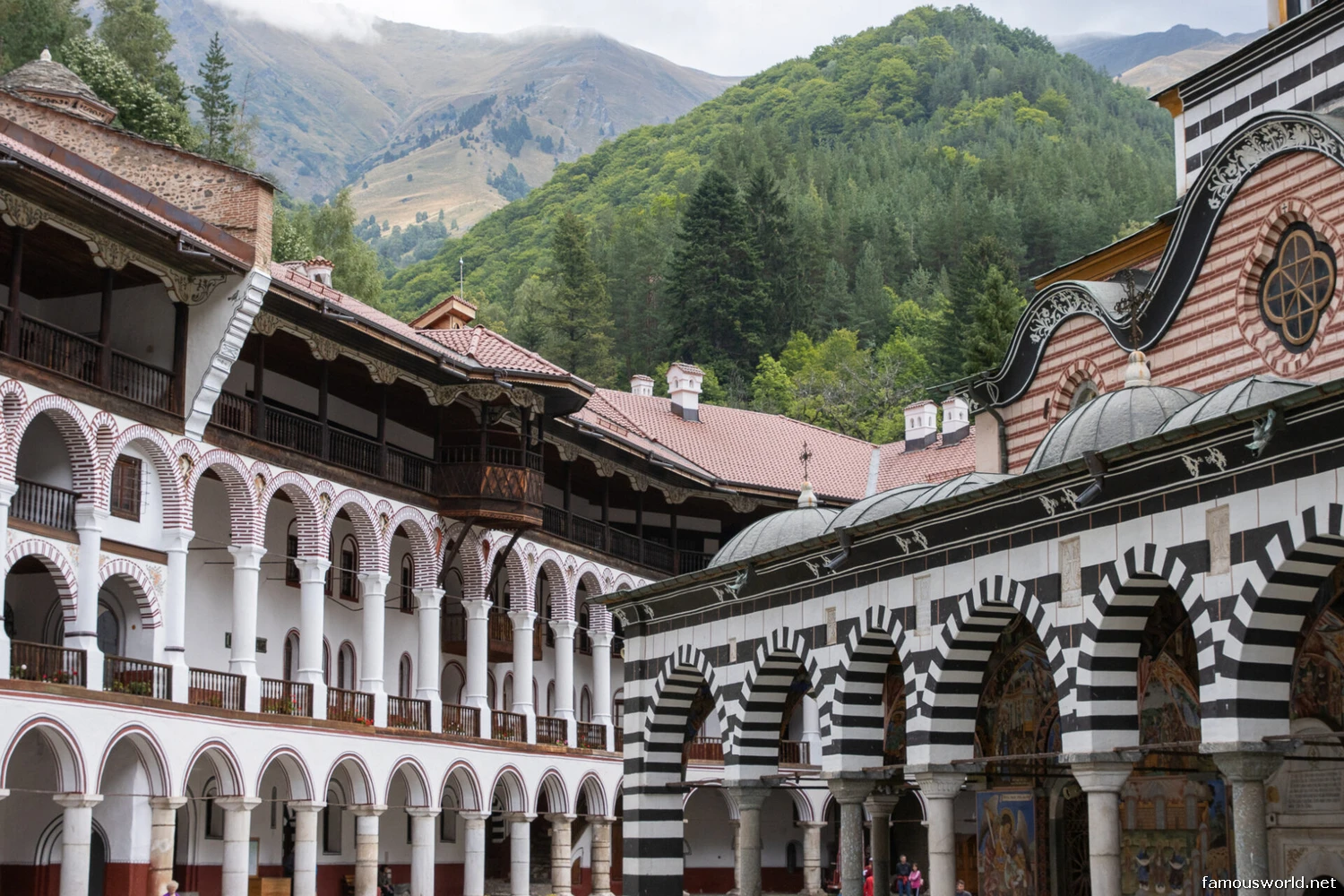
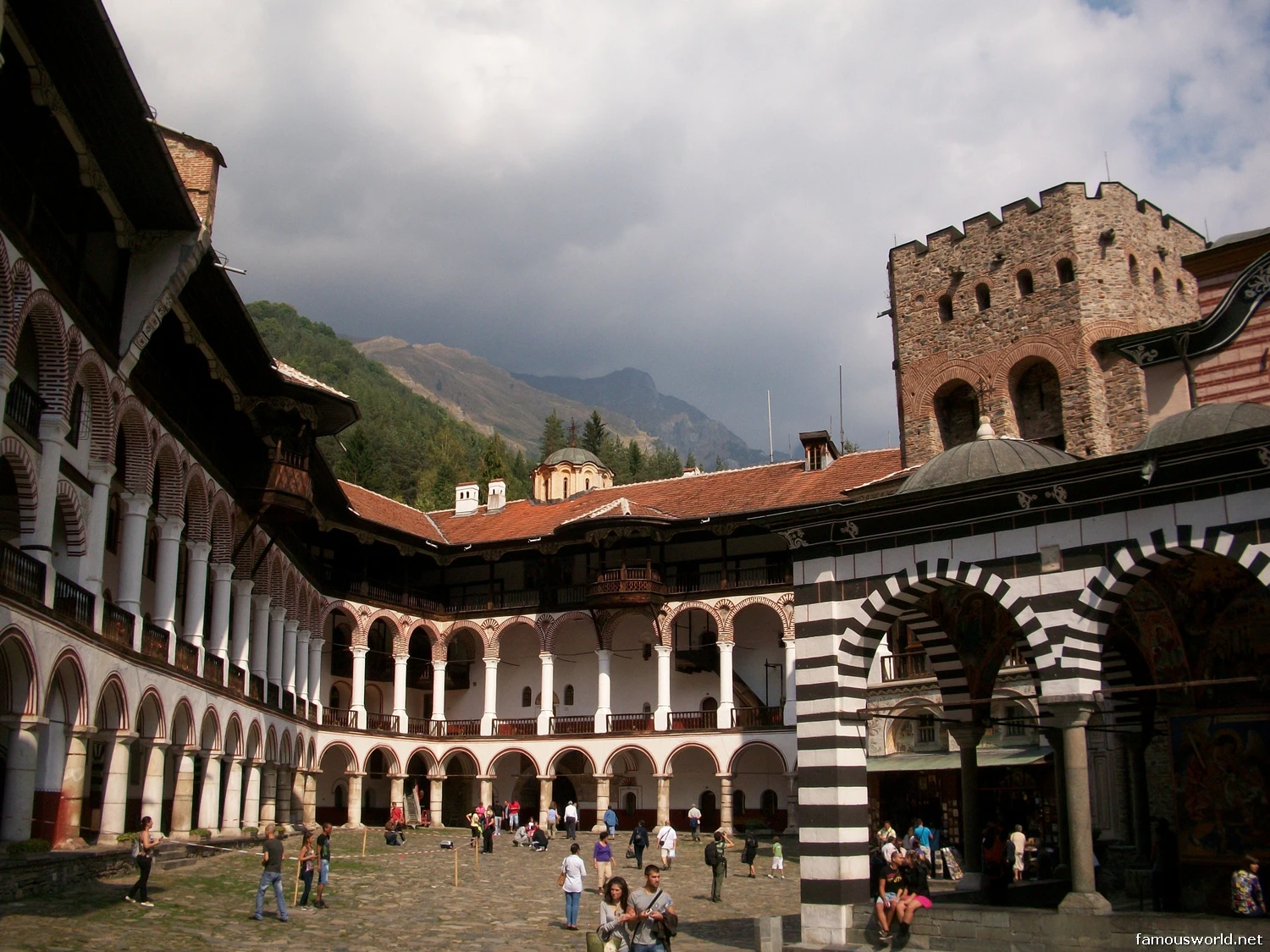
- The Courtyard and Arcades: Passing through the entrance reveals a vast, spectacular courtyard of striking harmony. The residential wings are four stories high, and their black-and-white-striped arches, wooden staircases, and colorful balconies create a unique and beautiful enclosed space.
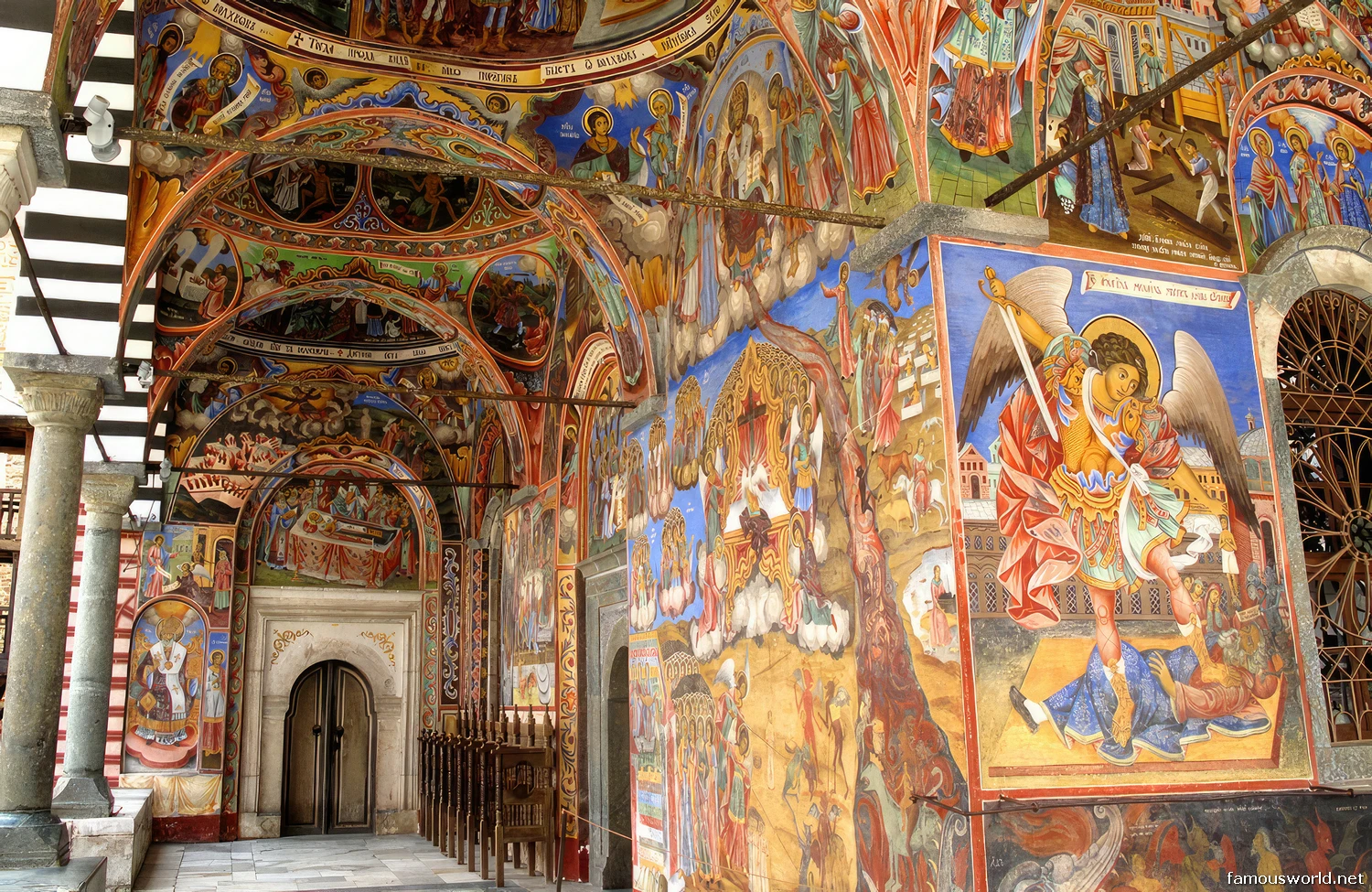
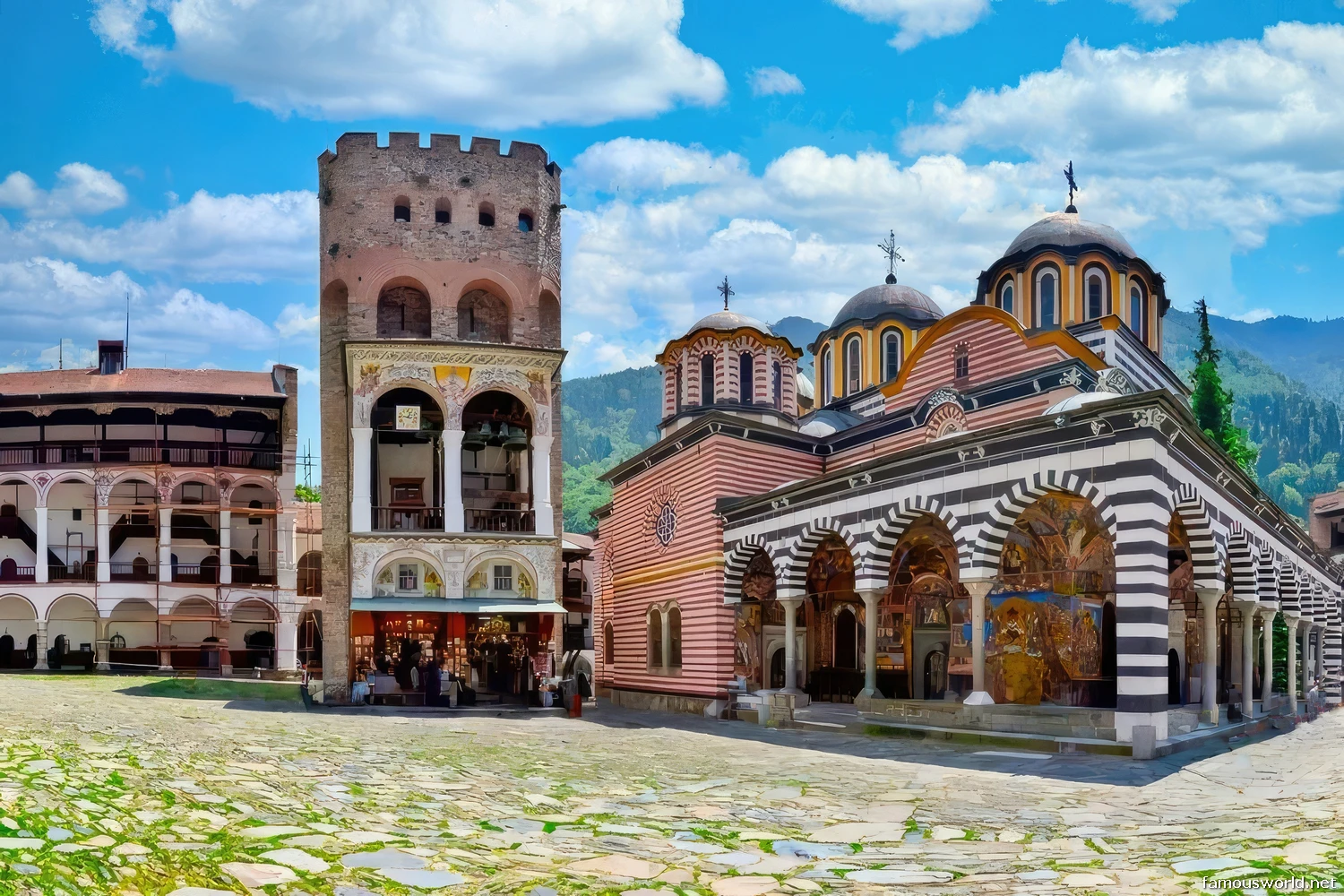
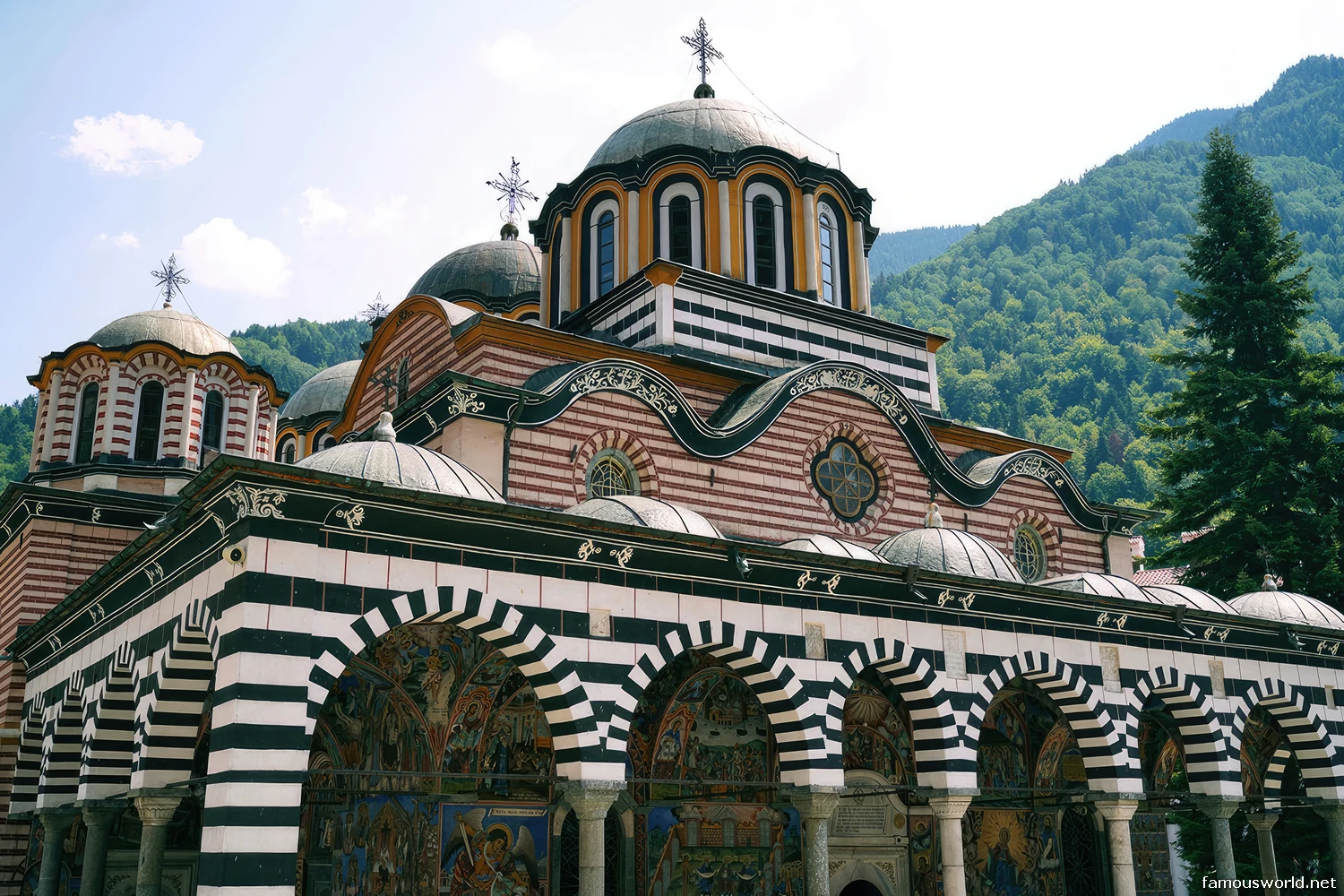
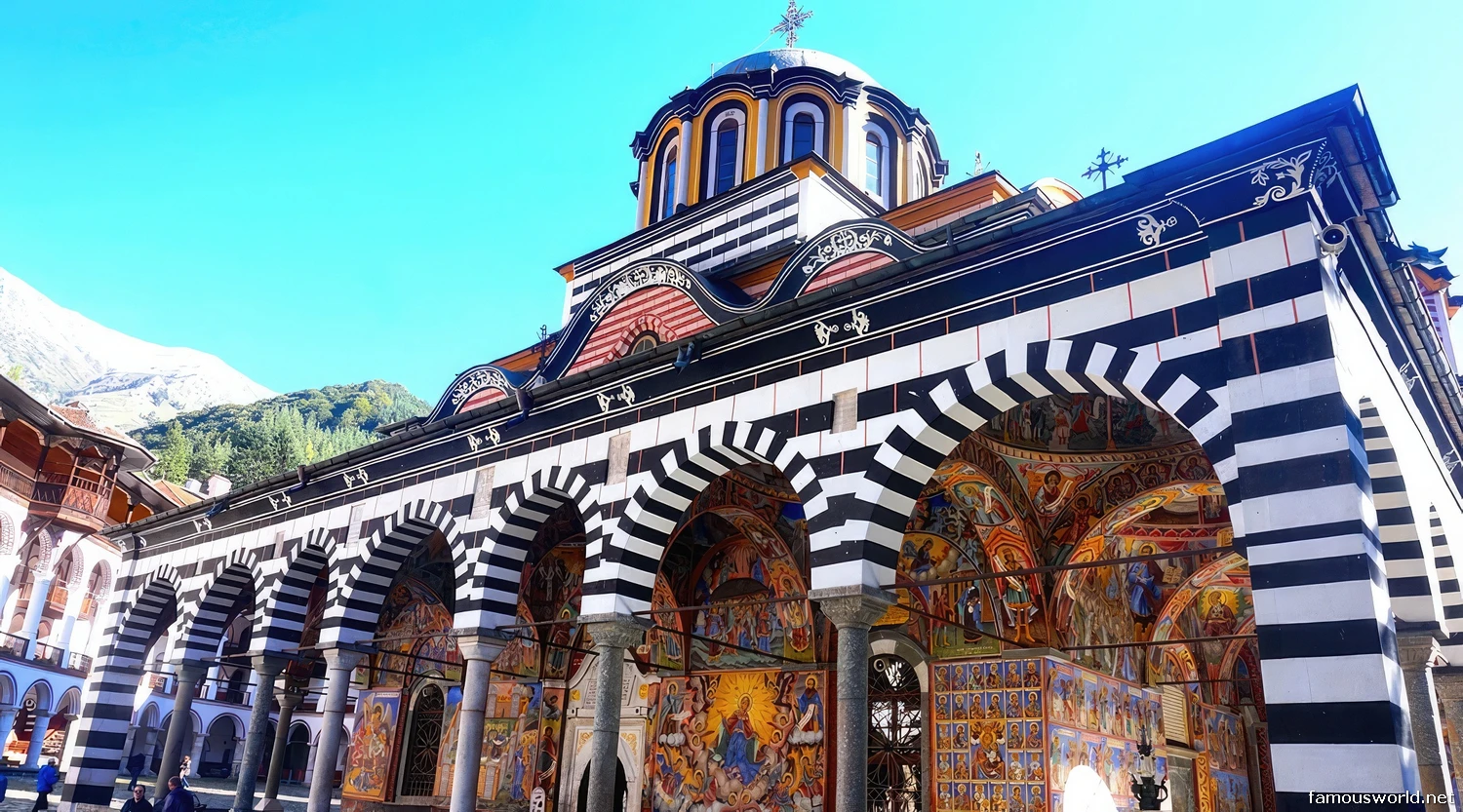
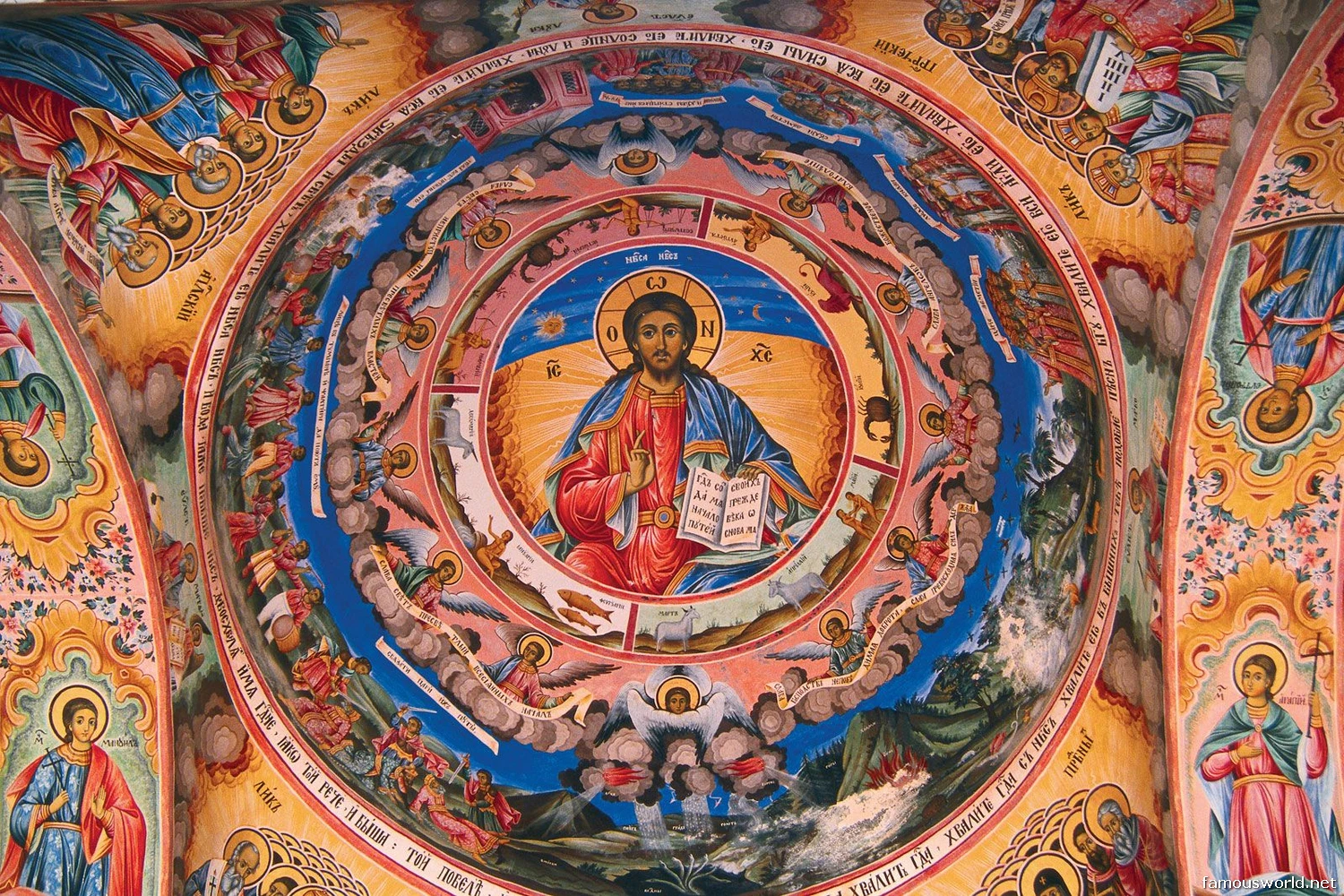
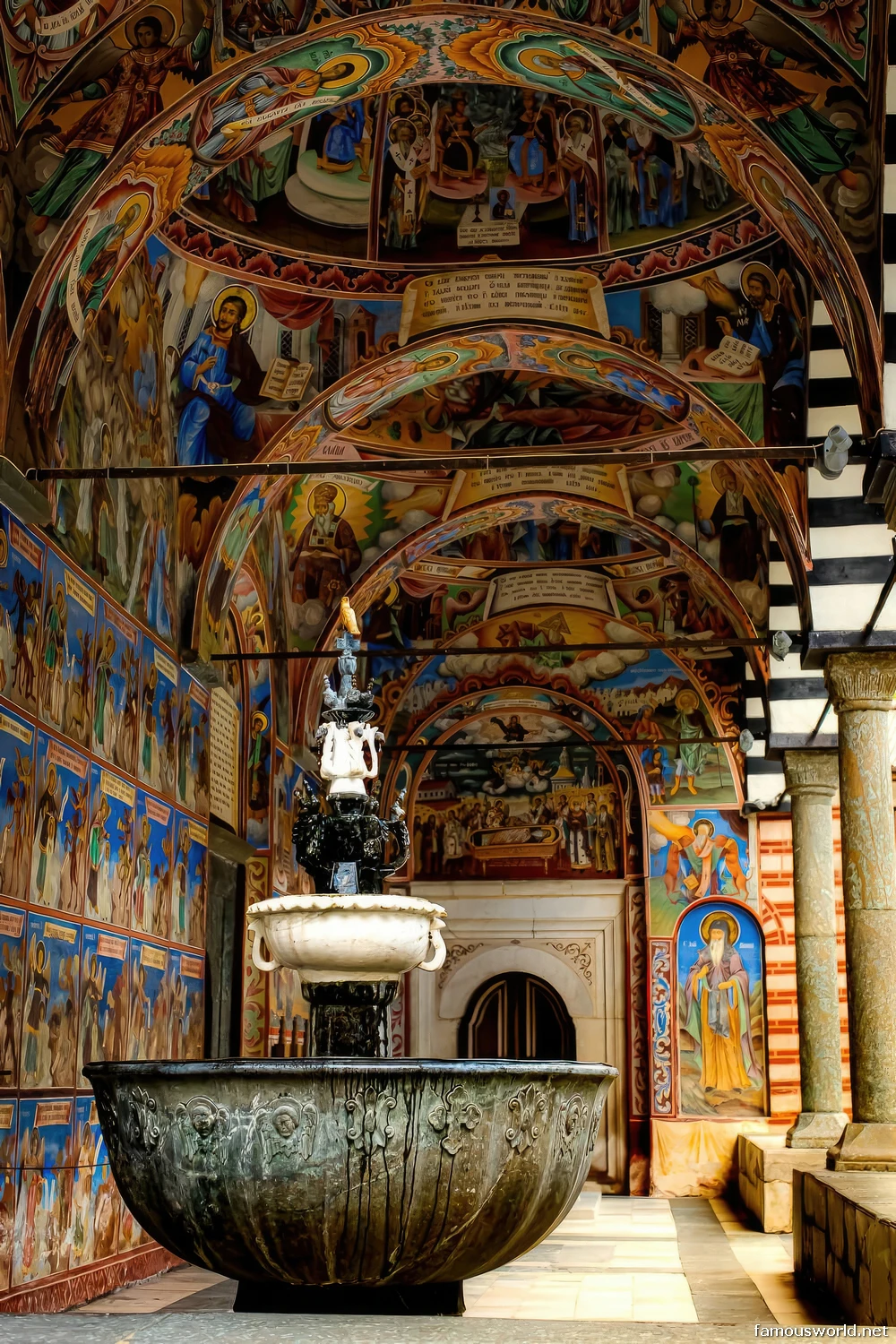
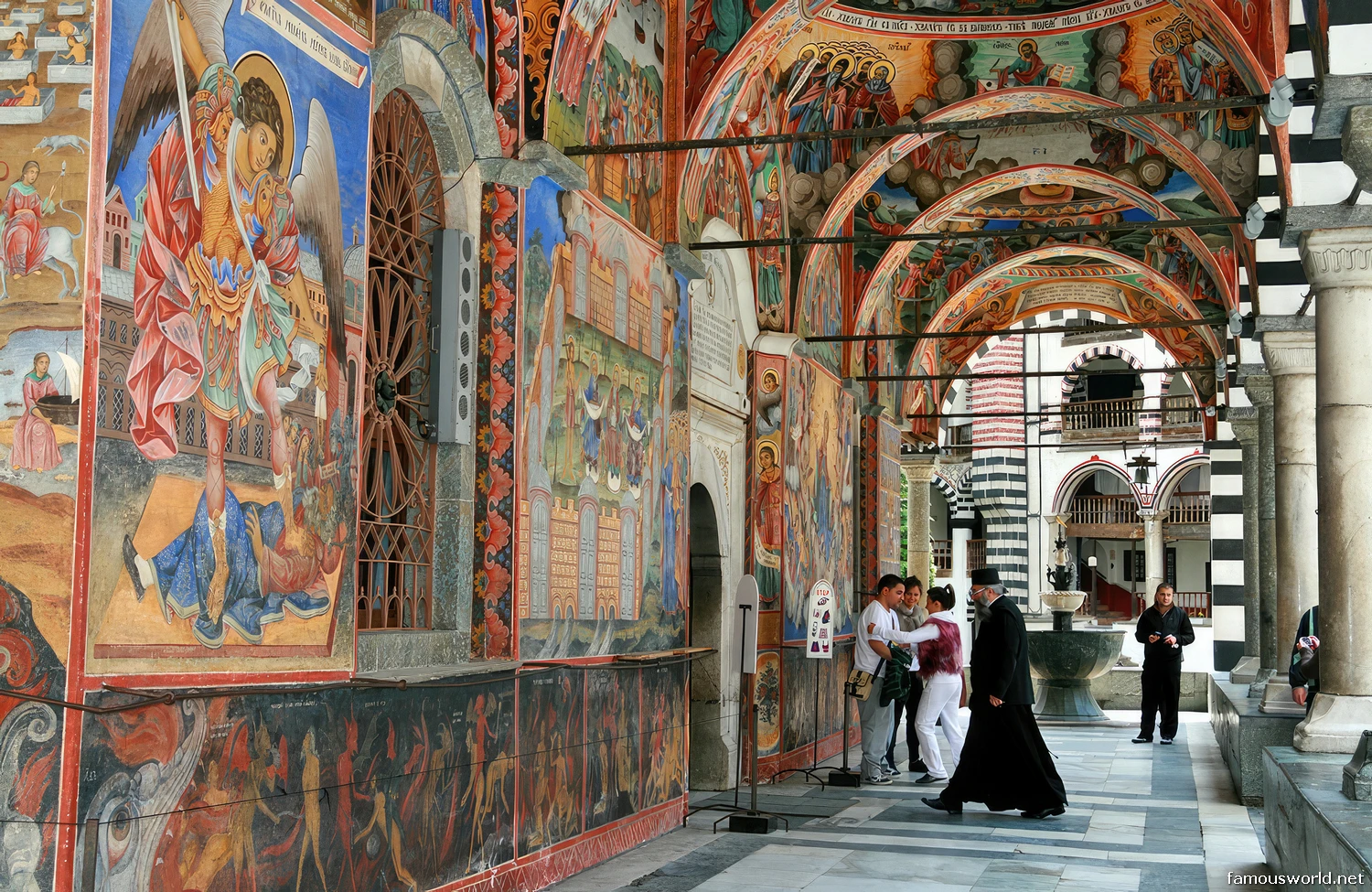
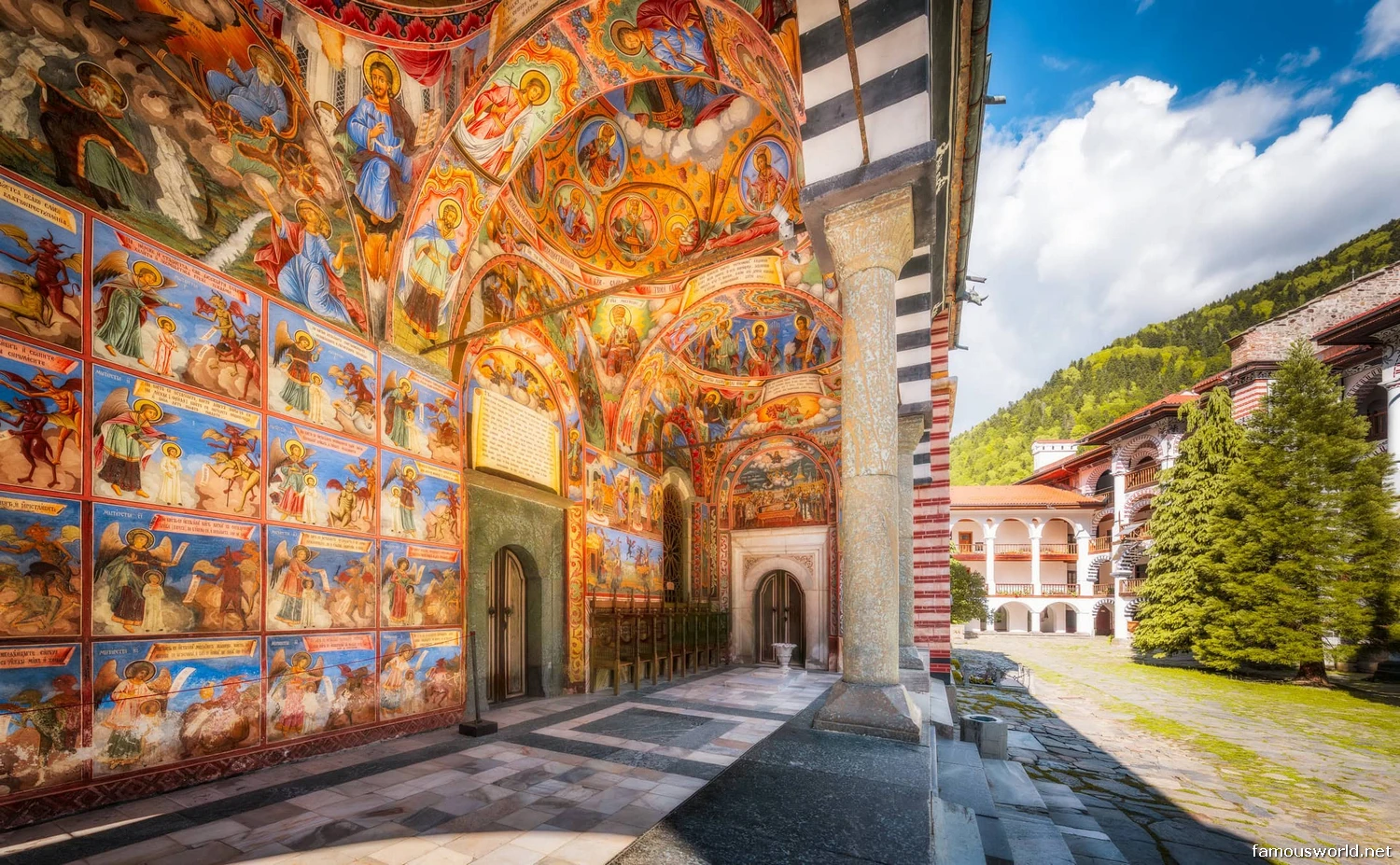
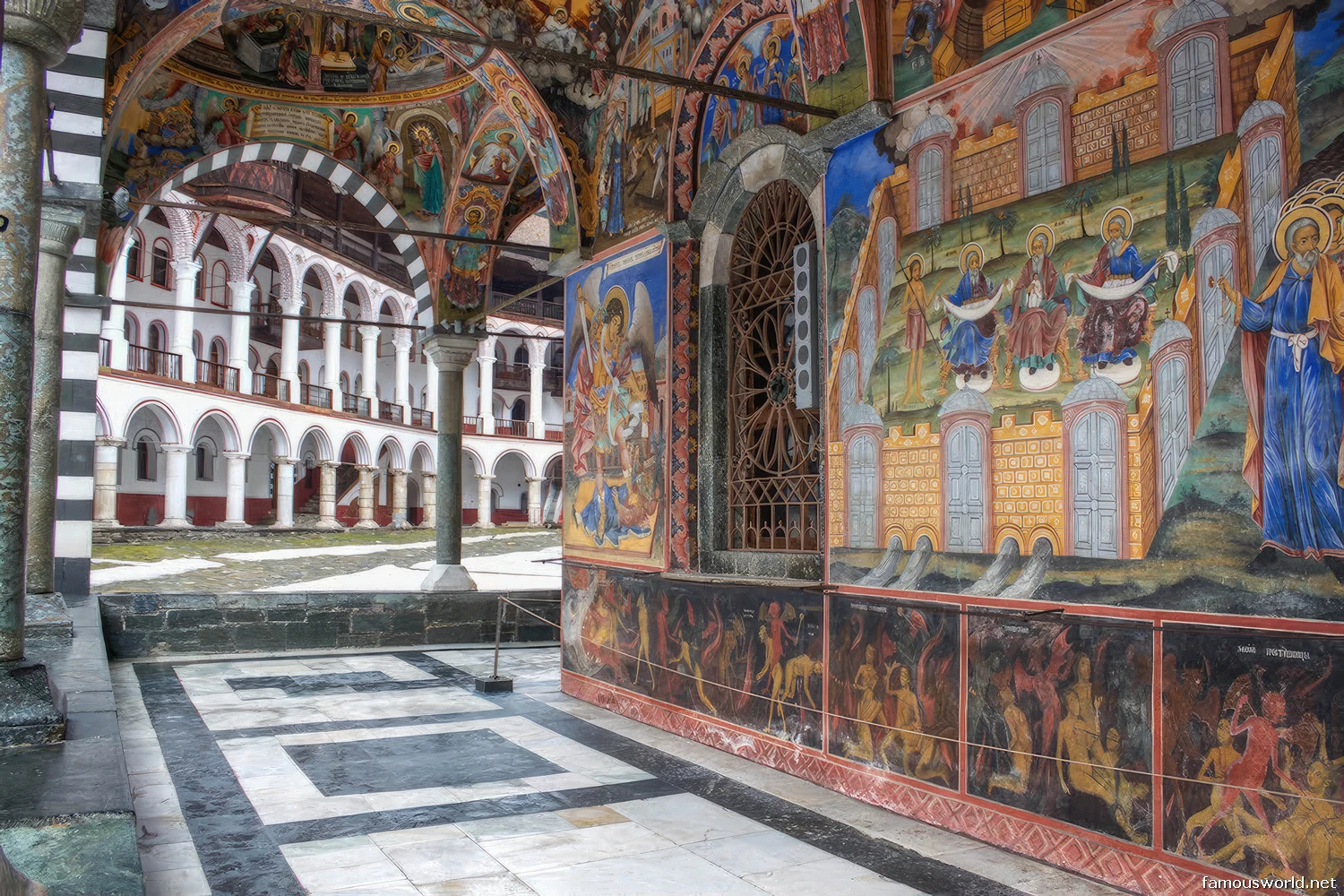
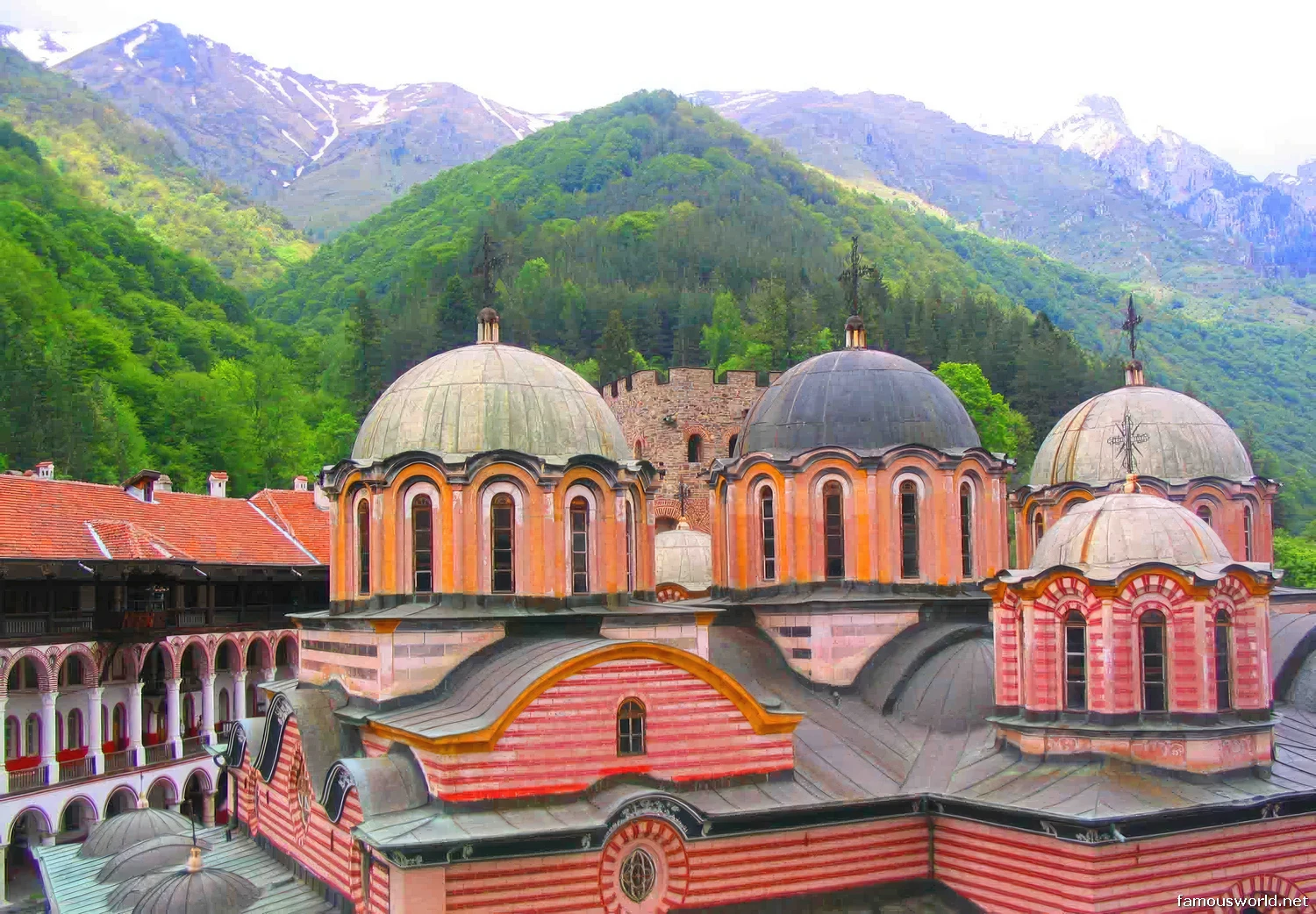
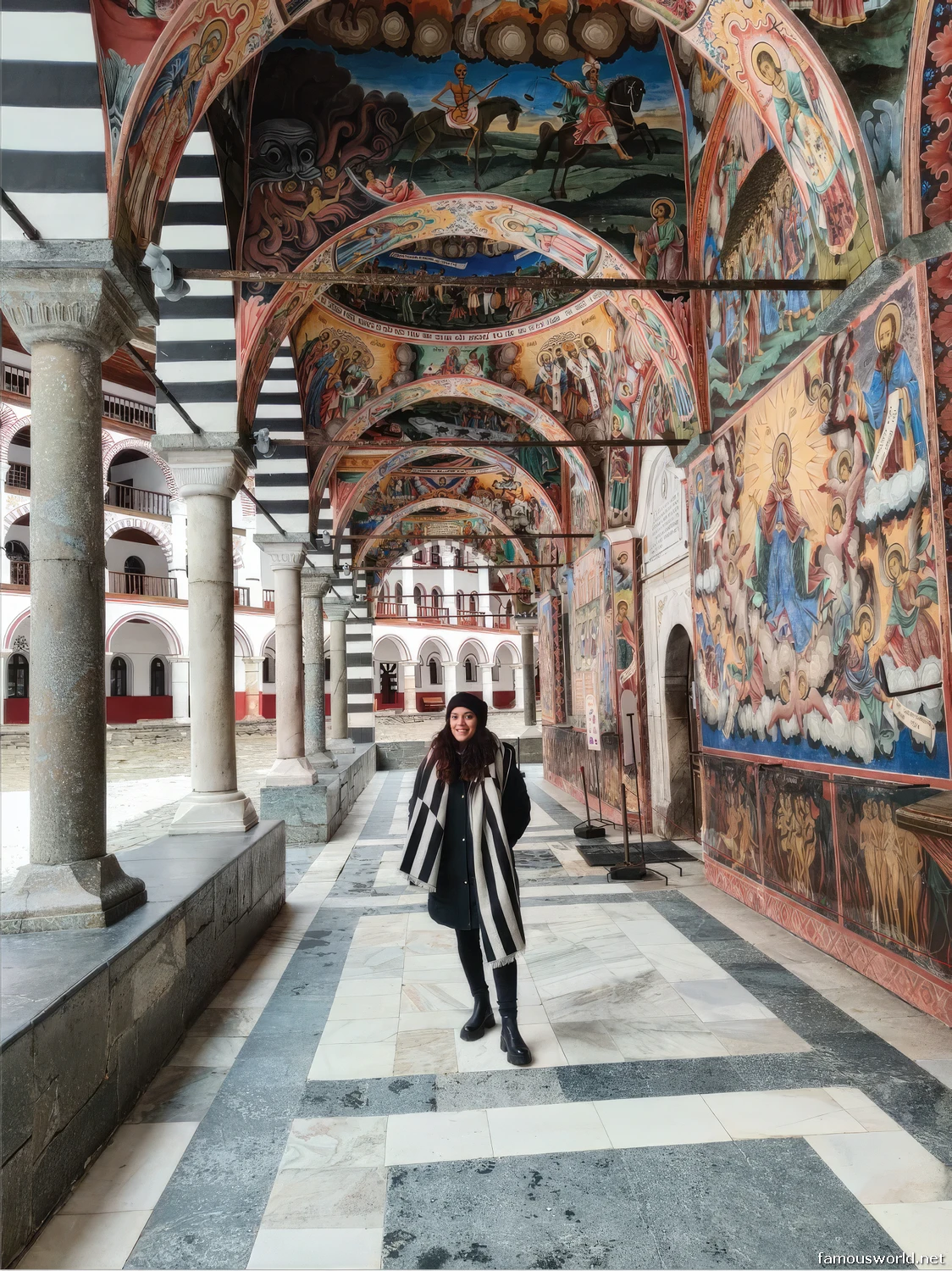
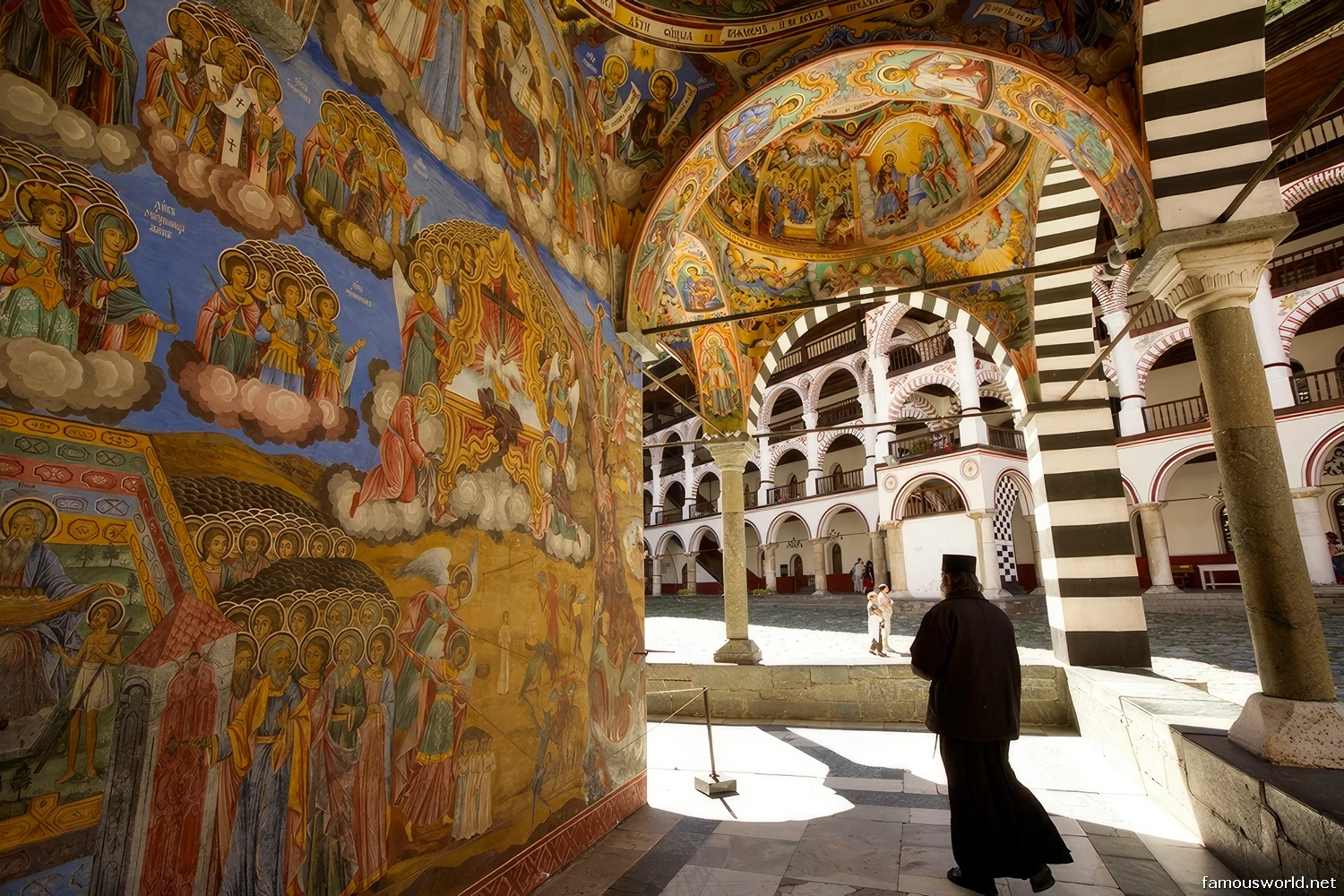
- Main Church (Nativity of the Virgin Mary): The centerpiece of the courtyard is the main church, a masterpiece of National Revival art. Its exterior is covered in thousands of incredibly vivid and detailed frescoes depicting biblical scenes and moral allegories.
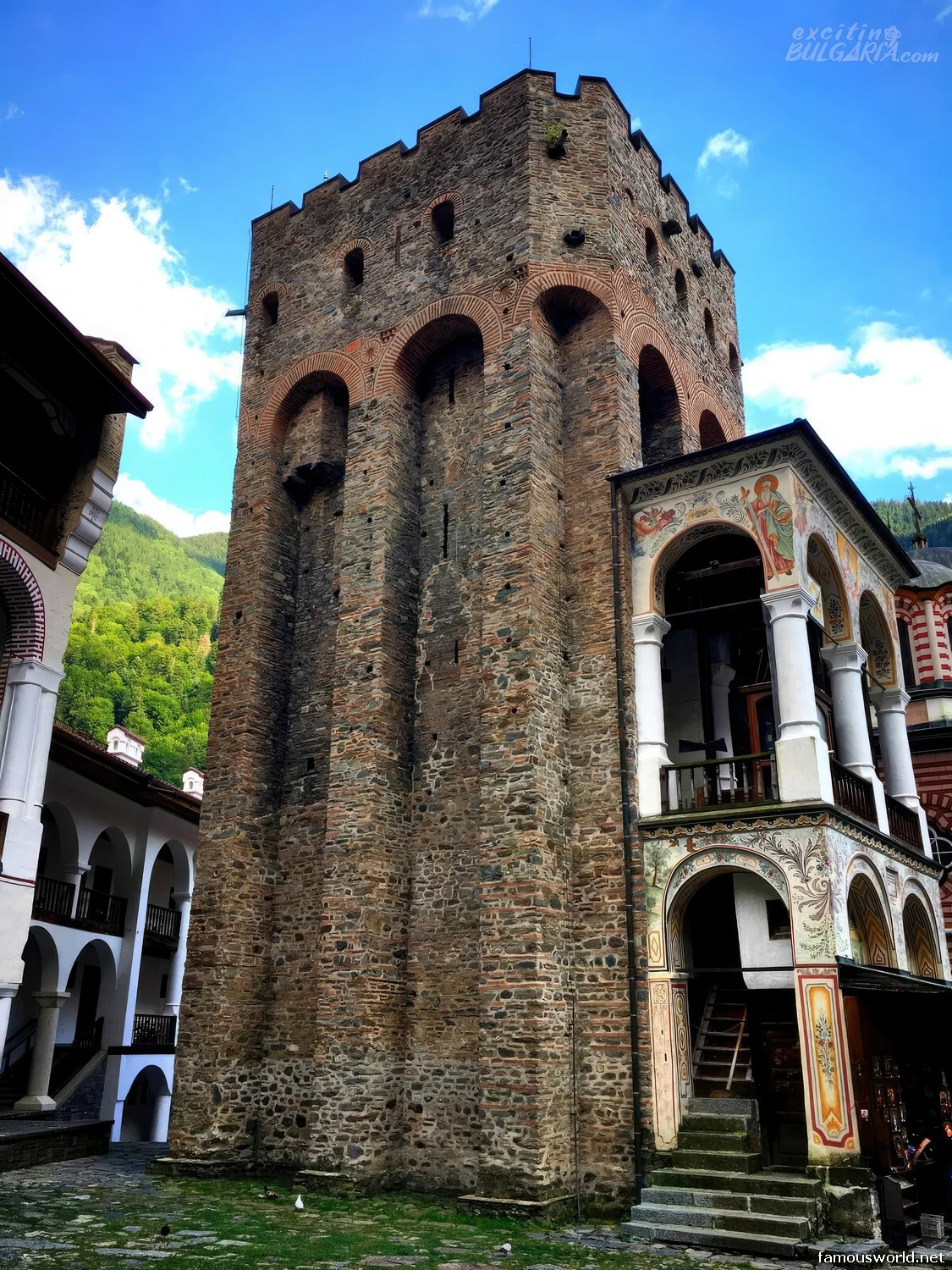
- Hrelyo’s Tower: The oldest surviving structure in the complex. This 14th-century stone defense tower stands next to the main church, a relic from the monastery’s medieval past.
What Makes It Famous
The Rila Monastery is a national symbol and one of the most important cultural and historical sites in the Balkans.
- Bulgaria’s Spiritual Heart: It is the largest and most famous Eastern Orthodox monastery in Bulgaria and is considered the nation’s most sacred site.
- UNESCO World Heritage Site: It was designated a UNESCO site for its outstanding architectural and artistic value, and for its historical role as the guardian of Bulgarian culture, language, and faith during the centuries of Ottoman rule.
- National Revival Masterpiece: The entire complex is the most celebrated example of Bulgarian National Revival architecture and art, particularly its stunning frescoes by masters like Zahari Zograf.
- Tomb of St. Ivan of Rila: It serves as the main shrine for the relics of its founder, Saint Ivan of Rila (St. John of Rila), the patron saint of Bulgaria.
Differences from Other Wonders (vs. Alexander Nevsky Cathedral)
A secluded mountain monastery offers a profoundly different experience than a grand, urban national cathedral.
- Environment (Mountain Sanctuary vs. Urban Monument): The Rila Monastery is a spiritual fortress nestled deep in a remote, natural forest. The Alexander Nevsky Cathedral is a massive, monumental cathedral built in the very center of a bustling capital city.
- Core Story (Spiritual Continuity vs. National Liberation): Rila Monastery’s story is one of a thousand years of continuous monastic faith, pilgrimage, and the preservation of culture. Alexander Nevsky’s story is a modern one, built to celebrate a specific historical event: the liberation of Bulgaria and gratitude towards Russia.
- Style (National Revival Fortress vs. Neo-Byzantine Grandeur): Rila’s architecture is a unique, indigenous blend of a defensive exterior and a vibrant, colorful, and harmonious interior. Alexander Nevsky is a grand, academic example of the Neo-Byzantine style, designed with a focus on monumental scale and opulence.
- Atmosphere (Peaceful Pilgrimage vs. National Memorial): The atmosphere at Rila is one of an active, working monastery, a place of peace, and a spiritual pilgrimage. The atmosphere at Alexander Nevsky is one of solemn, national reverence and memorial.
Location on world map