


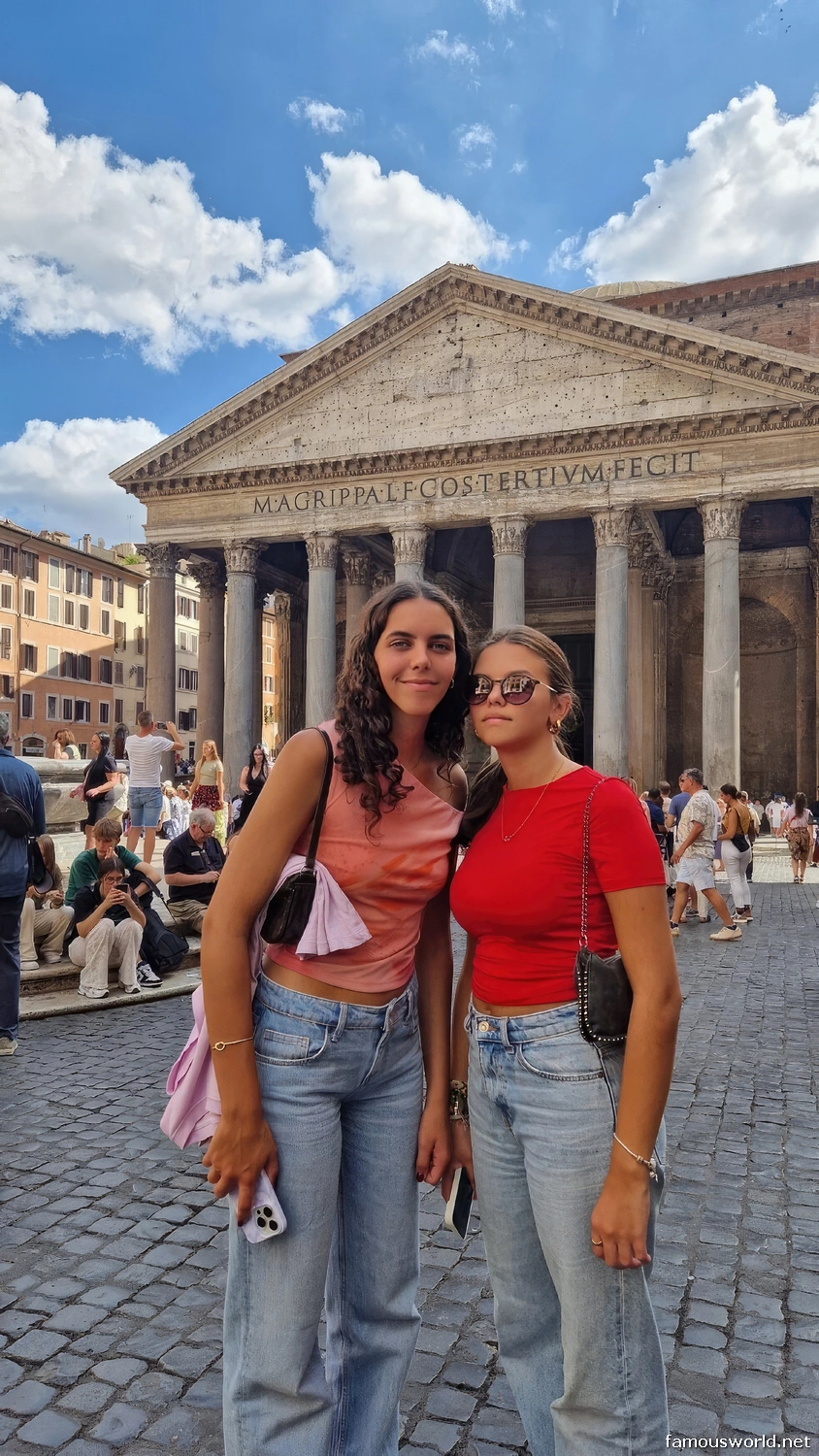
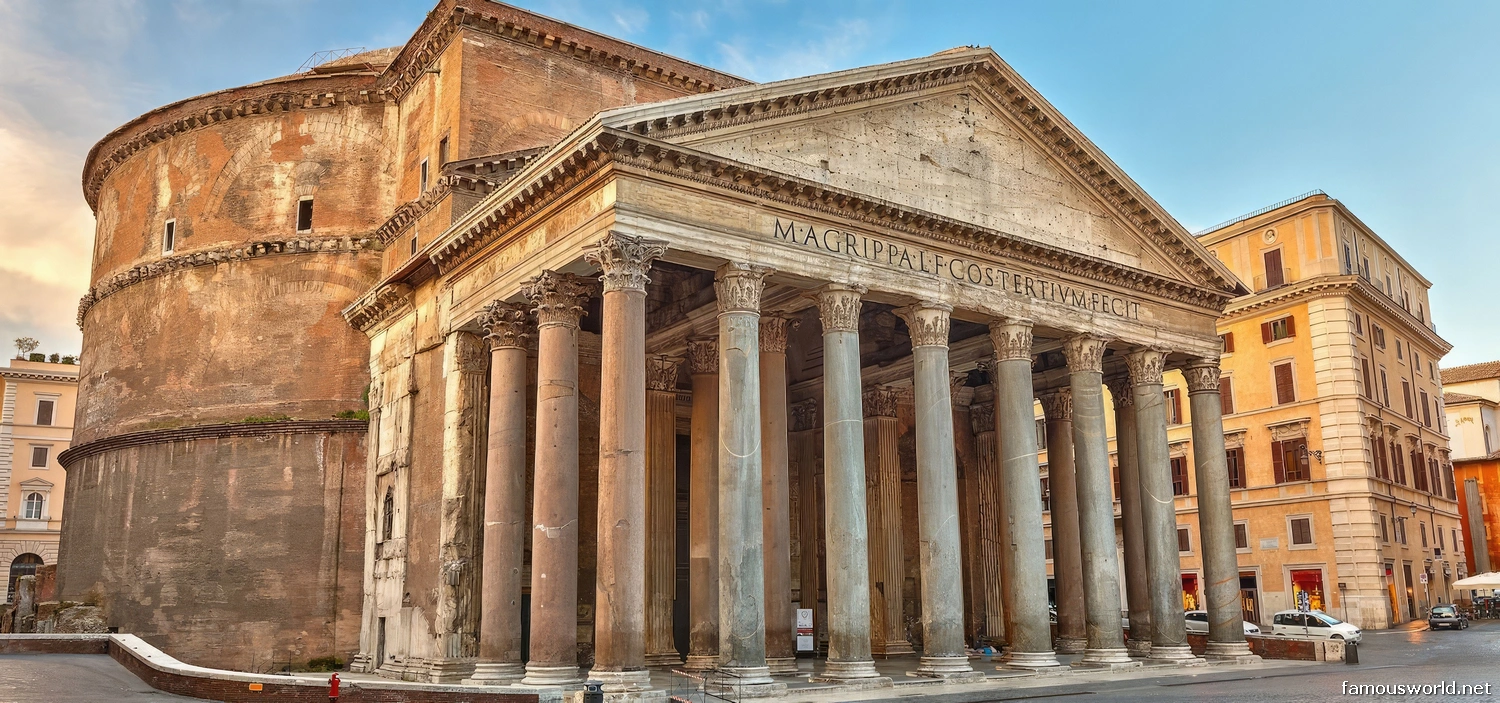
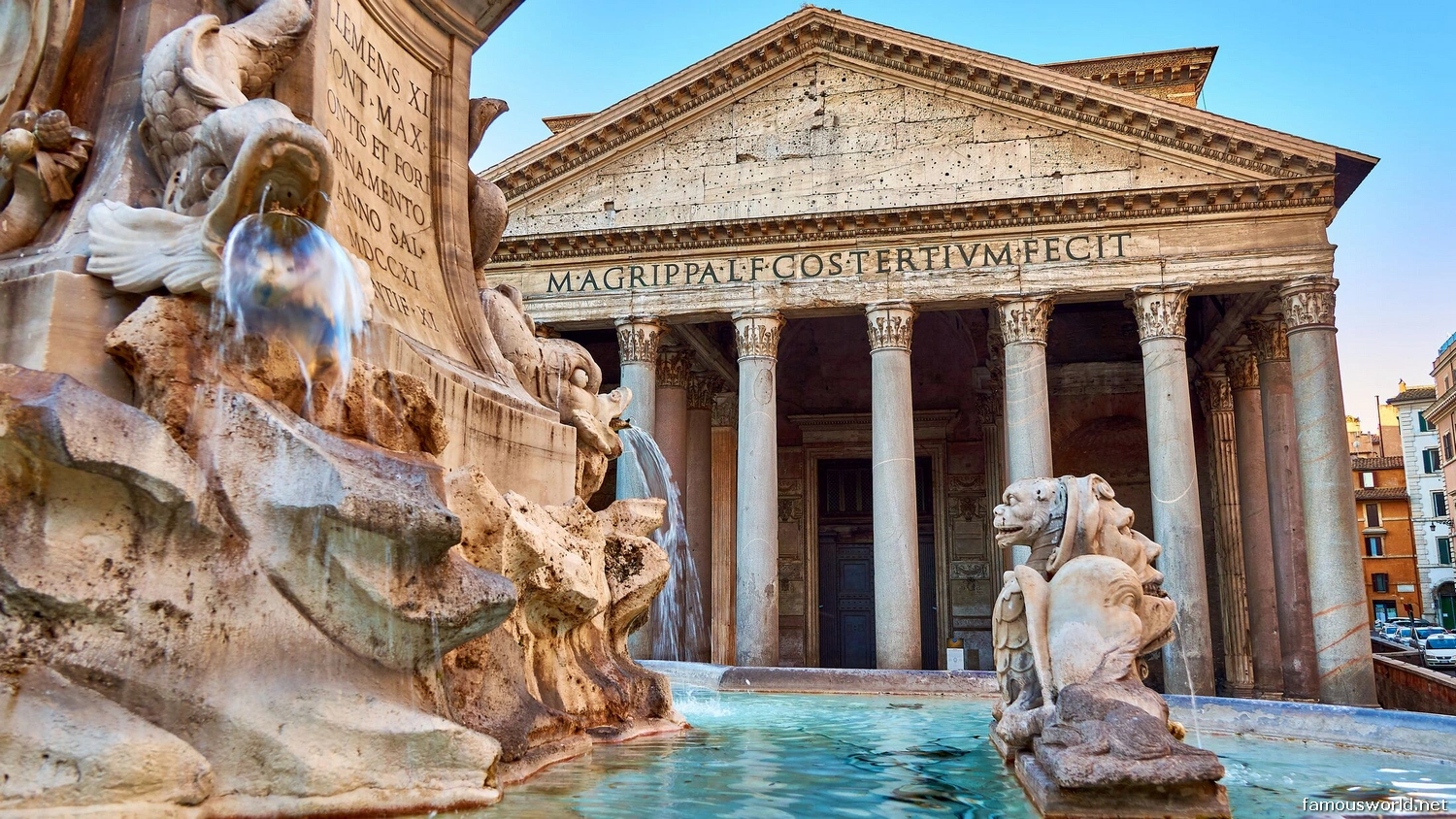
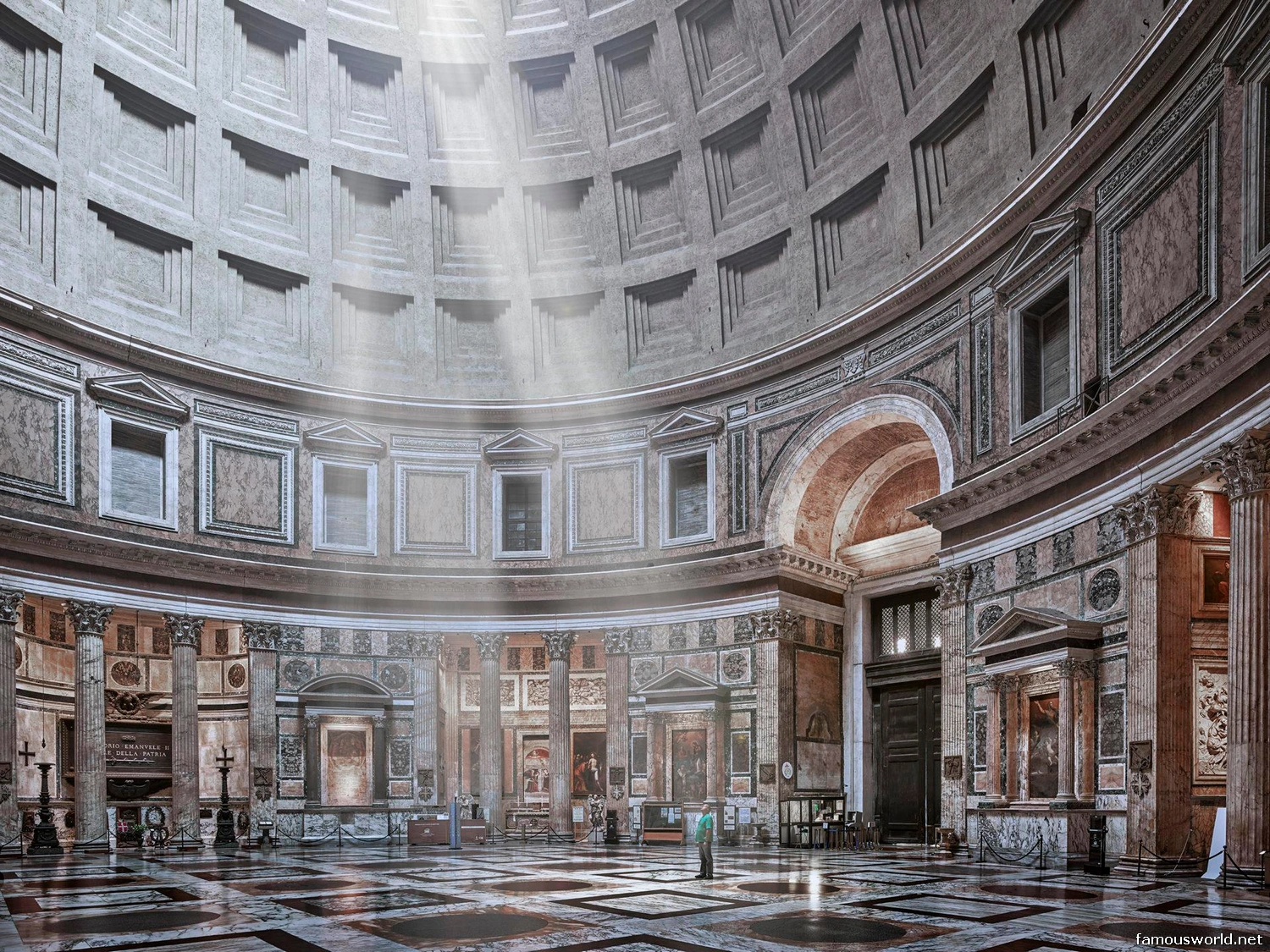

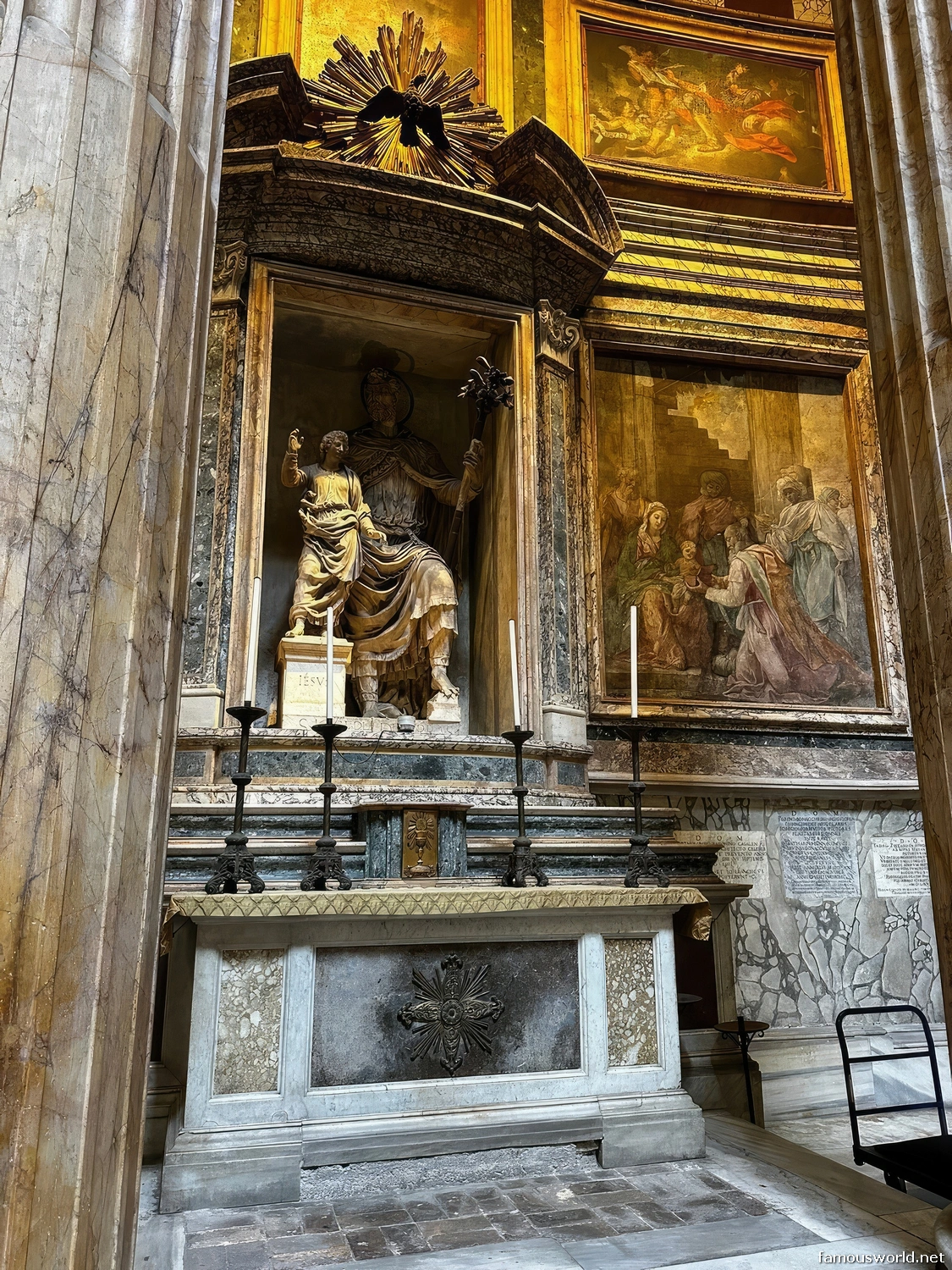
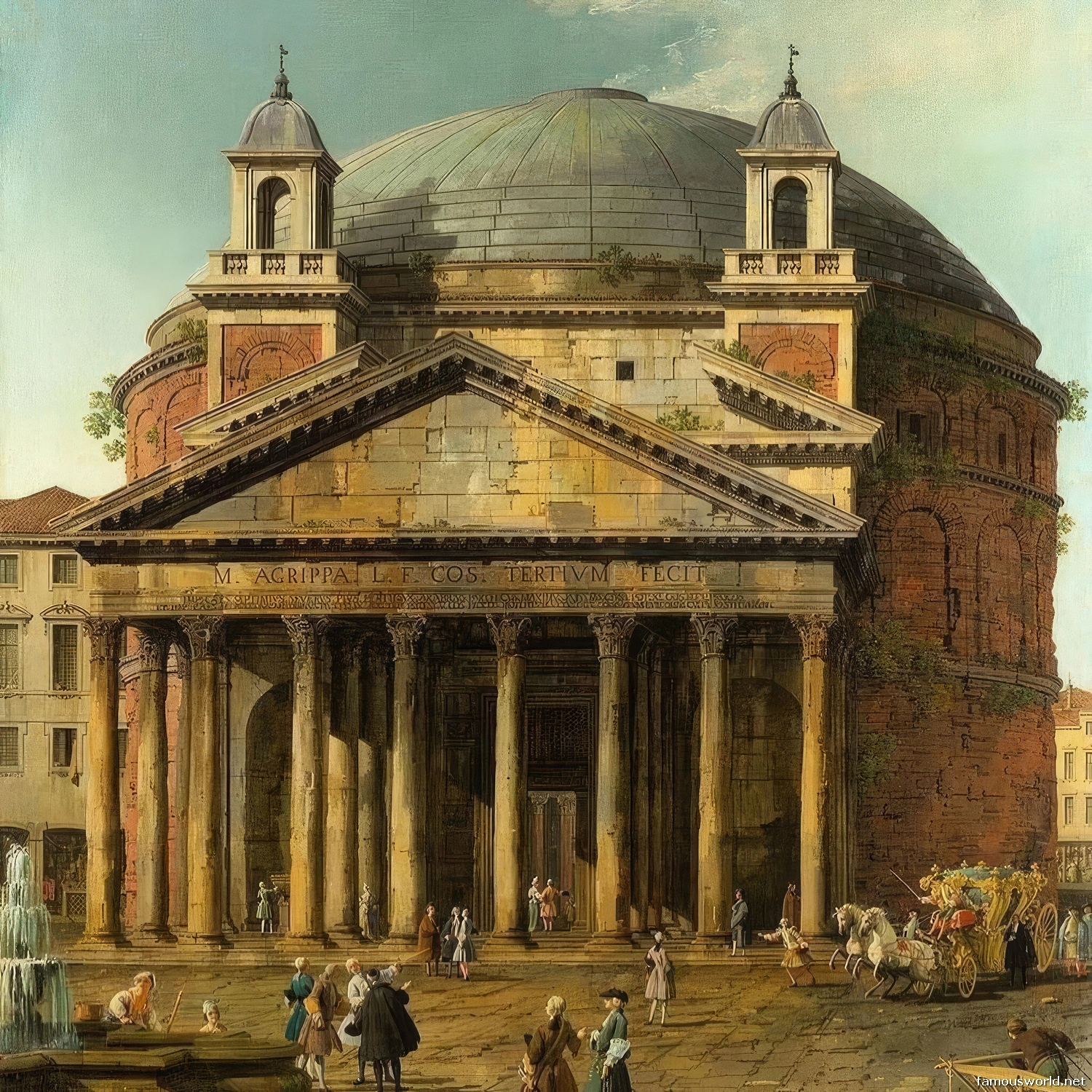


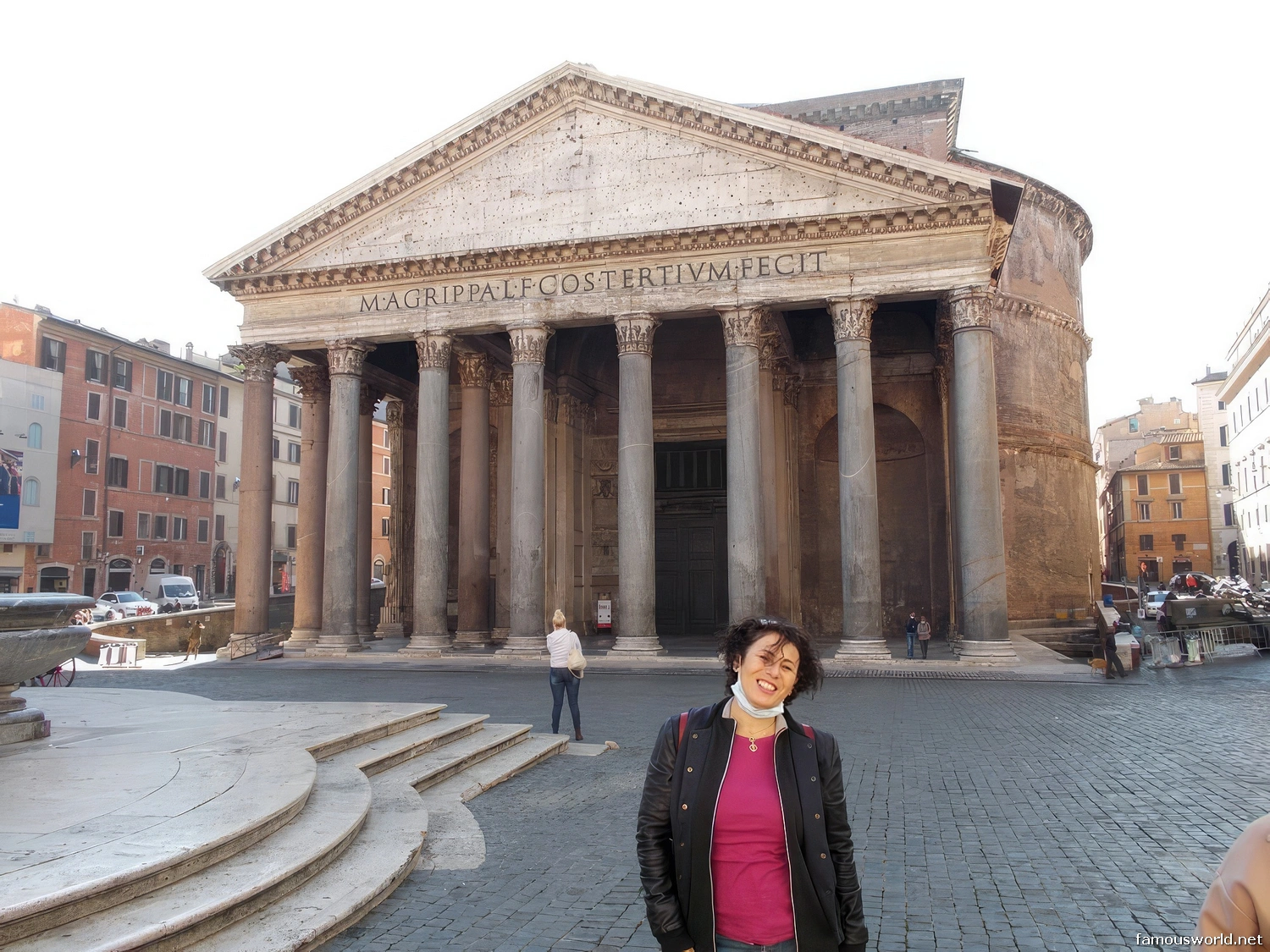
Standing as a sublime testament to the genius of Roman engineering, the Pantheon is the best-preserved of all ancient Roman buildings and an architectural marvel that has inspired awe for nearly two millennia. Originally a temple dedicated to all the gods, its revolutionary design is dominated by a magnificent, unreinforced concrete dome with a single, dramatic oculus open to the heavens. Its transformation into a Christian church ensured its survival, allowing it to stand today not as a ruin, but as a living monument, a tomb for Italian kings and the artist Raphael, and an enduring symbol of architectural perfection and the timeless legacy of Rome.
Listen to an introduction about Pantheon

Name and Location
- Name: The Pantheon.
- Location: In the Piazza della Rotonda, in the historic heart of Rome, Italy.
How to Get There
The Pantheon is located in a largely pedestrianized area and is best reached on foot.
- By Foot: It is a short and pleasant walk from other major landmarks like Piazza Navona, the Trevi Fountain, and Largo di Torre Argentina.
- By Bus: Numerous bus routes stop at Largo di Torre Argentina, just a few minutes’ walk away.
- By Metro: There is no direct metro stop. The closest are “Barberini” (Line A) or “Spagna” (Line A), both a 15-20 minute walk away.
Landscape and Architecture
The Pantheon is famous for the dramatic contrast between its classical exterior and its revolutionary interior space.
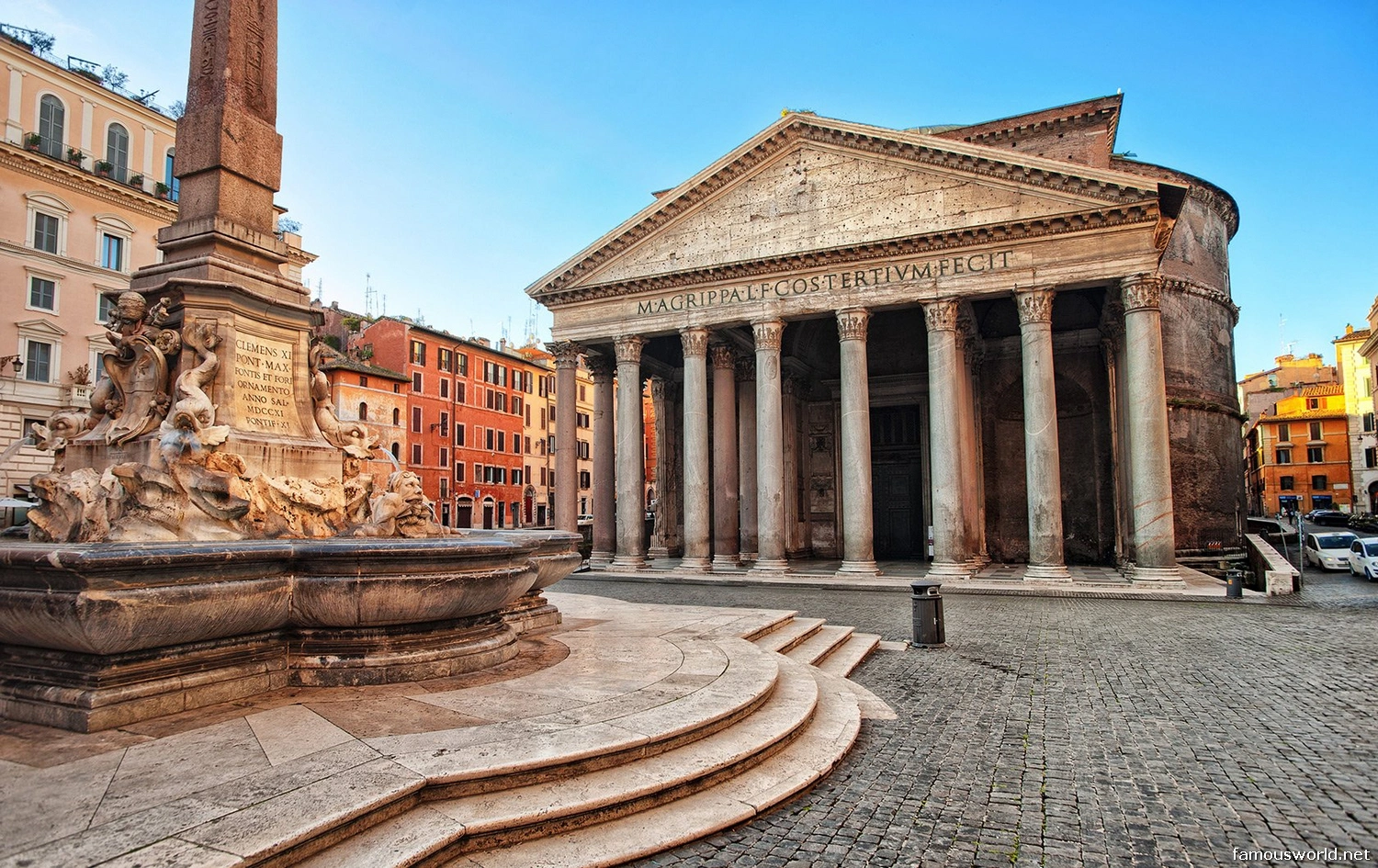
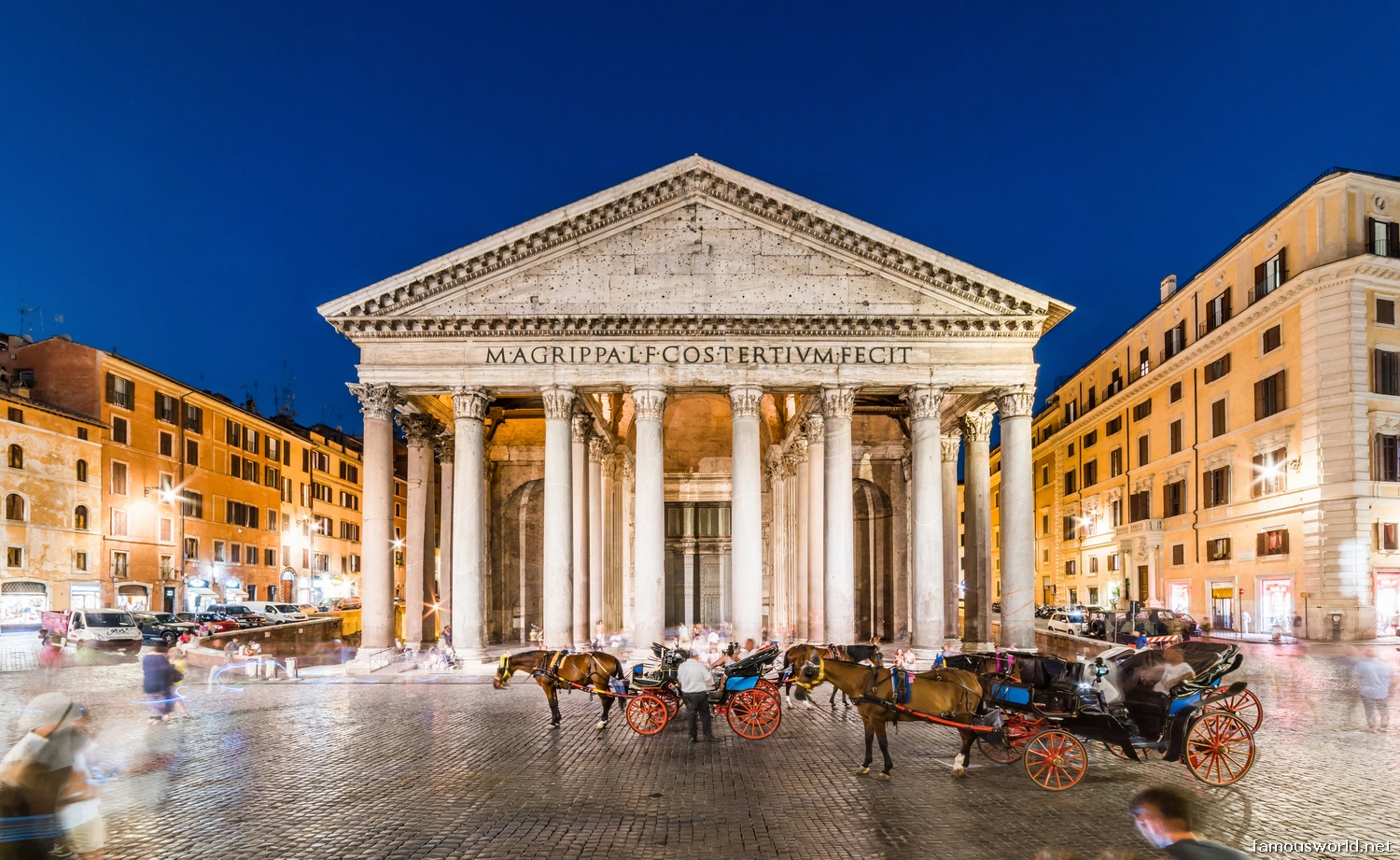
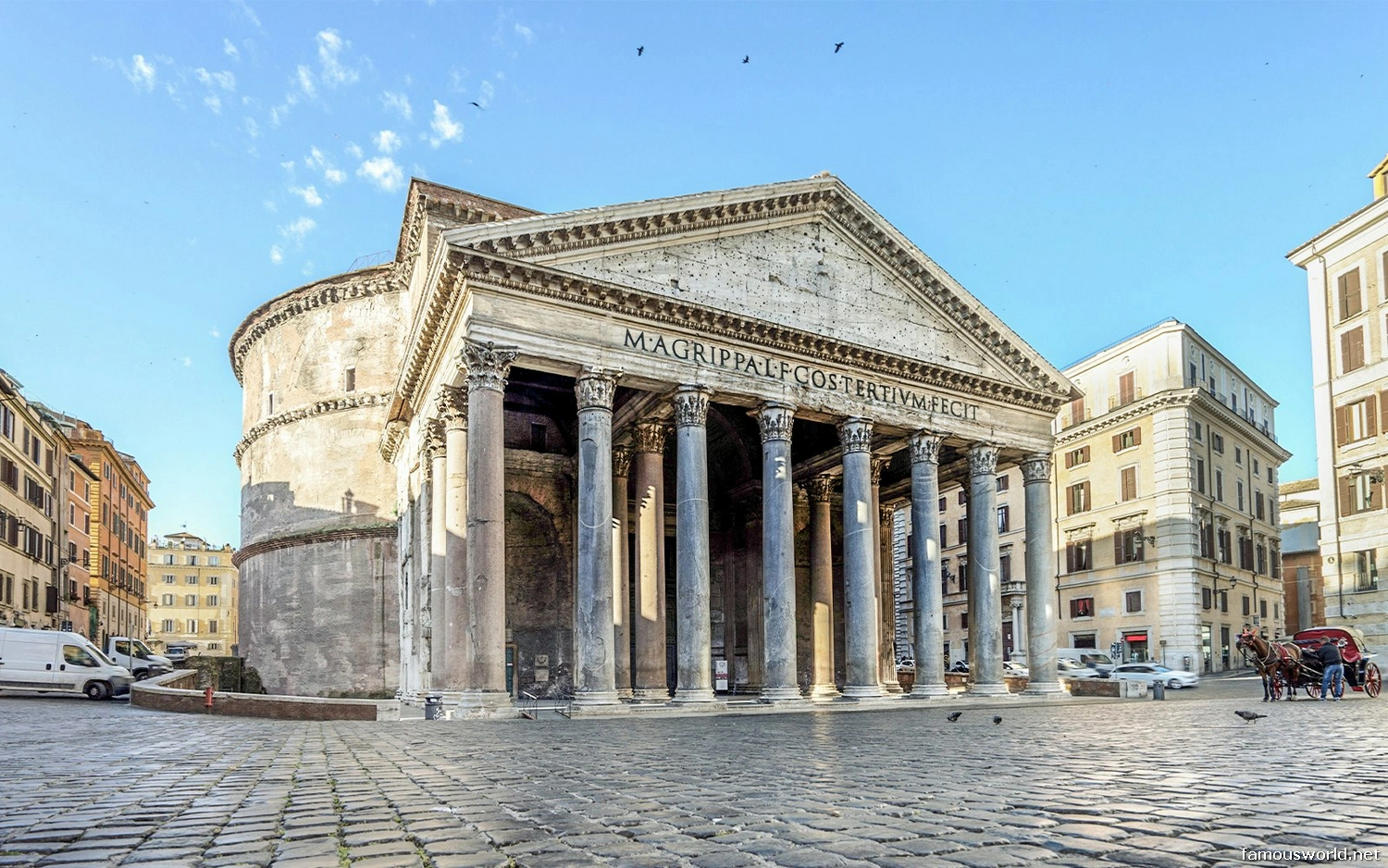
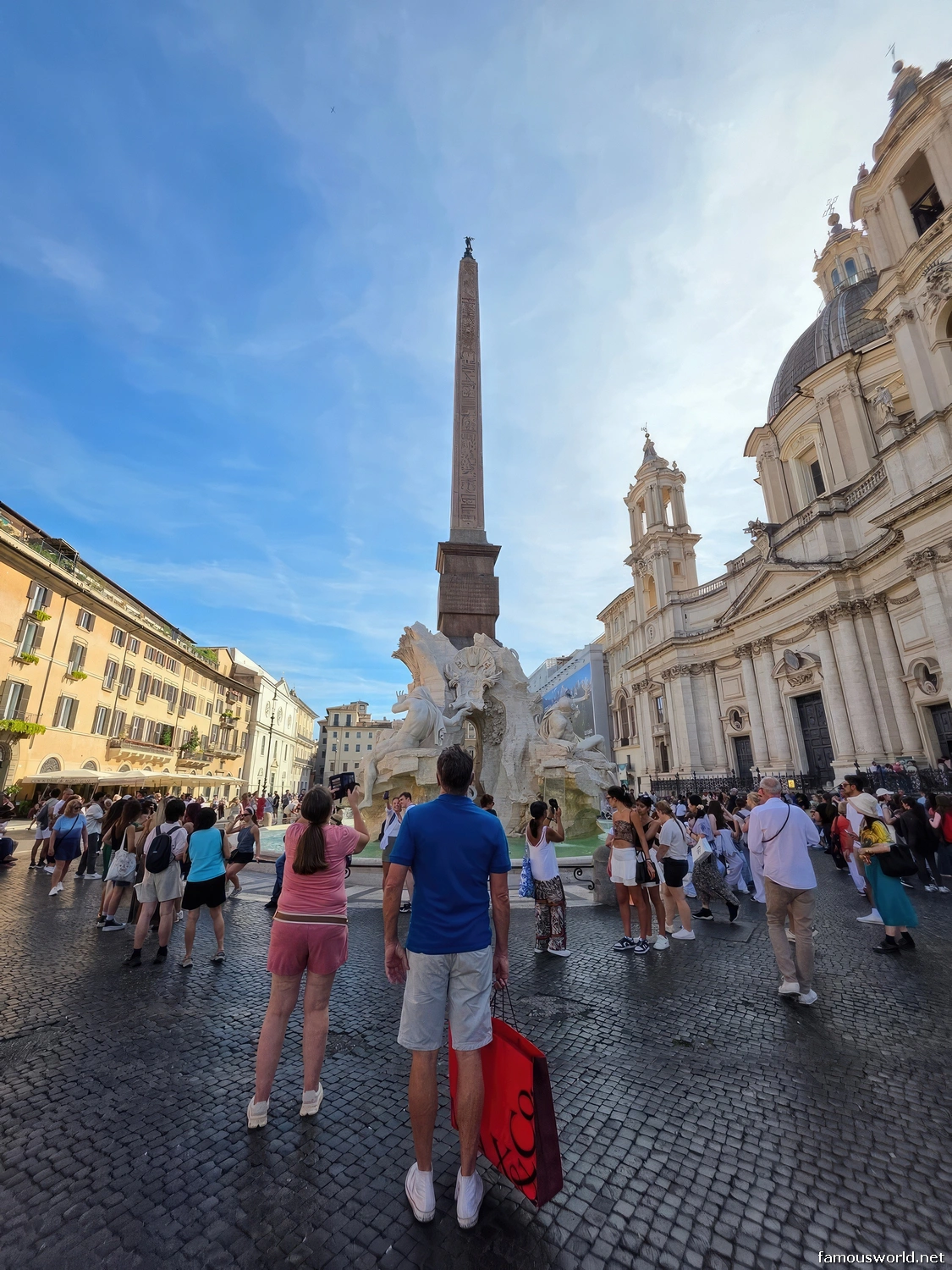
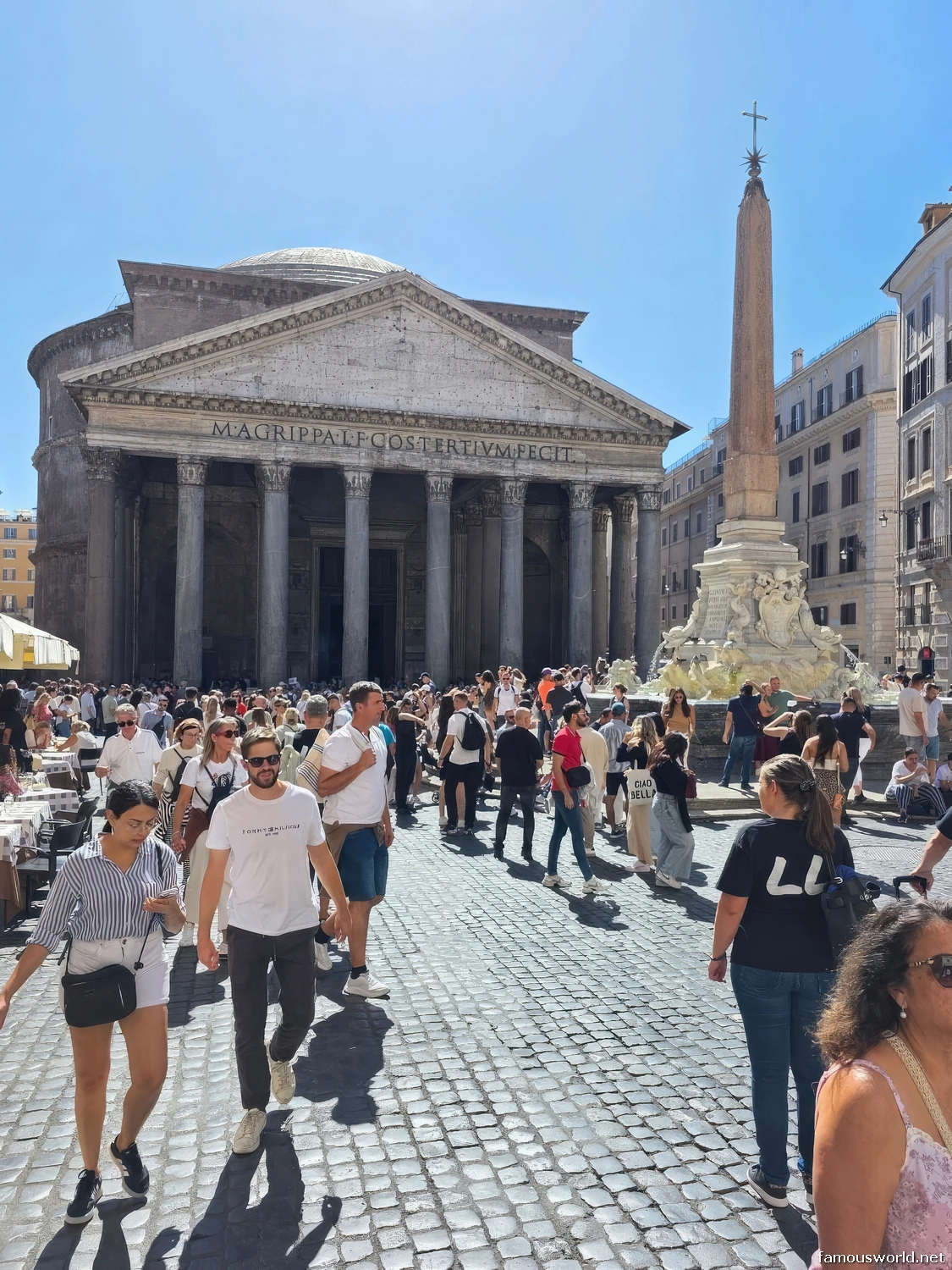
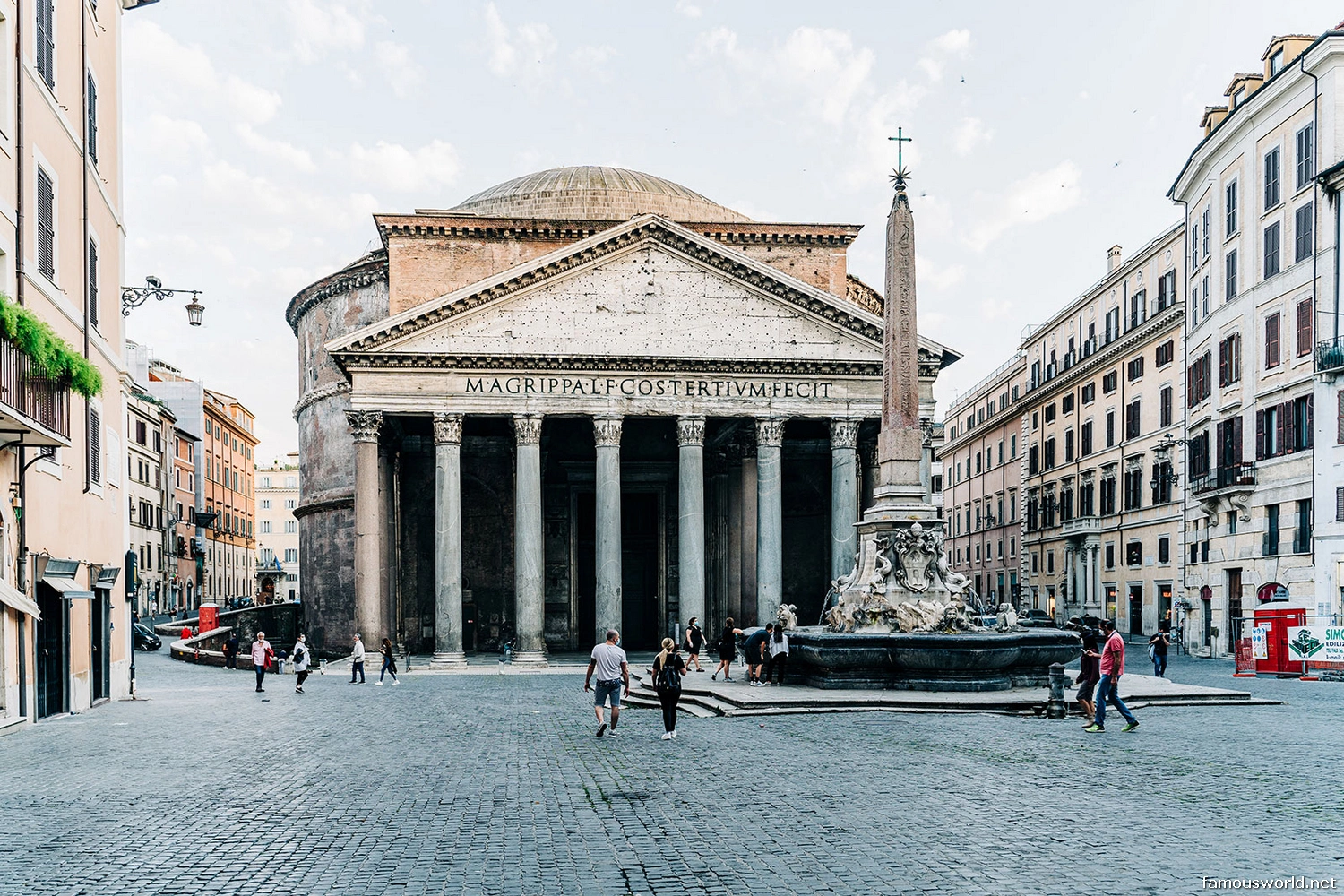
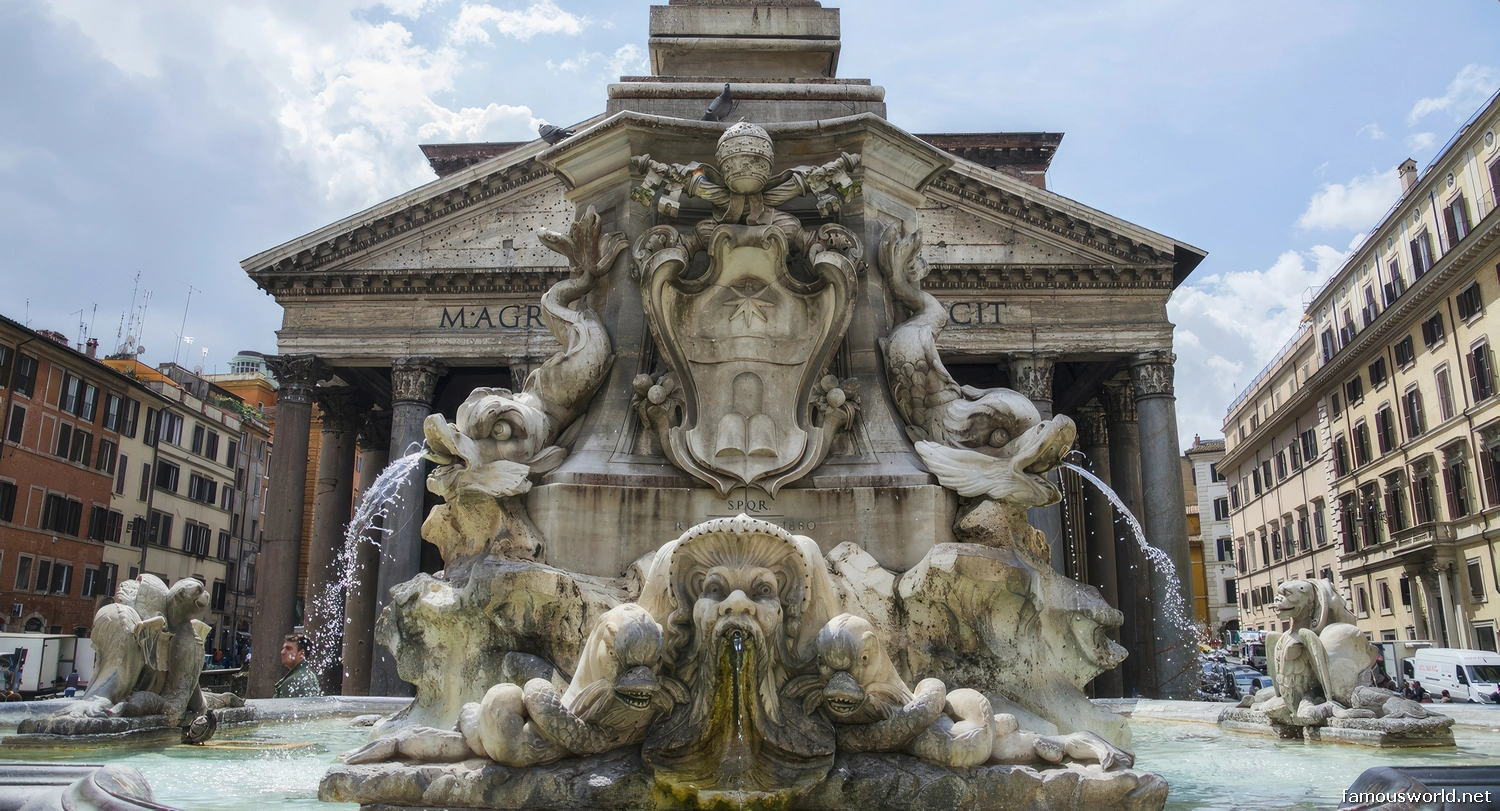
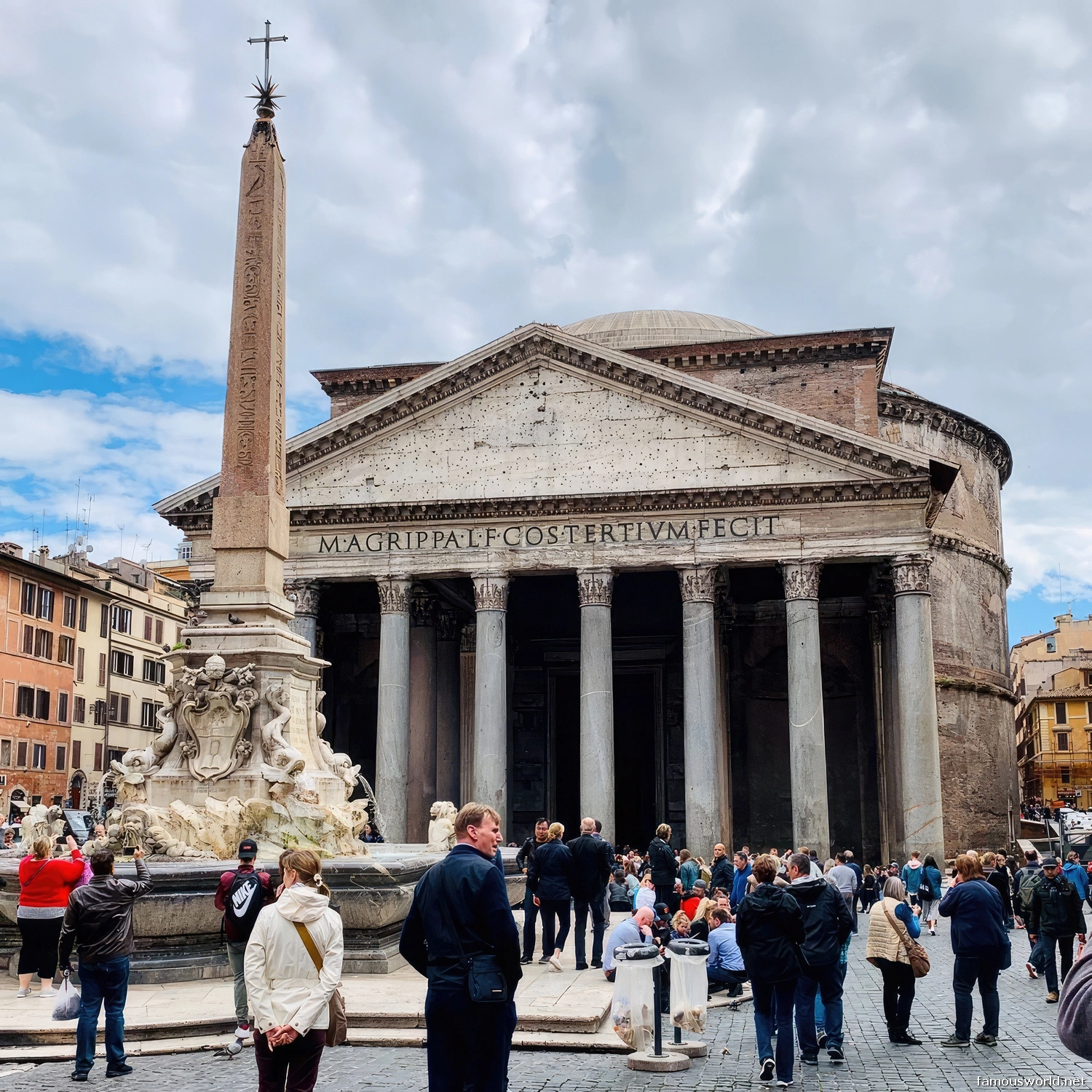
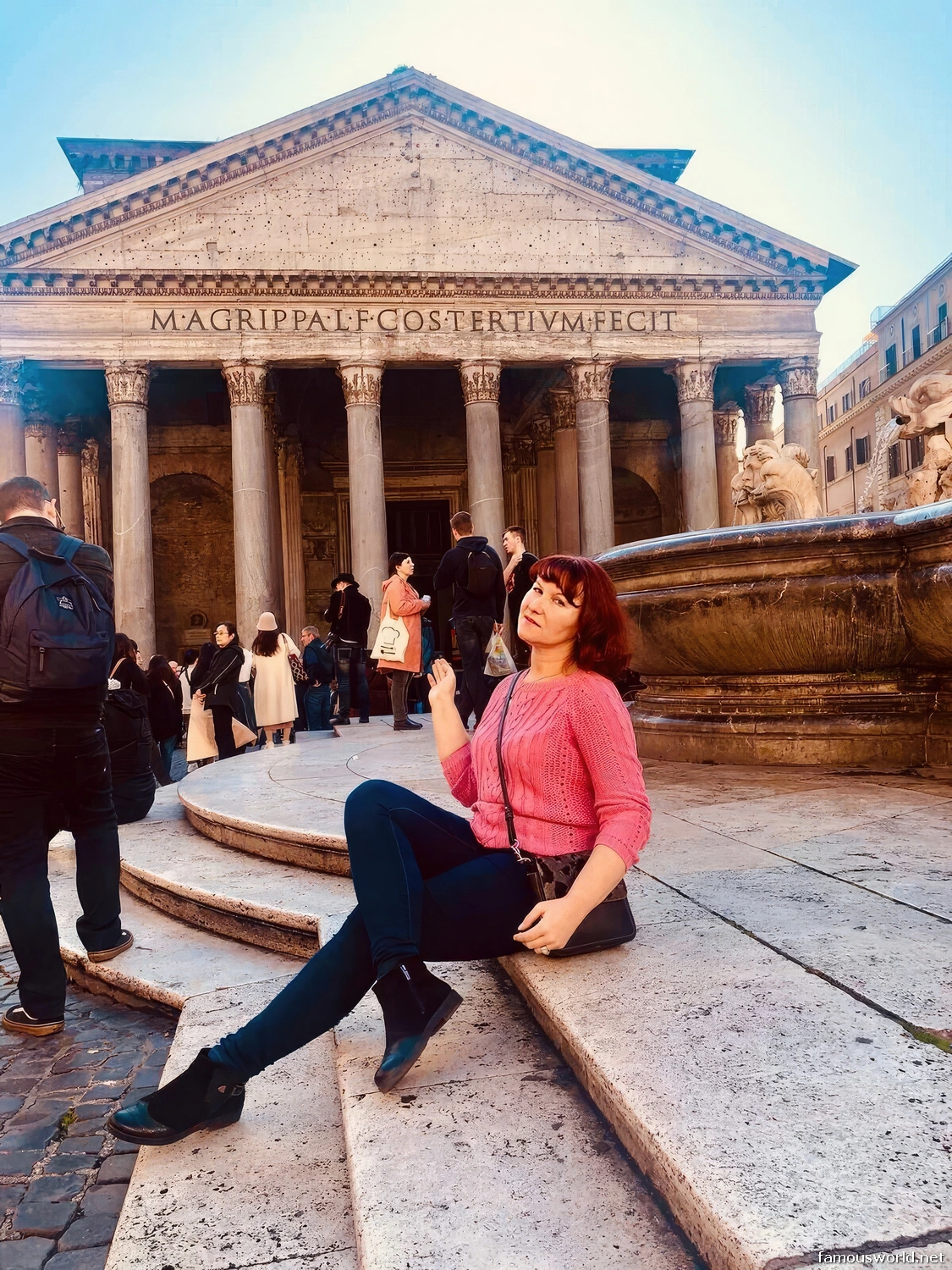
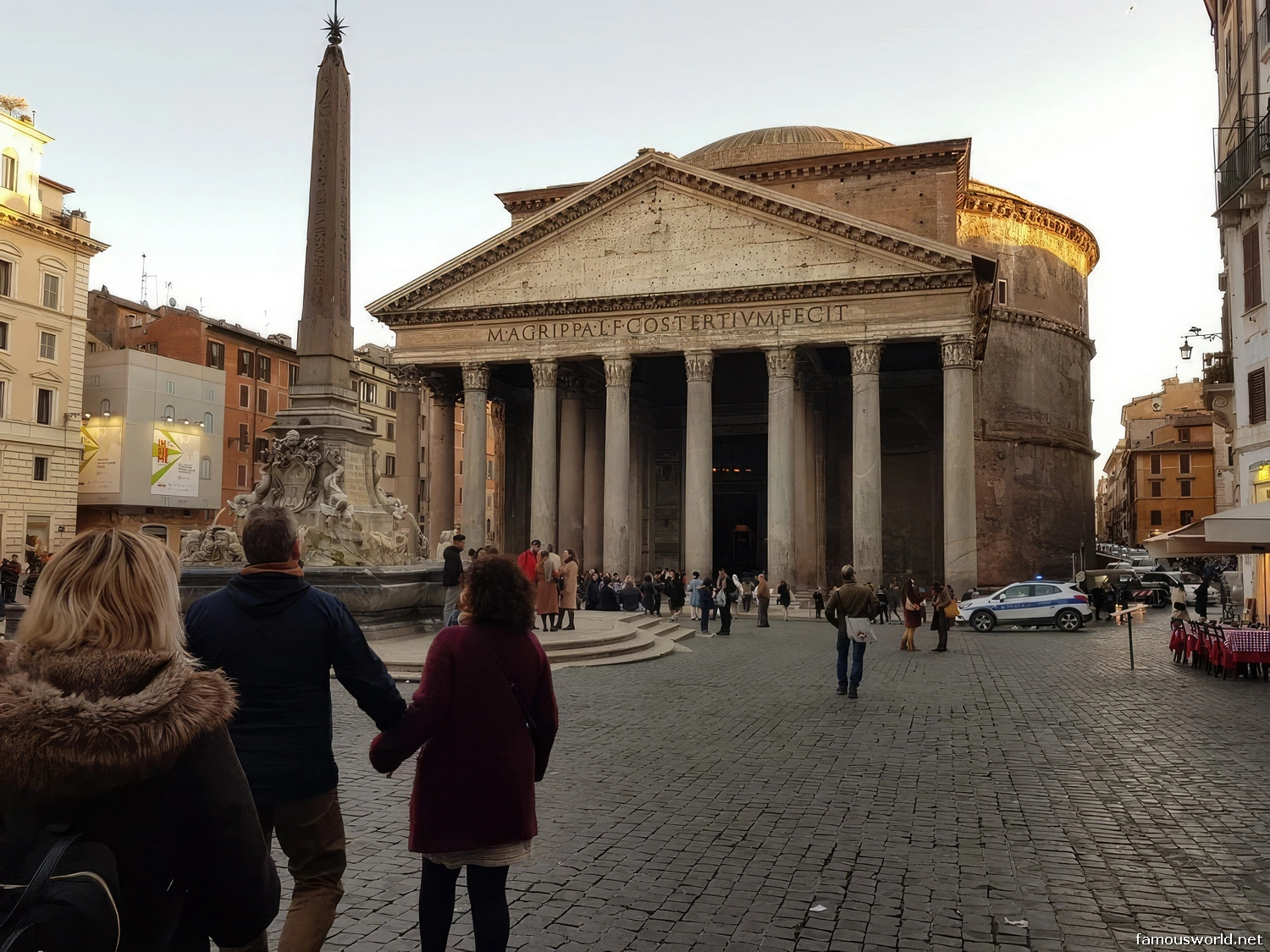
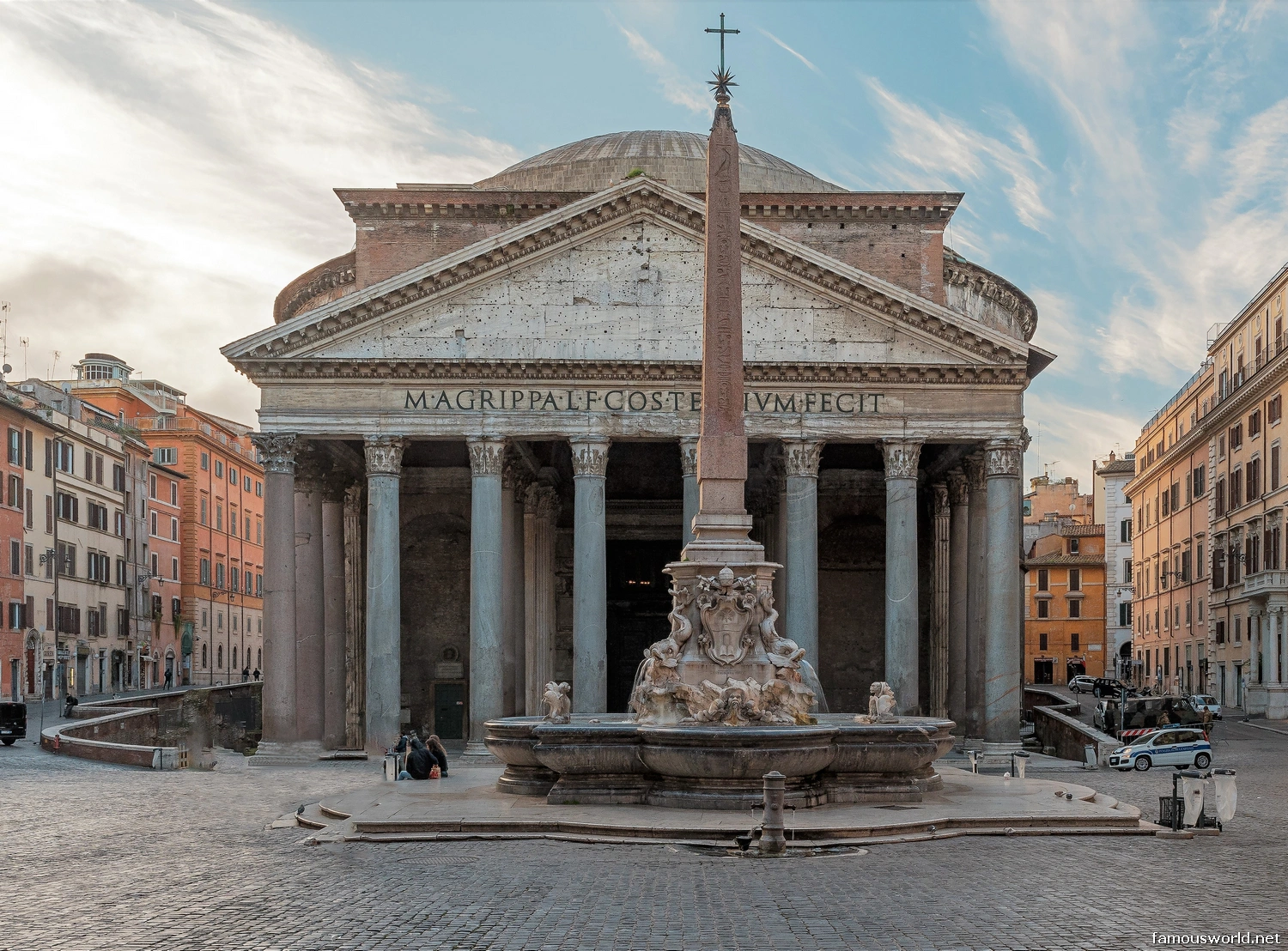
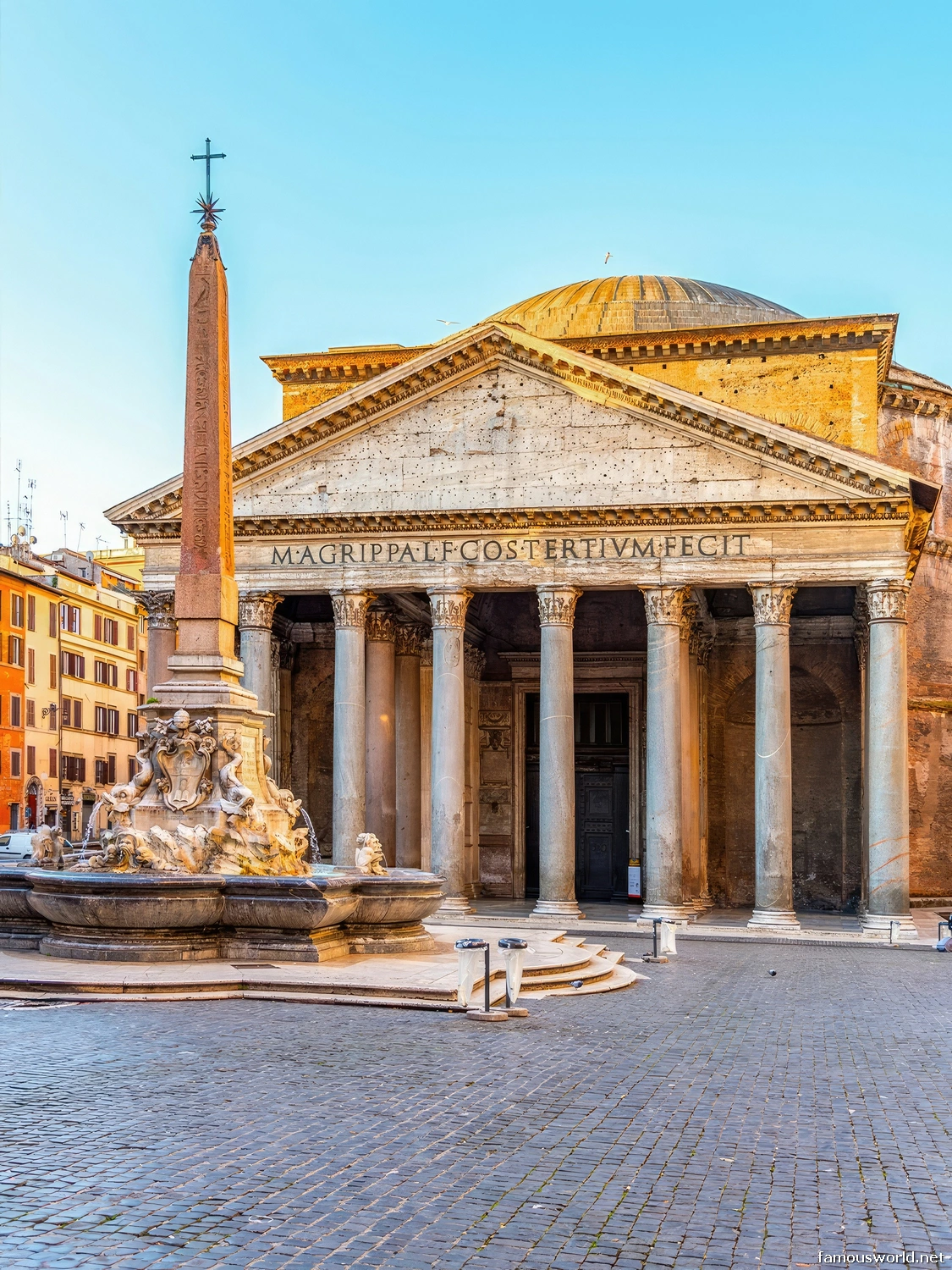
- The Landscape: The building abruptly dominates the Piazza della Rotonda, a bustling, intimate square. The contrast between the ancient, monumental structure and the lively modern cafes surrounding it is one of Rome’s most iconic scenes. A Renaissance fountain and an ancient Egyptian obelisk stand before it, adding to the square’s charm.
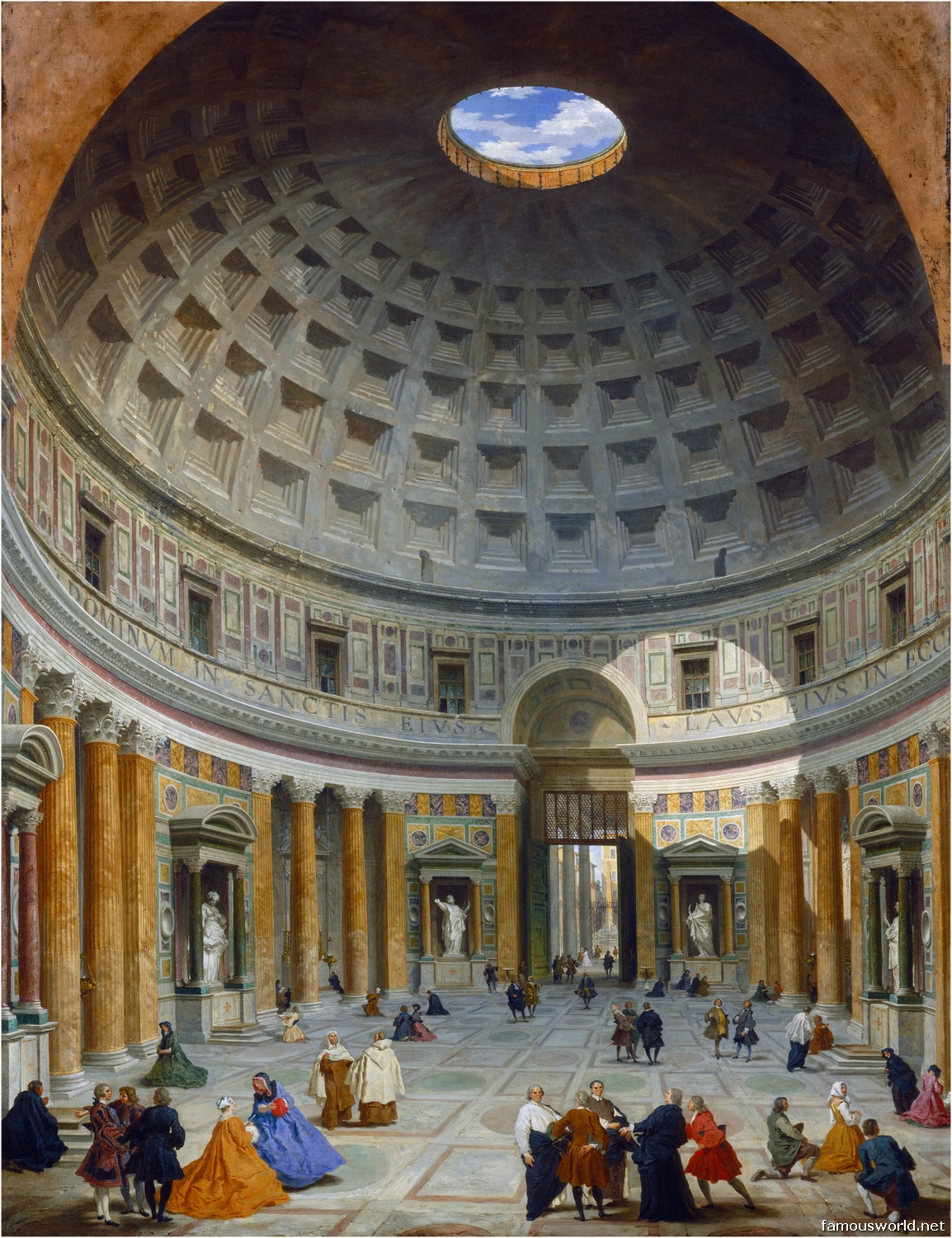
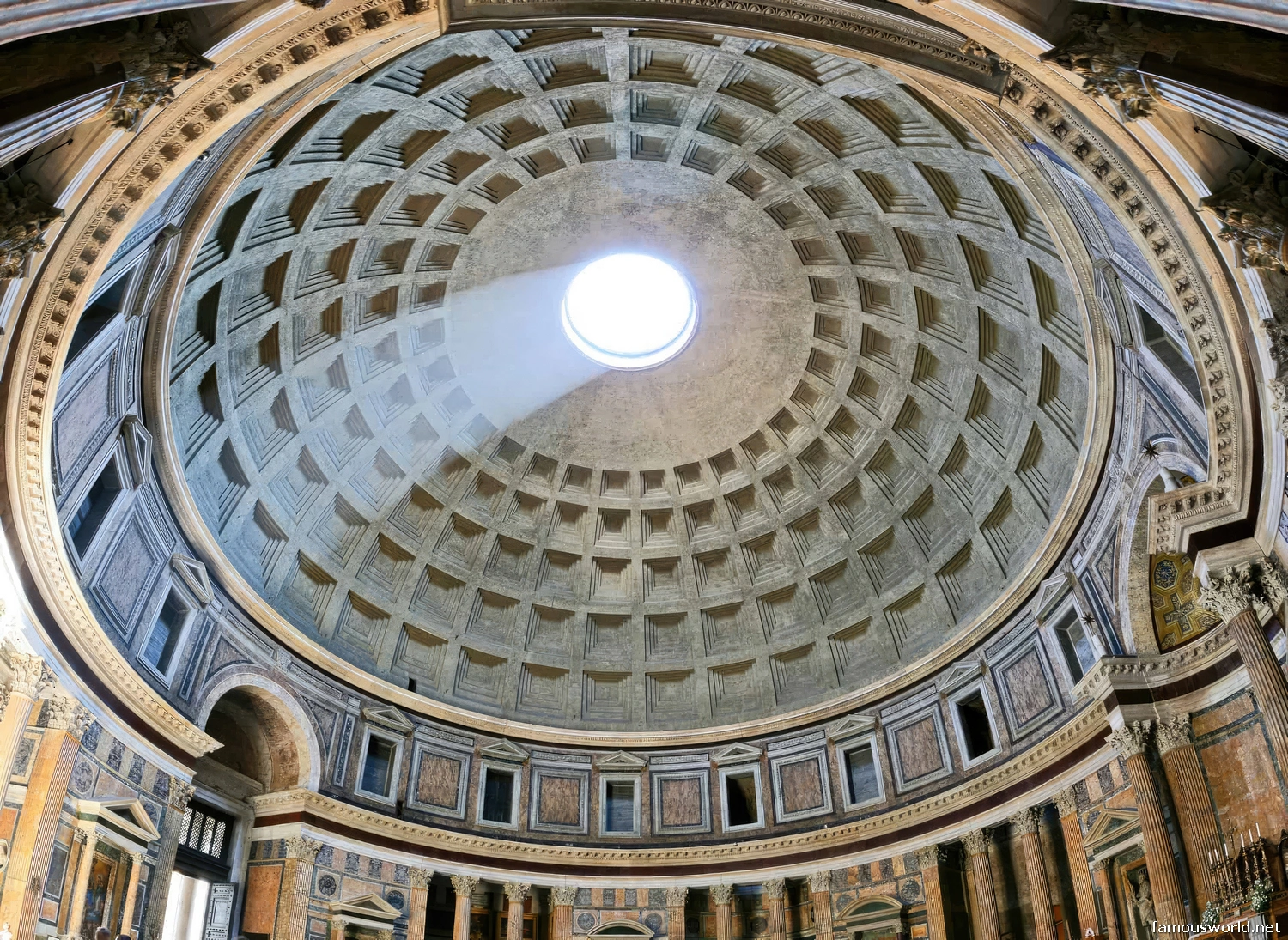
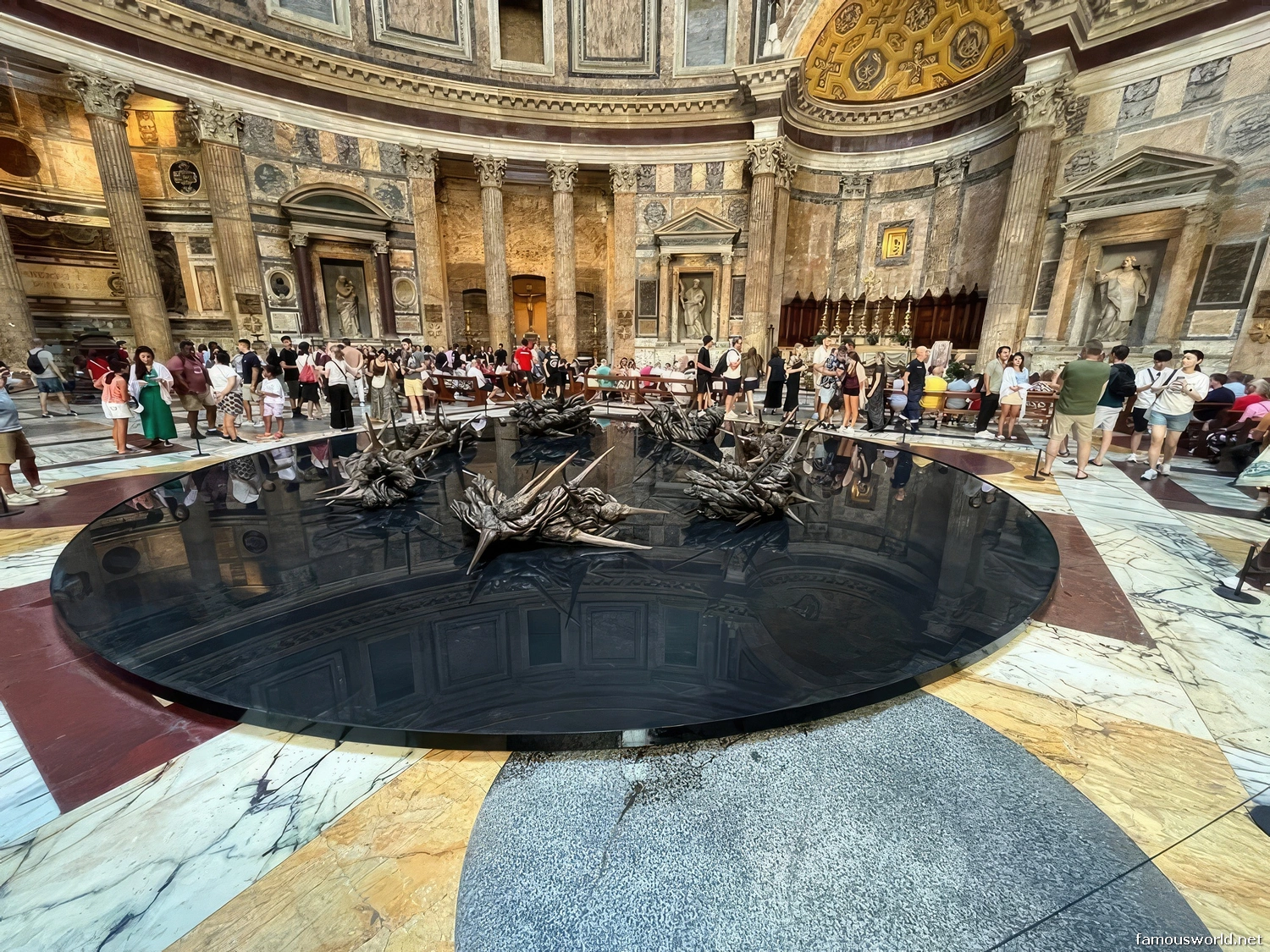
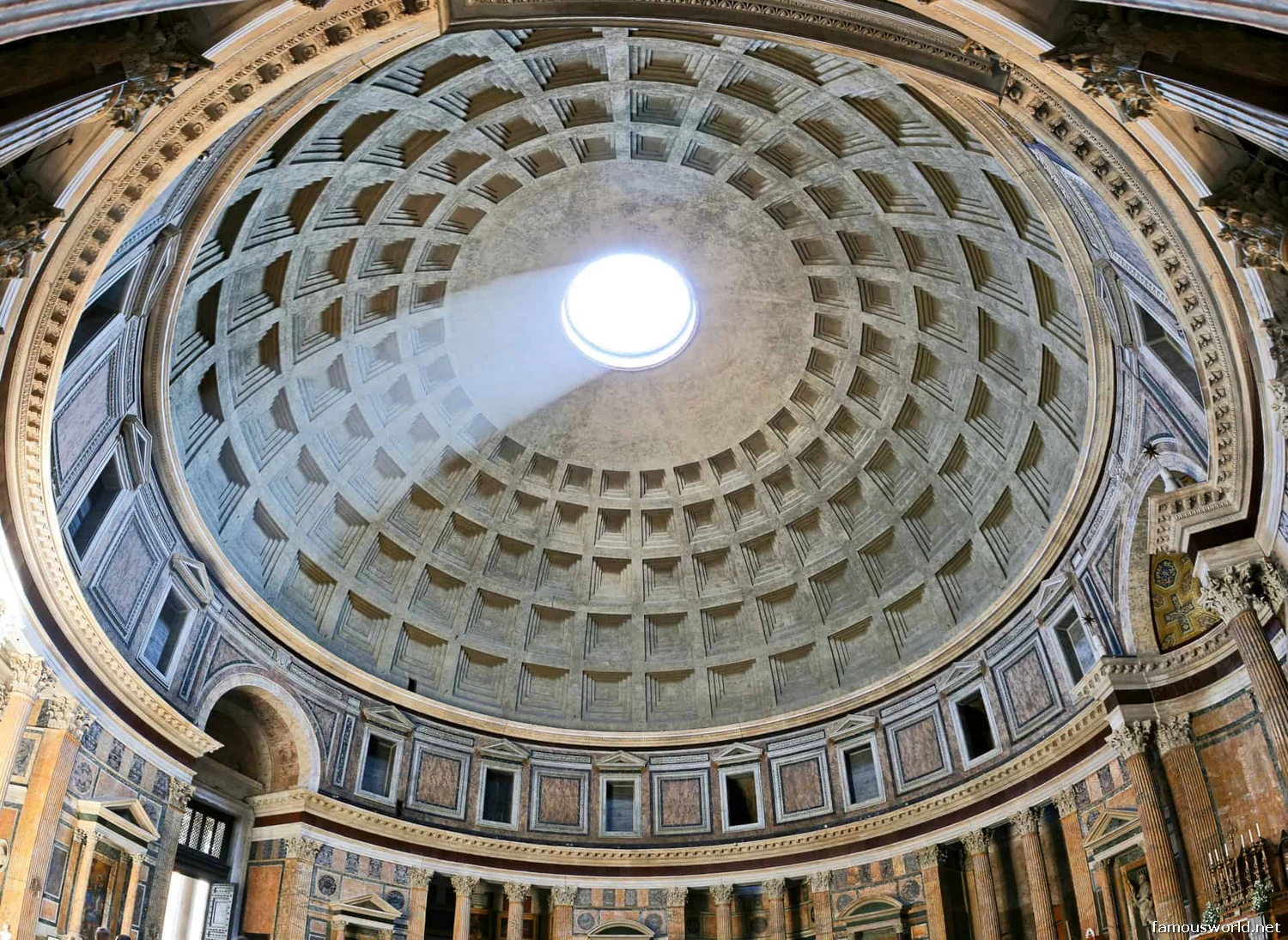
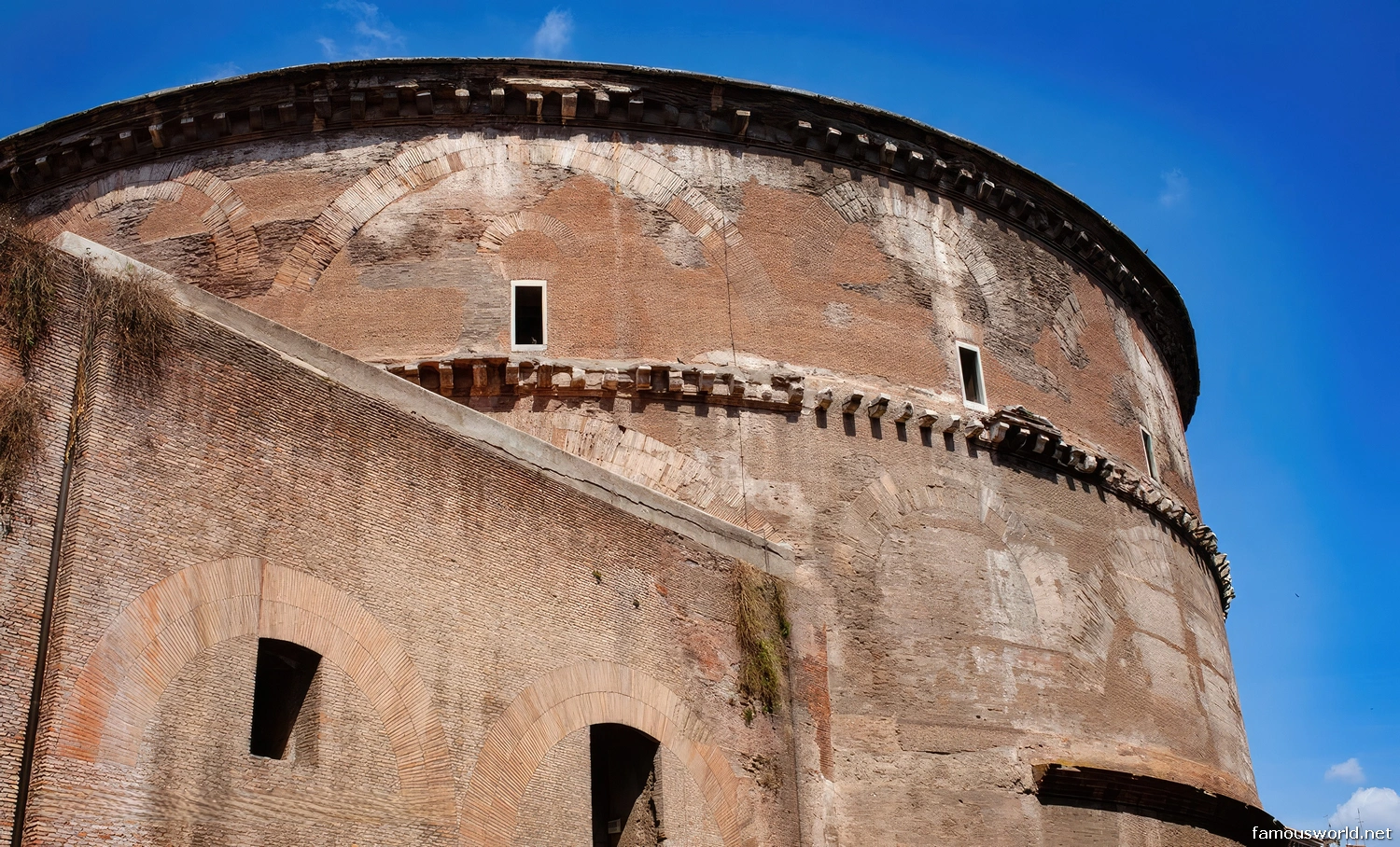
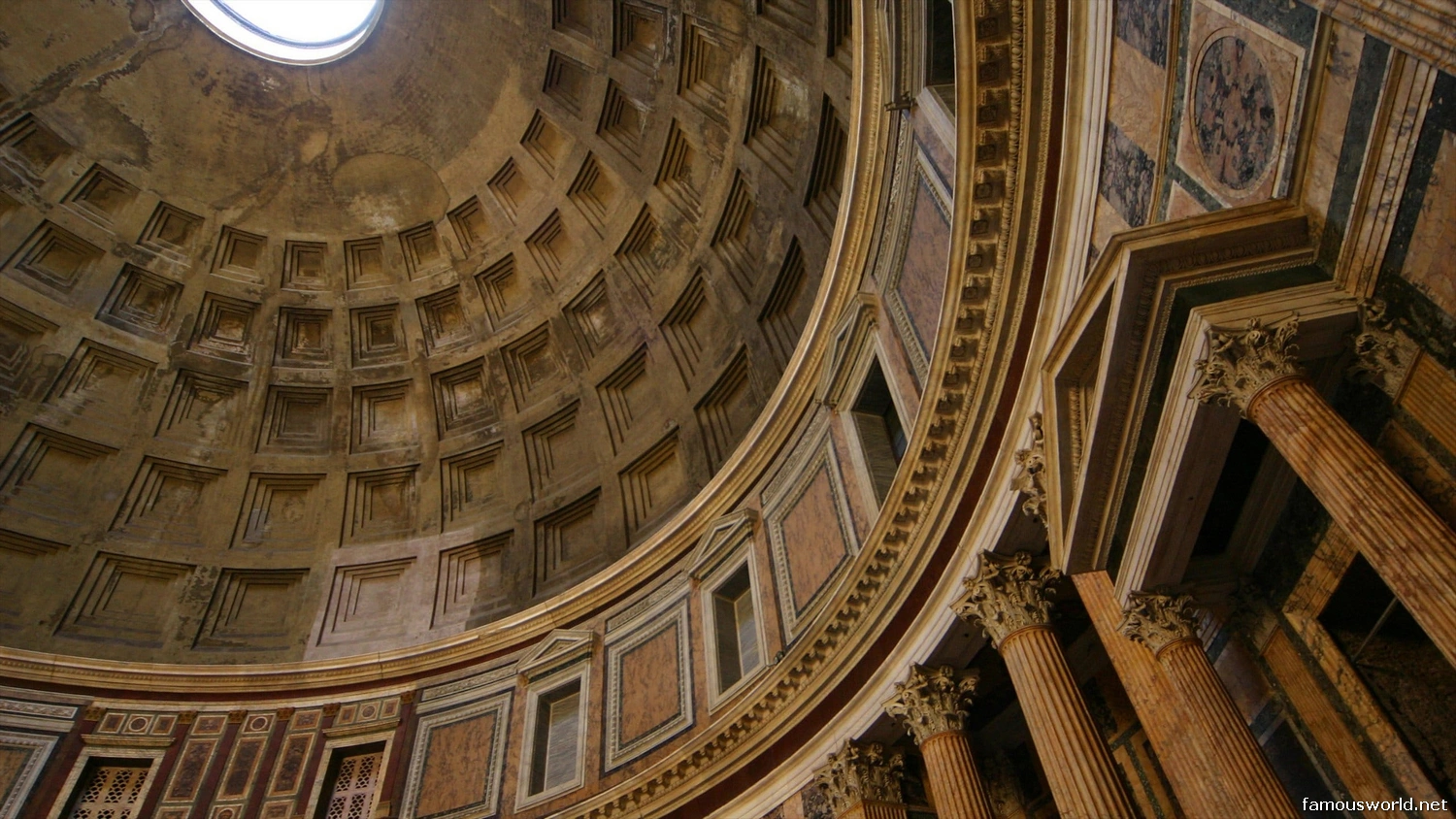
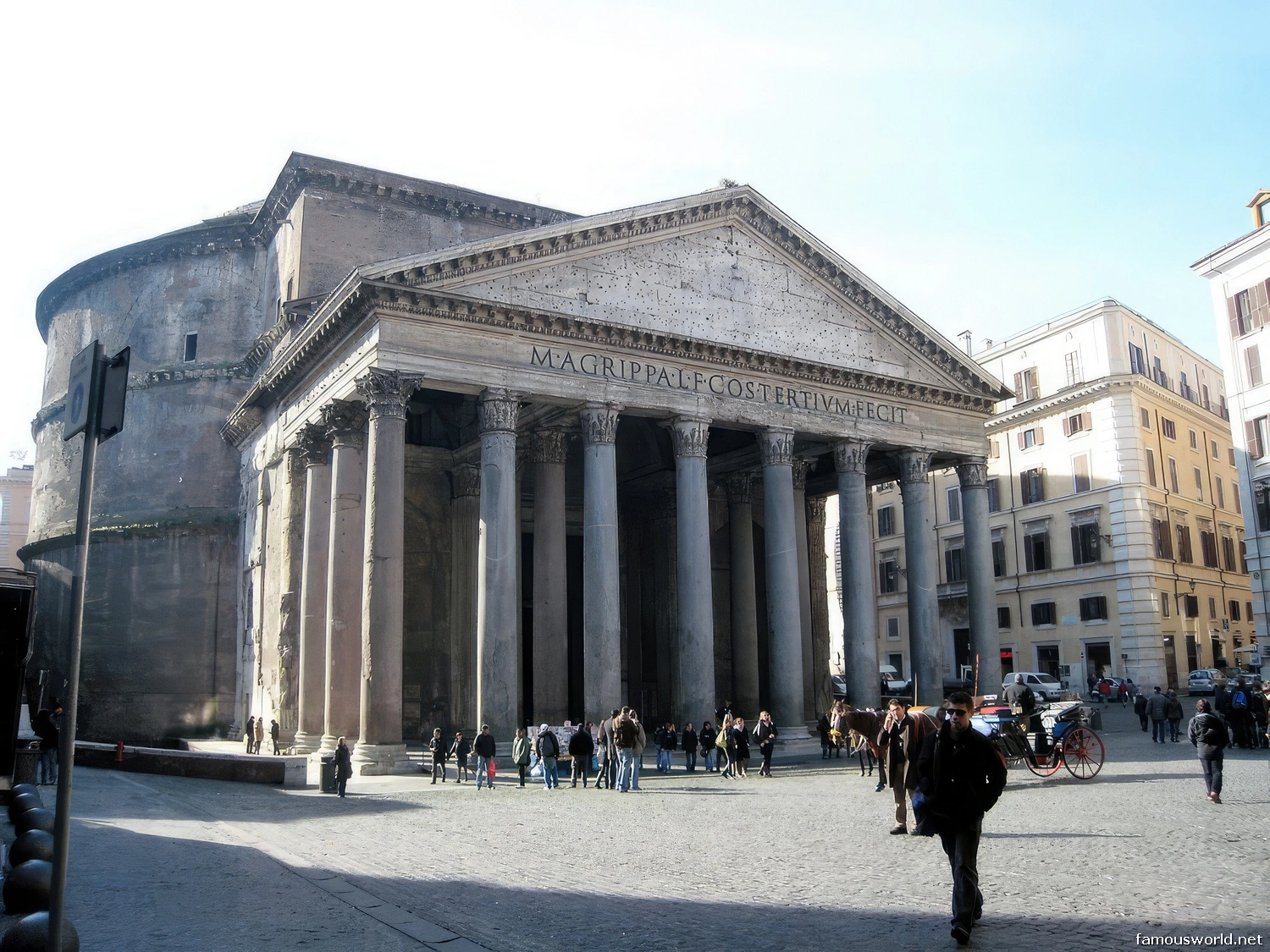
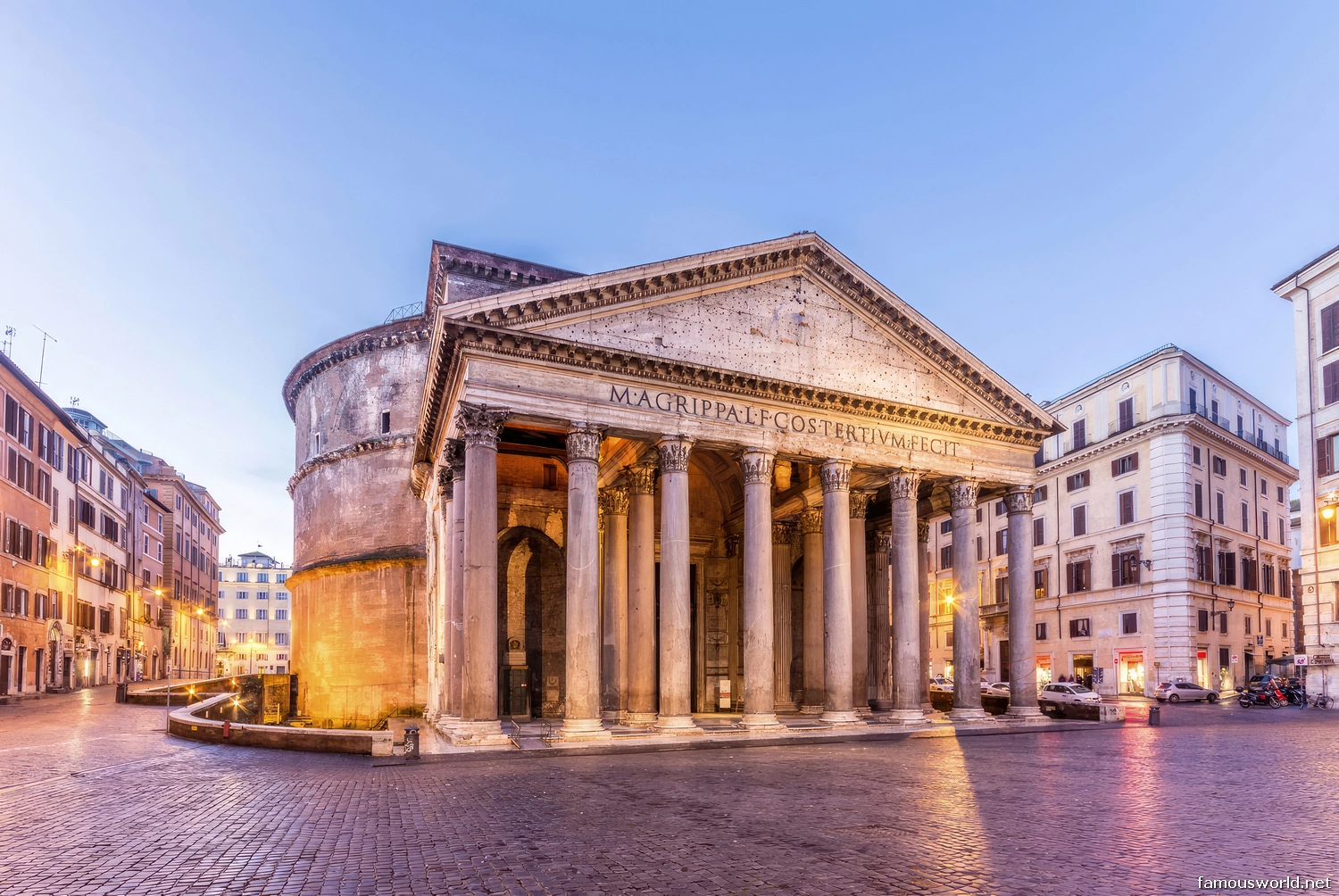
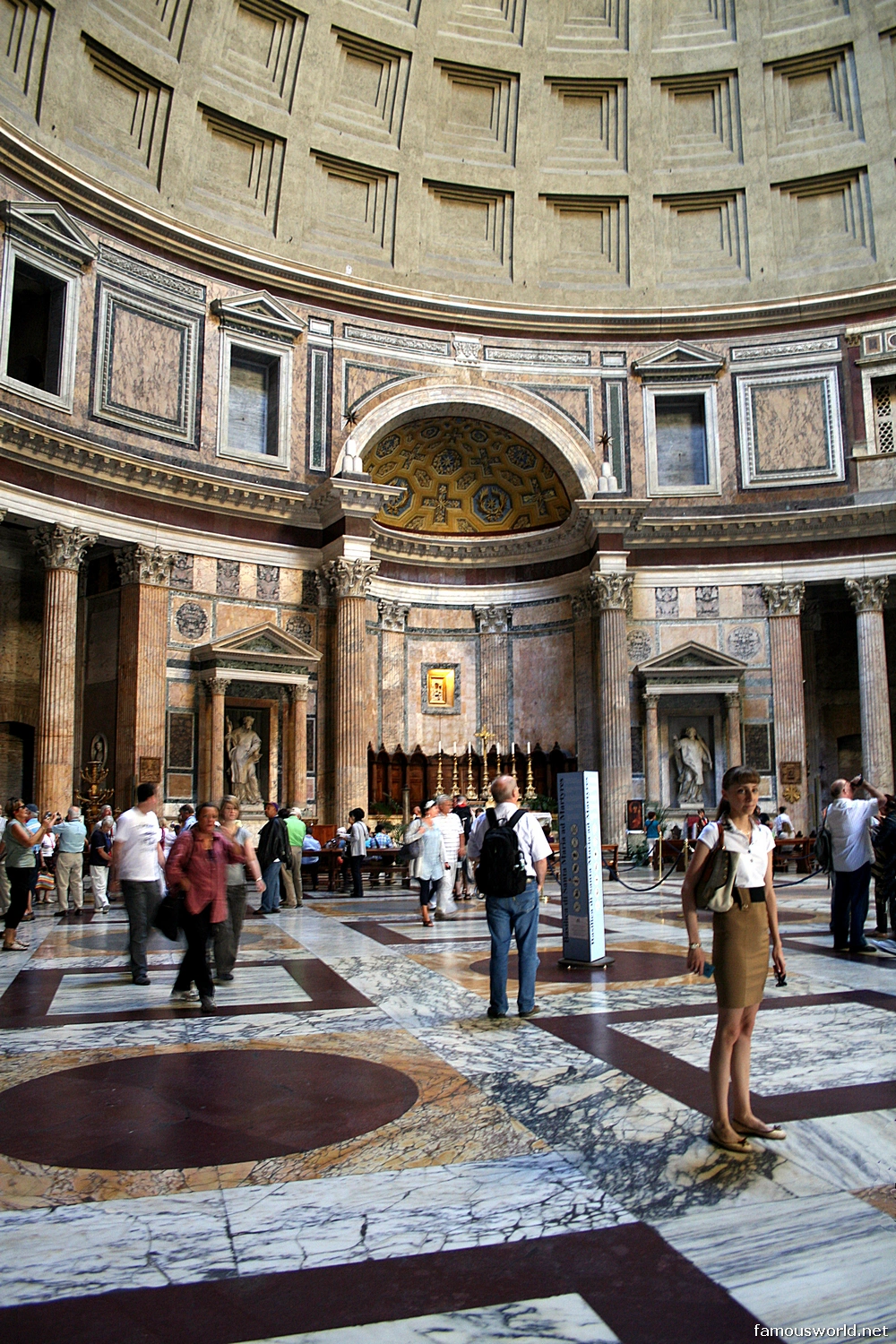
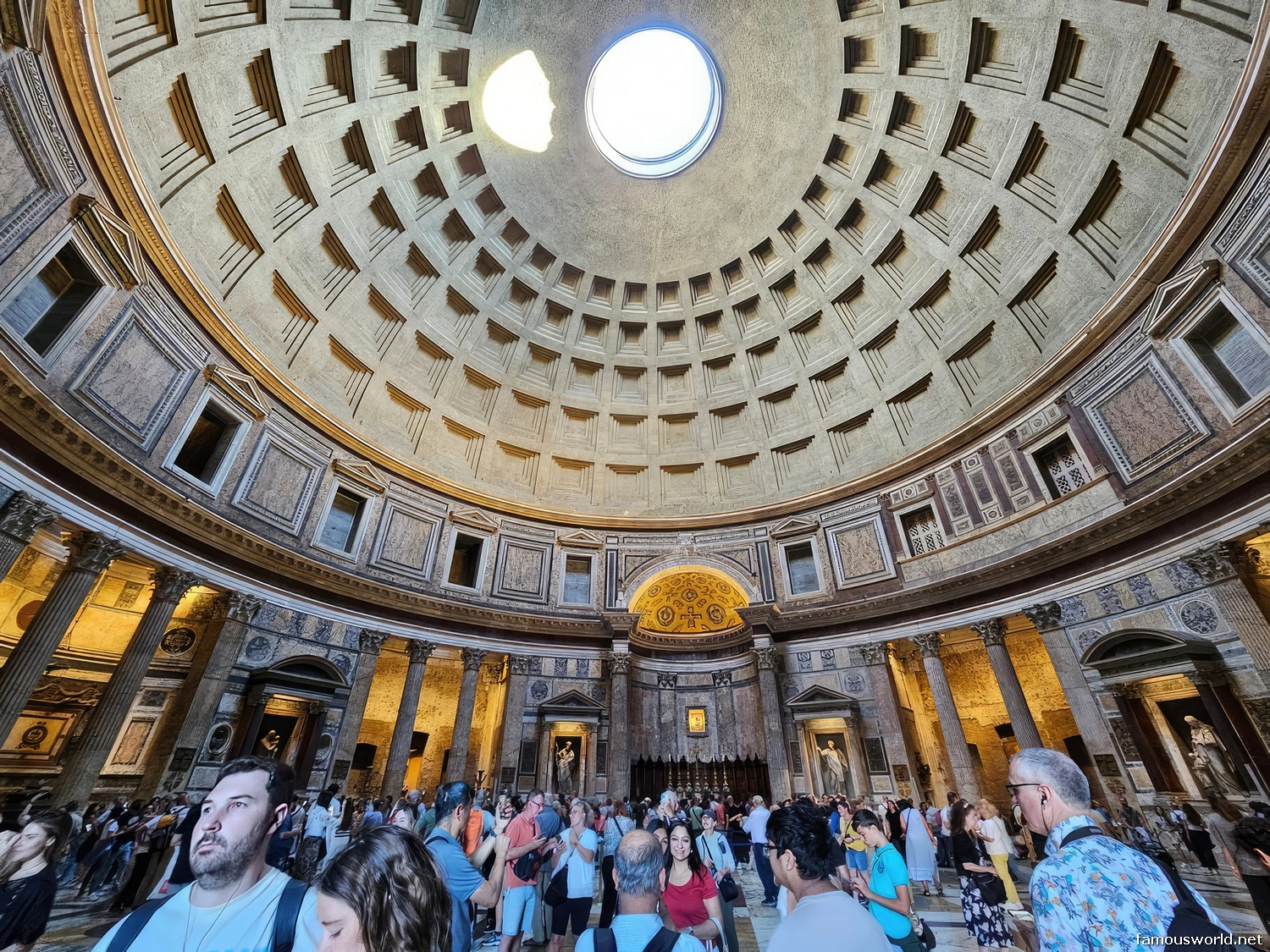
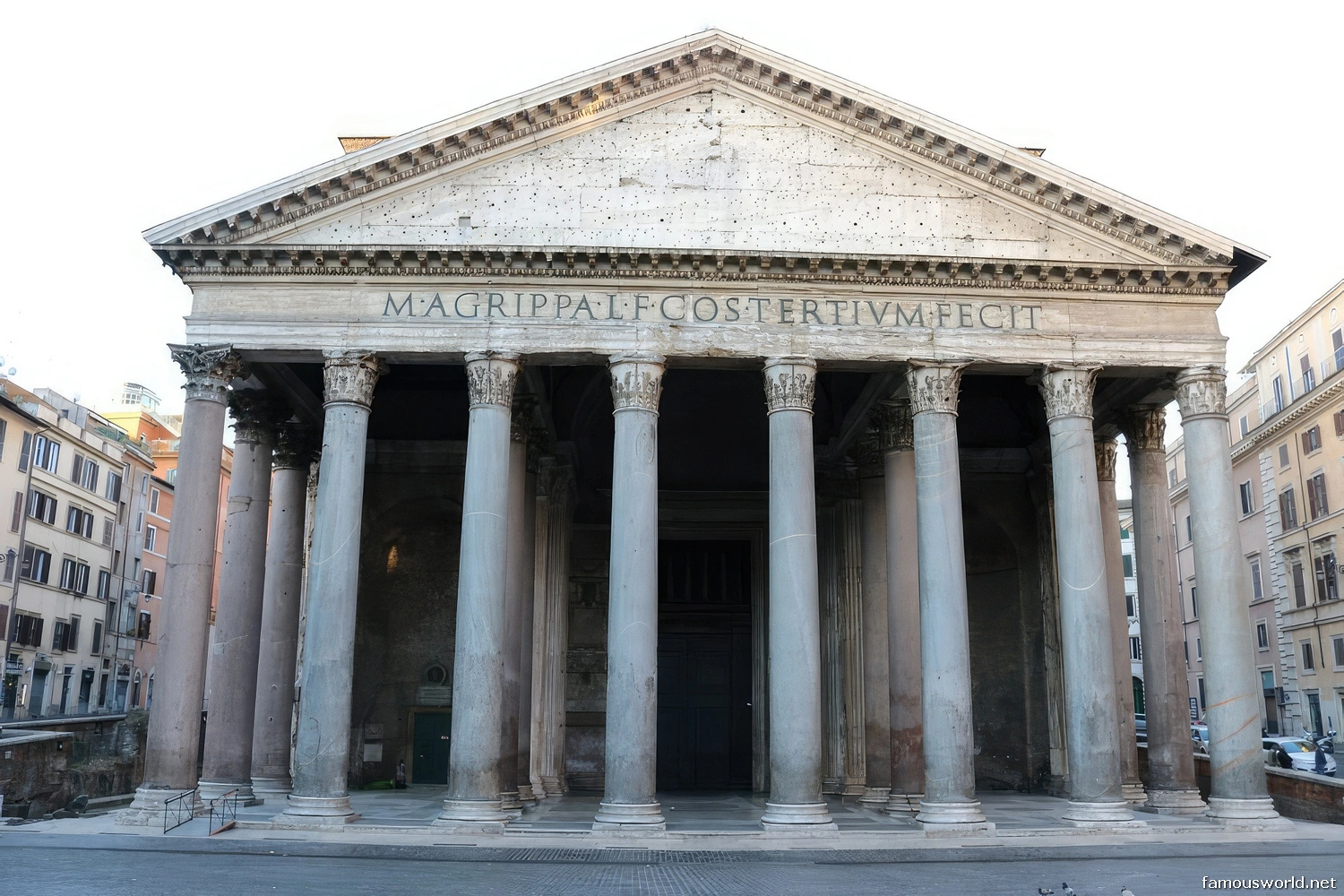
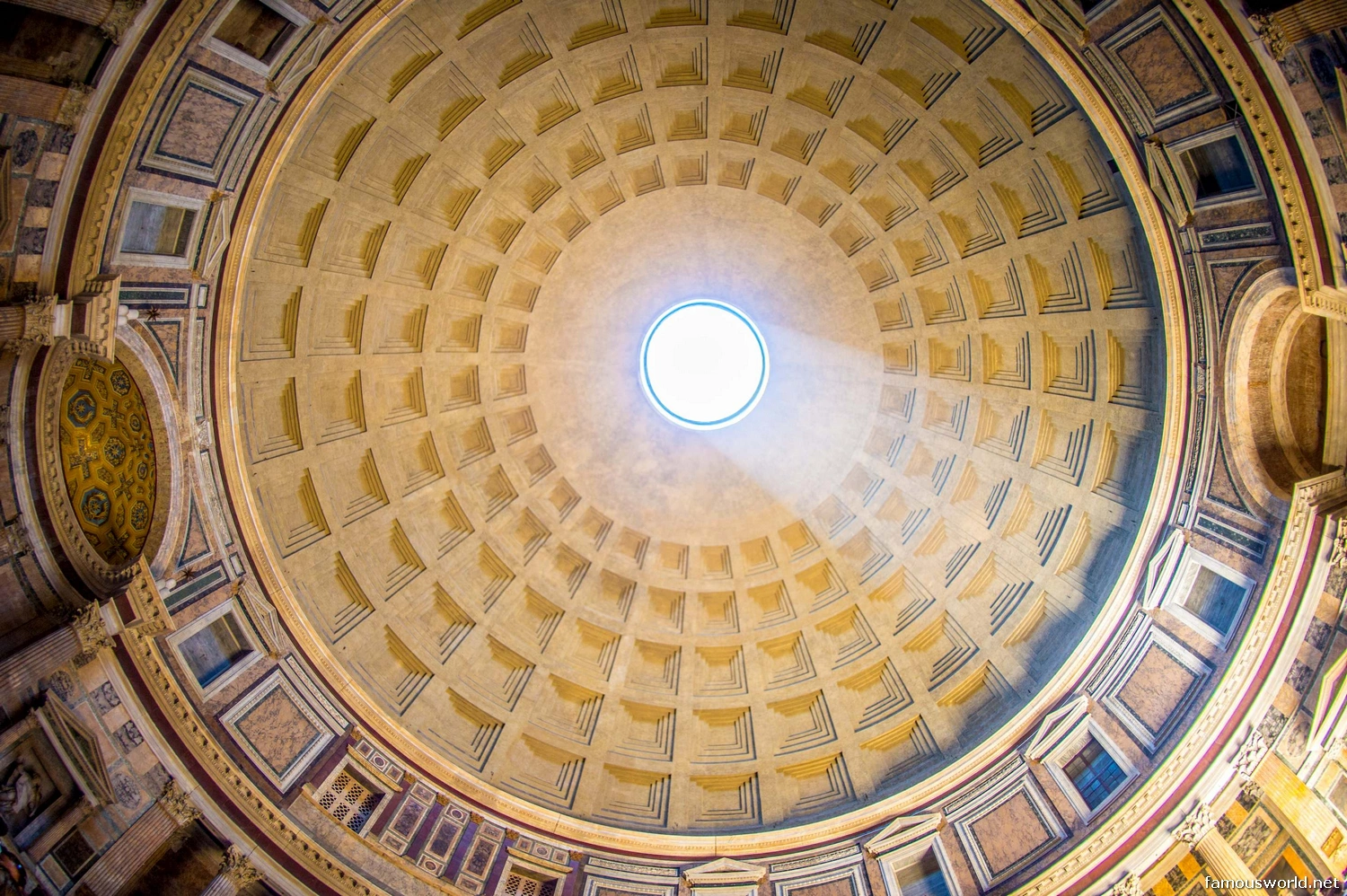
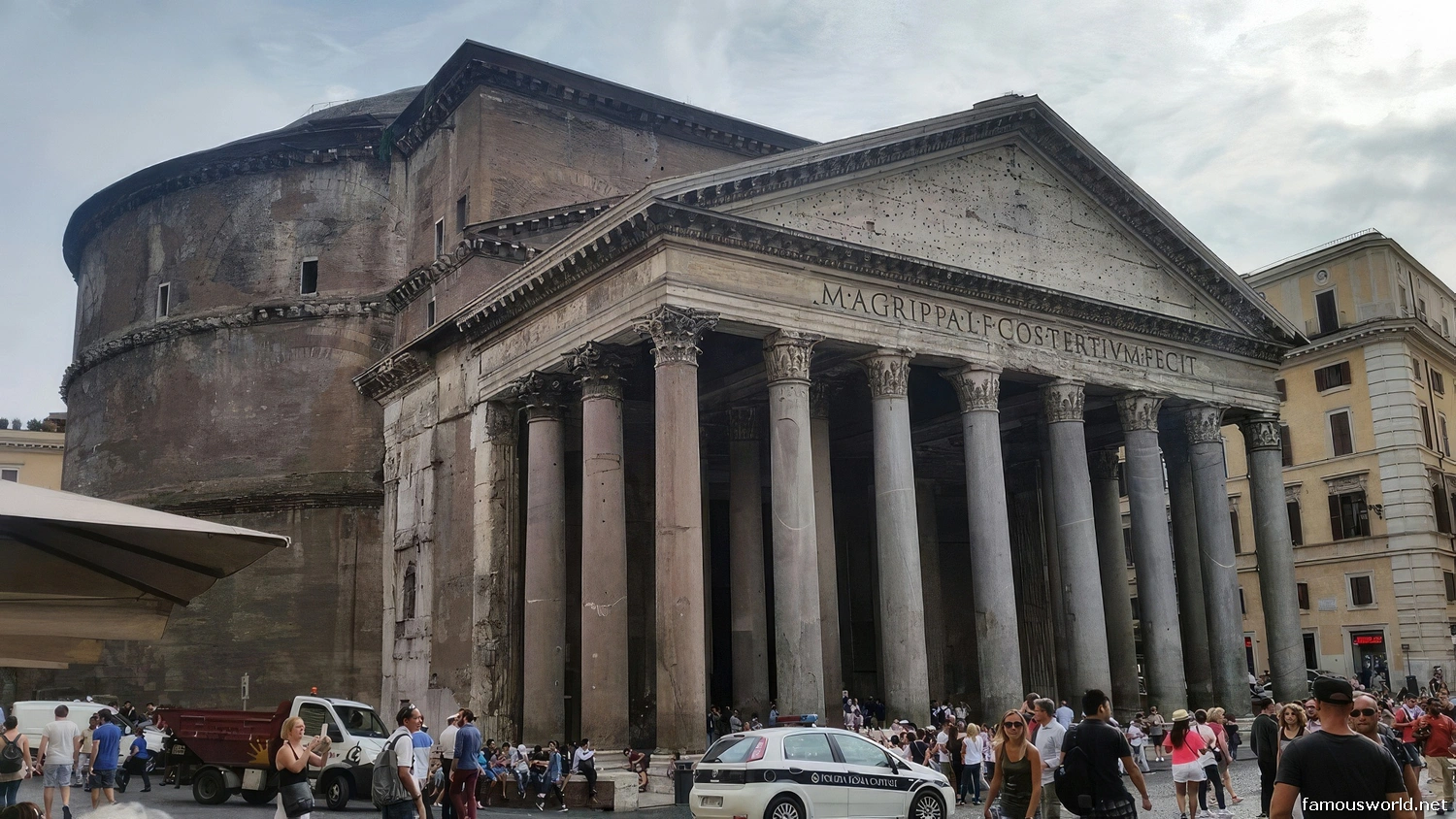
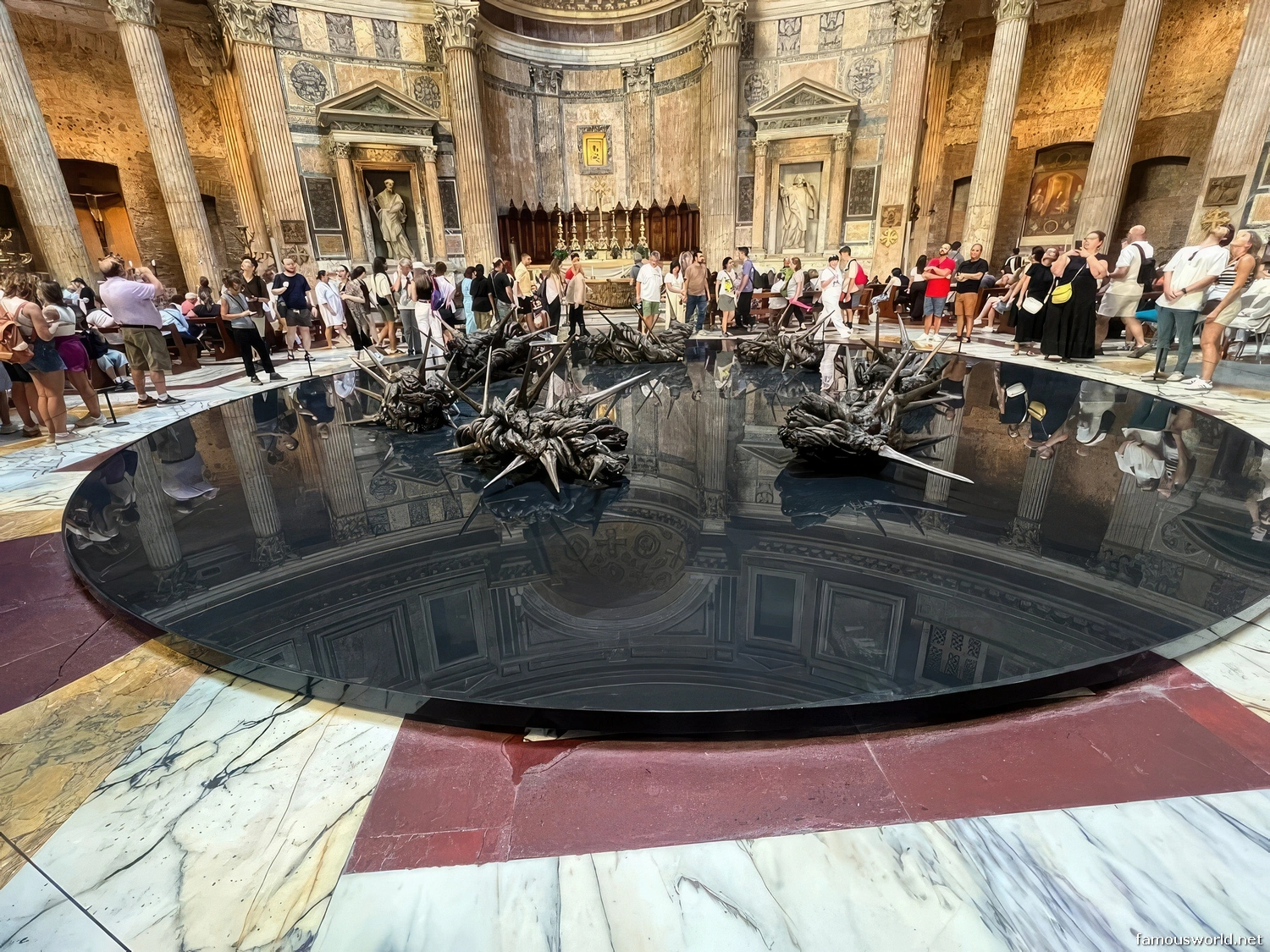
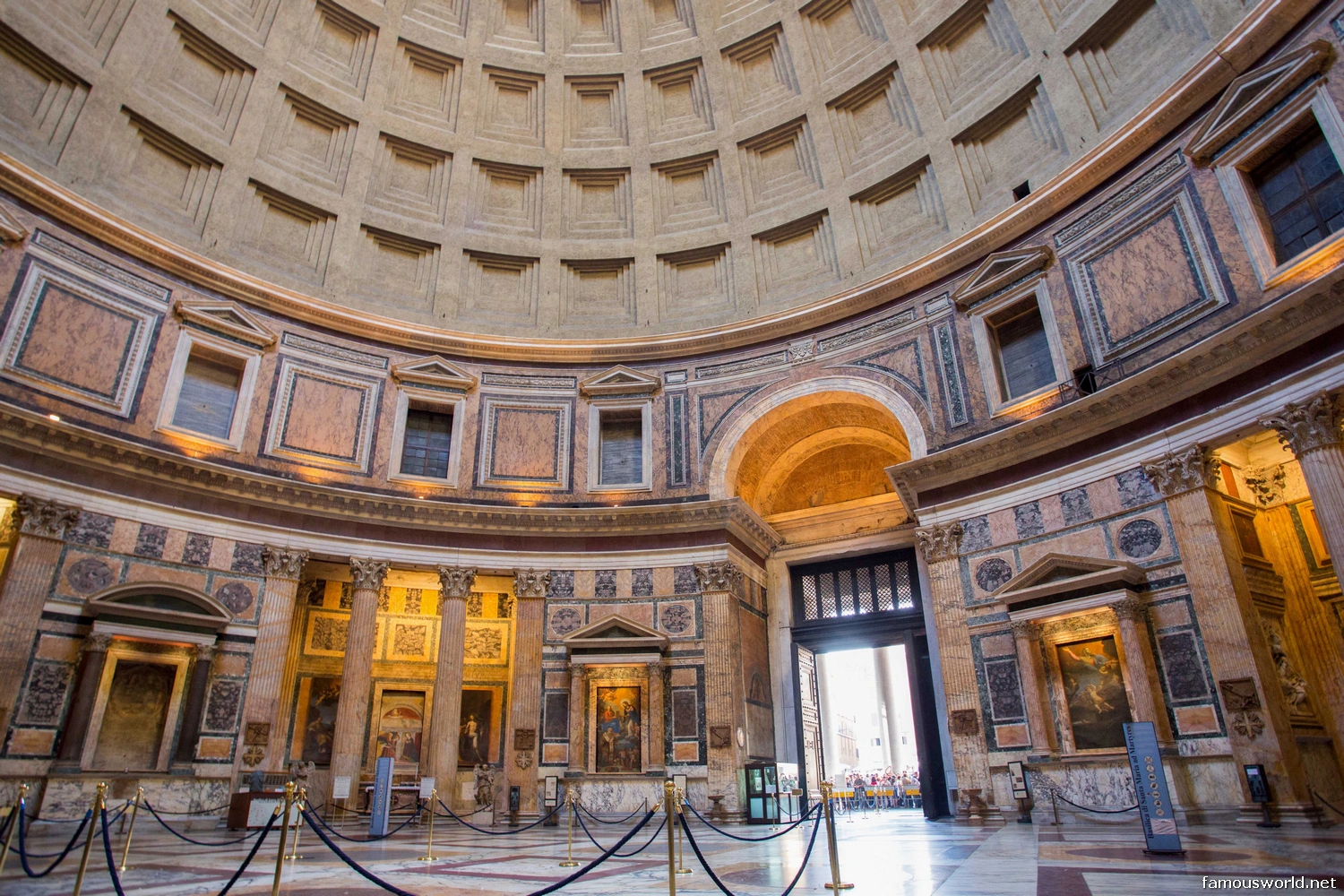
- The Architecture: The Pantheon consists of two main parts: a traditional rectangular portico with massive Corinthian columns of Egyptian granite, and the breathtaking circular rotunda behind it. The rotunda is capped by the world’s largest unreinforced concrete dome, a masterpiece of engineering. At its apex is the famous oculus, a 9-meter (30 ft) opening to the sky, which is the sole source of natural light. The interior is a perfect sphere, with its diameter exactly equal to its height, creating a sense of sublime, harmonious space.
What Makes It Famous
The Pantheon’s fame is due to its miraculous preservation, its revolutionary design, and its continuous use throughout history.
- Architectural Masterpiece: Its dome remains the largest unreinforced concrete dome in the world and its oculus is an iconic and unforgettable feature.
- Best-Preserved Ancient Roman Building: Unlike the Colosseum or Forum, the Pantheon is almost completely intact, allowing visitors to experience an ancient space as it was intended.
- Continuous Use: Its conversion into a Catholic church in 609 AD saved it from destruction and has kept it in continuous use for almost 2,000 years.
- Tomb of Illustrious Figures: It is the burial place of the great Renaissance artist Raphael, as well as two Italian kings, Vittorio Emanuele II and Umberto I.
Differences from Other Wonders
The Pantheon’s focus on a single, perfect interior space contrasts with the vast, art-filled grandeur of St. Peter’s Basilica.
- Environment (Ancient Temple in an Intimate Piazza vs. Renaissance Basilica in a Grand Square): The Pantheon is encountered suddenly in the tight-knit fabric of the city. St. Peter’s is approached via a massive, open square designed to build anticipation and project power.
- Core Story (Roman Engineering for the Gods vs. Renaissance Art for the Glory of God): The Pantheon is a story of sublime geometry and engineering dedicated to all the Roman gods. St. Peter’s is the story of the immense power and wealth of the Catholic Church, expressed through centuries of opulent art and architecture.
- Primary Attraction (A Singular, Perfect Space vs. A Vast Collection of Masterpieces): The Pantheon’s attraction is the singular, powerful experience of standing within its perfectly proportioned rotunda and gazing up at the oculus. The main attractions of St. Peter’s are its overwhelming scale and its numerous individual masterpieces, like the Pietà and the Baldacchino.
- Atmosphere (Timeless and Contemplative vs. Sacred and Overwhelming): The atmosphere in the Pantheon is one of timeless wonder and contemplative quiet, connecting the visitor to ancient history and the cosmos. The atmosphere in St. Peter’s is one of sacred reverence, opulence, and overwhelming awe at its sheer scale and grandeur.
Location on world map