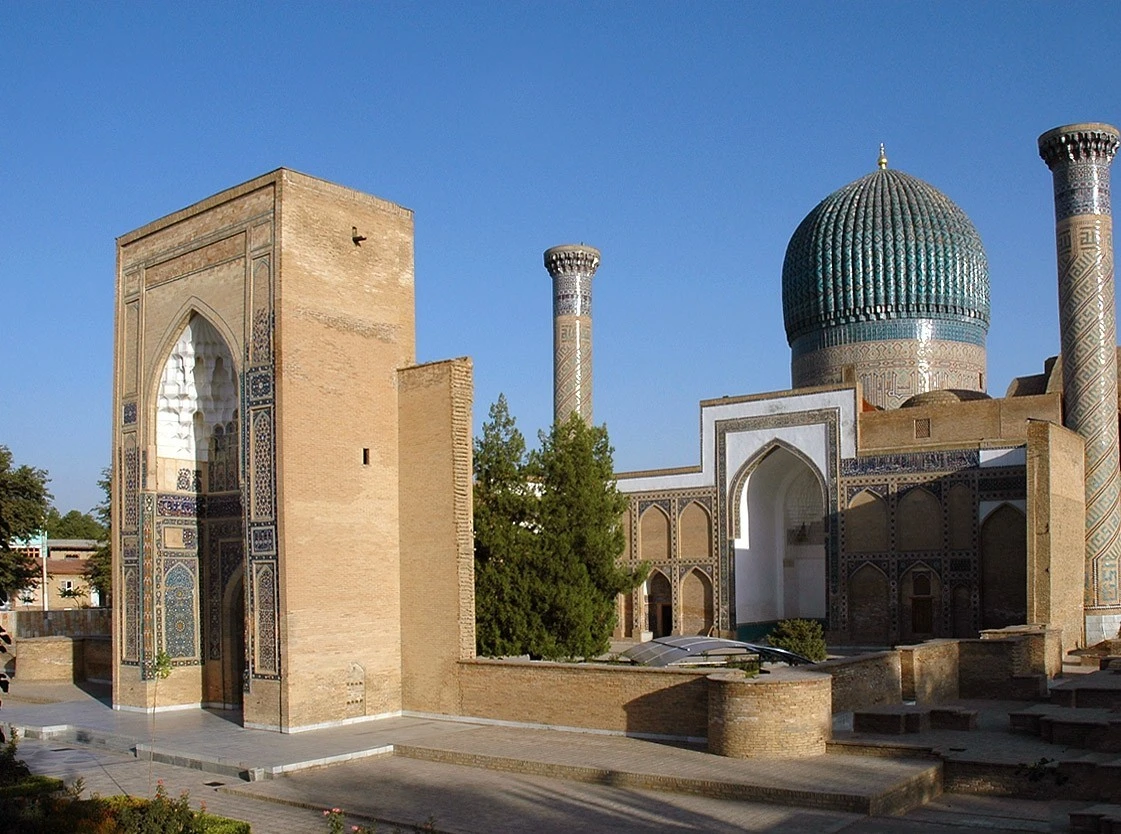
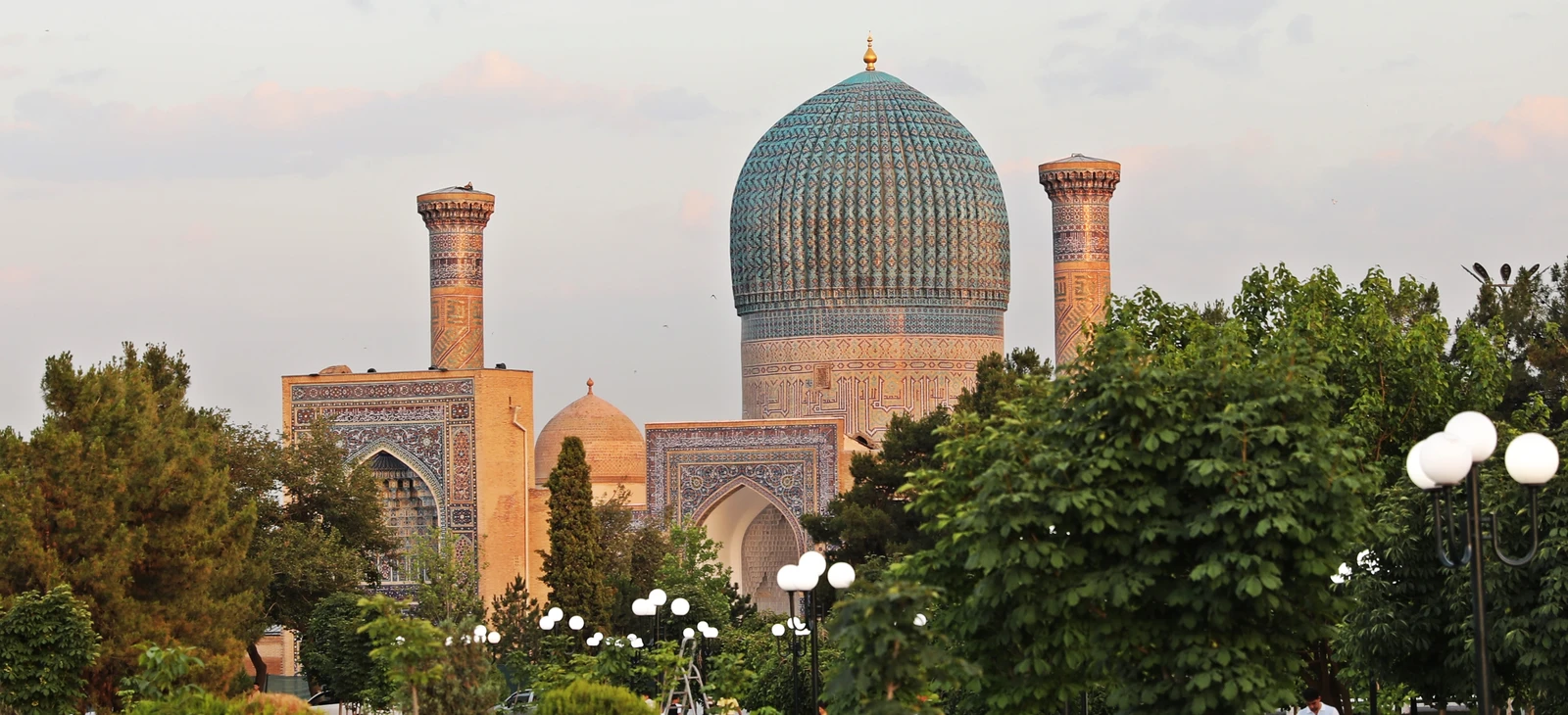

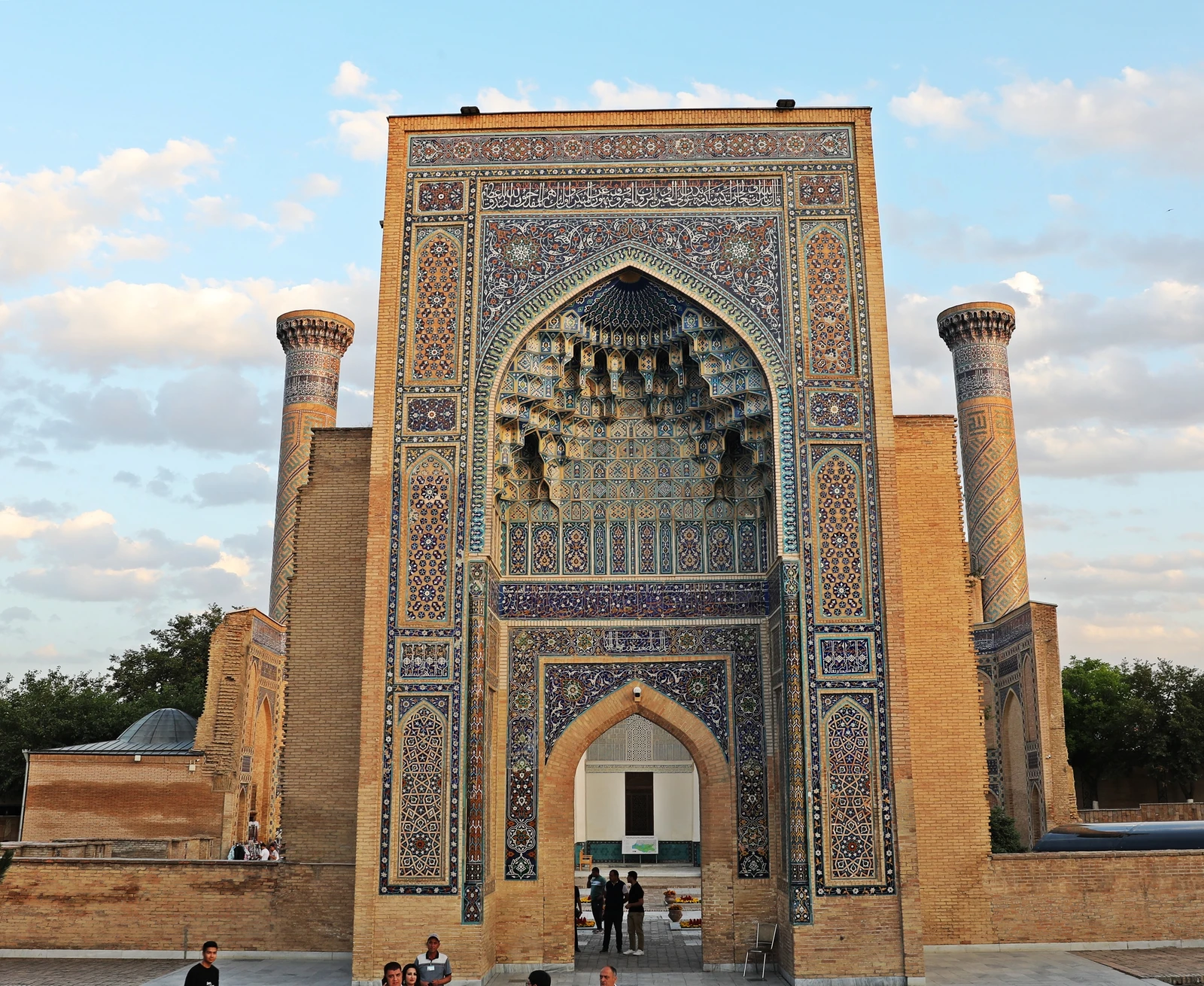
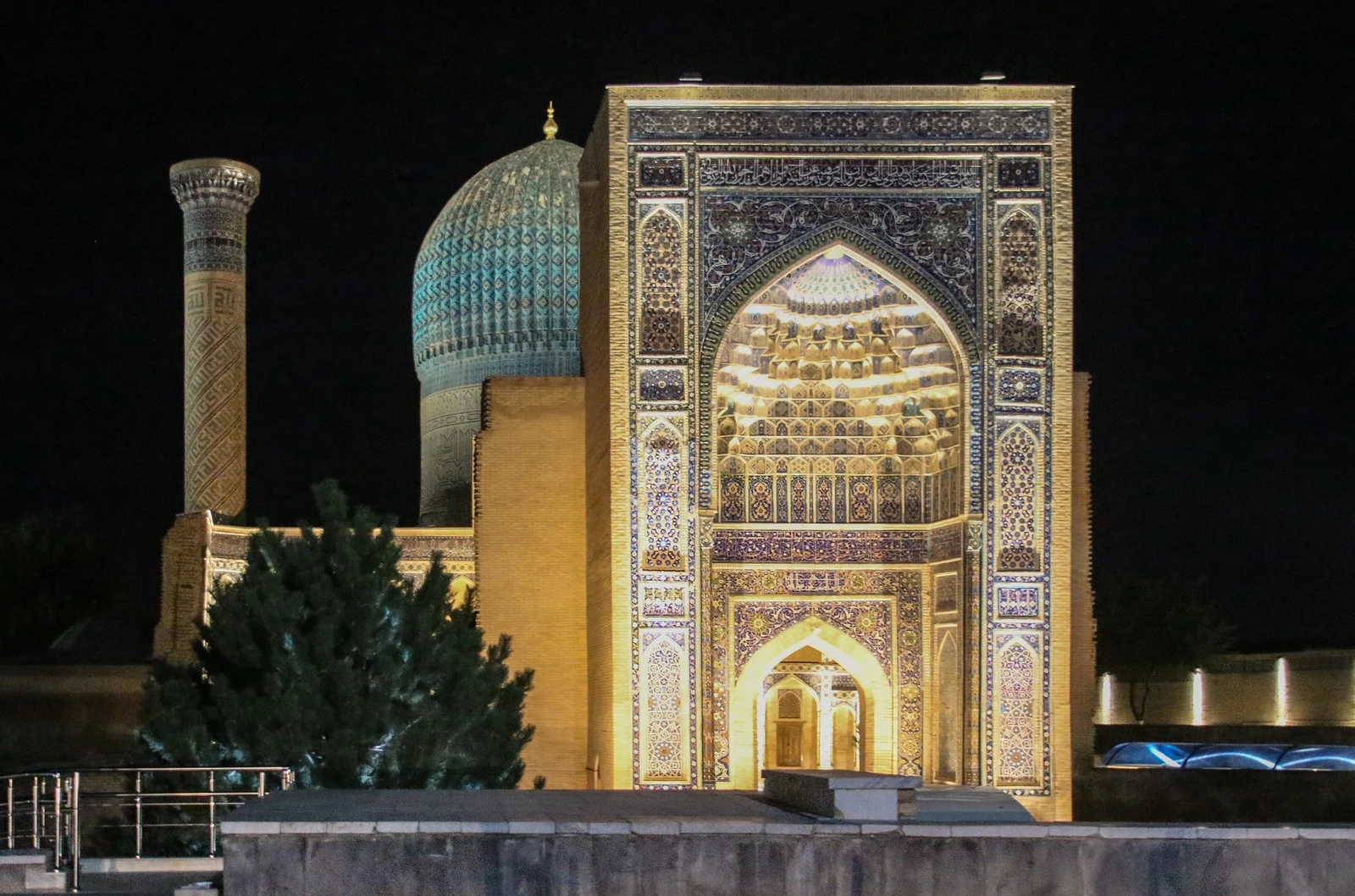
The Gur-e-Amir (Гўри Амир) is the magnificent mausoleum of the great 14th-century conqueror Timur (also known as Tamerlane) in Samarkand, Uzbekistan. Its name translates from Persian to “Tomb of the King” or “Tomb of the Commander.” Originally built for Timur’s beloved grandson and heir, Muhammad Sultan, it became the final resting place for Timur himself, as well as his sons and other grandsons, including the famous astronomer-king Ulugh Beg. The mausoleum is a masterpiece of the Timurid architectural style, renowned for its stunning azure fluted dome and intricate interior decoration. It holds immense historical importance as a precursor and model for the great Mughal tombs of later centuries, including the Taj Mahal.
Listen to an introduction about Gur-e-Amir Mausoleum

Name and Address
- Name: Gur-e-Amir Mausoleum.
- Address: 1/4, Universitetsky Boulevard, Samarkand, Uzbekistan.
How to Get There
The mausoleum is a major landmark in Samarkand and is easily accessible.
- By Foot: It is located in the central part of the city, about a 10-15 minute walk southwest of the iconic Registan Square.
- By Taxi: Taxis are plentiful and affordable in Samarkand and can take you directly to the site.
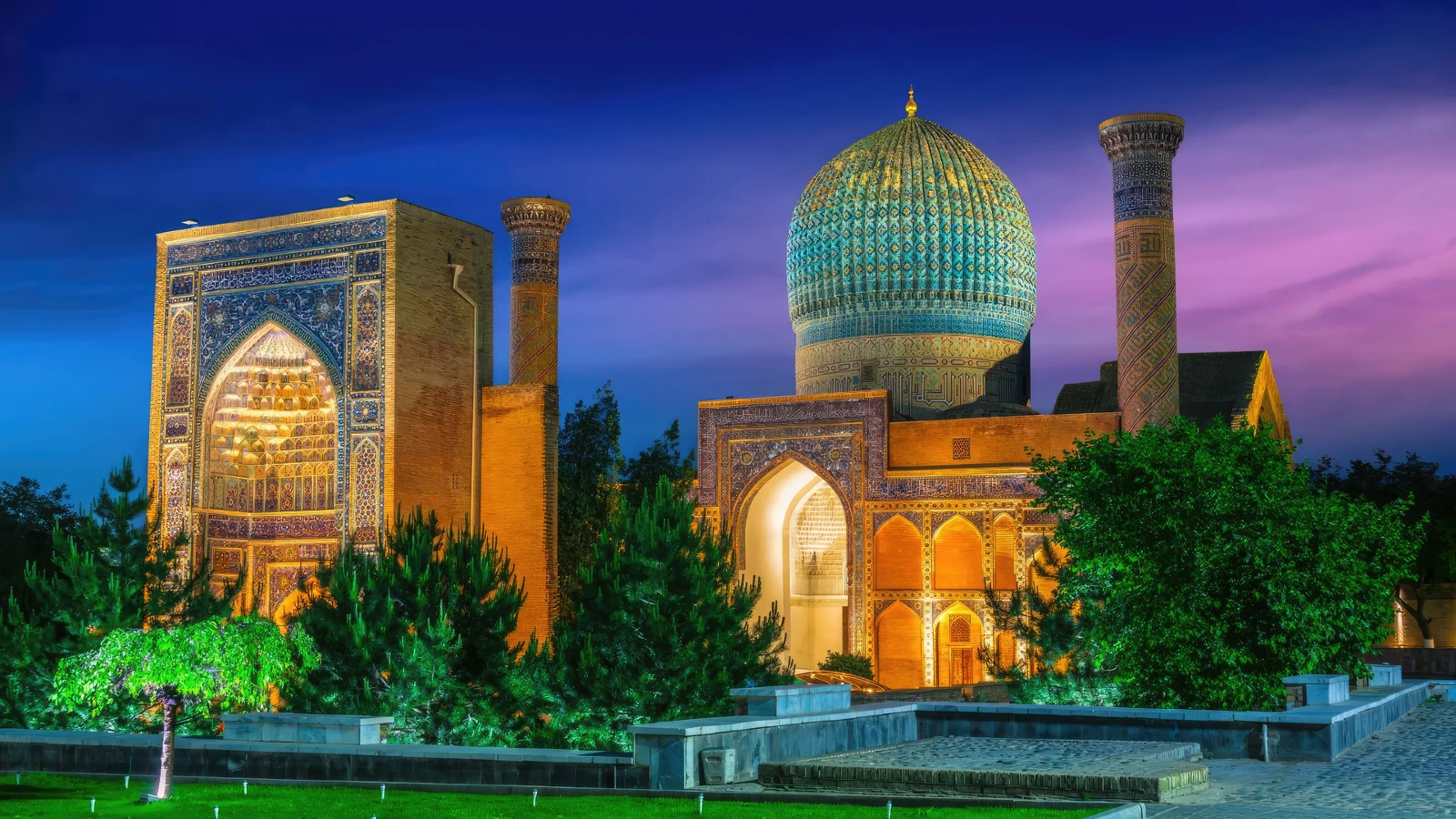
- Visitor Tip: A visit to the mausoleum is often combined with the nearby Ruhabad Mausoleum. The Gur-e-Amir is particularly beautiful in the late afternoon light and when it is illuminated at night.
Landscape and Architecture
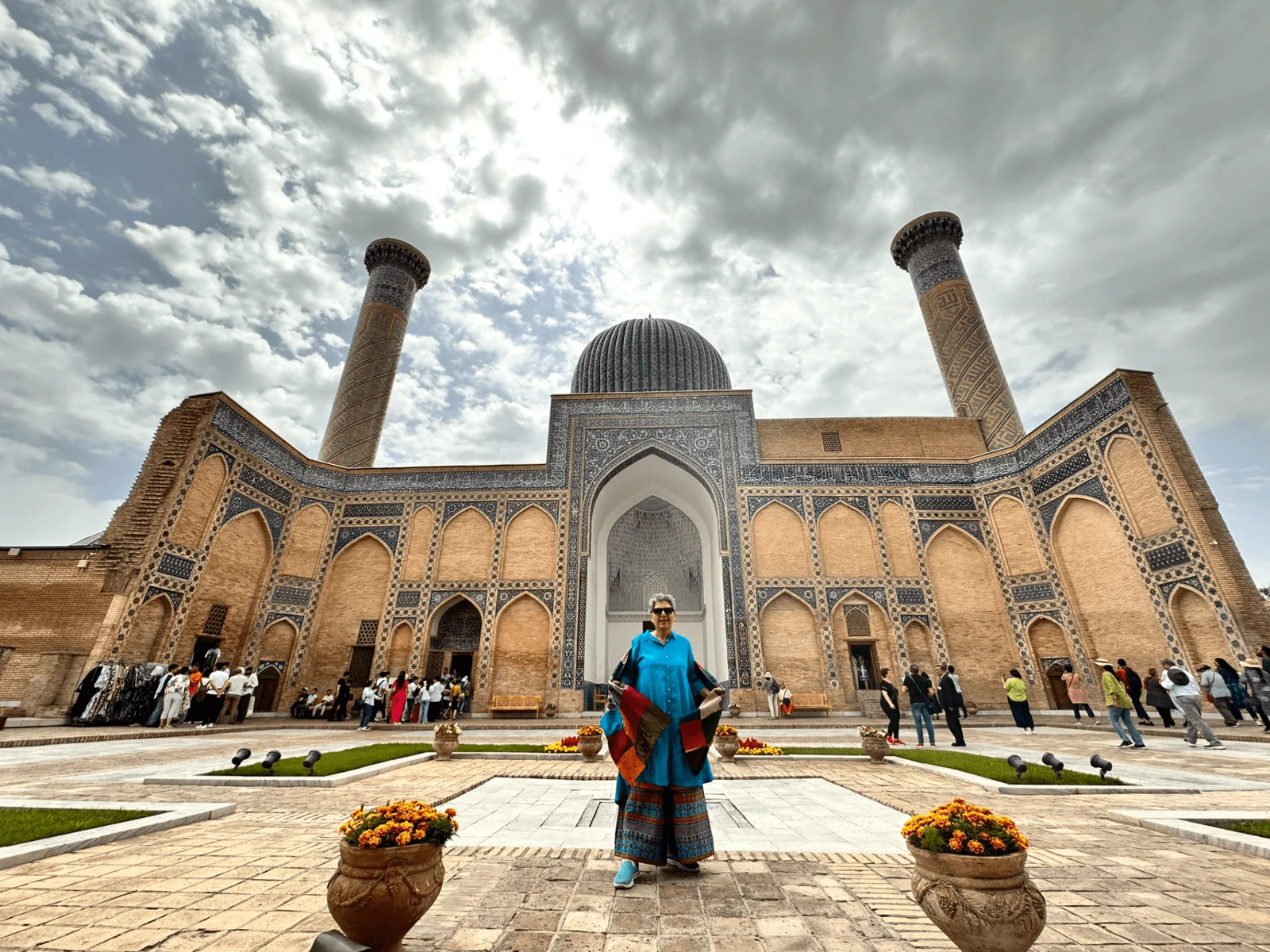
The architecture of Gur-e-Amir is a seminal example of the Timurid style, characterized by its grand scale, perfect proportions, and dazzling decorative arts.
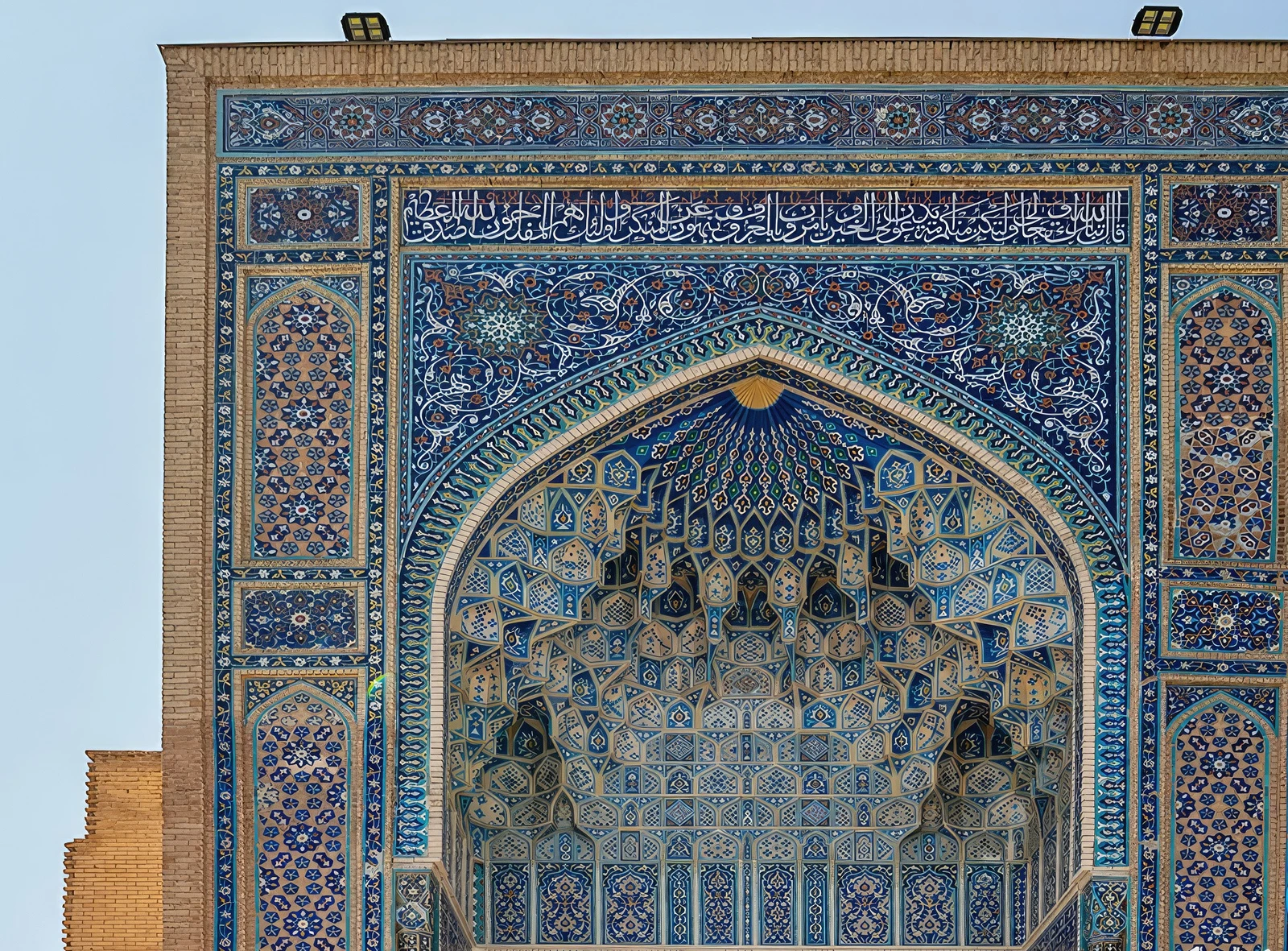
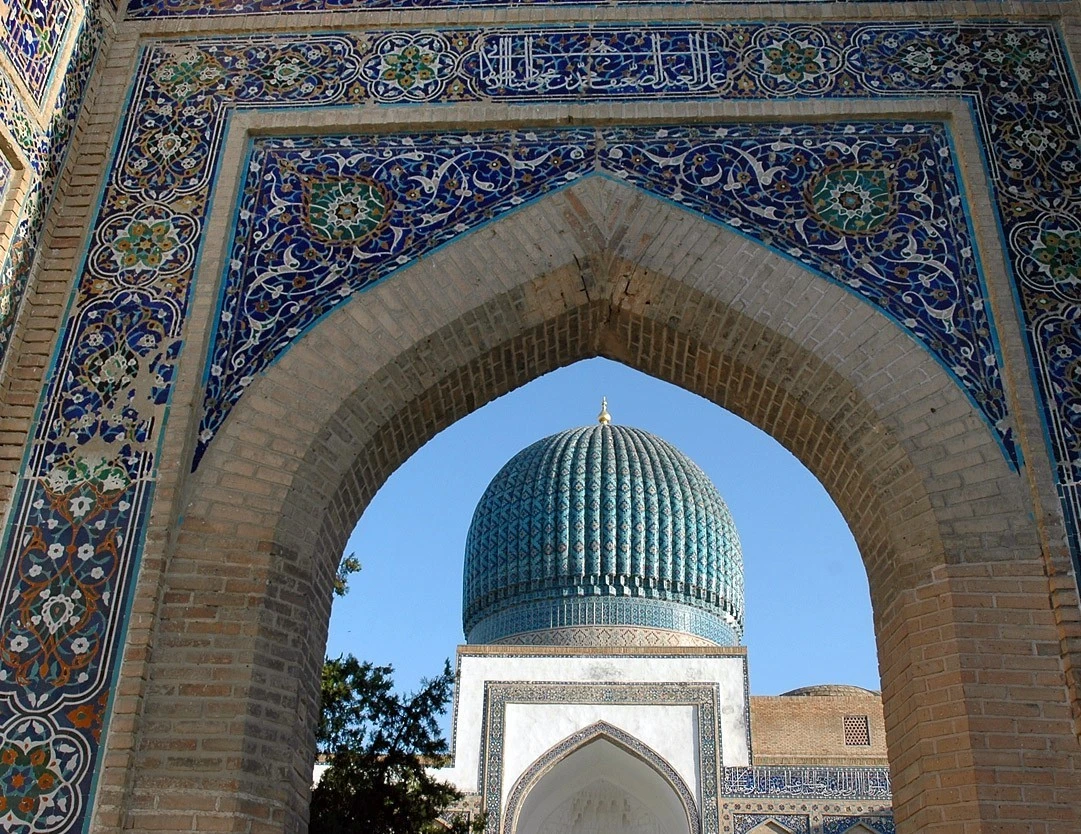
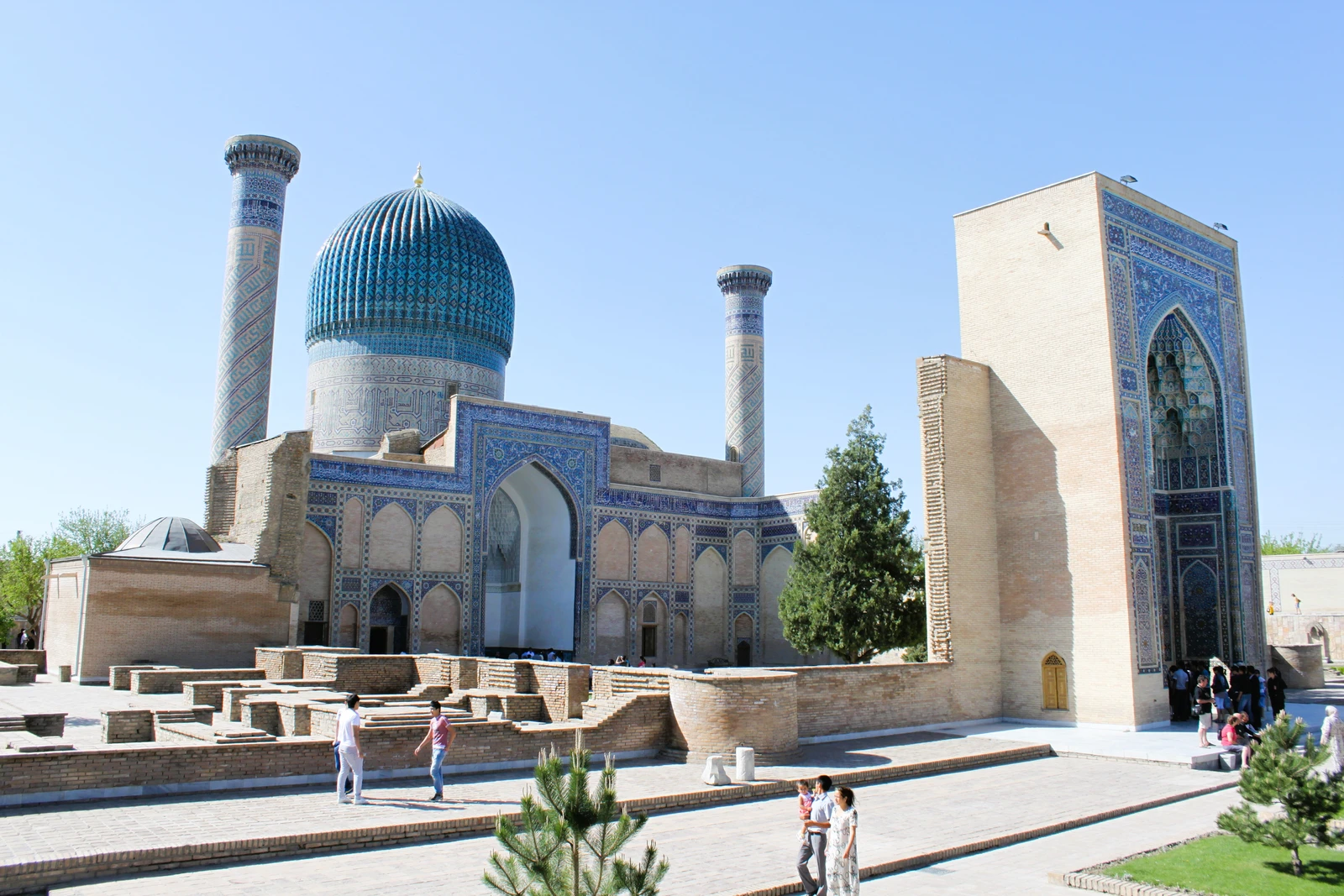
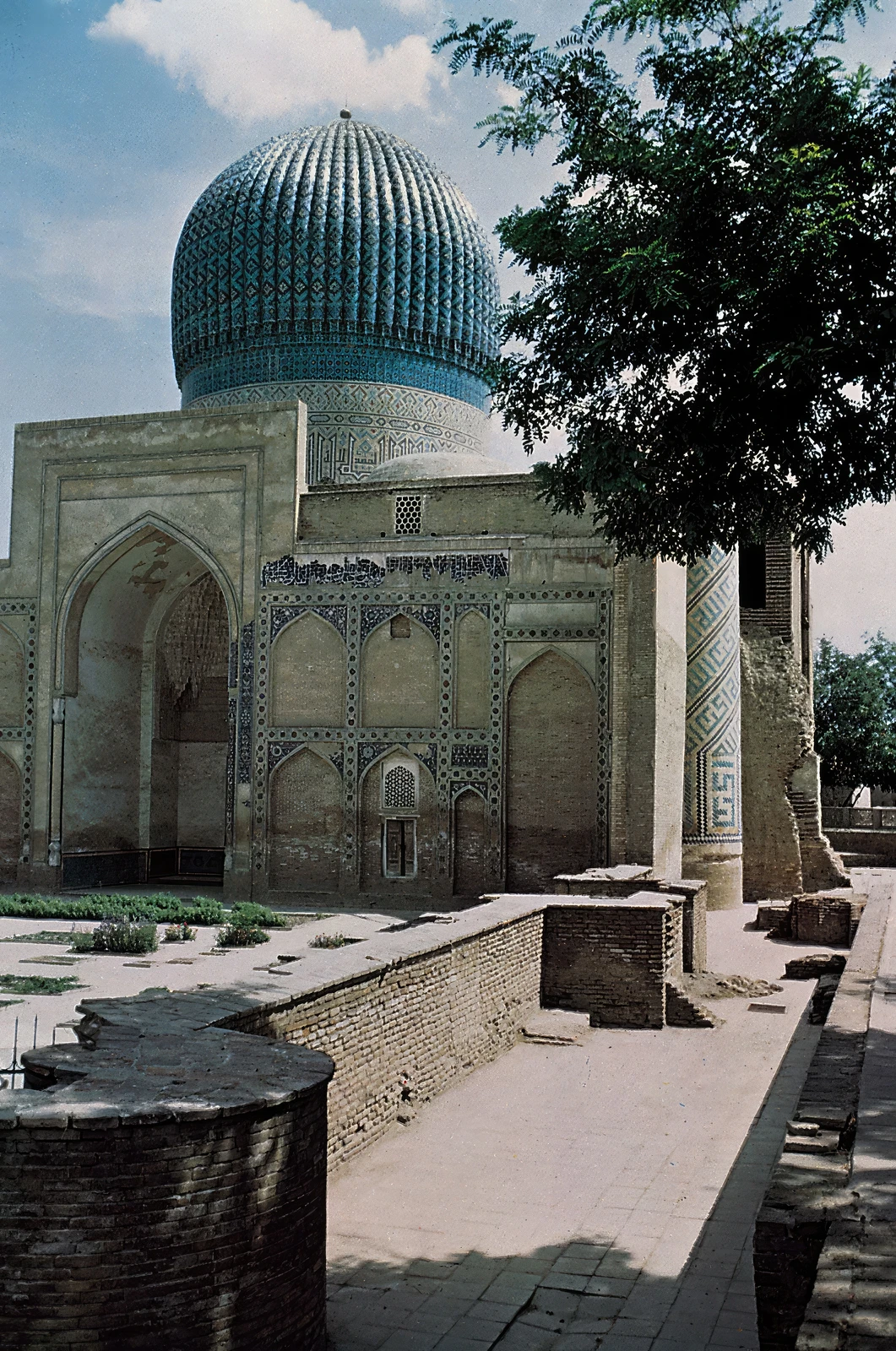
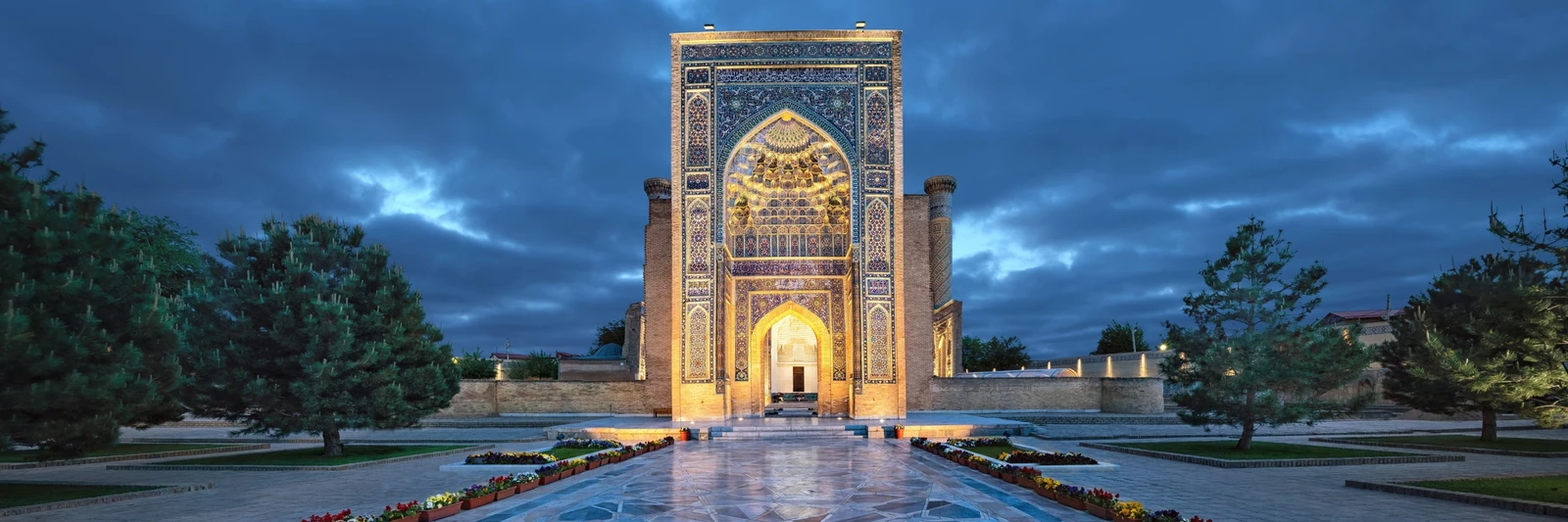
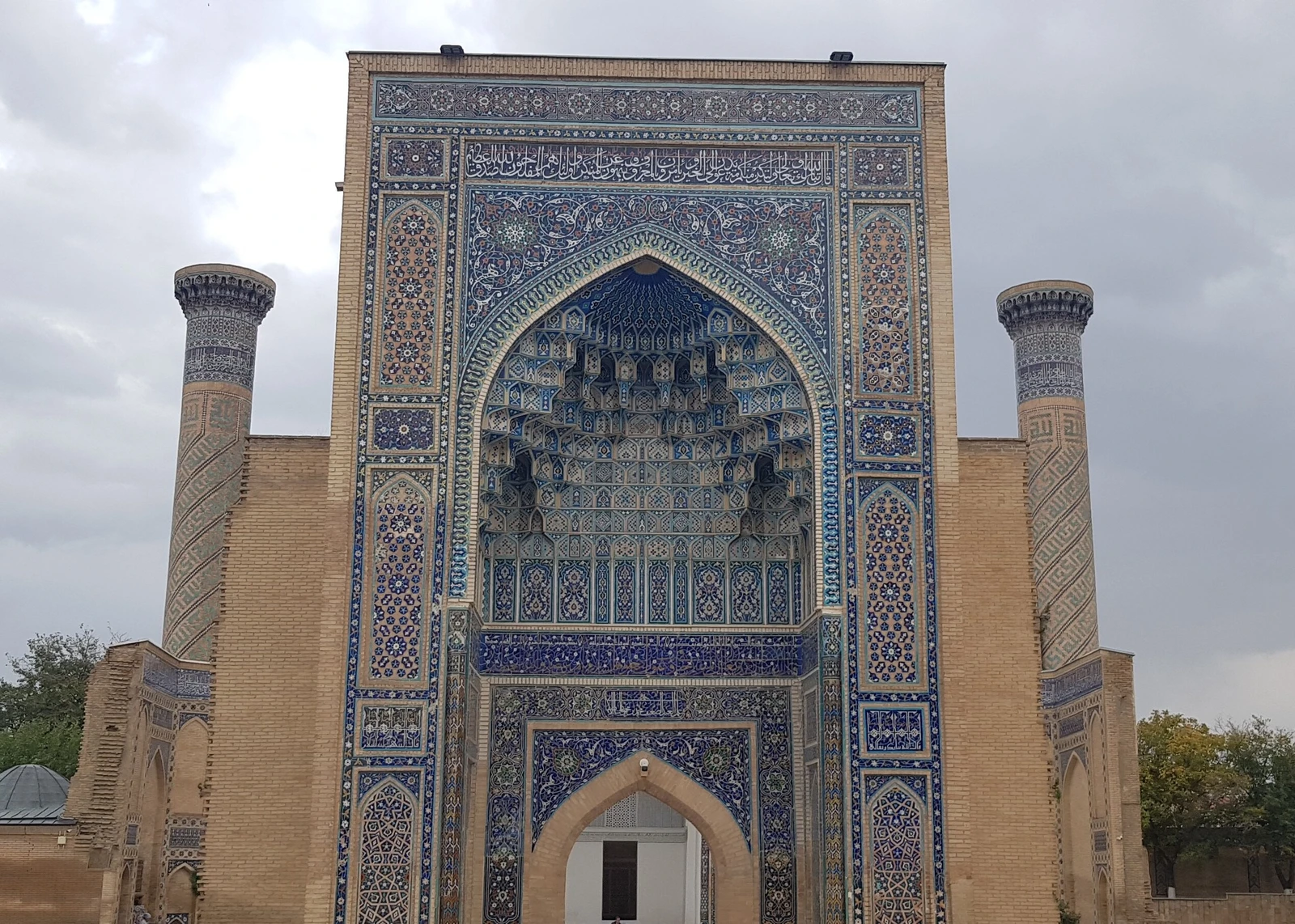
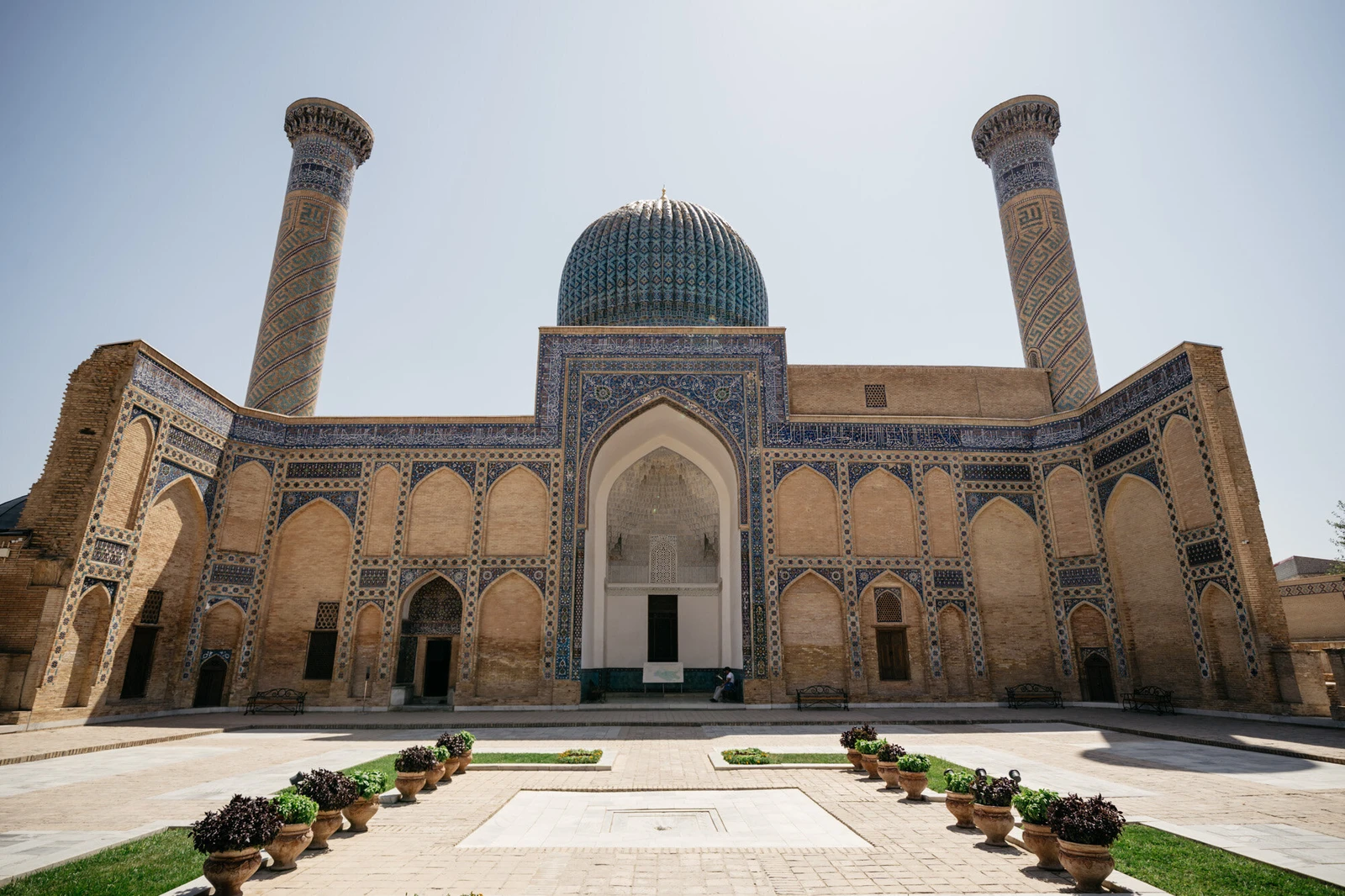
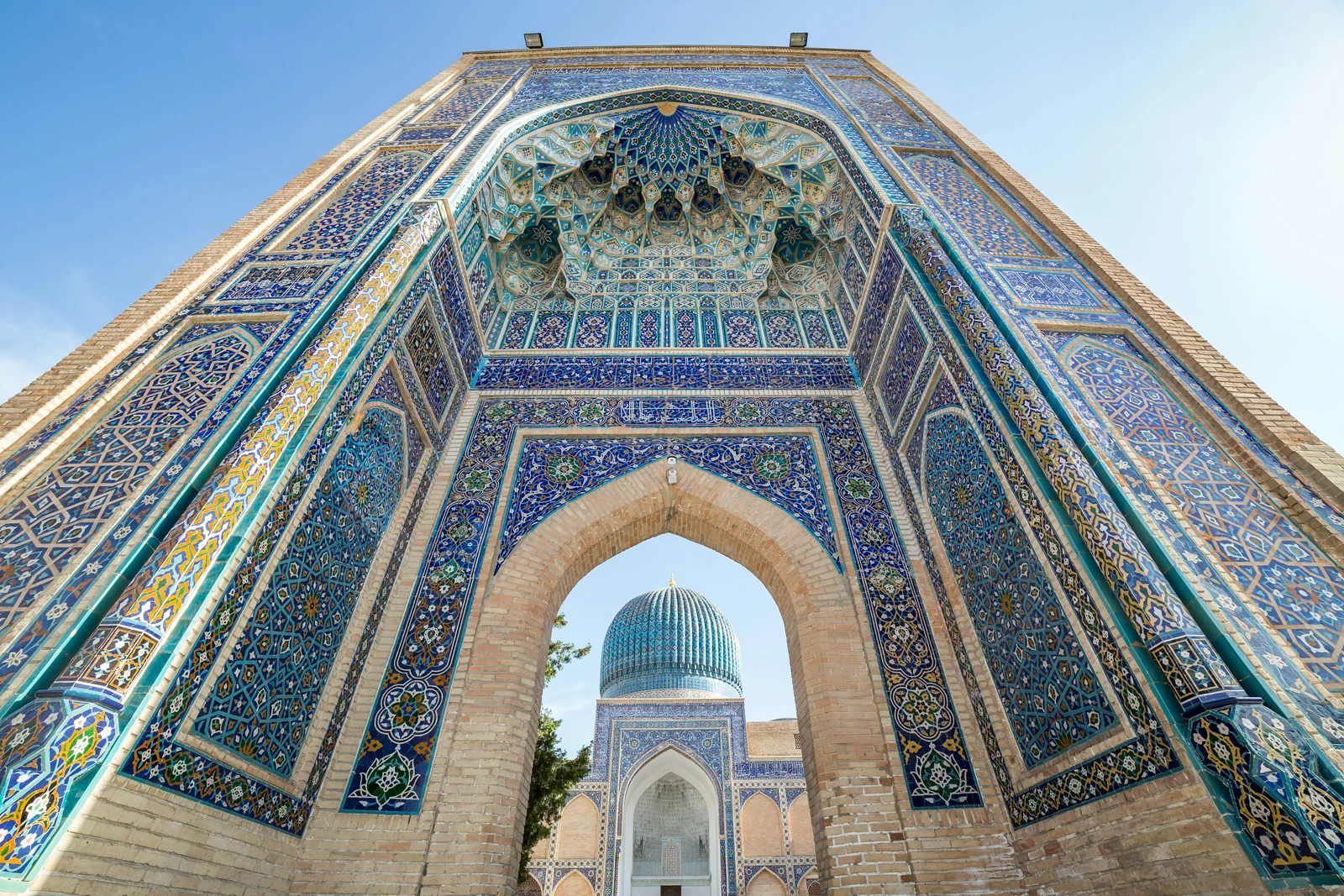
- The Ensemble: The mausoleum is the main building of a larger architectural complex that originally included a madrasa and a khanaka (a place for Sufi gatherings), of which only the foundations remain. The entrance is through a grand, restored portal that leads into a courtyard.
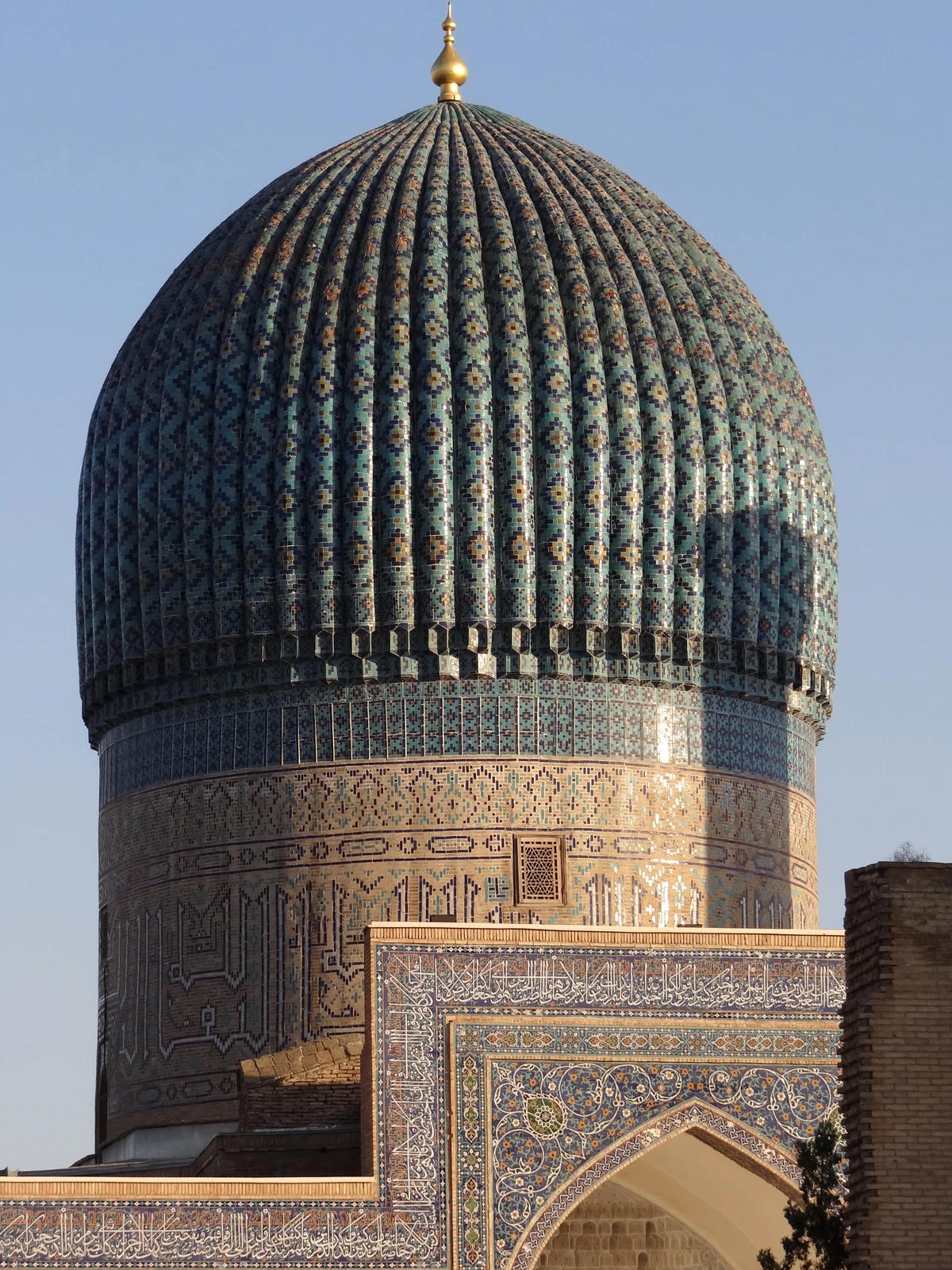
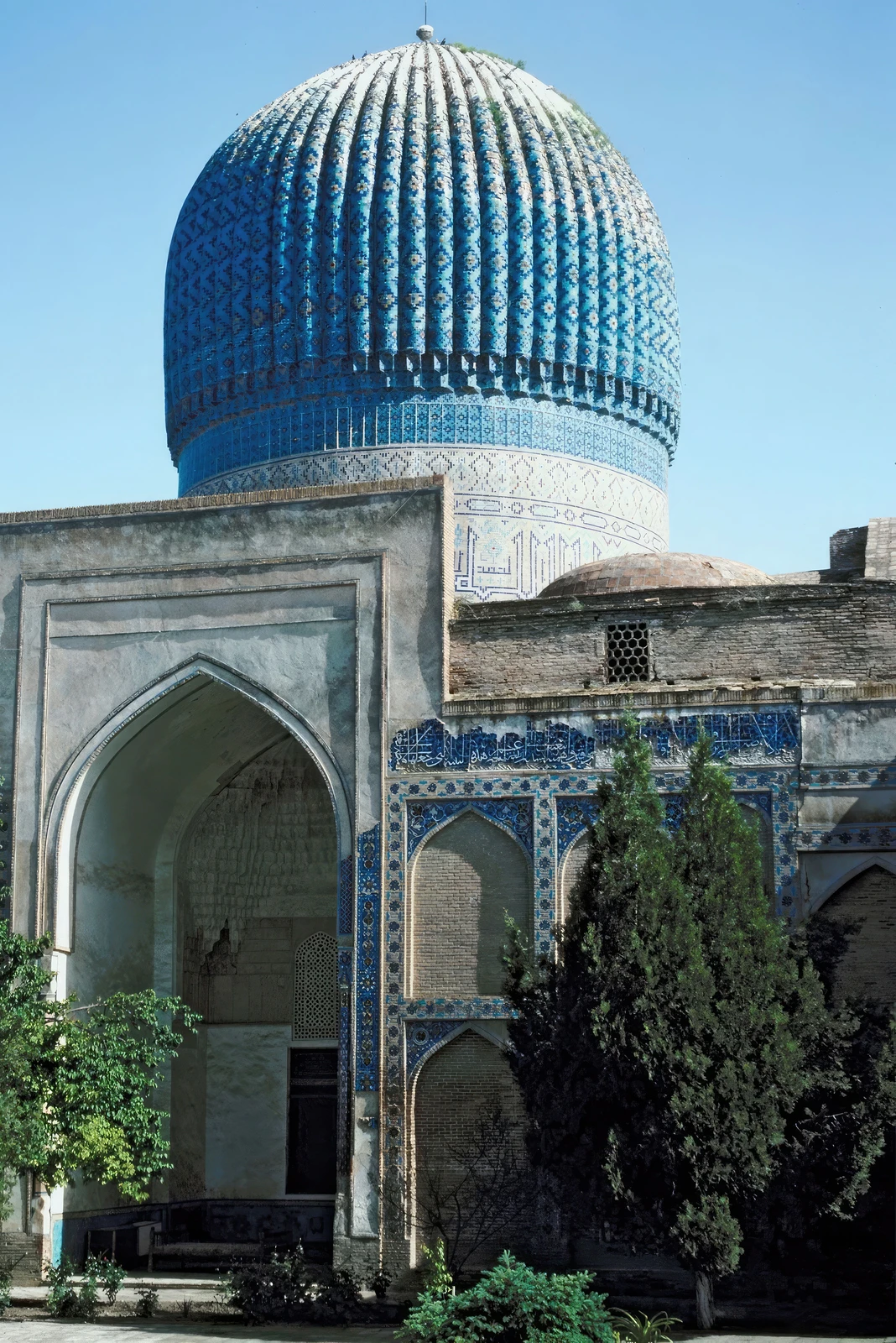
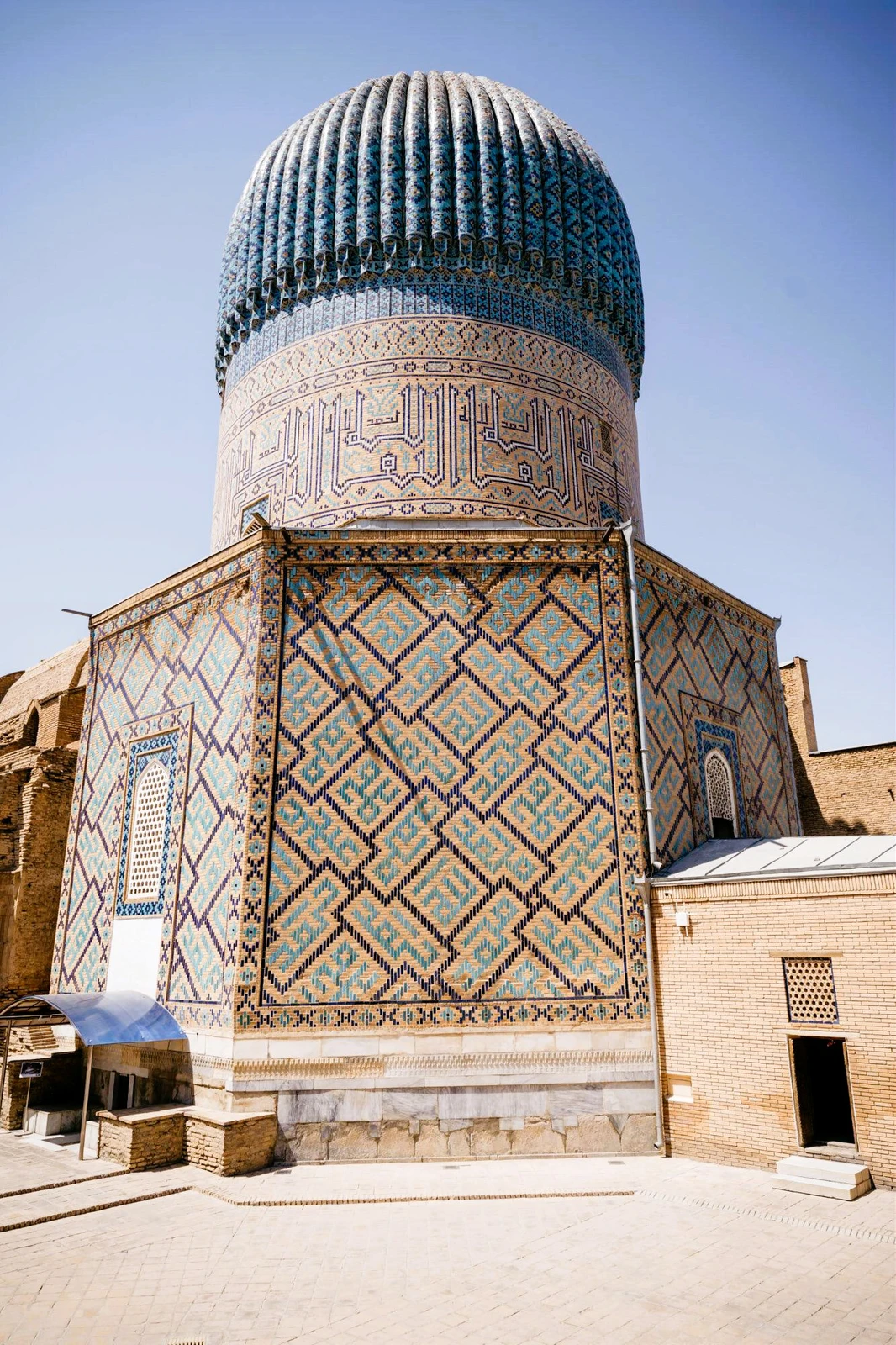
- The Dome: The most iconic feature is the massive, bright blue, fluted (ribbed) dome, which sits atop a high cylindrical drum. This distinctive “melon” shape became a hallmark of Timurid architecture. The dome is covered in glazed bricks that shimmer in the sunlight.
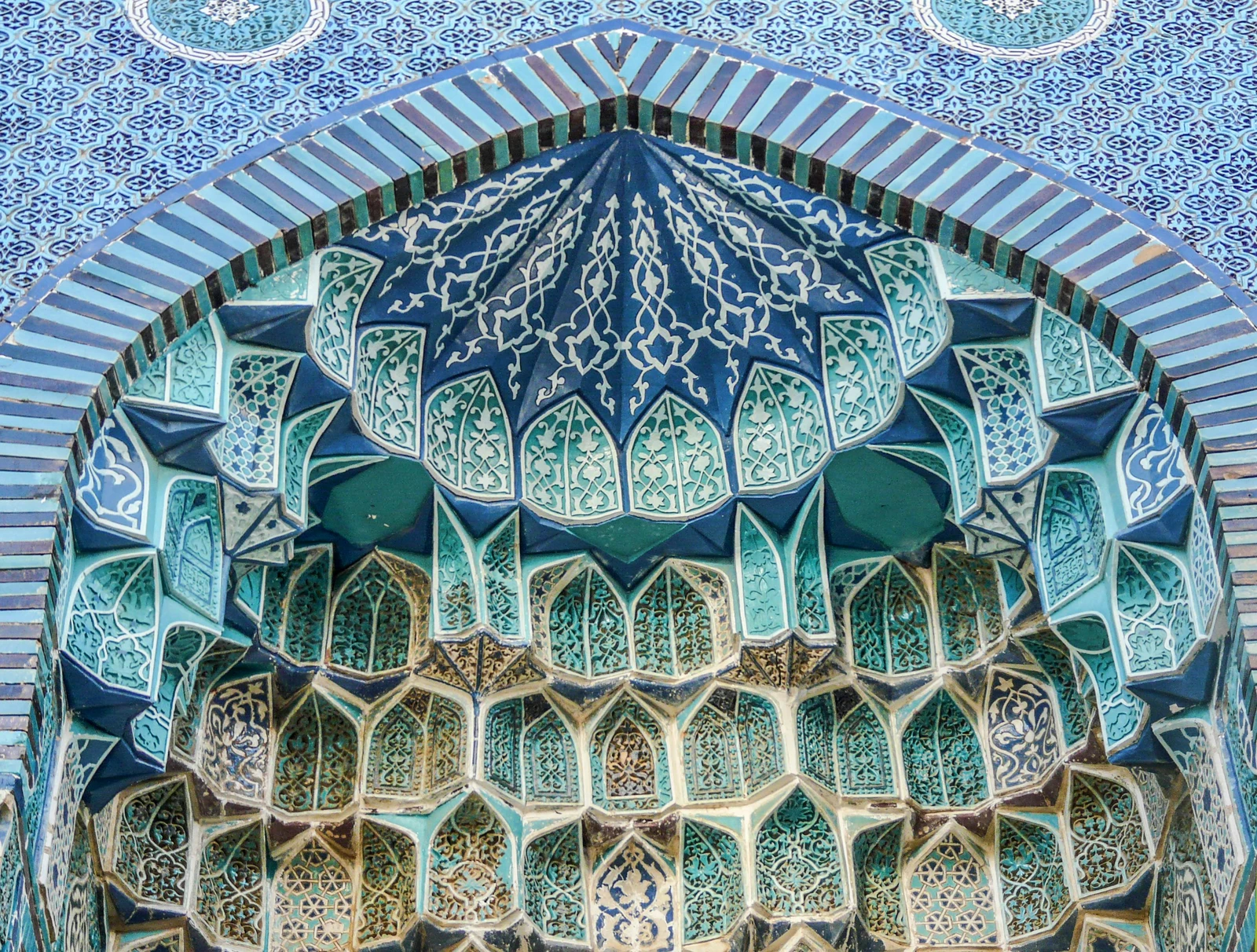
- Exterior Decoration: The exterior walls are adorned with a rich tapestry of blue, light-blue, and white tiles arranged in intricate geometric and epigraphic (calligraphic) patterns against a background of terracotta bricks.
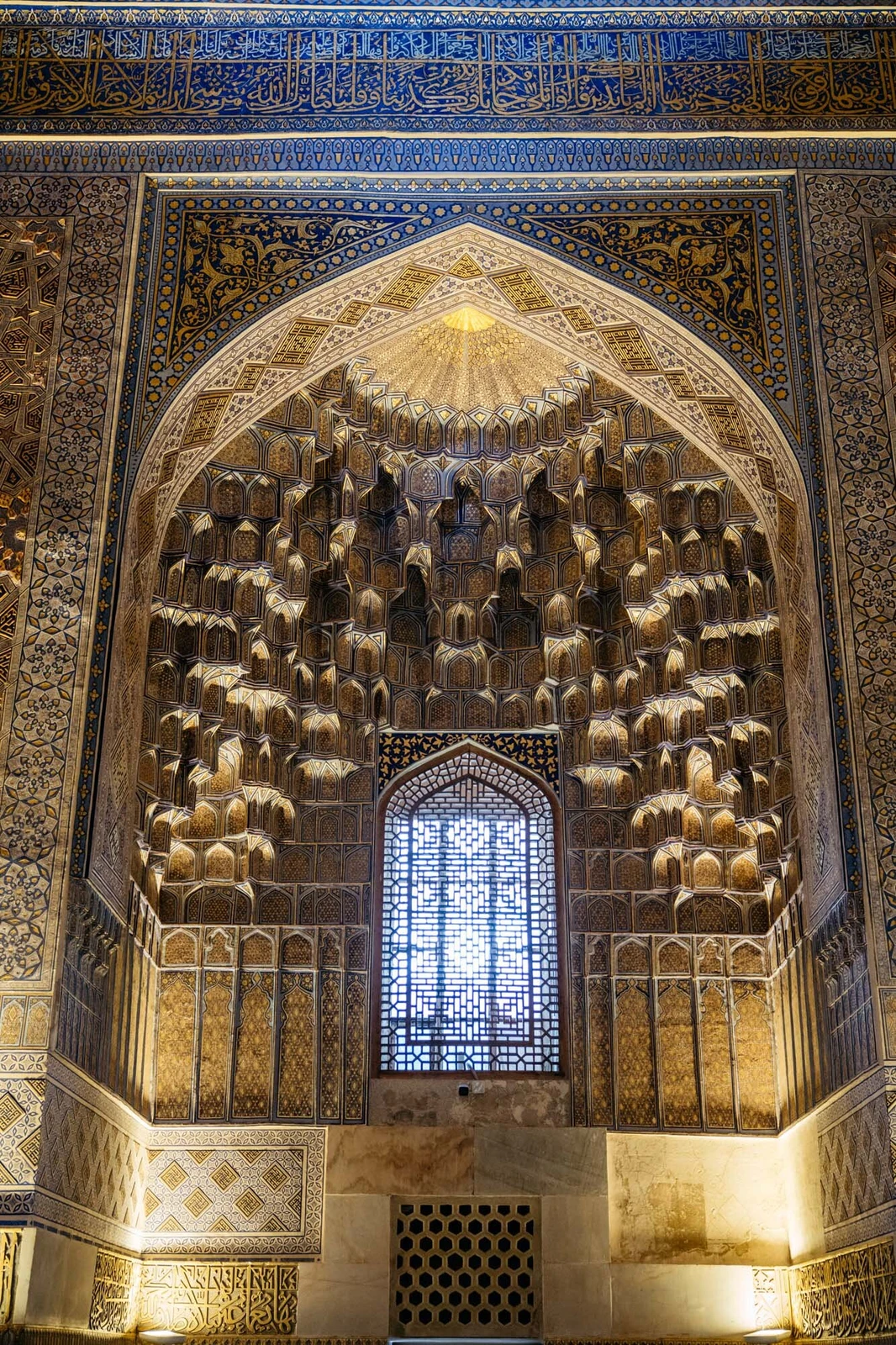
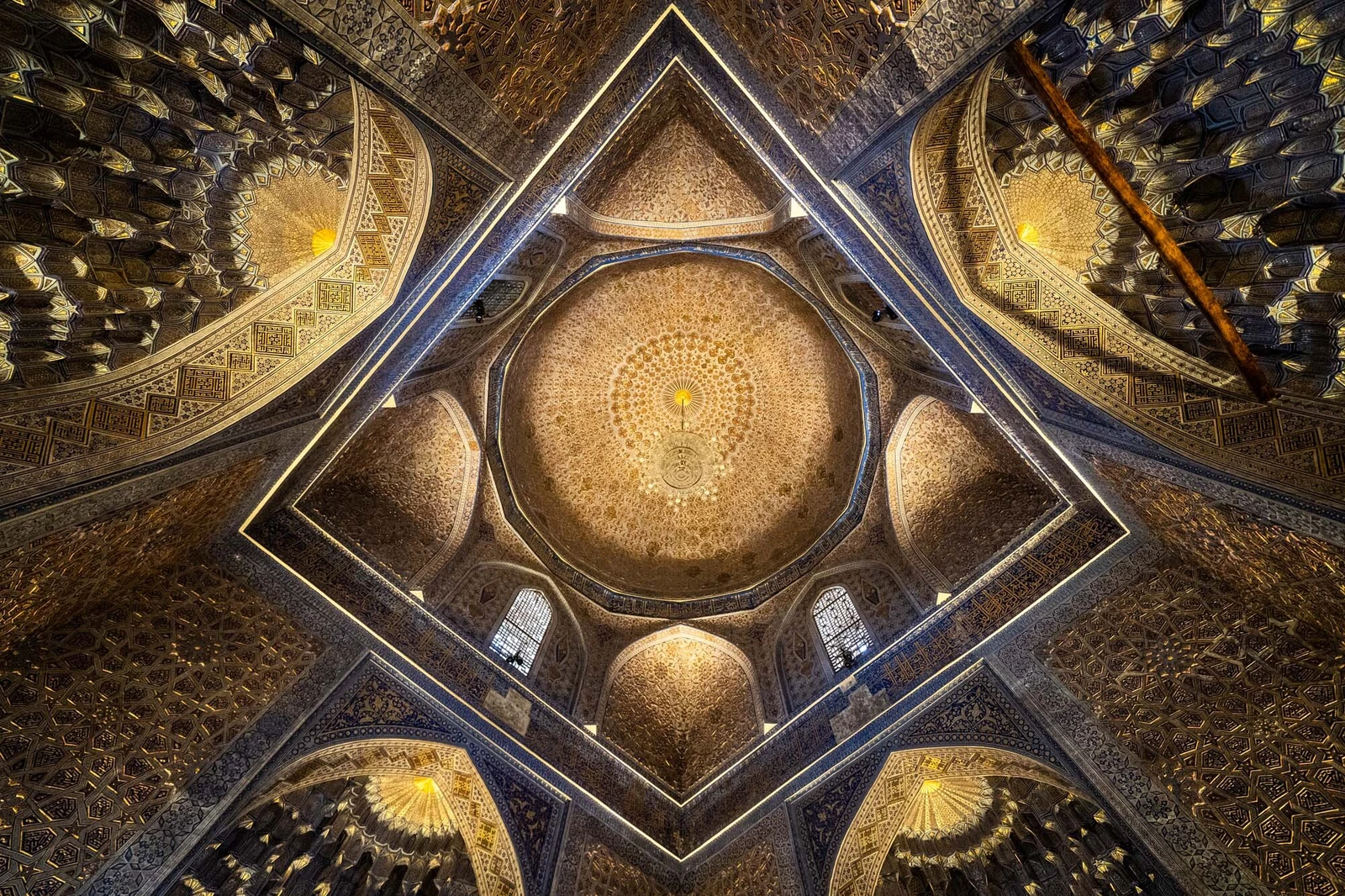
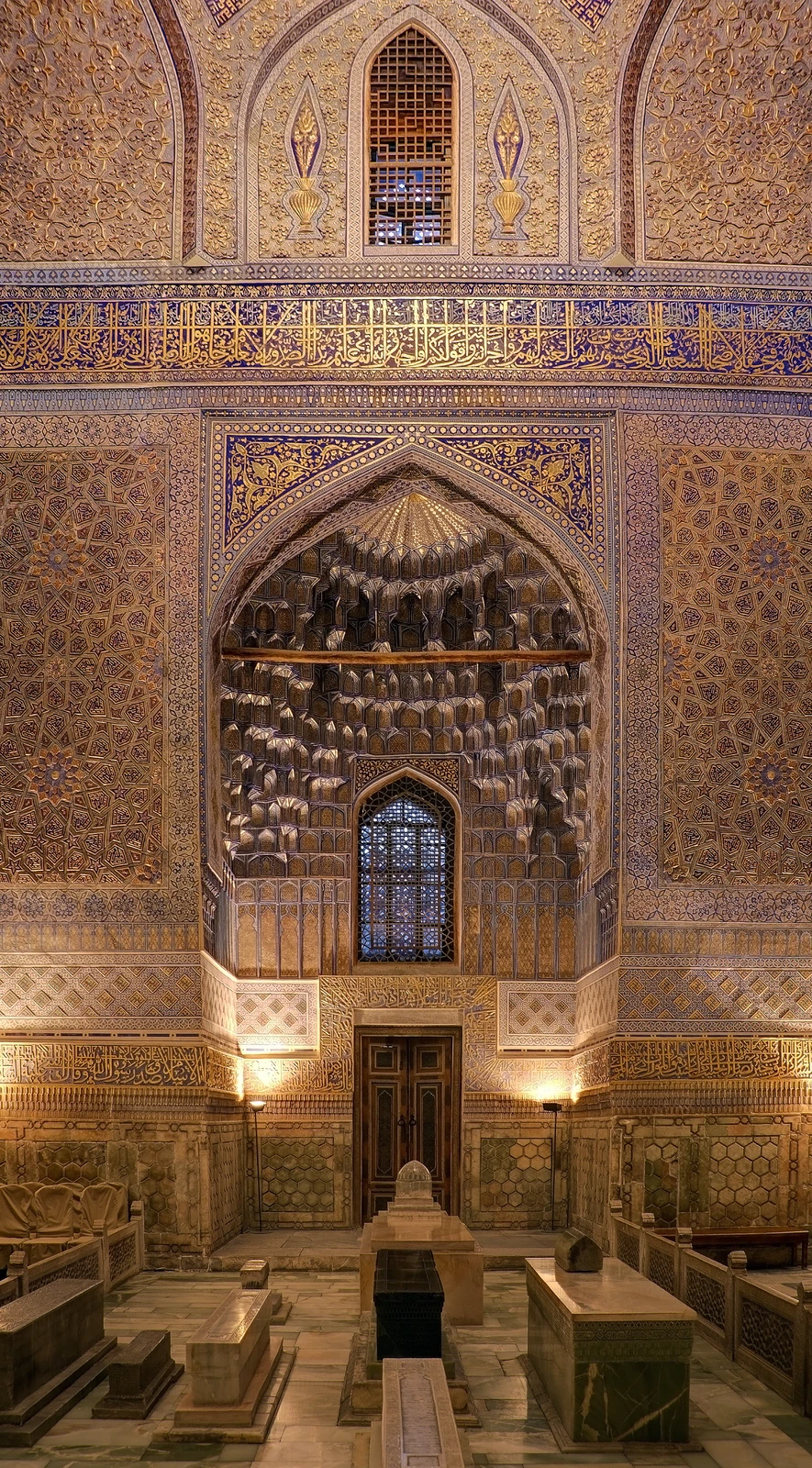
- Interior Chamber: The interior is a single, high, and deeply impressive chamber. The lower walls are covered with hexagonal onyx slabs, while the upper parts are decorated with stunning painted plaster and gilded muqarnas (stalactite vaulting). The entire space is designed to create a sense of solemn grandeur.
- The Tombs: The ornate carved headstones on the main floor are cenotaphs. The actual tombs are located in a crypt directly beneath. Timur’s tomb is marked by a single, solid block of dark green jade, which is one of the largest in the world.
What Makes It Famous
Gur-e-Amir is famous as the final resting place of one of history’s most powerful conquerors and as the architectural prototype for some of the world’s most famous buildings.
- The Tomb of Timur (Tamerlane): Its primary claim to fame is that it houses the tomb of Timur, the founder of the vast Timurid Empire.
- A Precursor to the Taj Mahal: The mausoleum is renowned in architectural history for being a direct inspiration for later Mughal tombs in India, most notably Humayun’s Tomb in Delhi and the world-famous Taj Mahal in Agra, which were built by Timur’s descendants.
- The “Curse of Timur”: The tomb is associated with a famous legend. An inscription on the tomb is said to read, “When I rise from the dead, the world will tremble.” In June 1941, Soviet anthropologists opened the tomb to exhume Timur’s body. Two days later, on June 22, 1941, Nazi Germany launched Operation Barbarossa, its massive invasion of the Soviet Union.
- Masterpiece of Timurid Art: The mausoleum is celebrated as a perfect example of the Timurid style, showcasing the era’s mastery of dome construction, intricate tilework, and opulent interior decoration.
Differences from Other Wonders
Gur-e-Amir offers a unique experience that sets it apart from other major sites in Samarkand and beyond.
- A Dynastic Mausoleum vs. a Public Square: While the Registan Square is a grand, open, public space designed for civic and educational life, Gur-e-Amir is a more intimate, enclosed, and solemn space dedicated to the memory of a single dynasty.
- A Singular Focus vs. an Ensemble: The power of Gur-e-Amir comes from its focus on a single, perfectly proportioned building with its iconic dome. This is different from the experience of the Registan, which is an ensemble of three massive, competing structures.
- The Prototype vs. the Descendants: While it shares a clear architectural lineage with Mughal monuments like the Taj Mahal, Gur-e-Amir is the original prototype. Visiting it provides a direct connection to the source of this influential architectural style.