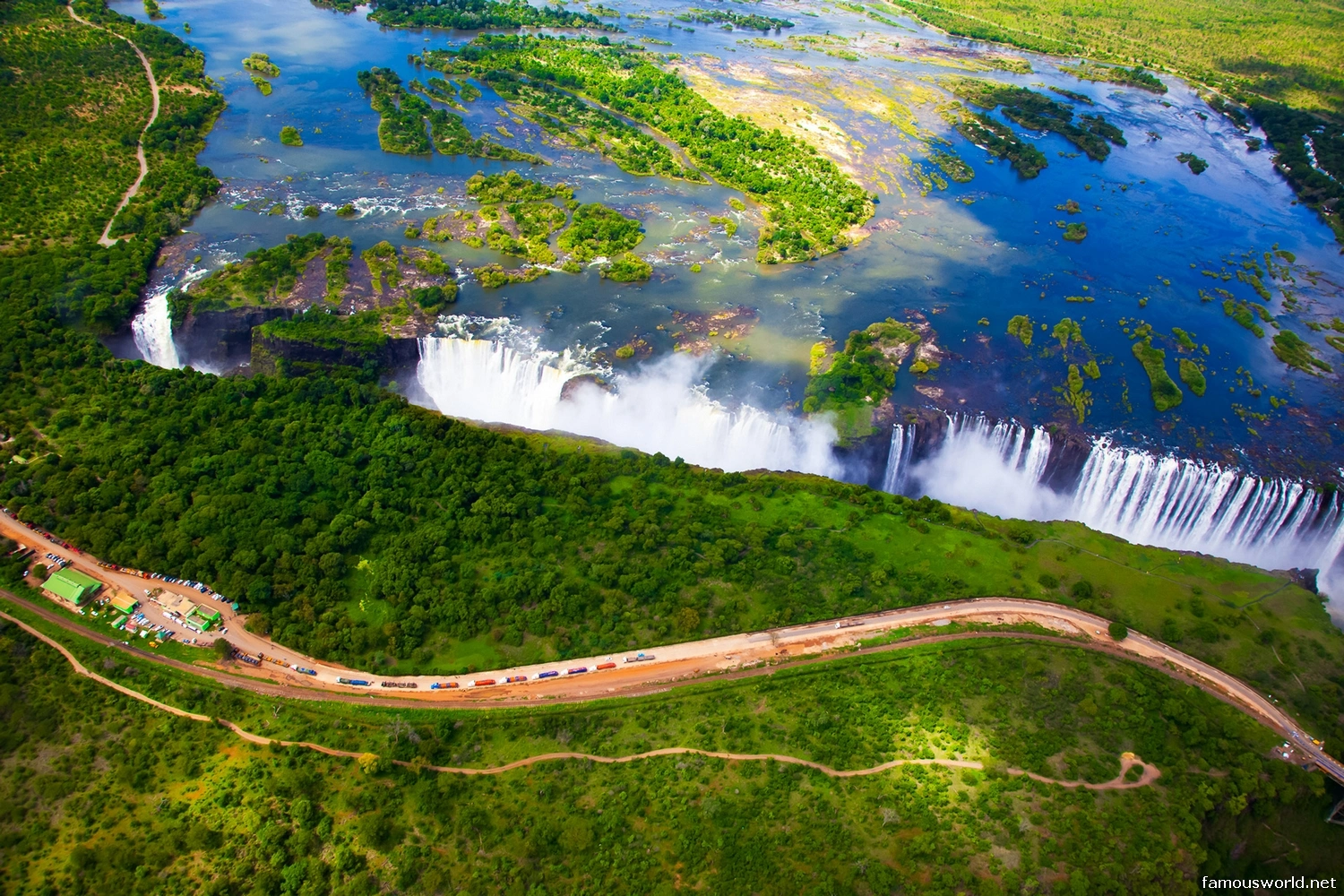
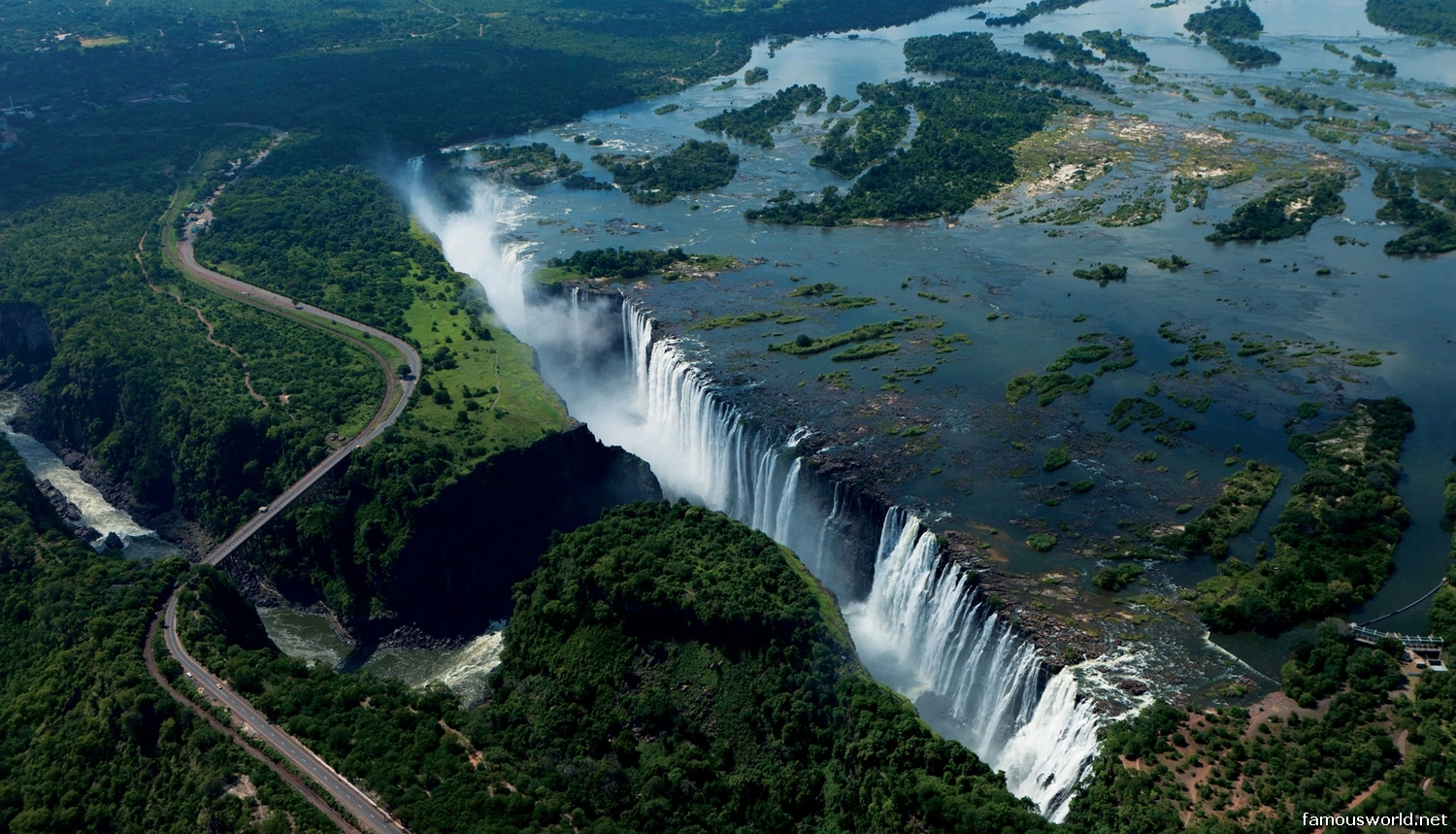
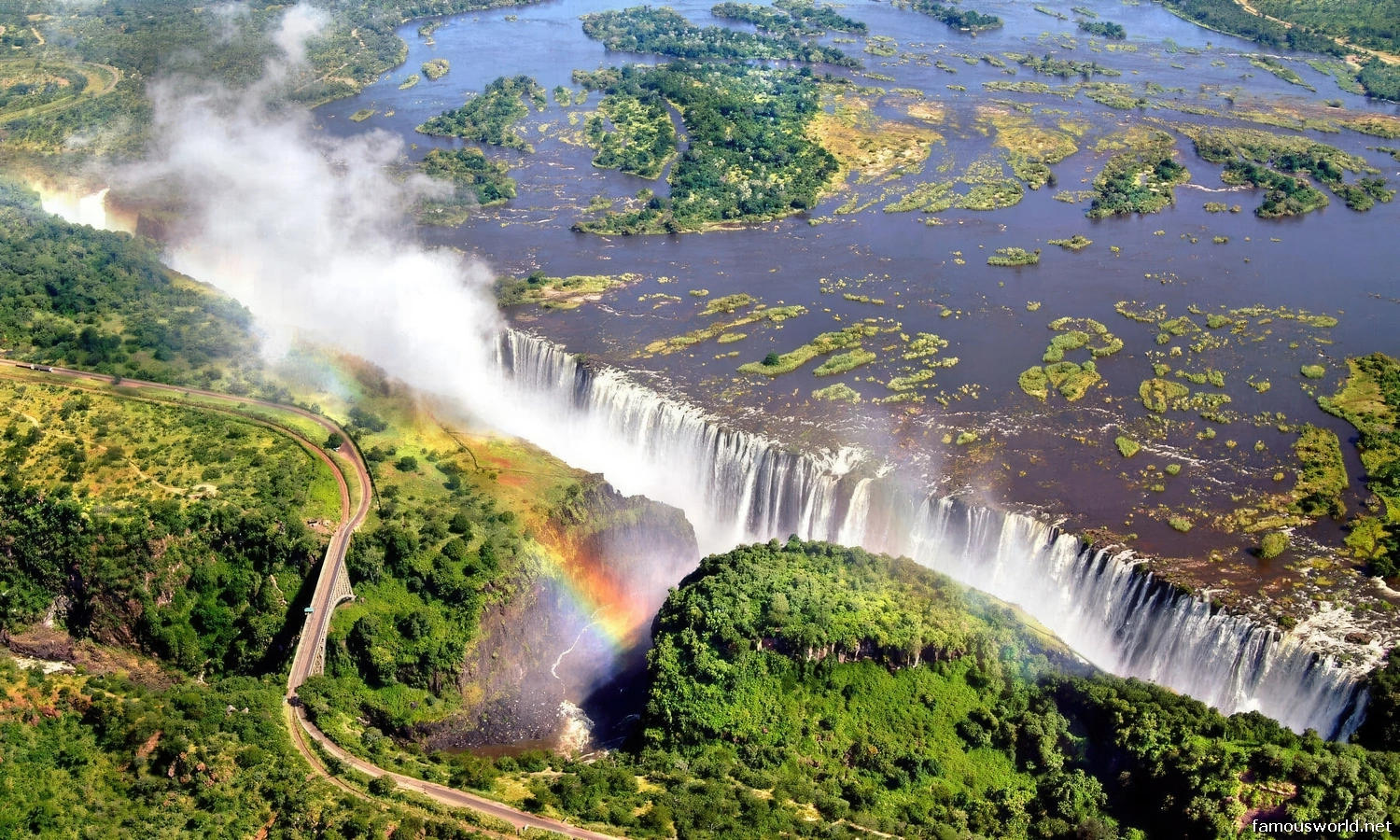
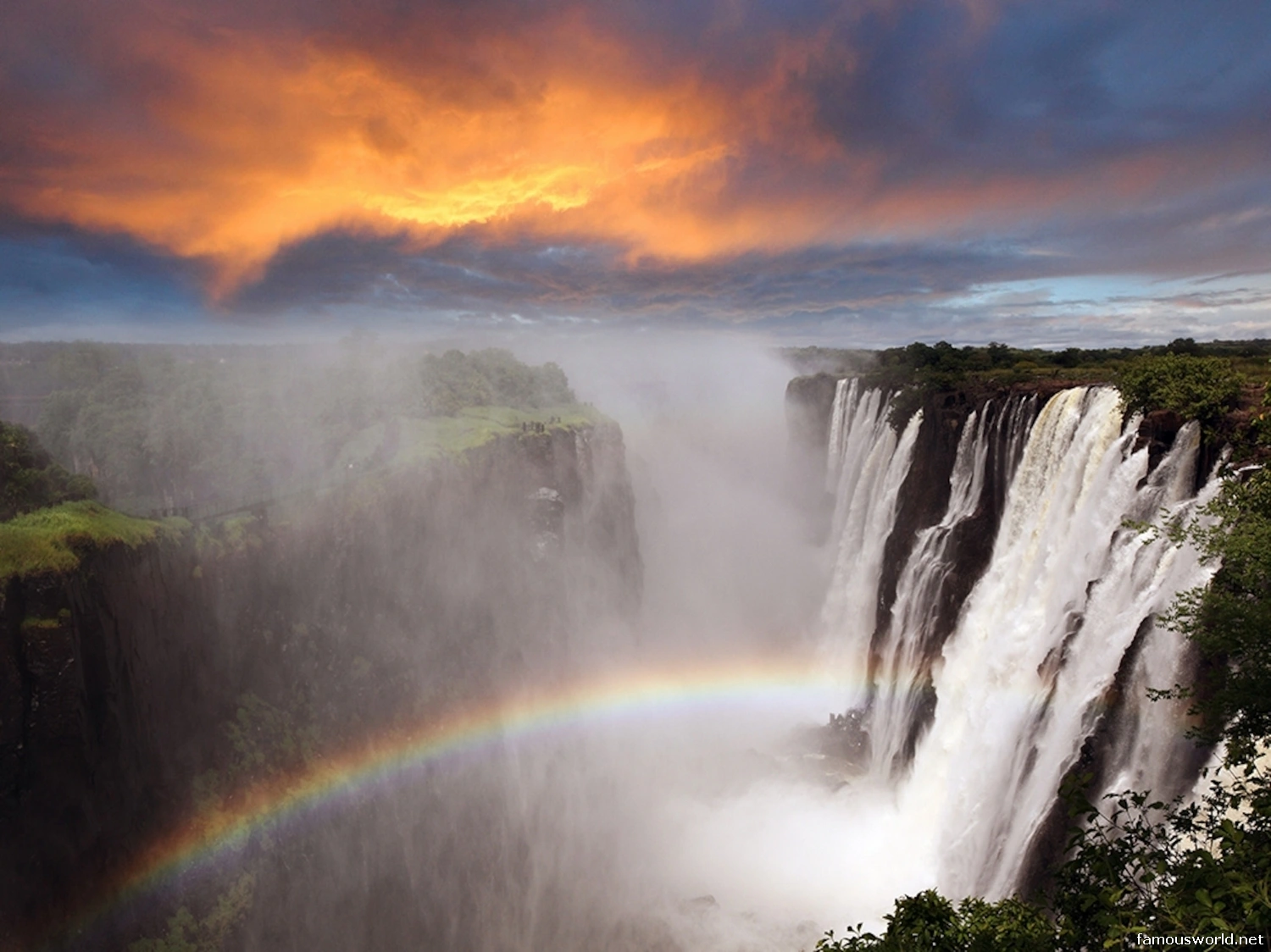
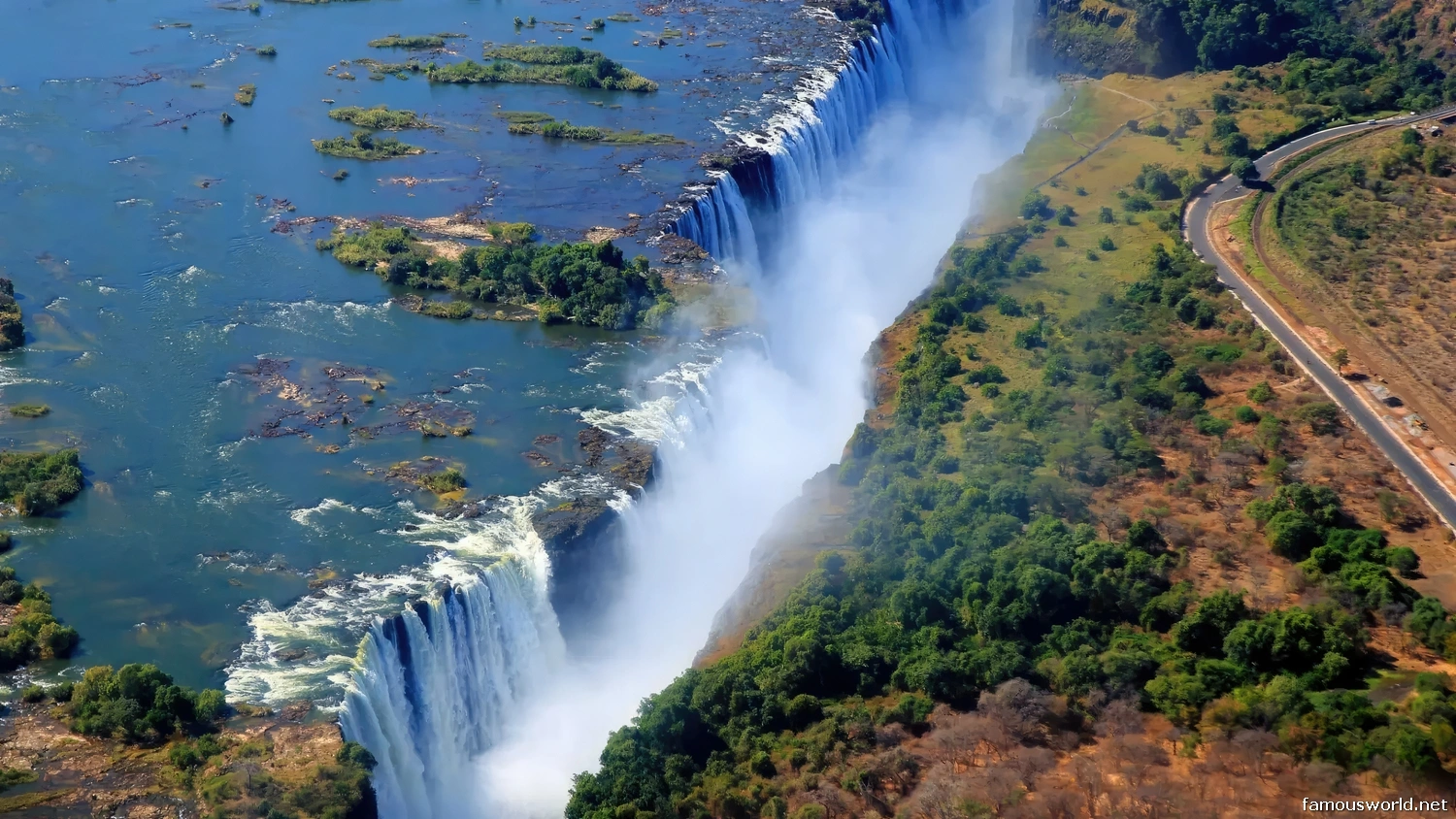
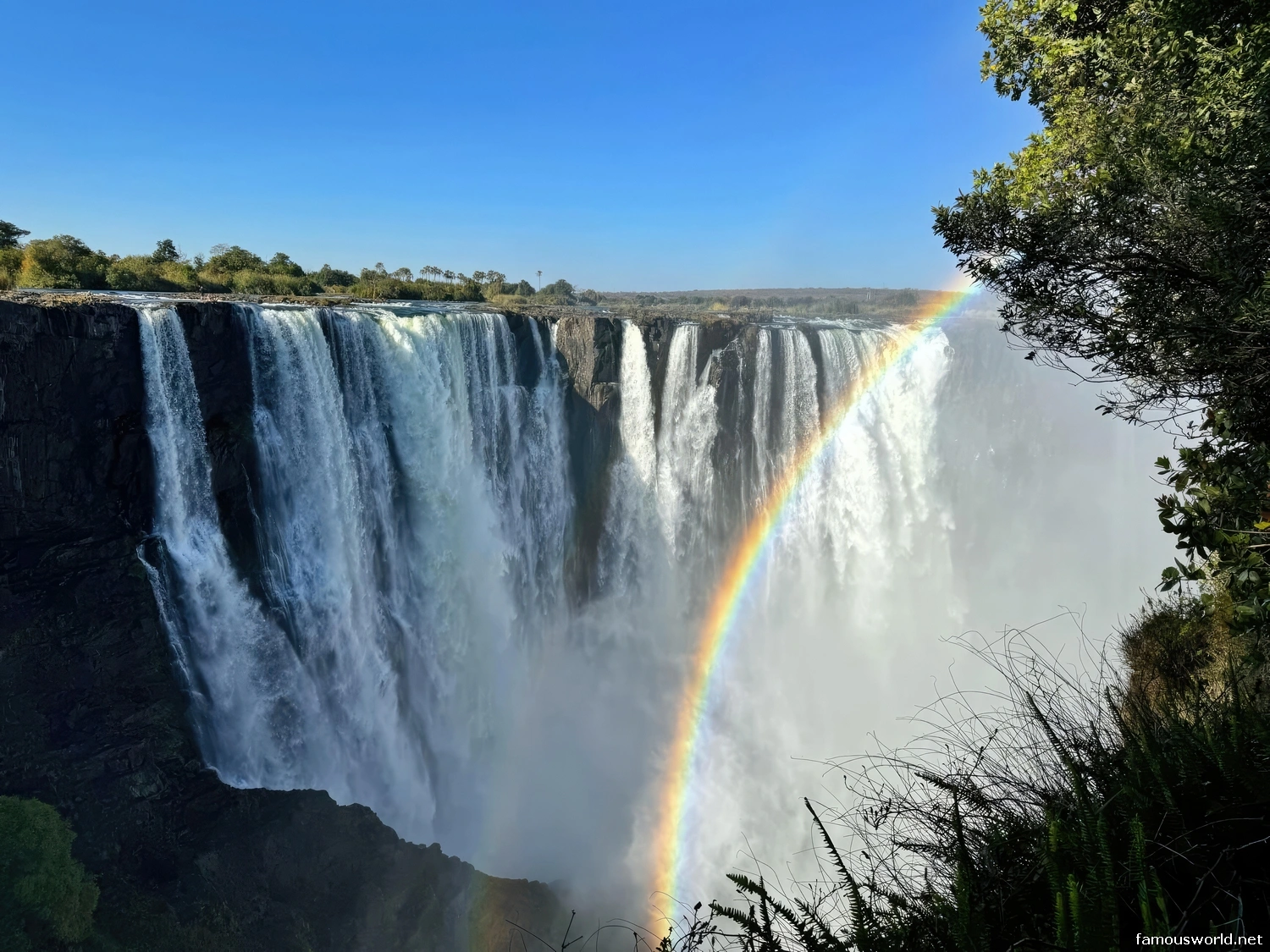
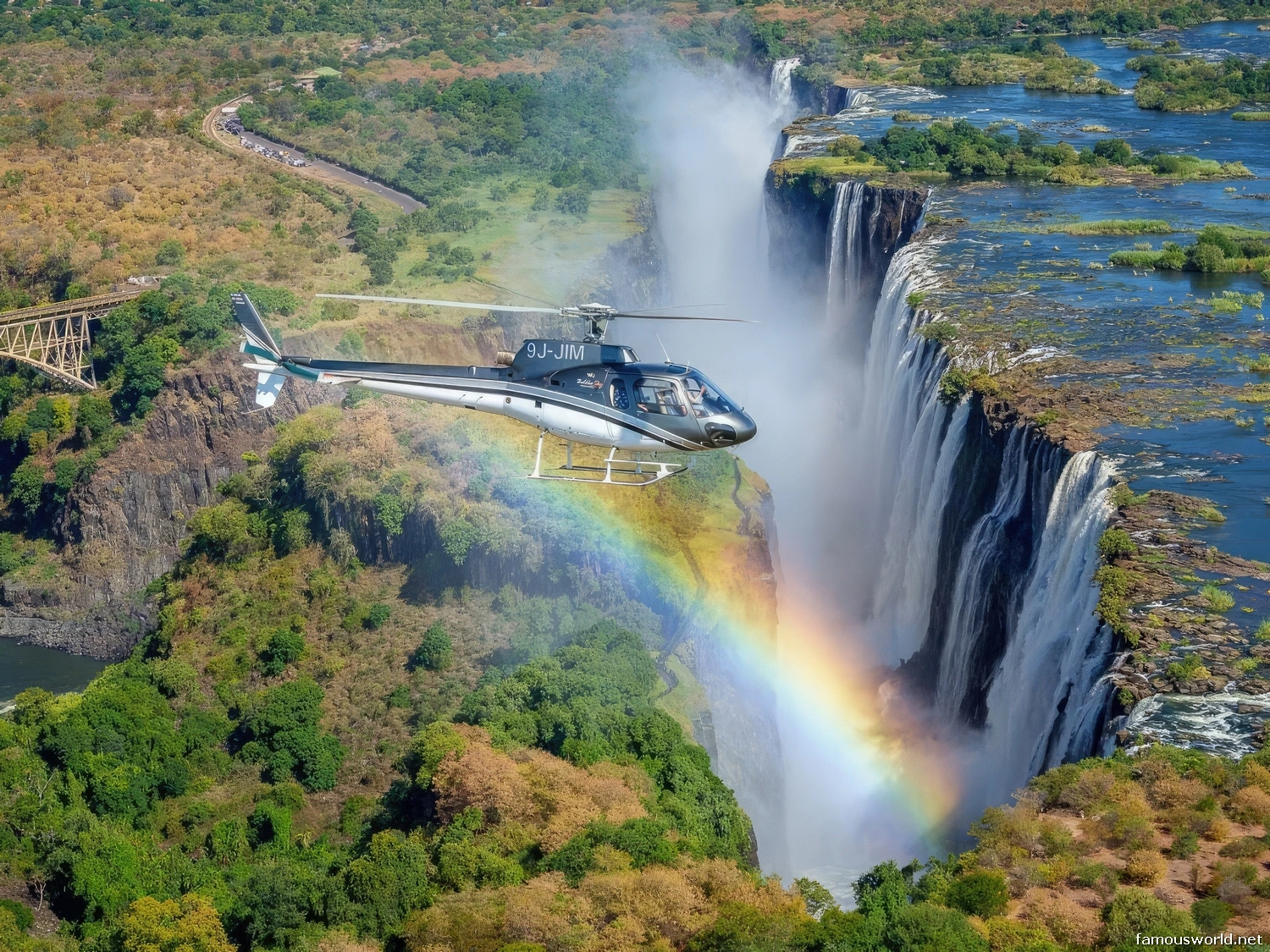
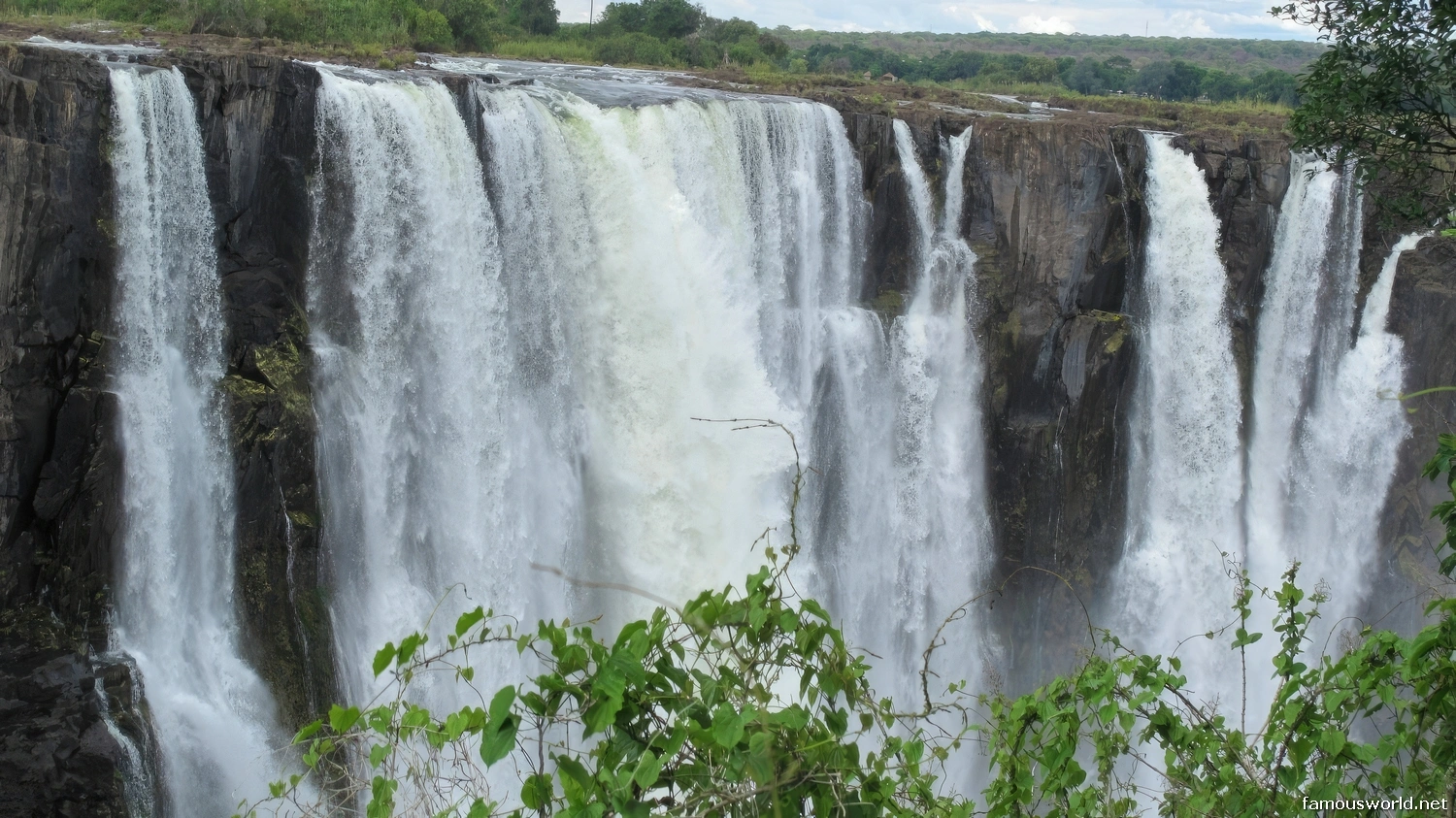
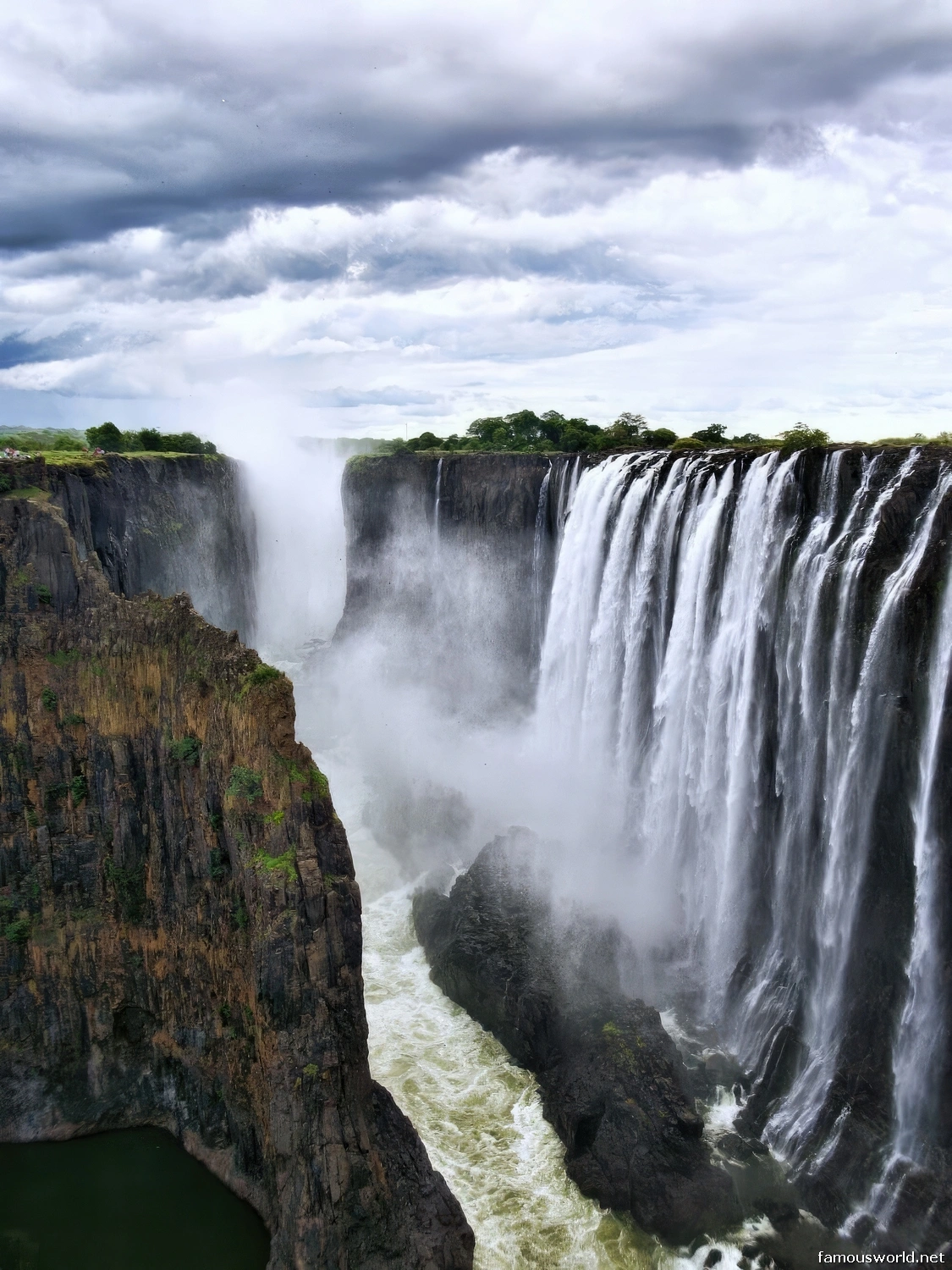
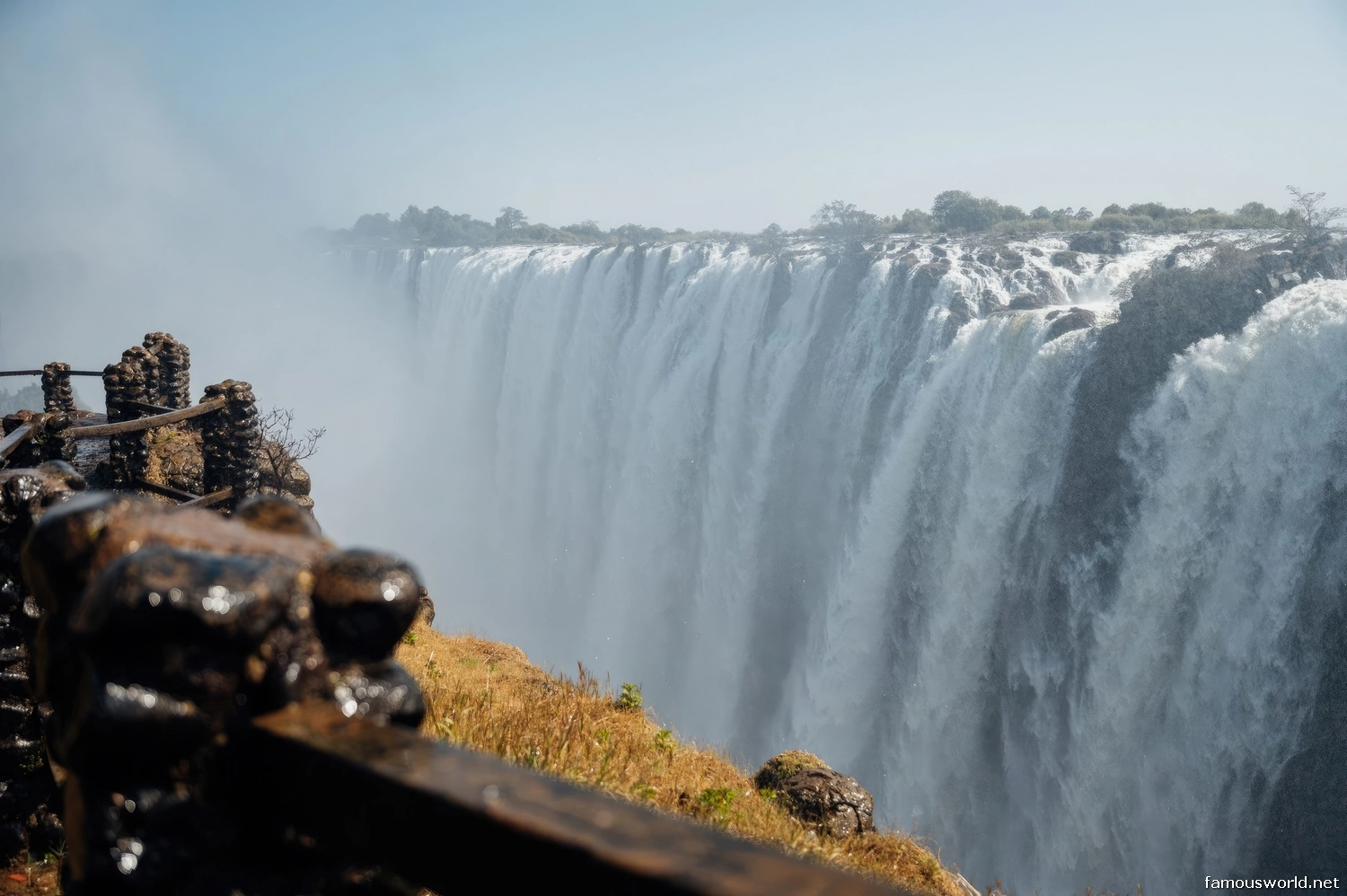
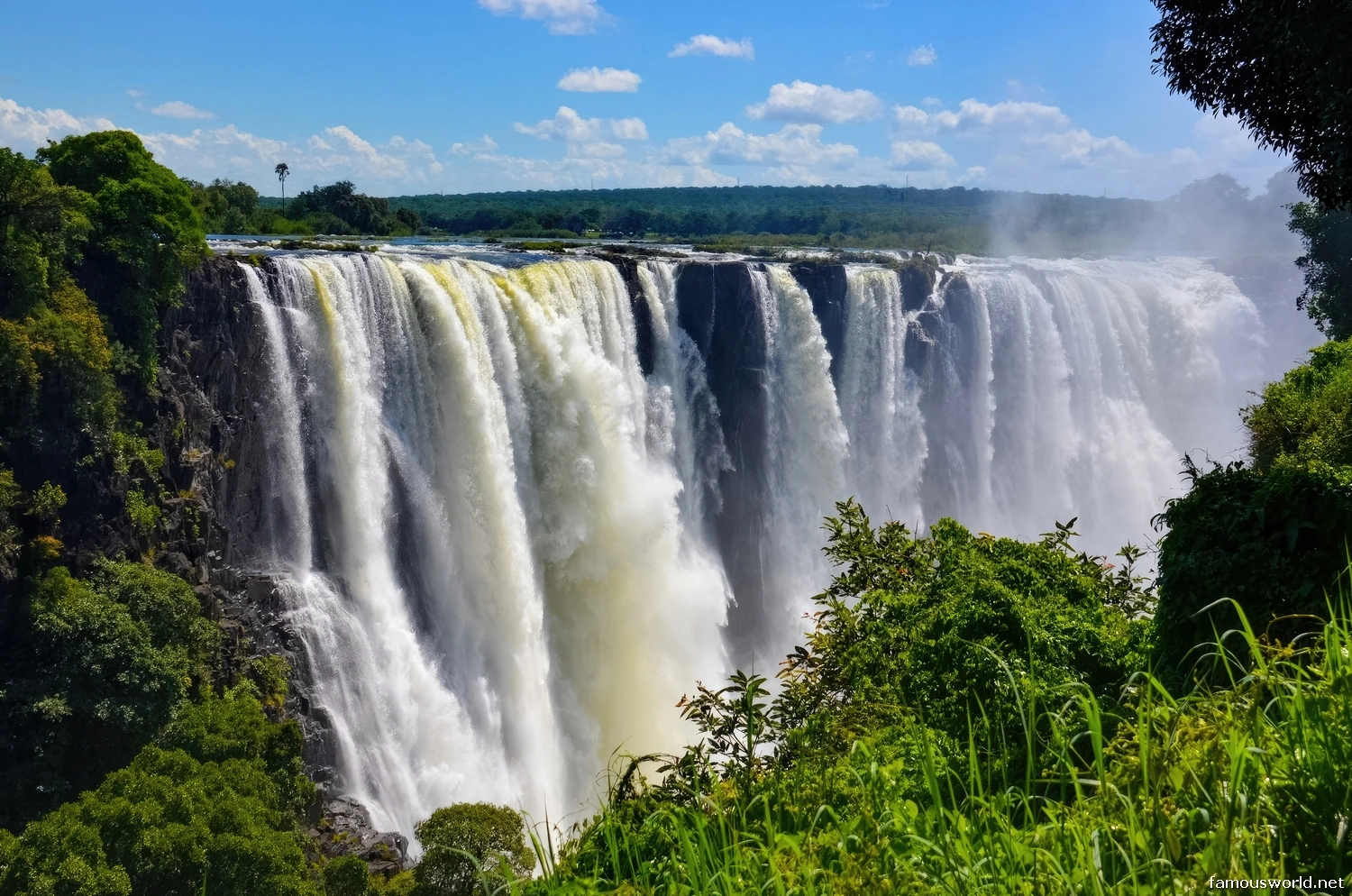
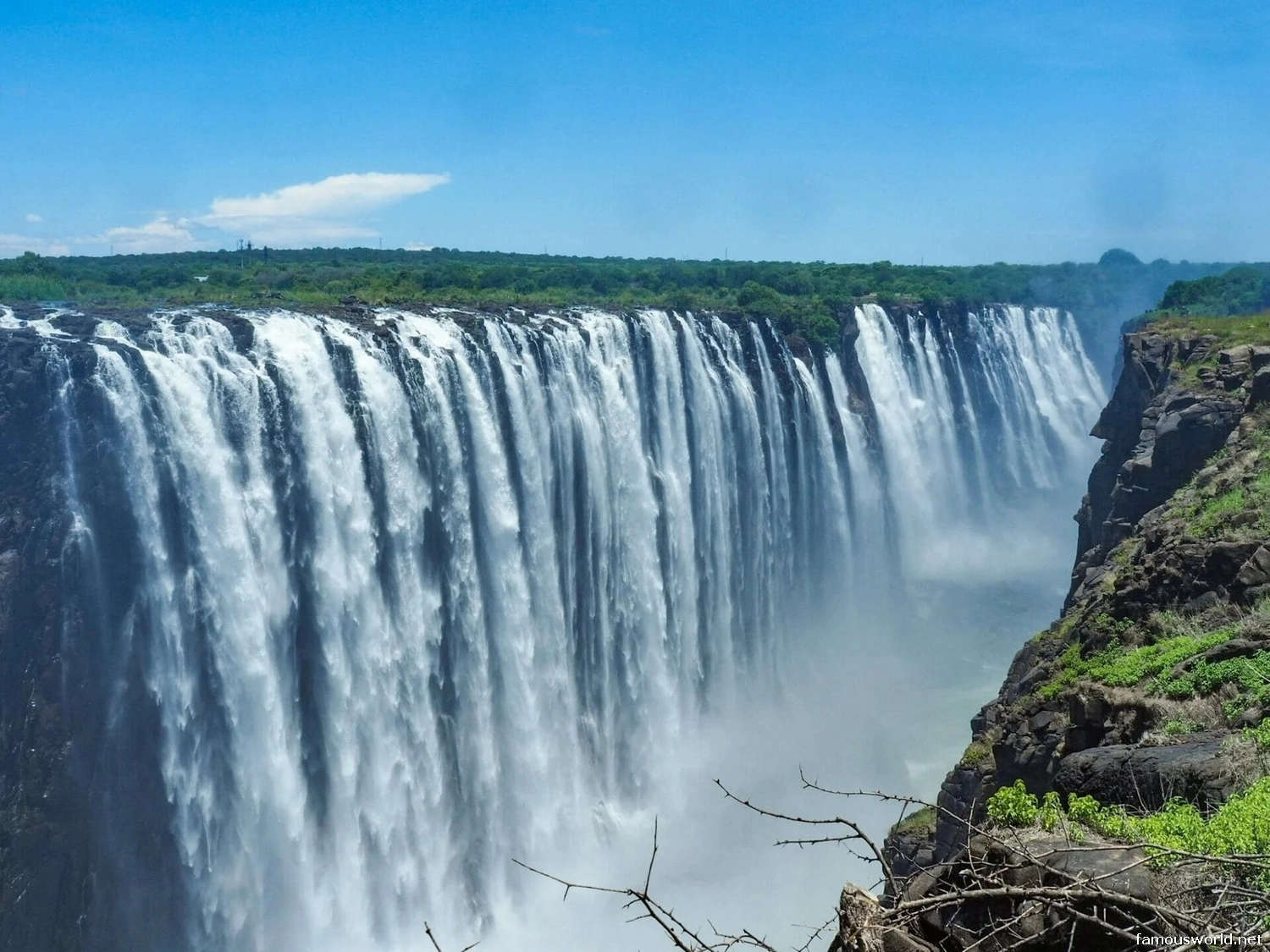
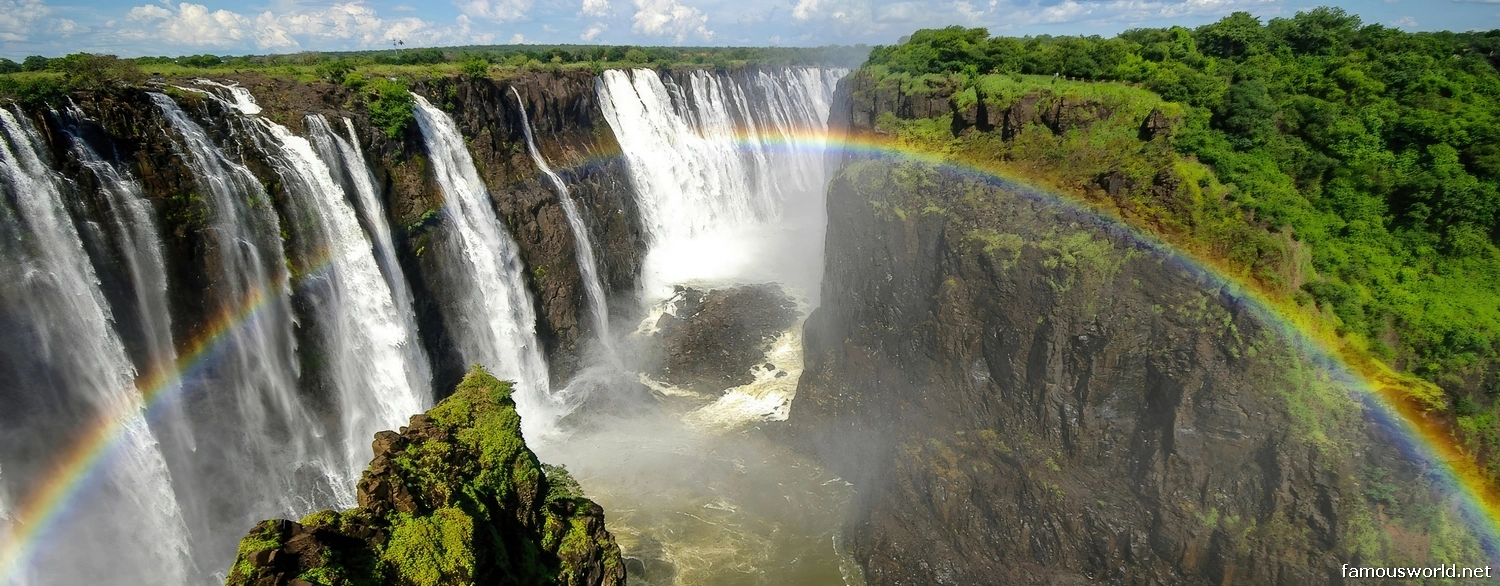
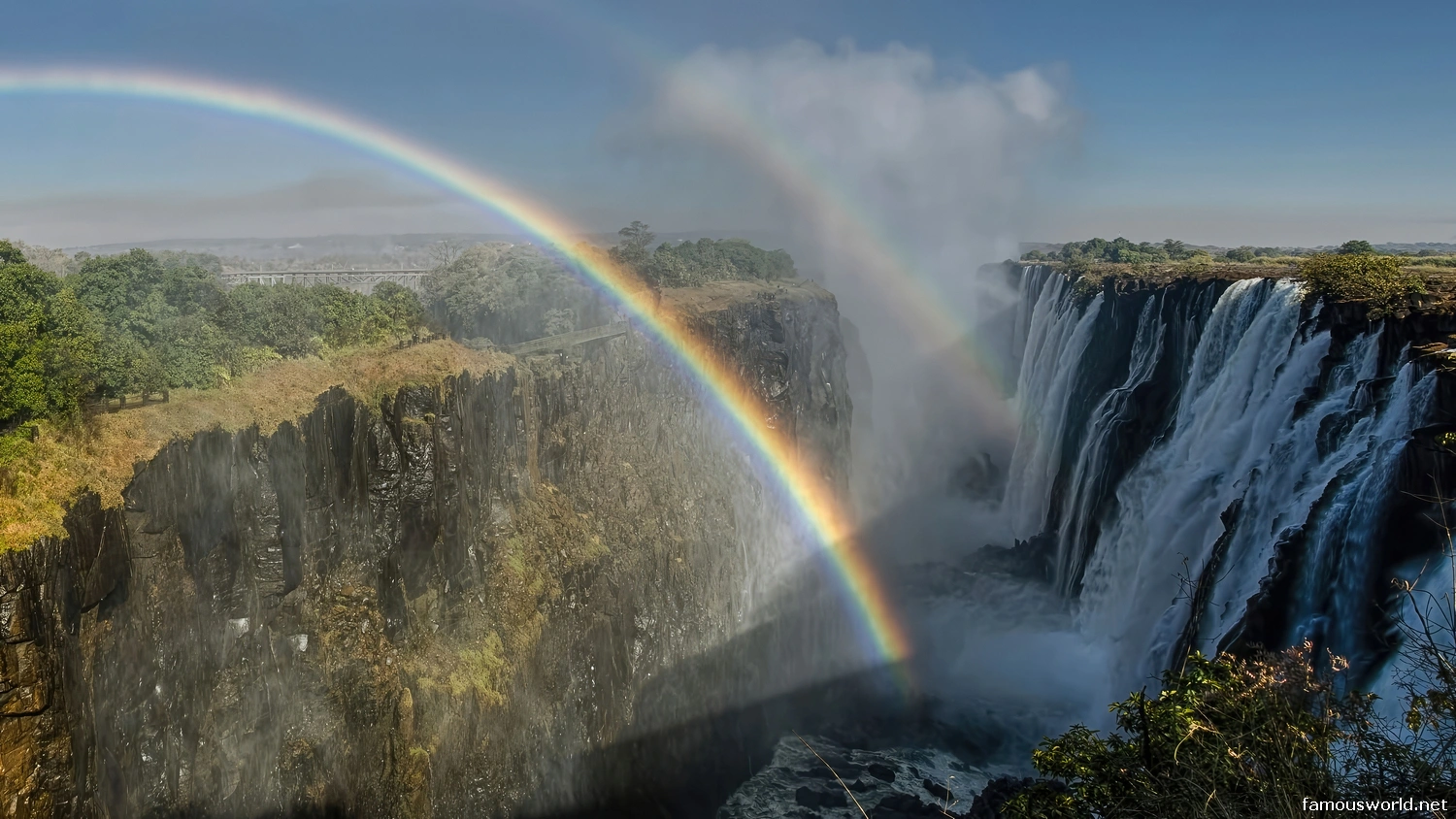
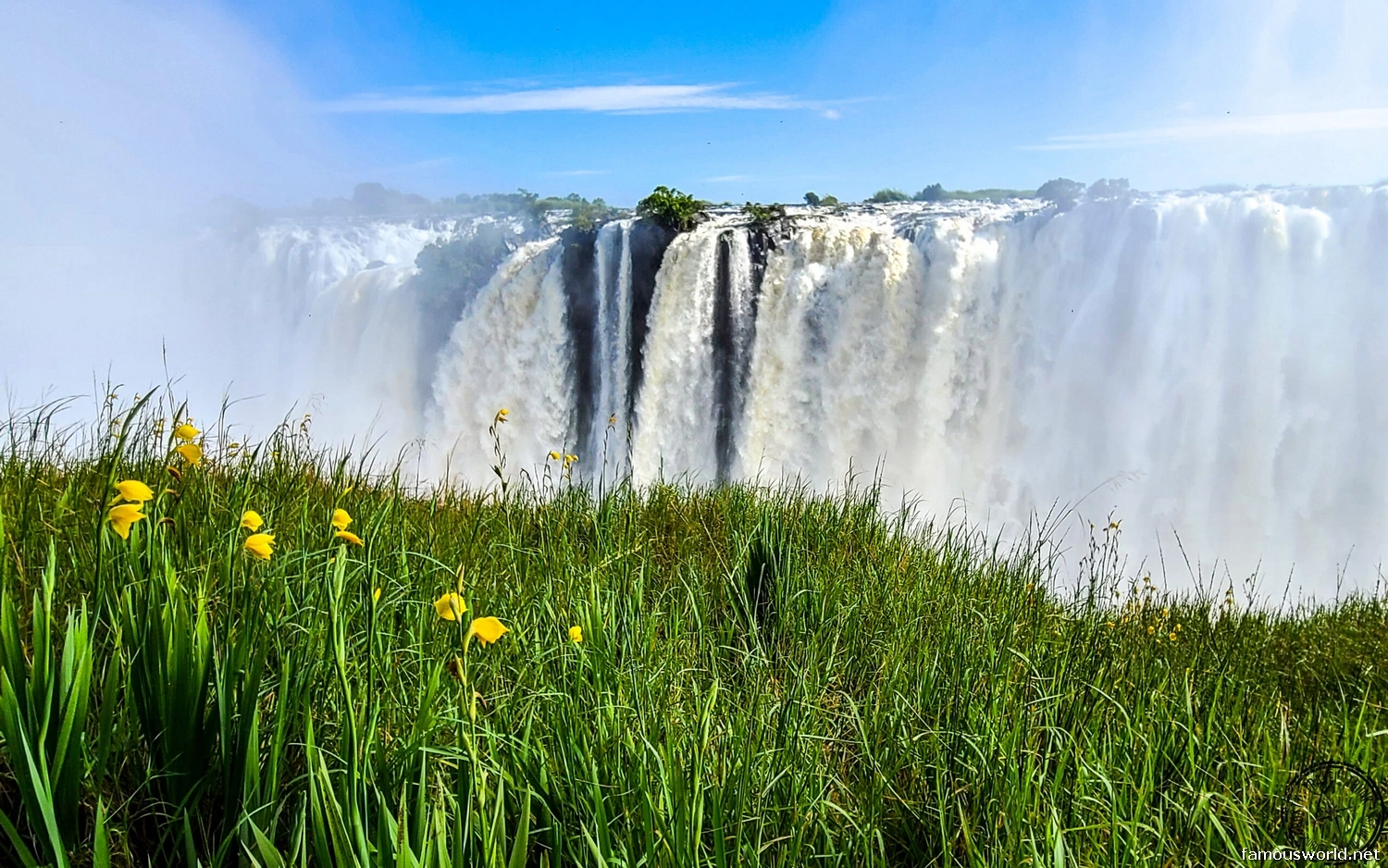
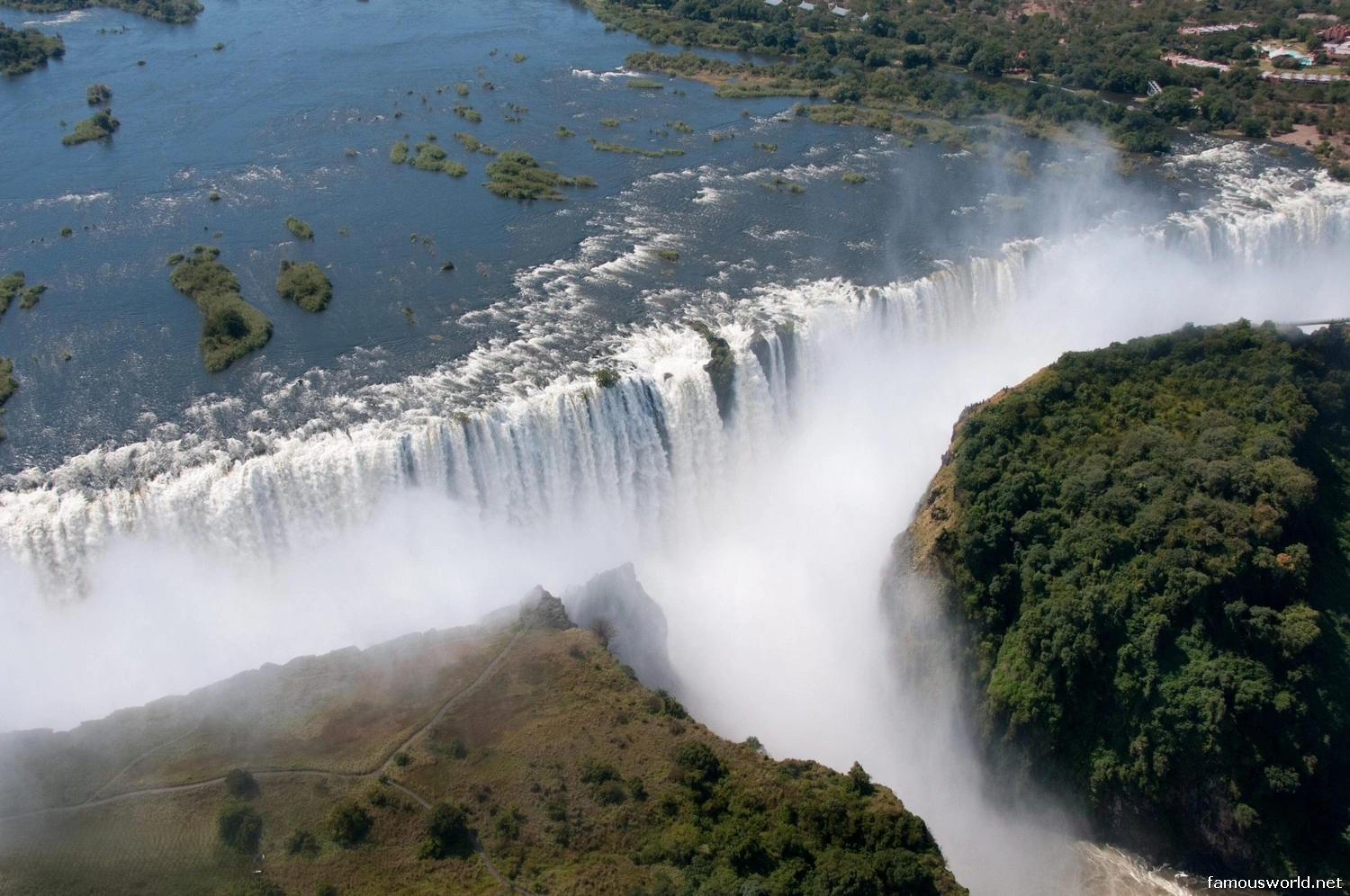
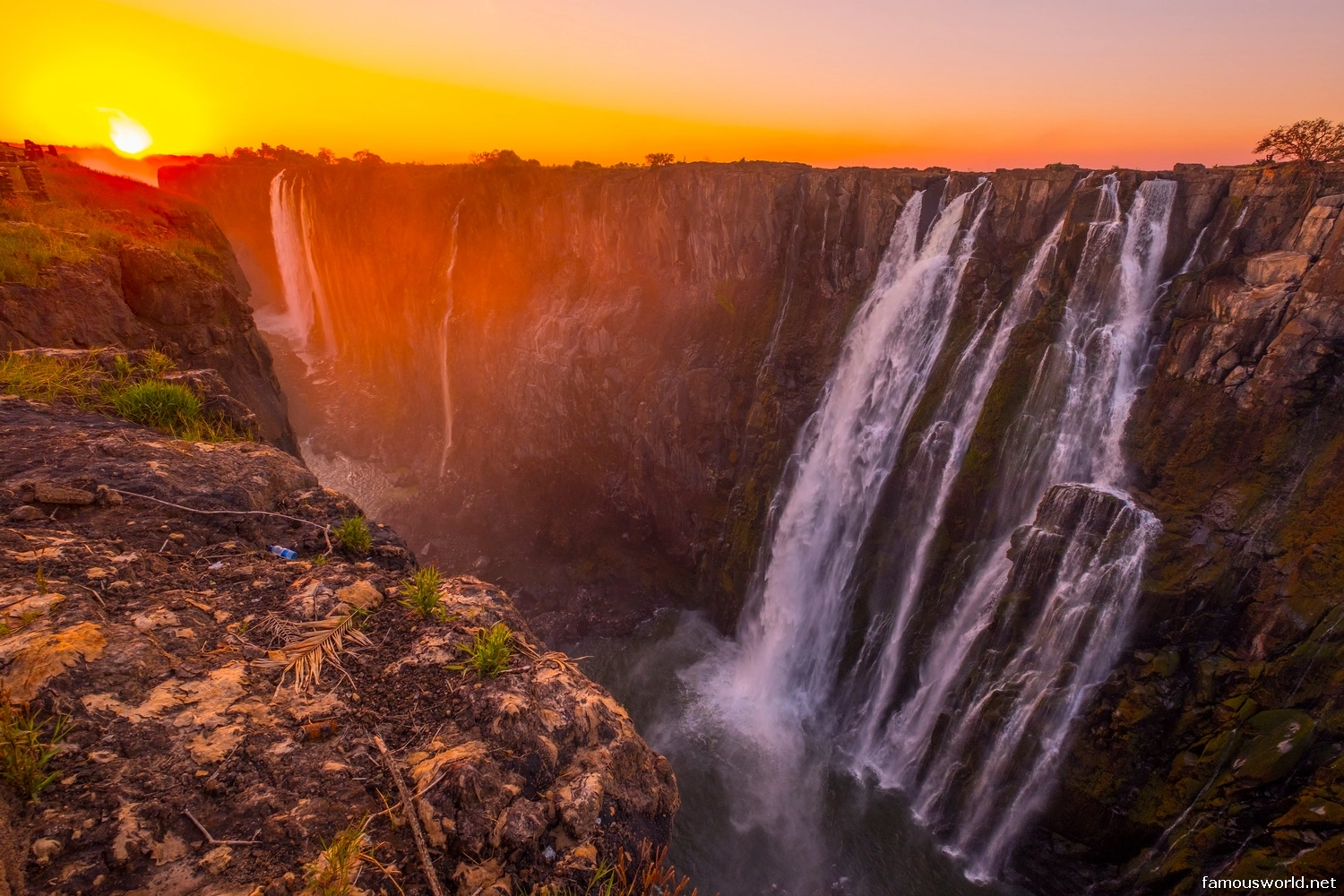
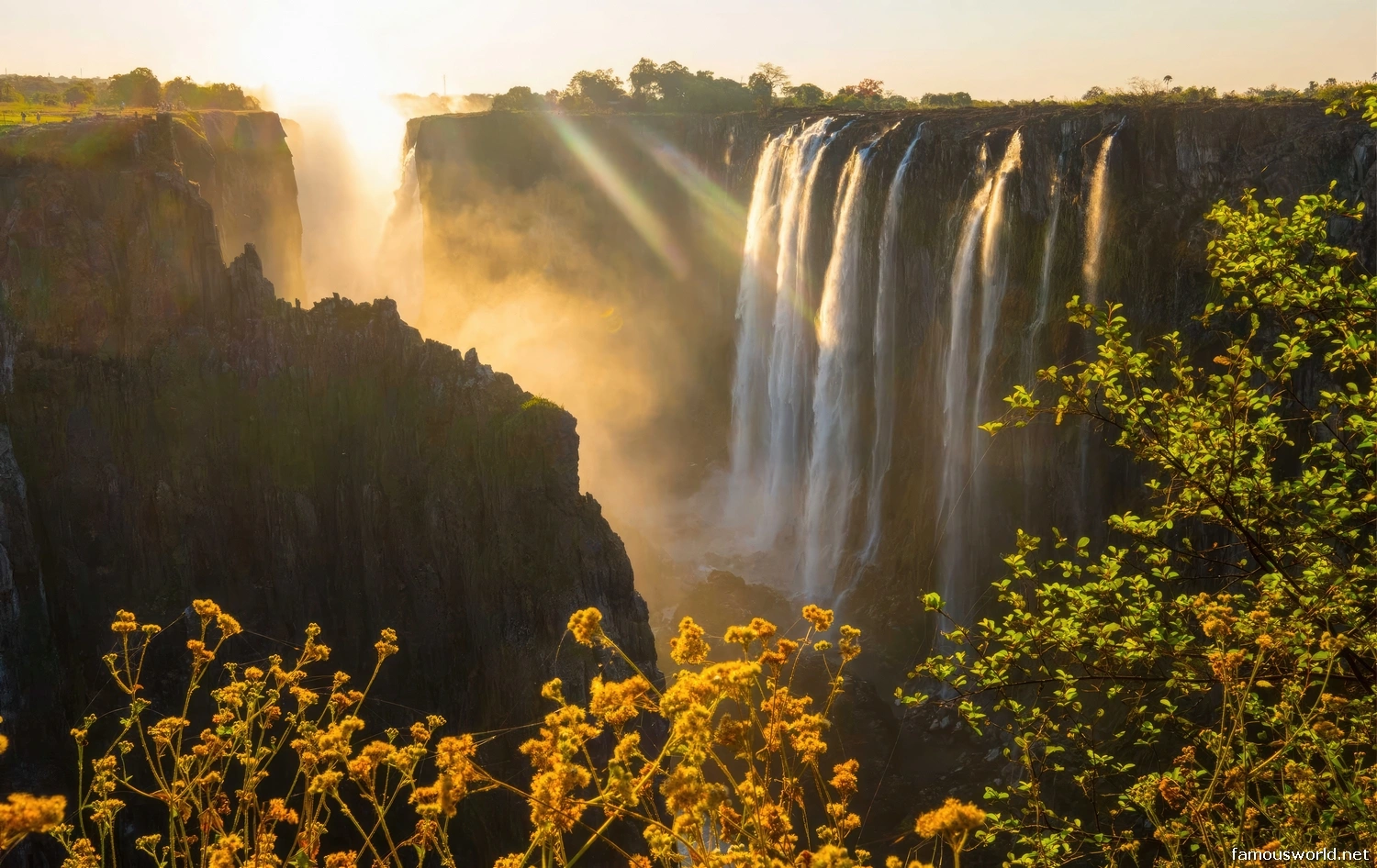
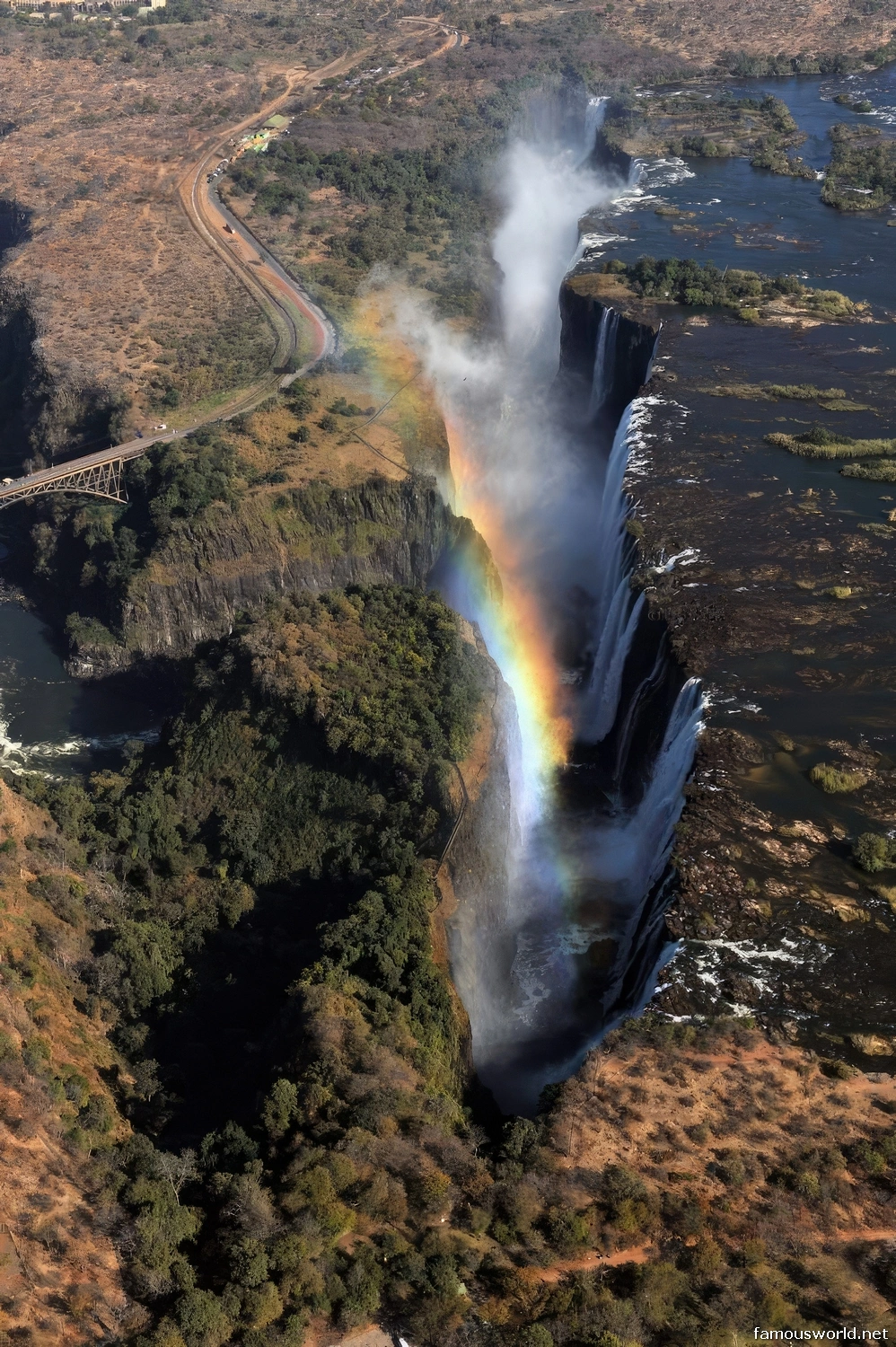
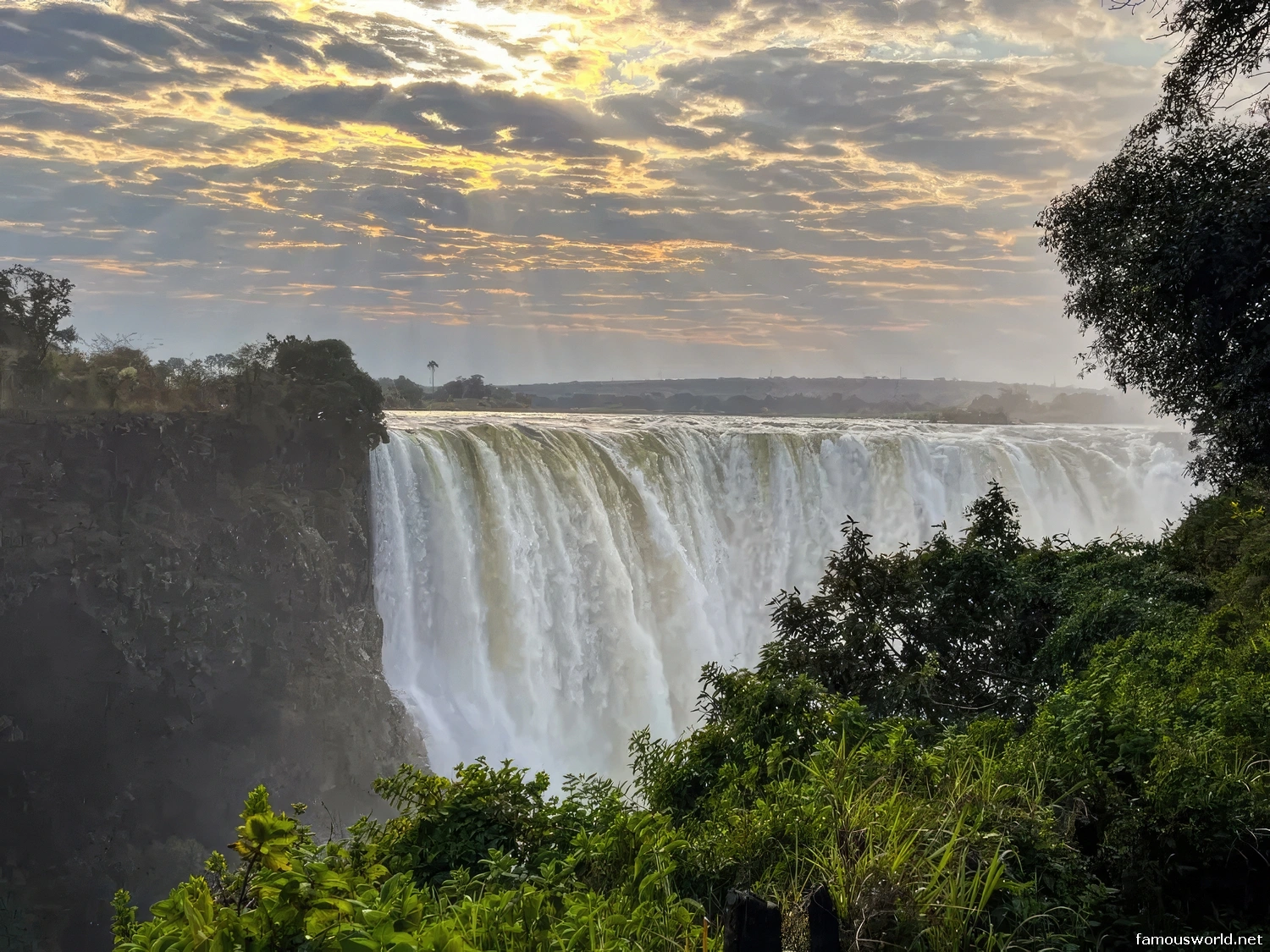
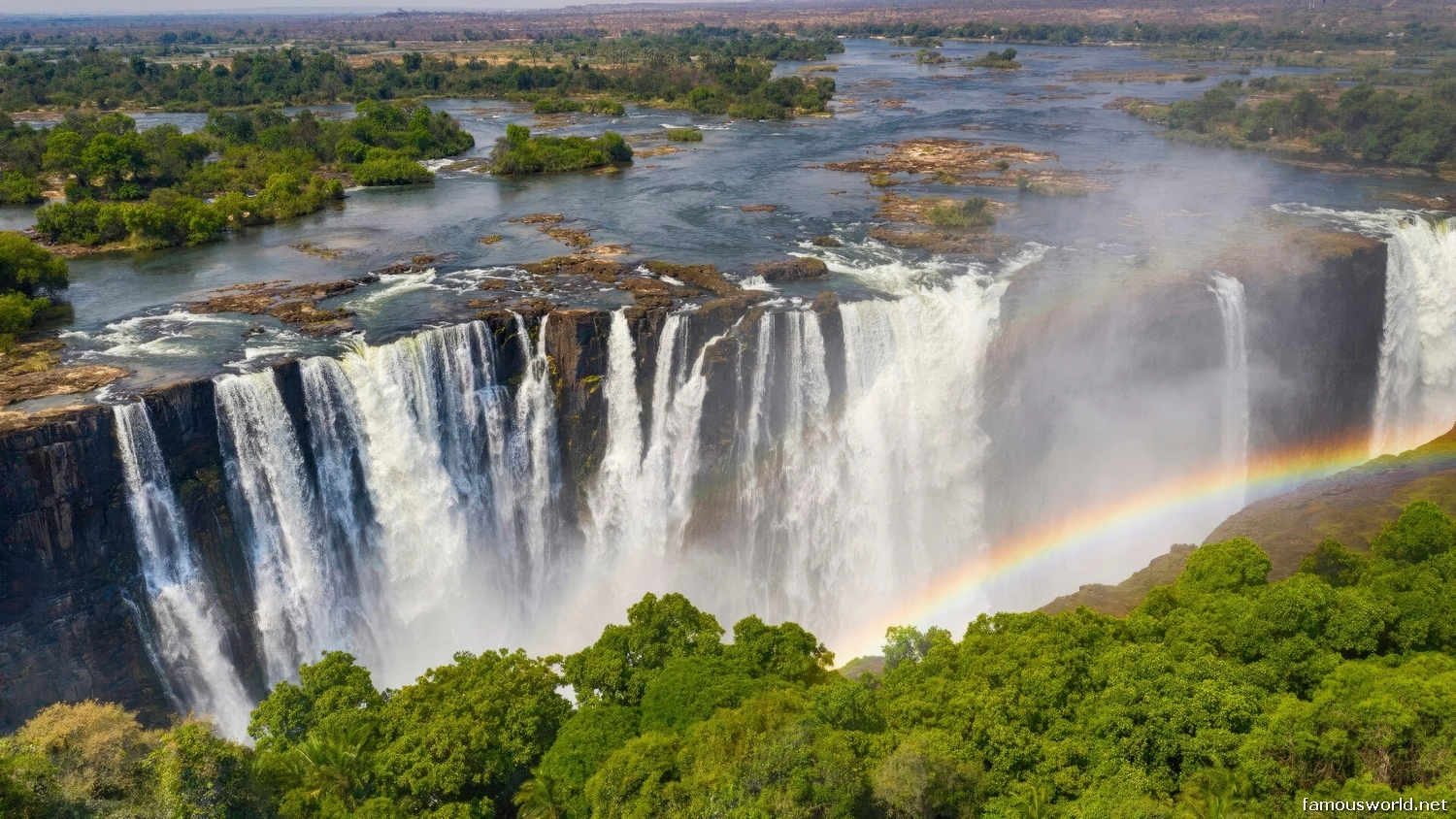
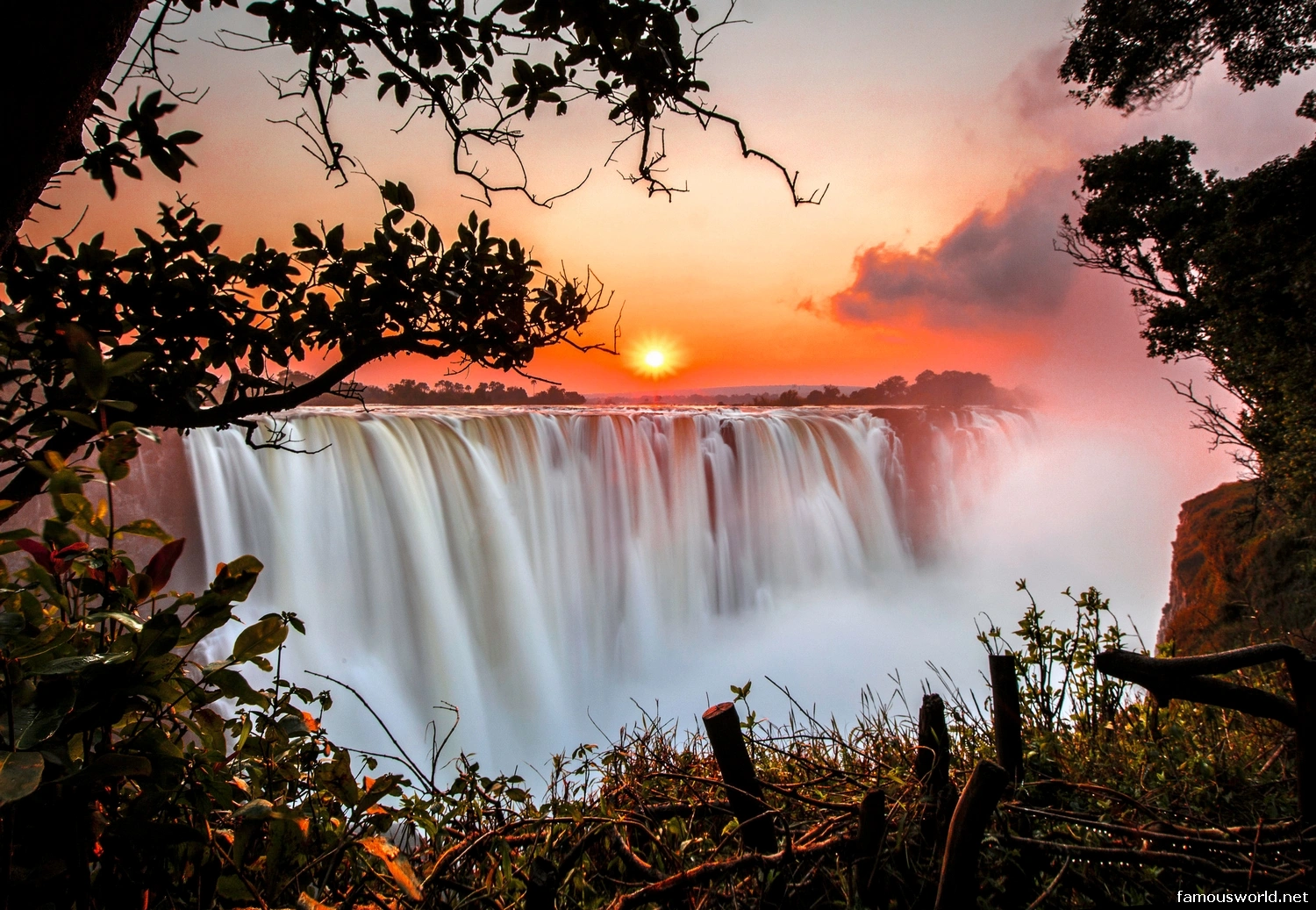
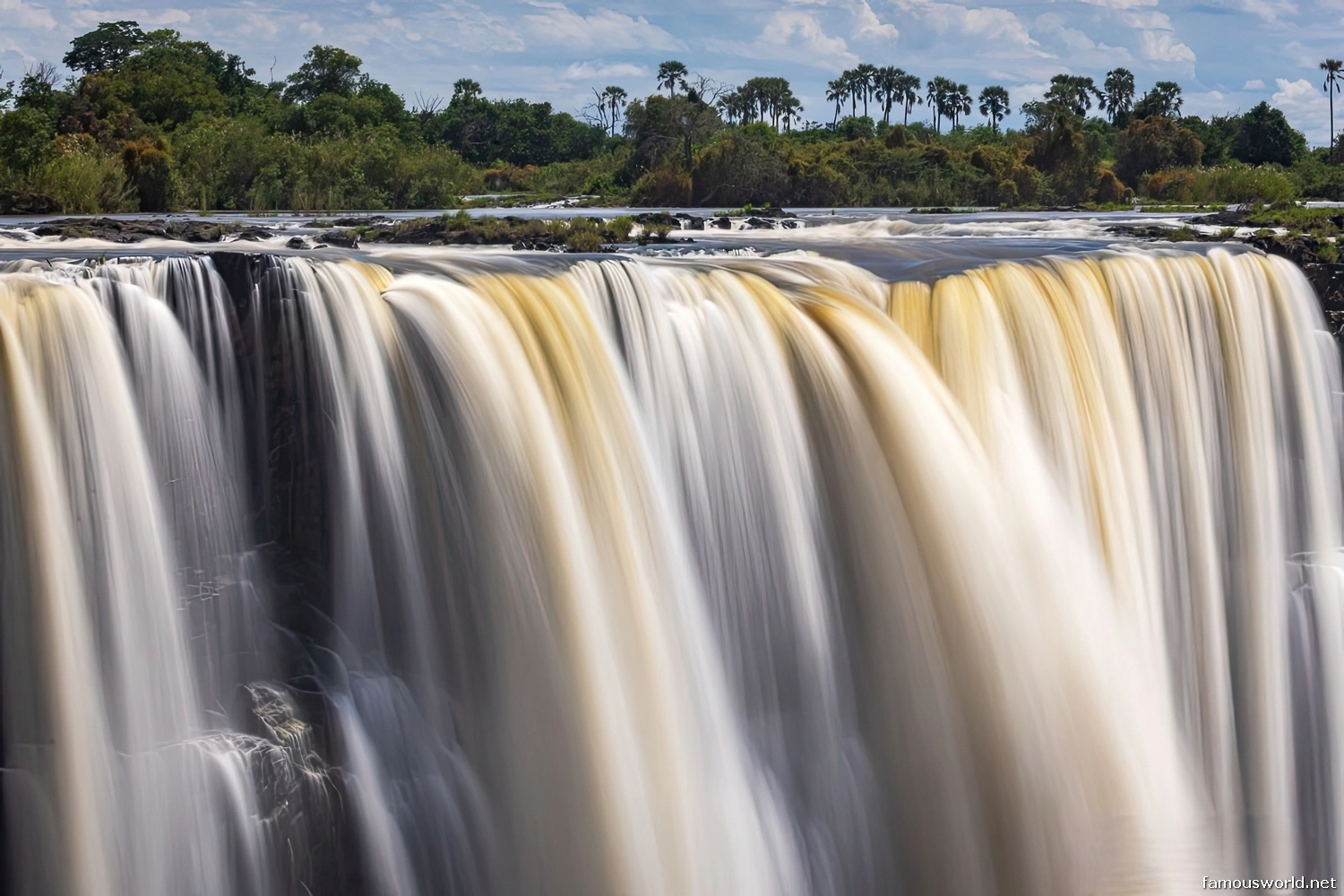
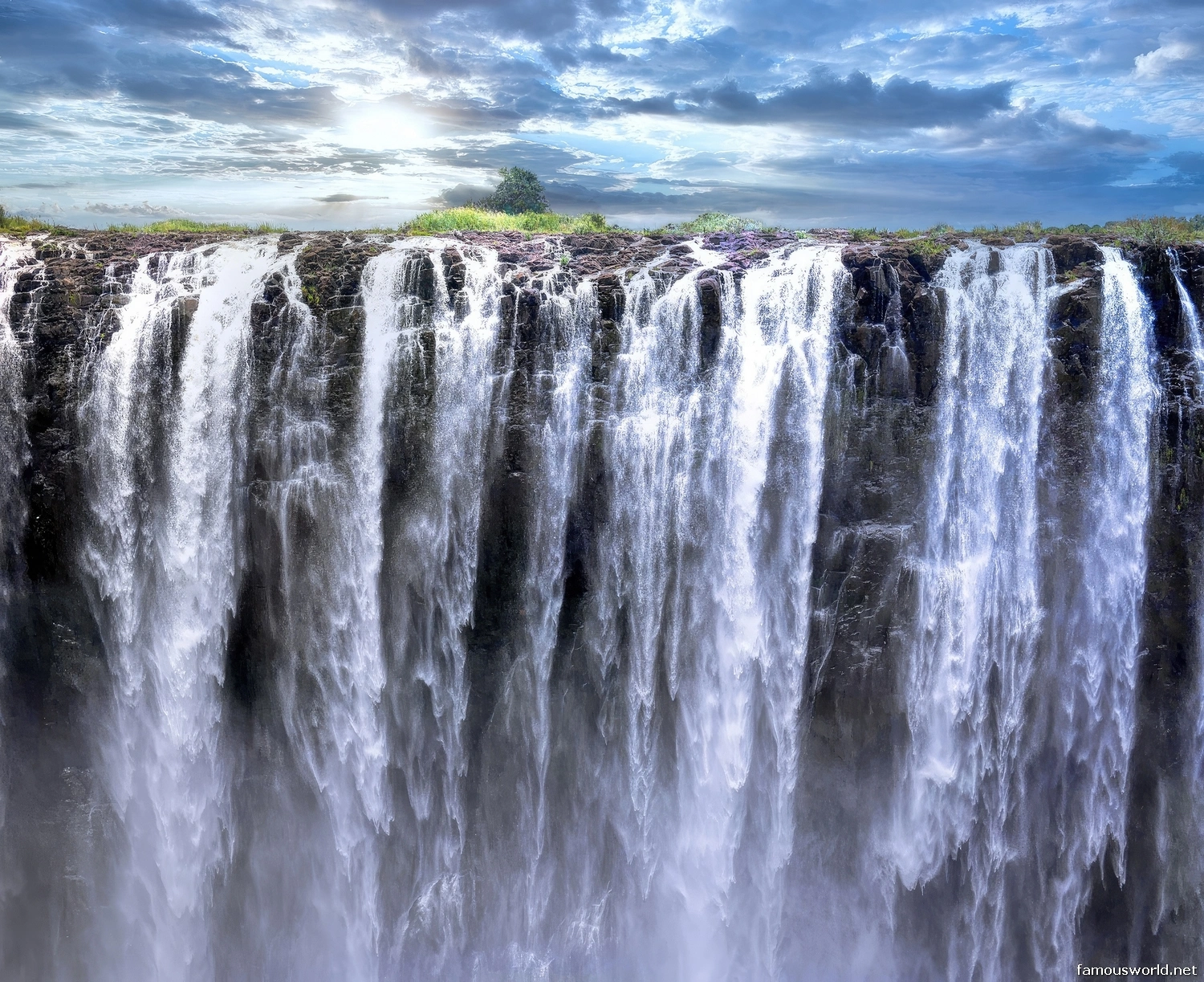
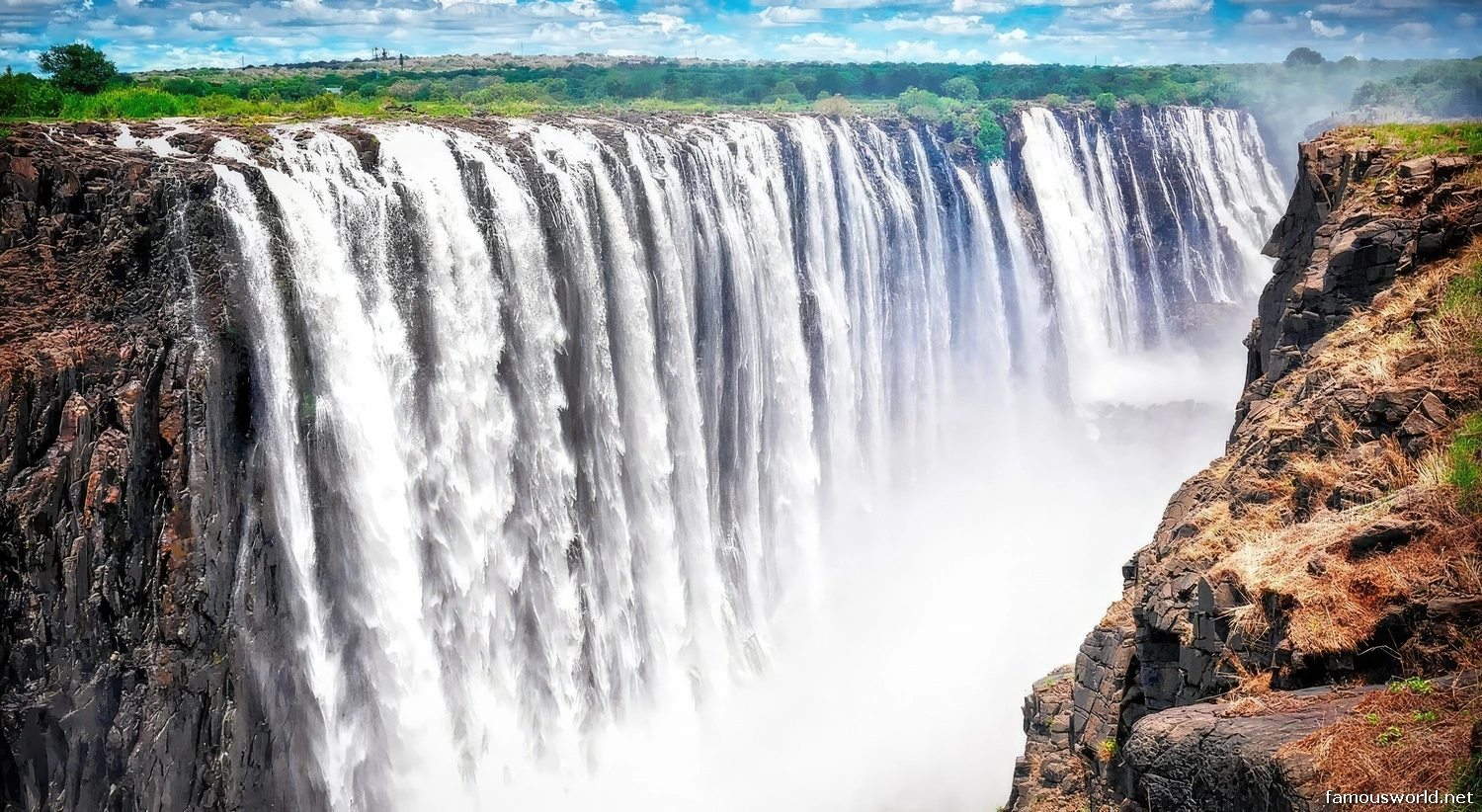
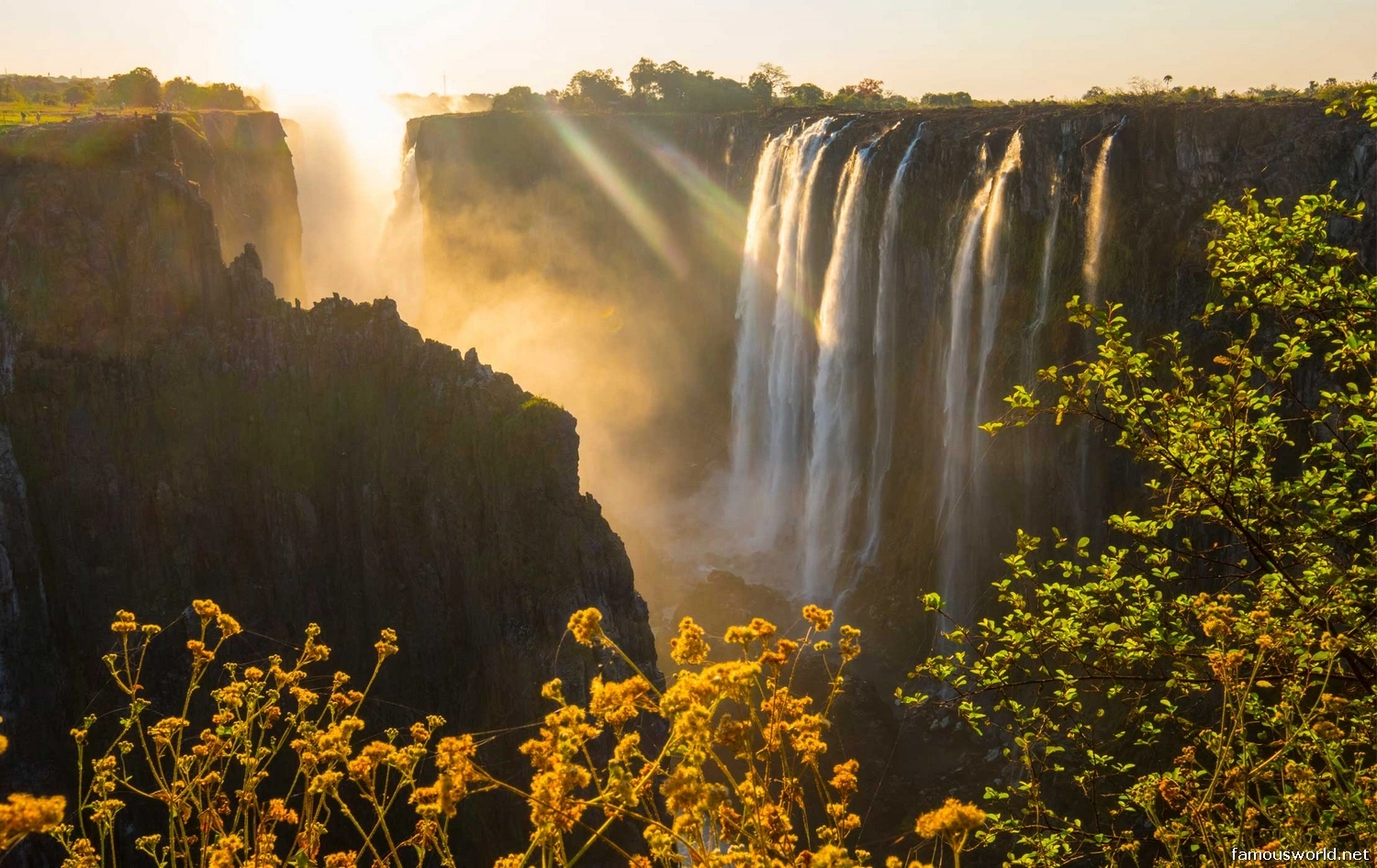
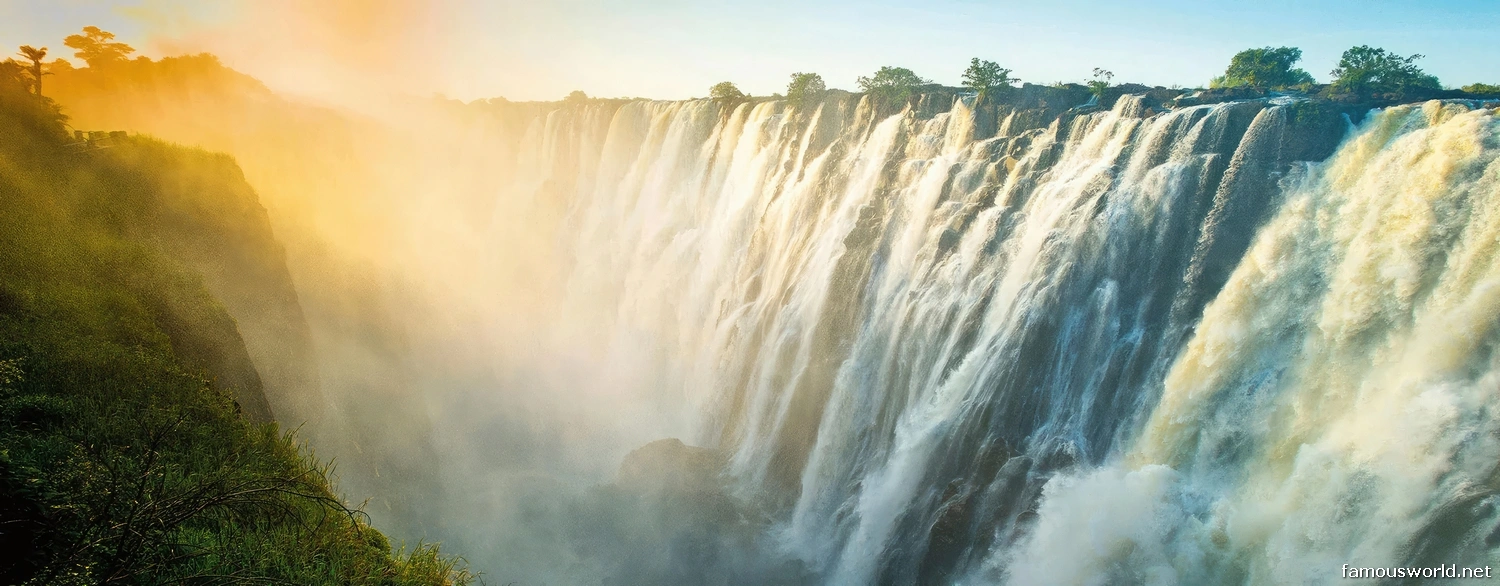
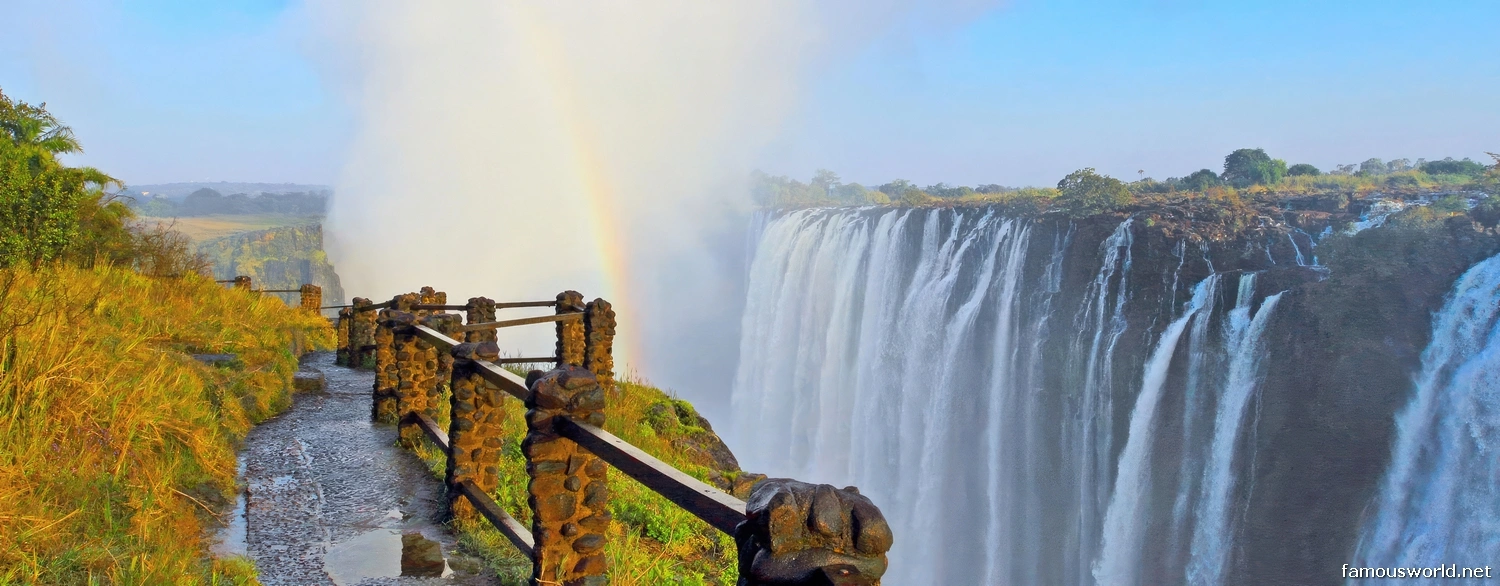
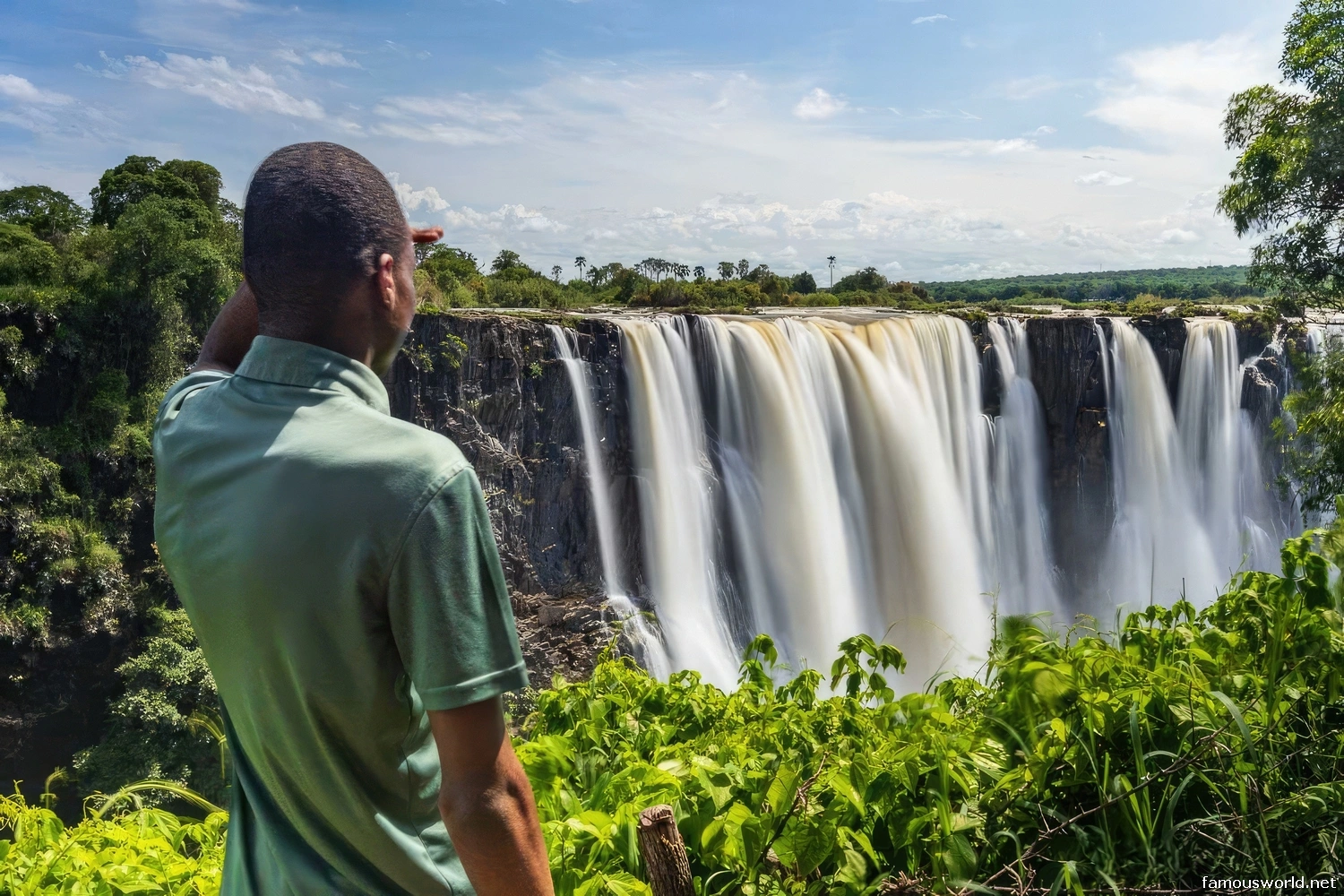
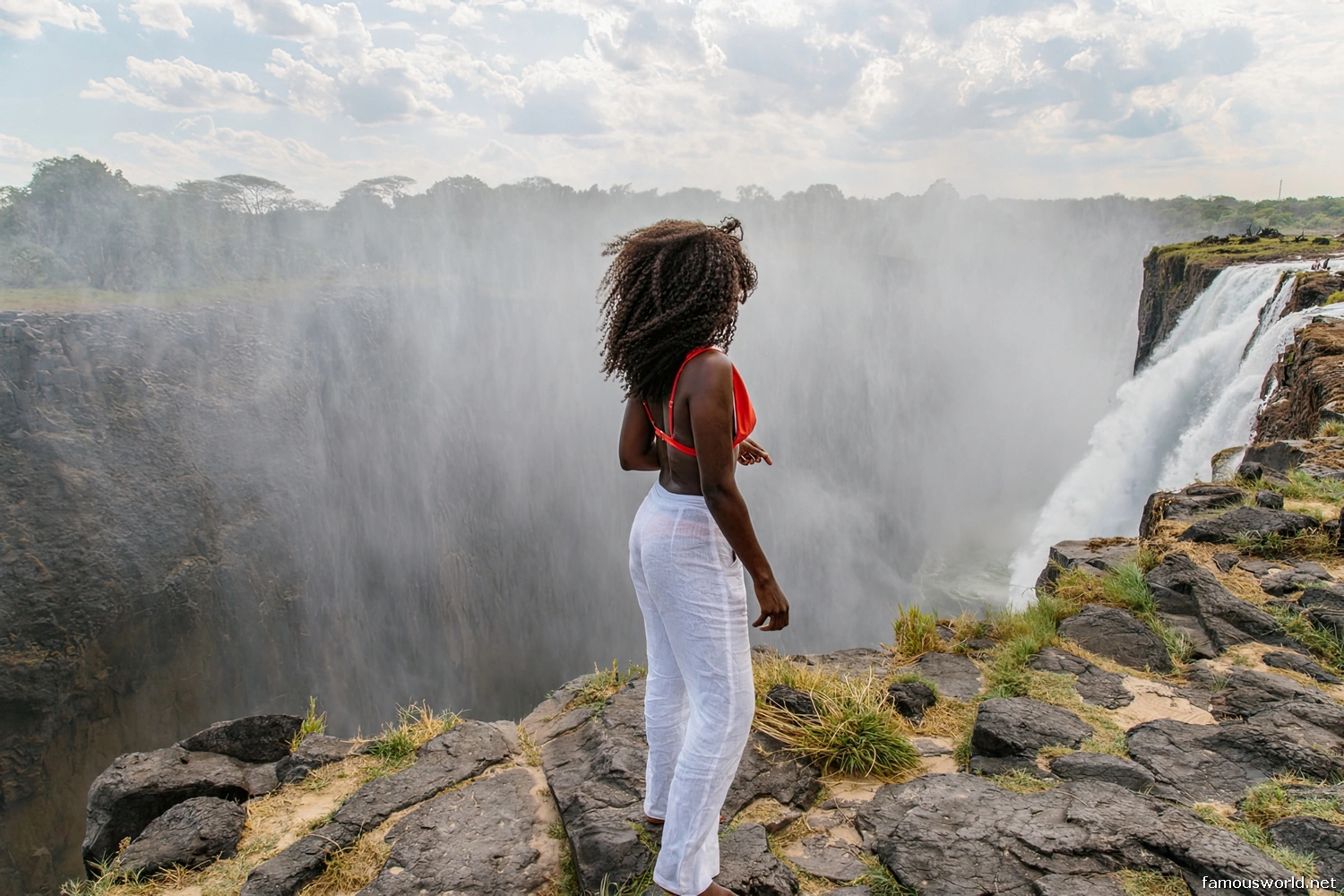
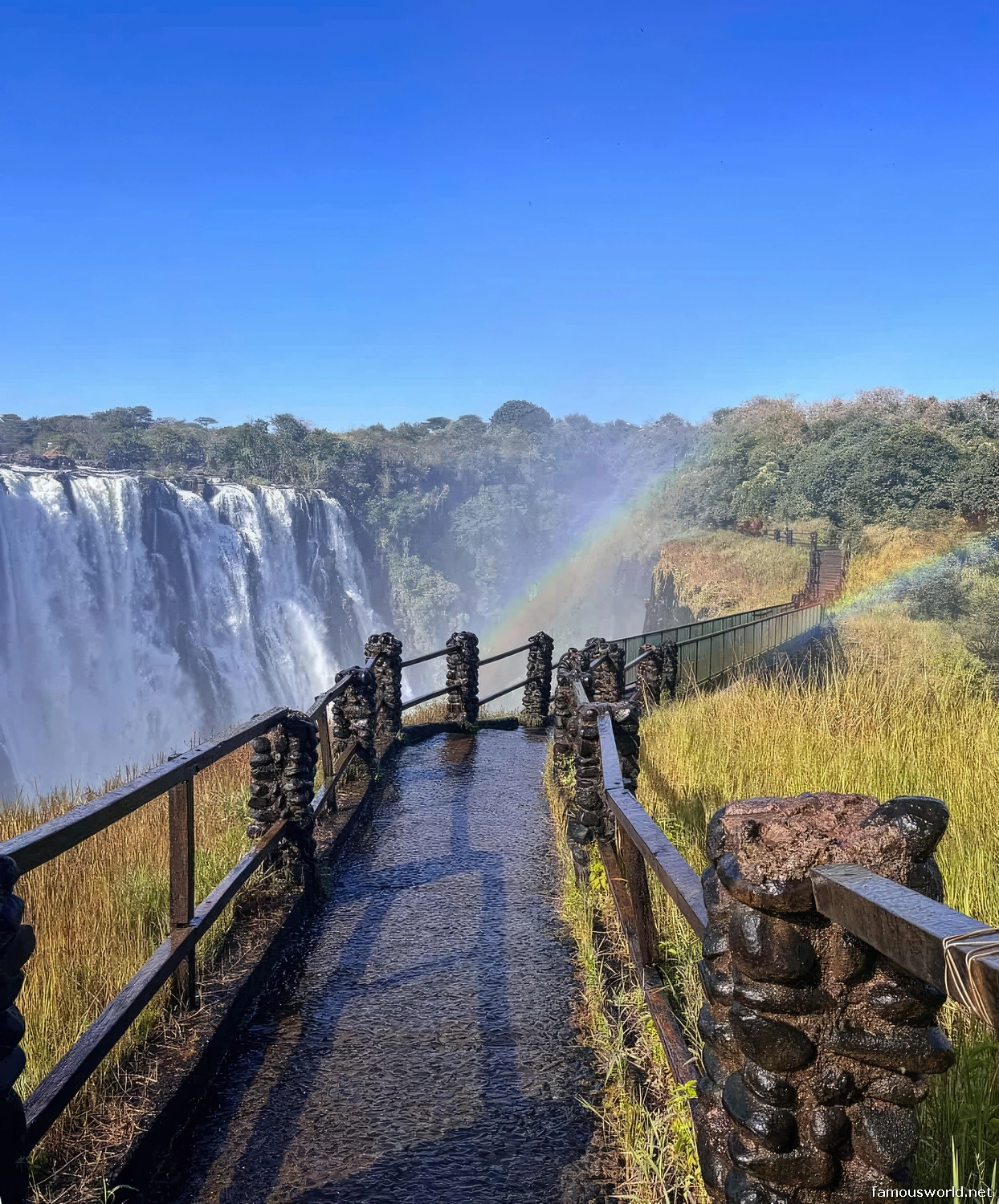
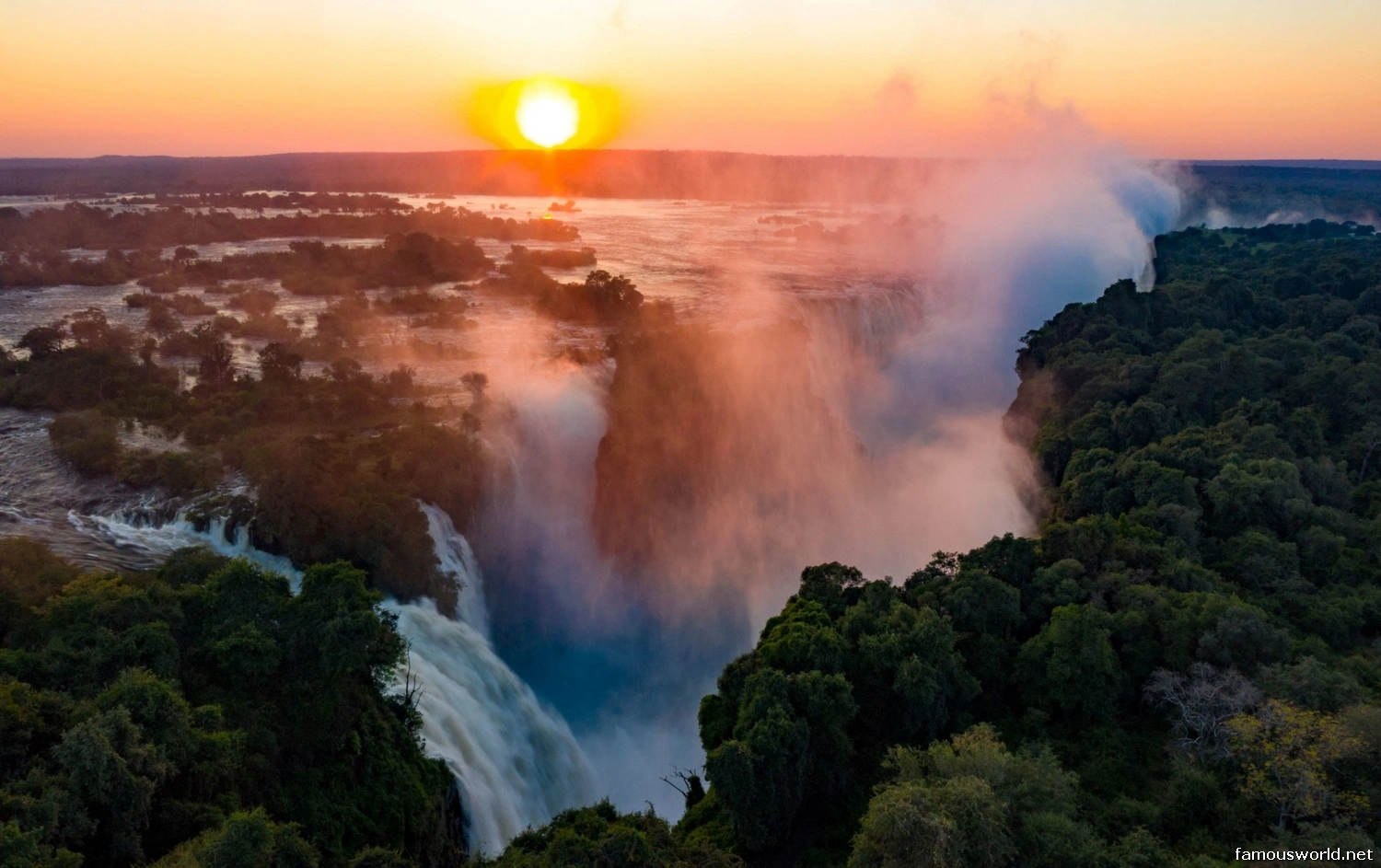
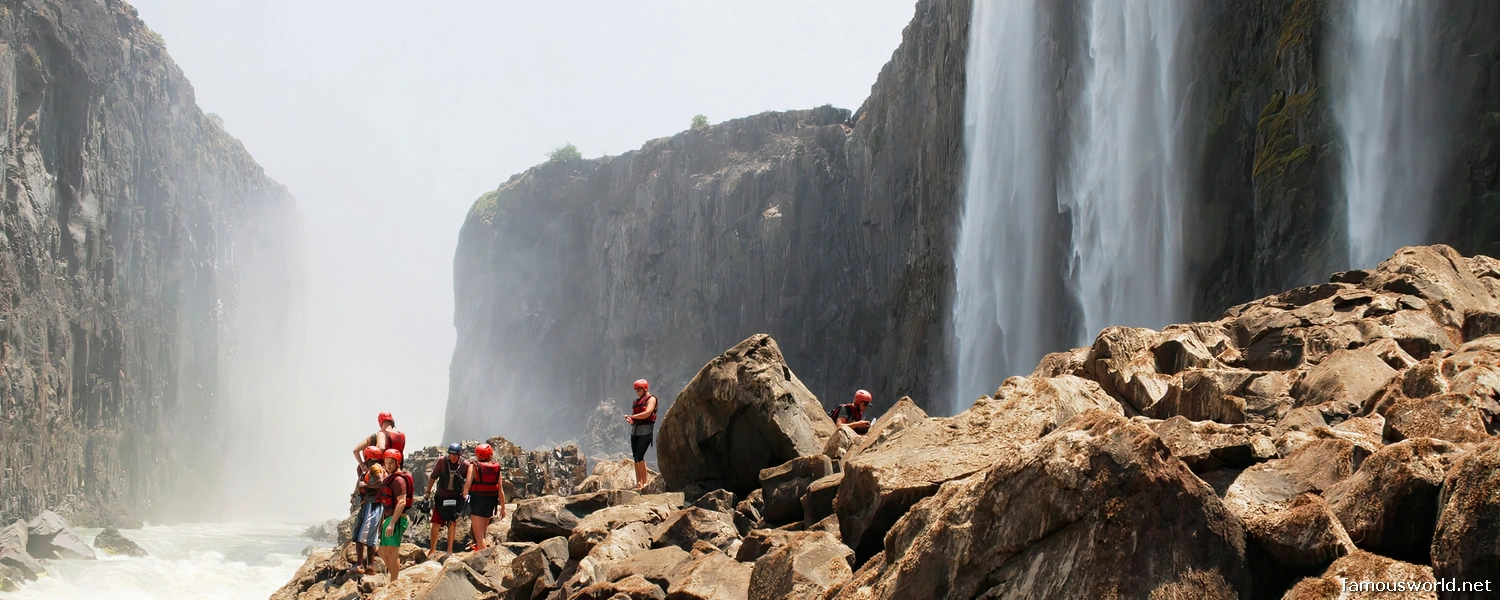
At the border of Zambia and Zimbabwe, the earth splits open to receive the full force of the Zambezi River, creating one of the planet’s most awe-inspiring spectacles: Victoria Falls. Known locally as Mosi-oa-Tunya, or “The Smoke that Thunders,” this is not the world’s highest or widest waterfall, but its largest, forming the most immense single curtain of falling water anywhere on the globe. The sheer volume of water plunging into the chasm below creates a deafening roar and sends a plume of mist so high into the air that it can be seen from miles away, sustaining a rainforest on its cliffs. It is a raw and visceral display of nature’s power, a UNESCO World Heritage Site, and one of the Seven Natural Wonders of the World.
Listen to an introduction about Victoria Falls

Name and Location
- Name: Victoria Falls. The indigenous Lozi name is Mosi-oa-Tunya (“The Smoke that Thunders”).
- Location: On the Zambezi River, forming the natural border between Zambia and Zimbabwe in Southern Africa. The nearest towns are Livingstone, Zambia, and Victoria Falls, Zimbabwe.
How to Get There
The falls are highly accessible from both countries, each offering a unique perspective.
- By Air: The most common way to arrive is by flying into either Harry Mwanga Nkumbula International Airport (LVI) in Livingstone, Zambia, or Victoria Falls Airport (VFA) in Zimbabwe. Both airports serve regional and some international flights.
- By Road: The falls are well-connected by road to other regional destinations, such as Botswana’s Chobe National Park and Zimbabwe’s Hwange National Park, making it a popular hub in multi-destination Southern African safaris.
Landscape and Architecture
The landscape is a product of dramatic geology, complemented by a feat of historic engineering.
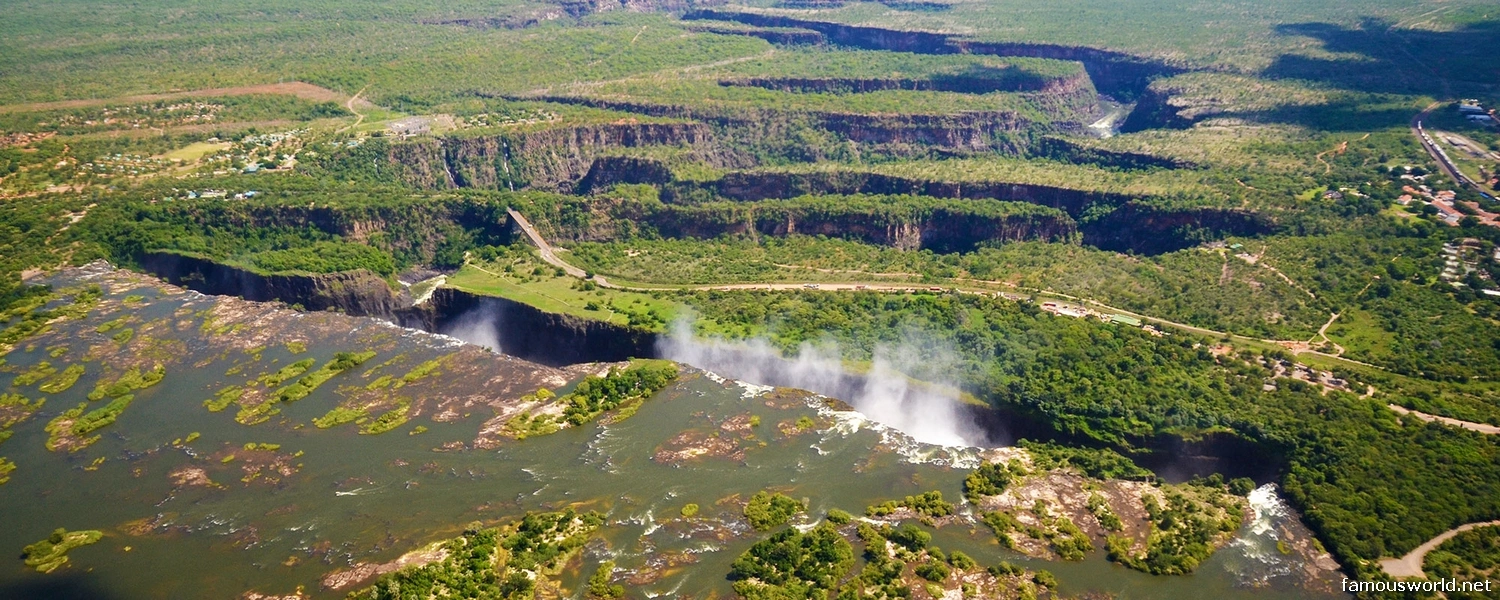
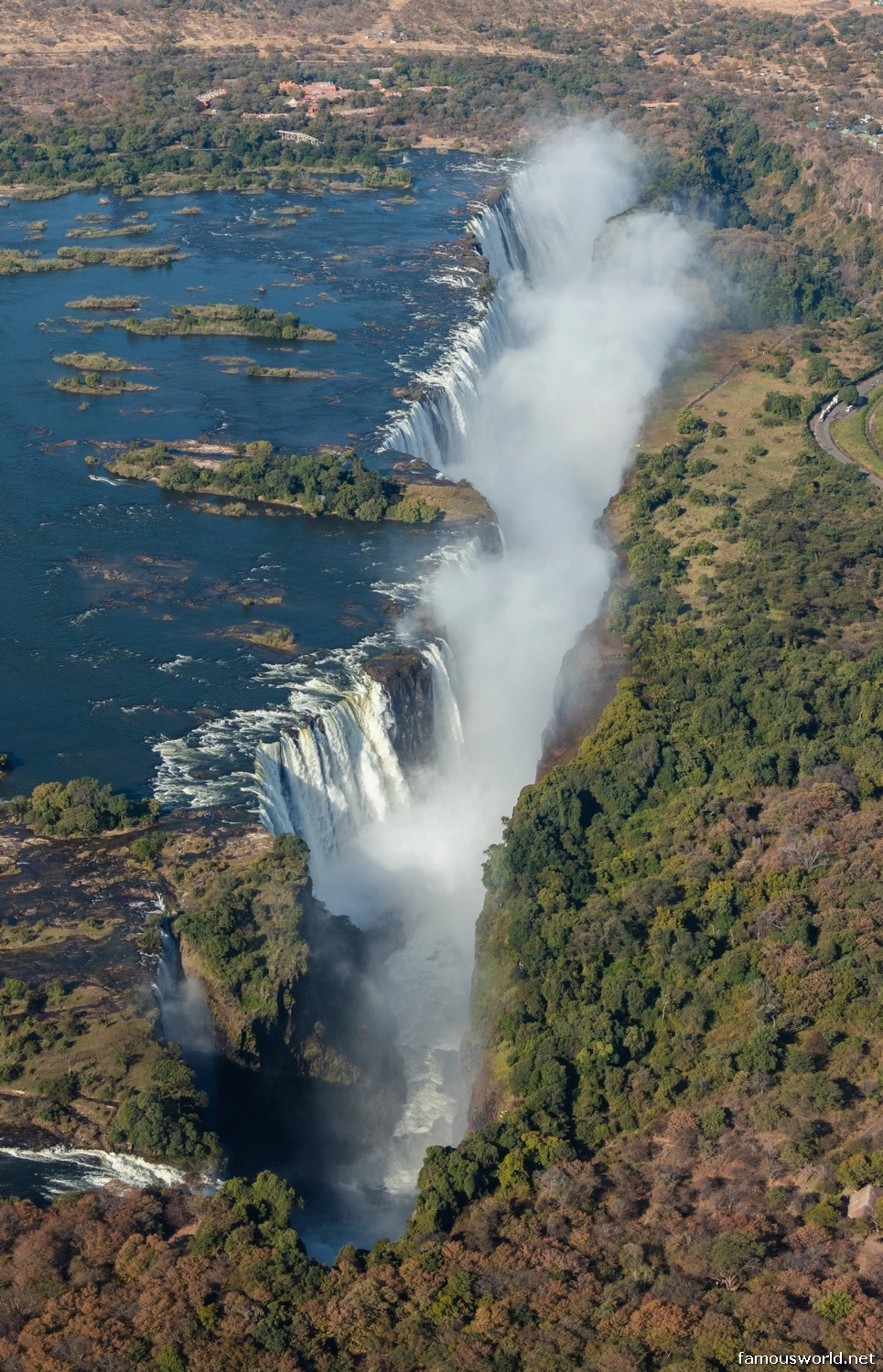
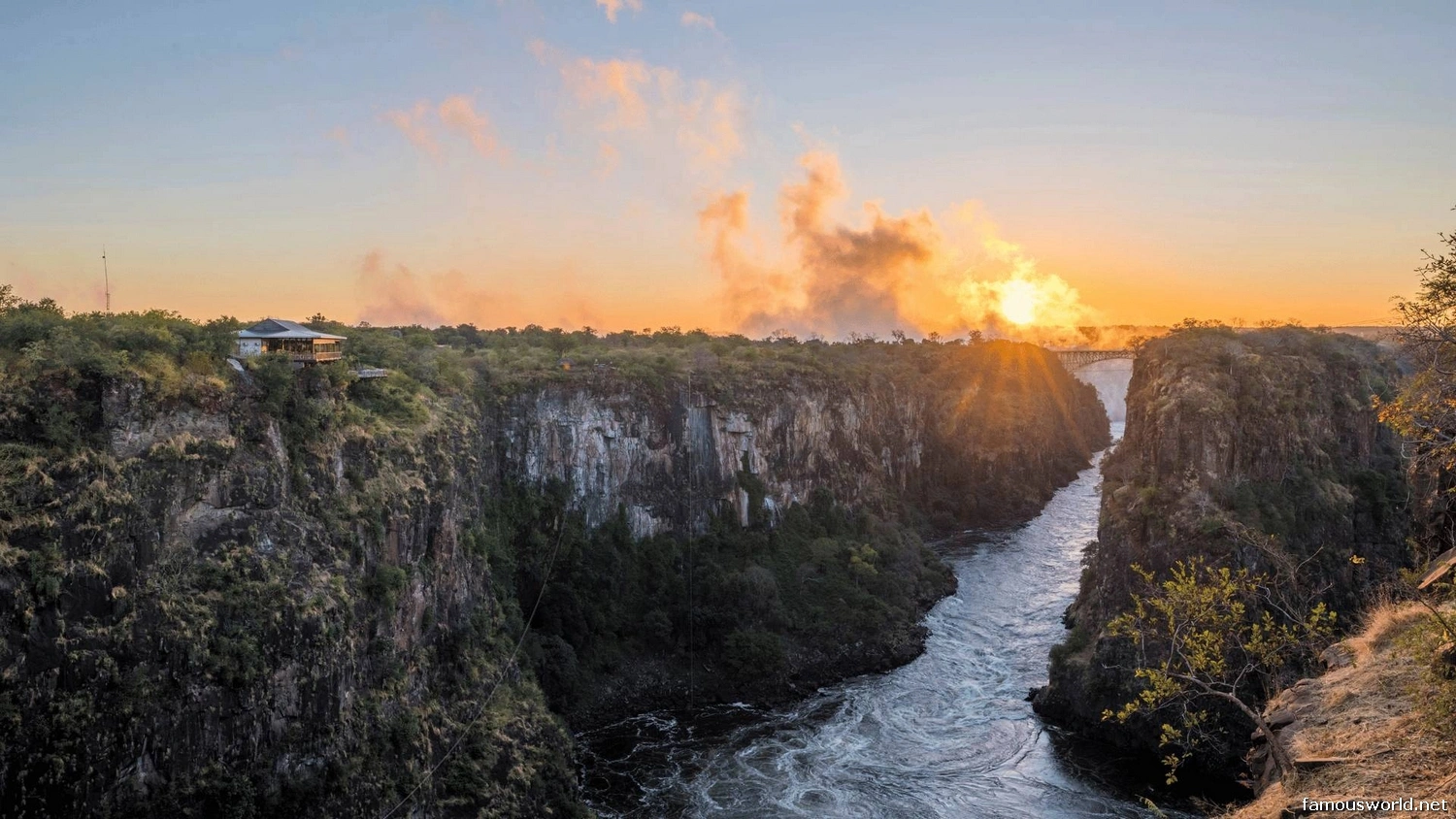
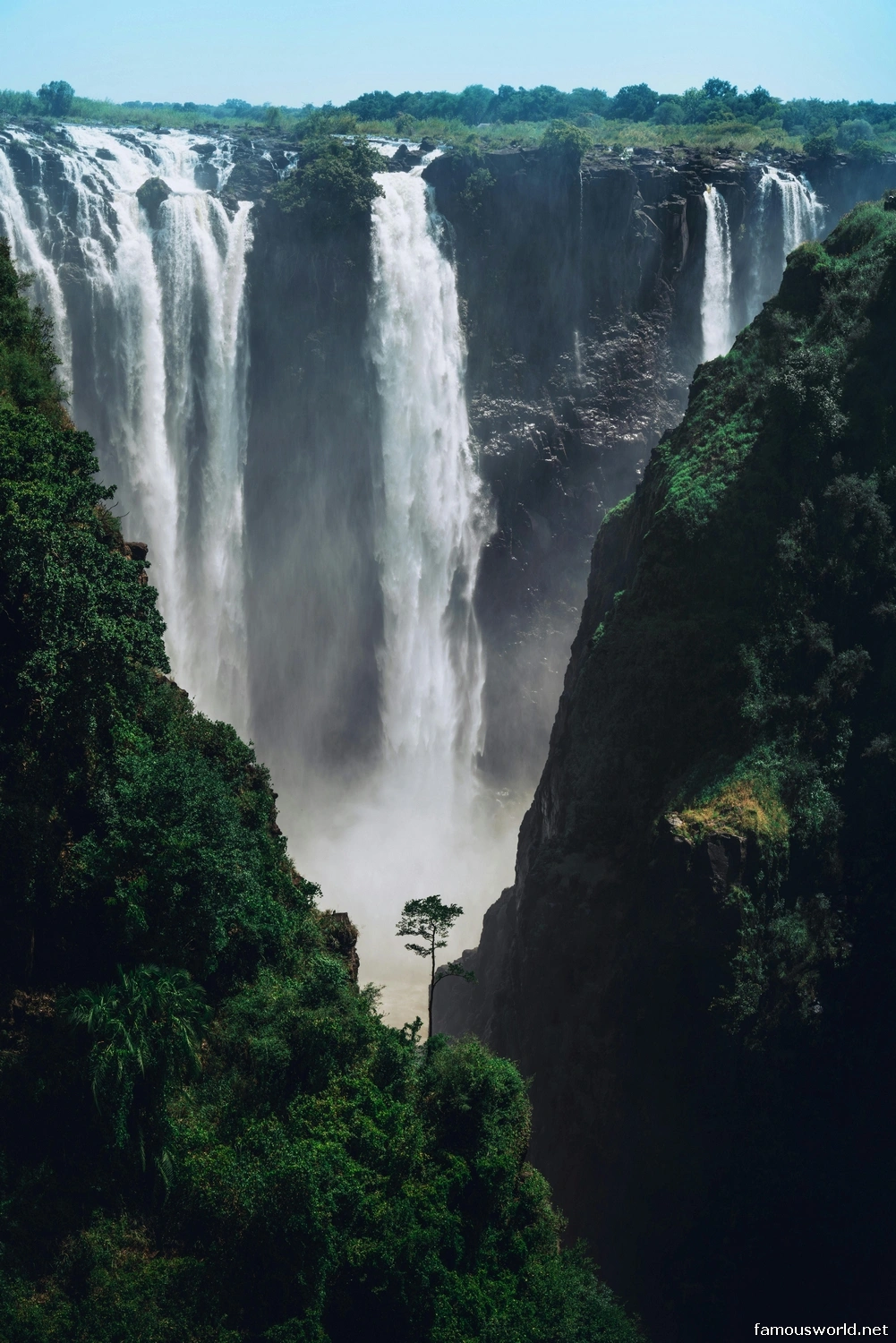
- Geological Formation: The falls were formed as the Zambezi River eroded a soft sandstone layer, exposing a harder basalt plateau underneath. The water now plunges over a chasm that is over 1,700 meters (5,600 feet) wide and drops around 108 meters (354 feet) at its deepest point. The river then zig-zags through a series of narrow, steep-sided gorges.
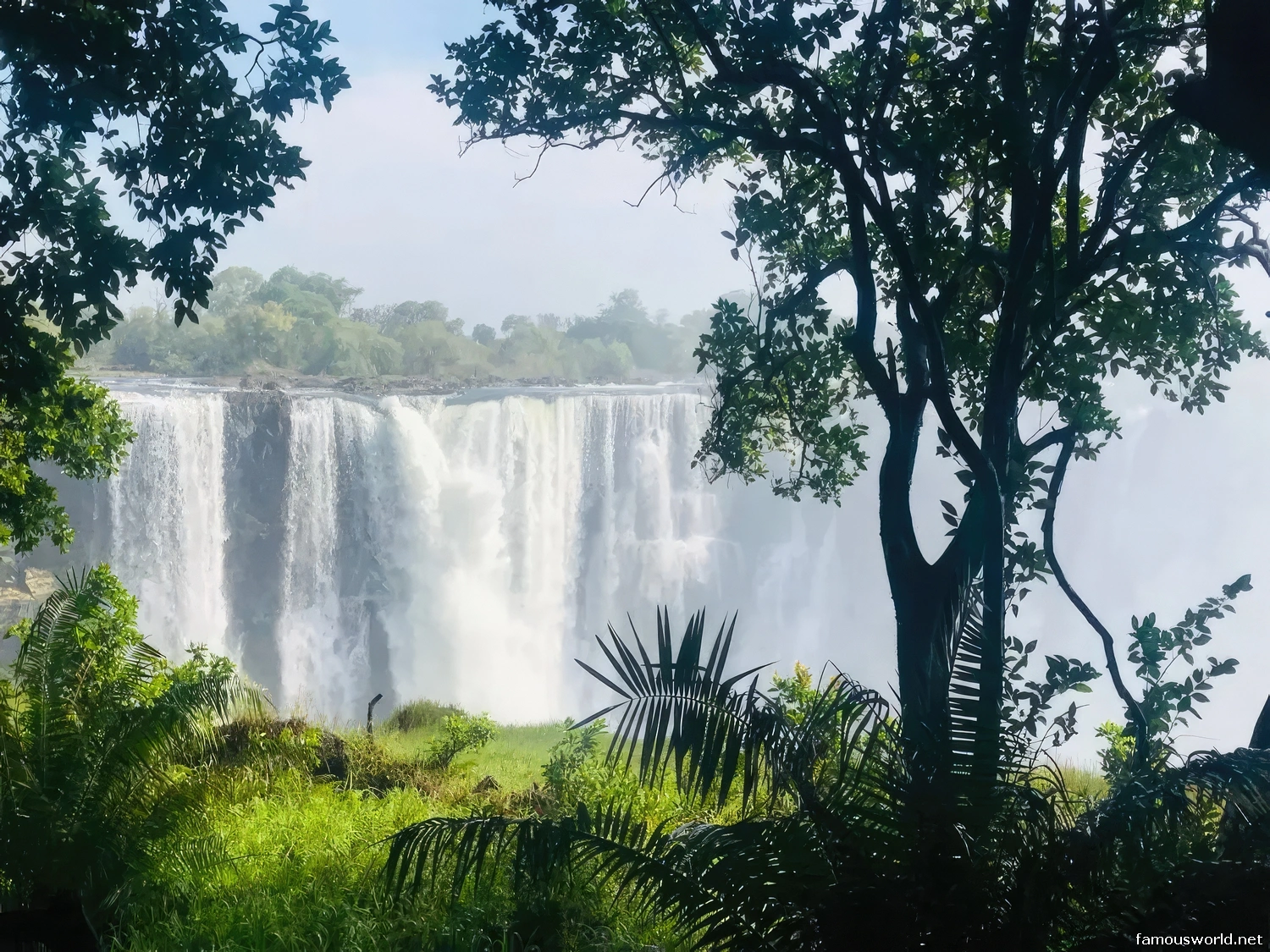
- The Rainforest: The constant spray from the falls has created a unique microclimate on the cliffs opposite, supporting a lush tropical rainforest that is verdant year-round.
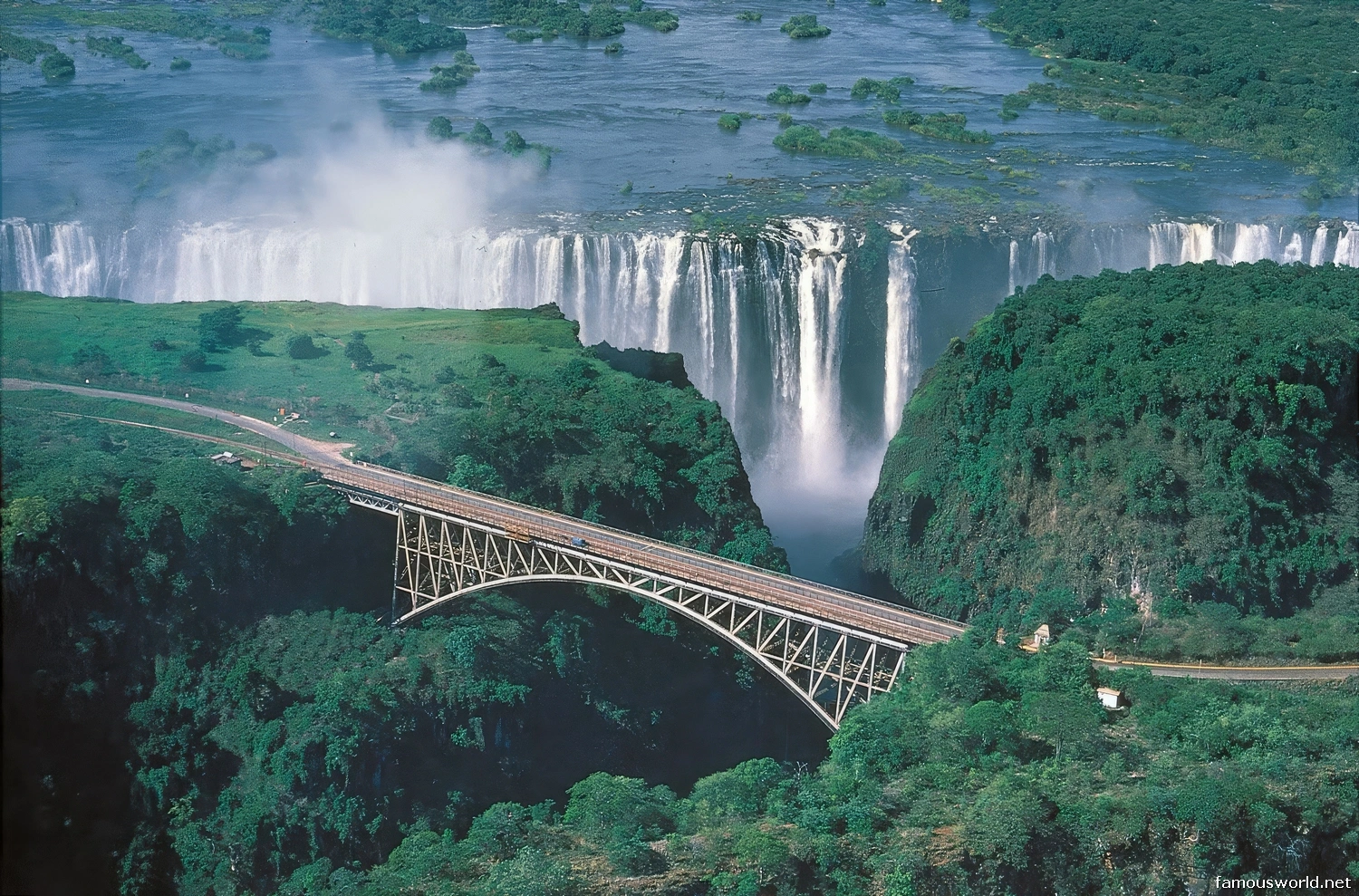
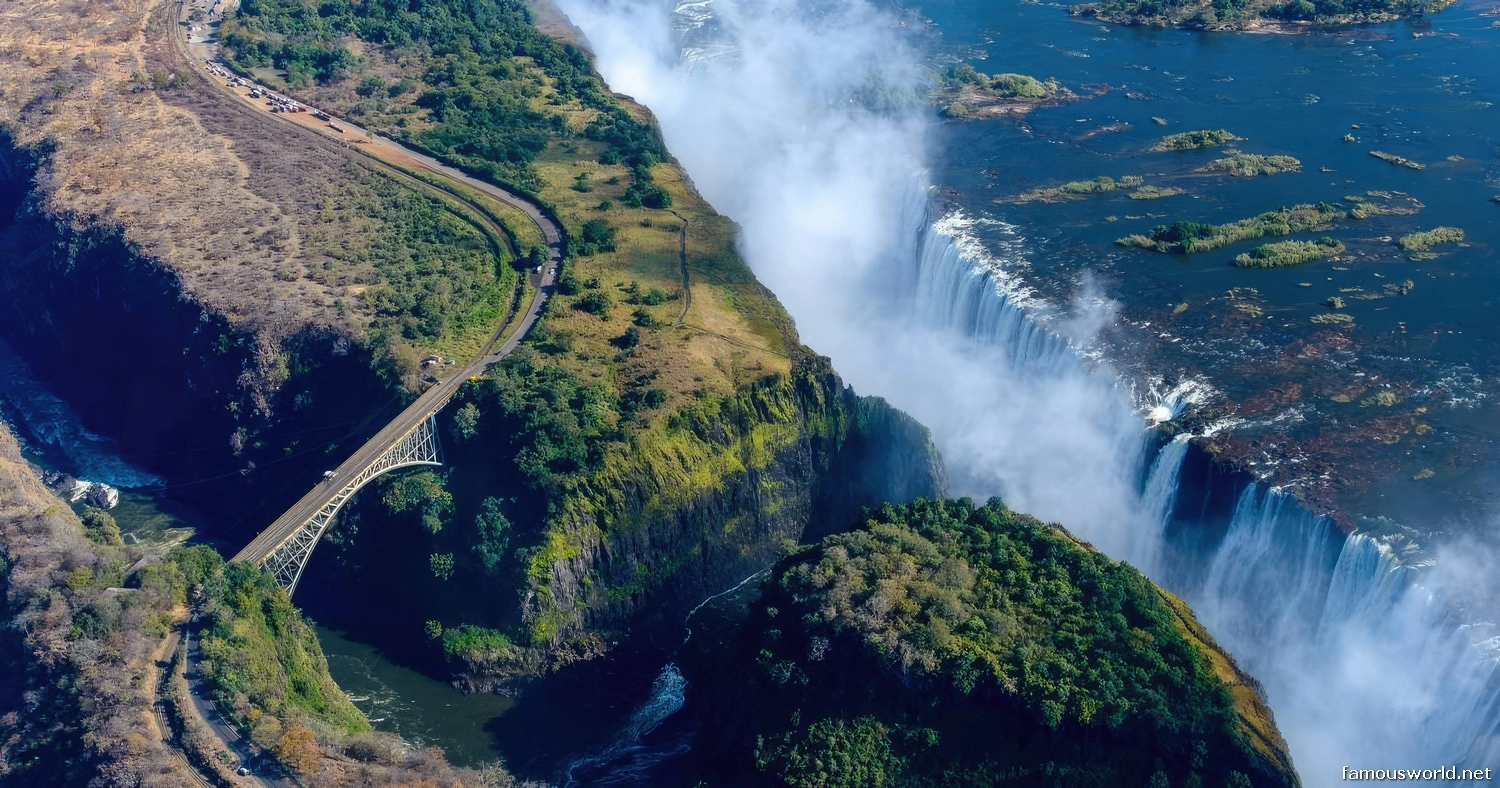
- Victoria Falls Bridge: An architectural marvel, this steel arch bridge spans the second gorge just below the falls. Completed in 1905 as part of Cecil Rhodes’ unrealized “Cape to Cairo” railway vision, it offers spectacular views and now serves as a hub for adrenaline activities like bungee jumping.
What Makes It Famous
Victoria Falls is famous for its sheer scale and the multi-sensory experience it offers.
- The World’s Largest Waterfall: Based on its combined width and height, it is classified as the largest sheet of falling water in the world.
- Mosi-oa-Tunya: Its local name perfectly captures its two most prominent features: the thunderous roar of the water and the towering column of mist, which can rise over 400 meters (1,300 feet) into the air.
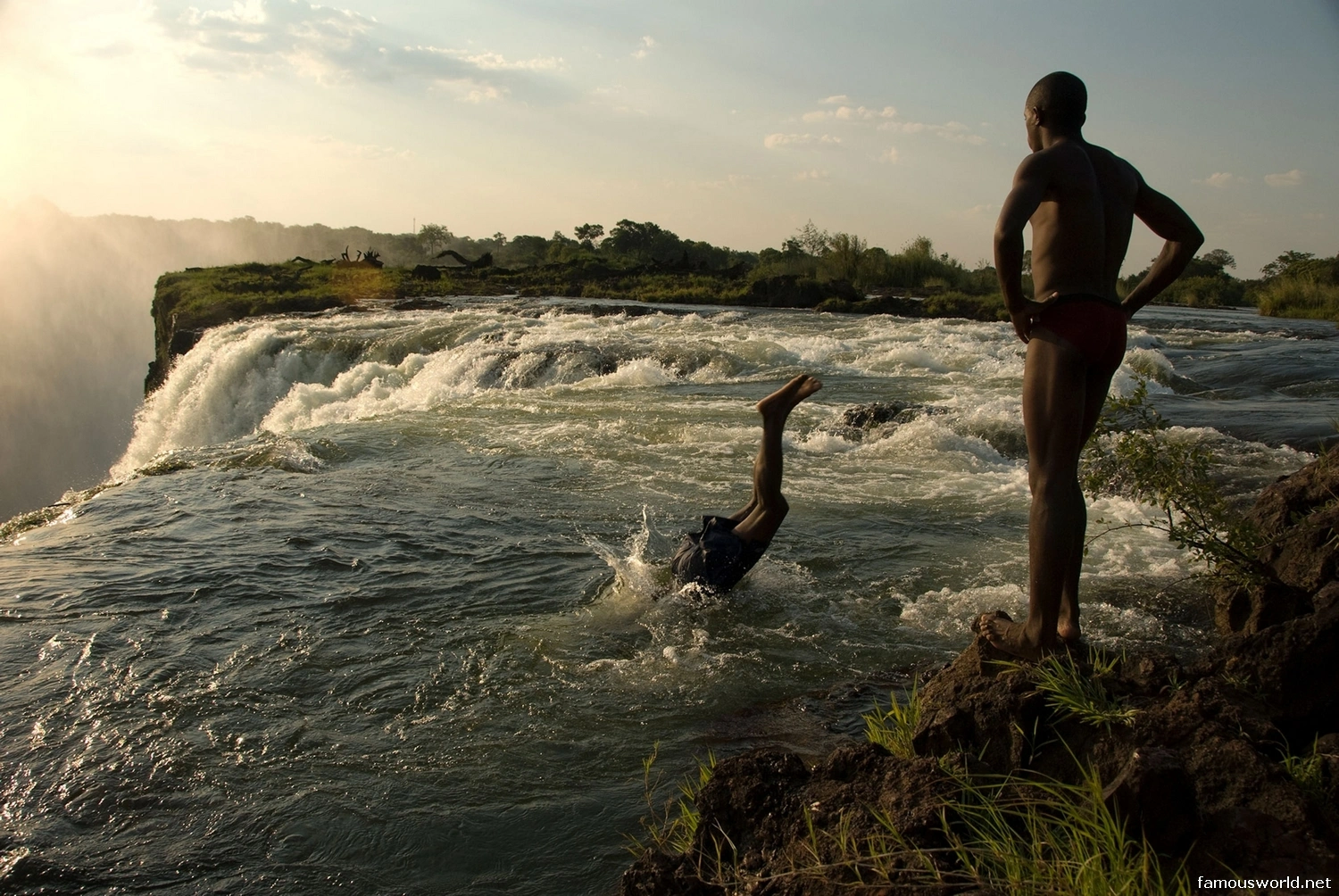
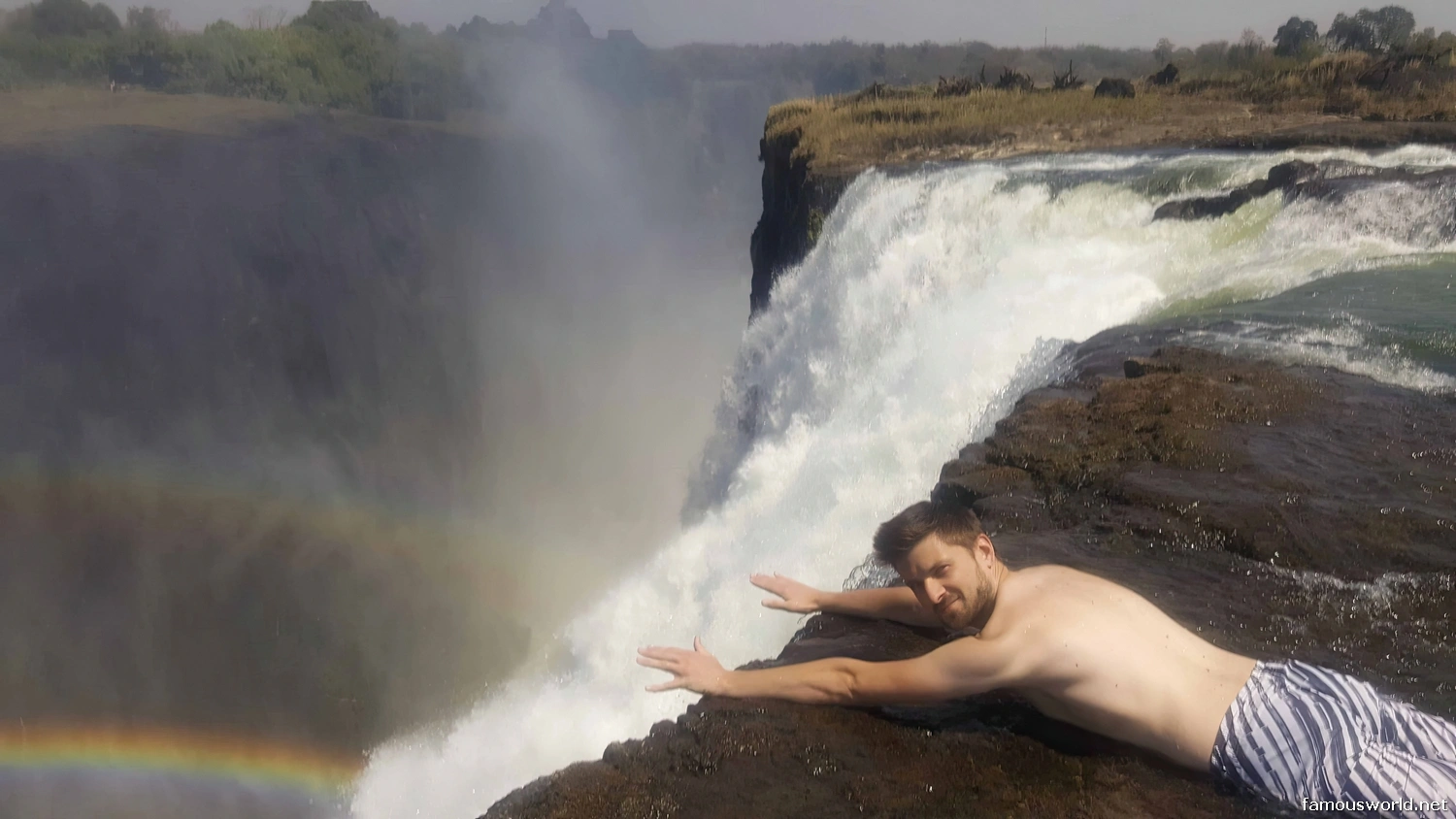
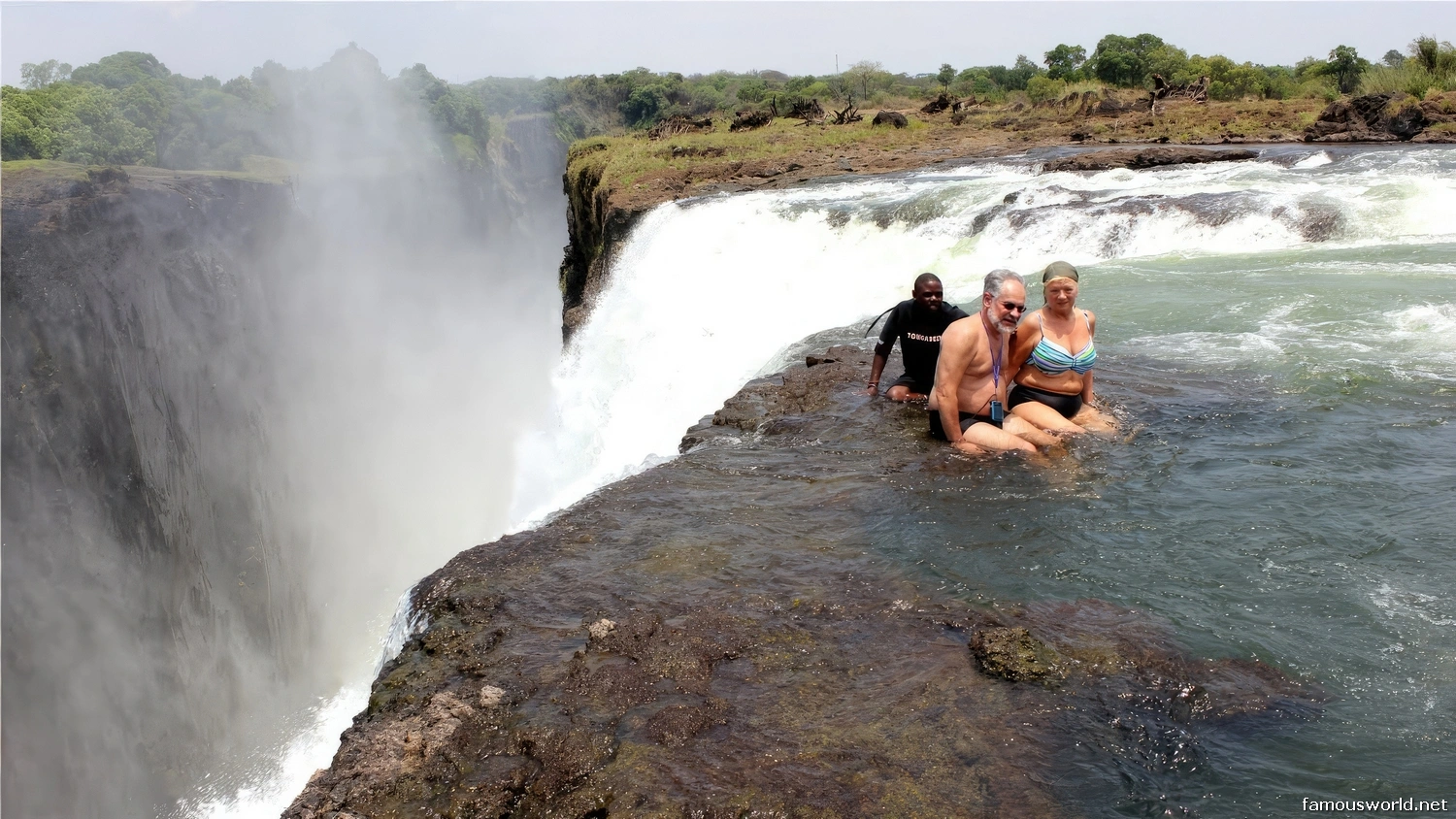
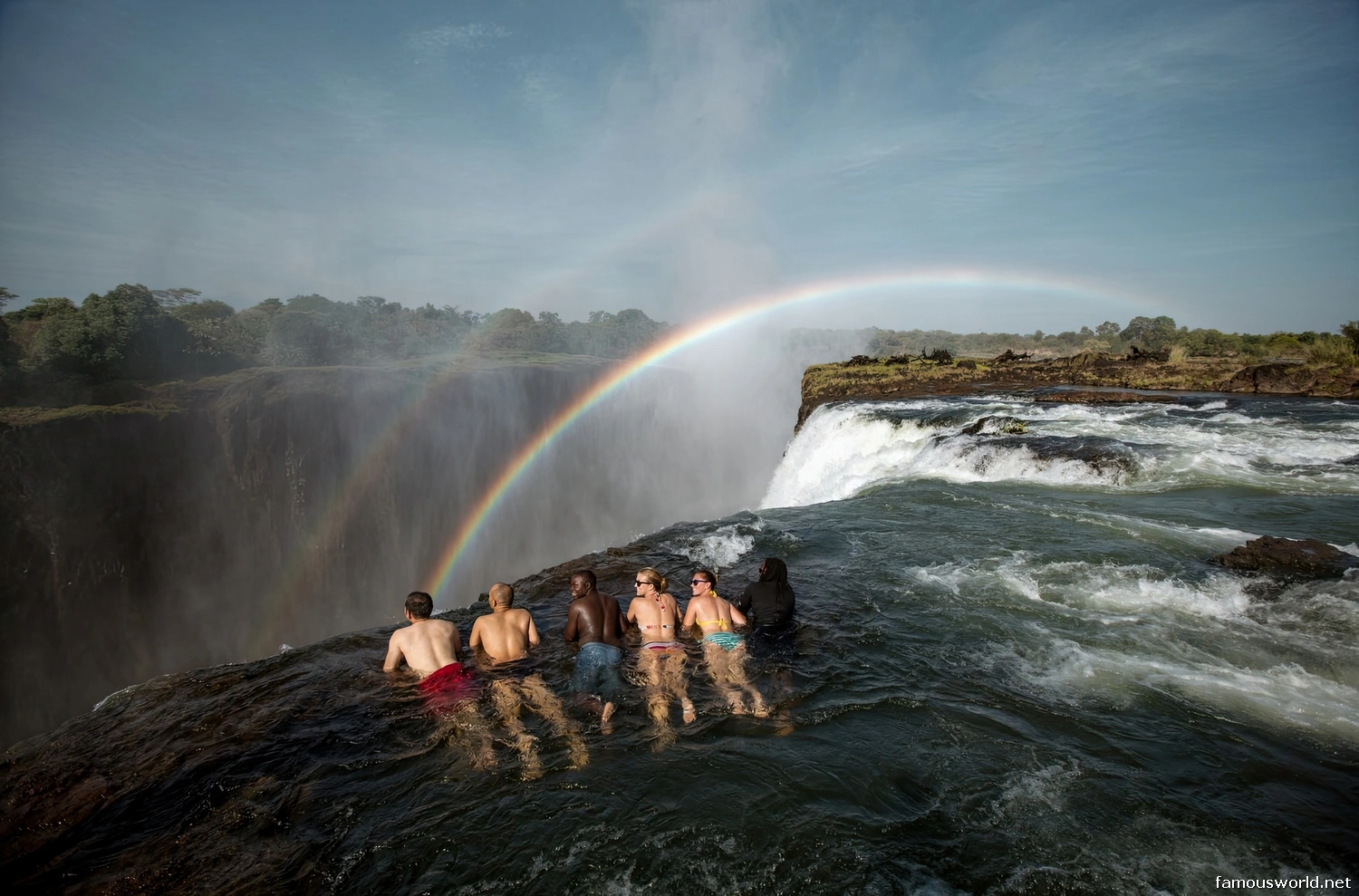
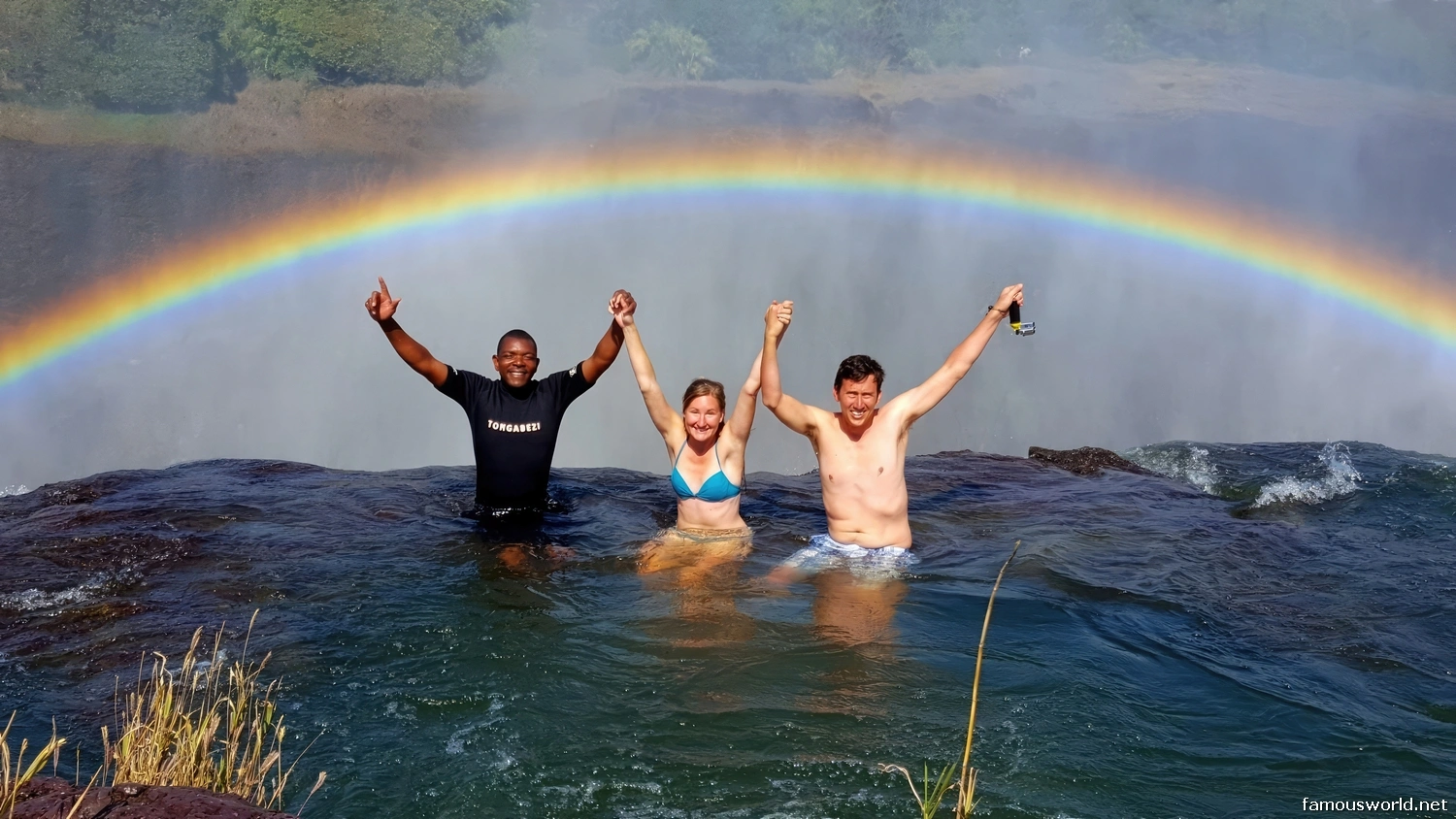
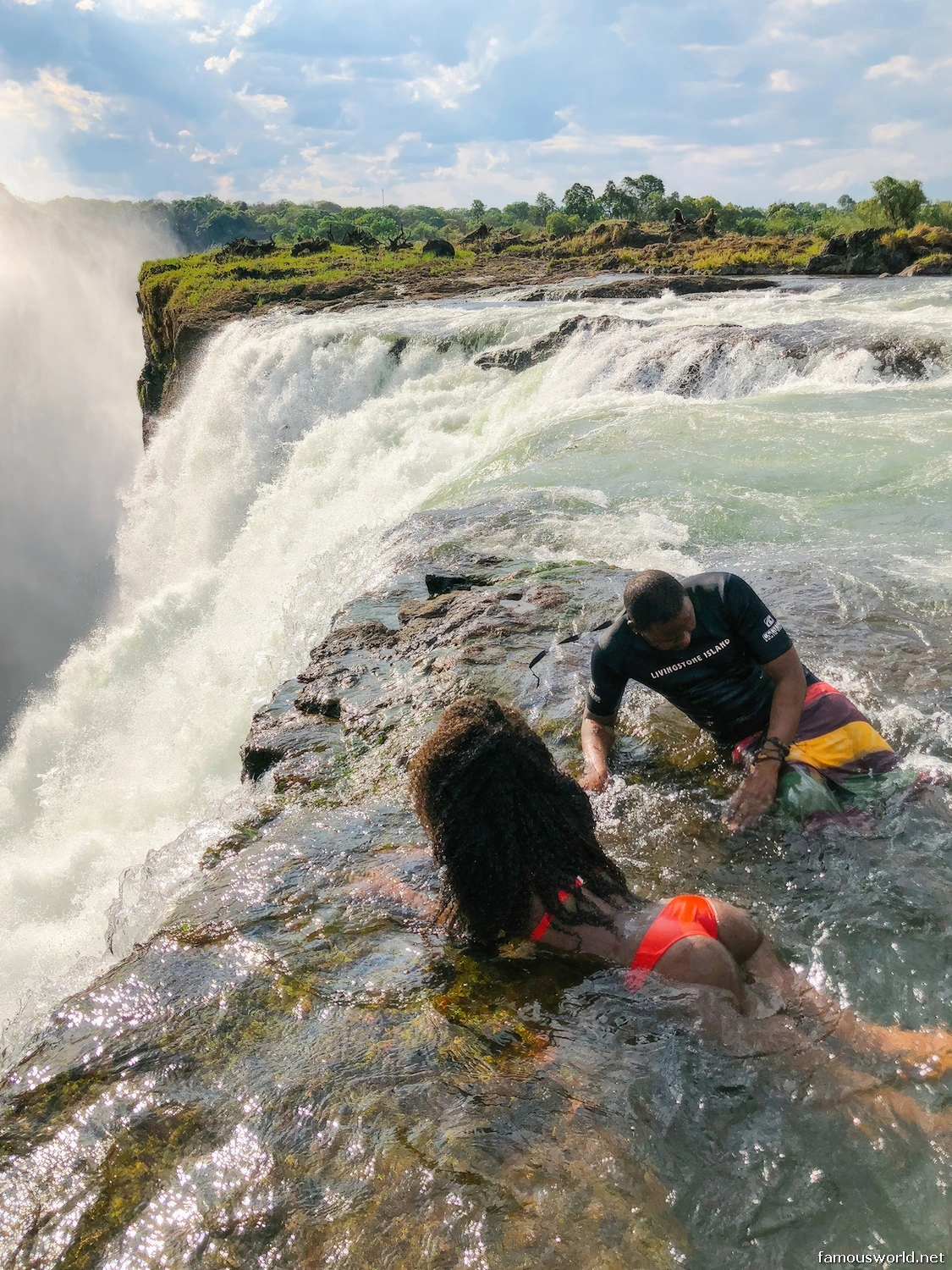
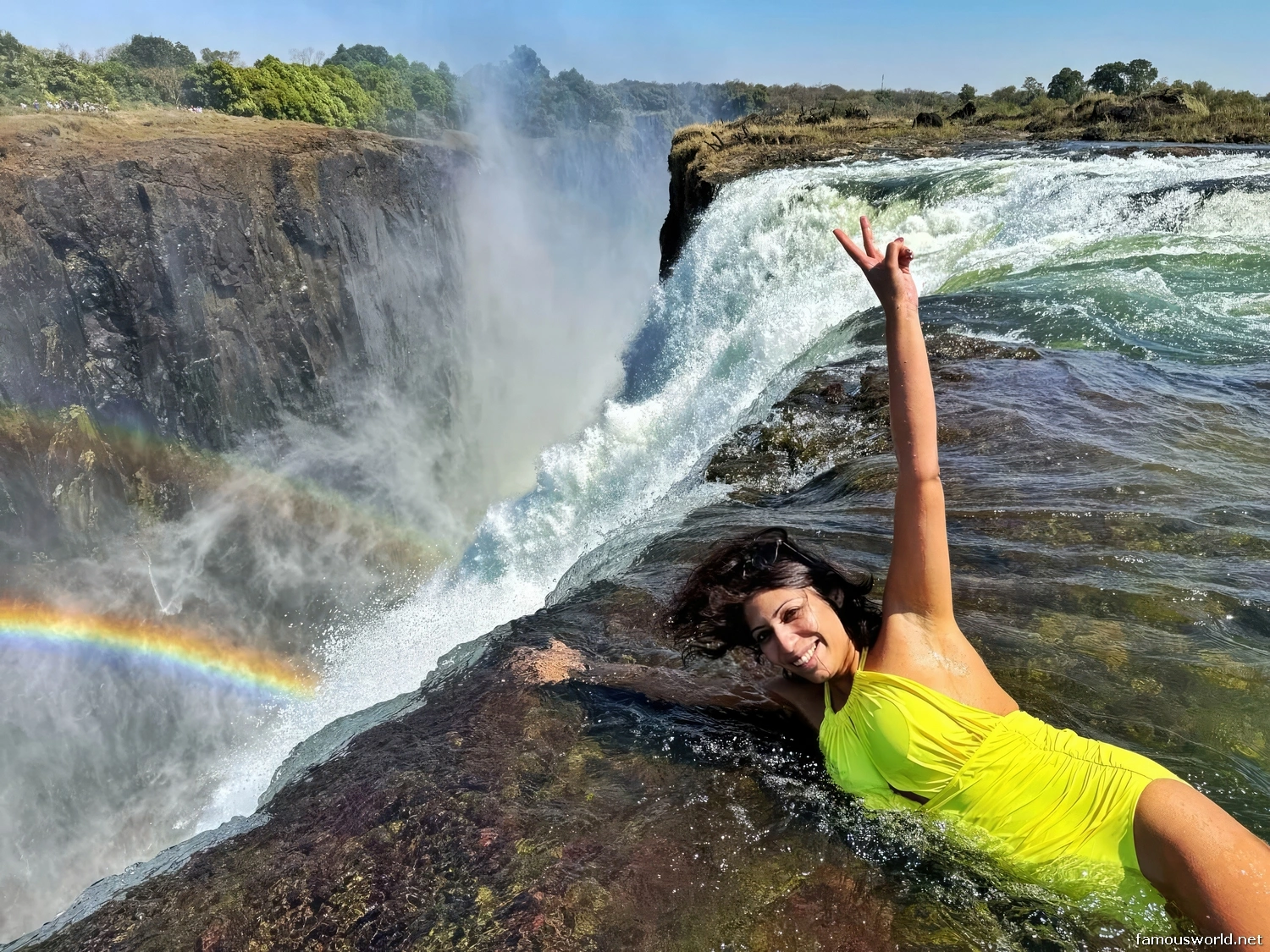
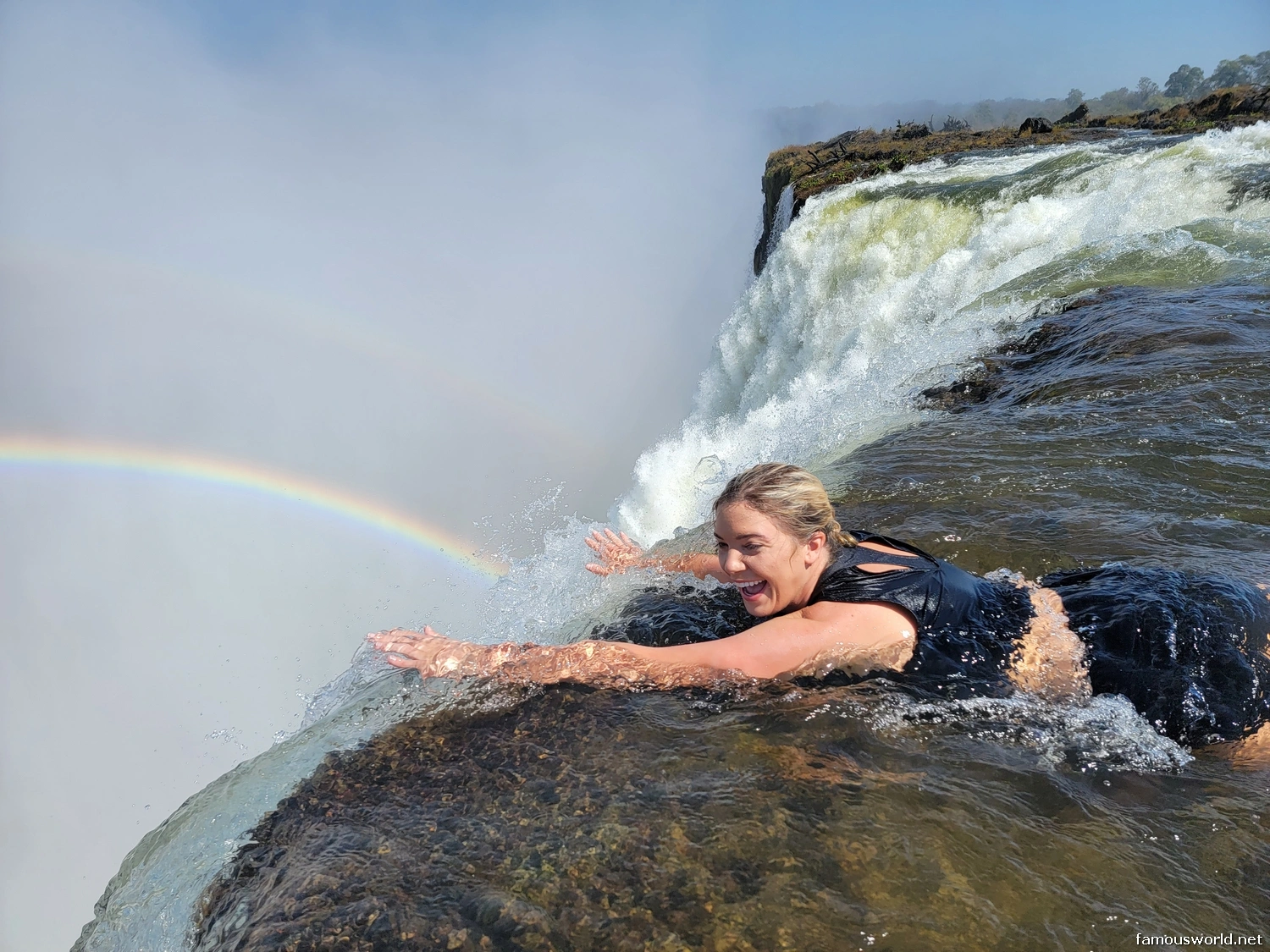
- Devil’s Pool: During the dry season on the Zambian side, a natural rock pool forms at the very edge of the falls, allowing adventurous swimmers to peer over the abyss in relative safety.
- Lunar Rainbows: On clear nights during the full moon, the light refracting through the intense spray creates rare and magical lunar rainbows, or “moonbows.”
Differences from Other Wonders
The singular, powerful spectacle of Victoria Falls offers a profound contrast to the sprawling, living ecosystem of the Serengeti National Park.
- Environment (River Gorge vs. Endless Plains): Victoria Falls is a geological feature centered on a river and its deep basalt gorges. The Serengeti is a vast, terrestrial ecosystem of seemingly endless grass plains and savanna.
- Core Story (Geological Power vs. Biological Cycle): The story of Victoria Falls is one of the raw, unchanging power of water carving through ancient rock. The story of the Serengeti is the dynamic and continuous cycle of life, death, and migration for millions of animals.
- Primary Attraction (A Singular Spectacle vs. A Mobile Event): The primary attraction at Victoria Falls is the waterfall itself—a single, immense, and stationary natural wonder. The main draw of the Serengeti is the Great Migration and its abundant wildlife—a mobile, ever-changing, and living spectacle.
- Atmosphere (Overwhelming Force vs. Immersive Wilderness): A visit to Victoria Falls is an overwhelming sensory experience of nature’s sheer force and power. A visit to the Serengeti is an immersive experience in a vast, living wilderness, evoking a sense of space and connection to the animal kingdom.
Location on world map