


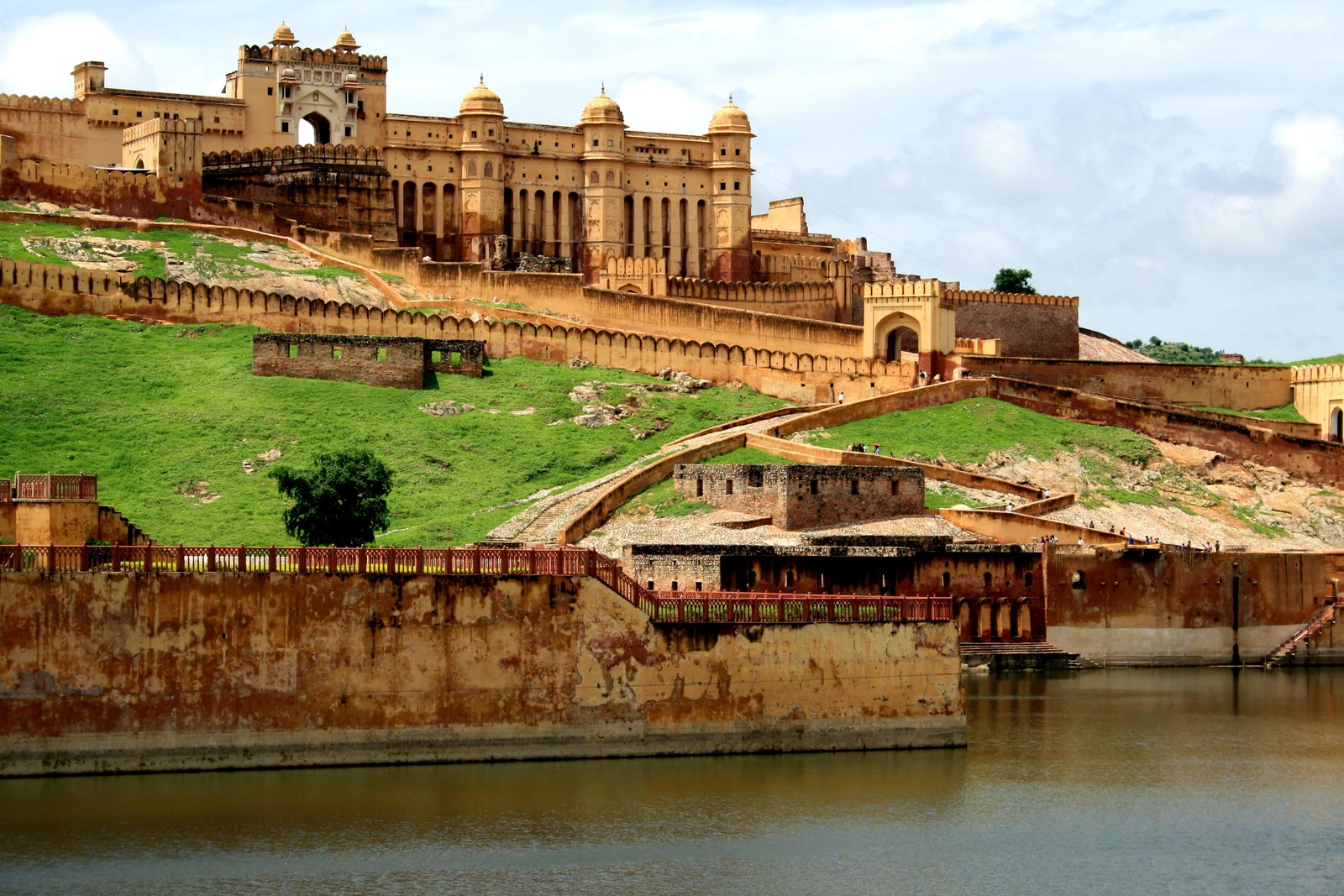
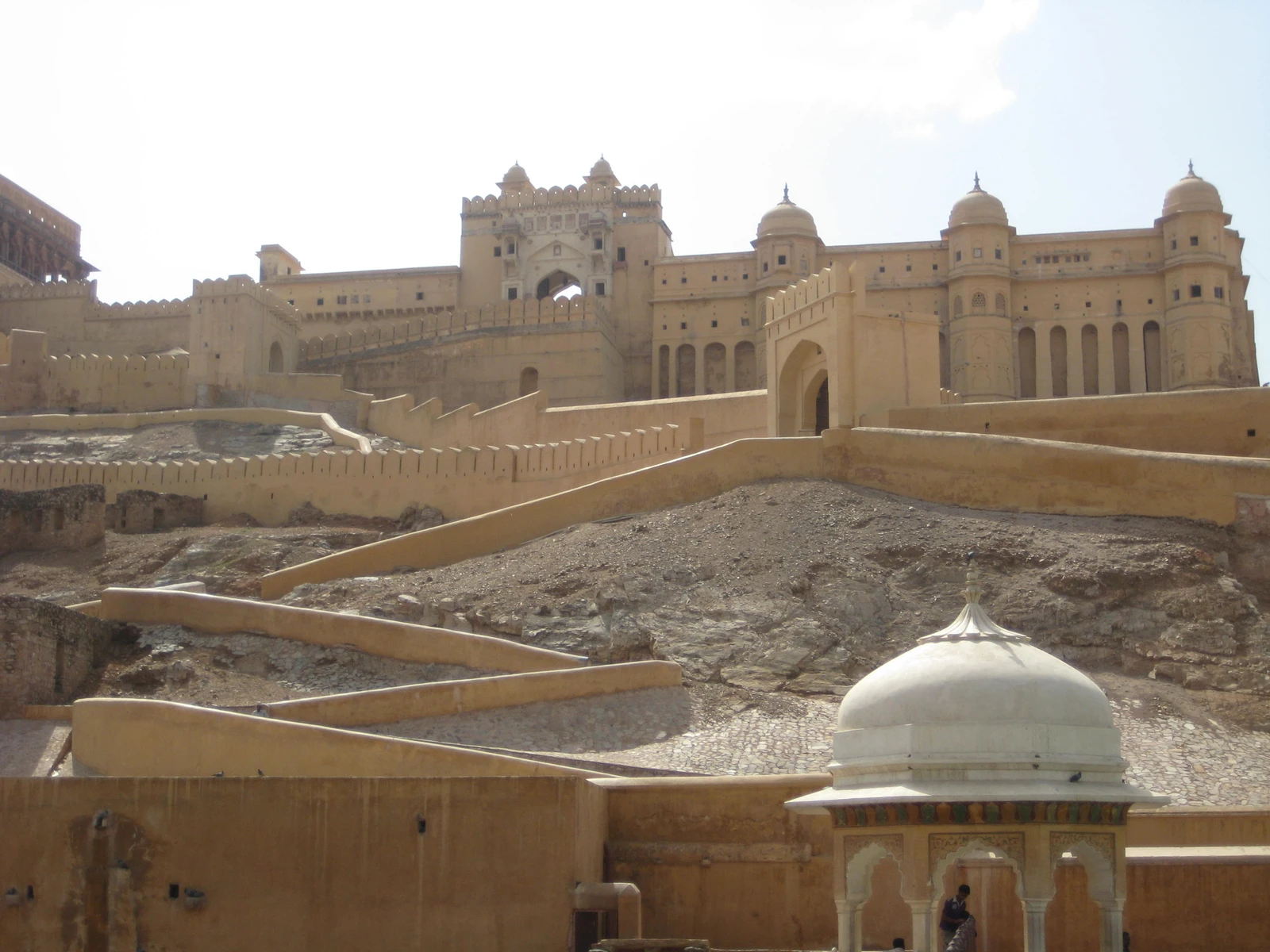


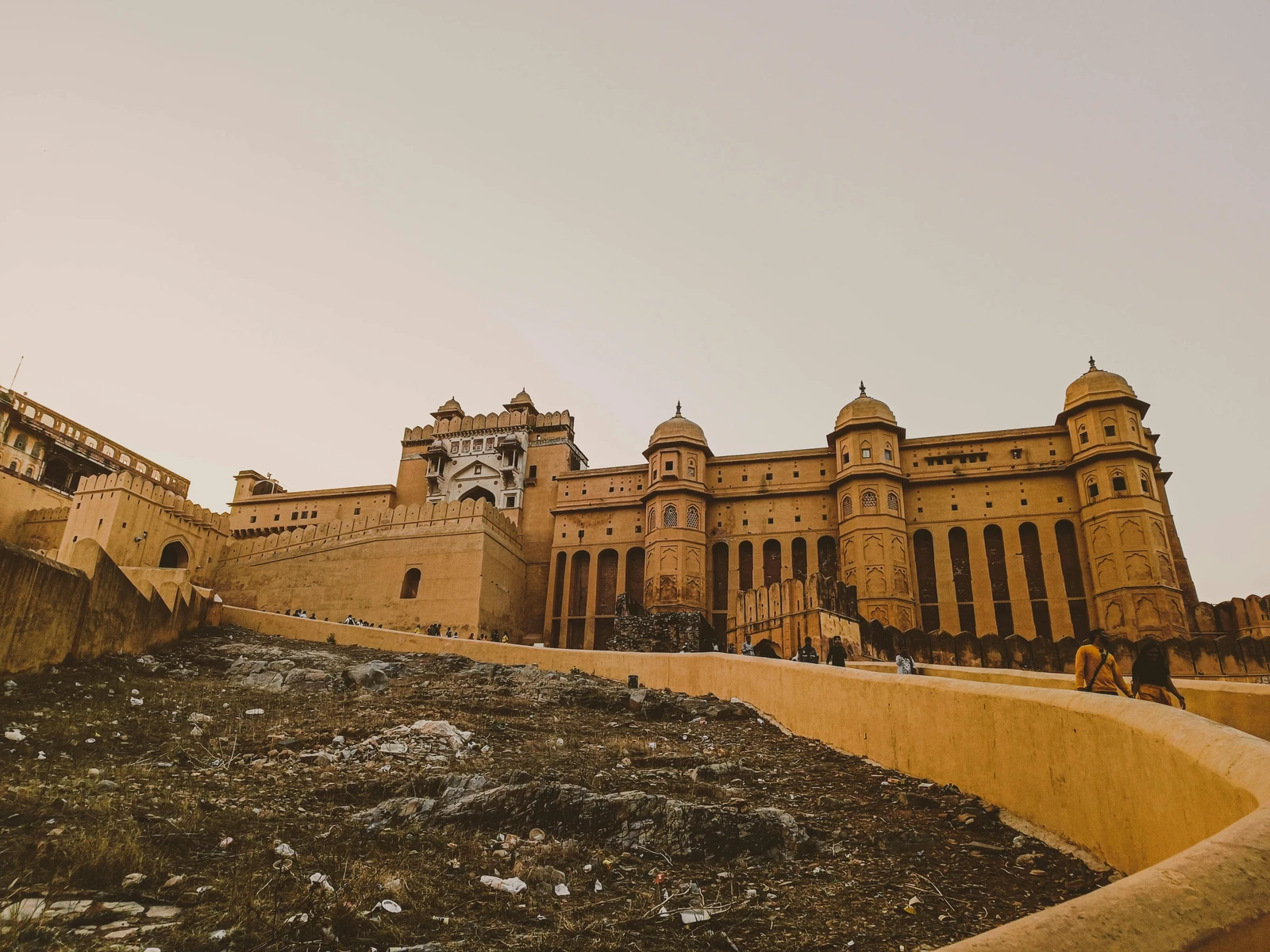


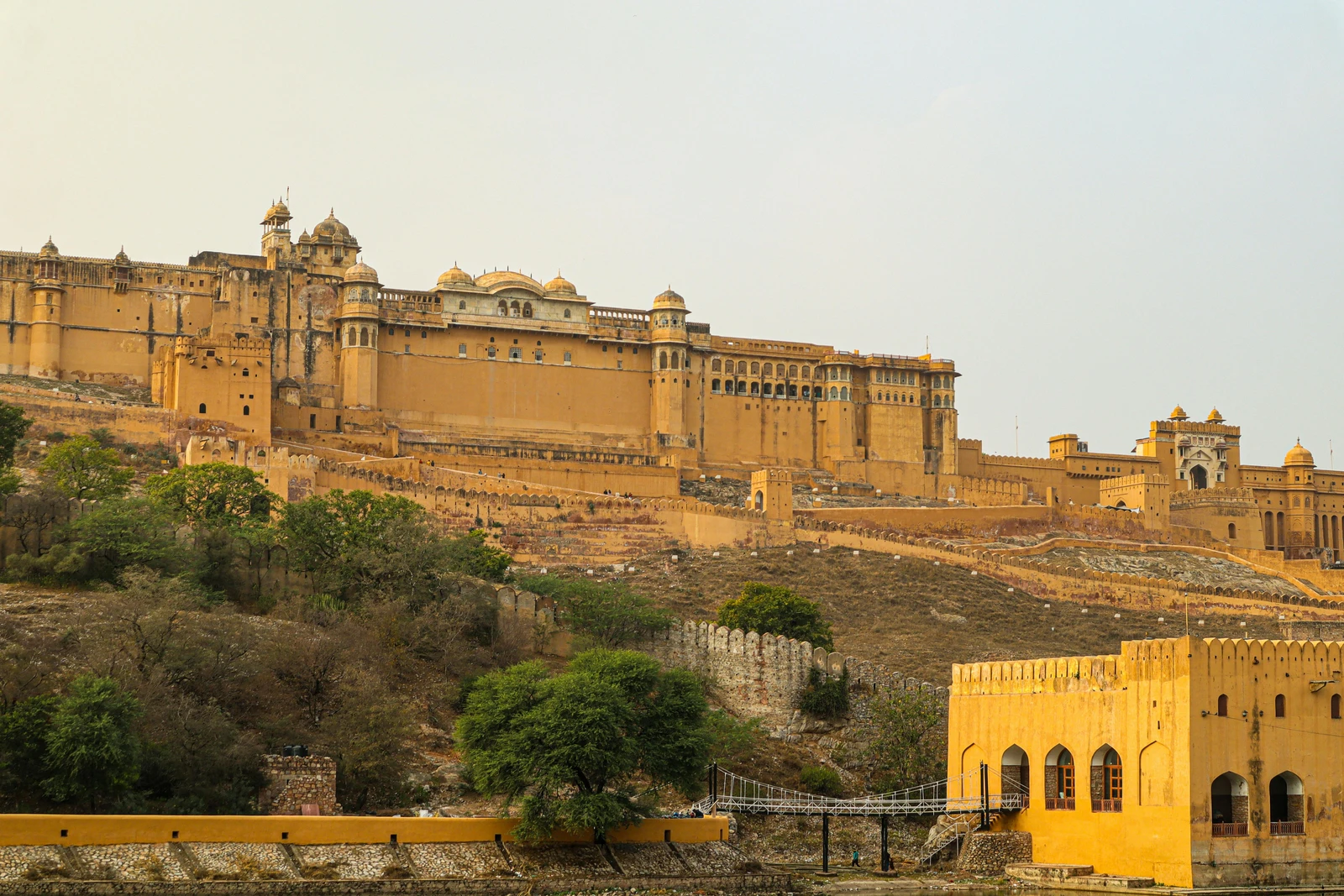
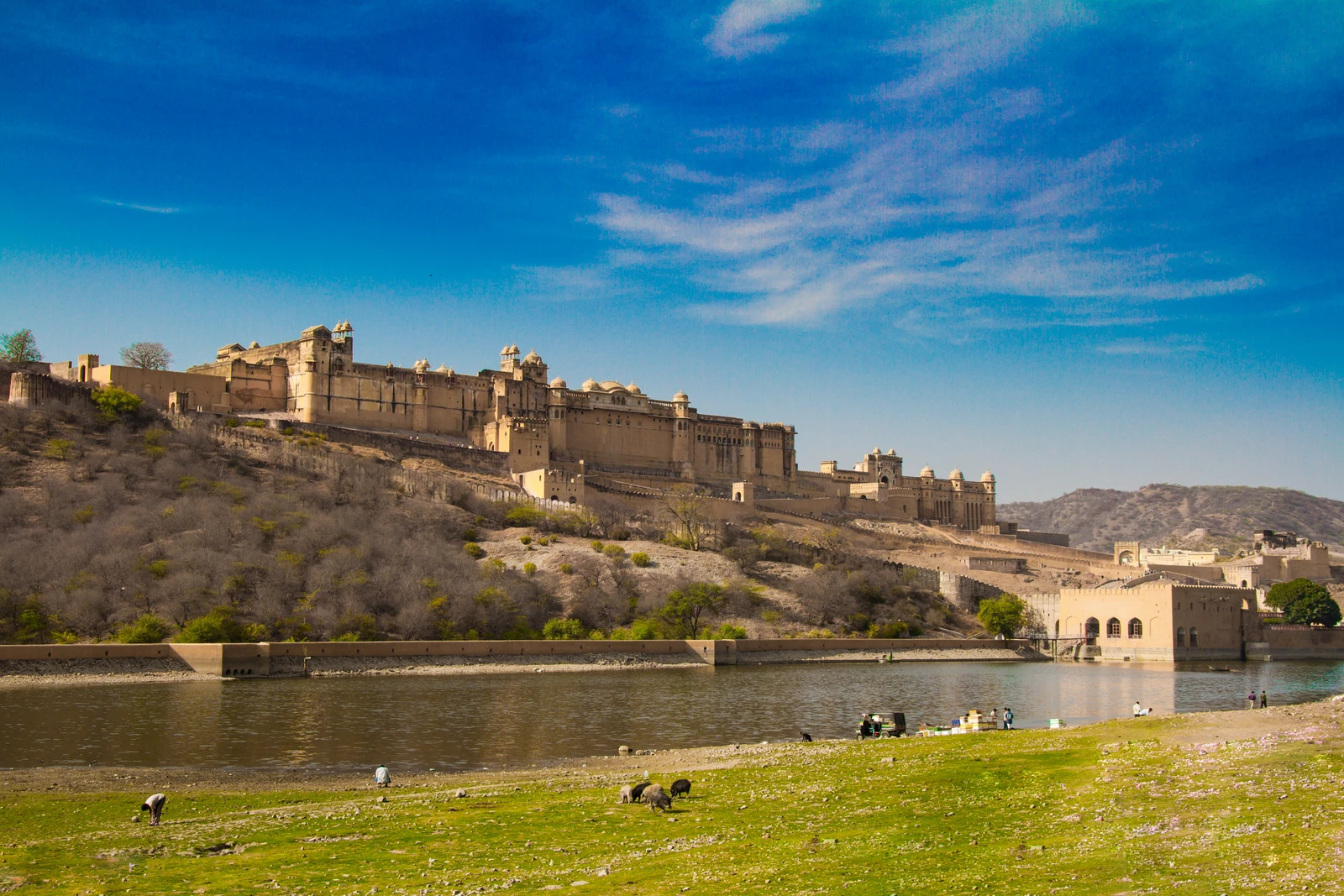


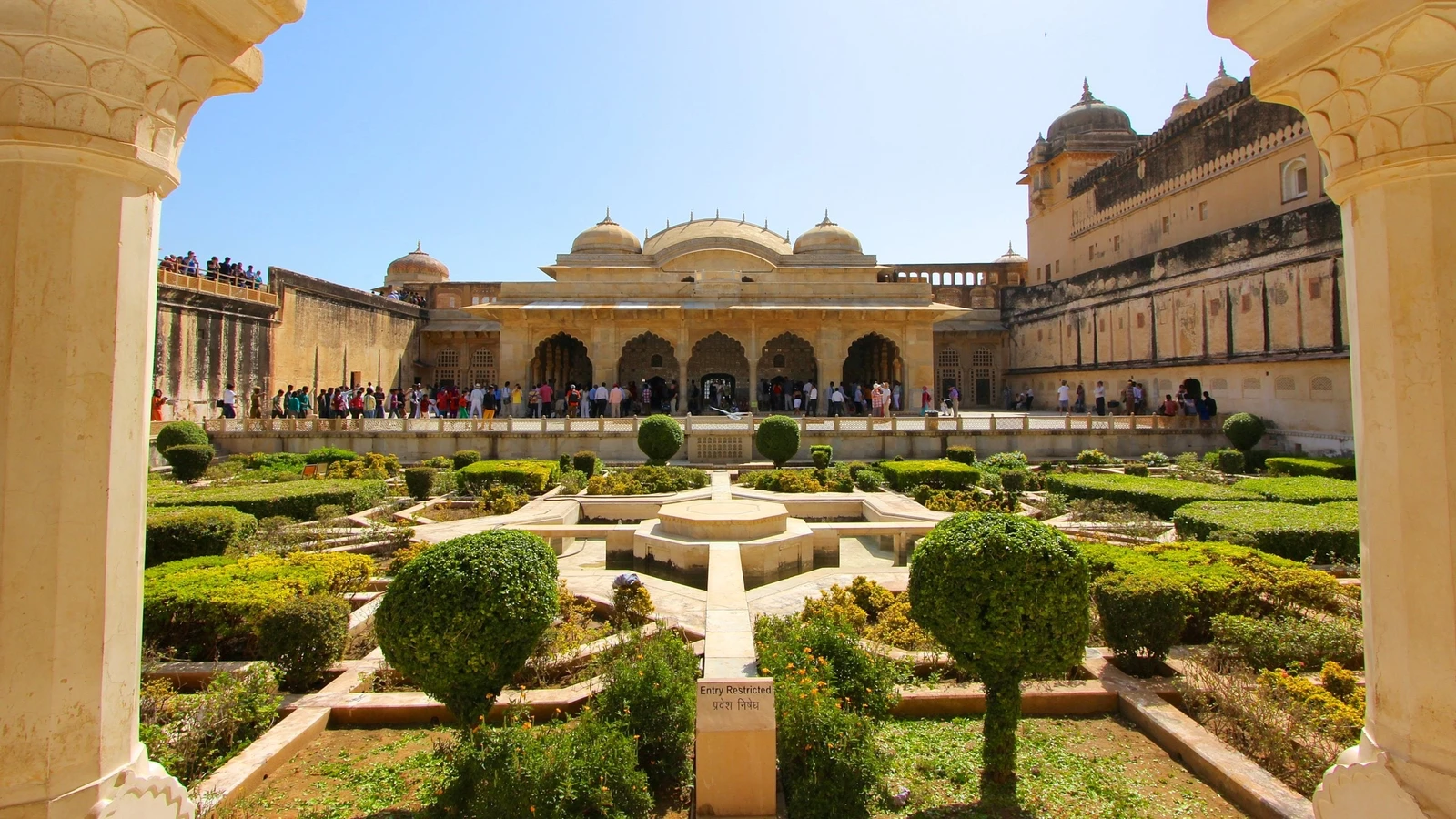
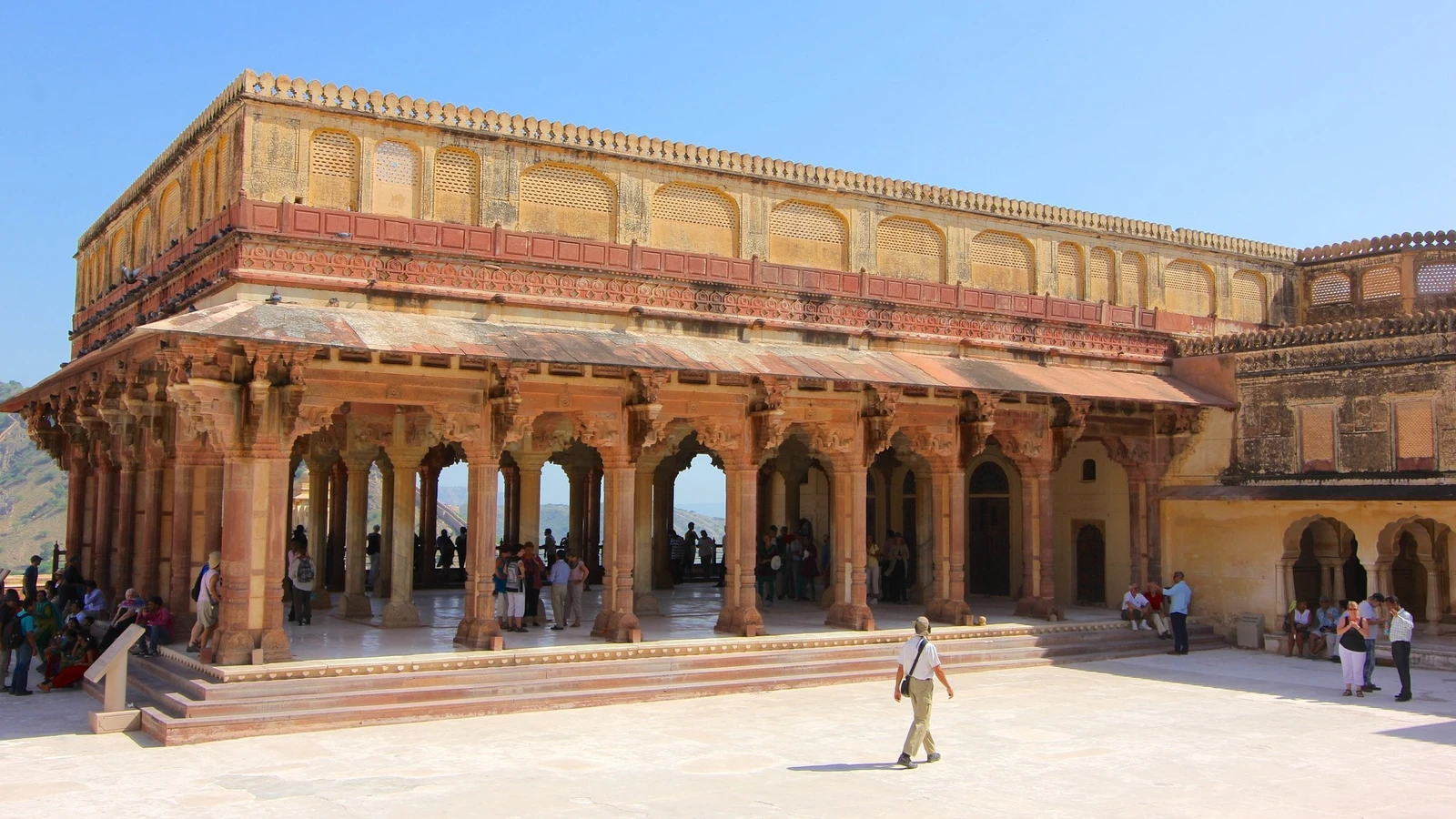


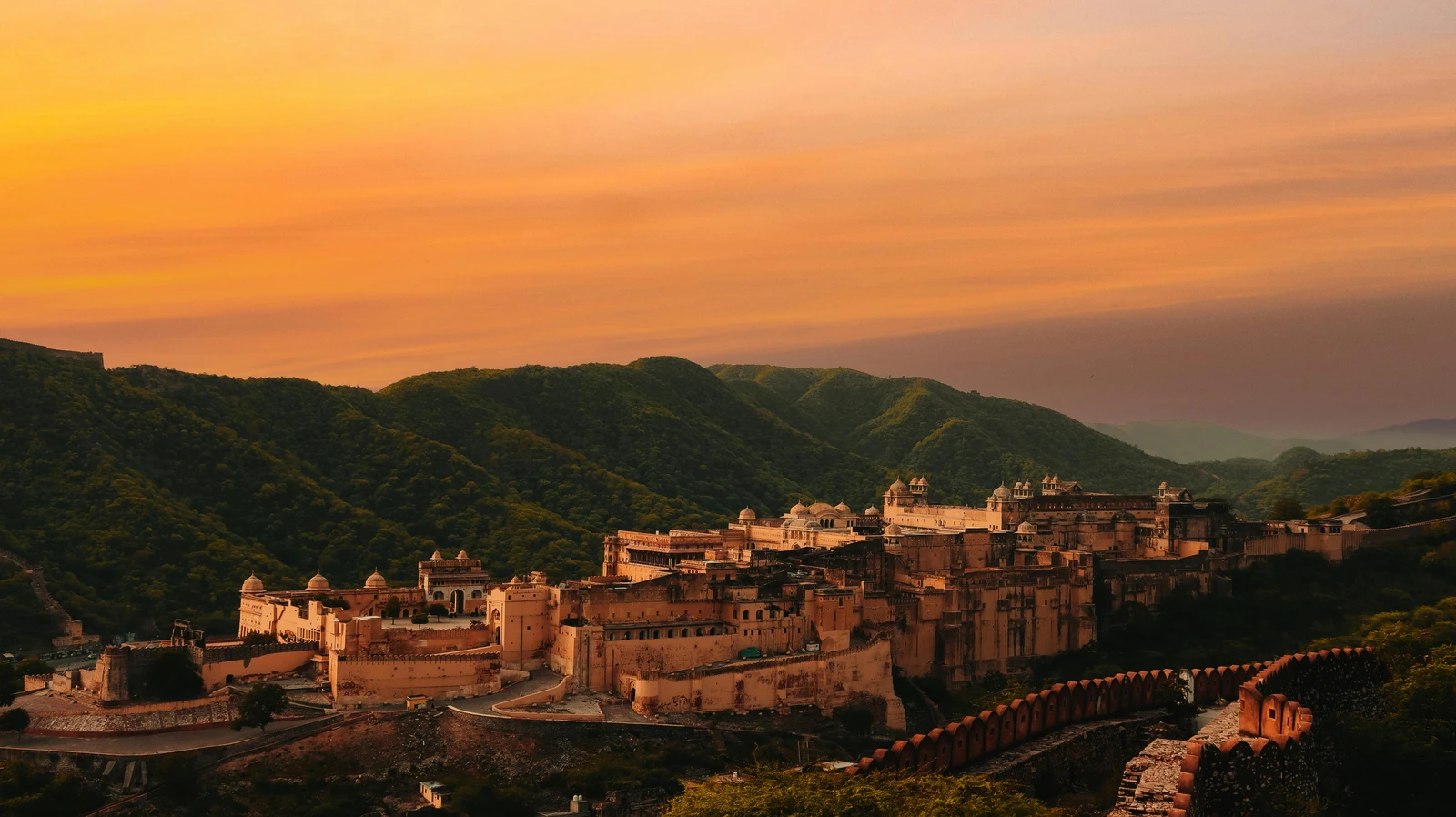
Amer Fort (often also spelled Amber Fort) is a magnificent hill fort located in Amer, a town just 11 kilometers (6.8 miles) from Jaipur, the capital city of Rajasthan, India. This sprawling palace-fortress is a testament to Rajput grandeur and ingenuity, famous for its artistic blend of Hindu and Mughal architectural styles, opulent palaces, and stunning views.
Listen to an introduction about Amer Fort

Name: Amer Fort (also widely known as Amber Fort or Amer Palace)
Address: Devisinghpura, Amer, Jaipur, Rajasthan 302001, India.
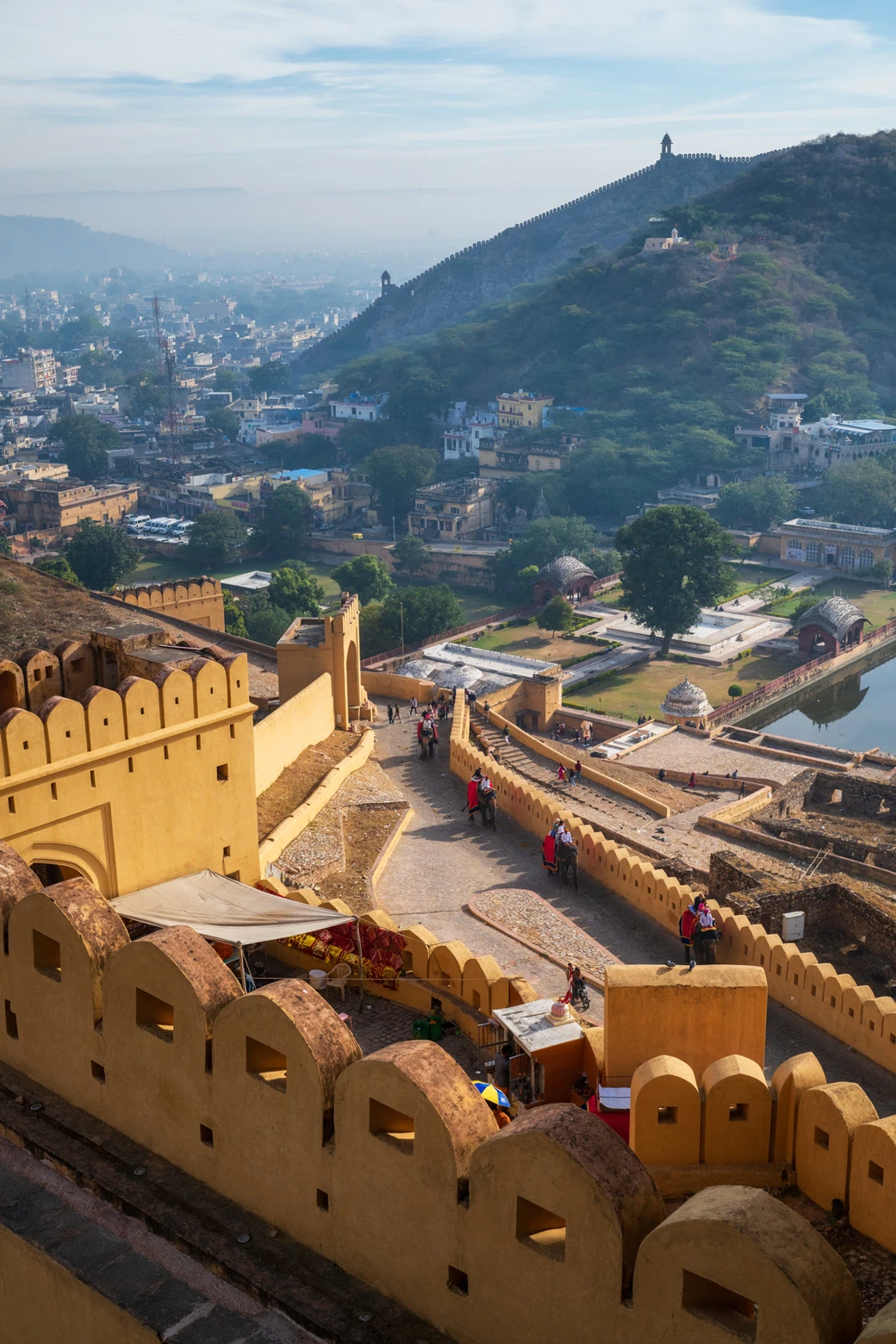
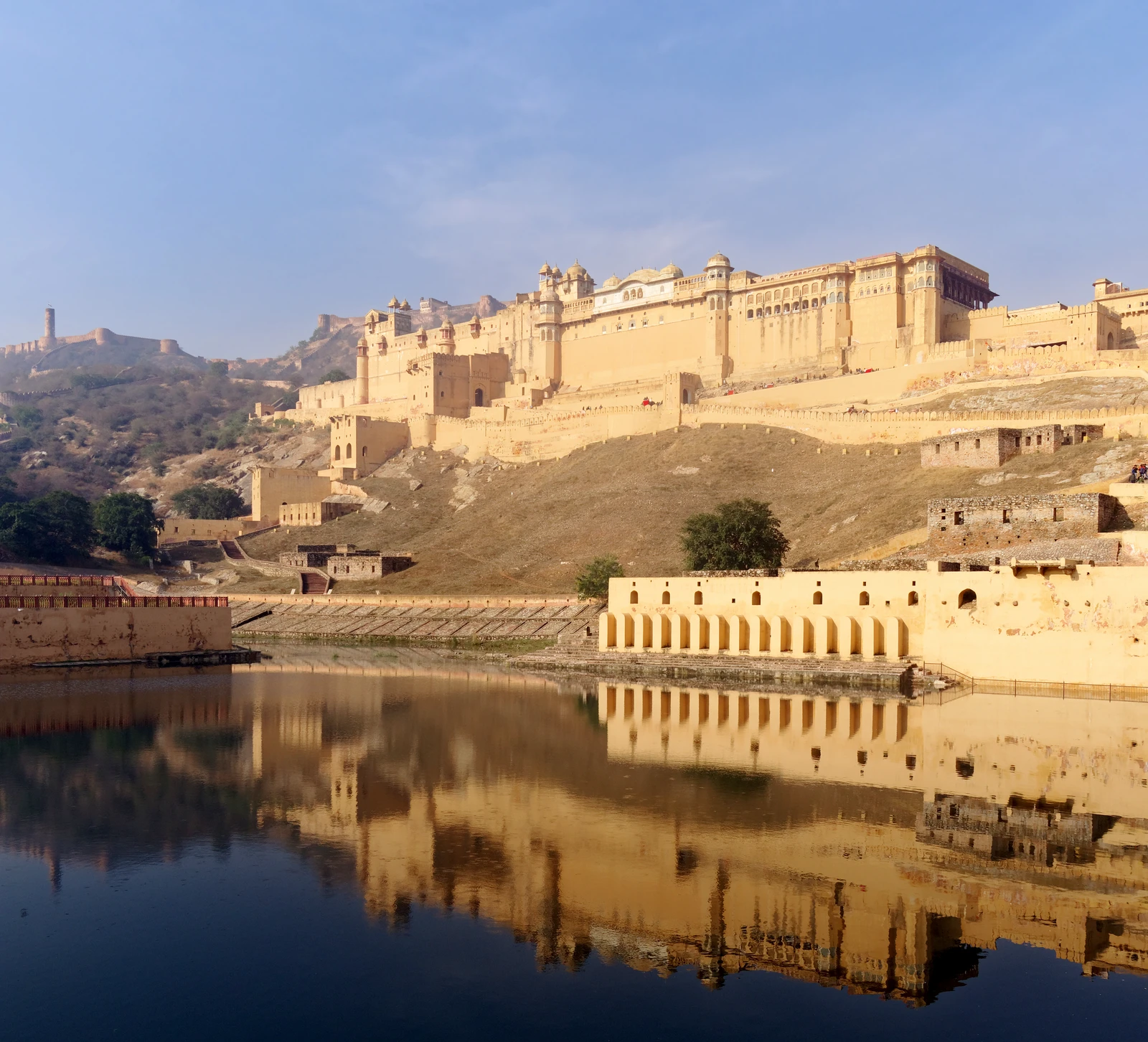
It sits majestically on a hill overlooking the serene Maota Lake.
How to Get There:
Amer Fort is a major highlight of any visit to Jaipur and is easily accessible from the city center.
- By Air: The closest airport is Jaipur International Airport (JAI). From the airport, it’s about a 45-minute to 1-hour drive to Amer Fort, depending on traffic. Taxis or ride-sharing apps (Uber/Ola) are readily available.
- From Jaipur City Centre:
- Taxi/Auto-rickshaw/E-rickshaw: The most common and convenient way. It takes about 20-30 minutes from central Jaipur to reach the fort gates. You can hire them for a round trip with waiting time.
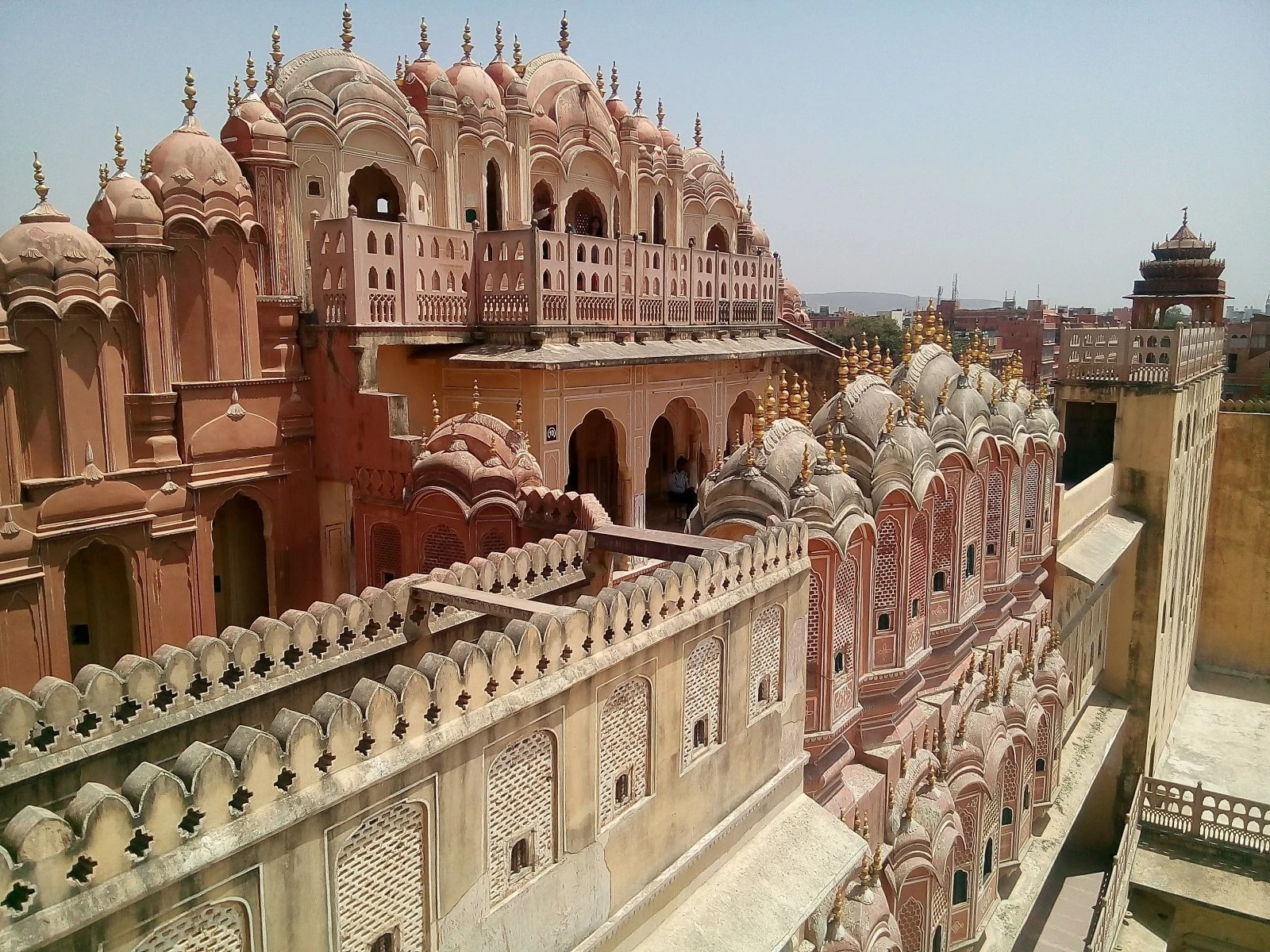
- Local Bus: RSRTC buses regularly run from Hawa Mahal in Jaipur to Amer Fort, taking about 20 minutes. This is a budget-friendly option.
- Car/Driver: Hiring a private car with a driver for a full day is popular for tourists, allowing flexible exploration of Amer Fort and other Jaipur attractions.
- To the Fort Entrance: Once you arrive at the base of the hill (Jaleb Chowk courtyard), you have several options to reach the main fort complex:
- Walk: A zigzag pathway climbs uphill for about 10-15 minutes.
- Electric Buggy/4WD: Available for a paid transfer up the zigzag path, leading to the Chand Pol (Moon Gate).
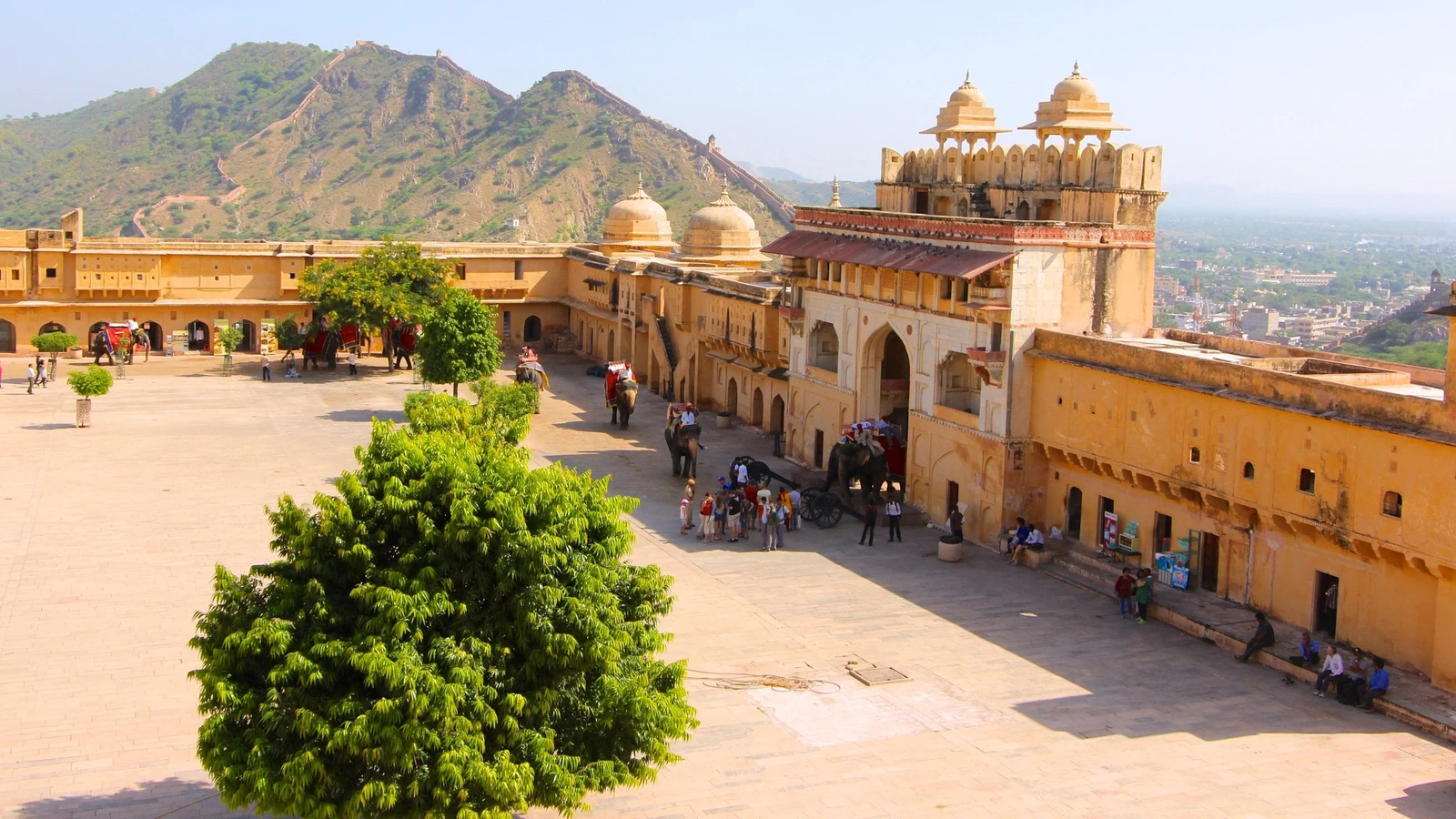
- Elephant Ride: Traditionally, elephant rides were a very popular way to ascend to the fort’s central courtyard (Jaleb Chowk). However, due to concerns for animal welfare, it is strongly recommended to avoid elephant rides and opt for other transport methods.
- Entrance Tickets: Tickets are required to enter the fort and can be purchased at the ticket counters near the gates. Separate fees apply for Indian citizens/SAARC/BIMSTEC nationals and other foreign visitors.
- Best Time to Visit: The best time is during the winter season (September to March) when the weather is cool and pleasant. Arrive early in the morning (around 8 AM) to avoid crowds and the heat. The fort also offers an evening Light and Sound Show that recounts its history.
Landscape and Architecture:
Amer Fort is a sprawling complex that masterfully blends the robust, defensive elements of Rajput architecture with the delicate, opulent details of Mughal design, set against a dramatic hilly backdrop.
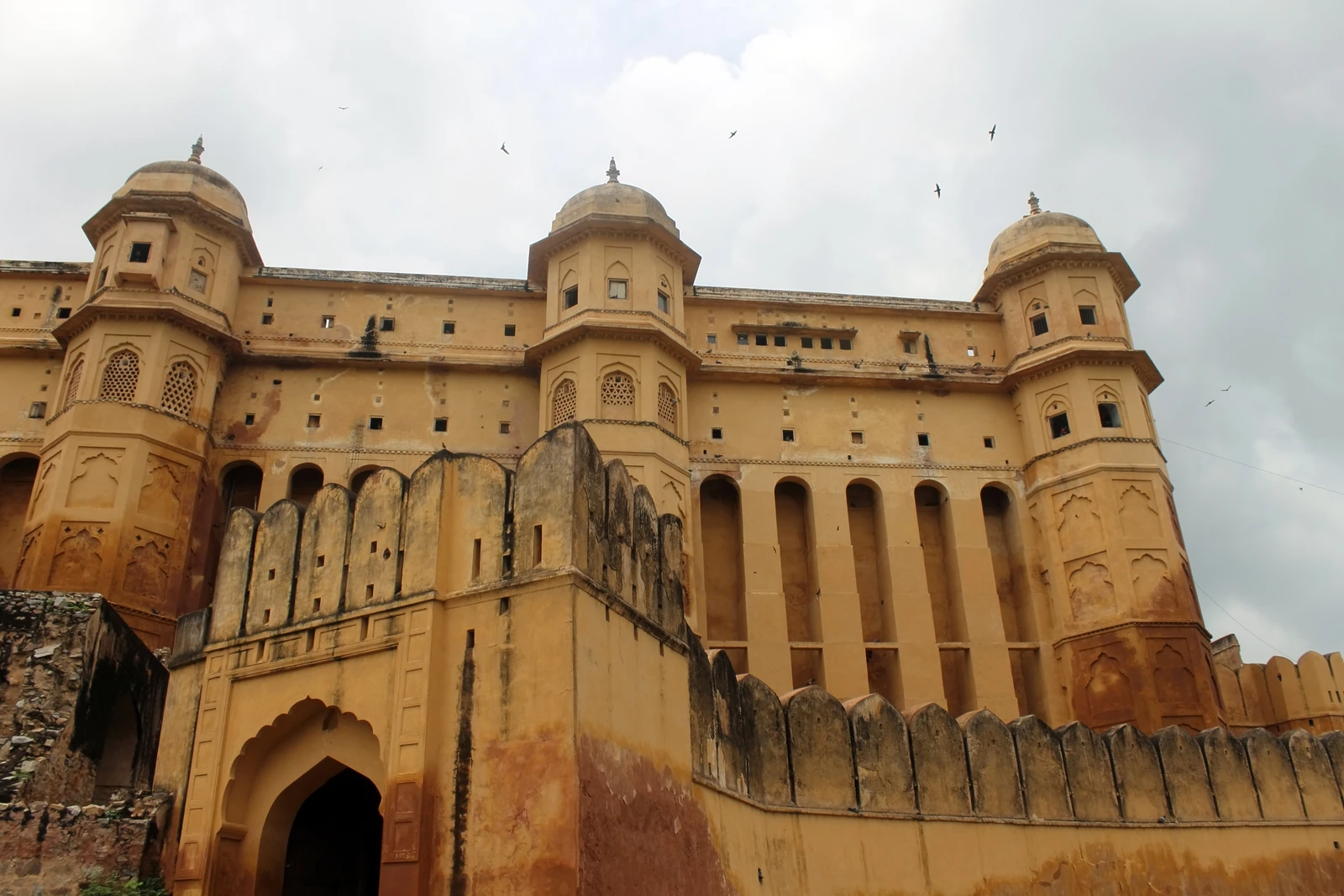
- Hilltop Location and Defensive Walls: The fort is perched high on a hill, overlooking the scenic Maota Lake below (which historically served as a water source for the palace). Its location provides a natural defensive advantage. The fort is surrounded by massive ramparts and a series of gates, built of pale yellow and pink sandstone, designed to repel invaders. It is also secretly connected by an underground tunnel to the formidable Jaigarh Fort on a higher hill, a hidden escape route for the royals.
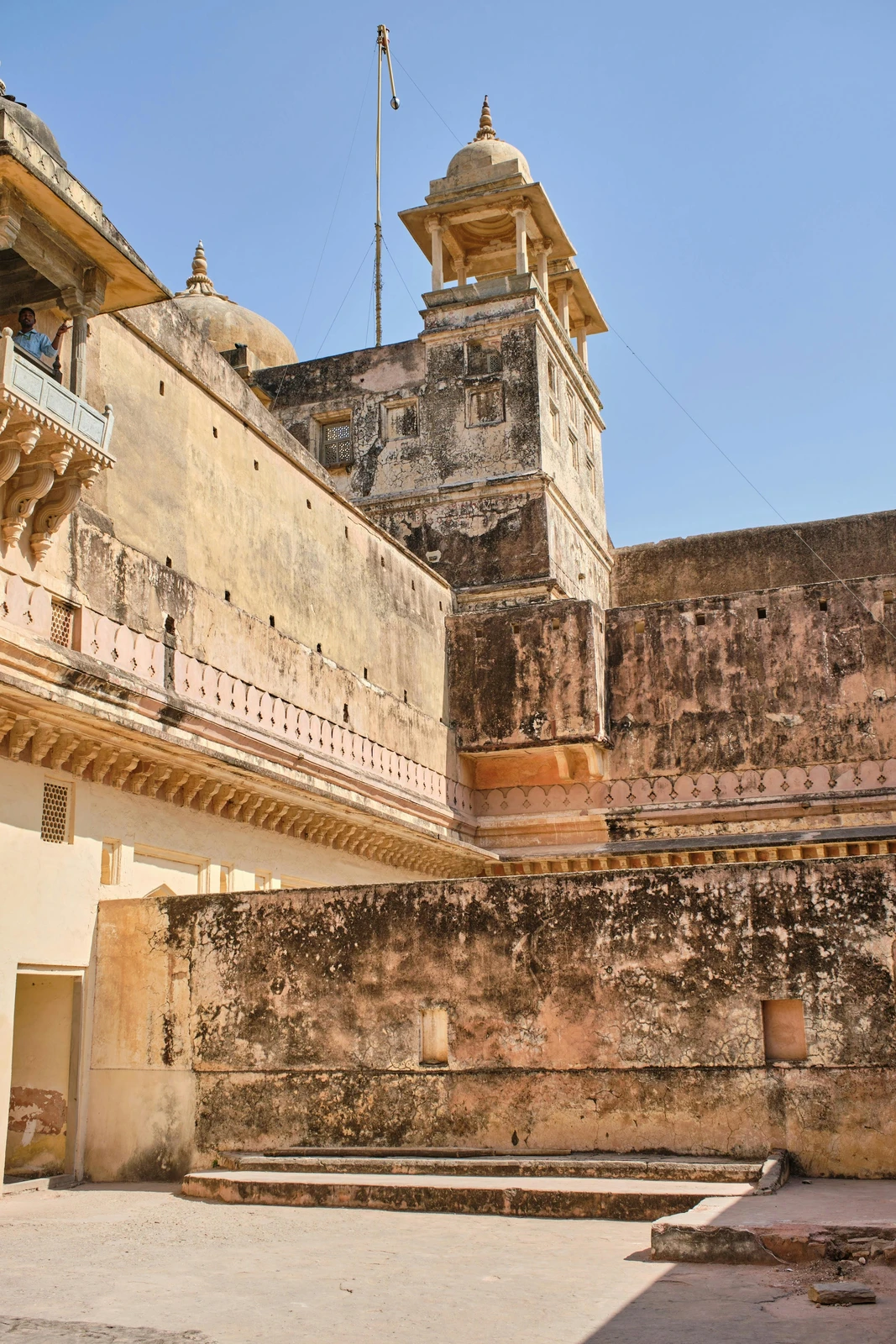
- Four Main Courtyards: The palace is laid out on four distinct levels, each with its own courtyard and entry gate, signifying different functions from public to private spaces.
- First Courtyard (Jaleb Chowk): The grand main courtyard where victorious armies would display their plunder. It is accessed via the Suraj Pol (Sun Gate) for royal processions (facing east to catch the first rays of sun) or the Chand Pol (Moon Gate) for general entry.
- Second Courtyard: Features the Diwan-i-Aam (Hall of Public Audience), an open-sided hall with 27 double rows of columns topped with elephant-shaped capitals, where the Maharaja met common people.
- Third Courtyard (Diwan-i-Khas / Sukh Niwas): This is the most opulent section, housing the Diwan-i-Khas (Hall of Private Audience), also known as Jai Mandir, exquisitely embellished with glass inlaid panels. Opposite it is Sukh Niwas (Hall of Pleasure), designed to be cooled by winds blowing over a water cascade, an early form of air-conditioning.
- Fourth Courtyard (Zenana): The secluded ladies’ quarters, or Zenana, providing privacy for the royal women, with separate kitchens and living areas, allowing the Maharaja to visit queens and mistresses discreetly.
- Sheesh Mahal (Mirror Palace): A breathtaking chamber within the third courtyard (part of Jai Mandir), entirely adorned with thousands of tiny, convex mirrors and colored glass. It’s designed so that a single flickering candlelight can illuminate the entire room with dazzling reflections, creating a magical “glittering jewel box” effect.
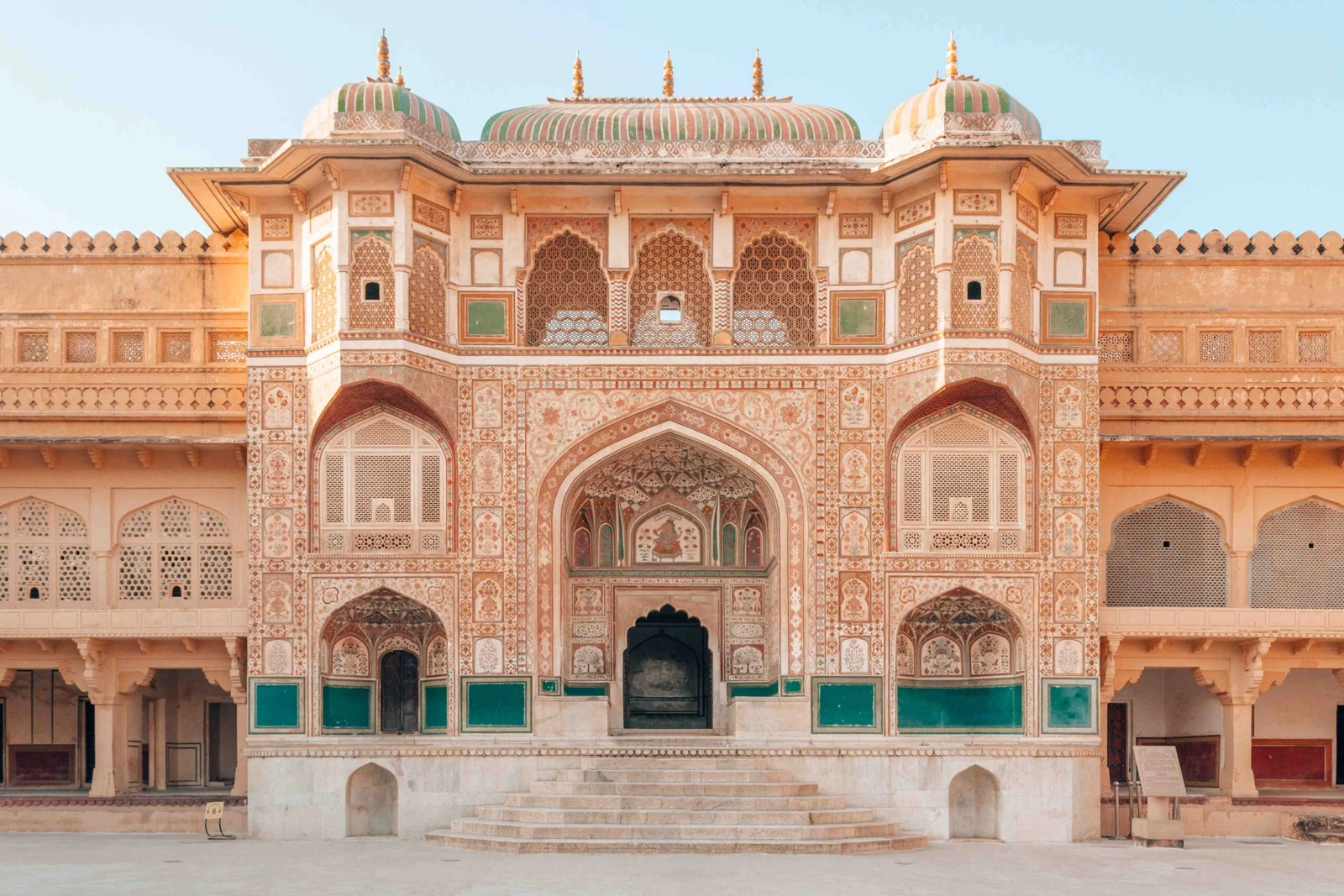
- Ganesh Pol (Ganesha Gate): A beautifully frescoed and ornate gateway leading to the private palaces (Diwan-i-Khas and Sheesh Mahal). It’s dedicated to the elephant-headed Hindu god Ganesha, considered an auspicious entrance.
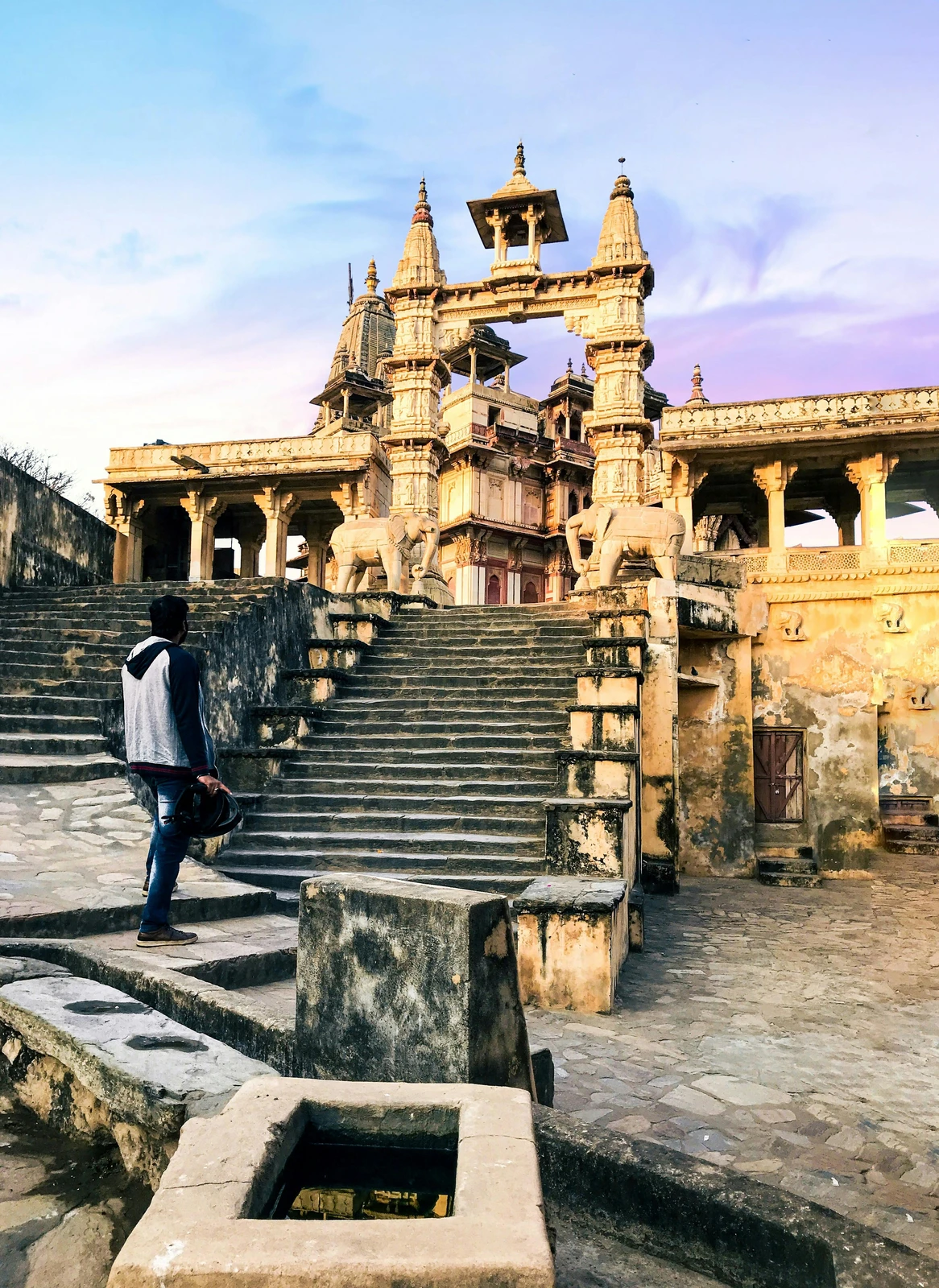
- Sila Devi Temple: A small but significant temple located in the first courtyard, dedicated to Goddess Sila Devi (an incarnation of Kali or Durga), the patron deity of the Rajput rulers. Its double silver doors are notable.
- Magic Flower Fresco: Within the Sheesh Mahal, a famous marble carving known as the “Magic Flower” is said to reveal seven different images (like a fishtail, lotus, hooded cobra, elephant trunk) when viewed from different angles, showcasing incredible artistic skill.
- Mughal Gardens: The fort includes smaller gardens laid out in the traditional Mughal Charbagh style, with water channels designed to cool the air.
What Makes It Famous:
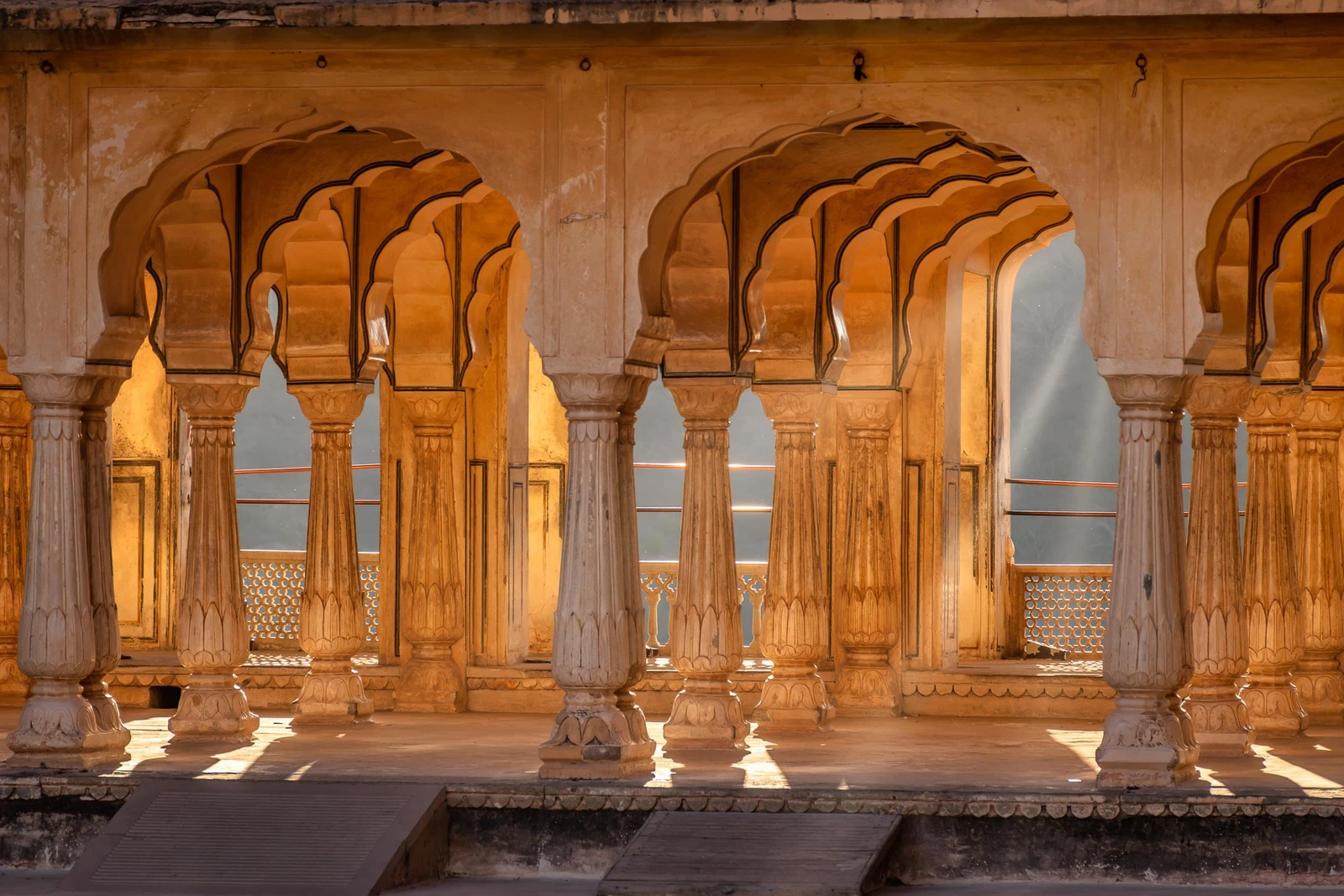
- Fusion of Rajput and Mughal Architecture: Amer Fort is a prime example of the harmonious blend of Hindu (Rajput) and Islamic (Mughal) architectural styles. This synthesis is visible in its intricate carvings, frescoes, grand courtyards, and strategic defensive features, making it a unique architectural marvel.
- Sheesh Mahal (Mirror Palace): The dazzling Sheesh Mahal, with its thousands of embedded mirrors, is one of the most famous and breathtaking chambers within the fort, renowned for its magical illumination effect.
- Strategic Hilltop Location: Its commanding position on a hill overlooking Maota Lake provides not only strategic defense but also exceptionally picturesque views, especially at sunrise and sunset.
- UNESCO World Heritage Site: Amer Fort is part of the “Hill Forts of Rajasthan” UNESCO World Heritage Site, recognized for its outstanding universal value, its ingenious water harvesting systems, and its influence on later architectural styles.
- Rich History and Royal Heritage: As the former capital of the Kachwaha Rajput rulers before Jaipur was founded, the fort is steeped in centuries of royal history, tales of valor, romance, and opulent lifestyles.
- Light and Sound Show: The evening Light and Sound Show, narrated by Bollywood legend Amitabh Bachchan, brings the fort’s glorious history to life with mesmerizing illuminations and music.
- Intricate Details and Ingenious Design: Beyond its grandeur, the fort is famous for its intricate details, such as the Ganesh Pol frescoes, the Magic Flower carving, and the sophisticated natural cooling system in Sukh Niwas.
Differences from Some Other Wonders:
- Rajput-Mughal Fusion: While other Indian forts might show Mughal or Hindu styles (e.g., Red Fort is primarily Mughal, some temples are purely Hindu), Amer Fort is celebrated specifically for its seamless and extensive fusion of both Rajput (Hindu) and Mughal (Islamic) architectural elements within a single complex. This blend is particularly refined here.
- Fortress-Palace with Hilltop Setting and Lake: Unlike the Red Fort (a grand urban fortress-palace) or the Taj Mahal (a mausoleum), Amer Fort is a fortress-palace situated on a hill, strategically designed with a natural lake at its base (Maota Lake), creating a distinct landscape. The secret underground tunnel to Jaigarh Fort further emphasizes its unique strategic design.
- Sheesh Mahal as a Defining Feature: While other palaces might have ornate rooms, the Sheesh Mahal’s unique design using thousands of convex mirrors to create a magical, self-illuminating effect is a specific and highly famous feature of Amer Fort.
- Elephant Ride (Traditional but Controversial Access): Historically, the elephant ride to the fort was a unique and famous way to arrive, distinguishing it from other forts. While now discouraged for ethical reasons, it remains a traditional image associated with the fort.
- Focus on Rajput History: While located in India, the Amer Fort primarily tells the story of the Rajput Kachwaha dynasty and their specific culture and architectural prowess, offering a regional focus within India’s diverse history.
- No Central Religious Monument (like a state temple): Unlike Angkor Wat, Borobudur, or Prambanan, which are primarily religious monuments, Amer Fort is a royal residence and defensive stronghold, with a small temple (Sila Devi) for the royal family within its walls, but not a grand state temple at its core.