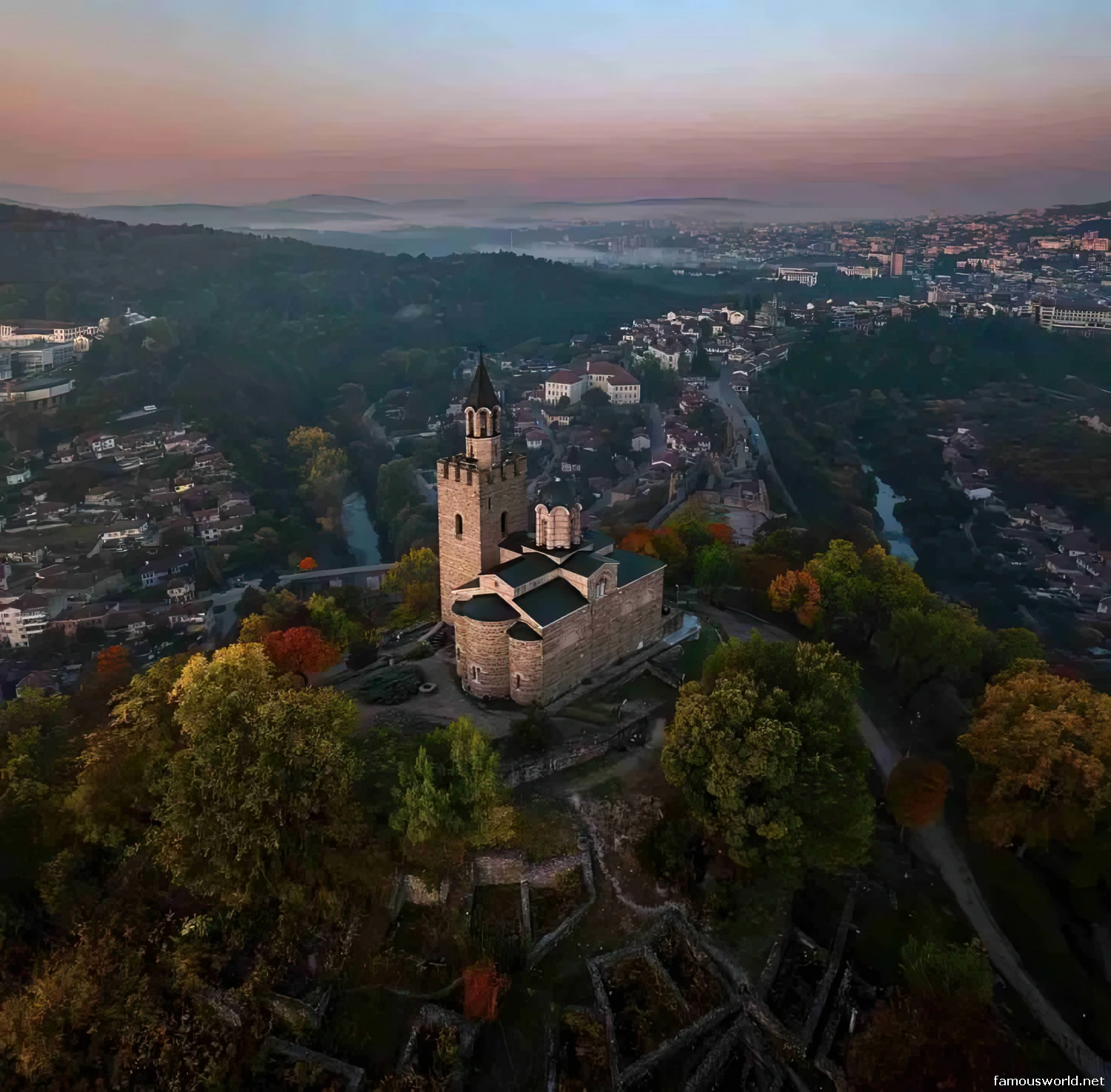


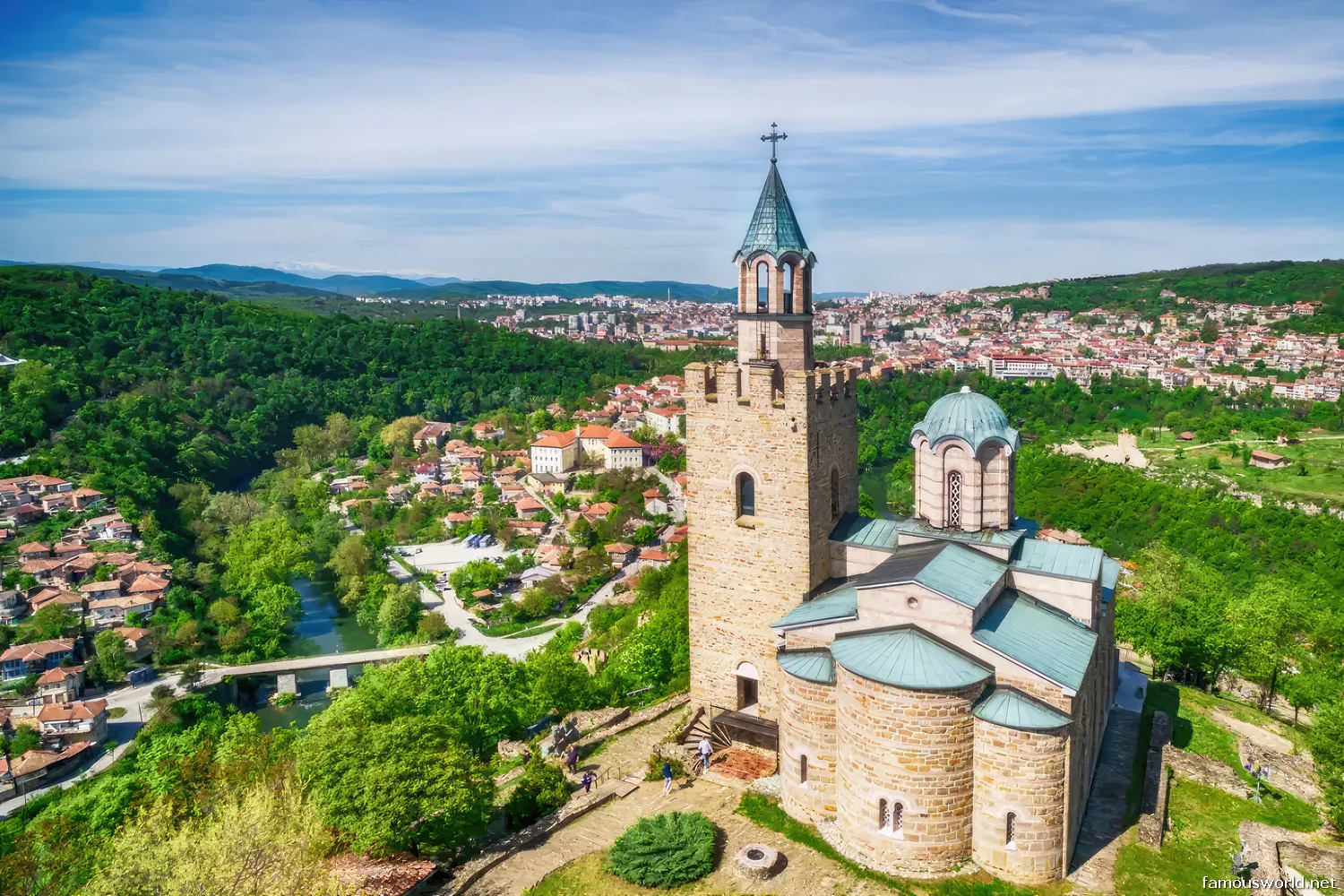




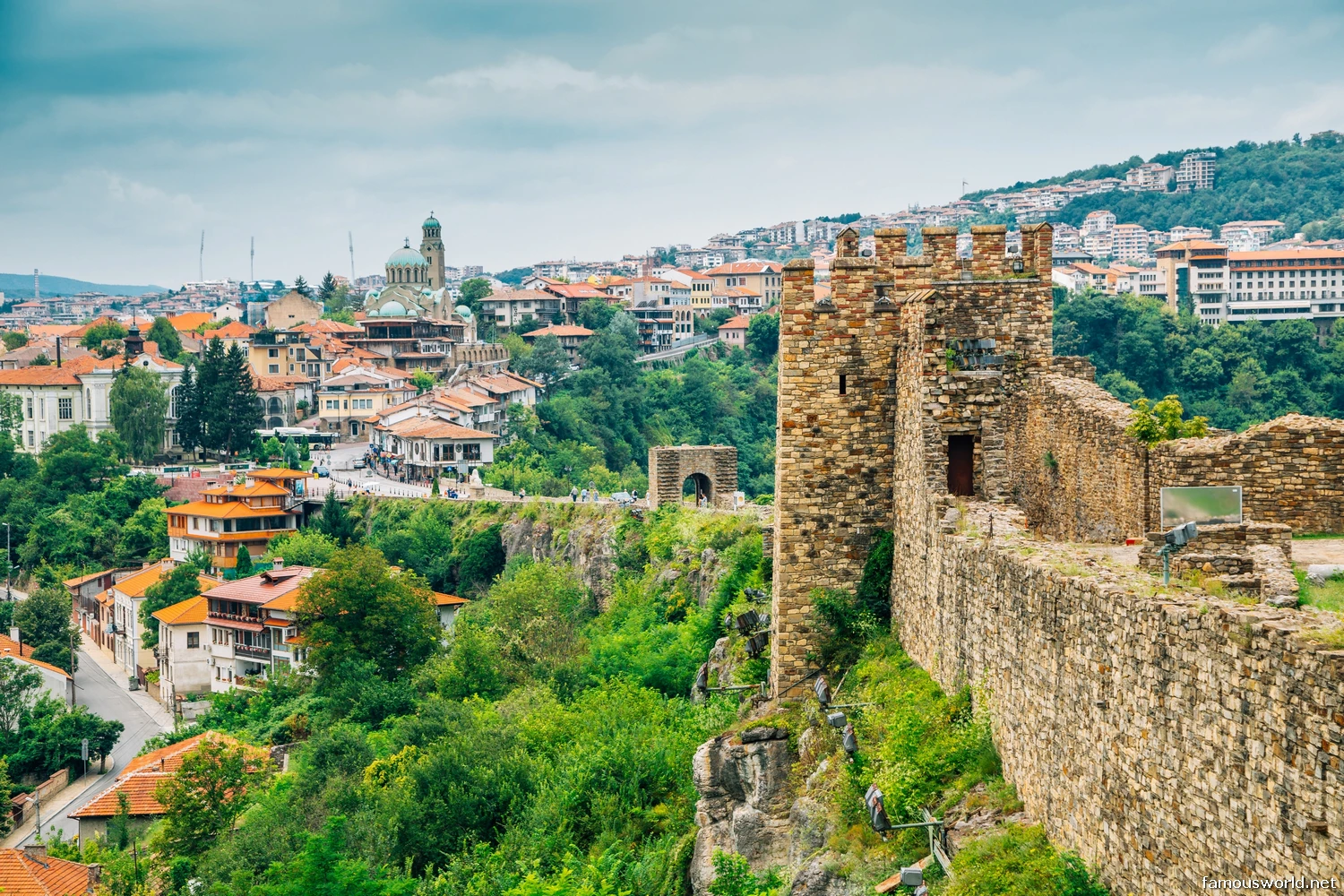


Known as the “City of the Tsars,” Veliko Tarnovo is a spectacular city that seems to be carved directly into the cliffs of a river gorge. This is the sacred capital of the Second Bulgarian Empire (1185-1396), a place of immense historical and national importance. The city is built on several hills, most notably Tsarevets and Trapezitsa, which are wrapped in the dramatic, winding bends of the Yantra River. Its unique landscape is a stunning panorama of 19th-century National Revival houses clinging to steep slopes, all watched over by the vast, silent fortress of Tsarevets. A visit is a journey into the heart of Bulgaria’s royal past, a city that is both a national shrine and a vibrant university town.
Listen to an introduction about Veliko Tarnovo

Name and Location
- Name: Veliko Tarnovo (Велико Търново).
- Location: In the central part of northern Bulgaria, set in a deep gorge of the Yantra River.
How to Get There
Veliko Tarnovo is a major transport and tourist hub, connecting eastern and western Bulgaria.
- By Bus: This is the most practical and popular method. The city has two main bus stations with frequent, reliable connections to all major Bulgarian cities, including Sofia (approx. 3 hours), Plovdiv (3-4 hours), and Varna (3-4 hours).
- By Car: The city is located at a major crossroads of national roads (E85 and E772). Renting a car is a great option as it also allows you to easily visit nearby attractions like the village of Arbanasi.
- By Train: Veliko Tarnovo has a train station with daily services to Sofia, Ruse, and other cities. However, the nearby city of Gorna Oryahovitsa is a larger railway hub, and many travelers take a train there and then a short bus or taxi ride (20 min) to Veliko Tarnovo.
- By Air: Veliko Tarnovo has no commercial airport. The nearest major international airport is in Sofia (SOF), about 2.5-3 hours away by bus or car. Bucharest (OTP) in Romania is also an option, at a similar distance.
Landscape and Architecture
The city’s architecture is completely defined by its dramatic, hilly, and winding river gorge.
- A City in a Gorge: The defining feature is the Yantra River, which carves deep, C-shaped bends into the landscape, creating a series of steep hills. The city is built vertically on these slopes.
- Tsarevets Fortress: The main attraction and the former royal and patriarchal seat of the empire. This vast, self-contained fortress park contains the ruins of the Royal Palace and the restored Patriarchal Cathedral.
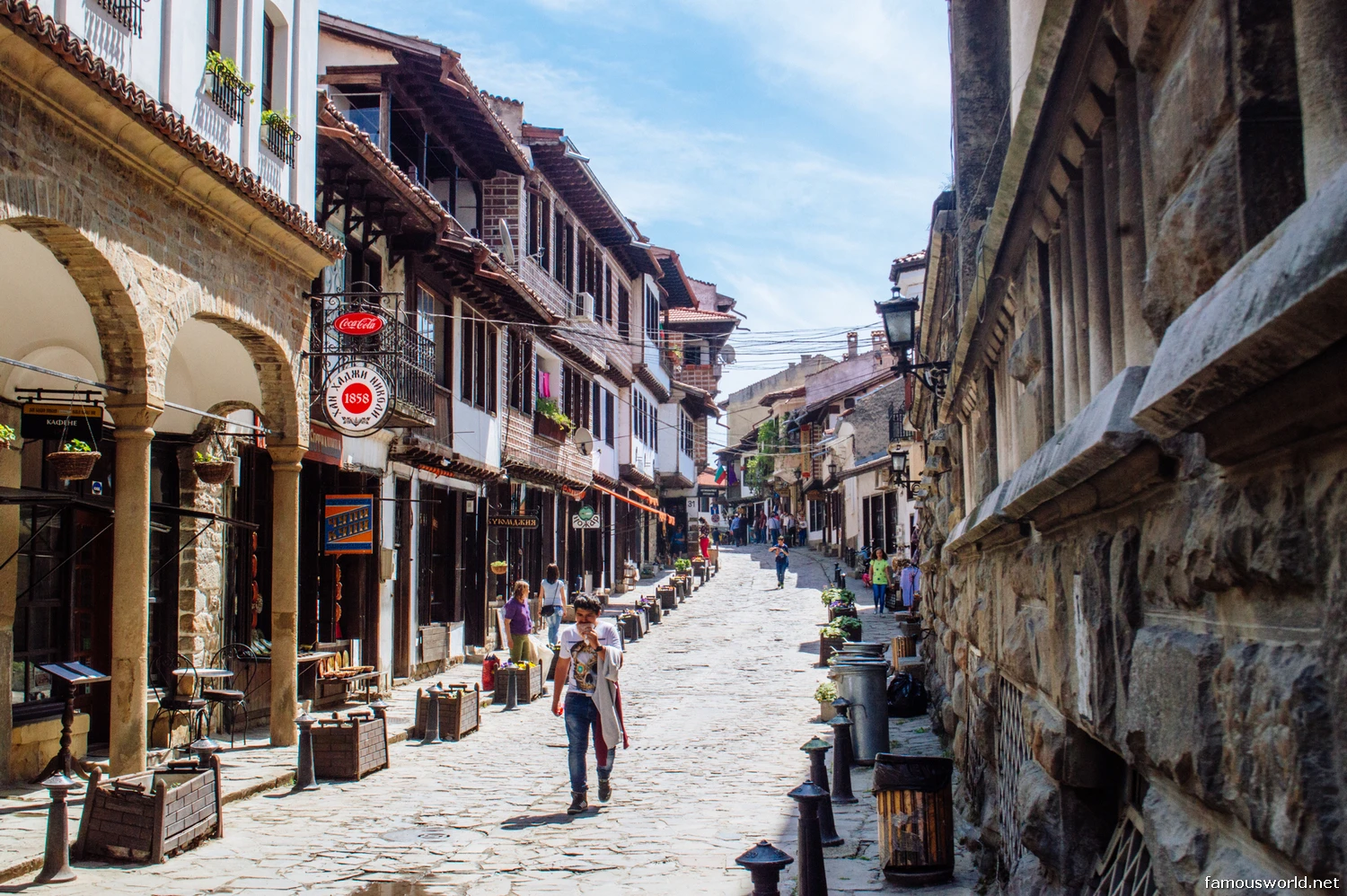
- Samovodska Charshia (Craftsmen Street): The beautifully restored 19th-century Old Bazaar. This cobblestone street is lined with National Revival style houses, now home to artisan workshops, souvenir shops, and traditional cafes.
- Gurko Street: A picturesque, historic street with houses that are cantilevered (projecting) out over the steep river bank, offering some of the most classic views of the city.
- Asen Dynasty Monument: A massive equestrian monument visible from all over the city, built on a bend in the river to commemorate the tsars of the Asen dynasty who founded the Second Bulgarian Empire.
What Makes It Famous
Veliko Tarnovo is renowned as the medieval capital of Bulgaria and for its breathtaking natural setting.
- Capital of the Second Bulgarian Empire: It was the political, cultural, and spiritual center of Bulgaria during the height of its medieval power.
- Unique Topography: It is world-famous for its stunning and unique landscape, with houses that look like they are stacked on top of each other, clinging to the cliffs above the Yantra River.
- Tsarevets Fortress: The city is the gateway to one of the most important and largest medieval fortresses in the Balkans.
- National Revival Architecture: It is a prime example of 19th-century Bulgarian National Revival architecture, particularly in its well-preserved Old Bazaar area.
Differences from Other Wonders (vs. Toledo, Spain)
A Bulgarian royal capital in a gorge offers a different experience than a Spanish royal capital on a hill.
- Environment (A City in a Gorge vs. A City on a Hill): Veliko Tarnovo is built down into the steep, lush gorge of the Yantra River. Toledo, Spain, is a walled city built on top of a high, rocky hill, creating a more dominant, fortress-like skyline.
- Focus (Medieval Fortress Park vs. Intact Medieval City): Veliko Tarnovo’s centerpiece, Tsarevets, is a vast archaeological park of ruins and foundations. Toledo, by contrast, is a dense, living labyrinth of intact medieval and Renaissance buildings (like its Cathedral and Alcázar).
- Core Story (Second Bulgarian Empire vs. City of Three Cultures): Veliko Tarnovo’s story is the glory and fall of the Second Bulgarian Empire. Toledo’s story is its unique history as the “City of Three Cultures,” where Christian, Jewish, and Muslim civilizations famously coexisted.
- Atmosphere (National Memorial vs. Living Museum): Veliko Tarnovo feels like a national shrine and a proud, historic city, with a lively modern population. Toledo feels like a perfectly preserved (and often crowded) living museum, a dense time capsule of medieval Spain.
Location on world map