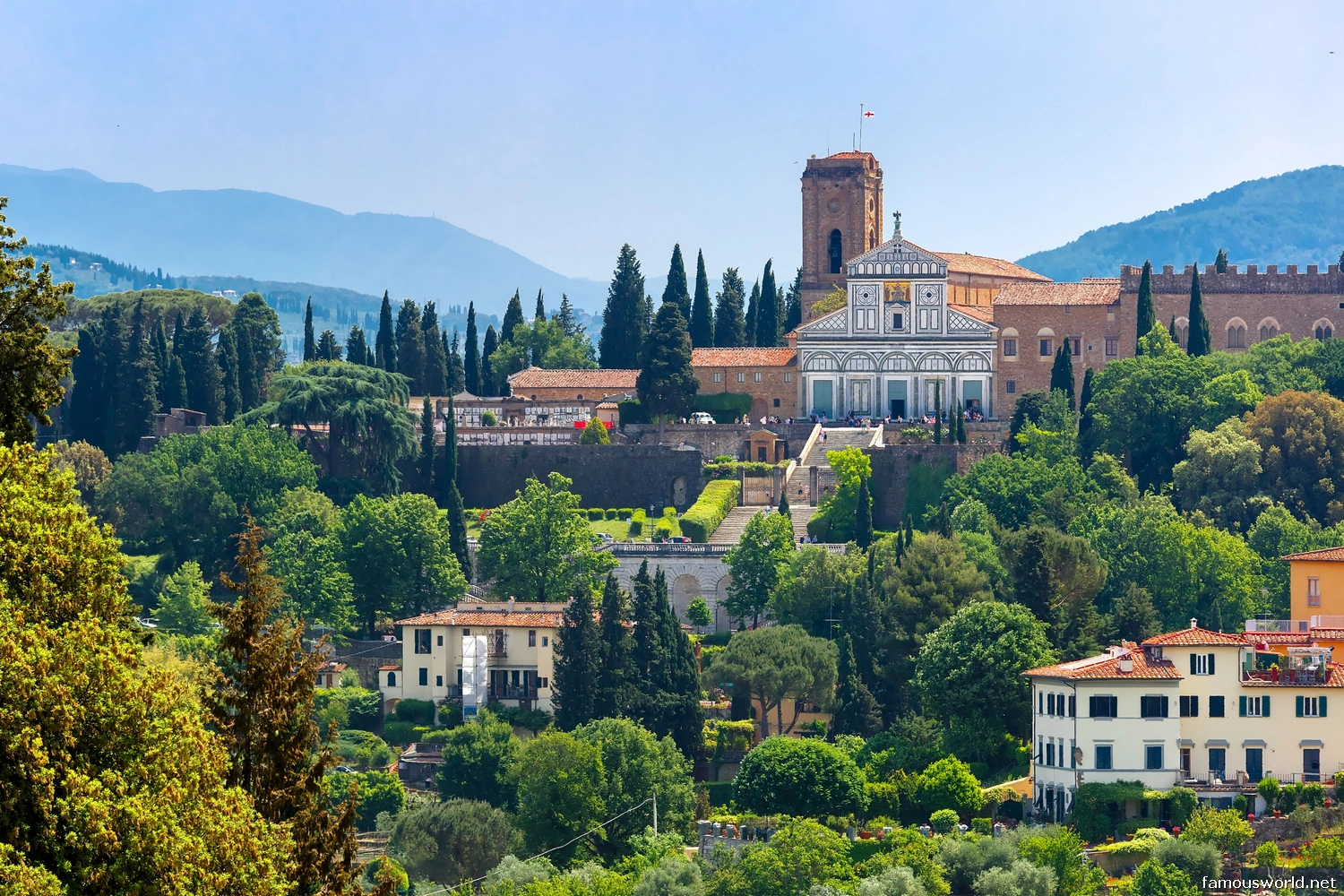


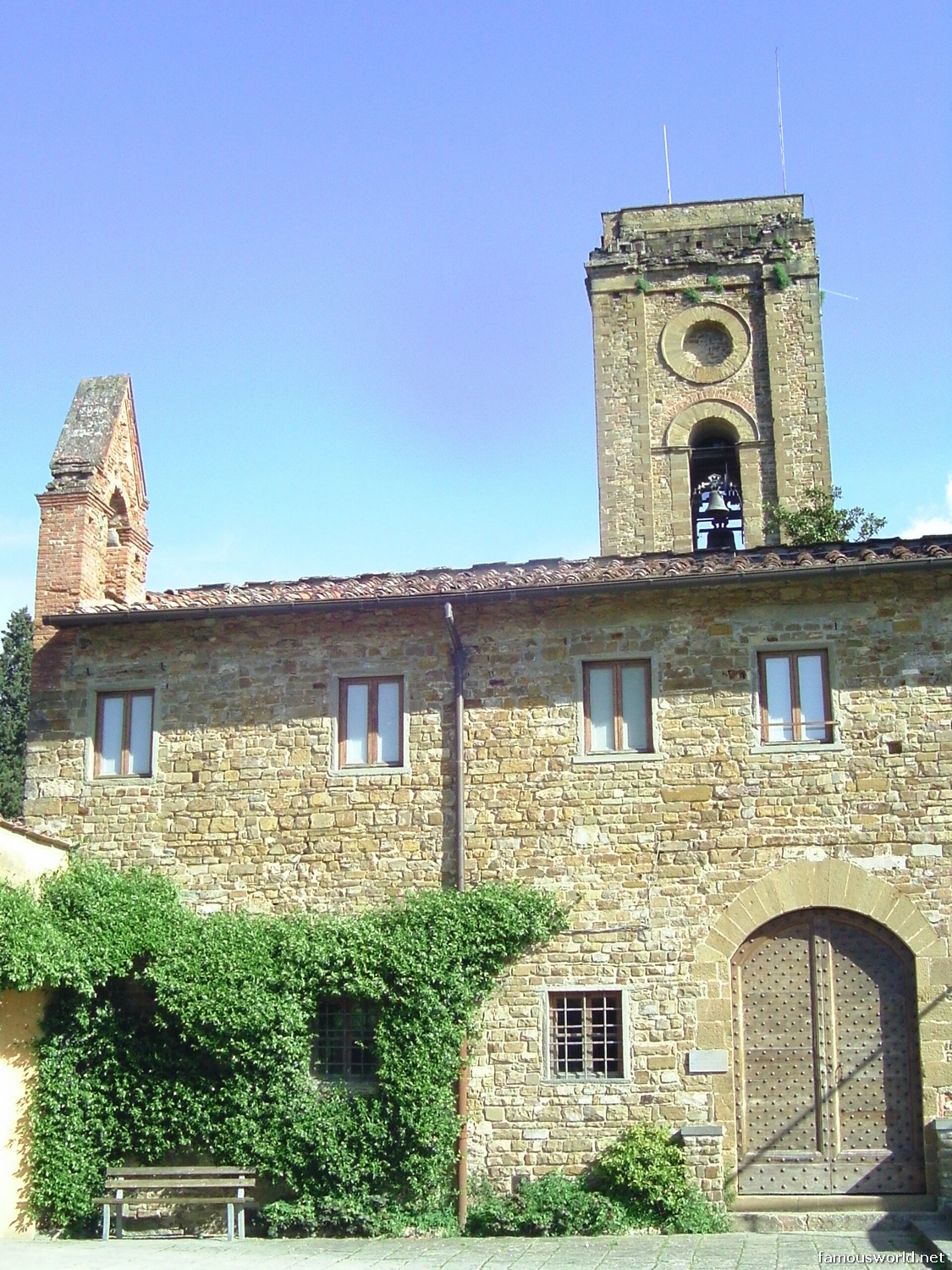
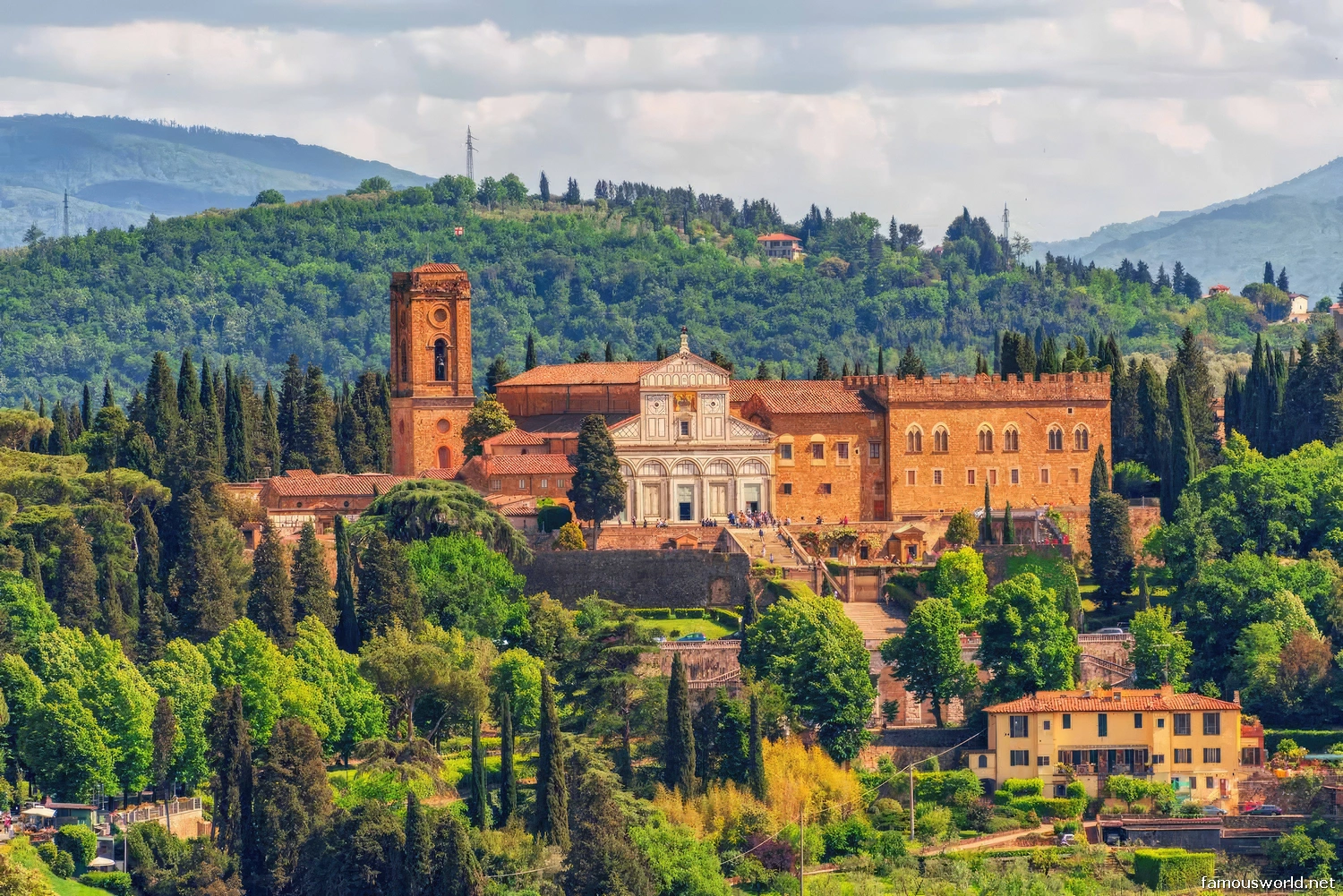
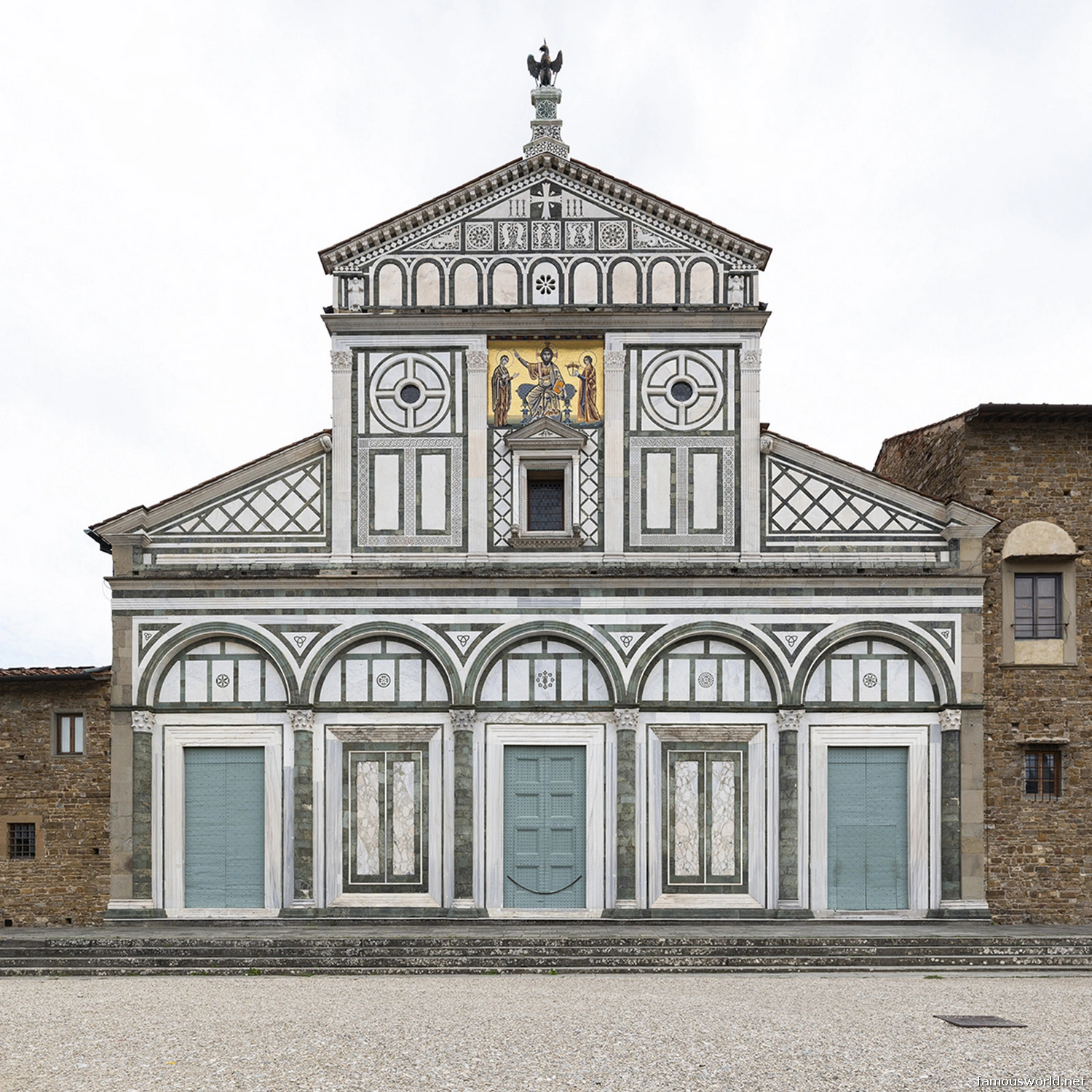

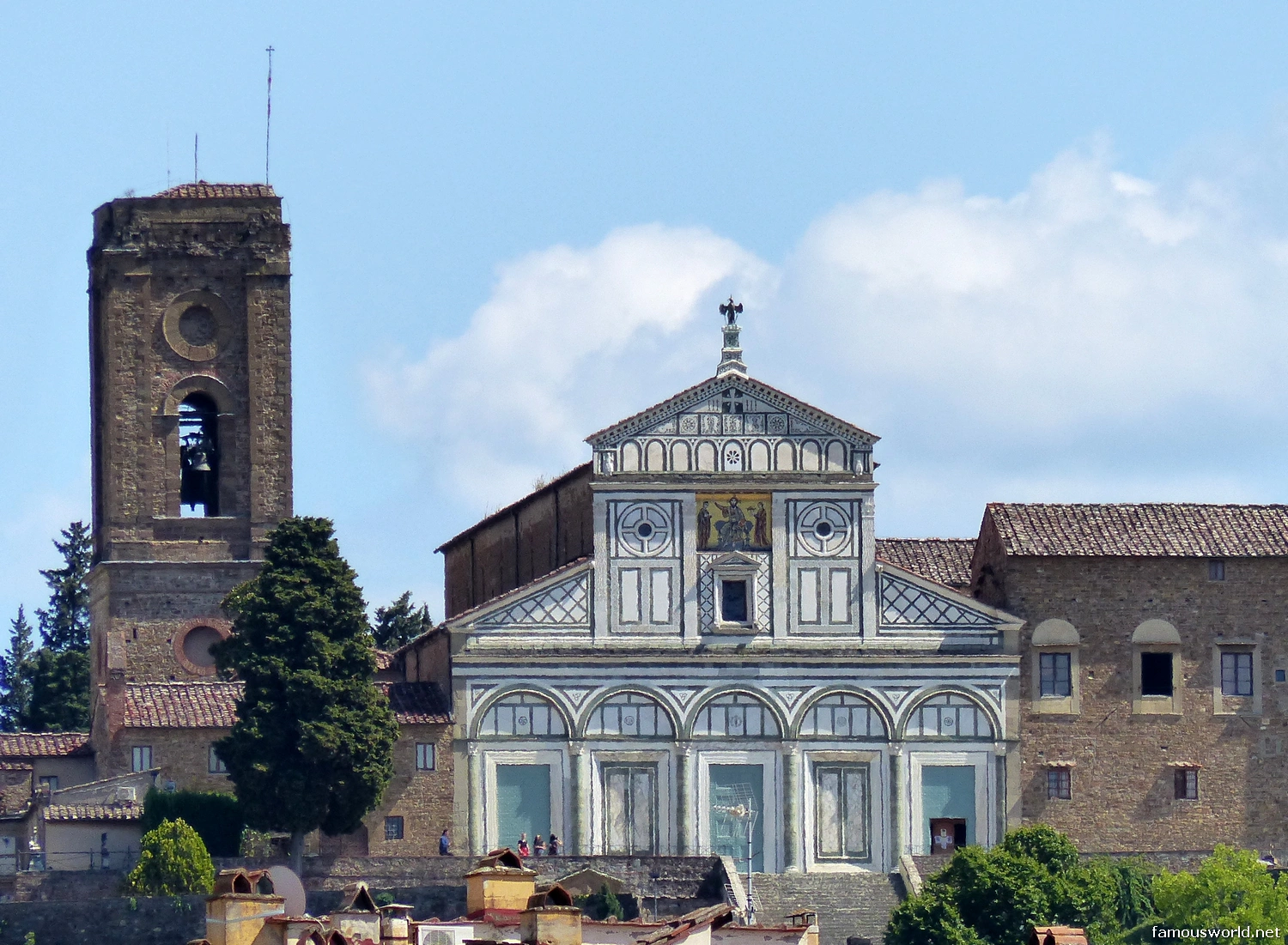

Perched high on a hill overlooking the Arno river and the sprawling cityscape of Florence, the Basilica of San Miniato al Monte is a breathtaking treasure of Italian art and a sanctuary of profound peace. Often described as one of the finest Romanesque structures in Tuscany and one of the most beautiful churches in Italy, it stands as a sublime example of Florentine architecture from before the Renaissance. Its magnificent, geometrically patterned marble facade gleams above the city, a beacon of history and faith. A visit involves a scenic climb that rewards visitors not only with a masterpiece of medieval art but also with one of the most stunning panoramic views of Florence available, far from the crowds of the city center.
Listen to an introduction about San Miniato al Monte

Name and Location
- Name: Basilica di San Miniato al Monte (Basilica of Saint Minias on the Mountain).
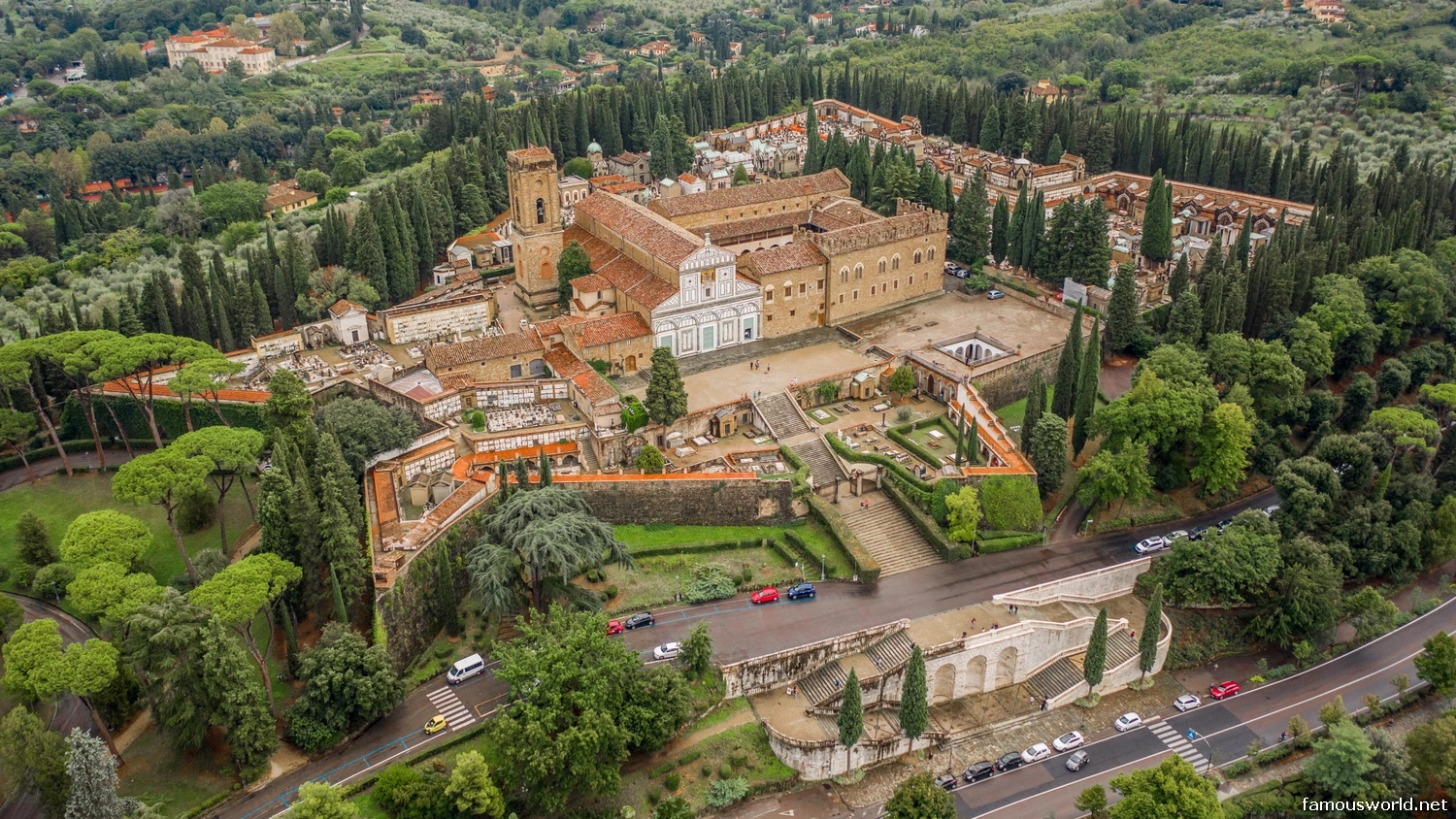
- Location: On one of the highest points in Florence, Tuscany, just above the famous Piazzale Michelangelo.
How to Get There
Reaching the basilica is part of the experience, as it requires an ascent.
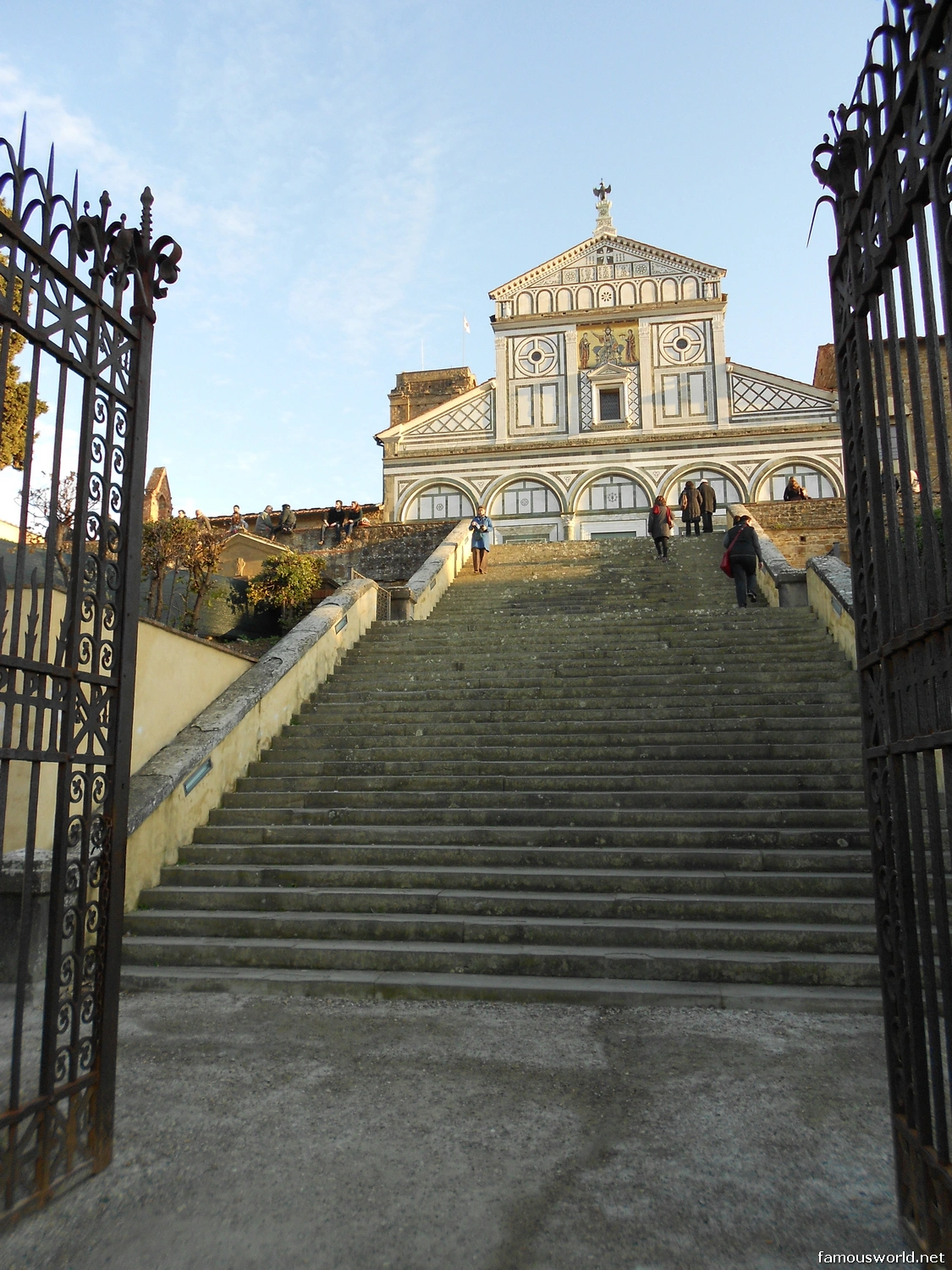
- By Foot: The most rewarding method is to walk. From the banks of the Arno in the Oltrarno district, a beautiful and historic path with stairs winds up the hill, leading to Piazzale Michelangelo and then further up to the church’s monumental staircase. The walk is steep but unforgettable.
- By Bus: For those preferring not to walk, city bus lines (specifically line 12 or 13 from the city center) make a stop at Piazzale Michelangelo, just a short walk below the church.
- By Car/Taxi: A taxi can take you directly to the base of the church’s staircase, but private cars have limited access and parking is difficult.
Landscape and Architecture
The church’s setting and design are inseparable, each enhancing the other.
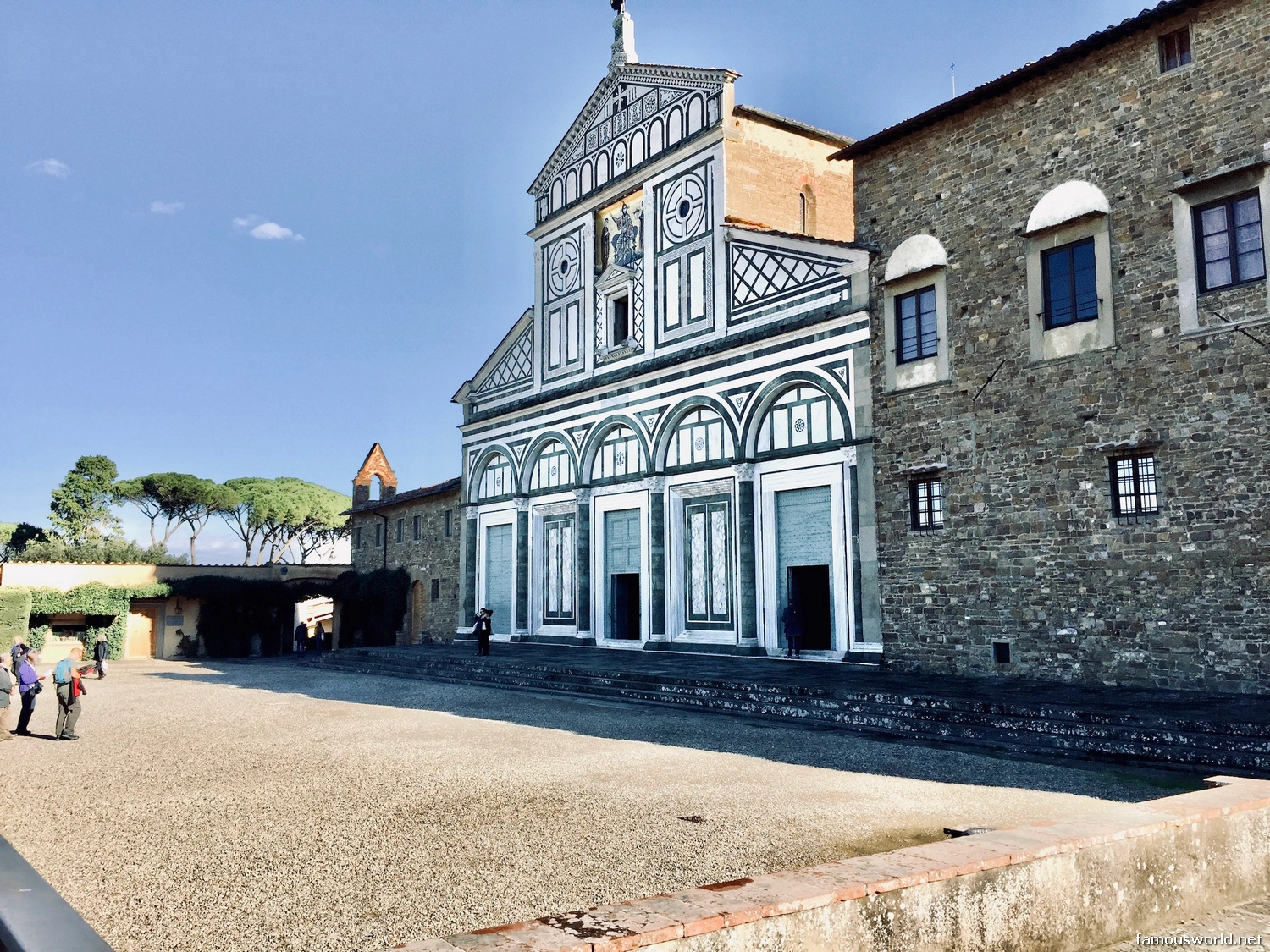
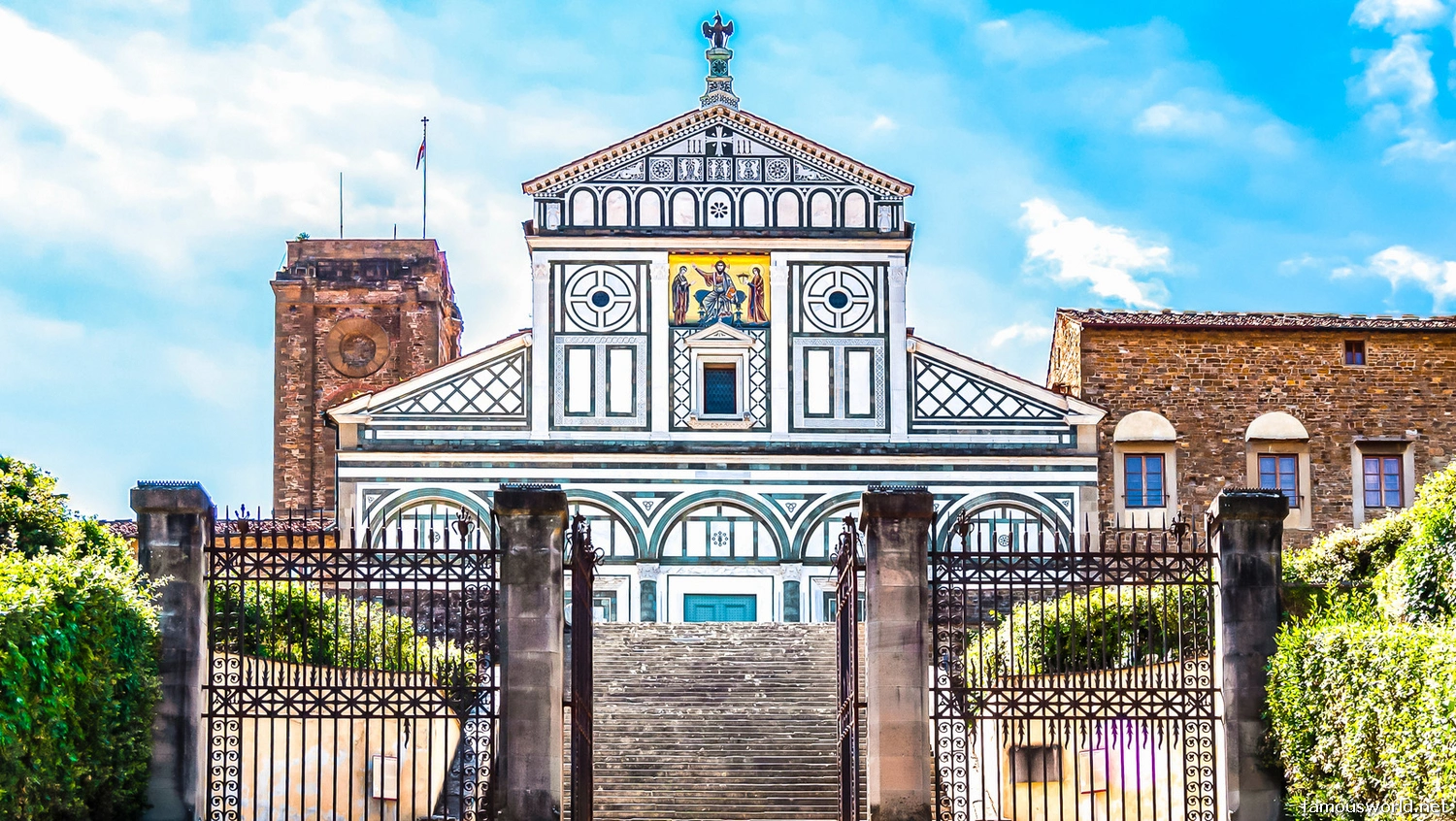
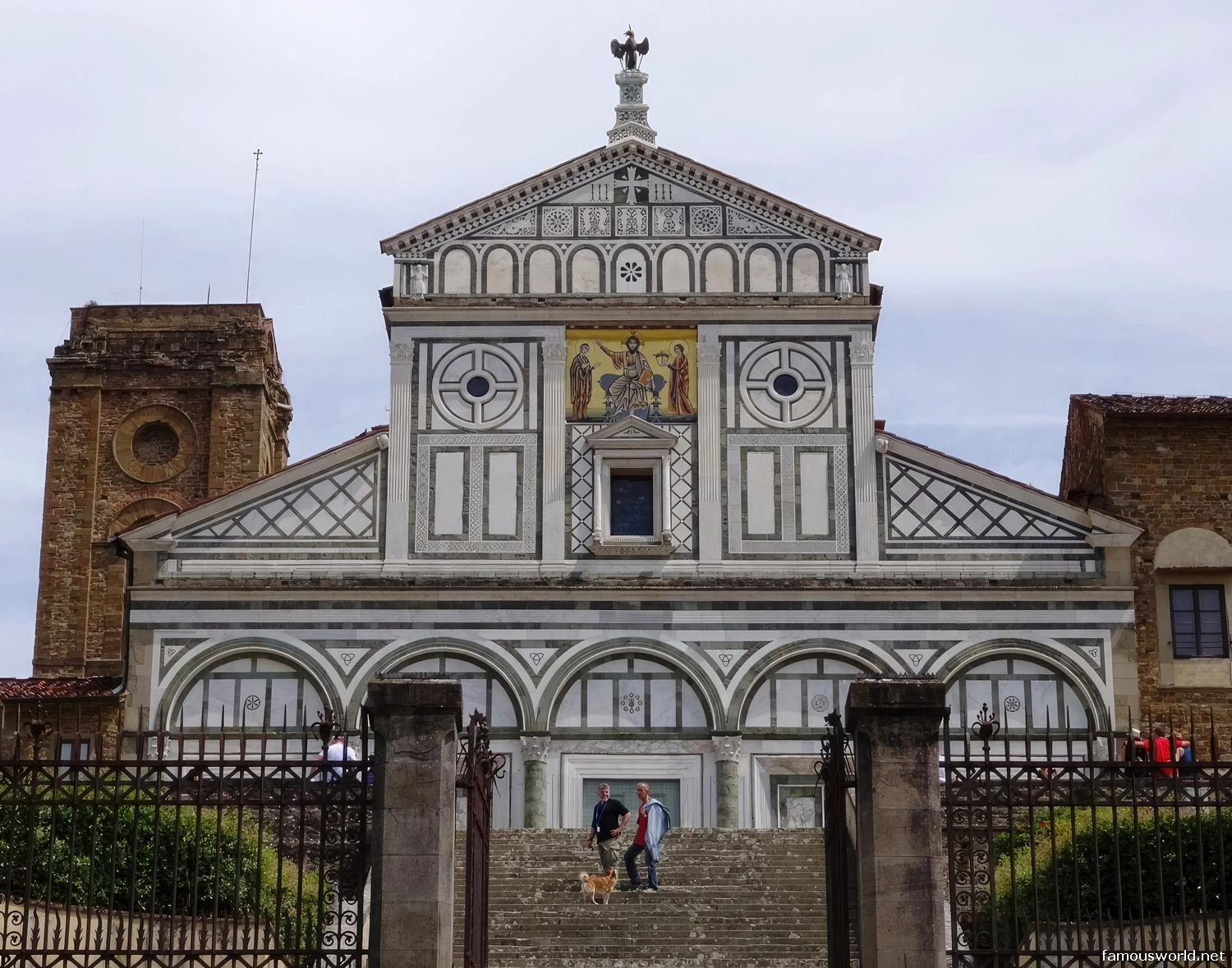
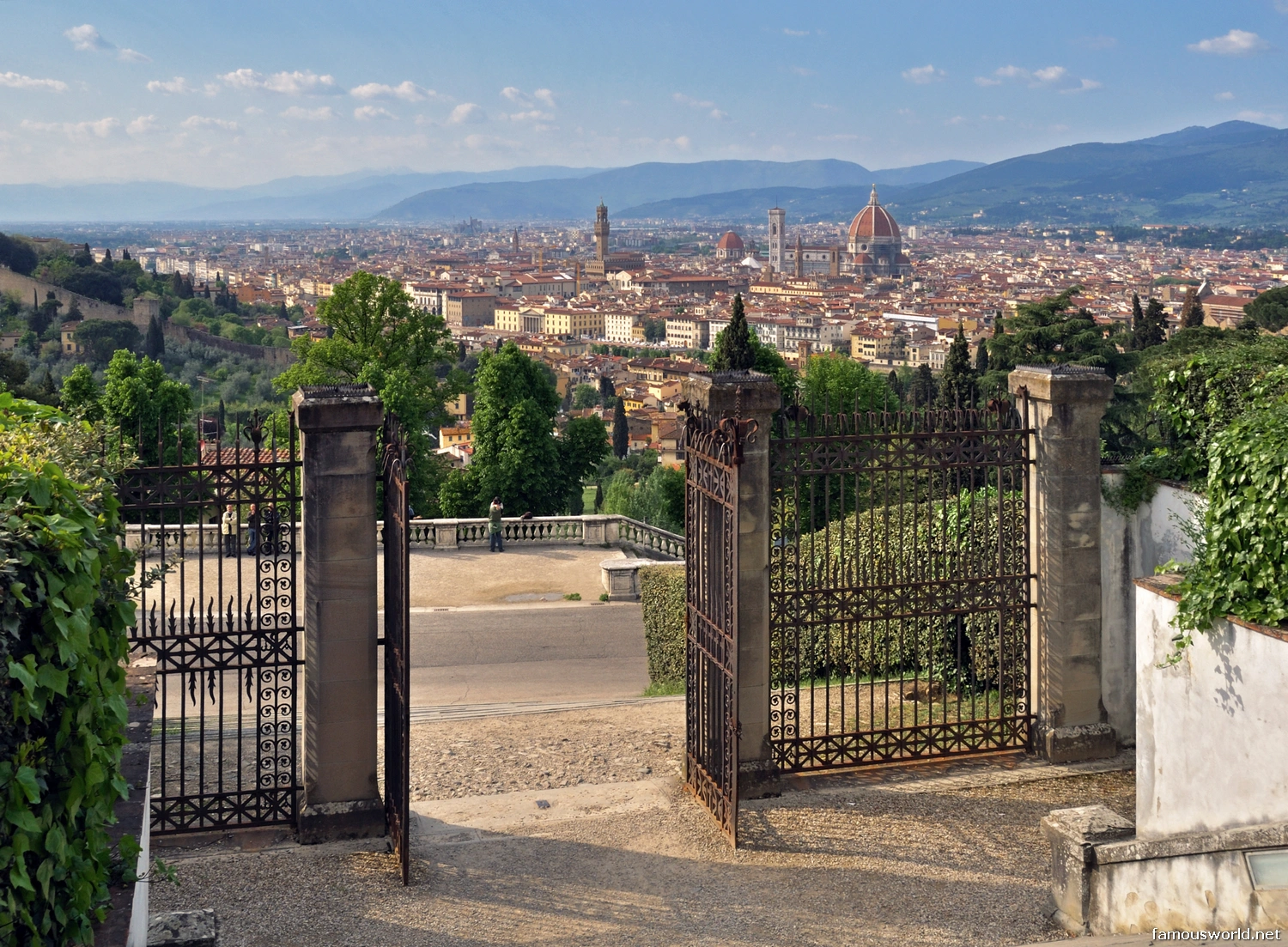
- Commanding Hilltop Location: The basilica is intentionally set apart from the city on a scenic hill, offering unparalleled, sweeping views of Florence’s entire historic center, including the Duomo, Palazzo Vecchio, and the Ponte Vecchio. It is fronted by a monumental 19th-century staircase.
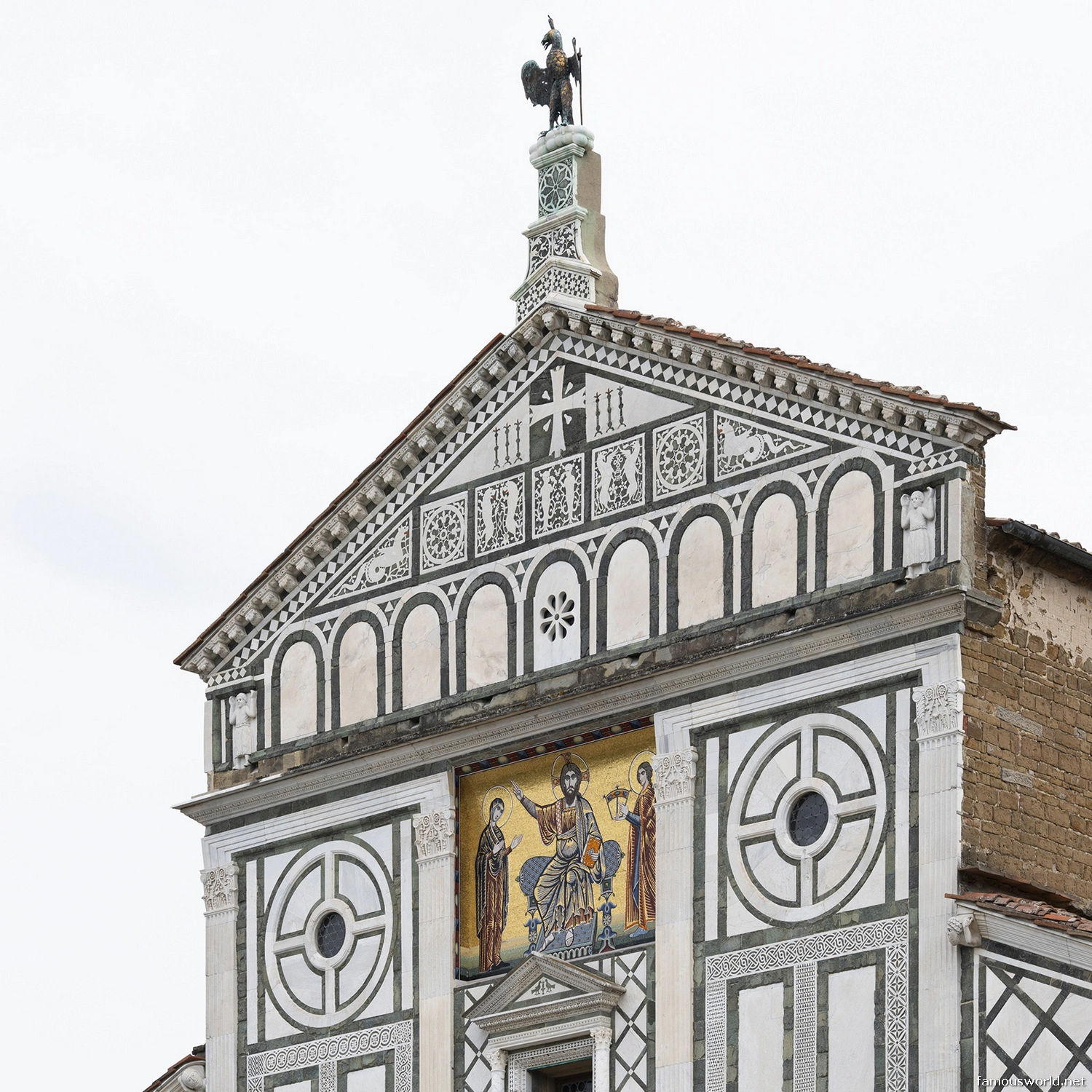
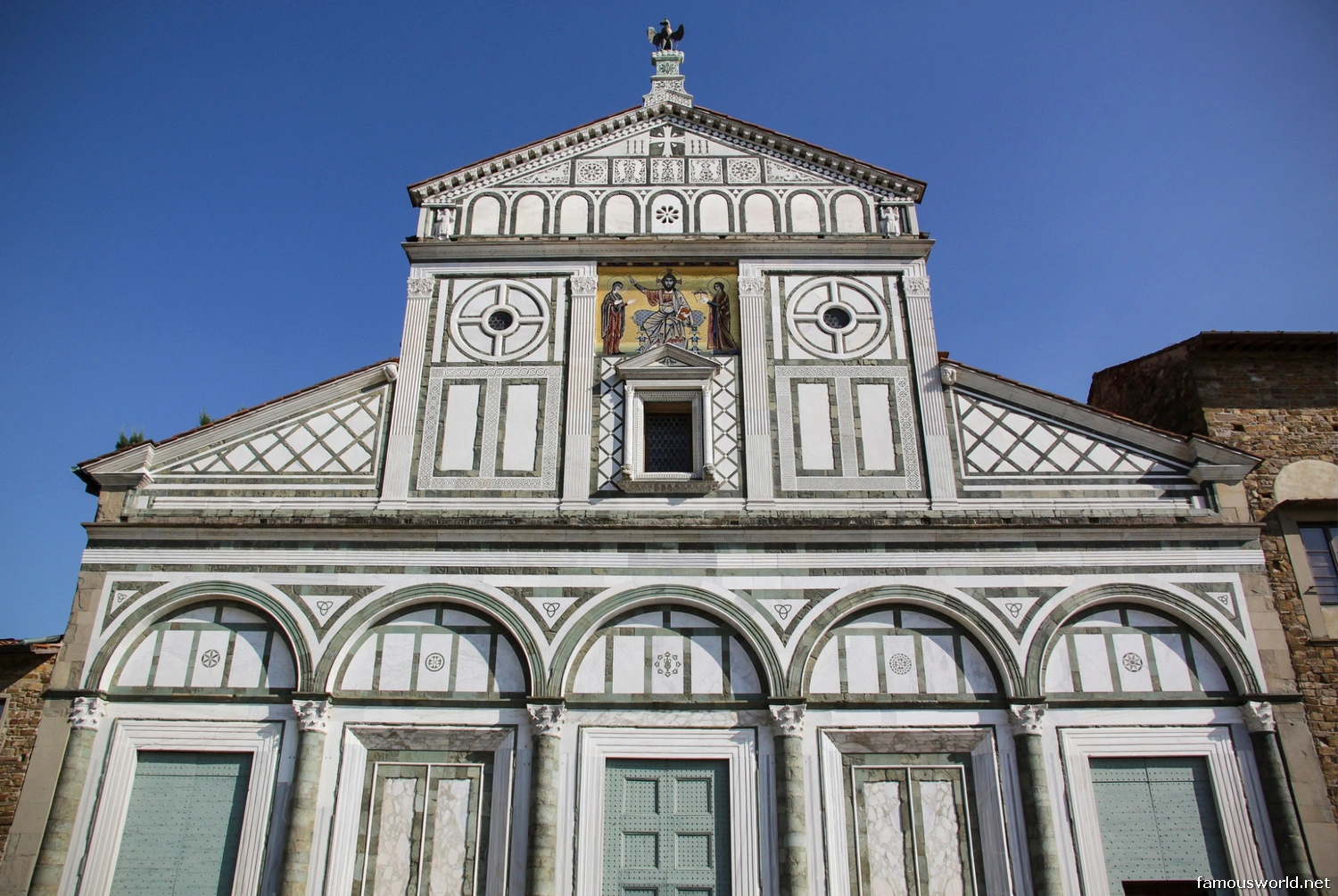
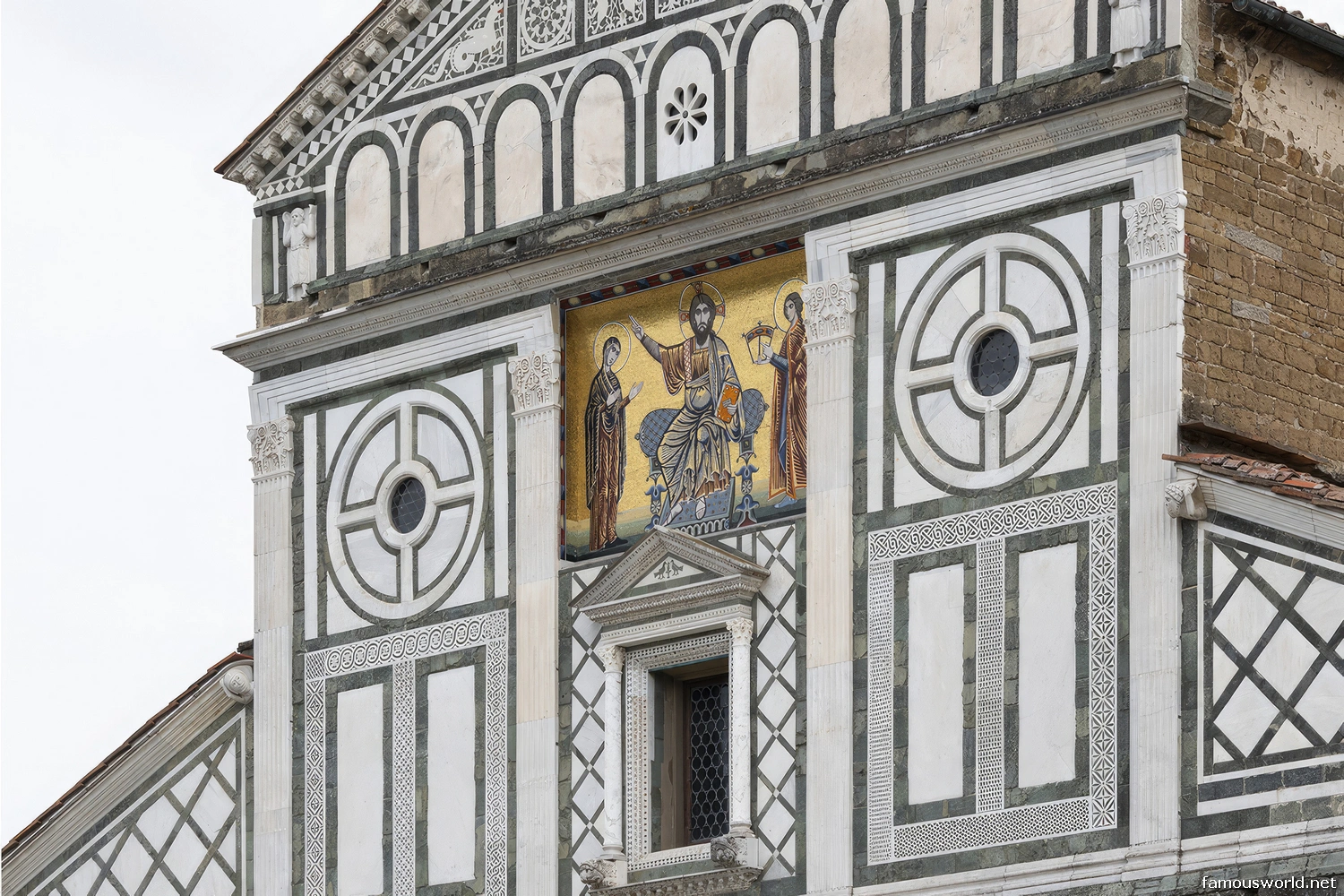
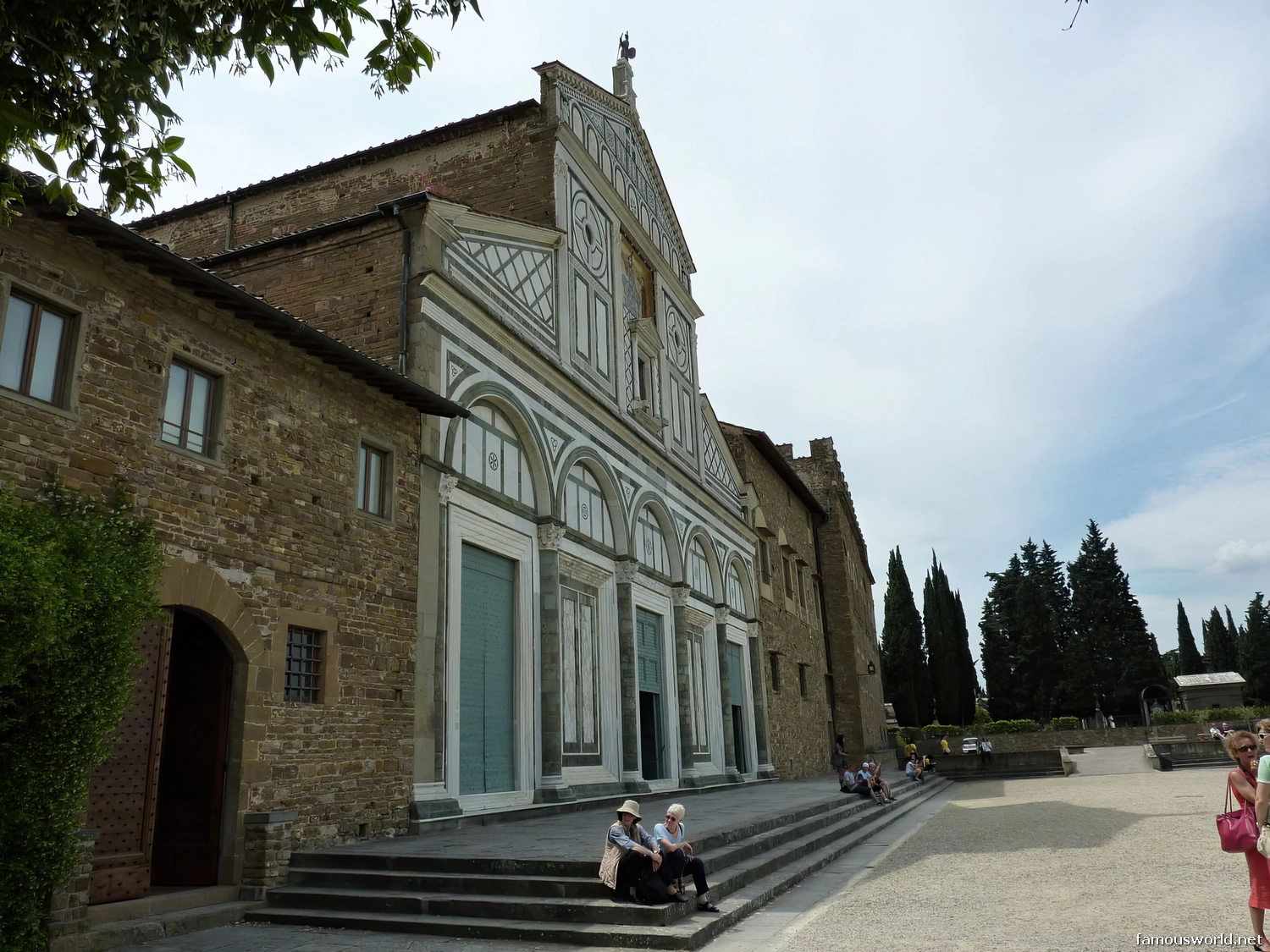
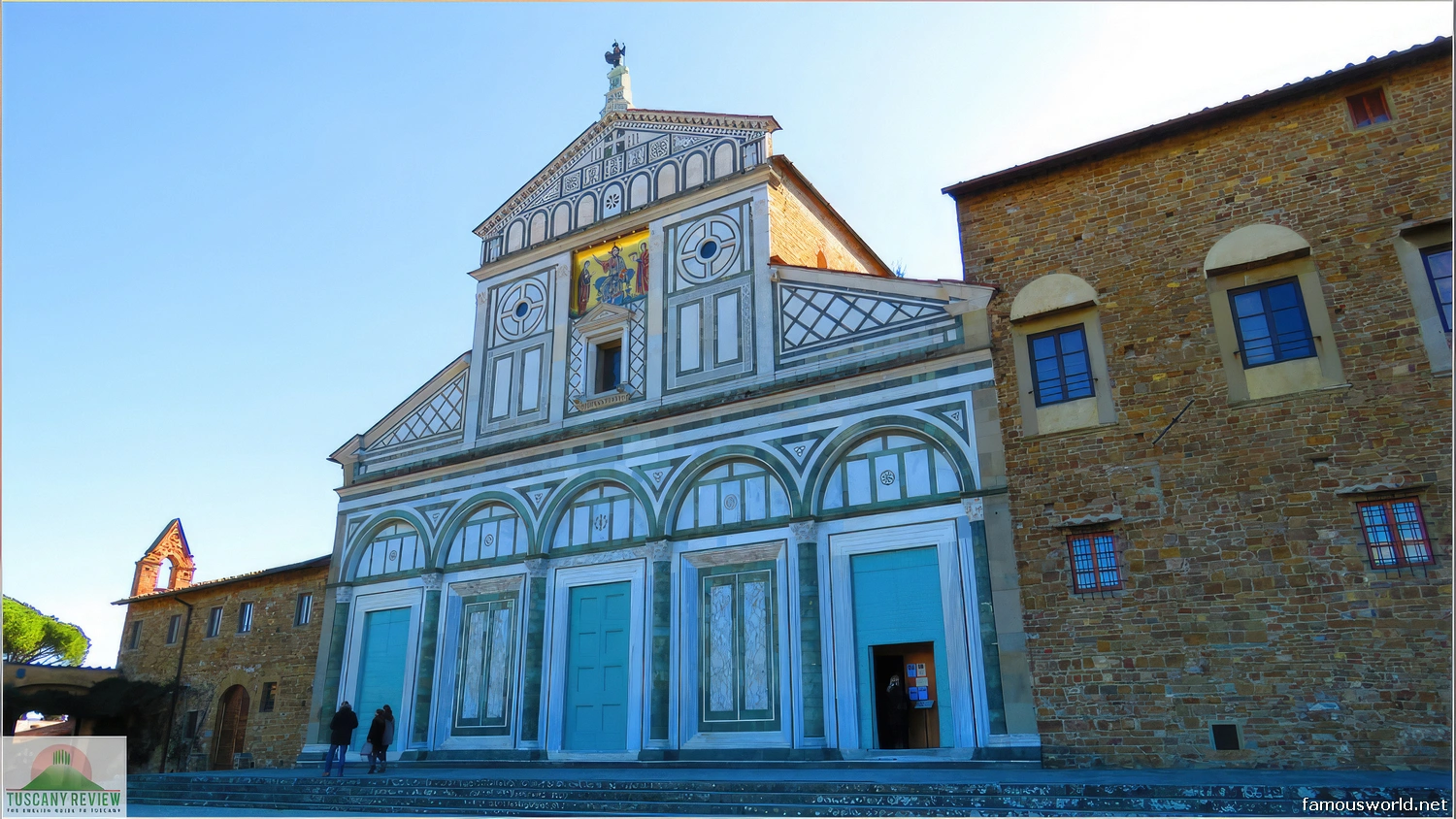
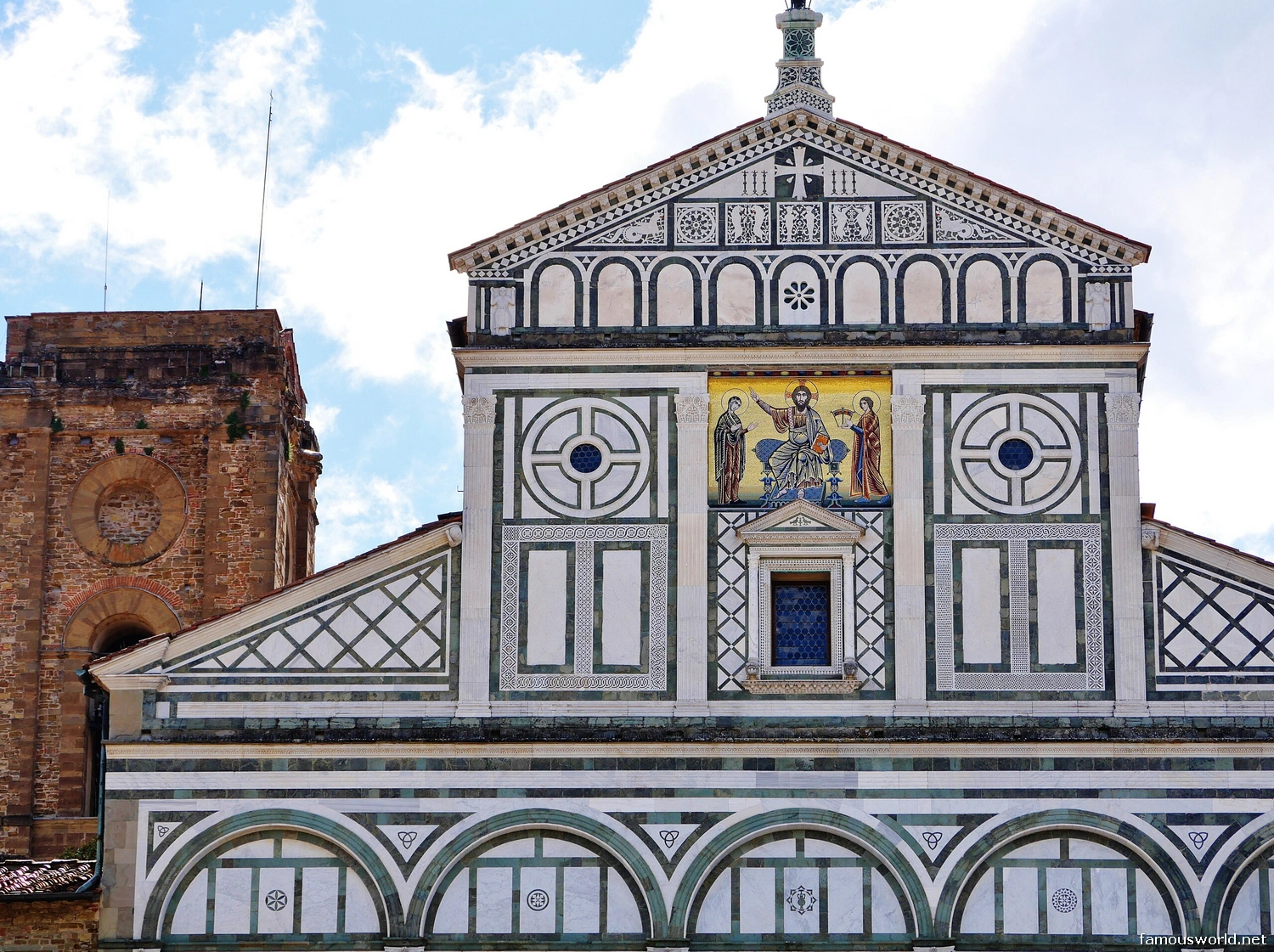
- Tuscan Romanesque Facade: The facade is the church’s most iconic feature and a pinnacle of the Tuscan Romanesque style. It is decorated with intricate geometric patterns of green and white marble. The upper section features a stunning 13th-century mosaic depicting Christ between the Virgin and St. Minias.
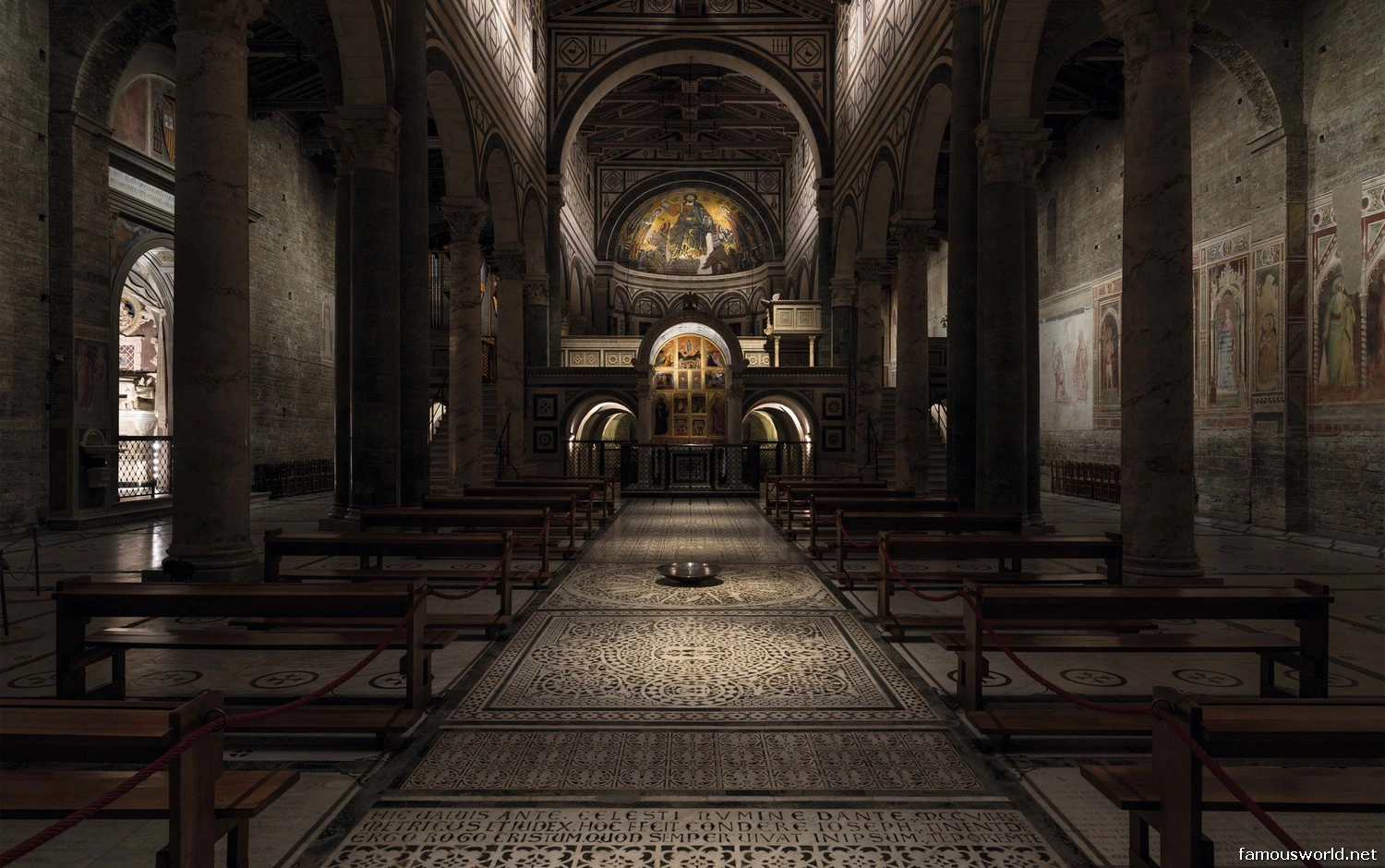
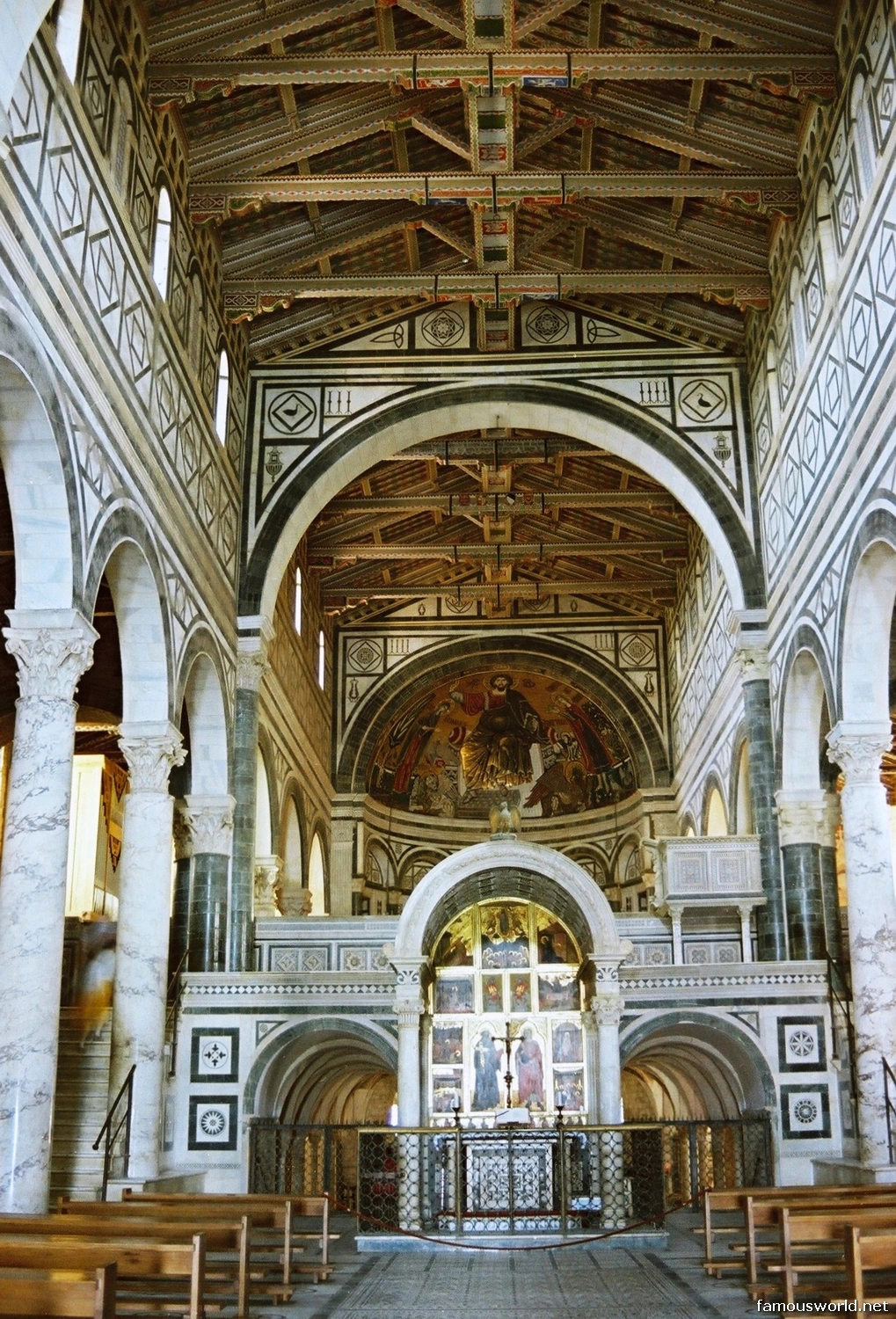
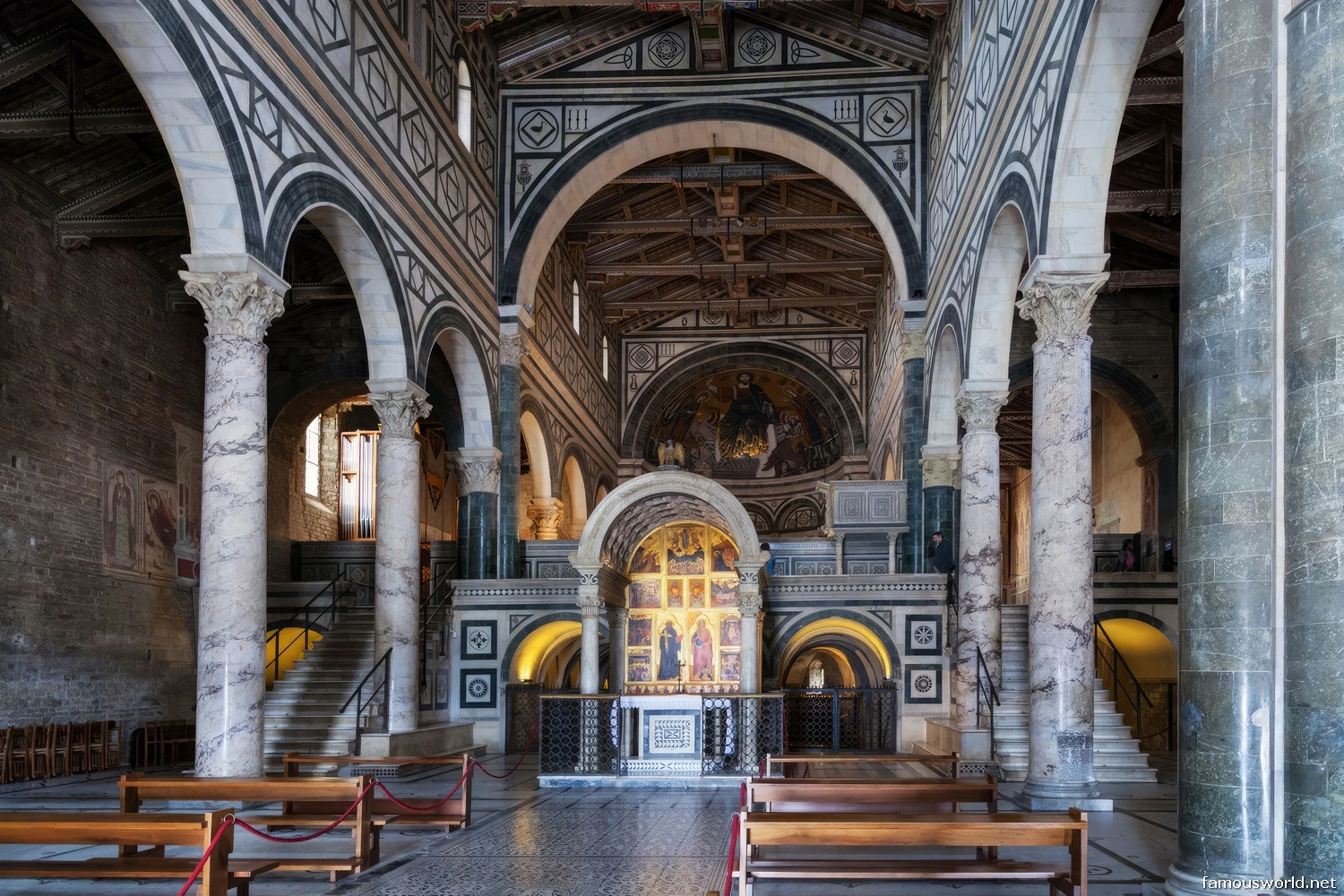
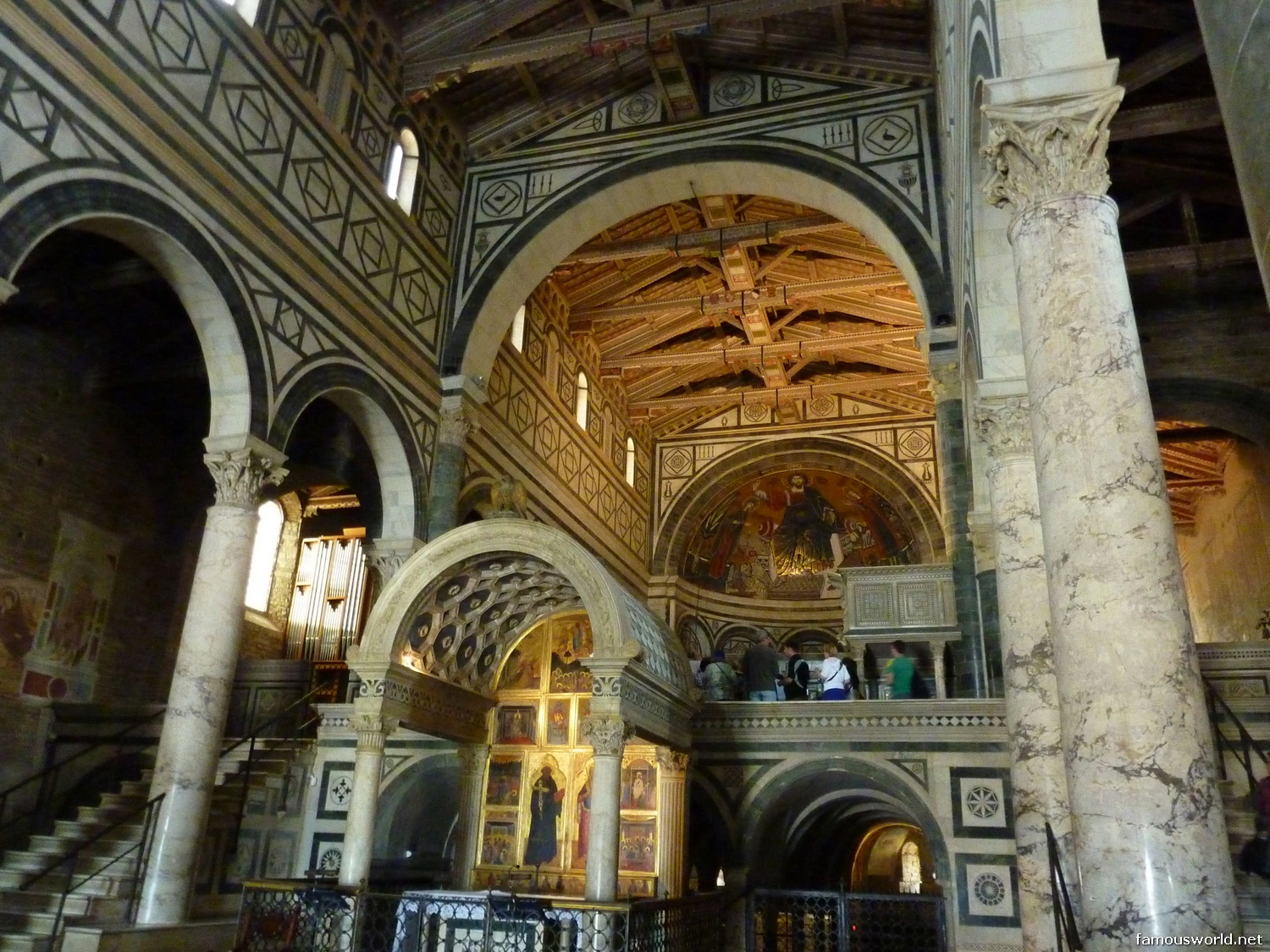
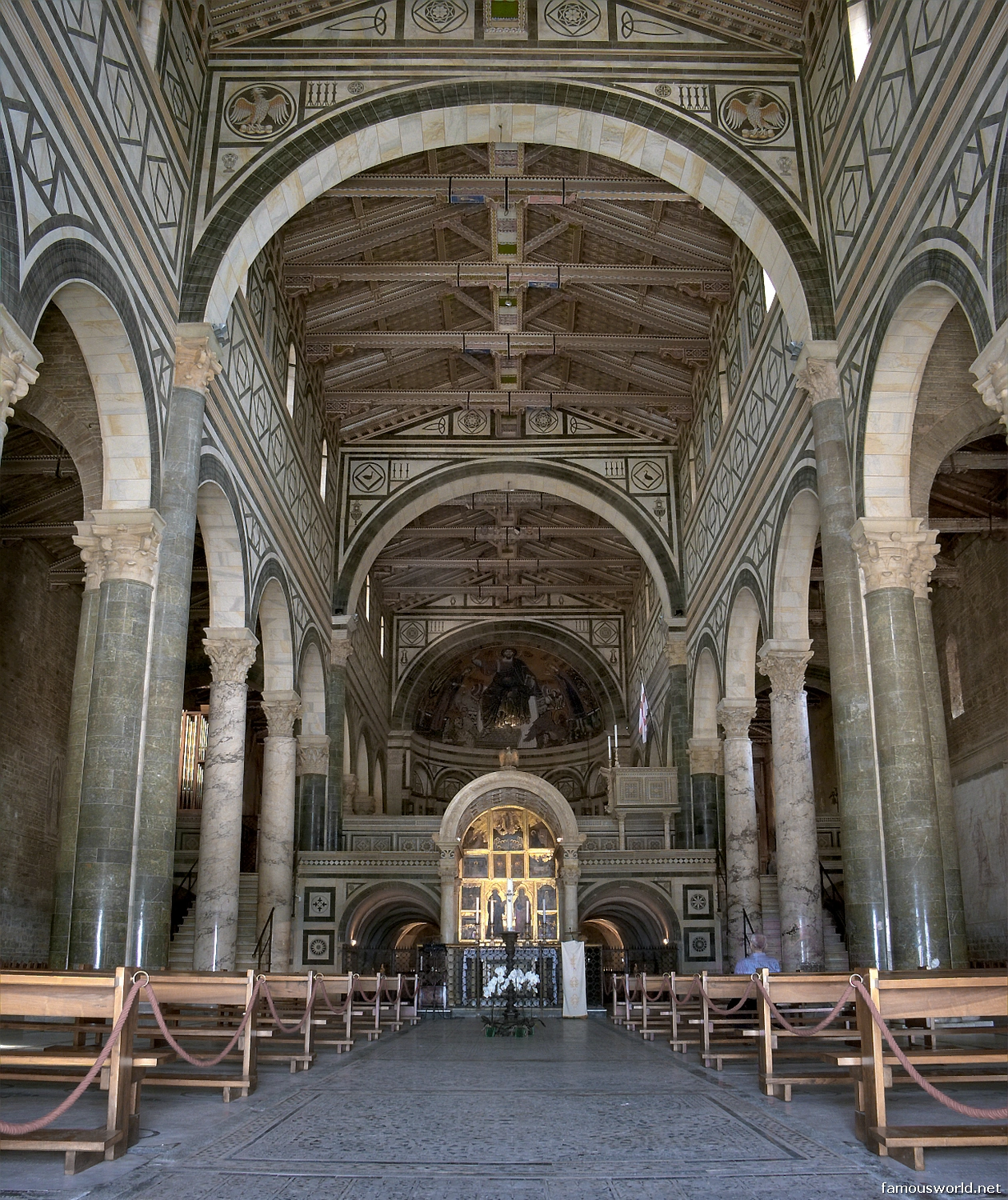
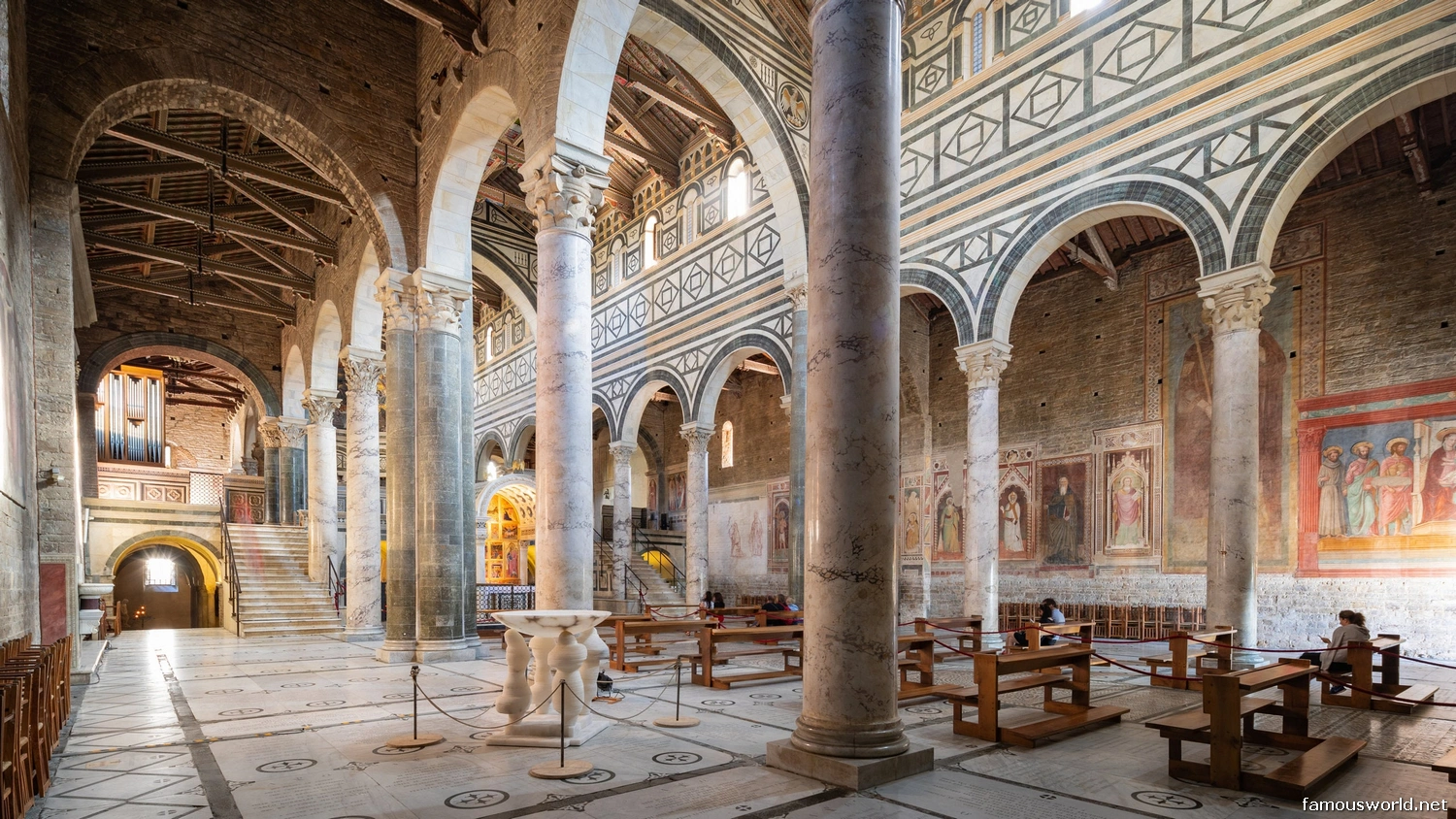
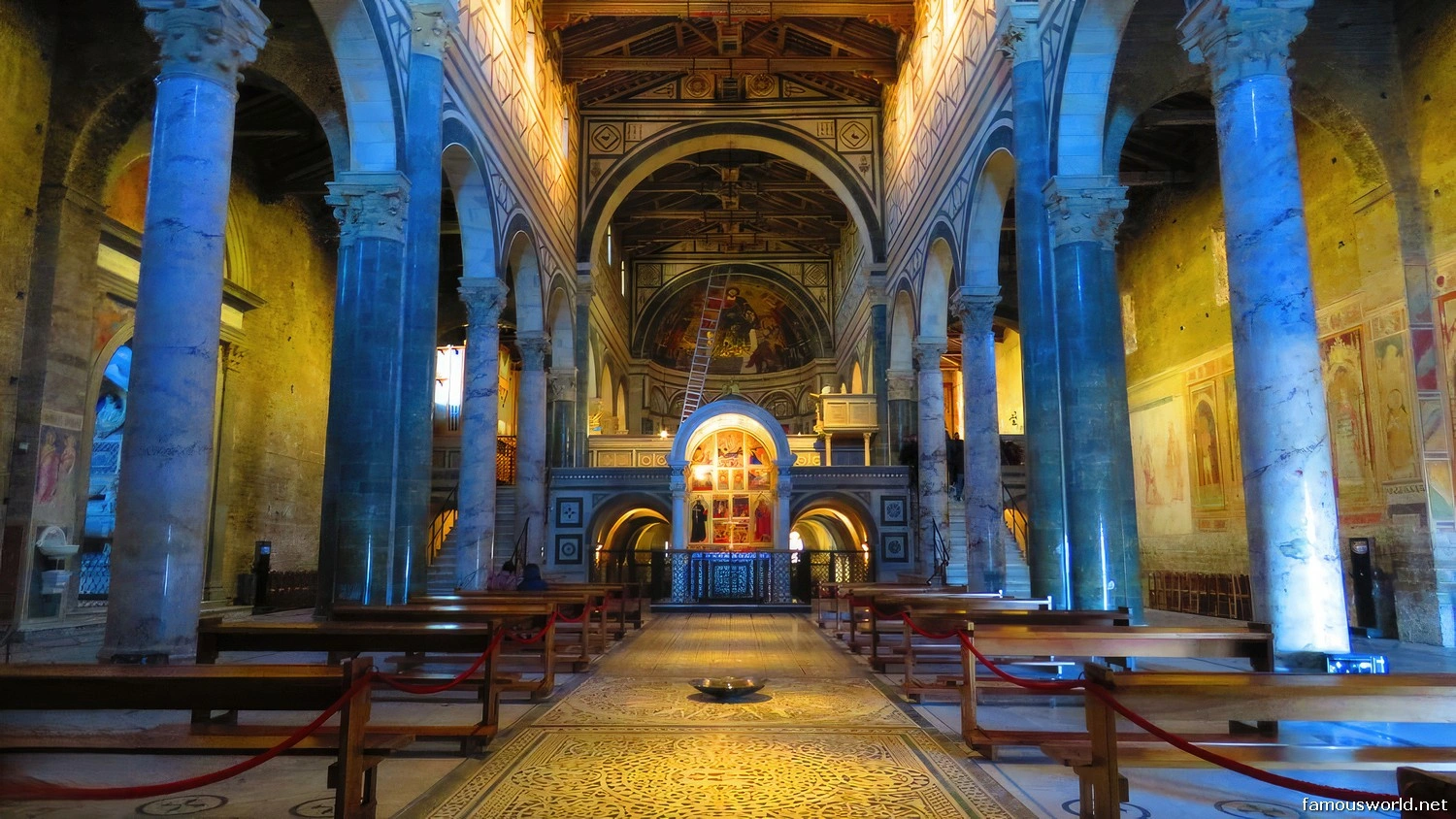
- Raised Choir and Crypt: The interior has an unusual structure, with the main altar and presbytery area significantly raised on a platform above a large, vaulted crypt below. This crypt is ancient and contains the relics of St. Minias himself.
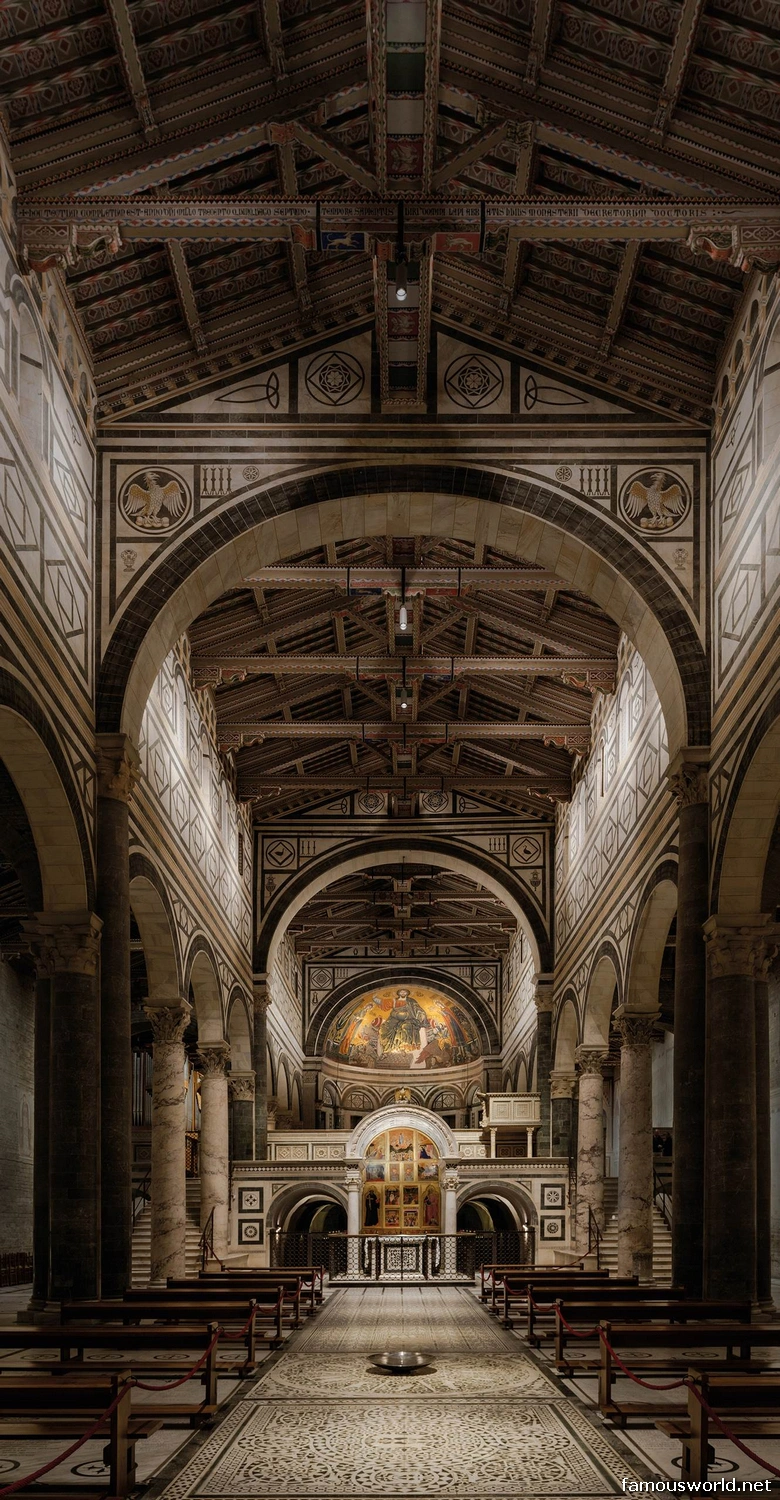
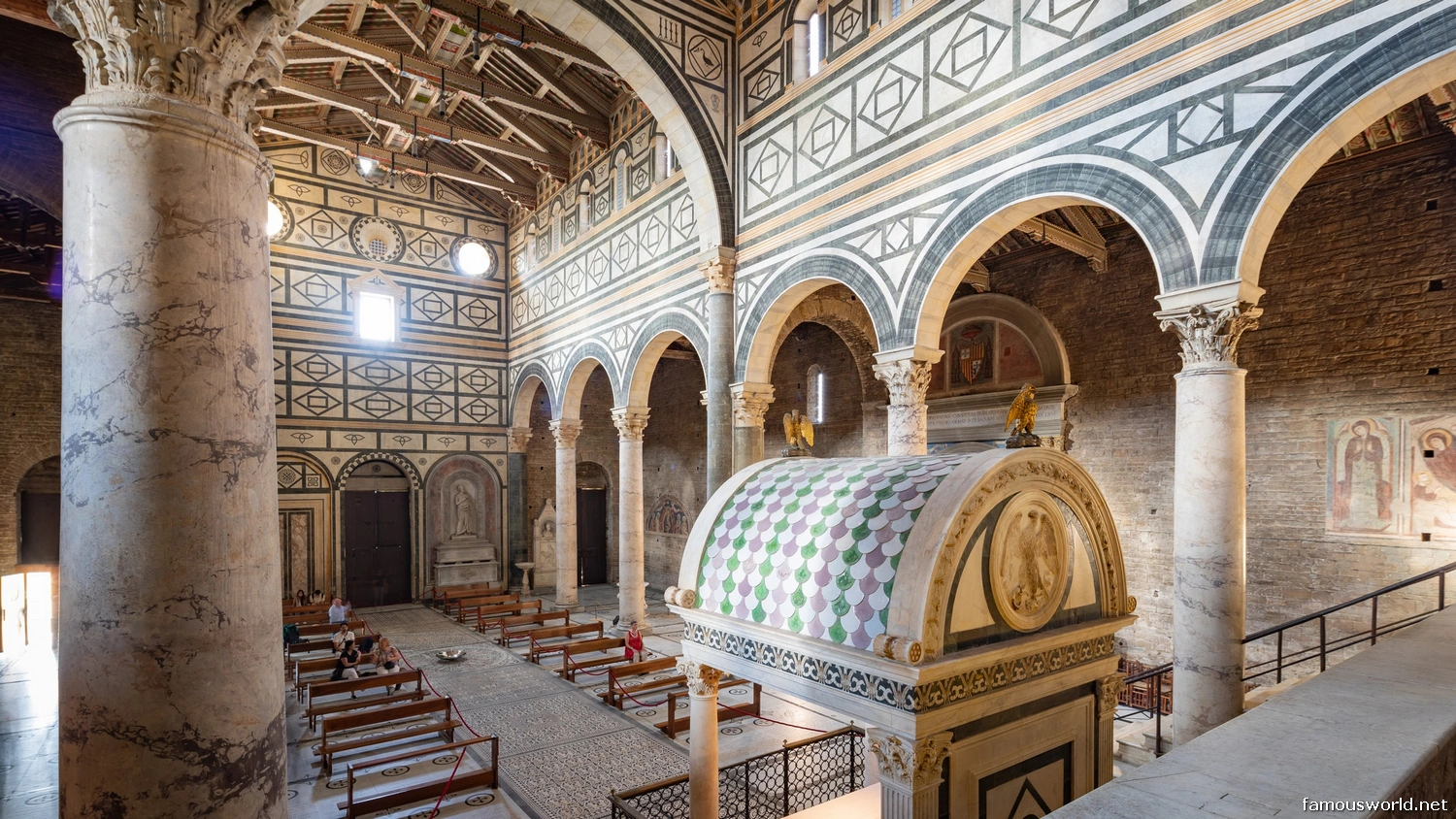
- Interior Details: Inside, the church feels ancient and spiritual. It features a magnificent inlaid marble floor with zodiac motifs, an open timber roof, and a stunning free-standing Renaissance chapel, the Cappella del Crocifisso, designed by Michelozzo in the center of the nave.
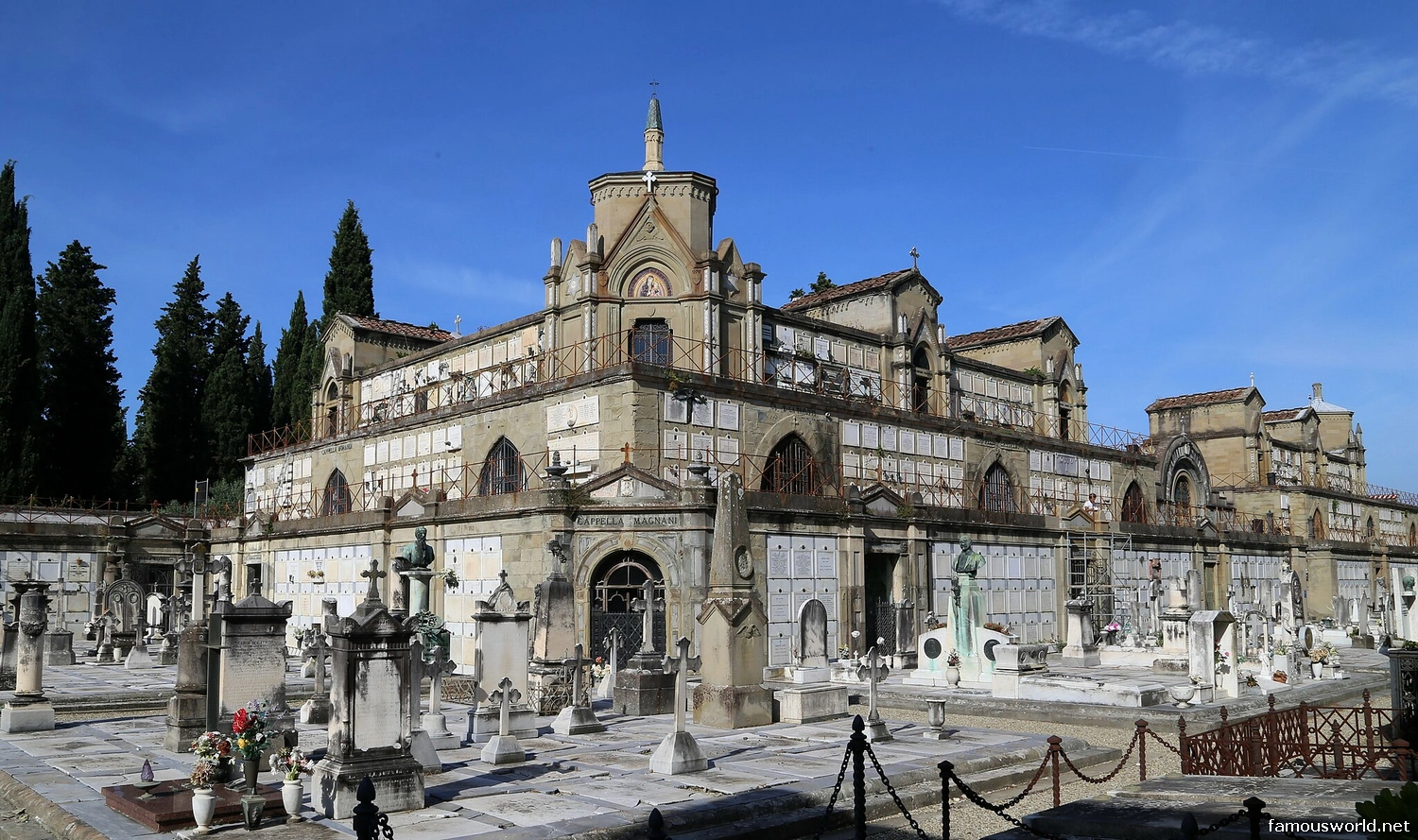
- Cimitero delle Porte Sante: Adjacent to the basilica is a beautiful and historic monumental cemetery, the “Cemetery of the Holy Doors,” which contains the tombs of many notable Florentines.
What Makes It Famous
San Miniato al Monte is renowned for its architectural perfection, its spiritual atmosphere, and its incredible setting.
- Architectural Icon: It is considered one of the most accomplished examples of Tuscan Romanesque architecture in existence, influencing architects for centuries.
- The View: The panoramic viewpoint from its churchyard is one of the most celebrated and photographed views of Florence.
- Gregorian Chants: The church is attached to an active Olivetan monastery. Visitors can often hear the monks performing Gregorian chants during vespers, adding to the deeply spiritual and authentic atmosphere.
- History and Legend: The church is built on the site where Florence’s first Christian martyr, Saint Minias, was said to have been executed and later buried.
Differences from Other Wonders (vs. Pisa Cathedral)
While both are masterpieces of Italian Romanesque architecture, their settings and styles create vastly different experiences.
- Environment (Hilltop Sanctuary vs. Ceremonial Flatland): San Miniato sits in serene isolation on a dominant hill, offering a panoramic overlook of a city. Pisa Cathedral stands on a vast, flat, manicured lawn as the centerpiece of a self-contained architectural complex.
- Style (Tuscan Purity vs. Pisan Eclecticism): San Miniato is the quintessential example of the pure Tuscan Romanesque style, defined by its clean, geometric green and white marble patterns. Pisa Cathedral exemplifies the more ornate Pisan Romanesque style, which incorporates a wider range of Byzantine and Islamic influences from its maritime trade connections.
- Core Story (Martyr’s Shrine vs. Republic’s Trophy): San Miniato’s story is rooted in the veneration of a single saint and the patronage of a local guild. Pisa Cathedral was built as a monumental symbol of the Pisan Republic’s naval power and commercial wealth.
- Atmosphere (Contemplative and Intimate vs. Grand and Monumental): Due to its location away from the main tourist axis and its active monastery, San Miniato offers a more intimate, peaceful, and spiritual experience. Pisa Cathedral, as part of a world-famous tourist destination
Location on world map