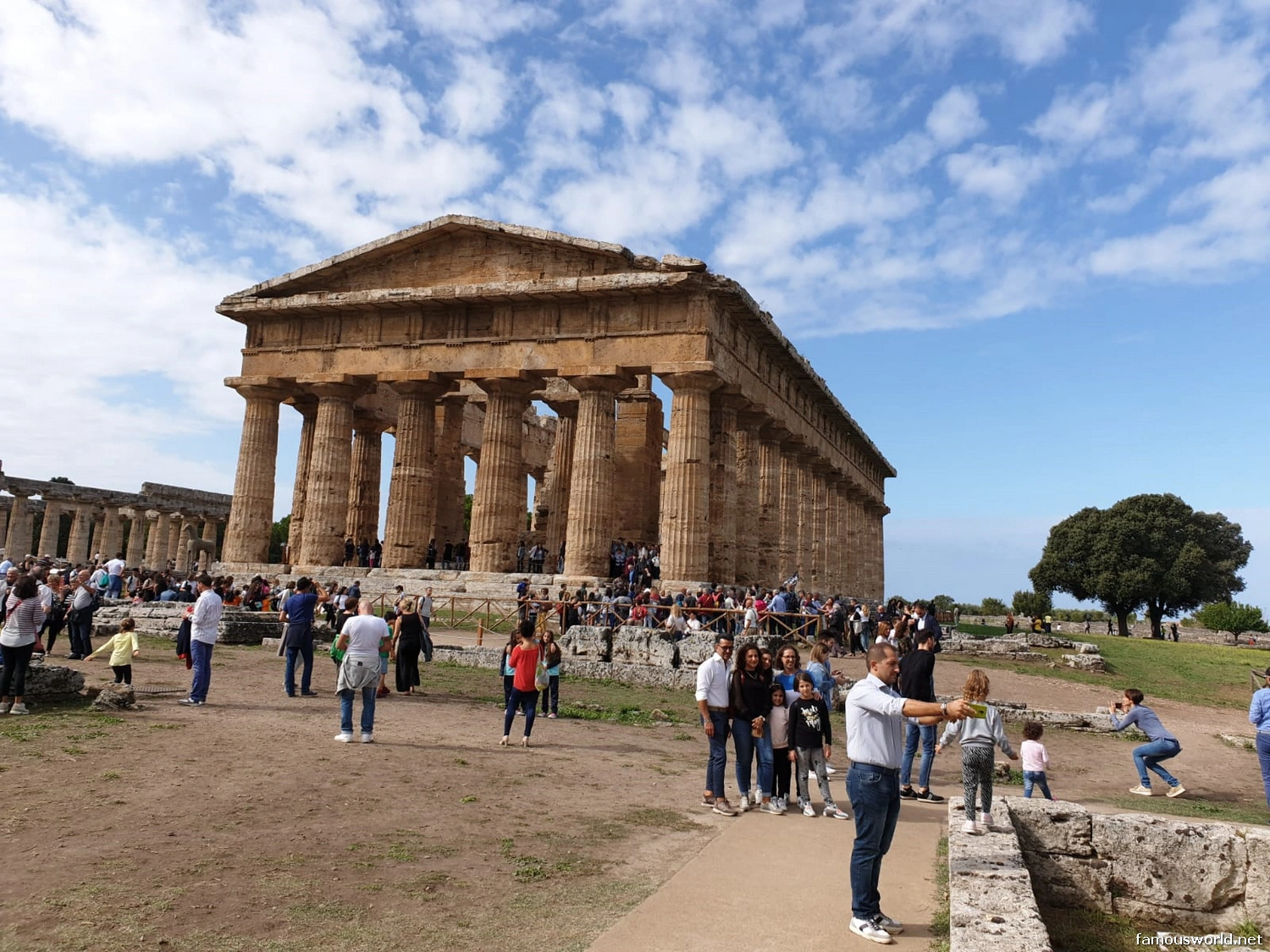

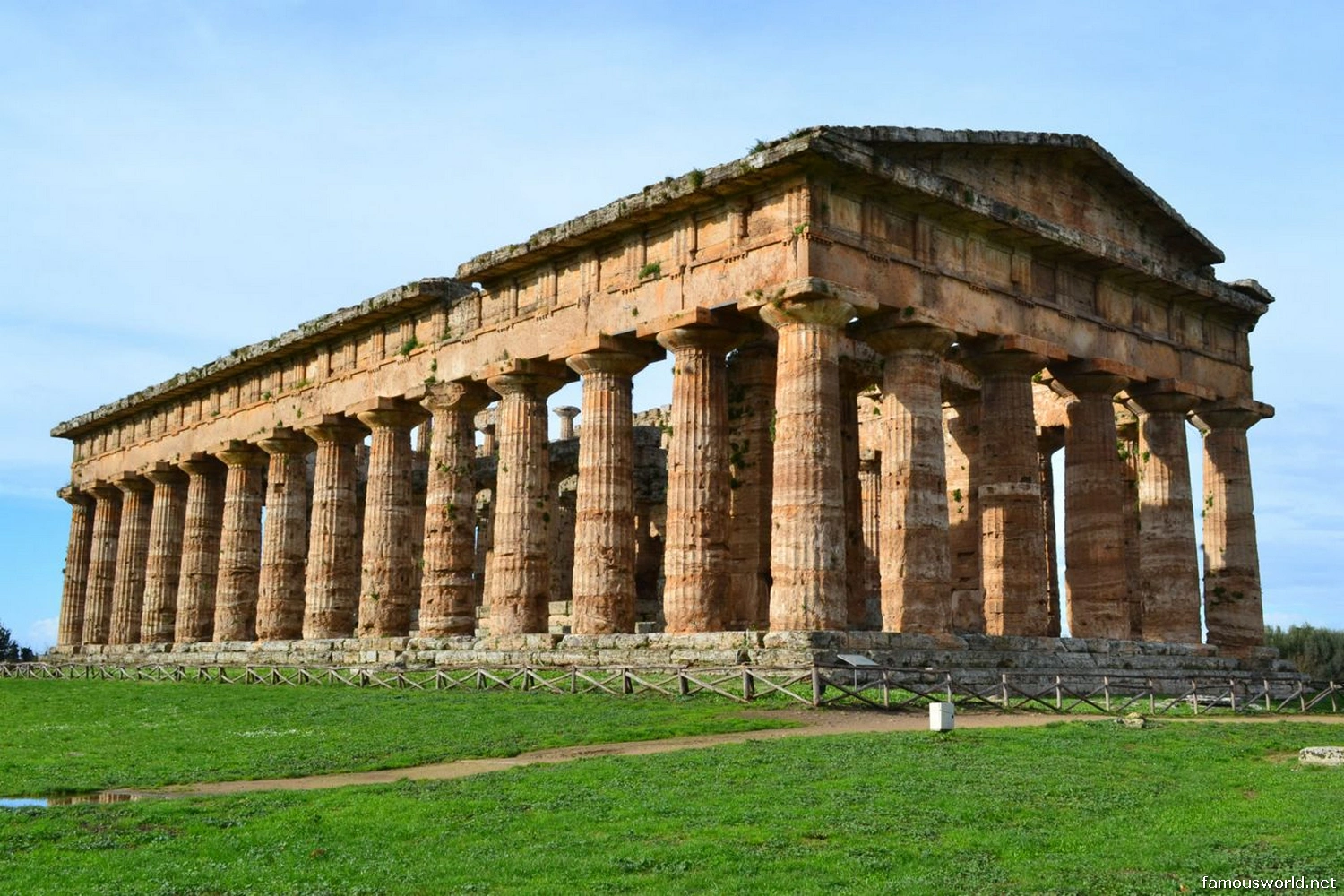
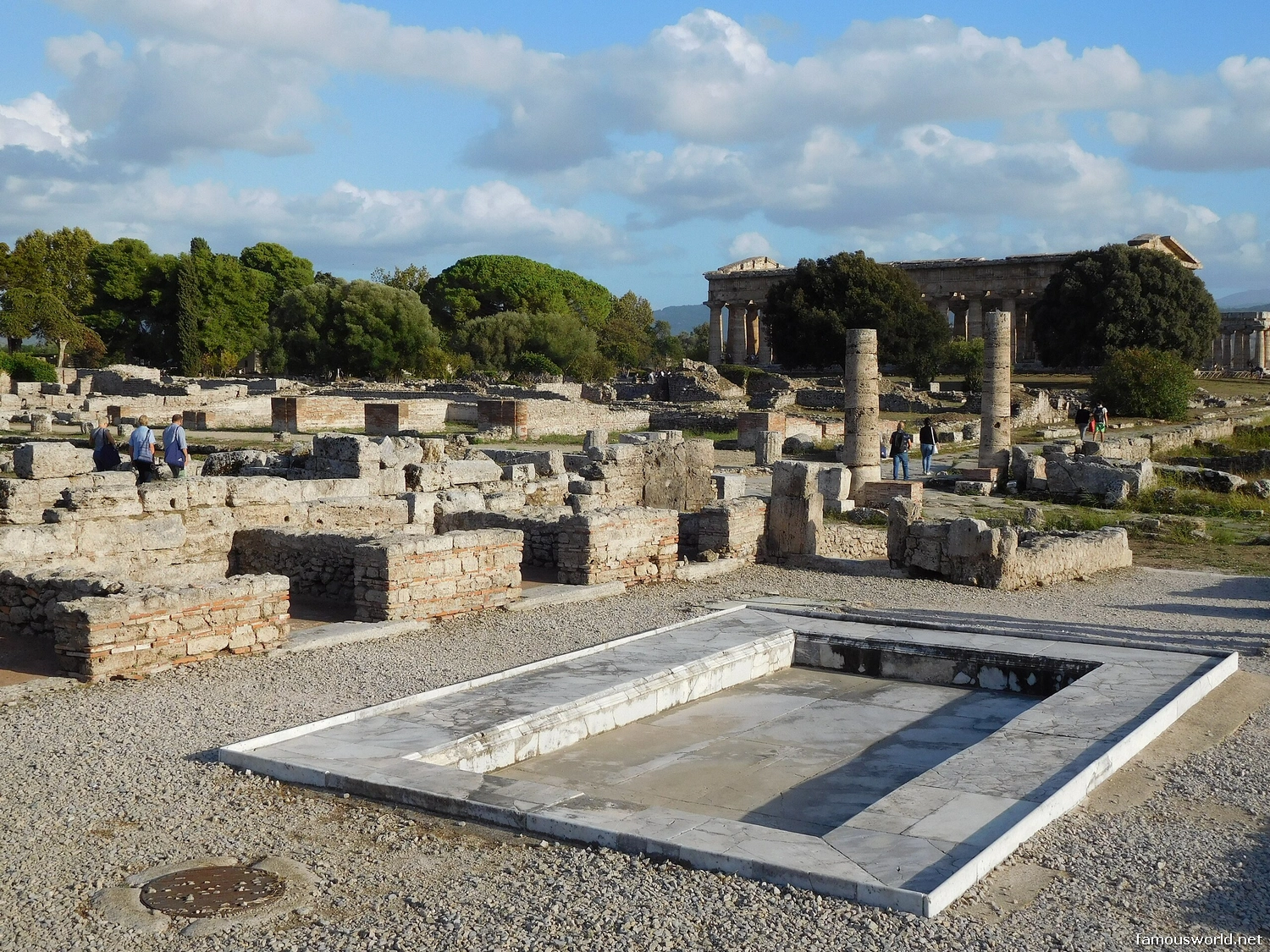
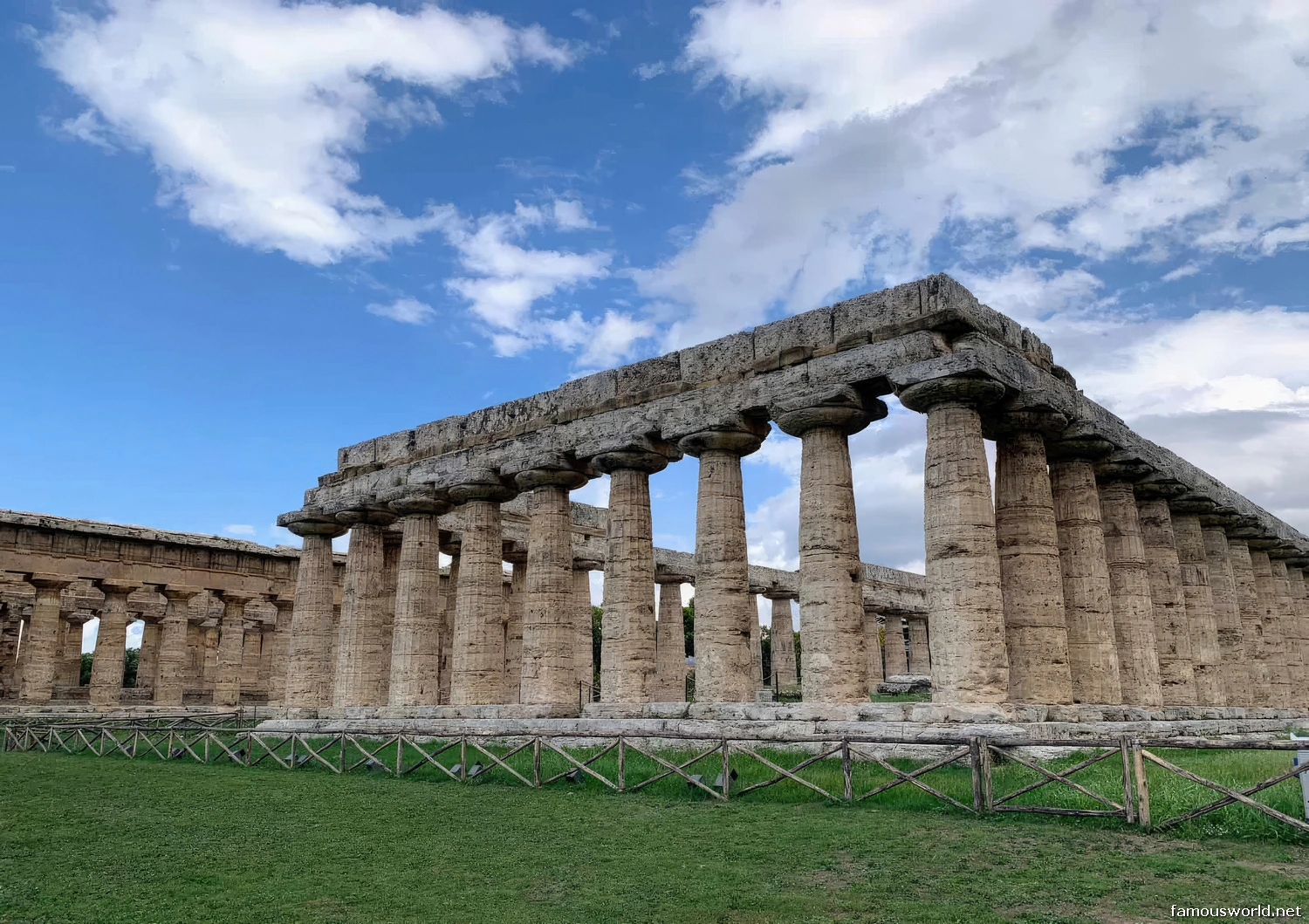
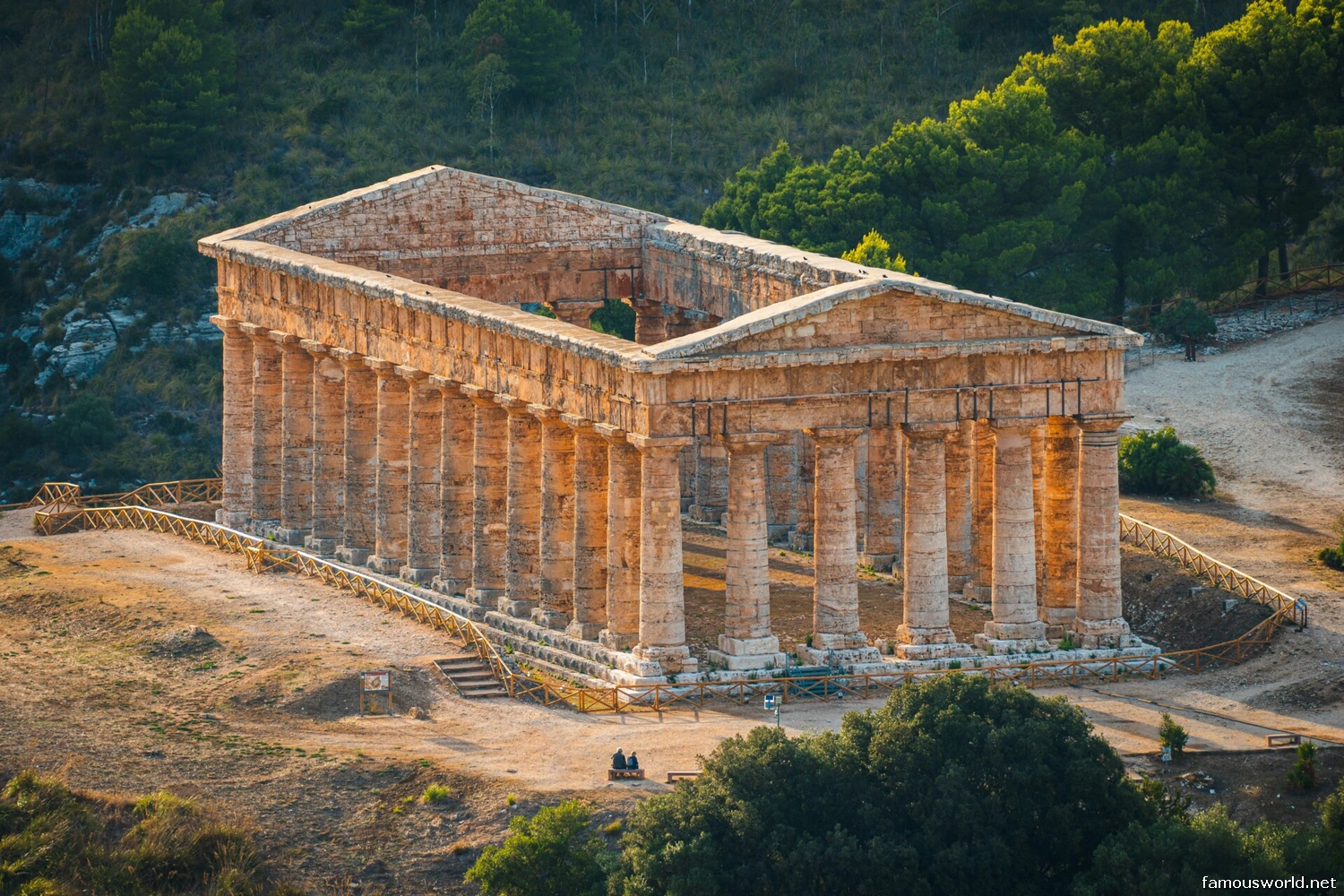
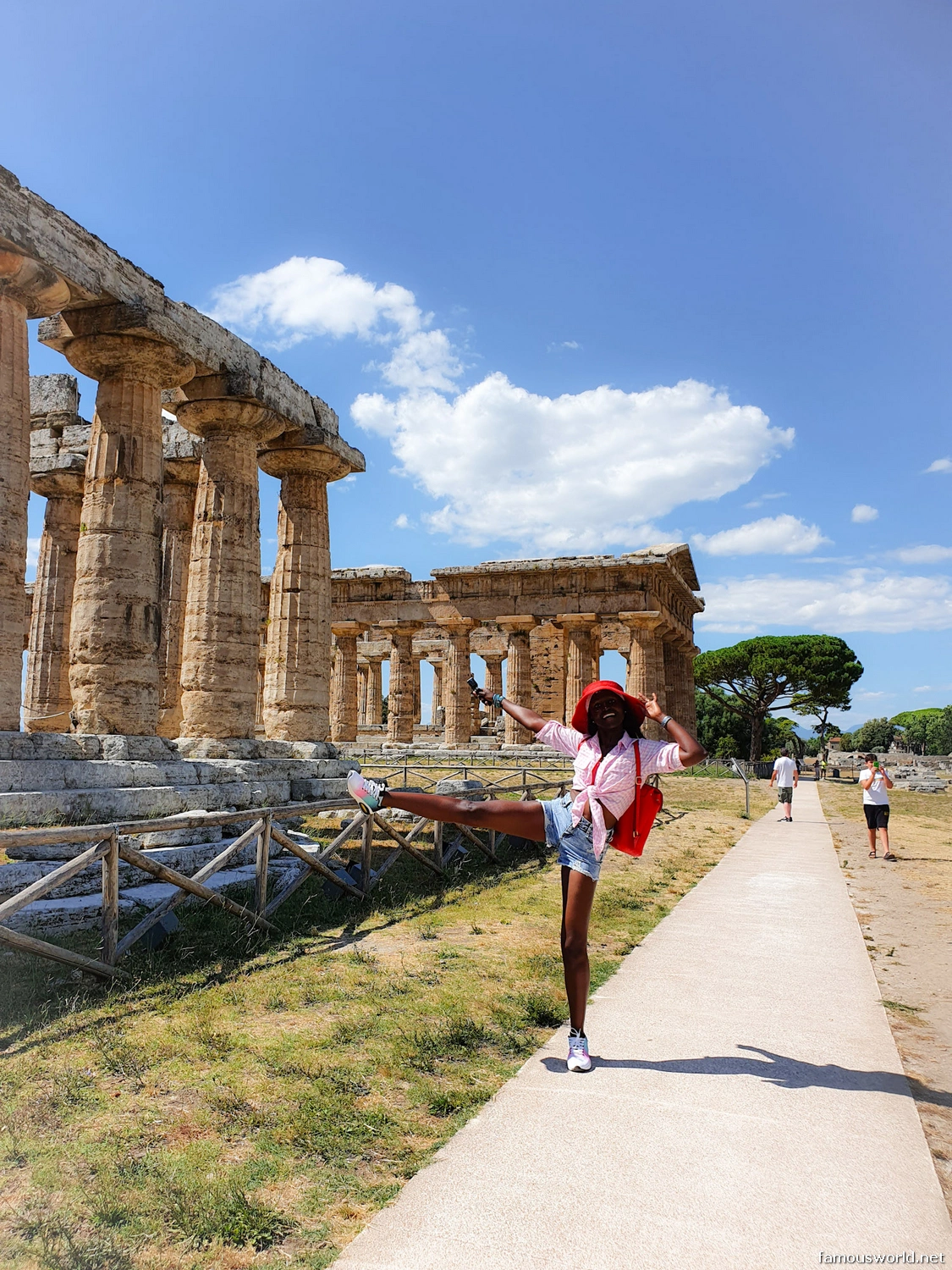
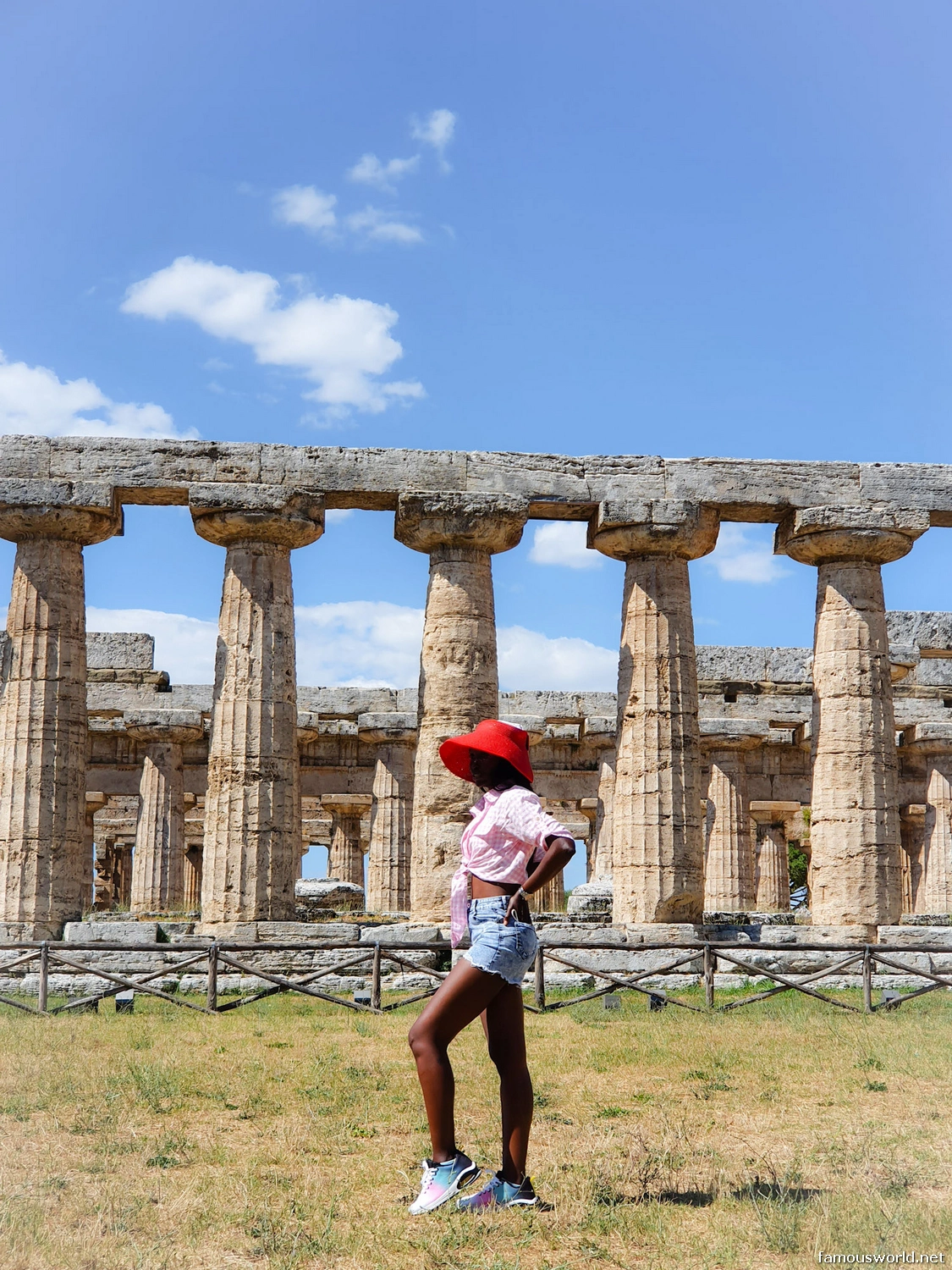
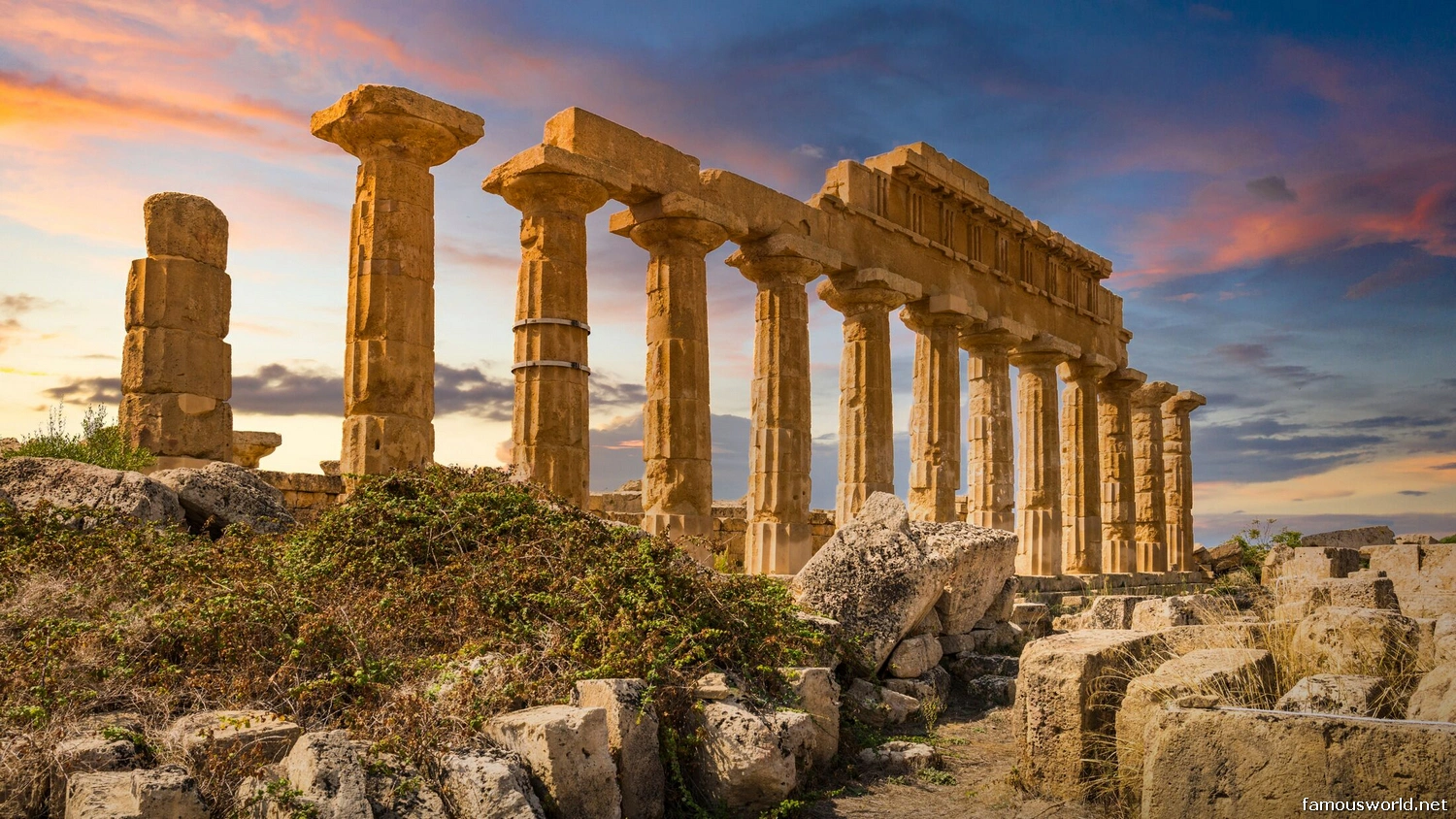
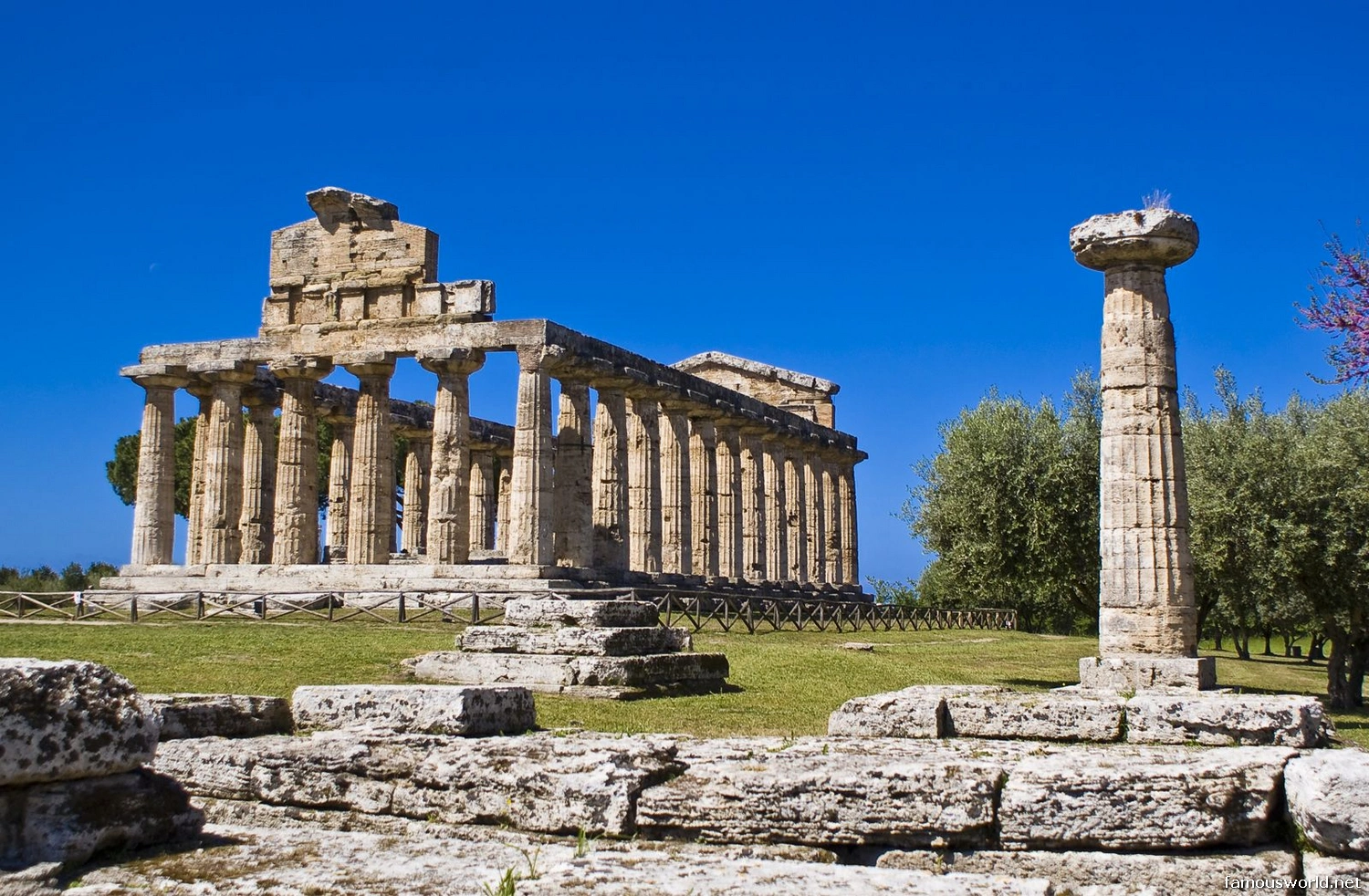
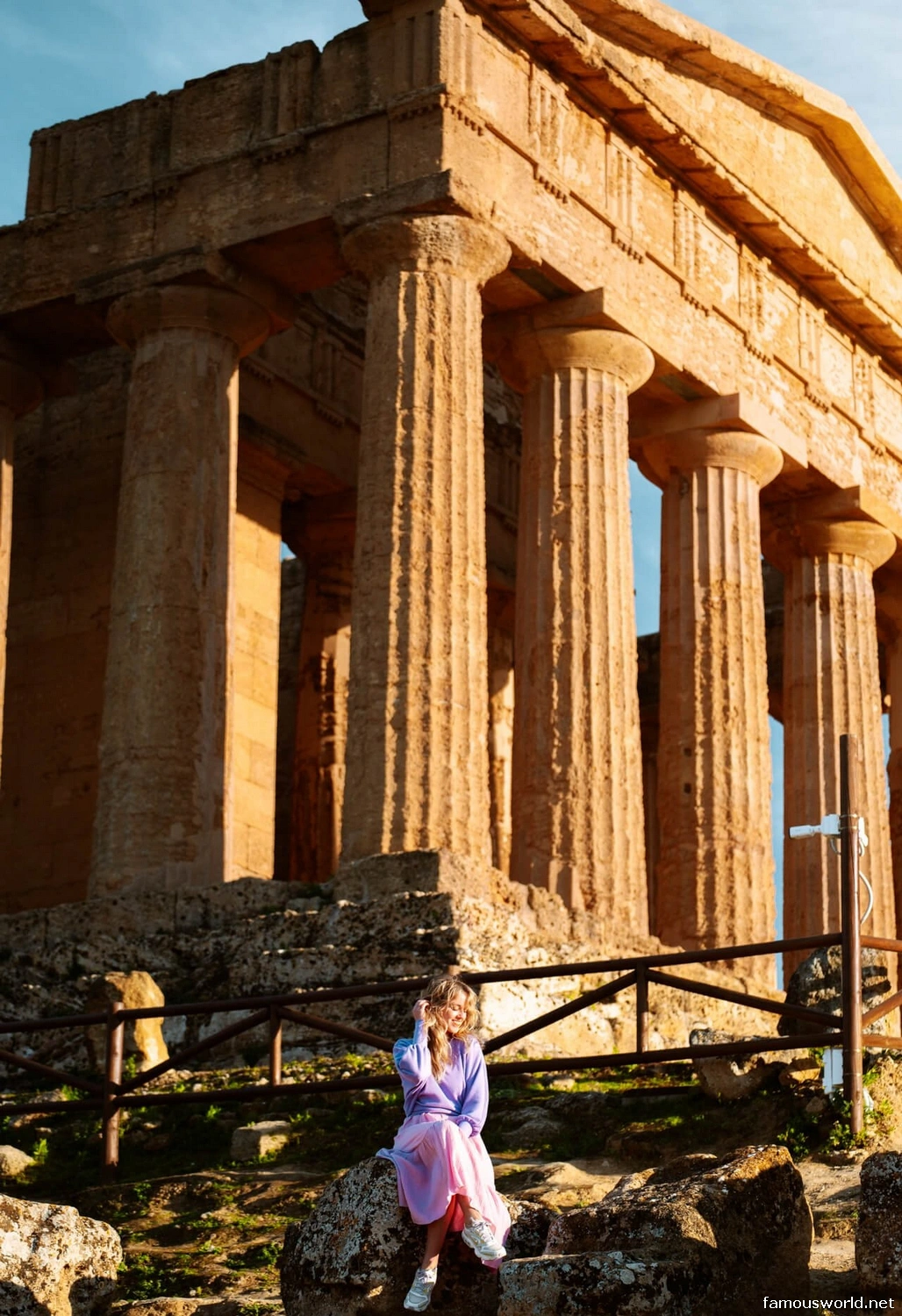
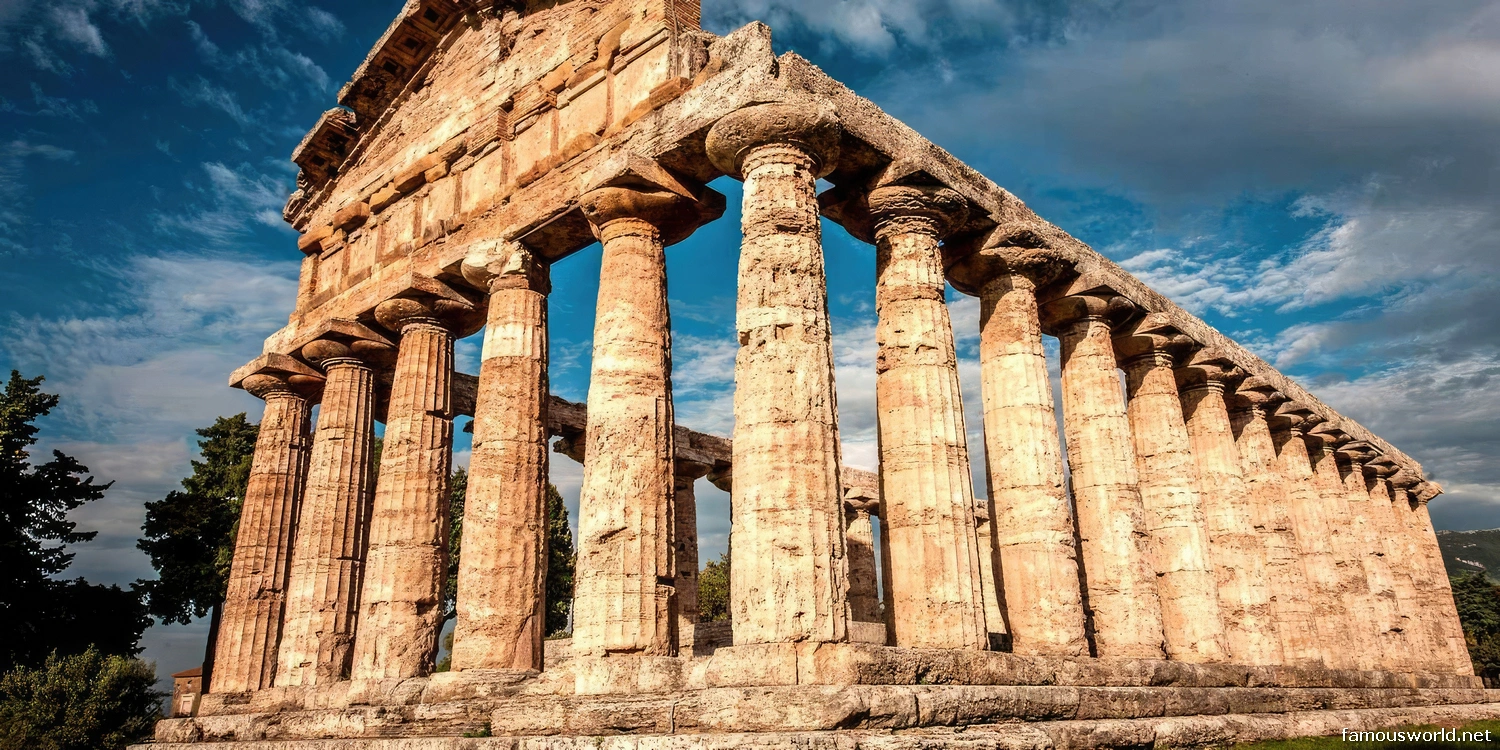
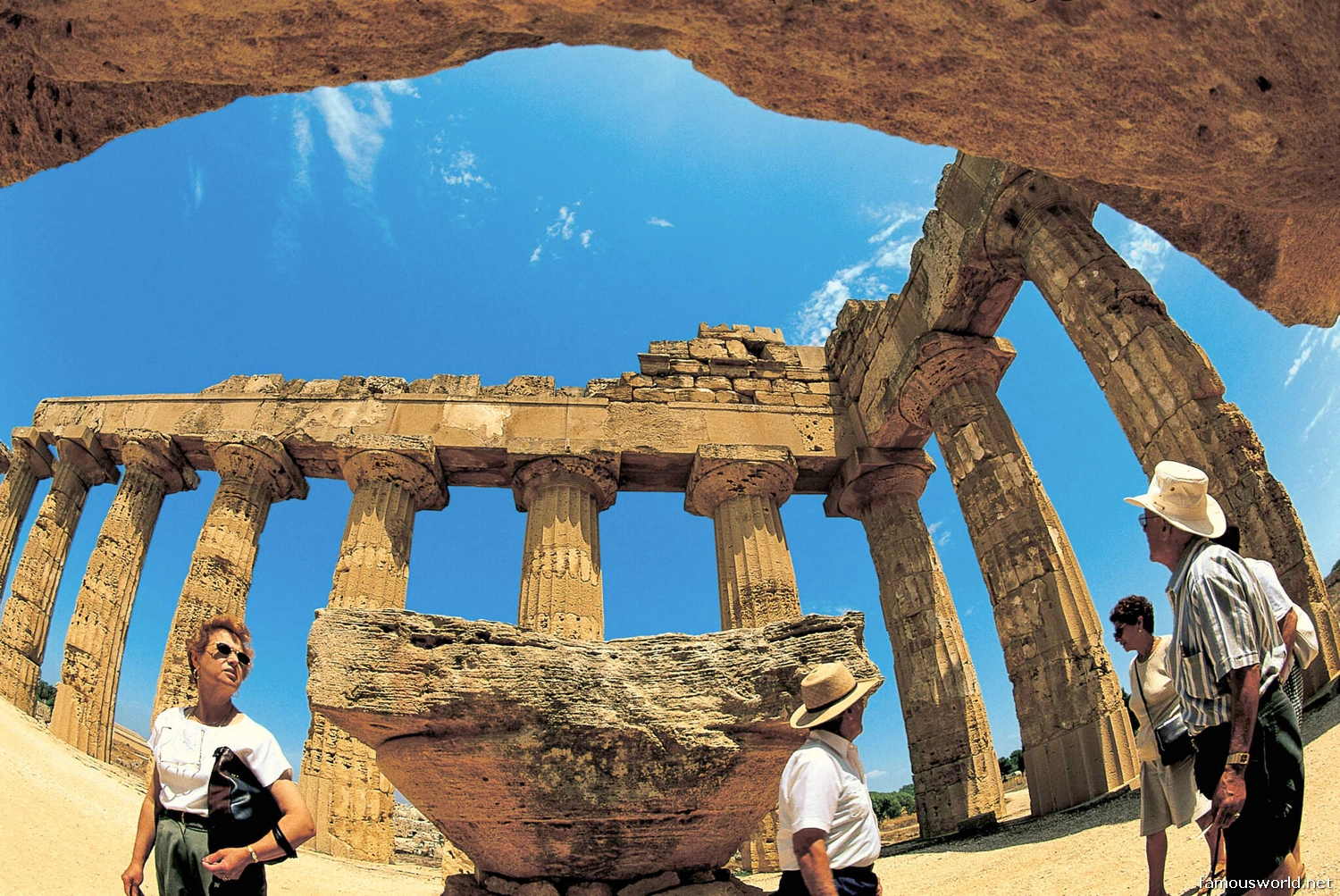
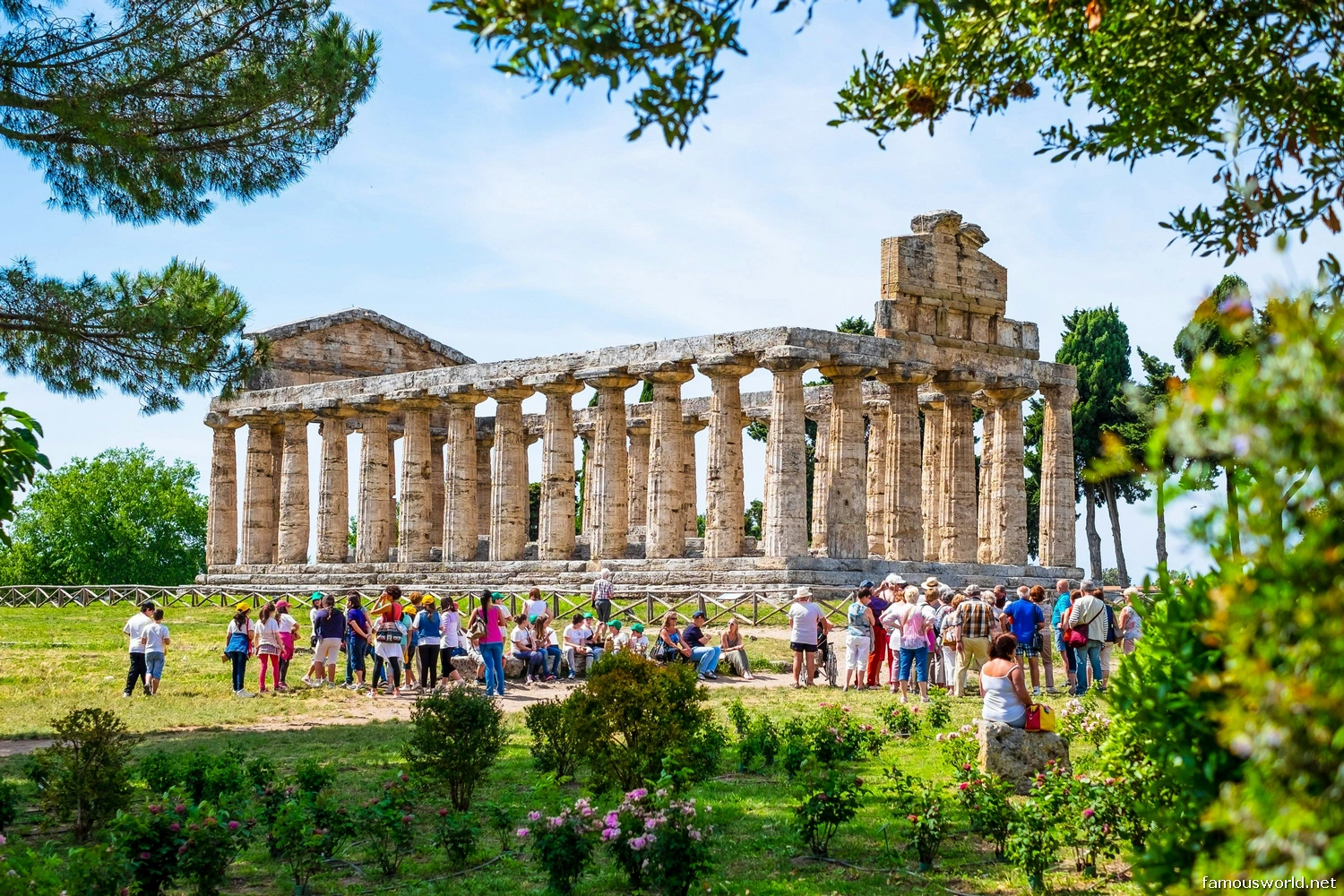
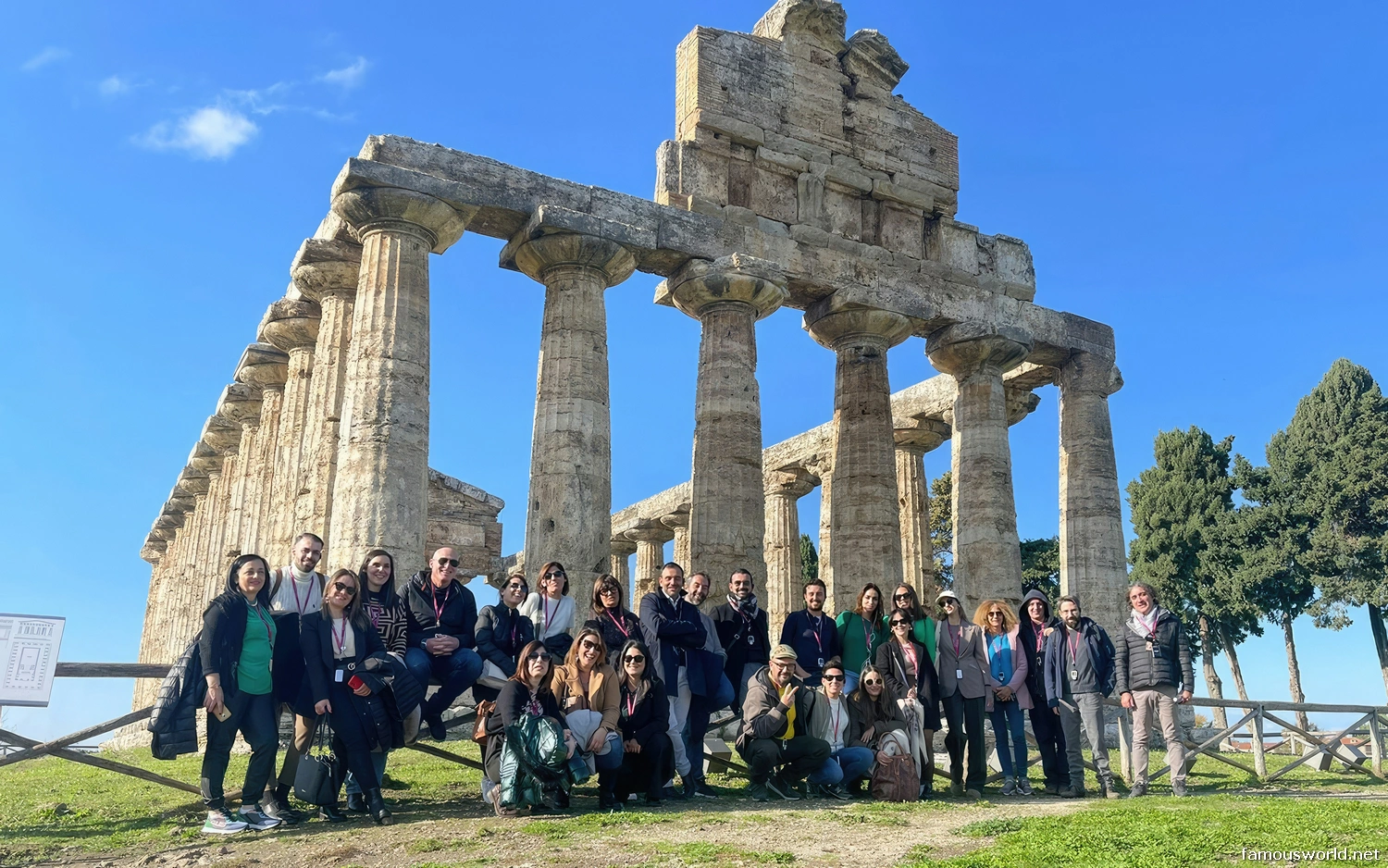
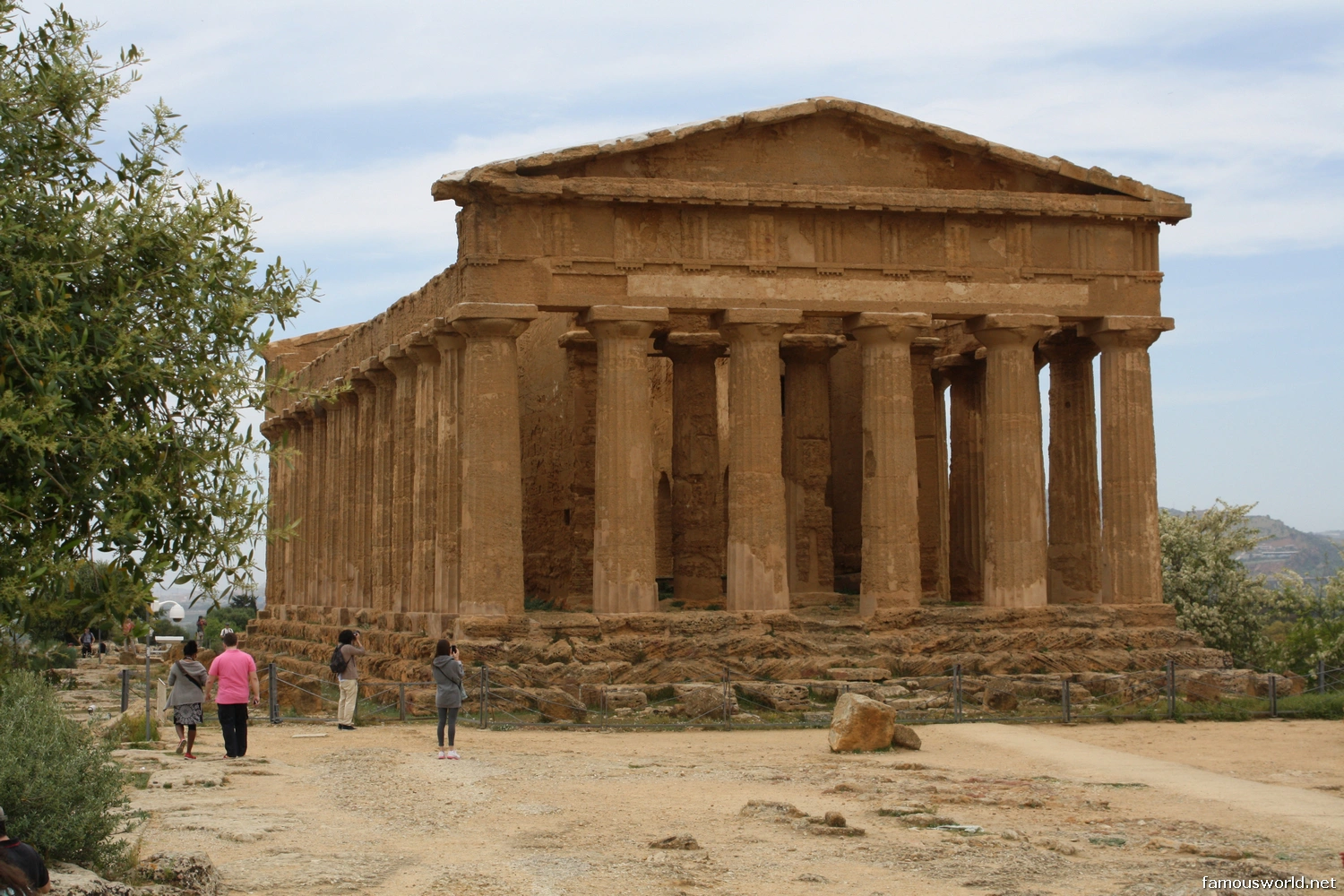
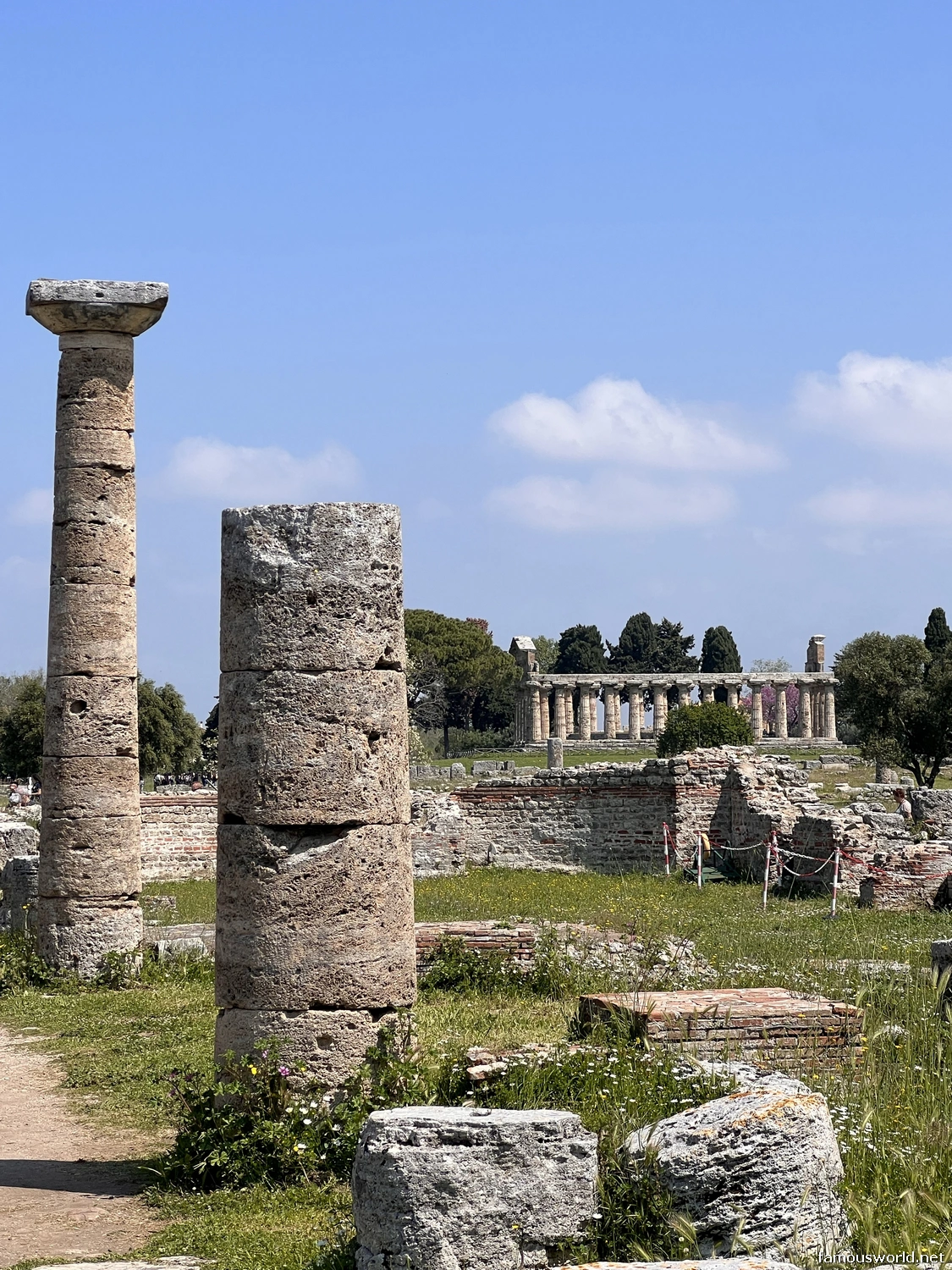
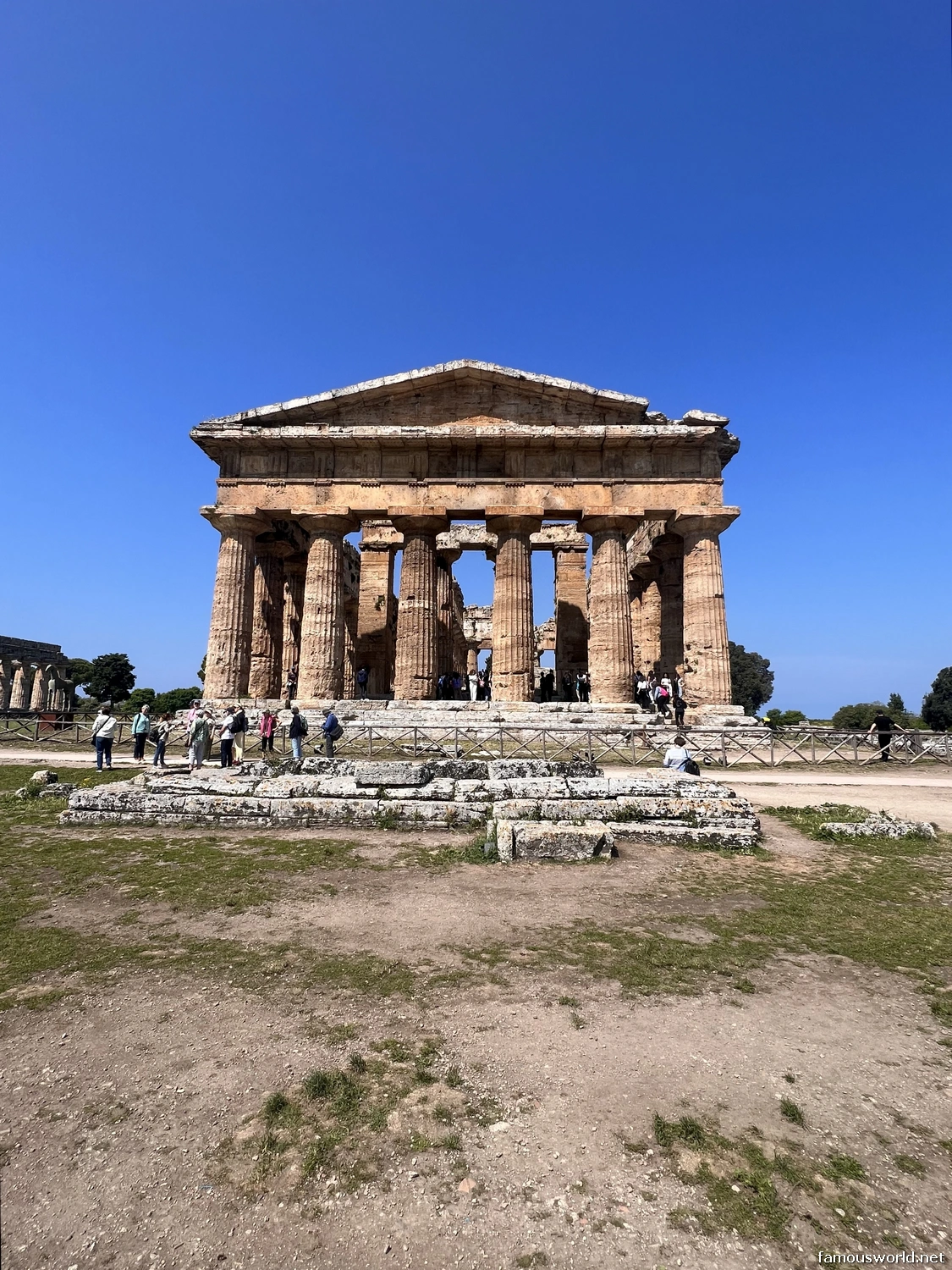

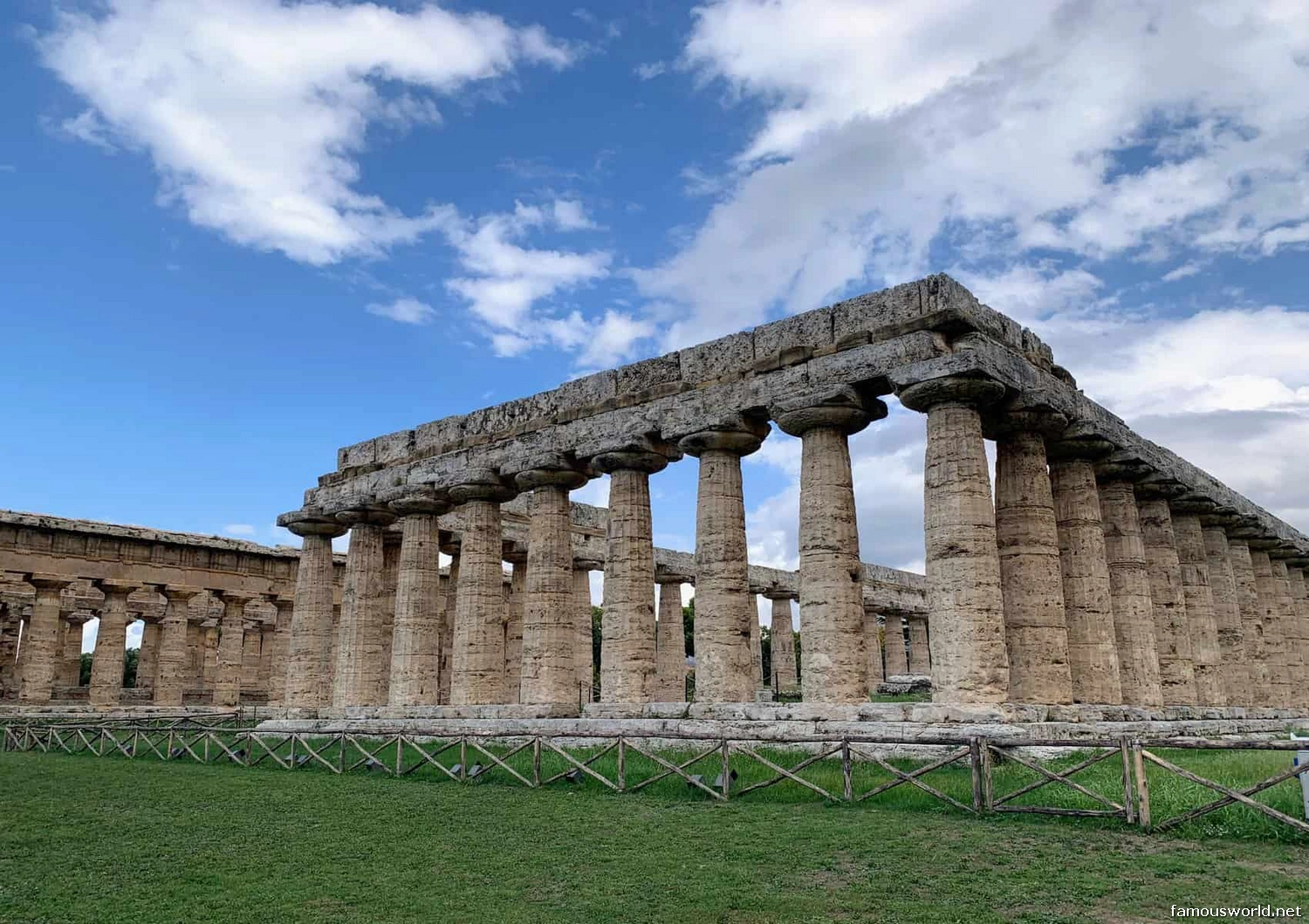
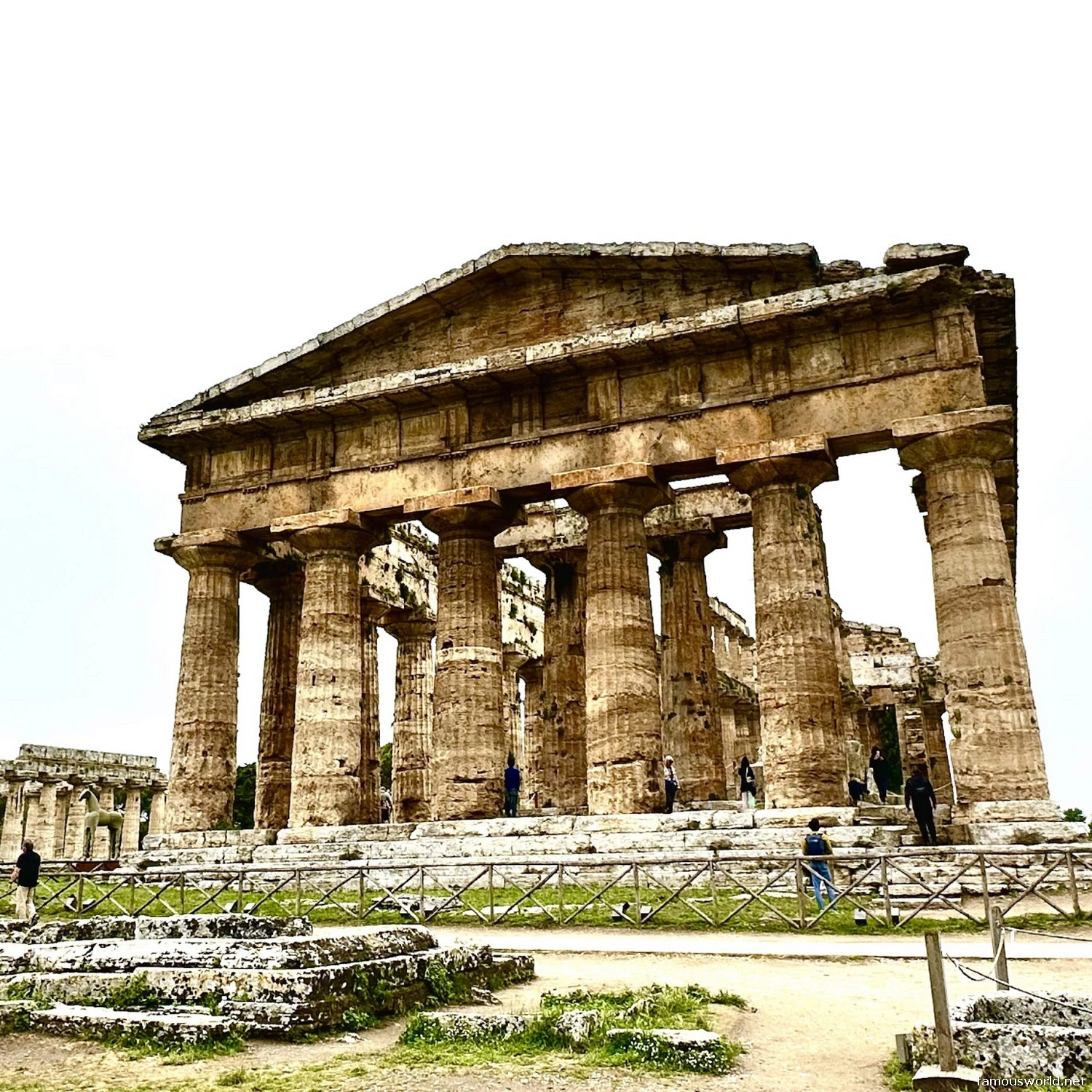
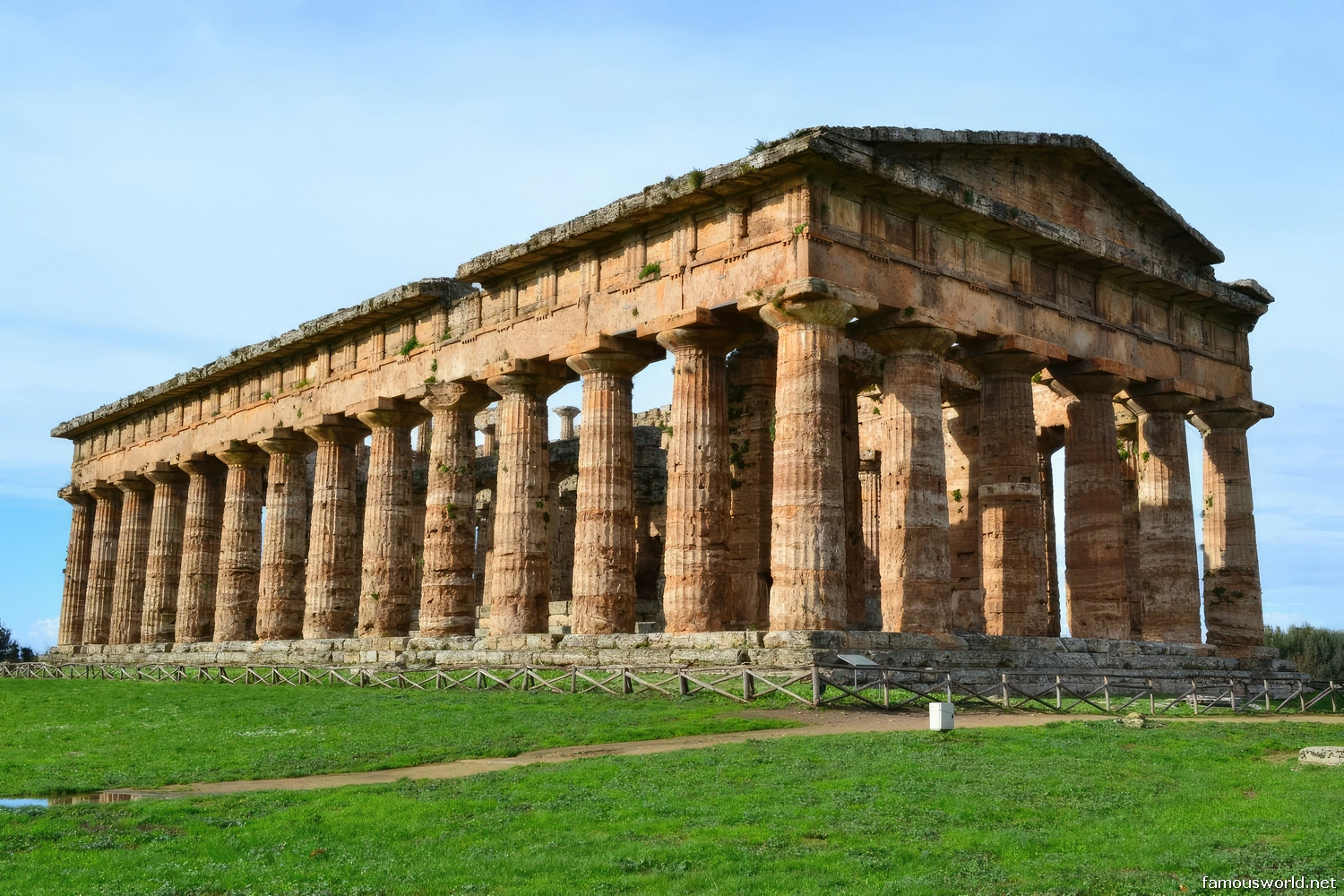
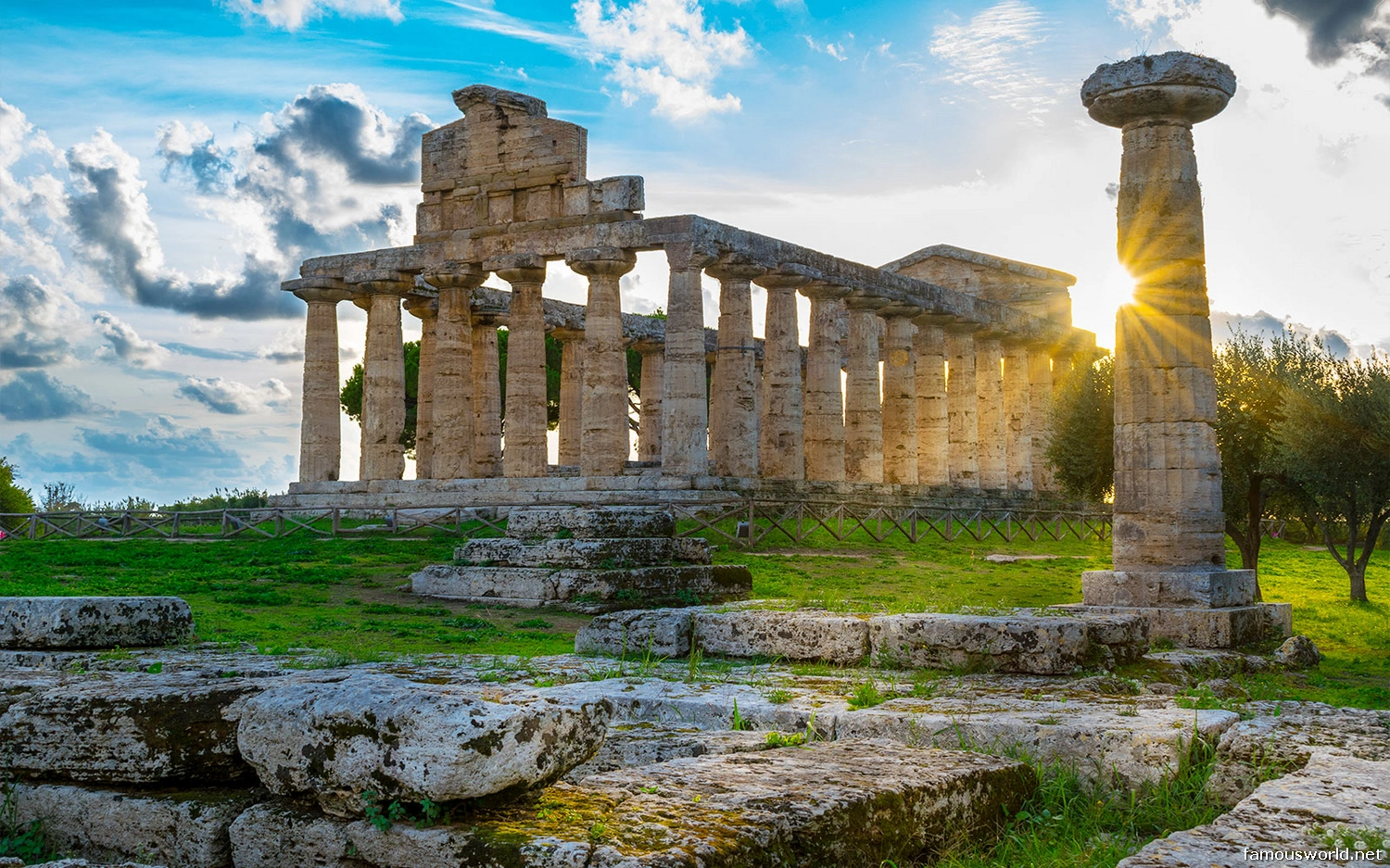
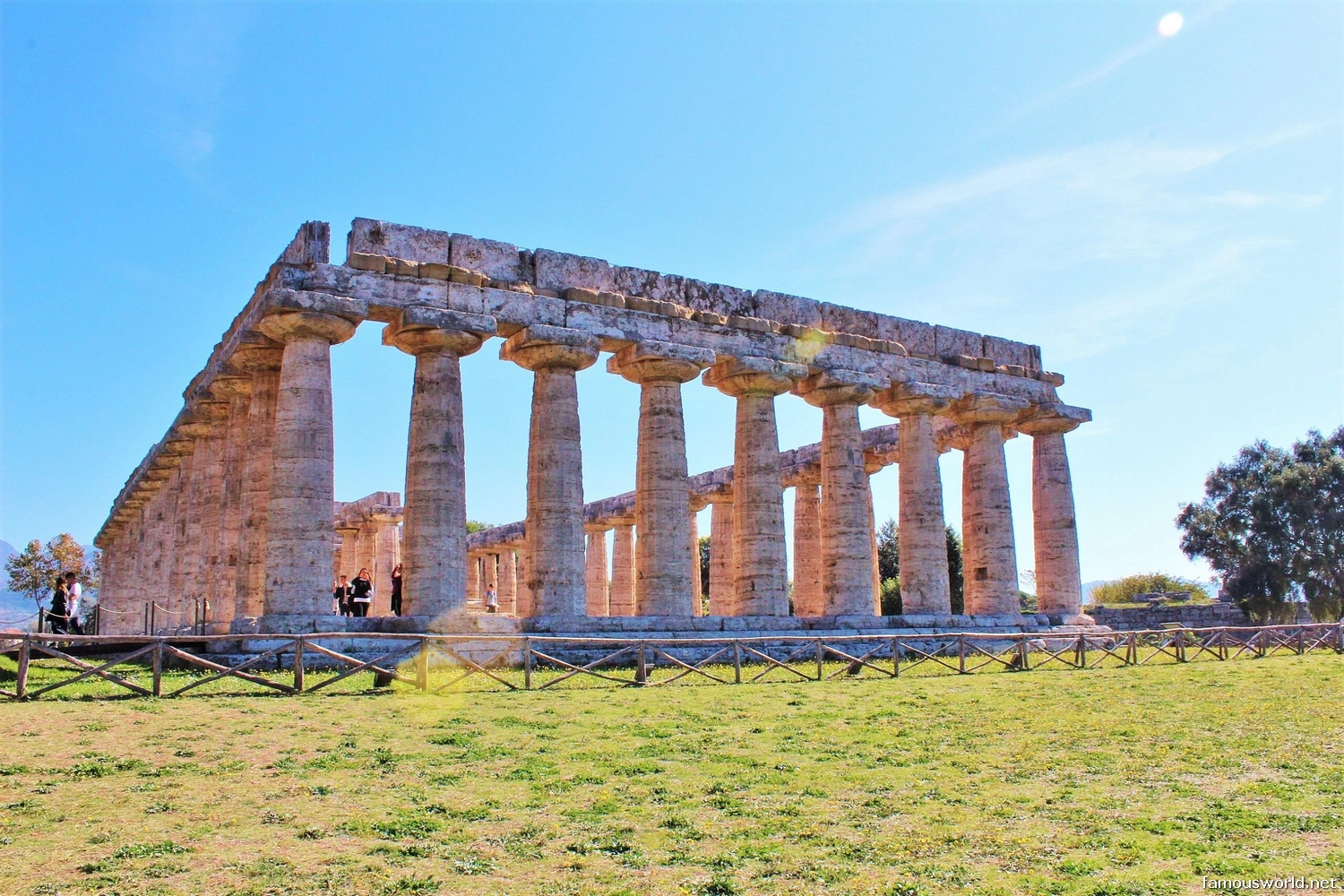
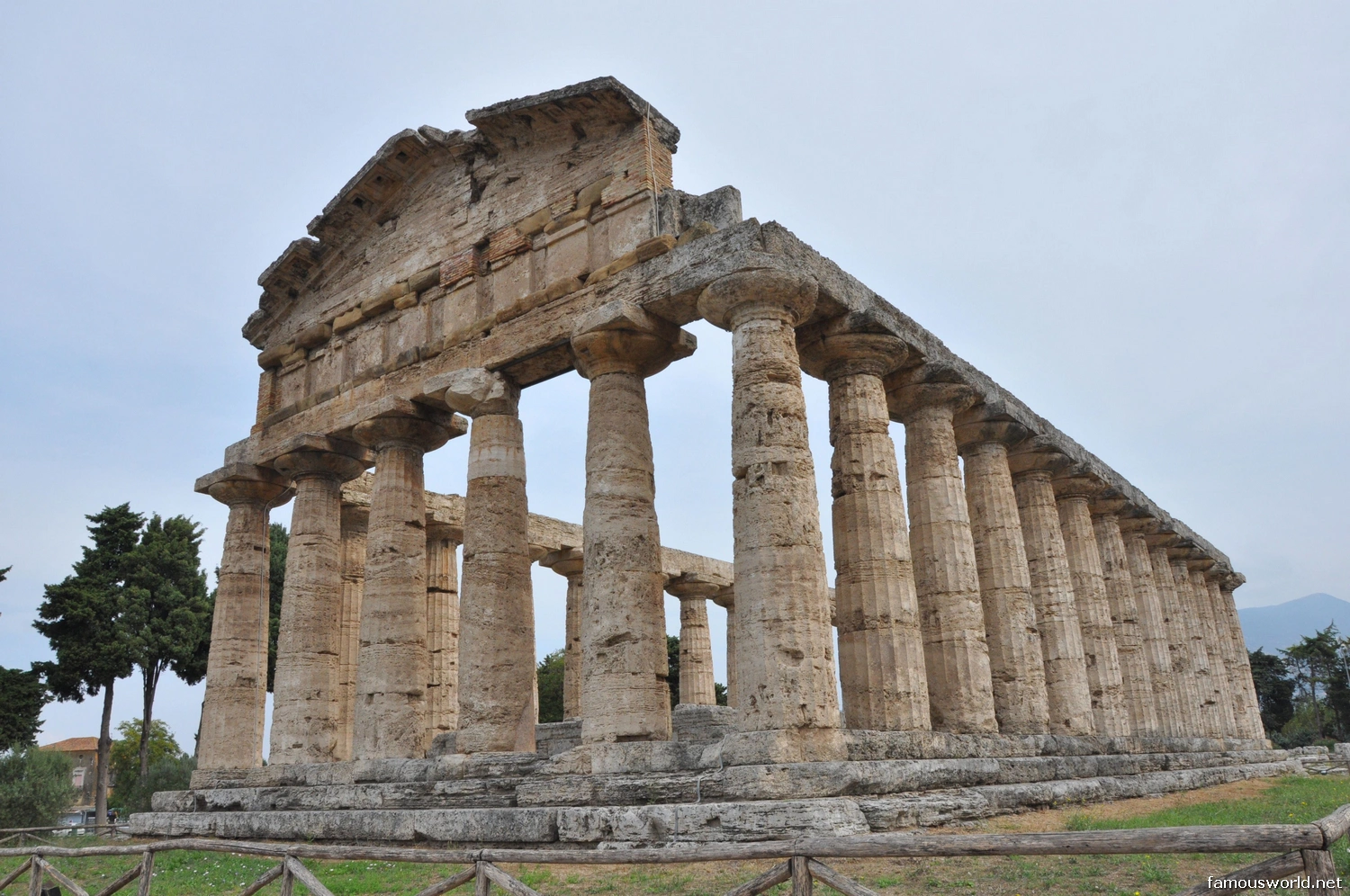

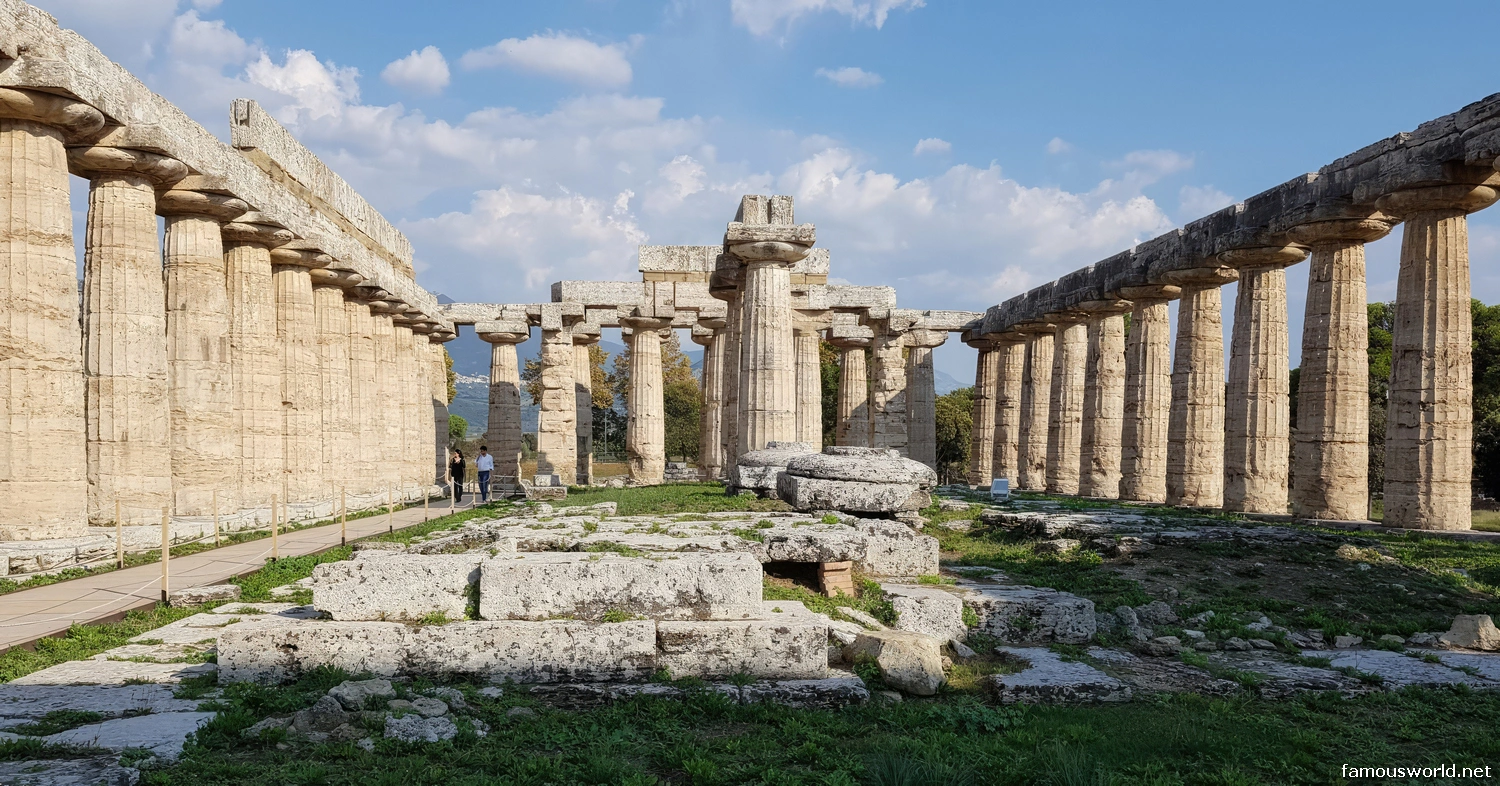
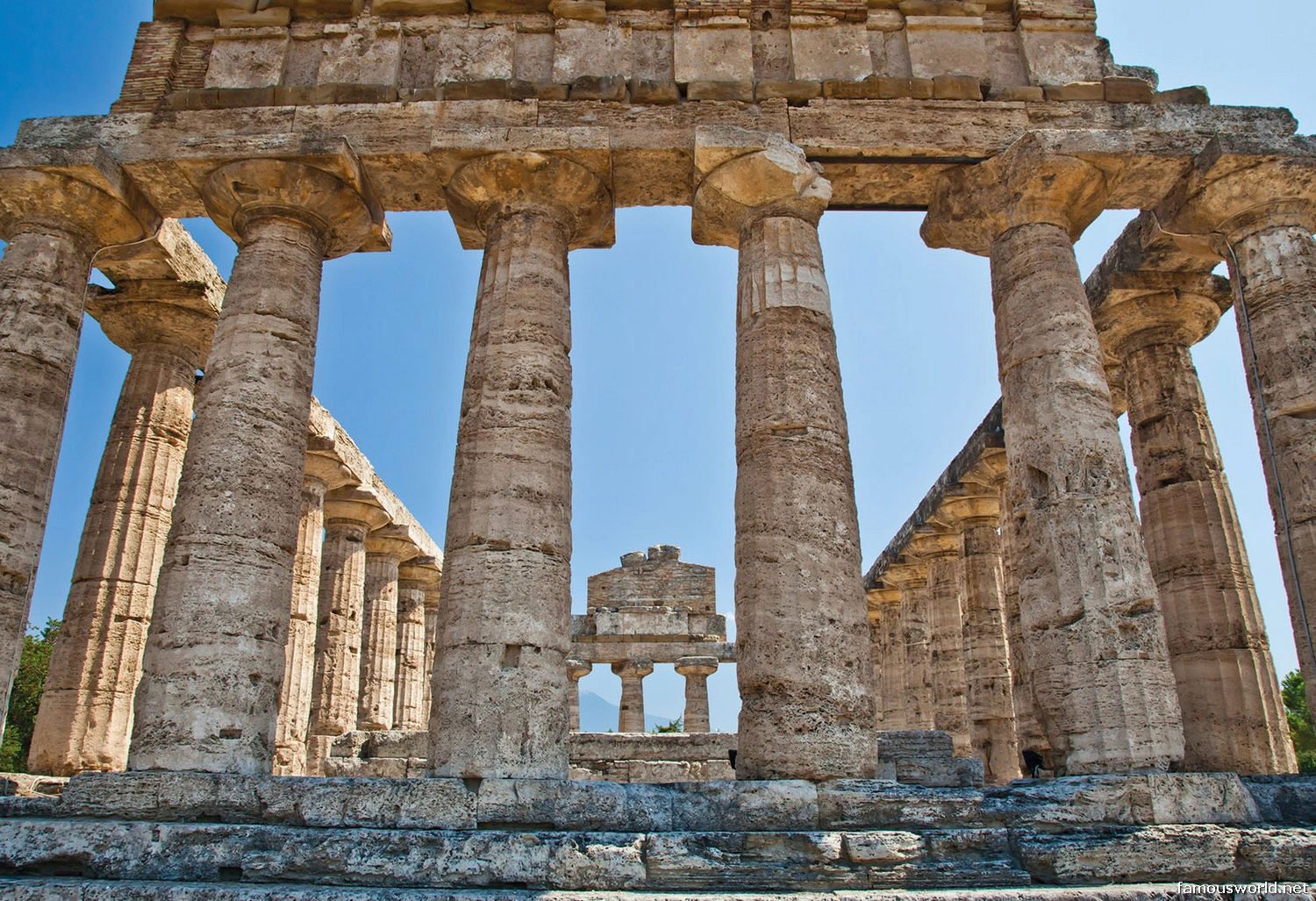
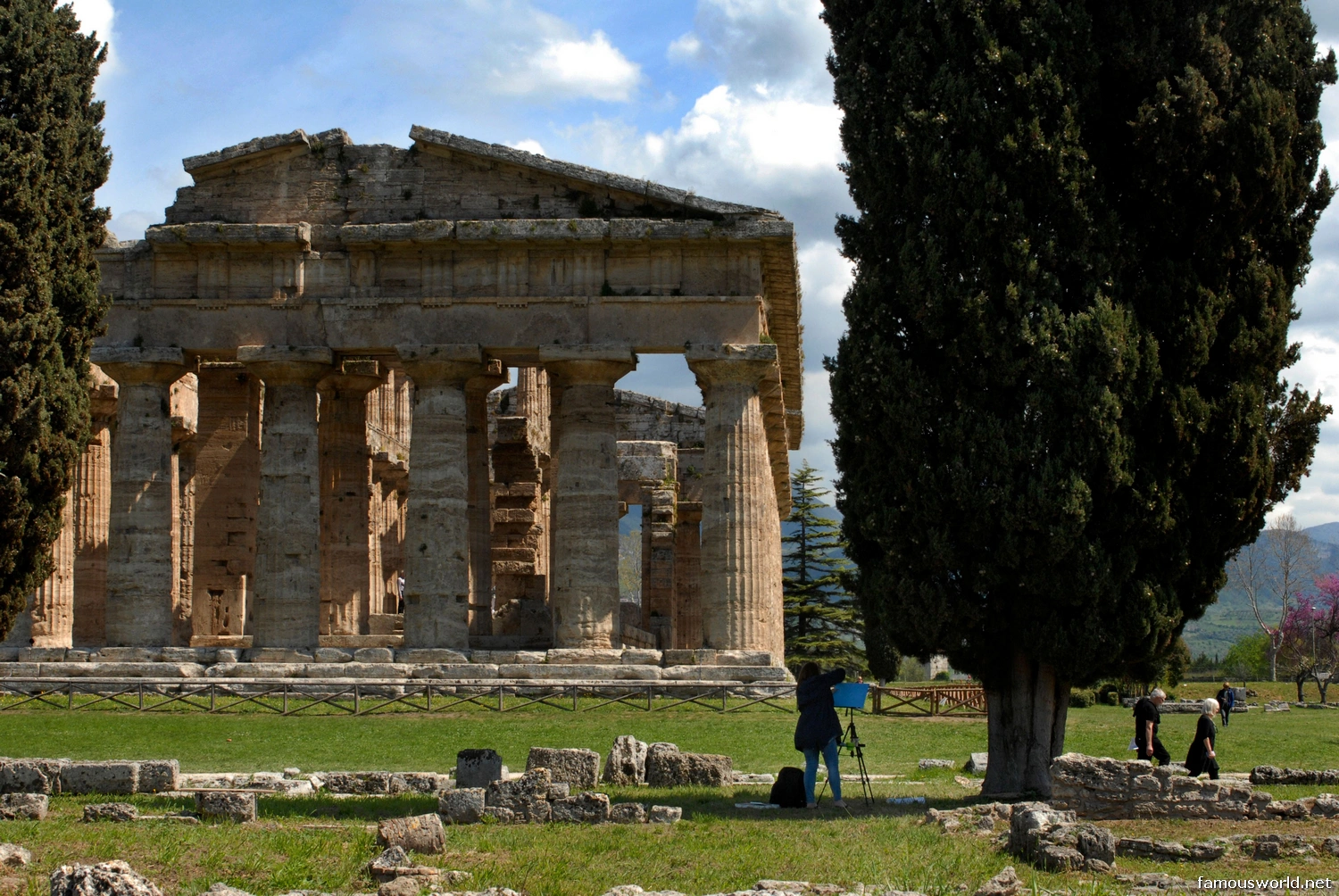
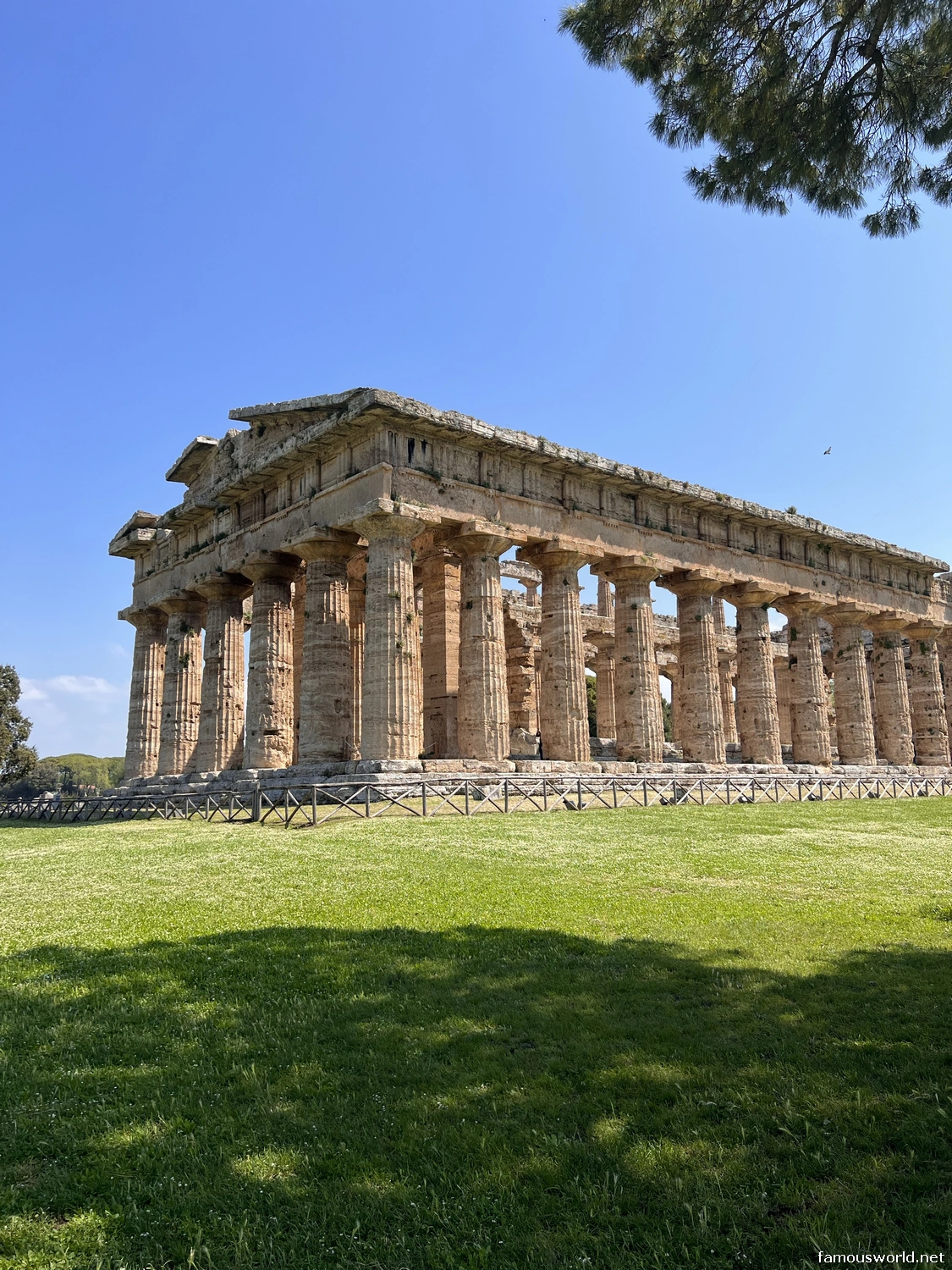
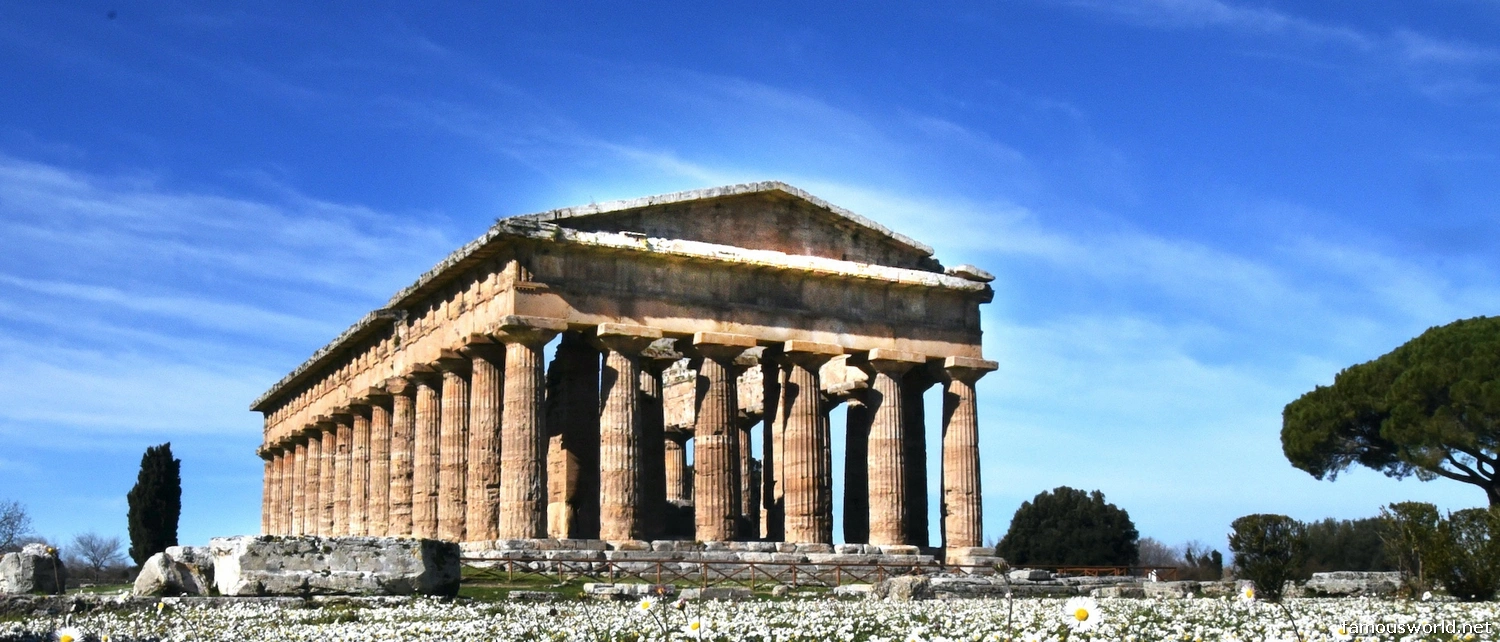
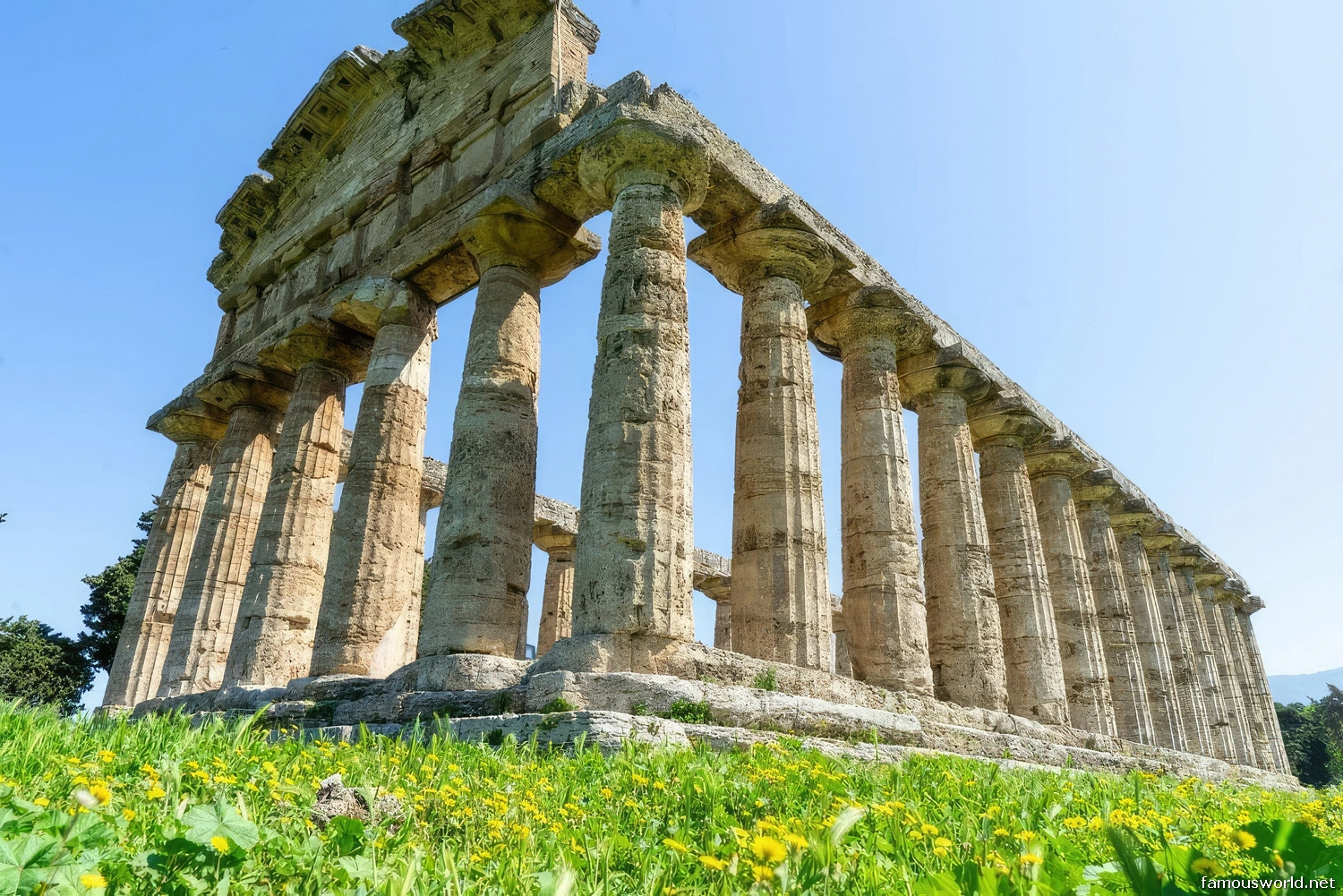
In the fertile plains of southern Italy, south of the Amalfi Coast, stand three of the most magnificent and best-preserved ancient Greek temples in the world. The Archaeological Park of Paestum is a breathtaking window into Magna Graecia (“Great Greece”), the coastal areas of Southern Italy colonized by Greek settlers centuries before the rise of Rome. Originally the city of Poseidonia, it flourished as a center of trade and culture. Walking among its massive Doric temples, surrounded by ancient city walls and Roman ruins, feels like stepping back in time. The site’s serene, pastoral atmosphere offers a powerful and authentic connection to the classical world.
Listen to an introduction about Parco Archeologico di Paestum

Name and Location
- Name: Parco Archeologico di Paestum (Archaeological Park of Paestum).
- Location: In the province of Salerno, in the Campania region of Southern Italy, near the coast of the Tyrrhenian Sea.
How to Get There
Paestum is relatively easy to access, especially from Naples or the Amalfi Coast.
- By Train: The most convenient option for many. Paestum has its own train station (“Paestum”) on the Naples-Salerno-Reggio Calabria line, and the archaeological site is a simple 10-15 minute walk straight from the station.
- By Car: Paestum is easily reached via the A3 Salerno-Reggio Calabria motorway. Driving offers the flexibility to explore the surrounding Cilento National Park.
- By Bus: Regional buses connect Paestum with Salerno and other nearby towns, though the train is often more direct.
Landscape and Architecture
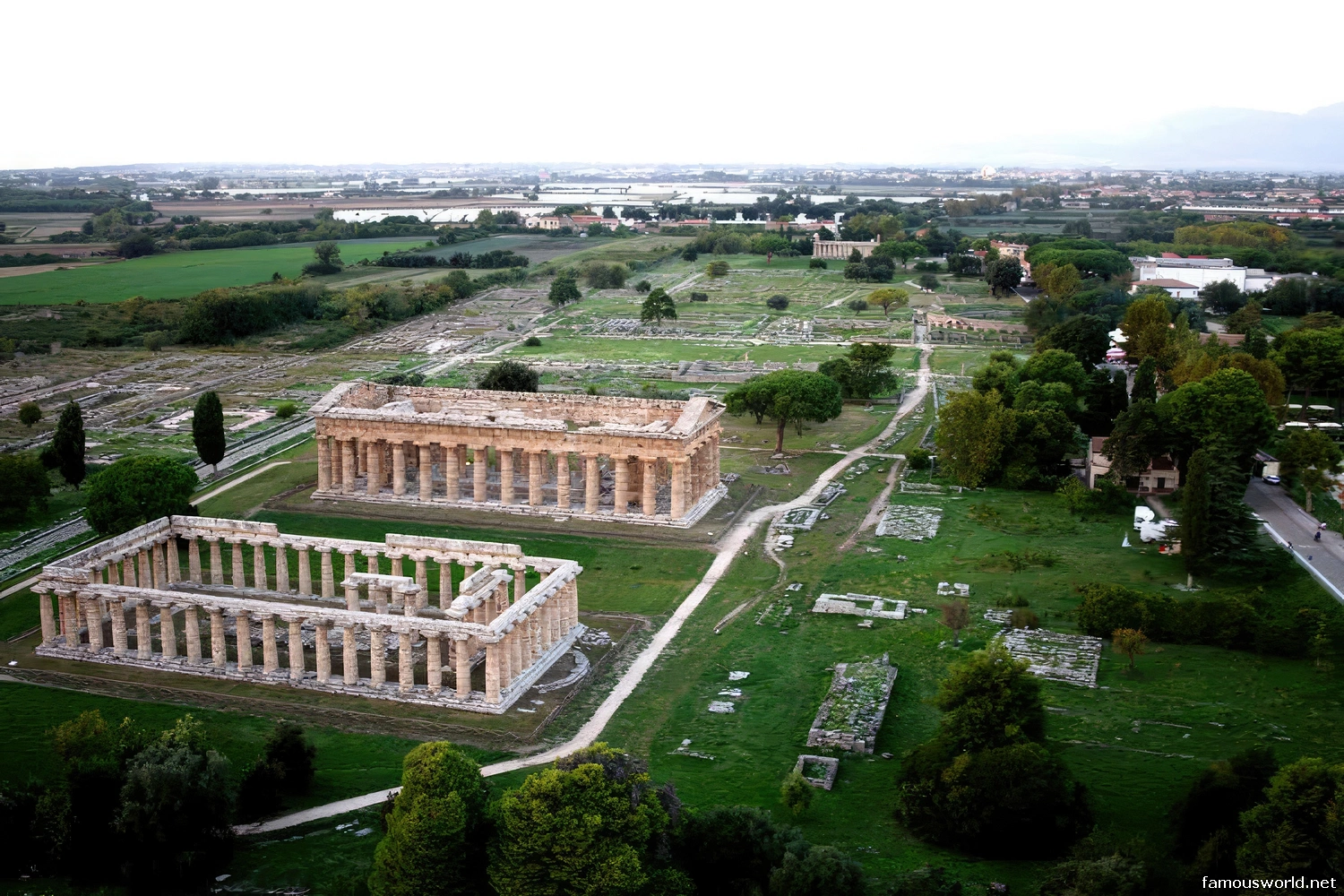
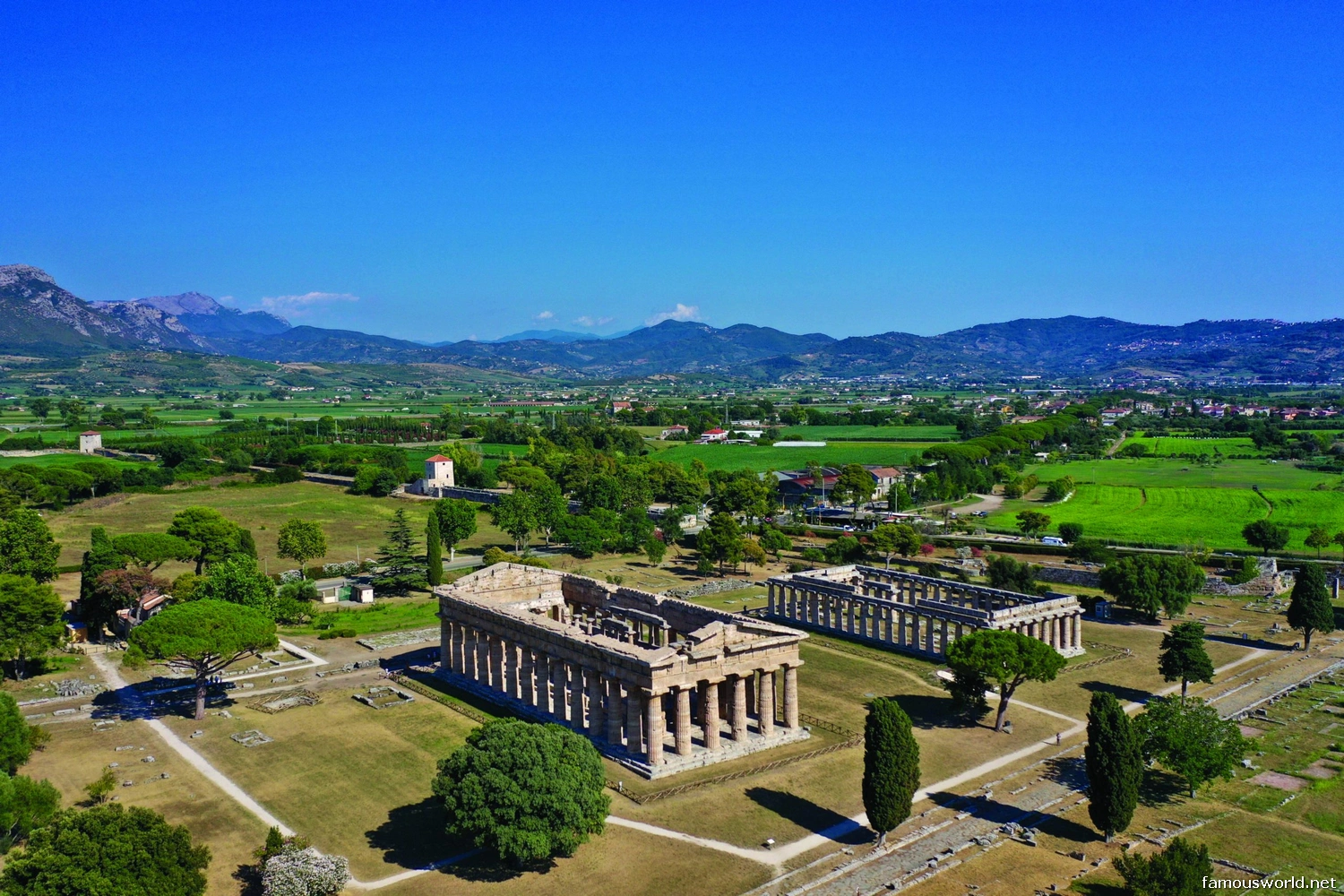
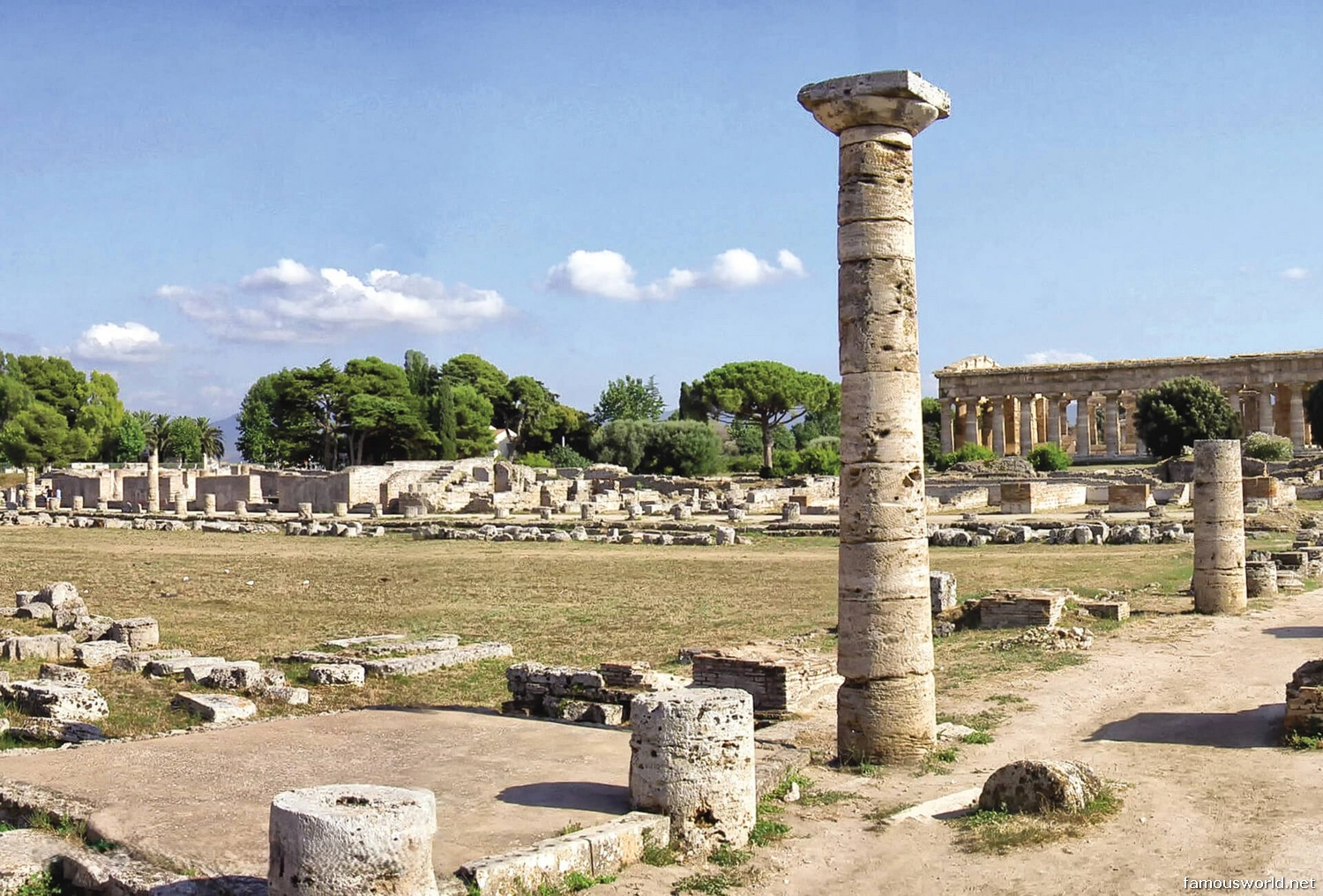
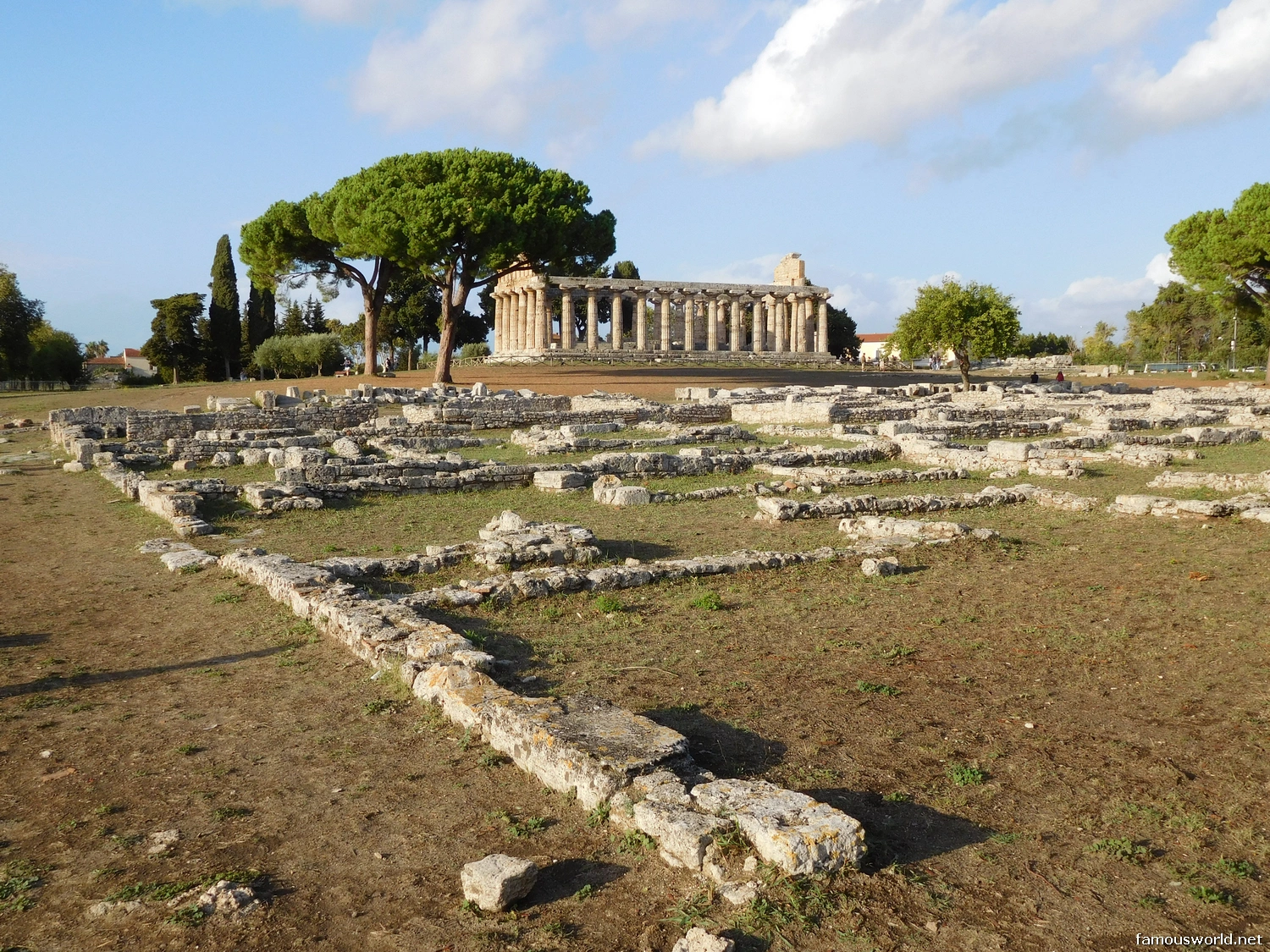
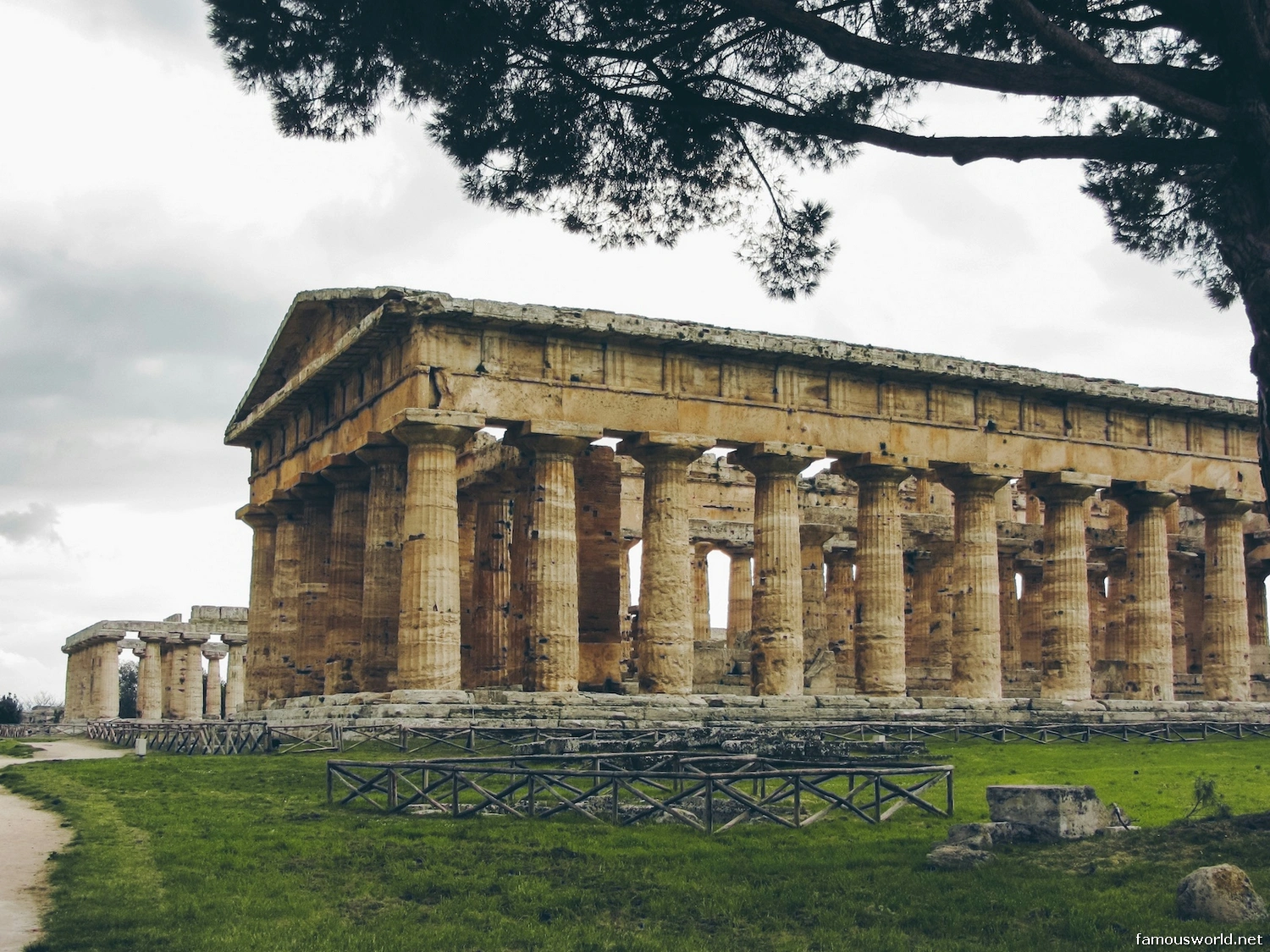
The park is a vast, open landscape dominated by its three world-famous temples and surrounded by ancient fortifications.
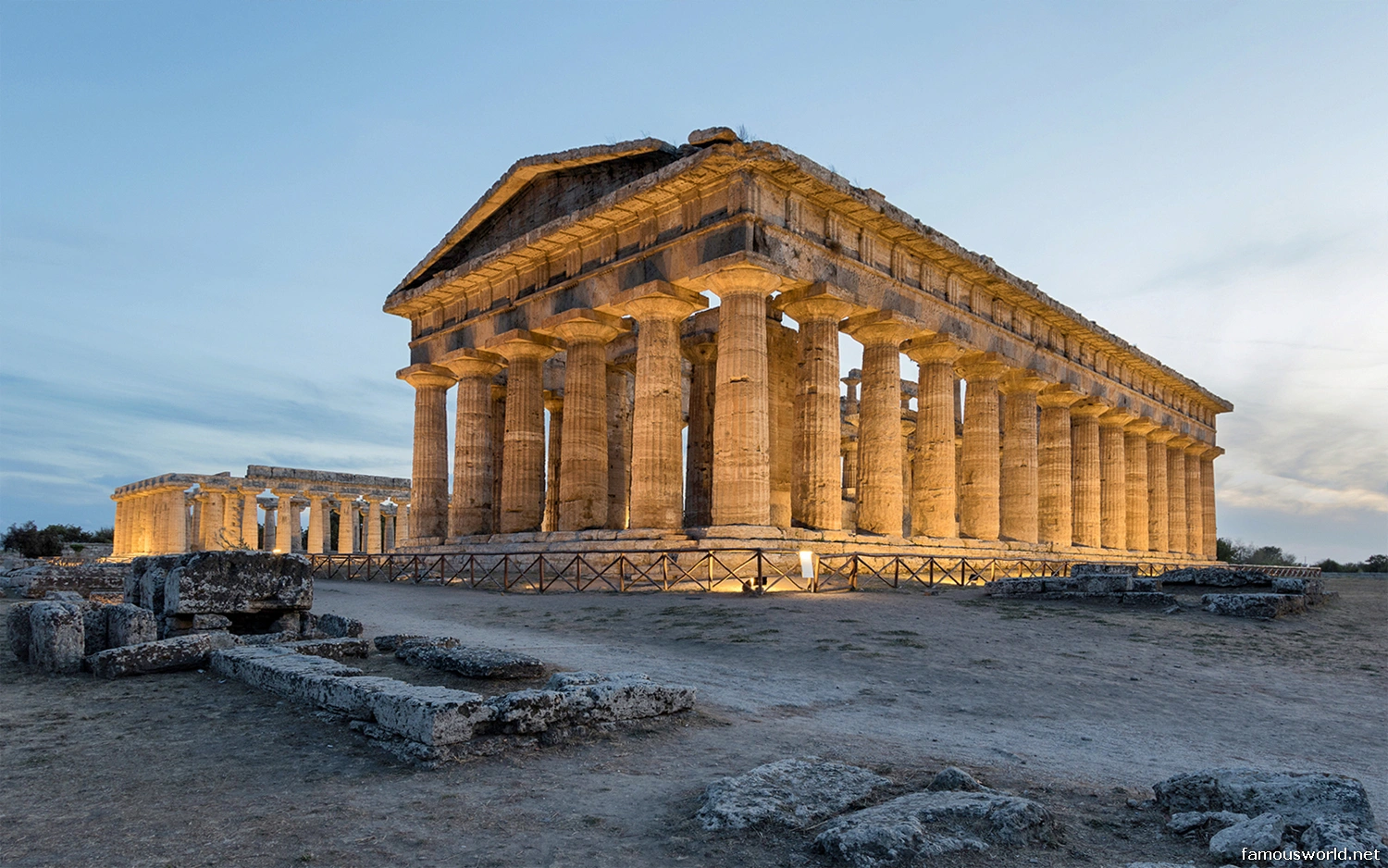
- The Three Doric Temples: The site is famous for its trio of majestic temples.
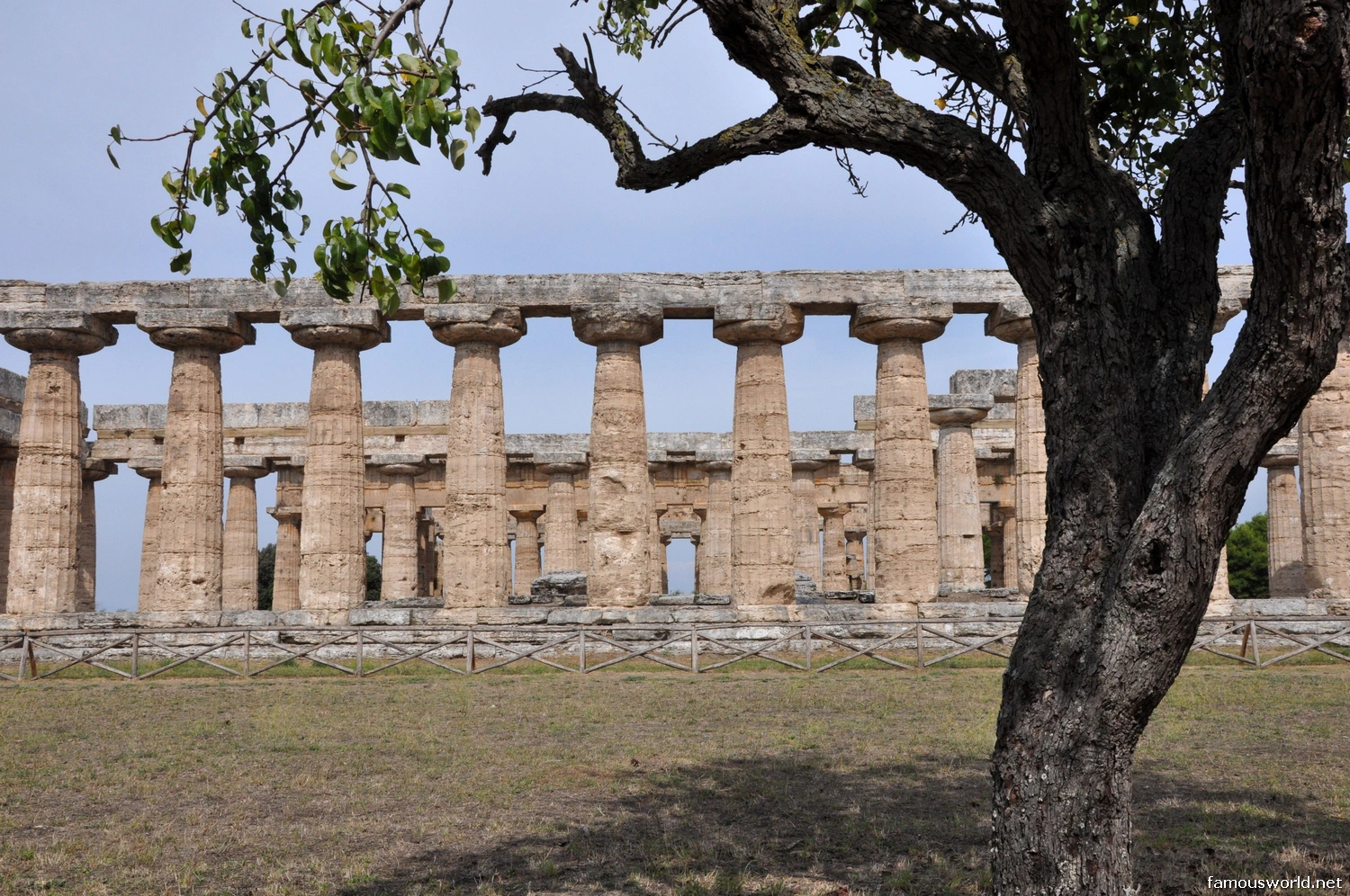
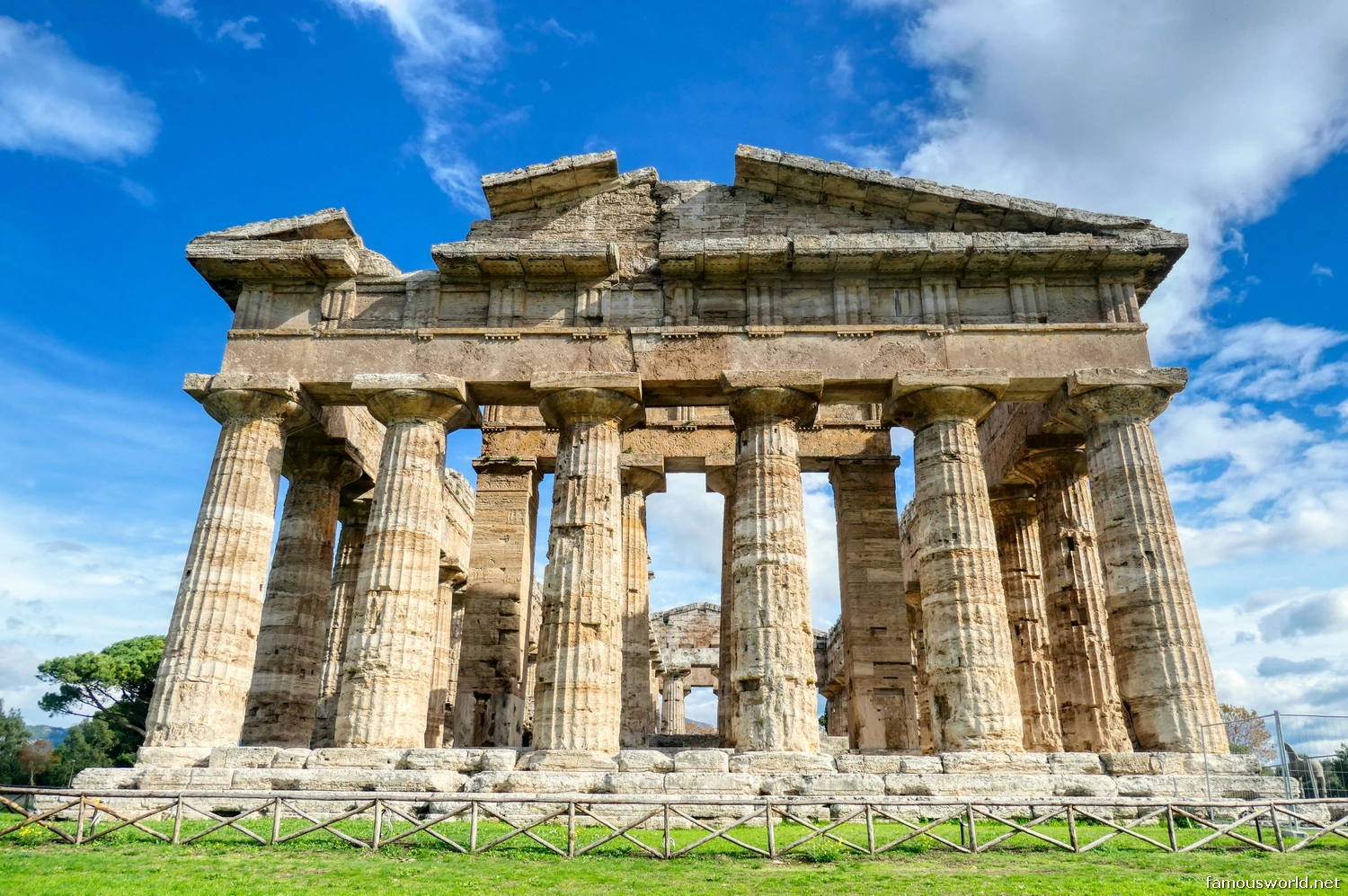
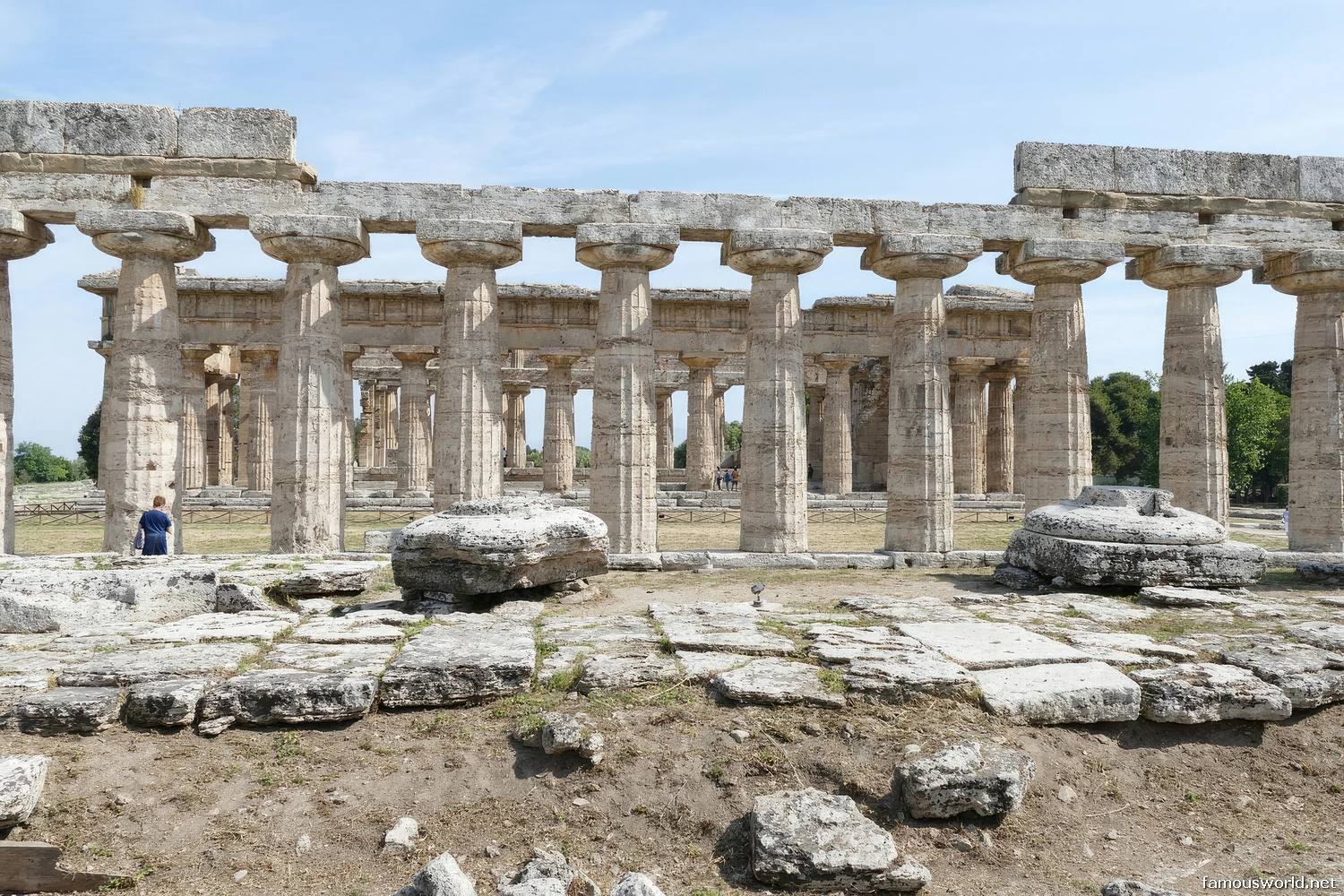
- The Temple of Hera I (c. 550 BC): The oldest of the three, often called the “Basilica” by 18th-century scholars who mistook it for a Roman public building. It is notable for its unusual nine columns across the front.
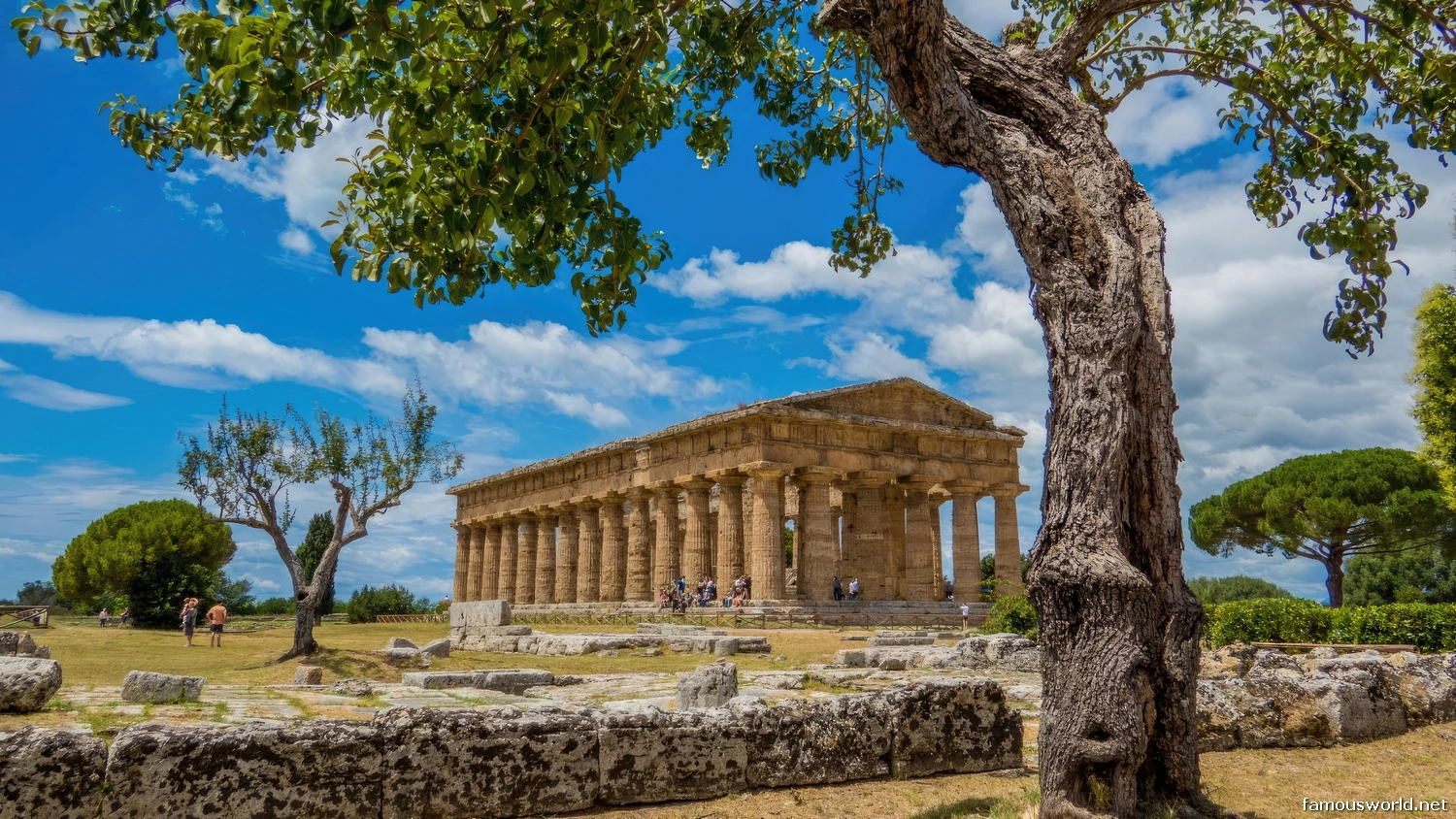
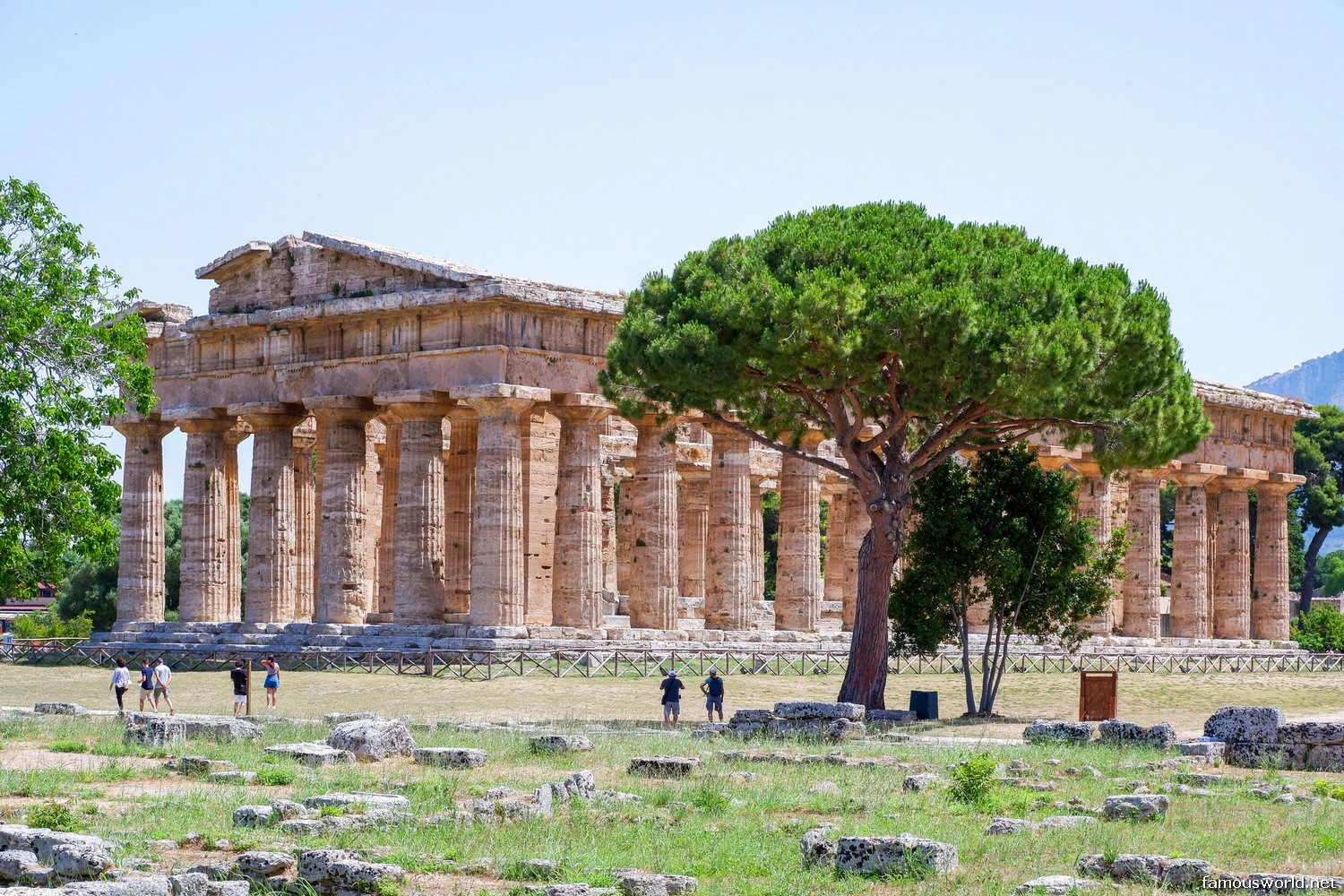
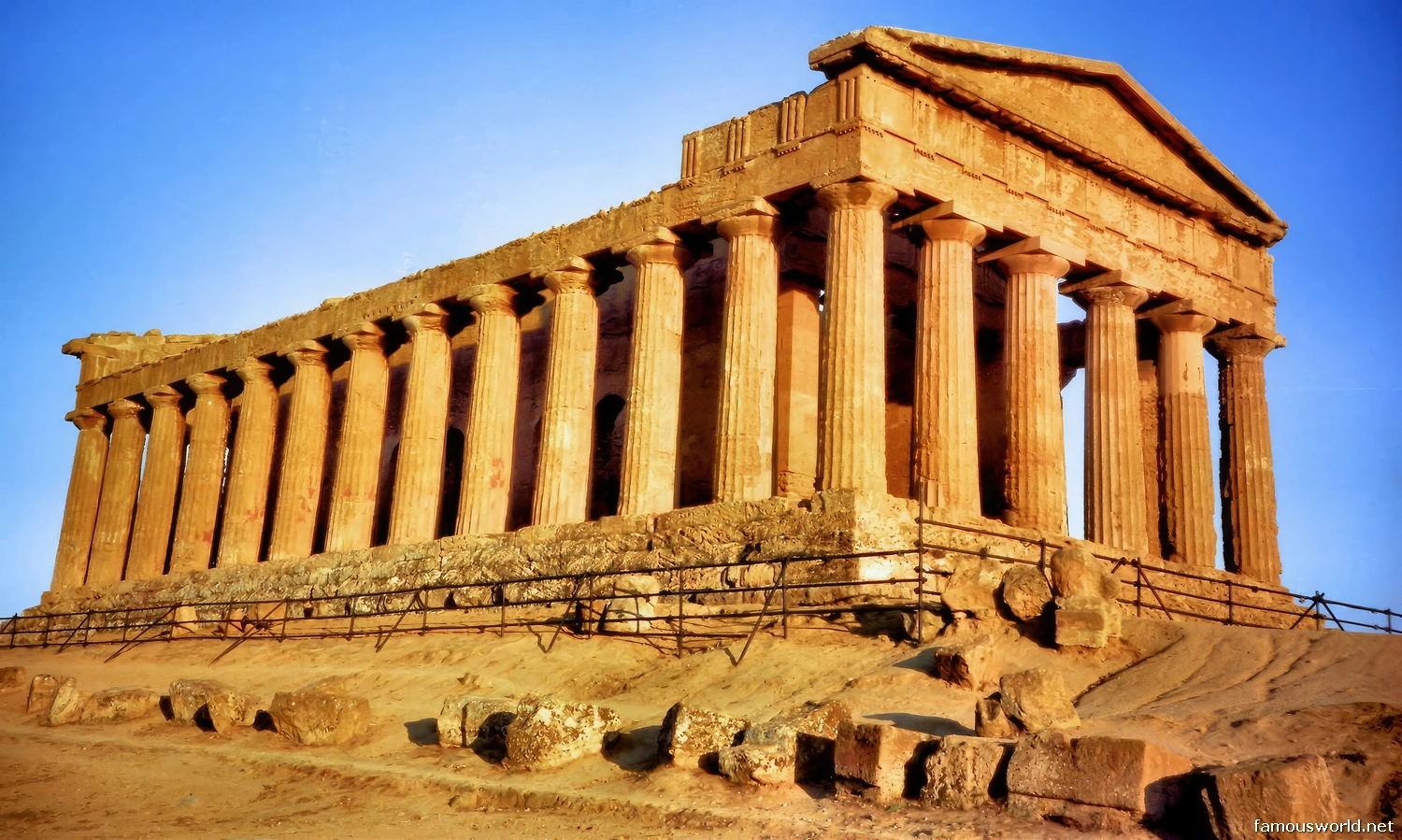
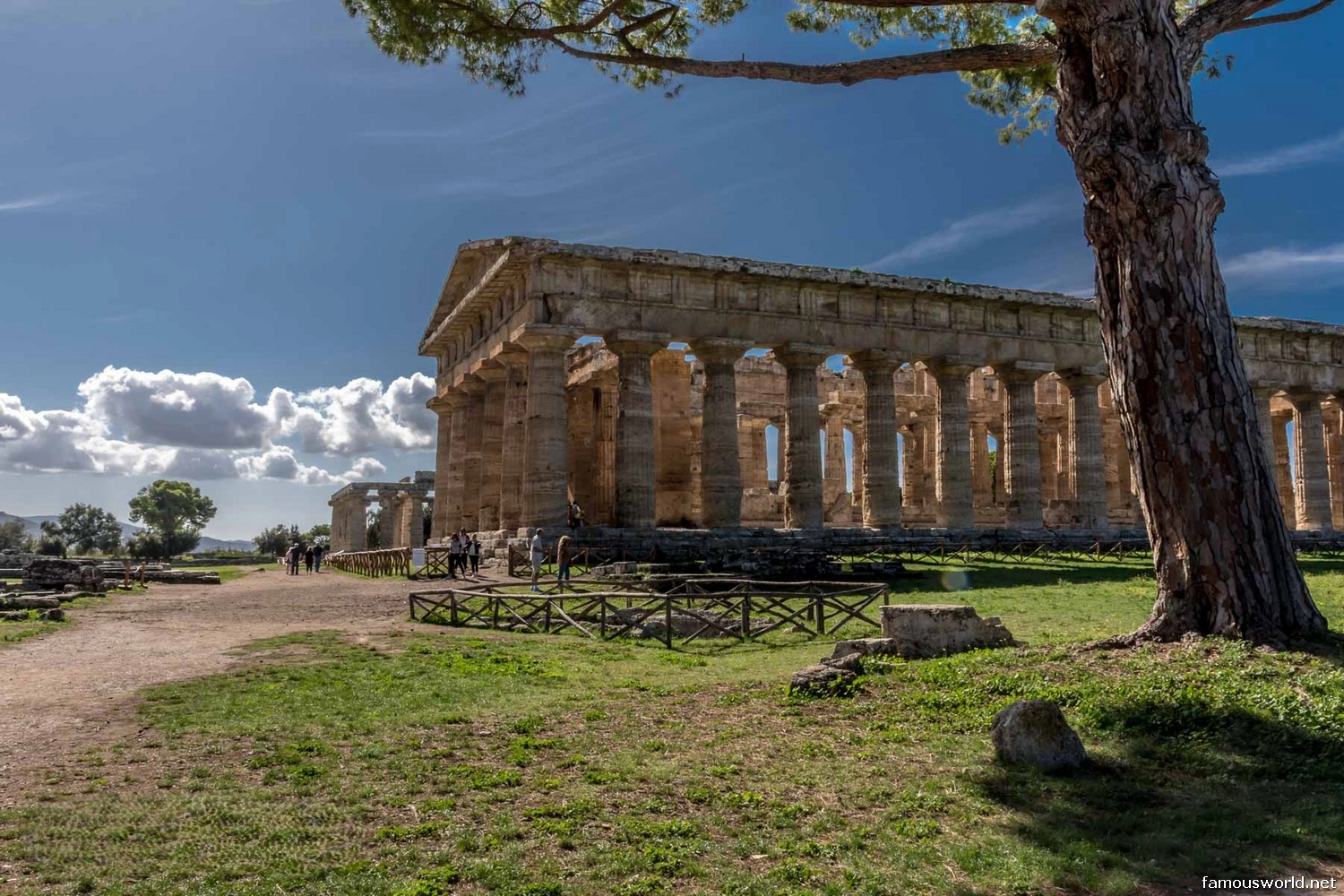
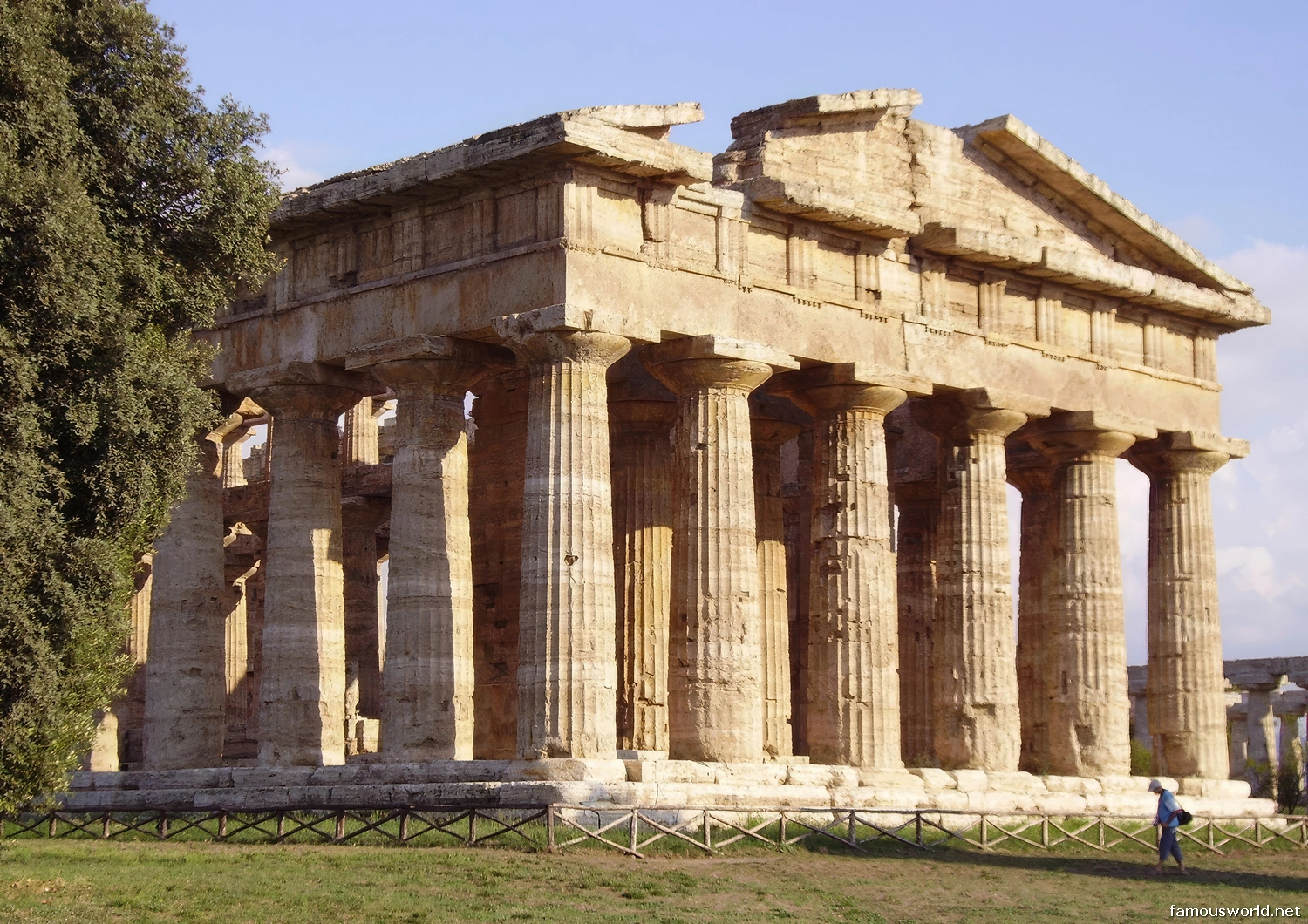
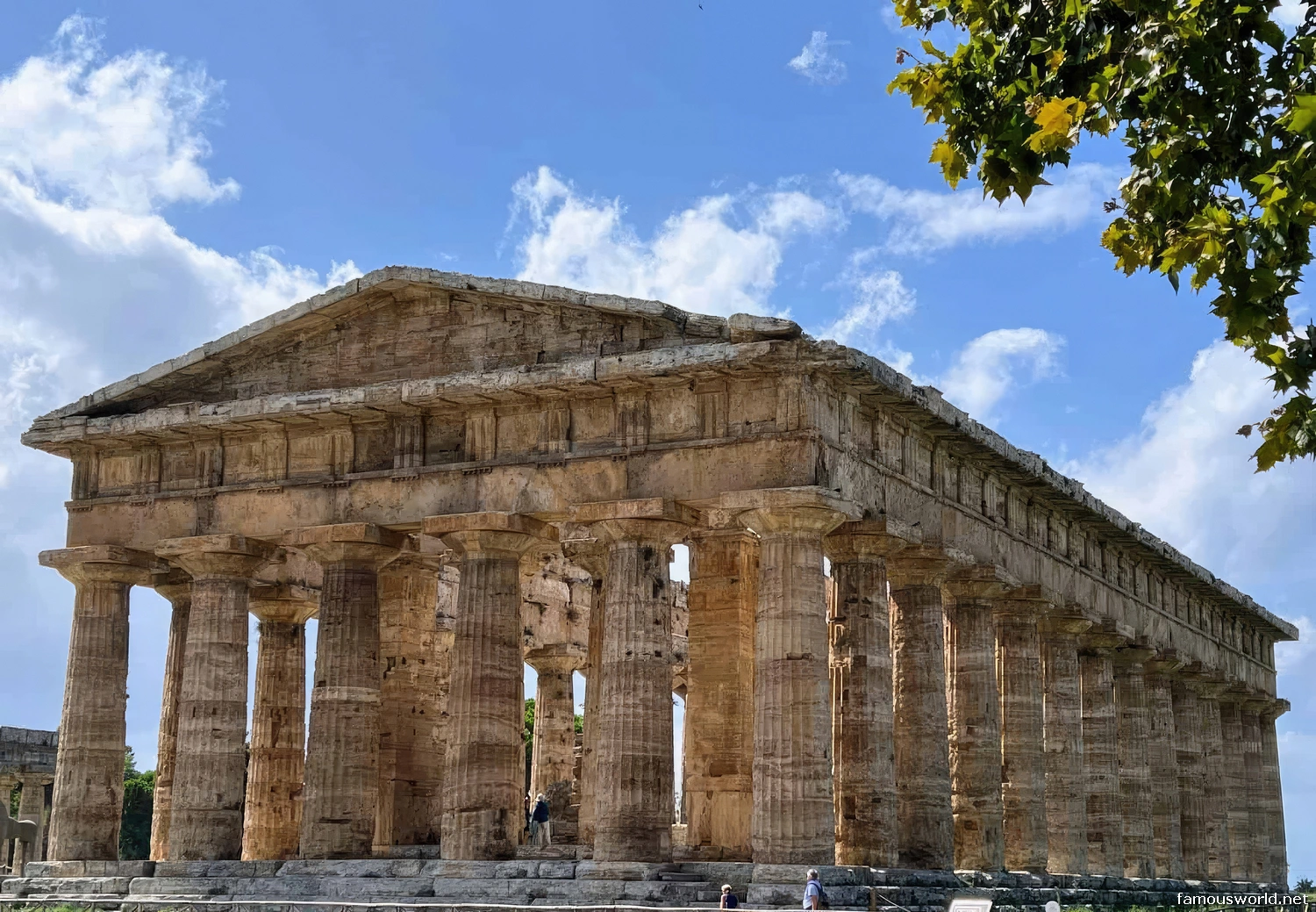
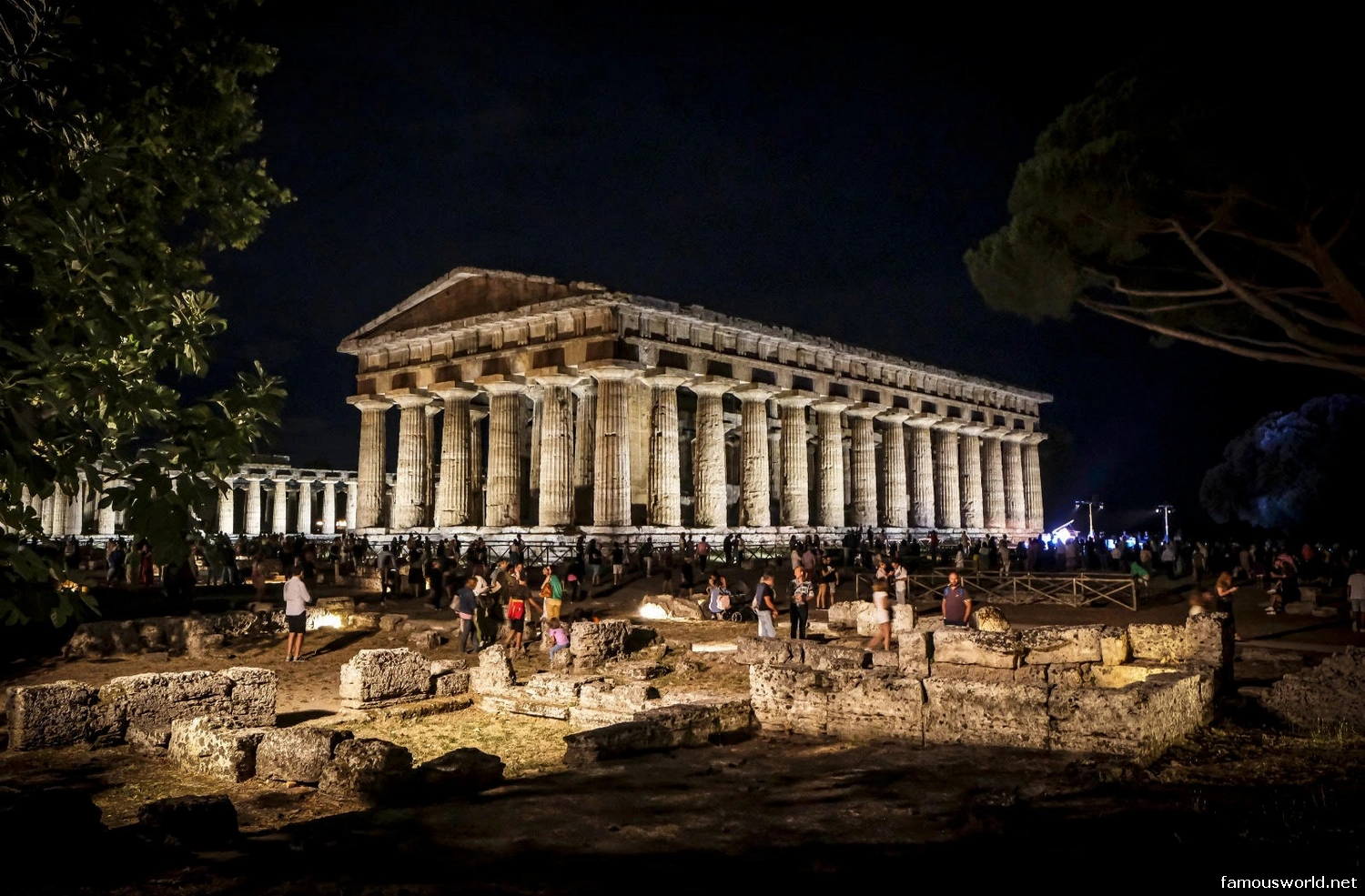
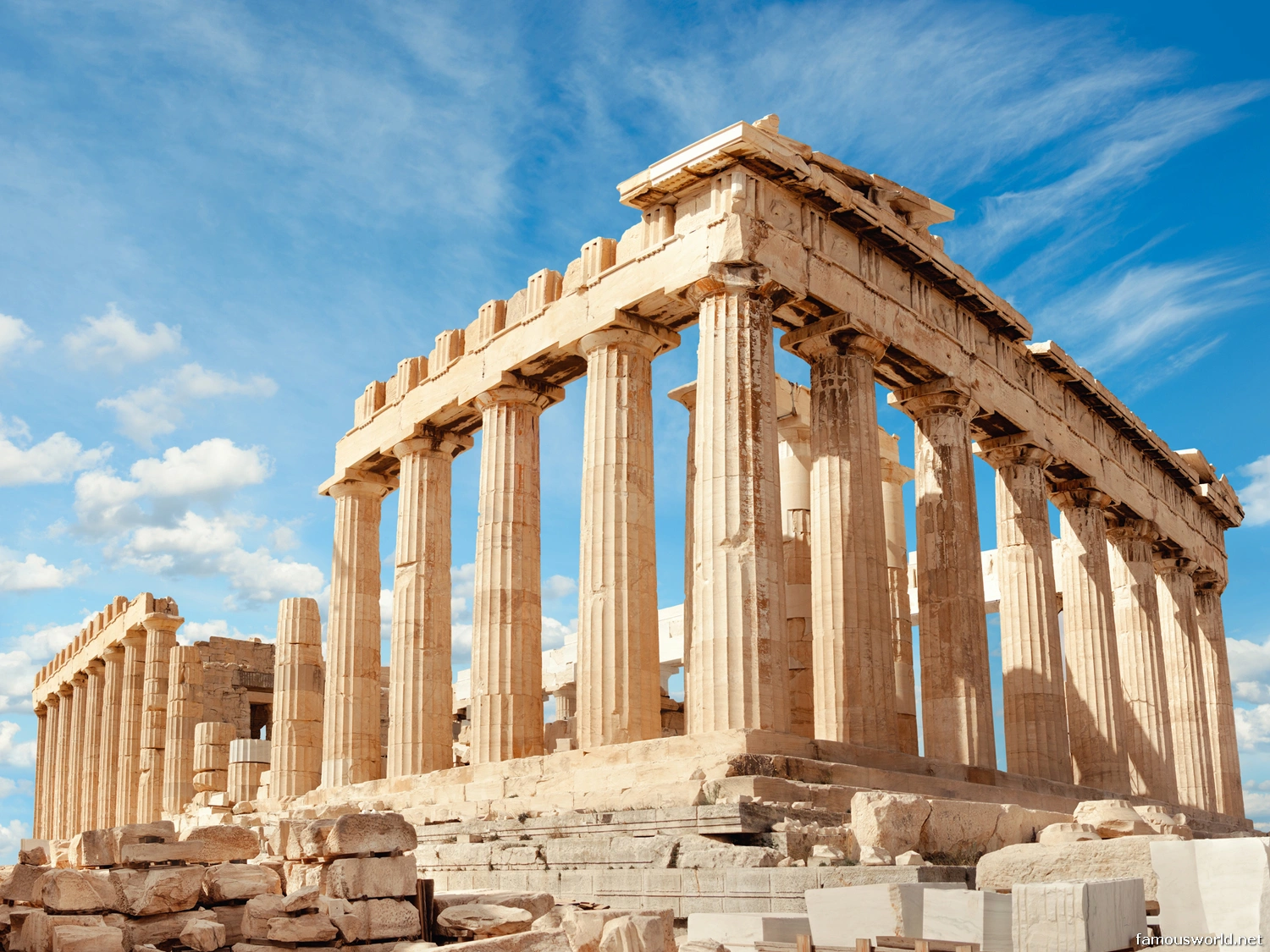
- The Temple of Hera II (c. 460 BC): Often misnamed the Temple of Neptune or Poseidon, this is the largest and best-preserved temple at the site. It is a textbook example of classical Doric architecture, comparable to the Parthenon in Athens.
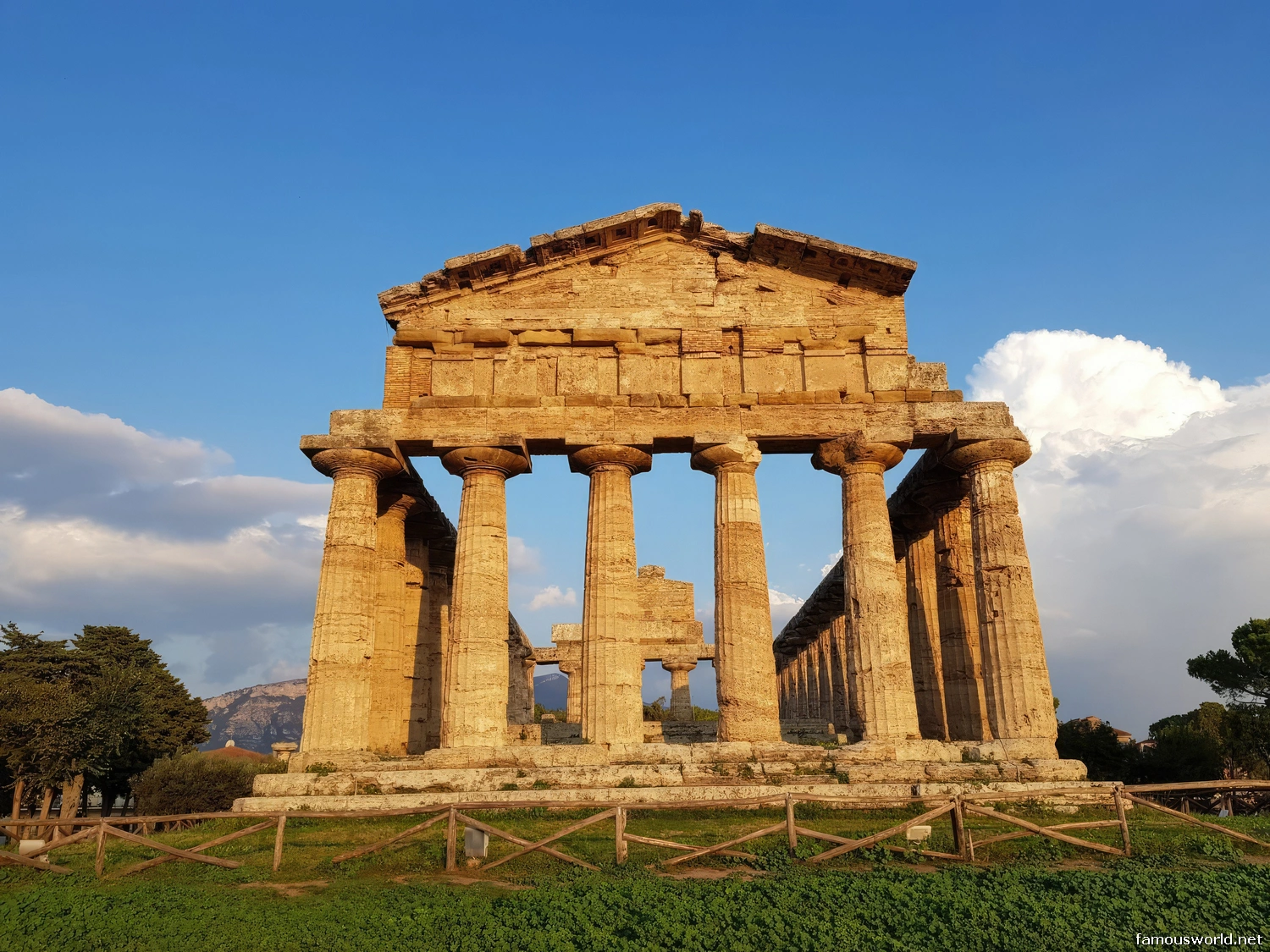
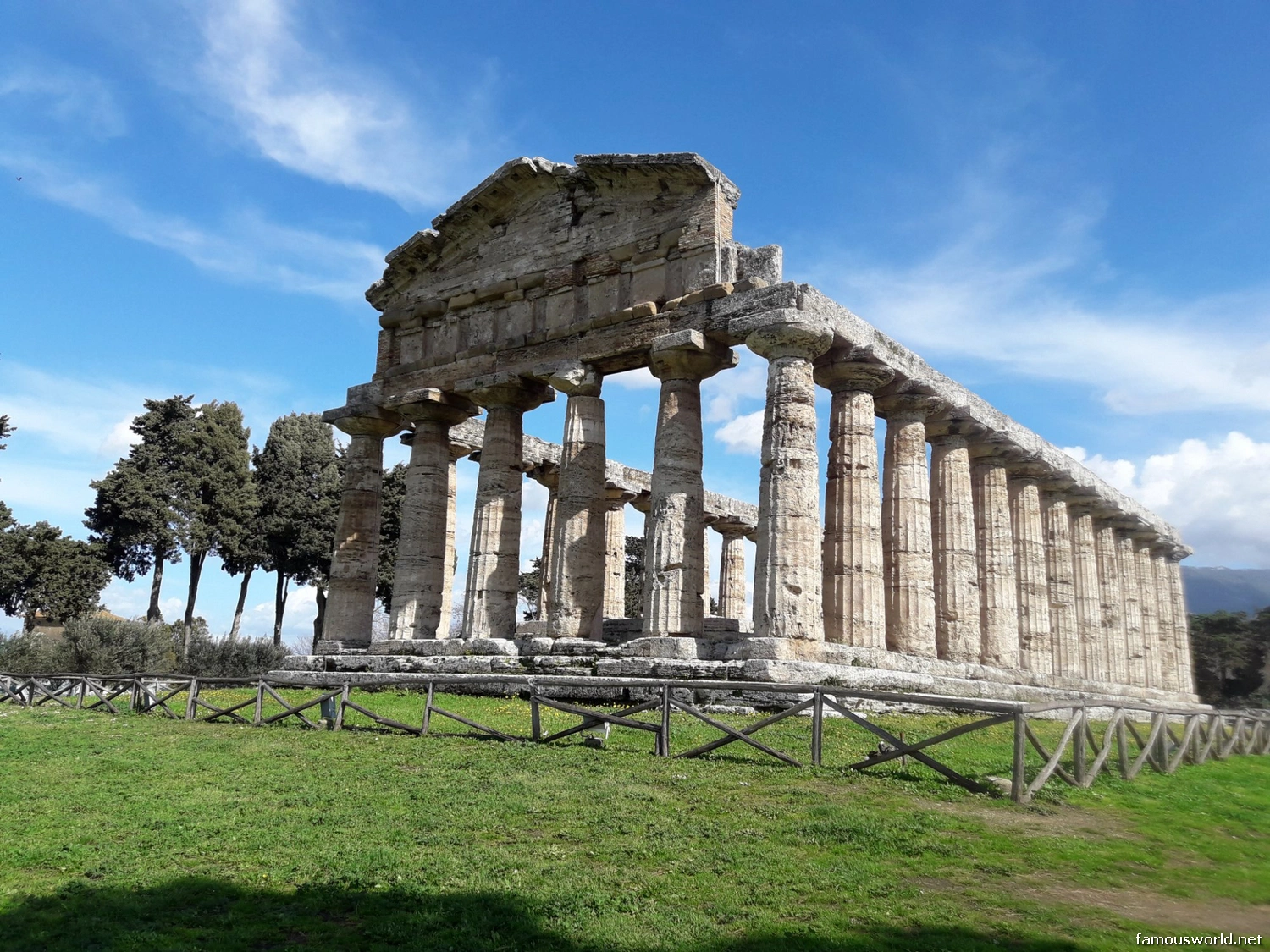
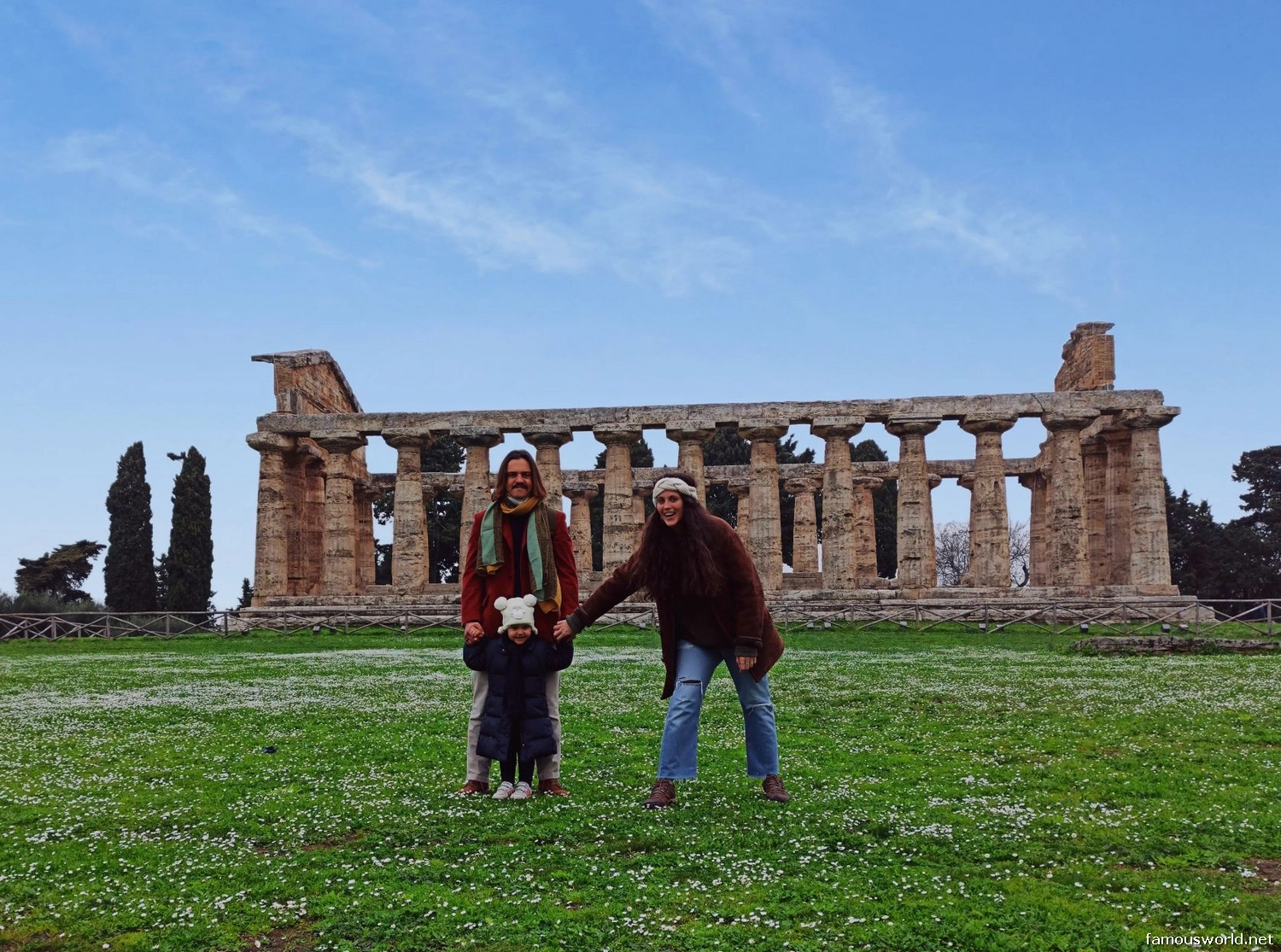
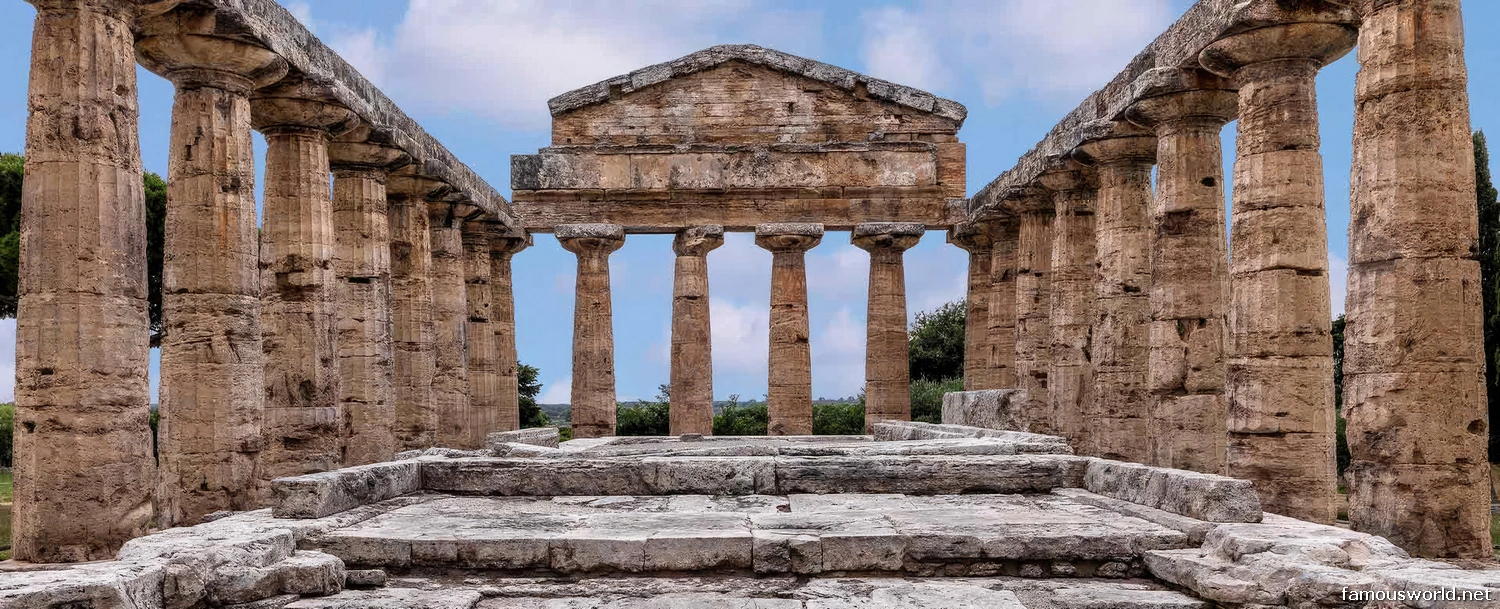
- The Temple of Athena (c. 500 BC): Located on the highest point of the site, it was formerly known as the Temple of Ceres. It shows a mix of Doric and Ionic architectural styles.
- Defensive Walls: The entire ancient city is enclosed by one of the most complete and impressive circuits of defensive walls from the Greek and Lucanian periods, stretching nearly 5 kilometers.
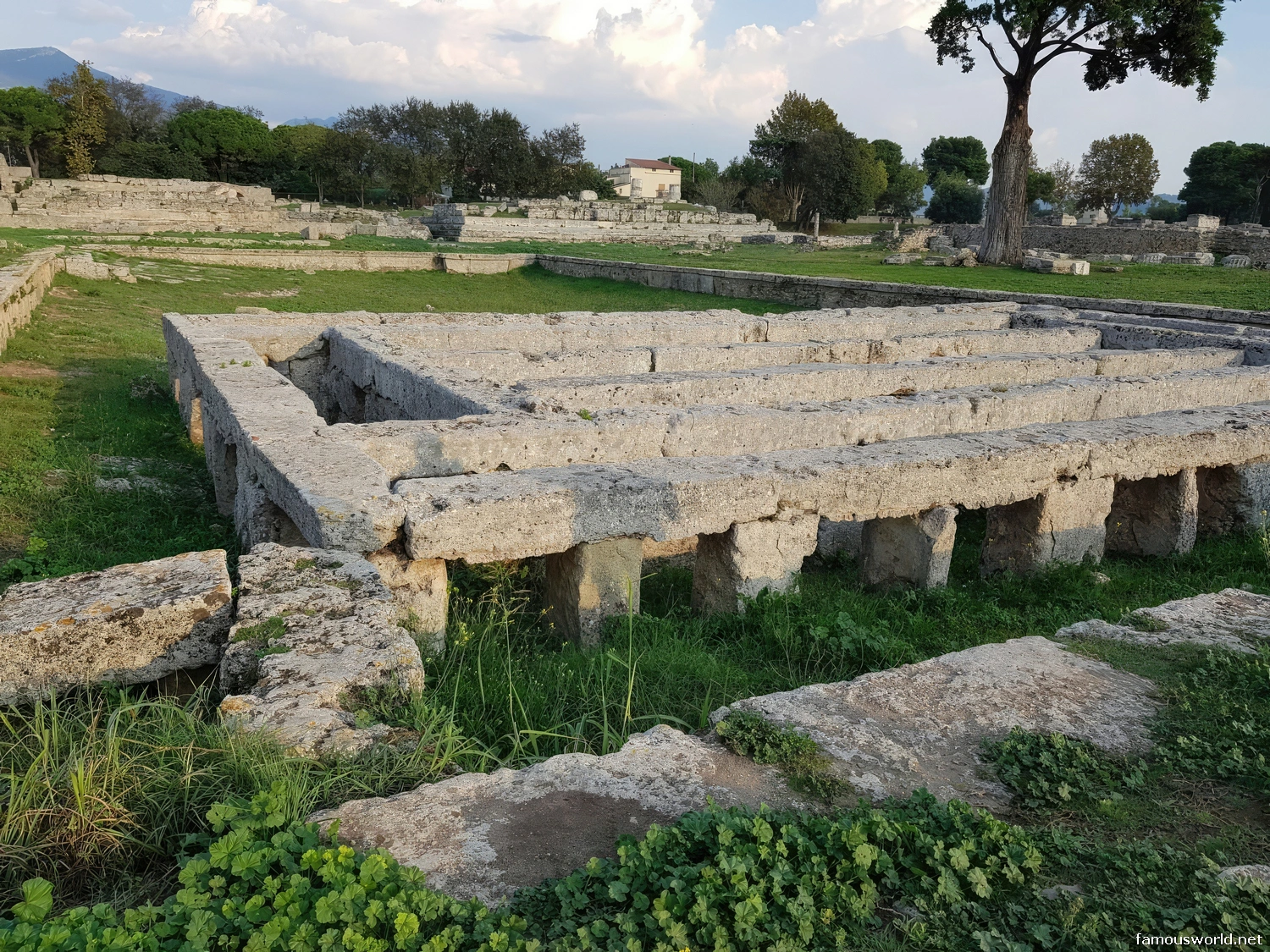
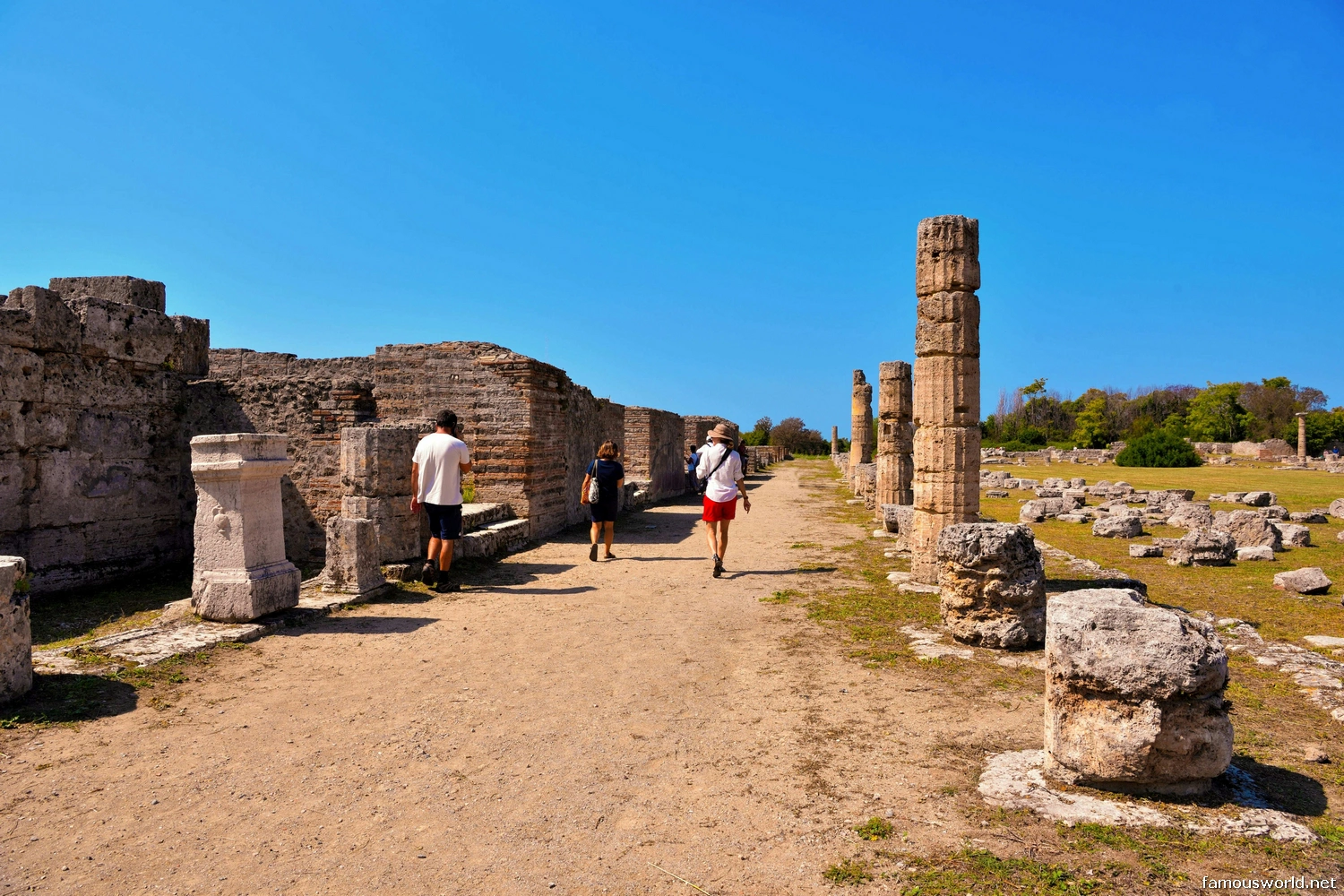
- Roman Ruins: After the Greeks, Paestum became a Roman colony. The park contains extensive ruins of the Roman Forum, an amphitheater, and residential streets that were built over the original Greek city plan.
- The National Archaeological Museum: Located directly opposite the site, the museum is essential to the visit. It houses a rich collection of artifacts found in and around Paestum, most famously the painted slabs from the Tomb of the Diver, a unique and priceless example of Greek painting from the Classical period.
What Makes It Famous
Paestum is a UNESCO World Heritage site renowned for its stunningly preserved Greek architecture.
- World’s Best-Preserved Greek temples: The temples of Paestum are considered among the most complete and best-preserved examples of Doric architecture in the entire world.
- Magna Graecia: It is one of the foremost symbols of Greek colonization in Italy, offering invaluable insight into the art, architecture, and daily life of these powerful city-states.
- The Tomb of the Diver: The museum’s most famous artifact is the only surviving example of Greek wall painting from the Archaic or Classical periods, depicting a mysterious scene of a man diving into water.
Differences from Other Wonders (vs. the Colosseum, Rome)
A sacred Greek colonial site offers a vastly different experience from a Roman imperial amphitheater.
- Environment (Serene Sanctuary vs. Urban Super-Structure): Paestum is a wide-open, peaceful archaeological park set in a rural landscape. The Colosseum is a single, colossal monument standing in the dense, chaotic heart of a modern European capital.
- Focus (Religious Worship vs. Public Spectacle): The temples of Paestum were sacred spaces designed for the worship of gods. The Colosseum was a public arena designed for brutal entertainment, including gladiatorial combat and public executions.
- Core Story (Greek Colonialism vs. Roman Imperial Power): Paestum tells the story of Greek culture being transplanted to new lands. The Colosseum is an iconic symbol of the immense power, engineering might, and social control of the Roman Empire at its zenith.
- Atmosphere (Peaceful and Contemplative vs. Grand and Overwhelming): The atmosphere at Paestum is tranquil, inviting quiet reflection on the classical world. The atmosphere at the Colosseum is one of overwhelming scale and grandeur, evoking the dramatic and often violent history that unfolded within its walls.
Location on world map