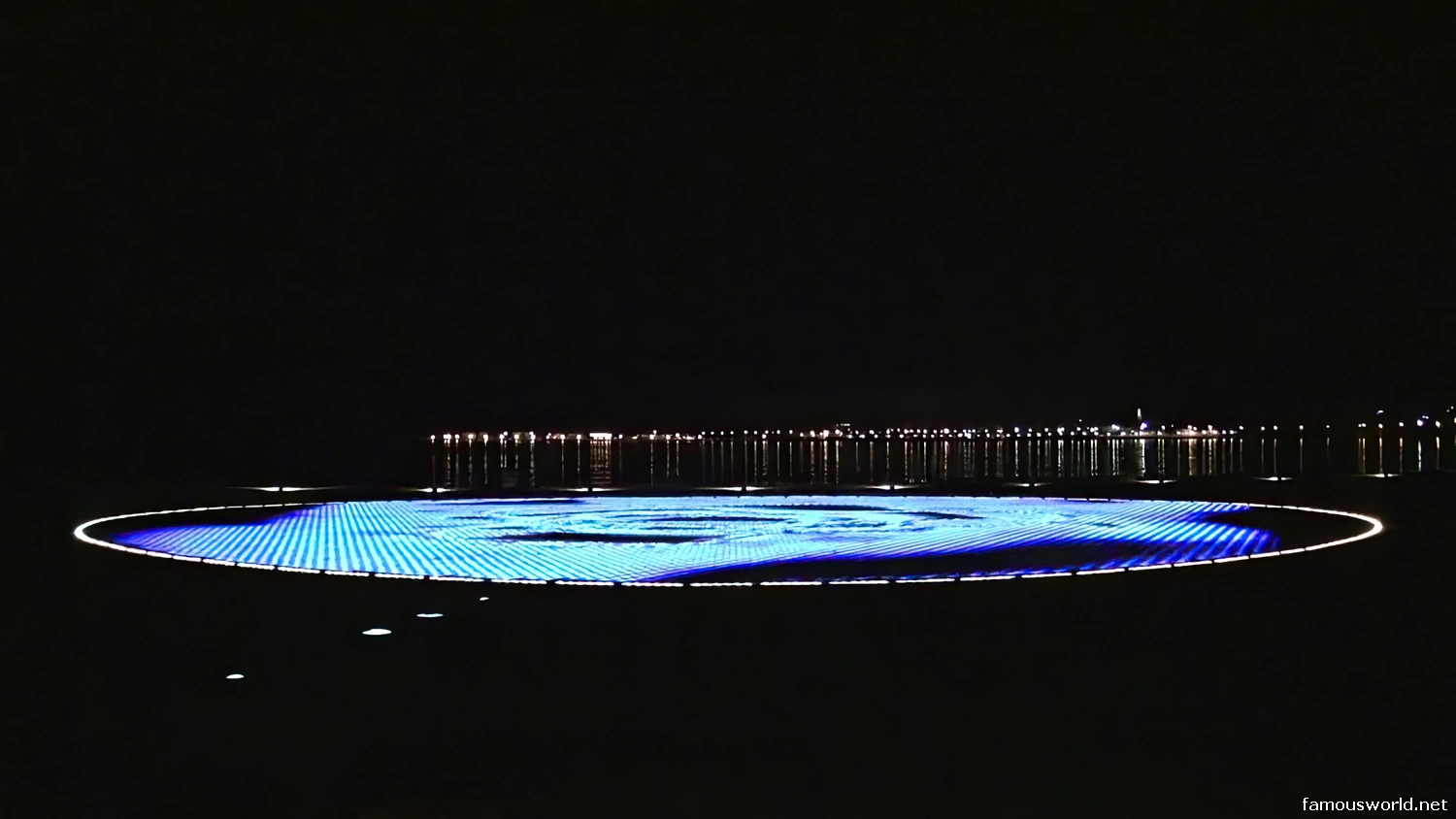

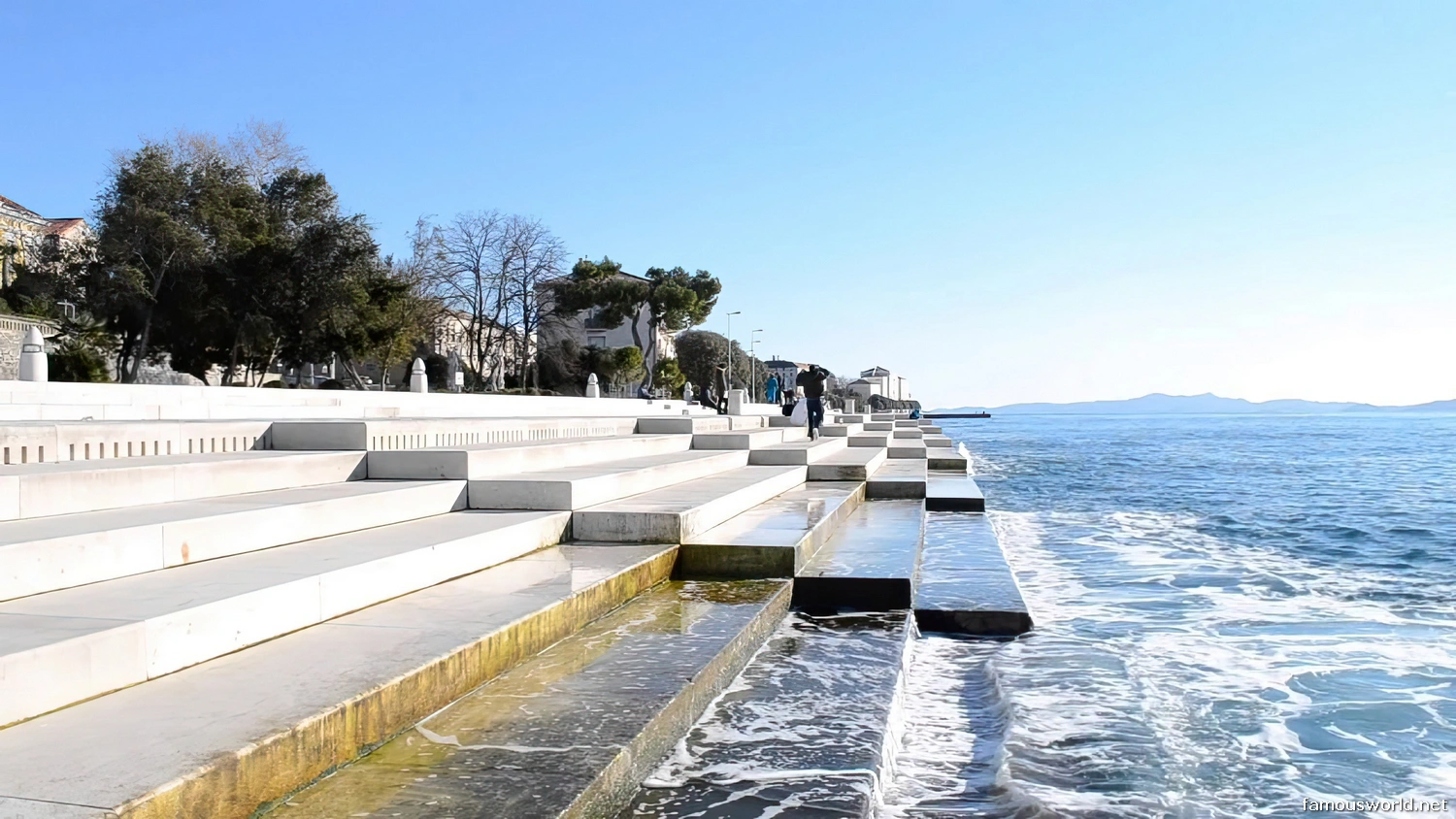
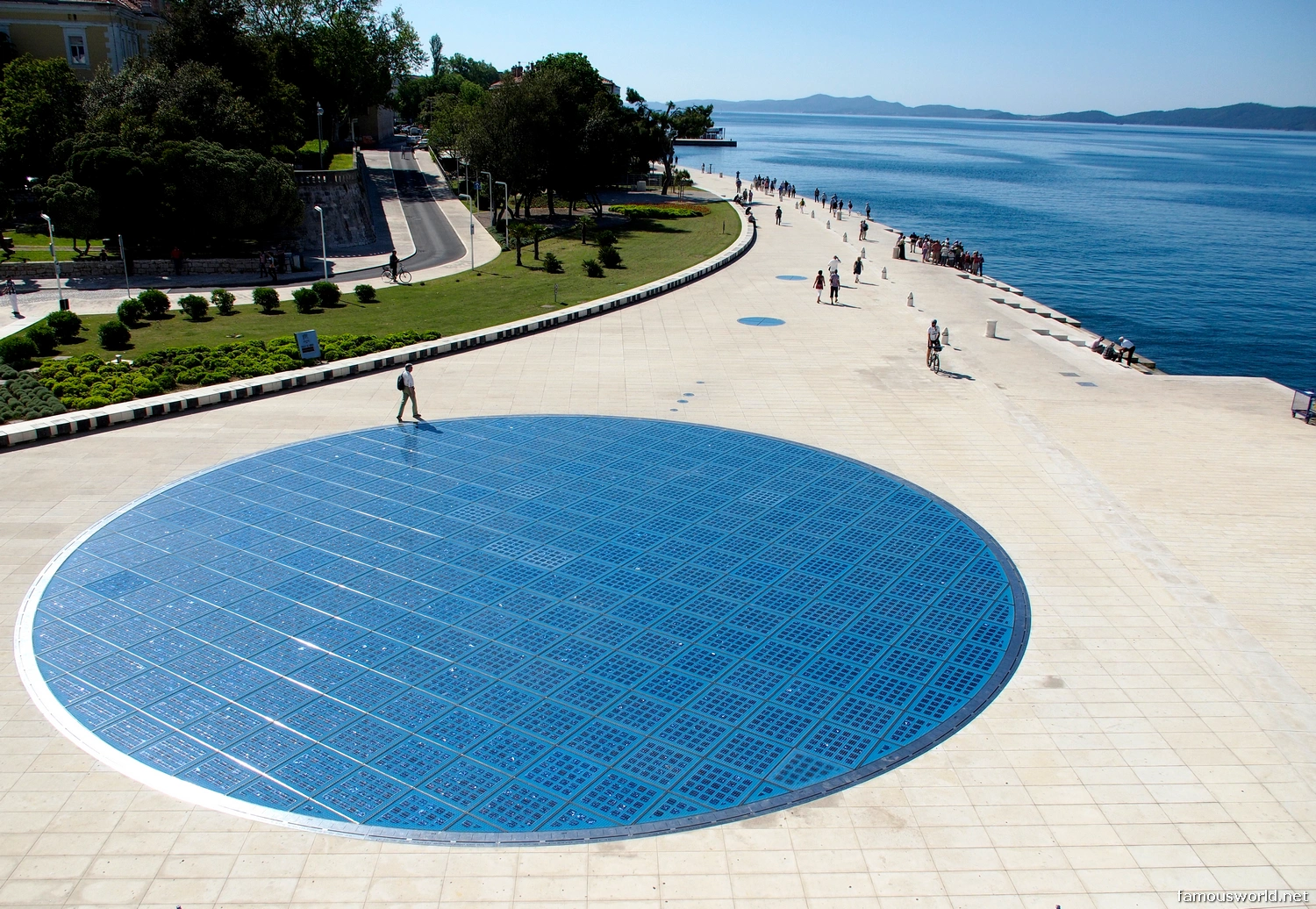
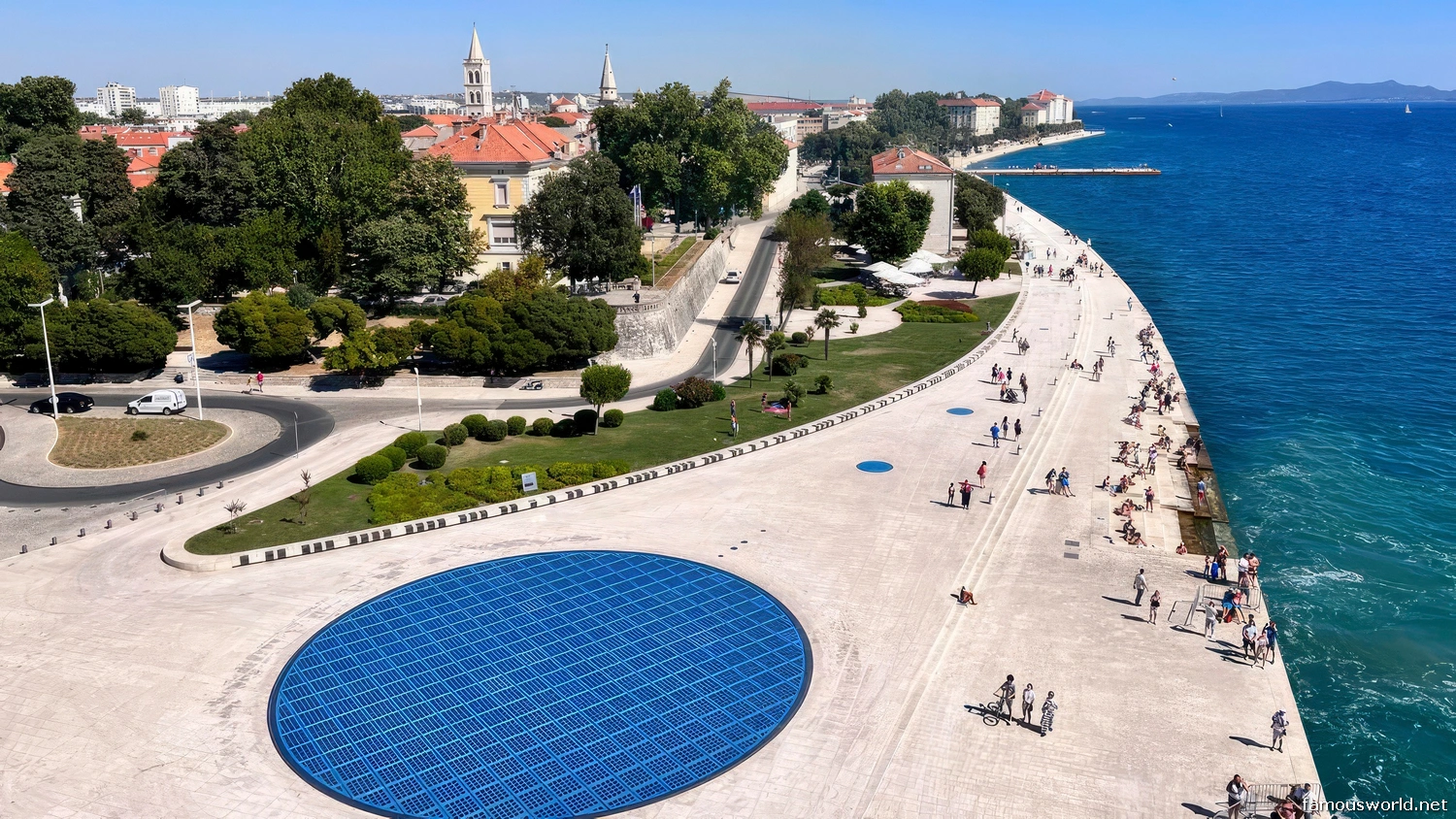
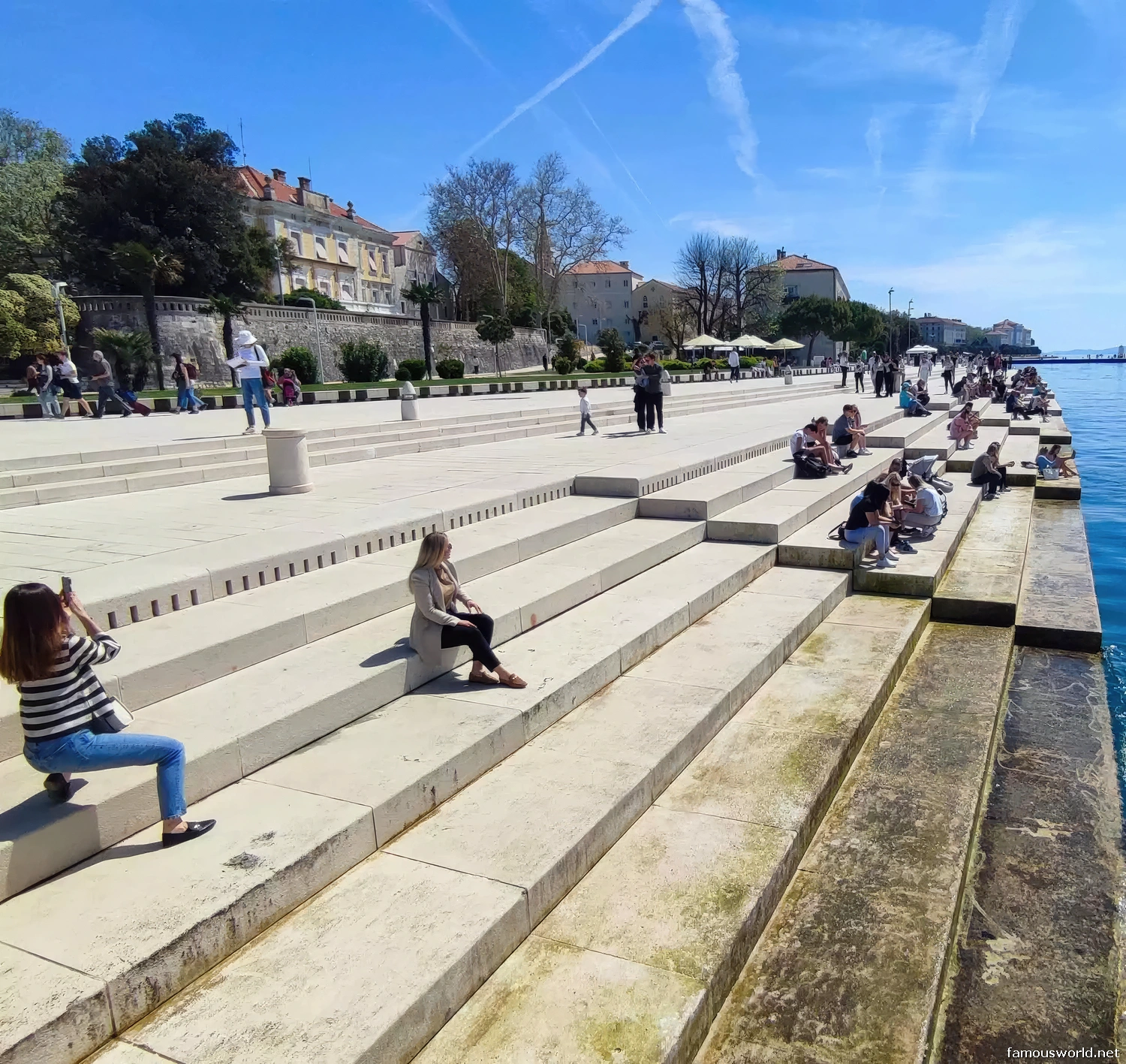
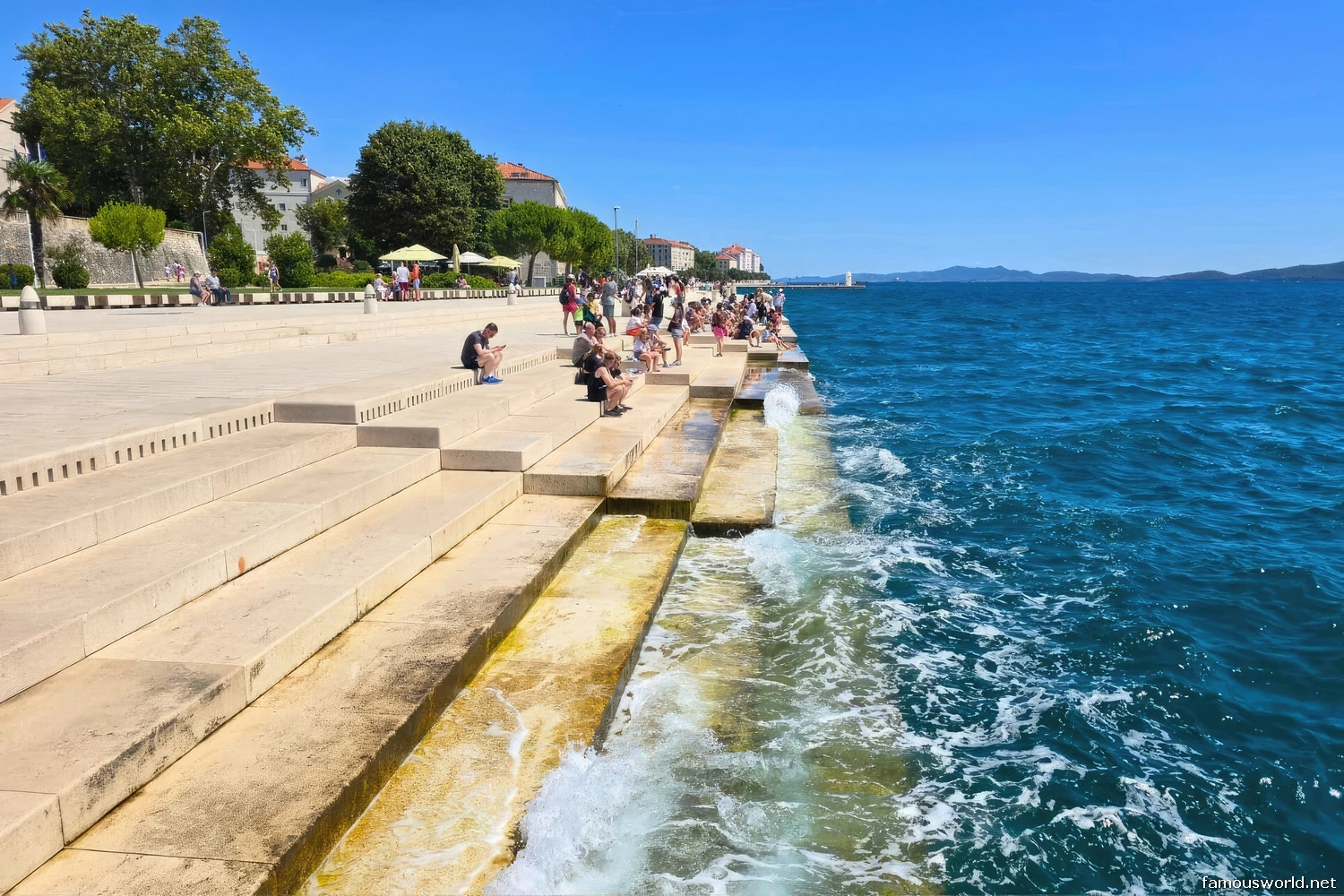
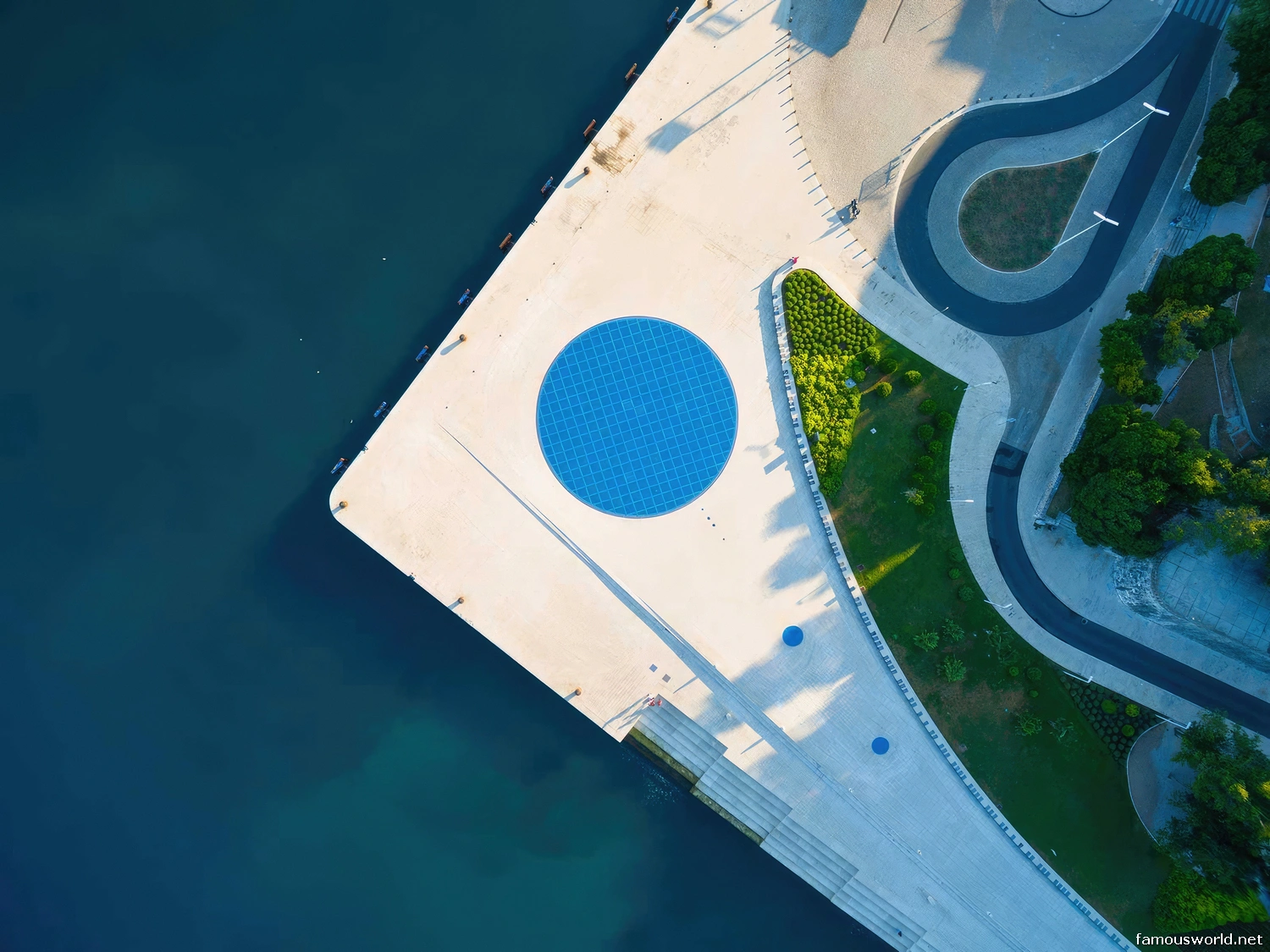

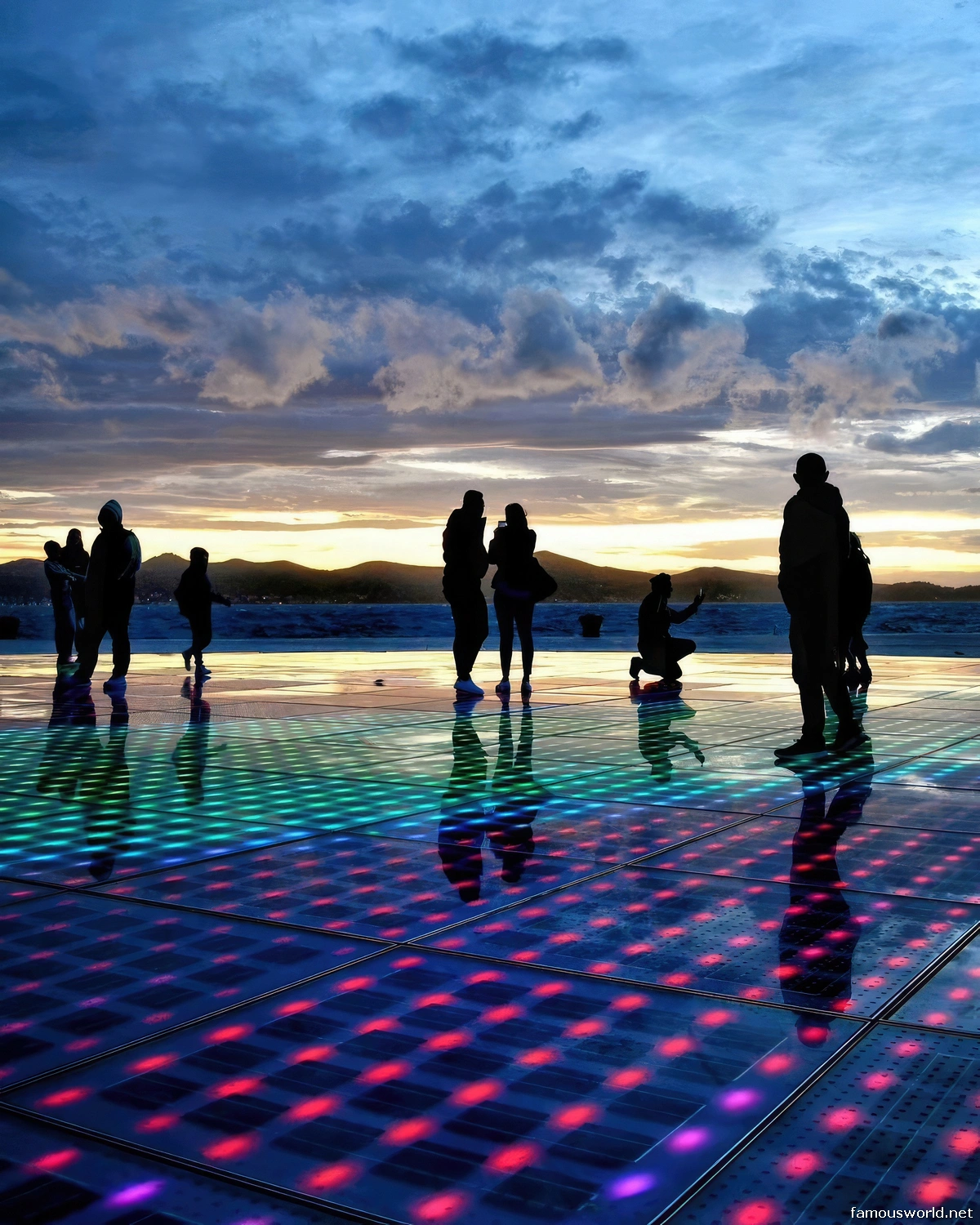

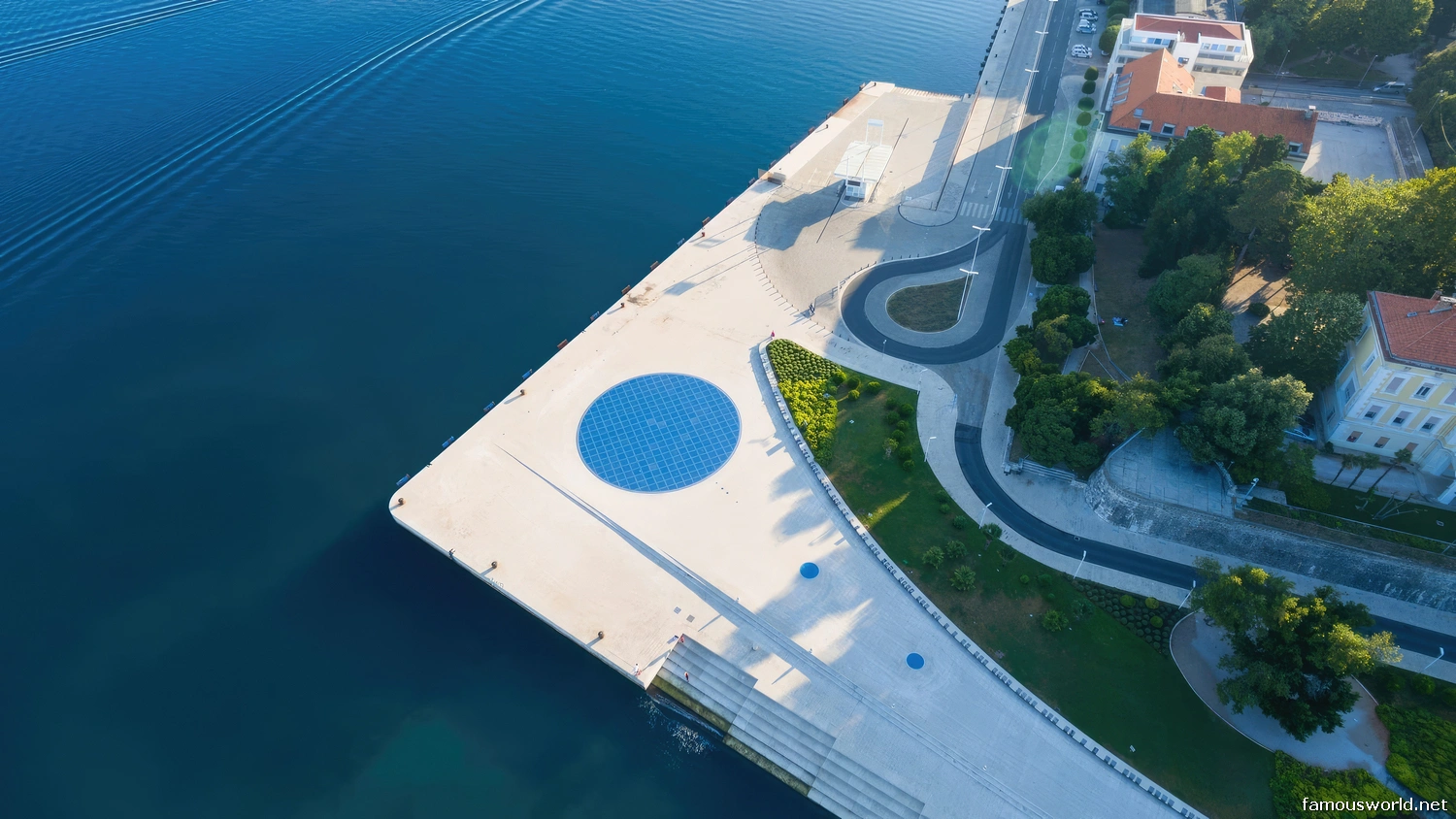
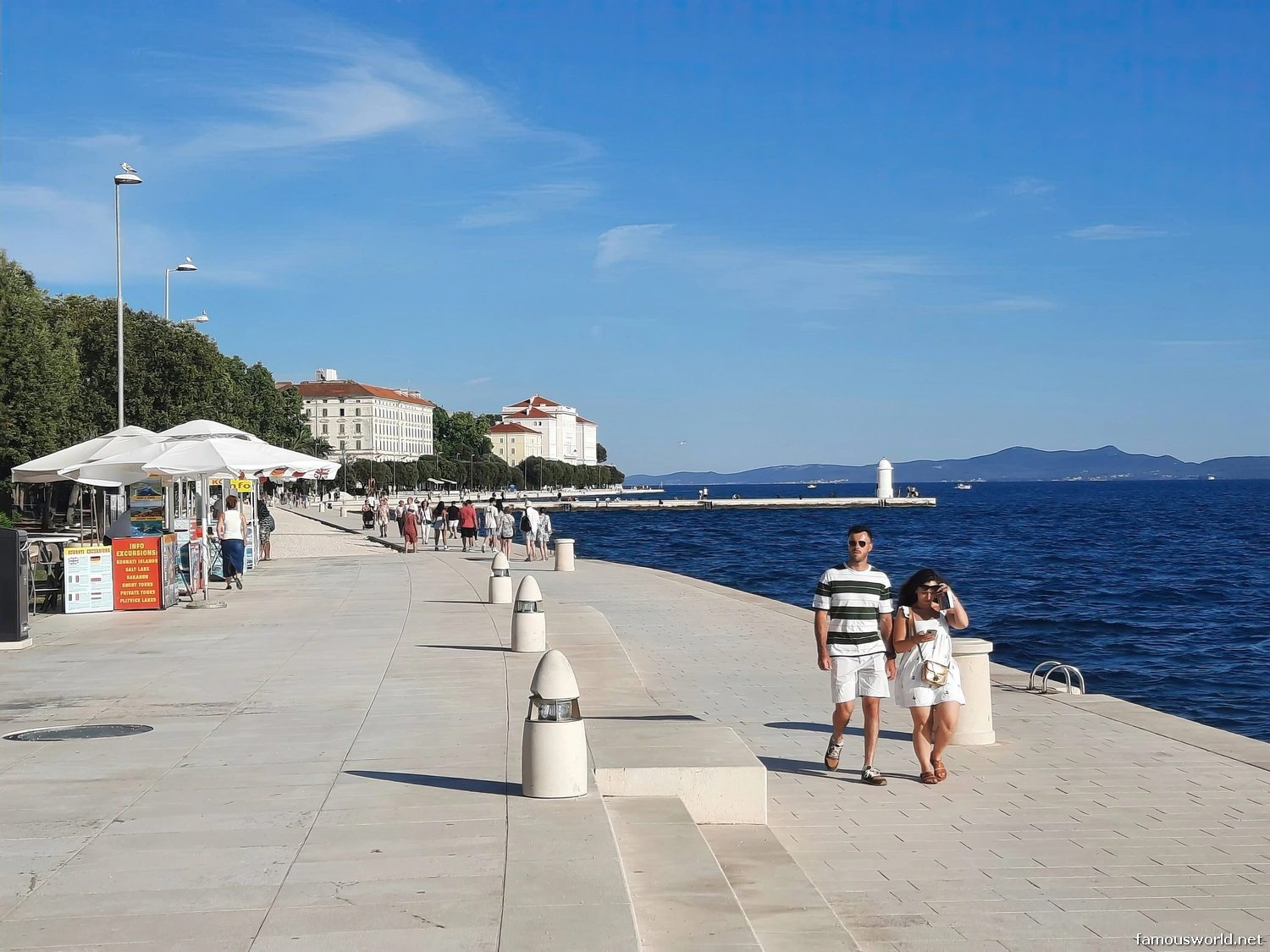

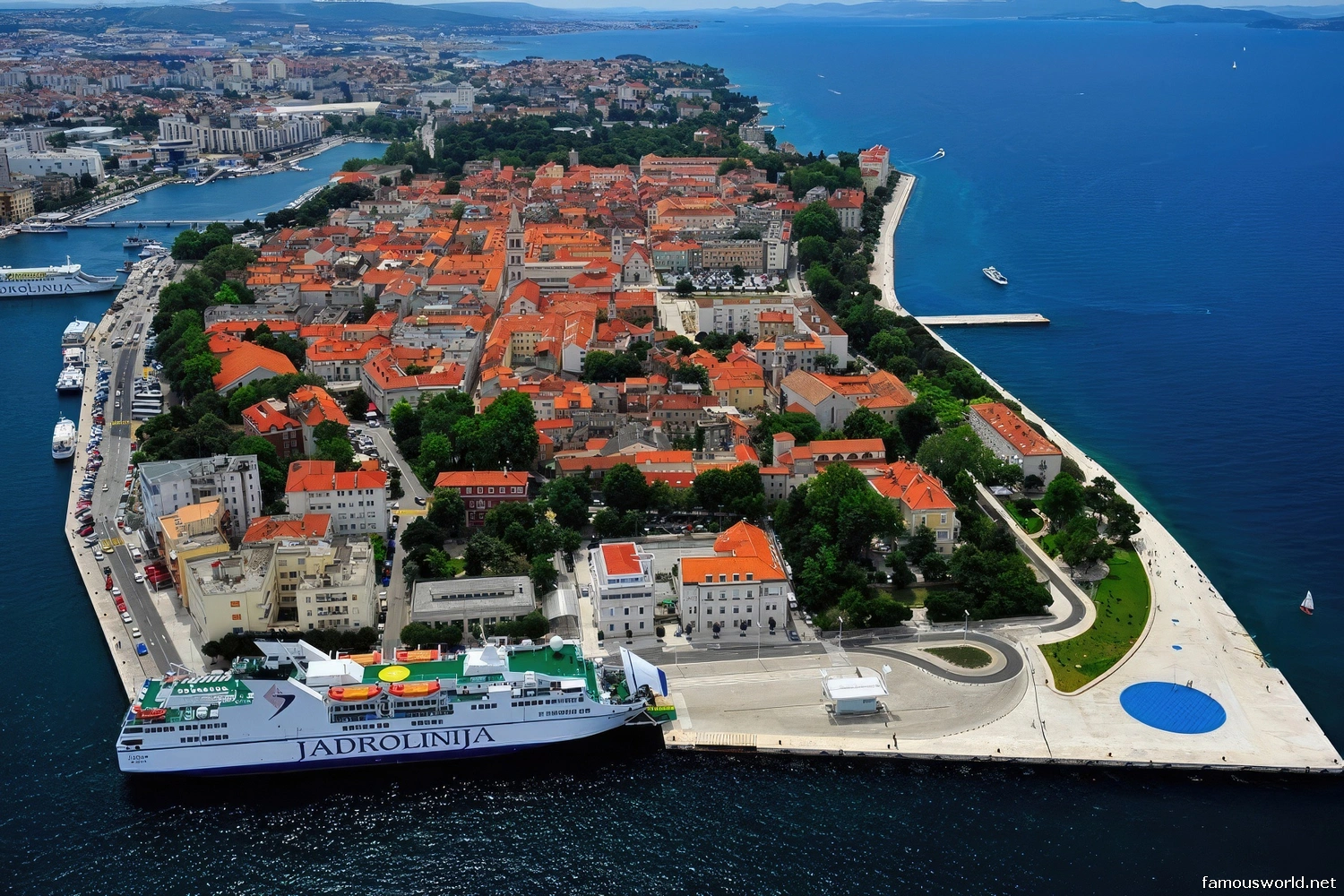


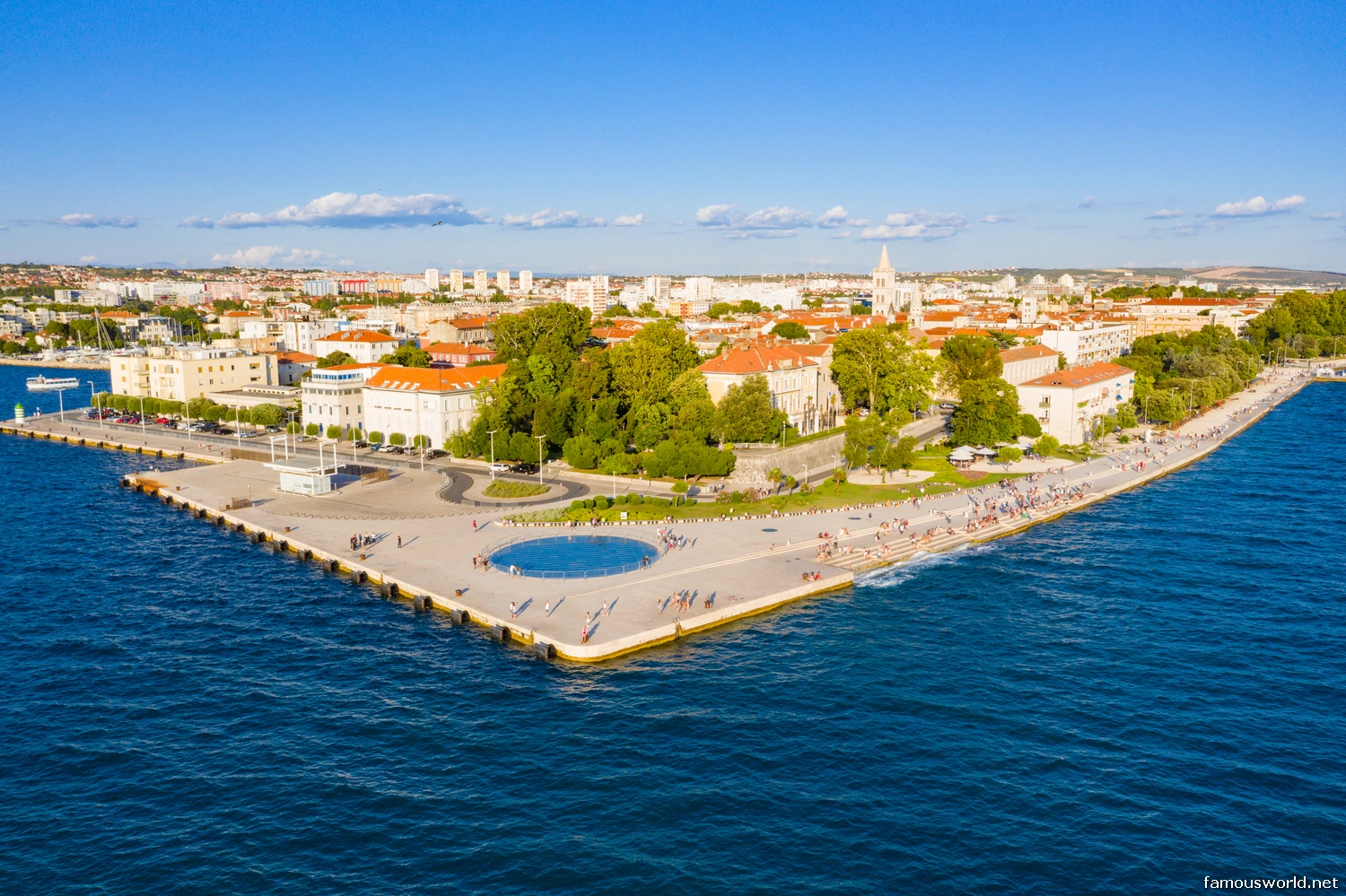

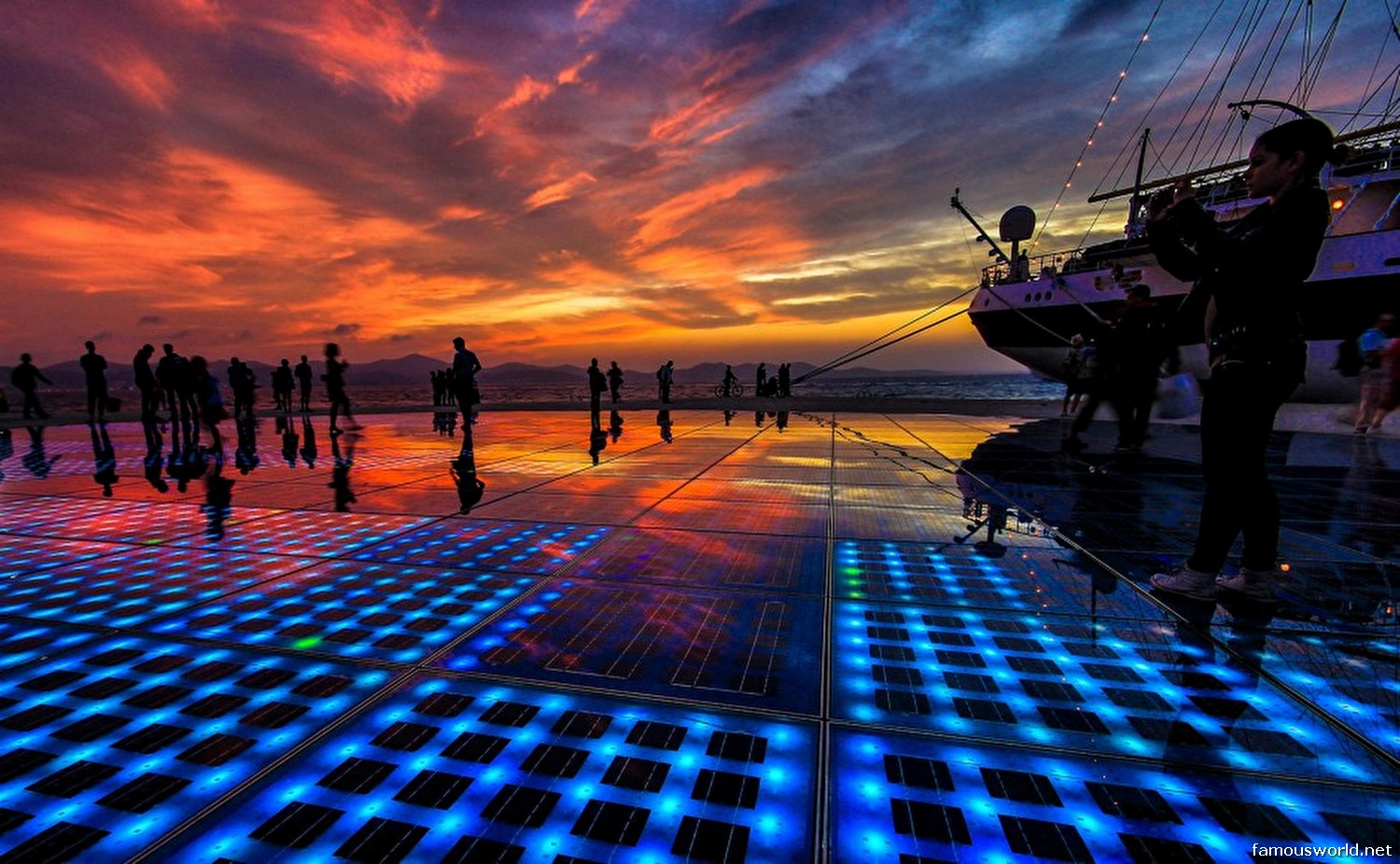


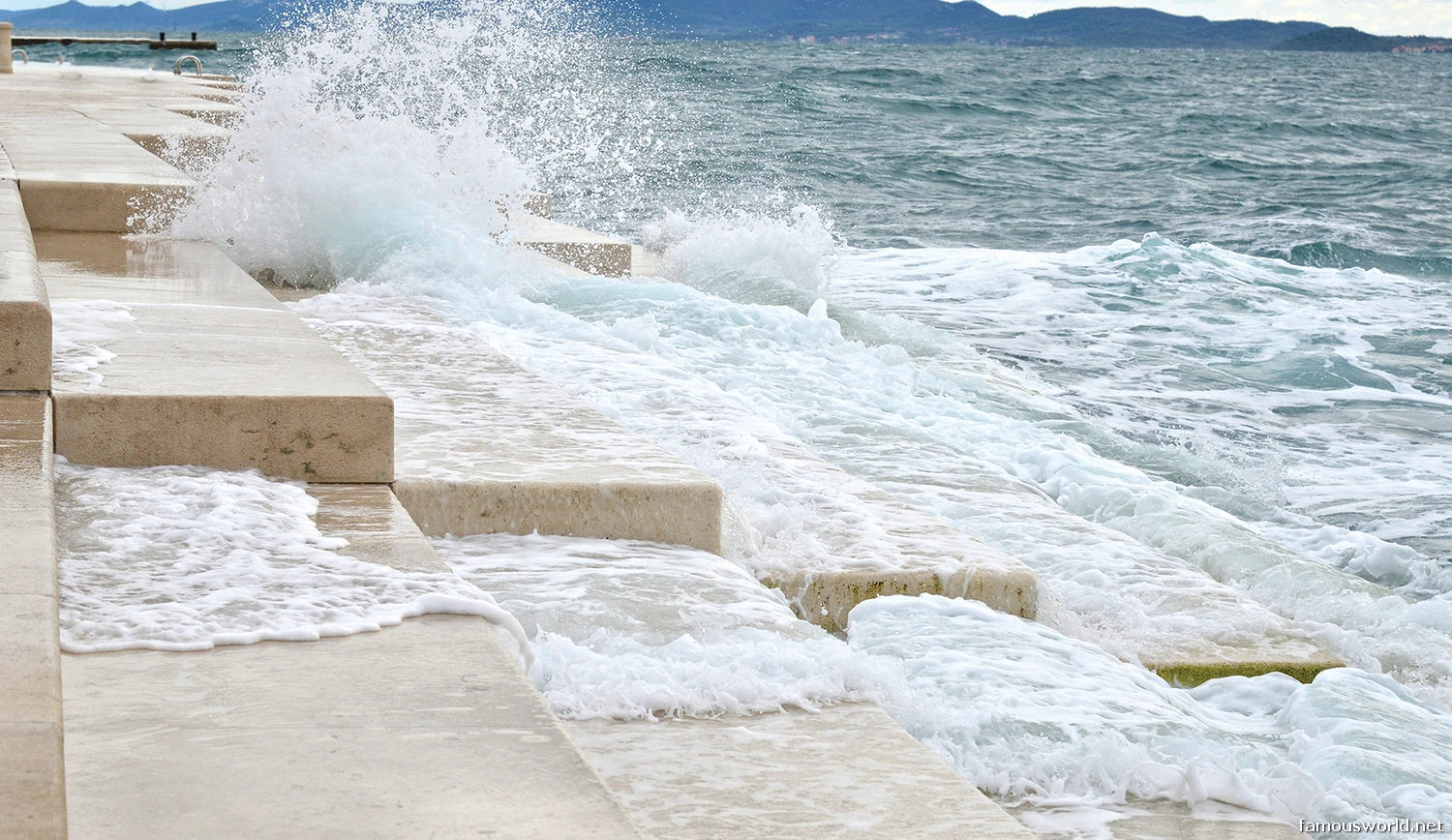
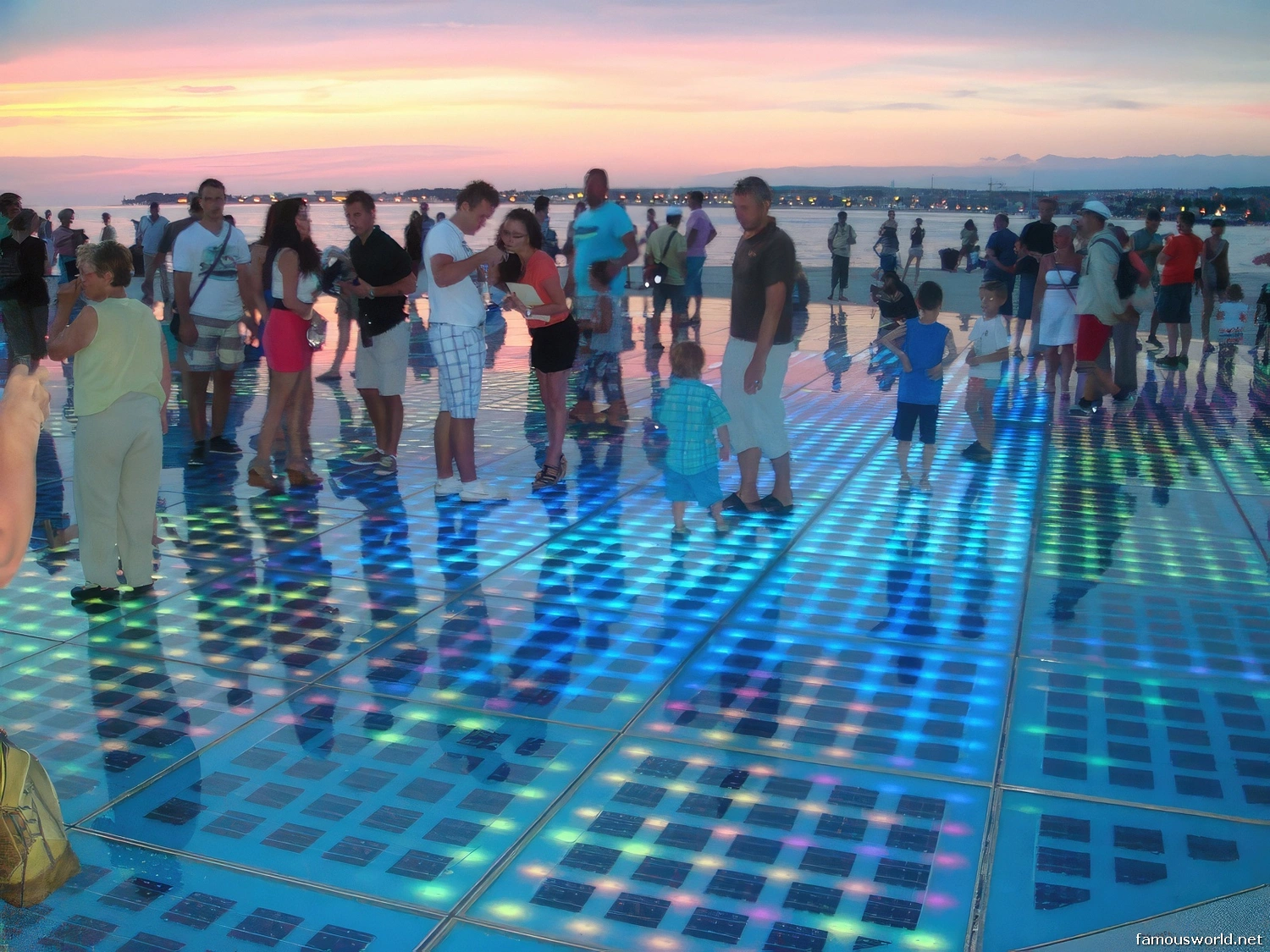





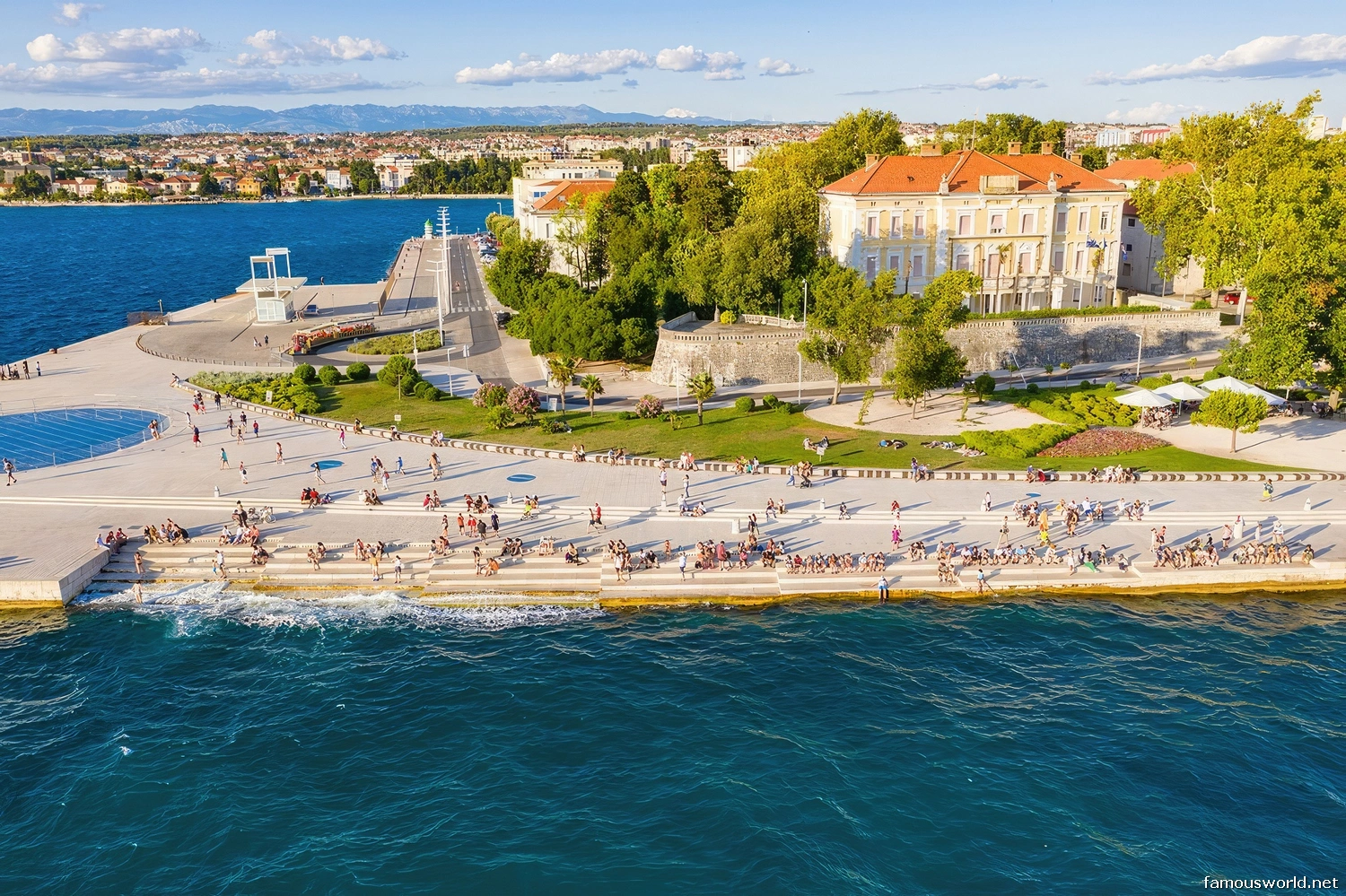
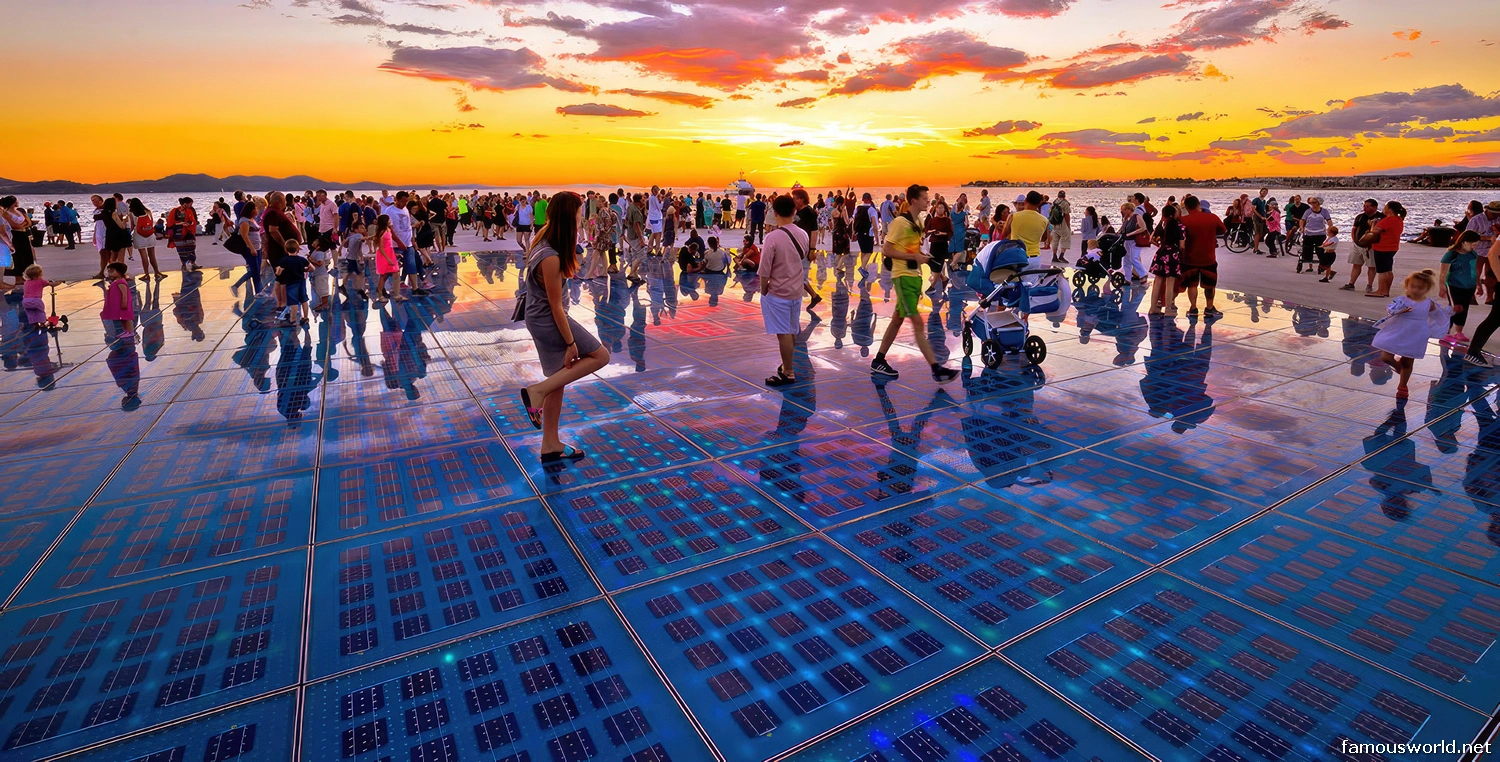
On the historic waterfront of Zadar, two of the world’s most unique public art installations create a magical dialogue between humanity and nature. The Sea Organ (Morske Orgulje) and the Greeting to the Sun (Pozdrav Suncu) are not static monuments, but living works of art powered by the sea and the sun. The first plays an endless, haunting melody generated by the Adriatic waves, while the second absorbs solar energy to produce a spectacular light show after sunset. Together, they have transformed Zadar’s promenade into an unforgettable sensory experience and a modern pilgrimage site for those seeking one of the most beautiful sunsets in the world.
Listen to an introduction about Zadar Sea Organ and Greeting to the Sun

Name and Location
- Name: Sea Organ (Morske Orgulje) and Greeting to the Sun (Pozdrav Suncu).
- Location: On the Istarska Obala promenade at the western end of the Zadar peninsula (Old Town), Croatia.
How to Get There
The installations are part of a public space and are freely accessible 24/7.
- By Foot: The best way to reach them is by a pleasant walk along the city’s waterfront promenade (Riva) from anywhere in Zadar’s Old Town.
Landscape and Architecture
The installations are masterpieces of design that integrate art directly into the coastal landscape.
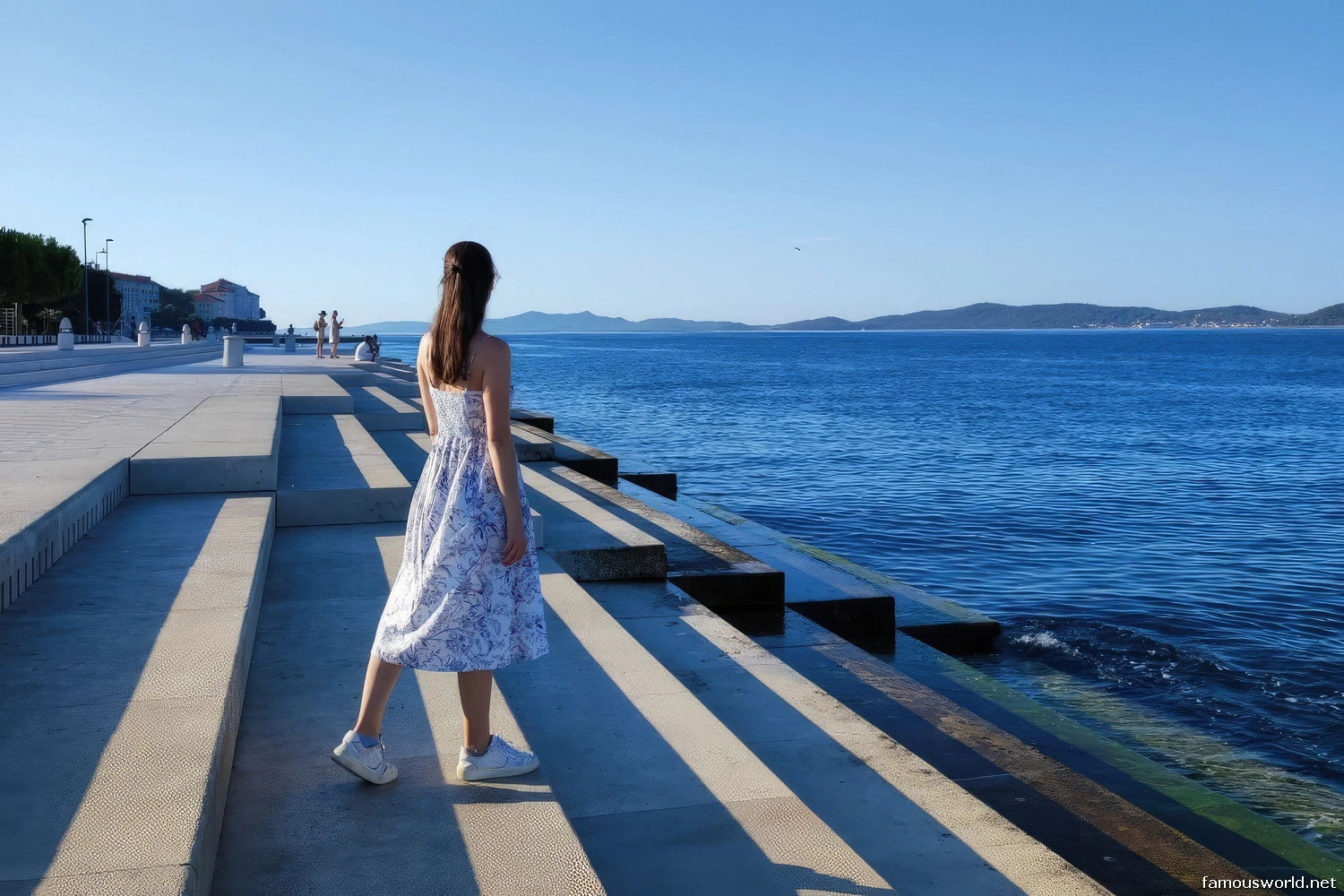
- The Landscape: They are situated on the very tip of the Zadar peninsula, offering completely unobstructed views of the sea and the islands of Ugljan and Pašman. This location was famously praised by Alfred Hitchcock for having the most beautiful sunset in the world, and the installations are designed to enhance this daily natural spectacle.
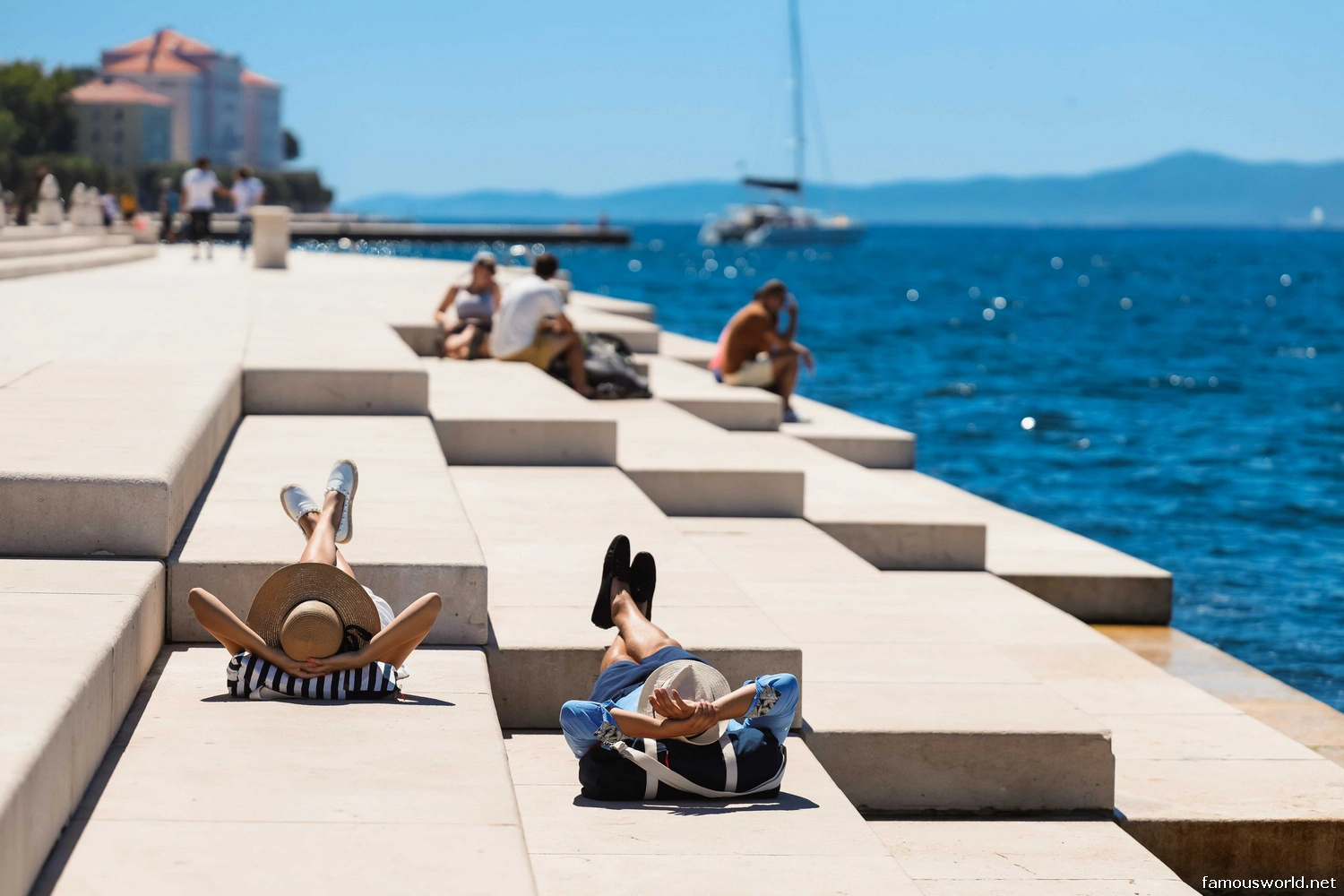
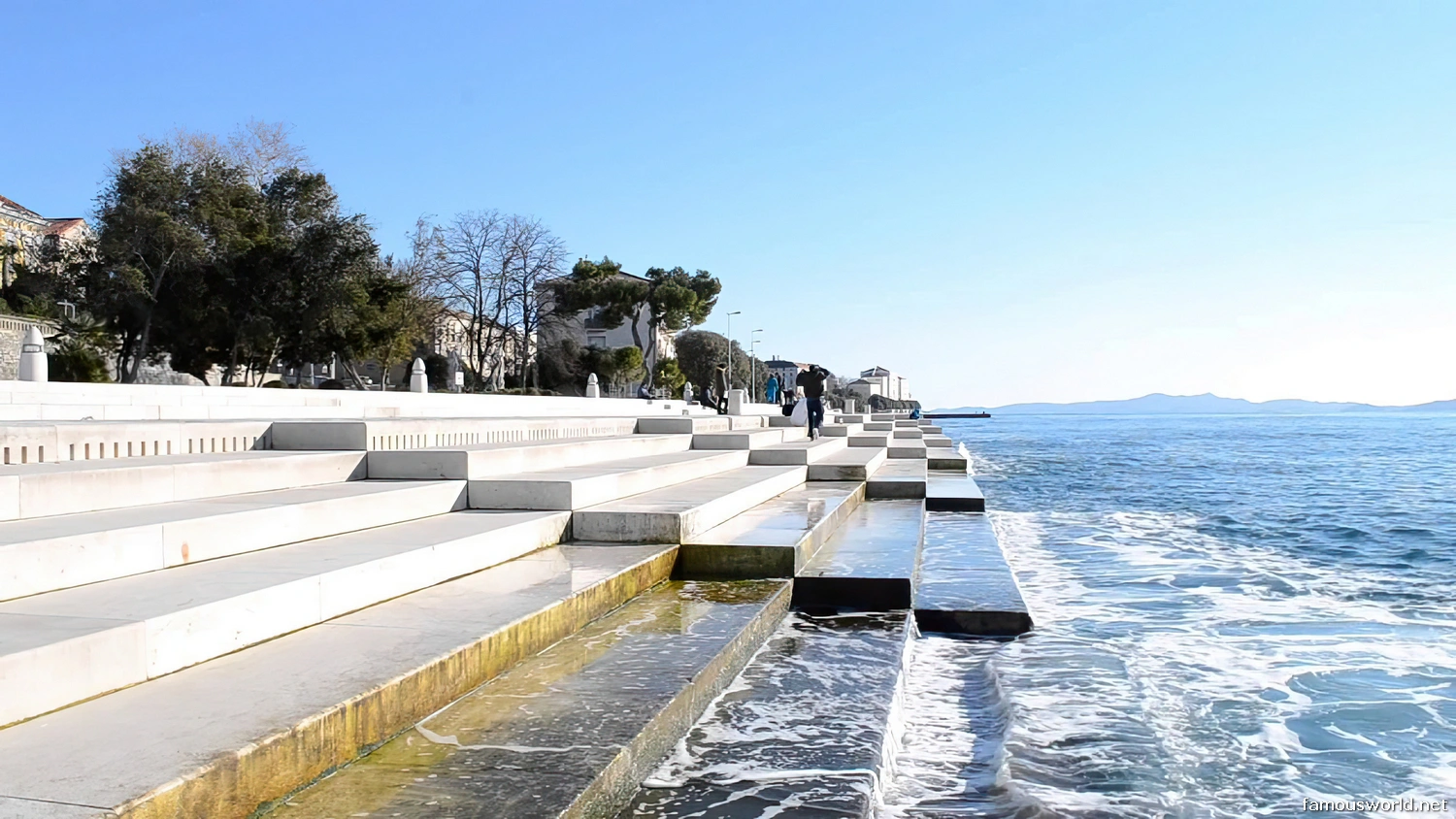
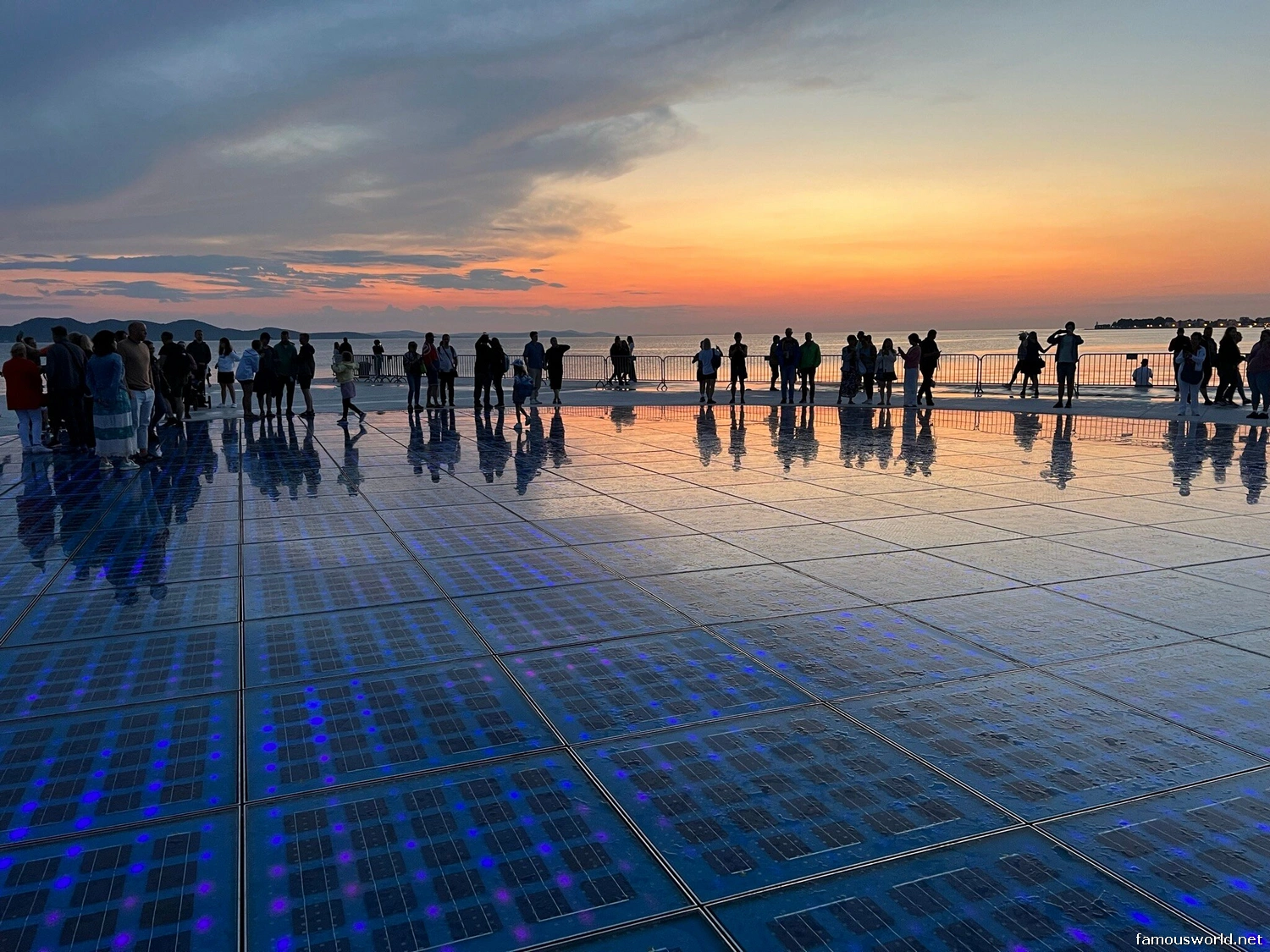
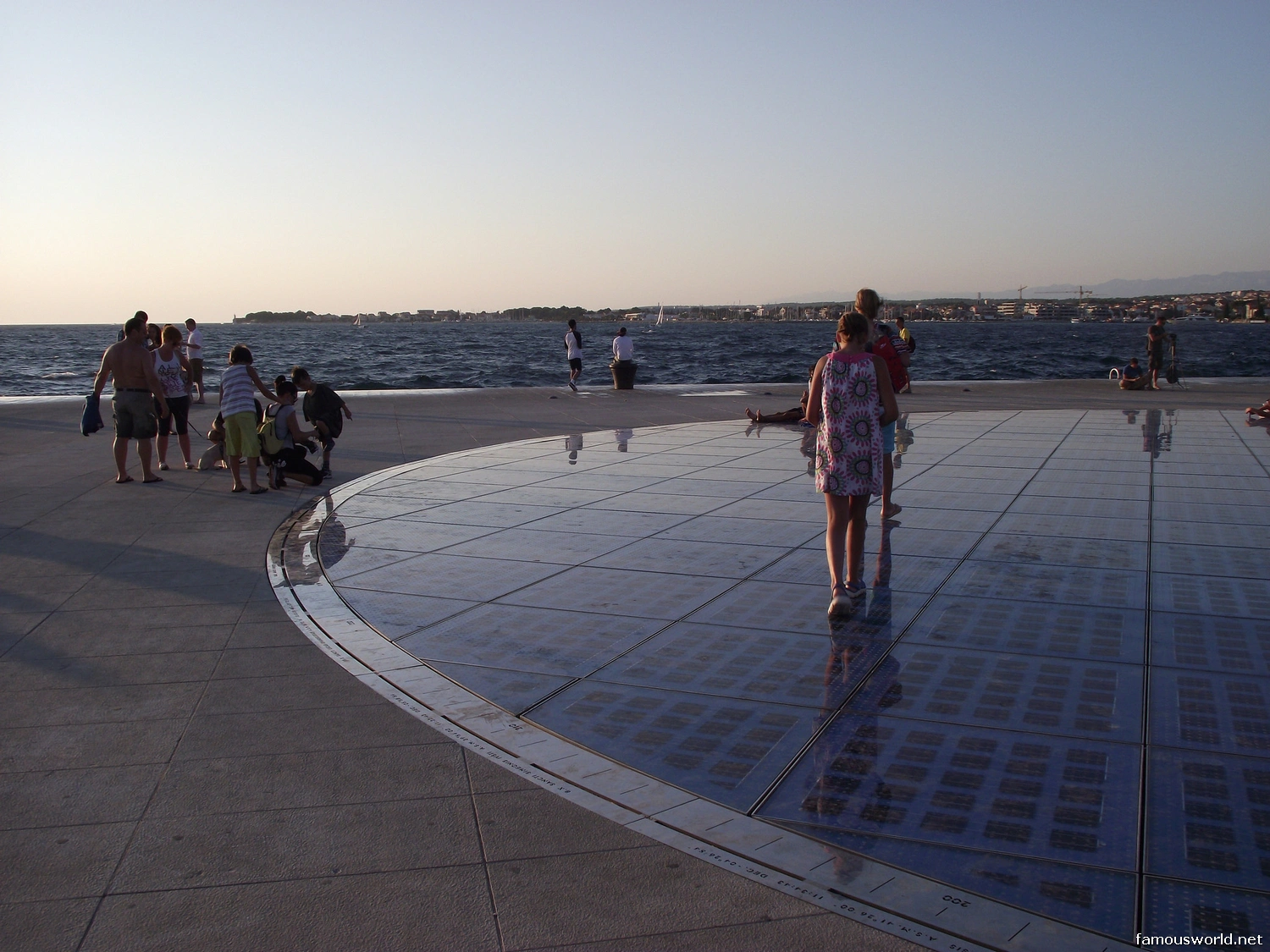
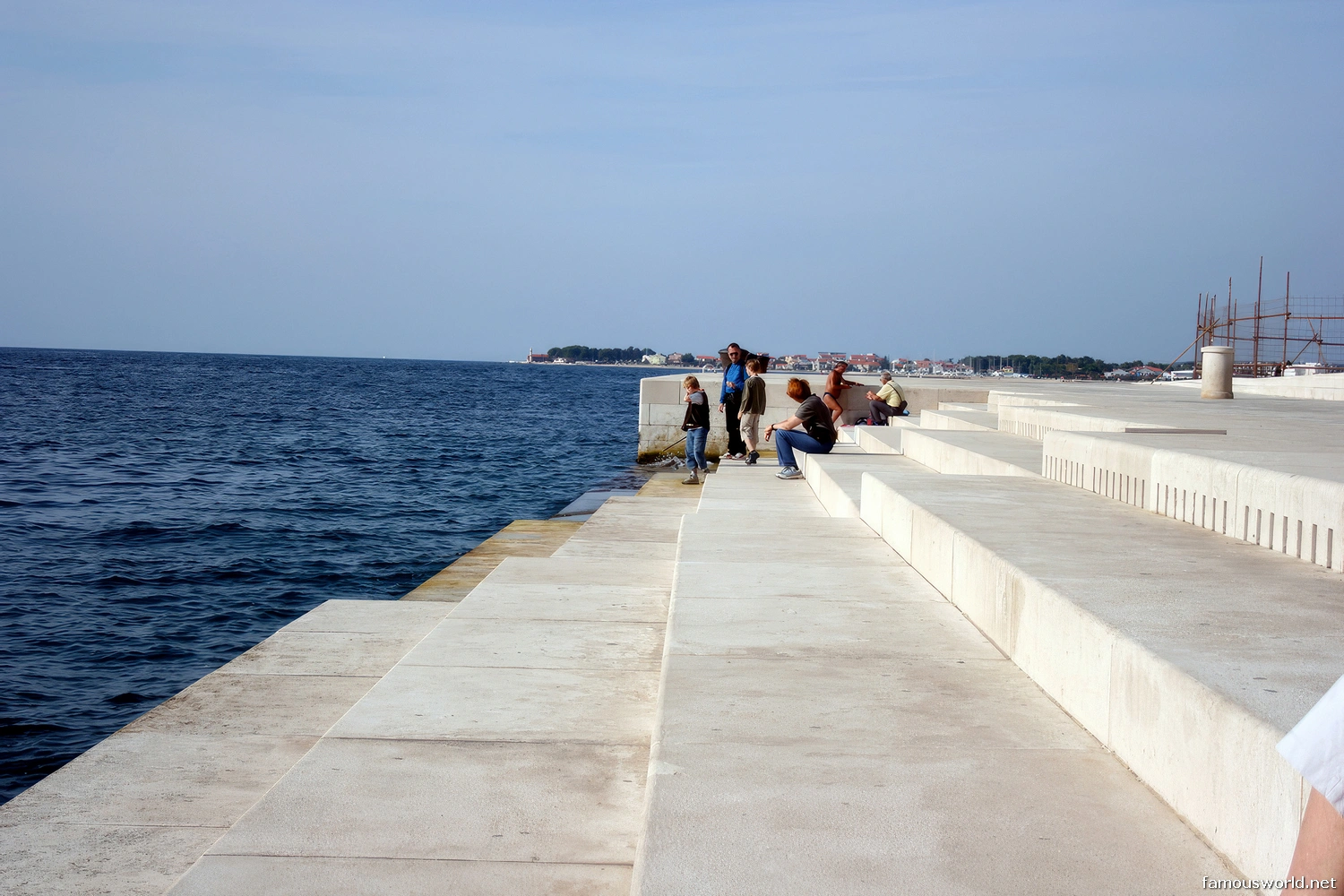
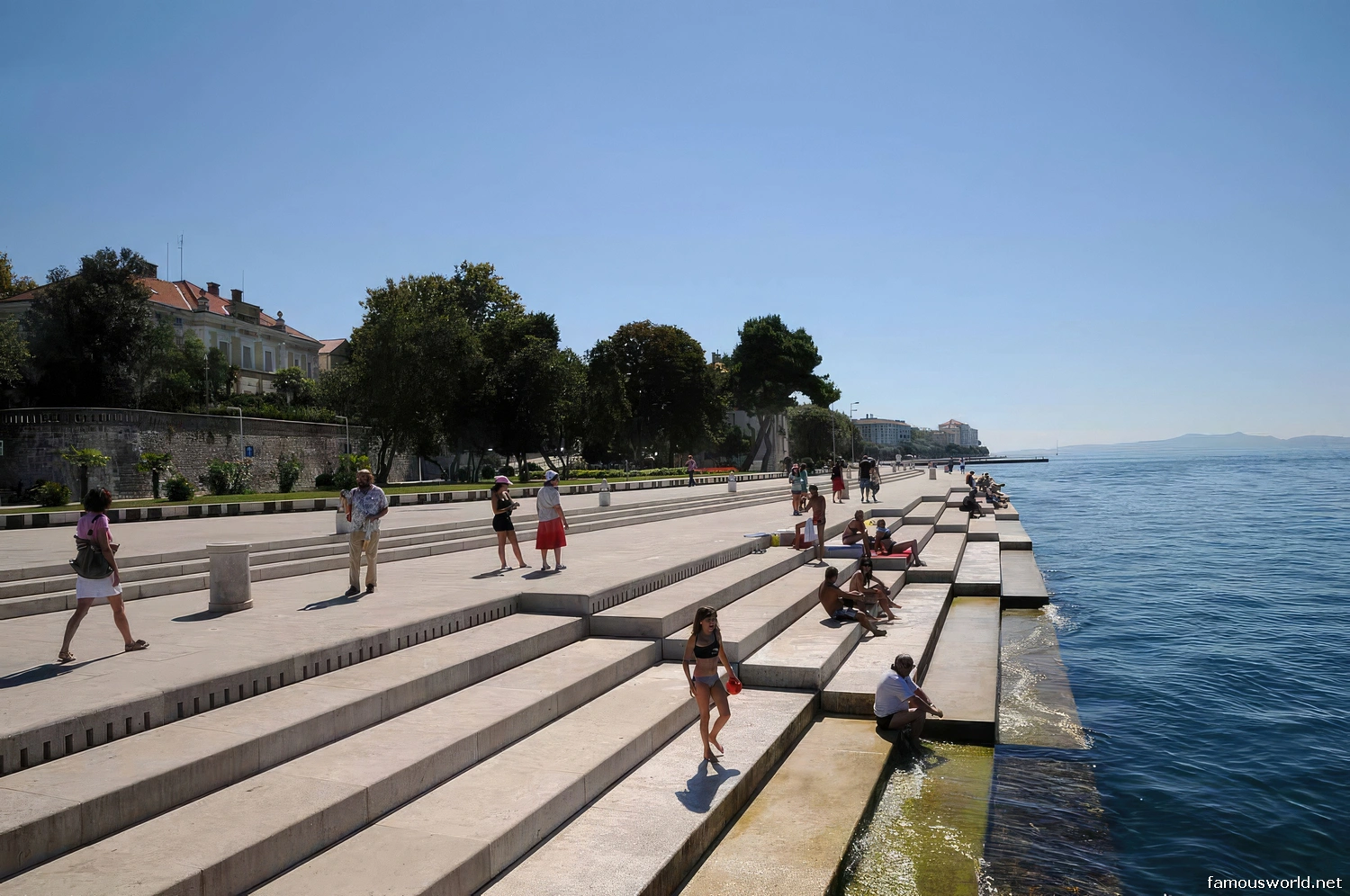
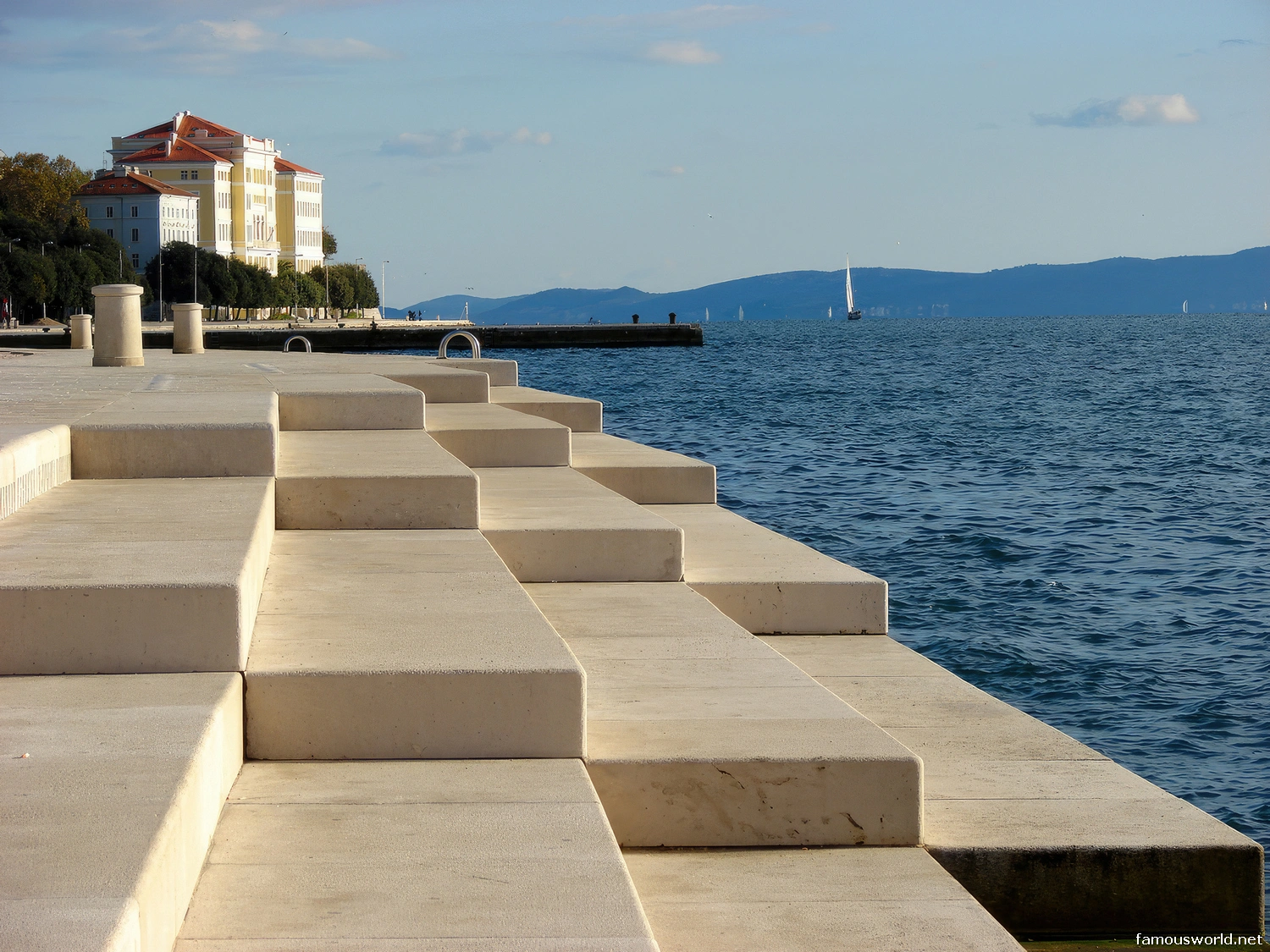
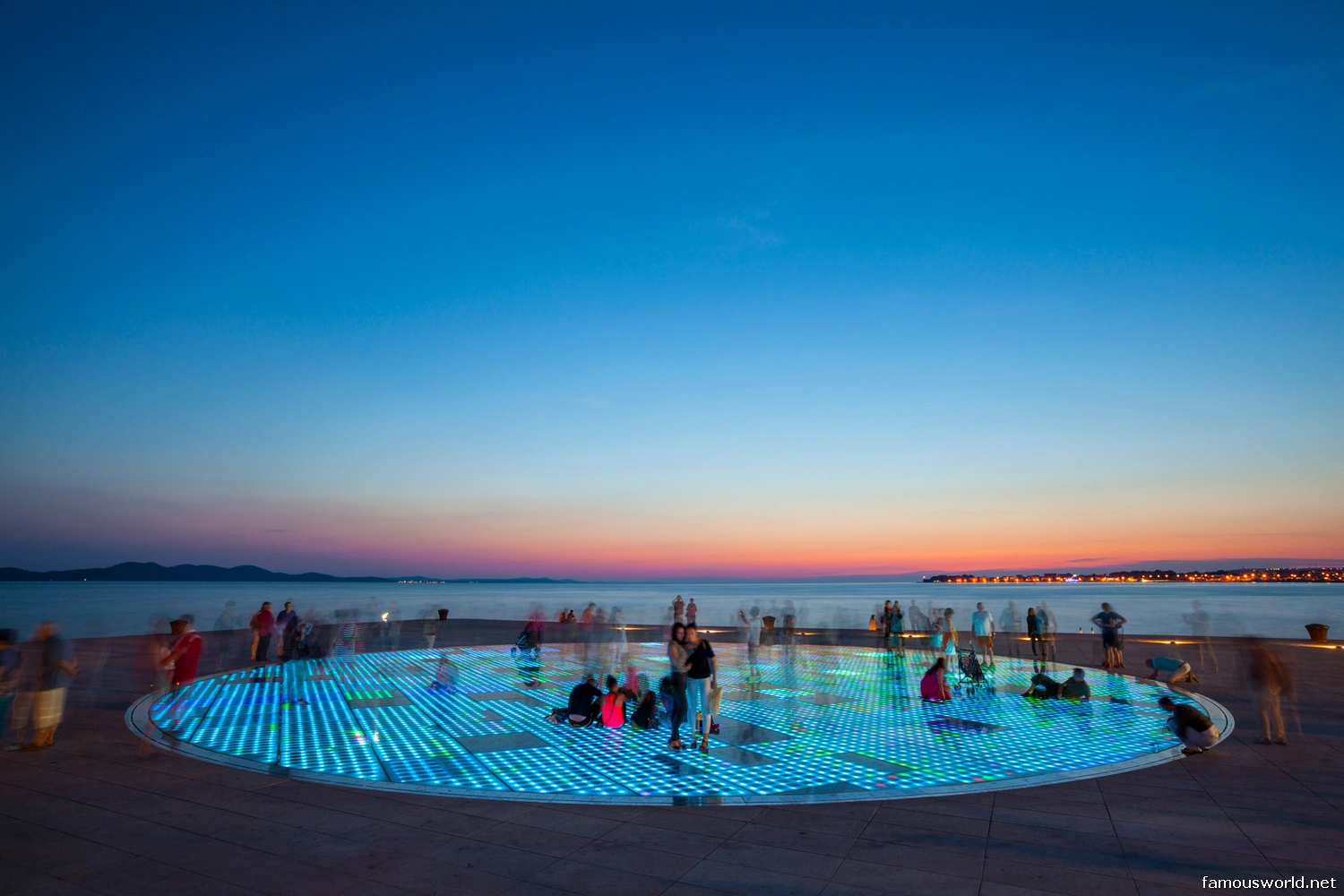
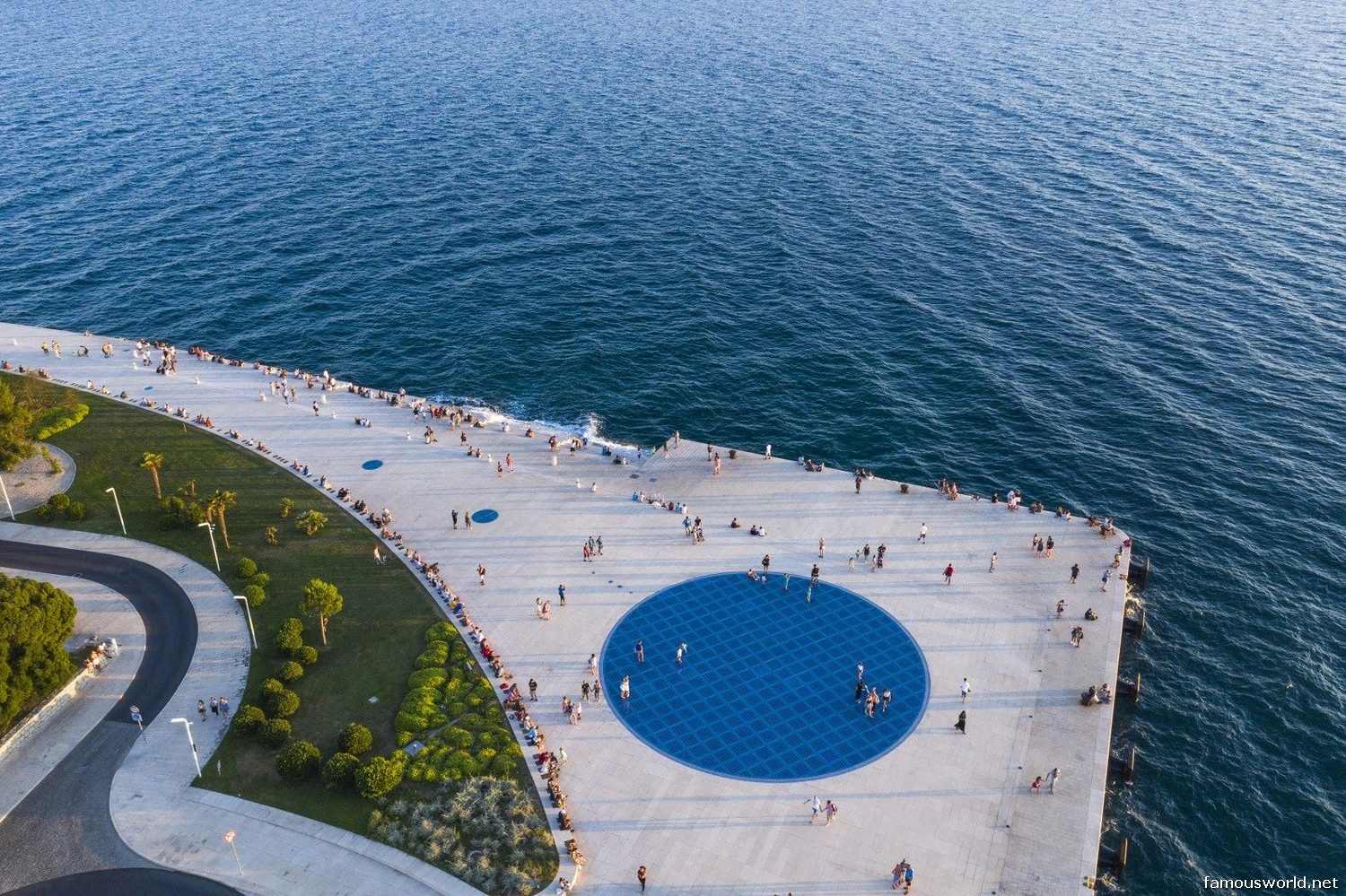
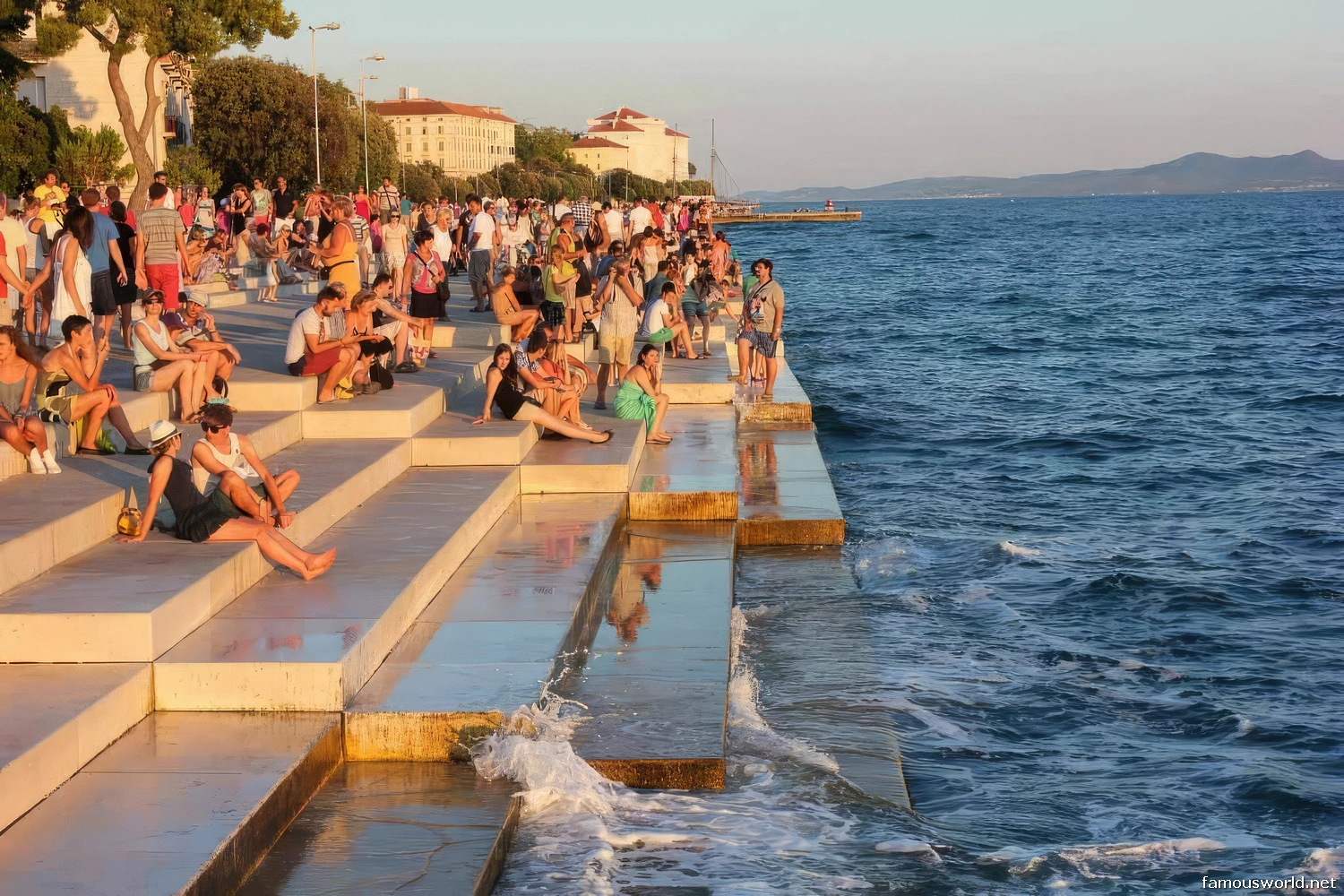
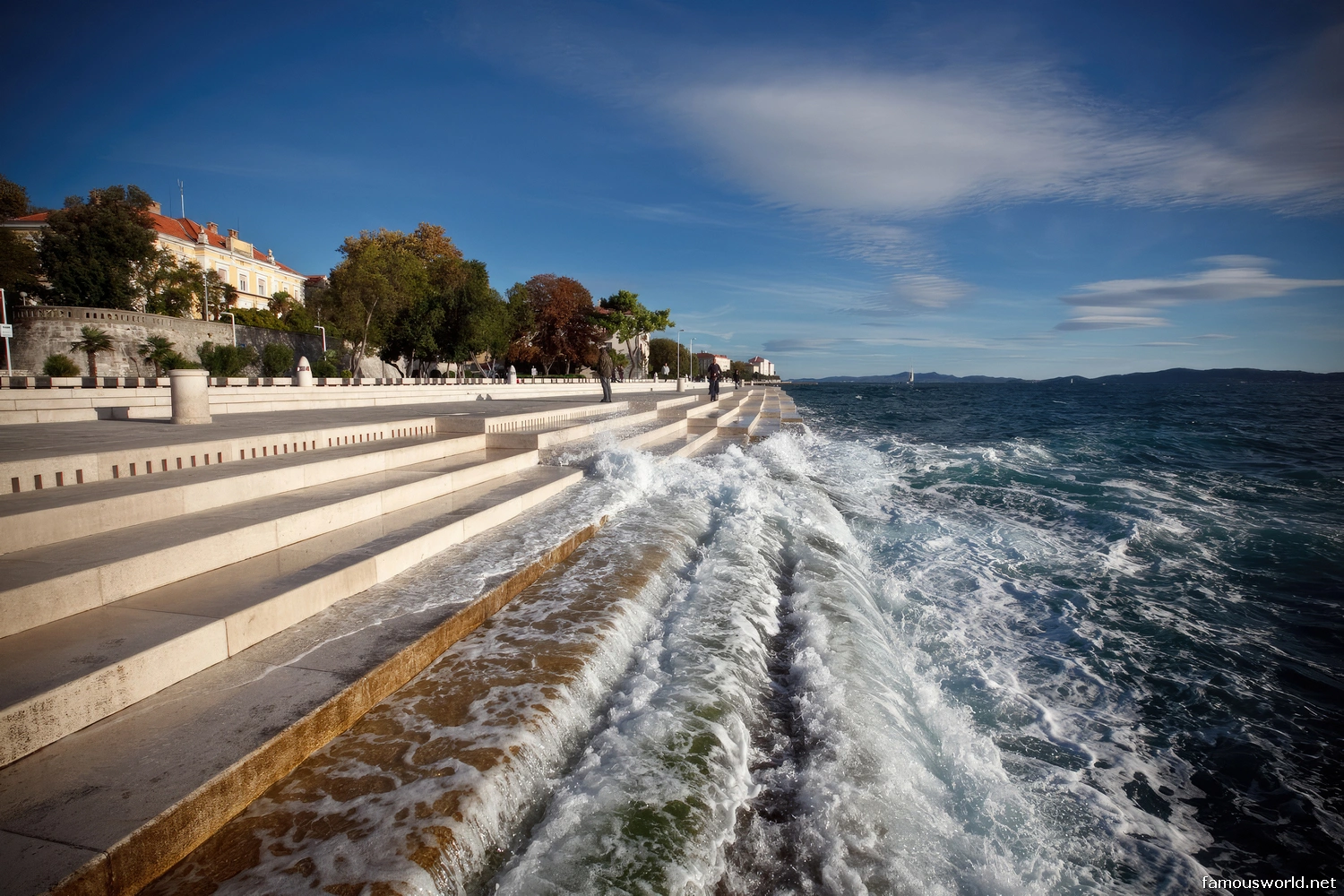
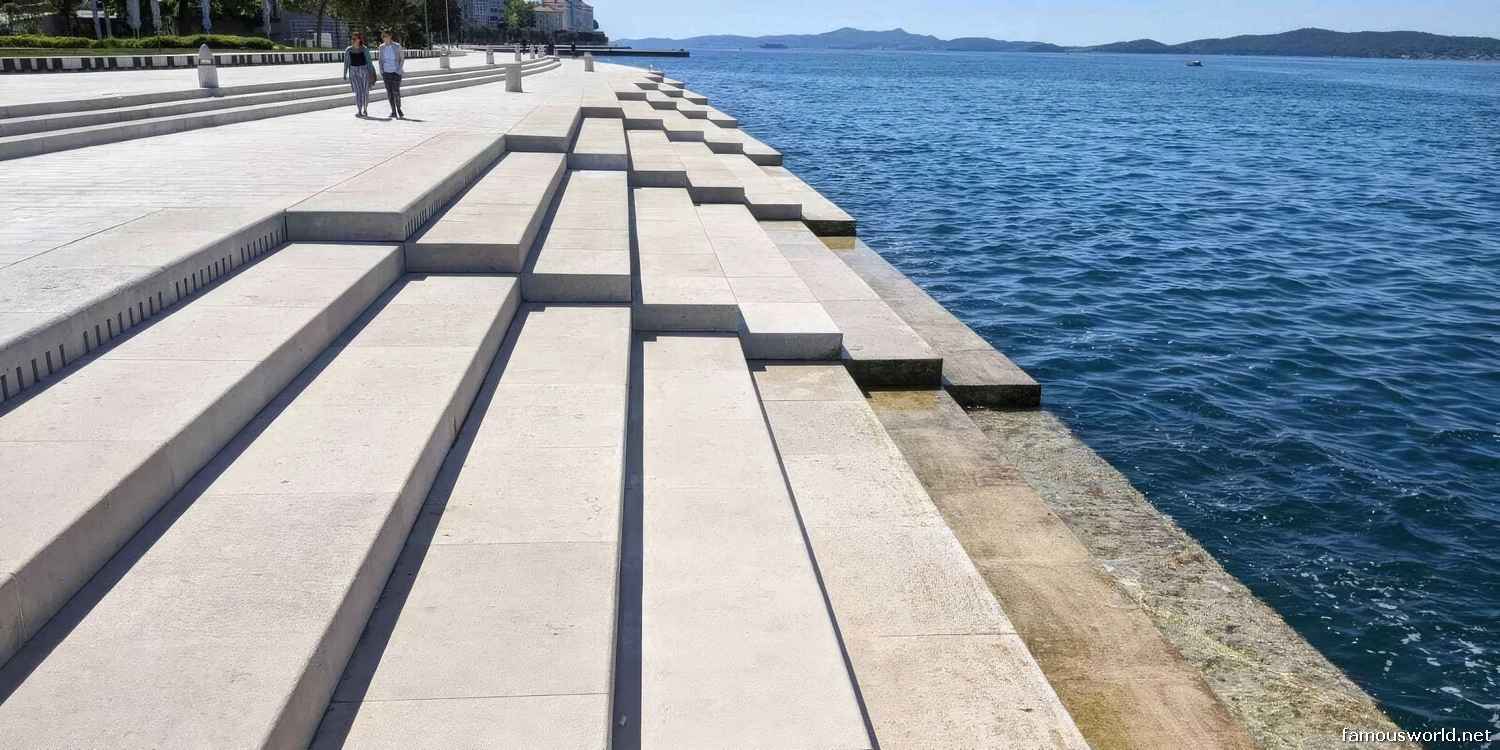
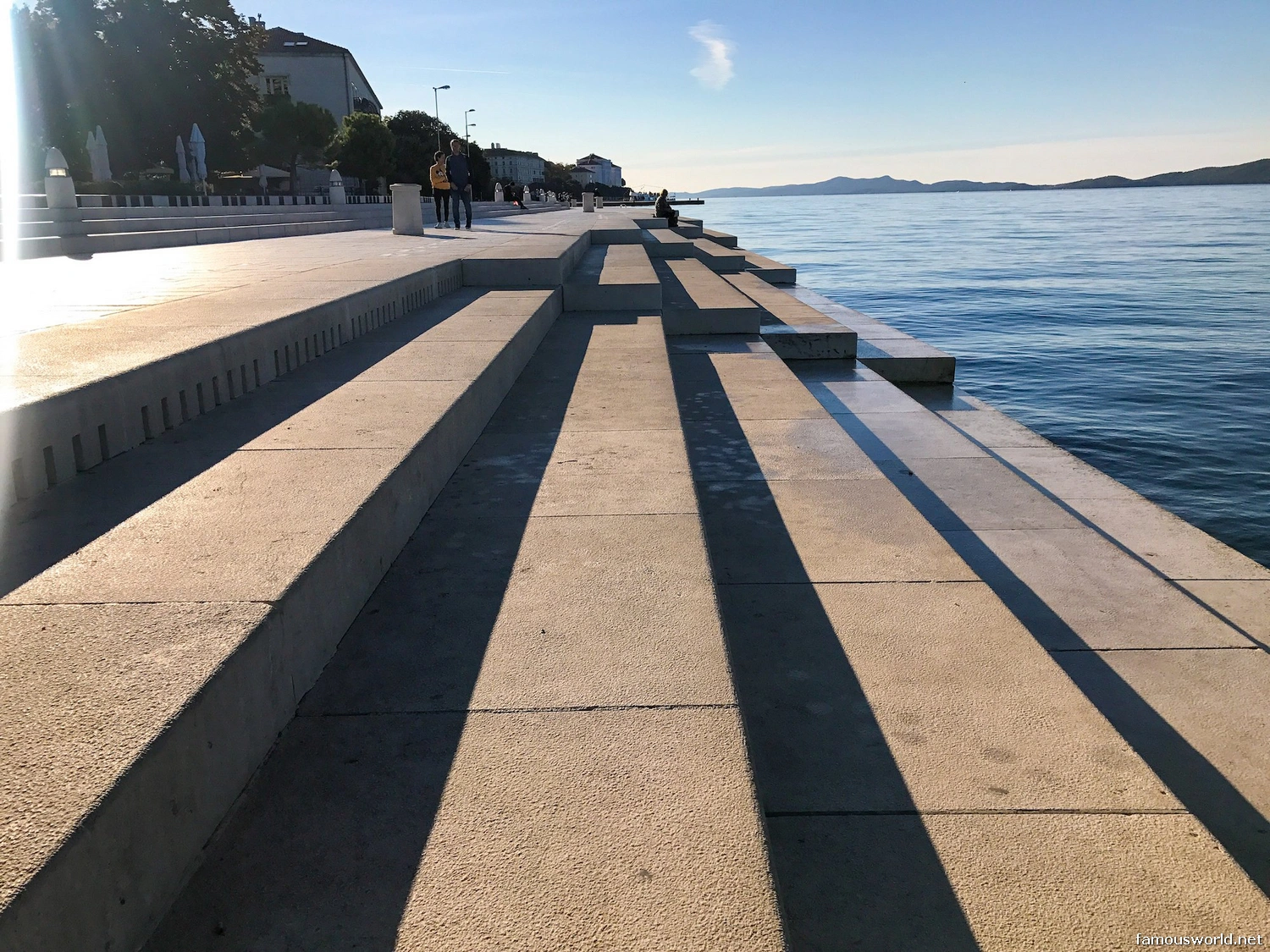
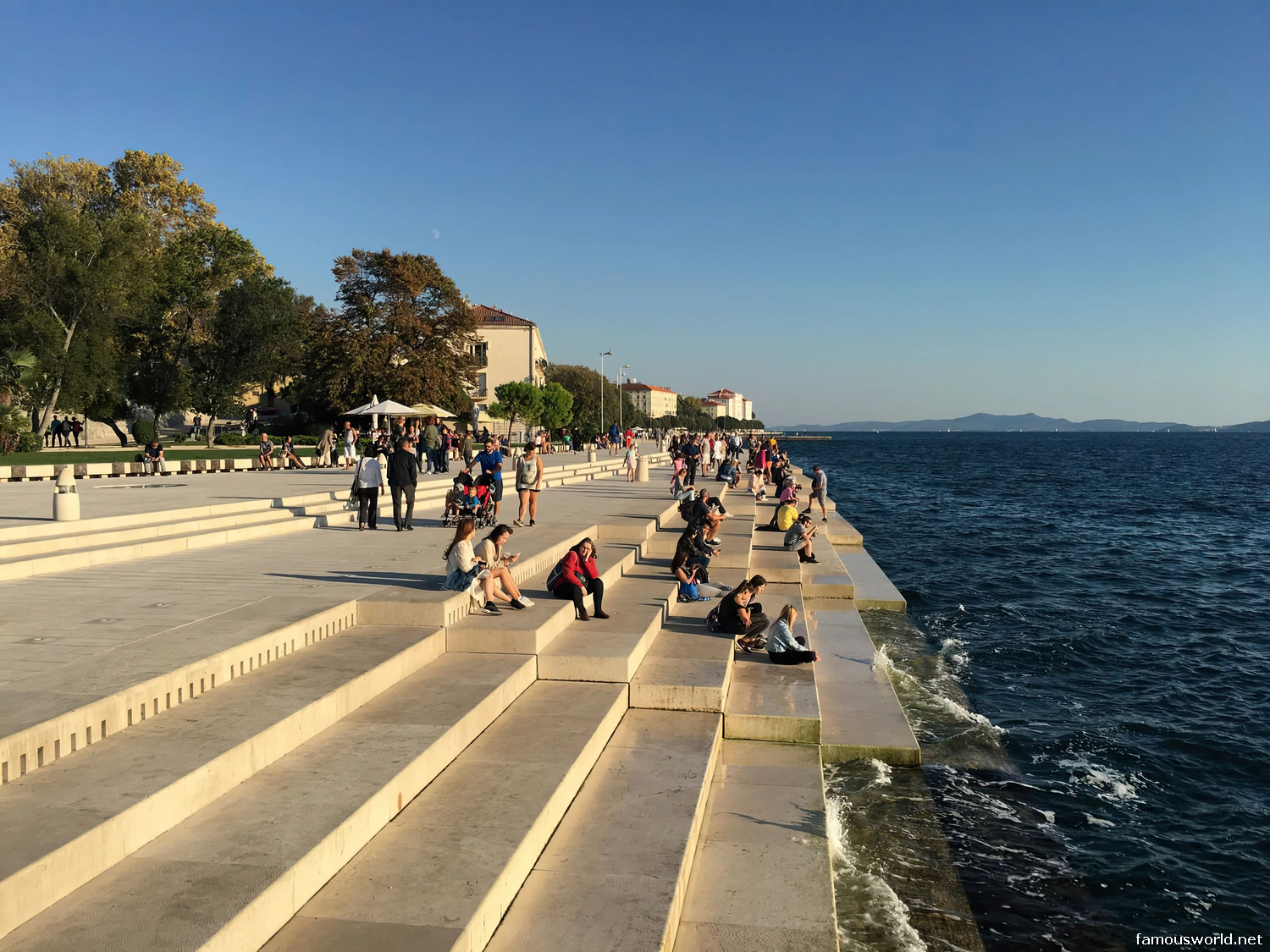
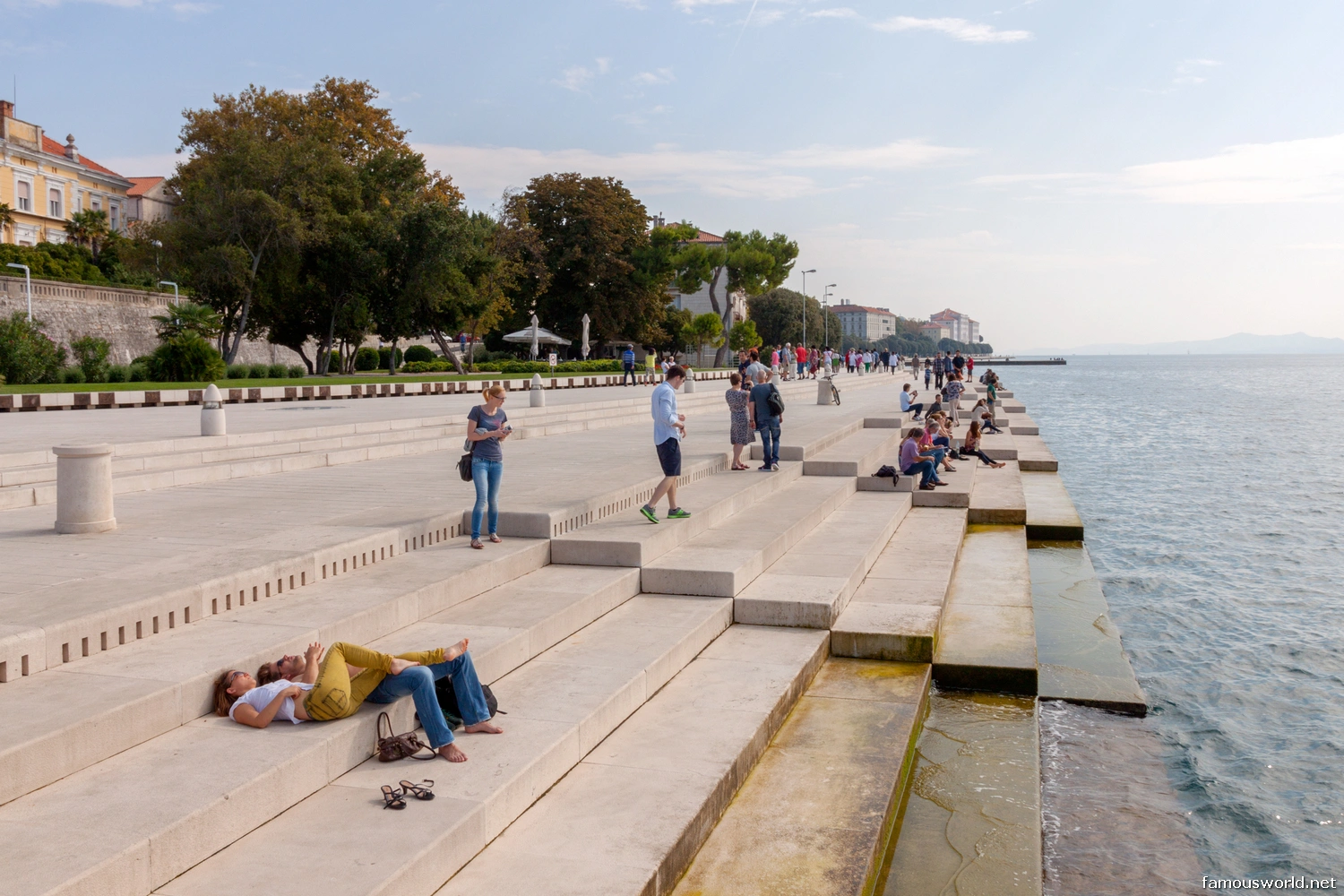
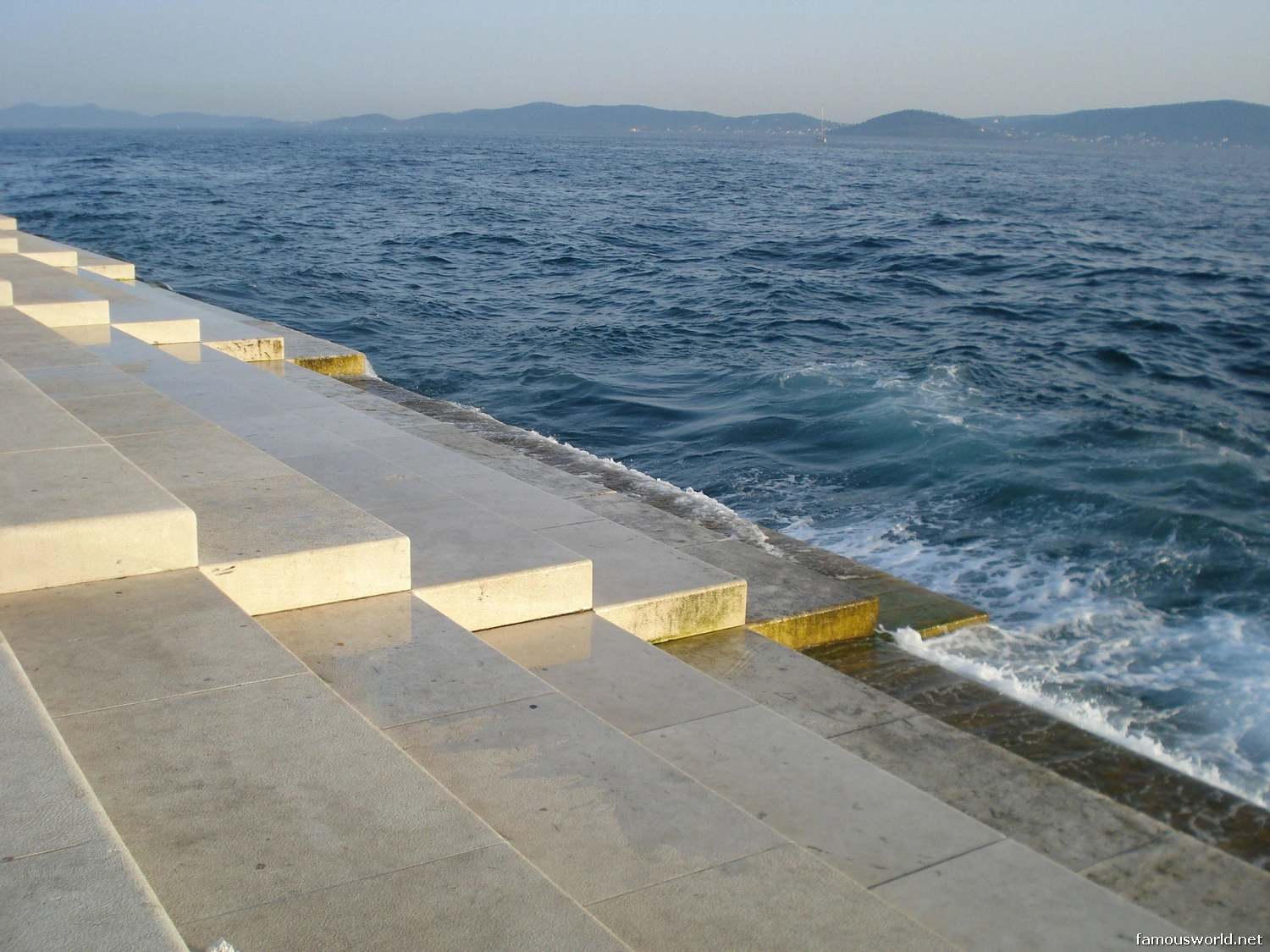
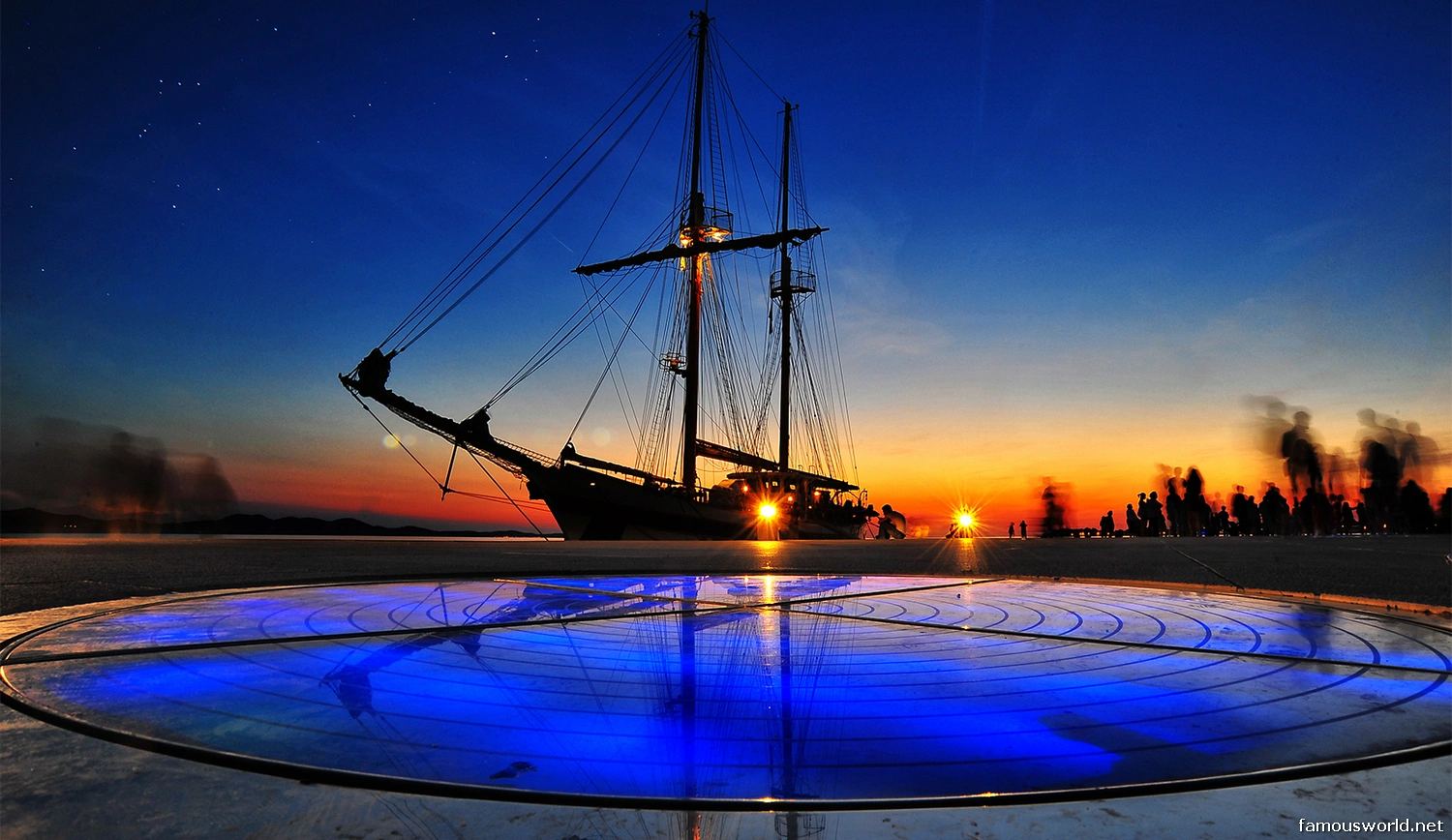
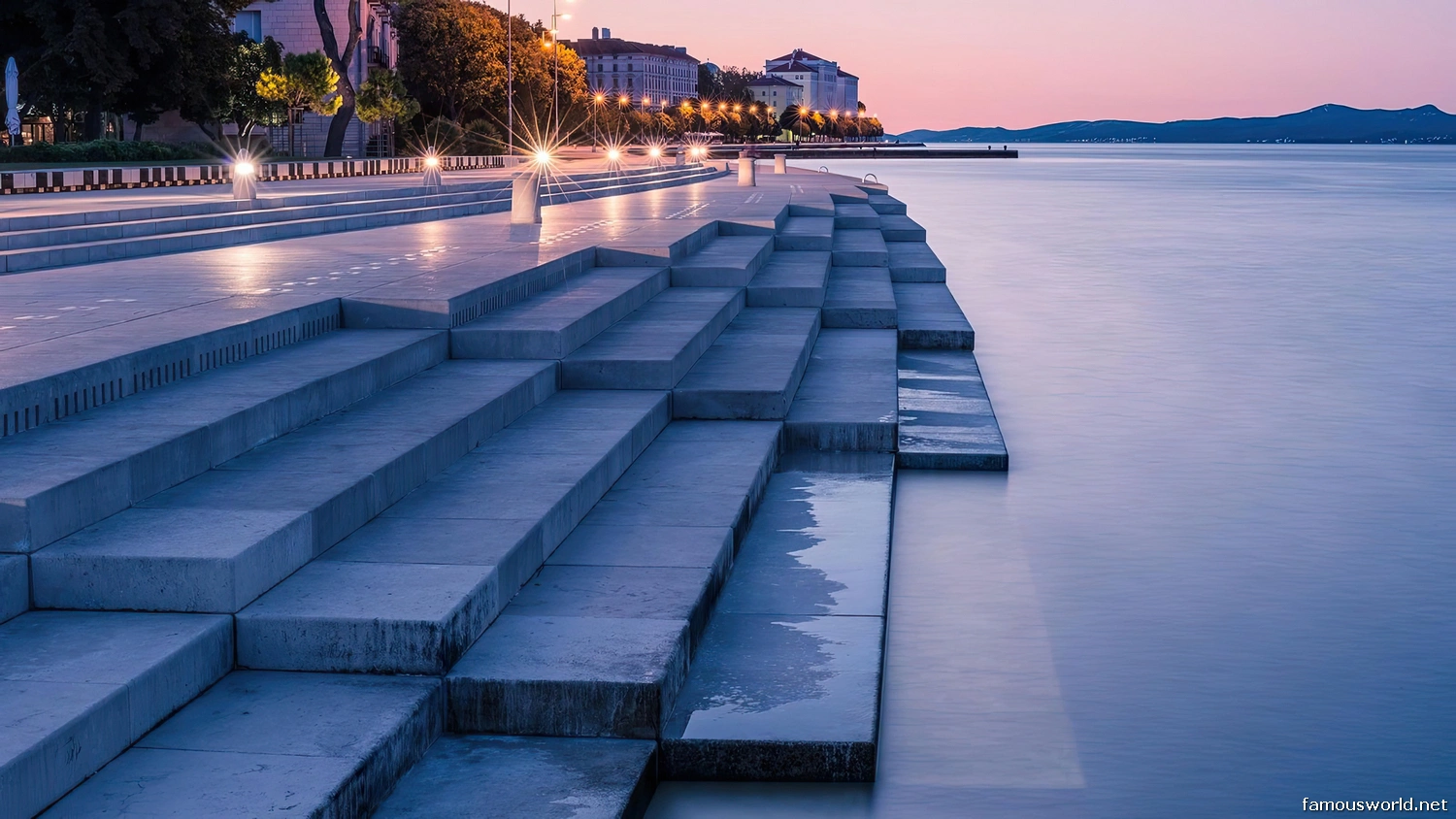
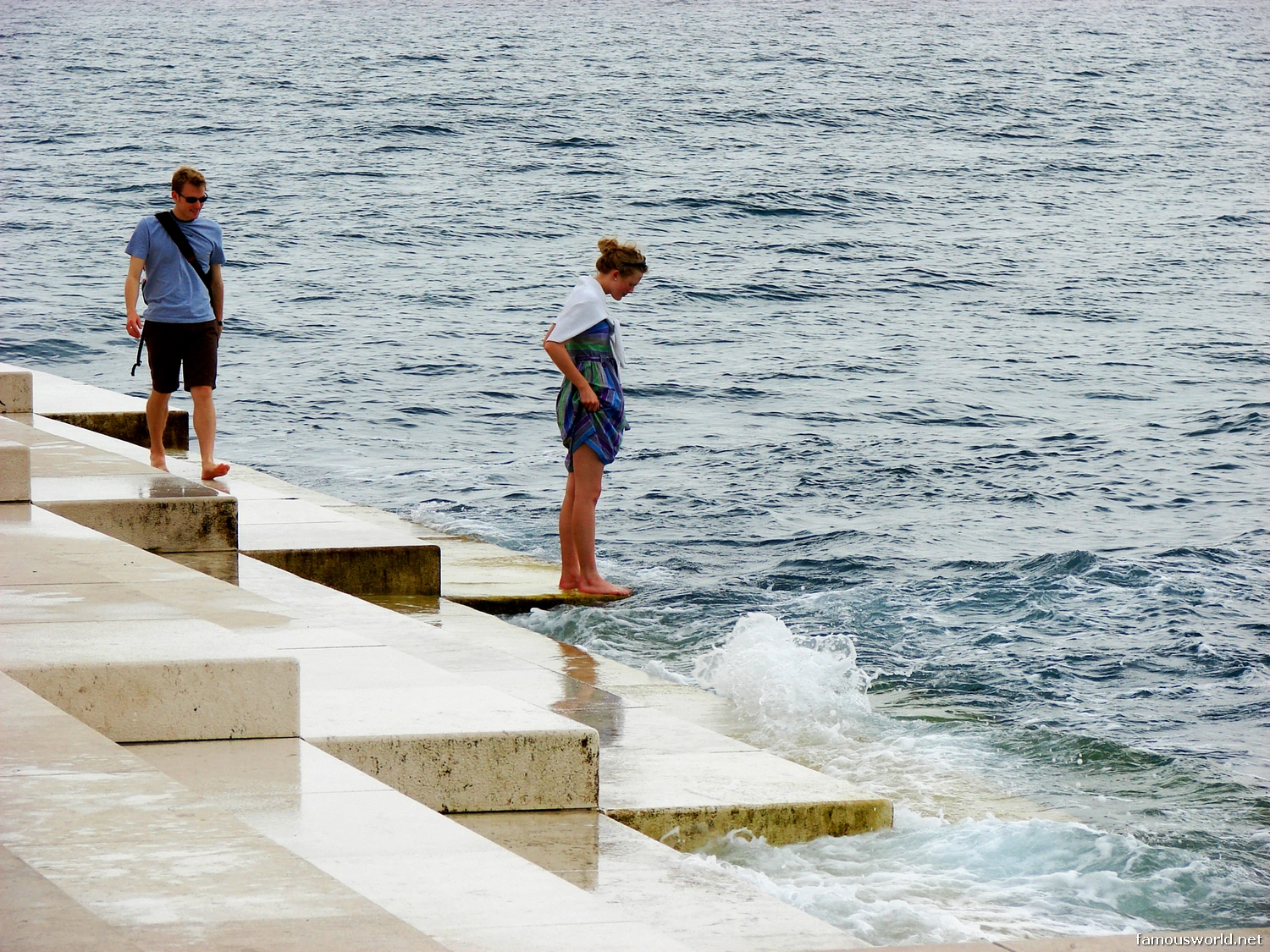
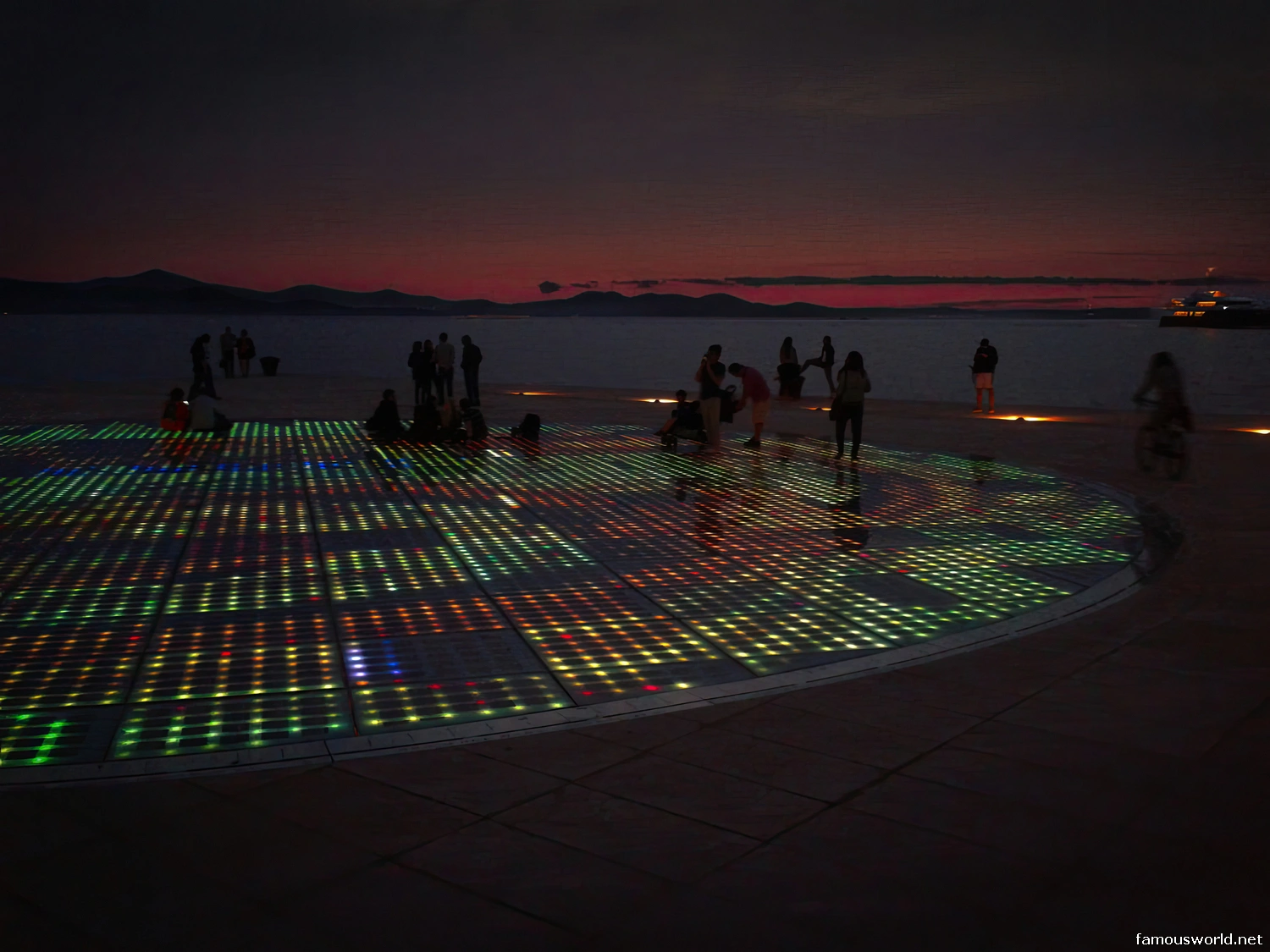
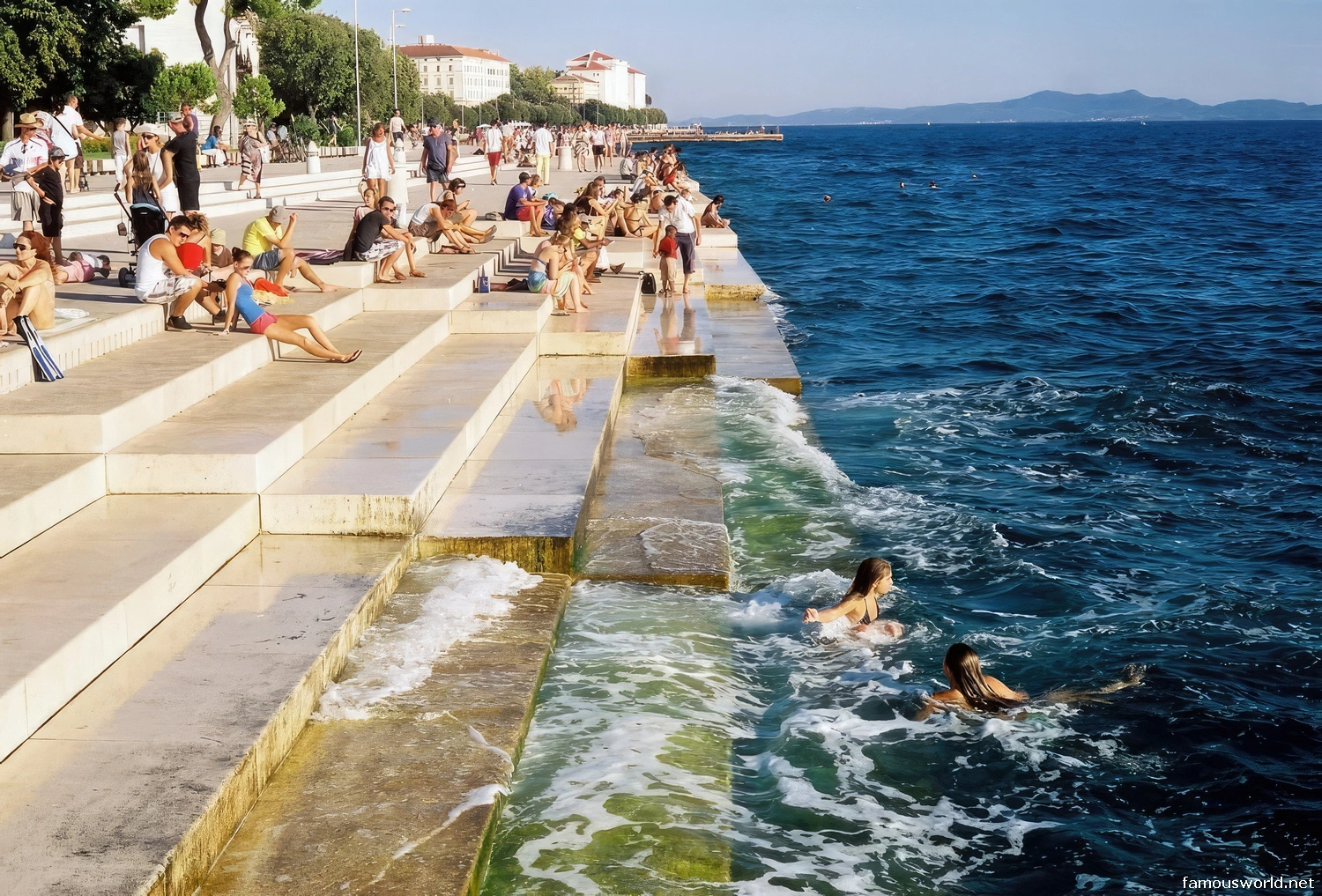
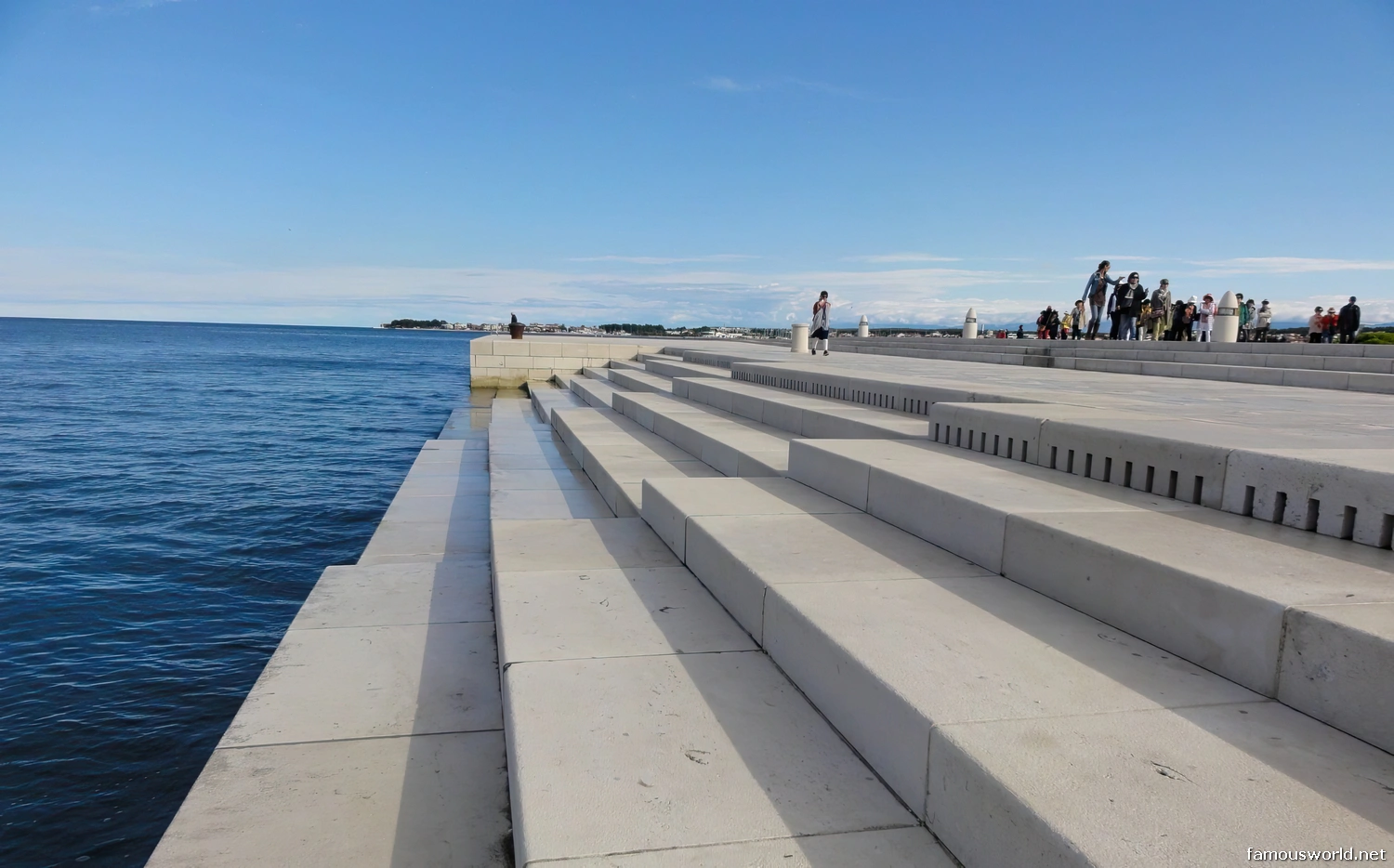
- The Architecture/Design: Both were designed by architect Nikola Bašić. The Sea Organ consists of a series of broad marble steps leading down to the water. Hidden beneath the steps are 35 polyethylene pipes of varying lengths and diameters. As waves push air through these pipes, they produce a random, melancholic, and beautiful harmony—the “music” of the sea. The Greeting to the Sun is a 22-meter diameter circle embedded in the pavement, made of 300 multi-layered glass plates. Beneath are solar panels that collect the sun’s energy during the day. At sunset, it comes alive, producing a brilliant, ever-changing light show that is synchronized with the sounds of the Sea Organ.
What Makes It Famous
Their fame comes from their completely original concept and the profound experience they offer.
- Art Powered by Nature: They are world-renowned examples of environmental art, where natural forces—sea waves and sunlight—are the active creators of music and light.
- The Zadar Sunset Experience: The combination of the sea’s music and the solar-powered light show has become the definitive way to experience Zadar’s legendary sunset.
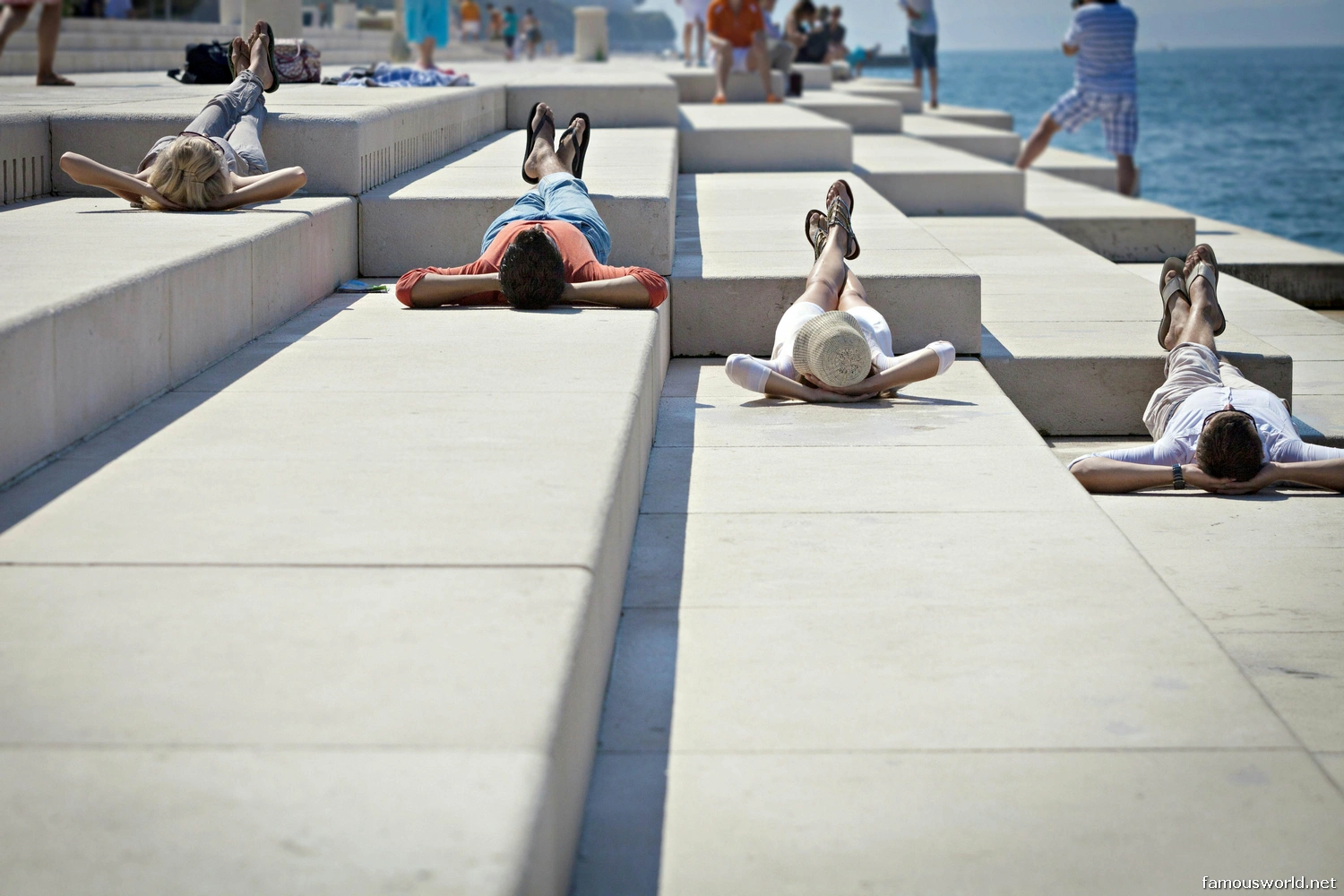
- A Unique Sensory Experience: It is an immersive public space where people can sit, listen, touch, and interact with the art, creating a deeply personal and often meditative experience.
- Modern City Symbols: These installations have become the contemporary symbols of Zadar, winning international awards and drawing visitors from across the globe.
Differences from Other Wonders
The modern, nature-driven art of Zadar’s waterfront contrasts sharply with the ancient, man-made grandeur of the Pula Arena.
- Environment (Modern Leisure Promenade vs. Ancient Roman Arena): The Zadar installations are integrated into a modern, open public promenade designed for relaxation and enjoying the sea. The Pula Arena is a colossal, enclosed, ancient monument built for mass entertainment.
- Core Story (Art in Harmony with Nature vs. Roman Power and Spectacle): The story of the Sea Organ is one of contemporary art working in partnership with nature. The Pula Arena’s story is one of Roman engineering, imperial power, and the spectacle of gladiatorial combat.
- Primary Attraction (A Dynamic, Natural Performance vs. A Static, Historic Structure): The attraction in Zadar is an ever-changing performance of sound and light that is different every moment. The attraction of the Arena is its massive, unchanging, and awe-inspiring historic structure.
- Atmosphere (Meditative and Playful vs. Grand and Imposing): The atmosphere at the Sea Organ is relaxing, contemplative, and social. The atmosphere inside the Pula Arena is one of historical awe, dominated by the scale and age of the monument.
Location on world map