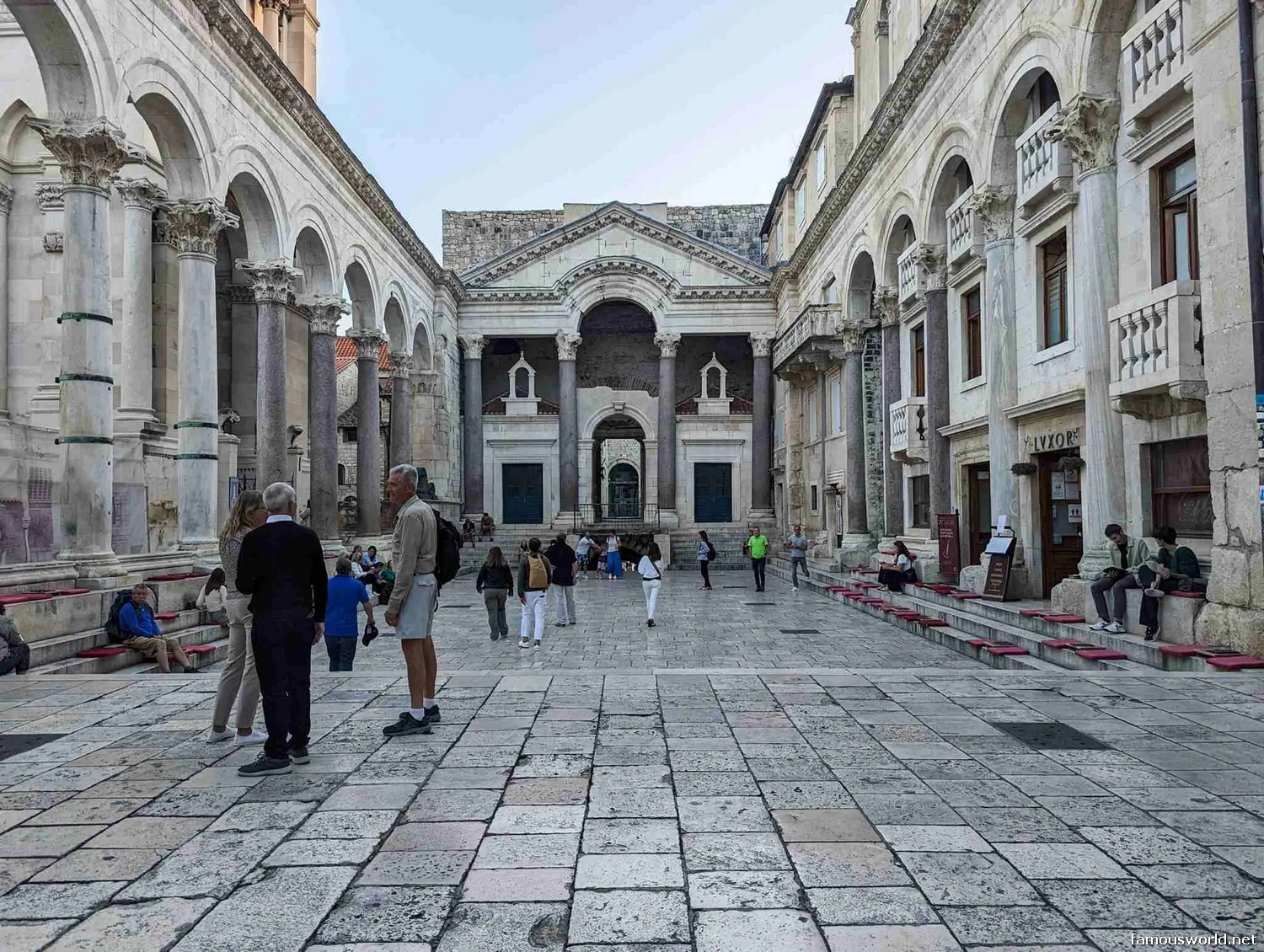
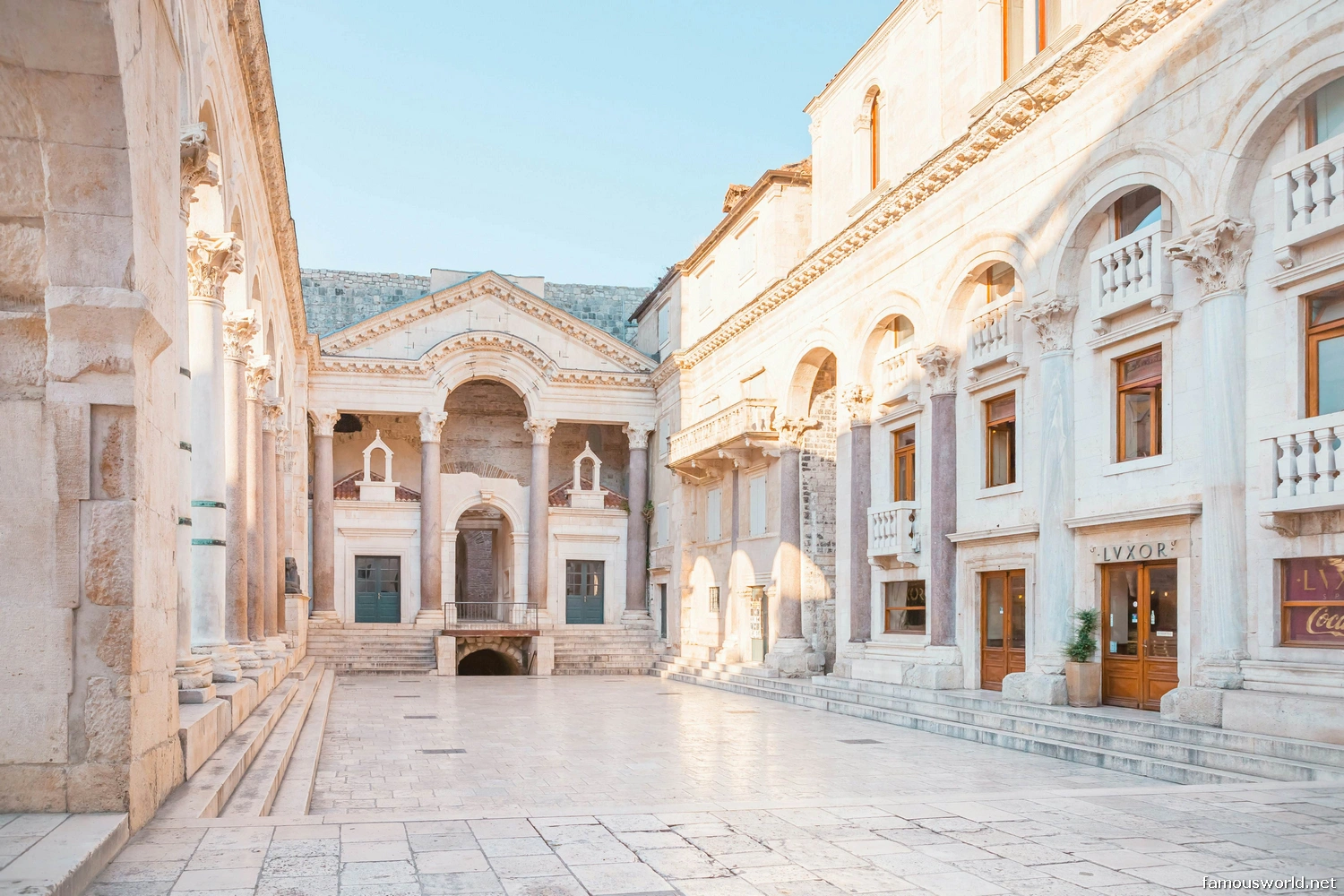
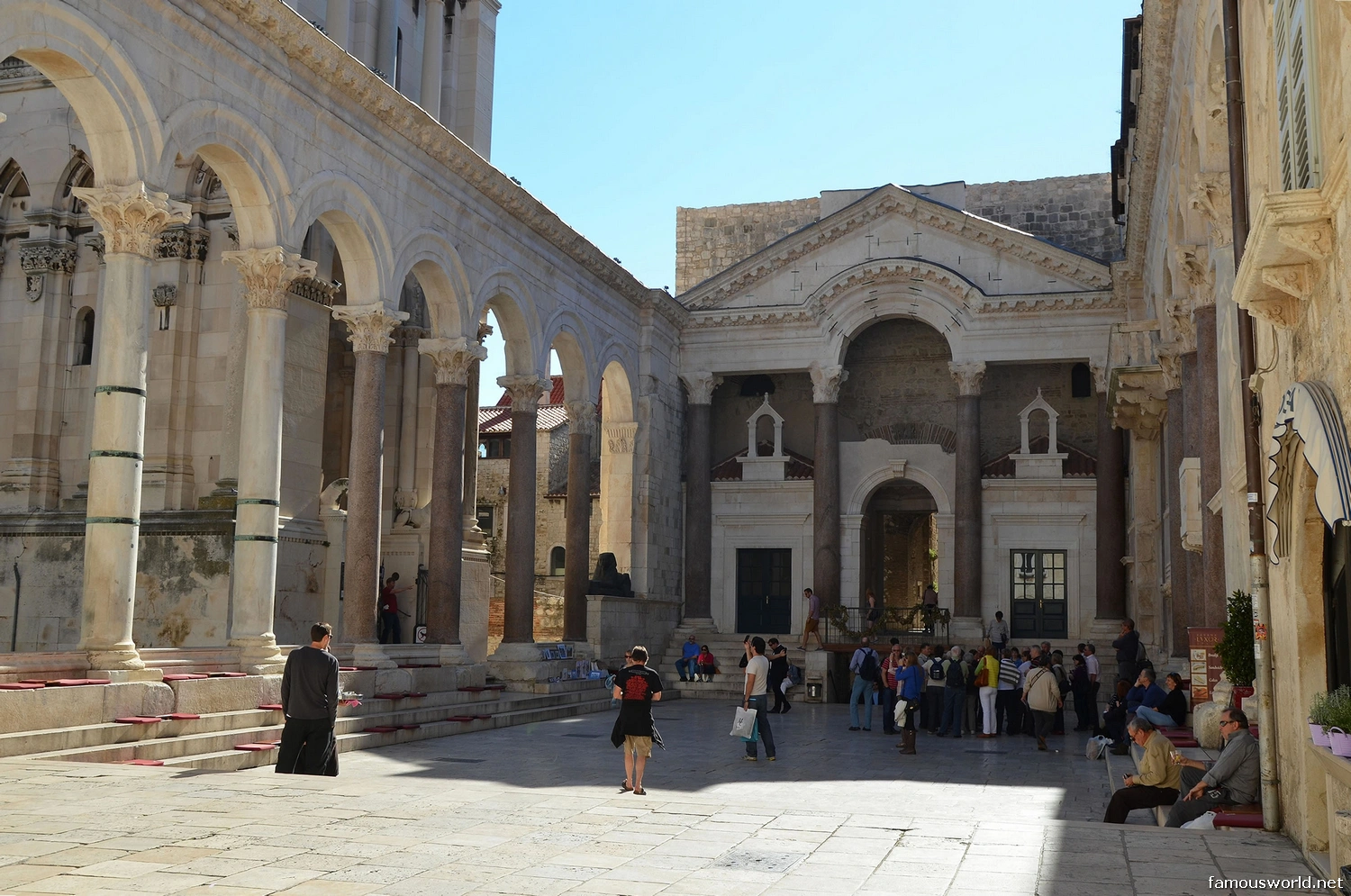
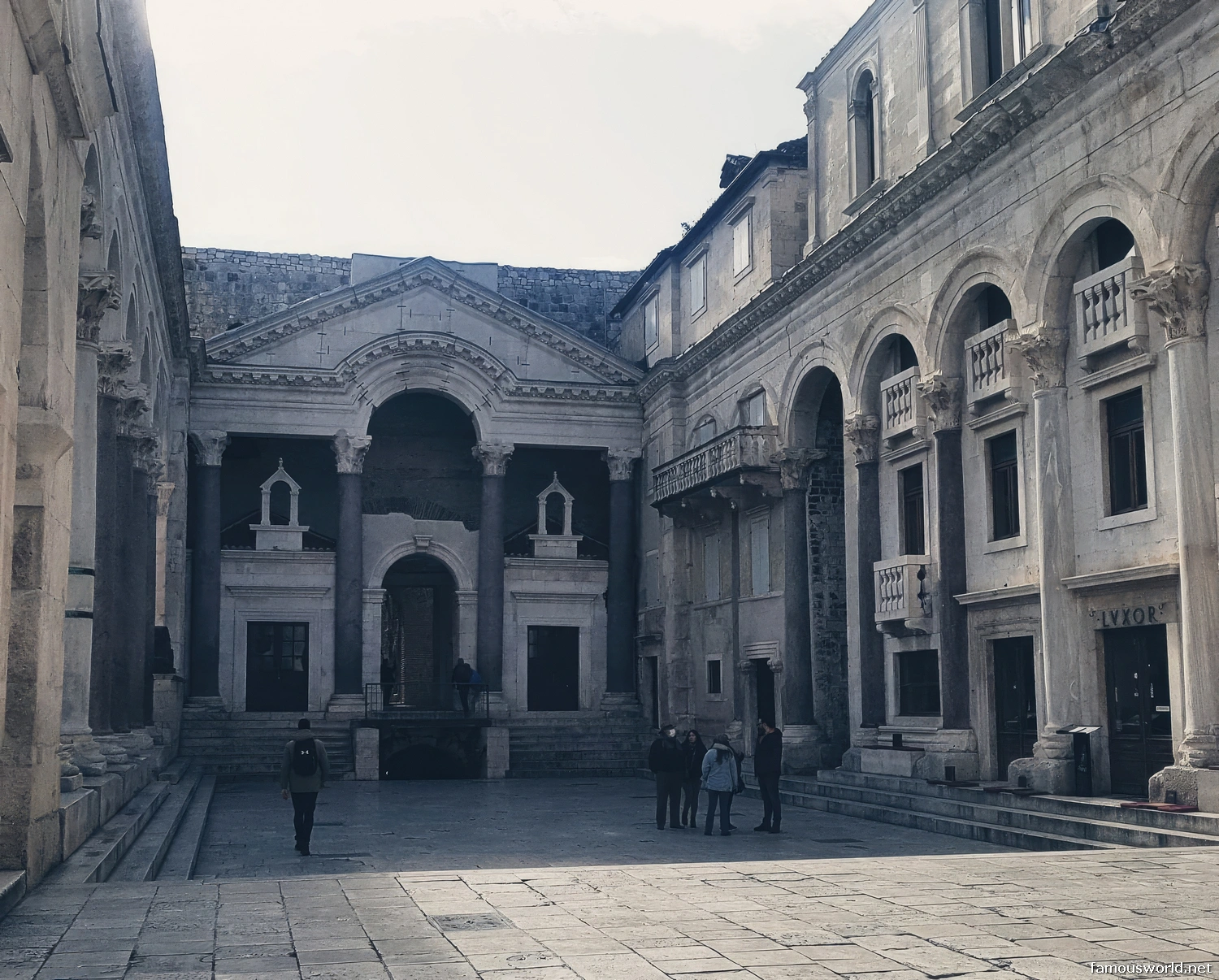
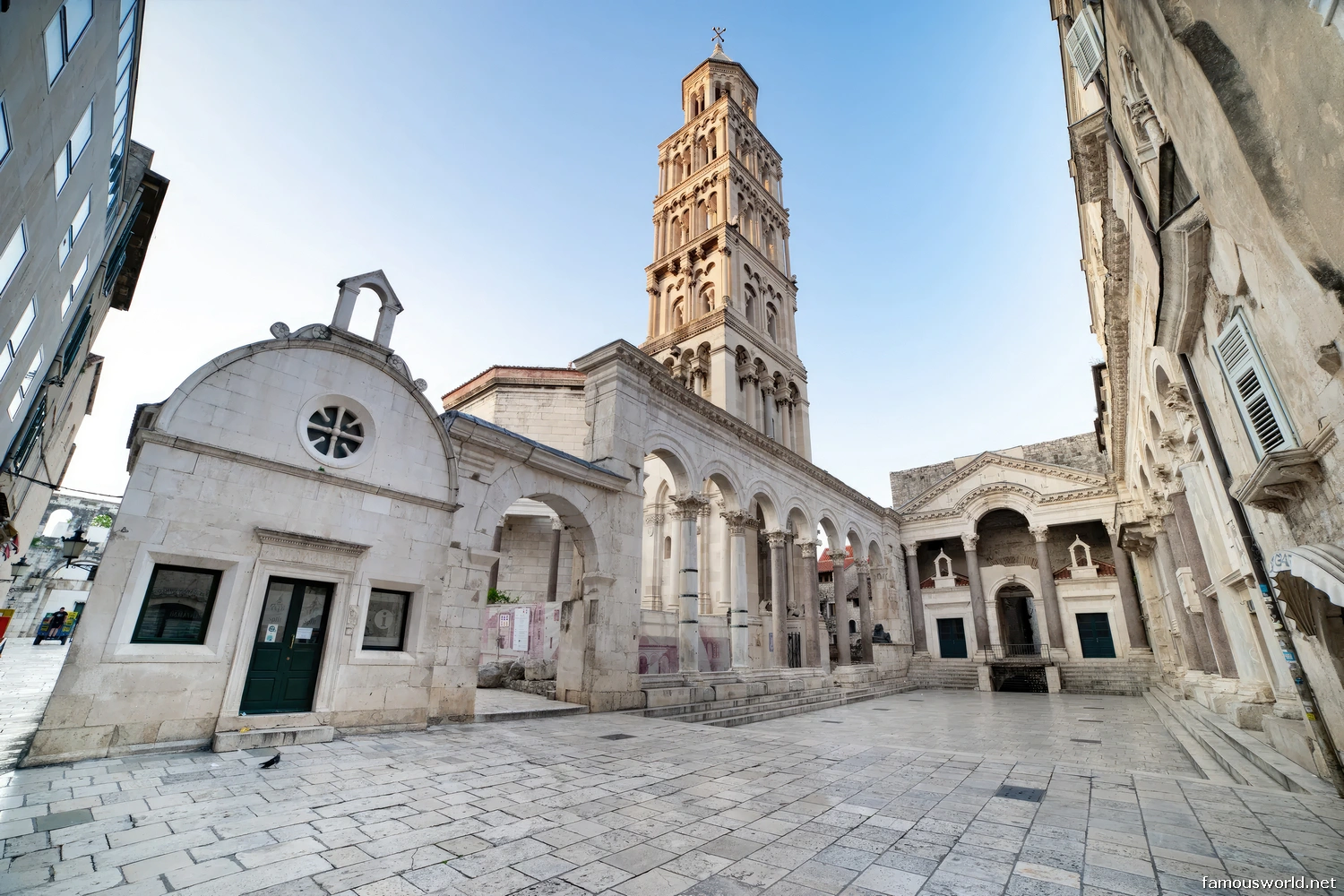
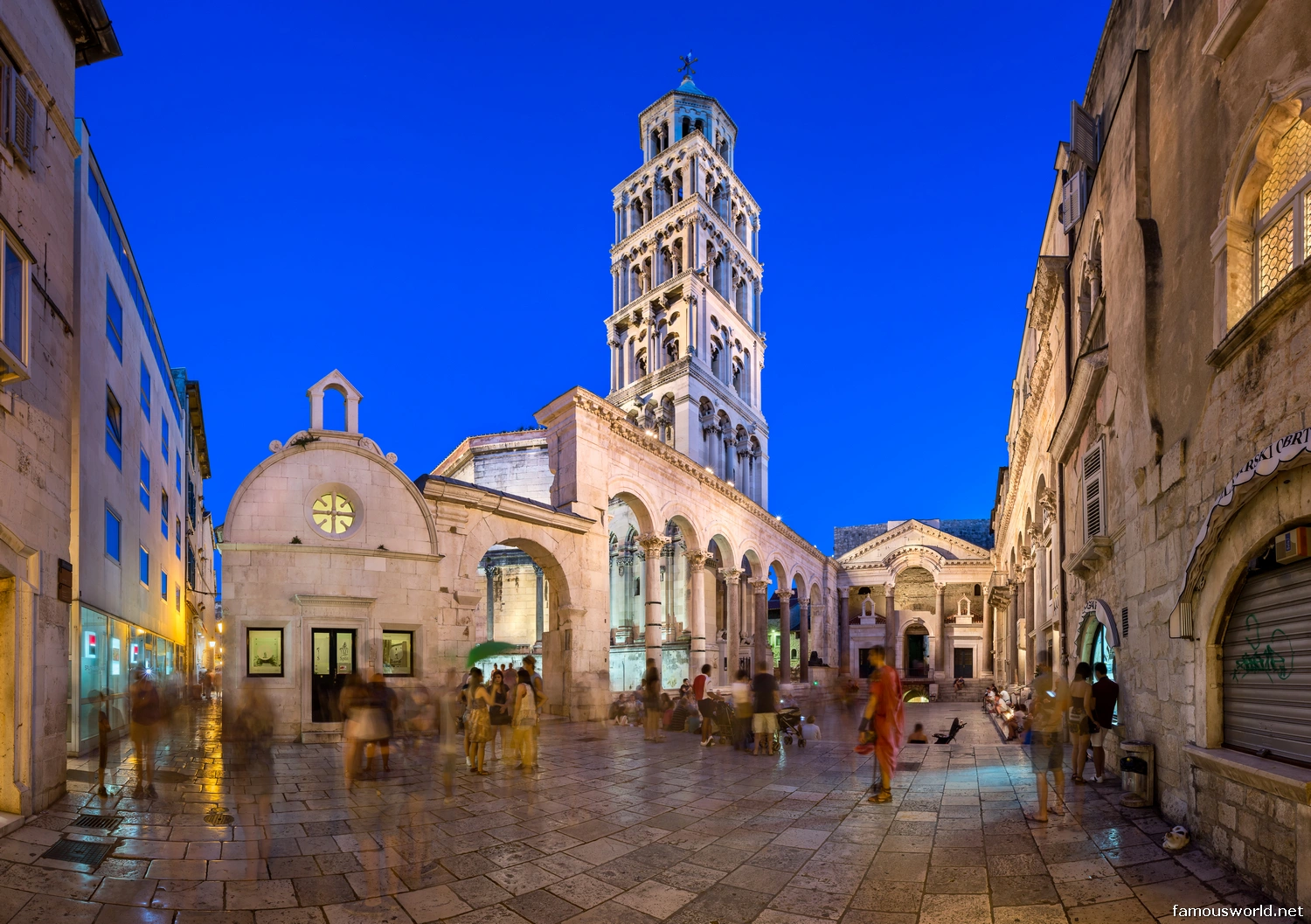
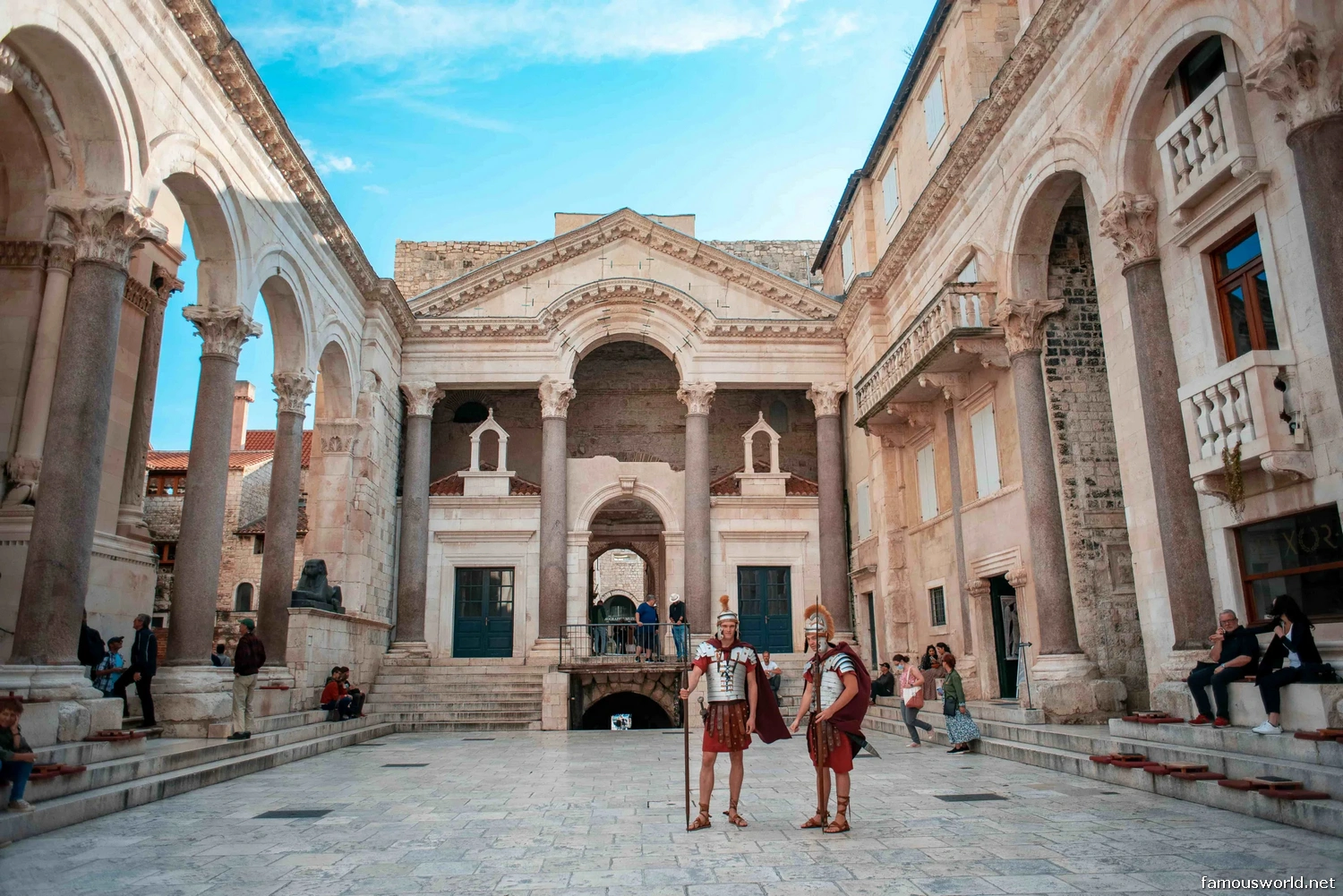

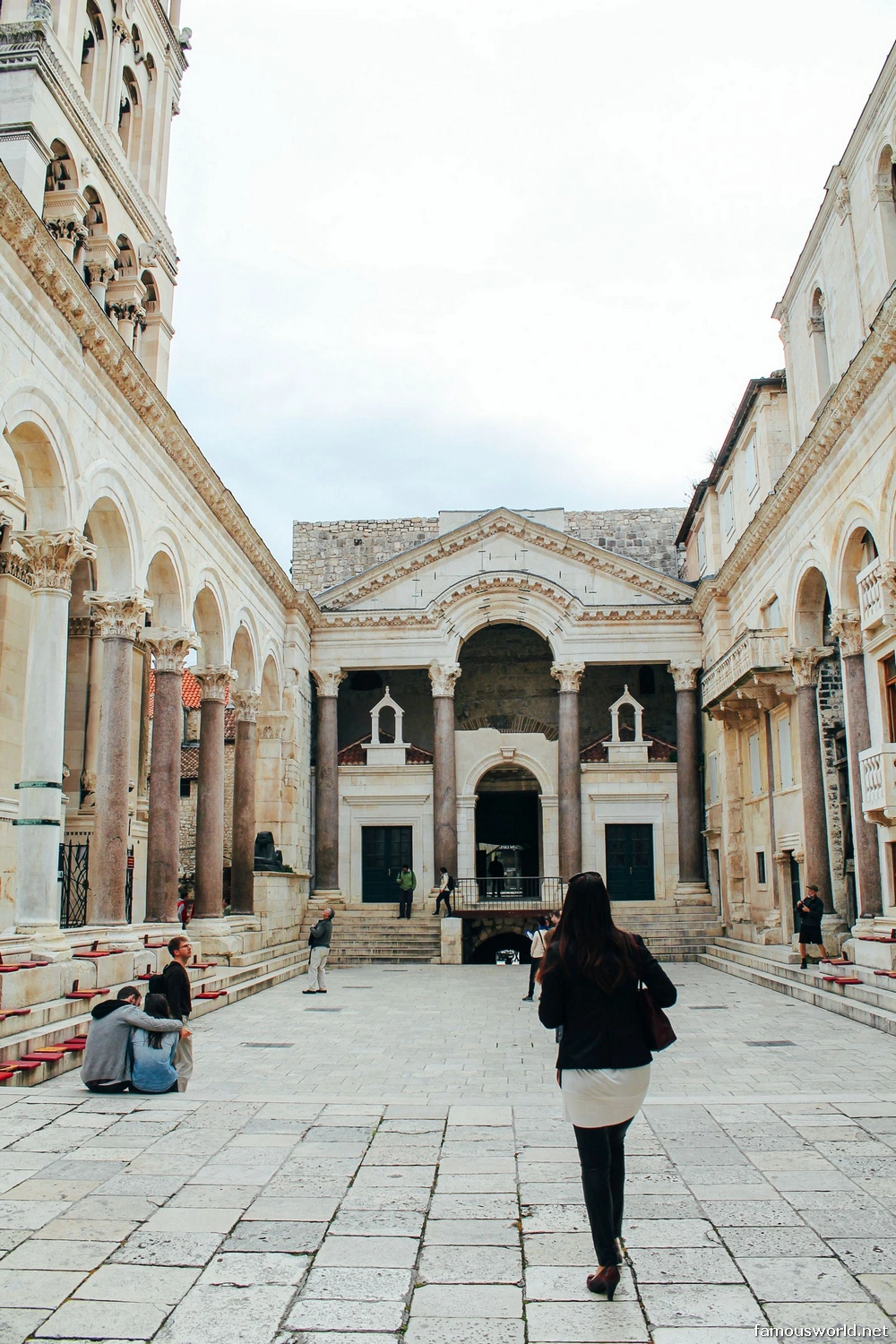
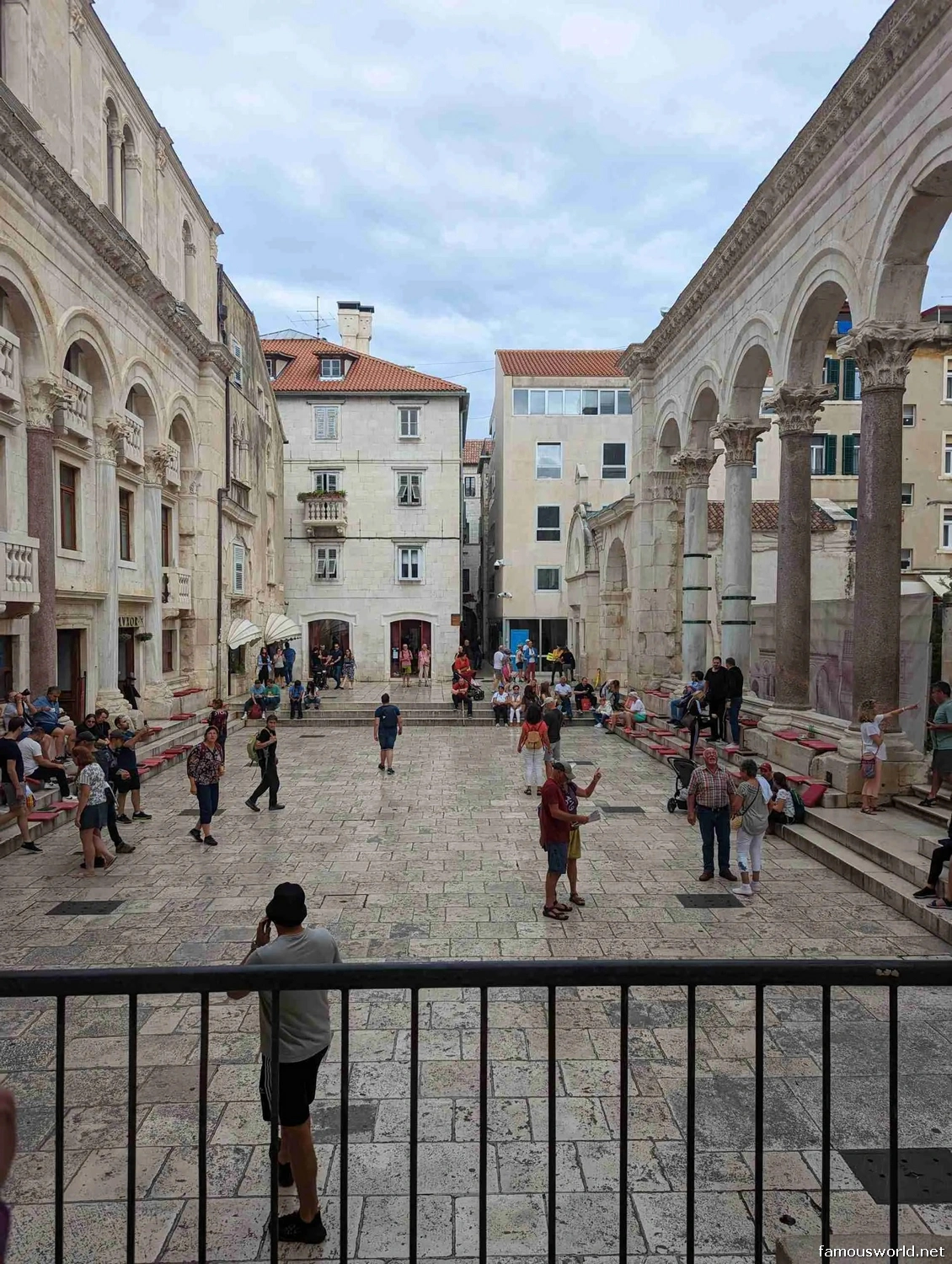
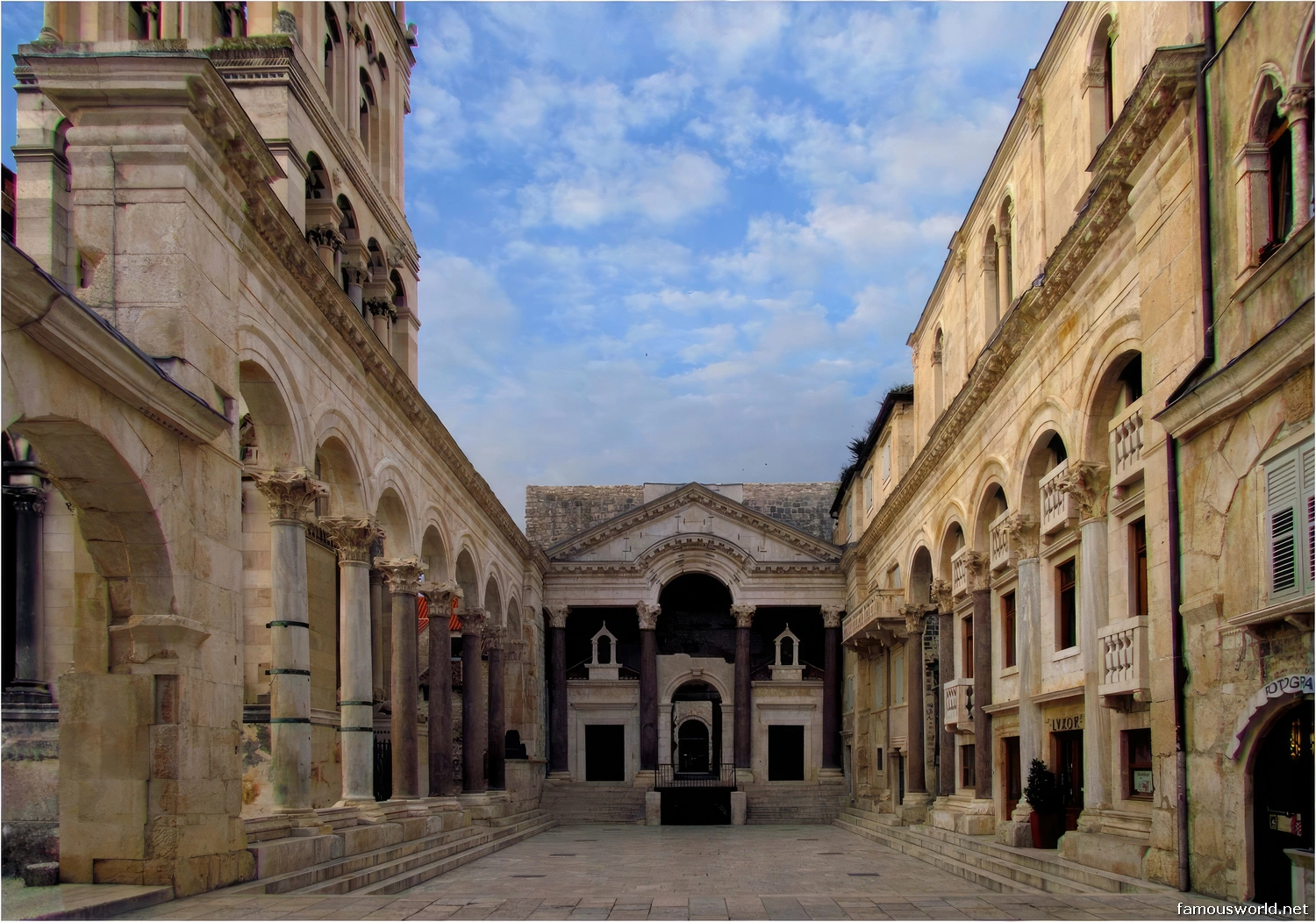
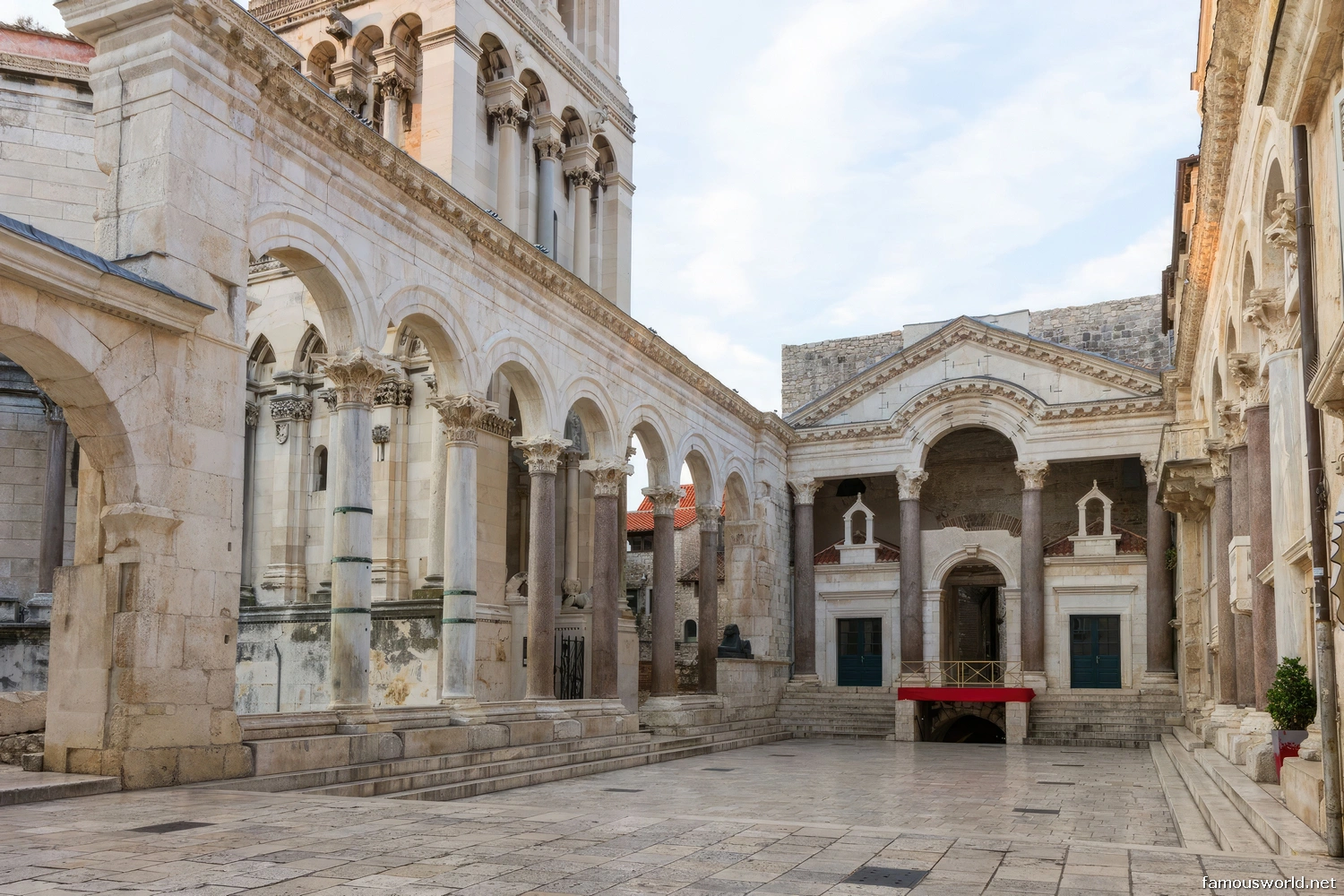
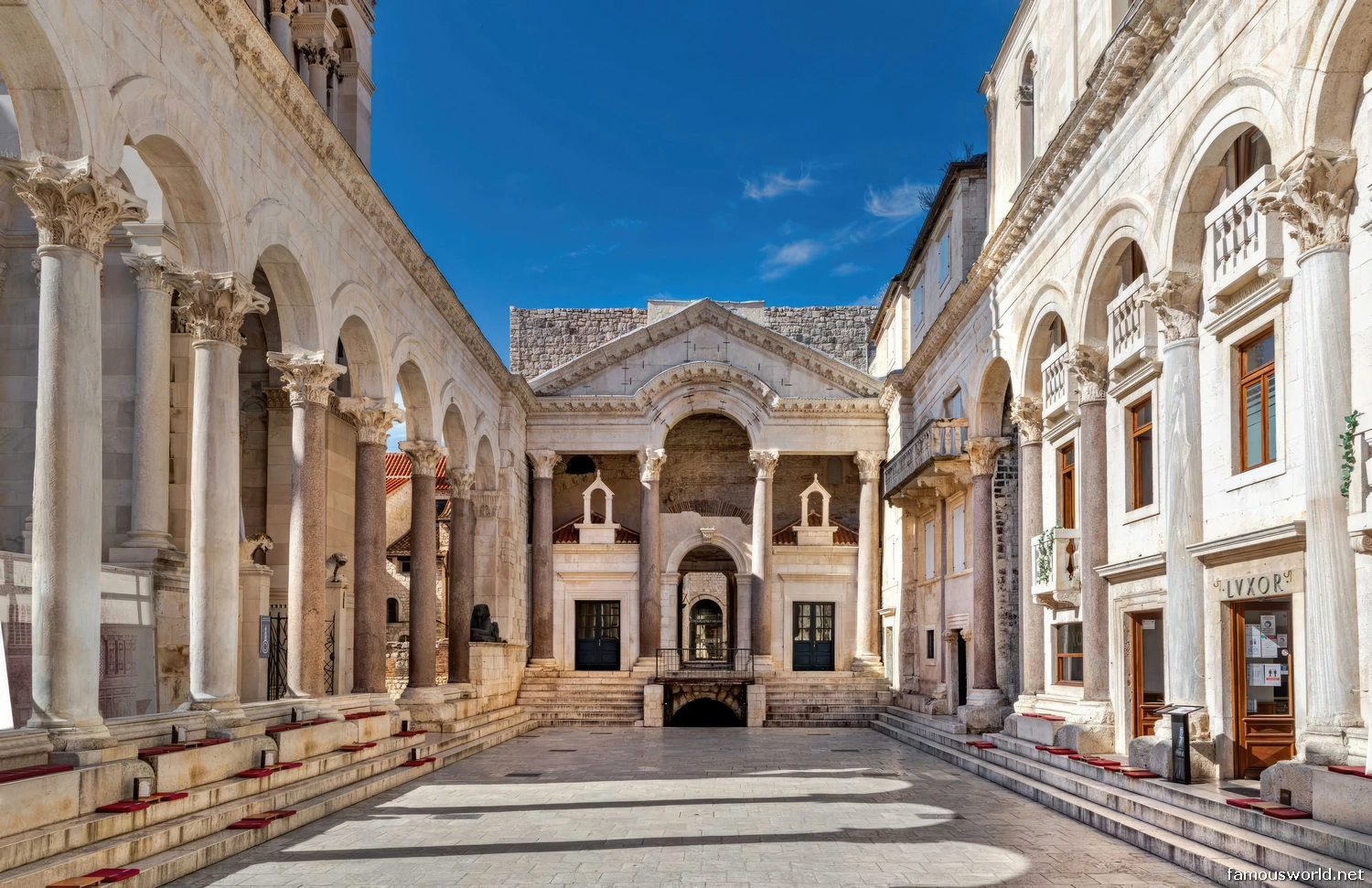
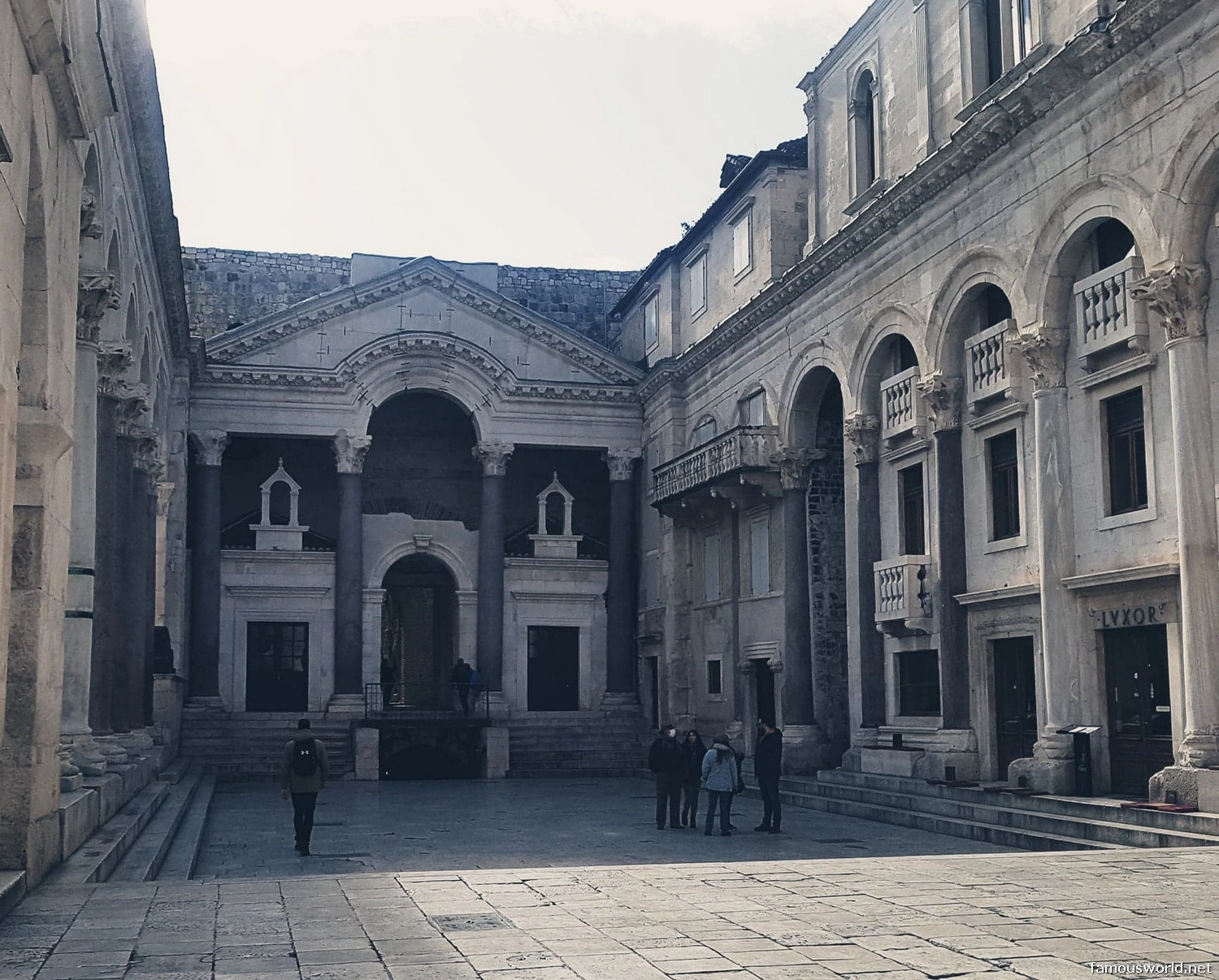
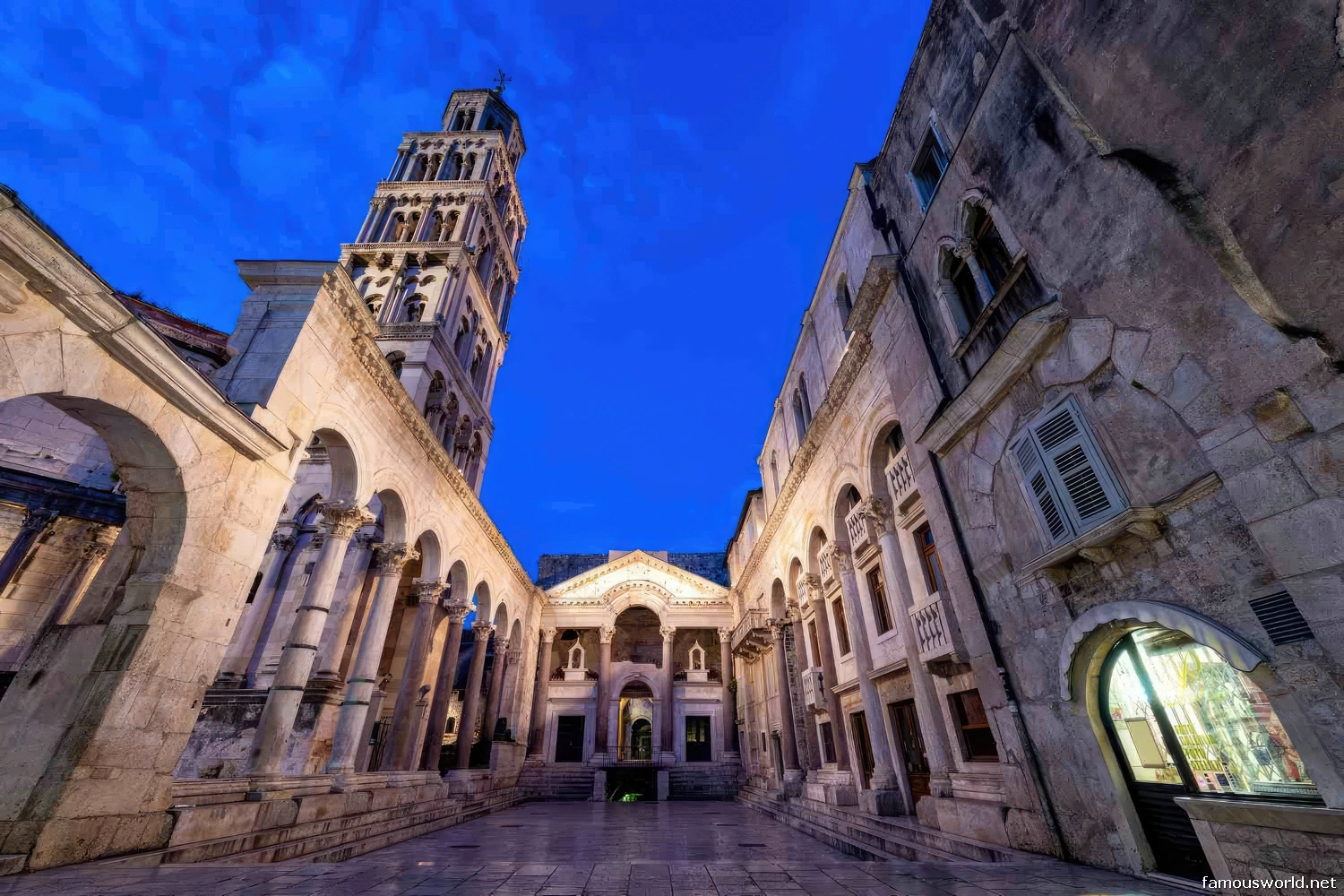
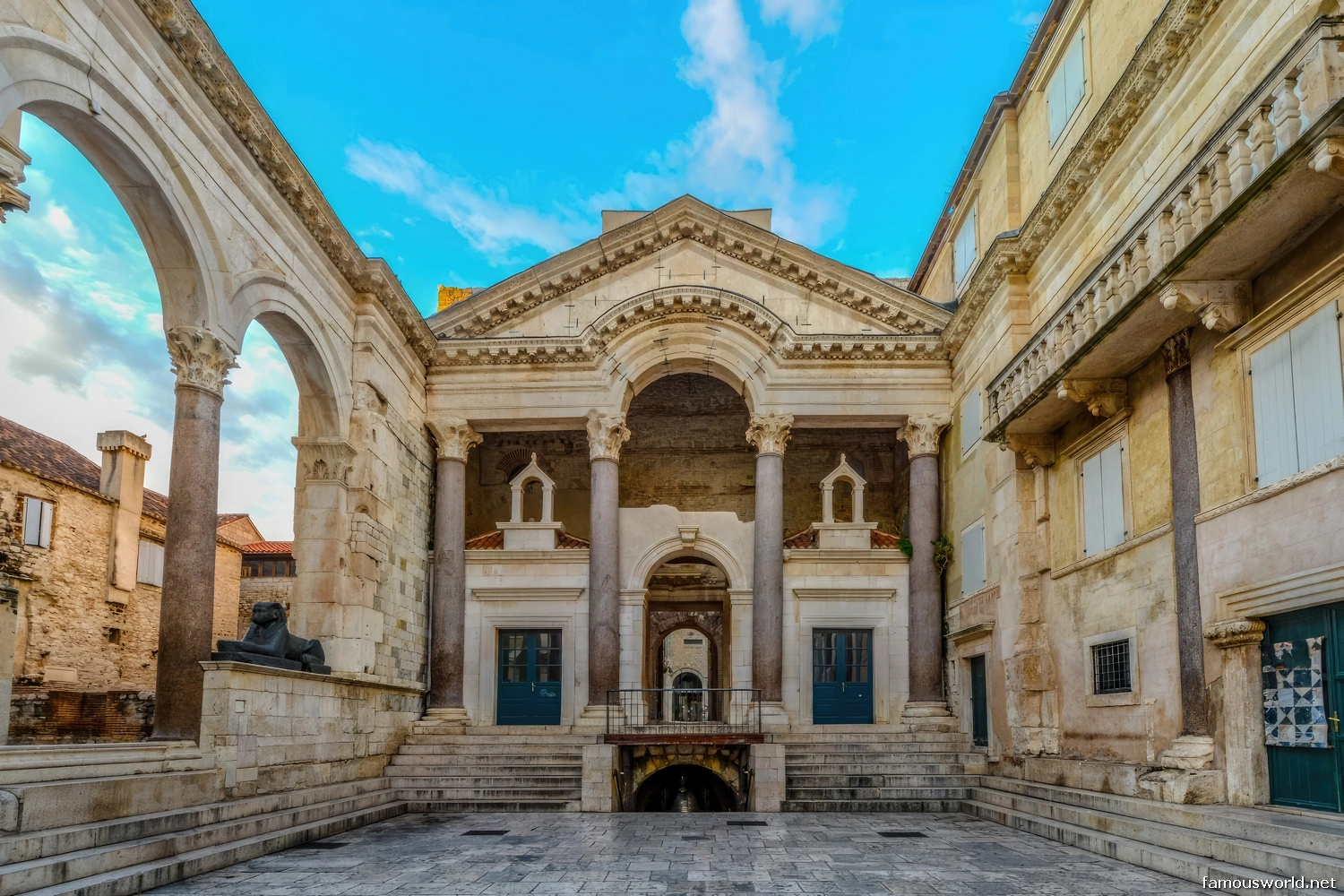
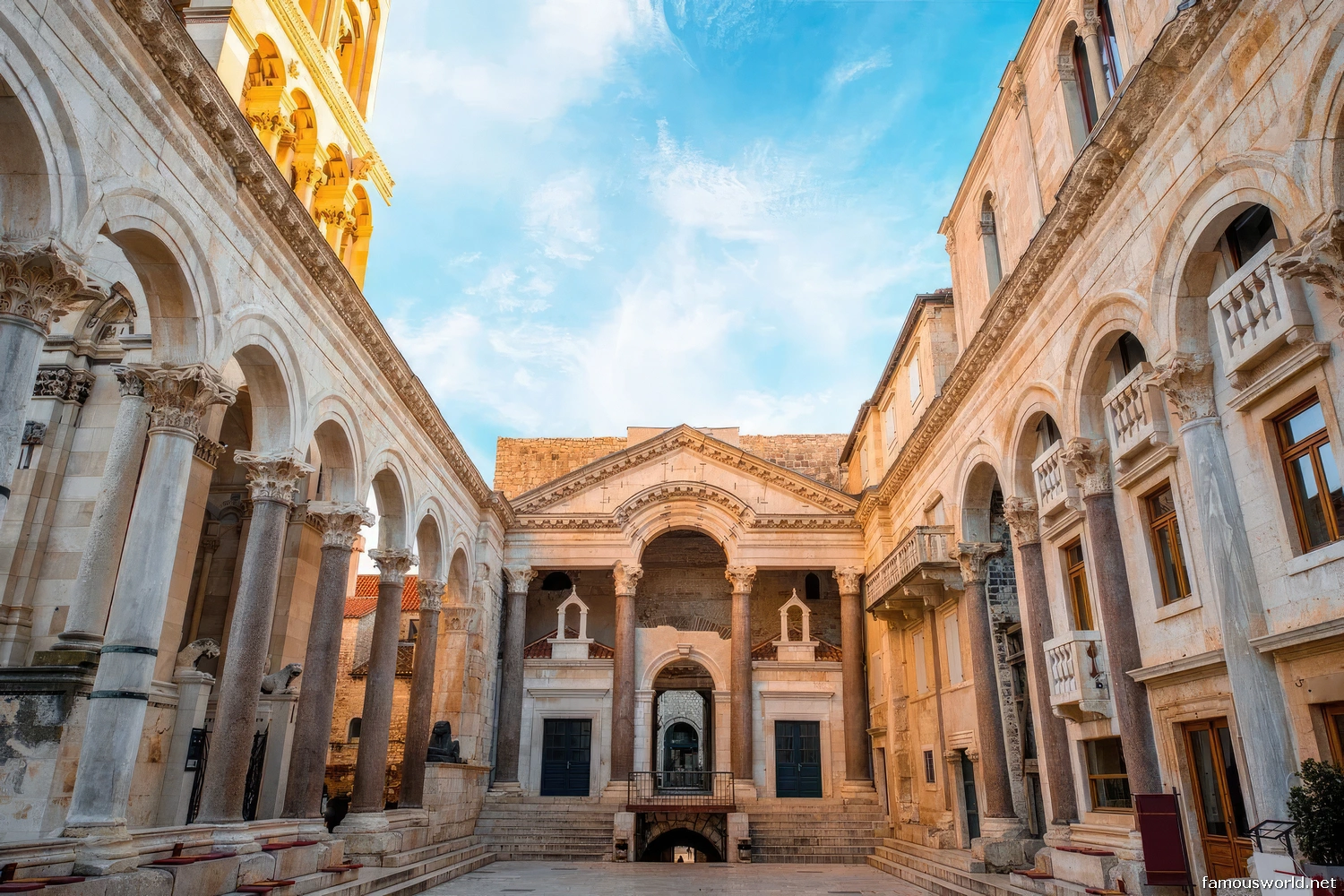
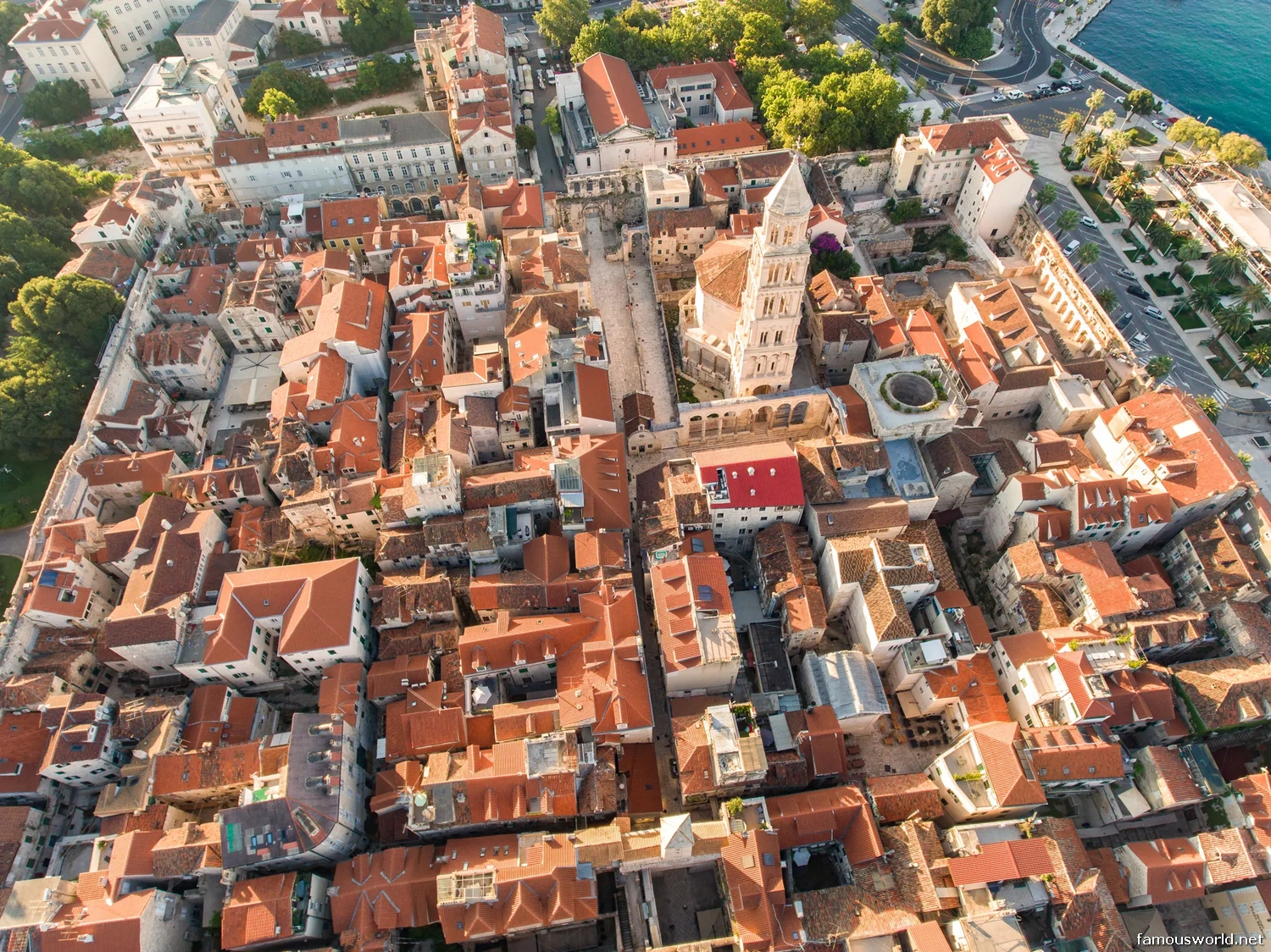
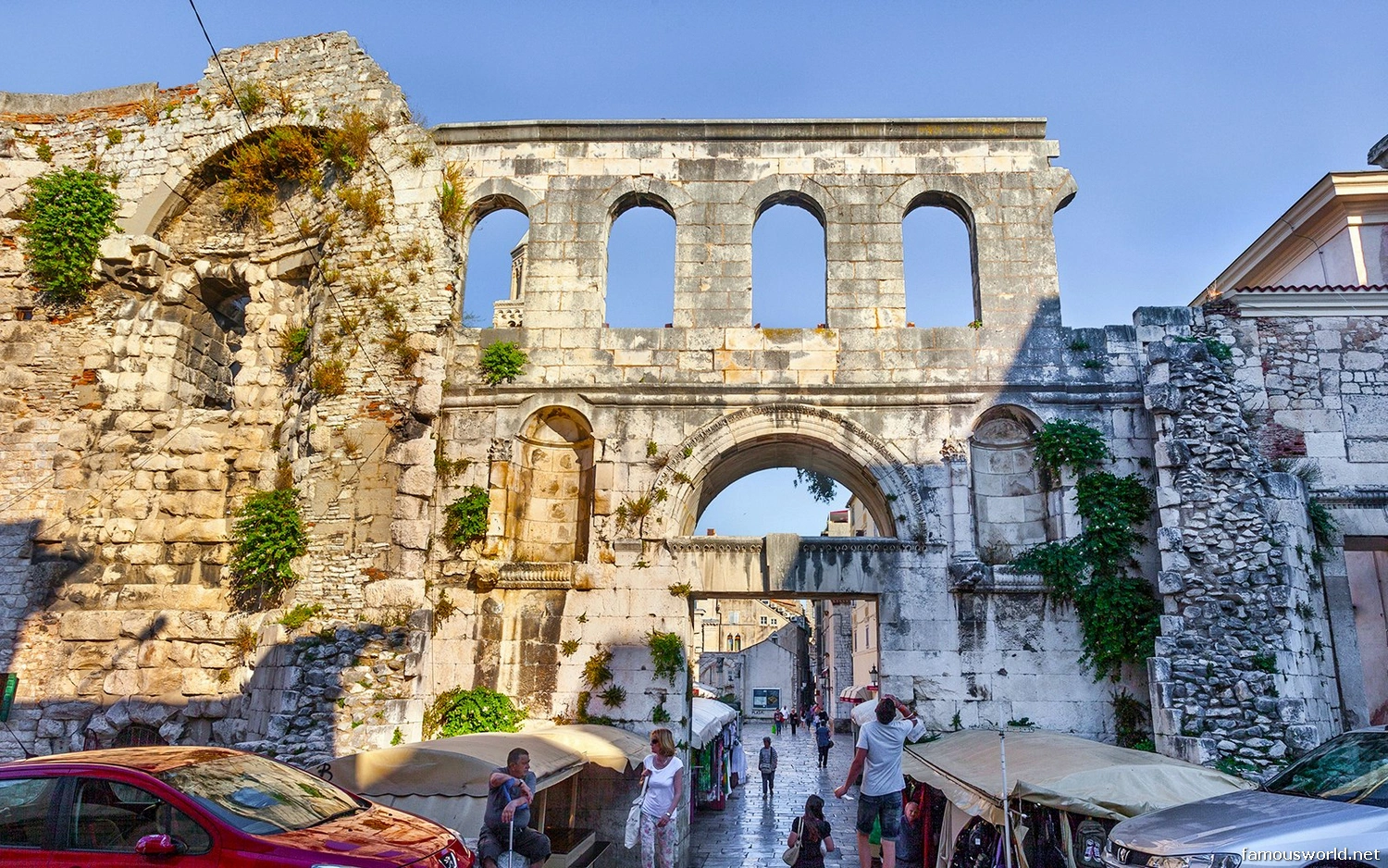


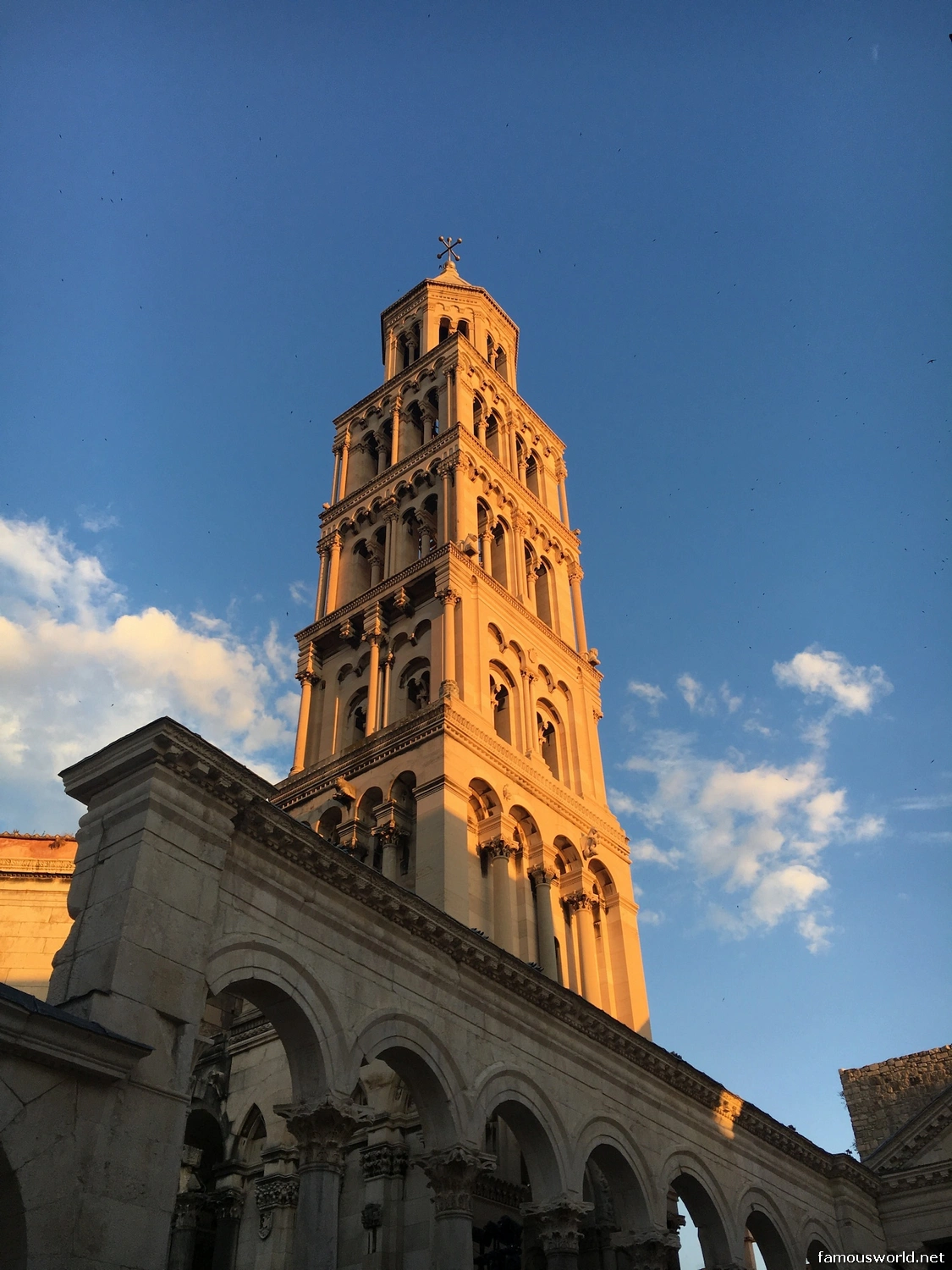
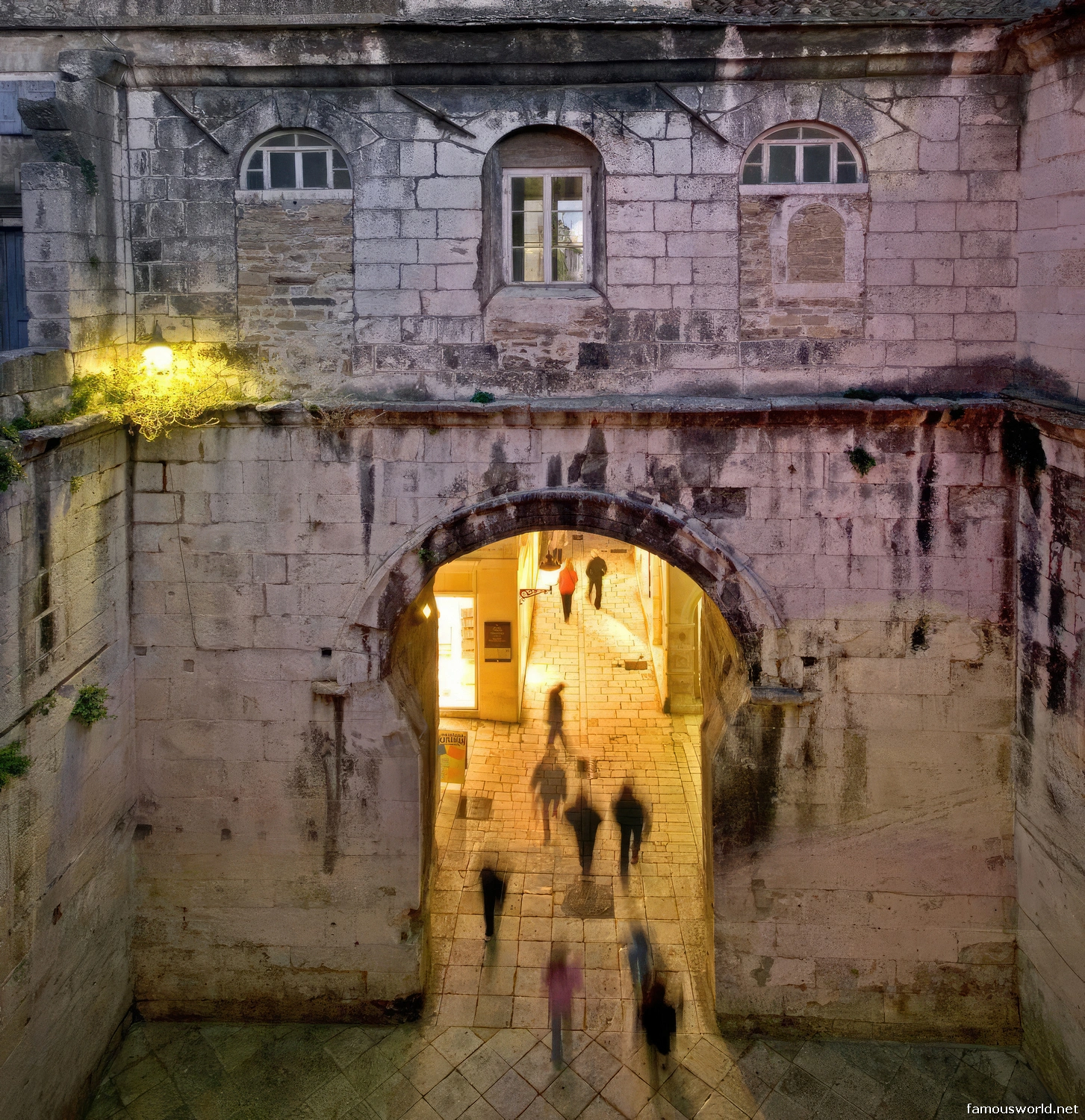

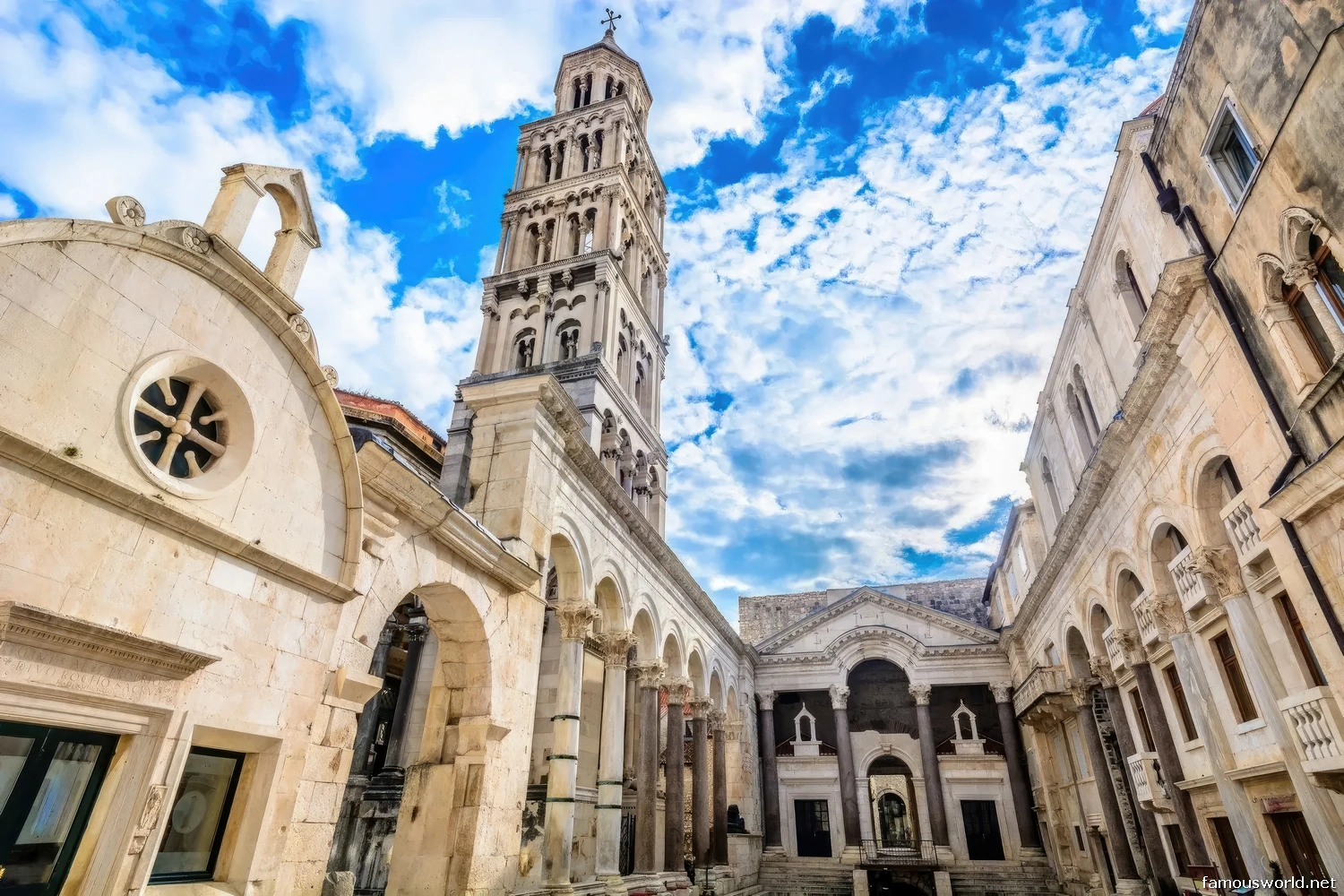
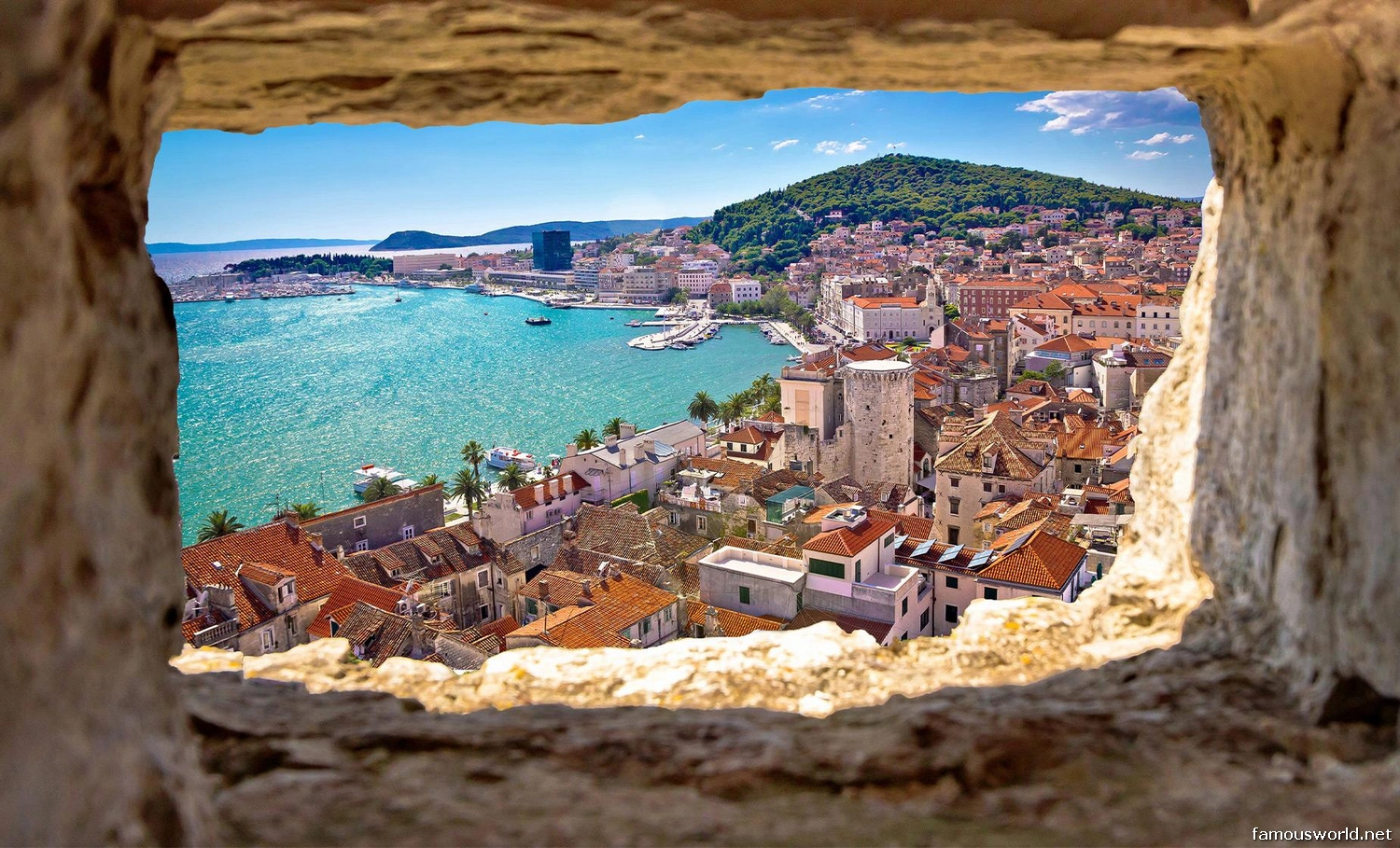
On the sparkling Dalmatian coast, Diocletian’s Palace is not a ruin or a museum, but the living, breathing heart of the city of Split. Built at the turn of the fourth century AD as a magnificent retirement home for the Roman Emperor Diocletian, this extraordinary complex is a unique blend of a luxurious imperial villa, a Hellenistic town, and a formidable Roman military camp (castrum). Today, its ancient walls and courtyards contain the homes, shops, restaurants, and chapels of a vibrant modern city. This UNESCO World Heritage site is one of the world’s most impressive Roman monuments, famous for being a historical site where life has continued uninterrupted for seventeen centuries.
Listen to an introduction about Diocletian’s Palace, Split

Name and Location
- Name: Diocletian’s Palace (Dioklecijanova palača).
- Location: In the center of Split, Croatia’s second-largest city, on the Adriatic coast.
How to Get There
Split is a major transportation hub for Dalmatia, making the palace easily accessible.
- By Air: Split Airport (SPU) is a major international airport with flights from all over Europe, especially during summer.
- By Sea: Split has one of the busiest ferry ports in the Adriatic, with regular lines to nearby islands (Hvar, Brač, Vis) and an international route to Ancona, Italy.
- By Bus: The main bus station is right next to the ferry port, with an extensive network connecting Split to the rest of Croatia and internationally.
- By Train: A train line connects Split with the capital, Zagreb.
- By Car: The A1 motorway provides a direct and fast link to Zagreb and the rest of Europe.
Landscape and Architecture
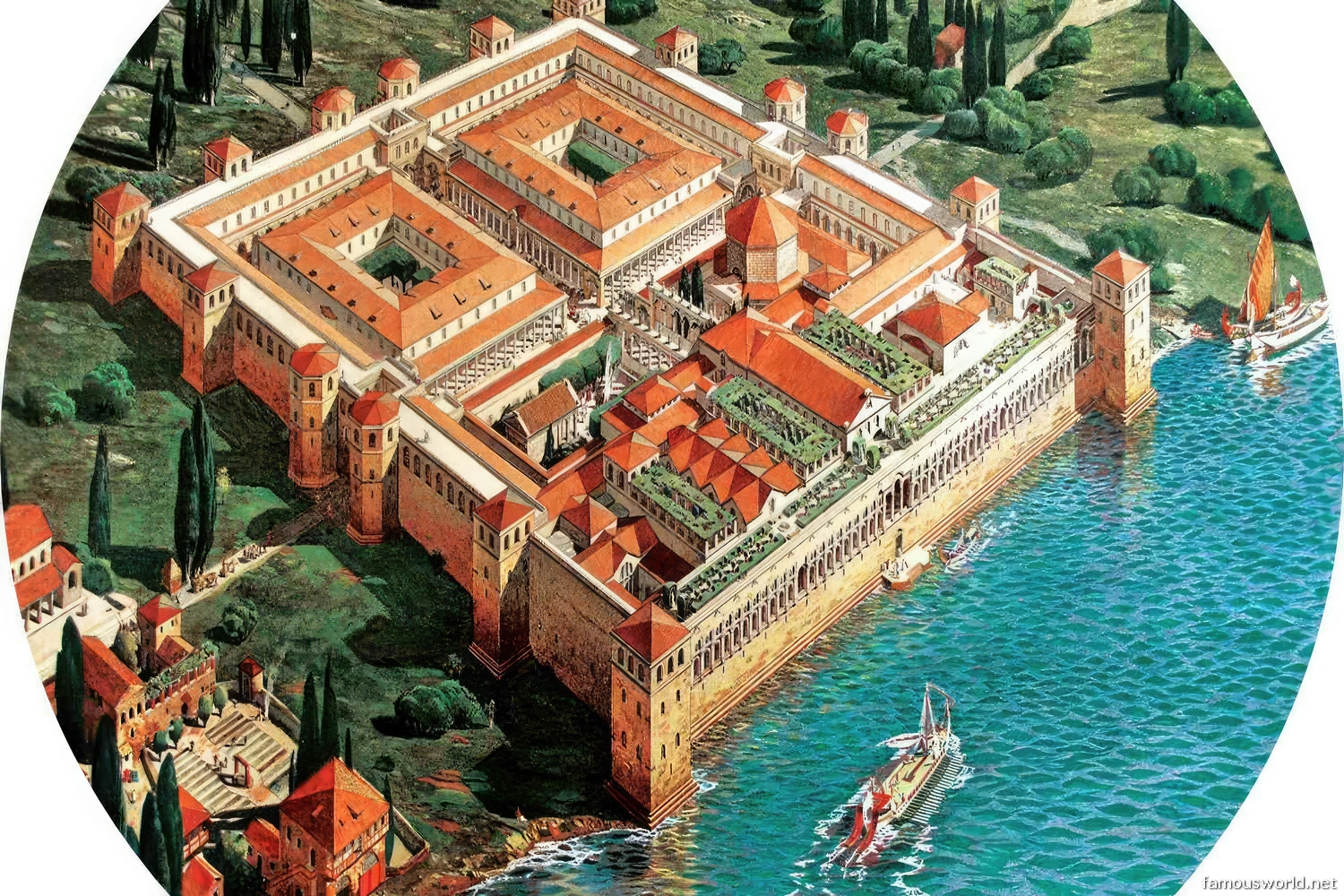
The palace is a rectangular fortress built of gleaming local white limestone and marble, measuring approximately 215 by 180 meters.
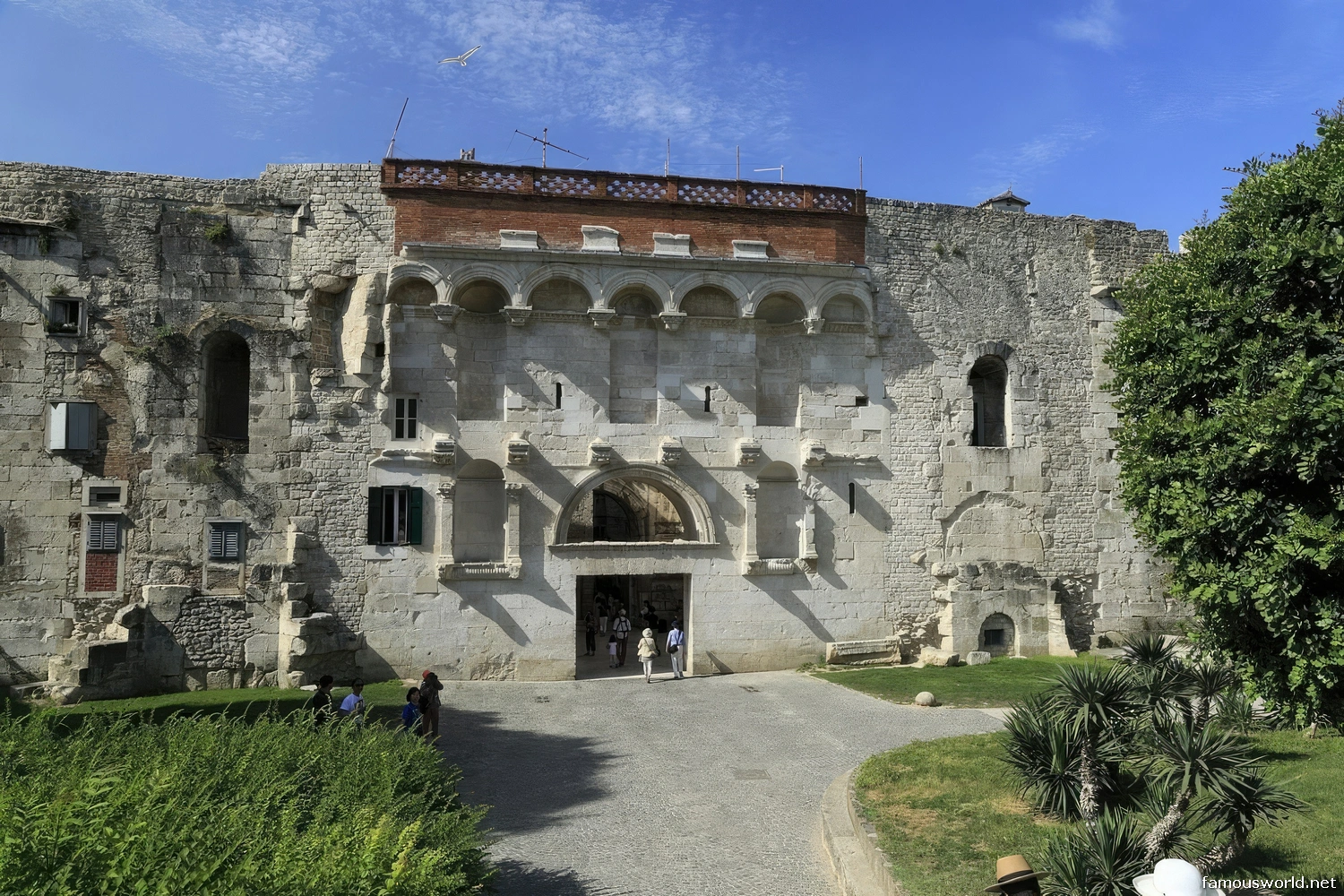
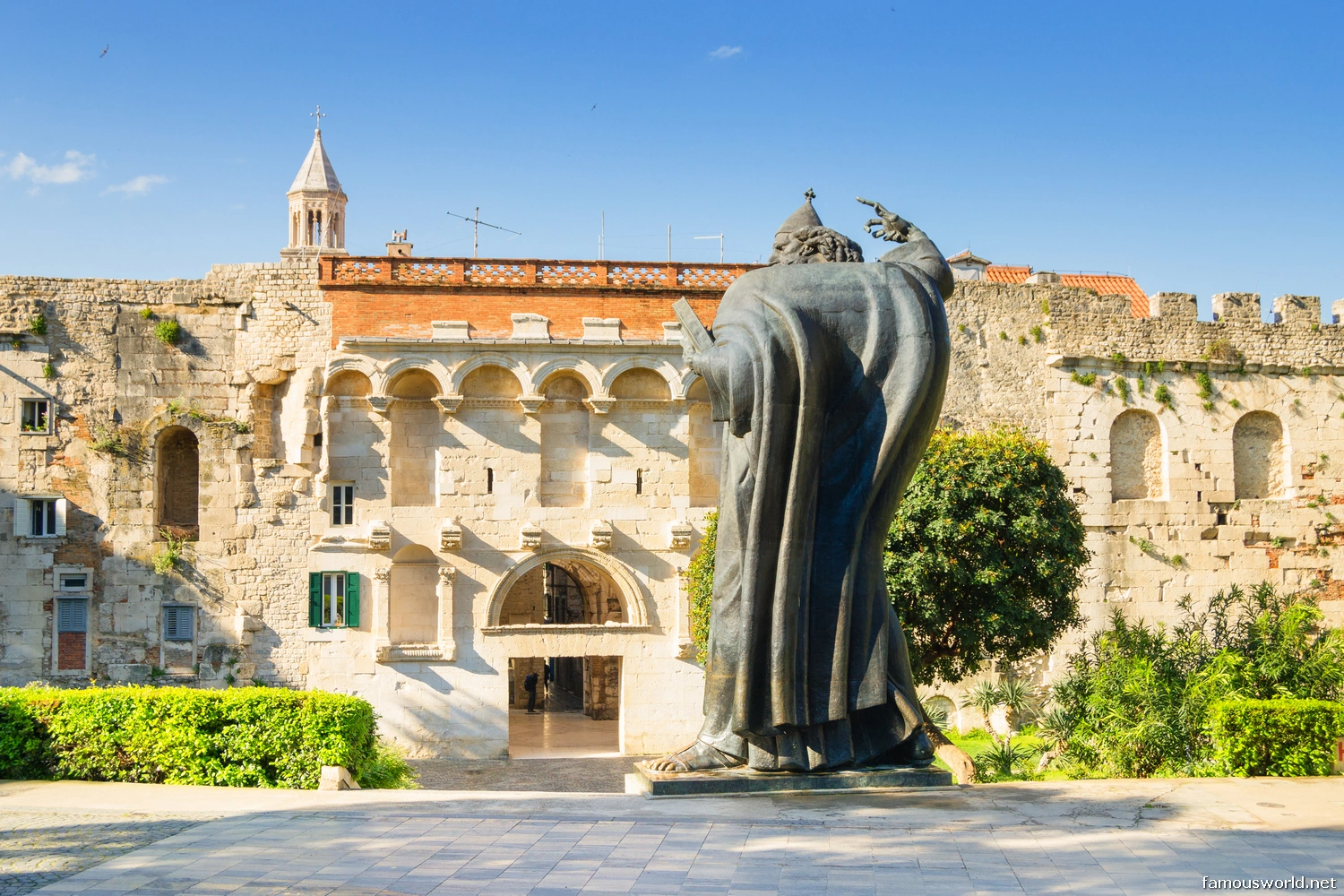
- Fortress Layout: The complex was built like a Roman military camp, with four fortified gates (Golden, Silver, Iron, and Bronze) and two main intersecting streets, the Cardo and Decumanus.
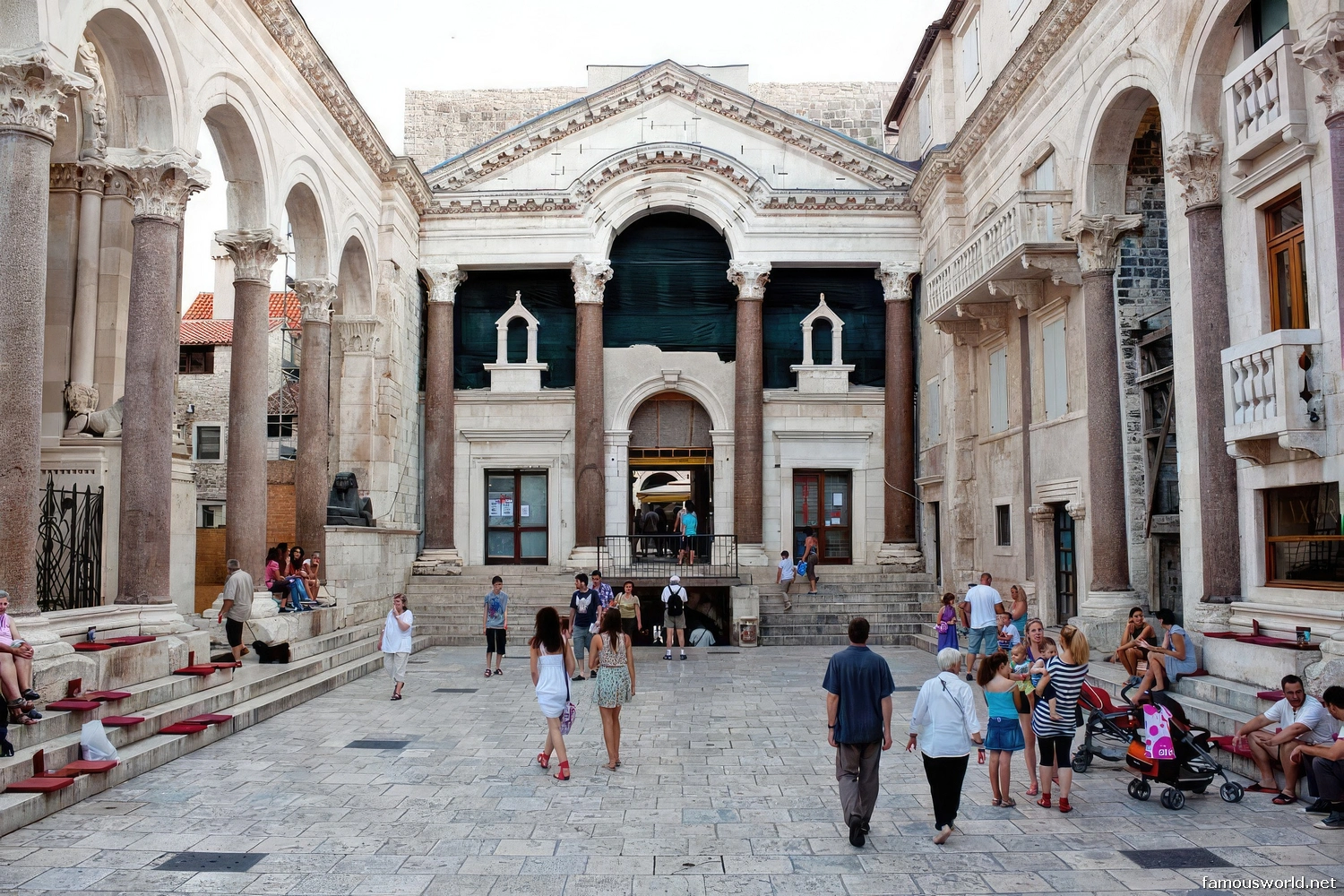
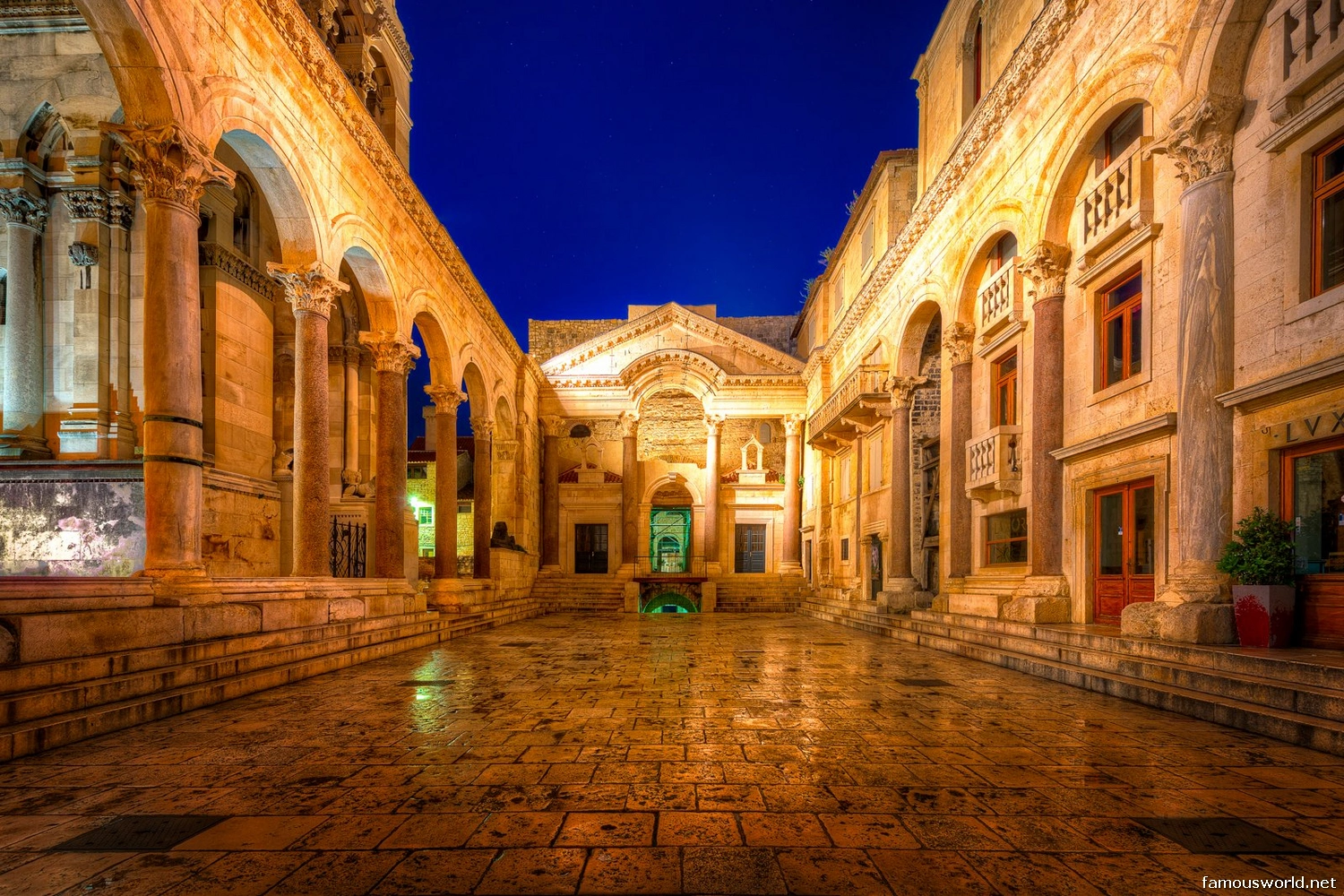
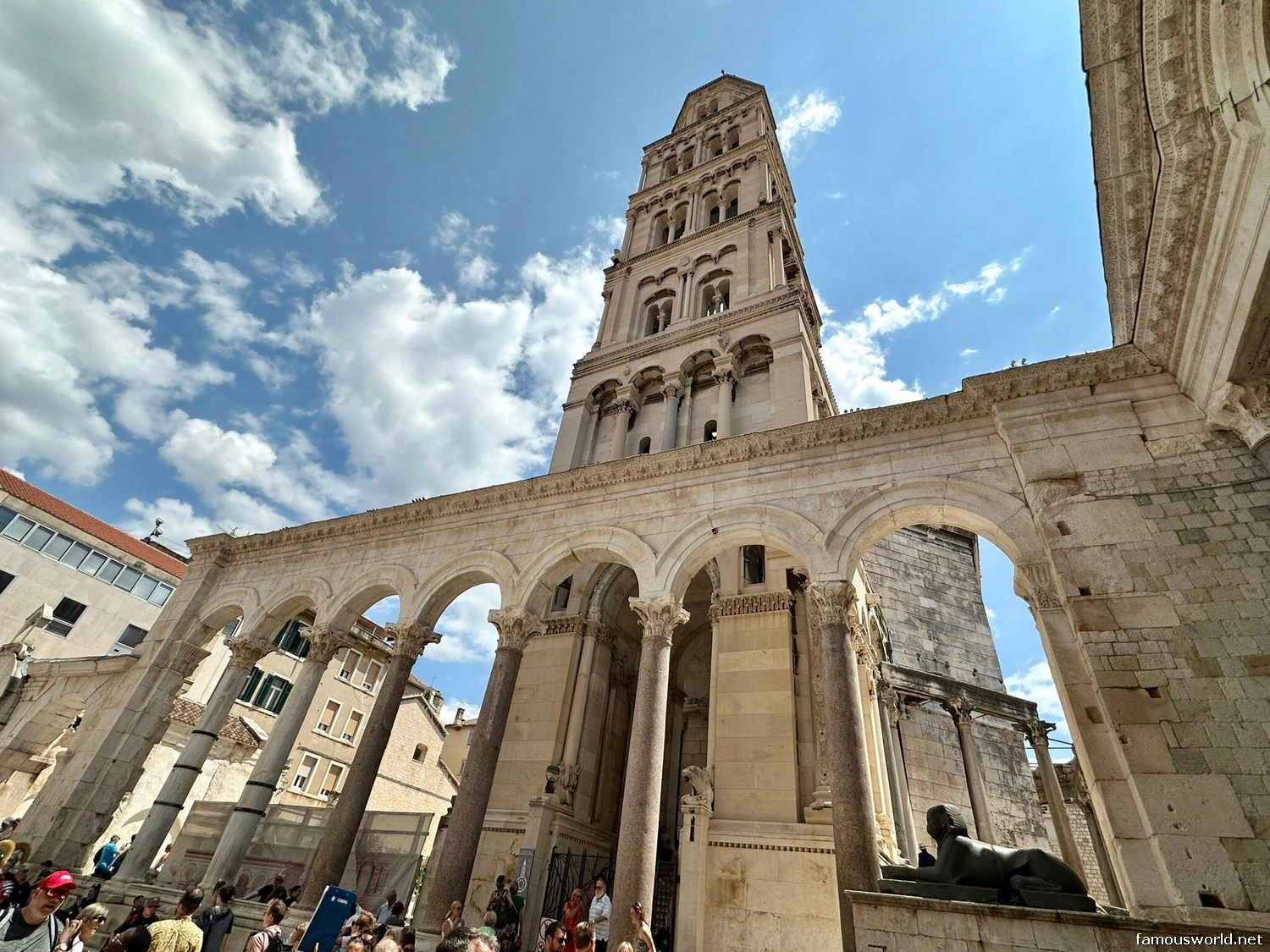
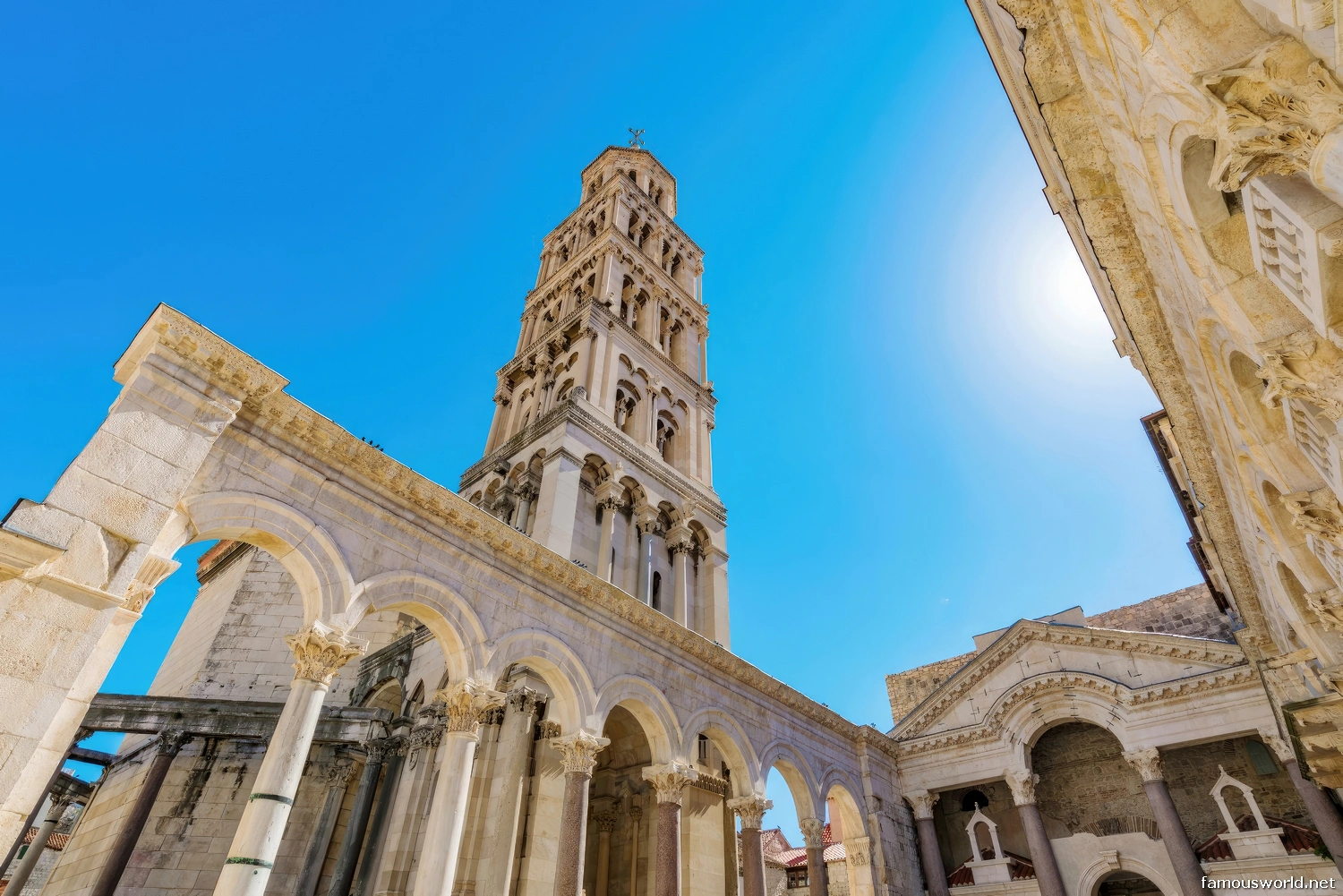
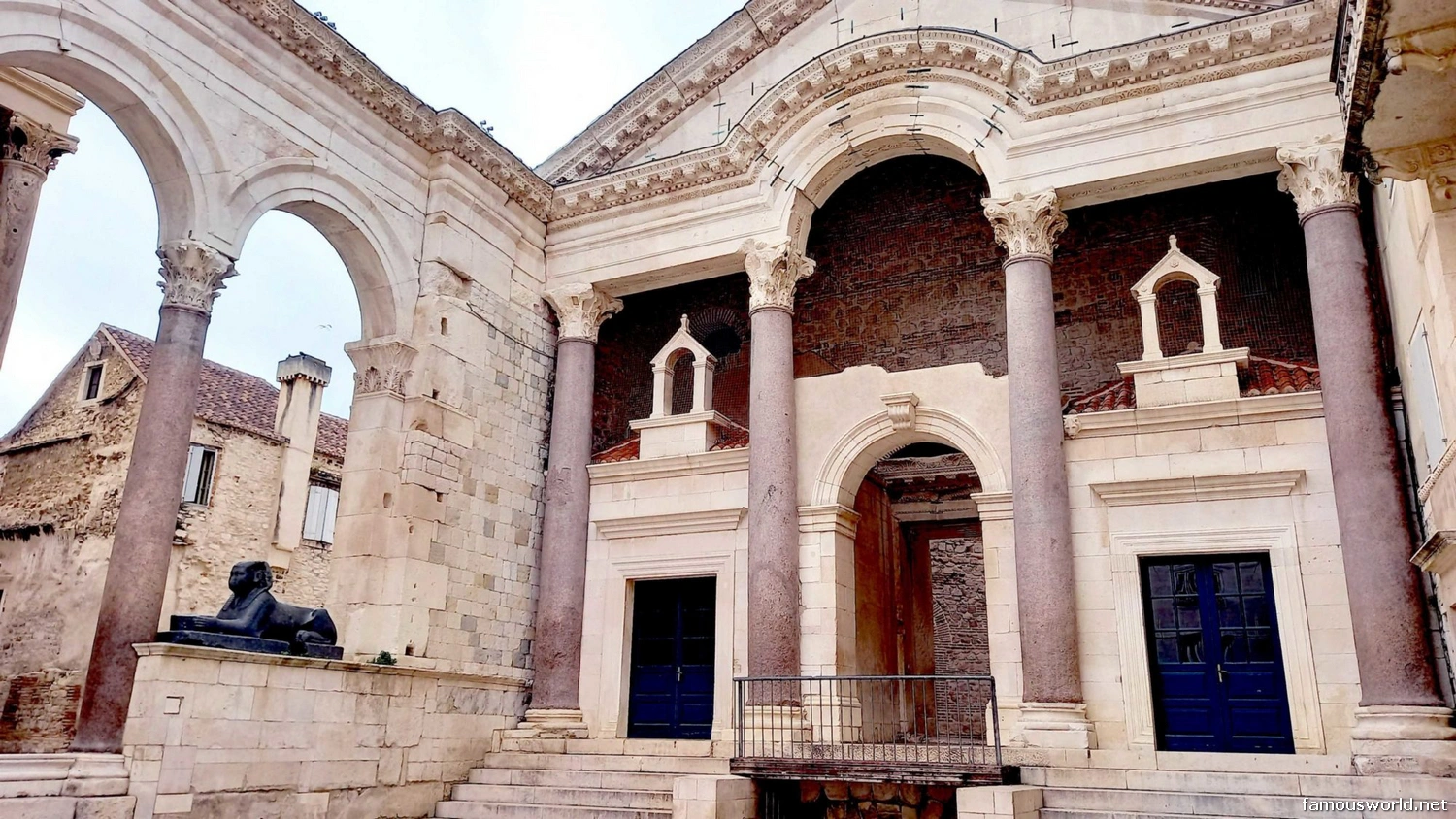
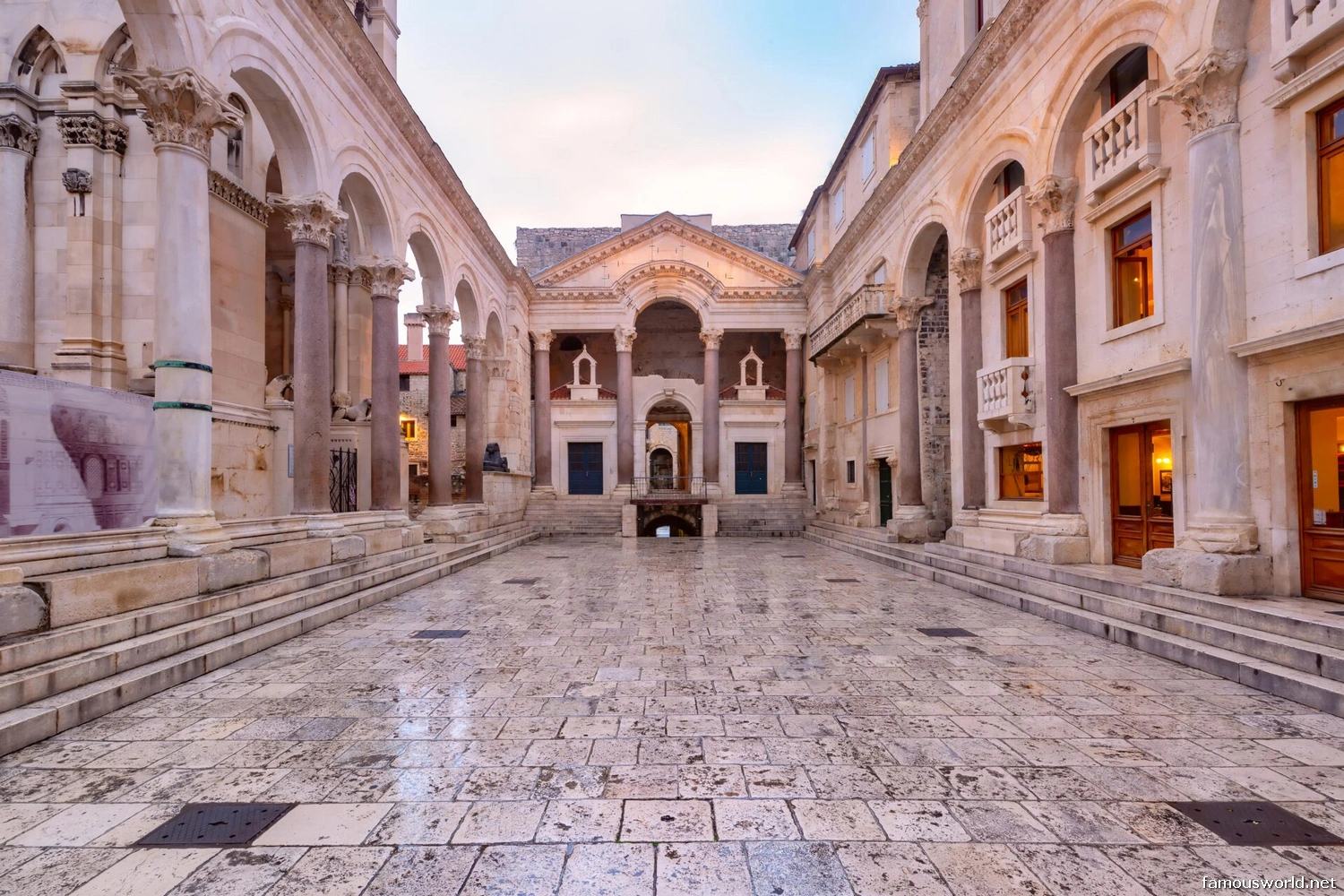
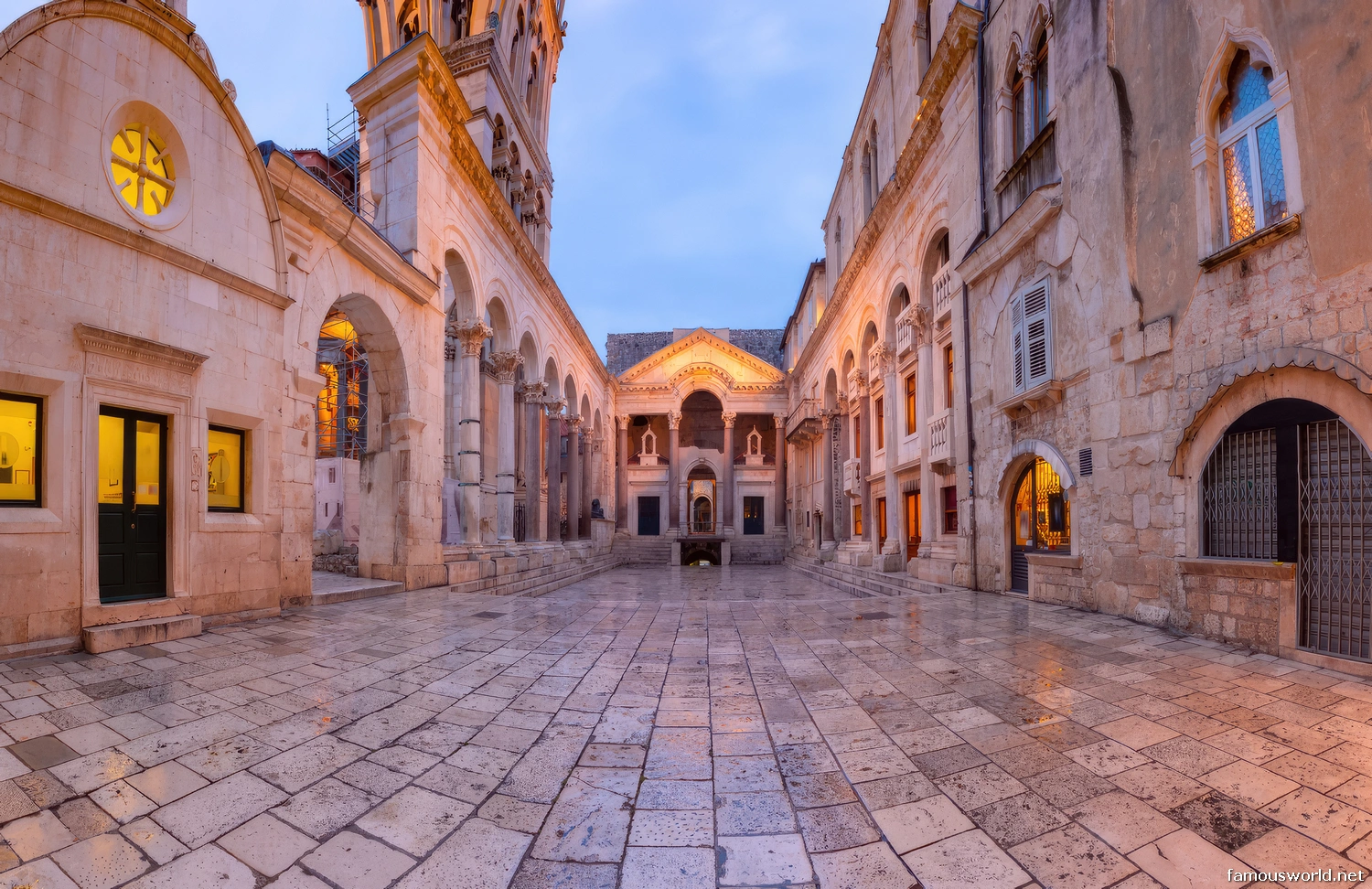
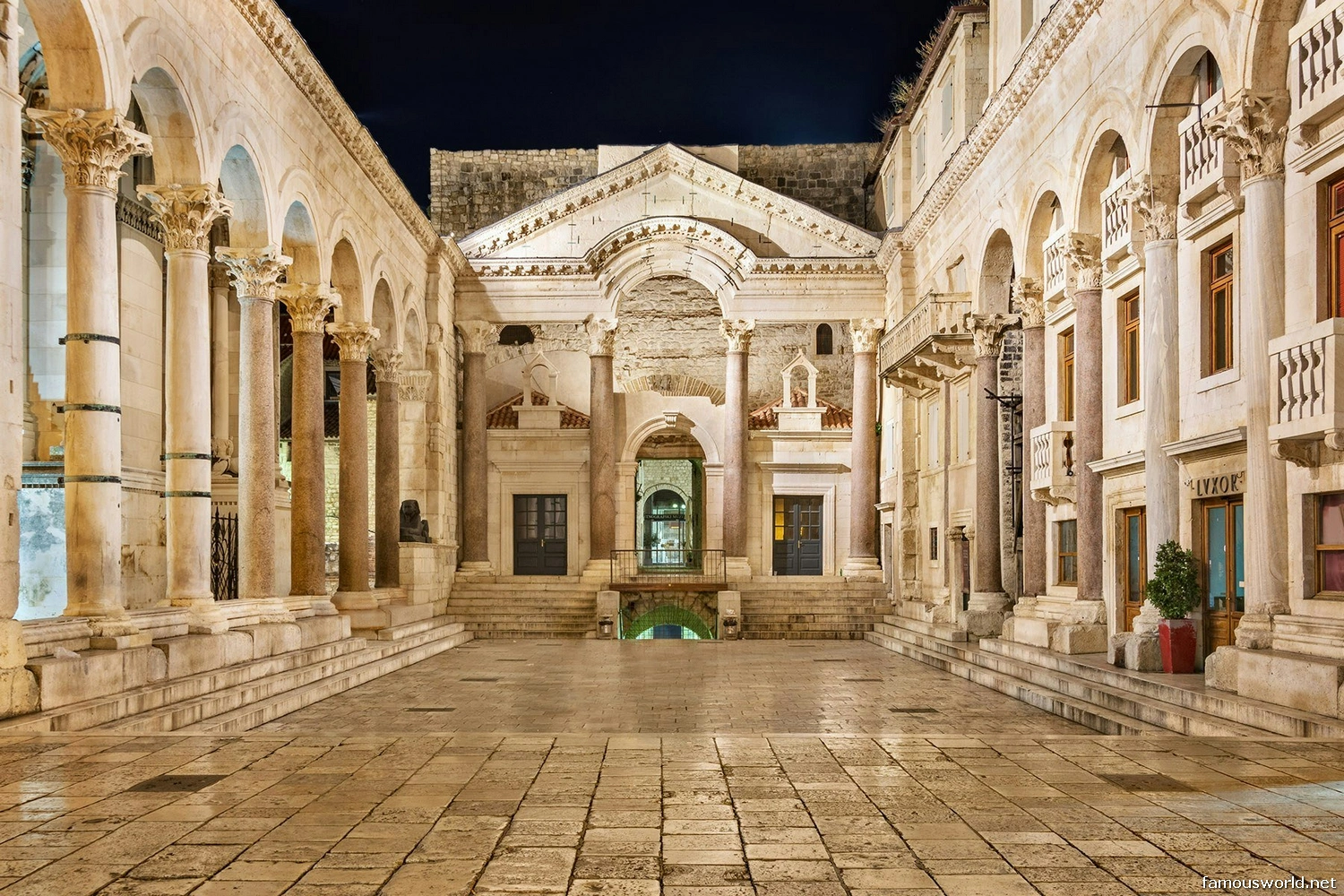
- The Peristyle: The monumental central courtyard of the palace, surrounded by a colonnade of red granite columns. It served as the grand entrance to the imperial apartments and was the stage for ceremonial appearances by the emperor.
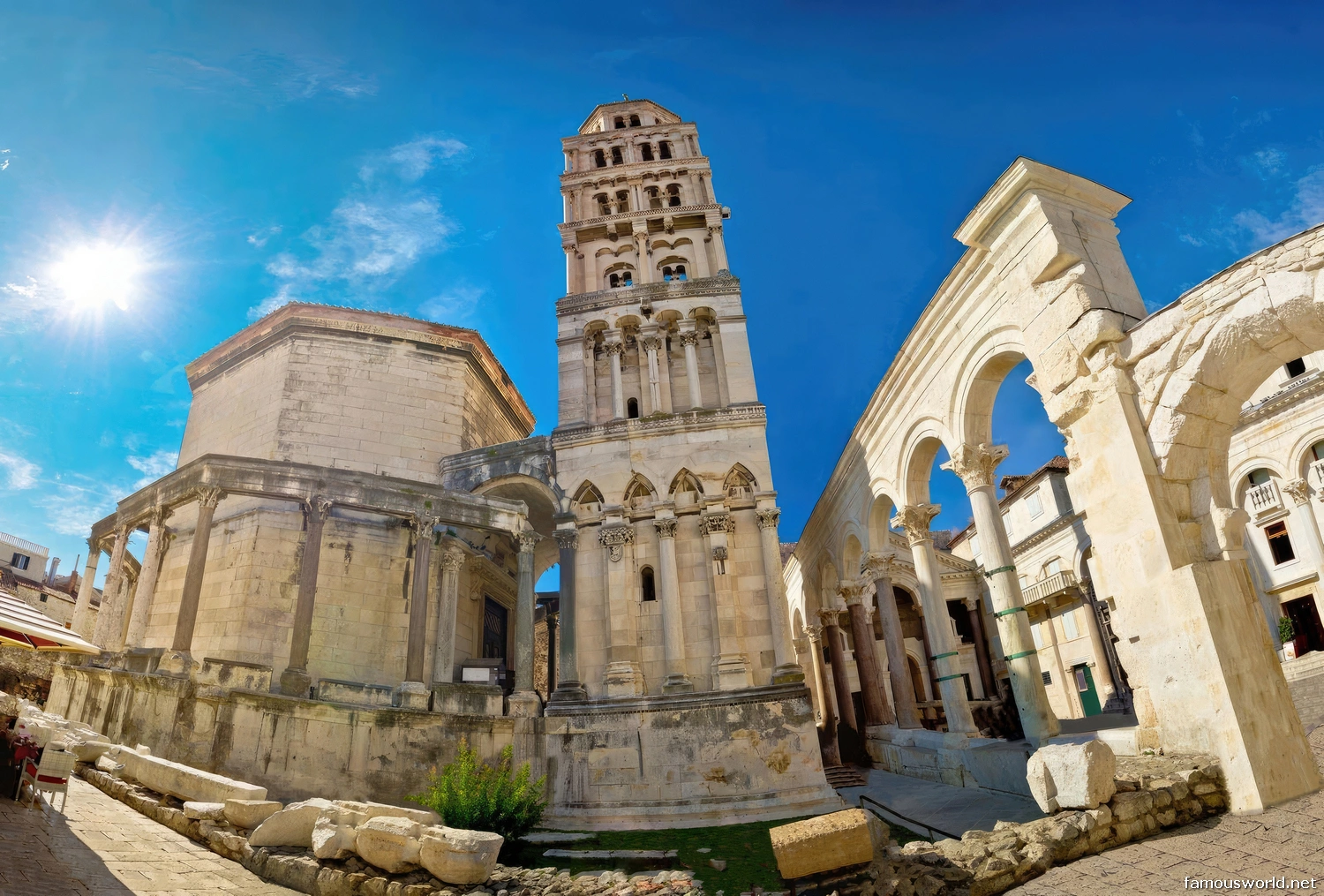
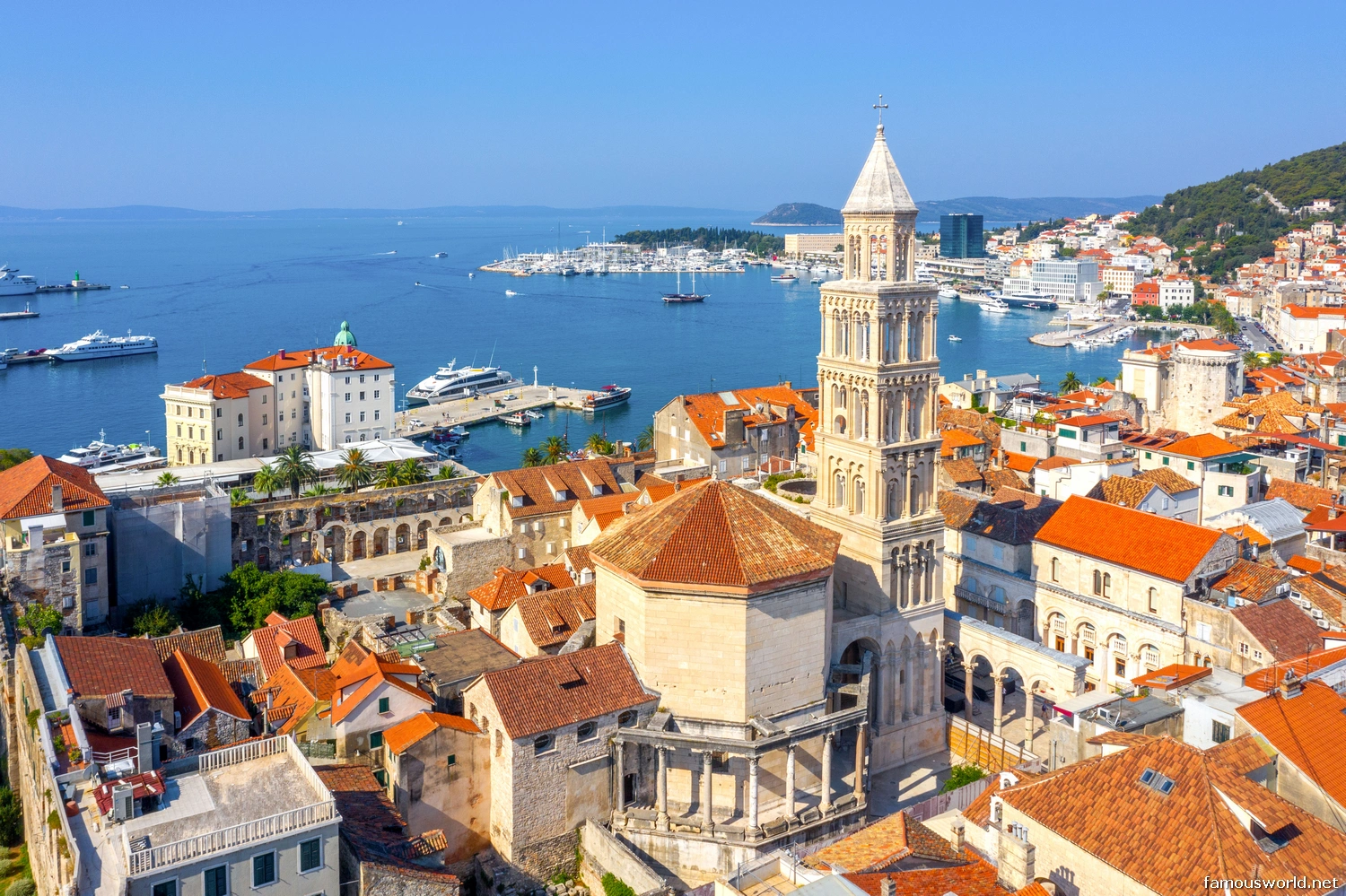
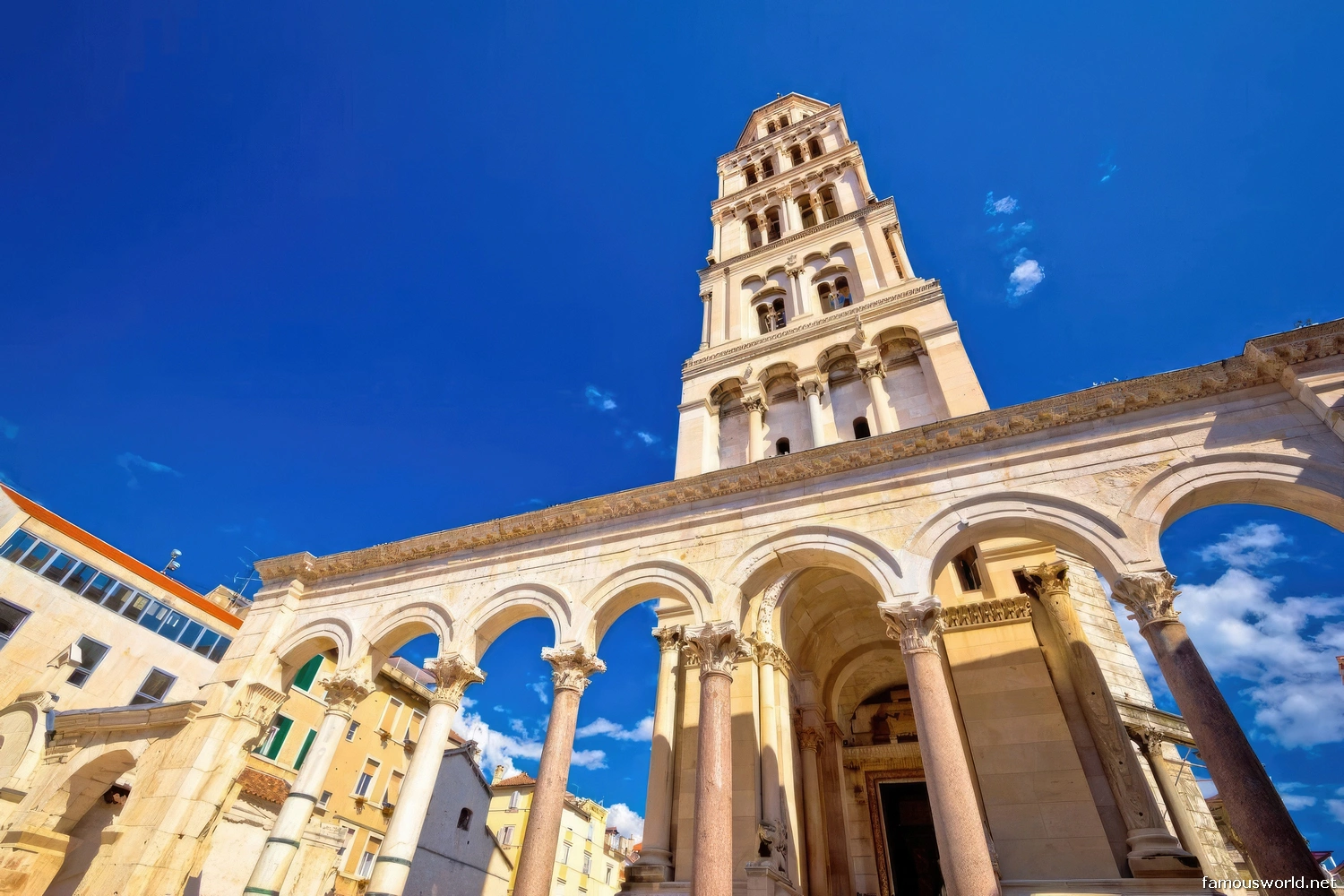
- Cathedral of St. Domnius: Originally built as Diocletian’s Mausoleum, this octagonal structure was converted into a cathedral in the 7th century. It is one of the best-preserved examples of Roman architecture in the world, ironically now a church dedicated to a saint martyred during Diocletian’s persecutions.
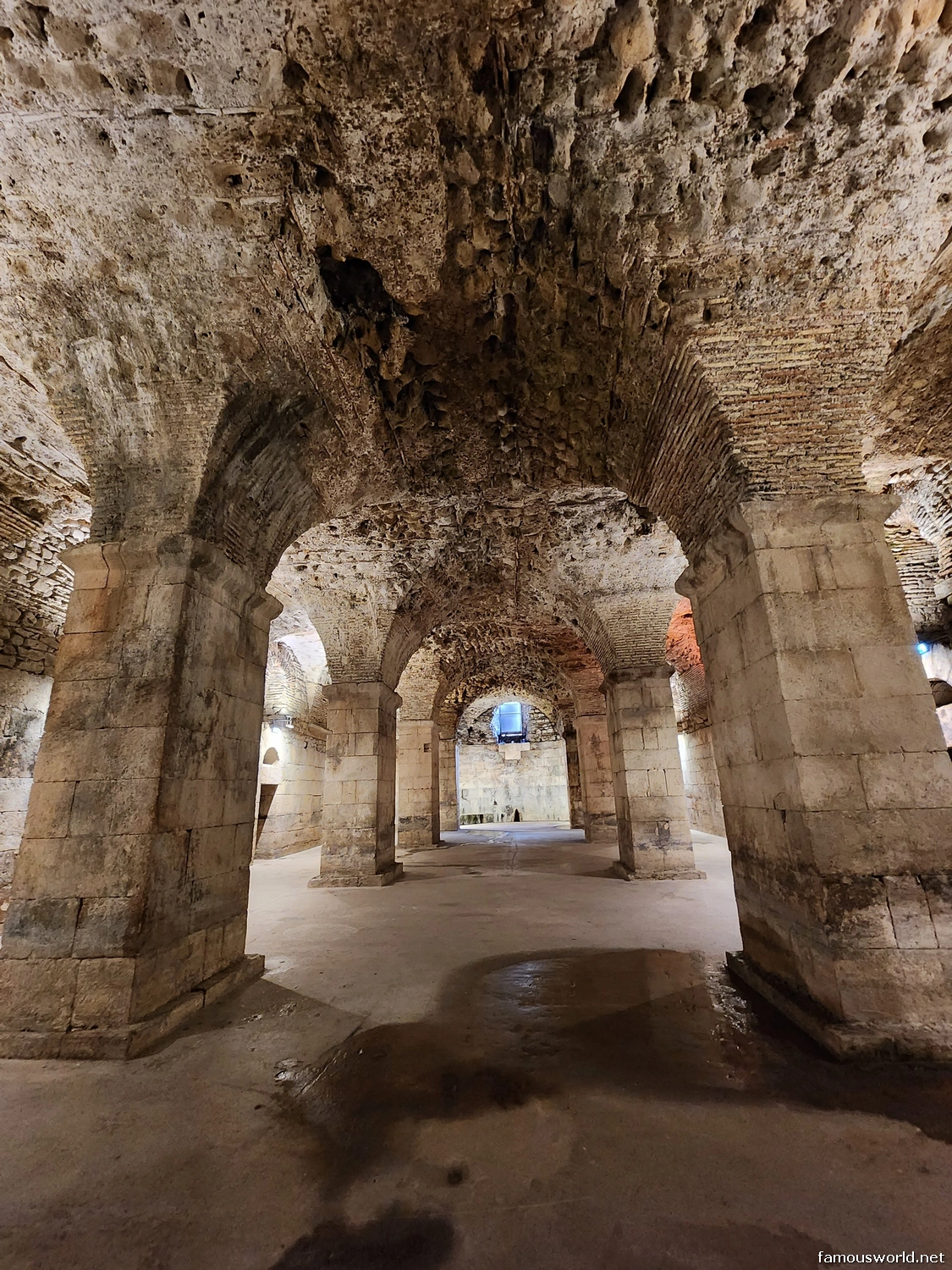
- The Substructures (Basement Halls): A vast, remarkably well-preserved complex of underground halls located beneath the imperial apartments. Their layout is an exact replica of the rooms above, providing invaluable insight into the original appearance of the palace.
- A Living City: Over the centuries, citizens of nearby Salona took refuge within the palace walls, building their homes and businesses directly into the ancient fabric. This has created a unique architectural landscape where Roman arches stand next to medieval chapels and Gothic windows are set in Roman walls.
What Makes It Famous
Diocletian’s Palace is renowned for its incredible state of preservation and its unique status as a living monument.
- A Living Roman Palace: Unlike most ancient ruins, the palace is not a sterile archaeological site but the vibrant center of Split. Thousands of people still live and work within its walls.
- UNESCO World Heritage Site: Recognized for being one of the most complete and impressive Roman architectural complexes and for its unique evolution from a palace into a medieval city.
- Architectural Completeness: It is arguably the best-preserved example of a Roman palace in the world.
- Filming Location: The palace’s substructures were used as the filming location for Daenerys Targaryen’s throne room and dragon dungeons in Meereen in the HBO series Game of Thrones.
Differences from Other Wonders
The integrated, living Roman core of Diocletian’s Palace offers a different experience from the enclosed, perfectly preserved medieval city-state of Dubrovnik.
- Environment (Living Roman Palace vs. Fortified Medieval City): Split is a city that has grown out of and within a single, massive Roman palace. Dubrovnik is a complete, self-contained medieval city that was built and then fortified by extensive defensive walls.
- Core Story (Imperial Retirement Home vs. Independent Maritime Republic): The story of Split begins with the personal project of a retiring Roman Emperor. The story of Dubrovnik is that of a proud and independent republic built on commerce and diplomacy.
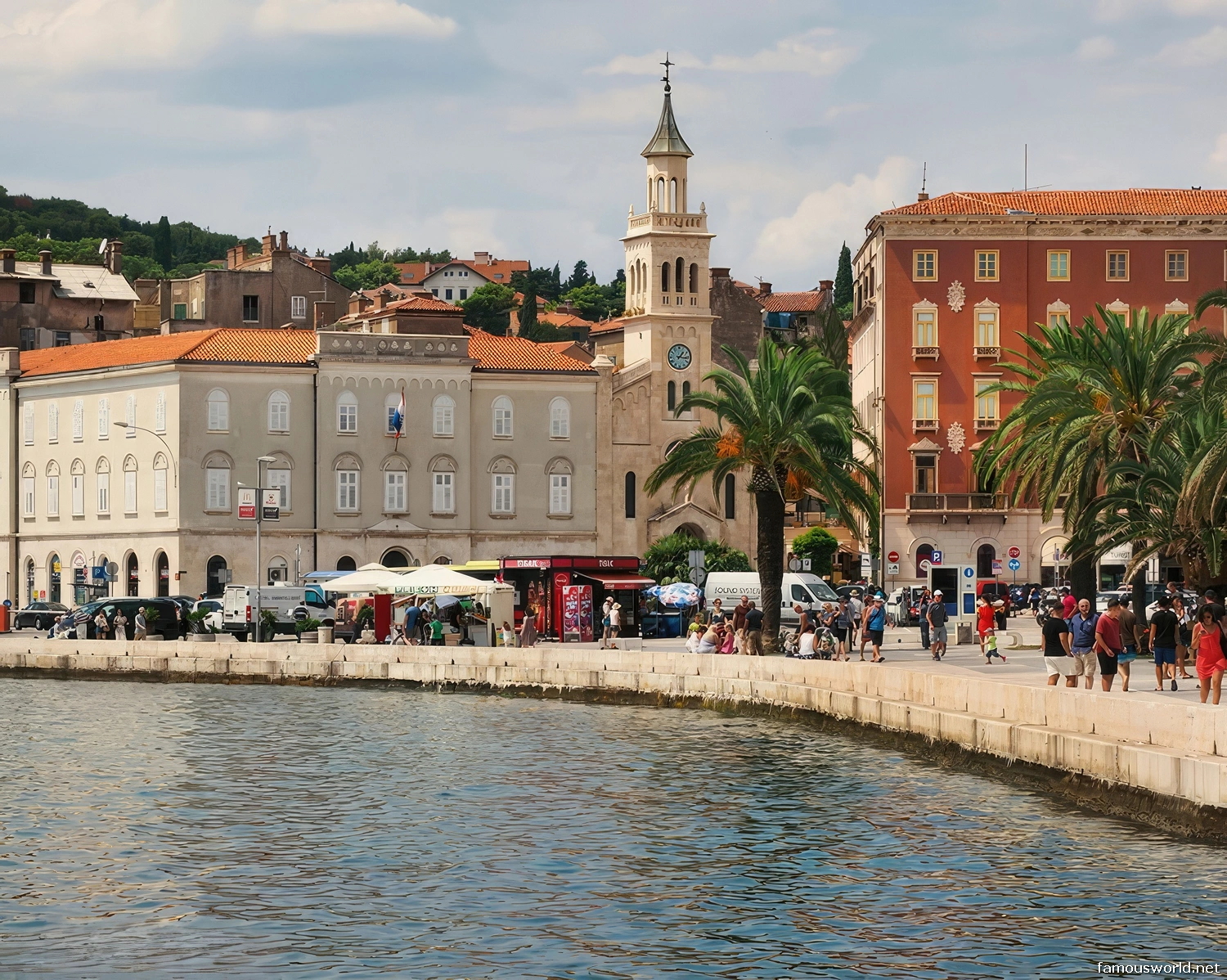
- Primary Attraction (The Palace Core vs. The City Walls): While Split has a beautiful seafront, its main attraction is the central Roman complex (the Peristyle, Cathedral, and substructures). Dubrovnik’s most iconic experience is walking the complete circuit of its magnificent outer walls, which define the city.
- Atmosphere (Bustling and Integrated vs. Stately and Museum-Like): Split feels like a dynamic, living city where ancient history is seamlessly and functionally integrated into everyday life. Dubrovnik, while also lived-in, can feel more like a perfectly preserved open-air museum, a complete and stately historical masterpiece.
Location on world map