



Along the coast of Normandy, a series of long, windswept beaches stand as a powerful and poignant memorial to one of the most pivotal moments of the 20th century. These are the D-Day Landing Beaches, the sites of Operation Overlord on June 6, 1944—the largest seaborne invasion in history and the beginning of the end of World War II in Europe. This is not a single monument but a sprawling, open-air museum stretching across 80 kilometers (50 miles) of coastline. To visit these shores, now peaceful, is to walk on hallowed ground, exploring the remnants of German fortifications, paying respects at vast, silent cemeteries, and contemplating the immense courage and sacrifice that turned the tide of history.
Listen to an introduction about D-Day Landing Beaches, Normandy

Name and Location
- Name: D-Day Landing Beaches. The five sectors were codenamed Utah, Omaha, Gold, Juno, and Sword.
- Location: Along the coast of the Calvados and Manche departments in Normandy, northwestern France.
How to Get There
The landing zones are spread out, making a car the most effective way to explore the area.
- By Train: The best starting points are the cities of Caen and Bayeux, which have direct train services from Paris (Gare Saint-Lazare). From there, you can rent a car or join a guided tour.
- By Car: Driving from Paris takes approximately three hours. A car is essential for visiting the various beaches, museums, and cemeteries at your own pace.
- By Air: The nearest airports are in Caen (CFR) and Deauville (DOL), with limited international flights. Flying into Paris (CDG or ORY) and continuing by train or car is more common.
Landscape and Architecture
The landscape is a mix of natural coastal beauty and the somber architecture of war and remembrance.
- The Beaches: The coastline consists of wide, sandy beaches, dramatic cliffs (like Pointe du Hoc), and grassy dunes. The landscape itself was a crucial tactical element of the invasion.
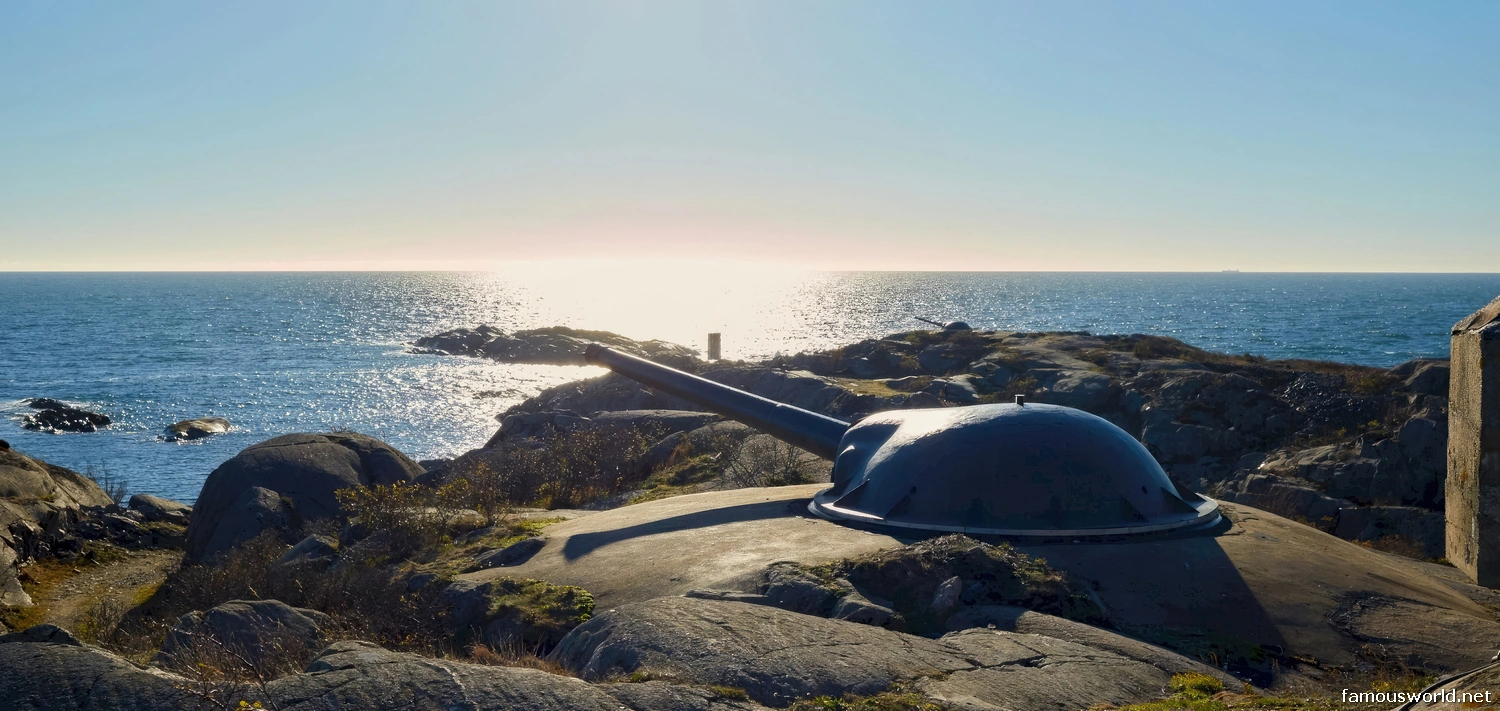
- The Atlantic Wall: Dotted along the entire coastline are the imposing concrete remnants of the Atlantic Wall—German bunkers, gun emplacements, and observation posts that soldiers had to overcome.
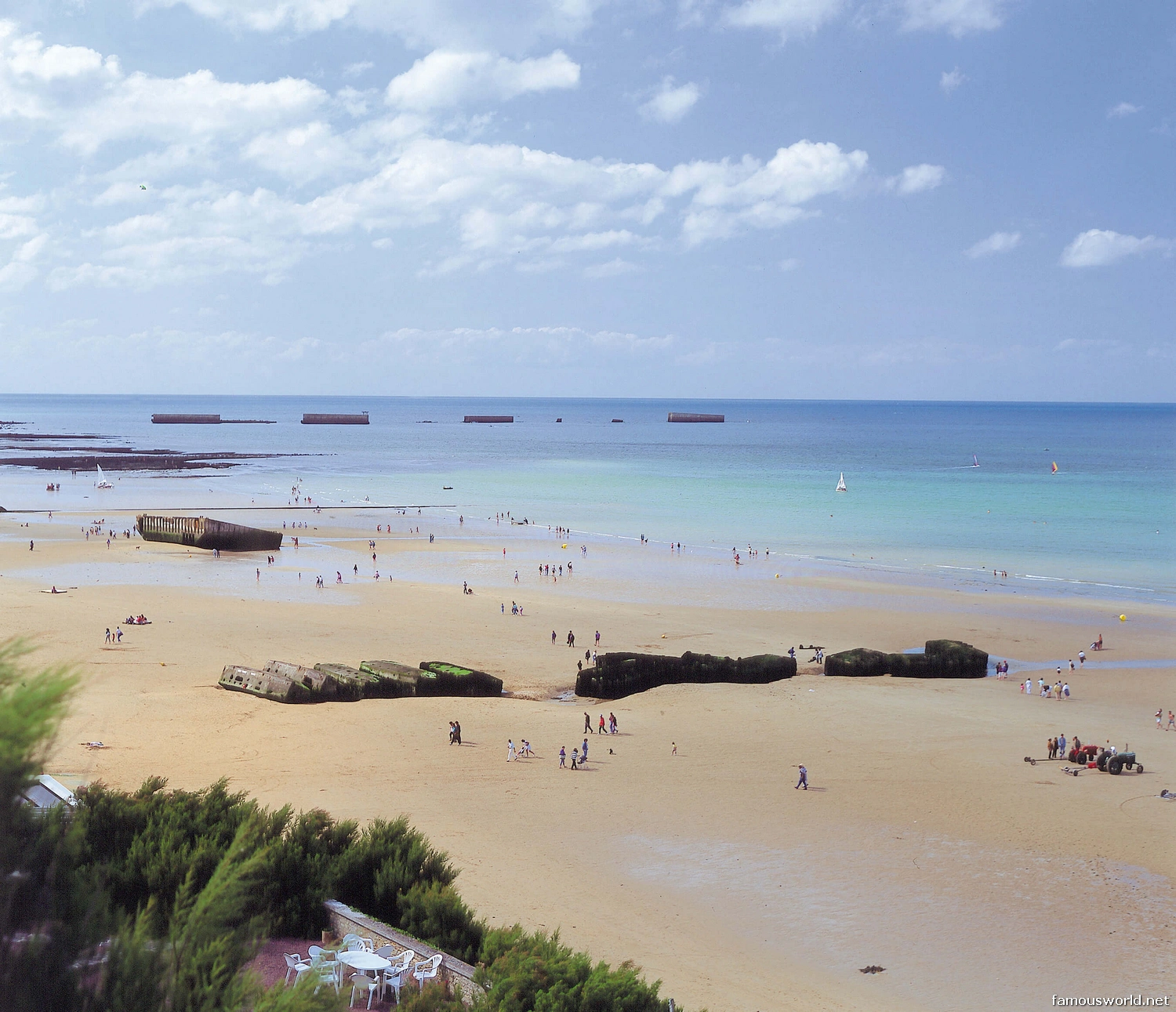
- Artificial Harbors: At Arromanches-les-Bains (Gold Beach), the massive concrete caissons of one of the two Mulberry harbors are still visible, a testament to incredible wartime engineering.
- Cemeteries and Memorials: The region is home to numerous cemeteries, with the most famous being the Normandy American Cemetery and Memorial at Colleville-sur-Mer. Its endless rows of white marble crosses and Stars of David overlooking Omaha Beach are a deeply moving sight.
What Makes It Famous
The Normandy beaches are famous as the site of the climatic turning point of World War II in the European theater.
- Operation Overlord: The area is hallowed ground for its role as the landing site for Allied forces on June 6, 1944, a feat of unprecedented scale that led to the liberation of France.
- Omaha Beach: Known as “Bloody Omaha,” this beach saw the heaviest fighting and casualties of the invasion, making it a particularly sacred and somber site of pilgrimage.
- Pointe du Hoc: This clifftop promontory is famous for the heroic assault by U.S. Army Rangers, who scaled the 100-foot cliffs under fire to neutralize a German artillery battery. The landscape is still scarred with bomb craters.
- A Site of Remembrance: The entire coastline is a memorial to the soldiers from the United States, Great Britain, Canada, and other Allied nations who fought and died for freedom.
Differences from Other Wonders
The modern, somber battlefield of the D-Day beaches offers a profound contrast to the ancient, theatrical fortress of Carcassonne.
- Environment (Natural Coastline vs. Fortified Hilltop): The D-Day sites are set on a natural coastline, where the landscape was a tactical challenge, not a man-made defense. Carcassonne is a purpose-built fortress on a hill, designed to be an impenetrable structure.
- Core Story (20th-Century Liberation vs. Medieval Sieges): The story of Normandy is a modern one of a specific, world-altering battle for liberation. The story of Carcassonne is one of medieval warfare, crusades, and romantic 19th-century restoration.
- Primary Attraction (Sites of Memory vs. Intact Fortifications): The primary attractions in Normandy are the beaches themselves, cemeteries, and battle-scarred remnants—places of memory and reflection. The primary attraction of Carcassonne is its visually spectacular and largely intact system of walls and towers.
- Atmosphere (Somber and Reflective vs. Theatrical and Historic): A visit to the D-Day beaches is a poignant and somber experience, inspiring reflection on sacrifice and the cost of freedom. A visit to Carcassonne feels like stepping into a medieval fairytale, evoking a more theatrical and romantic sense of history.
Location on world map