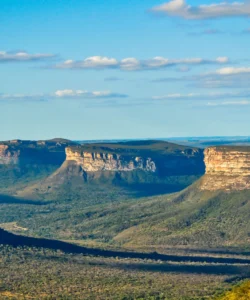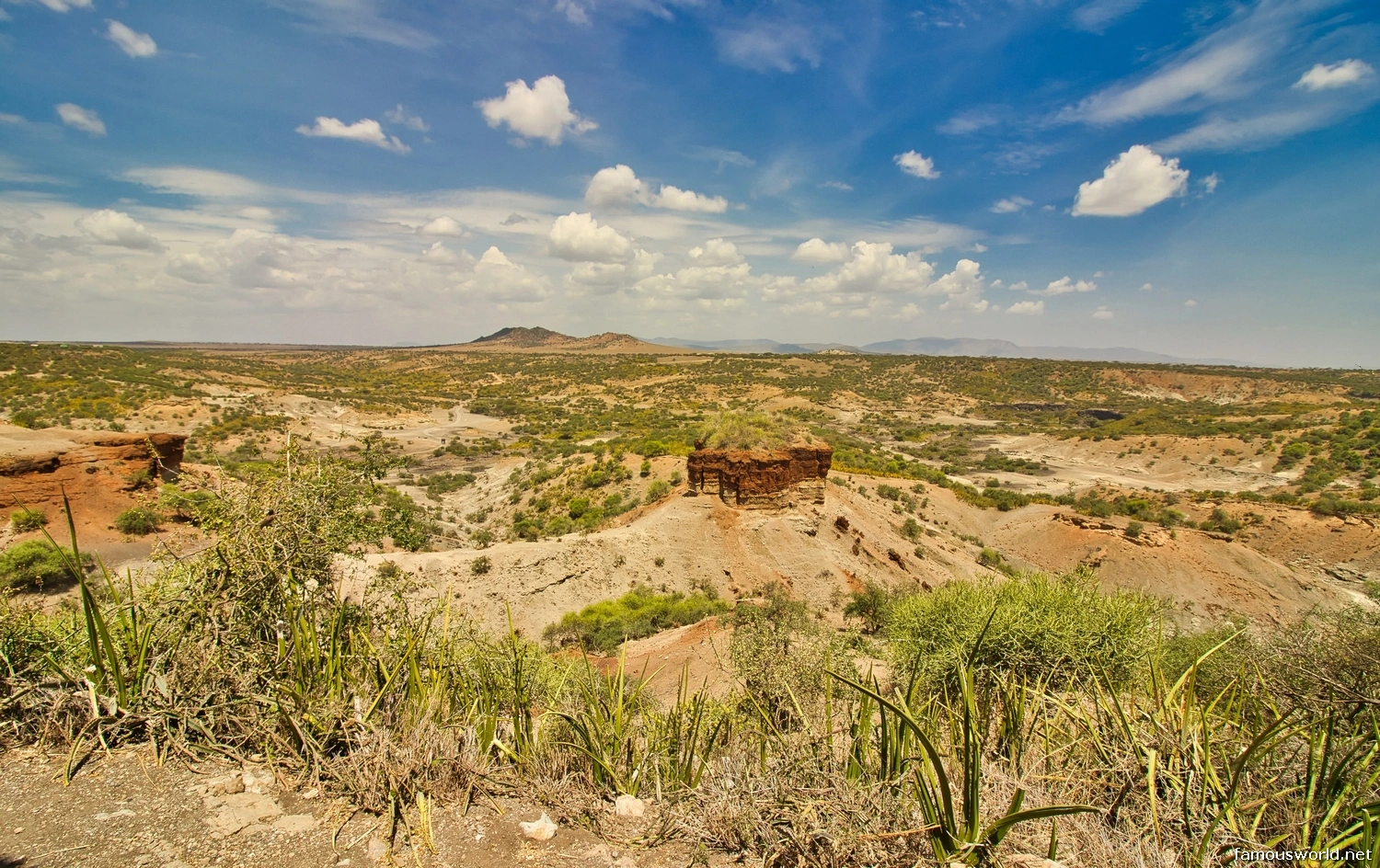


In the vast plains of northern Tanzania, nestled within the Great Rift Valley, lies a place of unassuming appearance but monumental importance: Olduvai Gorge. It is not a towering mountain or a lush jungle, but a stark, arid ravine that has offered one of the most profound and complete windows into the origins of humankind. Often called the “Cradle of Humankind,” this is where the pioneering paleoanthropologists Mary and Louis Leakey made a series of groundbreaking discoveries that fundamentally changed our understanding of human evolution. Olduvai’s significance lies not in what can be seen today, but in the millions of years of history preserved in its layered rock, telling the epic story of our earliest ancestors.
Listen to an introduction about Olduvai Gorge

Name and Location
- Name: Olduvai Gorge. The name is a misspelling of Oldupai, the Maasai word for the wild sisal plant that grows abundantly in the area.
- Location: Northern Tanzania, situated within the Ngorongoro Conservation Area. It lies on the main safari route between the Ngorongoro Crater and the Serengeti National Park.
How to Get There
Access to Olduvai Gorge is almost exclusively part of a larger Northern Circuit safari itinerary.
- By Road: The gorge is a common and easily accessible stop for safari vehicles traveling between the Serengeti and Ngorongoro. A 4×4 vehicle is standard for navigating the regional roads. The on-site museum and viewpoints are located just off this main route.
Landscape and Architecture
The “architecture” of Olduvai is entirely geological, a natural cross-section of time carved by the forces of nature.
- Geological Formation: The site is a steep-sided ravine, approximately 48 kilometers (30 miles) long and up to 90 meters (300 feet) deep. Millions of years ago, this was the site of a large lake, whose shores were frequented by early hominins. Over millennia, layers of volcanic ash and sediment from nearby volcanoes buried and preserved a rich record of fossils and artifacts.
- An Exposed Timeline: Subsequent faulting and river erosion sliced through these layers, exposing them like the pages of a history book. This geological process created the gorge and made its fossil treasures accessible to scientists, providing an unparalleled, continuous record of life and environmental change spanning almost two million years.
What Makes It Famous
Olduvai Gorge is one of the most important paleoanthropological sites in the world, famous for its exceptional fossil record of early human evolution.
- The Leakey Discoveries: The work of Mary and Louis Leakey put Olduvai on the world map. Key discoveries include:
- Paranthropus boisei (“Nutcracker Man”): In 1959, Mary Leakey discovered this 1.75-million-year-old skull, providing crucial evidence of diverse hominin lineages in Africa.
- Homo habilis (“Handy Man”): The subsequent discovery of this species, alongside primitive stone tools, was the first proof that early human relatives were capable of toolmaking.
- Oldowan Stone Tools: The gorge yielded the first examples of the Oldowan tool industry, the oldest known stone tool technology. This rich collection of artifacts demonstrated the advanced cognitive abilities of our early ancestors.
- The Olduvai Gorge Museum: Perched on the rim of the gorge, the museum showcases fossils and artifacts from the site and provides context for the discoveries. It also features casts of the nearby Laetoli Footprints—3.6-million-year-old hominin footprints that provide the earliest definitive evidence of upright walking.
Differences from Other Wonders
The scientific, historical focus of Olduvai Gorge contrasts sharply with the living, wild ecosystem of Ruaha National Park.
- Environment (Arid Ravine vs. Semi-Arid Savanna): Olduvai is a stark, deeply eroded geological ravine. Ruaha is a vast, semi-arid savanna and woodland ecosystem defined by the living Great Ruaha River.
- Core Story (Human Origins vs. Modern Wilderness): Olduvai’s story is about our deep evolutionary past, a scientific narrative pieced together from fossils and stone tools. Ruaha’s story is about the present-day cycle of life and survival in a thriving, untamed wilderness.
- Primary Attraction (Fossils and Artifacts vs. Living Wildlife): The primary draw of Olduvai is the evidence of our extinct ancestors and their ancient technologies. The main attraction of Ruaha is the thrill of observing living megafauna, particularly its massive elephant herds and large lion prides.
- Atmosphere (Scientific and Contemplative vs. Wild and Adventurous): A visit to Olduvai is a contemplative and educational experience, inspiring a sense of deep time and our place in the evolutionary tree. A visit to Ruaha is a raw and adventurous safari experience, focused on the immediate and unpredictable drama of the natural world.
Location on world map