
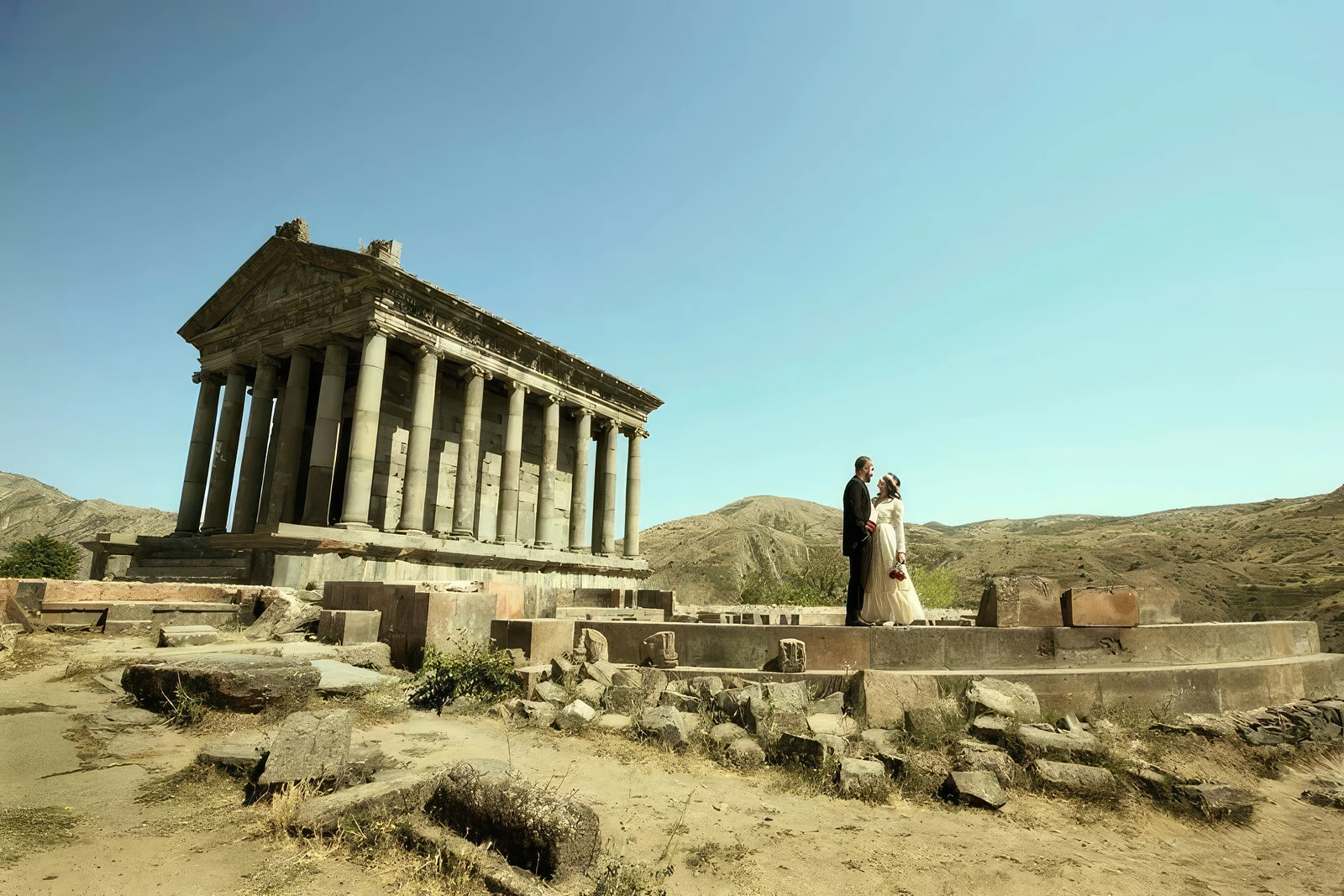
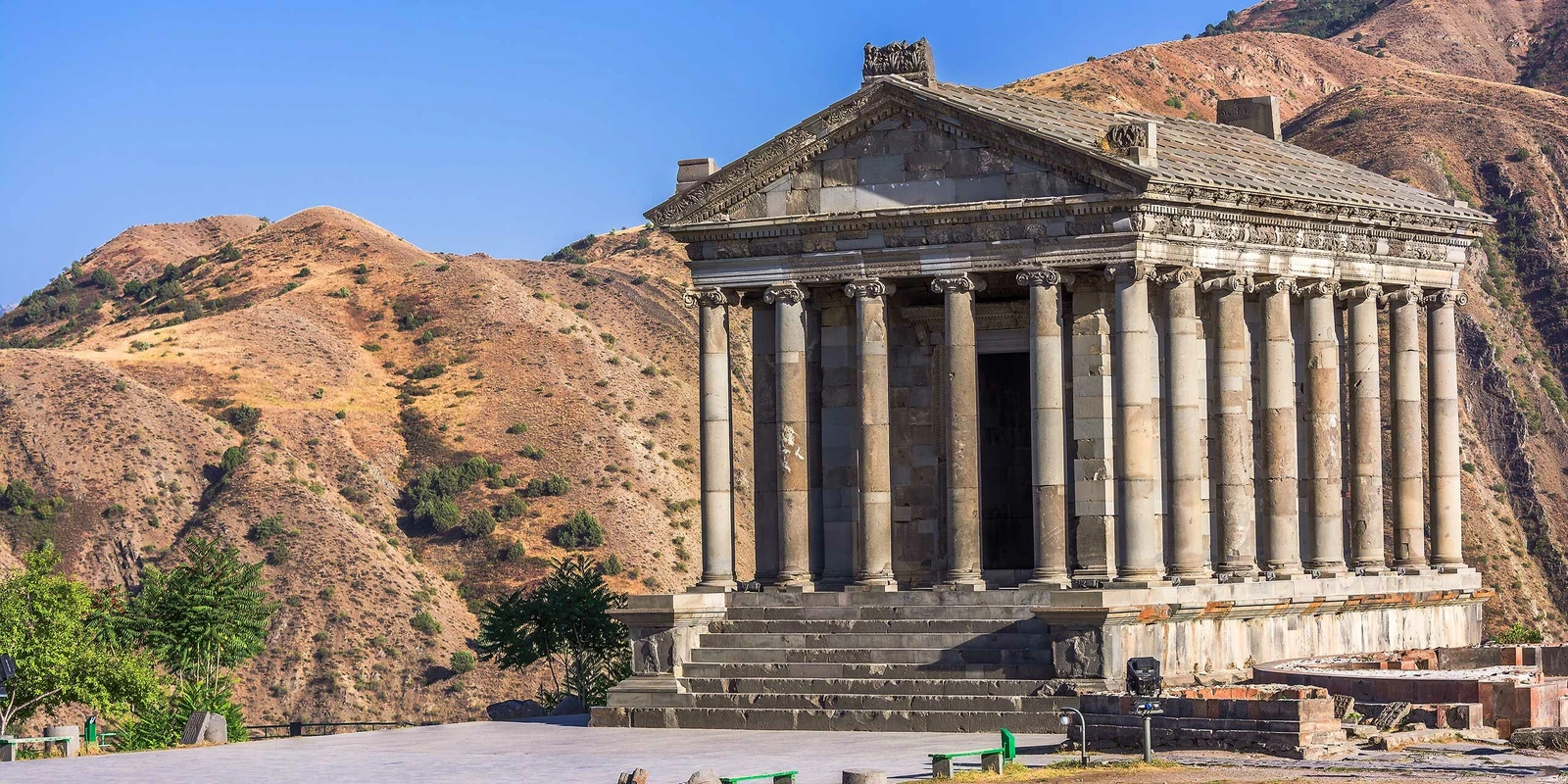
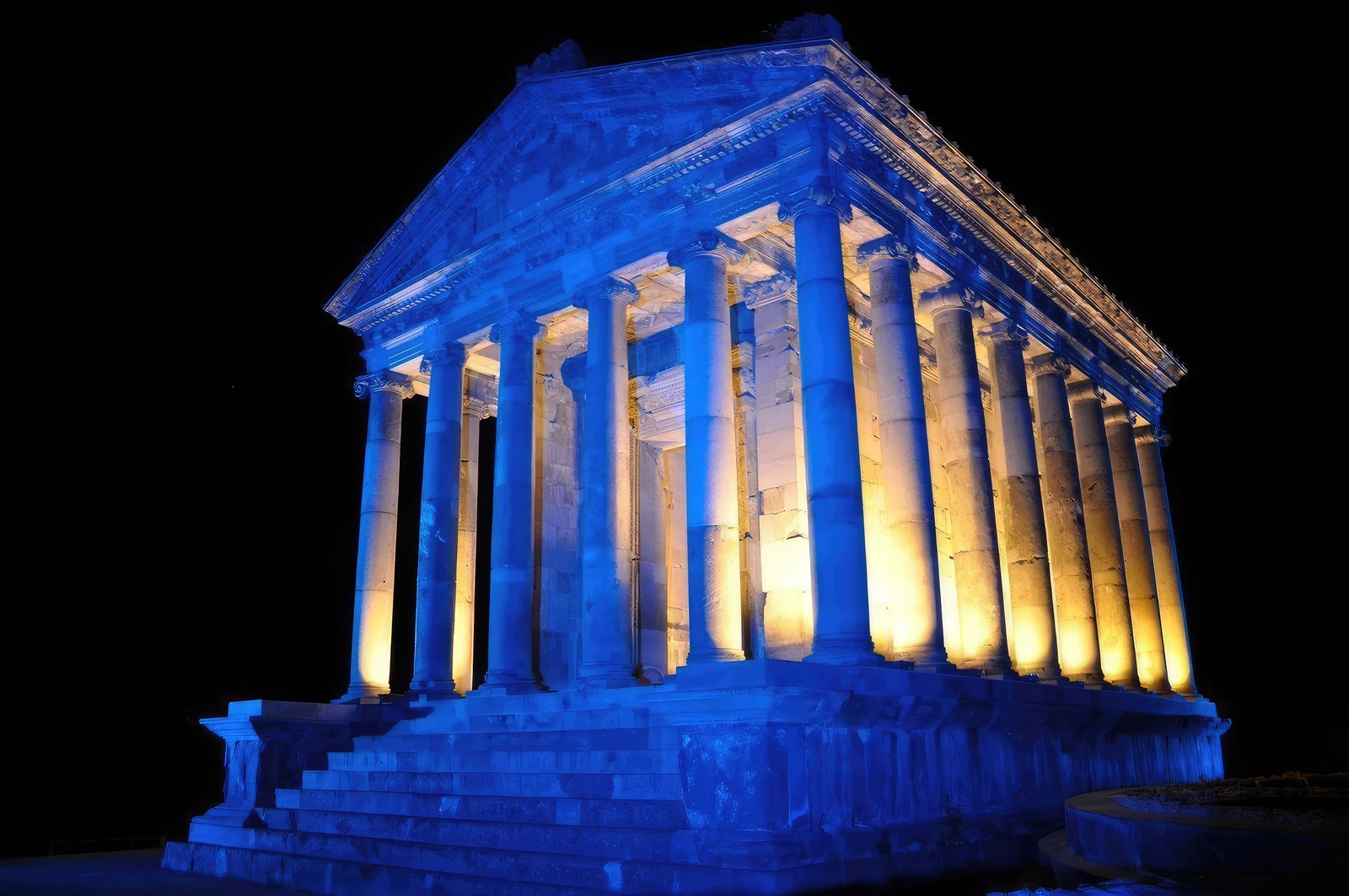
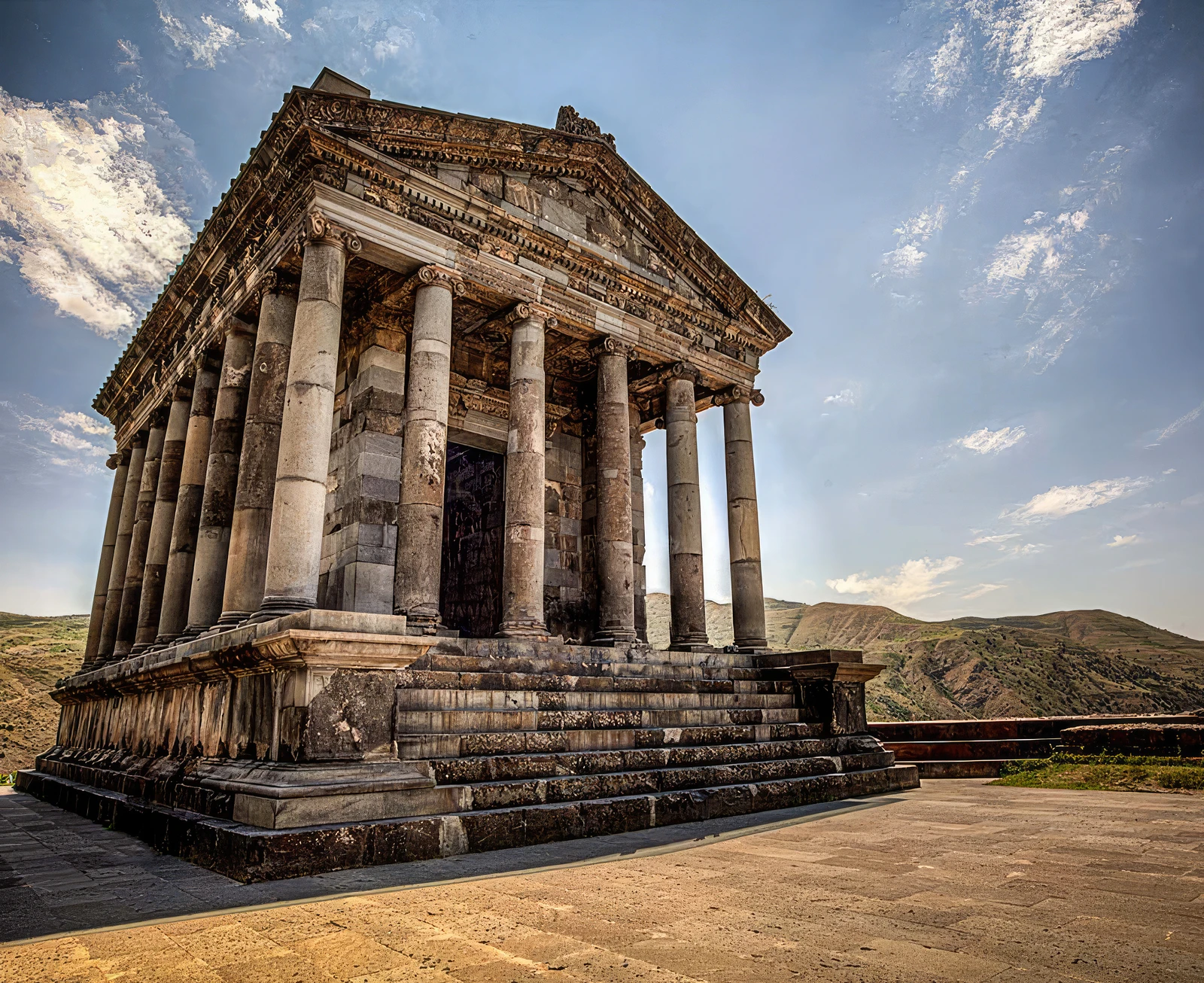

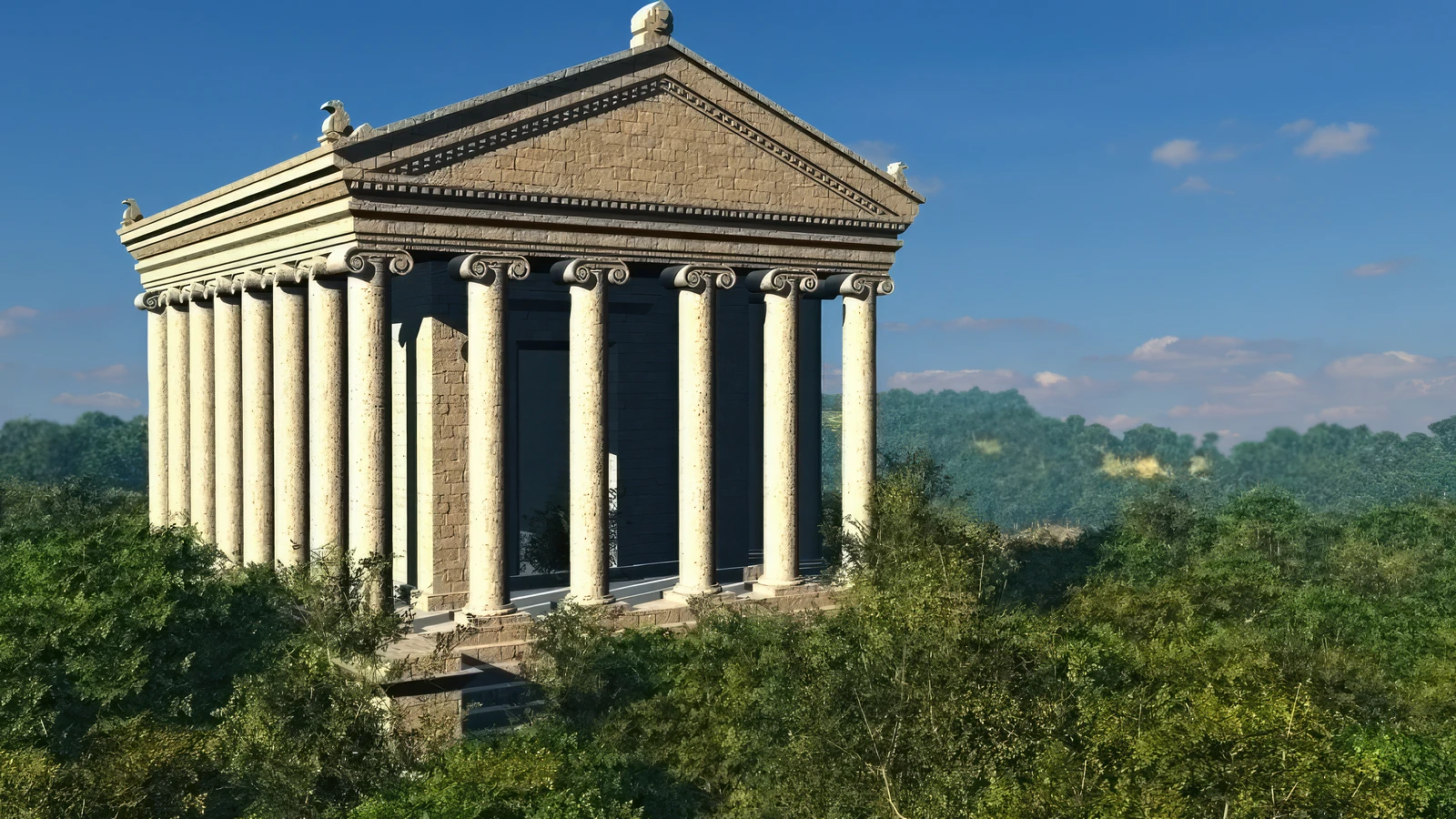
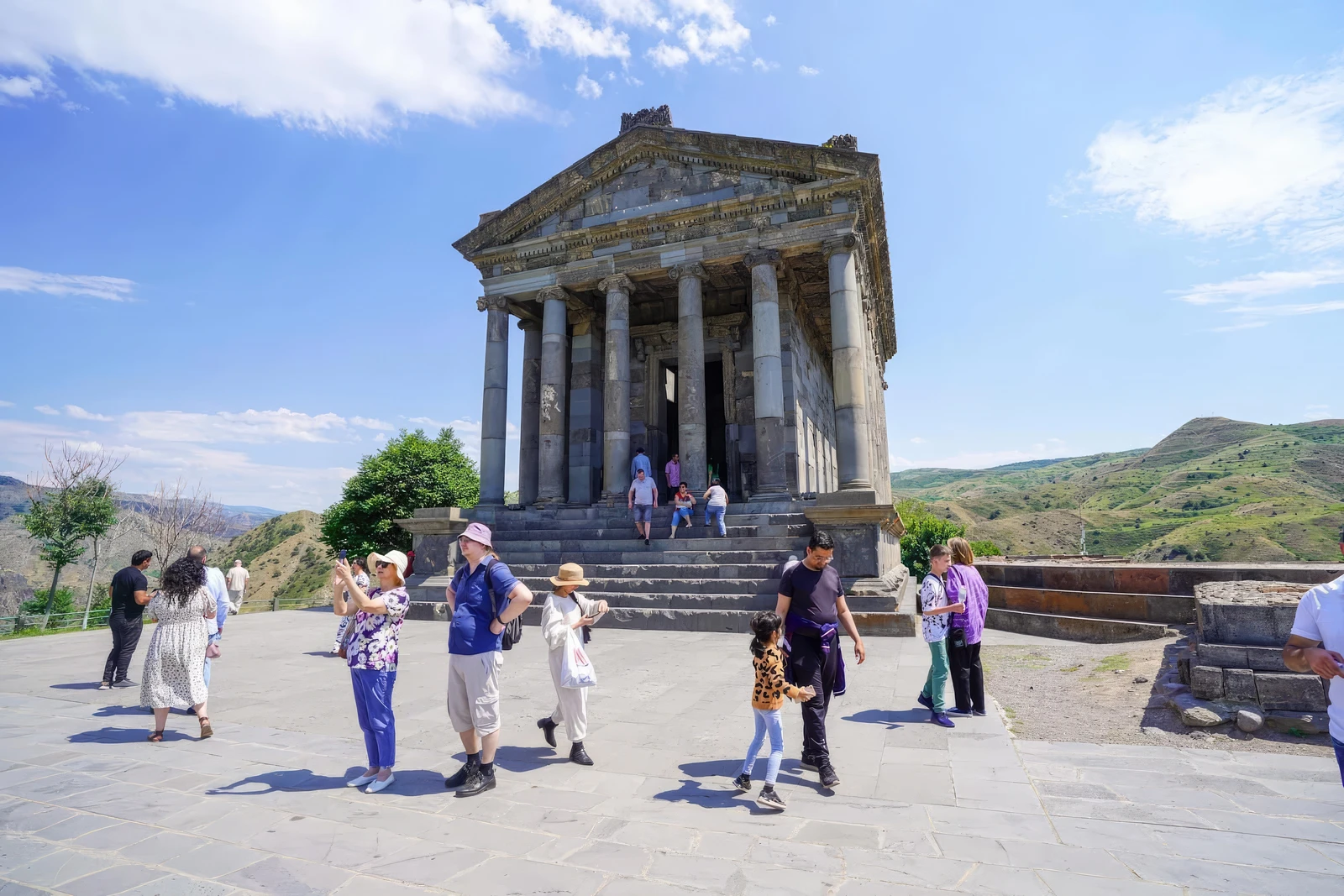
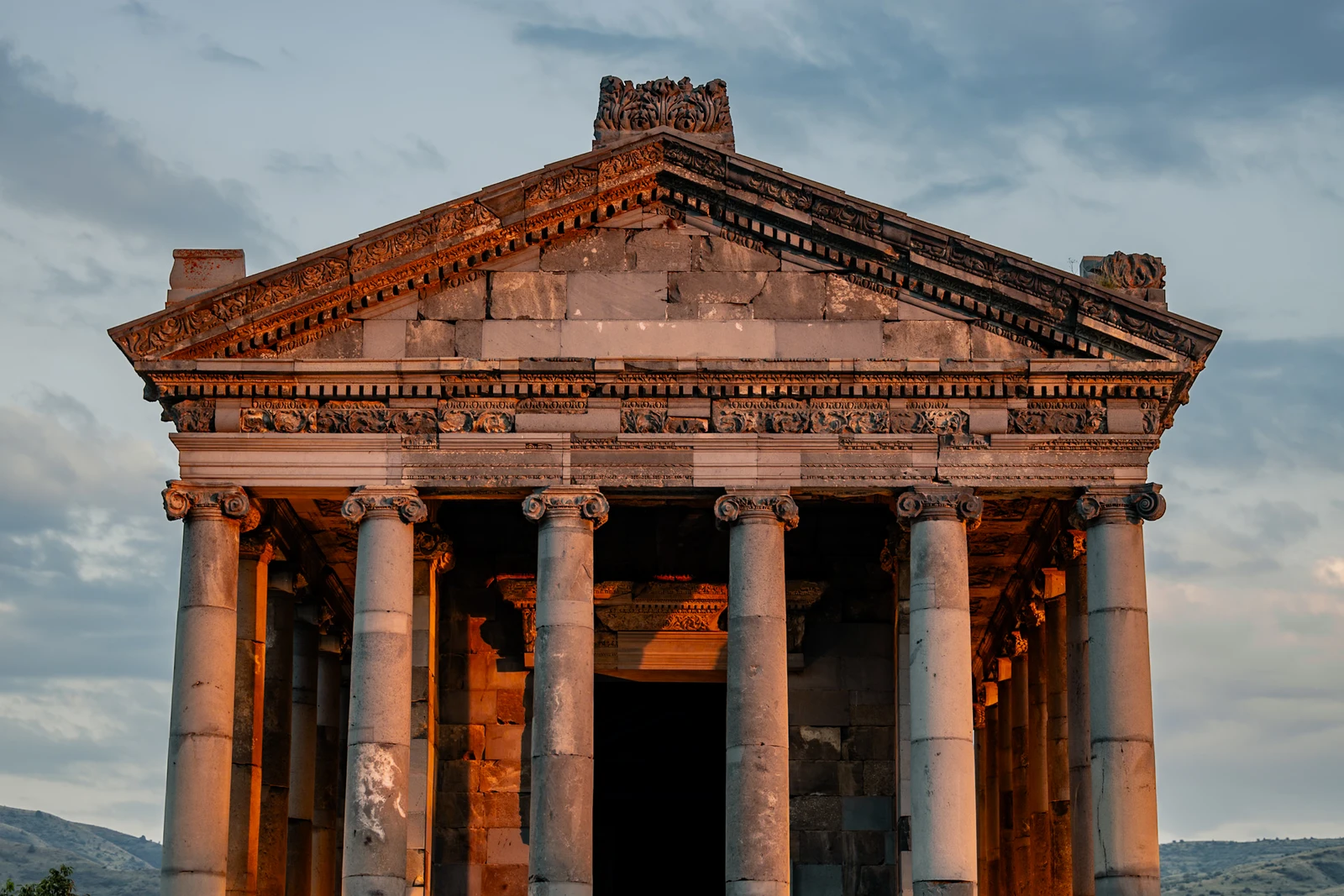

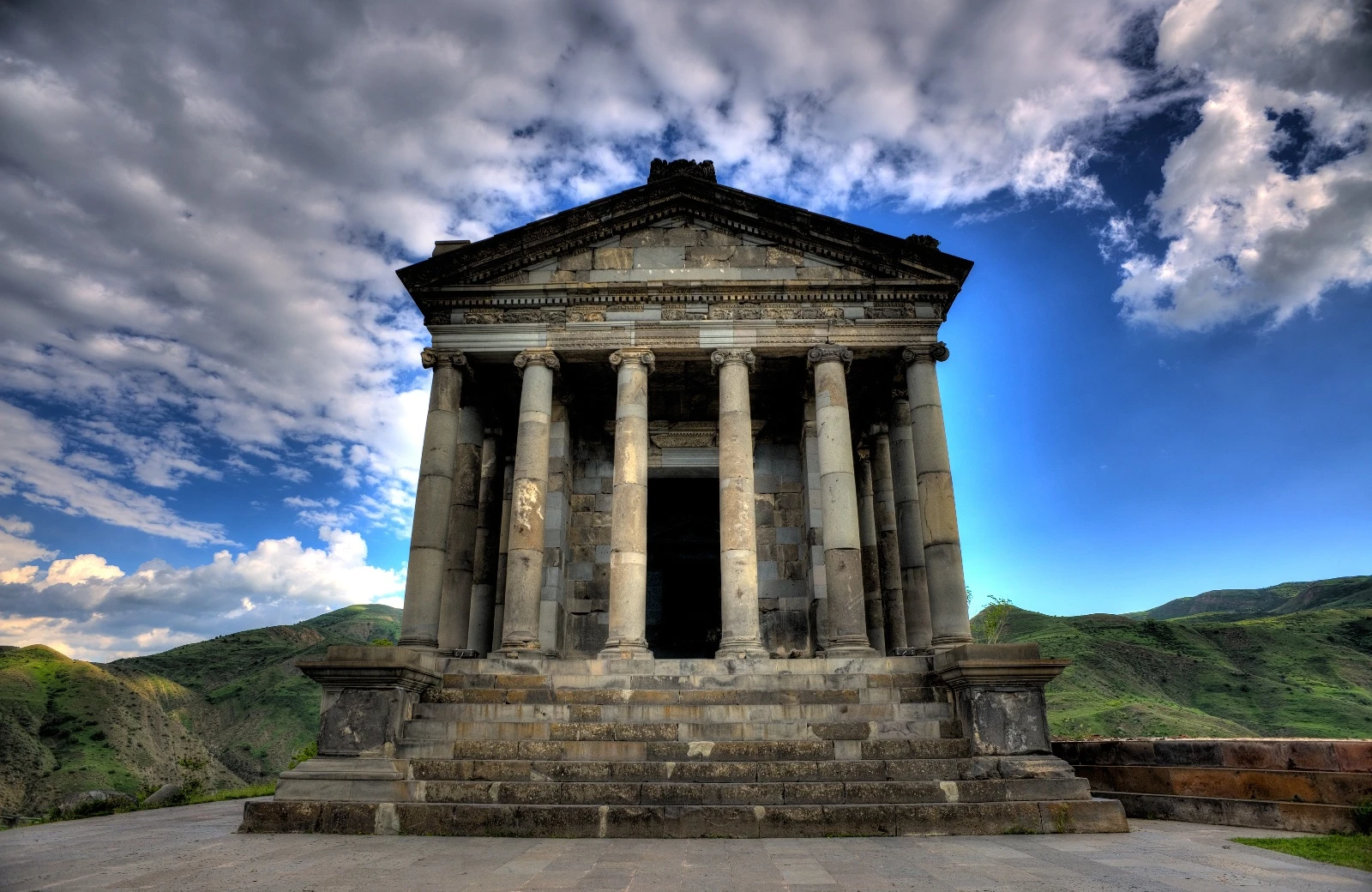
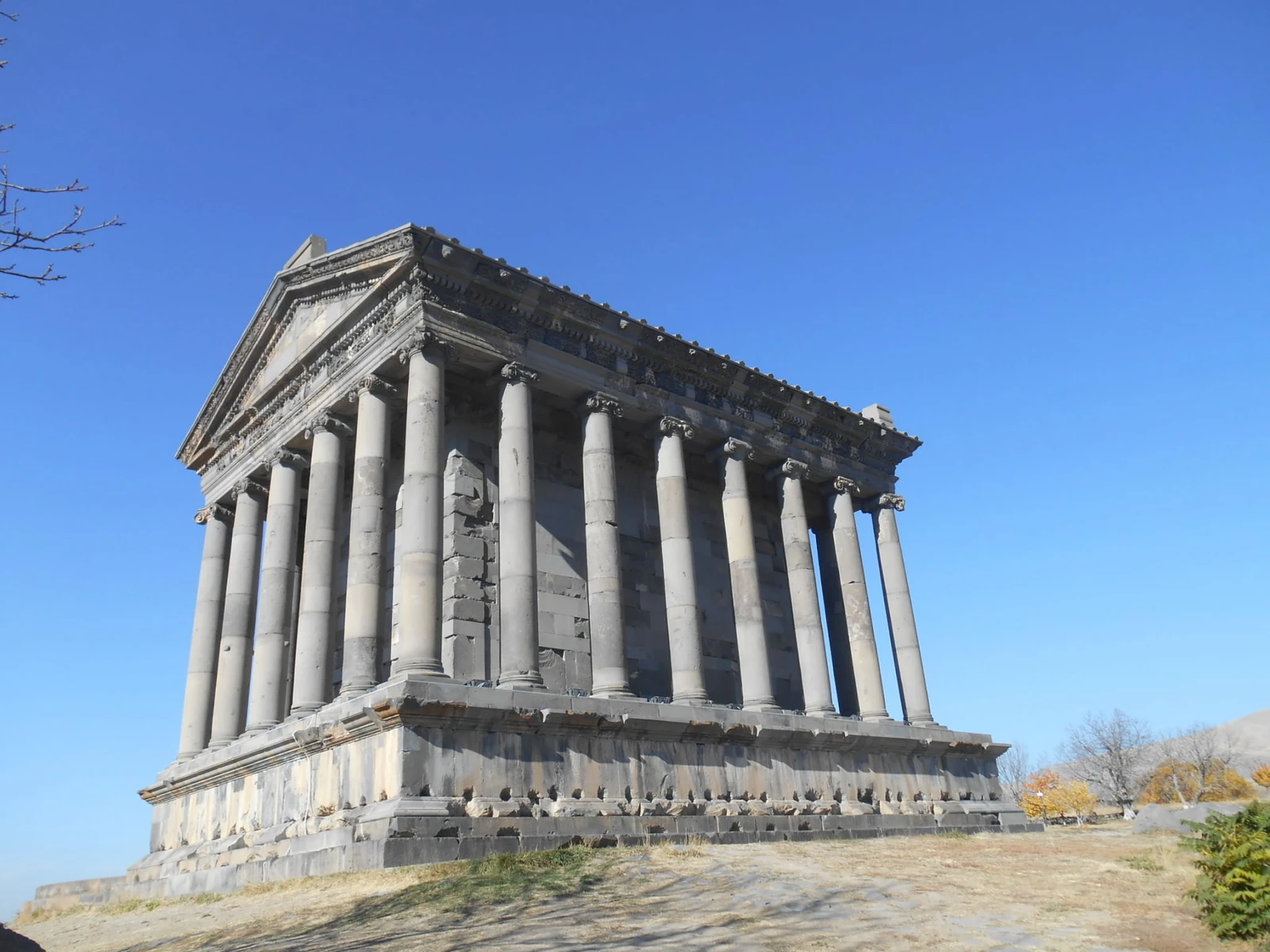
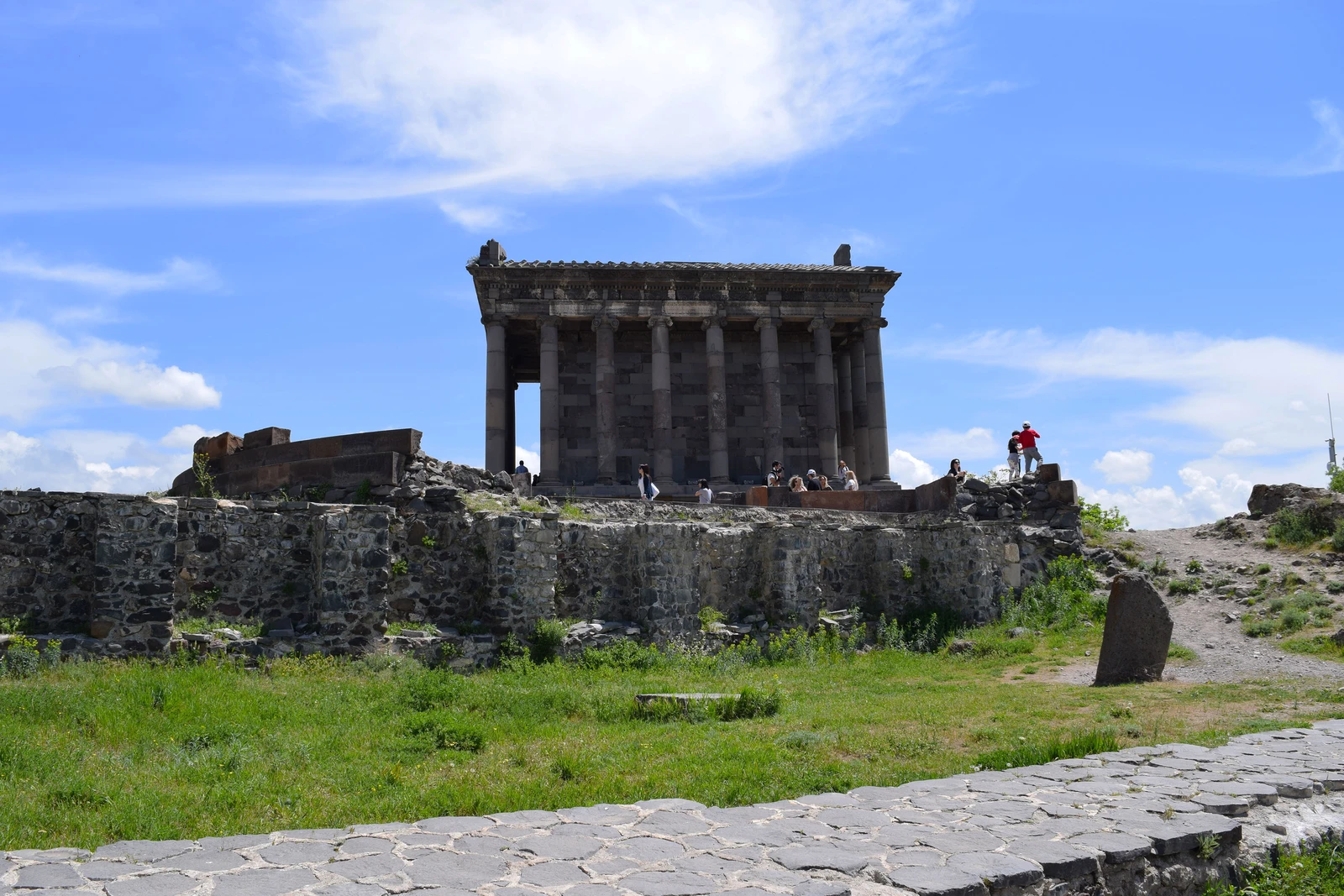


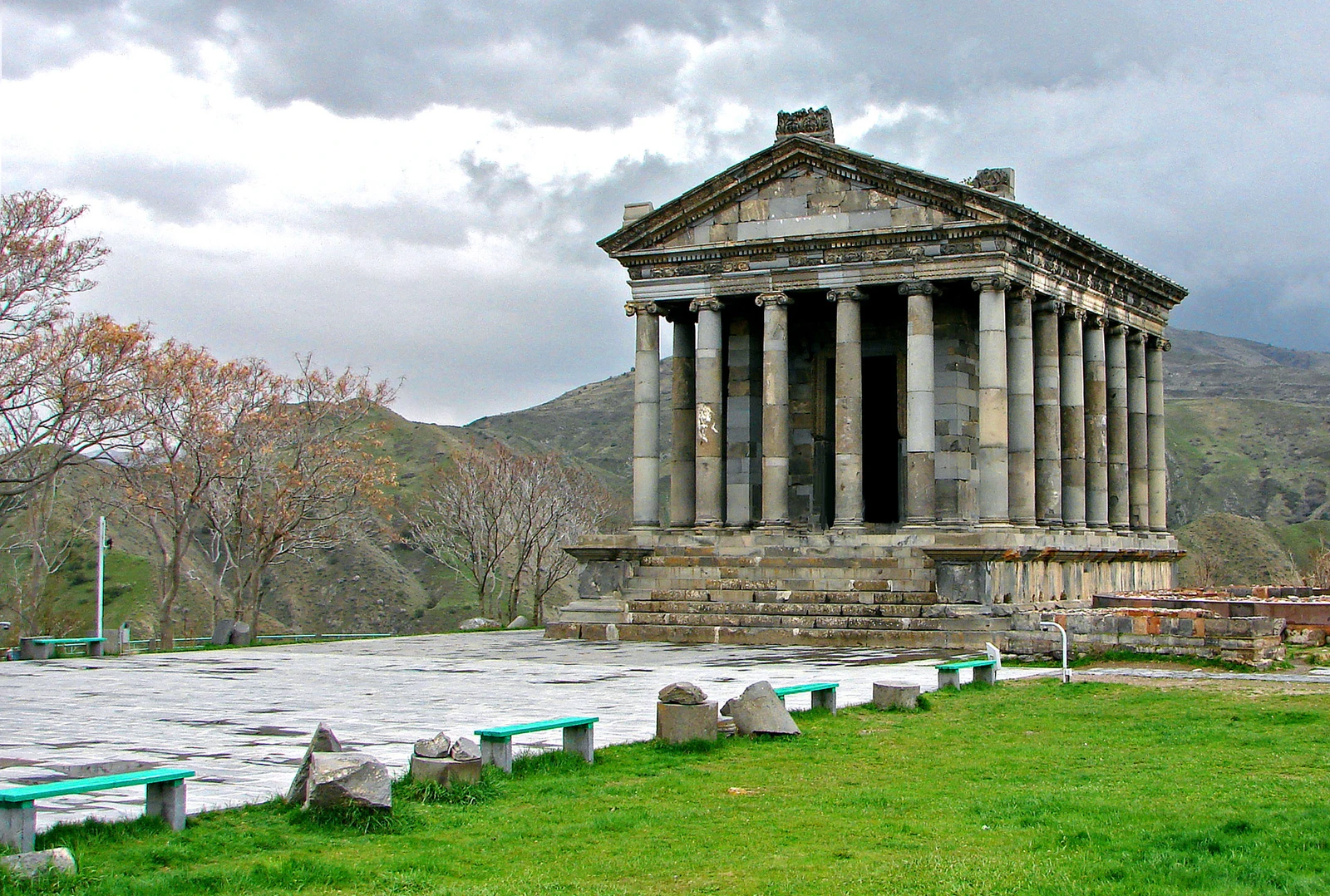
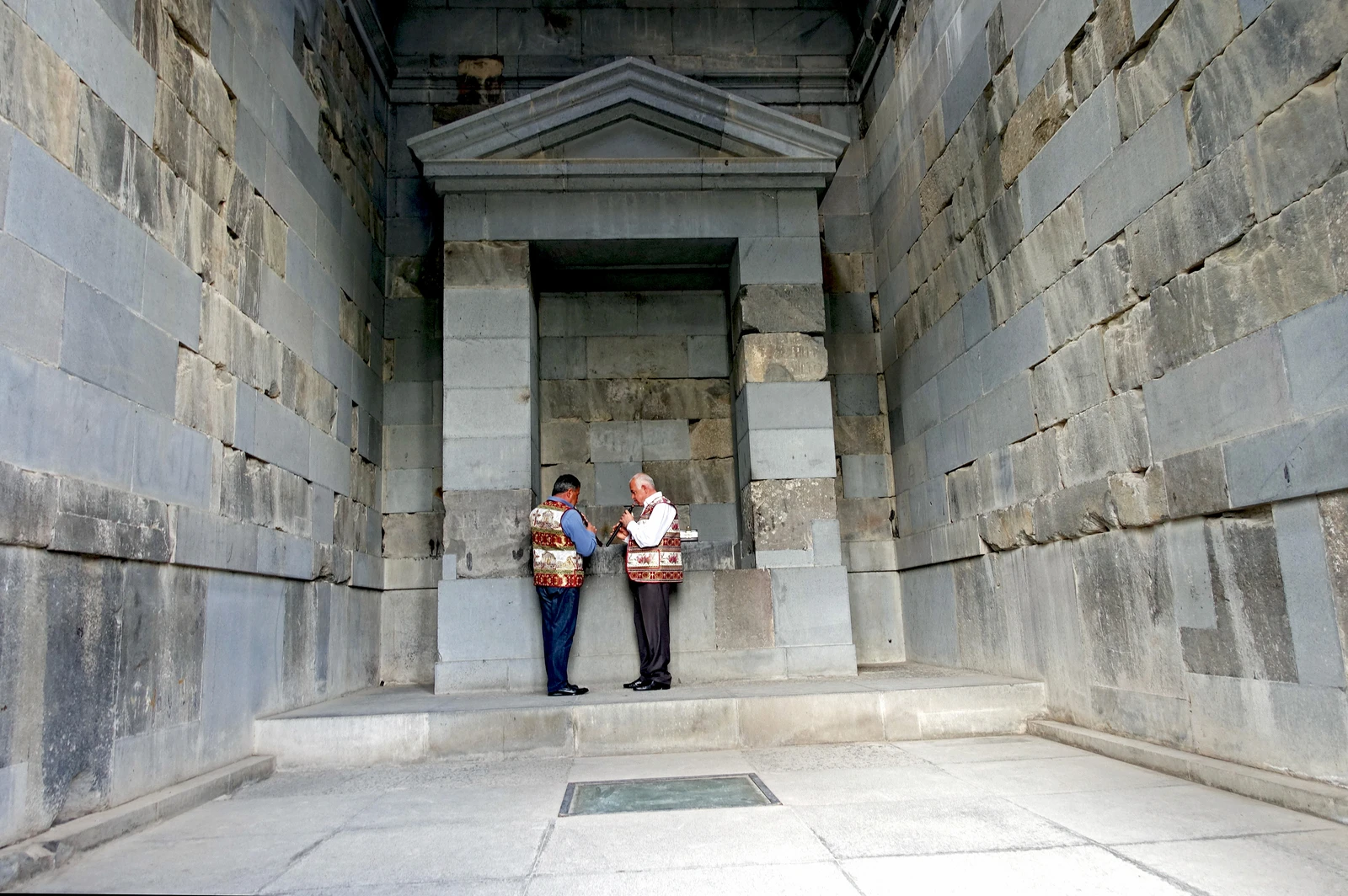
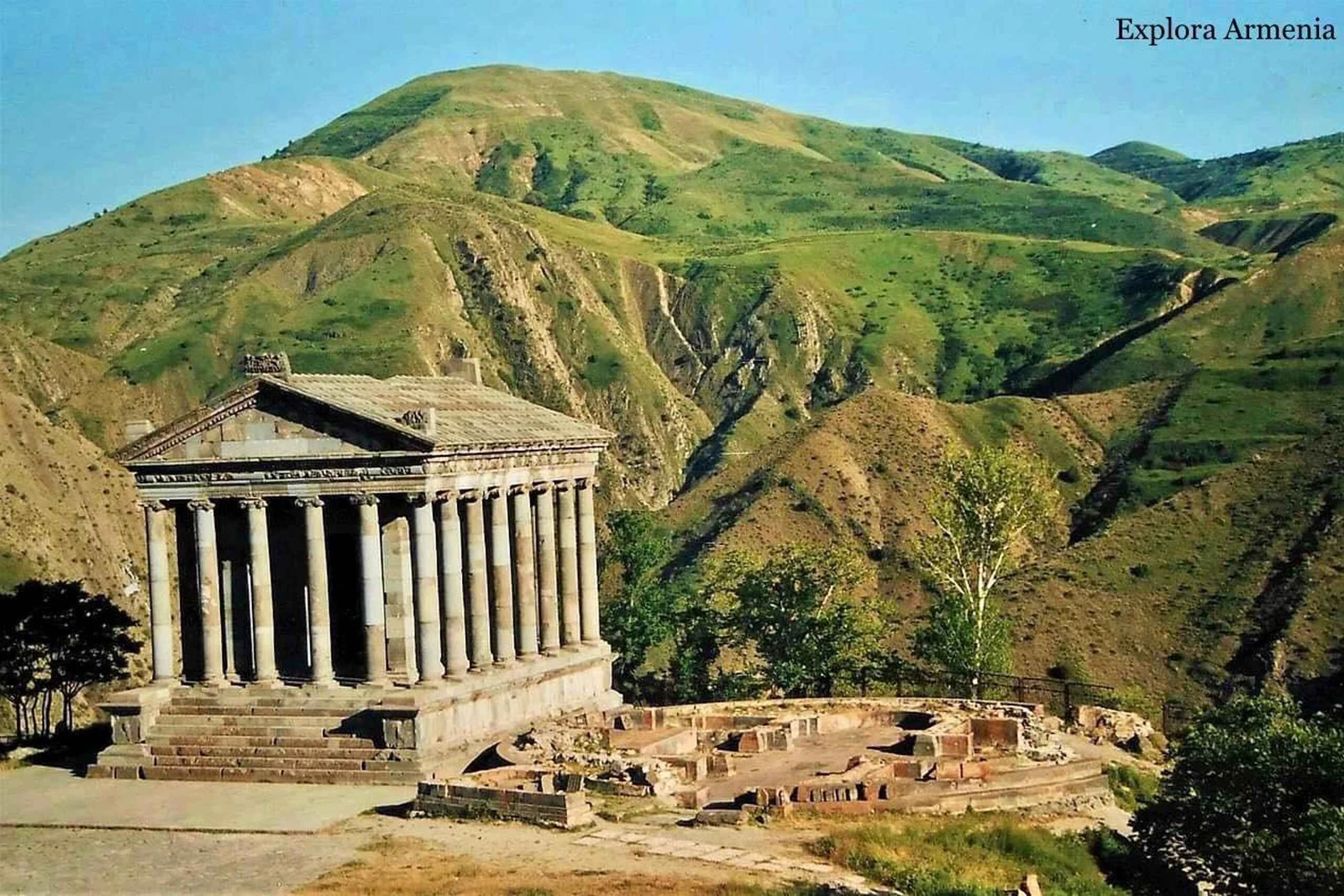

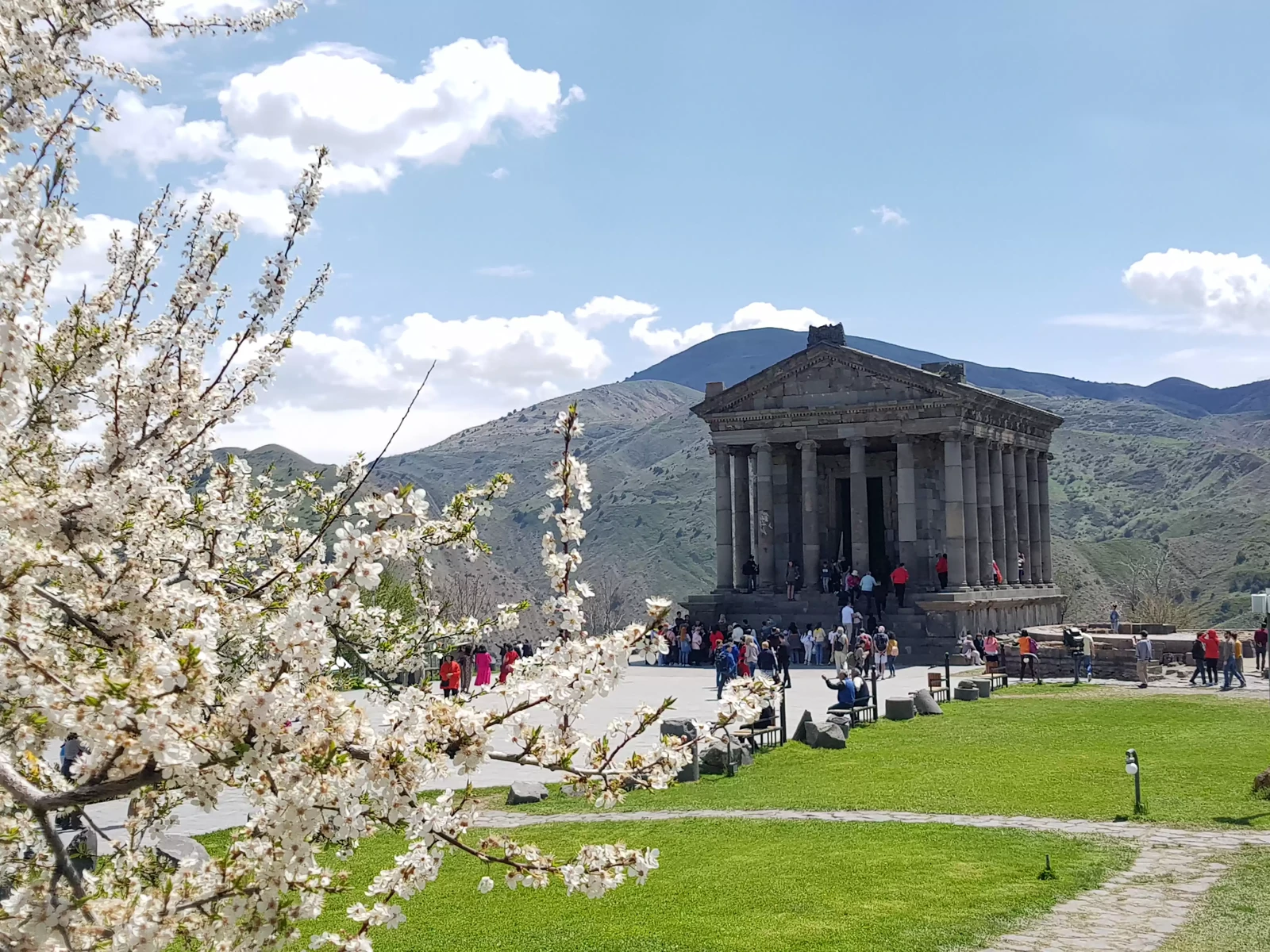
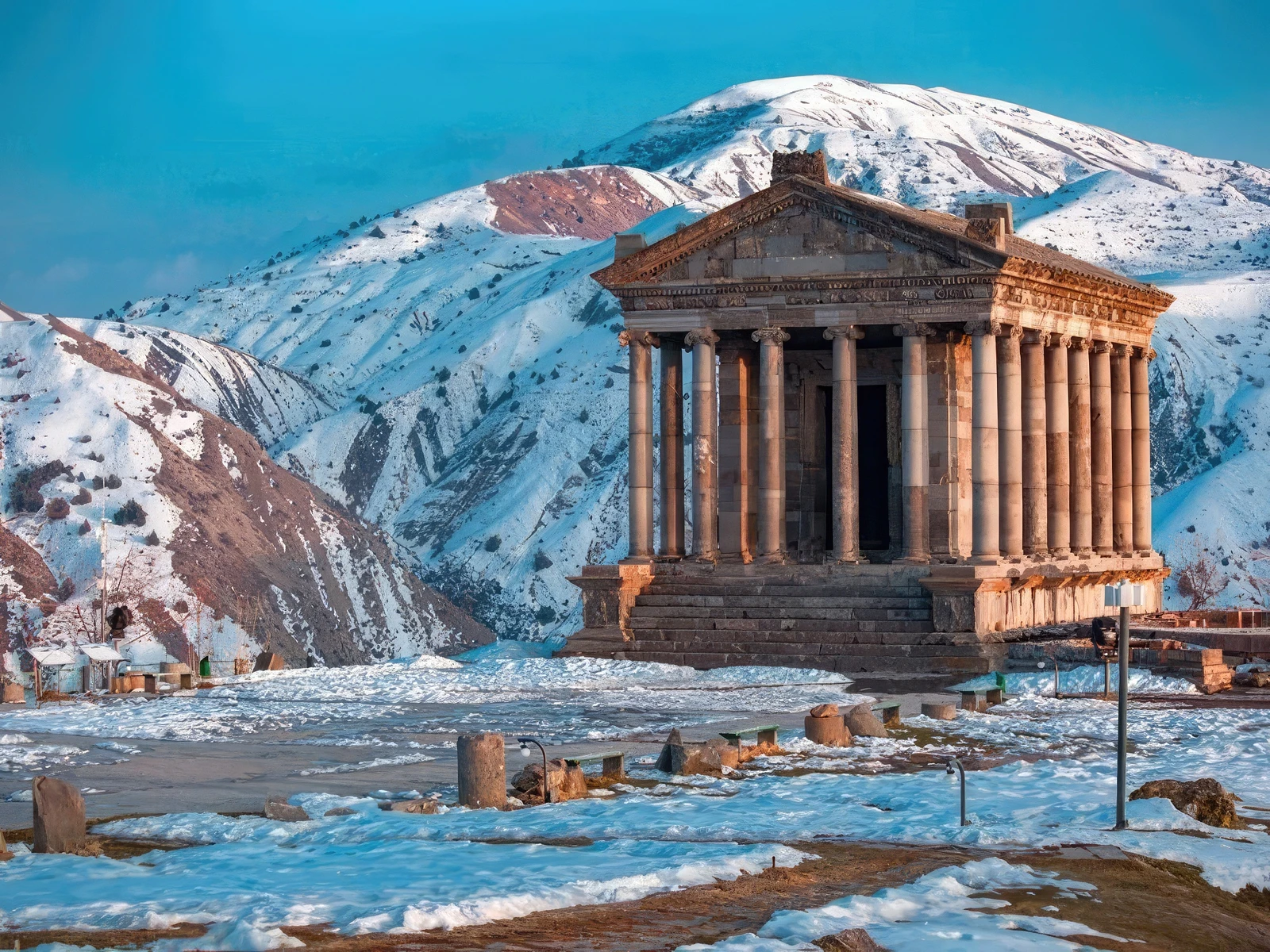

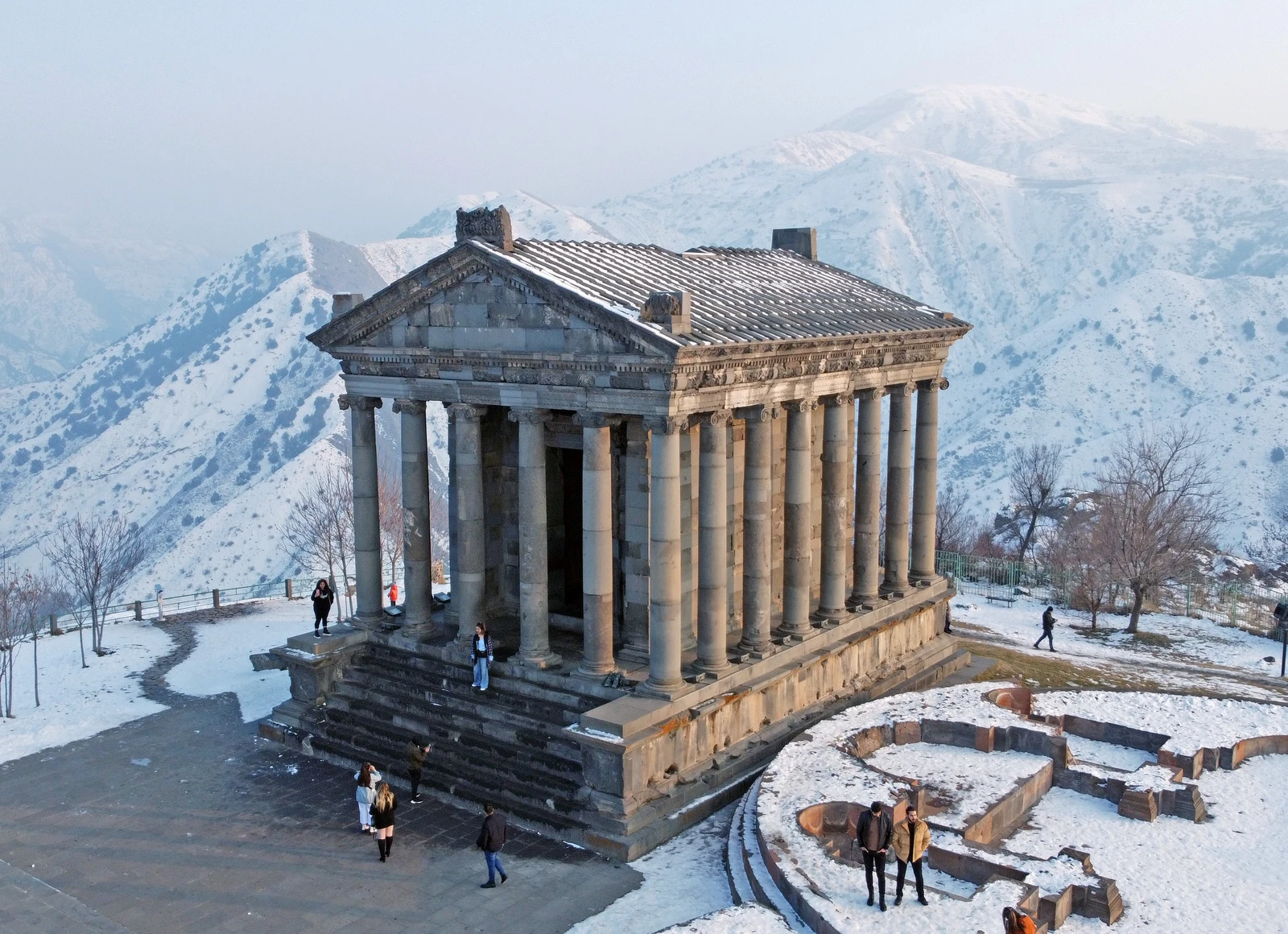
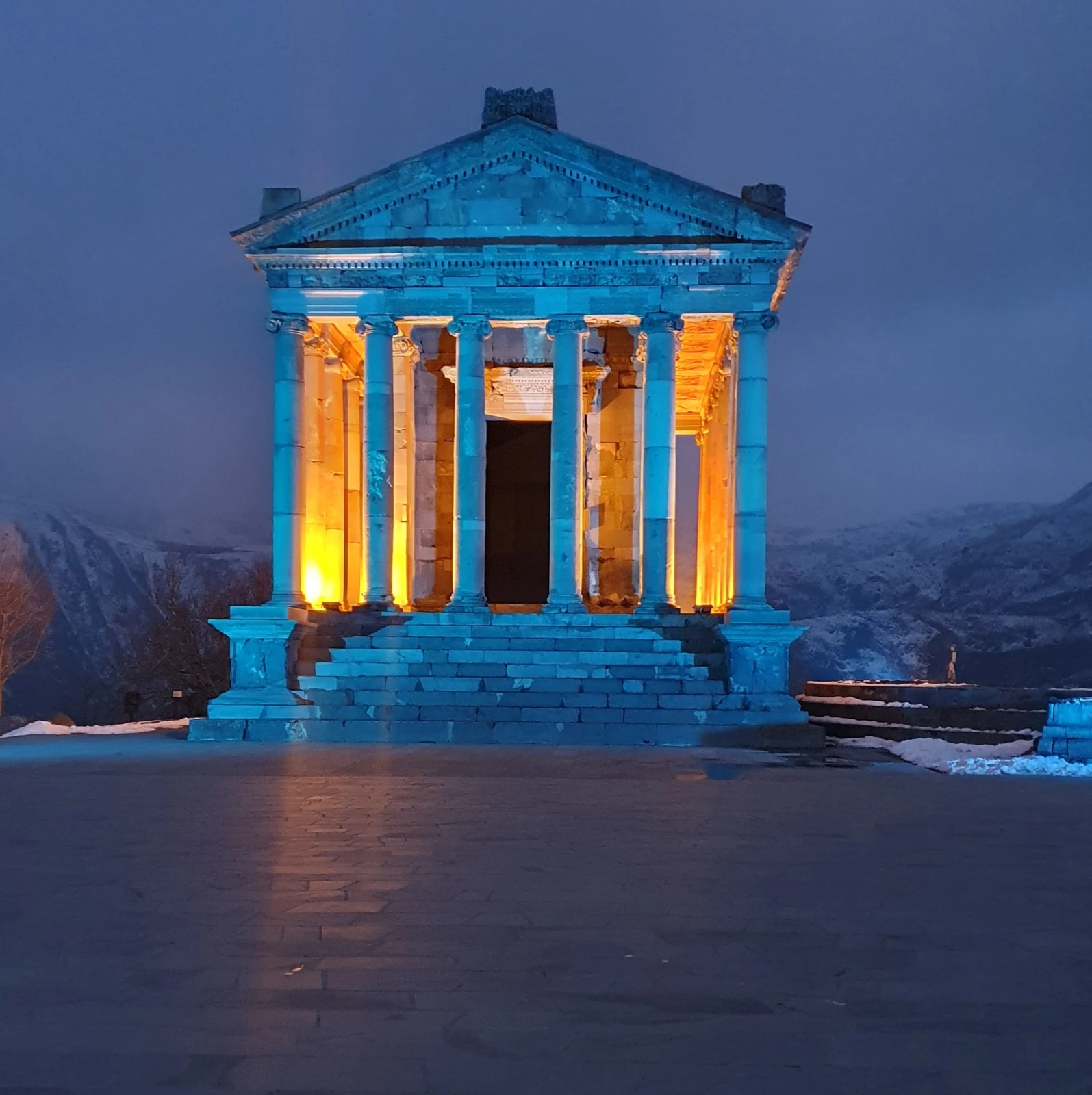
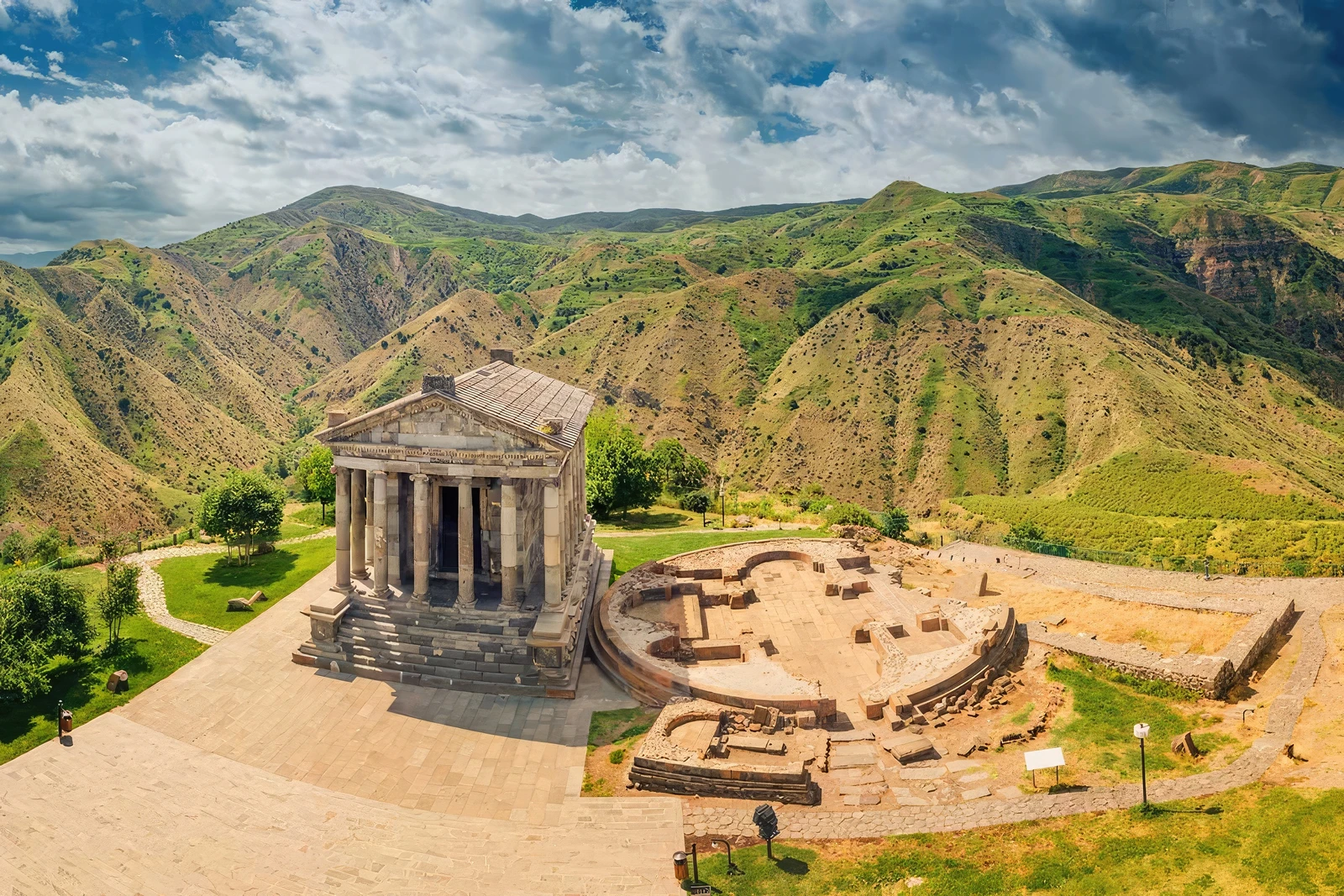
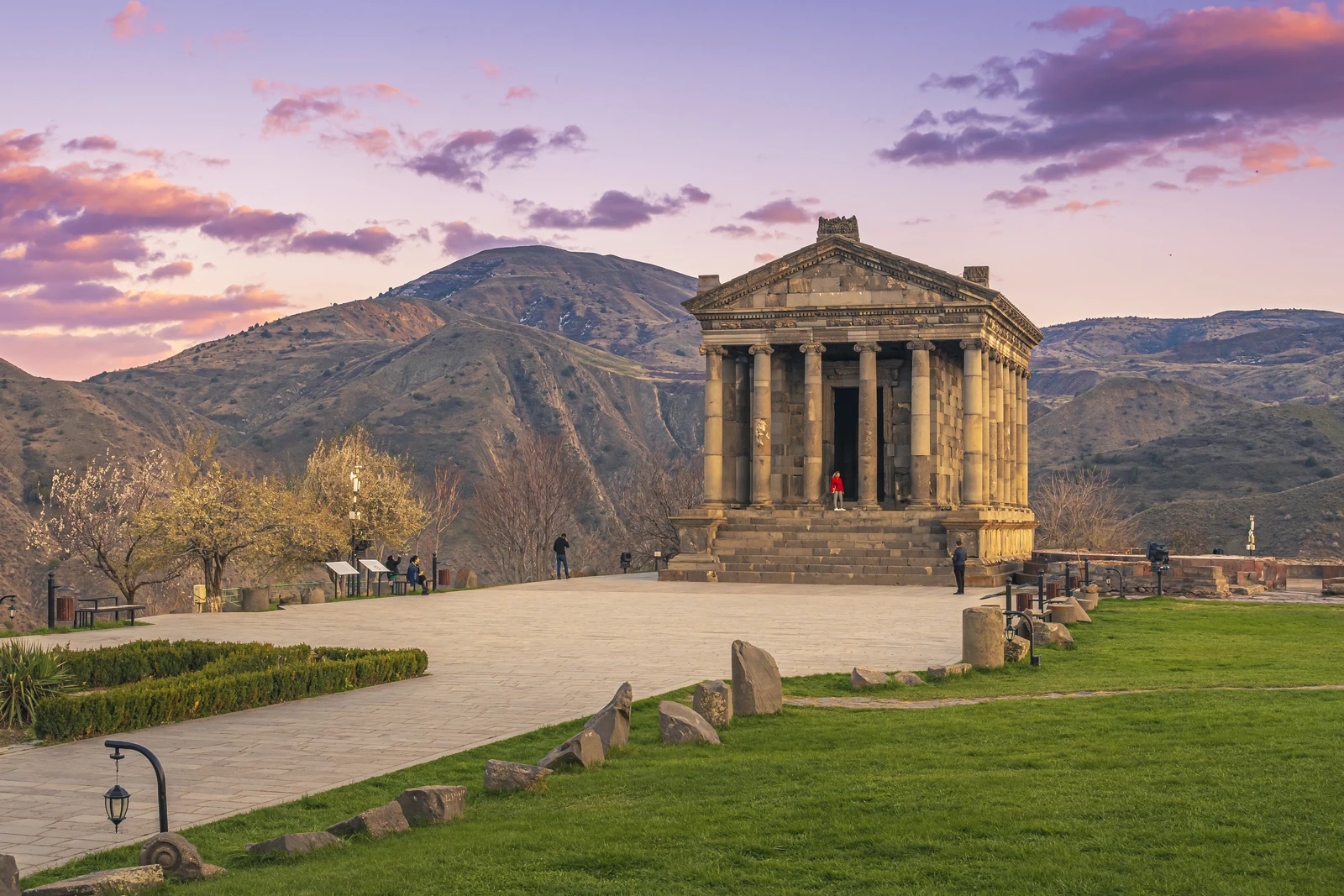
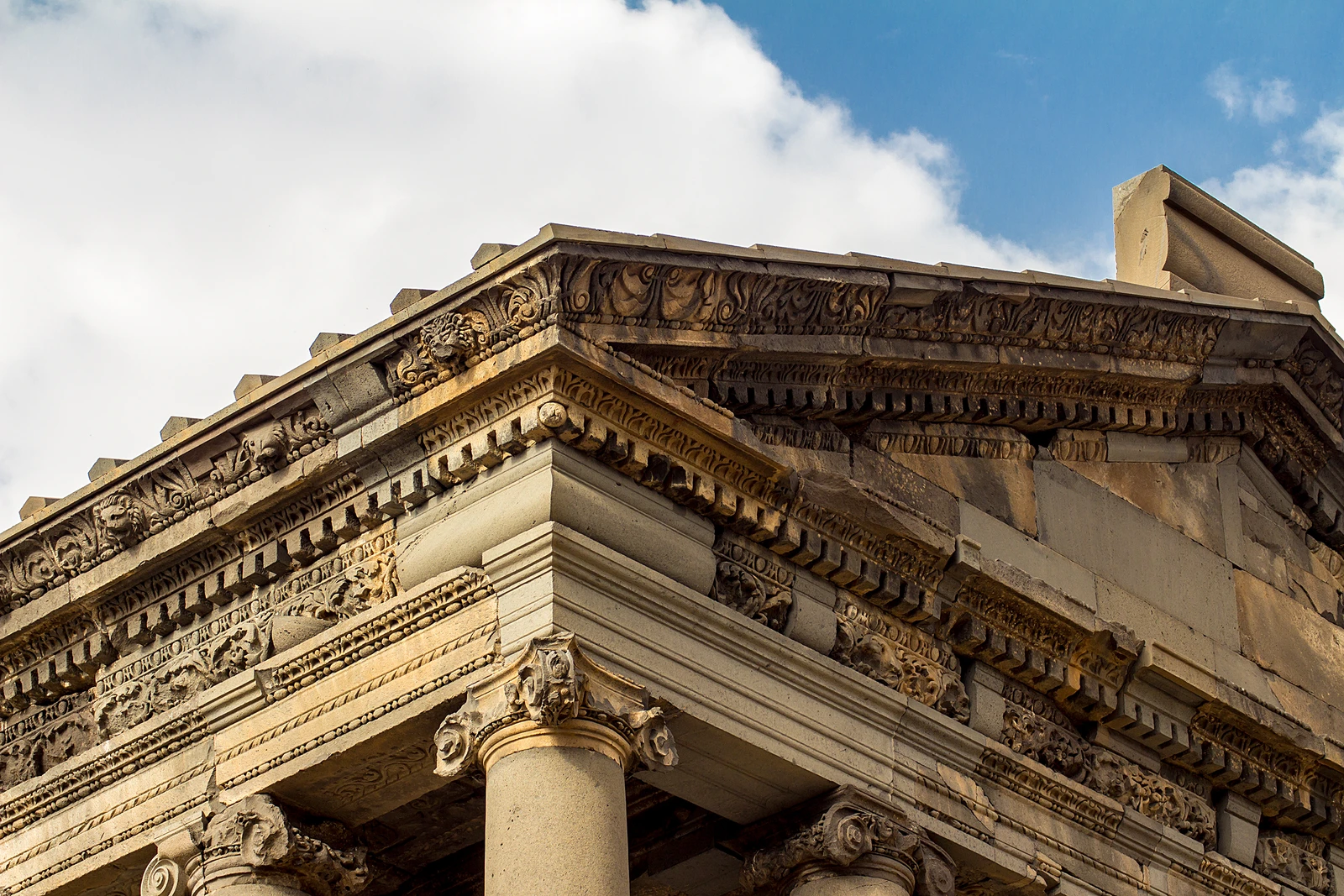

The Temple of Garni is a classical colonnaded structure located in the village of Garni, Armenia. It stands as the only largely preserved Hellenistic building in the former Soviet Union and is a powerful symbol of pre-Christian Armenia. This impressive Greco-Roman temple, set against a stunning gorge, is a testament to ancient architectural prowess and a significant historical site.
Listen to an introduction about Garni Temple

Name and Address
- Name: Garni Temple (Armenian: Գառնու տաճար, Gaṙnu tačar)
- Address: Garni village, Kotayk Province, Armenia.
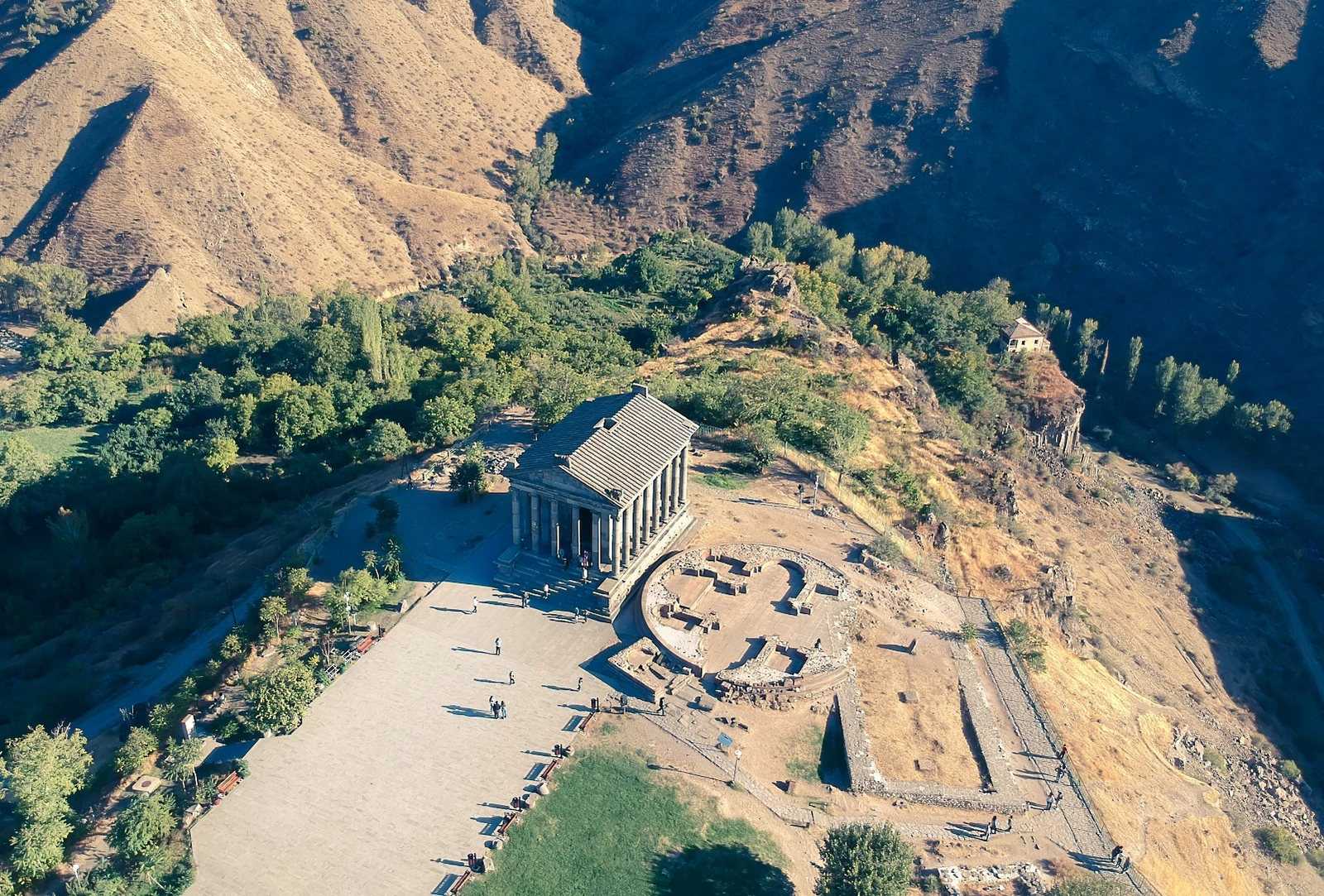
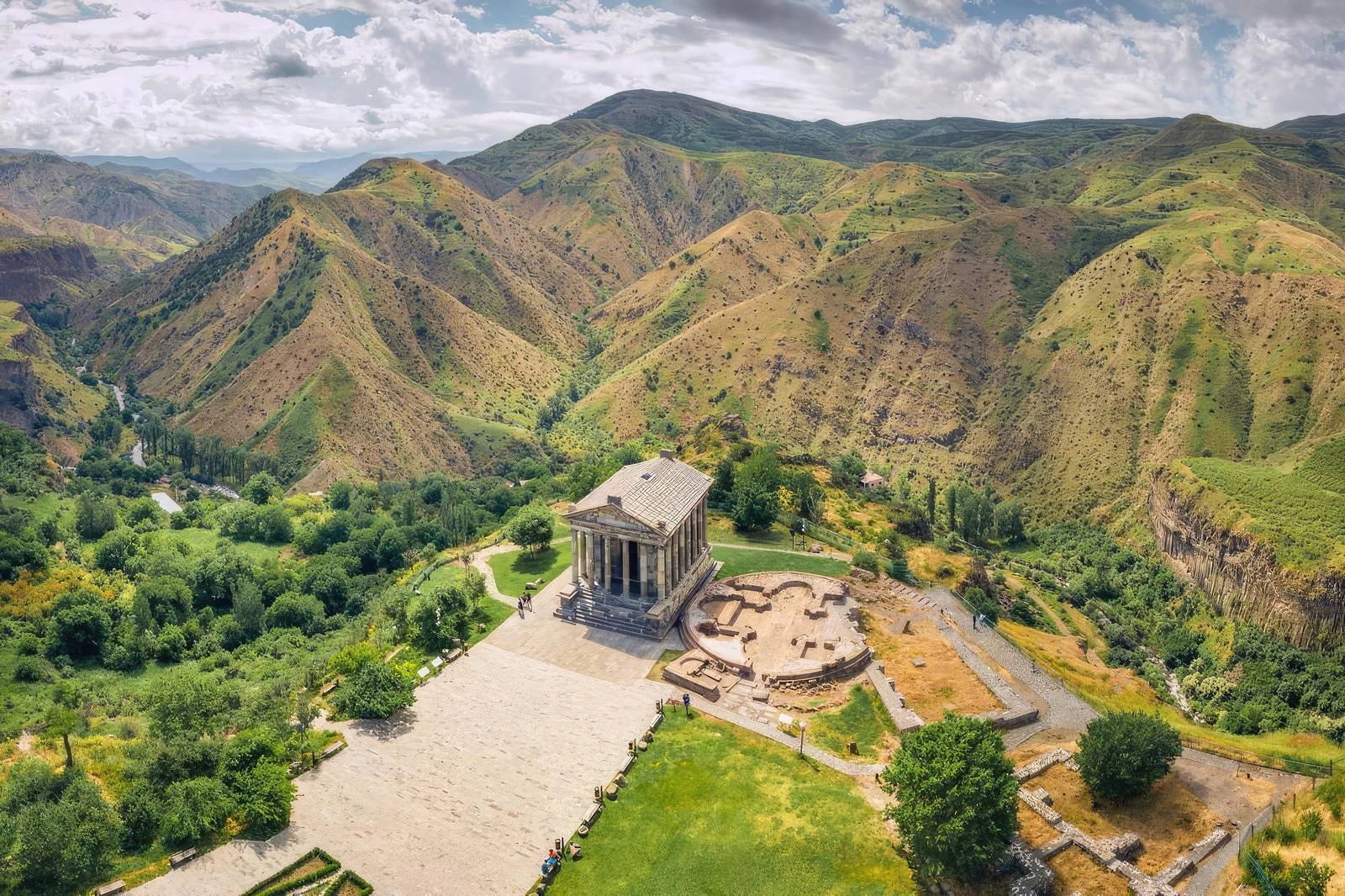
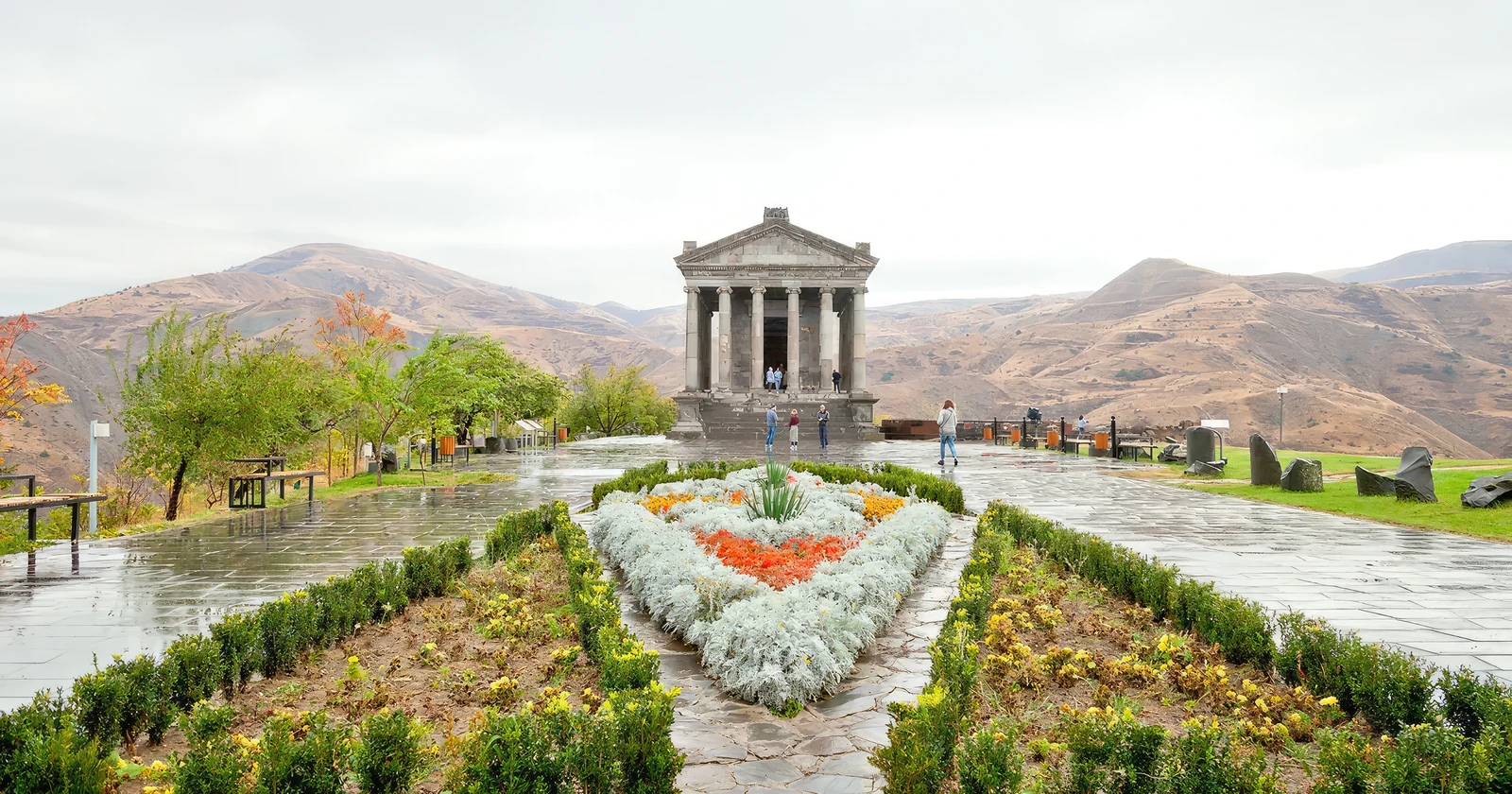
- Location: Situated approximately 30 km (19 miles) east of the capital city, Yerevan, on a triangular plateau overlooking the Azat River gorge. It’s part of the larger Garni Fortress complex.
How to Get There
Garni Temple is a popular day trip destination from Yerevan and is relatively easy to reach.
- By Car/Taxi: Driving is a convenient option, taking about 30 minutes from Yerevan. Taxis and ride-sharing apps are readily available.
- By Minibus (Marshrutka): Buses (numbers 266 and 284) depart regularly from Yerevan’s Gai Bus Station (in the Nor-Nork district) directly to Garni village. The journey takes about 50 minutes. There’s a bus stop just a few meters from the temple entrance.
- Organized Tours: Many tour operators offer combined day trips from Yerevan that include Garni Temple, the nearby Geghard Monastery, and the Symphony of Stones.
- Visitor Access: Garni Temple is open to the public.
- Entrance Fee: There is an admission fee to enter the Garni Historical and Cultural Museum-Reserve complex, which includes the temple. As of recent information, it’s approximately AMD 1,500 for adults (foreigners) and AMD 750 for locals.
- Hours: The site is typically open from 9:00 AM to 6:00 PM.
- Dress Code: As a historical site, there is no strict religious dress code, but comfortable walking shoes are recommended due to the terrain.
Landscape and Architecture
The Temple of Garni is a remarkable example of classical architecture, meticulously reconstructed after a devastating earthquake.
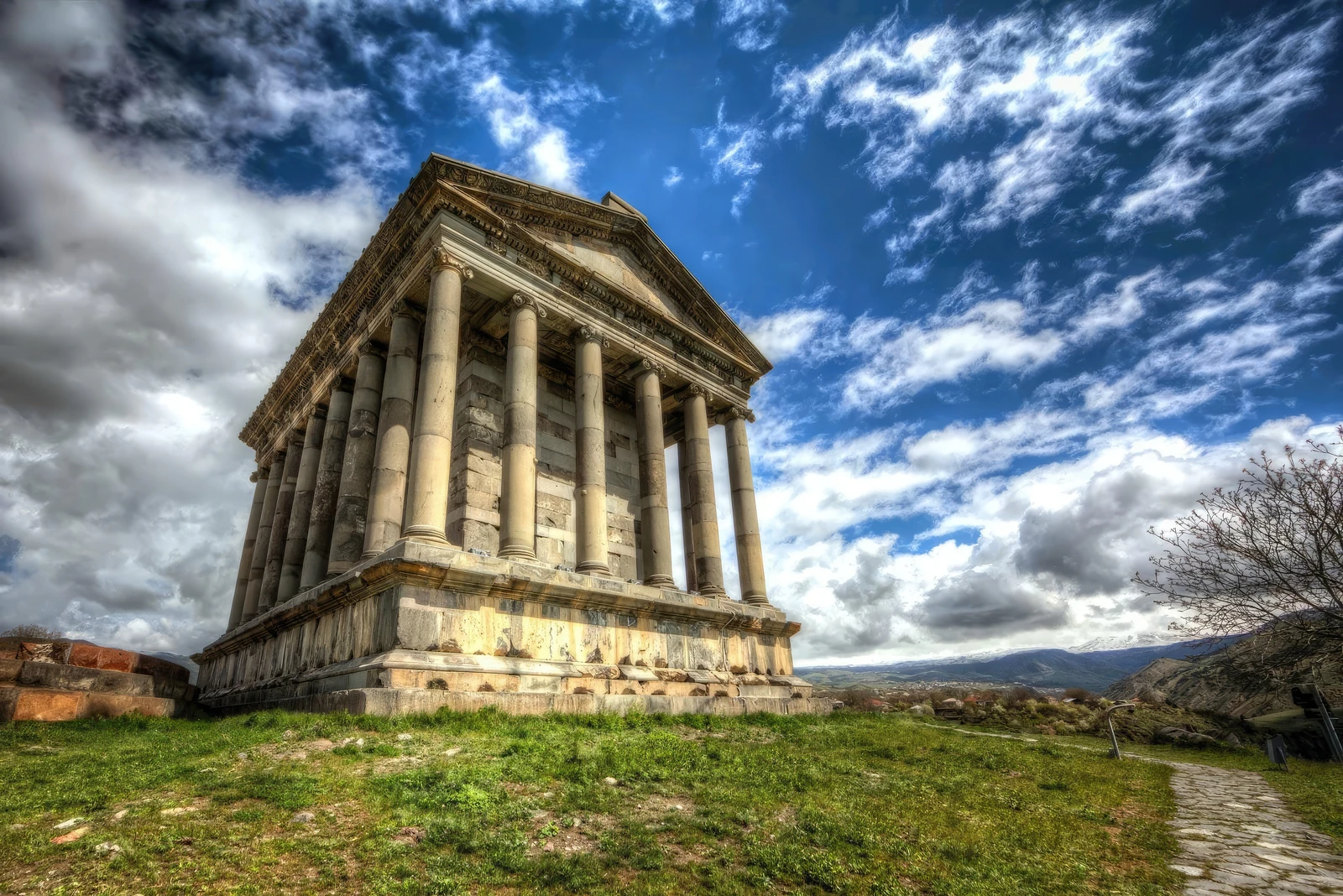
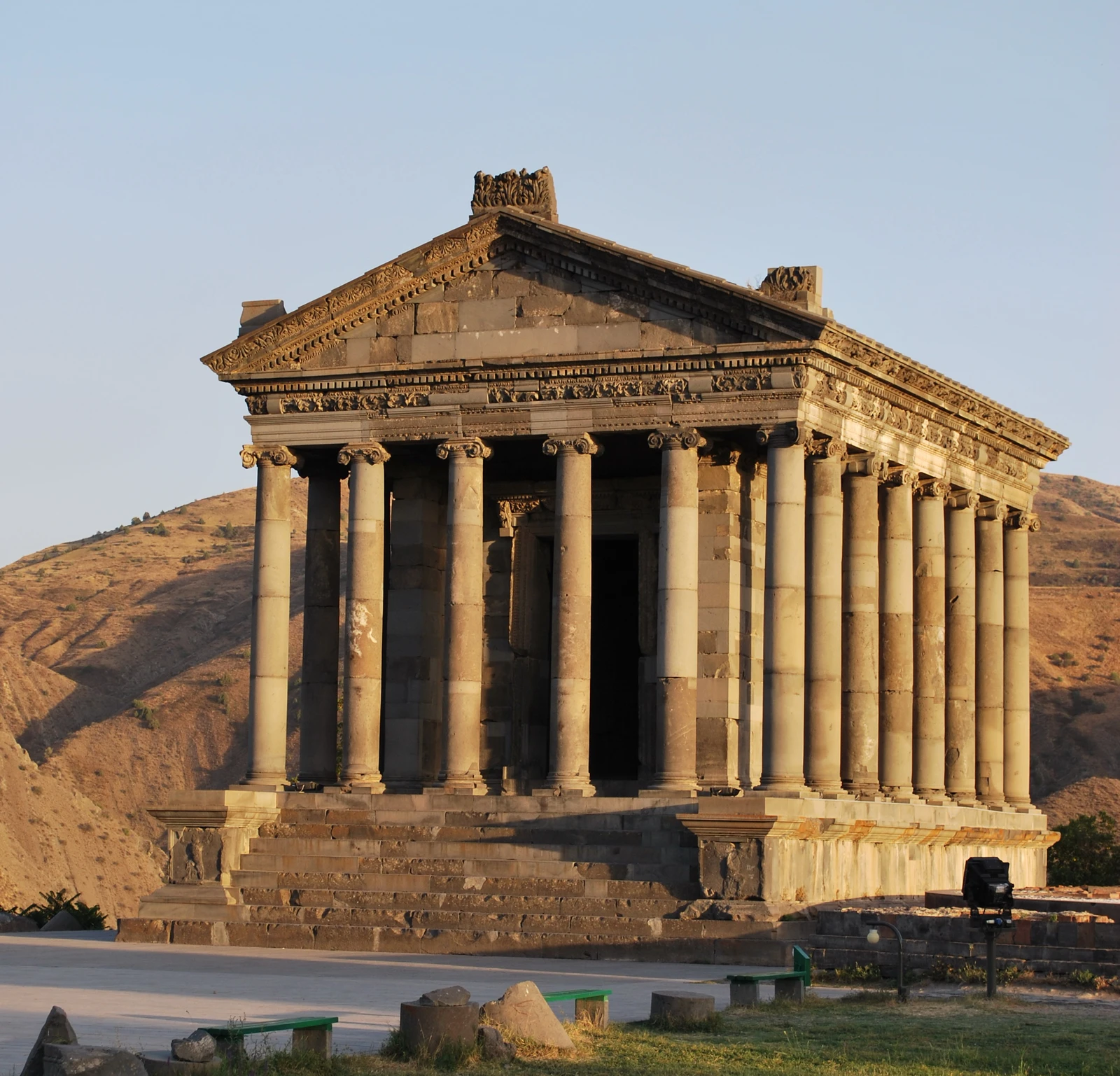
- Classical Design: Built in the Ionic order, it features a classical colonnaded structure with 24 Ionic columns (6 on the front and back, 8 on the sides). The temple sits atop an elevated podium with a wide staircase.
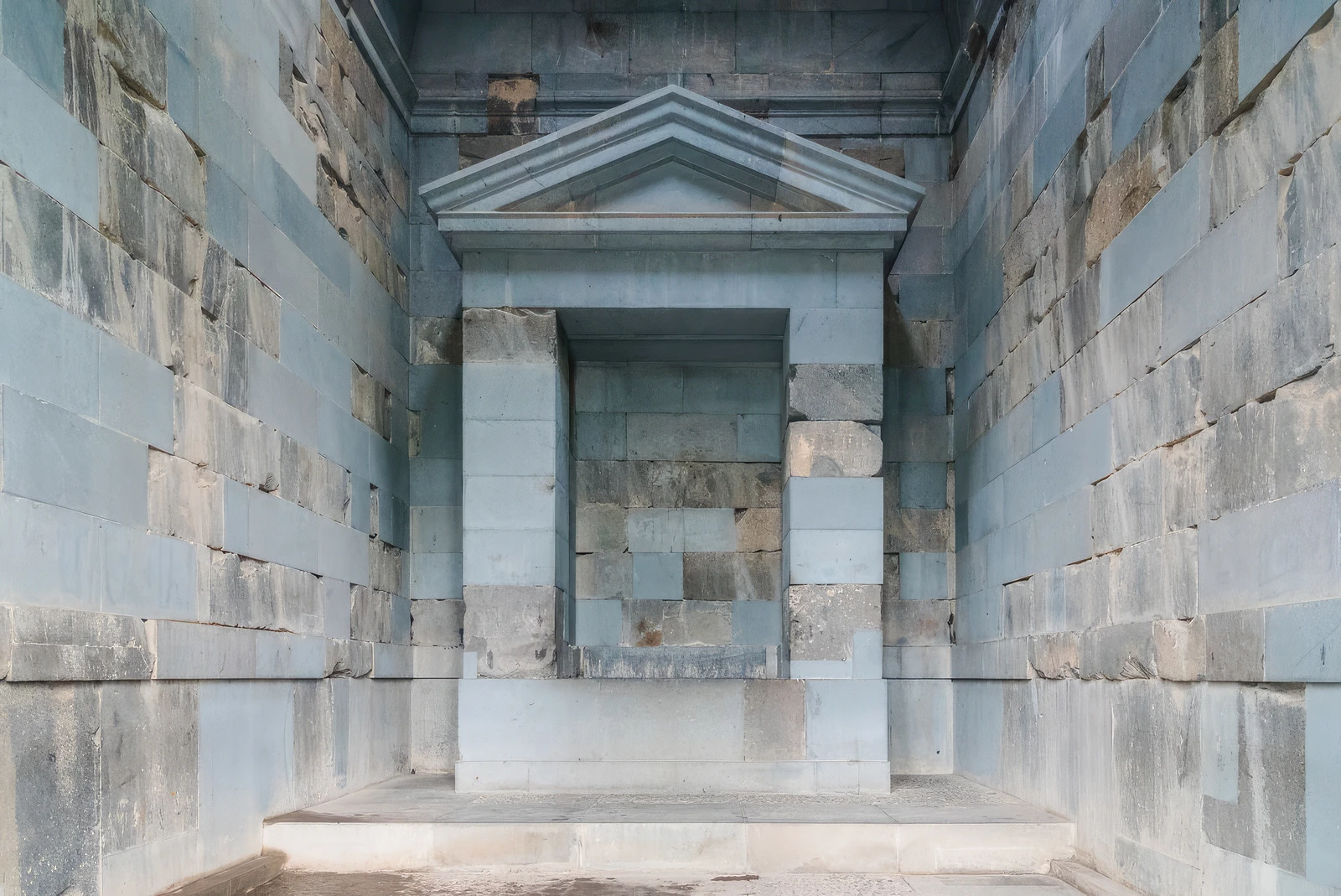
- Material: It is constructed from locally quarried basalt stone, a challenging material to work with, which gives it a distinctive appearance compared to marble temples.
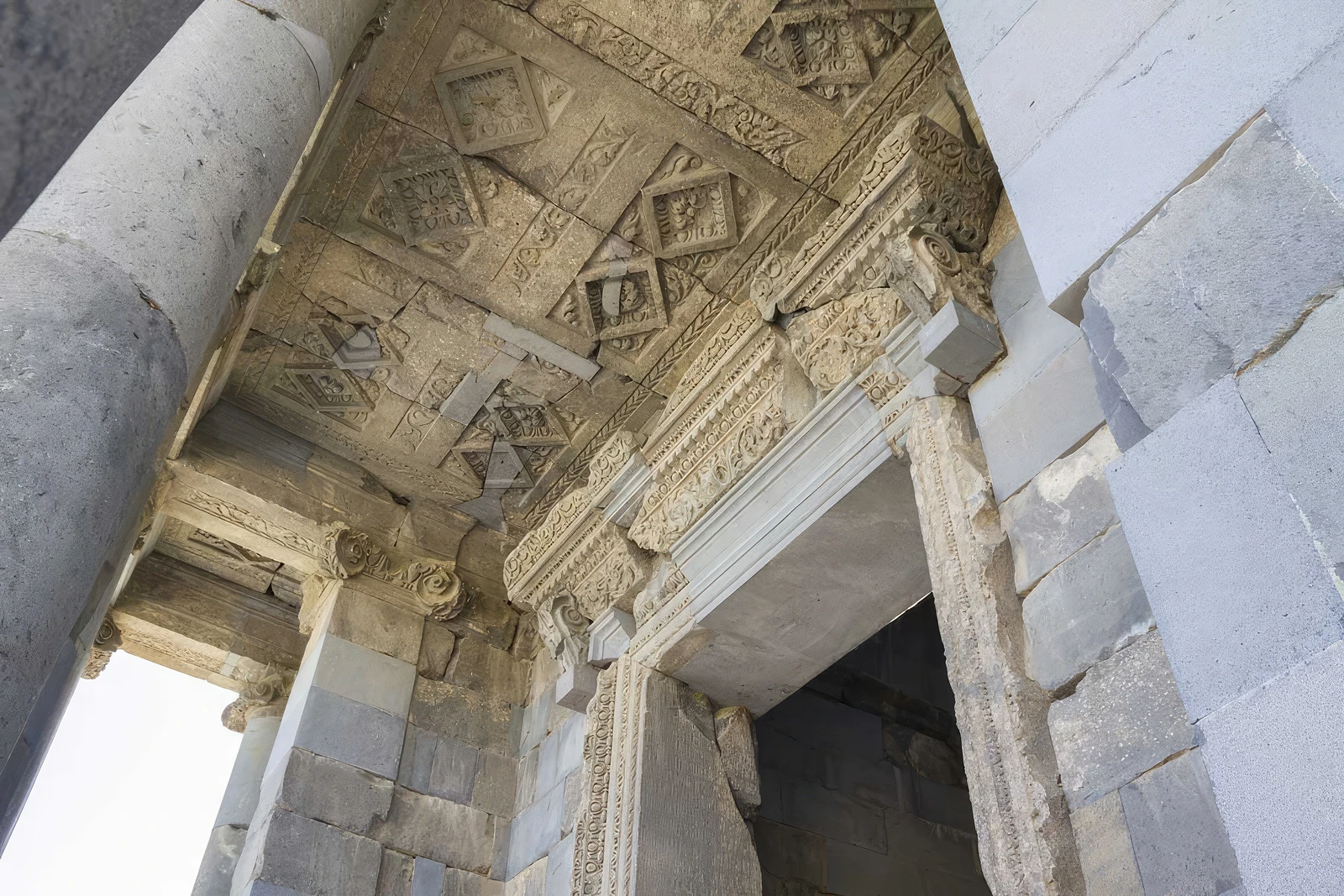
- Dimensions: The temple stands about 10.7 meters (35 feet) high. Its pediment features sculptures of plants and geometric figures, and the frieze is adorned with continuous acanthus designs. Lion heads decorate the front cornice.
- Original Purpose: Conventionally identified as a pagan temple dedicated to the sun god Mihr (Mithra), built by King Tiridates I in the 1st century AD. Some scholars also propose it might have been a 2nd-century tomb.
- Reconstruction: The temple was largely destroyed by an earthquake in 1679. It was extensively and meticulously reconstructed between 1969 and 1975 under the leadership of architect Alexander Sahinian, using original fragments (anastylosis).
- Garni Fortress Complex: The temple is part of a larger ancient fortress that also includes ruins of a royal palace and Roman baths. The bathhouse features a well-preserved mosaic floor depicting Greek mythological figures, made from natural stones.
- Symphony of Stones: Located in the Azat River gorge below the temple, the “Symphony of Stones” is a natural wonder consisting of hexagonal and pentagonal basalt columns, resembling a giant pipe organ. It’s often visited in conjunction with the temple.
What Makes It Famous
Garni Temple’s fame is rooted in its unique survival and historical significance:
- Only Surviving Pagan Temple in Armenia: After Armenia adopted Christianity as its state religion in 301 AD, most pagan temples were destroyed. Garni Temple, for reasons still debated by scholars, was spared, making it a rare and invaluable relic of Armenia’s pre-Christian past.
- Easternmost Greco-Roman Building: It is considered the easternmost largely preserved Hellenistic or Greco-Roman building in the world, highlighting the reach of classical architectural influence.
- Architectural Beauty: Its classical proportions, intricate carvings, and unique basalt construction make it an aesthetically captivating structure.
- Historical Resilience: It has survived centuries of invasions and a major earthquake, undergoing a significant reconstruction that brought it back to its former glory.
- Cultural Symbol: It serves as a central shrine for Armenian neopaganism (Hetanism) and is a major tourist attraction, drawing visitors interested in history, architecture, and ancient cultures.
Differences from Some Other Landmarks
Garni Temple distinguishes itself from other landmarks in several key ways:
- Pagan vs. Christian/Modern: Unlike the numerous Christian monasteries (e.g., Haghartsin or Goshavank in Dilijan, or Sevanavank at Lake Sevan) that dominate Armenia’s historical landscape, Garni is a rare surviving example of pagan (Hellenistic) architecture. This makes its historical context and purpose fundamentally different.
- Classical vs. Medieval/Modern: Its Greco-Roman architectural style stands in stark contrast to the medieval Armenian church architecture characterized by unique domes and cross-stone (khachkar) artistry, or the modern architectural marvels seen in Dubai (e.g., Burj Khalifa, Museum of the Future).
- Reconstructed Ancient Site: While other historical sites might be ruins or partially preserved, Garni Temple’s extensive and scientifically accurate reconstruction allows visitors to experience a near-complete ancient structure, offering a different perspective than purely archaeological remains (like Bahrain Fort).
- Integration with Natural Wonder: Its proximity to the “Symphony of Stones” in the Azat River gorge uniquely combines a man-made historical marvel with a dramatic natural geological formation, offering a dual attraction.