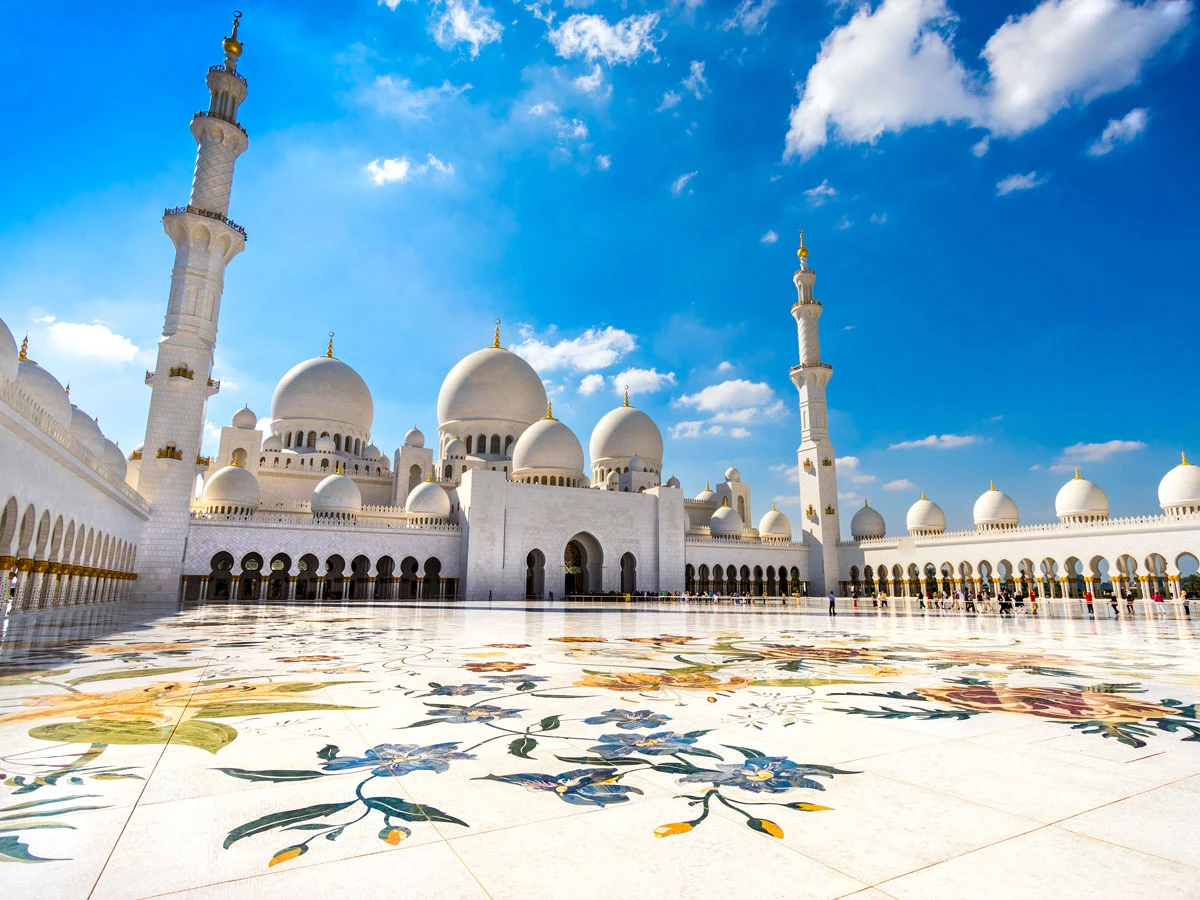
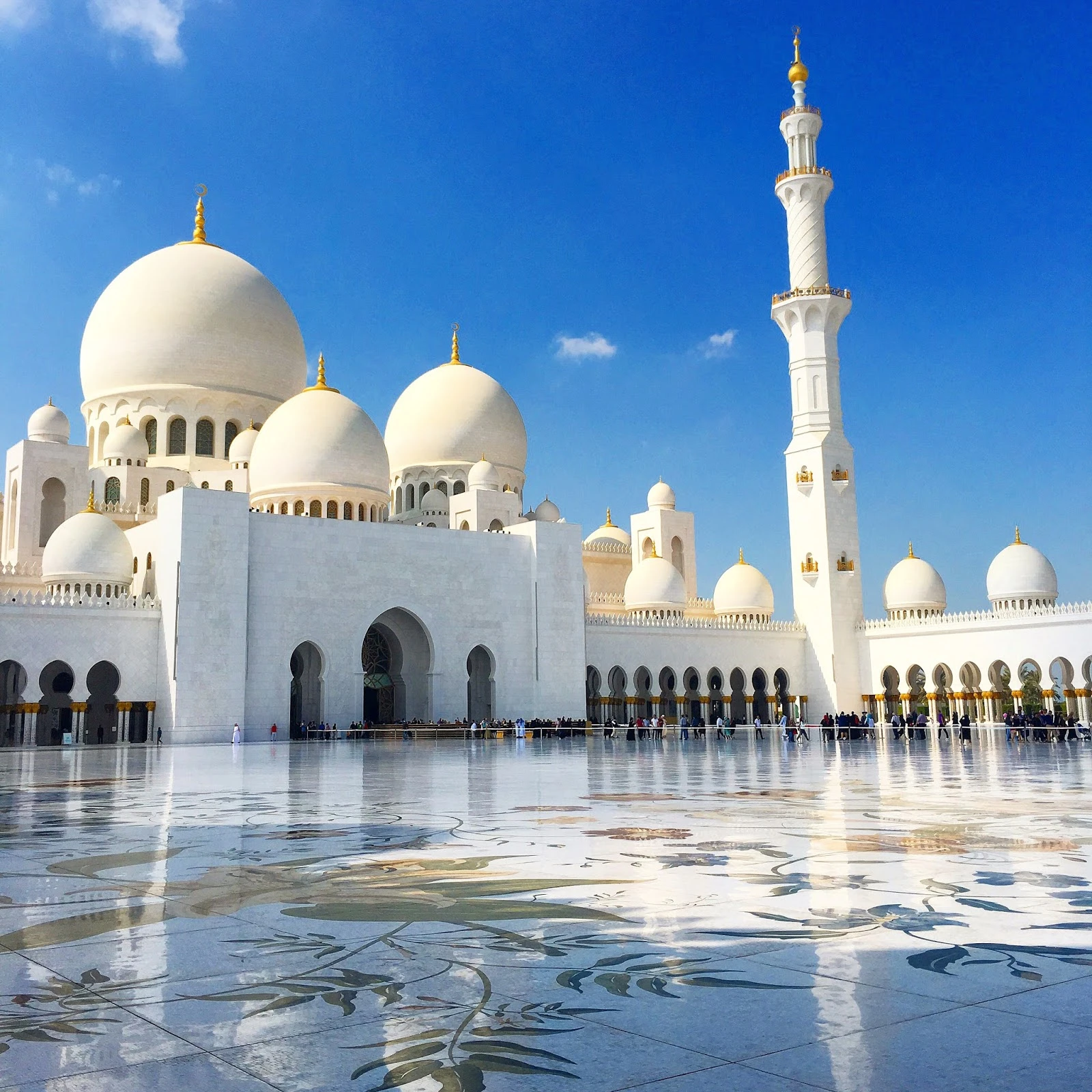
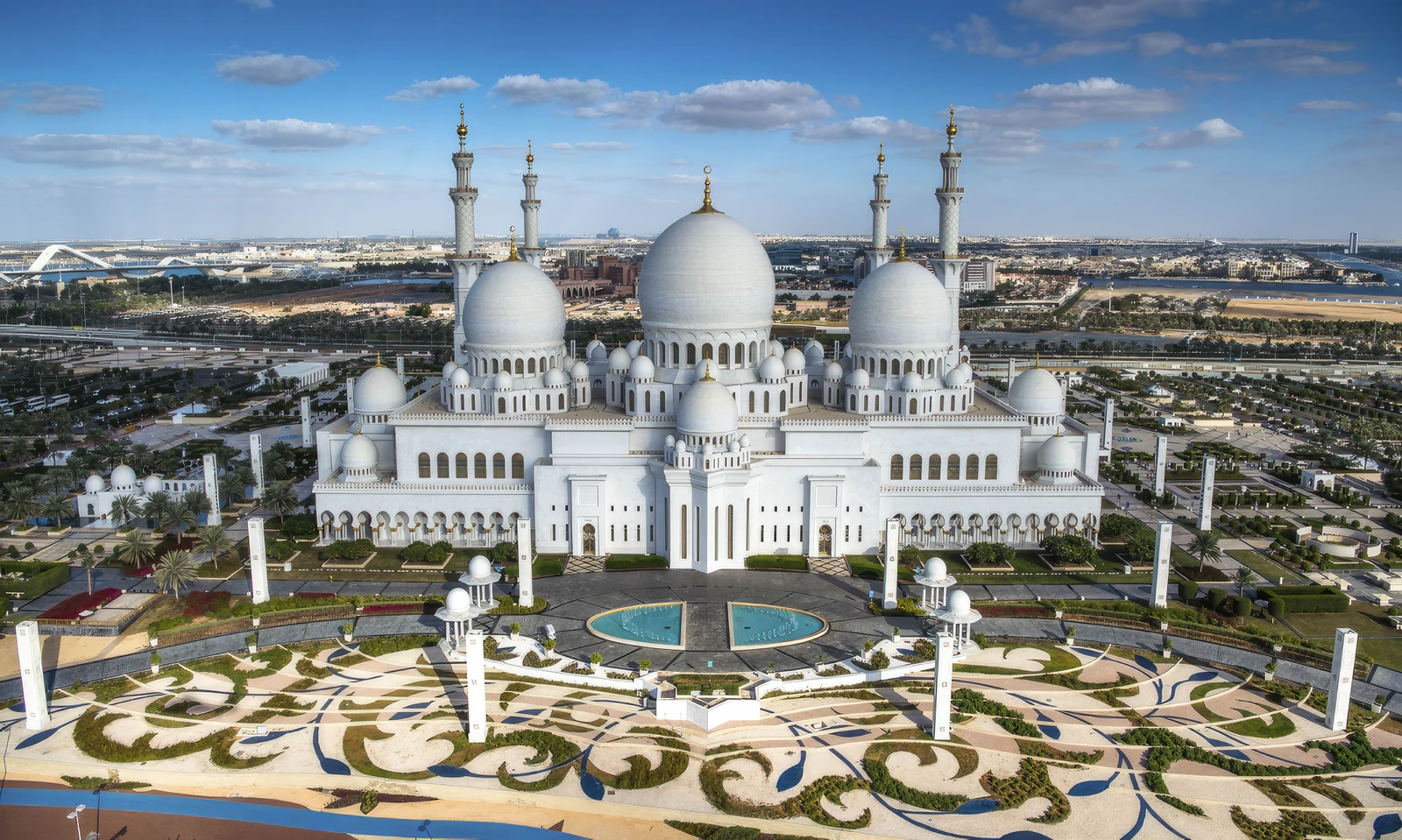
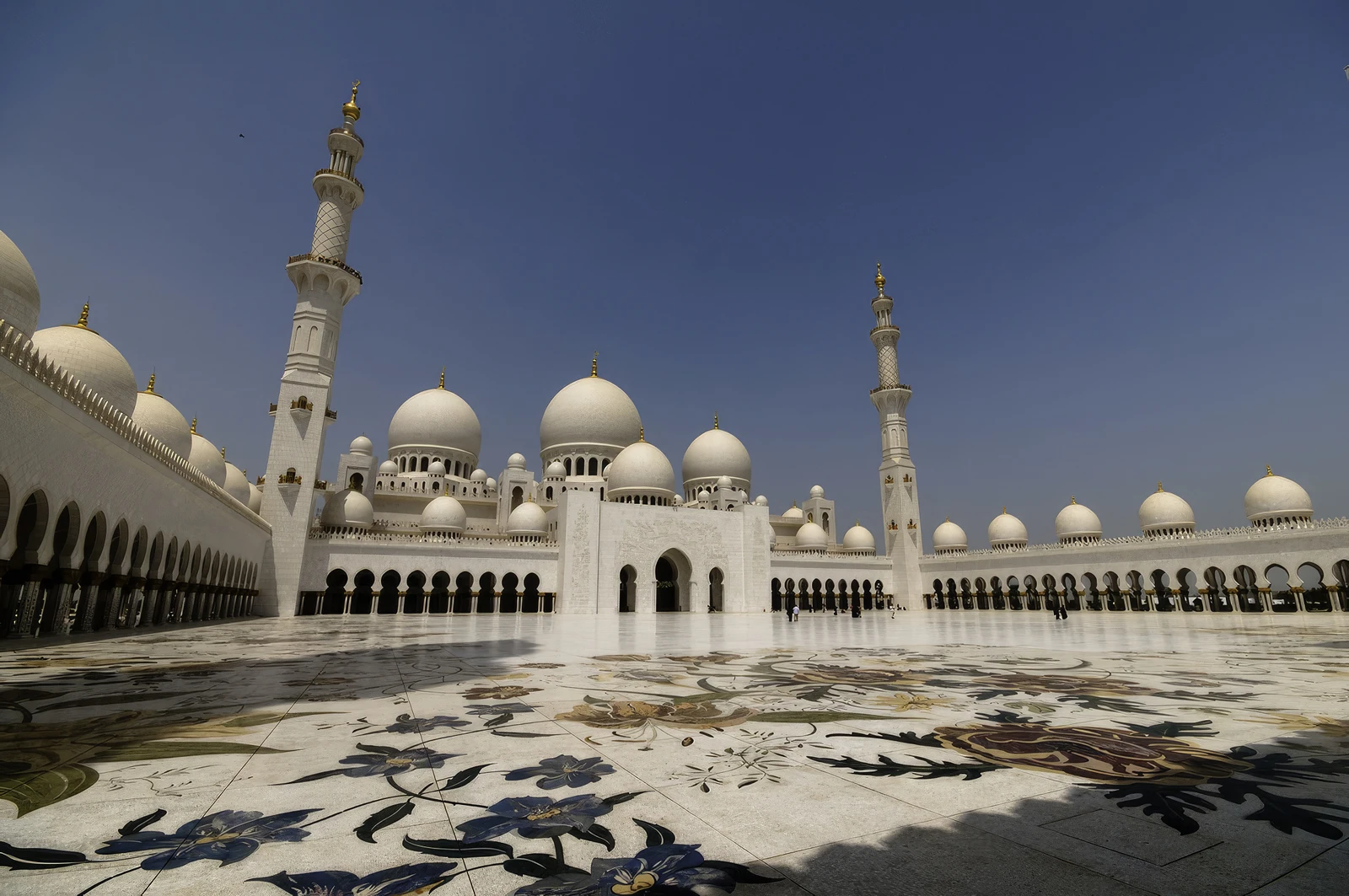
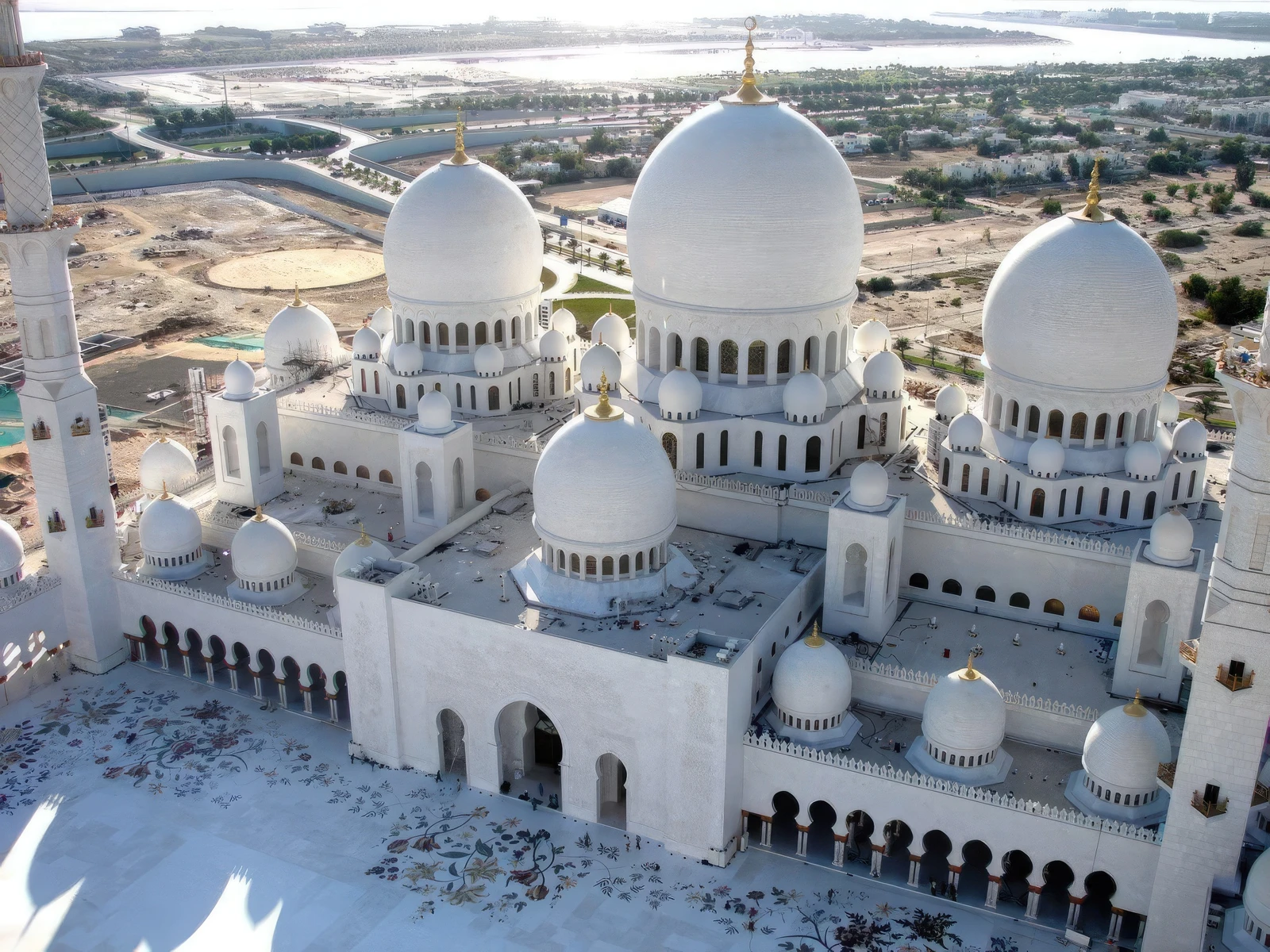
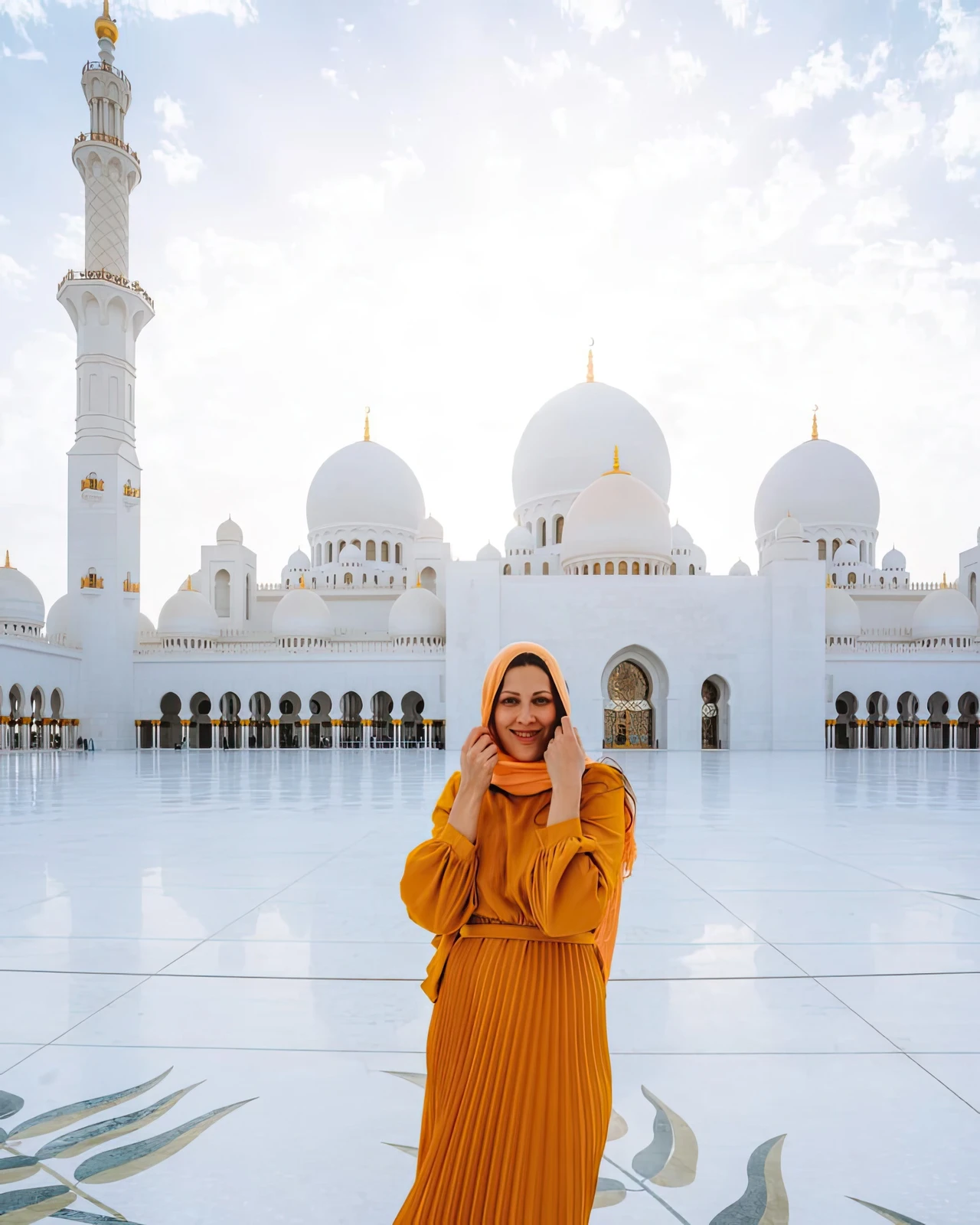
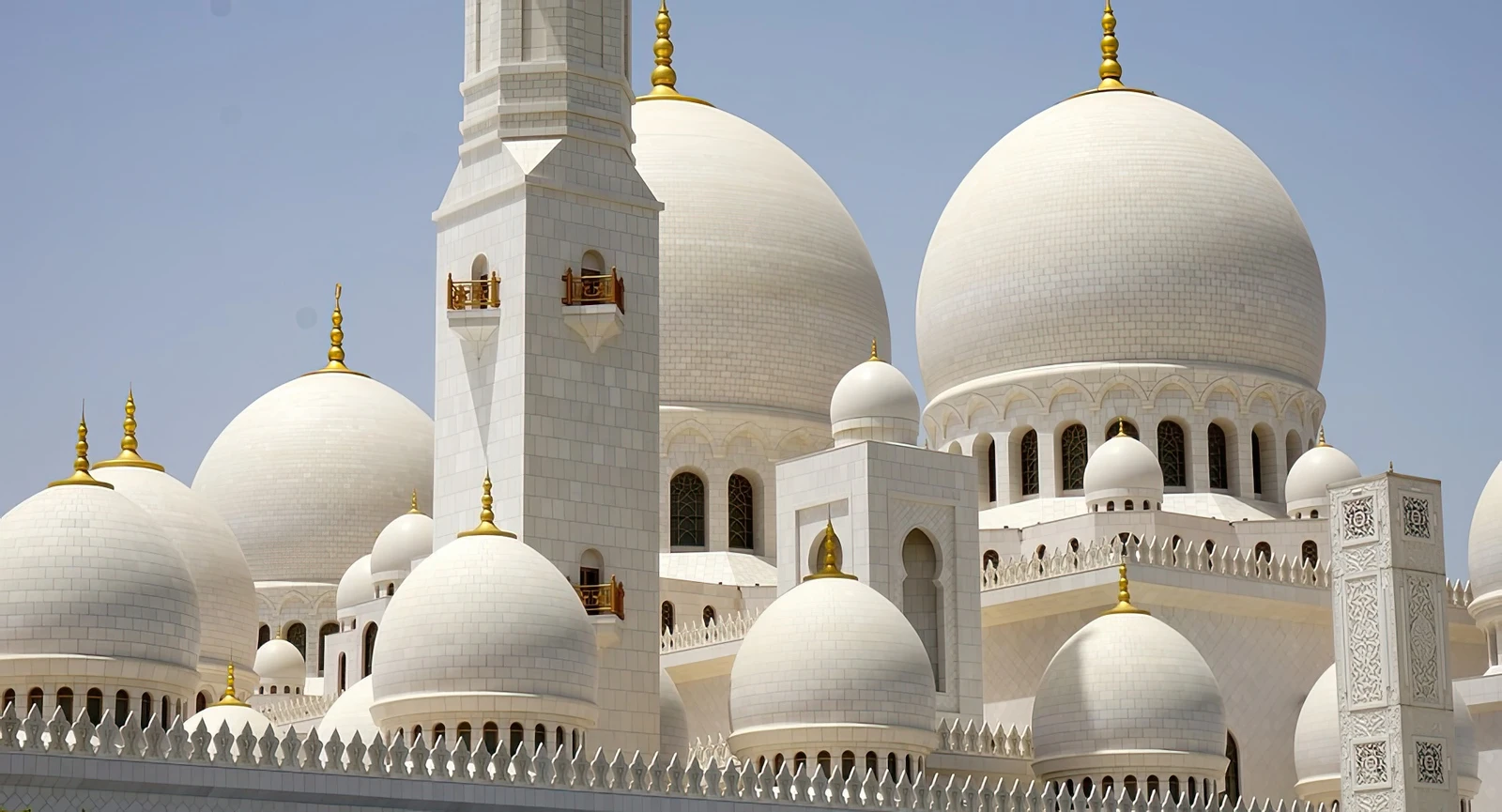
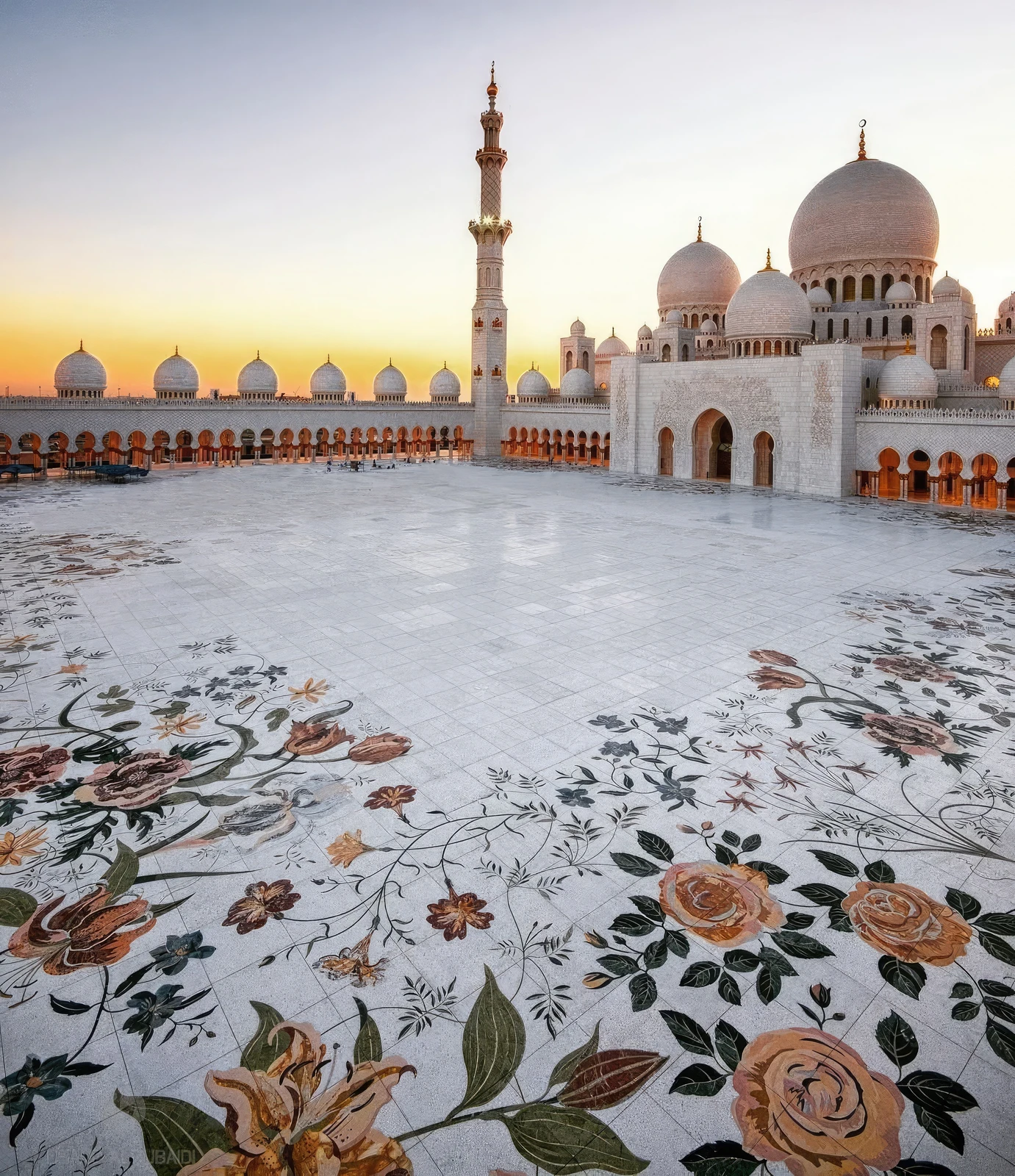
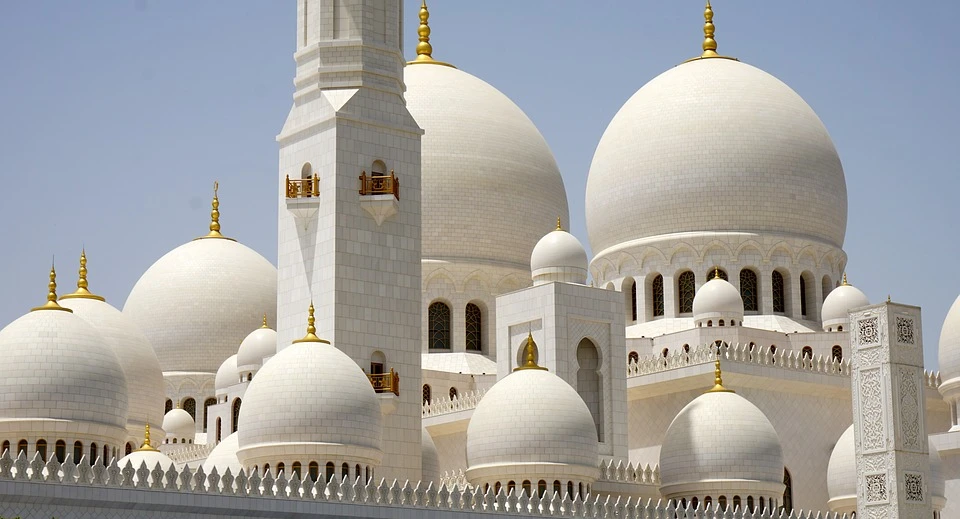
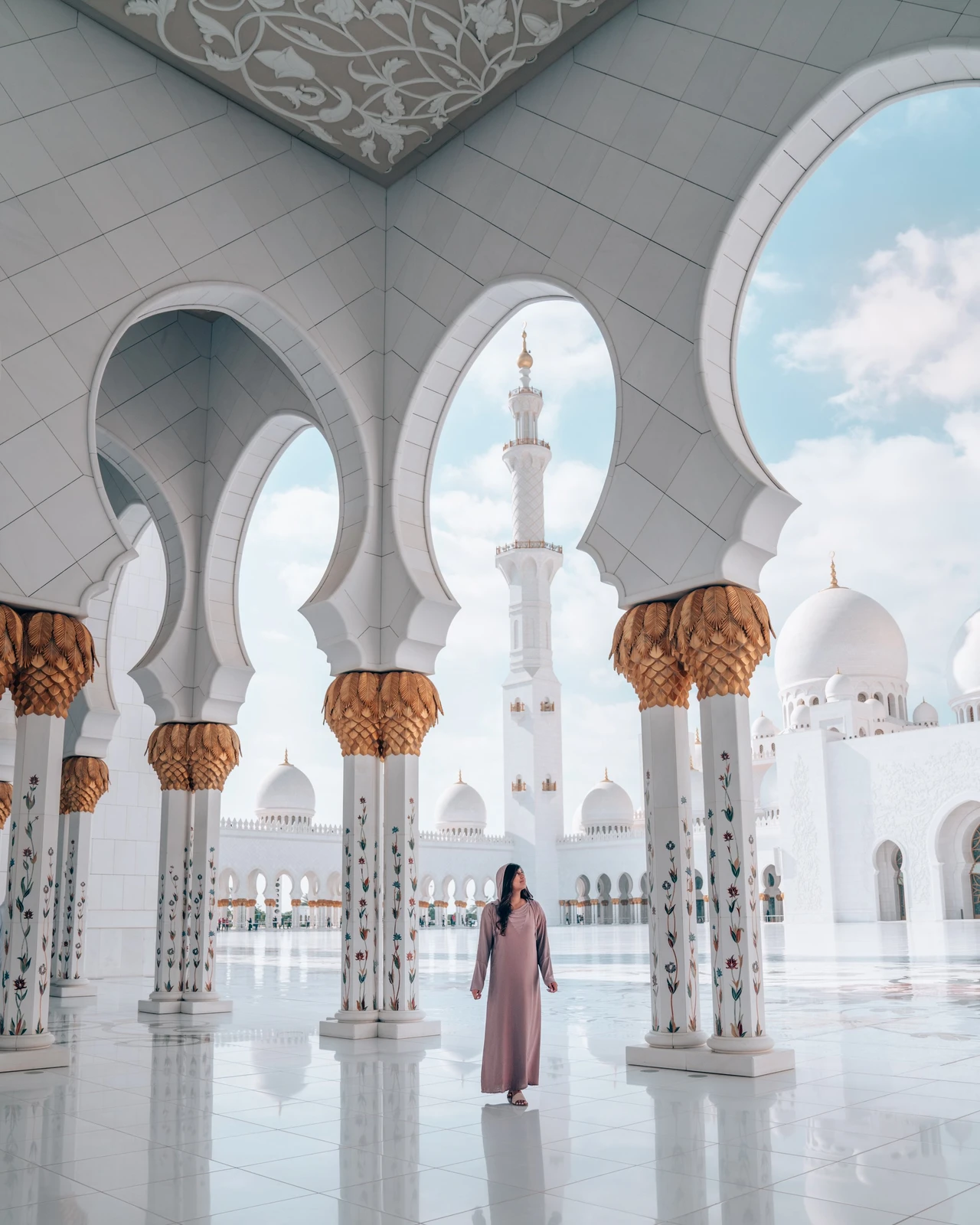
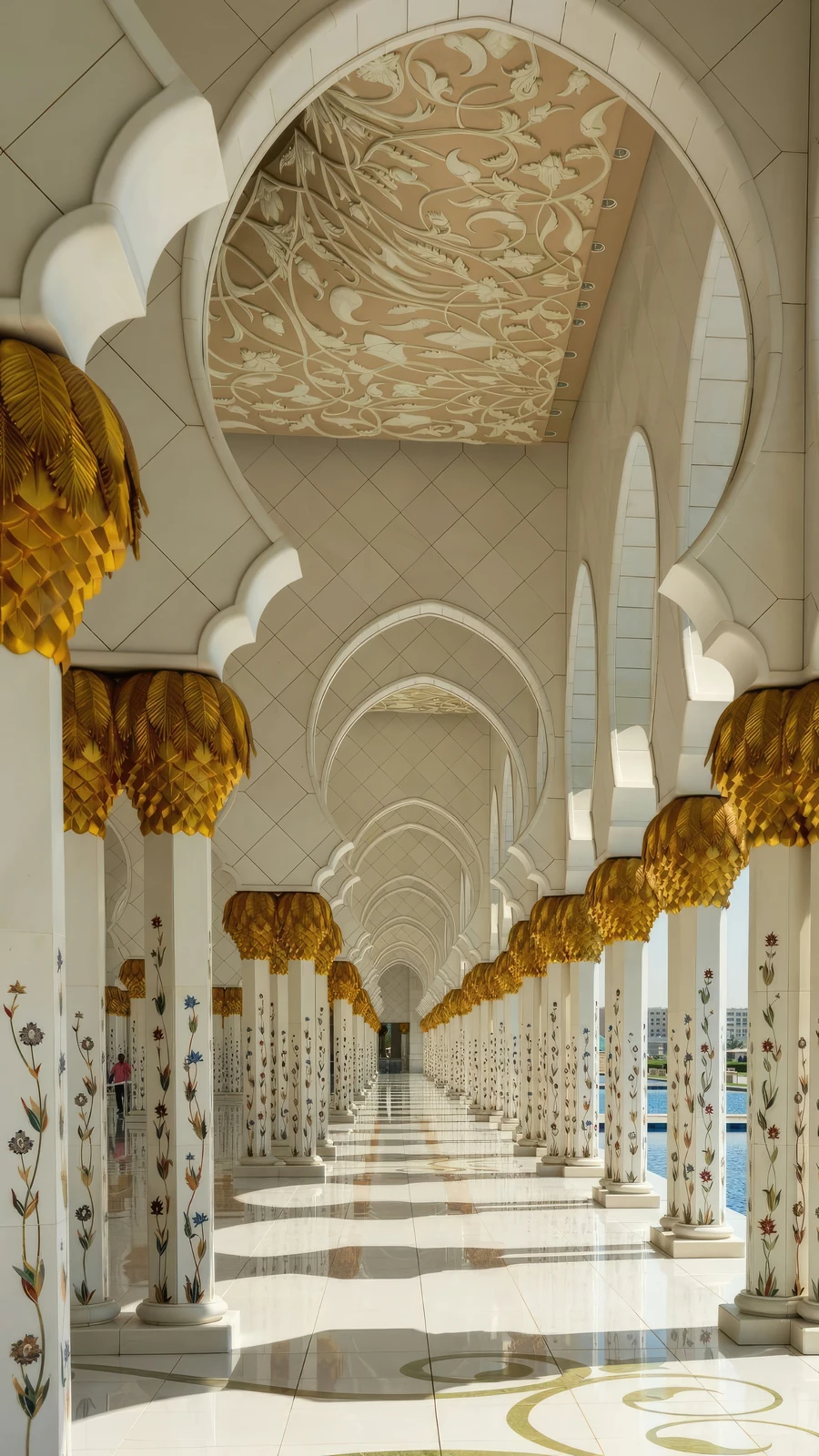
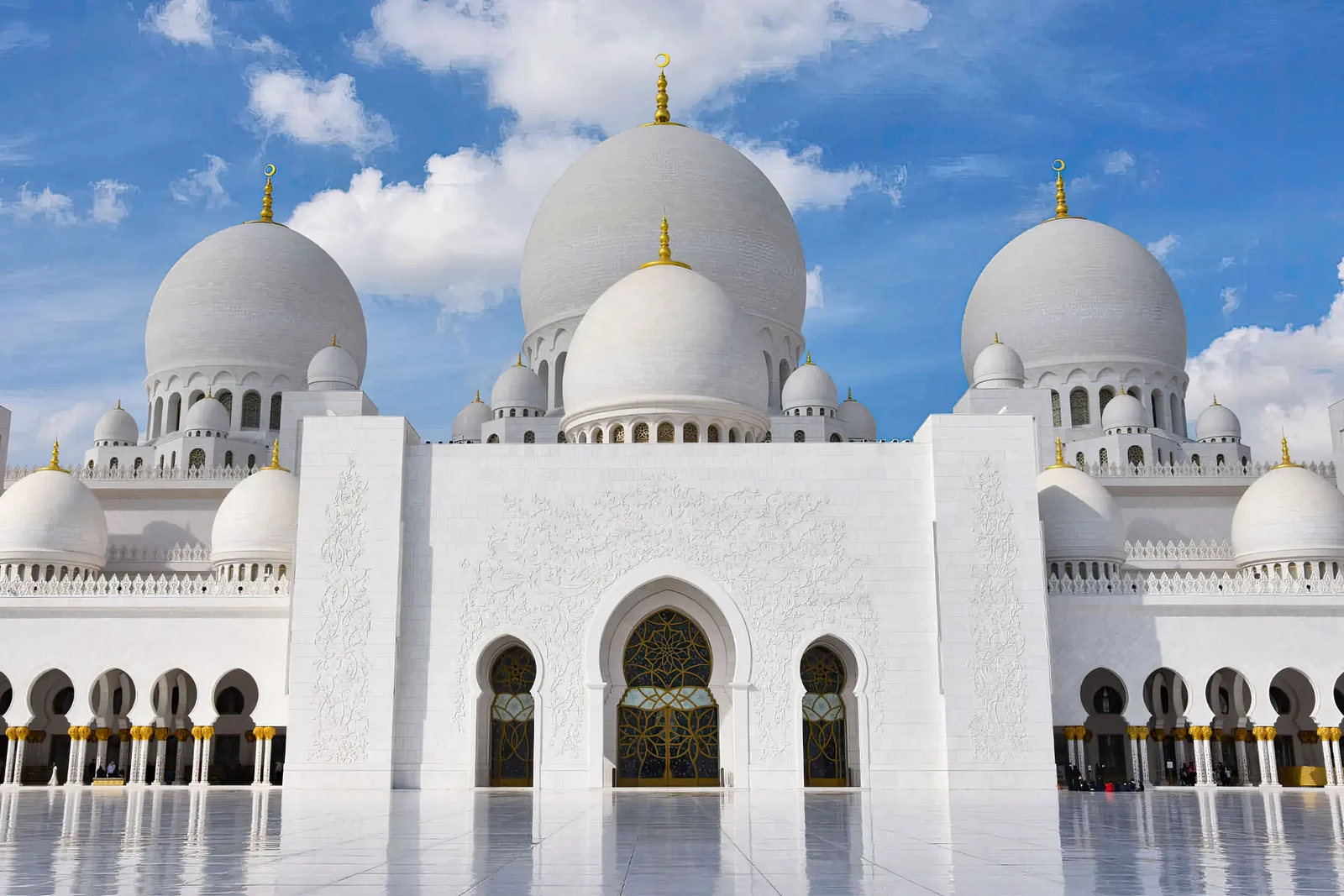
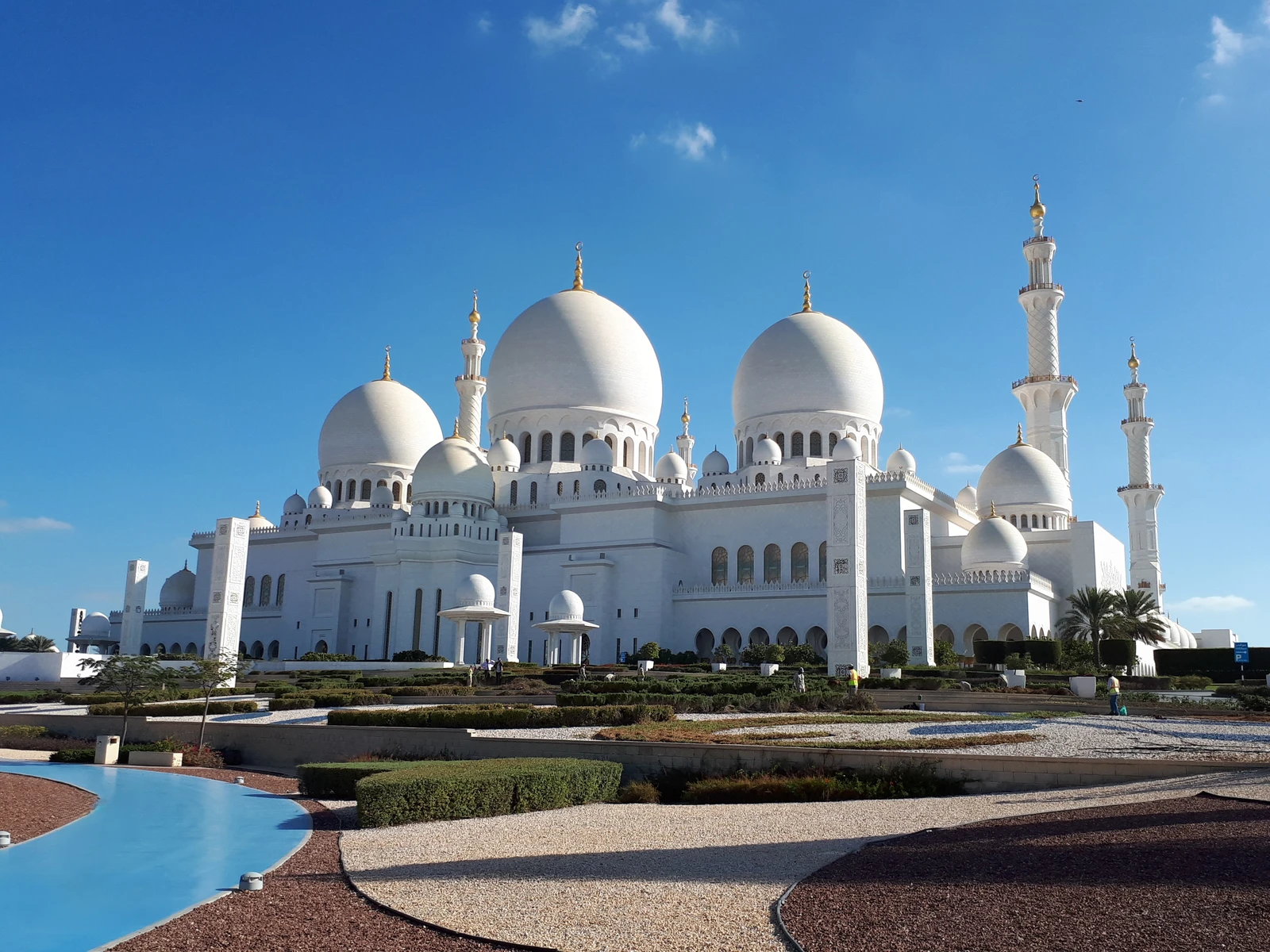
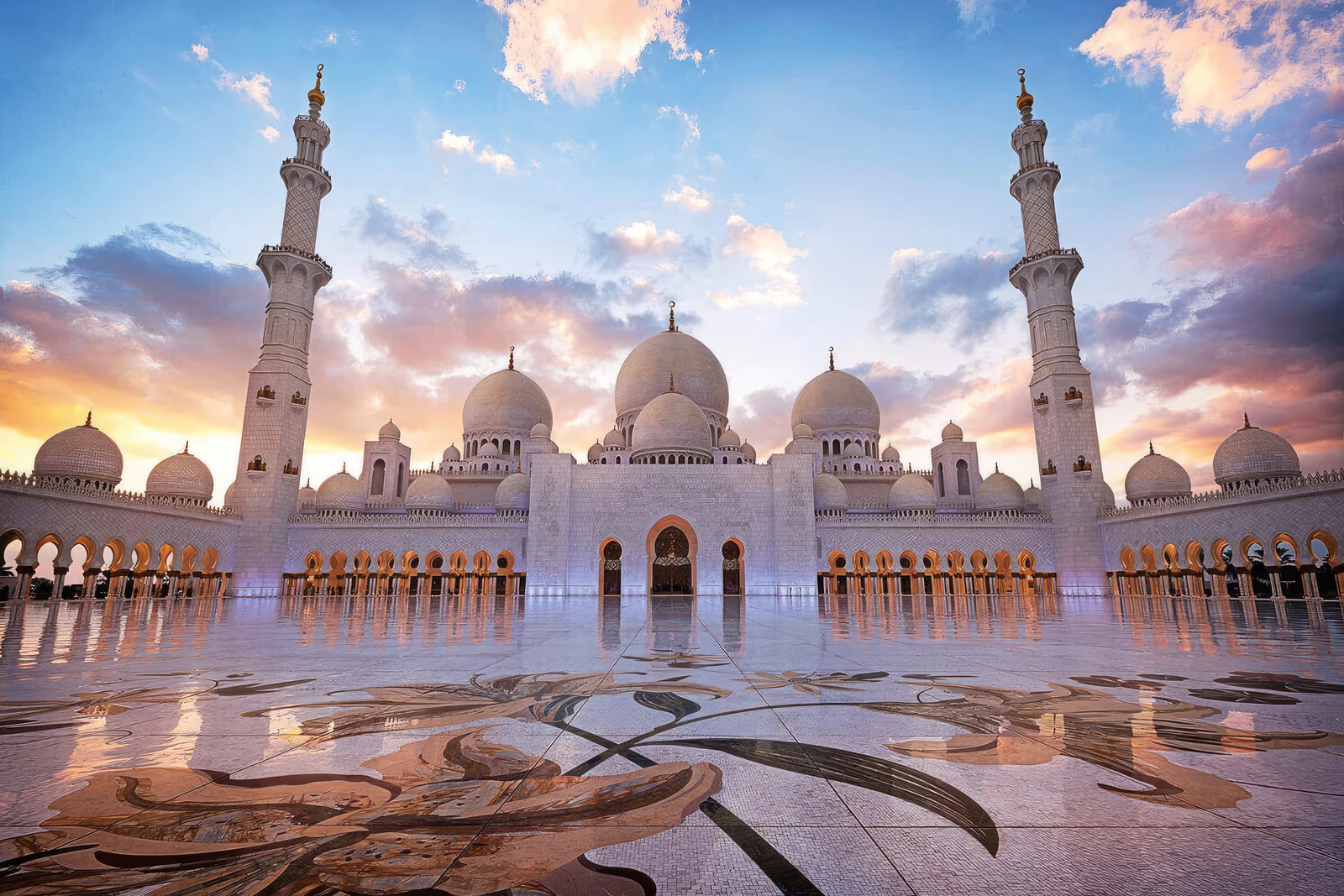
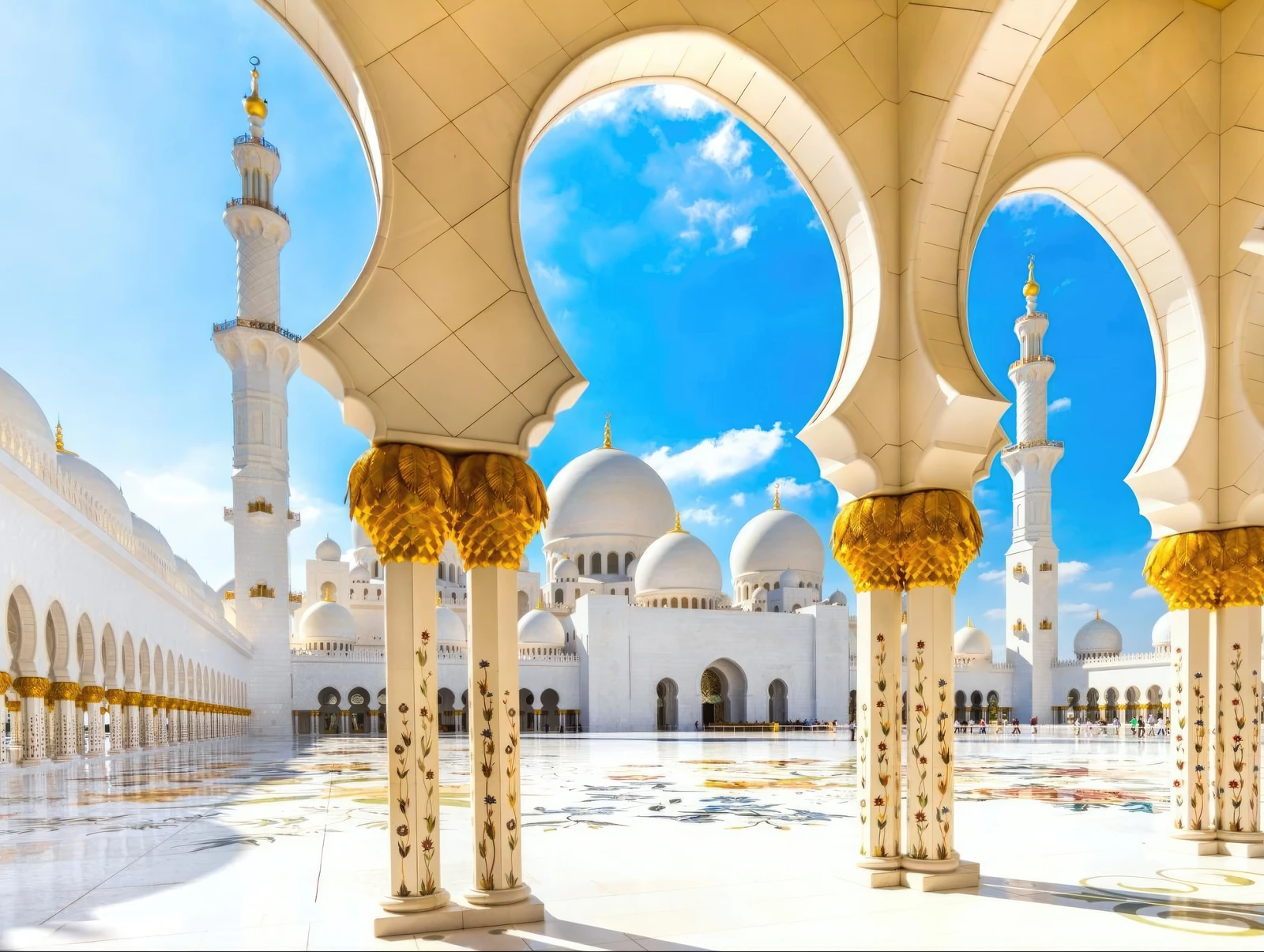
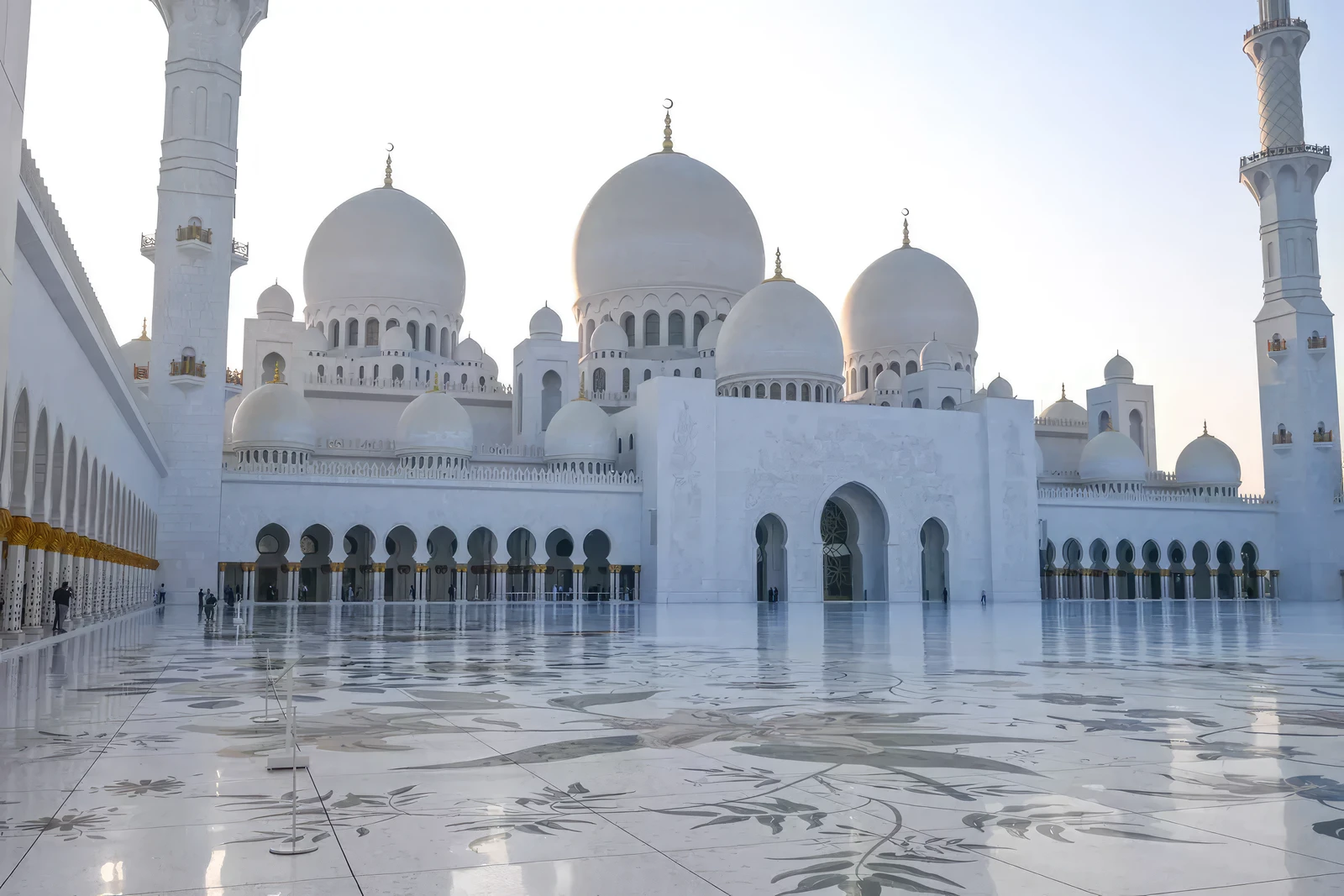
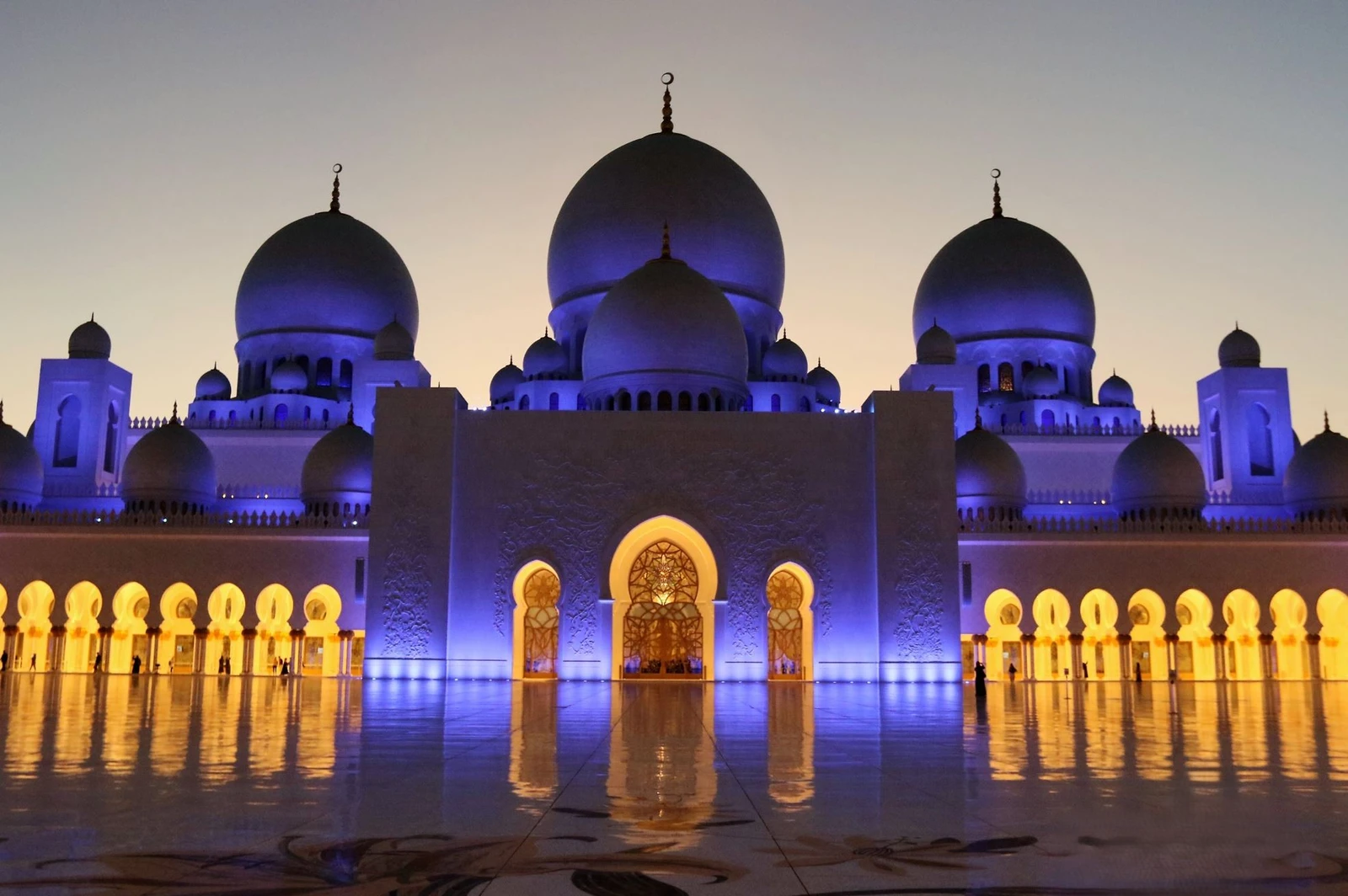
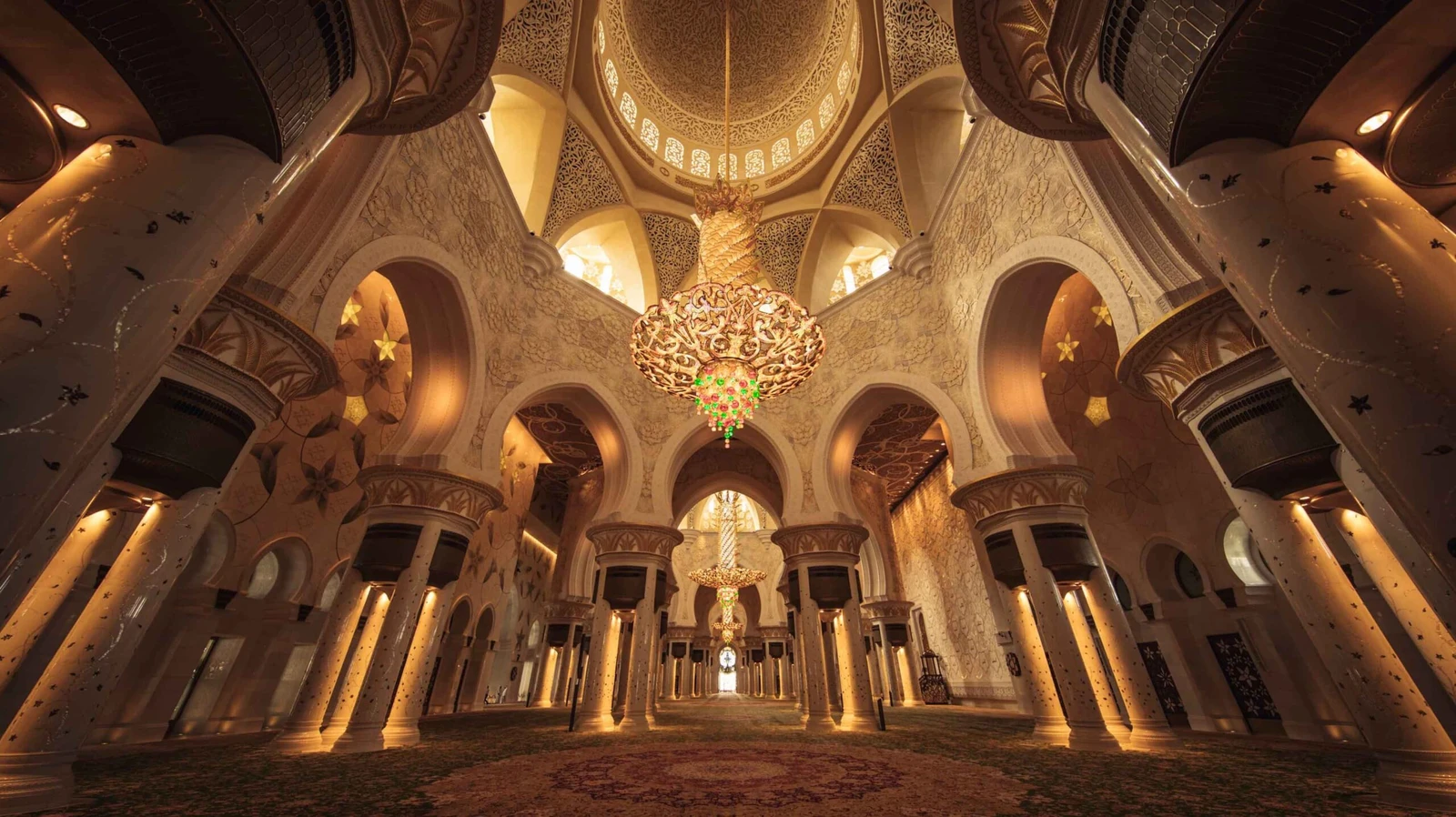
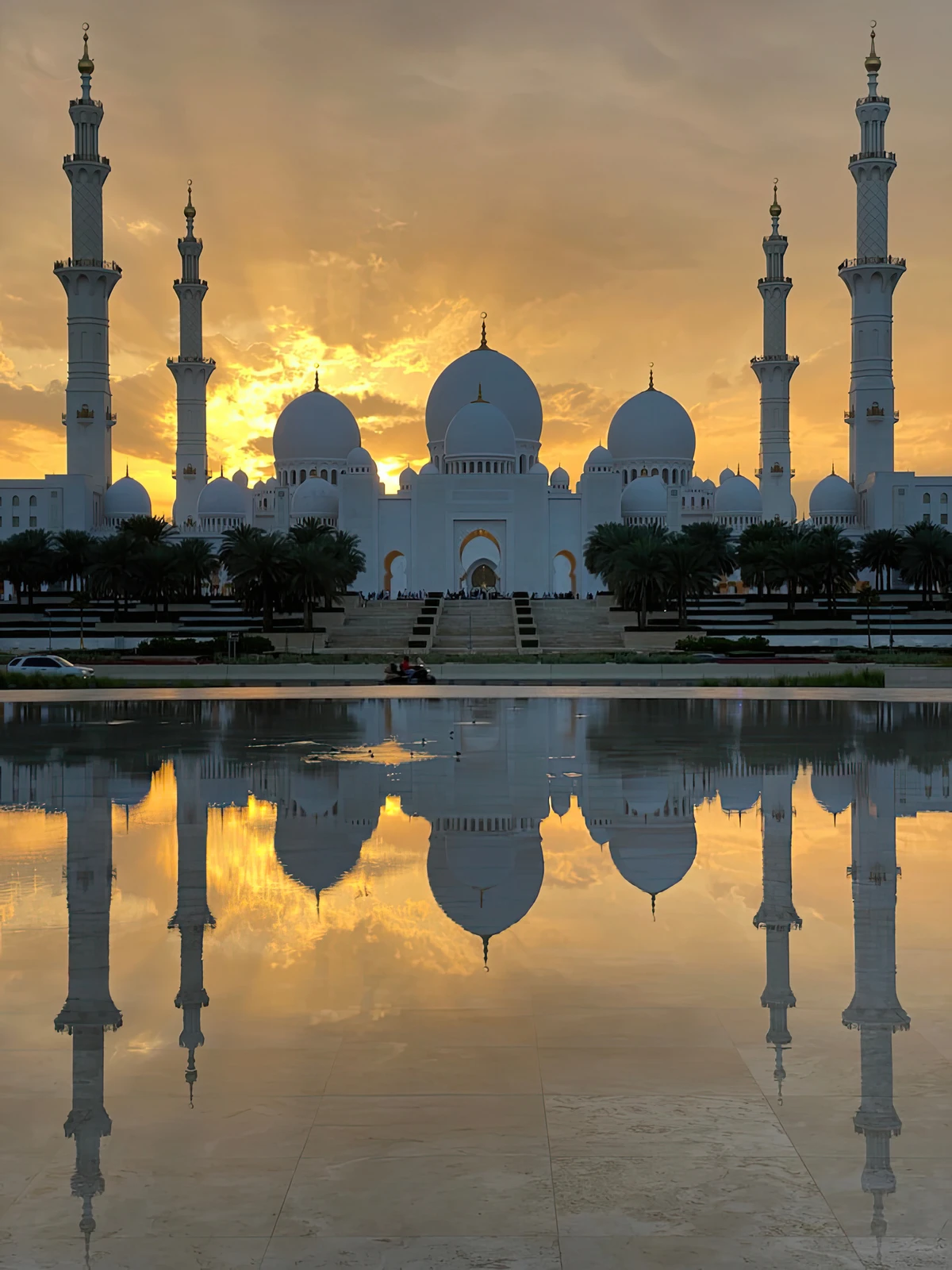
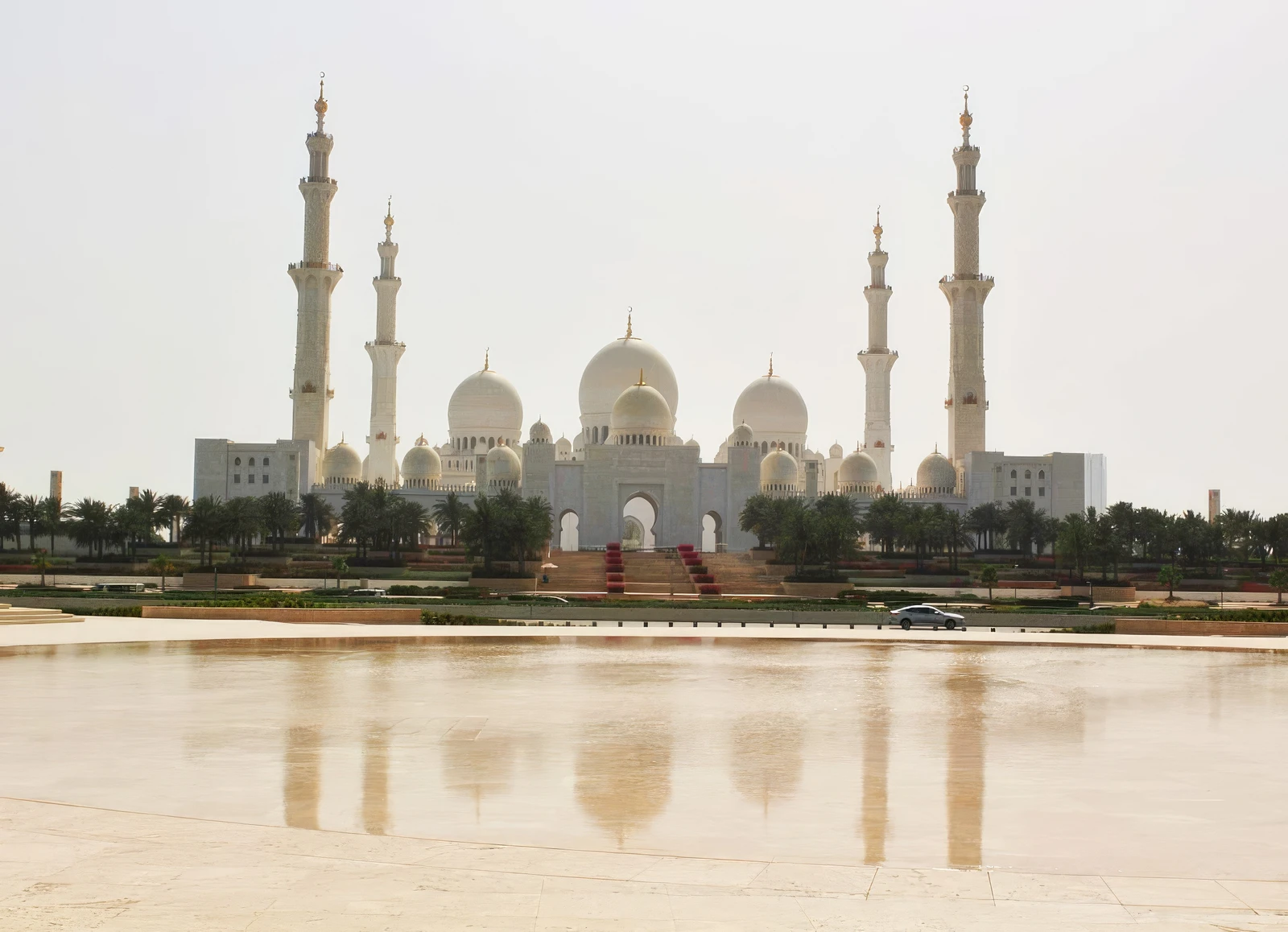
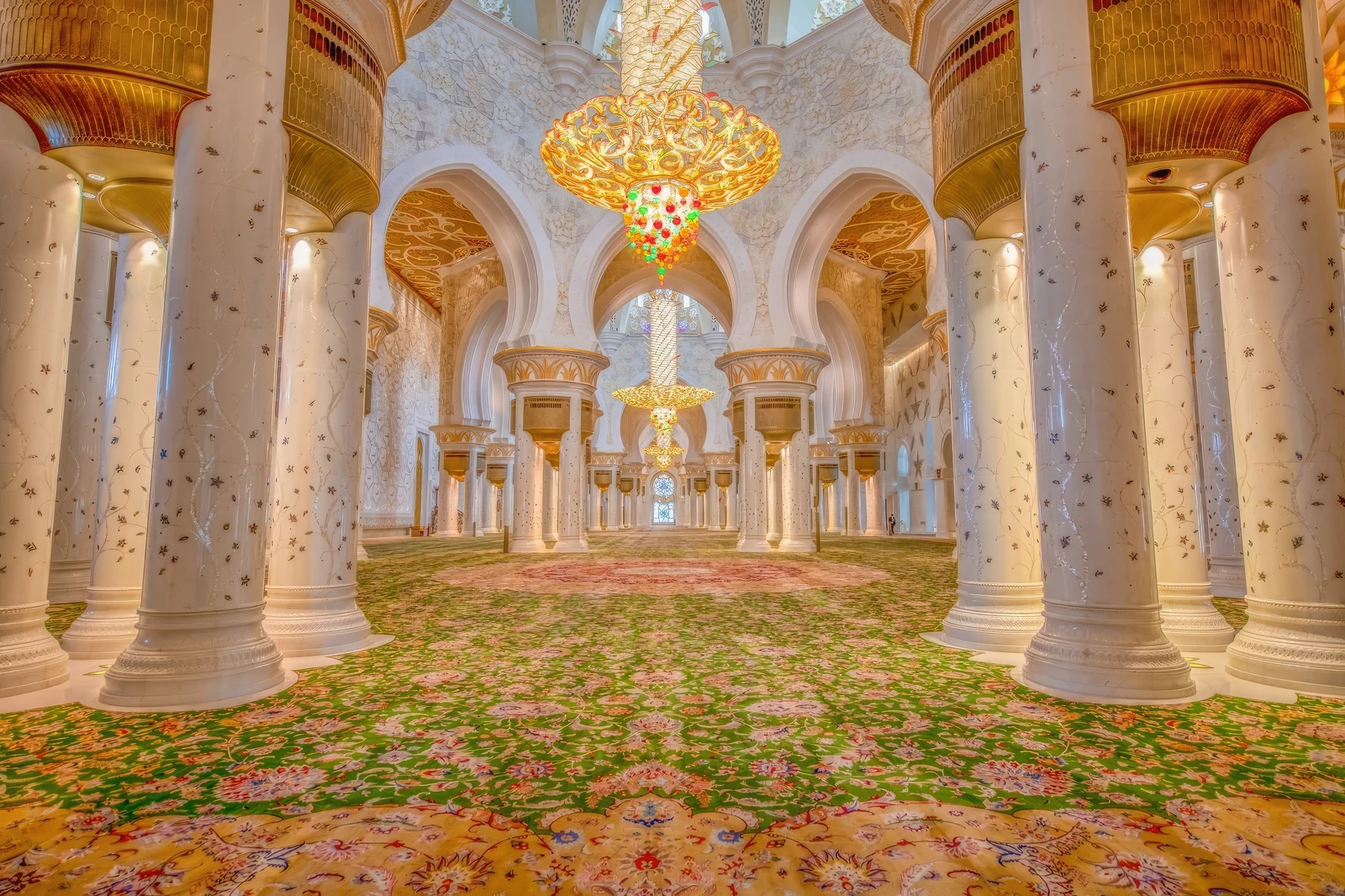
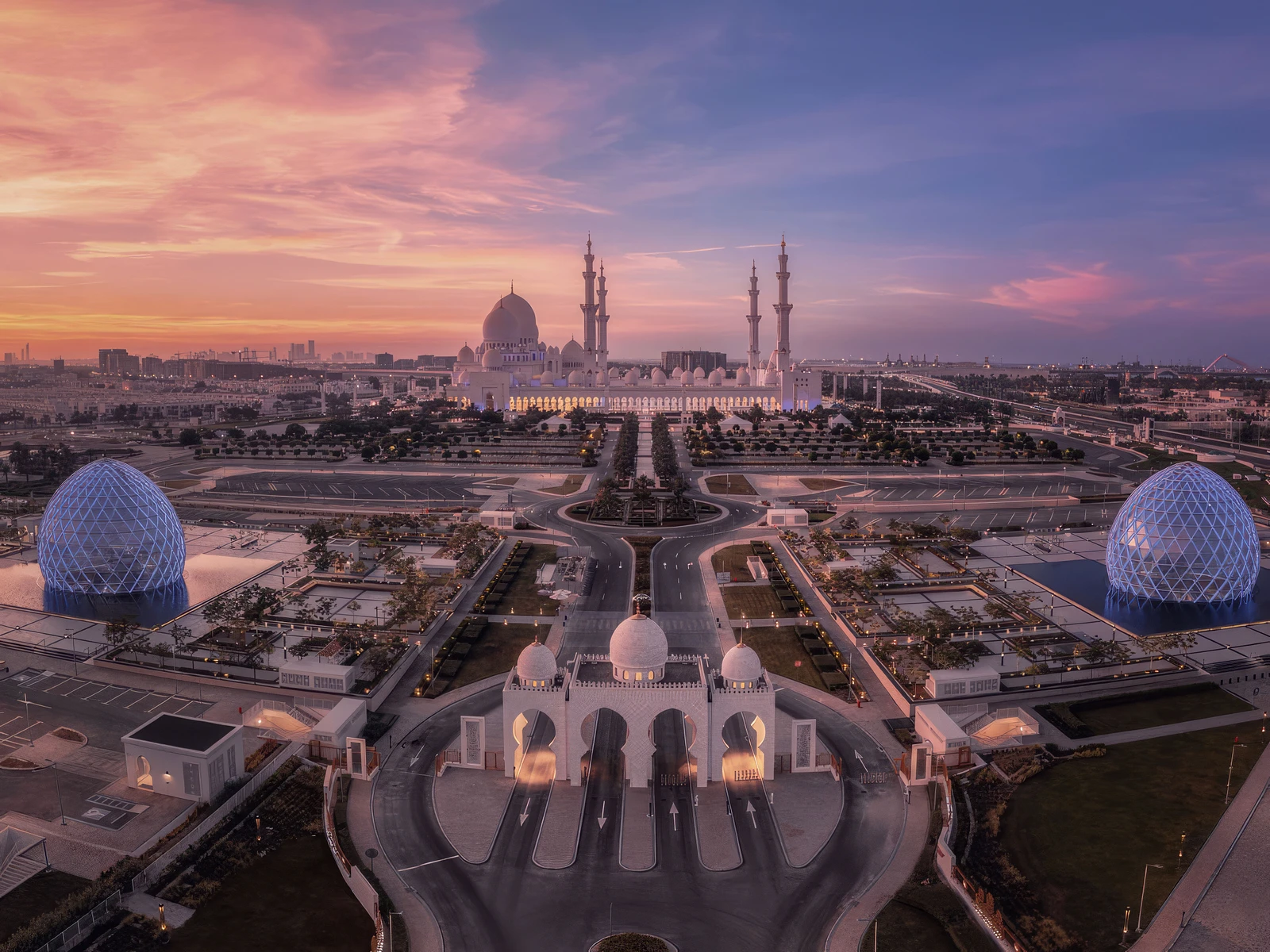
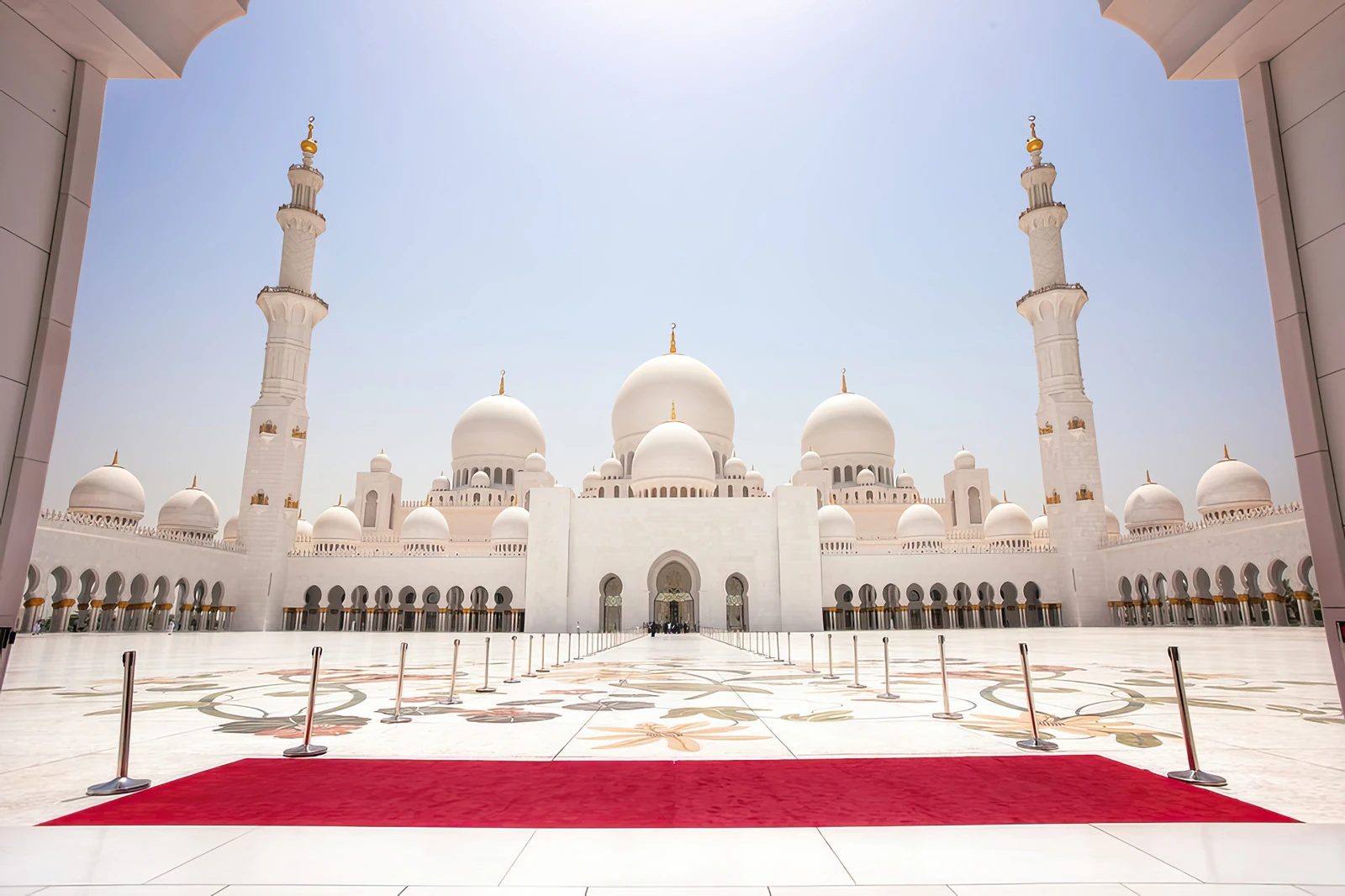
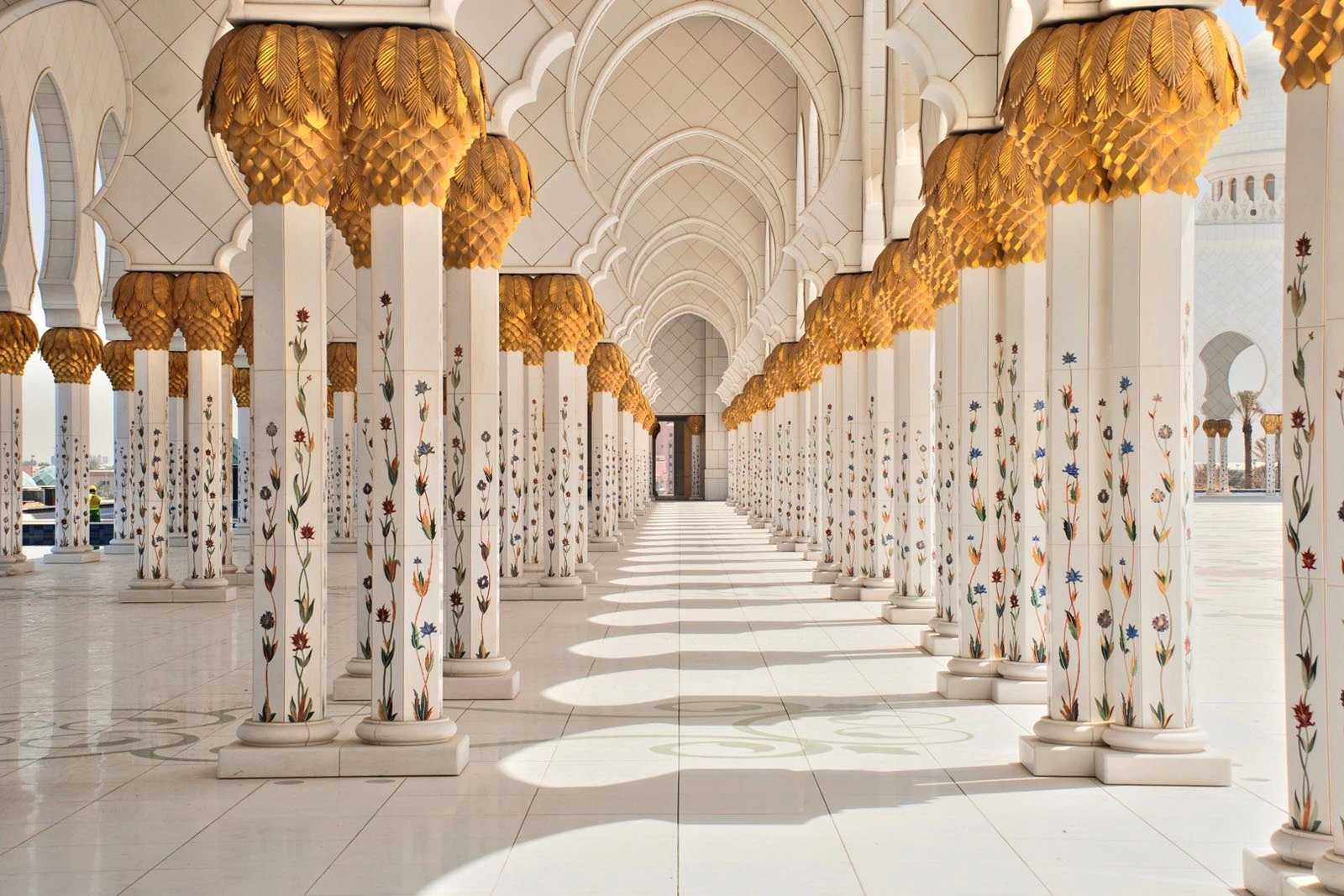
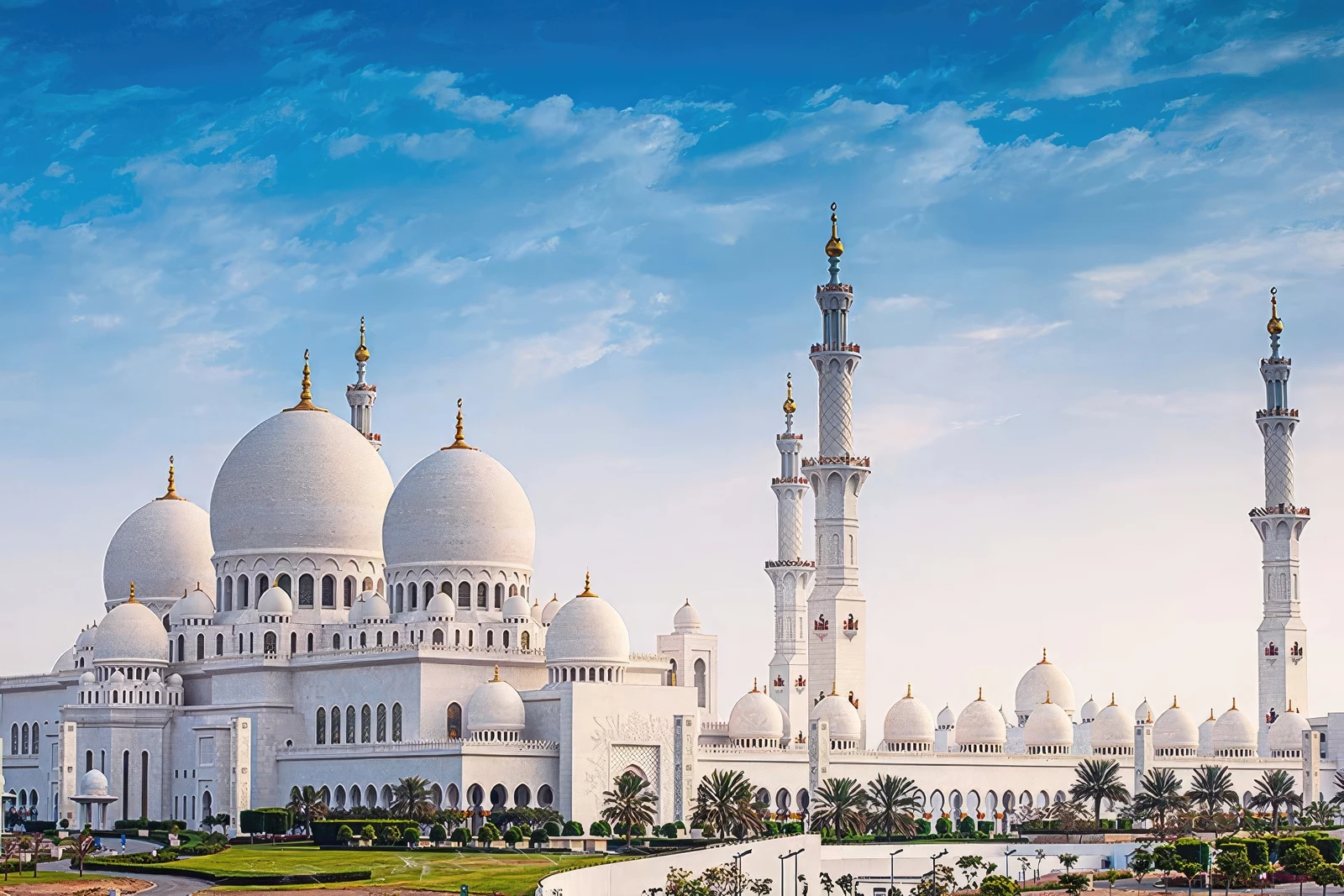
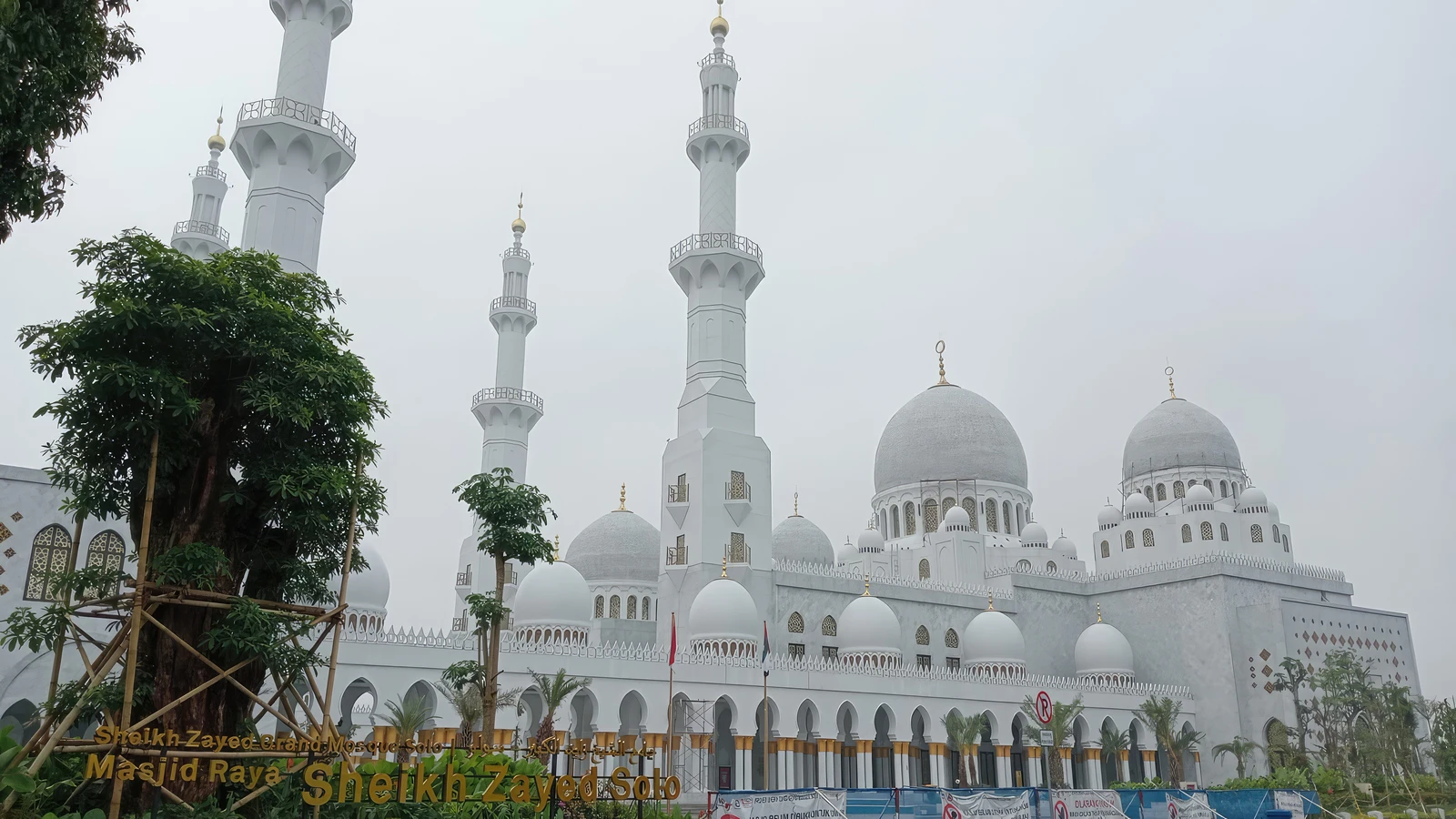
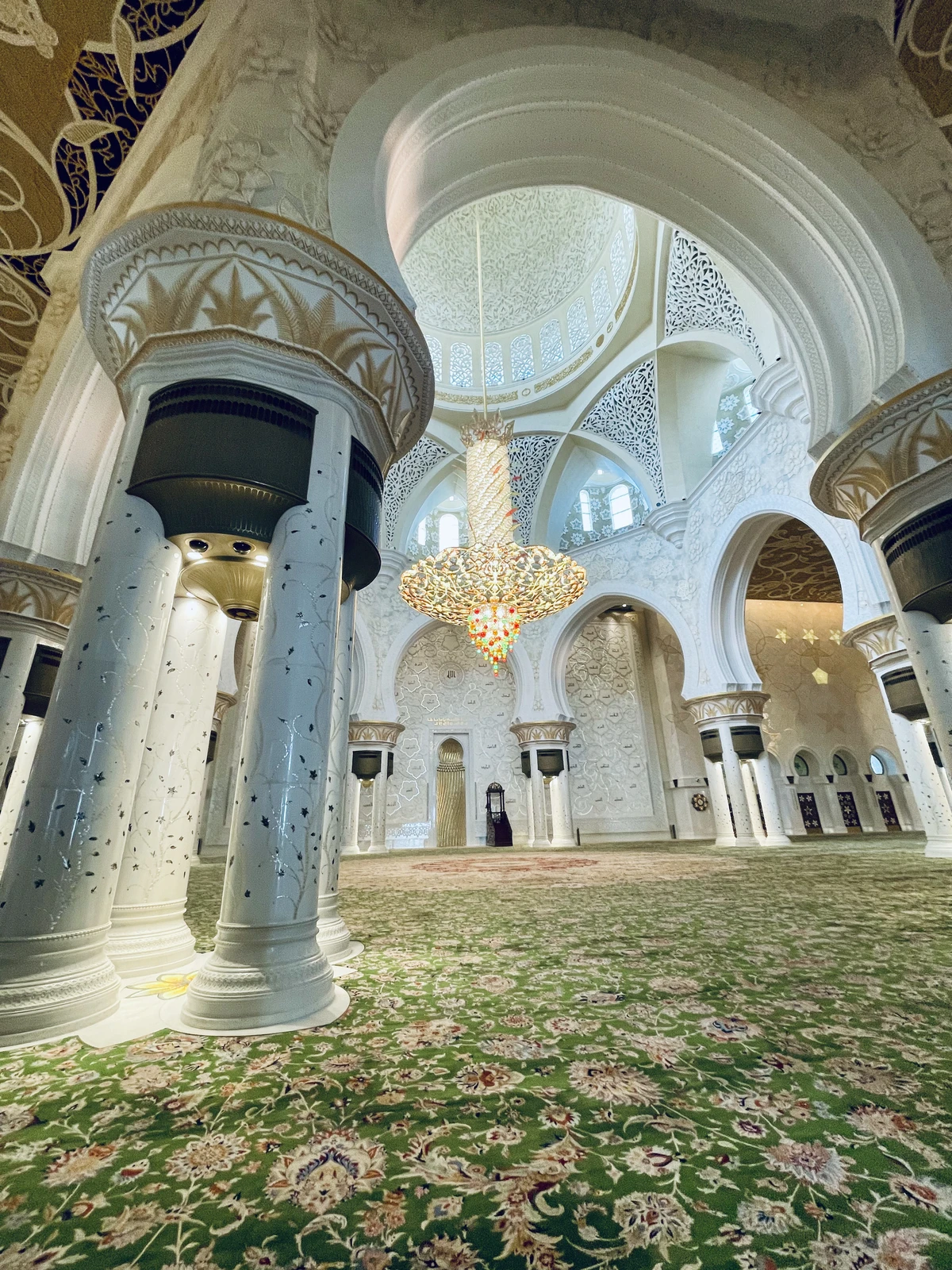
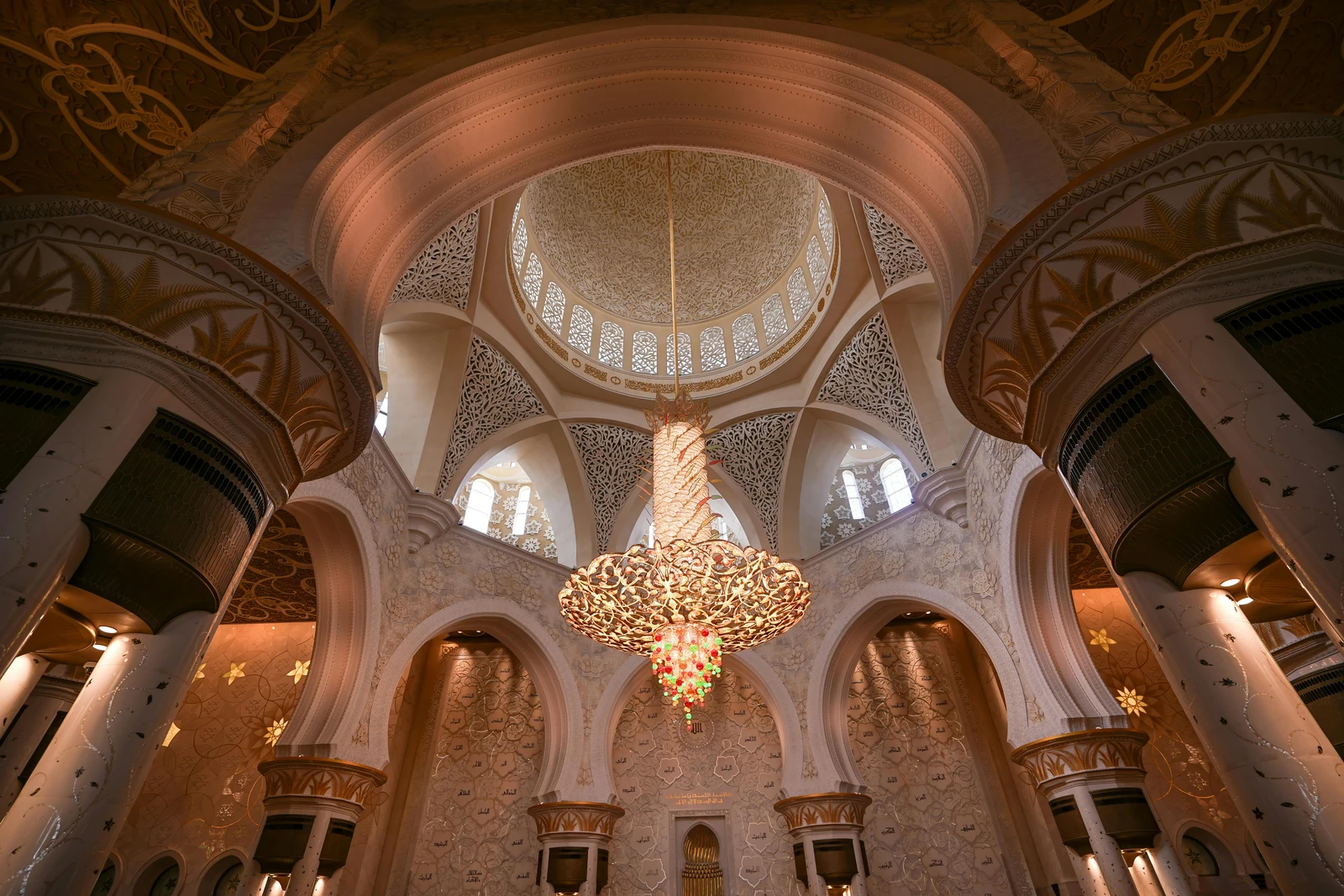
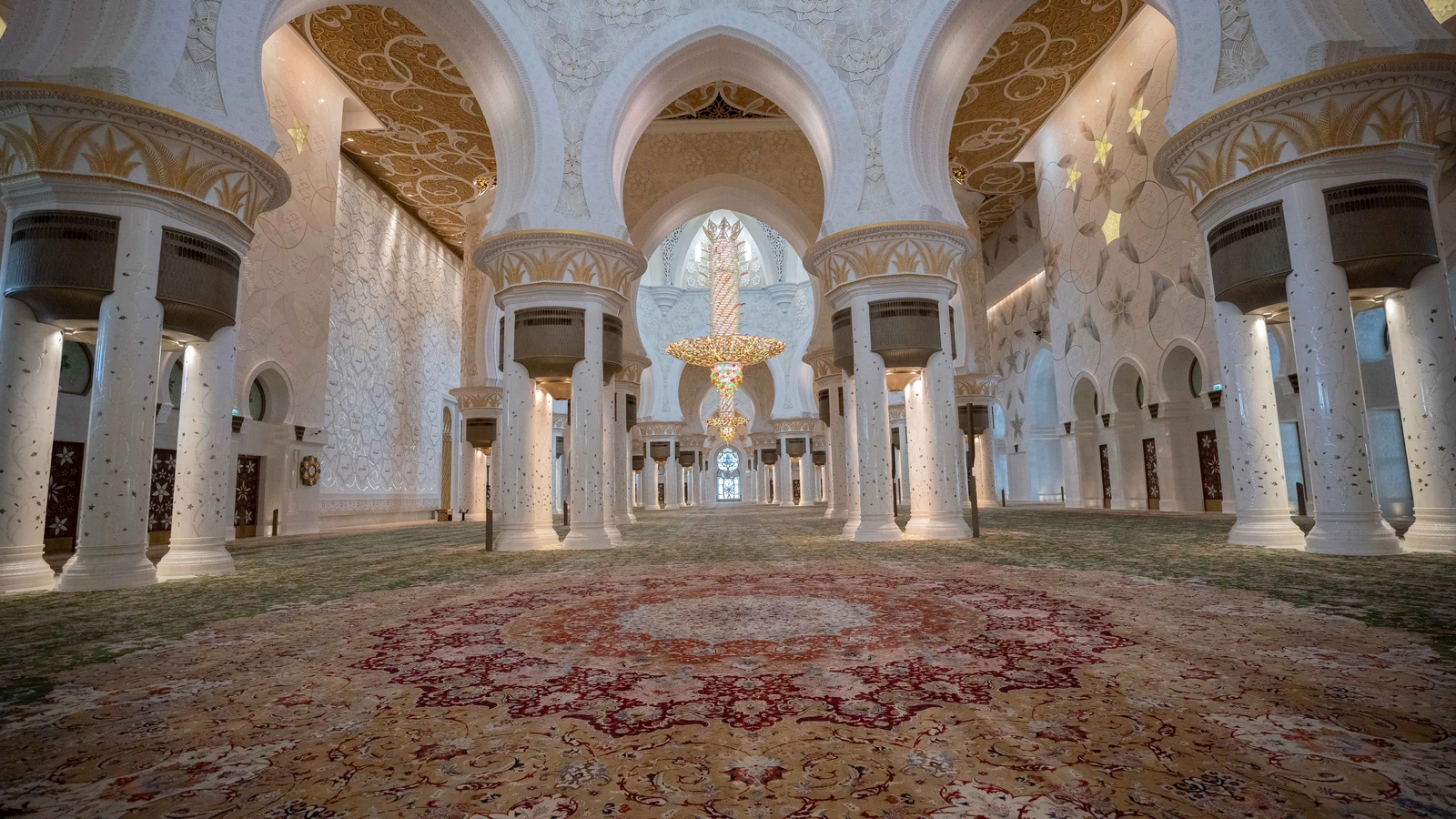
The Sheikh Zayed Grand Mosque is a magnificent and iconic mosque located in Abu Dhabi, the capital city of the United Arab Emirates. It is the country’s largest mosque and a key place of worship, renowned worldwide for its stunning architecture, immense scale, and its message of peace, tolerance, and coexistence.
Listen to an introduction about Sheikh Zayed Grand Mosque

Name and Address
- Name: Sheikh Zayed Grand Mosque (Arabic: جامع الشيخ زايد الكبير)
- Address: Sheikh Rashid Bin Saeed Street, Abu Dhabi, United Arab Emirates.
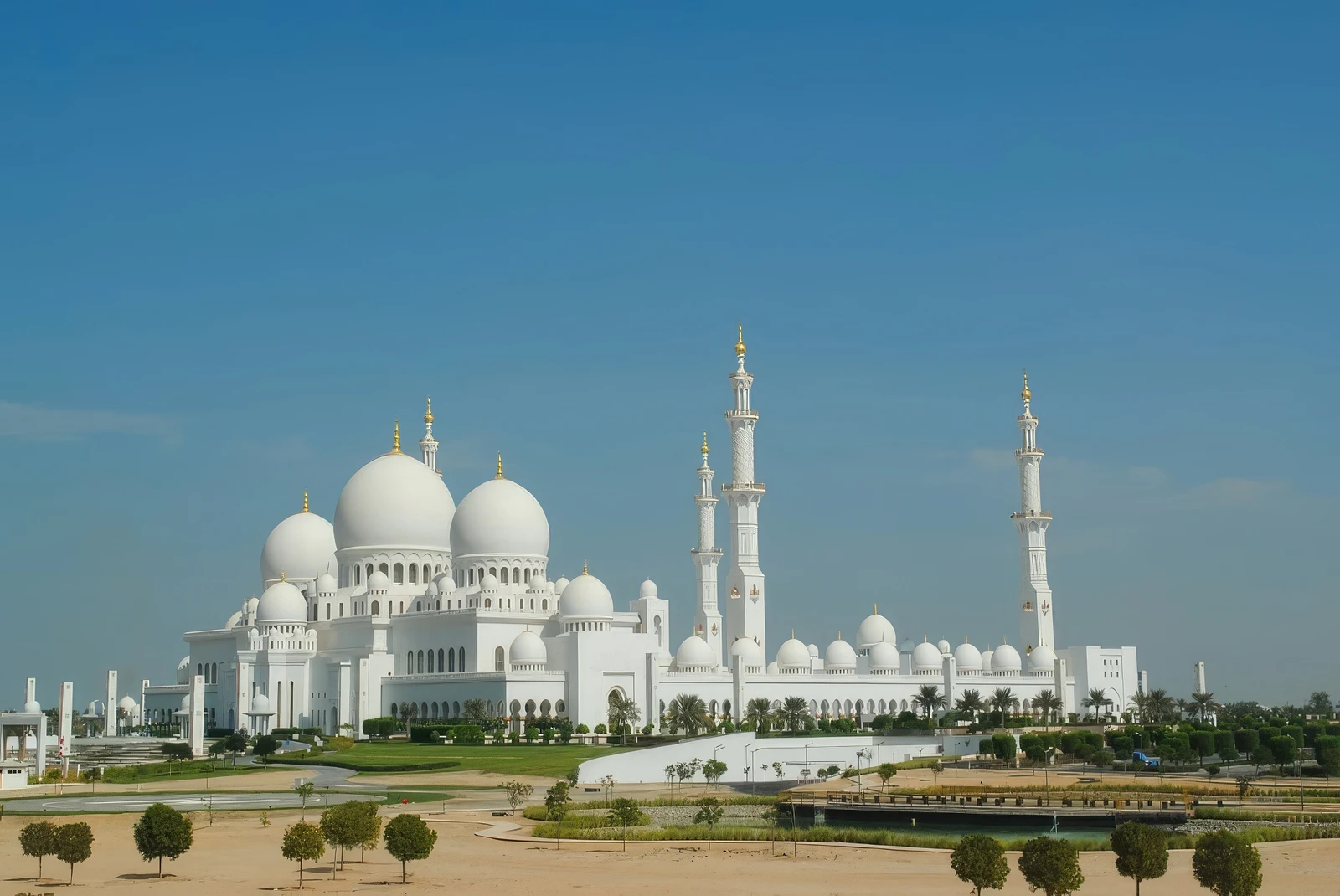
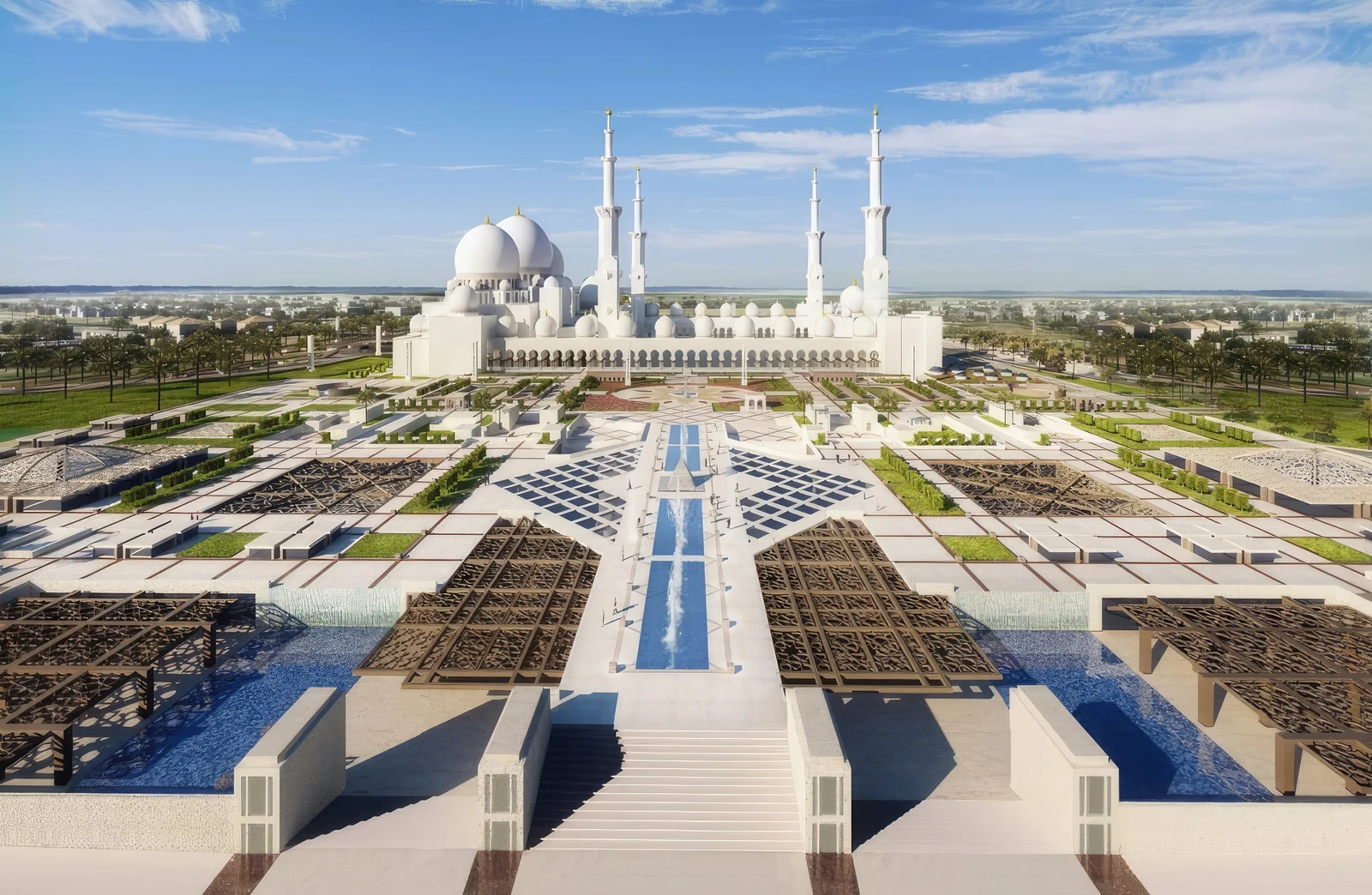
- Location: Situated at the entrance to Abu Dhabi City Island, west of the Khor Al Maqta waterfront, nestled between the three main bridges (Sheikh Zayed, Maqta, and Mussafah) that link the island to the mainland.
How to Get There
The Sheikh Zayed Grand Mosque is easily accessible from various points in Abu Dhabi and even from Dubai.
- By Car/Taxi/Rideshare: Driving is a convenient option. The mosque has ample free parking in the southern parking lots. From Abu Dhabi city center, it’s about a 15-20 minute drive. From Dubai, the journey takes approximately 90-120 minutes, depending on traffic.
- By Bus: Public bus services are available in Abu Dhabi, with a bus station located near the mosque. The Department of Culture and Tourism – Abu Dhabi also provides free shuttle buses from various points, including Wahat Al Karama (Oasis of Dignity), a nearby war memorial.
- Organized Tours: Many tour operators offer guided trips to the mosque from both Abu Dhabi and Dubai, often combining it with other city highlights.
Landscape and Architecture
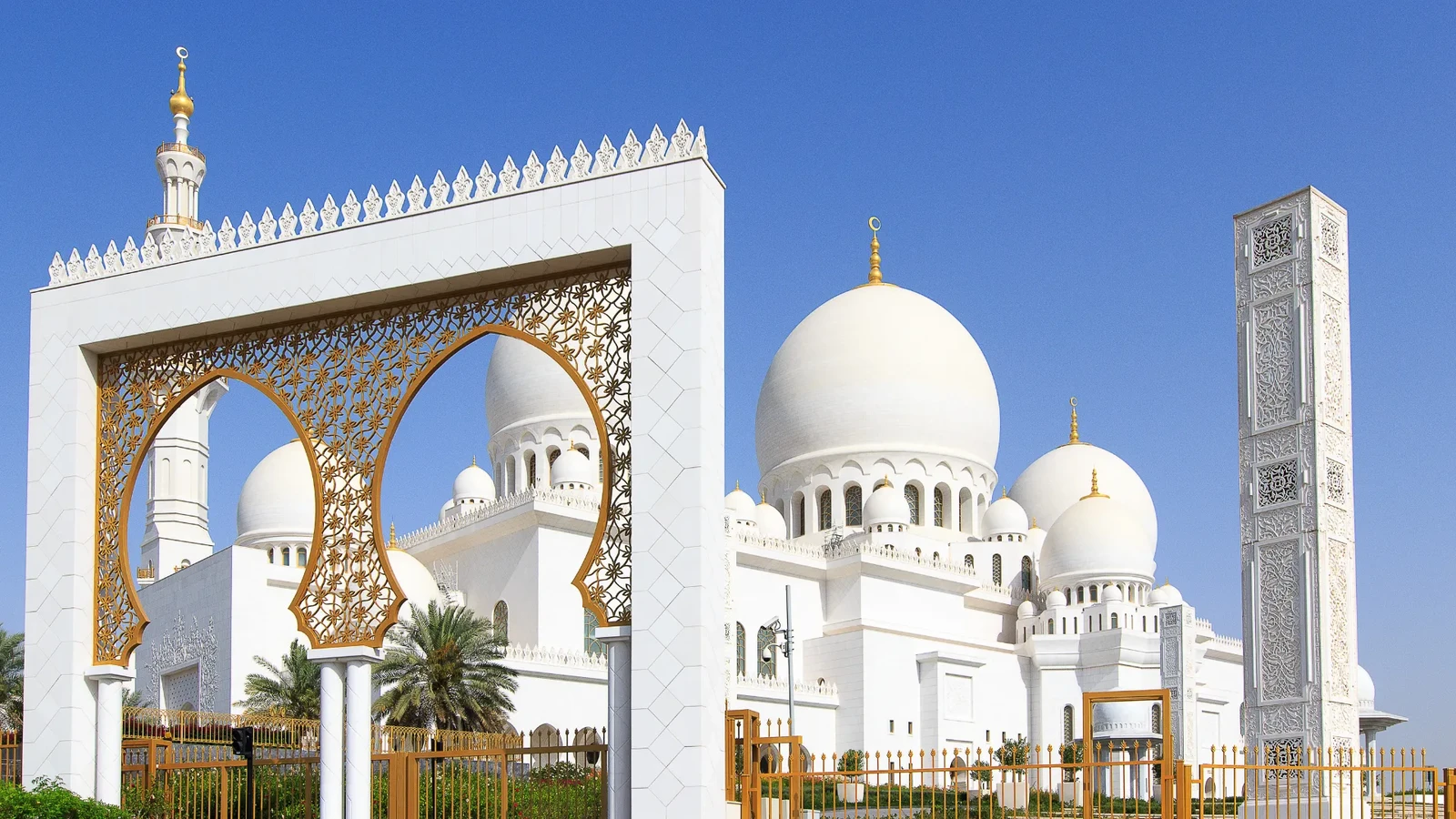
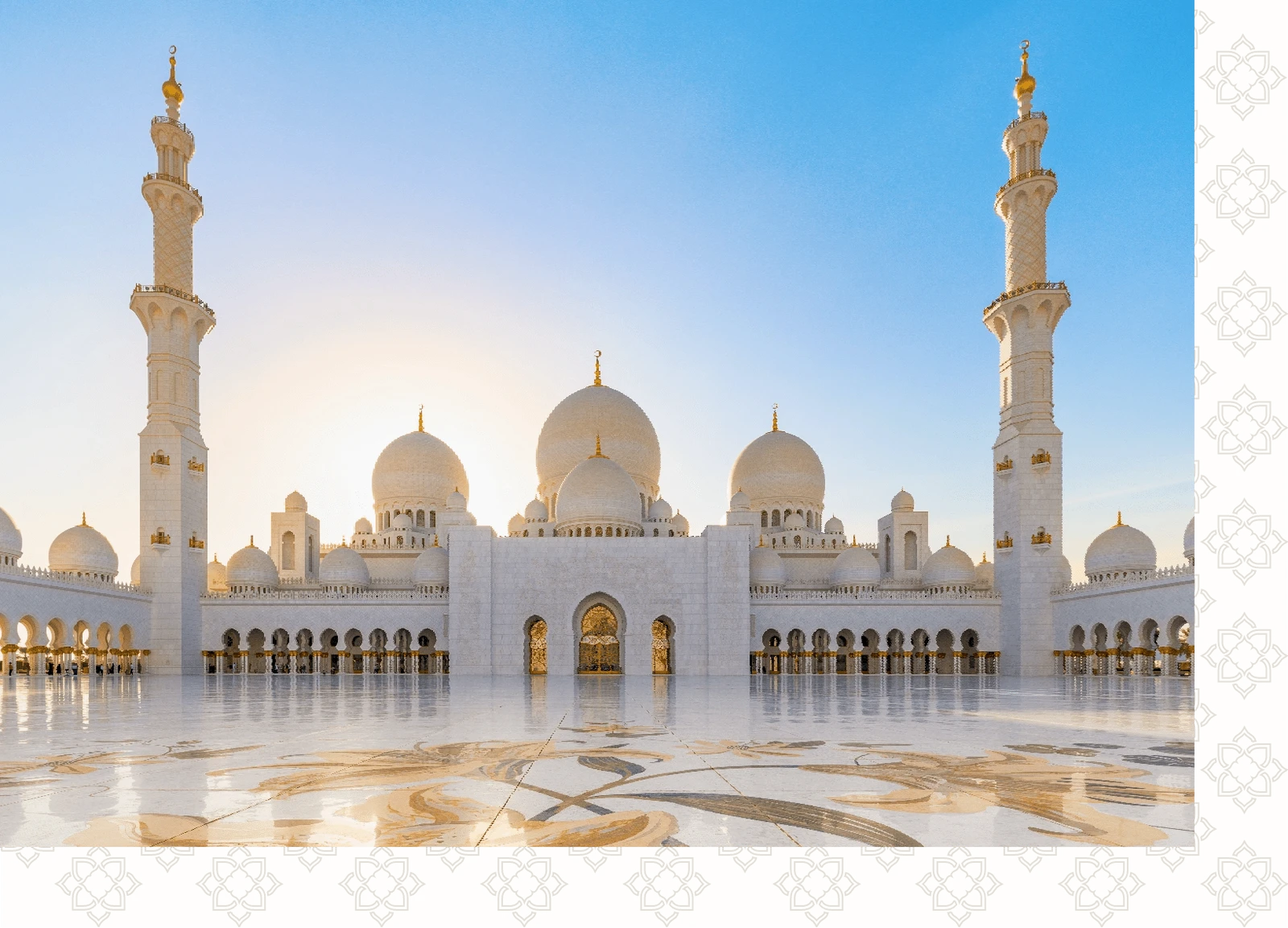
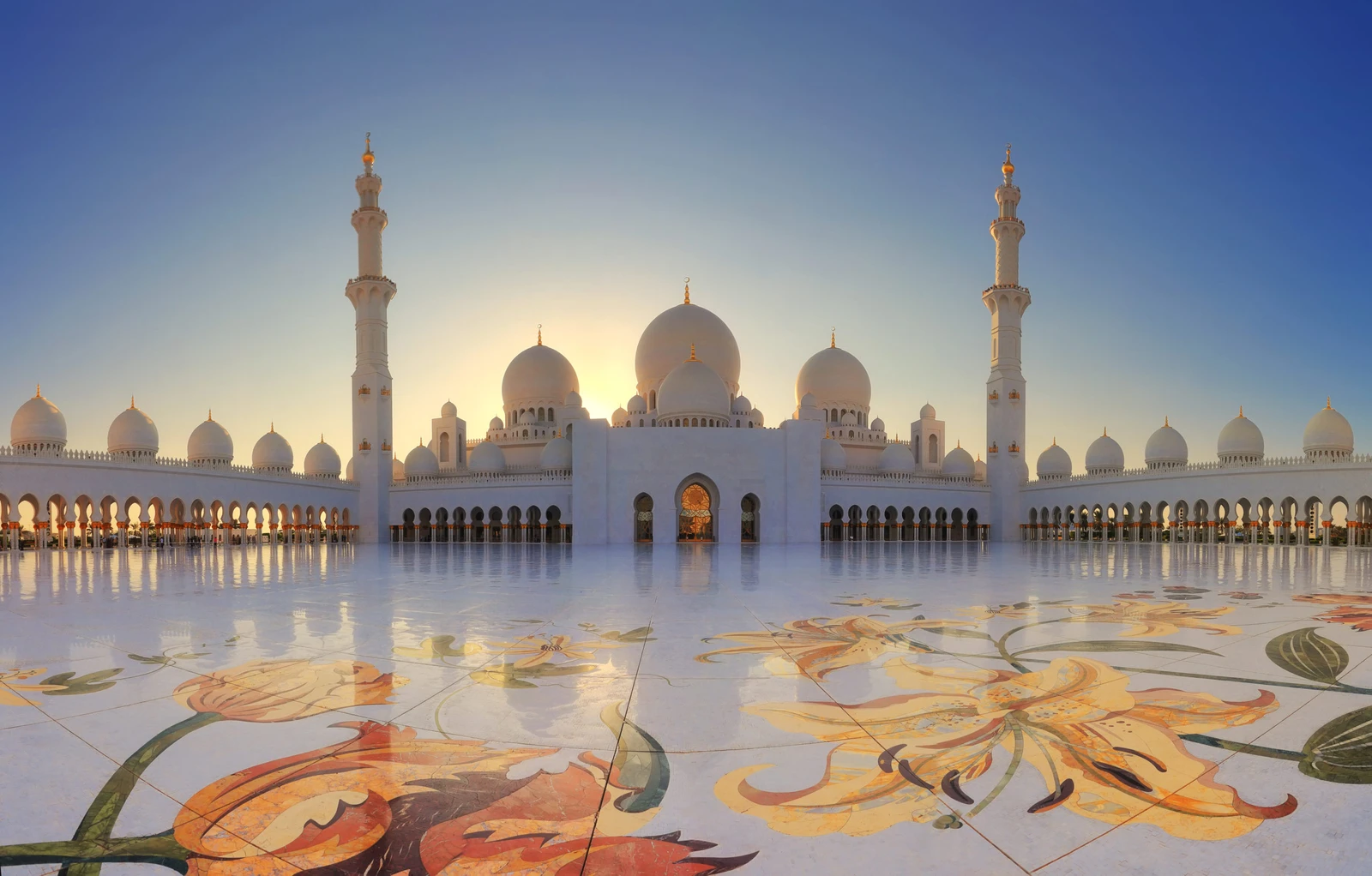
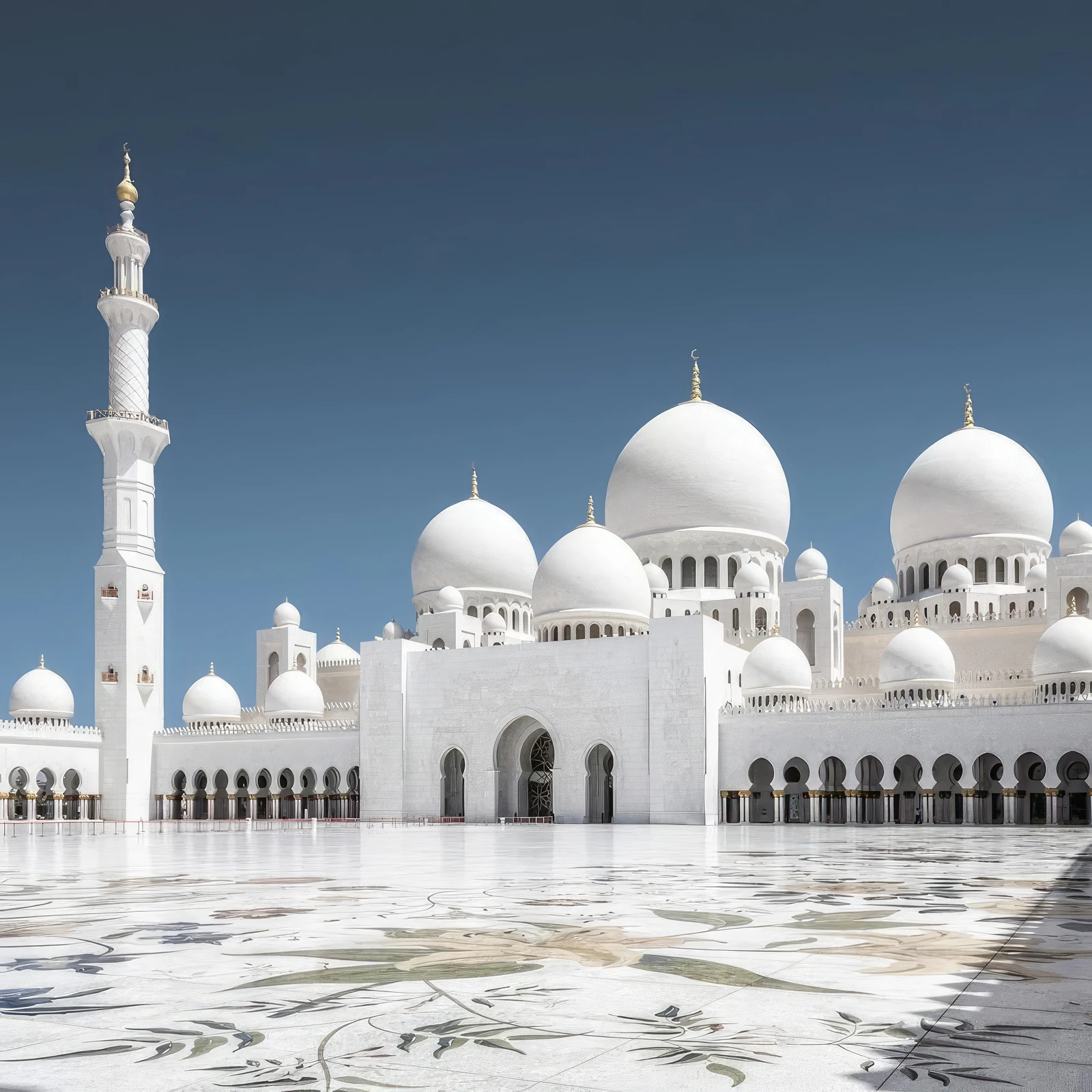
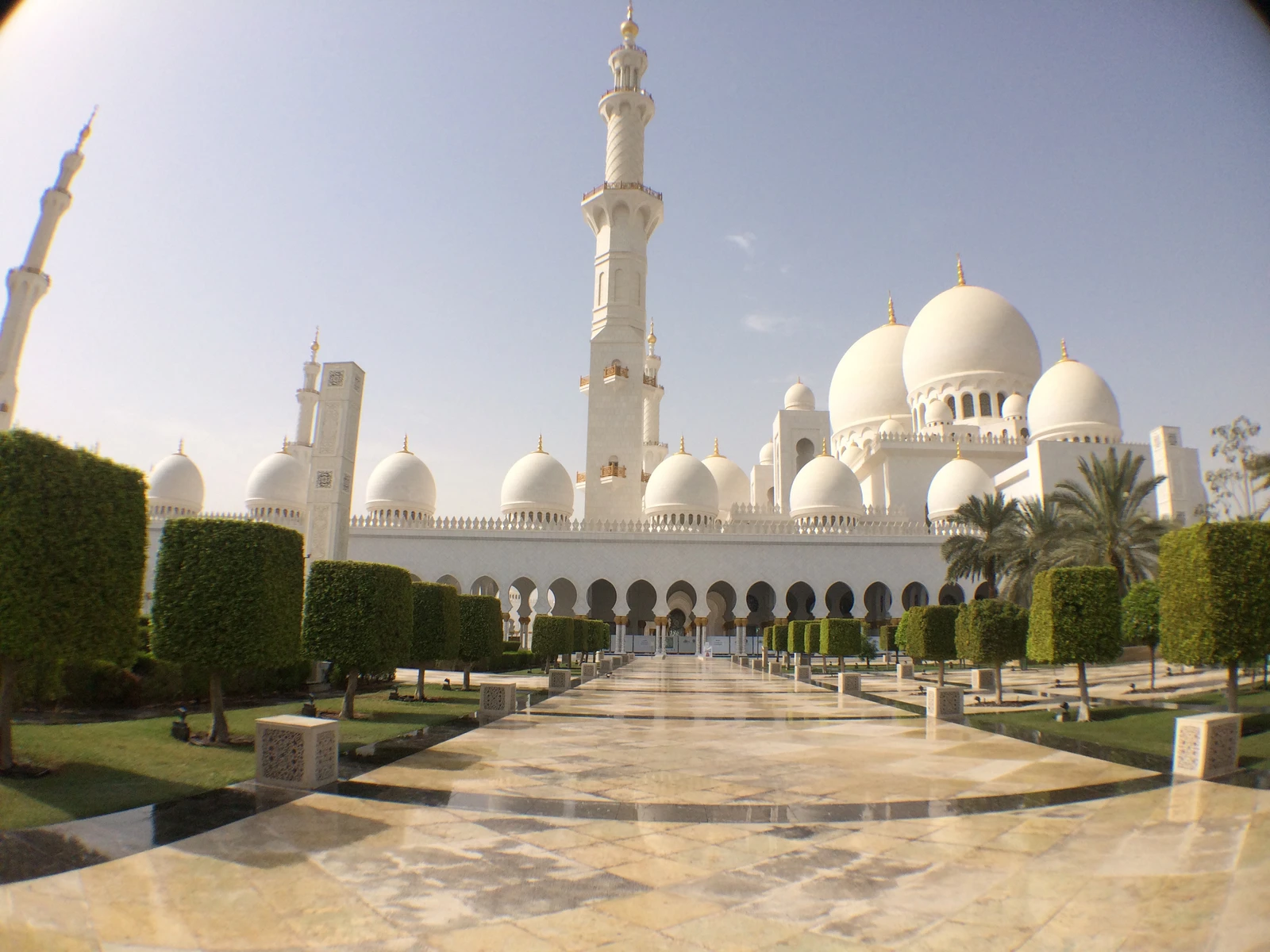
The Sheikh Zayed Grand Mosque is an architectural masterpiece that blends various Islamic architectural styles with modern design, creating a breathtaking and harmonious structure.
- Scale and Capacity: It is one of the largest mosques in the world, encompassing 6,500 square meters and capable of accommodating over 40,000 worshippers.
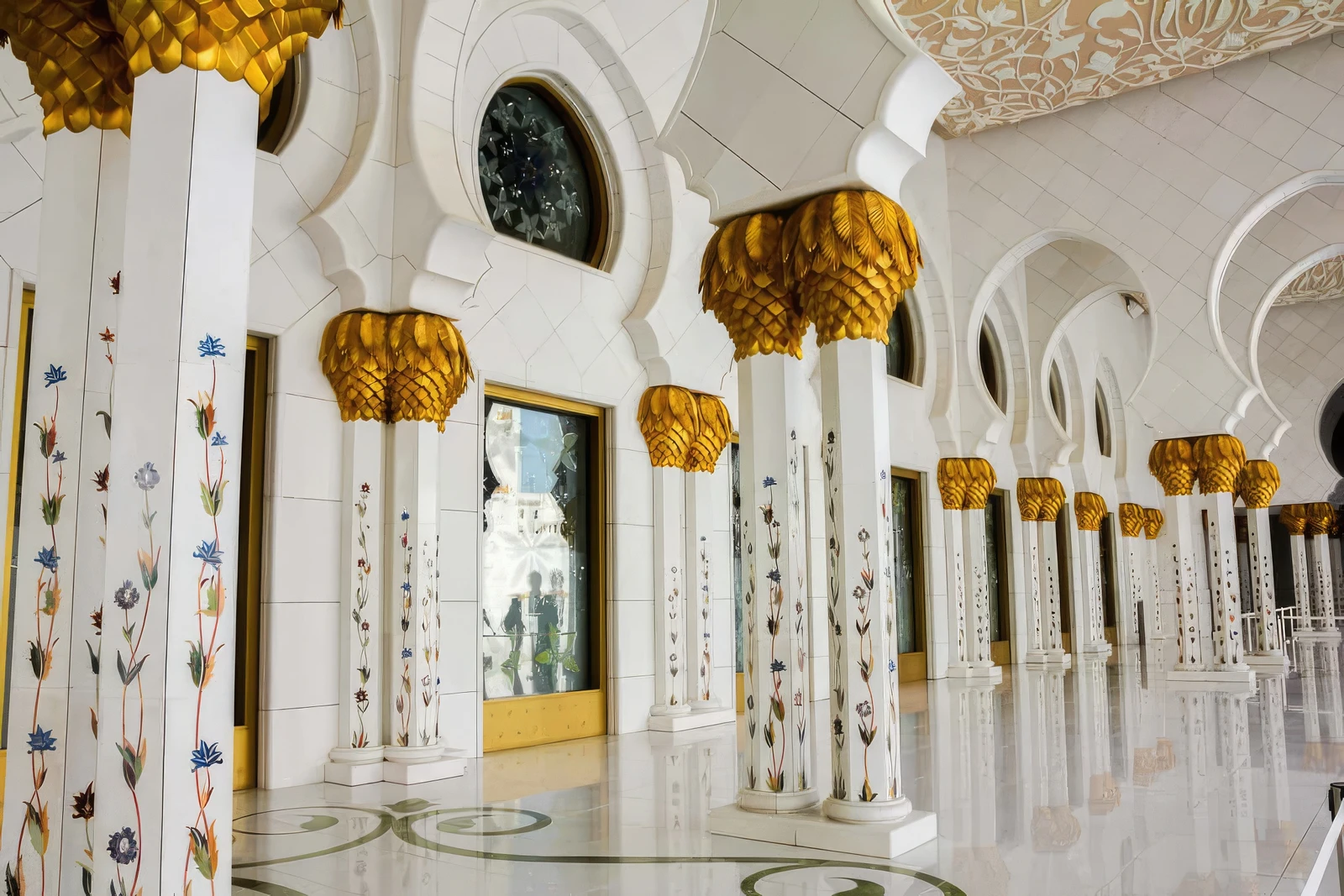
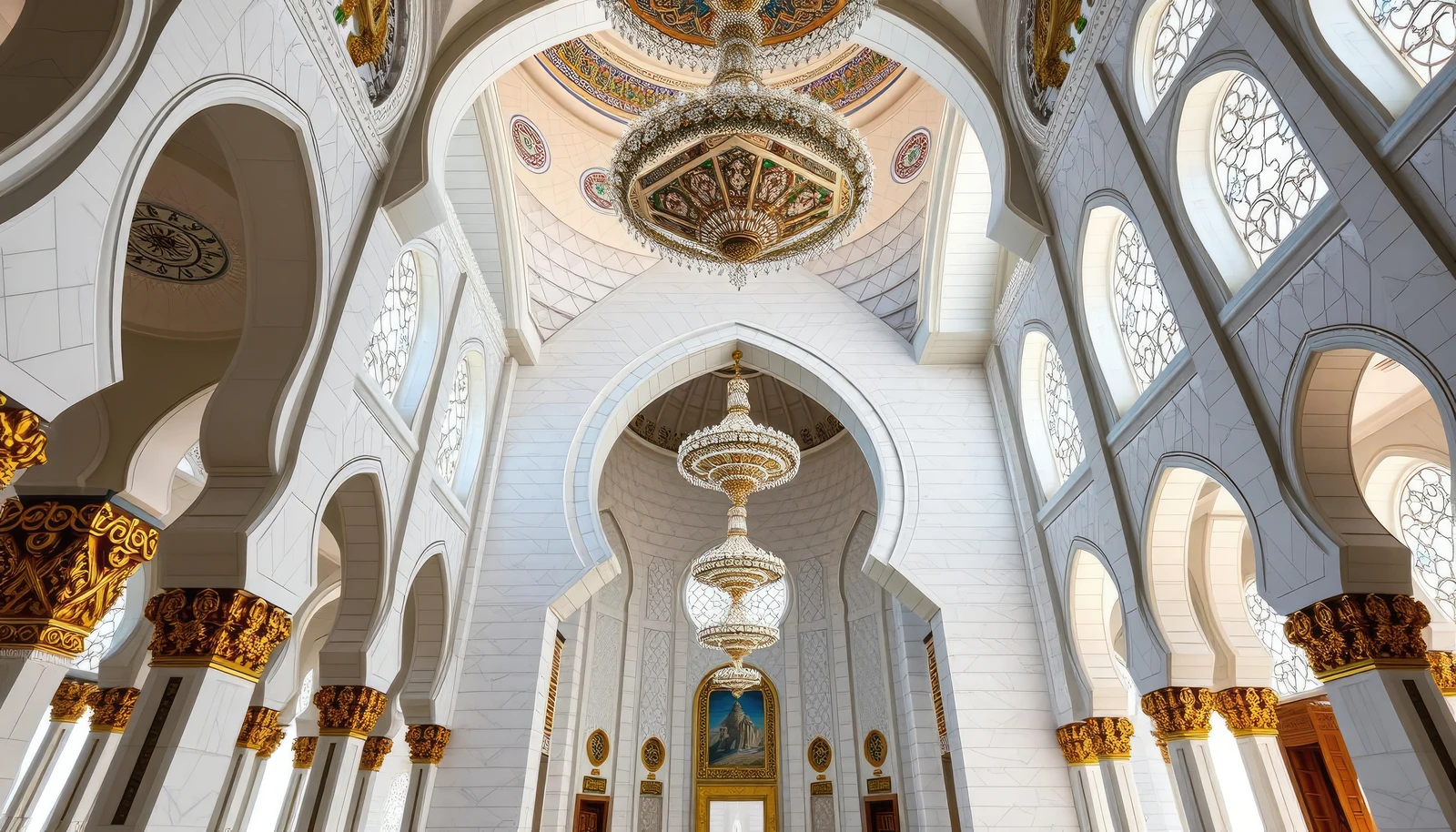
- Materials: The mosque is built with an astounding array of high-quality materials sourced globally, including:
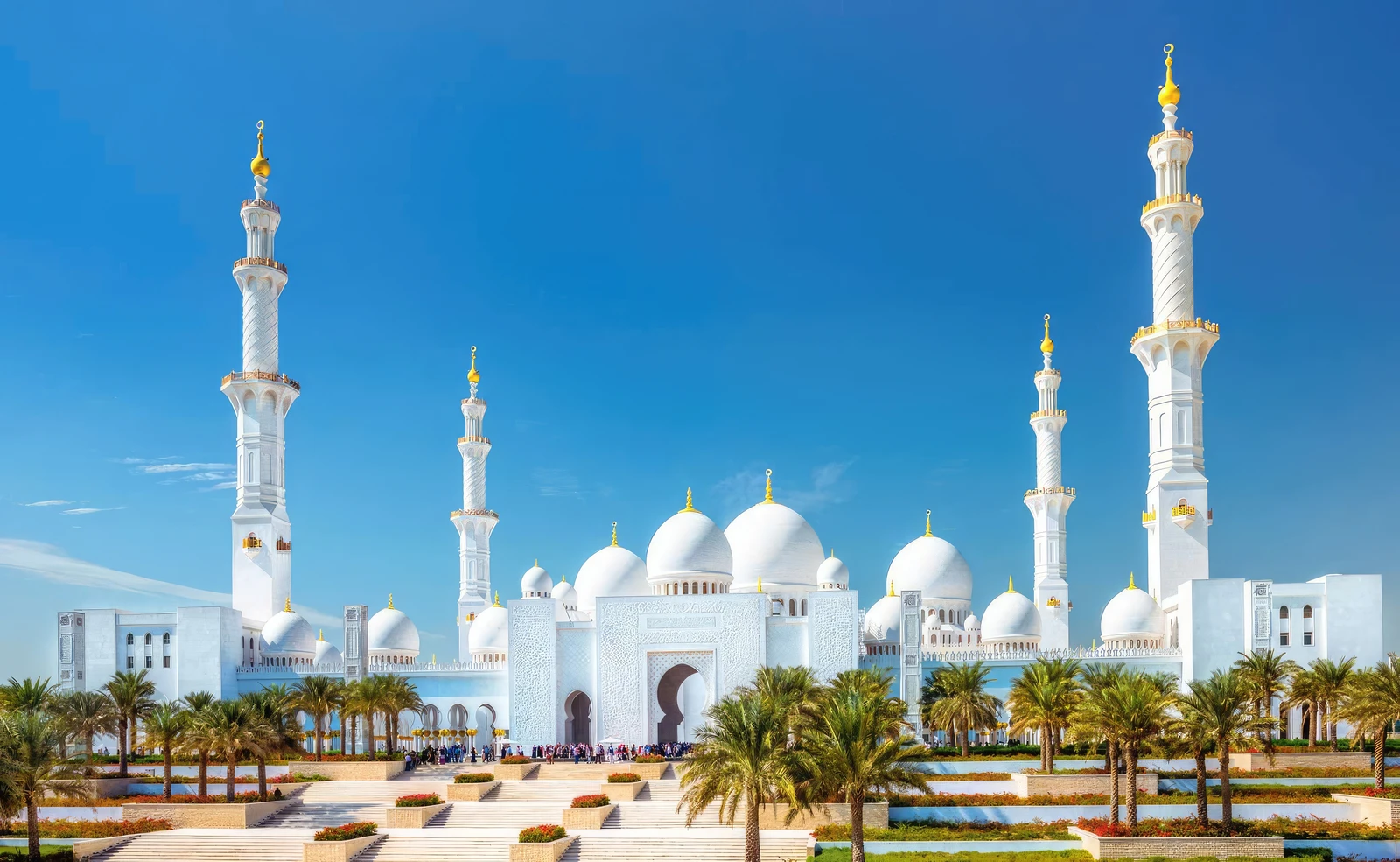
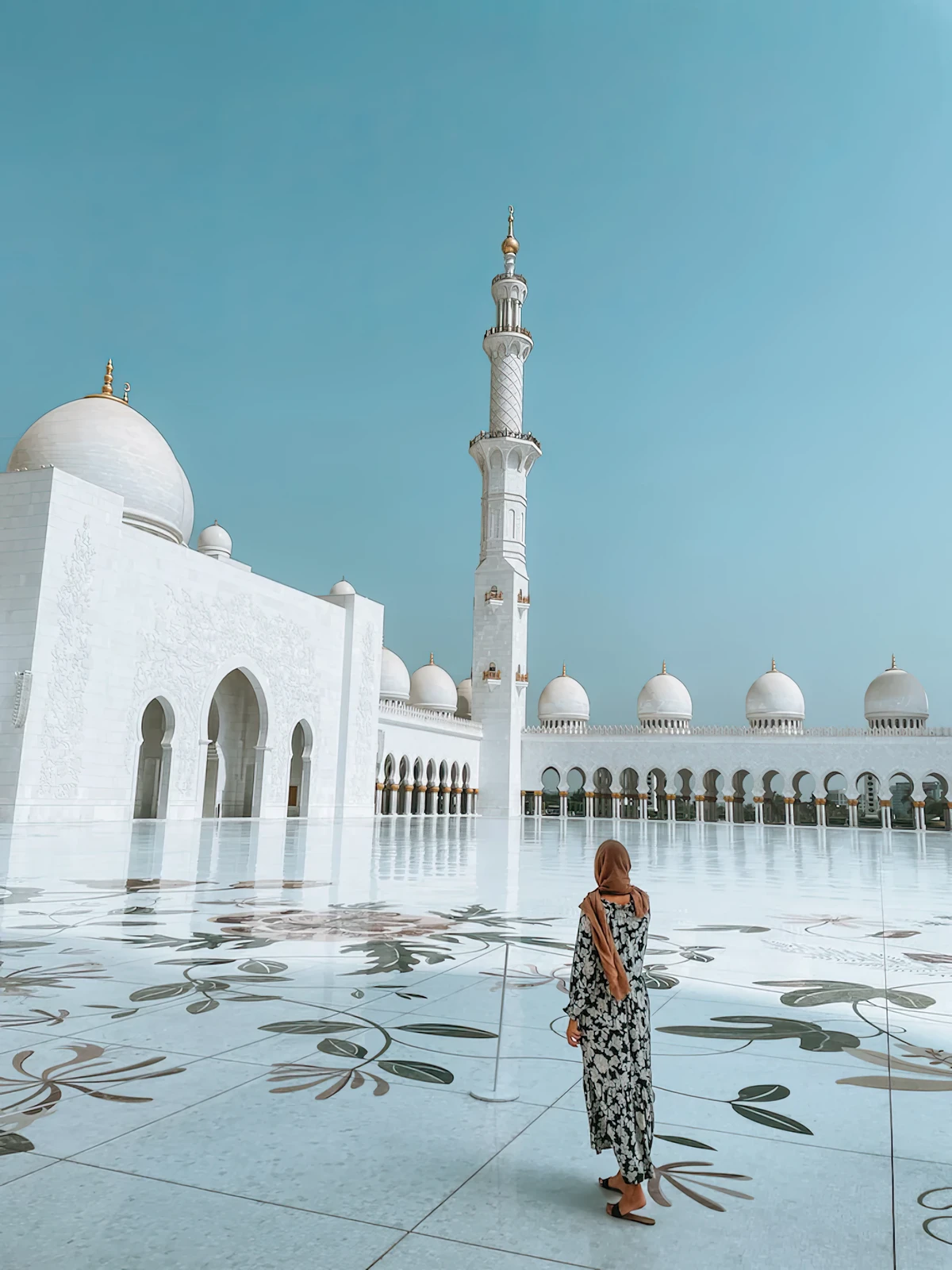
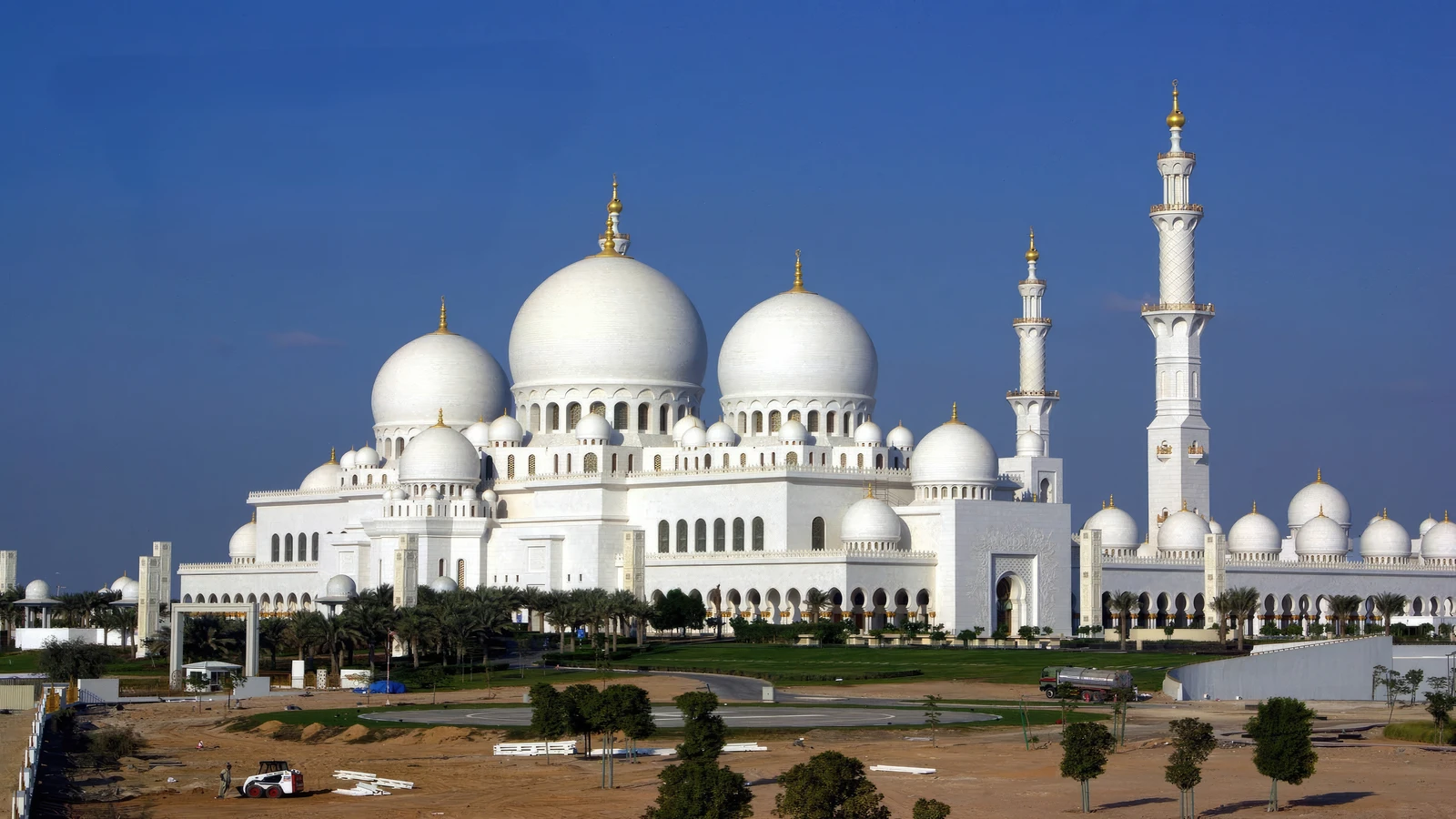
- White SIVEC marble from Macedonia for its exterior and main structures, creating a gleaming appearance.
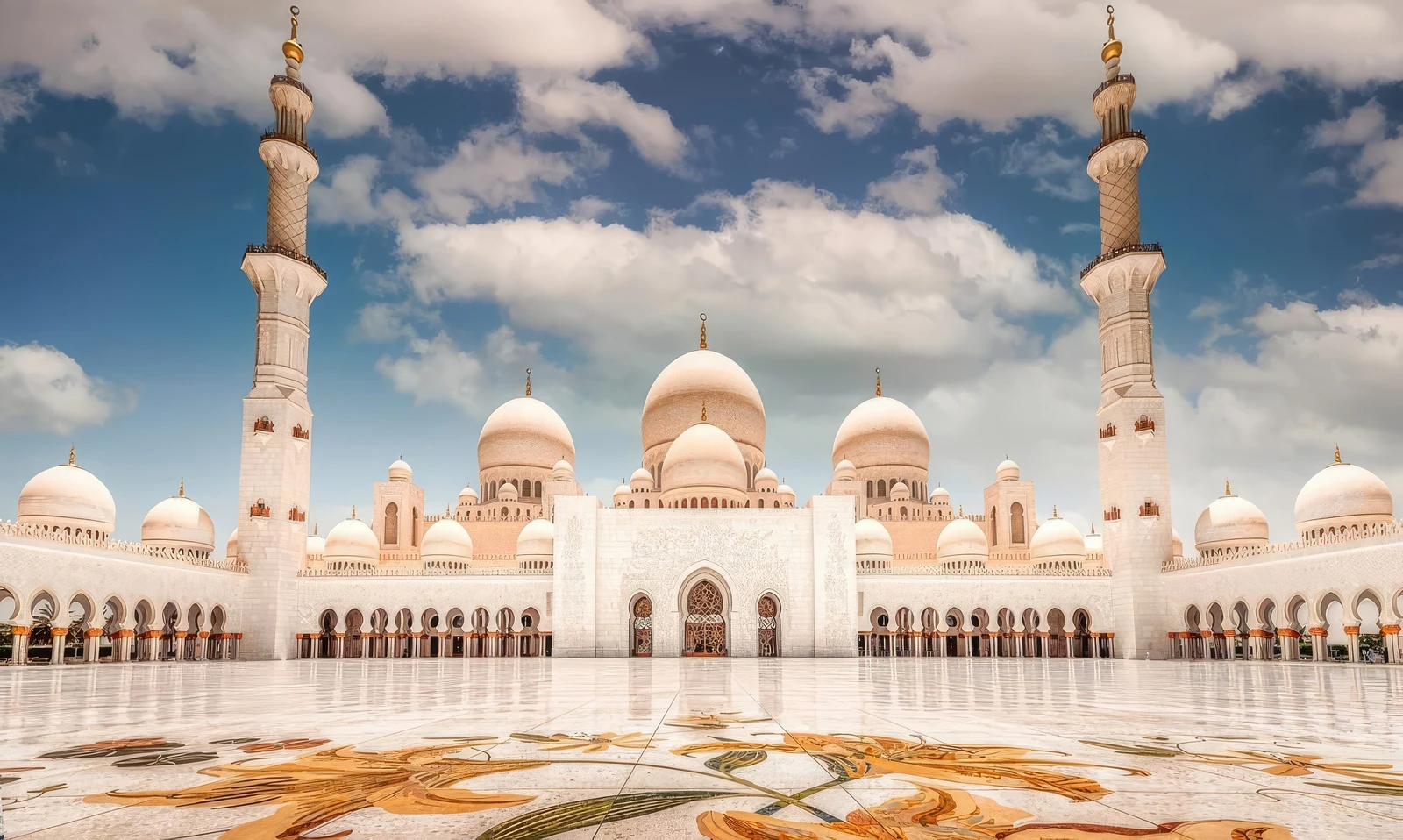
- Italian marble for floors and intricate mosaics.
- Indian teak wood for the grand doors.
- Stones, gold leaf, and Swarovski crystals from countries like New Zealand, Morocco, Egypt, Turkey, Greece, Pakistan, China, and Germany.
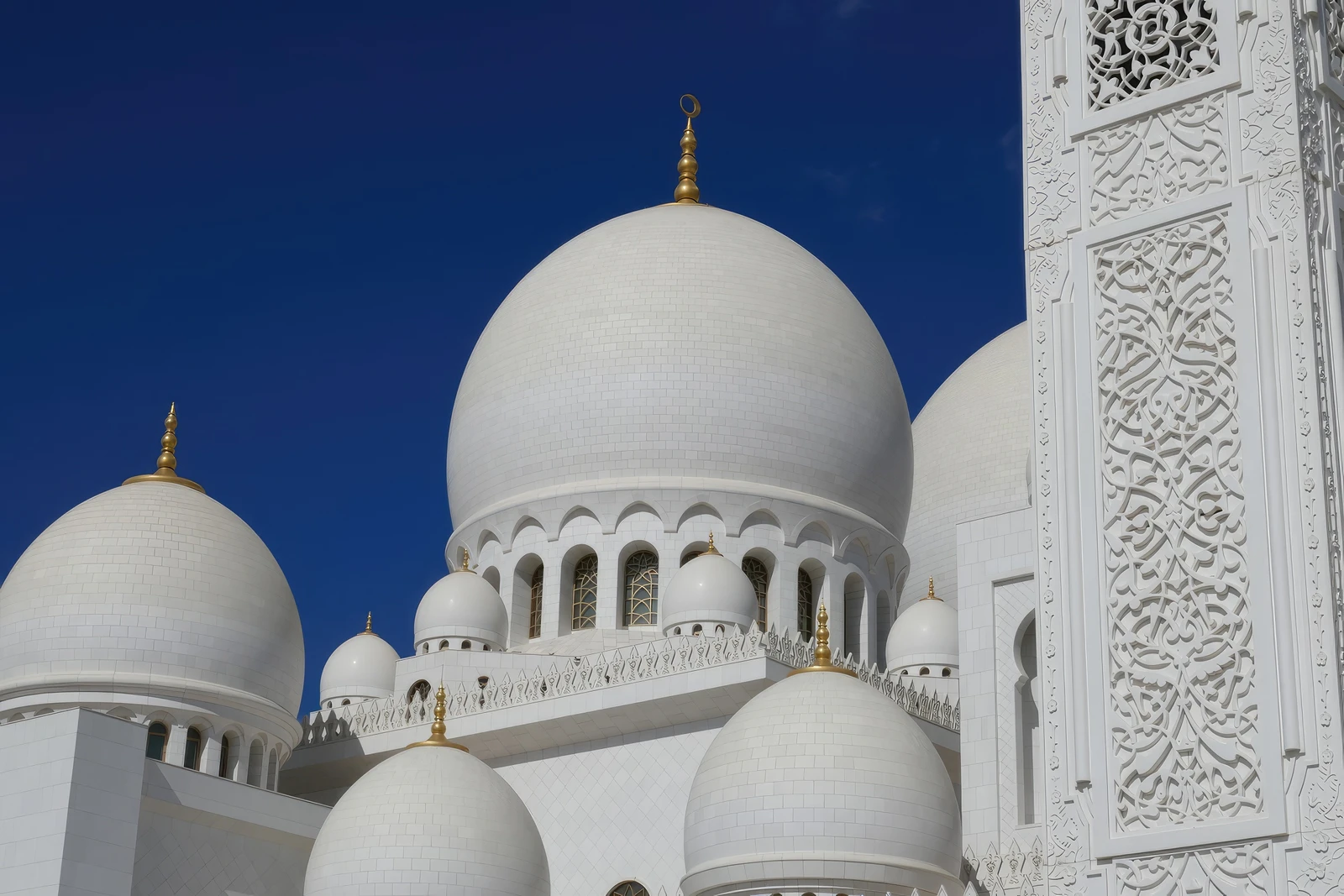
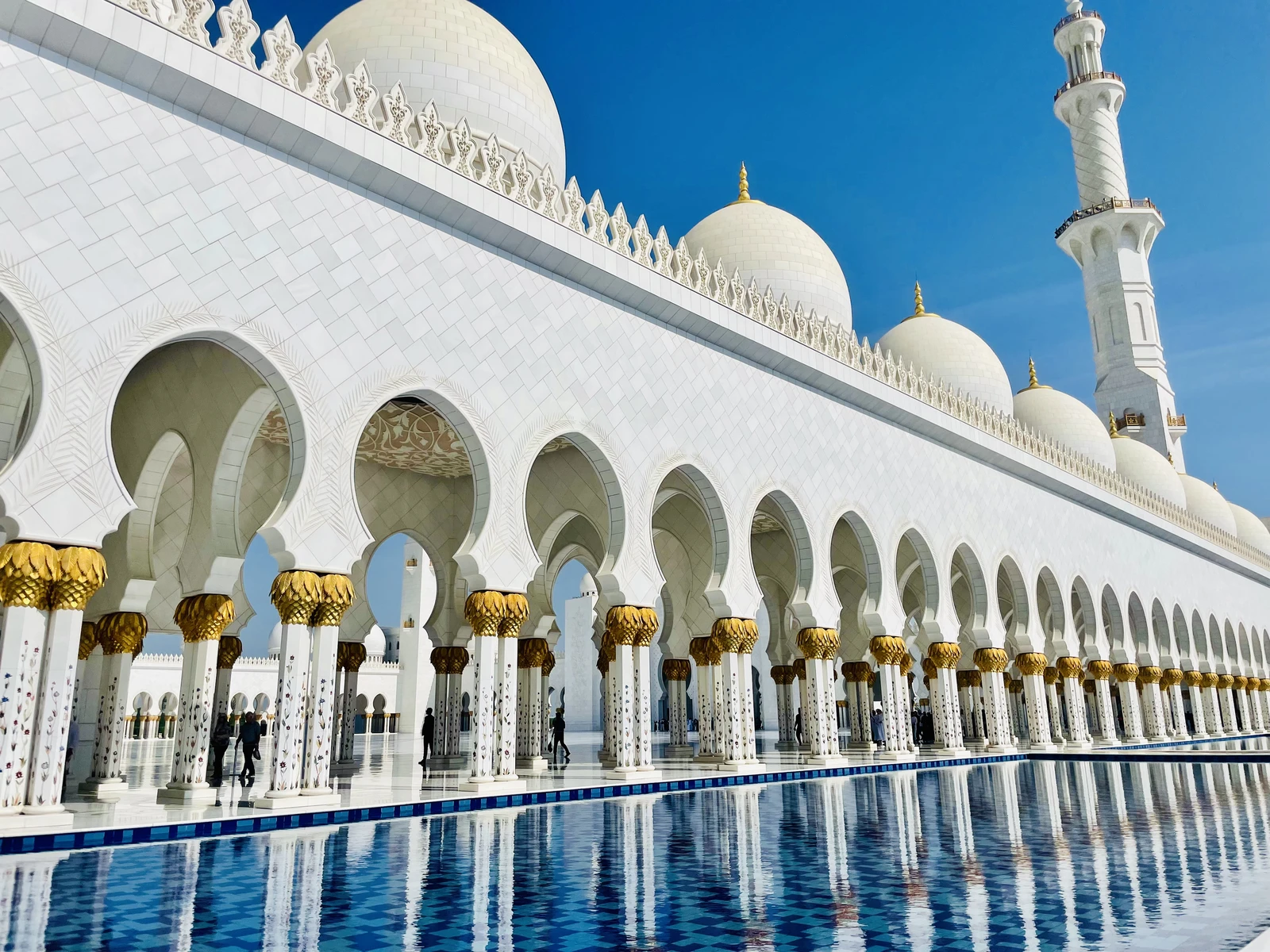
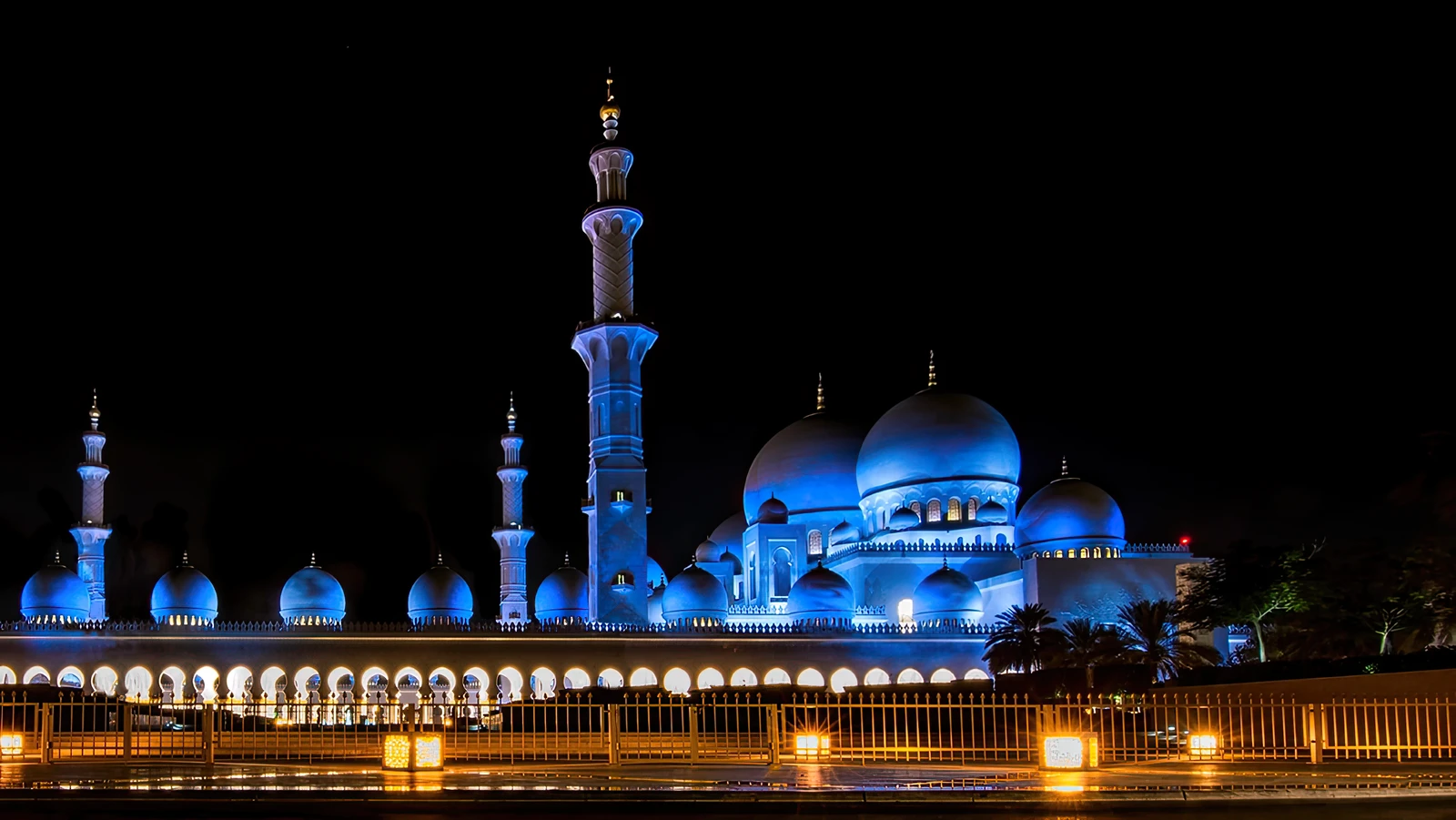
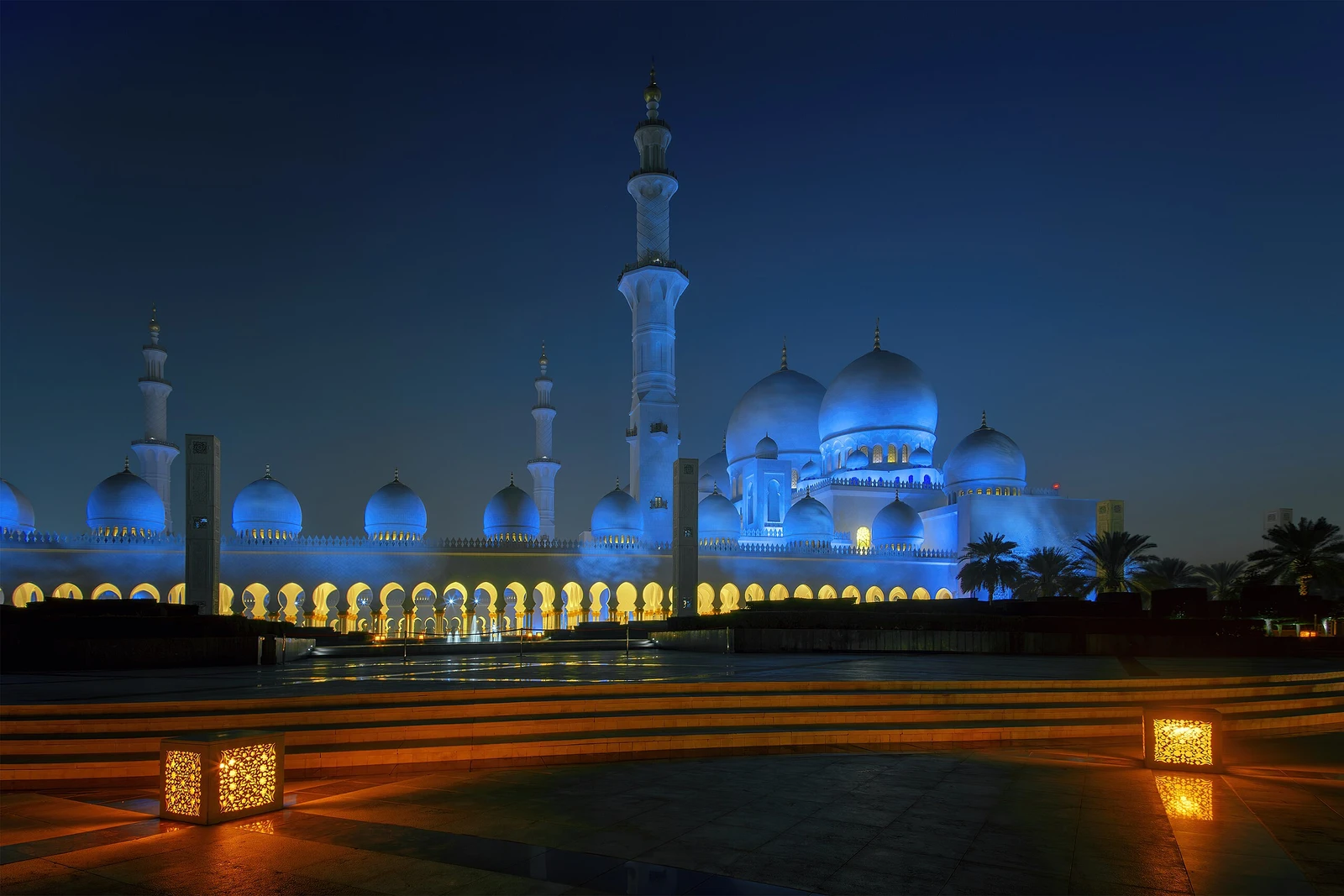
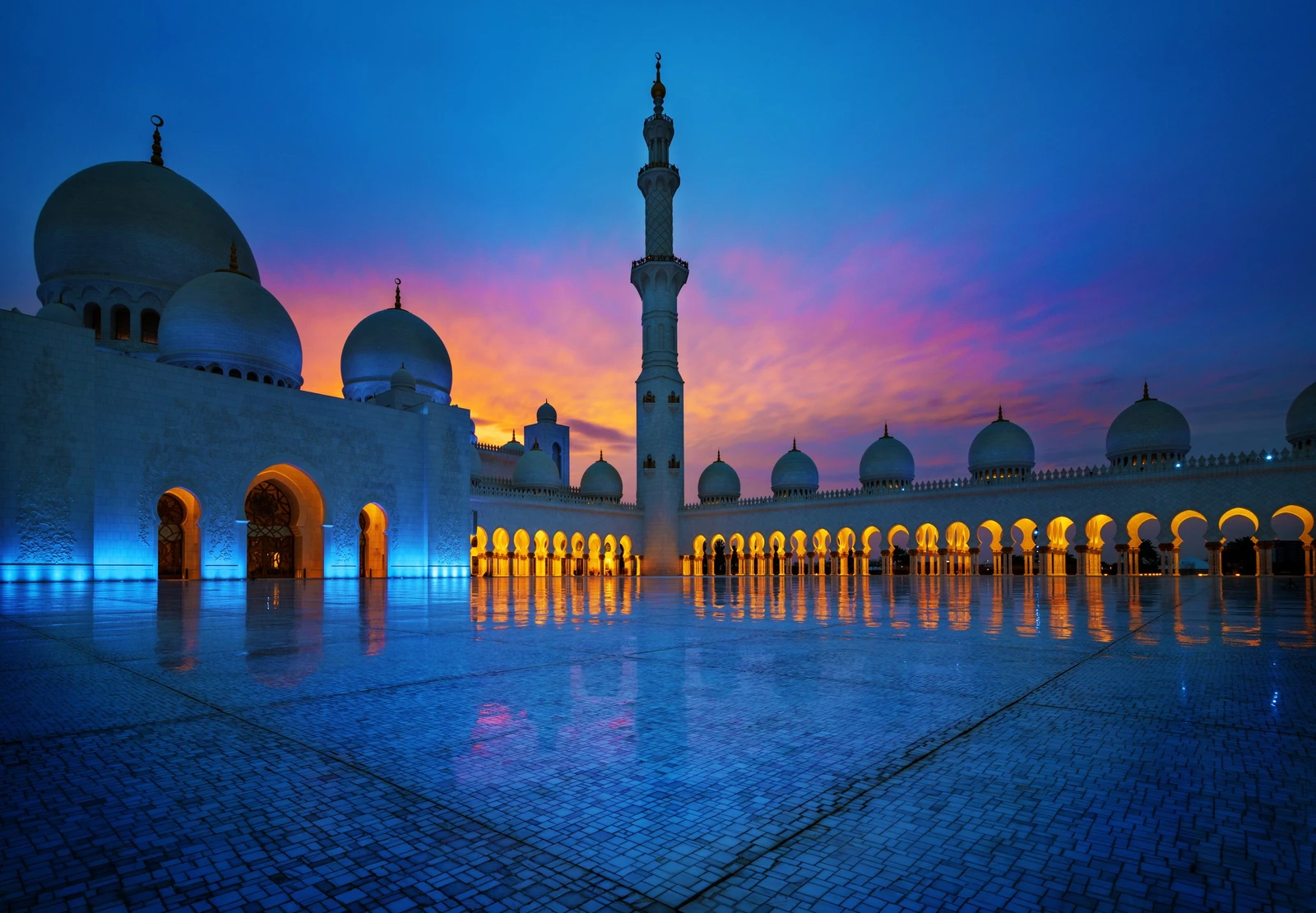
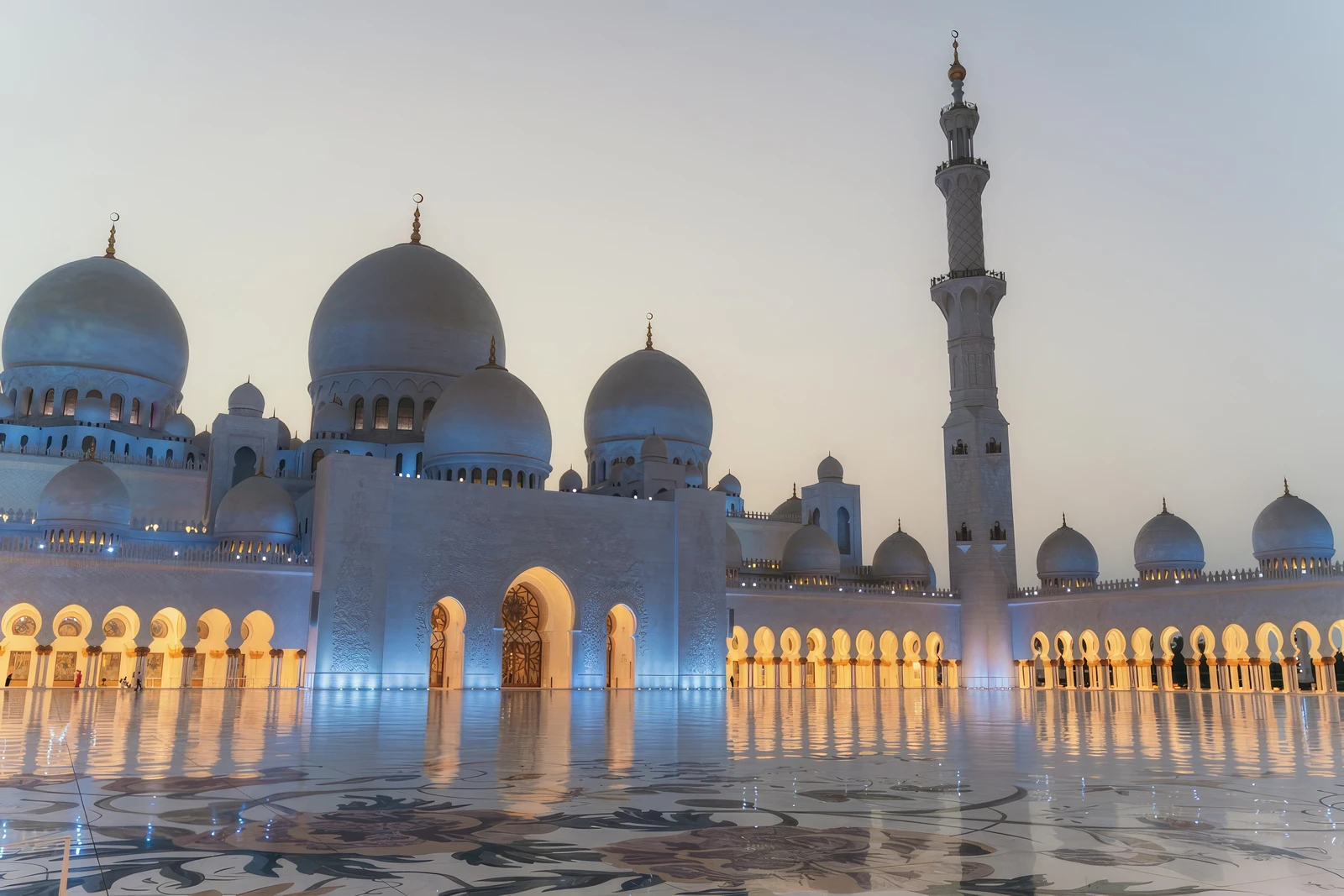
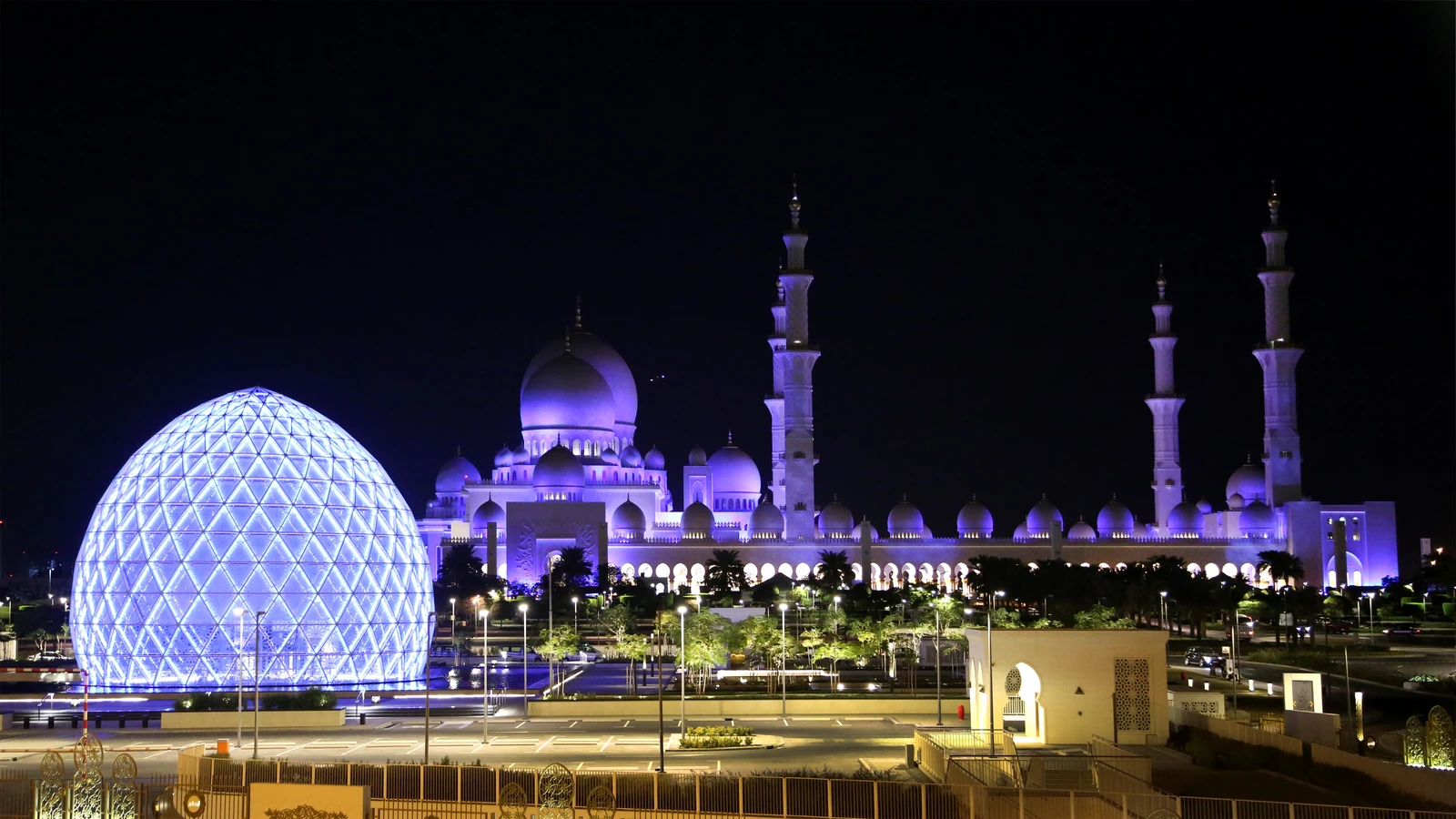
- Domes and Minarets: The mosque features 82 domes of various sizes, with the largest one crowning the main prayer hall. There are four towering minarets, each 106 meters tall, at its corners. The design of the domes and minarets fuses Mughal, Moorish, Ottoman, and Fatimid styles.
- World Records: It houses several world-record-breaking features:
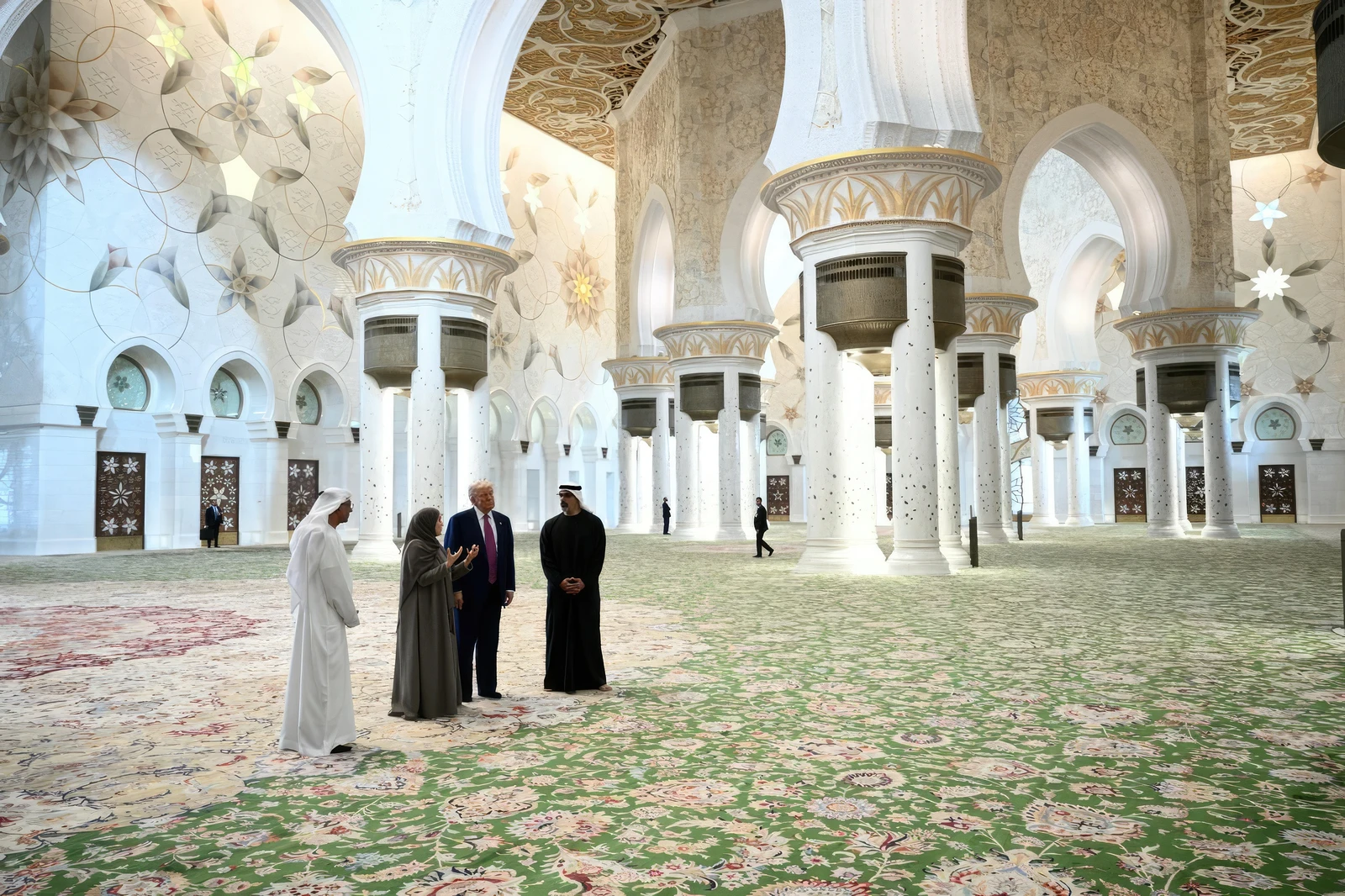
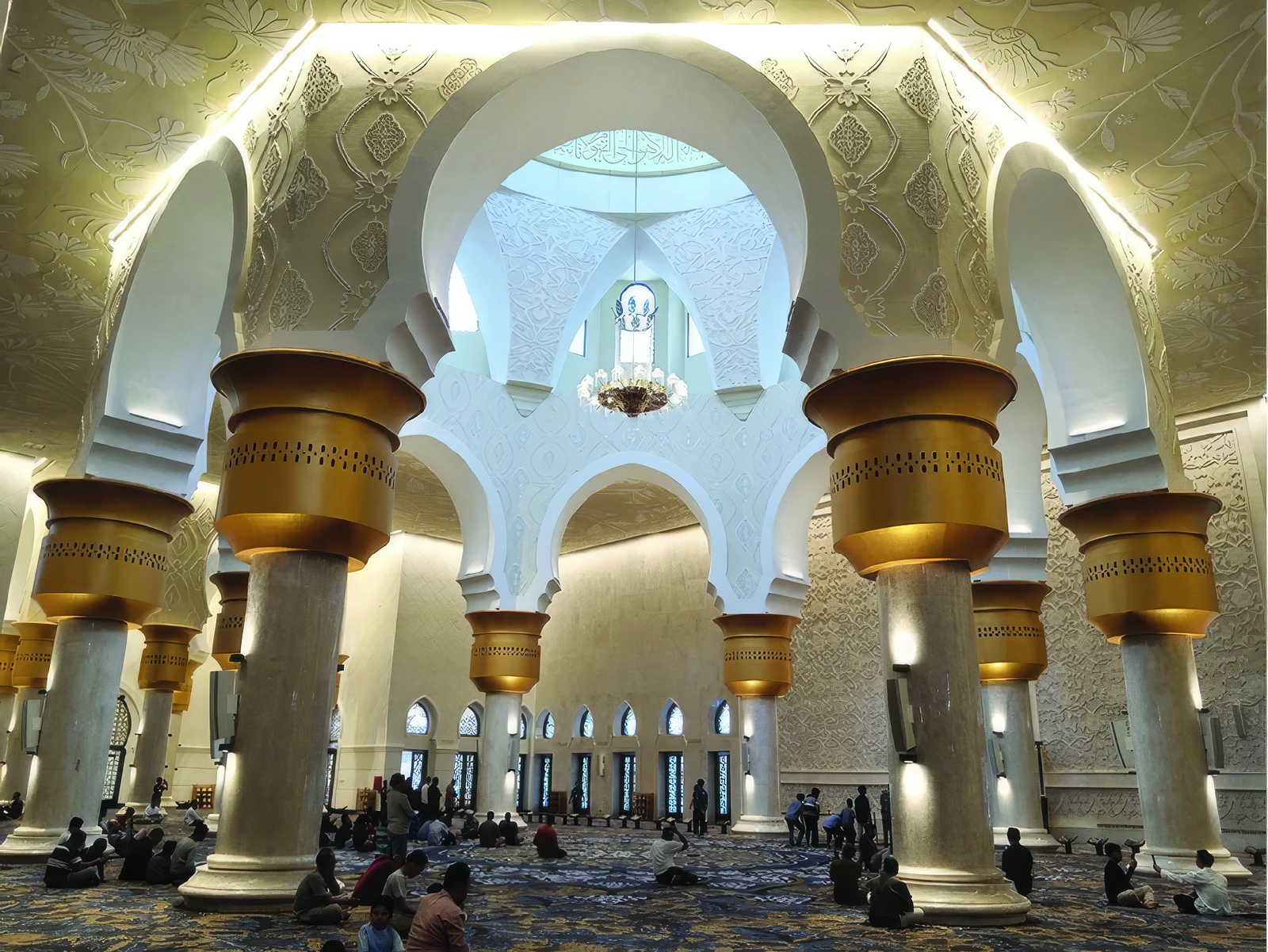
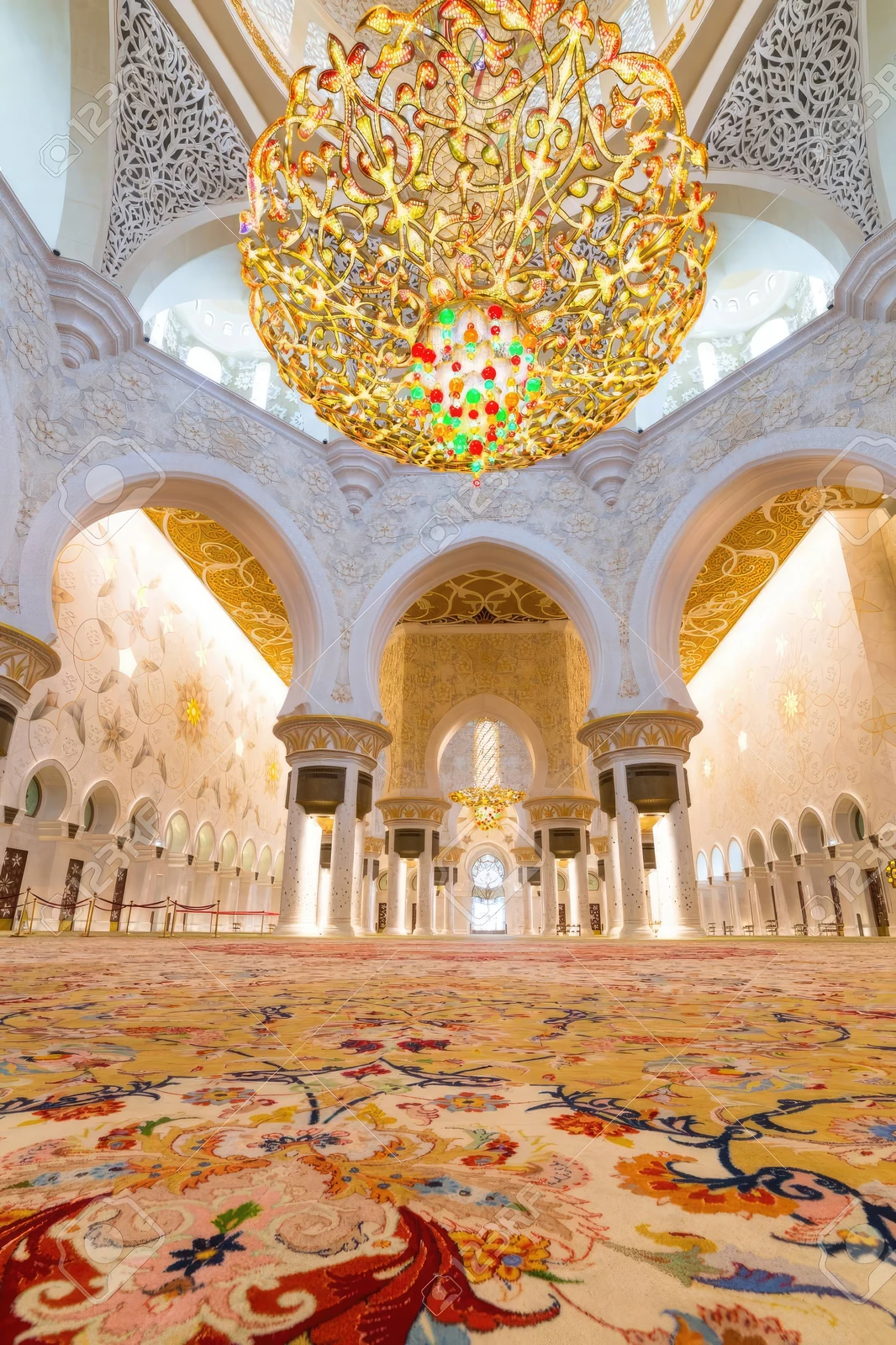
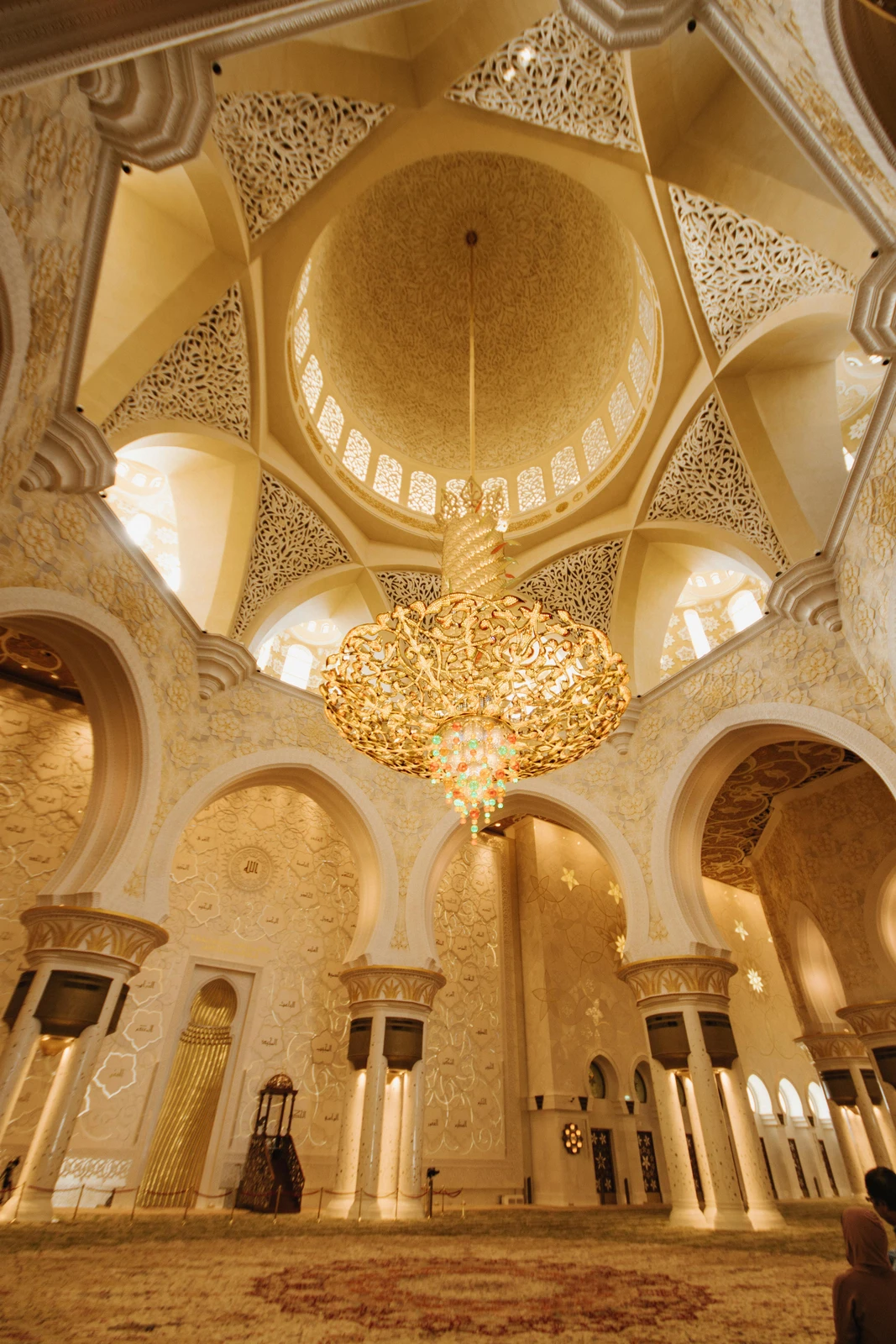
- The world’s largest hand-knotted carpet, covering 5,700 square meters in the main prayer hall, made by over 1,200 artisans.
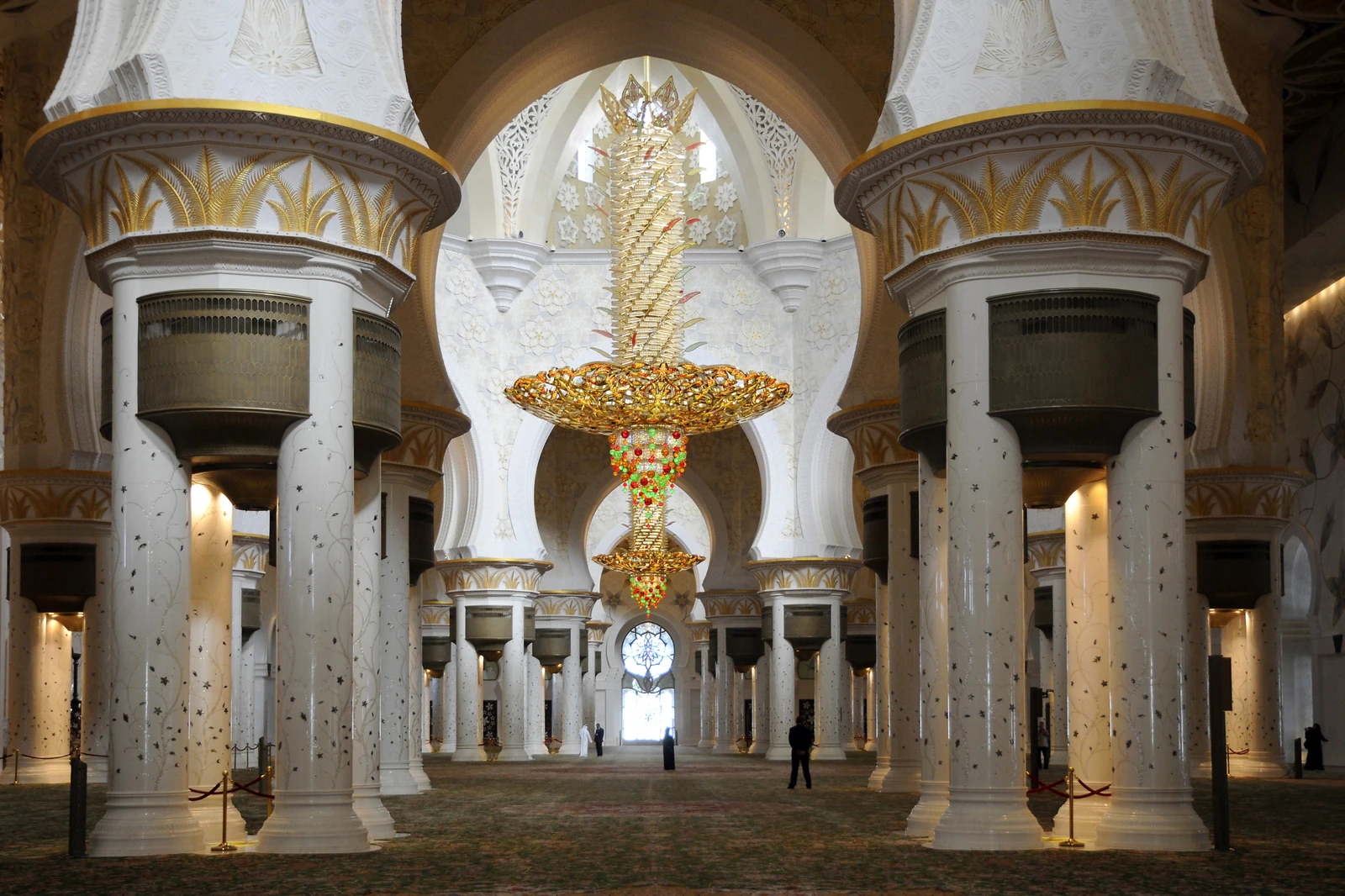
- One of the world’s largest chandeliers, weighing approximately 12 tonnes, adorned with Swarovski crystals and gold-plated elements. There are seven such chandeliers in total.
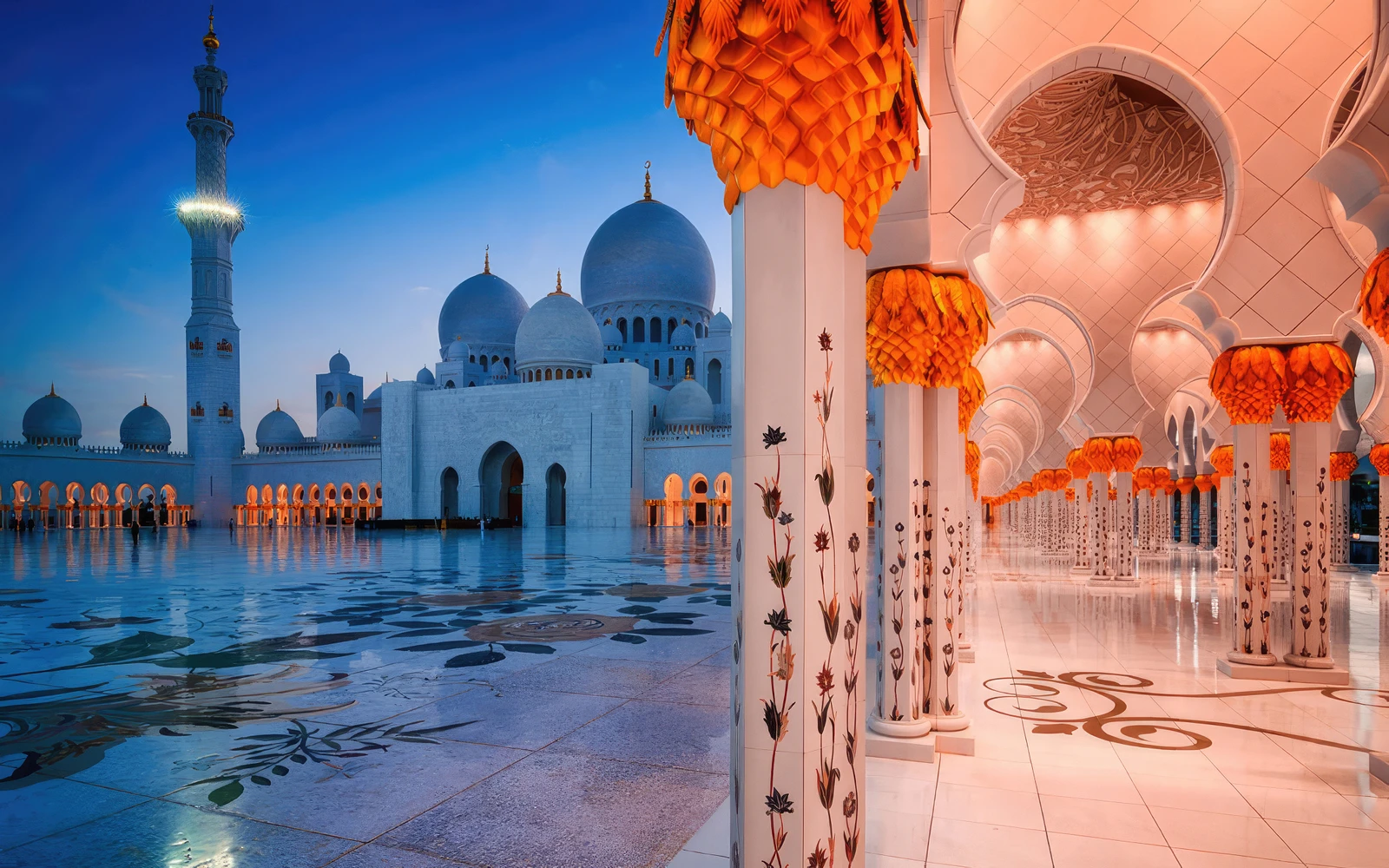
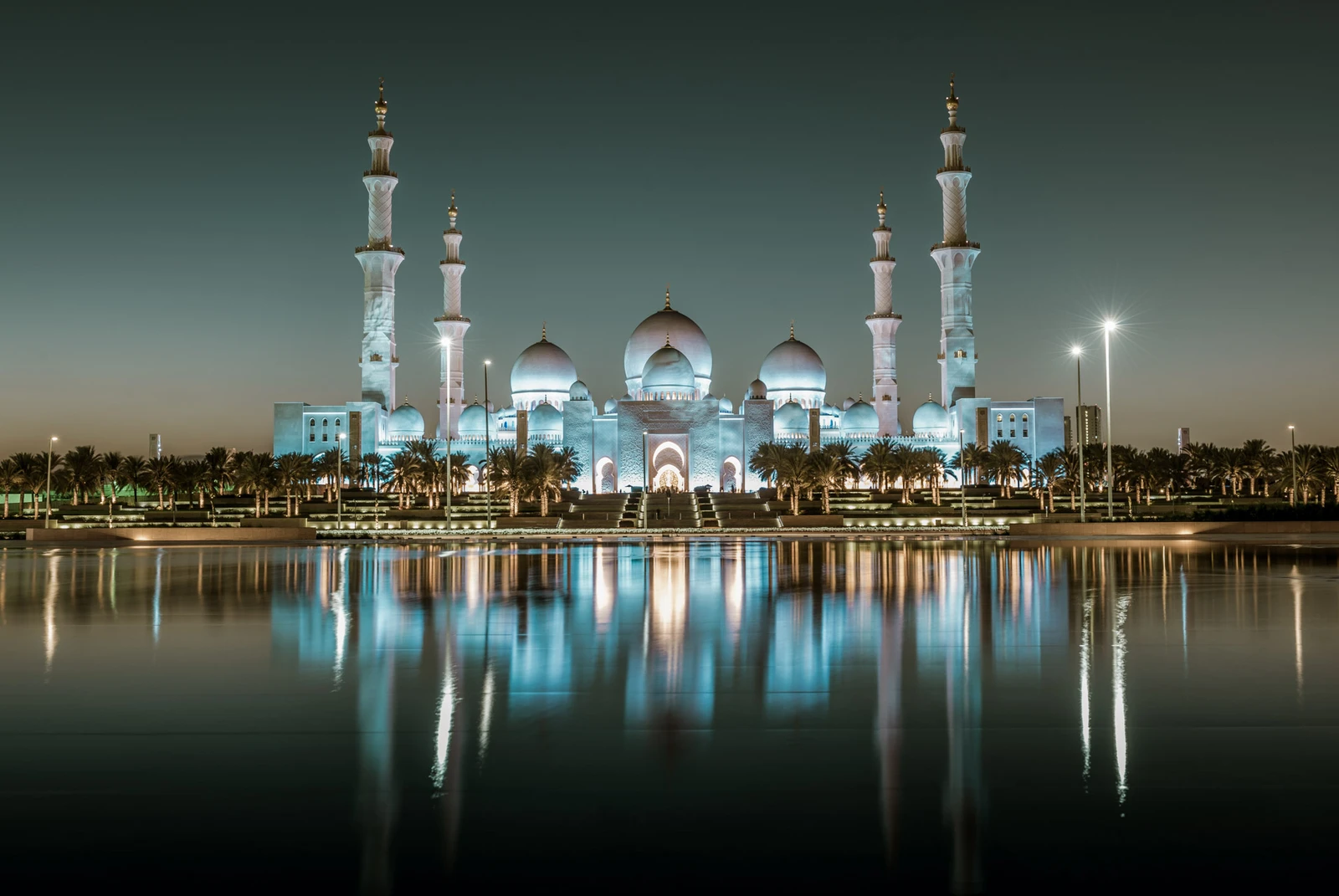
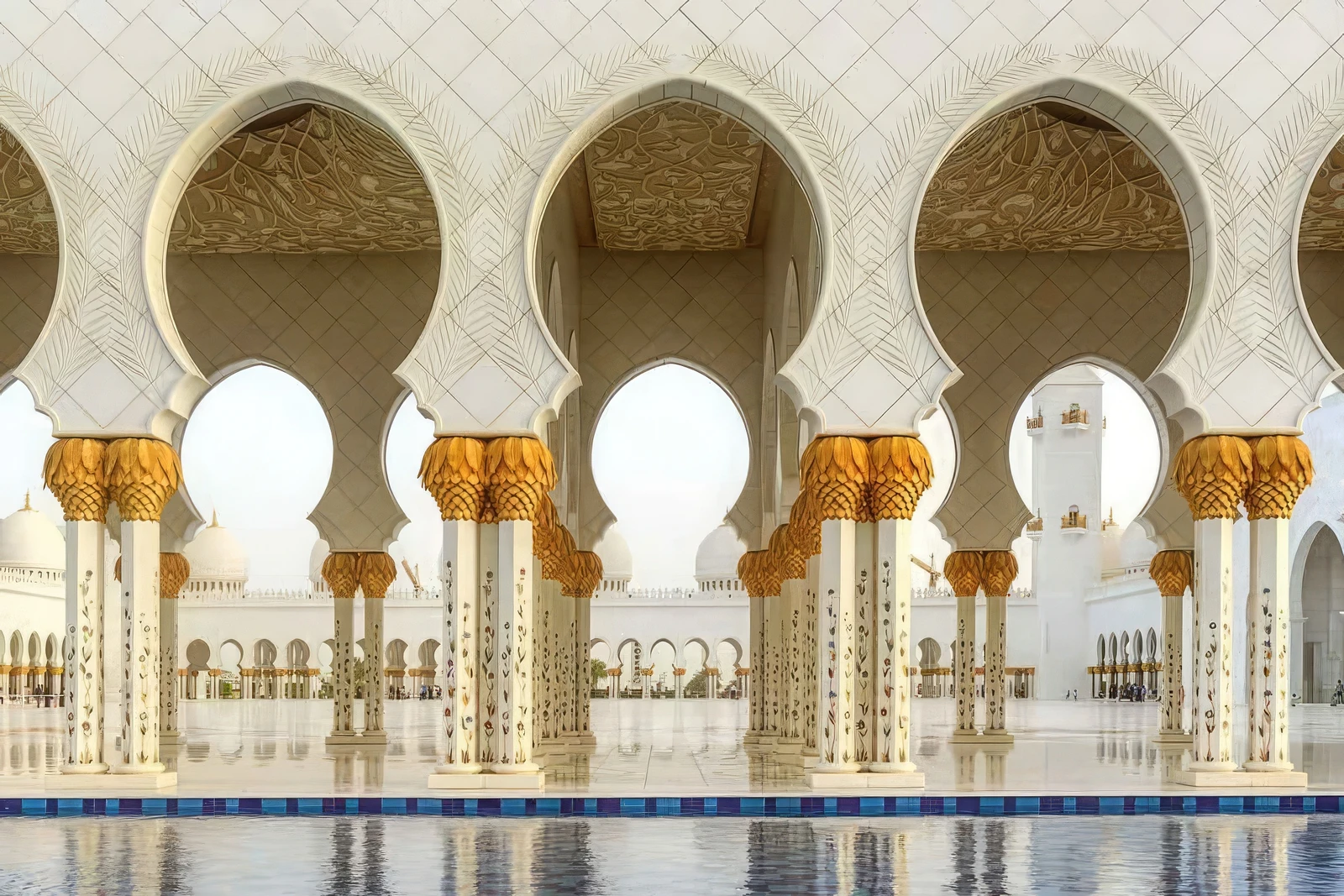
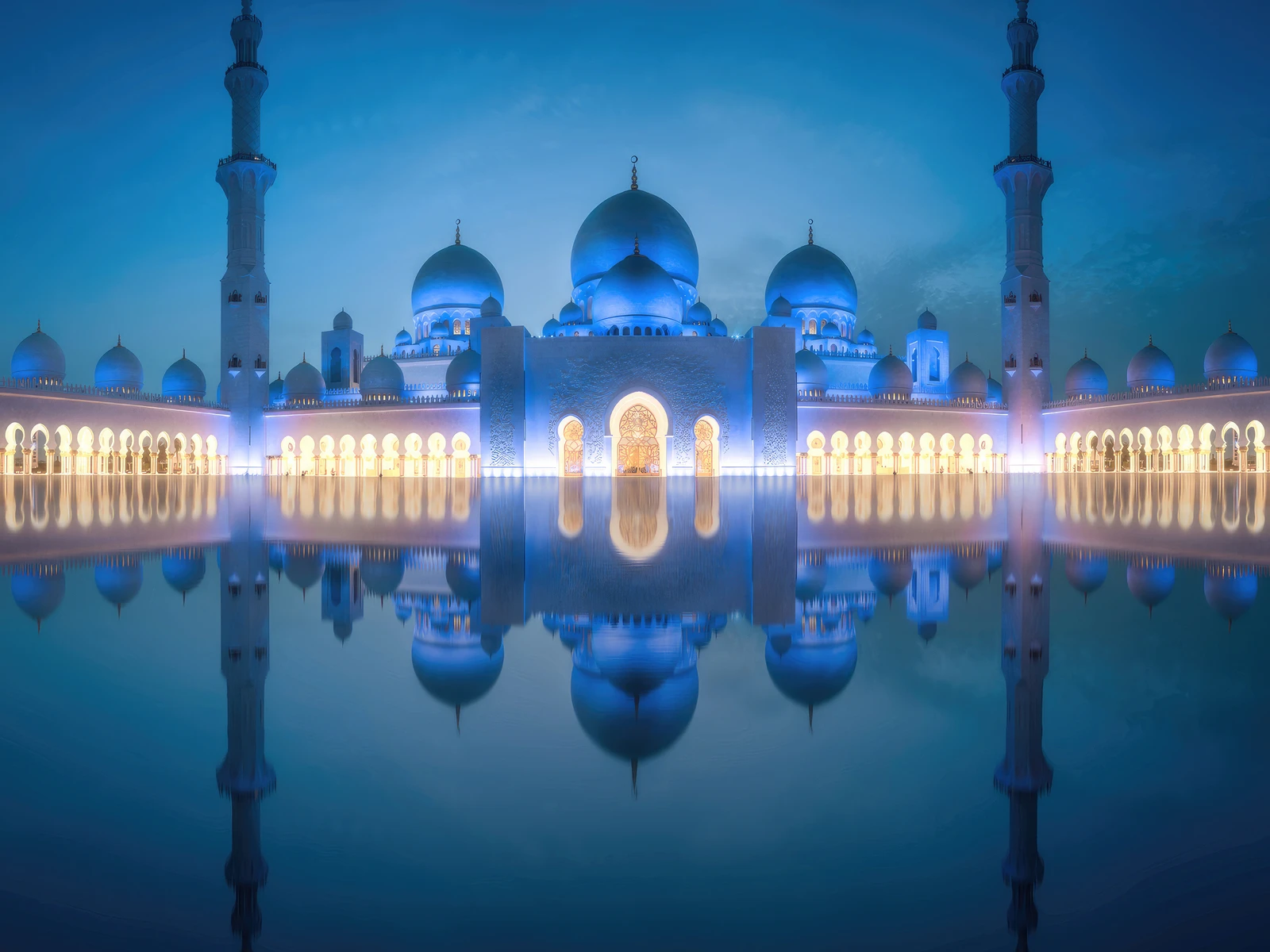
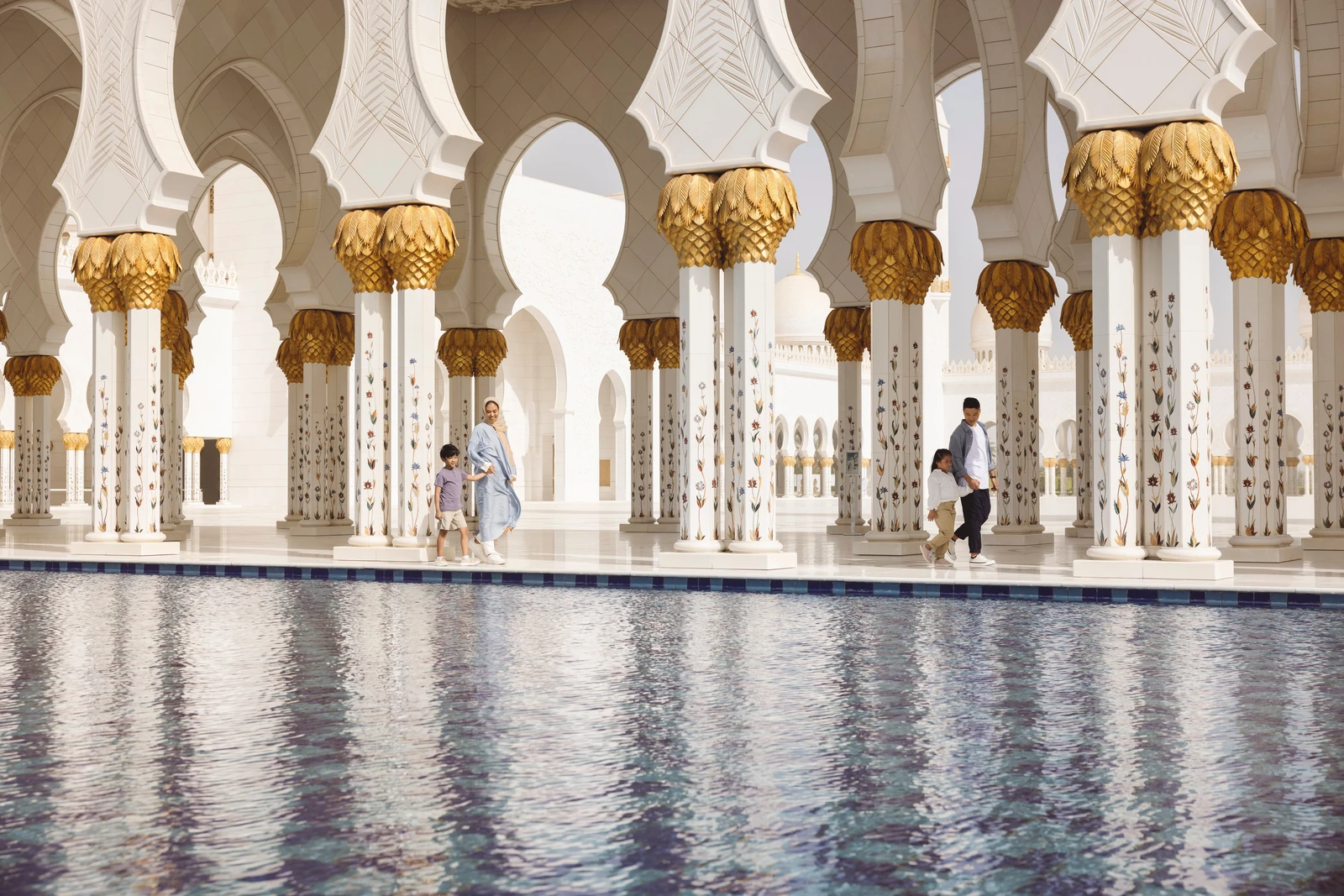
- Reflecting Pools: Rectangular reflecting pools, tiled in various shades of blue, surround the mosque, mirroring its magnificent arcades and columns and enhancing its grandeur.
- Calligraphy: Exquisite Kufic calligraphy adorns the mosque’s walls and interiors, featuring verses from the Quran and the 99 names of Allah.
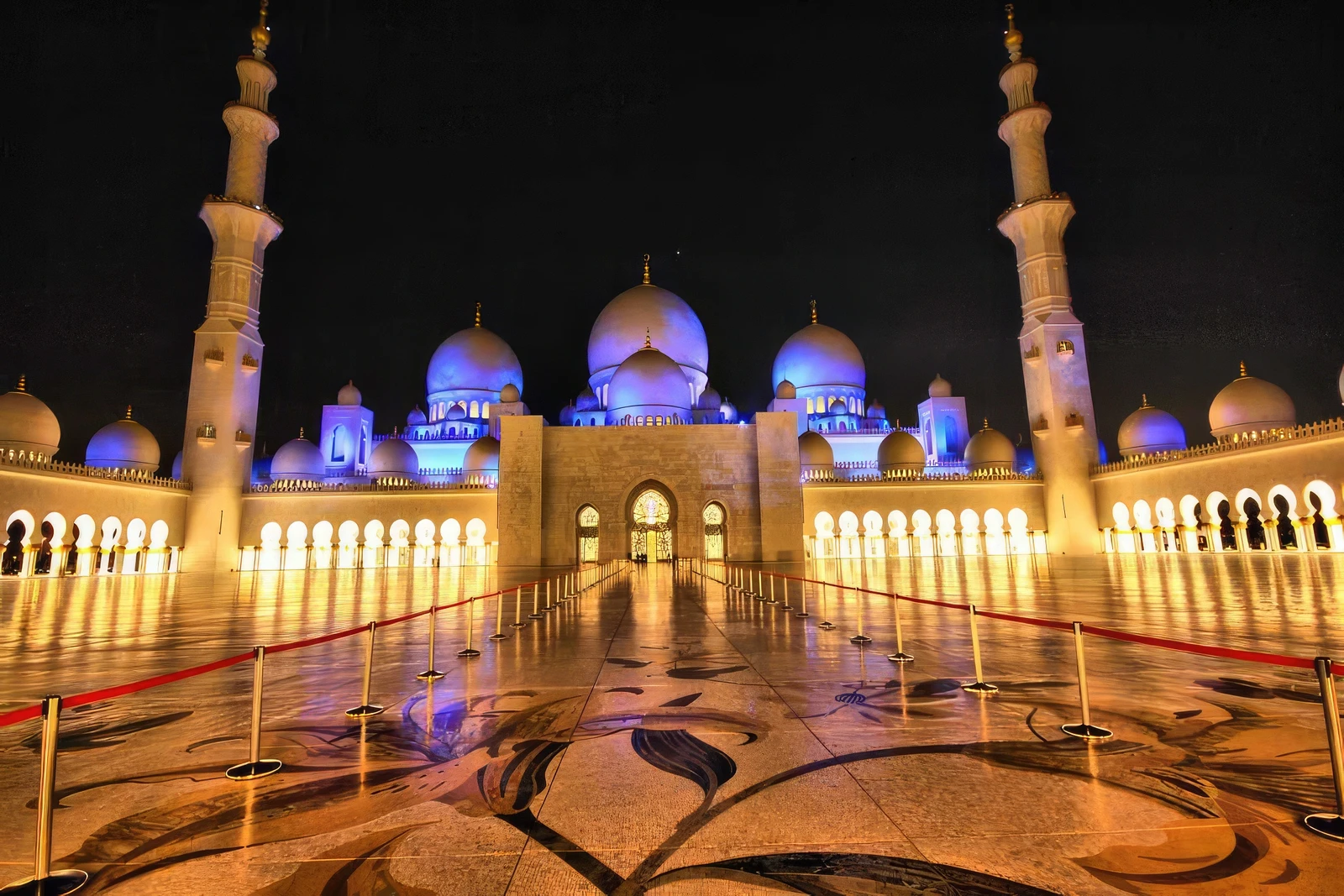
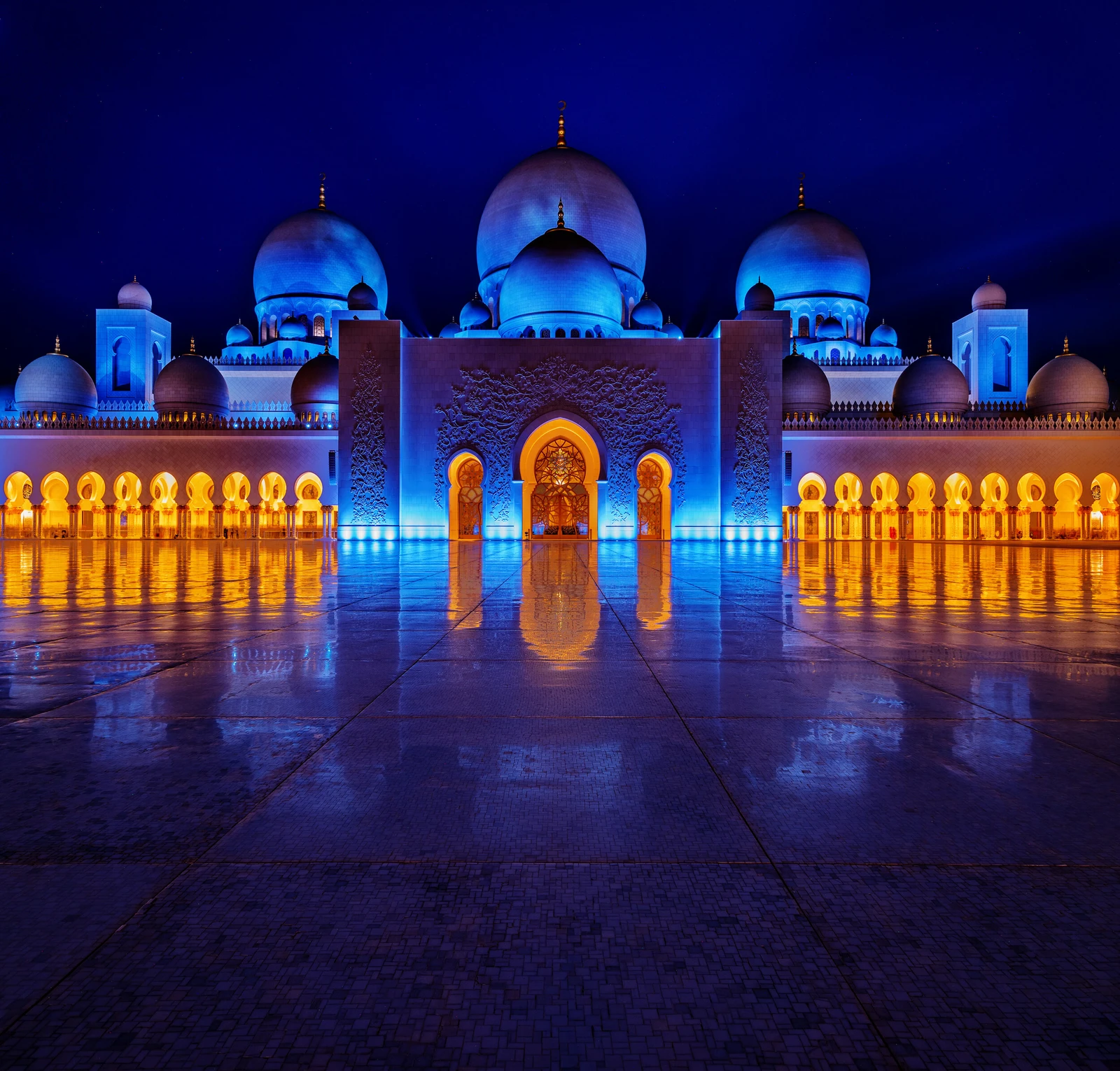
- Lighting System: A unique 360-degree lighting system designed by Speirs and Major Associates illuminates the mosque at night, subtly changing its color from cool white to deeper blue in sync with the phases of the moon, creating a mesmerizing visual effect.
What Makes It Famous
The Sheikh Zayed Grand Mosque’s fame is global, stemming from its monumental scale, architectural splendor, and its symbolic significance:
- Architectural Masterpiece: It is widely recognized as one of the most beautiful and architecturally significant mosques in the world, combining diverse Islamic styles with modern grandeur.
- Symbol of Peace and Tolerance: Built under the vision of the late Sheikh Zayed bin Sultan Al Nahyan, it embodies a message of peace, tolerance, and coexistence, welcoming visitors from all faiths and backgrounds.
- Record-Breaking Elements: Housing the world’s largest hand-knotted carpet and one of the largest chandeliers, it’s a testament to human craftsmanship and ambition.
- Prominent Global Landmark: Consistently ranking among the top attractions in the Middle East and globally (e.g., 8th globally in TripAdvisor’s 2025 report), it draws millions of visitors annually.
- Stunning Aesthetics: Its gleaming white marble, intricate floral mosaics, reflective pools, and captivating night lighting create an awe-inspiring visual experience.
Differences from Some Other Landmarks
The Sheikh Zayed Grand Mosque distinguishes itself from other regional and global landmarks in several key ways:
- Active Worship & Tourist Destination: Unlike historical ruins (like Bahrain Fort) or purely commercial/residential skyscrapers (like Burj Khalifa or United Tower), the Sheikh Zayed Grand Mosque functions as both a major active place of worship and a welcoming, educational tourist attraction.
- Fusion of Islamic Architectural Styles: While other mosques may adhere to a specific regional style (e.g., Ottoman, Mughal), this mosque uniquely fuses elements from Persian, Fatimid, Mamluk, and Turkish architecture, creating a harmonious global Islamic design.
- Emphasis on Global Collaboration: Its construction involved artisans and materials from numerous countries worldwide, reflecting a message of global unity and collaboration in its very fabric, a characteristic less prominent in other landmarks.
- Symbolic Lighting: The mosque’s unique lighting system, synchronized with the lunar cycle, adds a dynamic and symbolic dimension to its beauty, a feature not typically found in other architectural marvels.
- Open-Door Policy for Non-Muslims: The mosque’s explicit policy of welcoming non-Muslim visitors with free guided tours, providing respectful attire, and encouraging cultural dialogue sets a high standard for inclusivity among religious sites.