Macau Fisherman’s Wharf, a multifaceted “Wonder” that offers an eclectic blend of entertainment, dining, shopping, and themed attractions, designed to transport visitors to various corners of the globe.

Name: Macau Fisherman’s Wharf (澳門漁人碼頭 – Aomen Yurén Mátóu)
Address: Avenida da Amizade and Avenida Dr. Sun Yat-Sen, Macau SAR, China
(It’s located on the Macau Peninsula, near the Outer Harbour Ferry Terminal.)
How to get there:
Macau Fisherman’s Wharf is conveniently located on the Macau Peninsula, making it easily accessible.
- From Macau Outer Harbour Ferry Terminal: It’s directly opposite the ferry terminal (walking distance, or a very short taxi/shuttle ride). This makes it a common first or last stop for visitors arriving or departing by ferry.
- By Bus: Numerous public bus routes stop near or directly at Fisherman’s Wharf. Look for stops such as “Macau Ferry Terminal” (外港碼頭) or “Macau Fisherman’s Wharf” (漁人碼頭).
- By Taxi: Taxis can take you directly to the entrance.
- Casino Shuttle Buses: Many casino shuttle buses (e.g., from Sands Macao, Grand Lisboa) go to the Outer Harbour Ferry Terminal, from which it’s a short walk to Fisherman’s Wharf. Some might even have direct stops.
- From Macau International Airport (MFM) or HZMB Macau Port: Take a public bus or taxi to the Outer Harbour Ferry Terminal, then walk or take a short taxi/shuttle.
Landscape and Architecture:
Macau Fisherman’s Wharf’s “wonder” lies in its highly diverse and theatrical architectural landscape, which is intentionally designed to evoke different global themes within one complex. It’s less about a singular architectural style and more about a collection of themed “villages.”
- Theme Park-like Segments: The Wharf is divided into several distinct themed areas:
- Dynasty Wharf (皇宮): Features traditional Chinese imperial architecture, with a large artificial lake and a giant golden ship (Vasco da Gama) offering dining and entertainment.
- East Meets West (勵駿碼頭): Designed to resemble a quaint European fishing village, complete with cobblestone streets, colorful buildings, and a Roman Amphitheater. This section often hosts events and performances.
- Legend Boulevard (勵宮): A newer addition, featuring a lavish, modern European-style casino and hotel, complementing the resort’s diverse offerings.
- Rocks Hotel (萊斯酒店): A charming boutique hotel designed in a Victorian-era style, adding to the European flair.
- Artificial Water Features: Beyond the actual waterfront, the complex incorporates canals, ponds, and fountains to enhance its various themes.
- Entertainment Venues: Integrated into the architecture are various entertainment facilities, including:
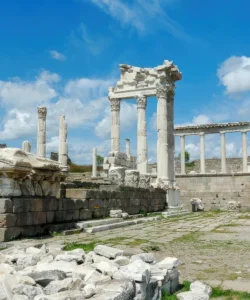
- Roman Amphitheater: An outdoor arena resembling an ancient Roman coliseum, used for concerts, shows, and events.
- Shopping and Dining: A wide array of shops and restaurants are blended into the themed buildings, offering diverse cuisines and retail experiences.
- Waterfront Promenade: Being on the coastline, it offers a promenade with views of the Outer Harbour and the cityscape, including some of the bridges.
What makes it famous:
Macau Fisherman’s Wharf is famous for:
- Eclectic Themed Entertainment: Its unique concept of combining multiple architectural themes (Chinese, European fishing village, Roman) and diverse entertainment options (dining, shopping, casino, hotel, event spaces) within one large complex.
- Family-Friendly Appeal: While Macau is often associated with gaming, Fisherman’s Wharf positions itself as a more family-oriented destination, offering attractions and an atmosphere suitable for all ages.
- Theatrical Ambiance: The themed architecture and often lively atmosphere, with street performers and events, create a fun and engaging environment.
- Convenient Location: Its proximity to the Outer Harbour Ferry Terminal makes it an easy stop for many visitors.
- Alternative to Casino-Centric Resorts: It offers a different kind of integrated resort experience compared to the purely casino-dominated properties, focusing more on themed entertainment and leisure.
Differences from some other wonders:
- “Hybrid” Theme Park and Resort: Unlike a purely historical site (Ruins of St. Paul’s), a natural wonder, or even a single-themed integrated resort (like The Venetian Macao), Fisherman’s Wharf is a multi-themed complex that blends elements of a theme park, shopping mall, dining destination, and hotel/casino resort. Its “wonder” is its eclectic mix.
- Artificial, Theatrical Design: While The Venetian is a grand recreation of one place, Fisherman’s Wharf is more like a collection of stylized, often exaggerated, and deliberately artificial “sets” designed to create a fantastical, almost movie-like experience of different global locations. It’s less about authenticity and more about imaginative escapism.
- Diverse Architectural Styles in One Place: Instead of focusing on one period or style, it deliberately showcases a juxtaposed collection of architectural styles from different eras and regions, allowing visitors to “travel” culturally within a short distance.
- Focus on Experiential Shopping and Dining: While it has shops and restaurants, they are deeply integrated into the themed environments, making the act of shopping or dining part of a larger theatrical and immersive experience, rather than just a transaction.
- Older vs. Newer Cotai Resorts: Compared to the mega-resorts on the Cotai Strip (like The Venetian, The Parisian), Fisherman’s Wharf feels a bit older and has a different vibe. It’s on the Macau Peninsula and has evolved over time, offering a more varied, perhaps less polished but charming, “wonder” experience.