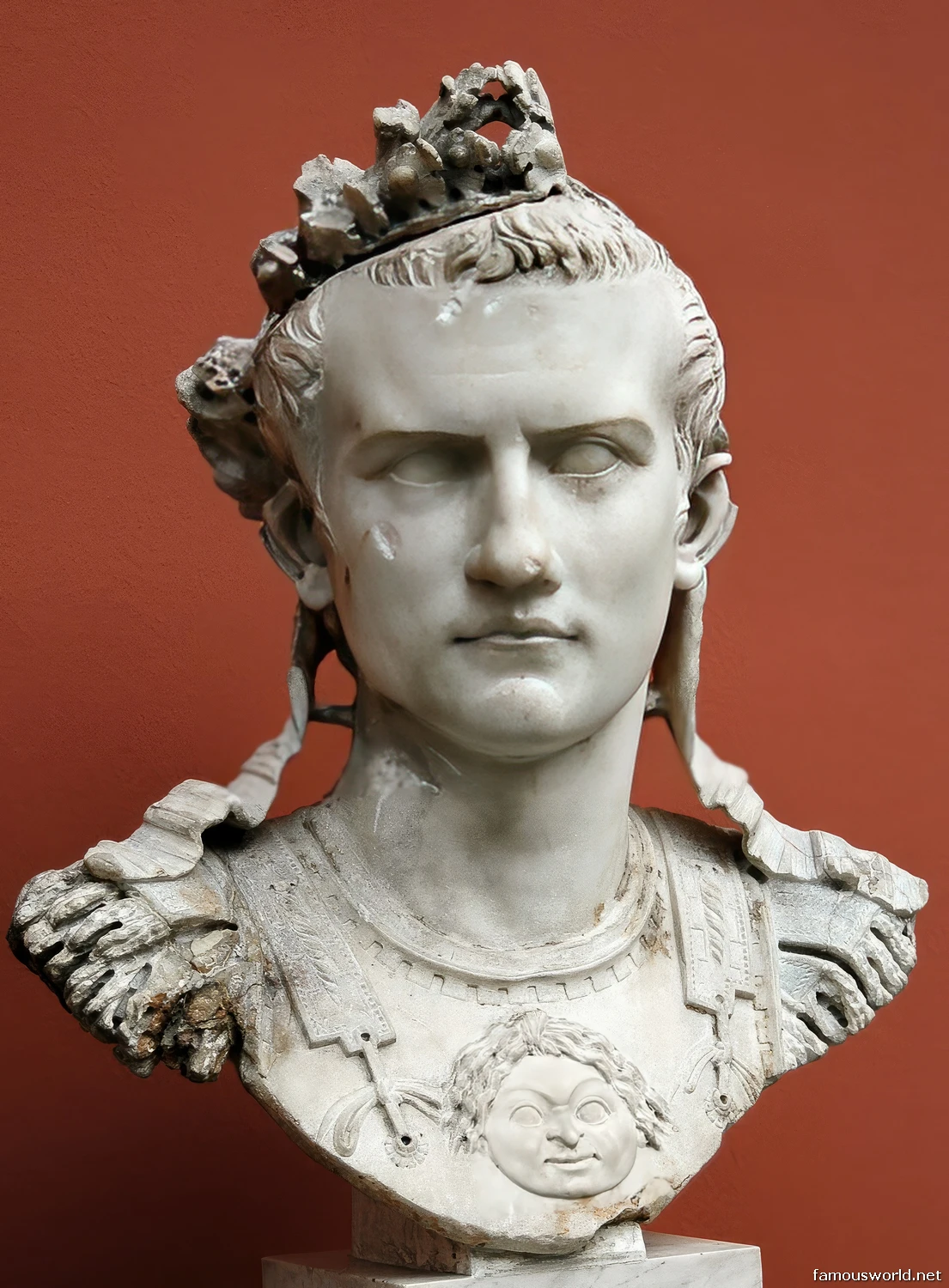
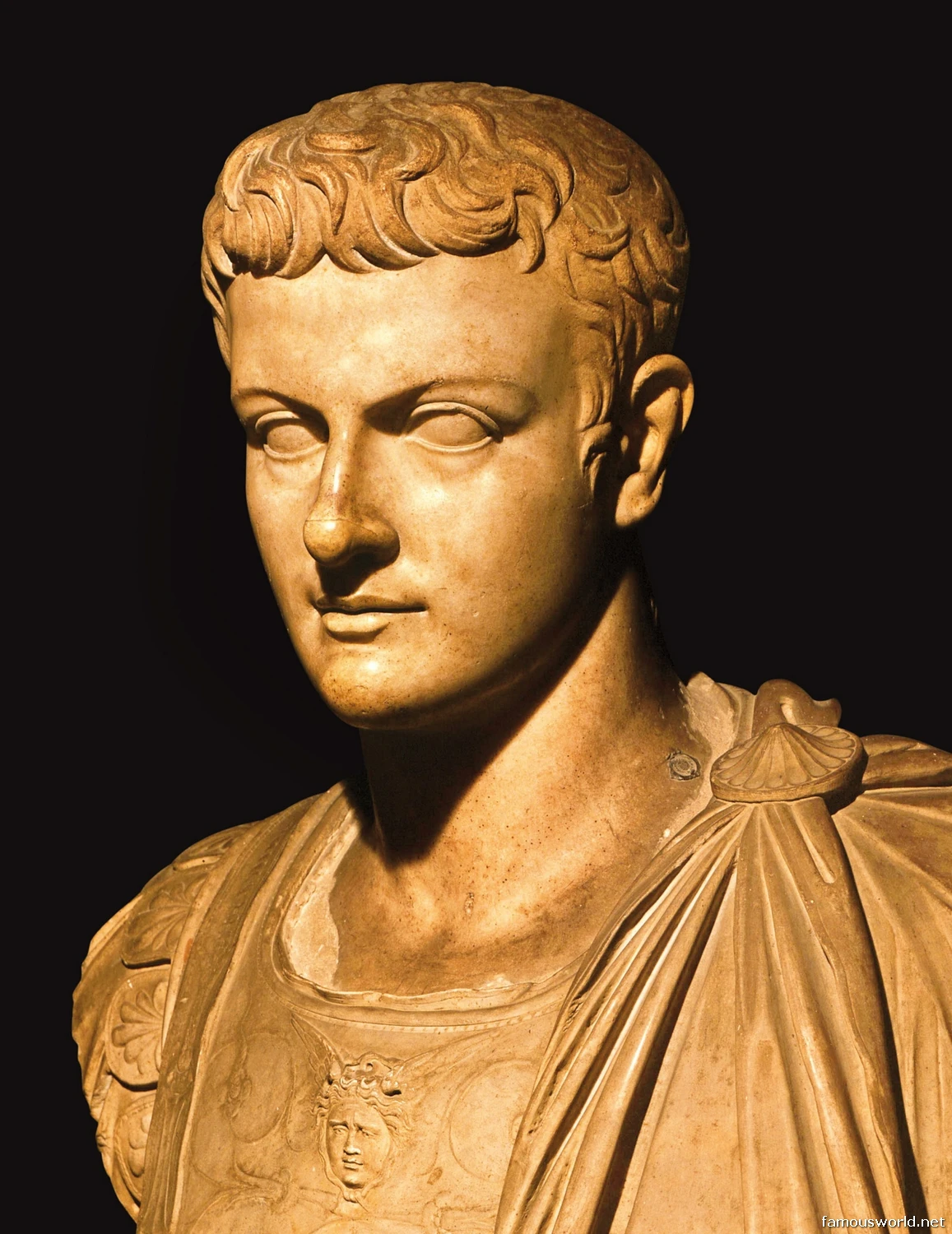
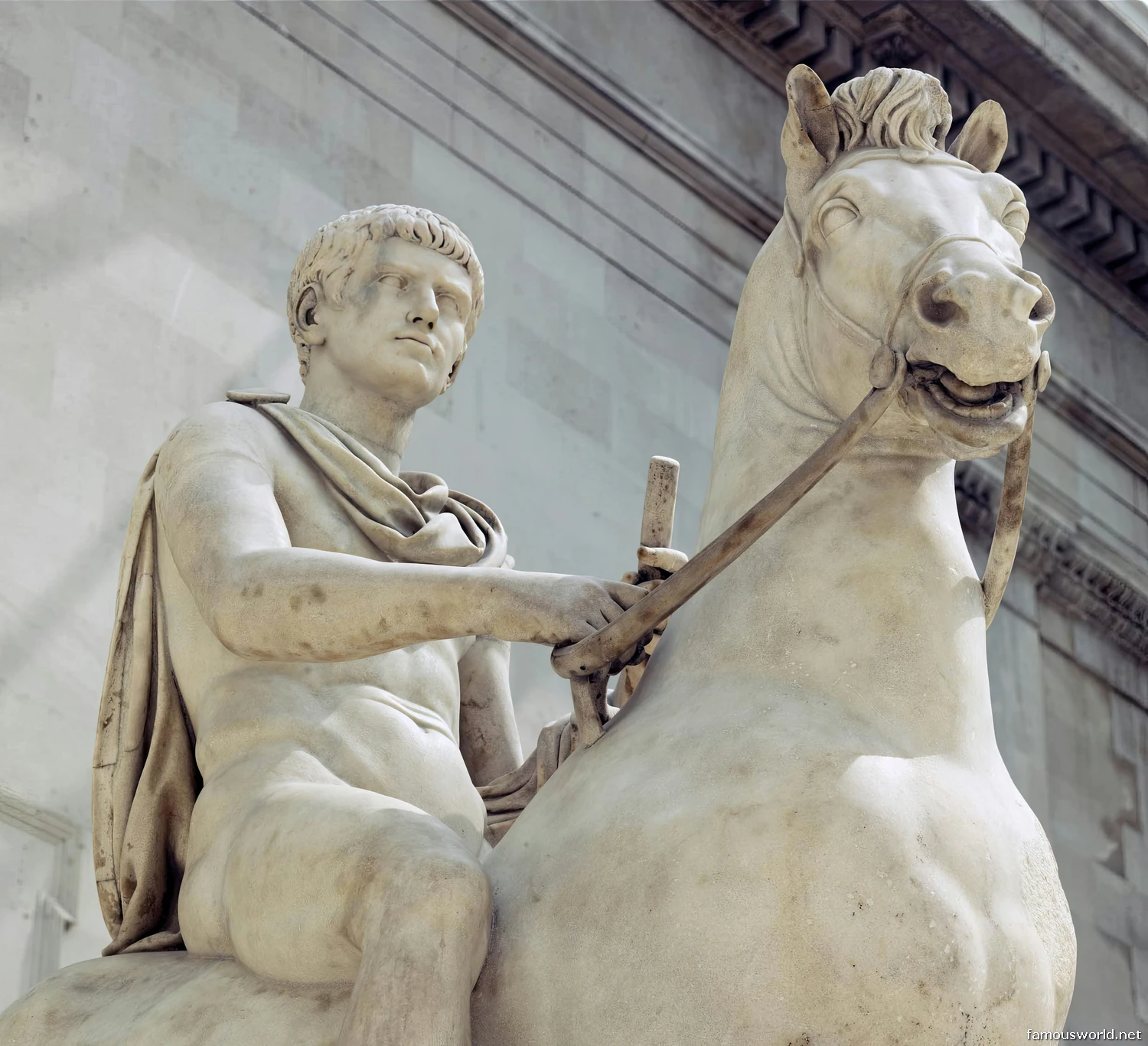
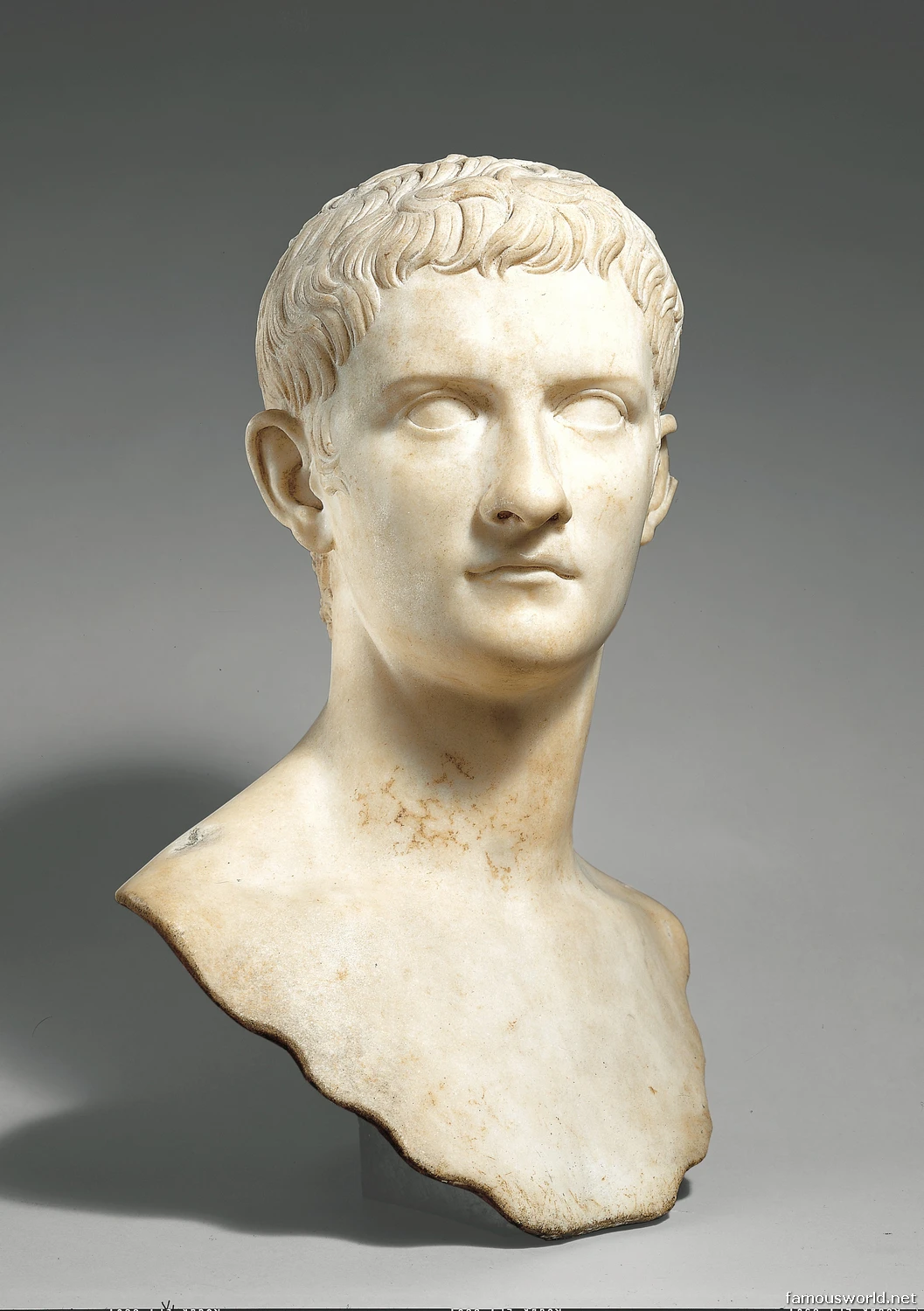
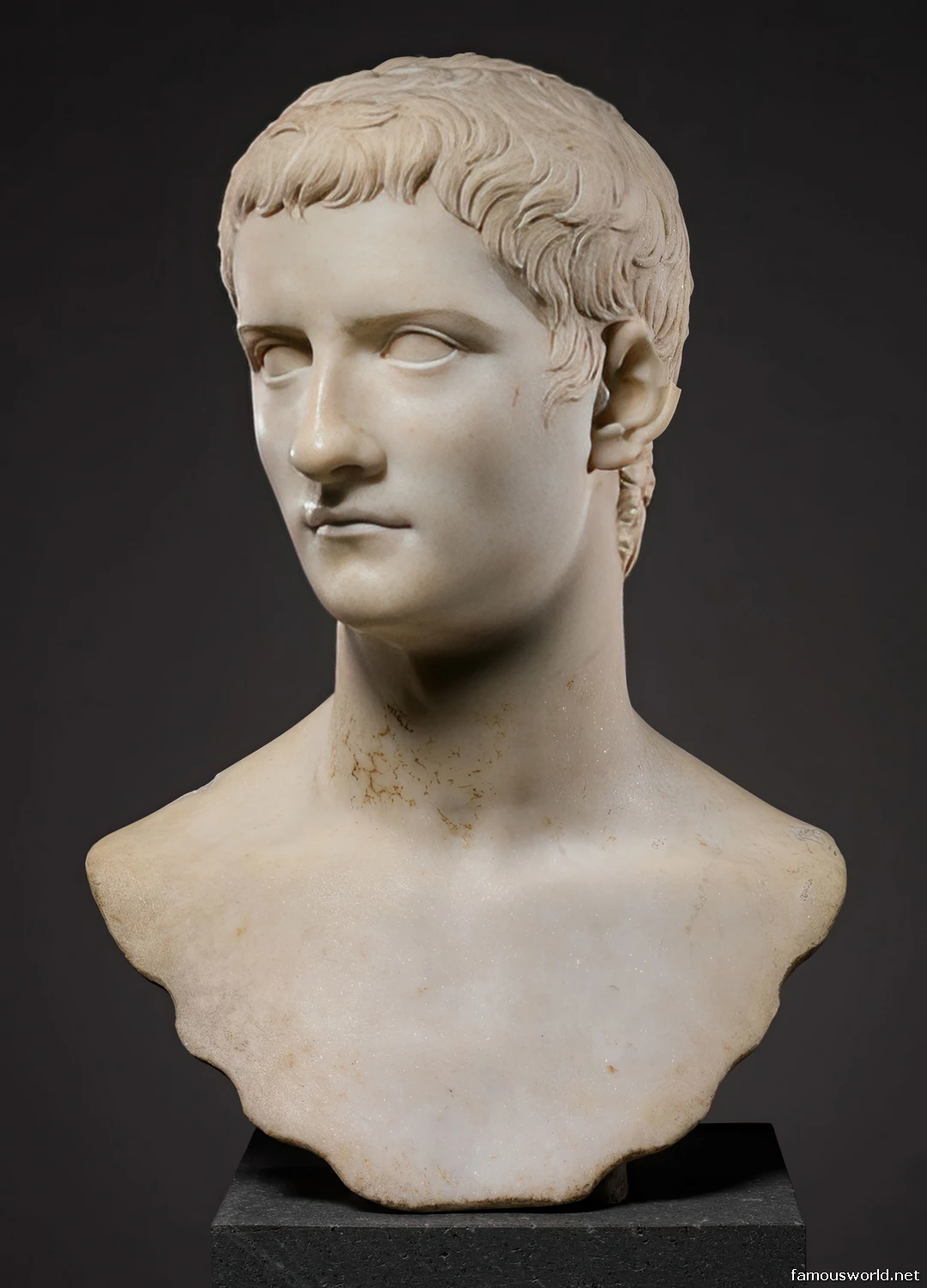
Gaius Caesar Augustus Germanicus, more commonly known by his nickname Caligula, was the third Roman Emperor, ruling from 37 AD to 41 AD. His reign is one of the most notorious in Roman history, remembered for its alleged cruelty, extravagance, and insanity. While early accounts portray his rule as beginning with promise, they quickly descend into tales of a megalomaniacal tyrant whose erratic and brutal behavior led to his assassination after less than four years in power.
Listen to an introduction about Caligula

Name: Gaius Julius Caesar Augustus Germanicus
Date of birth: August 31, 12 AD
Date of death: January 24, 41 AD (aged 28)
Place of birth: Antium (modern Anzio), Italy
Family:
- Parents’ Names: Germanicus (a celebrated Roman general and heir-apparent to Emperor Tiberius) and Agrippina the Elder (granddaughter of Emperor Augustus).
- Siblings: He had eight siblings, though only six lived to maturity, including Nero Caesar, Drusus Caesar, Agrippina the Younger (mother of Emperor Nero), Julia Drusilla, and Julia Livilla.
- Spouse’s Names: Caligula had four wives during his short life:
- Junia Claudilla
- Livia Orestilla
- Lollia Paulina
- Milonia Caesonia
- Children’s Names: He had one known child with his last wife, Milonia Caesonia:
- Julia Drusilla (named after his favorite sister)
Profession: Roman Emperor
Nationality: Roman
Biography and What Famous For: Caligula’s early life was spent in military camps with his father, Germanicus. It was here he earned the nickname “Caligula,” meaning “little boot” in Latin, from the soldiers who were amused by the miniature military boots he wore. After the suspicious death of his father and the banishment of his mother and brothers by Emperor Tiberius, Caligula was summoned to the island of Capri to live with the aging emperor.
Upon Tiberius’s death in 37 AD, Caligula ascended to the throne to the overwhelming joy of the Roman people, who adored the memory of his father. The first months of his reign were promising; he issued political reforms, destroyed Tiberius’s treason papers, and staged lavish games and chariot races for the public.
However, after a serious illness a few months into his rule, his behavior reportedly became erratic and tyrannical. Ancient historians like Suetonius and Cassius Dio paint a picture of a depraved emperor. He is accused of incest with his sisters, particularly Drusilla, whom he deified after her death. He was known for his extreme extravagance, allegedly building a two-mile floating bridge across the Bay of Baiae for a parade and planning to build a palace in the middle of it.
Caligula is perhaps most famous for his supposed madness and megalomania. He is said to have declared himself a living god and demanded that a statue of himself be erected in the Temple of Jerusalem, an act that nearly caused a revolt. The most legendary story of his insanity is the claim that he planned to appoint his favorite horse, Incitatus, as a consul.
His reign became increasingly paranoid and brutal. He revived treason trials to eliminate political rivals and seize their estates to fund his lavish projects. His unpredictable and humiliating treatment of the Senate and the Praetorian Guard created powerful enemies.
Assassination: In January 41 AD, Caligula was assassinated as part of a conspiracy led by officers of the Praetorian Guard, led by Cassius Chaerea, whom Caligula had repeatedly mocked. The conspirators ambushed him in a corridor of his palace. His wife, Milonia Caesonia, and their young daughter, Julia Drusilla, were also murdered, ending his direct line. His uncle, Claudius, was found hiding behind a curtain by the guards and was promptly declared the next emperor.