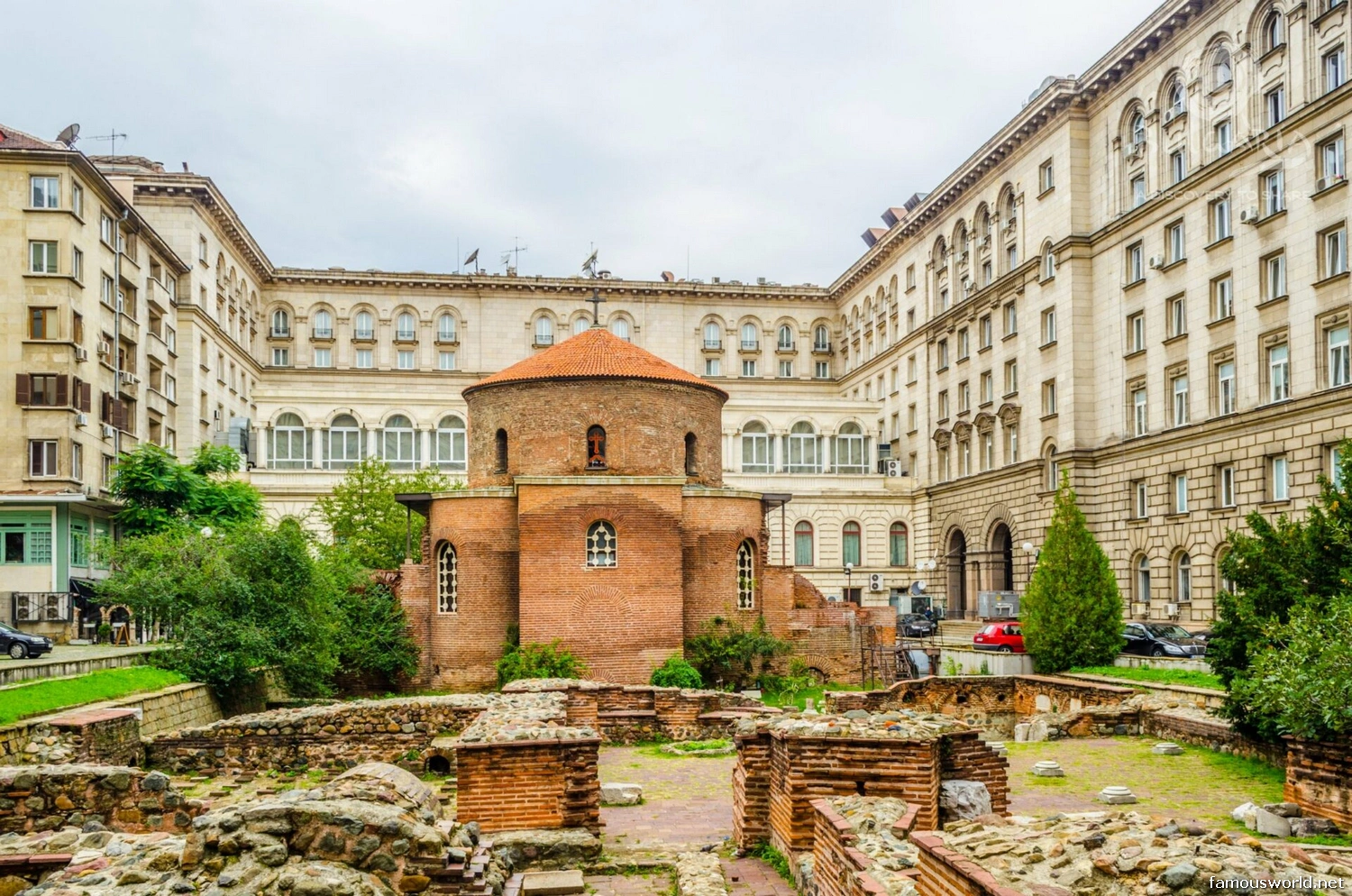
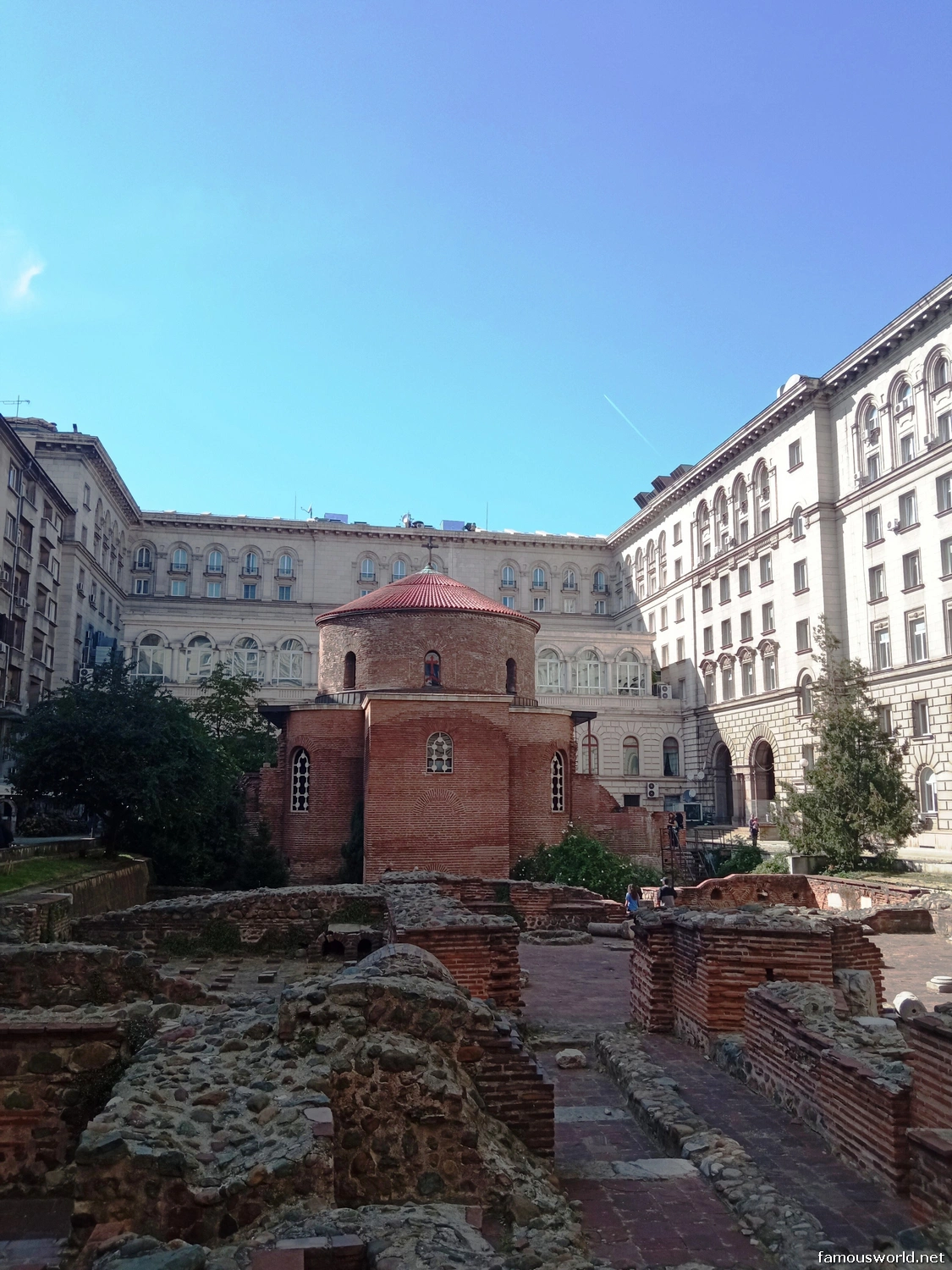
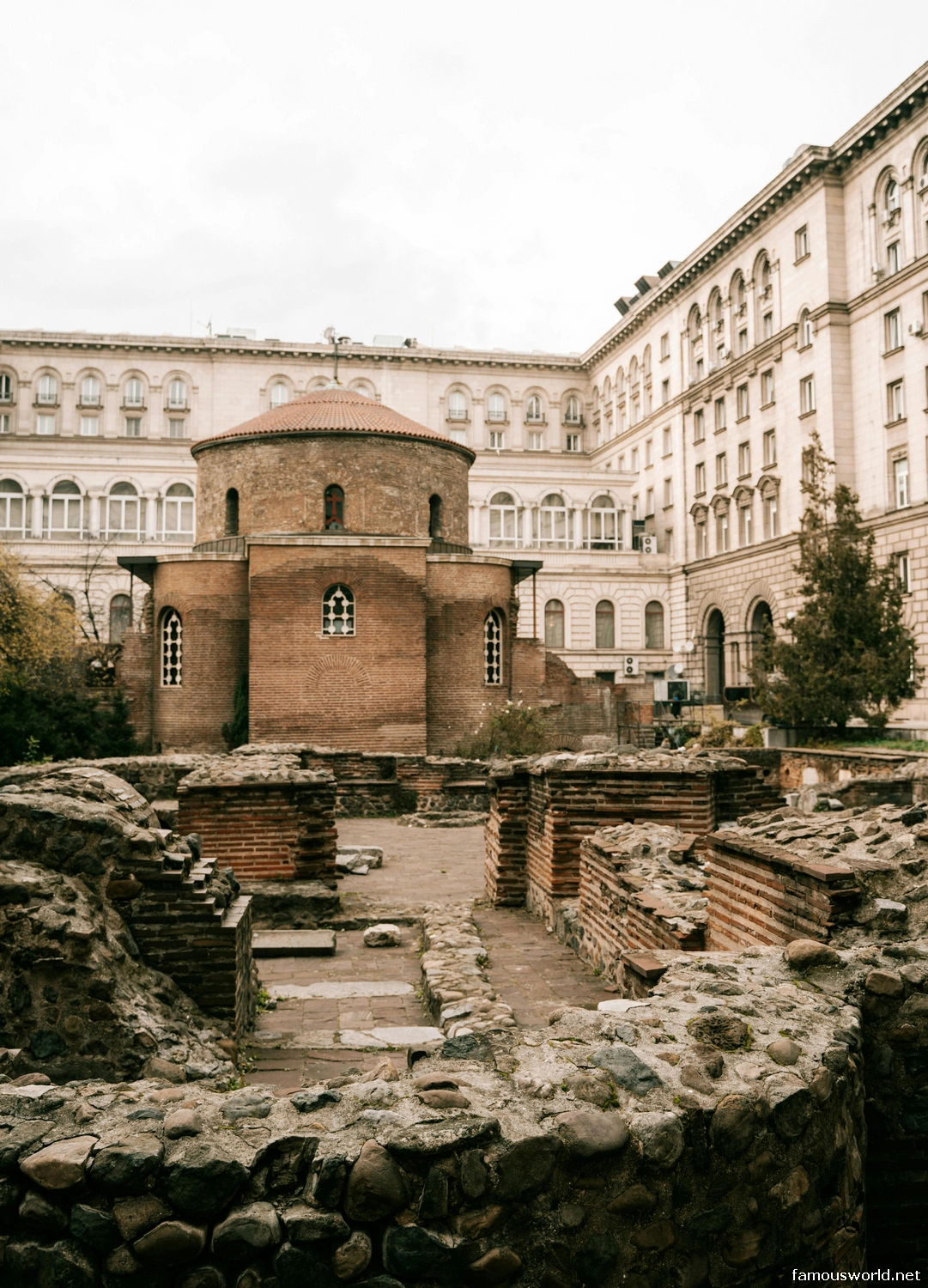
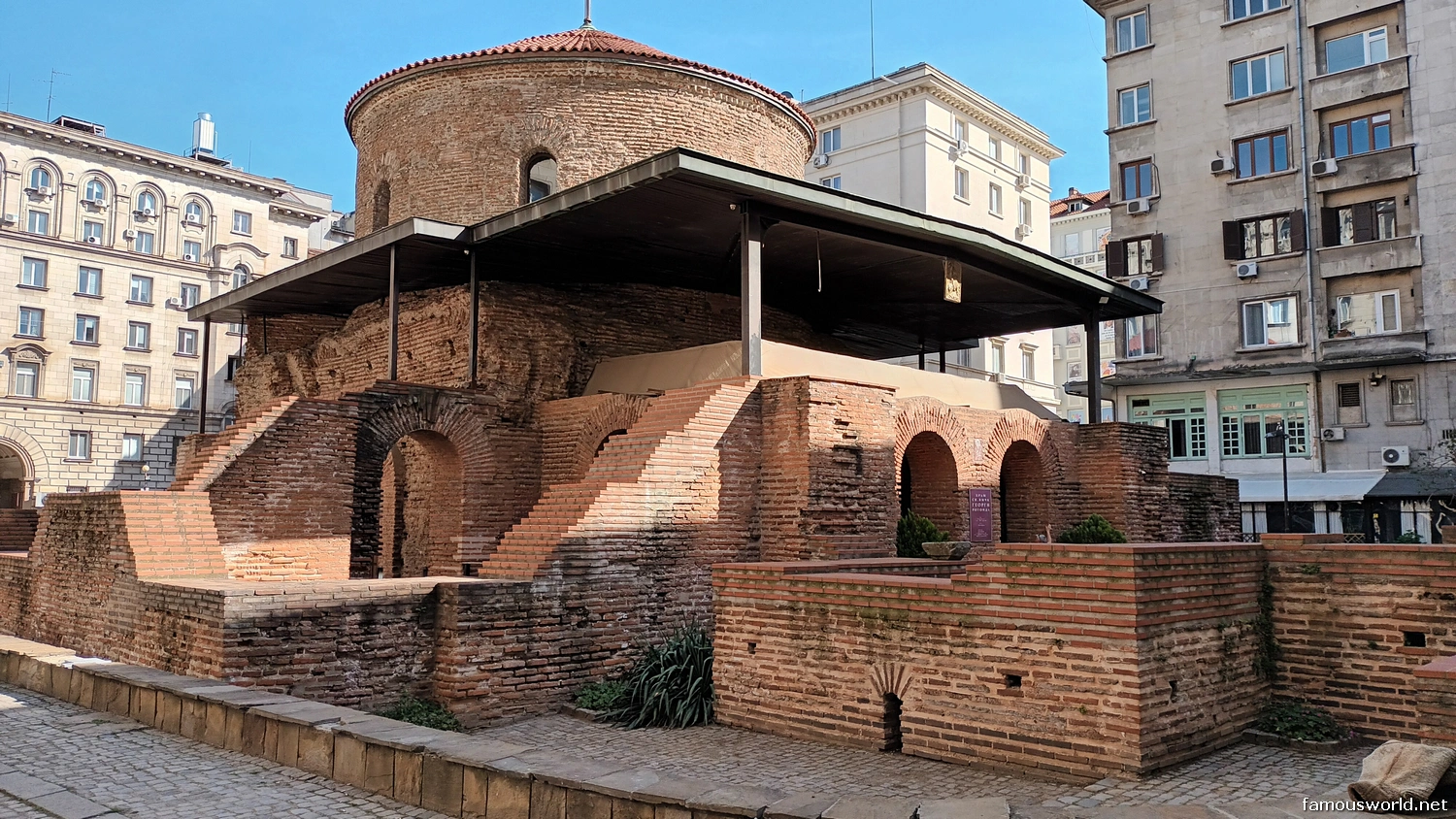
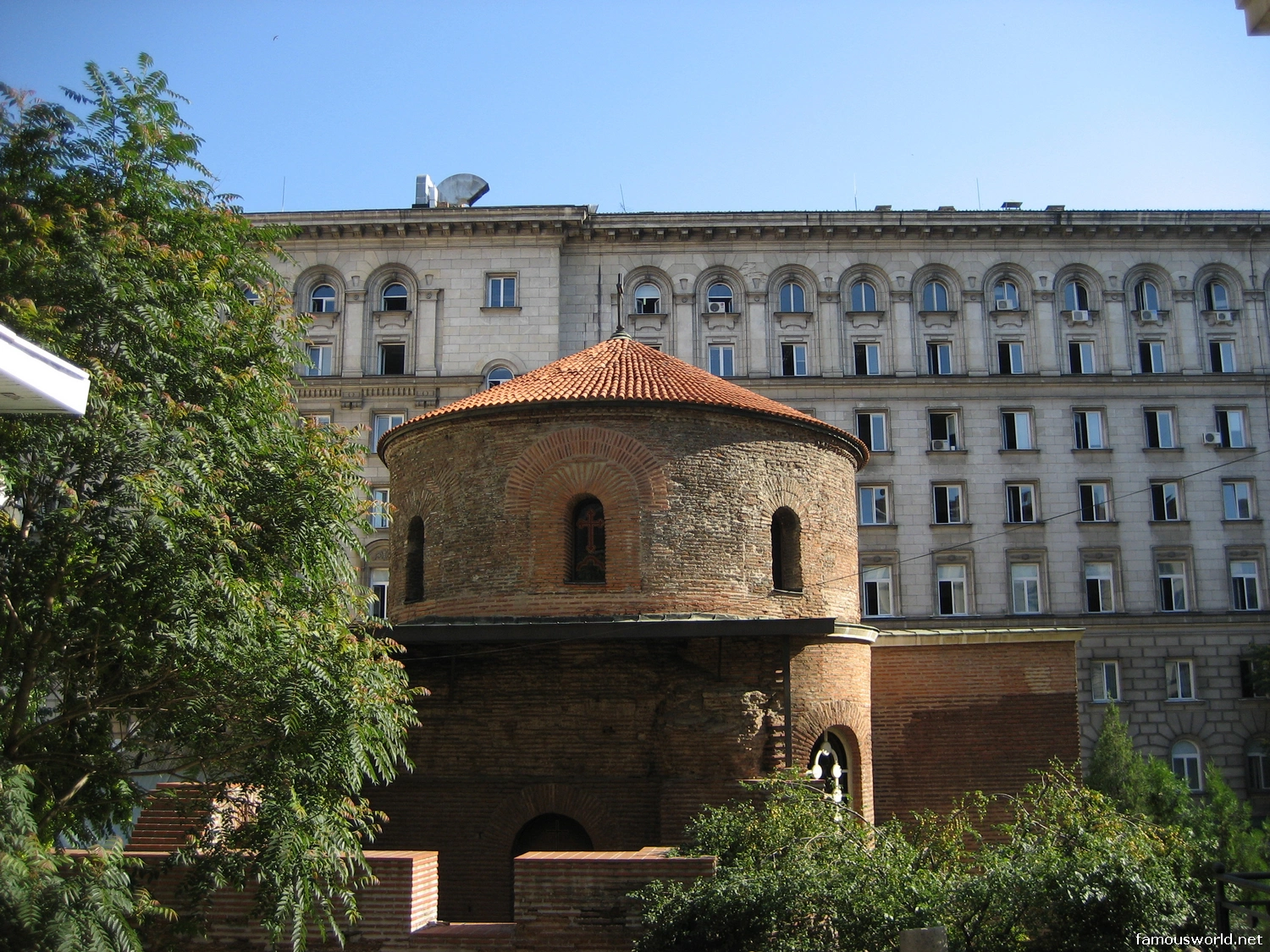
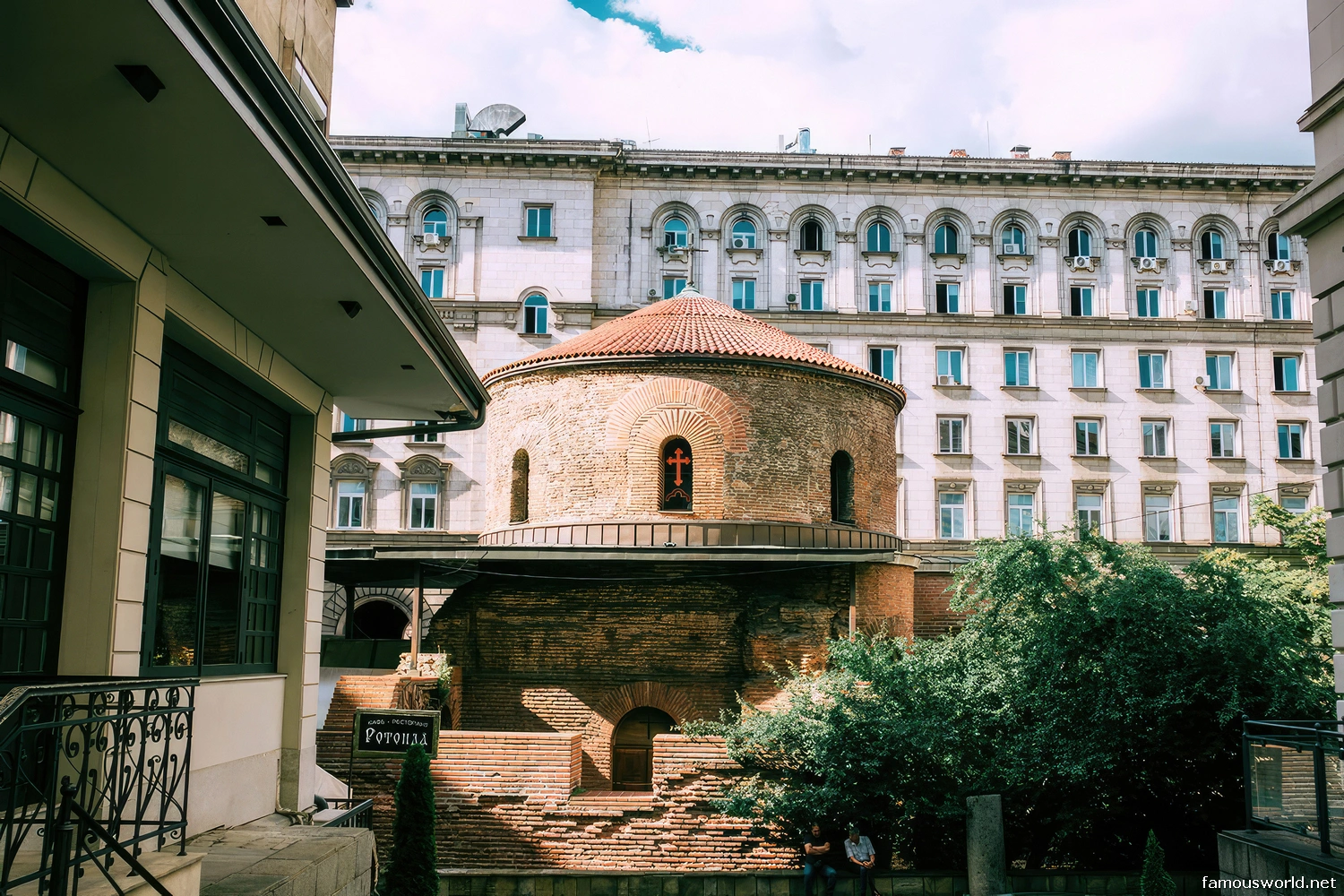

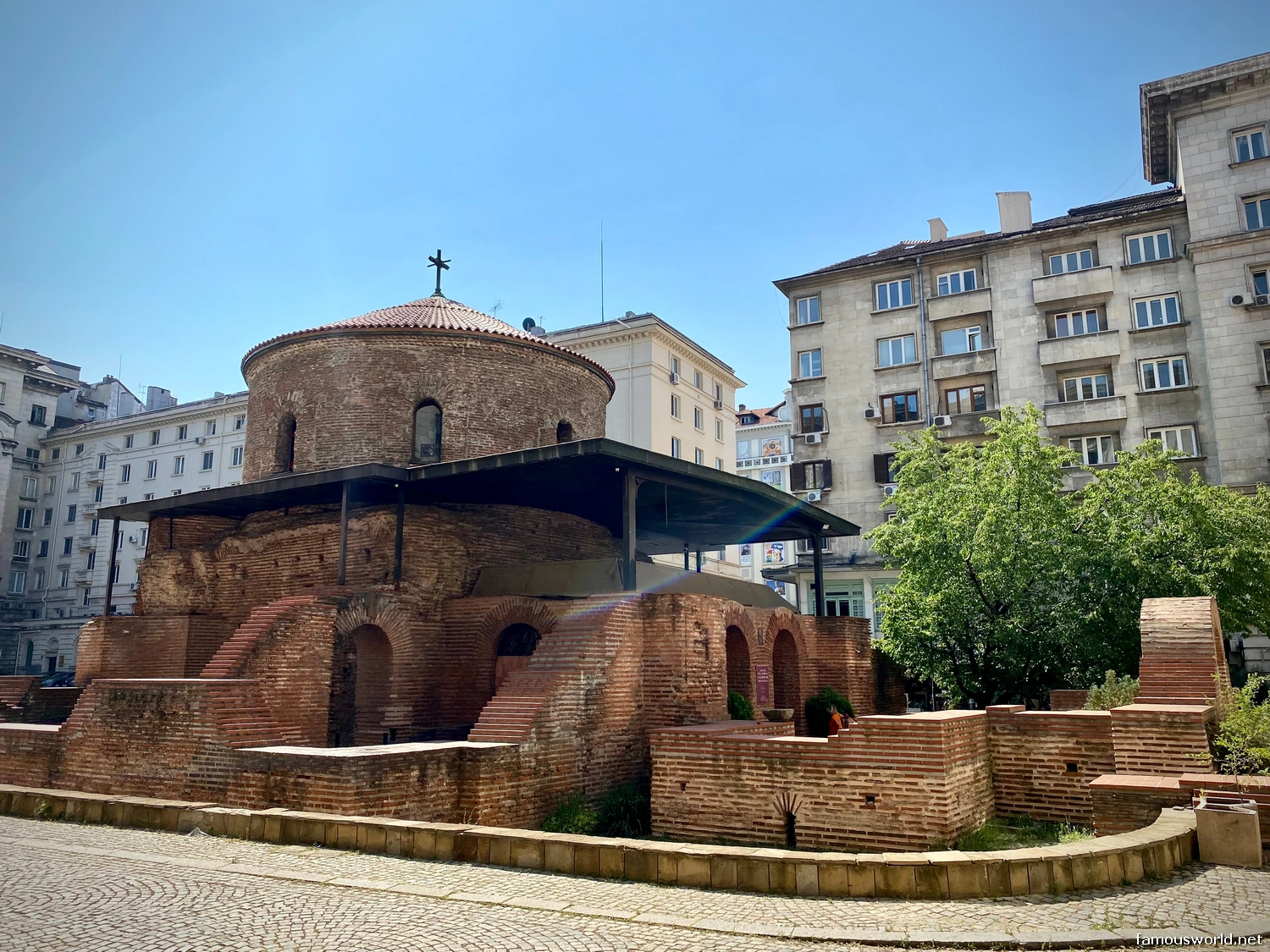
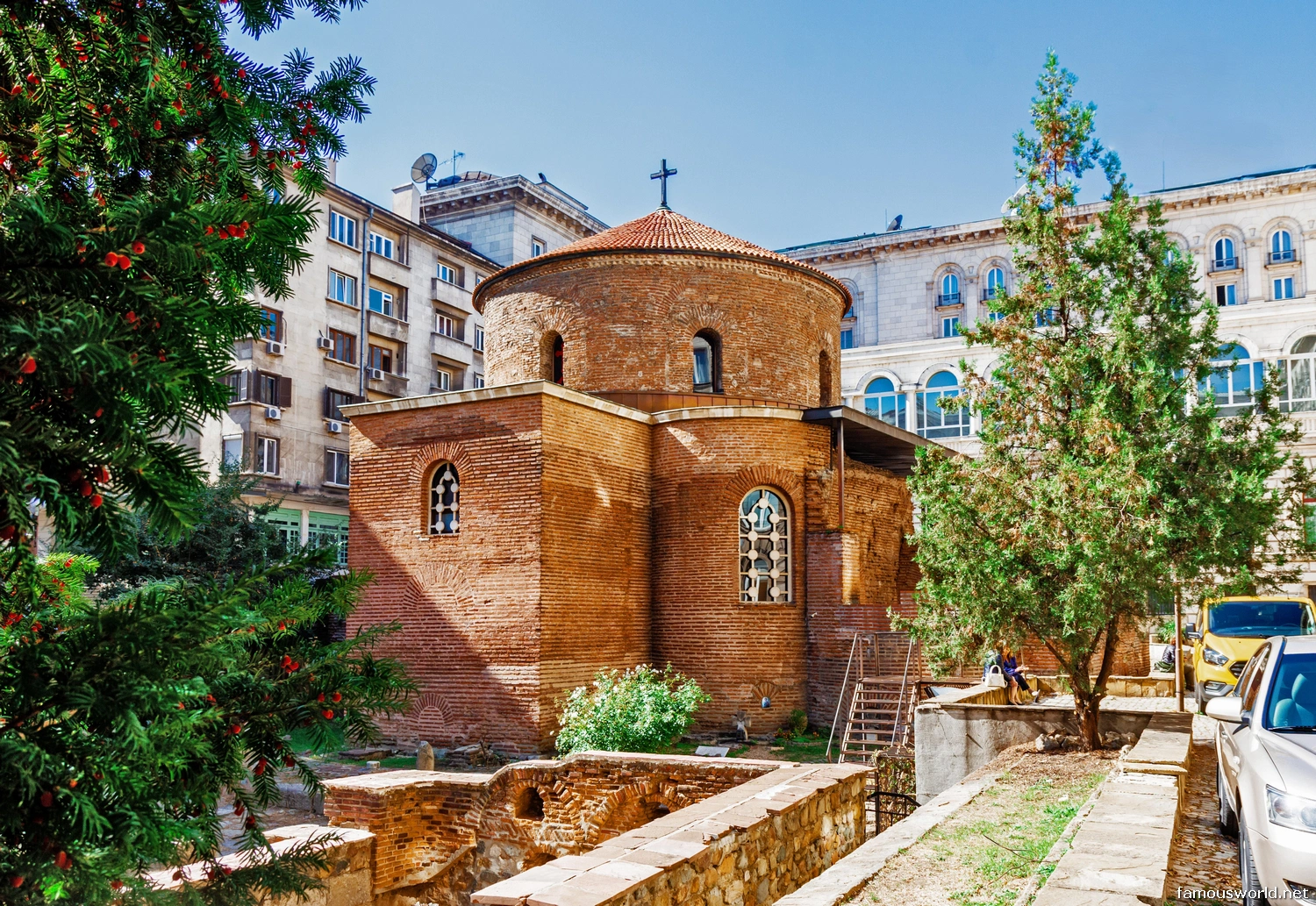
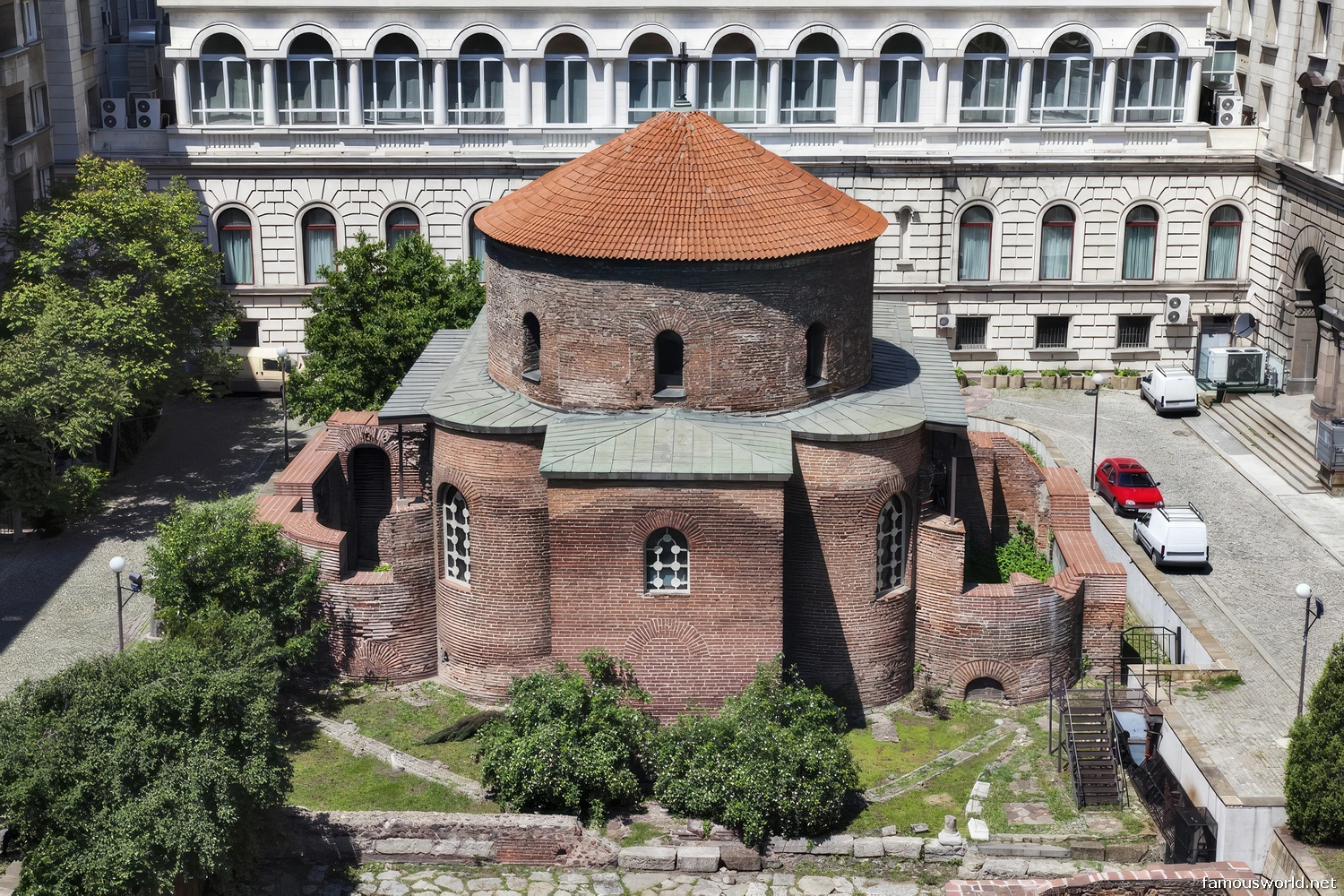
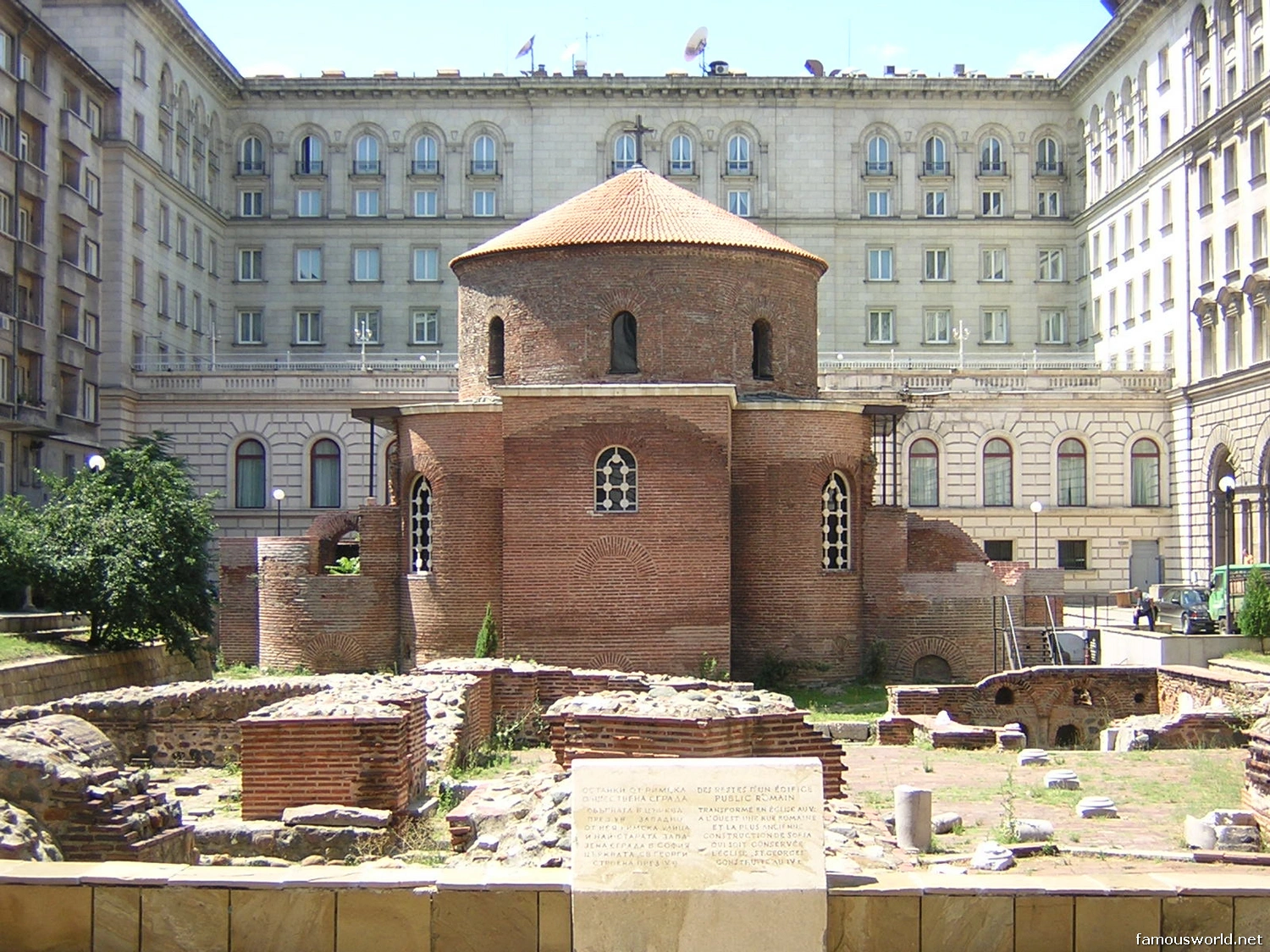
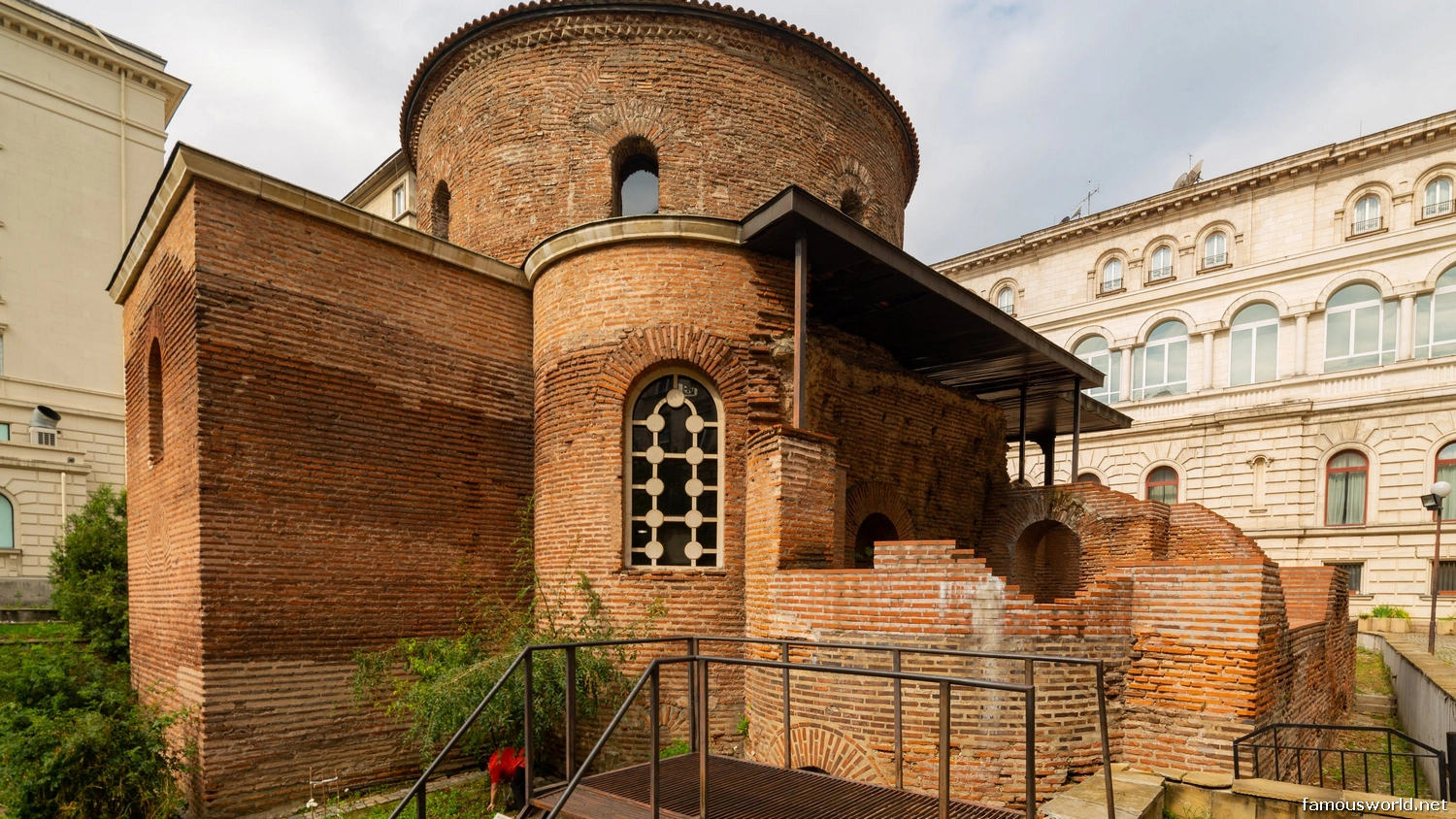
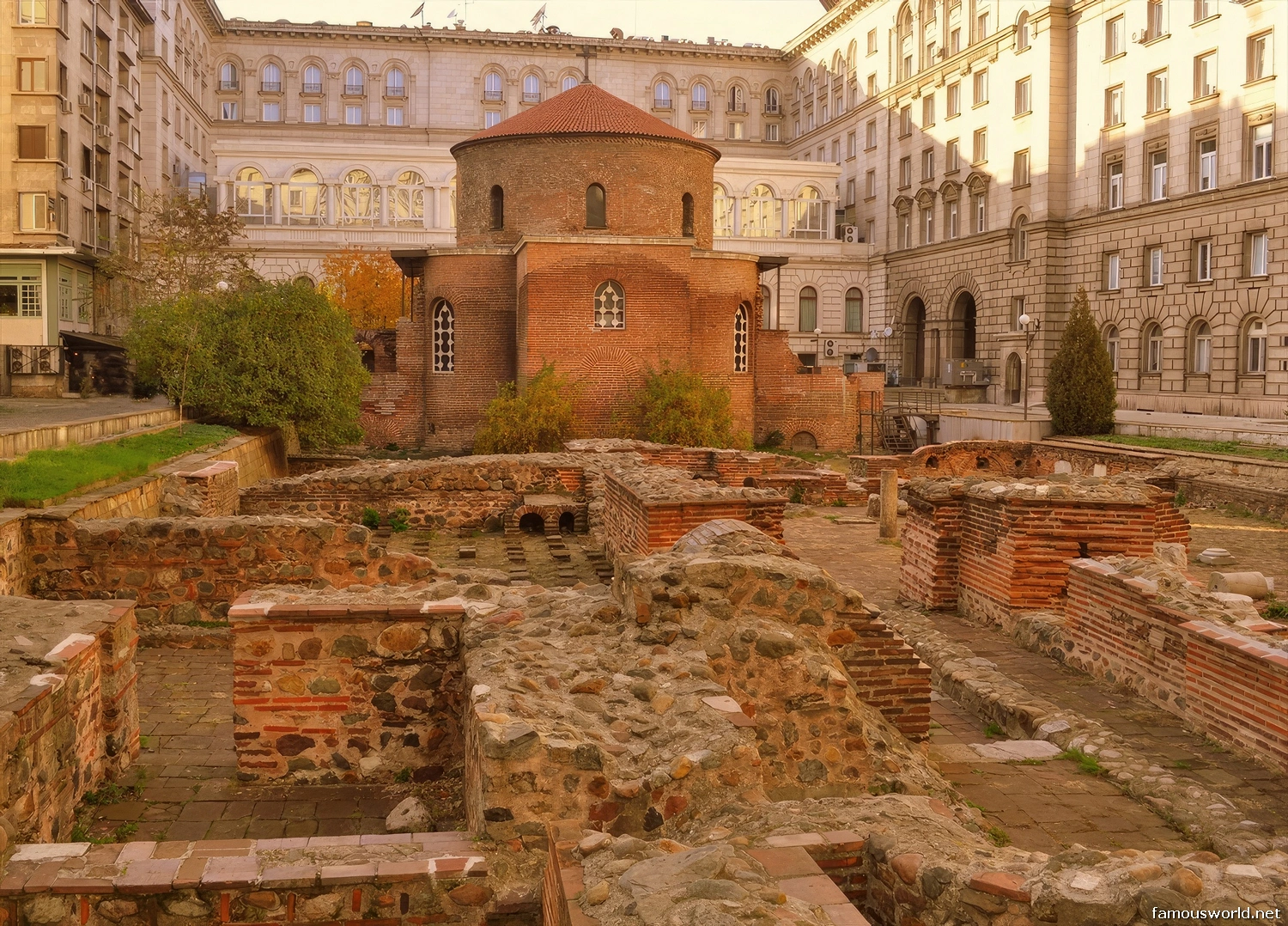
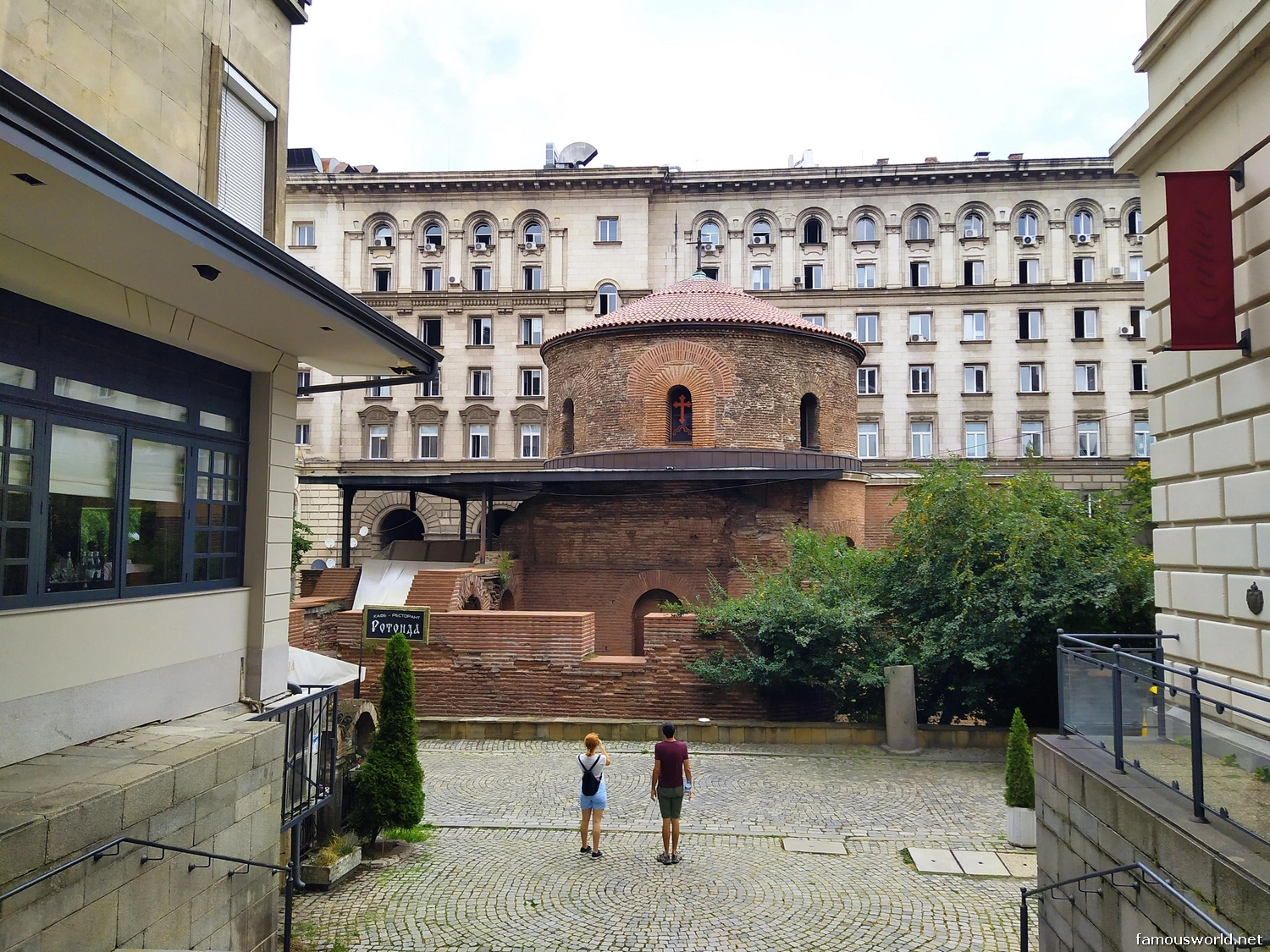
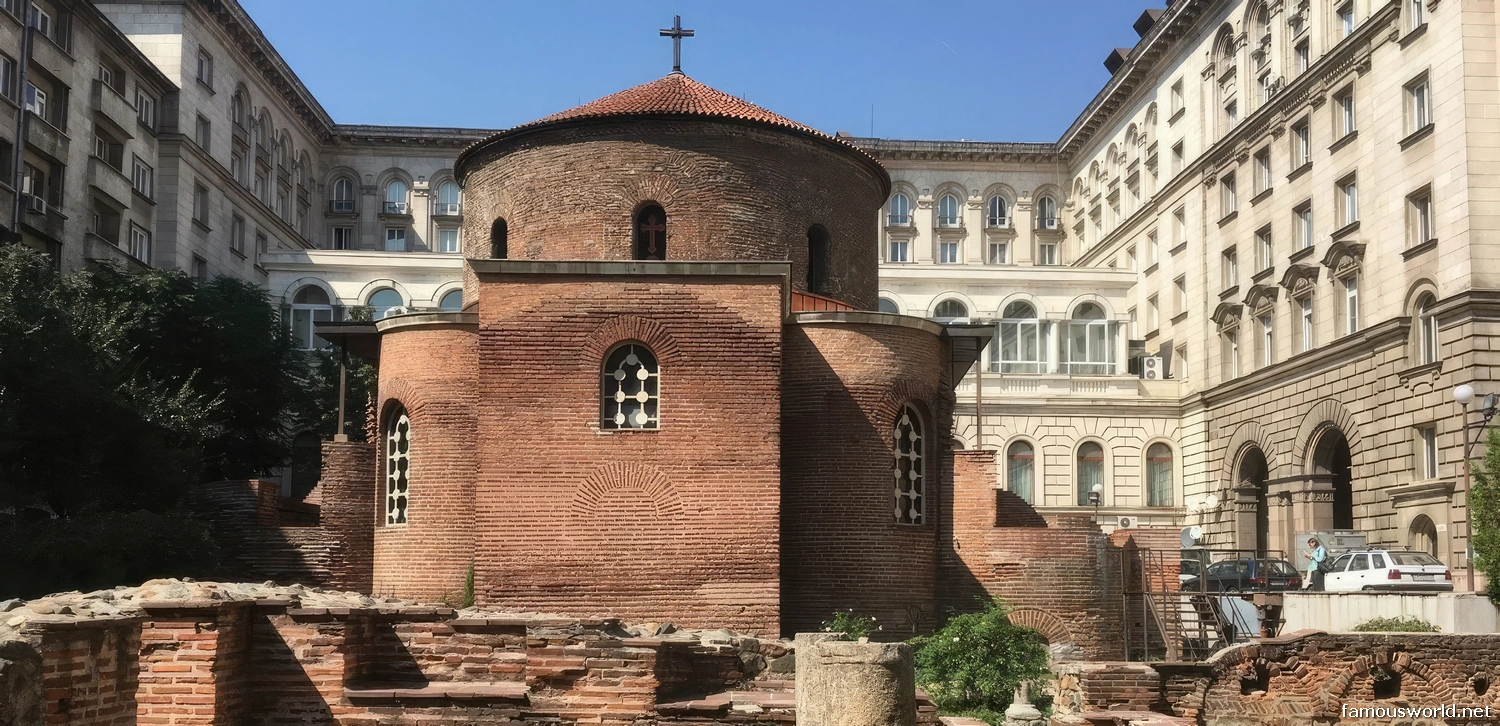
Tucked away in a quiet courtyard, surrounded by the imposing structures of modern government, the Church of St. George is a hidden gem and the oldest preserved building in Sofia. This small, red-brick rotunda dates back to the 4th century when Sofia, then called Serdica, was a favored city of the Roman Emperor Constantine the Great. Originally built as Roman baths, it has survived for centuries by transforming into a church, a mosque, and now a church again. A visit is a step back in time, an intimate encounter with the city’s deep Roman and medieval past, where layers of history are literally painted on its ancient walls.
Listen to an introduction about St. George Rotunda Church

Name and Location
- Name: Church of St. George (Ротонда „Свети Георги“, Rotonda “Sveti Georgi”).
- Location: In the courtyard behind the Presidency building, just east of the Serdika metro station, Sofia, Bulgaria.
How to Get There
The Rotunda is located in the absolute center of Sofia and is very easy to find.
- By Metro: The easiest way is to take the metro to Serdika station (lines M1, M2, M4), which is a hub for the ancient Serdica archaeological complex. From the station, walk a few steps to the entrance of the Presidency courtyard.
- By Foot: The church is a short walk from all major downtown attractions, including Vitosha Boulevard and the Alexander Nevsky Cathedral. Access is through an archway in the Presidential Palace building.
Landscape and Architecture
The church is famous for its unique setting, an archaeological island in the middle of the modern city.
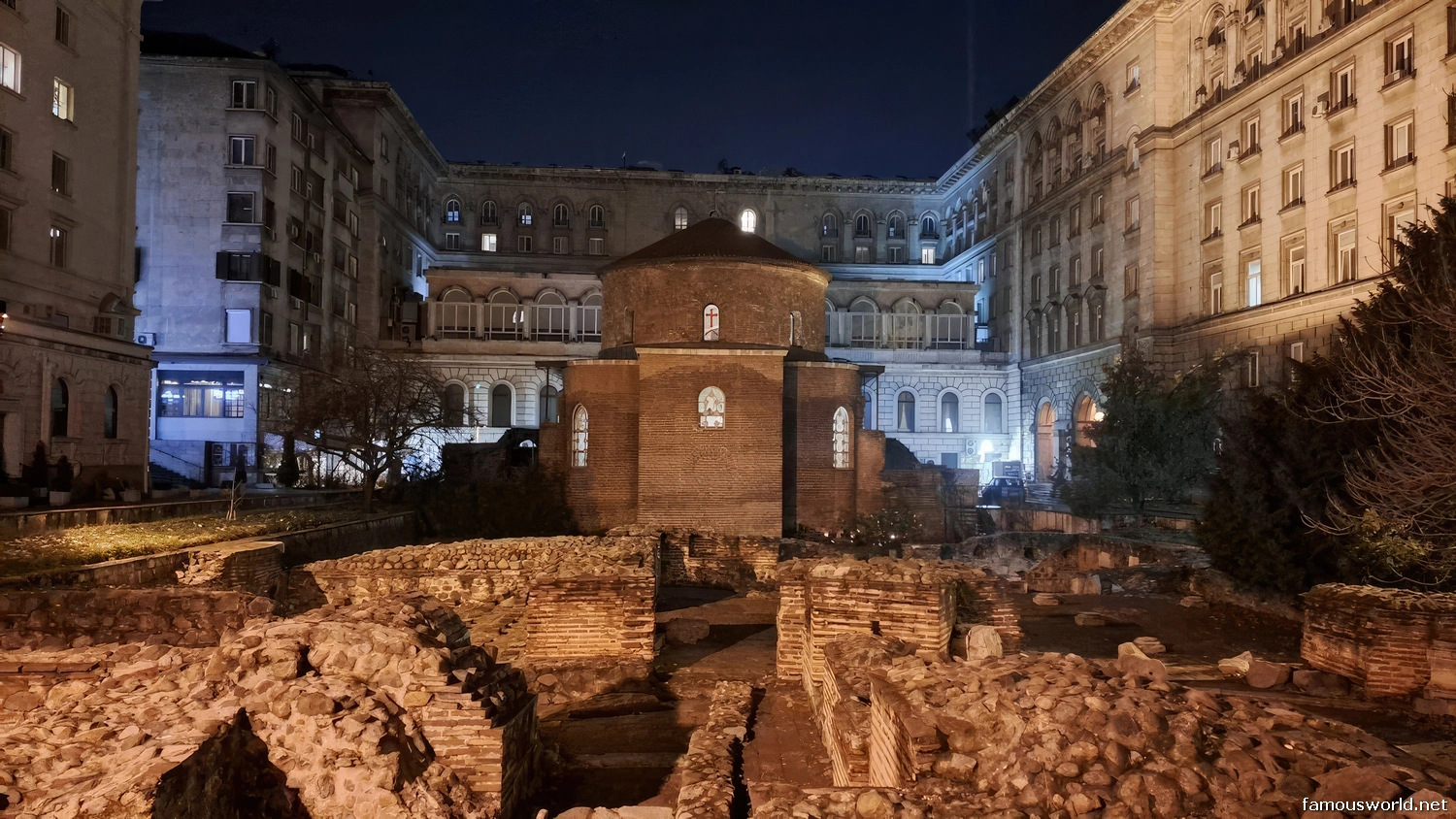
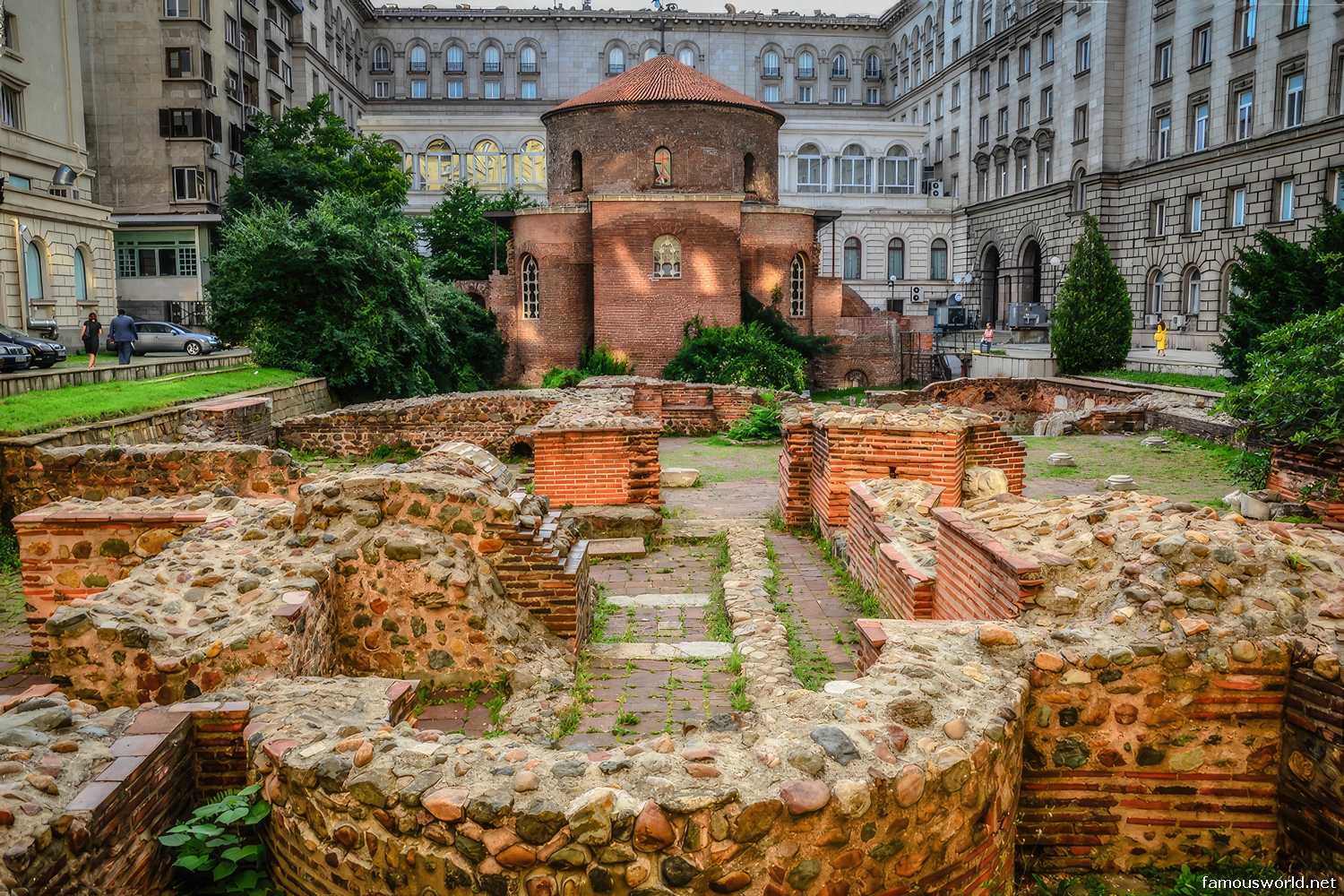
- Presidency Courtyard: The Rotunda sits in a sunken courtyard, surrounded on three sides by the modern Presidency and Sheraton Hotel buildings. This unique setting places it at the center of both ancient Roman ruins and contemporary Bulgarian governance.
- Roman Architecture: The building is a classic example of late Roman brick architecture—a simple, symmetrical cylinder topped by a shallow dome. Its construction is humble yet incredibly durable.
- Archaeological Complex: The church is surrounded by the exposed ruins of the ancient Roman city of Serdica, including a main street (decumanus), a hypocaust heating system, and other building foundations.
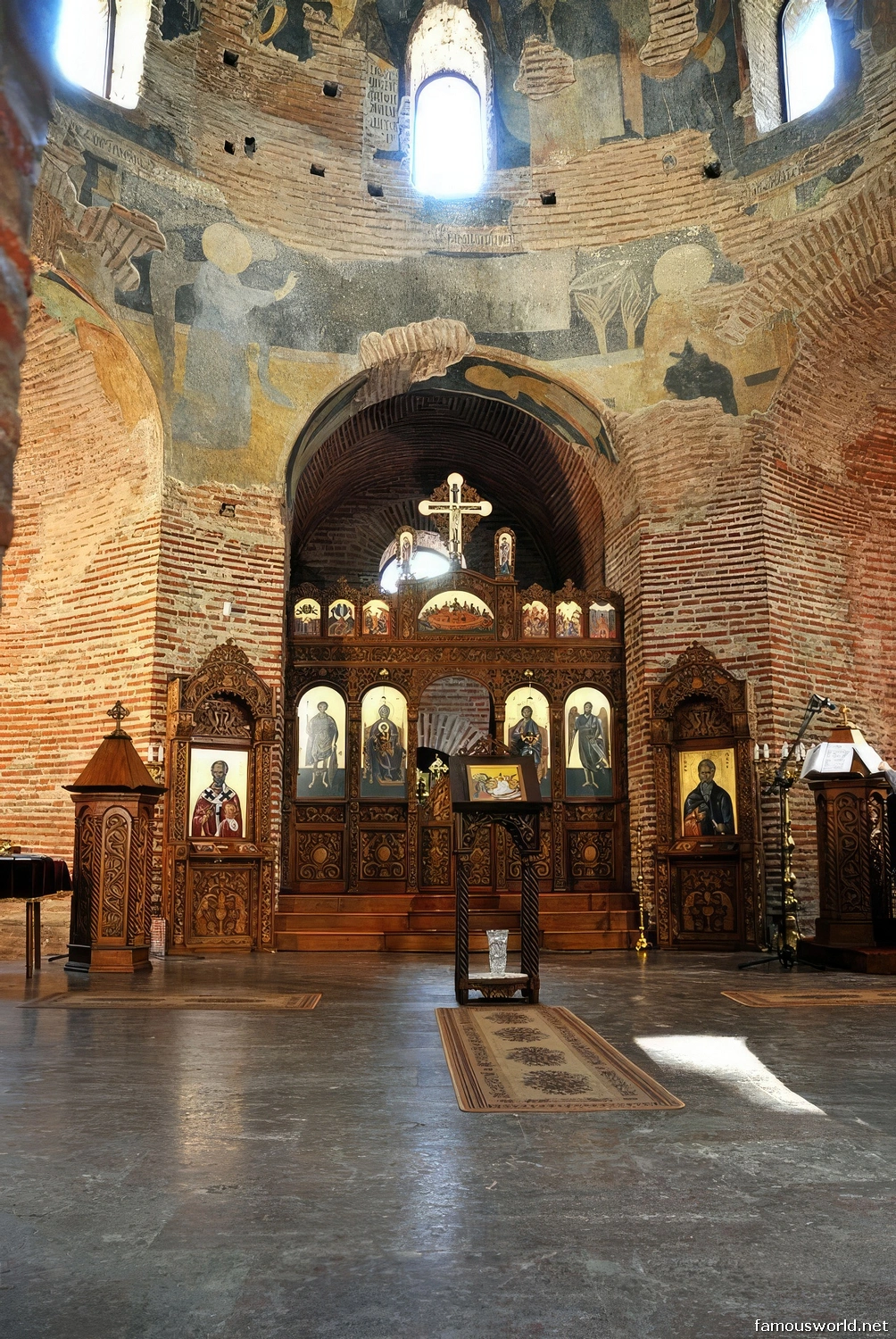
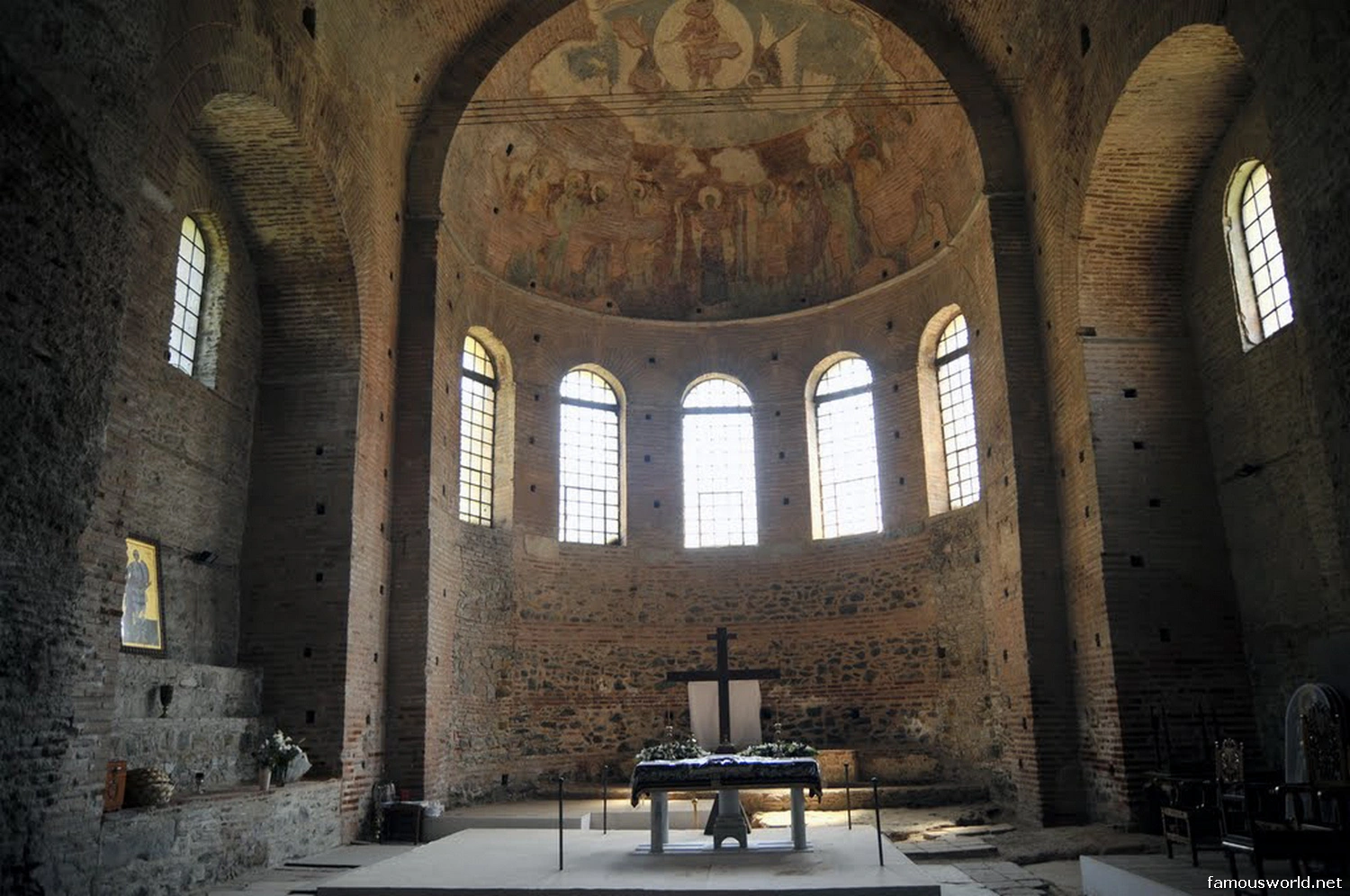
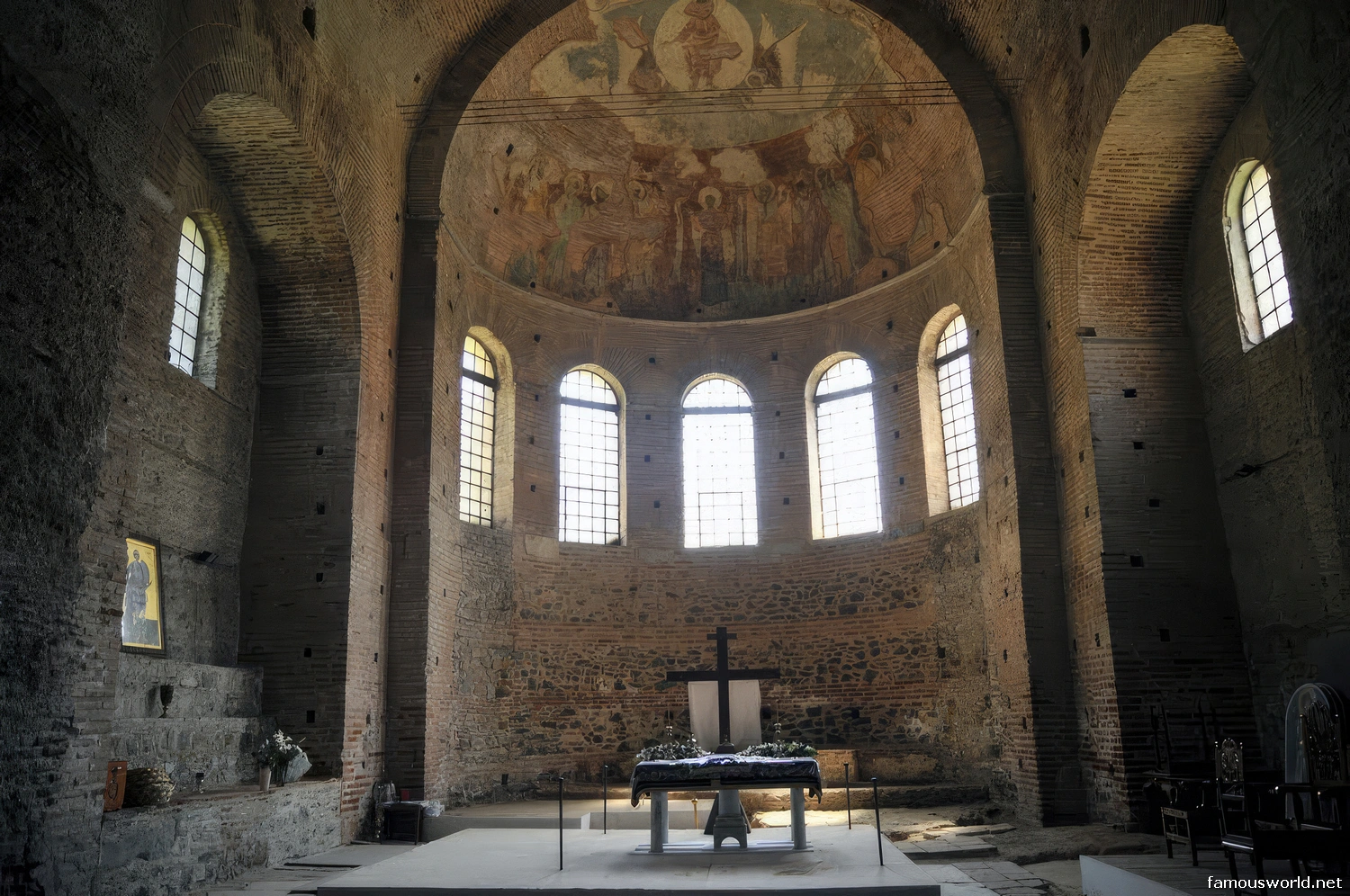
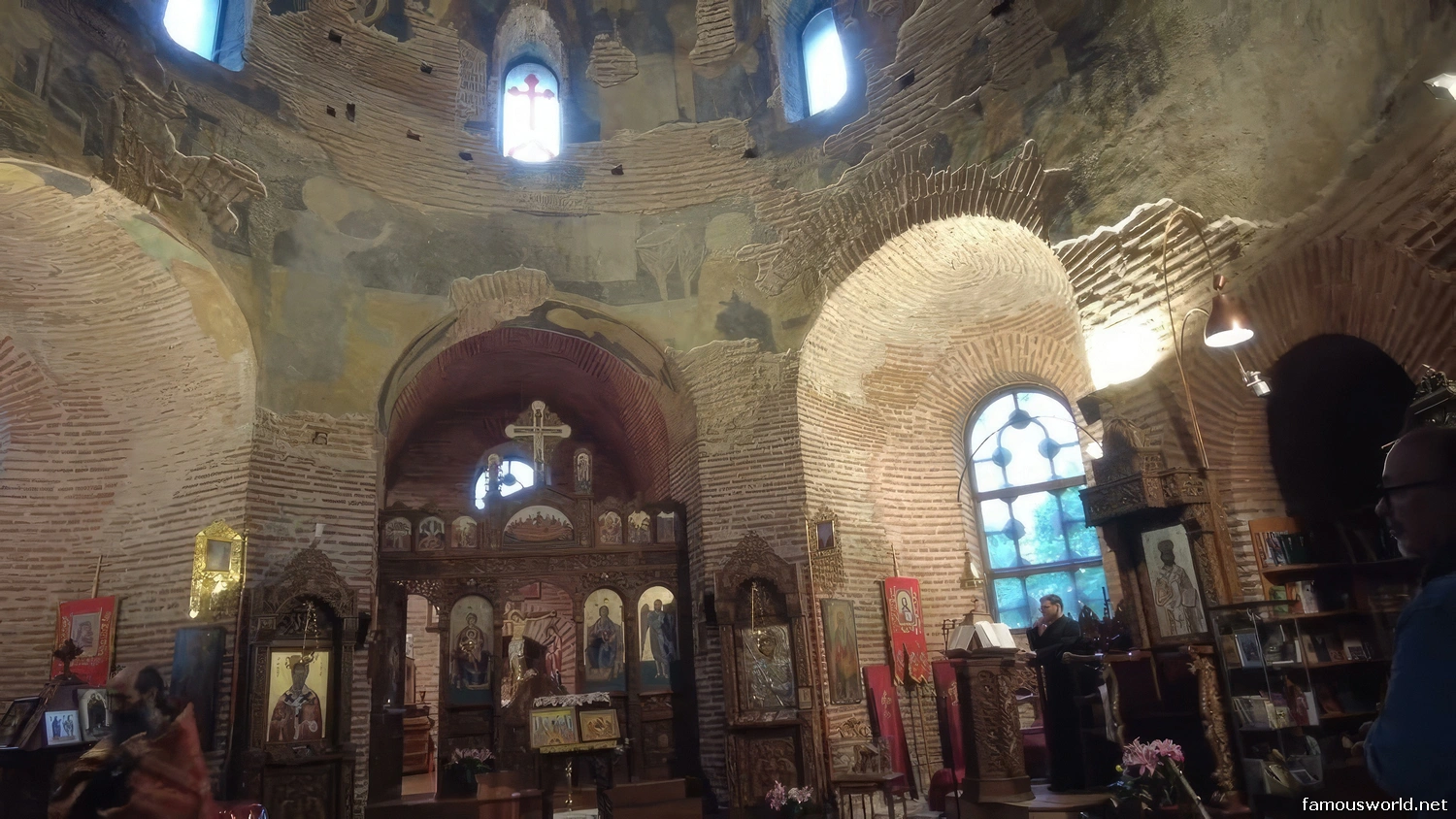
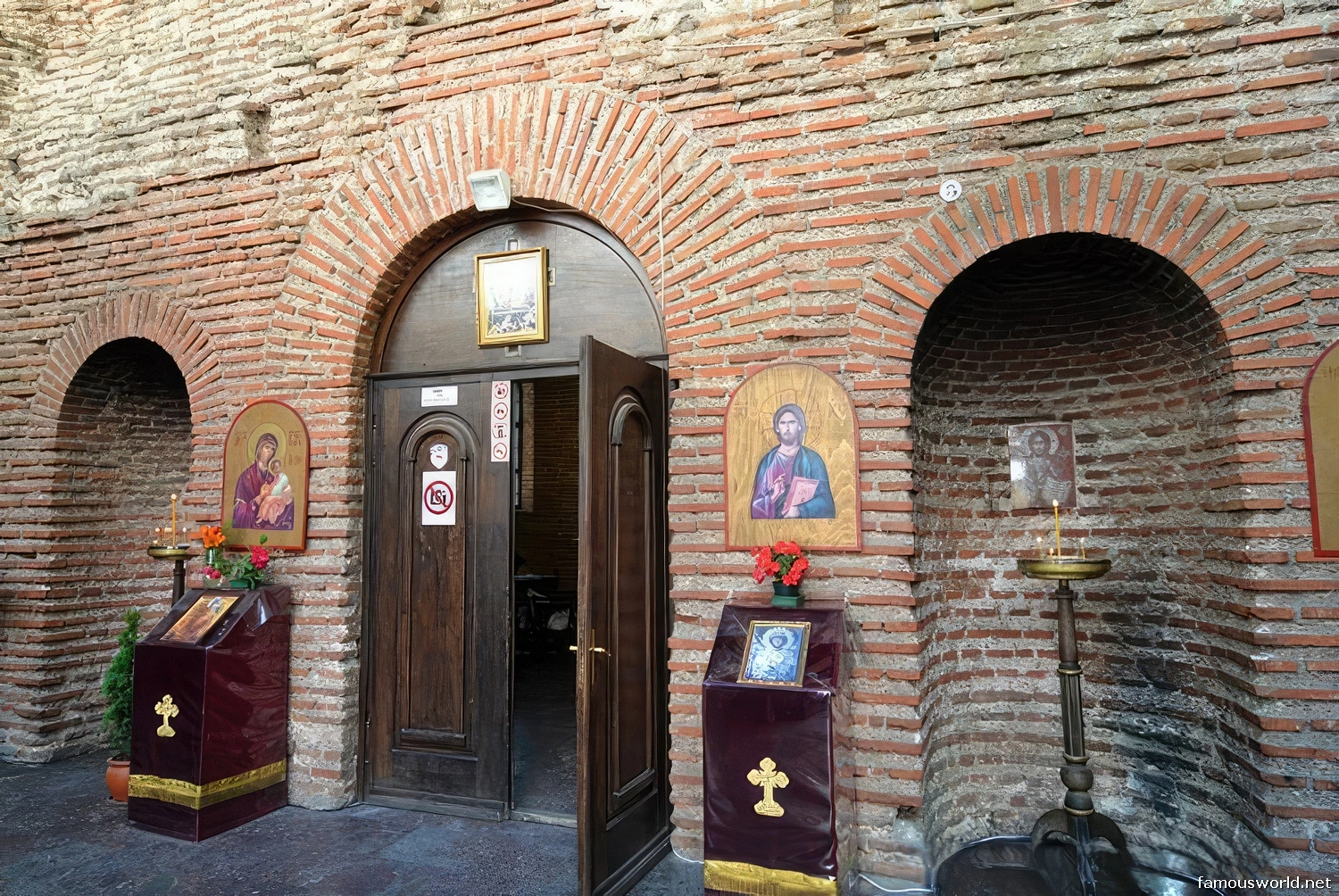
- Medieval Frescoes: The interior is renowned for its layers of exquisite medieval frescoes, painted between the 10th and 14th centuries. These were plastered over during the Ottoman period when the church was converted into a mosque and were only rediscovered in the 20th century. The most impressive is a 10th-century depiction of a Christ Pantocrator in the dome.
What Makes It Famous
The St. George Rotunda is famous for its incredible age, historical layers, and unique location.
- Sofia’s Oldest Building: It is widely considered to be the oldest building in the Bulgarian capital, dating back to the height of the Roman Empire.
- Historical Layers: The building’s continuous use and the multiple layers of frescoes inside offer a visible timeline of the city’s Roman, Byzantine, Bulgarian, and Ottoman history.
- A Hidden Treasure: Its location—tucked away from the main streets inside a government courtyard—makes it feel like a secret discovery for many visitors.
- “My Rome is Serdica”: The site is closely associated with Emperor Constantine the Great, who resided here and was famously quoted as saying, “Serdica is my Rome.”
Differences from Other Wonders (vs. Alexander Nevsky Cathedral)
An intimate, ancient Roman survivor offers a completely different experience than a grand, modern national monument.
- Environment (Hidden Archaeological Courtyard vs. Grand National Square): The St. George Rotunda is found in a small, enclosed archaeological site, creating an intimate and historic atmosphere. The Alexander Nevsky Cathedral commands a vast, open public square, designed for national ceremony.
- Scale (Intimate and Human vs. Massive and Awe-Inspiring): The Rotunda is a small, human-scaled building, inviting quiet contemplation. The Alexander Nevsky Cathedral is a massive structure designed to inspire awe through its sheer size and grandeur.
- Core Story (Ancient Continuity vs. Modern Liberation): The story of the Rotunda is one of deep antiquity and continuous adaptation through empires. The story of the Cathedral is one of modern nationhood, built to express gratitude for a specific historical event—liberation from the Ottomans.
- Atmosphere (Ancient and Contemplative vs. Solemn and Monumental): The feeling inside the Rotunda is one of stepping into the distant past, focused on the delicate, layered art. The atmosphere in the Alexander Nevskynt
Location on world map