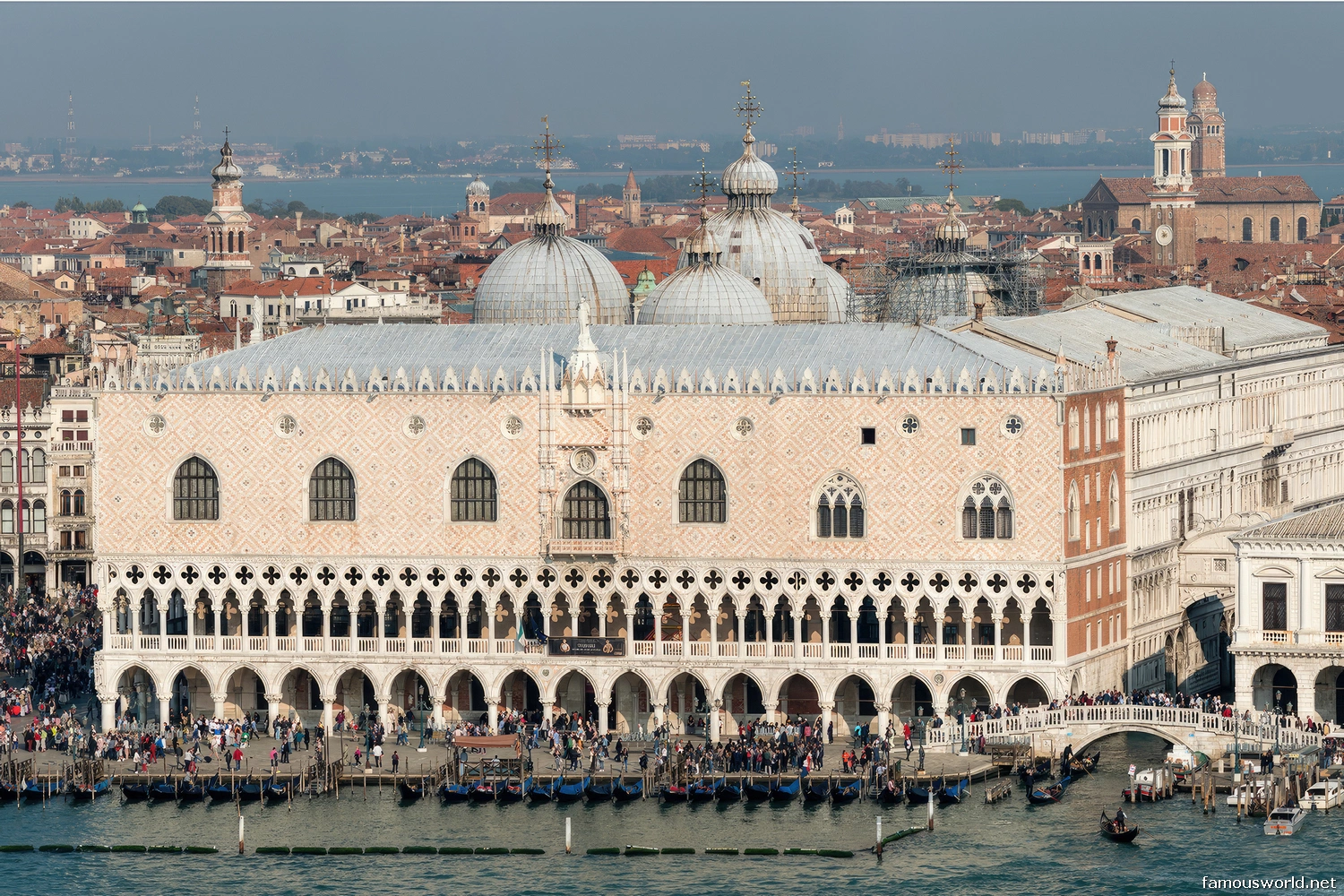
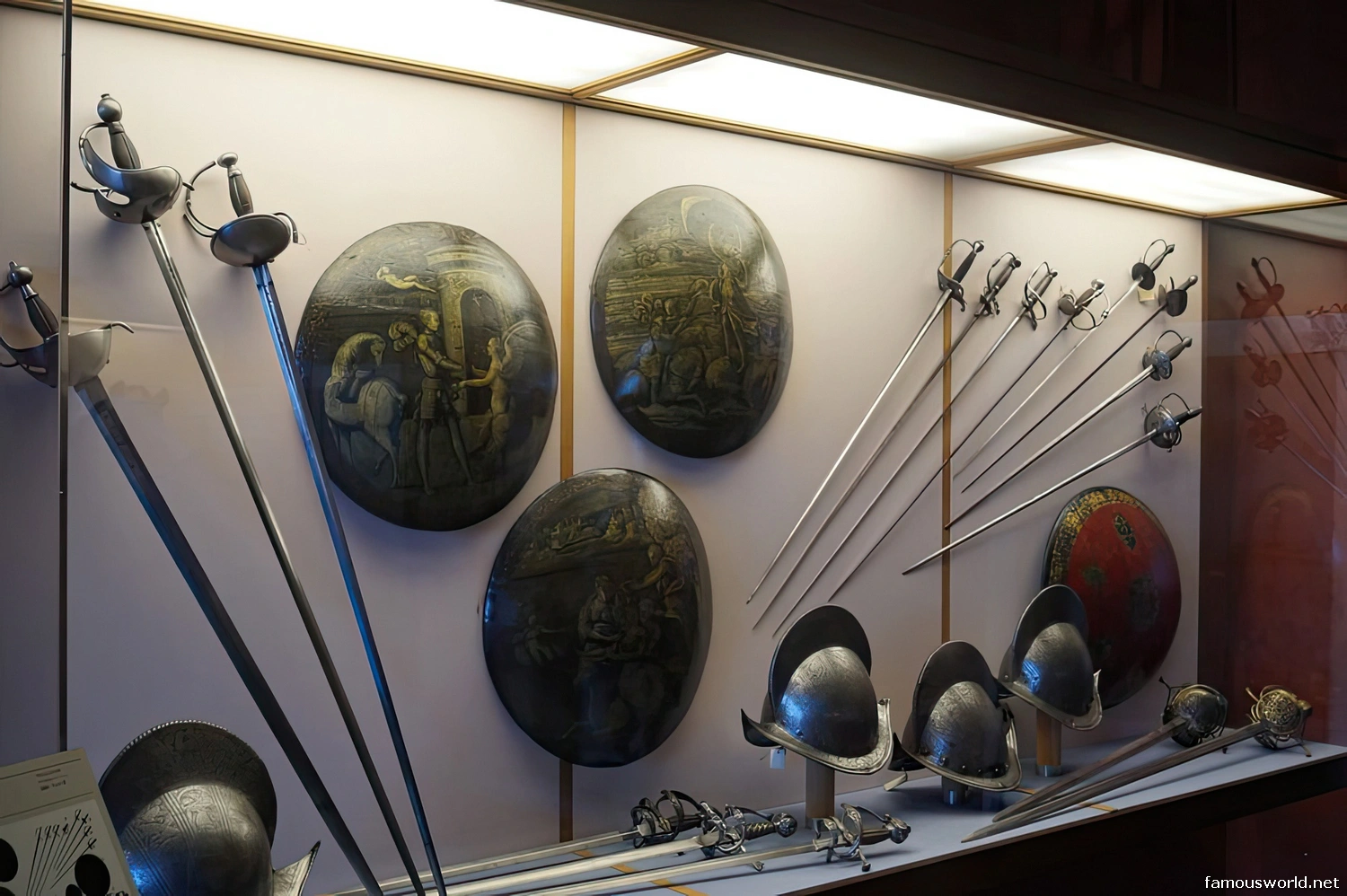
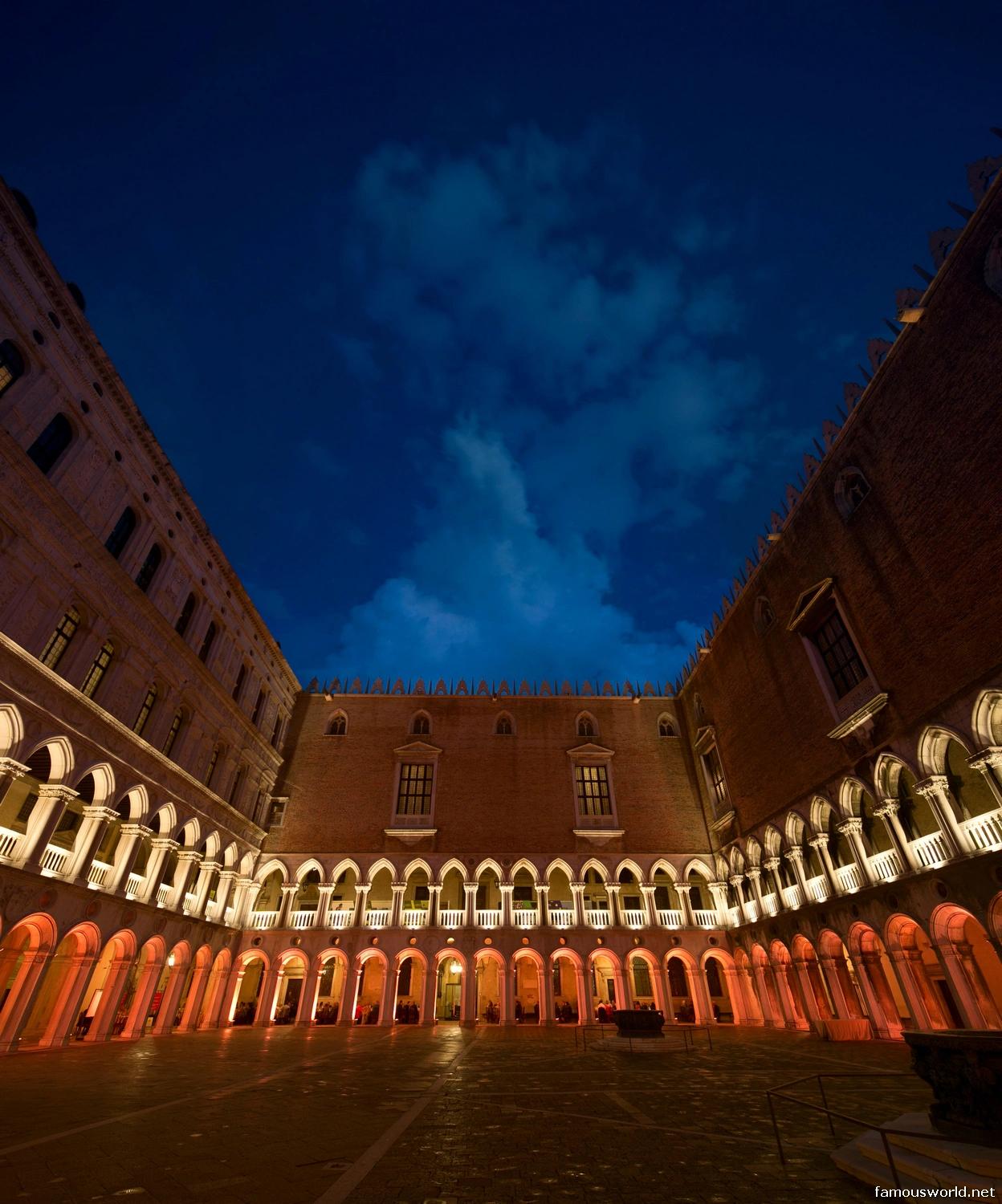
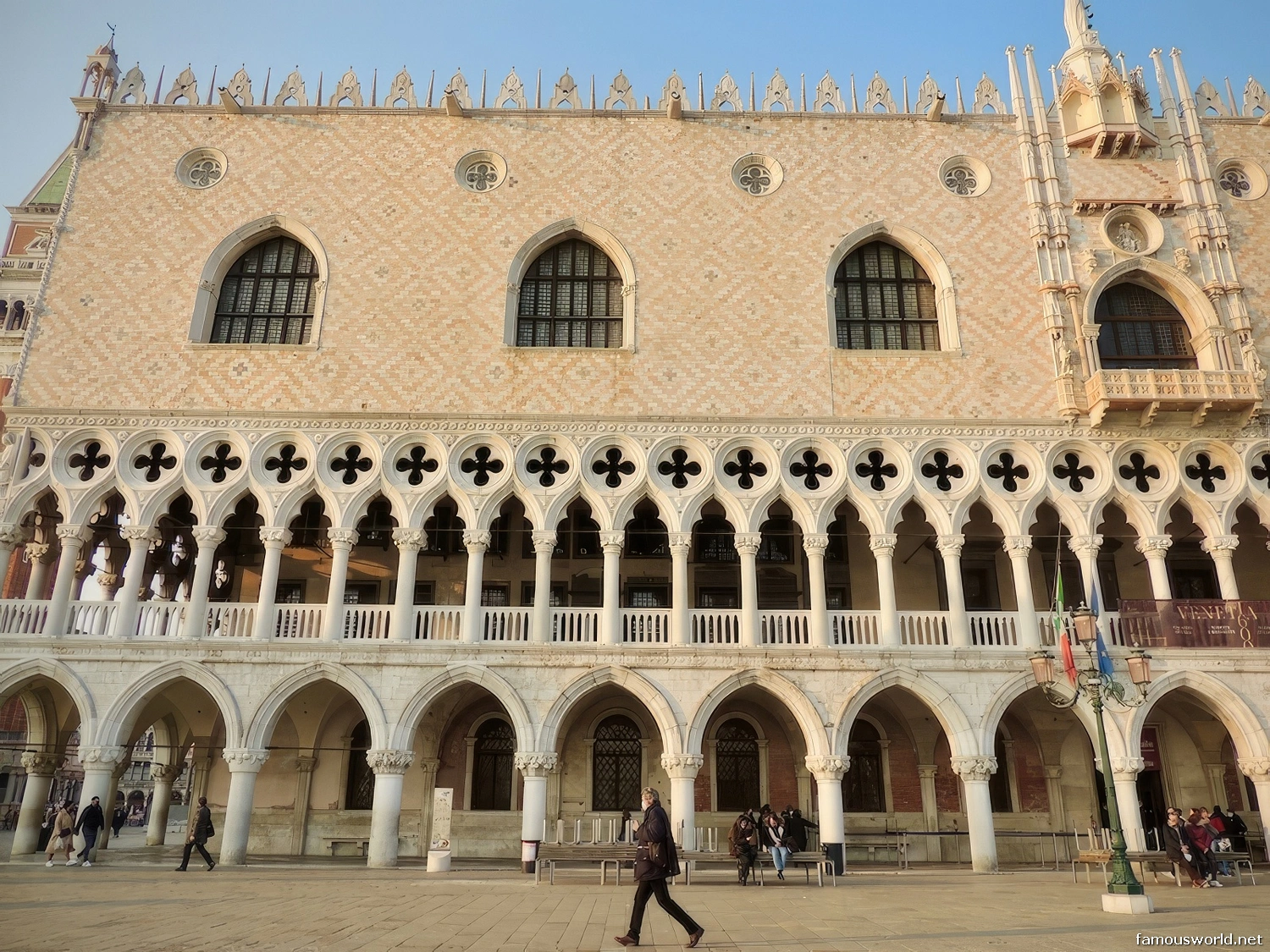
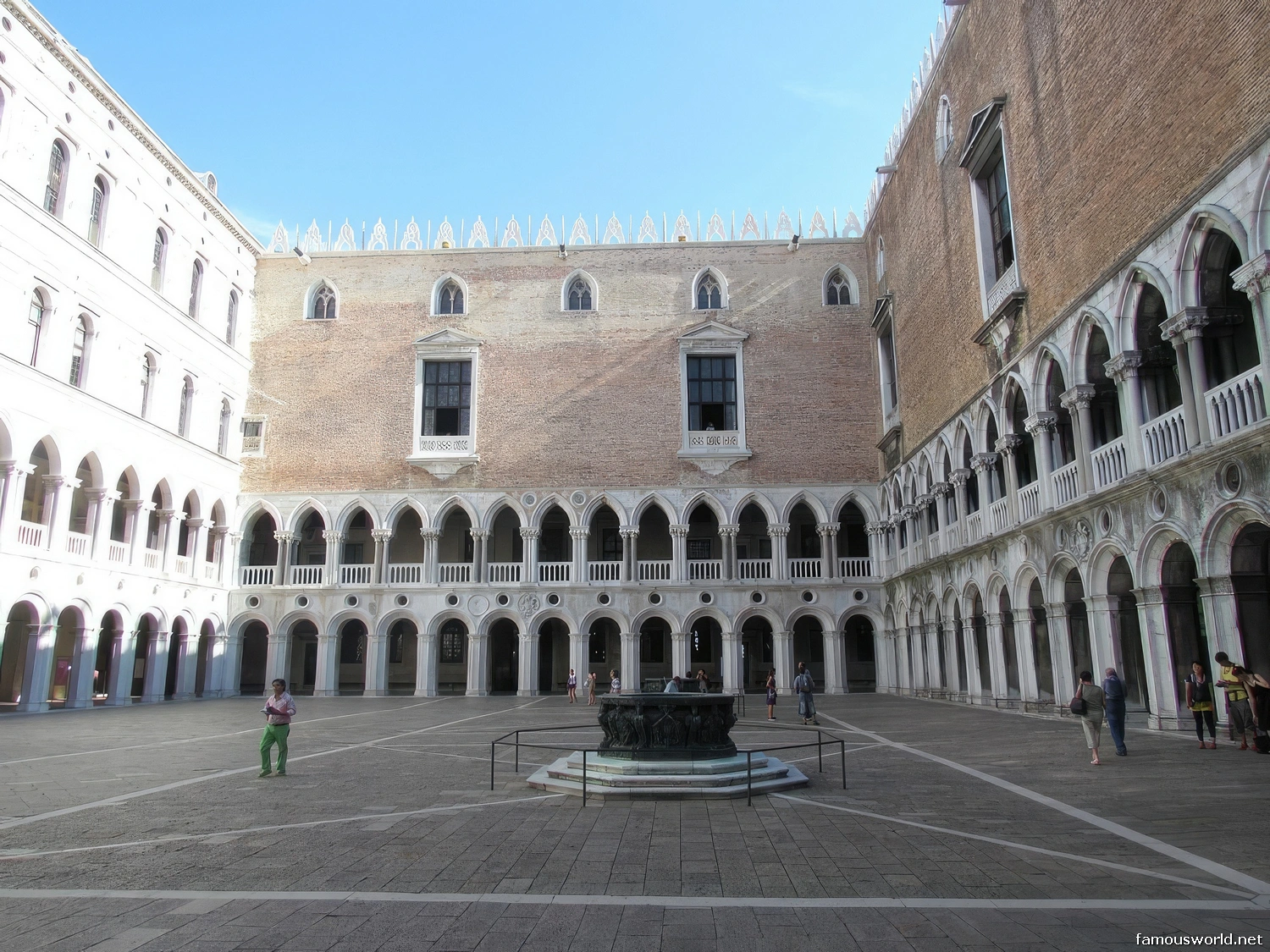
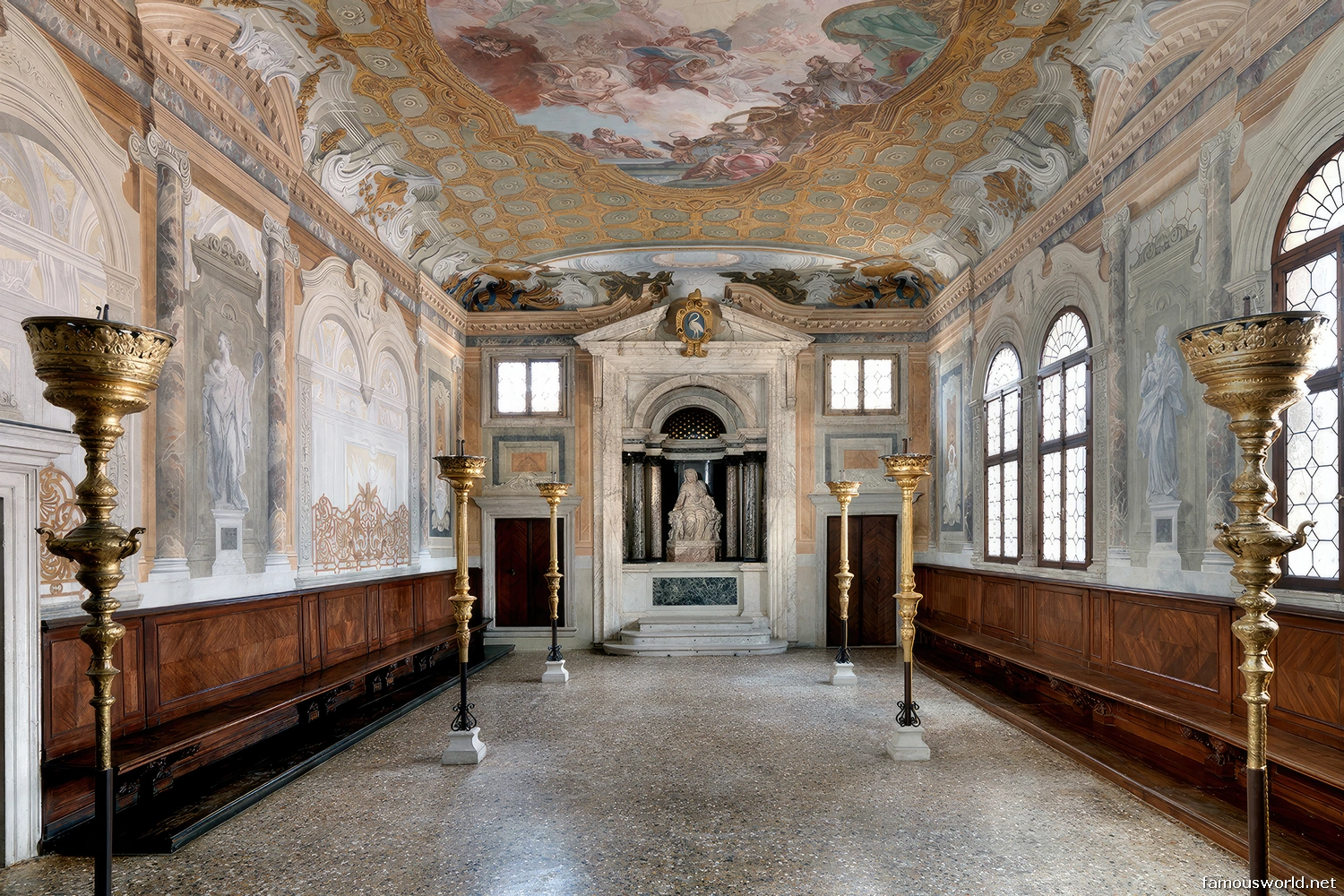
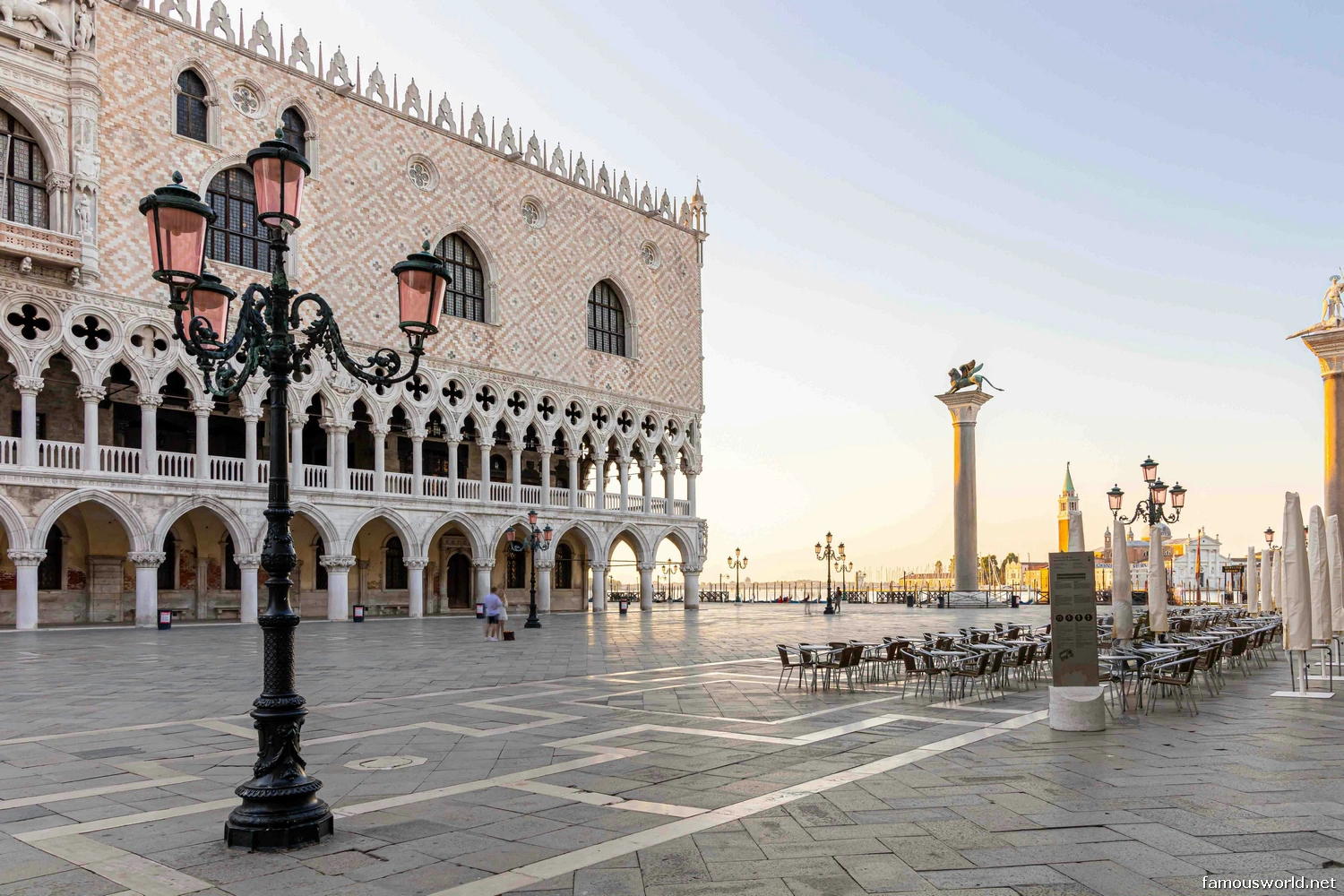
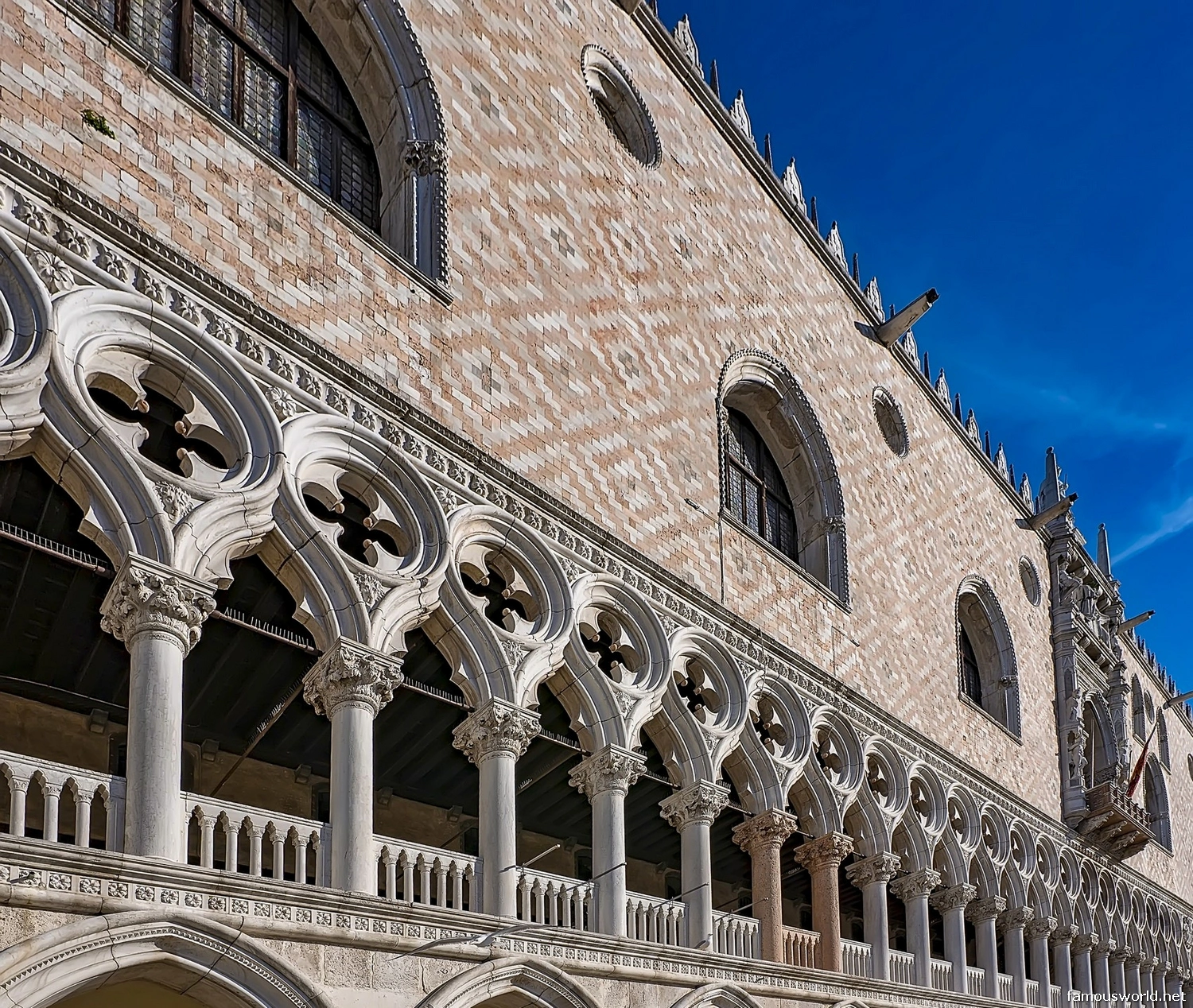
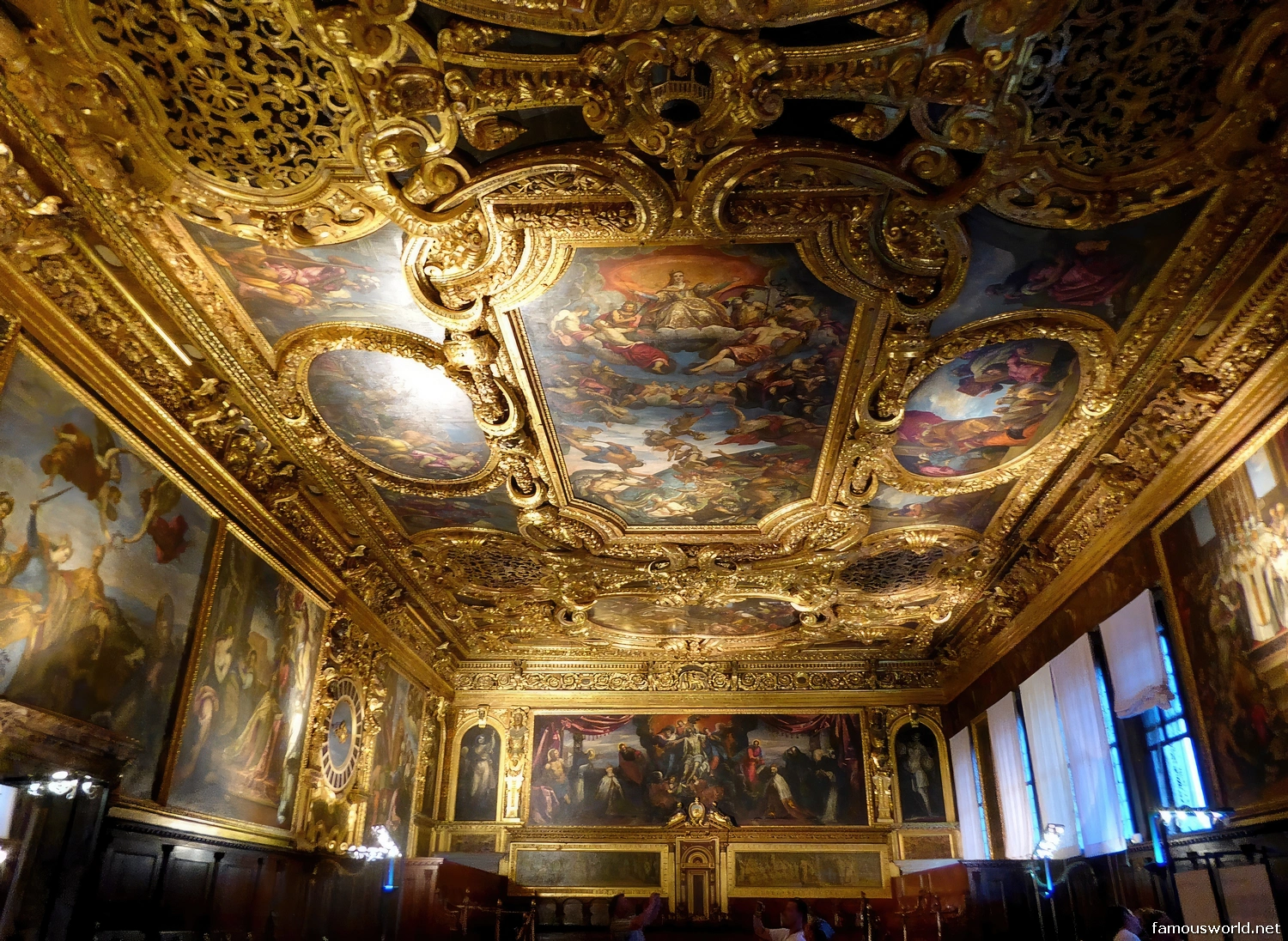
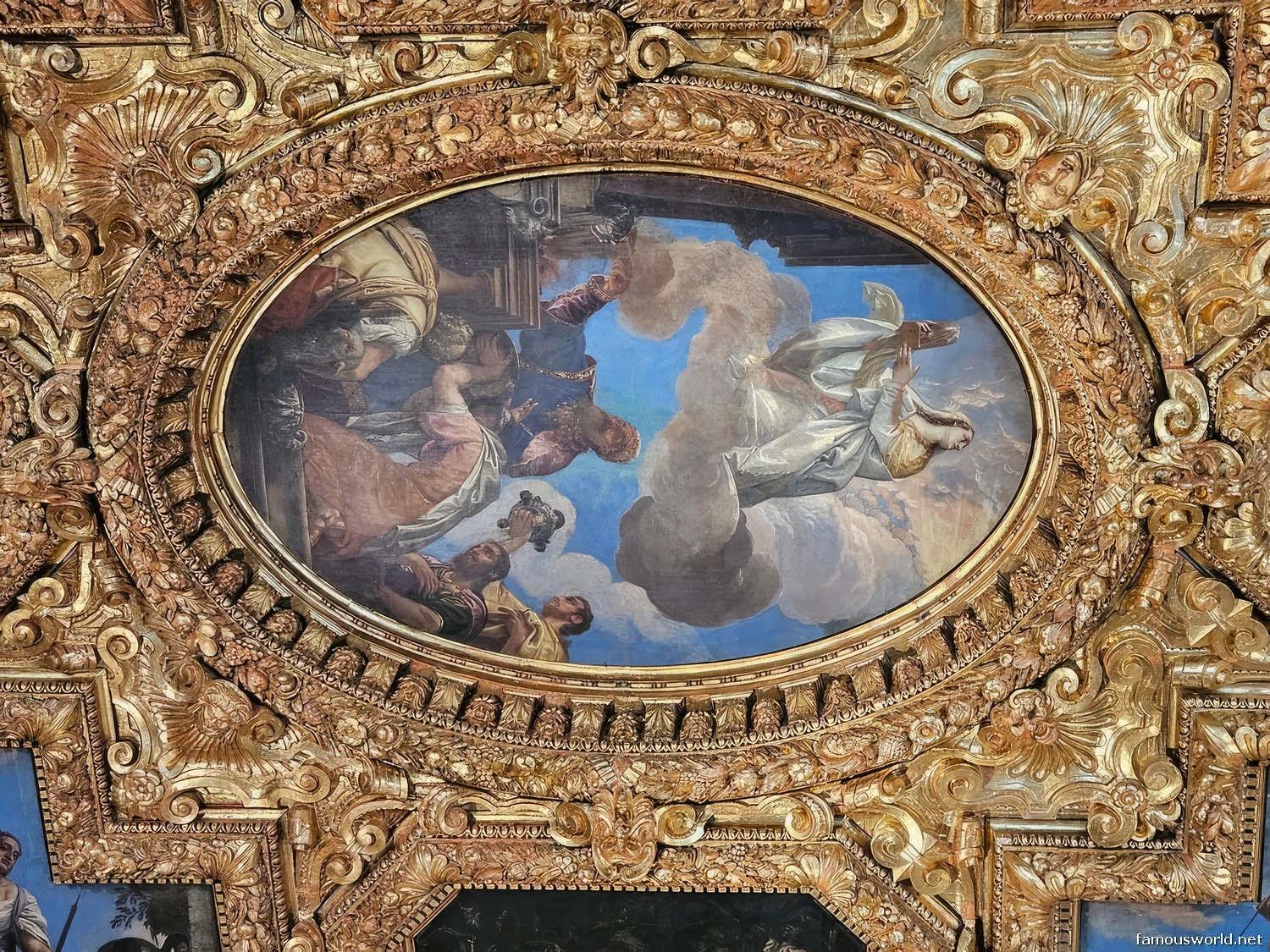
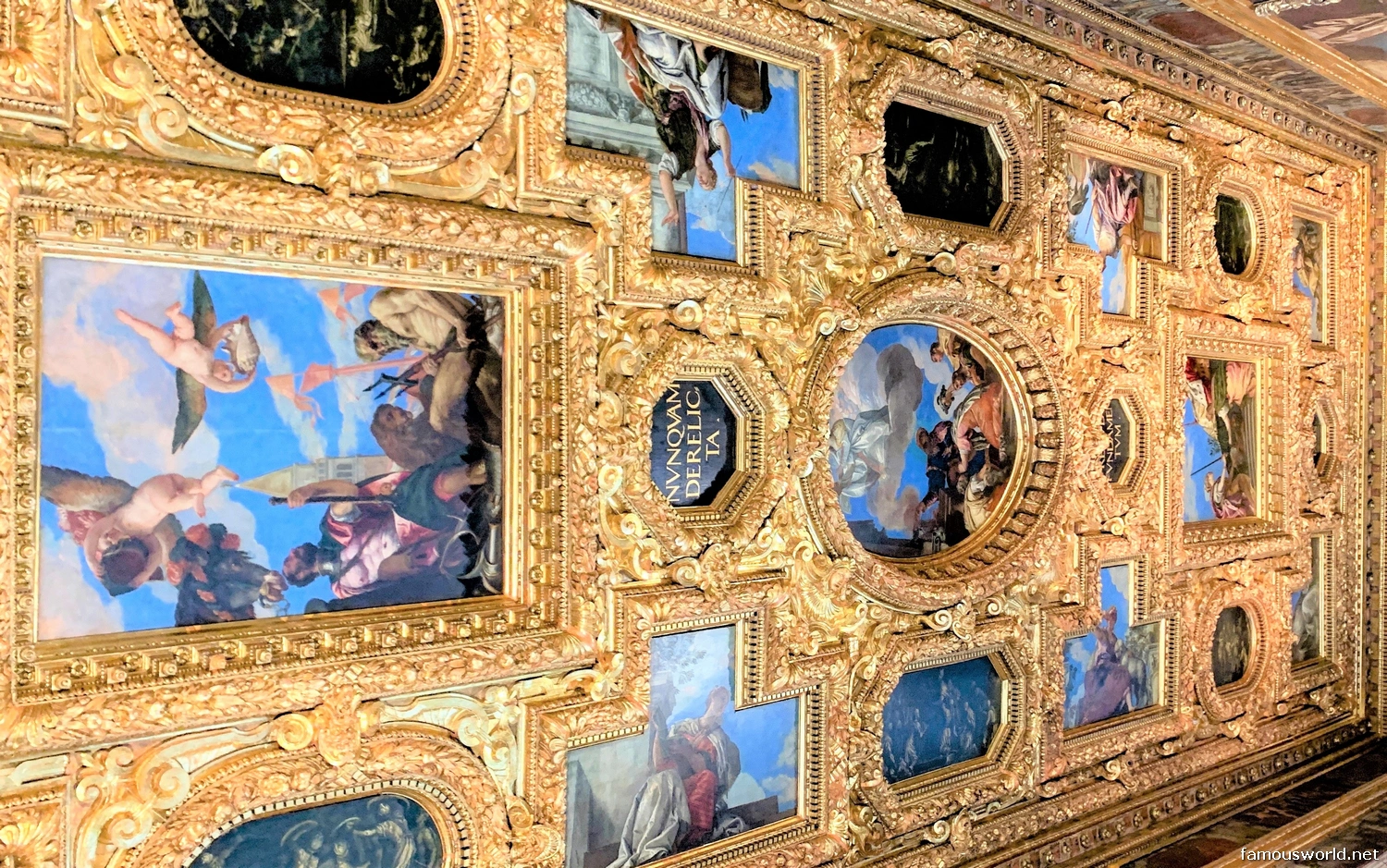
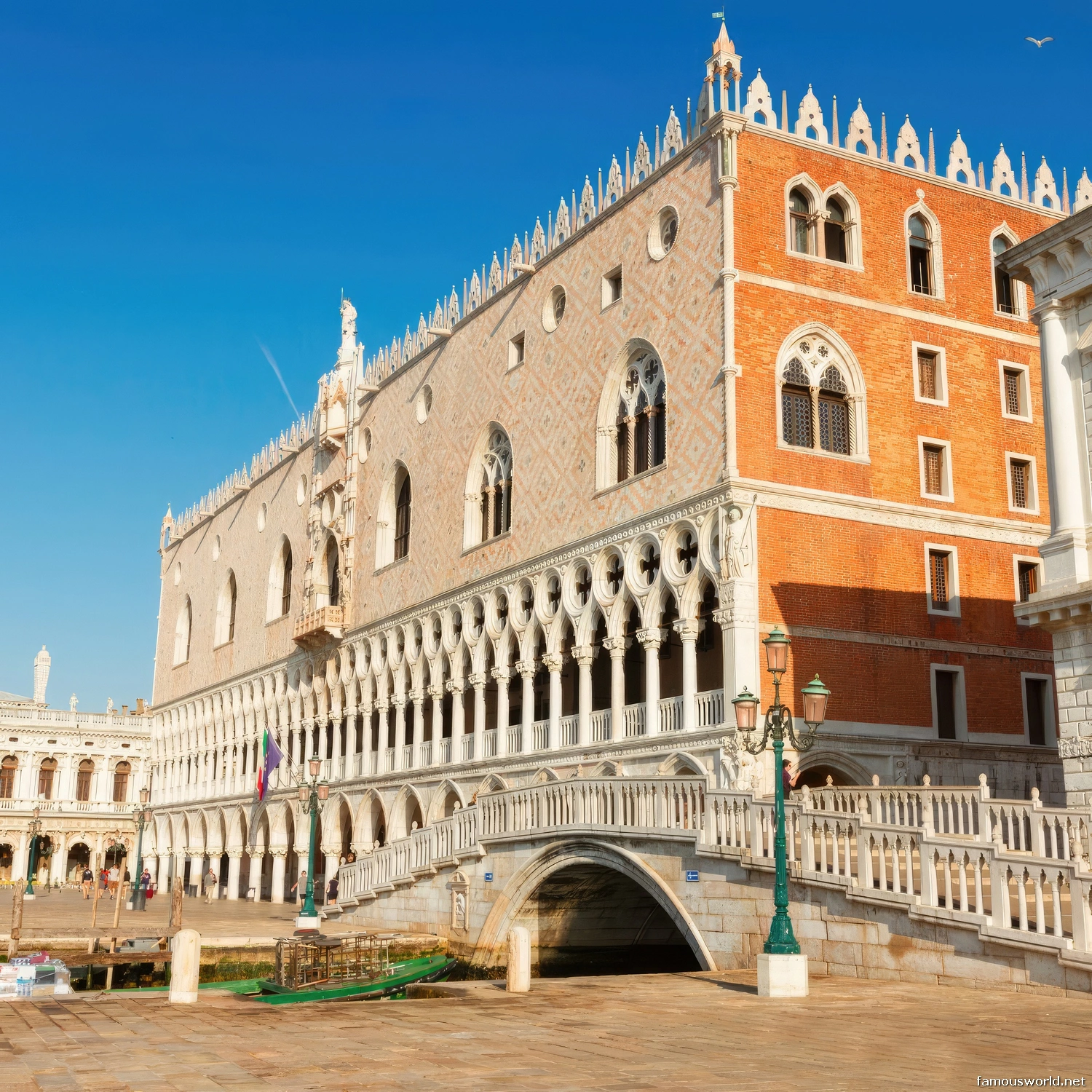
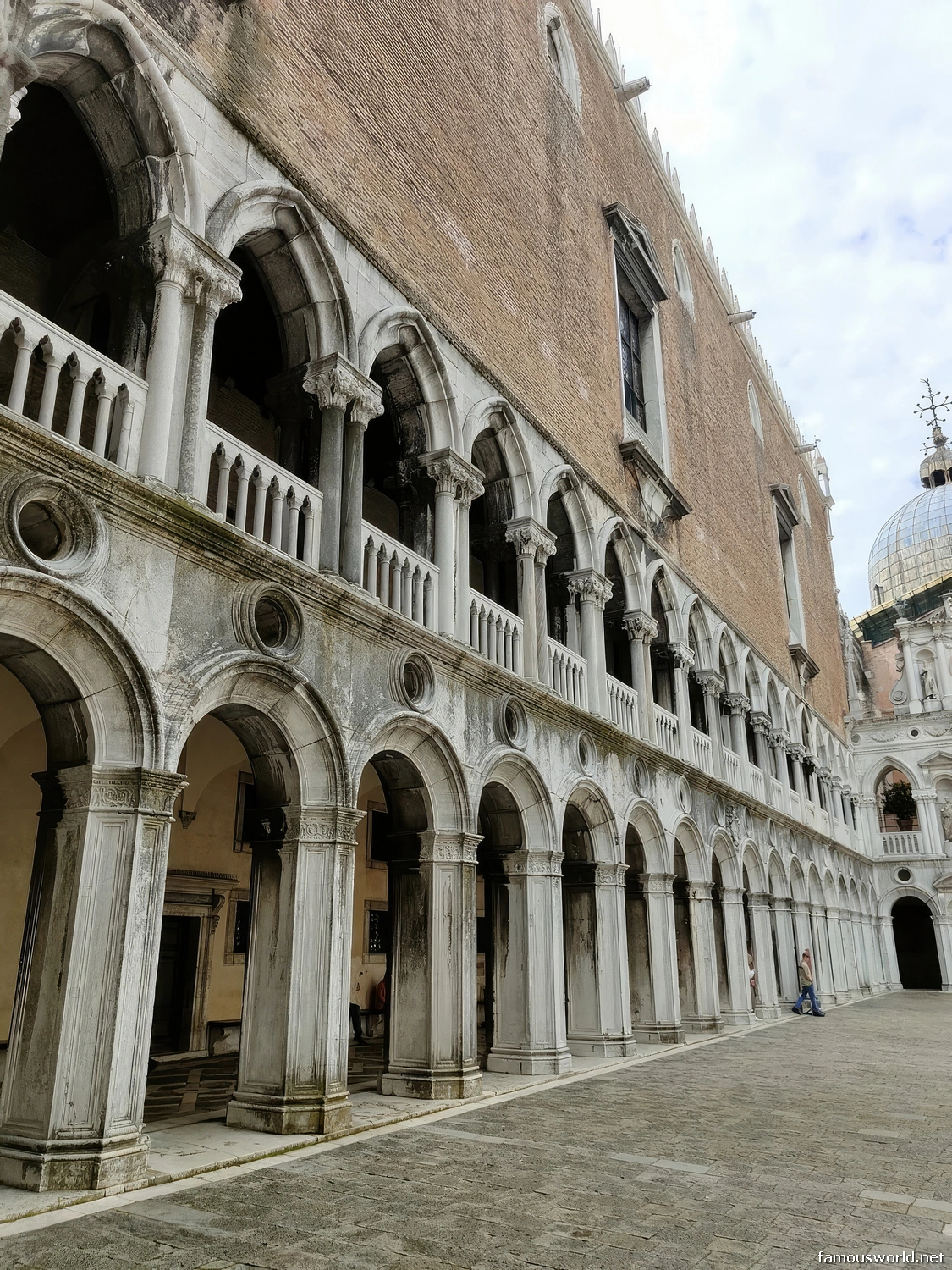
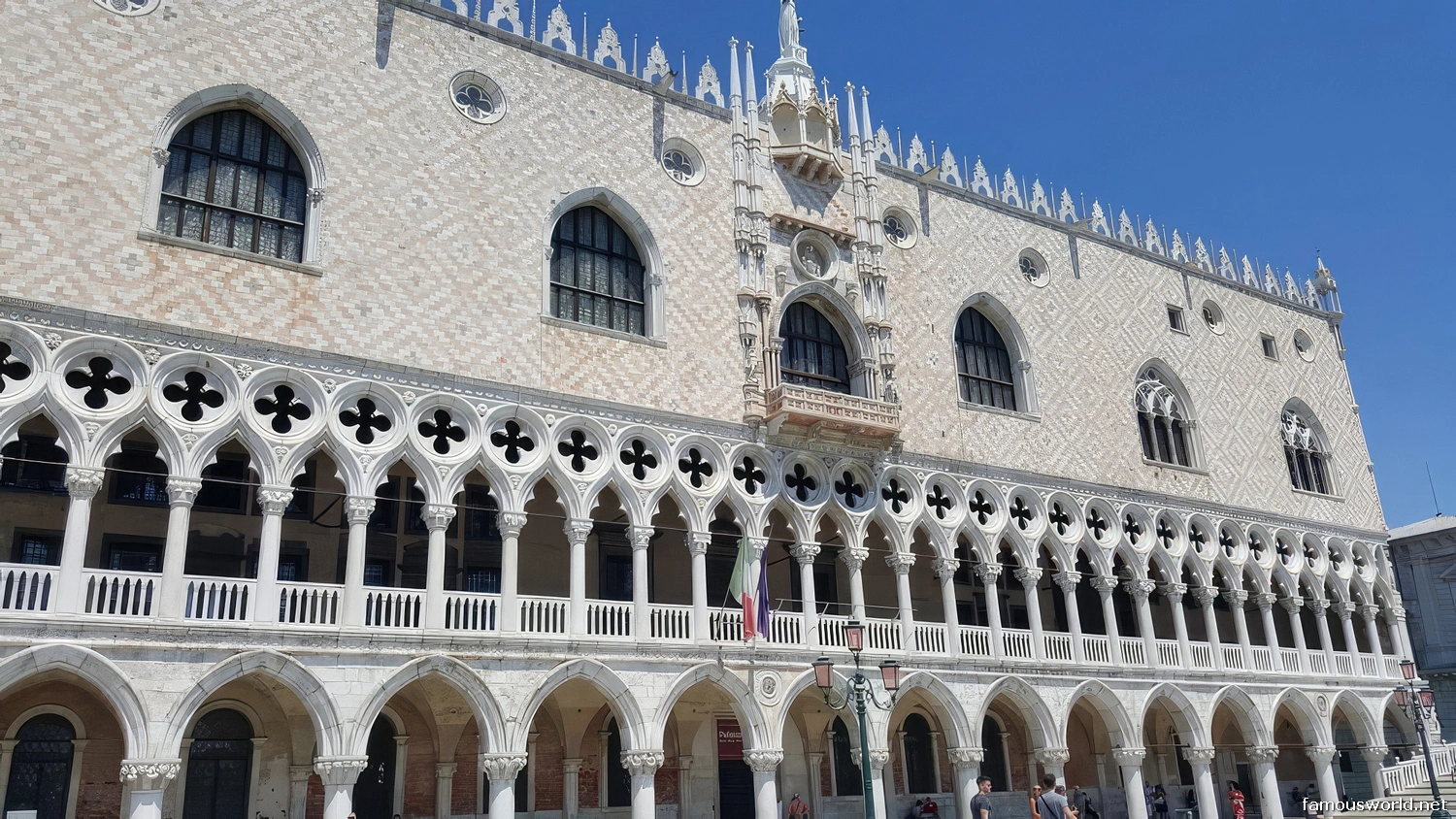
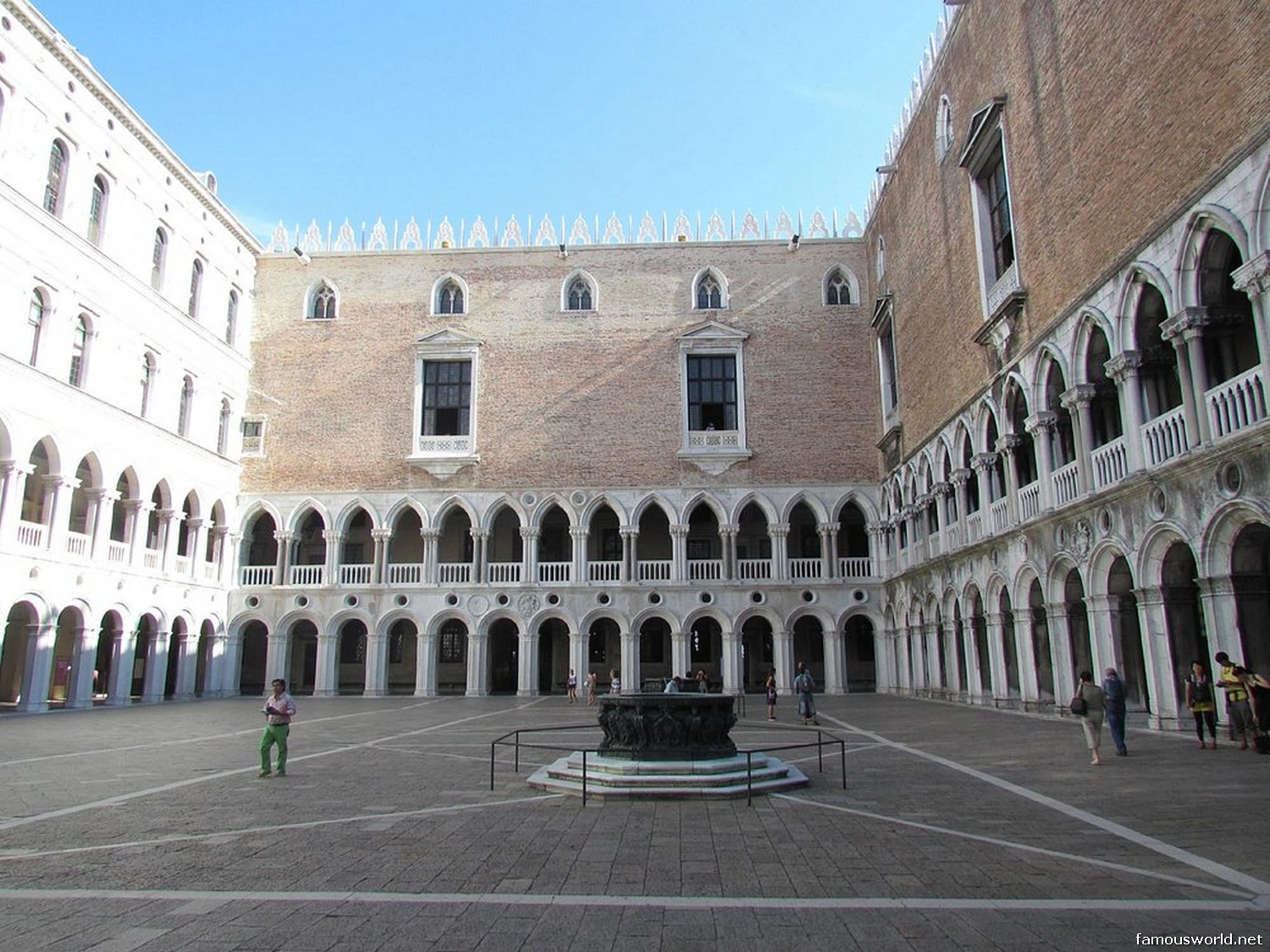
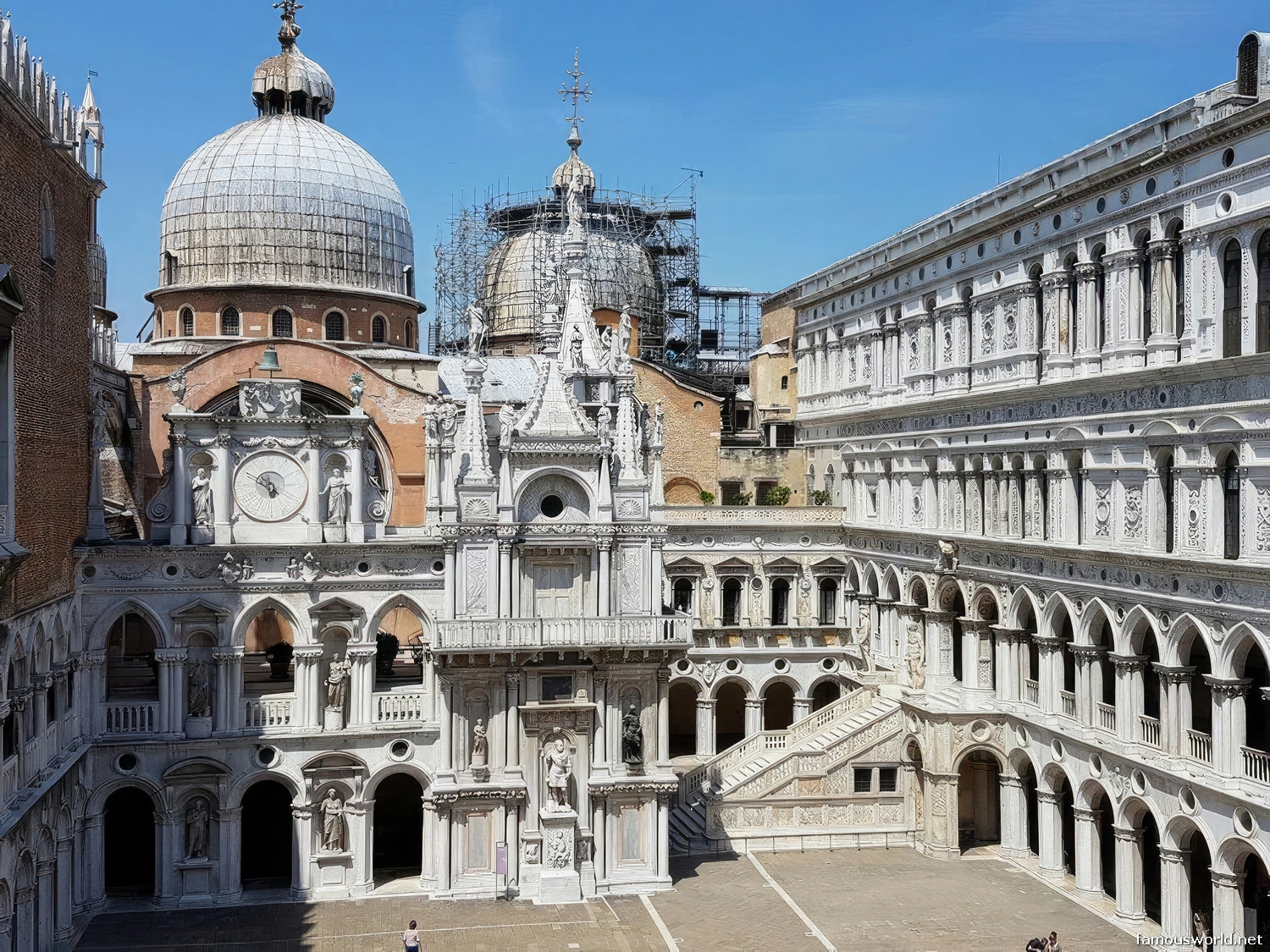
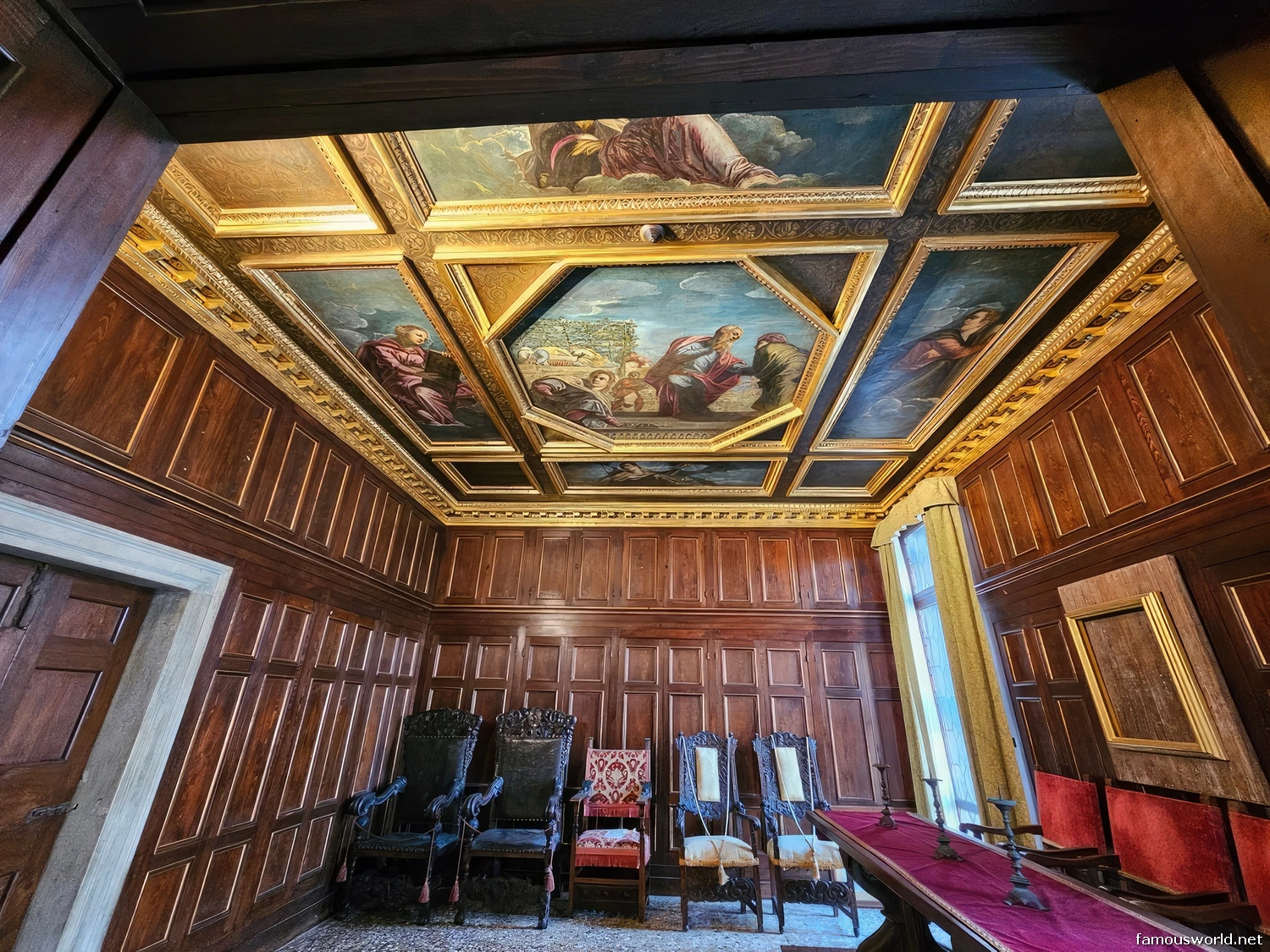
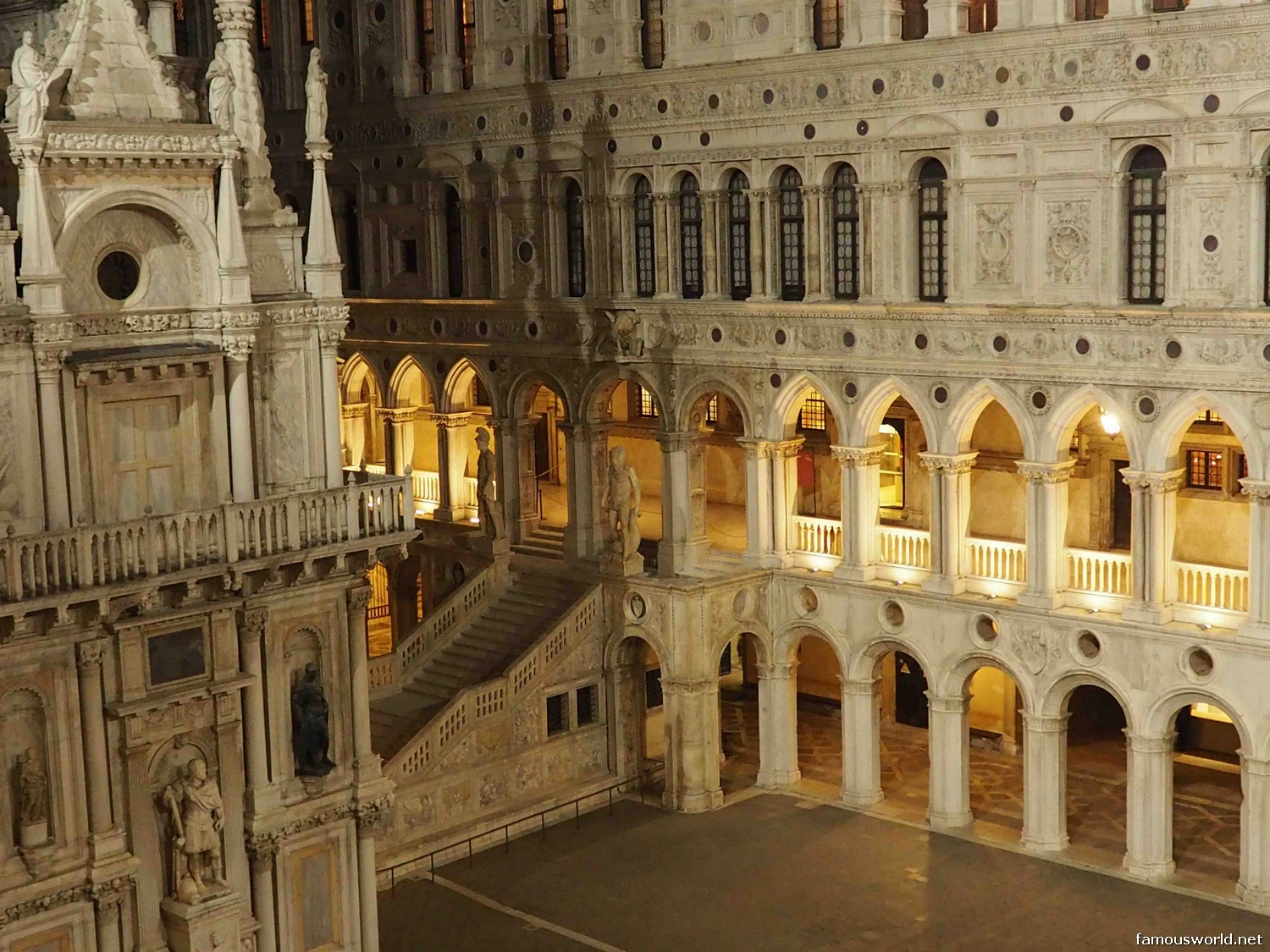

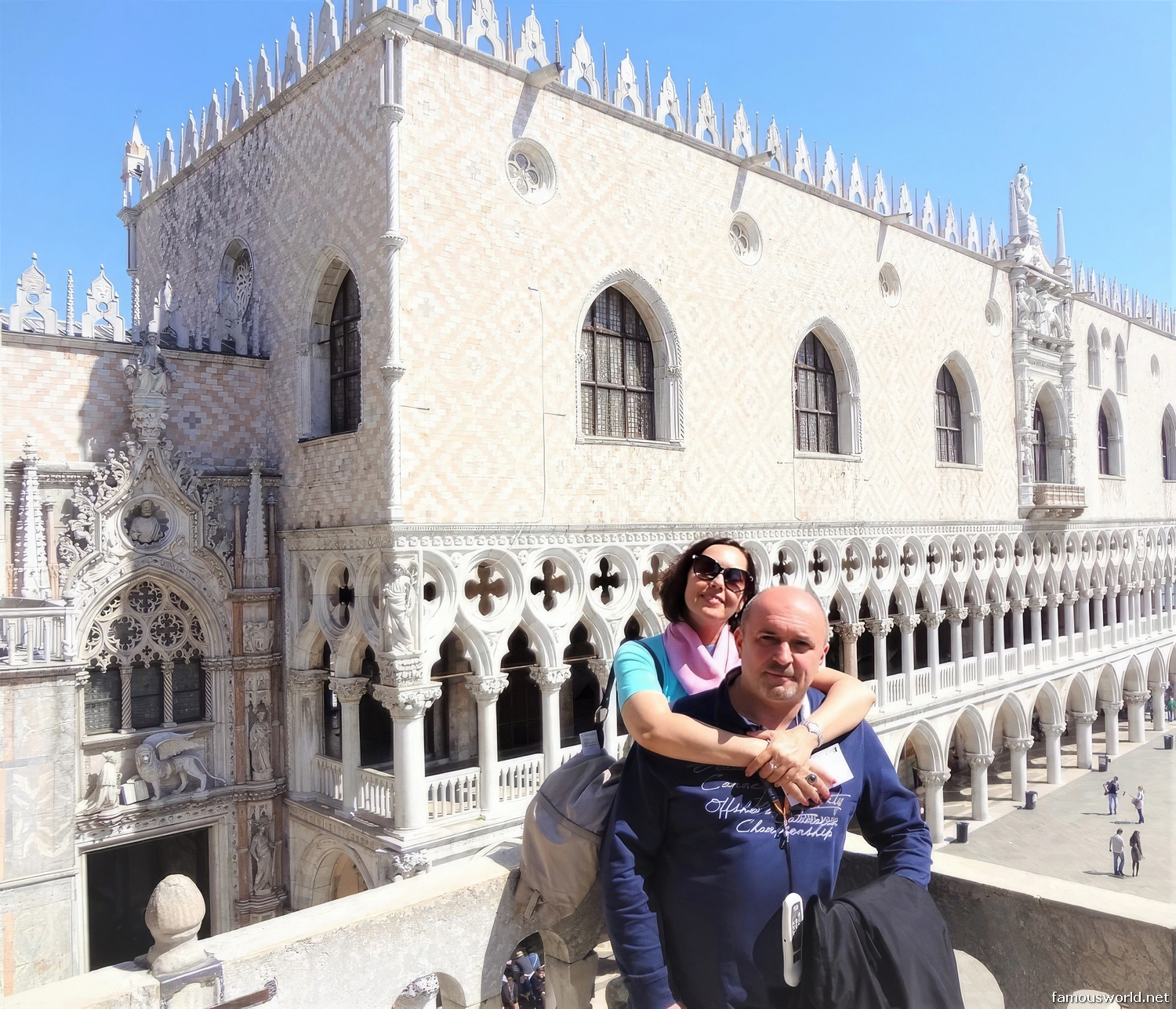
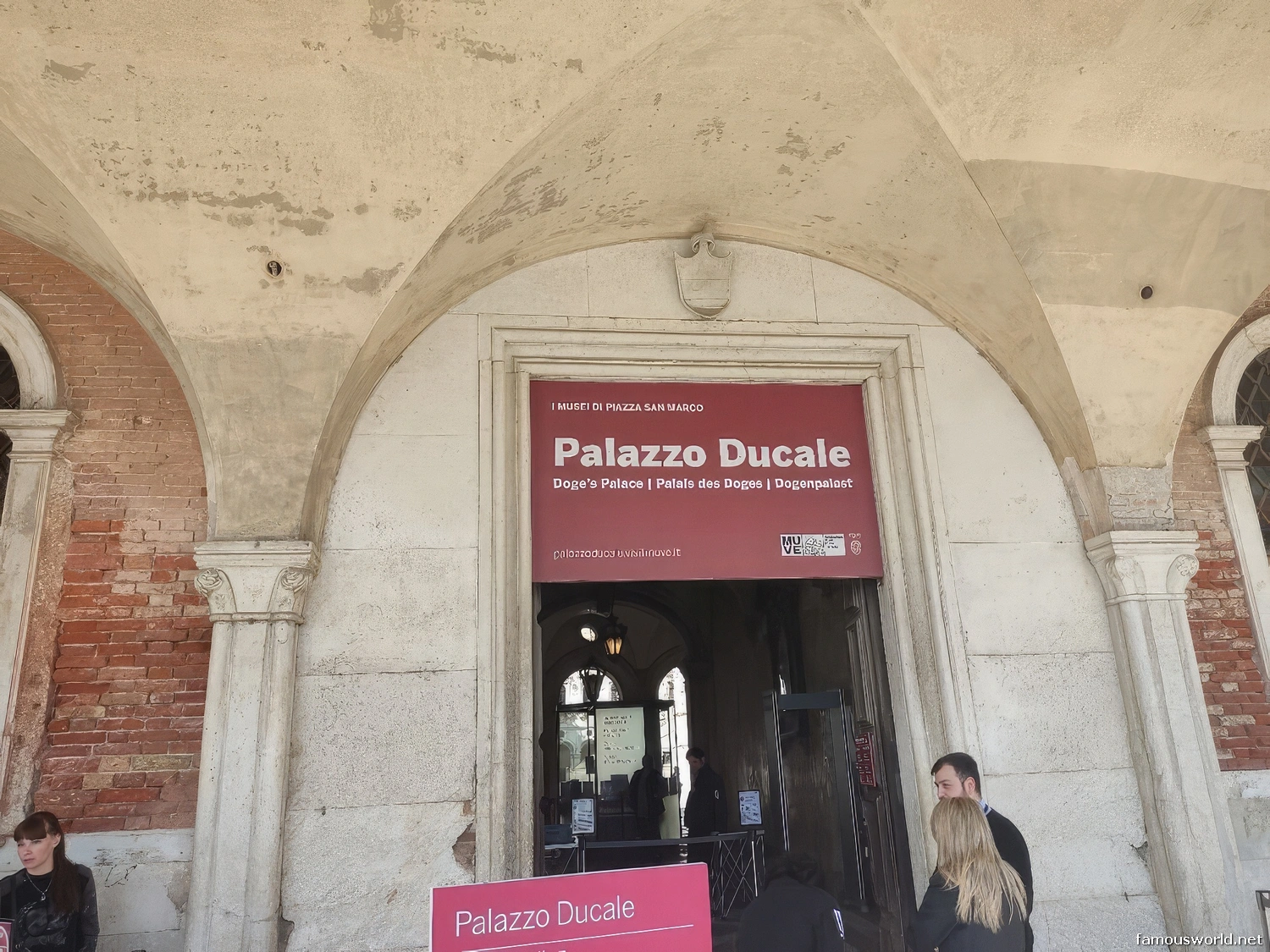

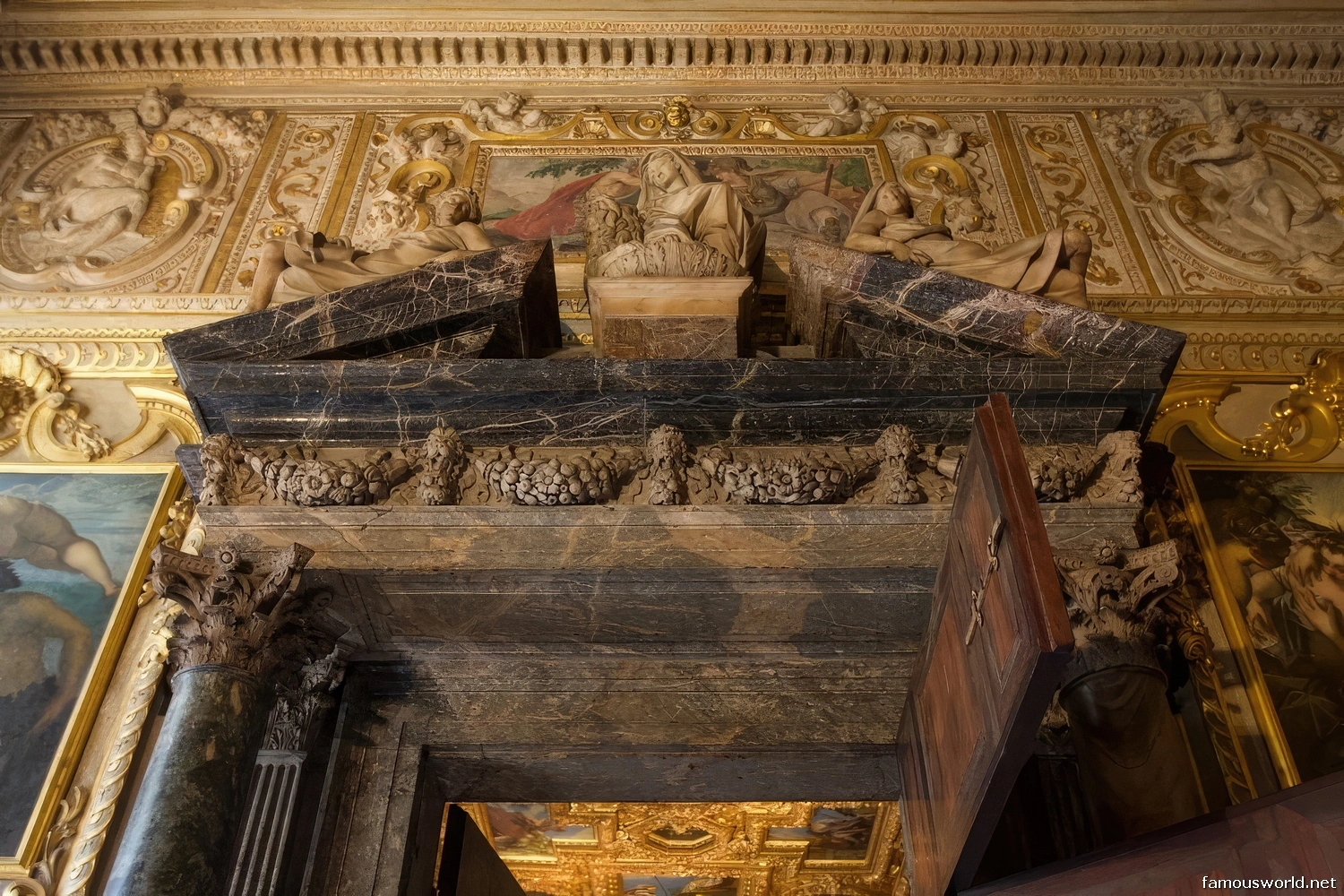
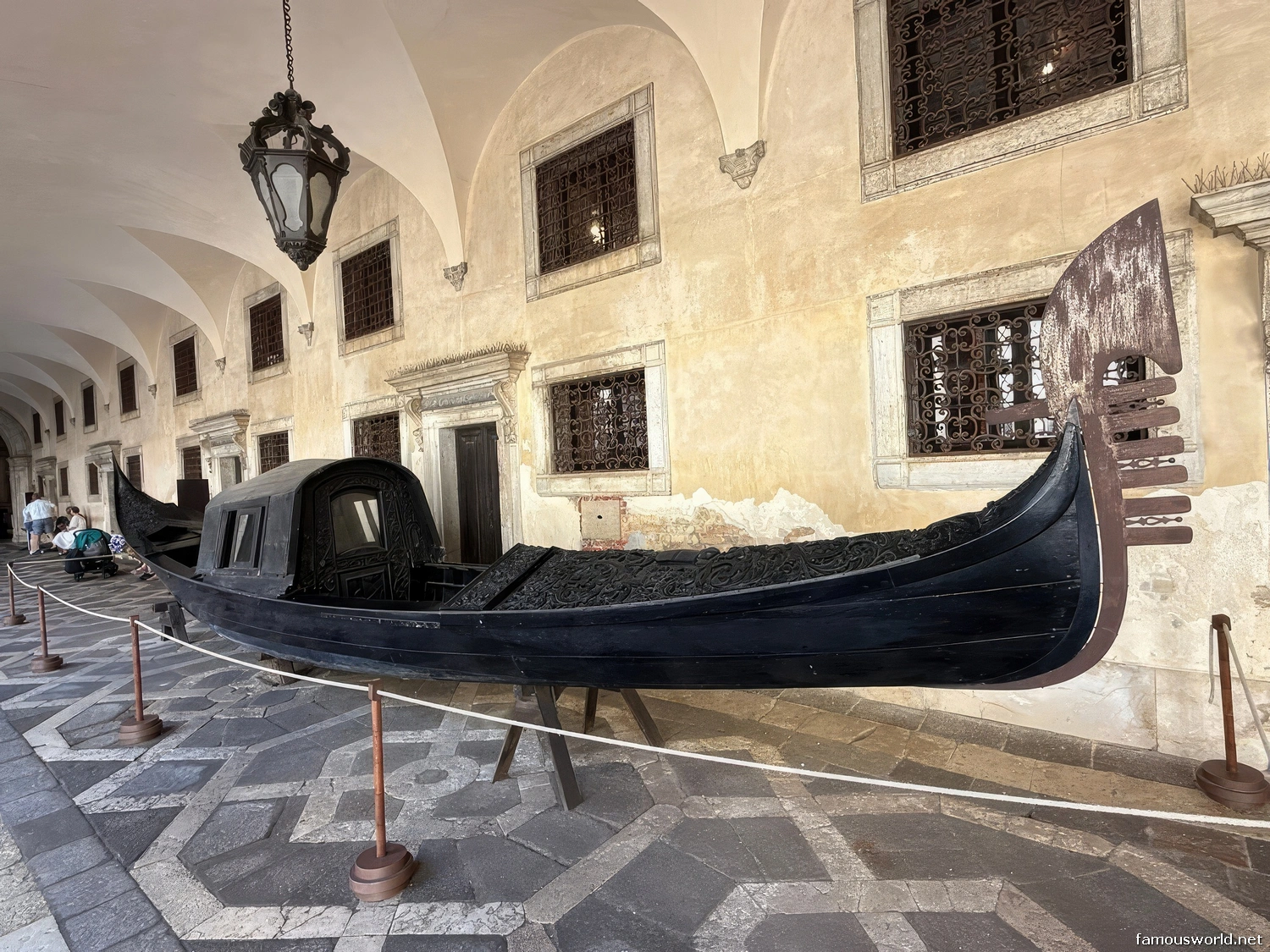
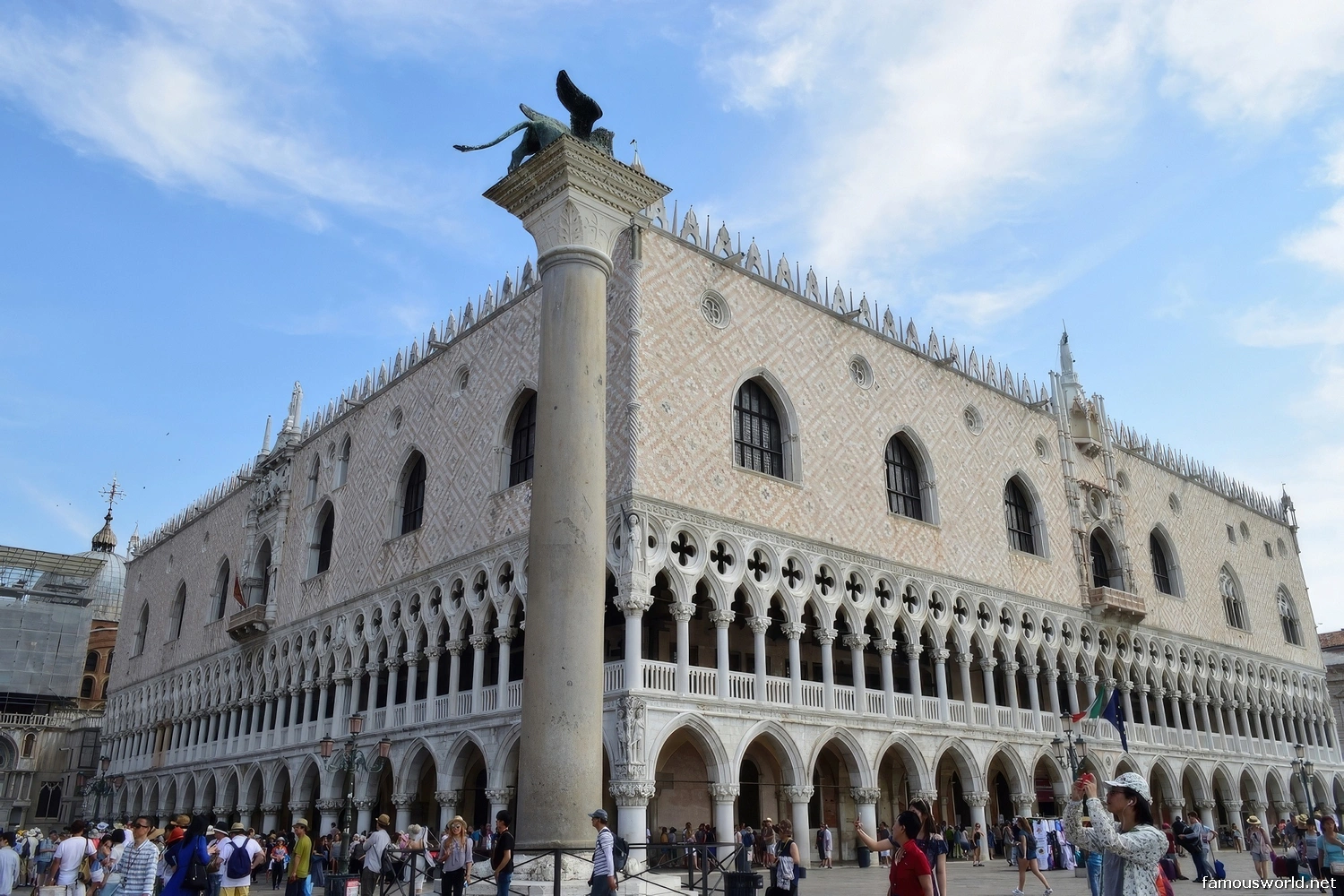
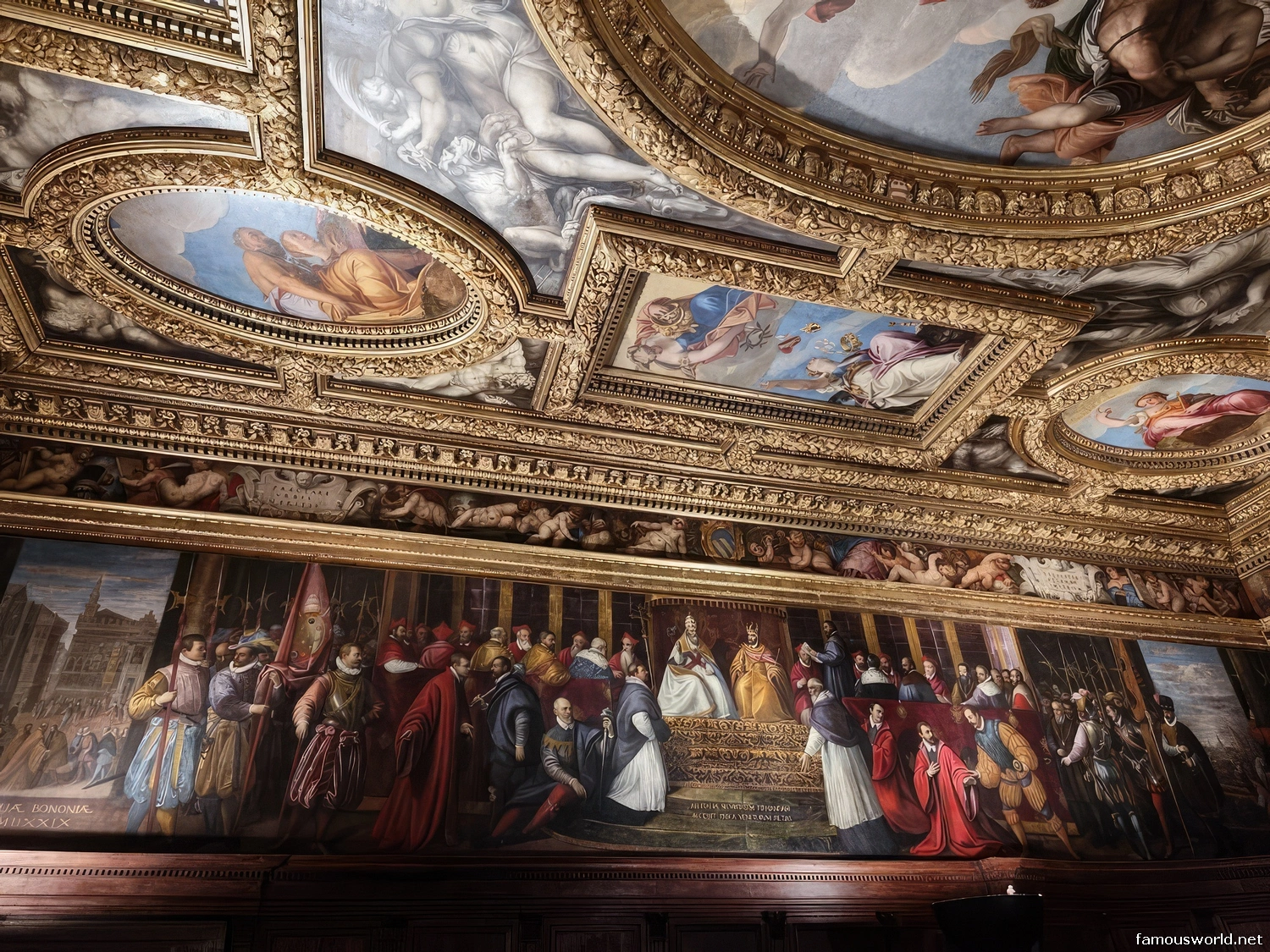
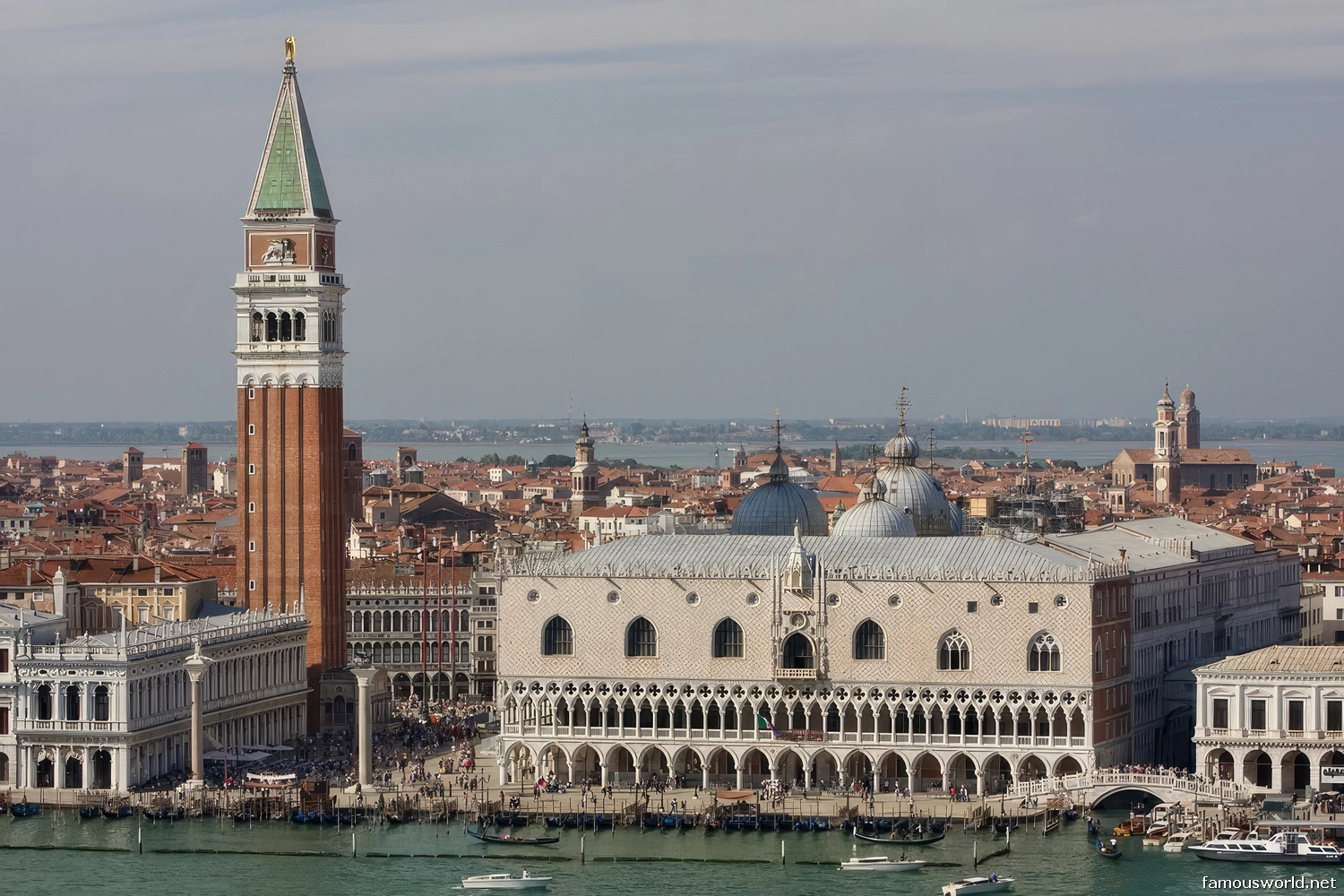
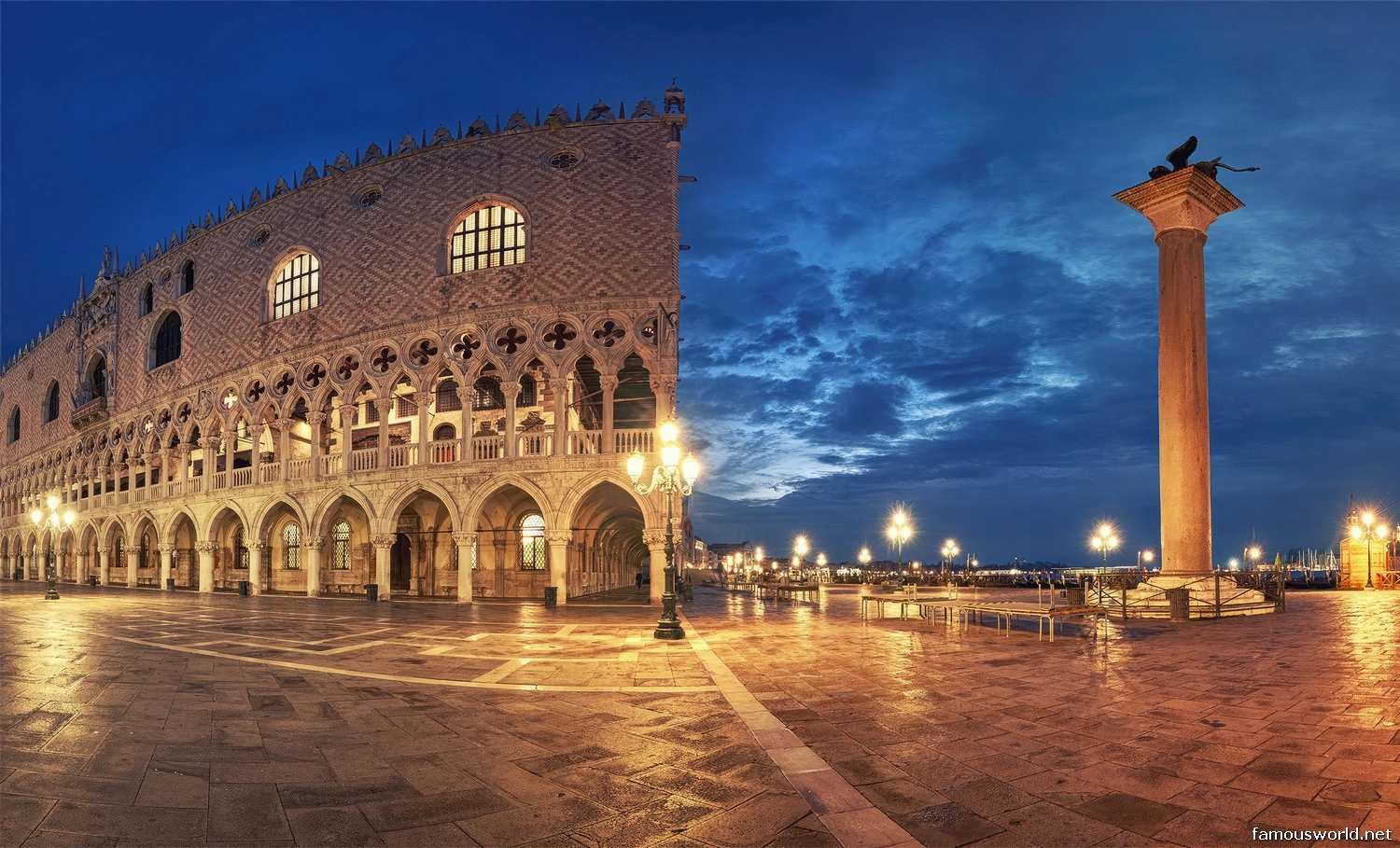
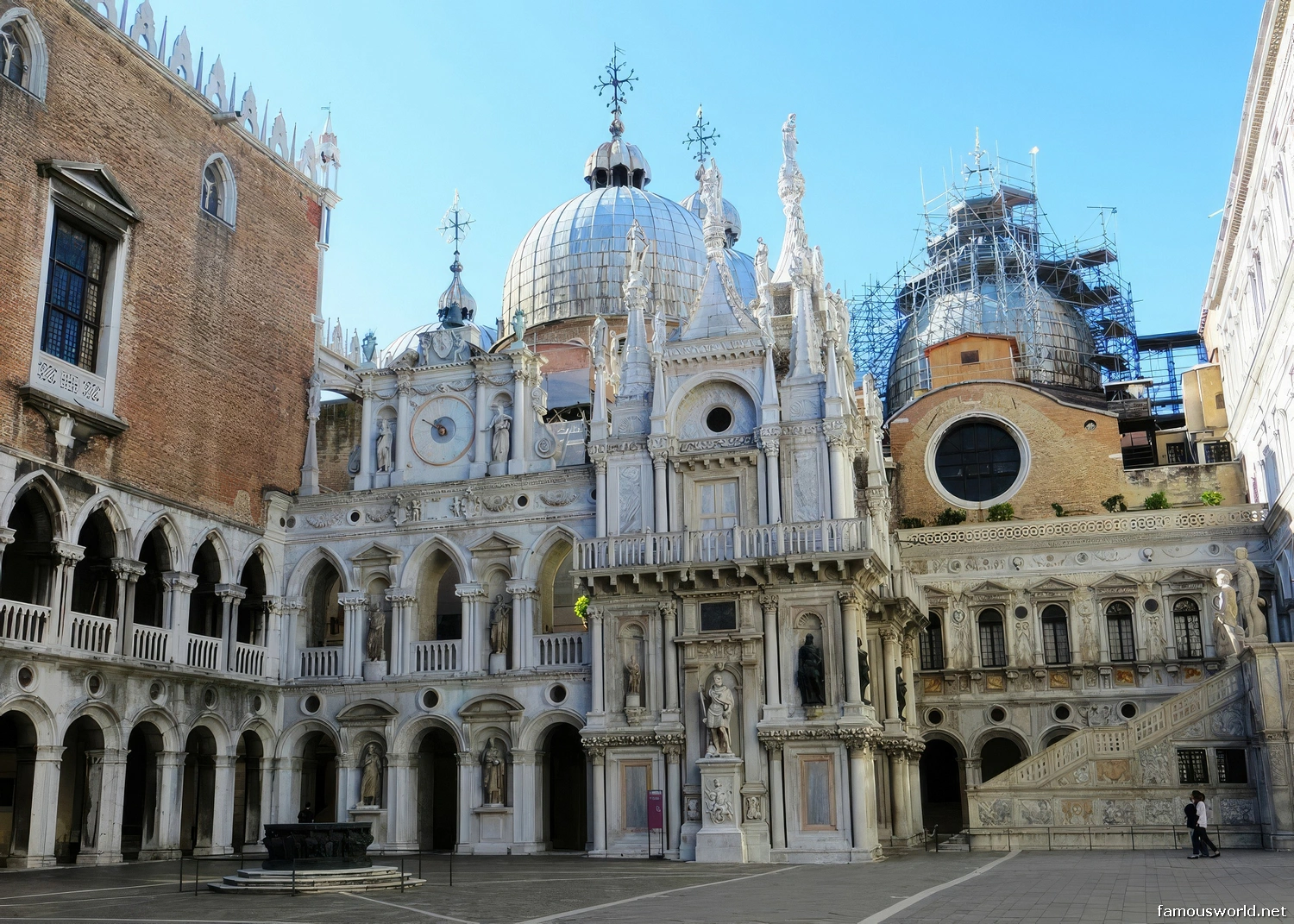
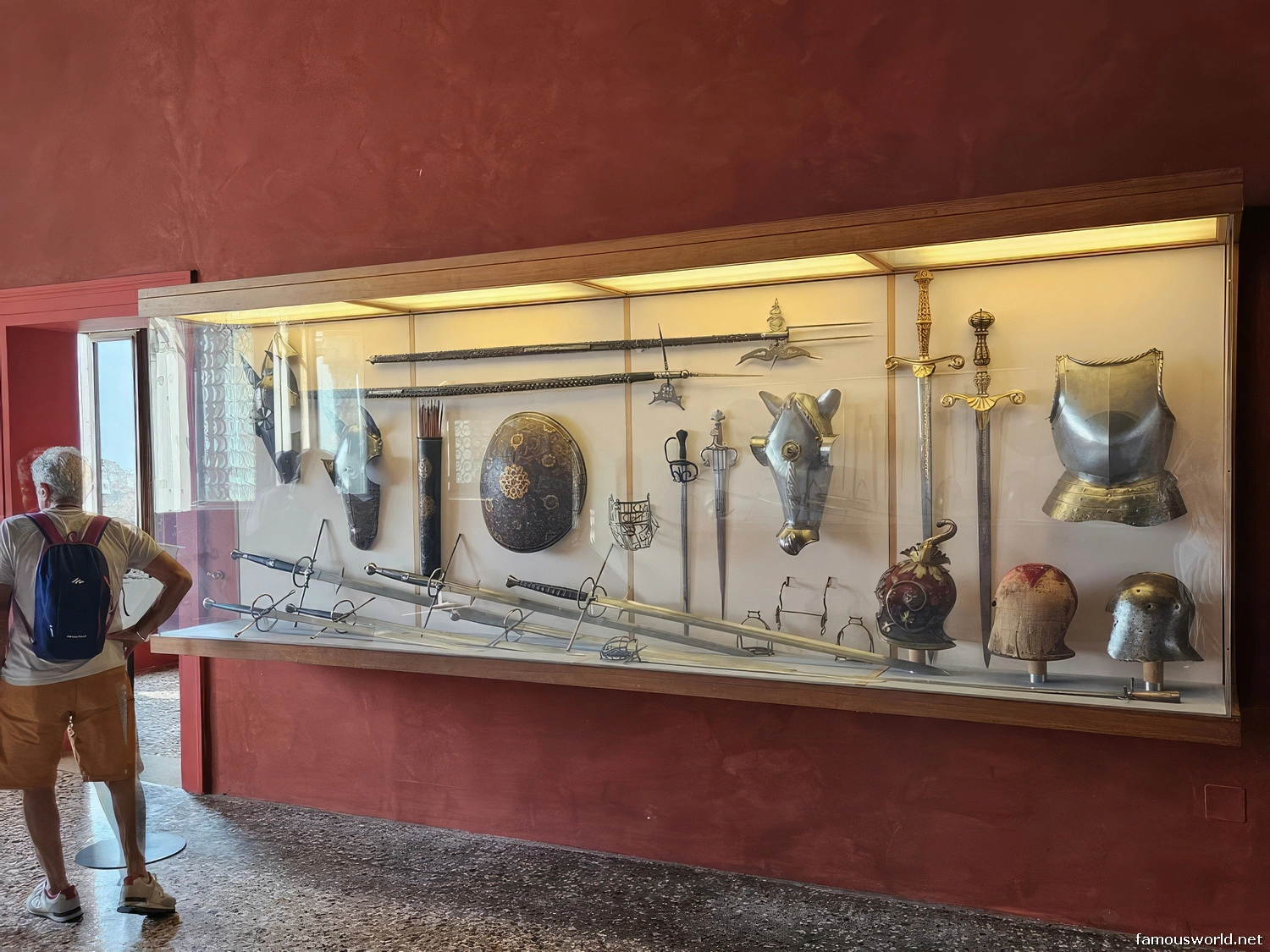
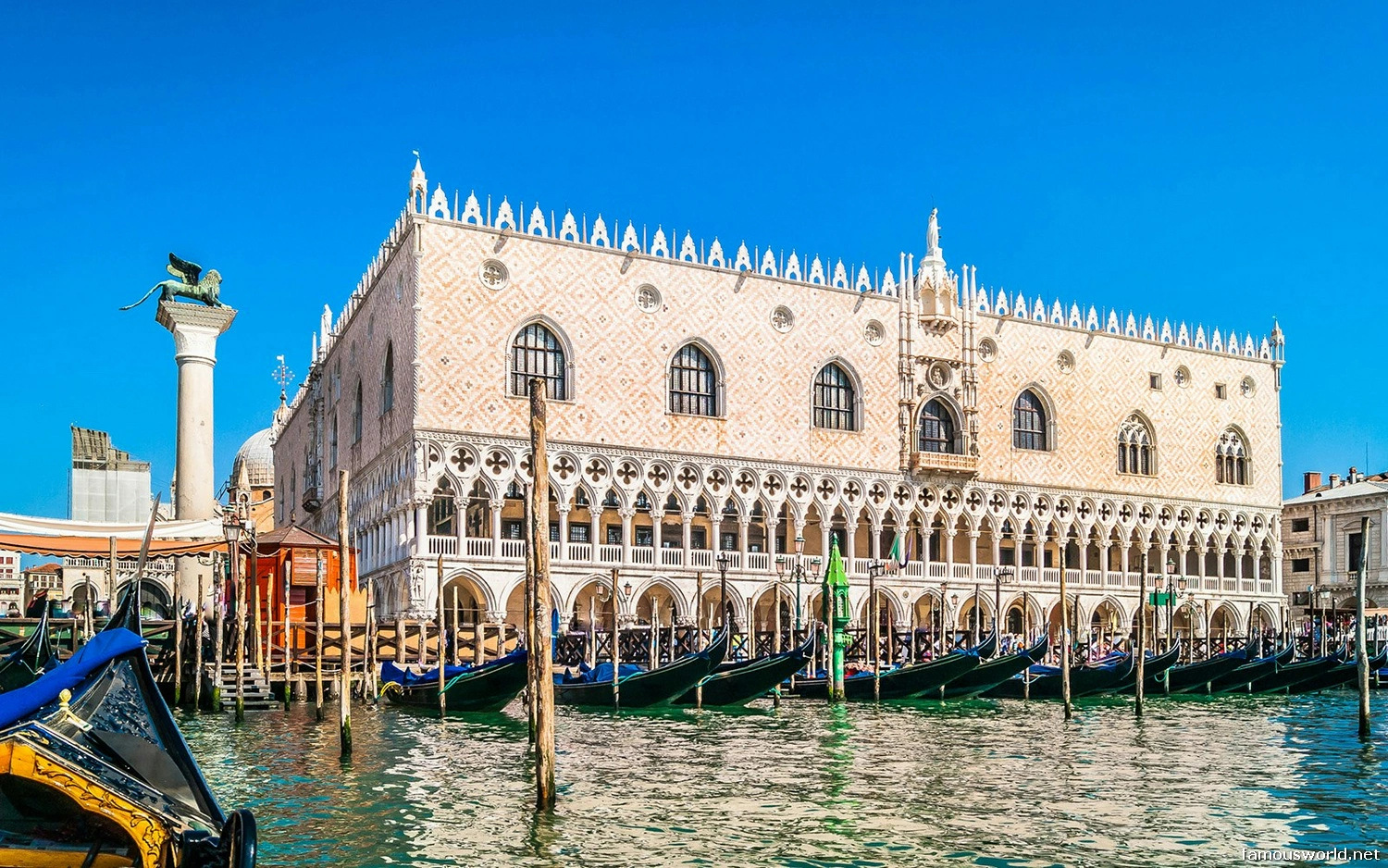
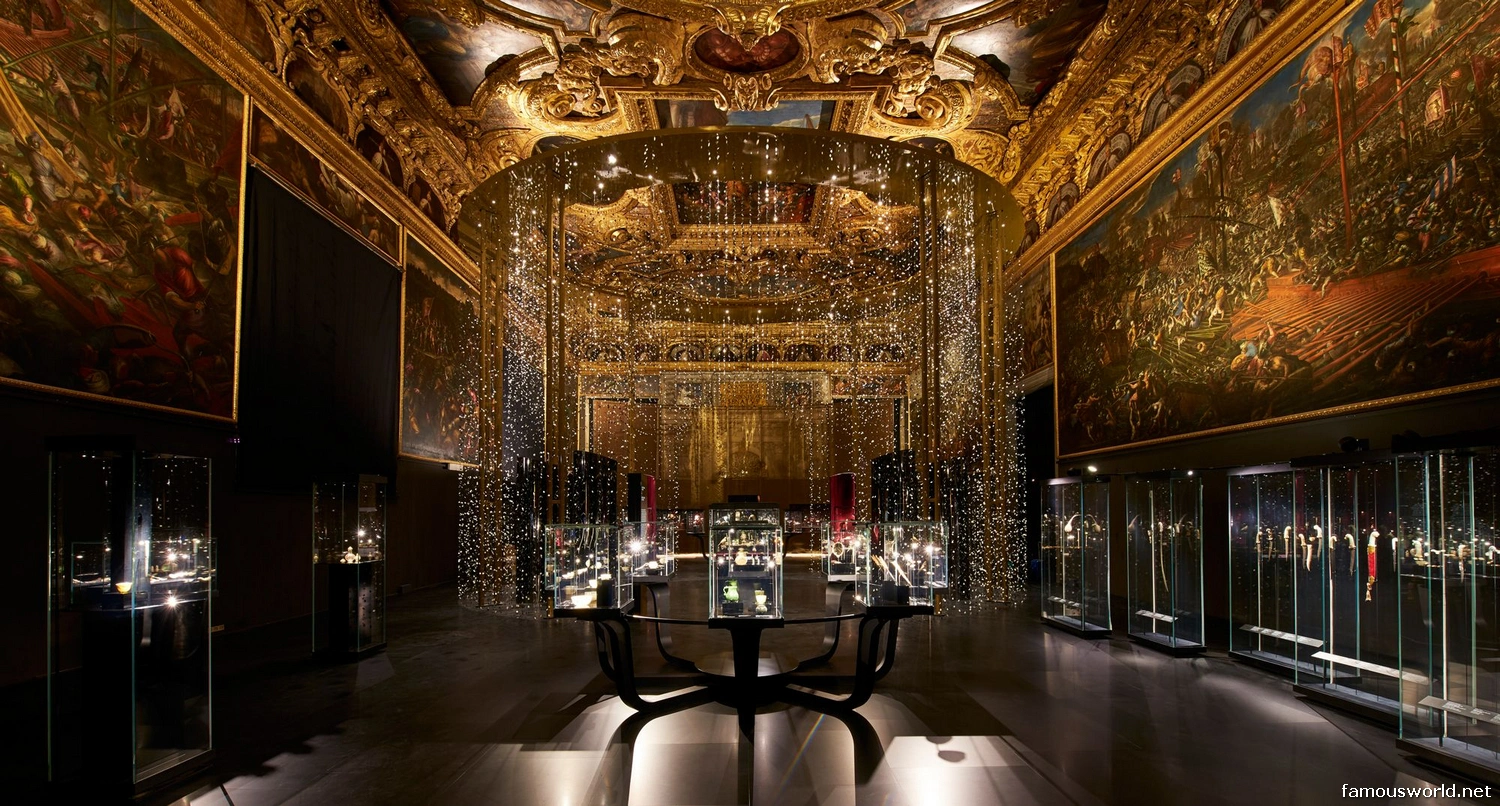
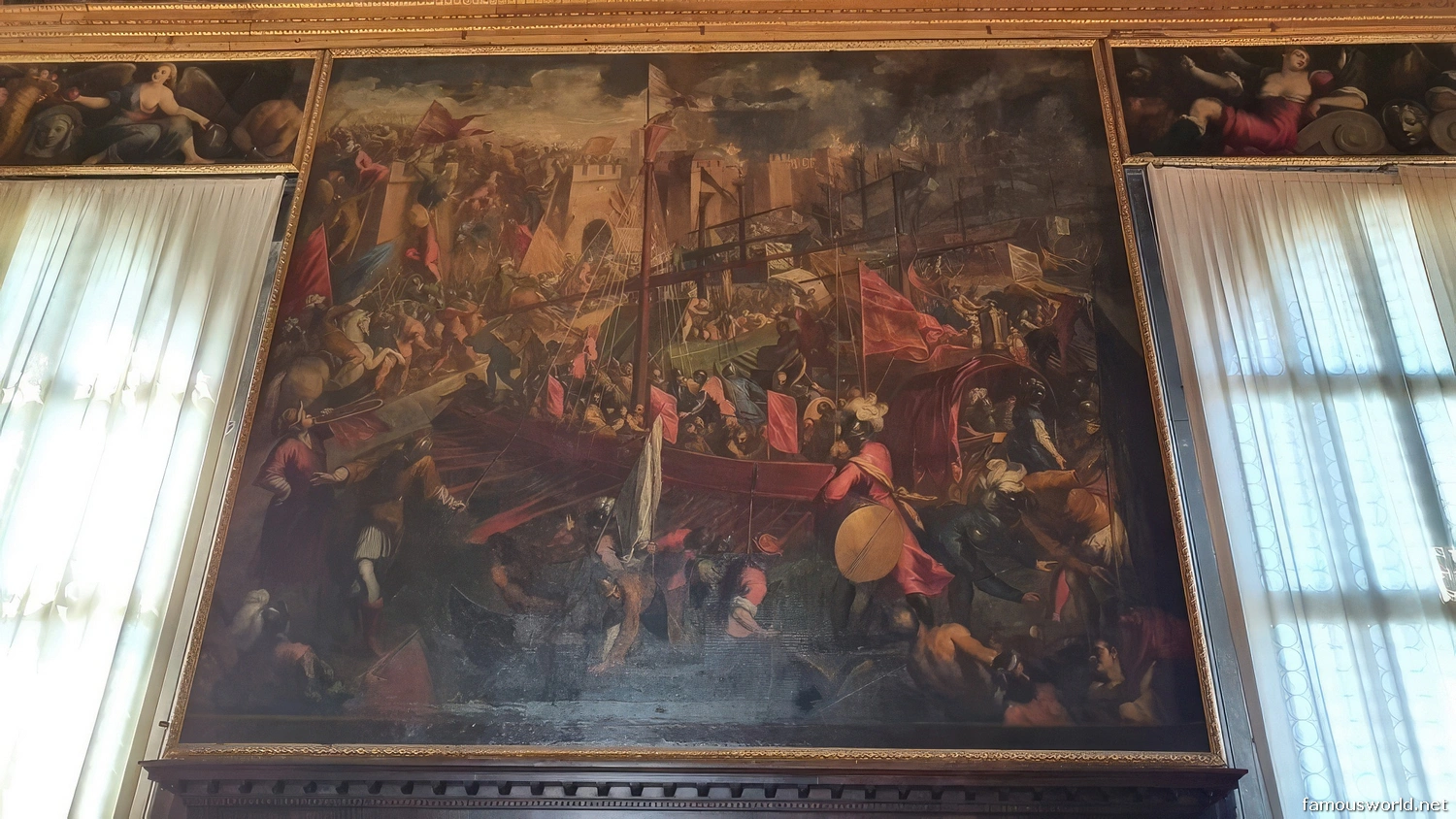
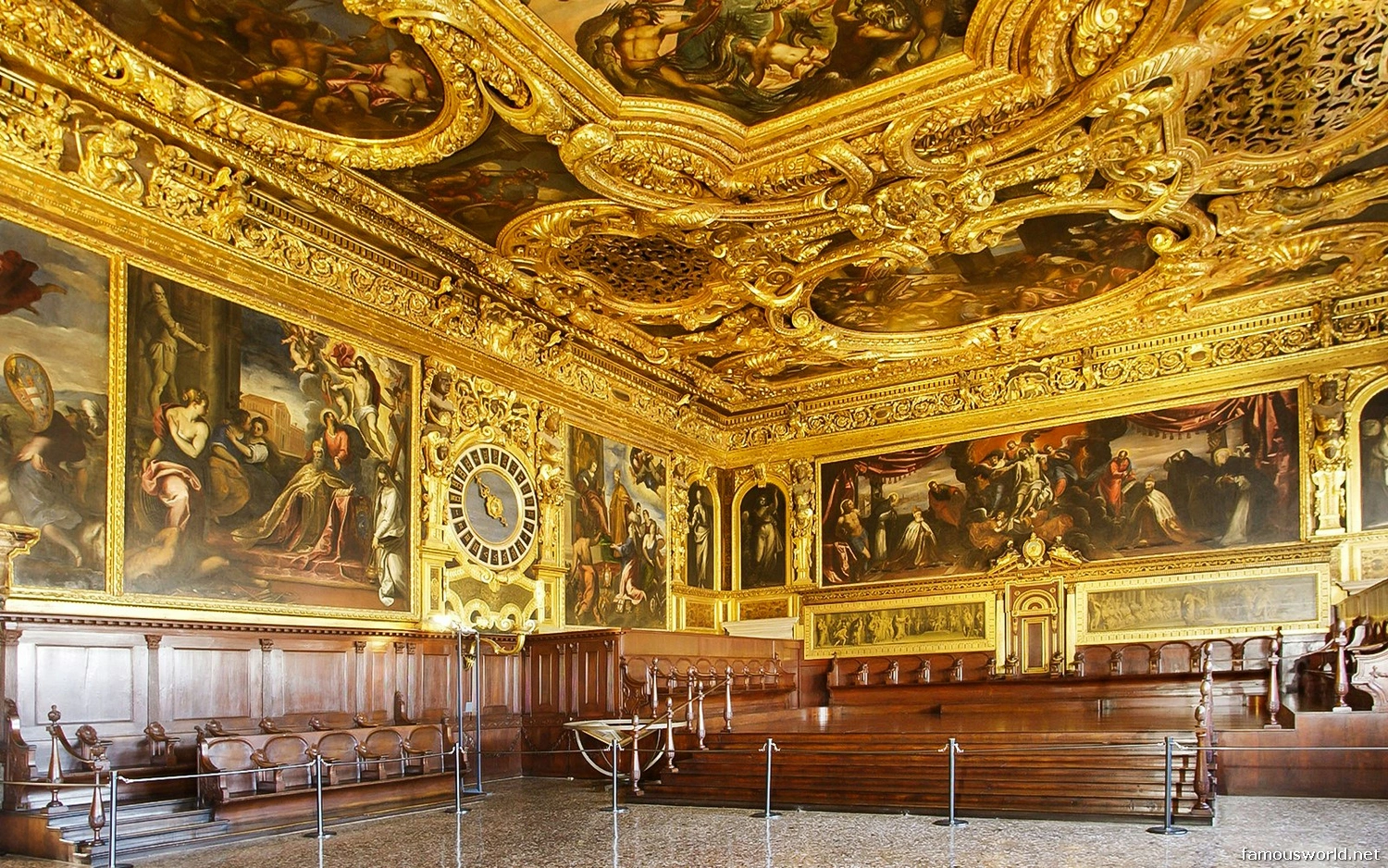
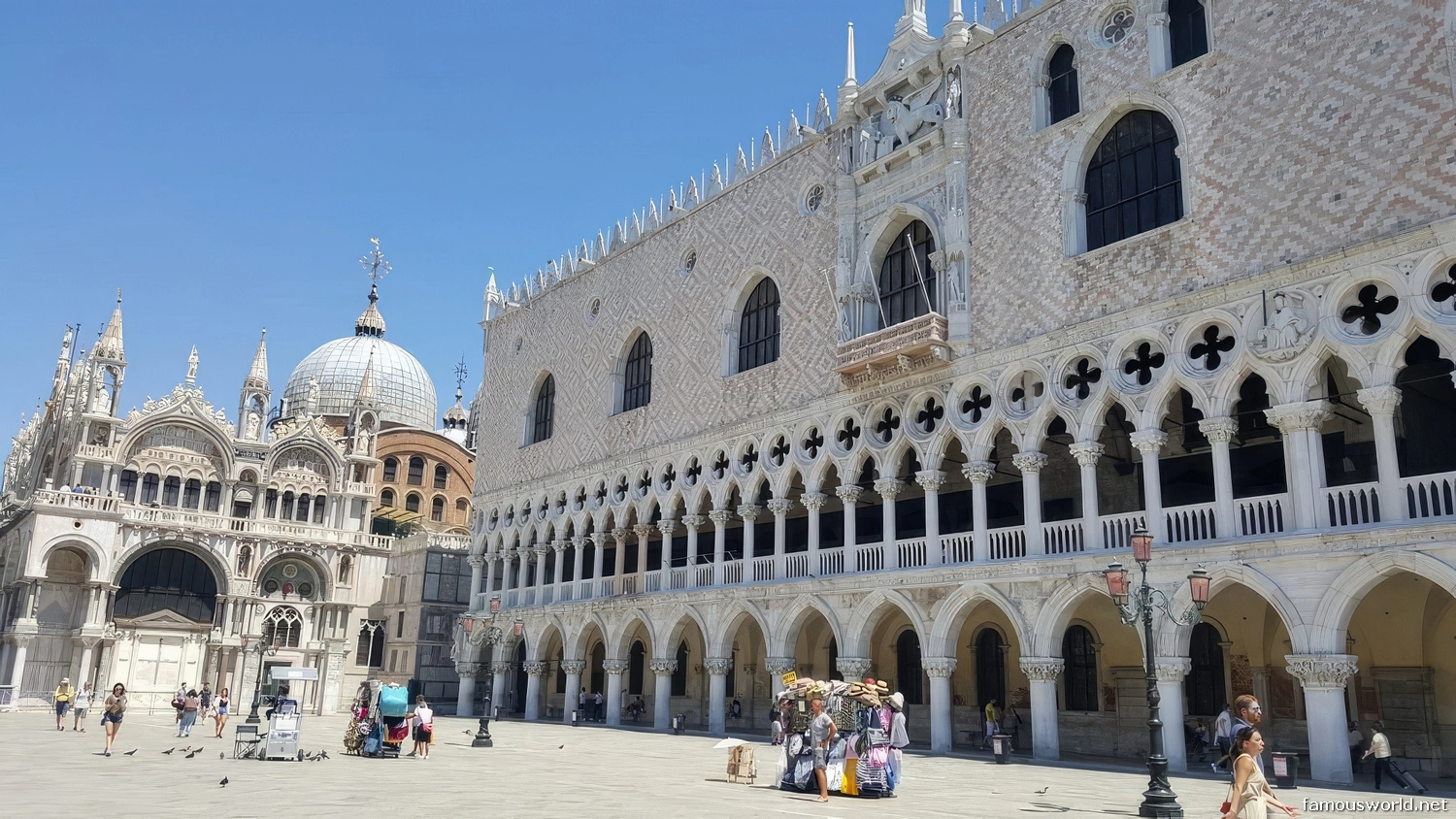
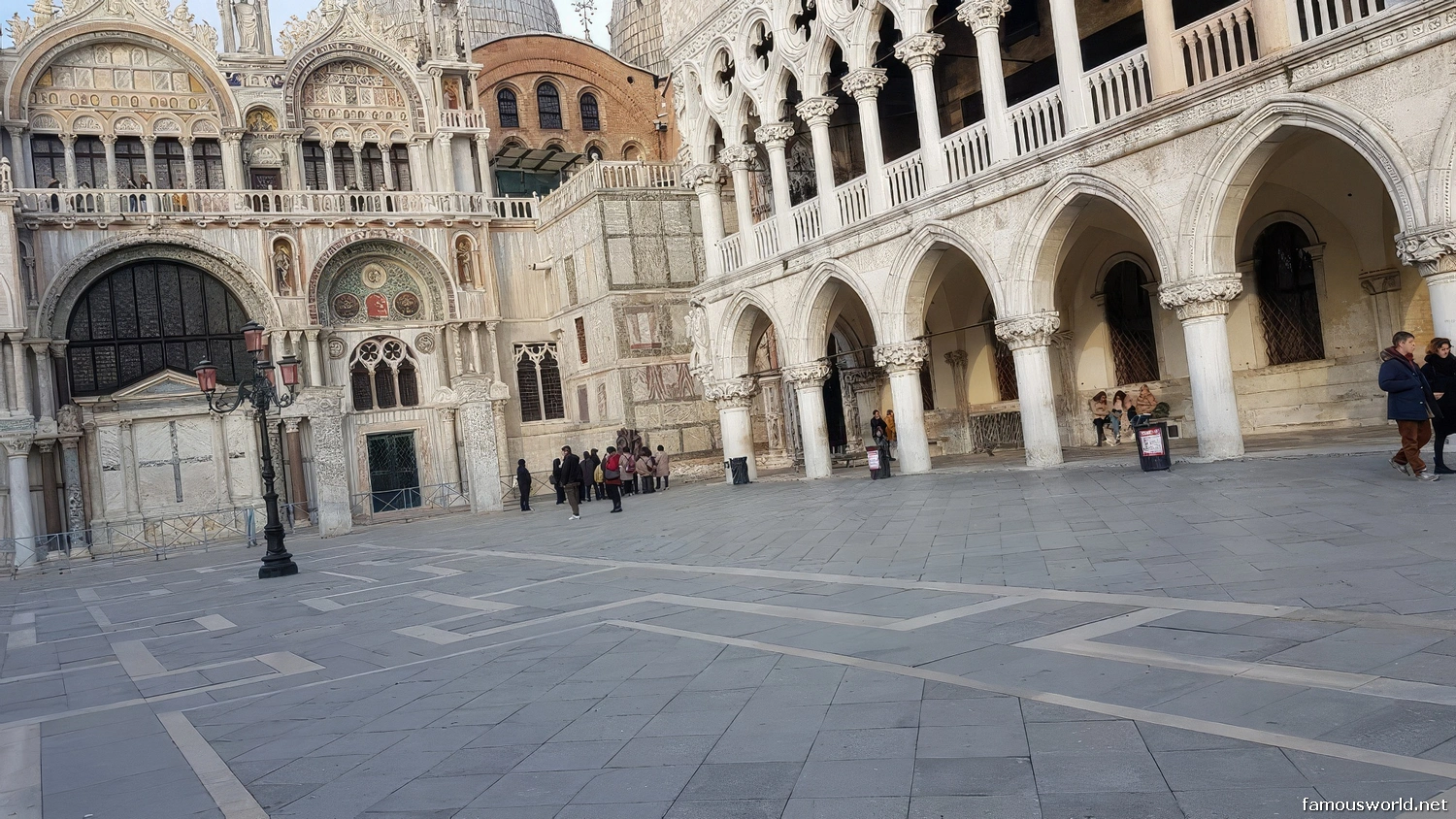
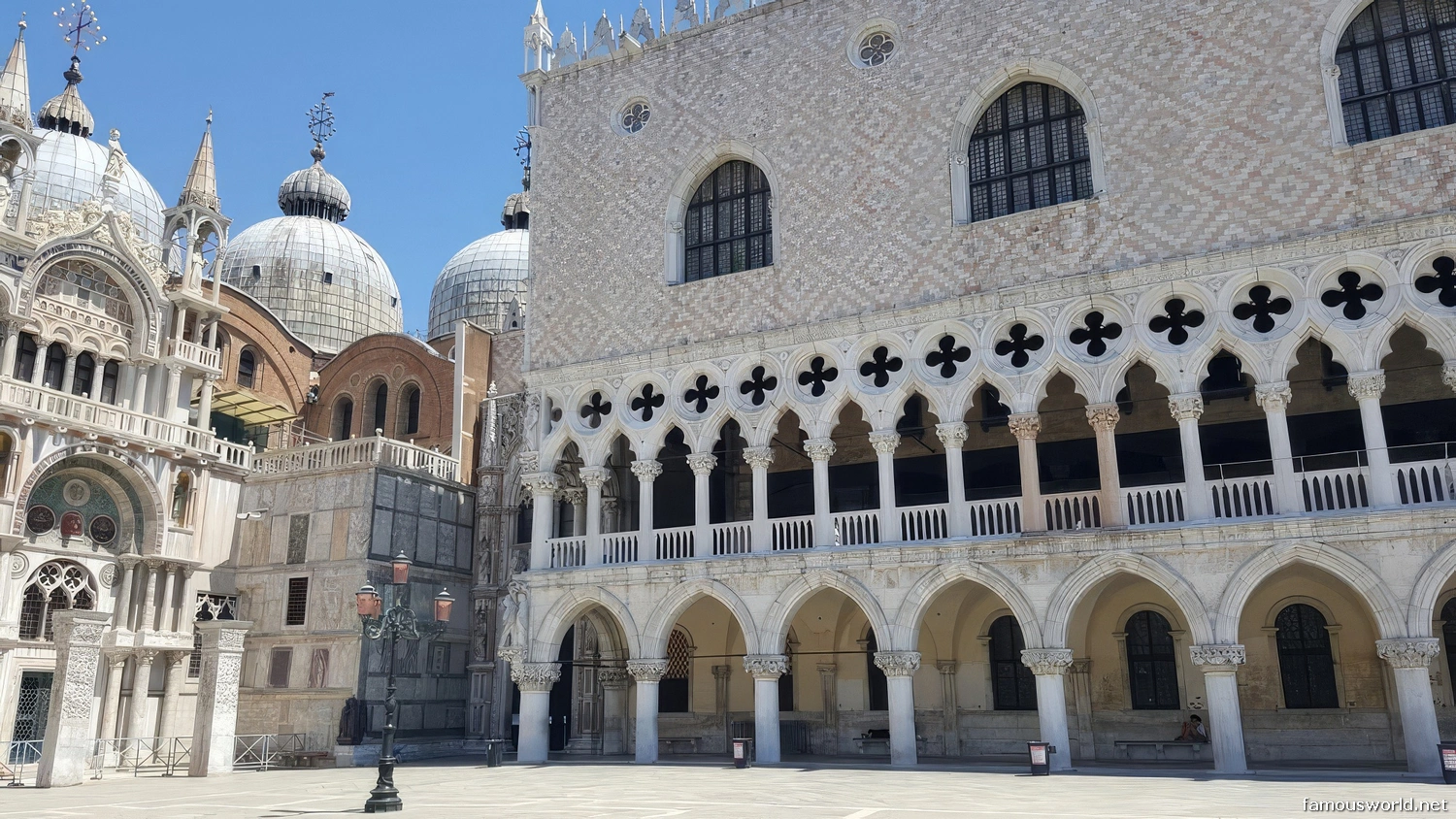
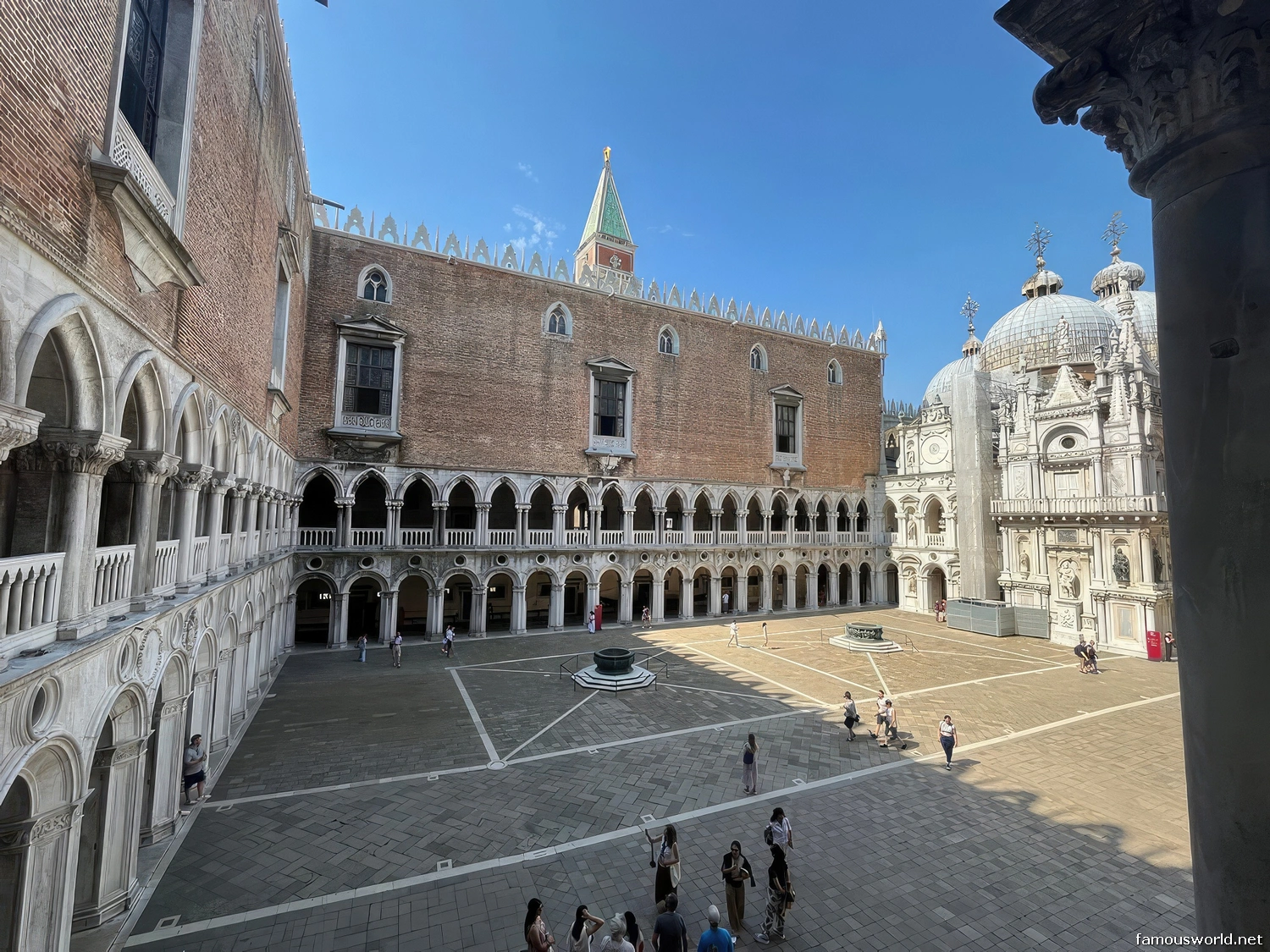
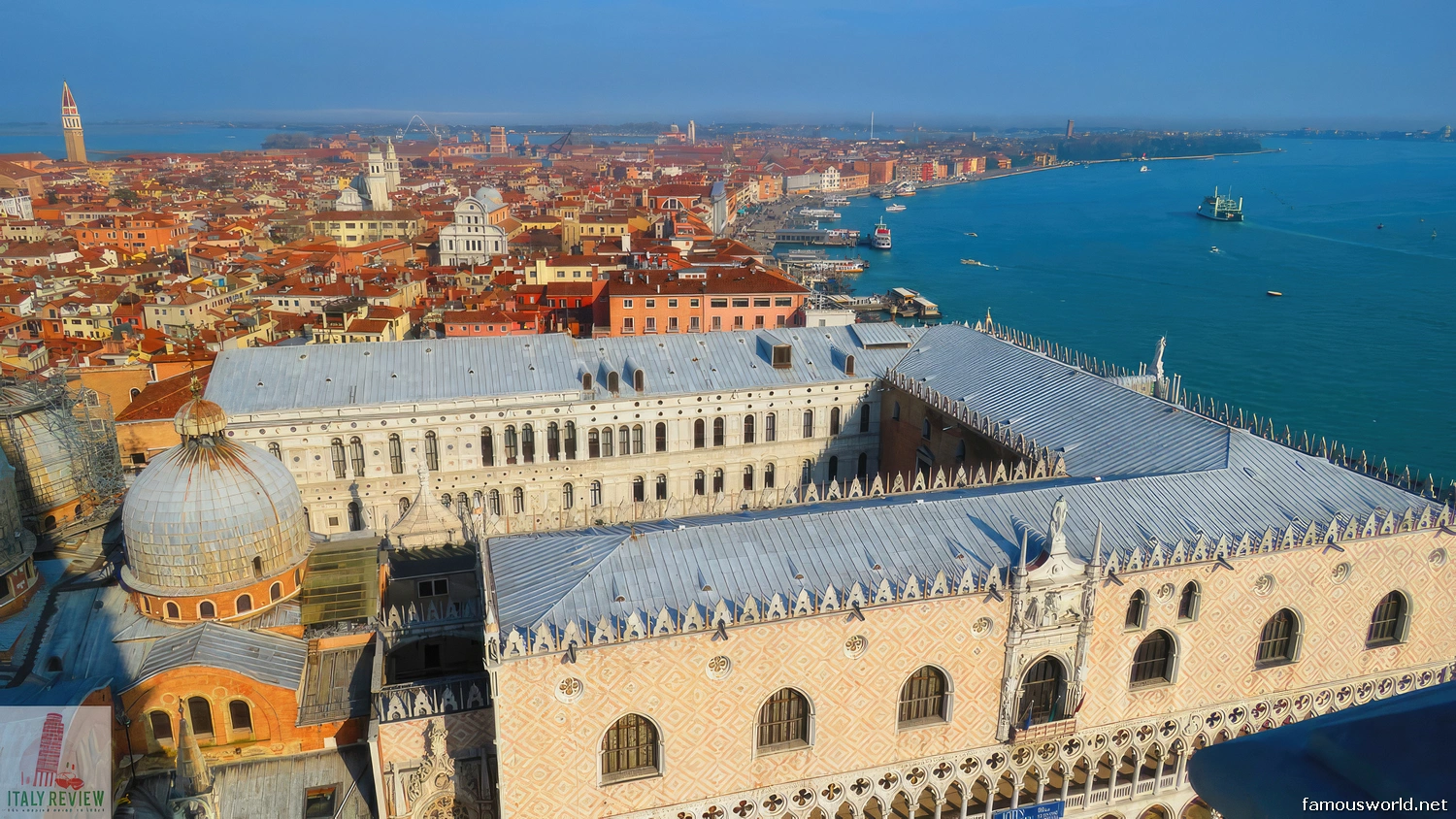
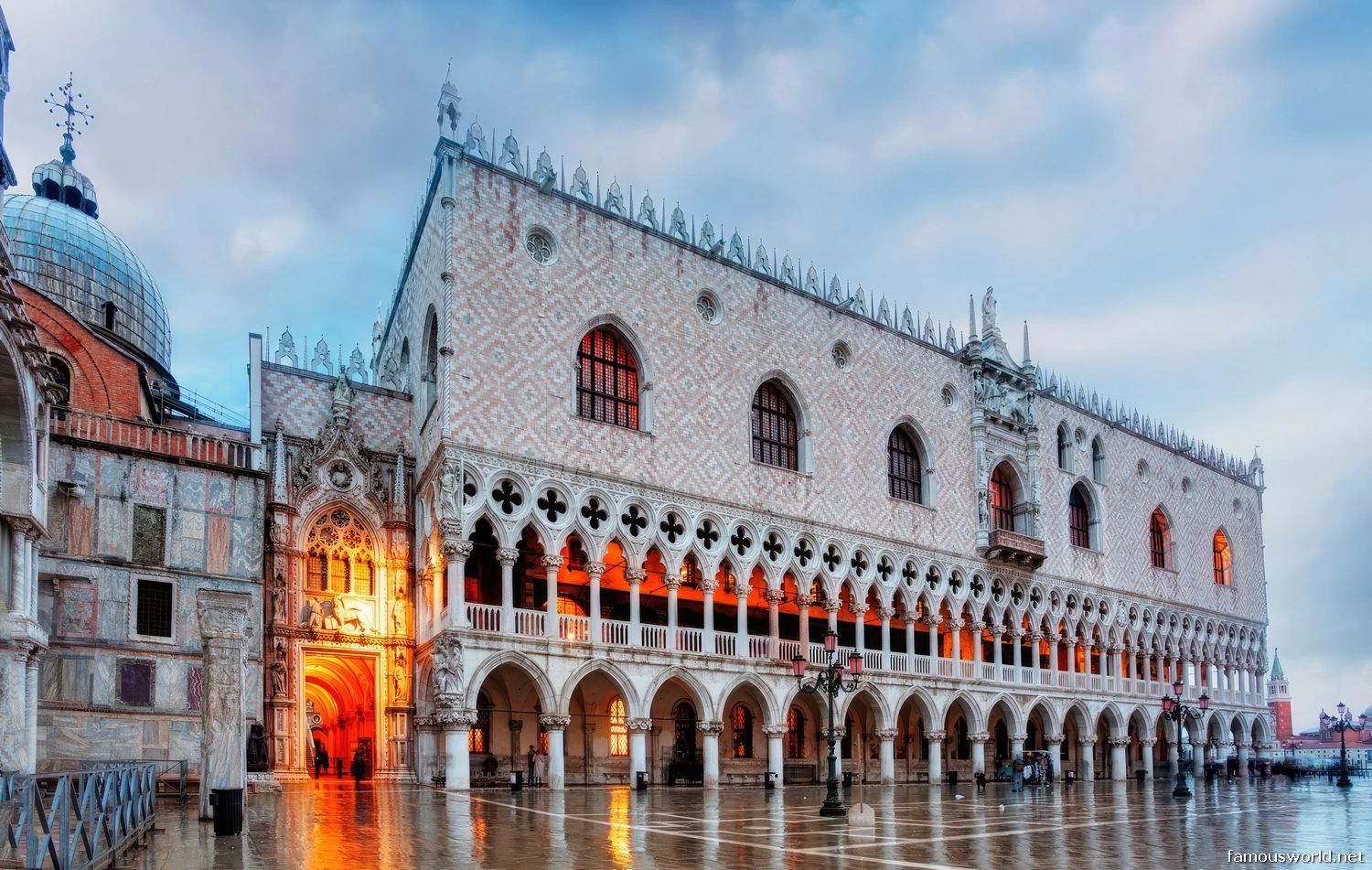
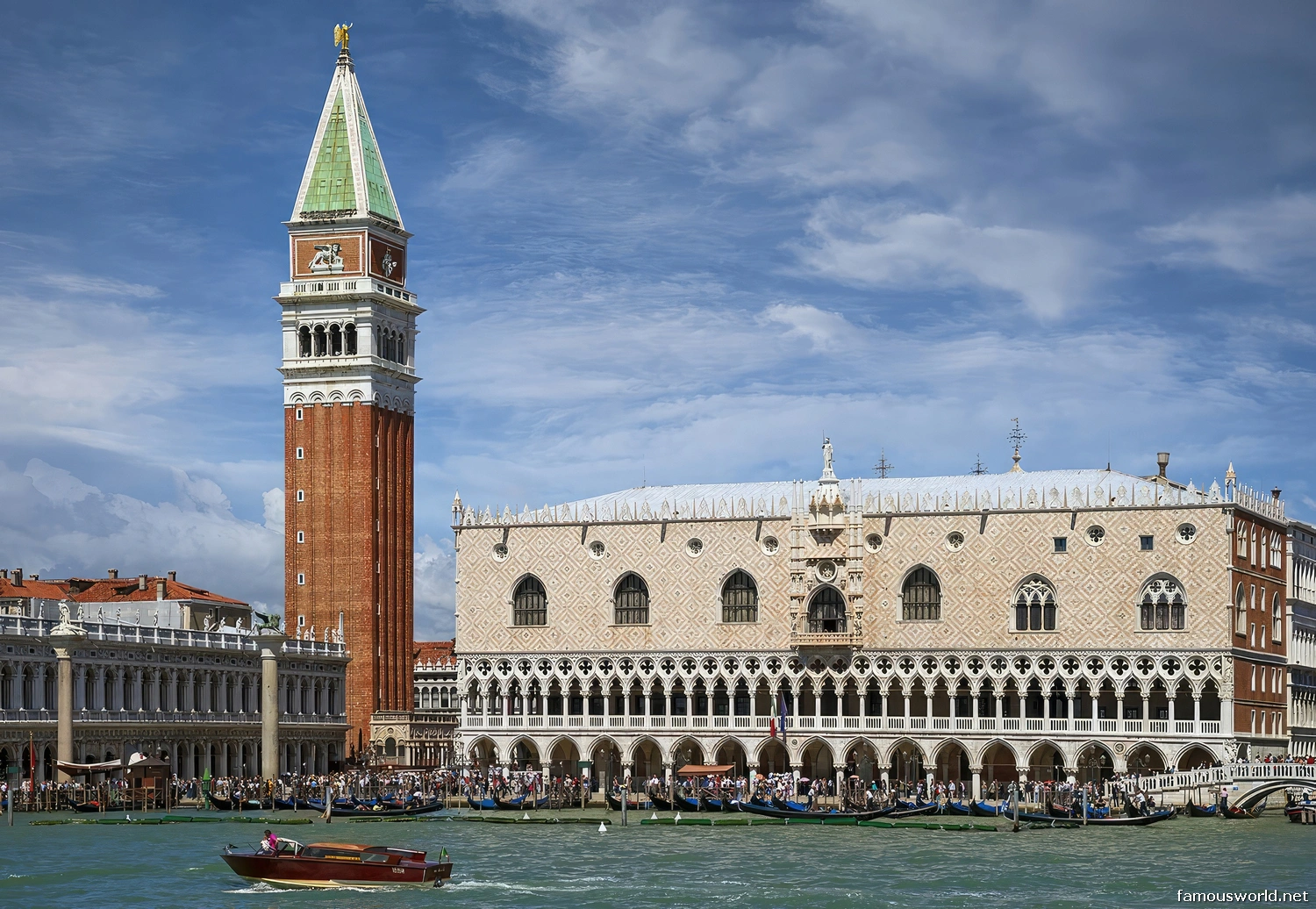
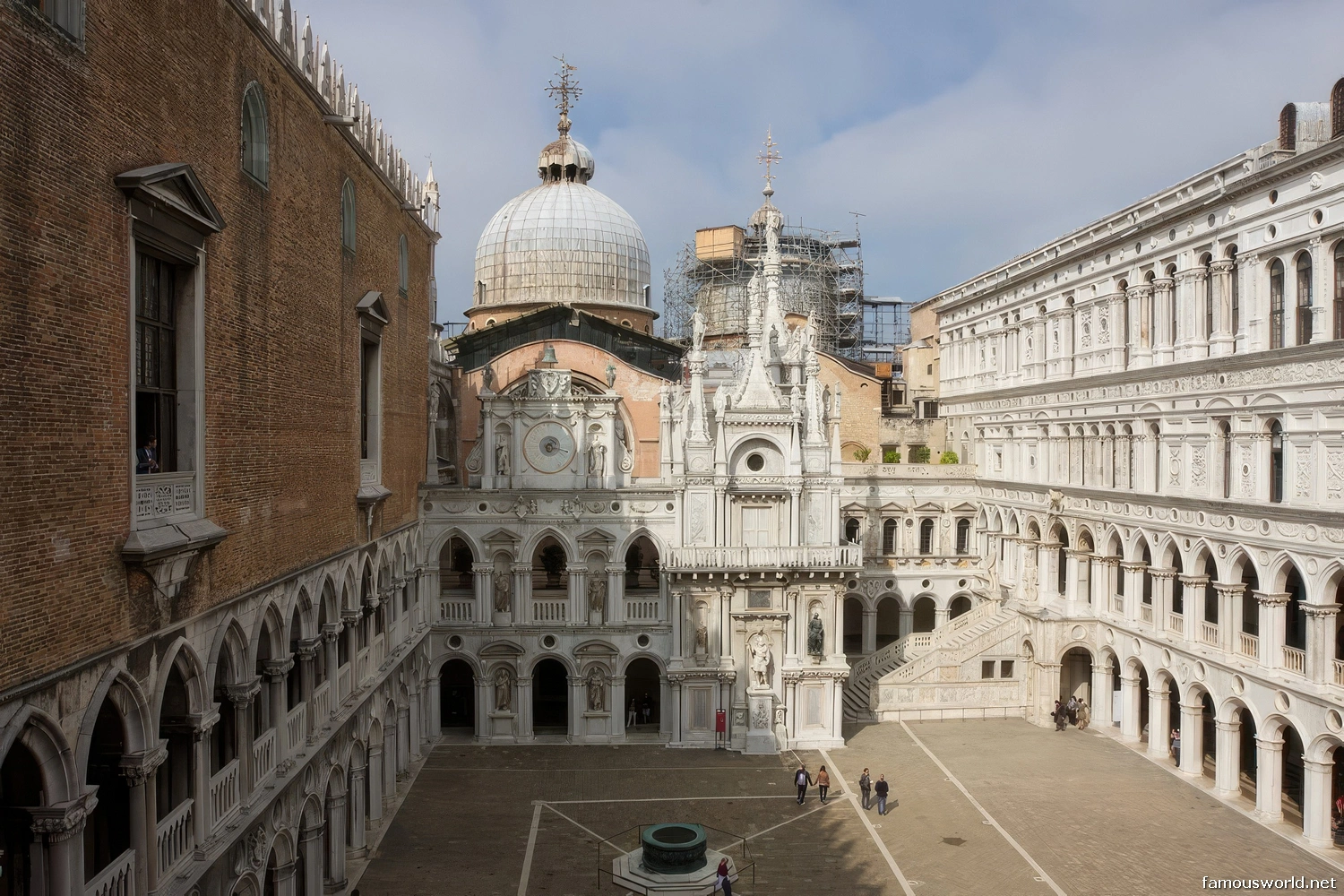
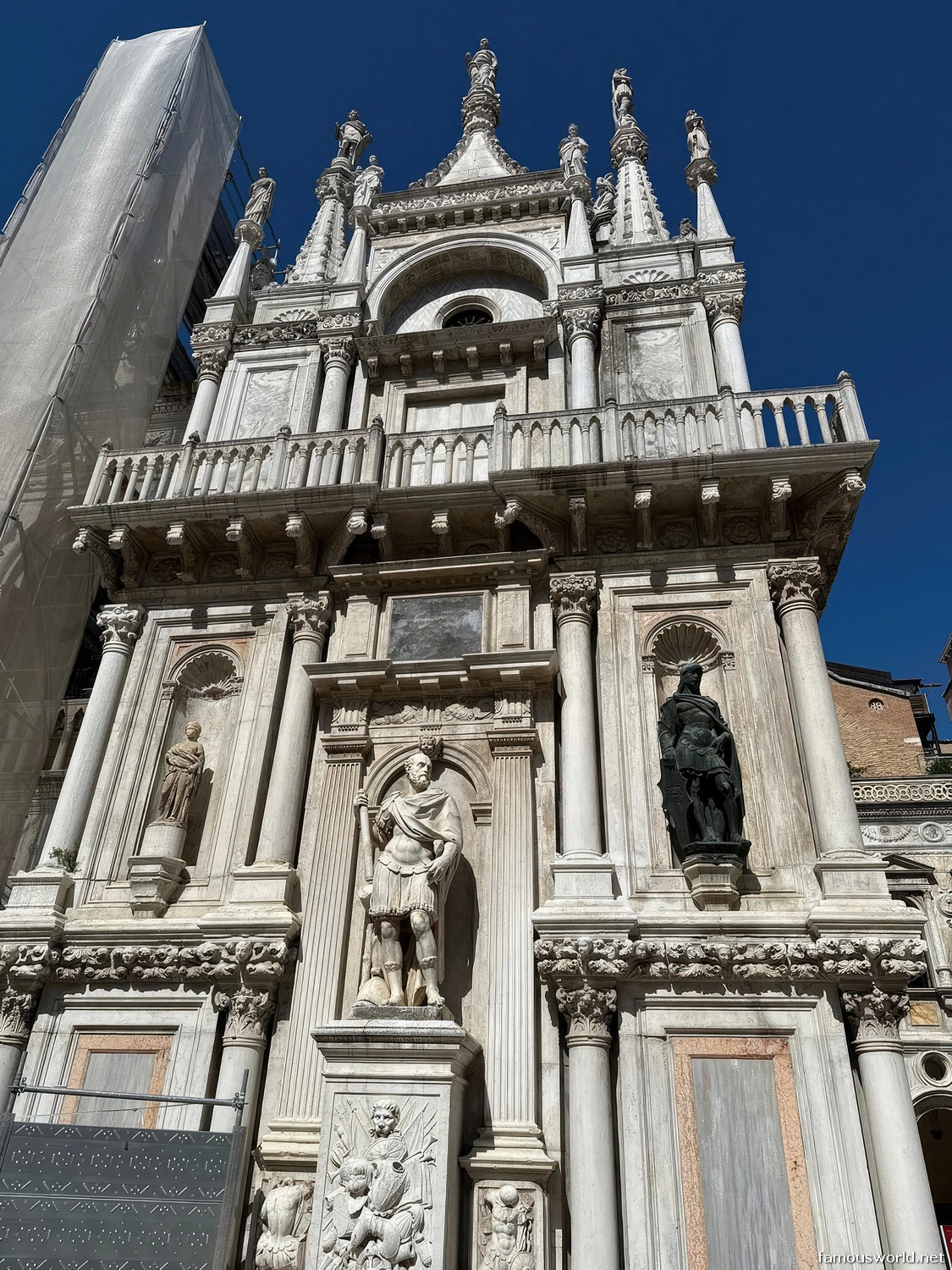
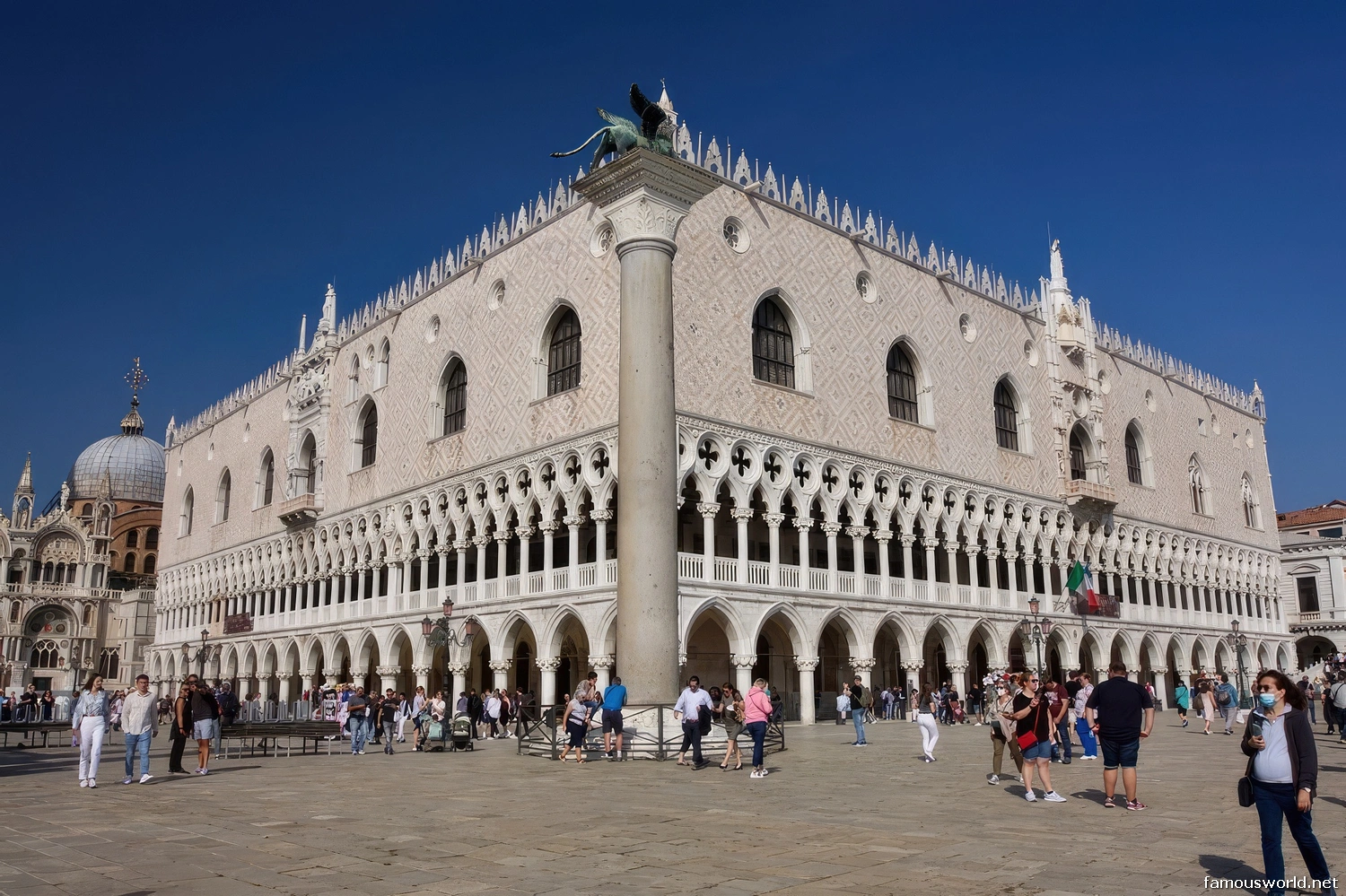
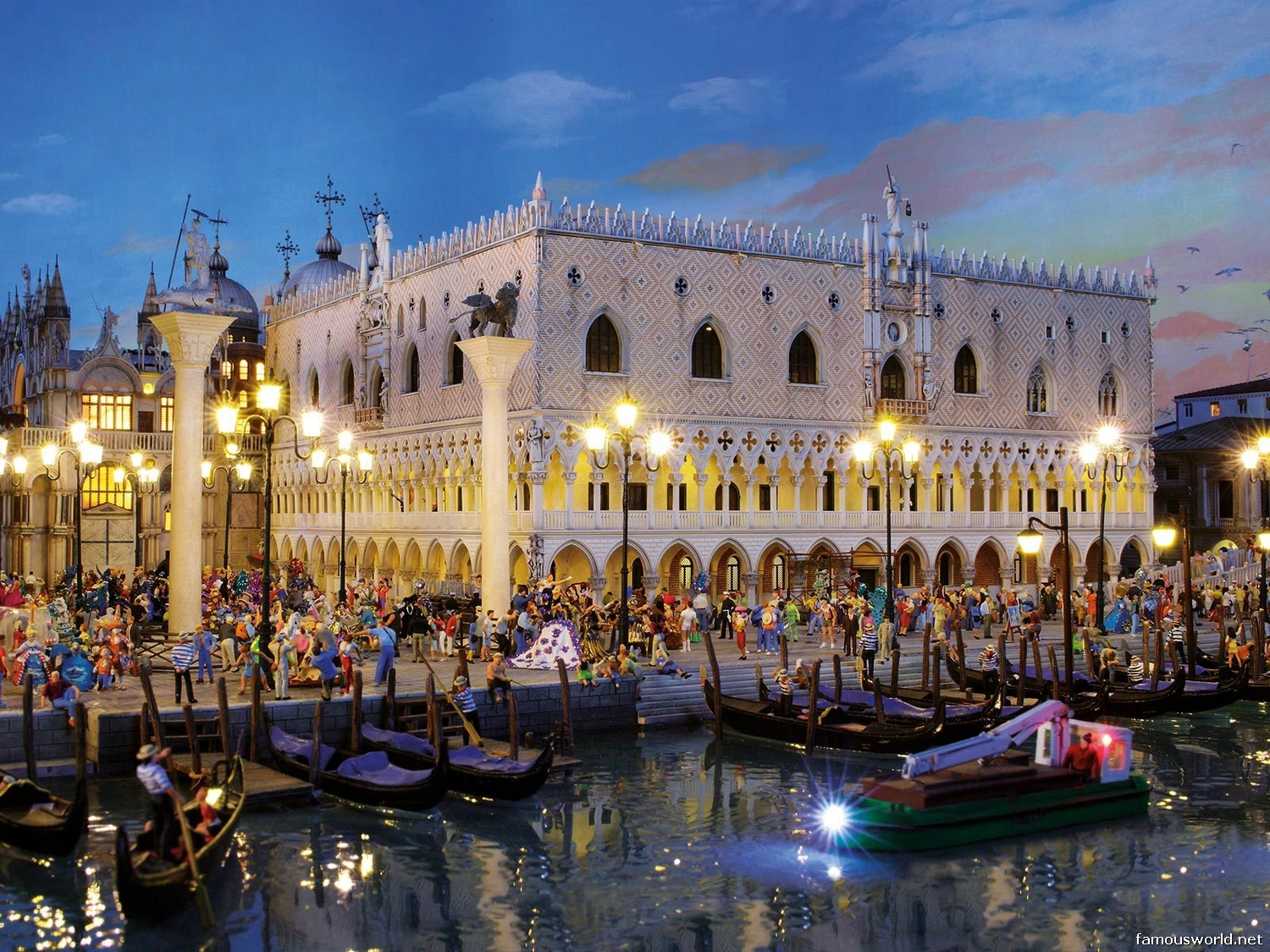
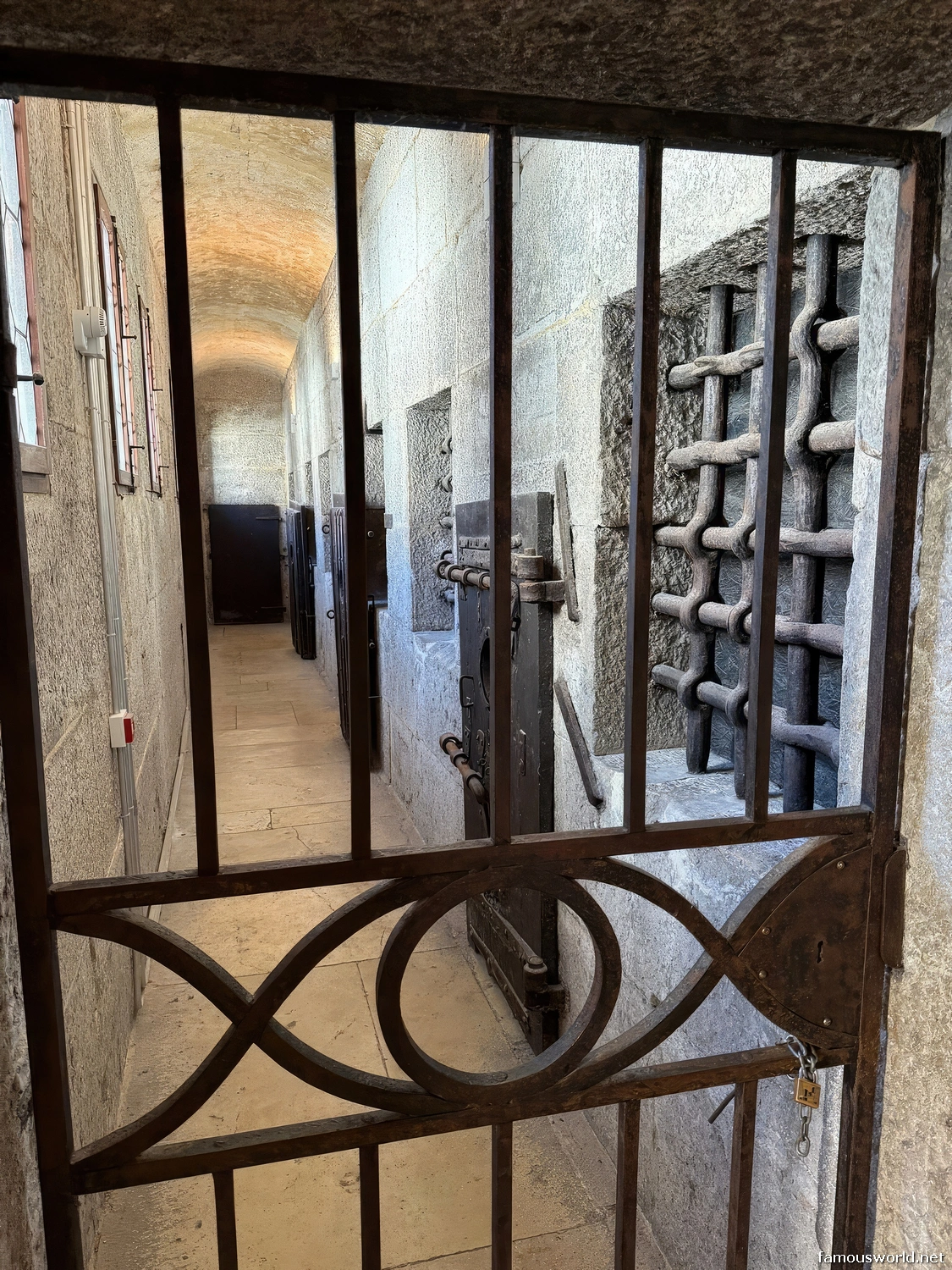
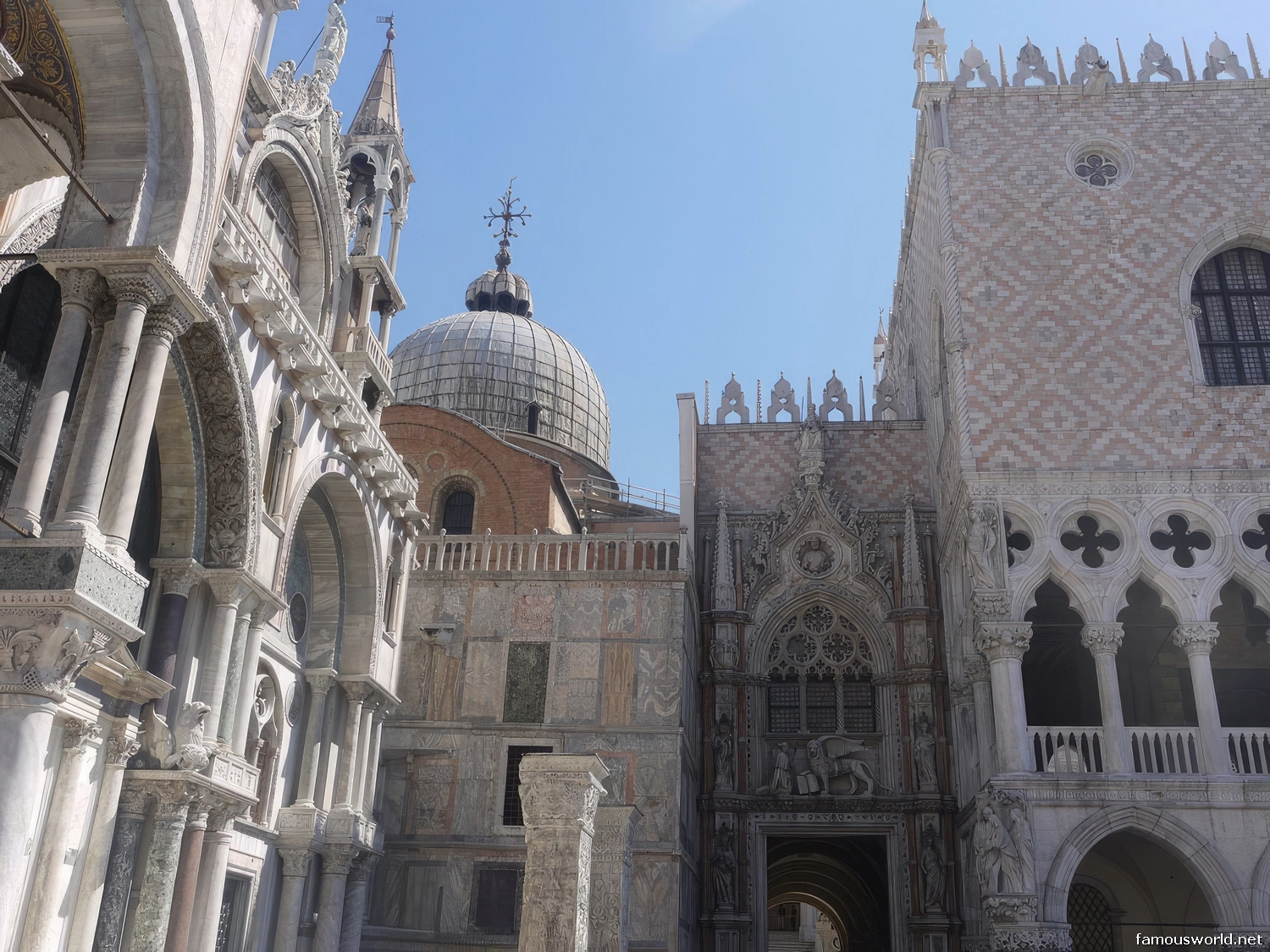

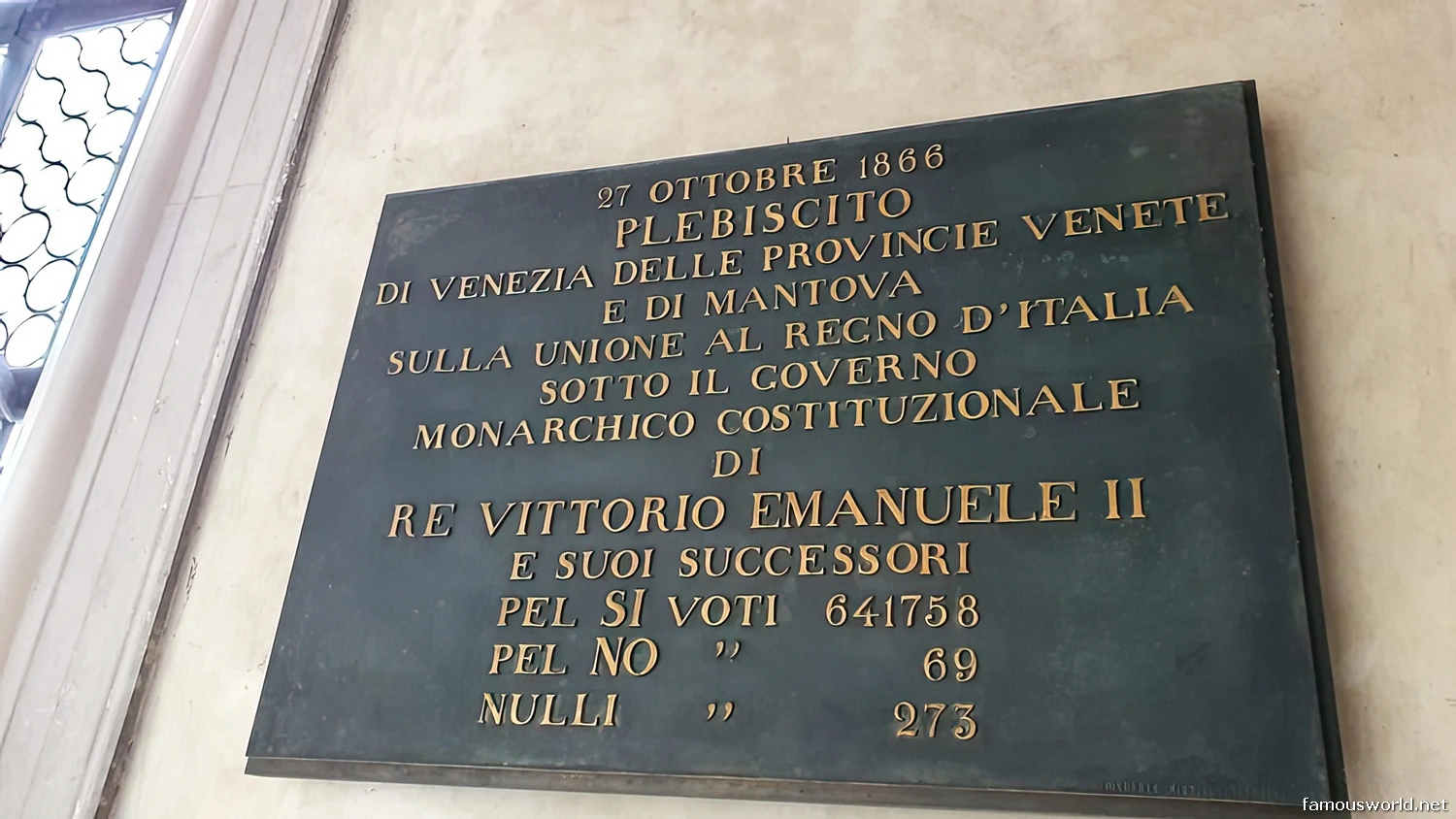
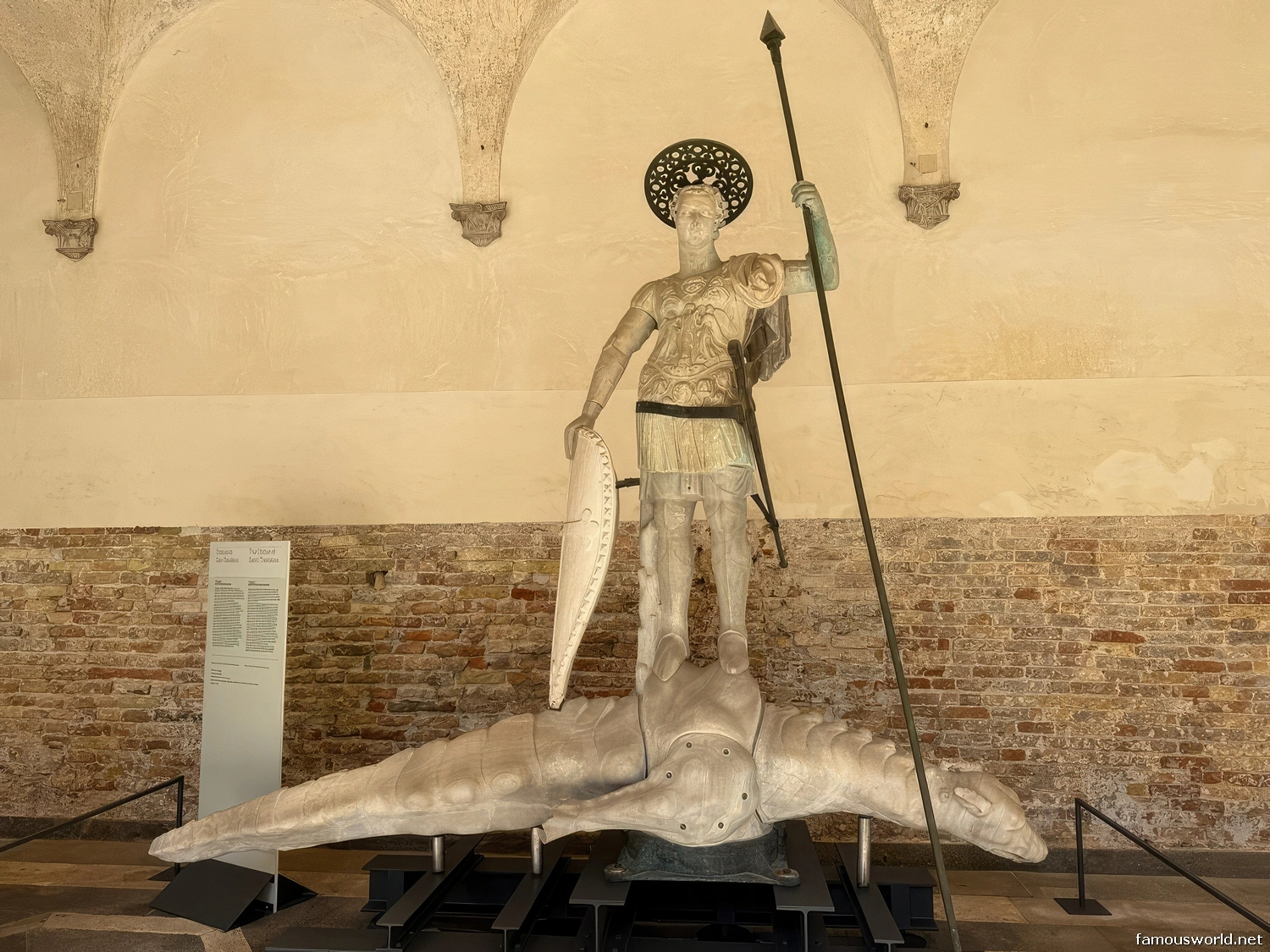
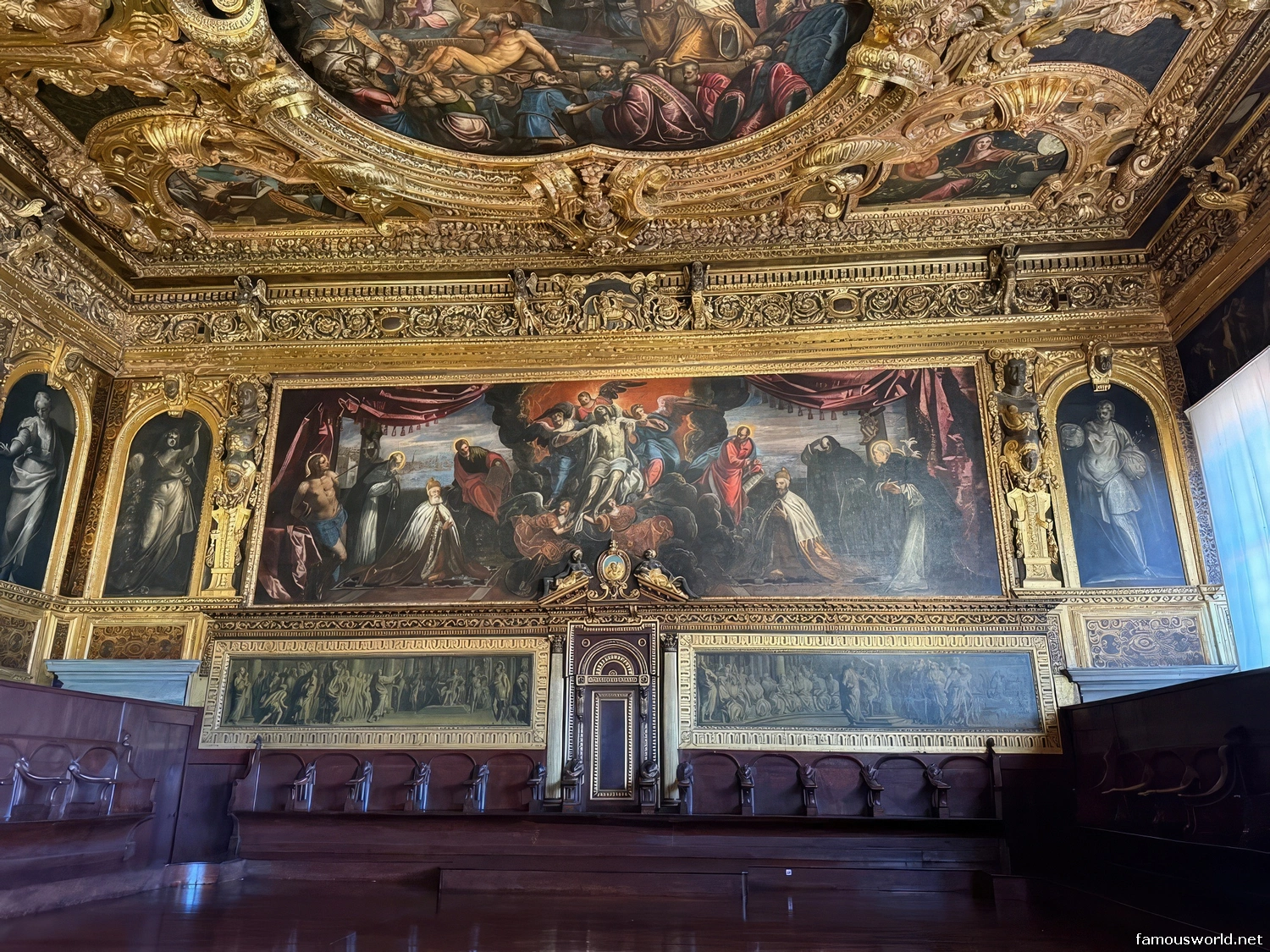
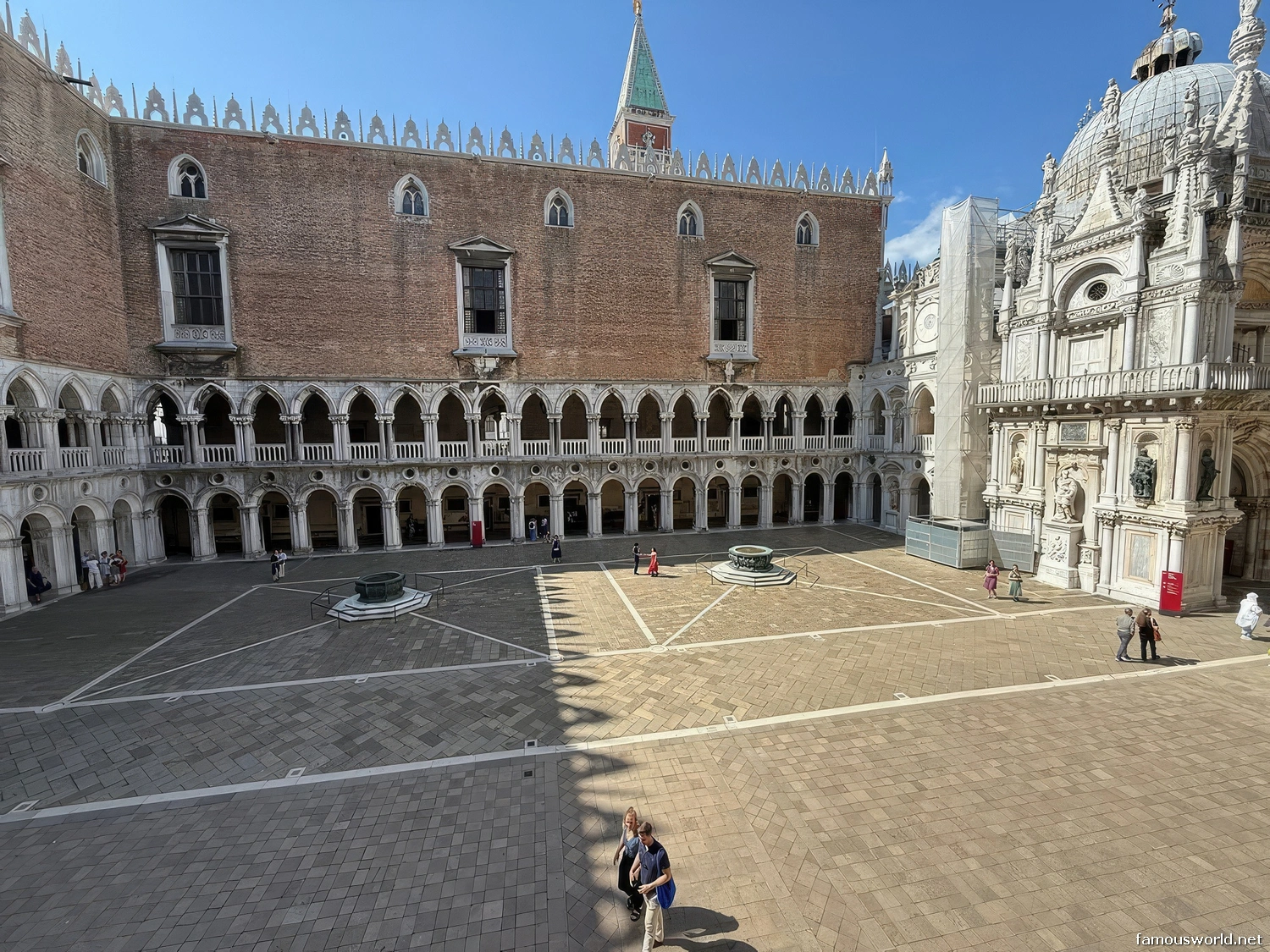
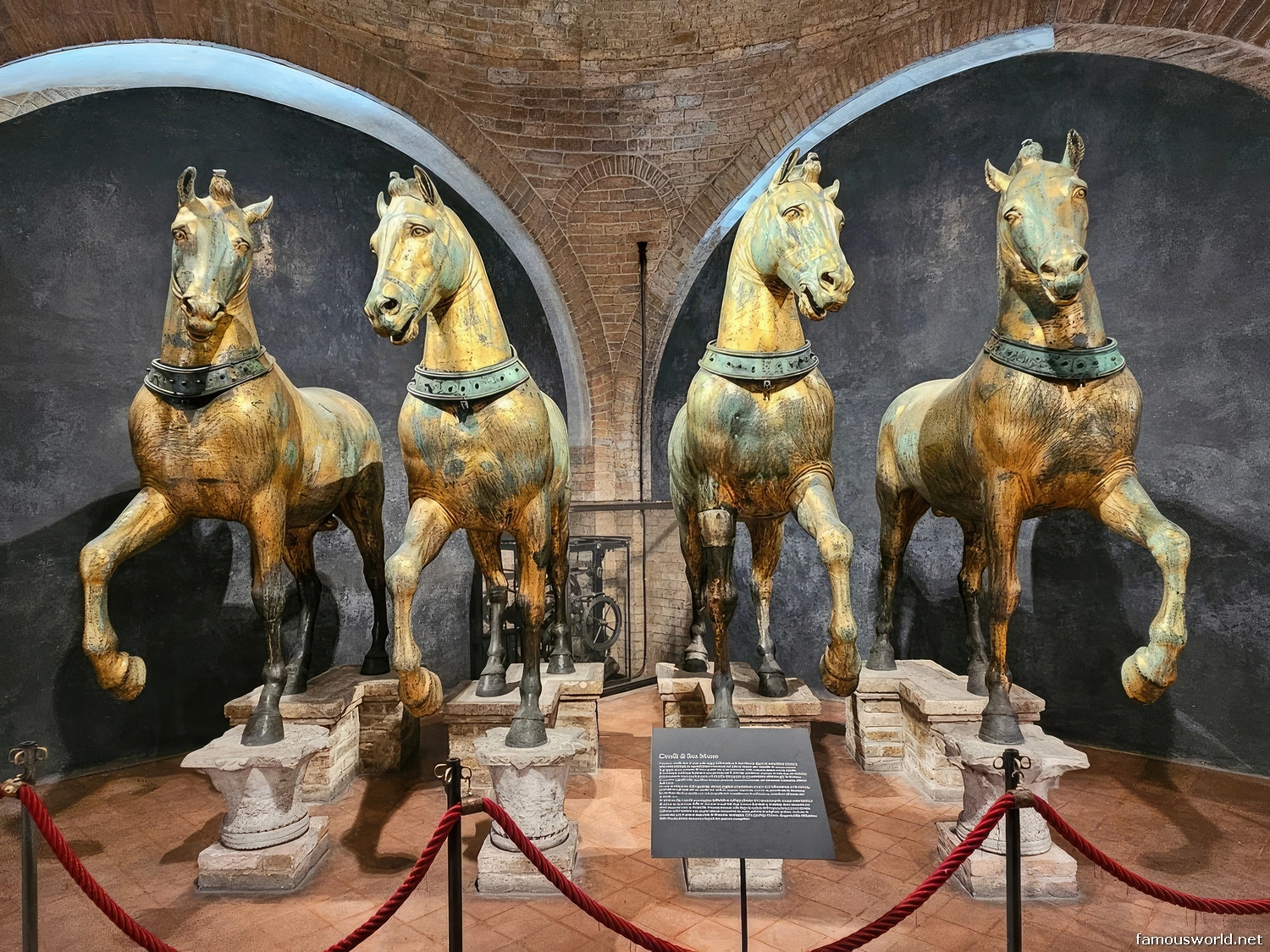
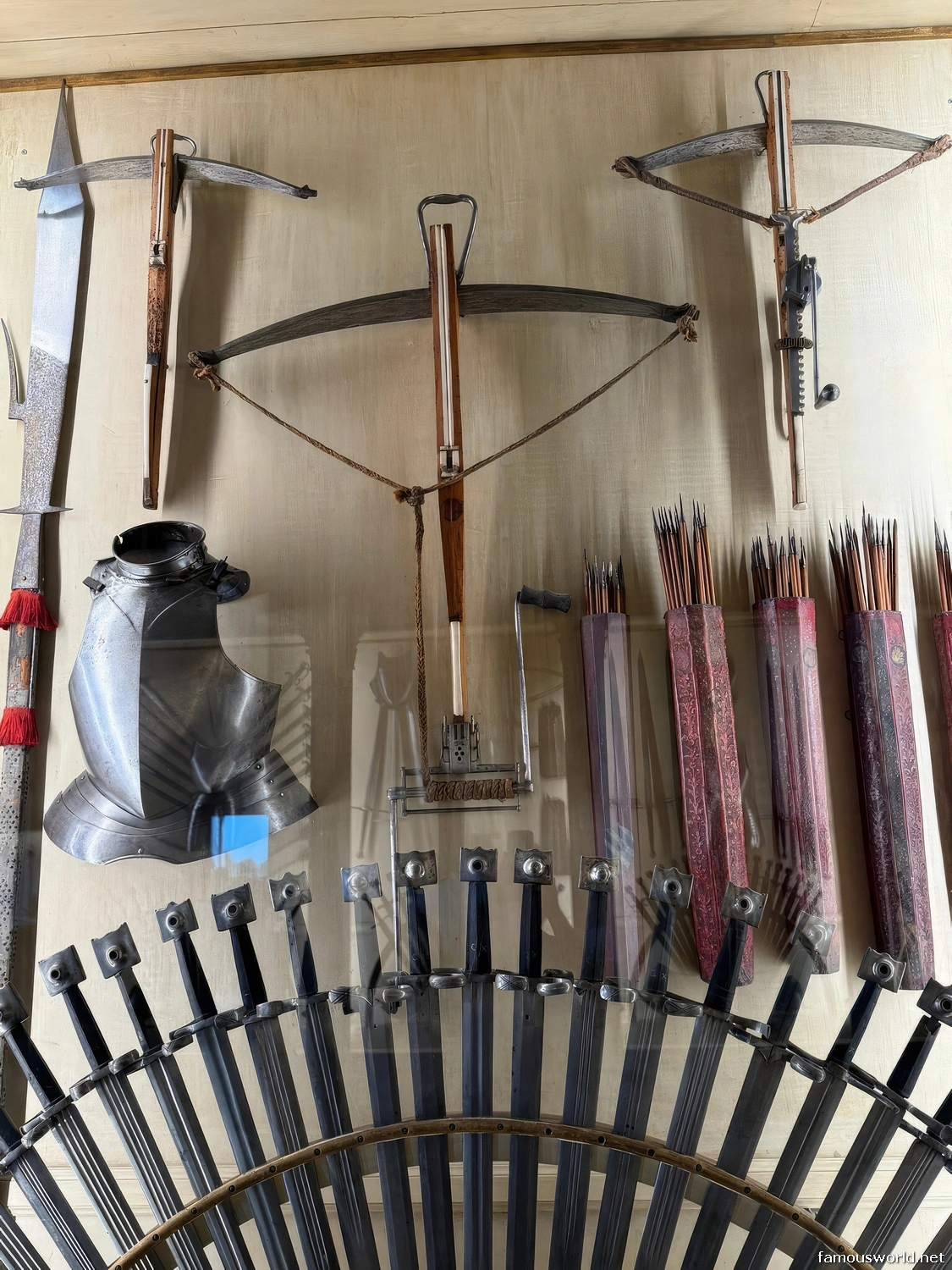
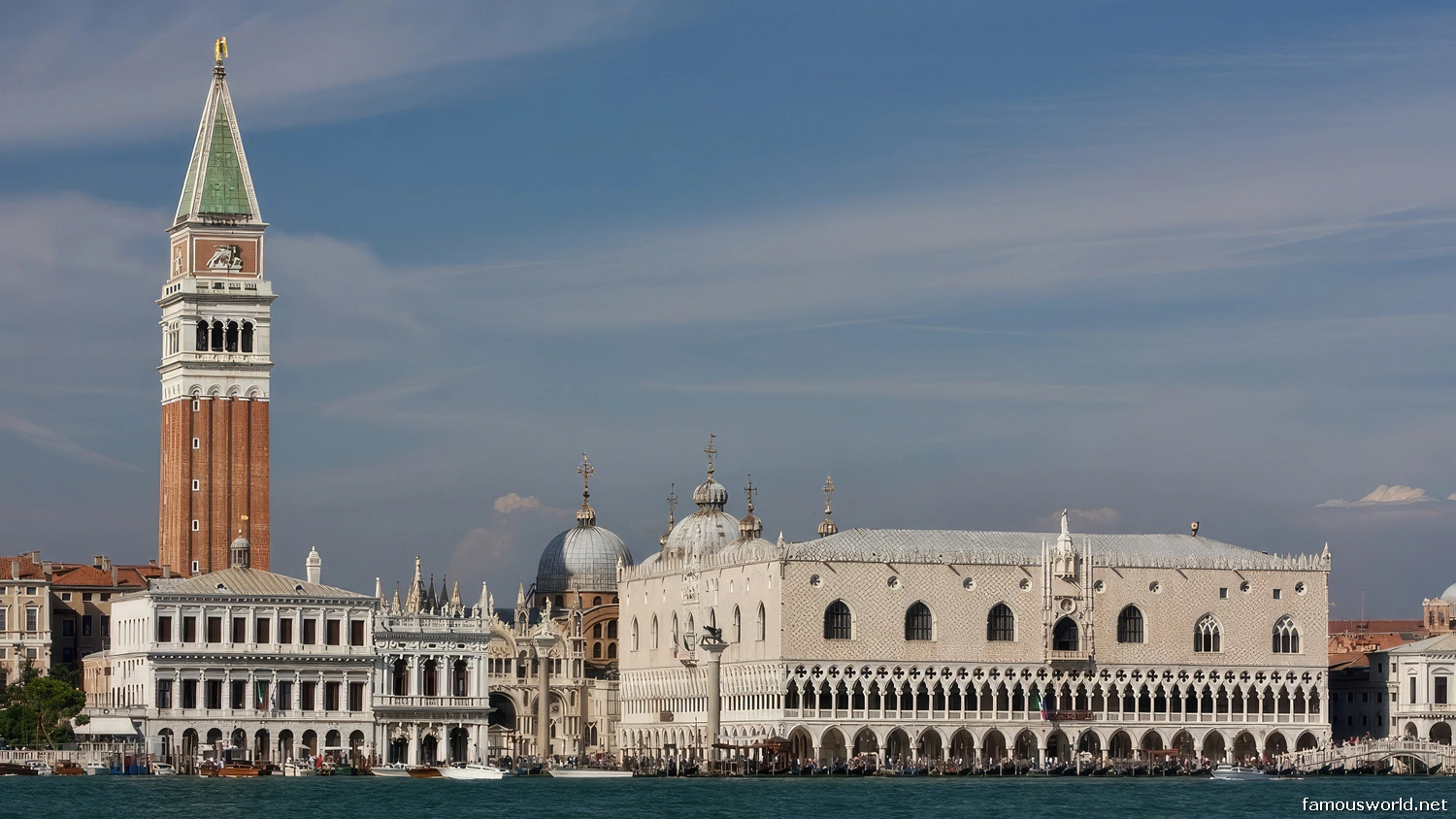
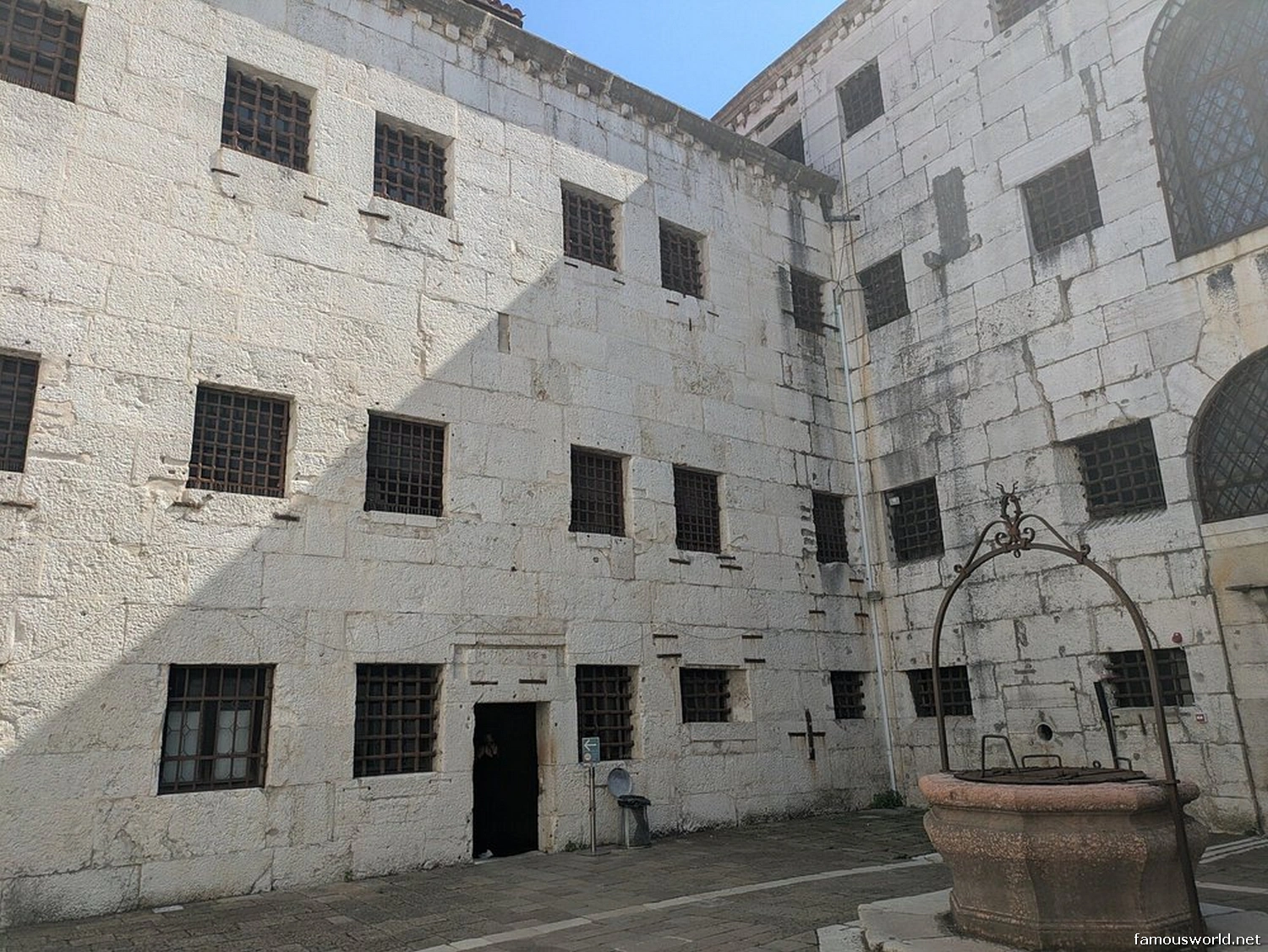
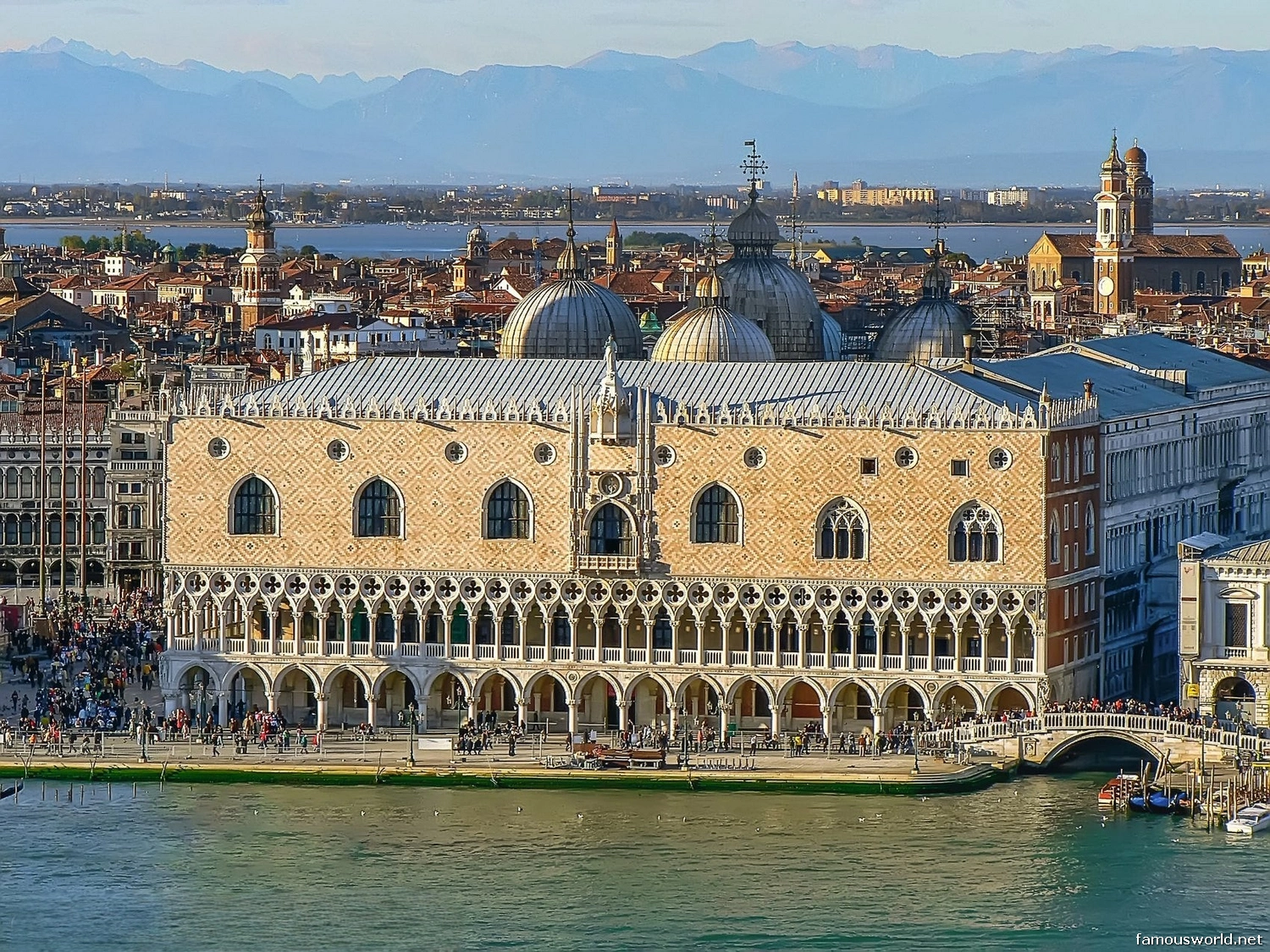
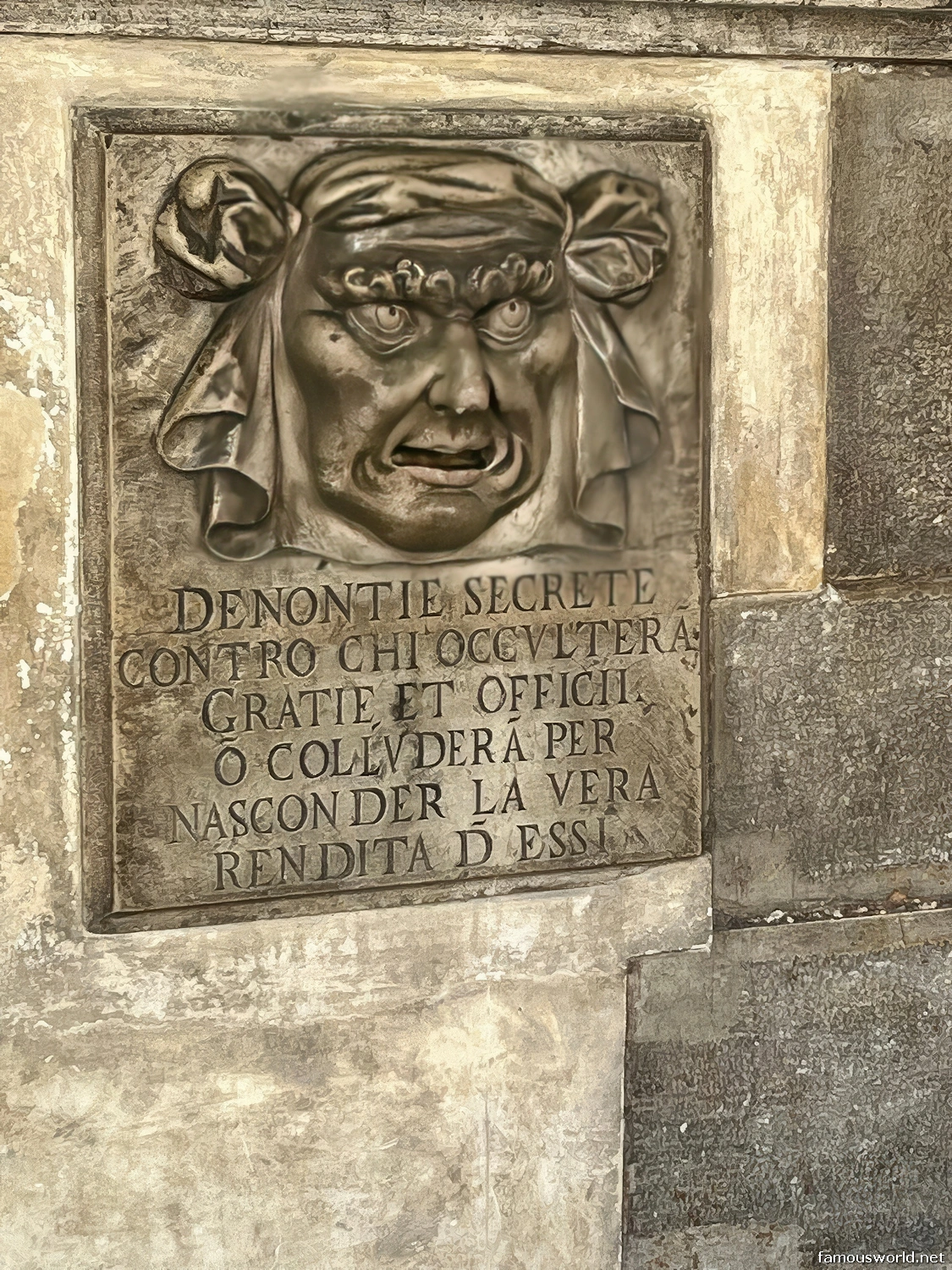
Standing beside St. Mark’s Basilica as the other great power on the piazza, the Doge’s Palace (Palazzo Ducale) is the supreme expression of Venetian Gothic architecture and the very soul of the Venetian Republic. For centuries, this magnificent palace was the residence of the Doge, the seat of government, and the center of justice for one of the world’s most powerful and enduring maritime empires. More than just a building, it was the heart of a sophisticated political system, with its grand council chambers, opulent private apartments, and grim, hidden prisons. Its delicate, lace-like facade conceals a world of immense power, art, and intrigue.
Listen to an introduction about Doge’s Palace

Name and Location
- Name: Doge’s Palace (Palazzo Ducale).
- Location: In St. Mark’s Square (Piazza San Marco) in Venice, Italy, adjacent to St. Mark’s Basilica.
How to Get There
The palace is the most prominent landmark in Venice next to the basilica.
- By Foot: Located in St. Mark’s Square, it is a primary destination that all walking routes in Venice eventually lead to.
- By Vaporetto (Water Bus): The “San Marco Vallaresso” or “San Zaccaria” stops are the closest, offering stunning views of the palace’s waterfront facade as you approach.
Landscape and Architecture
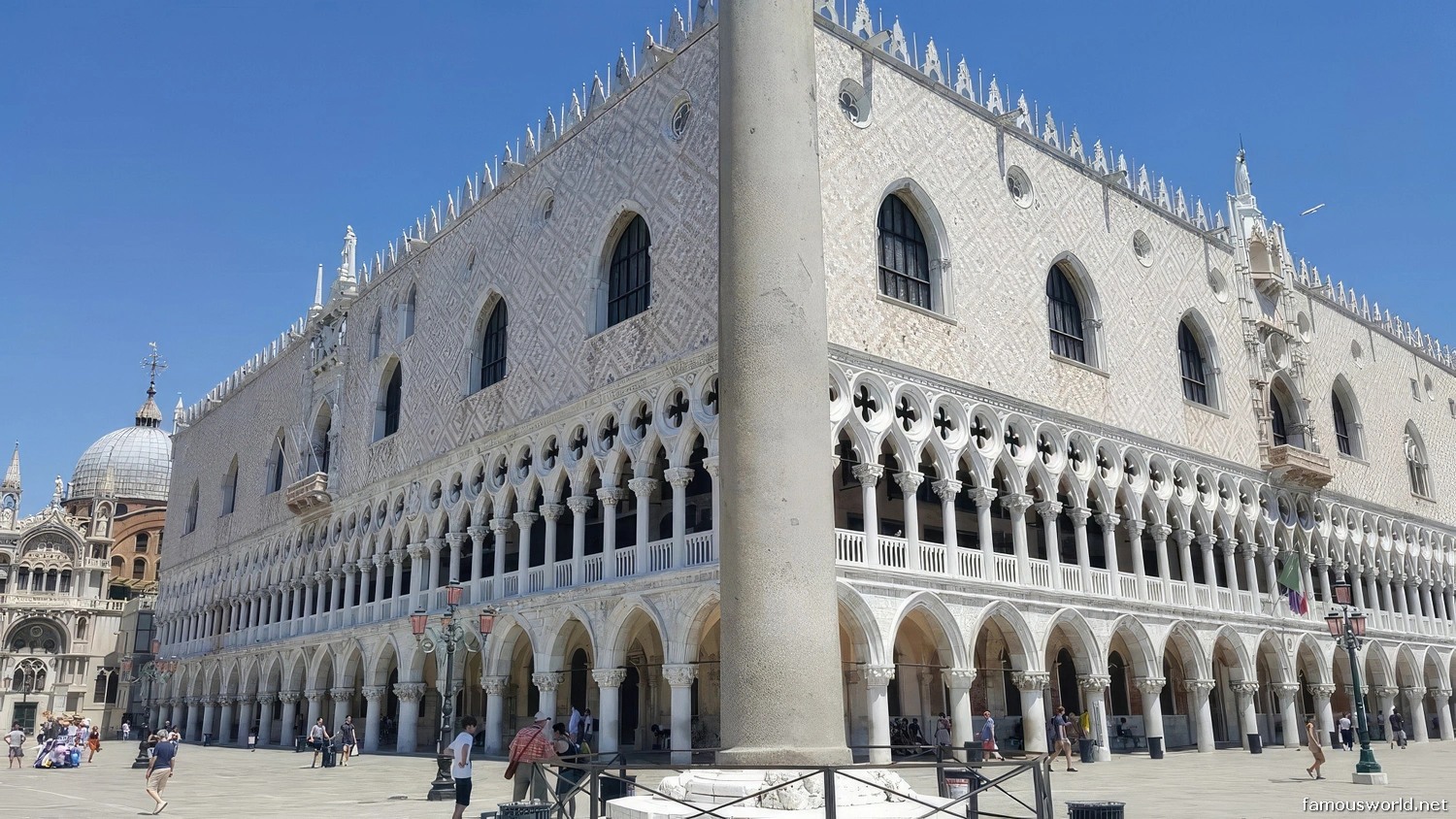
The palace is an architectural marvel that seems to defy gravity, defining the Venetian waterfront.
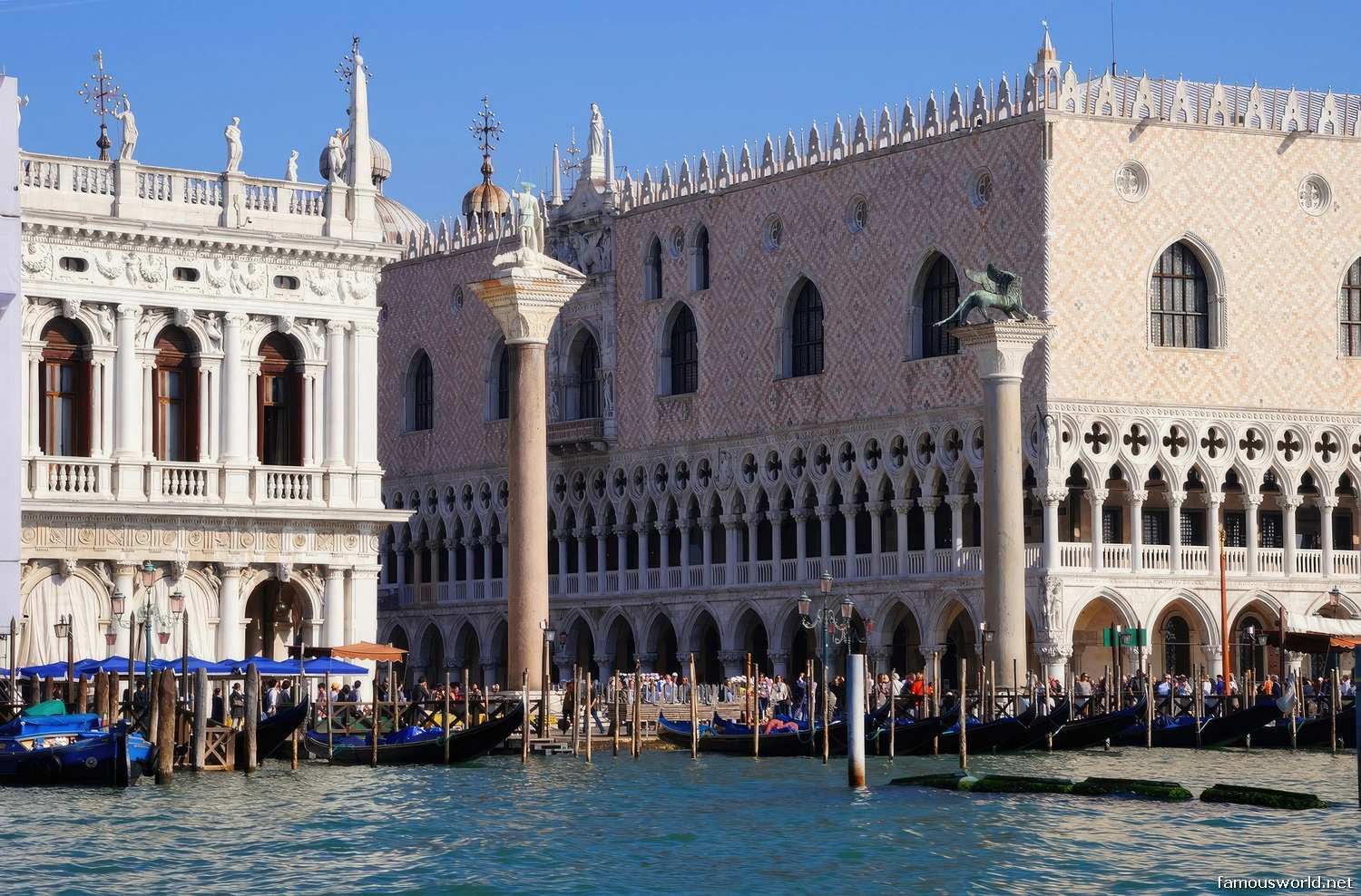
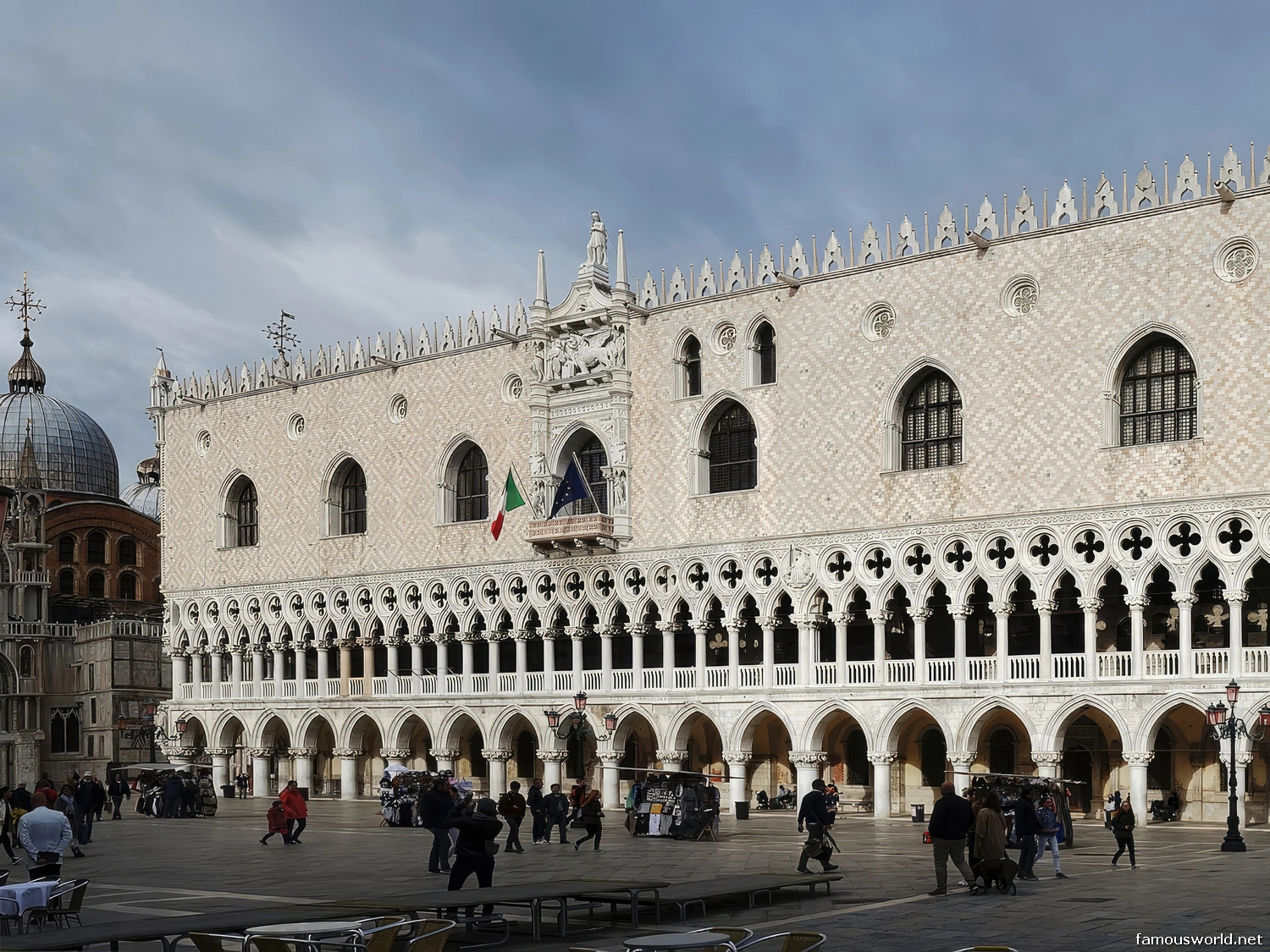
- The Landscape: It forms the grandest corner of St. Mark’s Square, with one facade facing the piazza and the other facing the open water of St. Mark’s Basin. This dual position highlights its role as the center of both the city’s civic life and its maritime empire.
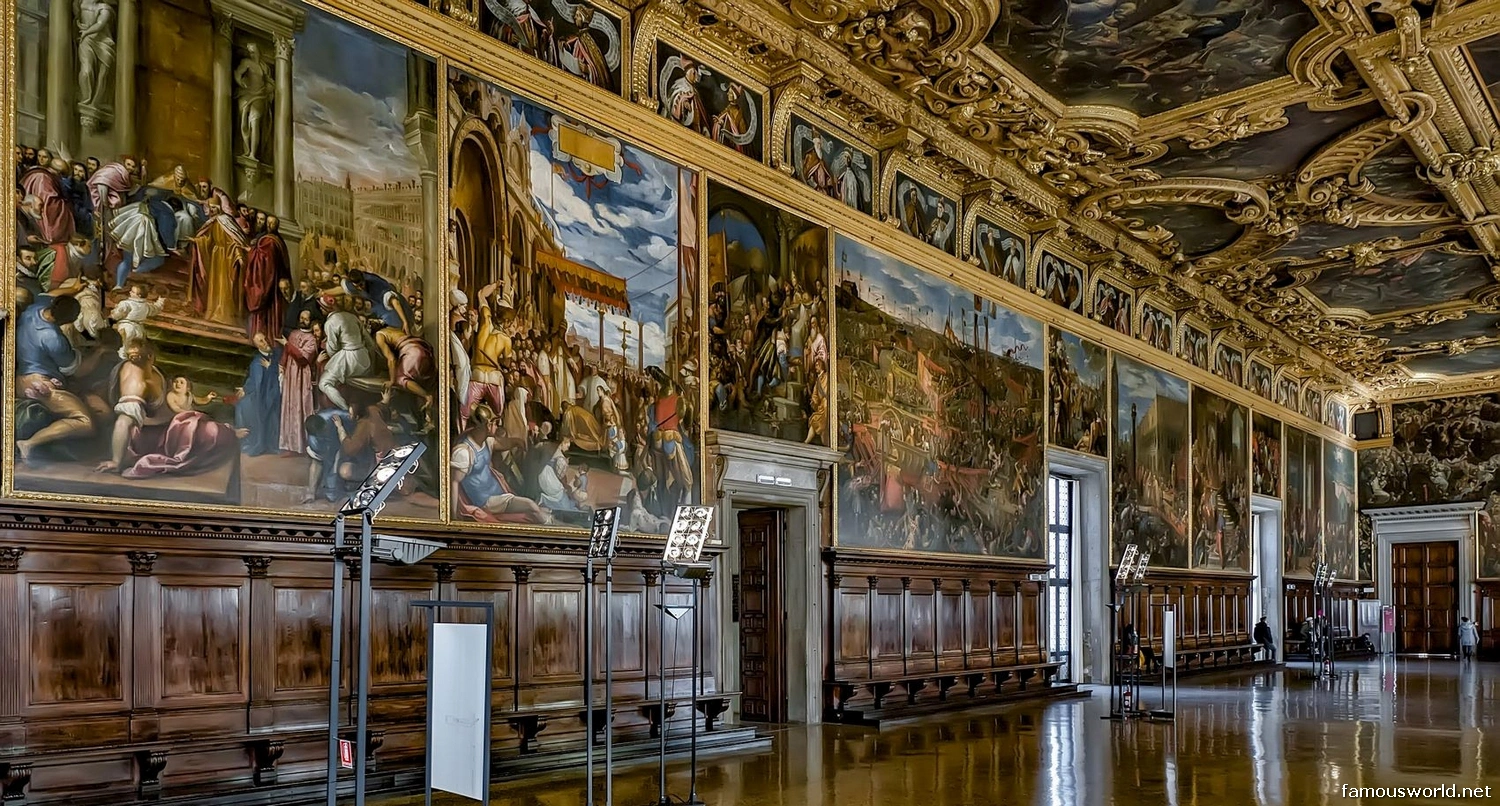
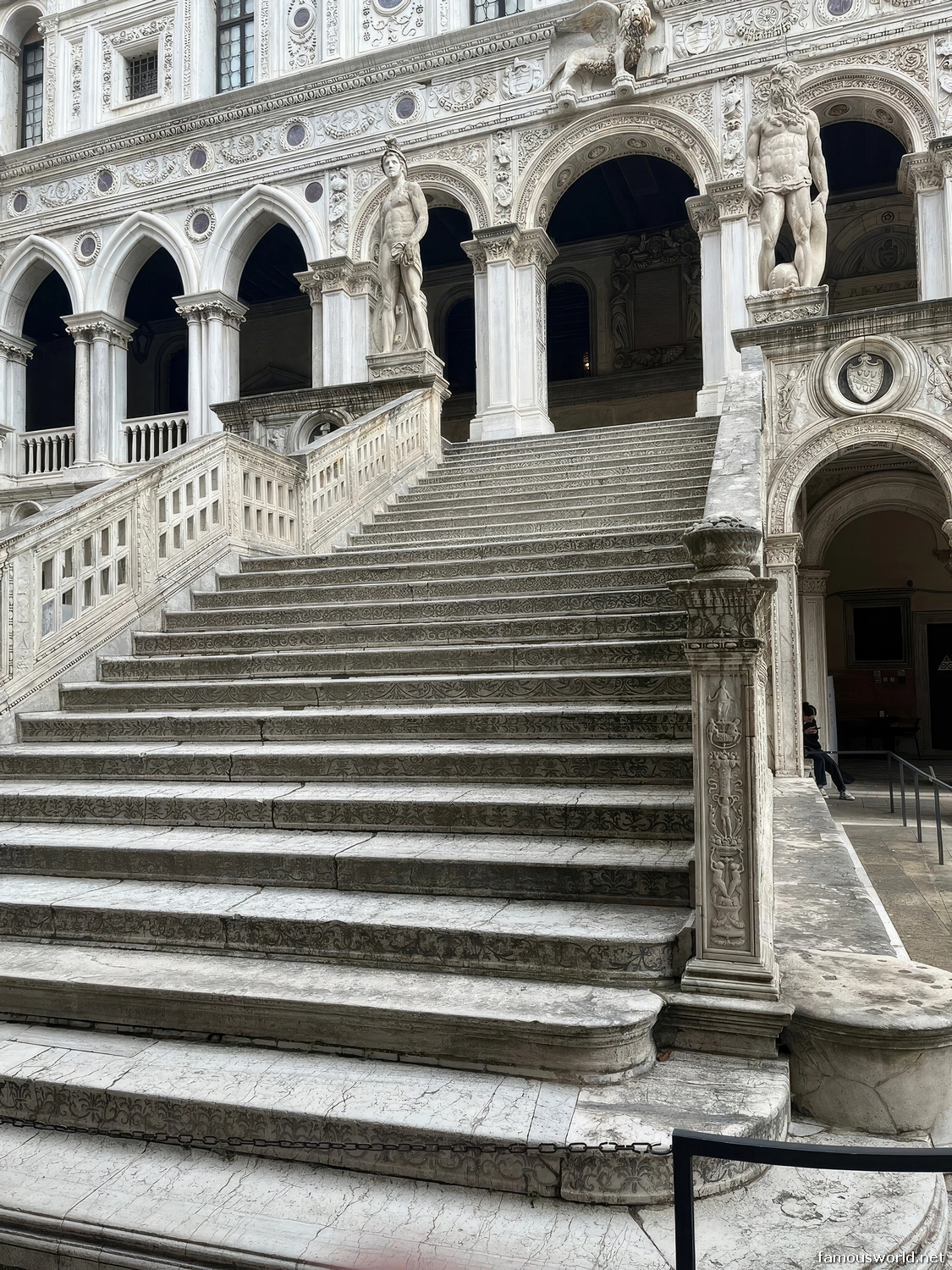
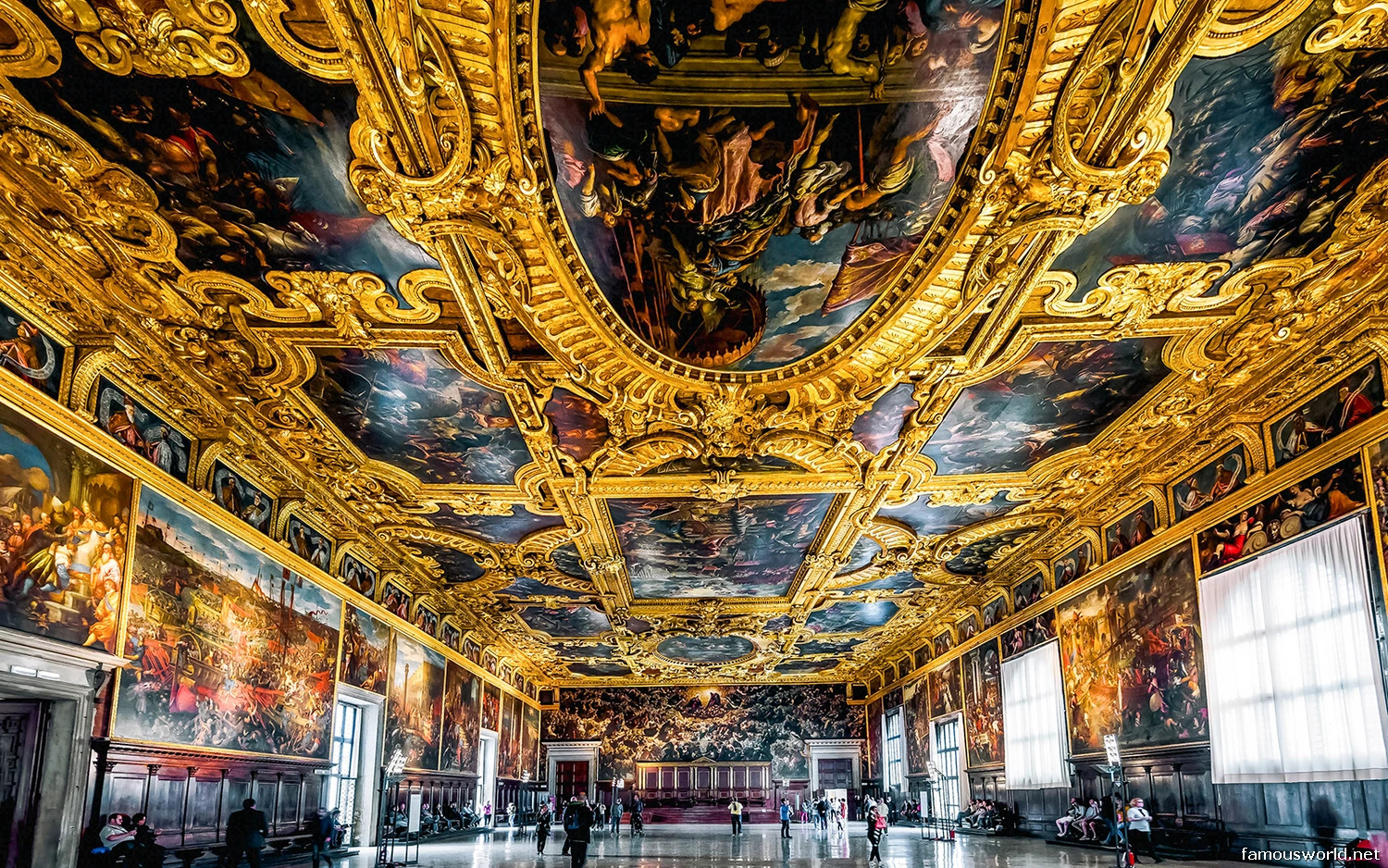
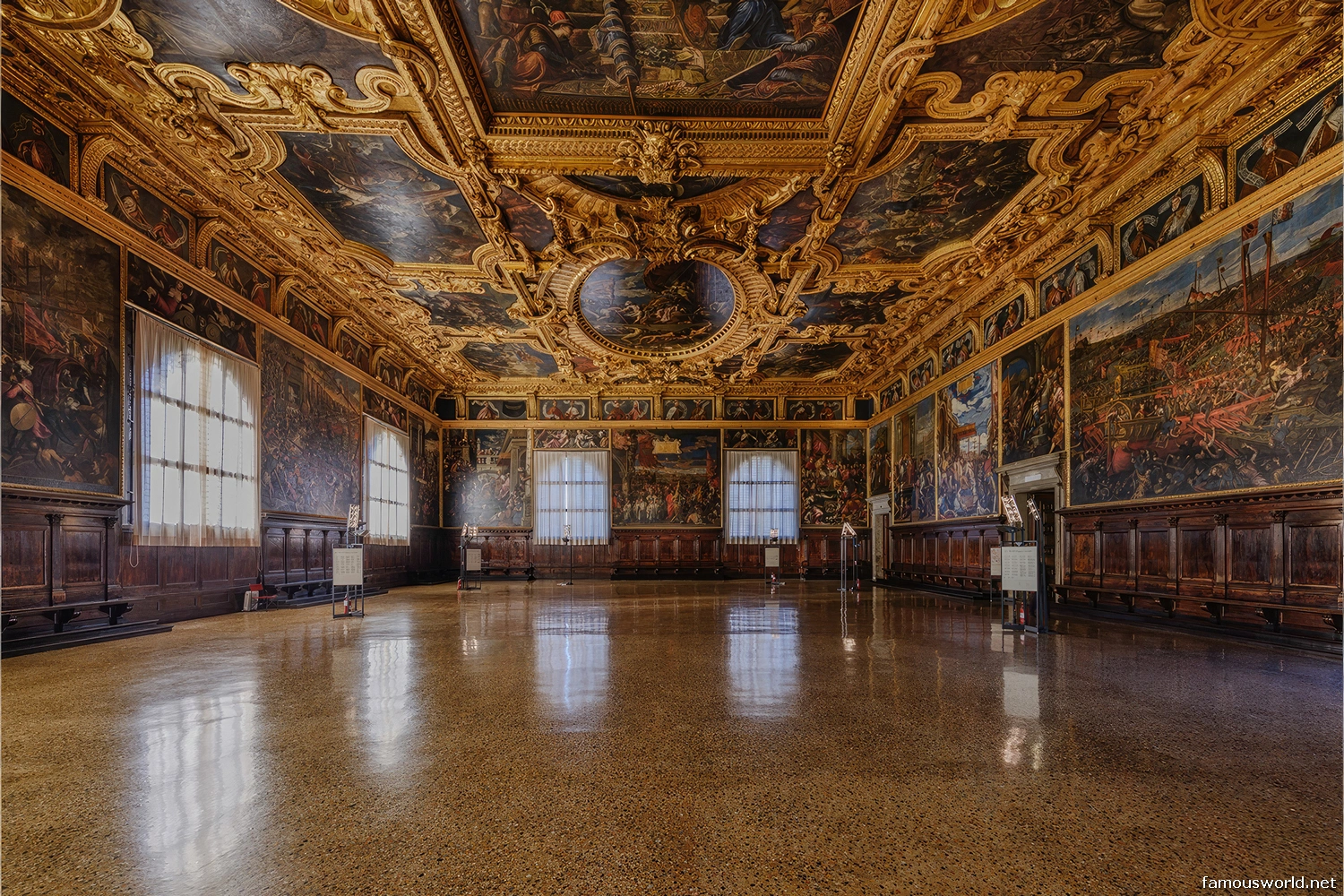
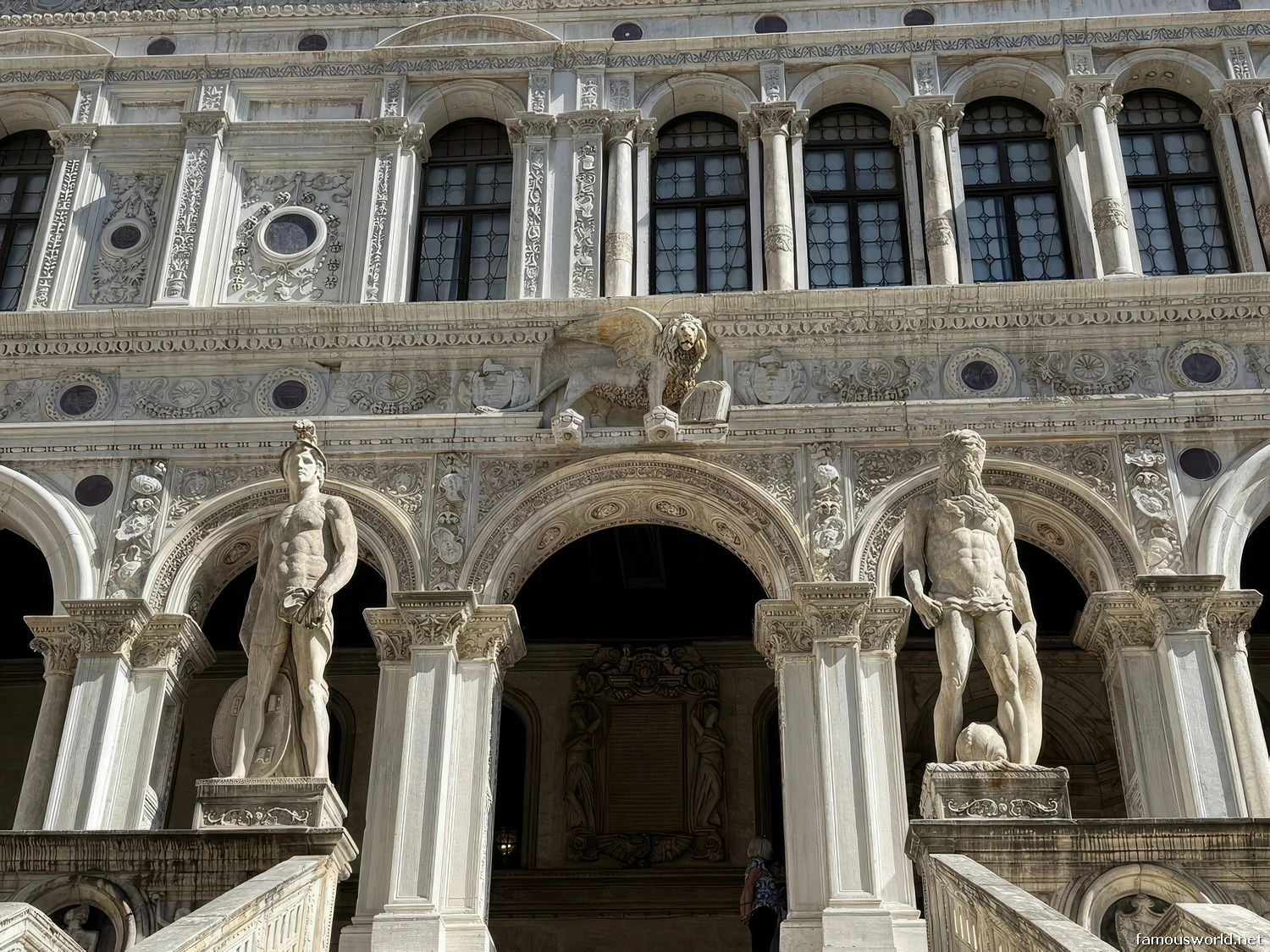
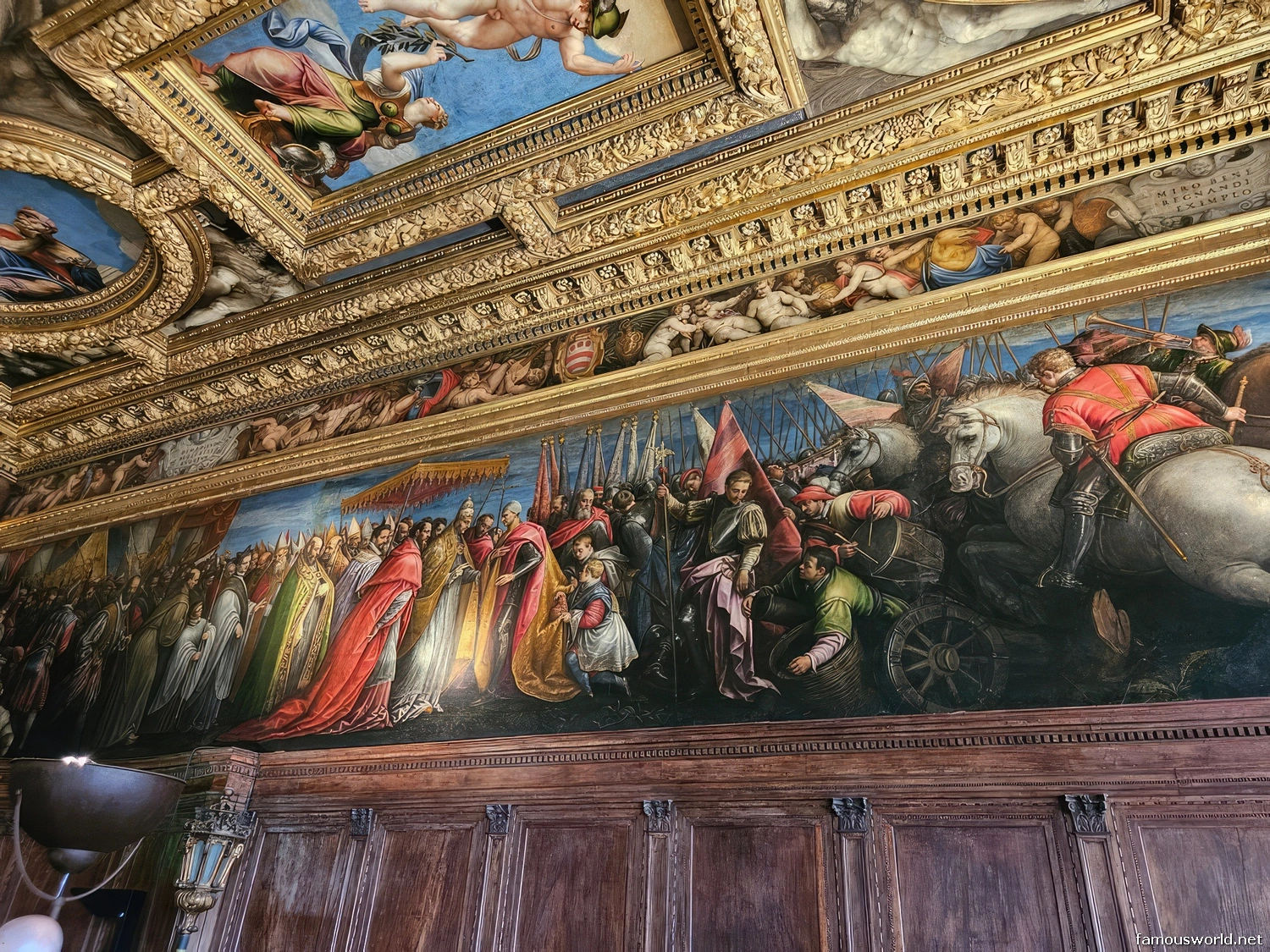
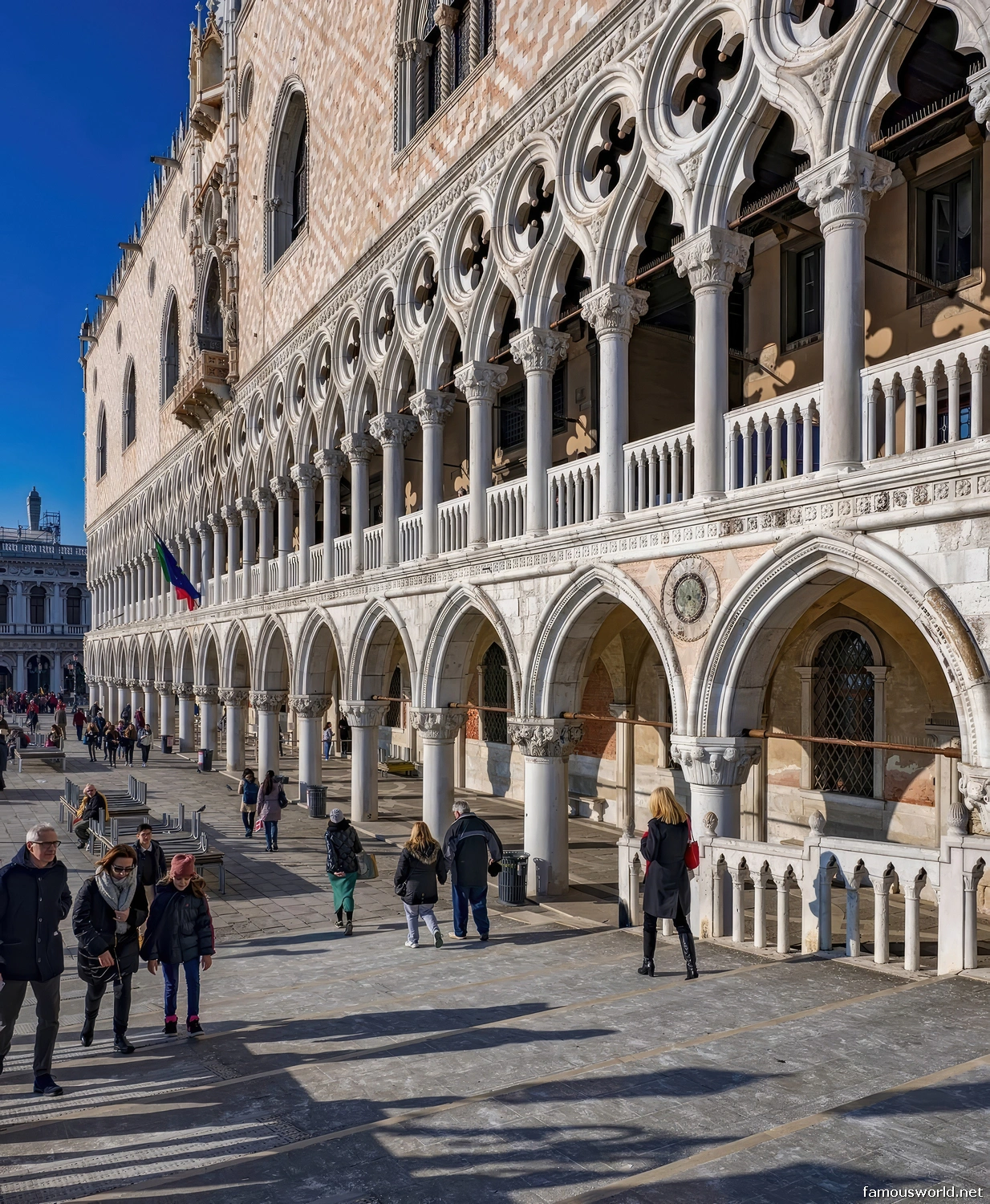
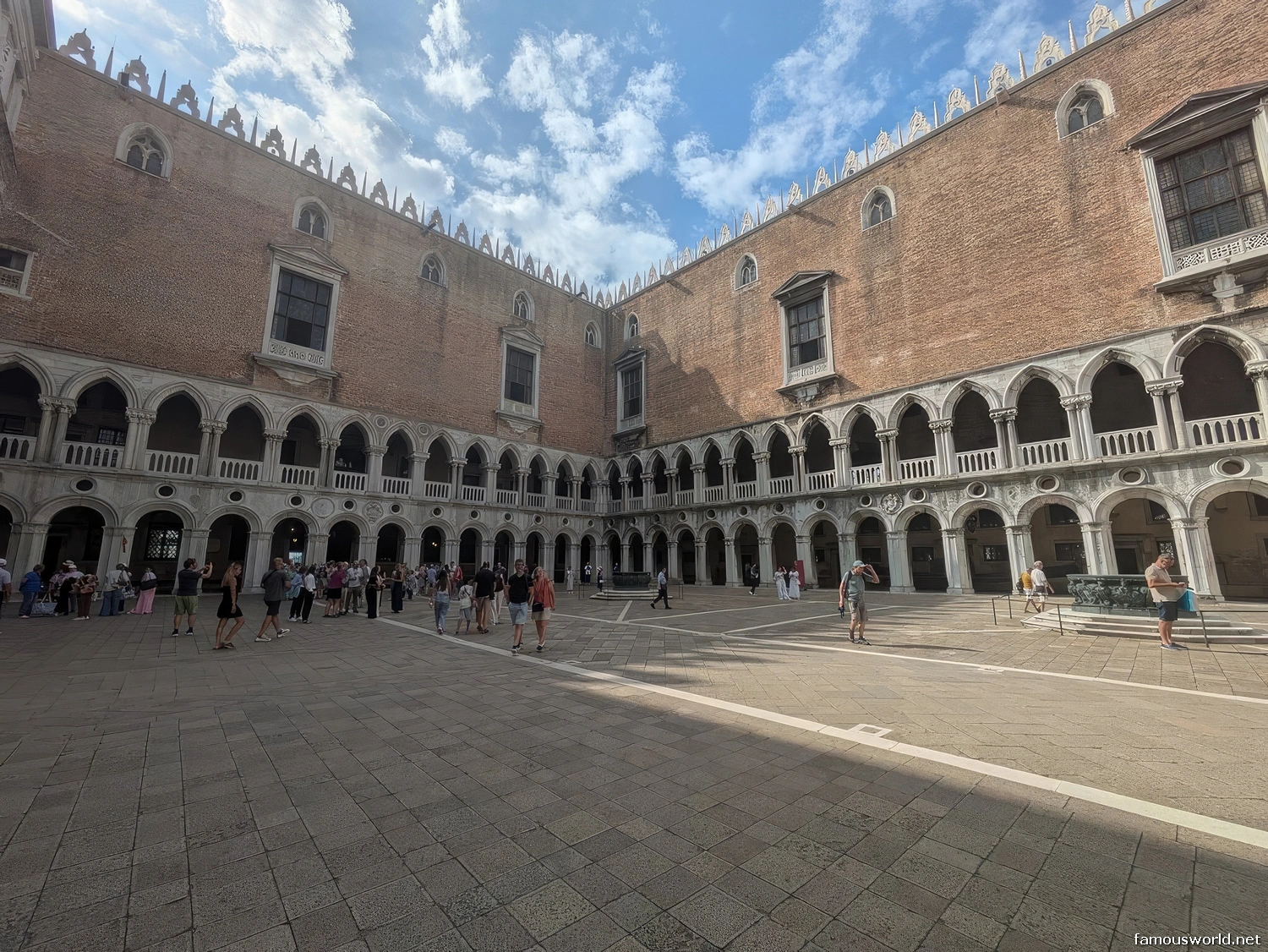
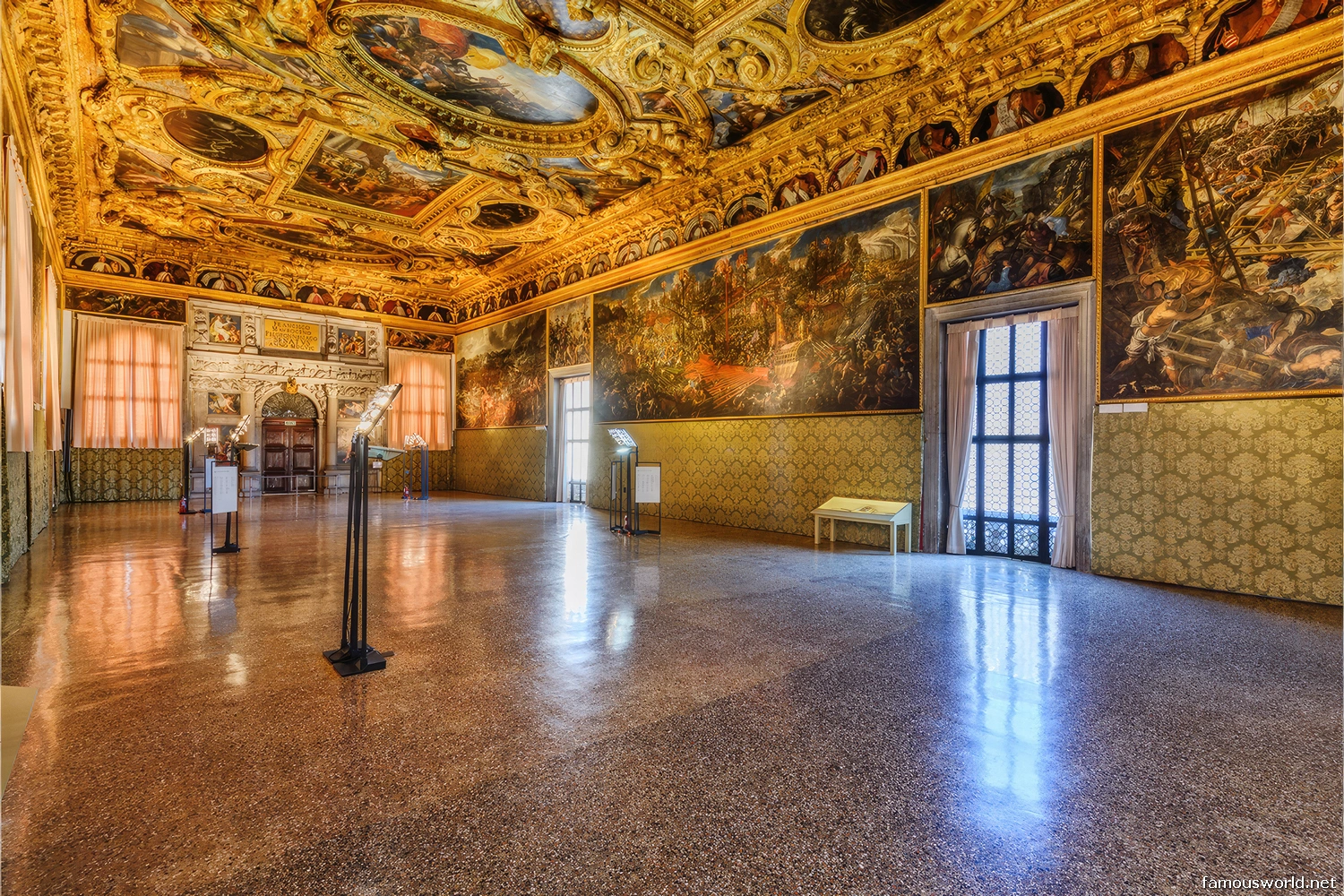
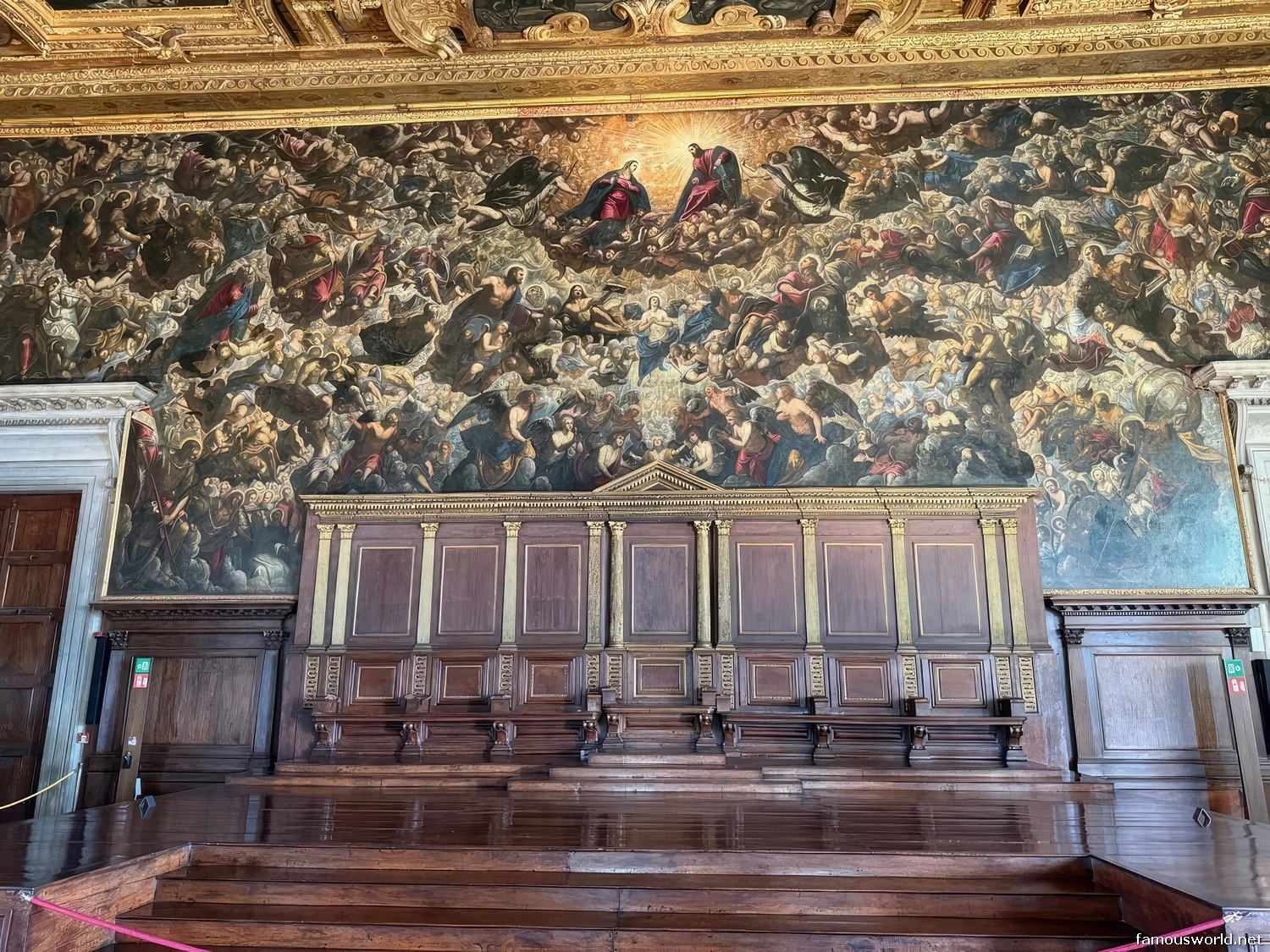
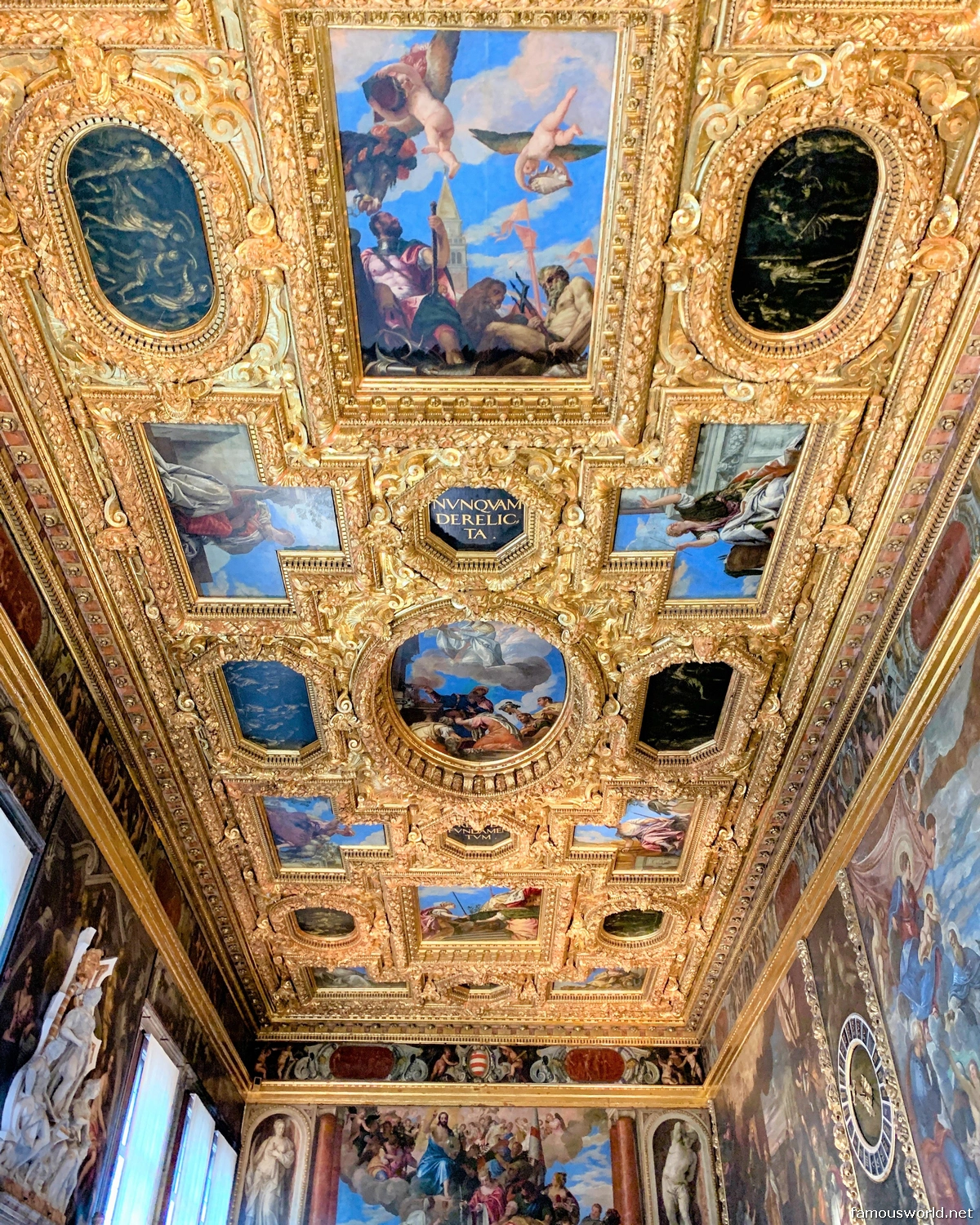
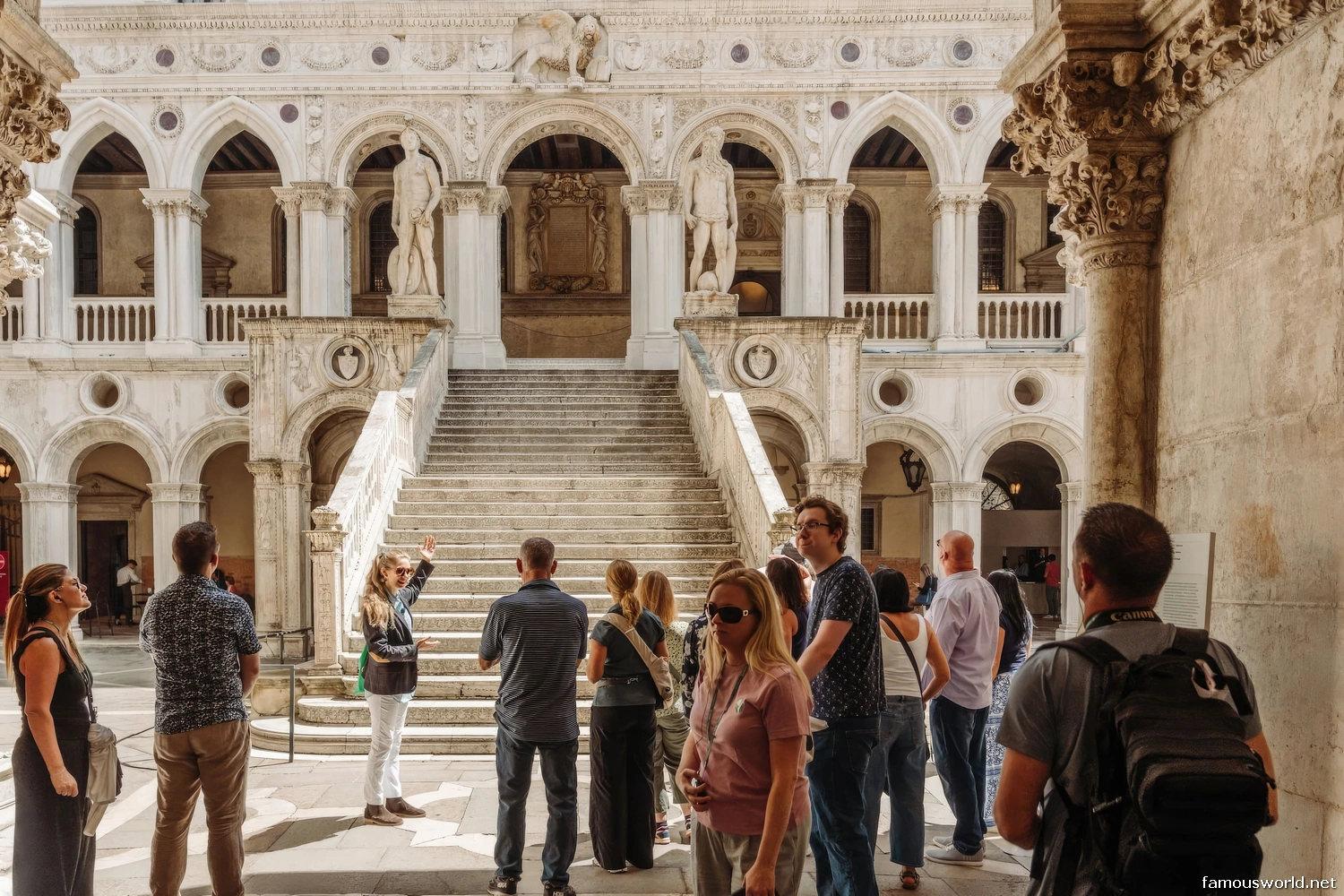
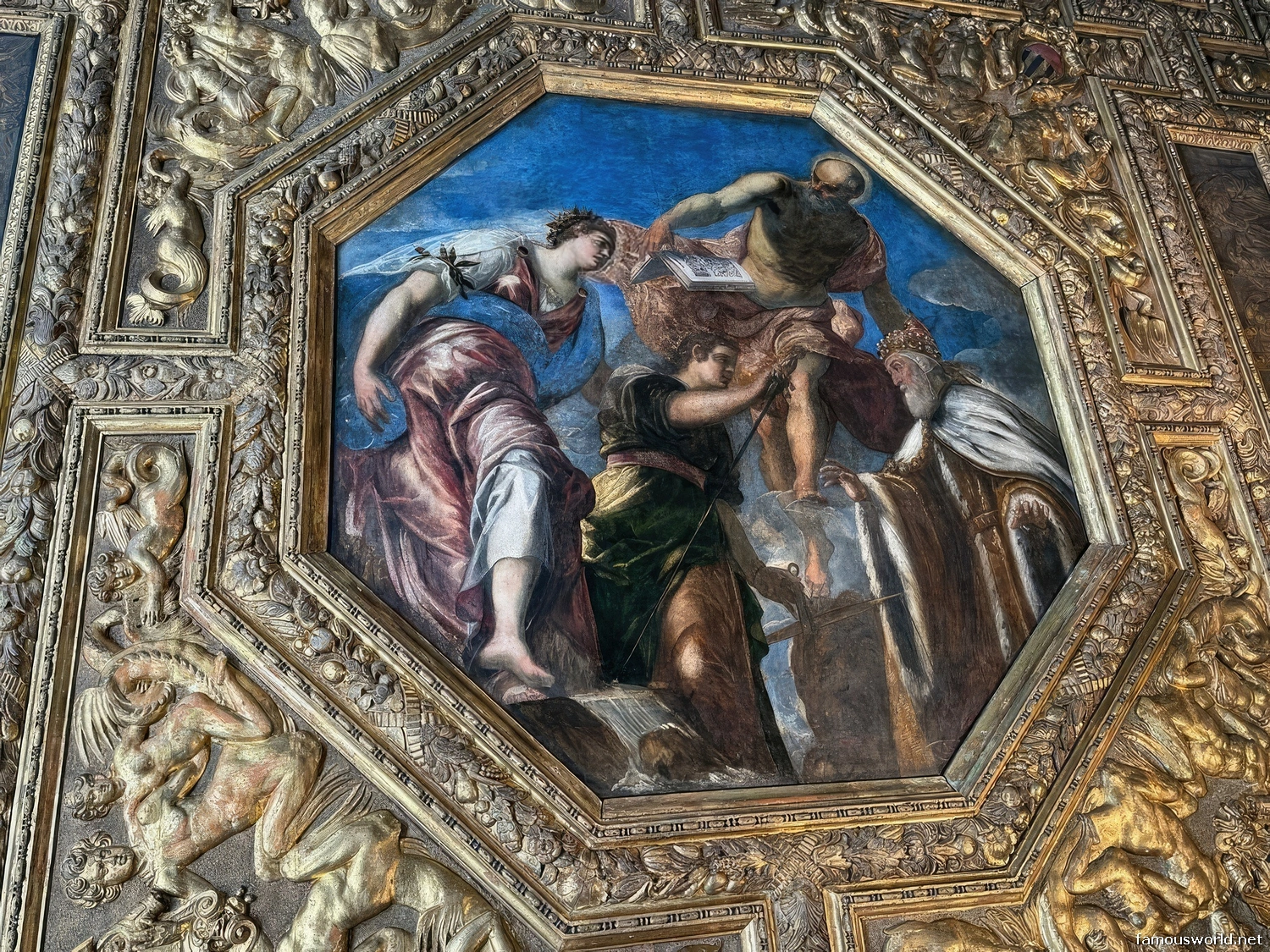
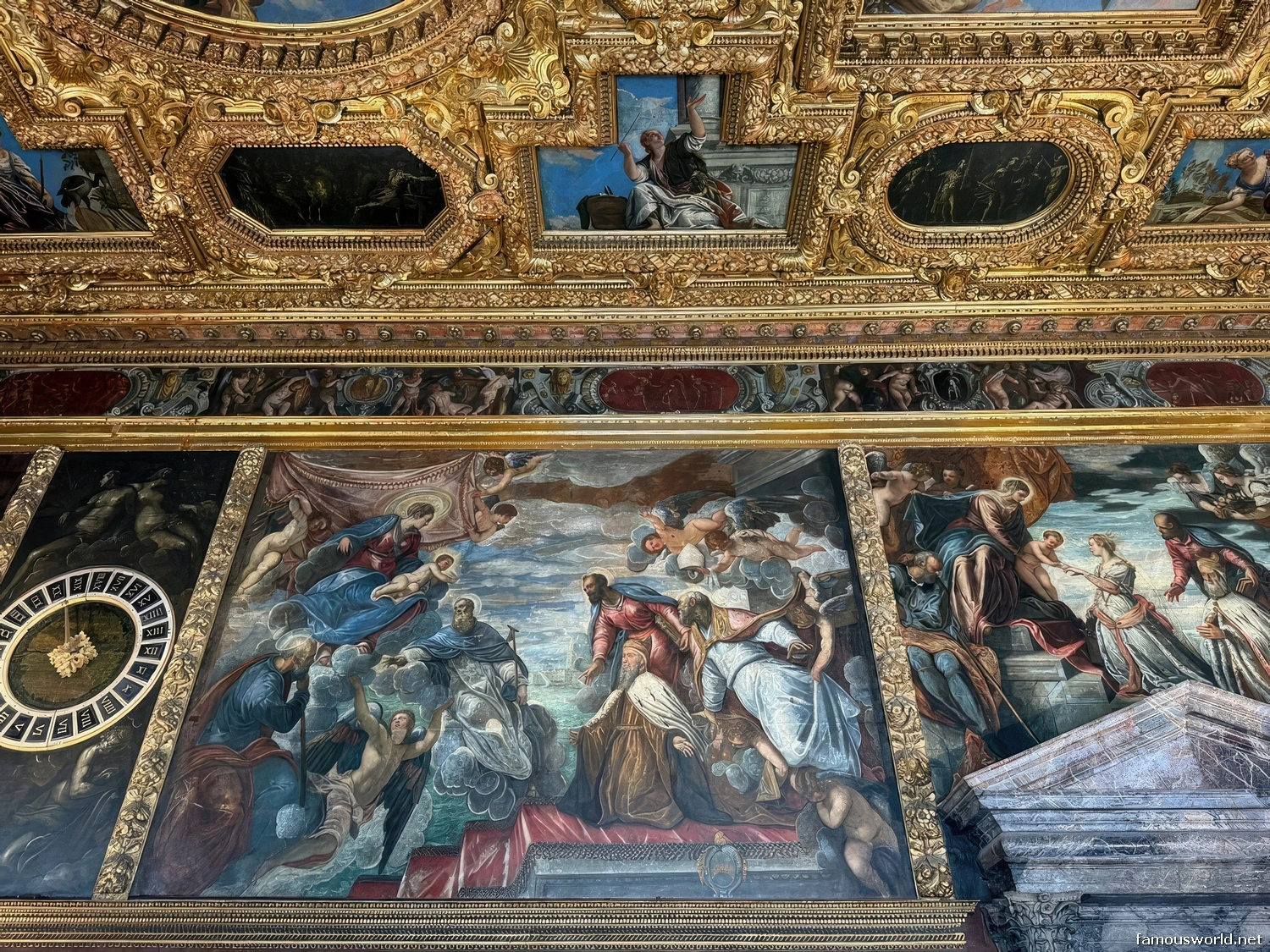
- The Architecture: The building is a masterpiece of Venetian Gothic style, famous for its light, airy, and decorative design. Its most striking feature is the inversion of traditional architectural weight, with a massive, solid upper wall resting on two stories of delicate, slender colonnades and pointed arches. The interior is a labyrinth of monumental staircases, gilded chambers, and grand halls, including the vast Chamber of the Great Council, decorated with enormous masterpieces by artists like Tintoretto and Veronese. A famous extension is the Bridge of Sighs, which connects the palace to the New Prison.
What Makes It Famous
The Doge’s Palace is famous as the powerful political heart of the Venetian Republic and for the art and legends contained within.
- Center of the Venetian Republic: For over 700 years, it was the hub of a vast commercial empire, housing all branches of government under one roof.
- Artistic Masterpieces: Its rooms are decorated with some of the most important paintings of the Venetian School, including Tintoretto’s “Paradiso,” one of the largest canvas paintings in the world.
- The Bridge of Sighs: It is world-famous for the enclosed bridge leading from the interrogation rooms in the palace to the prison. The name comes from the romantic legend that prisoners would sigh as they caught their last glimpse of beautiful Venice.
- Unique Venetian Gothic Style: The building itself is an icon of a unique architectural style that blends Gothic structures with Byzantine and Islamic influences.
Differences from Other Wonders
The palace’s identity as a center of secular government offers a perfect contrast to its sacred neighbor, St. Mark’s Basilica.
- Environment (Seat of Political Power vs. Seat of Religious Power): While they share the same piazza, the Doge’s Palace was the center of law, governance, and justice. The Basilica was the center of faith, worship, and spiritual life.
- Core Story (The Republic’s Governance vs. The City’s Faith): The palace tells the story of how the Venetian Republic was managed—its politics, diplomacy, and legal system. The Basilica tells the story of Venice’s sacred identity, its patron saint, and its connection to the divine.
- Primary Attraction (Grand Halls of Power vs. A Cave of Golden Mosaics): The main attraction of the palace is its magnificent state rooms, the art celebrating the Republic, and the legendary Bridge of Sighs. The primary wonder of the Basilica is its mystical, glittering interior of golden mosaics.
- Atmosphere (Stately and Political vs. Sacred and Mystical): The atmosphere in the Doge’s Palace is one of stately grandeur, history, and political power. The atmosphere in the Basilica is reverentst
Location on world map