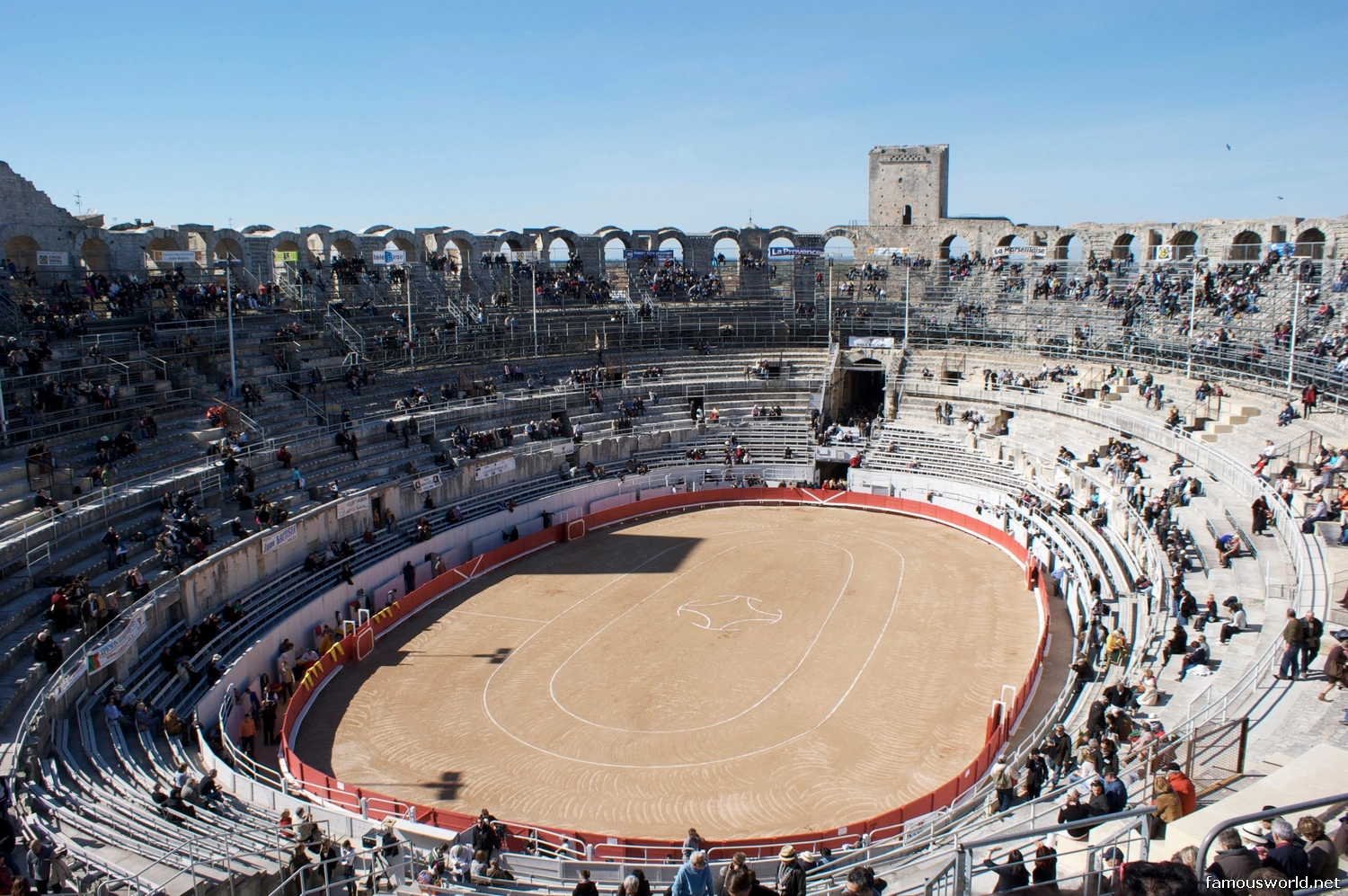
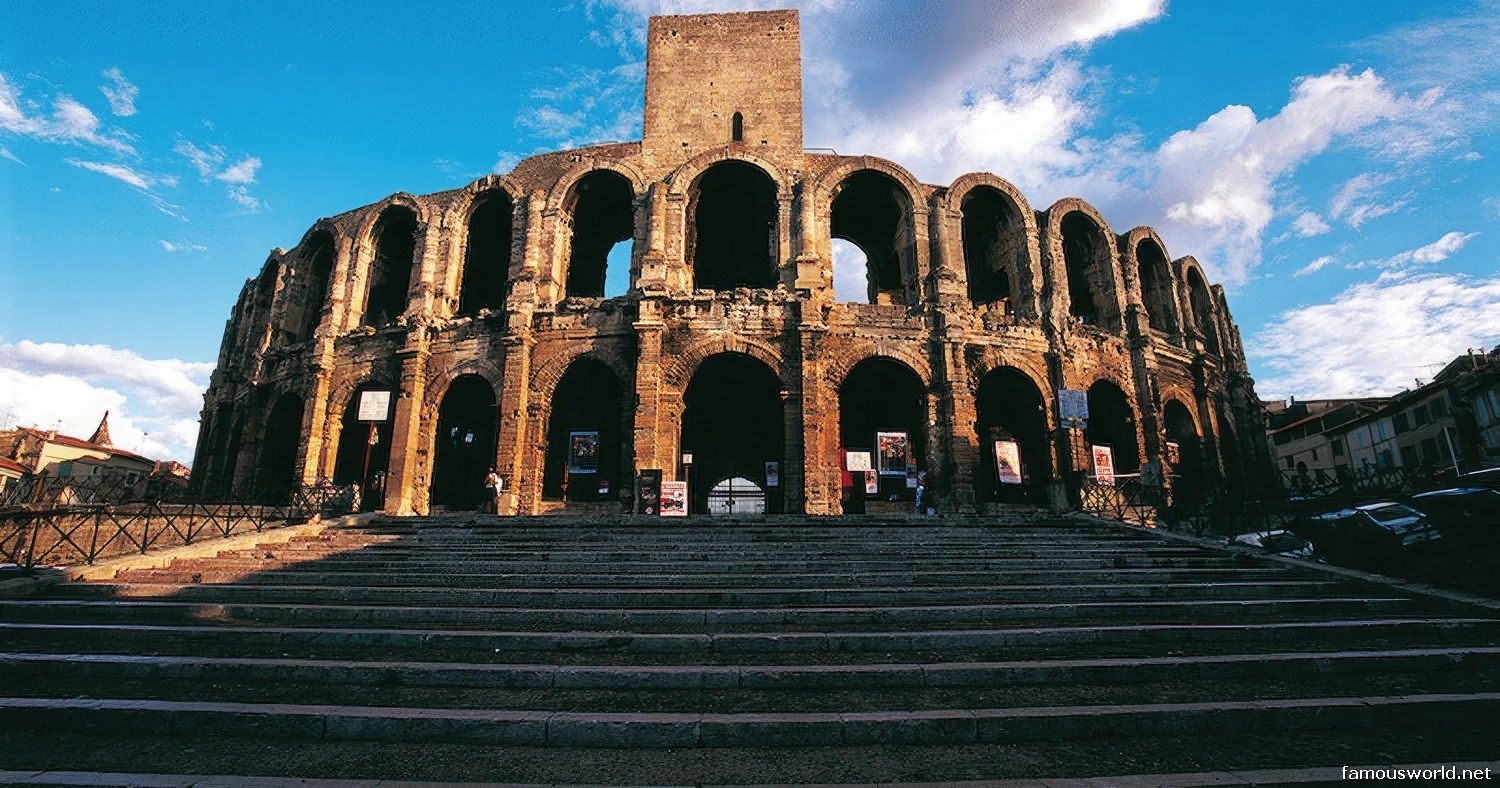
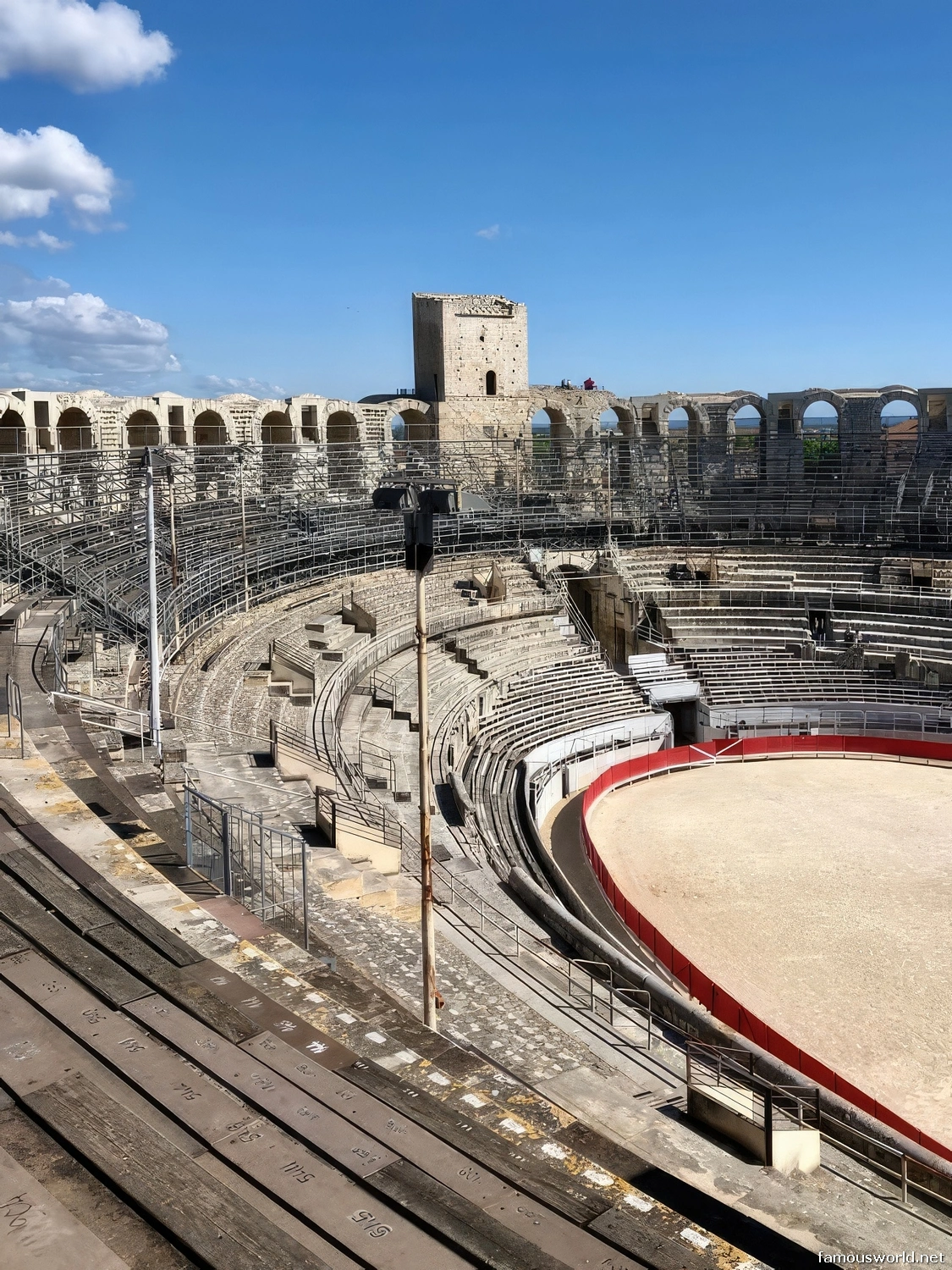
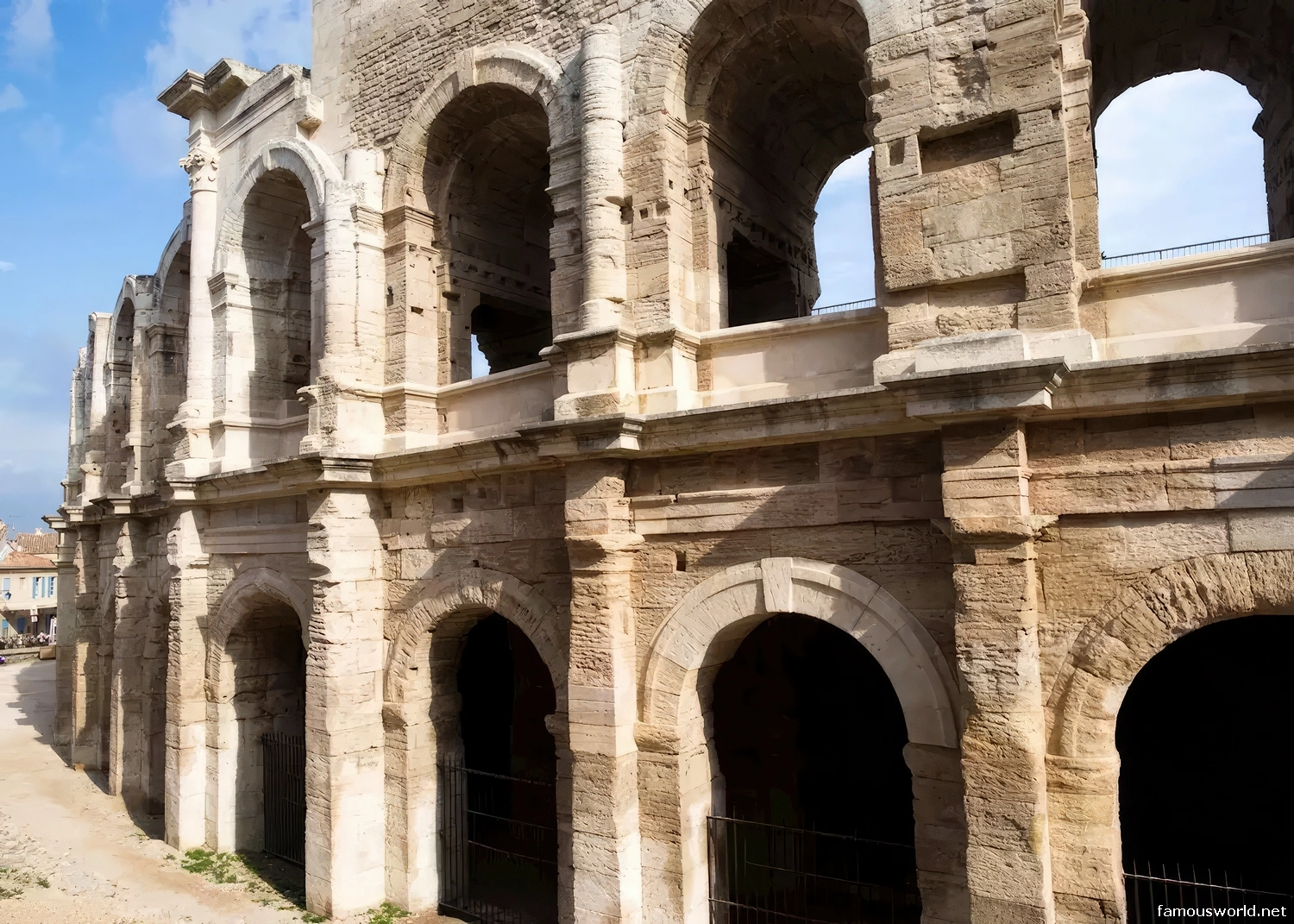
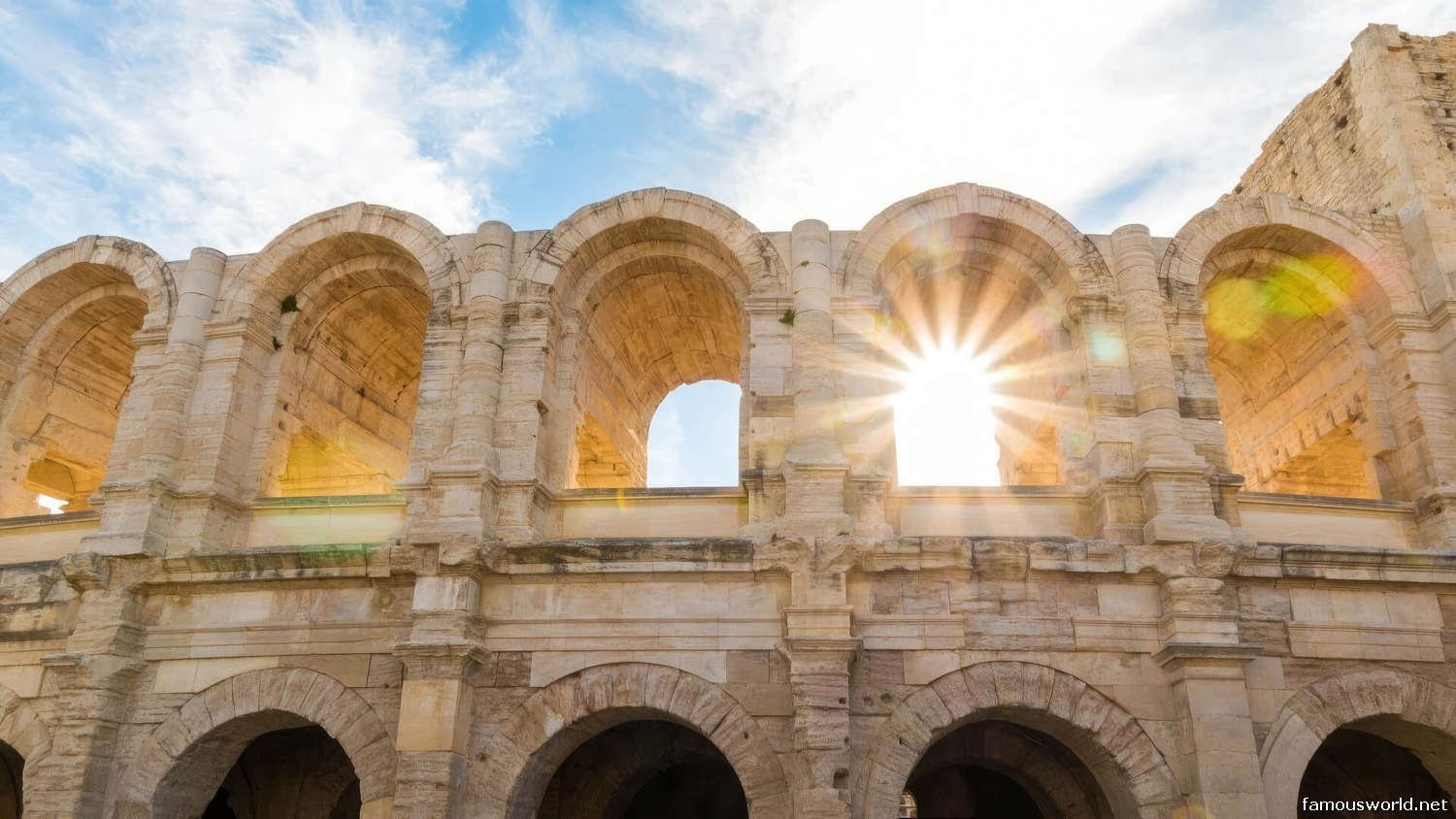
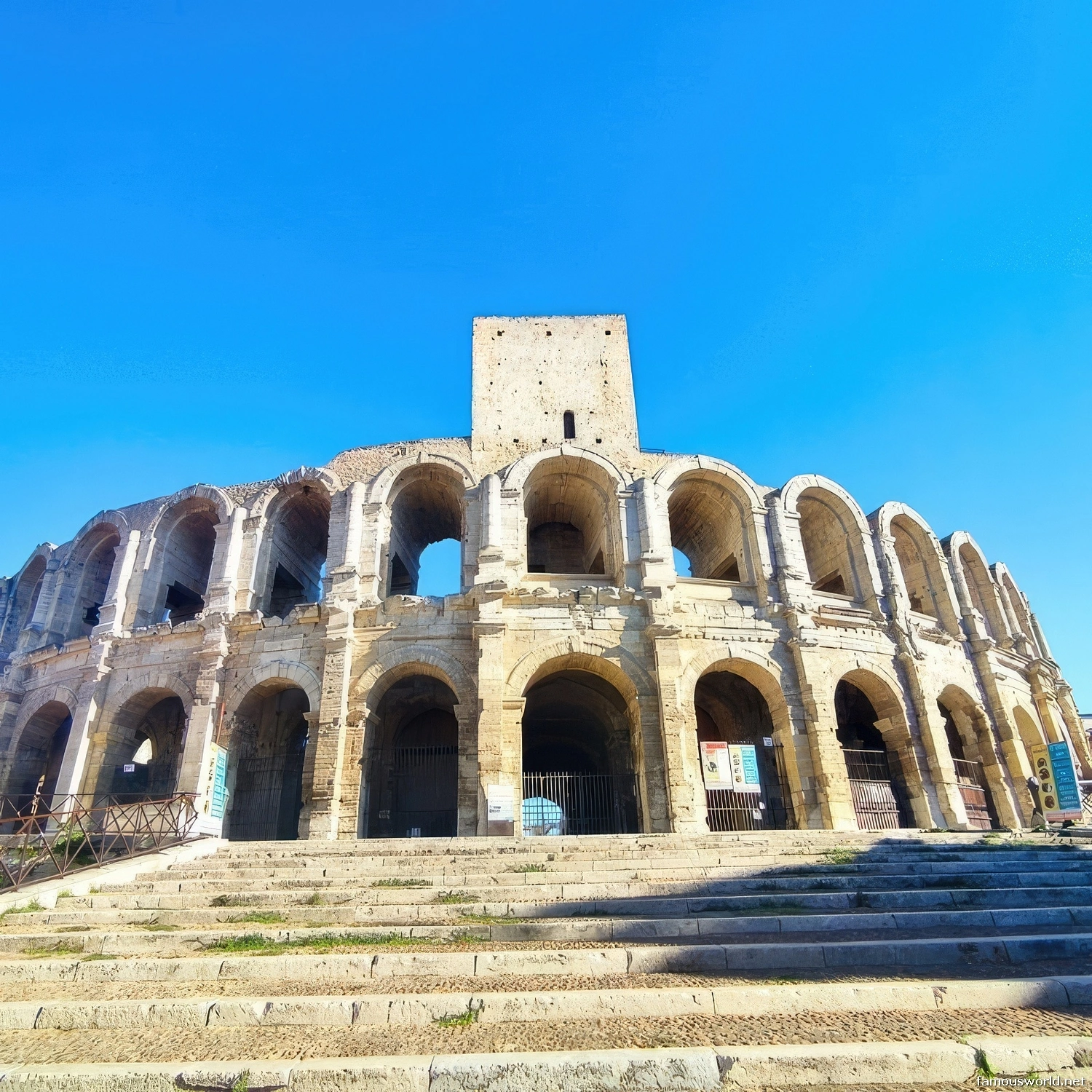
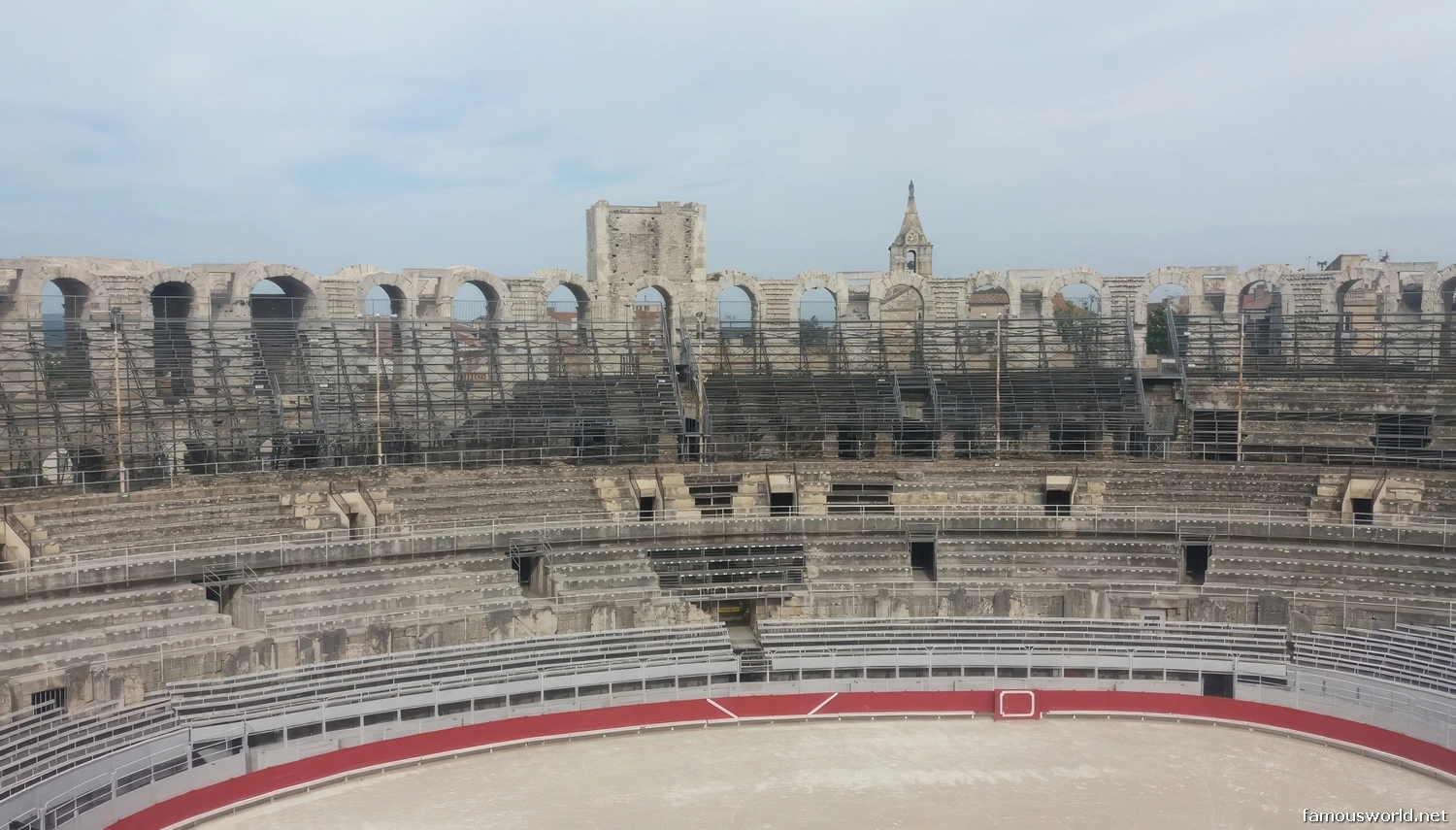
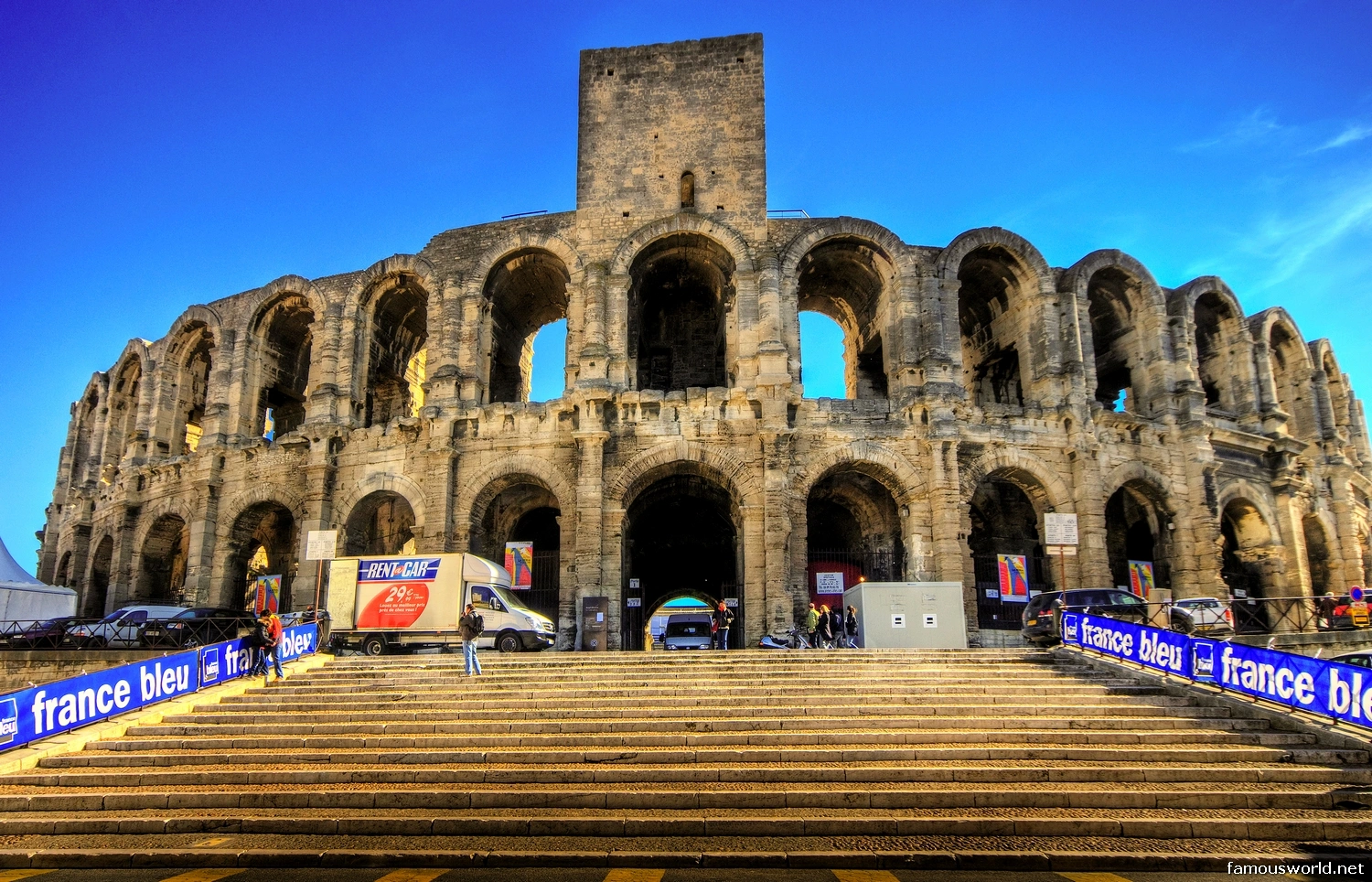
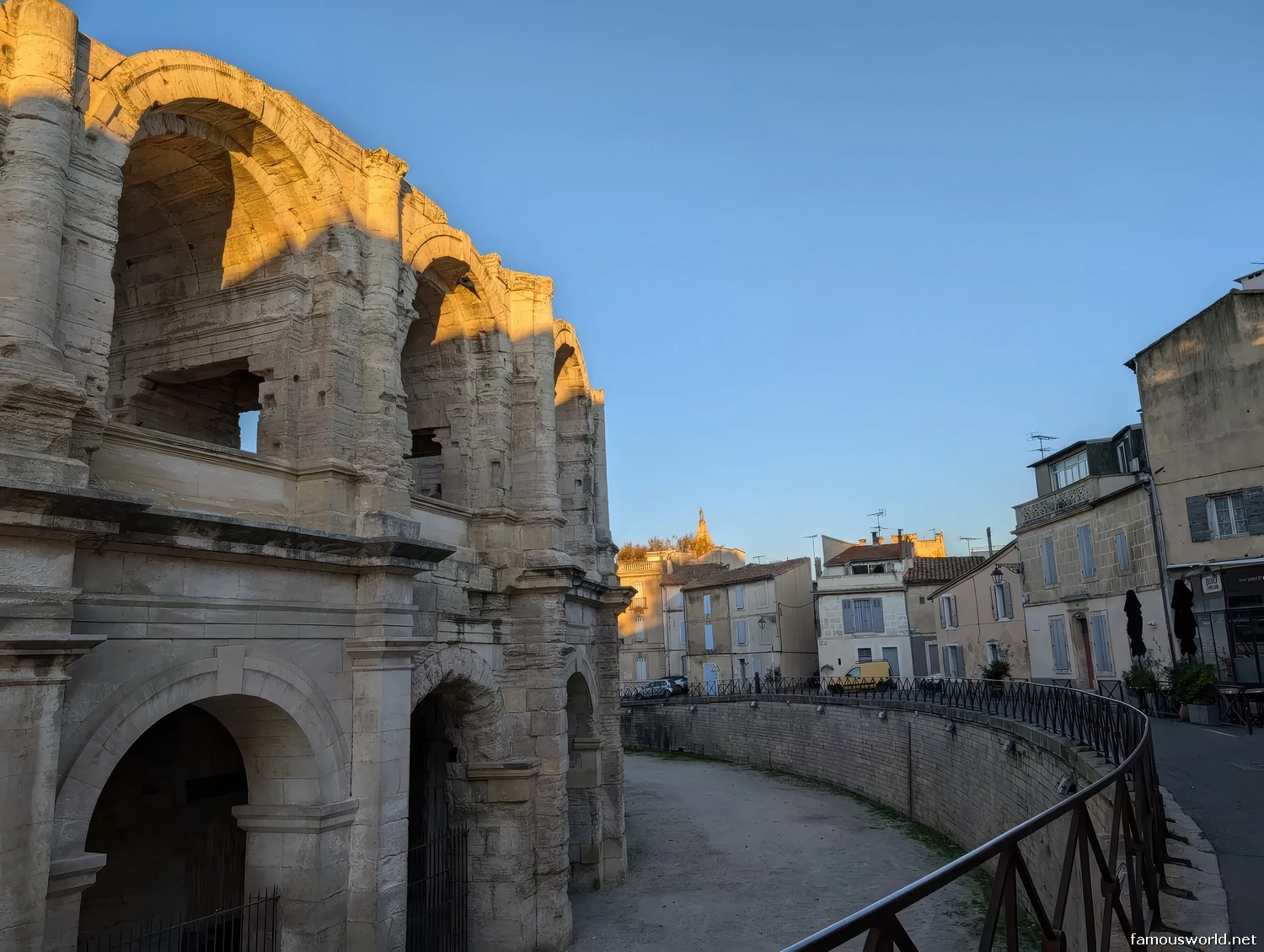
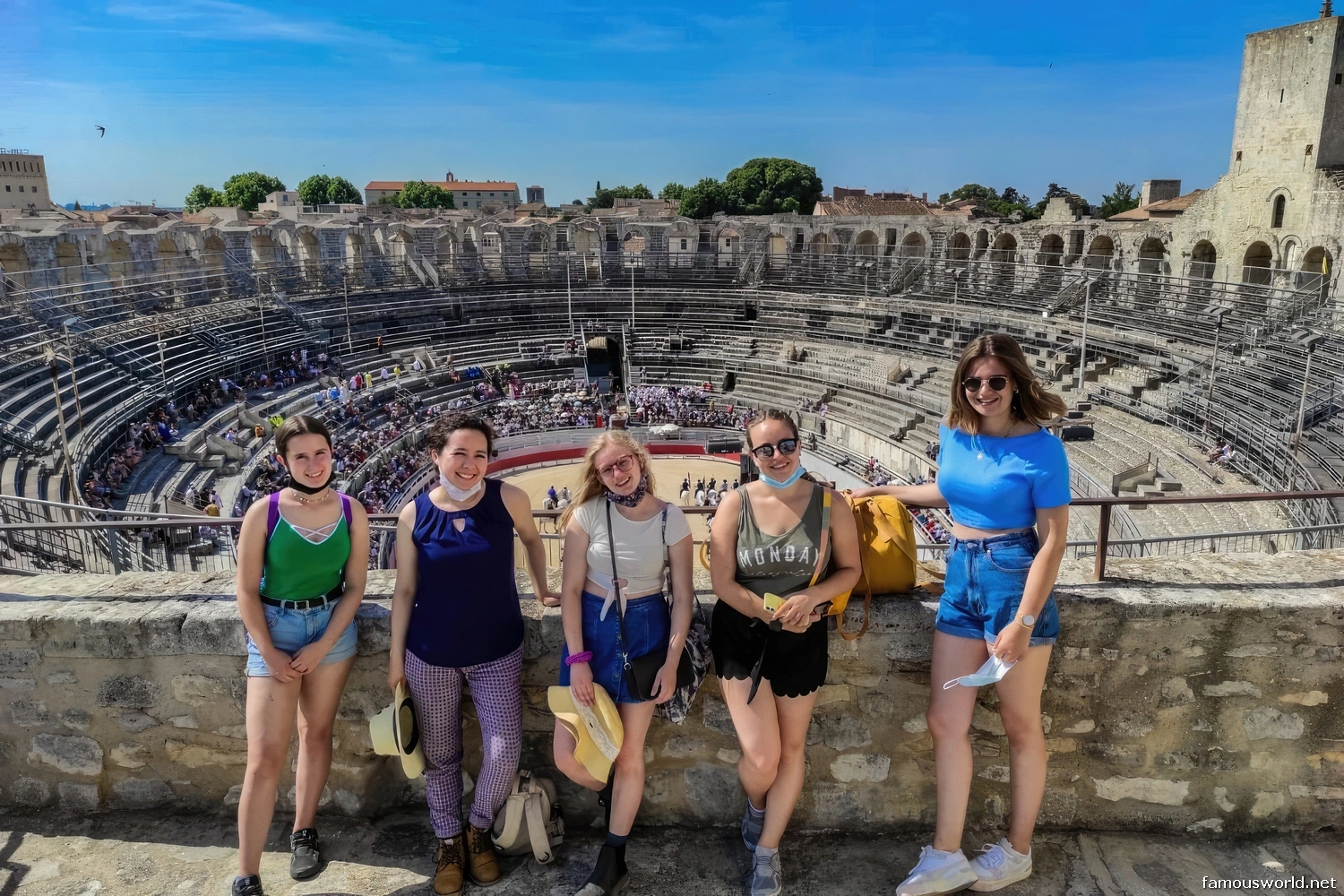
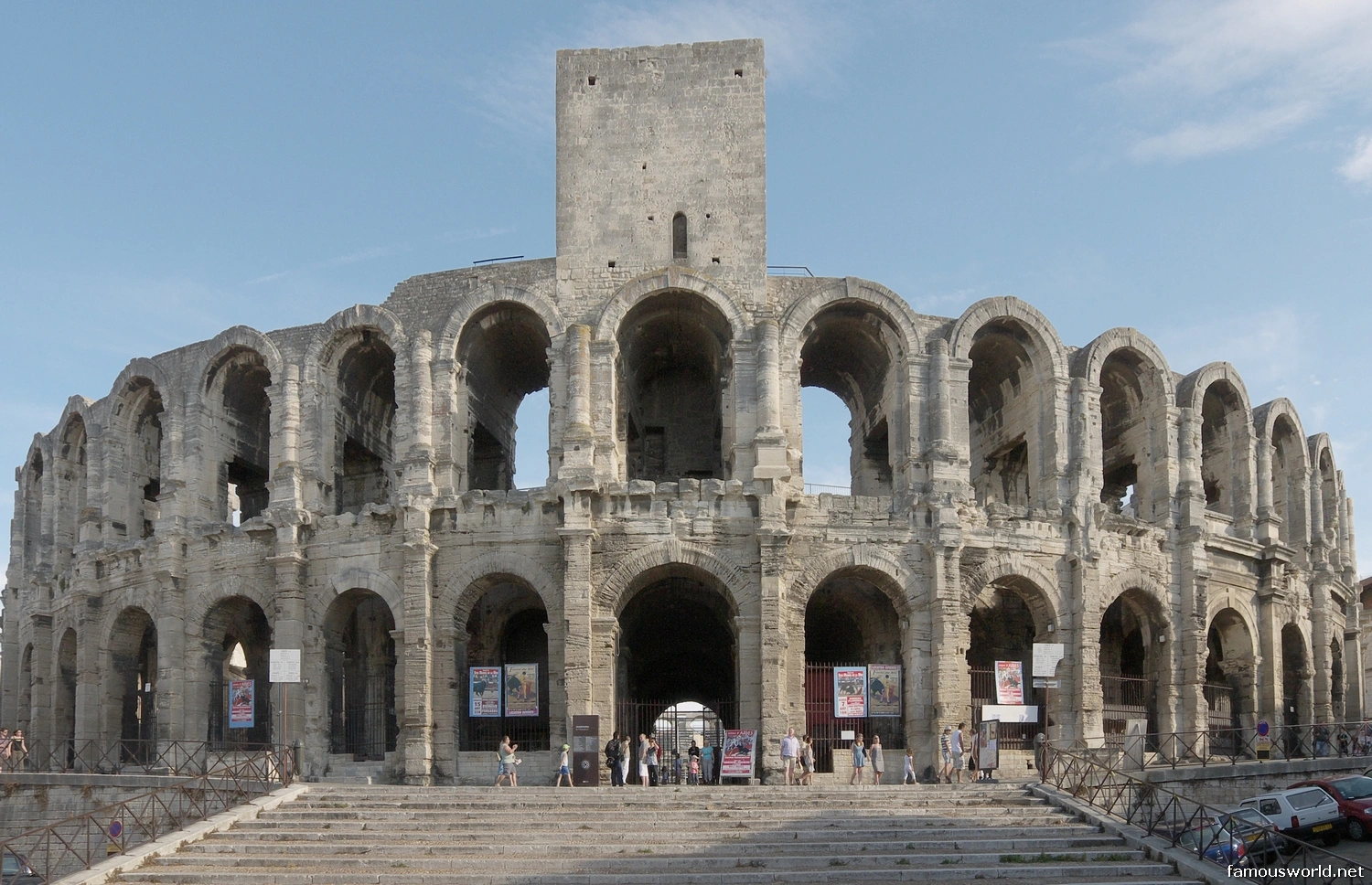
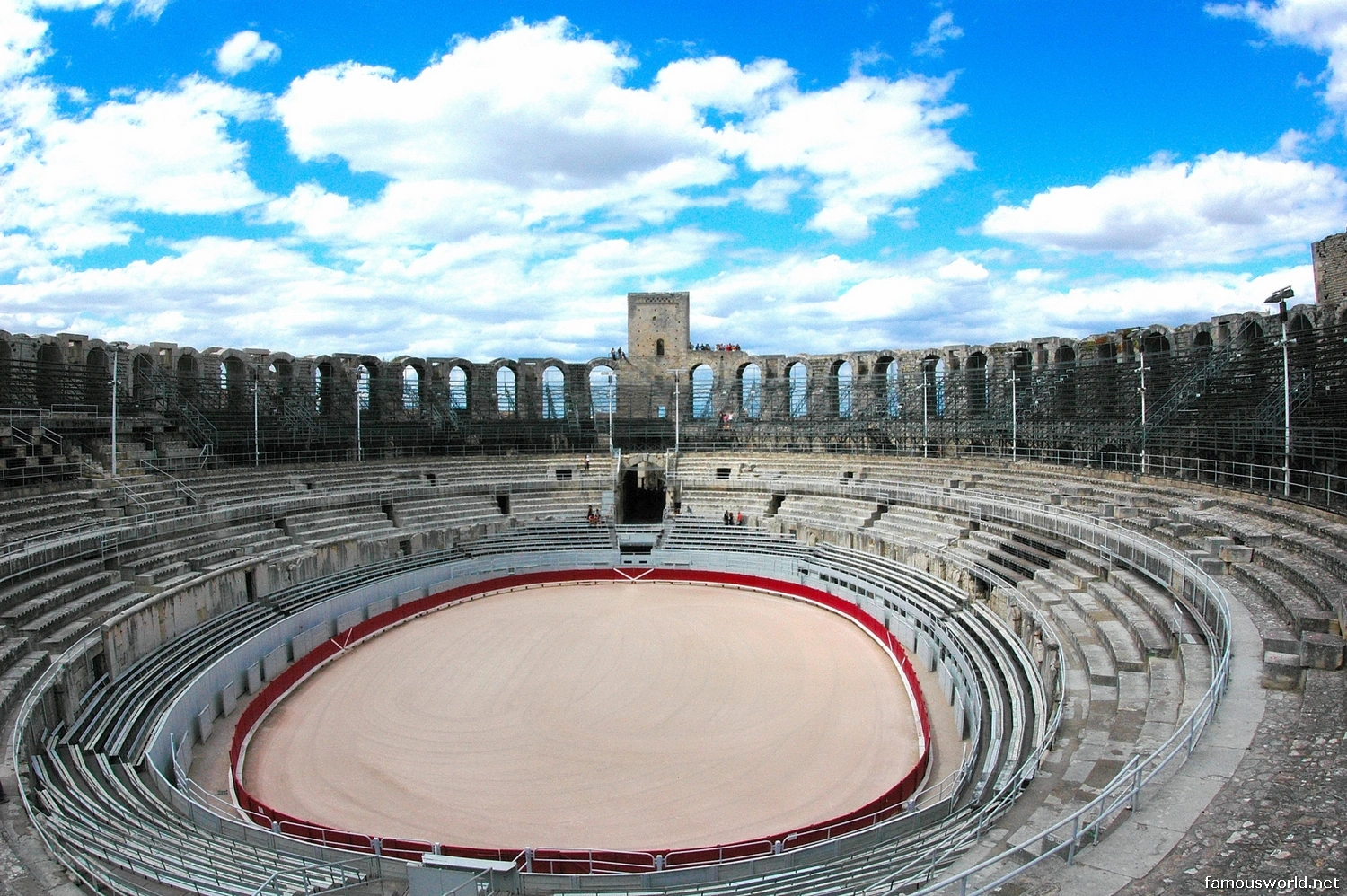
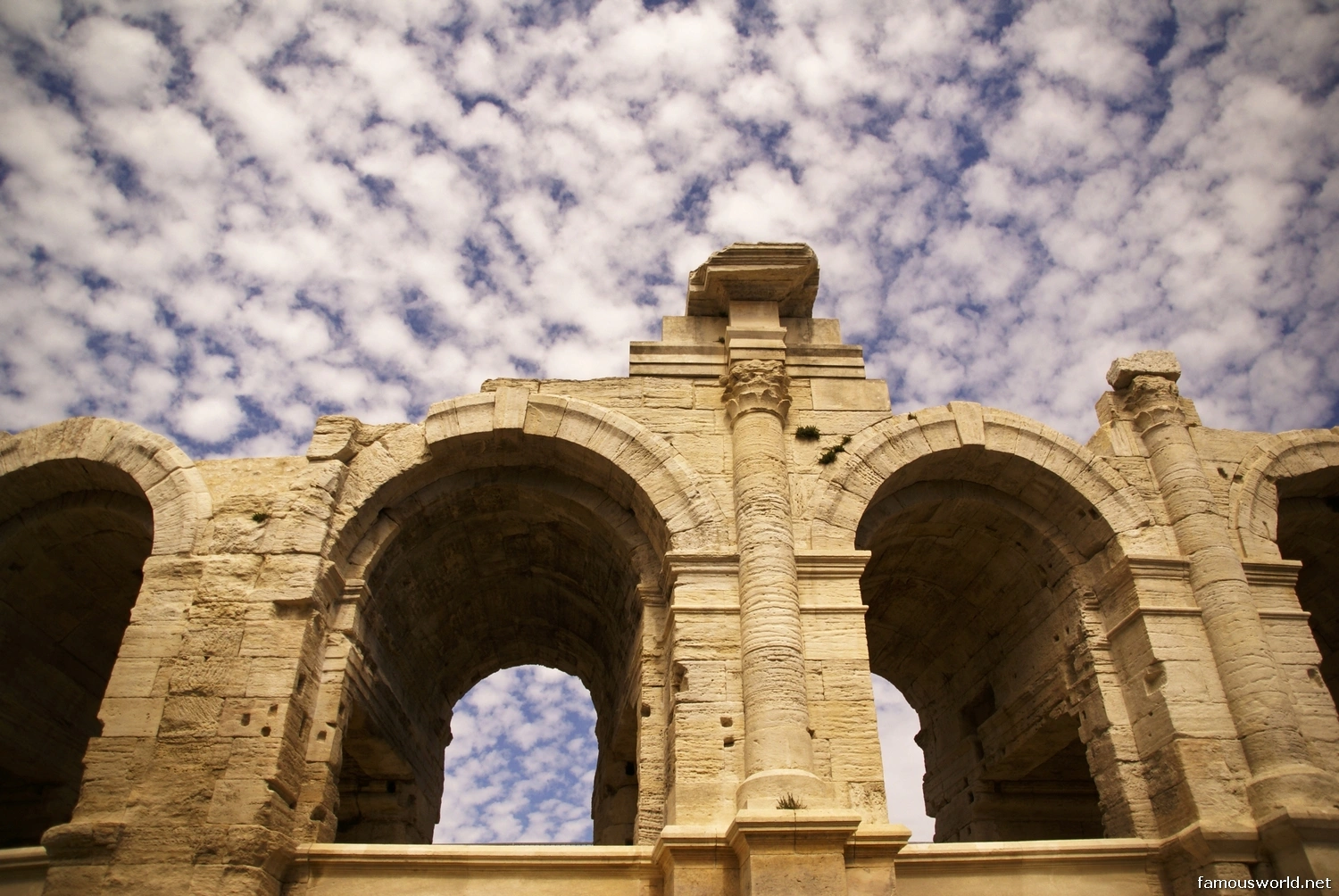
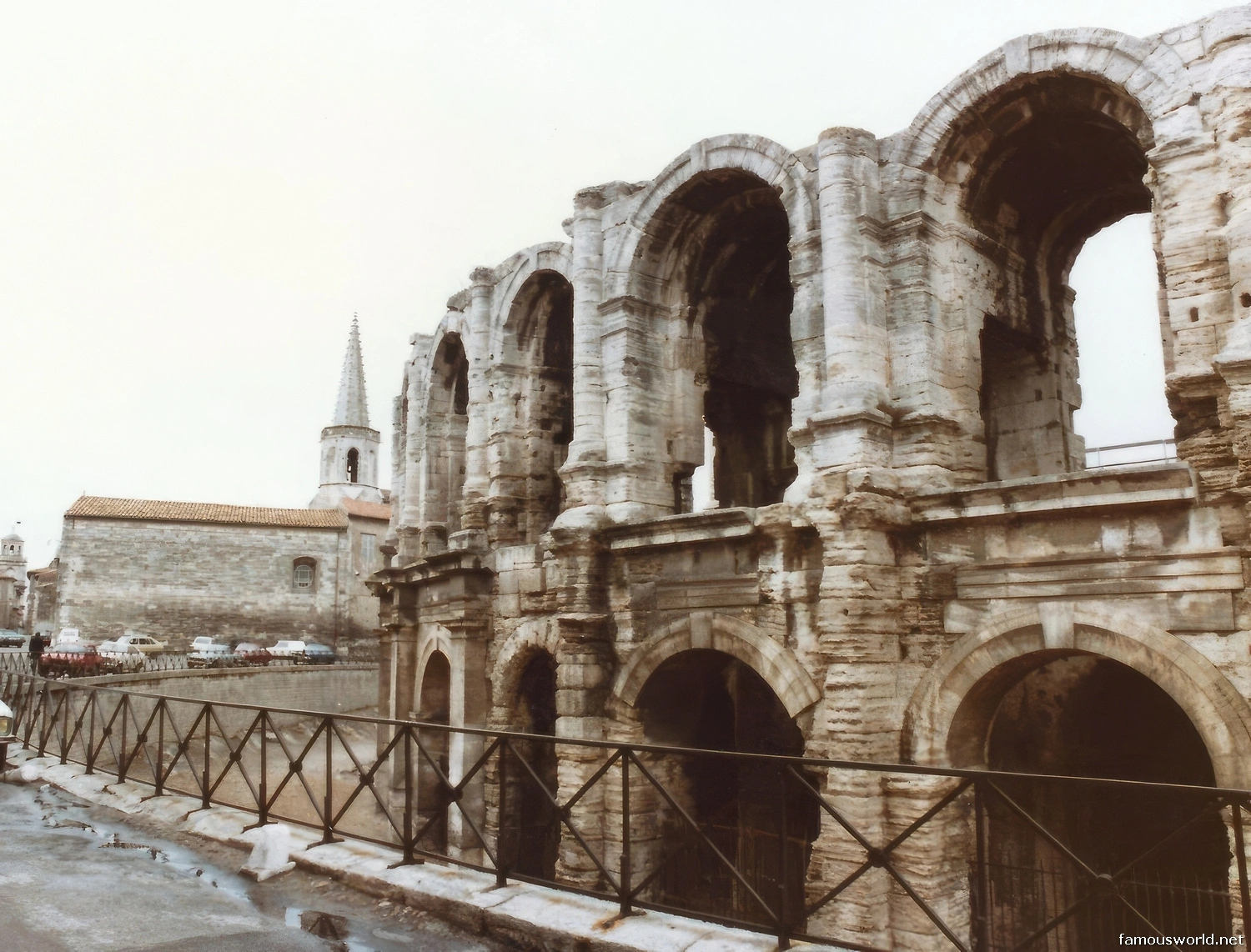
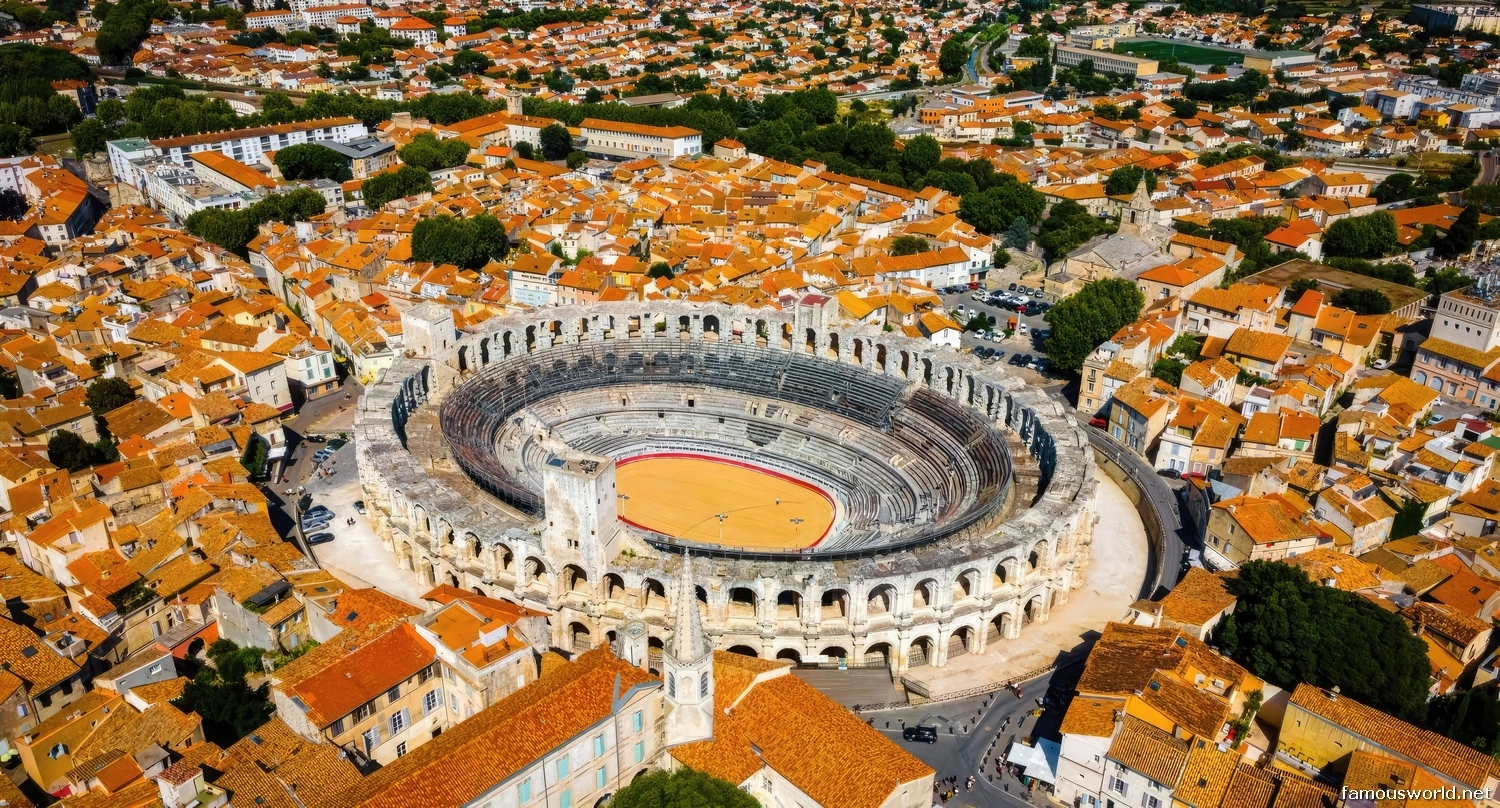
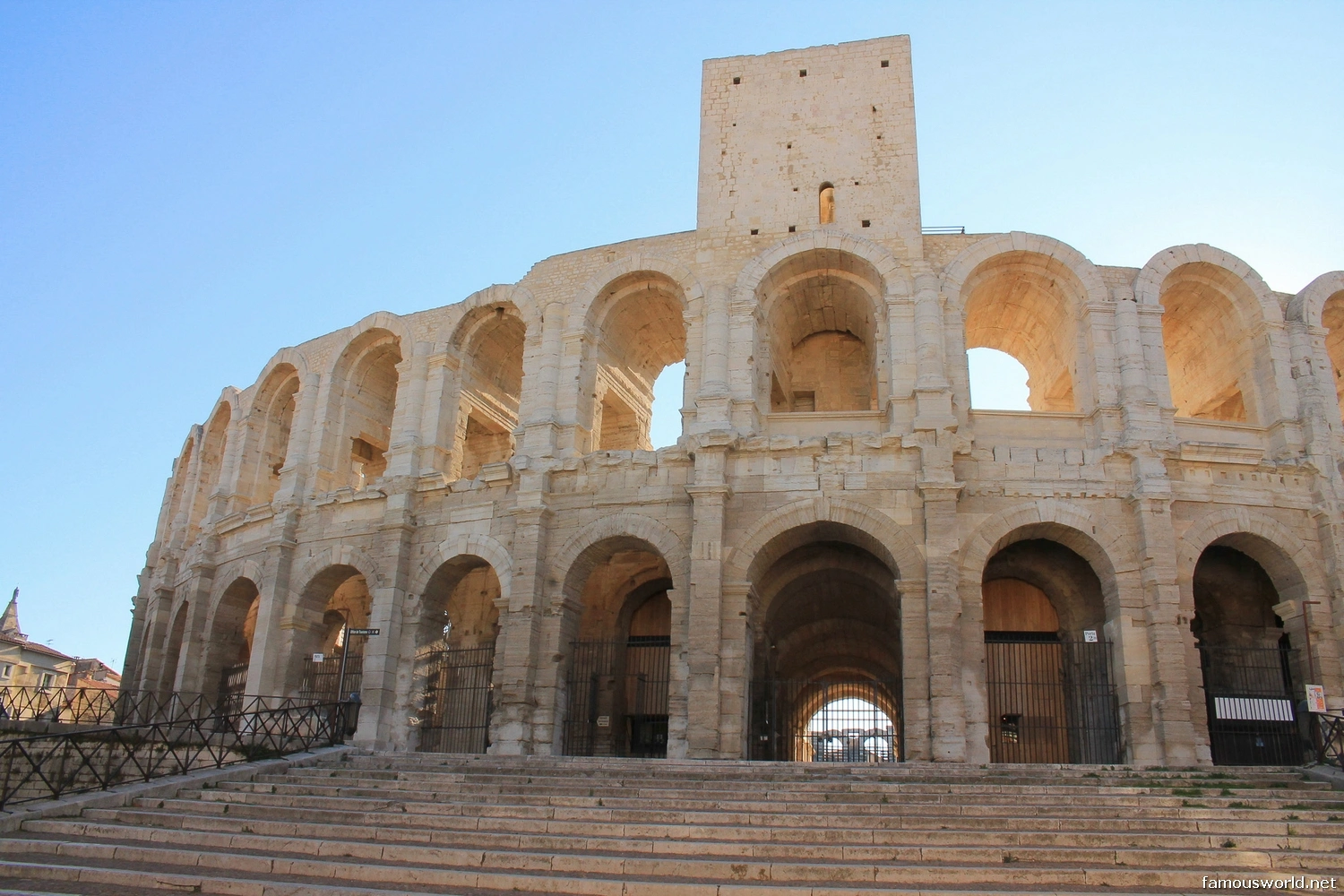
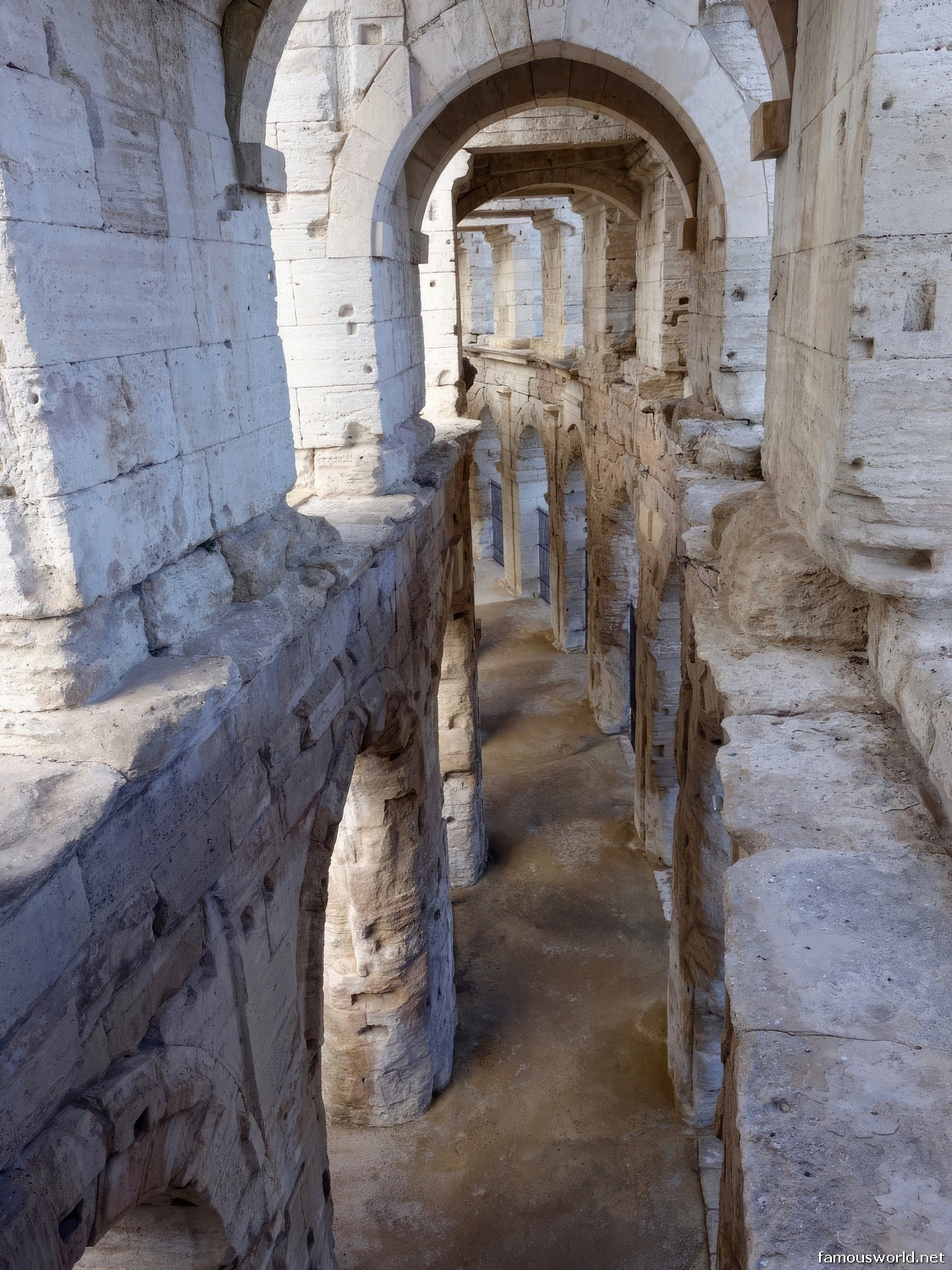
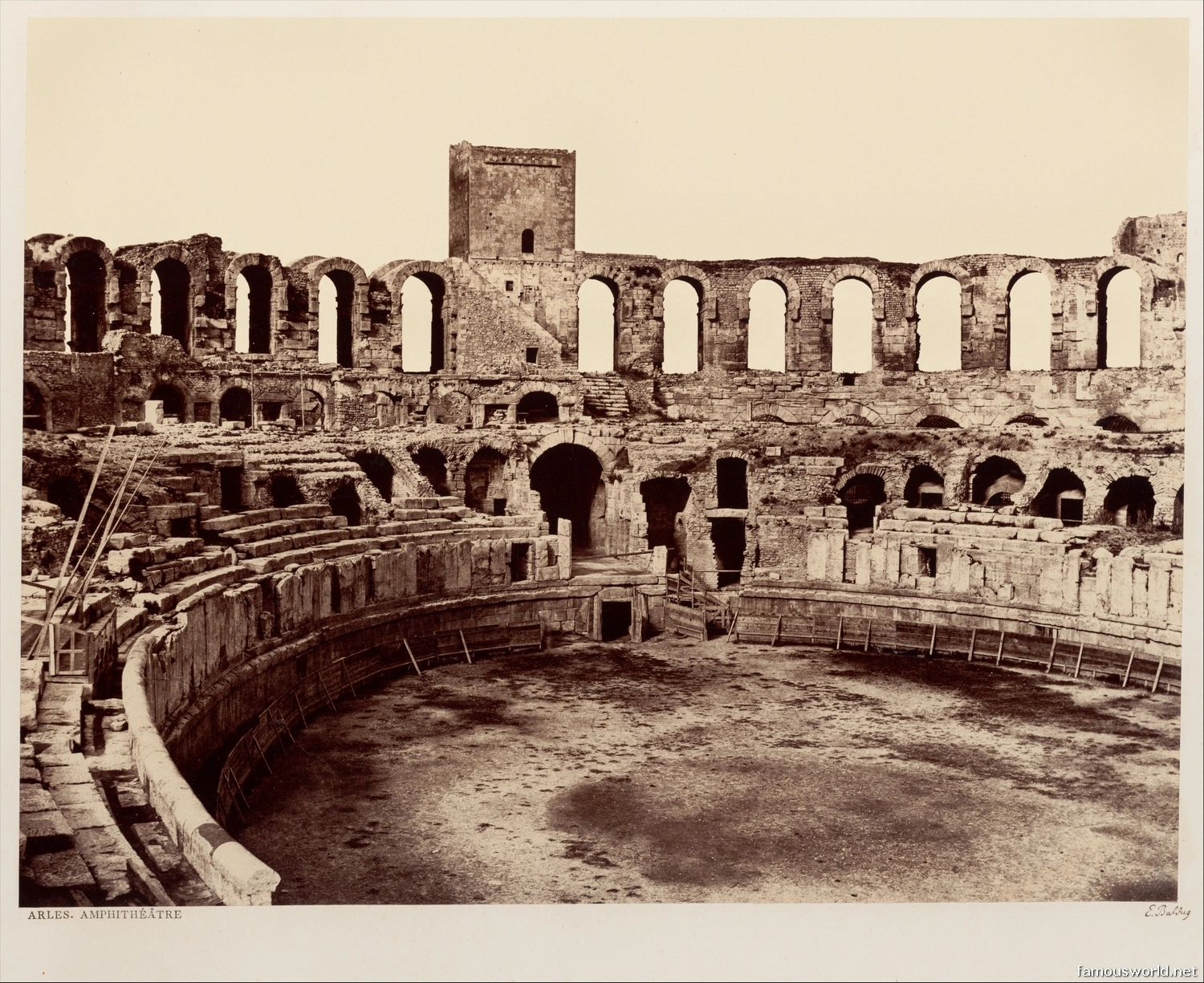
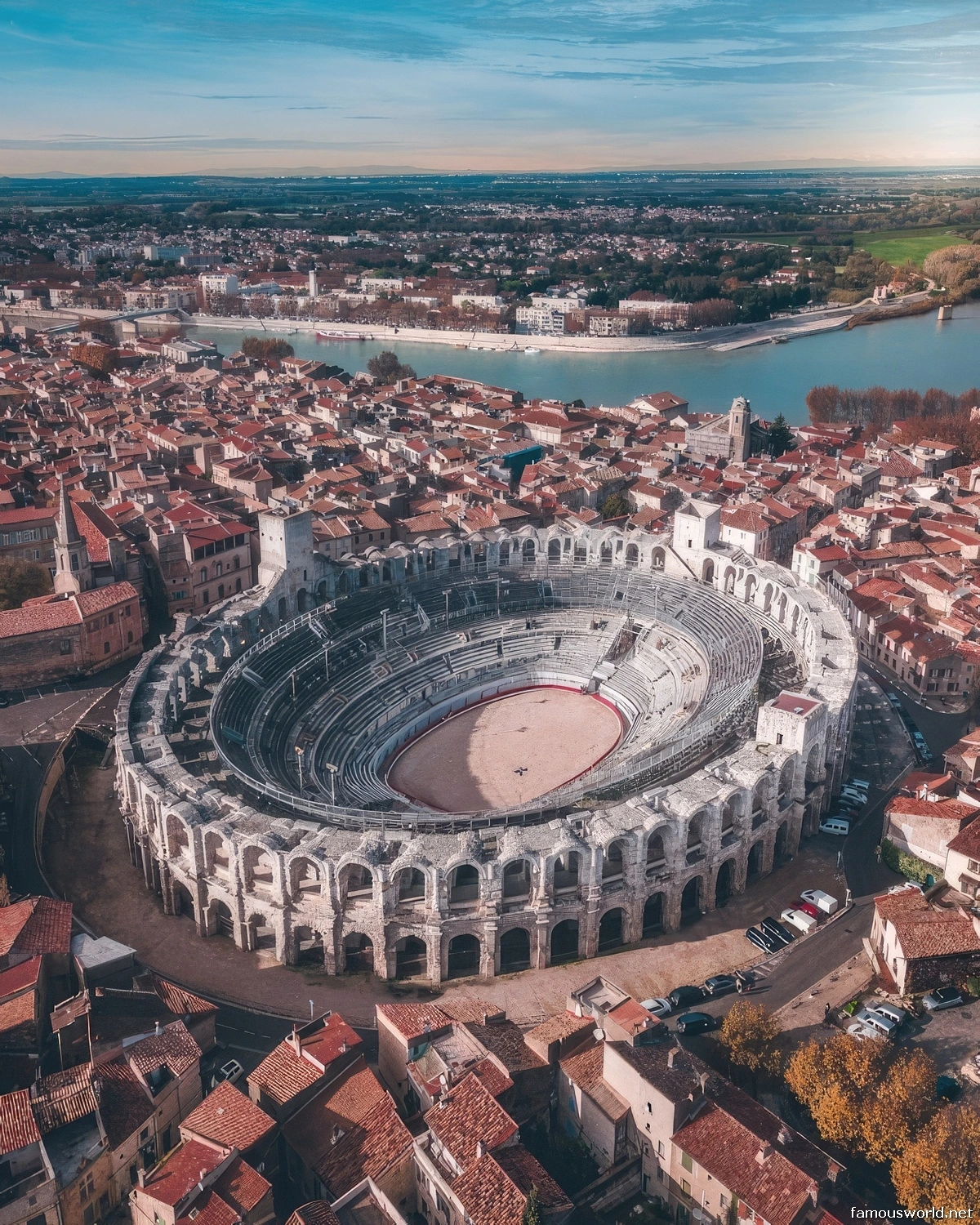
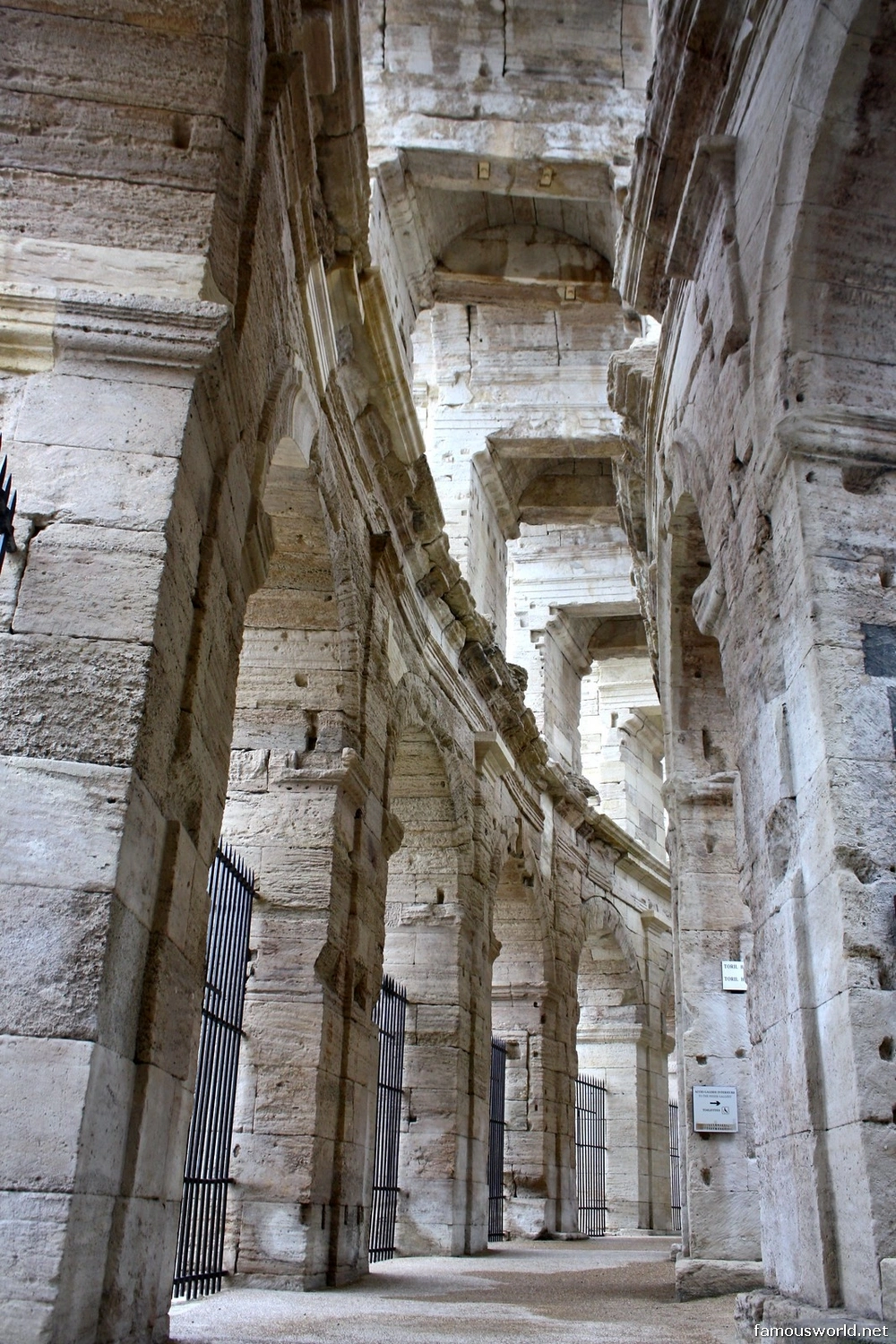
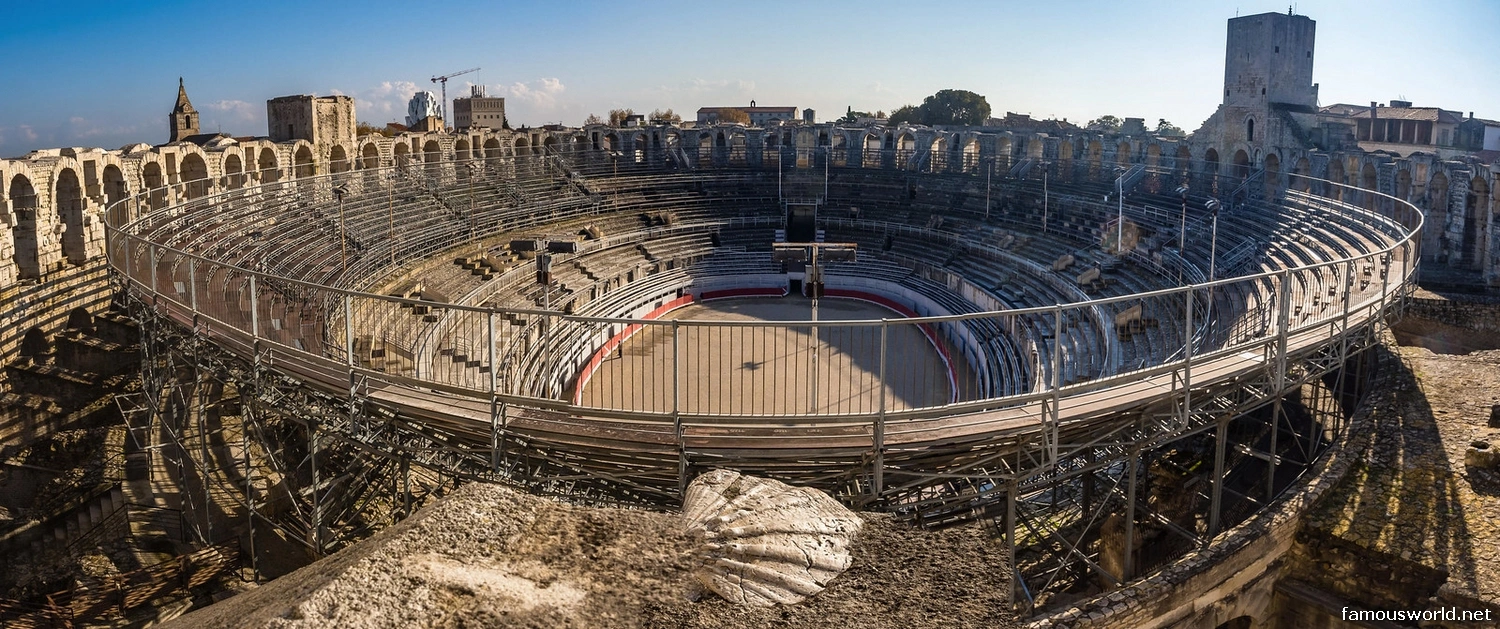
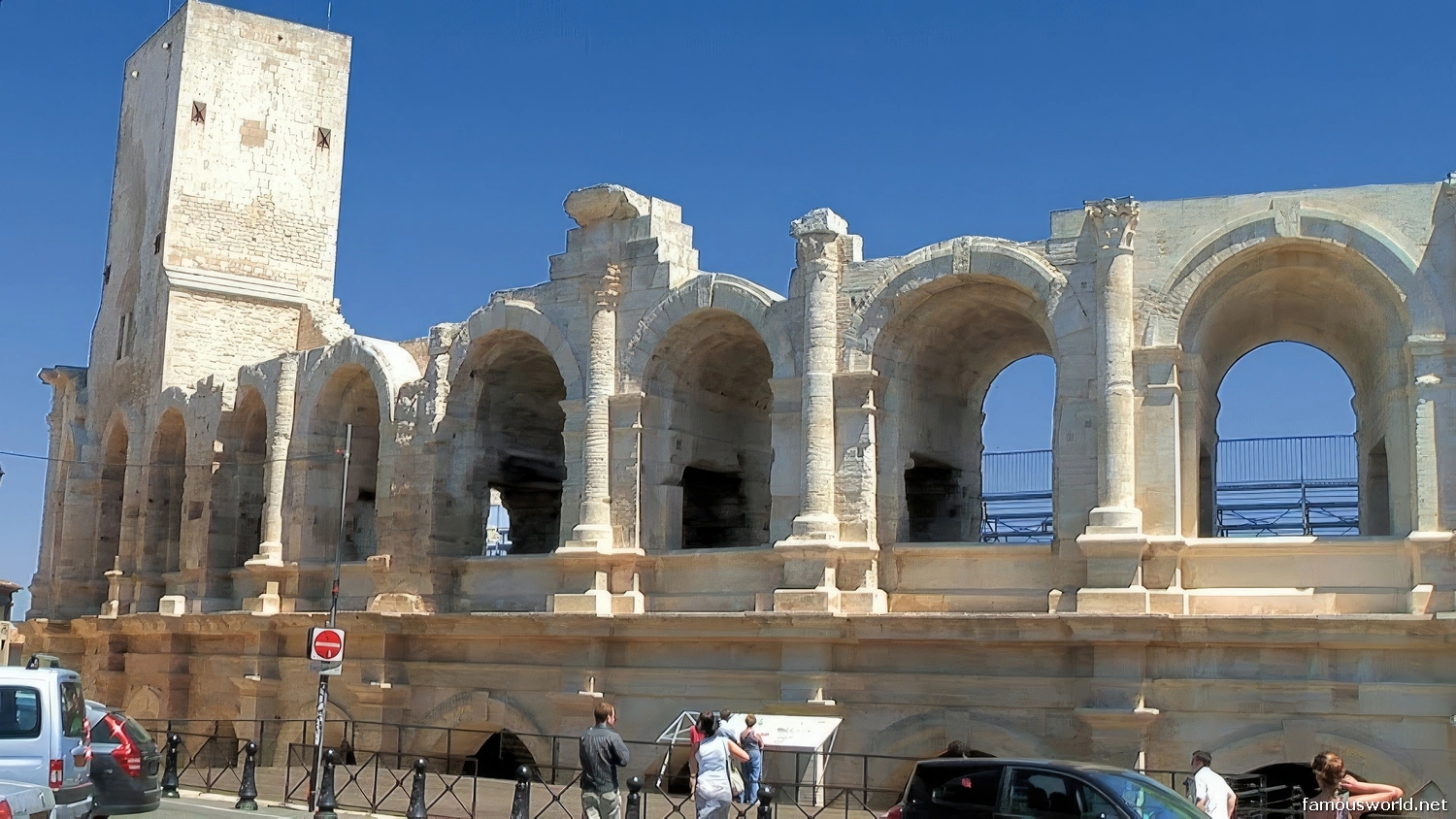
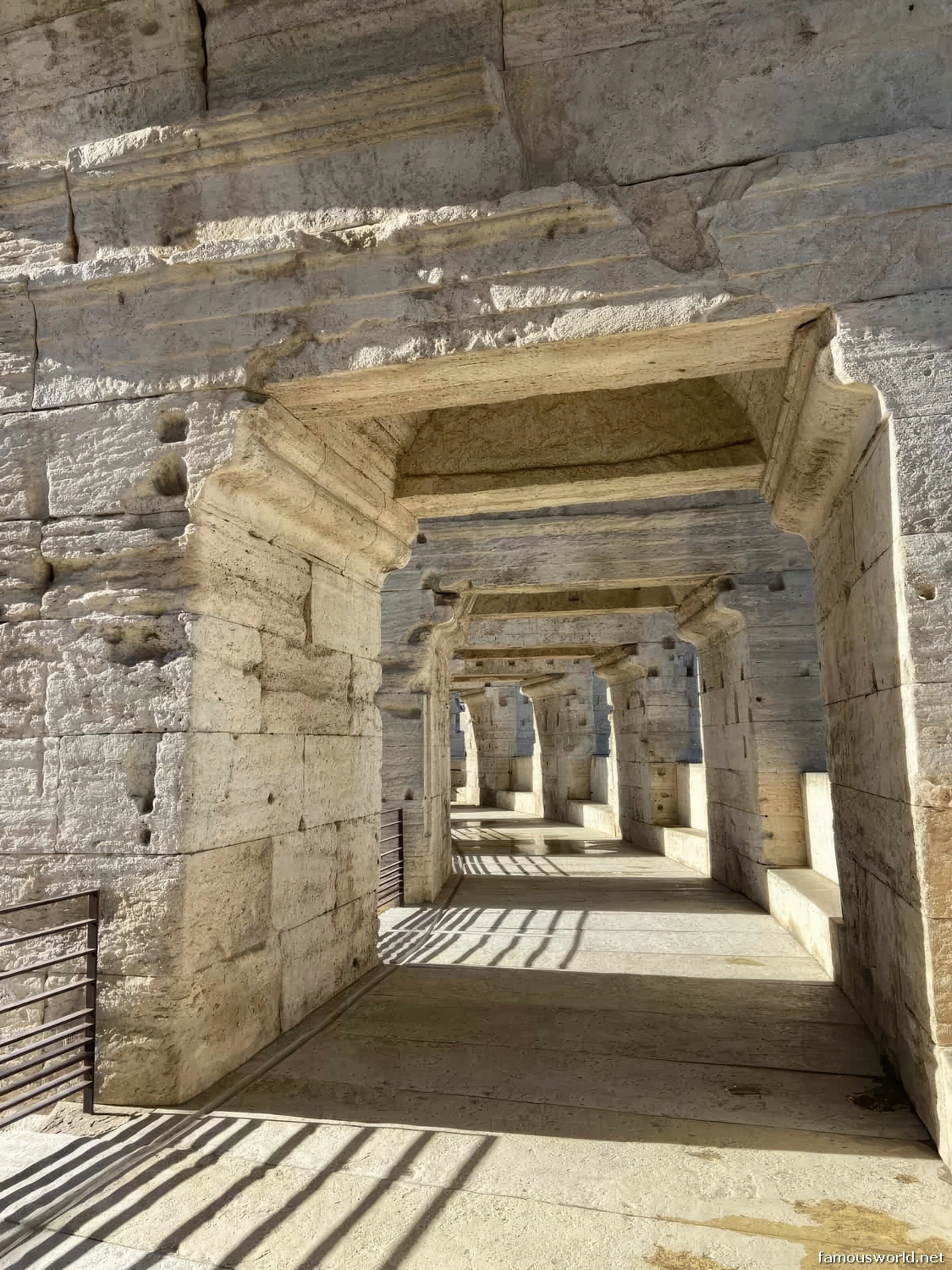
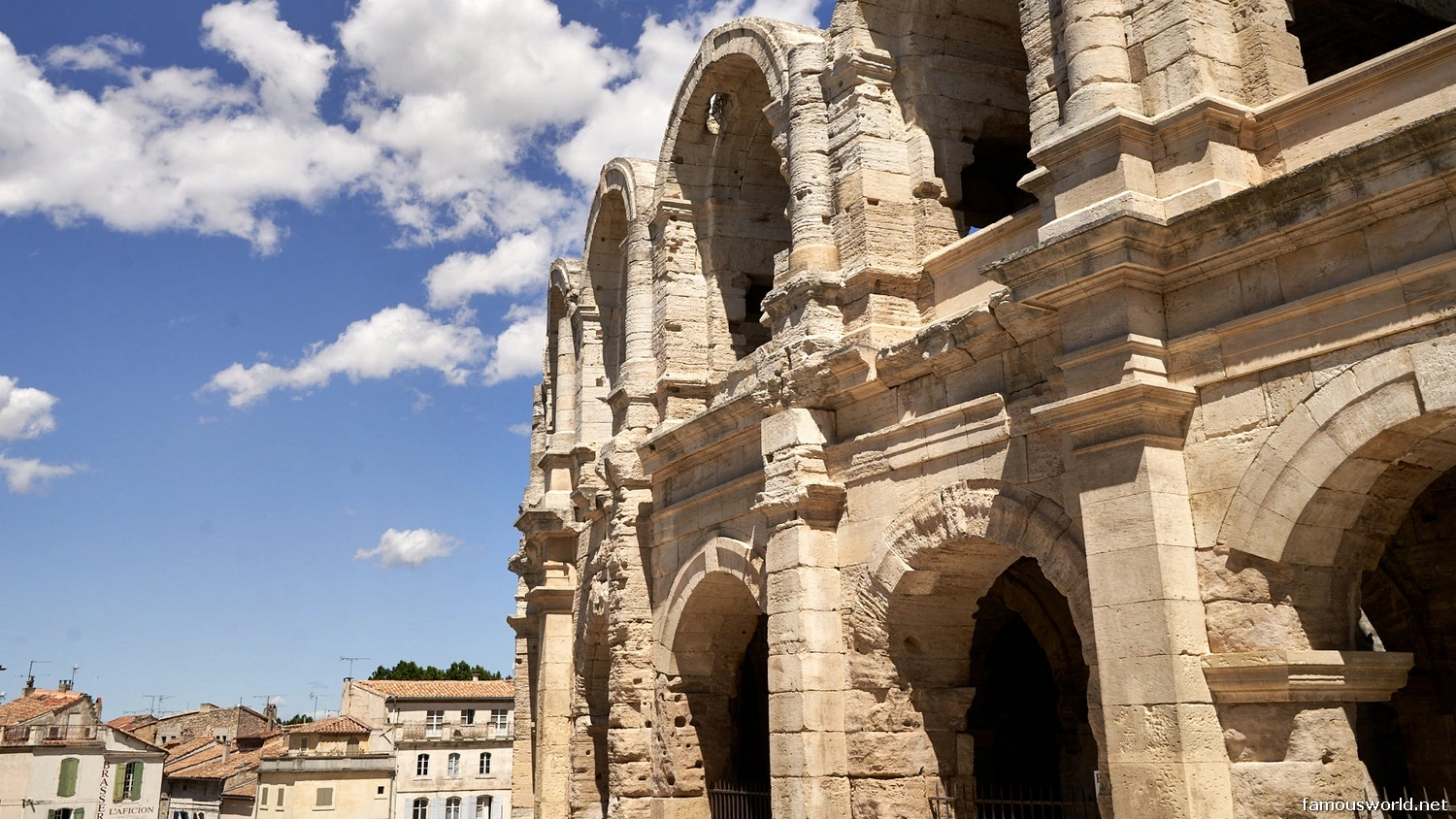
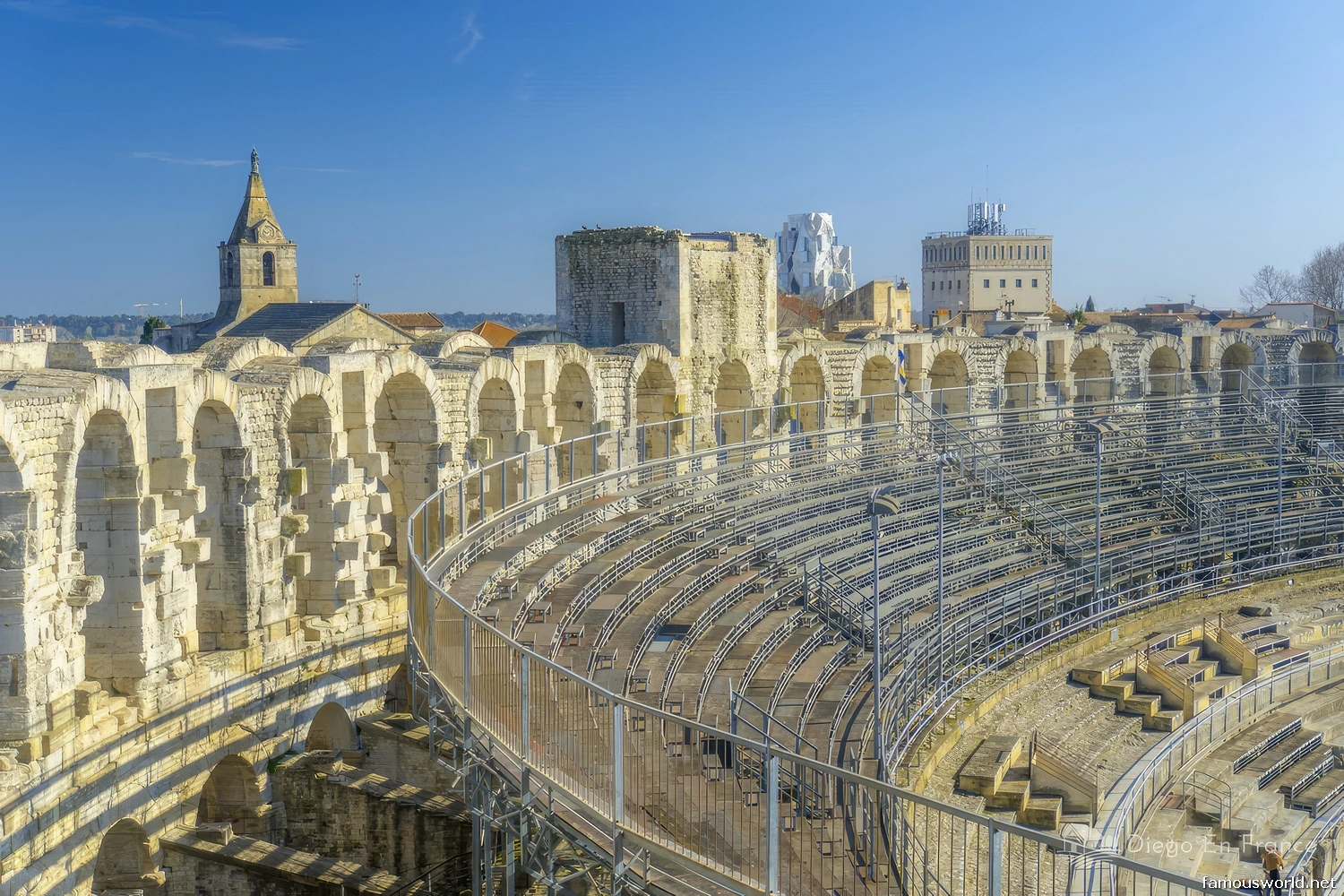
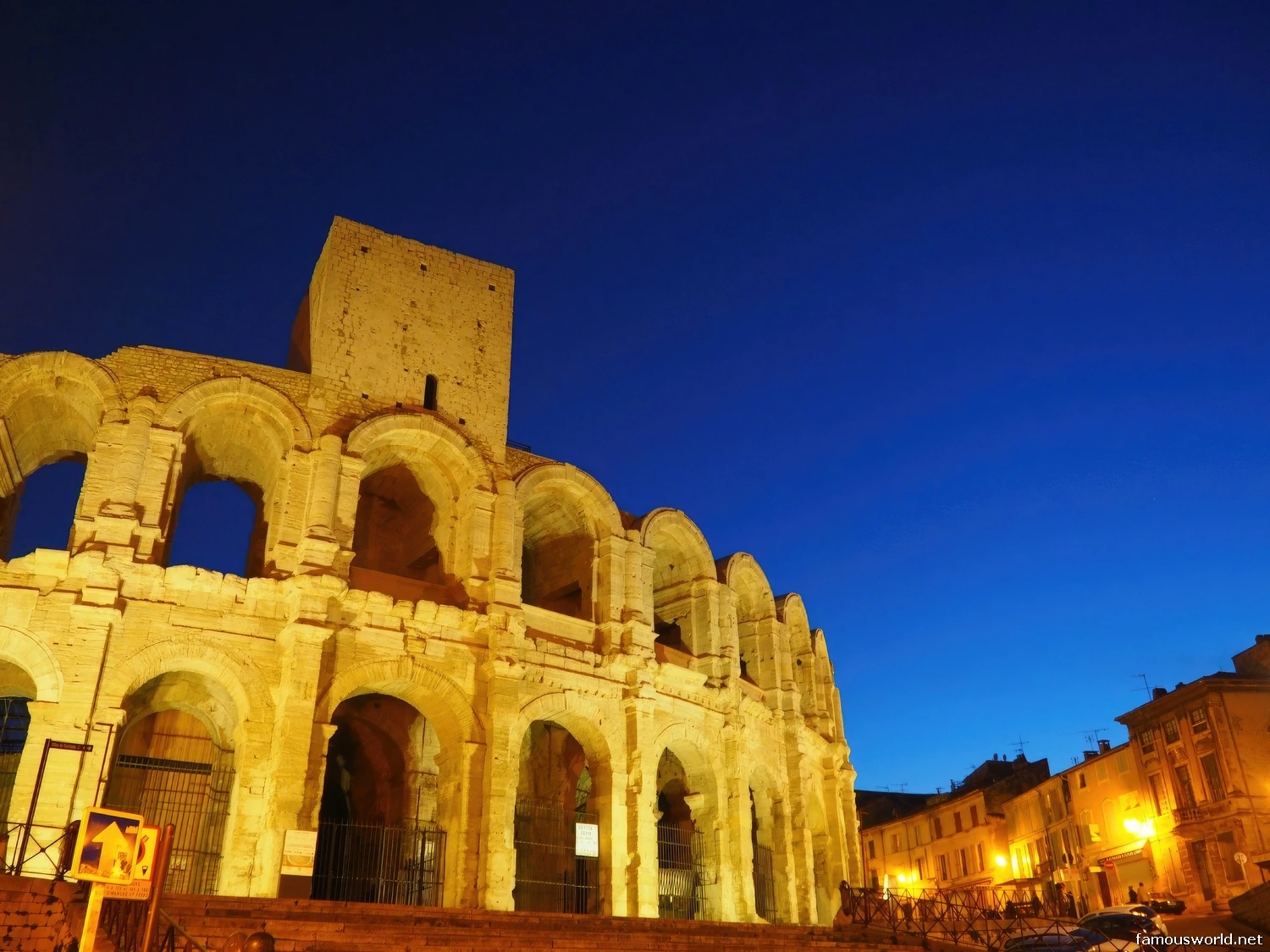
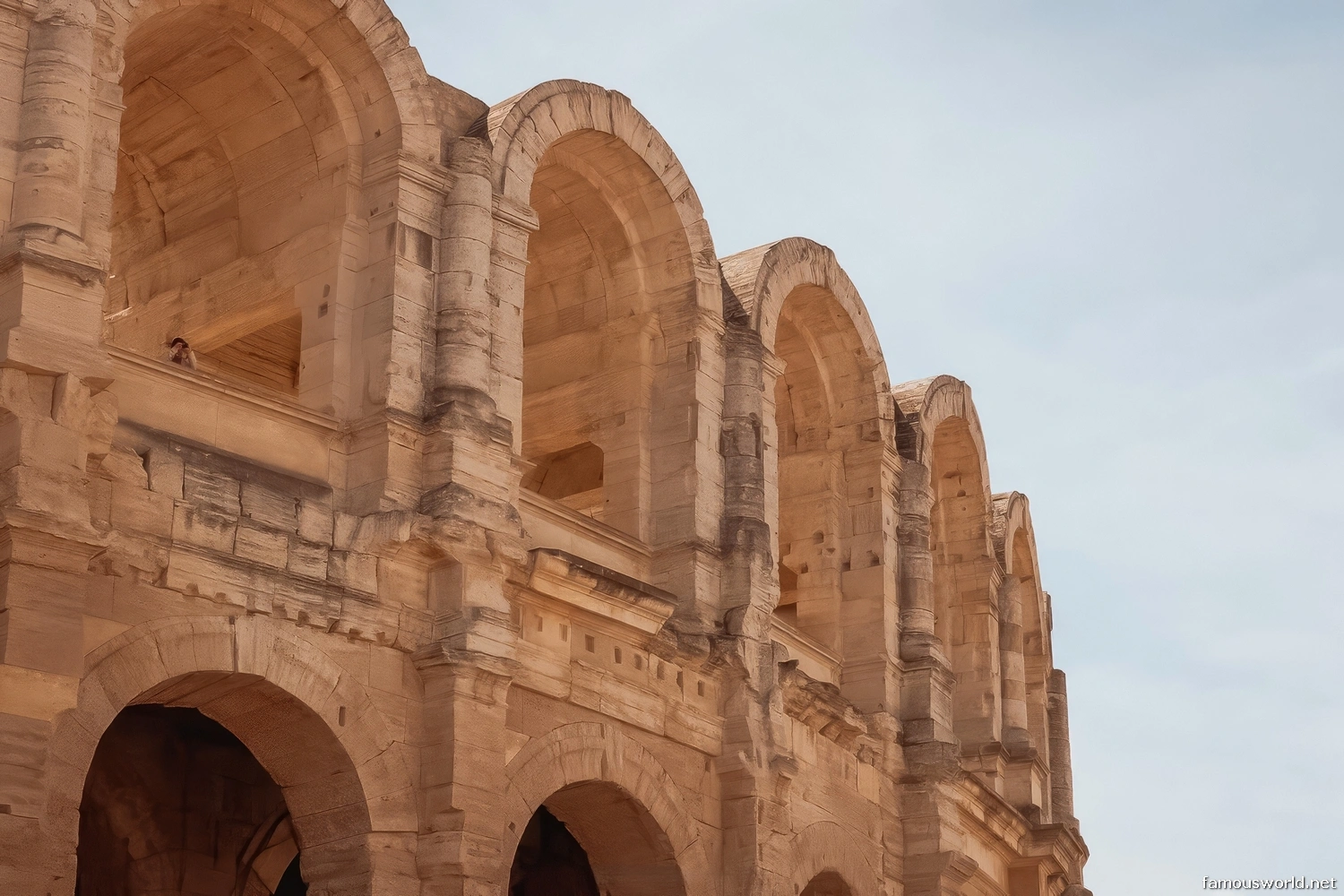
In the heart of the ancient city of Arles, the monumental Arles Amphitheatre stands as a powerful and remarkably well-preserved symbol of the Roman Empire’s legacy in Provence. Built nearly two millennia ago, this vast oval arena was a stage for the brutal spectacles of chariot races and gladiatorial combat, echoing with the roars of thousands of Roman citizens. Unlike many ancient ruins, however, the amphitheater is not a silent relic. Its stone tiers and grand archways have survived through the centuries—serving as a fortress, a village, and now, once again, as a vibrant venue for public events. To step inside is to feel an immediate connection to the grandeur of Rome and the unbroken thread of history that continues to thrive within its walls.
Listen to an introduction about Arles Amphitheatre

Name and Location
- Name: Arles Amphitheatre (French: Arènes d’Arles).
- Location: 1 Rond-Point des Arènes, 13200 Arles, France, in the historic center of the city.
How to Get There
The amphitheater is the central landmark of Arles and is easily accessible.
- By Train: Arles has a train station with good connections to major cities like Avignon, Marseille, and Paris. From the station, the amphitheater is about a 15-minute walk.
- By Car: Arles is accessible via major highways, but parking in the immediate vicinity of the historic center can be limited. It is best to park in a designated lot and walk to the arena.
- On Foot: The amphitheater is located in the center of the old town and is the focal point of any walking tour of Arles’ Roman heritage.
Landscape and Architecture
The amphitheater is a masterpiece of Roman architectural design and a dominant feature of Arles’ urban landscape.
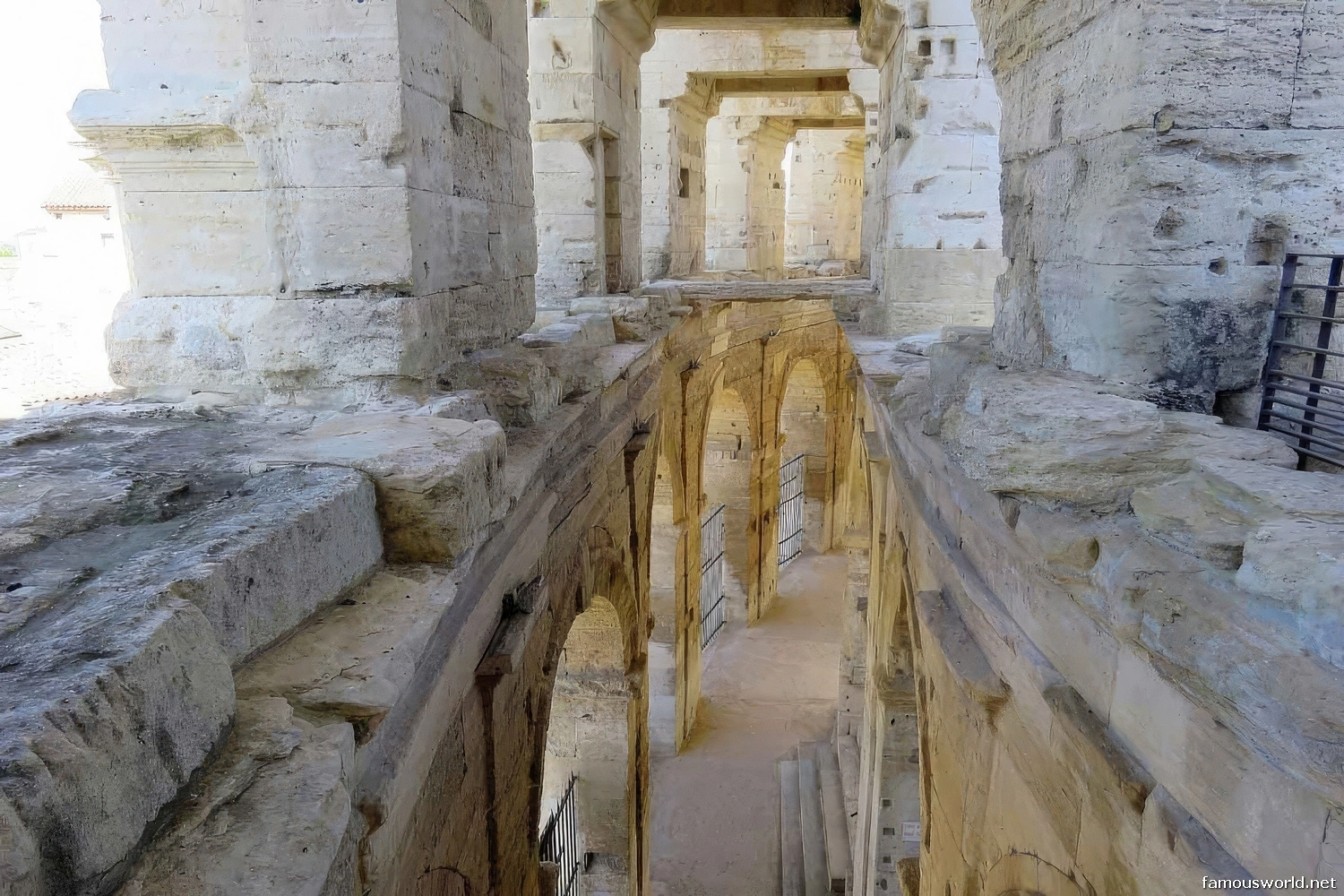
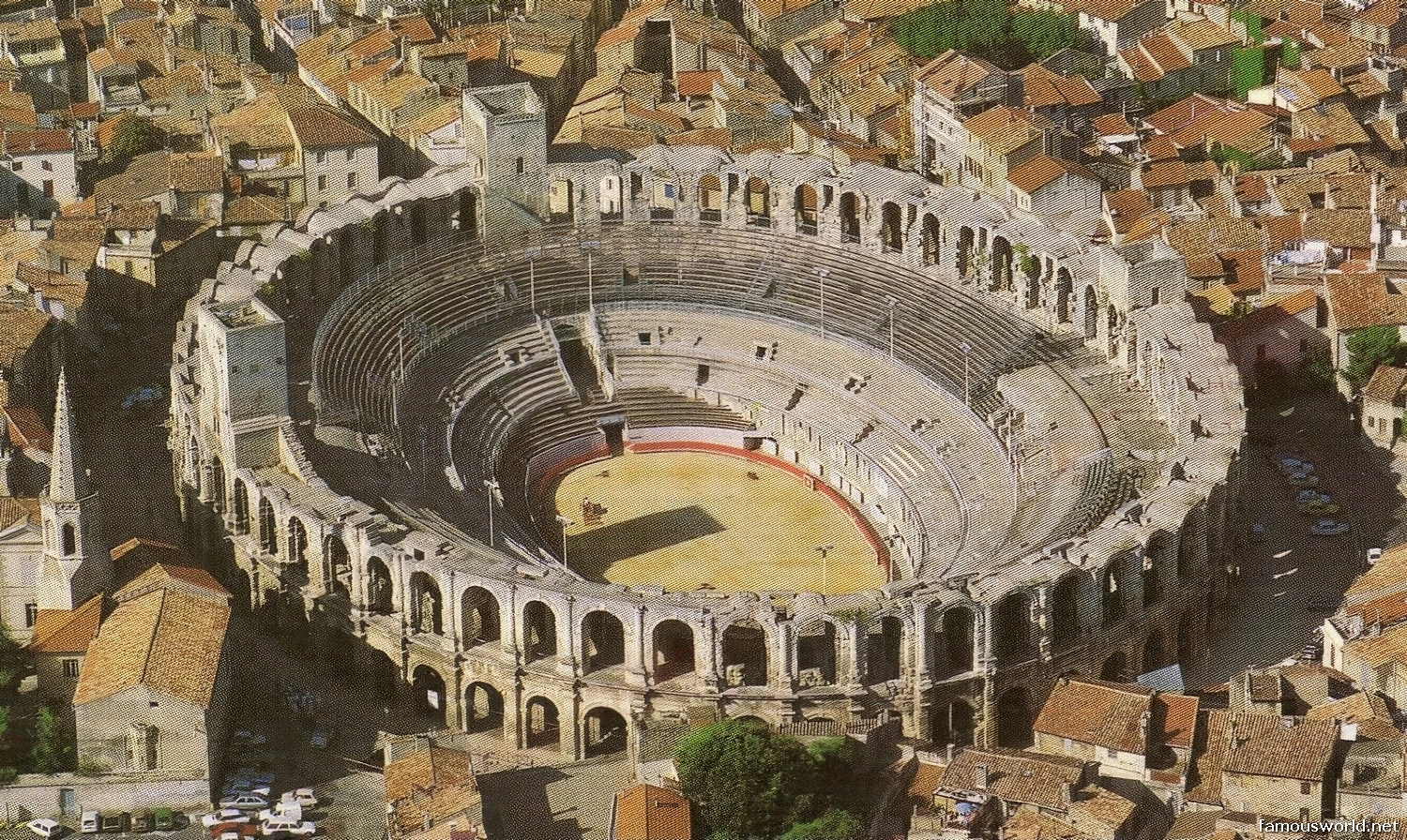
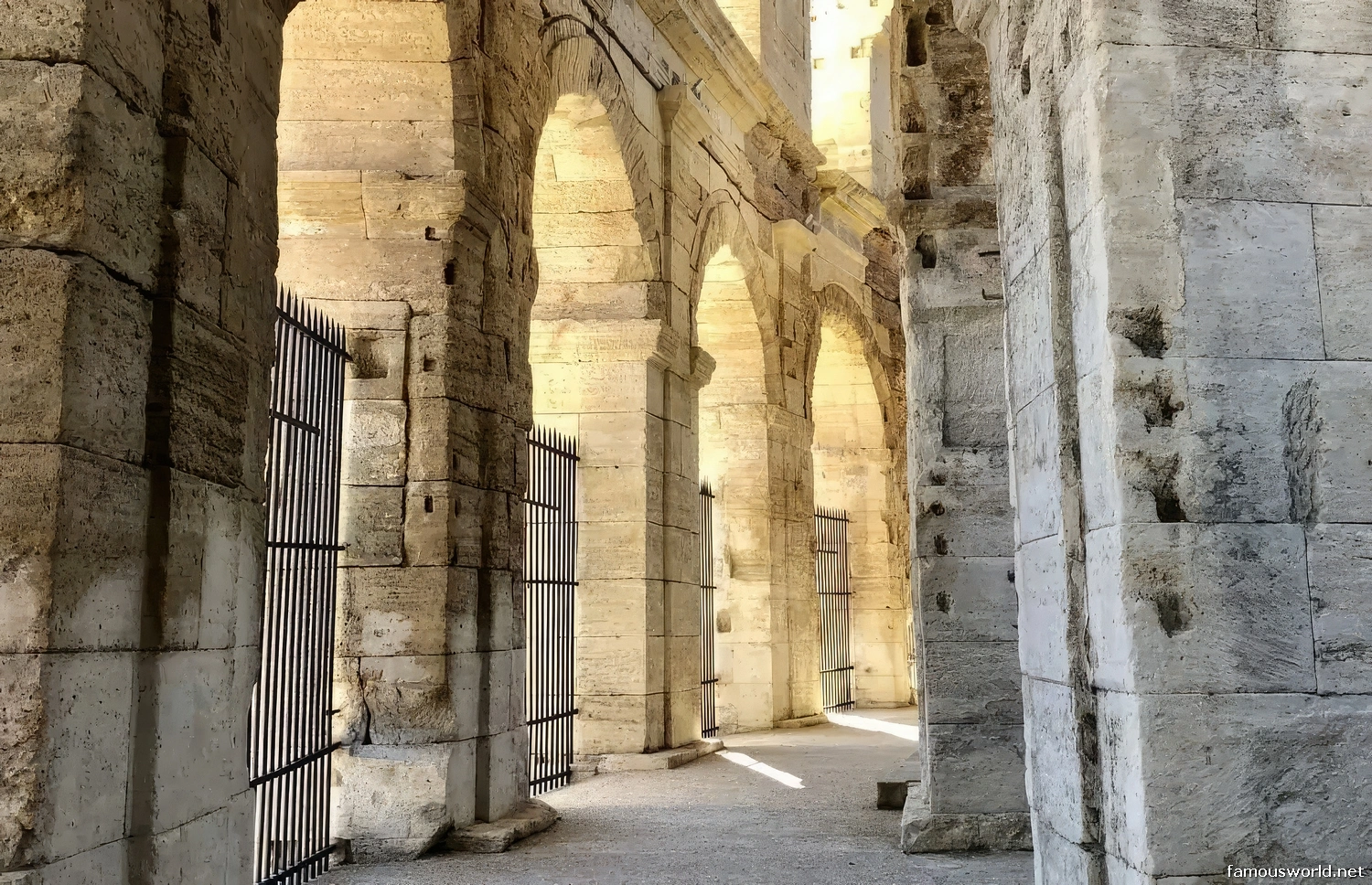
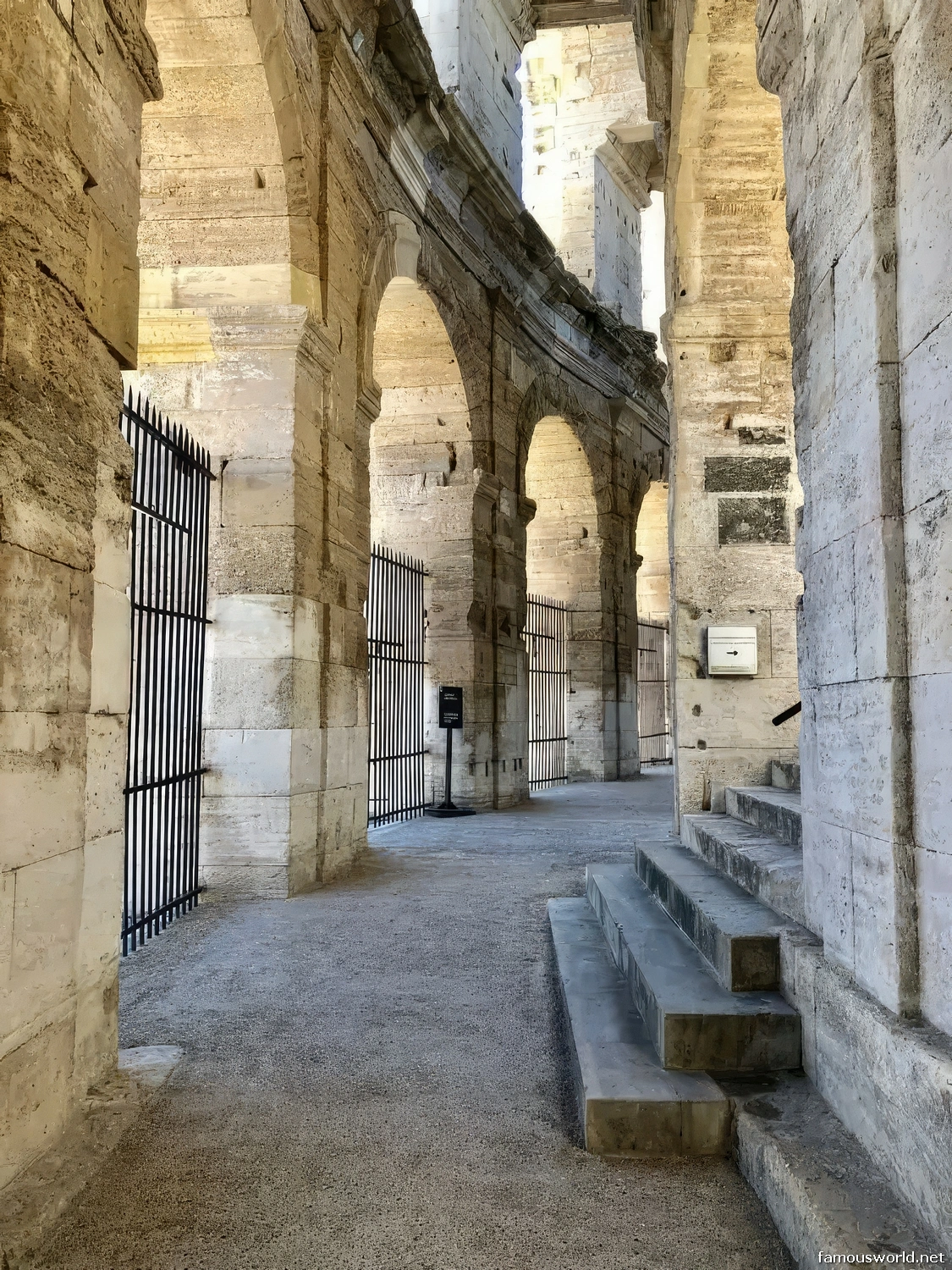
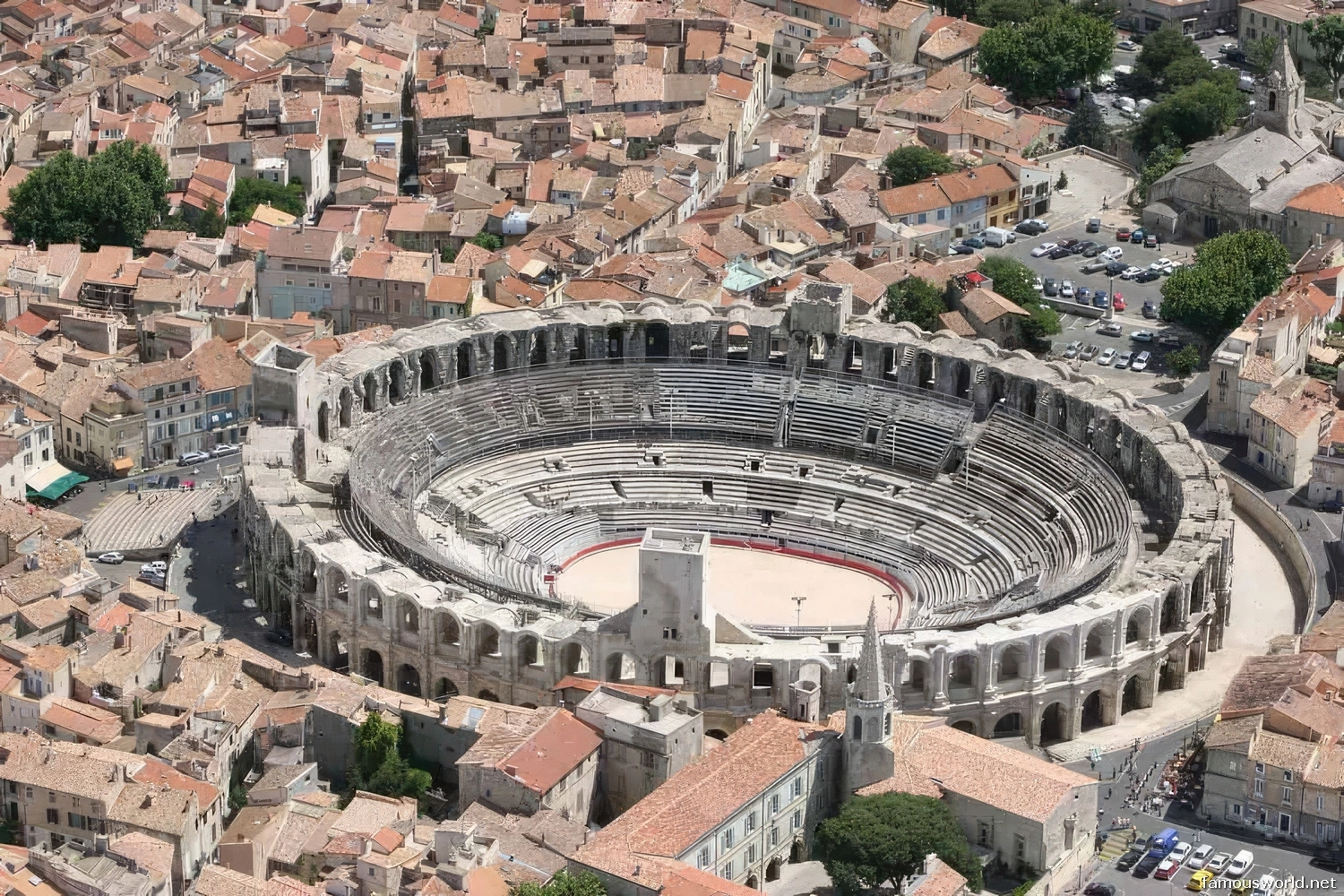
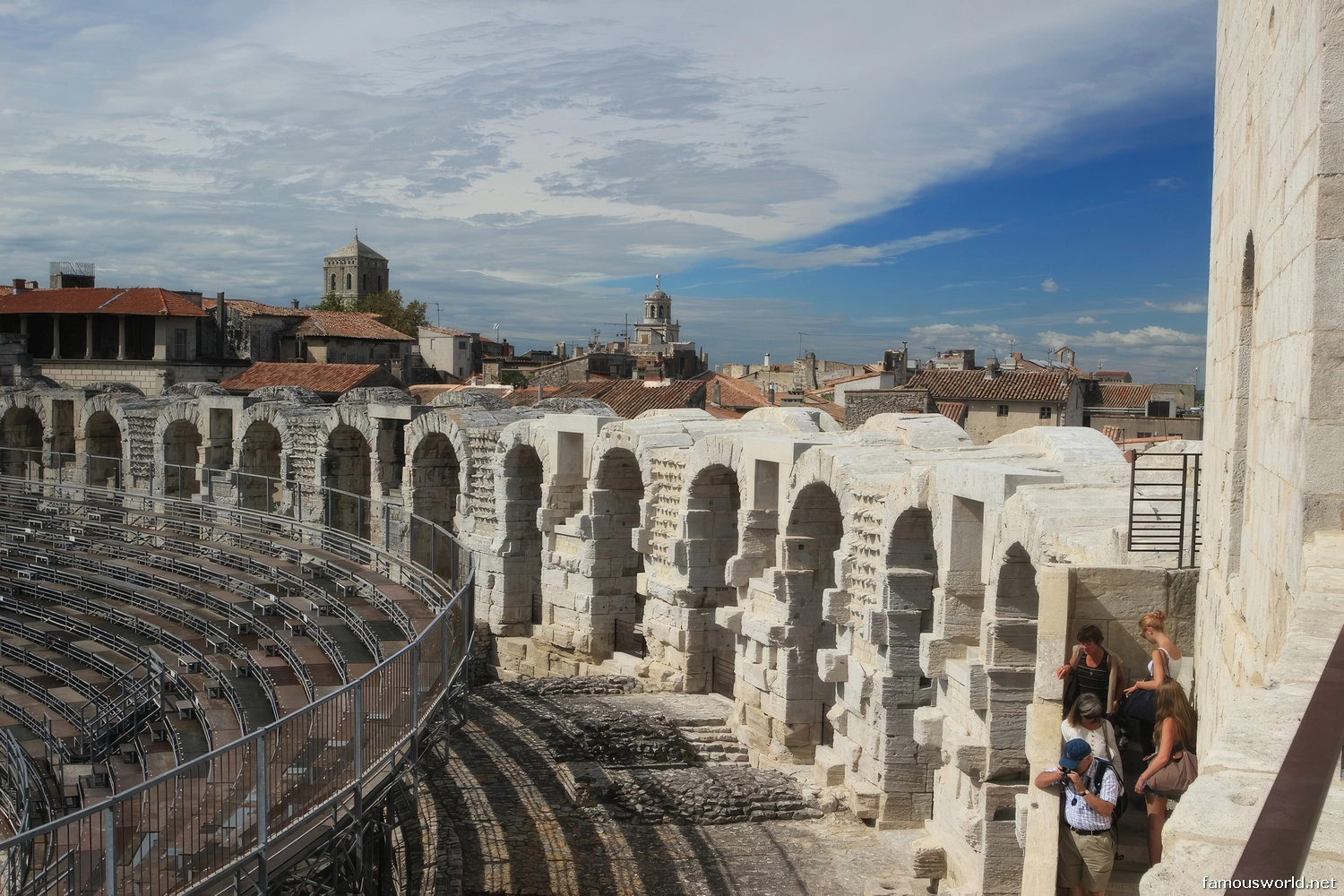
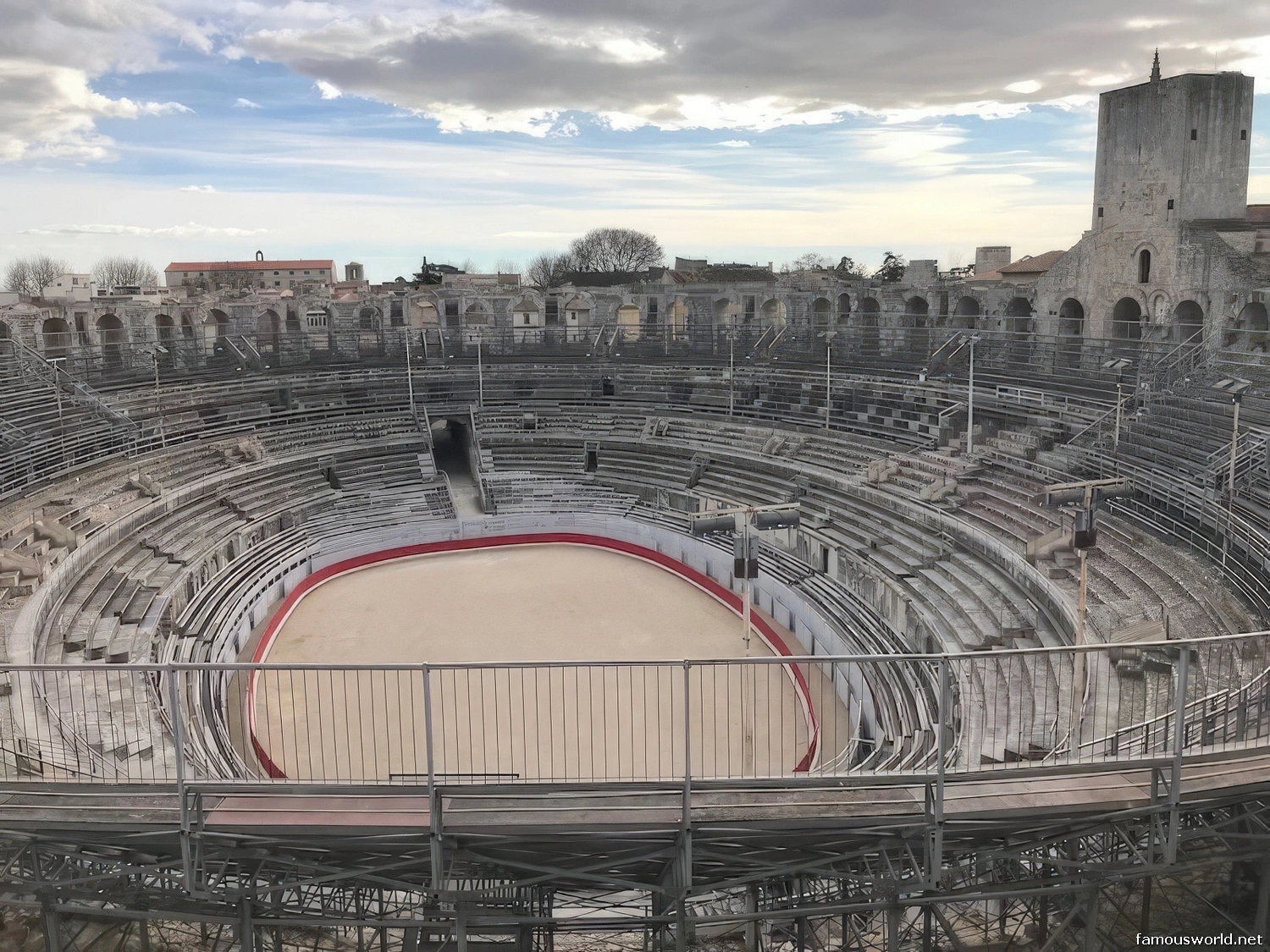
- Roman Engineering: Modeled on the Colosseum in Rome, the amphitheater is a large elliptical structure measuring 136 meters (446 feet) long and 109 meters (358 feet) wide. It is composed of two tiers, each with 60 arches, and was originally capable of seating over 20,000 spectators. The entire structure was built with massive, locally quarried limestone blocks.
- A Fortress in the Middle Ages: After the fall of the Roman Empire, the amphitheater was transformed into a fortified town. Four defensive towers were added (three of which remain today), and over 200 houses were built within its walls, ironically helping to preserve the core structure from being dismantled for stone.
- Urban Setting: Unlike the rural Pont du Gard, the Arles Amphitheatre is a distinctly urban monument, deeply integrated into the fabric of the city that has grown around it for centuries.
What Makes It Famous
The Arles Amphitheatre is famous for its exceptional state of preservation and its continuous use as a public venue for nearly 2,000 years.
- UNESCO World Heritage Site: It is a key part of the “Arles, Roman and Romanesque Monuments” UNESCO World Heritage site, recognized for its outstanding testimony to ancient Roman civilization.
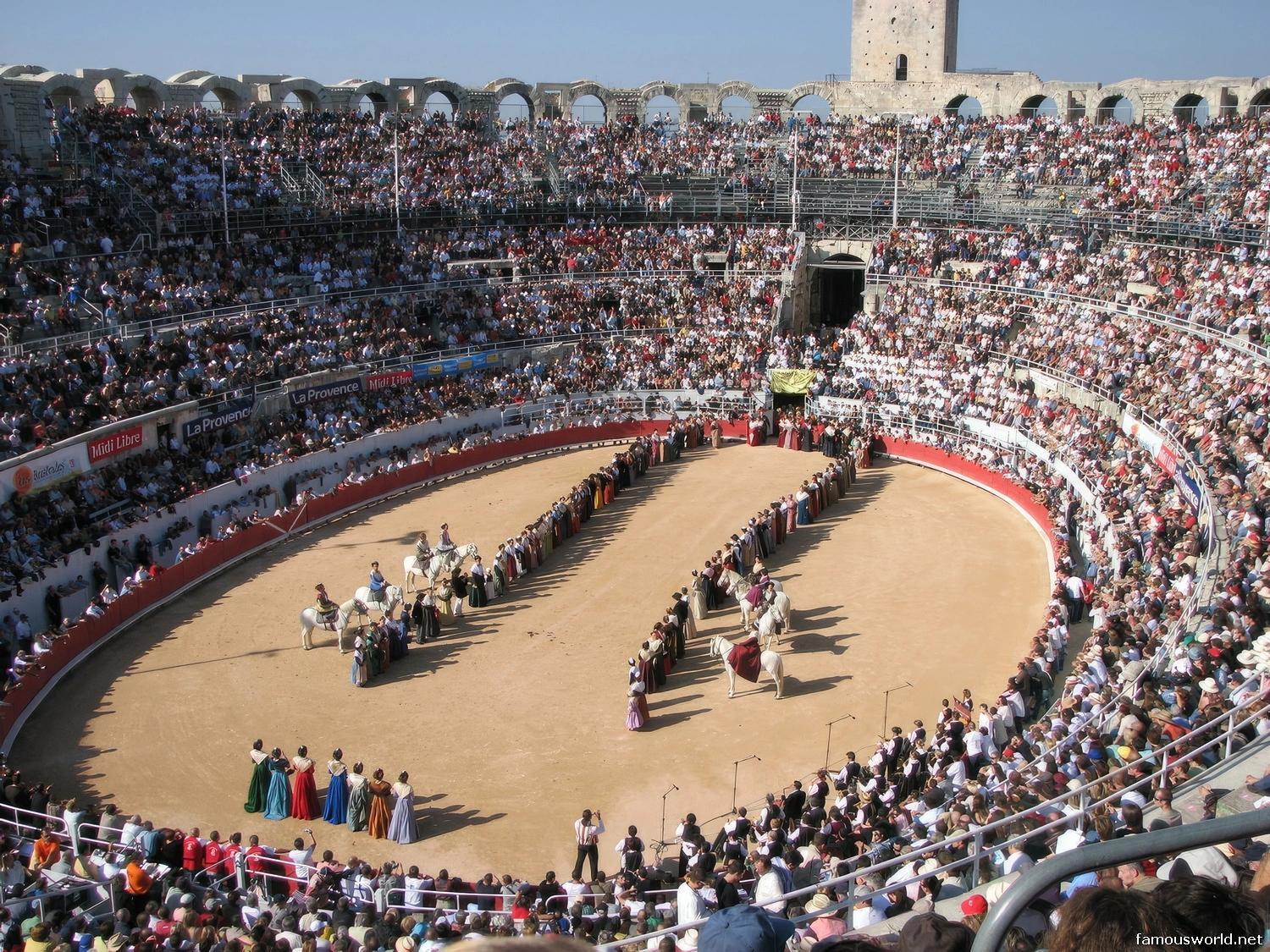
- Living History: It is one of the few Roman arenas in the world that is still used for its original purpose as a large-scale entertainment venue. It hosts the controversial but traditional Corridas (bullfights), as well as concerts, plays, and historical reenactments.
- Inspiration for Van Gogh: During his time in Arles, Vincent van Gogh was captivated by the spectacle of the arena and immortalized it in his 1888 painting, Les Arènes.
Differences from Other Wonders
As a venue for public spectacle, the Arles Amphitheatre offers a fundamentally different experience from the Pont du Gard, a masterpiece of functional infrastructure.
- Environment (Urban Arena vs. Rural Aqueduct): The amphitheater is a central, urban structure designed to contain an audience. The Pont du Gard is a massive bridge set in a natural, rural river valley.
- Core Story (Roman Entertainment vs. Roman Utility): The story of the amphitheater is about Roman society, spectacle, and public life. The story of the Pont du Gard is one of Roman civic engineering and the functional transport of water.
- Primary Attraction (The Spectator Space vs. The Water Channel): The main attraction of the amphitheater is the architectural space itself—the seats, the arches, the arena—designed for viewing events. The primary marvel of the Pont du Gard is its structure as a bridge and the precisely engineered water channel it carries.
- Atmosphere (Dramatic and Communal vs. Awe-Inspiring and Ingenious): A visit to the amphitheater evokes the dramatic, communal energy of past and present spectacles. A visit to the Pont du Gard inspires a sense of awe at the sheer scale and ingenuity of ancient Roman engineering.
Location on world map