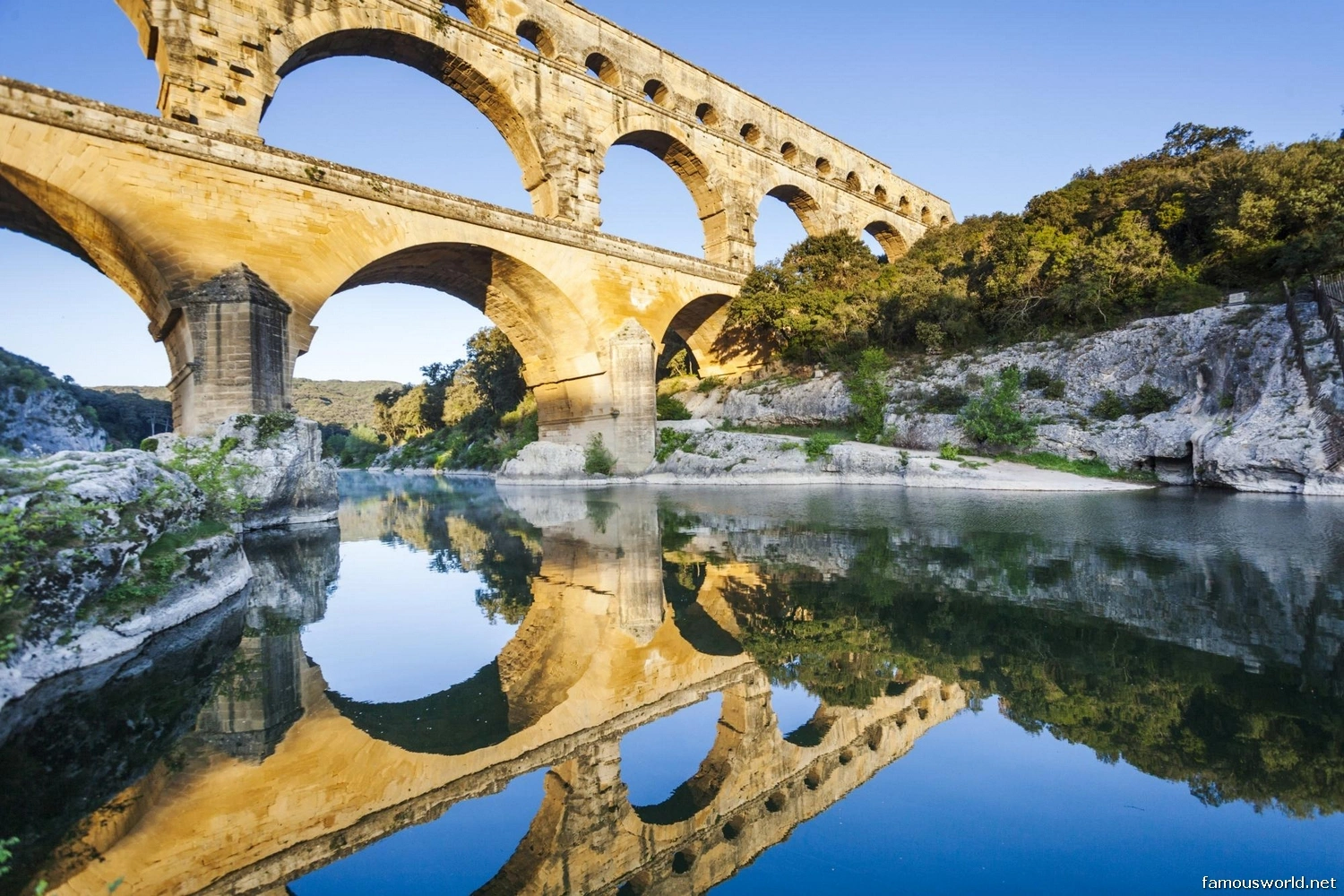
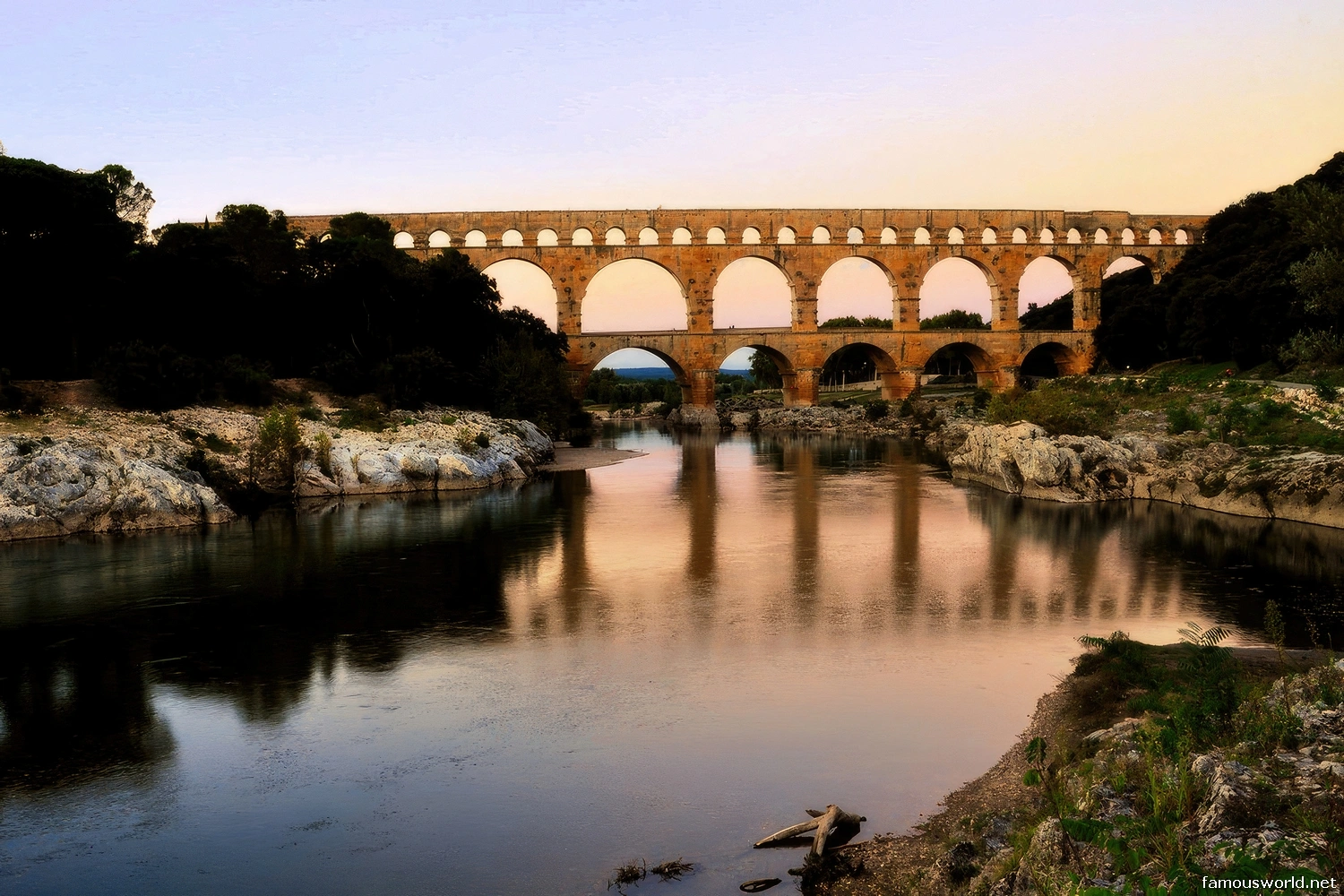
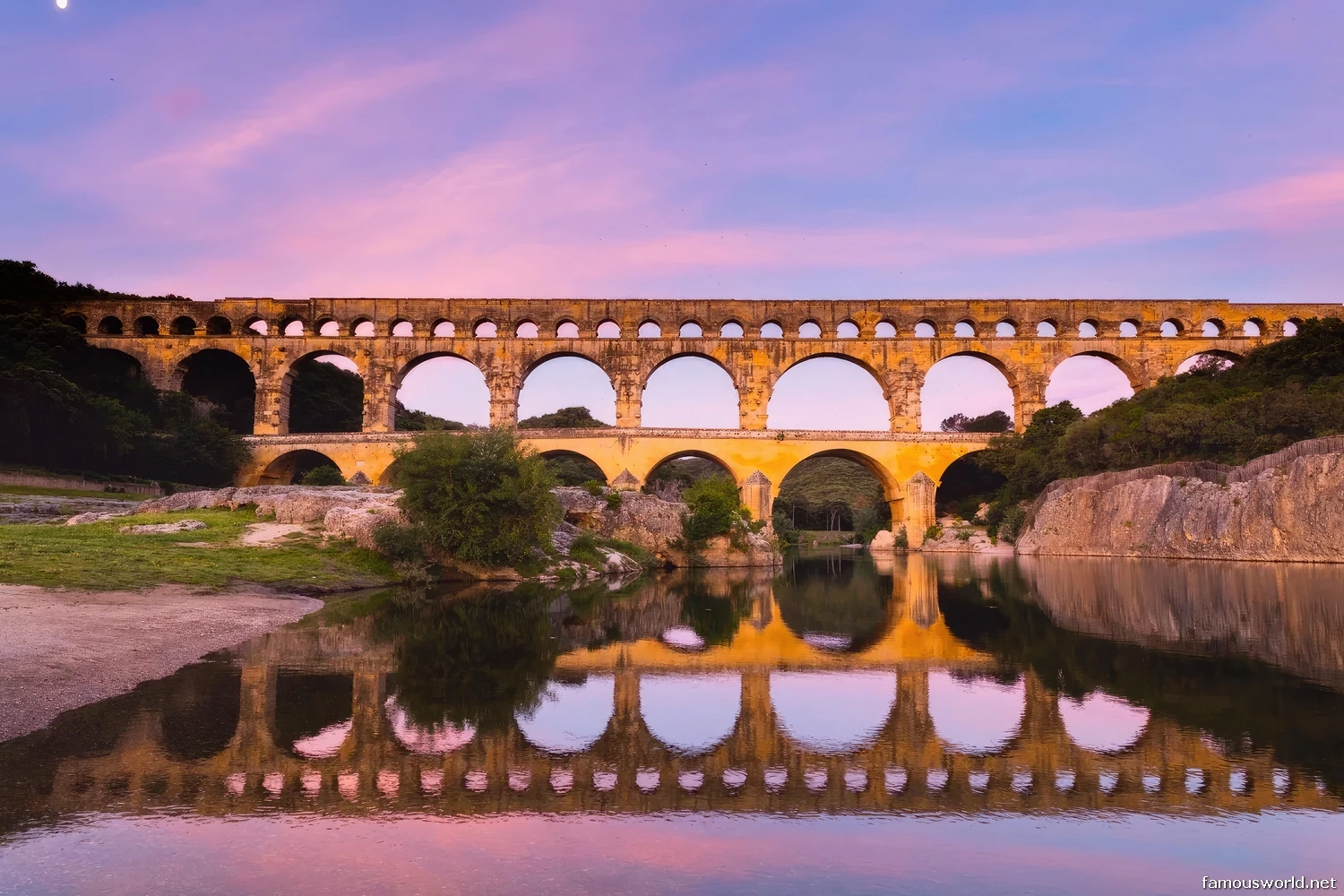
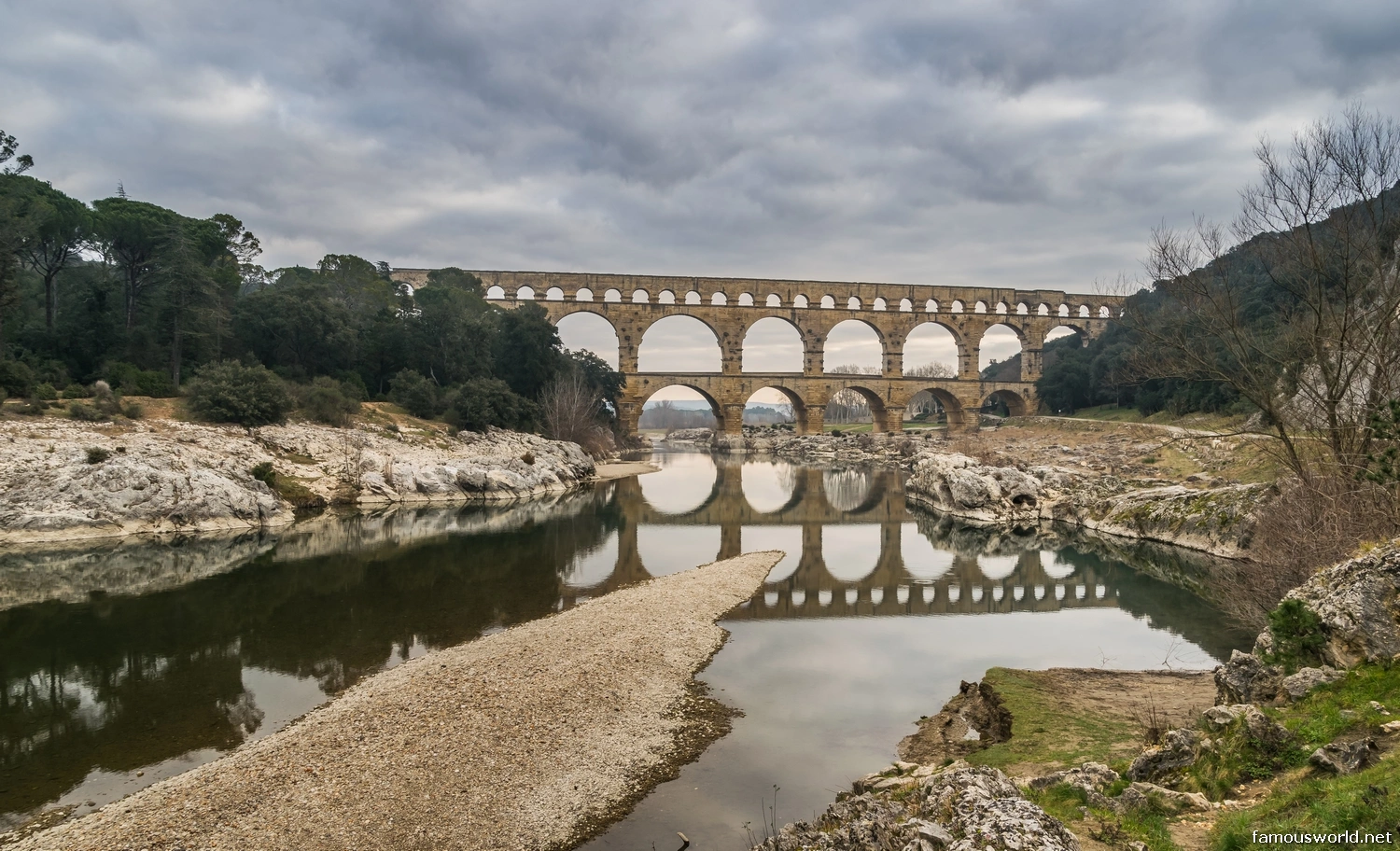
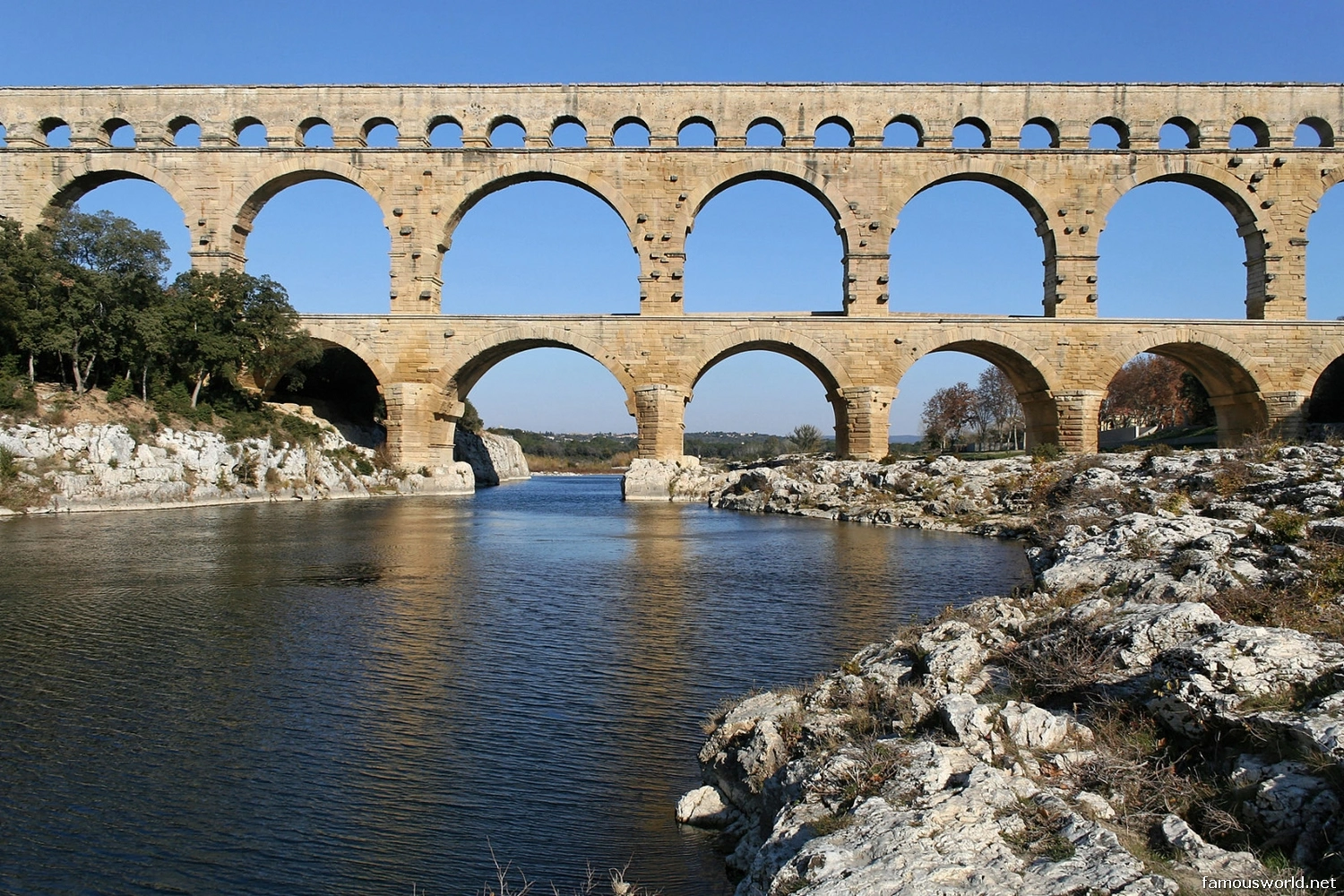
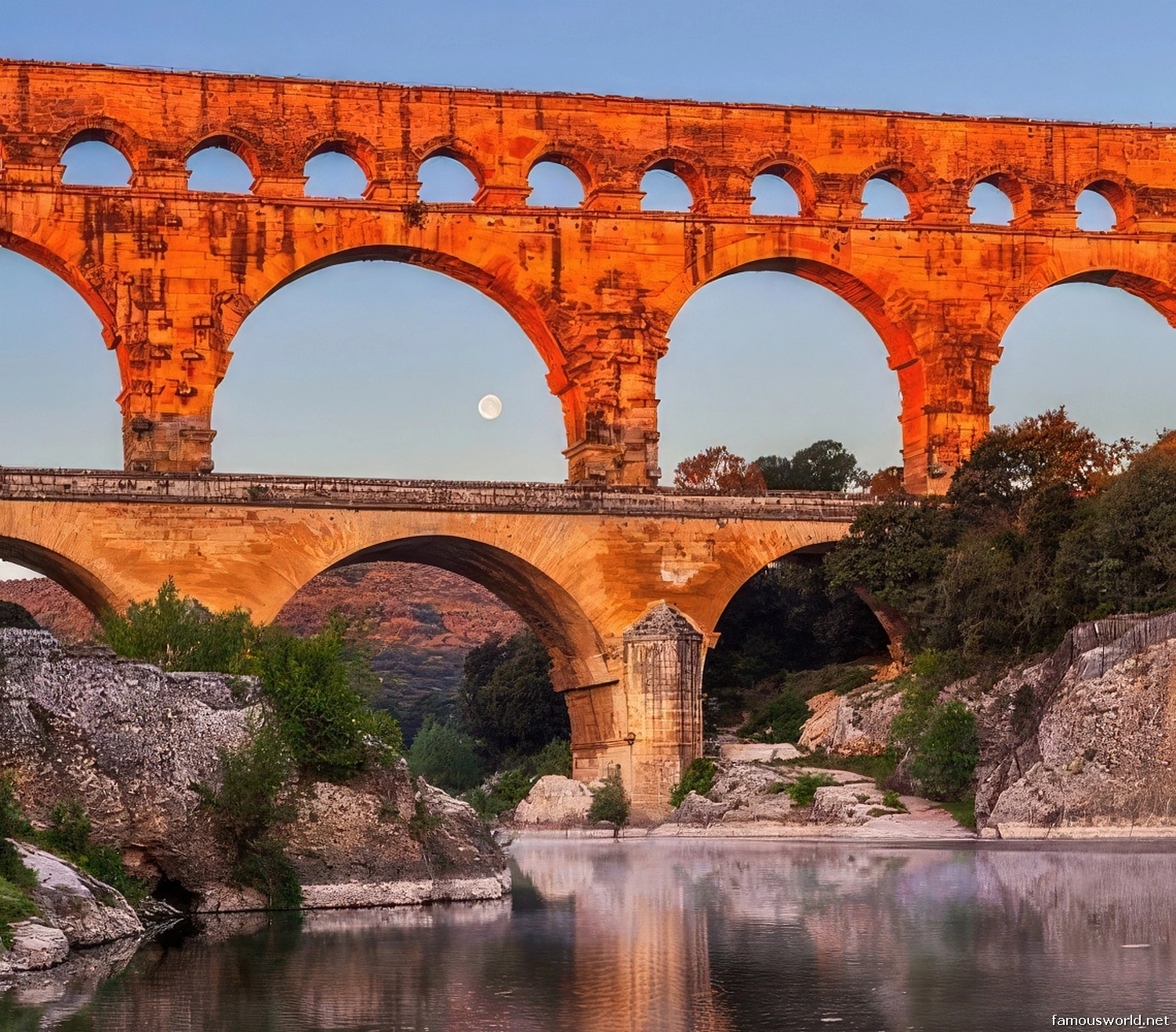
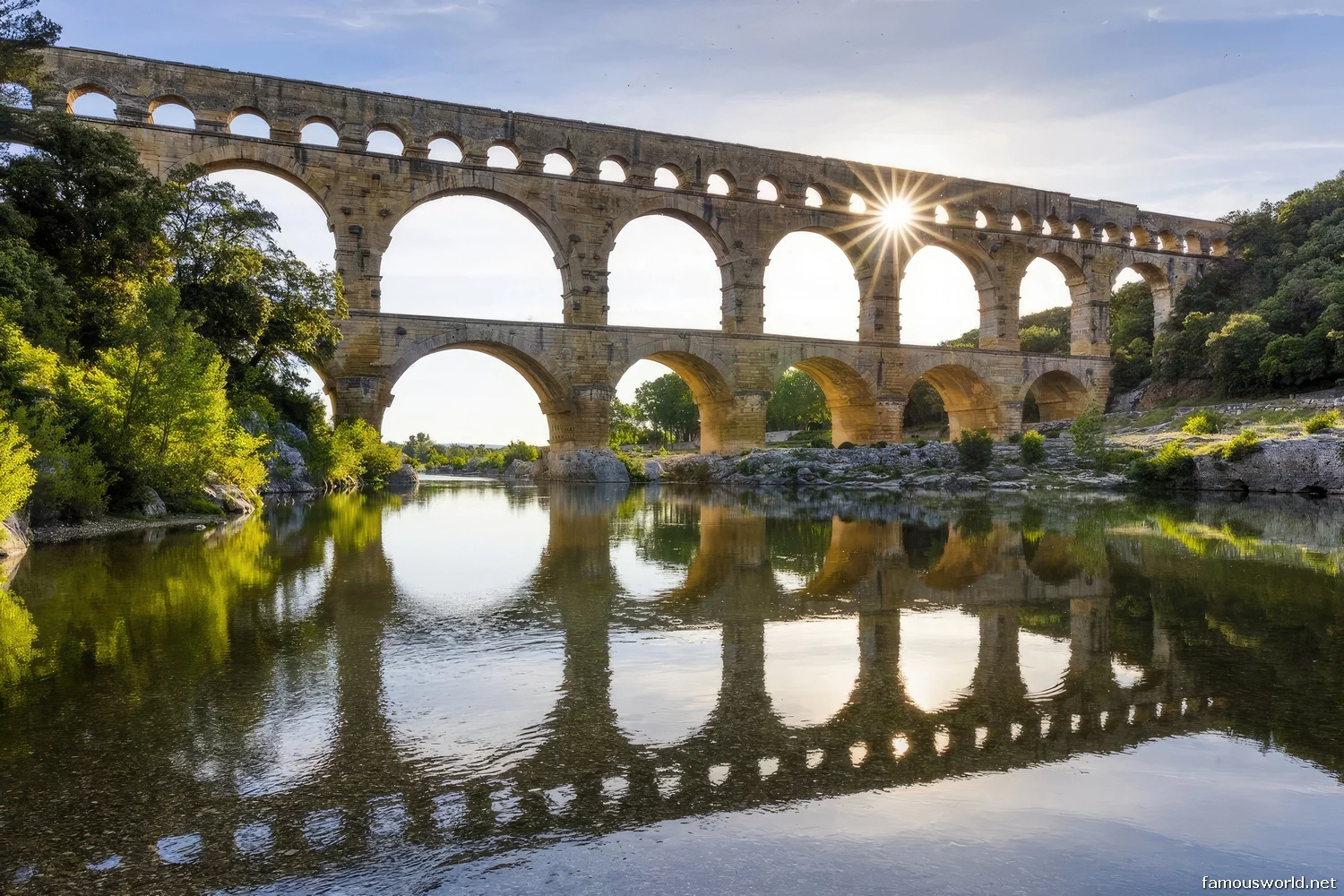
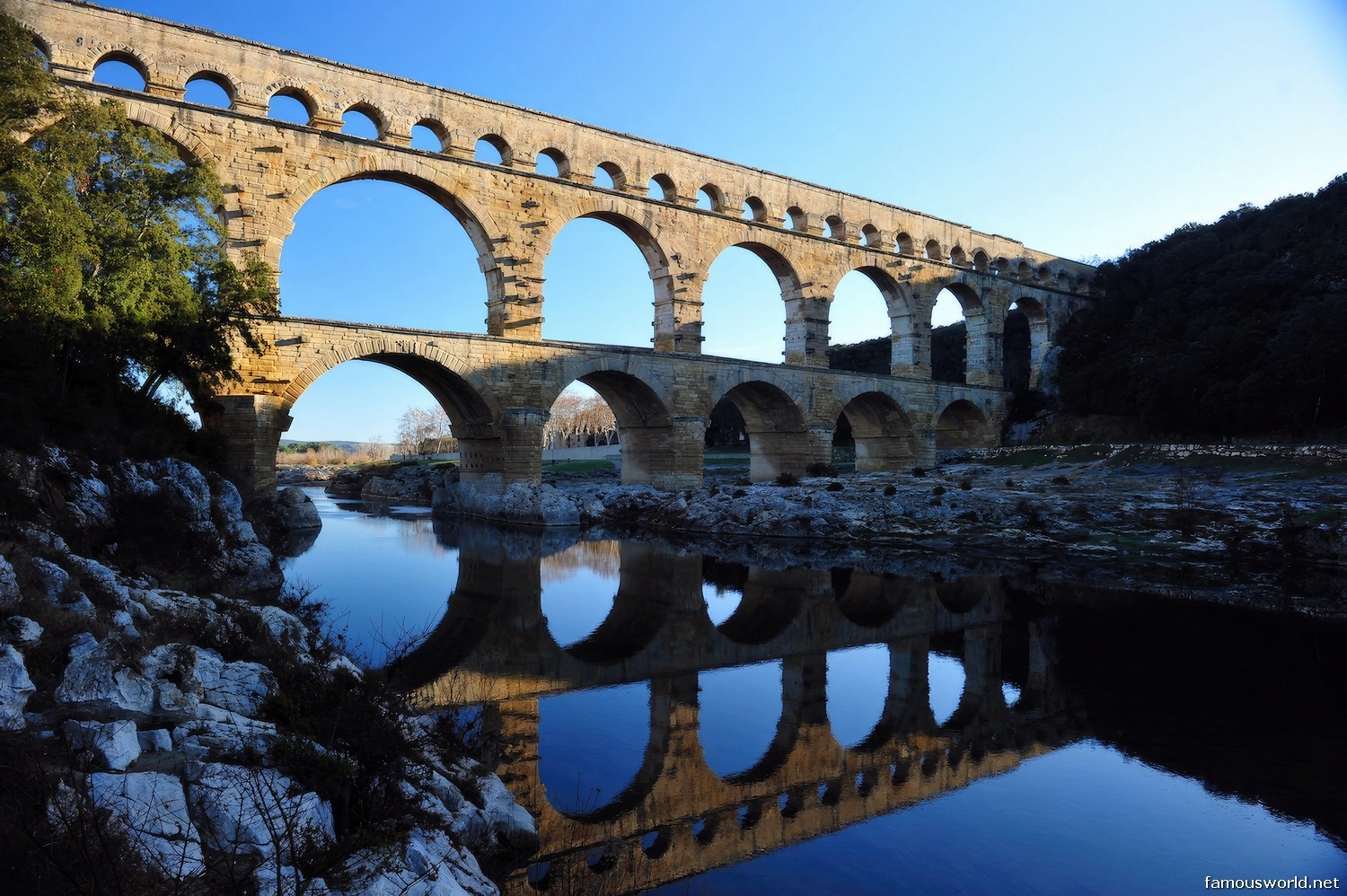
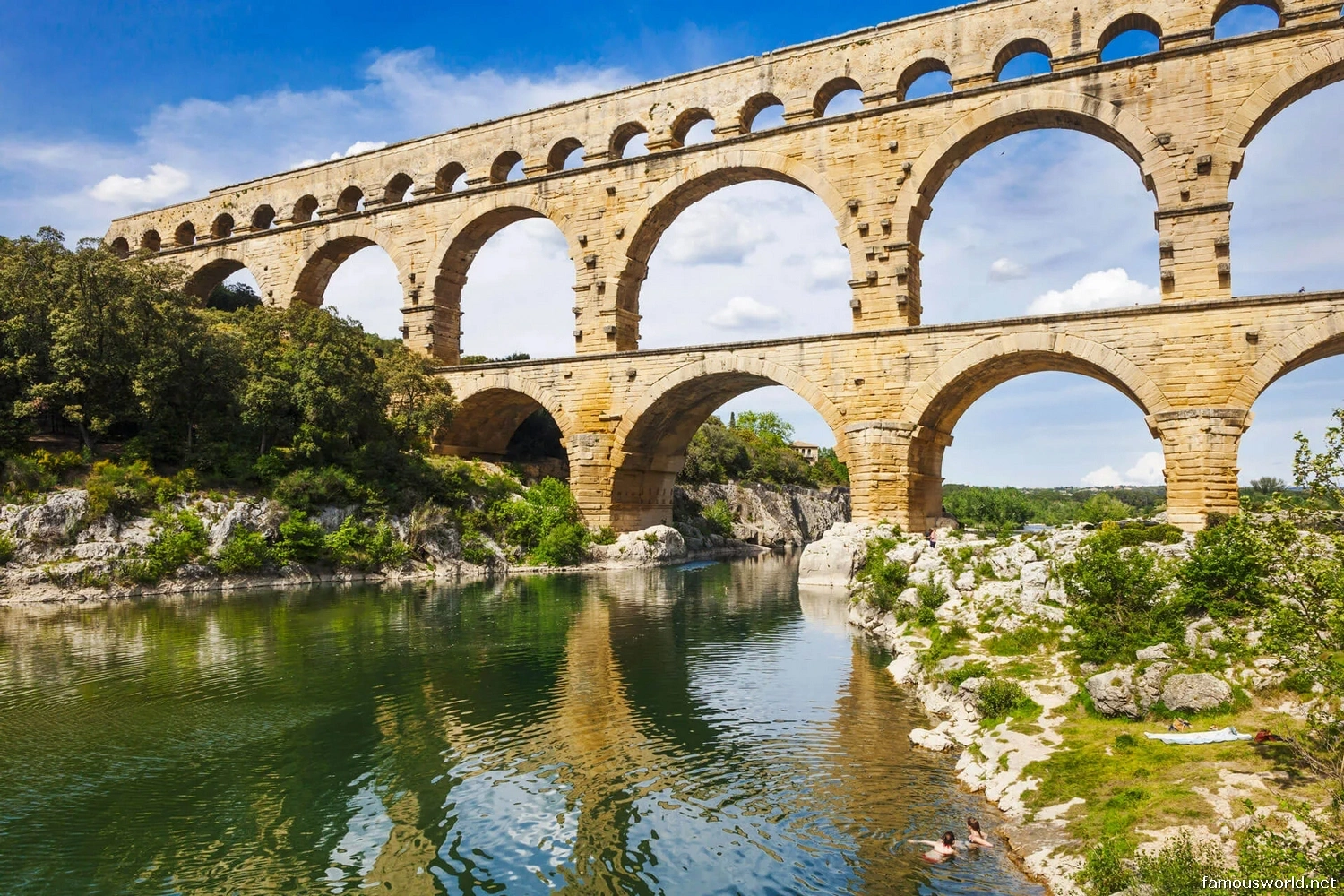
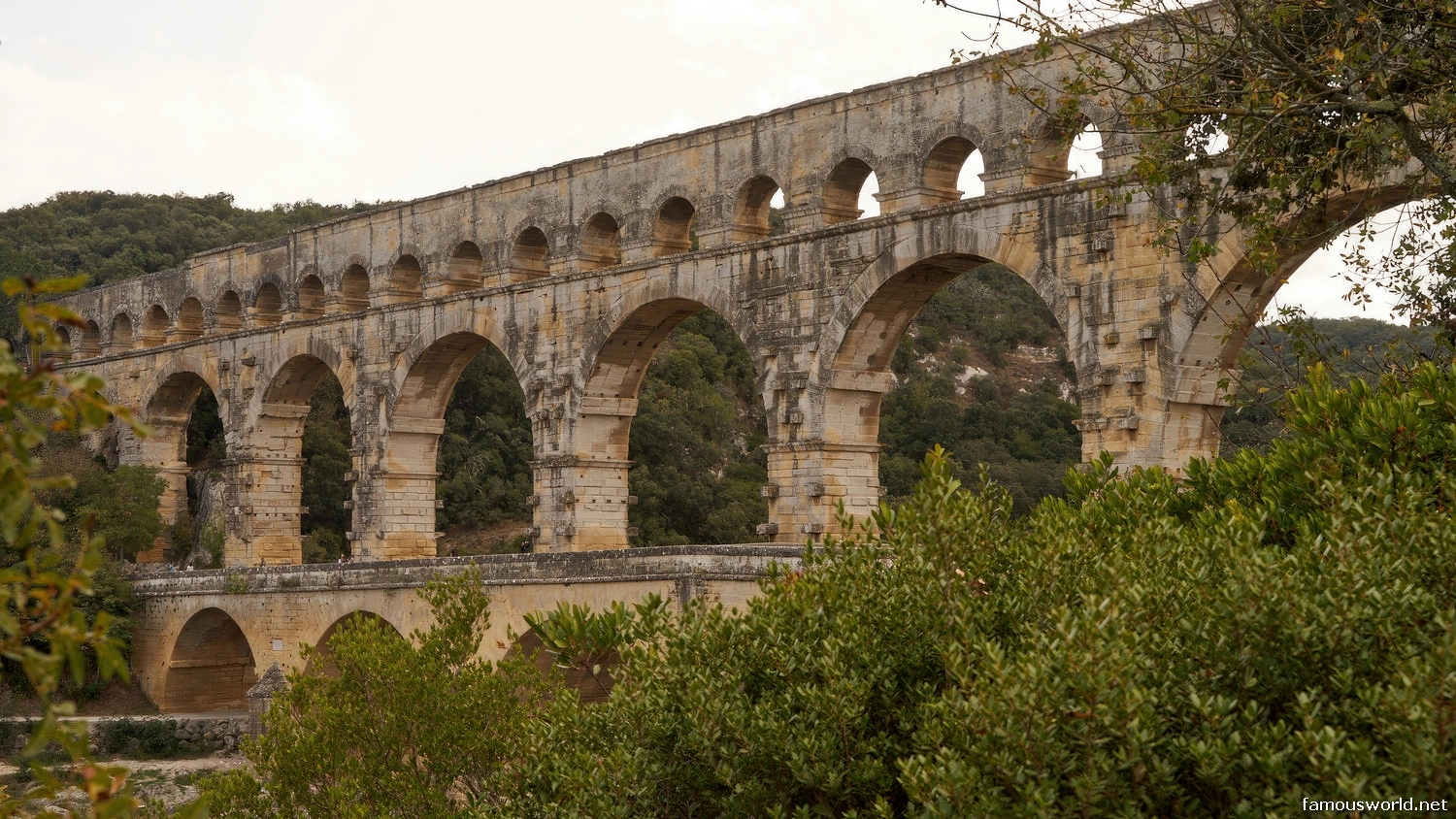
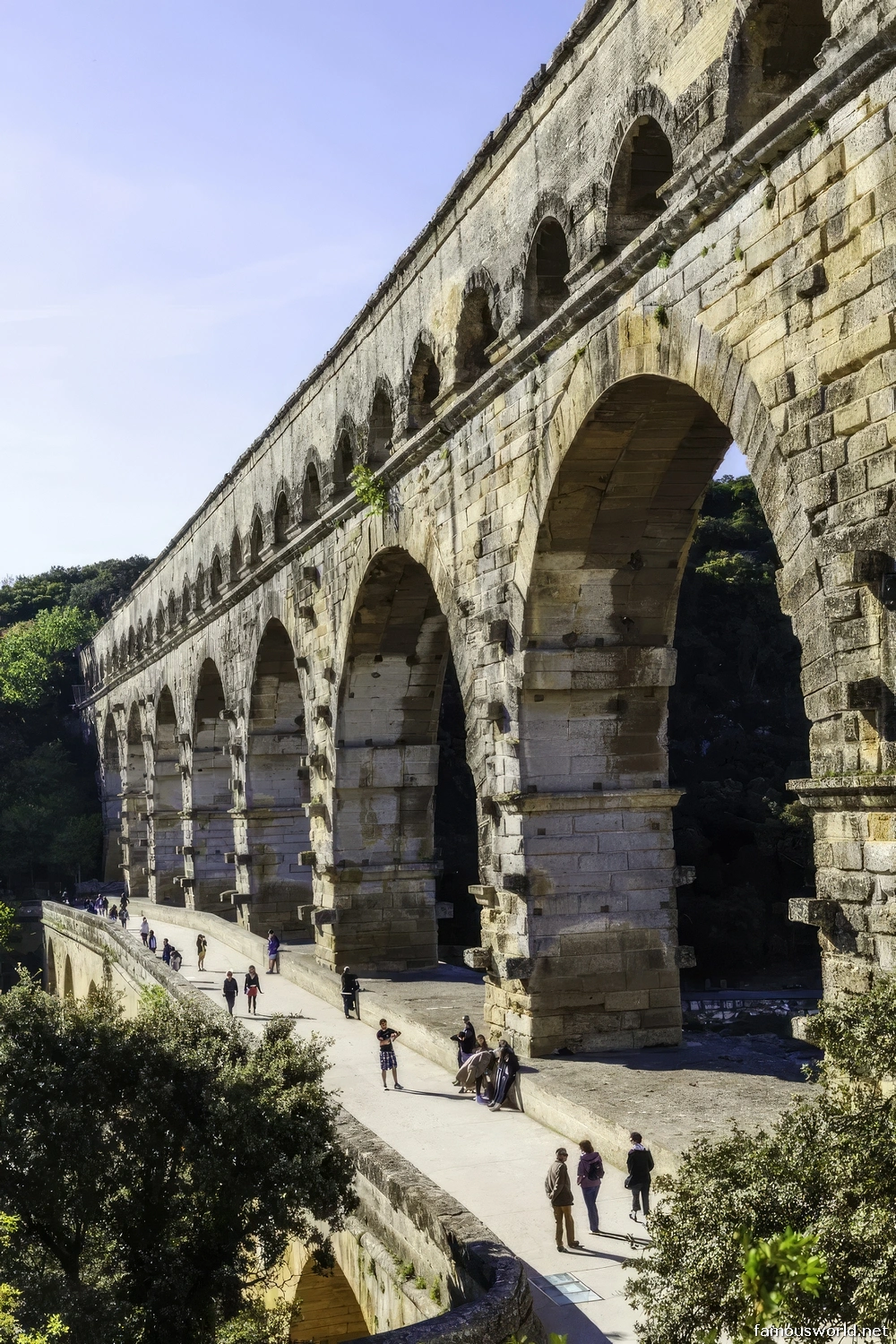
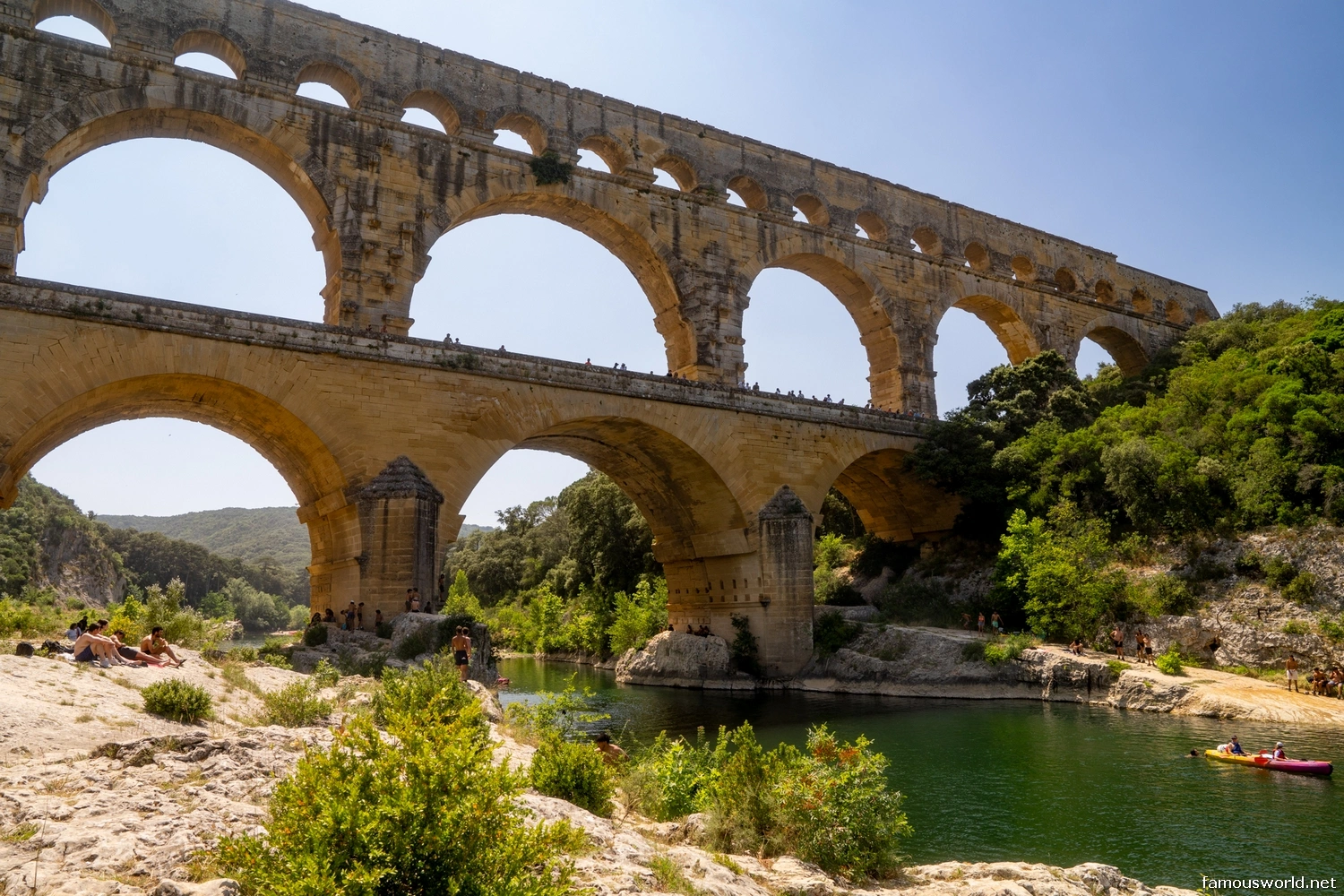

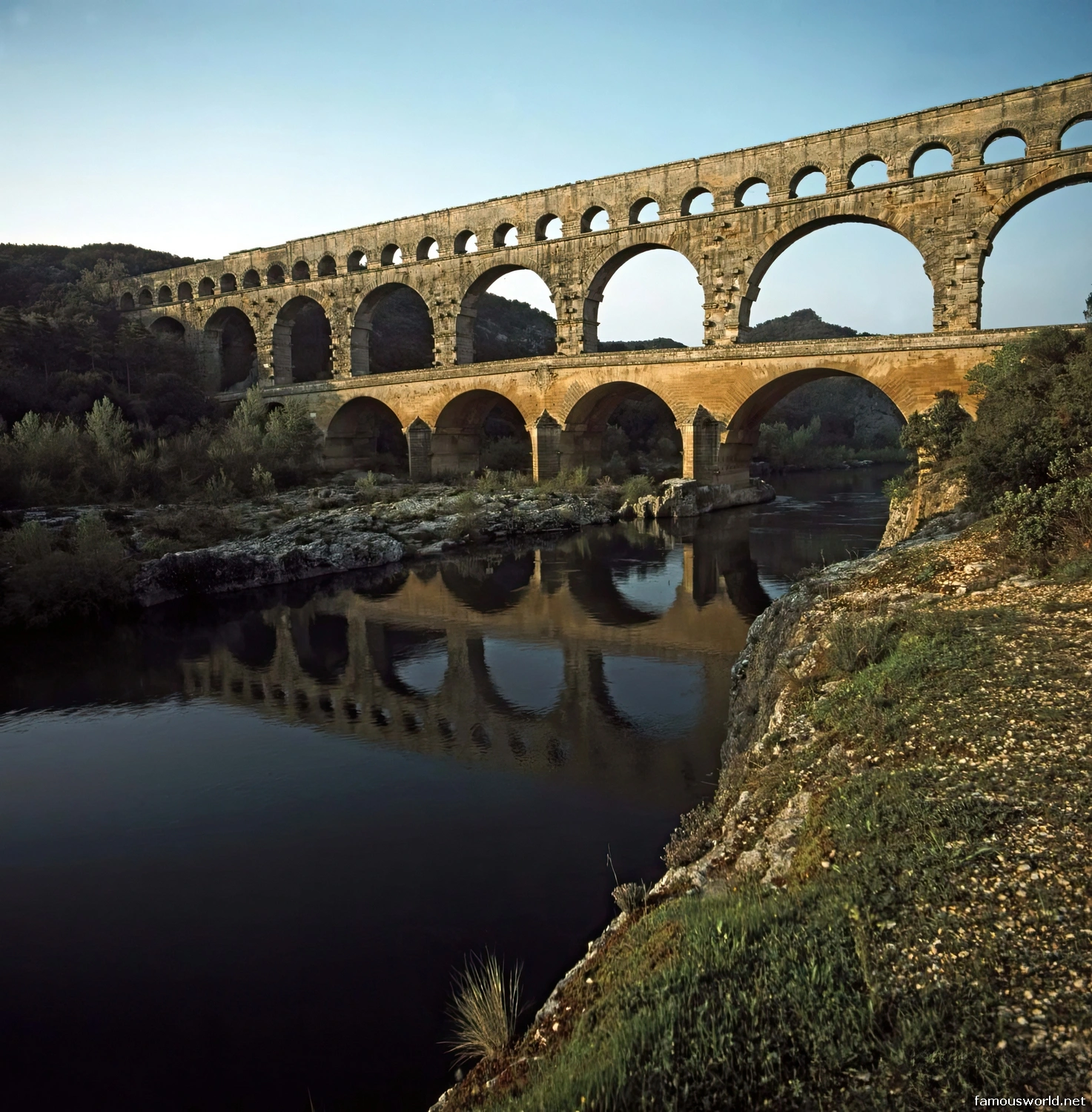
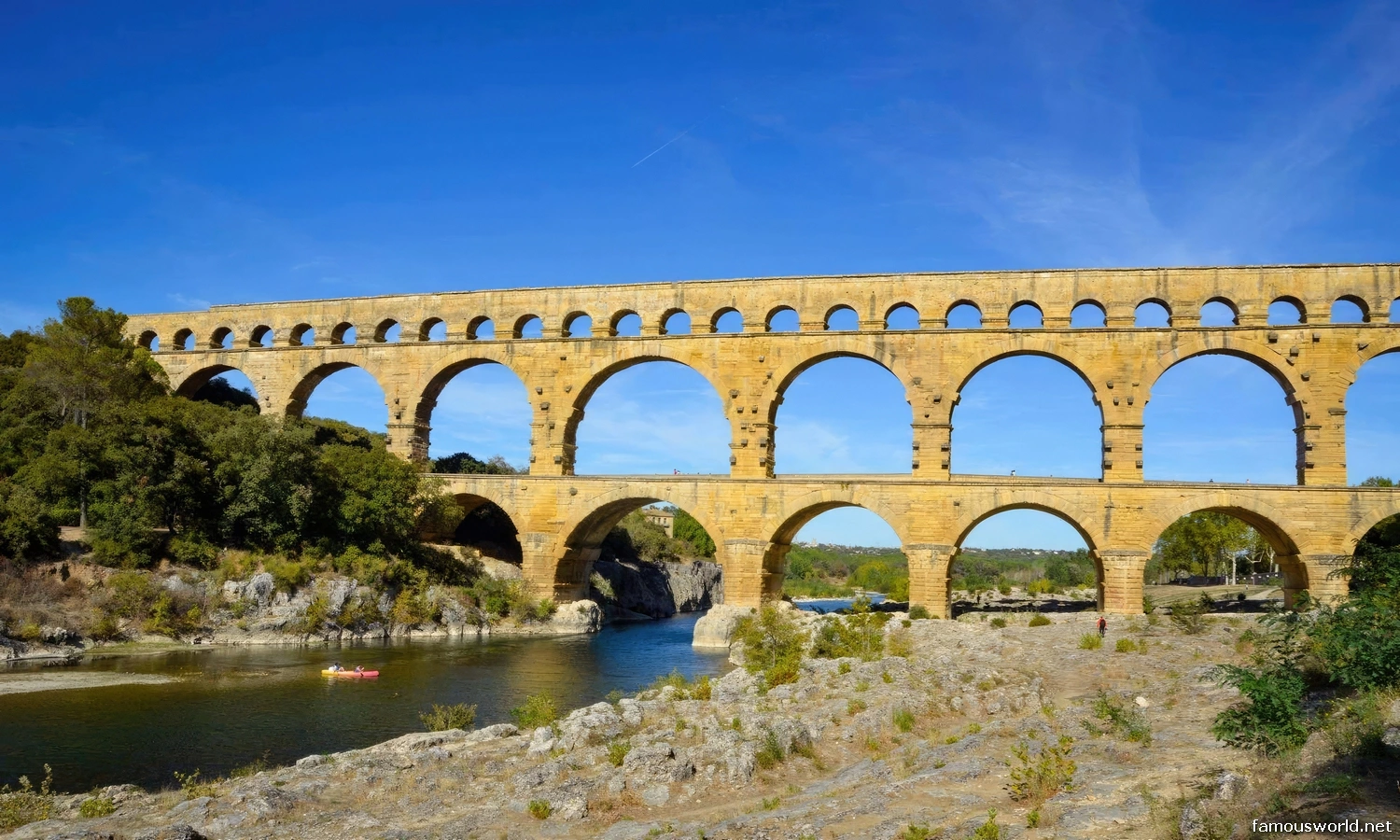
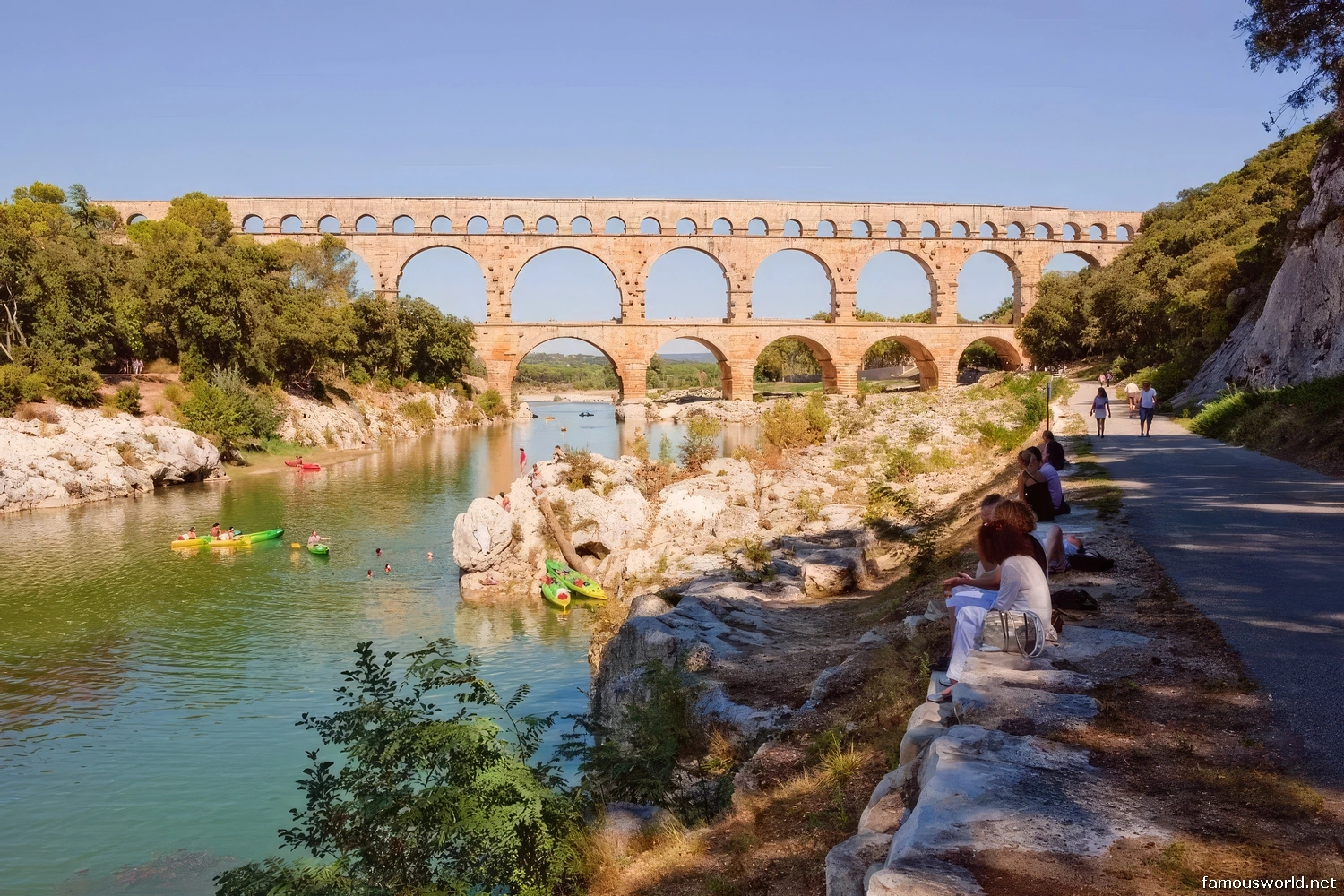
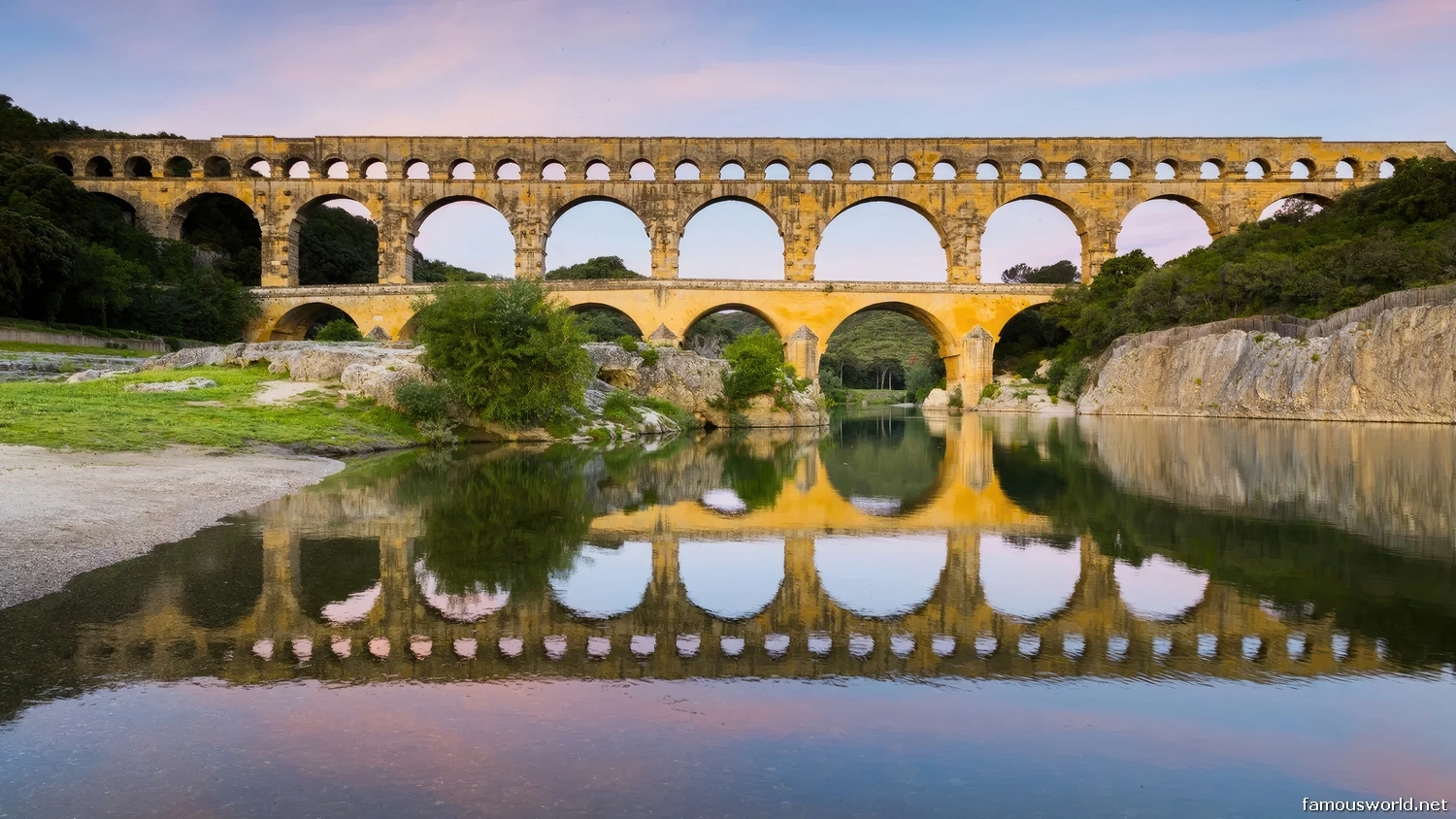
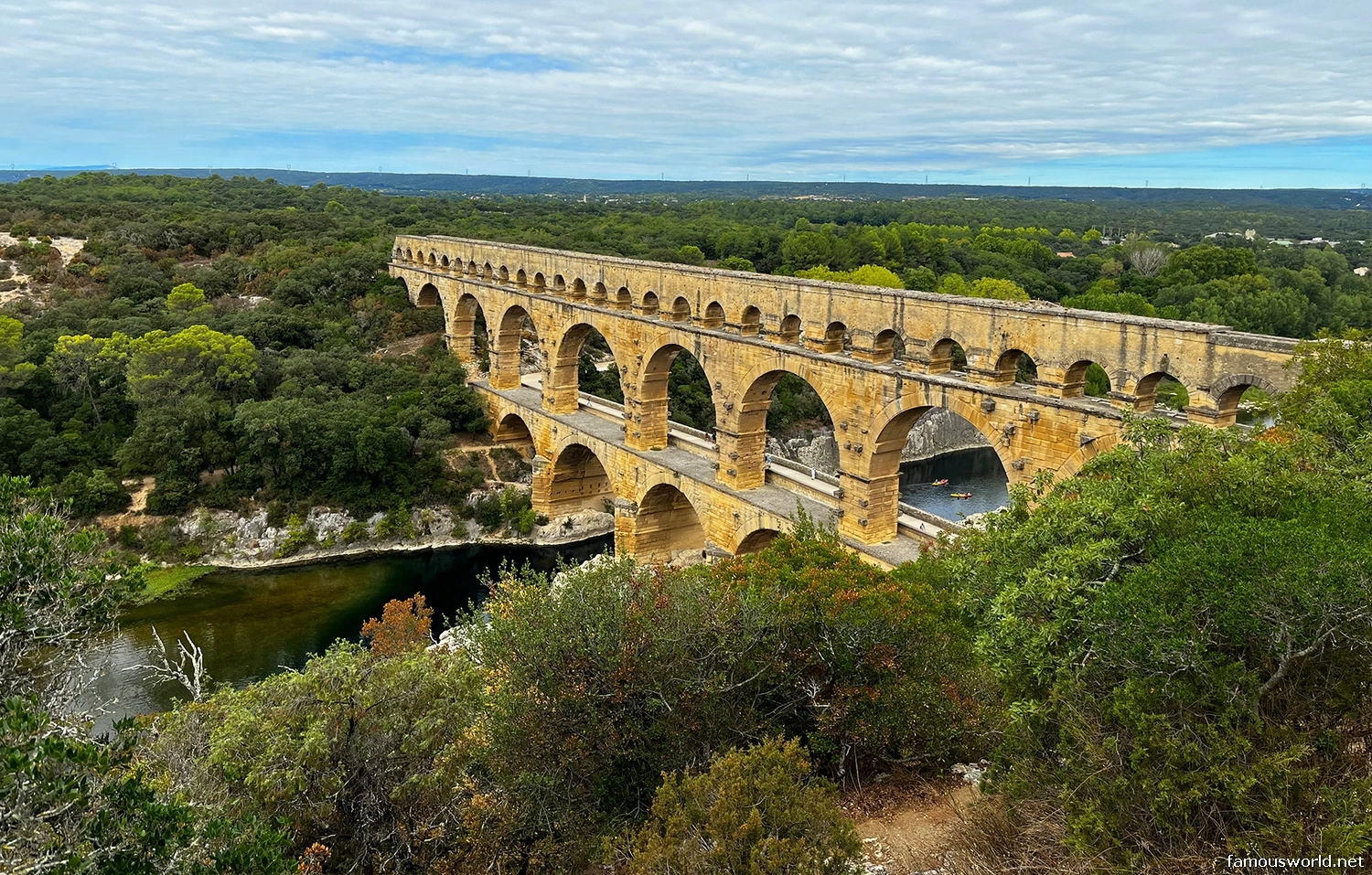
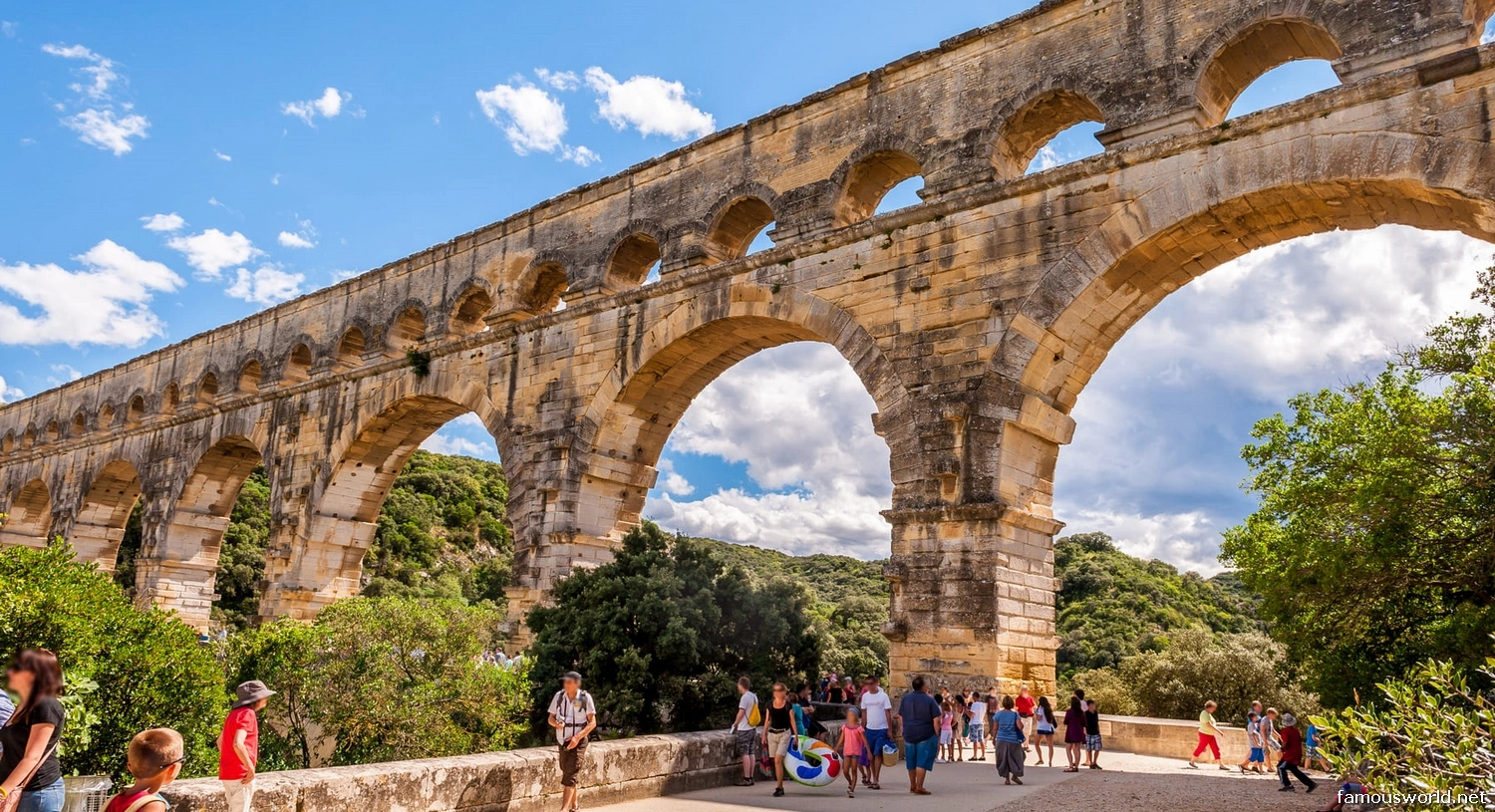
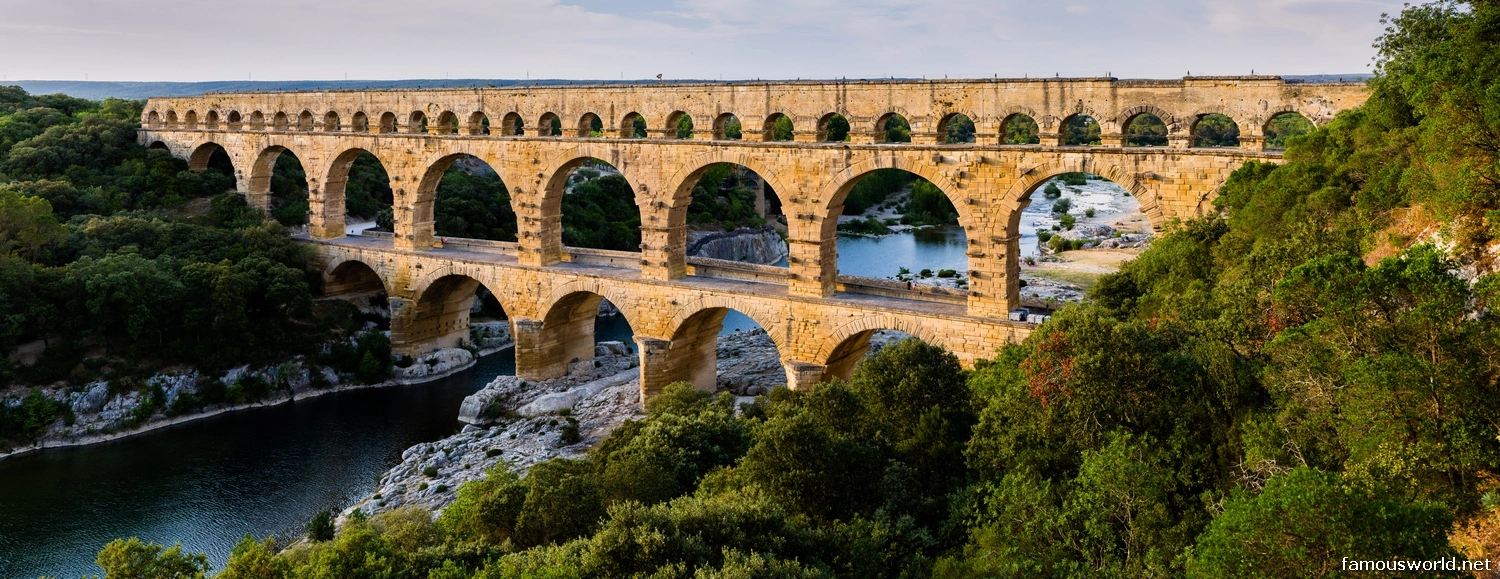
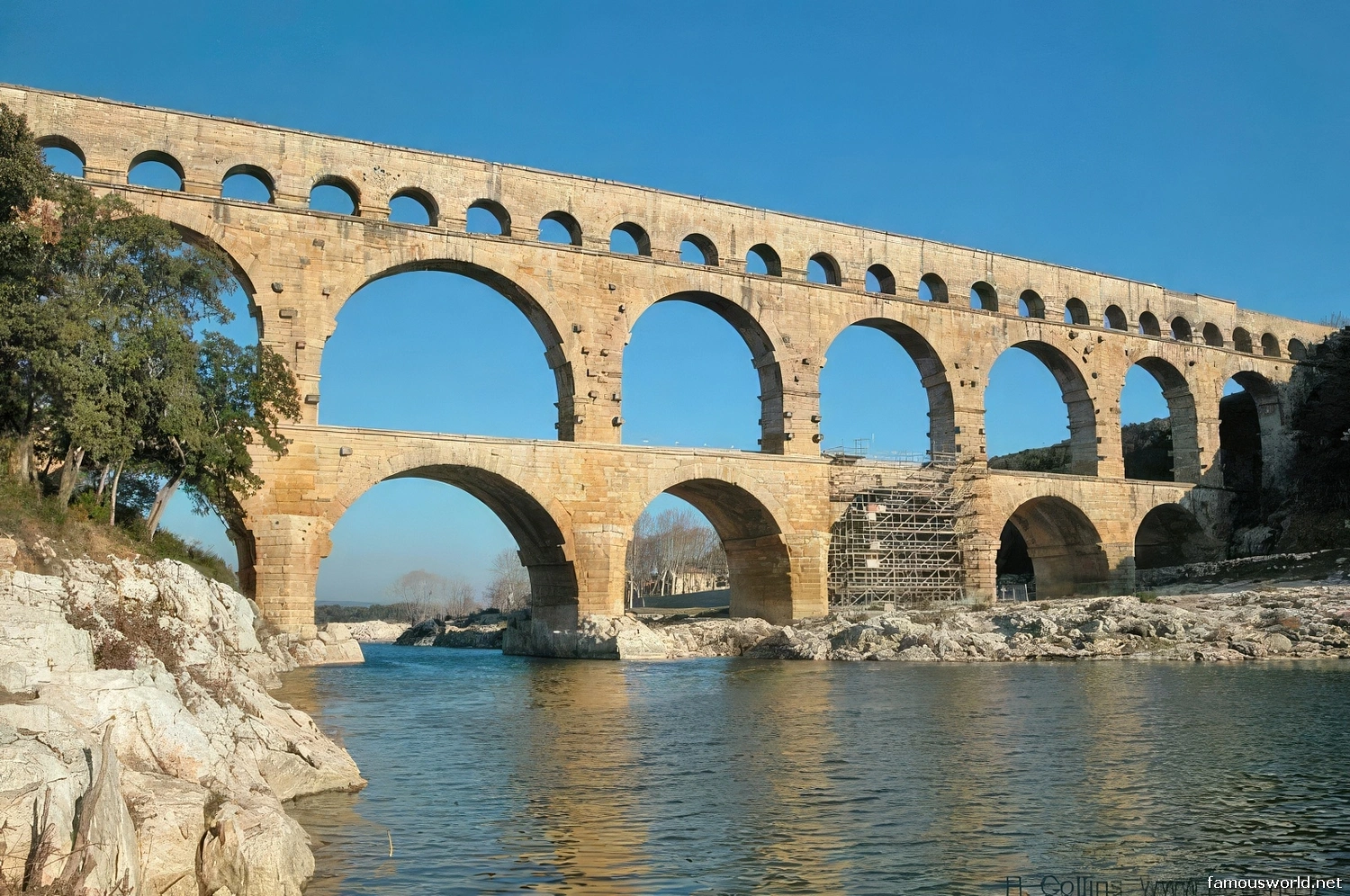
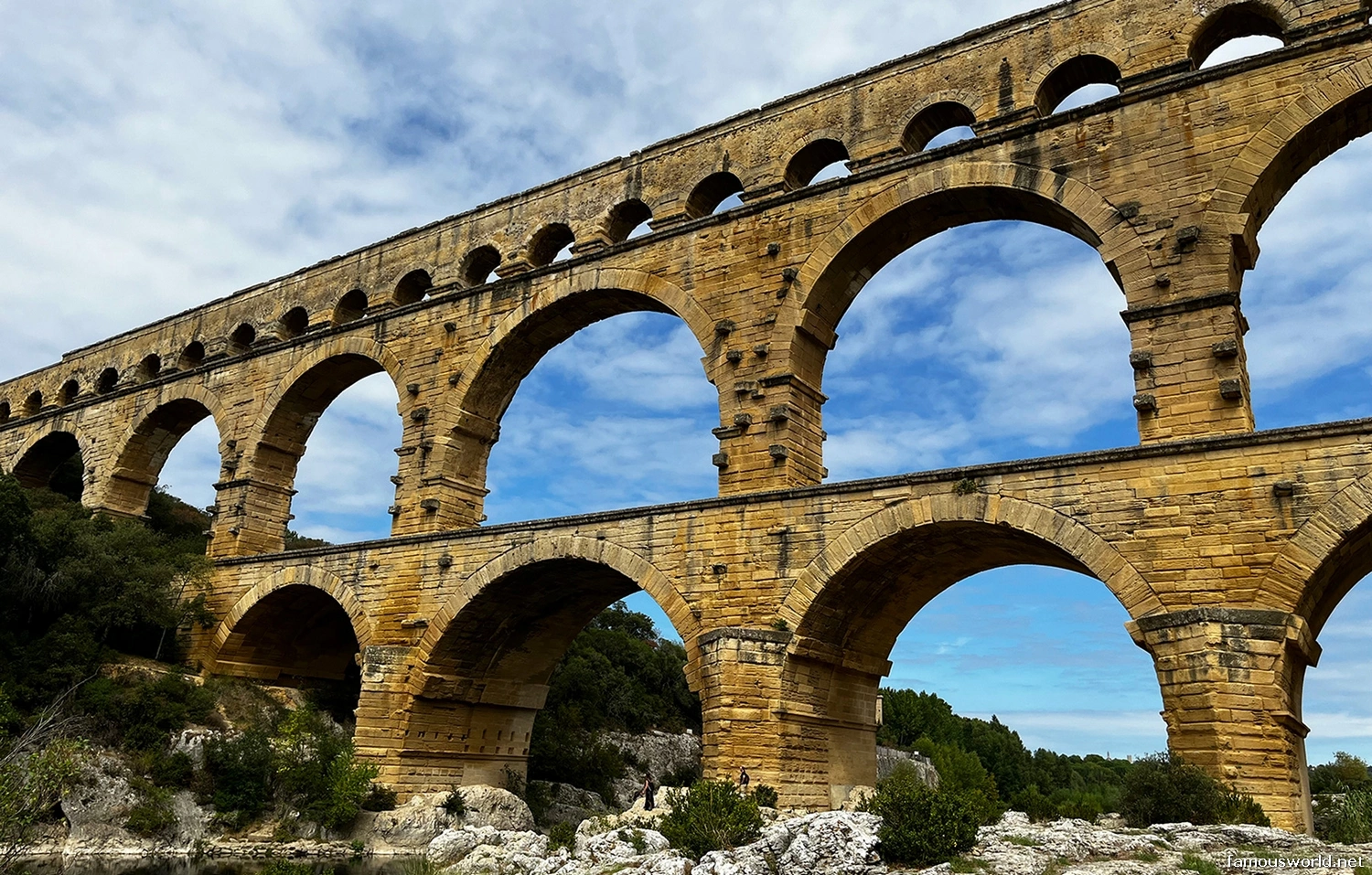
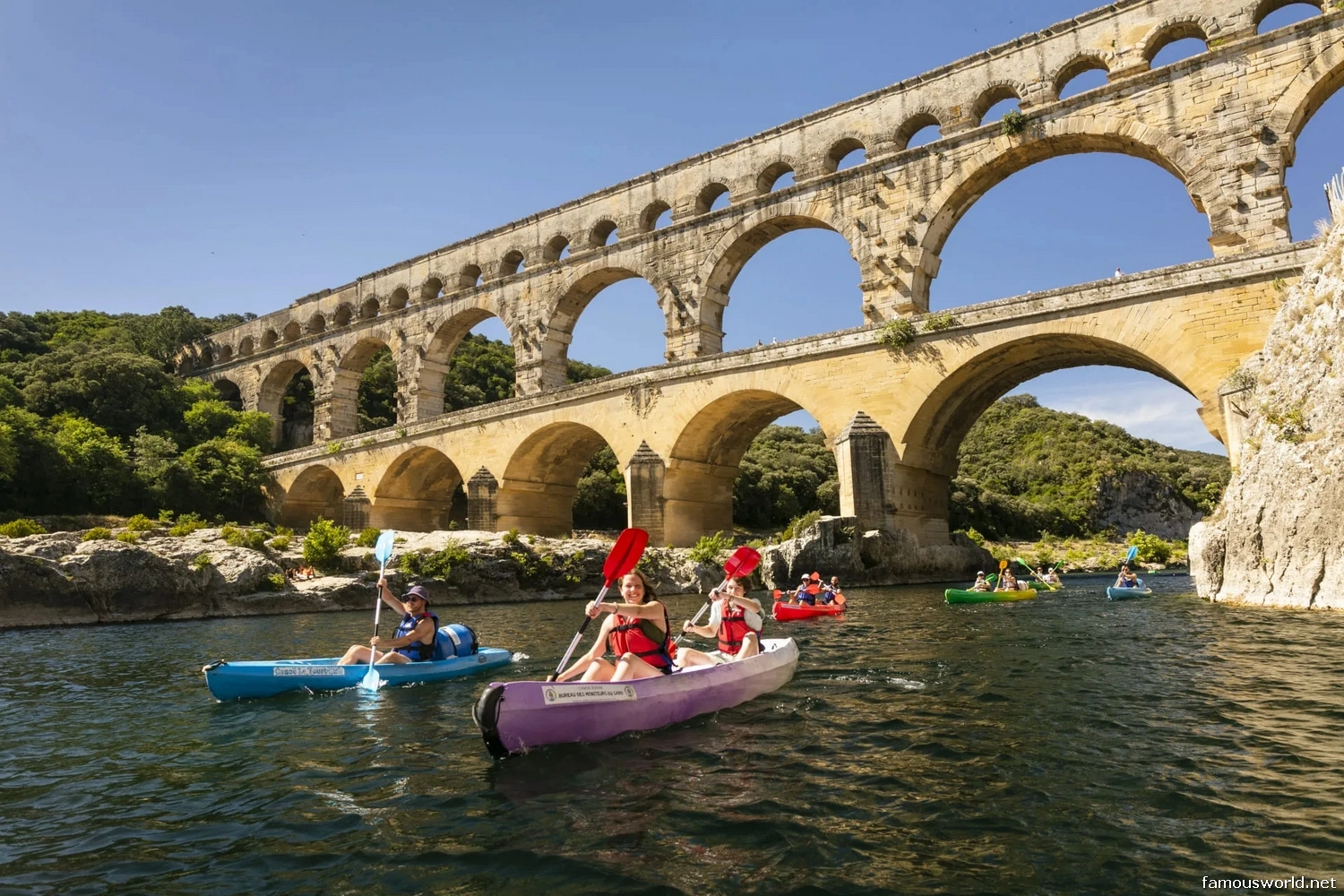
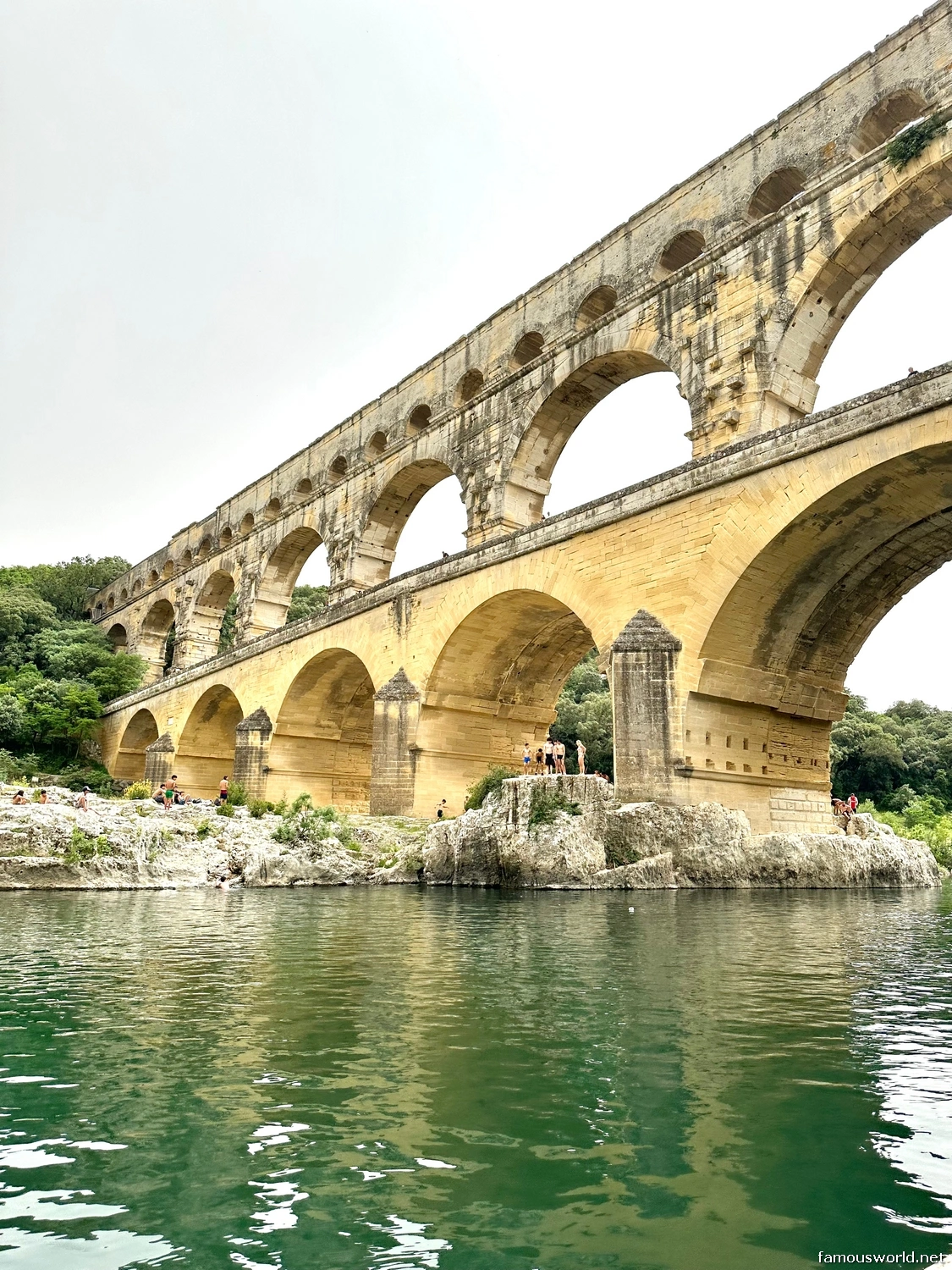
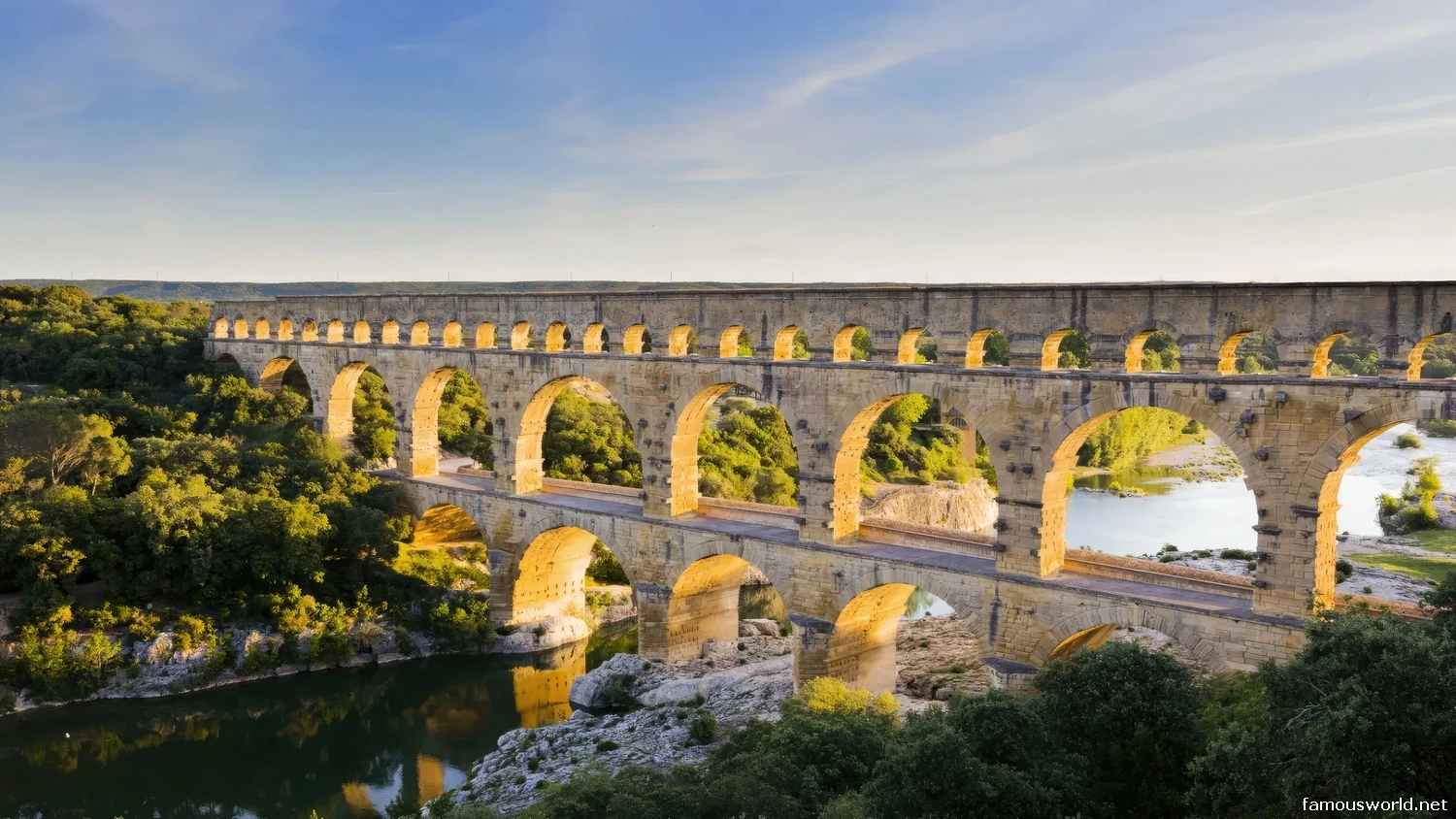
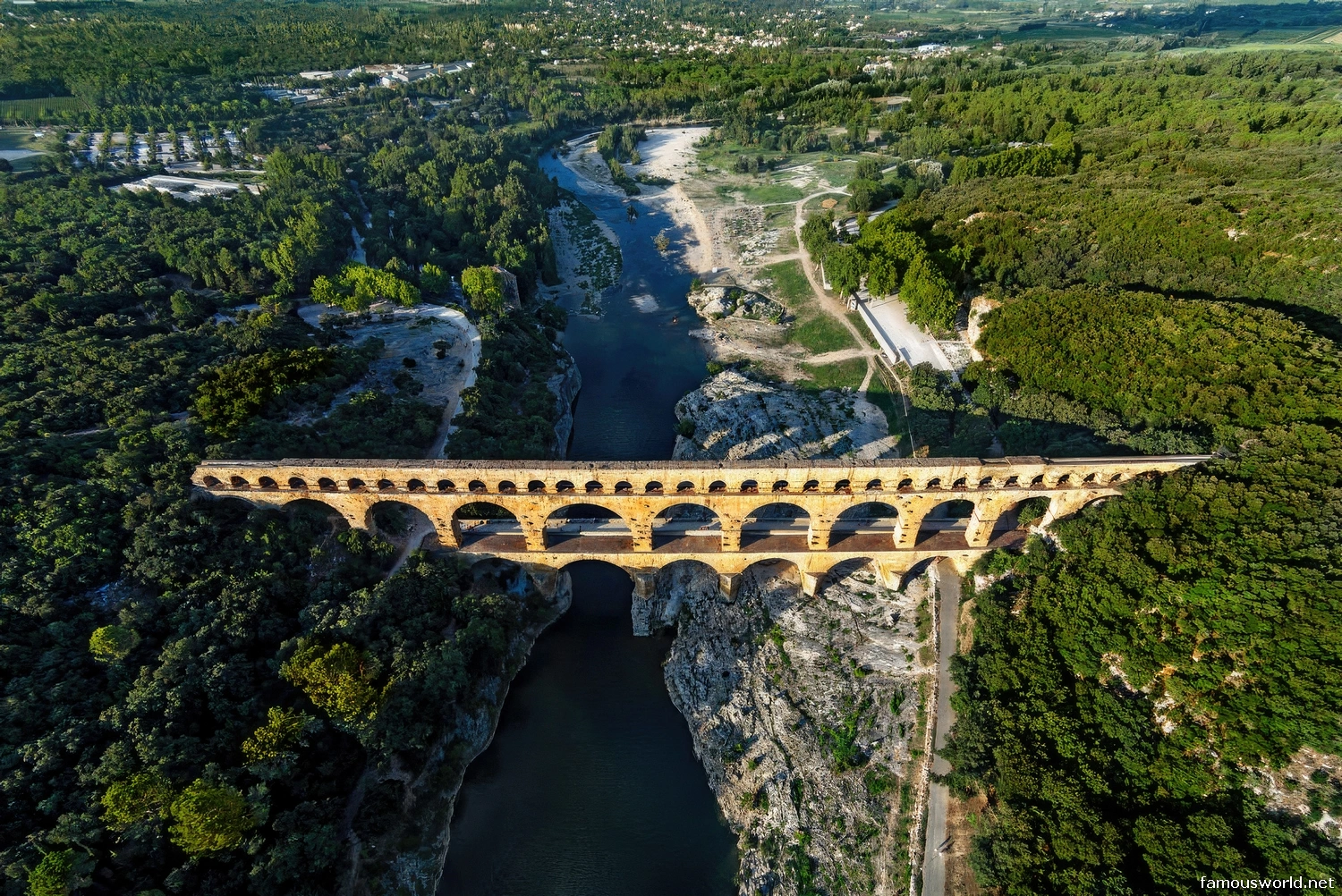
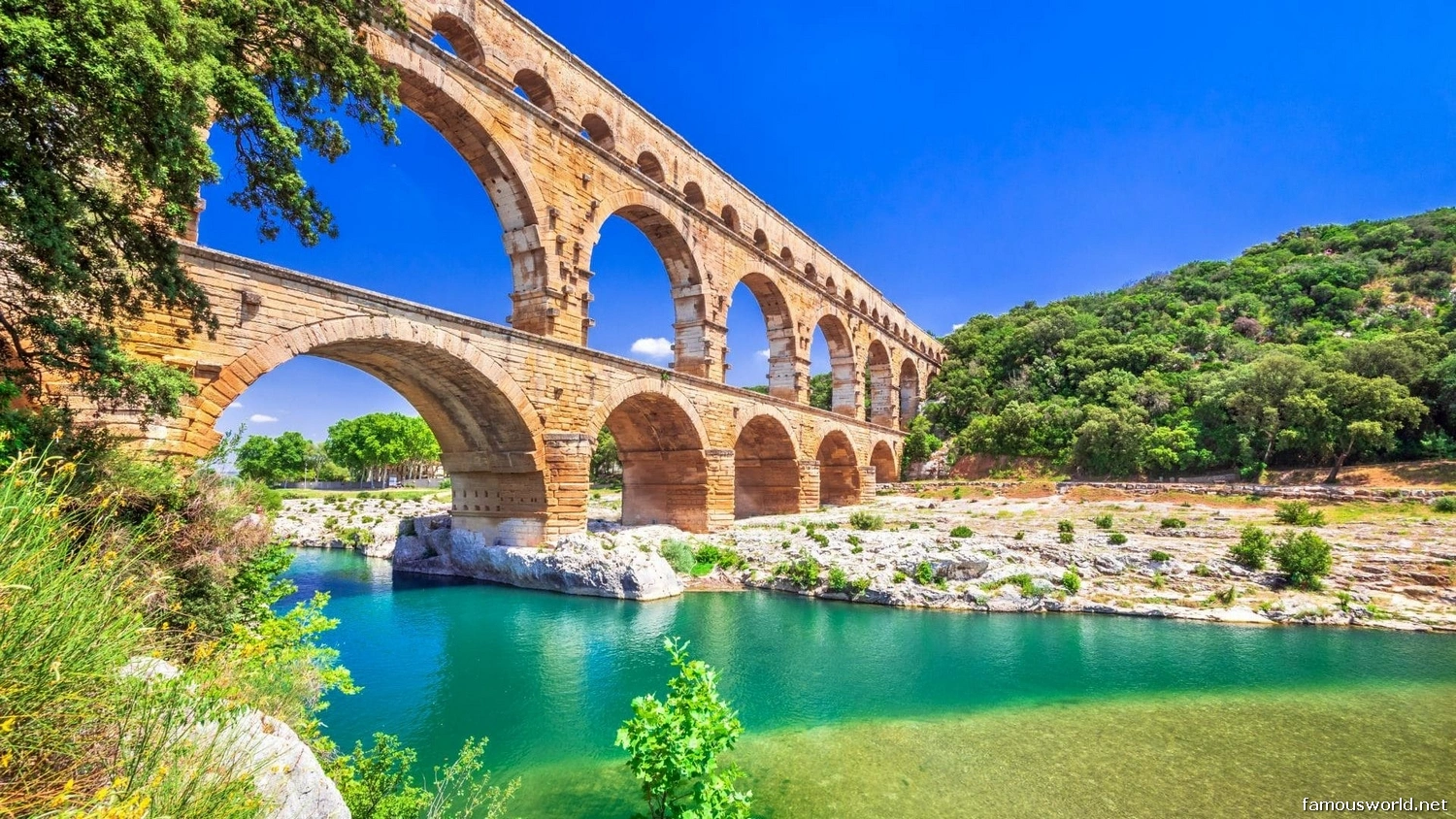
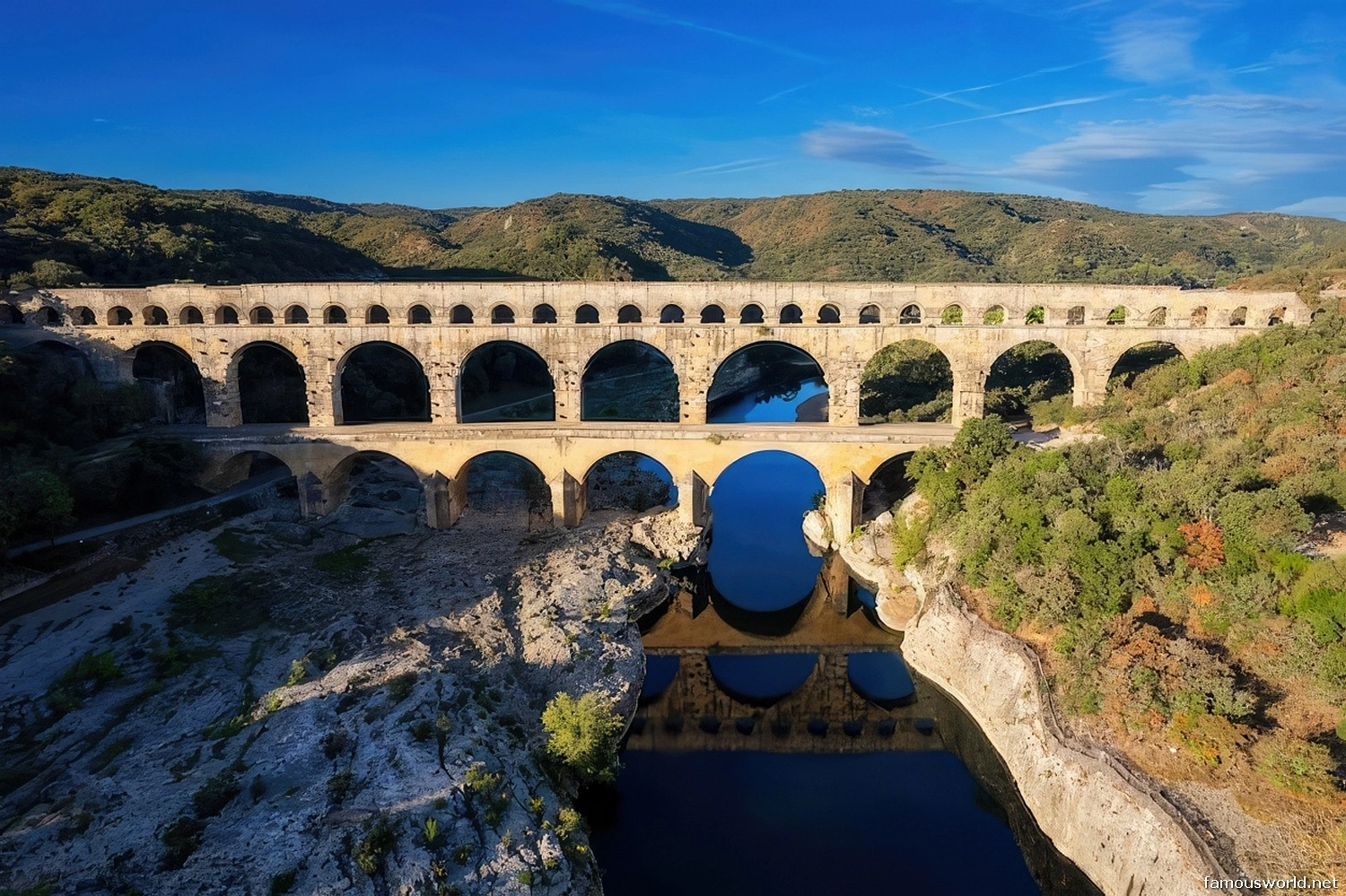
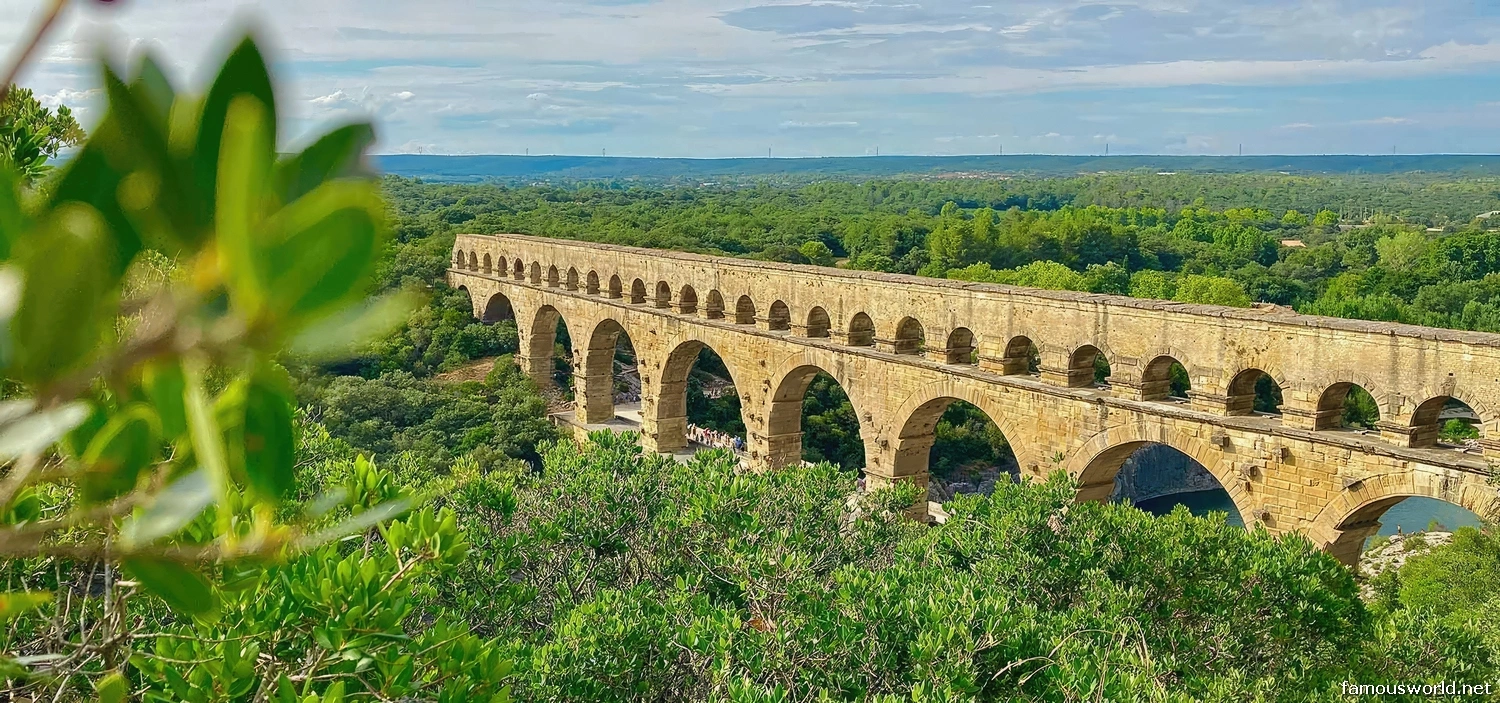
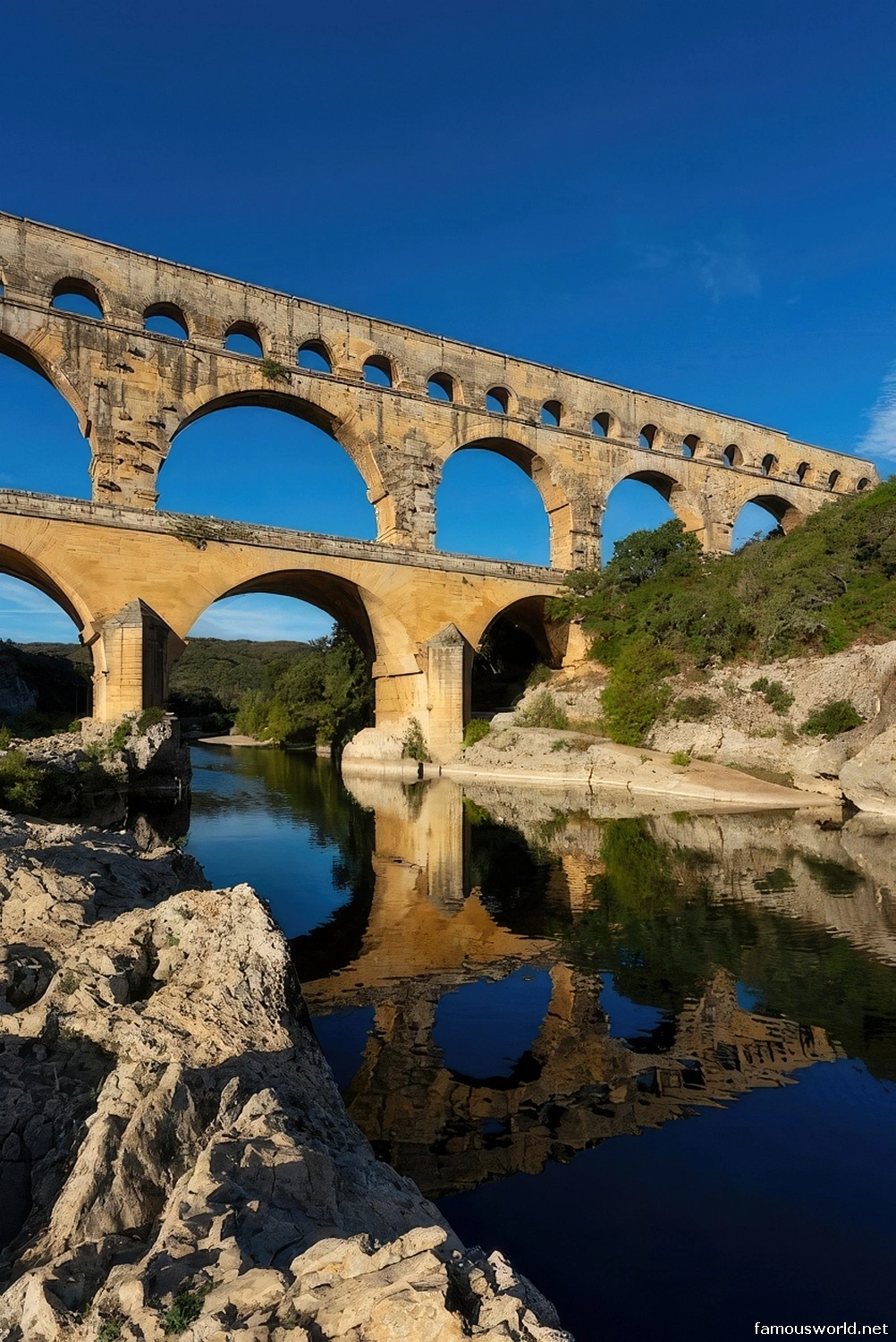
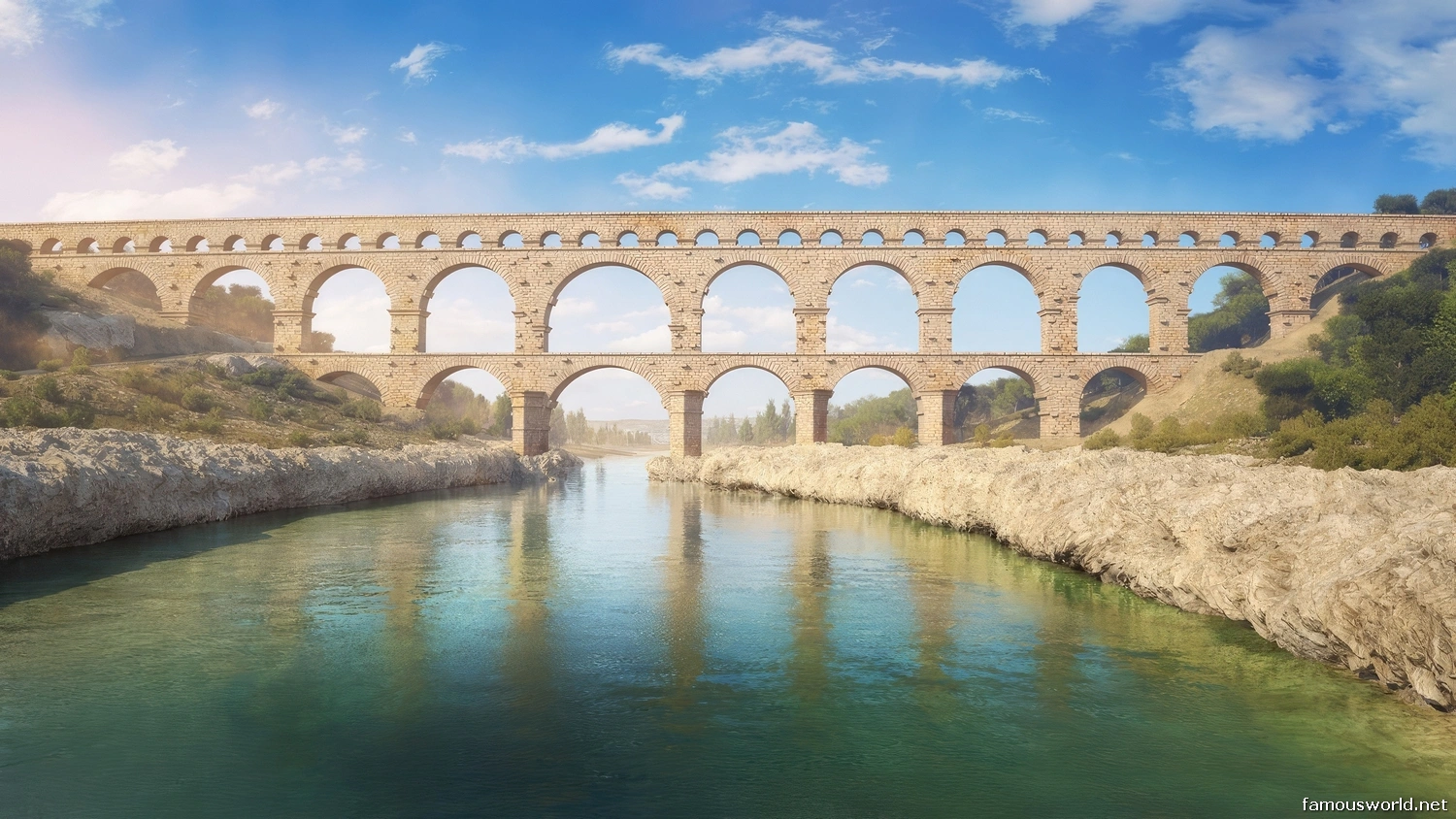
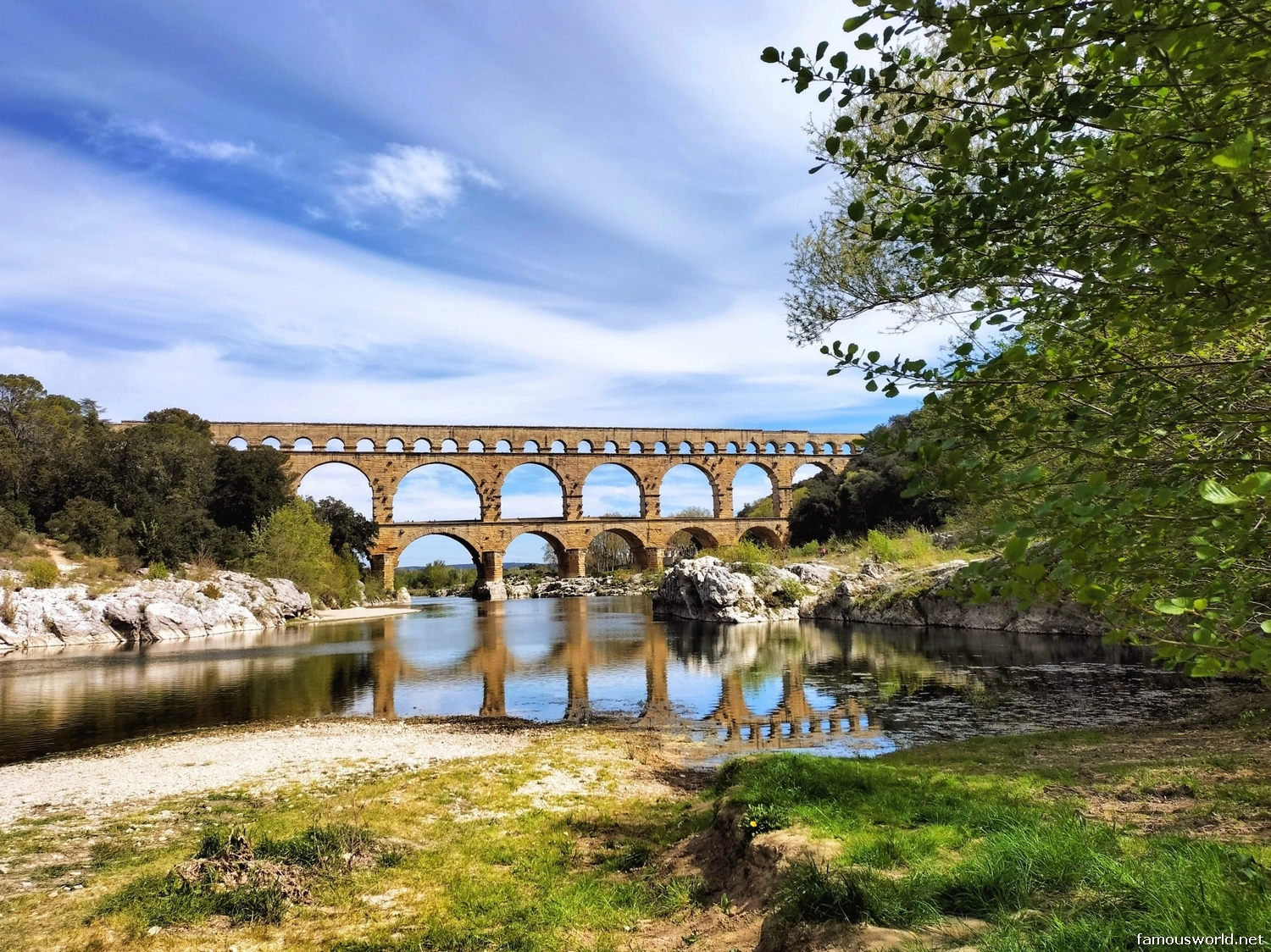
Rising majestically from the rugged Garrigue landscape of southern France, the Pont du Gard is a monumental testament to the genius of Roman engineering. This ancient three-tiered aqueduct bridge, which spans the Gardon River, is one of the best-preserved and most breathtaking Roman structures left in the world. Built nearly 2,000 years ago not as a monument but as a functional piece of infrastructure, its perfect proportions, massive scale, and technical brilliance have elevated it to an icon of classical antiquity. To stand before the Pont du Gard is to be humbled by the ambition and skill of an ancient empire and to witness a perfect fusion of art and utility that has stood the test of time.
Listen to an introduction about Pont du Gard

Name and Location
- Name: Pont du Gard (literally “Gard Bridge”).
- Location: Spanning the Gardon River, near the town of Vers-Pont-du-Gard in the Gard department, Occitanie region, southern France.
How to Get There
The site is located in a rural area but is a major tourist destination and is easily accessible.
- By Car: The most convenient way to visit is by car. It is well-signposted and located about 25 kilometers (16 miles) from Nîmes and Avignon. Large parking areas are available on both banks of the river.
- By Bus: Regular bus services connect the Pont du Gard with the main bus stations in Nîmes and Avignon, making it an easy day trip.
- By Tour: Numerous guided tours from nearby cities include the Pont du Gard as a primary stop.
Landscape and Architecture
The bridge’s man-made grandeur is perfectly set within a wild and beautiful natural landscape.
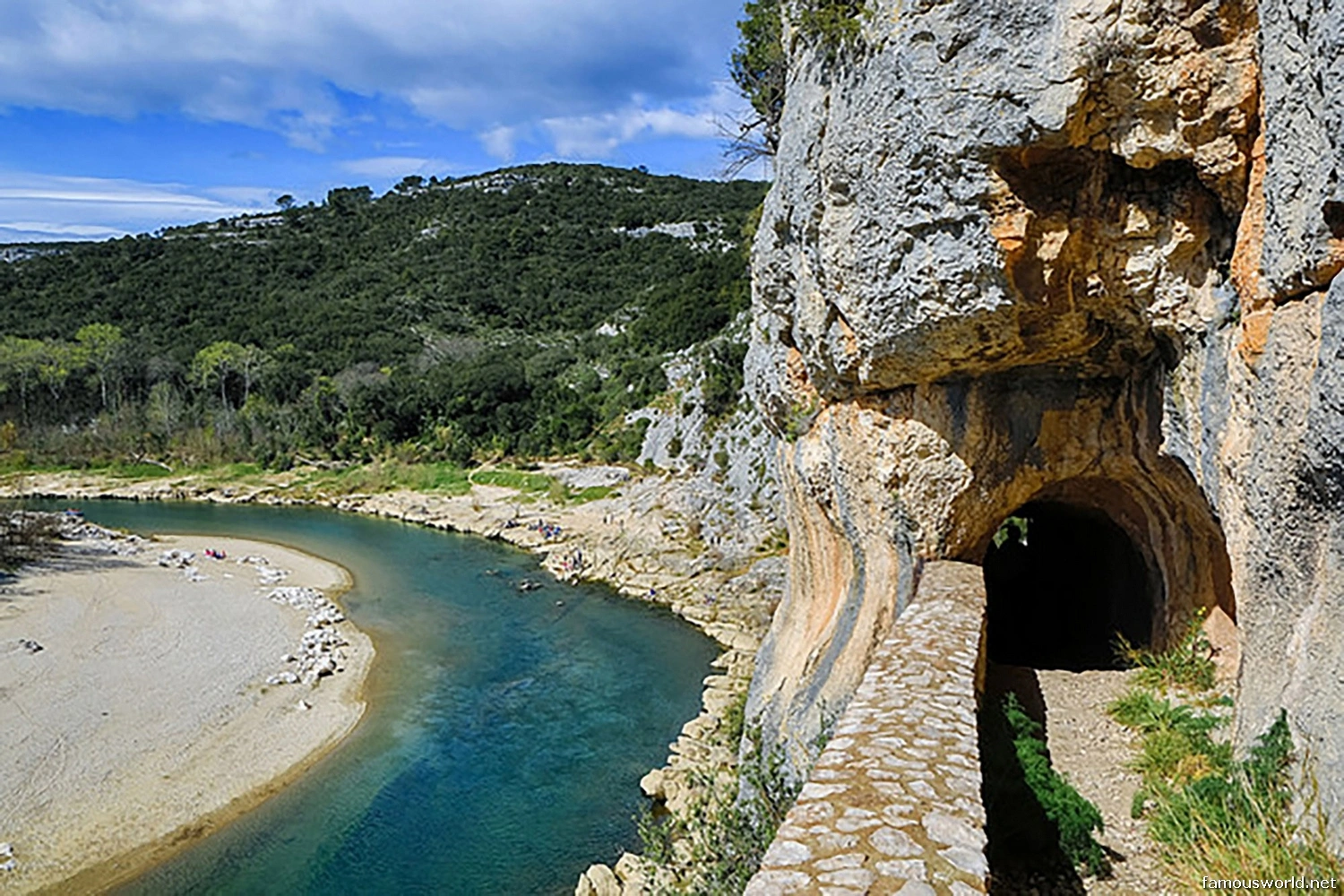
- Natural Landscape: The aqueduct is located in the Gardon Gorges, a protected natural area. The surrounding landscape is one of typically Provençal garrigue—low, fragrant scrubland of oak, lavender, and thyme—with the clear Gardon River flowing beneath its arches.
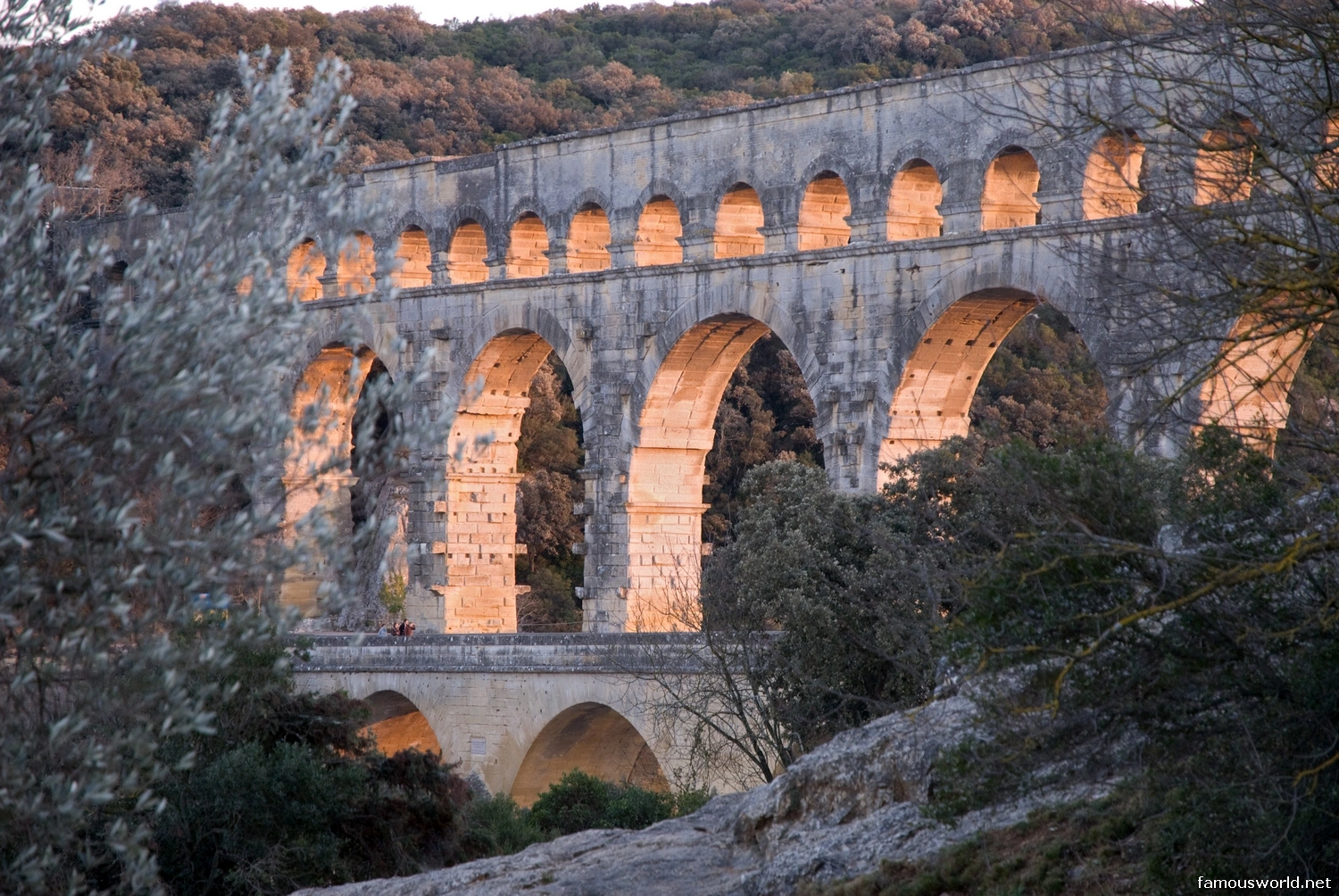
- Masterful Engineering: The Pont du Gard is the highest of all Roman aqueduct bridges. It is a technical marvel, constructed from massive, precisely cut limestone blocks that were assembled without the use of mortar. The structure’s stability comes from the sheer precision of the stonework, with some blocks weighing up to six tons.
- Three-Tiered Design: The aqueduct is composed of three tiers of arches of decreasing span:
- The lower tier features wide arches designed to withstand the river’s floods.
- The middle tier supports the upper level with another series of arches.
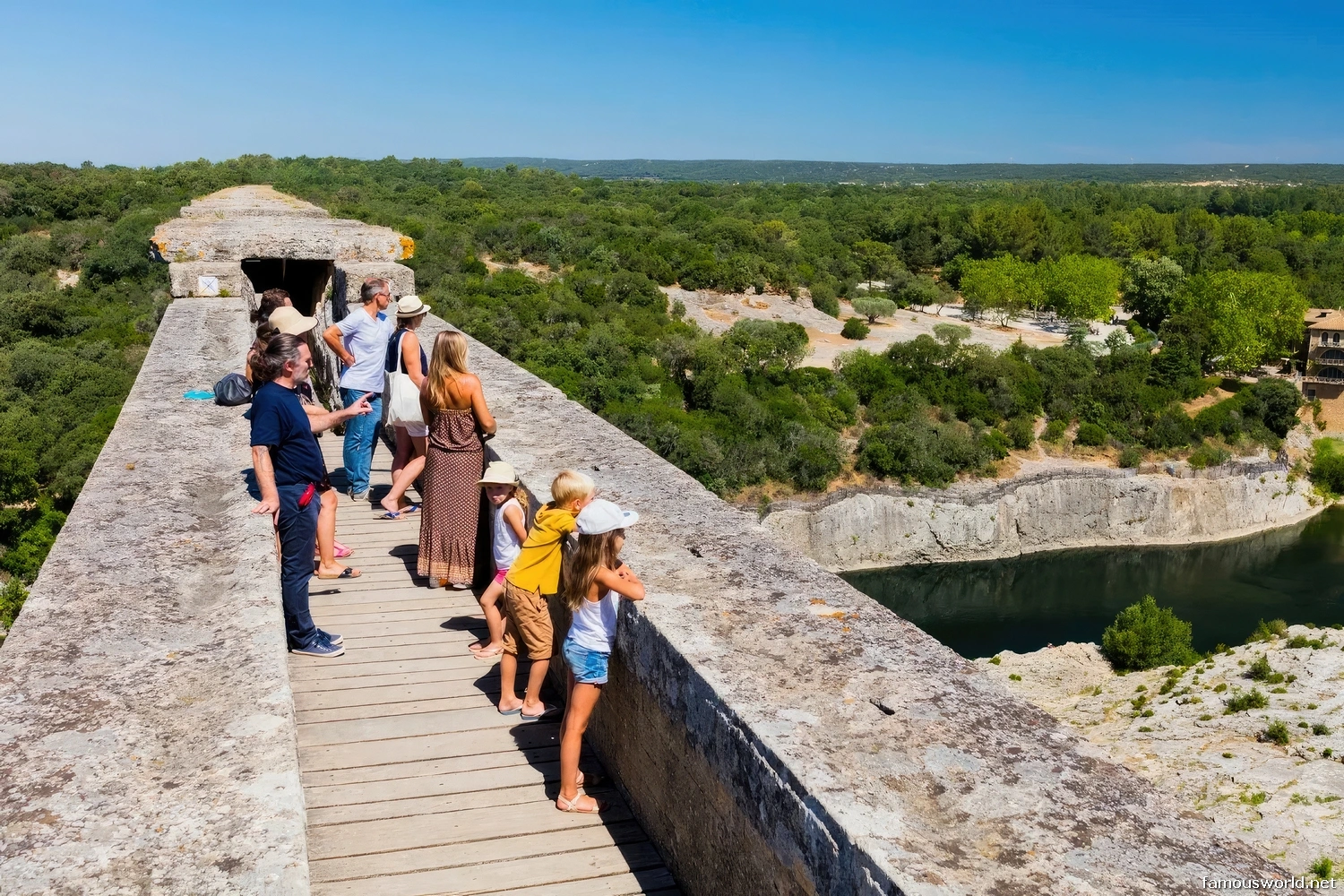
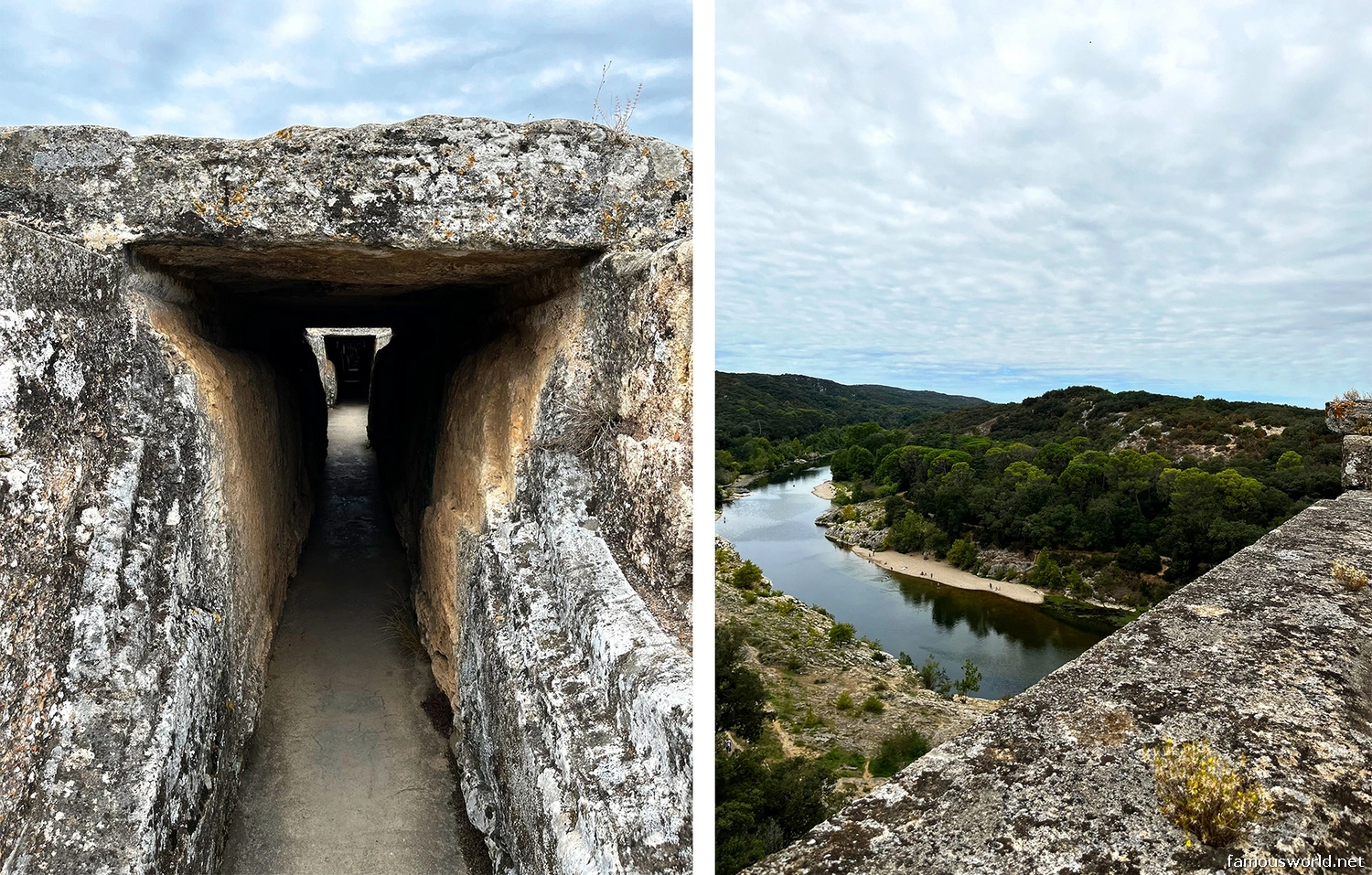
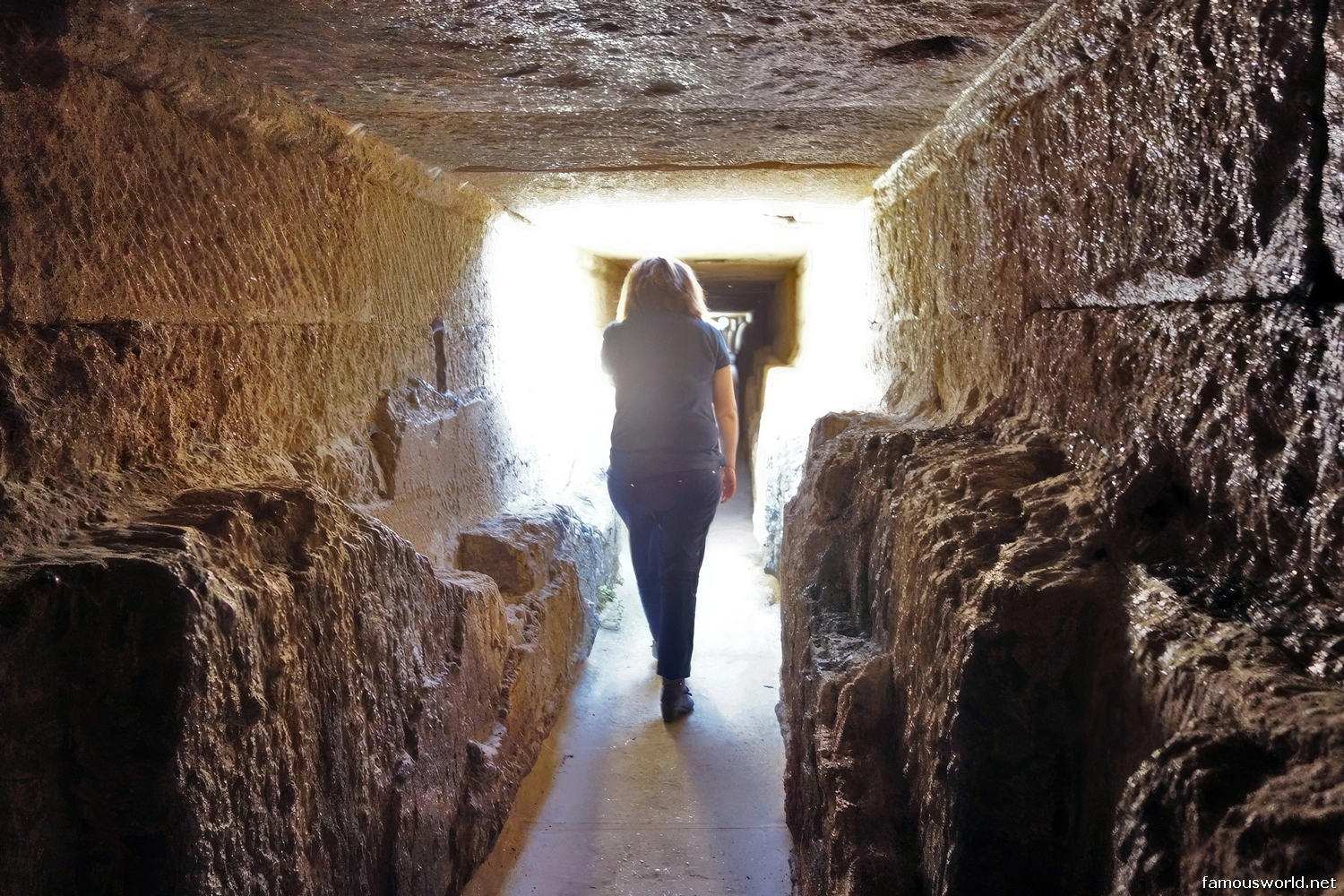
- The top tier contains the enclosed water channel, which is a masterpiece of engineering in its own right, built with a gentle, consistent gradient that allowed water to flow via gravity over the entire 50-kilometer (31-mile) length of the aqueduct.
- Part of a Larger System: The bridge was the centerpiece of a complex aqueduct system built to carry water from a spring near Uzès to the Roman city of Nemausus (modern-day Nîmes).
What Makes It Famous
The Pont du Gard is famous as a symbol of Roman power and one of the most remarkable feats of ancient engineering.
- UNESCO World Heritage Site: It was one of the first French sites to be inscribed on the UNESCO list, recognized for its exceptional historical and technical significance.
- Roman Engineering Prowess: It is considered the ultimate example of the Romans’ skill as master builders and hydraulic engineers. The precision required to build such a massive structure without mortar and maintain a constant gradient for water flow is astonishing.
- Incredible Preservation: For a 2,000-year-old functional structure, it is remarkably intact. Its preservation is partly due to its use as a toll bridge in the Middle Ages, which ensured its maintenance.
- An Artistic Masterpiece: Beyond its function, the bridge is celebrated for its elegance and aesthetic harmony, a work of art that has inspired writers and artists for centuries.
Differences from Other Wonders
As a feat of ancient, functional engineering, the Pont du Gard offers a stark contrast to the sun-drenched coastal glamour of the French Riviera.
- Environment (Inland River Valley vs. Expansive Mediterranean Coast): The Pont du Gard is a single, monumental structure set in a wild, inland river valley. The French Riviera is a sprawling, developed coastal region defined by the Mediterranean Sea.
- Core Story (Ancient Roman Utility vs. Modern Glamour): The story of the Pont du Gard is one of Roman civic engineering and the provision of a basic necessity—water. The story of the French Riviera is one of modern tourism, luxury, art, and a glamorous lifestyle.
- Primary Attraction (A Singular Engineering Marvel vs. A Regional Lifestyle): The main attraction of the Pont du Gard is the ancient aqueduct itself. The main attraction of the Riviera is the entire region—its collection of resorts, beaches, and cultural sites.
- Atmosphere (Awe-Inspiring and Historical vs. Vibrant and Sun-Kissed): A visit to the Pont du Gard evokes a sense of awe at ancient history and human ingenuity. The French Riviera has a vibrant, energetic, and sun-drenched atmosphere.
Location on world map