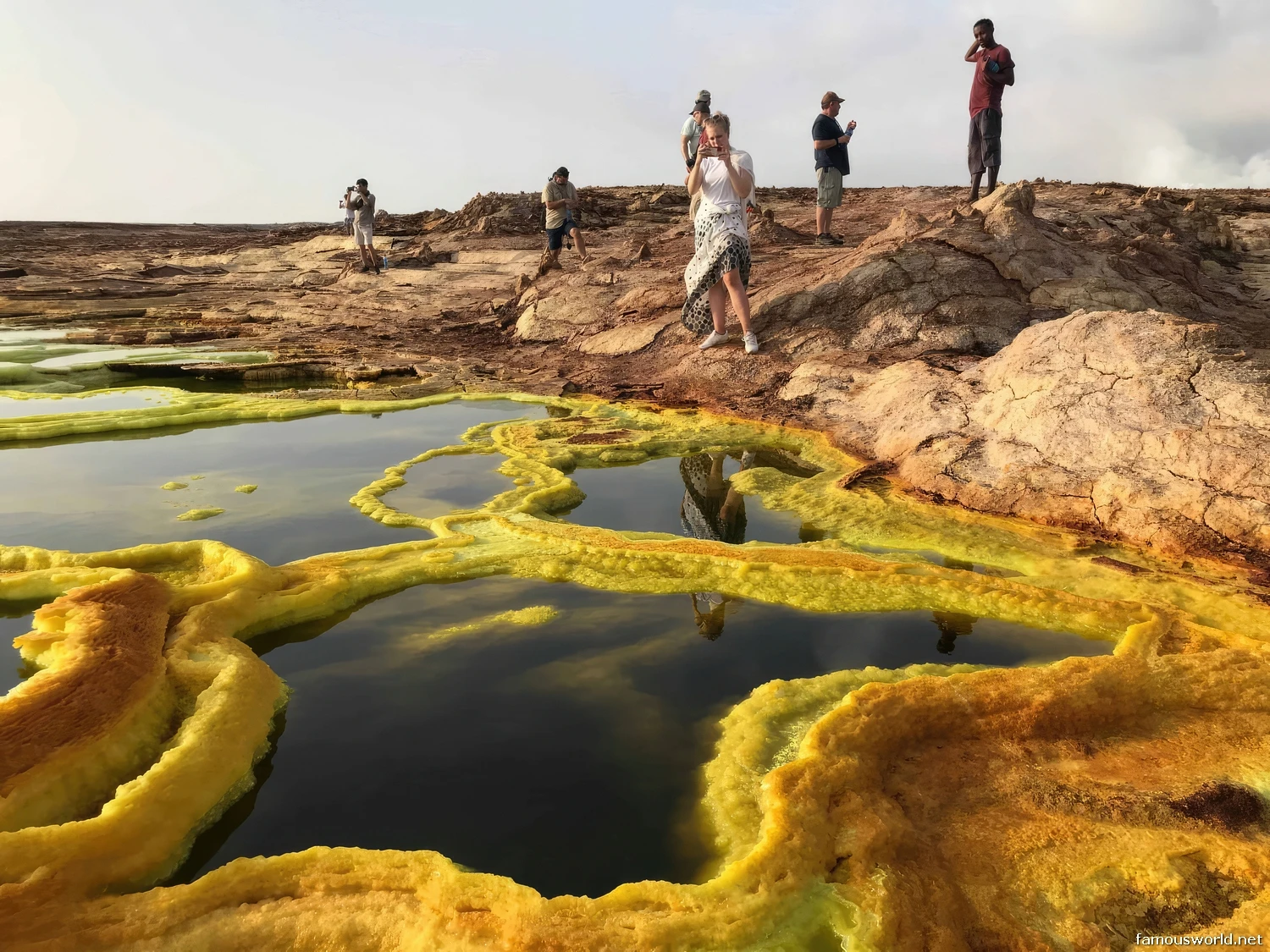
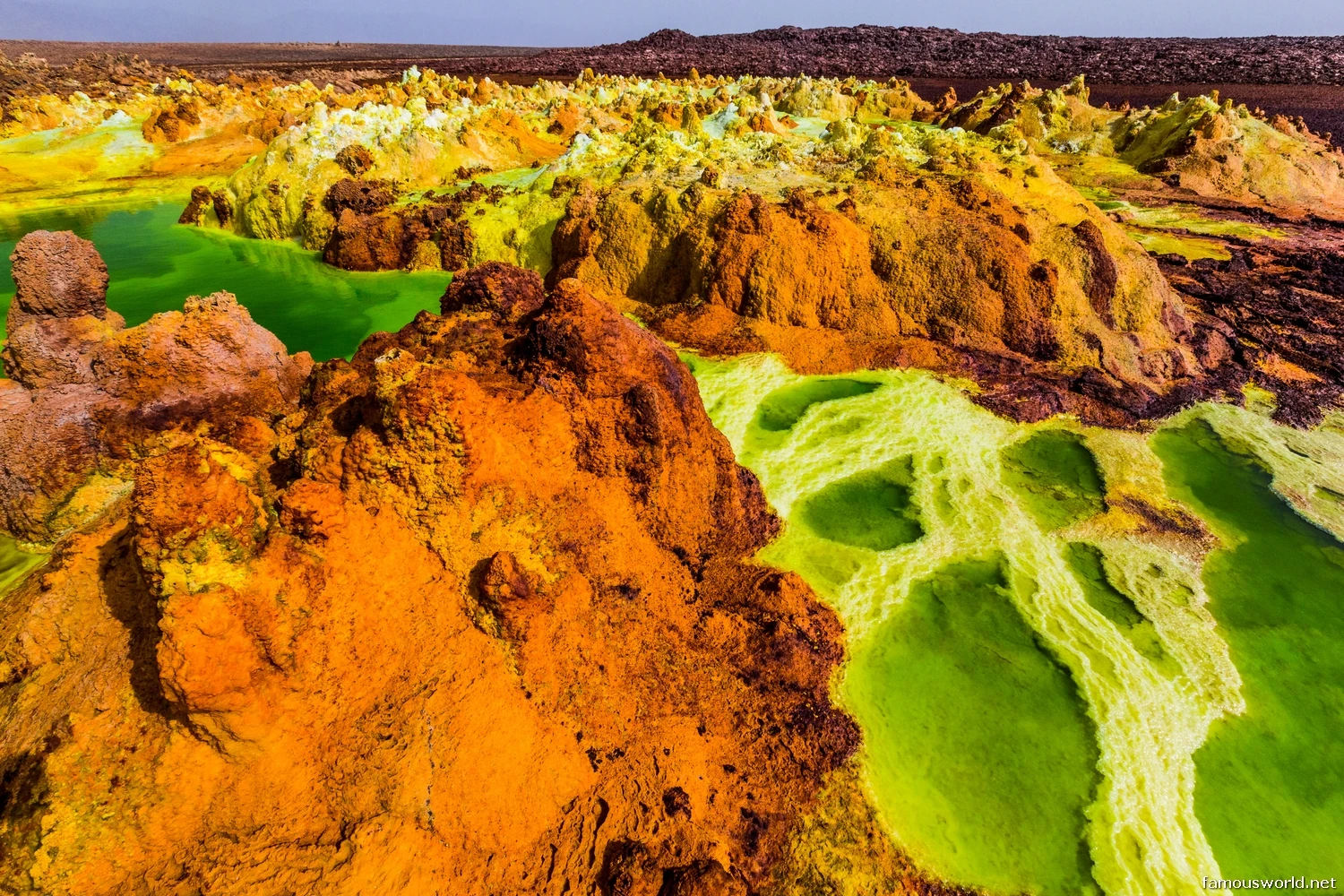
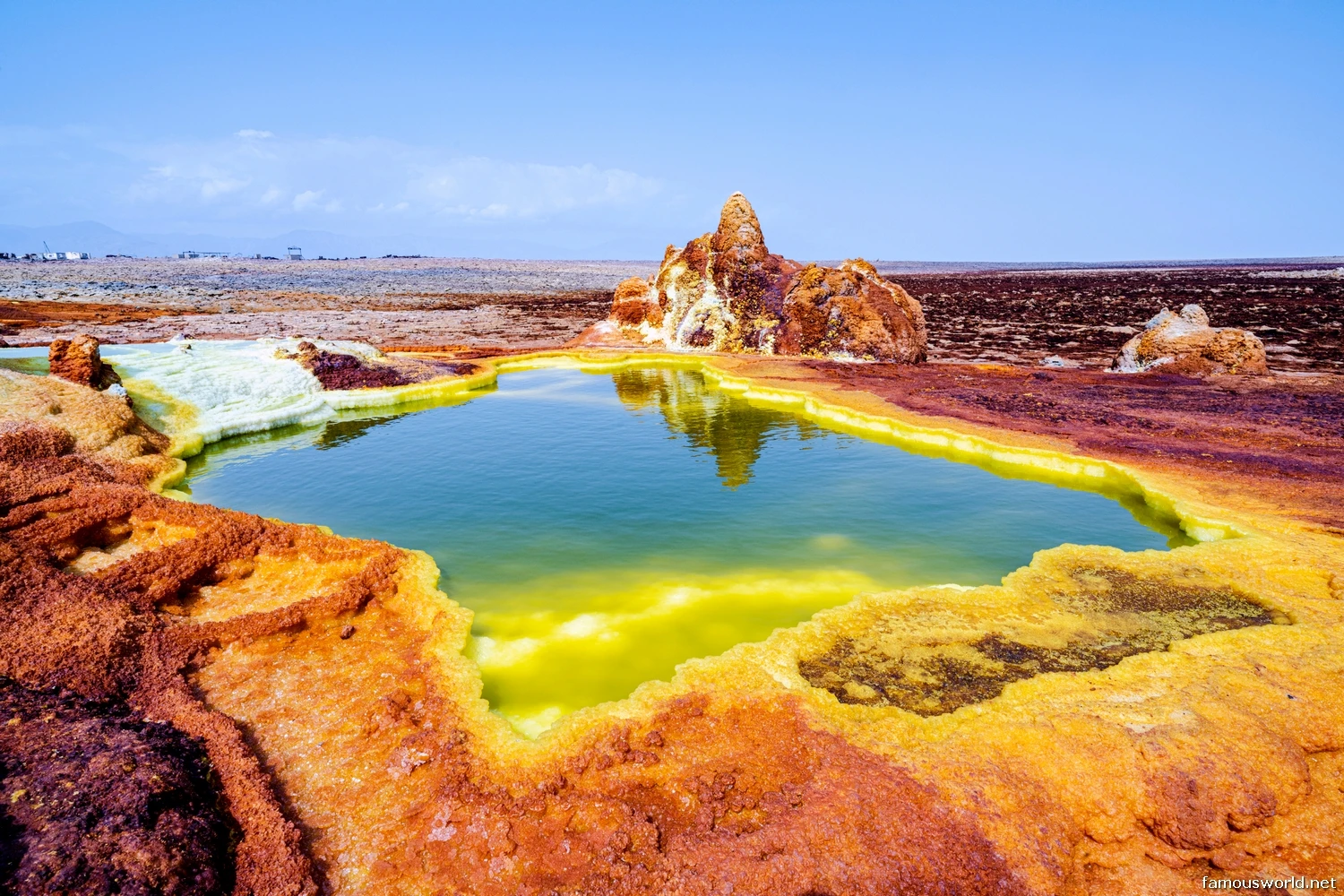
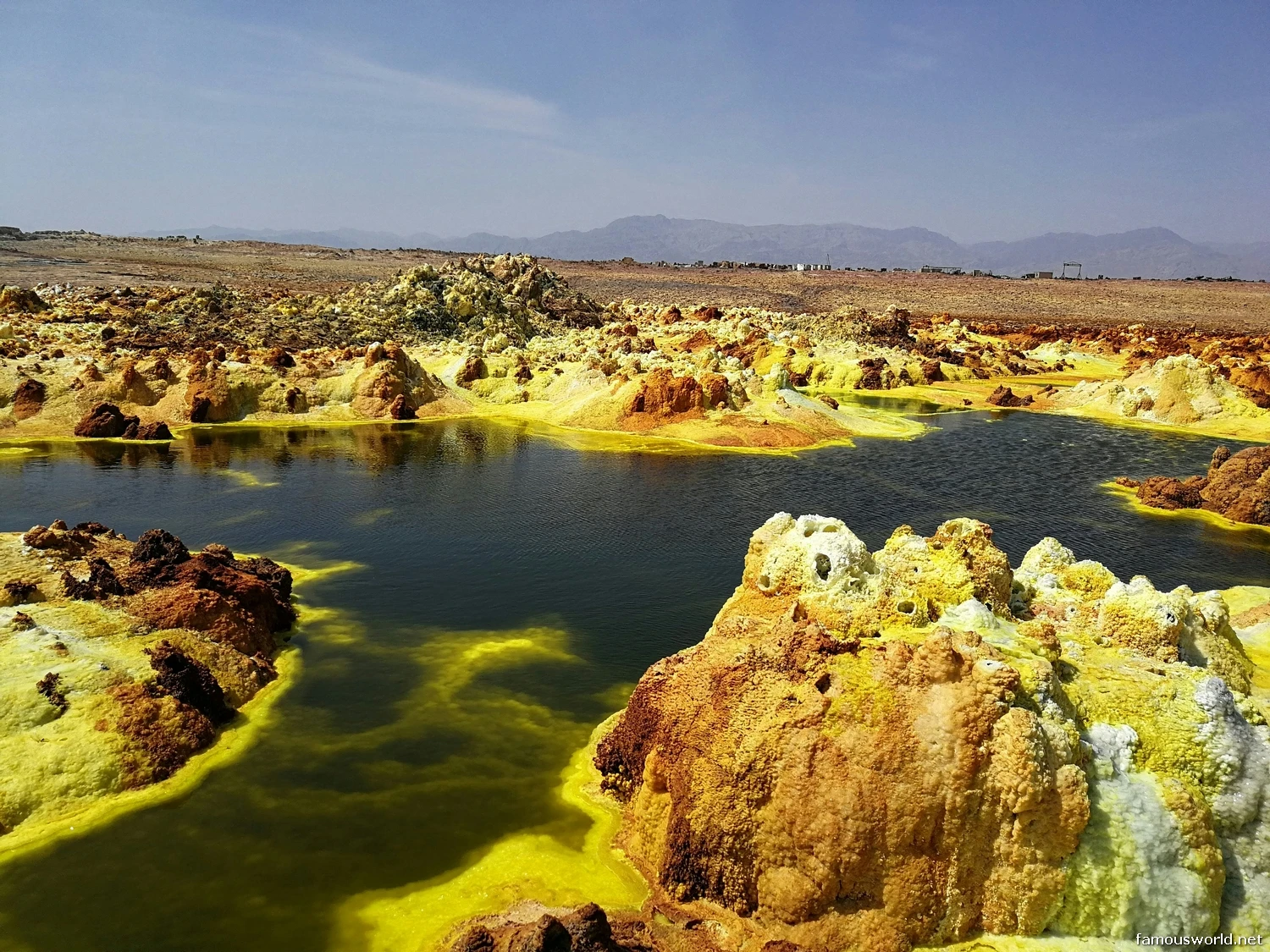
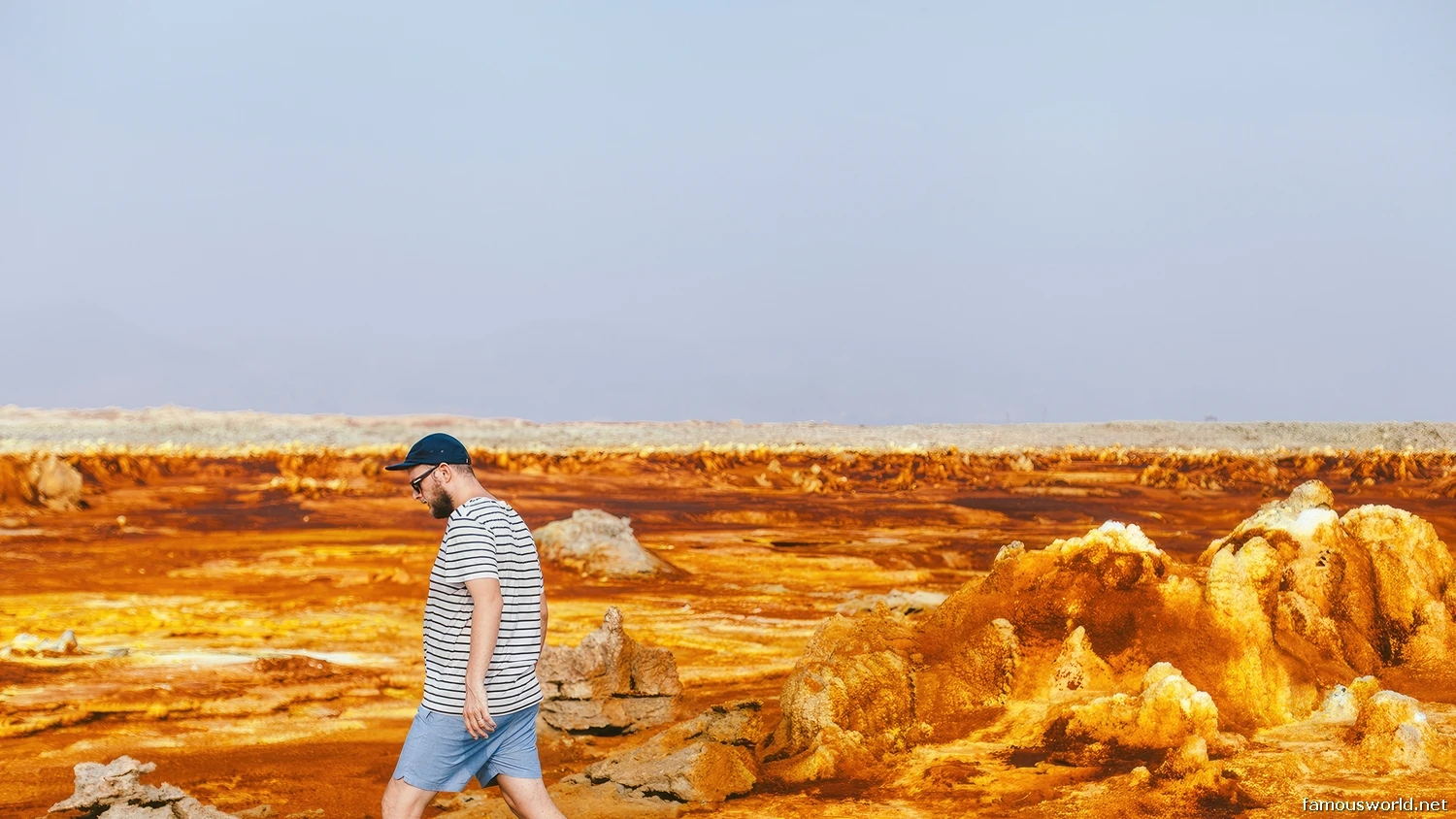

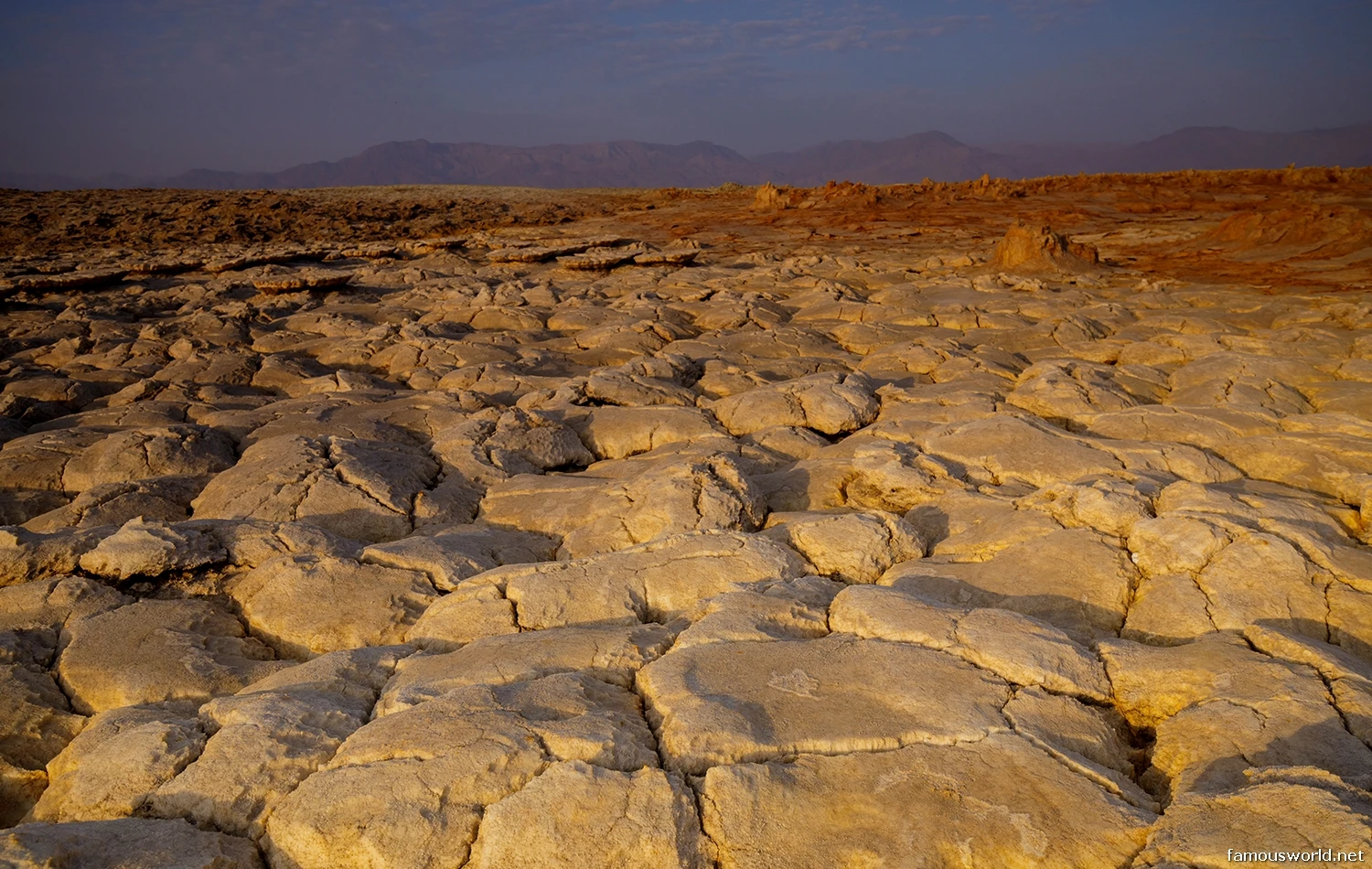
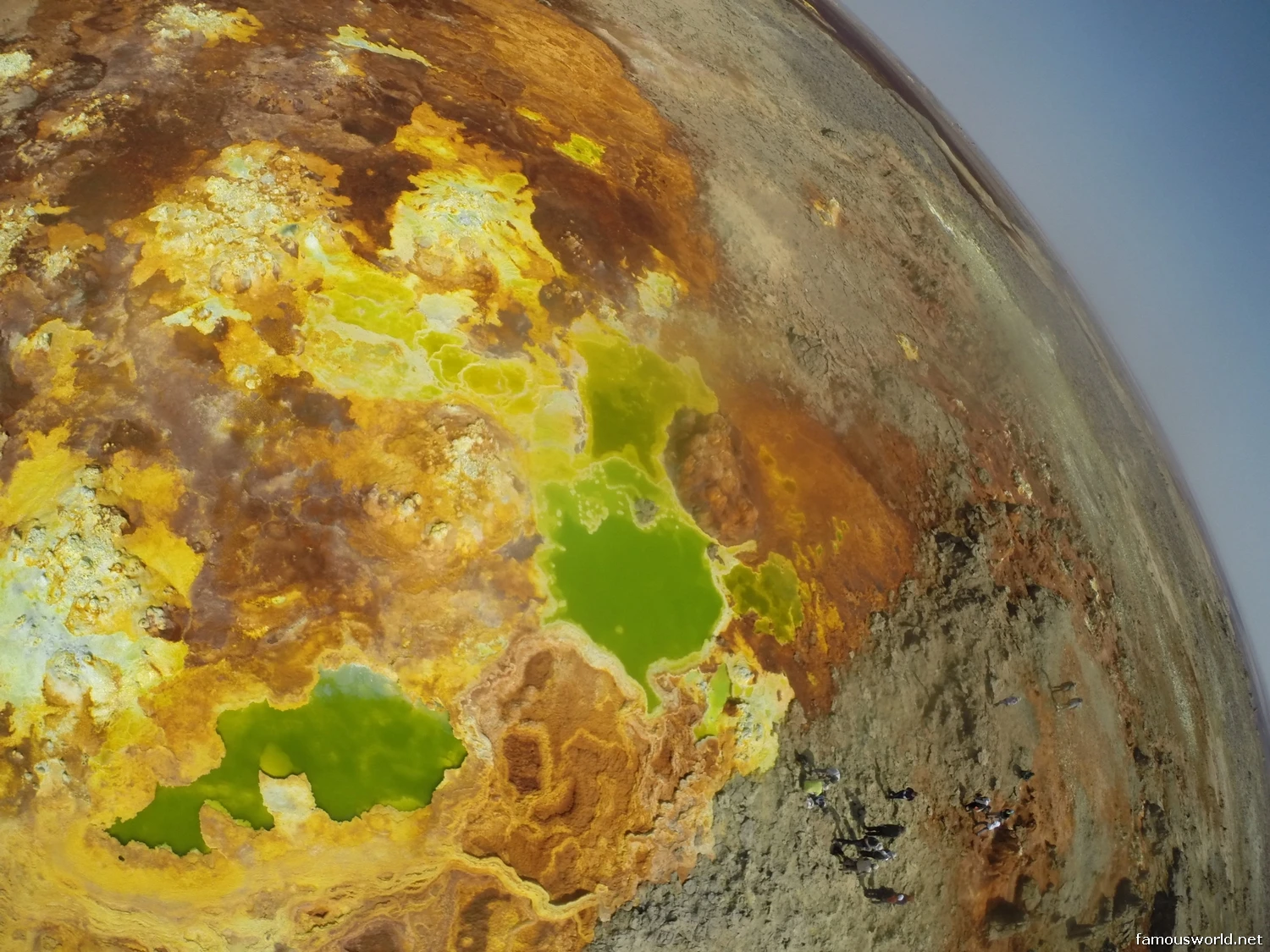
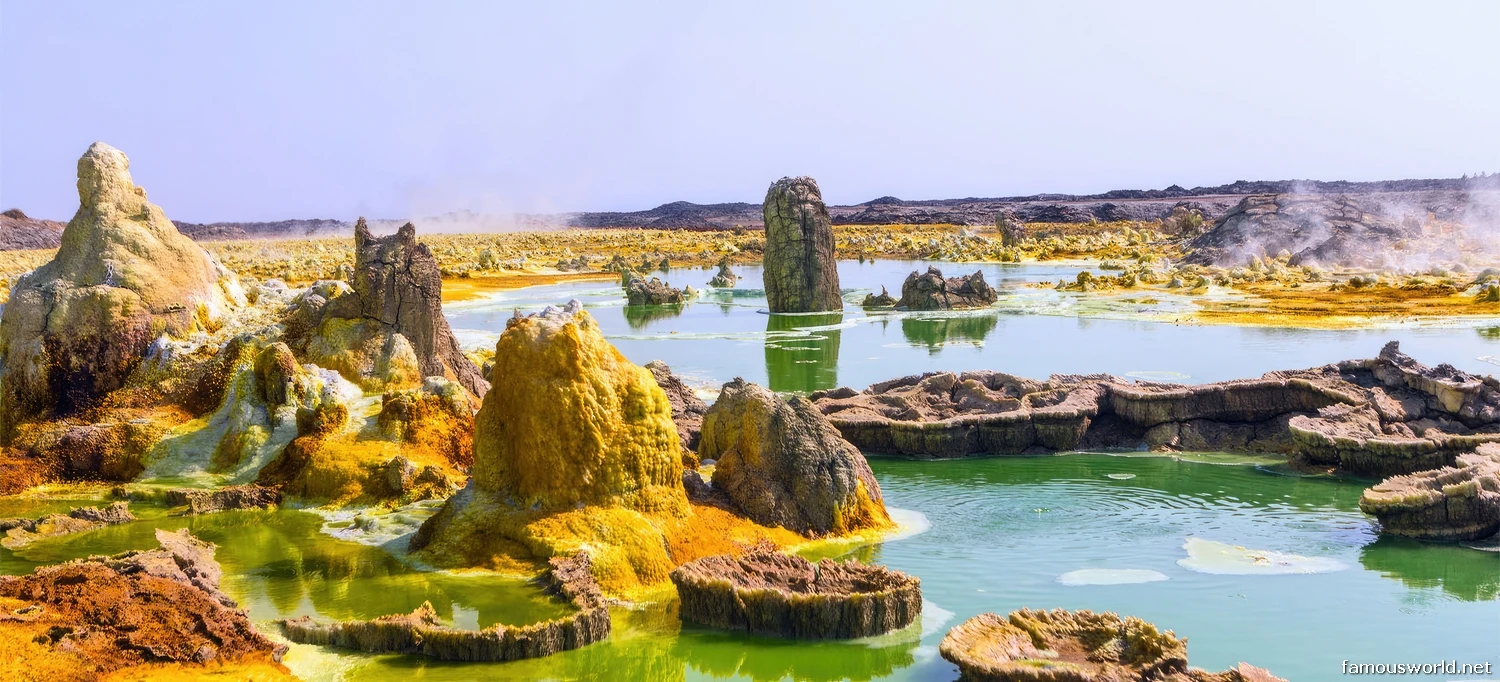
The Danakil Depression is a vast, otherworldly geological depression located in the Afar Triangle of northeastern Ethiopia. As one of the hottest, driest, and lowest places on Earth, it is often cited as the “cruelest place on Earth.” The landscape, sitting at more than 100 meters (330 feet) below sea level, is a surreal and alien tapestry of active volcanoes, bubbling lava lakes, vast salt flats, and vibrant, acid-laced hydrothermal fields. Formed by the divergence of three tectonic plates, this region is a geologically active marvel where the Earth’s crust is literally being torn apart. For travelers, it offers one of the most extreme and unforgettable adventures on the planet, a journey to a landscape that feels more like another planet than a part of our own.
Listen to an introduction about Danakil Depression

Name and Address
- Name: Danakil Depression (also known as the Afar Depression).
- Address: Located in the Afar Region of northeastern Ethiopia, near the border with Eritrea and Djibouti.
How to Get There
Visiting the Danakil Depression is a serious expedition that requires a guided tour due to the extreme environment, remote location, and security considerations.
- Gateway Town: The city of Mekele is the primary starting point for all tours into the Danakil.
- By Air to Mekele: The easiest way to begin is by taking a domestic flight with Ethiopian Airlines from the capital, Addis Ababa, to Mekele.
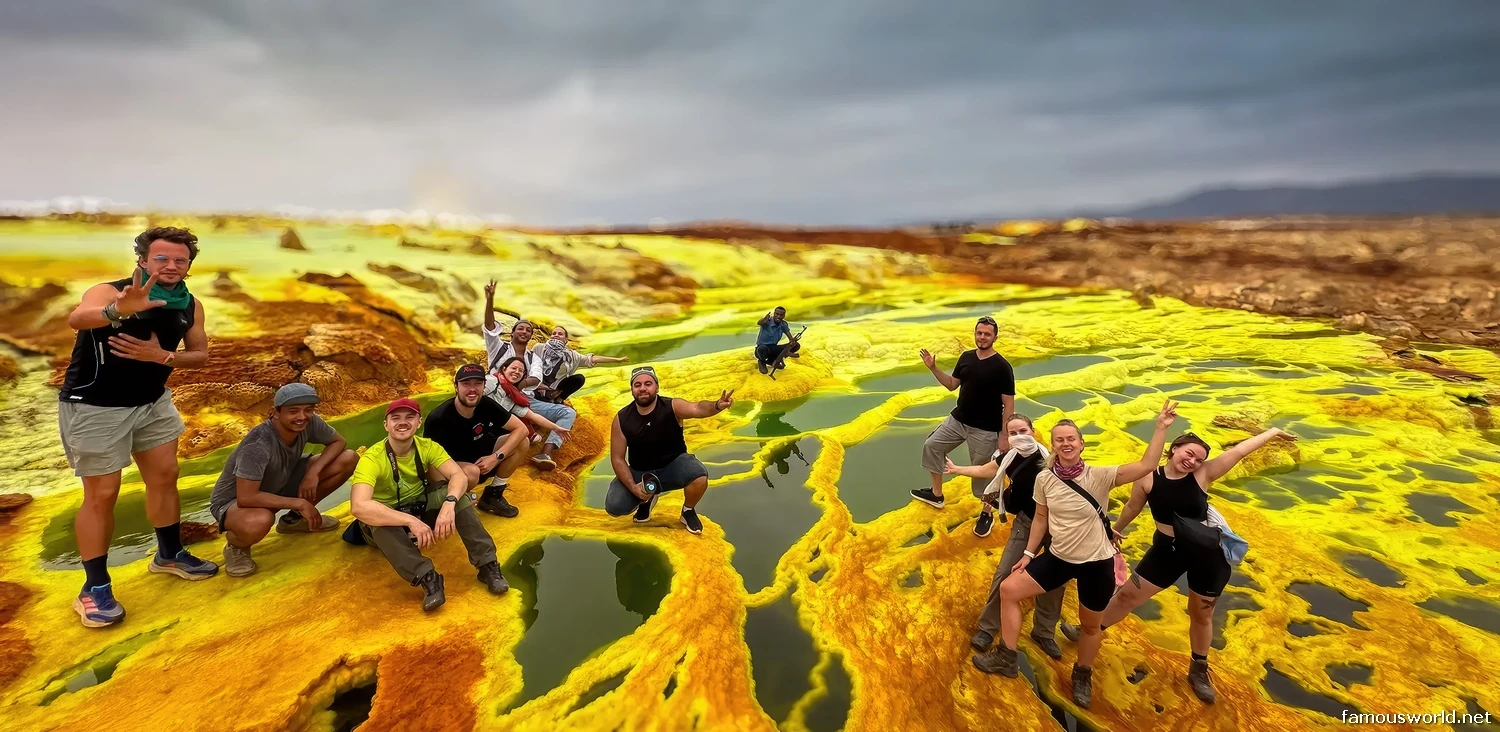
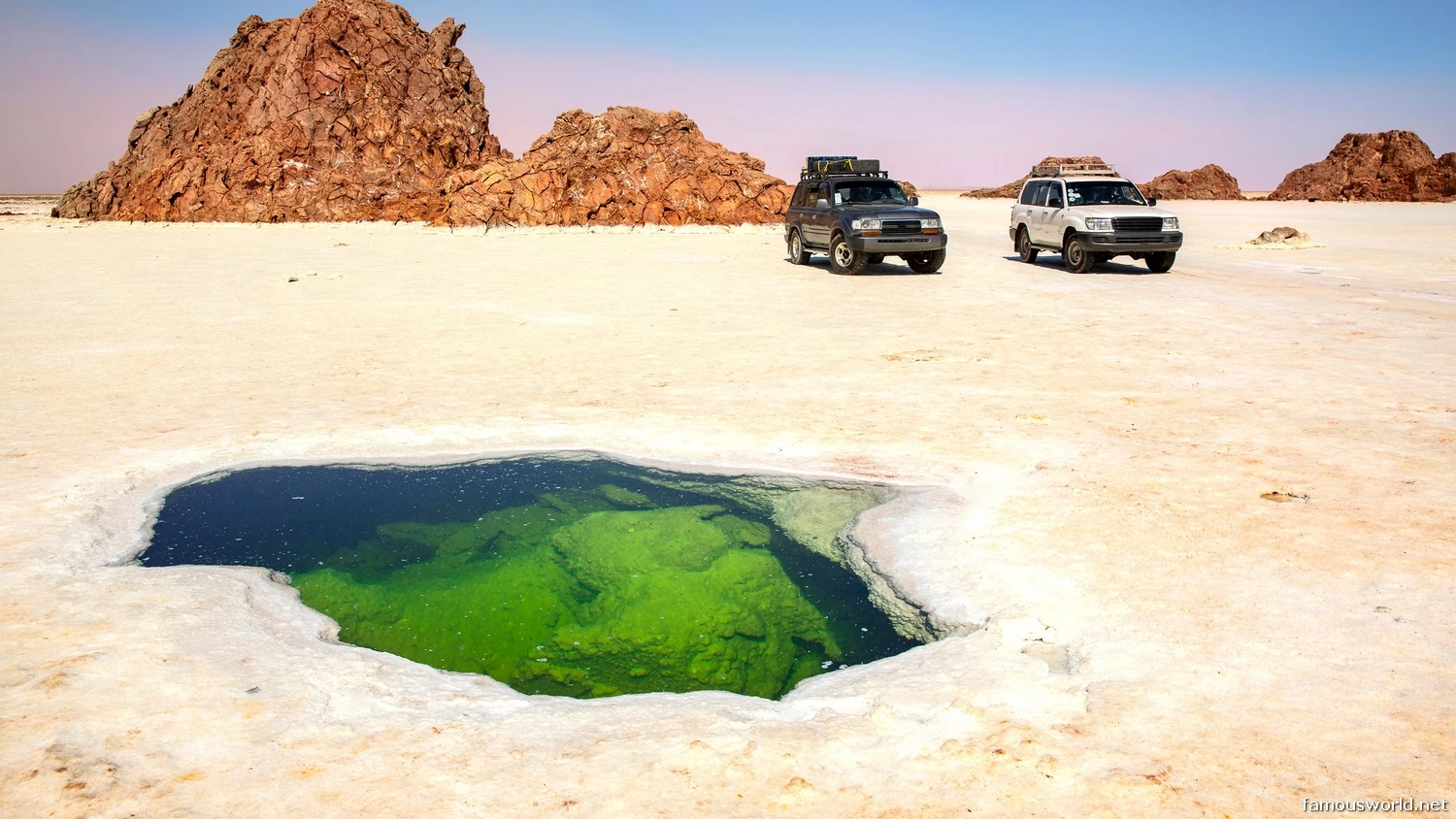
- Guided 4×4 Tour (Essential): From Mekele, you must join a guided tour, typically lasting 3-4 days. These tours are conducted in convoys of 4×4 vehicles and include a driver, a guide, a cook, all necessary supplies (food and water), and mandatory armed Afar guards for security. Independent travel is not permitted.
- Visitor Tip: The best and only feasible time to visit is during the cooler months, from November to February. Even then, daytime temperatures are incredibly high. The trip is physically demanding, involving rough driving, basic camping, and trekking in extreme heat.
Landscape and Architecture
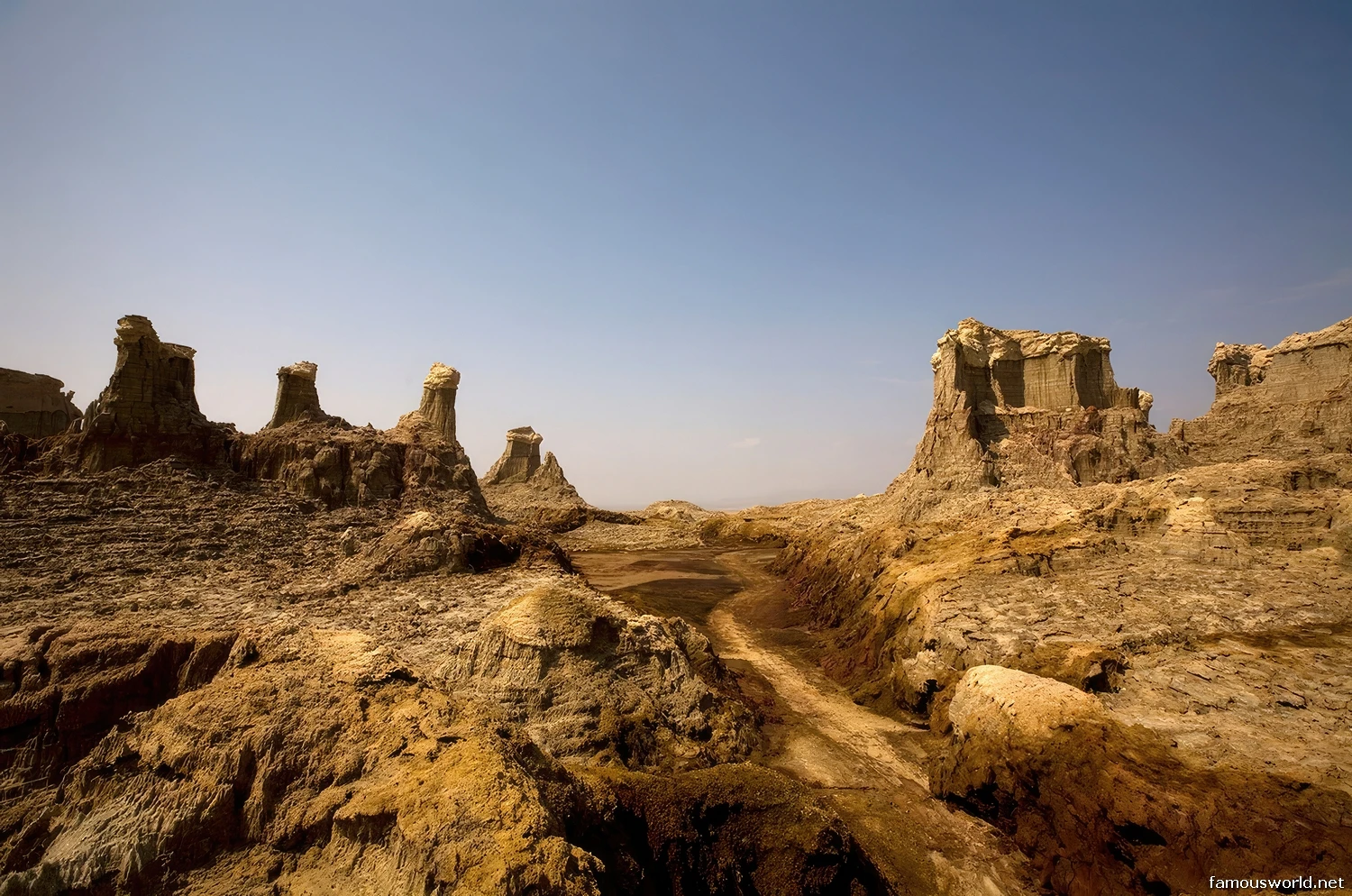
The “architecture” of the Danakil Depression is a raw and dynamic geological canvas, featuring some of the most extreme and colorful landscapes on the planet.
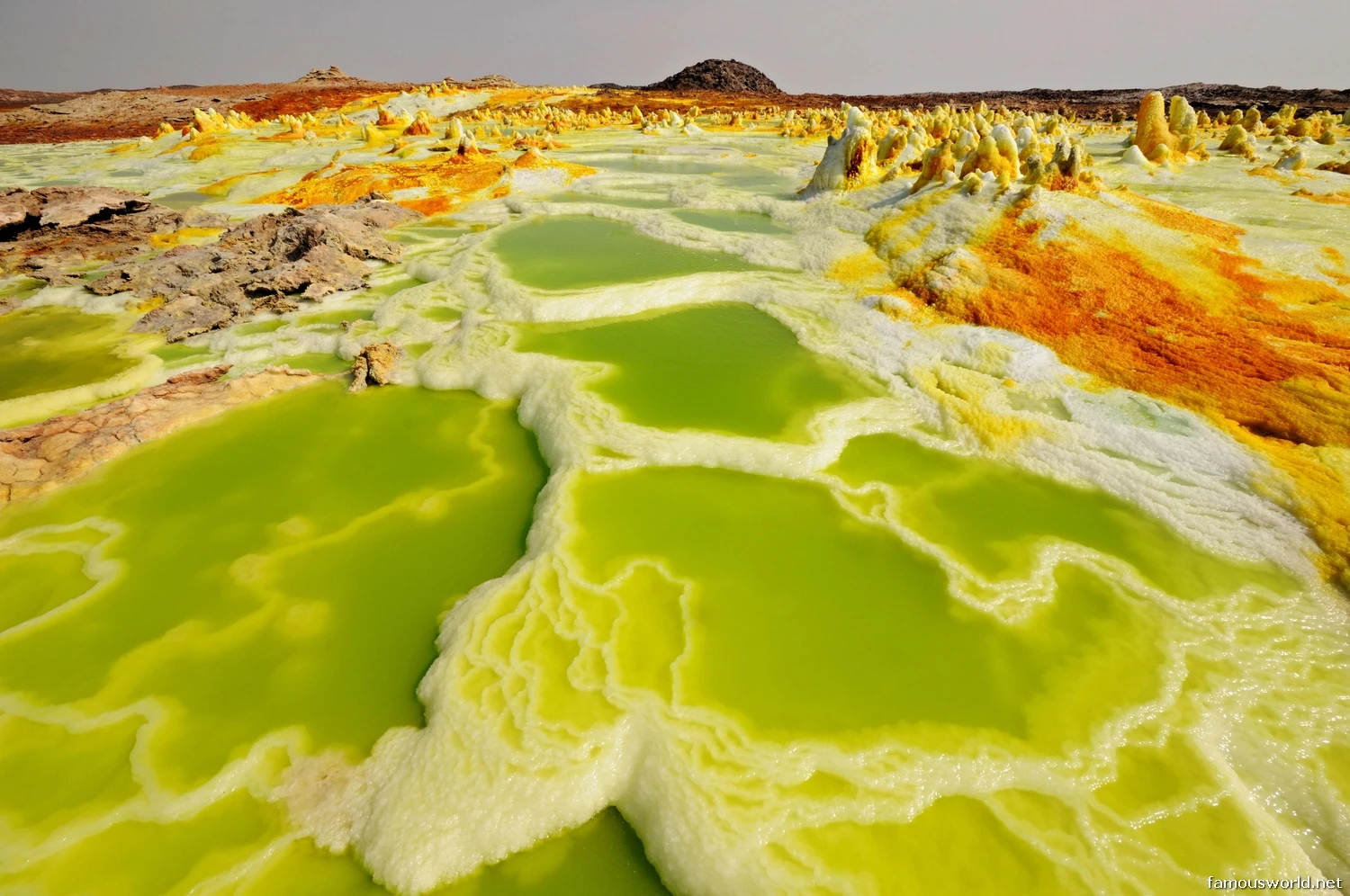
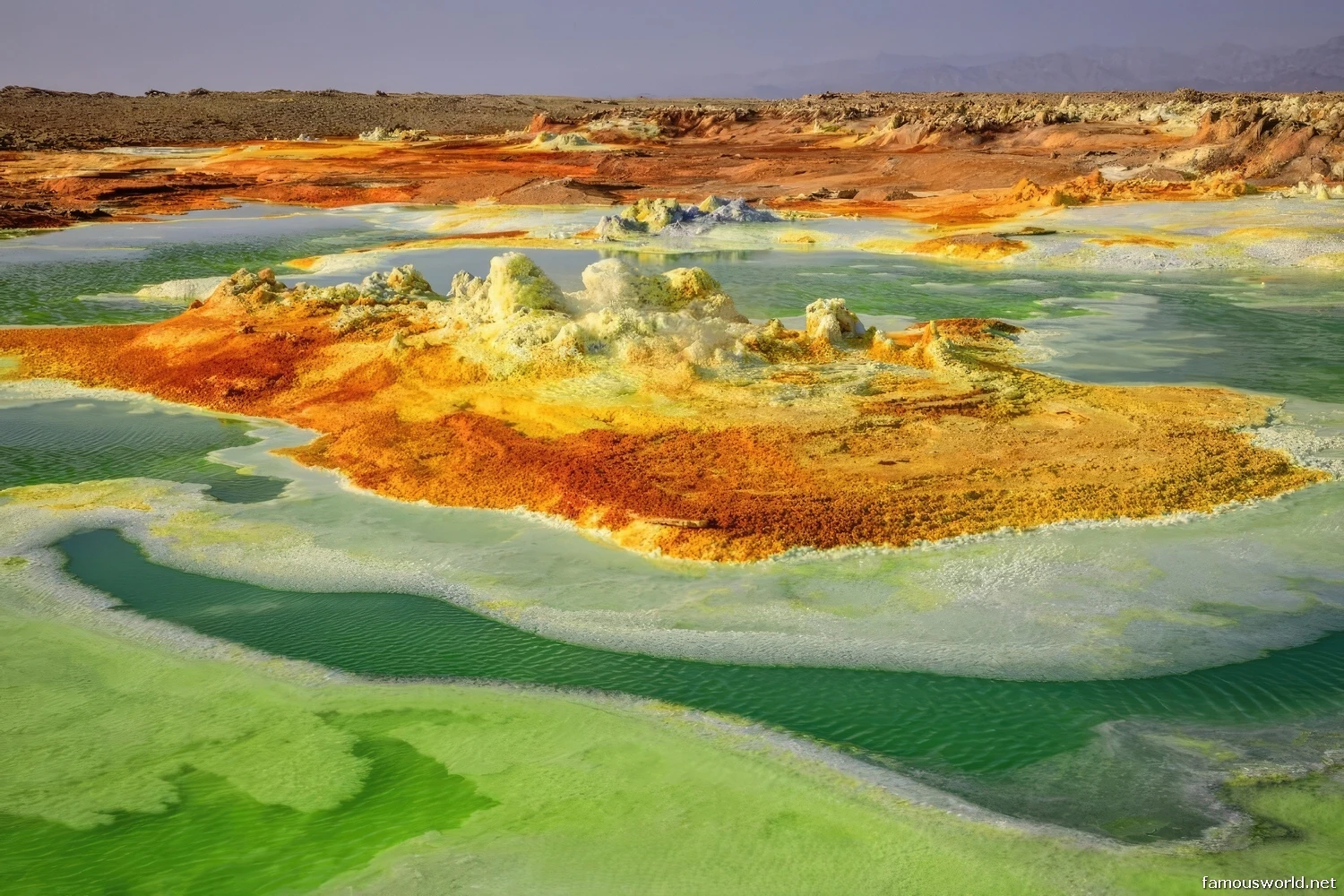
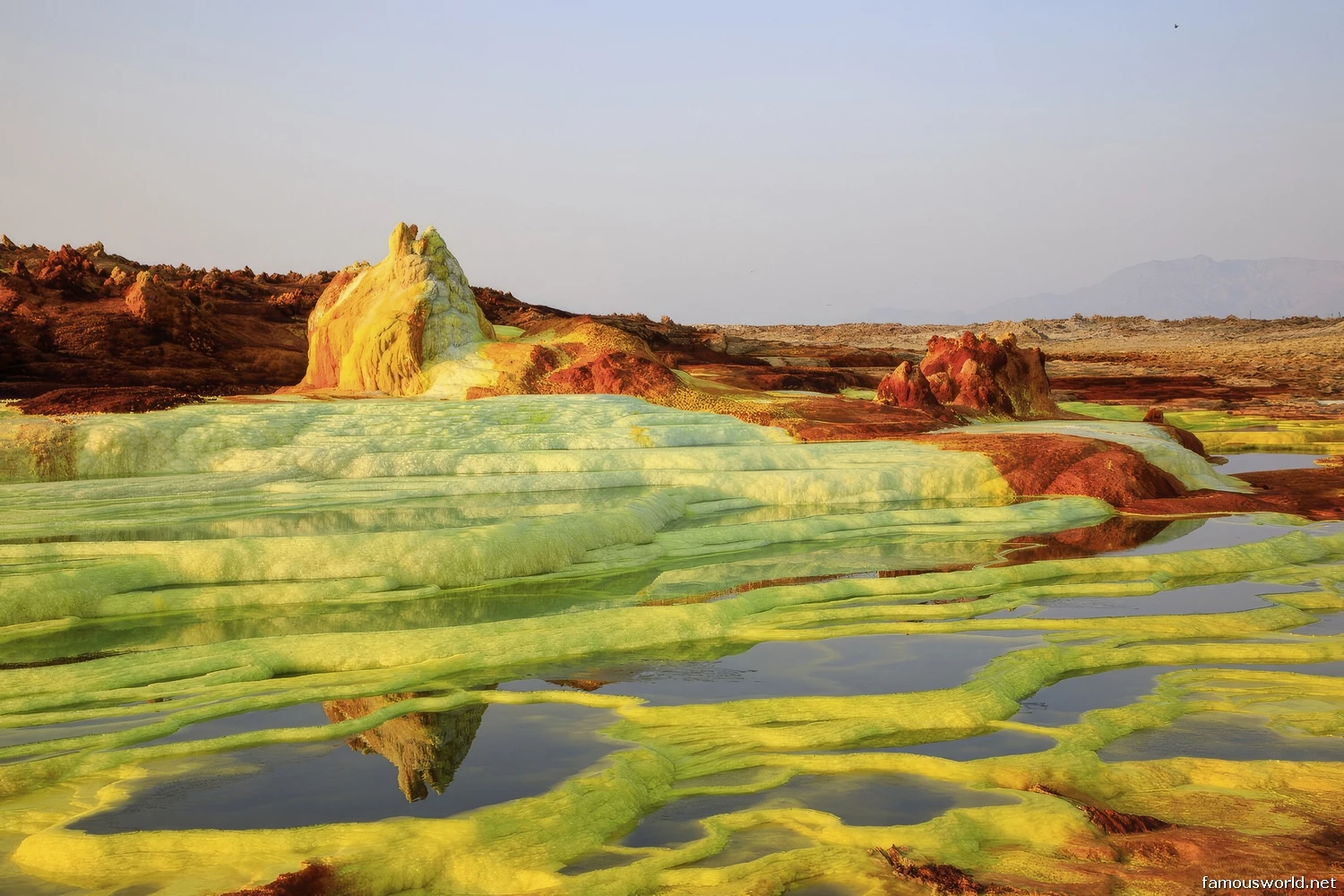
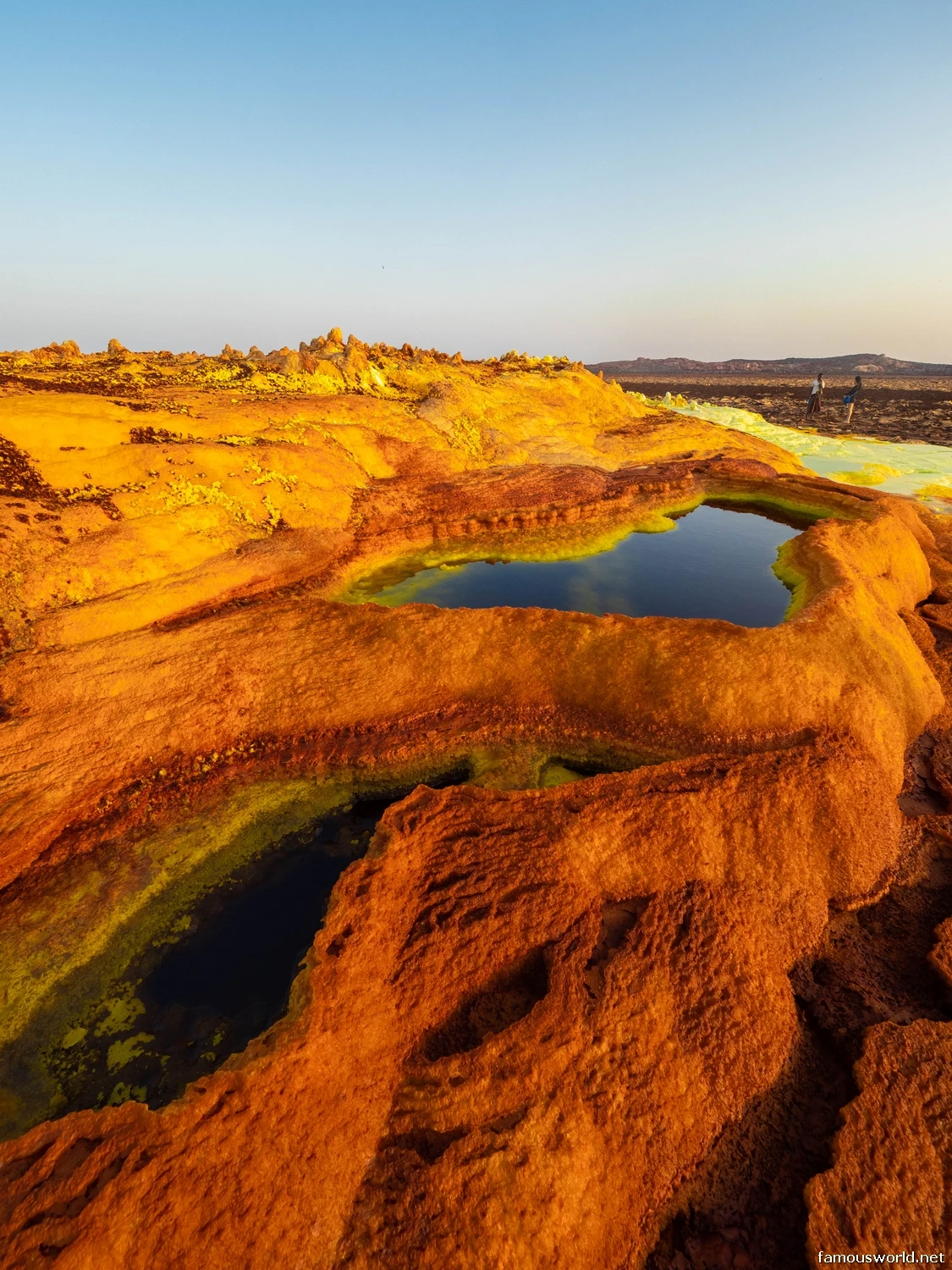
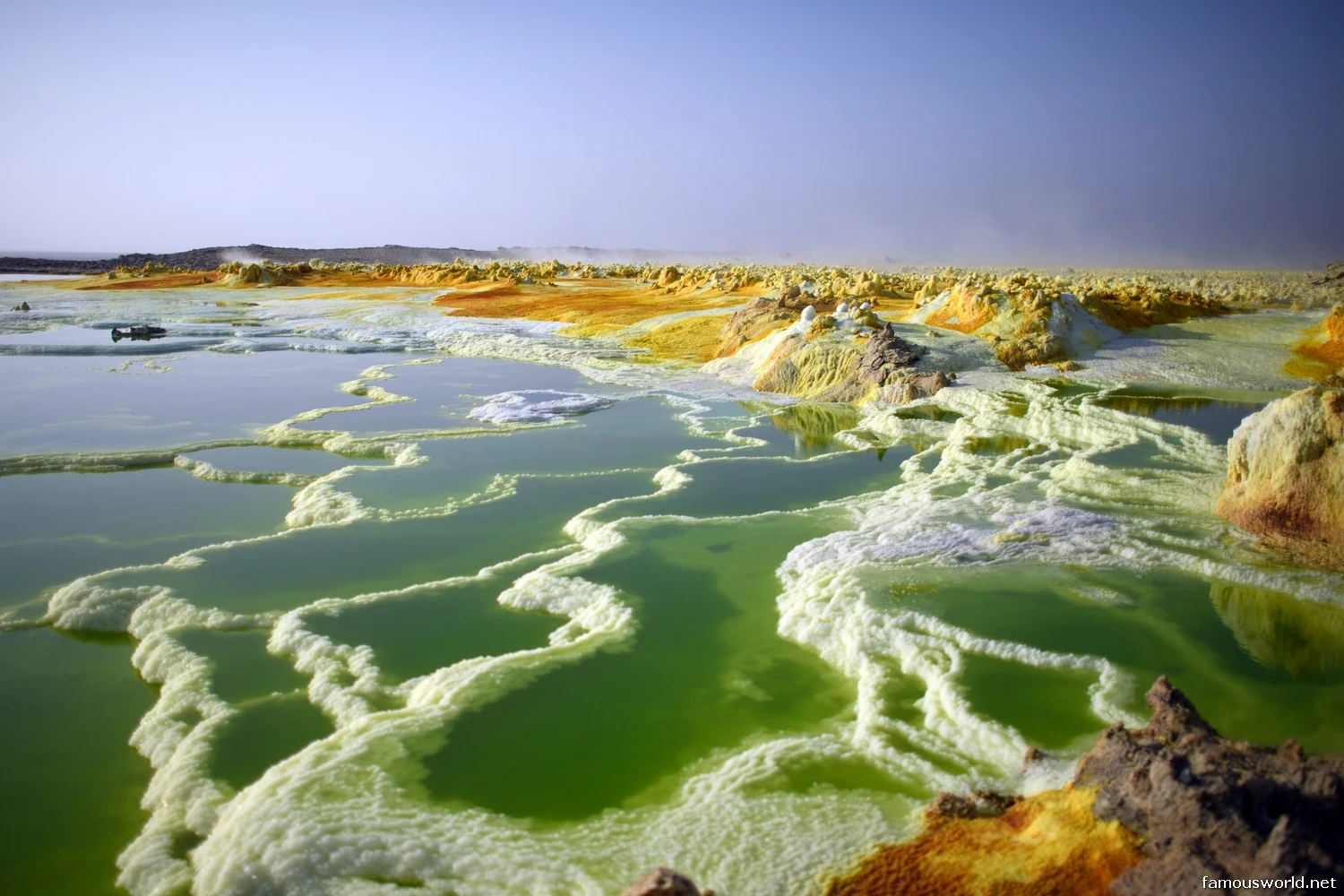
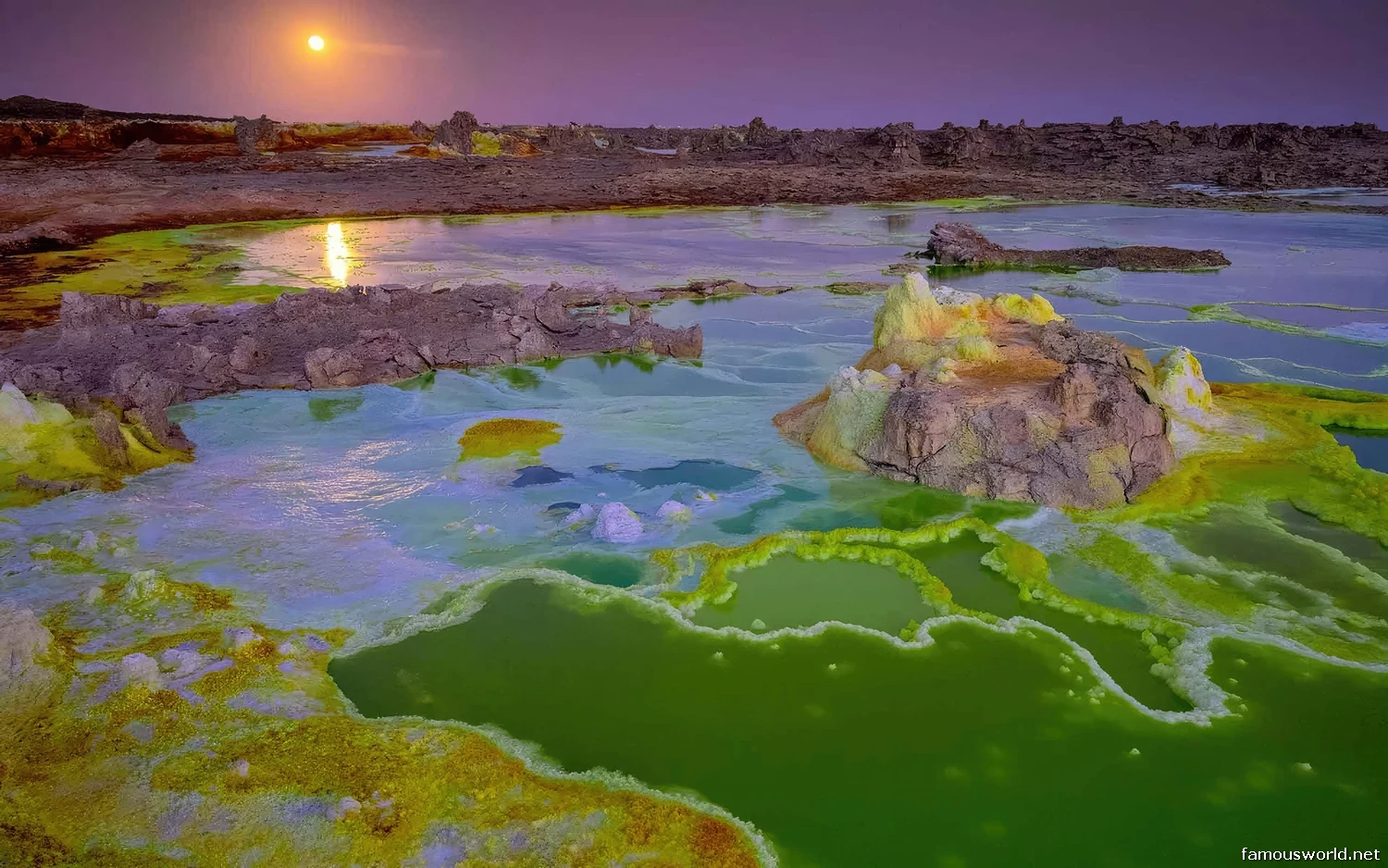
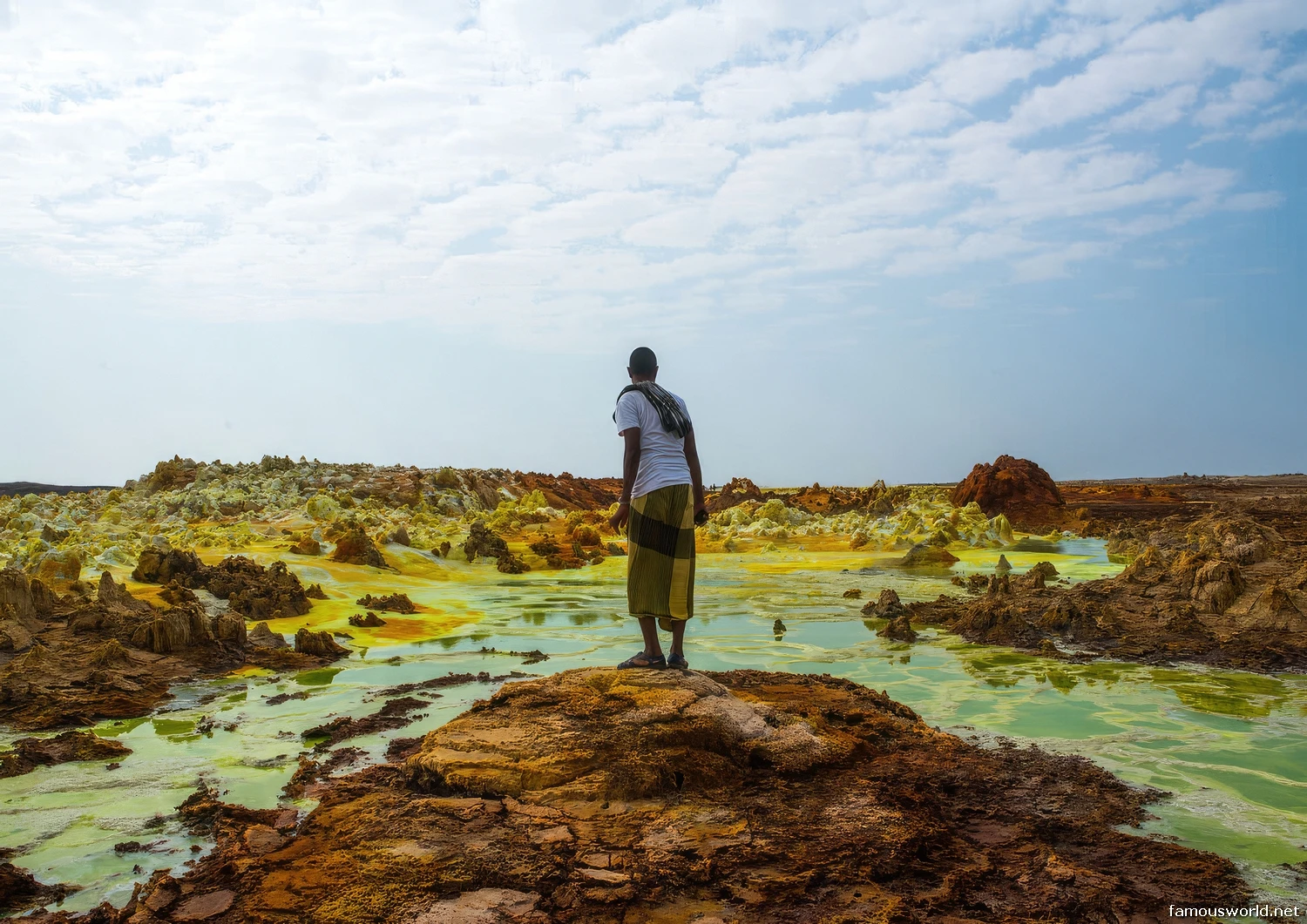
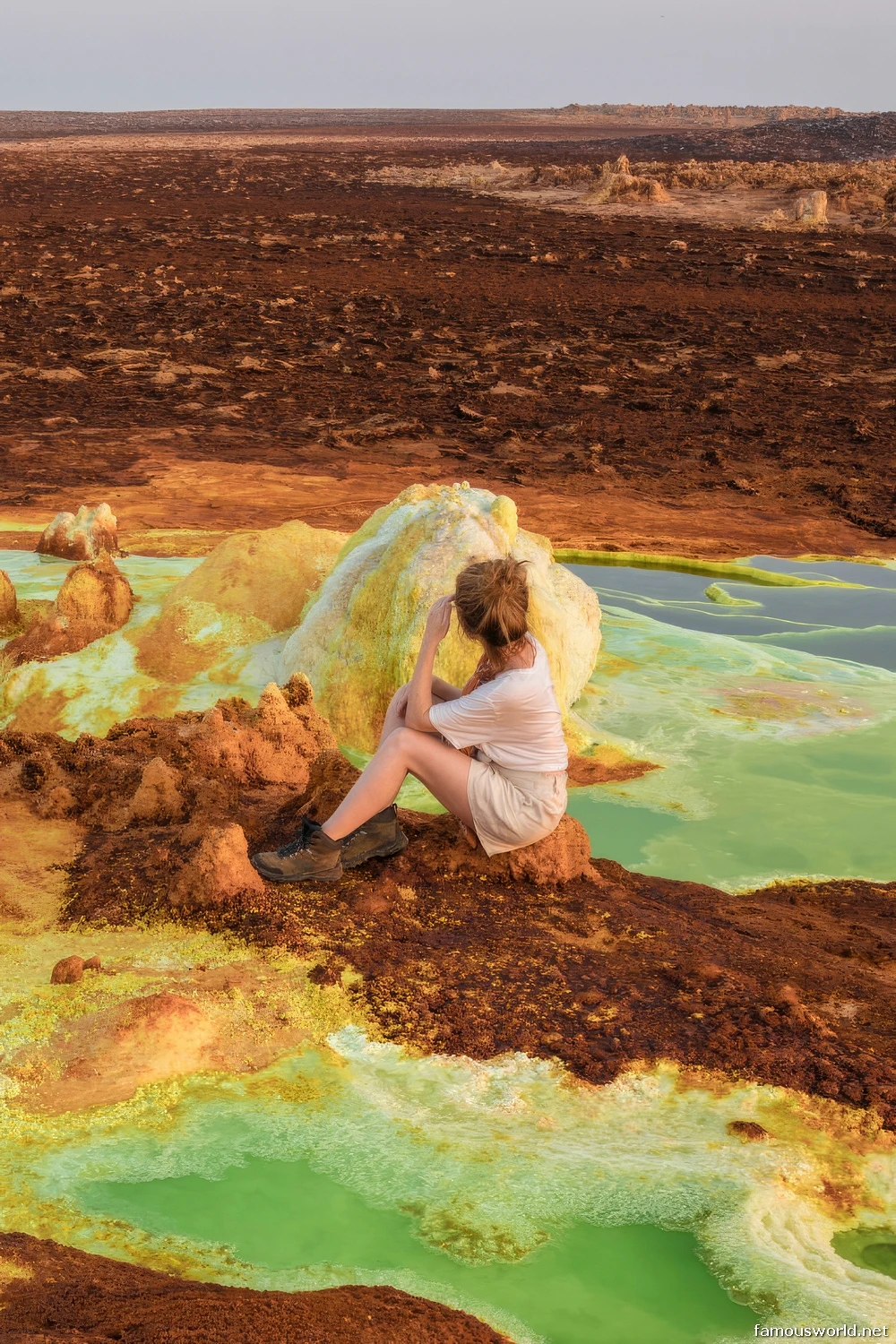
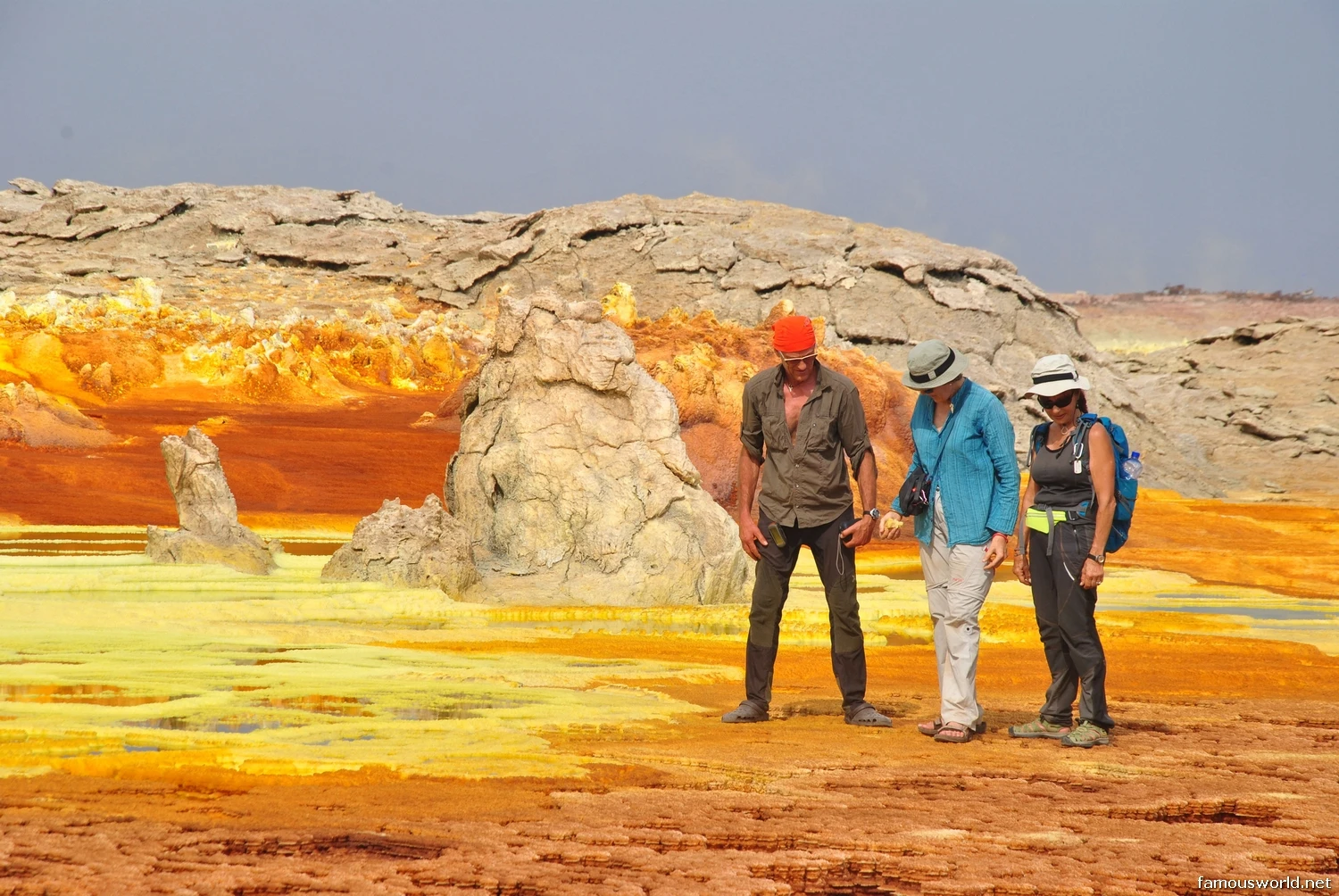
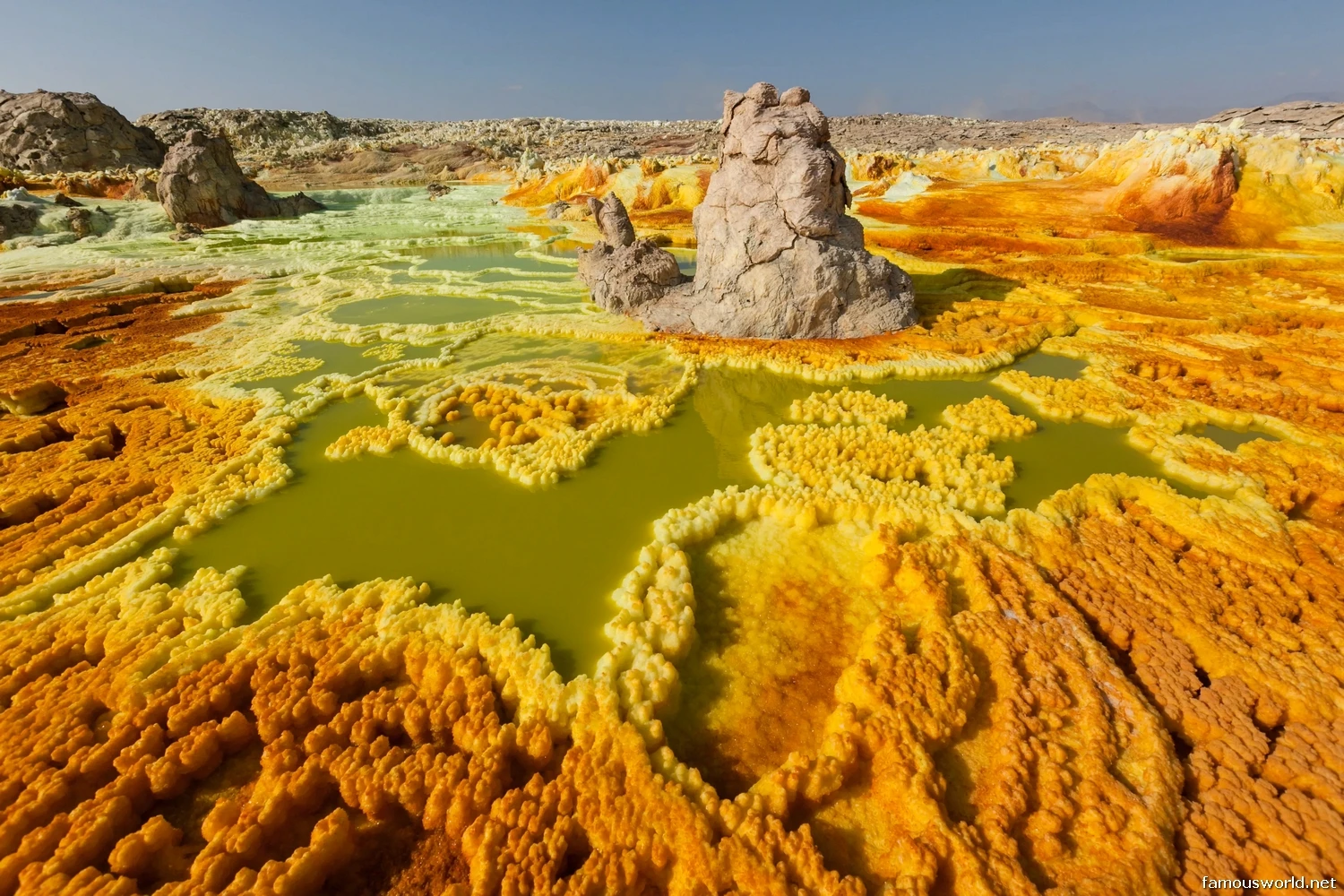
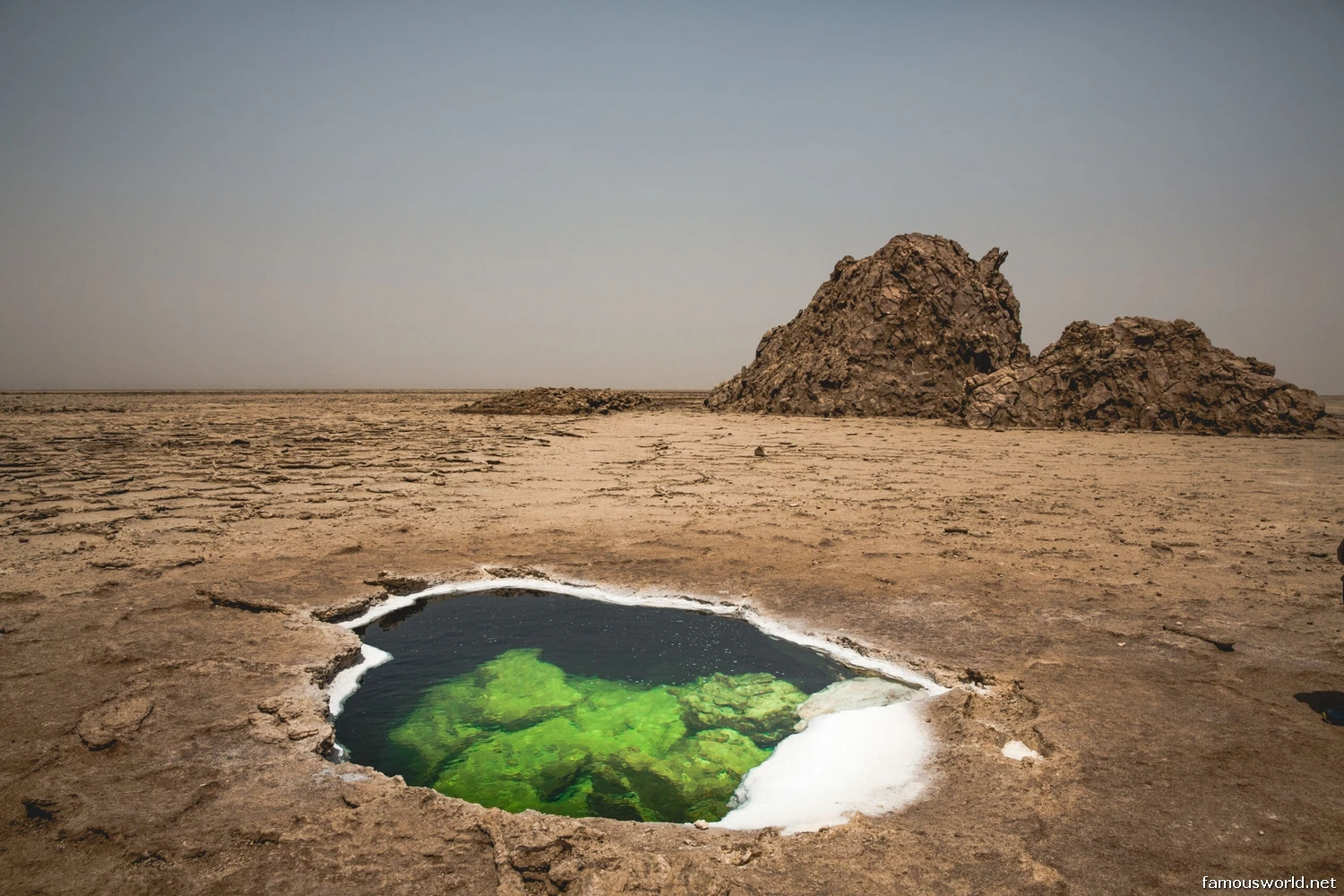
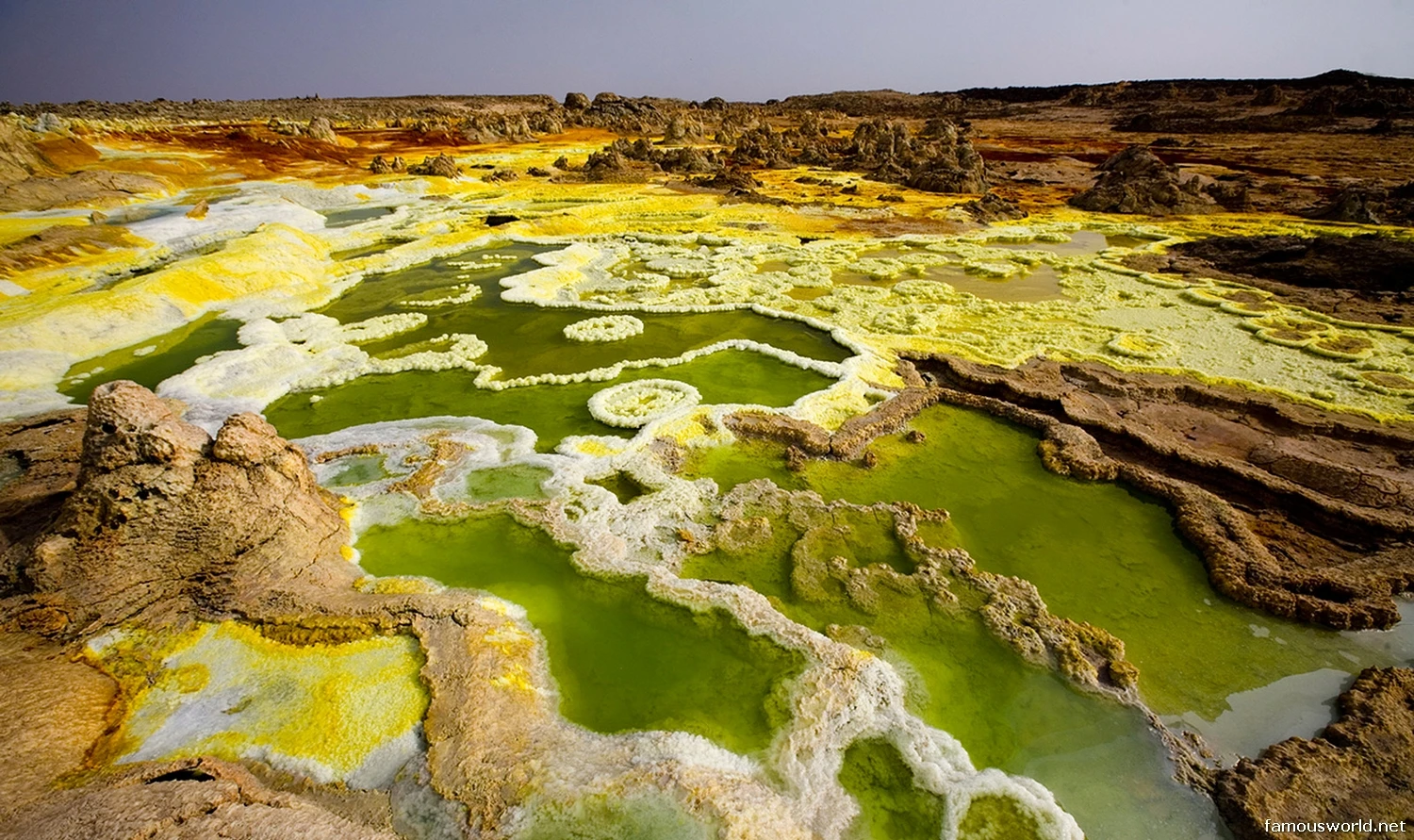
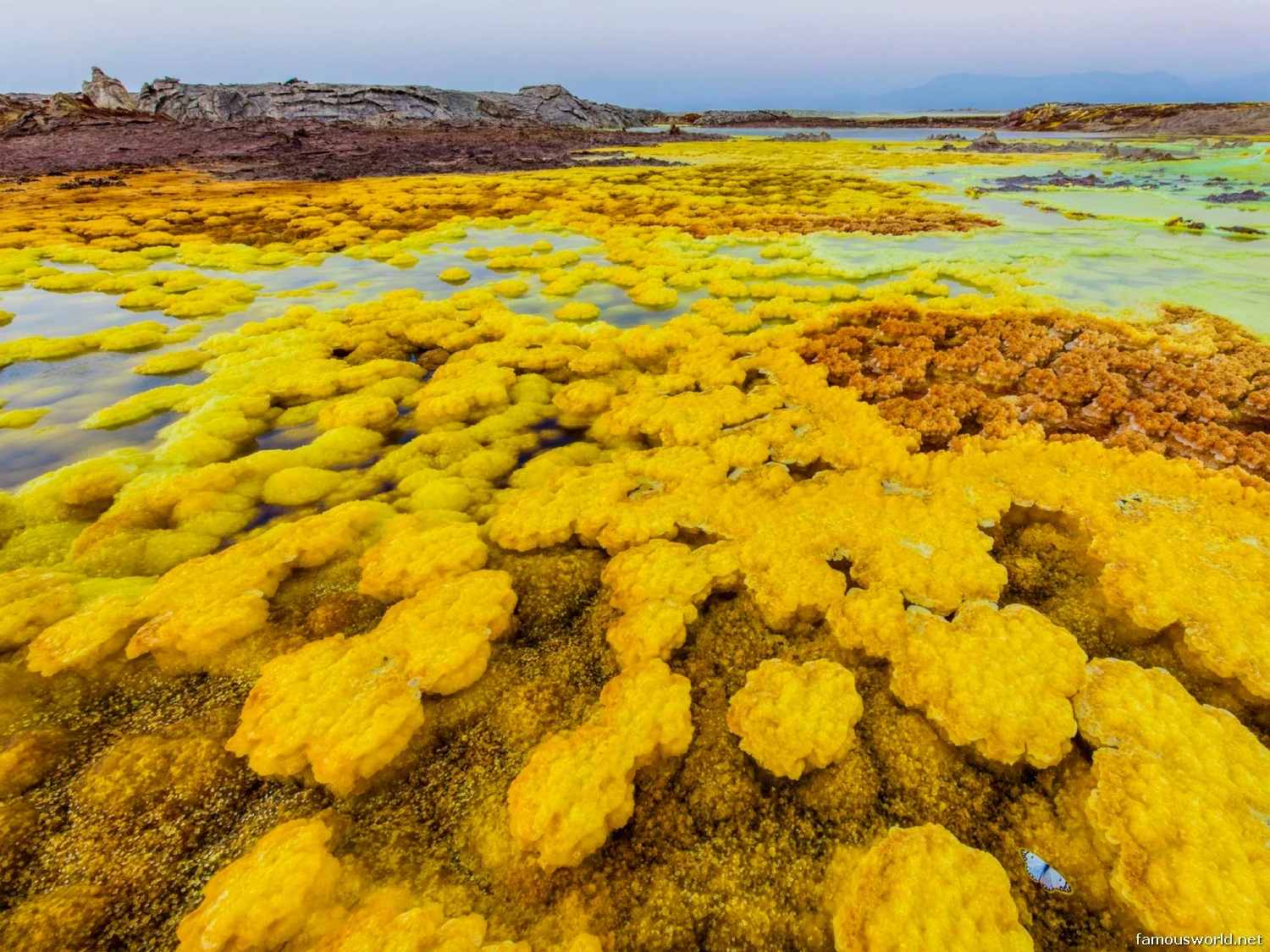
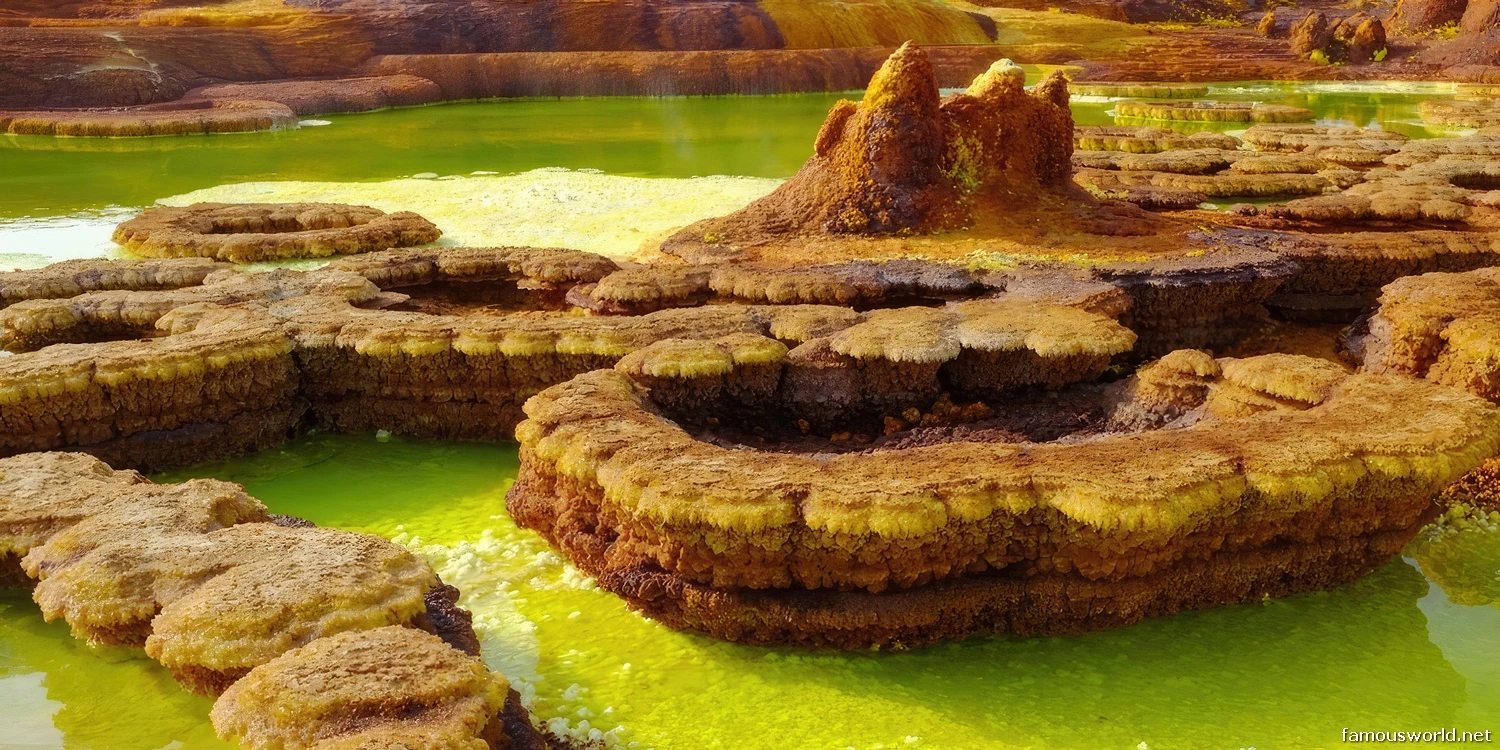
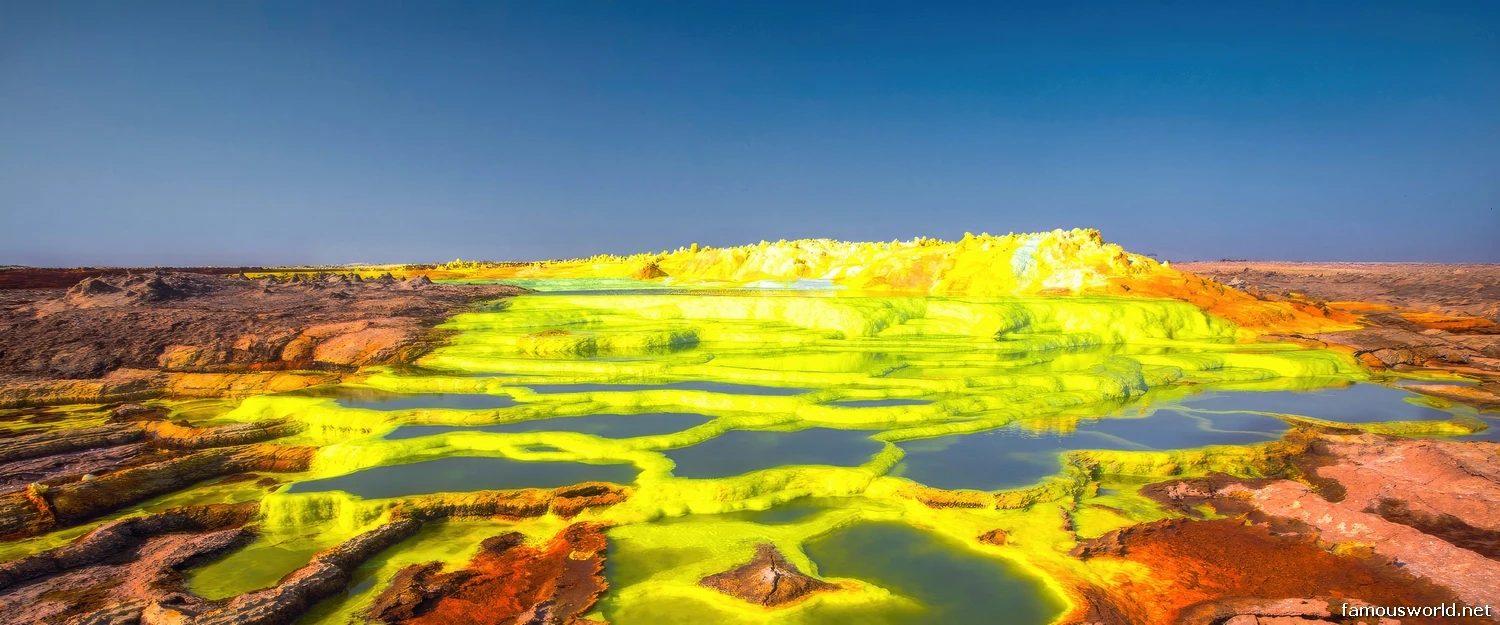
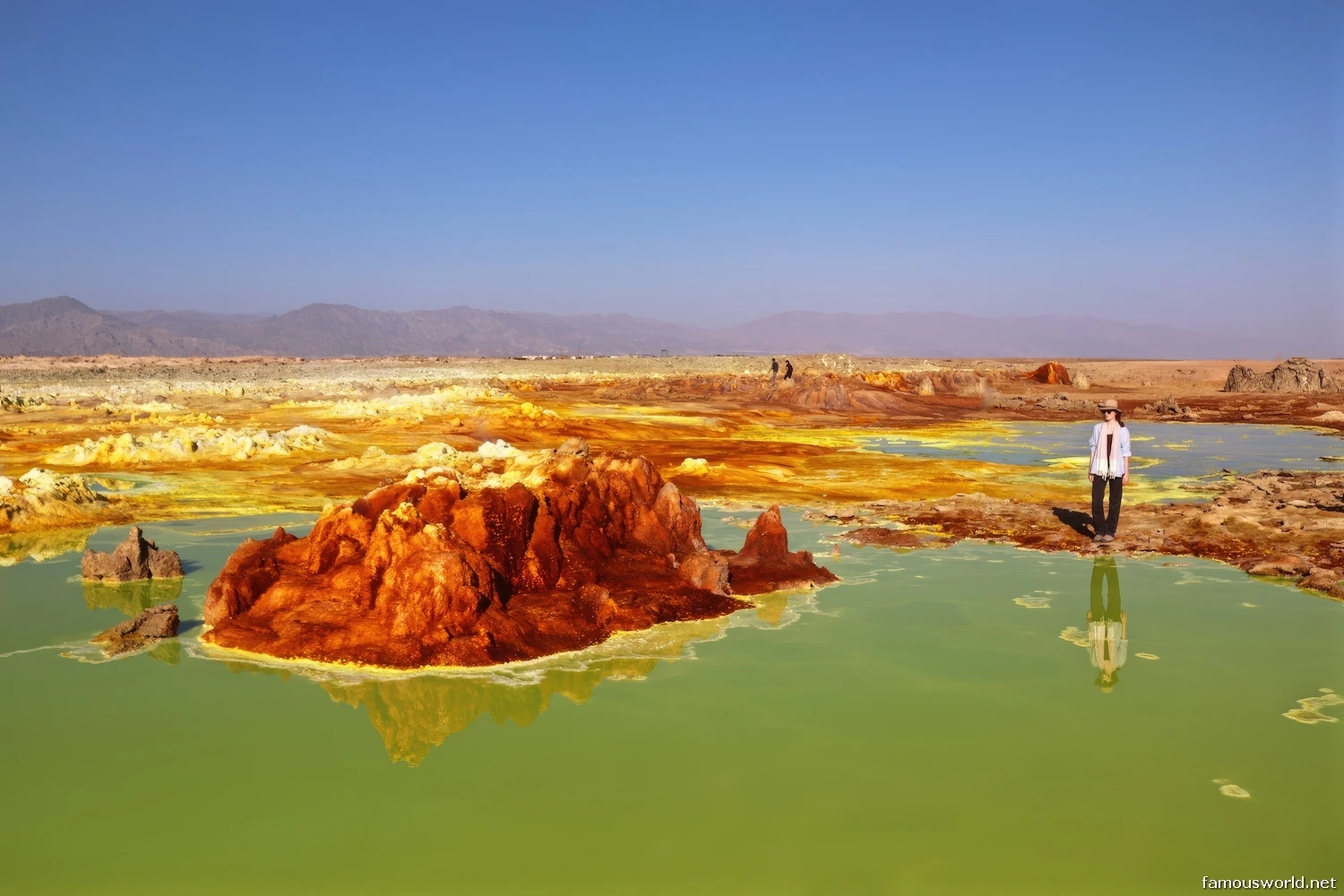
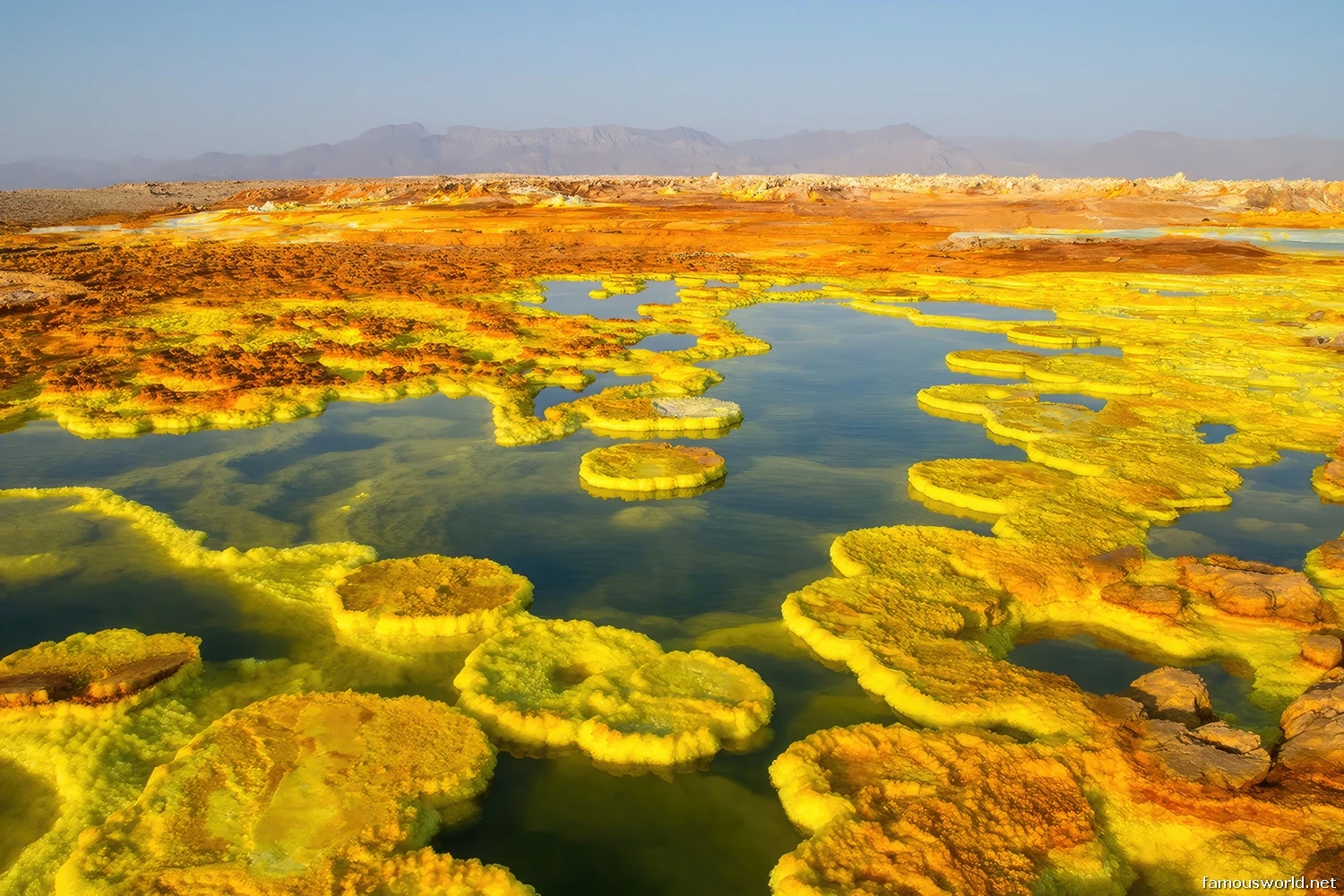
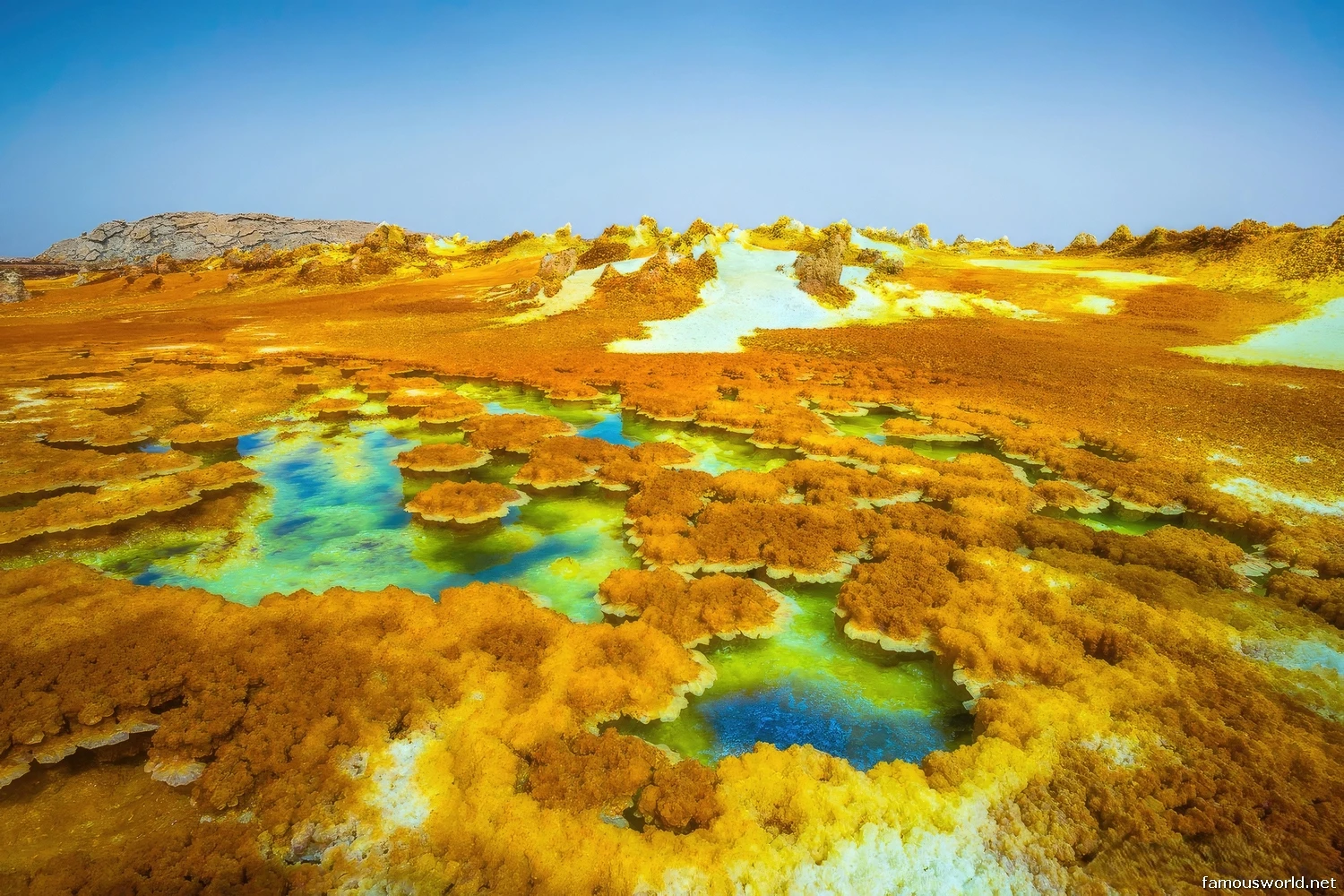
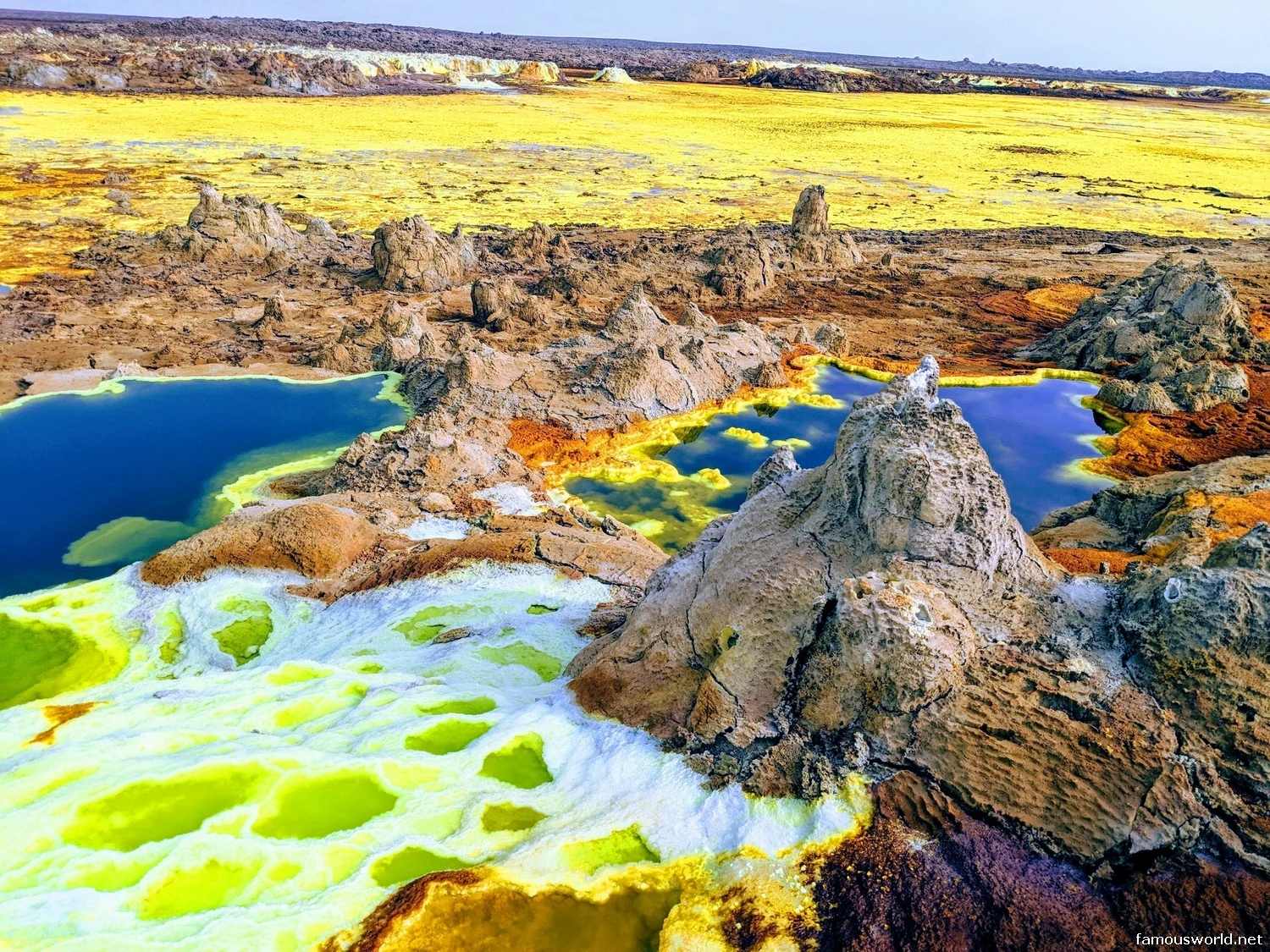
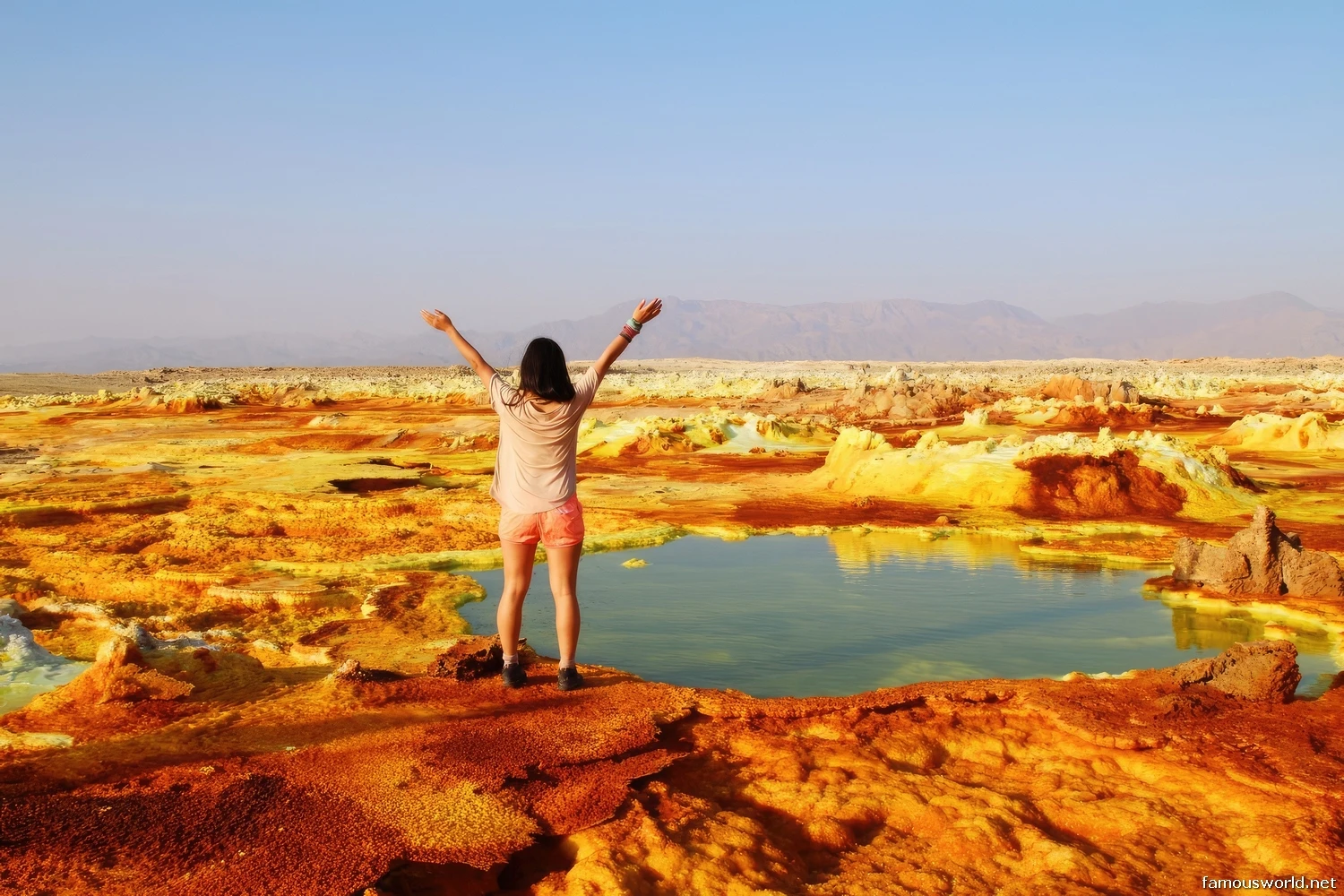
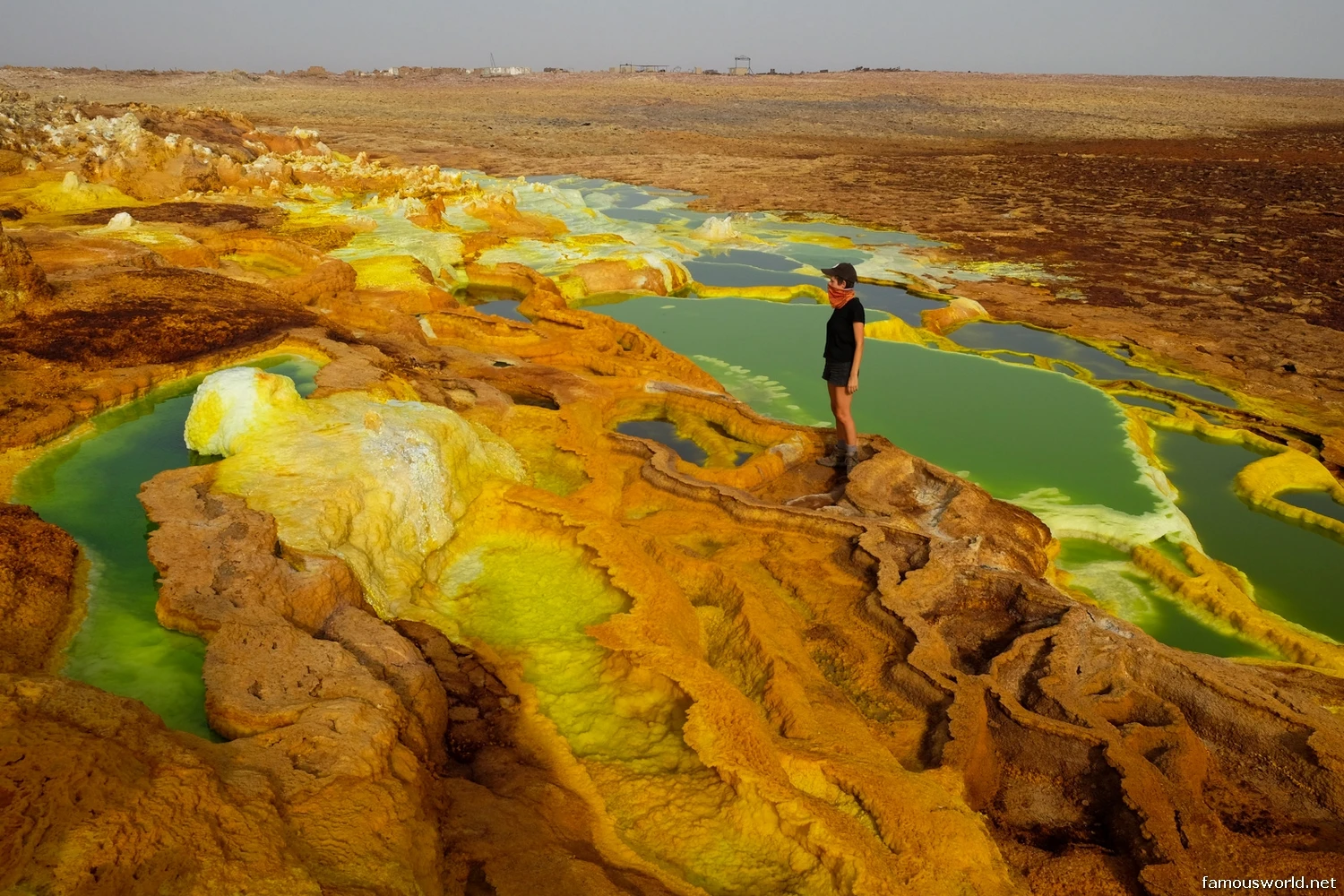
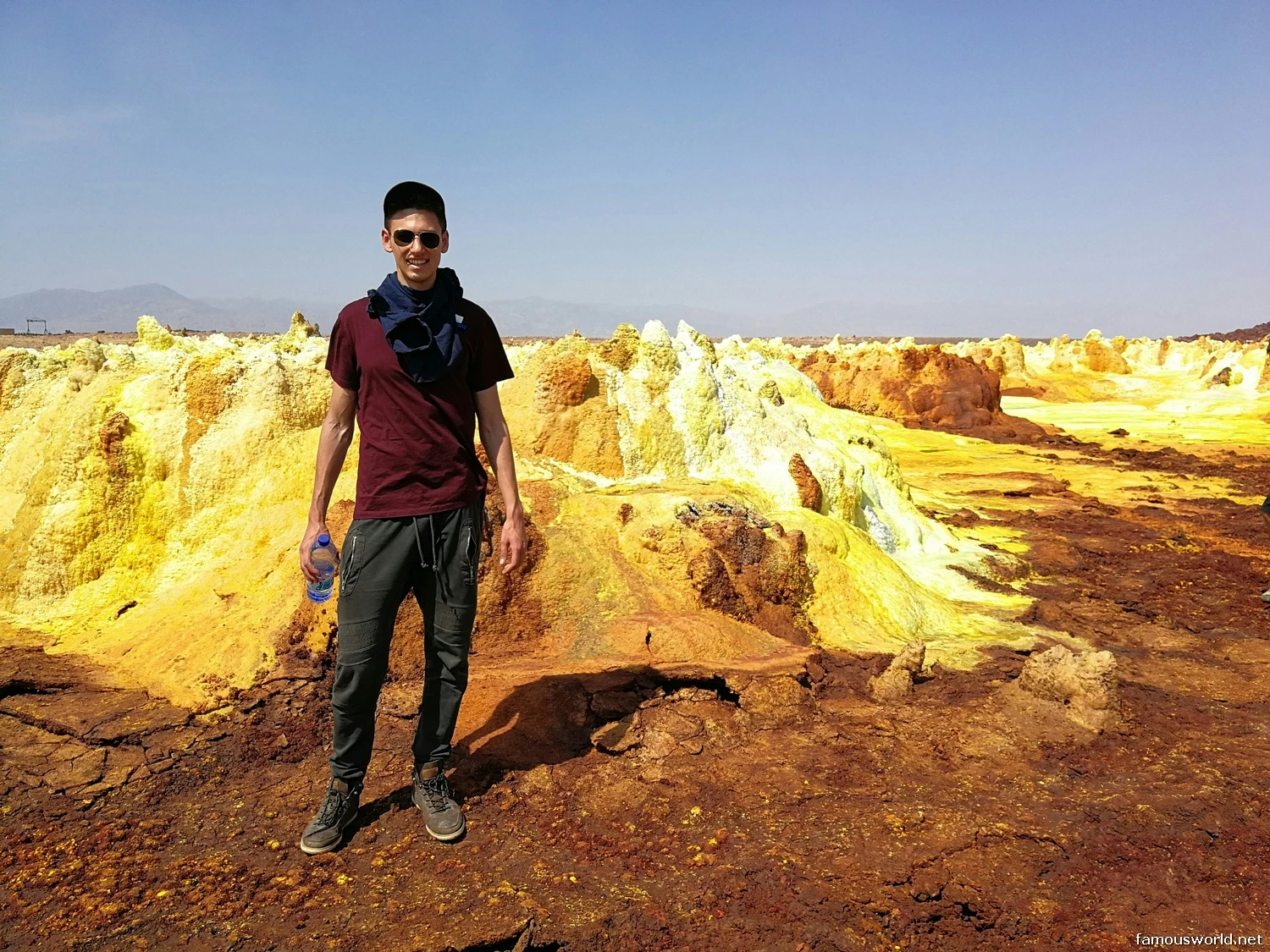
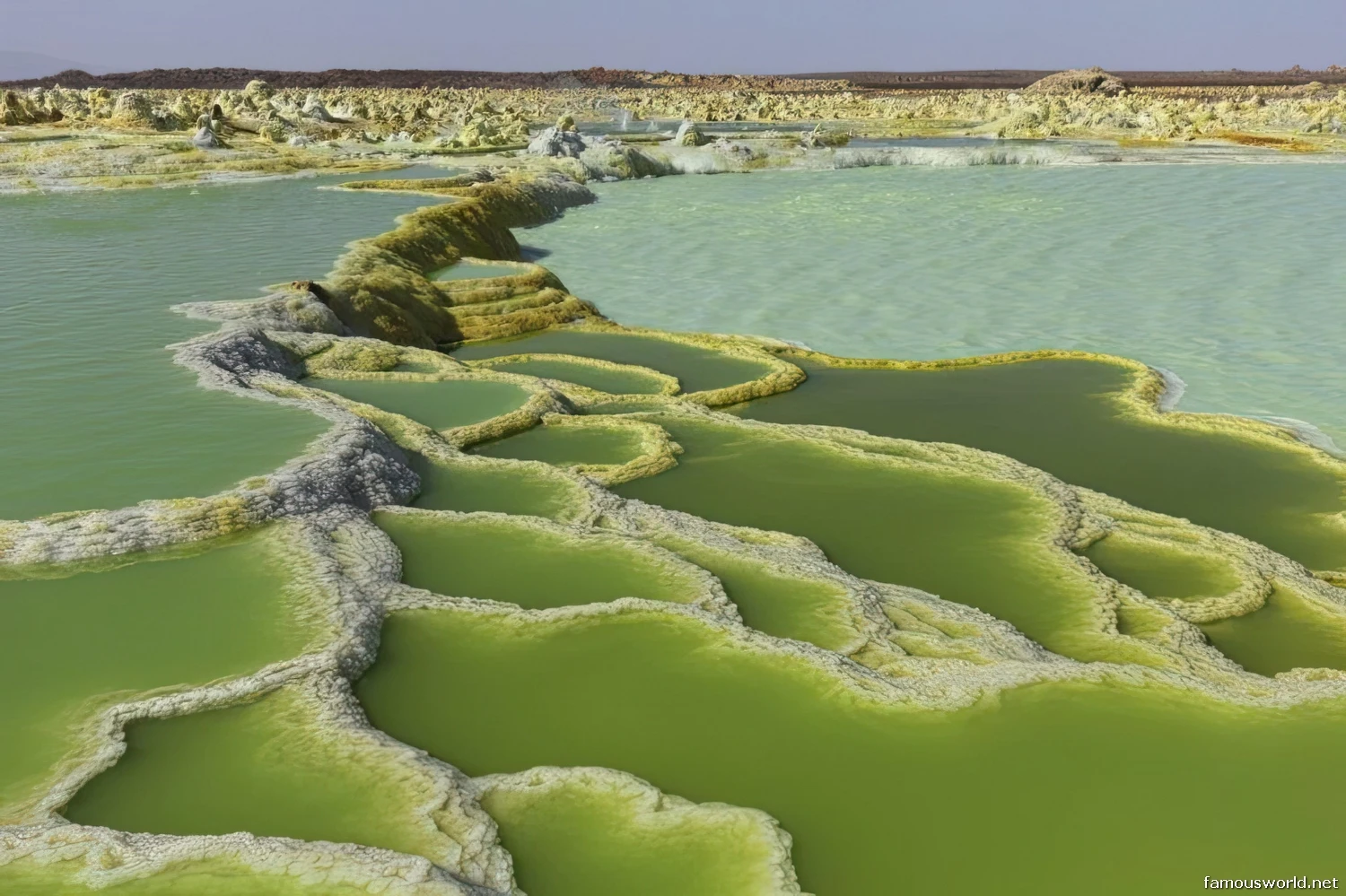
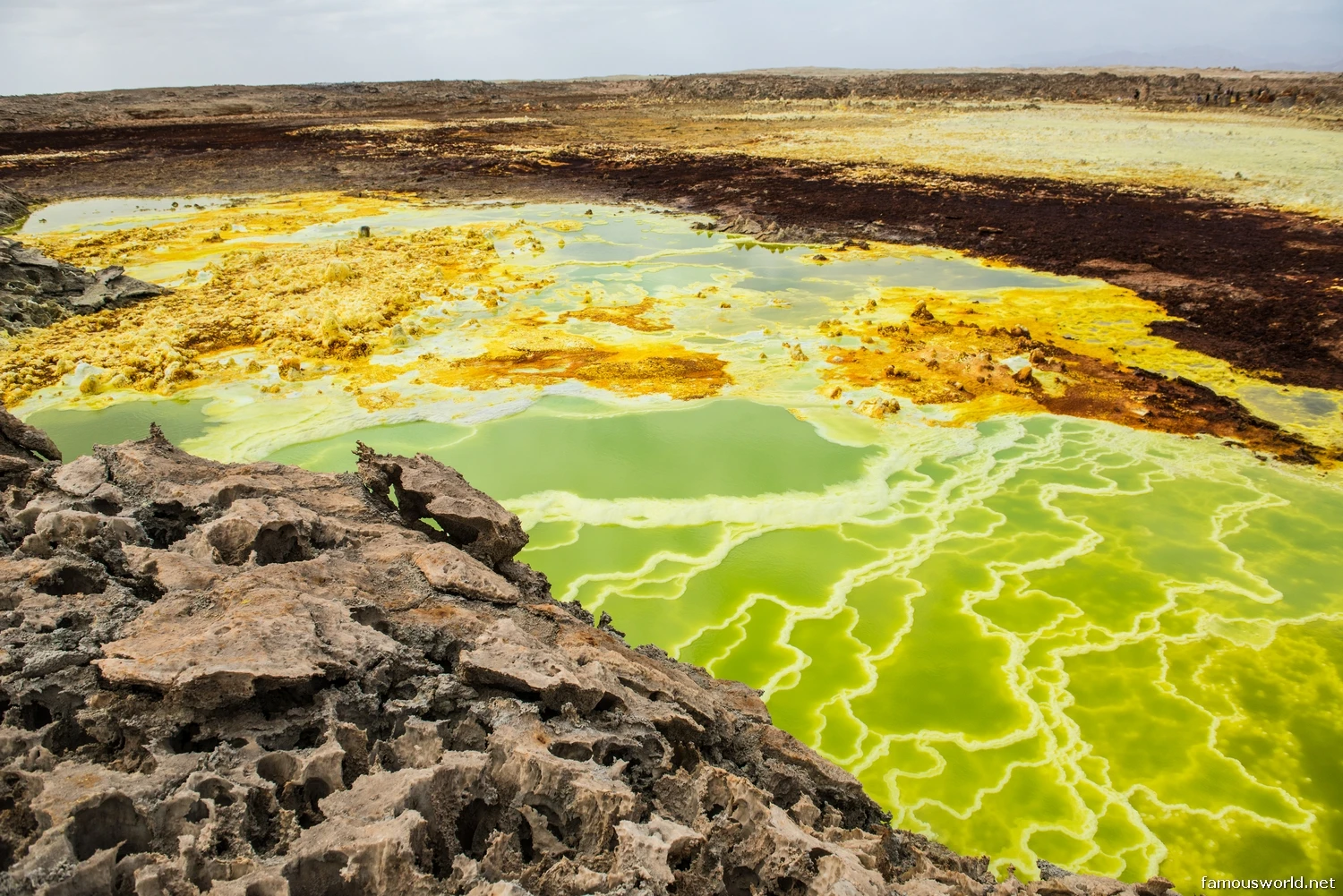
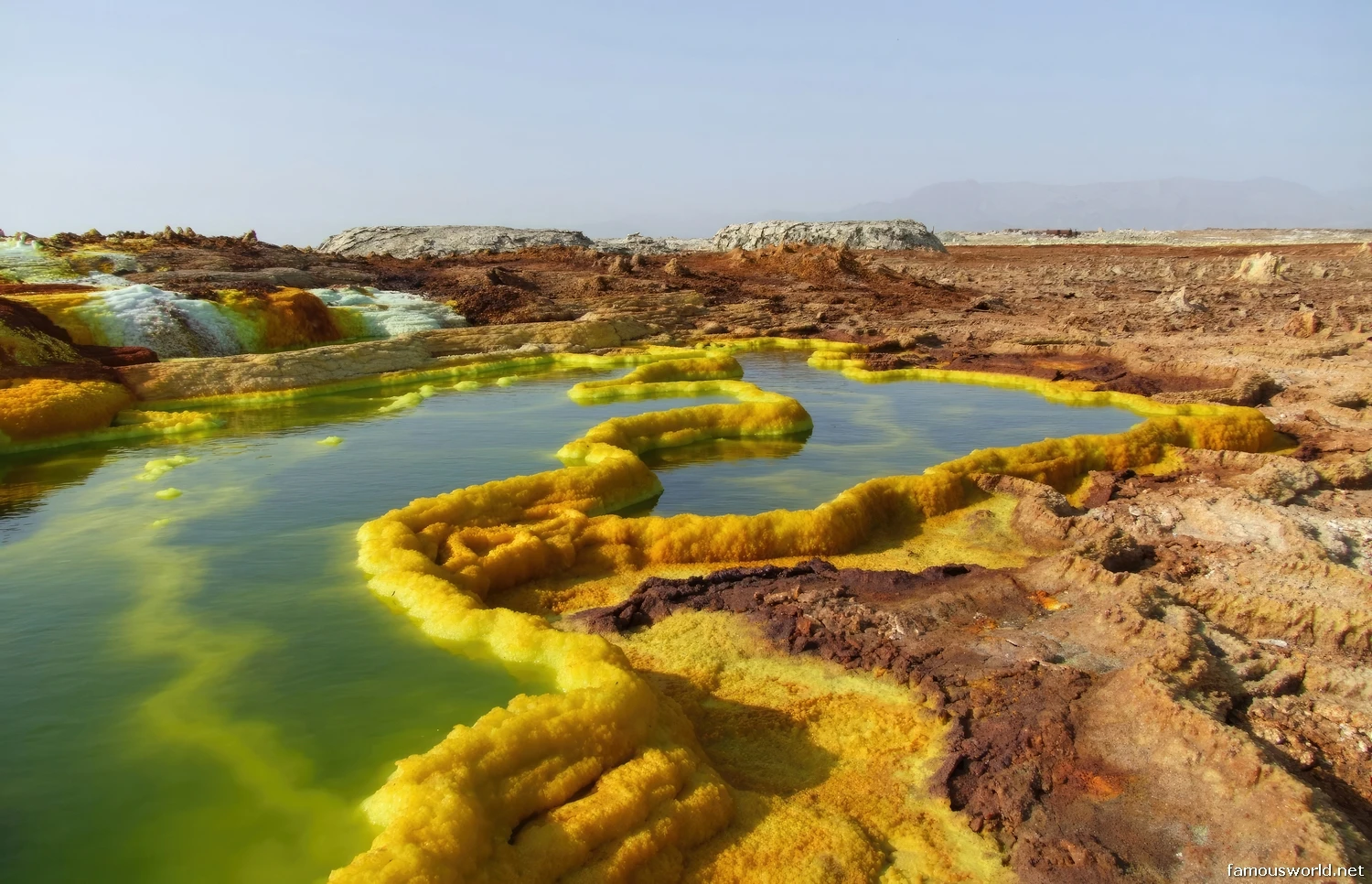
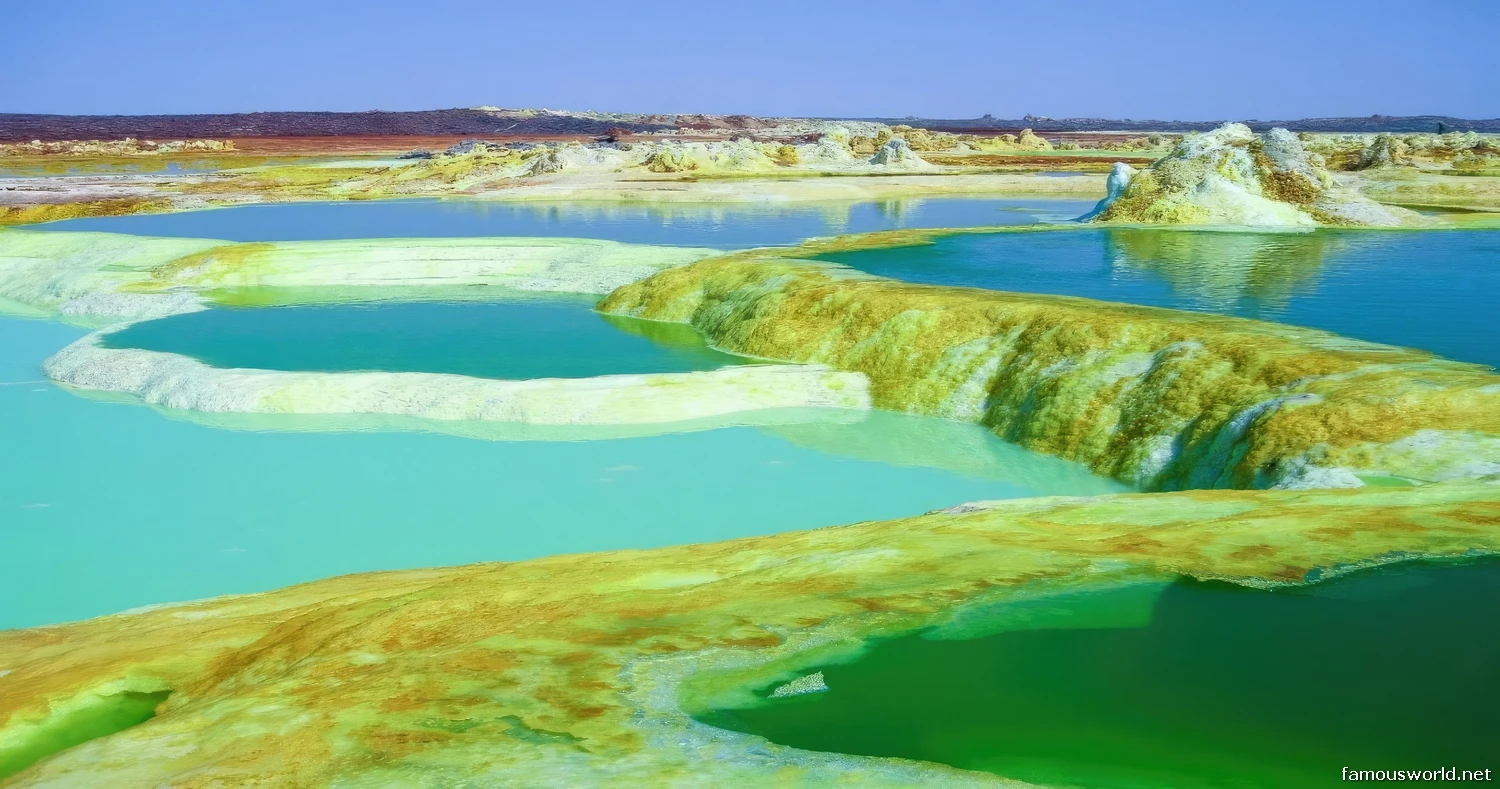
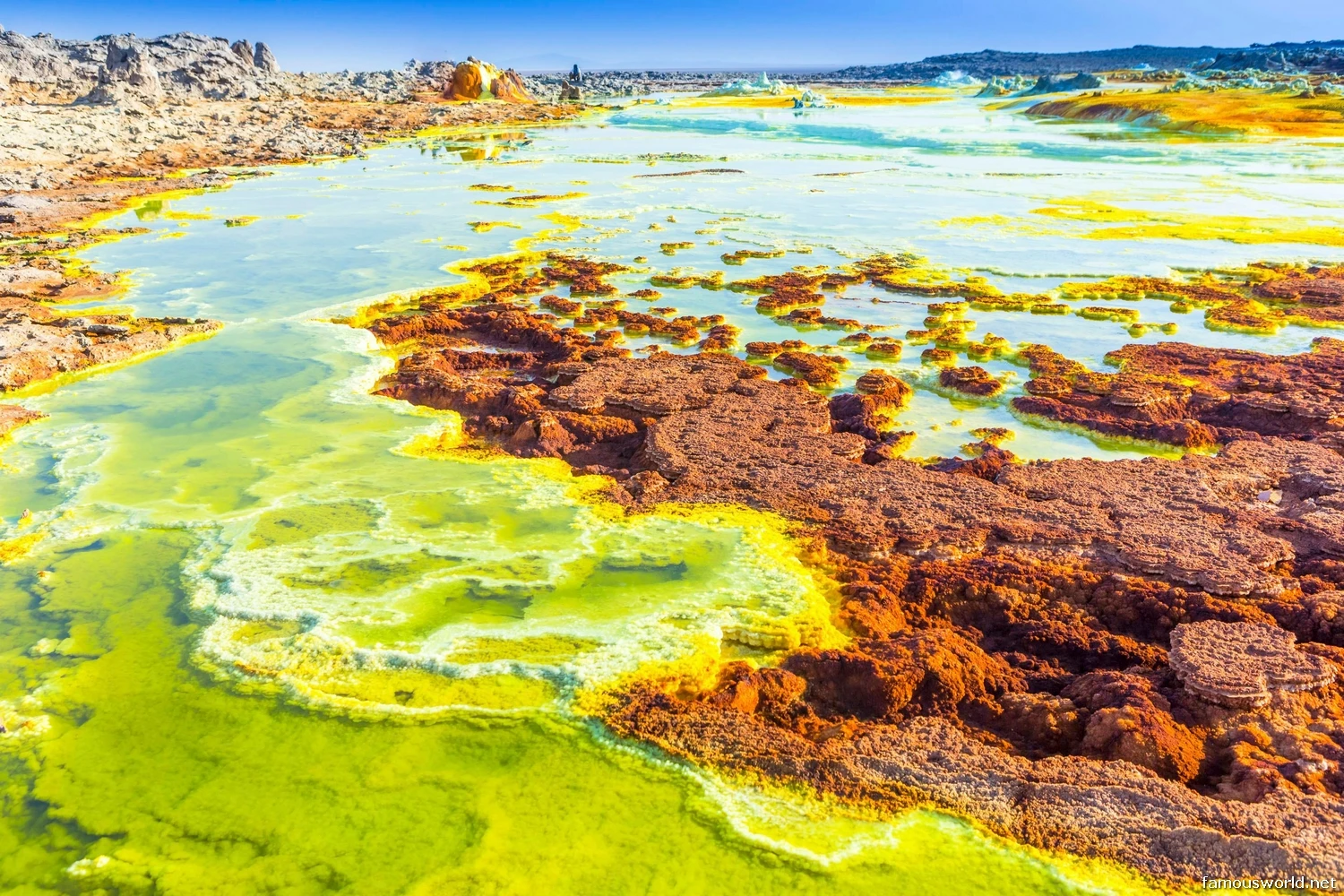
- Dallol Hydrothermal Fields: This is the most famous and visually stunning part of the depression. Dallol is one of the lowest subaerial volcanic vents in the world. Geothermal heat brings mineral-rich water to the surface, which evaporates to create a psychedelic landscape of bubbling hot springs, miniature geysers, and vast deposits of sulfur, salt, and other minerals in brilliant shades of yellow, green, orange, and red.
- Erta Ale Volcano: The region is home to Erta Ale, one of the world’s few continuously active volcanoes. Its main draw is its persistent lava lake, a mesmerizing and terrifying cauldron of molten rock that glows intensely against the night sky. Visiting it requires a challenging night trek to the crater rim.
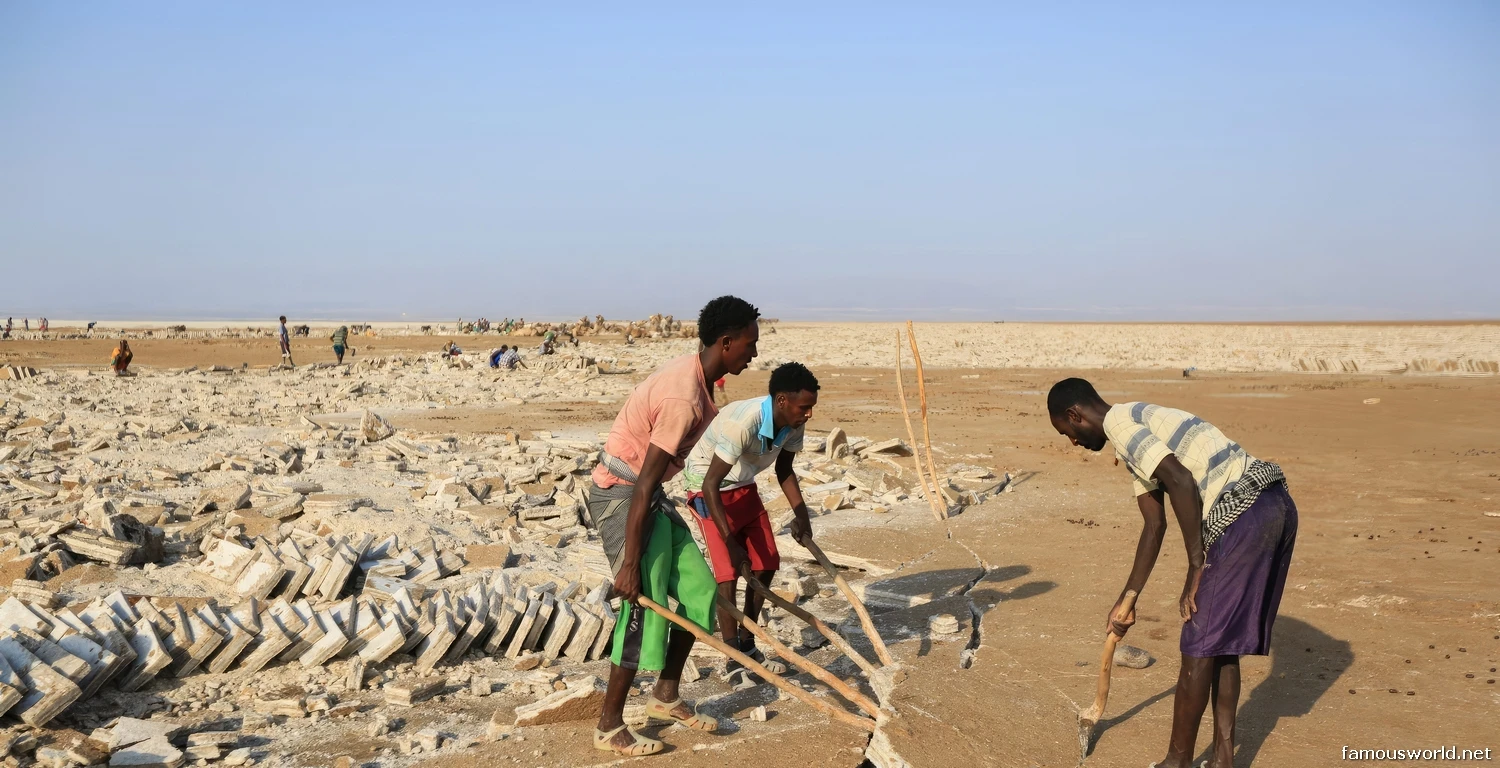
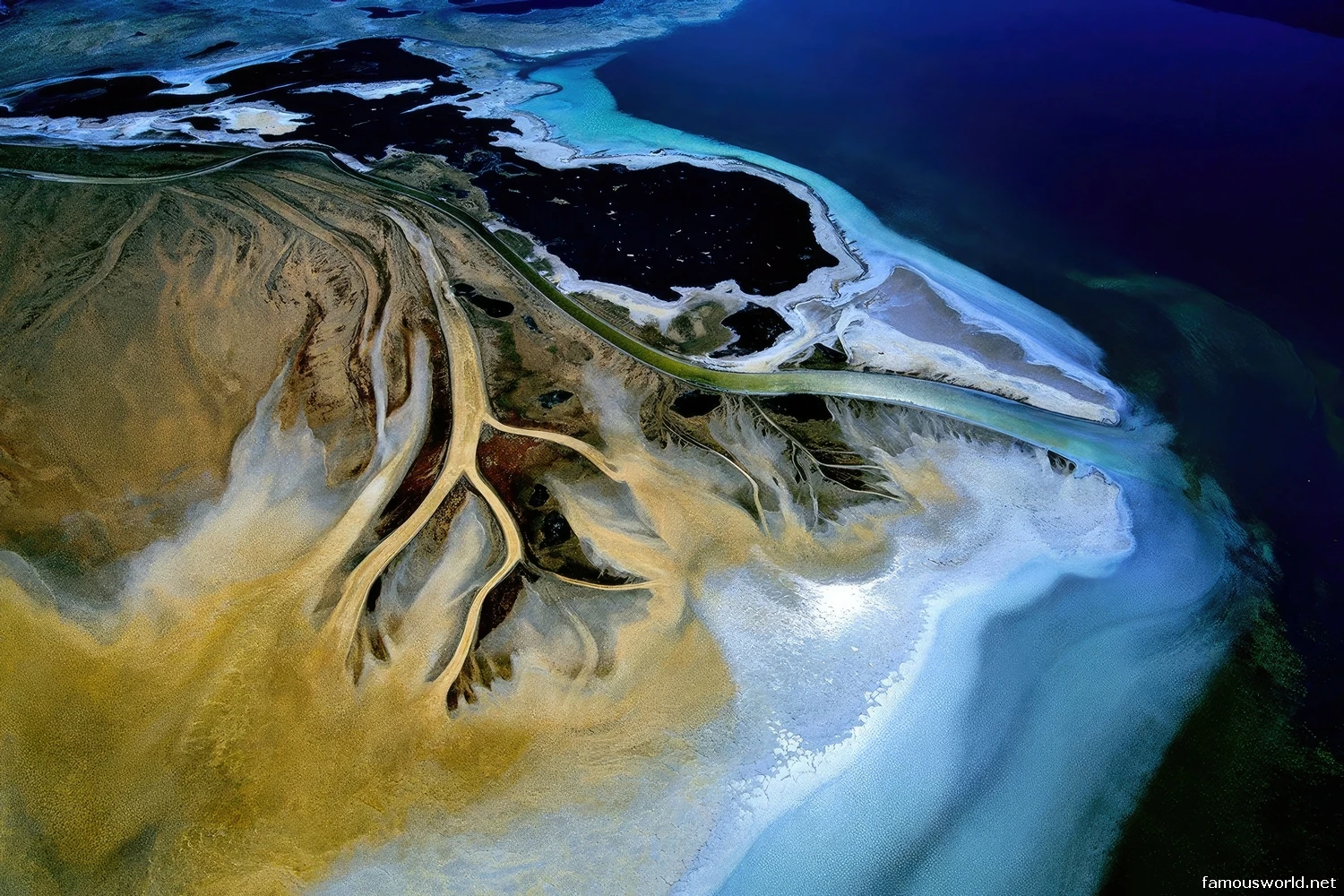
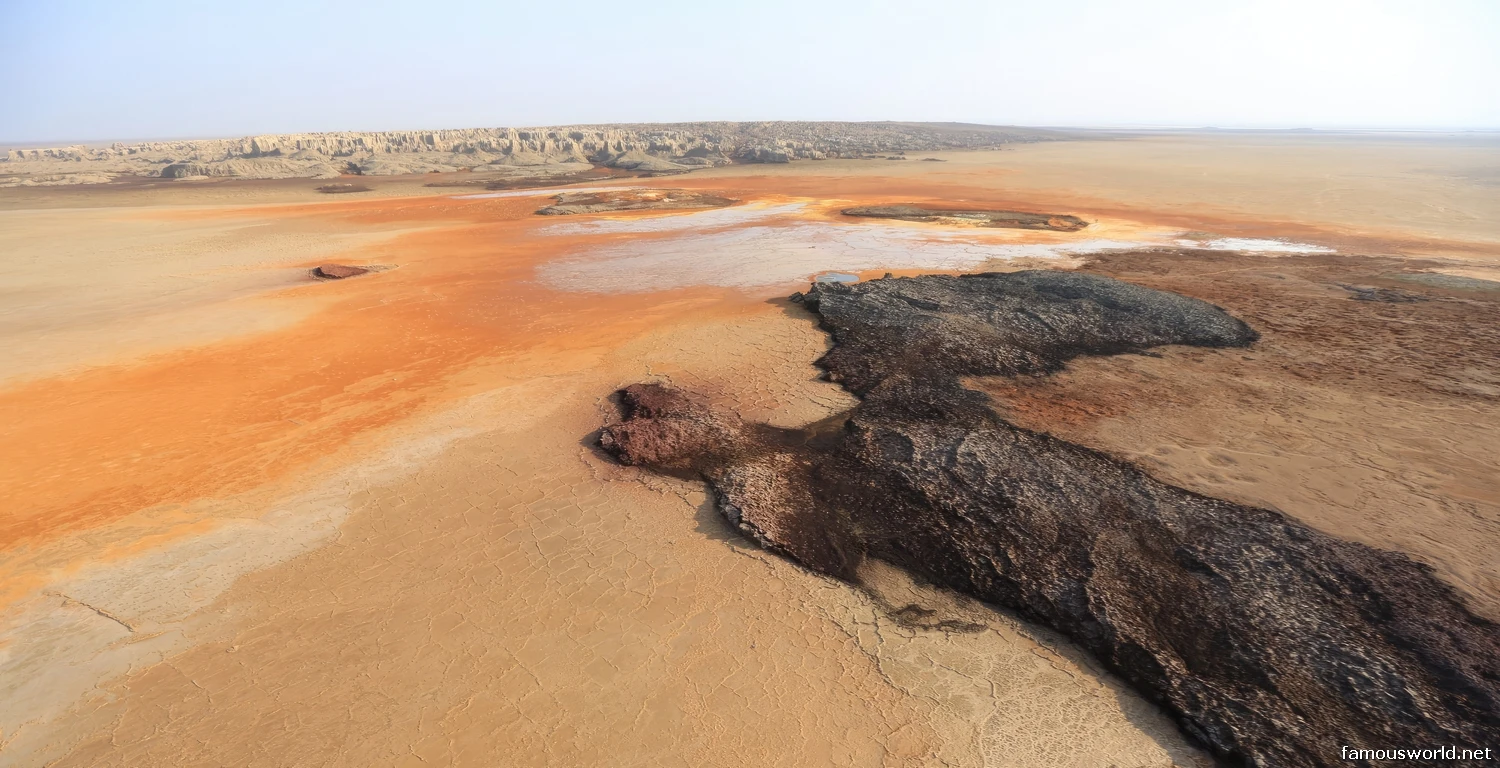
- Salt Flats and Lake Karum: Vast, blindingly white salt flats stretch across the depression, the bed of an ancient evaporated sea. Here, you can witness the Afar people engaging in the ancient and back-breaking tradition of salt mining, cutting slabs of salt from the earth and loading them onto camel caravans. The hypersaline Lake Karum (or Asale) offers spectacular reflections, especially at sunset.
- Afar Triangle Geology: The entire landscape is a product of the Afar Triple Junction, where the African, Somali, and Arabian tectonic plates are rifting apart. It is a place where you can witness geology in action, a new ocean in the process of being born.
What Makes It Famous
The Danakil Depression is famous for being one of the most extreme, alien, and geologically active environments on the surface of the Earth.
- The Hottest Place on Earth: It holds the record for the highest average year-round temperature for an inhabited location.
- A Living Geological Laboratory: It is one of the few places where the process of continental rifting can be observed on dry land, offering scientists a unique window into the processes that shape our planet.
- The “Cradle of Humanity”: The wider Afar region is world-renowned for its paleo-anthropological significance. In 1974, the famous 3.2-million-year-old fossil of “Lucy” (Australopithecus afarensis), an early ancestor of modern humans, was discovered here.
- The Alien Landscapes of Dallol: The vibrant, toxic, and surreal landscapes of the Dallol hydrothermal fields are unlike anywhere else on Earth and are the most iconic and photographed feature of the region.
Differences from Other Wonders
The Danakil Depression offers an experience that is fundamentally different from any of Ethiopia’s other famous sites.
- Extreme Natural Environment vs. Historical Sites: While Axum and Lalibela are wonders of human history, faith, and architecture, the Danakil is a wonder of raw, powerful, and inhospitable nature. It is a journey into a geological spectacle, not a historical one.
- A Lowland Desert vs. a Highland Plateau: The Danakil is one of the lowest and hottest places on Earth. This is a complete contrast to the Simien Mountains National Park, which is a cool, high-altitude mountain plateau famous for its trekking and unique highland wildlife.
- An Unforgiving Expedition vs. Accessible Tourism: A trip to the Danakil is a genuine expedition that requires roughing it. This is very different from the more comfortable and accessible tourism infrastructure found in the historic cities of the northern circuit.