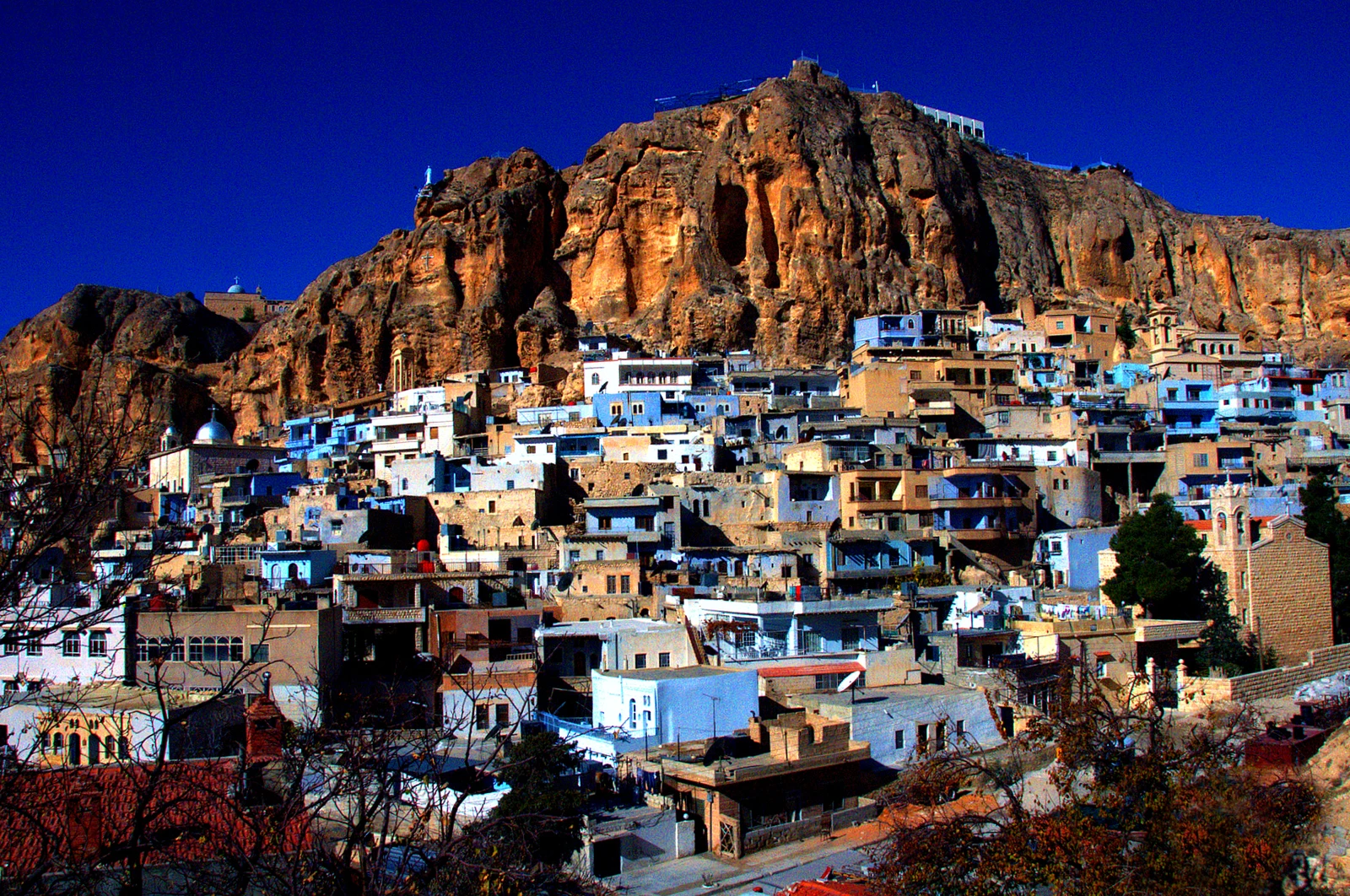
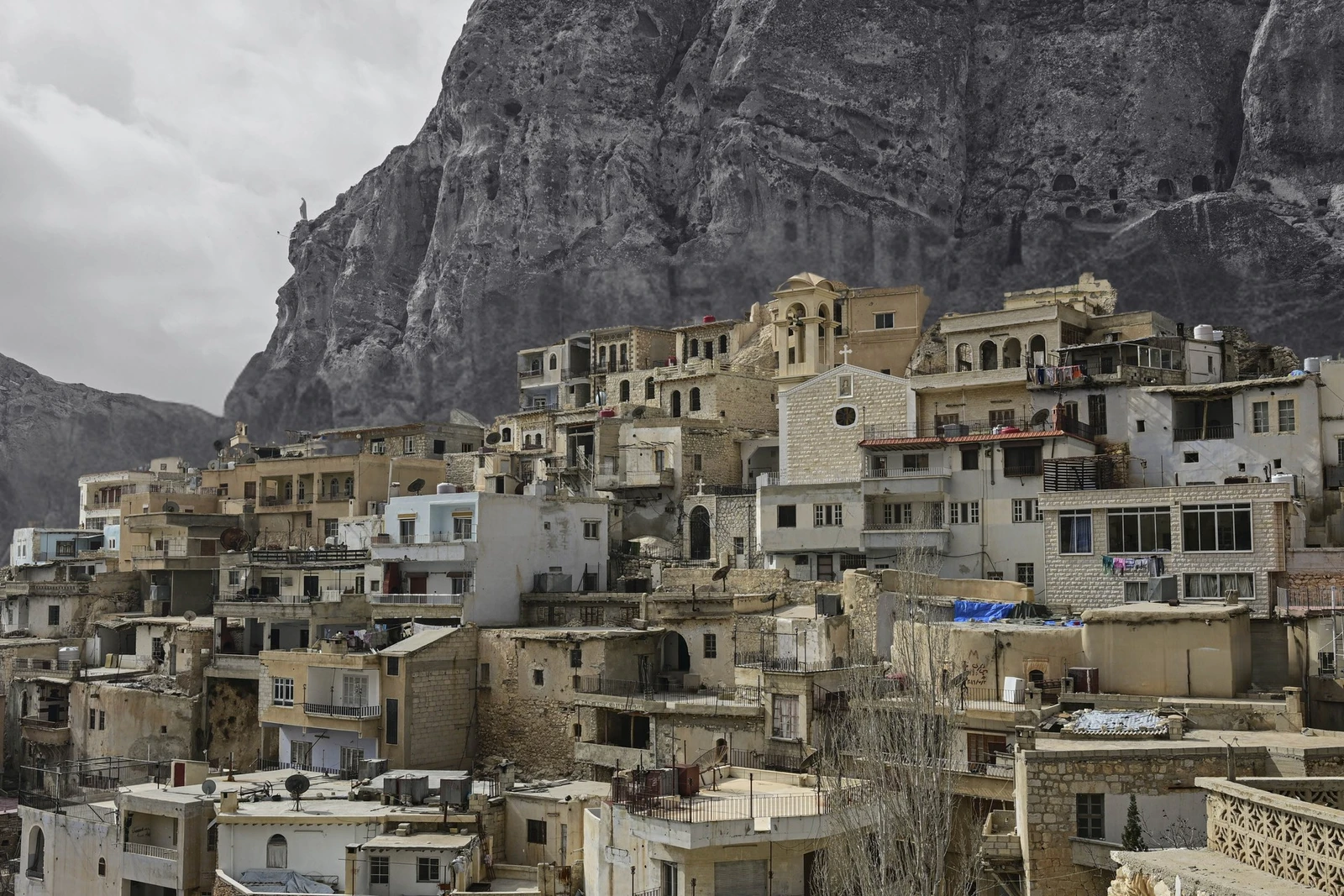
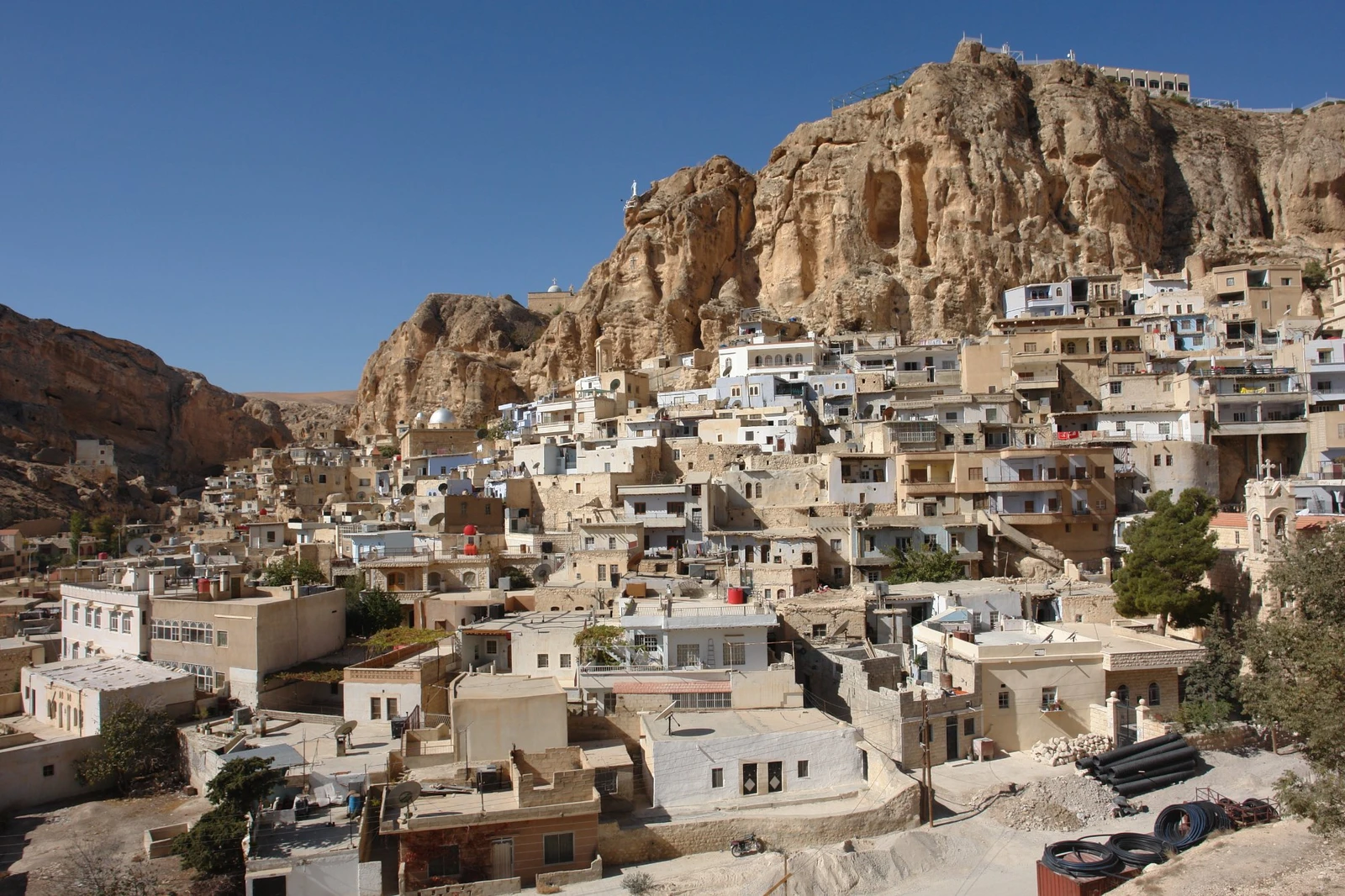
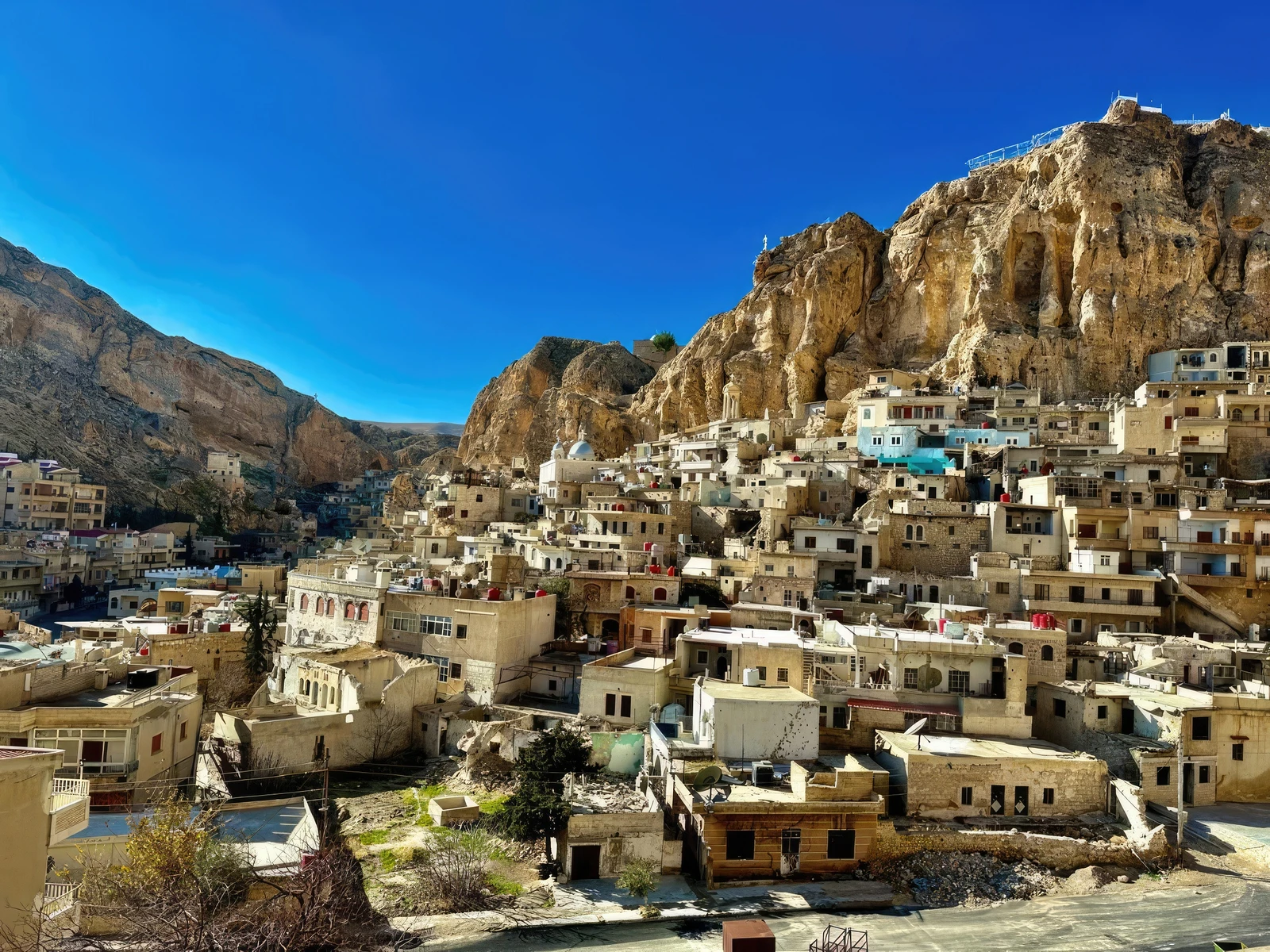
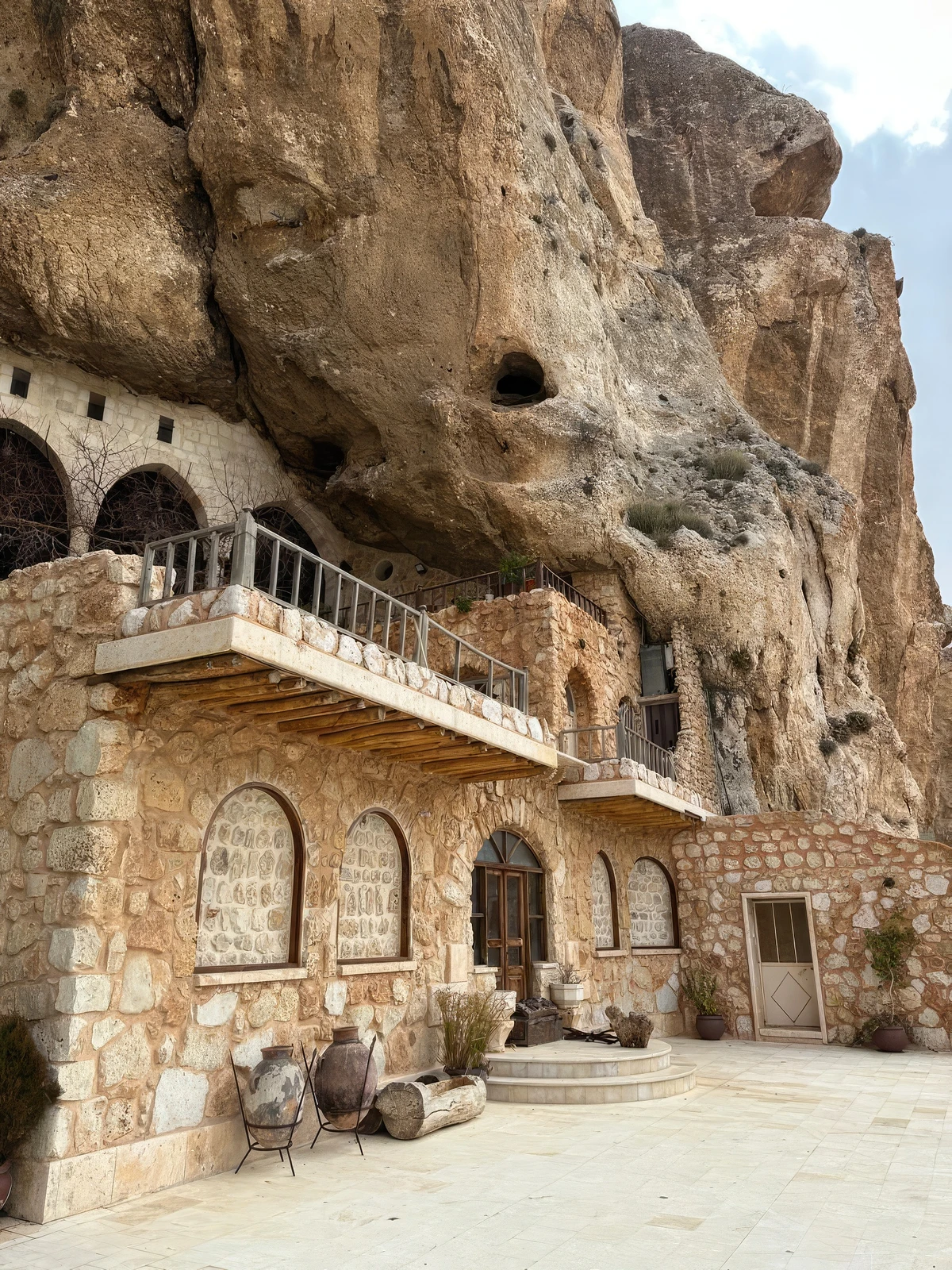
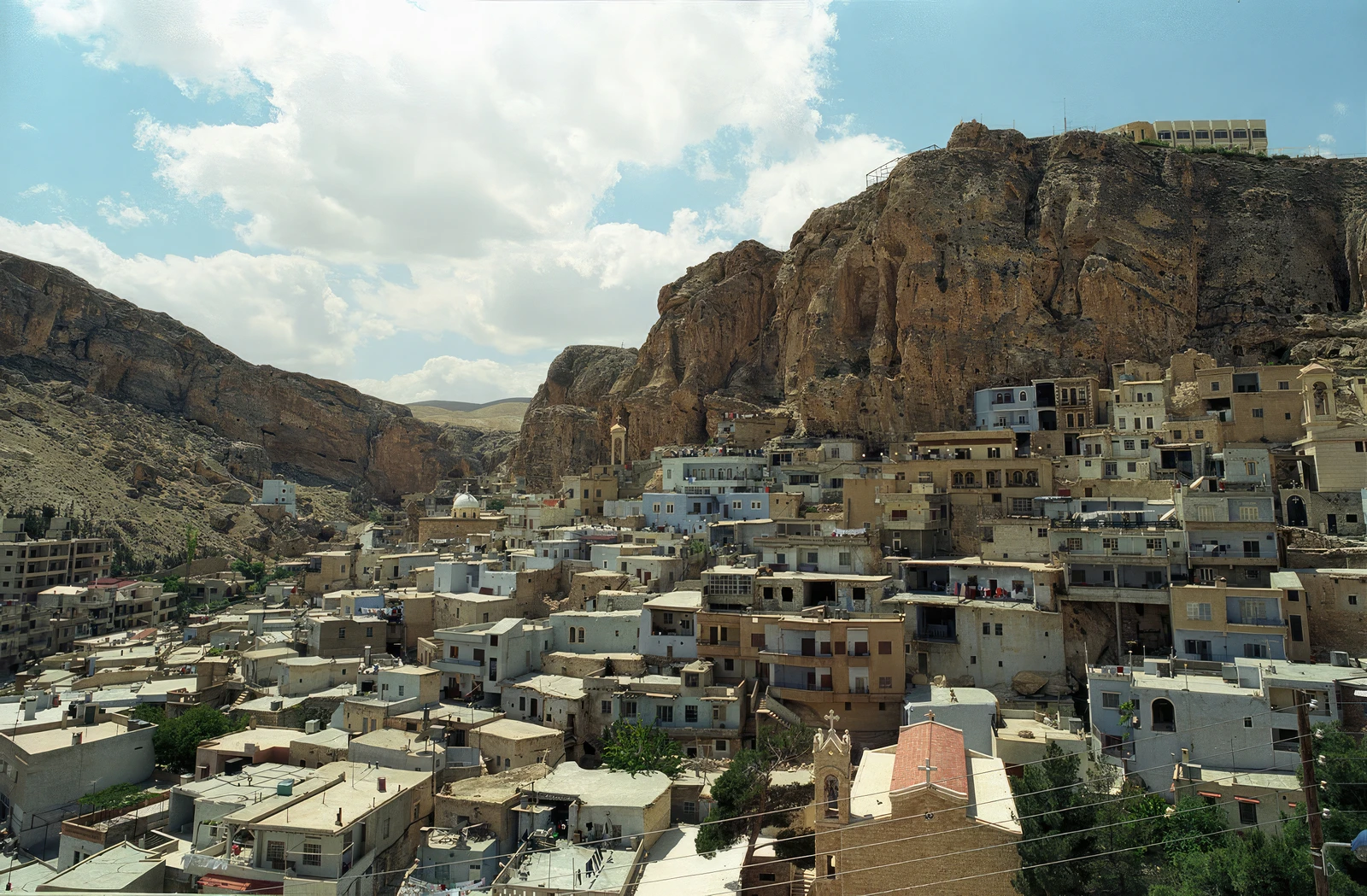
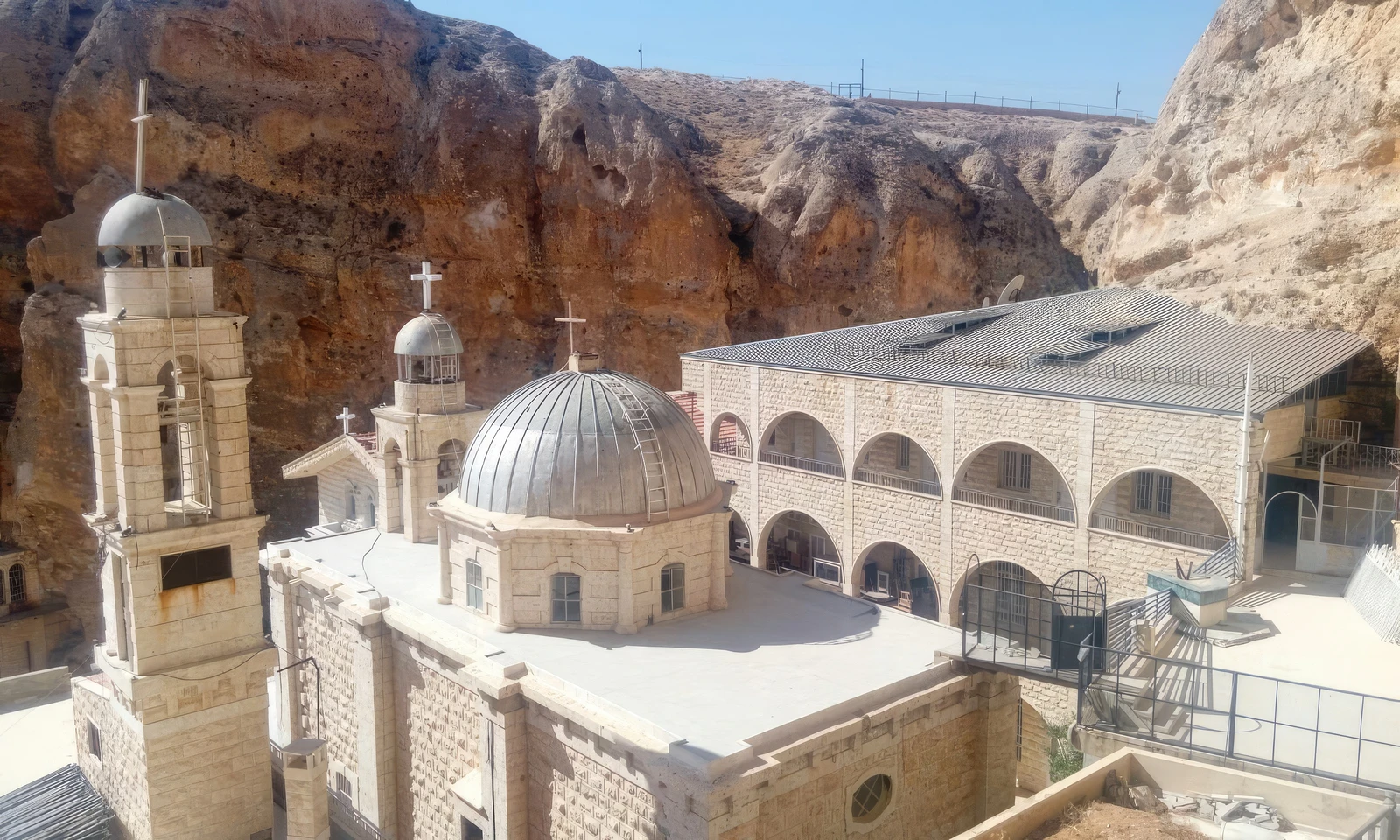

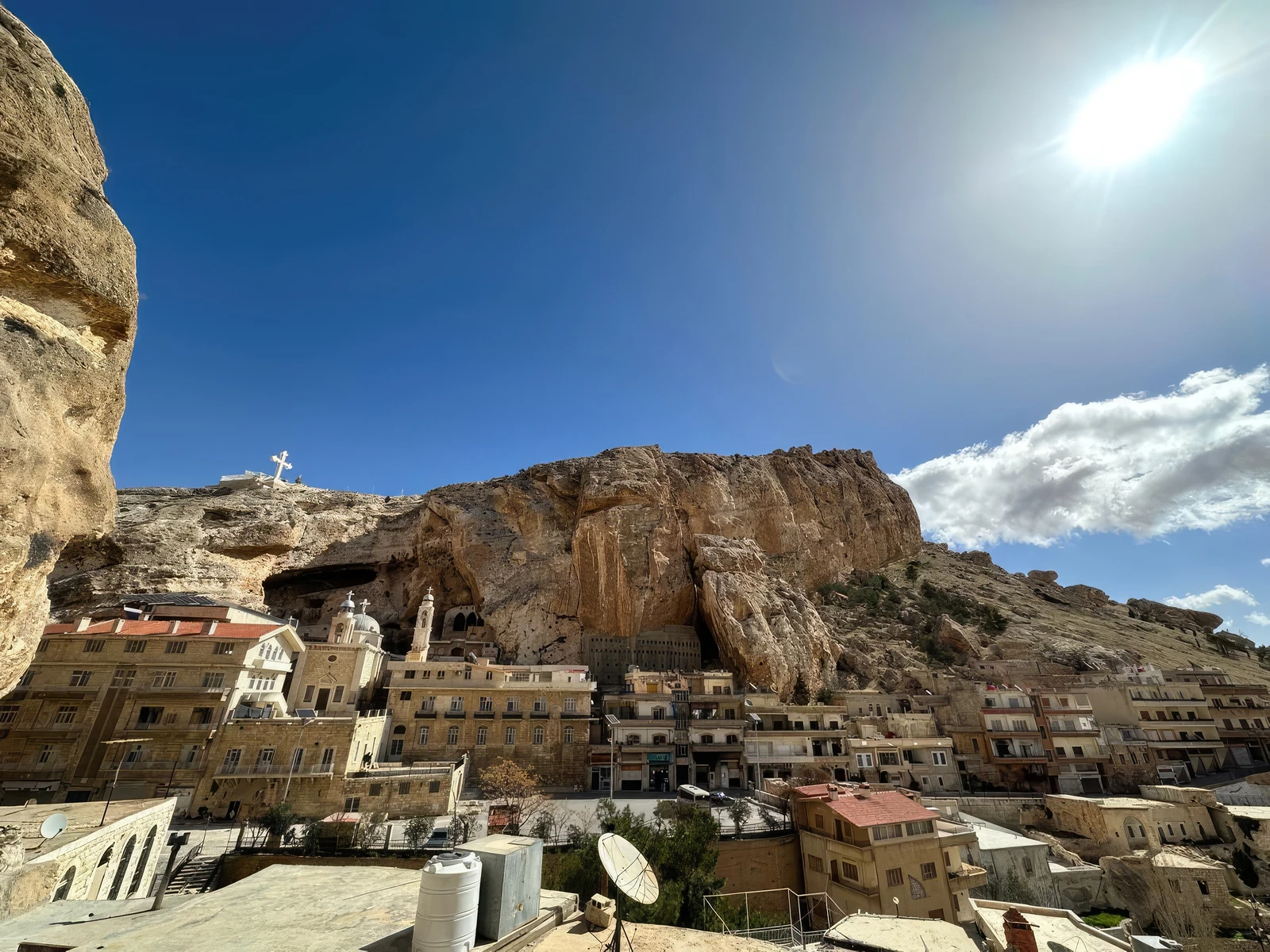
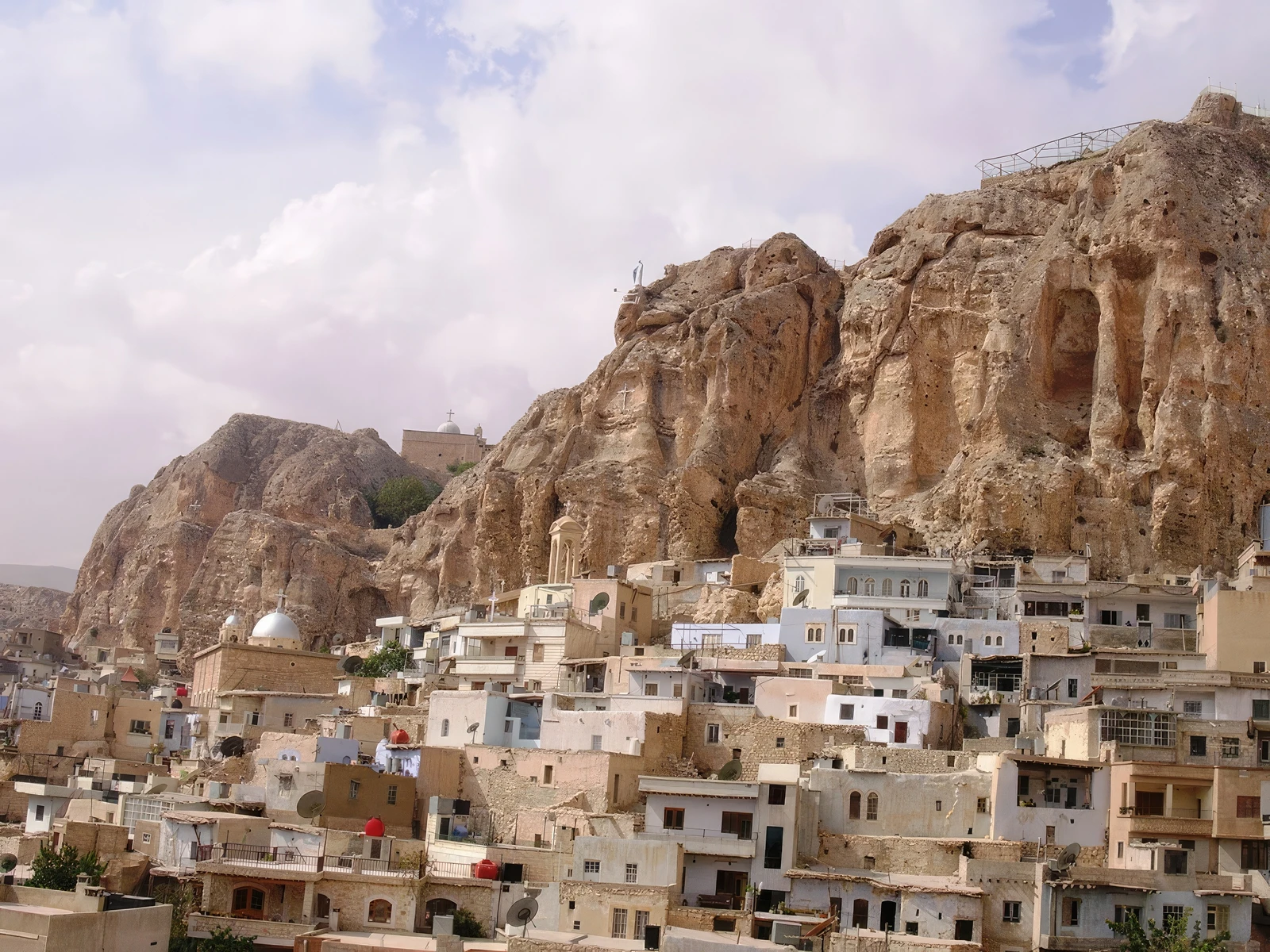
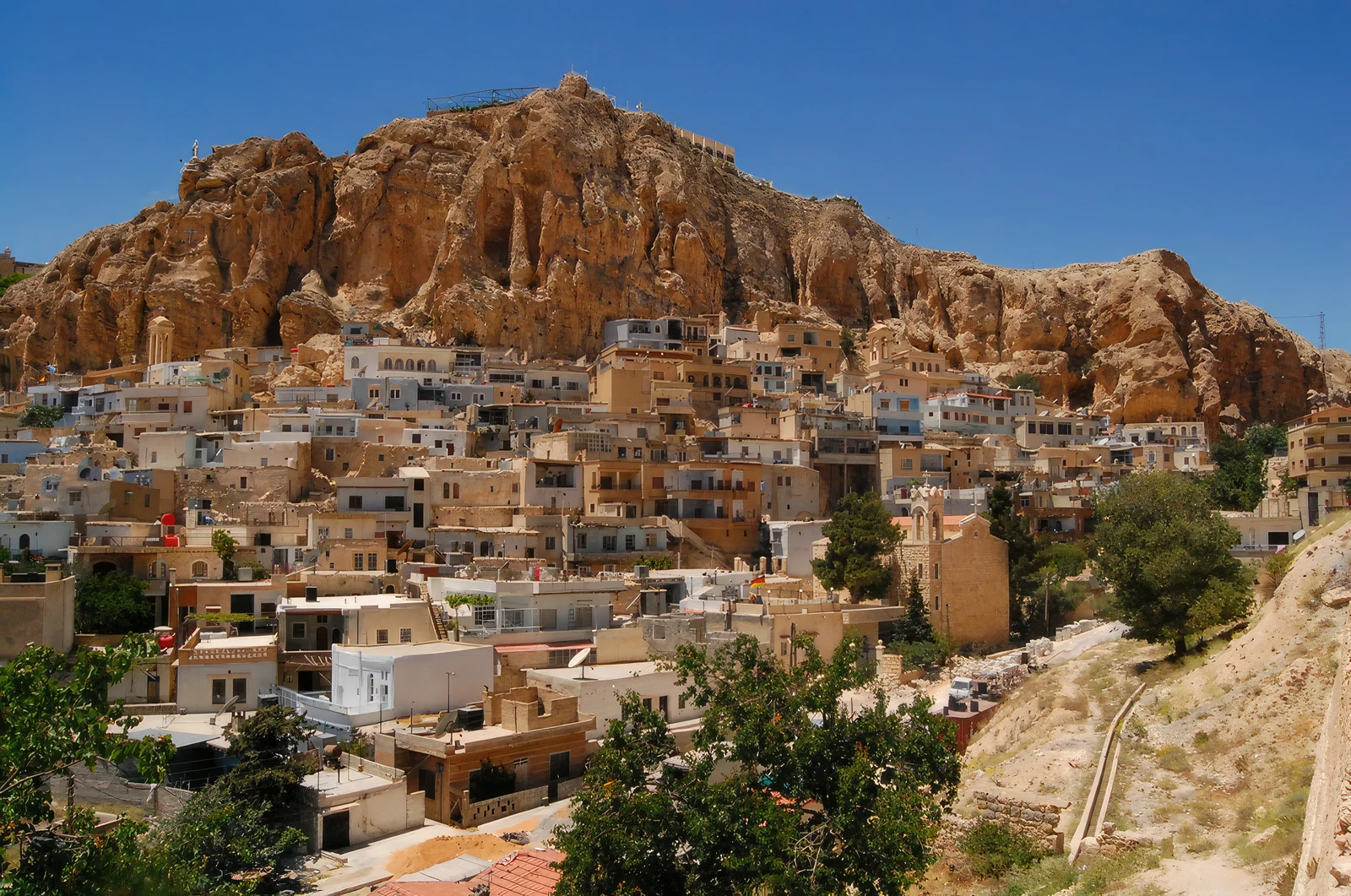
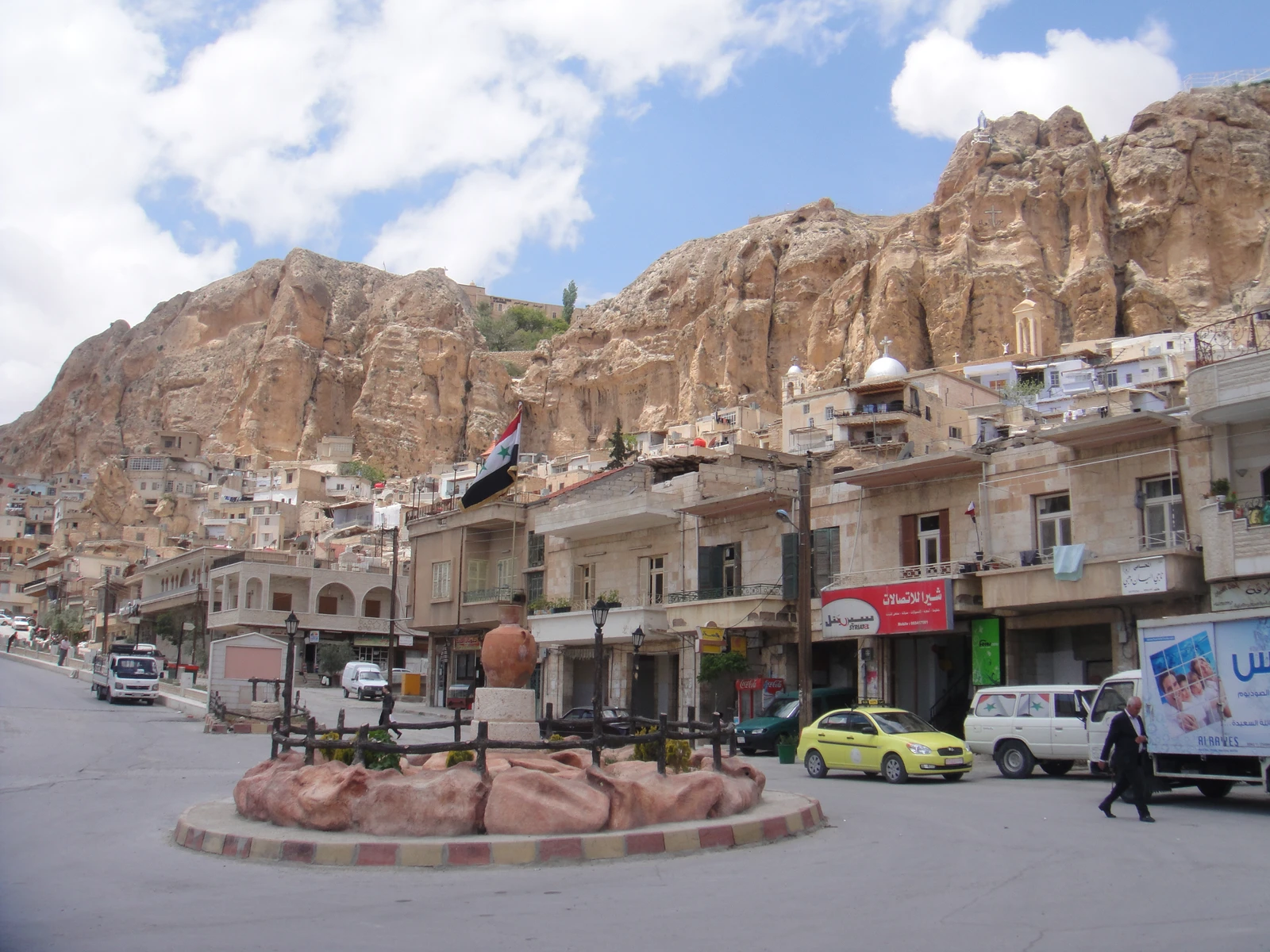
Maaloula is a historic town in Syria renowned for its unique landscape and linguistic heritage. It stands as a living testament to ancient history, blending deeply religious significance with a remarkable, resilient culture.
Listen to an introduction about Maaloula

Name and Address
- Name: Maaloula (Arabic: مَعلُولَا), meaning “entrance” in Aramaic.
- Address: Located in the Rif Dimashq Governorate in southwestern Syria, approximately 56 kilometers (35 miles) northeast of Damascus.
How to Get There
Maaloula is most commonly accessed from Damascus.
- By Car/Taxi: The town is a scenic drive from Damascus. Many tour operators offer half-day trips that include transportation.
- By Minibus: The search results suggest that public minibuses also service the town from Damascus.
- Walking: The dramatic landscape includes rock passages and paths, making walking a key part of the experience within the town.
Landscape and Architecture
The town’s appearance is one of its most striking features.
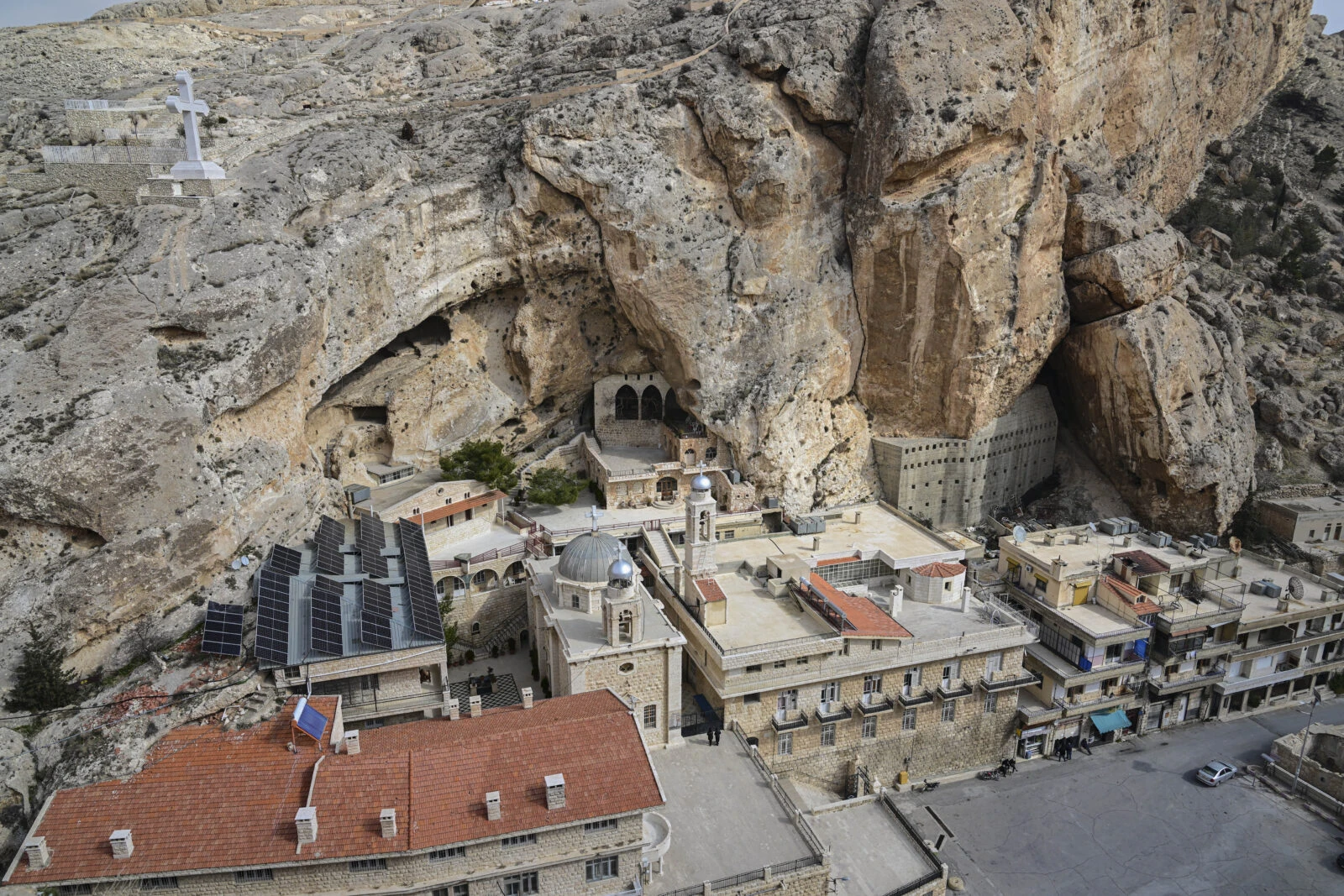
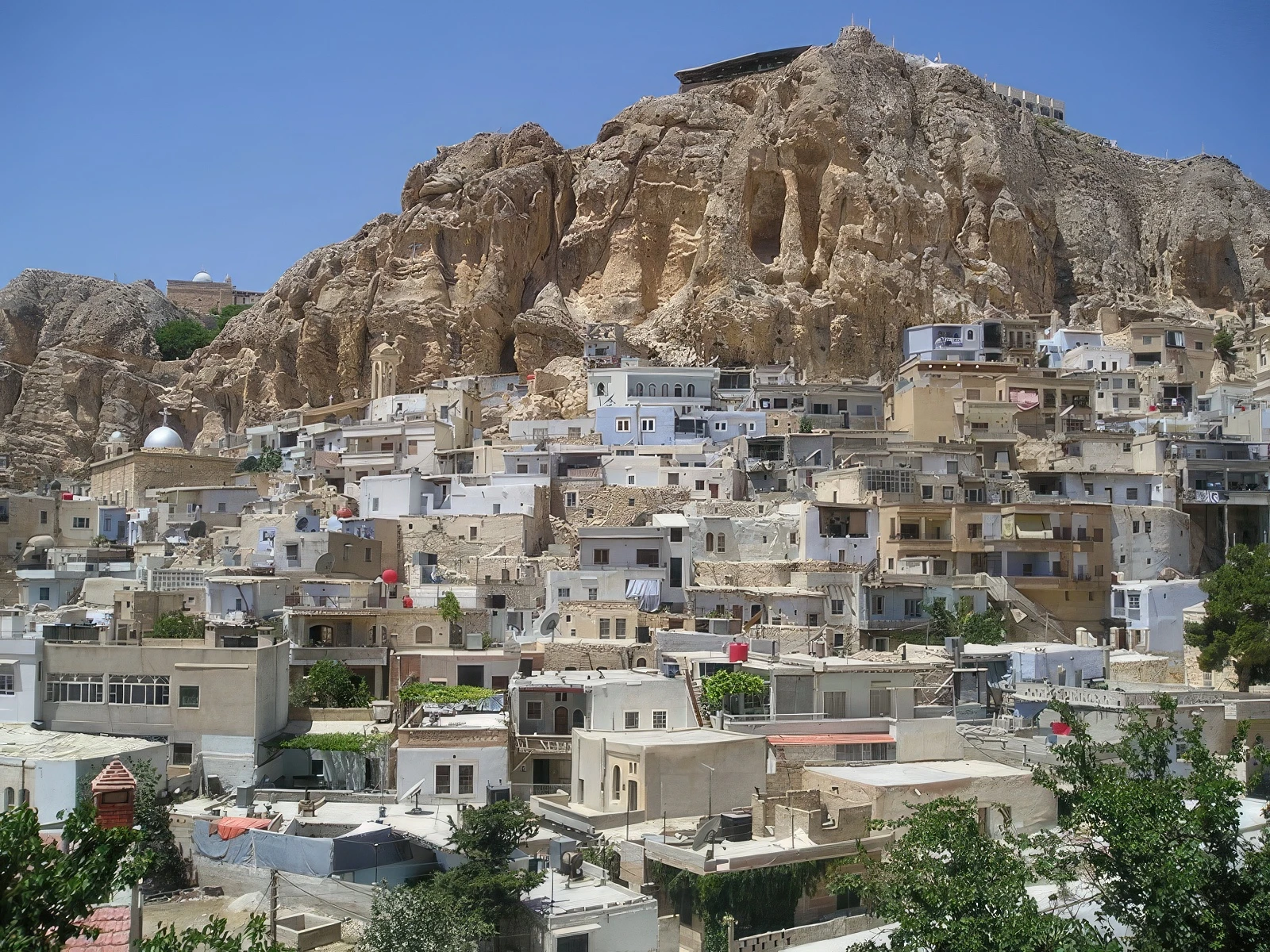
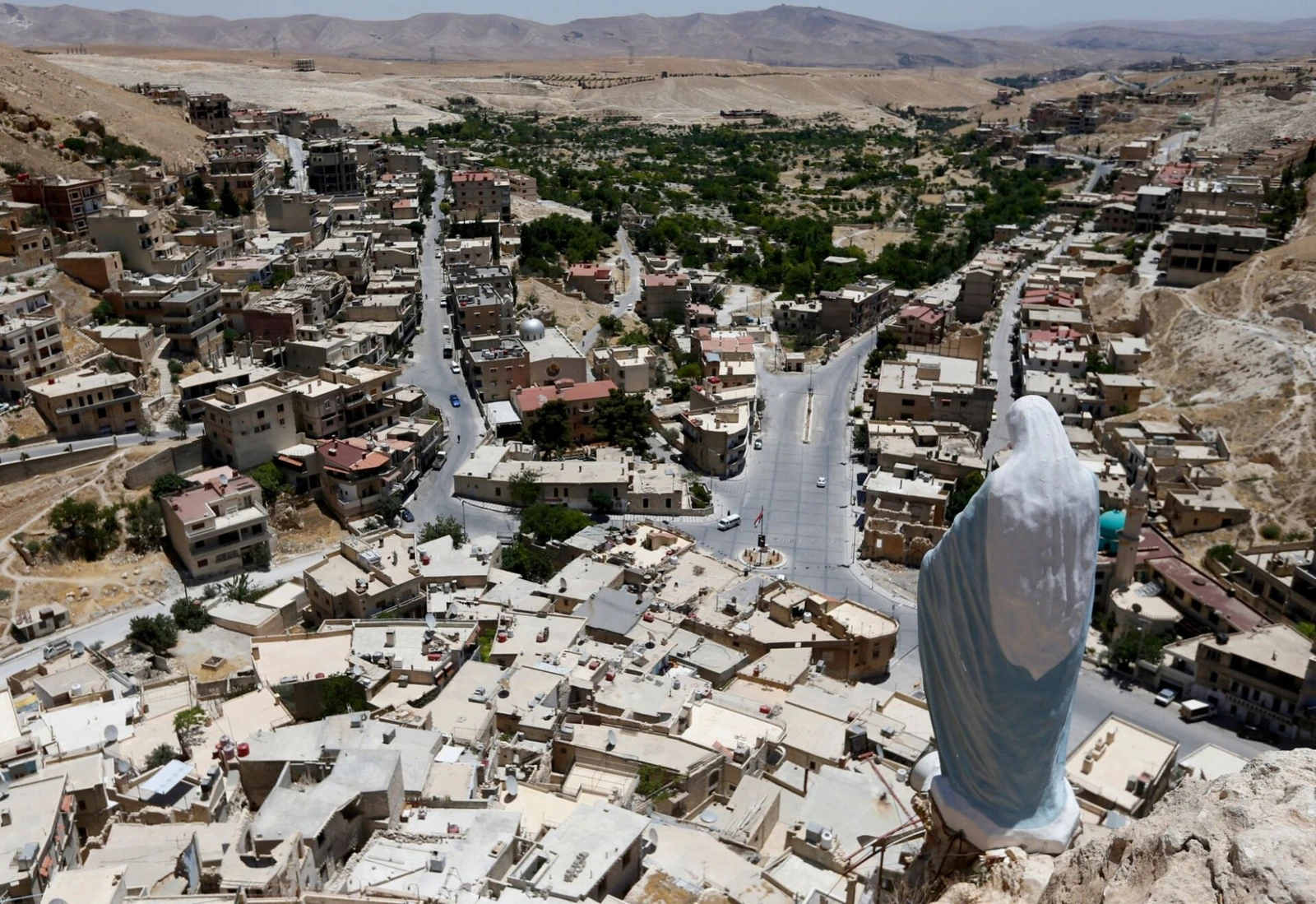
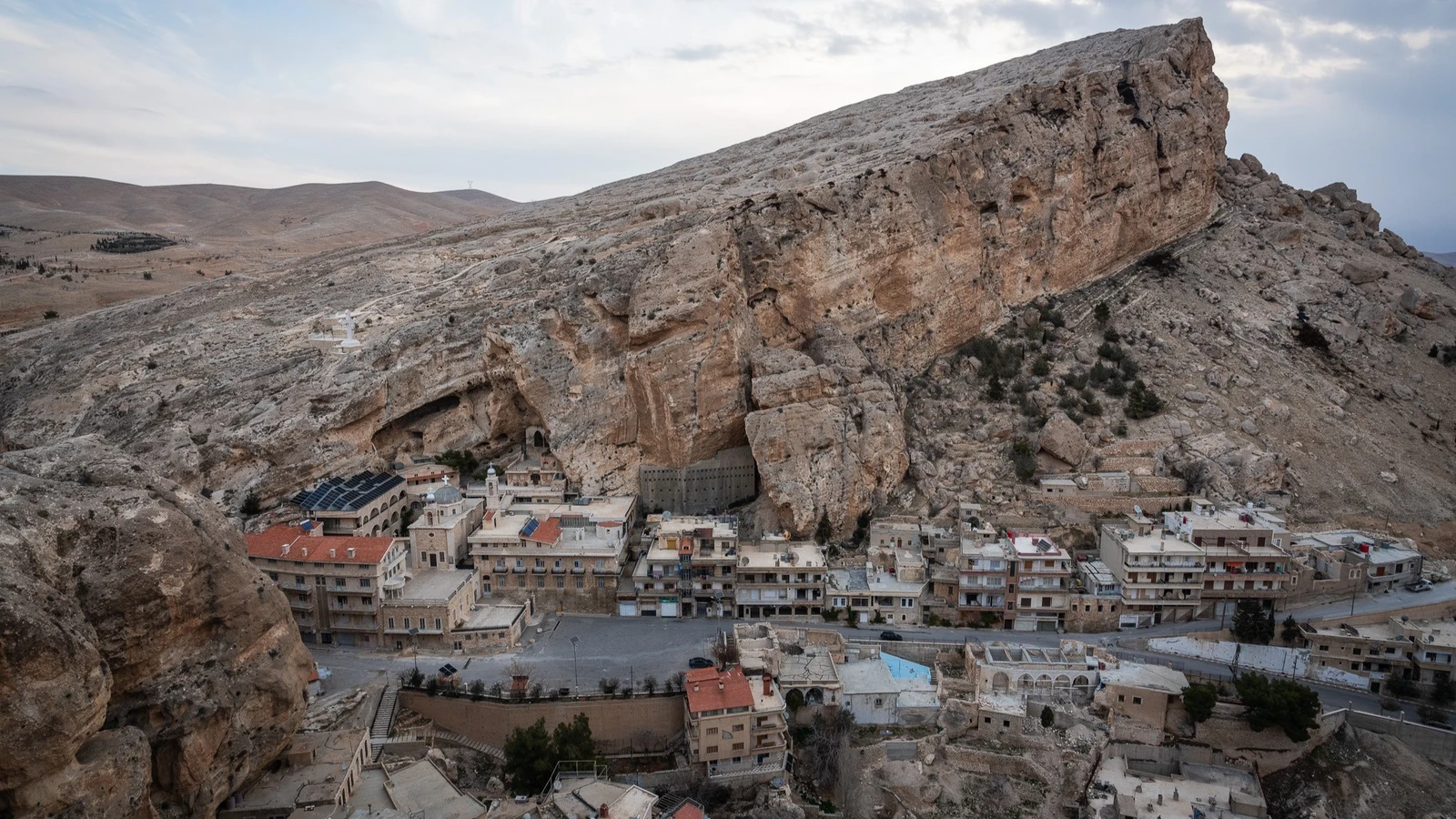
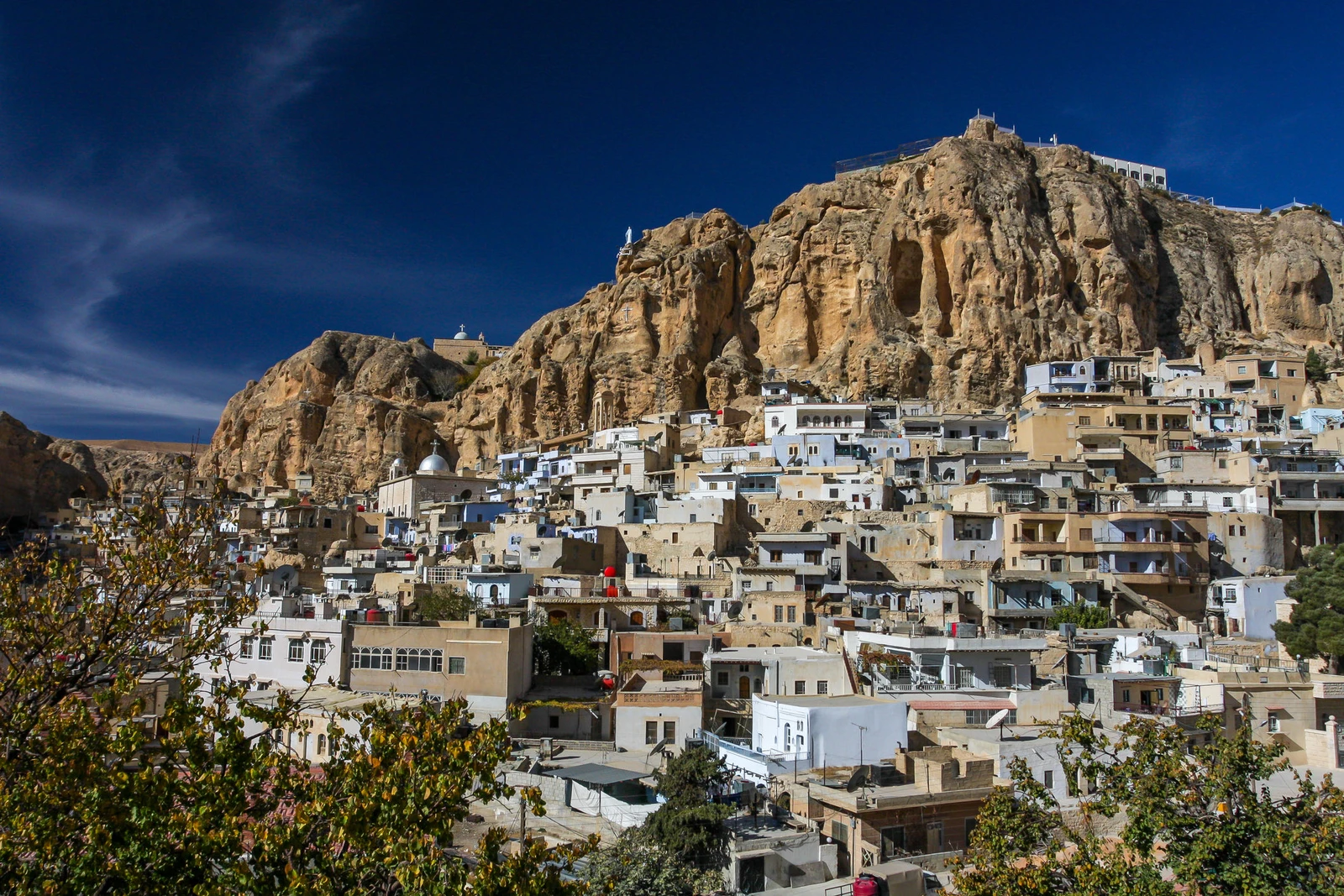
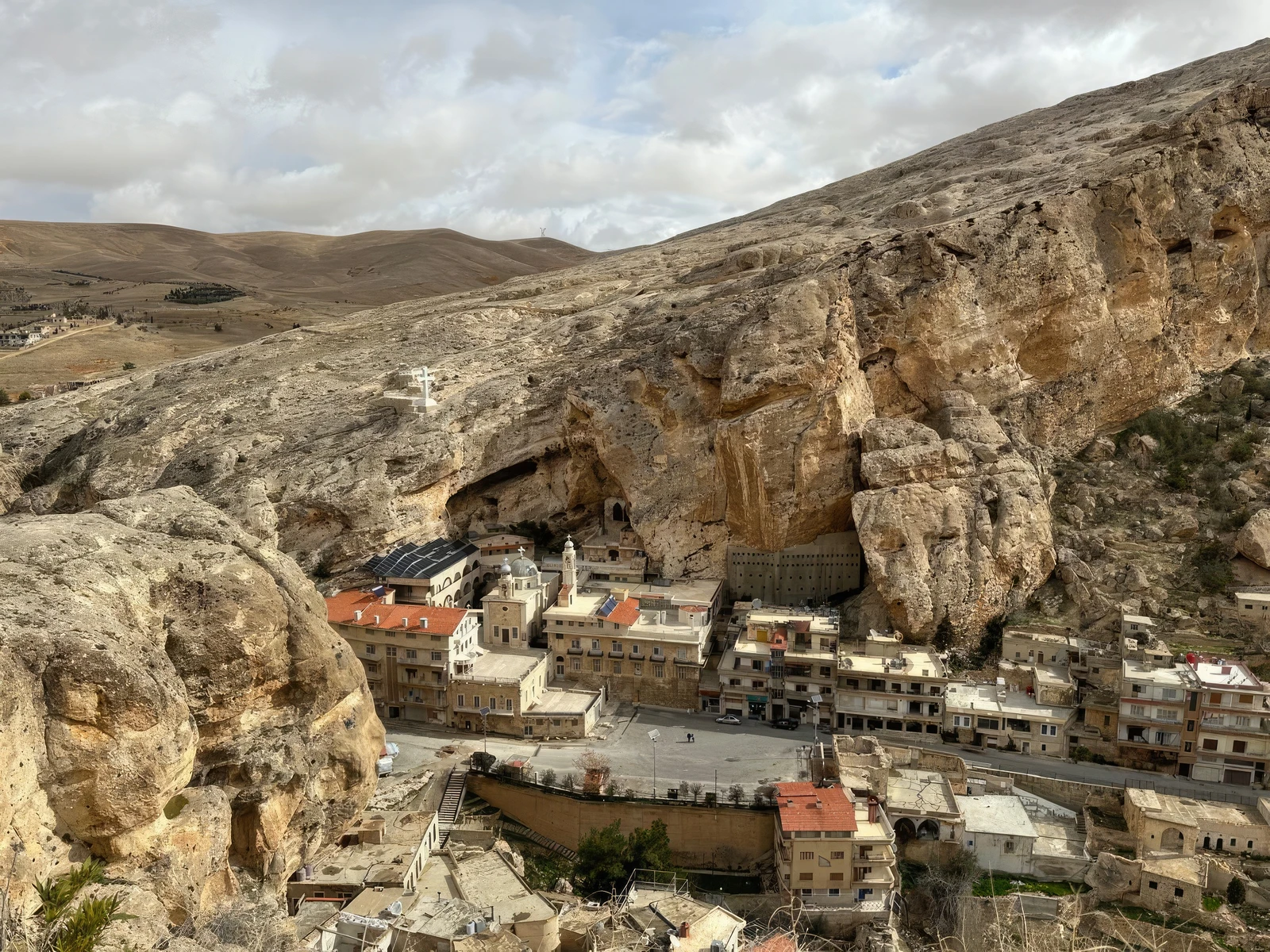
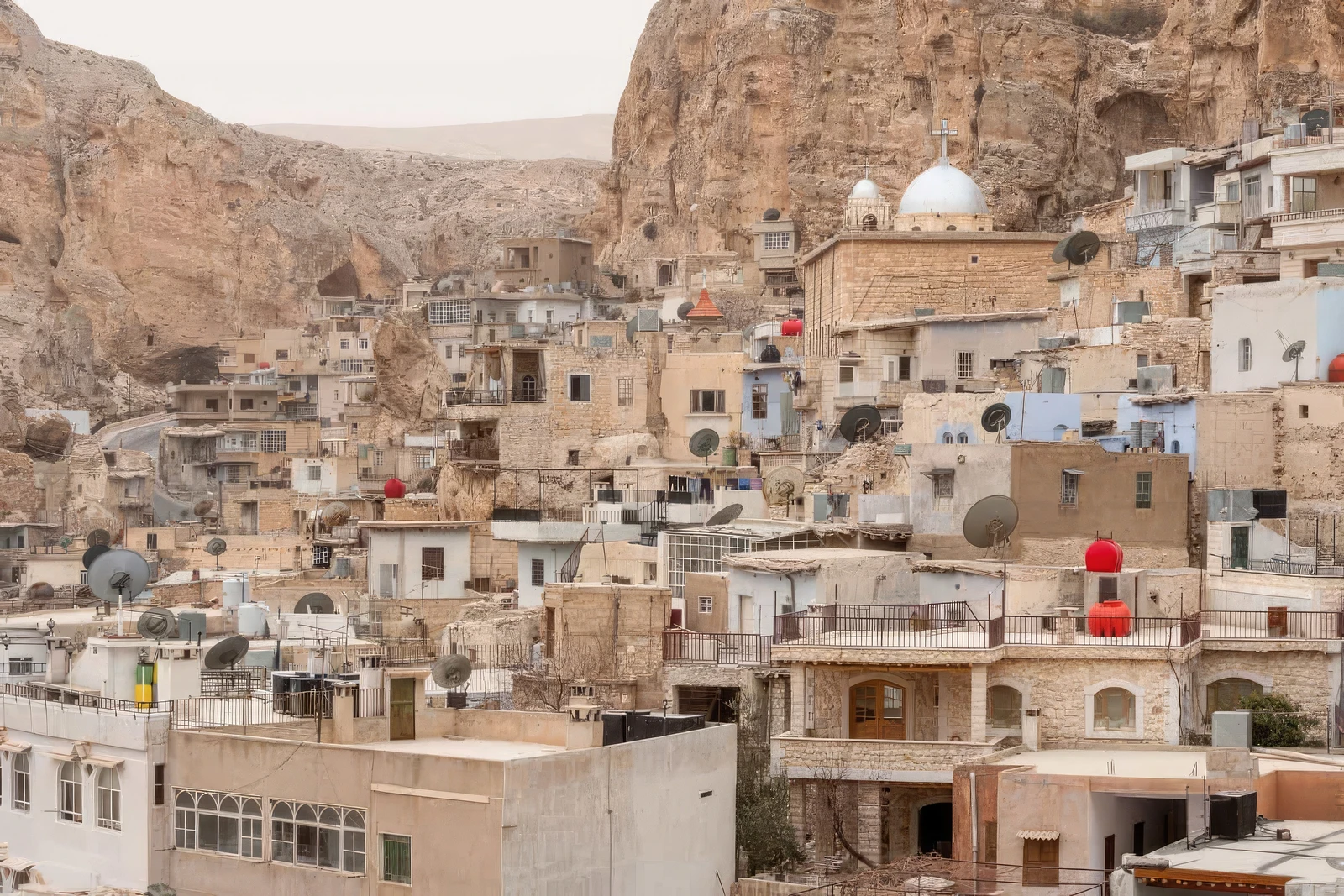
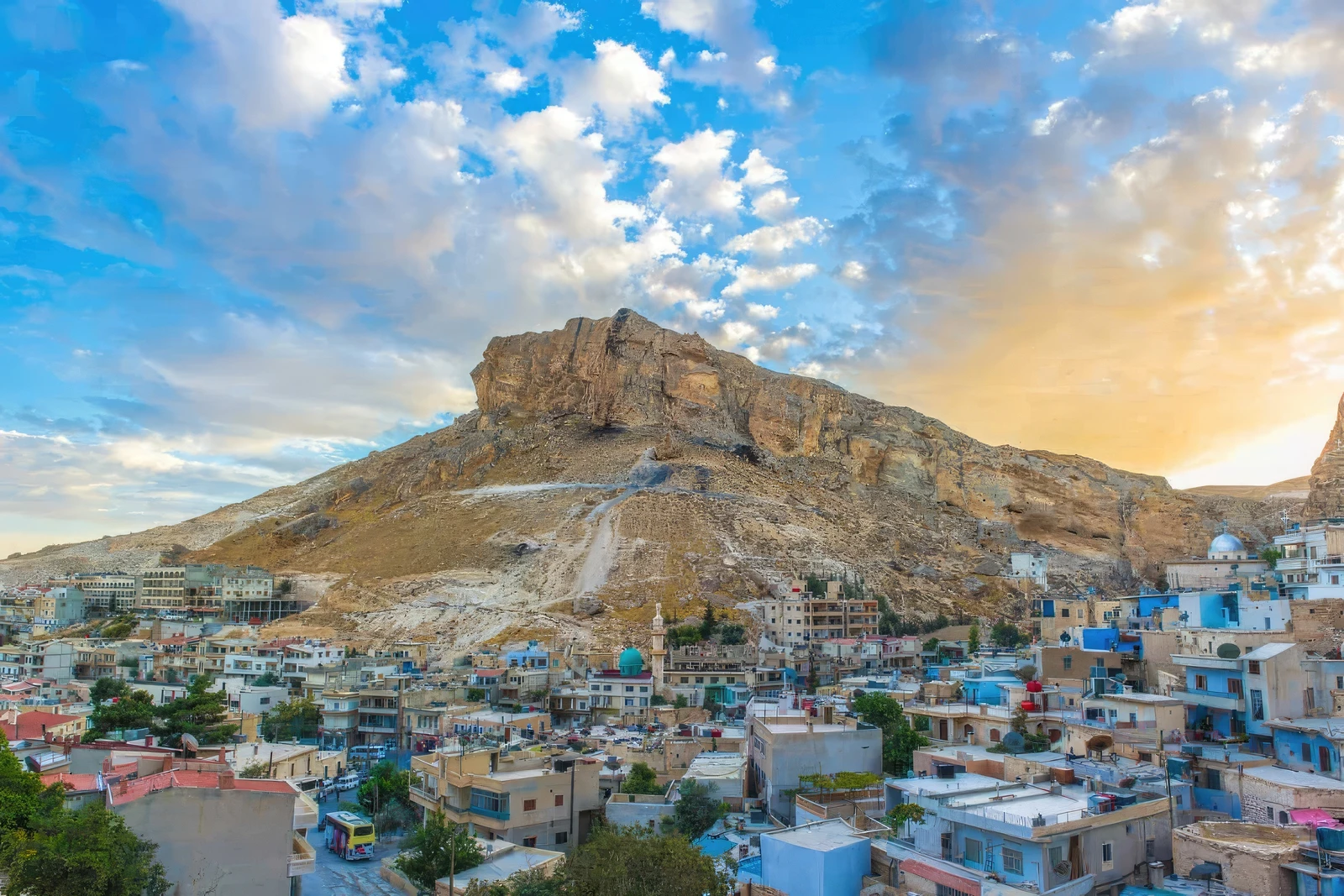
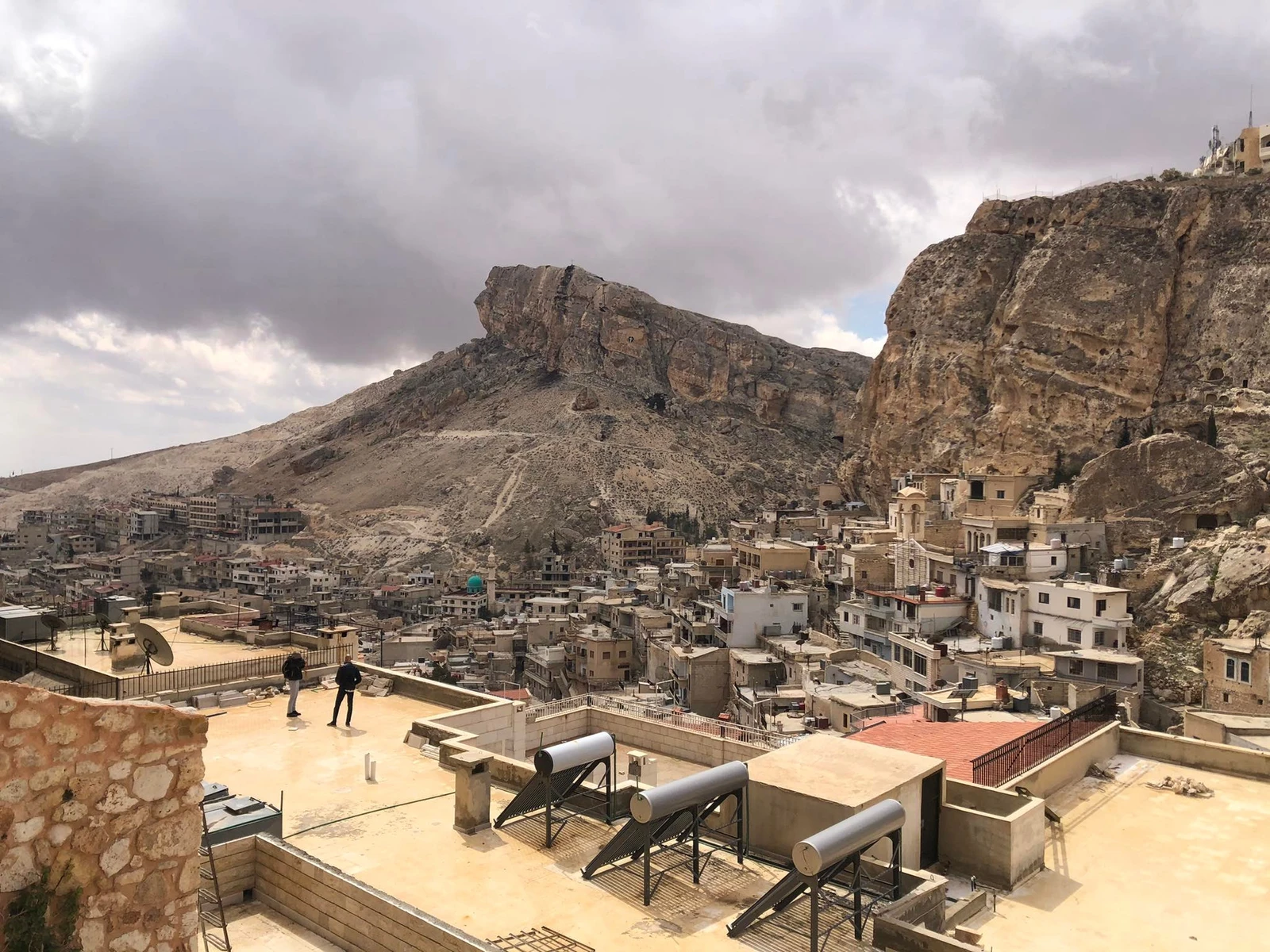
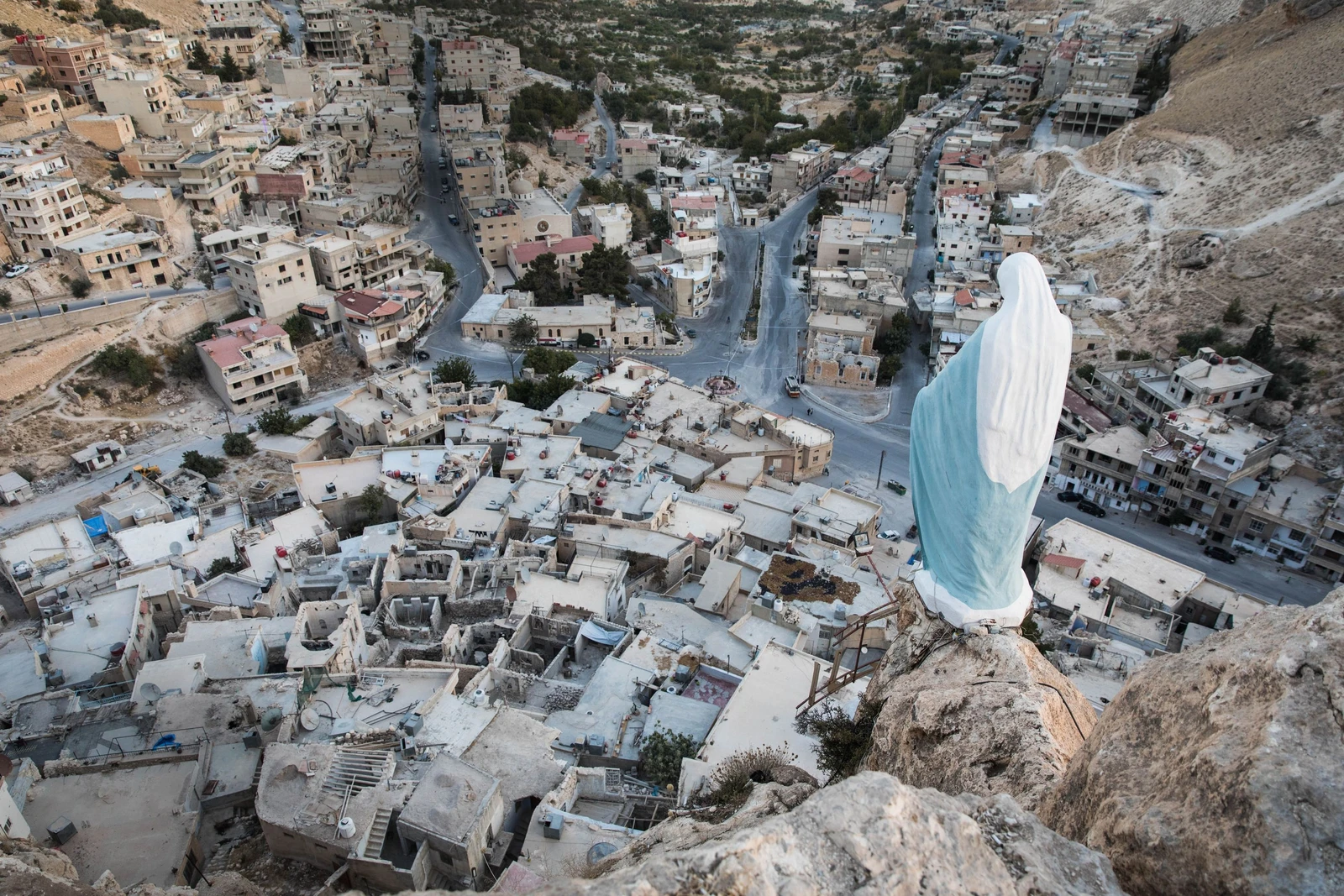
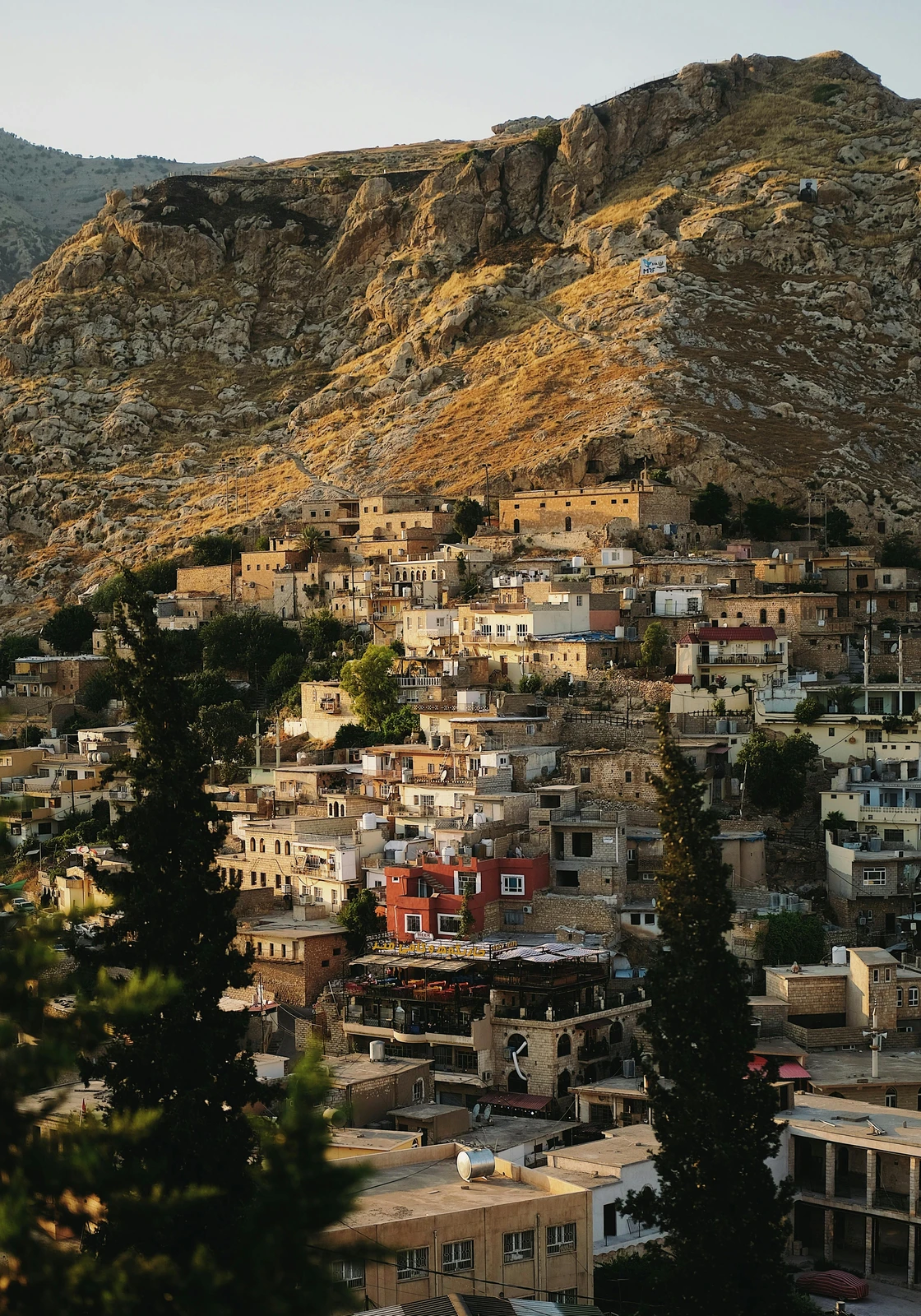
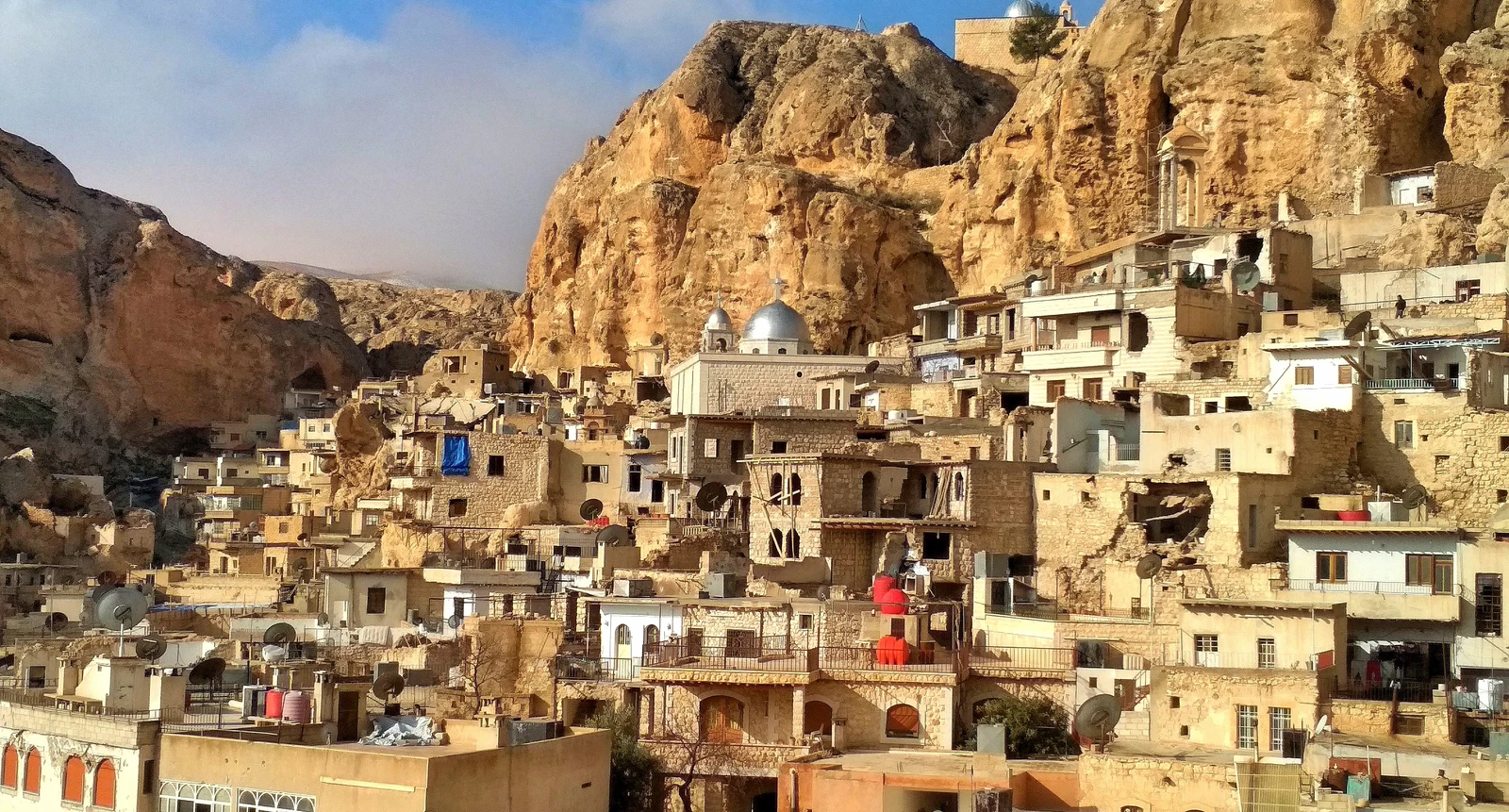
- Landscape: Perched on the rugged slopes of the Qalamoun Mountains at an altitude of over 1,500 meters, Maaloula is built directly into a mountainside. The surrounding area features dramatic rock formations, cliffs, and a narrow rock-cut passage.
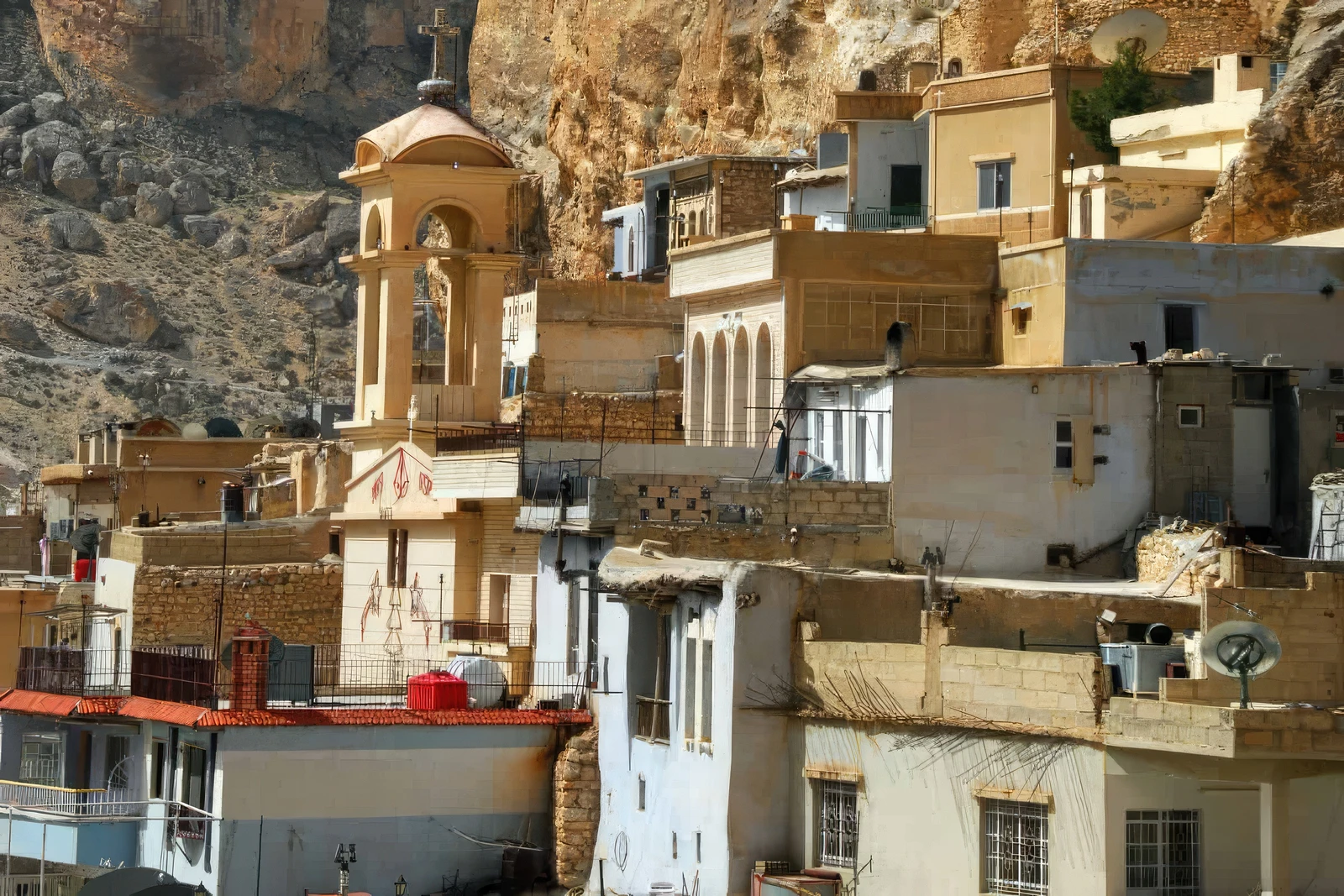
- Architecture: The town is famous for its unique stepped architecture, with houses seemingly “stacked” on top of one another. The traditional homes, often painted in light blue and white, appear to be a natural extension of the mountain itself.
What Makes It Famous
Maaloula’s fame is rooted in a combination of its living culture and ancient history.
- Aramaic Language: It is one of the last remaining places in the world where a form of Western Neo-Aramaic is still spoken. This is considered to be a living descendant of the language spoken by Jesus Christ.
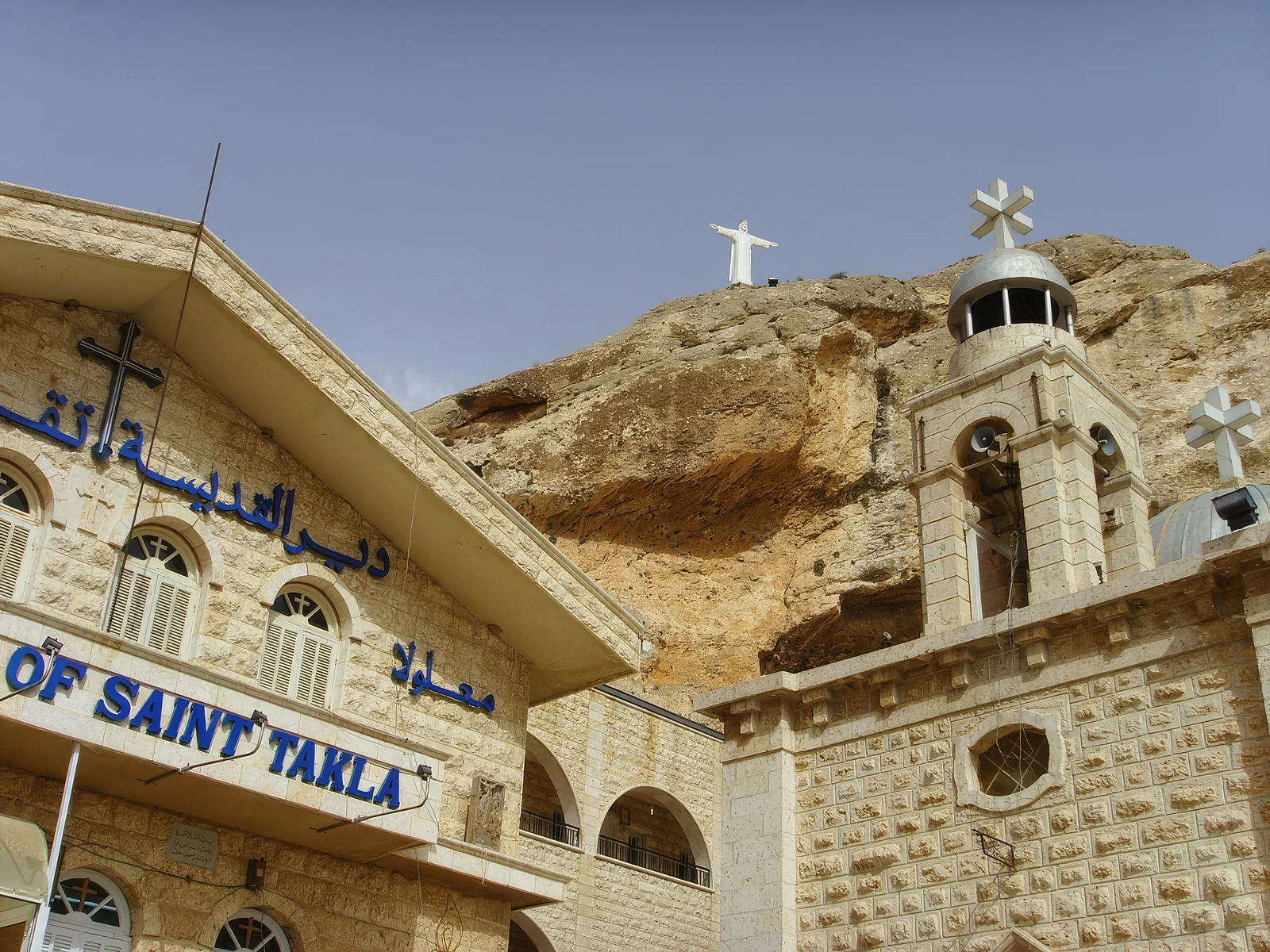
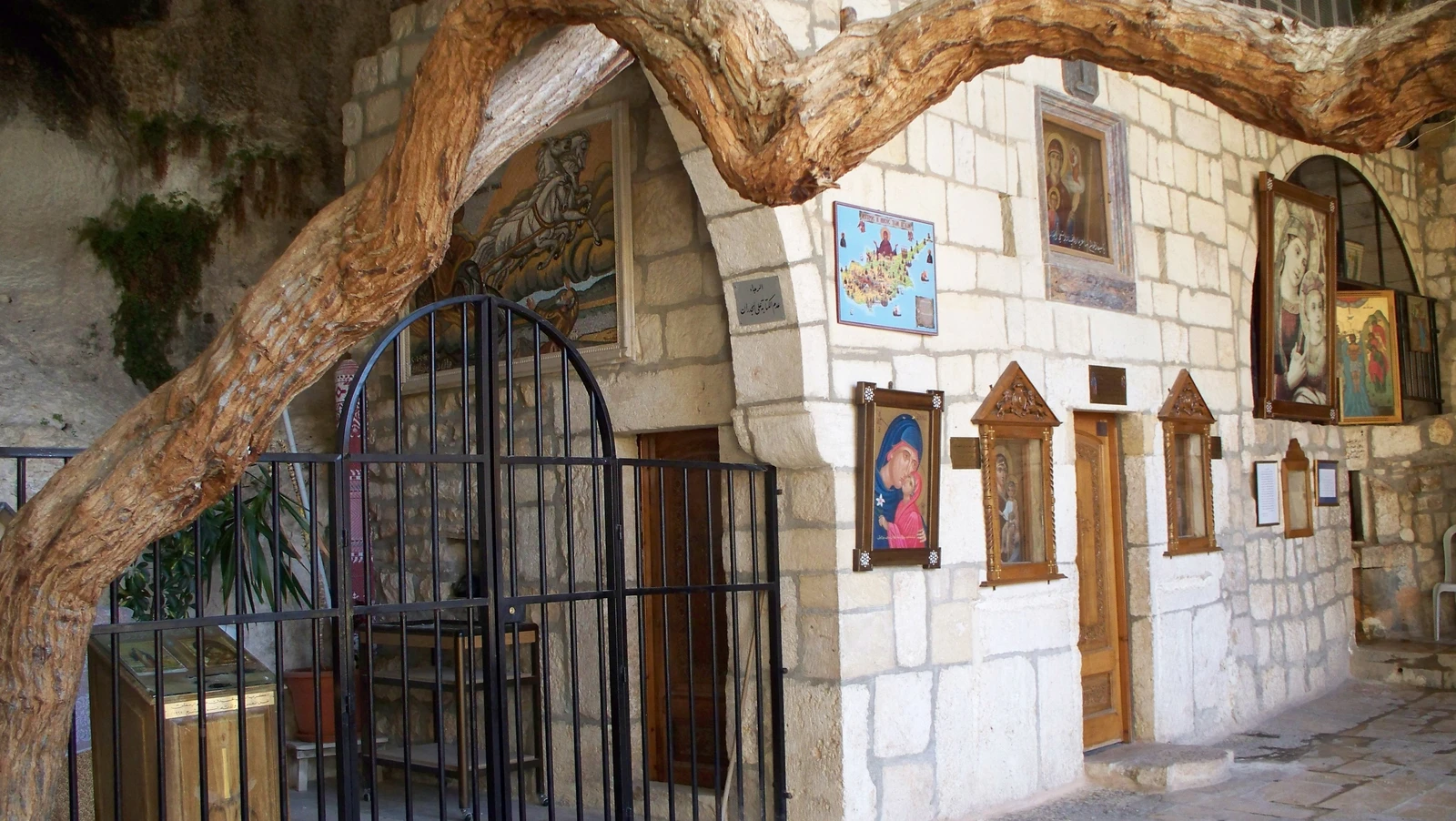
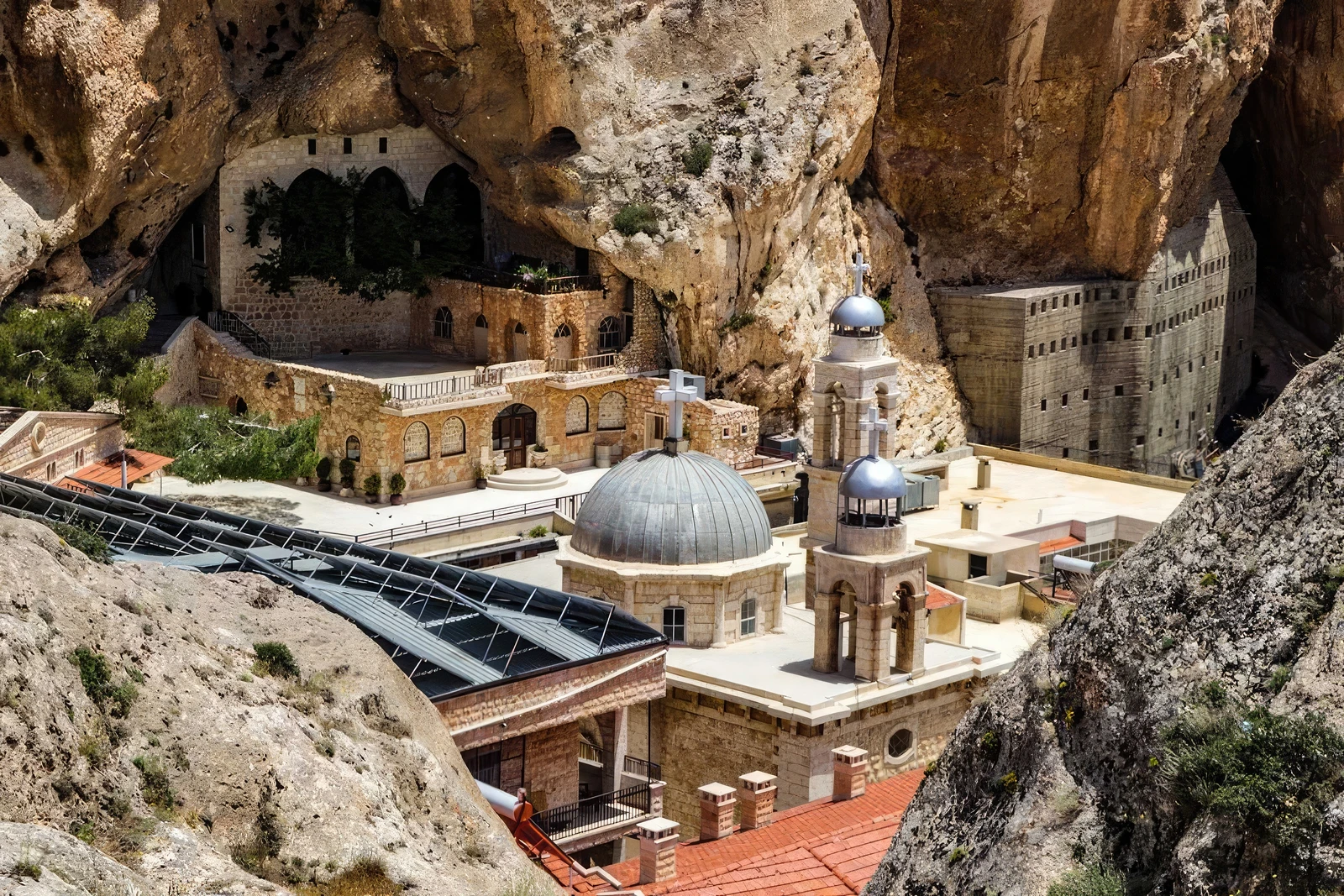
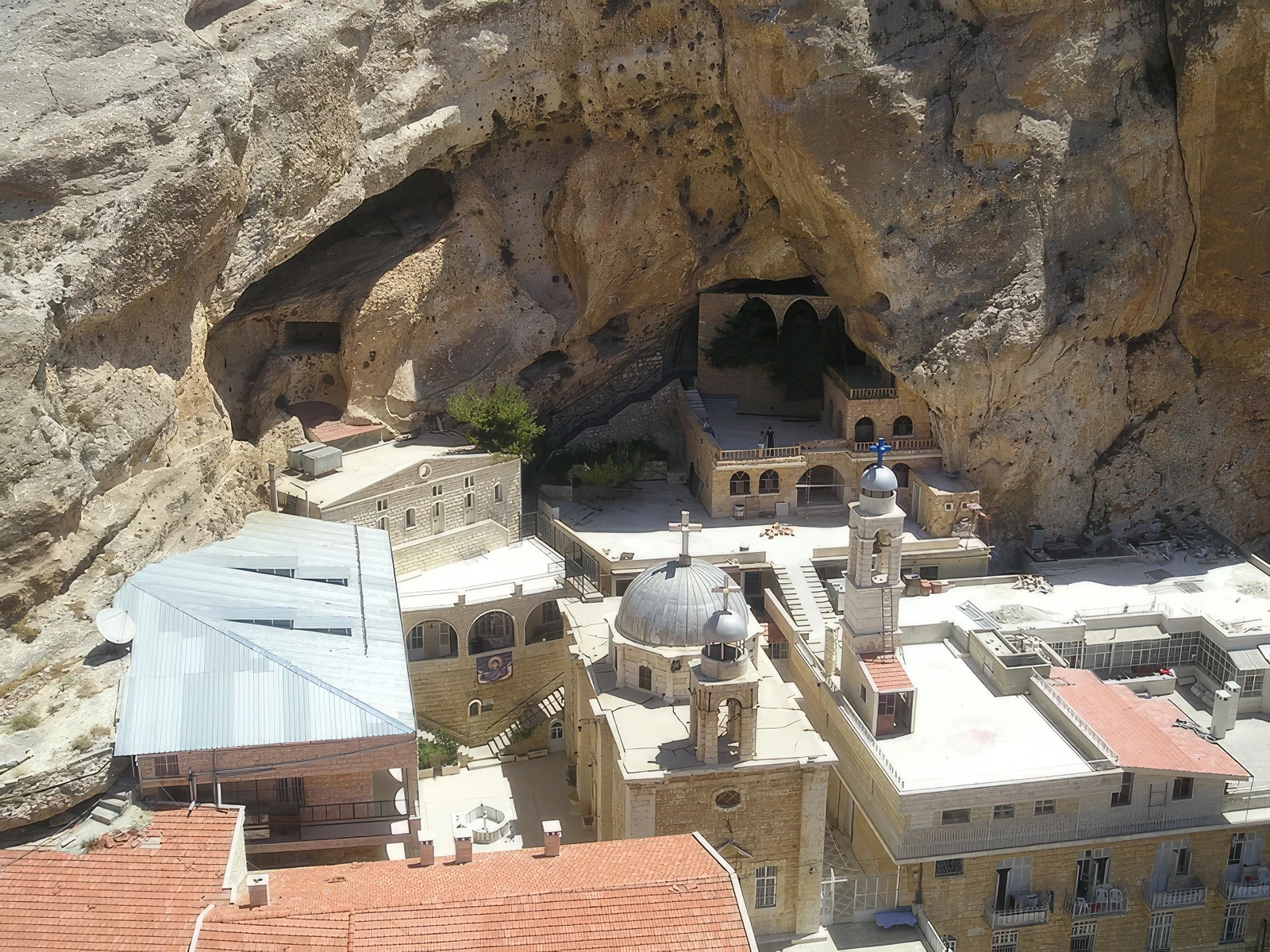
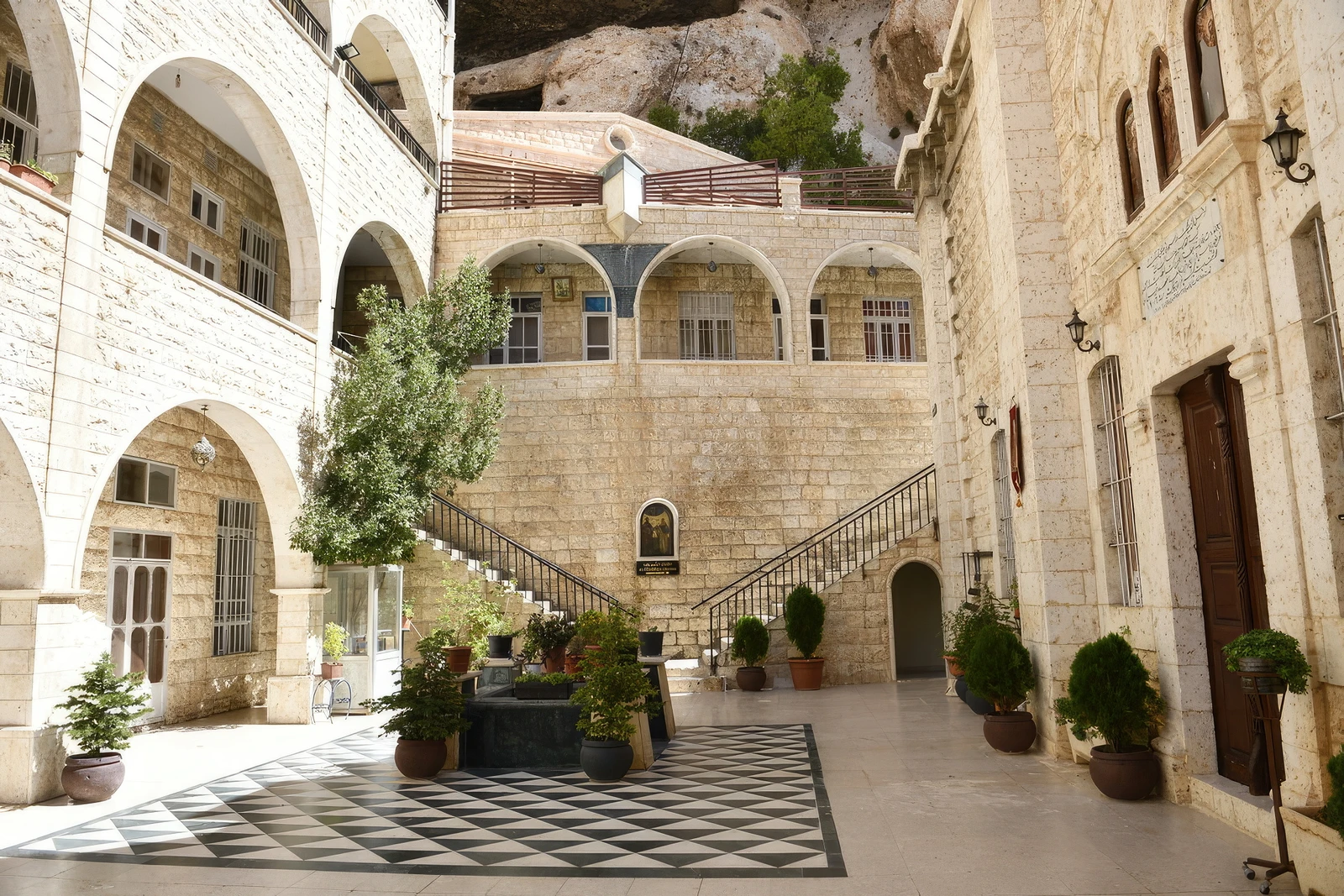
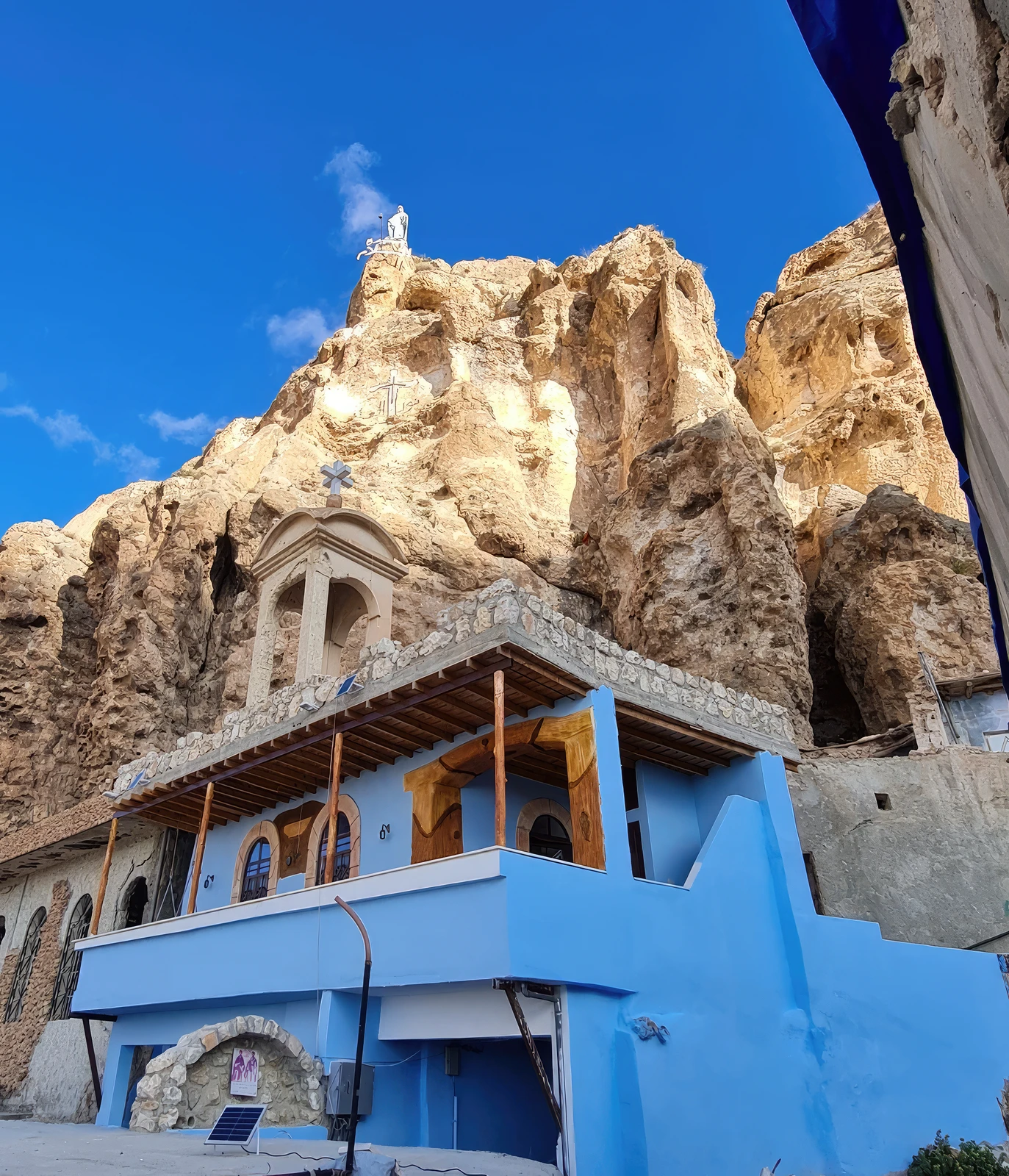
- Christian Heritage: The town is a major Christian pilgrimage site, home to two of the oldest monasteries in Syria: the Melkite monastery of Mar Sarkis and the Antiochan Convent of Saint Thecla.
- Legend of St. Thecla: According to local legend, St. Thecla, a disciple of St. Paul, was fleeing persecution when the mountain miraculously split open to allow her to escape. This event is believed to be the origin of the town’s name and the famous rock-cut passage.
- Unique Architecture: Its distinctive “beehive”-like houses, built into the mountainside, are a significant draw for visitors.
Location on world map