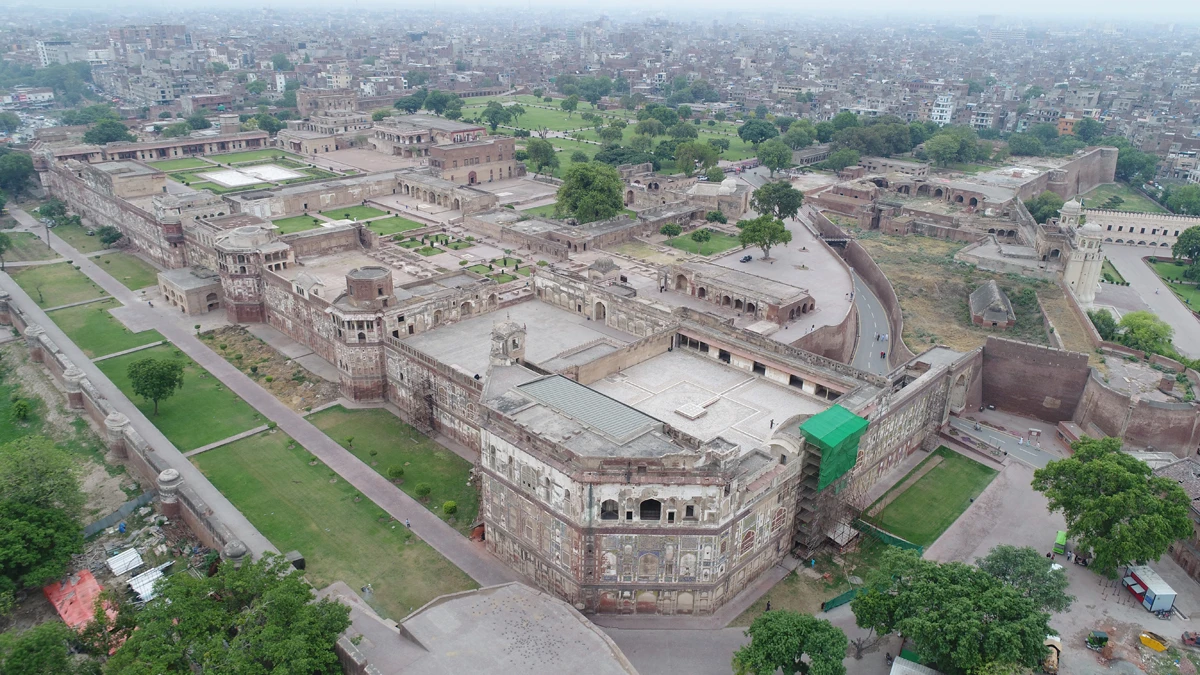
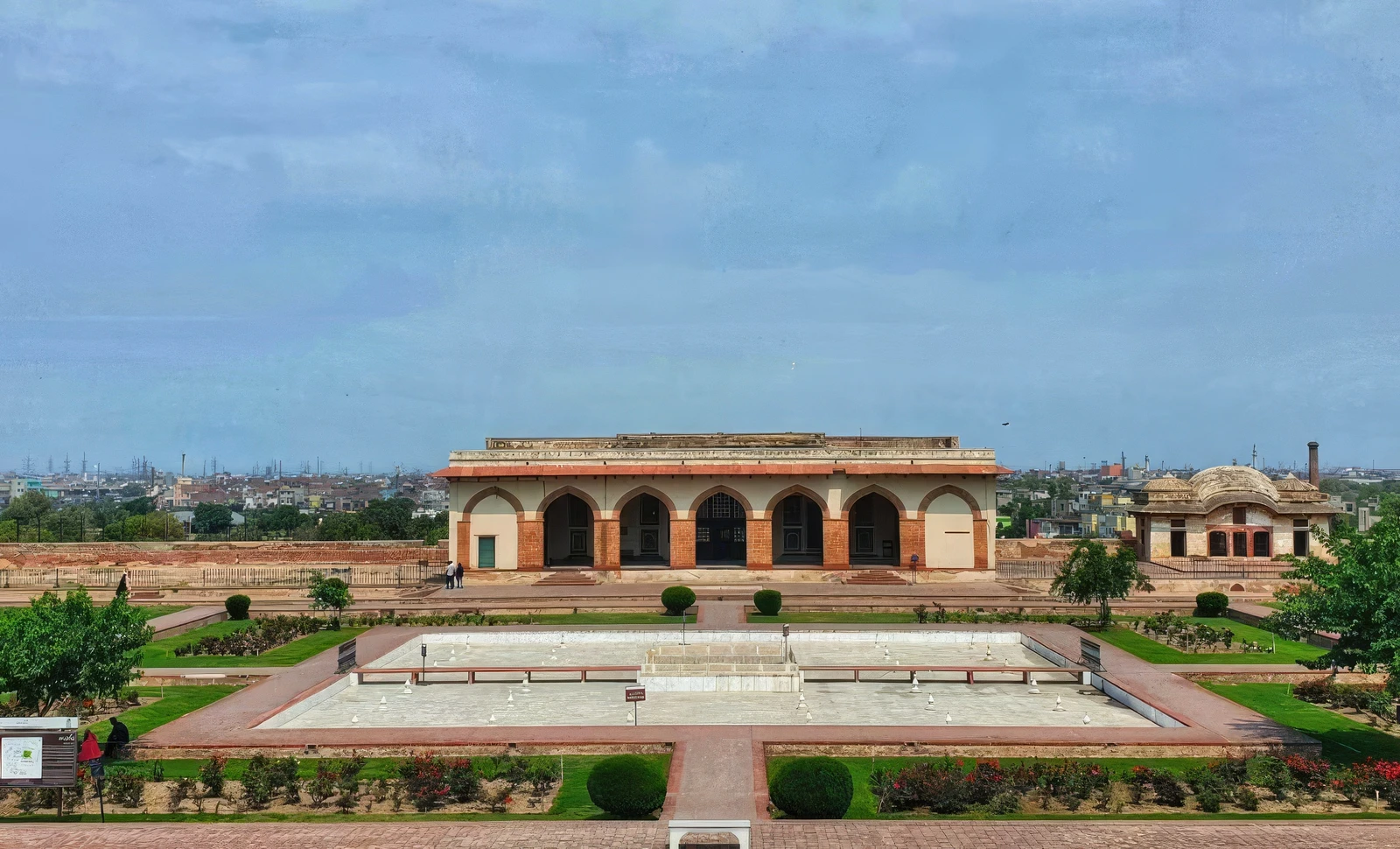
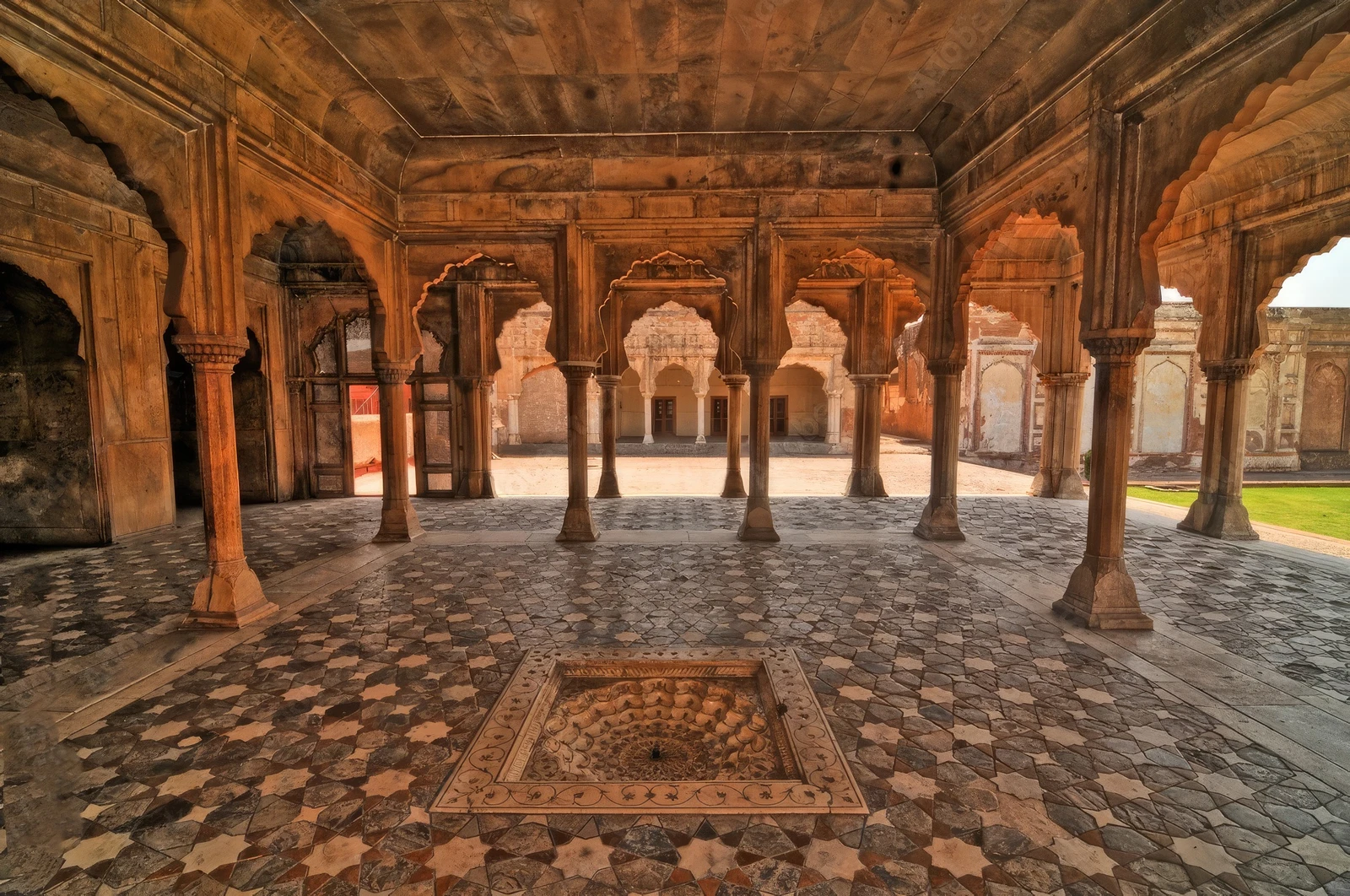
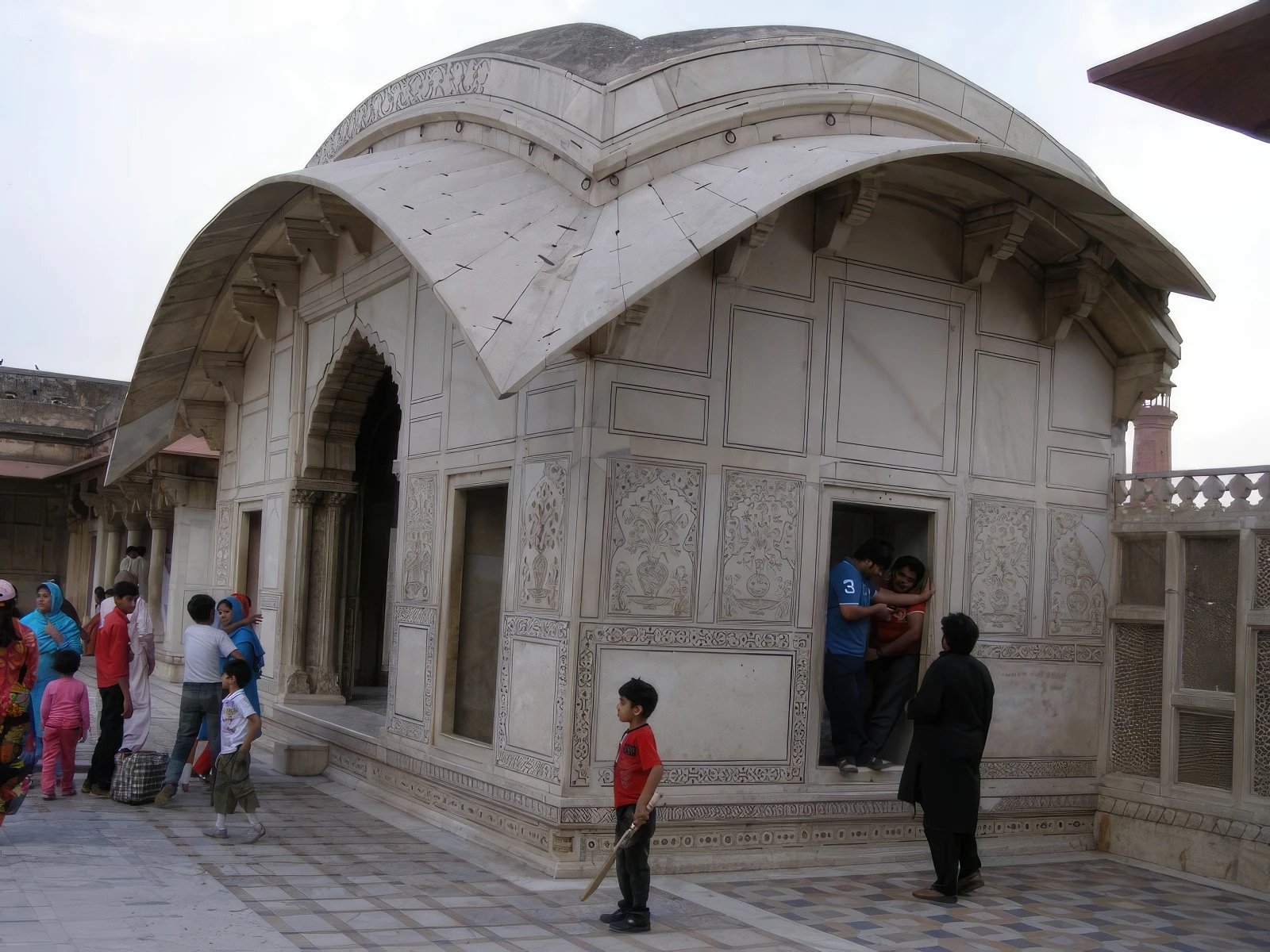
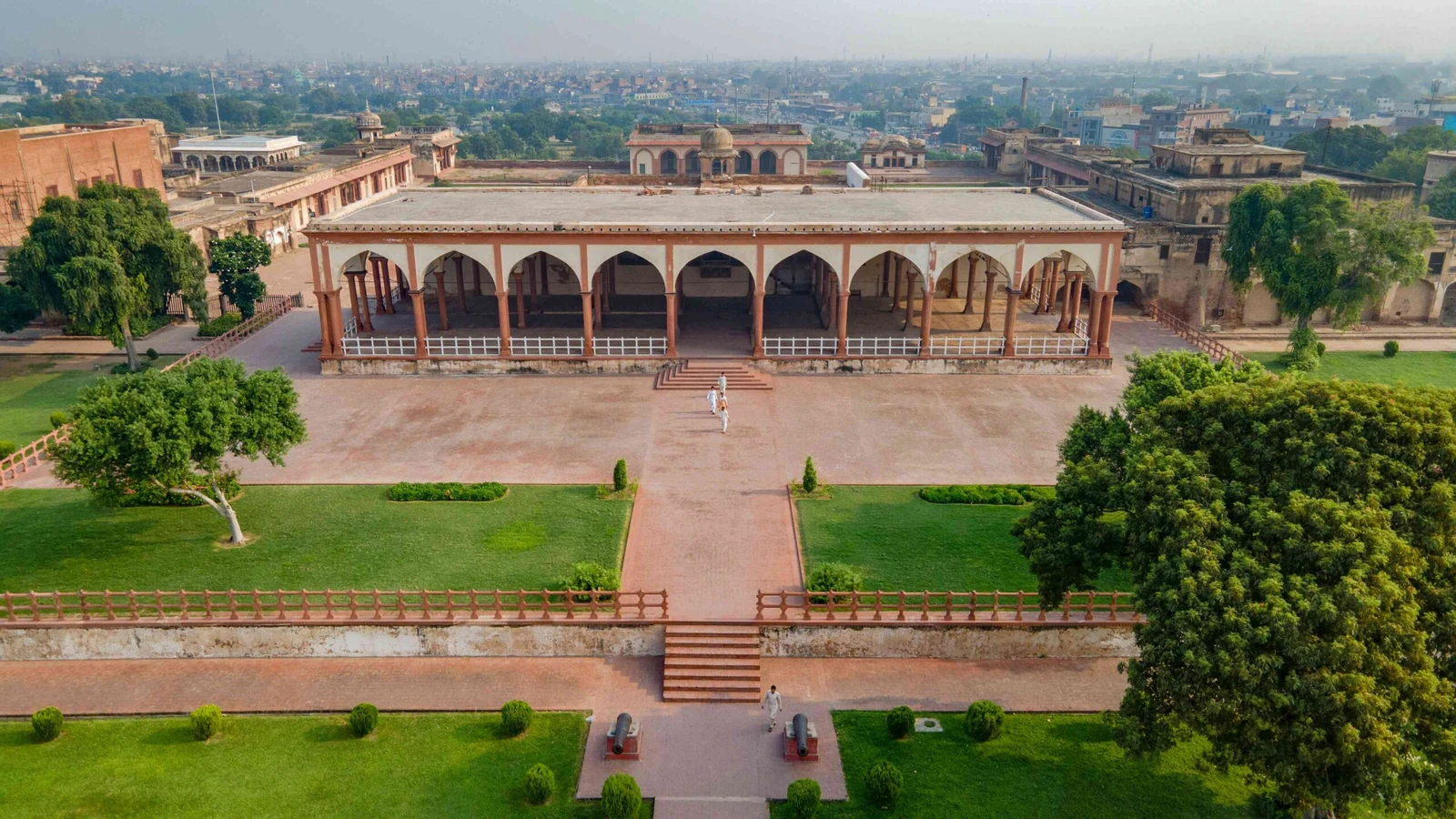
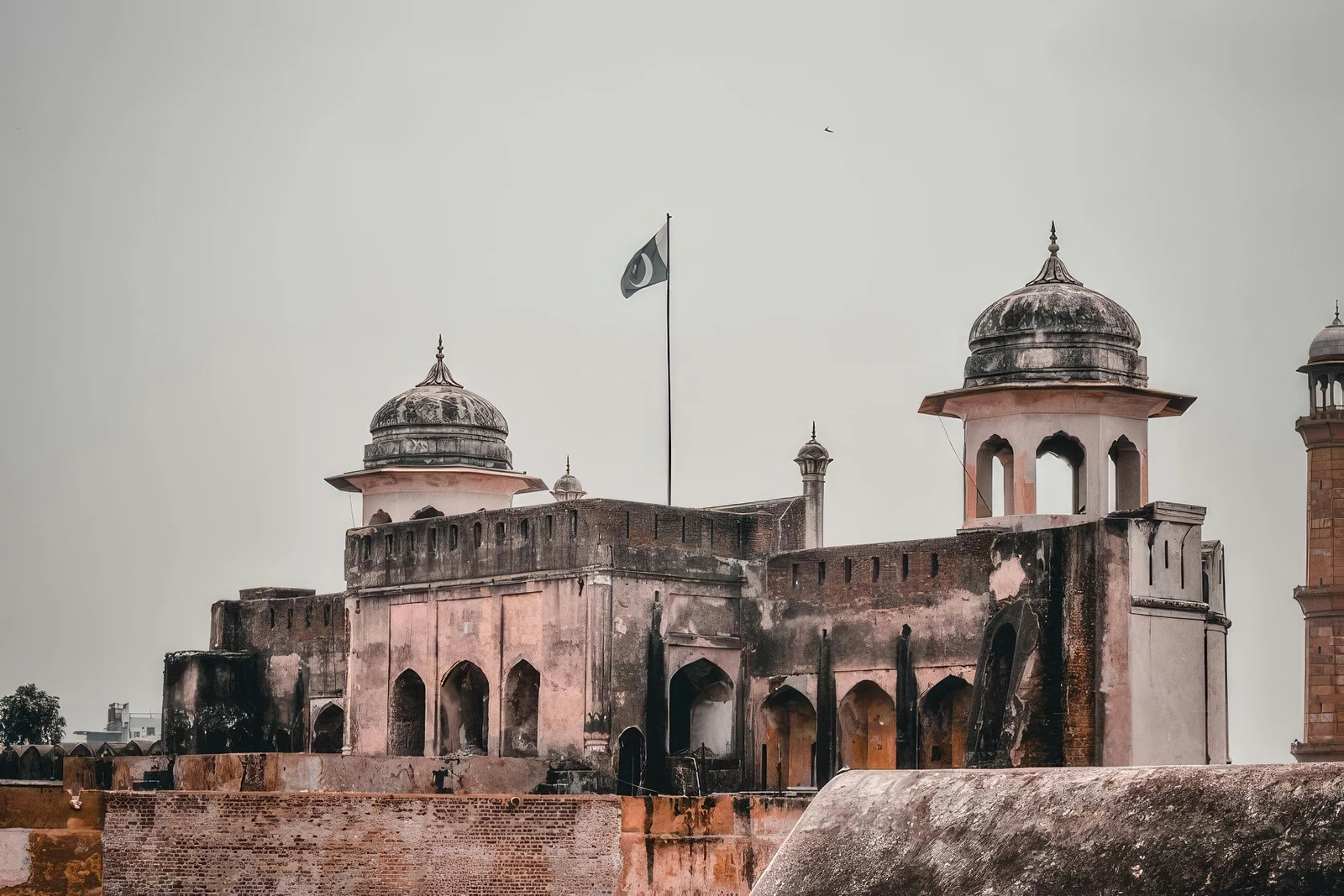
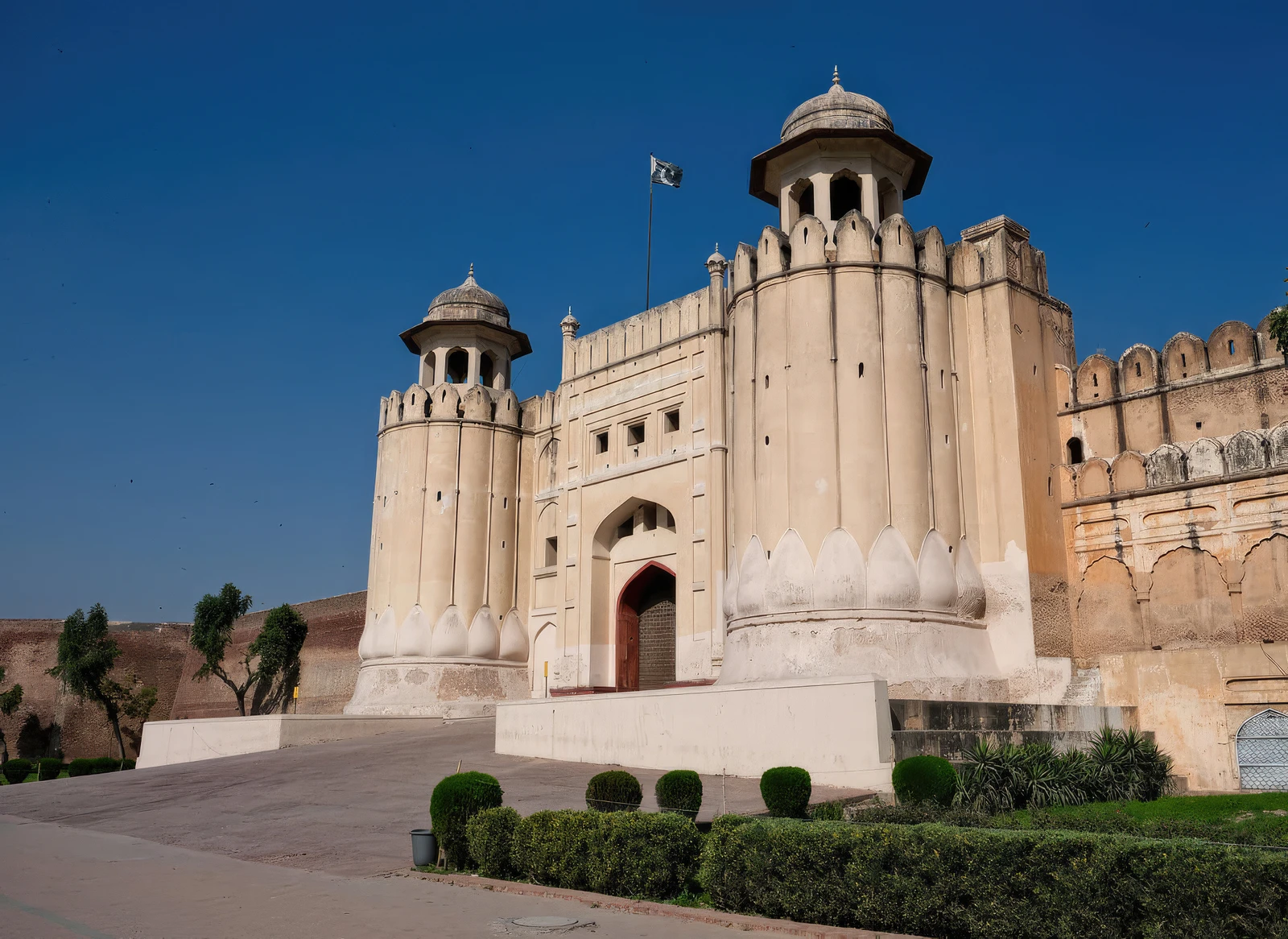
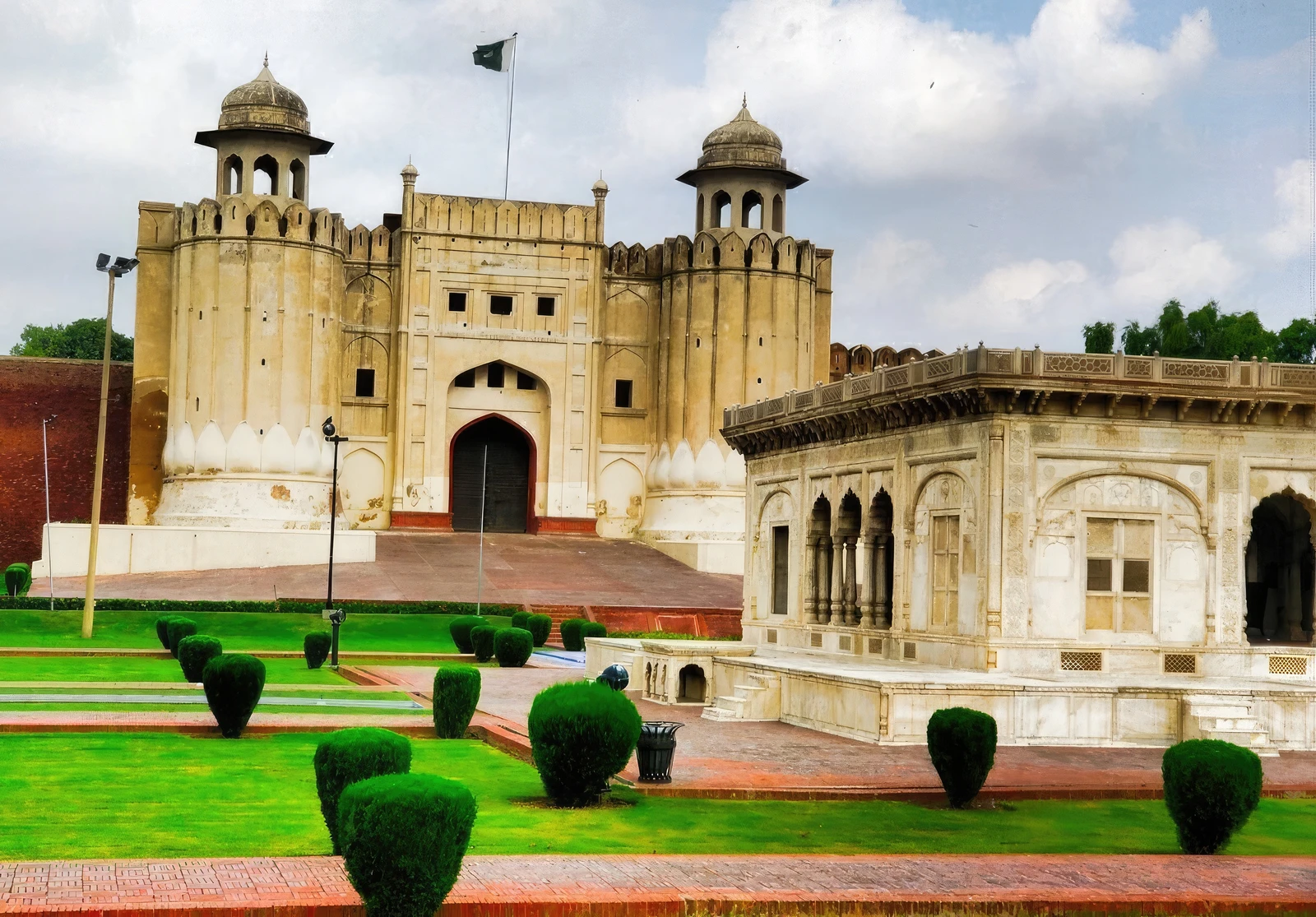
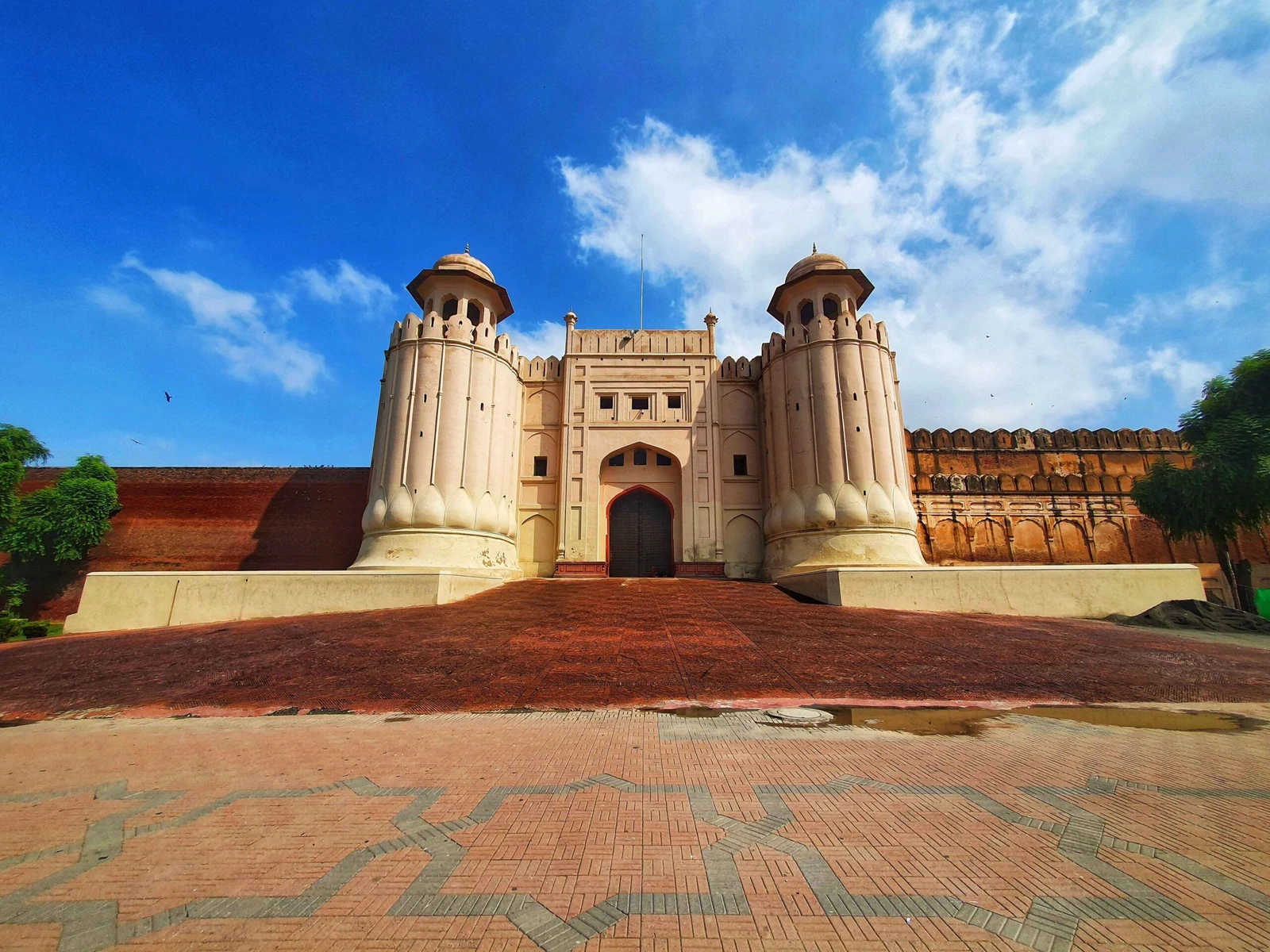
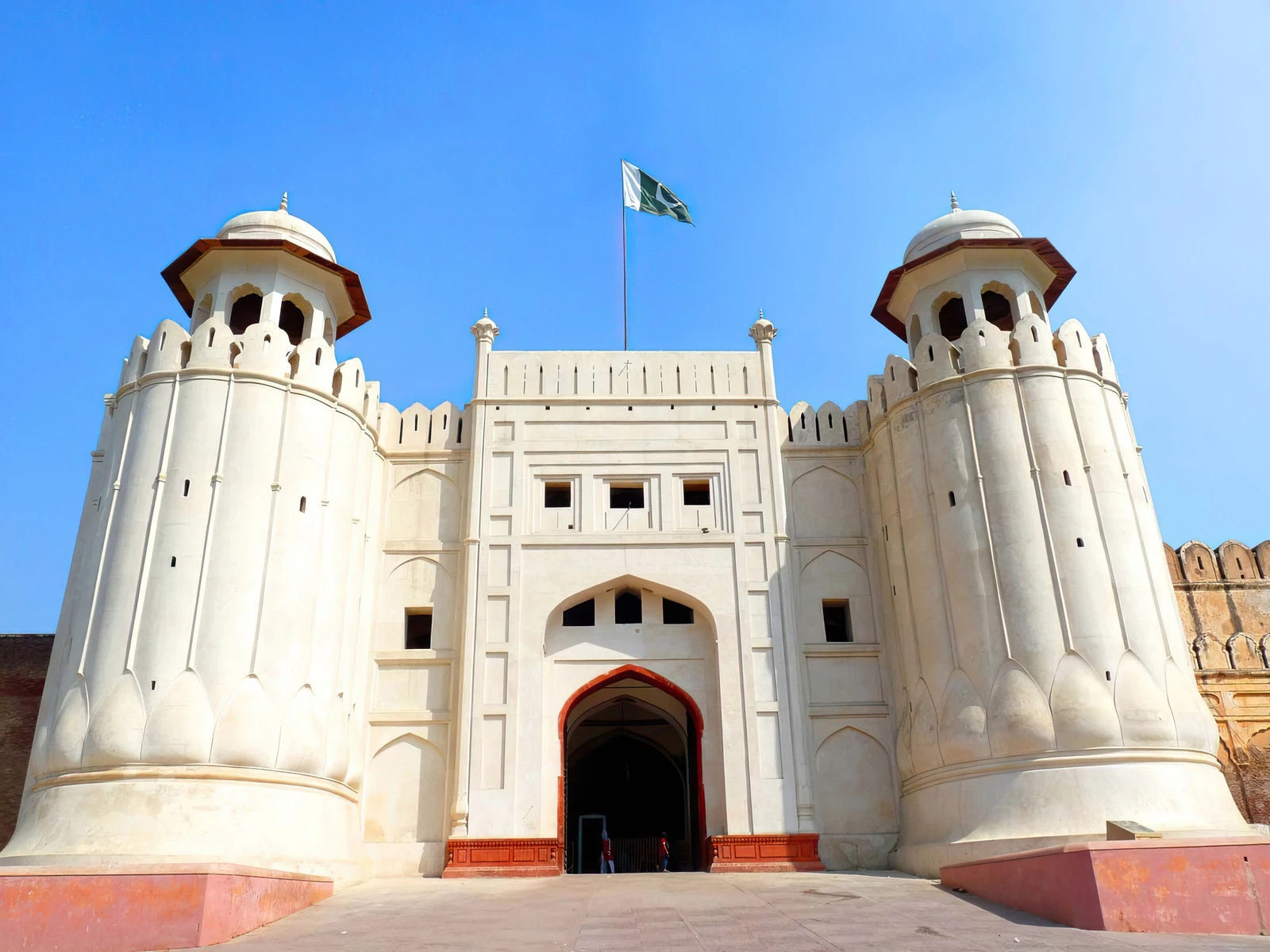
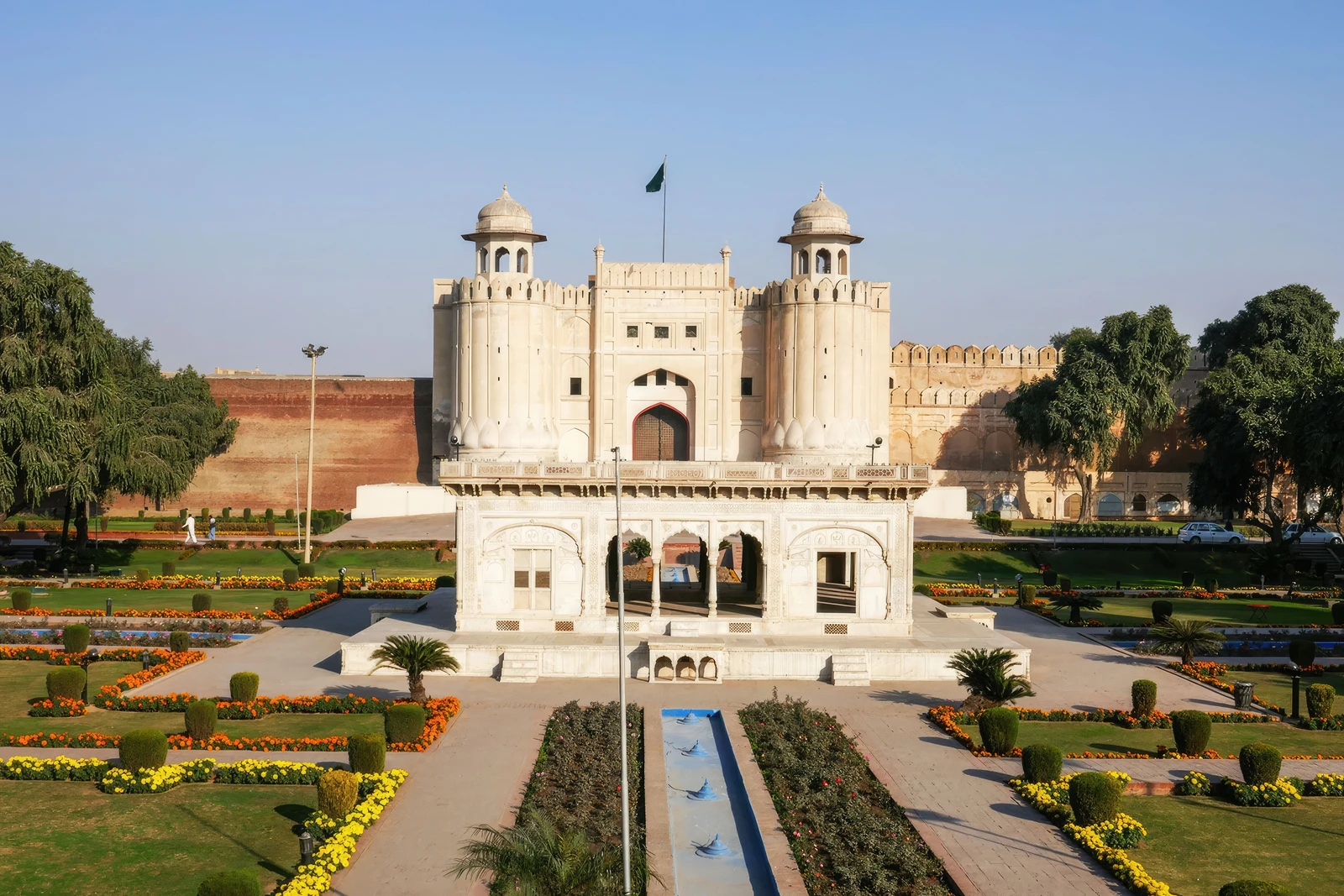
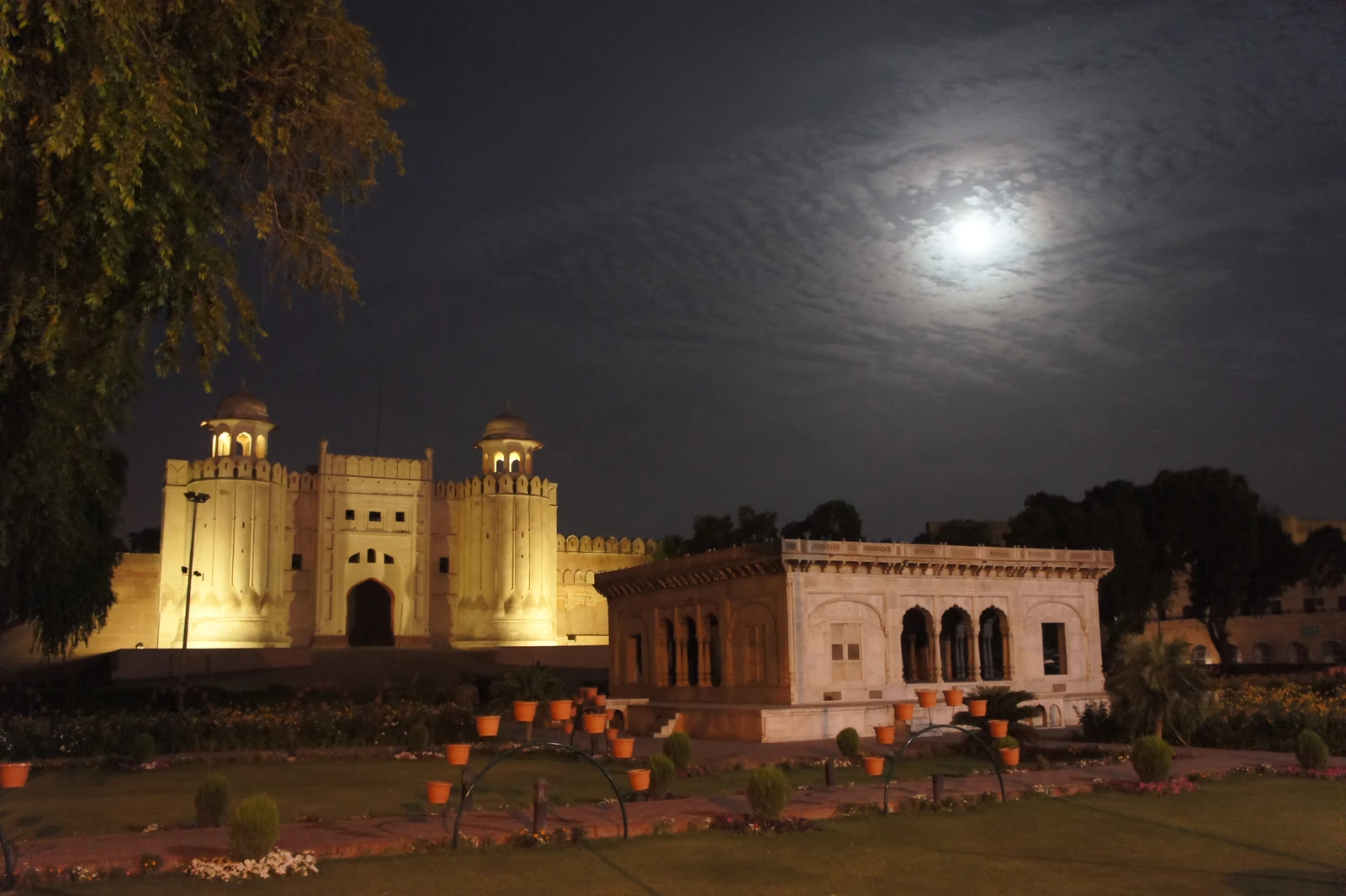
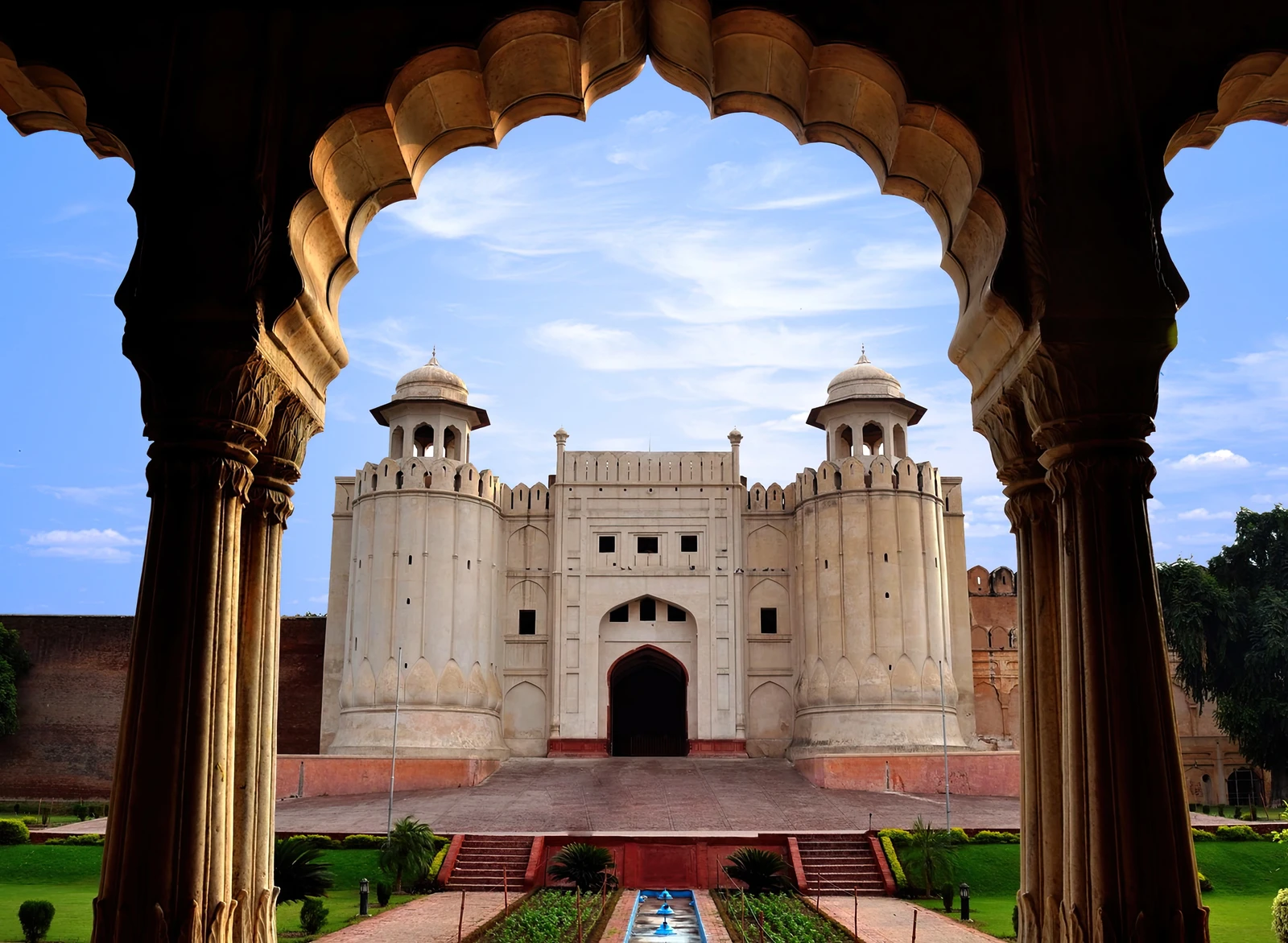
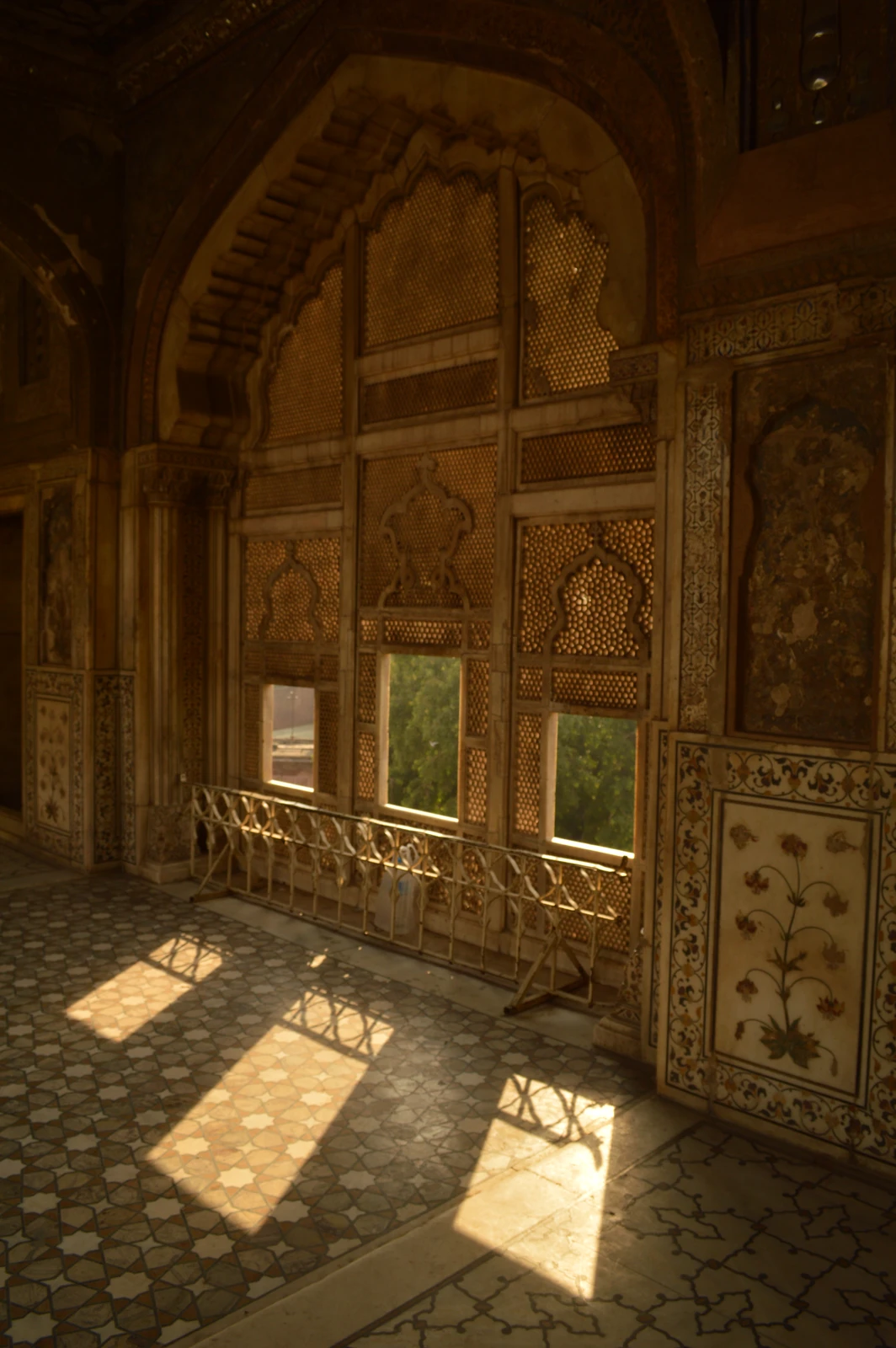
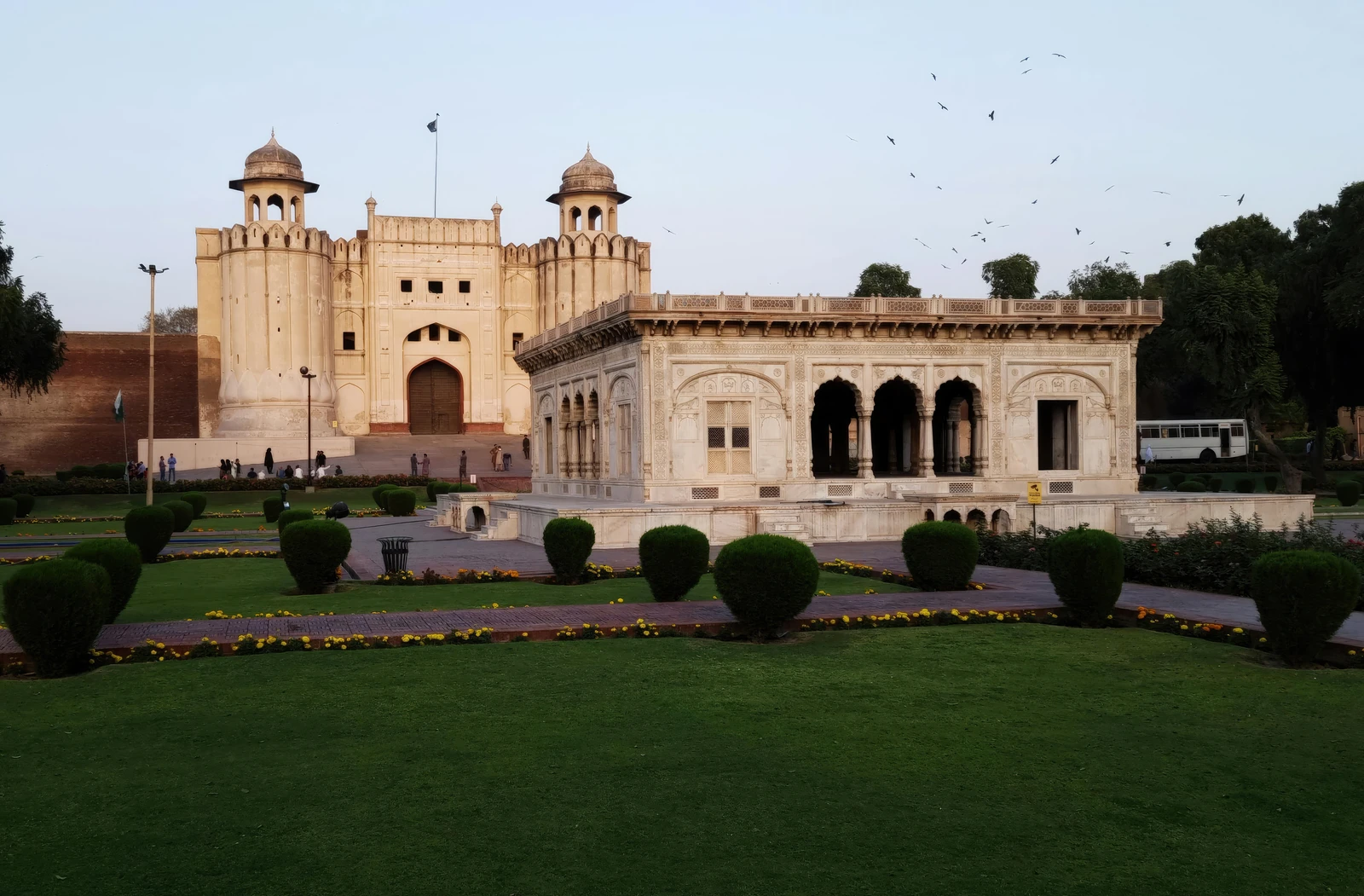
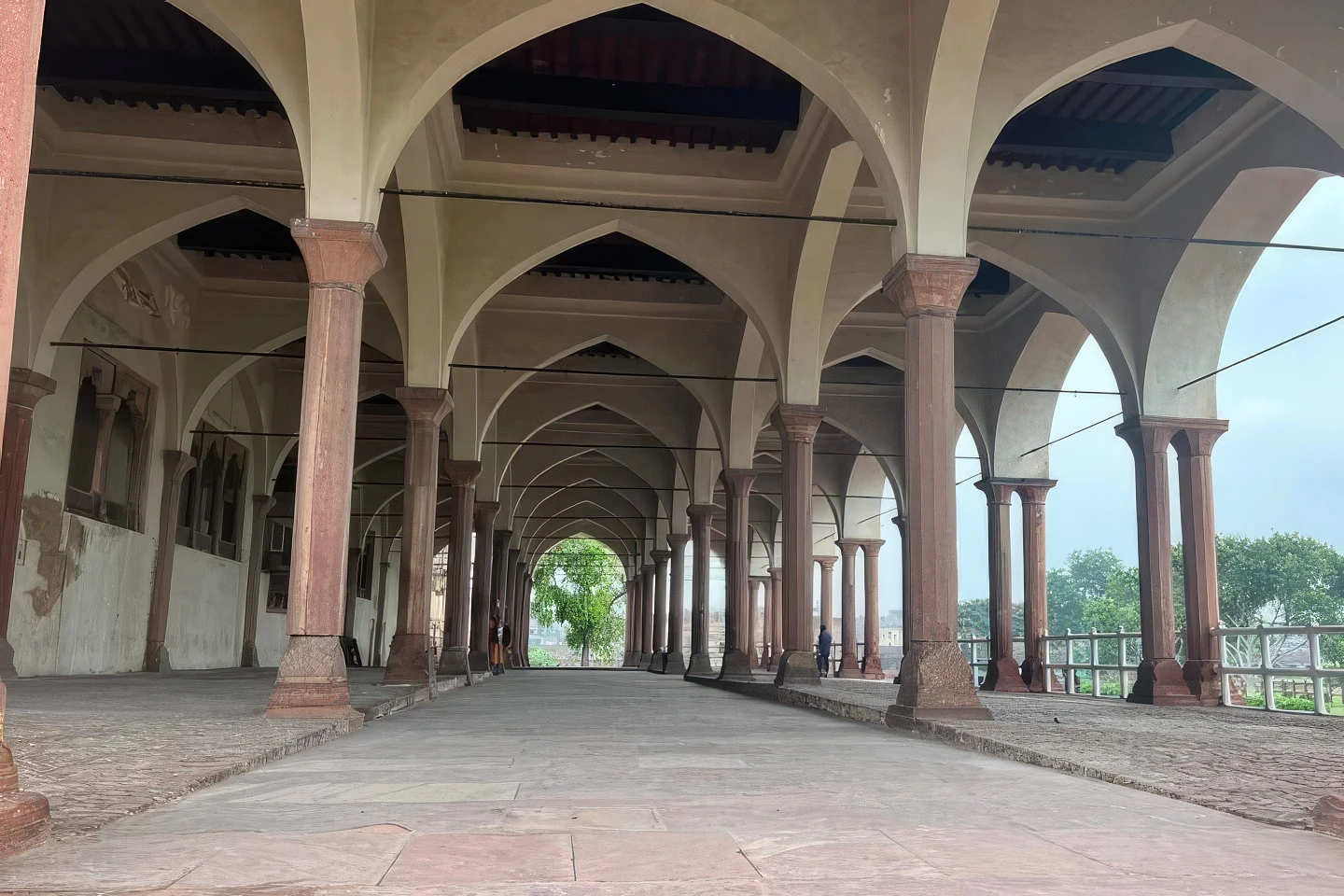
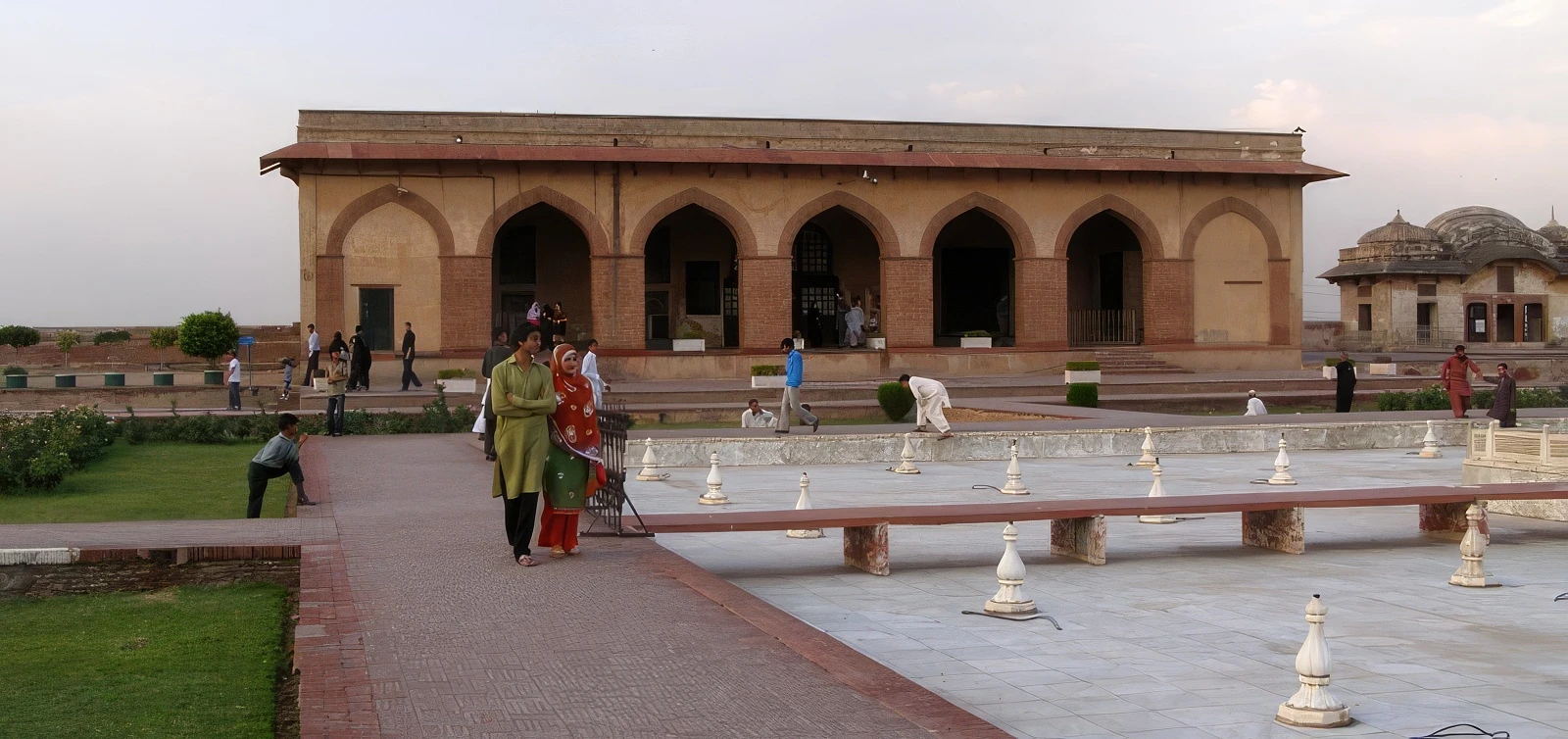
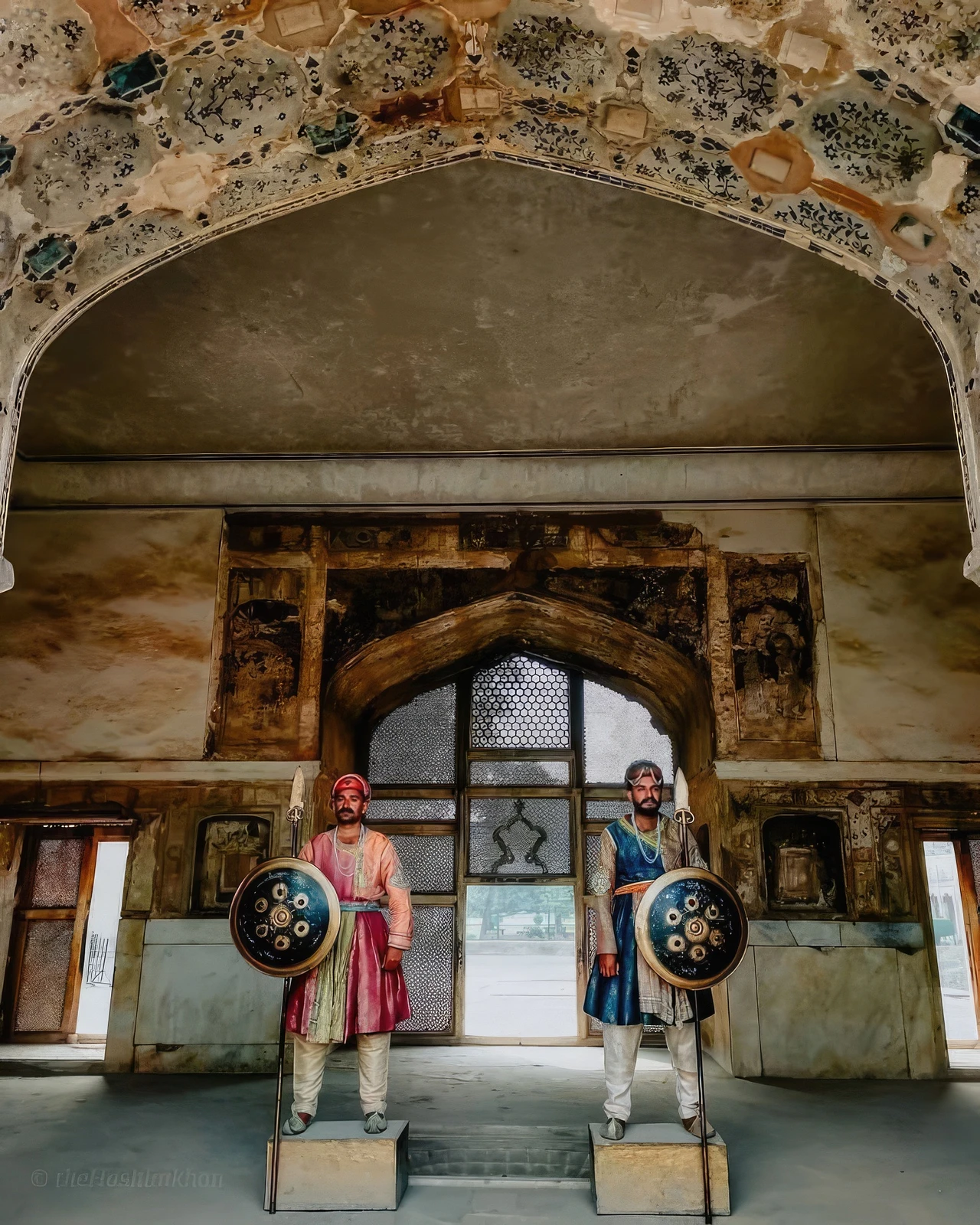
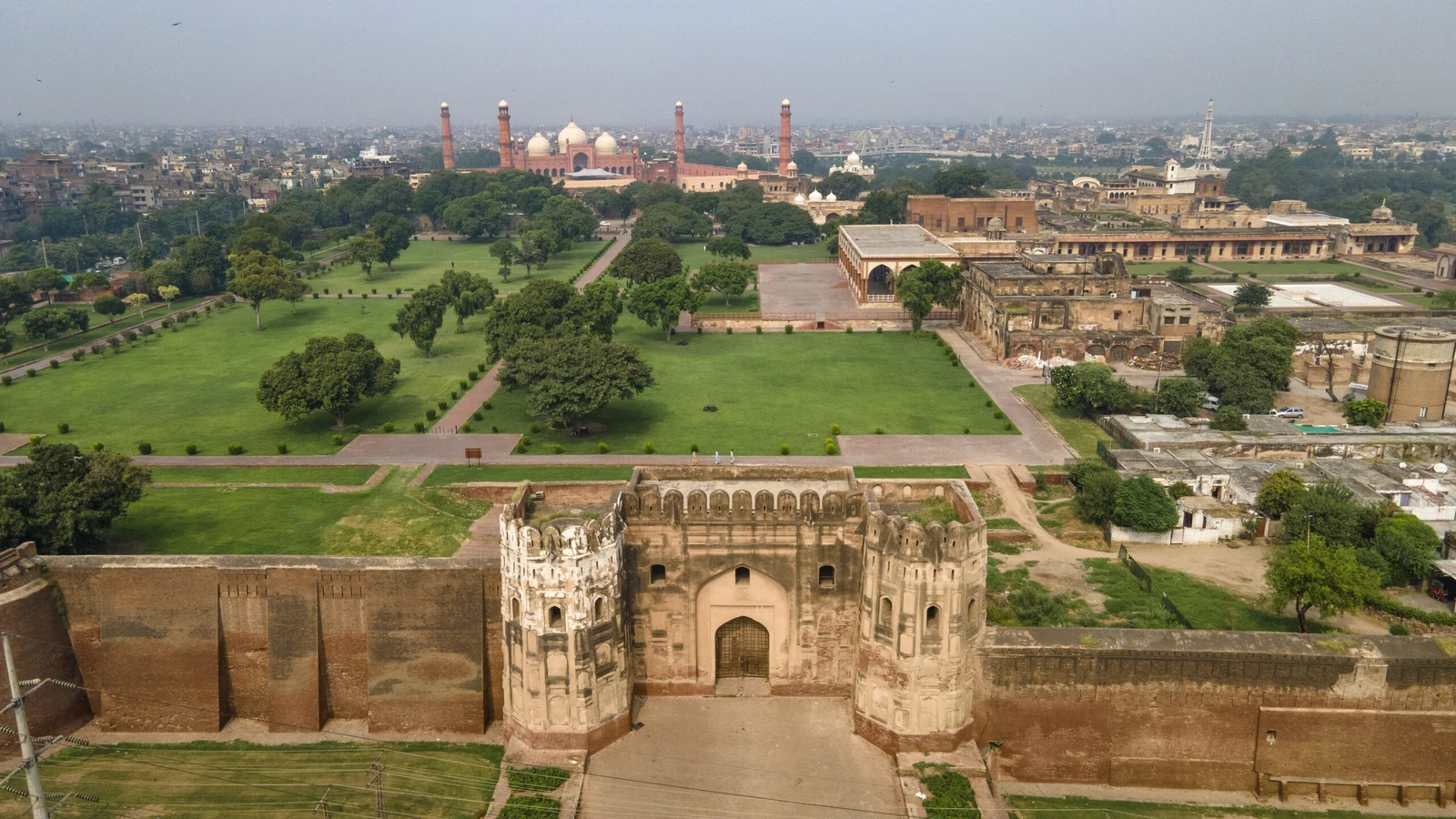
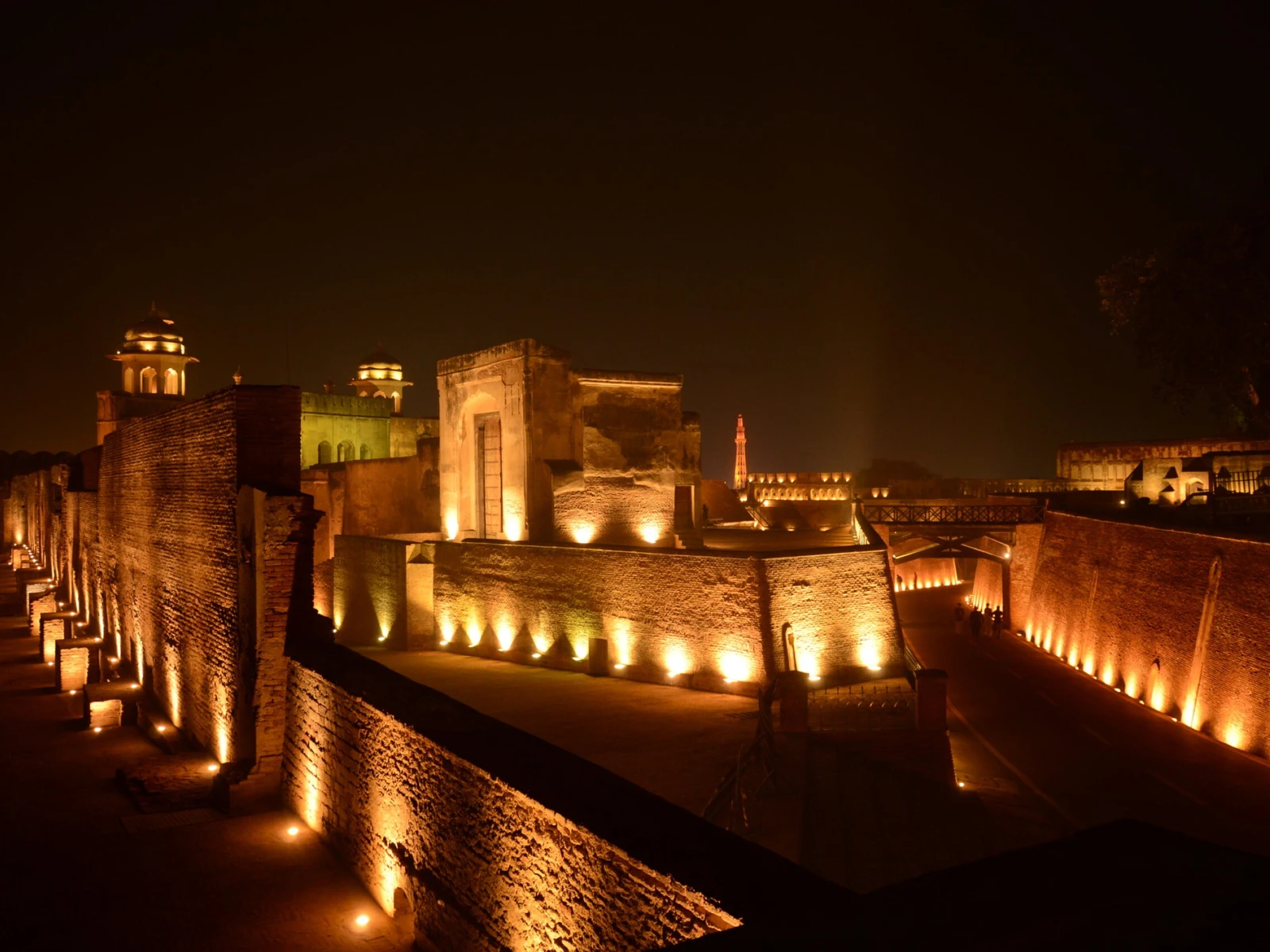
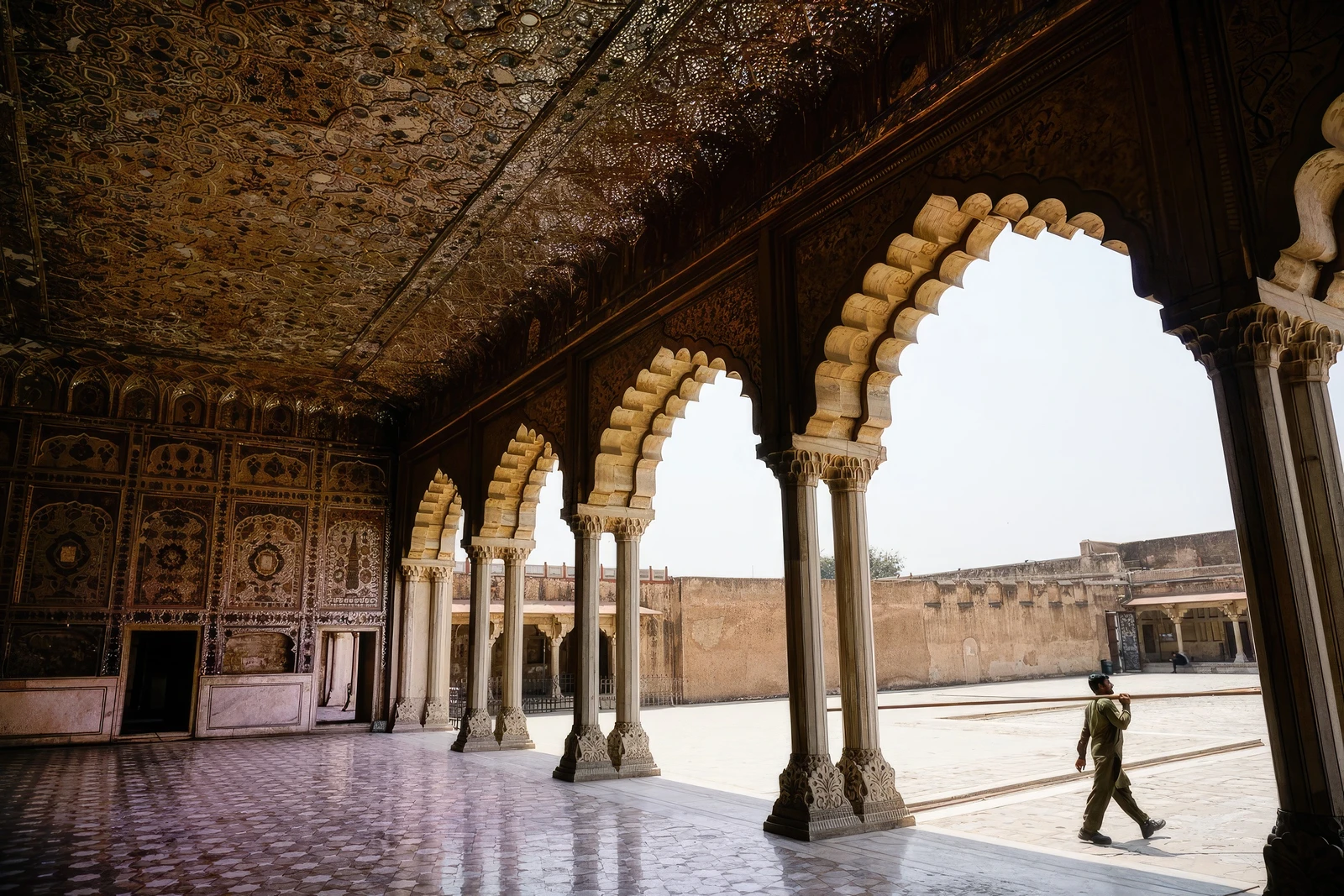
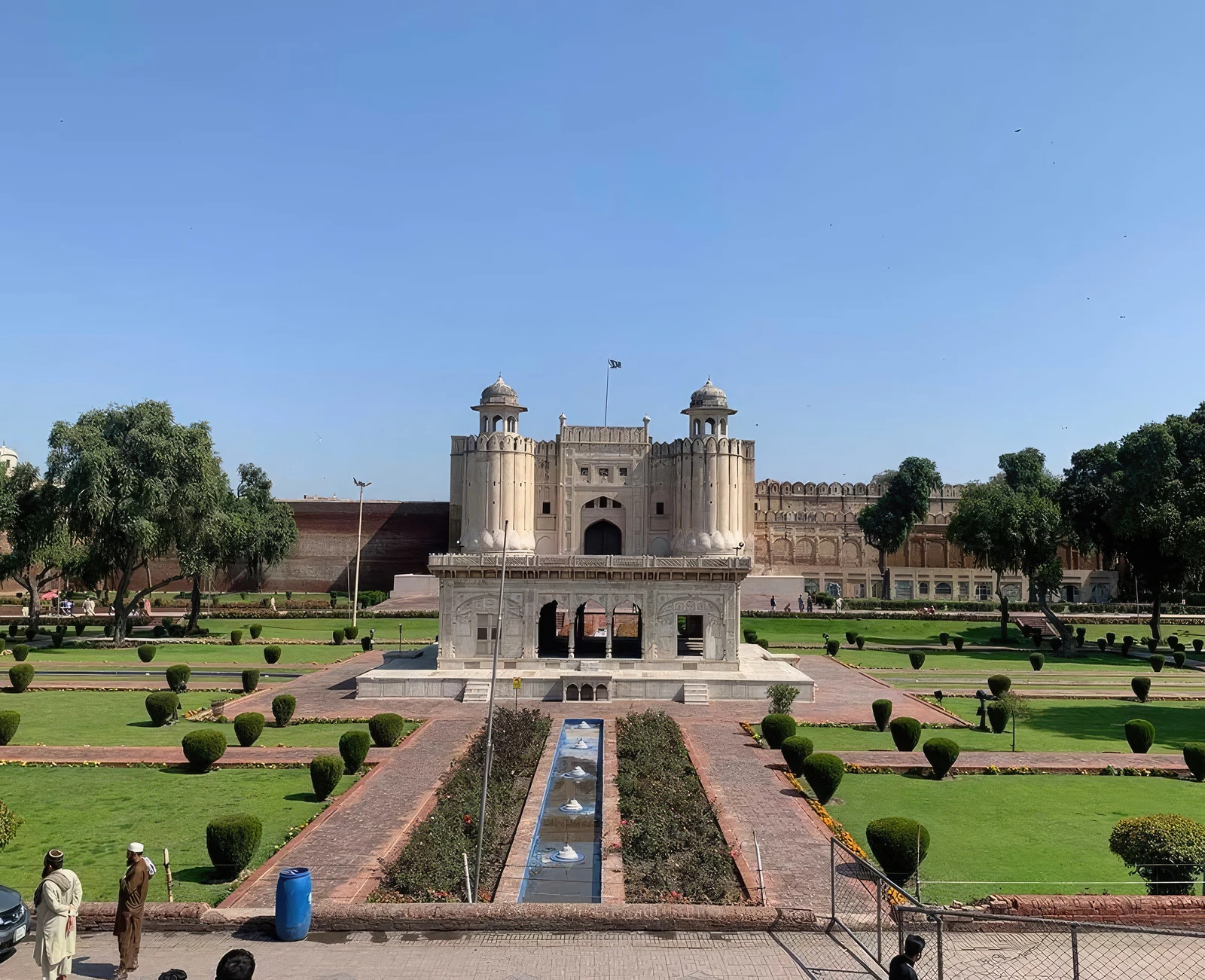
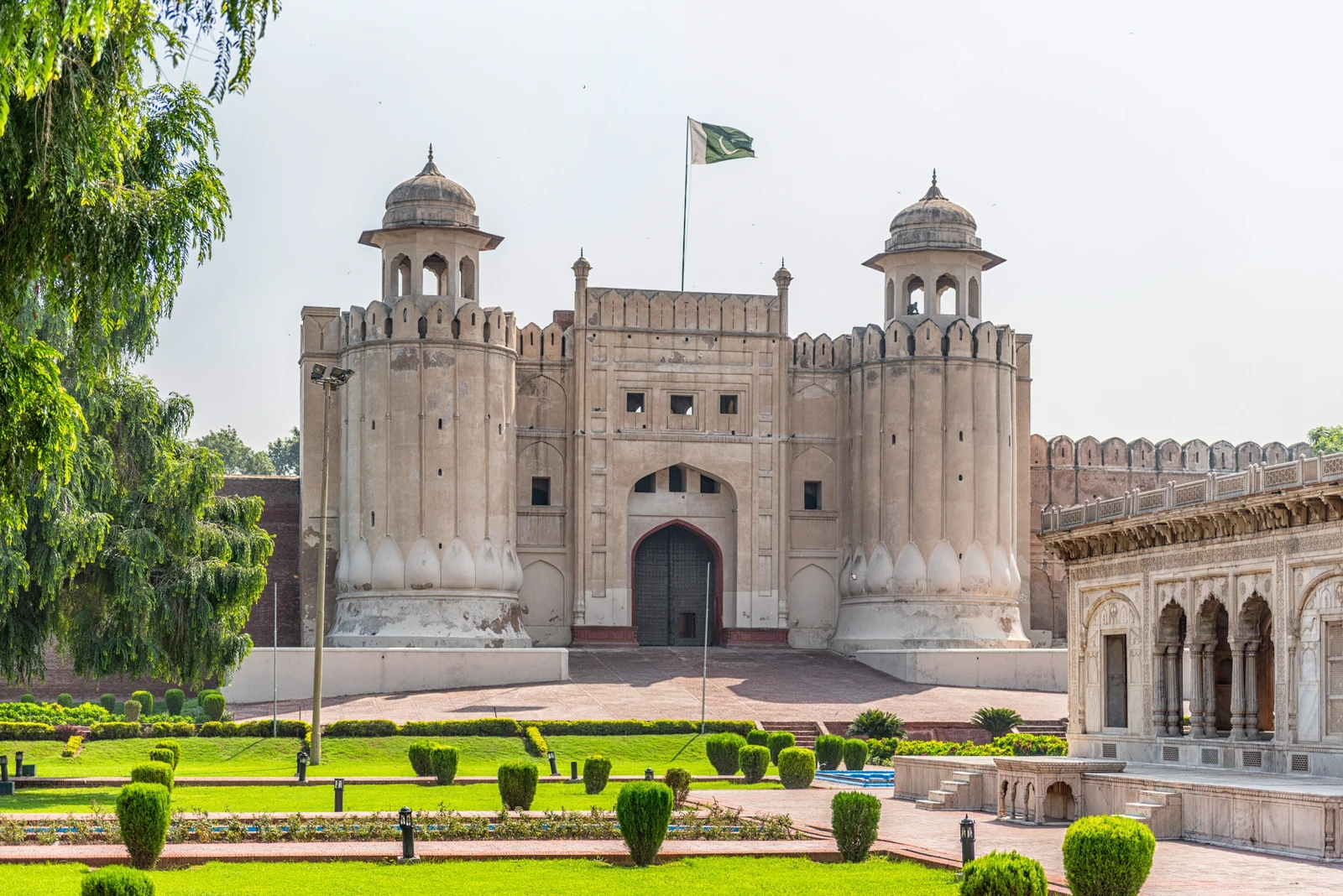
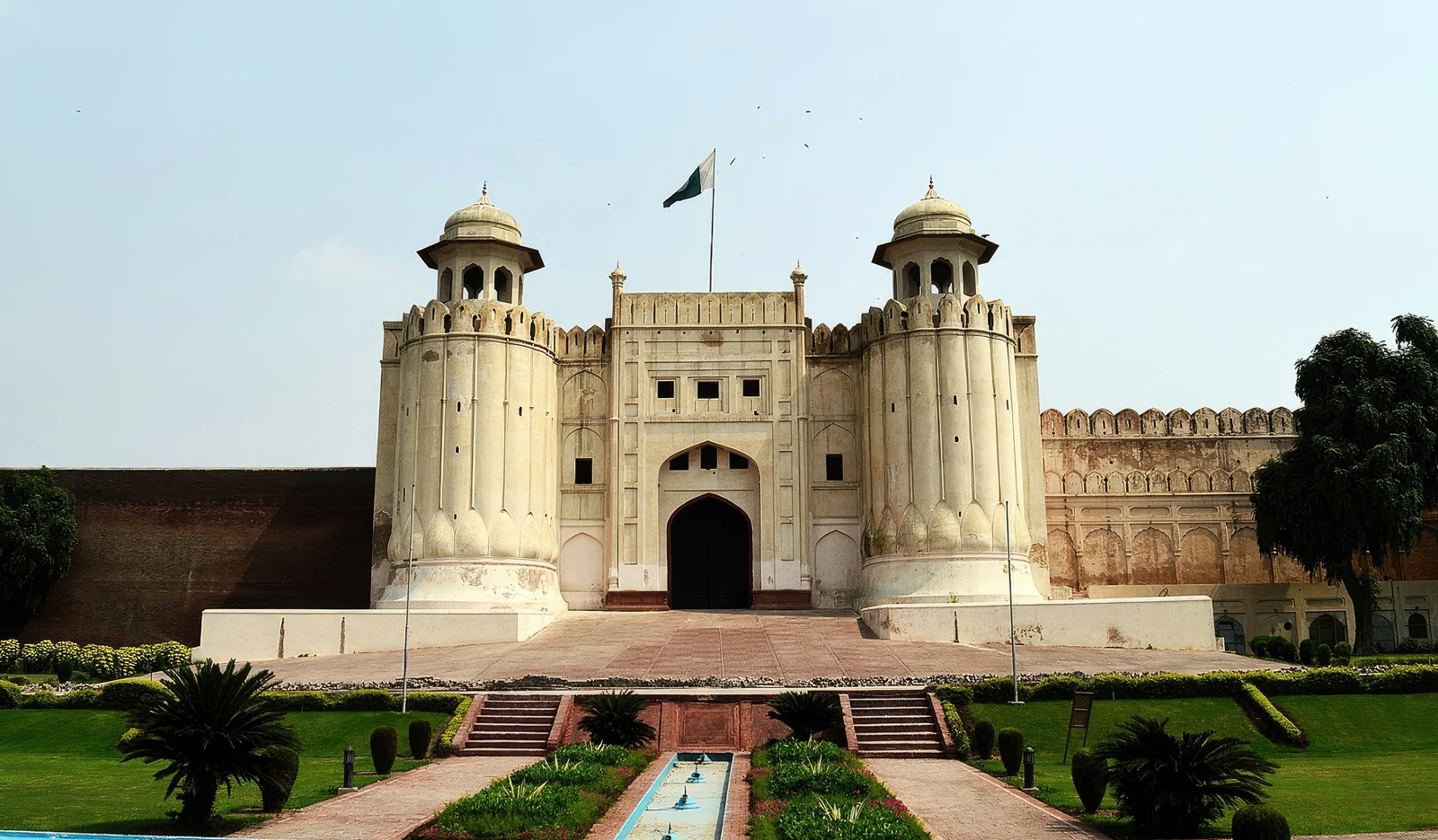
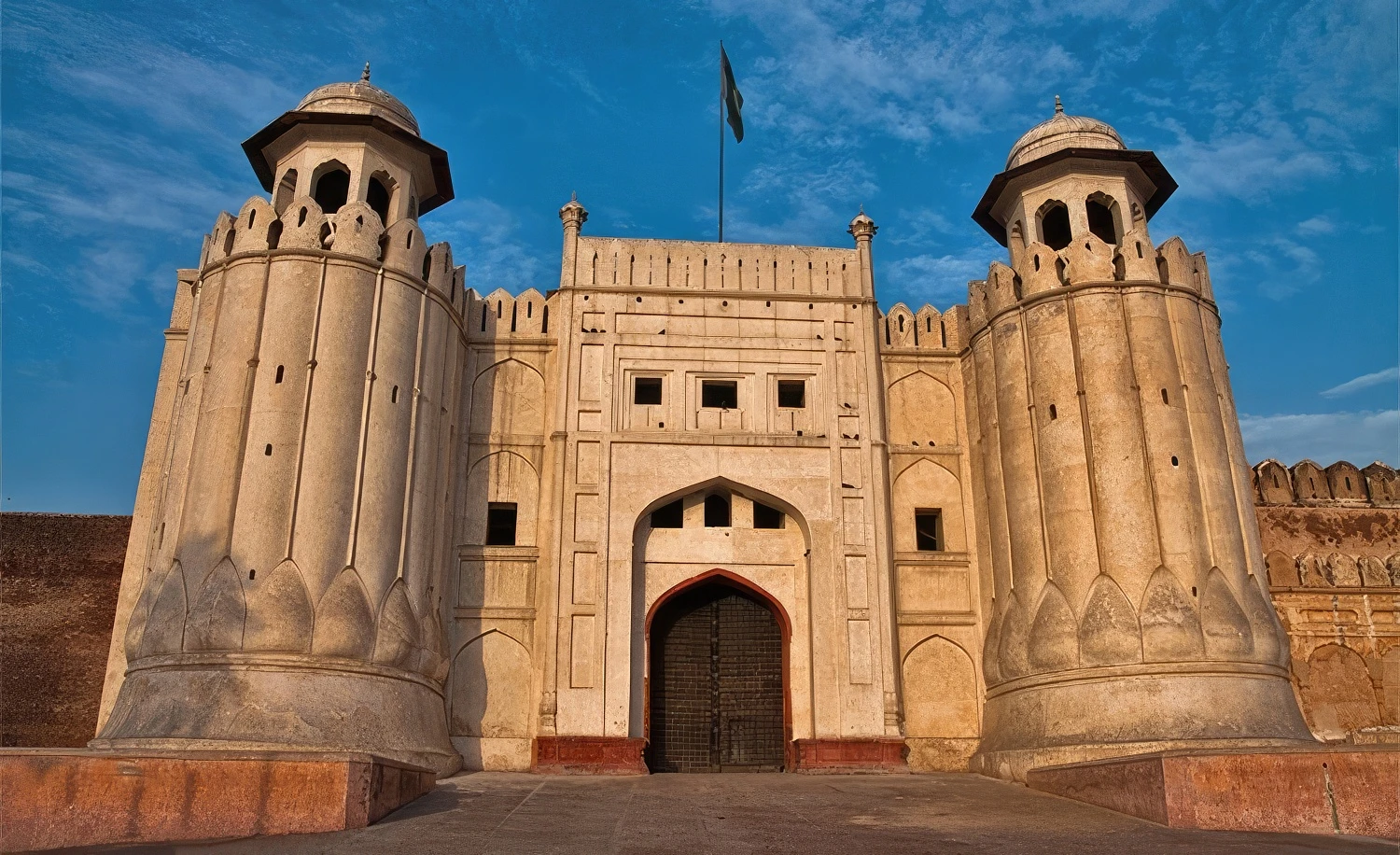
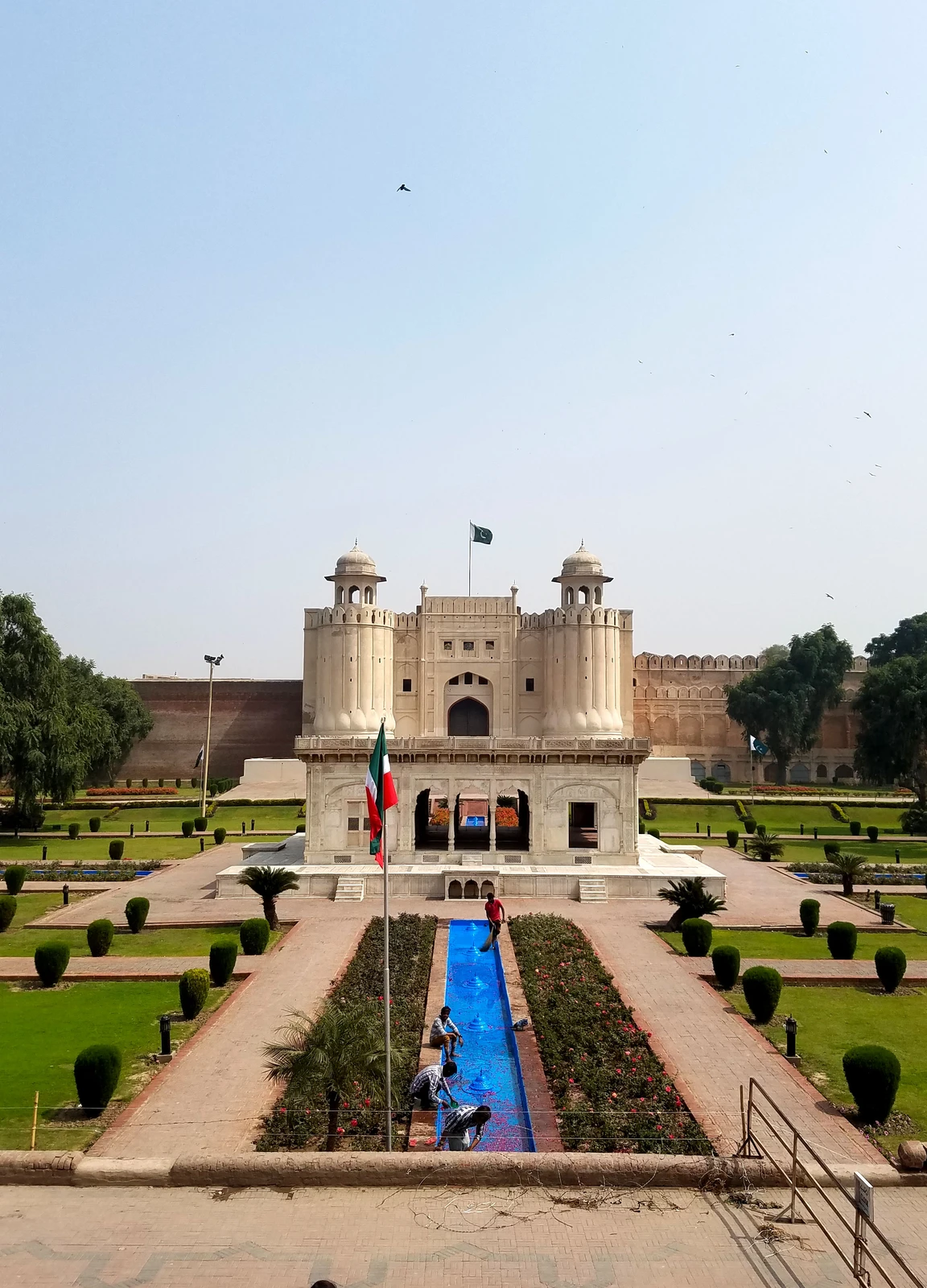
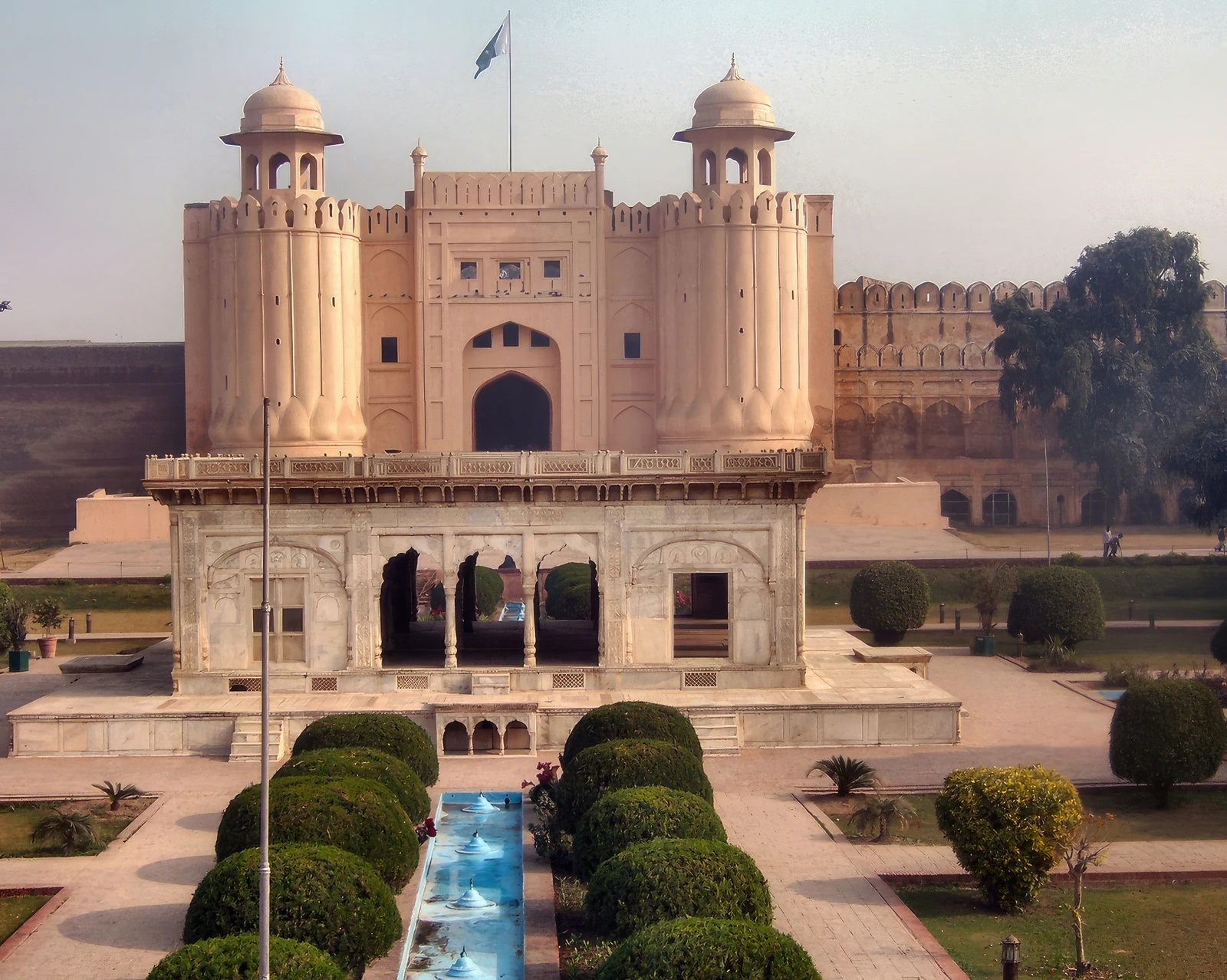
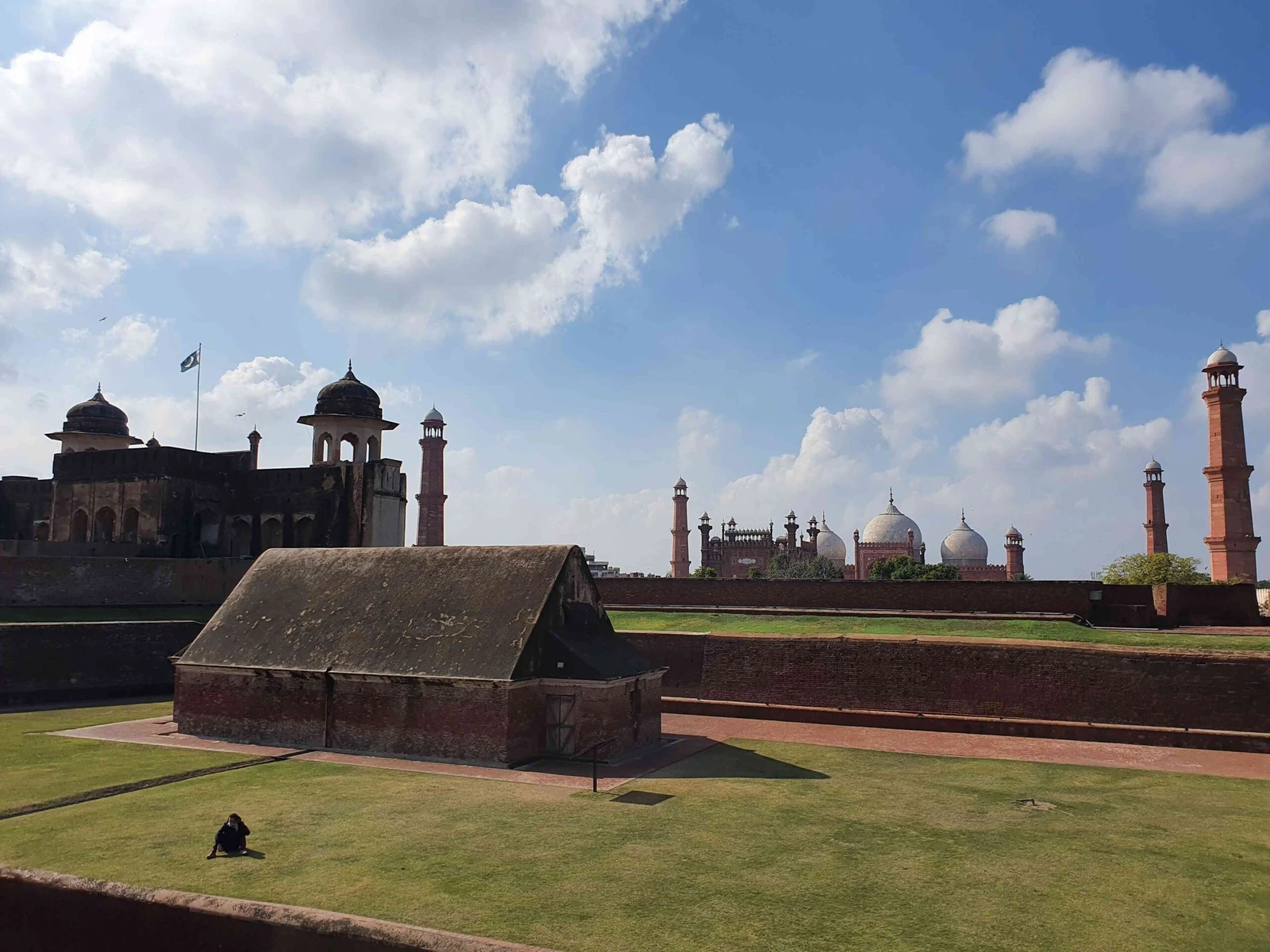
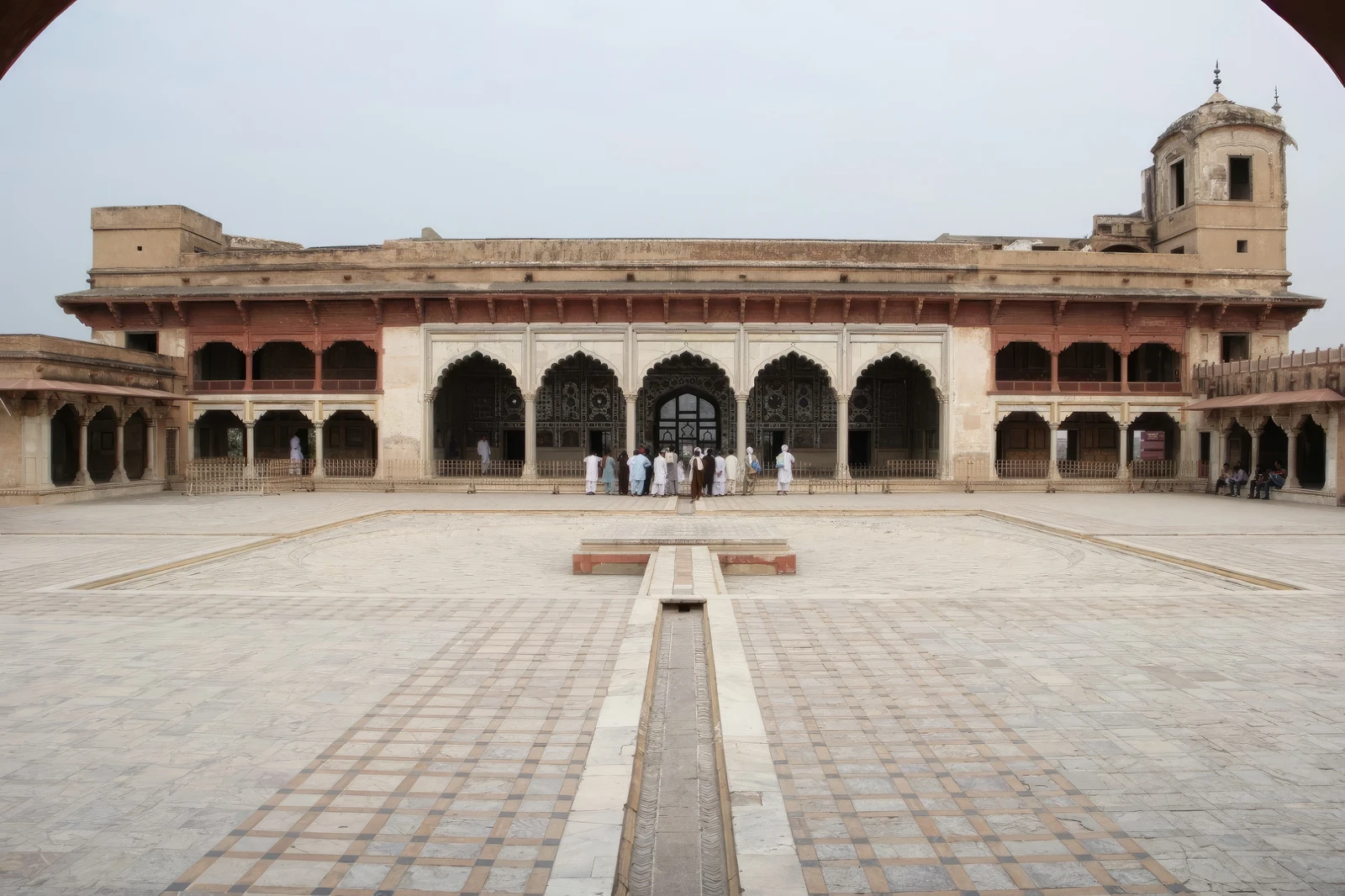
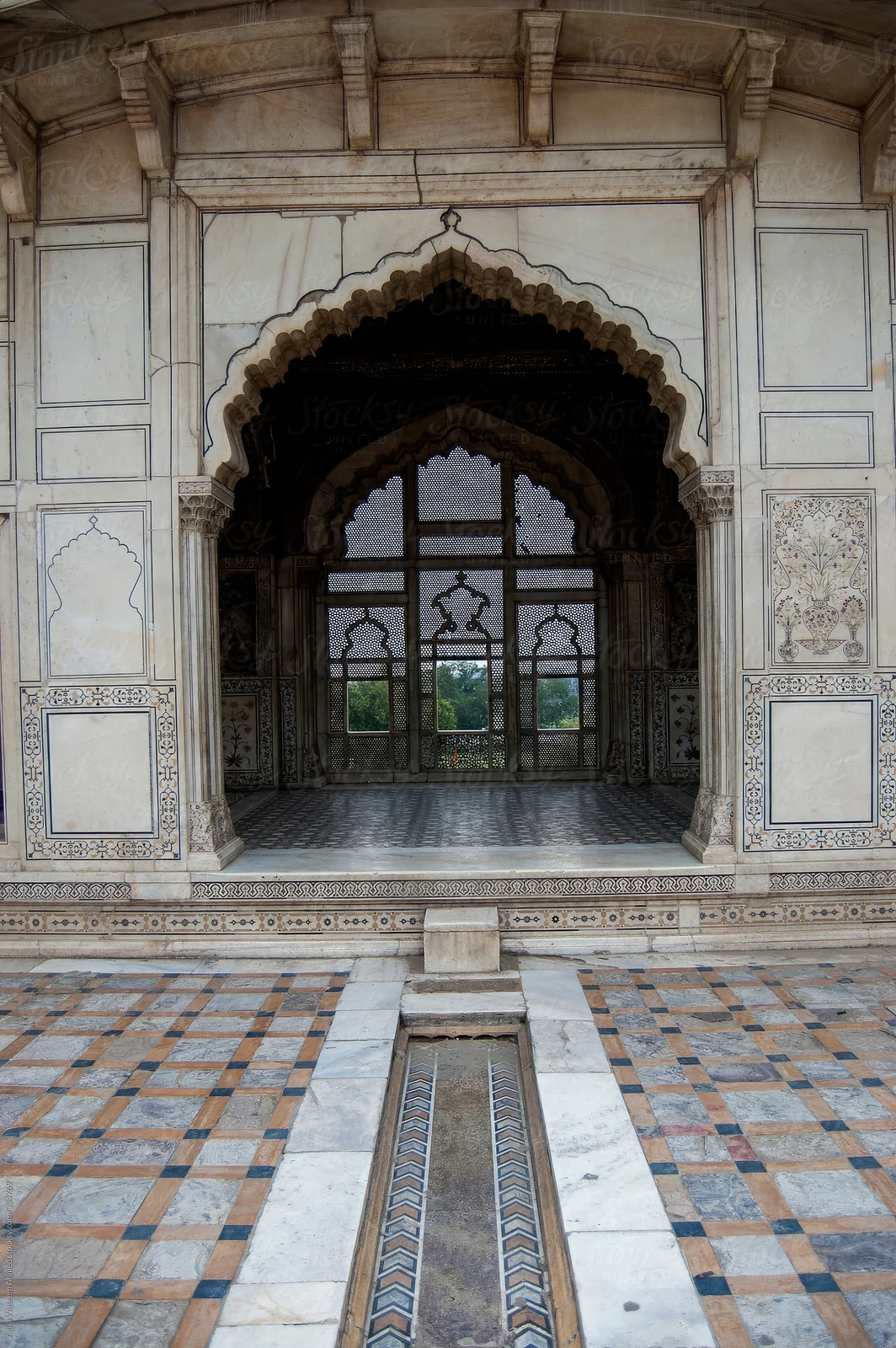
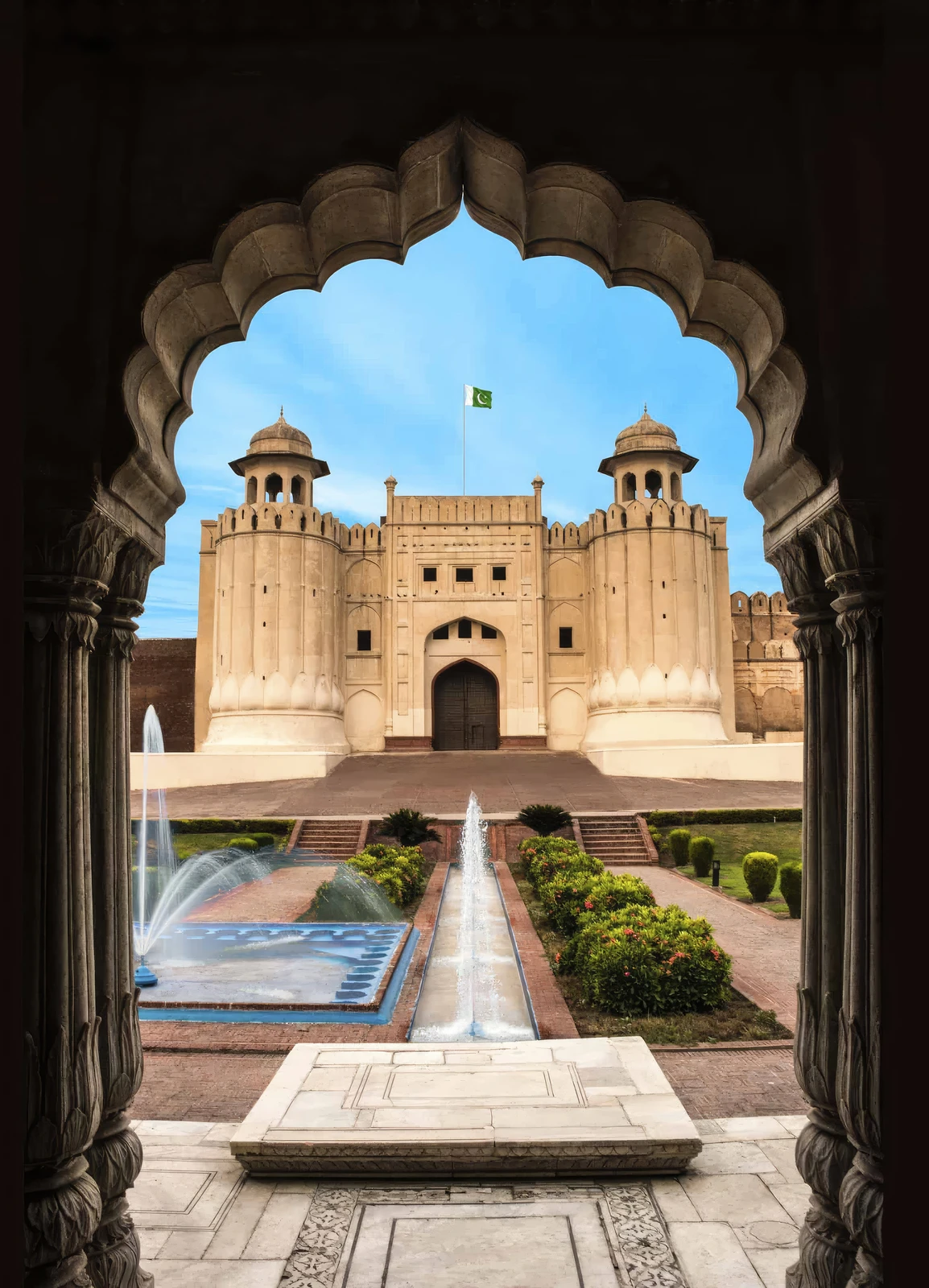
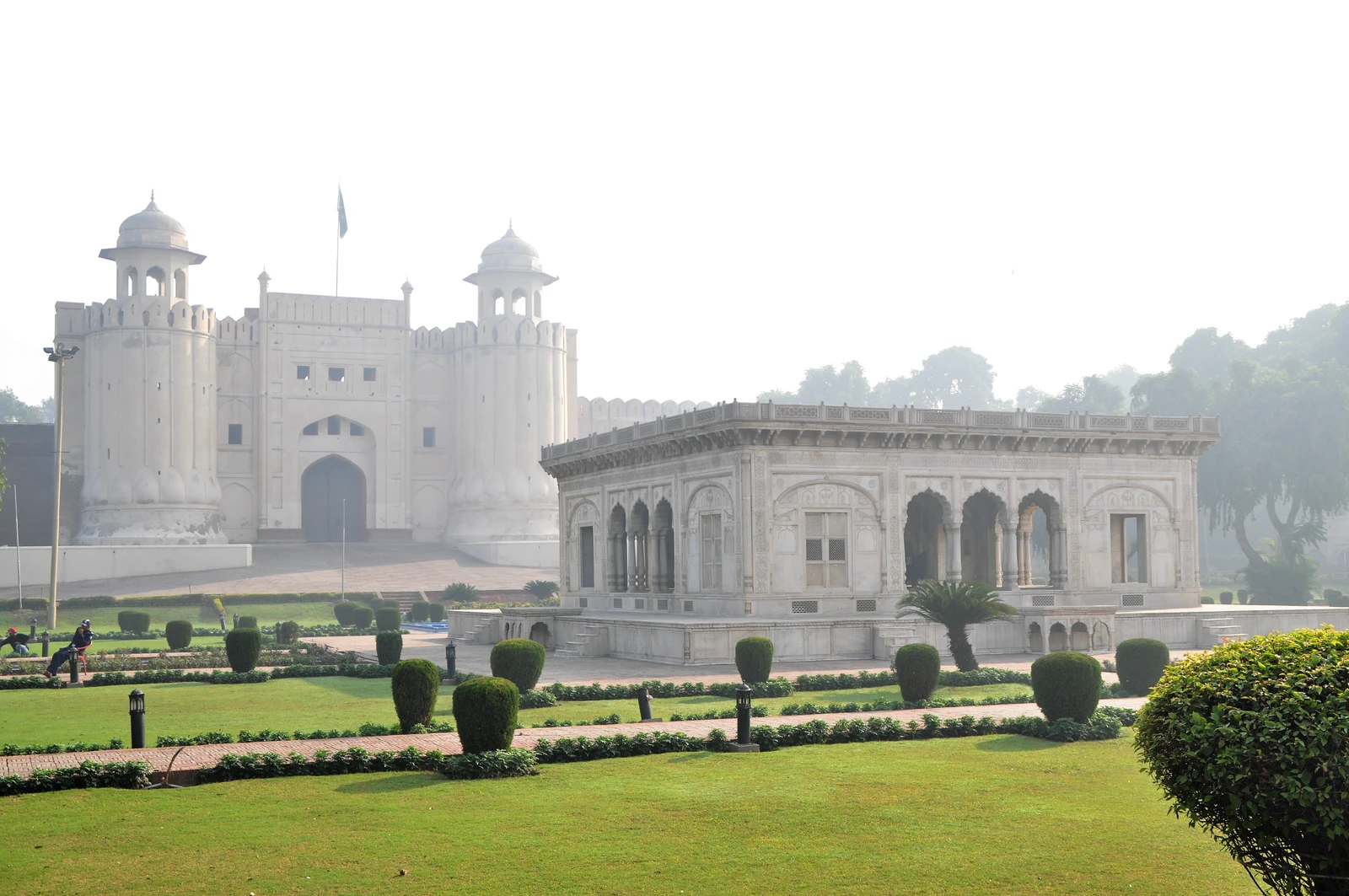
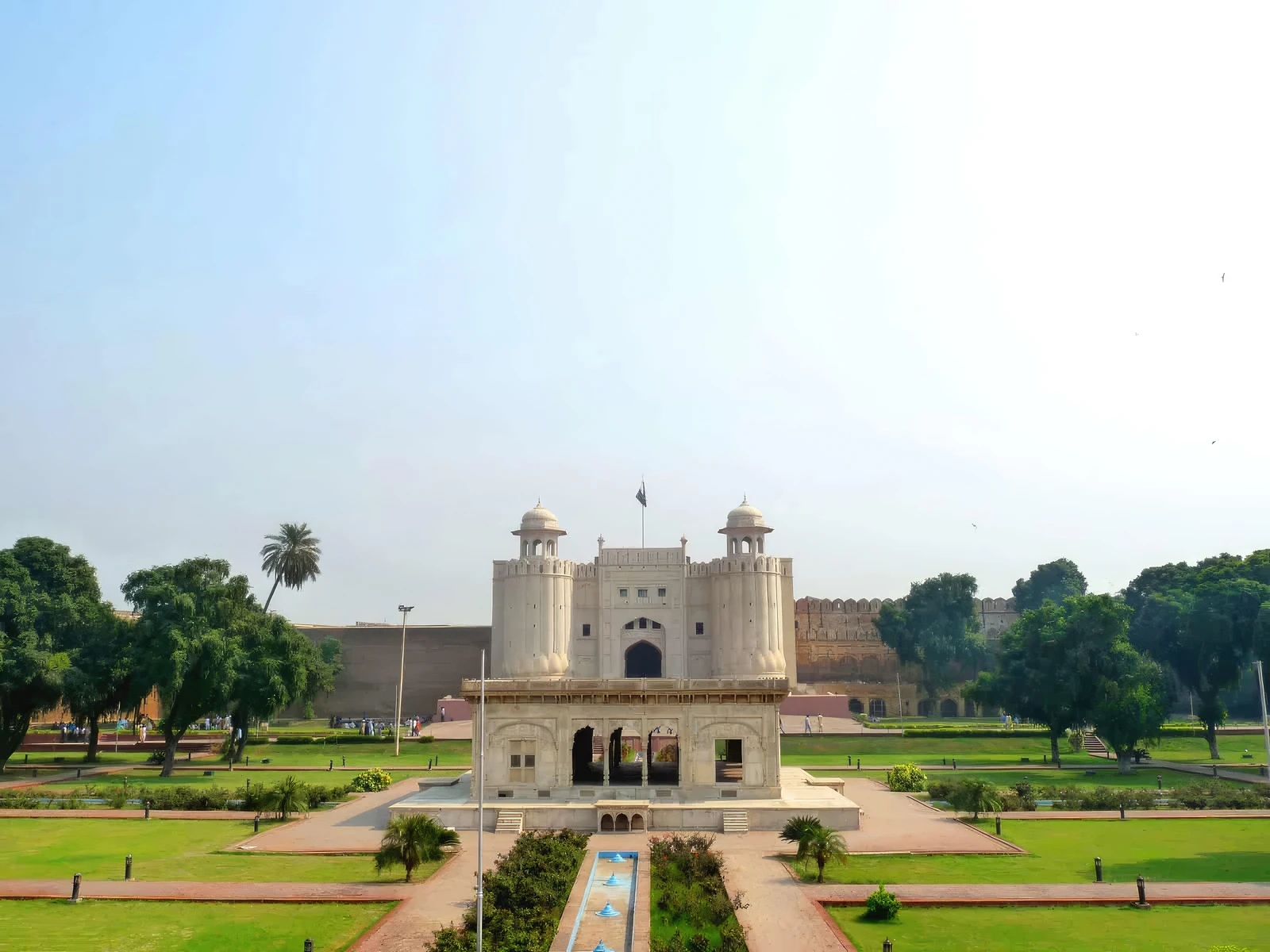
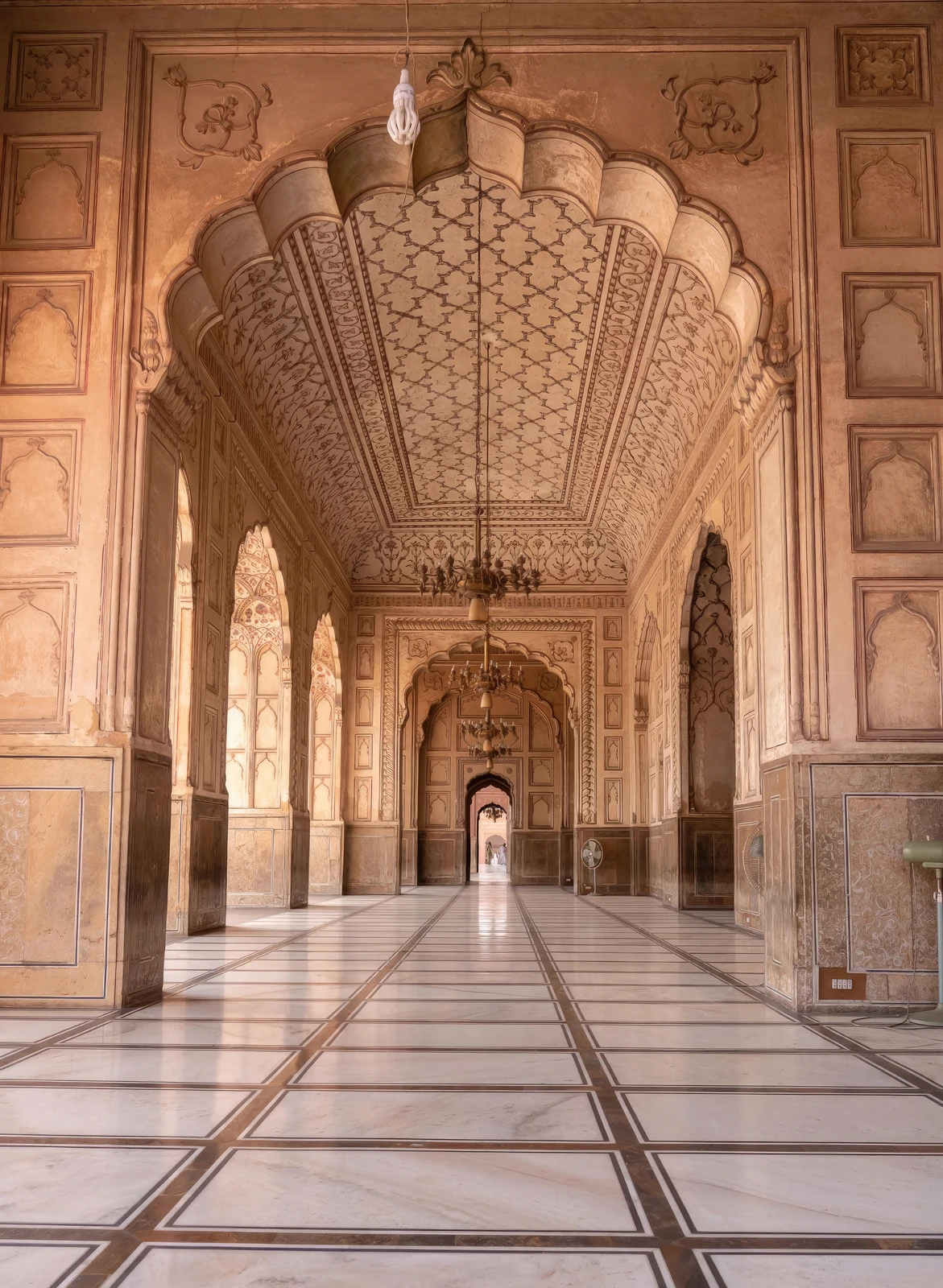
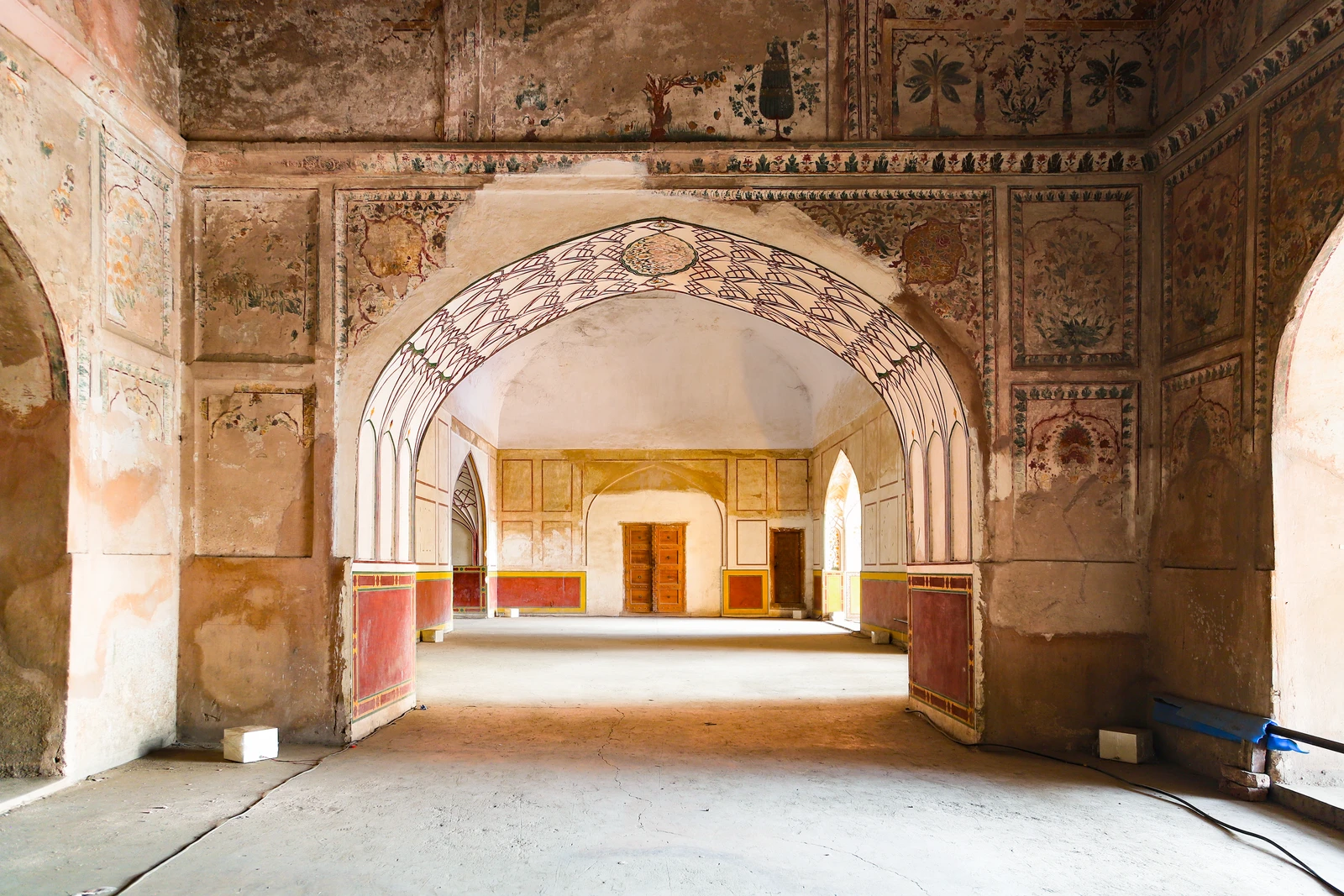
The Lahore Fort (Urdu: شاہی قلعہ, Shahi Qila, or “Royal Fort”), is a magnificent citadel located in the northwestern corner of the Walled City of Lahore, Pakistan. This sprawling complex is a living testament to centuries of history, having served as the primary residence of the Mughal emperors for significant periods, and showcasing an extraordinary evolution of Mughal architecture.
Listen to an introduction about Lahore Fort

Name: Lahore Fort (also known as Shahi Qila, meaning “Royal Fort”)
Address: The fort is situated at the northern end of the Walled City of Lahore, Punjab, Pakistan. It is directly adjacent to the iconic Badshahi Mosque and Minar-e-Pakistan, forming a central part of Lahore’s historical heart.
How to Get There:
Lahore Fort is a prime tourist attraction in Lahore and is easily accessible:
- By Air: The closest airport is Allama Iqbal International Airport (LHE) in Lahore. From the airport, it’s approximately a 30-40 minute taxi or ride-hailing (Careem, Uber) trip to the fort.
- By Train: Lahore Railway Station is well-connected to major cities within Pakistan. From the station, the fort is about 4 kilometers away, a short 10-15 minute ride by rickshaw or taxi.
- By Road: Lahore has a well-established network of roads. You can reach the fort using public transport like buses, rickshaws, and taxis. Ride-hailing apps like Careem and Uber are widely available.
- The Lahore Metro Bus Service has a station at Azadi Chowk, which is within walking distance of the fort, or a short rickshaw ride away.
- Walking: If you are exploring the Walled City of Lahore, the fort is often a key stop within a walking tour.
- Entrance Tickets: There is an entrance fee for Lahore Fort. The fee structure may differ for Pakistani nationals, students, and foreign tourists. It’s advisable to check the current rates prior to your visit. Guided tours are usually available.
- Closed Day: The Lahore Fort is closed on Mondays.
- Best Time to Visit: The best time to visit Lahore Fort is from October to March, when the weather in Lahore is cool and pleasant, ideal for sightseeing and outdoor activities. It is recommended to visit early in the morning to avoid crowds and enjoy cooler temperatures.
Landscape and Architecture:
The Lahore Fort is a sprawling complex that beautifully manifests the evolution of Mughal architecture, incorporating earlier elements and influences from Persian, Hindu, Sikh, and even British styles.
- Vast Walled Complex: The fort is a trapezoidal complex spread over 20 hectares (approximately 49 acres), enclosed by mighty walls. While the site has been inhabited for millennia with earlier mud-brick forts, the substantial structure seen today began its most significant construction during the reign of Mughal Emperor Akbar (1556–1605), who replaced and extended the existing fort with brick masonry and red sandstone.
- Architectural Evolution (Mughal Eras): The fort is a chronological record of Mughal architectural development:
- Akbar’s Period (1556-1605): Characterized by the use of red sandstone and cut brickwork, often incorporating Hindu motifs like zoomorphic (animal-shaped) corbels (e.g., in the Diwan-e-Aam and Jharoka-e-Darshan).
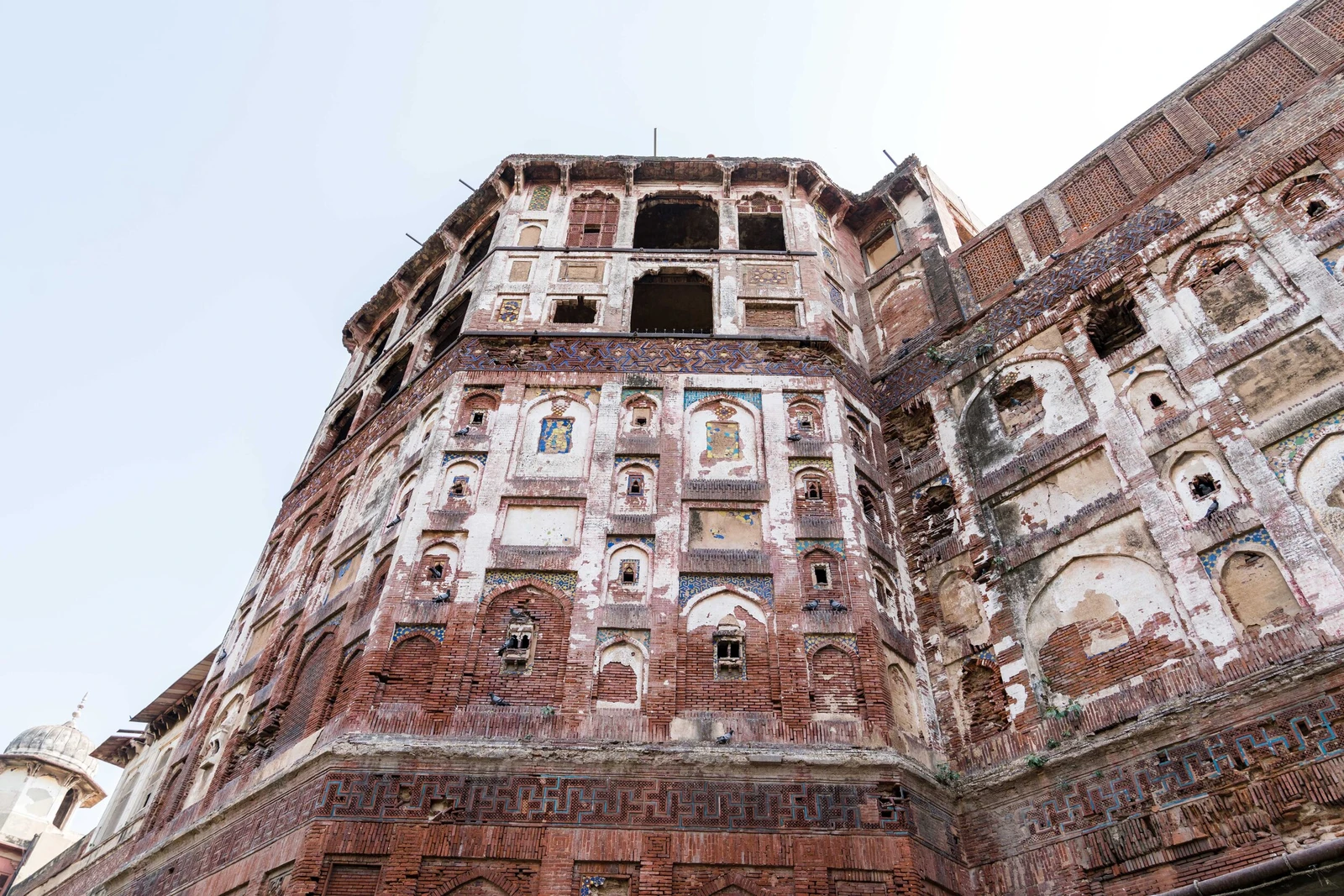
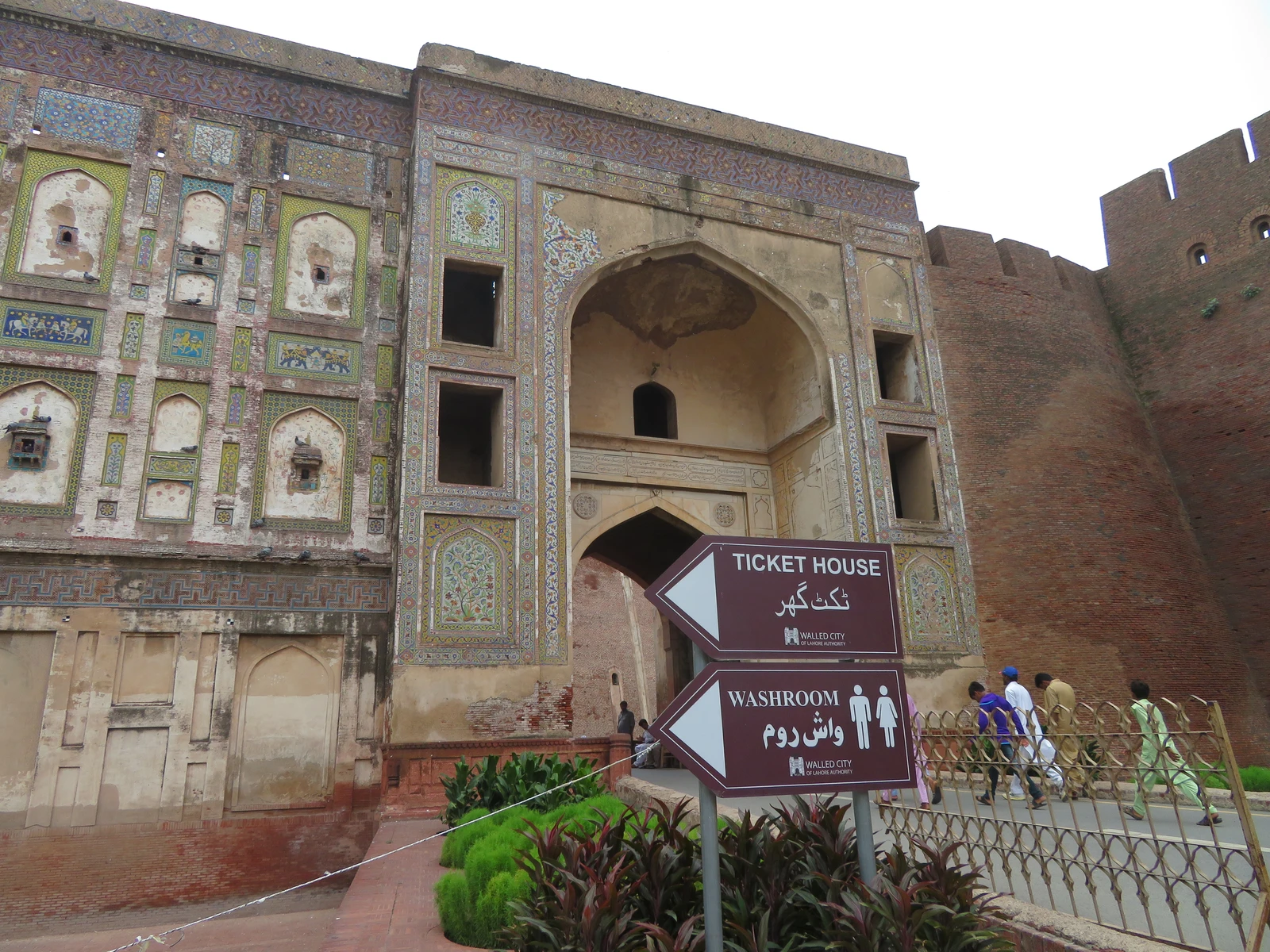
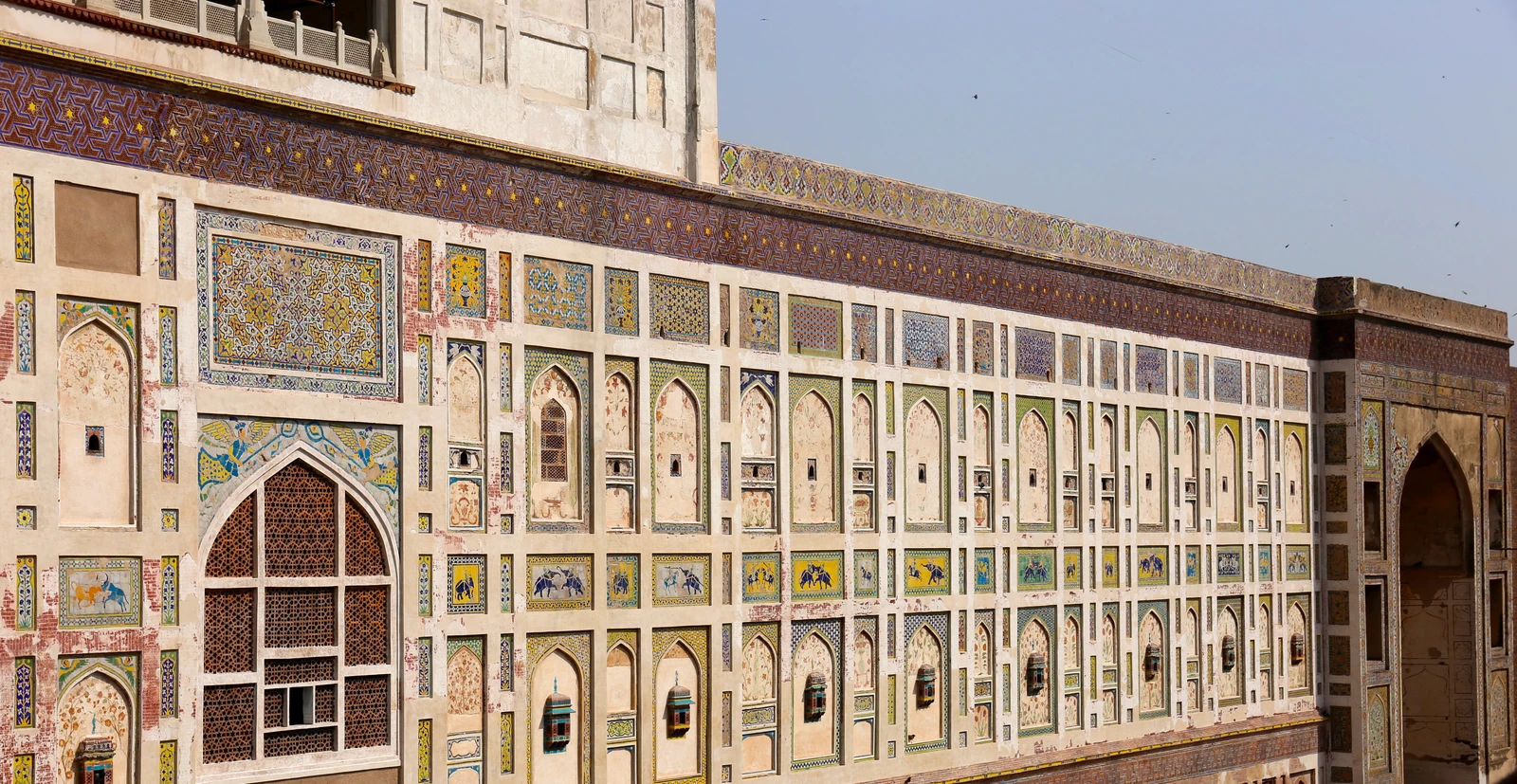
- Jahangir’s Period (1605-1627): Introduced more Persian styles and additions like the Picture Wall, a massive, vibrant mosaic wall on the northern facade, adorned with intricate tile work and frescoes depicting royal hunts, mythical creatures, and courtly scenes. The Kala Burj pavilion was also added.
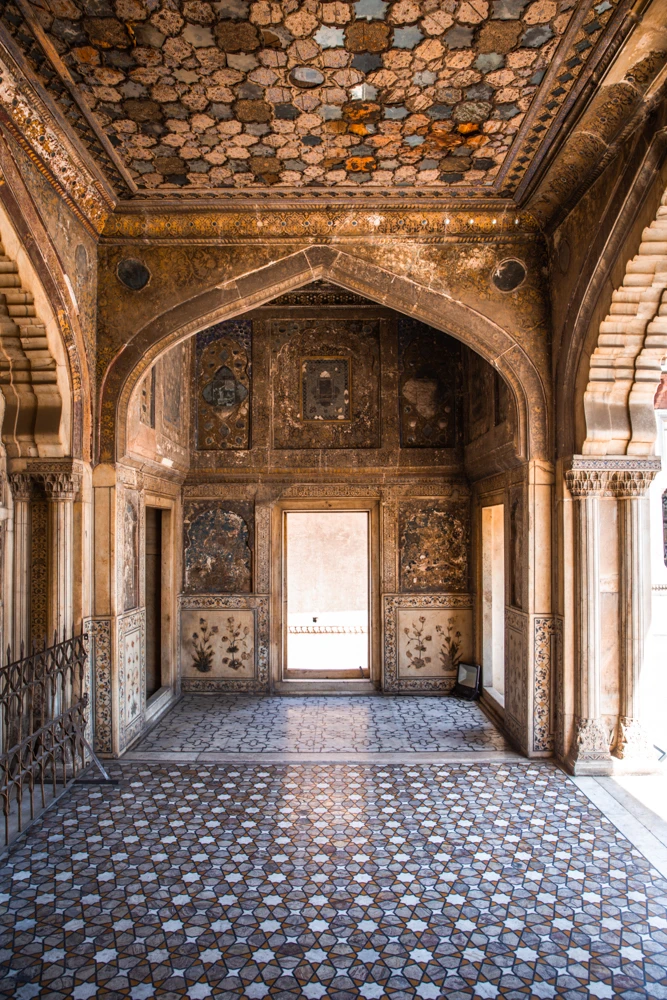
- Shah Jahan’s Period (1628–1658): Marked the height of luxury with extensive use of white marble, pietra-dura (inlaid semiprecious stones in intricate floral designs), and exquisite tile mosaic work. Key structures include:
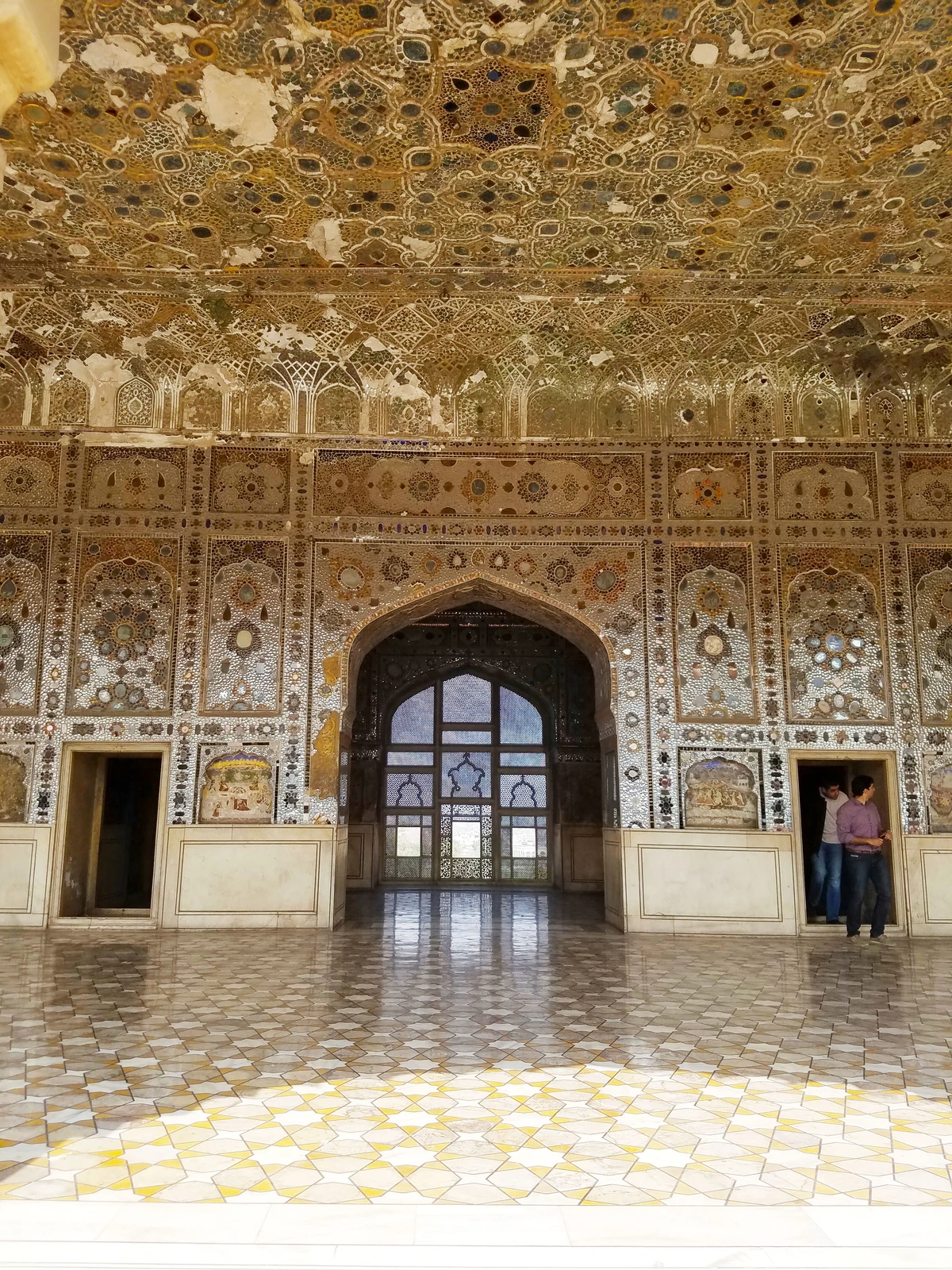
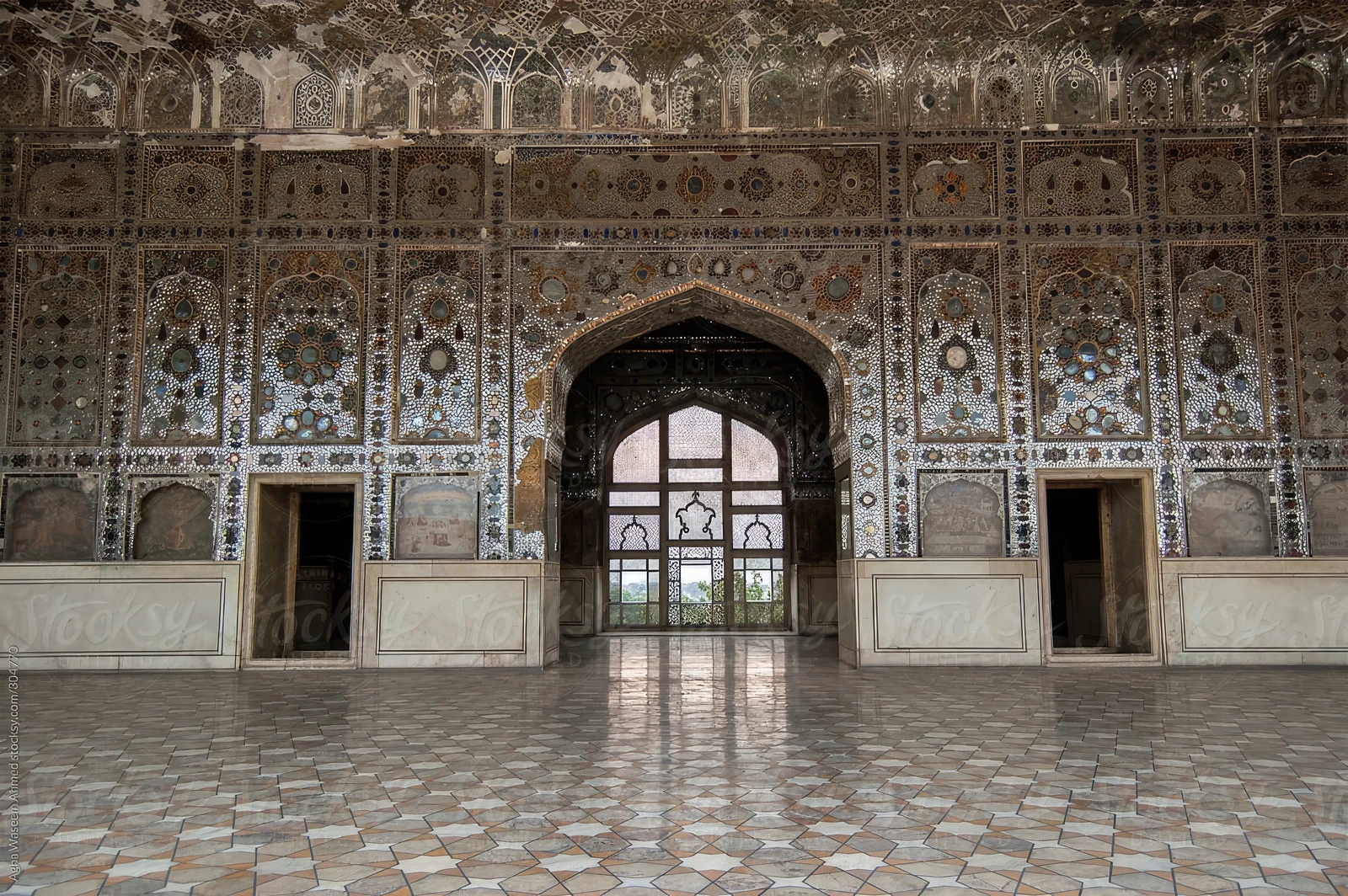
- Sheesh Mahal (Palace of Mirrors): One of the most famous and beautiful palaces in the world, dazzling with thousands of tiny mirrors, gilt, and semi-precious stone inlays, creating a sparkling effect.
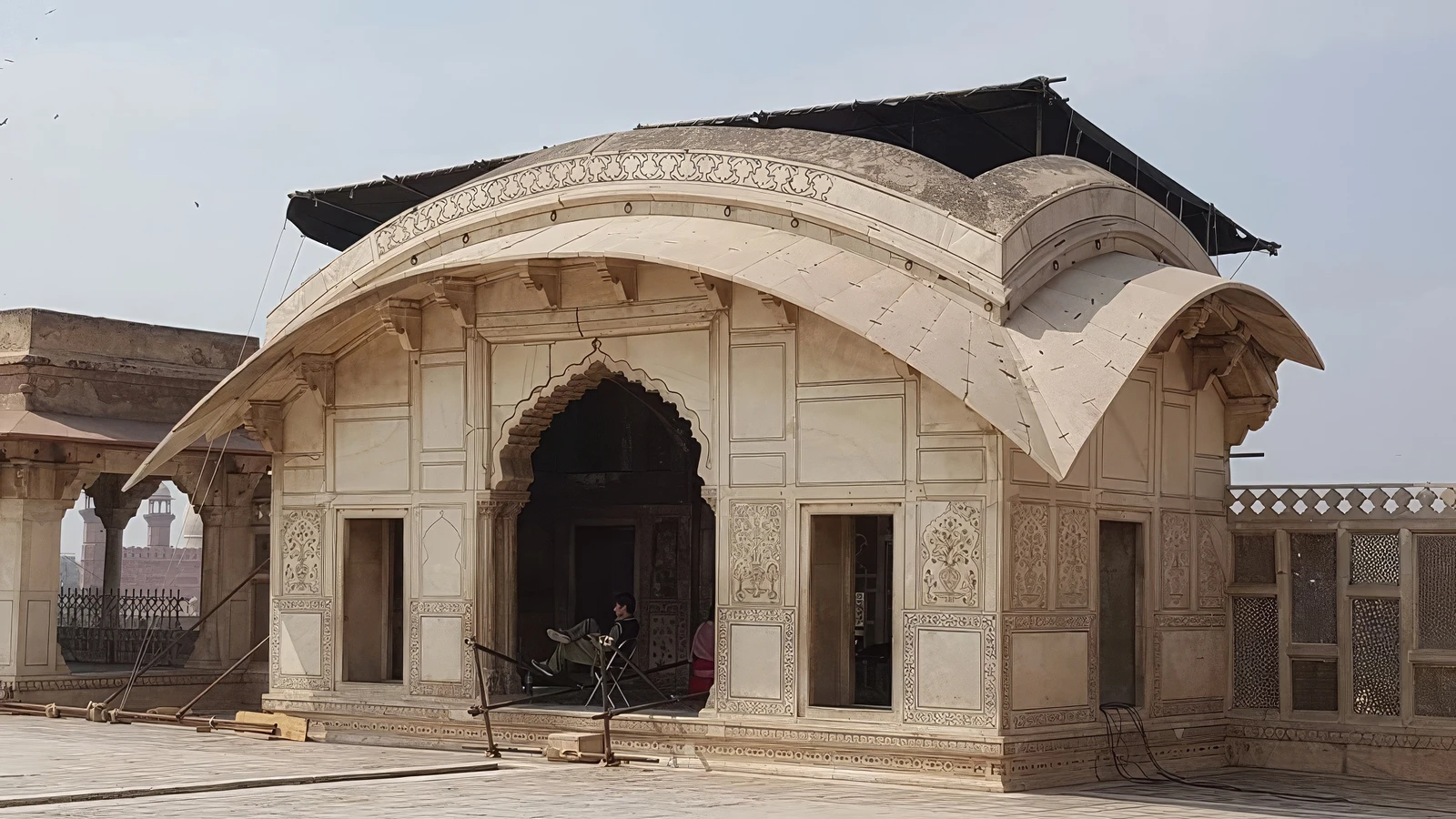
- Naulakha Pavilion: An elegant white marble chamber with a distinctive curvilinear or “bengali-style” roof, known for its intricate pietra dura work.
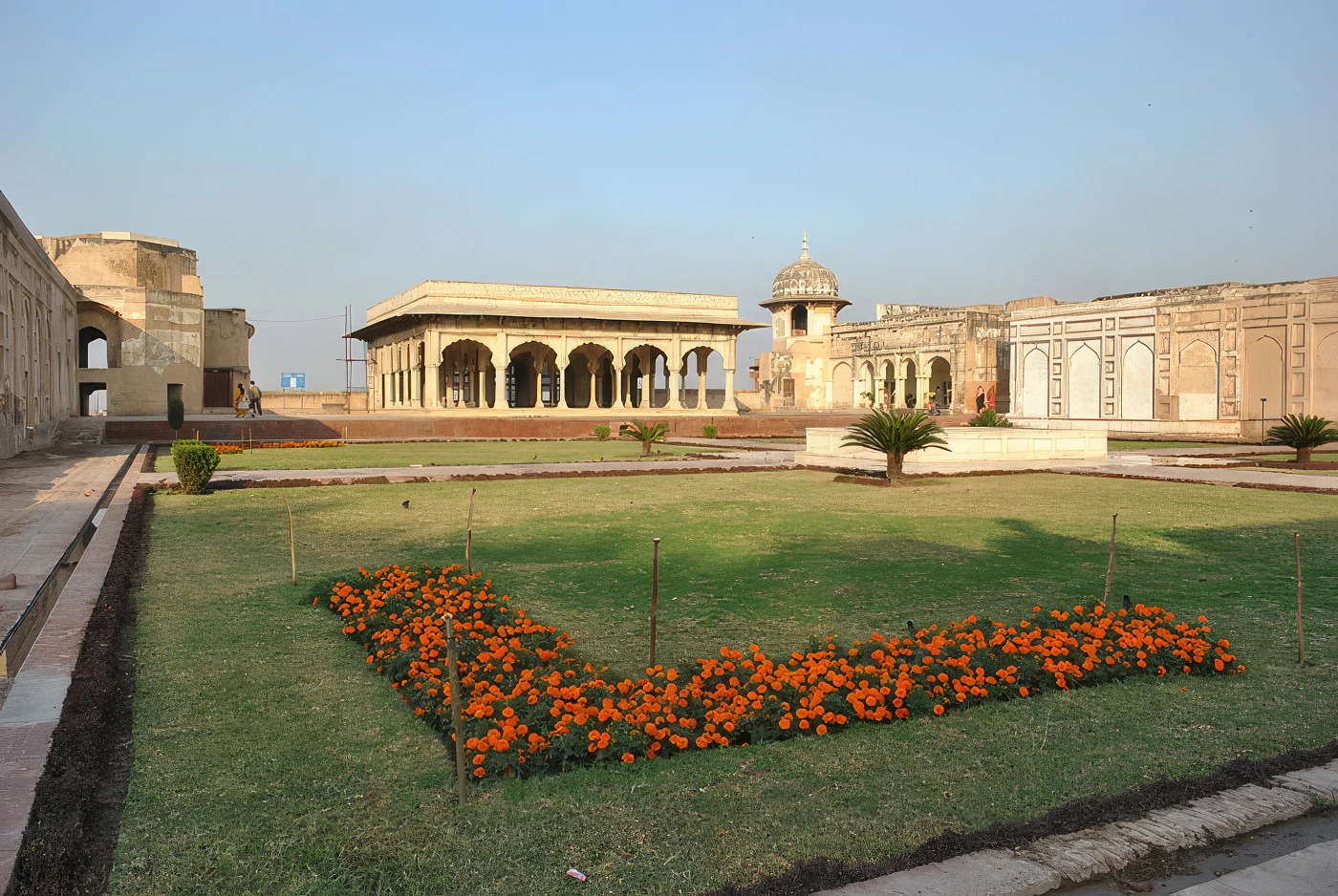
- Diwan-i-Khas (Hall of Private Audience): A white marble pavilion for private imperial meetings.
- Moti Masjid (Pearl Mosque): A small, exquisite mosque made entirely of white marble.
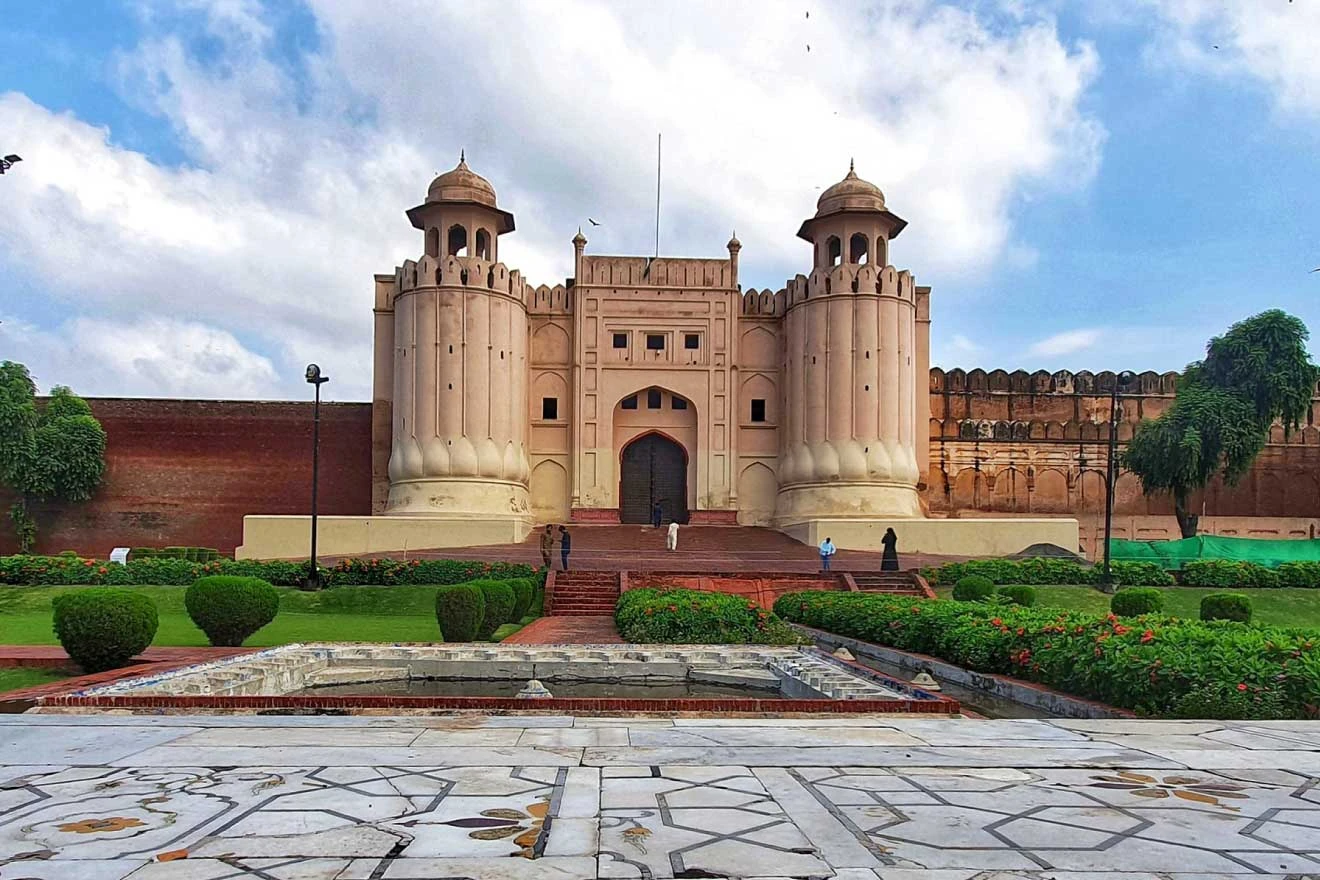
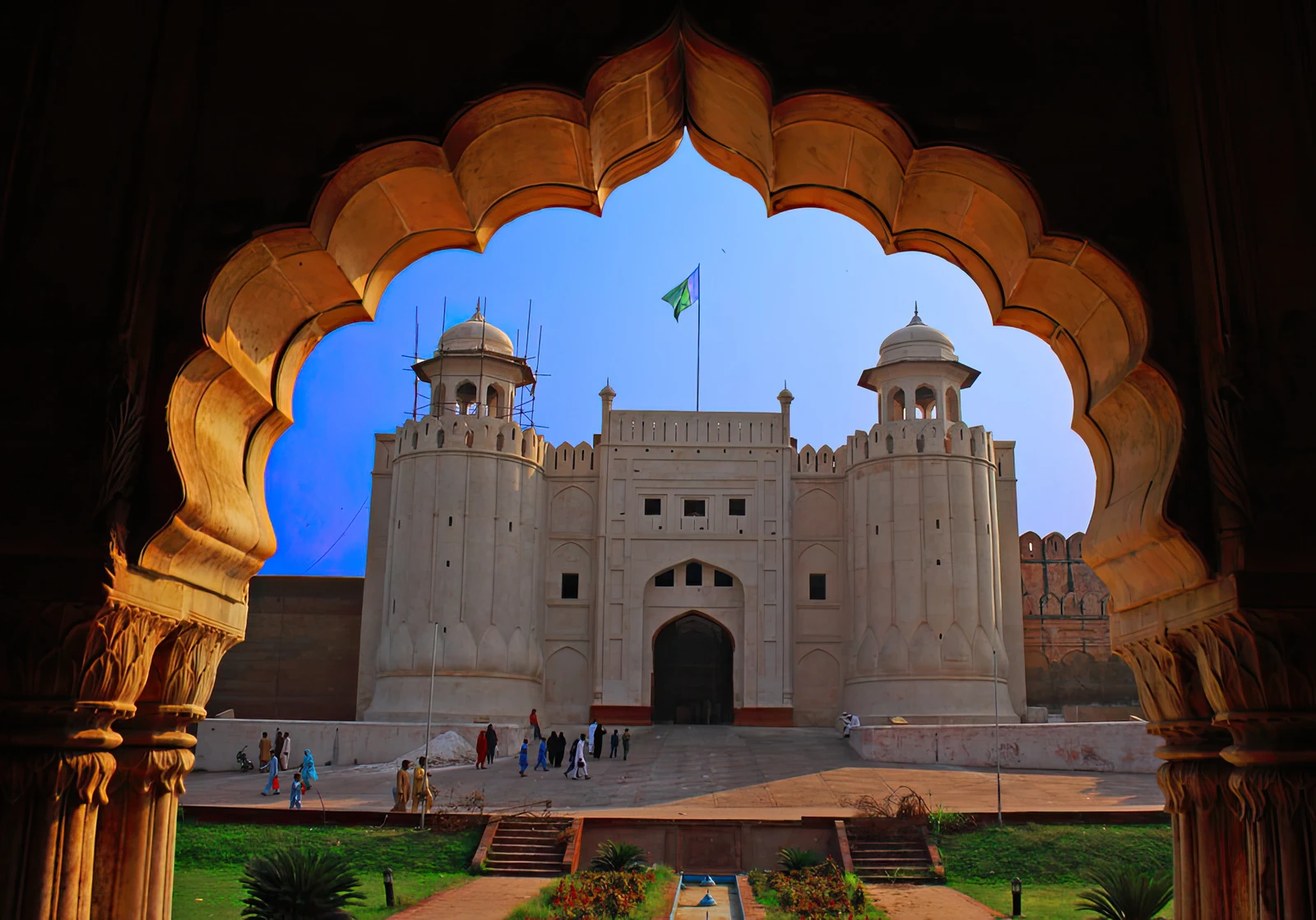
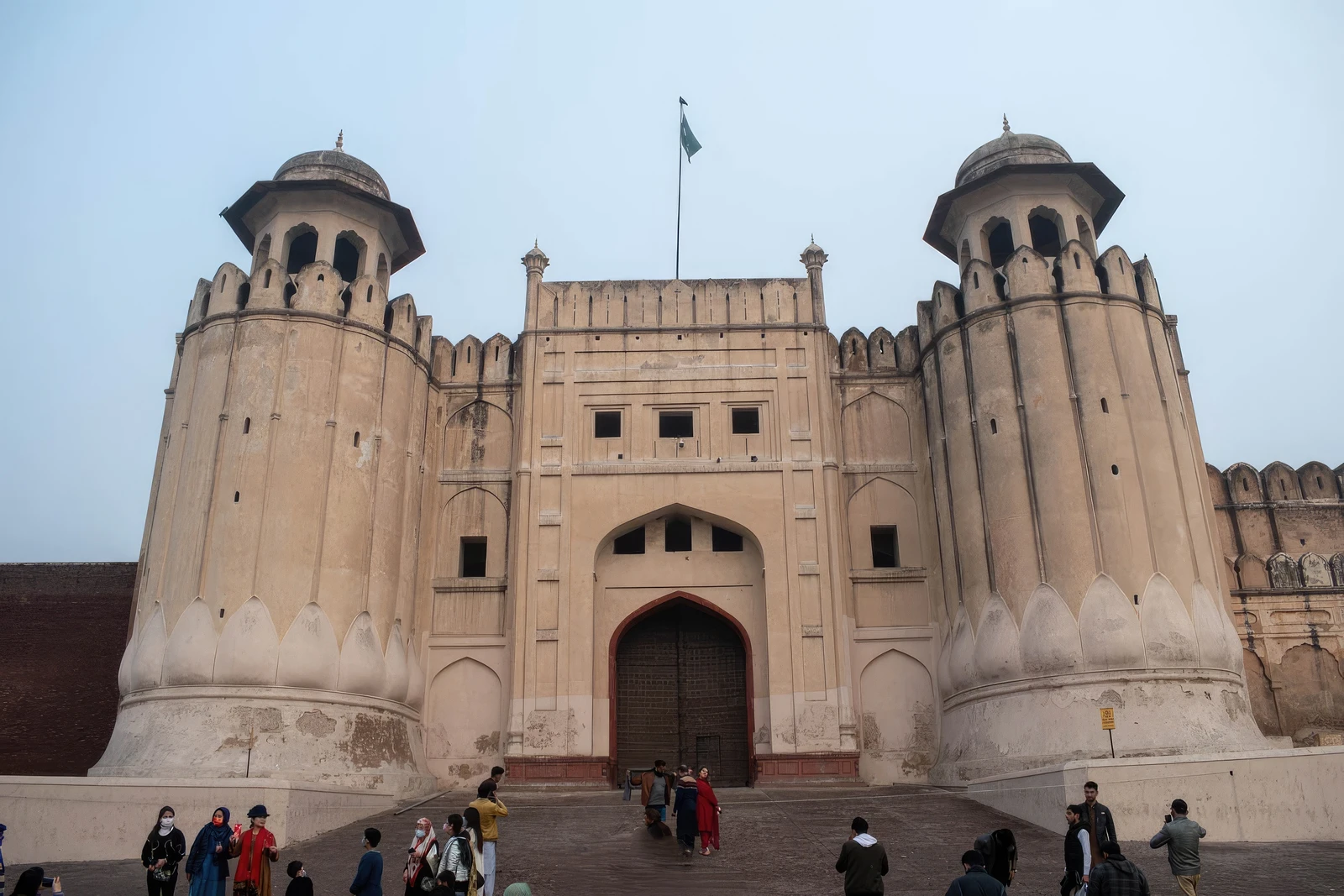
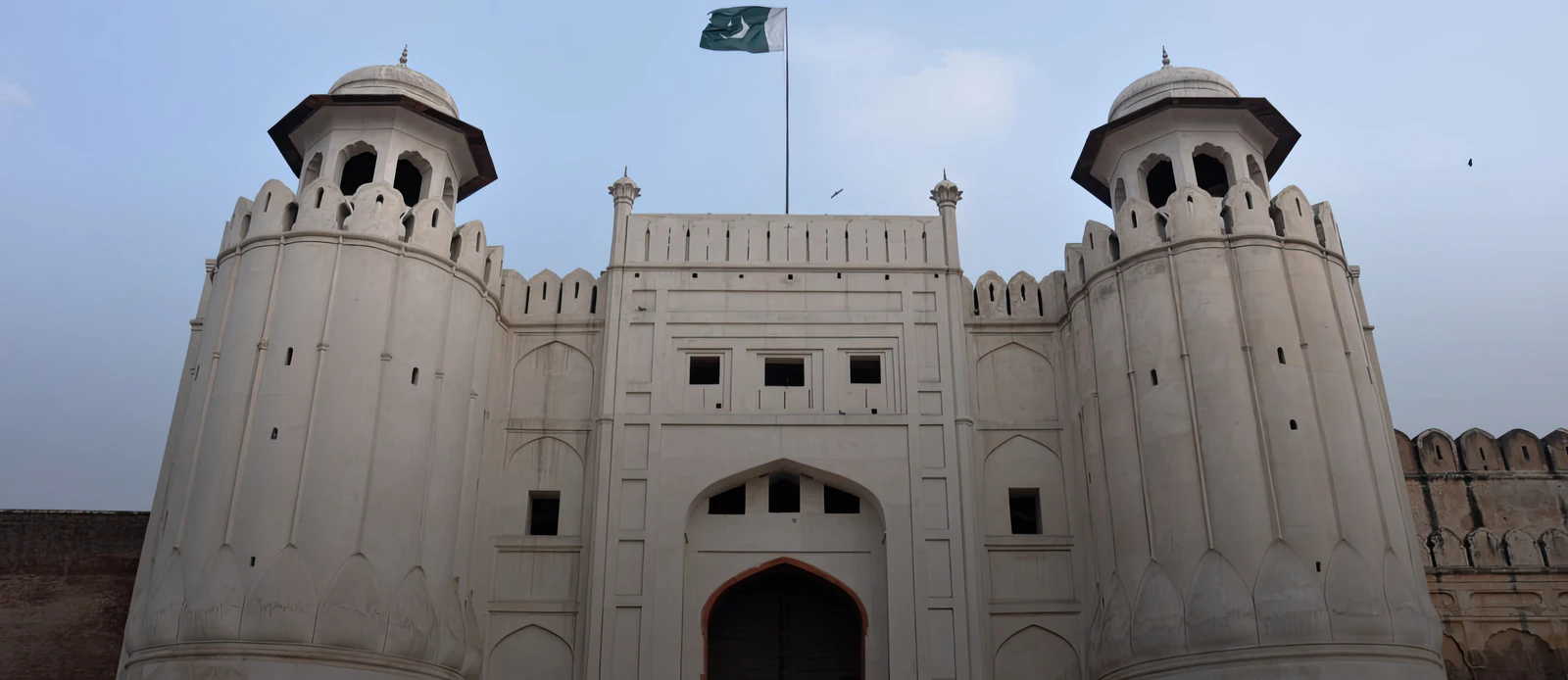
- Aurangzeb’s Period (1658–1707): Added the grand and iconic Alamgiri Gate, facing the Badshahi Mosque, symbolizing the power and might of the Mughal emperors.
- Sikh and British Period Additions/Alterations: After the Mughals, the fort was used by Maharaja Ranjit Singh, founder of the Sikh Empire (1799–1839), who repurposed parts of the fort. The Moti Masjid was converted into a Sikh temple (gurdwara), and a “three-doored pavilion” was added. The British also made some modifications.
- Quadrangle Layouts: The fort is organized into various quadrangles (e.g., Shah Burj Quadrangle, Shah Jahan Quadrangle, Jahangir’s Quadrangle), each containing specific palaces, halls, and gardens.
- Gardens: The fort originally featured beautiful Mughal gardens, though many have been altered or restored over time. It is inscribed as a UNESCO World Heritage Site along with the nearby Shalimar Gardens, highlighting their importance in Mughal garden design.
What Makes It Famous:
- UNESCO World Heritage Site: Inscribed in 1981, along with the Shalimar Gardens, for its “outstanding repertoire” of Mughal monuments, representing the empire’s artistic and aesthetic zenith.
- Architectural Synthesis: It is a prime example of the harmonious fusion of diverse architectural styles, incorporating Indian, Islamic, Persian, Timurid, and even European influences, making it a unique architectural masterpiece.
- Evolution of Mughal Architecture: The fort acts as a living textbook, showcasing the architectural preferences and innovations of successive Mughal emperors (Akbar, Jahangir, Shah Jahan, Aurangzeb) through their distinct additions and modifications.
- Sheesh Mahal (Palace of Mirrors): This dazzling chamber, with its intricate mirror work, is one of the most famous and breathtaking interiors within the fort, renowned globally for its sparkling beauty.
- Picture Wall: The massive Picture Wall, adorned with vibrant tile mosaics, is a unique feature that tells stories of royal life, hunts, and mythical creatures, acting as a giant outdoor art gallery.
- Historical Significance: As a royal residence and military stronghold, the fort witnessed centuries of power, intrigue, and significant historical events, from the peak of the Mughal Empire to the rise of the Sikhs and the British Raj.
- Cultural Hub: It remains a cultural landmark, occasionally hosting events, and is adjacent to other iconic sites like the Badshahi Mosque and the Samadhi of Maharaja Ranjit Singh.
Differences from Some Other Wonders:
- Multilayered Historical Occupancy: While other forts (like Delhi’s Red Fort) were also Mughal, the Lahore Fort has a particularly pronounced history of destruction and rebuilding by various pre-Mughal dynasties, followed by significant Mughal, Sikh, and British occupation and modification. This multi-layered historical footprint is more evident than in some other, more singularly Mughal forts.
- Extensive Picture Wall: While other Mughal forts have ornamentation, the colossal and visually dominant Picture Wall in Lahore Fort, with its unique mosaic and tile work, is a feature on a scale and detail that sets it apart.
- Specific Sikh-Era Additions/Conversions: The significant alterations made during the Sikh Empire (e.g., conversion of Moti Masjid to a gurdwara, addition of new pavilions) provide a unique blend of Sikh and Mughal styles, which is less prevalent in other major Mughal forts in India that remained under continuous Muslim rule for longer.
- Evolutionary Showcase: Unlike the Taj Mahal, which is a singular, unified masterpiece from a specific period, Lahore Fort is famous for being an evolutionary showcase of Mughal architectural styles across different reigns, allowing visitors to trace the development of the empire’s aesthetics.
- Lack of Red Fort’s “Independence Day” Symbolism: While a national icon for Pakistan, it doesn’t hold the same specific annual national independence symbolism as the Red Fort in Delhi, where the PM hoists the flag.
- Geographical Importance: Lahore’s strategic location between Mughal strongholds further north (Kabul, Kashmir) and India proper made its fort particularly vital as a transit and administrative hub, contributing to its continuous development and embellishment by various emperors.