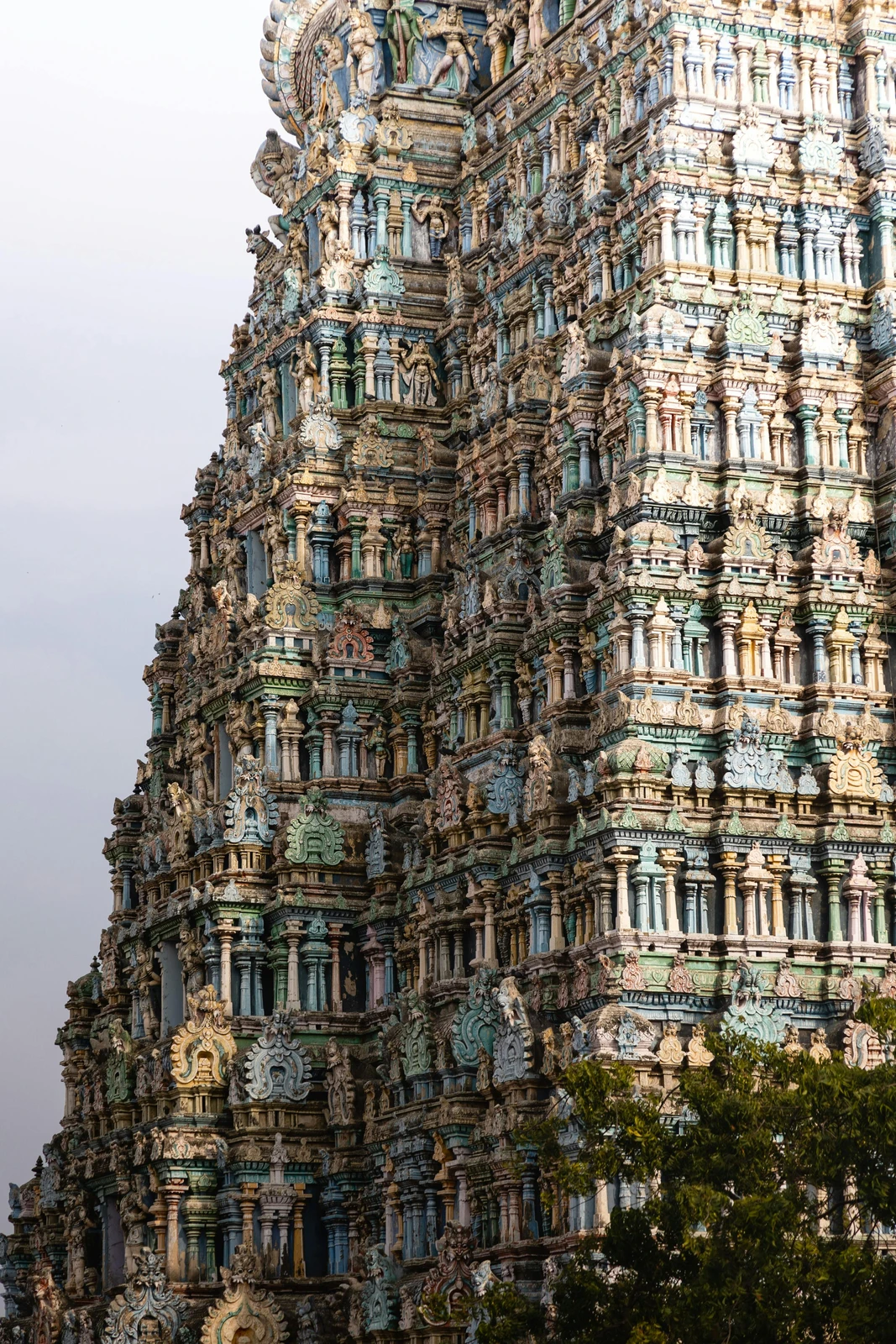
The Meenakshi Amman Temple, also known as Arulmigu Meenakshi Sundareswarar Temple, is not just a temple; it’s a sprawling, vibrant, and incredibly ornate living complex that stands as the very heart and soul of Madurai, a historic city in Tamil Nadu, India. It is one of the greatest masterpieces of Dravidian architecture and a bustling center of pilgrimage, deeply embedded in South Indian culture and mythology.

Name: Meenakshi Amman Temple (Tamil: மீனாட்சி அம்மன் கோவில்; also Arulmigu Meenakshi Sundareswarar Temple)
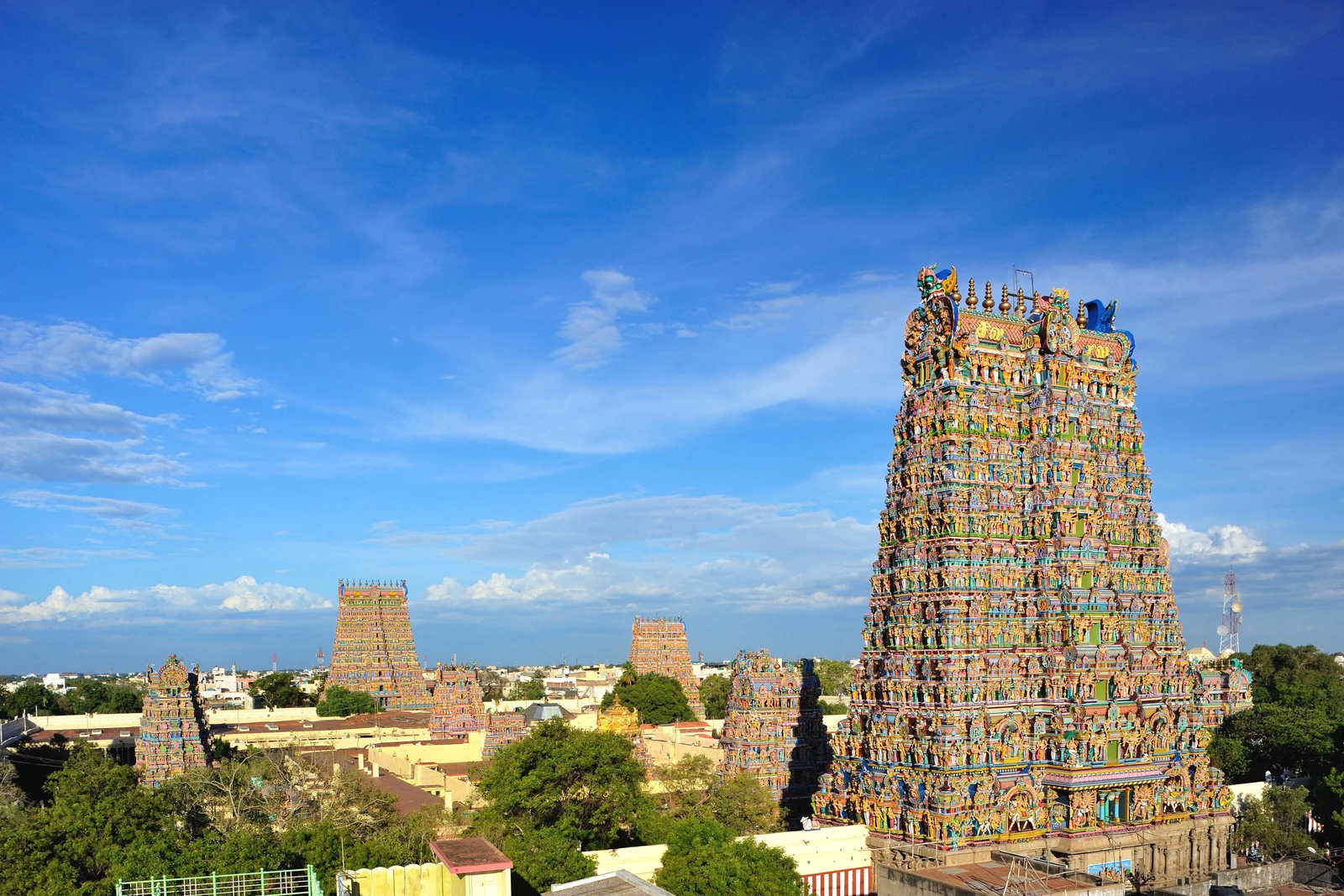
Address: The temple is located on the southern bank of the Vaigai River, at the center of the ancient city of Madurai, Tamil Nadu, India. Its monumental towers are visible from almost every part of the city, serving as its most prominent landmark.
How to Get There:
Madurai is a major transportation hub in southern India, making the Meenakshi Amman Temple easily accessible.
- By Air: The closest airport is Madurai International Airport (IXM), located about 12 km (7.5 miles) from the temple. It has direct flights from major Indian cities (Chennai, Bengaluru, Mumbai, Delhi) and some international destinations (Colombo, Dubai, Singapore). From the airport, taxis or auto-rickshaws are readily available.
- By Train: Madurai Junction Railway Station (MDU) is just 2 km (1.2 miles) from the temple. Auto-rickshaws, taxis, and cycle rickshaws are available. The temple is also walkable (around 25 minutes) if you’re traveling light.
- By Bus: Madurai has excellent bus connectivity from all major South Indian cities. The Mattuthavani Integrated Bus Terminus is about 8 km from the temple; from there, you’ll need a local auto-rickshaw or taxi.
- By Auto-rickshaw/Taxi/Ride-hailing (Ola/Uber): These are common and convenient modes of local transportation within Madurai. Always negotiate auto-rickshaw fares beforehand.
- Walking: The temple is at the heart of the city, and many hotels are within walking distance. Exploring the temple complex itself is best done on foot.
- Entrance Fees: General entry to the temple complex is free. There’s a nominal fee (e.g., ₹50) for “special darshan” (shorter queues to see the main deities). A camera fee (e.g., ₹50 for still cameras) might apply, though mobile photography is often free in most areas except the sanctums. Footwear must be removed and can be stored at designated counters for a small fee.
- Best Time to Visit: The temple is typically very busy throughout the day. Early mornings (around 6:00 AM – 8:00 AM) or late evenings (after 6:00 PM) can offer a slightly less crowded experience.
Landscape and Architecture:
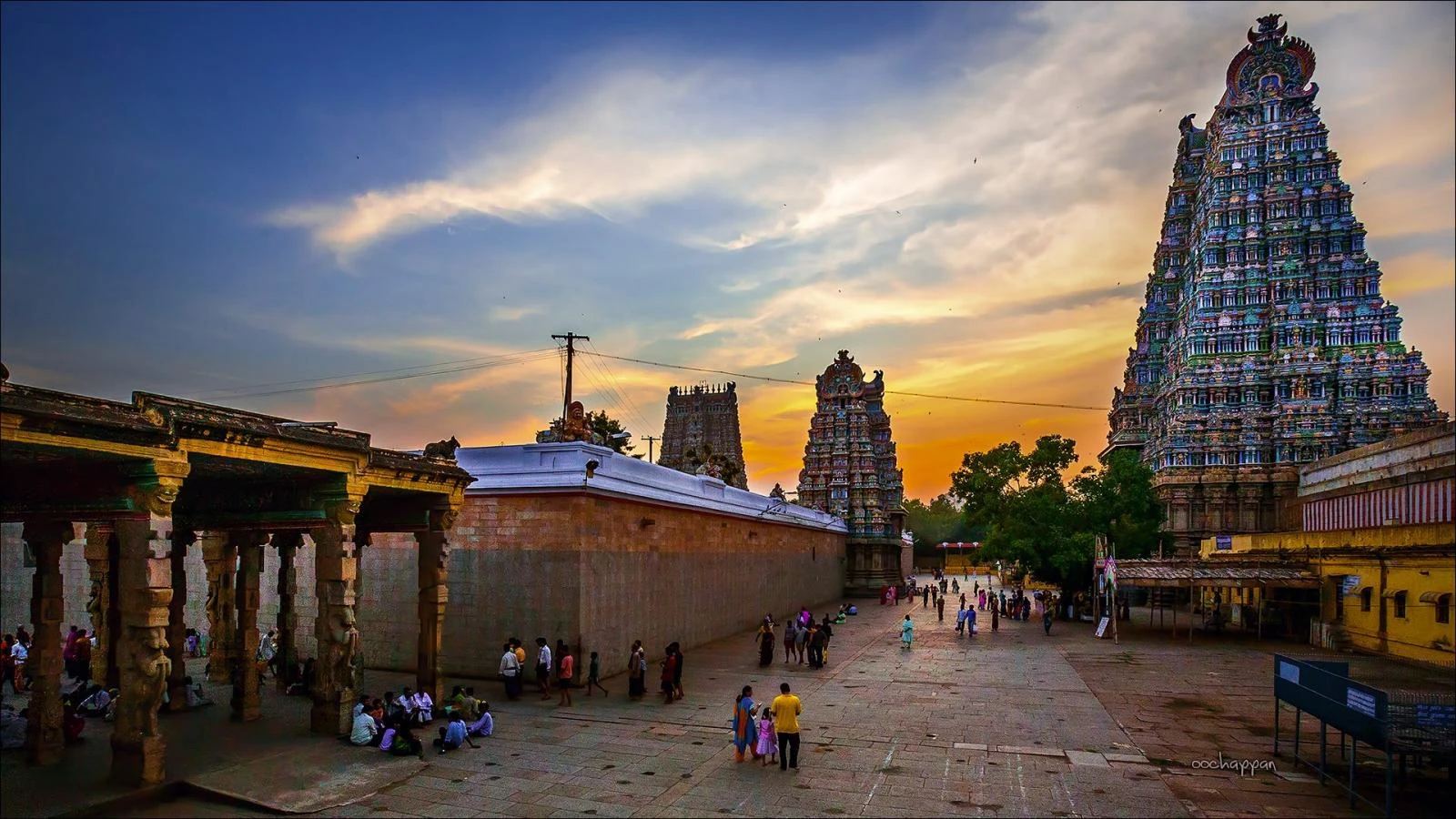
The Meenakshi Amman Temple is a prime example of the Dravidian architectural style, characterized by its monumental scale, towering gateways, and profusion of vibrant sculptures.
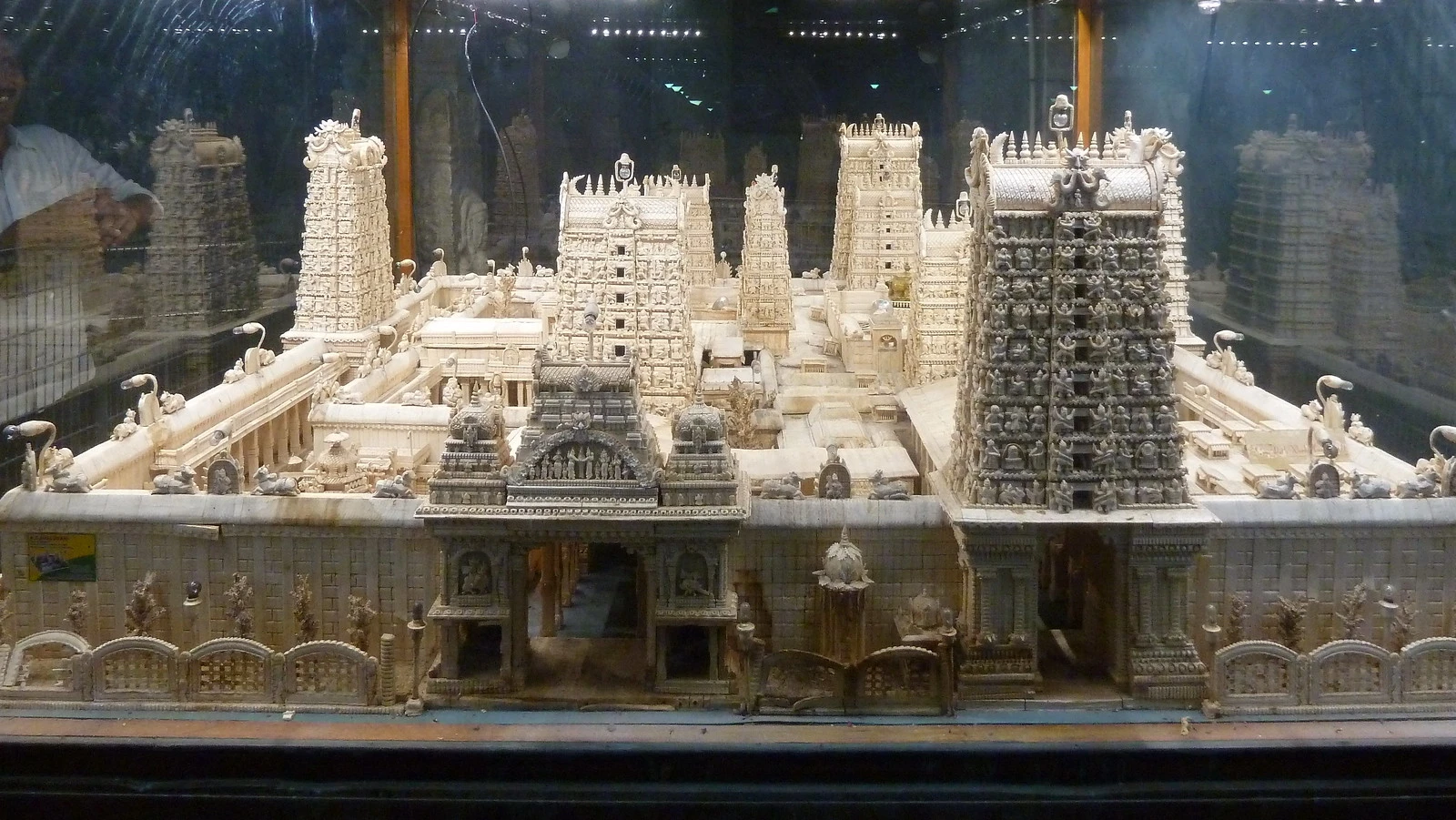
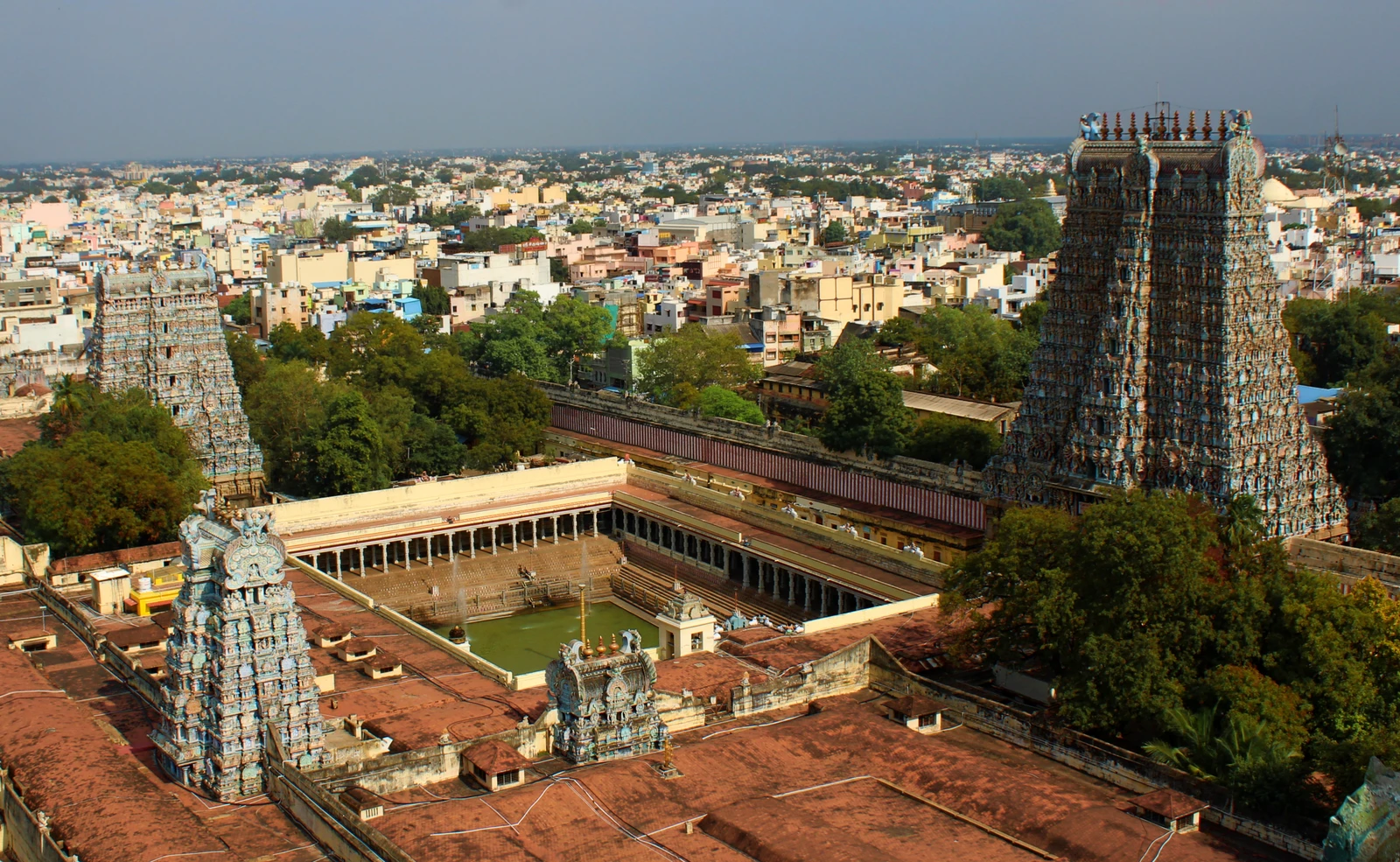
- Vast Temple Complex: The temple complex spans an astounding area of about 15 acres (60,700 square meters), laid out in a series of concentric quadrangular enclosures, reflecting the traditional South Indian temple town planning where the city was built around the temple.
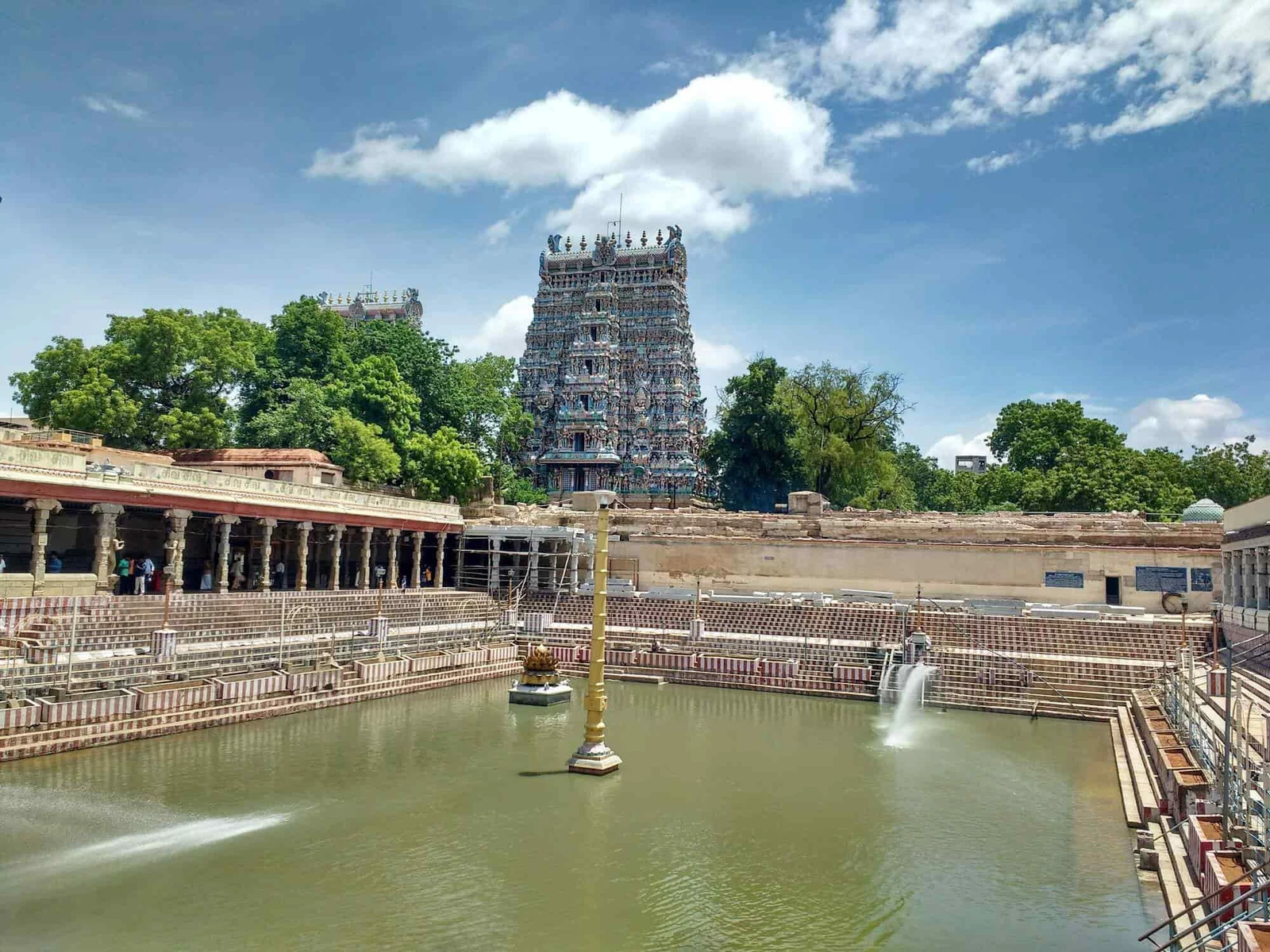
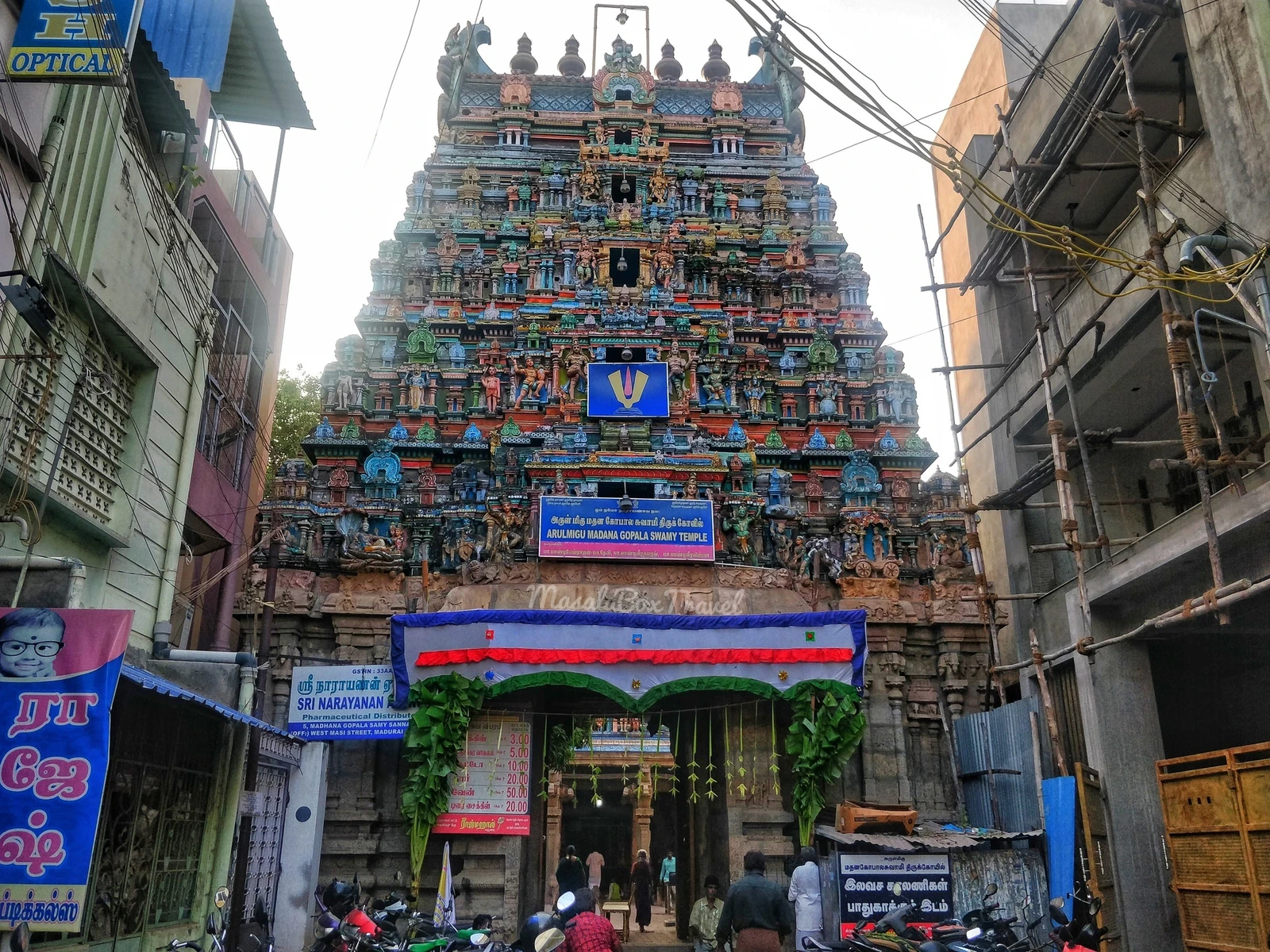
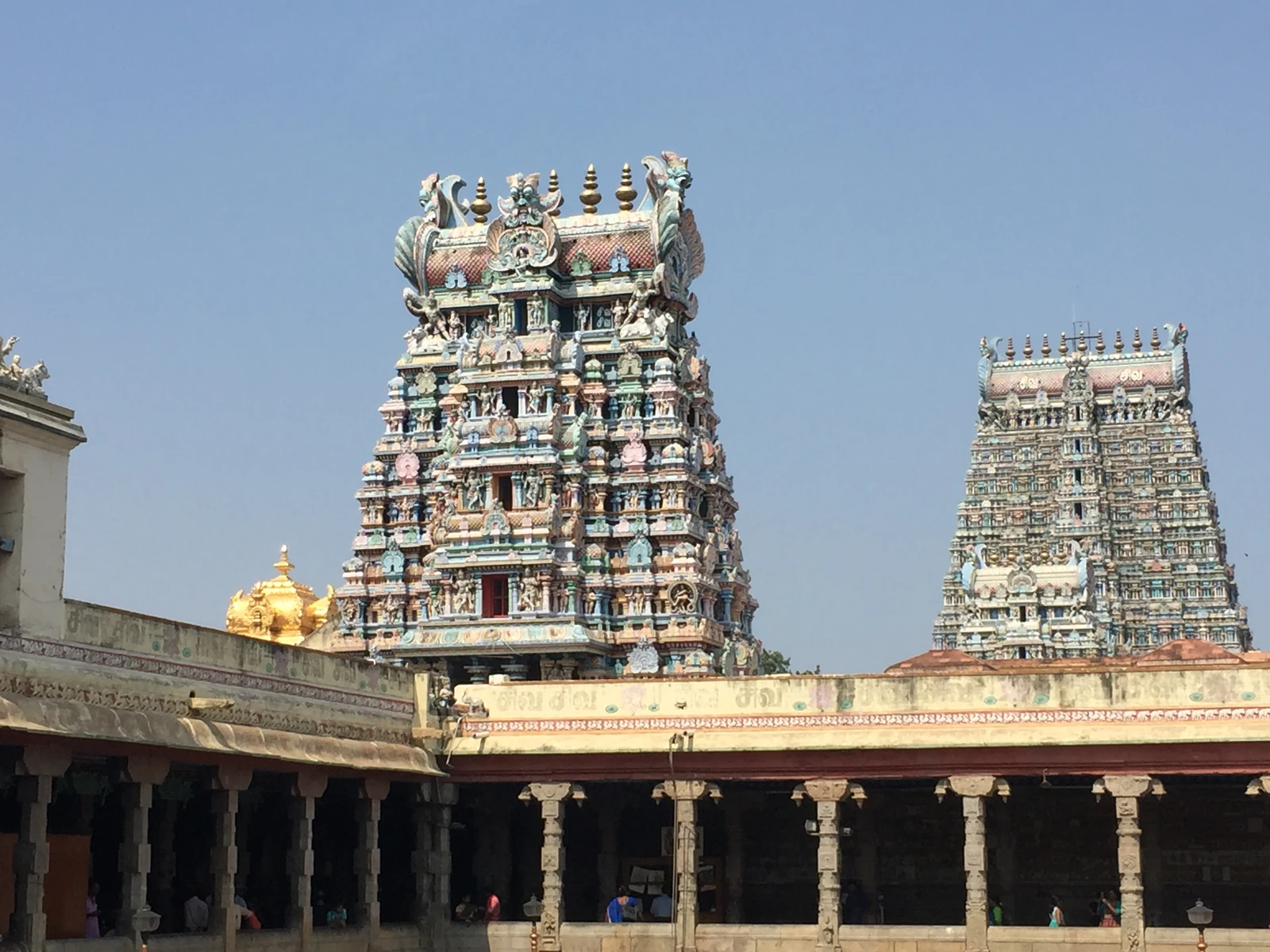
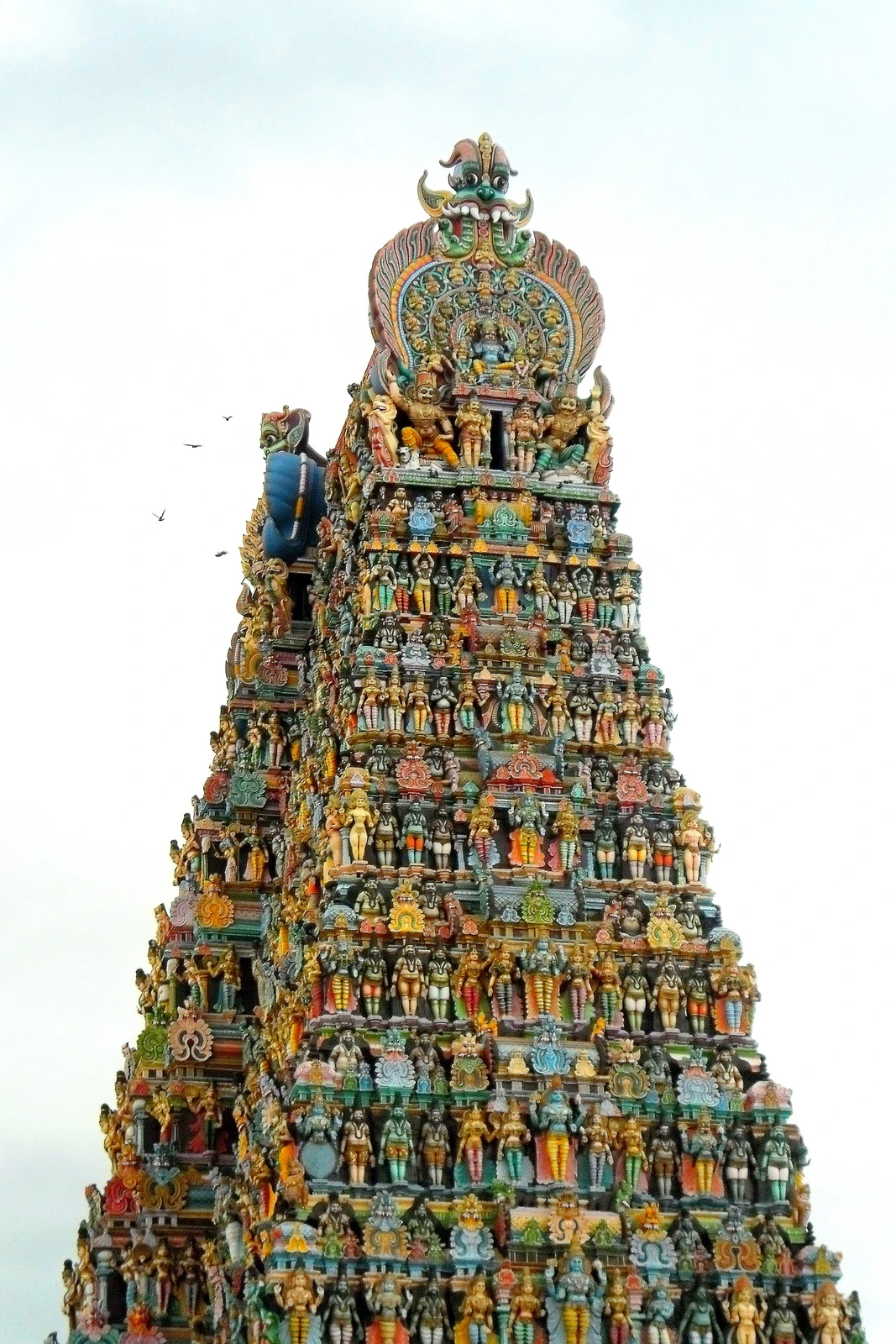
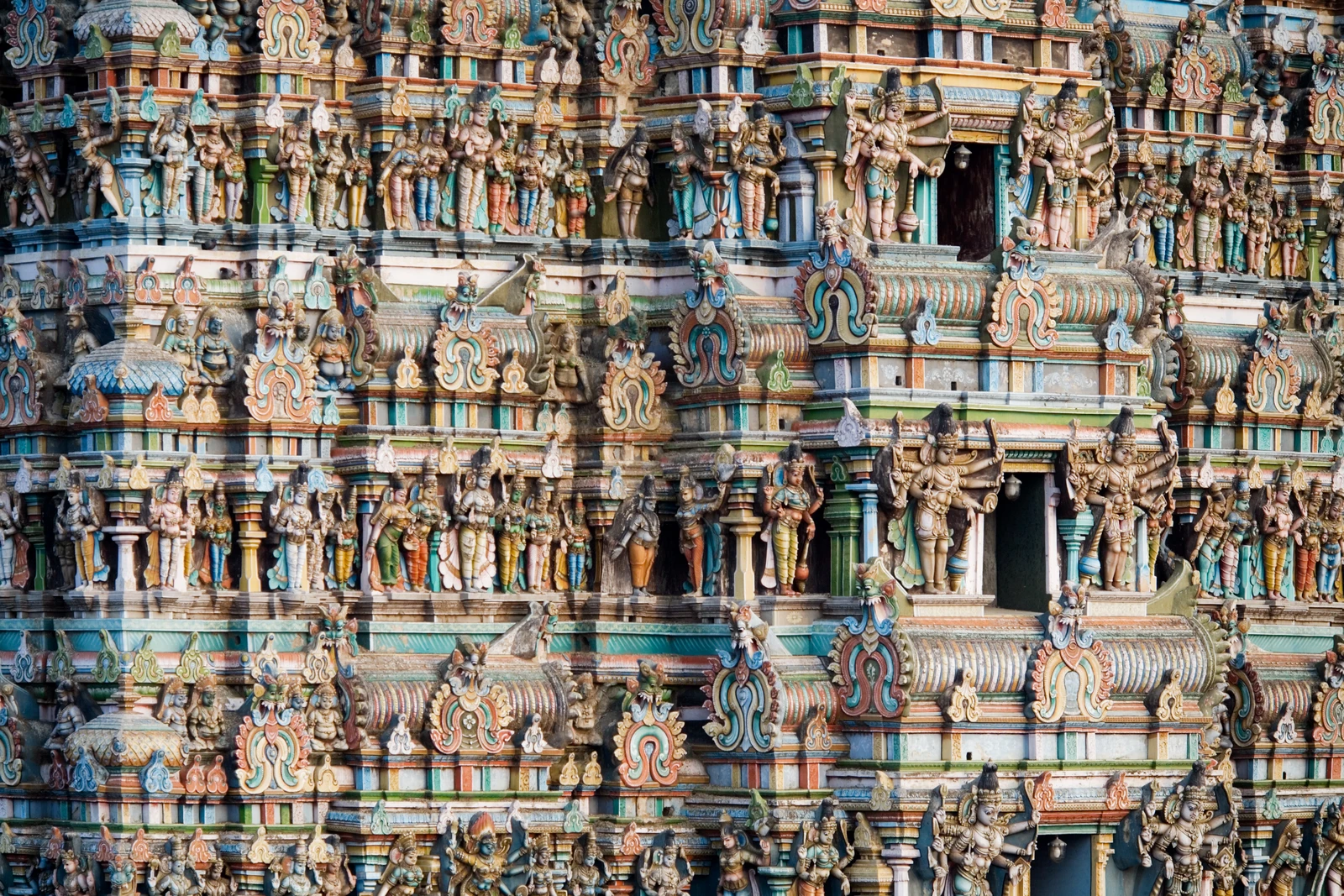
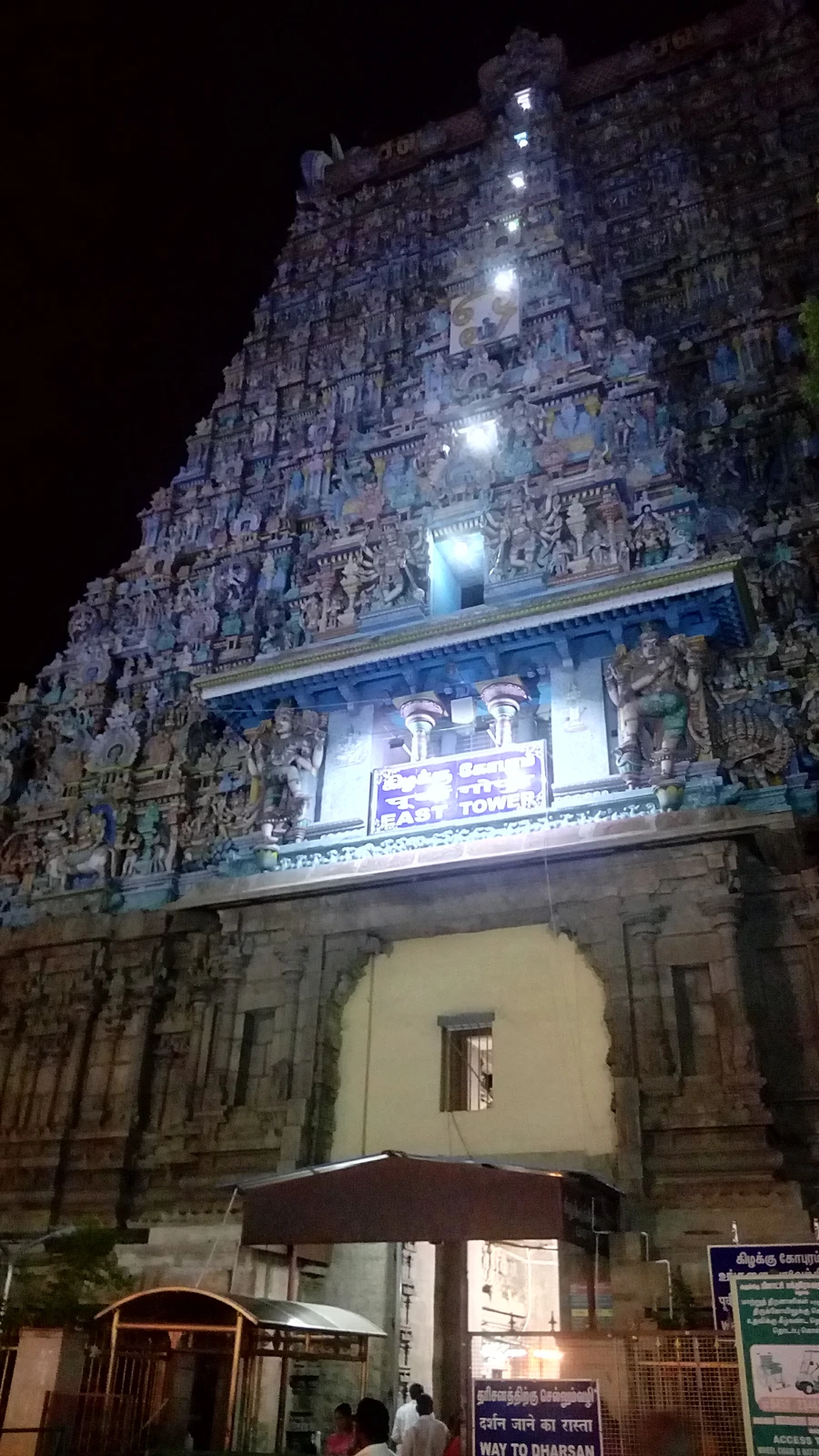
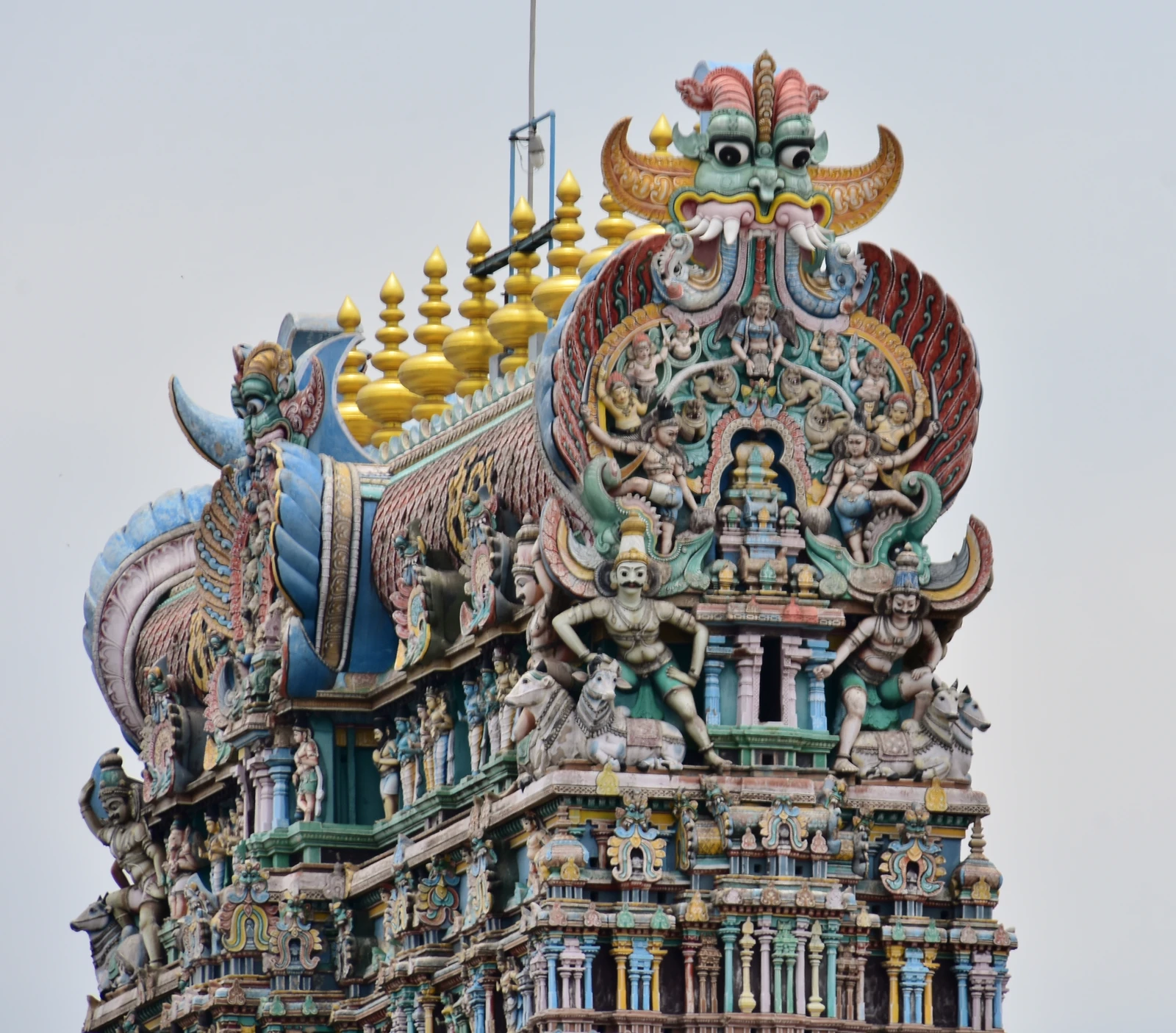
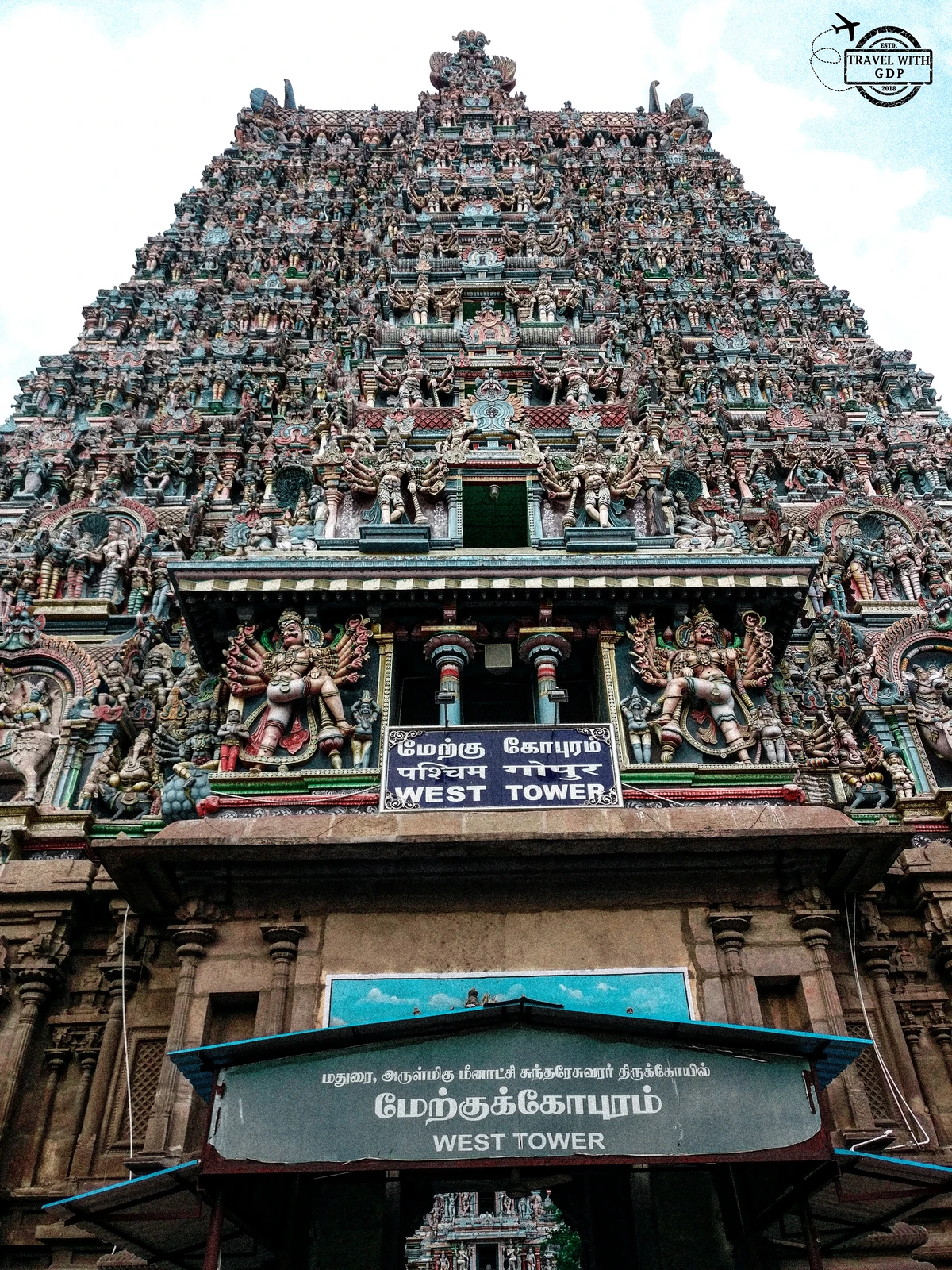
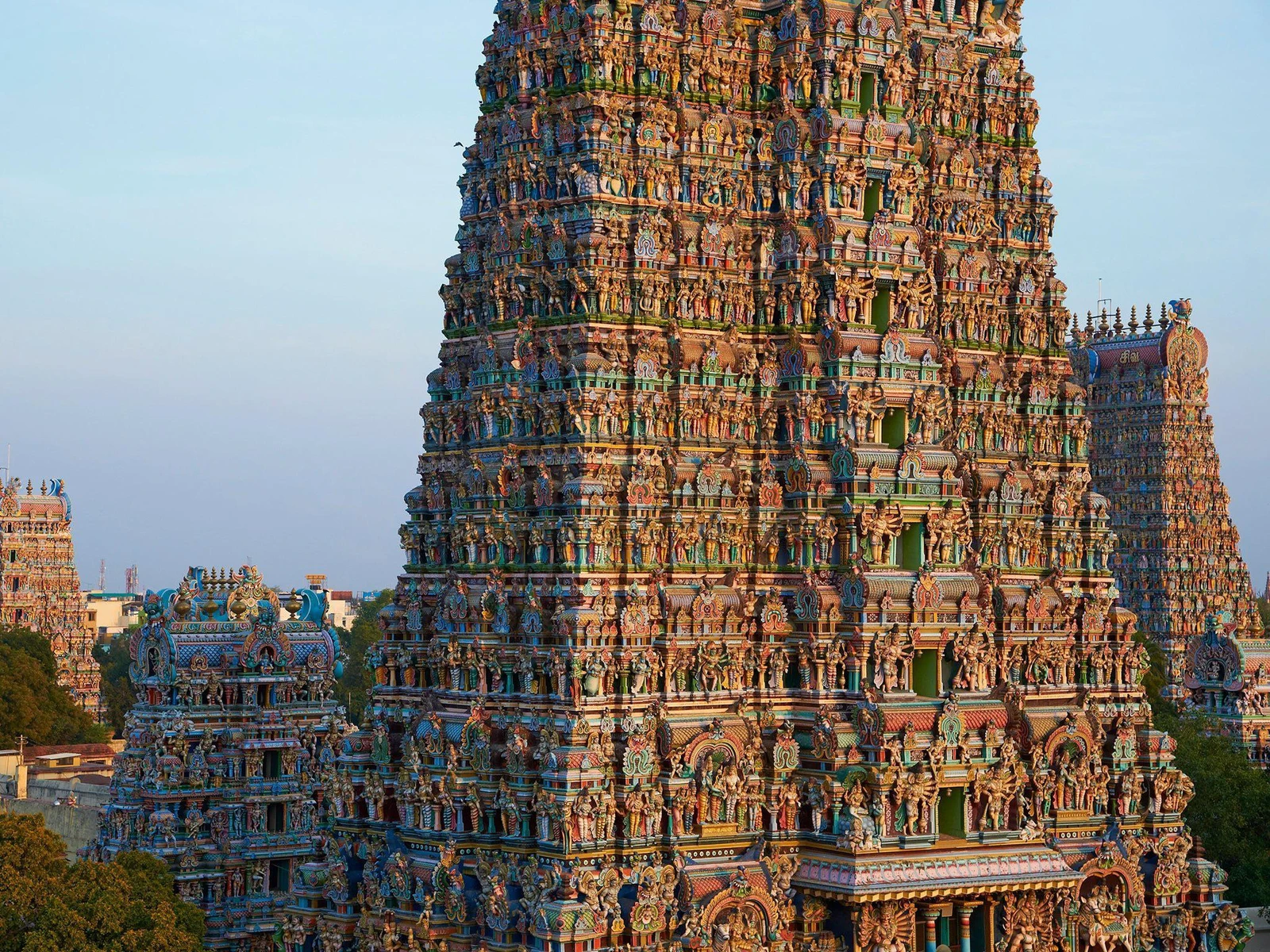
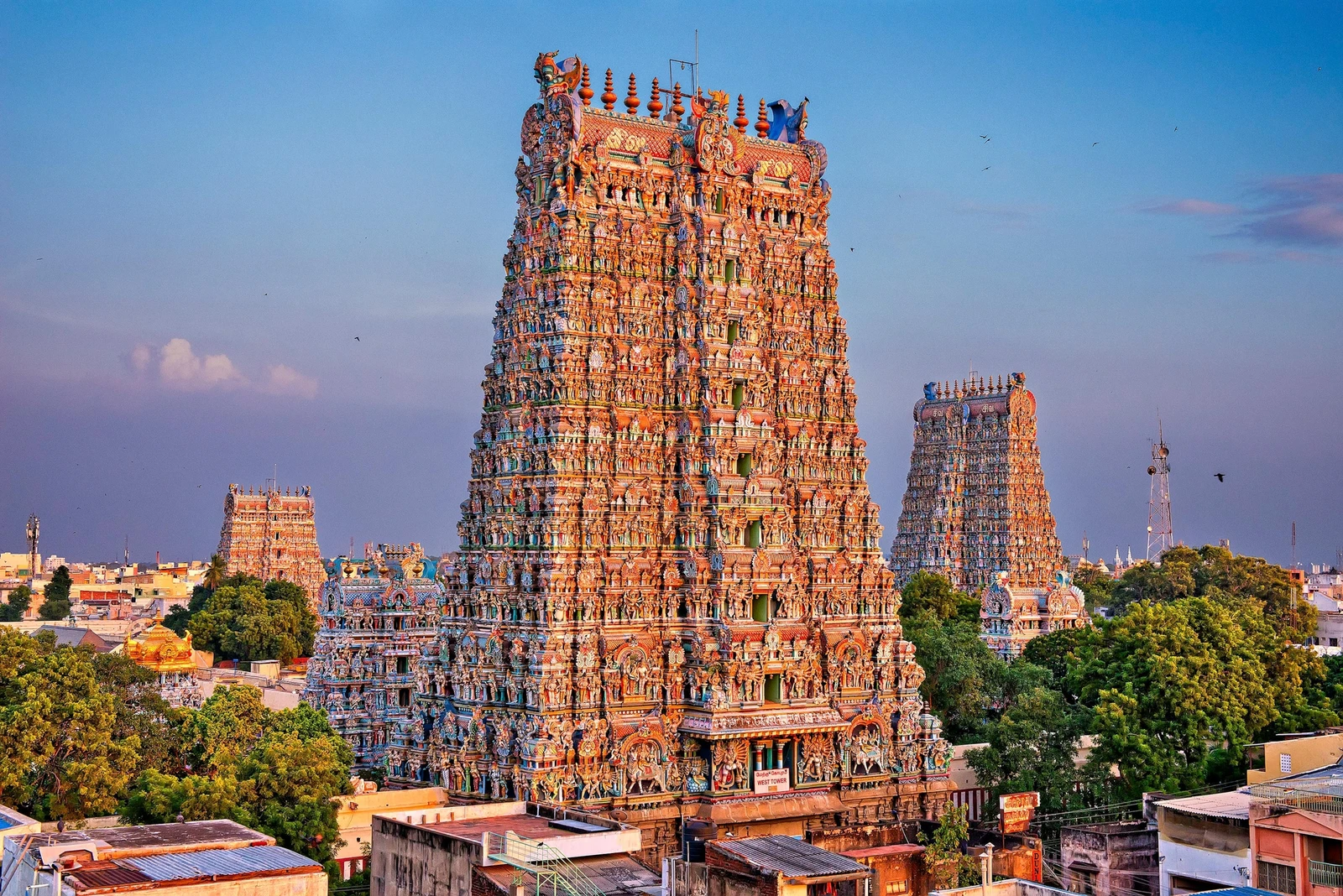
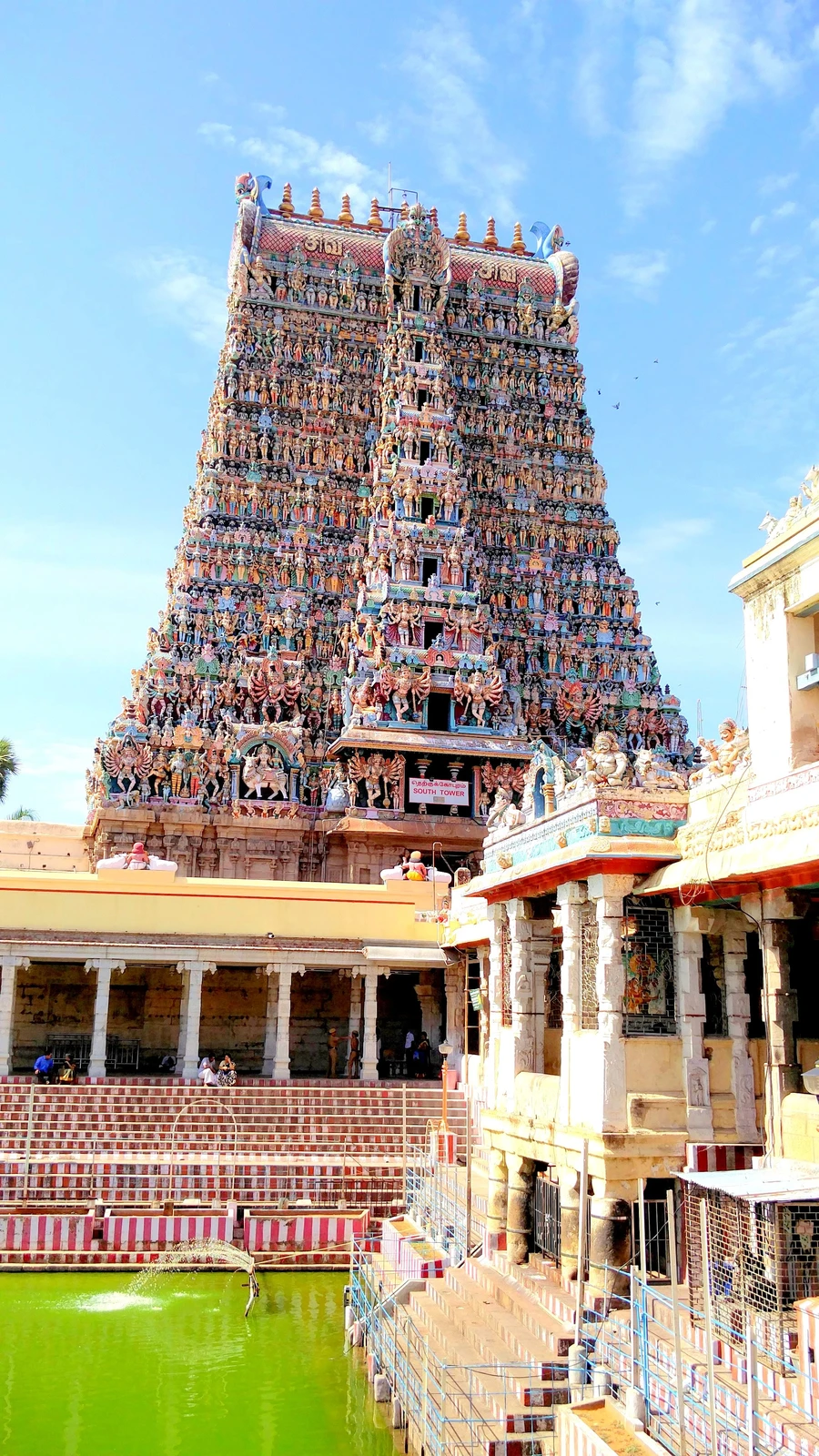
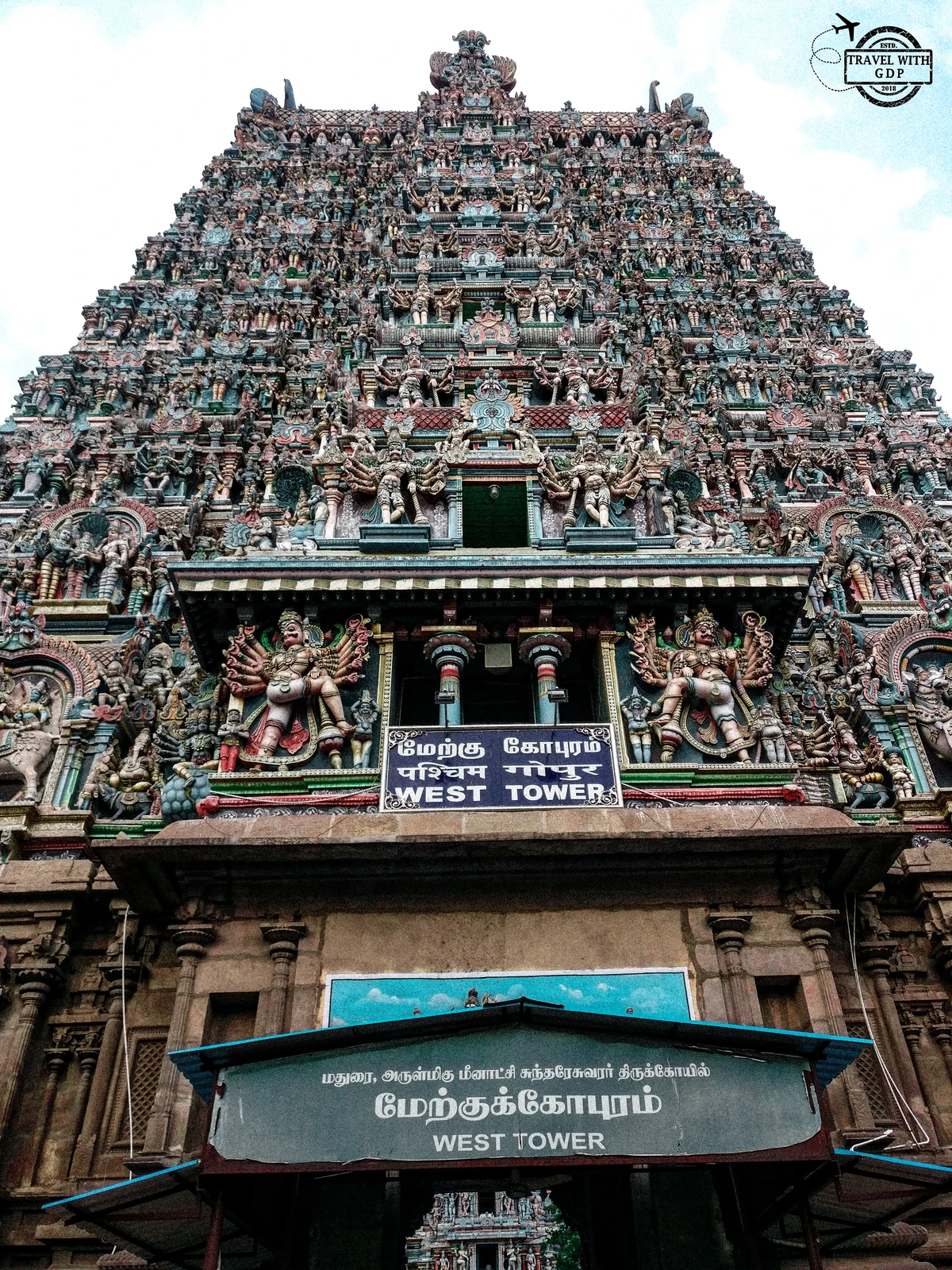
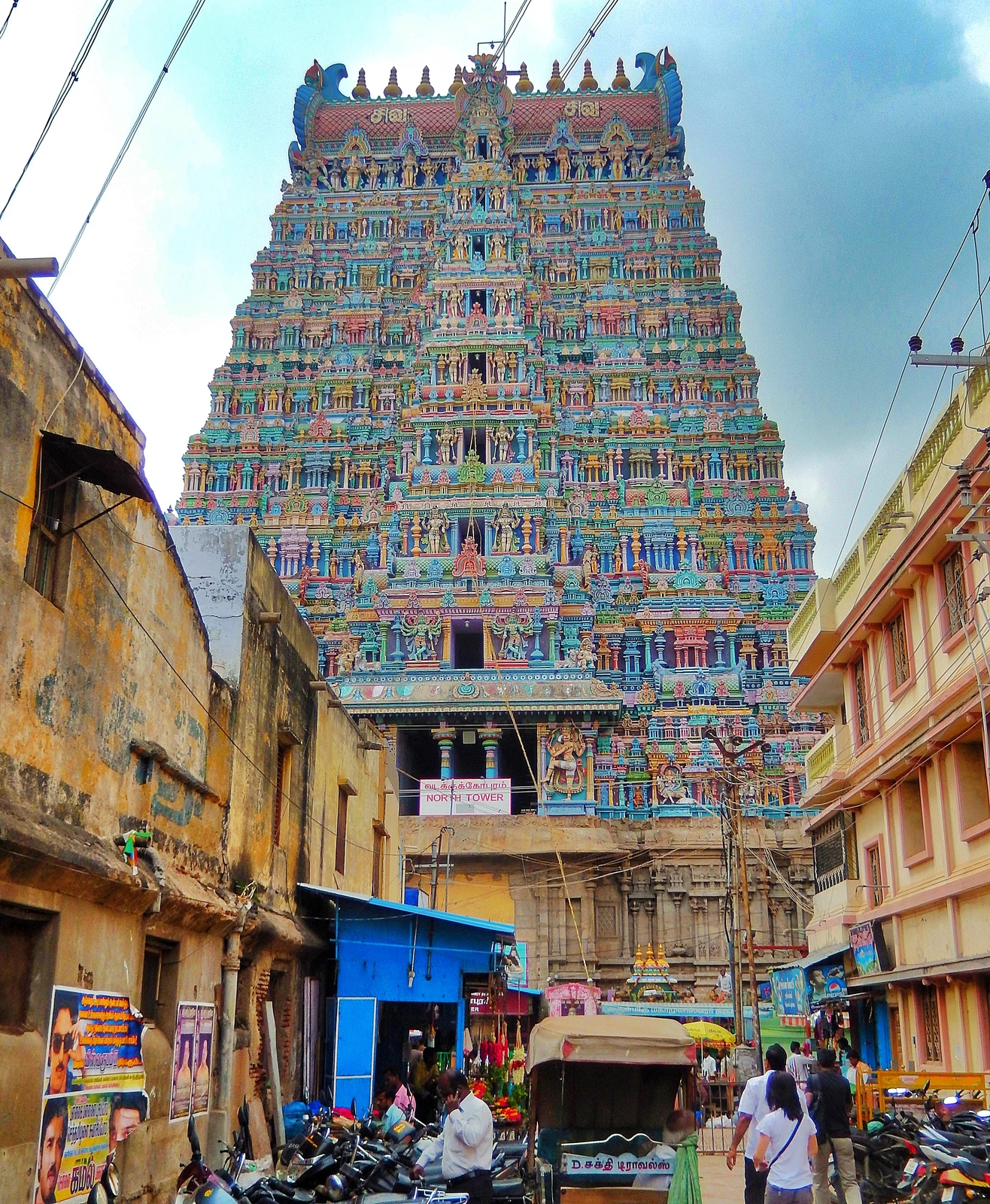
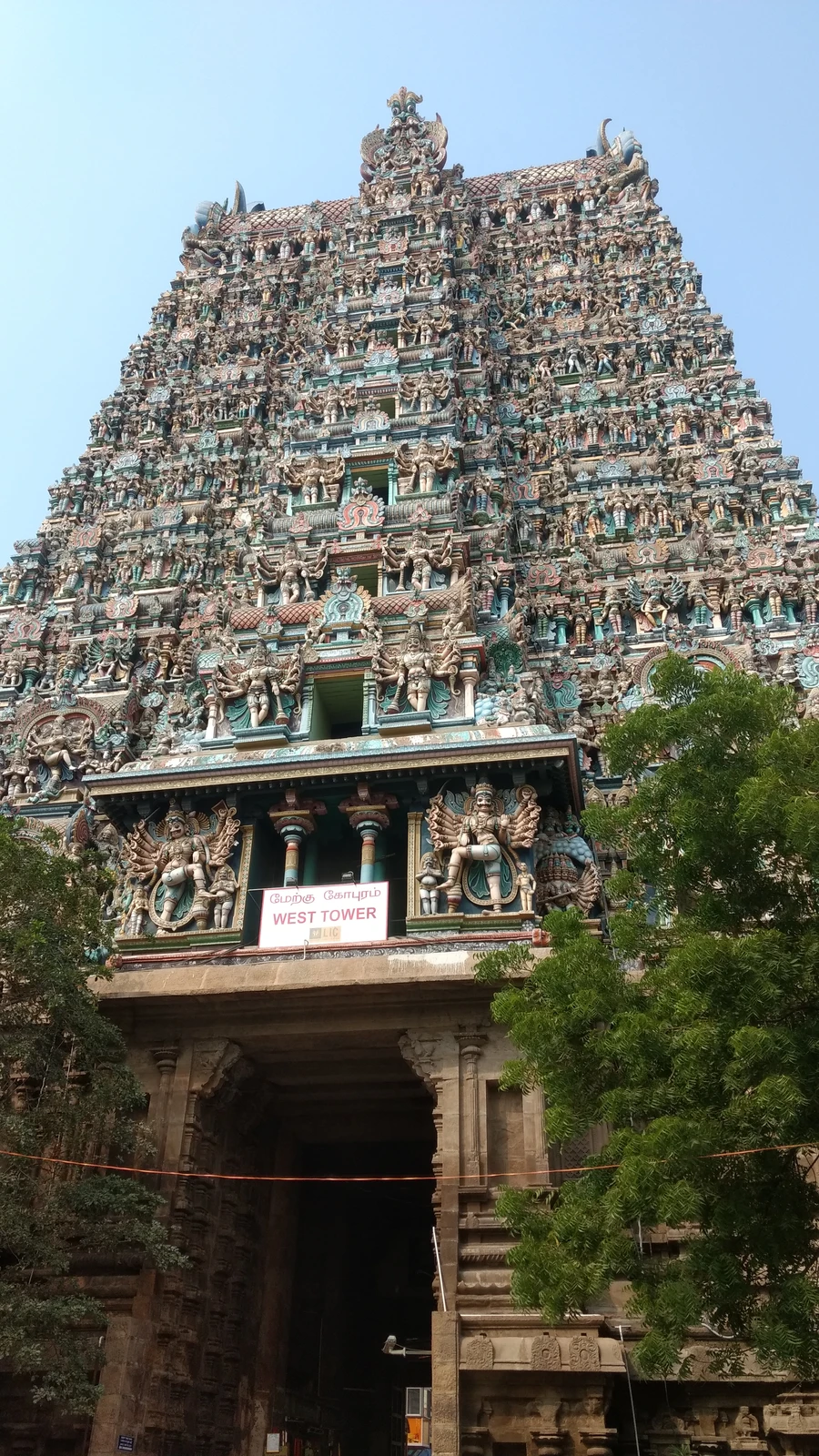
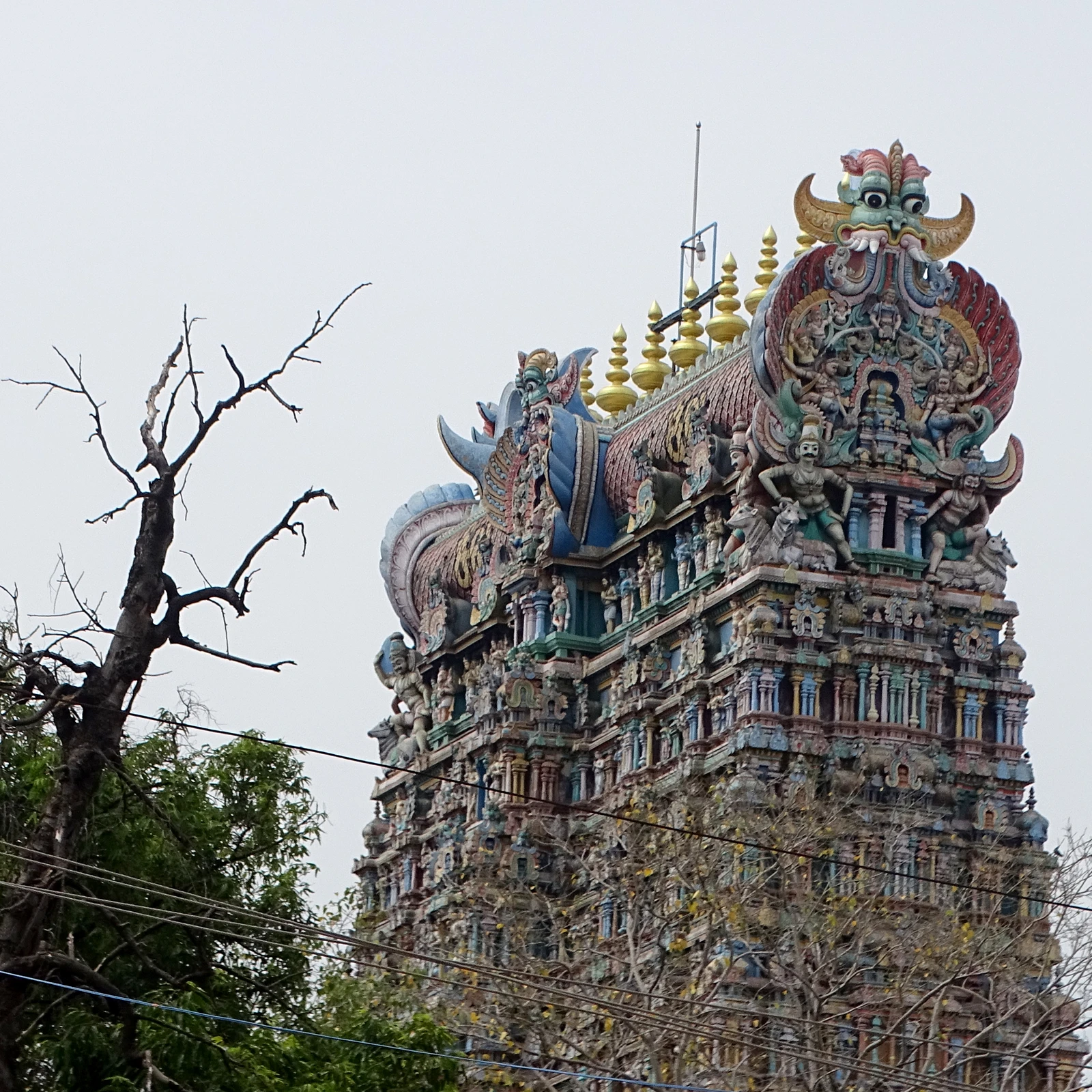
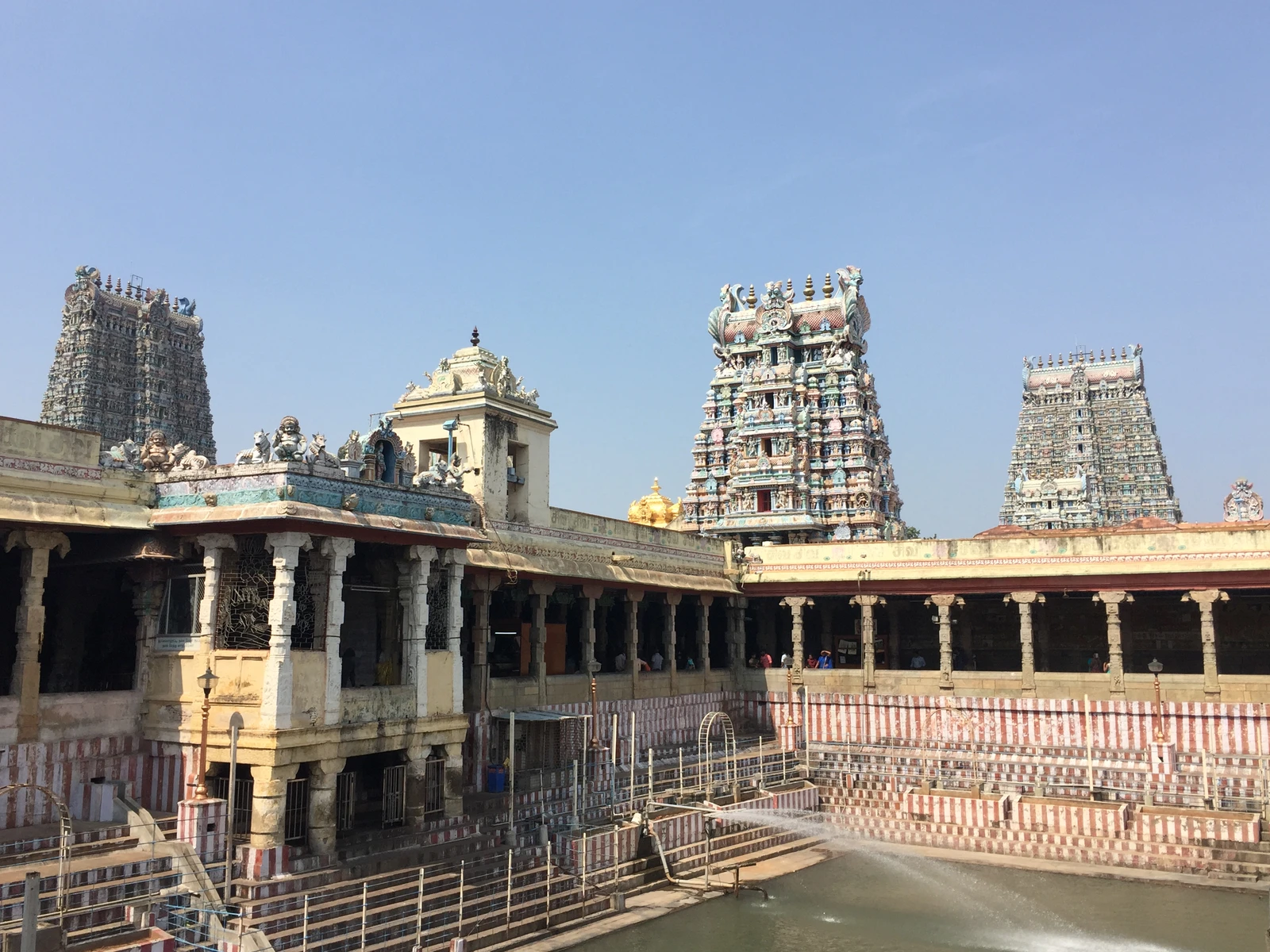
- Gopurams (Gateway Towers): The most striking features are its 14 magnificent gopurams (gateway towers), which soar above the complex. These are multi-storied pyramidal structures, built of stone and brick, topped with a barrel-vaulted roof. The tallest is the Southern Gopuram, rising to 51.9 meters (170 feet). Each gopuram is literally overflowing with thousands of brightly painted stucco figures of deities, mythical creatures, animals, and scenes from Hindu mythology. These figures are periodically repaired and repainted (traditionally every 12 years) as part of ritual restoration.
- Four nine-tiered “Rajagopurams” (royal gopurams) mark the main entrances in the four cardinal directions.
- There are also five five-tiered gopurams, two three-tiered gopurams, and two golden “vimanas” (smaller, gold-gilded towers over the main sanctums).
- Sanctum Sanctorums: The temple is dedicated to Goddess Meenakshi (a form of Parvati) and her consort Sundareswarar (a form of Shiva). Each has its own main shrine (garbhagriha) with a golden vimana above it. Uniquely, both deities are worshipped together in separate chambers, symbolizing their divine union.
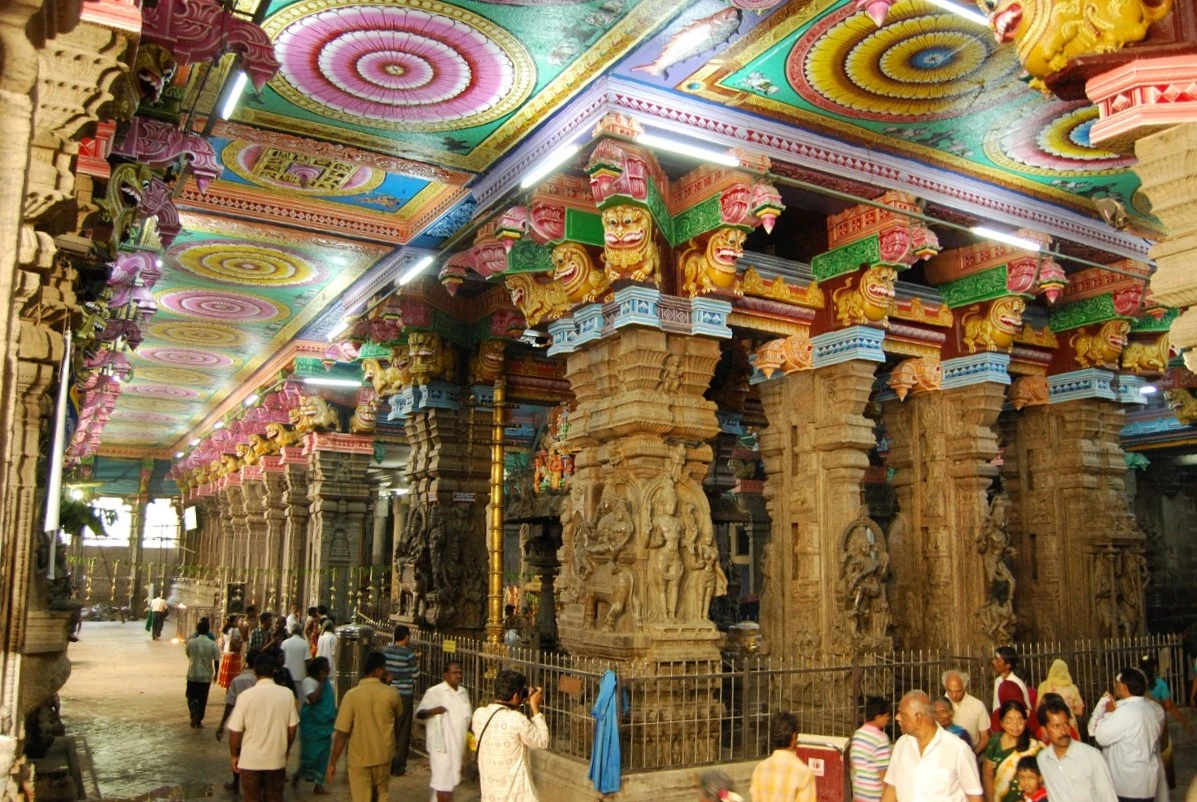
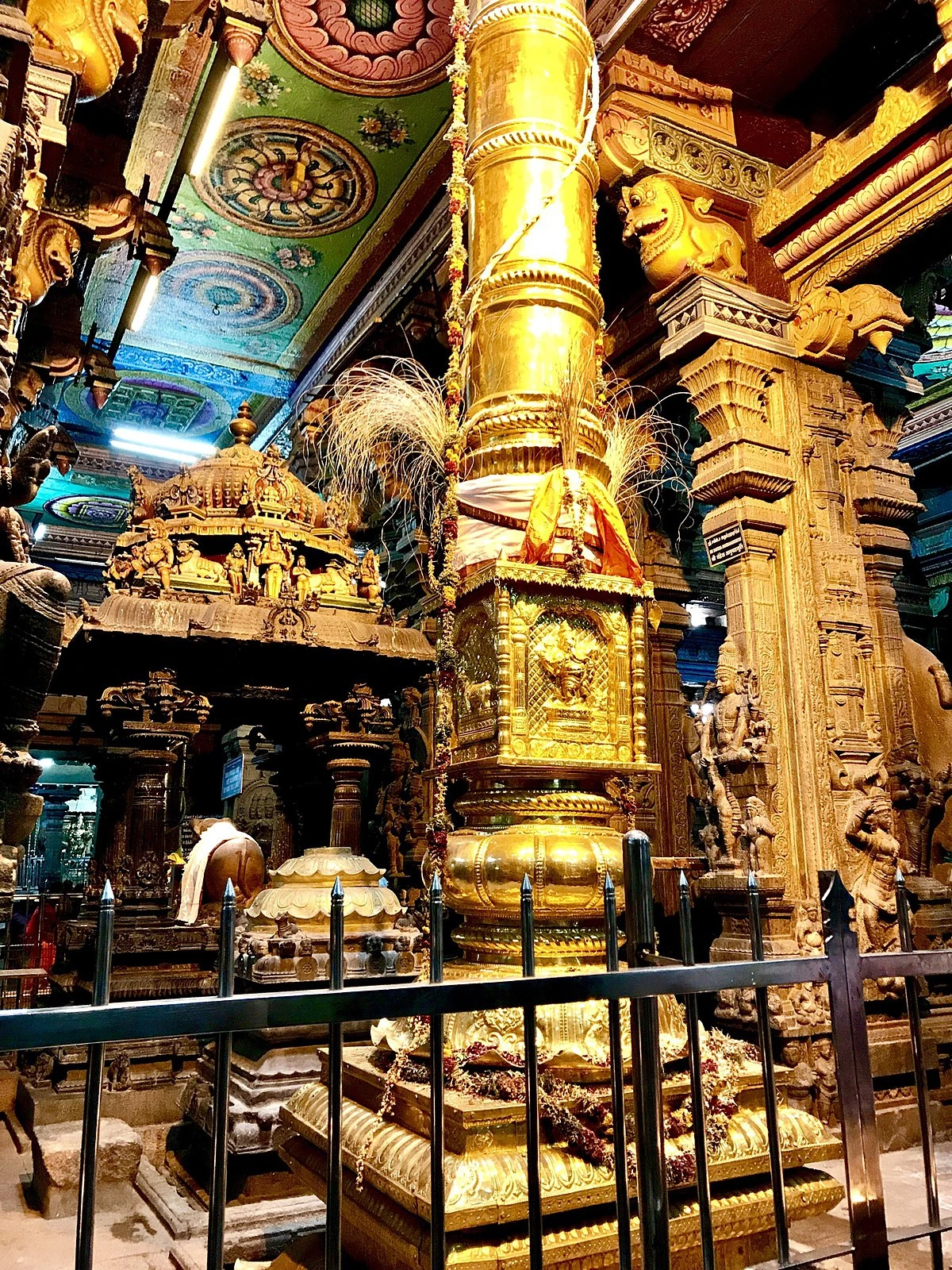
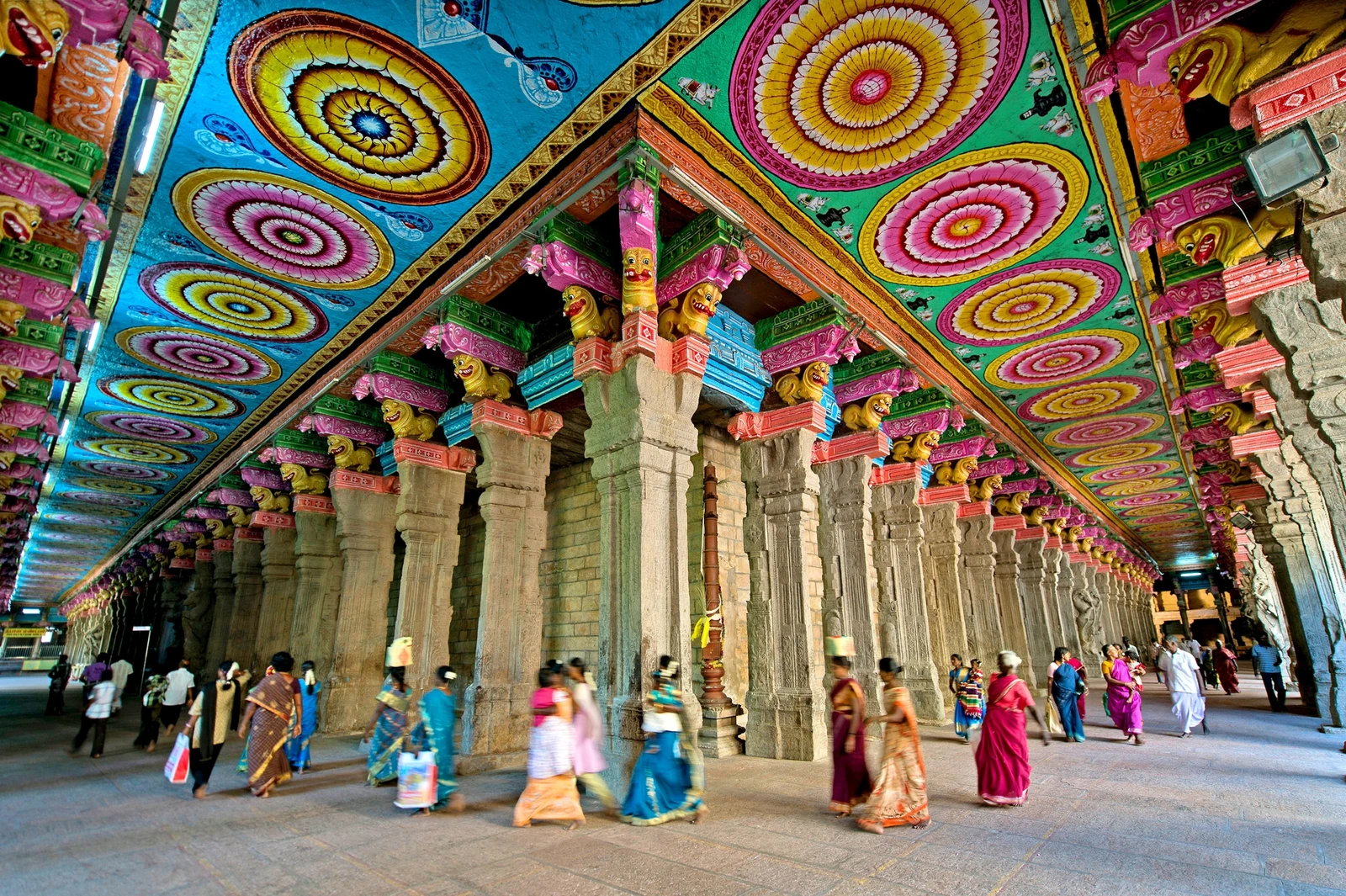
- Mandapams (Pillared Halls): The complex contains numerous intricate mandapams (pillared halls), each a masterpiece of carving and a marvel of engineering.
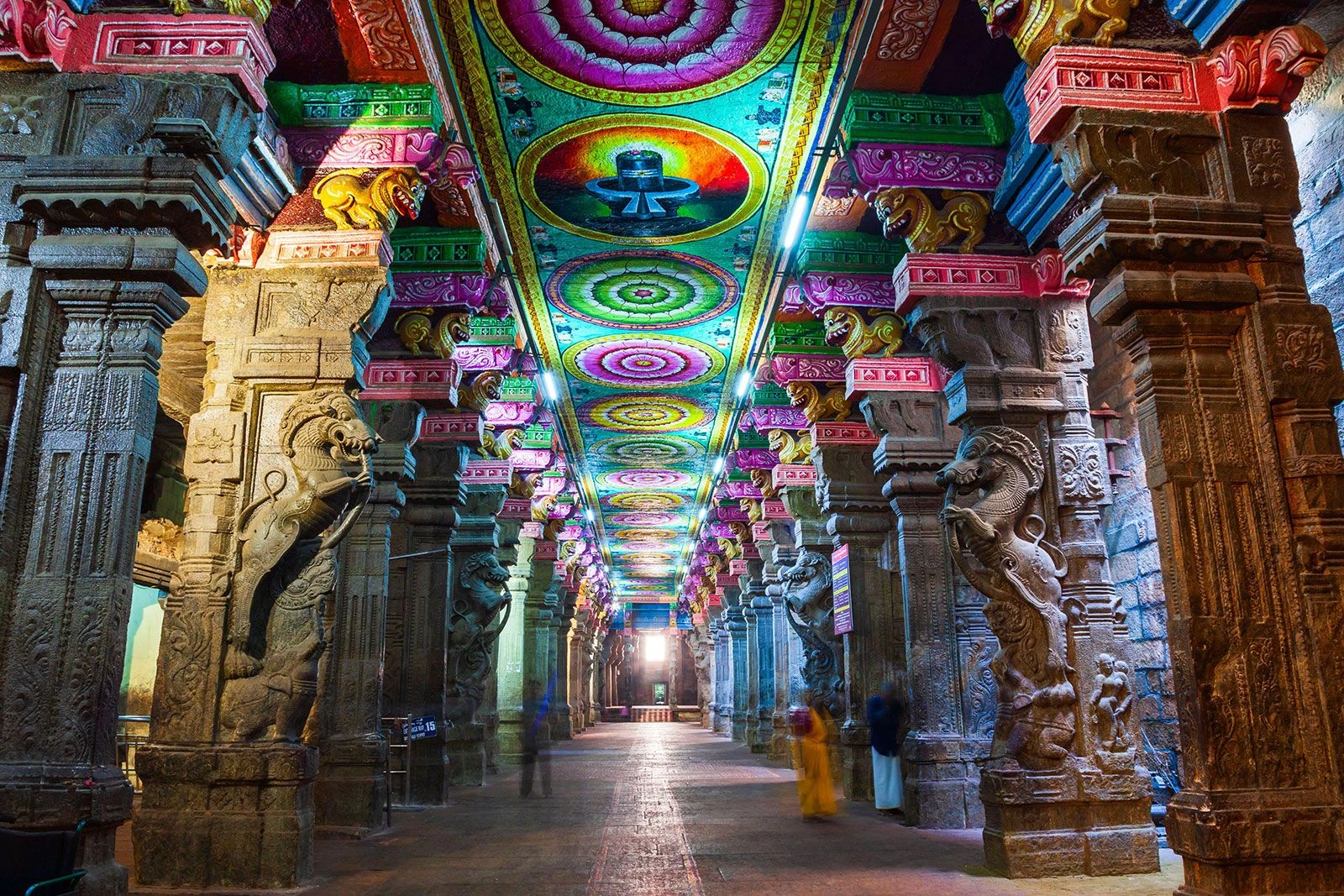
- Hall of a Thousand Pillars (Aayiram Kaal Mandapam): The most famous, actually containing 985 intricately carved stone pillars. Each pillar is a unique sculpture depicting deities, mythical beasts (like the Yali, a creature with a lion’s body and elephant’s head), dancers, musicians, and scenes from Hindu epics. Some of these pillars are even said to produce musical notes when tapped (though this feature is not always accessible). The hall also houses a temple art museum.
- Ashta Shakti Mandapam: Adorned with sculptures of the eight forms of Goddess Shakti, and vibrant ceiling paintings.
- Kilikoondu Mandapam: (“Parrot Cage Hall”), known for its sculptures from the Mahabharata.
- Kambatadi Mandapam: Features various manifestations of Shiva and the famous “Marriage of Meenakshi” sculpture.
- Potramarai Kulam (Golden Lotus Tank): A sacred temple pond where devotees traditionally bathe before entering the inner sanctums. It features a golden lotus sculpture in its center. This tank is historically significant as the traditional meeting place of the Tamil Sangam, an ancient academy of poets.
- Ceiling Paintings and Murals: Many halls and corridors feature beautifully preserved ceiling paintings and murals depicting mythological scenes, made with natural pigments that have retained their brilliance for centuries.
- Sculptural Detail: The temple is adorned with over 33,000 sculptures, each a testament to the skill of Dravidian sculptors.
What Makes It Famous:
- Masterpiece of Dravidian Architecture: Meenakshi Amman Temple is widely considered the epitome of Dravidian temple architecture, showcasing its grand scale, intricate detailing, towering gopurams, and pillared halls.
- Living Temple and Pilgrimage Site: It is a vibrant, active temple that has been a continuous center of Hindu pilgrimage for centuries, drawing tens of thousands of devotees and tourists daily.
- Thousands of Sculptures and Towering Gopurams: Its most visually striking features are the myriad of colorful, intricately carved sculptures adorning its 14 towering gopurams, which literally teem with mythological figures, making it one of the most visually dense temples in the world. The southern gopuram is particularly renowned.
- Hall of a Thousand Pillars: This architectural marvel, with its 985 unique, intricately carved pillars, is a major highlight, showcasing exceptional craftsmanship and a testament to ancient engineering.
- Mythology of Meenakshi and Sundareswarar: The temple is famous for the rich mythology surrounding Goddess Meenakshi (a fish-eyed goddess, an incarnation of Parvati) and Lord Sundareswarar (Shiva). Their divine marriage is celebrated annually during the Chithirai Festival, a grand 12-day spectacle that draws enormous crowds.
- Cultural Hub: It serves as the cultural and economic heart of Madurai, influencing the city’s layout and daily life. It is mentioned in Tamil Sangam literature from the 6th century CE.
- Unique Worshipping of Both Deities: Unlike many Hindu temples that focus on a single deity, the Meenakshi Amman Temple uniquely worships both the Goddess Meenakshi and Lord Sundareswarar (Shiva) together in separate, prominent shrines within the same complex.
Differences from Some Other Wonders:
- Dravidian vs. Other Architectural Styles: While India has diverse temple styles (e.g., Nagara style in North India, or the fusion of Mughal and Hindu elements in Rajput palaces), Meenakshi Amman Temple is a quintessential and grand example of Dravidian temple architecture, characterized by its soaring gopurams (towers over gateways) as the main architectural focus, distinct from the shikharas (towers over the main sanctum) found in North Indian temples, or the domed structures of Mughal architecture (like the Taj Mahal).
- Focus on a Living, Active Temple: Unlike ancient ruins or archaeological sites (Angkor Wat, Borobudur, Prambanan) that are primarily historical and cultural attractions (though some retain spiritual significance), Meenakshi Amman Temple is a highly active, bustling center of daily worship and pilgrimage. Its continuous, vibrant religious life makes the experience very different.
- Thousands of Sculptures on Gopurams: While other temples have sculptures, the sheer profusion and vibrant repainting of thousands of stucco figures on its gopurams is a defining and visually overwhelming characteristic unique to South Indian Dravidian temples, and particularly pronounced at Meenakshi.
- Mythology and Divine Marriage as Central Theme: The temple’s fame is deeply intertwined with the specific mythology of the divine marriage of Meenakshi and Sundareswarar, a story that is actively celebrated in an annual festival, making the temple a symbol of a particular mythological narrative in a way that is less central to other Hindu/Buddhist sites.
- “City built around Temple”: Malacca City and George Town are historical trading cities, while Meenakshi Amman Temple is the ancient core around which the entire city of Madurai was meticulously planned and grew, with concentric streets radiating outwards. This deep urban integration around a central sacred site is a historical hallmark.
- Less Focus on Natural Landscape: Unlike cliffside temples (Uluwatu, Tanah Lot) or those set amidst lakes (Lake Toba), Meenakshi Amman Temple’s “landscape” is almost entirely urban and man-made, with its grandeur deriving solely from its architectural scale and detail within the city.