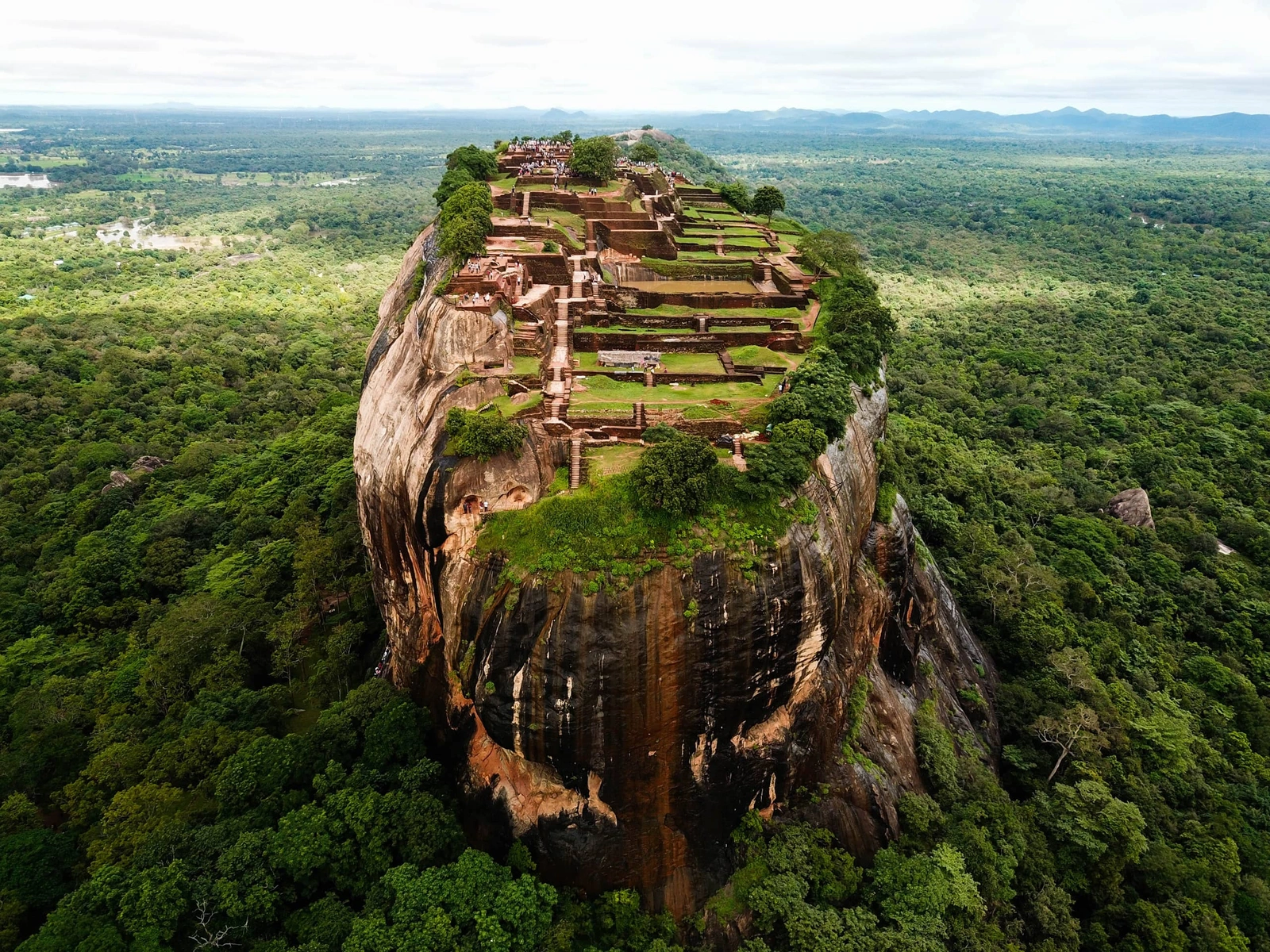
Sigiriya, often called the “Lion Rock” (from Sinhagiri), is an extraordinary ancient rock fortress and palace located in the central Matale District of Sri Lanka. Rising dramatically 200 meters (660 feet) above the surrounding plains, this colossal column of granite is a testament to the ingenuity, artistic brilliance, and ambitious vision of ancient Sri Lankan civilization. Built by King Kashyapa I (477–495 CE) as his fortified capital, Sigiriya is a UNESCO World Heritage site and is often referred to as the “Eighth Wonder of the World” for its unique blend of natural grandeur and human creativity.

Name: Sigiriya Rock Fortress (සීගිරිය, pronounced SEE-gi-ri-yə; Sinhagiri – Lion Rock)
Address: Sigiriya, Matale District, Central Province, Sri Lanka.
How to get there:
Sigiriya is located in the heart of Sri Lanka’s Cultural Triangle and is a popular destination, accessible from various parts of the island:
- From Colombo (Bandaranaike International Airport – CMB):
- By Car/Taxi: The most comfortable and fastest way, taking approximately 3.5-4 hours (around 170-180 km) via expressways and main roads.
- By Flight: Cinnamon Air operates daily domestic flights from CMB to Sigiriya Airport (GIU) in about 30 minutes, offering a quick but more expensive option.
- By Bus: The cheapest option, but involves transfers. Take a bus from Colombo’s Bastian Mawatha Bus Terminal towards Dambulla or Habarana (e.g., #48 to Kaduruwela/Polonnaruwa, #49 to Trincomalee, or #15 to Anuradhapura). From Dambulla or Habarana, take a local bus or tuk-tuk to Sigiriya (Dambulla to Sigiriya is about 30 minutes by bus). The total journey can take 5-6 hours.
- By Train + Taxi/Tuk-tuk: Take a train from Colombo Fort Station to Habarana (approx. 4-6 hours, 3 times a day). From Habarana, it’s a 20-35 minute tuk-tuk or taxi ride to Sigiriya.
- From Kandy: Take a direct bus to Dambulla (2-3 hours), then a local bus or tuk-tuk to Sigiriya.
- From Dambulla: Very easy. Frequent local buses (around 40 LKR, 30 min) or tuk-tuks (around 1500 LKR, 30 min) connect Dambulla’s main bus stand to Sigiriya.
- Within Sigiriya: The main entrance to the rock fortress is typically within walking distance (around 1.5 km) from accommodations in Sigiriya town.
Landscape and Architecture:
Sigiriya is a complex marvel, integrating natural rock formations with ingenious man-made structures and elaborate landscaping:
- The Monolithic Rock: The dominant feature is the massive, steep-sided column of granite, a remnant of an ancient volcano, rising sheerly from the plain. The upper palace was built on its flat summit.
- Three Zones of Gardens: The site encompasses meticulously planned gardens that are among the oldest surviving landscaped gardens in the world:
- Water Gardens: Located on the western side, these symmetrical gardens feature sophisticated hydraulic systems with ponds, fountains (some still working), pools, and surface/subsurface channels, demonstrating remarkable ancient engineering. They are considered the oldest surviving water gardens in Asia.
- Boulder Gardens: Found on the central part of the site, where massive natural boulders have been incorporated into the design, sometimes serving as foundations for buildings or sheltering meditation caves used by Buddhist monks prior to Kashyapa’s reign.
- Terraced Gardens: Ascending the rock, these gardens follow the natural slopes, with pathways and steps leading upwards.
- The Lion Gate: About halfway up the rock, on a large plateau, is the famous Lion Gate. Originally, a monumental lion sculpture made of brick and plaster once stood here, with staircases leading up through its open mouth to the summit. Today, only the colossal lion paws remain, flanking the start of the final ascent. This is where the name “Lion Rock” derives.
- Mirror Wall: Running along the western side of the rock, just past the frescoes, is the famous Mirror Wall. This wall was originally polished with a special lime plaster (made from lime, egg whites, and honey) to such a high sheen that the king could see his reflection in it. It is now covered with ancient graffiti (Sigiri graffiti), poetry, and comments written by visitors from as early as the 8th century, making it one of the world’s oldest “visitor books” and a valuable linguistic resource.
- Sigiriya Frescoes: High on the western face of the rock, sheltered in a natural pocket, are the world-renowned Sigiriya frescoes. These vibrant, well-preserved 5th-century paintings depict graceful, bare-breasted female figures, often referred to as “Apsaras” (celestial nymphs) or royal concubines. While only about 21 remain today (out of an estimated 500 that once covered a large section of the rock), their artistic quality and vibrant colors are breathtaking. They were once accessible via narrow spiral staircases.
- Summit Palace Ruins: On the flat top of the rock (approx. 1.6 hectares), lie the ruins of King Kashyapa’s palace, including foundations of various buildings, terraces, and cisterns cut into the rock for water storage. From the summit, one gets unparalleled 360-degree views of the surrounding jungle and plains, which were strategically important for defense.
- Moats and Ramparts: The entire complex at the base is surrounded by two moats and three ramparts, forming a sophisticated defensive system.
What makes it famous:
Sigiriya Rock Fortress is famous for:
- UNESCO World Heritage Site: Designated in 1982, recognized for its exceptional testimony to the ancient civilization of Sri Lanka, its ingenious urban planning, hydraulic engineering, and exquisite art and architecture.
- “Eighth Wonder of the World”: Colloquially given this title due to its awe-inspiring blend of natural majesty and incredible human achievement.
- Ingenious Urban Planning & Hydraulic Engineering: The sophisticated water gardens at its base, with their working fountains fed by subterranean channels, are a testament to advanced ancient engineering, some of the oldest surviving examples in the world.
- The Lion Gate and Lion Paws: The monumental lion gateway, even in its ruined state, is an iconic and unique entrance structure.
- Sigiriya Frescoes: The exquisite and well-preserved 5th-century wall paintings are globally celebrated for their artistic quality and historical significance.
- Mirror Wall & Ancient Graffiti: A unique historical record, reflecting early tourism and providing invaluable linguistic insights.
- Dramatic History: Built by King Kashyapa I, who usurped the throne from his father and feared reprisal from his half-brother, the site is steeped in a dramatic and tragic tale of ambition, paranoia, and artistic patronage.
- Panoramic Views: The breathtaking 360-degree views from the summit, making it both a palace and a formidable fortress.
Differences from some other wonders:
Sigiriya Rock Fortress stands out from other ancient sites, palaces, and fortresses in several profound ways:
- Integrated Natural and Man-Made Fortress: Unlike typical standalone fortresses or palaces built on flat ground, Sigiriya is an entire city and palace complex built directly onto and around a massive, pre-existing natural rock monolith. This seamless integration of human construction with a dominant geological feature is unique. Its scale and the verticality of the rock are unparalleled for such a purpose.
- Hydraulic Systems in a Rock Fortress: The presence of sophisticated, still-functioning water gardens and hydraulic systems at the base of a rock fortress (including fountains) demonstrates an extraordinary level of ancient engineering and urban planning, a feature rarely seen in comparable sites.
- Simultaneous Palace and Monastery: While originally a palace/fortress, it later reverted to a Buddhist monastery, and evidence of earlier monastic use exists. This dual historical function (royal secular power and spiritual sanctuary) is intriguing.
- Visible Architectural Illusion (Lion Gate): The design of the Lion Gate, where visitors once entered through the mouth of a massive lion, was an incredible architectural illusion and psychological barrier, a dramatic and unique approach to a grand entrance.
- “Living Document” of the Mirror Wall: The Mirror Wall with its ancient graffiti is a unique and invaluable historical record. It’s an active testament to early tourism and interaction with the site, making it a living archaeological document, distinct from purely artistic murals or inscriptions.
- Artistic Pinnacle on a Cliff Face: The Sigiriya Frescoes, painted high on the sheer rock face, represent an exceptional artistic achievement, showcasing a distinct style and remarkable preservation for their exposed location.
In essence, Sigiriya Rock Fortress is an awe-inspiring wonder, a testament to ancient Sri Lankan genius that intertwines dramatic natural beauty with visionary urban planning, masterful engineering, and exquisite art, all within a narrative of ambition and spiritual quest.