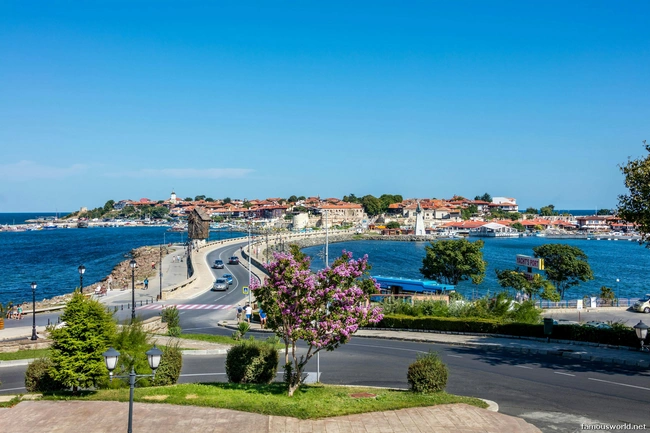
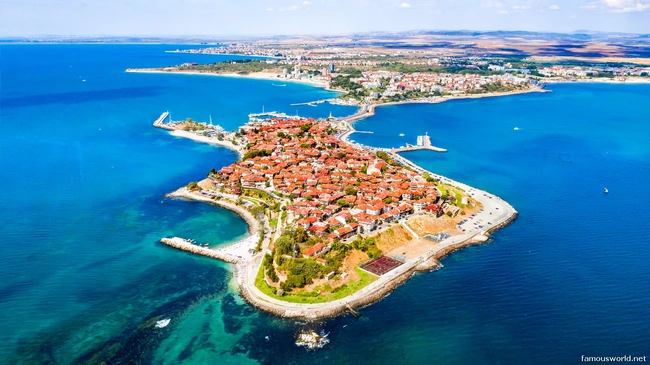

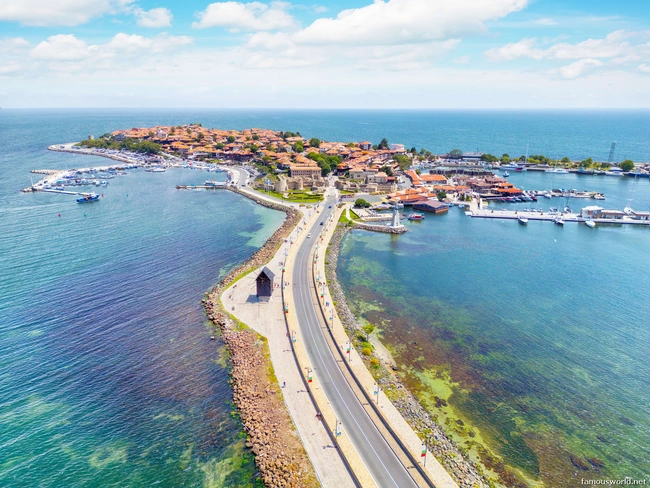
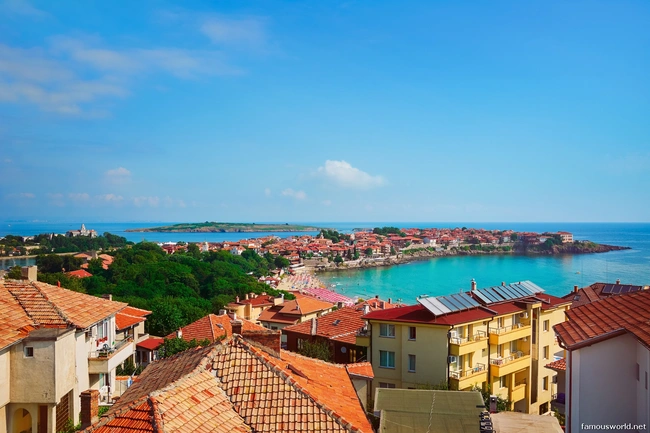
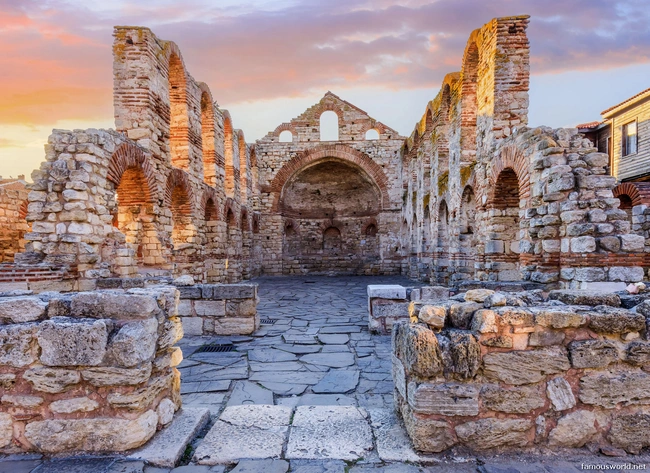
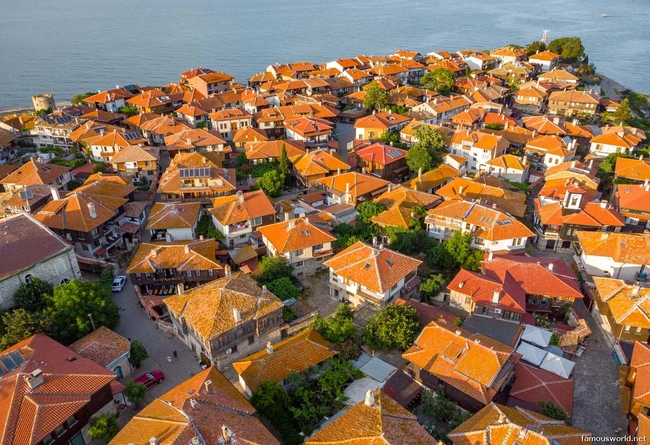
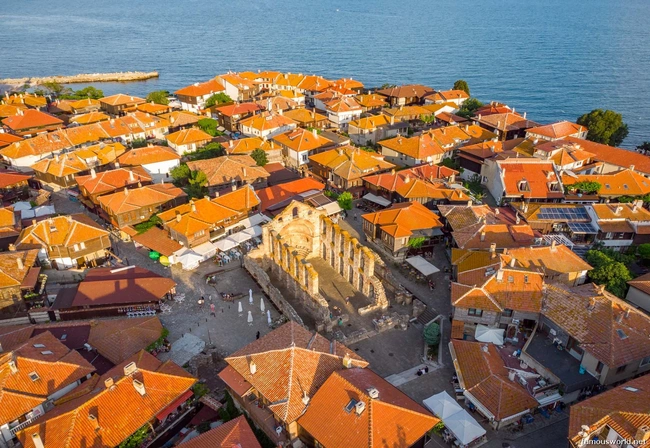

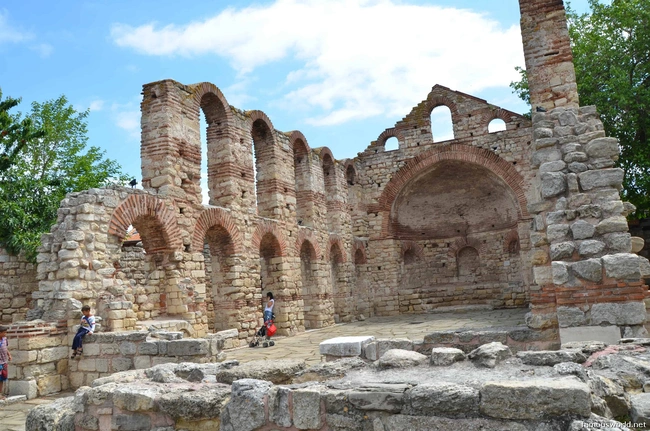


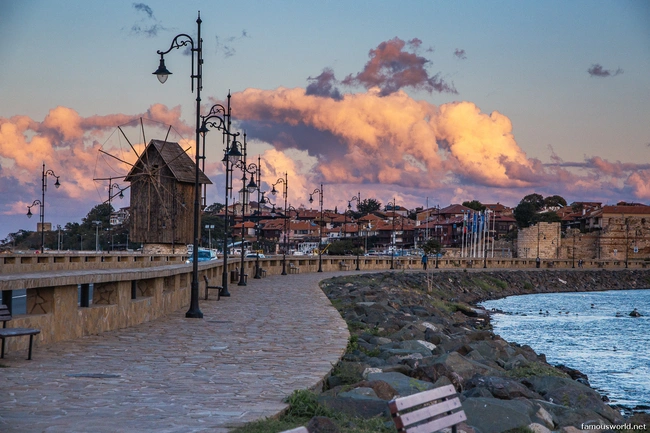

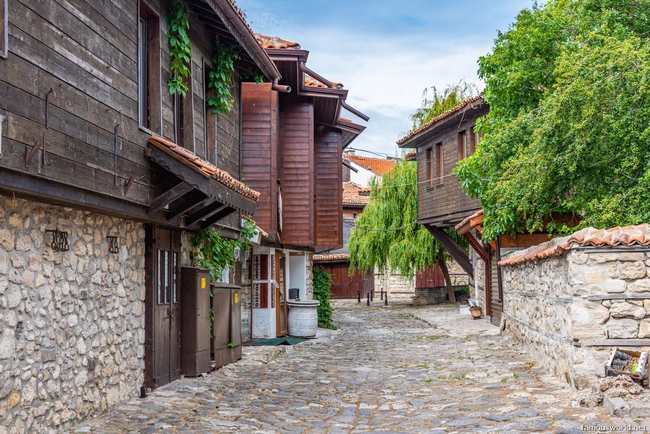
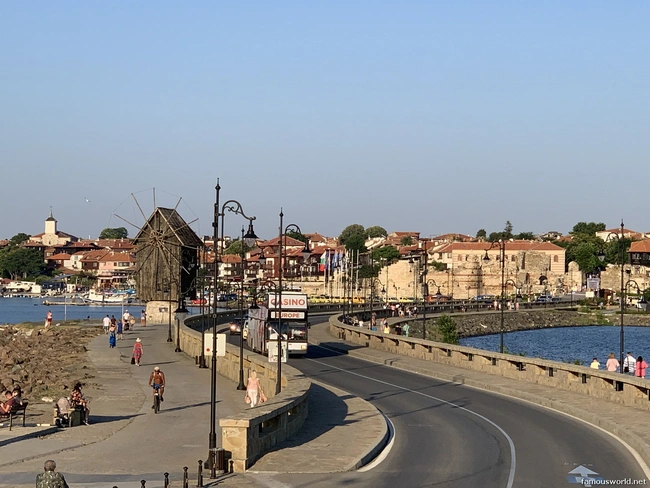
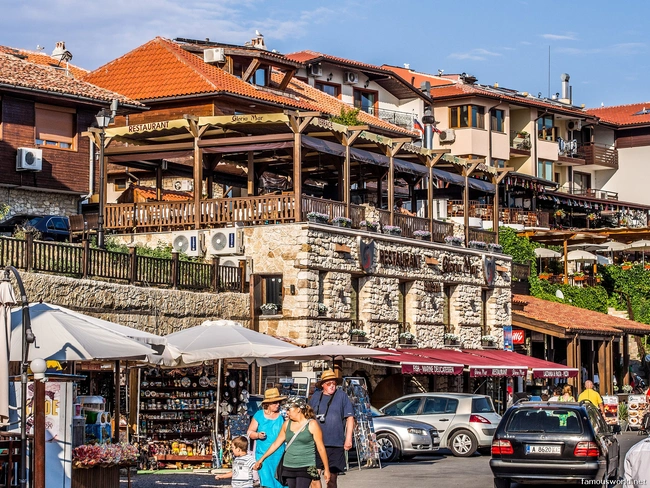

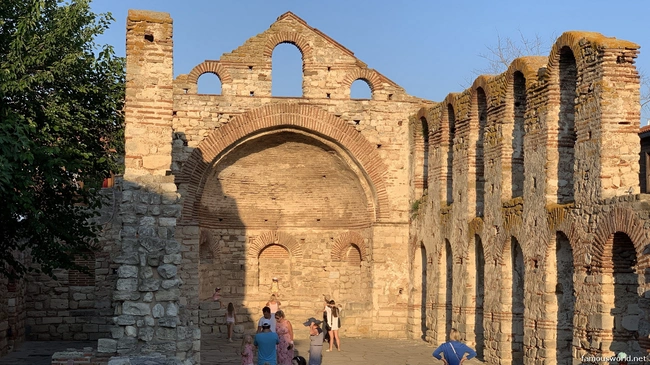
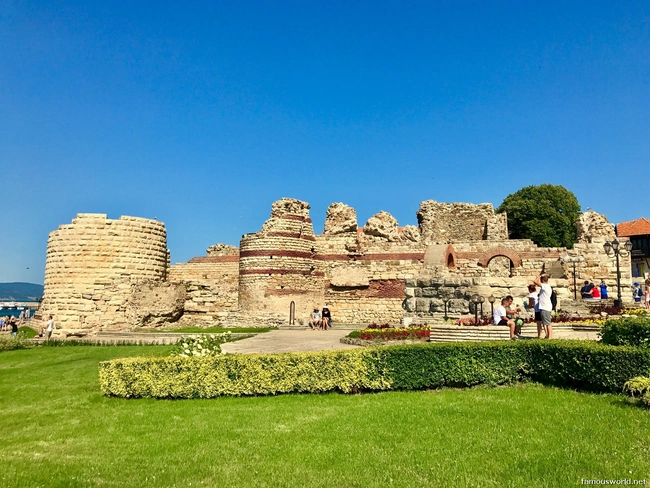
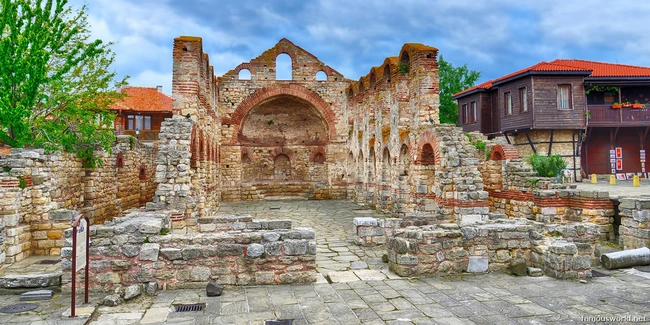

Perched on a tiny, rocky peninsula connected to the mainland by a narrow man-made isthmus, Nessebar (often spelled Nesebar) is the “Pearl of the Black Sea.” This UNESCO World Heritage site is not just a town; it is a 3,000-year-old open-air museum where Thracian, Greek, Roman, Byzantine, and Bulgarian civilizations have layered their histories one on top of the other. Famous for its incredibly high concentration of medieval churches and its charming 19th-century wooden houses, Nessebar offers a romantic, historic counterpoint to the modern beach resorts nearby. Walking its cobblestone alleys is like stepping into a postcard of the past, where ancient ruins meet the sparkling blue sea.
Listen to an introduction about Nessebar

Name and Location
- Name: Ancient City of Nessebar (Старият Несебър, Stariyat Nesebar).
- Location: On a small peninsula on the southern Bulgarian Black Sea coast, in the Burgas Province. It is connected by a narrow isthmus to the modern “New Town” of Nessebar and the popular Sunny Beach resort.
How to Get There
Nessebar is extremely well-connected due to its proximity to major summer resorts.
- By Air: The nearest international airport is Burgas Airport (BOJ), located about 25 km (15 miles) away. From the airport, you can take a taxi or the public bus (Line 15 to Burgas, then transfer, or a direct shuttle if available) to Nessebar. The drive takes about 20-30 minutes.
- By Bus: Regular, frequent buses run from the Burgas South Bus Station (Avtogara Yug) to Nessebar (approx. 45 minutes). There are also direct seasonal buses from Sofia and Plovdiv.
- By Car: Driving is easy via the main coastal road (Route 9). However, cars are generally restricted inside the Old Town. You must park in one of the large, paid municipal parking lots located at the entrance to the isthmus (on the mainland side or just inside the gates) and walk into the historic center.
- By Boat/Water Taxi: During the summer season, regular water taxis and small ferries connect the Old Town of Nessebar with the piers in Sunny Beach and Sveti Vlas, offering a scenic approach from the sea.
- By Tourist Train: A popular “mini-train” runs along the coast from Sunny Beach to the entrance of the Old Town of Nessebar, a fun and cheap option for tourists staying nearby.
Landscape and Architecture
The town’s architecture is a unique visual tapestry defined by its maritime setting and diverse history.
- The Peninsula: The Old Town is situated on a small headland, only 850 meters long and 300 meters wide, surrounded entirely by the sea.
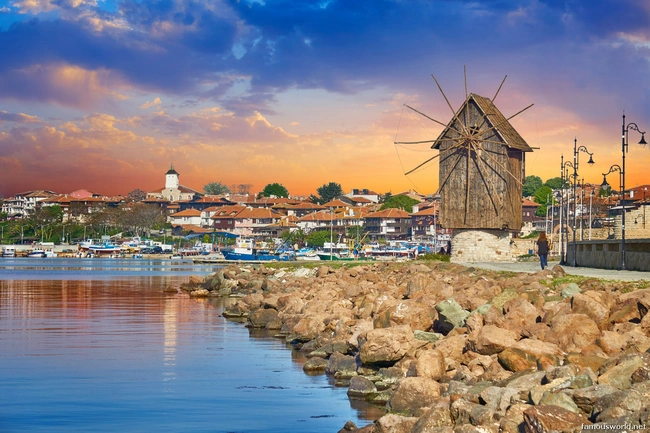
- The Wooden Windmill: The most iconic landmark is the old wooden windmill situated in the middle of the narrow isthmus that connects the old and new towns.
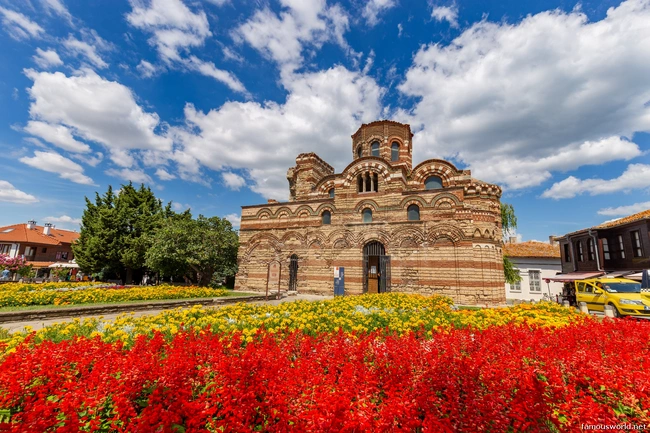
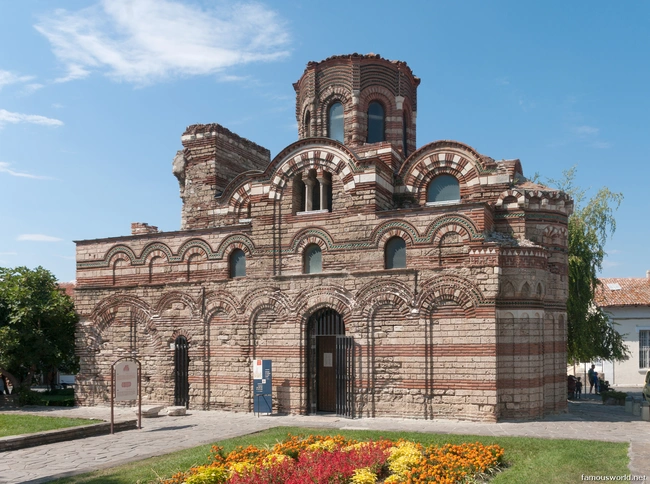
- Byzantine Churches: Nessebar is famous for its “striped” churches. These medieval structures (like the Church of Christ Pantocrator and St. Stephen) are built with alternating layers of white stone and red brick, often decorated with ceramic discs and rosettes, creating a decorative, polychrome effect unique to the region.
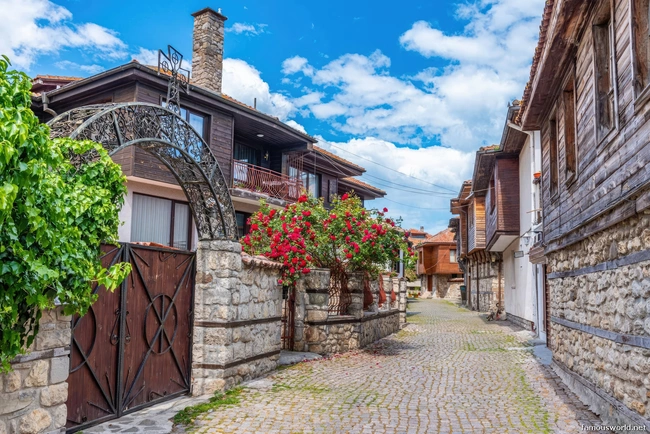
- National Revival Houses: The residential streets are lined with picturesque 18th and 19th-century houses. These feature a stone ground floor (originally for storage/wine) and a darker, wooden upper floor that projects out over the street, supported by wooden beams.
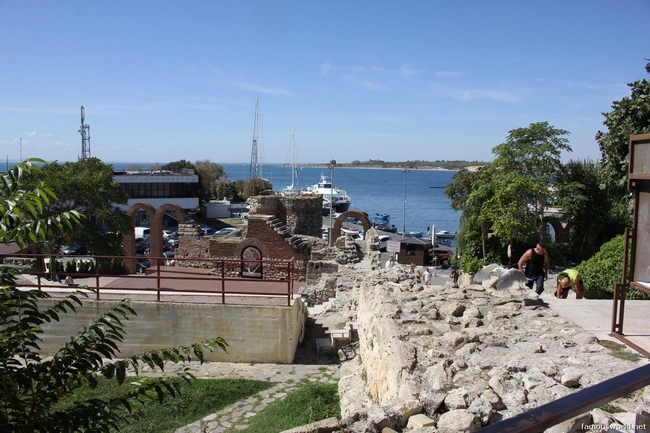
- Ancient Fortifications: Remains of the early Byzantine city walls and gates still guard the entrance to the peninsula, showcasing the town’s defensive past.
What Makes It Famous
Nessebar is renowned as a cultural treasure chest and a architectural marvel.
- UNESCO World Heritage Site: It was inscribed on the World Heritage List in 1983 for its abundance of historic buildings and its preservation of multiple civilizations.
- “City of 40 Churches”: It is famously said to have the highest number of churches per capita. While many are now ruins or museums, the sheer density of religious buildings on such a small peninsula is astonishing.
- Architectural Blend: It is the definitive example of the Bulgarian Black Sea architectural style, blending the Byzantine ecclesiastical tradition with the vernacular wooden Revival home.
- Romantic Atmosphere: The combination of sea views, ancient ruins, and winding cobbled streets makes it a favorite destination for romantic walks and cultural tourism.
Differences from Other Wonders (vs. Dubrovnik, Croatia)
A quaint, wooden-and-brick village on the Black Sea offers a different charm than a grand, stone-fortified city on the Adriatic.
- Environment (Intimate Wooden Village vs. Grand Stone Fortress): Nessebar feels like a dense, intimate village defined by its warm wooden houses and decorative brick churches. Dubrovnik, Croatia, feels like a formidable, imperial city entirely constructed of uniform white limestone, enclosed by massive, walkable defensive walls.
- Focus (Ecclesiastical Variety vs. Defensive Might): The architectural highlight of Nessebar is its variety of unique, small-scale medieval churches. The highlight of Dubrovnik is its imposing city walls, forts, and grand Baroque civic buildings like the Rector’s Palace.
- Core Story (Cultural Crossroads vs. Maritime Republic): Nessebar’s story is one of being a border town and trade hub influenced by Thracians, Greeks, Romans, and Bulgarians. Dubrovnik’s story is that of the “Republic of Ragusa,” a powerful, independent maritime state that rivaled Venice.
- Atmosphere (Rustic and Textured vs. Polished and Uniform): The atmosphere in Nessebar is rustic, textured, and colorful due to the mix of wood, brick, and stone. The atmosphere in Dubrovnik is polished, bright, and uniform, dominated by the gleaming white stone and orange roof tiles.
Location on world map