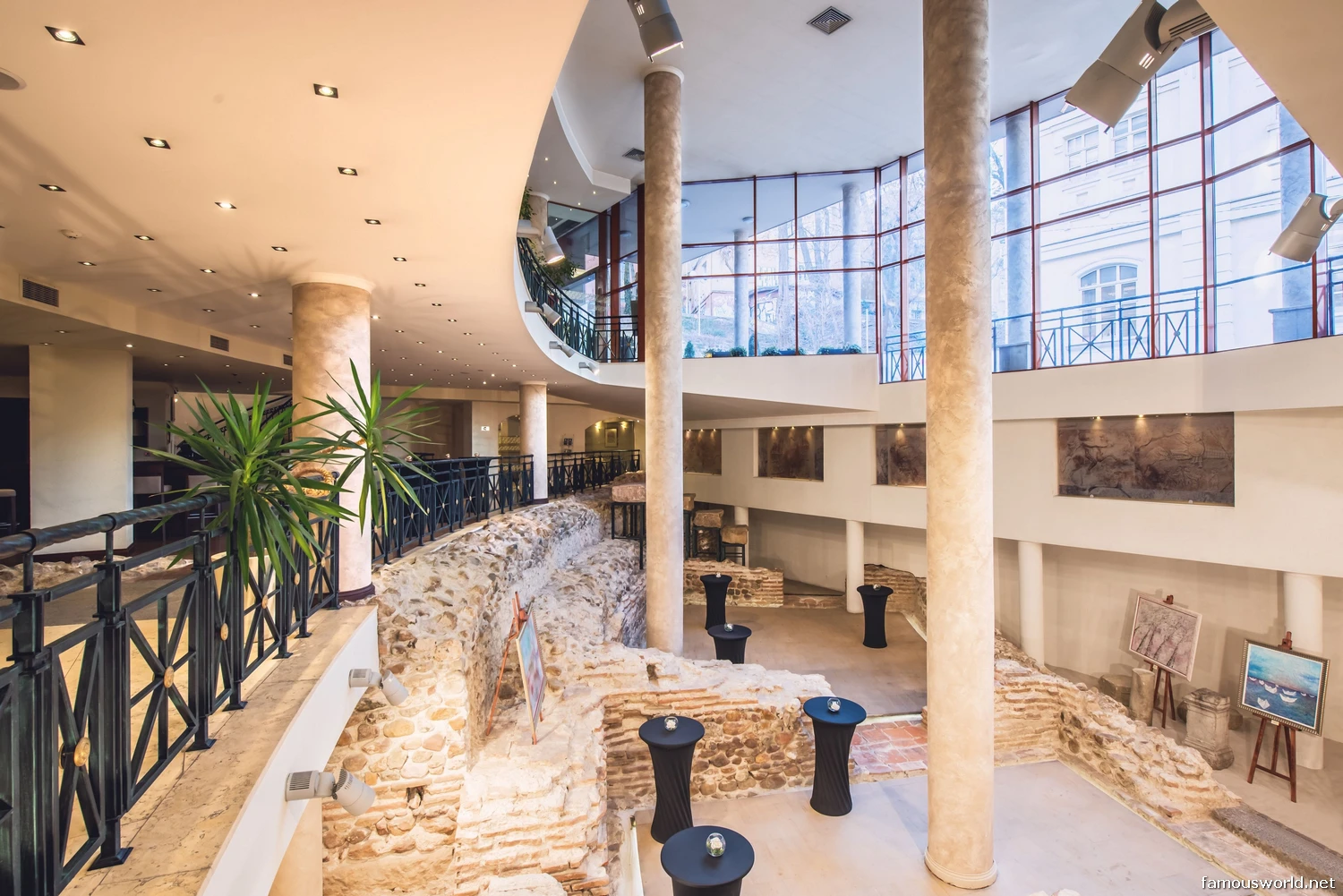


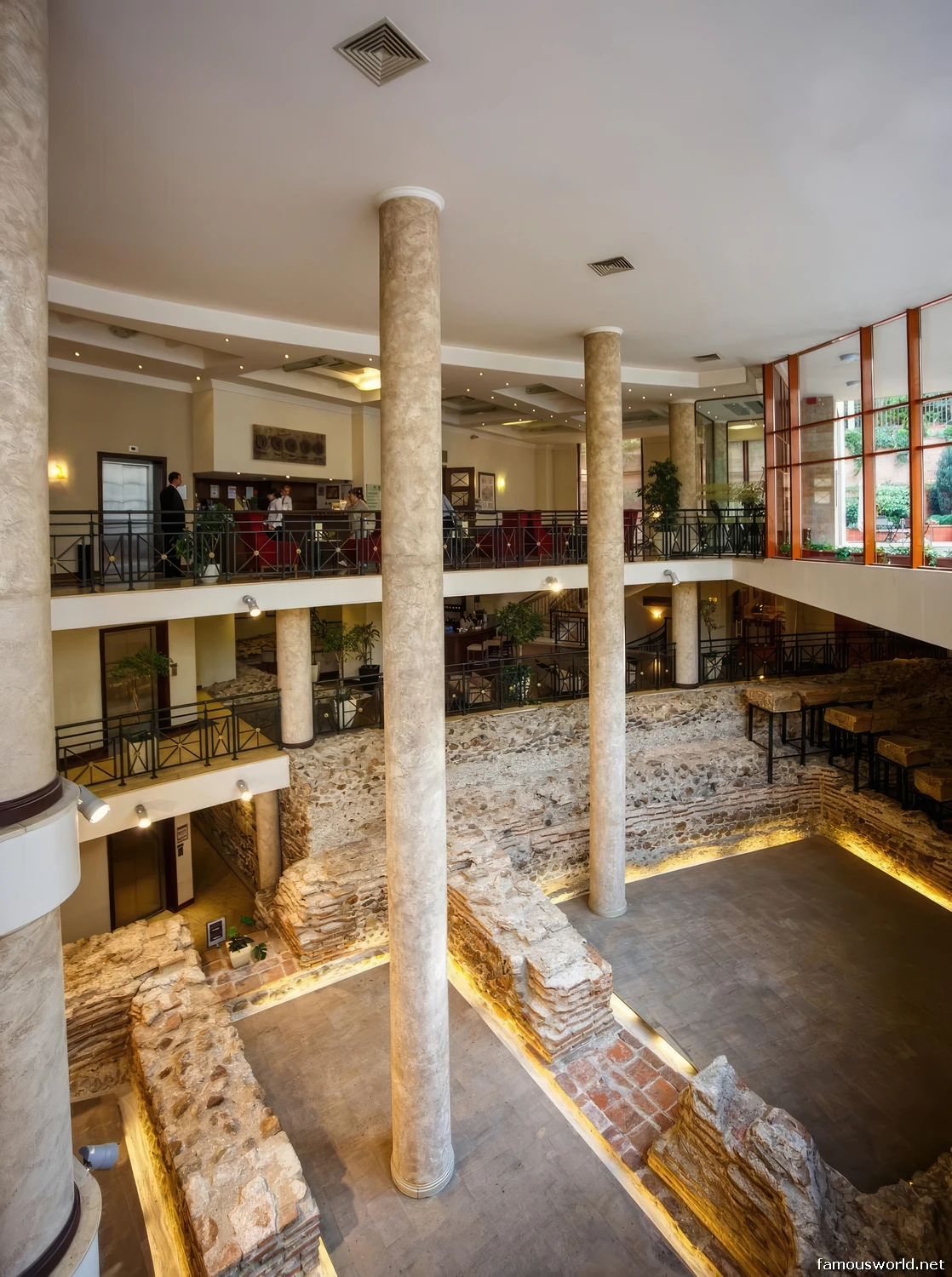
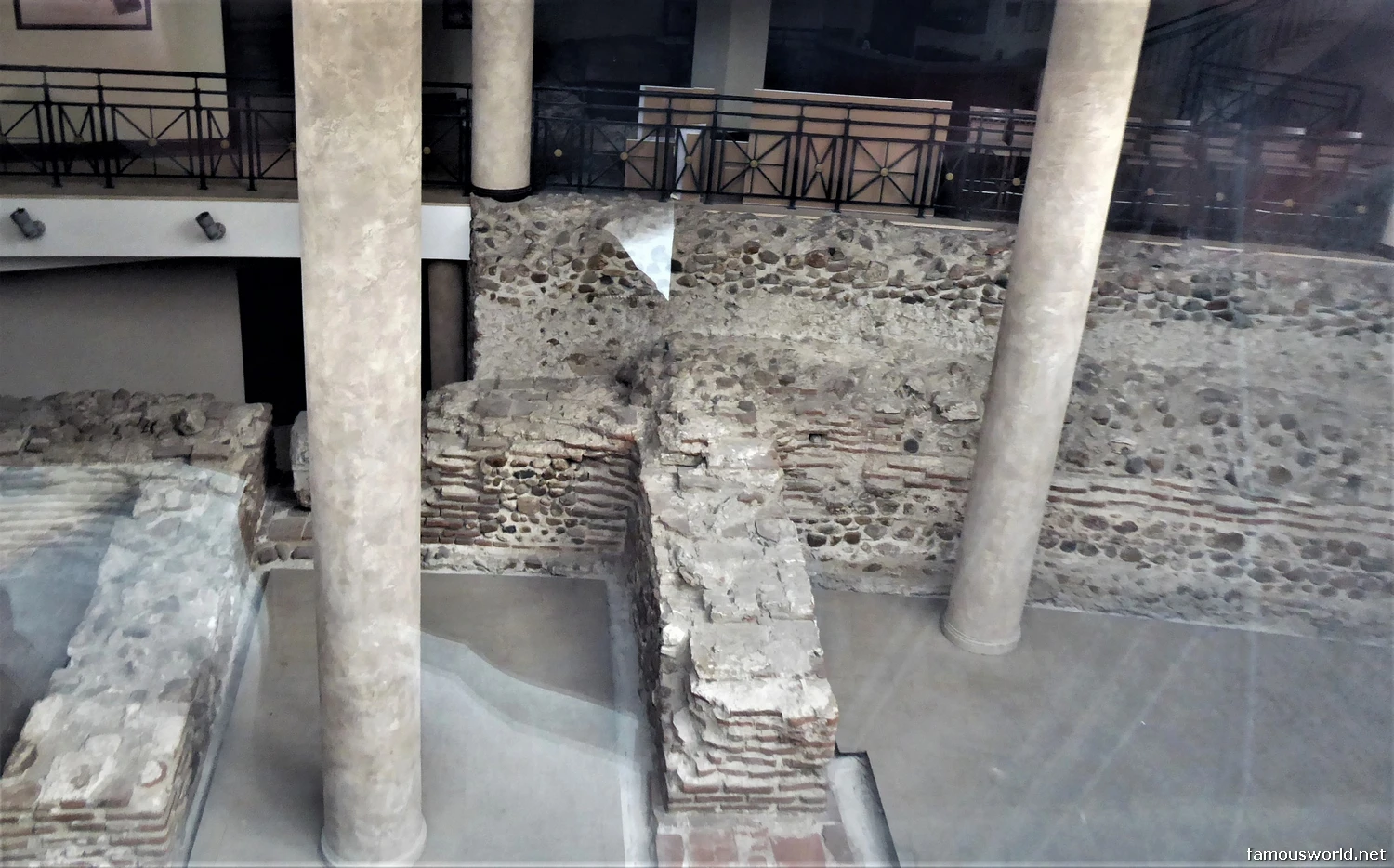

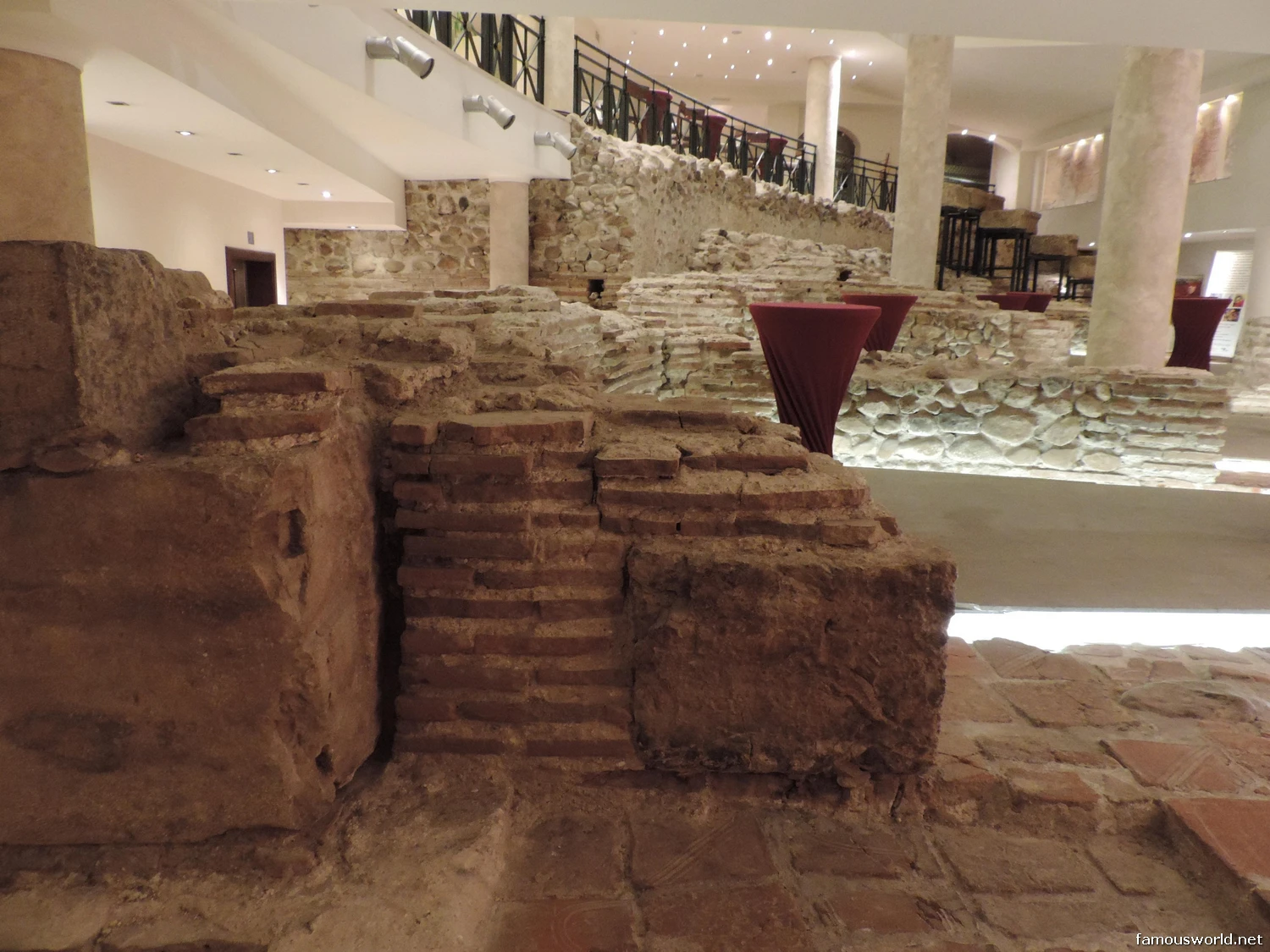


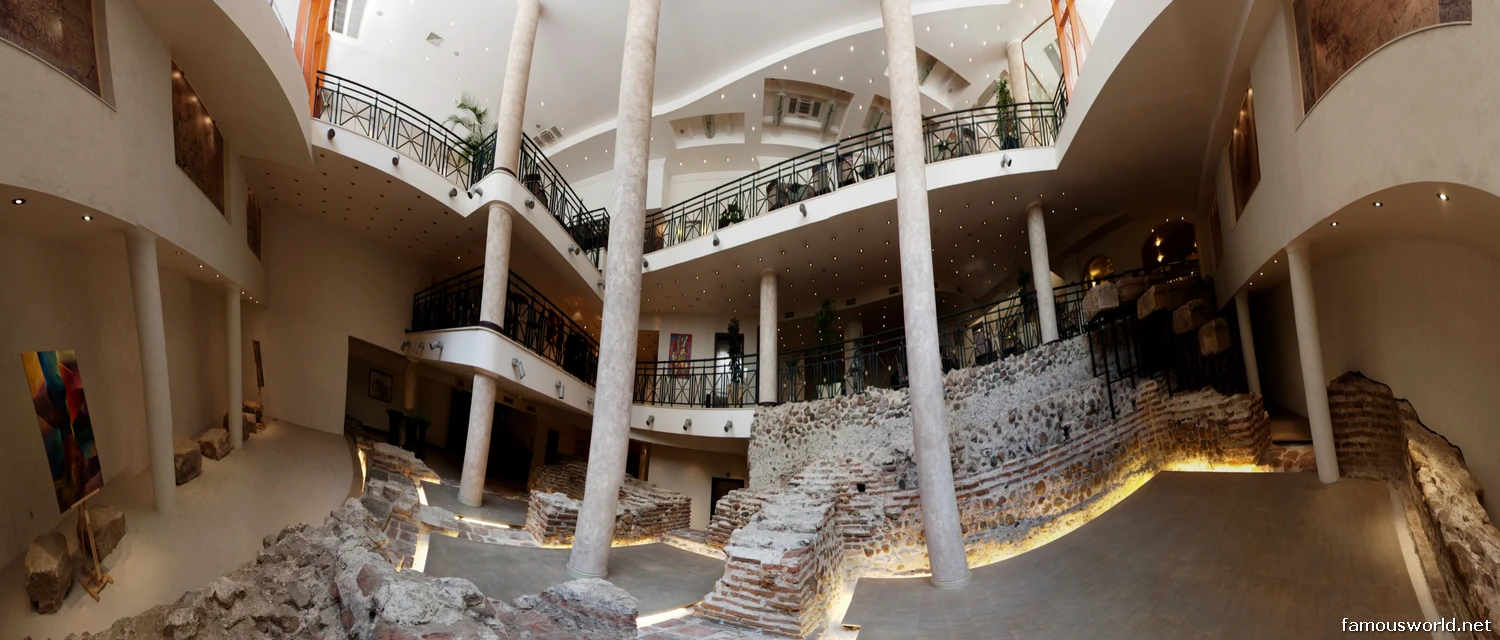


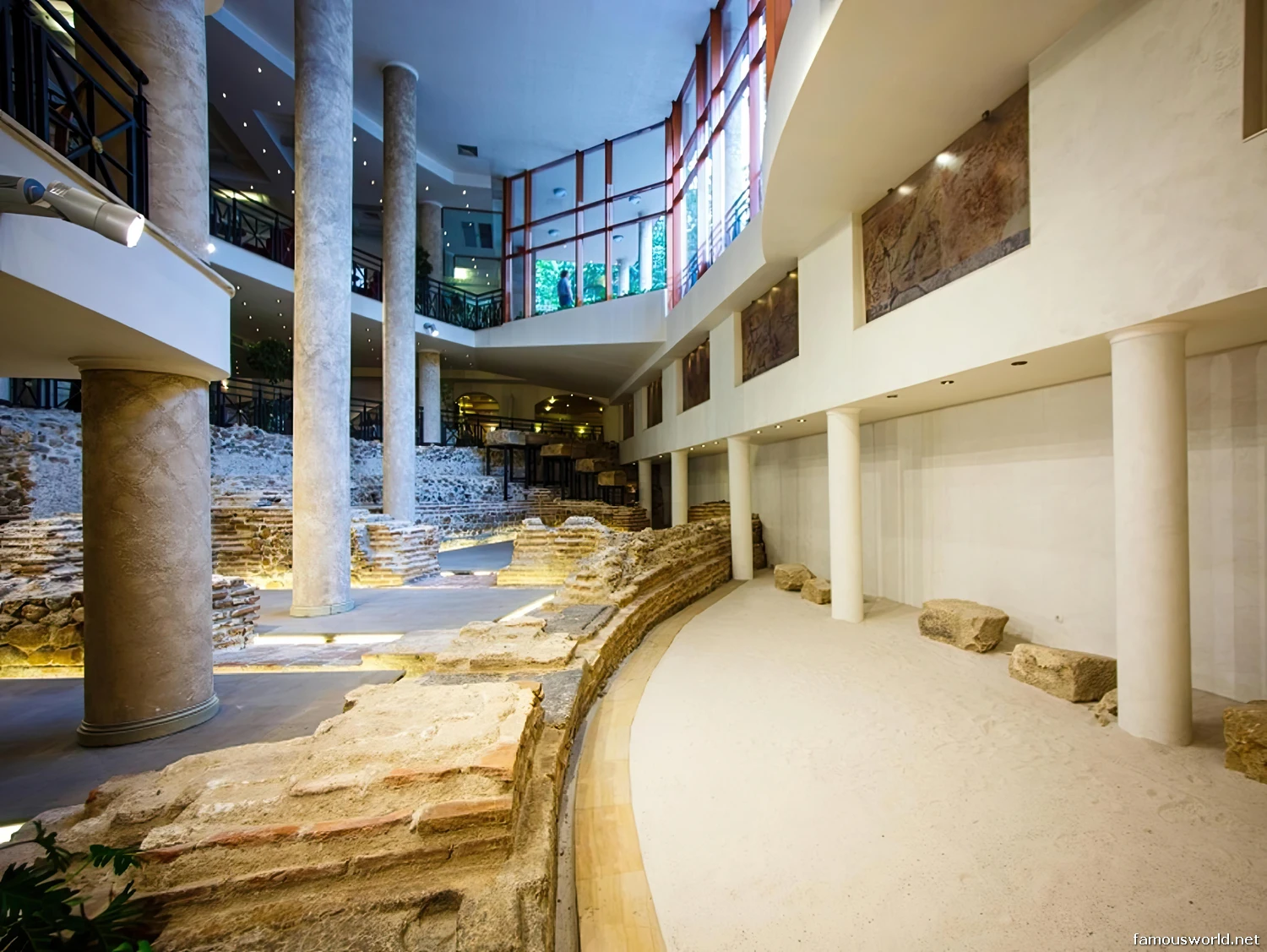

Discovered by chance during the construction of a hotel in 2004, the Amphitheatre of Serdica is one of Sofia’s most remarkable Roman sites. Unlike the open-air Serdica Complex, this massive arena—once host to gladiator games and wild beast hunts for the citizens of ancient Serdica—is now uniquely preserved within the ground floor of a modern luxury hotel. Visitors can stand on a glass floor and look down into the excavated arena, or descend a staircase to walk among the 3rd-century ruins. This “arena in a hotel” is a striking example of Sofia’s layered history, where a venue for Roman spectacle now sits quietly beneath a chic hotel lobby.
Listen to an introduction about Amphitheatre of Serdica

Name and Location
- Name: Amphitheatre of Serdica (Амфитеатър на Сердика, Amfiteatar na Serdika).
- Location: In the city center of Sofia, Bulgaria, primarily located on the ground floor and basement levels of the Arena di Serdica Residence Hotel.
How to Get There
The site is centrally located and easy to access, though somewhat hidden.
- By Foot: It is a short 5-10 minute walk from the main Serdika metro station and the Ancient Serdica Complex. It is also very close to the Alexander Nevsky Cathedral.
- By Metro: The nearest metro station is Serdika (lines M1, M2, M4). From there, it is a short walk east along Dondukov Boulevard.
- By Hotel Access: The primary way to see the ruins is to walk into the lobby of the Arena di Serdica Hotel. The main ruins are a public-access exhibit within the hotel’s atrium.
Landscape and Architecture
The amphitheater’s ruins are uniquely juxtaposed with modern hotel architecture.
- Hotel Integration: The most defining feature is its preservation within the Arena di Serdica Hotel. The hotel was designed around the ruins, with the lobby and bar featuring glass floors and overlooks of the arena below.
- Roman Ruins: The excavation has uncovered a significant portion of the amphitheater, including the main arena floor, drainage systems, the western entrance (porta), and the foundations of the inner seating tiers (cavea).
- Historical Significance: Built in the late 3rd-early 4th century AD, it was one of the larger amphitheaters in the eastern part of the Roman Empire, built over an earlier Roman theater. Its size indicates the wealth and importance of Serdica at the time.
- Exhibition Space: The lower level functions as a small museum, allowing visitors to walk directly alongside the ancient stones, read informational plaques, and see artifacts discovered during the dig.
What Makes It Famous
The Amphitheatre of Serdica is famous for its unique preservation and its “hidden” nature.
- “Arena in a Hotel”: It is renowned for its incredible integration into a modern hotel, a stunning and unexpected blend of ancient and new.
- A Lost Landmark: Unlike the Colosseum in Rome, Serdica’s amphitheater was lost to history and buried for centuries, making its 21st-century discovery a major archaeological event.
- Constantine’s City: This arena was a key public building during the time when Emperor Constantine the Great resided in Serdica, highlighting the city’s status as an imperial capital.
Differences from Other Wonders (vs. Ancient Serdica Cultural Complex)
A curated indoor exhibit offers a different experience than the sprawling open-air complex.
- Environment (Indoor Hotel Exhibit vs. Open-Air Urban Complex): The Amphitheatre is almost entirely indoors, preserved as a museum-like exhibit within a private hotel. The Serdica Complex is a vast, open-air public space integrated with the city’s metro system and main streets.
- Focus (Spectacle and Entertainment vs. Civilian Roman Life): The Amphitheatre was a specific, monumental venue built for public games, gladiator combat, and spectacles. The Serdica Complex showcases the broader fabric of daily civilian life, including streets, homes, and shops.
- Scale (Partial Excavation vs. Vast Complex): While the amphitheater was huge, only a portion of it is excavated and visible. The Serdica Complex reveals a much larger, sprawling section of the ancient city’s grid.
- Atmosphere (Quiet and Curated vs. Bustling and Integrated): Visiting the Amphitheatre is a quiet, curated, and museum-like experience. Visiting the Serdica Complex is part of the bustle of daily city life, a casual encounter with history during a commute.
Location on world map