



Spread across the very heart of modern Sofia, the Ancient Serdica Cultural Complex is a stunning open-air museum showcasing the magnificent Roman city that lies just beneath the capital’s streets. Centered around the main Serdika metro station, this vast archaeological site seamlessly integrates 2,000-year-old Roman roads, villas, and public buildings with the bustling infrastructure of a 21st-century city. A visit is a remarkable walk through time, where you can tread on original Roman cobblestones, admire intricate mosaics, and see the layers of history, all protected under futuristic glass domes, right in the middle of the daily commute.
Listen to an introduction about Ancient Serdica Cultural Complex

Name and Location
- Name: Ancient Serdica Cultural and Communication Complex (Античен културно-комуникационен комплекс „Сердика“).
- Location: In the absolute center of Sofia, Bulgaria, primarily located in the underpass and public spaces surrounding the Serdika metro station.
How to Get There
The complex is the central transportation hub of Sofia.
- By Metro: This is the easiest and most immersive way. The complex is built directly into and around the Serdika metro station (lines M1, M2, M4). You will literally exit your train and walk into the main archaeological site.
- By Foot: As it is in the city center, it is a short walk from all major landmarks, including Vitosha Boulevard, the St. George Rotunda (which is technically part of it), and the Presidency.
Landscape and Architecture
The complex is a masterful blend of ancient ruins and modern urban design.
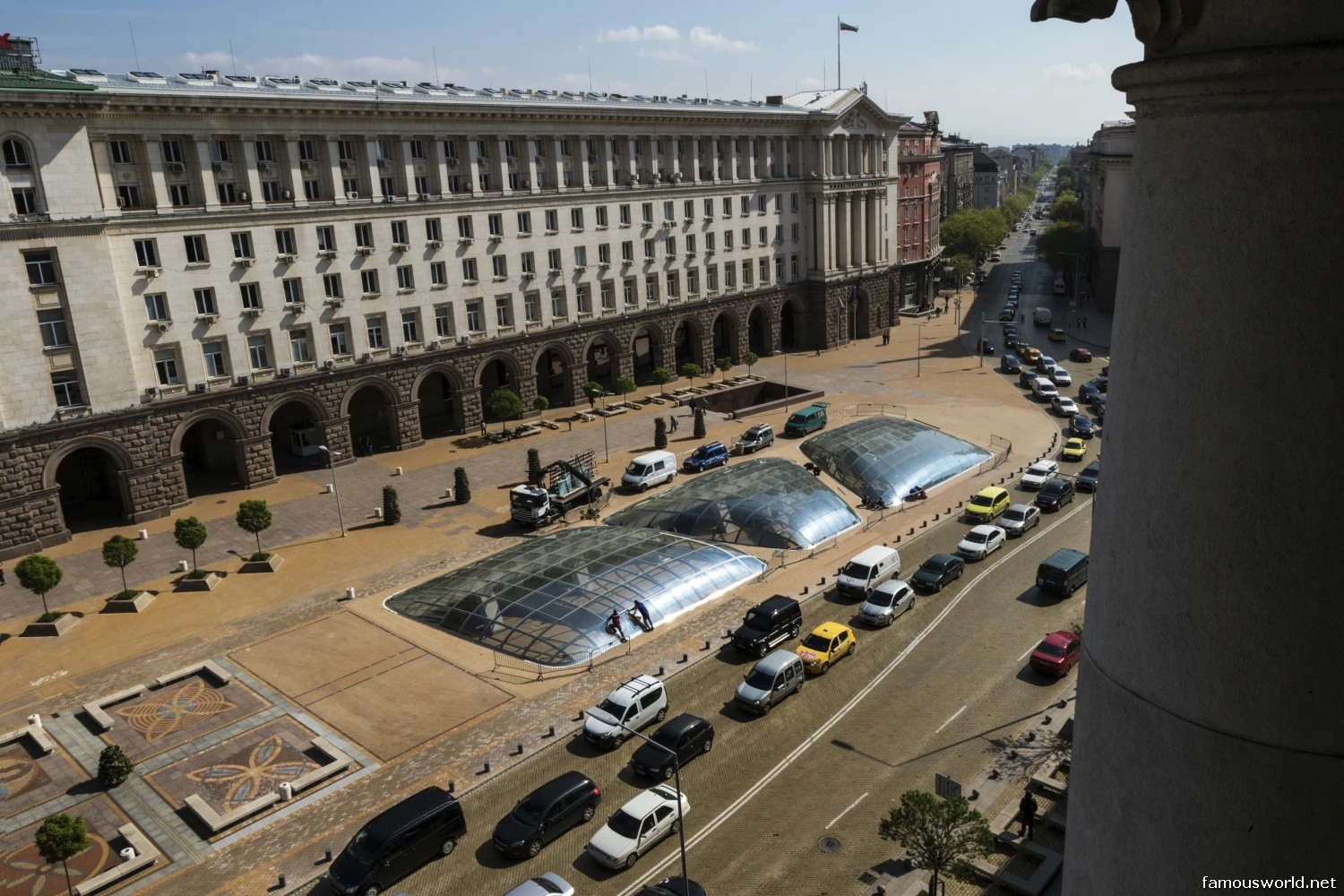
- Open-Air Museum: The main site is located in a large, sunken public space between the Presidency and the Council of Ministers buildings. It is covered by large, protective glass domes that allow you to see the ruins from the street level above.
- Roman Streets: The complex’s main feature is a preserved stretch of the Decumanus Maximus, the main east-west street of Roman Serdica, complete with its original paving stones.
- Ruins and Mosaics: Visitors can walk among the foundations of Roman houses, shops, and public buildings. A highlight is a beautifully preserved mosaic from a 5th-century villa.
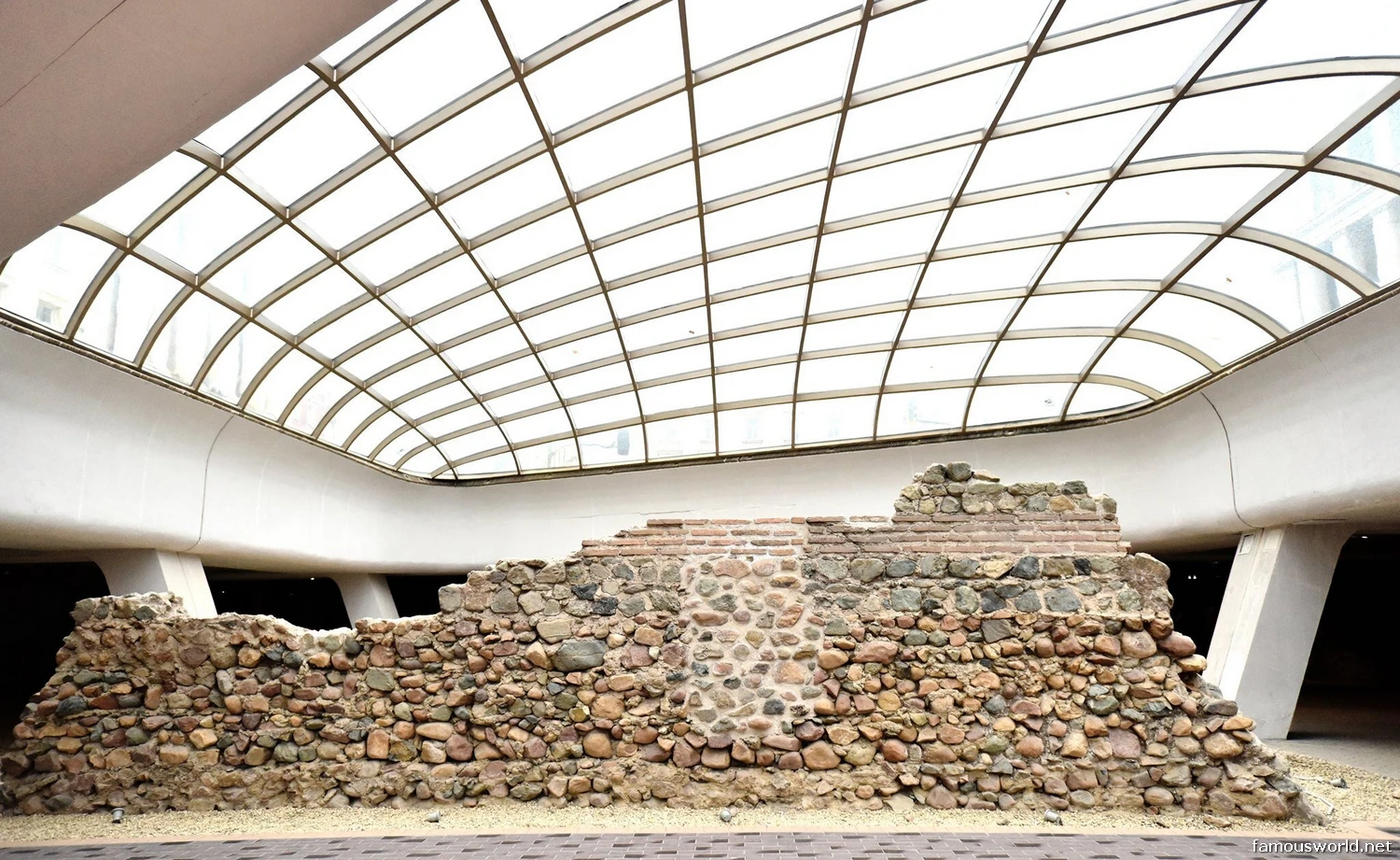
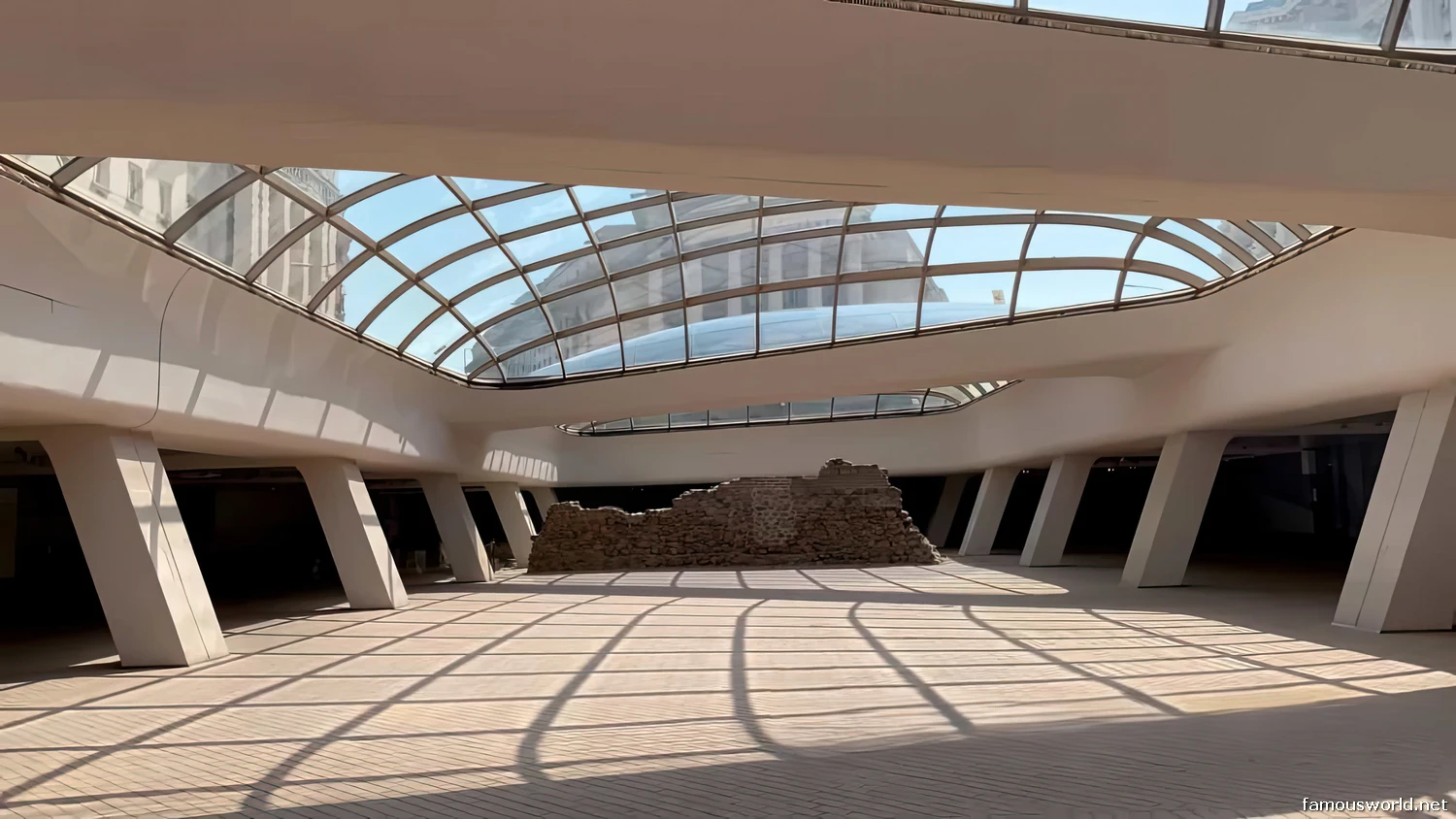
- Metro Integration: A large portion of the complex is located inside the public underpass of the Serdika metro station, where Roman walls and artifacts are displayed behind glass, blending the ancient city with the modern one.
- Church of St. Petka: The small, medieval Church of St. Petka of the Saddlers is located at one end of the complex, another example of the historical layers in one small area.
What Makes It Famous
Serdica is famous for its unique and successful integration of a major archaeological site into a modern, functioning city.
- History Under Your Feet: It provides a tangible “city-within-a-city” experience, more so than almost any other European capital.
- Scale and Accessibility: The sheer scale of the excavated area, combined with the fact that it is a free, public space open 24/7, makes it exceptionally accessible.
- Constantine’s City: Like the St. George Rotunda, the complex is famous for its association with Emperor Constantine the Great, who made Serdica his residence and a major imperial center.
Differences from Other Wonders (vs. National Museum of Military History)
An open-air, ancient city complex offers a completely different experience than a traditional museum of military technology.
- Environment (Open-Air Urban Site vs. Contained Museum Campus): Serdica is an open, public, and integrated part of the city’s daily infrastructure, blending with streets and subways. The Military Museum is a dedicated, enclosed campus with indoor galleries and outdoor courtyards.
- Focus (Civilian Roman Life vs. National Military History): The Serdica complex showcases the daily civilian life, architecture, and urban planning of an ancient Roman city. The Military Museum focuses specifically on the conflicts, technology, and armed forces of the Bulgarian state.
- Core Collection (Architecture and Mosaics vs. Tanks and Jets): The “exhibits” at Serdica are the buildings, streets, and mosaics themselves. The exhibits at the Military Museum are curated collections of objects, primarily weapons, uniforms, and heavy hardware.
- Atmosphere (Bustling and Integrated vs. Technical and Somber): Visiting Serdica is part of the bustle of daily city life, a casual encounter with history. Visiting the Military Museum is a more formal, educational, and often somber experience focused on the history of warfare.
Location on world map