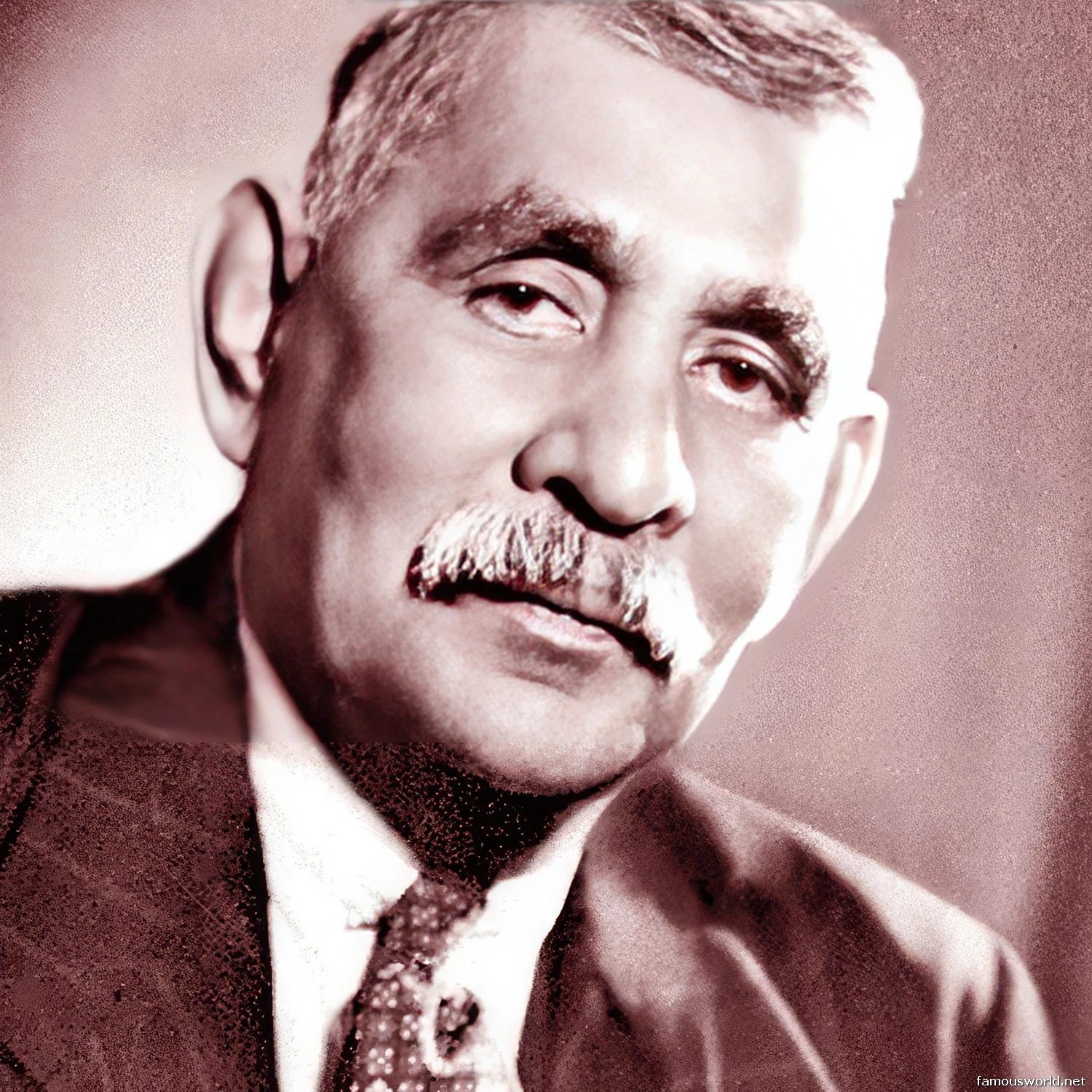
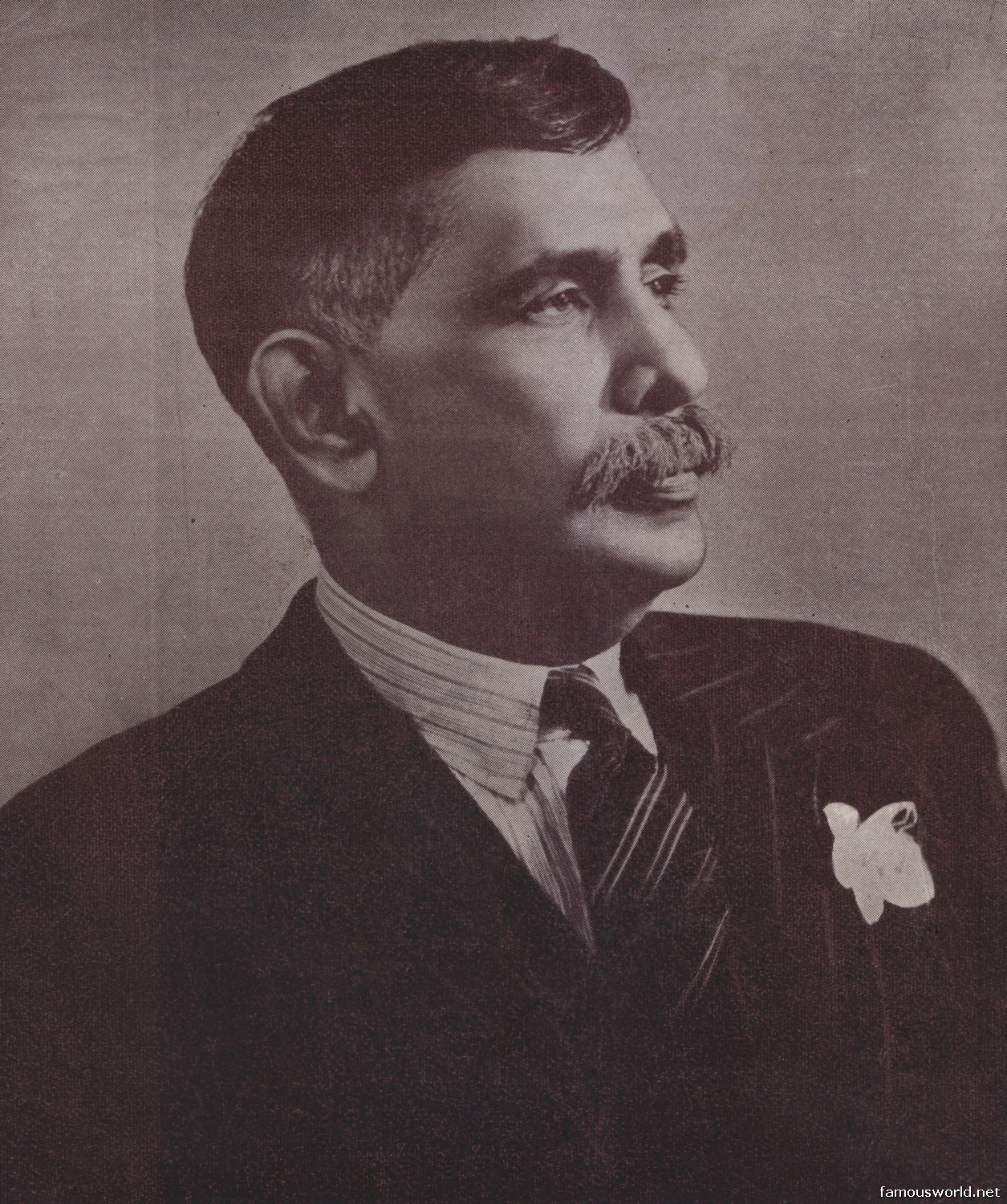
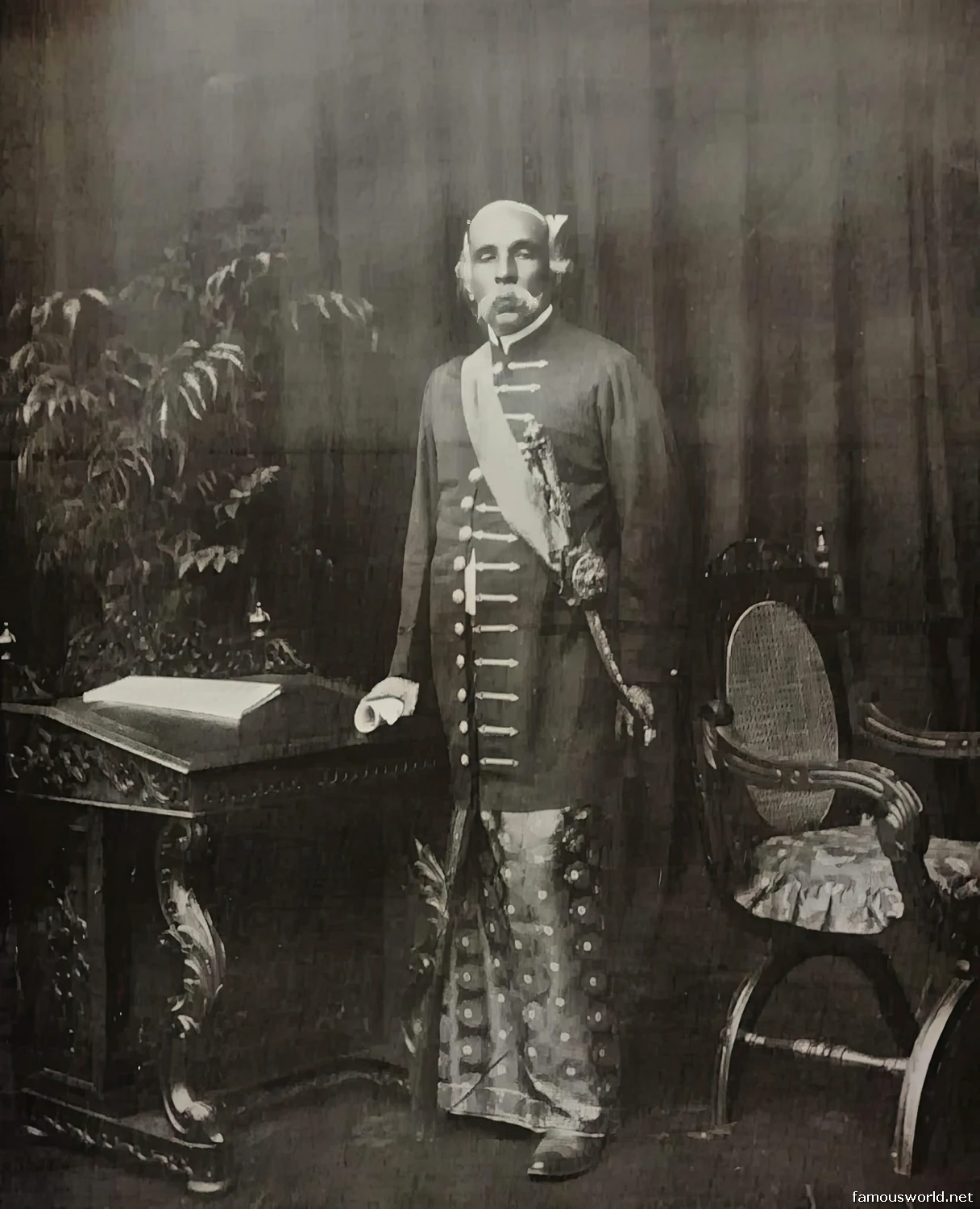
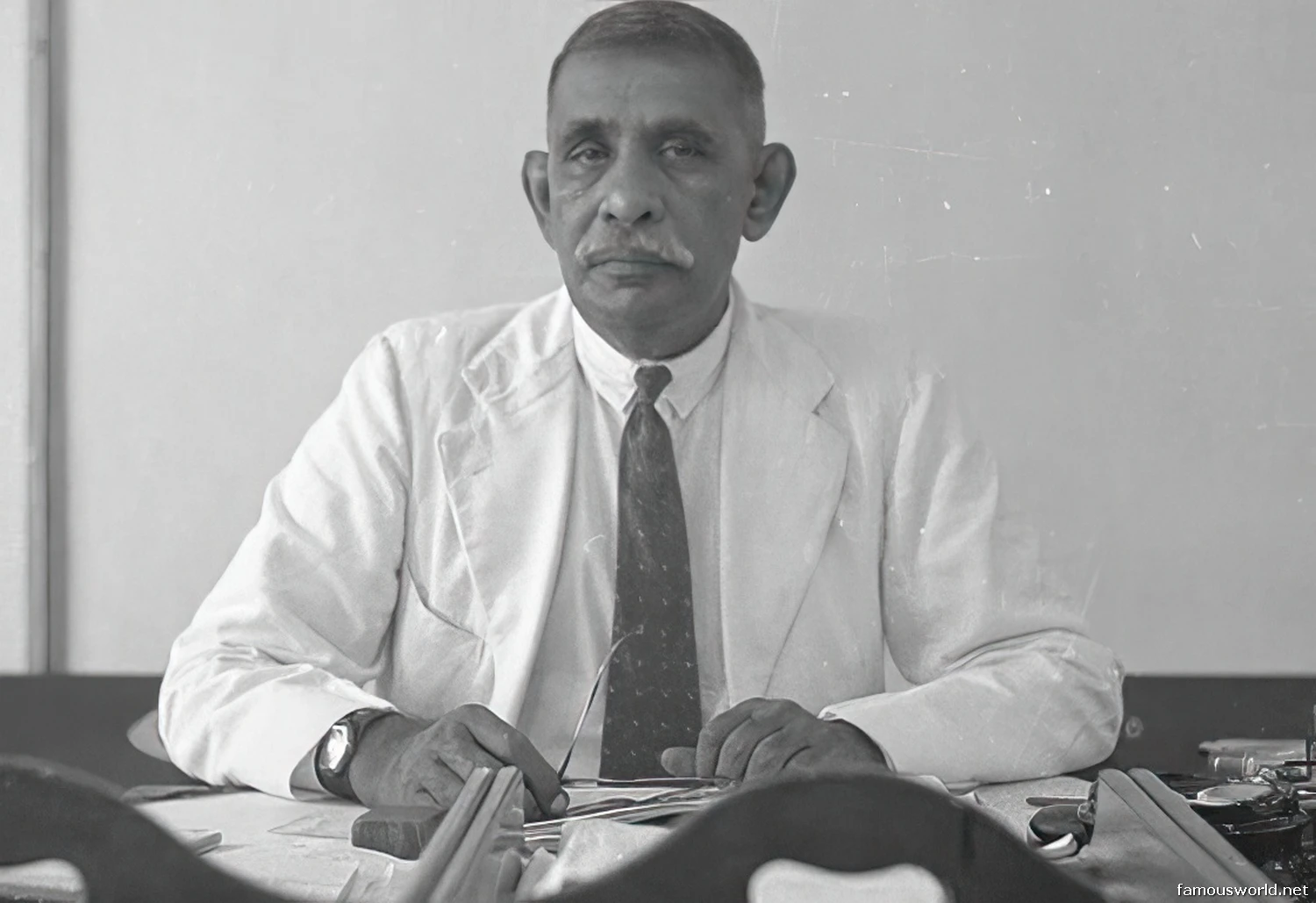
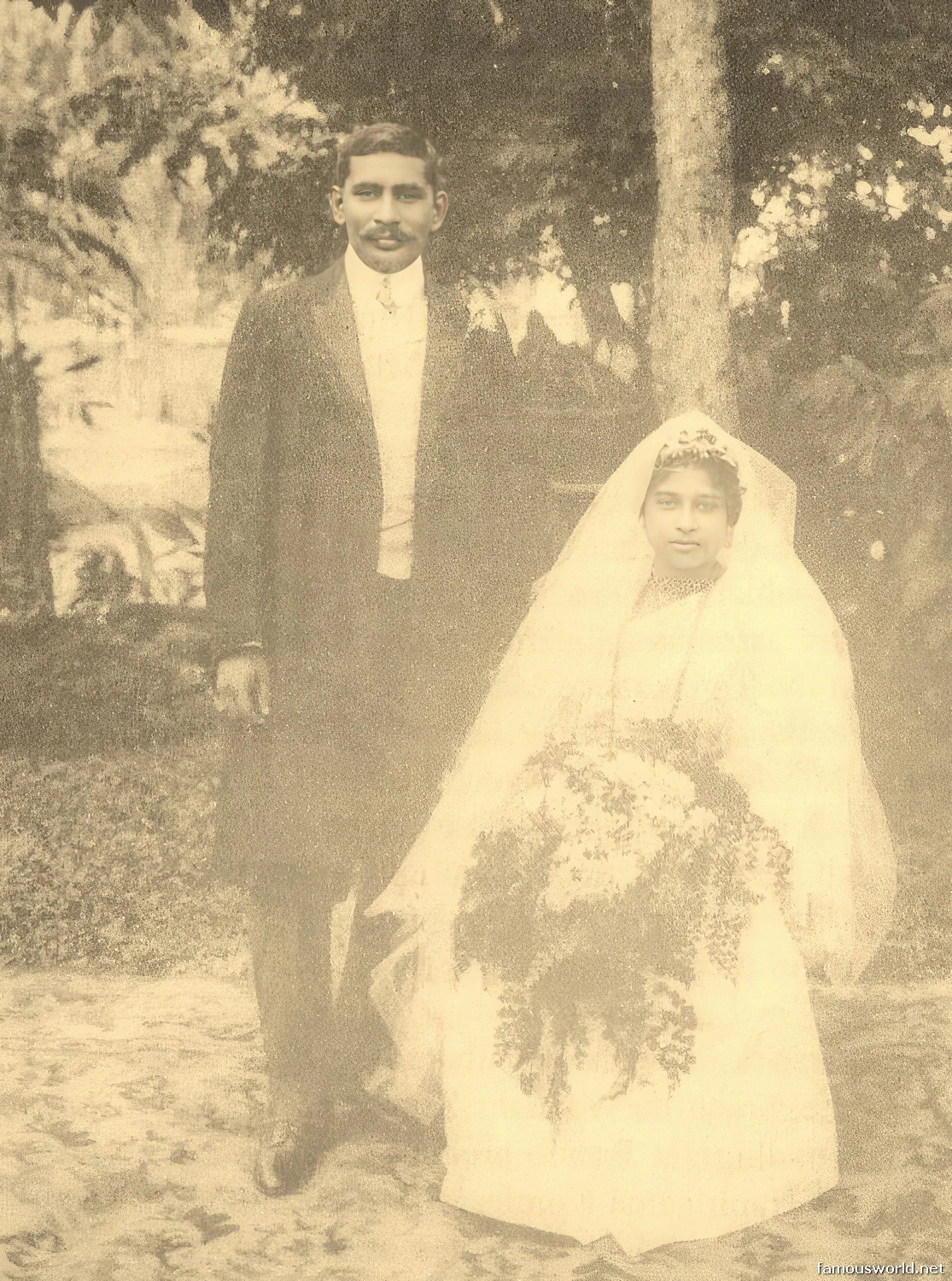
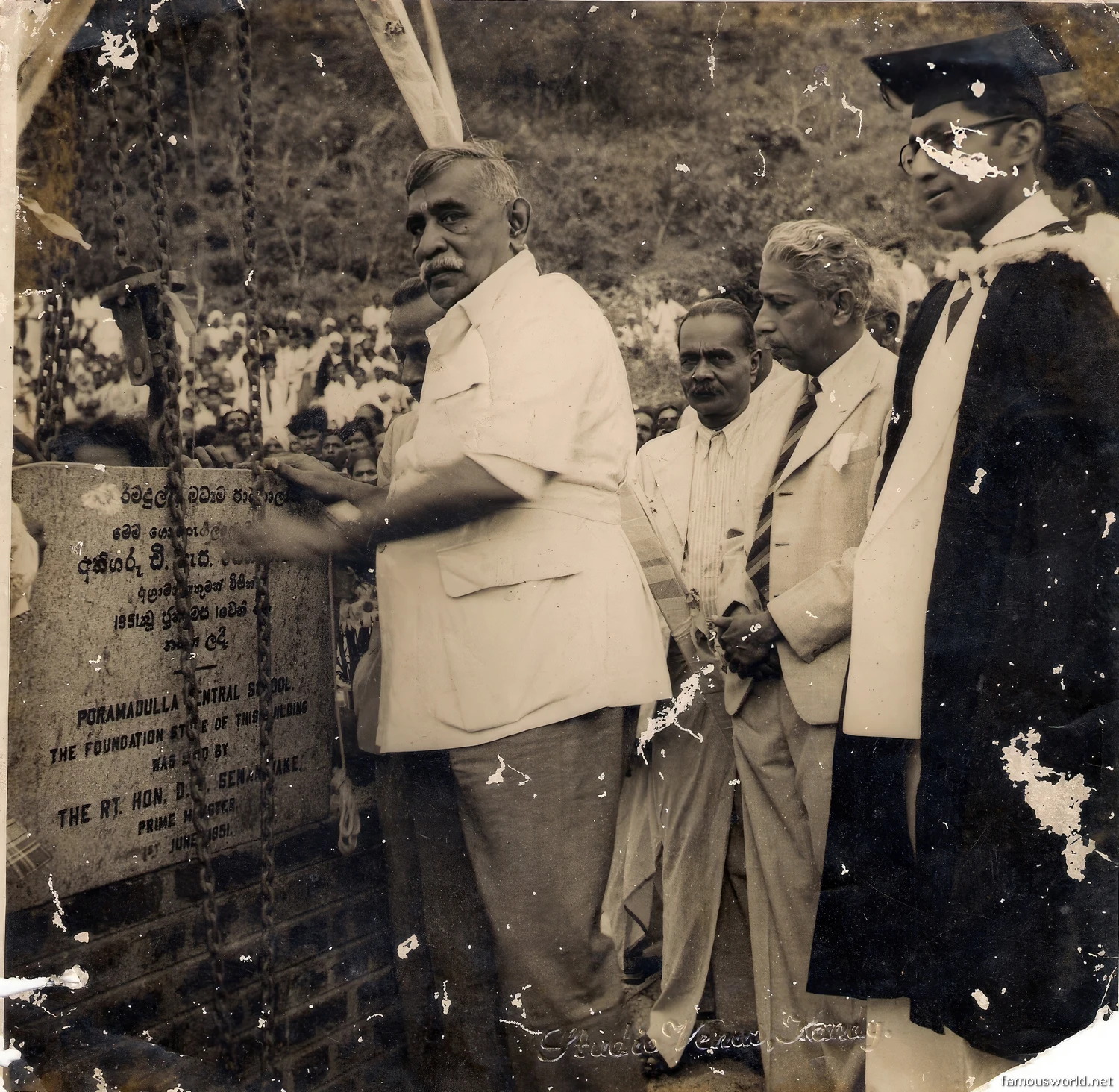

Don Stephen Senanayake was a Ceylonese (now Sri Lankan) statesman who served as the first Prime Minister of Ceylon from 1947 to 1952. As a pivotal leader in the Sri Lankan independence movement, he spearheaded the negotiations that led to self-rule from the British Empire. He is revered in Sri Lanka as the “Father of the Nation” for his role in securing a peaceful transition to independence and for his vision of a unified, multi-ethnic country.
Listen to an introduction about D. S. Senanayake

Name: Don Stephen Senanayake
Date of birth: October 21, 1883 (Died: March 22, 1952)
Place of birth: Botale, British Ceylon (now Sri Lanka)
Family:
Parents’ names: Don Spater Senanayake (father, a wealthy plantation owner and graphite mine owner who was given the honorary title of Mudaliyar) and Dona Catherina Elizabeth Perera Gunasekera Senanayake (mother).
Siblings: He was the youngest of three brothers. His older brothers were Don Charles (D.C.) Senanayake and Fredrick Richard (F.R.) Senanayake, who was a prominent figure in the early independence movement.
Spouse: Molly Dunuwila (m. 1910).
Children: Two sons, Dudley Shelton Senanayake (who would serve as Prime Minister of Sri Lanka on three separate occasions) and Robert Parakrama Senanayake.
Relatives: His grandson, Rukman Senanayake, also became a politician and cabinet minister.
Profession: Politician, Statesman, Farmer, Planter.
Nationality: British Ceylonese, later Ceylonese.
Religion: Theravada Buddhist.
College or university attended:
S. Thomas’ College, Mount Lavinia. (He did not pursue a university education).
Biography and What Famous For:
D. S. Senanayake was born into a wealthy, land-owning Buddhist family in rural Ceylon. Though not an academic prodigy at the prestigious S. Thomas’ College, he excelled in sports. He initially worked as a clerk and later managed his family’s extensive plantations and business interests.
His entry into public life was spurred by the 1915 anti-Muslim riots, during which the British colonial authorities unjustly imprisoned him and his brothers. This experience, along with the influence of his activist brother F.R. Senanayake, ignited his involvement in the nationalist temperance and independence movements.
Senanayake entered formal politics in 1924 when he was elected to the Legislative Council of Ceylon. He rose to prominence as the Minister of Agriculture and Lands in 1931, a position he held for fifteen years. In this role, he earned widespread respect for his passionate work on agricultural policy, land restoration, and the development of large-scale irrigation projects, such as the Minneriya scheme, which aimed to make Ceylon self-sufficient in food.
Following the death of his brother and other nationalist leaders, Senanayake became the de facto leader of the Ceylonese independence movement. He was a shrewd and pragmatic leader who believed in achieving independence through constitutional reform and negotiation rather than through militant struggle. During World War II, he skillfully used Ceylon’s strategic importance to Britain to further the cause for self-rule.
He is most famous for successfully uniting the island’s diverse ethnic and religious nationalist groups under one banner by forming the United National Party (UNP) in 1946. He led the UNP to victory in the 1947 parliamentary elections and, on February 4, 1948, he became the first Prime Minister as Ceylon celebrated its independence as a Dominion within the British Commonwealth.
As Prime Minister, he focused on agricultural expansion (launching the massive Gal Oya project), maintaining ethnic harmony, and establishing Ceylon’s foreign policy. His premiership was cut short when he suffered a fatal stroke while on his customary morning horse ride on the Galle Face Green in Colombo in 1952. His legacy is that of a founding father who navigated his nation to freedom with diplomacy and a vision of unity.
Have participated (Key Positions and Initiatives):
Legislative Council of Ceylon: Elected member (1924–1931).
State Council of Ceylon: Elected member (1931–1947).
Minister of Agriculture and Lands: (1931–1947). Championed major agricultural and land resettlement schemes.
Leader of the House, State Council: (1942–1947). Functioned as the head of the local administration during World War II.
Founder of the United National Party (UNP): Established the party in 1946.
Prime Minister of Ceylon: Served as the nation’s first Prime Minister (1947–1952).
Independence Negotiations: Led the final constitutional negotiations with the British government that resulted in the Ceylon Independence Act of 1947.
Gal Oya Scheme: Initiated one of the largest multipurpose development projects in the country’s history, focusing on irrigation and hydroelectricity.