

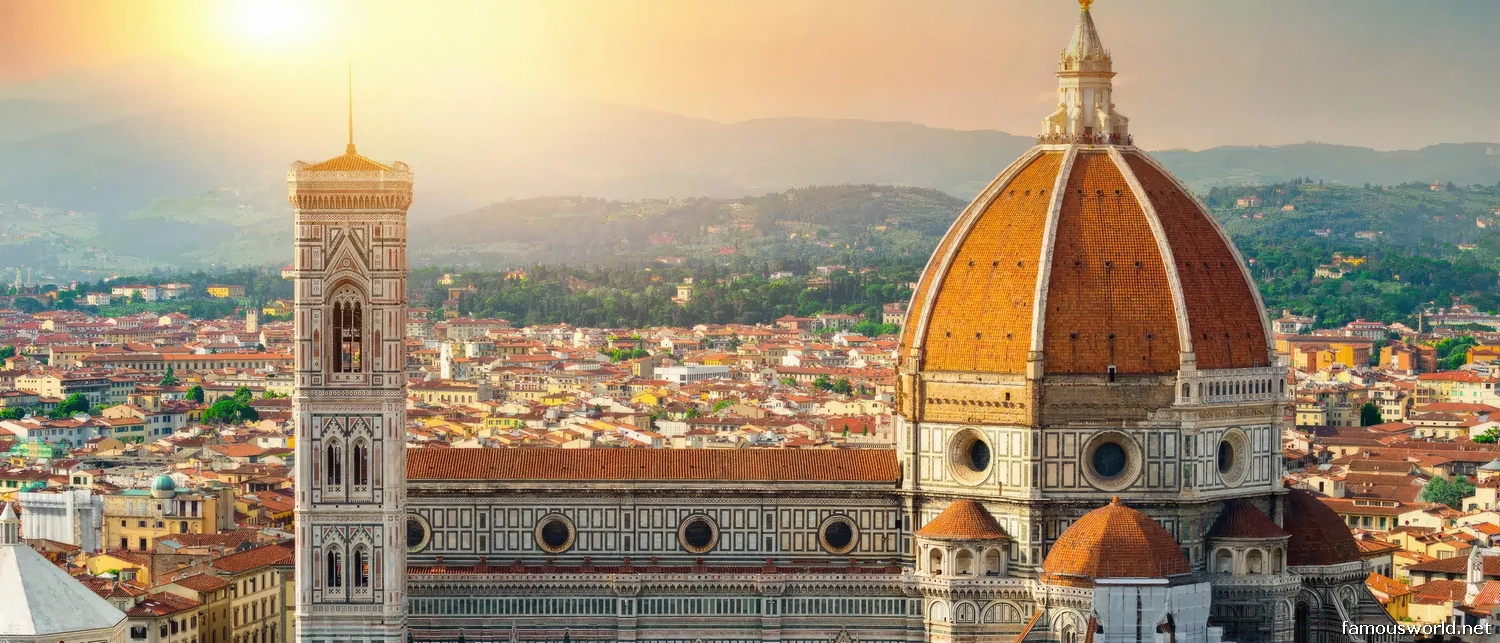
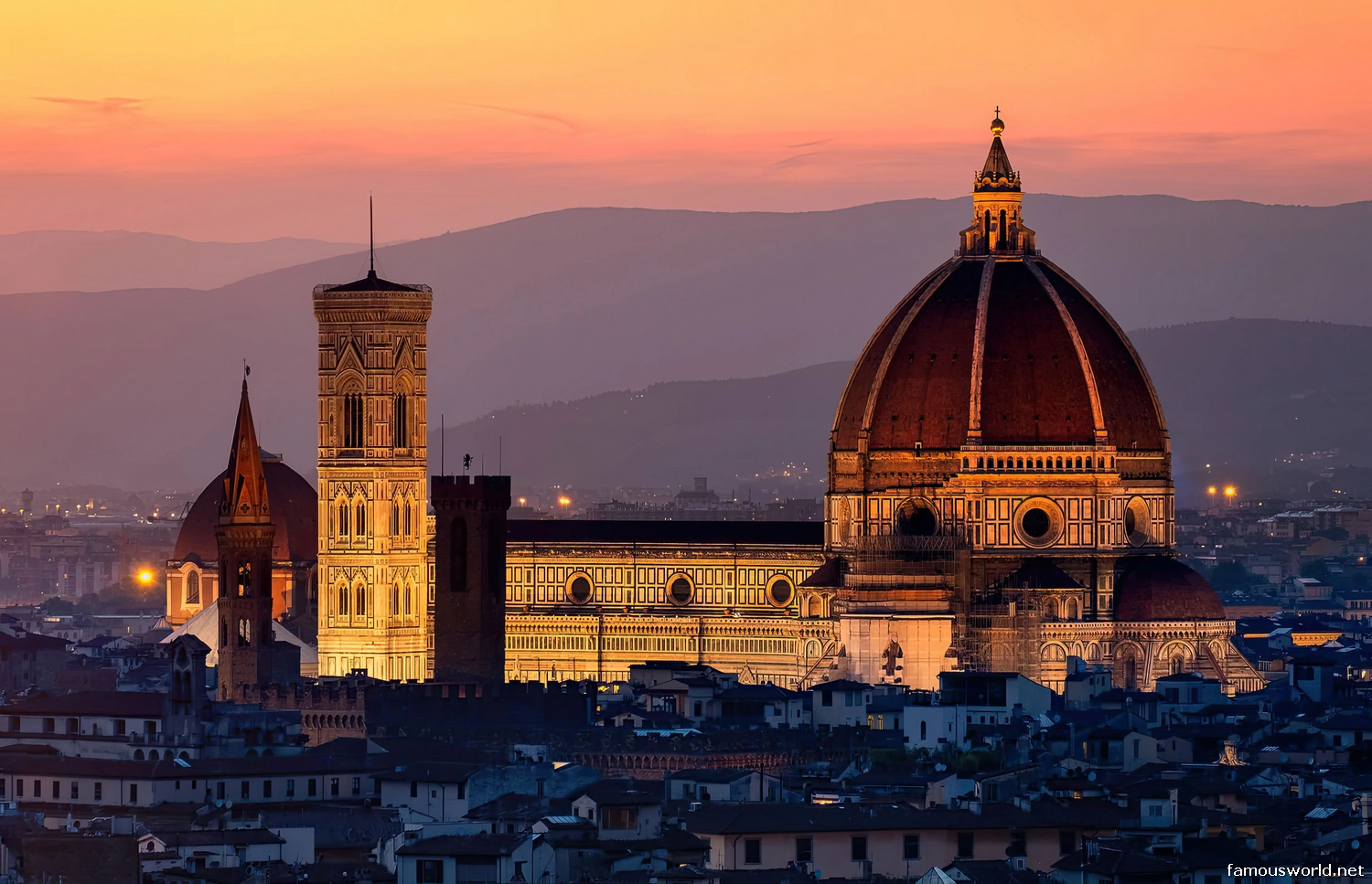

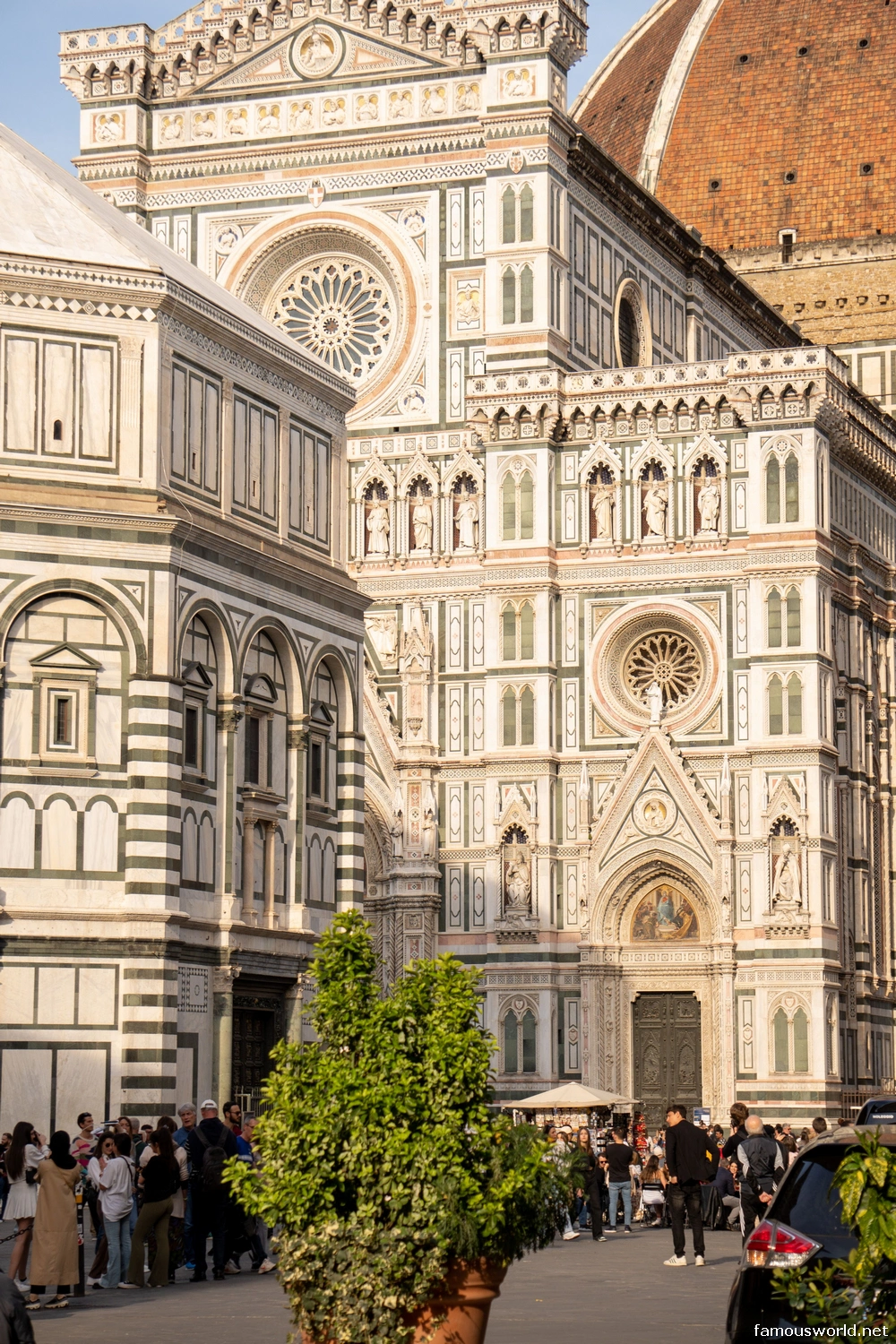
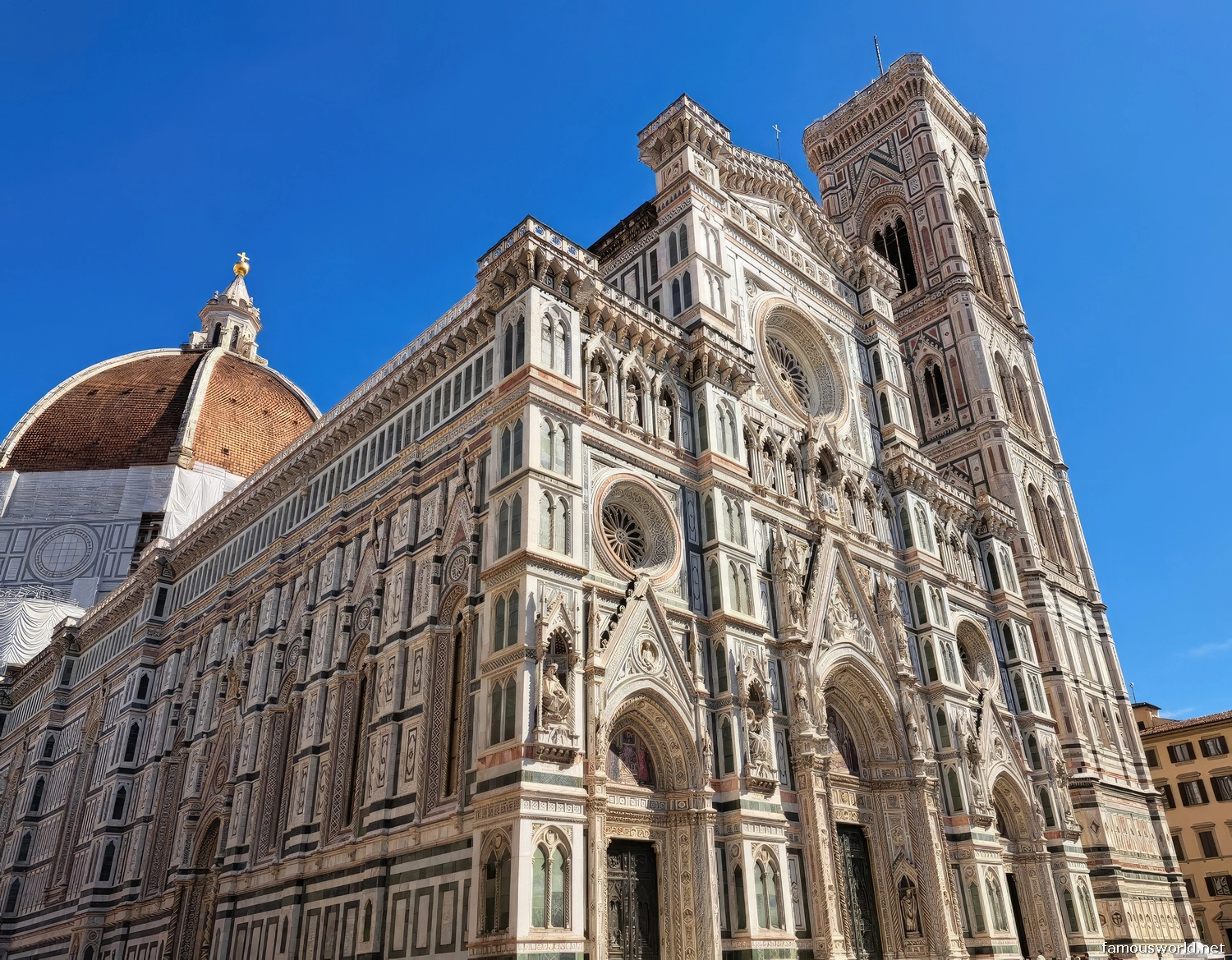
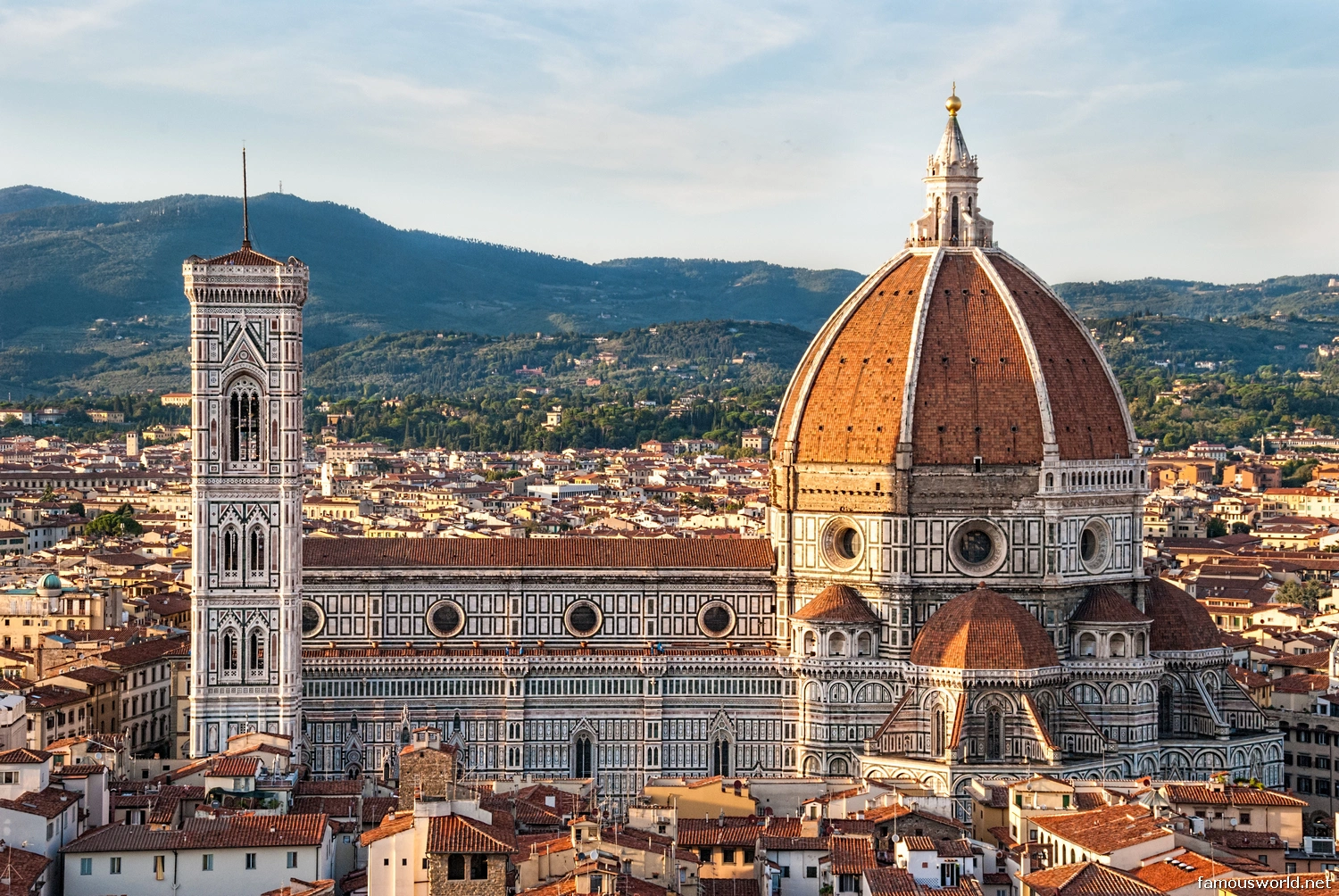
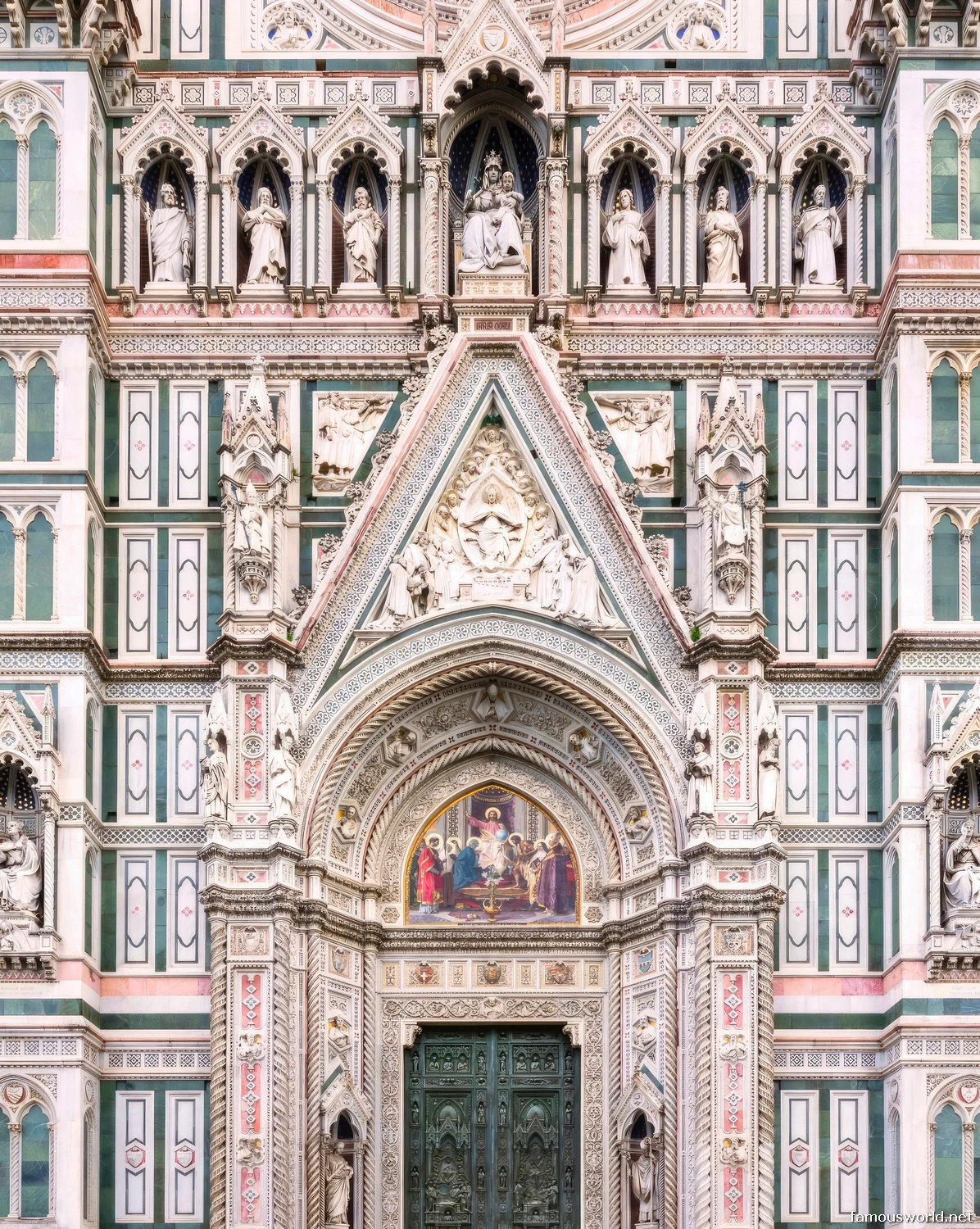

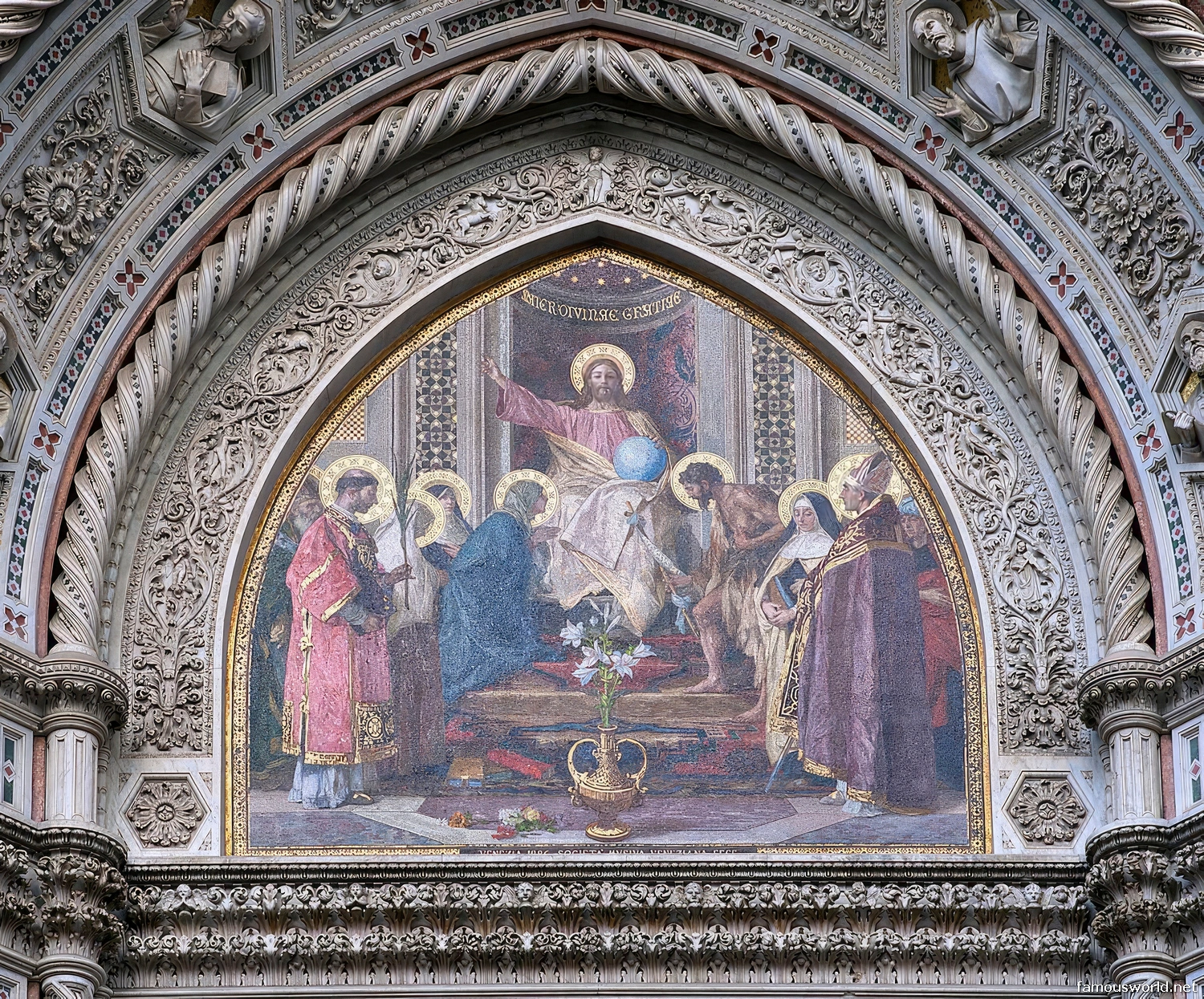
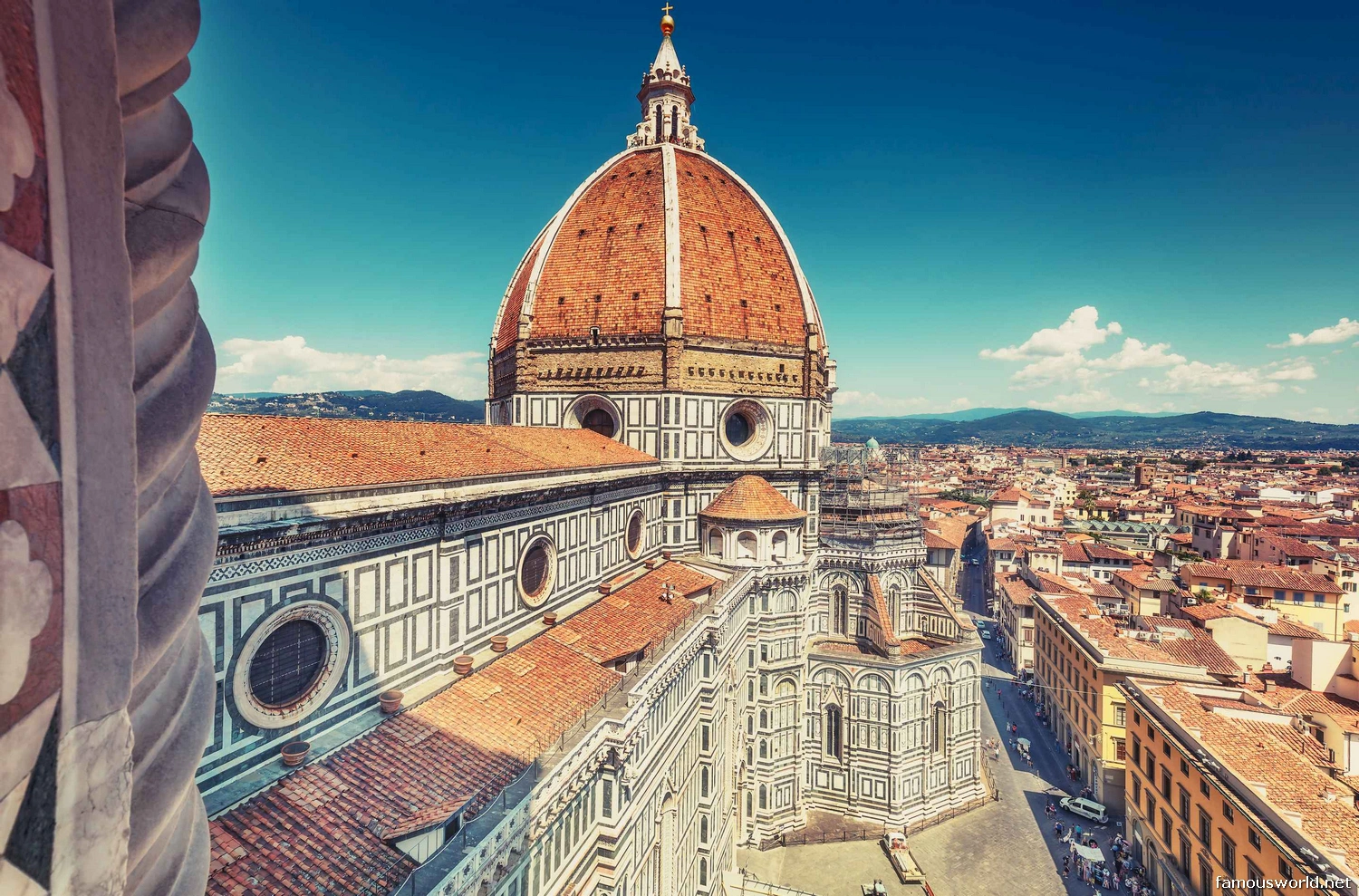
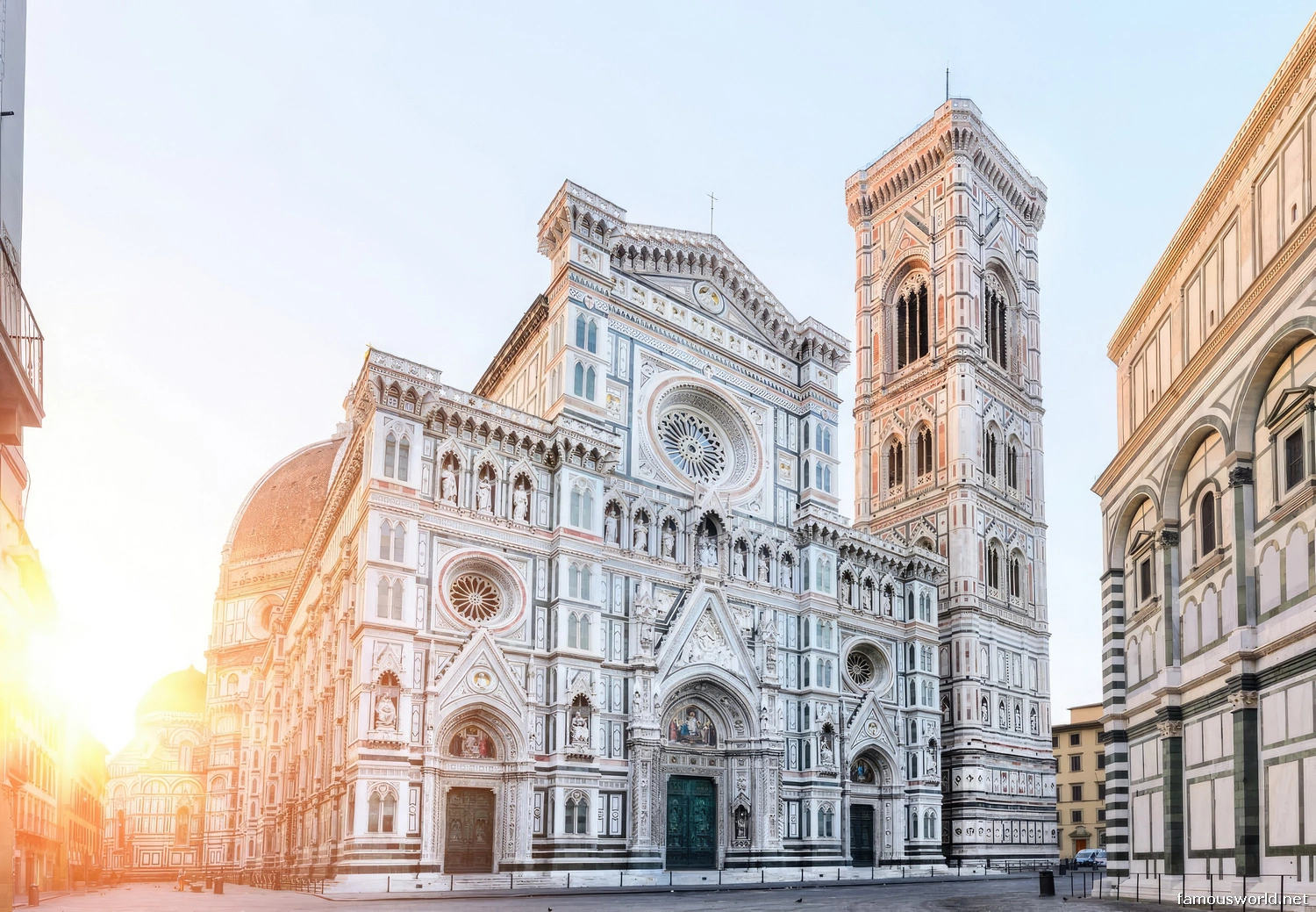
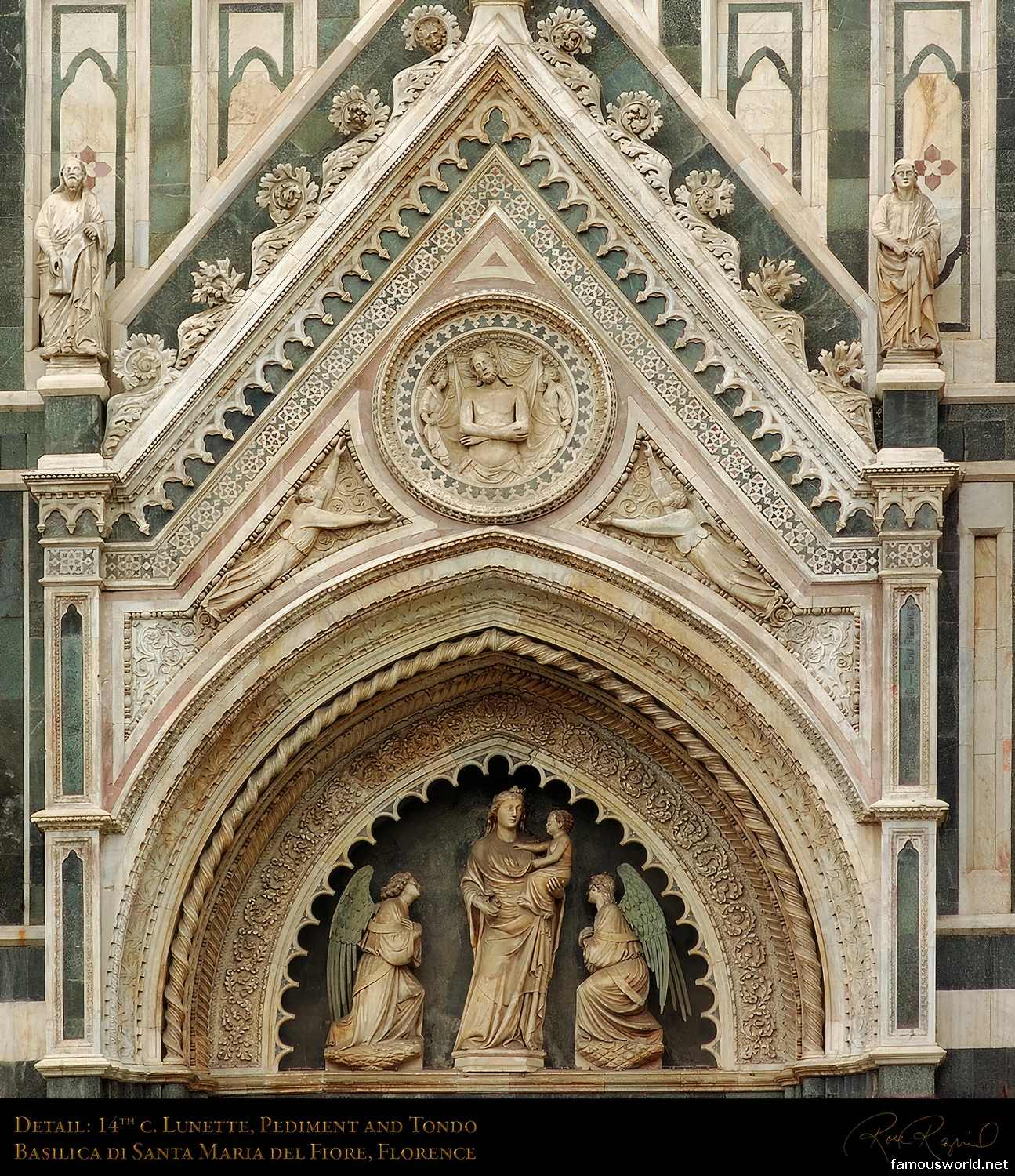
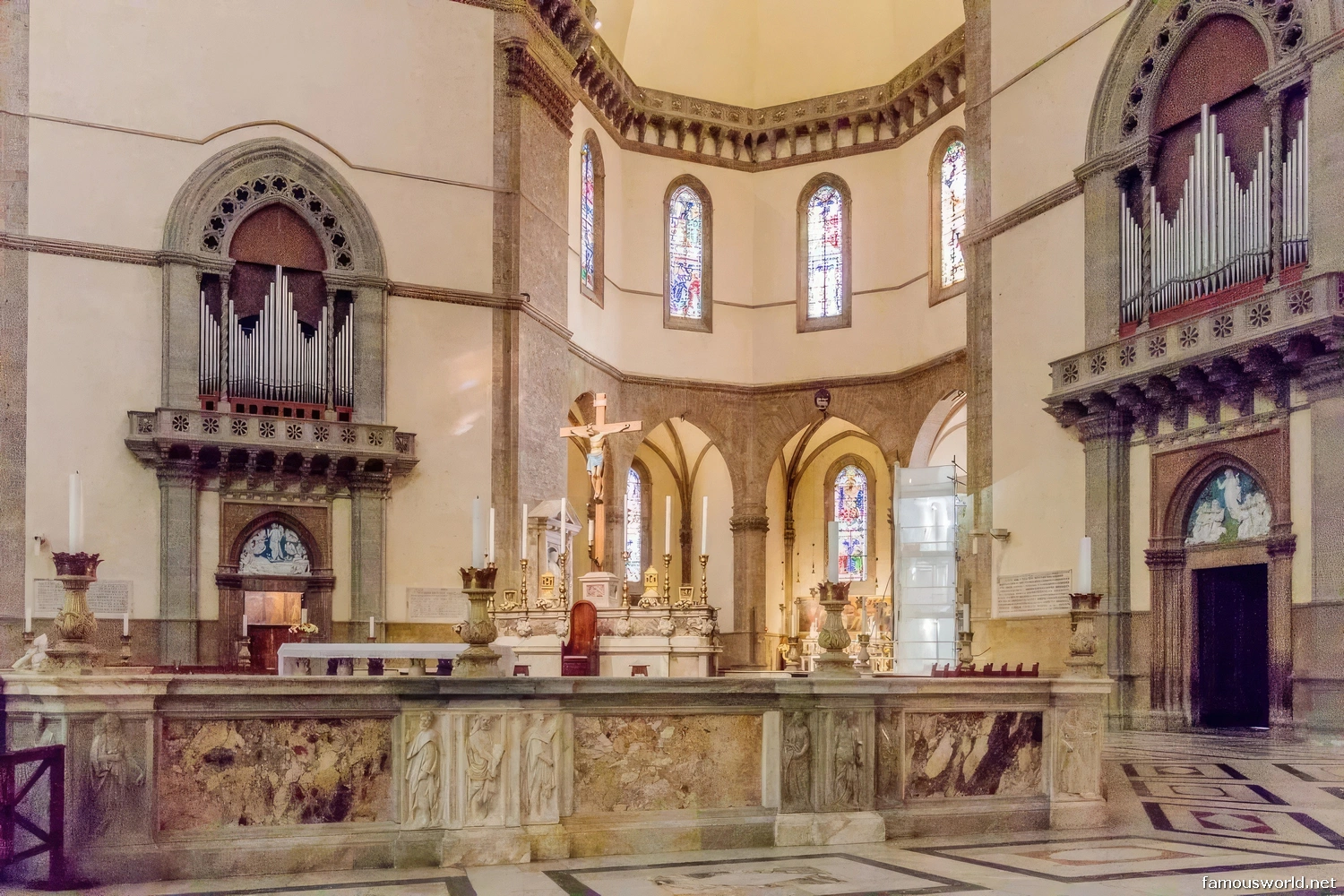
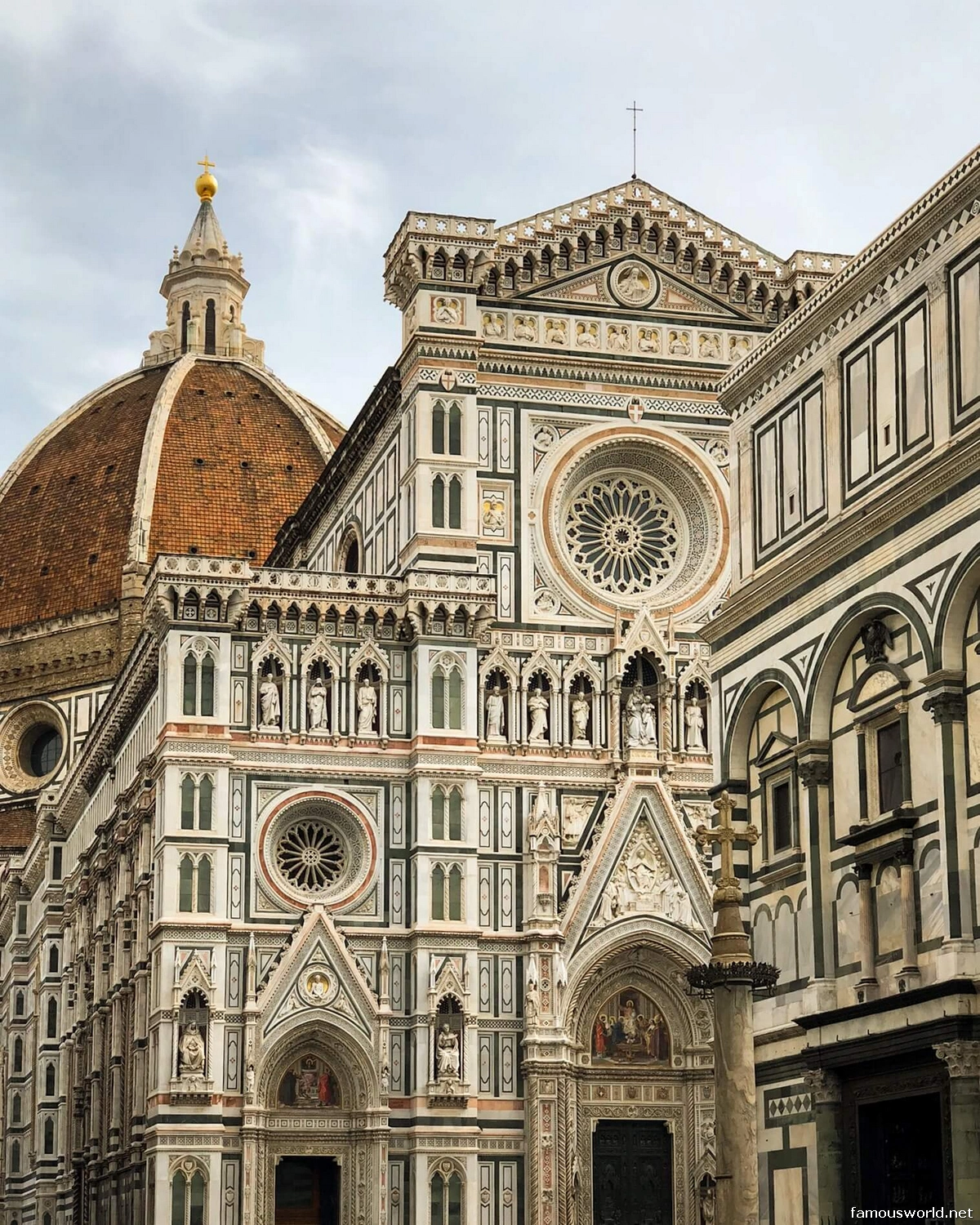
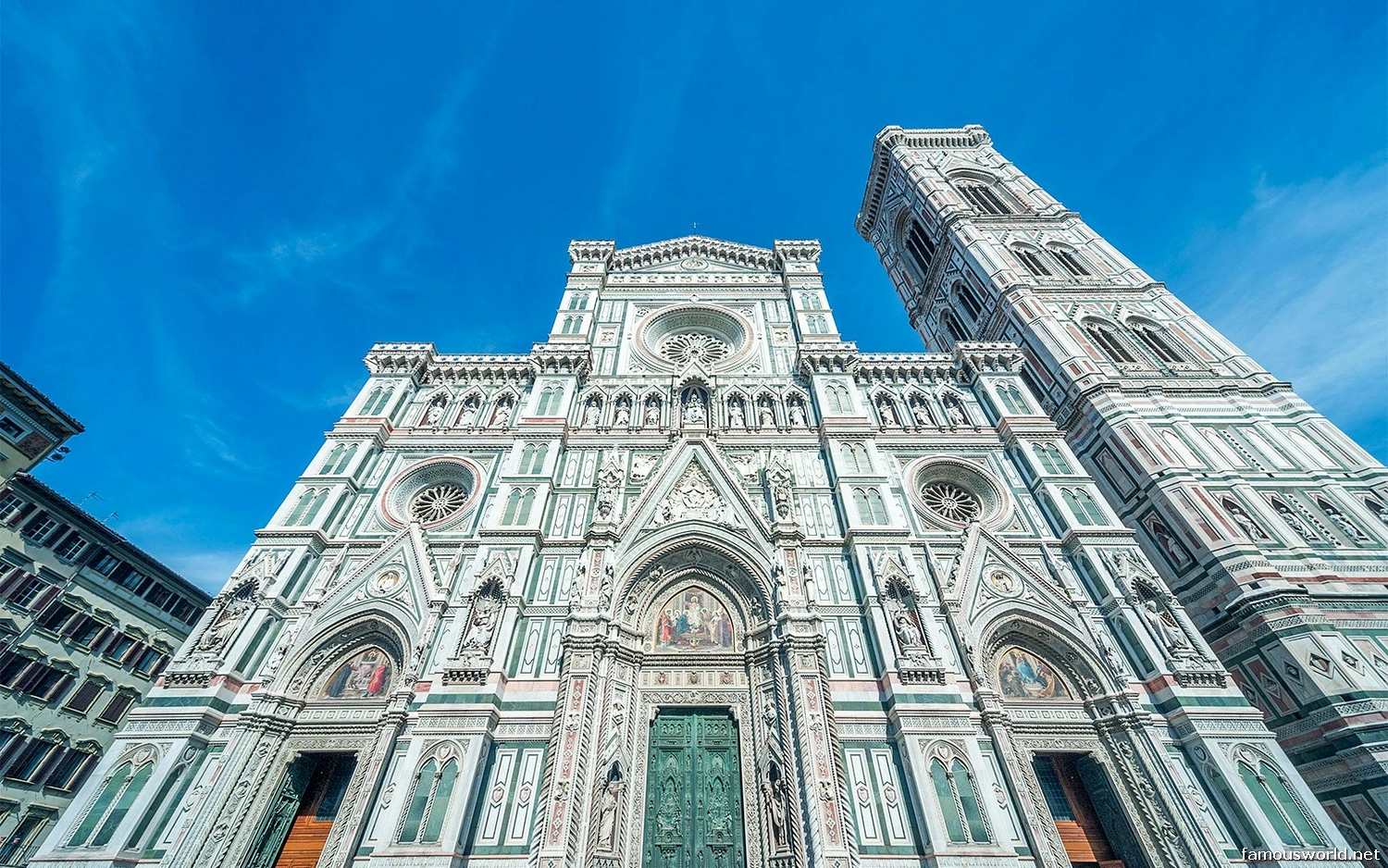
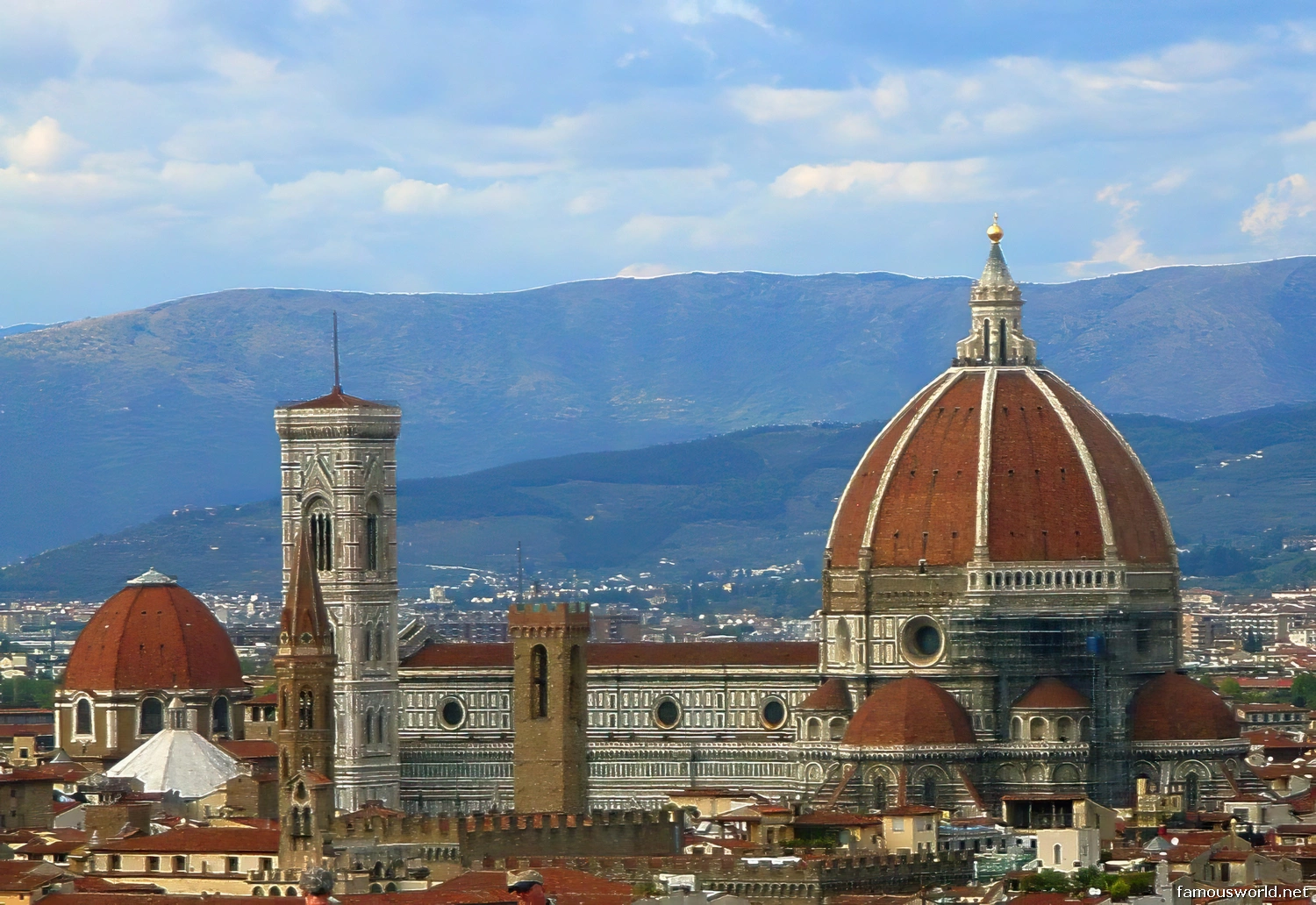
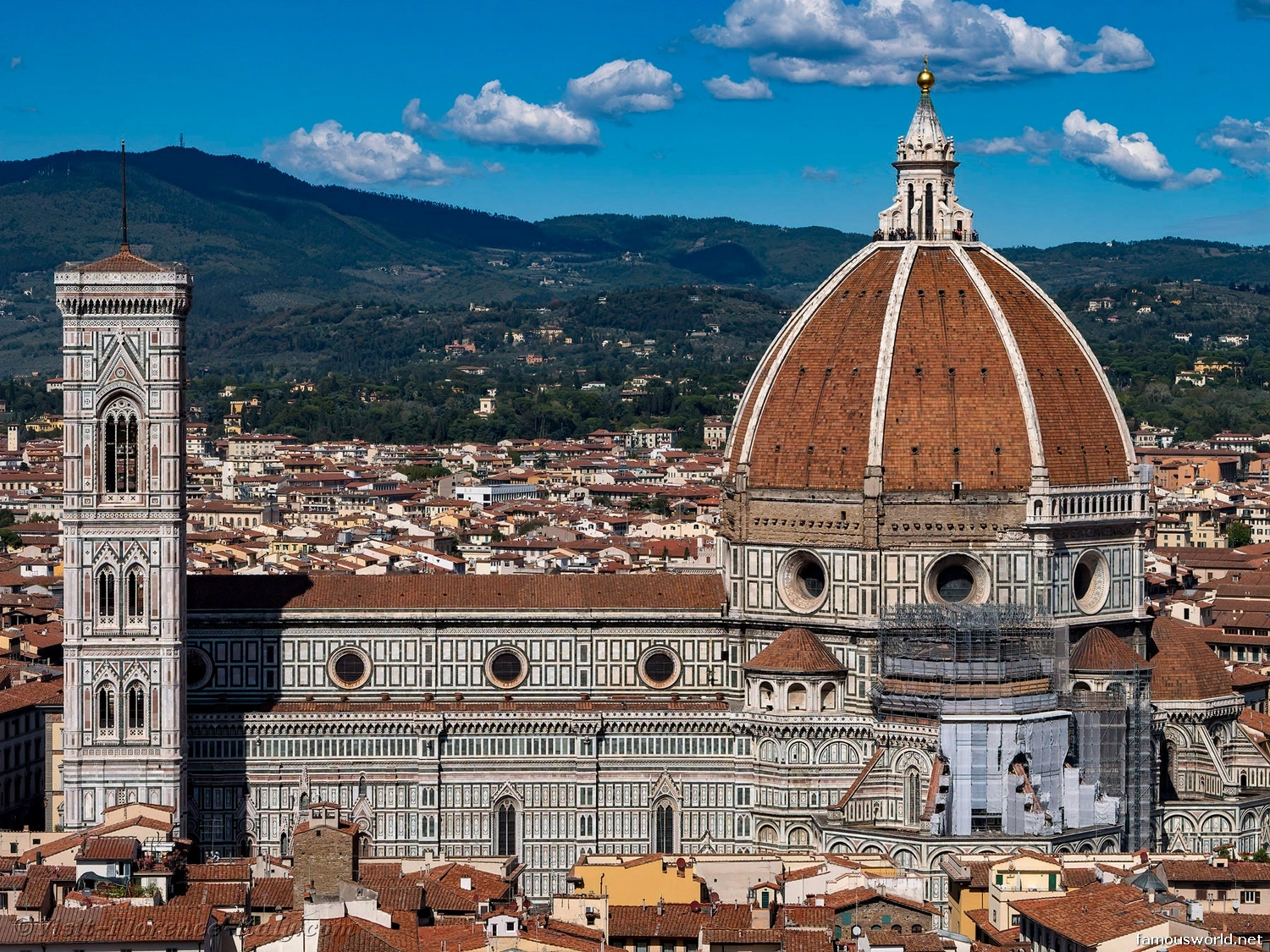
Looming over the cityscape, the Cattedrale di Santa Maria del Fiore, or Florence Cathedral, is the unmistakable emblem of Florence and a crowning achievement of the Italian Renaissance. For over 140 years, its construction was a monumental undertaking that challenged the limits of architecture, culminating in Filippo Brunelleschi’s revolutionary dome—a feat of engineering that remains iconic to this day. The cathedral complex, with its intricate pink, green, and white polychrome marble facade, Giotto’s elegant bell tower, and the historic Baptistery, forms one of the most magnificent artistic sites in the world. A visit is a journey into the heart of the Renaissance, where artistic beauty and groundbreaking ingenuity converged to create an enduring masterpiece.
Listen to an introduction about Cathedral of Santa Maria del Fiore

Name and Location
- Name: Cattedrale di Santa Maria del Fiore (Cathedral of Saint Mary of the Flower), commonly known as the Duomo di Firenze.
- Location: In the Piazza del Duomo, the historic and geographic center of Florence, Tuscany, Italy.
How to Get There
The Duomo is the very heart of Florence and is easily accessible from anywhere in the city.
- By Foot: The best way to approach the cathedral is on foot, as most of the historic center is a pedestrian zone. All major sights are within a short walk.
- By Train: Florence’s main station, Santa Maria Novella (SMN), is about a 10-minute walk from the Piazza del Duomo.
- By Bus: Numerous local buses stop near the Piazza del Duomo, but navigating them can be less direct than walking.
- By Air: From Florence Airport (Amerigo Vespucci), the T2 tram line provides a direct and efficient link to the city center near the Santa Maria Novella train station.
Landscape and Architecture
The Cathedral is the centerpiece of a stunning and cohesive architectural ensemble.
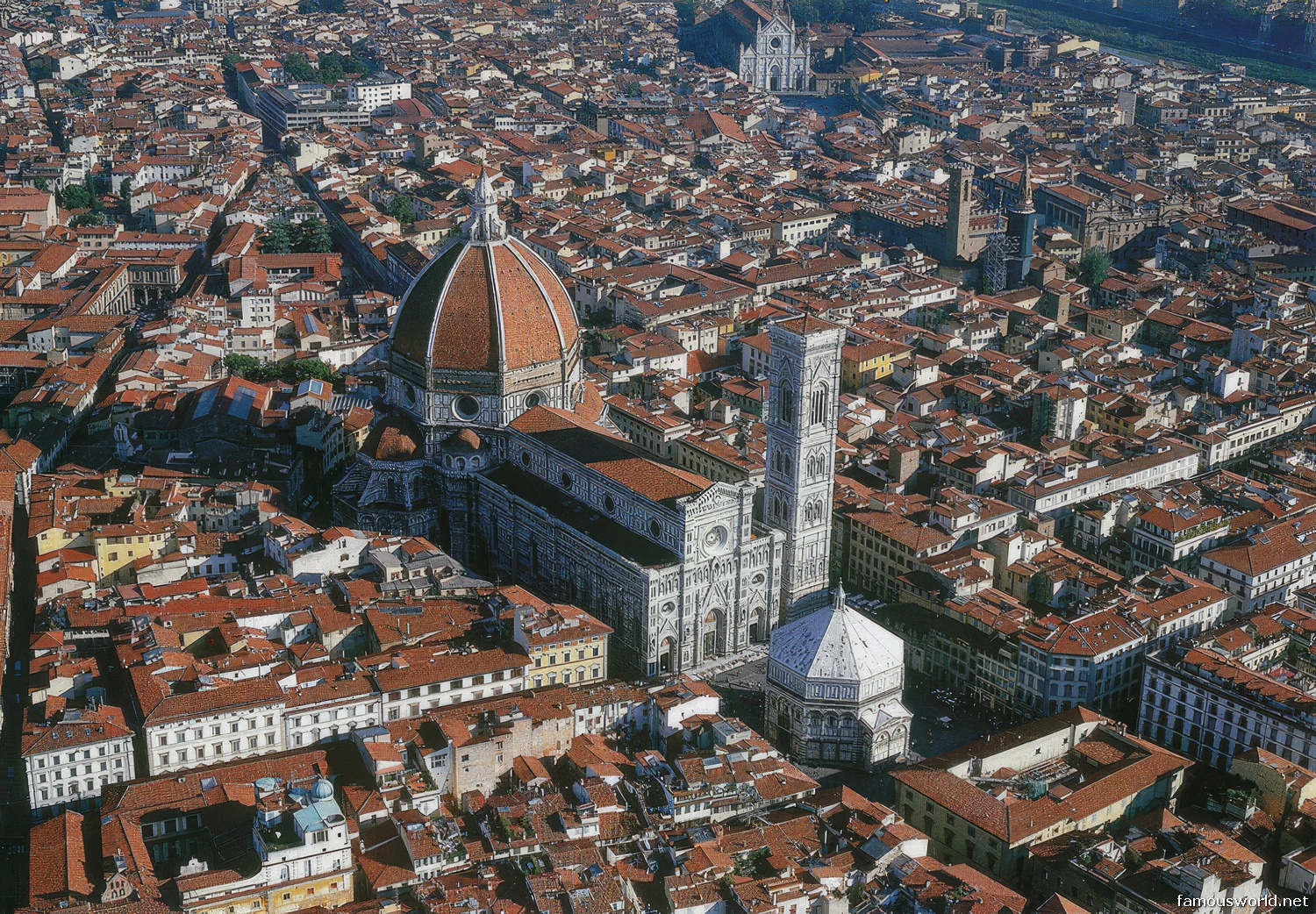
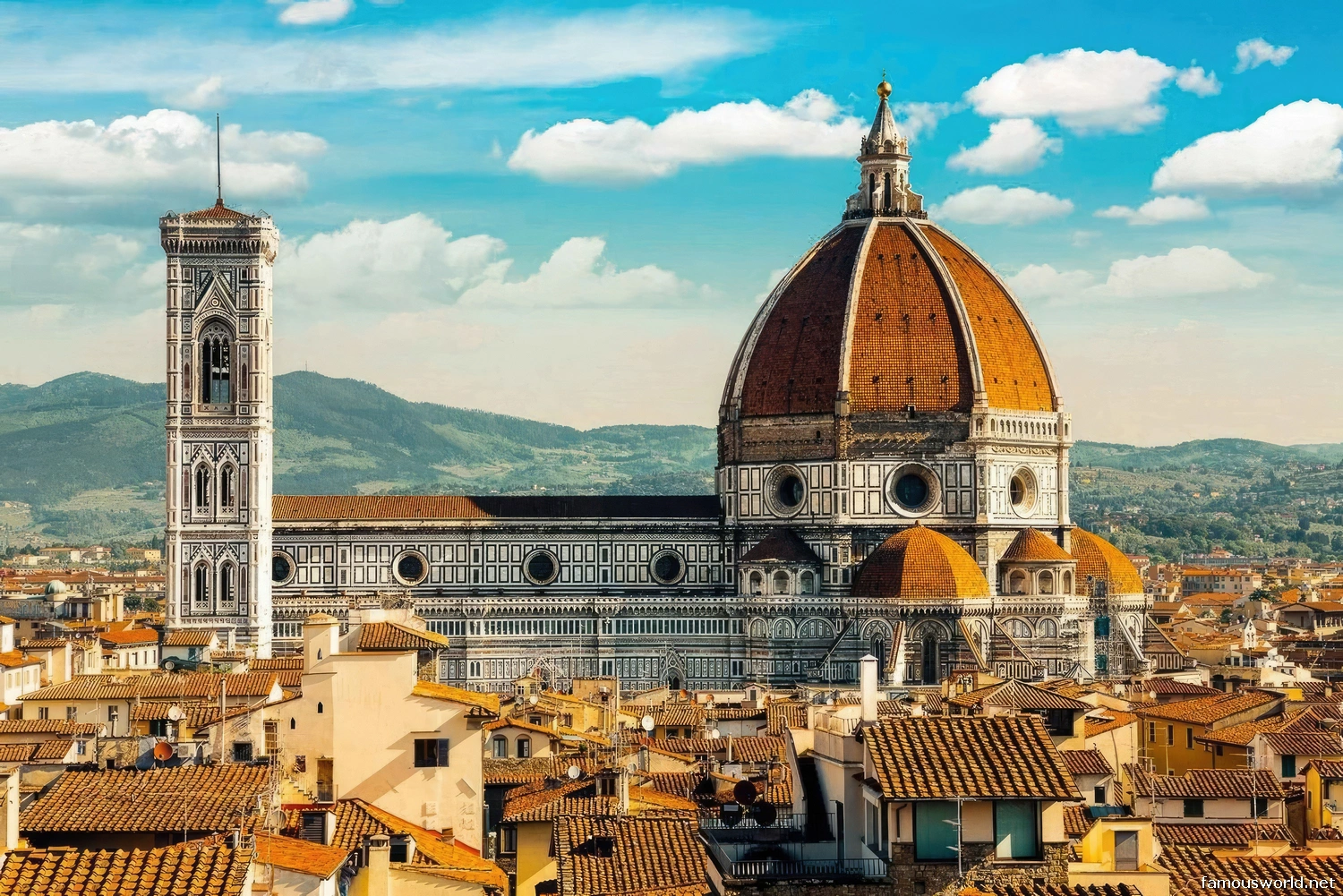
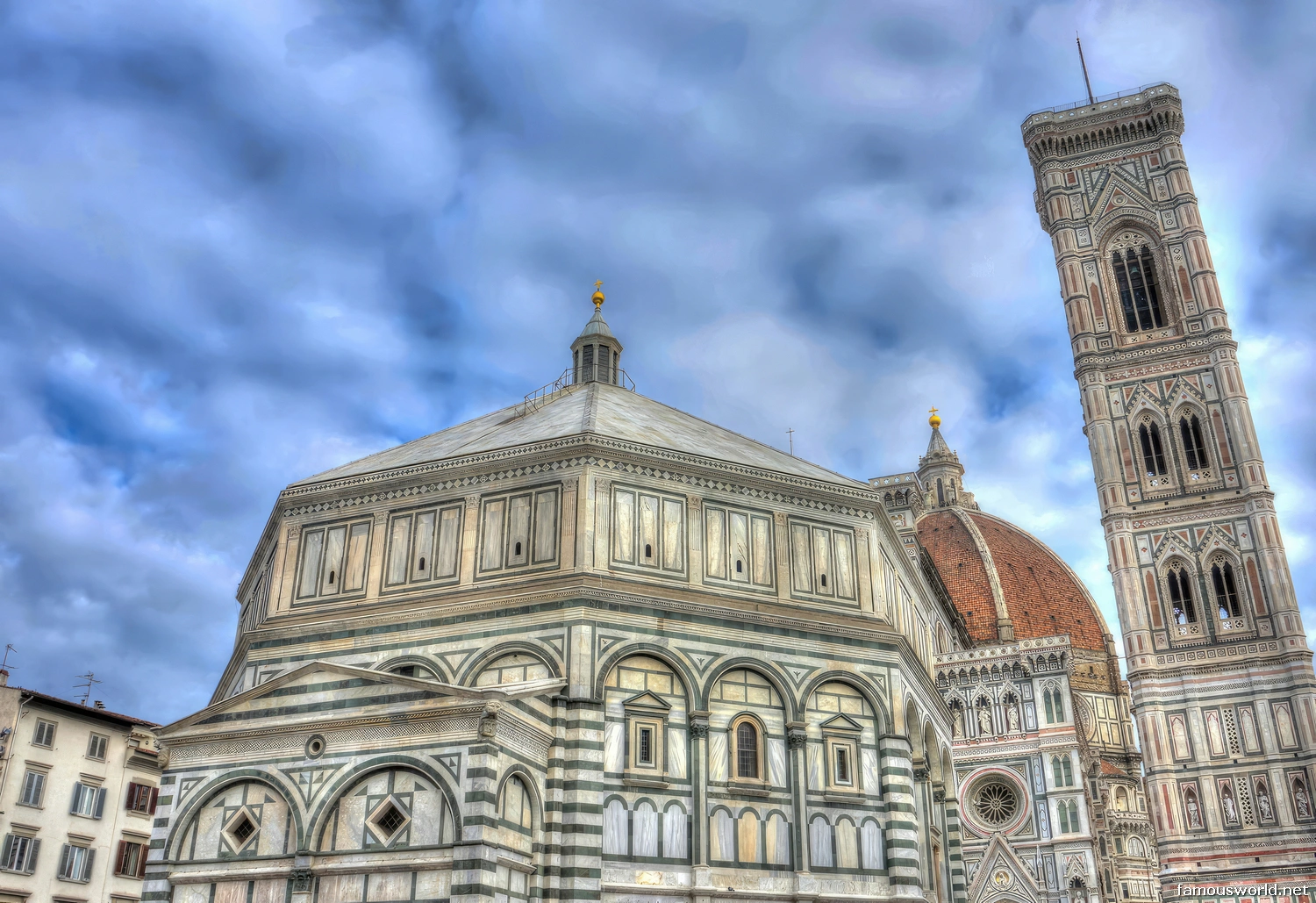
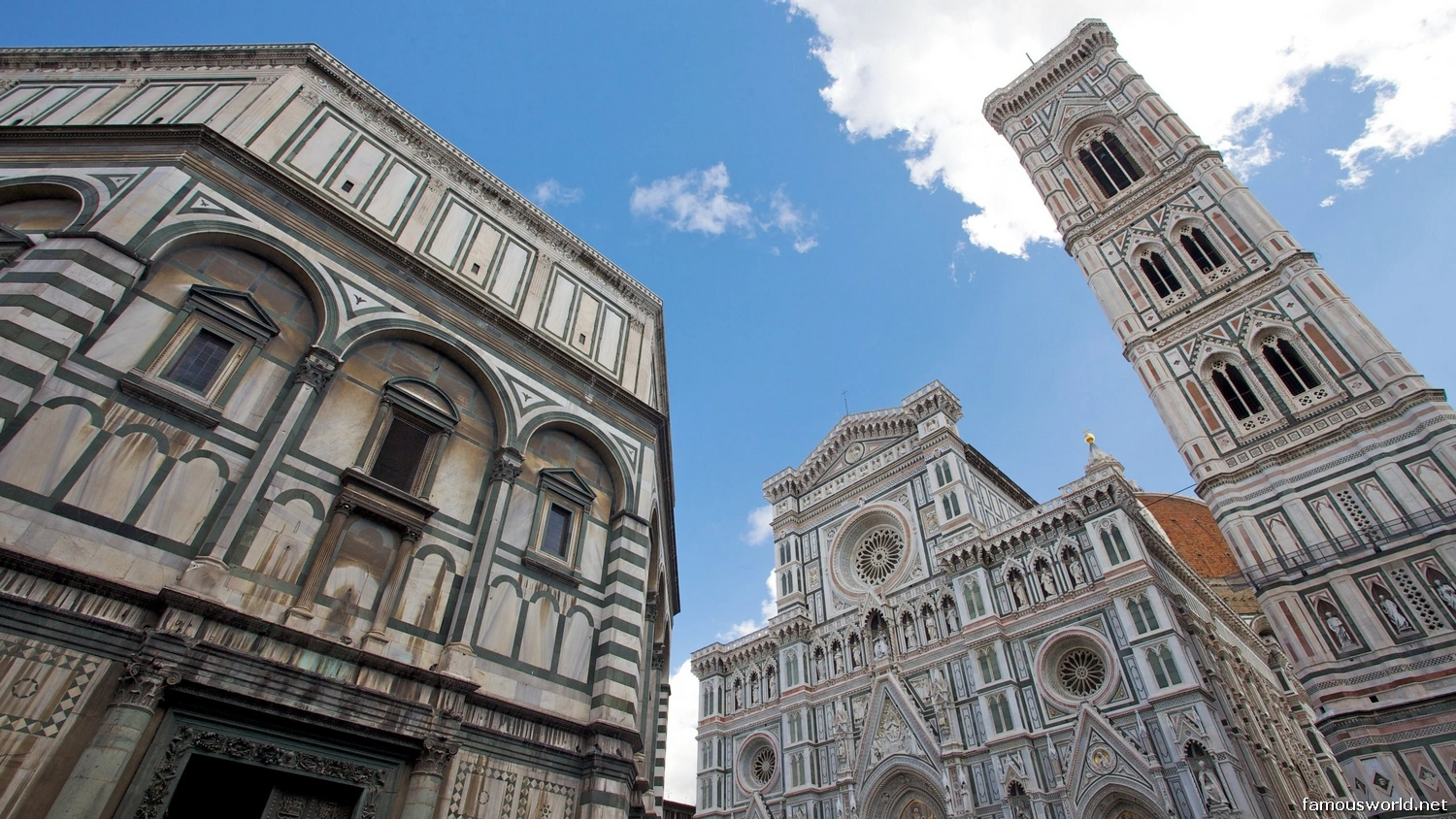
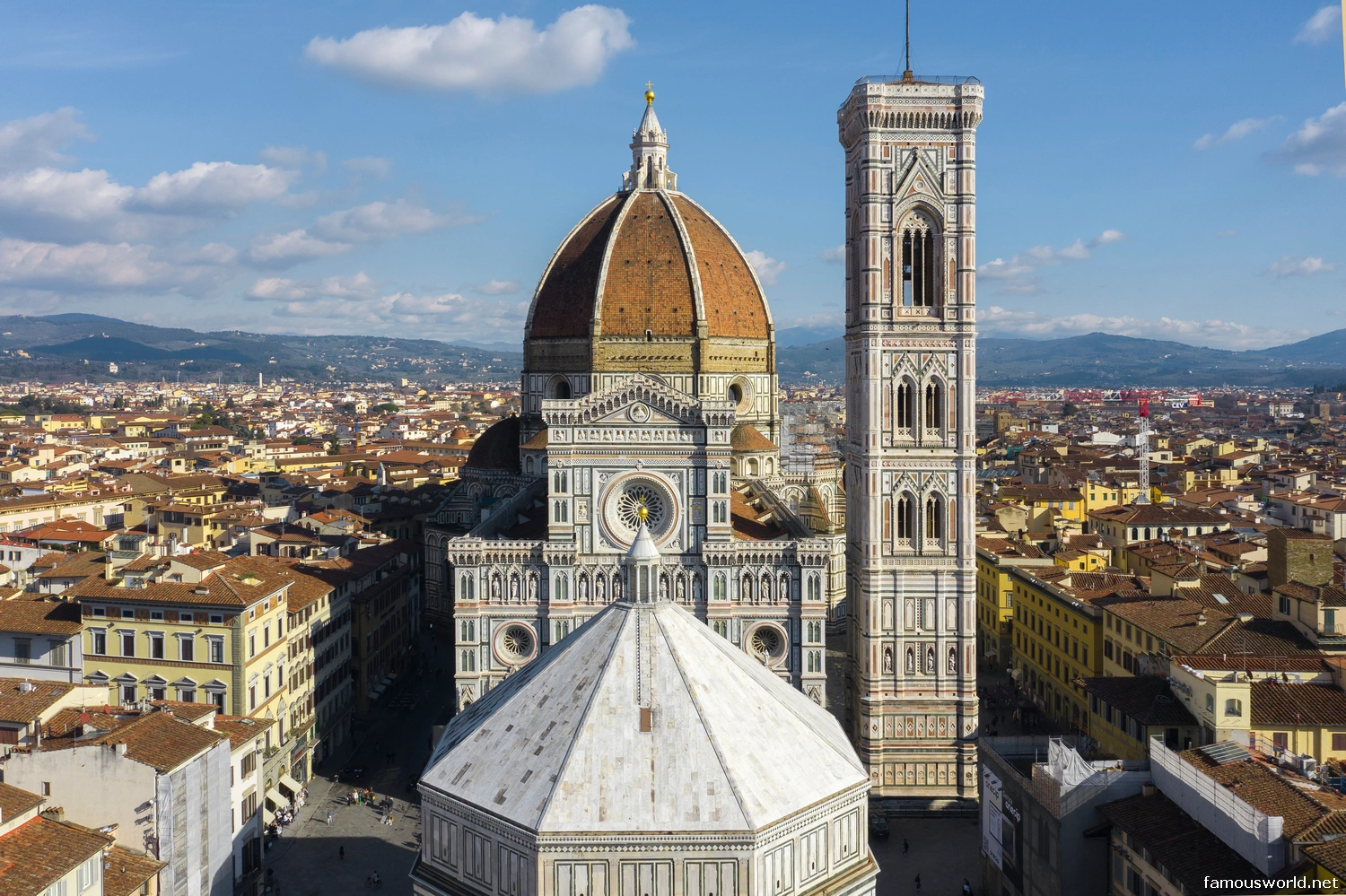
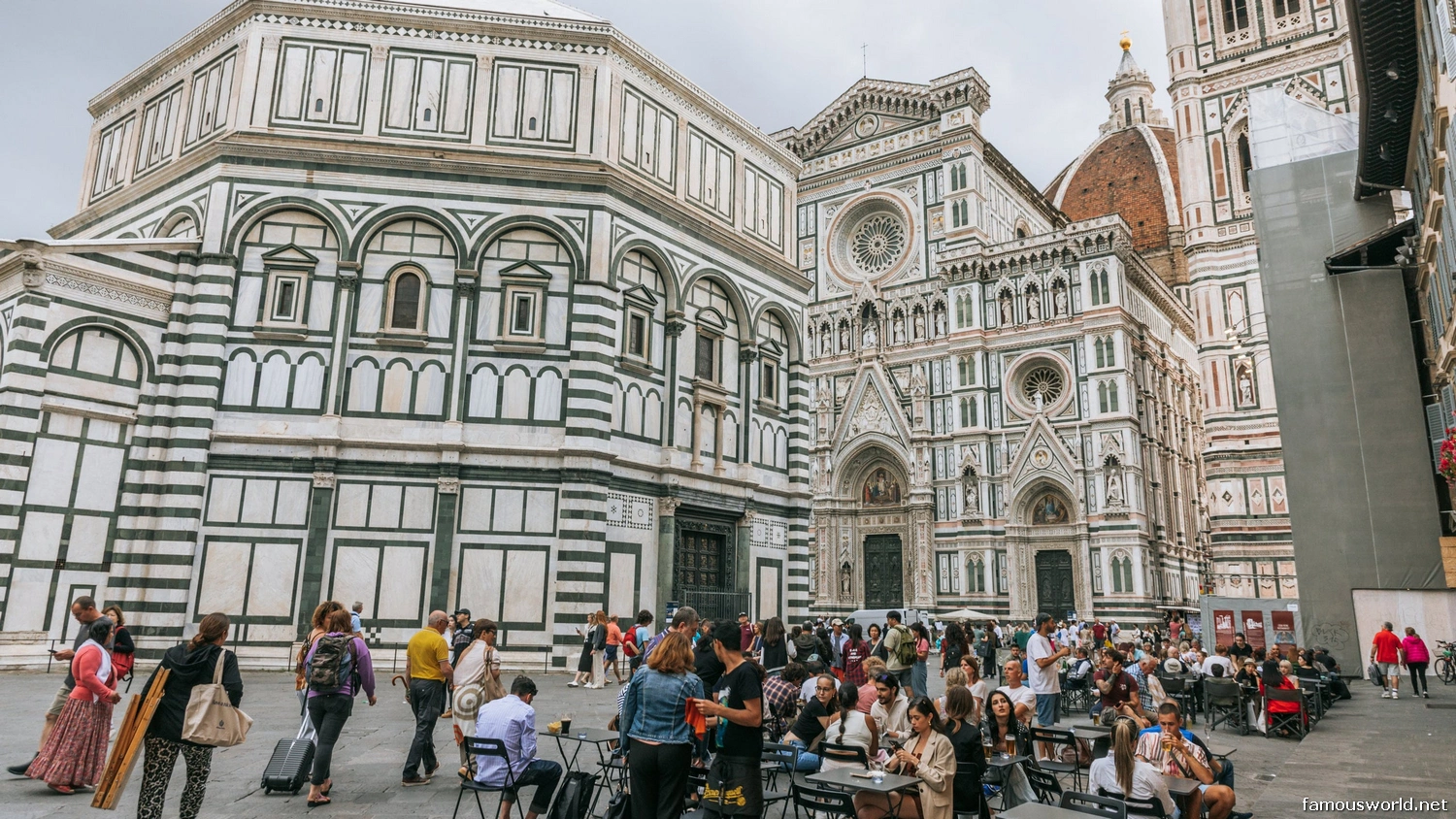
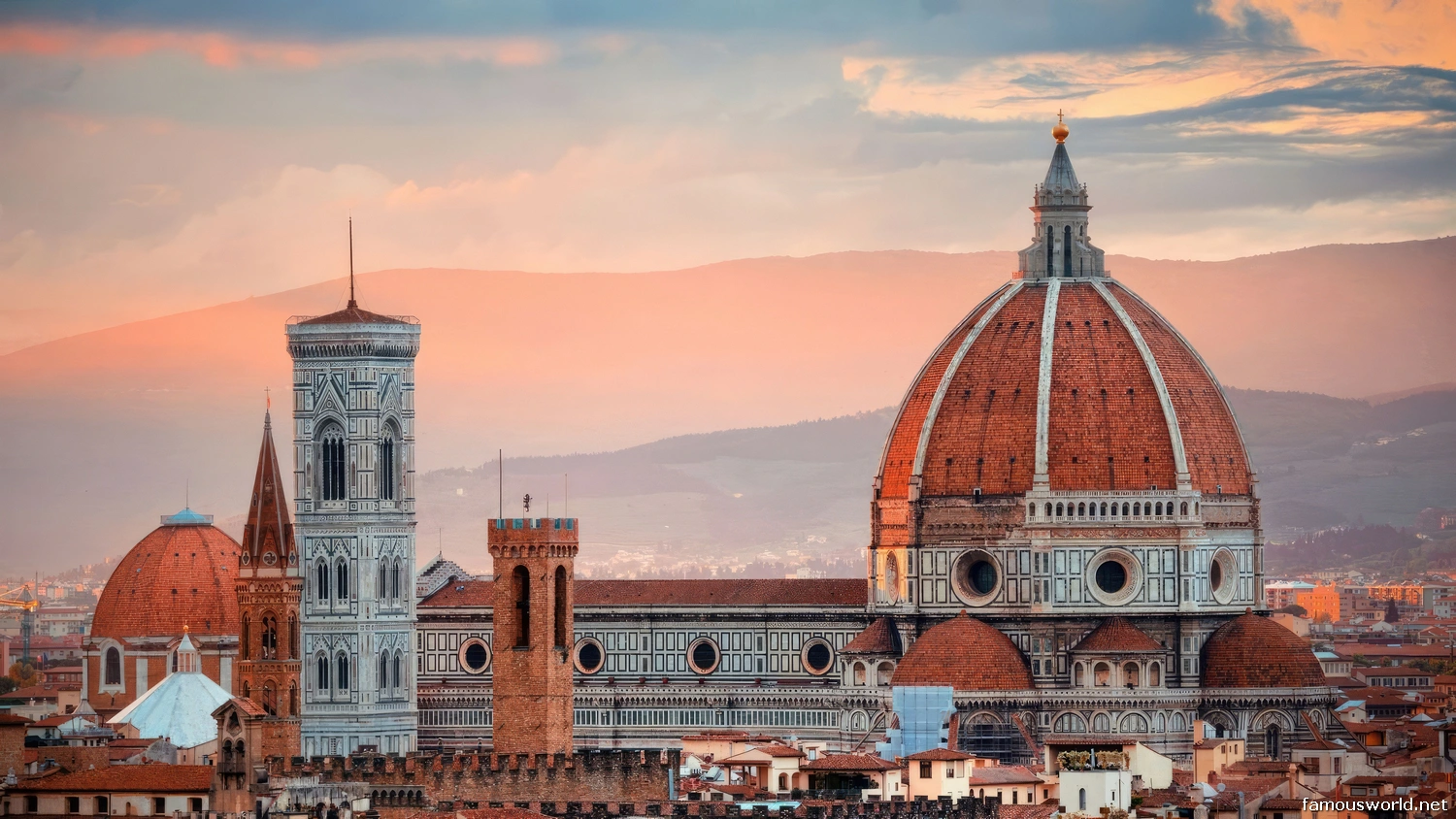
- Piazza del Duomo: The Cathedral dominates its piazza, forming a monumental trio with two other masterpieces: Giotto’s Campanile (bell tower) and the Baptistery of St. John. The effect is an overwhelming concentration of artistic and architectural genius.
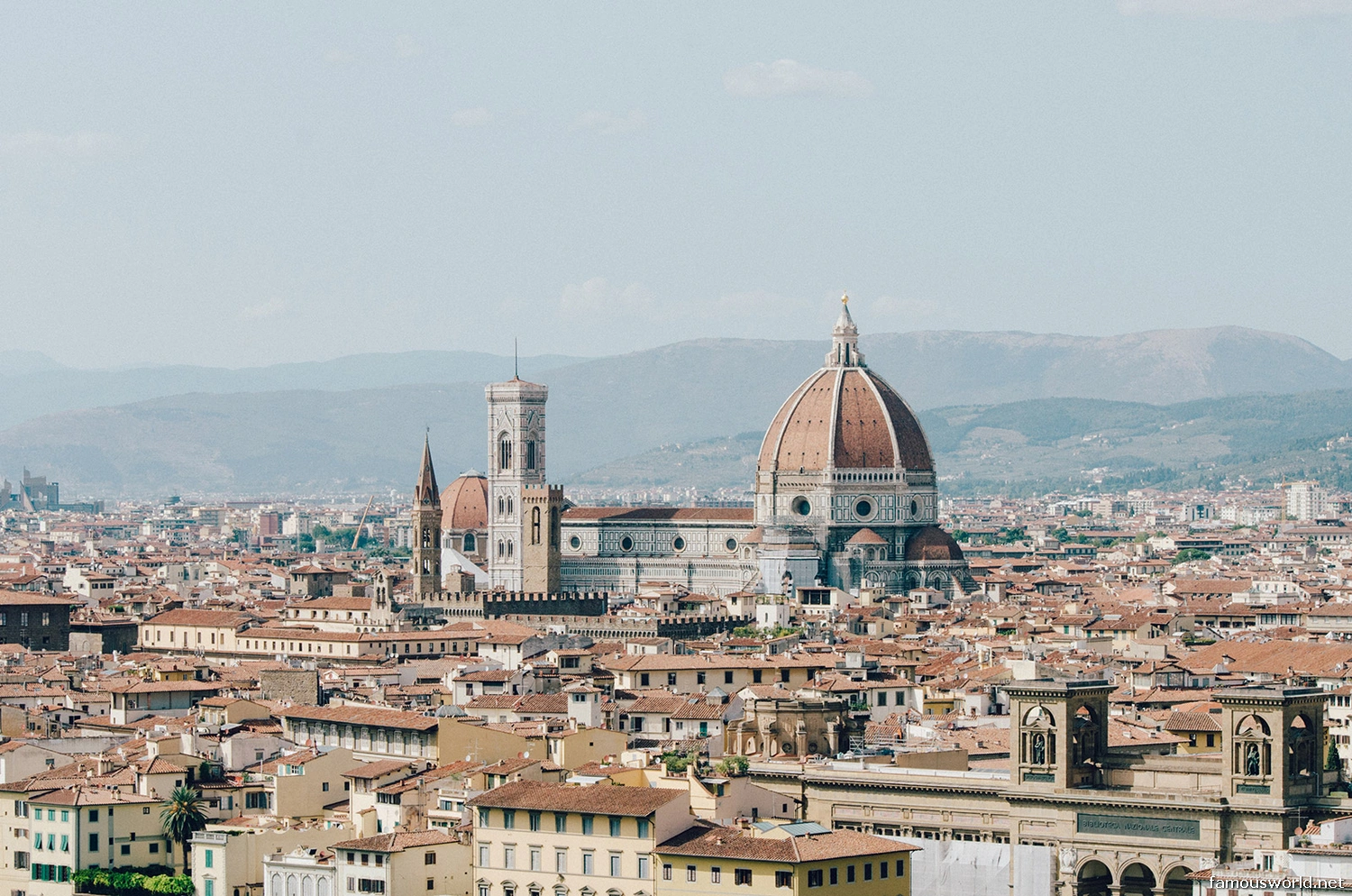
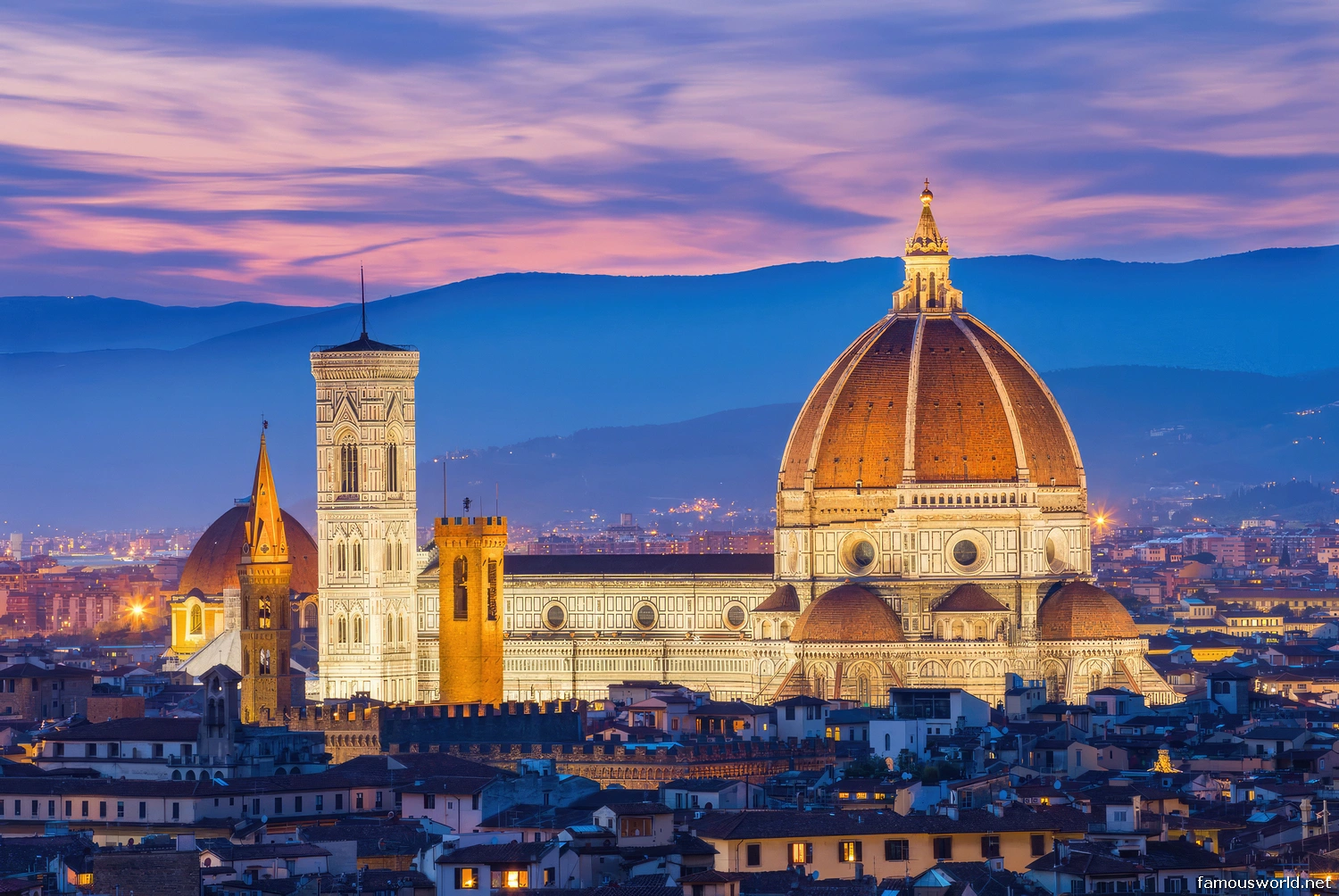
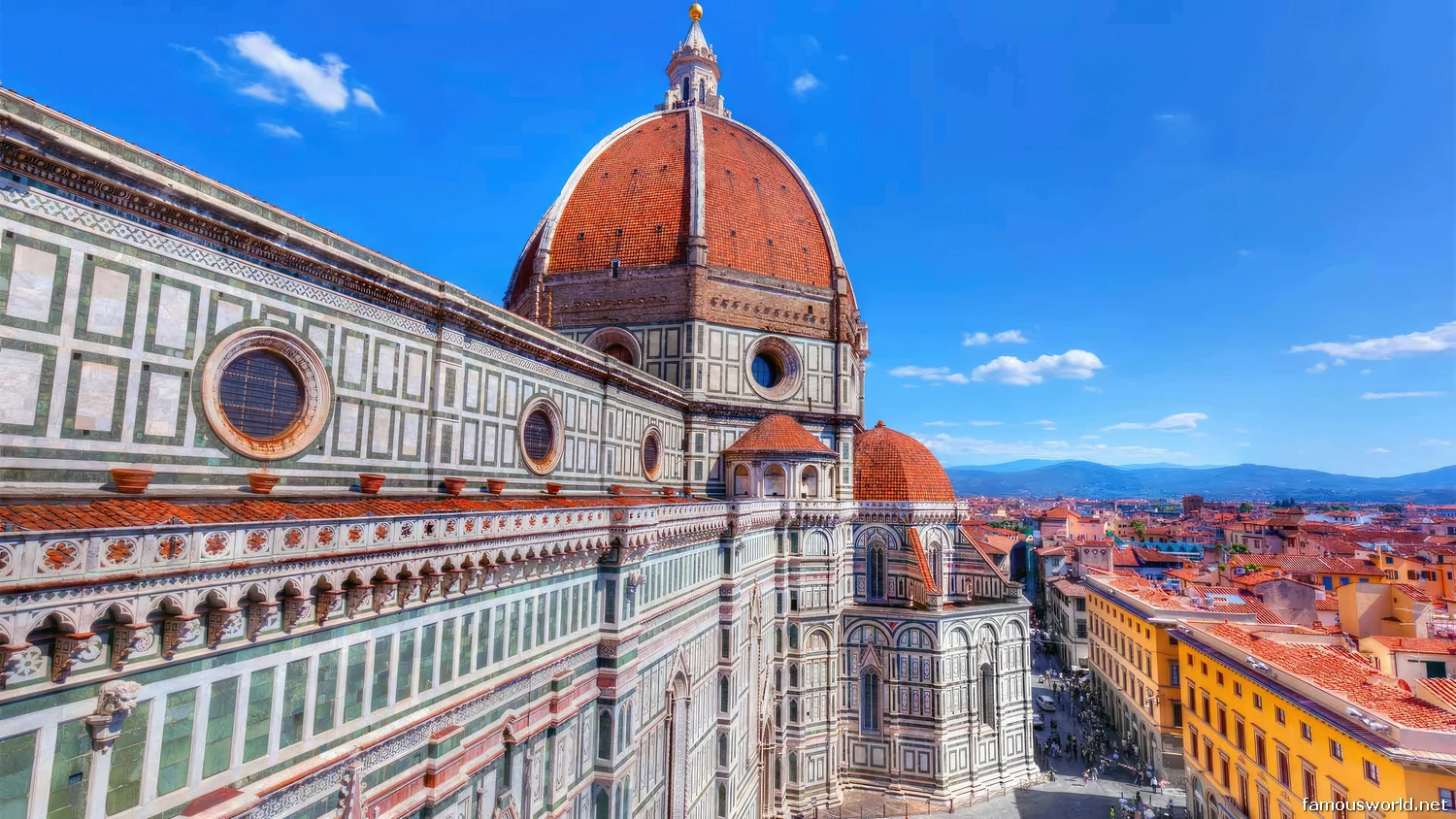
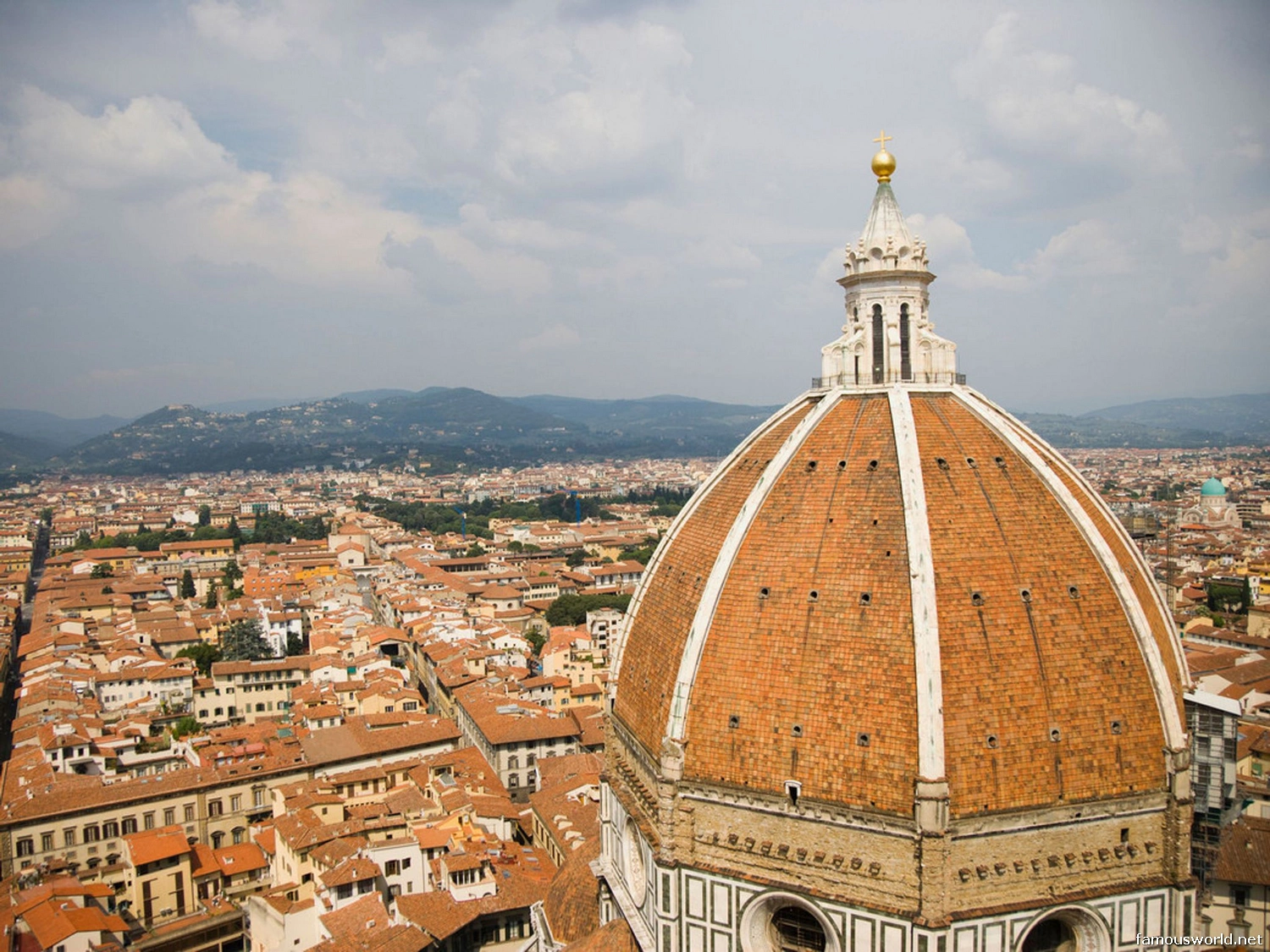
- Brunelleschi’s Dome: The building’s defining feature and a landmark of world architecture. The massive red-tiled cupola was constructed without scaffolding using revolutionary engineering techniques invented by Brunelleschi. It remains the largest brick dome ever built.
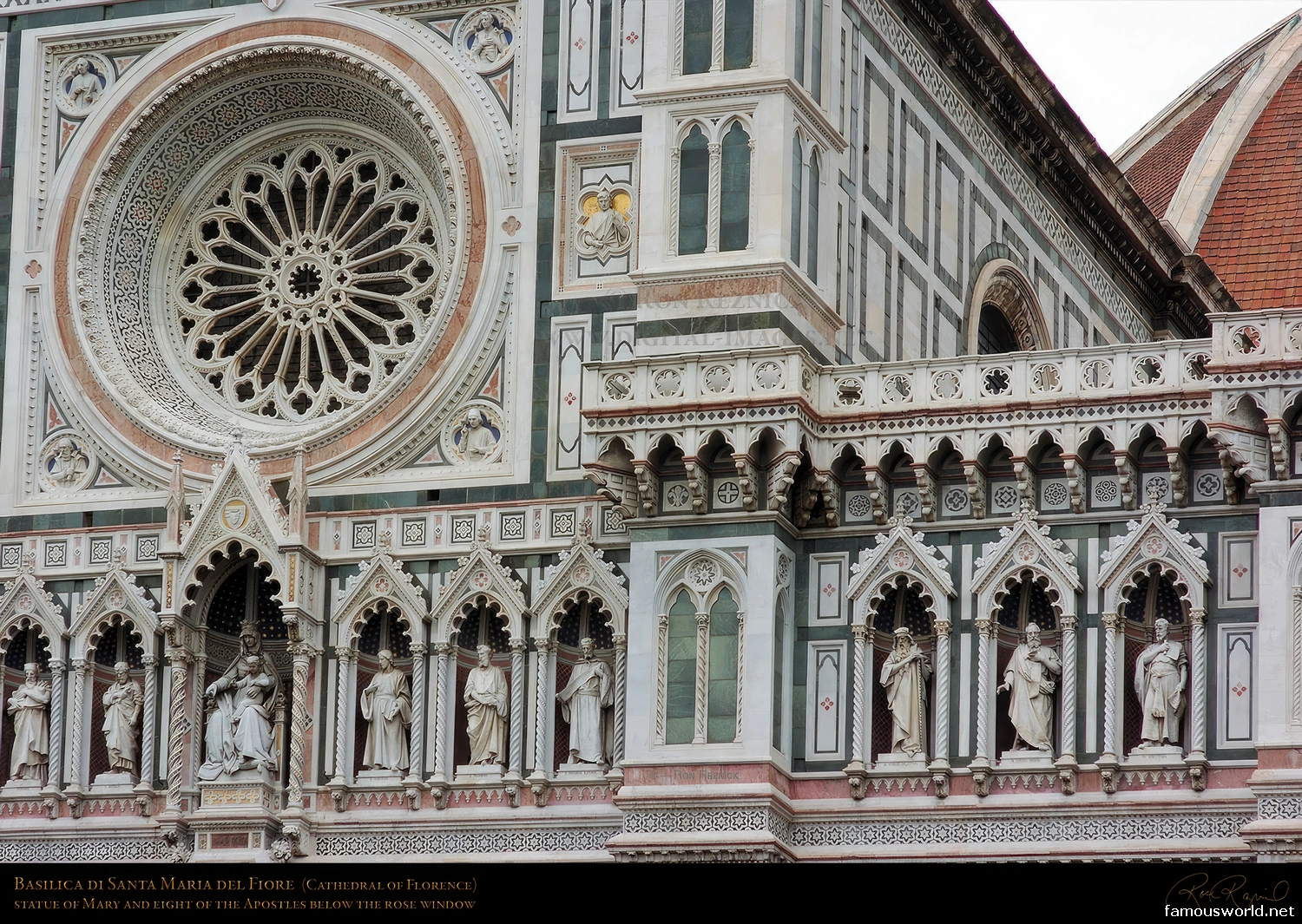
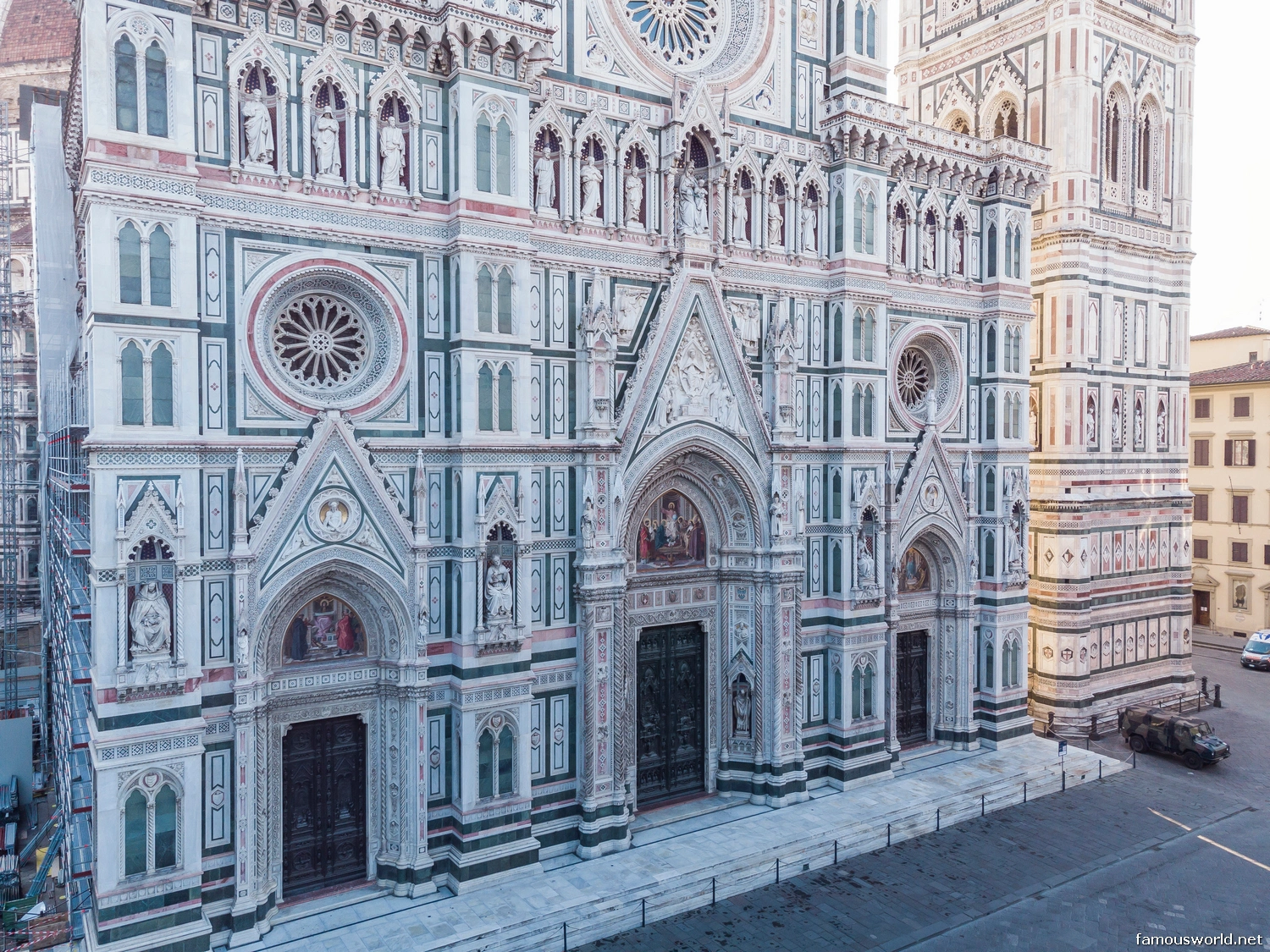
- Italian Gothic and Renaissance Style: The body of the cathedral is a magnificent example of Italian Gothic, while the facade is a 19th-century Neo-Gothic revival that flawlessly imitates the original style and color scheme. The dome itself is the first great monument of the Renaissance.
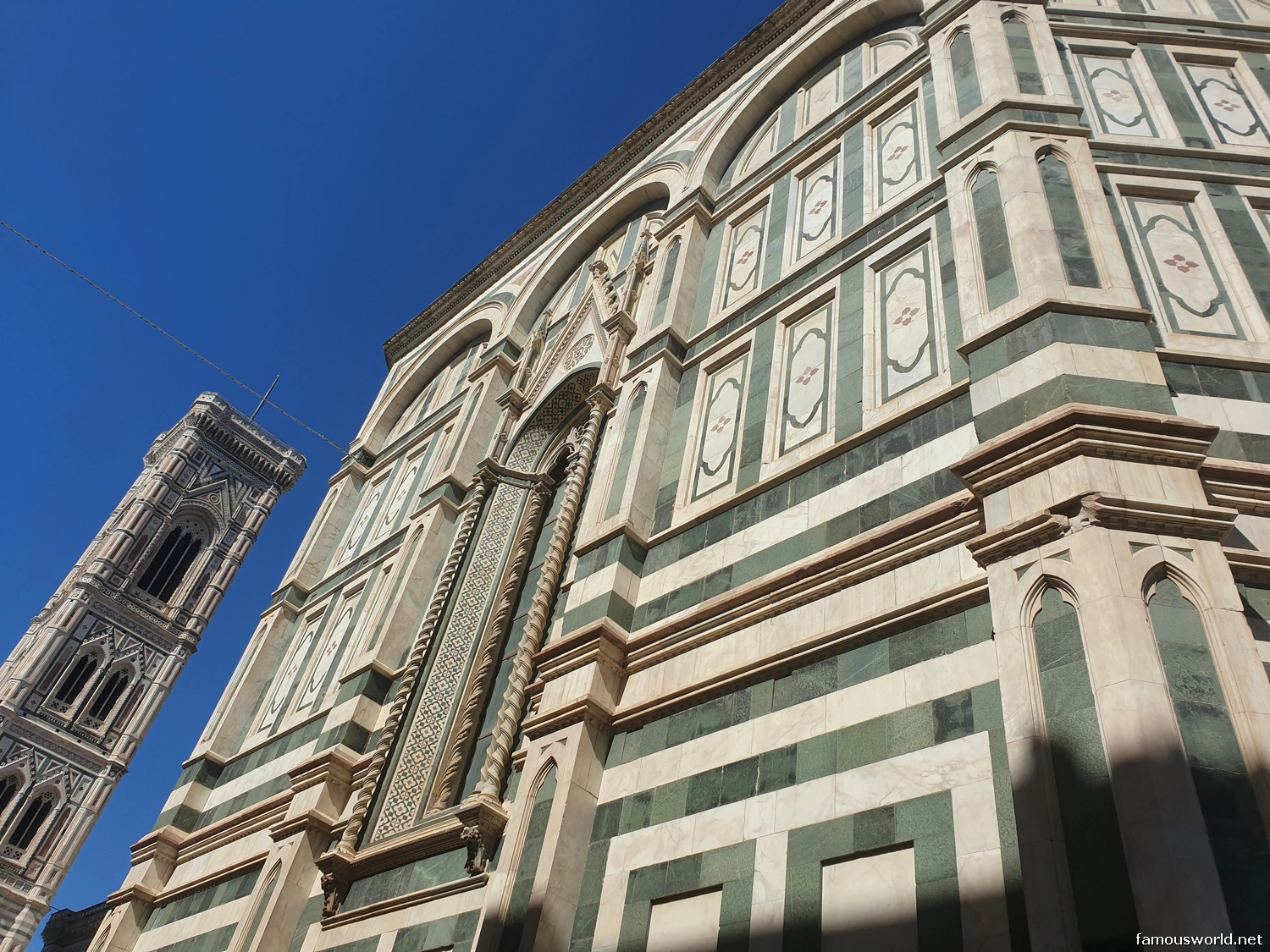
- Polychrome Marble Exterior: The entire complex is clad in decorative panels of white, green, and pink marble, creating a vibrant and uniquely Florentine appearance.
- Giotto’s Campanile: Standing beside the cathedral, the bell tower is a masterpiece of Gothic architecture in its own right, designed by Giotto and renowned for its slender elegance and sculptural decoration.
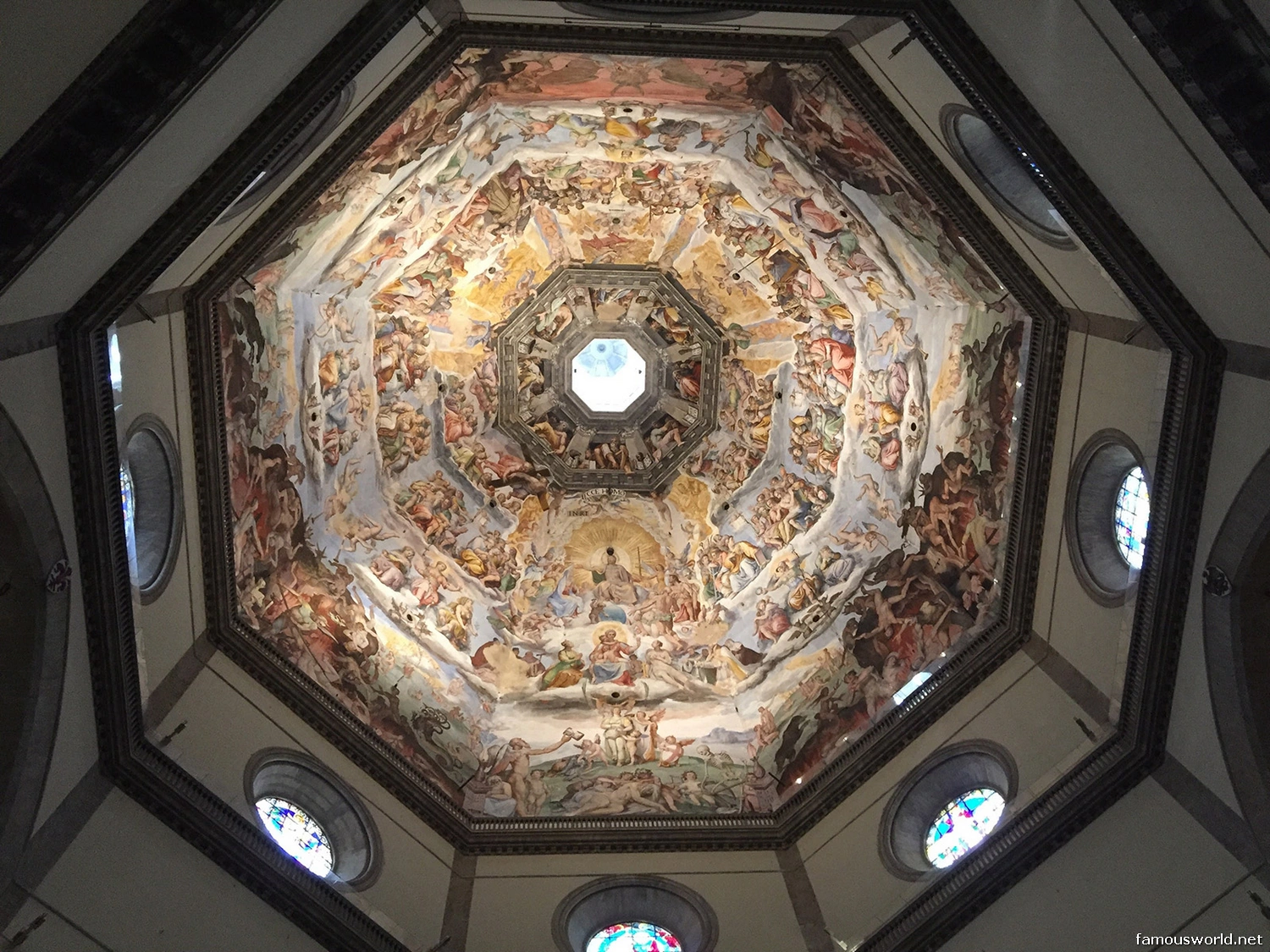
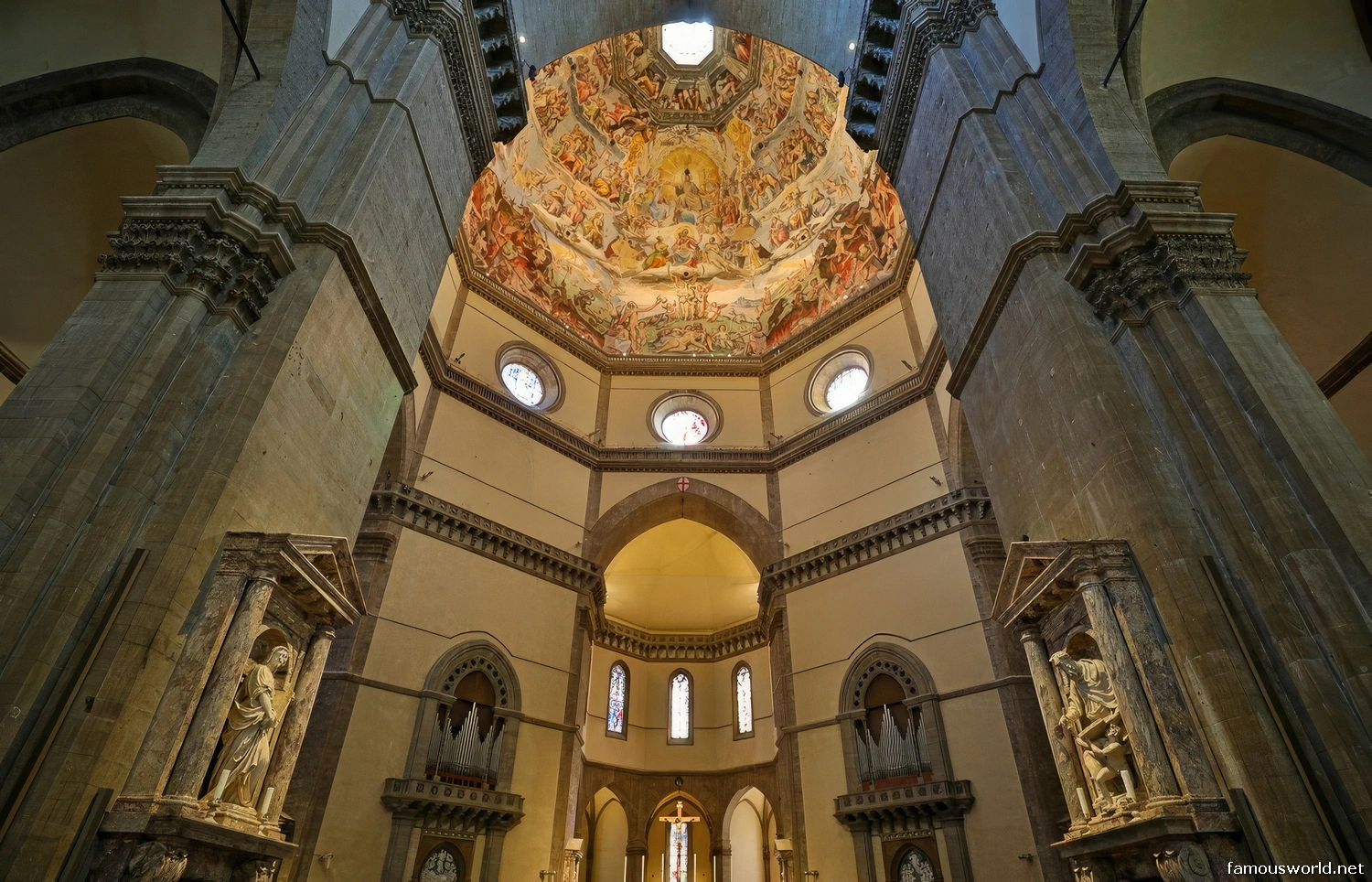
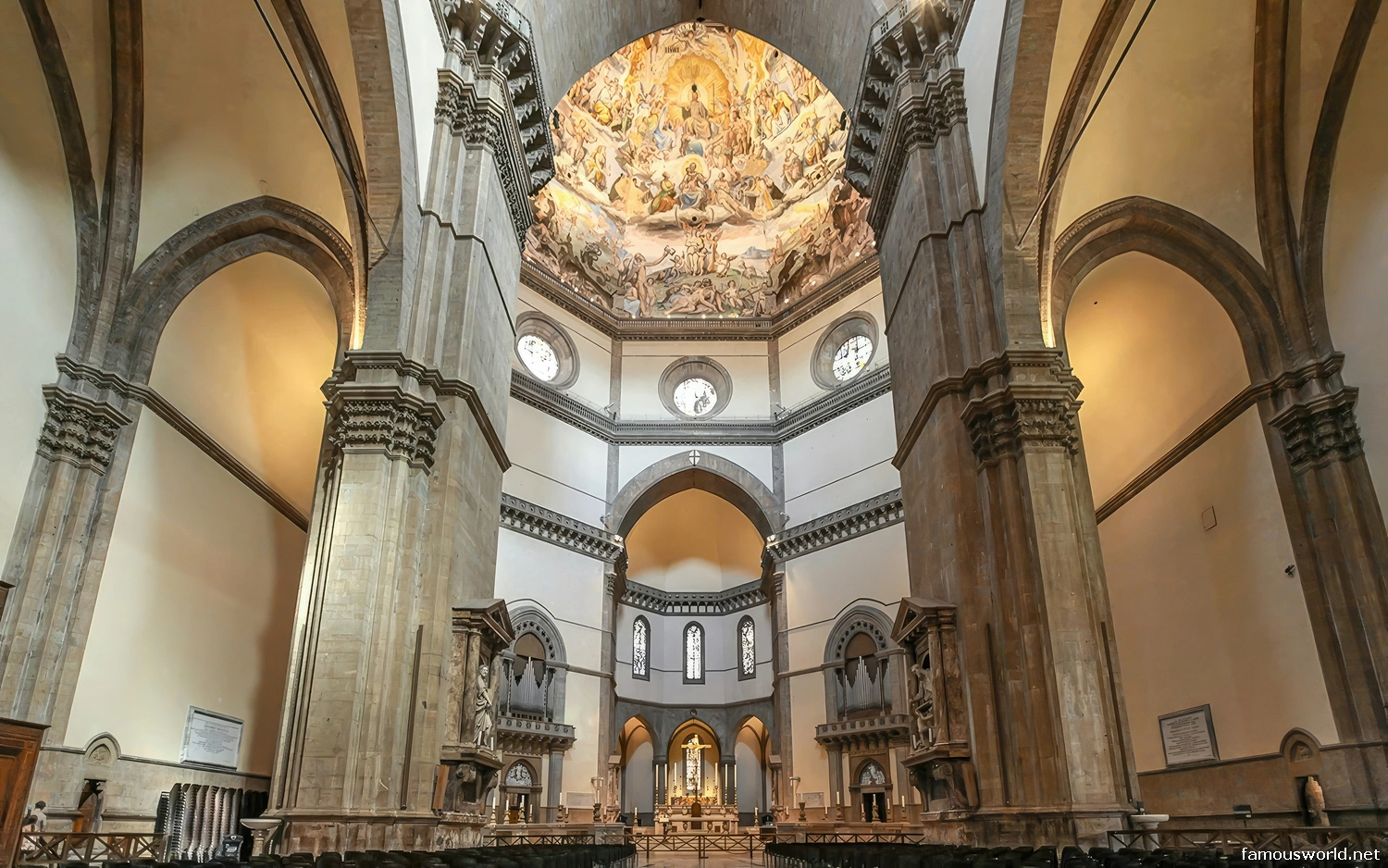
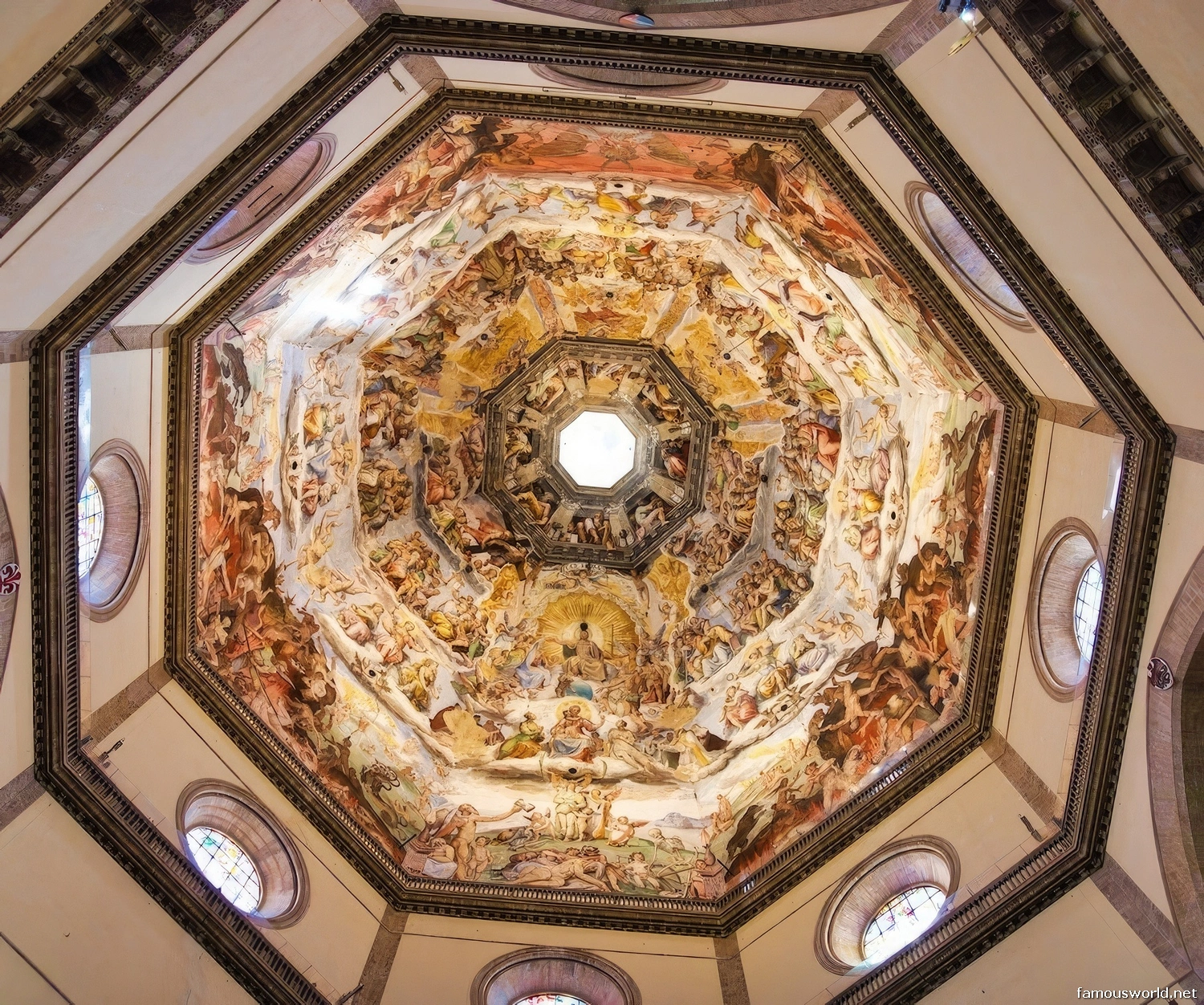
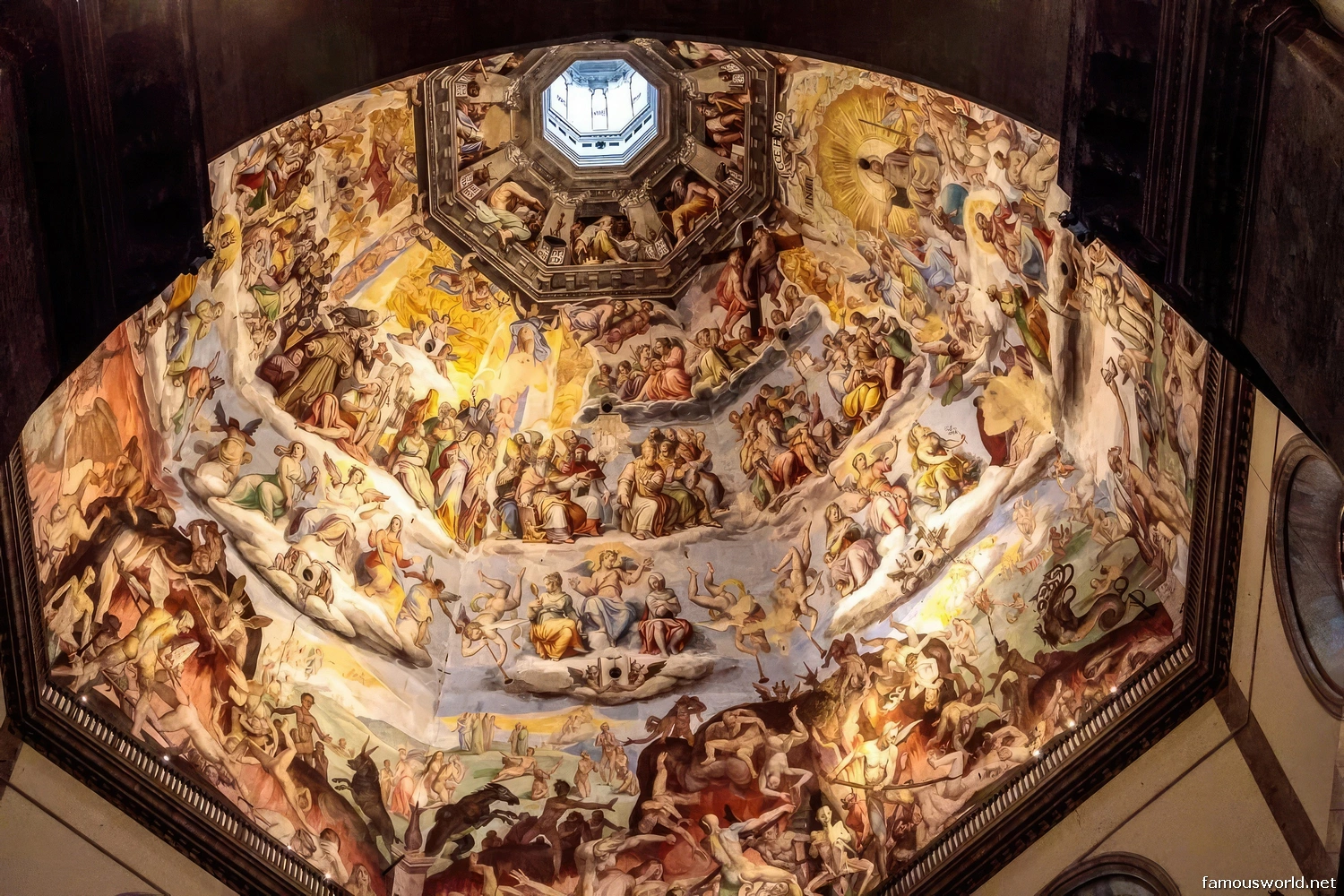
- Vast Interior: The interior is intentionally vast and relatively plain, designed to create a sense of sober grandeur and draw the eye upwards towards the dome. Its most significant feature is the massive fresco of the Last Judgment by Giorgio Vasari and Federico Zuccari that covers the dome’s interior surface.
What Makes It Famous
The Duomo is famous as a symbol of the Renaissance and for its groundbreaking dome.
- Brunelleschi’s Dome: It is globally renowned for its revolutionary dome, a masterpiece of art and engineering that signaled the beginning of the Renaissance.
- Symbol of Florence: The silhouette of the dome is the undisputed symbol of Florence, recognizable worldwide.
- UNESCO World Heritage Site: The entire complex is a key part of the Historic Centre of Florence, a designated UNESCO World Heritage site.
- Scale and Beauty: The sheer size of the cathedral and the breathtaking beauty of its polychrome marble exterior make it one of the most impressive religious buildings in the world.
Differences from Other Wonders (vs. Milan Cathedral)
A monument of Renaissance ingenuity offers a different experience than a masterpiece of late-Gothic craftsmanship.
- Environment (Artistic Ensemble vs. Singular Monument): While both are urban centerpieces, the Florence Duomo is experienced as part of a cohesive trio with its bell tower and baptistery, creating a unique artistic plaza. The Milan Cathedral stands as a single, colossal monument dominating its square.
- Defining Feature (The Dome vs. The Spires): Florence’s identity is inextricably linked to its groundbreaking dome—a triumph of Renaissance structure and engineering. Milan’s identity is defined by its facade—a forest of intricate spires and statues representing the pinnacle of Flamboyant Gothic ornamentation.
- Style (Early Renaissance Harmony vs. Late Gothic Complexity): The Florence Cathedral, particularly its dome, embodies the Renaissance ideals of harmony, order, and human ingenuity. The Milan Cathedral is a testament to the medieval Gothic ideal of reaching for the heavens through complex, almost dizzying, ornamentation.
- Atmosphere (Intellectual Awe vs. Overwhelming Detail): The awe inspired by the Florence Duomo is largely intellectual, based on appreciating the genius of its construction. The awe inspired by the Milan Duomo is more visceral, stemming from the sheer scale and overwhelming density of its sculptural and architectural detail.
Location on world map