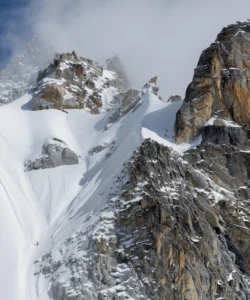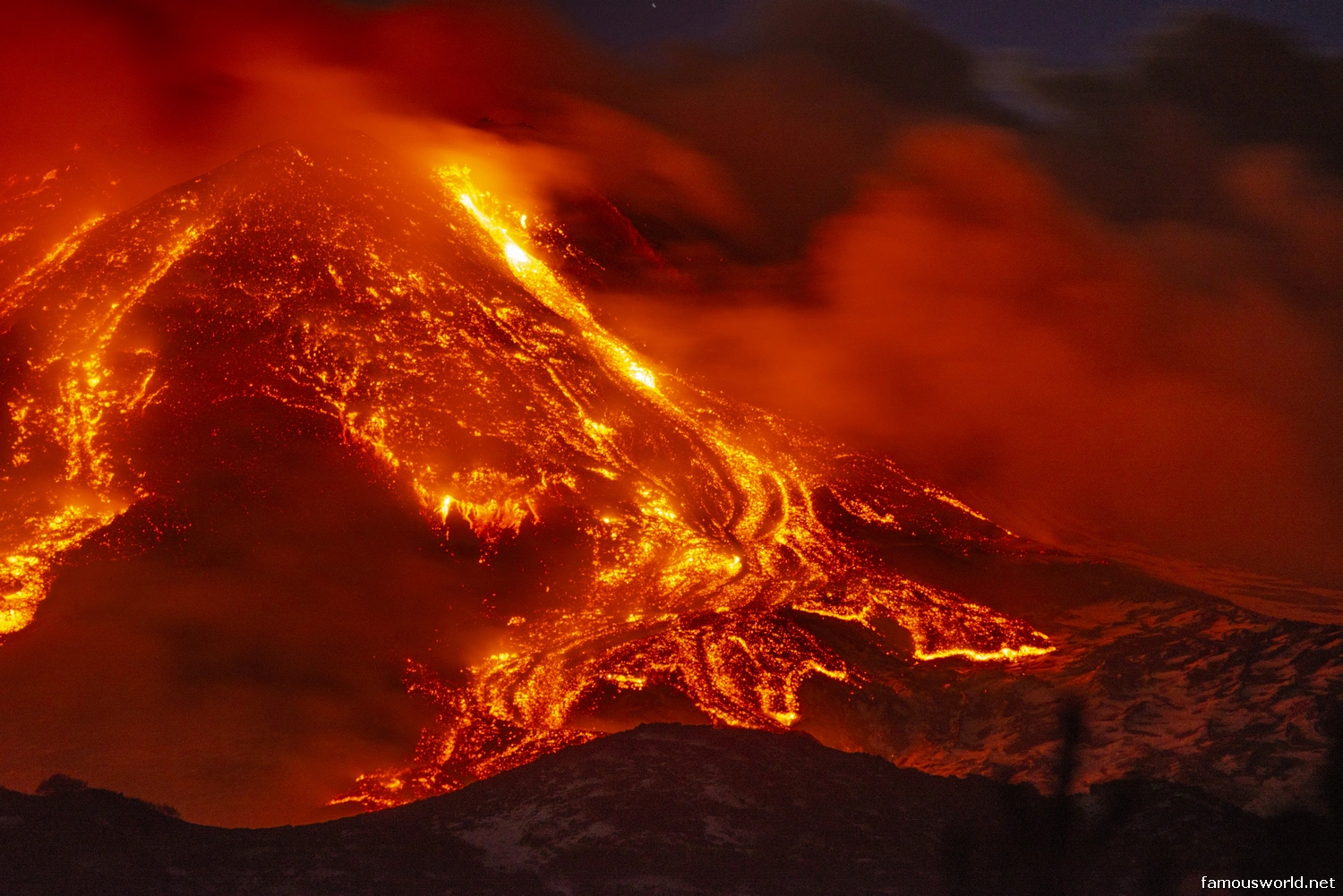
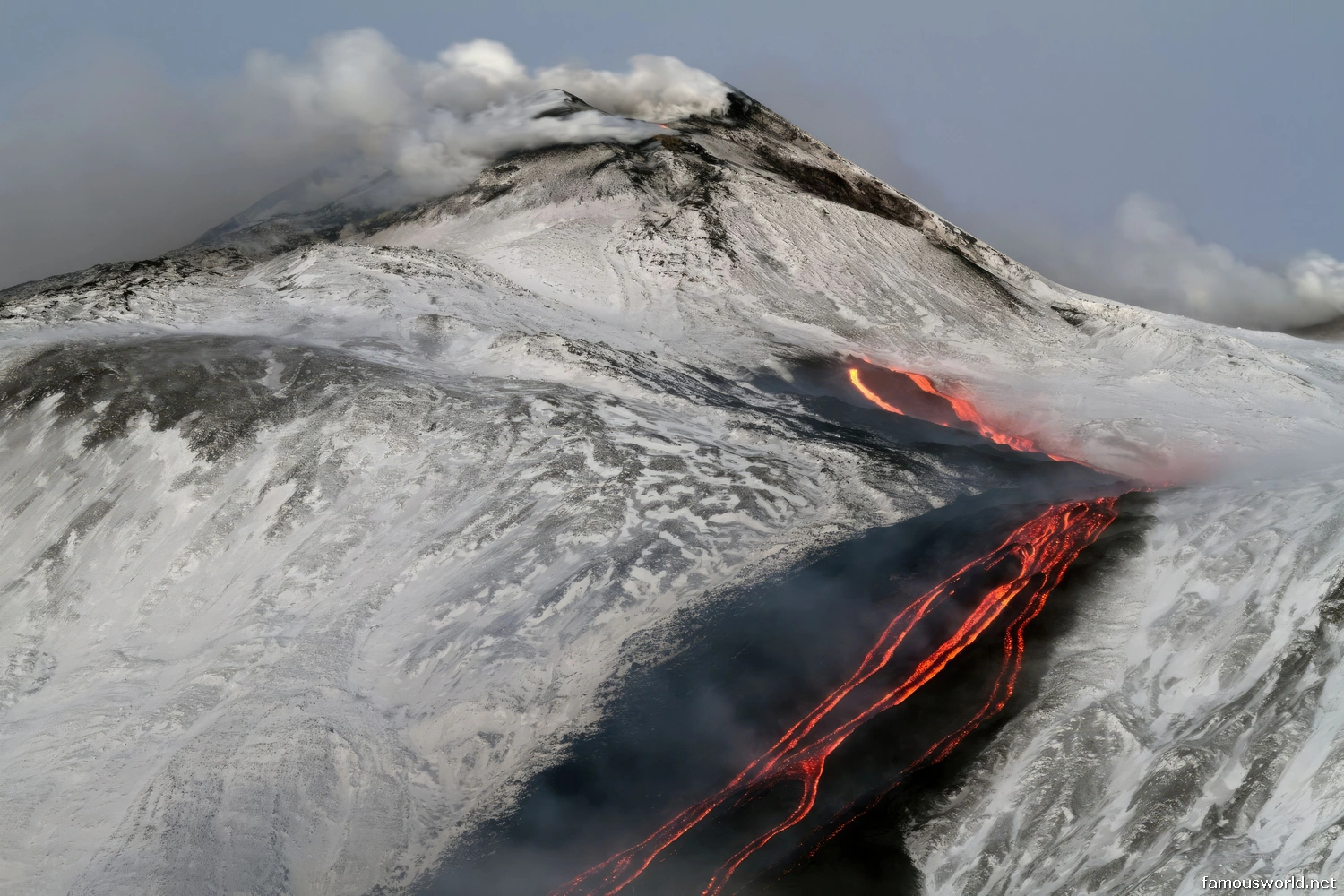
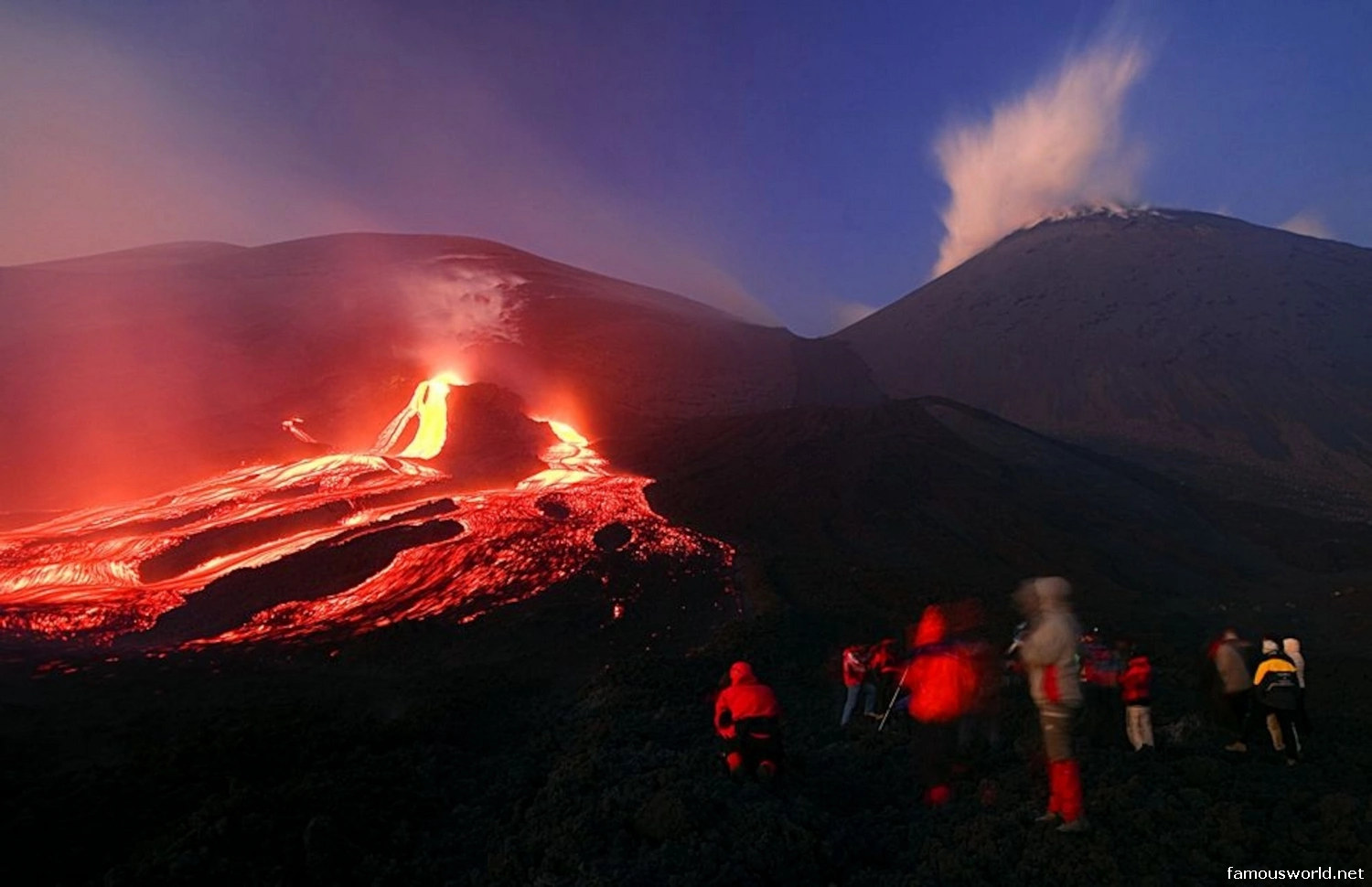
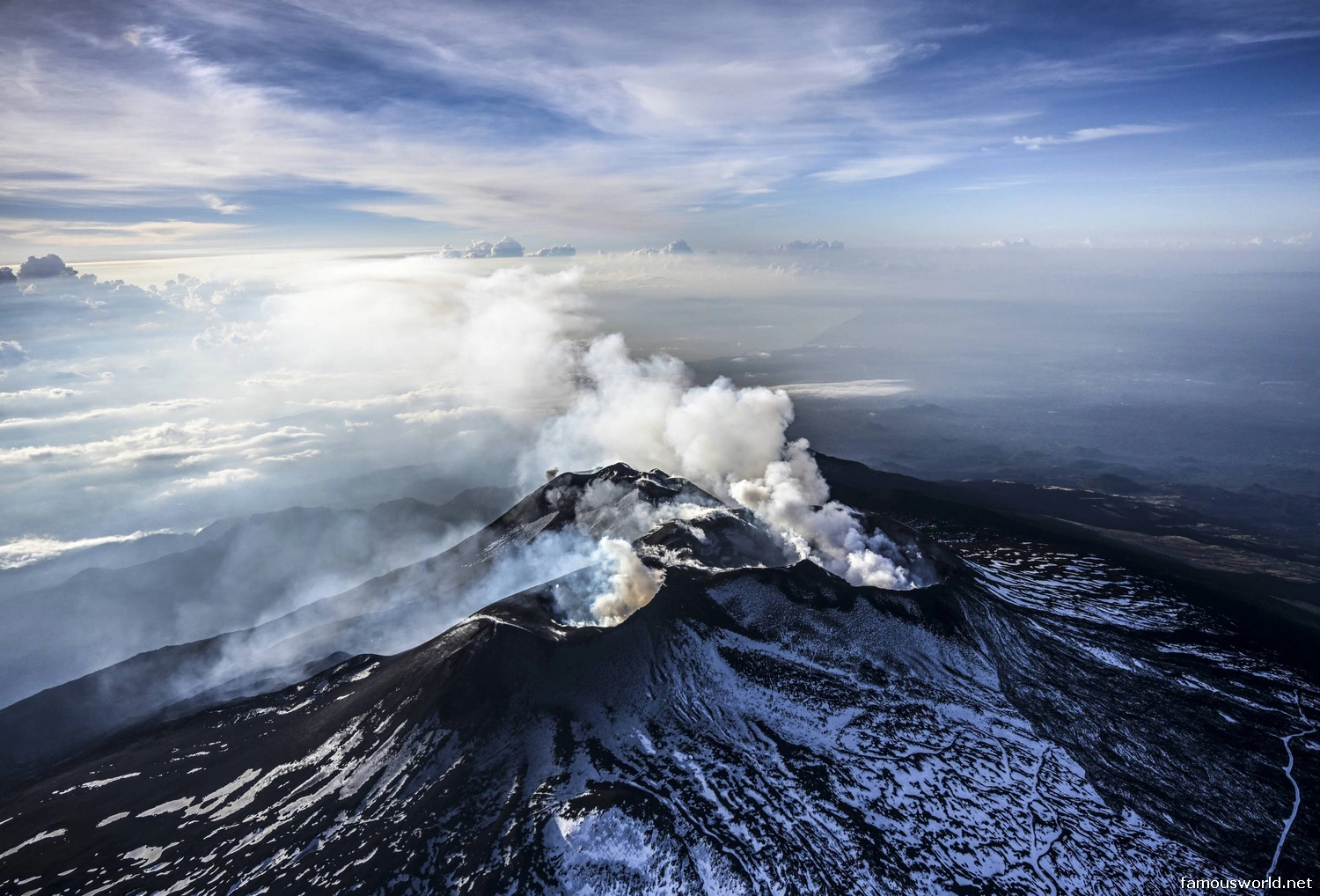
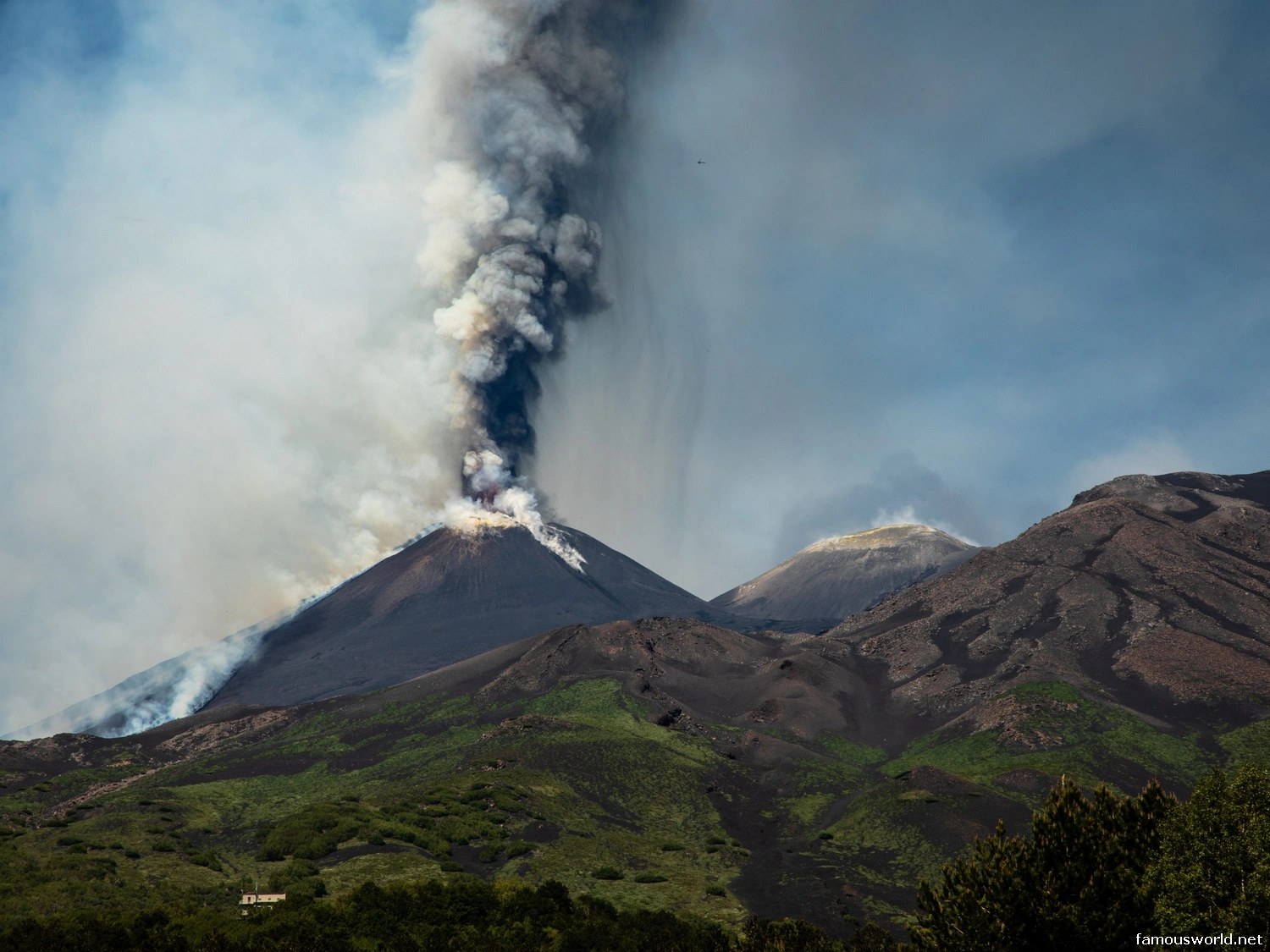
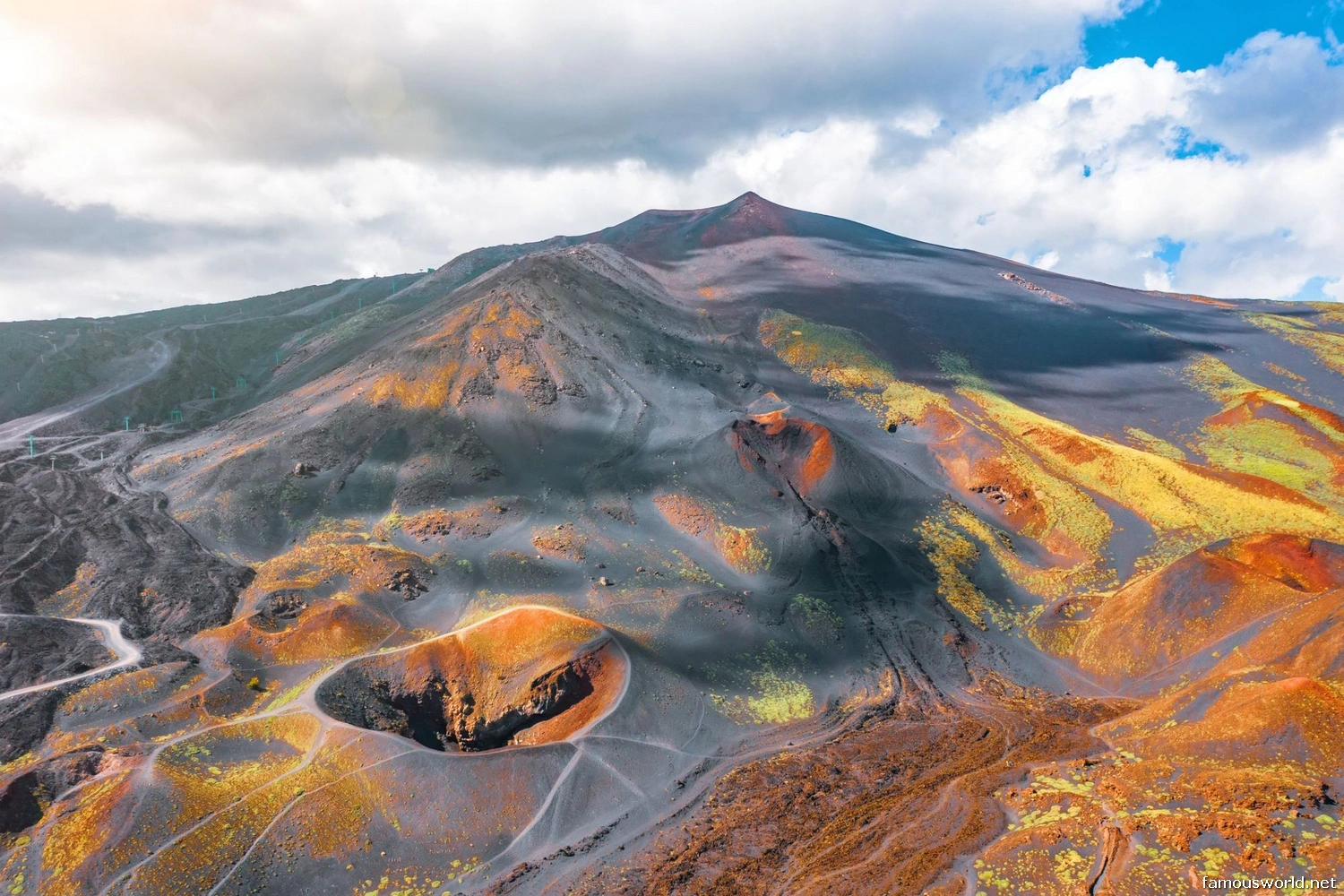
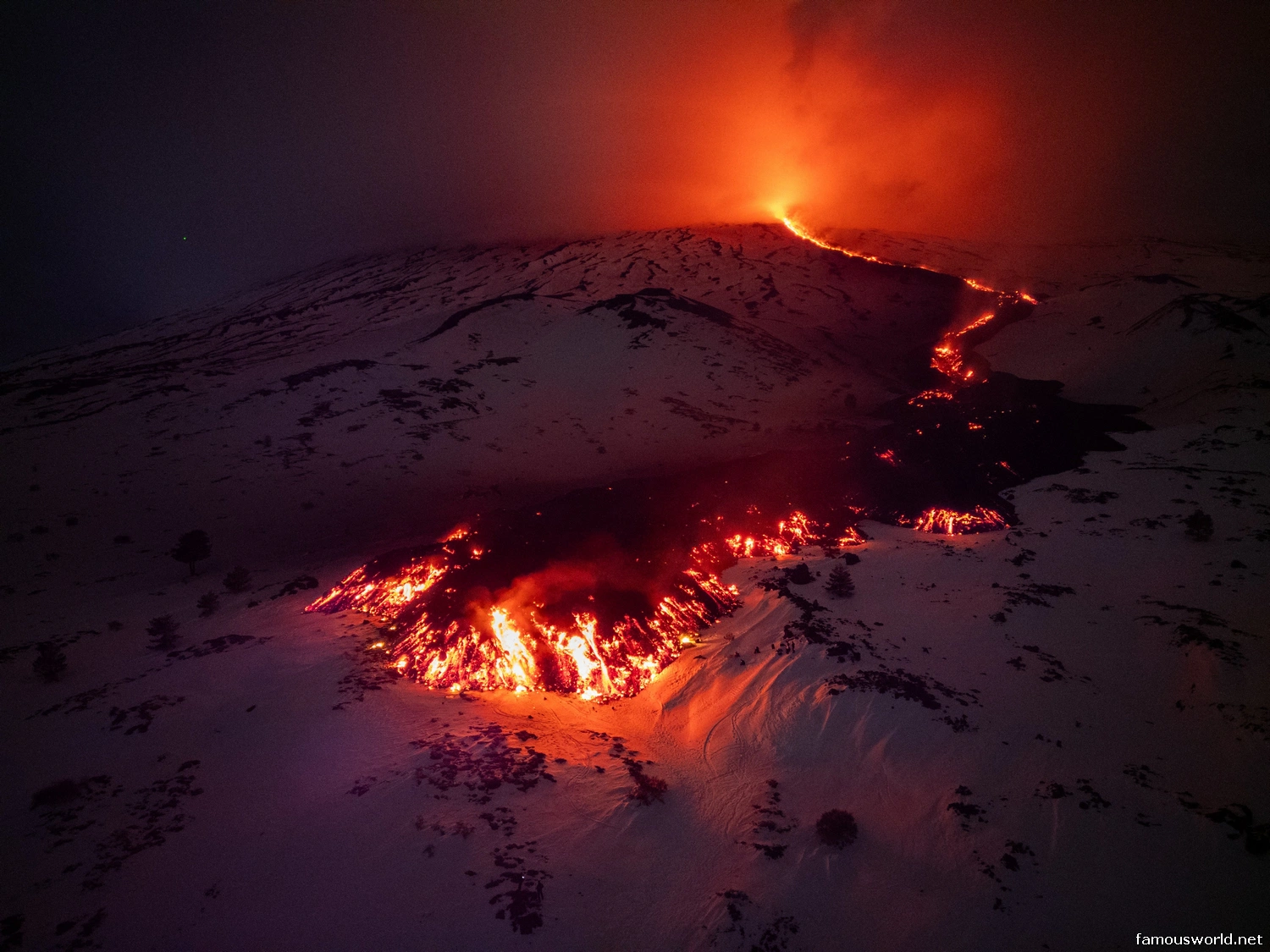
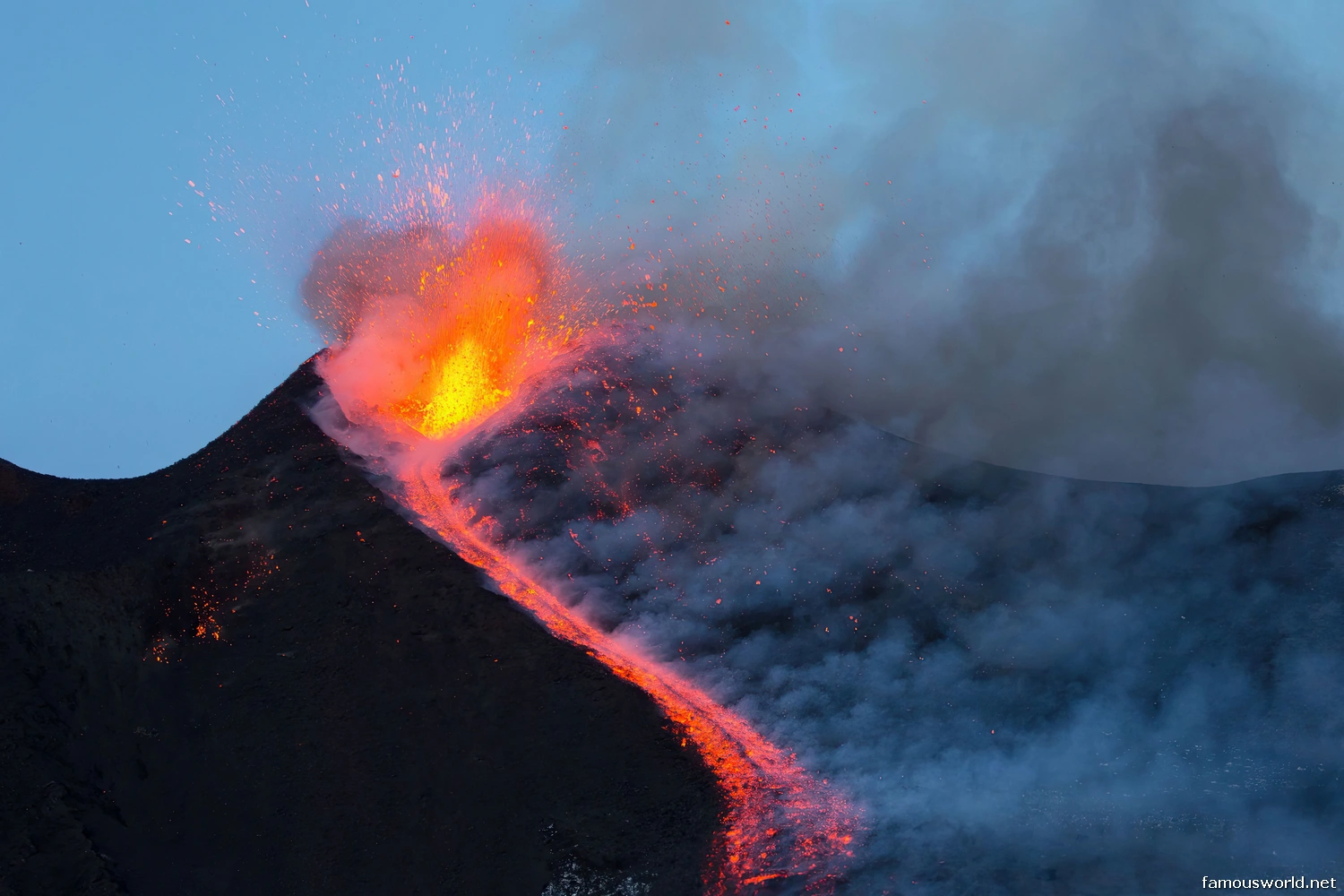
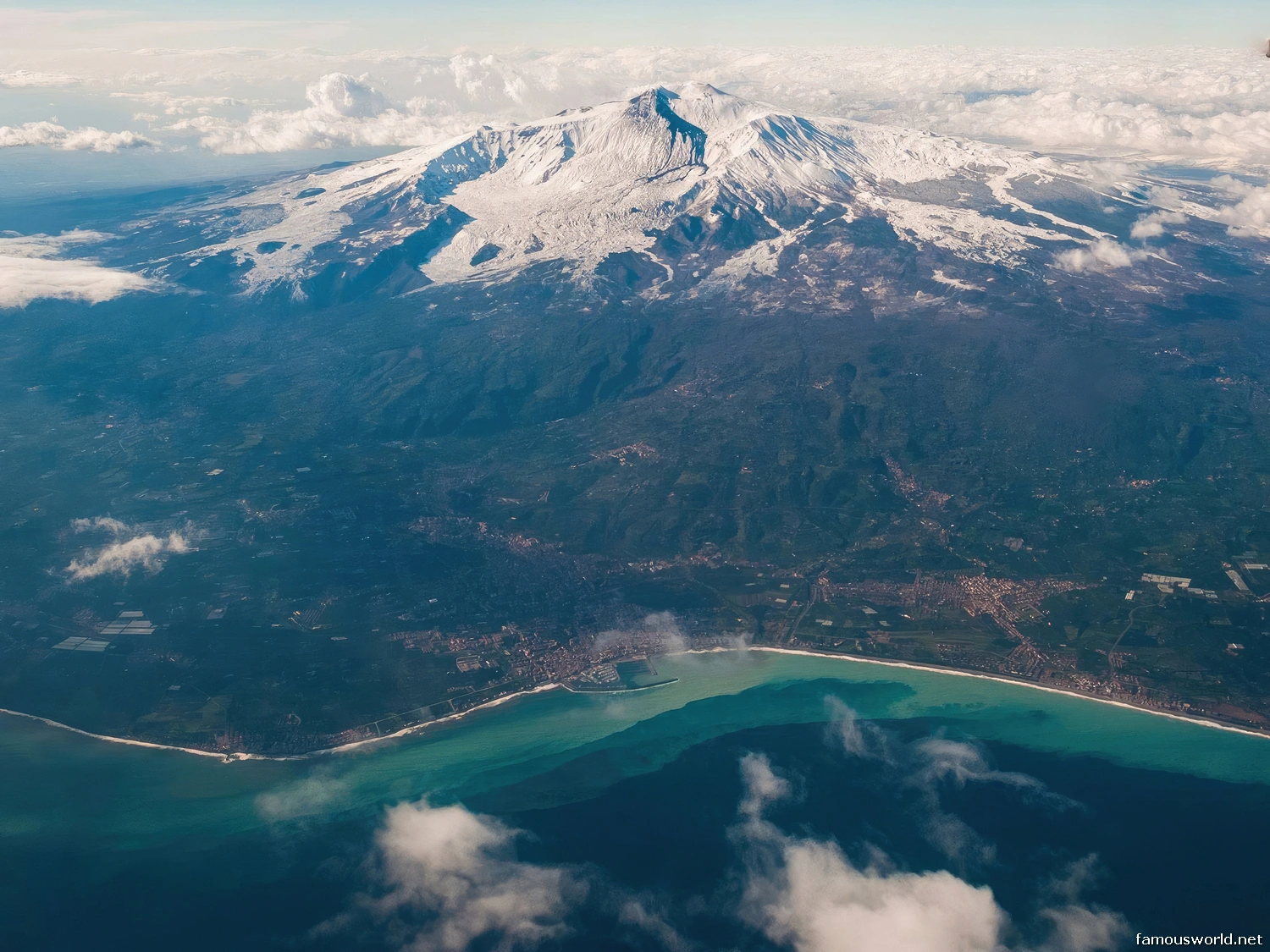
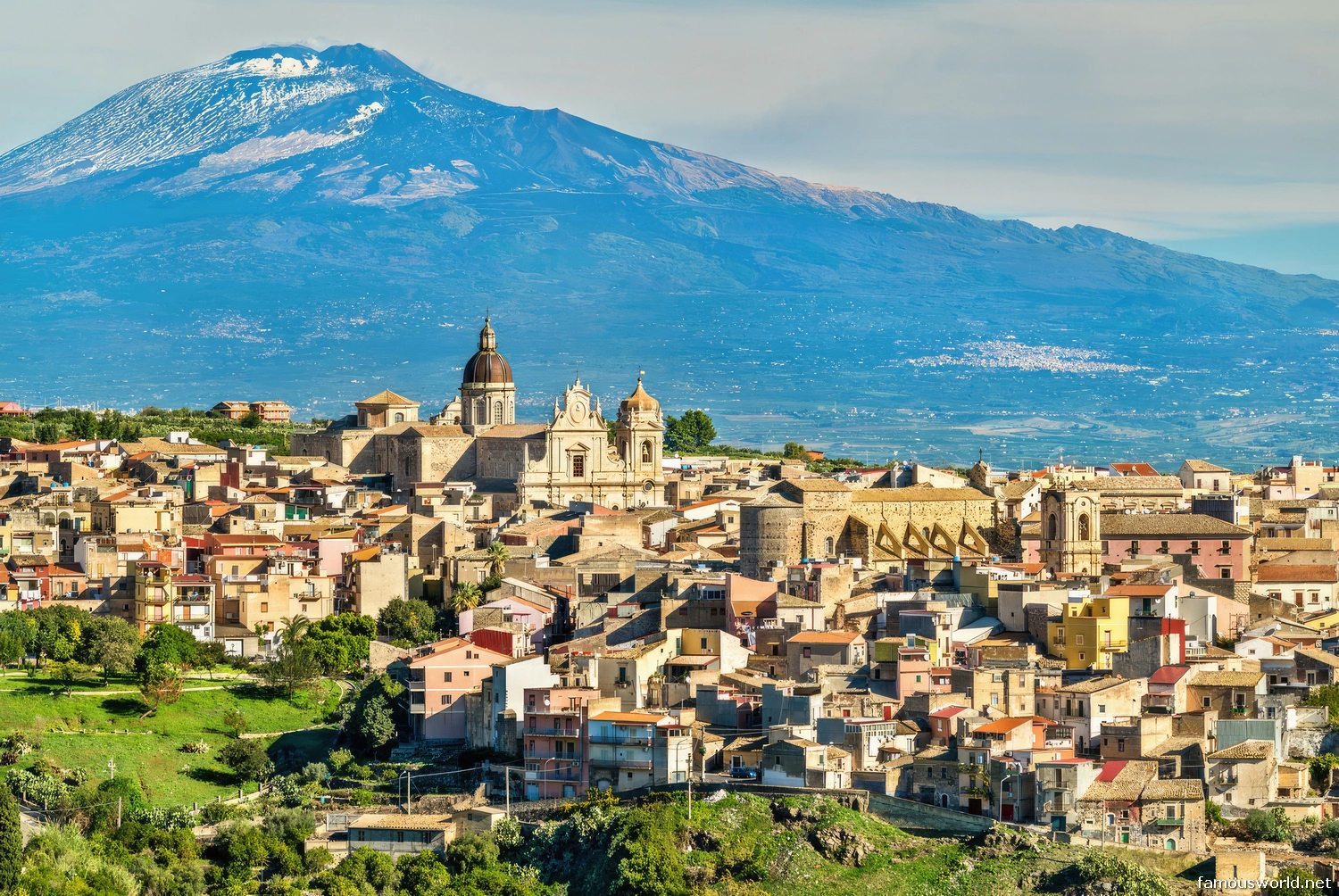
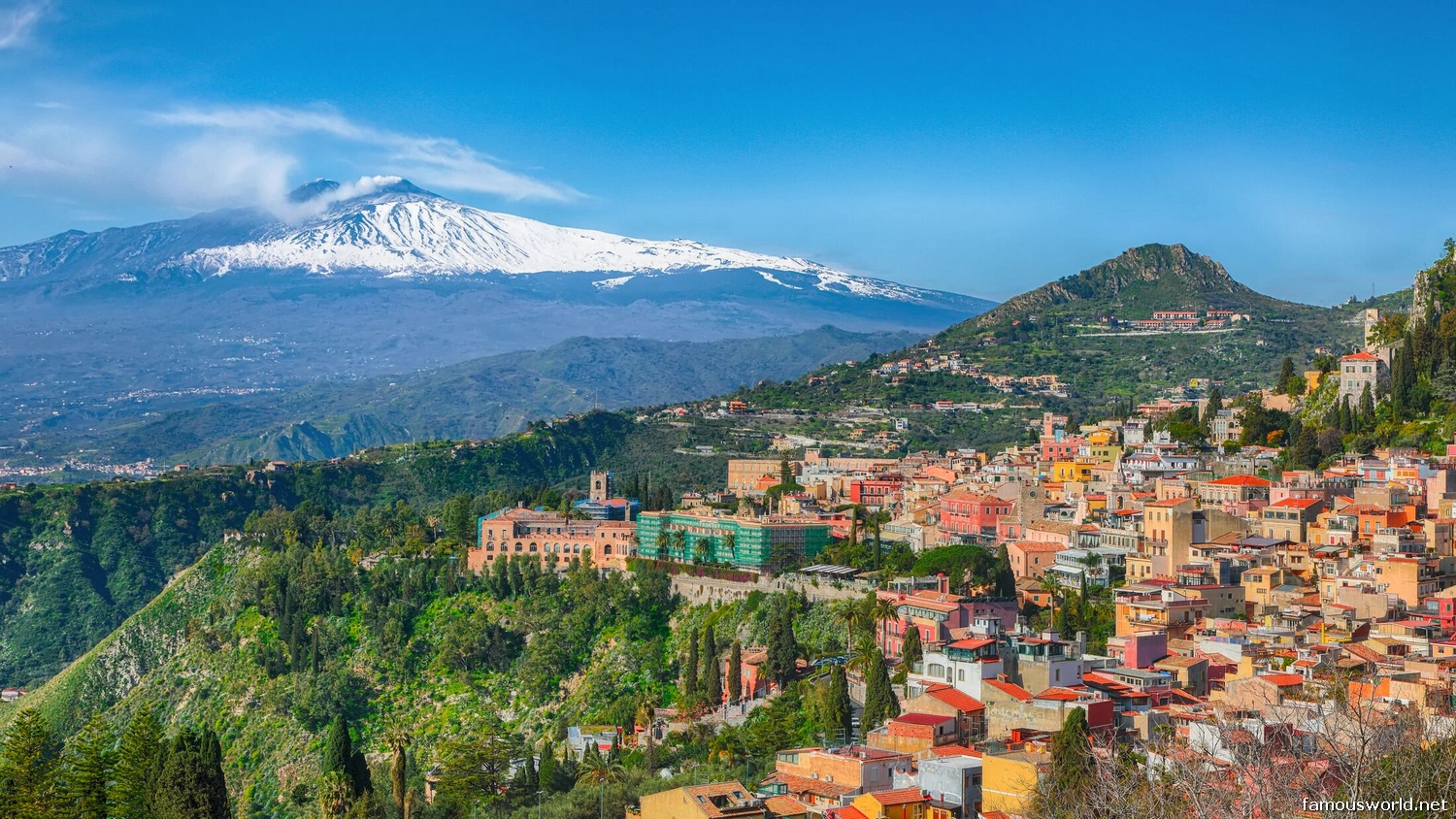
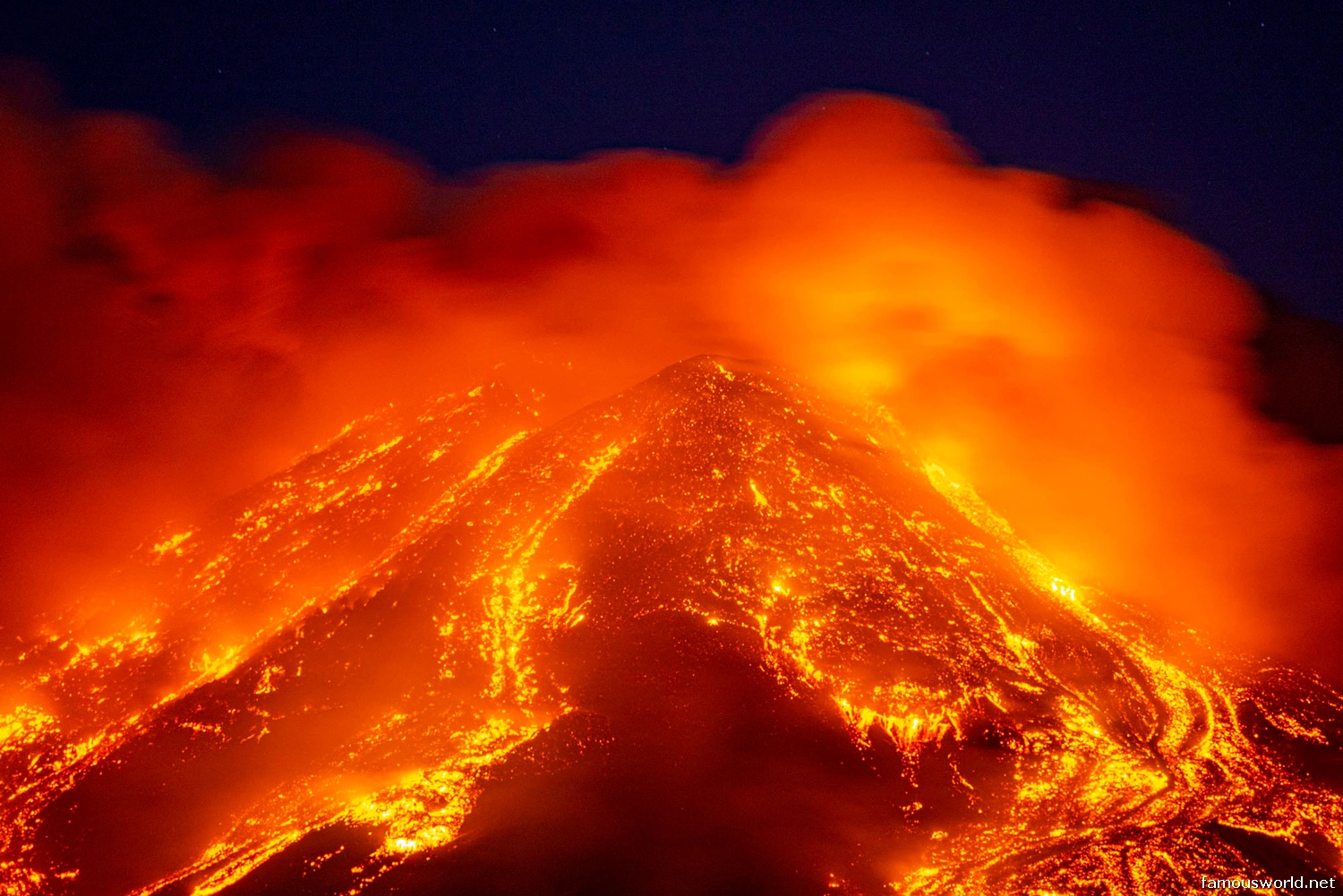
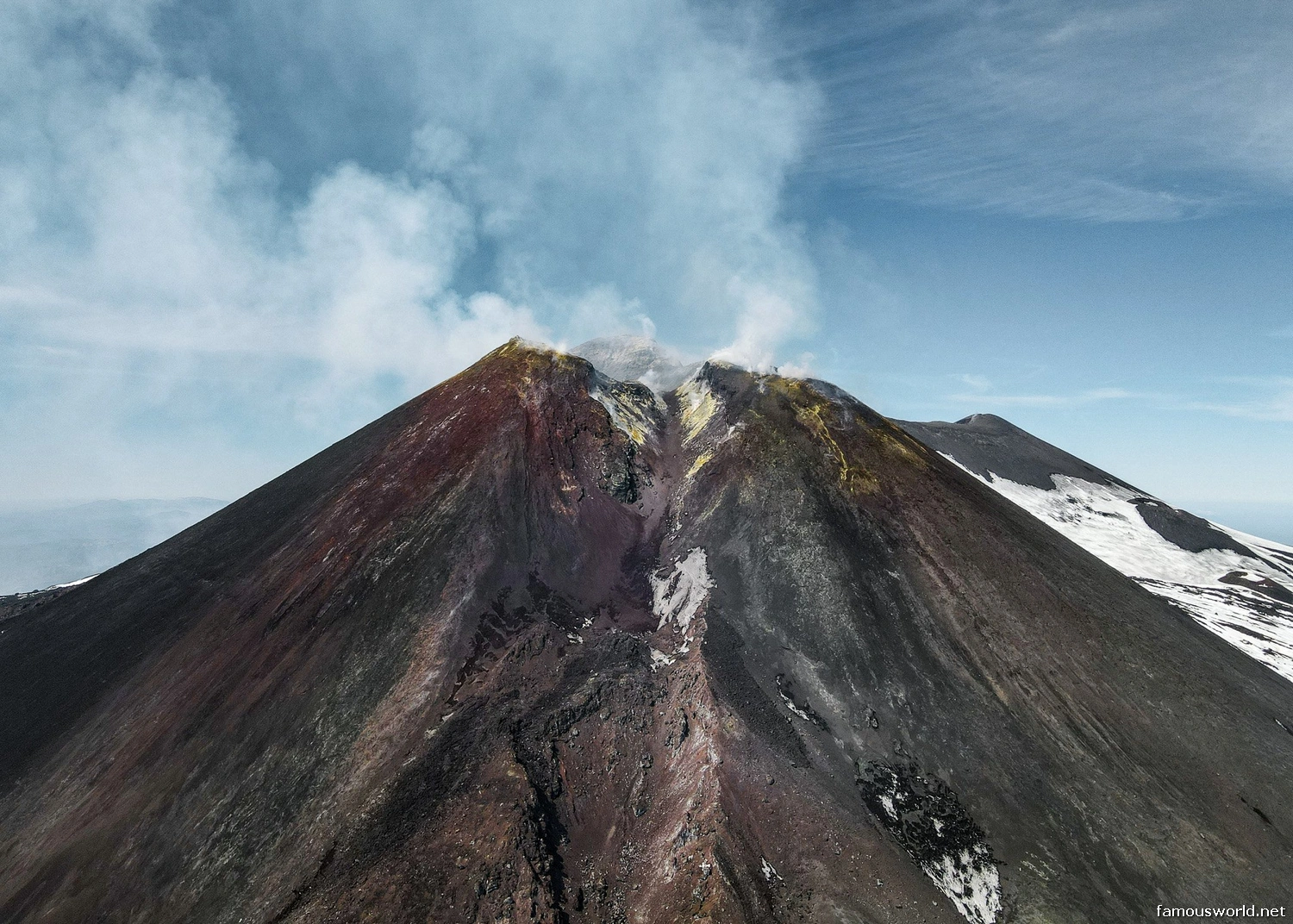
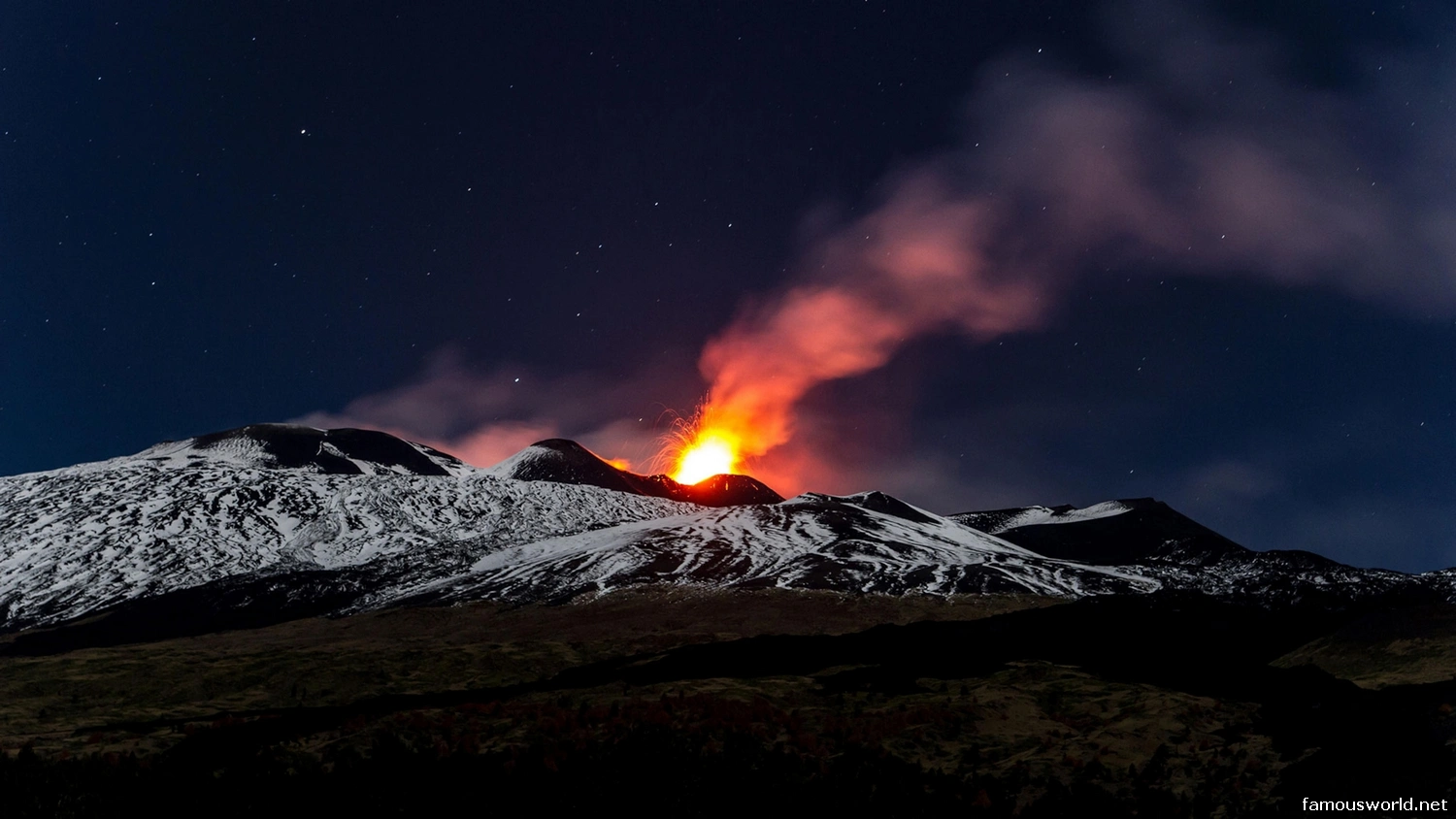
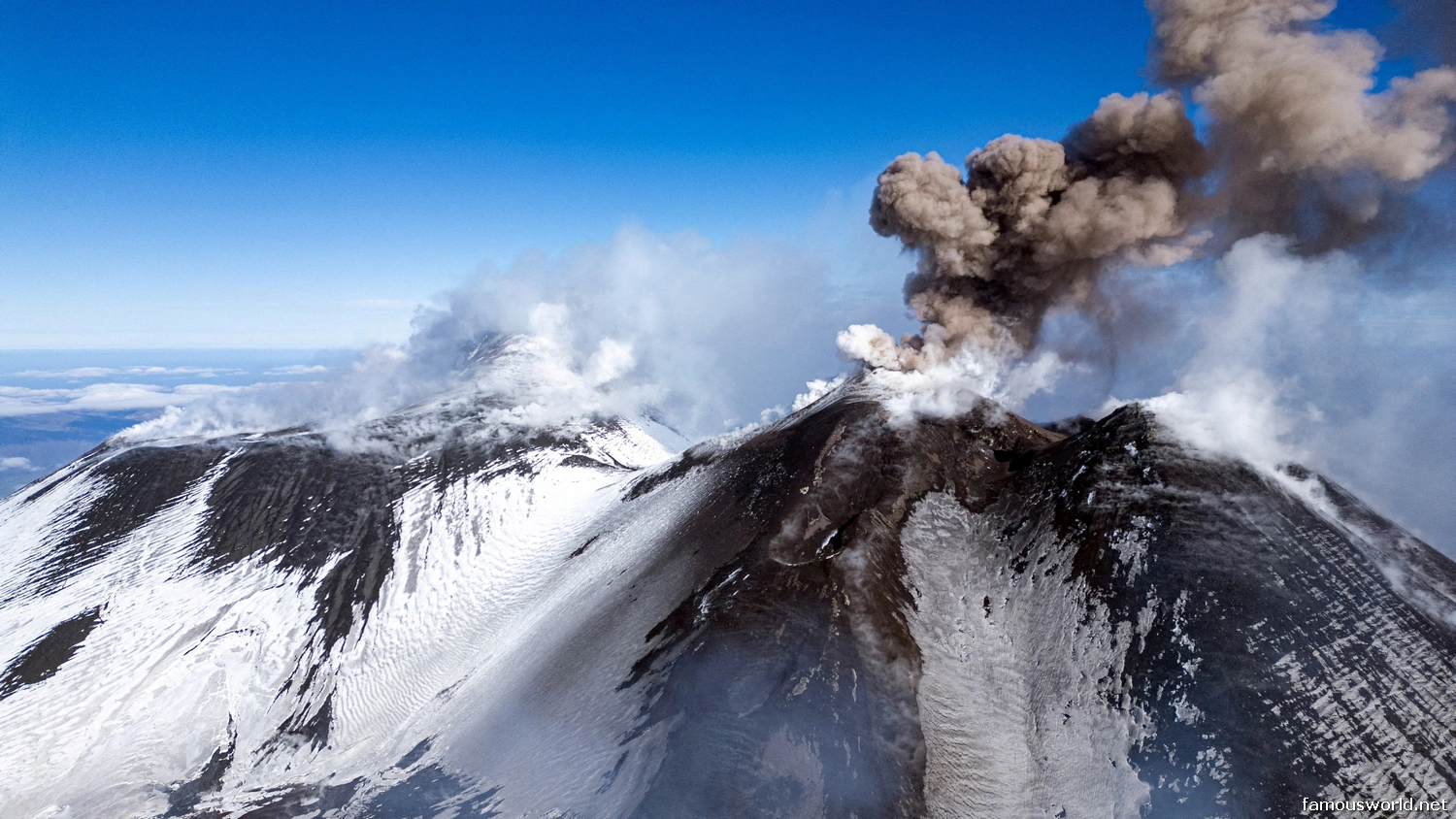
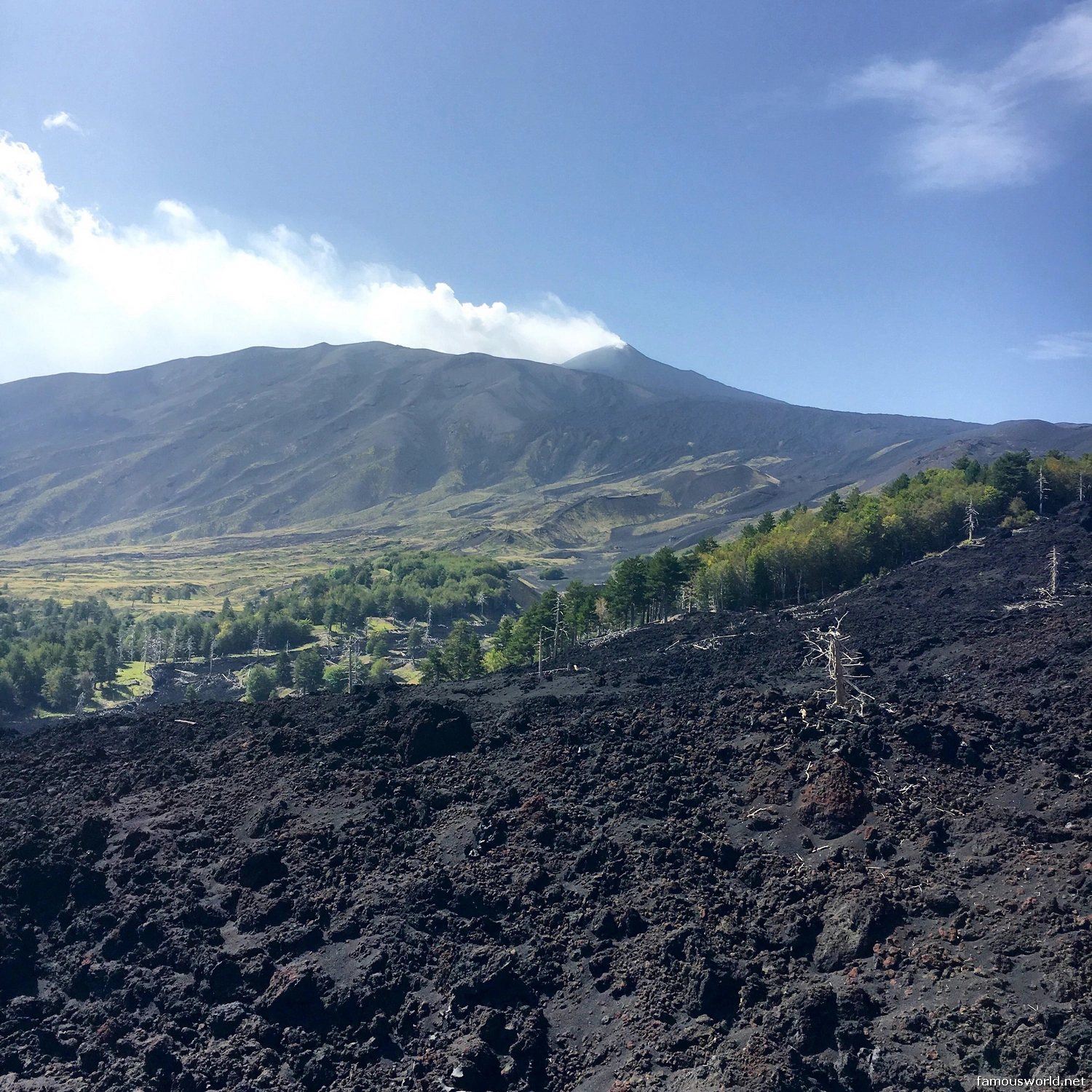
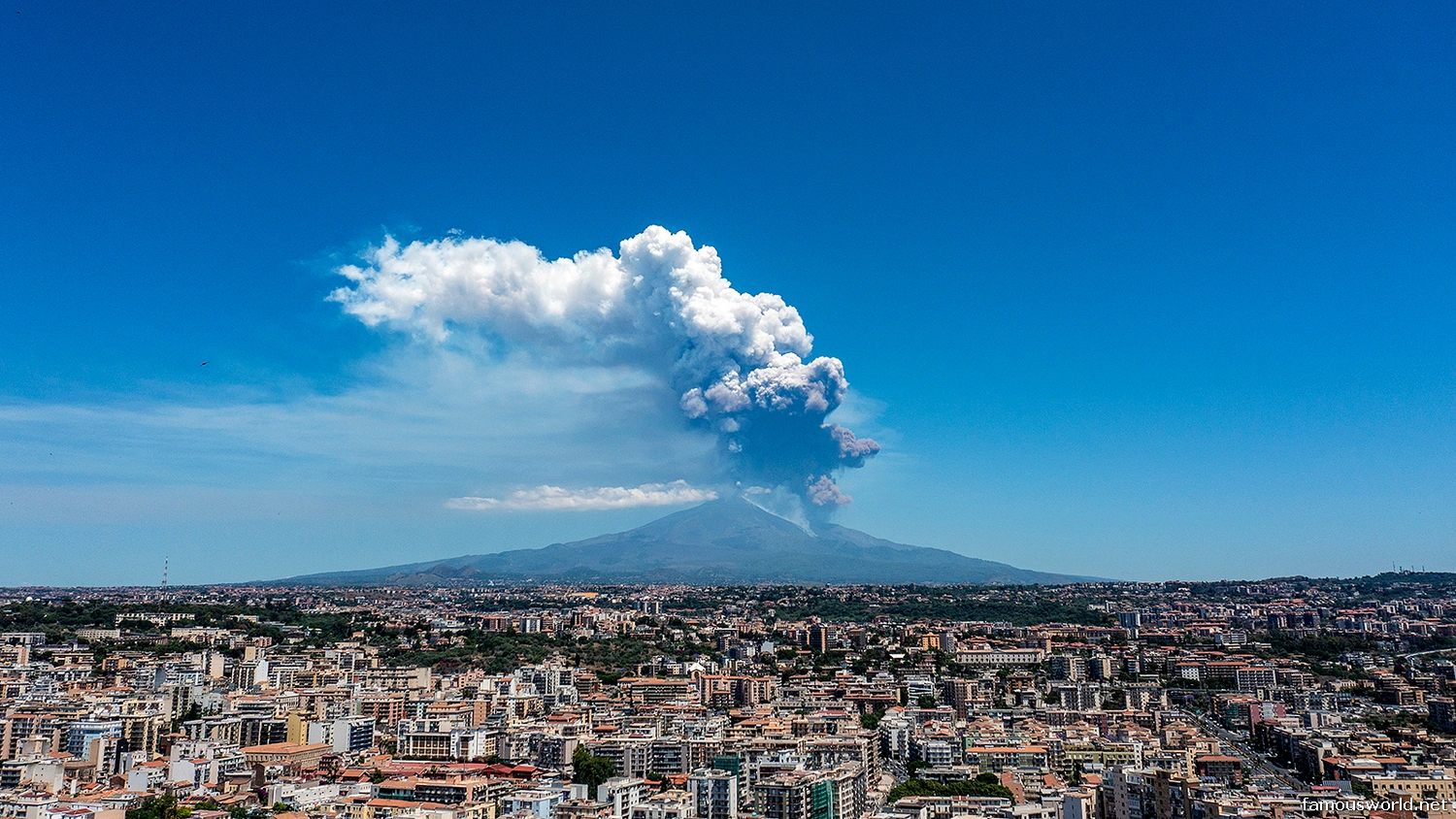
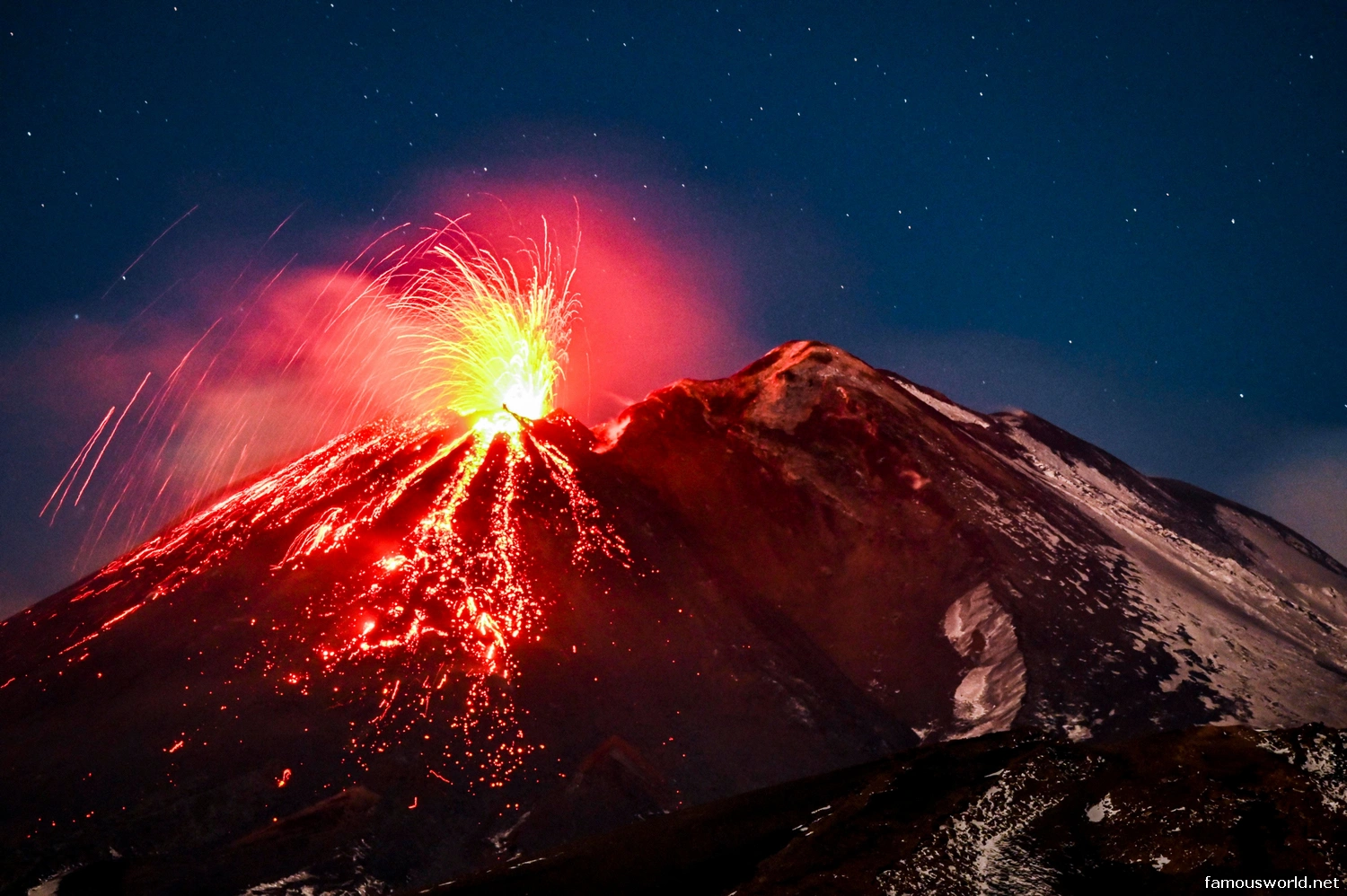
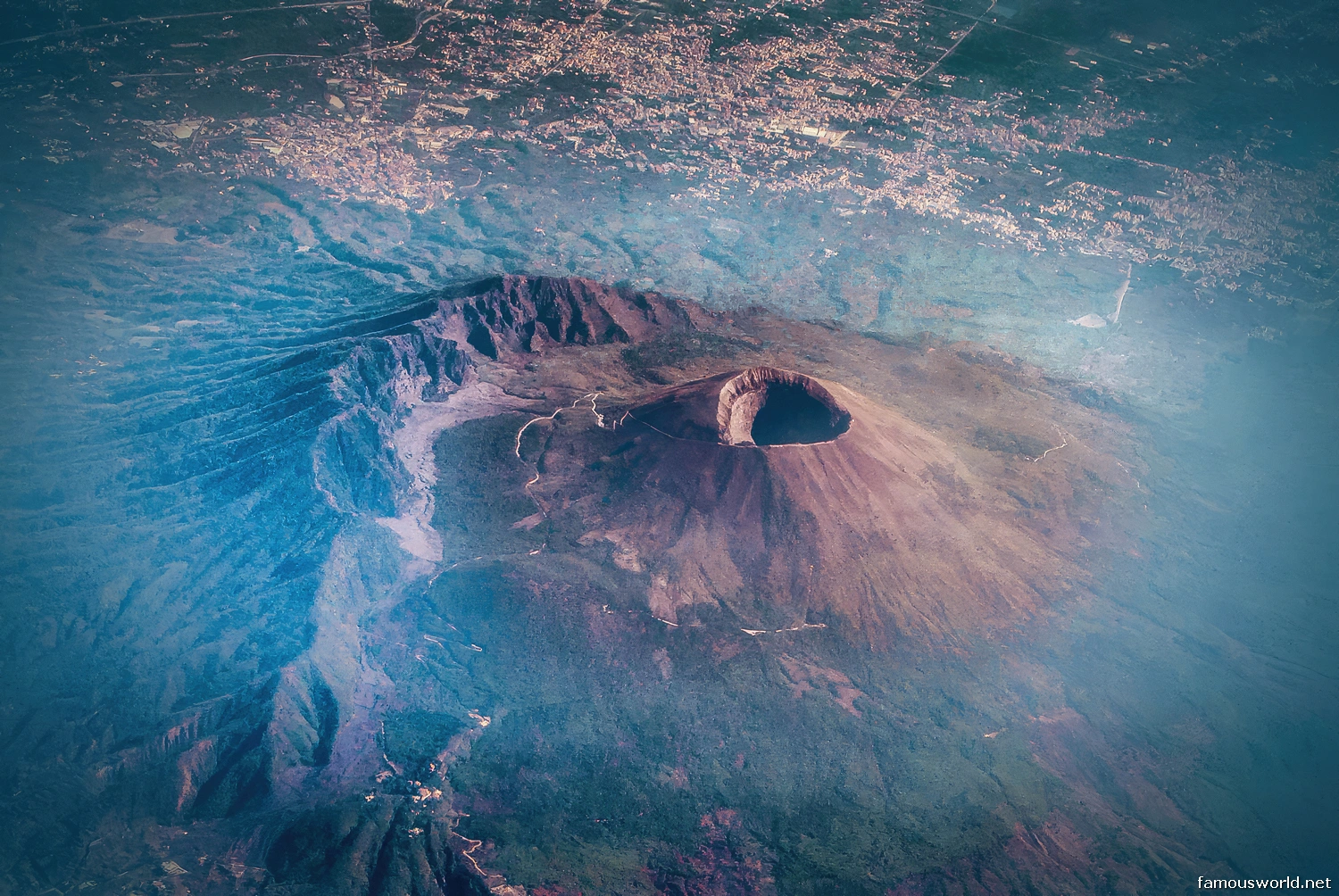
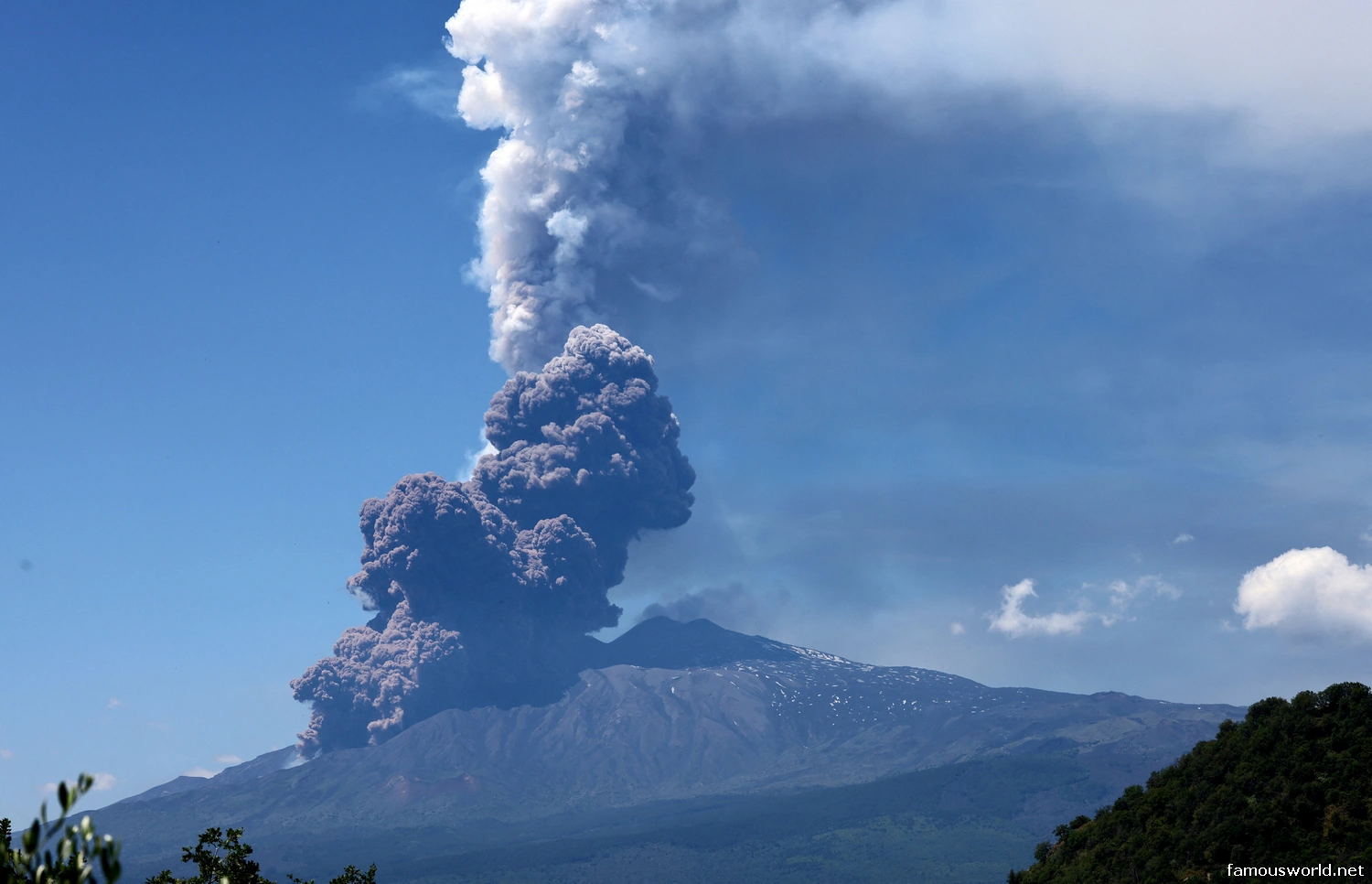
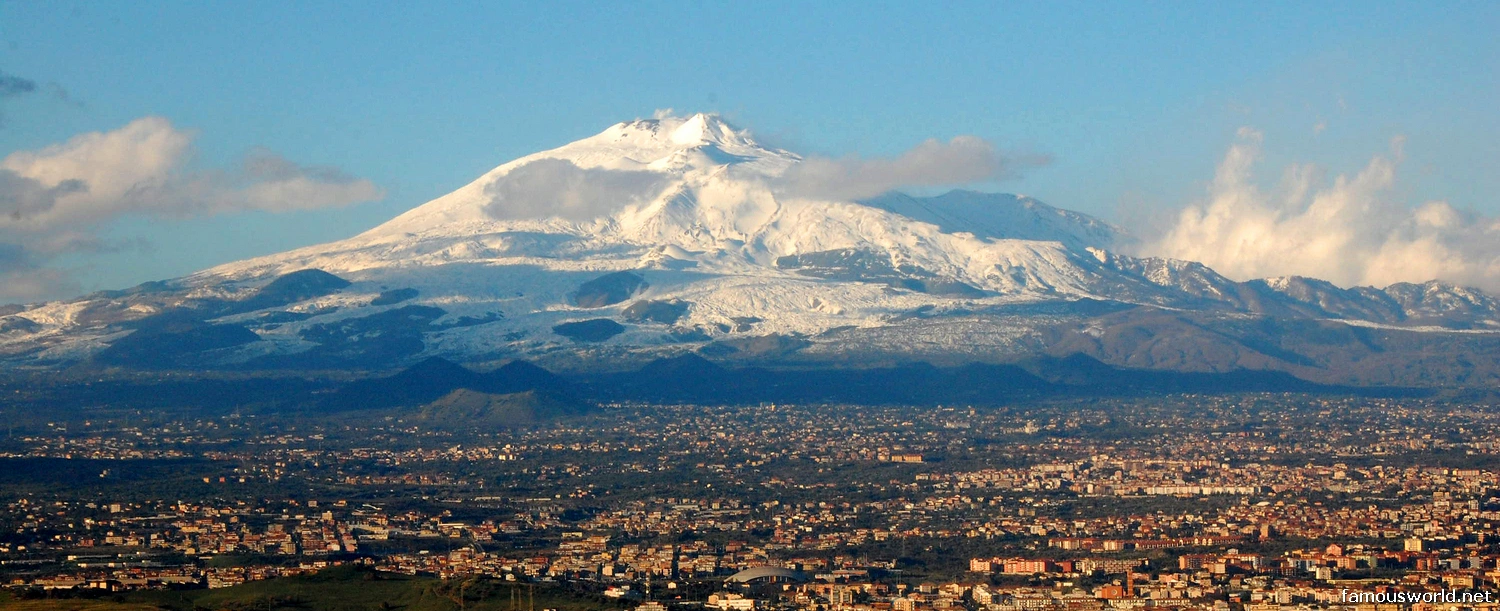
Rising majestically over the island of Sicily, Mount Etna is not a static mountain but a living, breathing giant. As Europe’s most active and highest volcano, it is a dynamic force of nature that is constantly reshaping itself and the landscape around it. A visit to Etna is a journey through a world of stark contrasts: from the fertile, vine-covered lower slopes to the barren, lunar-like upper regions of black lava fields and smoking craters. This UNESCO World Heritage site is a raw and powerful demonstration of the planet’s geological forces, offering an accessible yet thrilling adventure. Etna is famous not for what humans have built upon it, but for its own relentless power to create and destroy, a spectacle that has captivated and terrified people for millennia.
Listen to an introduction about Mount Etna

Name and Location
- Name: Mount Etna (Italian: Etna or Mongibello in Sicilian).
- Location: On the east coast of Sicily, Italy, looming over the city of Catania.
How to Get There
Etna is a popular destination and can be reached from Sicily’s main eastern cities.
- By Air: The closest airport is Catania–Fontanarossa Airport (CTA), which serves as the main gateway to eastern Sicily.
- By Car: This is the most flexible option. From Catania or Taormina, drive towards the towns on the volcano’s slopes, such as Nicolosi (Etna South) or Linguaglossa (Etna North). The main tourist hub, Rifugio Sapienza on the south side, is well-signposted.
- By Bus: A daily bus service (AST) runs from the main train station in Catania to the Rifugio Sapienza base station, returning in the late afternoon.
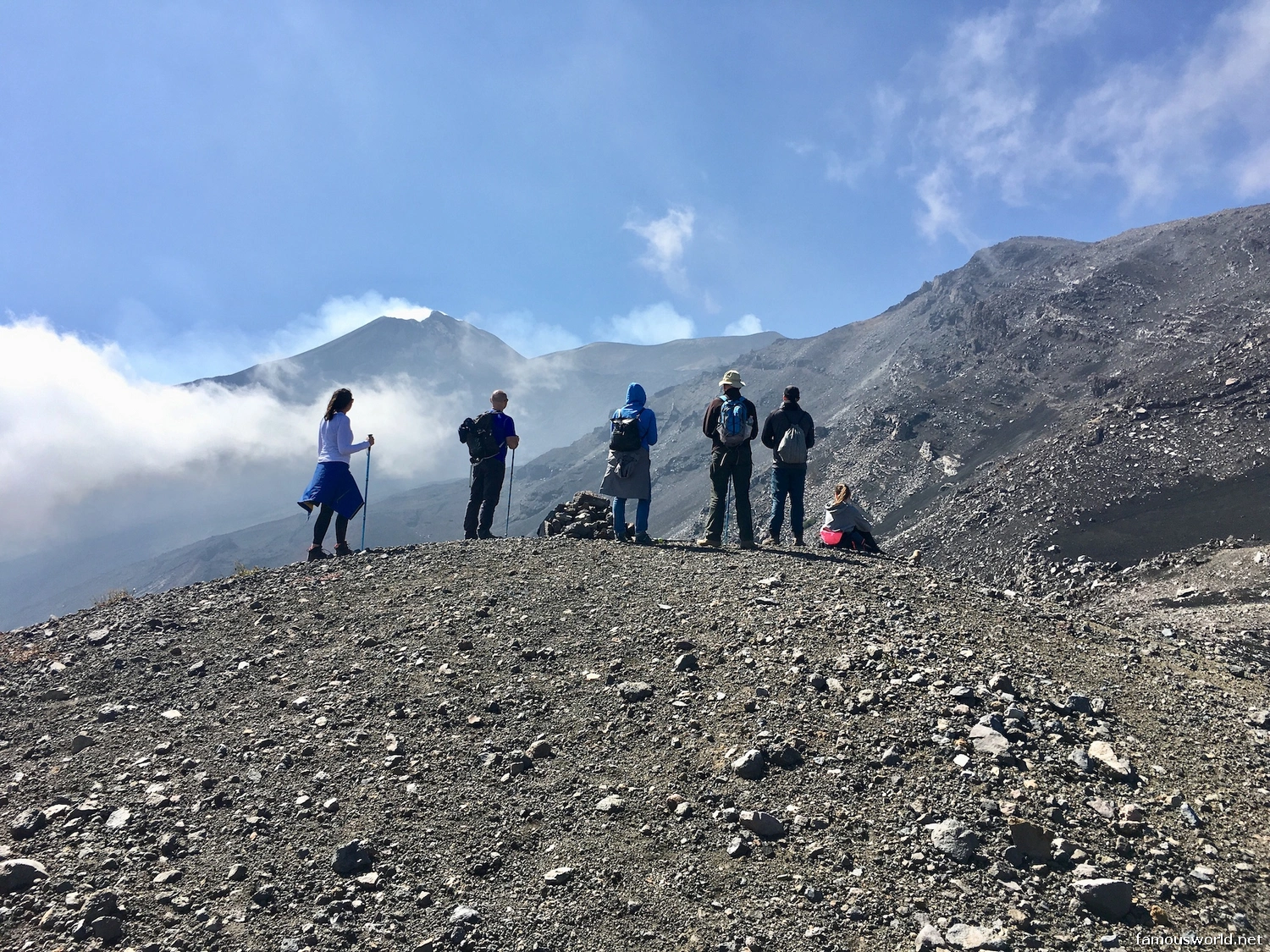
- By Guided Tour: Numerous tour operators in Catania, Taormina, and other nearby towns offer a wide range of excursions, from simple bus trips to adventurous 4×4 and hiking tours. This is often the easiest and most informative way to visit.
Landscape and Architecture
The landscape of Etna is a unique and dramatic volcanic environment, largely devoid of traditional architecture.
- Active Volcano: Etna is a massive stratovolcano with a complex of summit craters that are almost constantly active, emitting gas, steam, and occasionally erupting lava.
- Lunar Landscapes: The upper slopes are a surreal wilderness of black and red volcanic rock, solidified lava flows, and volcanic ash, often compared to the surface of the moon.
- Silvestri Craters: Located near Rifugio Sapienza, these large, extinct craters are easily accessible on foot and provide a fantastic introduction to a volcanic landscape without needing to ascend to the summit.
- Valle del Bove: A massive, horseshoe-shaped caldera on the eastern flank of the volcano, which often channels lava flows away from inhabited areas.
- Human Structures: The “architecture” on Etna is functional and related to tourism and science. This includes the Rifugio Sapienza base station (shops, restaurants, hotels), the Funivia dell’Etna (cable car), and several astronomical observatories.
What Makes It Famous
Etna’s fame is rooted in its constant, dramatic, and accessible volcanic activity.
- Europe’s Most Active Volcano: It is in a near-constant state of activity, with frequent, spectacular eruptions that are often visible from hundreds of kilometers away.
- UNESCO World Heritage Site: Recognized for its exceptional geological importance, its continuous volcanic activity, and its role as a natural laboratory for the study of volcanology.
- Accessibility: Unlike many major volcanoes, Etna is remarkably accessible. Visitors can drive, take a cable car, and ride in special 4×4 buses to reach the upper crater zones (accompanied by a guide).
- Fertile Slopes: The rich volcanic soil supports extensive agriculture, including highly prized vineyards (producing Etna DOC wine), olive groves, and citrus farms.
Differences from Other Wonders (vs. National Archaeological Museum of Naples)
A powerful, active volcano provides a fundamentally different experience than a museum of ancient human artifacts.
- Environment (Wild Natural Landscape vs. Grand Urban Palace): Mount Etna is a raw, unpredictable, and powerful force of nature. MANN is a controlled, curated, and man-made institution located within a dense, historic city.
- Focus (Geological Power vs. Human Artistry): Etna showcases the immense, ongoing power of the natural world to create and shape the land. MANN showcases the peak of human artistic achievement from a civilization of the past.
- Core Story (Continuous Creation vs. Preserved History): The story of Etna is one of constant change, a living geological process that is happening now. The story of MANN is one of preserving a human history that was frozen and saved by a past geological event.
- Atmosphere (Adventurous and Raw vs. Academic and Ornate): The experience on Etna is one of adventure, physical exploration, and humbling awe in the face of nature. The experience at MANN is intellectual, contemplative, and awe-inspiring for its collection of man-made masterpieces.
Location on world map