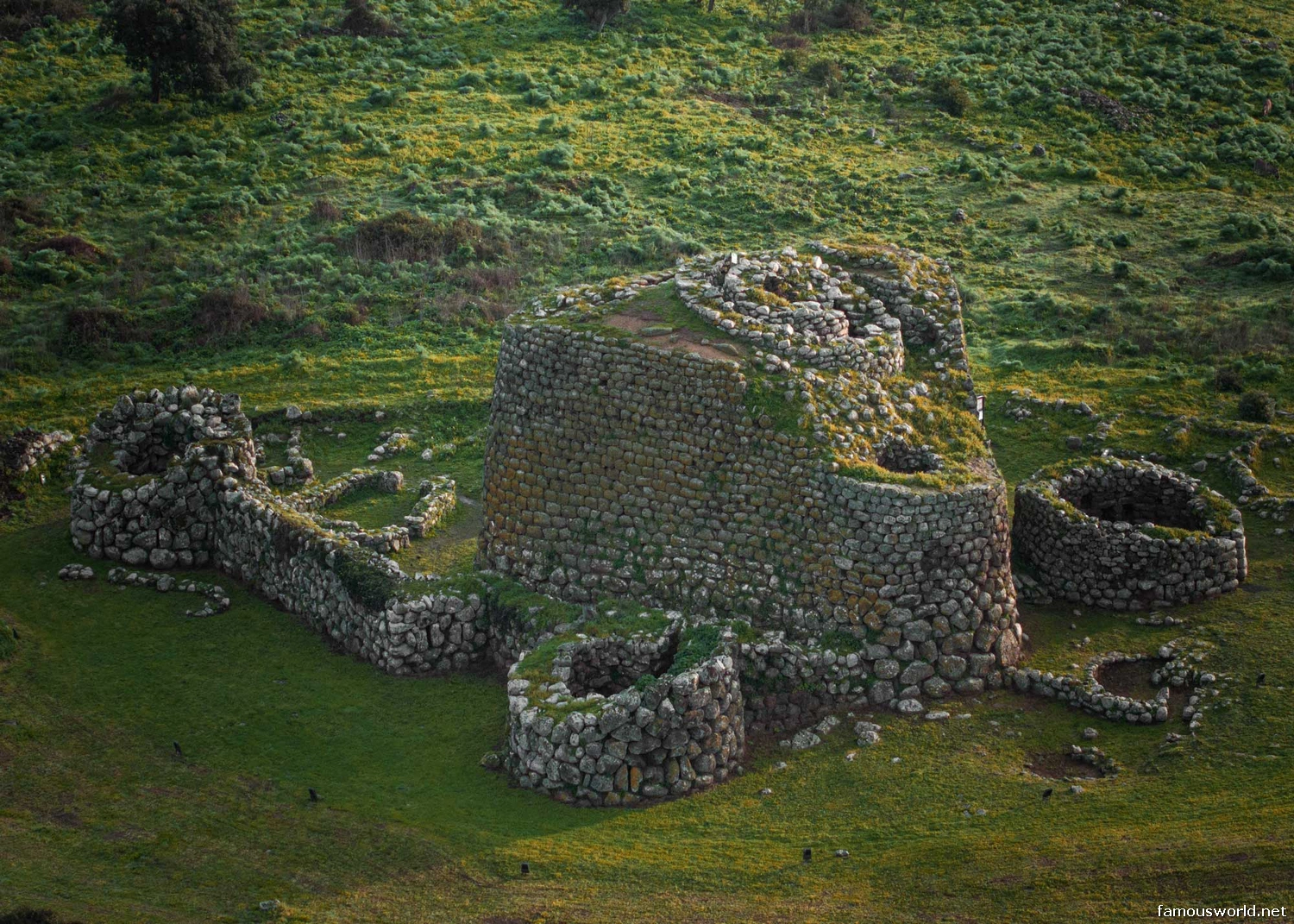


Rising from the plains of central-west Sardinia, Nuraghe Losa is one of the most powerful and best-preserved monuments of the island’s mysterious prehistoric civilization. This imposing basalt fortress, with its complex network of corridors, chambers, and towers, stands as a silent testament to the architectural genius of the Nuragic people who built it over 3,000 years ago. Unlike a simple ruin, Losa feels like a place of enduring power and significance, offering visitors a direct and tangible connection to Sardinia’s enigmatic past. Walking through its dark, vaulted passageways is a journey back in time to an era of Bronze Age chieftains and a society whose secrets are still being unearthed.
Listen to an introduction about Nuraghe Losa

Name and Location
- Name: Nuraghe Losa
- Location: Near the town of Abbasanta, in the province of Oristano, in central-western Sardinia, Italy. It is conveniently located just off the main SS131 highway that connects Cagliari and Sassari.
How to Get There
The site’s proximity to Sardinia’s main highway makes it one of the most accessible major nuraghi on the island.
- By Car: Driving is the most practical way to visit. Nuraghe Losa is clearly signposted from the SS131 highway (Carlo Felice). There is a dedicated exit and ample parking at the site. The journey from either Cagliari or Alghero takes approximately 1.5 hours.
Landscape and Architecture
Nuraghe Losa is a masterpiece of Nuragic engineering, notable for its complexity, its excellent state of preservation, and the dark, almost metallic sheen of its basalt construction.
- Complex Fortress Layout: The monument consists of a central keep (mastio) and a triangular bastion fortified with three additional towers, all connected by a network of internal corridors and staircases. This central structure is surrounded by an extensive outer wall.
- Corbelled Vaulting: The interior chambers are remarkable examples of corbelled vaulting (a technique where stones are progressively overlapped to create a conical, beehive-like roof), a hallmark of Nuragic architecture that remains structurally sound after millennia.
- Strategic Position: The nuraghe was built on a flat plateau, giving it a commanding view over the surrounding territory, highlighting its strategic military and social importance.
- Surrounding Village: The fortress is encircled by the remains of a large village of circular stone huts, indicating that this was a major population center and the seat of power for a local chieftain.
What Makes It Famous
Nuraghe Losa is one of the most significant archaeological sites in Sardinia and the Mediterranean.
- Exceptional Preservation: It is considered one of the most complete and architecturally complex nuraghi in existence, allowing visitors to safely explore its many internal levels and passageways.
- Architectural Sophistication: The monument is a prime example of the advanced building techniques of the Nuragic civilization, particularly in its use of massive, unmortared stones and its intricate internal design.
- Long History of Use: Archaeological finds show that the site was in use for over a thousand years, from the Middle Bronze Age through the Roman period and into the early Middle Ages, demonstrating its enduring importance.
- Icon of Nuragic Culture: Along with Su Nuraxi di Barumini, Nuraghe Losa is a symbol of Sardinia’s unique prehistoric heritage and a key site for understanding this enigmatic Bronze Age culture.
Differences from Other Wonders (vs. Pompeii)
Exploring a prehistoric Sardinian fortress offers a very different kind of historical immersion than walking through a preserved Roman city.
- Environment (Prehistoric Fortress vs. Preserved Roman City): Nuraghe Losa is a singular, massive stone structure standing on an open plain, designed for defense and control. Pompeii is an entire, sprawling city frozen in time, offering a complete picture of urban Roman life, from grand villas to humble bakeries.
- Focus (Architectural Mystery vs. Daily Life): The focus at Nuraghe Losa is on its monumental and mysterious architecture, sparking questions about its exact purpose and the society that built it. The focus at Pompeii is on the intimate details of daily life—social customs, food, art, and commerce—preserved by the volcanic ash.
- Core Story (Enigmatic Civilization vs. A Captured Moment): Nuraghe Losa tells the story of a powerful, pre-literate civilization whose beliefs and social structures remain largely enigmatic. Pompeii tells the dramatic story of a specific historical moment—a catastrophic event that paradoxically created a perfect time capsule of the Roman world.
- Atmosphere (Austere and Powerful vs. Personal and Haunting): The atmosphere at Nuraghe Losa is one of austere, ancient power and timeless mystery. The atmosphere at Pompeii is deeply personal and haunting, filled with the ghosts of ordinary people whose lives were abruptly ended.
Location on world map