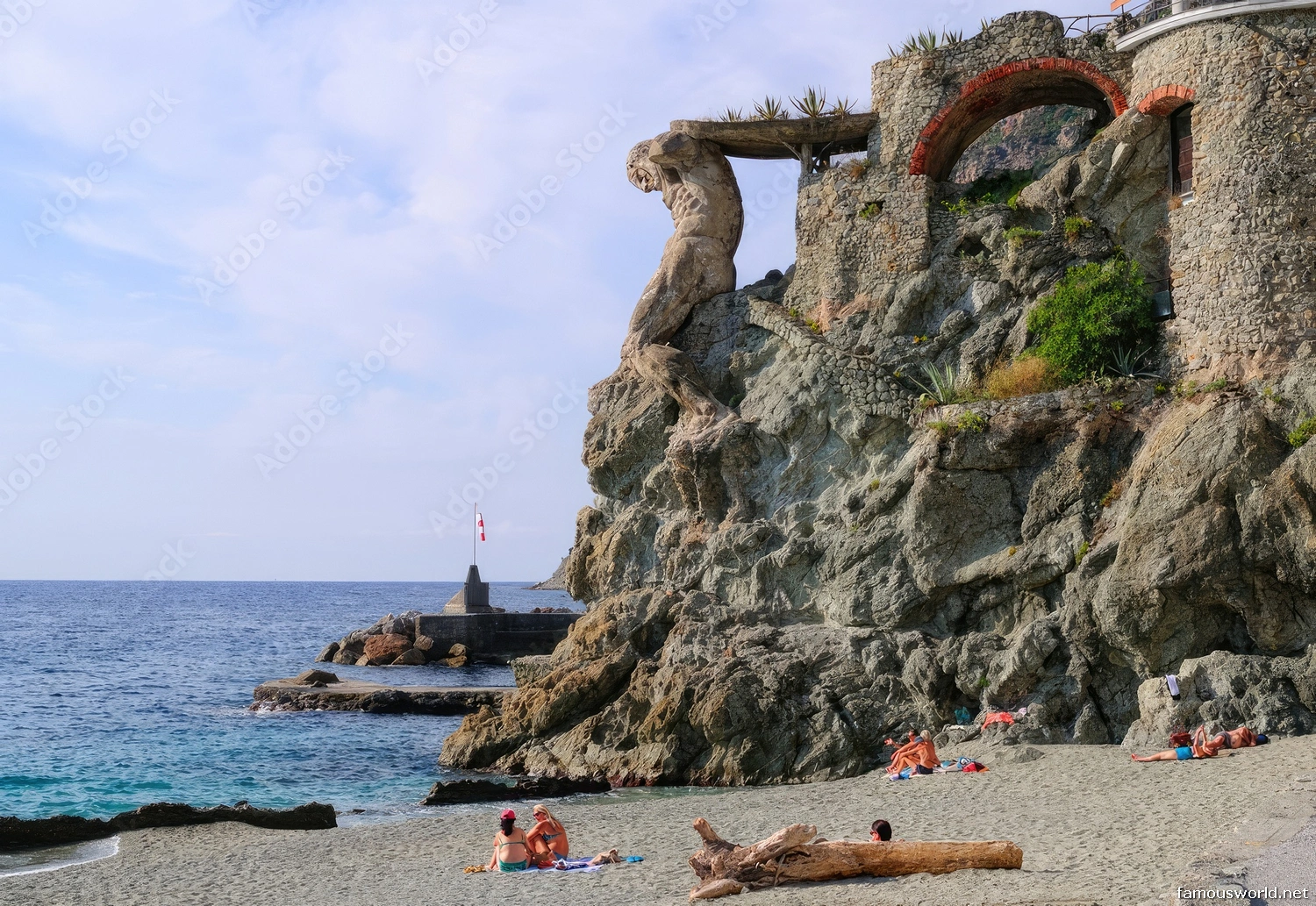
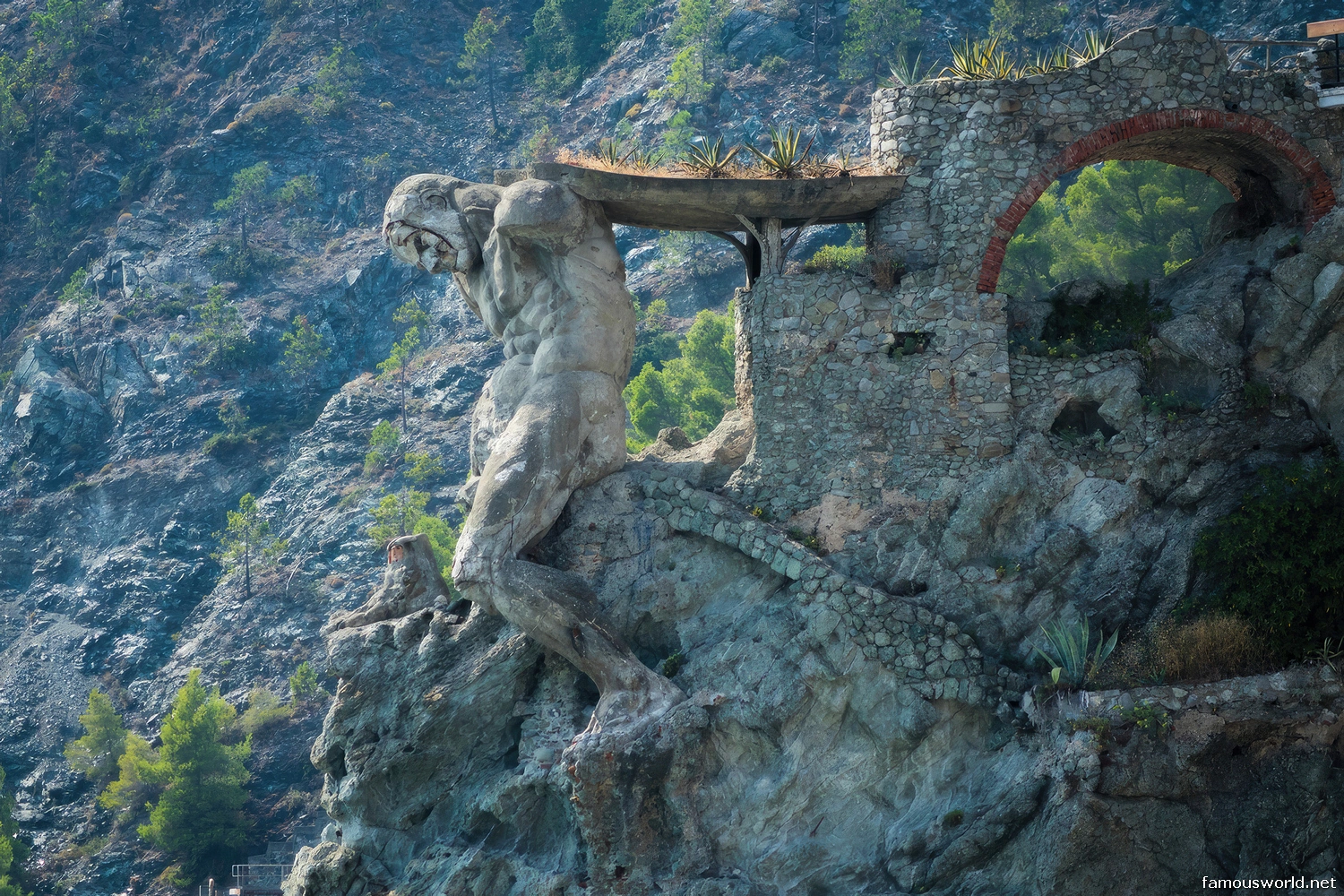
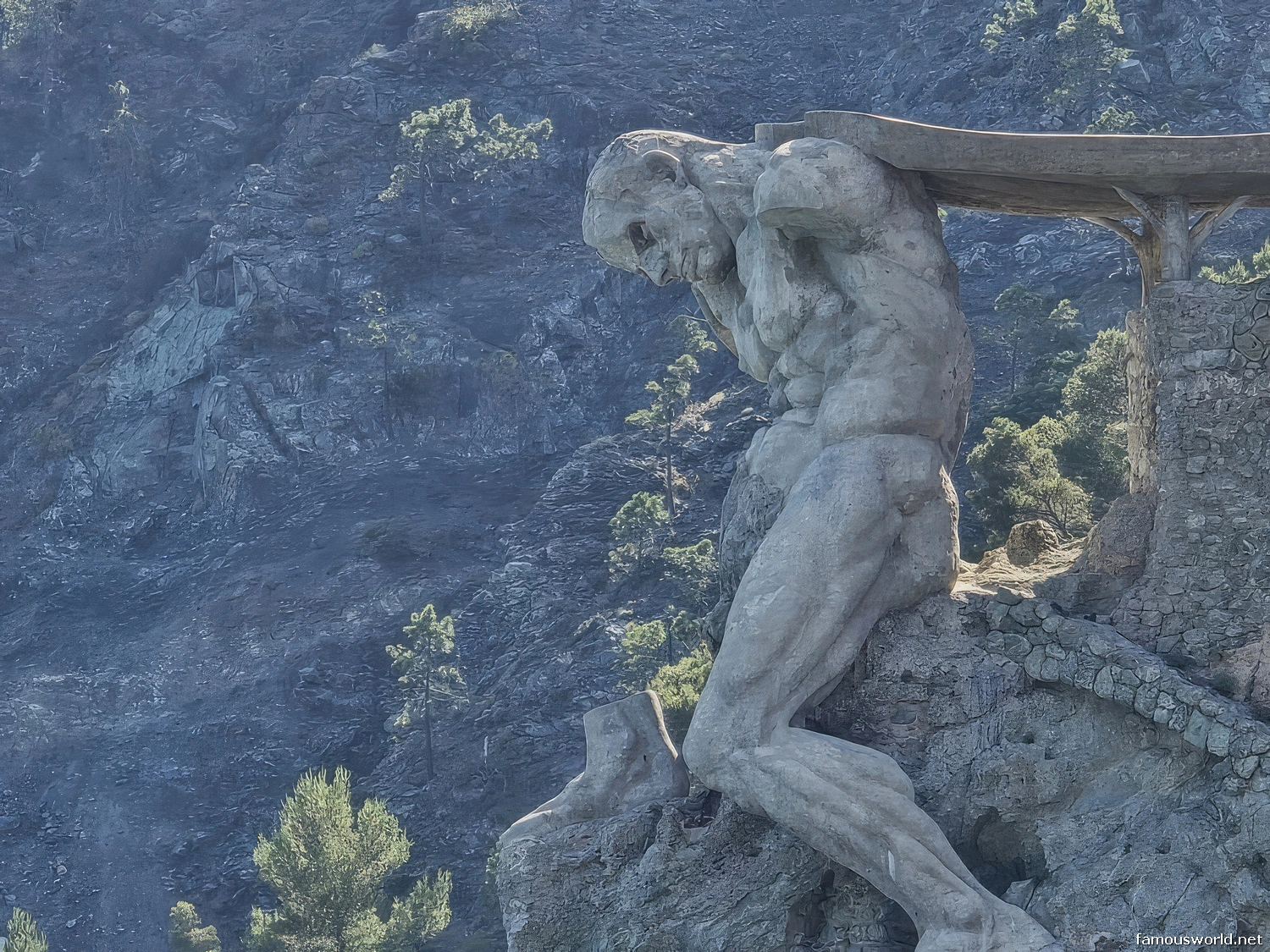
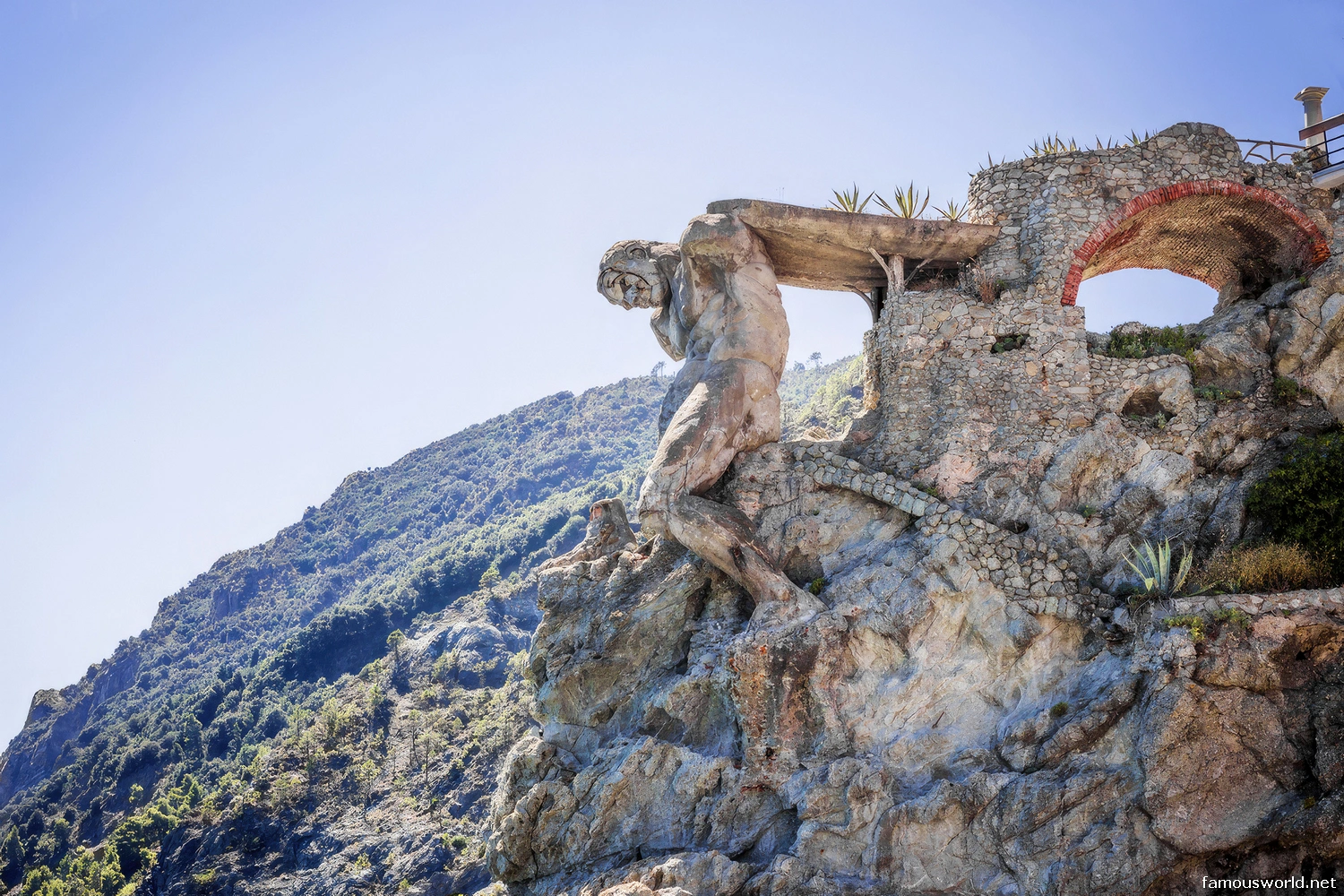
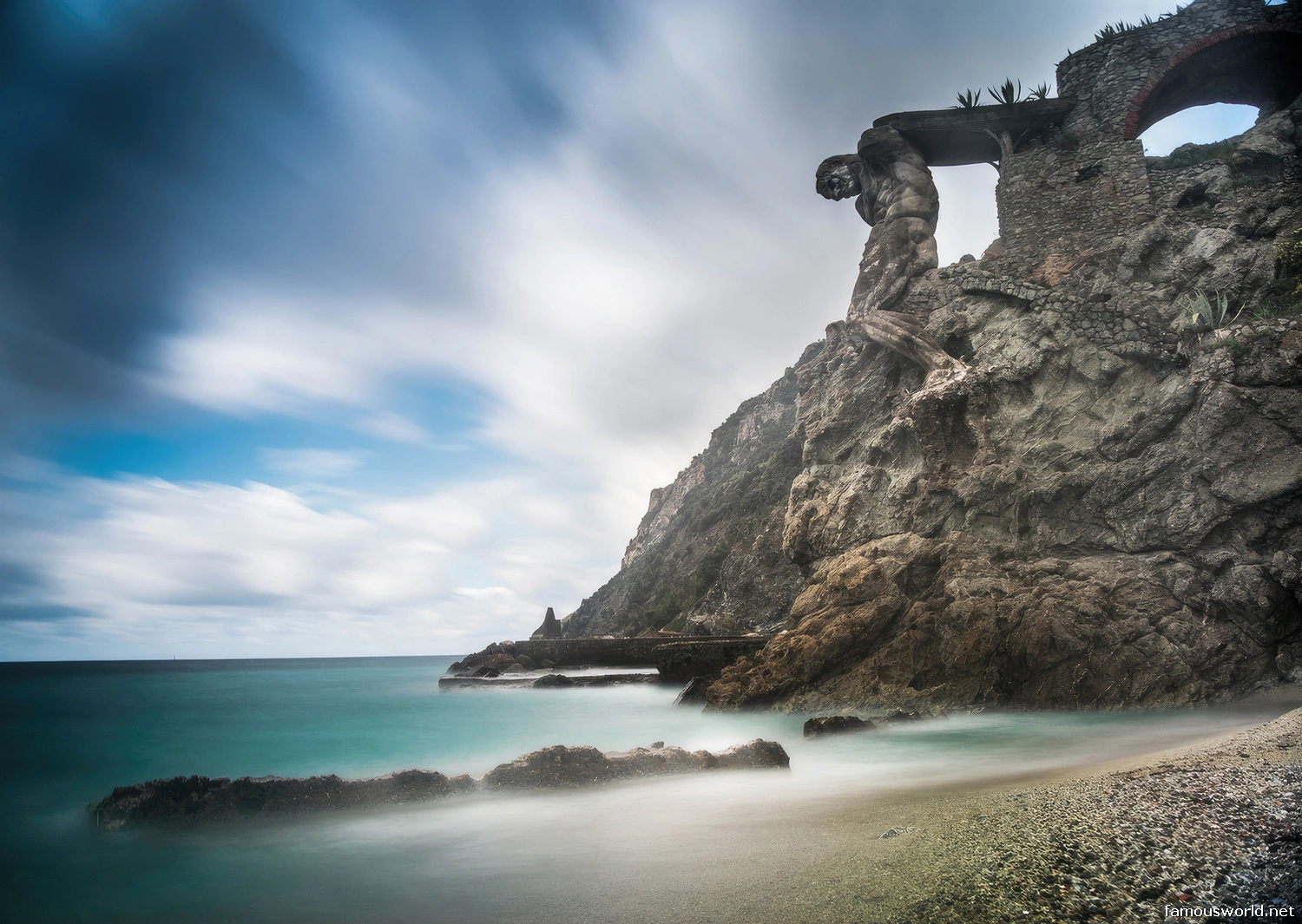
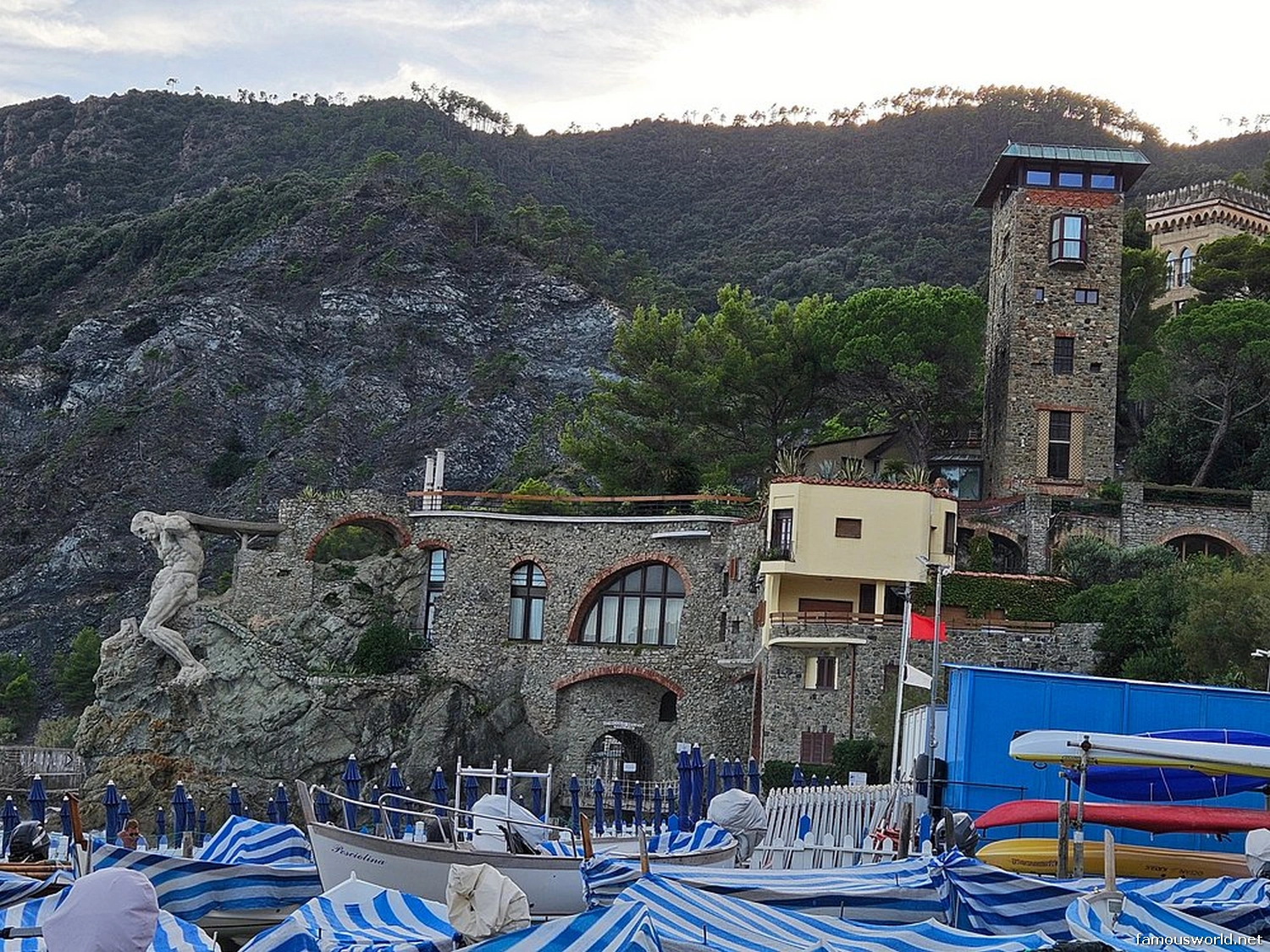
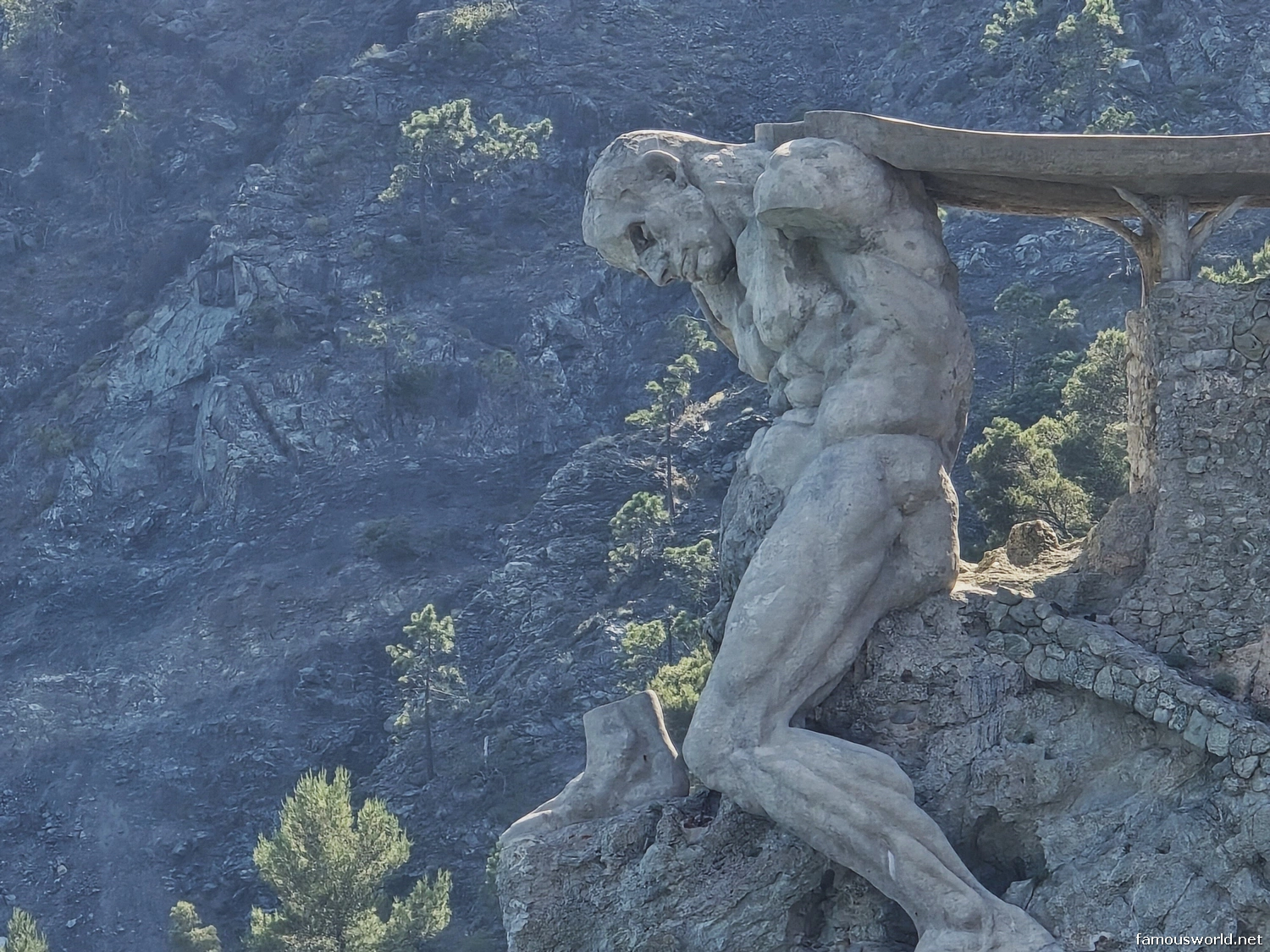
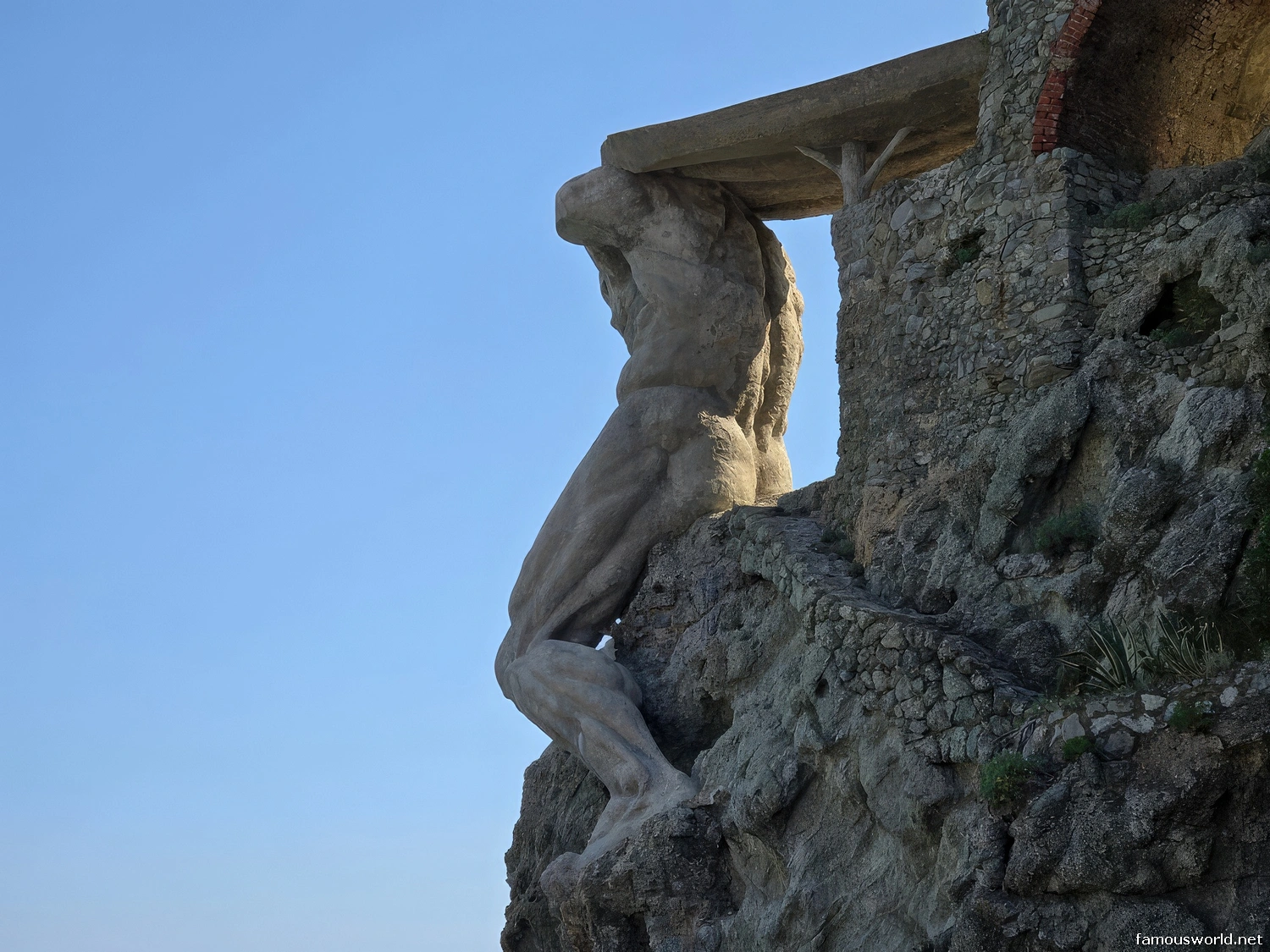
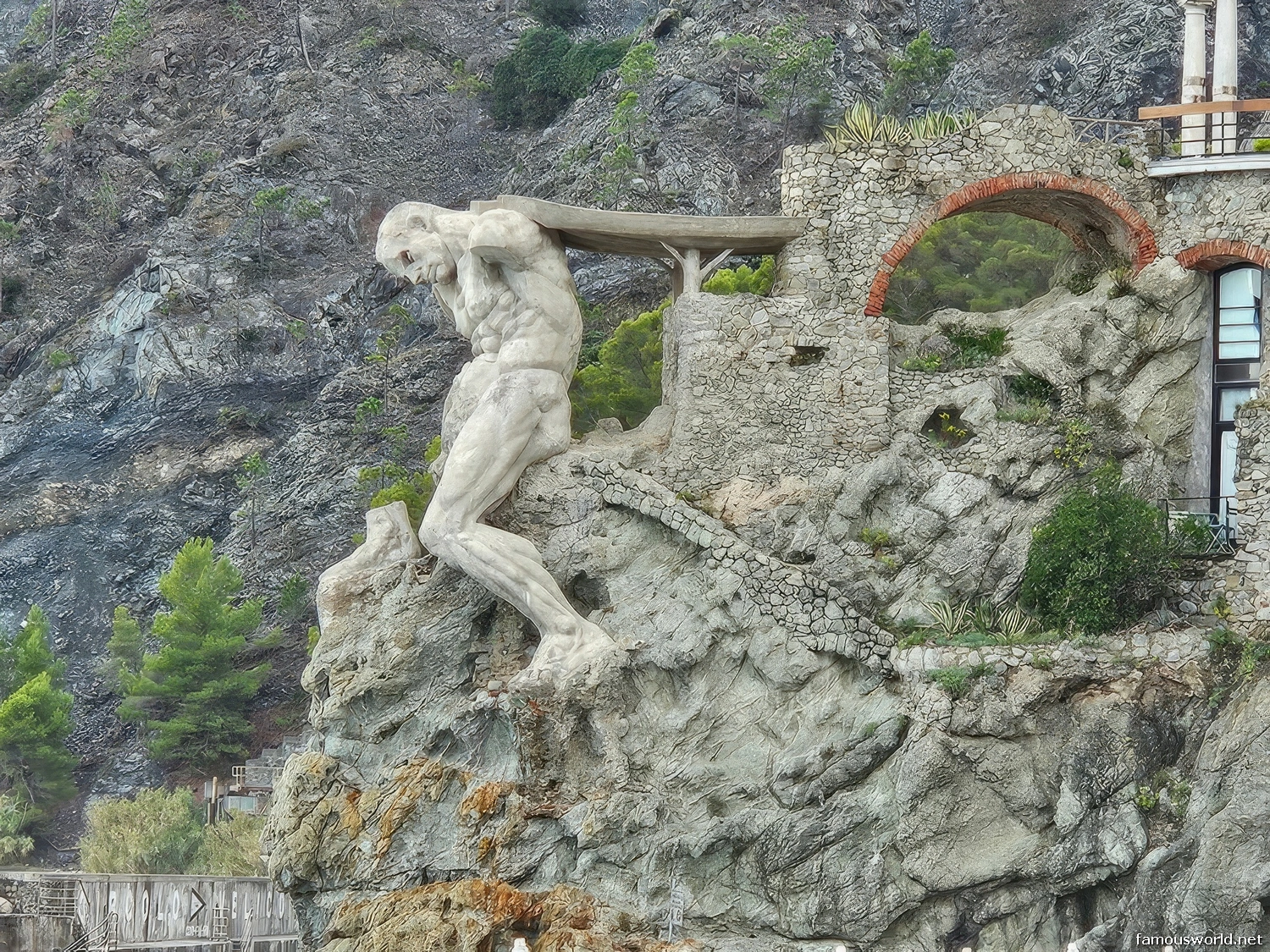
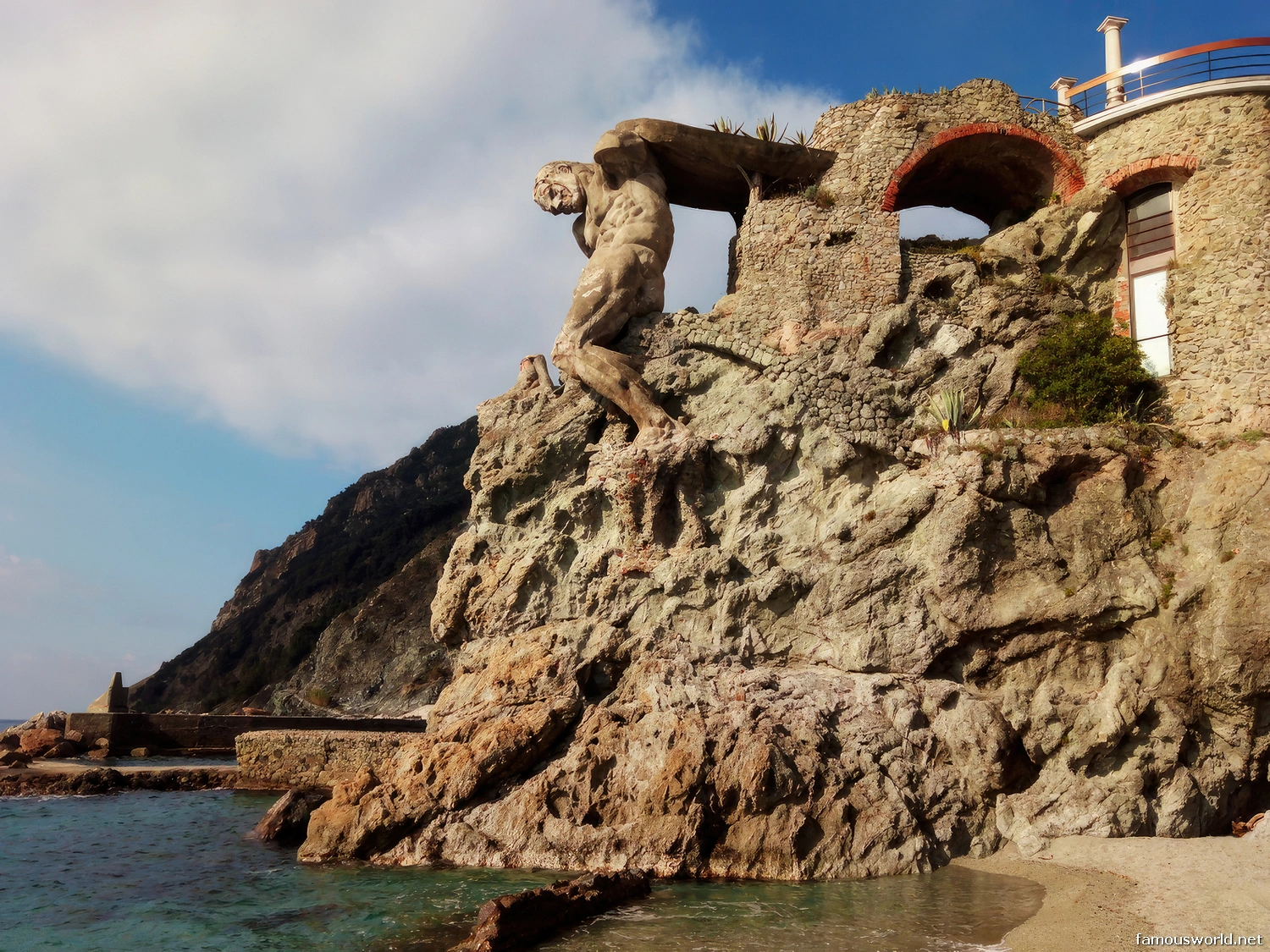
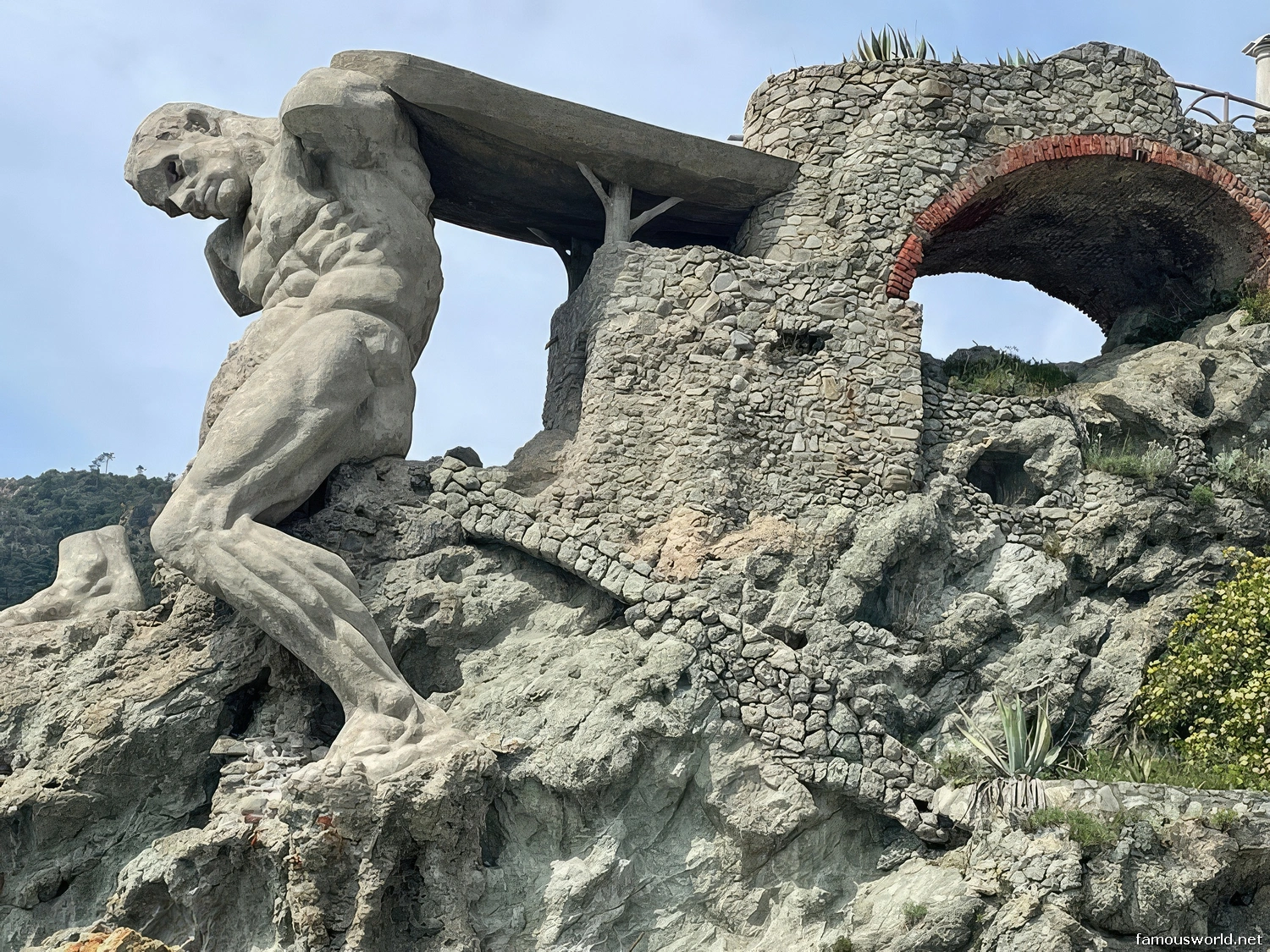
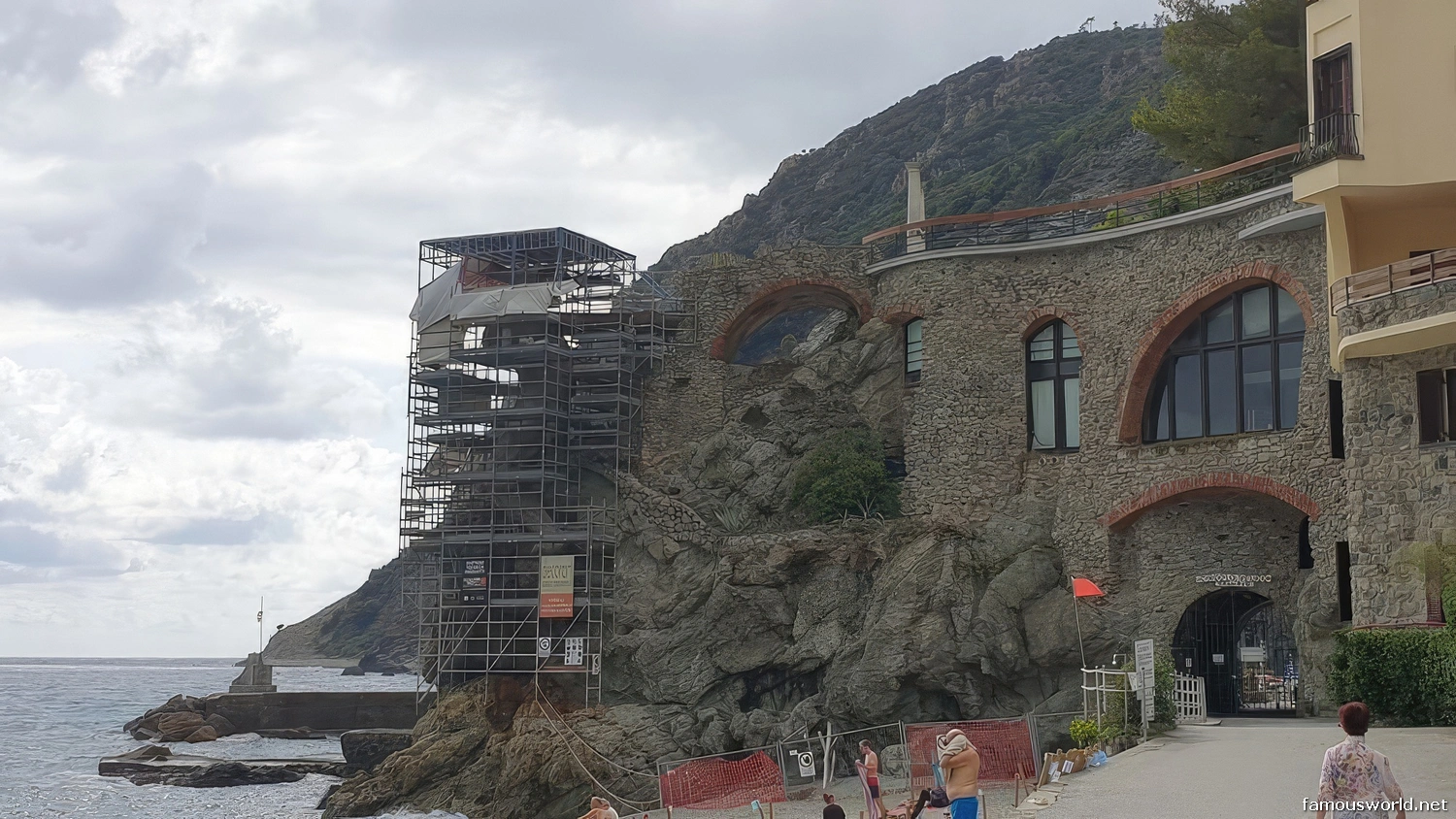
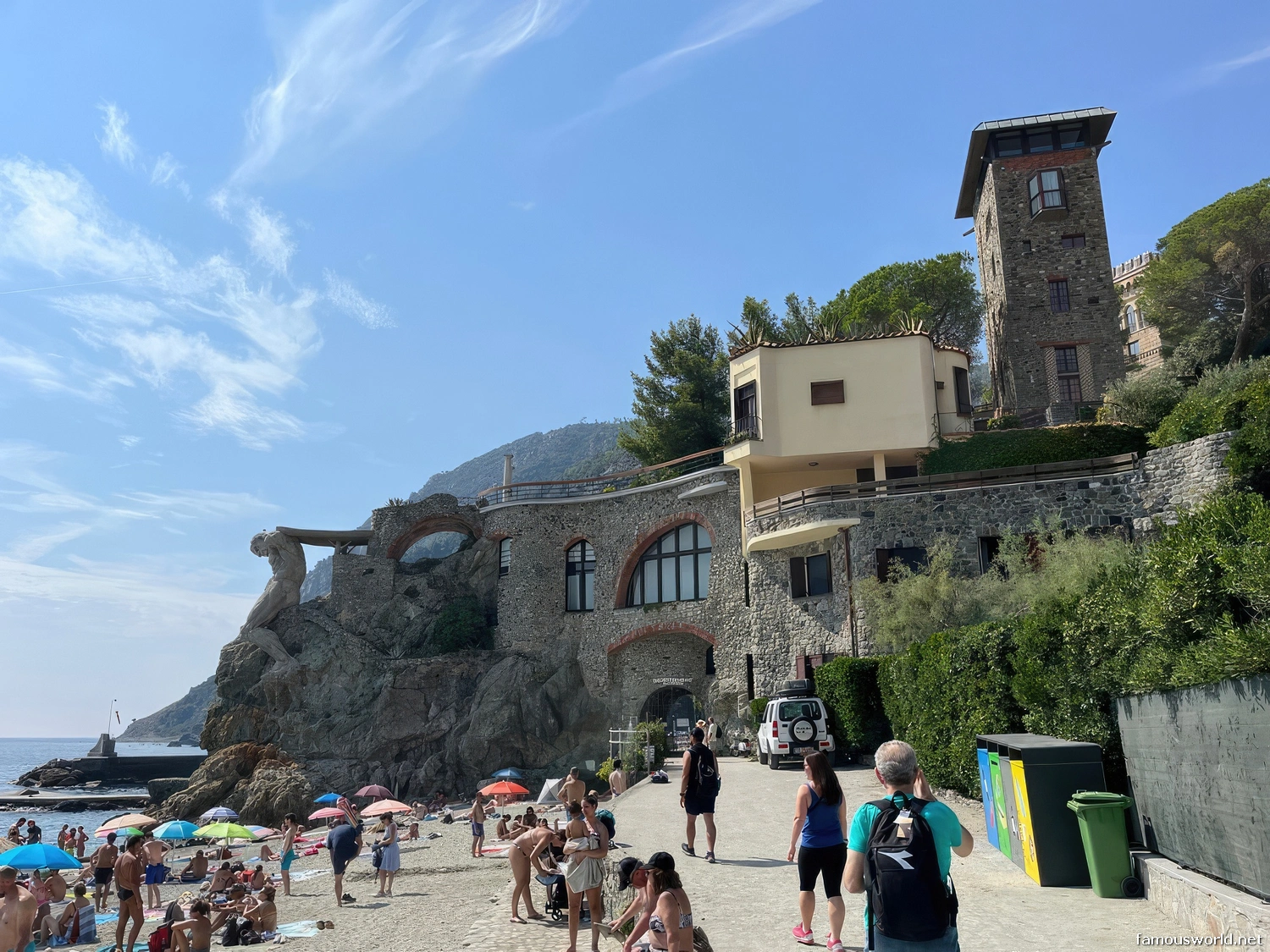
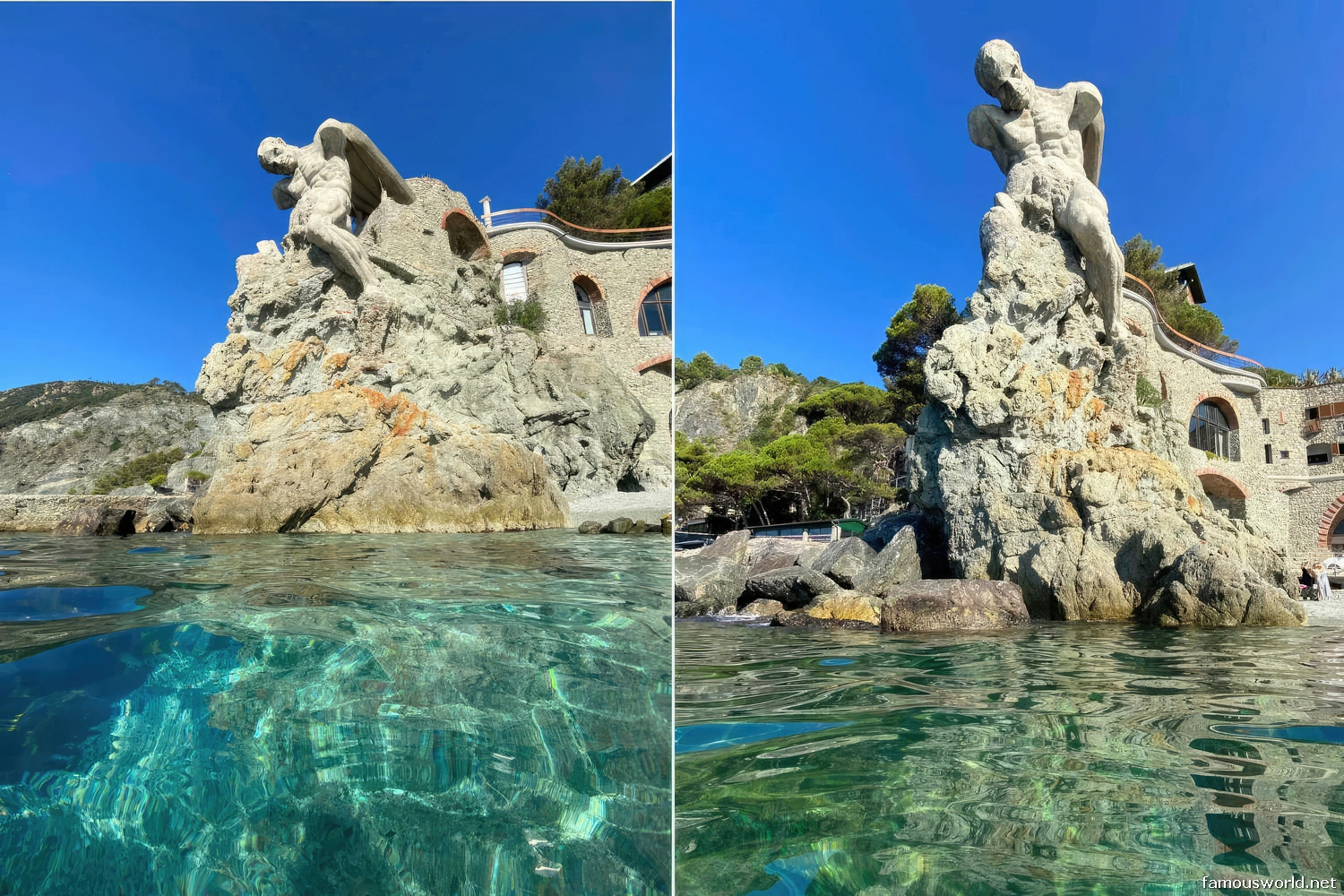
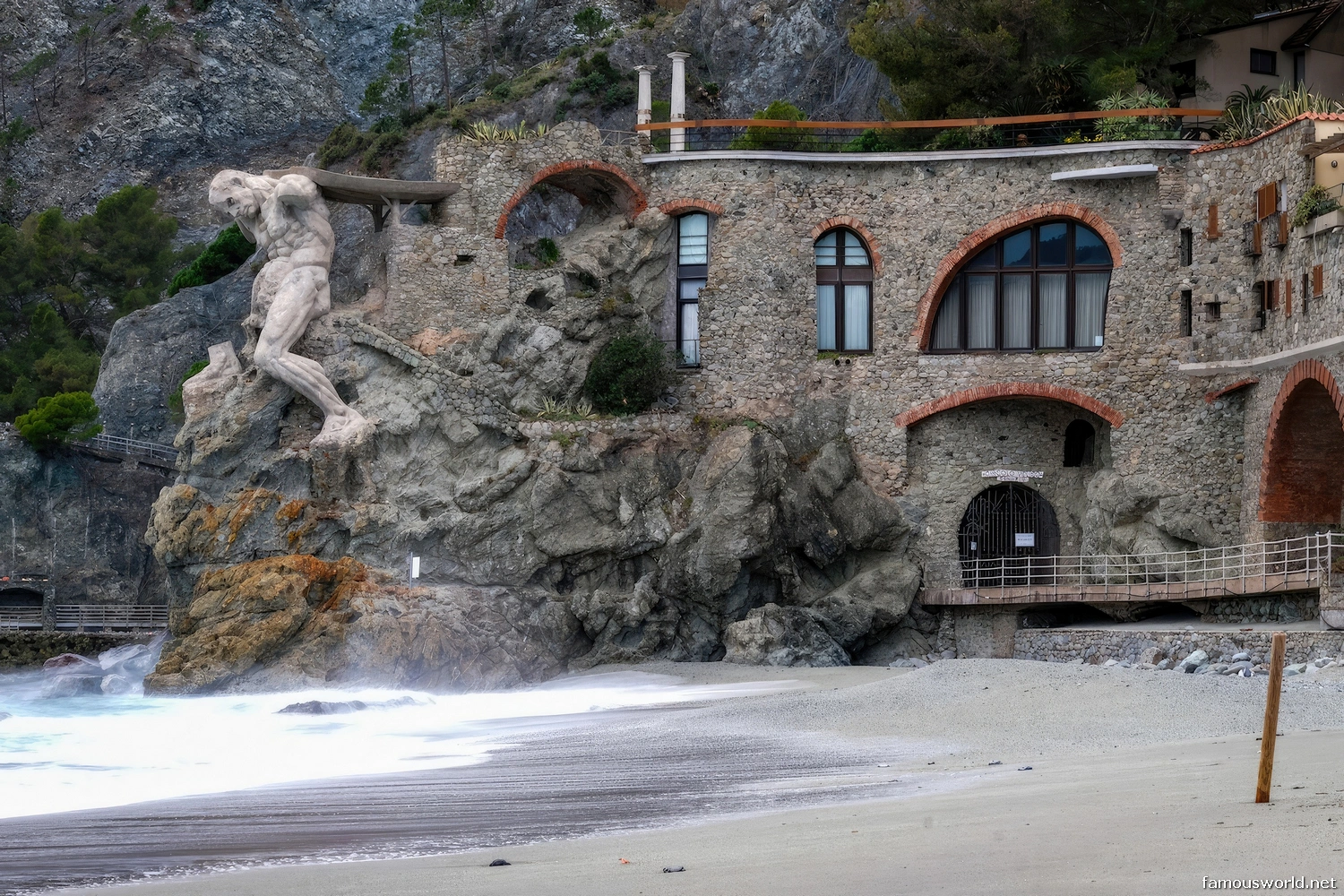

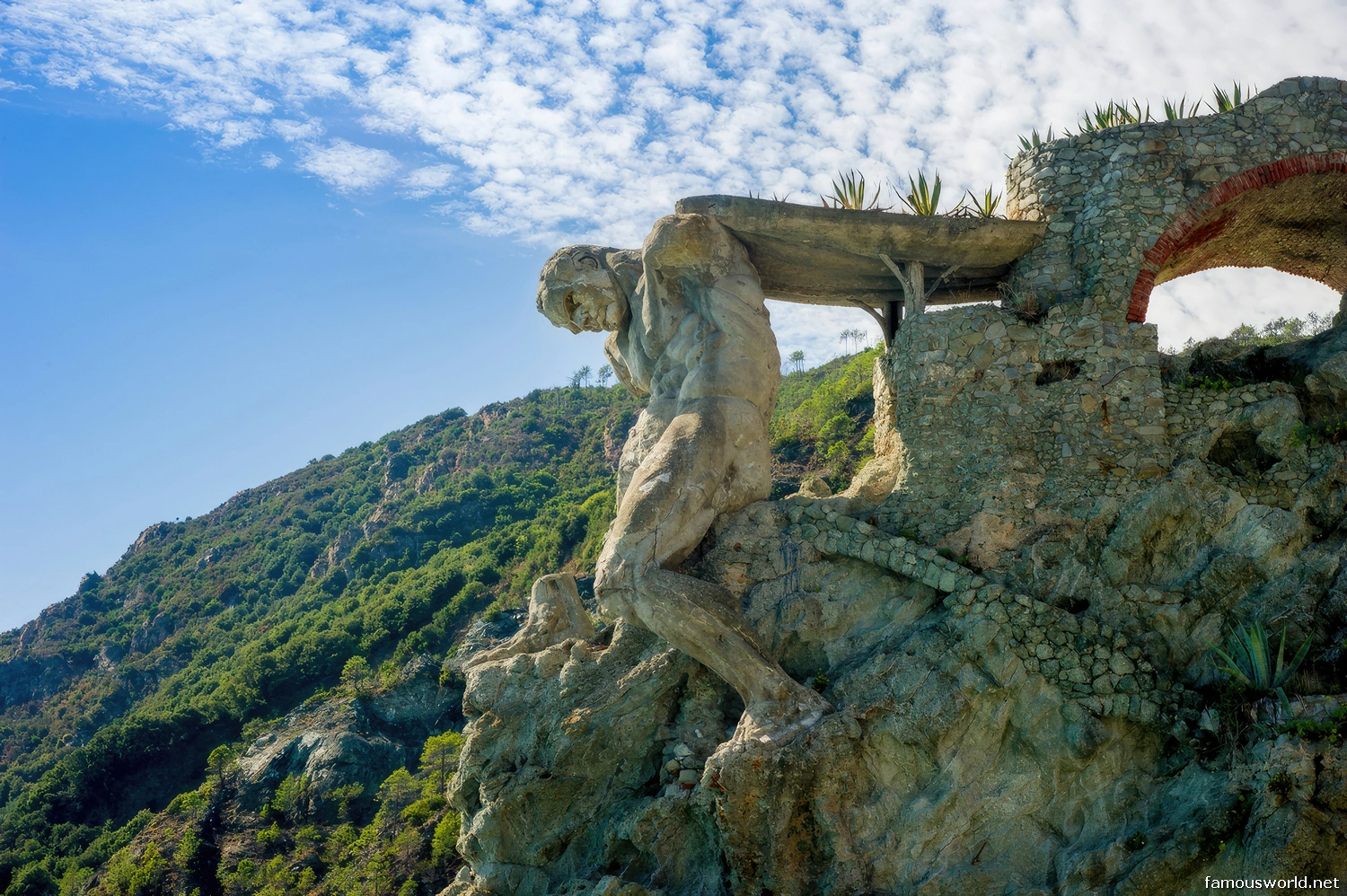
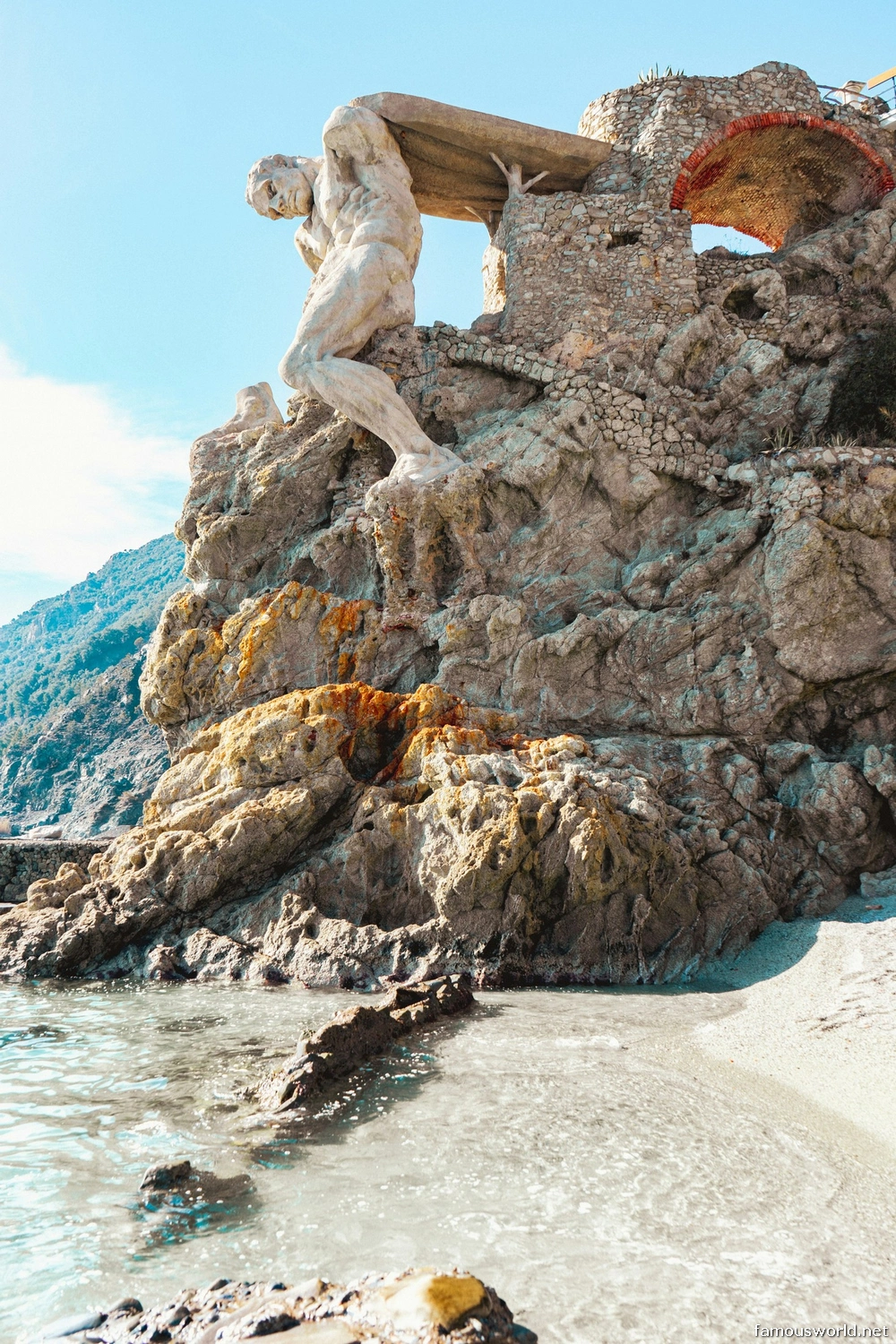
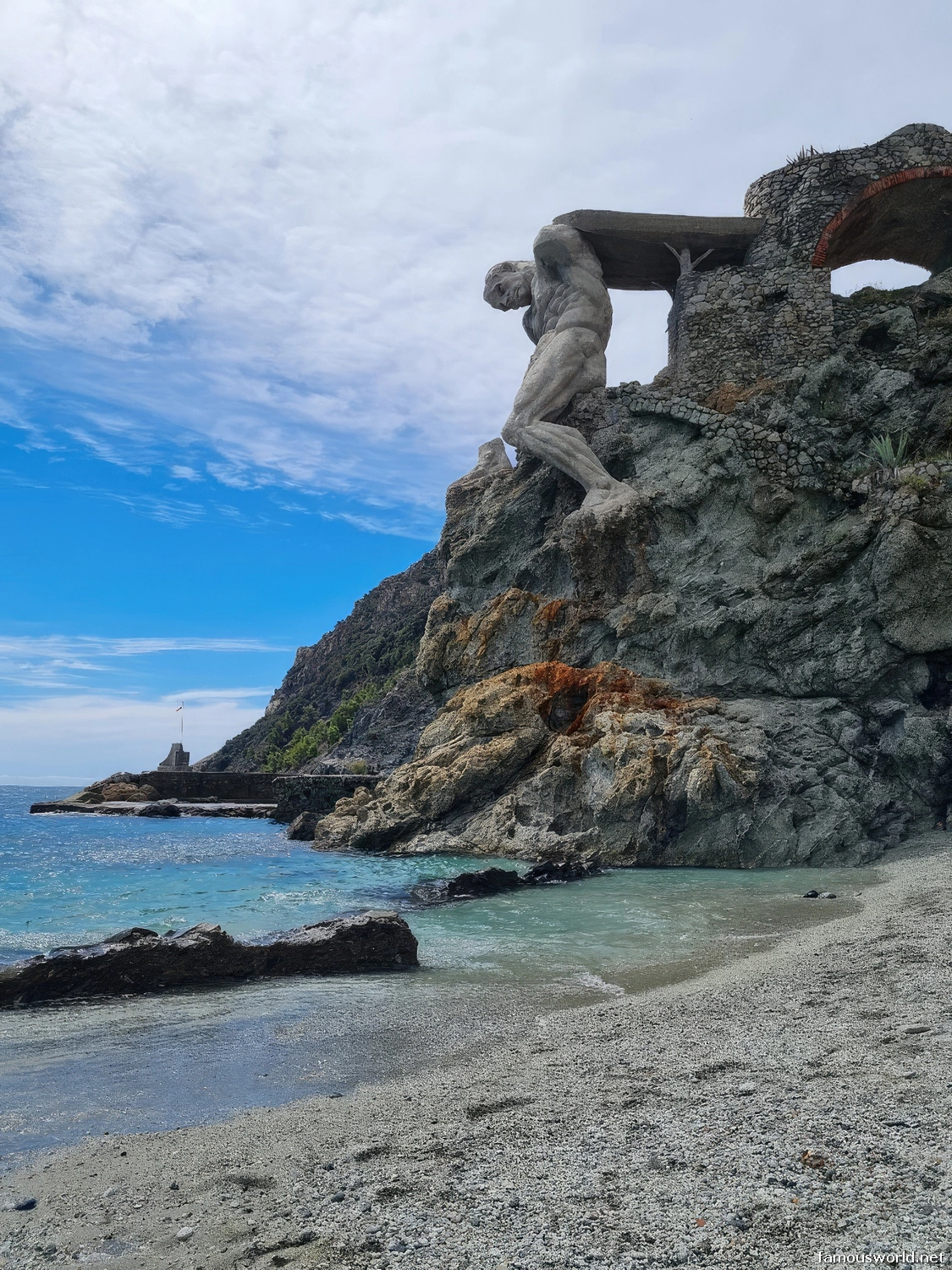
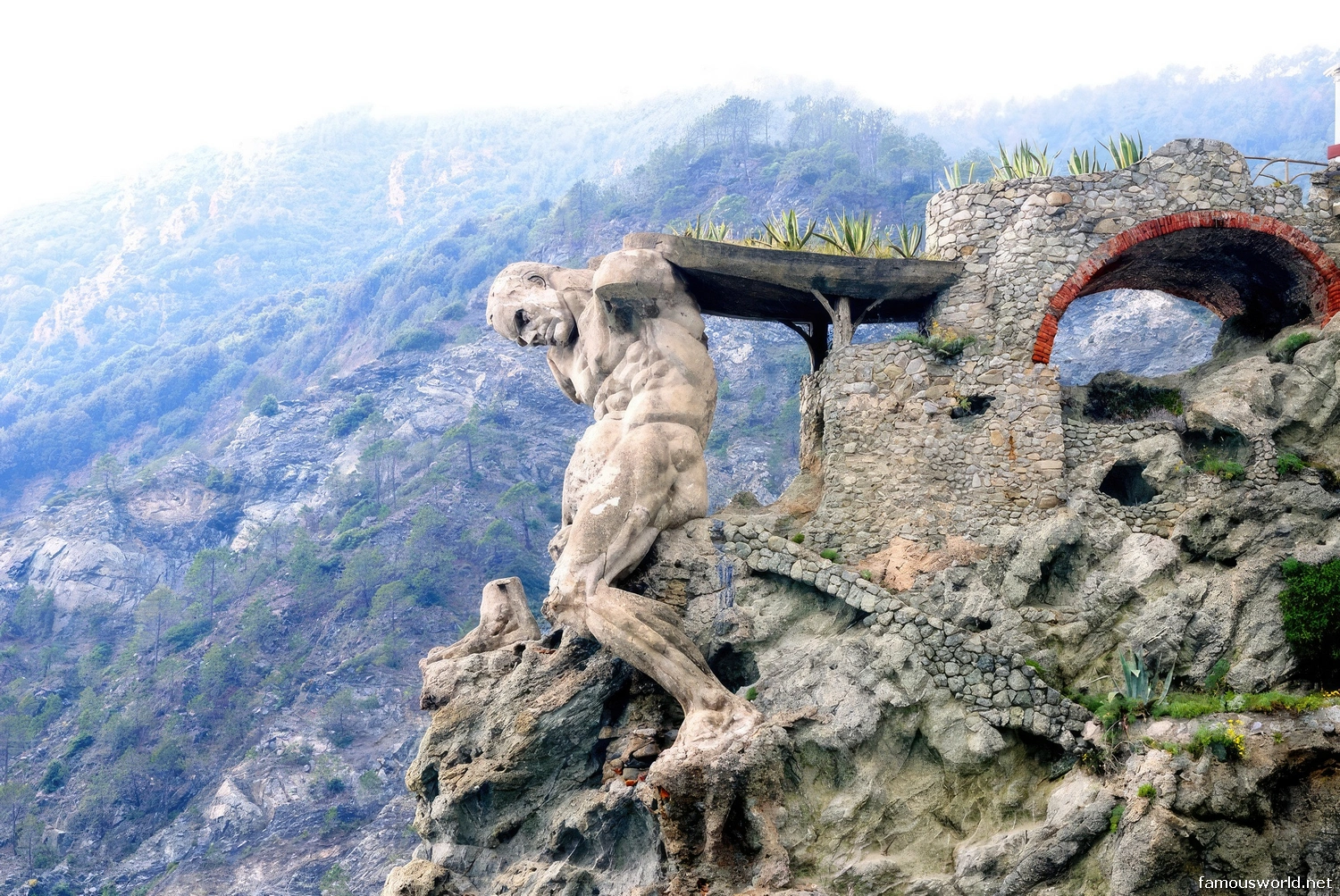
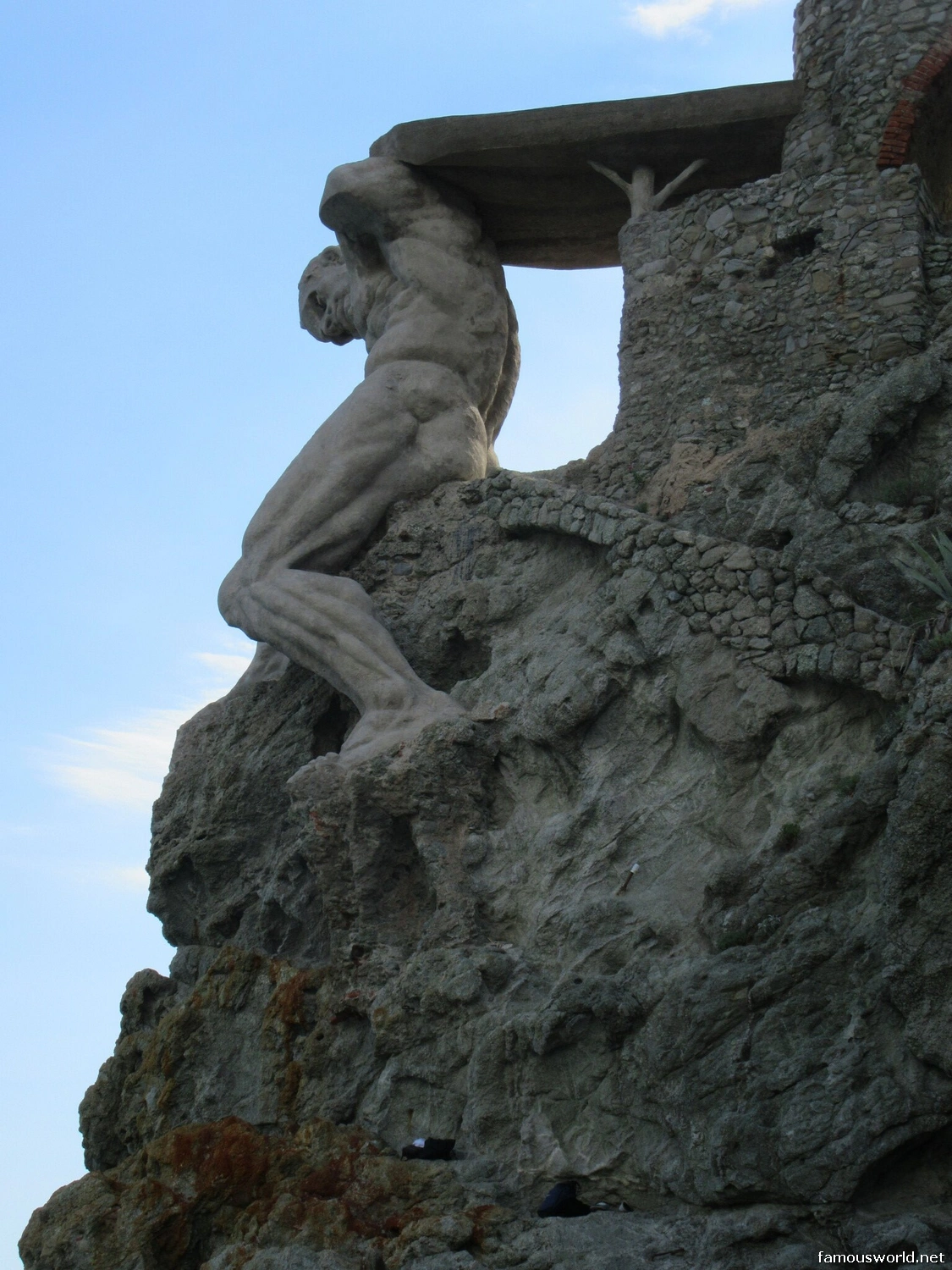
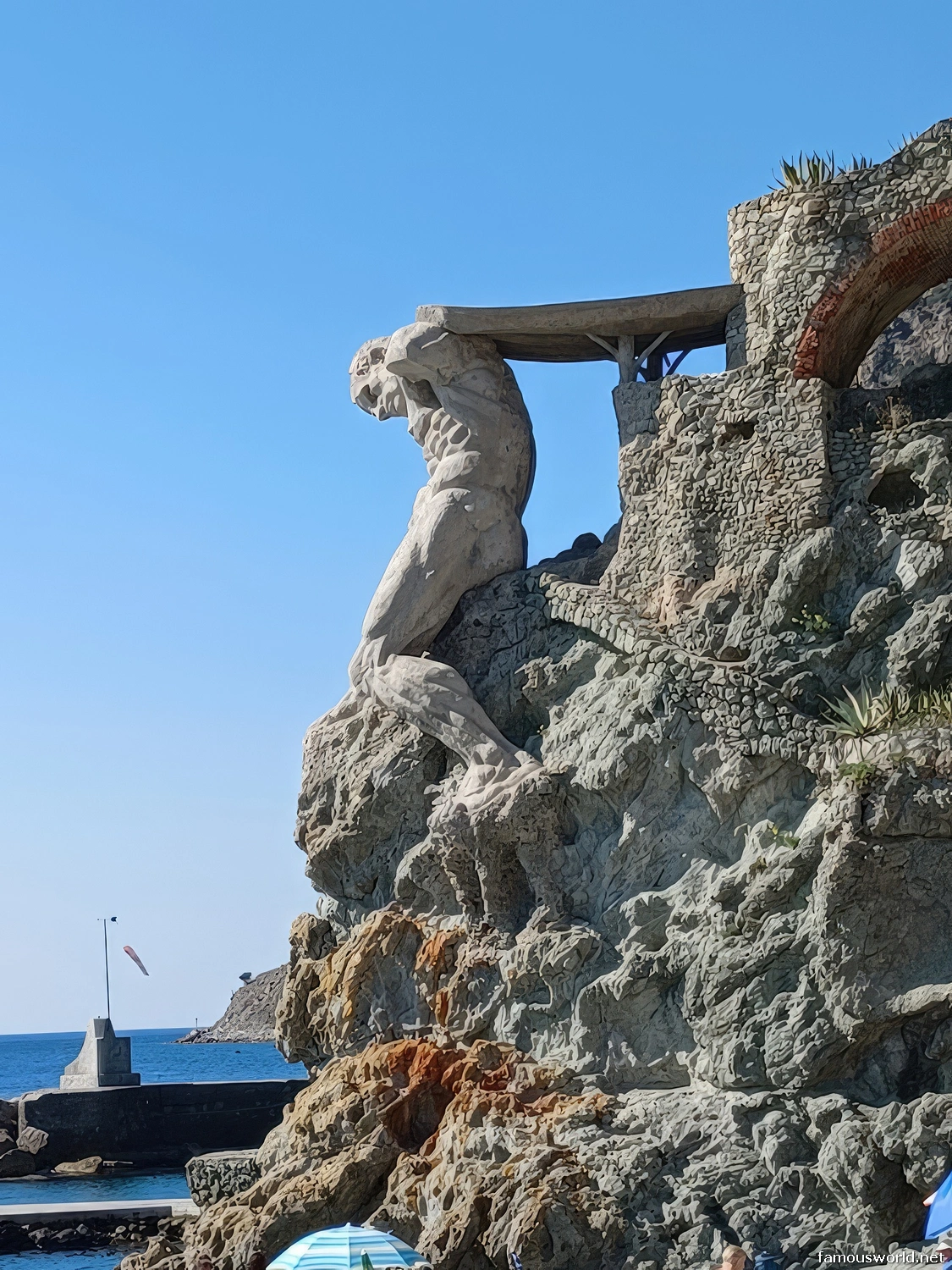
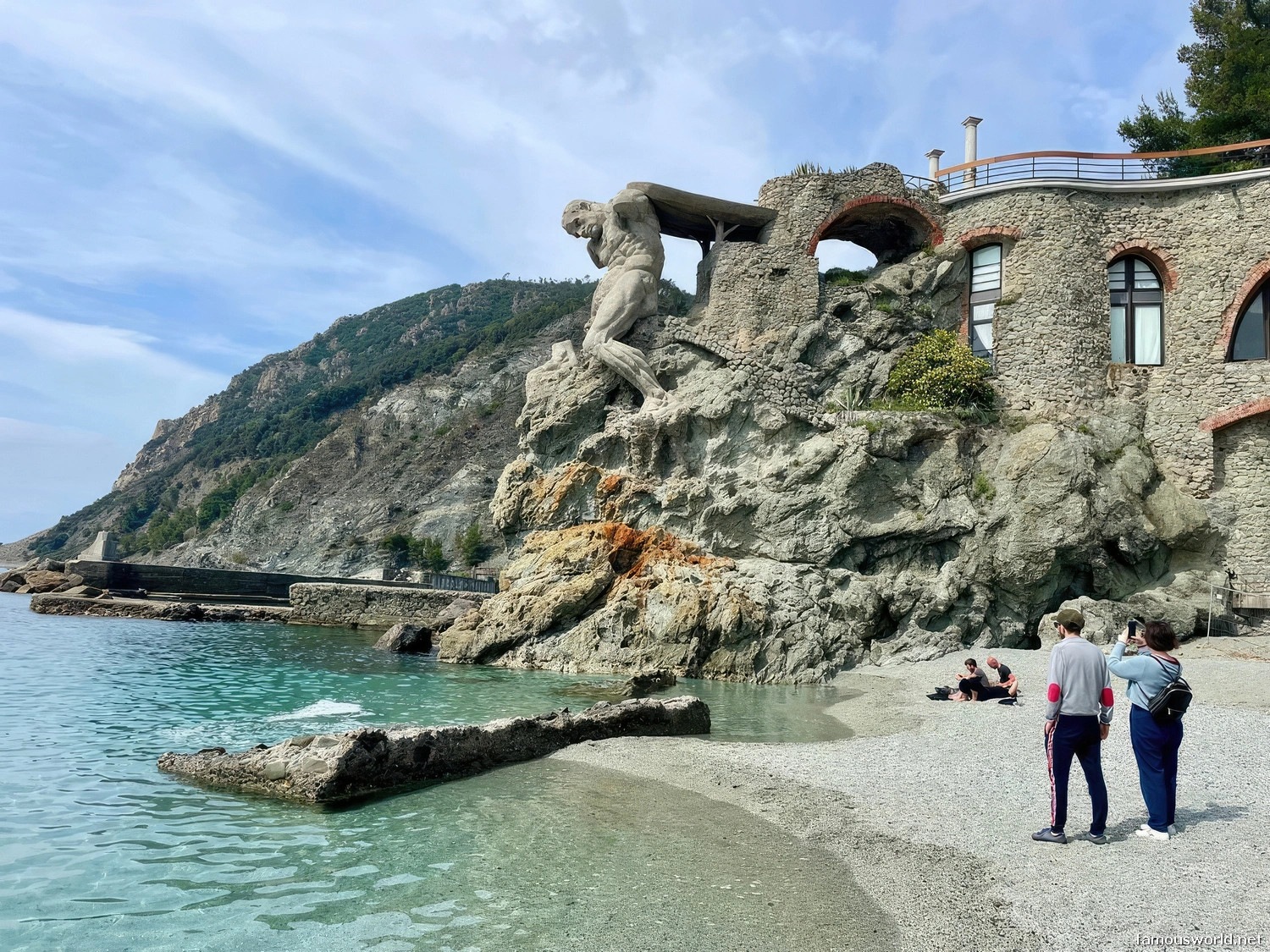
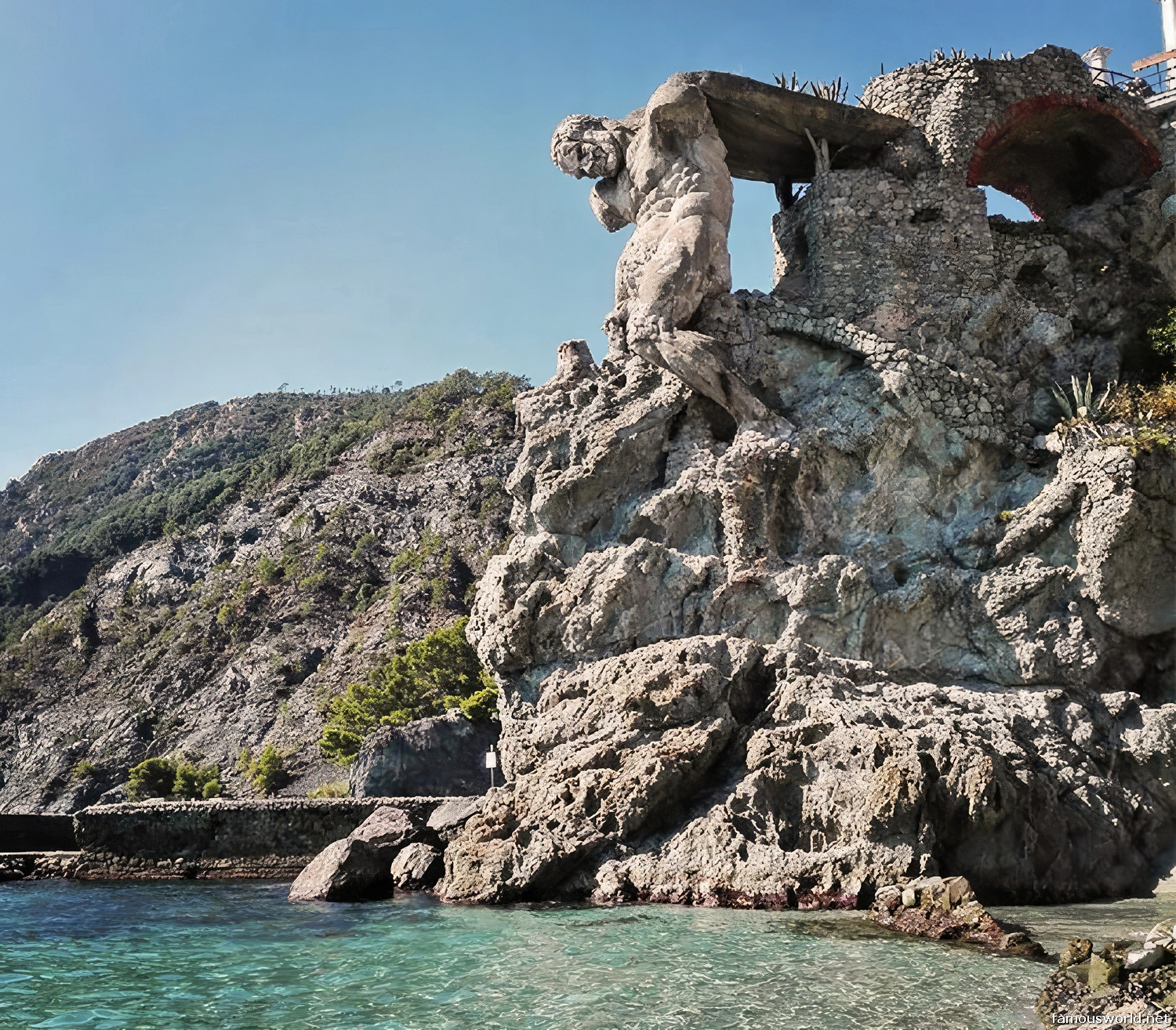
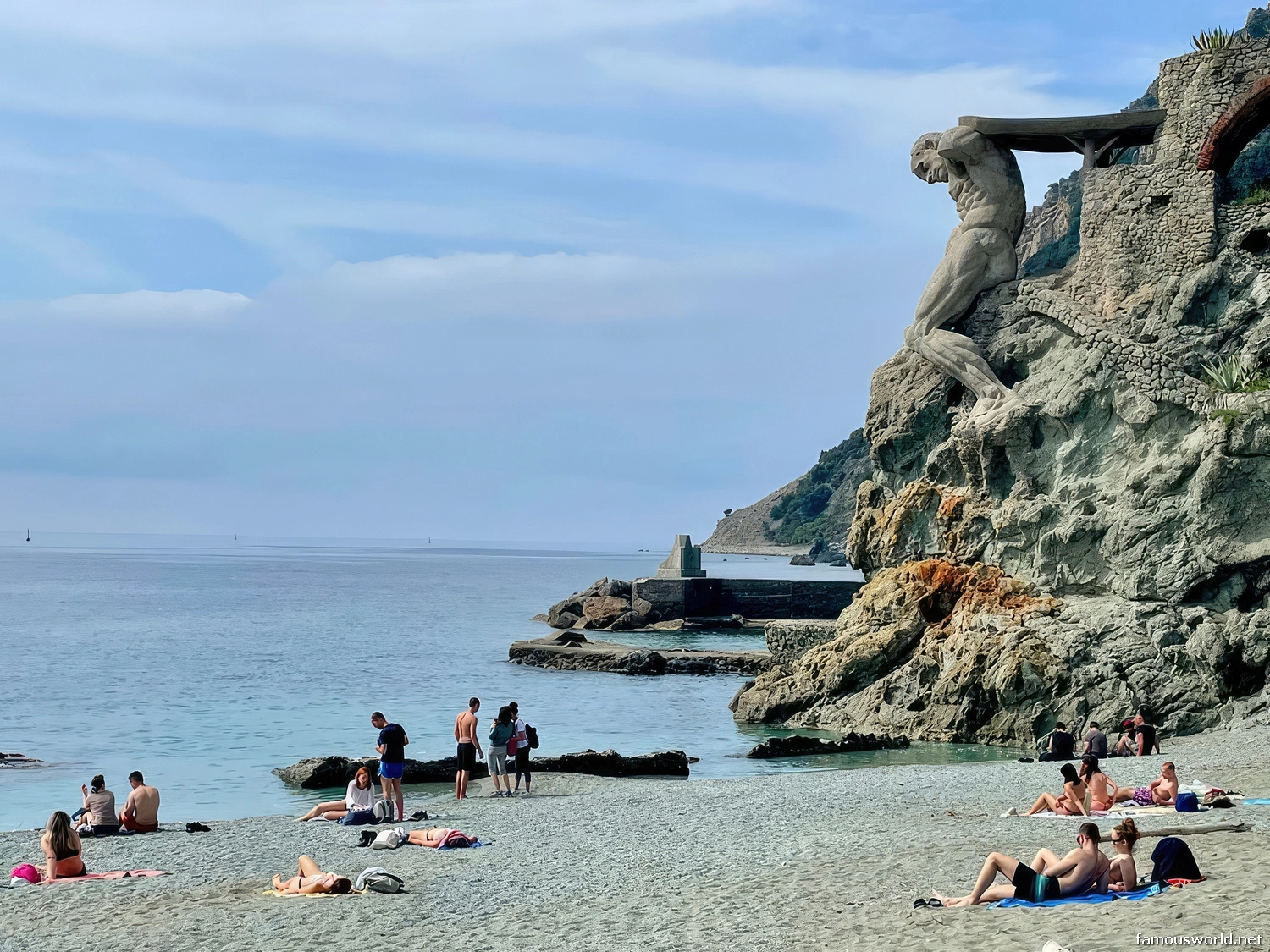
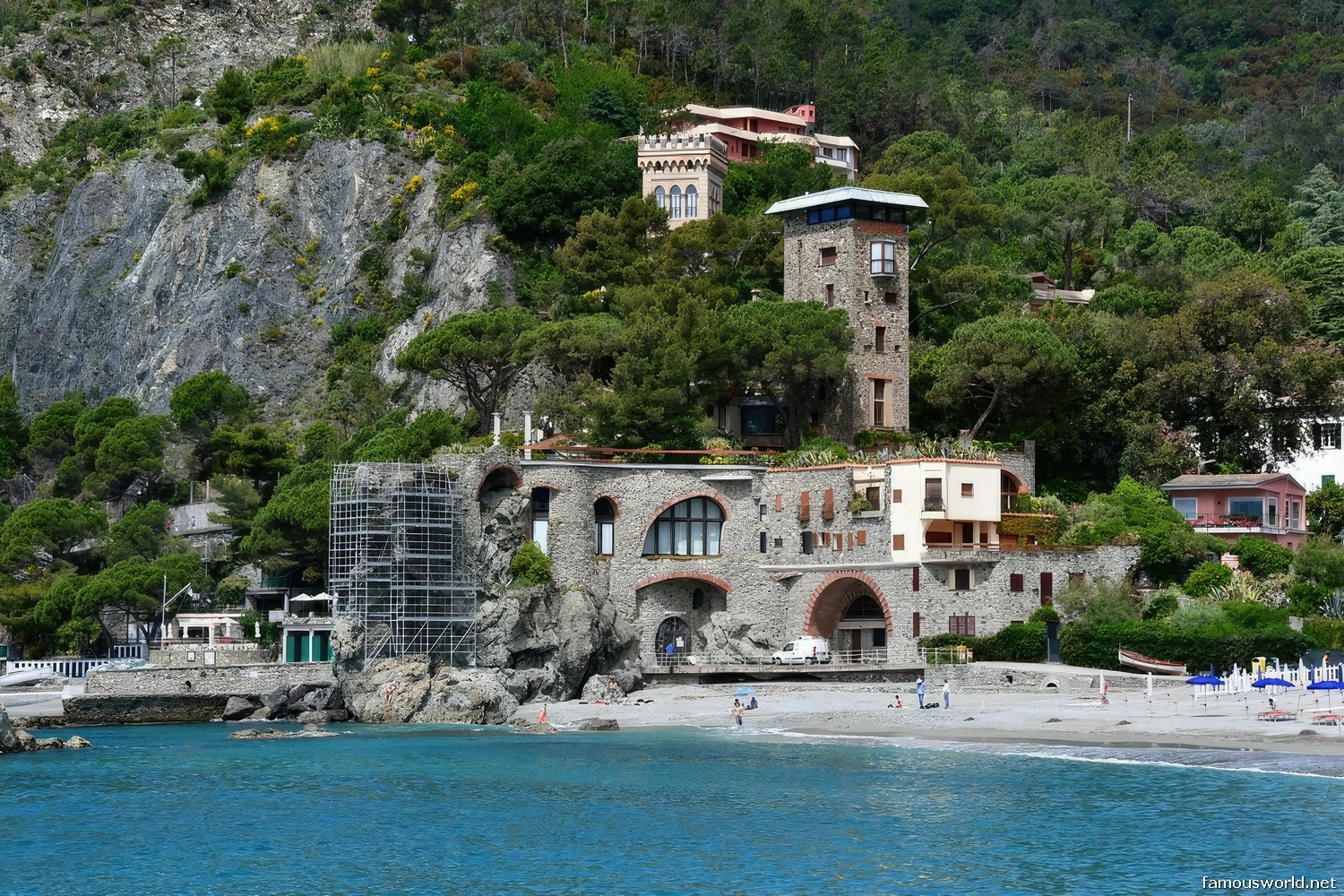
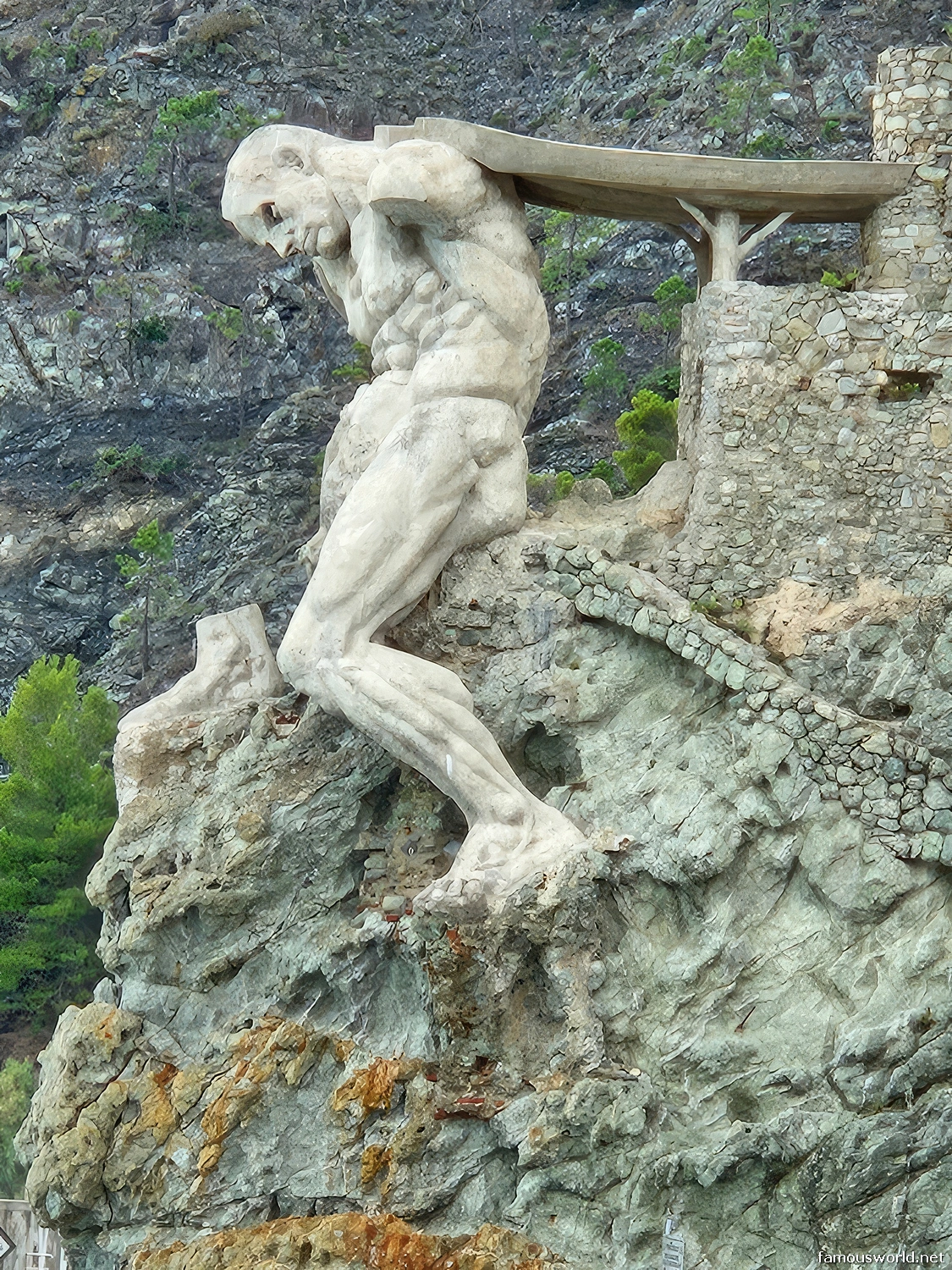
At the far western end of Monterosso’s Fegina beach stands the Statua del Gigante, a dramatic and weathered guardian of the coastline. This colossal sculpture, depicting Neptune, the god of the sea, seems to emerge directly from the rocky cliff face, a remnant of a more glamorous era. Built in the early 20th century as a magnificent ornament for a luxurious villa, the Giant has since been ravaged by war and fierce sea storms. Today, though scarred and incomplete, it remains a powerful symbol of Monterosso, its imposing figure telling a story of past splendor and rugged endurance against the elements.
Listen to an introduction about Statua del Gigante

Name and Location
- Name: Statua del Gigante (Statue of the Giant)
- Location: At the westernmost point of Spiaggia di Fegina in Monterosso al Mare, the largest of the five Cinque Terre villages.
How to Get There
The statue is a landmark on the main beach and is easily reached on foot.
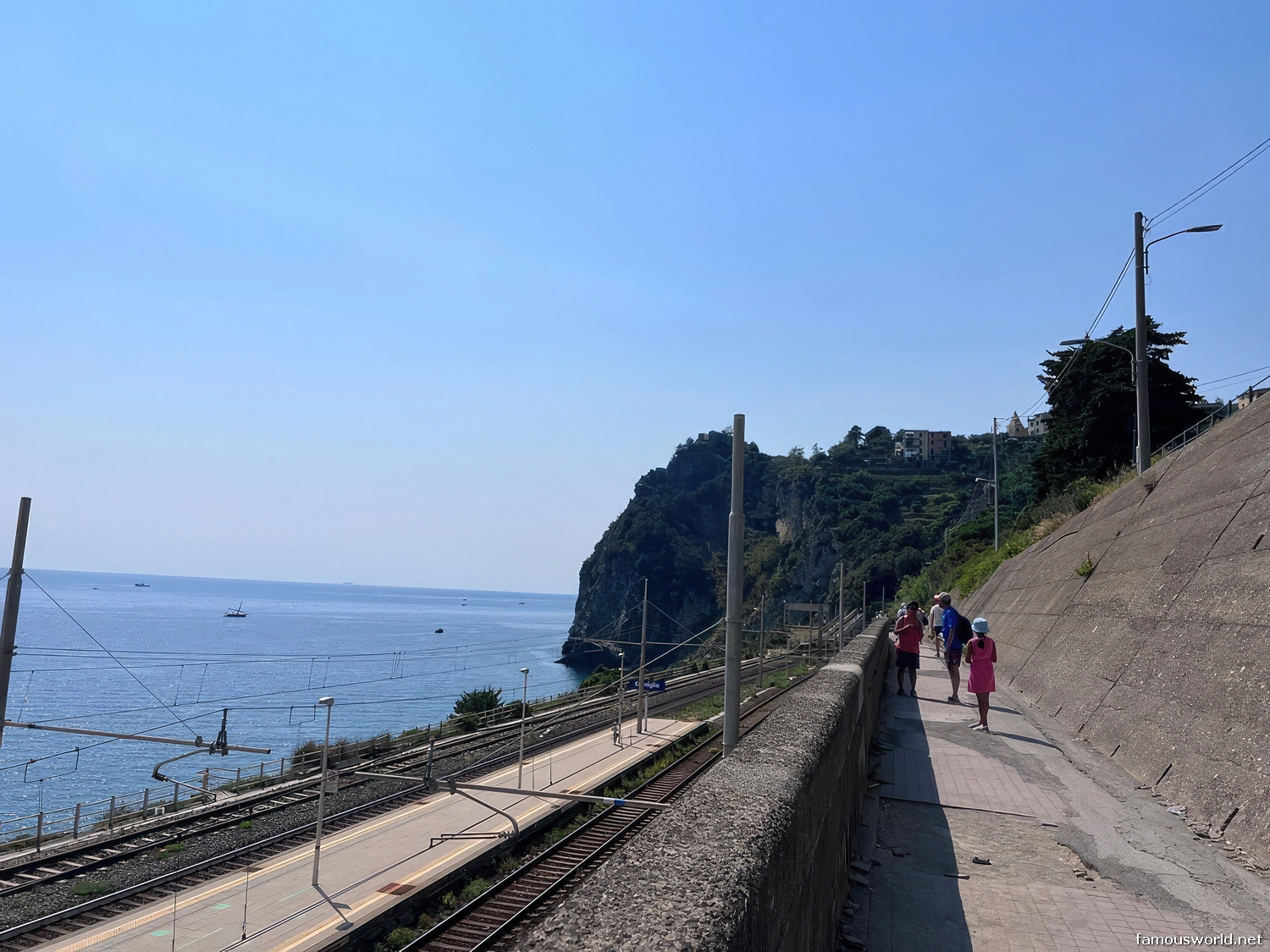
- By Foot: From the Monterosso train station, turn right and walk along the main beachfront promenade (Lungomare Fegina). The statue is located at the very end of the beach, approximately a 10-minute walk away.
Landscape and Architecture
The statue is a striking blend of art, engineering, and natural landscape, though it bears the scars of history.
- Original Grandeur: Created in 1910 by sculptor Arrigo Minerbi and engineer Francesco Levacher, the 14-meter-high statue was made of concrete and iron. It originally depicted Neptune holding a trident, with a massive, intricately decorated seashell on his shoulders which served as a terrace for the elegant Villa Pastine above.
- A Battle-Scarred Survivor: The statue was heavily damaged by bombing during World War II, which destroyed the villa, and has been further eroded by the sea. It is now missing its arms, its trident, and the grand seashell it once supported.
- Integrated with the Cliff: The Giant is not a freestanding statue but is built directly into the rock face of the promontory. This integration gives it a powerful, elemental feel, as if the god of the sea is truly part of the coastline itself.
What Makes It Famous
The Statua del Gigante is famous as a dramatic, melancholic, and iconic symbol of Monterosso.
- Iconic Landmark: It is one of the most photographed and recognizable features of the Cinque Terre, marking the scenic endpoint of Fegina beach.
- A Symbol of Resilience: Its damaged but defiant form is a poignant reminder of the area’s history and its endurance through conflict and the power of nature.
- Artistic and Engineering Feat: Even in its ruined state, the scale and ambition of the early 20th-century sculpture are impressive, representing a unique piece of seaside architecture.
Differences from Other Wonders (e.g., Riomaggiore)
A solitary, historic sculpture offers a different experience from a complete, living village.
- Environment (A Solitary Monument vs. A Bustling Village): The Giant is a single, monumental work of art set against a natural cliff at the edge of the sea. Riomaggiore is a complete and complex village, full of streets, homes, and the infrastructure of daily life.
- Primary Attraction (A Historic Sculpture vs. An Immersive Village): The attraction of the Giant is its dramatic visual presence and its poignant history. The attraction of Riomaggiore is the immersive experience of exploring its vibrant, vertical streets and picturesque harbor.
- Core Story (Lost Splendor vs. Living Tradition): The statue tells a story of a glamorous past that was lost to the violence of war and time. Riomaggiore tells a story of a continuous, living maritime tradition that has adapted and endured for centuries.
- Atmosphere (Awe and Melancholy vs. Energetic and Bustling): The feeling at the statue is one of awe at its scale, mixed with a sense of melancholy for its damaged state. The atmosphere in Riomaggiore is energetic, bustling, and filled with the sounds of a lively coastal town.
Location on world map