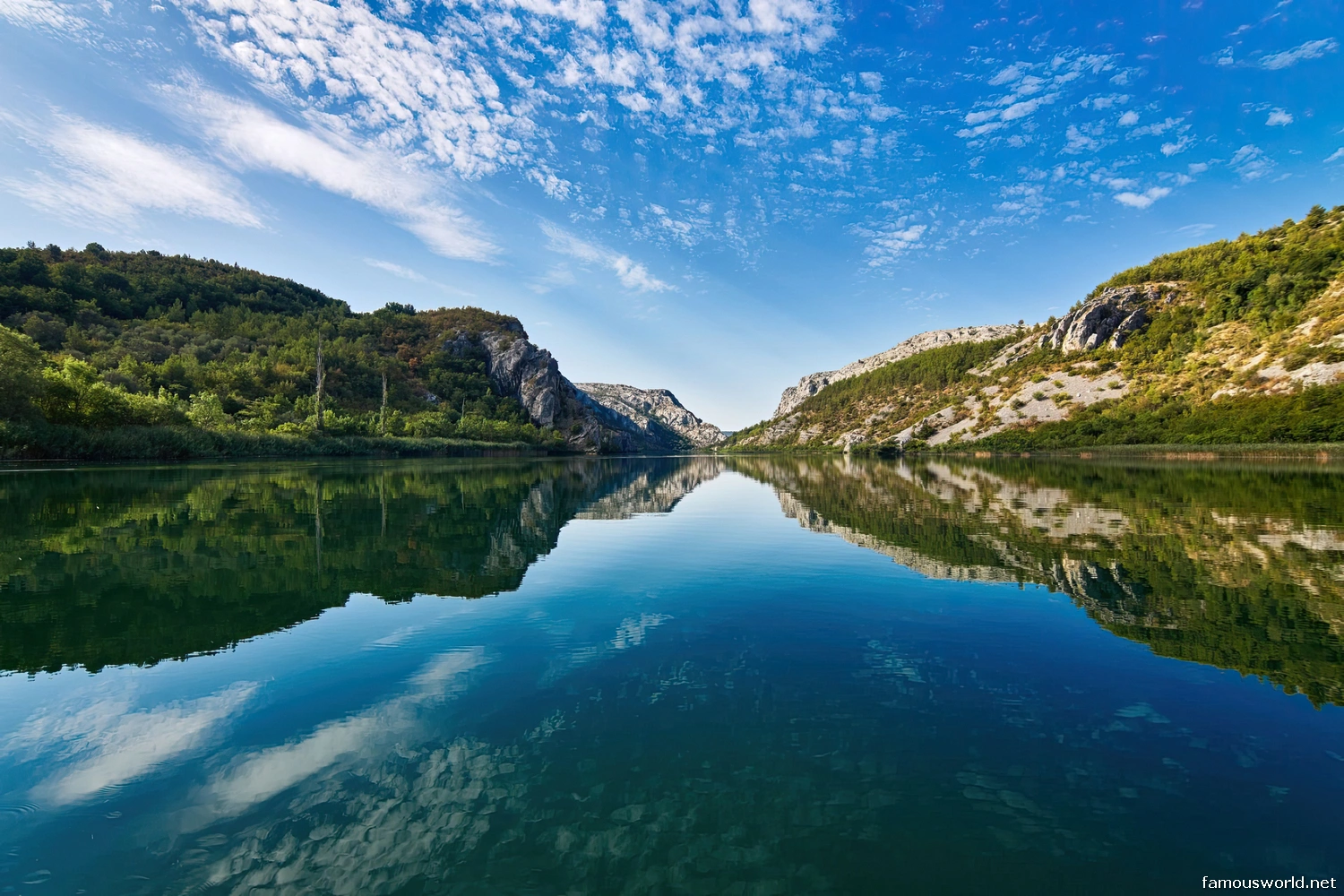
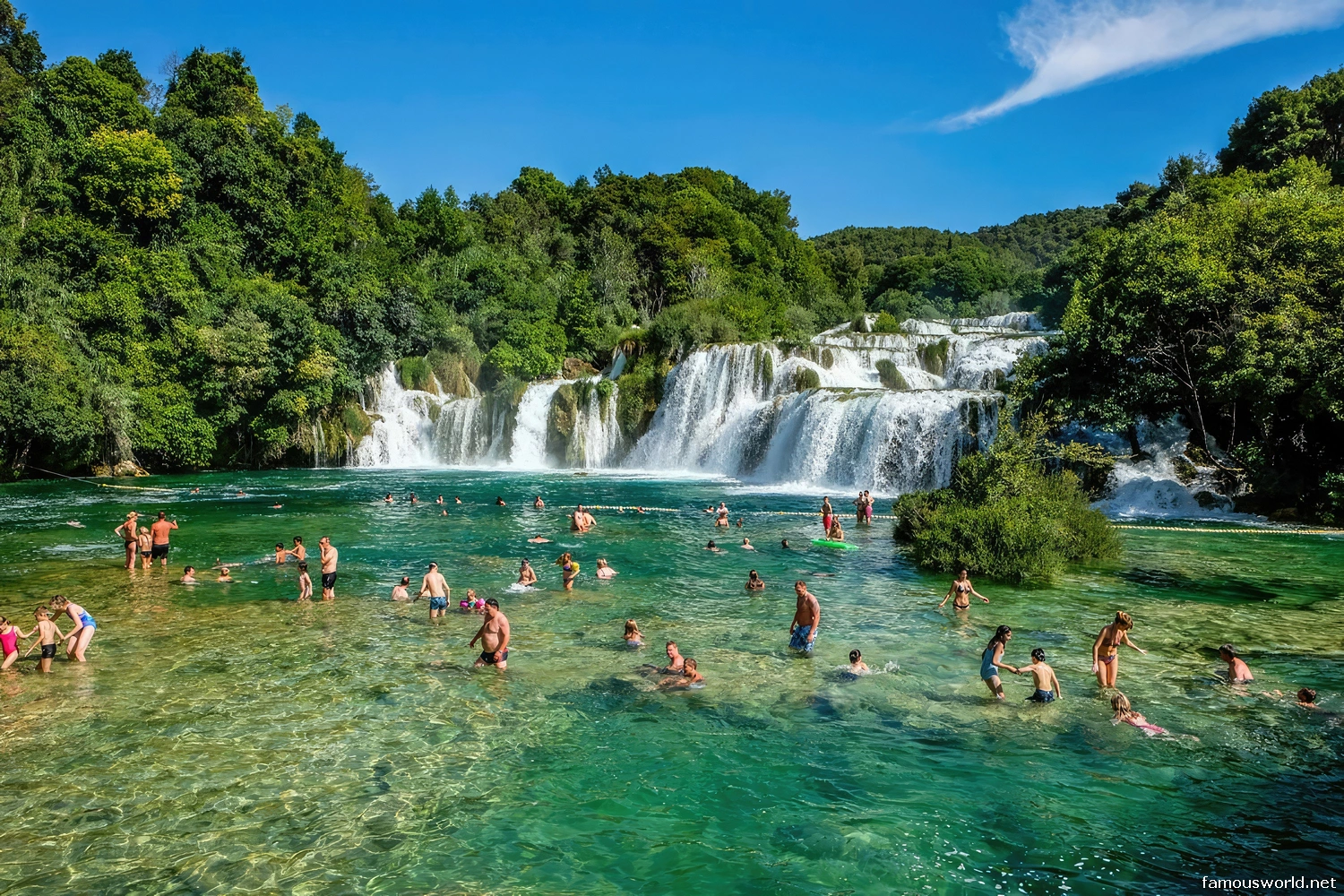
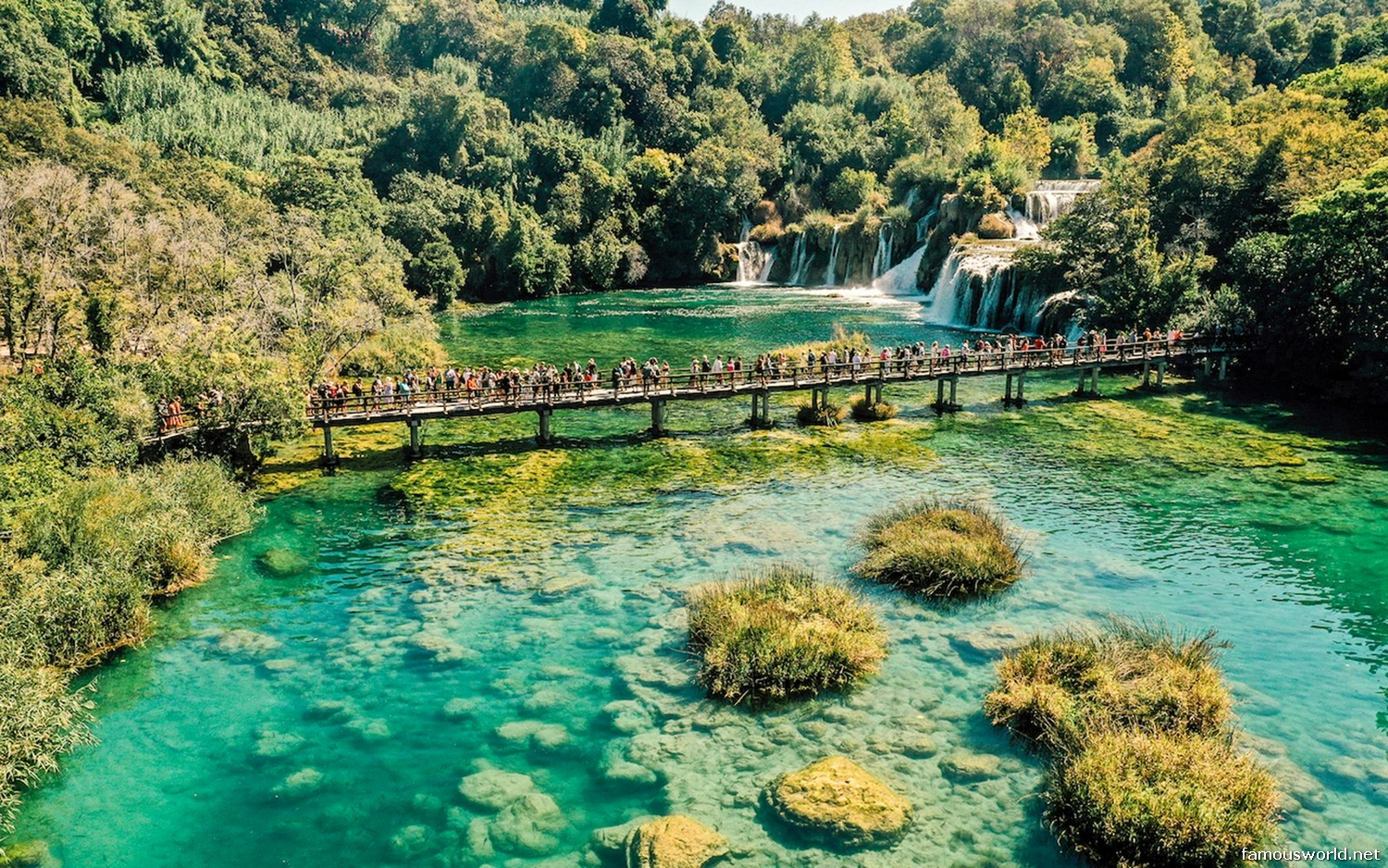
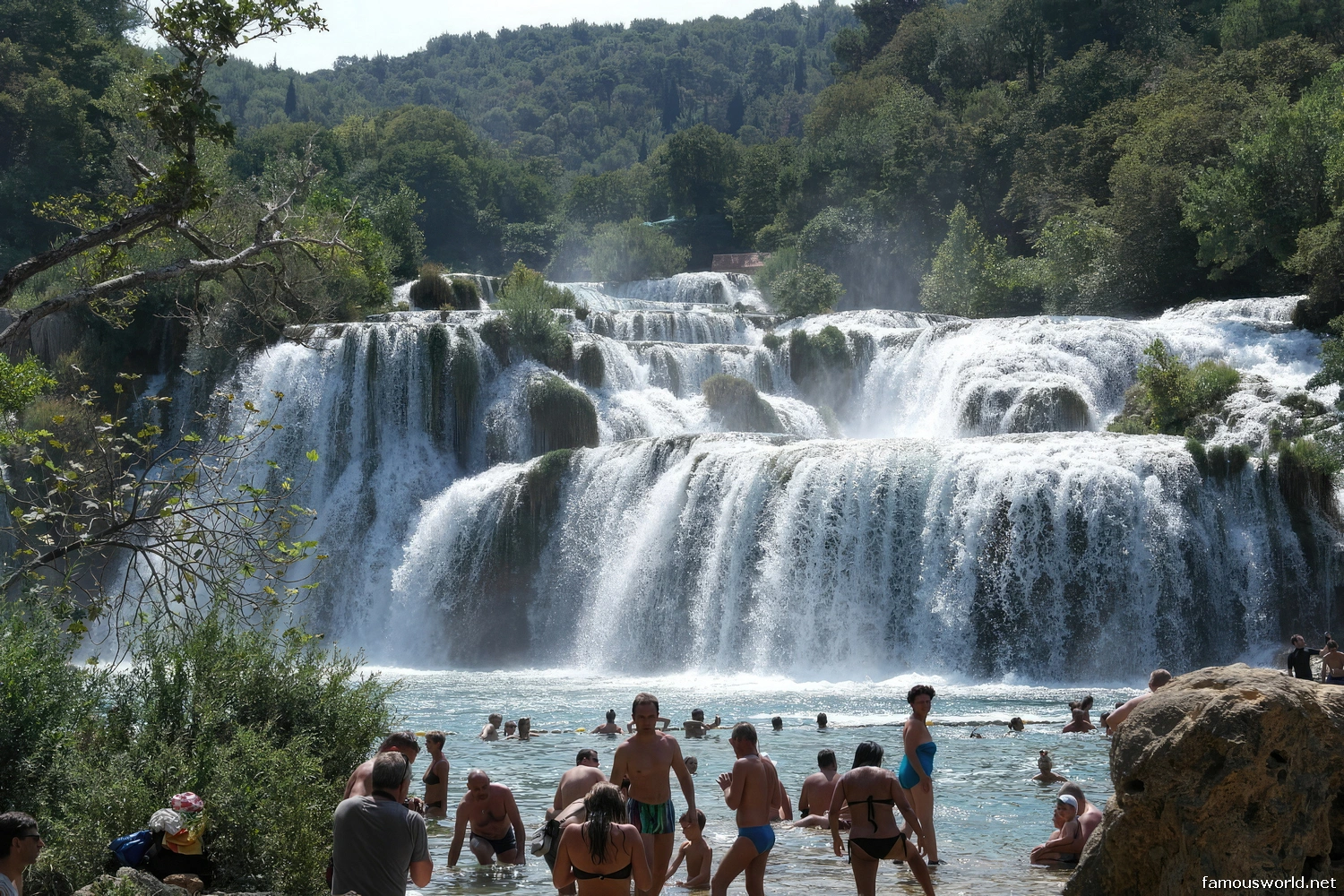
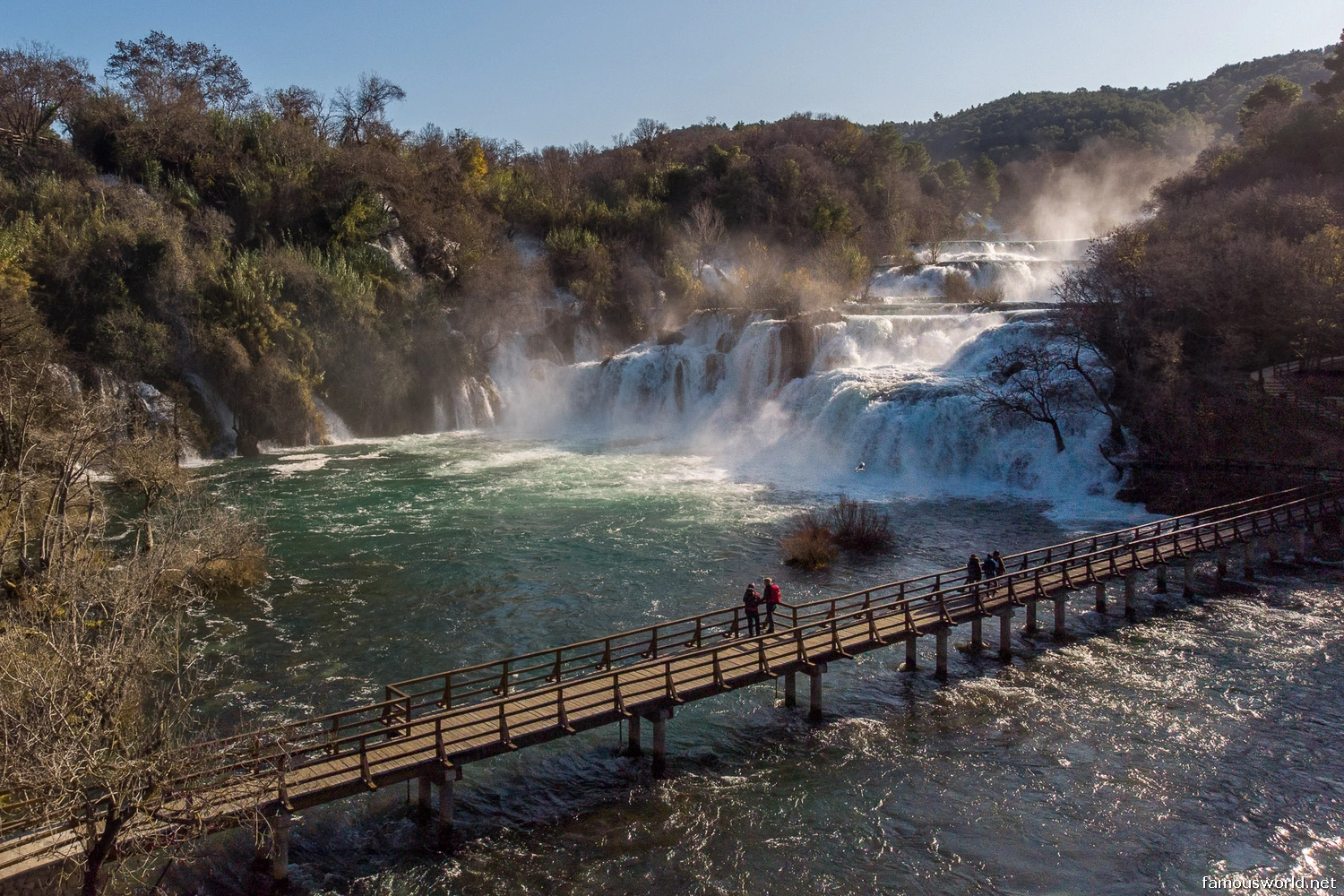
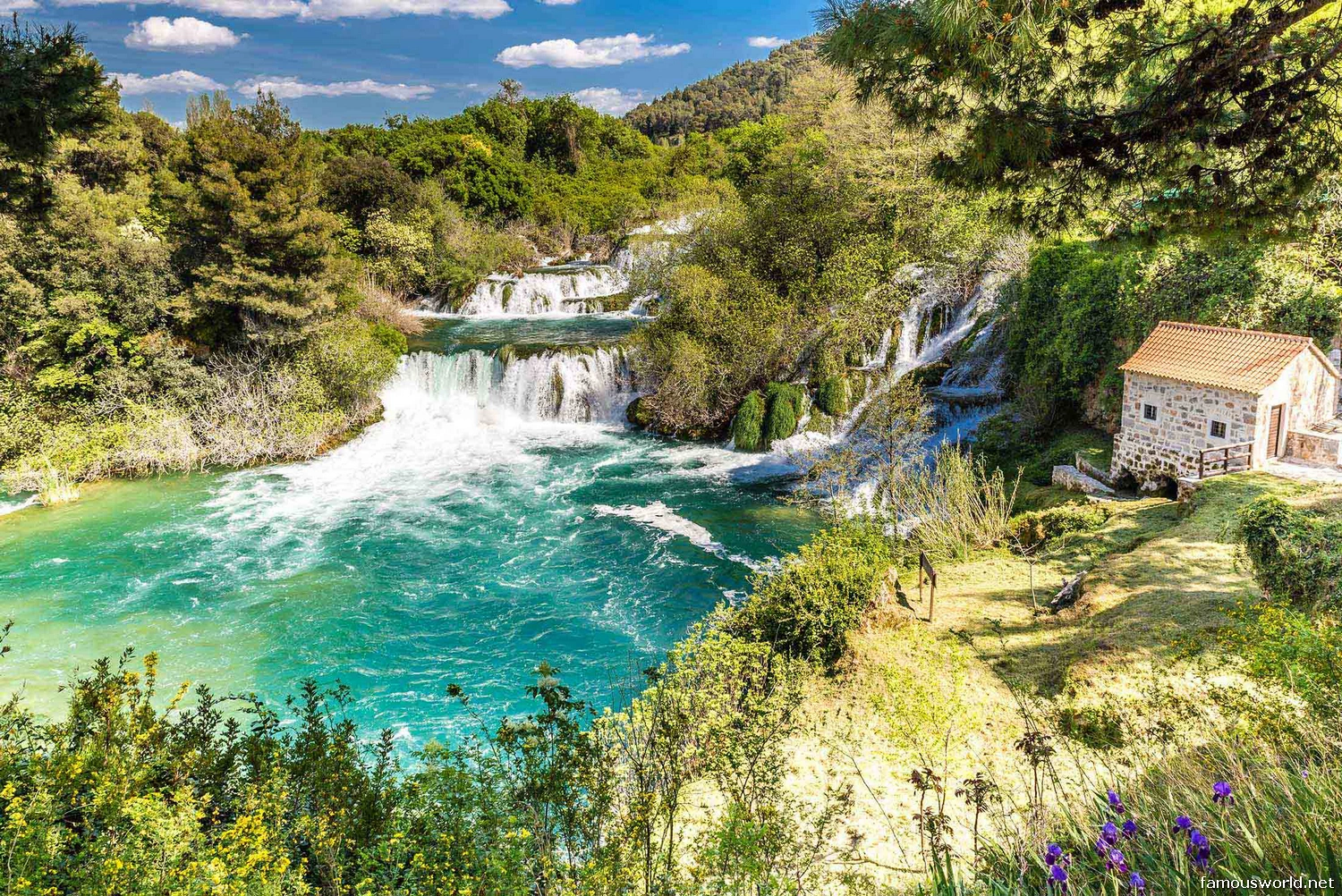
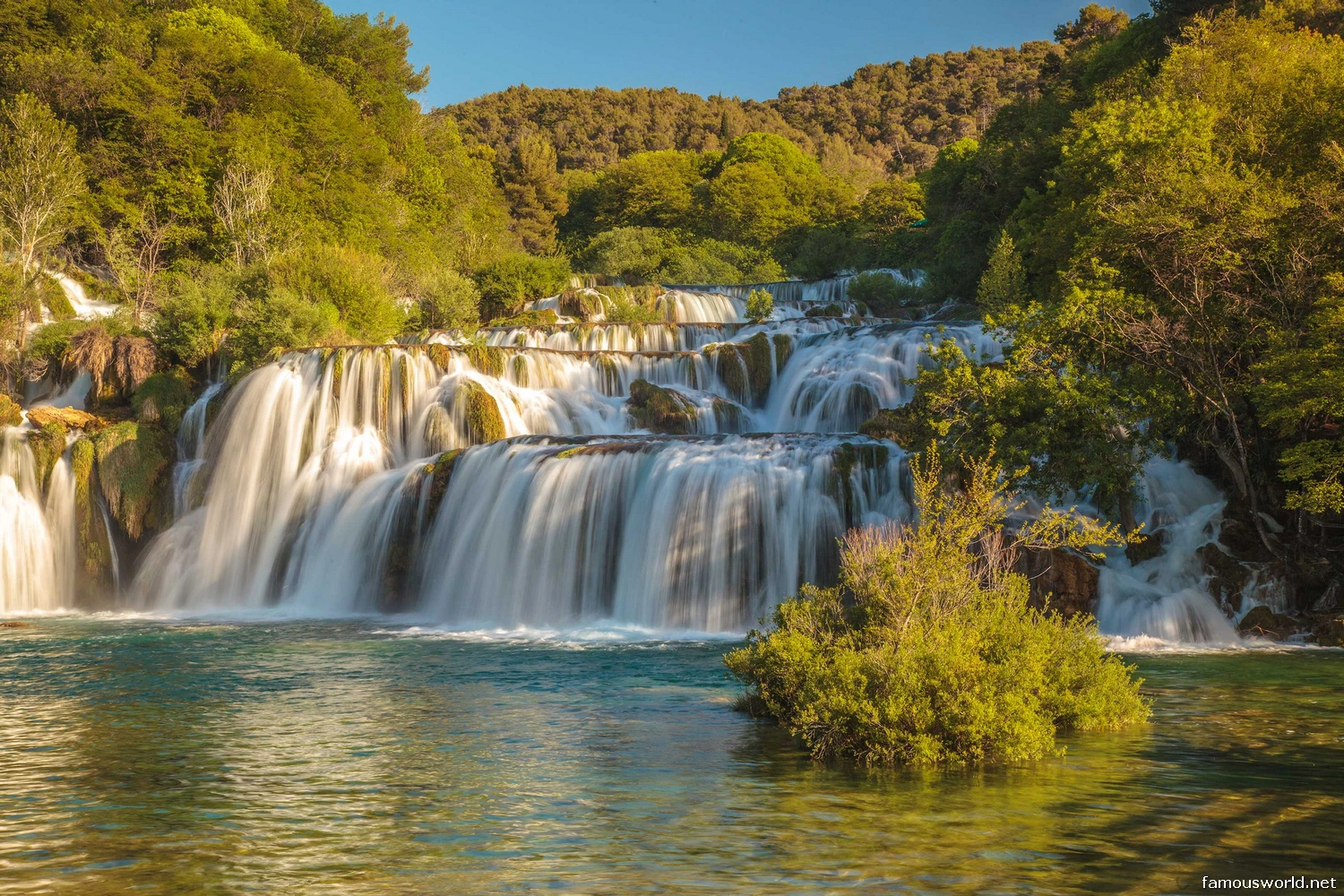
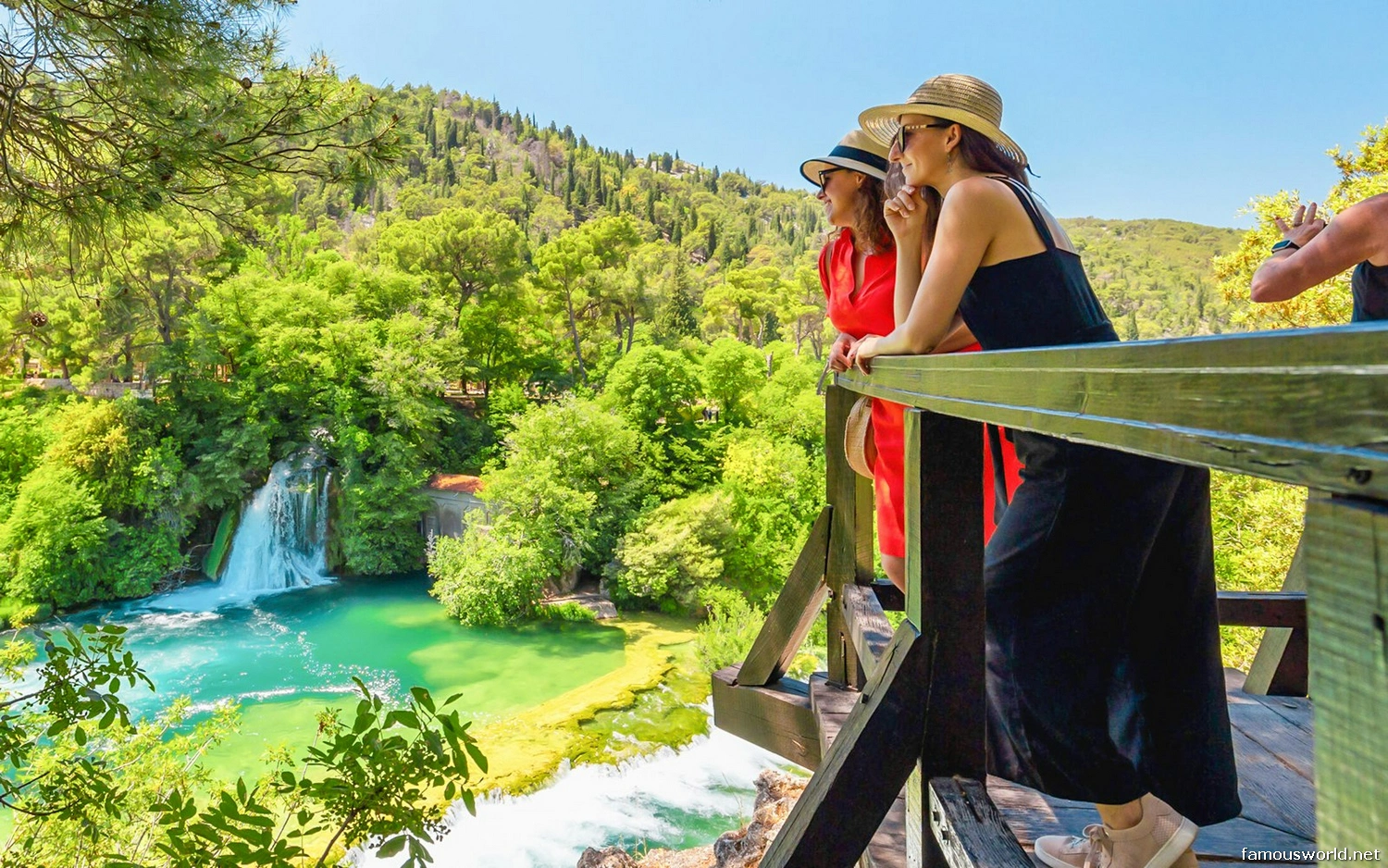
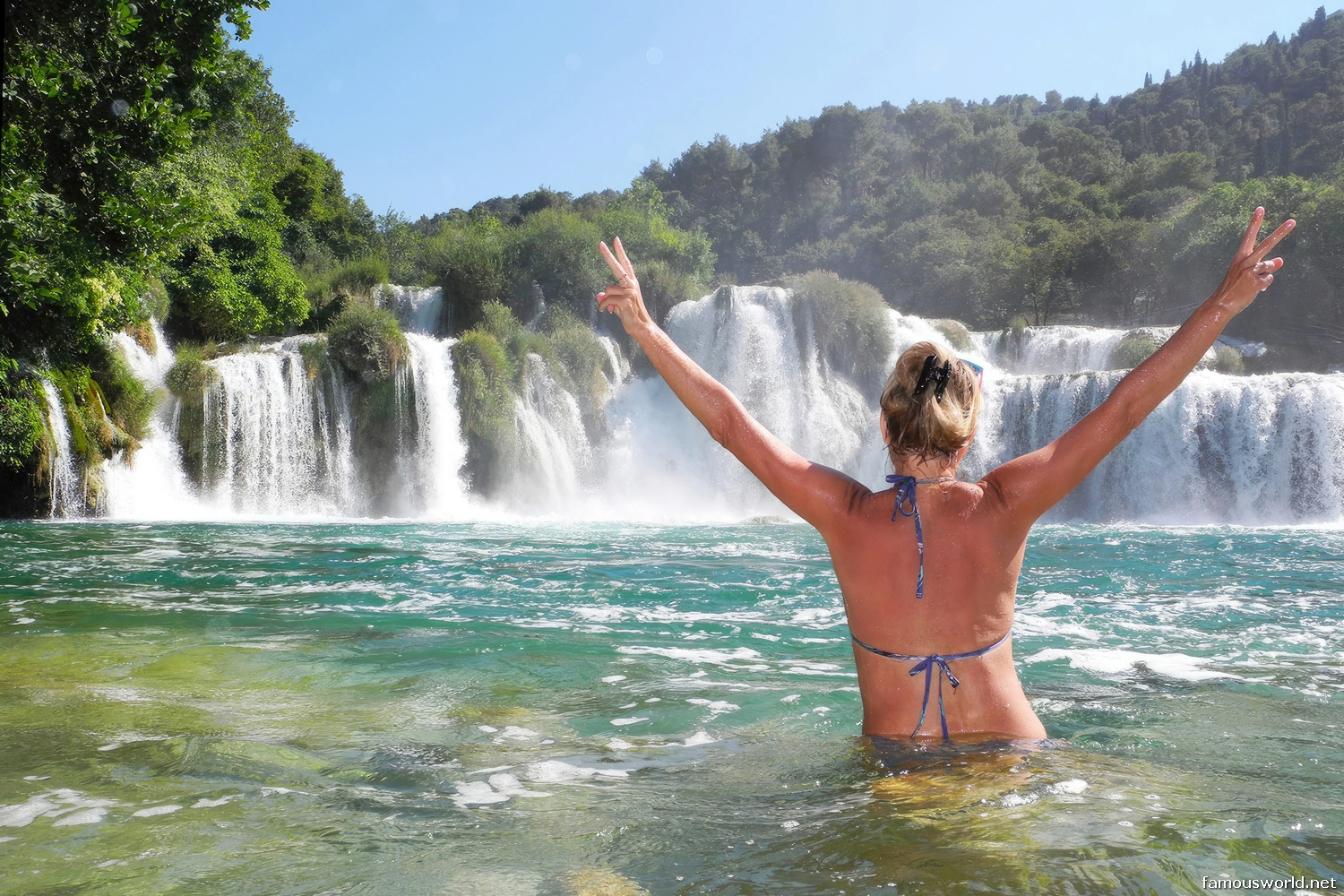
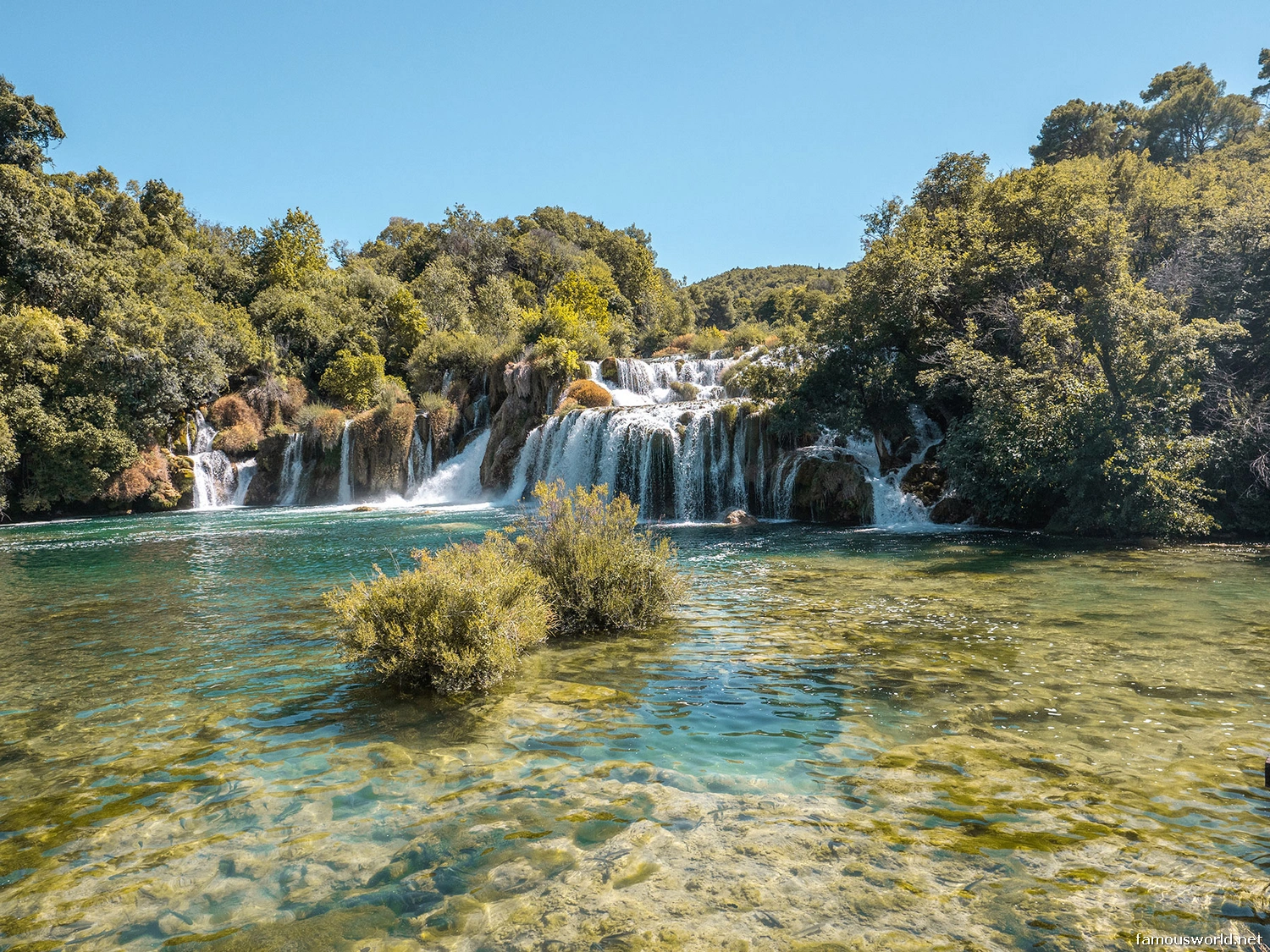
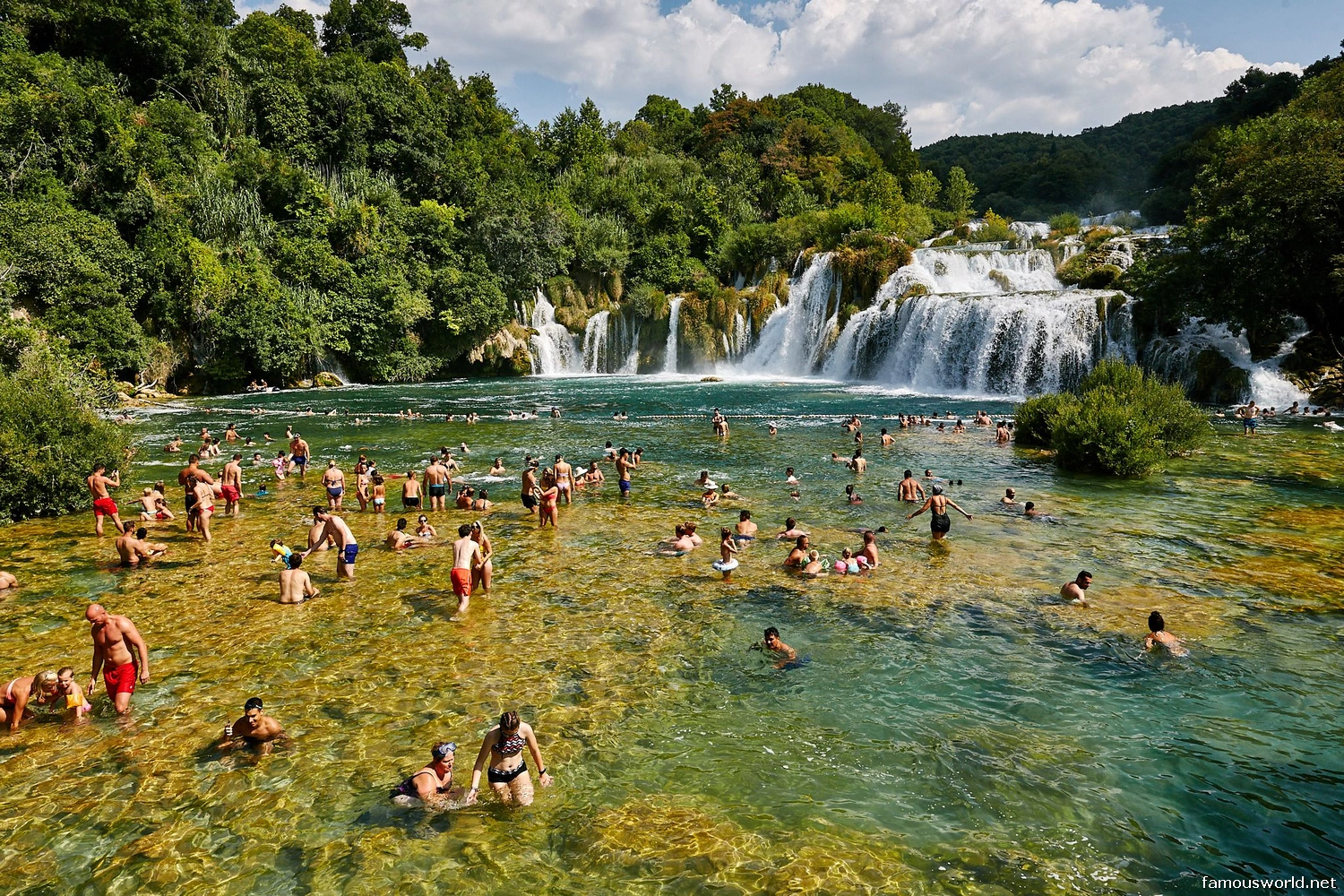
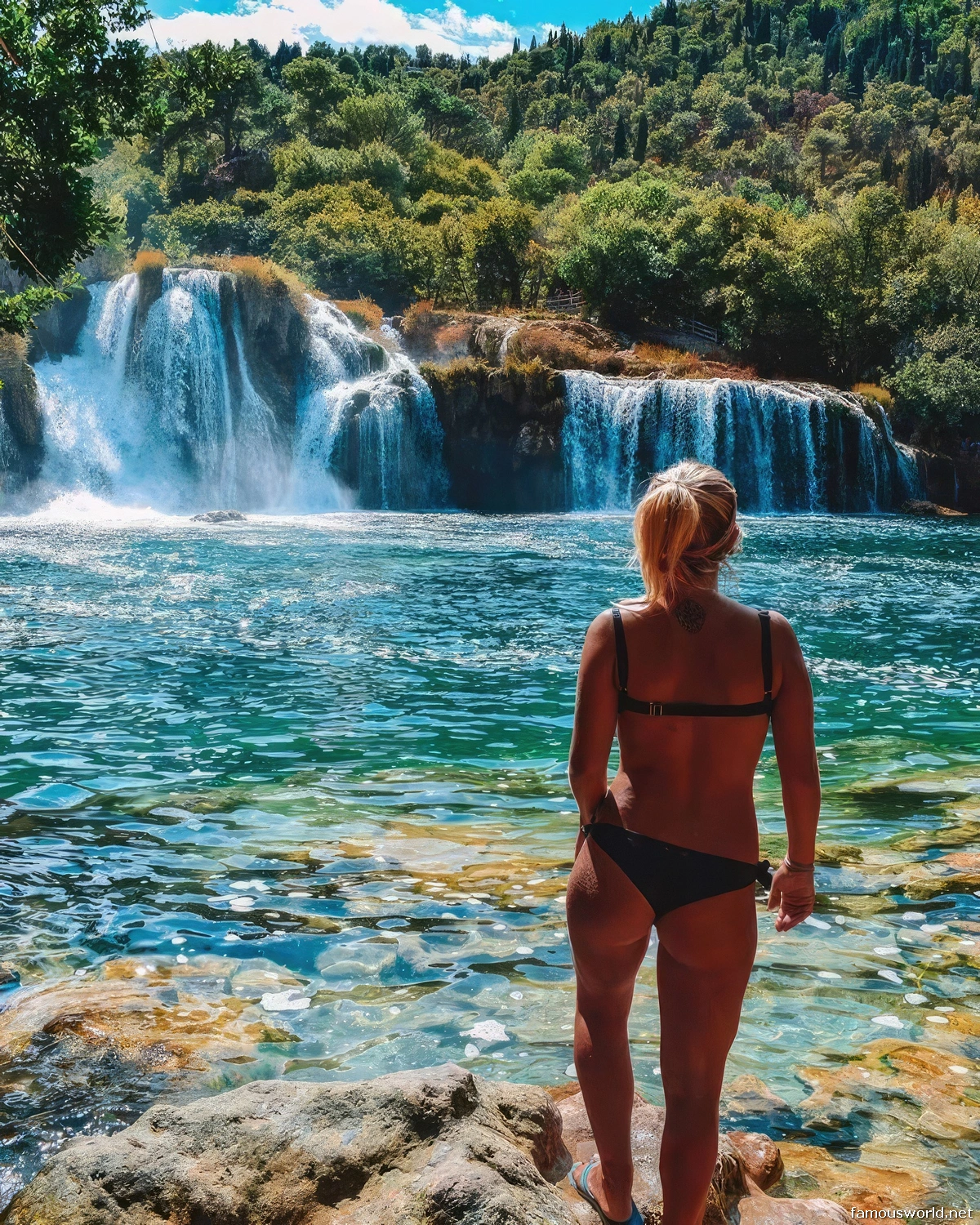
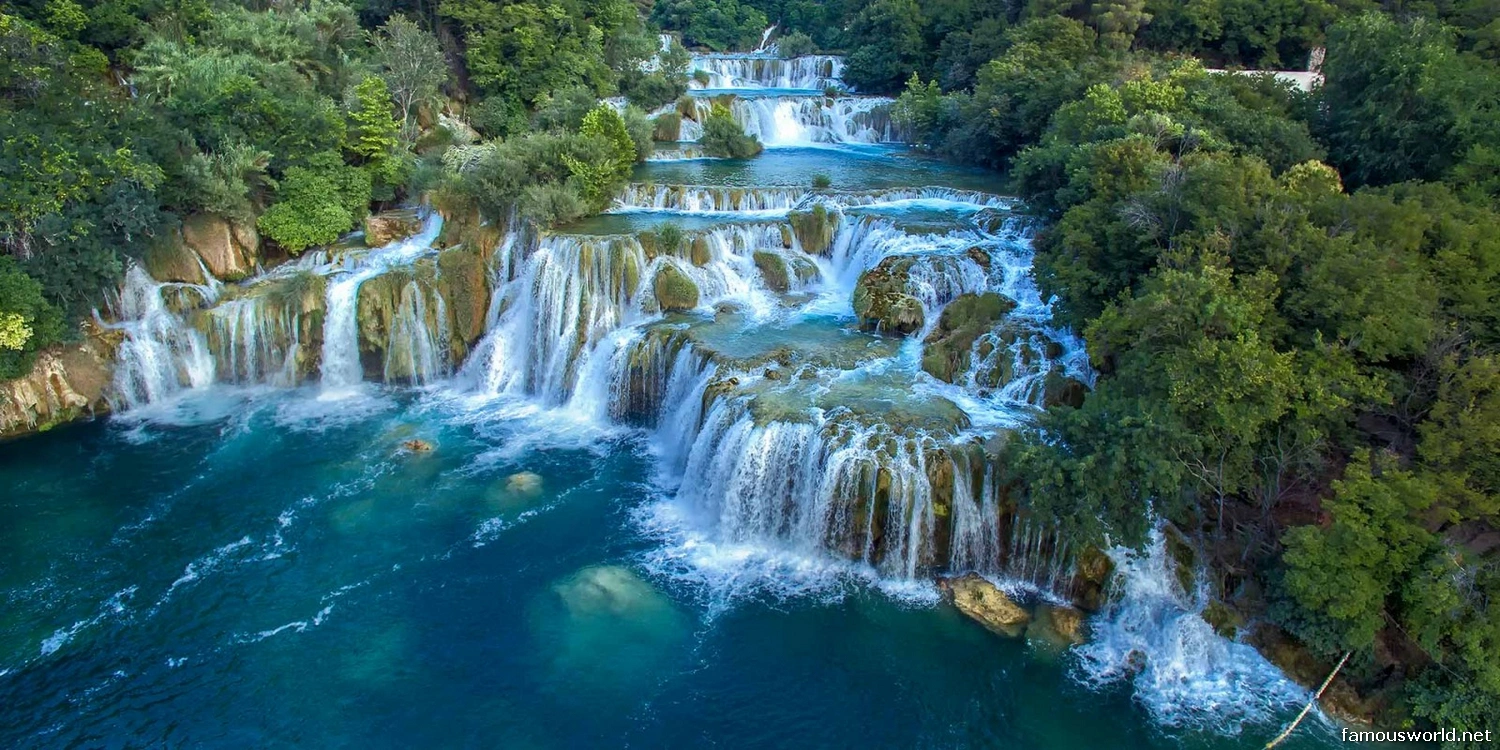
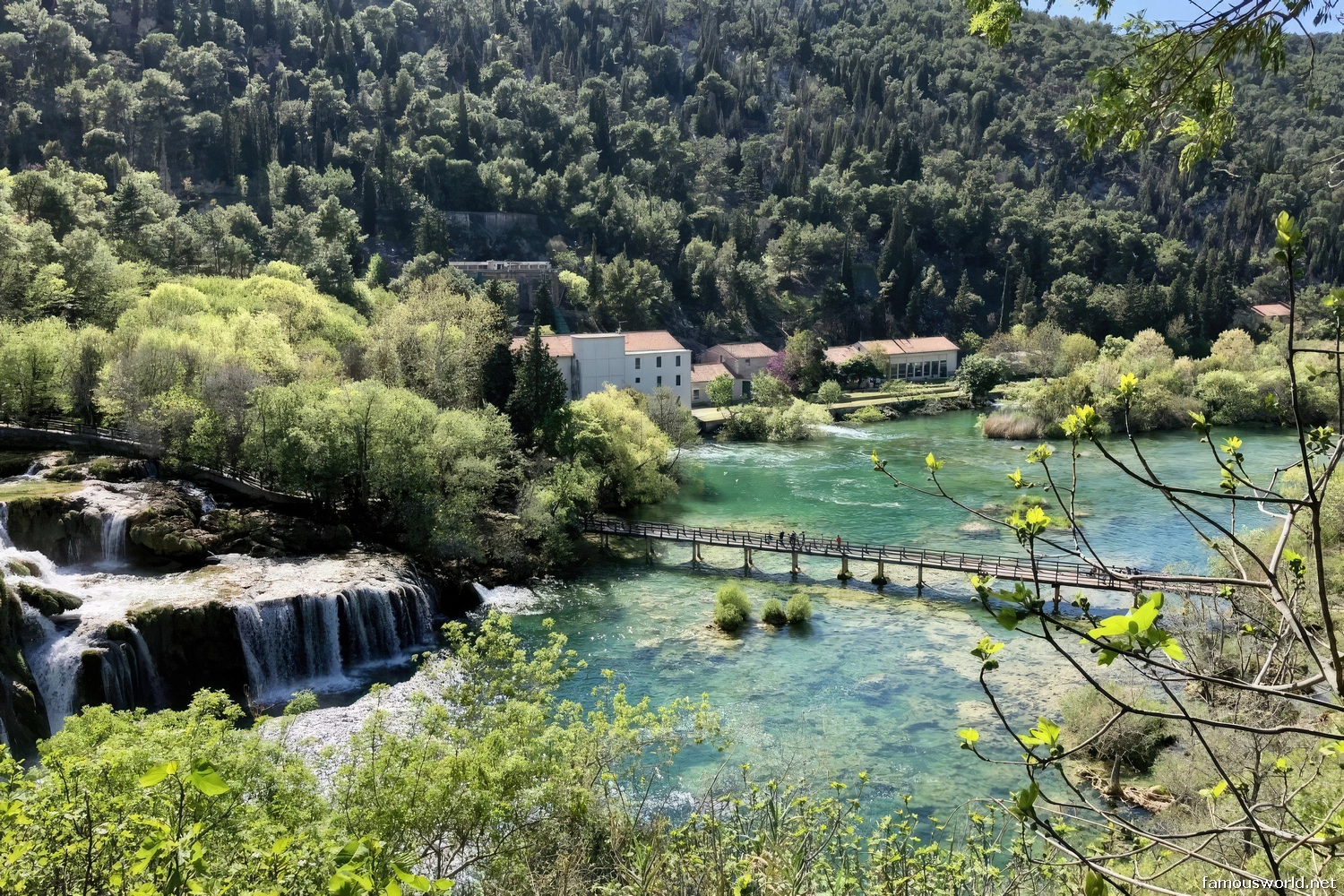
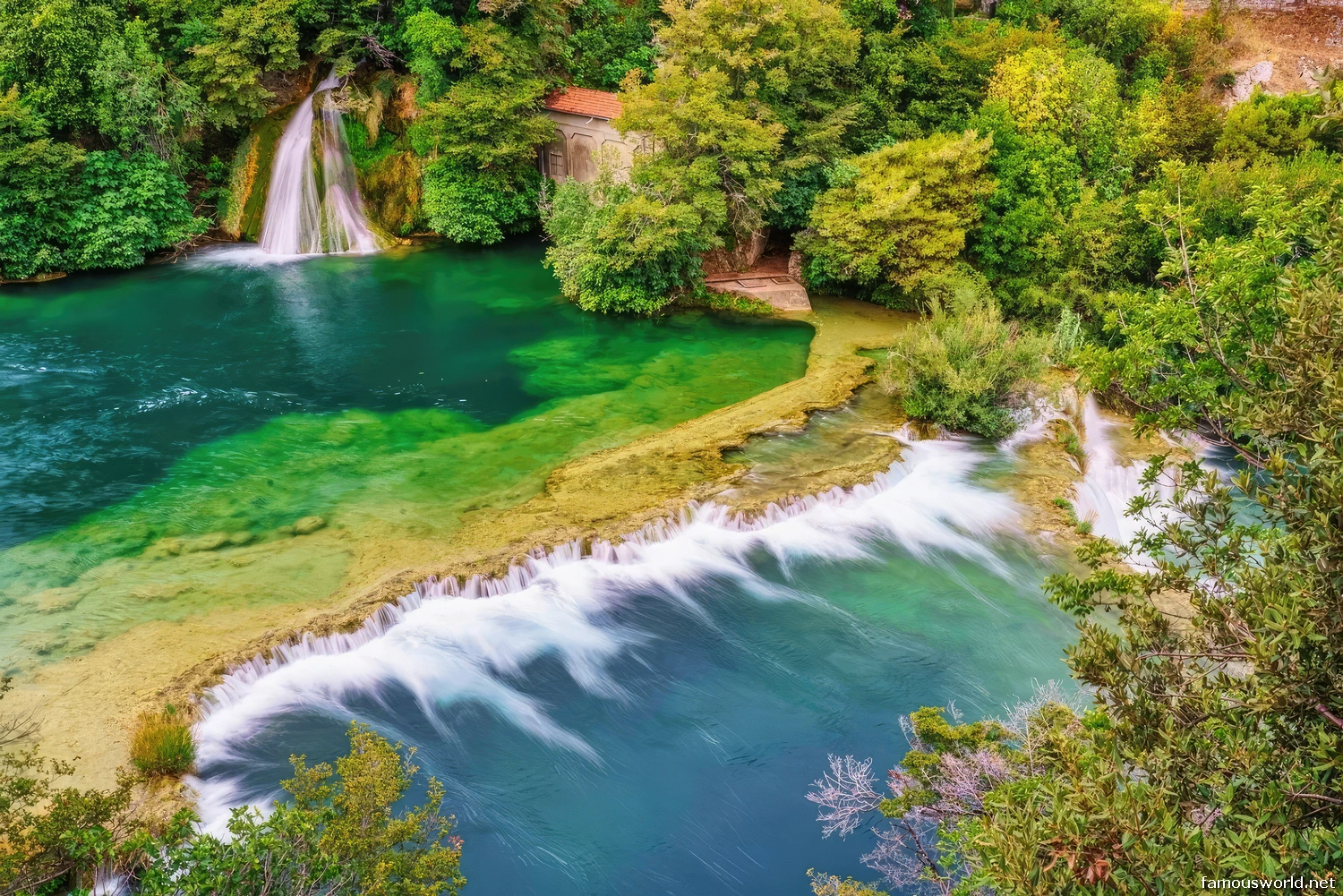
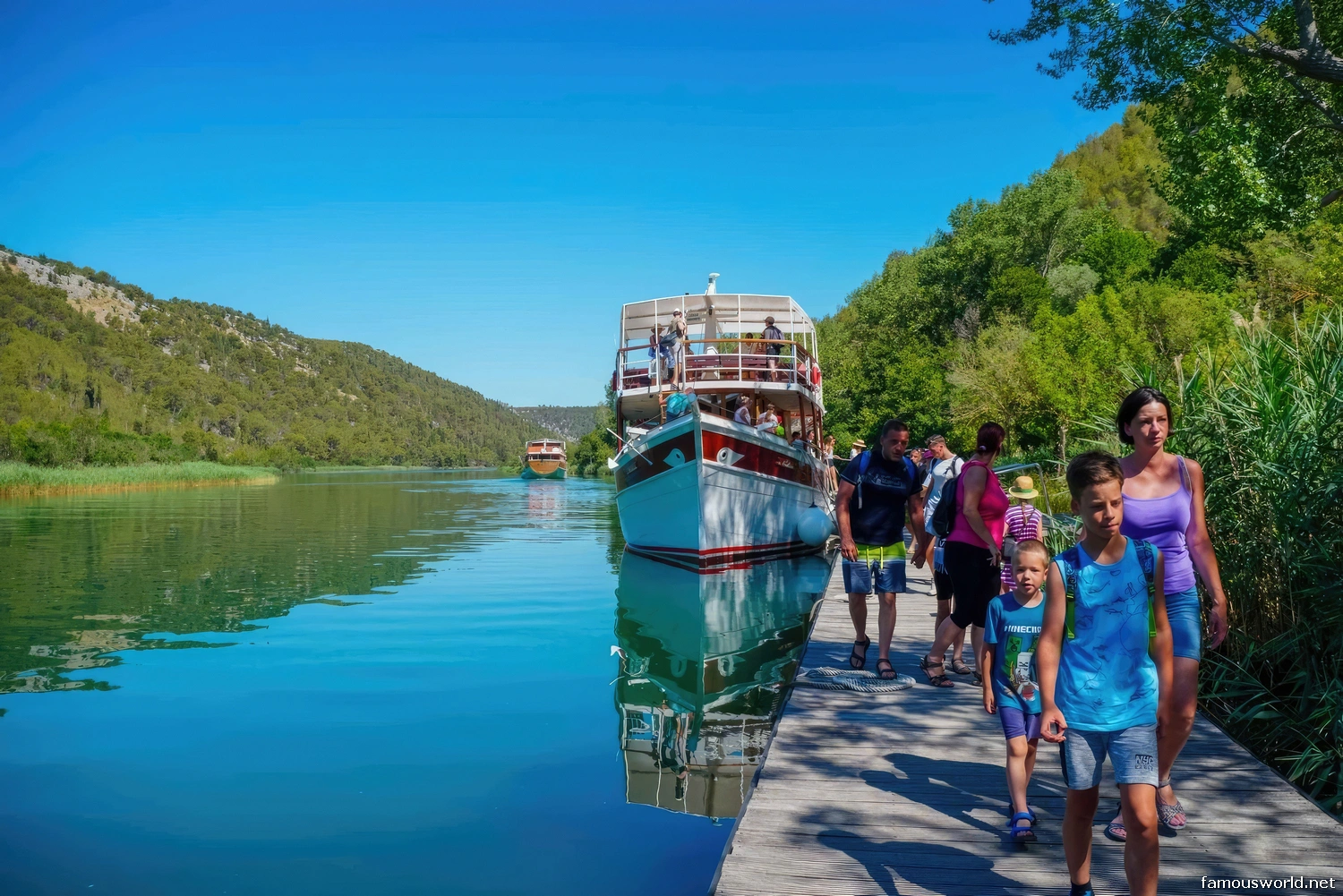
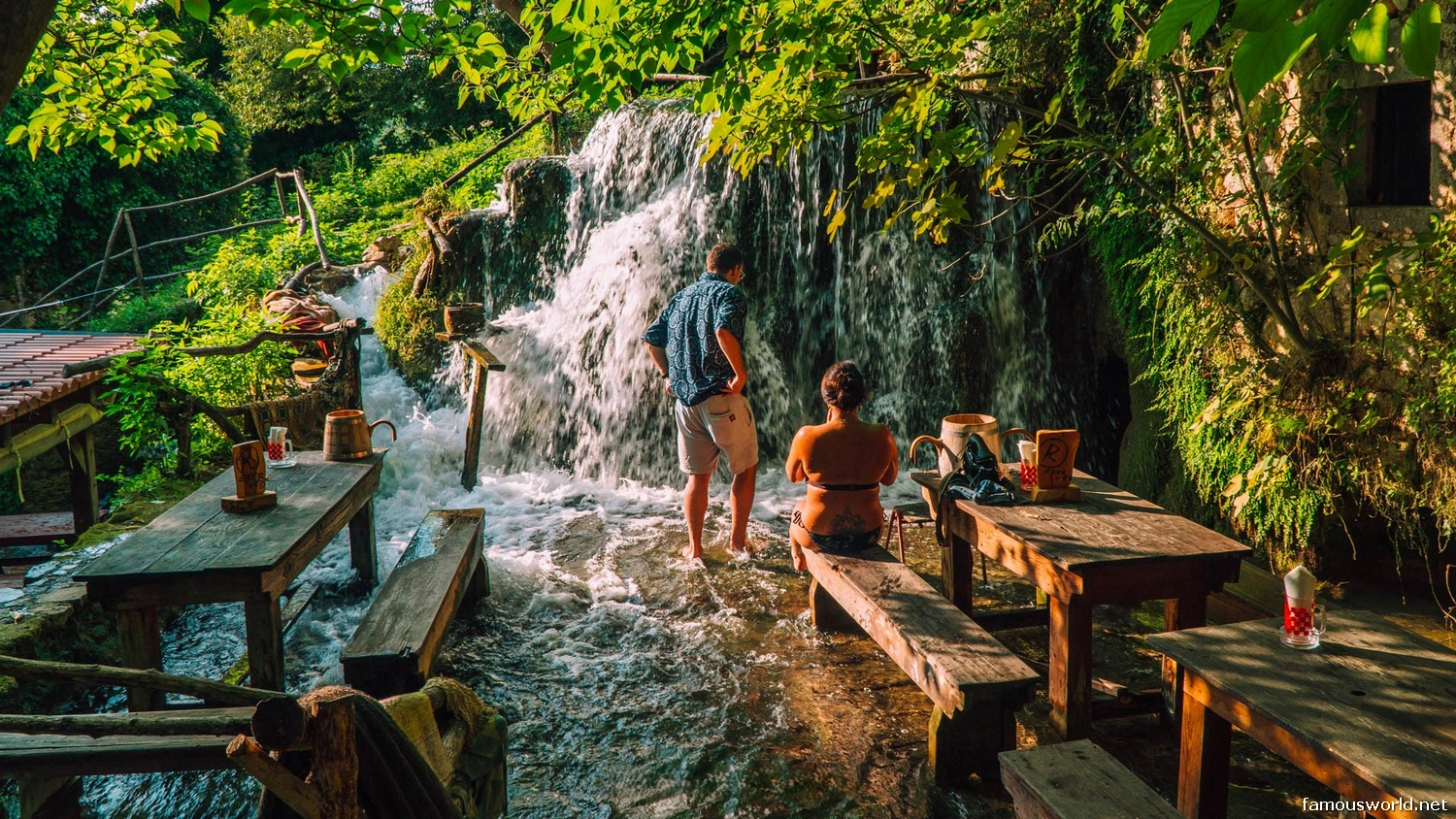
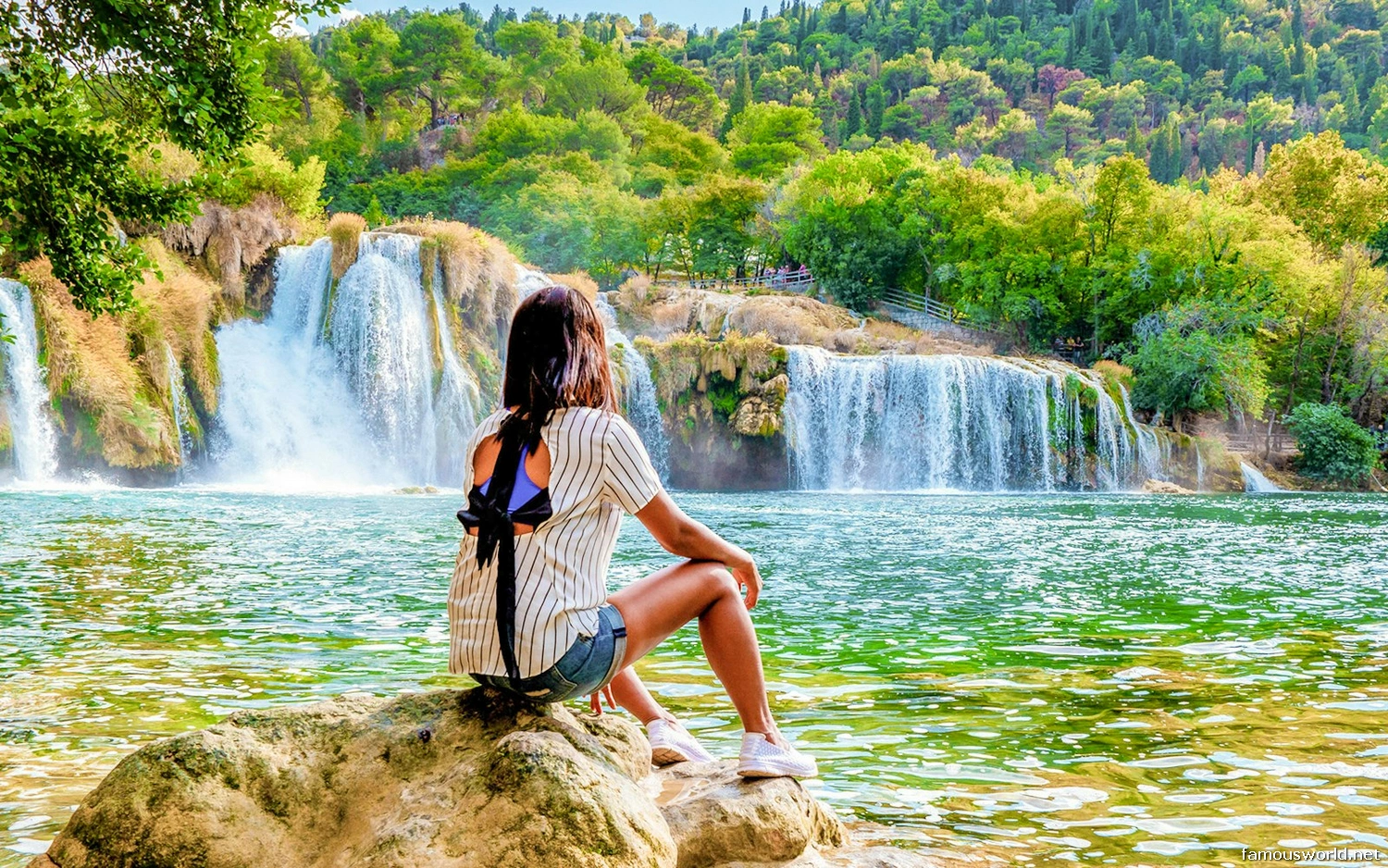
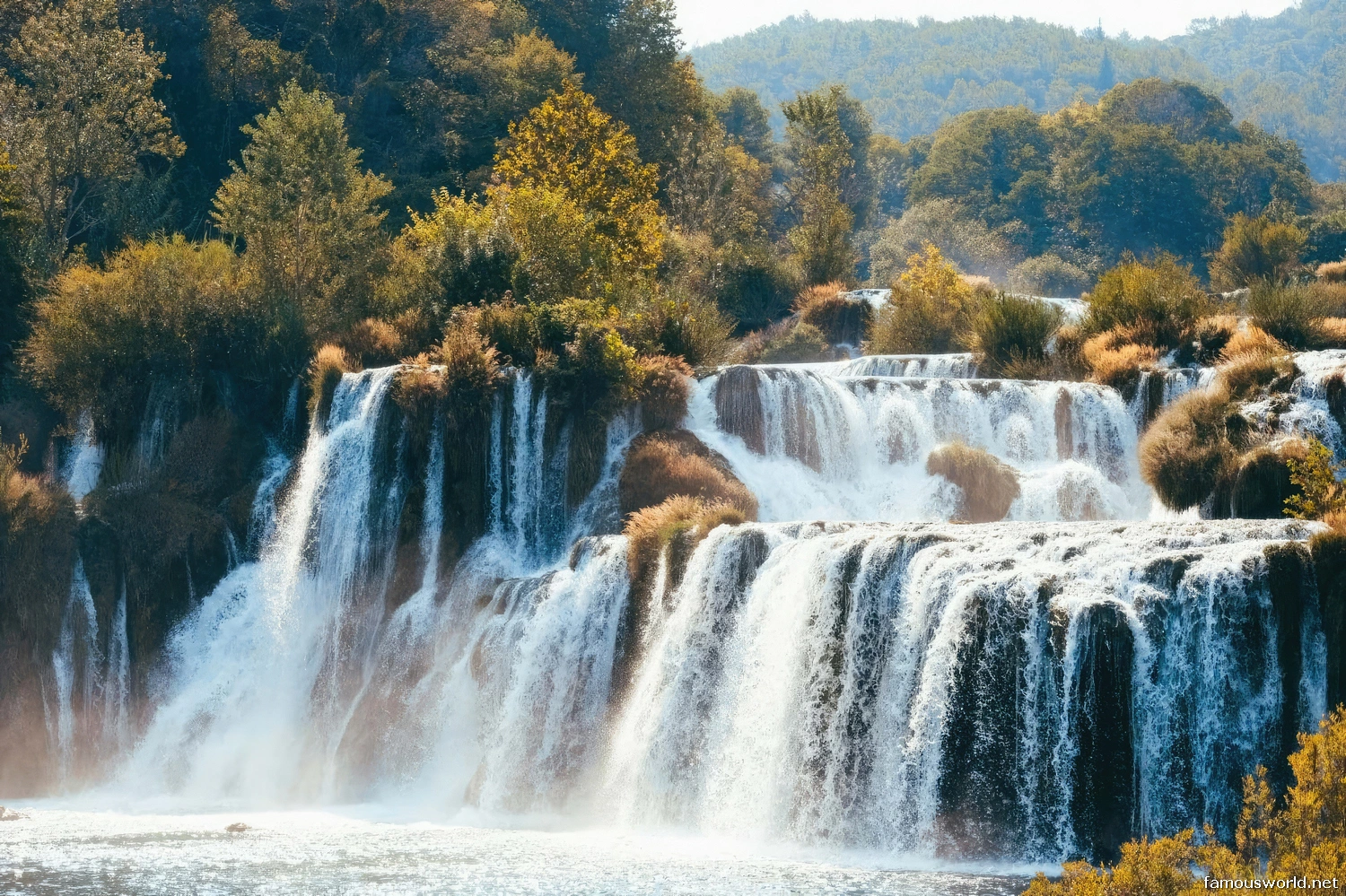
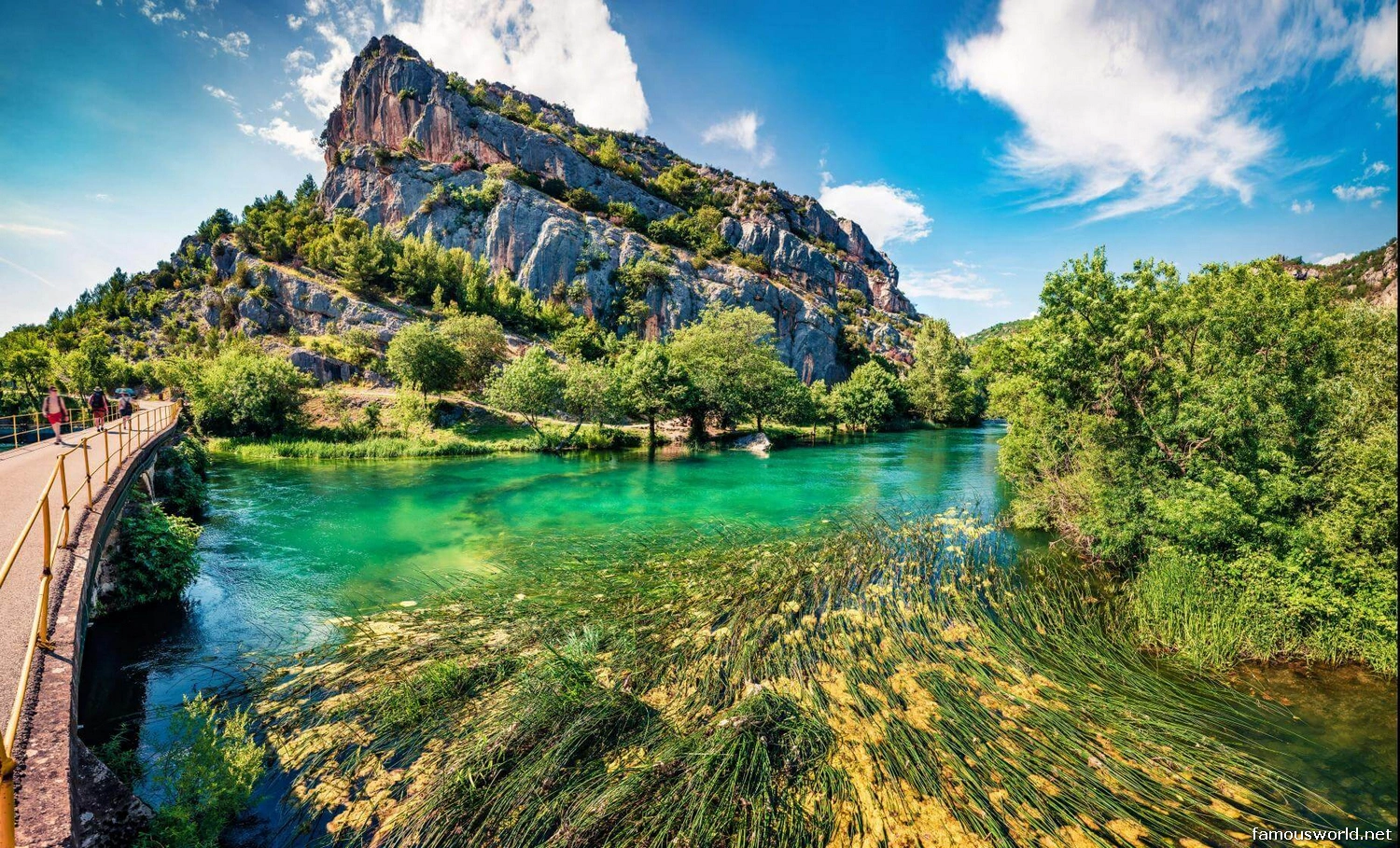
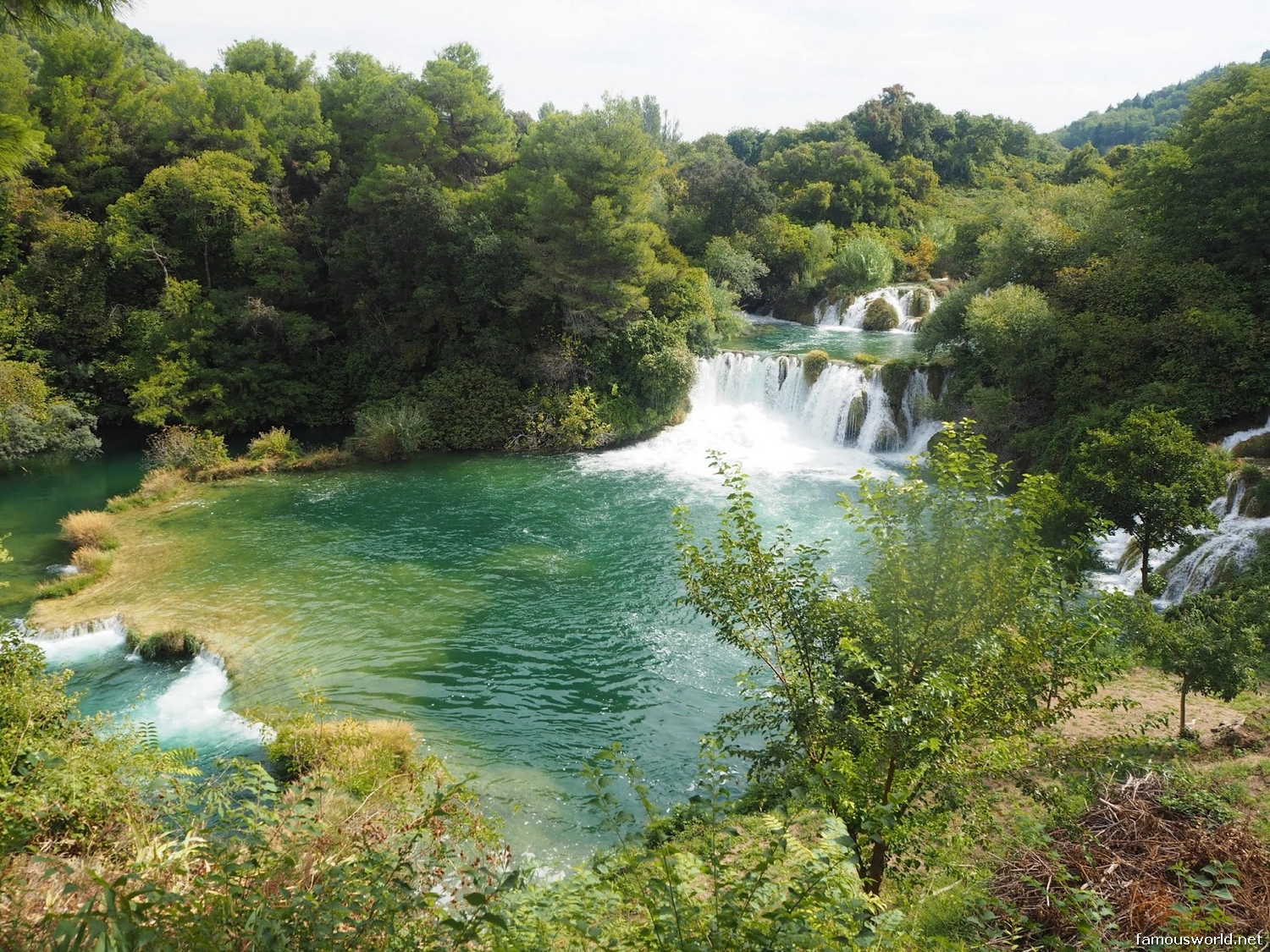
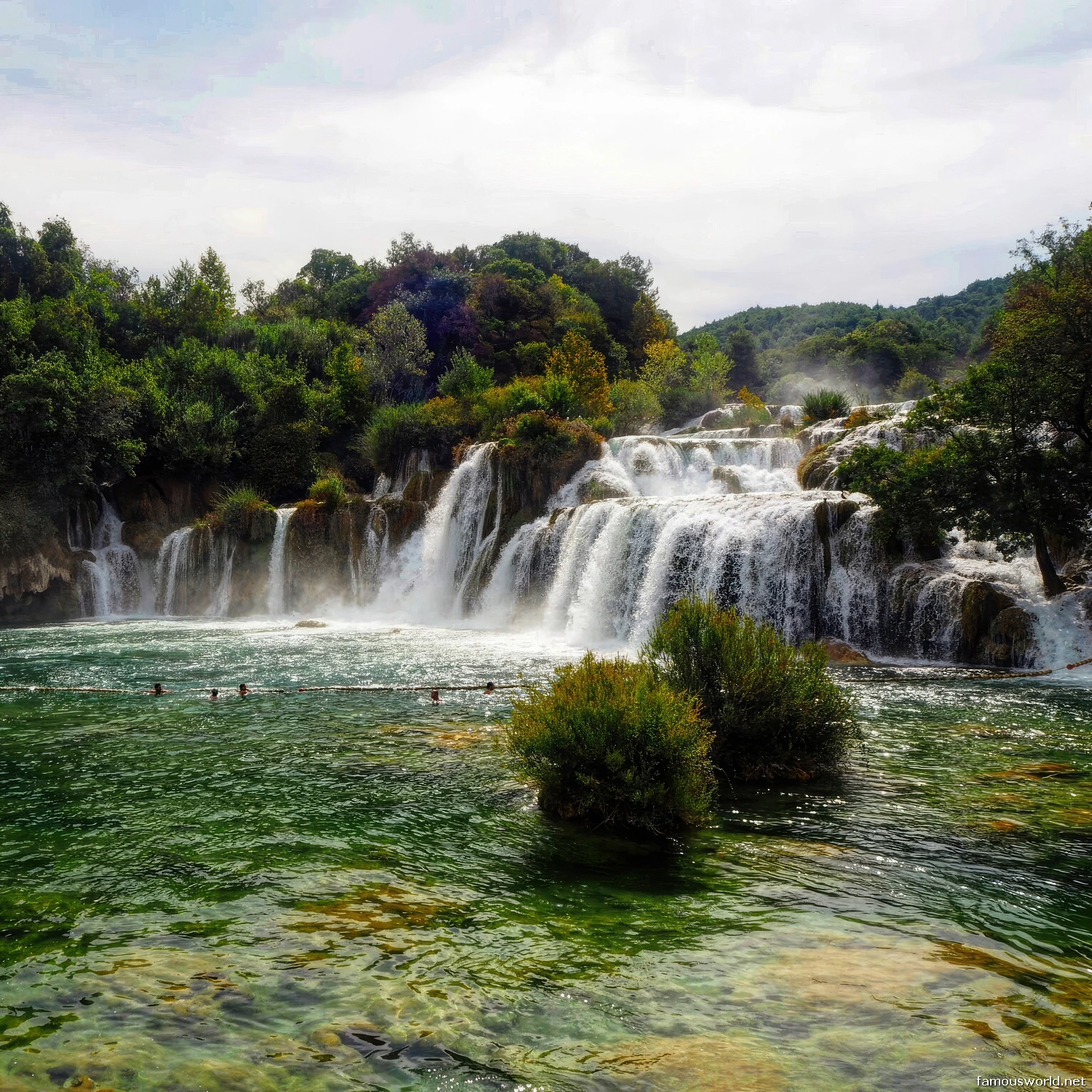
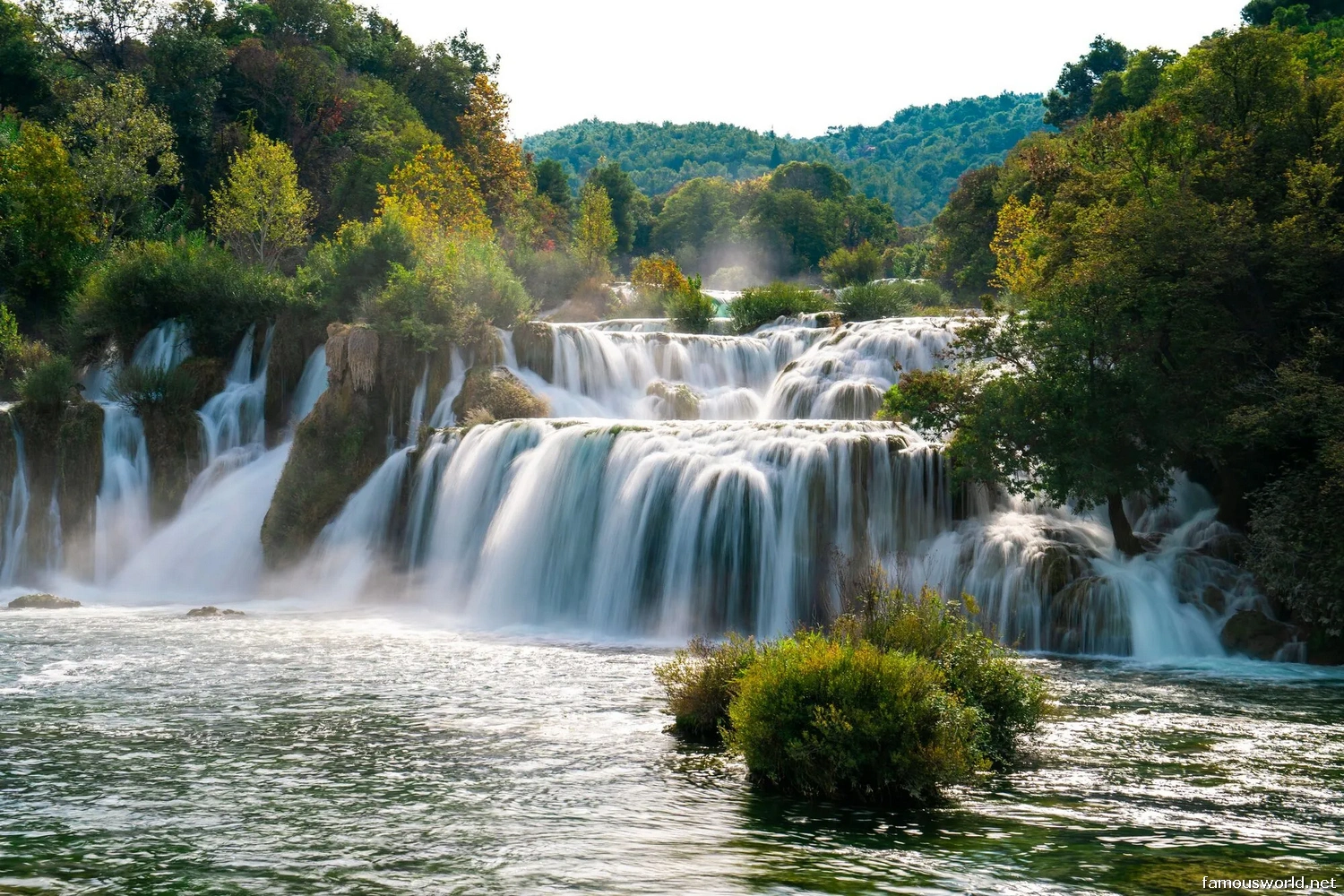
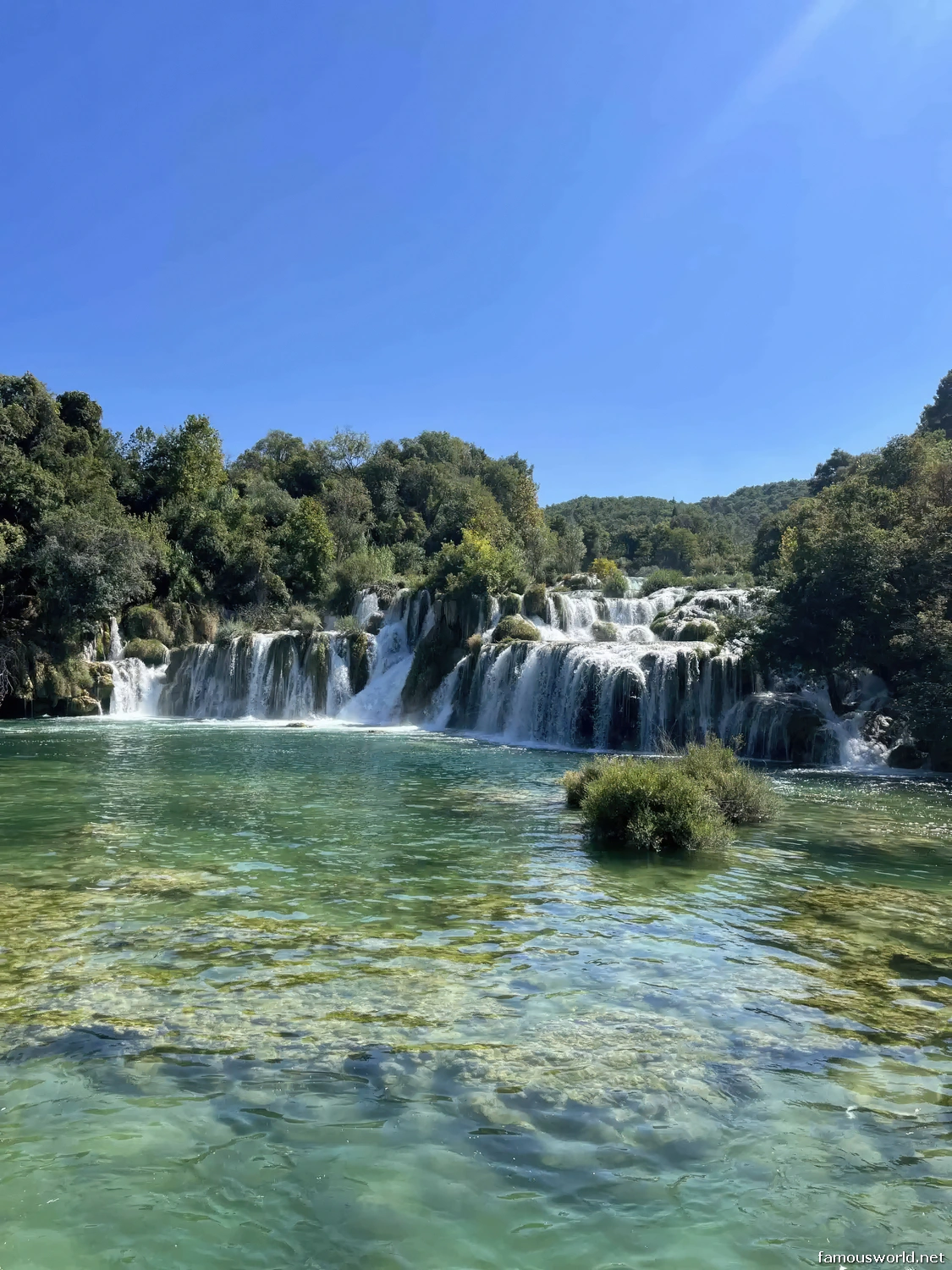
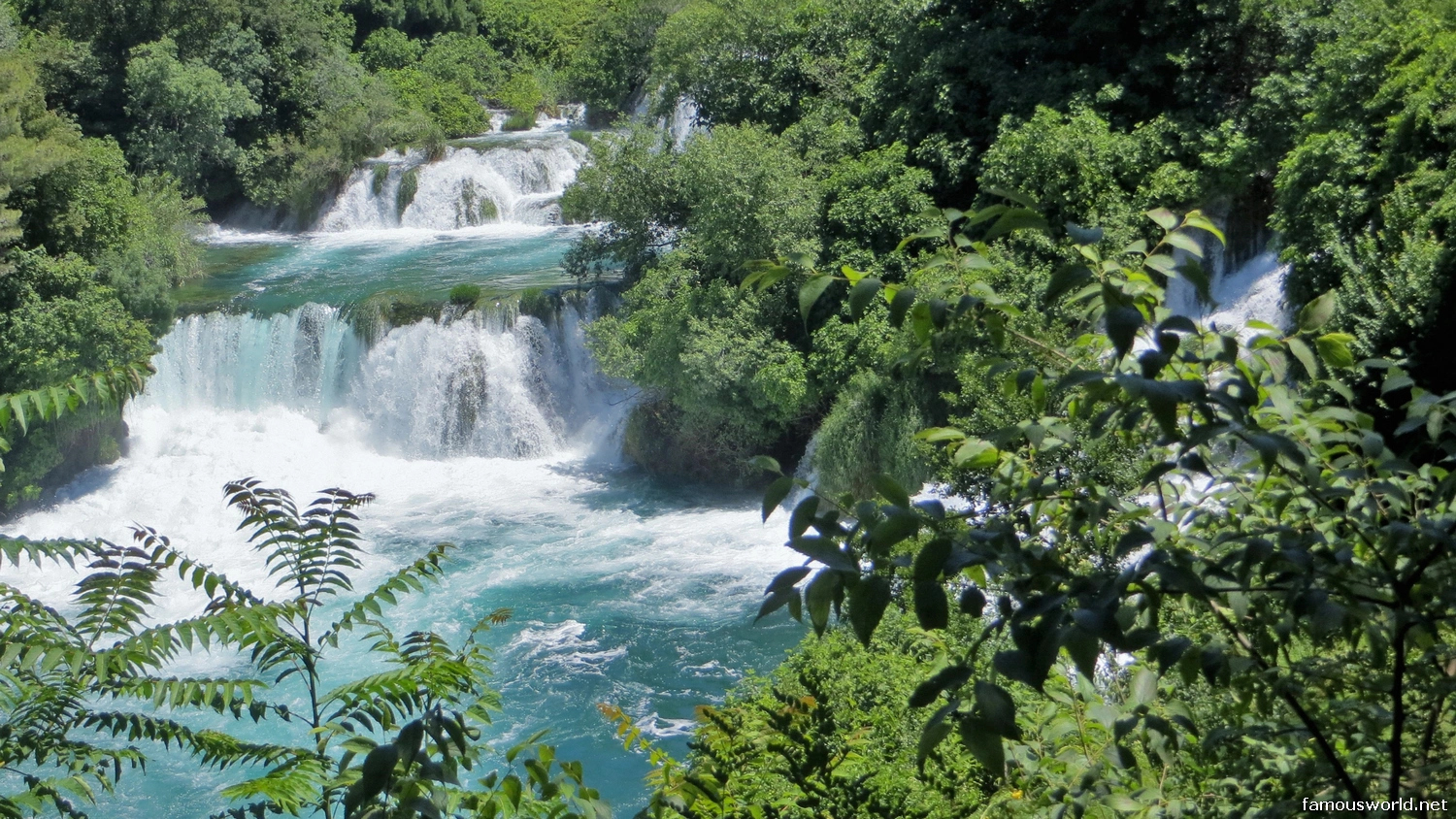
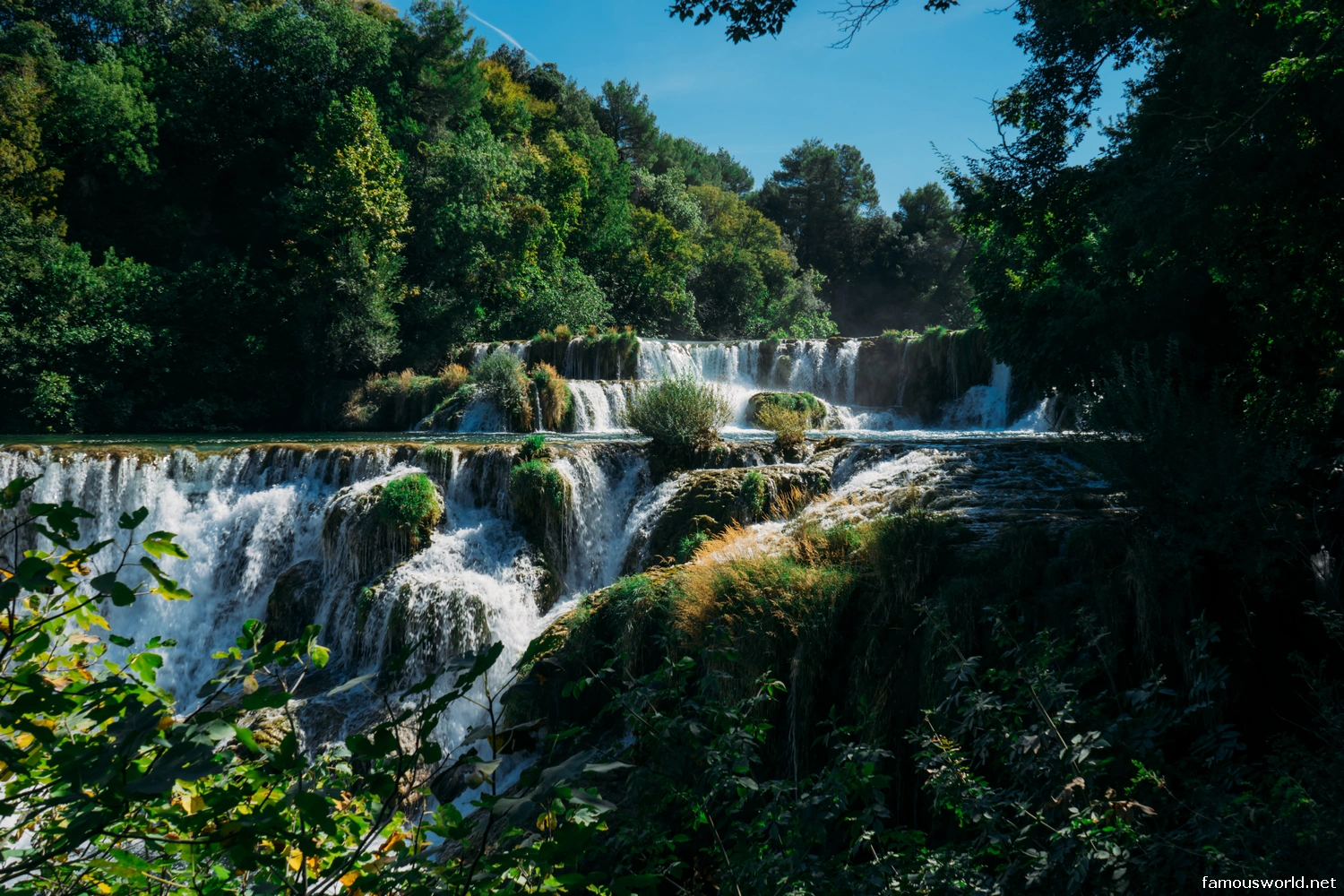
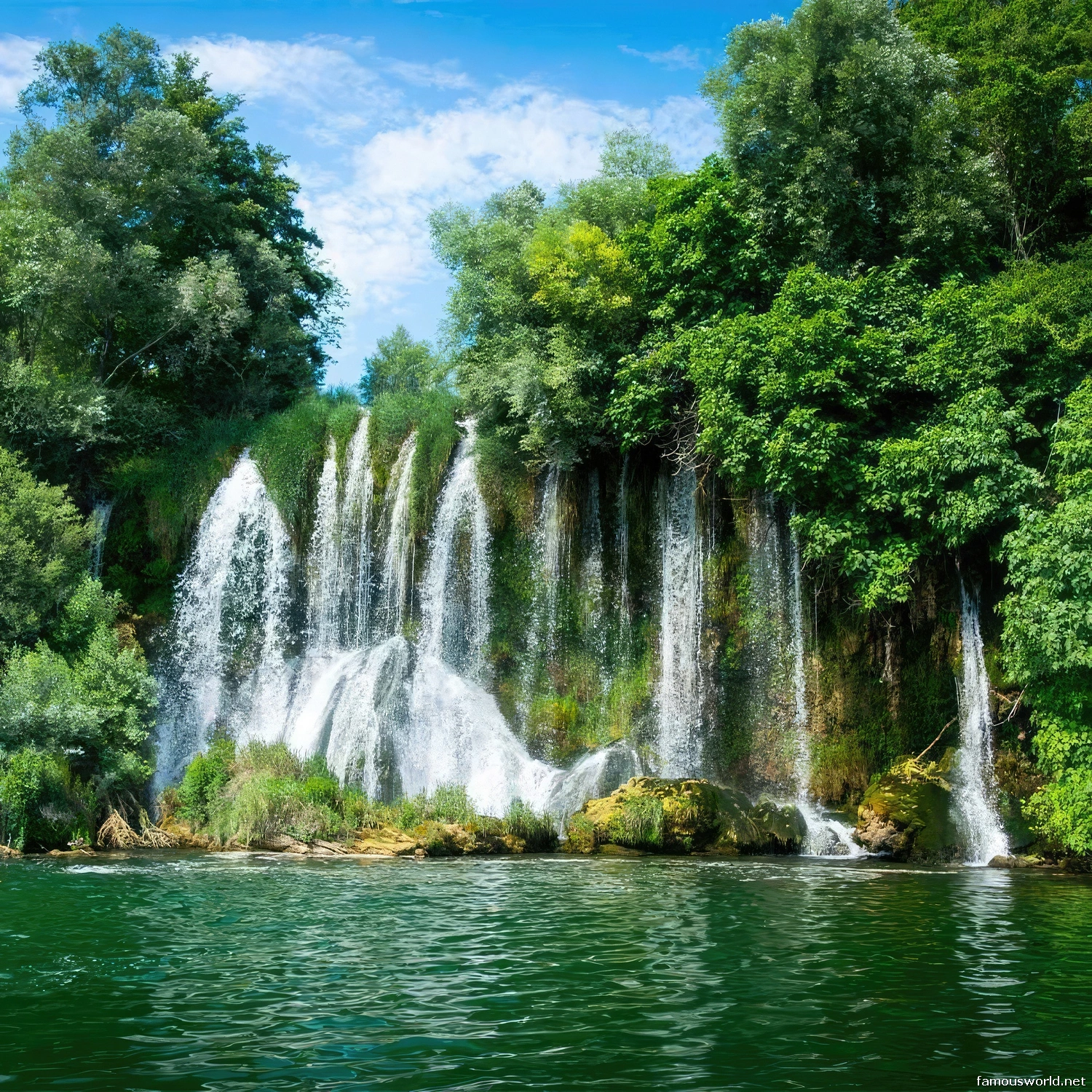
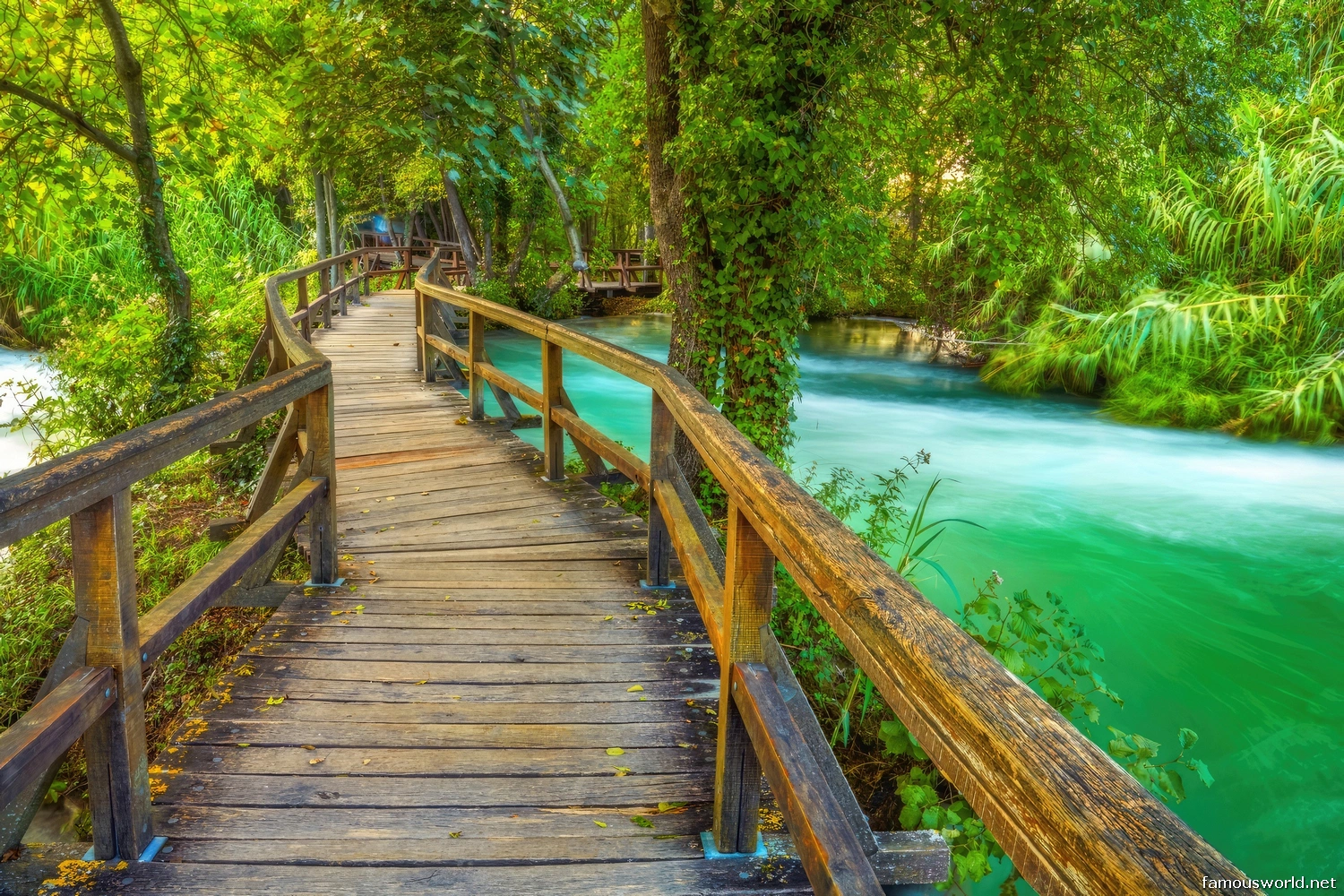
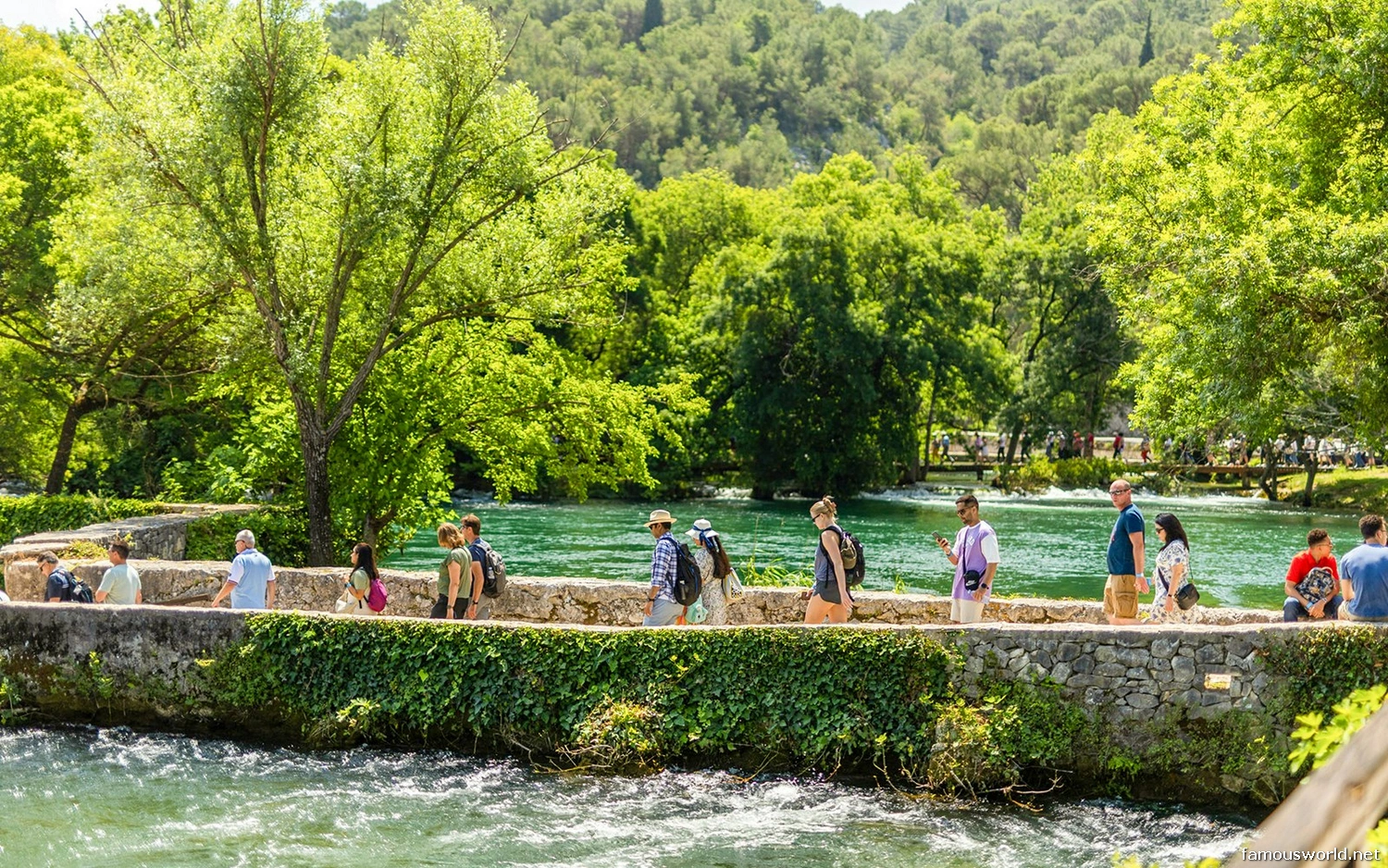
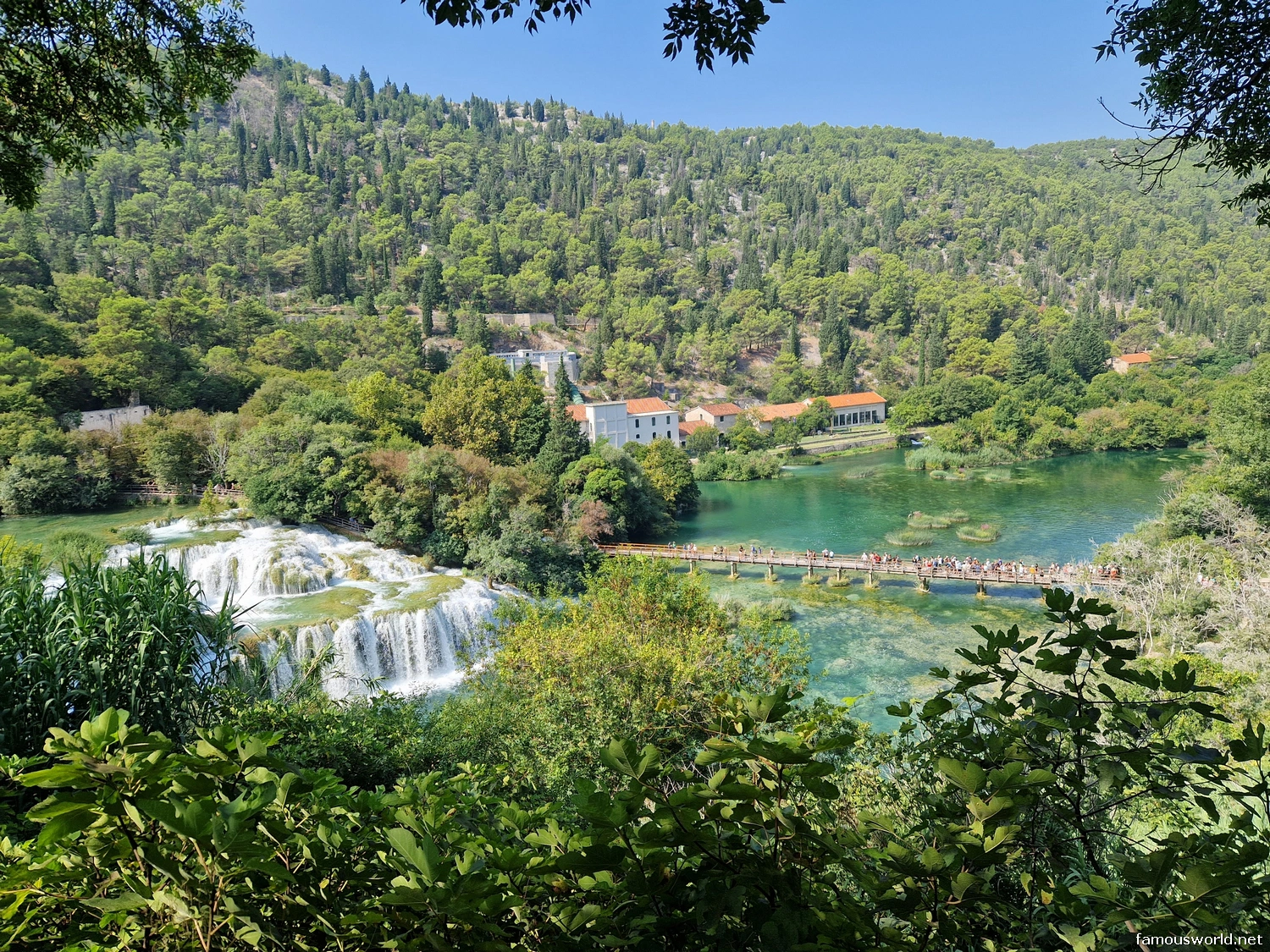
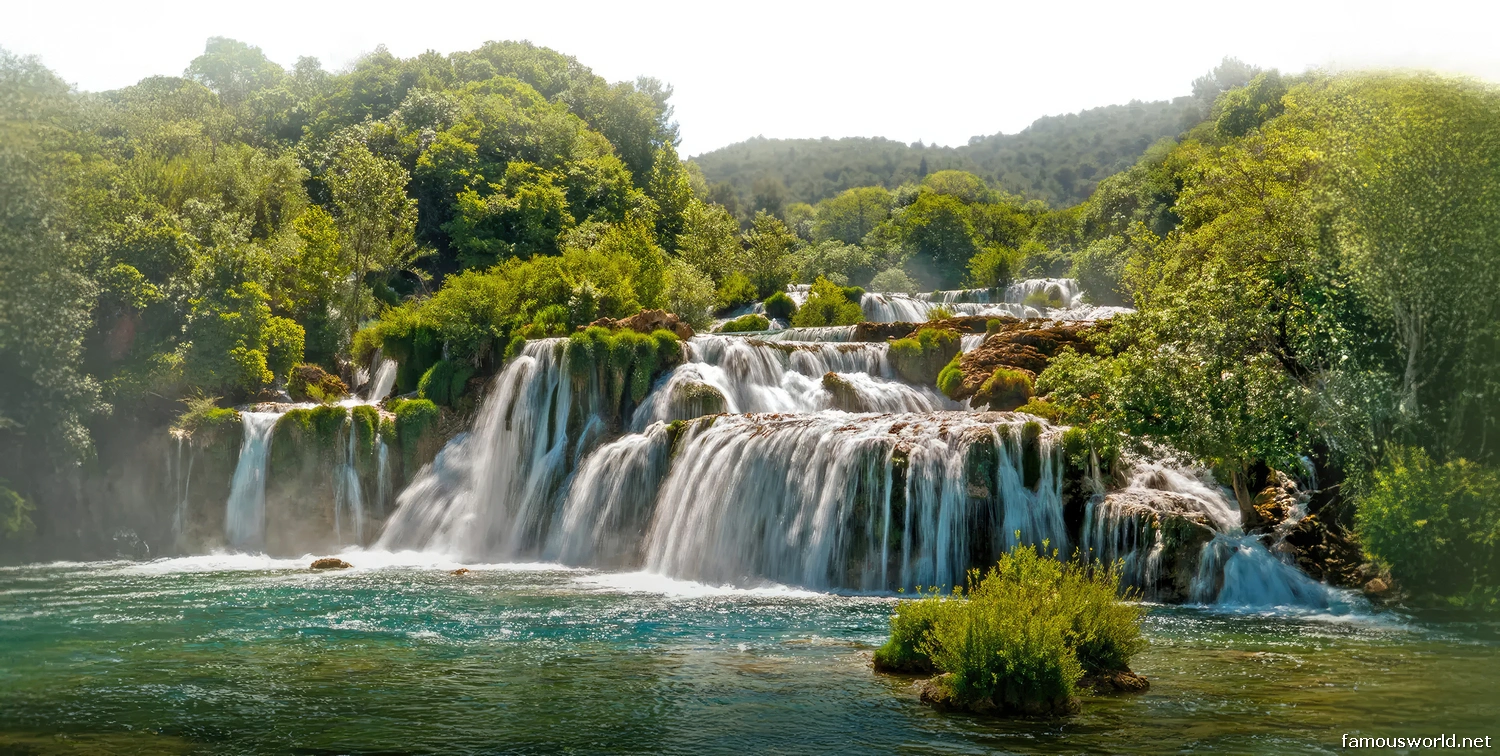
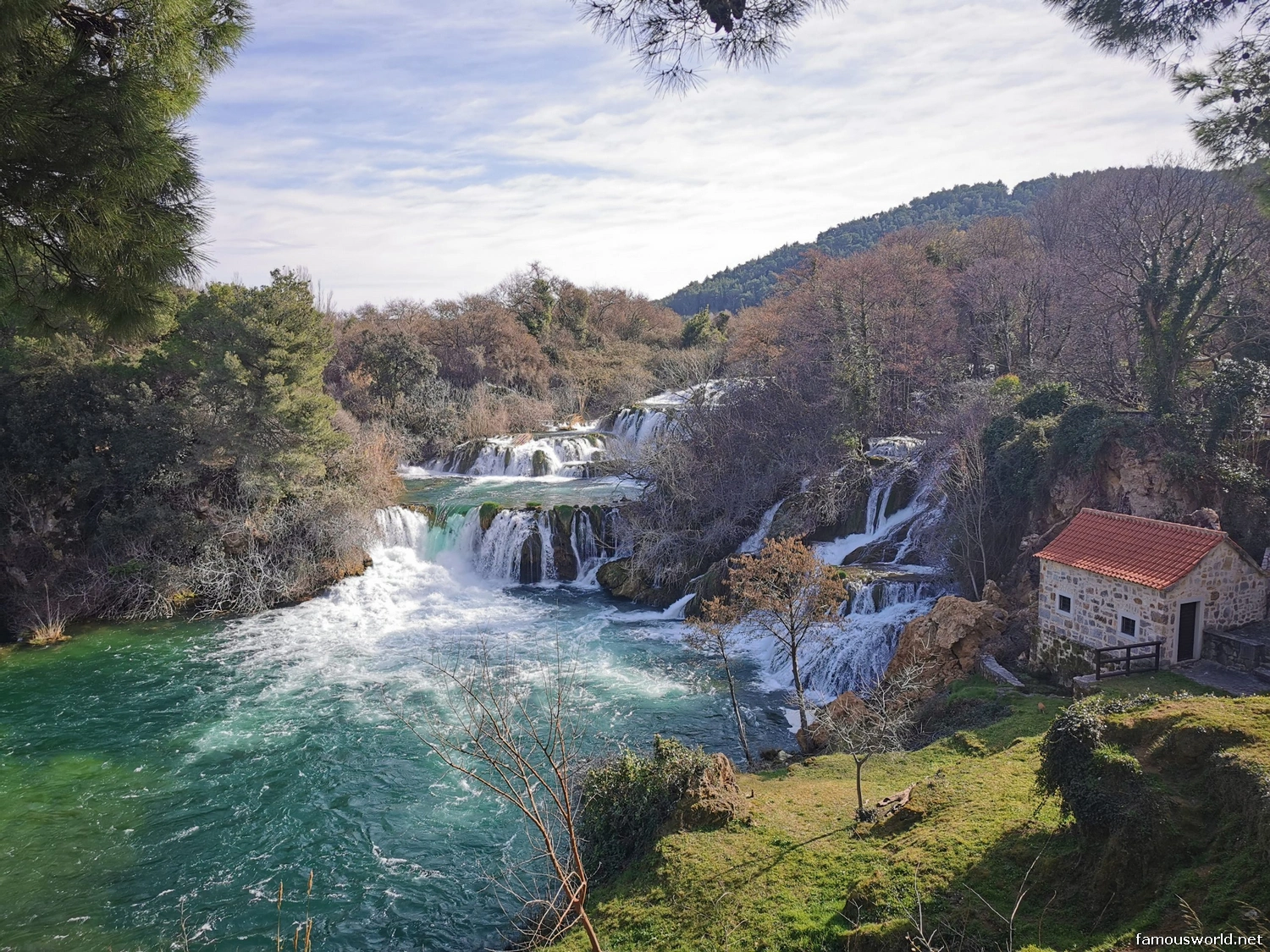
A jewel of the Dalmatian hinterland, Krka National Park is a magical landscape where the Krka River carves a spectacular canyon on its way to the Adriatic Sea. The park is a lush, green oasis celebrated for its series of seven stunning travertine waterfalls, historic watermills, and rich biodiversity. Unlike any other landscape, Krka offers an immersive experience where nature and history are deeply intertwined. Visitors can wander through a network of wooden footbridges, explore a traditional ethnographic village, and take boat trips to secluded monasteries, all set against the constant, soothing sound of cascading water.
Listen to an introduction about Krka National Park

Name and Location
- Name: Krka National Park (Nacionalni park Krka).
- Location: In Šibenik-Knin County, Dalmatia, Croatia. The park follows the course of the Krka River, with main entrances near the towns of Skradin and Lozovac.
How to Get There
The park is easily accessible from major coastal cities in Dalmatia.
- By Car: Krka is a short drive from the A1 motorway, the main route connecting Zagreb and Split. The entrances at Lozovac (main car entrance) and Skradin are well-signposted.
- By Bus: Numerous tour operators and public buses run daily trips from major tourist centers like Split, Zadar, and Šibenik.
- From Skradin: One of the most popular ways to enter is by taking a scenic park boat from the town of Skradin, which takes you directly to the base of the famous Skradinski Buk waterfall. This boat ride is included in the park entrance fee.
Landscape and Architecture
The park is a unique blend of a dynamic river ecosystem and preserved cultural heritage.
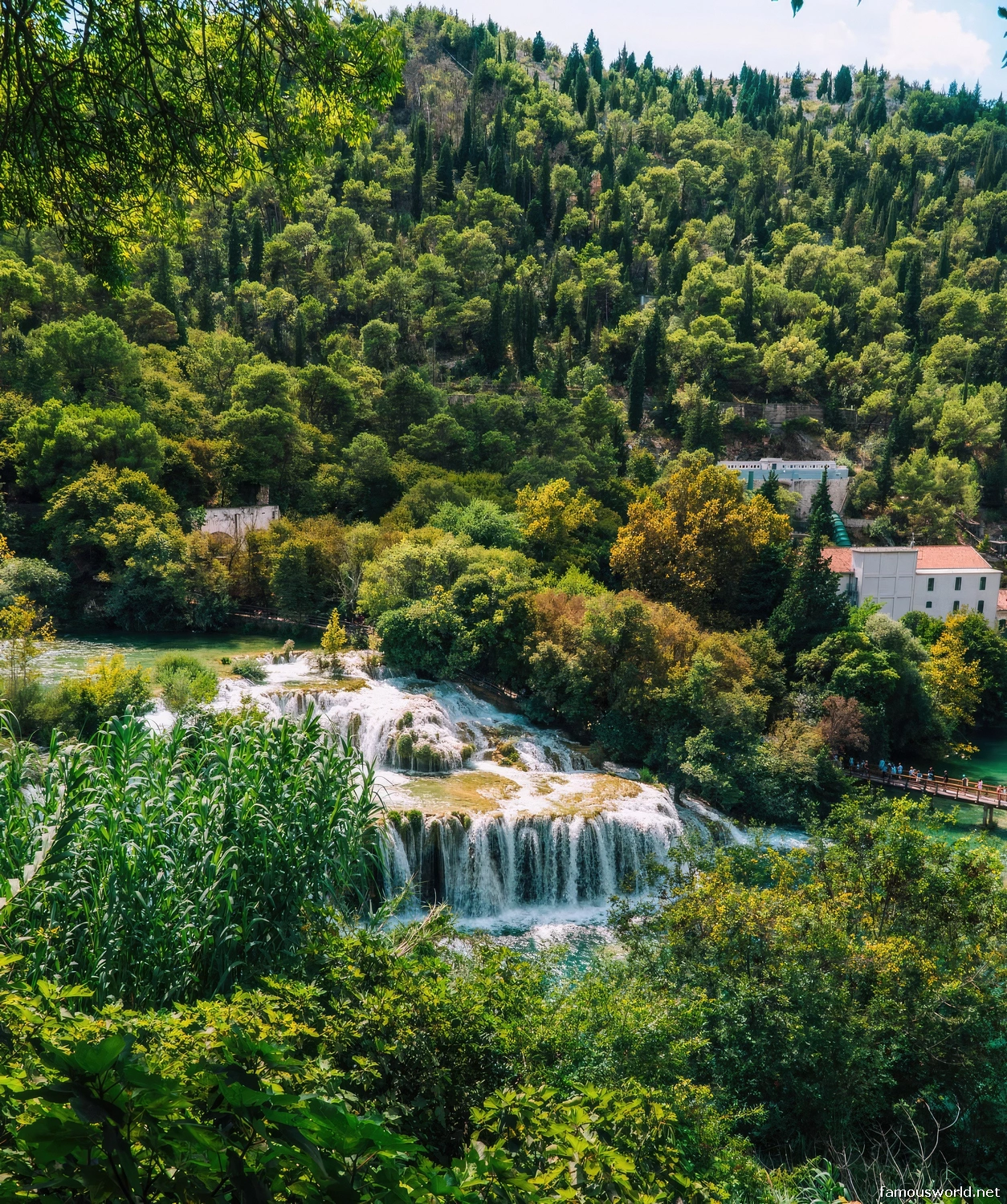
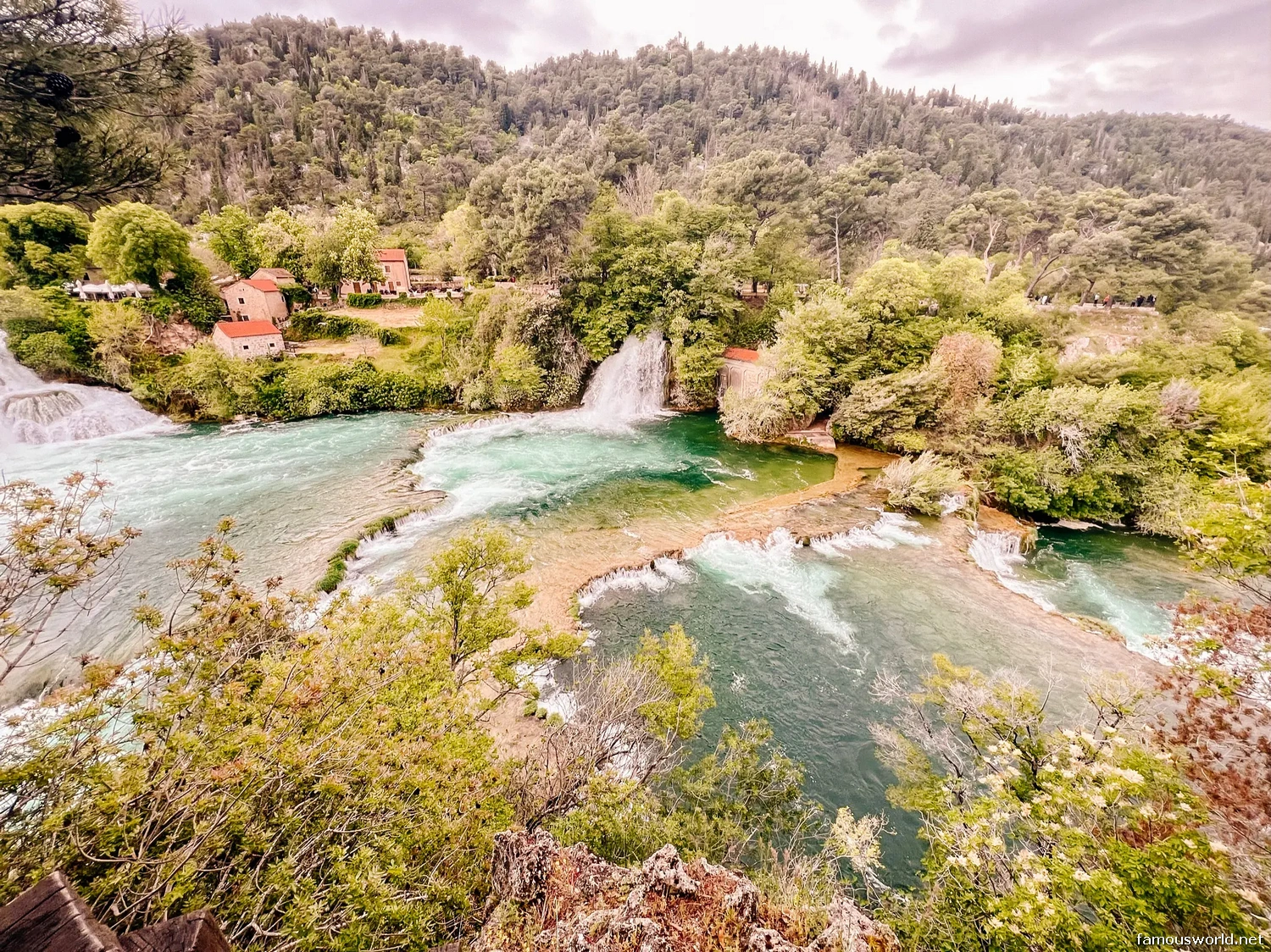
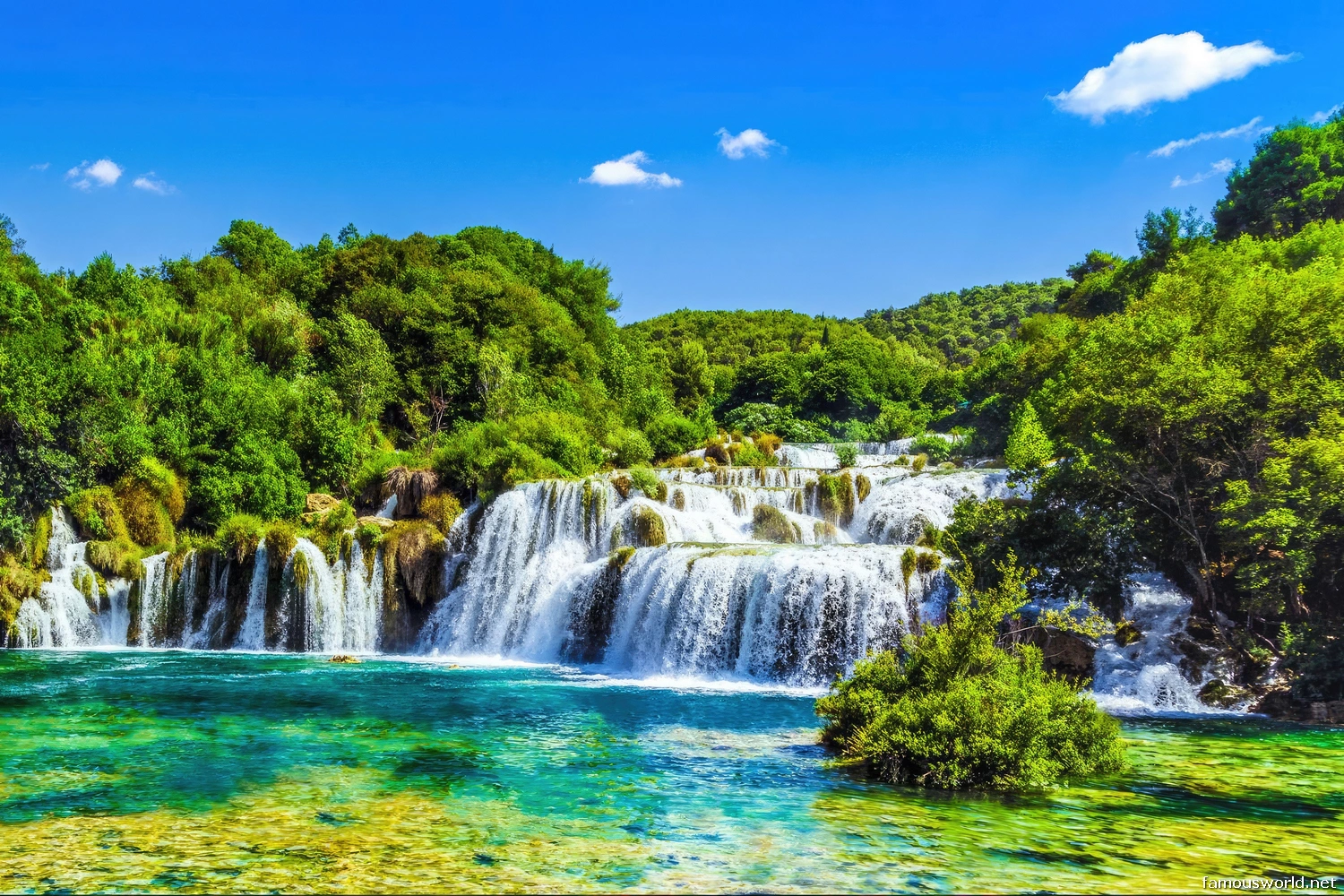
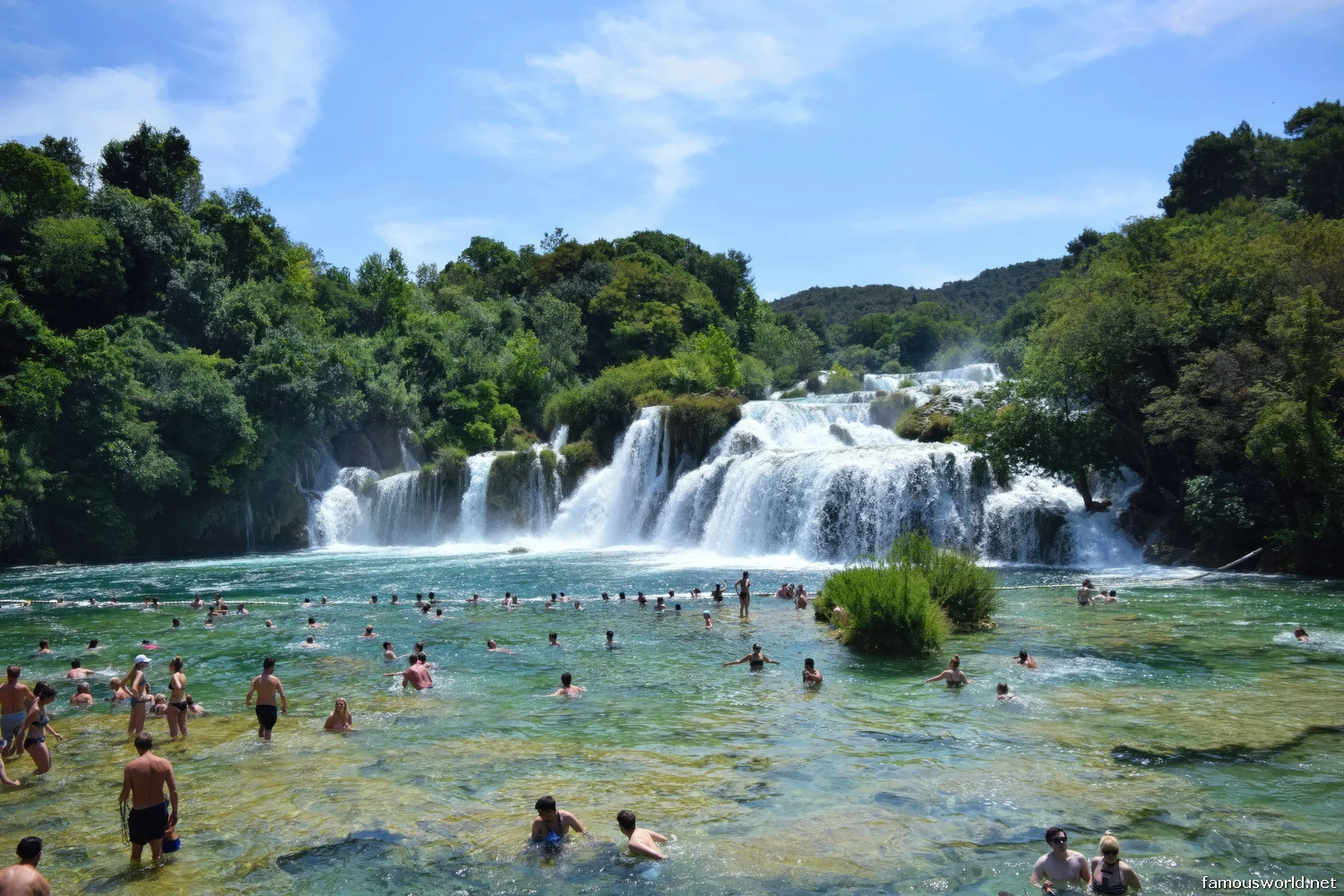
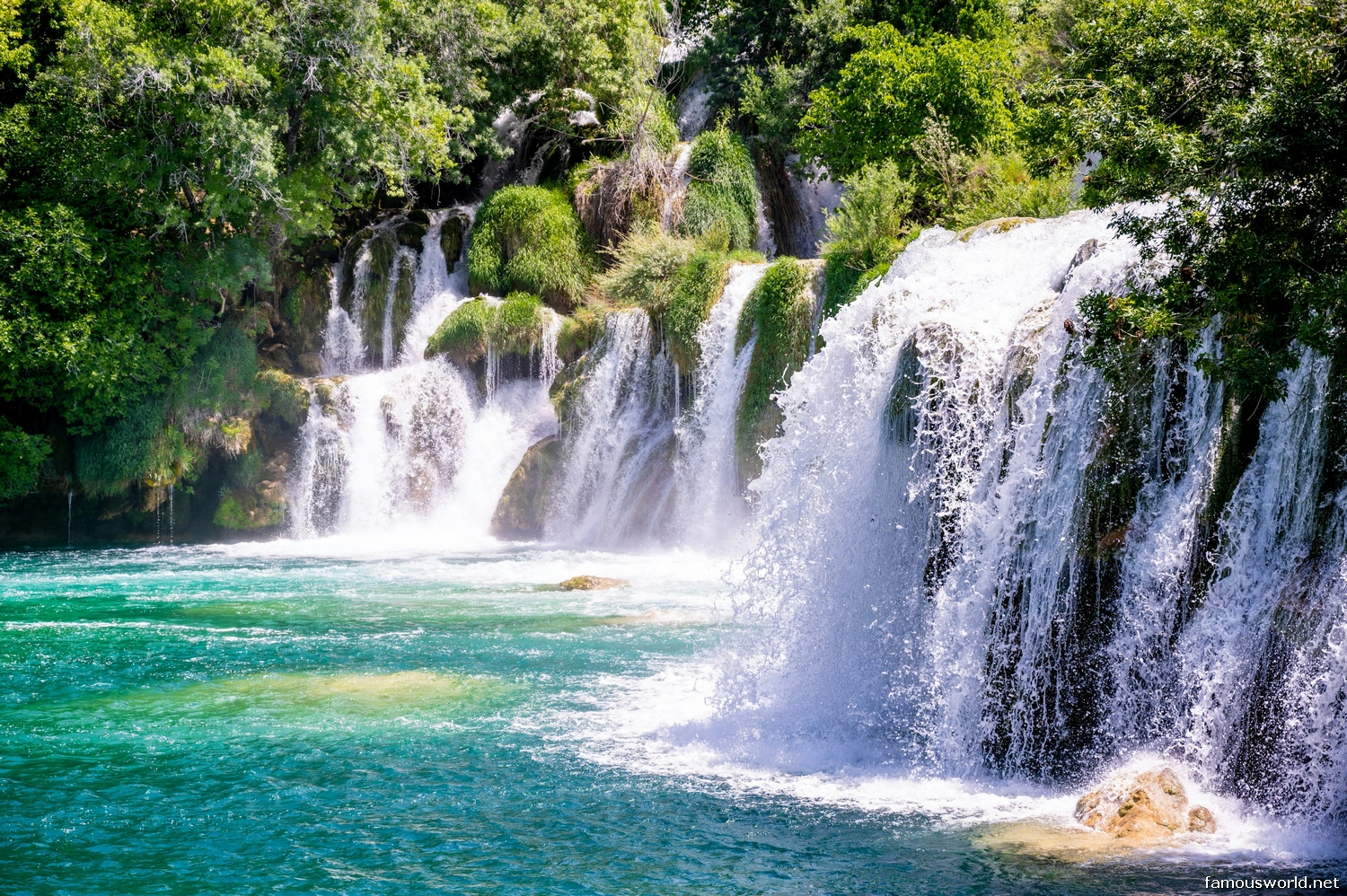
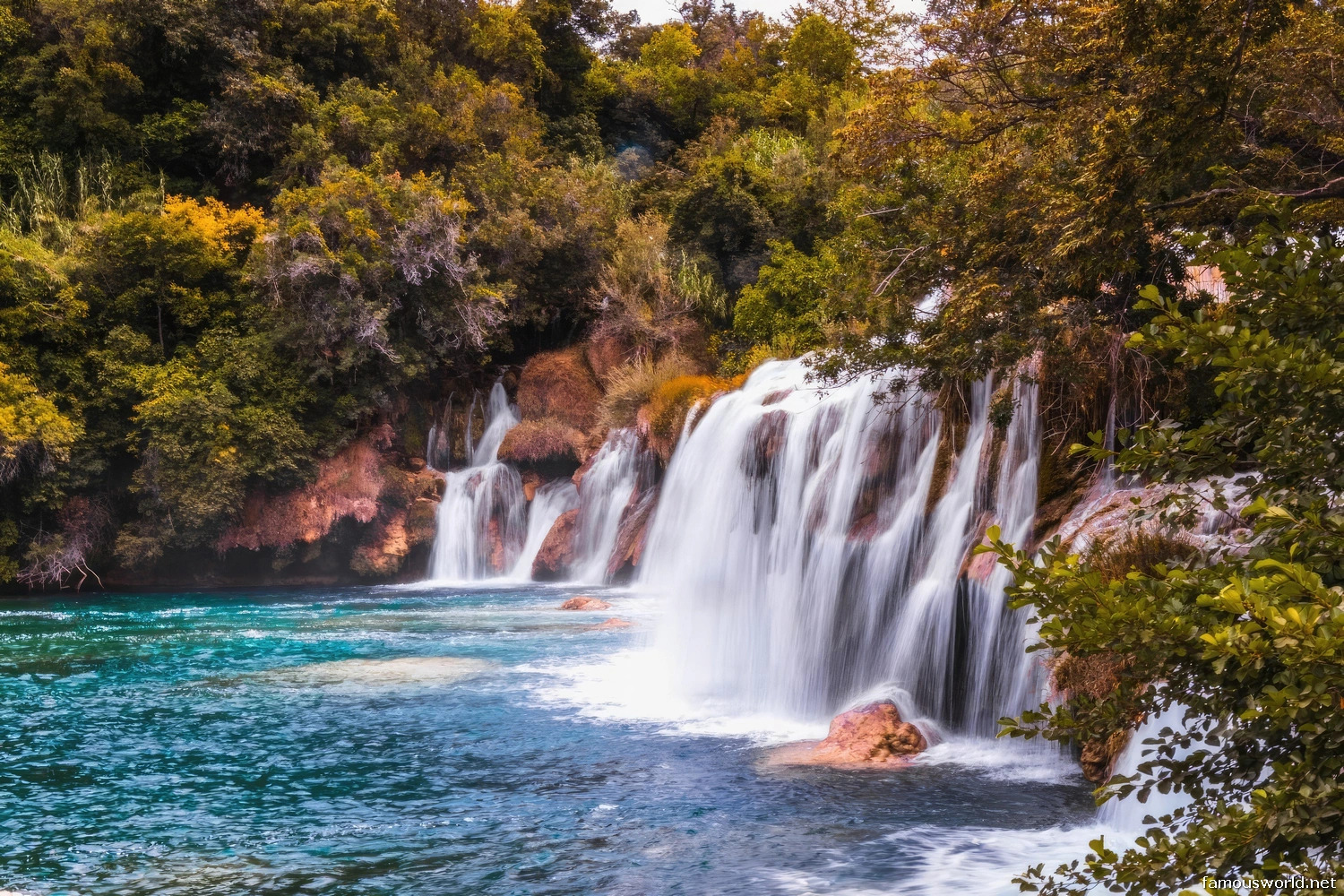
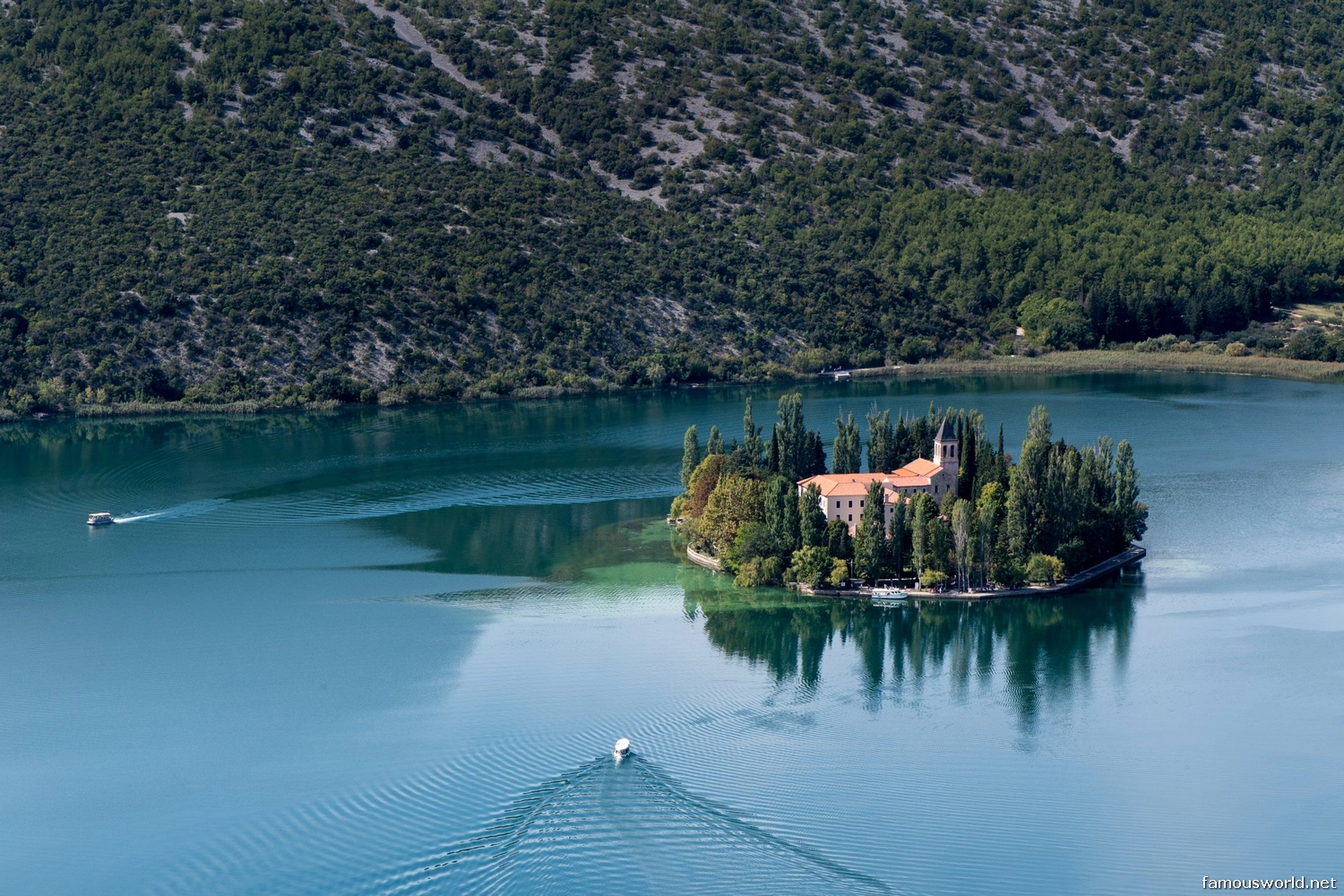
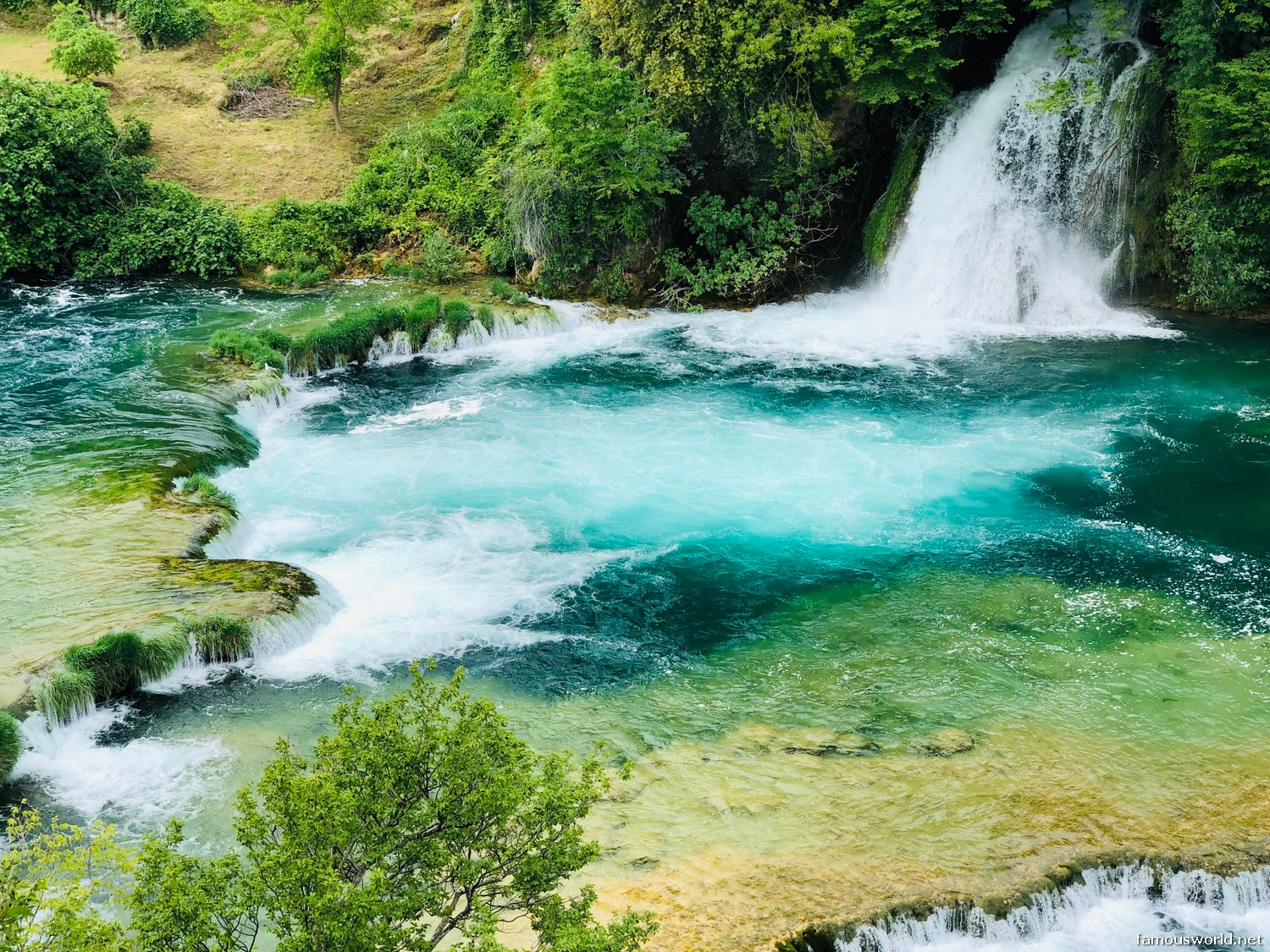
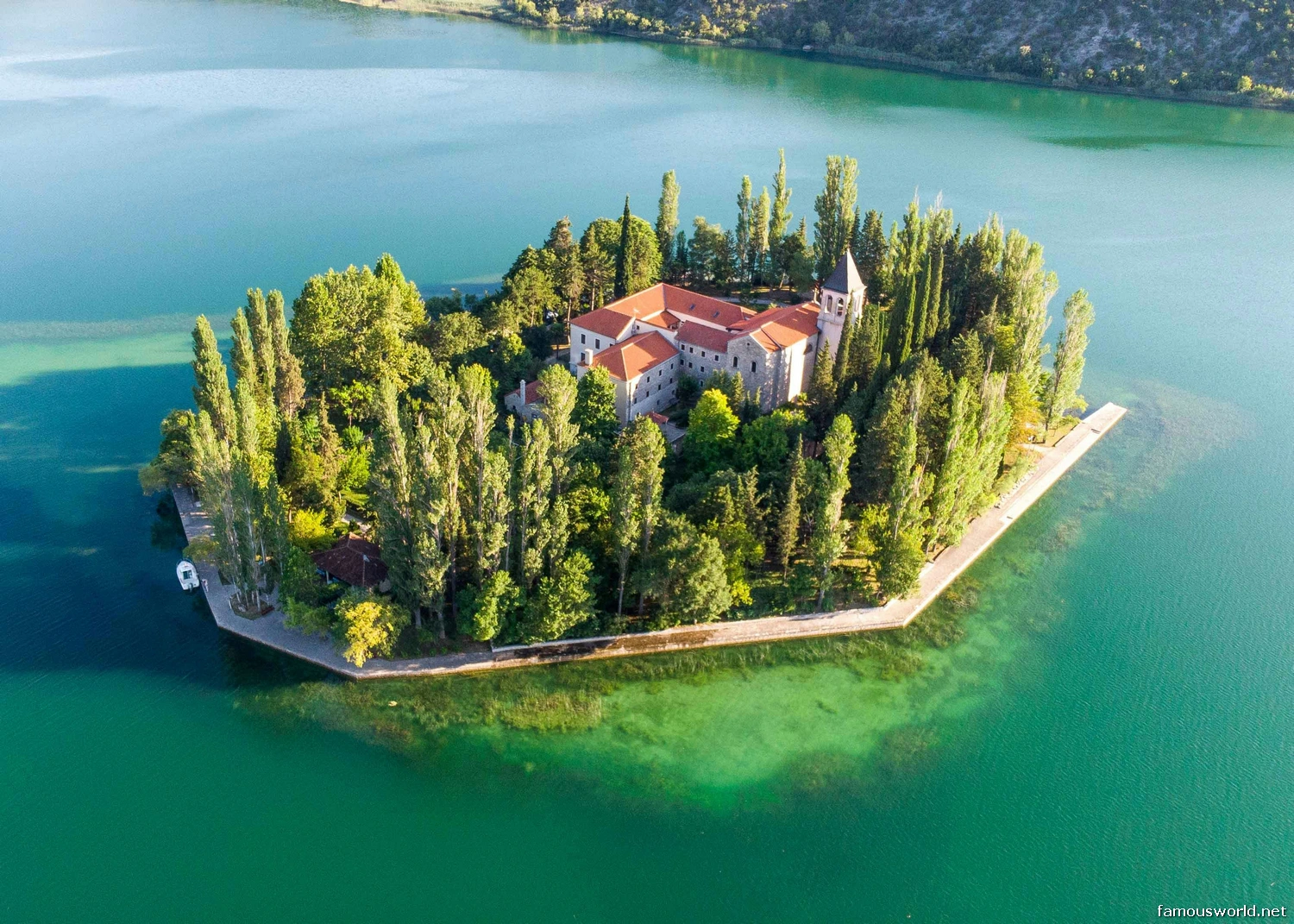
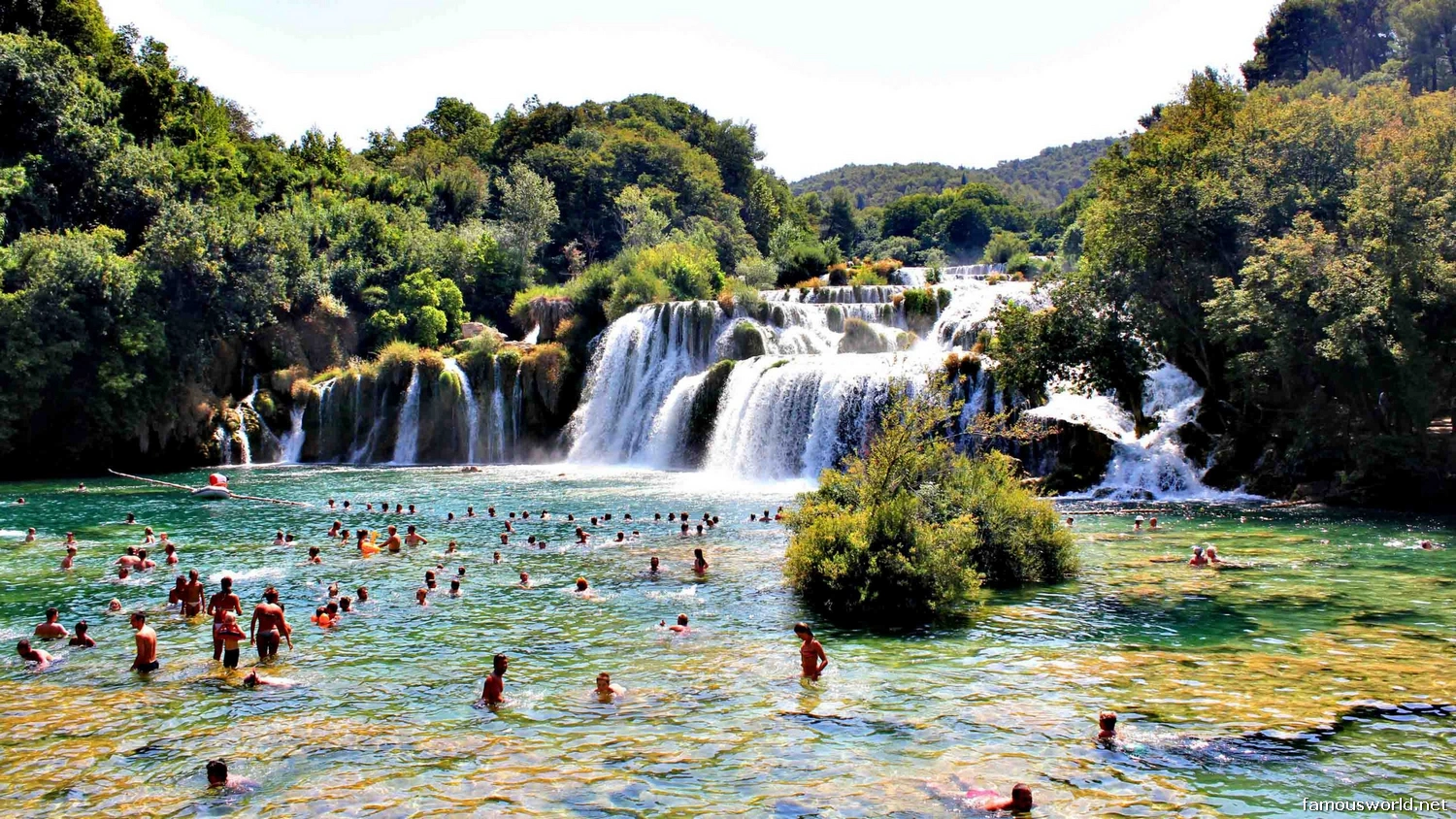
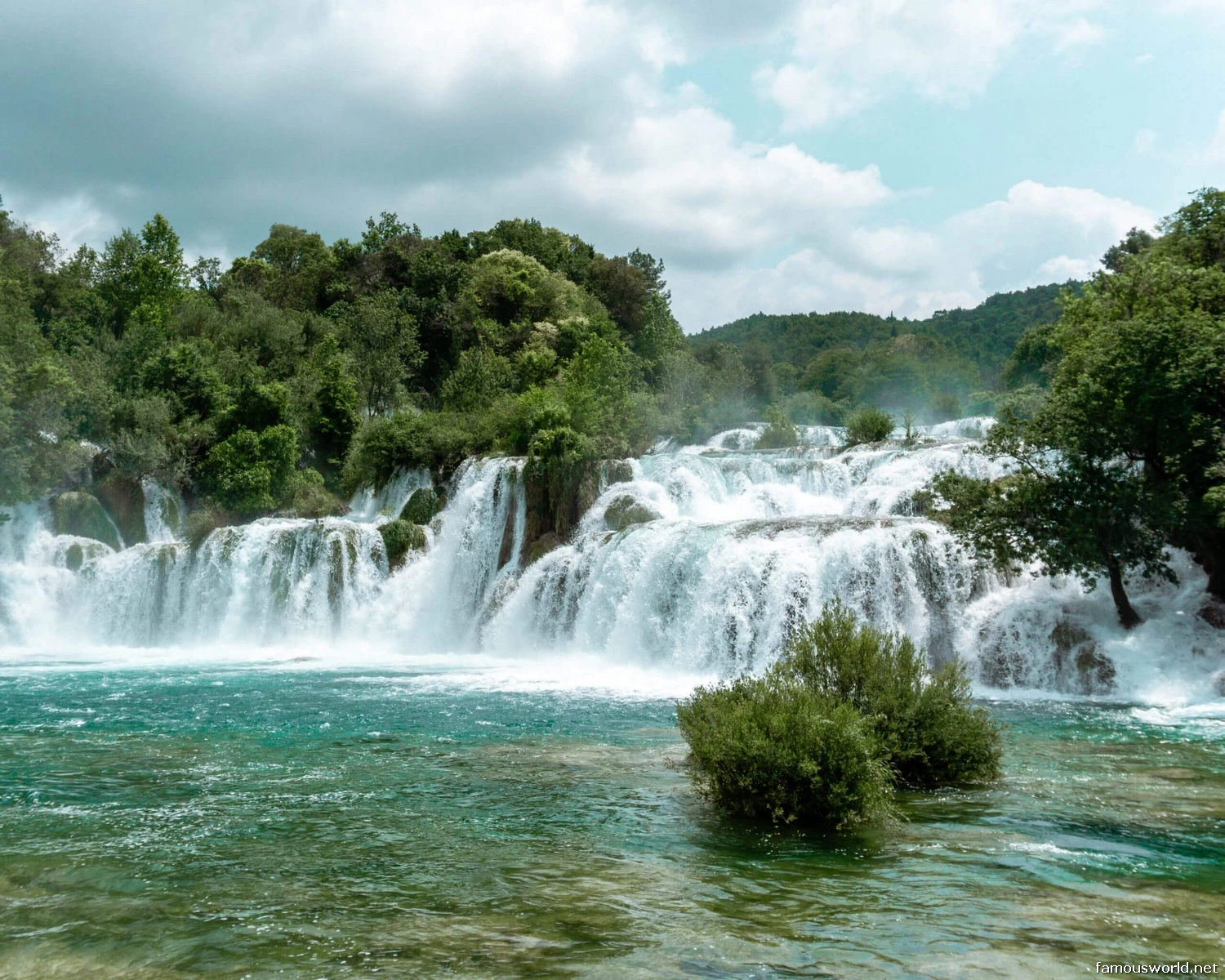
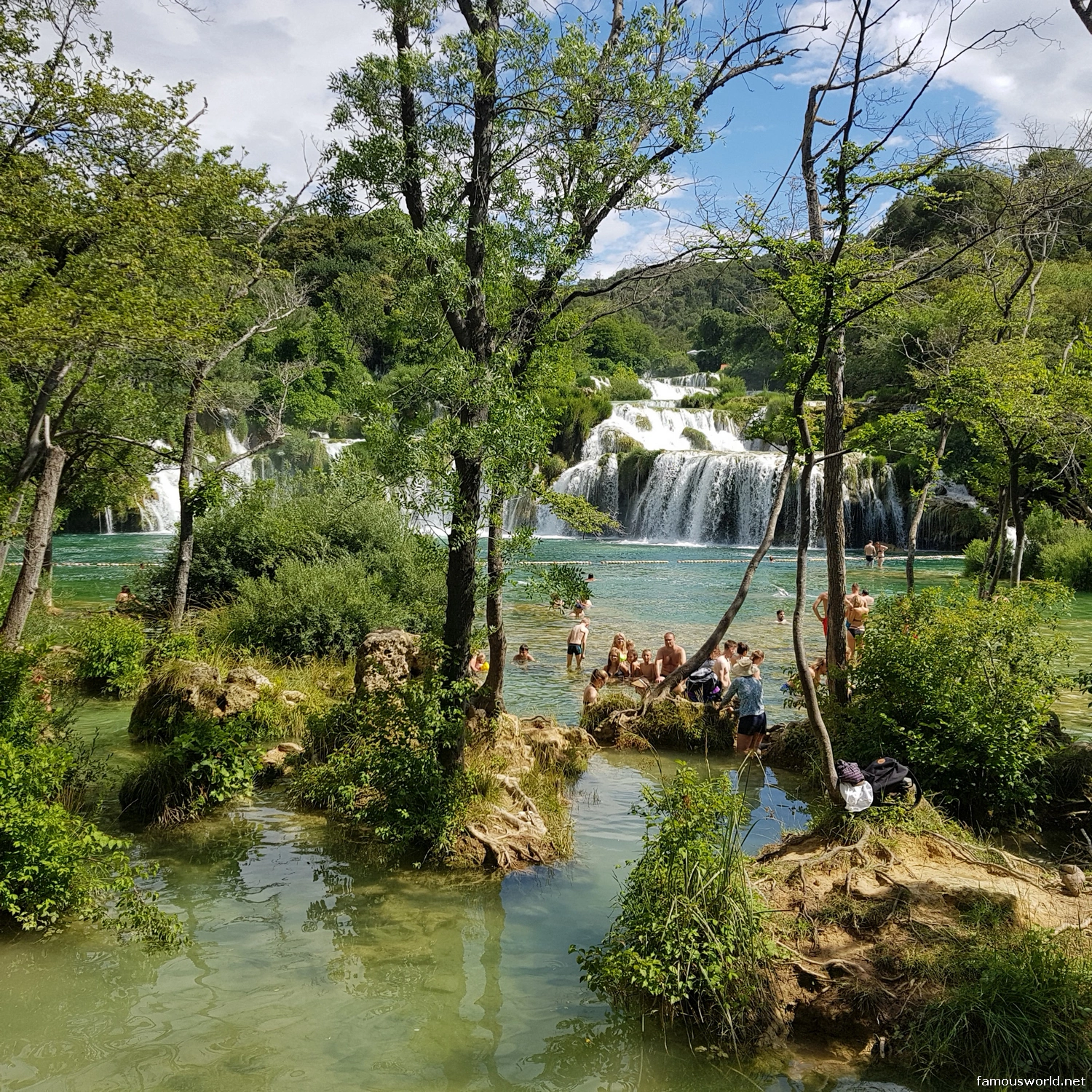
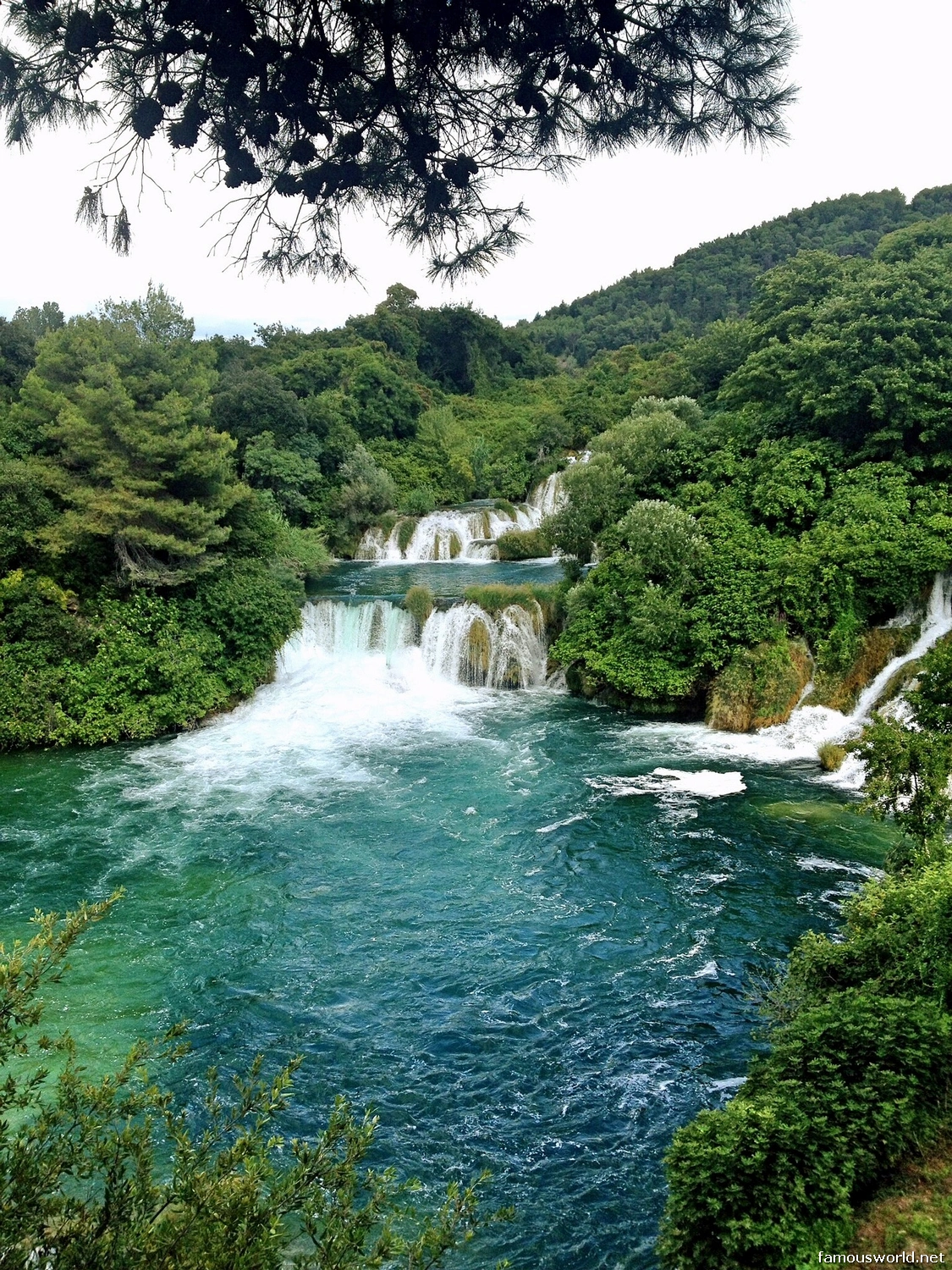
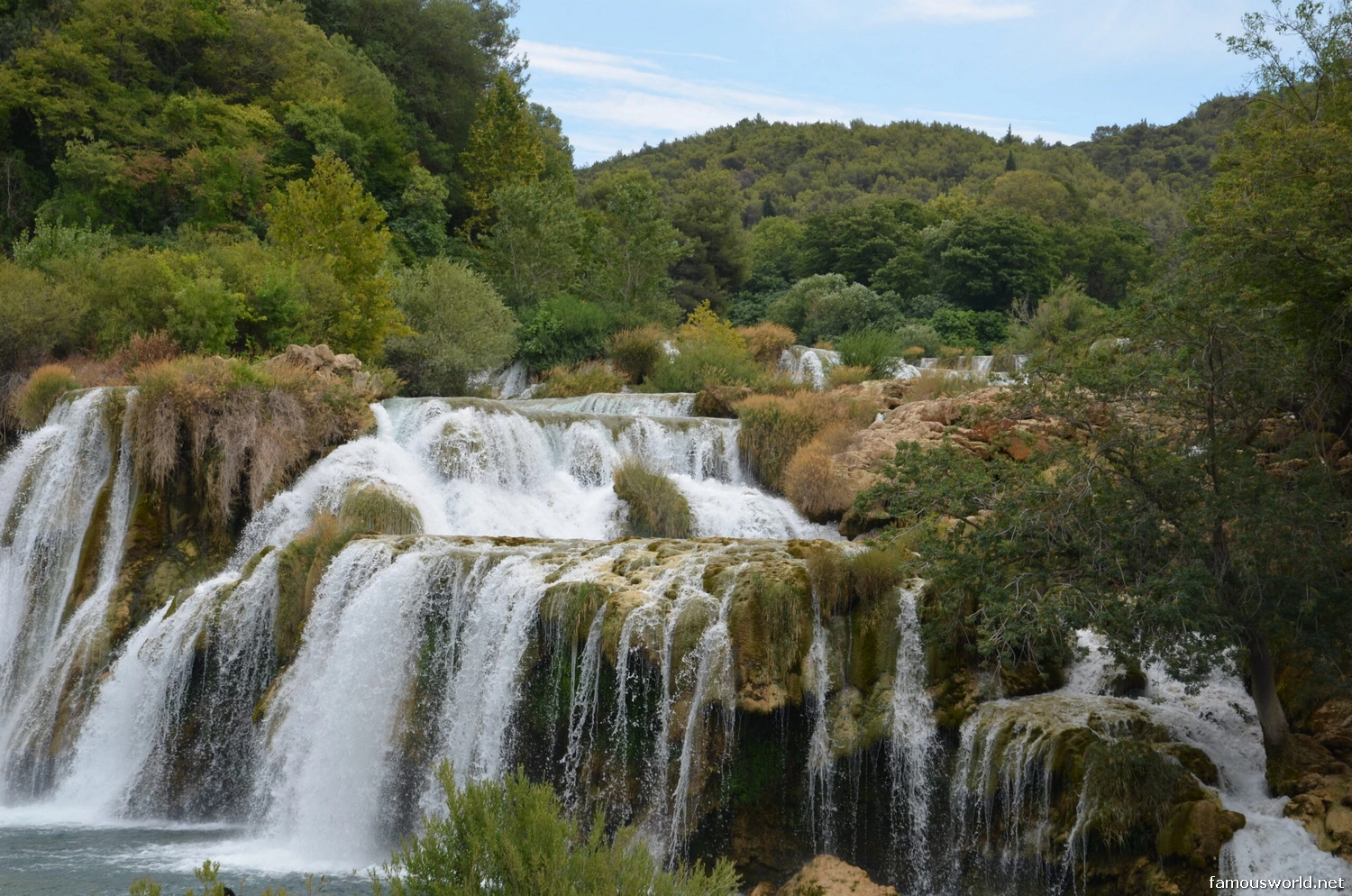
- The Landscape: The park’s defining feature is its series of dramatic waterfalls formed by travertine, a type of limestone deposited by the water. The most famous of these is Skradinski Buk, a massive, clear, natural pool with high cascades. The landscape is also dotted with lakes, lush riverside vegetation, and the Visovac Lake, which has a tiny, picturesque island in its center.
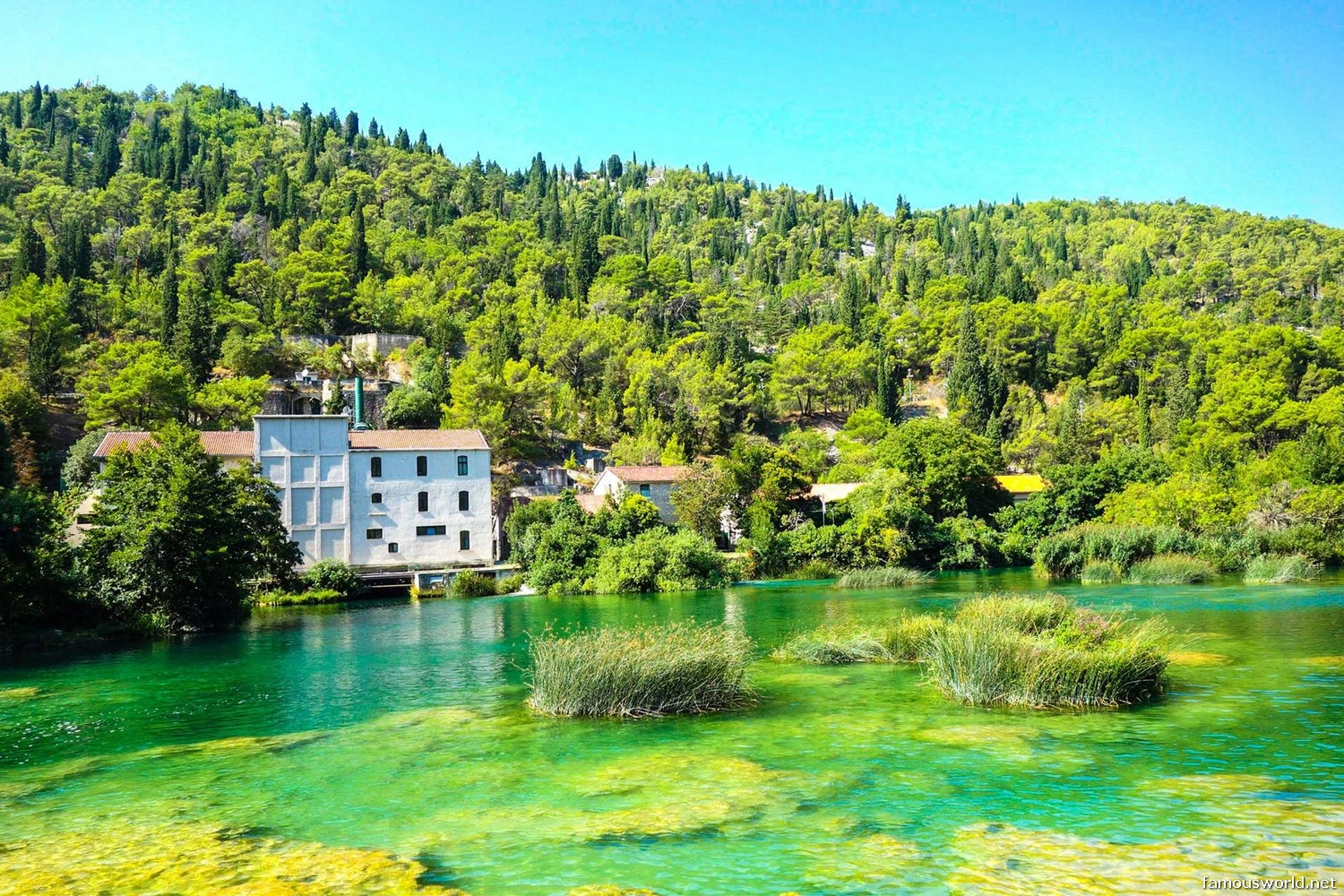
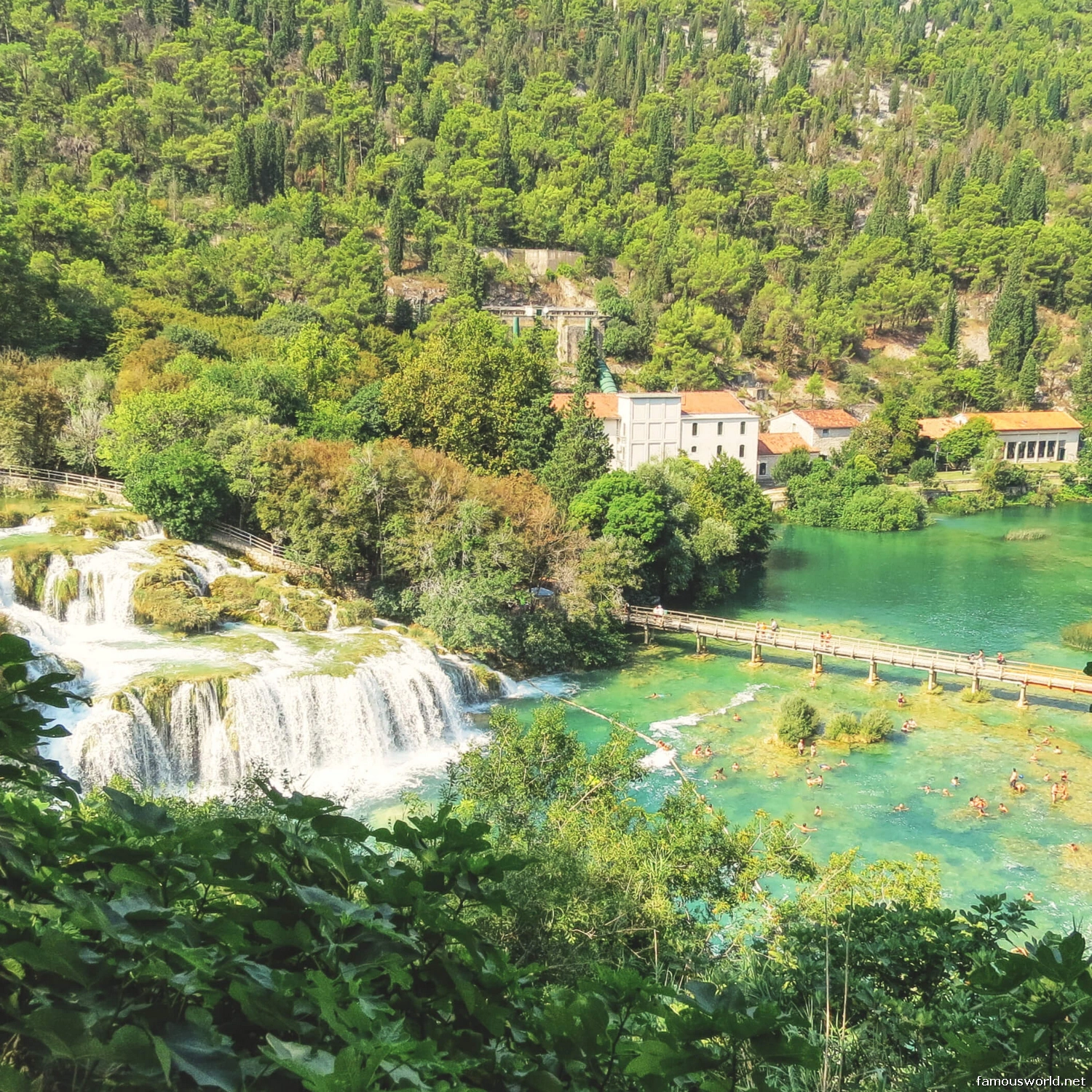
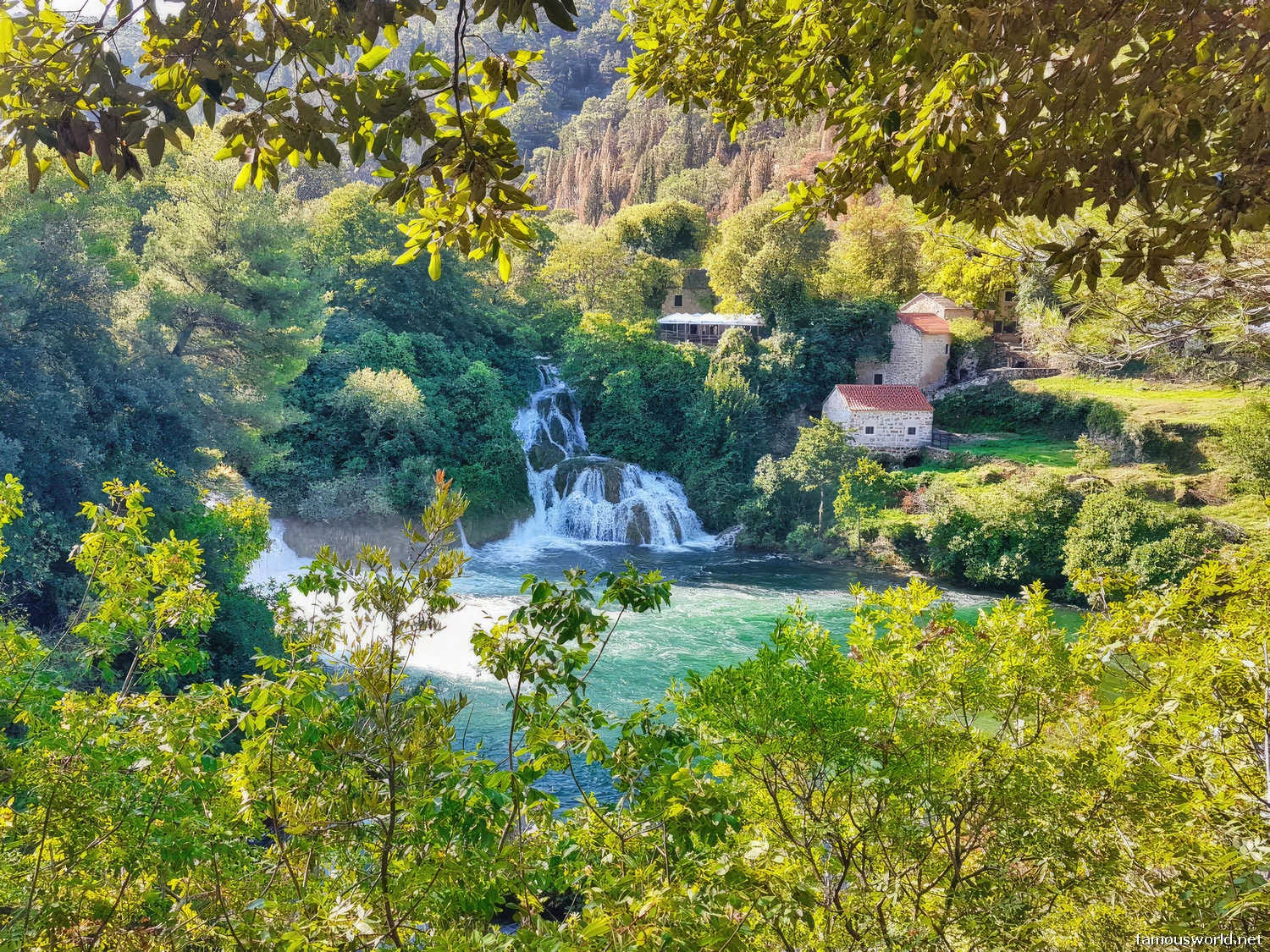
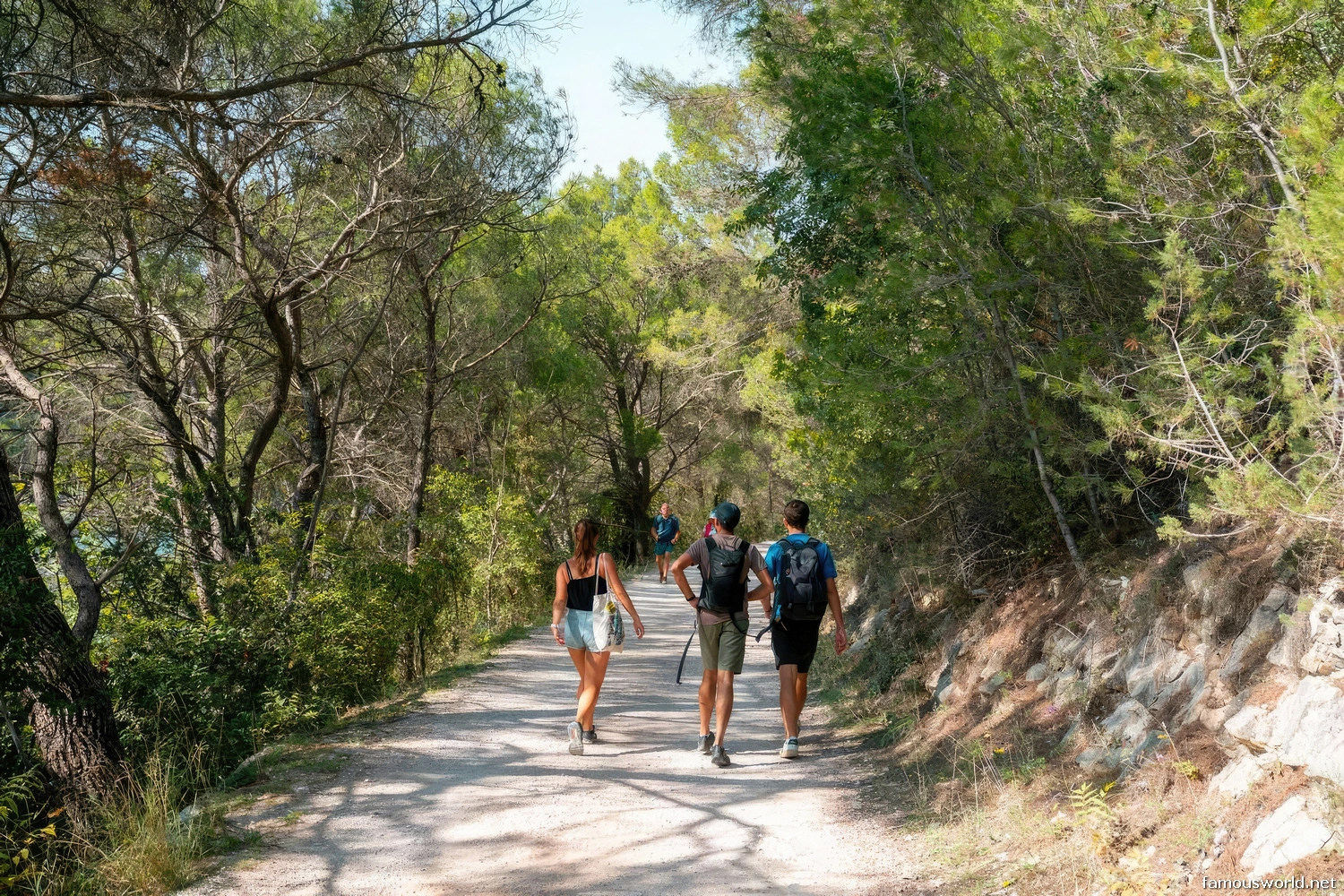
- The Architecture: The park is home to a remarkable collection of historical architecture. Restored watermills at Skradinski Buk have been converted into an ethnographic village, showcasing traditional life with weaving workshops and blacksmith shops. In the middle of Visovac Lake sits the iconic Visovac Monastery, a serene 15th-century religious site. Further upriver lies the Krka Monastery, which has a history dating back to the 14th century.
What Makes It Famous
Krka is famous for its breathtaking waterfalls and the unique combination of natural beauty and cultural history.
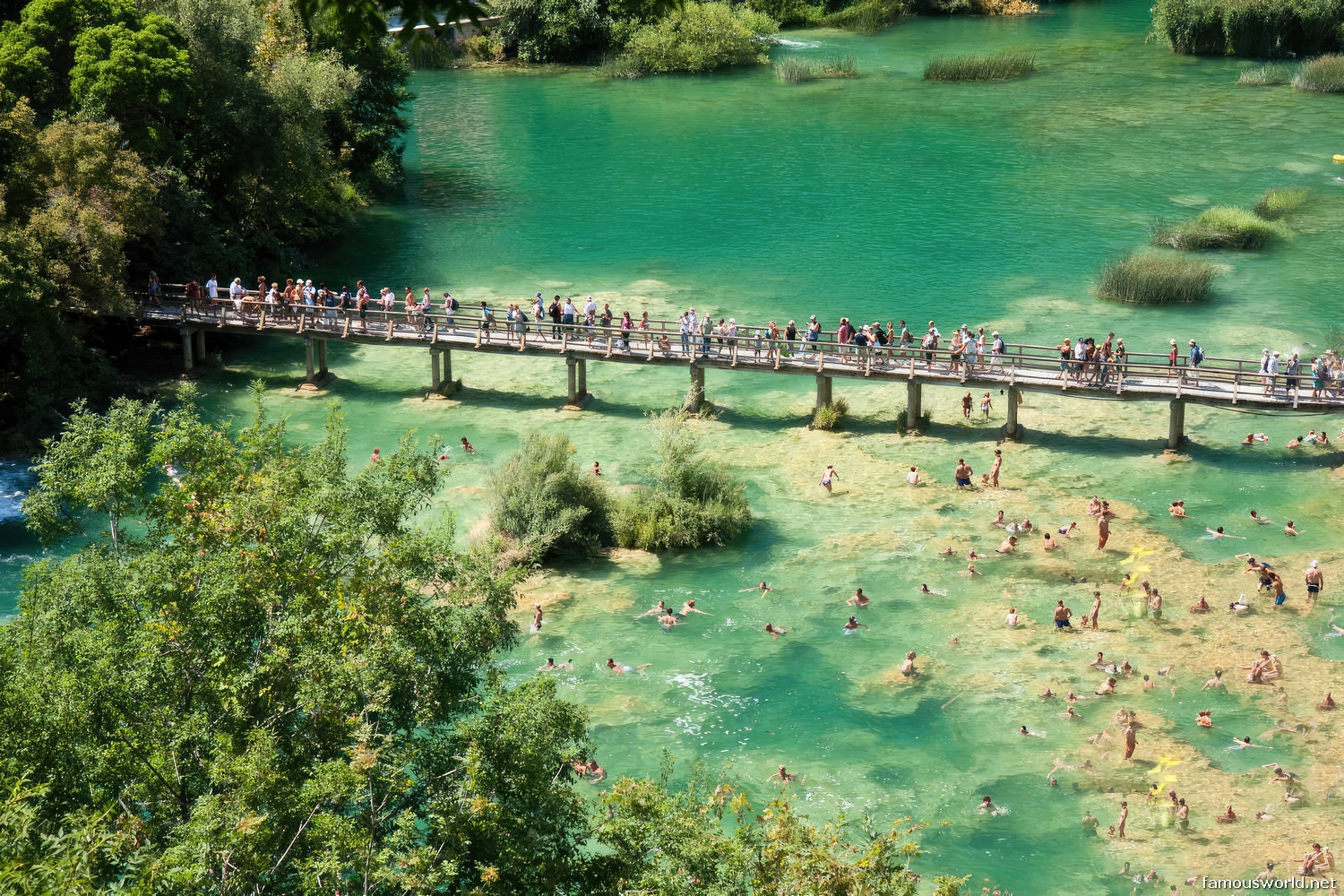
- Skradinski Buk: This is the park’s star attraction—a long series of cascades and the largest travertine waterfall system in Europe. A network of wooden paths and bridges allows visitors to walk right over the flowing water.
- Visovac Island: The “Lady of the Lake,” this tiny island housing the Franciscan monastery is one of the most iconic and photographed sights in all of Croatia.
- Cultural-Historical Heritage: The park is not just a nature reserve but a living museum, with its restored watermills, weavers’ workshops, and historic monasteries still in use.
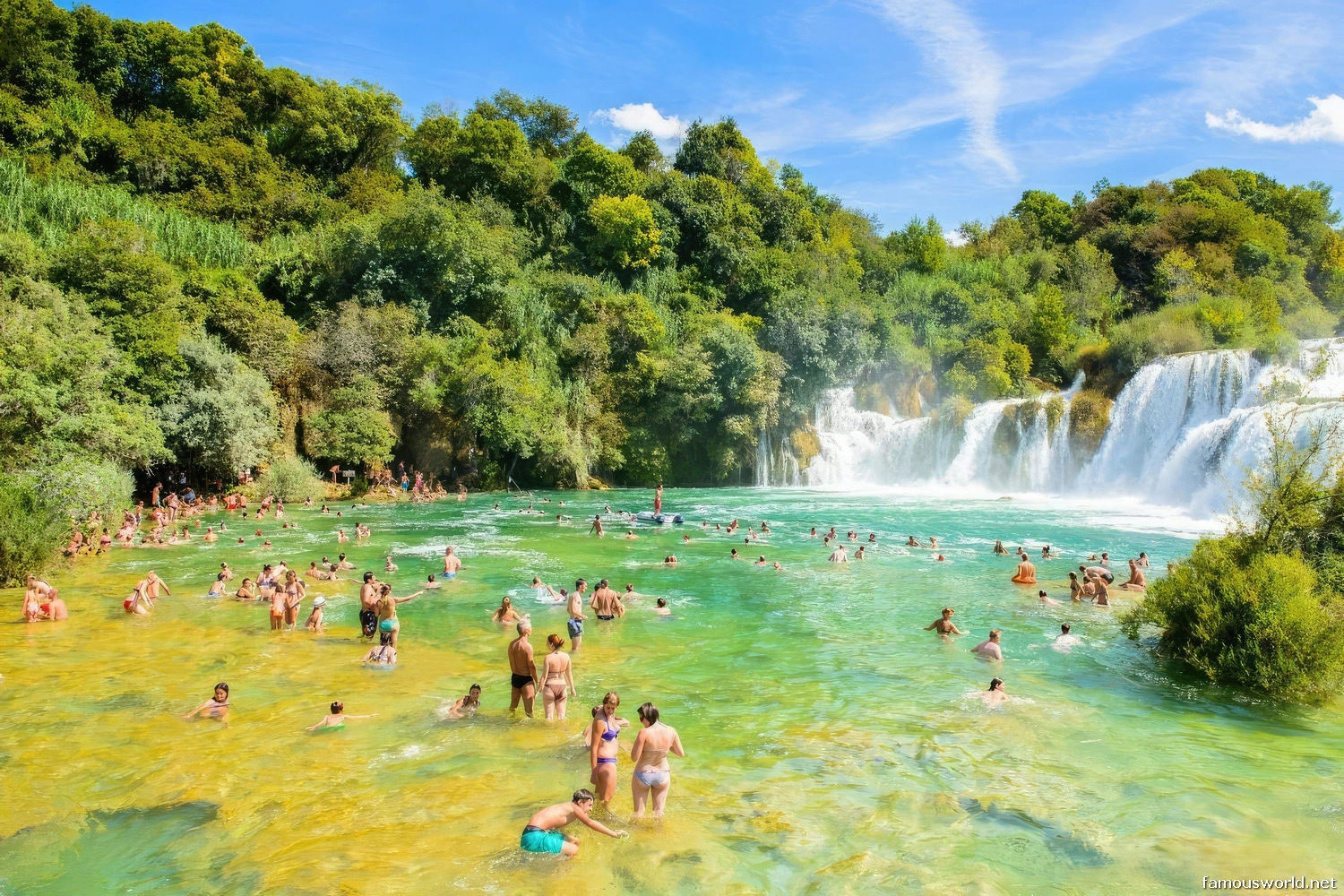
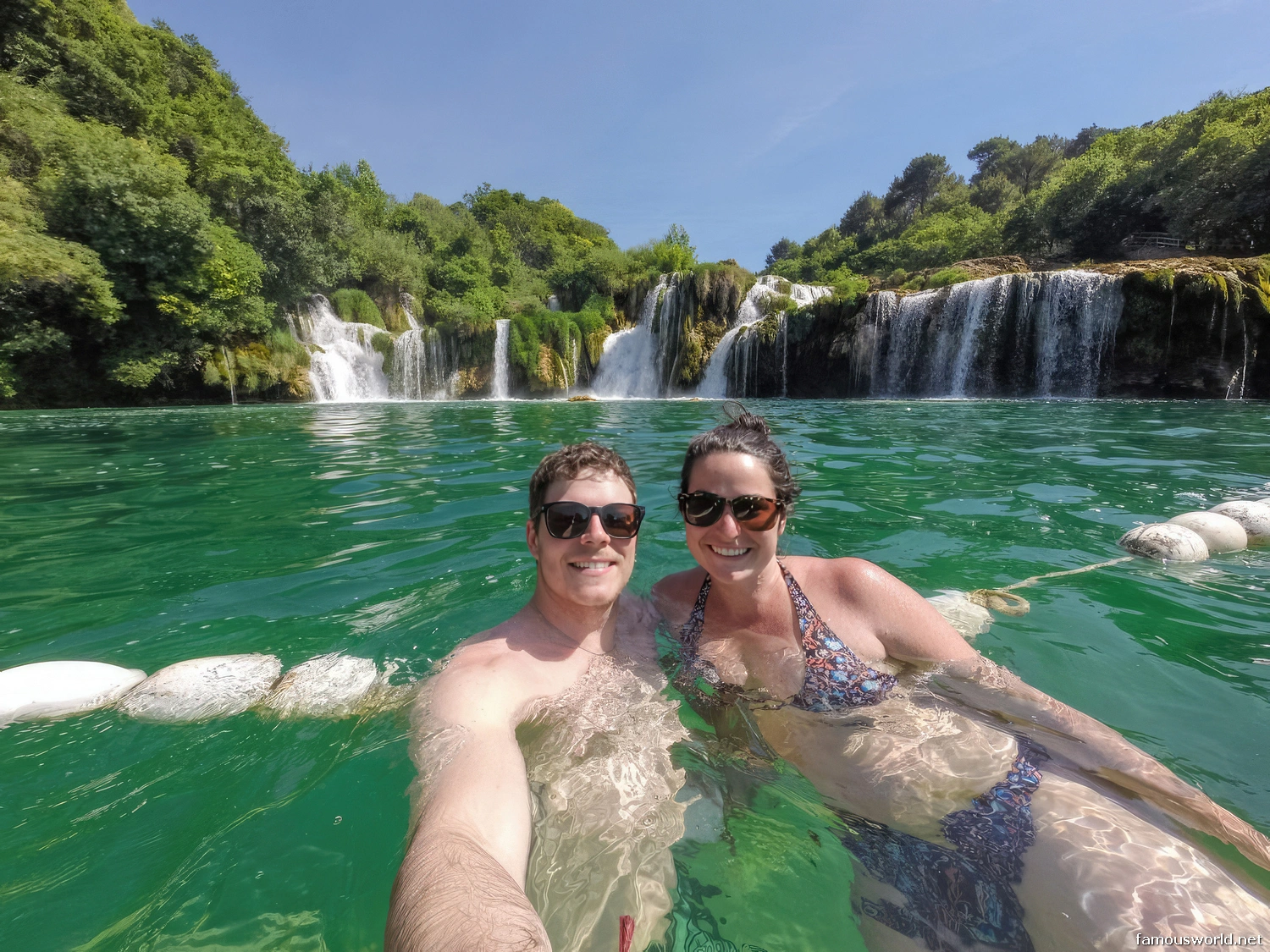
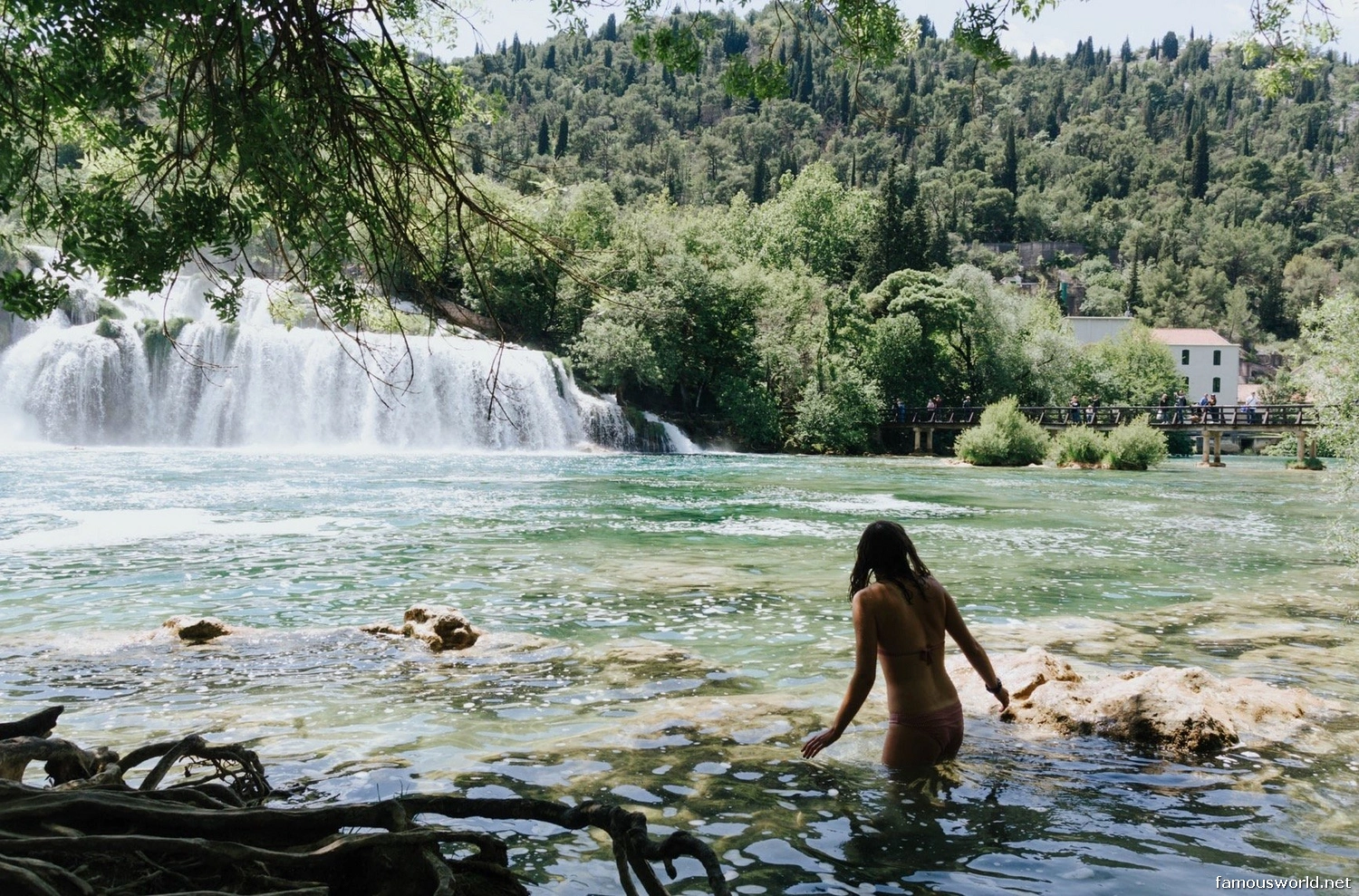
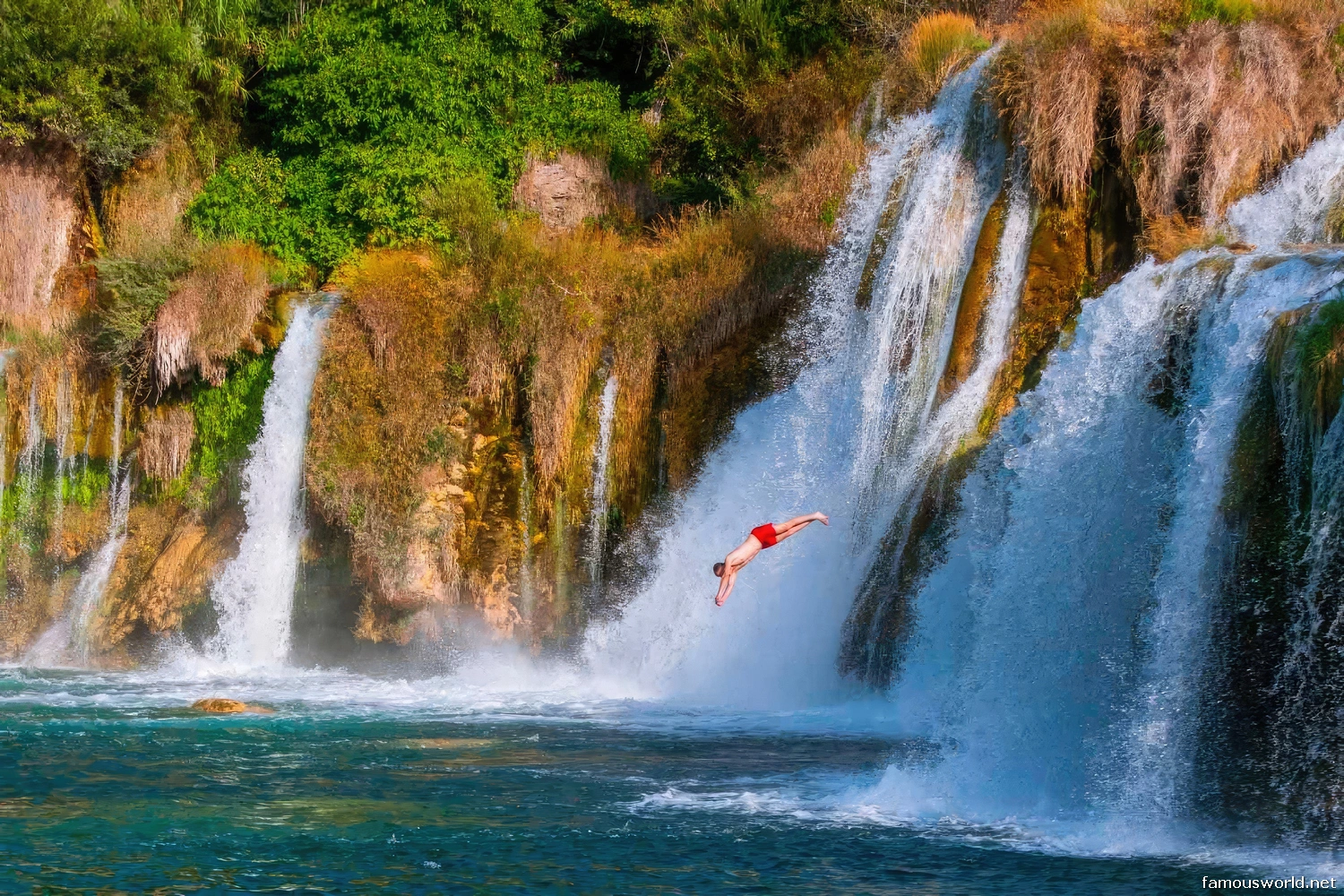
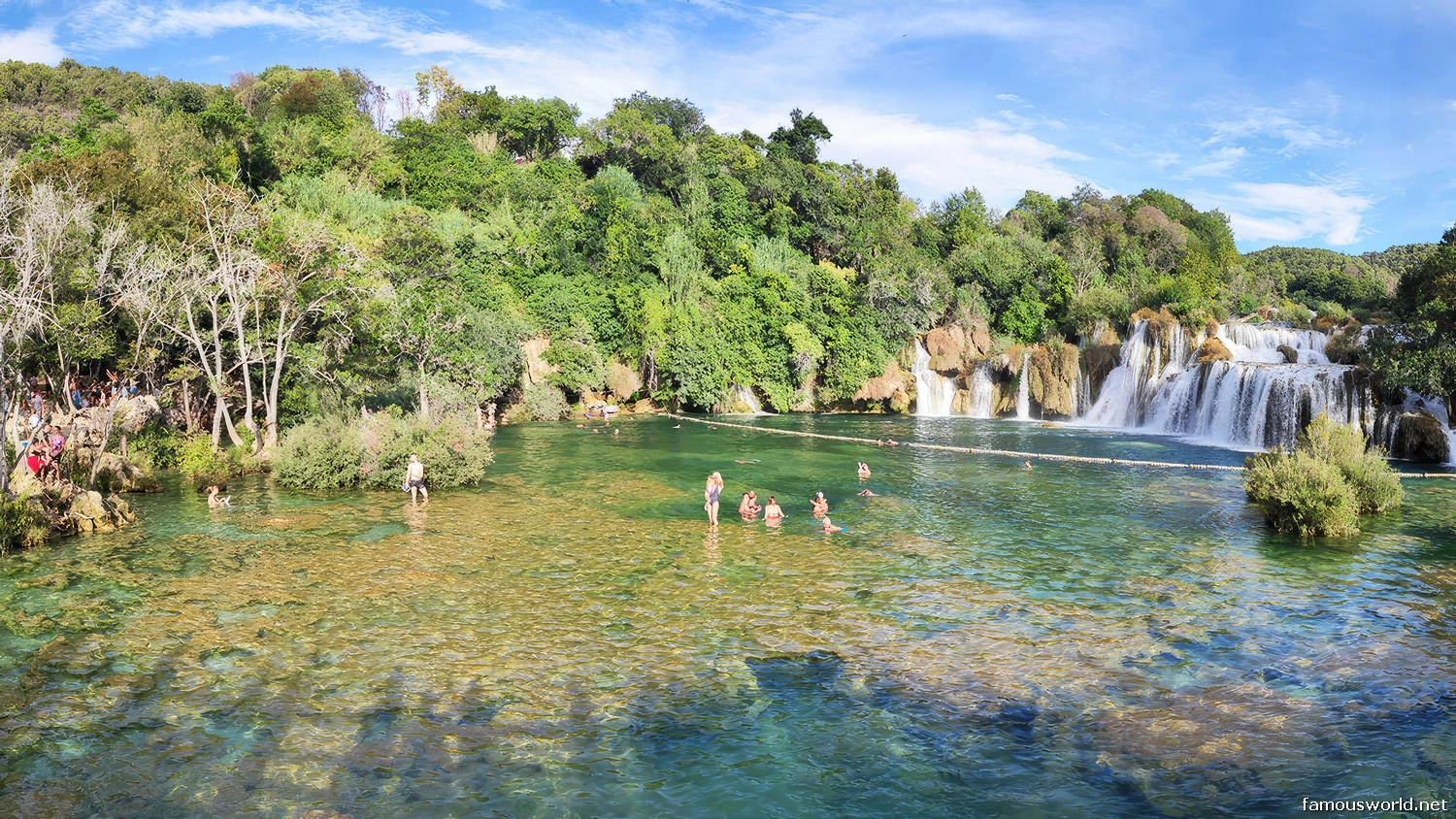
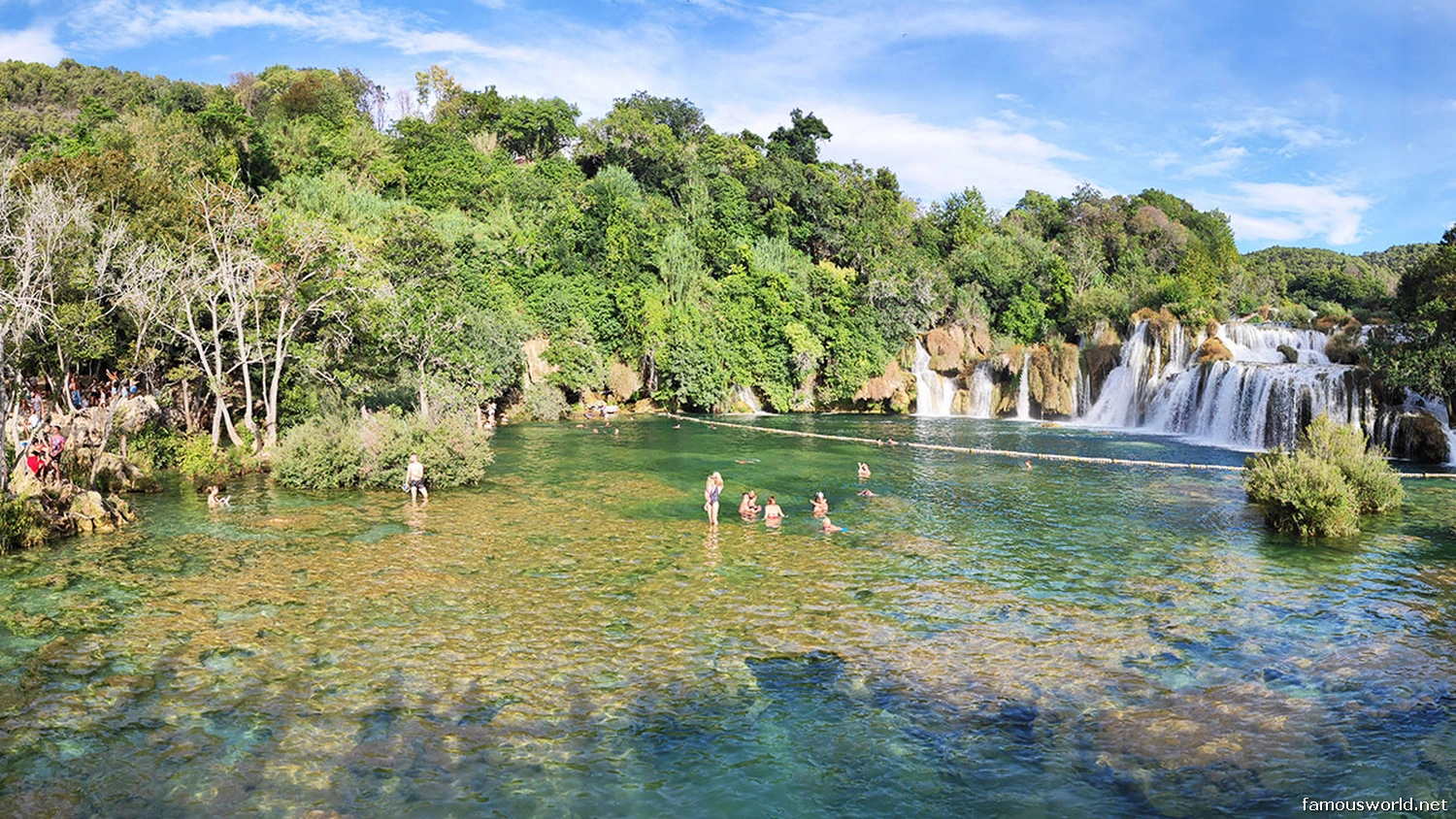
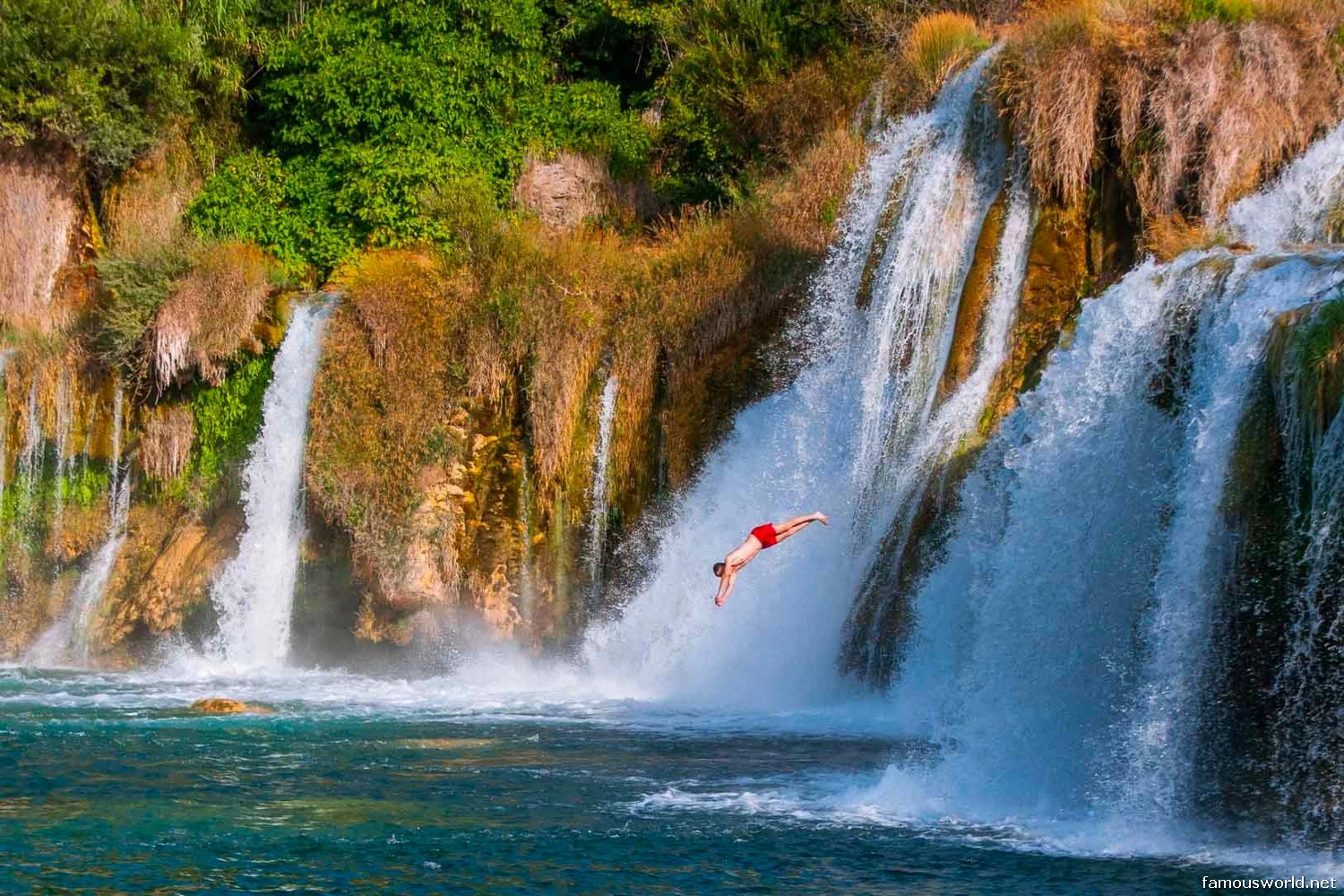
- Swimming (Historical Note): For many years, Krka was famously one of the few national parks in Croatia where visitors could swim in the pools at the base of the waterfalls, making it an incredibly popular summer destination. (Note: As of 2021, swimming at Skradinski Buk is no longer permitted to preserve the ecosystem).
Differences from Other Wonders
Krka’s interactive, cultural landscape differs significantly from the more strictly protected, visual experience of Plitvice Lakes National Park.
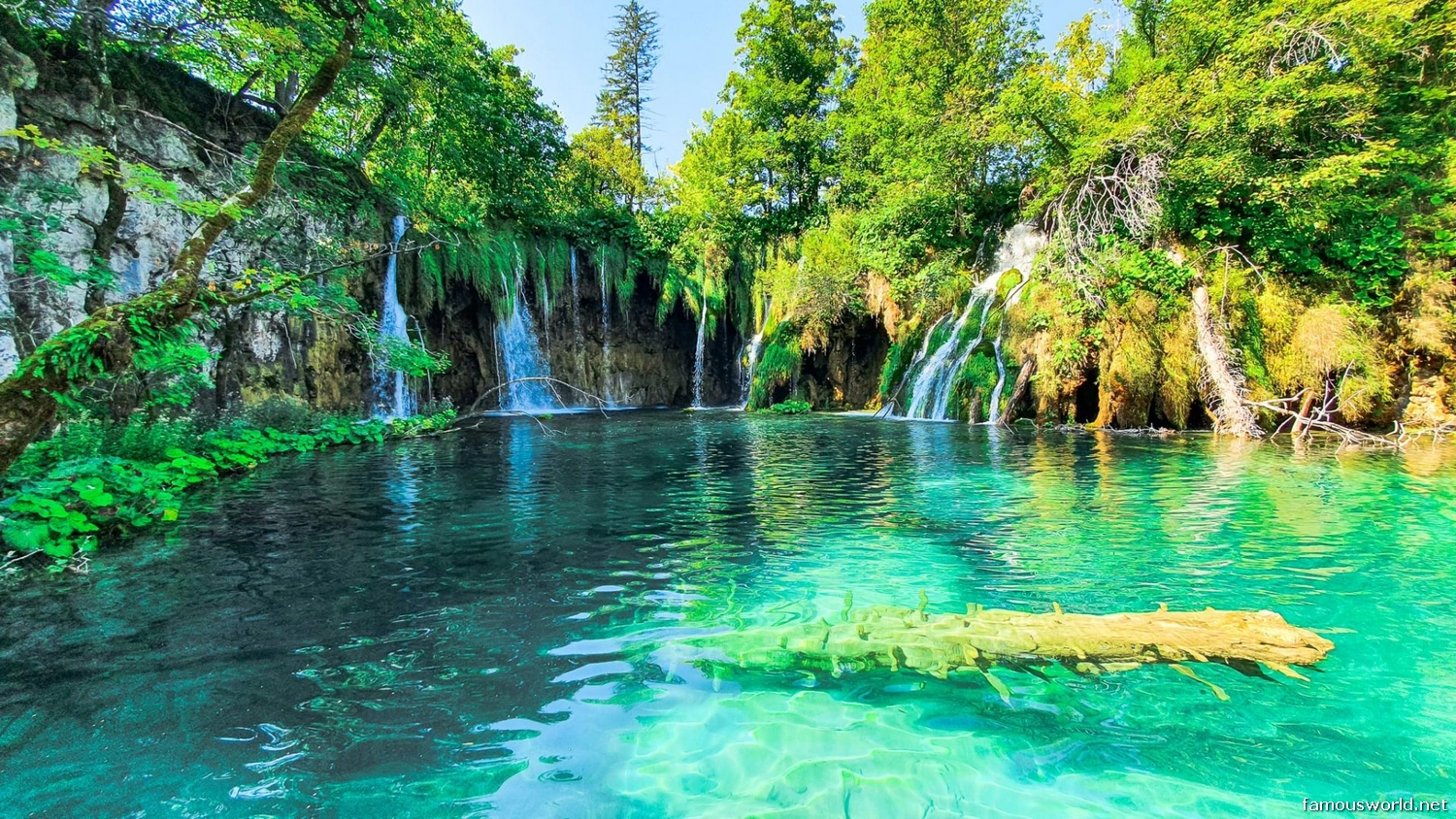
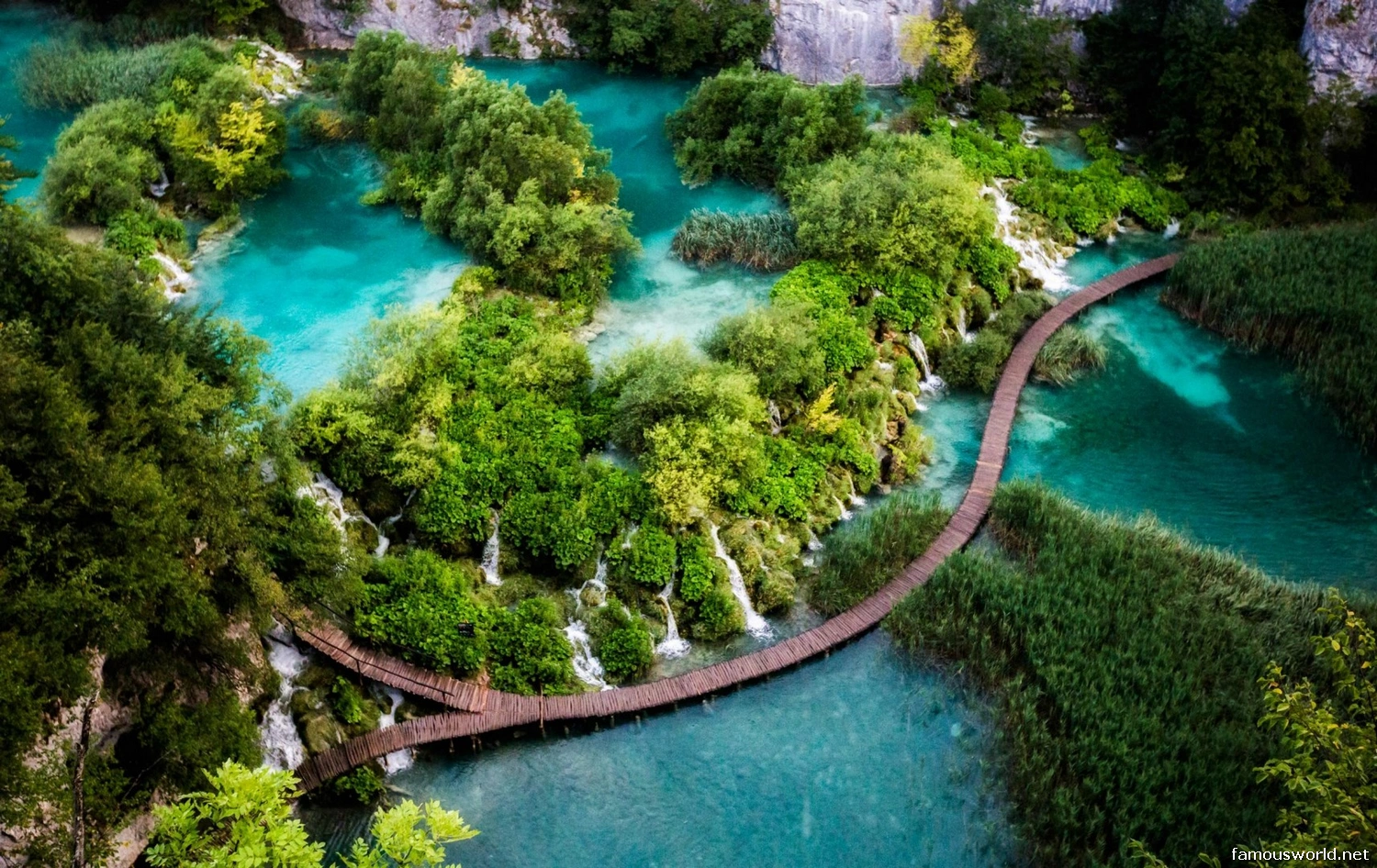
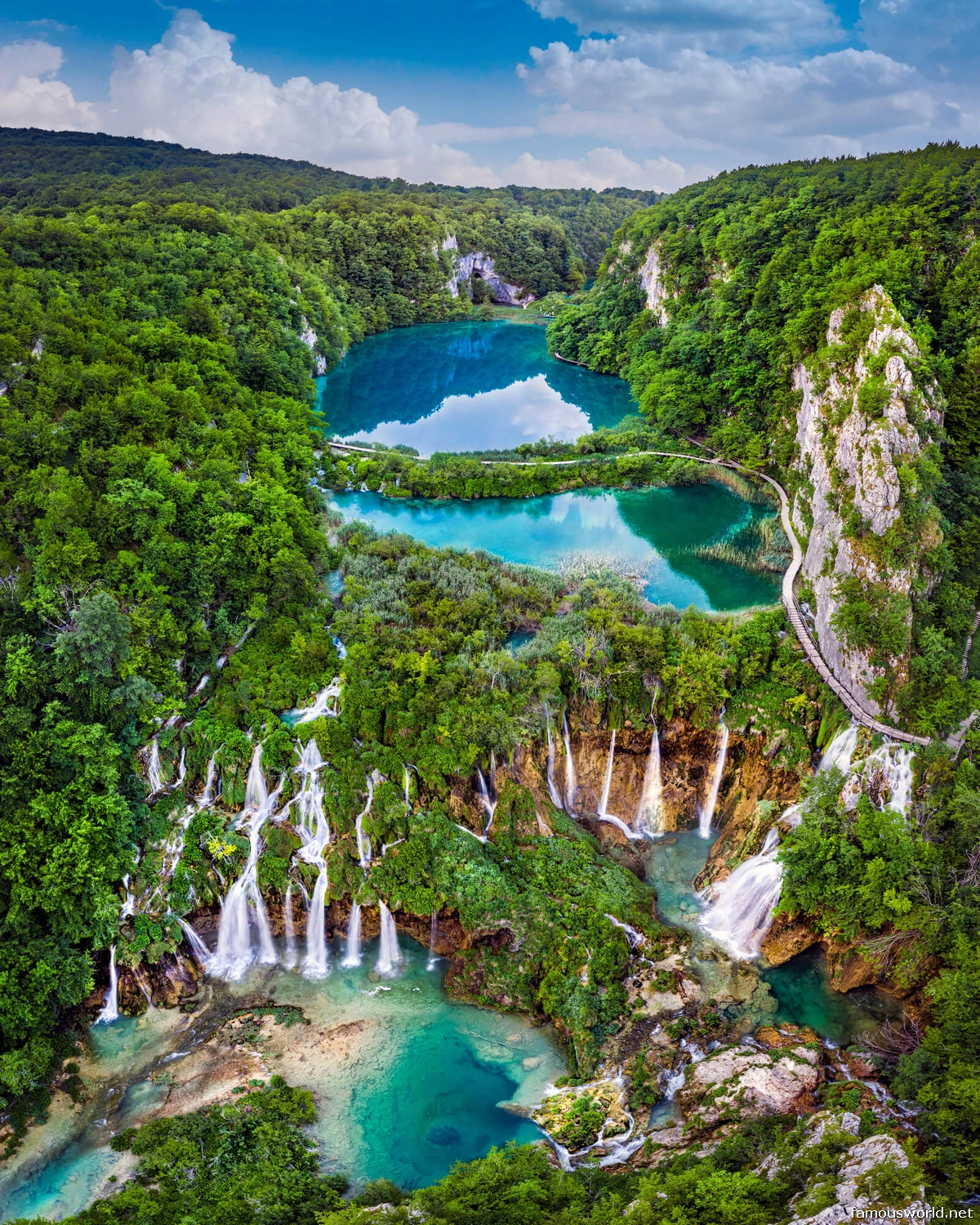
- Environment (River Canyon vs. Terraced Lakes): Krka is defined by the powerful flow of a single river carving through a canyon. Plitvice is a system of 16 interconnected, terraced lakes that descend through a forested gorge, creating a different kind of water landscape.
- Core Story (Nature and Human Coexistence vs. Pristine Wilderness): Krka’s story is about the centuries-long relationship between humans and the river, evident in its mills, monasteries, and agriculture. Plitvice’s story is one of pristine, protected nature, with human presence minimized to preserve its delicate geological processes.
- Primary Attraction (Interactive Experience vs. Visual Spectacle): The main attraction of Krka is the immersive experience—walking the trails, taking boat trips to the monastery, and exploring the ethnographic village. The primary attraction of Plitvice is the breathtaking visual spectacle of the tiered lakes and their ever-changing colors, viewed from pathways that keep visitors at a respectful distance.
- Atmosphere (Lively and Cultural vs. Tranquil and Naturalistic): Krka often has a livelier, more interactive atmosphere, blending recreation with history. Plitvice inspires a sense of tranquility and awe at the raw, untouched beauty of the natural world.
Location on world map