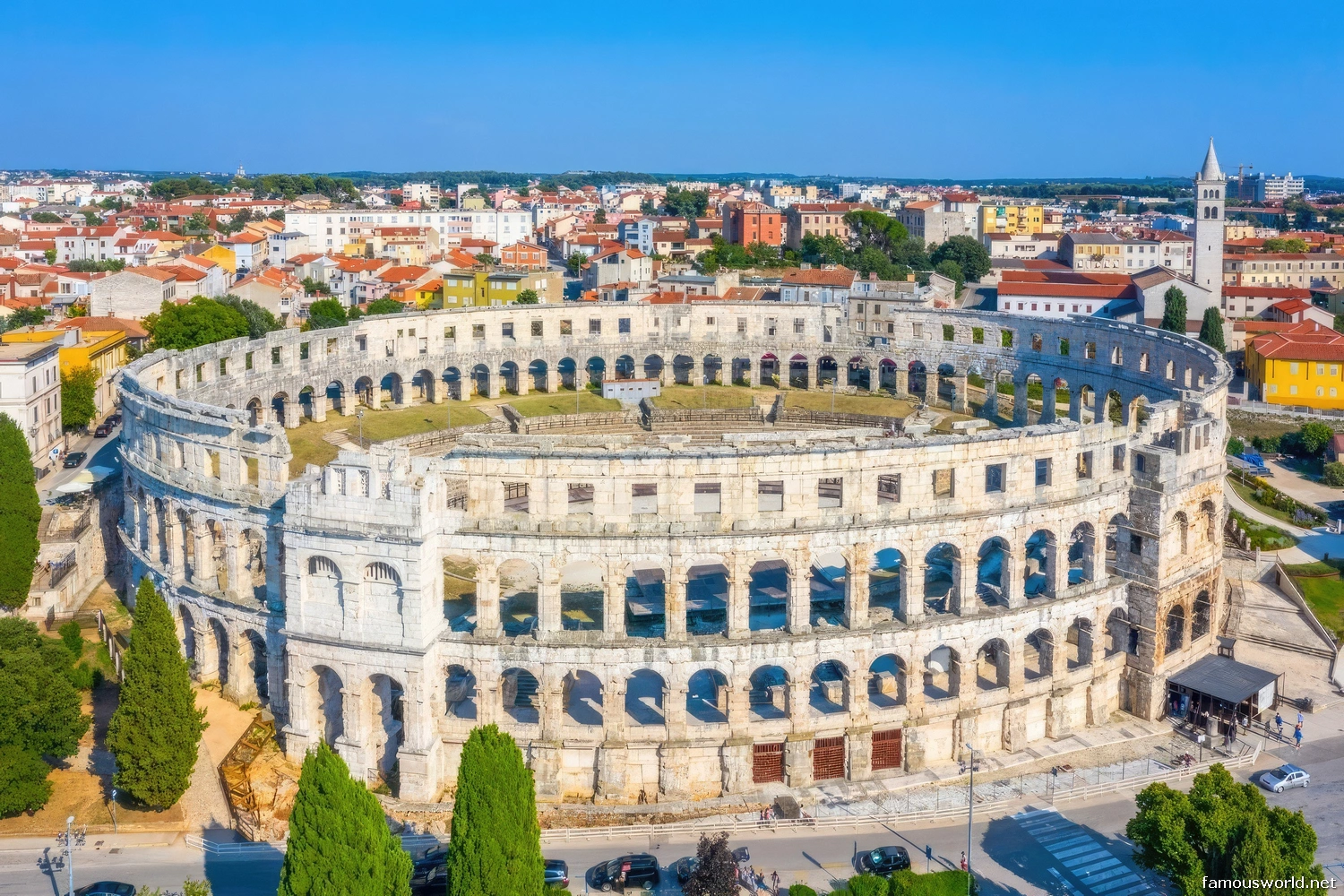
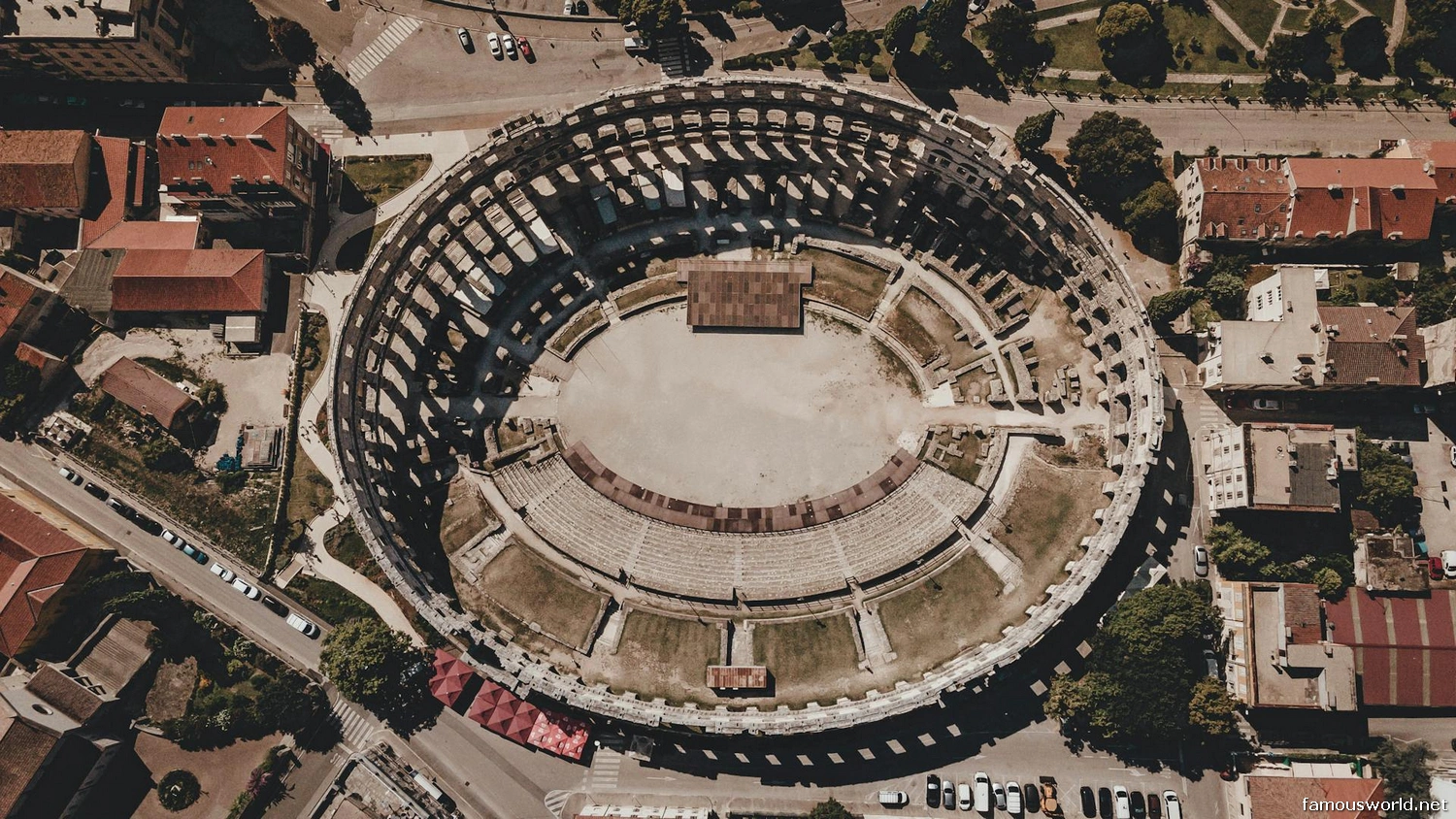
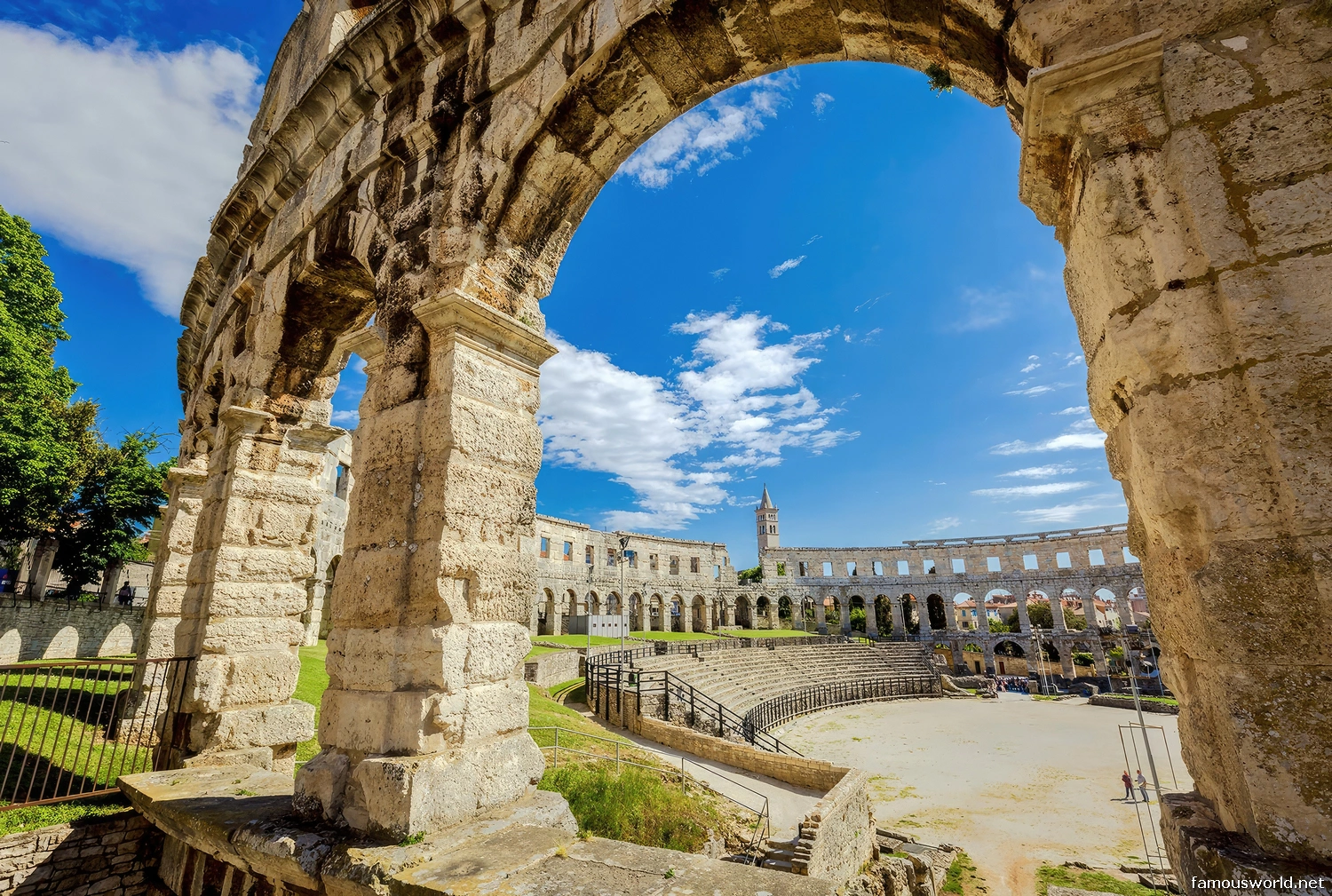
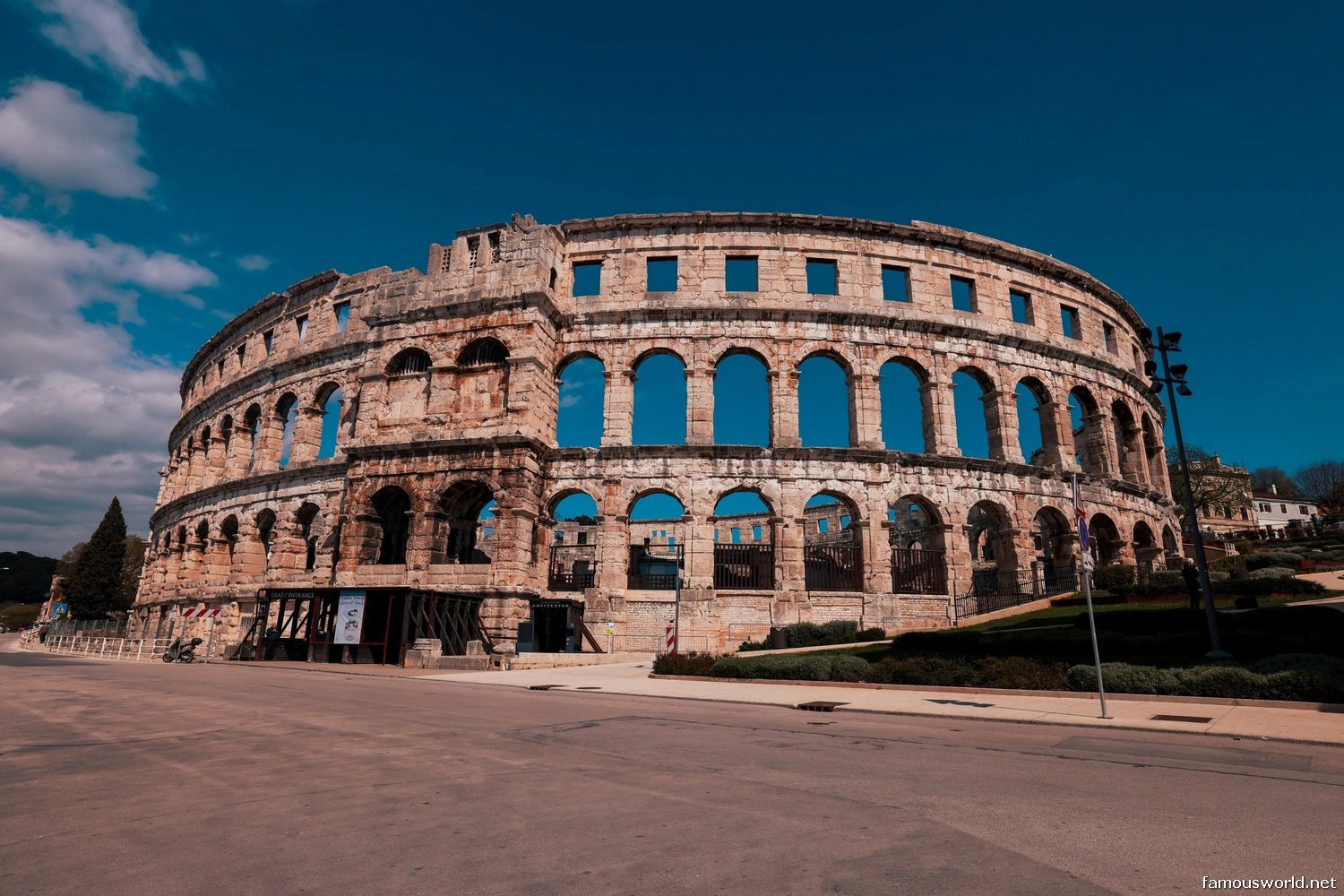
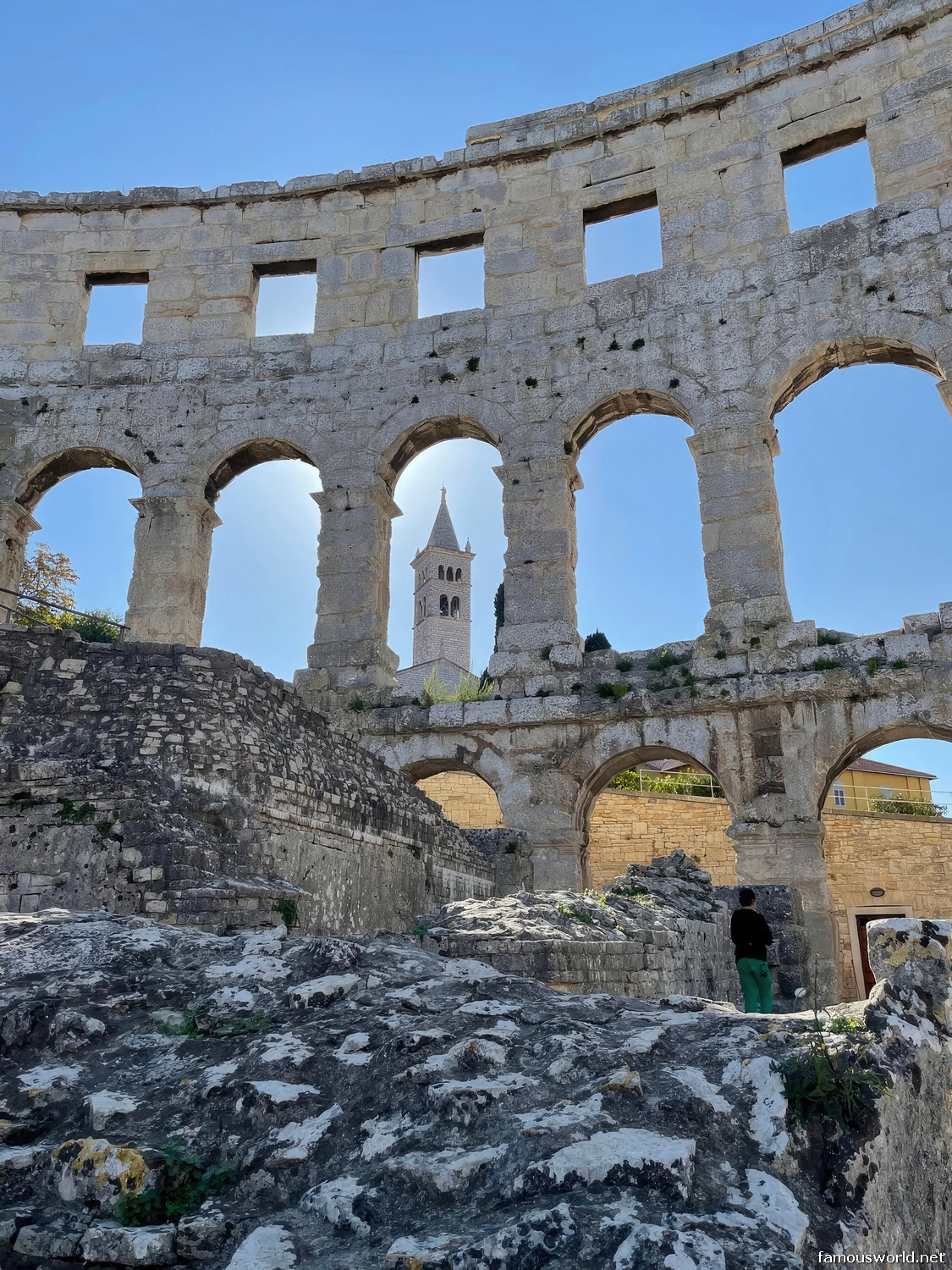
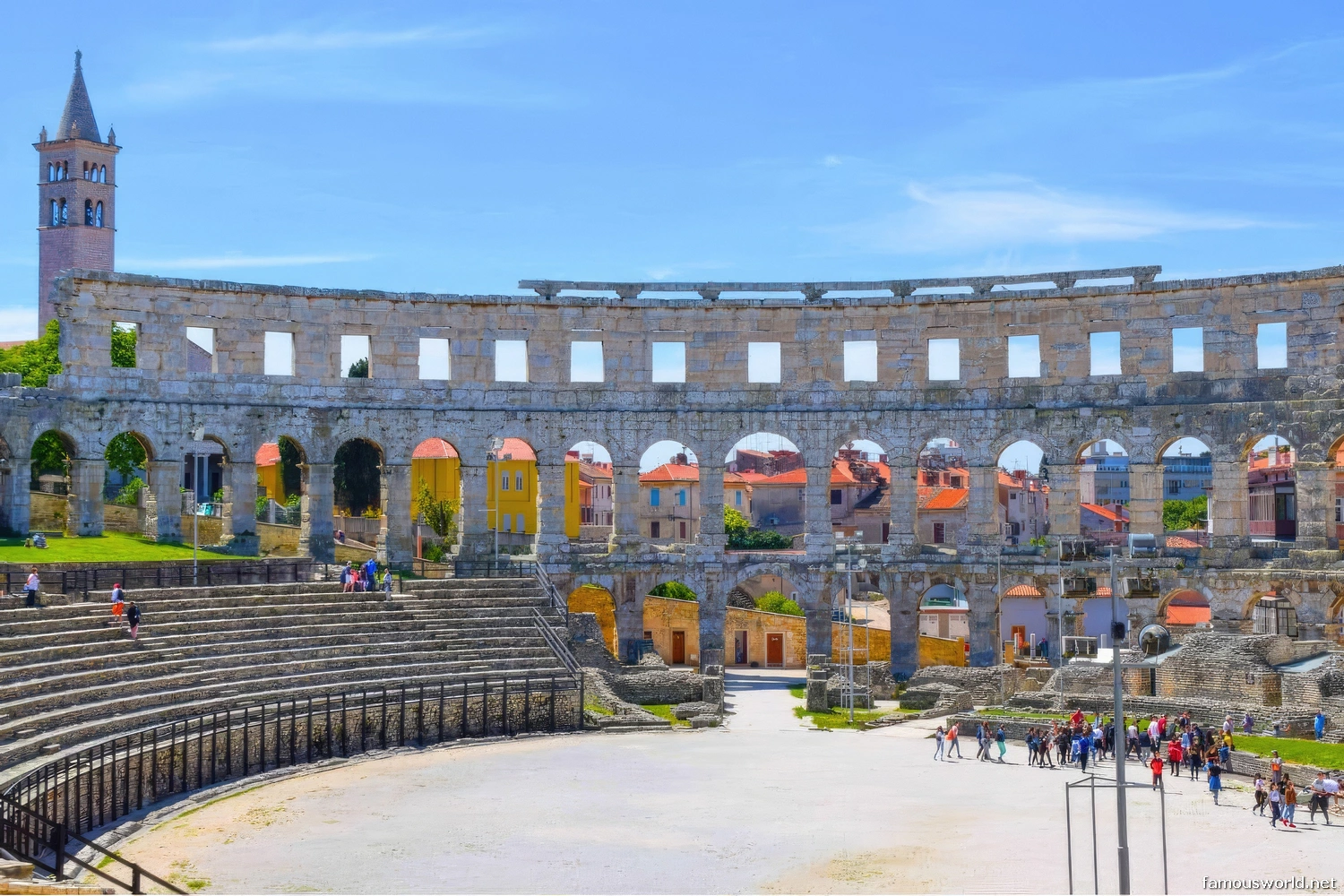
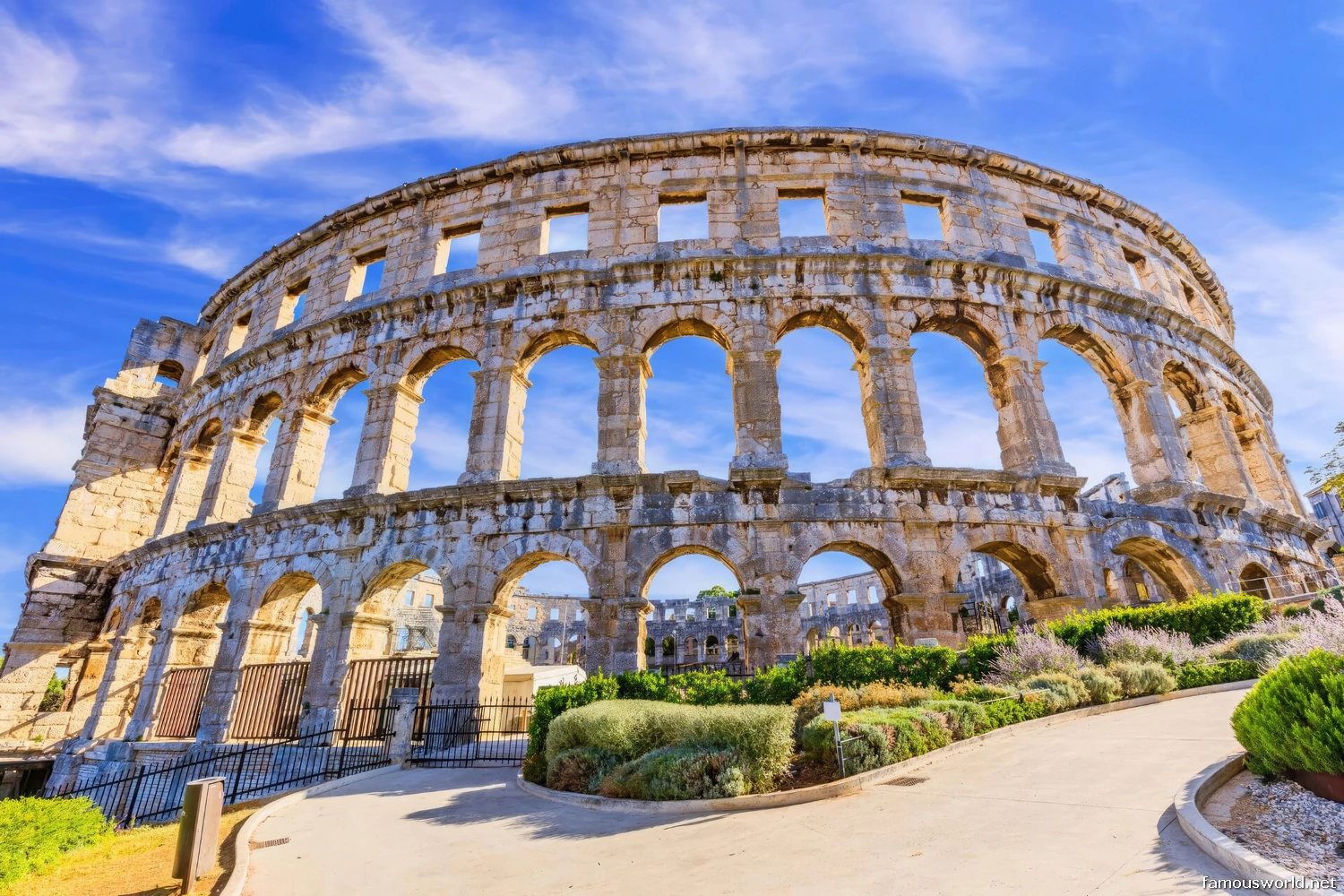
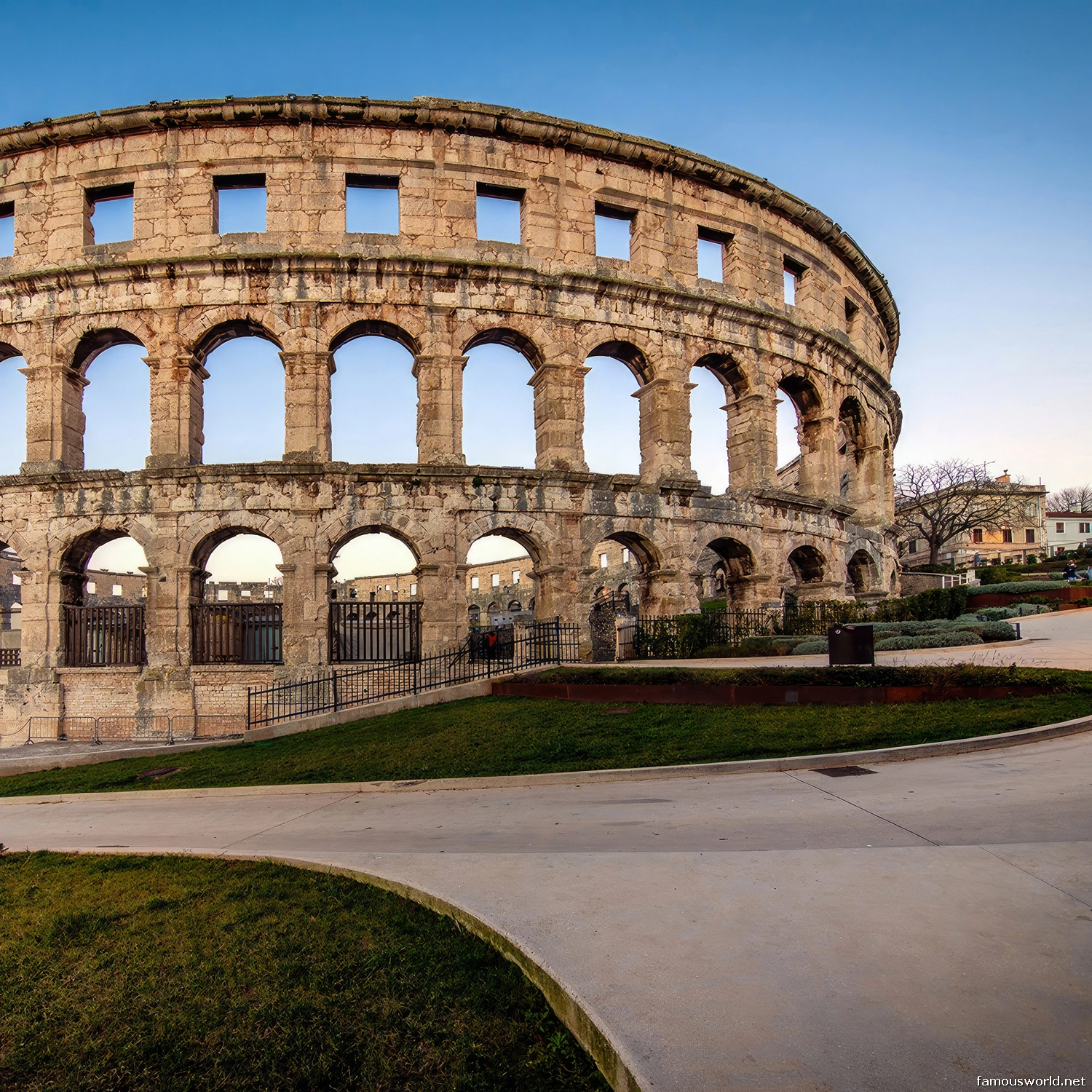
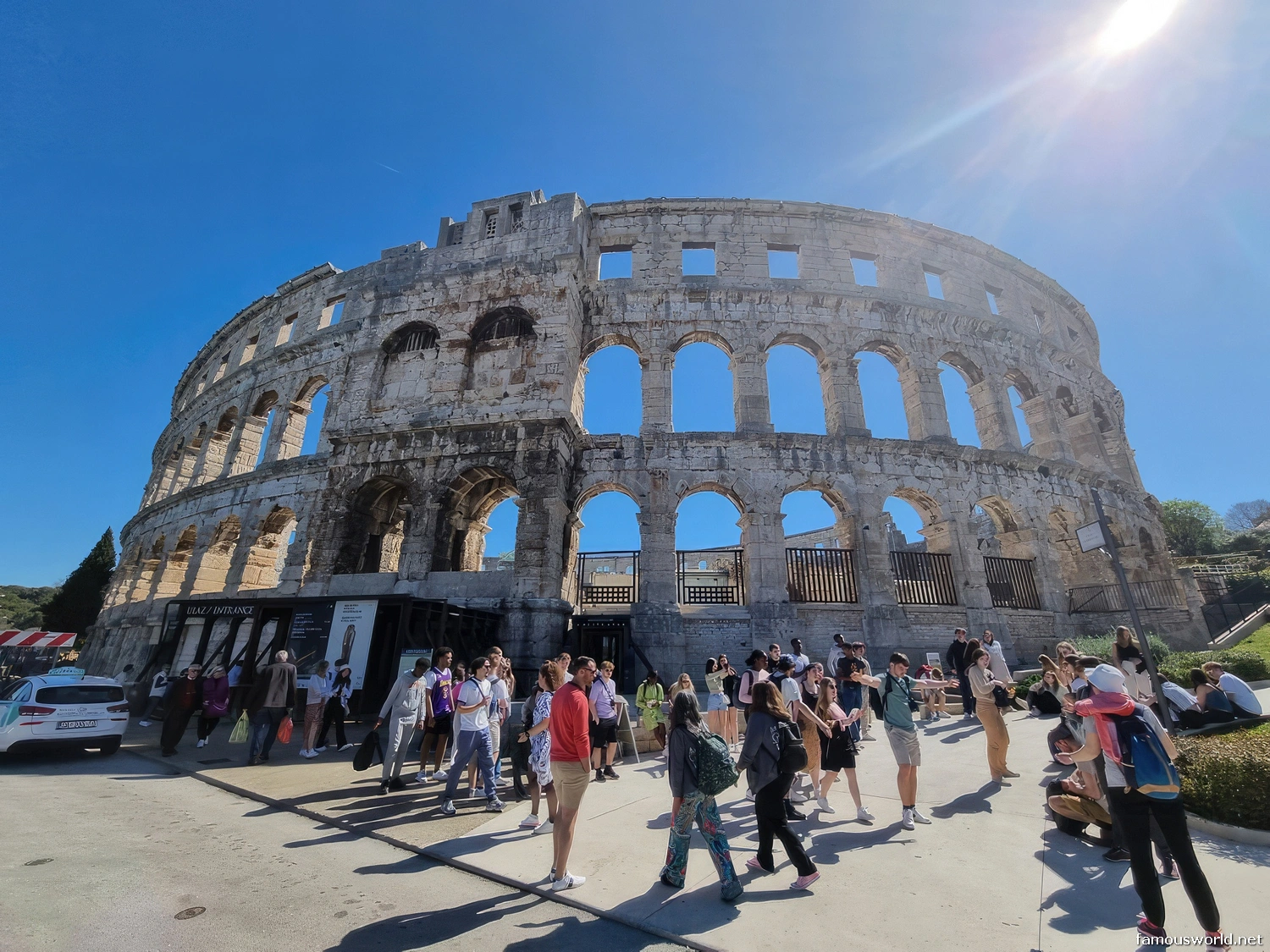
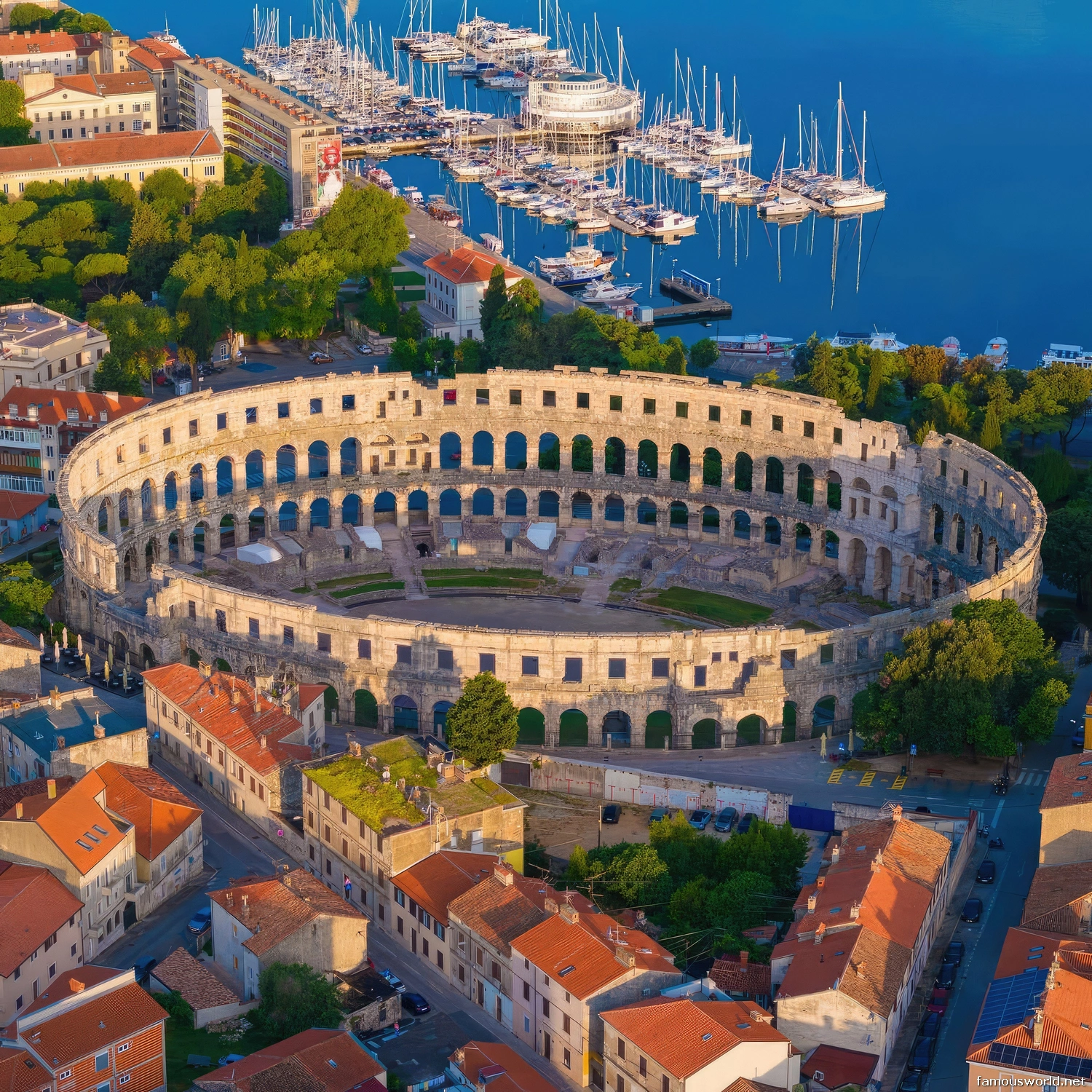
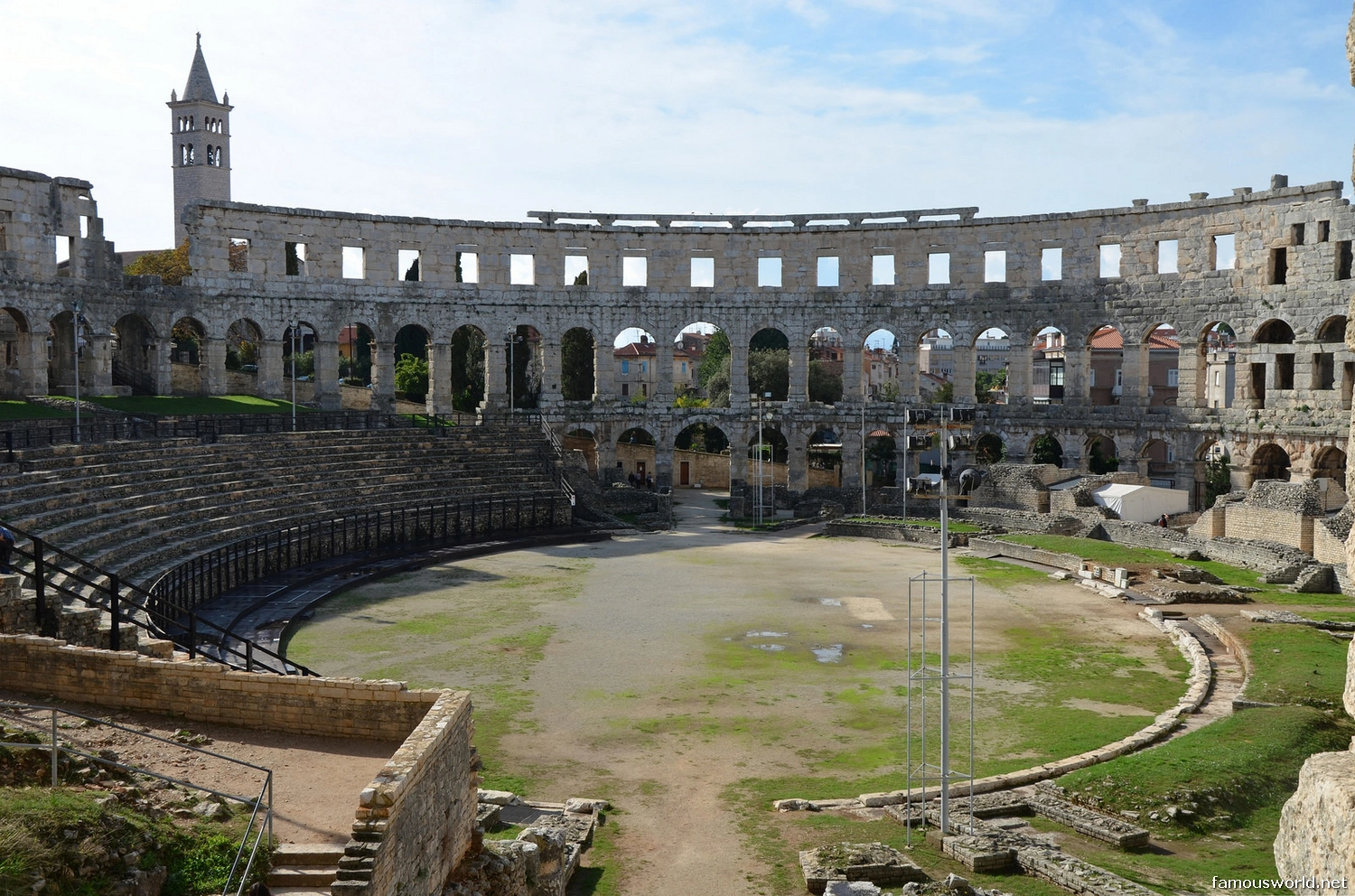
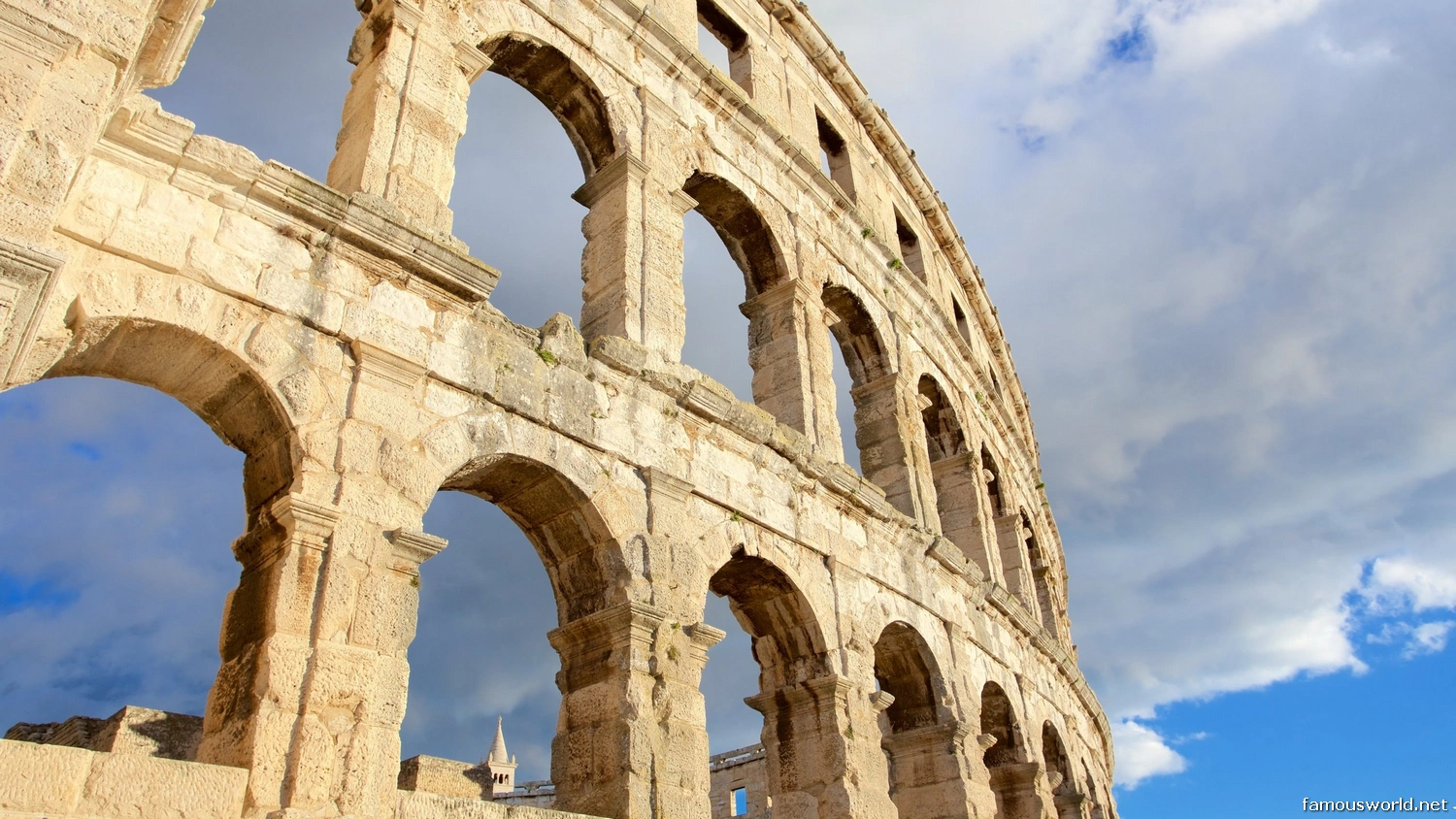
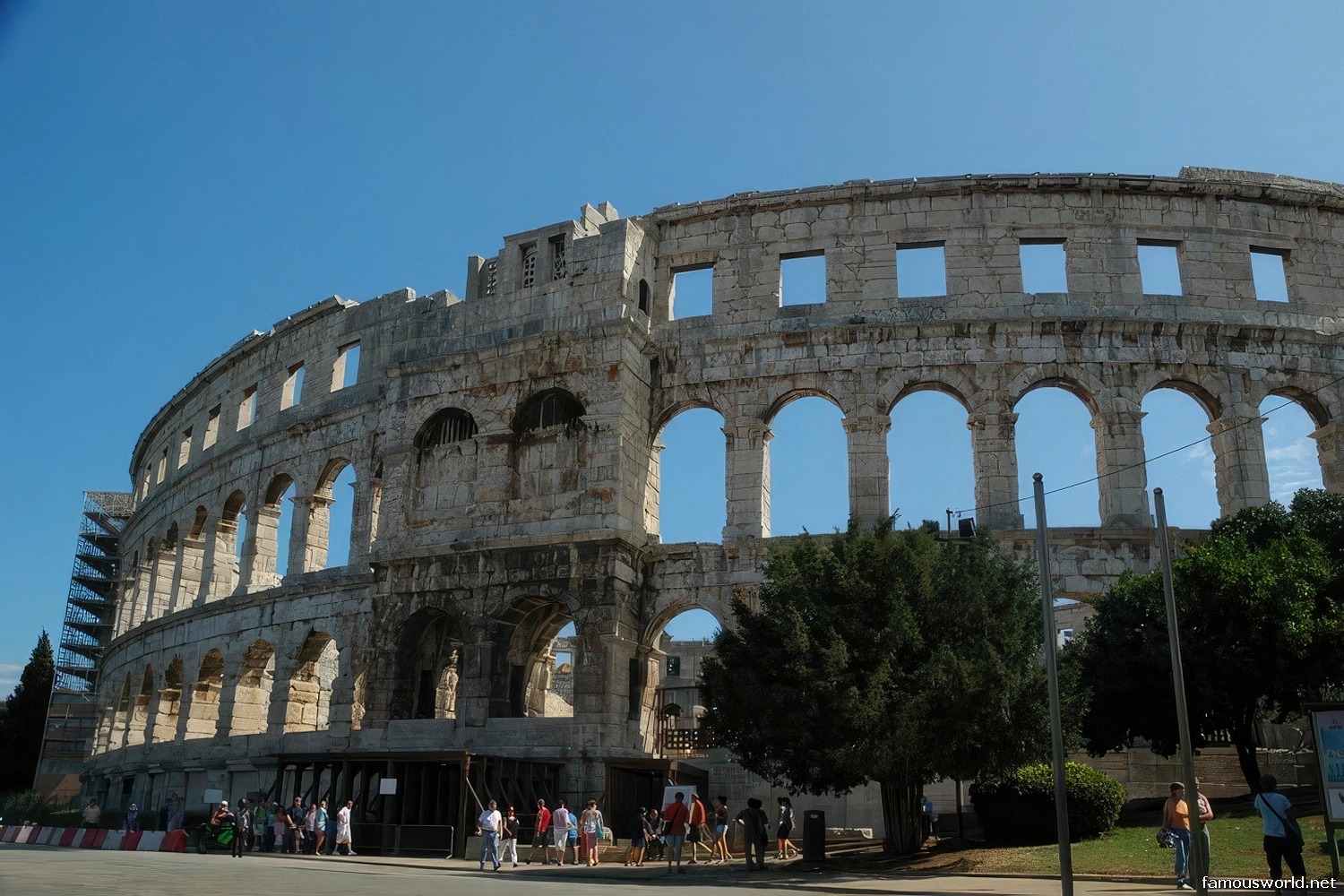
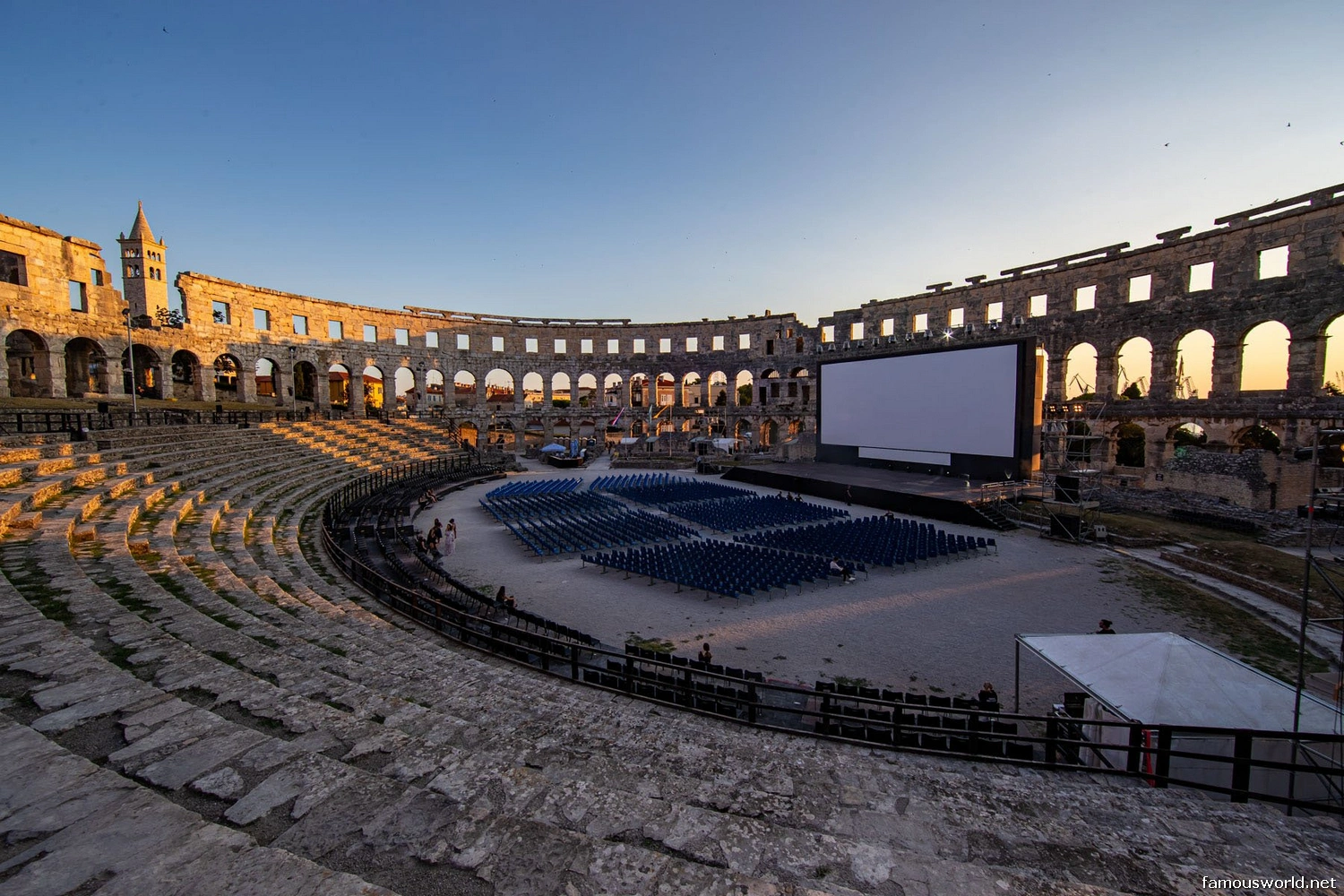
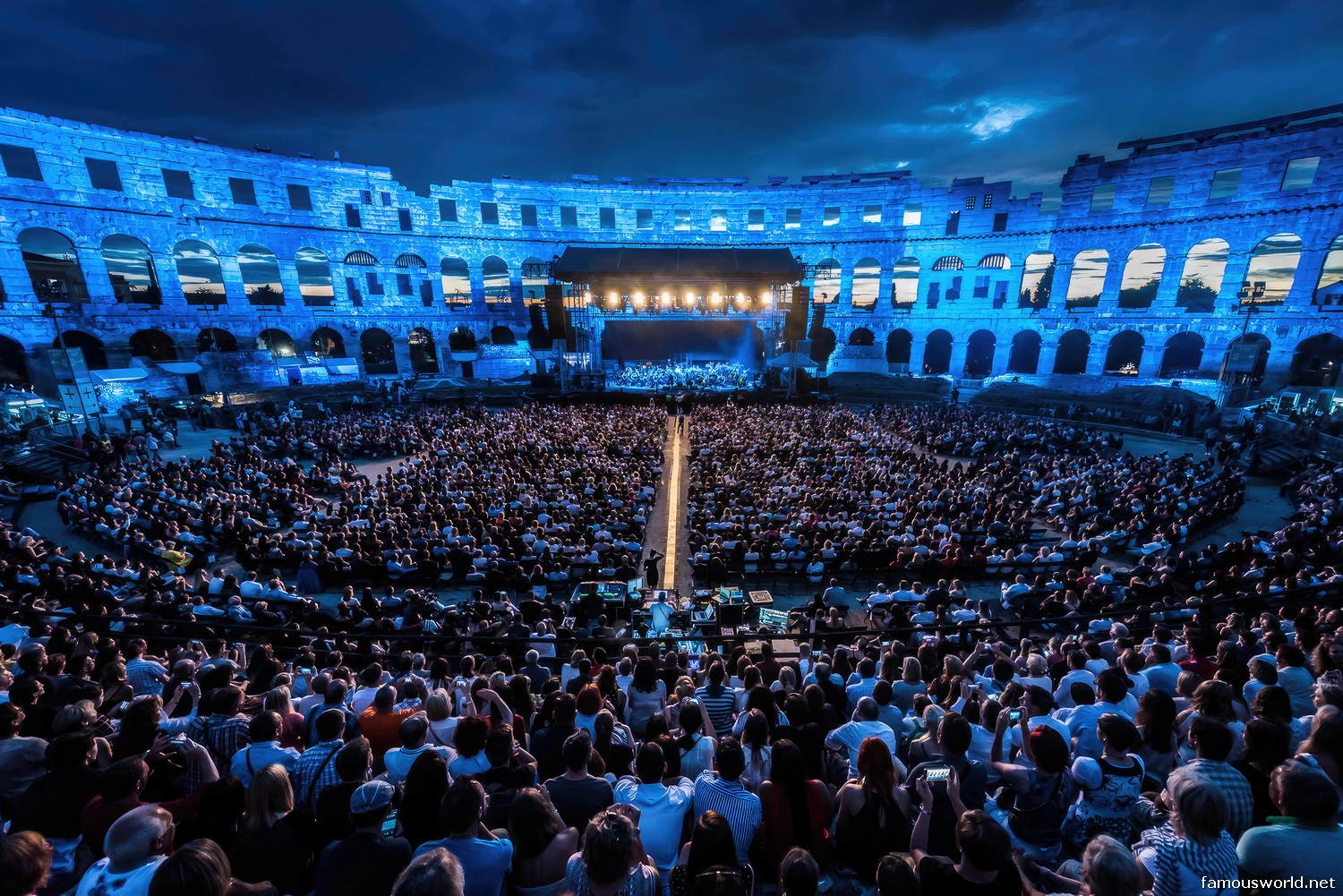
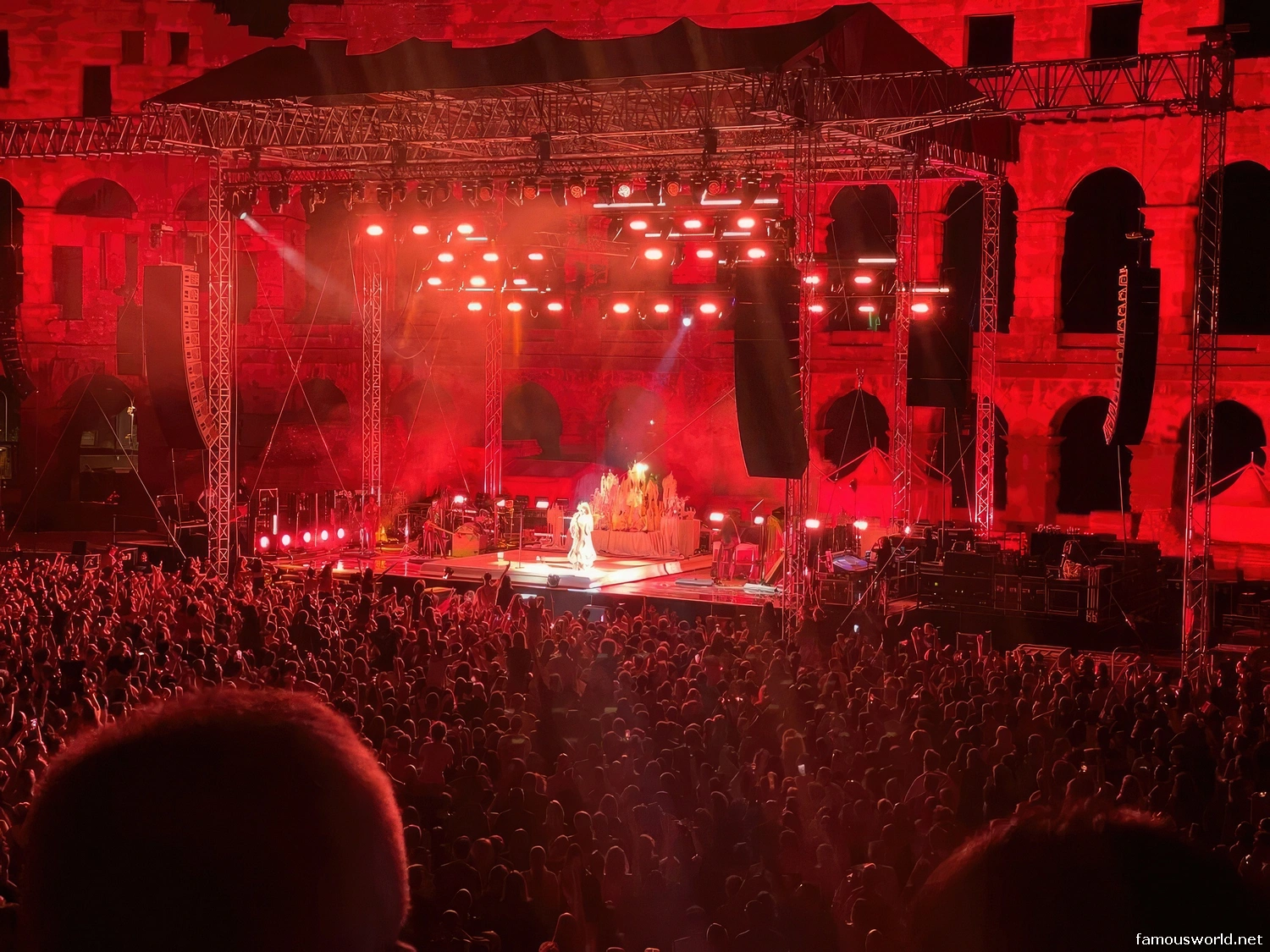
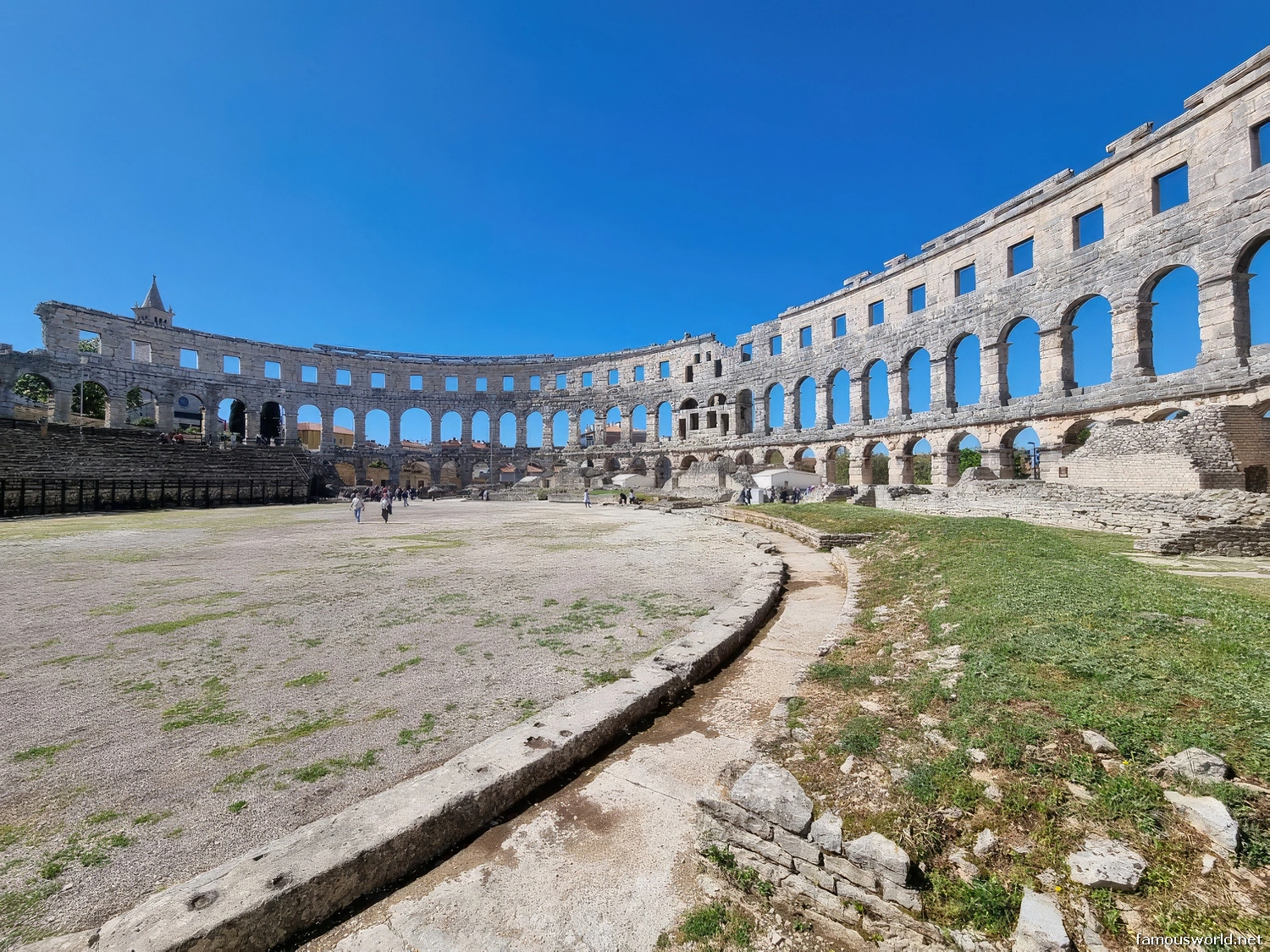
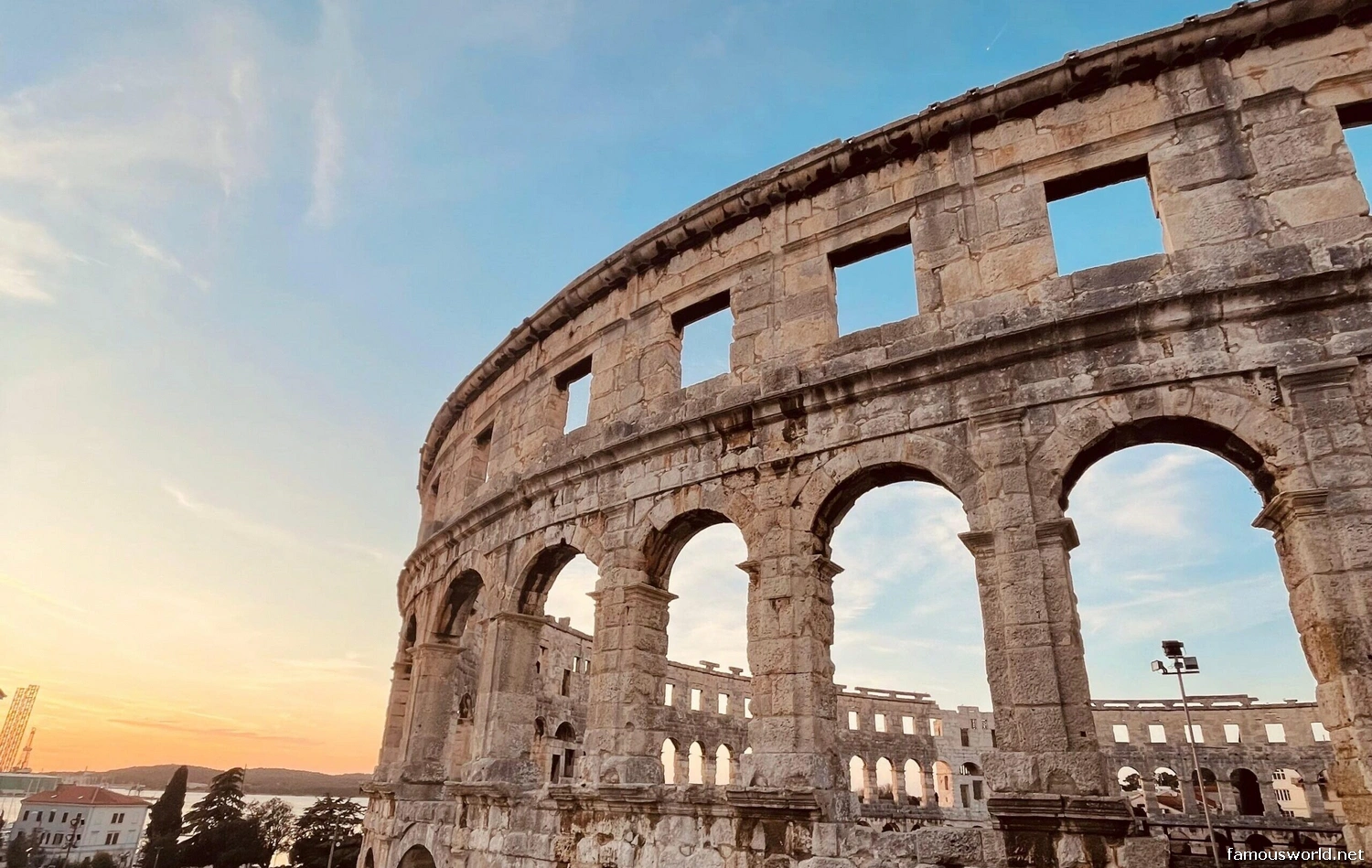
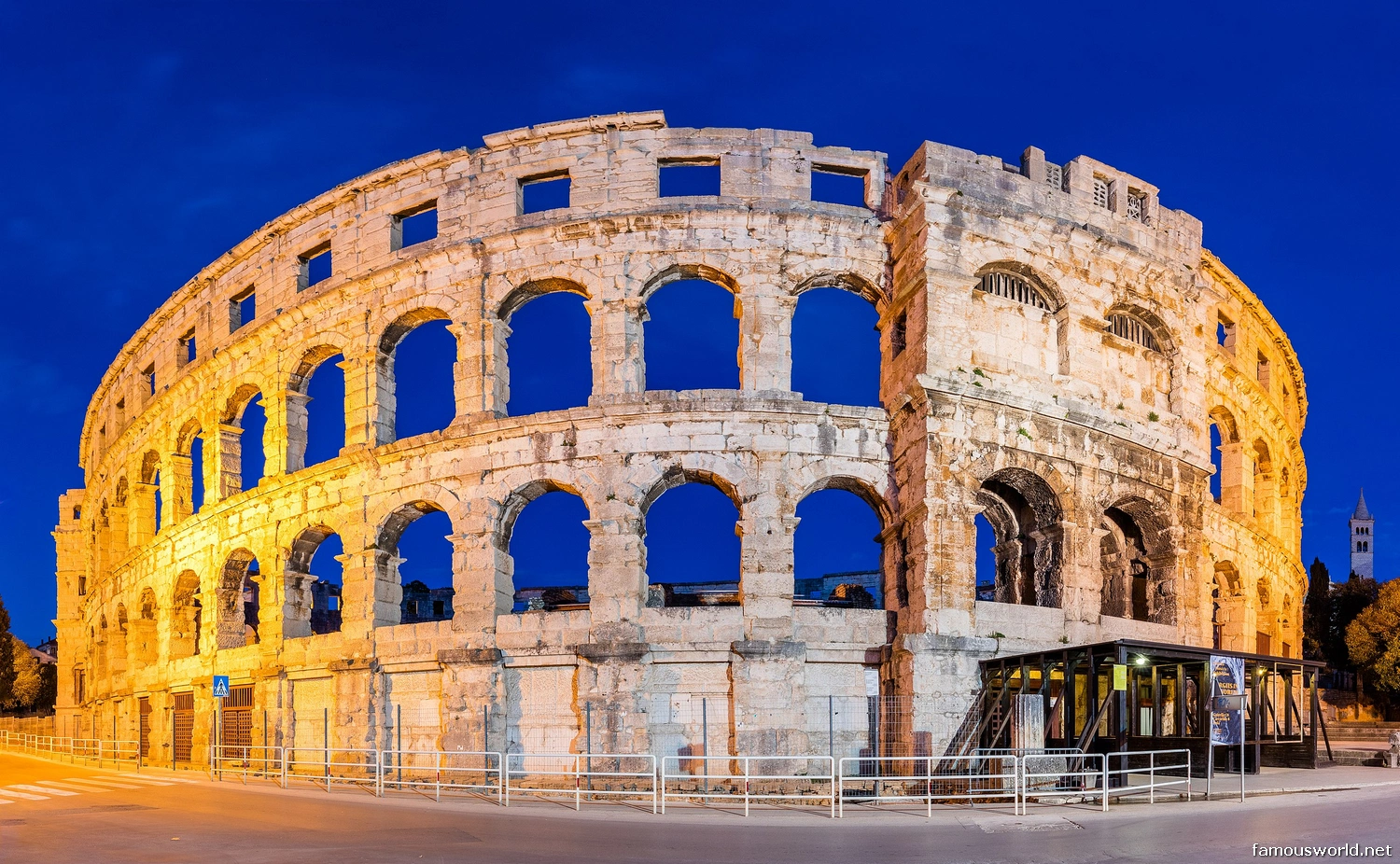
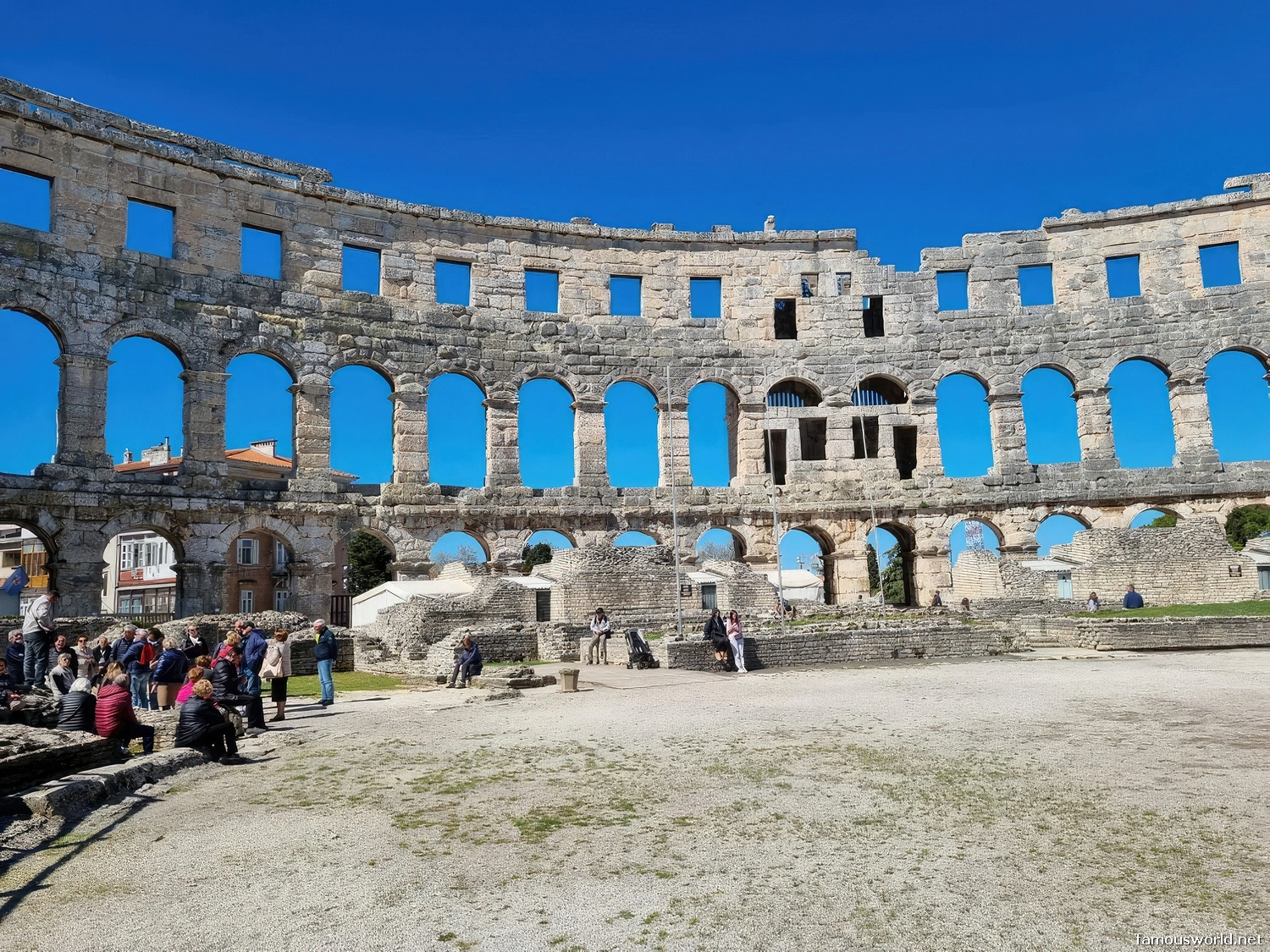
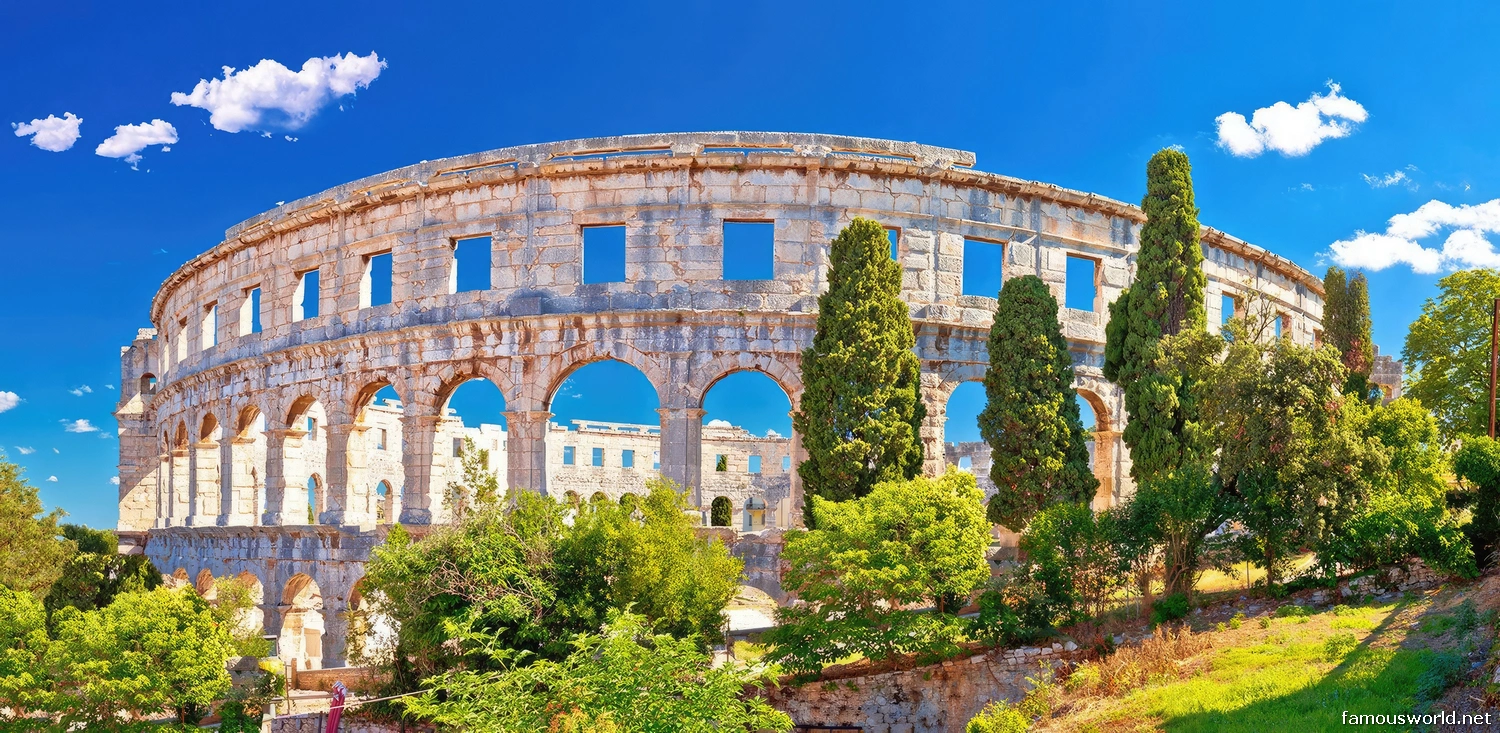
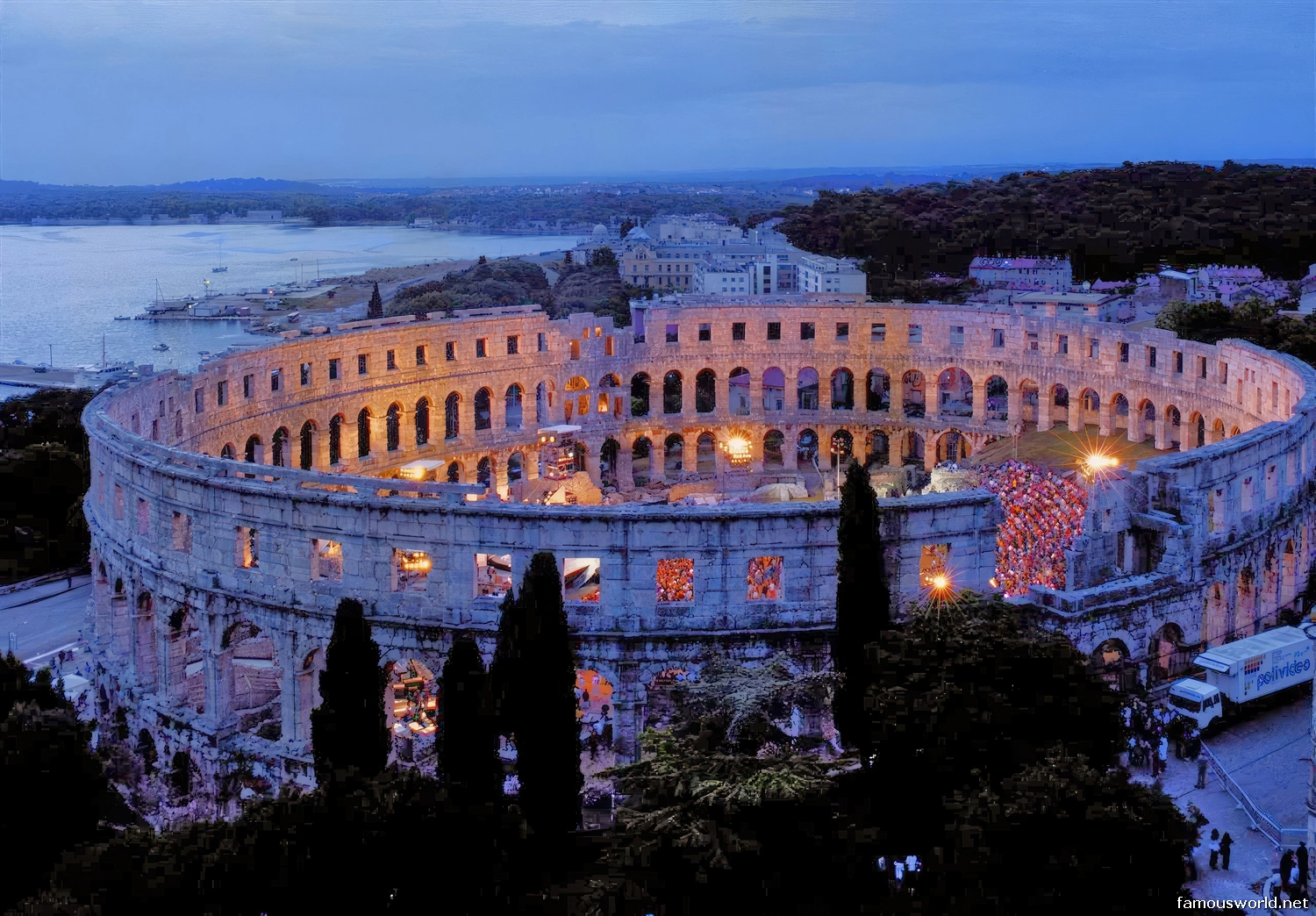
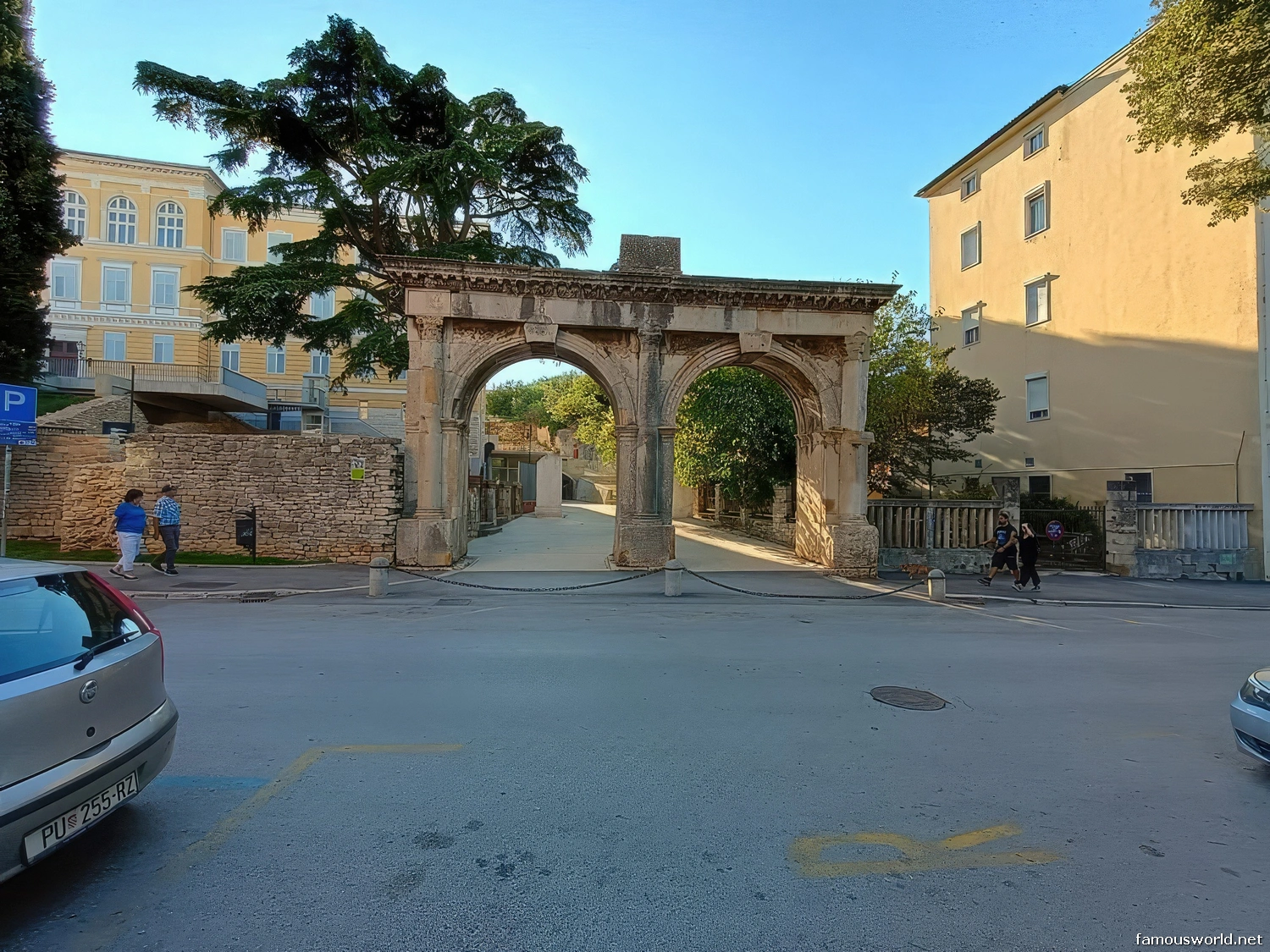
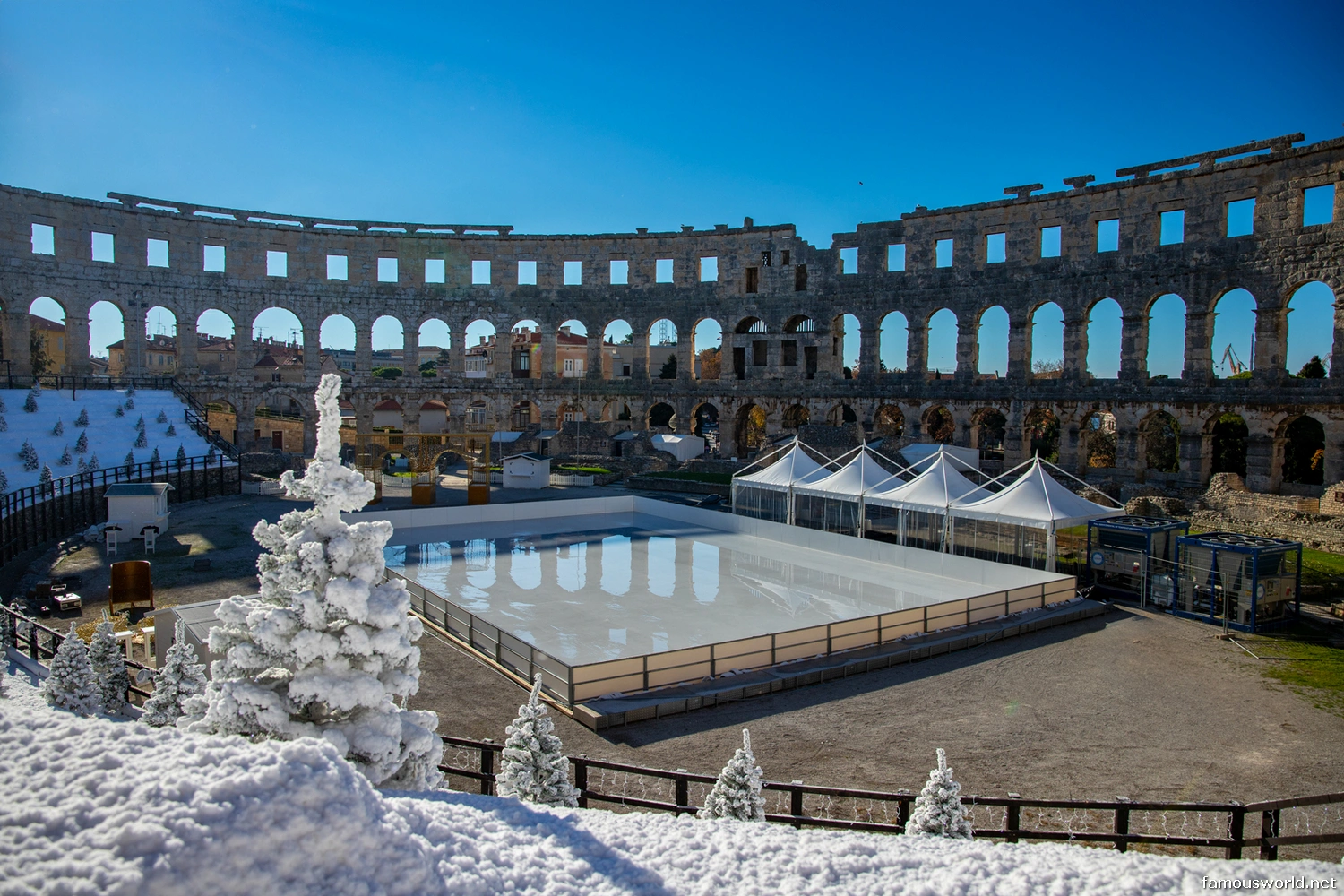
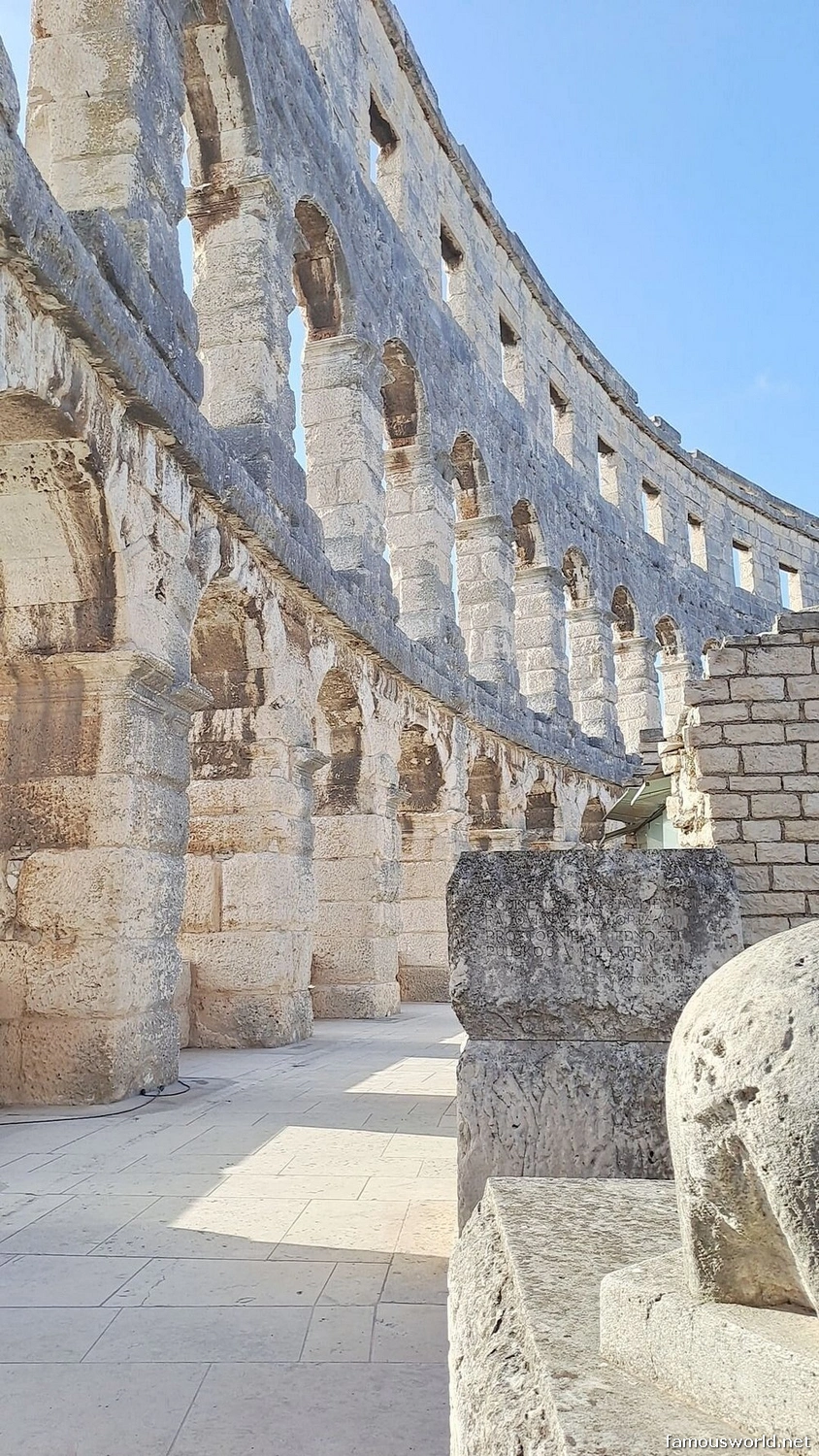
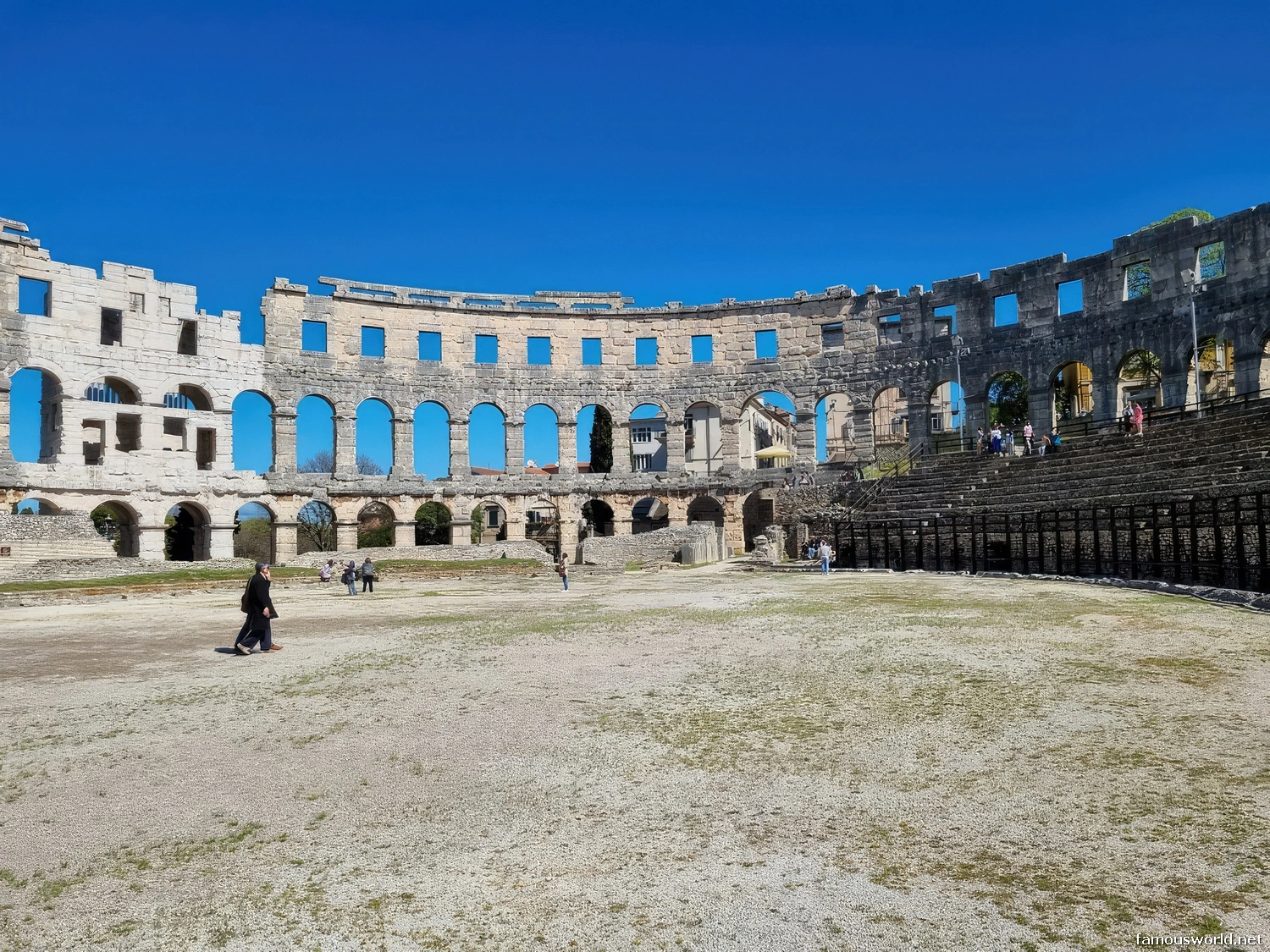
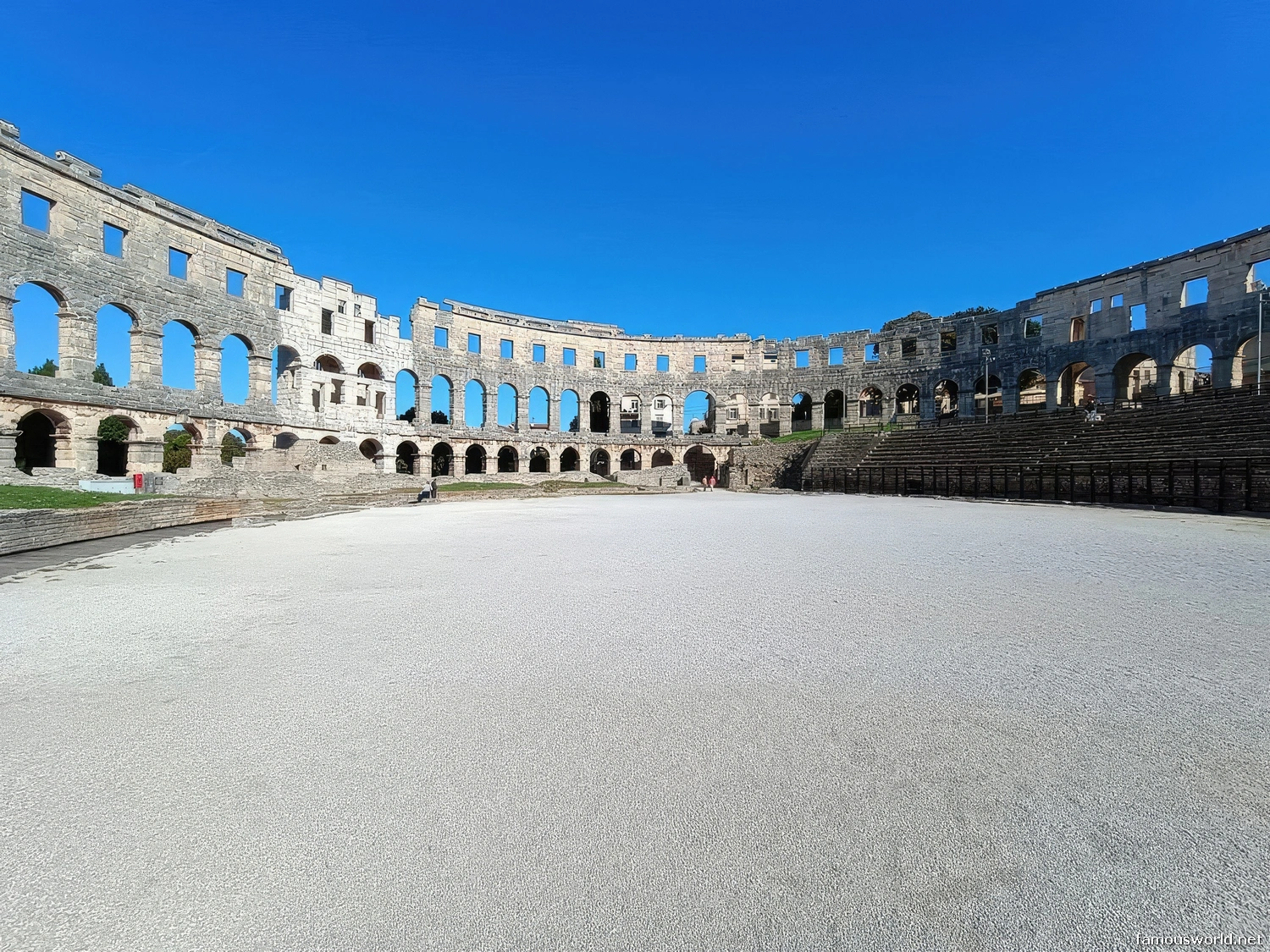
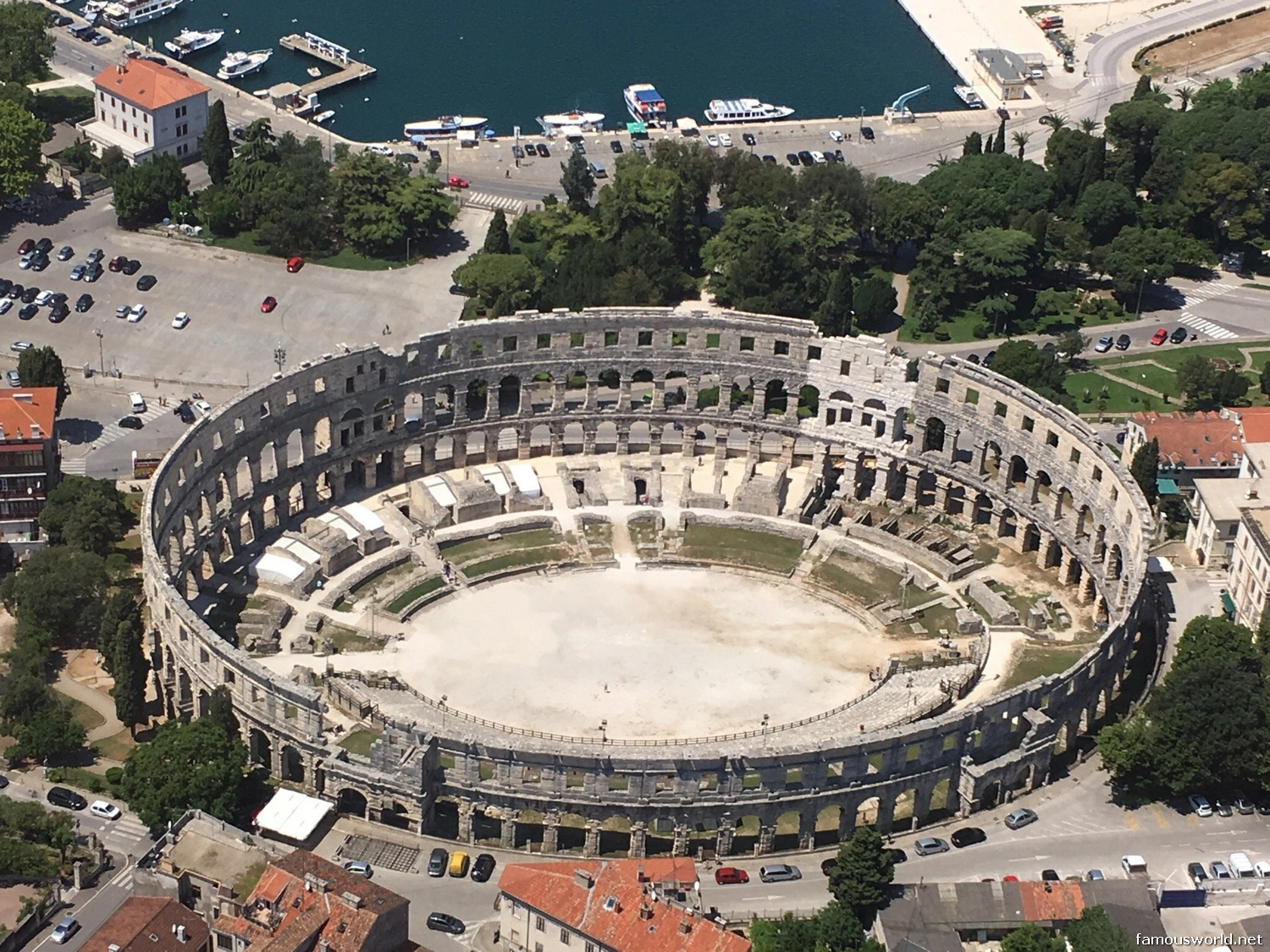
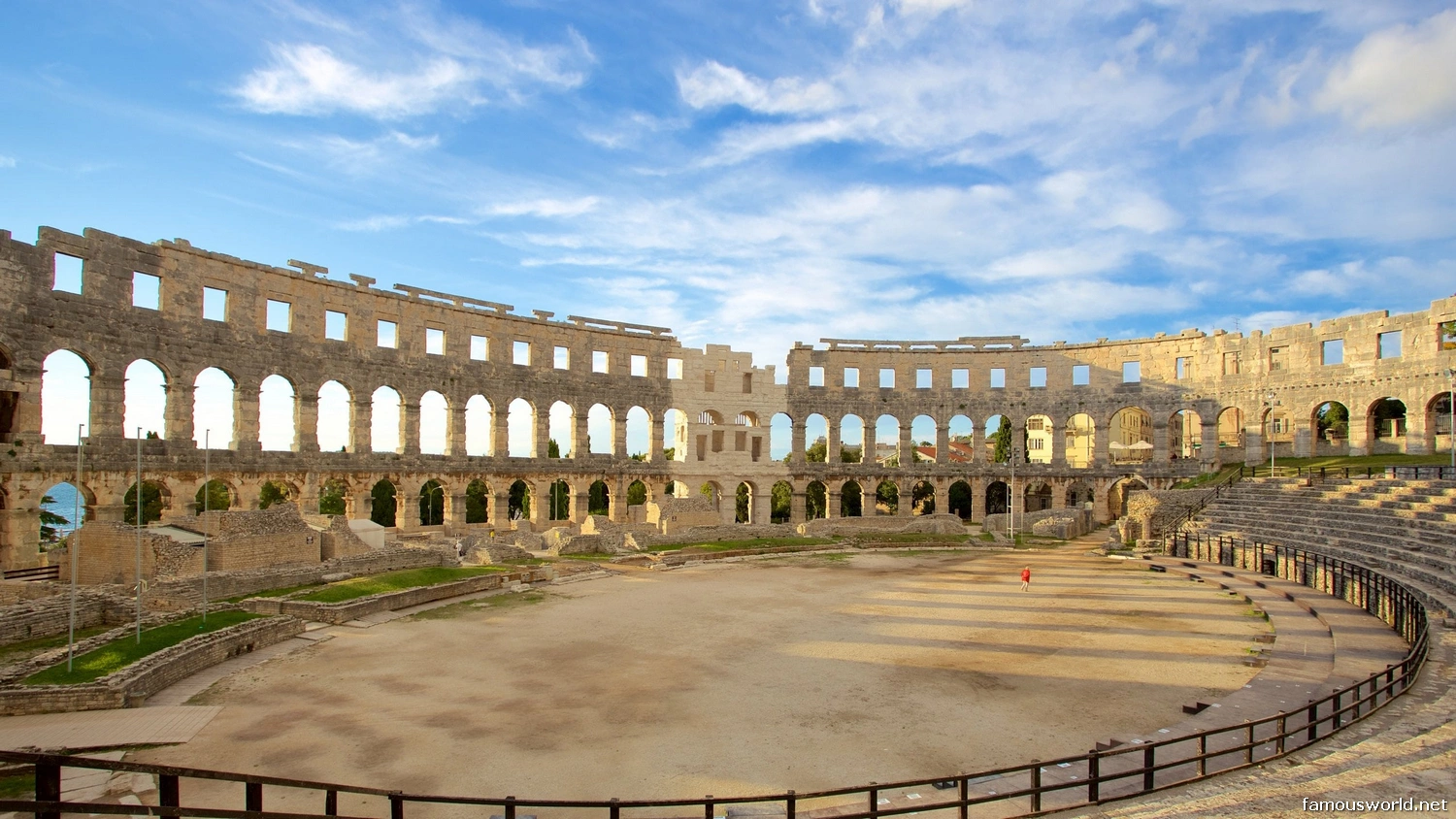
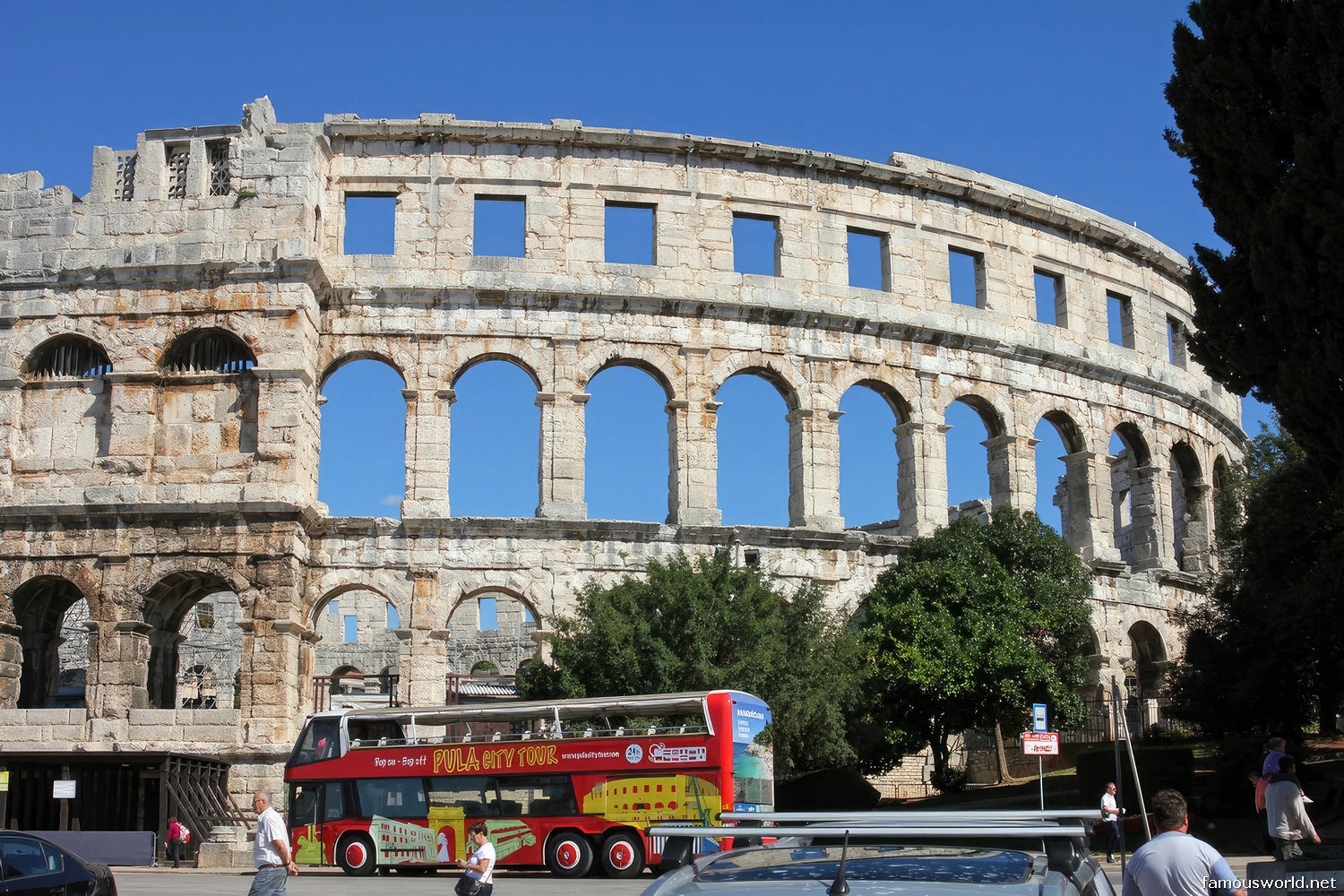
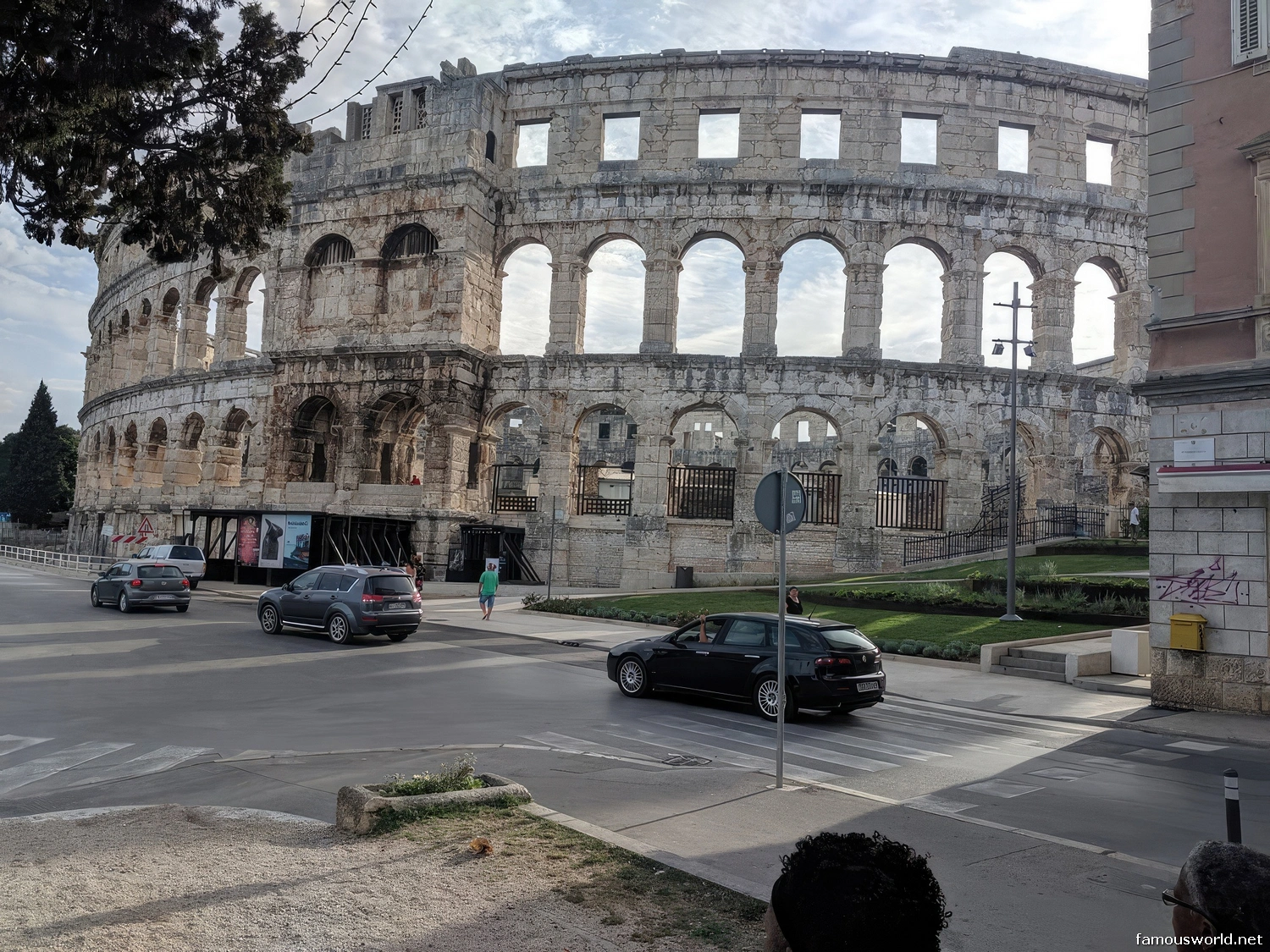
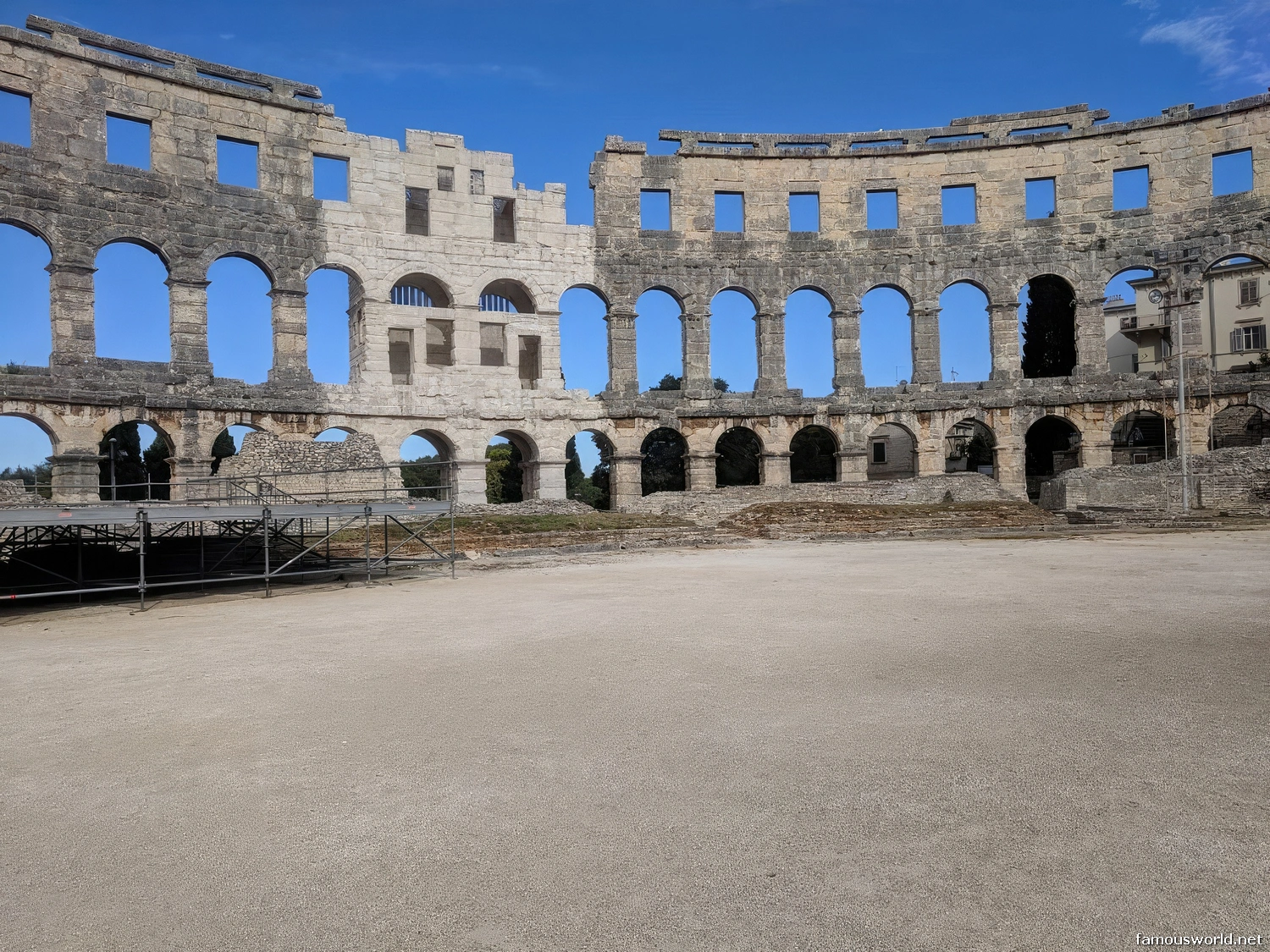
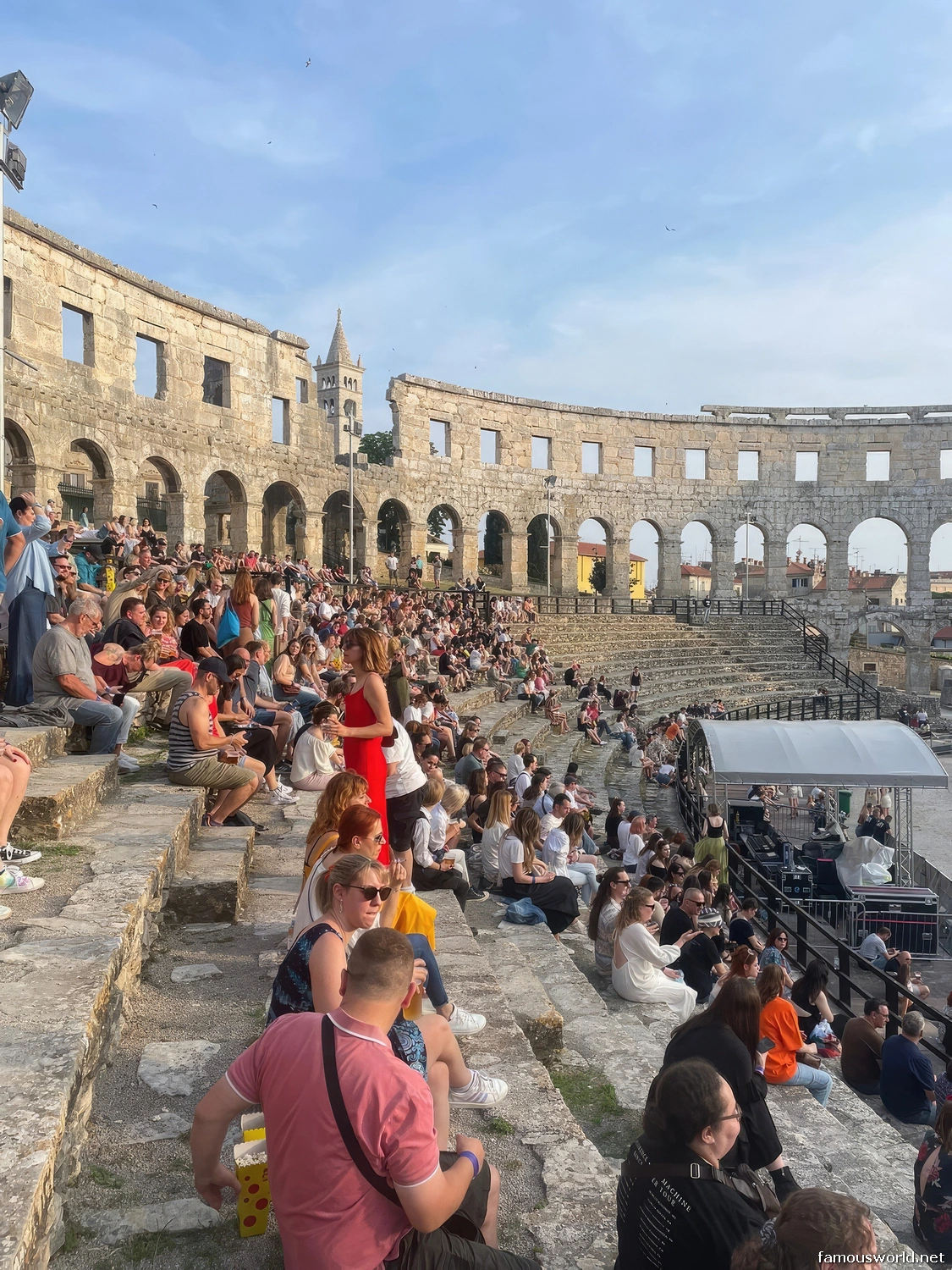
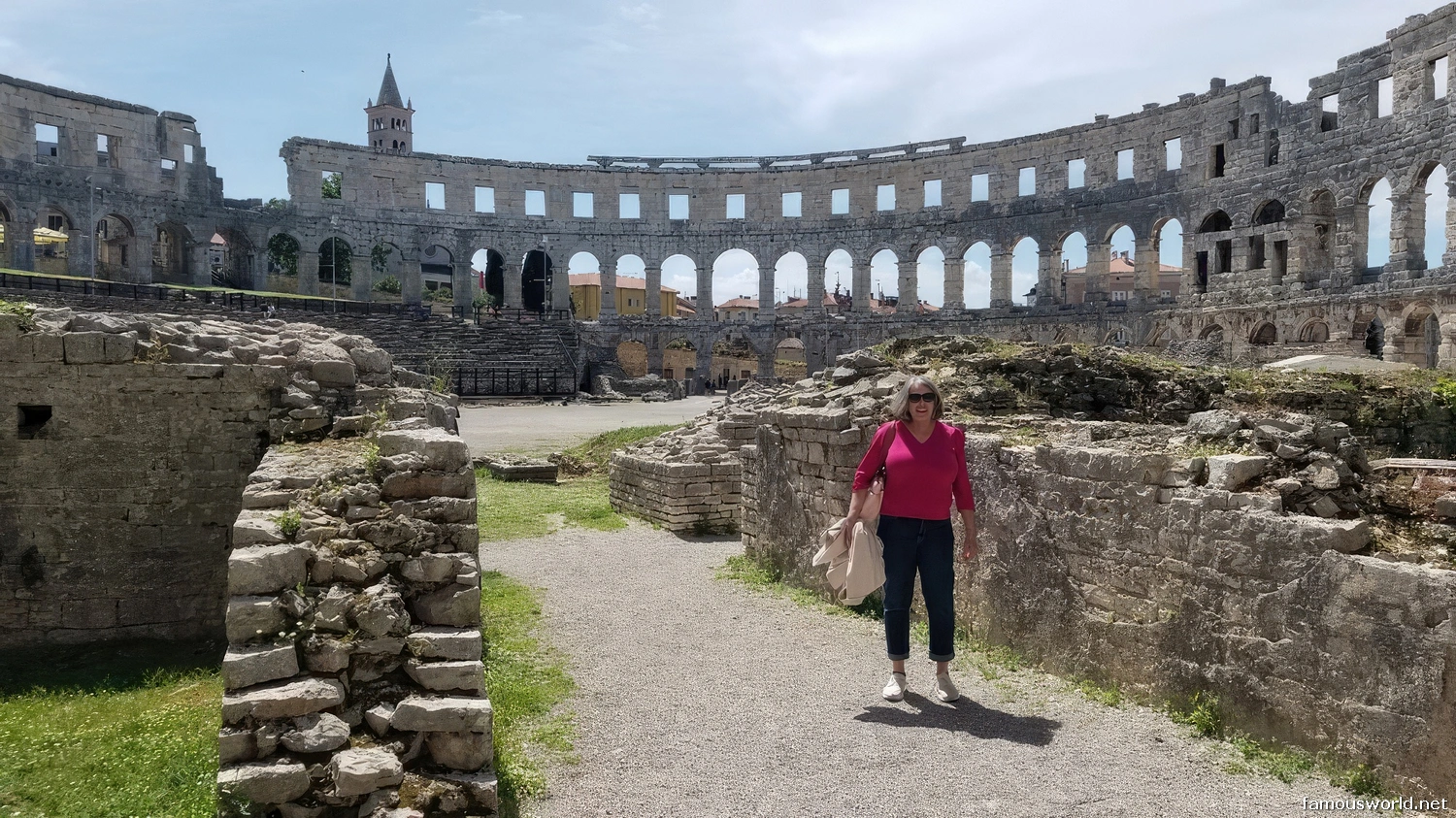
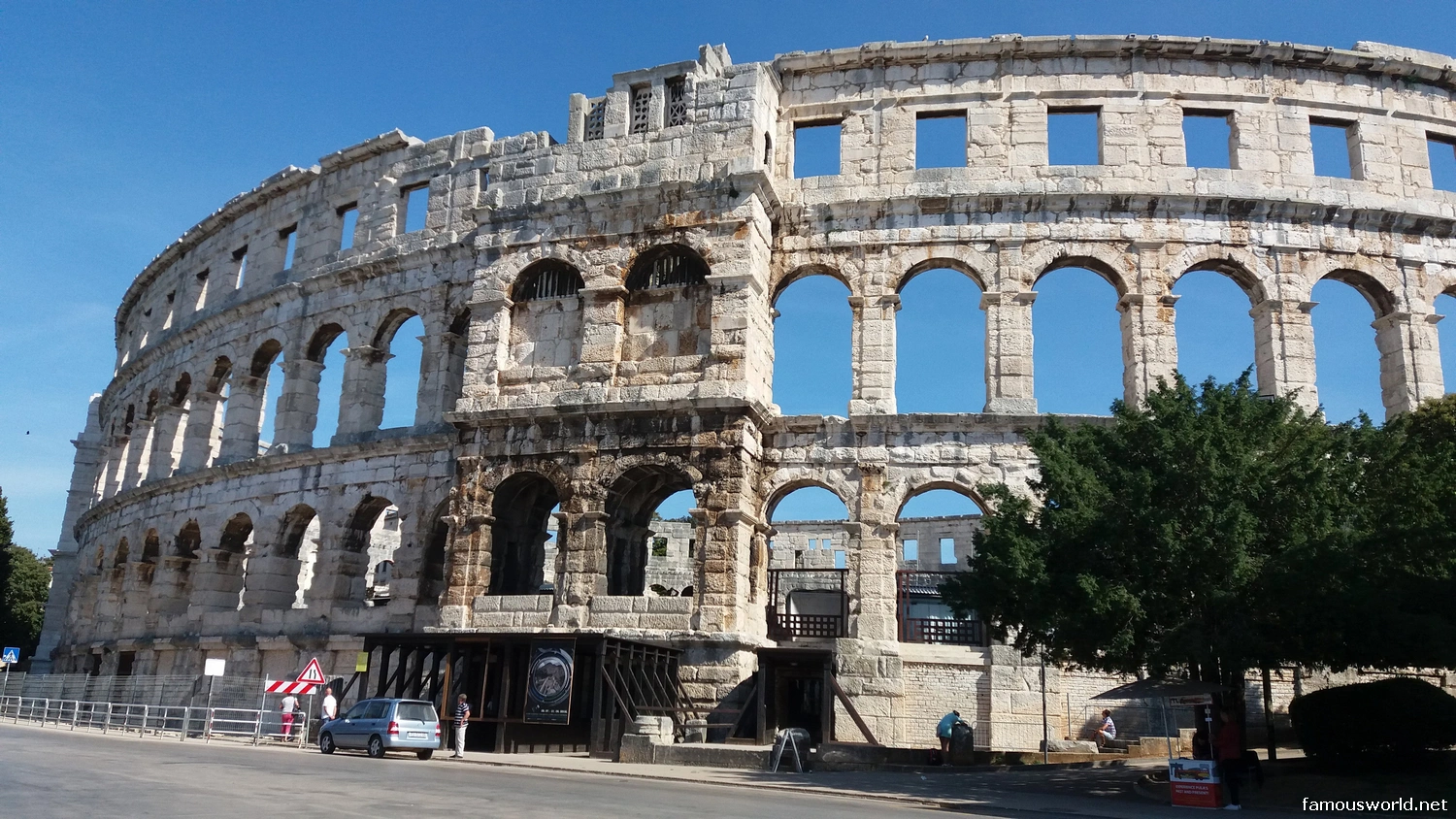
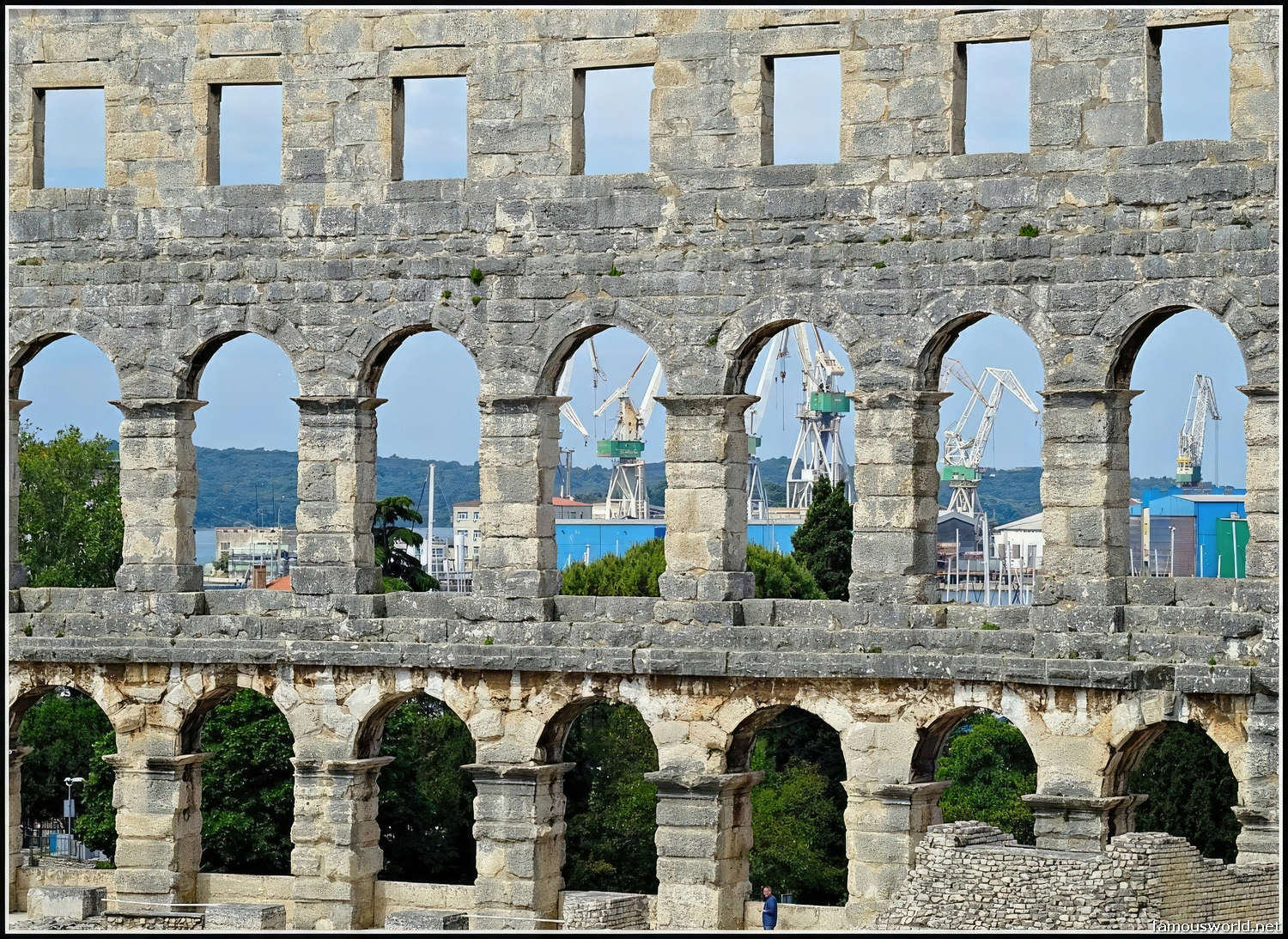
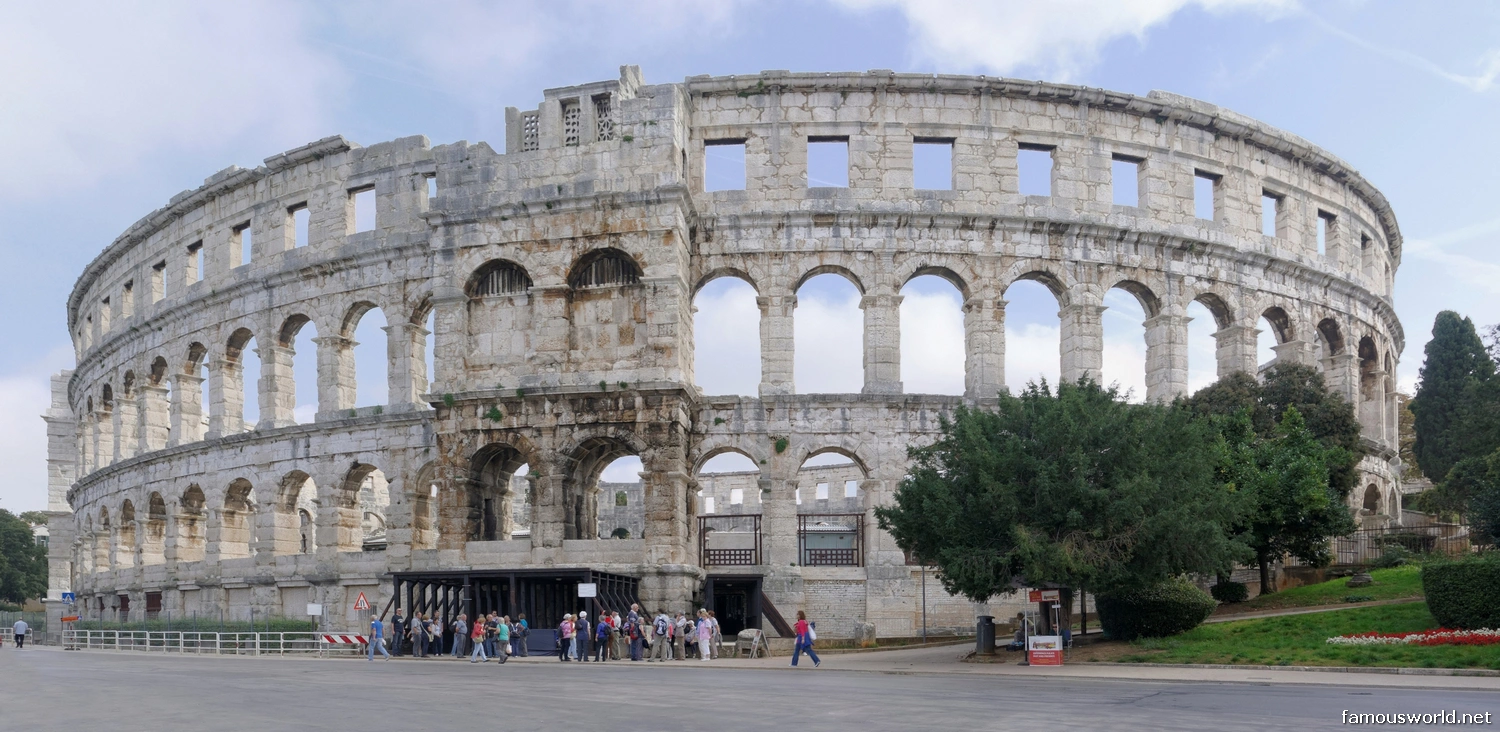
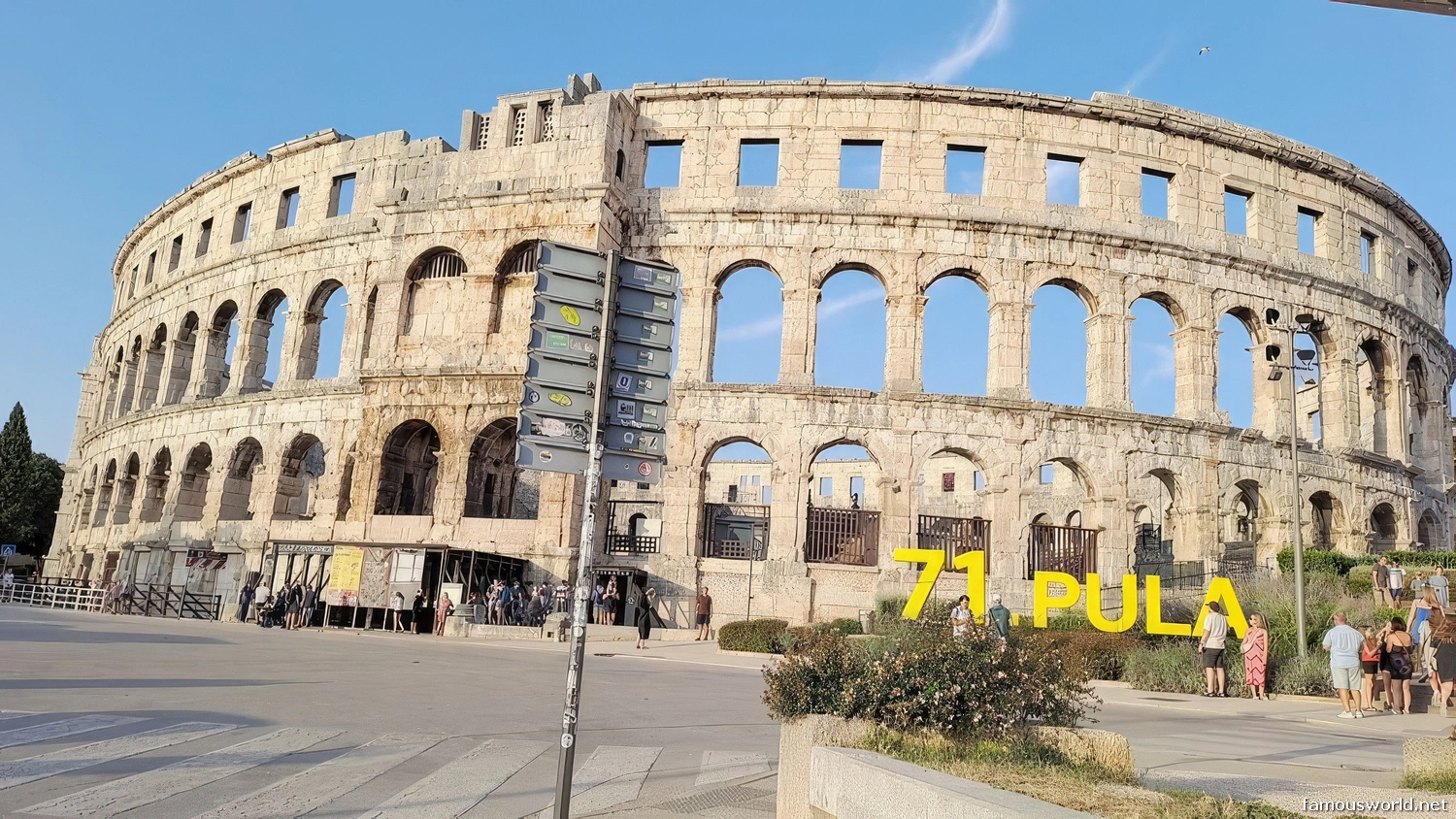
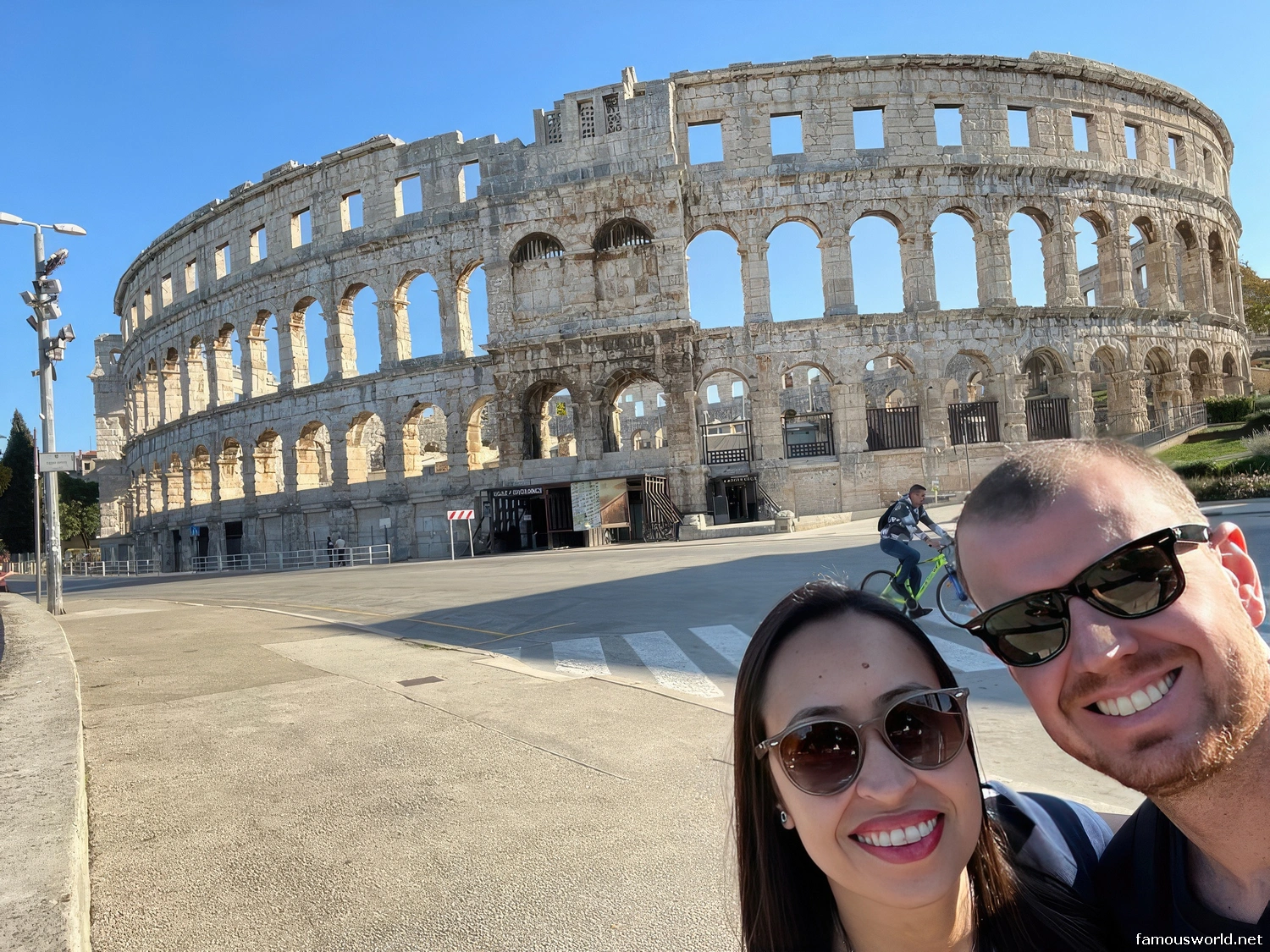
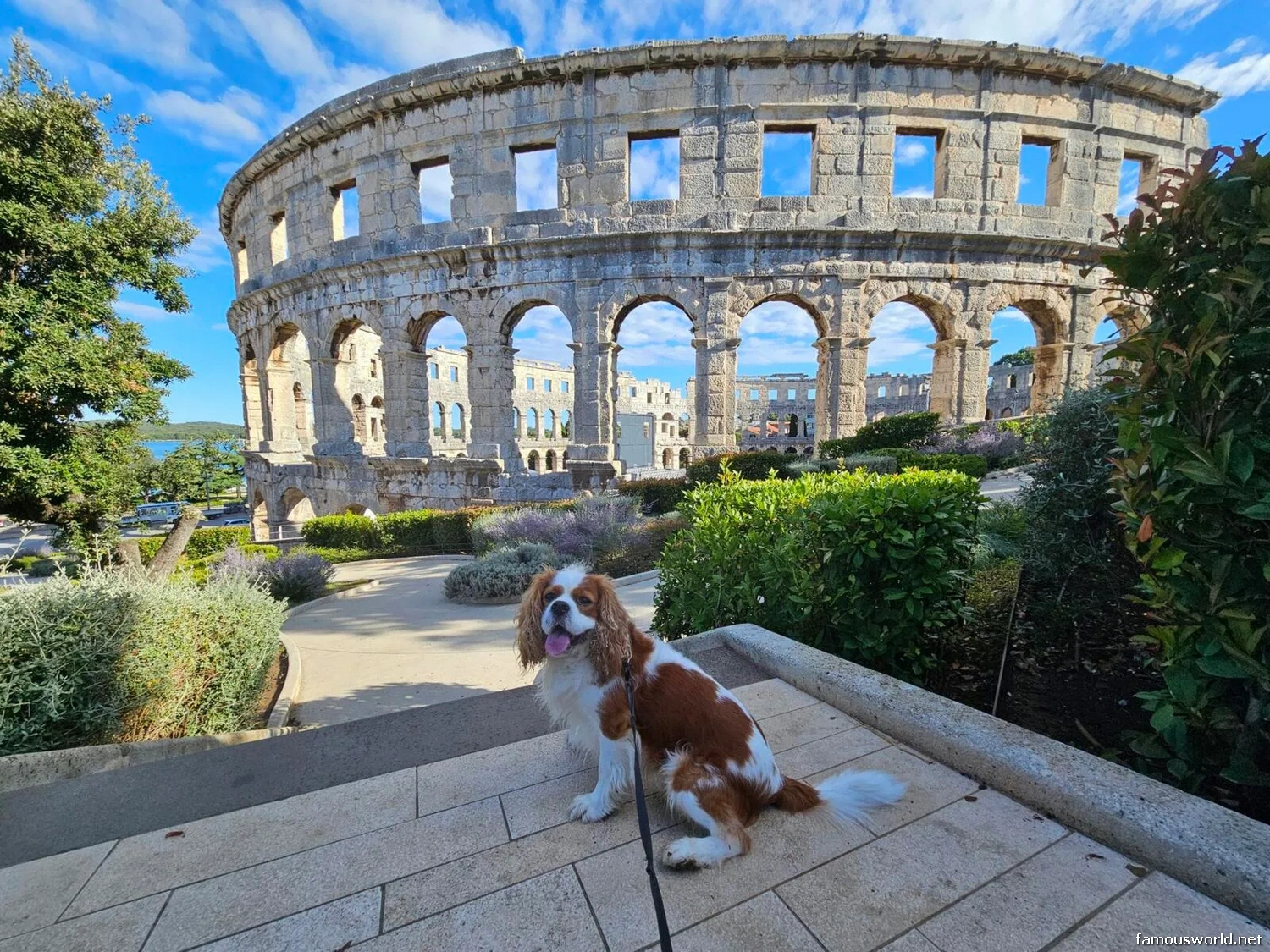
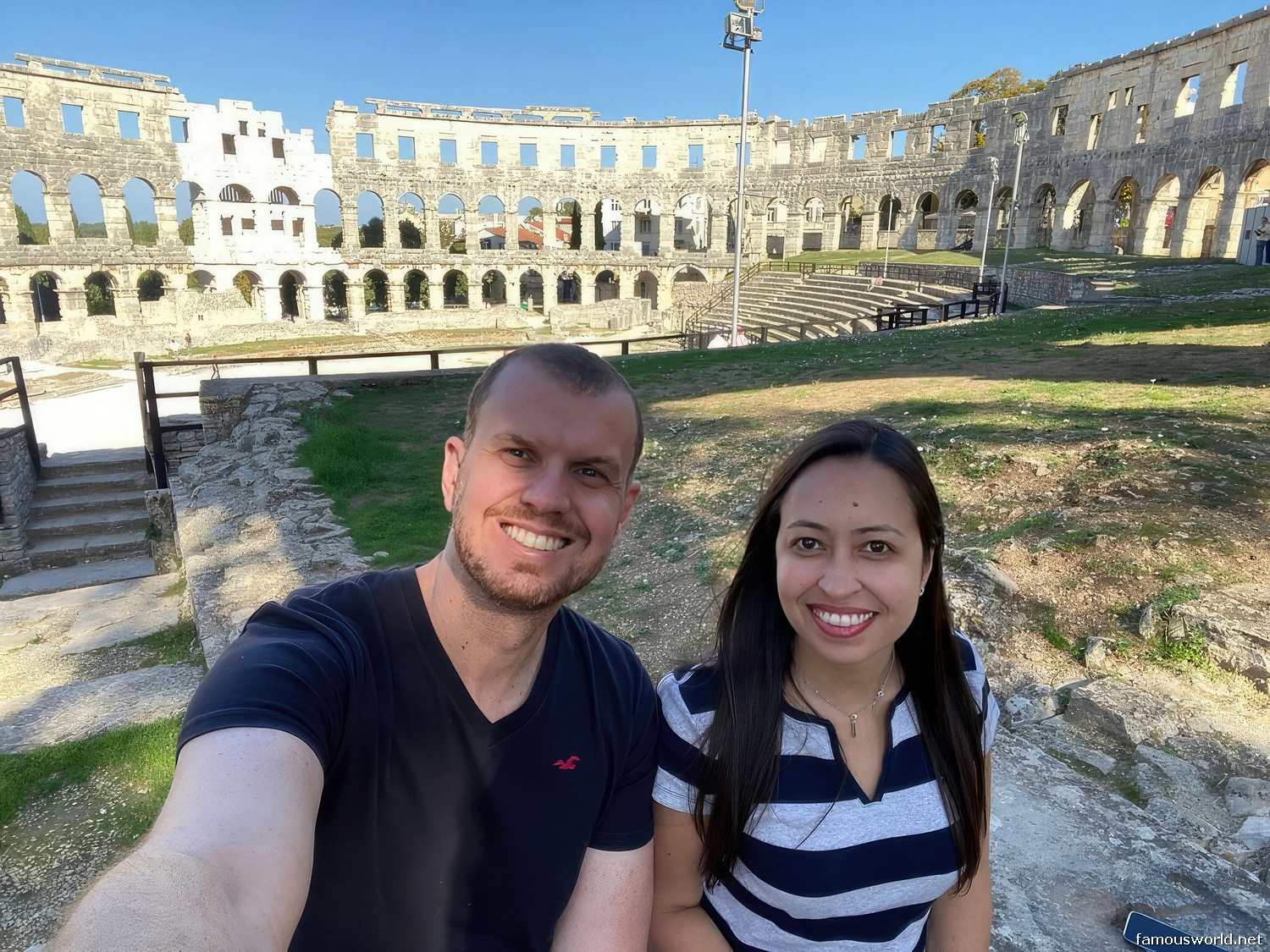
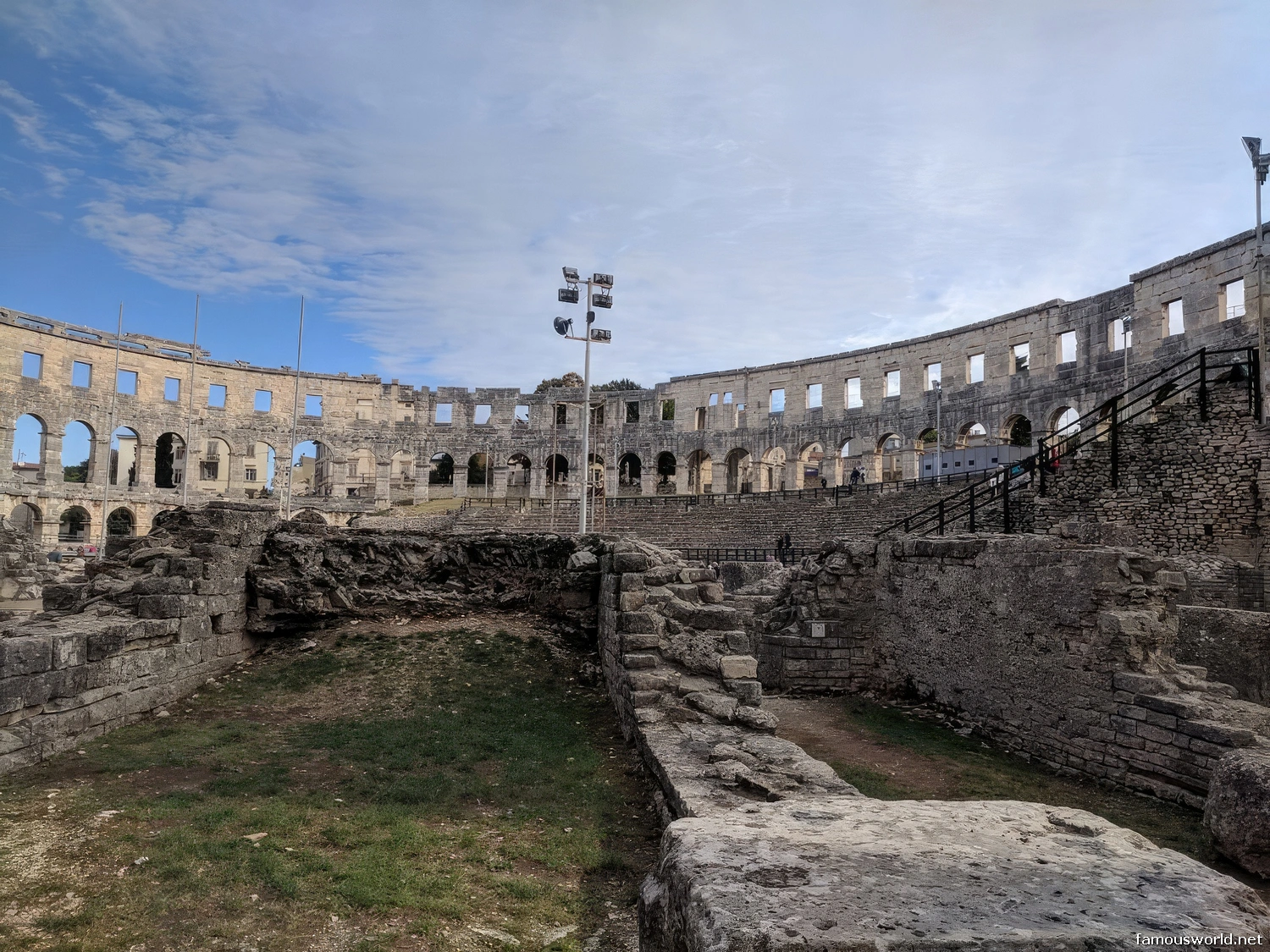
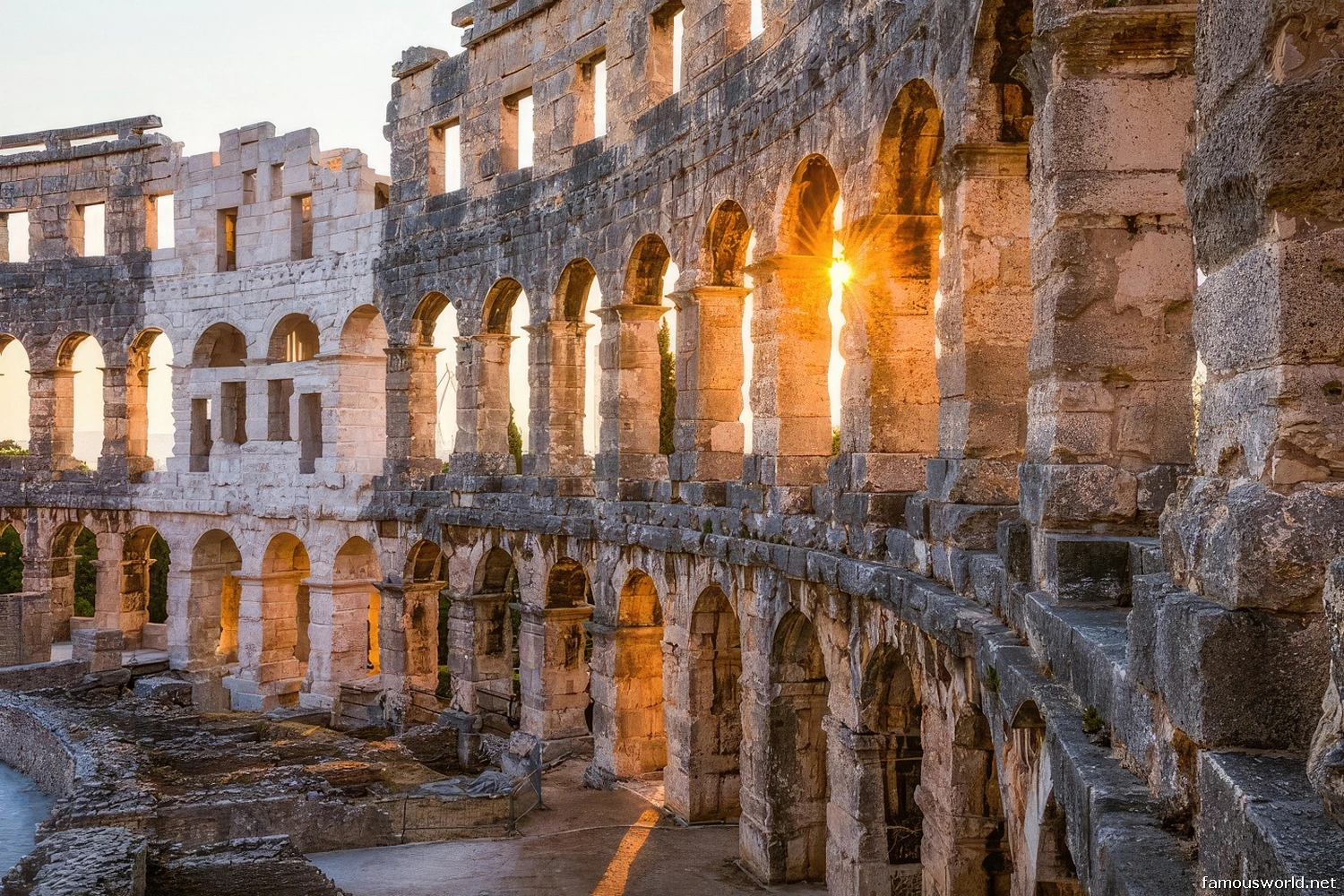
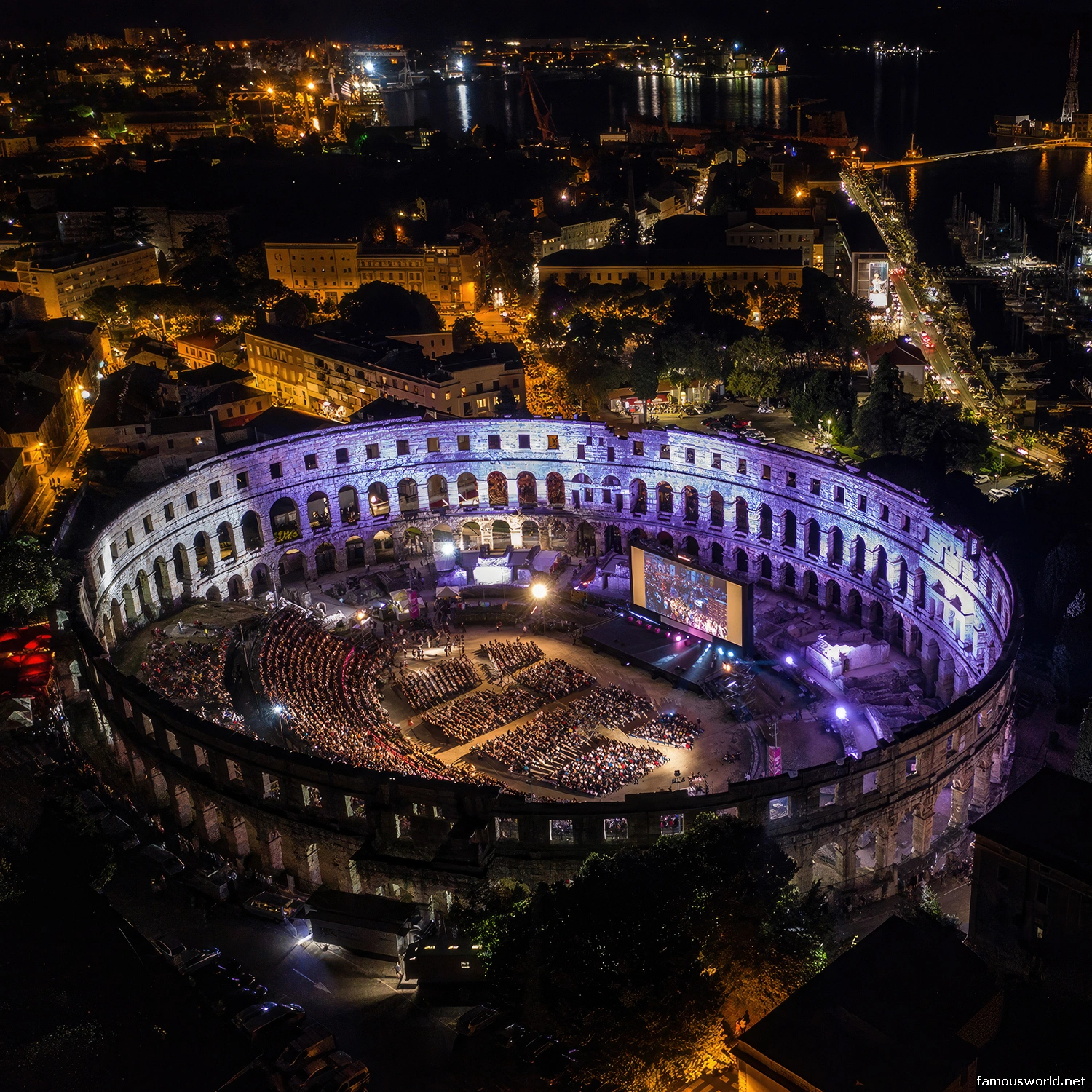
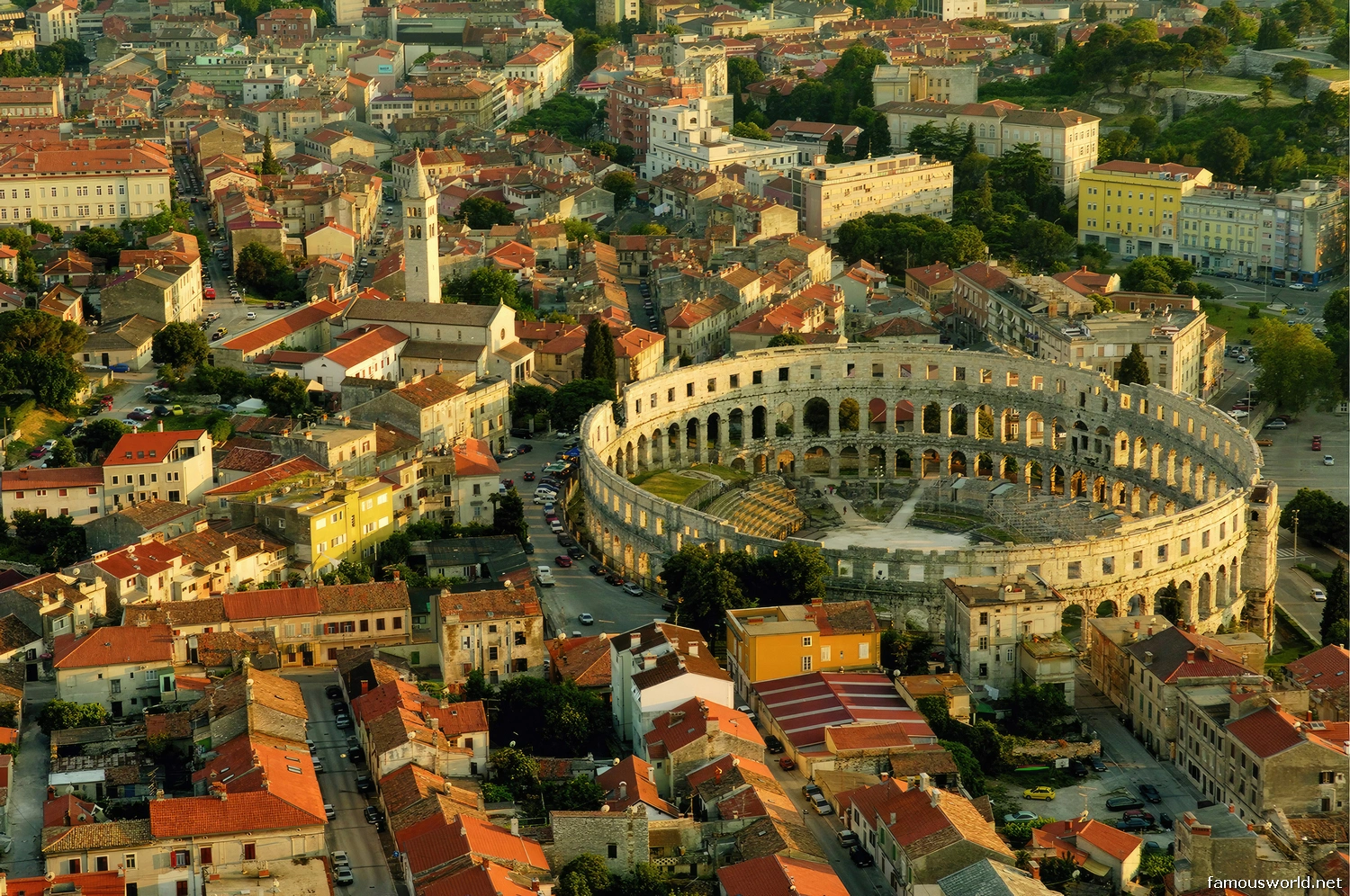
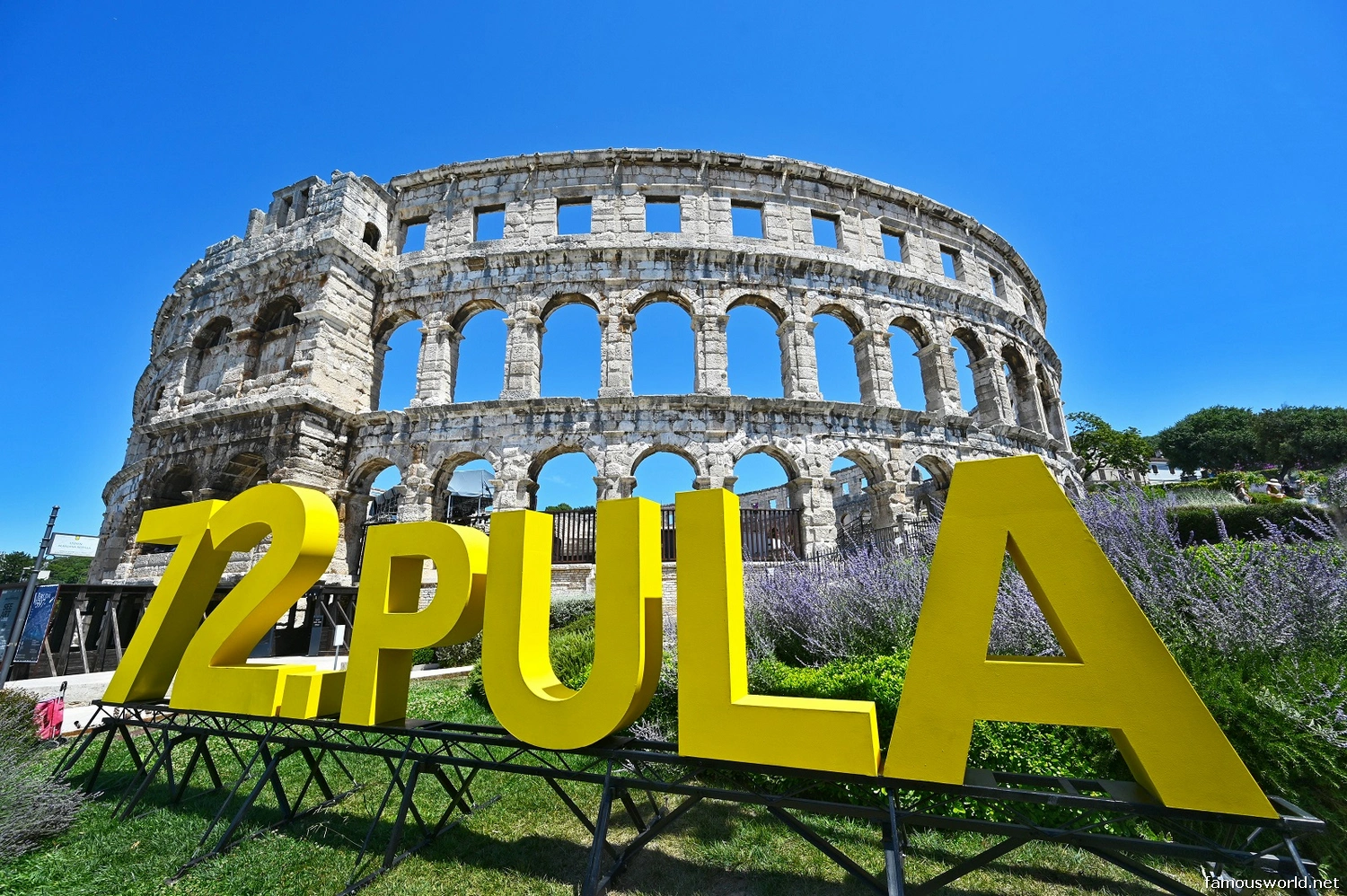
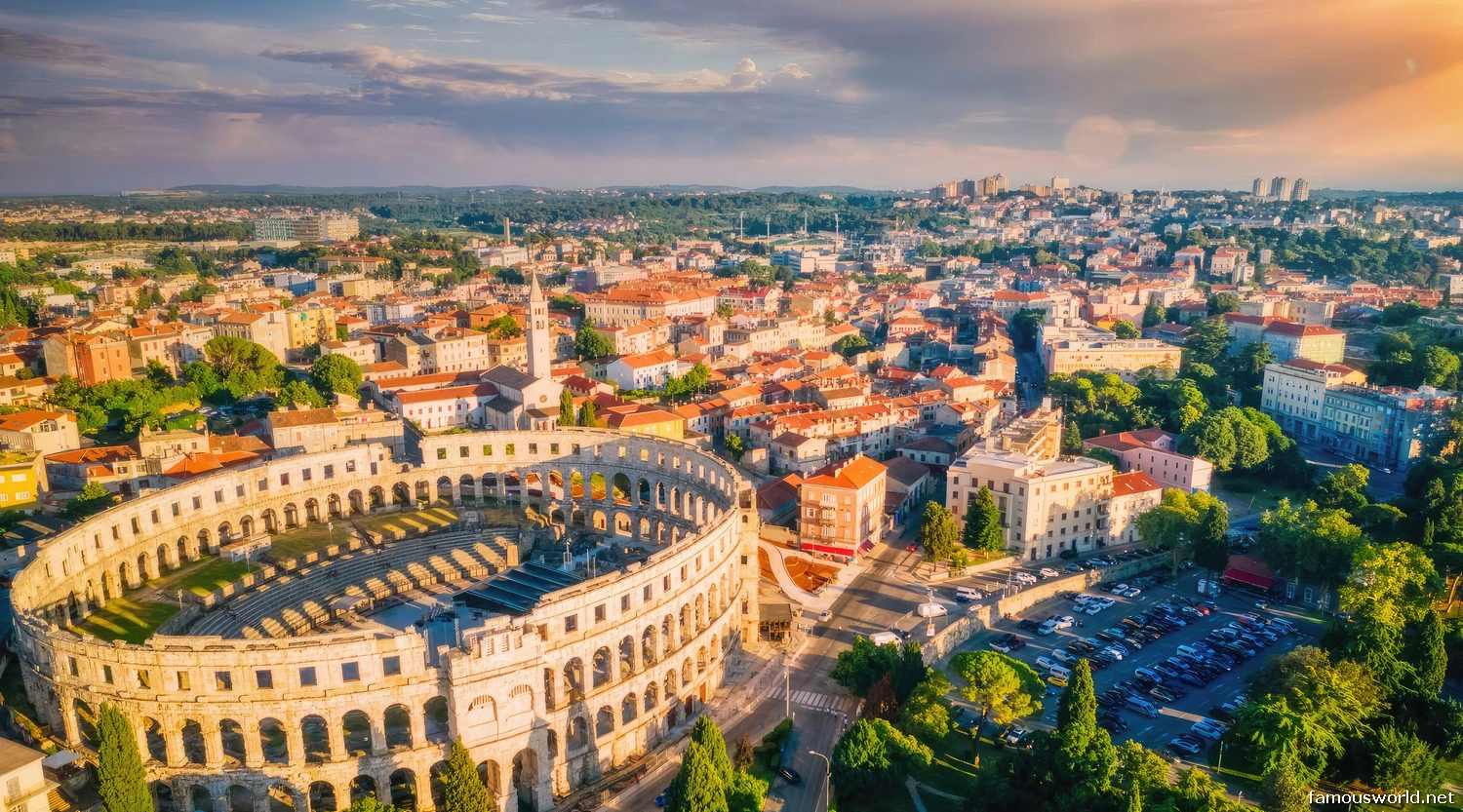
Standing as a colossal testament to Roman ingenuity on the Istrian coast, the Pula Arena is one of the best-preserved and most magnificent ancient monuments in the world. This stunning amphitheater, built in the 1st century AD, dominates the city of Pula with its grand arches of local limestone, overlooking the Adriatic harbor. To stand within its walls is to be transported back to a time of gladiators and grand spectacles, yet its remarkable preservation allows it to live on today as a world-class venue for modern cultural events. The Arena is not just a ruin; it is a living piece of history and the undeniable symbol of Pula.
Listen to an introduction about Pula Arena

Name and Location
- Name: The Pula Arena (Amfiteatar u Puli).
- Location: In the city of Pula, at the southern tip of the Istrian peninsula, Croatia.
How to Get There
As the largest city in Istria, Pula is a major transportation hub.
- By Air: Pula has its own international airport (PUY), located just a few kilometers from the city center.
- By Bus: The main bus station is a short walk from the Arena and has extensive connections throughout Croatia and to neighboring countries.
- By Car: Pula is easily accessible via the Istrian highway system. Parking is available near the Arena, though it can be busy in summer.
- By Ferry: Pula has a port with seasonal ferry connections to Venice and other Adriatic destinations.
Landscape and Architecture
The Arena’s grandeur comes from its immense scale and brilliant design.
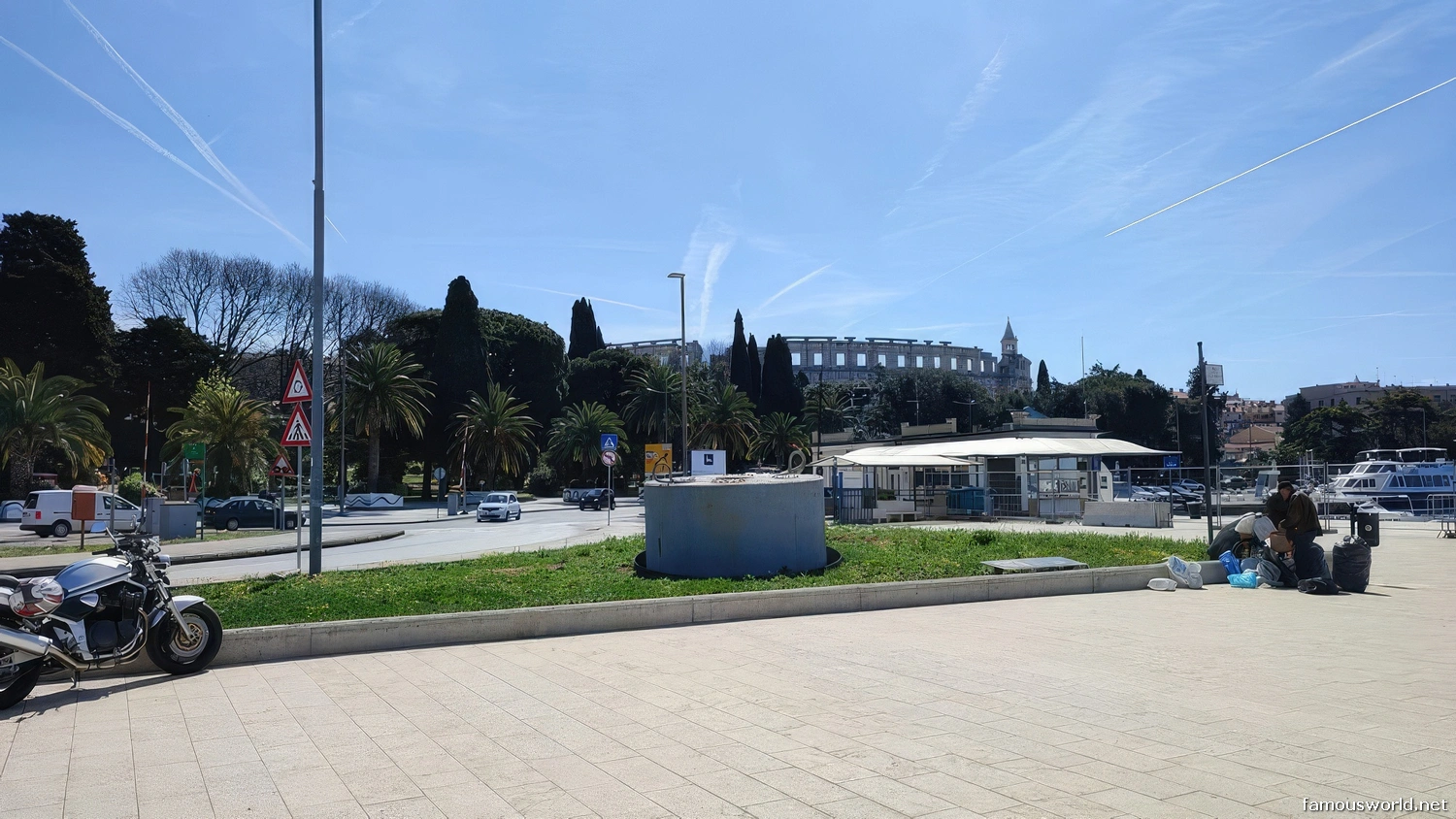
- The Landscape: The amphitheater was strategically built on a gentle slope just outside the original Roman city walls, allowing a portion of the seating area to be rested on the natural hillside. Its location provides commanding views of the harbor.
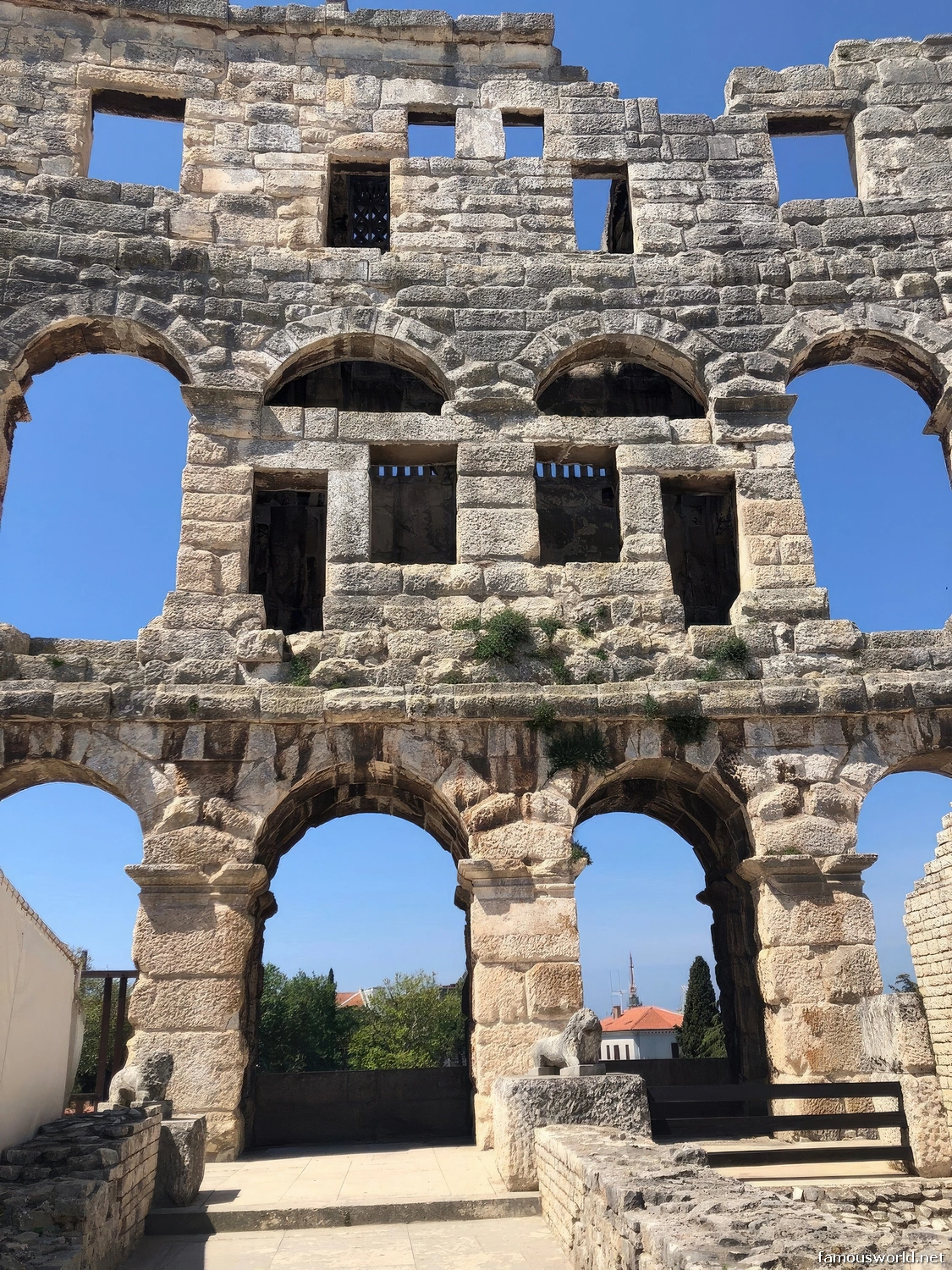
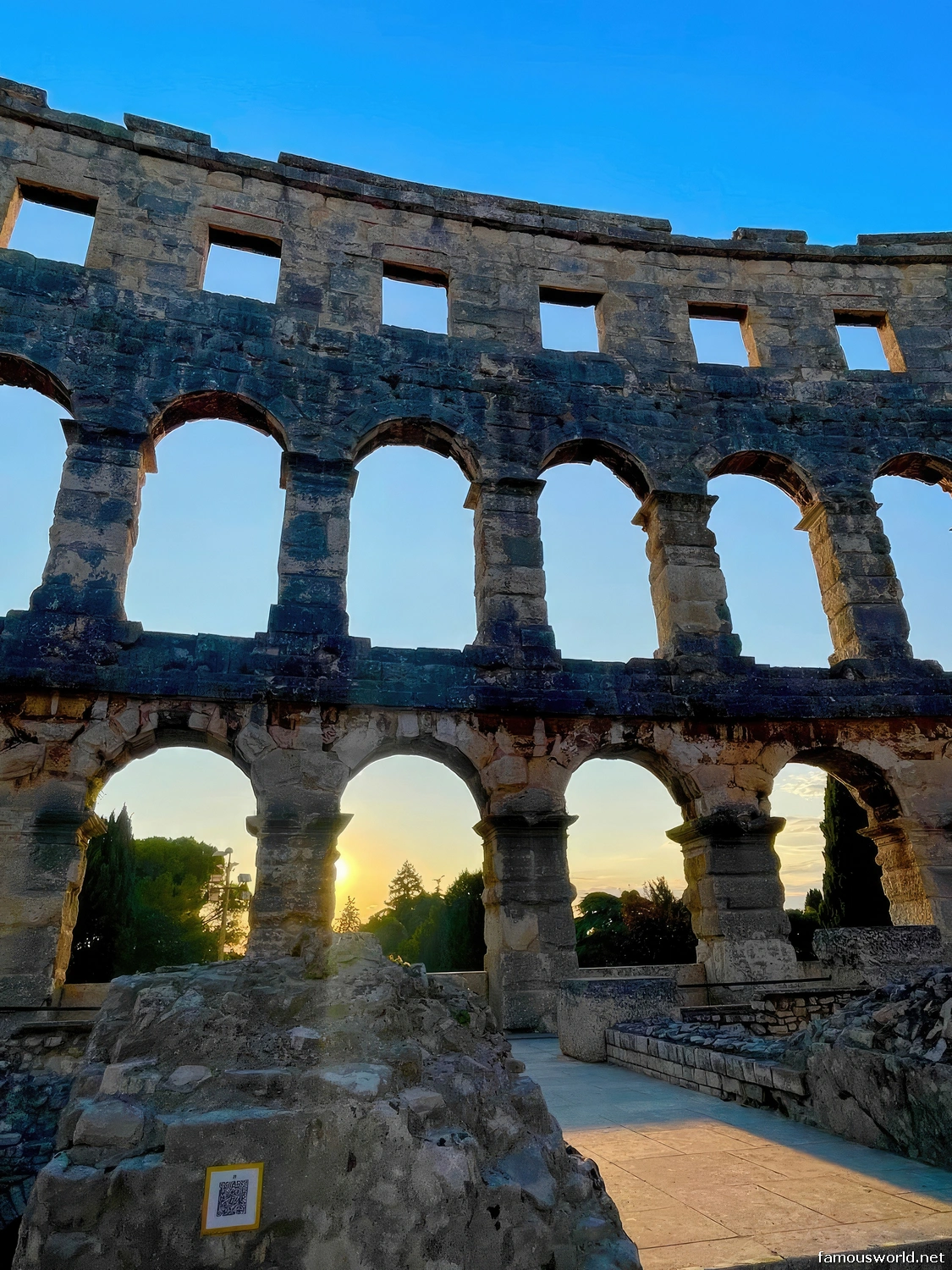
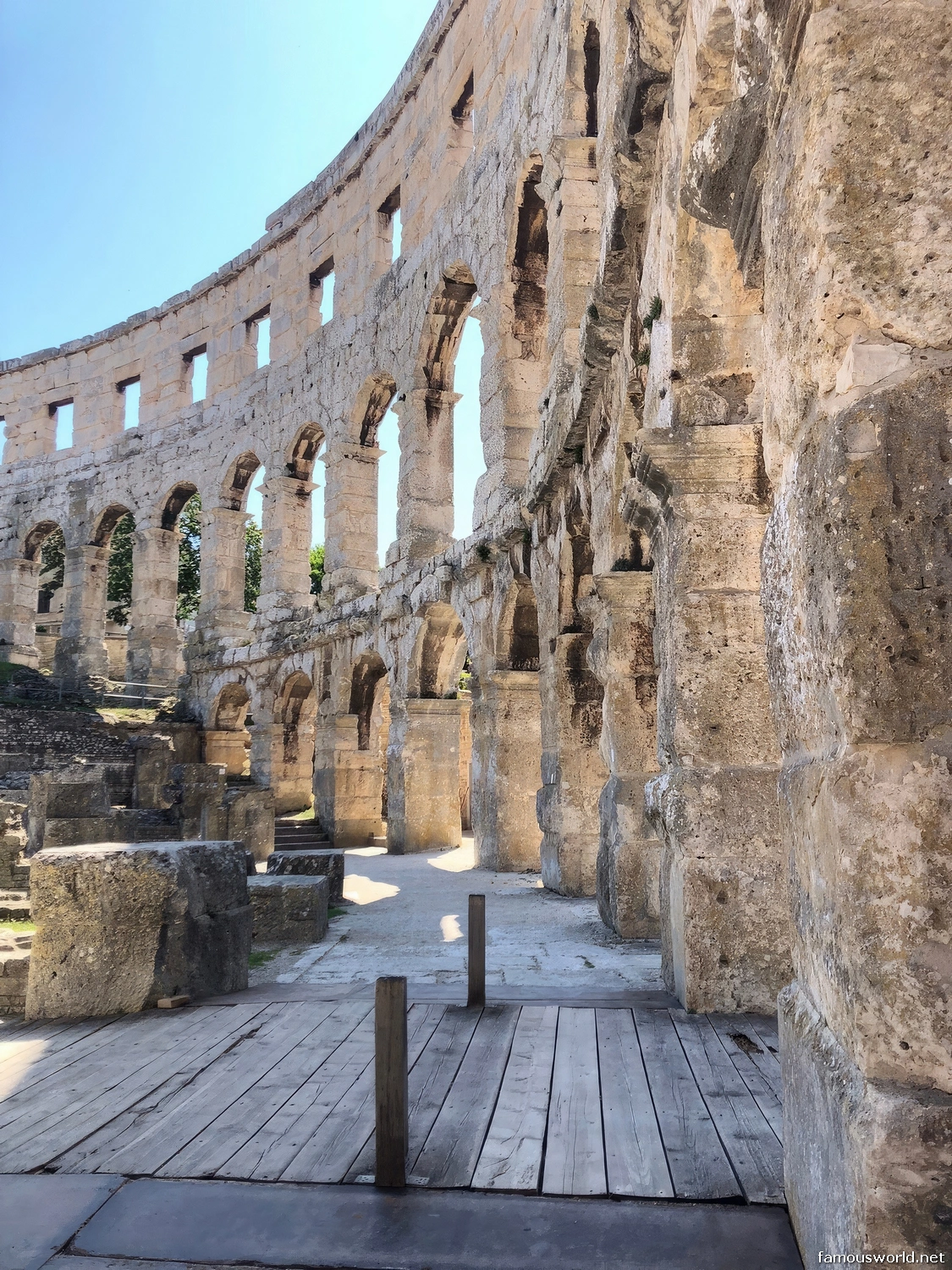
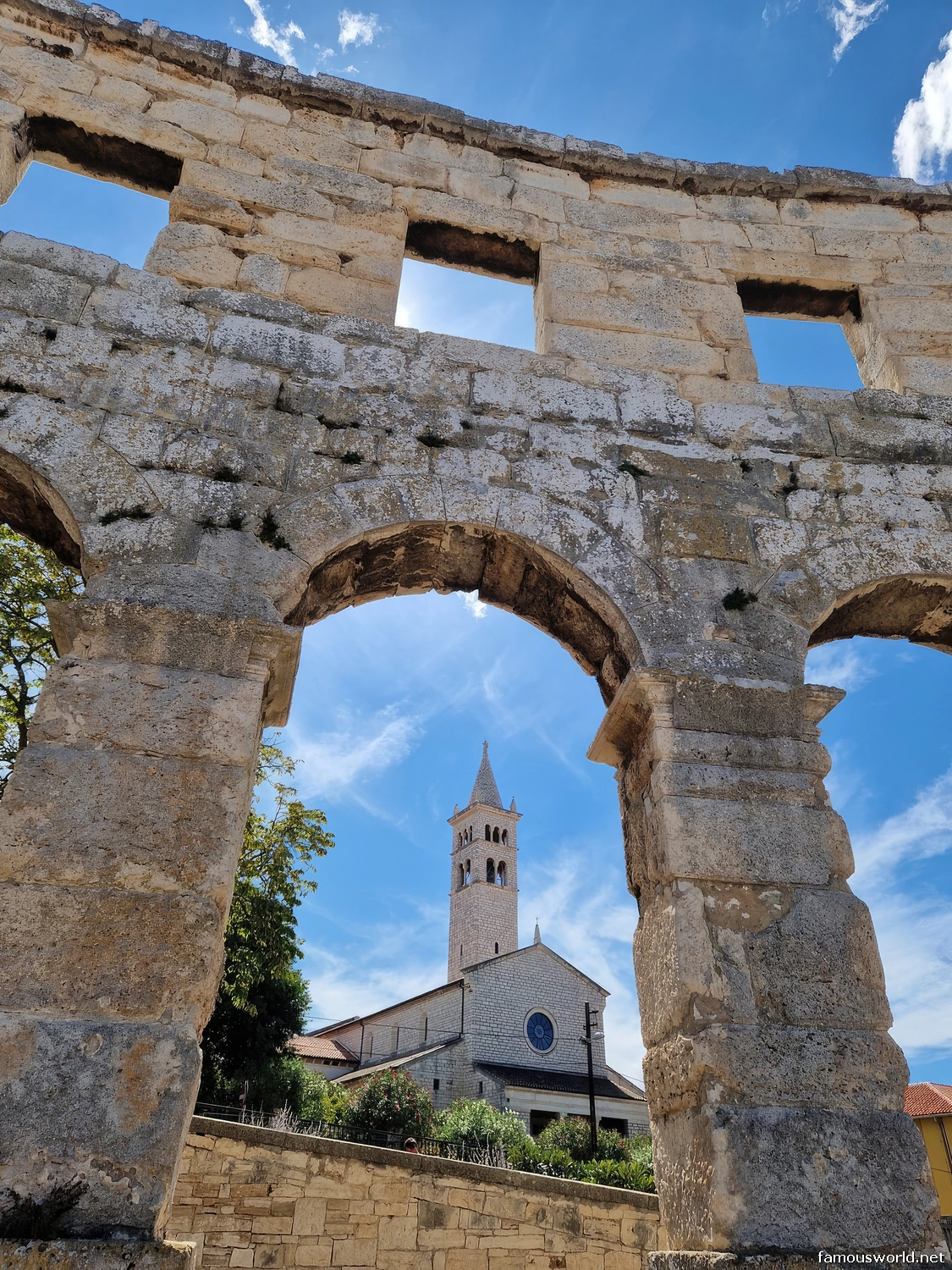
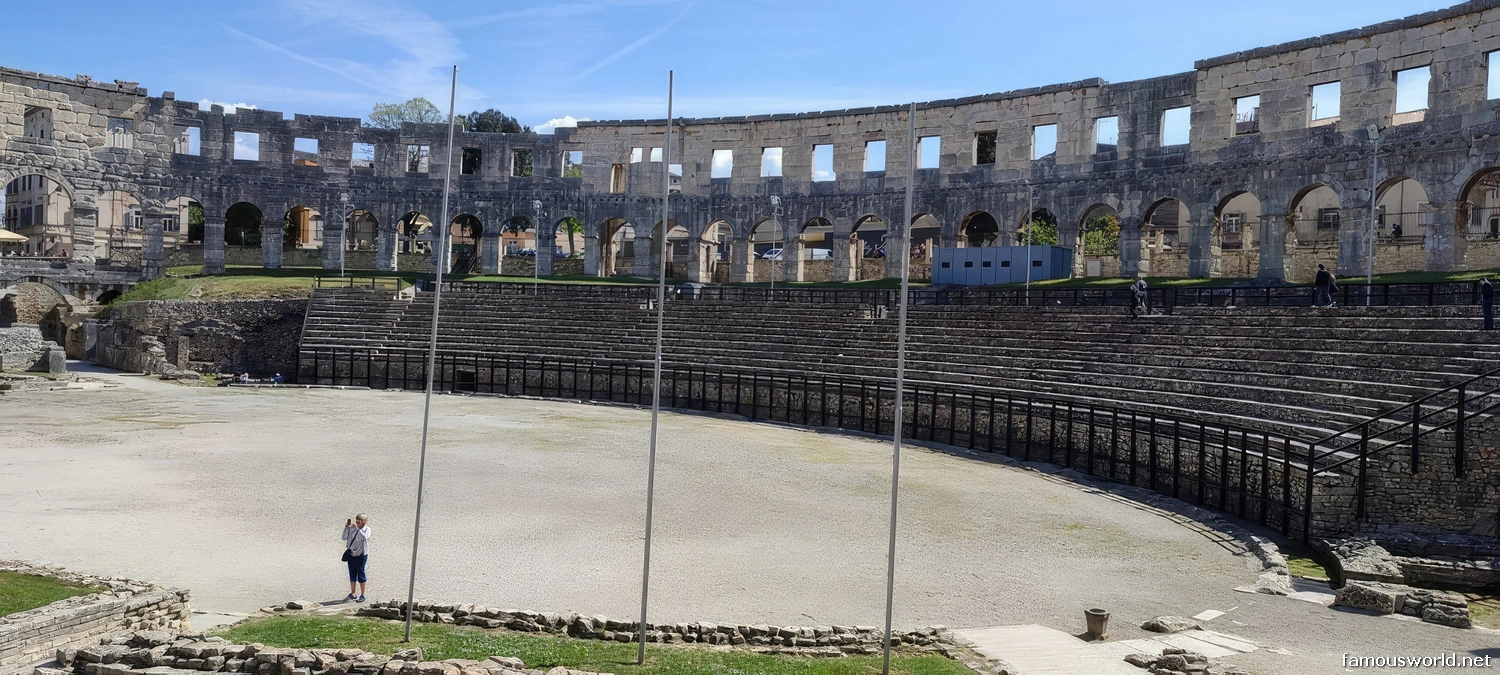
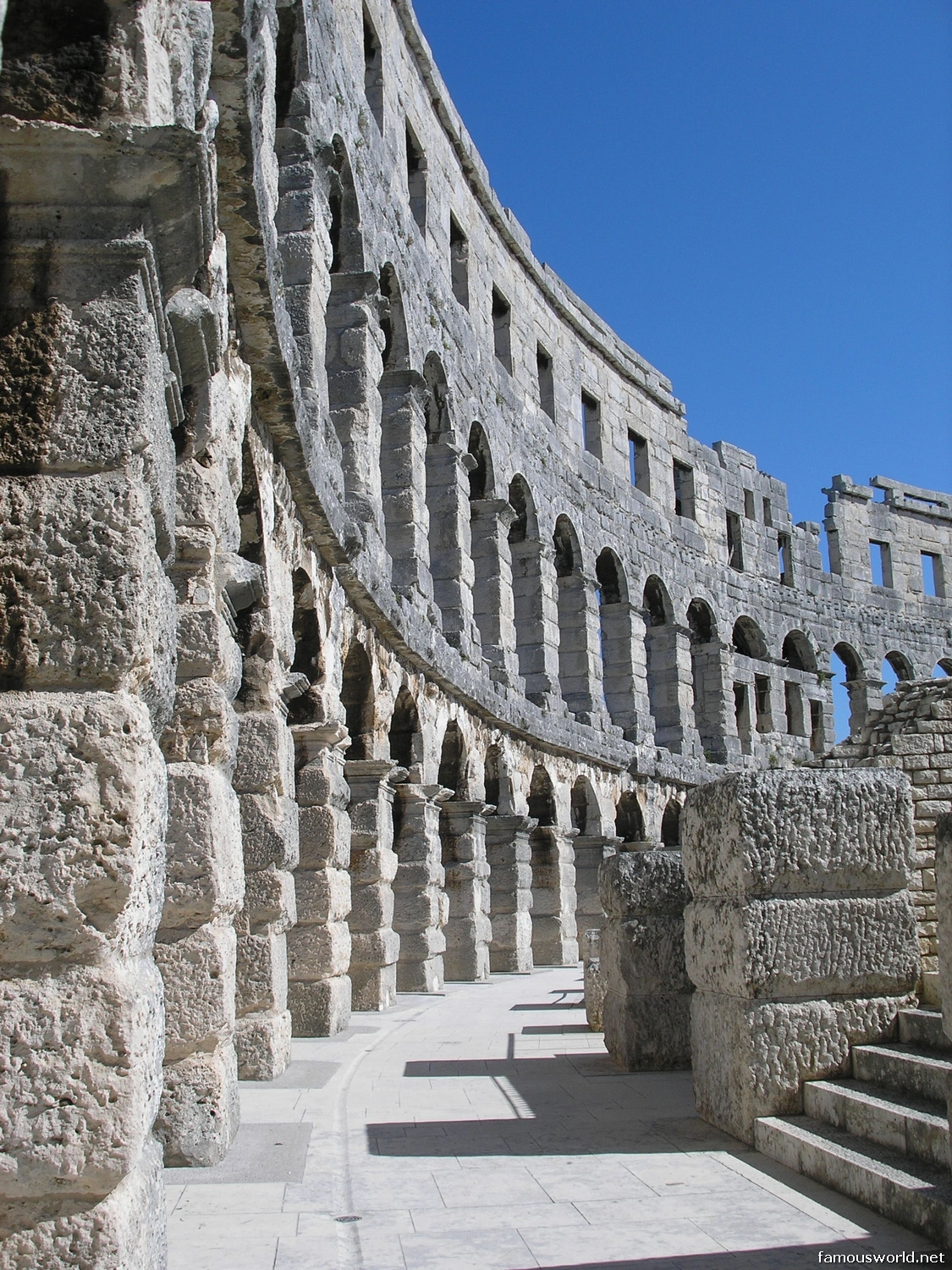
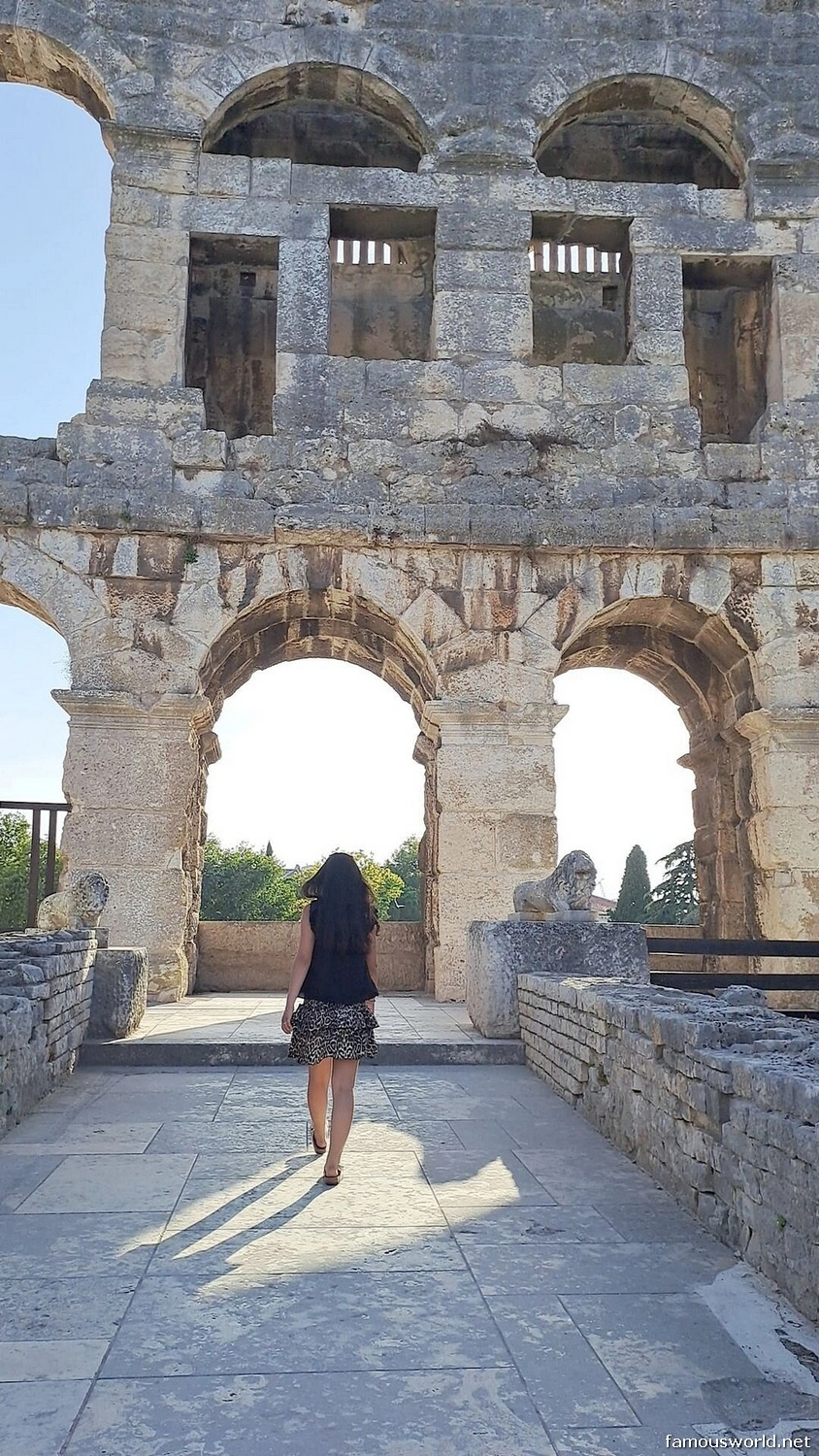
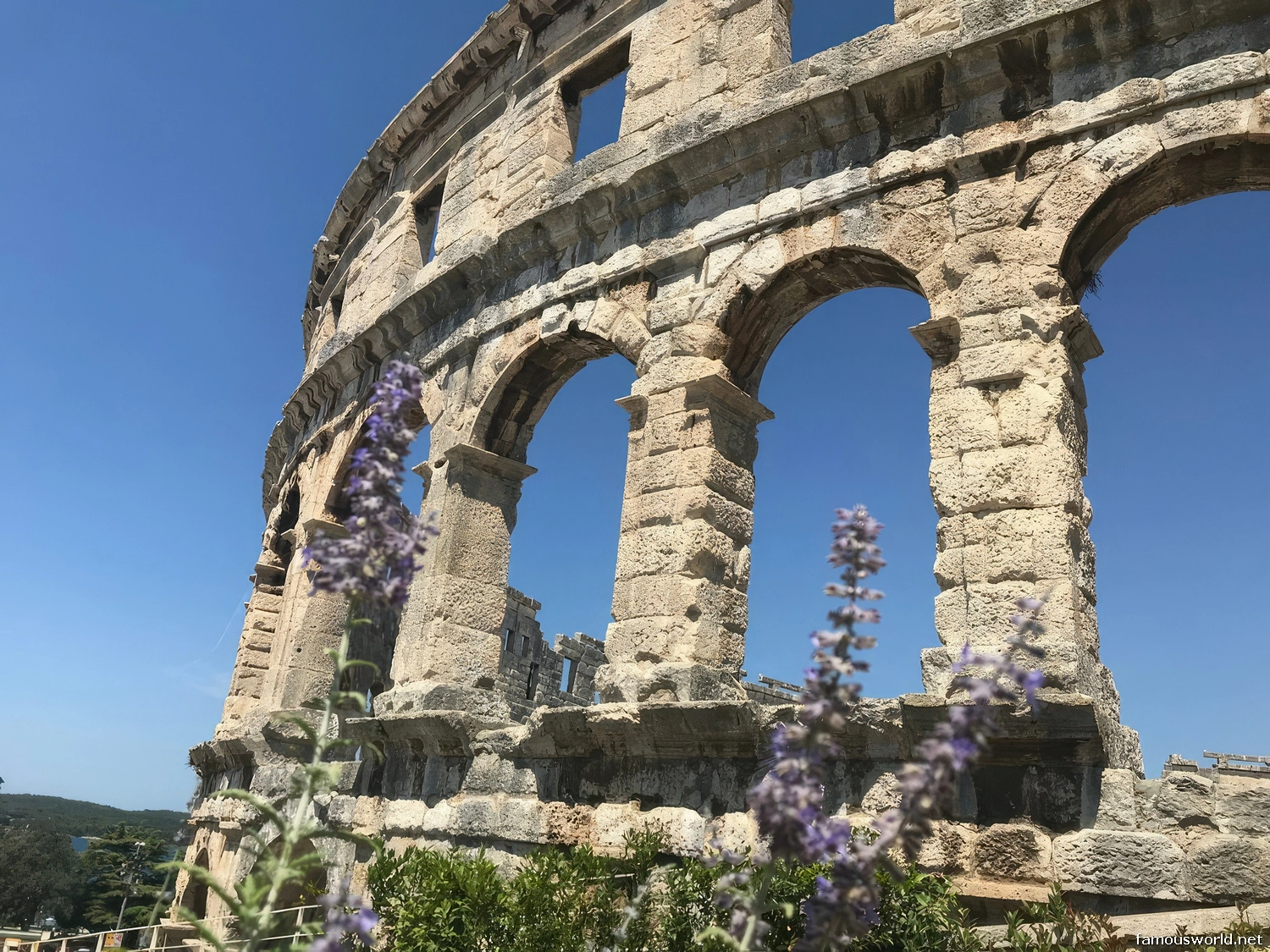
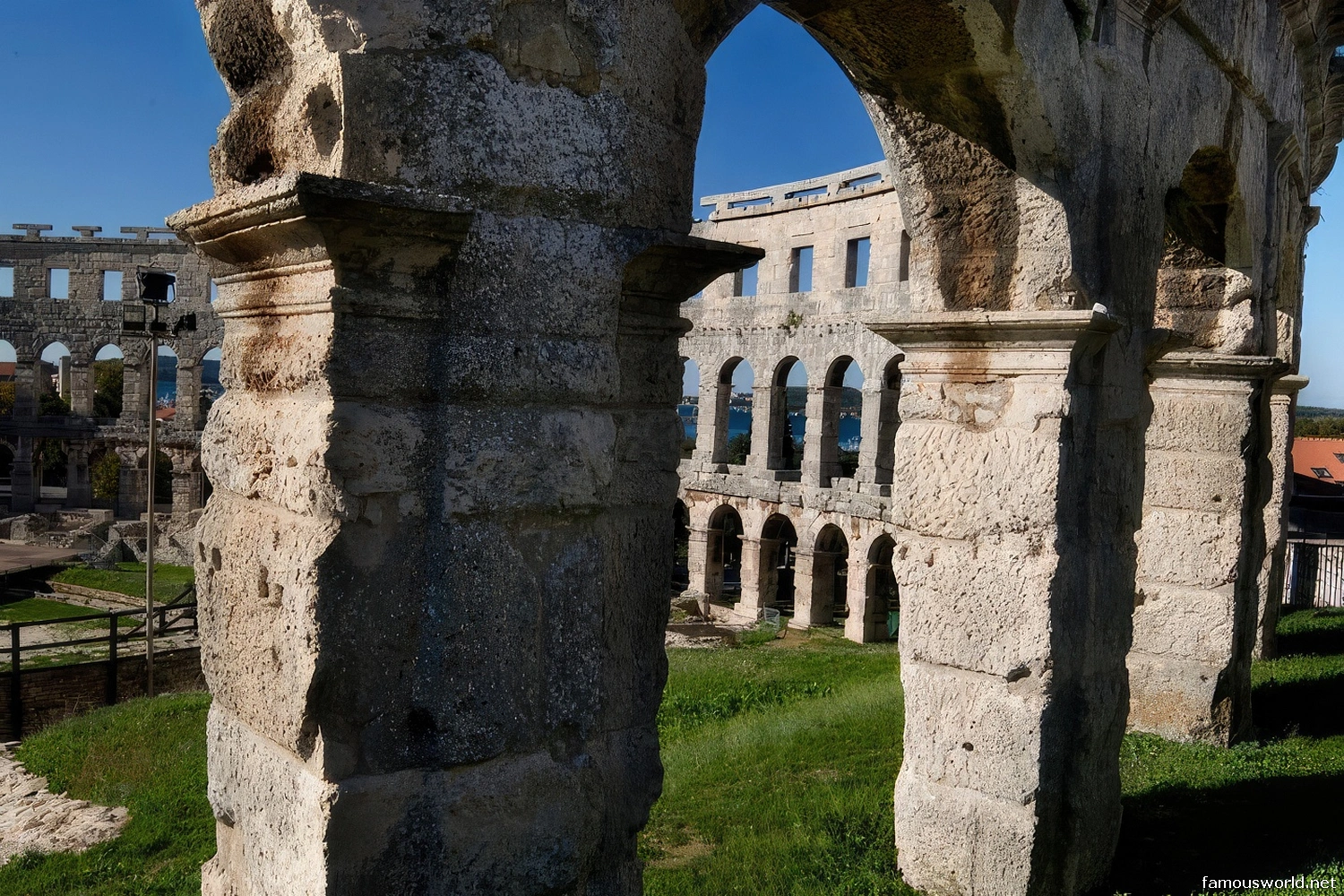
- The Architecture: Constructed entirely of local limestone, the Arena is elliptical in shape. Its magnificent outer wall is almost fully preserved up to its full height of 33 meters. It is the only remaining Roman amphitheater to have four side towers and all three Roman architectural orders (Doric, Ionic, Corinthian) completely preserved. It is the sixth-largest surviving Roman arena in the world.
What Makes It Famous
The Pula Arena is world-renowned for its remarkable state of preservation and its continued use.
- Exceptional Preservation: It is considered one of the best-preserved Roman amphitheaters anywhere in the world, rivaling the Colosseum in Rome for its structural integrity.
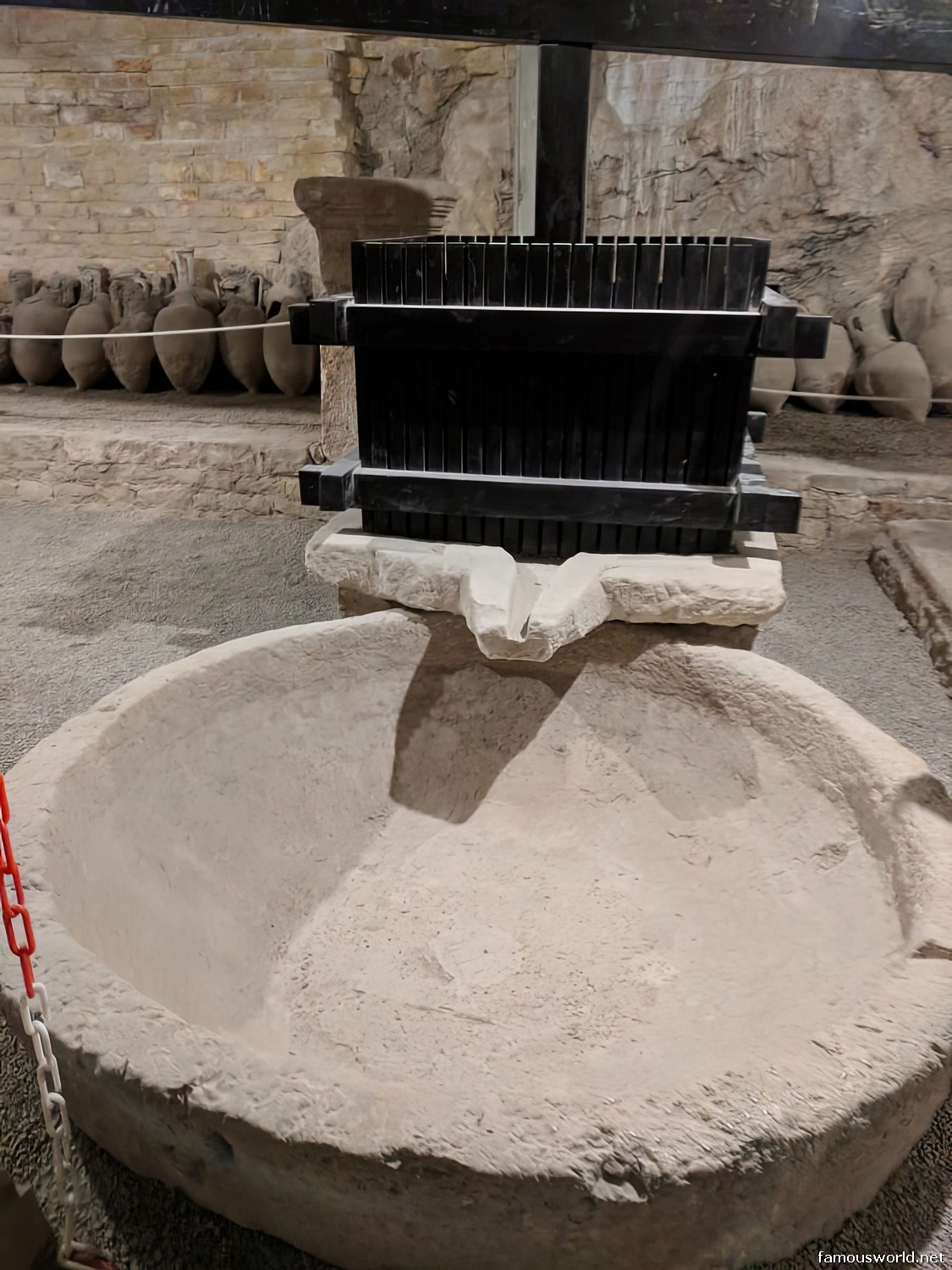
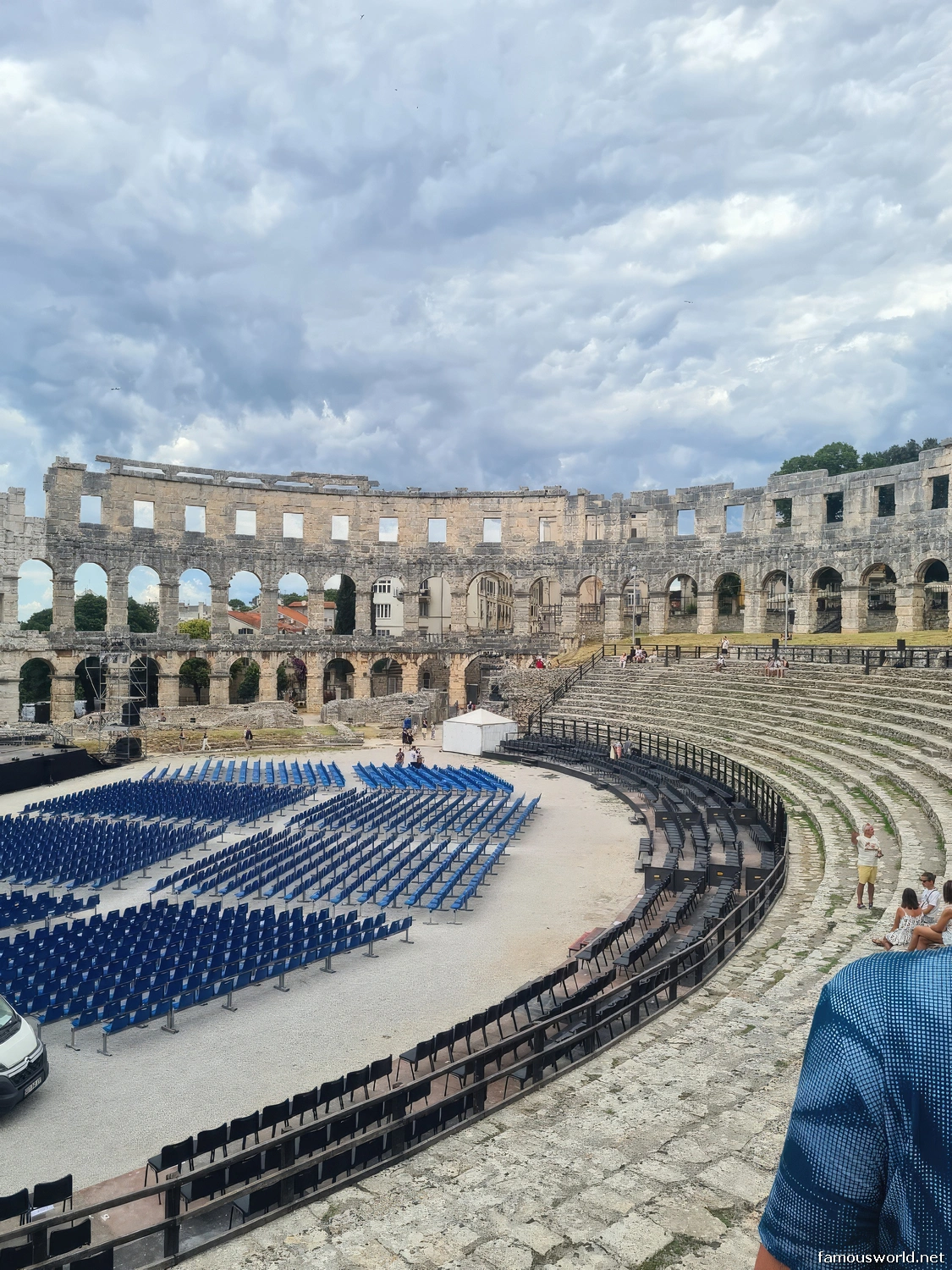
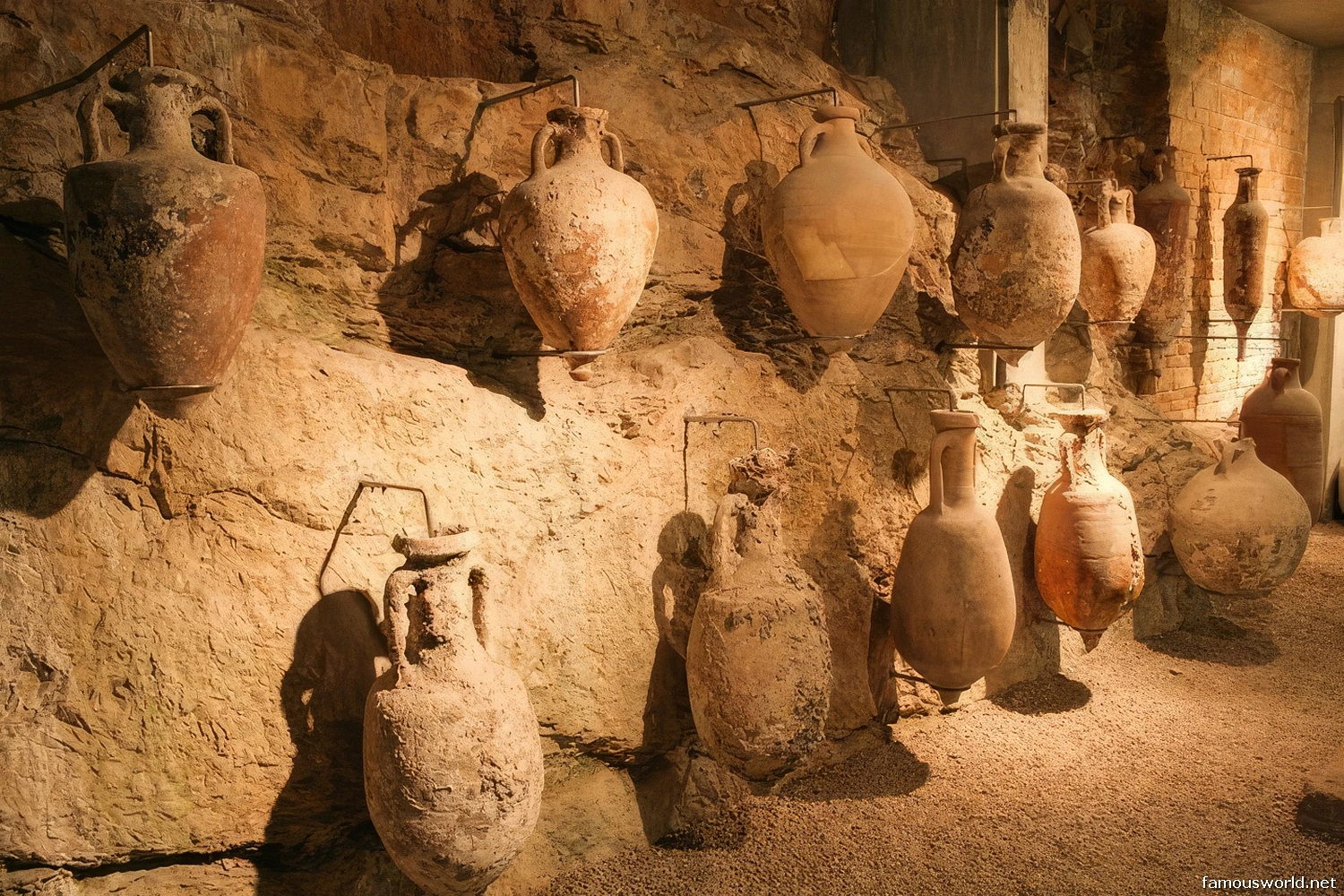
- Roman Gladiator Contests: In ancient times, it could hold over 20,000 spectators for gladiatorial contests and public spectacles. The underground passages, once used to hold wild animals and gladiators, can still be visited.
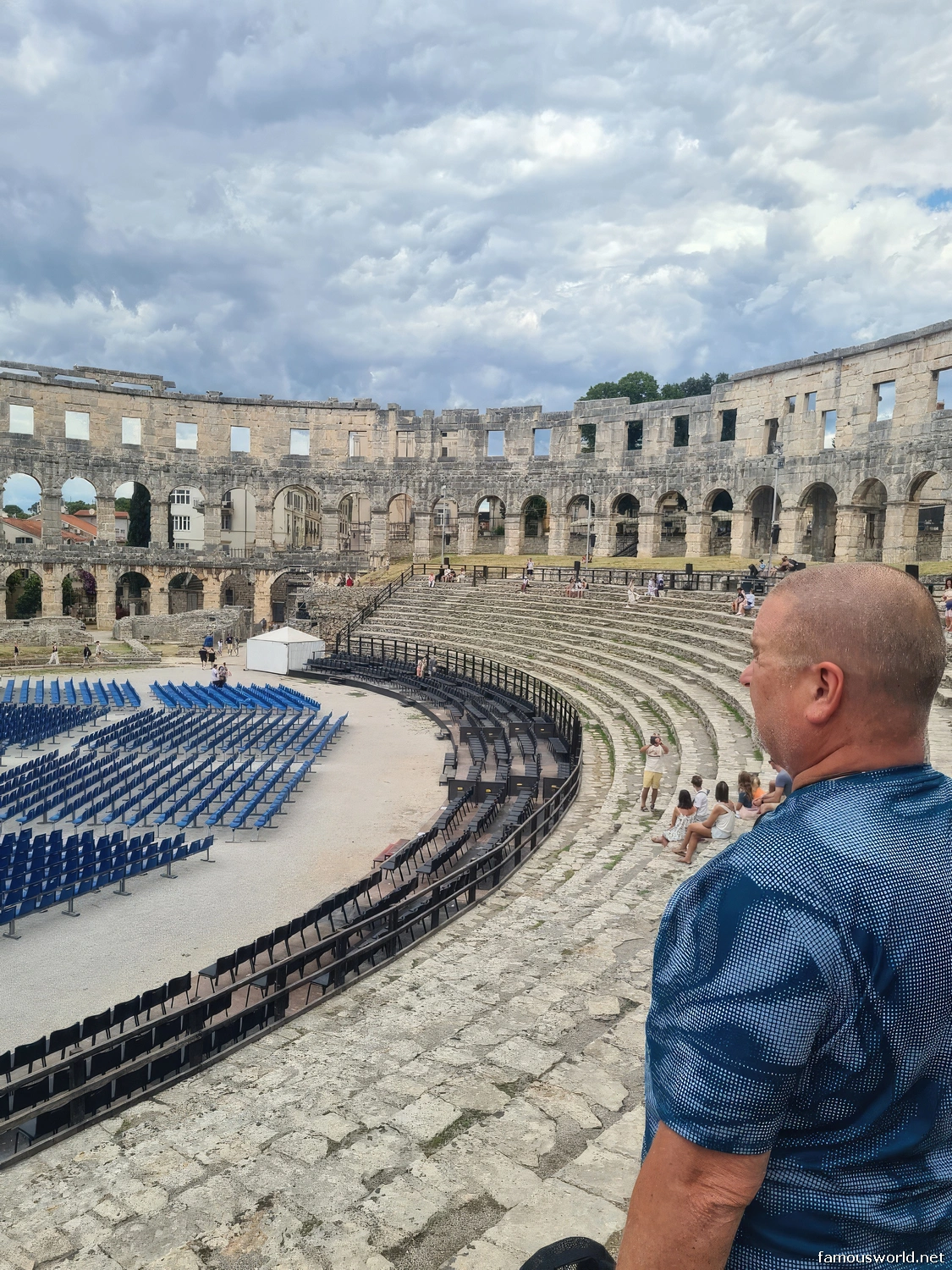
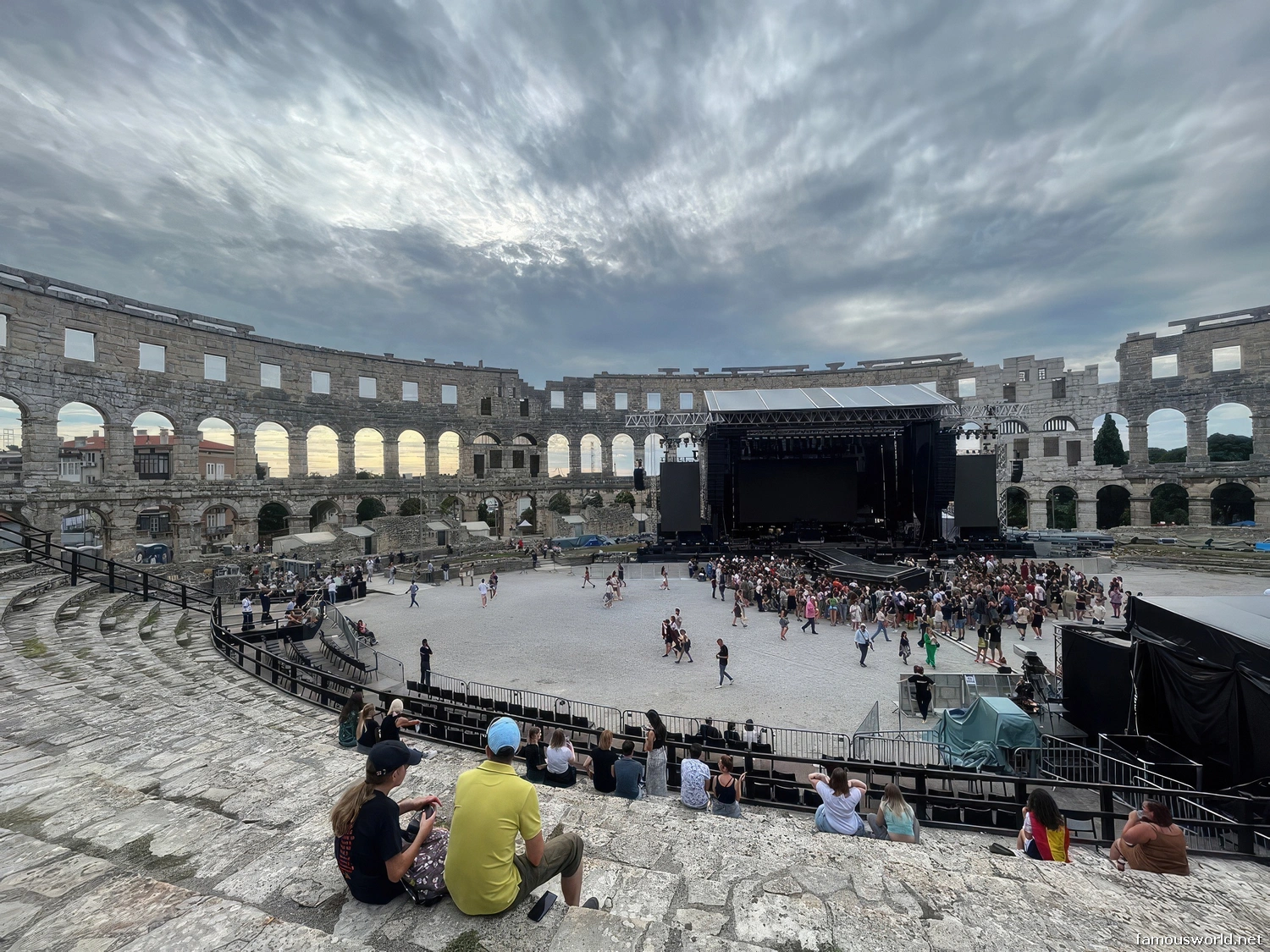
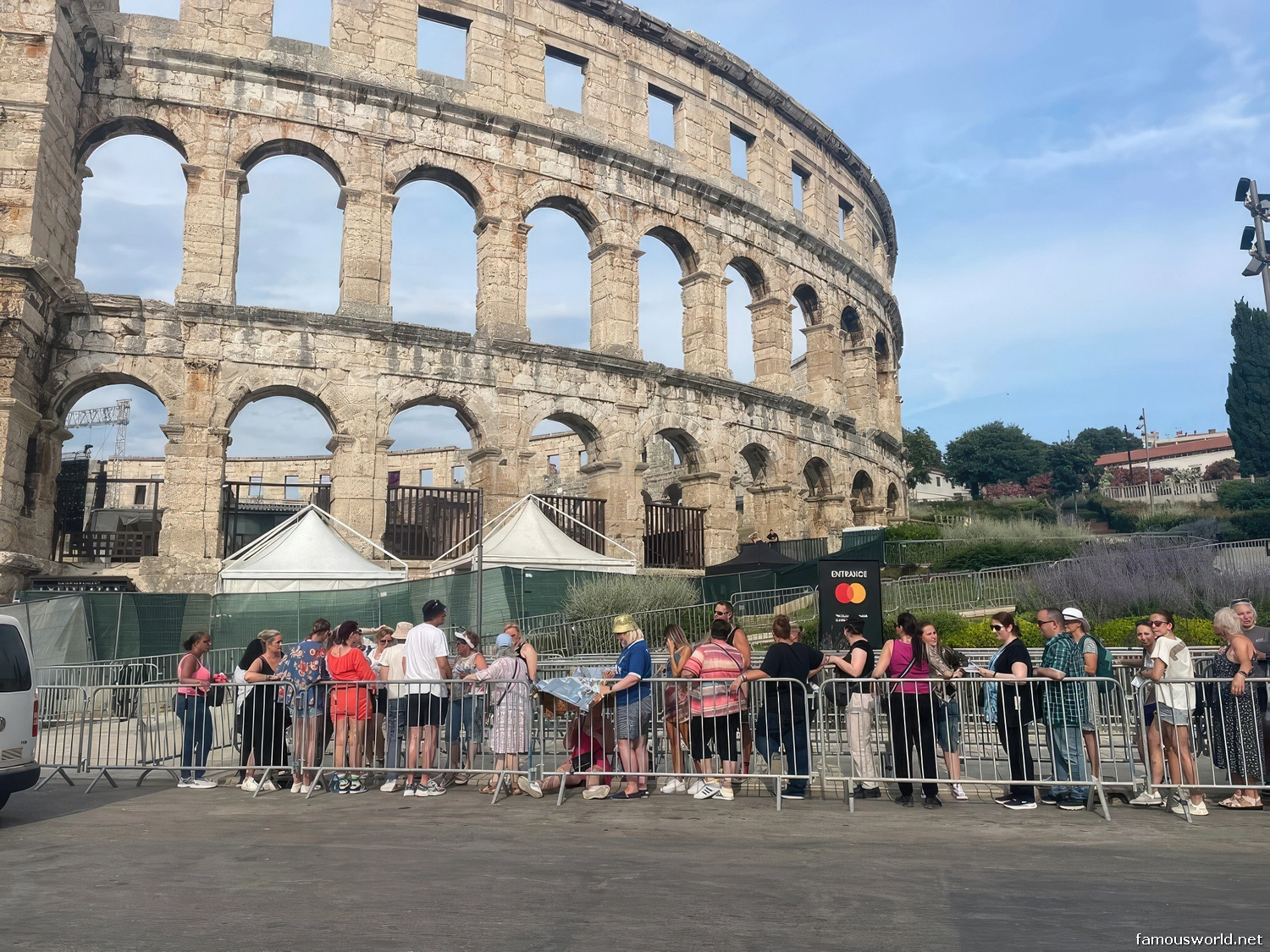
- Iconic Film and Concert Venue: Today, the Arena is a breathtaking open-air venue for major events, including the historic Pula Film Festival, operas, and concerts by world-famous musicians.
Differences from Other Wonders
The monumental, imperial grandeur of the Pula Arena contrasts sharply with the delicate, civic scale of Balbi’s Arch in nearby Rovinj.
- Environment (Colossal Standalone Monument vs. Integrated Urban Gateway): The Arena is a massive, freestanding structure that dominates its surroundings. Balbi’s Arch is a smaller monument built directly into the fabric of a narrow city street, acting as a gateway.
- Core Story (Imperial Spectacle vs. Civic Administration): The Arena tells a story of the Roman Empire’s power, wealth, and culture of mass entertainment. Balbi’s Arch tells a story of Venetian civic rule and local governance.
- Primary Attraction (Immersive Ancient Venue vs. Symbolic Passageway): The Arena is a destination in itself—a vast space to be entered and explored. The arch is a feature to be admired as one passes through it from one part of the town to another.
- Atmosphere (Monumental and Awe-Inspiring vs. Bustling and Historic): The Arena inspires a sense of awe at its sheer scale and antiquity. Balbi’s Arch is experienced as part of the lively, bustling atmosphere of Rovinj’s old town.
Location on world map