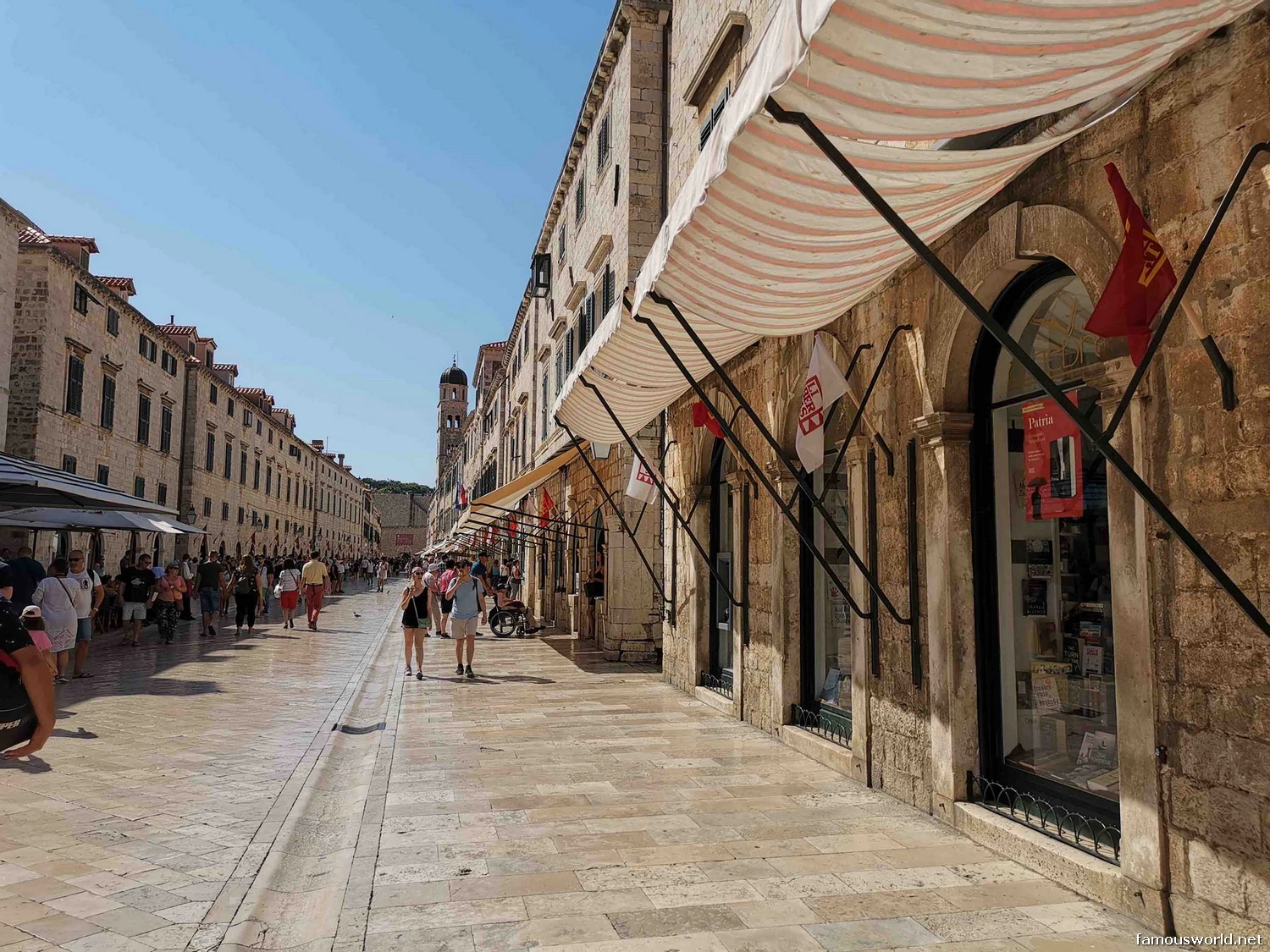


Perched on the Dalmatian coast, the Old Town of Dubrovnik is a breathtaking medieval city entirely encircled by massive stone walls. Known as the “Pearl of the Adriatic,” this UNESCO World Heritage site is a masterpiece of Gothic, Renaissance, and Baroque architecture, with gleaming limestone streets, resilient ancient fortresses, and iconic red-tiled roofs set against the brilliant blue of the sea. Once the capital of the powerful Republic of Ragusa, a historic maritime rival to Venice, Dubrovnik is a stunning testament to human ingenuity, resilience, and the enduring beauty of a city built in harmony with the sea.
Listen to an introduction about Dubrovnik Old Town

Name and Location
- Name: Dubrovnik Old Town (Stari Grad).
- Location: On the Adriatic coast of southern Croatia, in the region of Dalmatia.
How to Get There
As one of the world’s most famous tourist destinations, Dubrovnik is exceptionally well-connected.
- By Air: Dubrovnik Airport (DBV), located in nearby Čilipi, is one of Croatia’s busiest international airports, with connections across Europe and beyond, especially during the summer.
- By Sea: The city is a major port of call for cruise ships and is connected by ferry to other Croatian islands and to Bari, Italy.
- By Bus: An extensive bus network connects Dubrovnik to other cities in Croatia and neighboring countries like Montenegro and Bosnia and Herzegovina.
- By Car: The city is accessible via the main coastal highway and the A1 motorway, offering a scenic drive along the coast.
Landscape and Architecture
Dubrovnik is a triumph of medieval urban planning and defensive architecture, almost entirely contained within its historic walls.
- The City Walls: The city’s most defining feature is its uninterrupted, 2-kilometer-long circuit of defensive stone walls. Reaching up to 25 meters in height and fortified with towers, bastions, and the imposing forts of Minčeta, Bokar, and Lovrijenac, they are among the best-preserved fortification systems in Europe.
- The Stradun: The Old Town’s main street is a wide, limestone-paved promenade that shines in the sun. It serves as the city’s vibrant heart, lined with historic buildings, shops, and cafés.
- Architectural Ensemble: The city is a living museum of architectural styles. Key landmarks include the Gothic-Renaissance Rector’s Palace and Sponza Palace, the Baroque Cathedral of the Assumption, and the beloved Church of St. Blaise, the city’s patron saint. The harmonious sea of terracotta roofs is one of its most iconic sights.
What Makes It Famous
Dubrovnik’s fame comes from its perfectly preserved history, stunning coastal setting, and modern cultural significance.
- UNESCO World Heritage Site: Recognized for its remarkable medieval architecture and the historic city walls that have protected a unique urban plan for centuries.
- Walkable City Walls: Walking the full circuit of the walls is a world-famous tourist experience, offering unparalleled views of the Old Town’s layout and the Adriatic Sea.
- The Republic of Ragusa: The city’s history as the capital of a wealthy and sophisticated maritime republic gives it a unique cultural and political legacy.
- King’s Landing: Its global profile was massively boosted by its role as the main filming location for King’s Landing in the HBO series Game of Thrones, attracting fans from around the world.
Differences from Other Wonders
The fortified, man-made coastal grandeur of Dubrovnik offers a completely different experience from the wild, inland nature of Plitvice Lakes.
- Environment (Fortified Coastal City vs. Inland Natural Park): Dubrovnik is a dense, architectural marvel built of stone, completely defined by its relationship with the sea. Plitvice is a sprawling, protected wilderness of forests, lakes, and rivers, shaped entirely by natural forces.
- Core Story (Human History & Resilience vs. Natural Geological Processes): The story of Dubrovnik is one of diplomacy, maritime trade, and surviving centuries of political threats and natural disasters. The story of Plitvice is one of geology, hydrology, and the slow, constant work of water and rock.
- Primary Attraction (Historic Architecture vs. Natural Phenomena): Dubrovnik’s primary attraction is its immense city walls and the perfectly preserved historic town within. The main draw of Plitvice is its chain of cascading, color-shifting lakes and waterfalls.
- Atmosphere (Historic and Bustling vs. Wild and Serene): A visit to Dubrovnik is an immersion into a vibrant, living historical city, often buzzing with energy and crowds. A visit to Plitvice inspires a sense of tranquility and awe at the pristine beauty of the natural world.
Location on world map