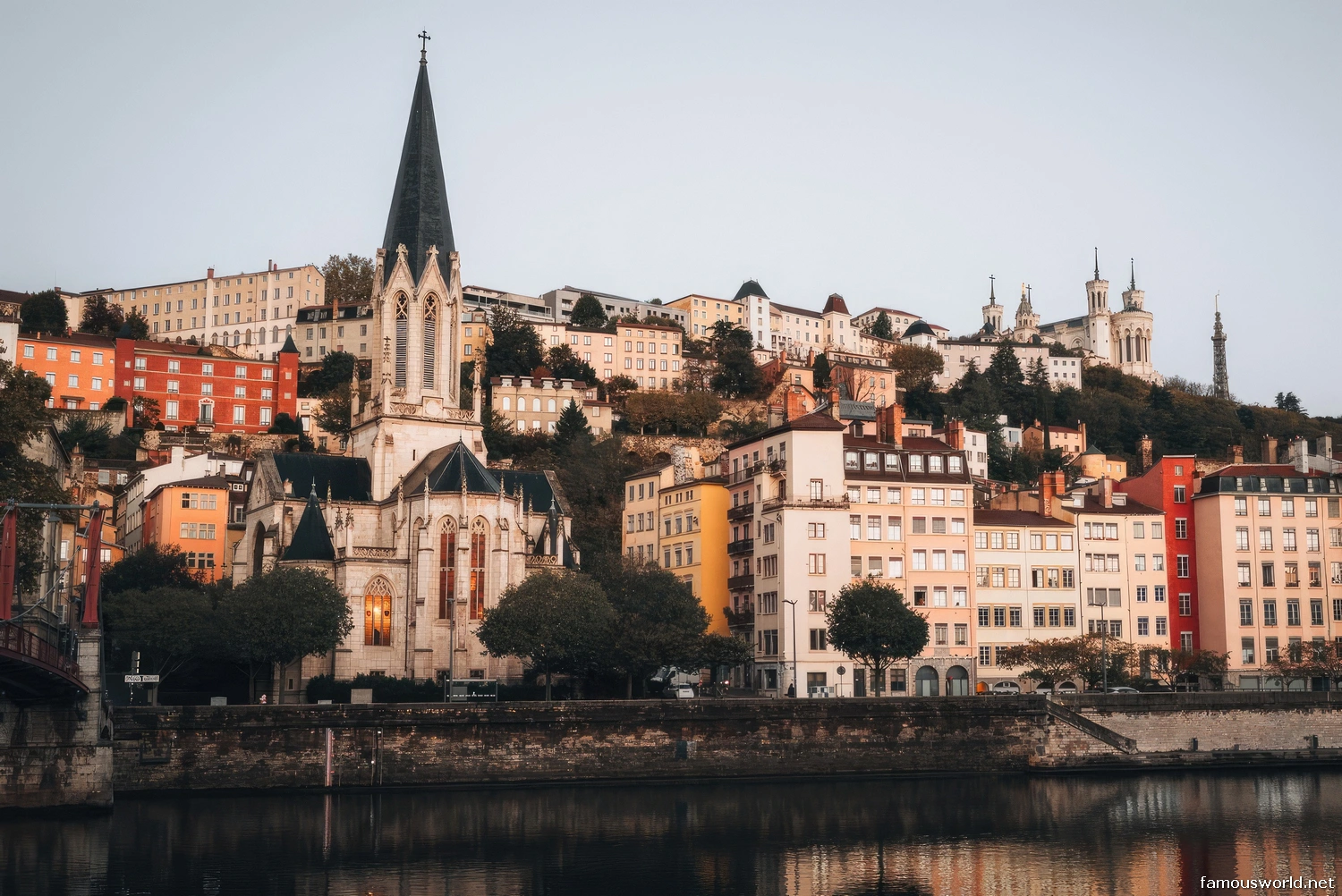
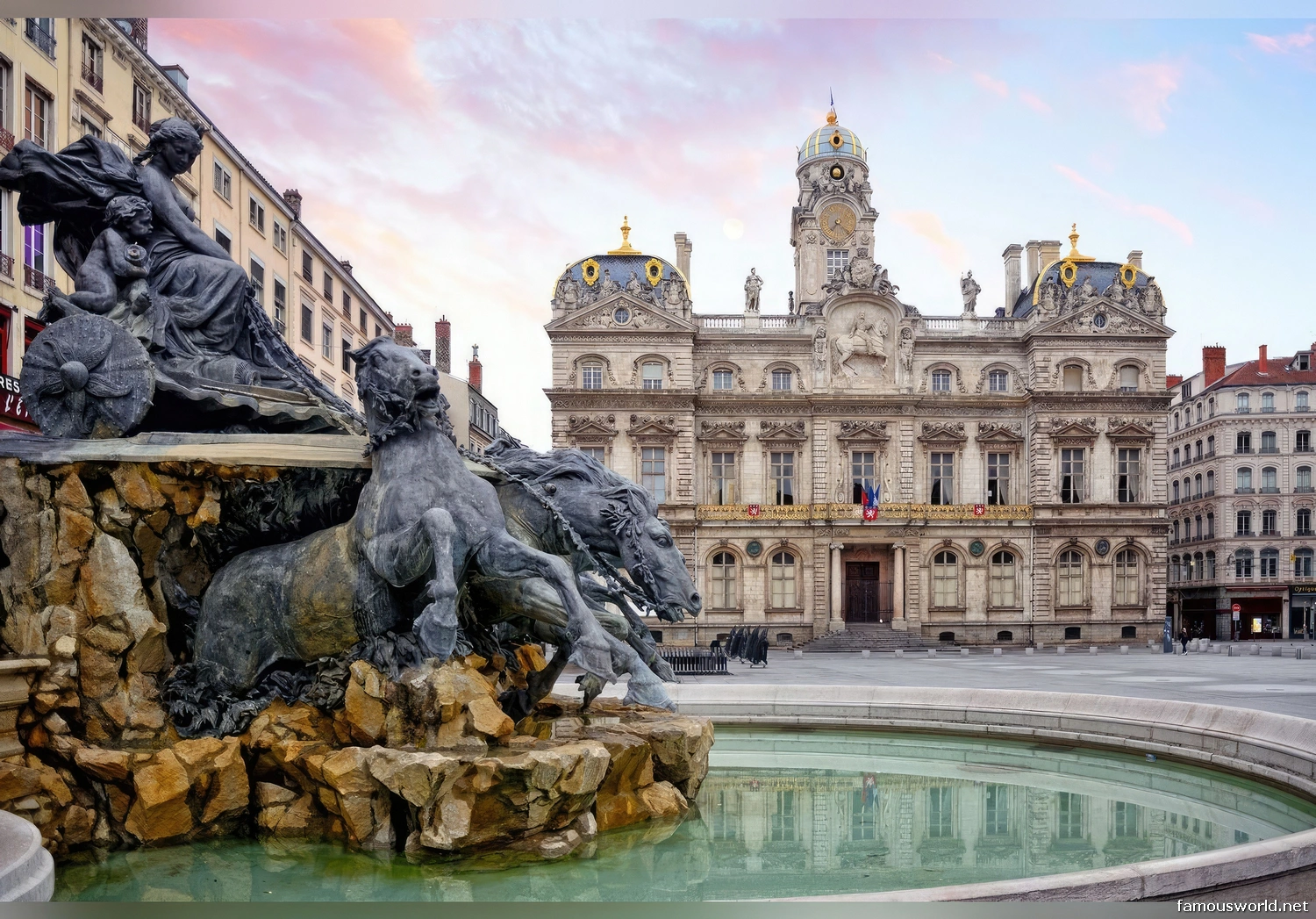


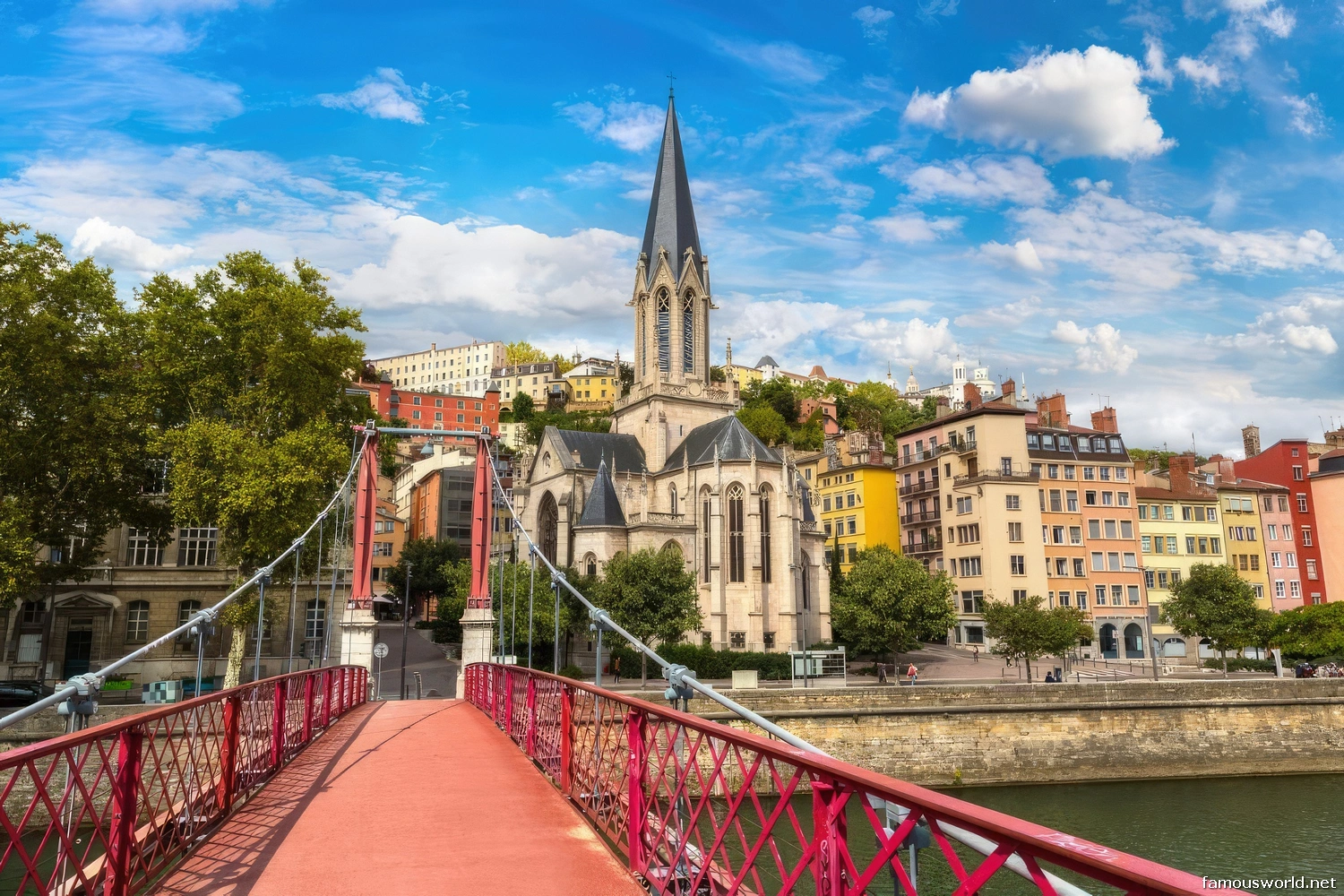




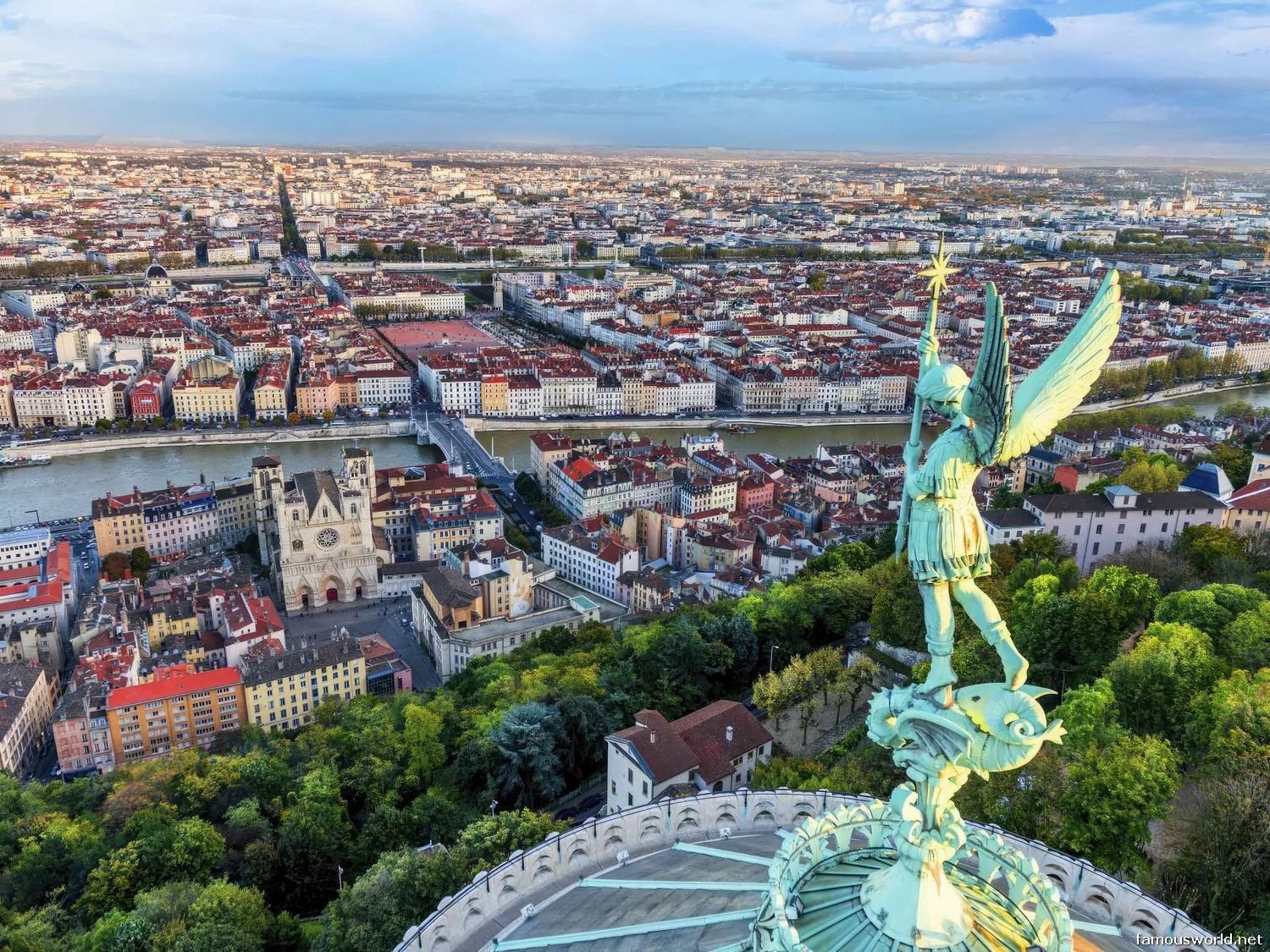


Situated at the confluence of the Rhône and Saône rivers, Lyon is France’s third-largest city and a vibrant hub of culture, history, and, above all, gastronomy. For centuries, this city has been a powerful commercial and industrial center, but its true heart lies in its celebrated culinary traditions and its beautifully preserved historic districts. From the Renaissance splendor of Vieux Lyon (Old Lyon) to the Roman ruins on Fourvière Hill, the city is a treasure trove of architectural and historical gems. Recognized as a UNESCO World Heritage Site, Lyon offers a sophisticated yet unpretentious urban experience, where a deep reverence for the past is matched only by a passionate enjoyment of the present.
Listen to an introduction about Lyon

Name and Location
- Name: Lyon.
- Location: In the Auvergne-Rhône-Alpes region of southeastern France, strategically located between Paris and Marseille.
How to Get There
As a major French city, Lyon is exceptionally well-connected.
- By Train: The most efficient way to arrive is by high-speed TGV, which connects Lyon to Paris in about two hours and to Marseille in under two hours. The city has two main train stations: Part-Dieu and Perrache.
- By Air: Lyon–Saint-Exupéry Airport (LYS) is a major international airport serving numerous destinations across Europe and beyond. The Rhônexpress tram provides a quick link from the airport to the city center.
- By Car: Lyon is at the center of a major European motorway network, making it easily accessible by car from all directions.
Landscape and Architecture
Lyon’s urban landscape is dramatically shaped by its two rivers and two hills.
- The Two Rivers: The city is defined by the Rhône and Saône rivers, which converge at its southern tip. The land between them, the Presqu’île (peninsula), forms the modern city center.
- Vieux Lyon (Old Lyon): On the west bank of the Saône lies one of Europe’s most extensive Renaissance neighborhoods. It is famous for its colorful, Italianate buildings and its unique network of traboules—hidden covered passageways that connect streets through internal courtyards.
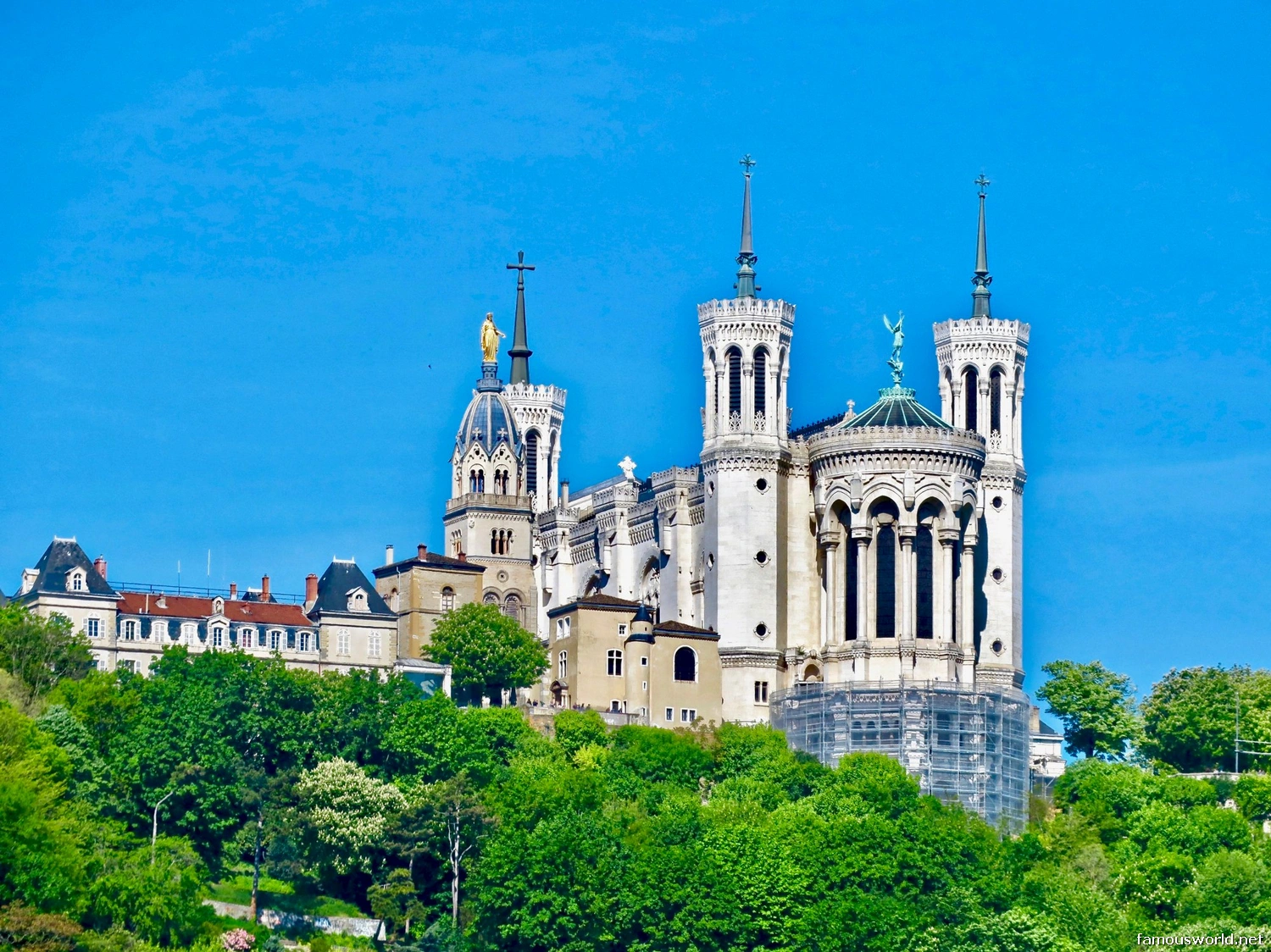
- Fourvière Hill: Dominating the city from above Vieux Lyon is “the hill that prays,” home to the magnificent Basilica of Notre-Dame de Fourvière, a stunning 19th-century church with Romano-Byzantine architecture. The hill is also the site of the original Roman settlement, Lugdunum, with well-preserved Roman theaters and an odeon.
- Croix-Rousse Hill: Known as “the hill that works,” this district was the heart of Lyon’s booming silk industry in the 19th century. Its architecture is characterized by tall weavers’ workshops with large windows designed to light the looms.
What Makes It Famous
Lyon’s international fame is built on its reputation as the undisputed capital of French and world gastronomy.
- Capital of Gastronomy: The city is renowned for its culinary scene, from its traditional bouchons—cozy, rustic bistros serving hearty Lyonnaise cuisine—to the legacy of legendary chef Paul Bocuse. Its markets, like Les Halles Paul Bocuse, are world-famous.
- Vieux Lyon and its Traboules: This beautifully preserved Renaissance quarter and its secret passageways are a primary draw for visitors.
- Fête des Lumières (Festival of Lights): Every December, Lyon hosts a spectacular four-day festival where buildings, streets, and squares across the city are transformed into a wonderland of creative light installations, attracting millions of visitors.
- Birthplace of Cinema: The Lumière brothers, Auguste and Louis, invented the cinematograph in Lyon in 1895, making the city the cradle of moviemaking.
Differences from Other Wonders
The vibrant, culinary-focused city of Lyon offers a different experience from the historic, culturally blended island of Strasbourg’s Grande Île.
- Environment (City of Two Rivers vs. Contained Urban Island): Lyon’s identity is shaped by the grand confluence of two major rivers and its two distinct hills. Strasbourg’s historic center is a compact, contained island encircled by a single, smaller river.
- Core Story (Gastronomy and Commerce vs. Franco-Germanic Culture): The story of Lyon is one of culinary excellence, industrial innovation (silk, cinema), and commercial power. The story of Strasbourg is one of a unique cultural and political identity, shifting between French and German influence over centuries.
- Primary Attraction (Food Scene and Vieux Lyon vs. Cathedral and Petite France): While Lyon has magnificent architecture, its primary global fame comes from its food culture. In Strasbourg, the primary attractions are the singular architectural masterpieces of the cathedral and the fairytale quarter of Petite France.
- Atmosphere (Sophisticated and Bustling vs. Charming and Picturesque): Lyon feels like a bustling, sophisticated metropolis with a deep passion for the art of living well. Strasbourg’s Grande Île offers a more charming and picturesque experience, like stepping into a perfectly preserved historical town.
Location on world map