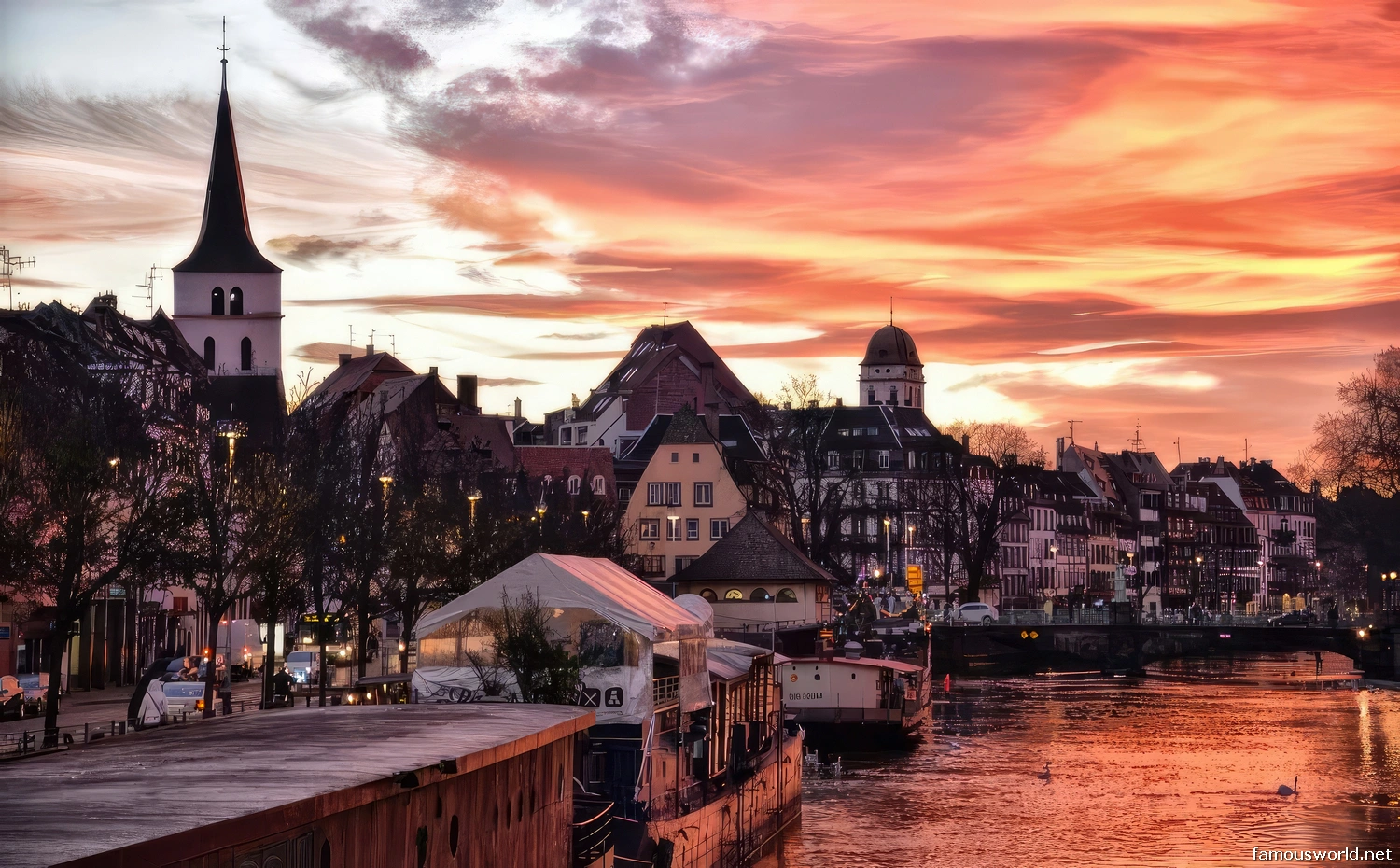


At the confluence of French and German cultures lies the historic heart of Strasbourg: the Grande Île, or “Great Island.” Encircled by the arms of the Ill River, this is not just a city center but a perfectly preserved island neighborhood that serves as a living museum of medieval and Renaissance life. Designated as the first entire city center to become a UNESCO World Heritage Site, the Grande Île is a captivating maze of cobblestone streets, canals, and stunning half-timbered houses, all crowned by the sublime Gothic masterpiece of its cathedral. To wander through its quarters, from the monumental scale of the cathedral square to the fairytale charm of Petite France, is to experience one of Europe’s most beautiful and historically rich urban landscapes.
Listen to an introduction about Grande Ile de Estrasburgo

Name and Location
- Name: Grande Île (Great Island).
- Location: The historic center of Strasbourg, in the Alsace region of northeastern France.
How to Get There
Strasbourg is a major European hub, and its historic center is compact and easy to navigate.
- By Train: The easiest way to arrive is at the Gare de Strasbourg, the city’s main railway station, which has high-speed TGV connections to Paris, Germany, and Switzerland. From the station, the Grande Île is a short 10-minute walk or a quick tram ride away.
- By Air: Strasbourg Airport (SXB) serves flights from various European cities. A shuttle train connects the airport to the main train station.
- On Foot: Once you are on the Grande Île, the entire district is best explored on foot. Its narrow streets and pedestrianized zones are not designed for cars.
Landscape and Architecture
The island is a stunning showcase of Alsatian urban architecture, shaped by its relationship with the river.
- Island Geography: The Grande Île is a true island, completely surrounded by the Ill River and the Canal du Faux-Rempart. This natural defense allowed a distinct urban fabric to develop and remain intact.
- Strasbourg Cathedral: The undisputed architectural centerpiece is the Cathédrale Notre-Dame de Strasbourg. A masterpiece of Gothic art, it is famed for its single, soaring north tower, its intricate facade of sandstone sculpture, and its magnificent astronomical clock.
- Half-Timbered Houses: The most iconic architectural style is the vernacular Alsatian half-timbered house, with steep-gabled roofs and colorful flower boxes. This style is best seen in the Petite France quarter.
- Petite France: This historic quarter at the western end of the island is the most picturesque area. It is characterized by its canals, weirs, and locks, and its beautifully preserved 16th and 17th-century homes that were once the workshops of tanners, millers, and fishermen.
What Makes It Famous
The Grande Île is famous for its exceptional architectural heritage and its unique Franco-Germanic cultural identity.
- UNESCO World Heritage Site: Its status as one of the first entire urban centers to be listed by UNESCO highlights its outstanding universal value.
- The Cathedral of Notre-Dame: For over 200 years, its spire made it the tallest building in the Christian world. Its beauty and scale have captivated visitors for centuries.
- La Petite France: This perfectly preserved neighborhood is the postcard image of Strasbourg, renowned for its romantic, fairytale-like atmosphere.
- “Capital of Christmas”: Strasbourg hosts one of Europe’s oldest and most famous Christmas markets (Christkindelsmärik), with the Grande Île transforming into a magical winter wonderland each year.
Differences from Other Wonders
The enclosed, historic urban island of Strasbourg offers a profound contrast to the open, memorial landscape of the D-Day Landing Beaches.
- Environment (Contained Urban Island vs. Open Coastline): The Grande Île is a dense, contained urban environment, shaped by rivers and centuries of construction. The D-Day sites are set on a sprawling, natural coastline defined by beaches and cliffs.
- Core Story (Medieval City Life vs. Modern Warfare): The story of the Grande Île is one of evolving city life, trade, and culture over a thousand years. The story of the Normandy beaches is centered on a single, decisive battle in the 20th century.
- Primary Attraction (Architectural Ensemble vs. Sites of Memory): The main attraction in Strasbourg is the intact architectural beauty of the cathedral and the half-timbered houses. In Normandy, the main attractions are the evocative landscapes of the battle—the beaches, bunkers, and cemeteries.
- Atmosphere (Charming and Lively vs. Somber and Reflective): A visit to the Grande Île is a charming and lively experience, full of bustling squares and picturesque canals. A visit to the D-Day beaches is a deeply somber and reflective experience, inspiring contemplation on history and sacrifice.
Location on world map