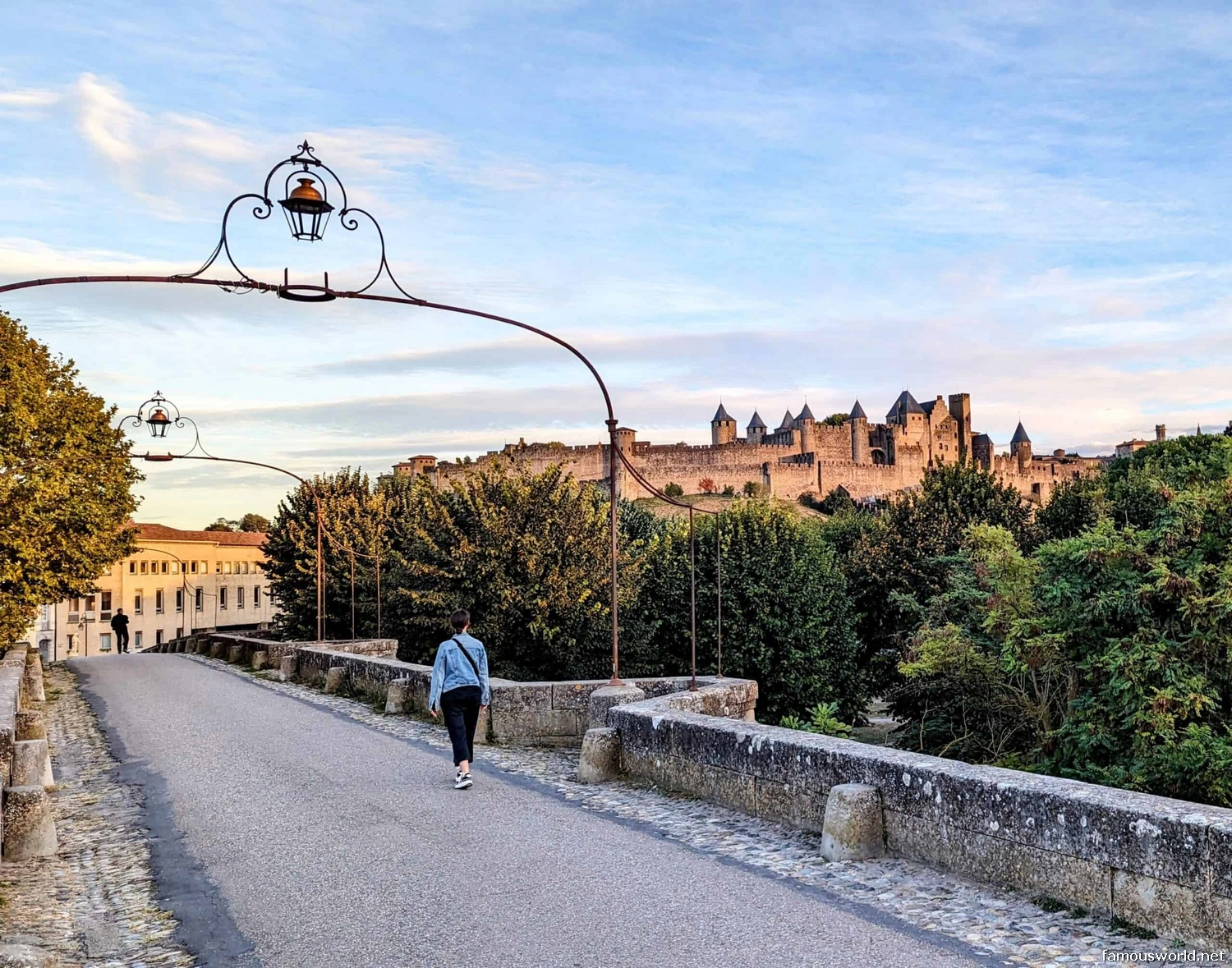
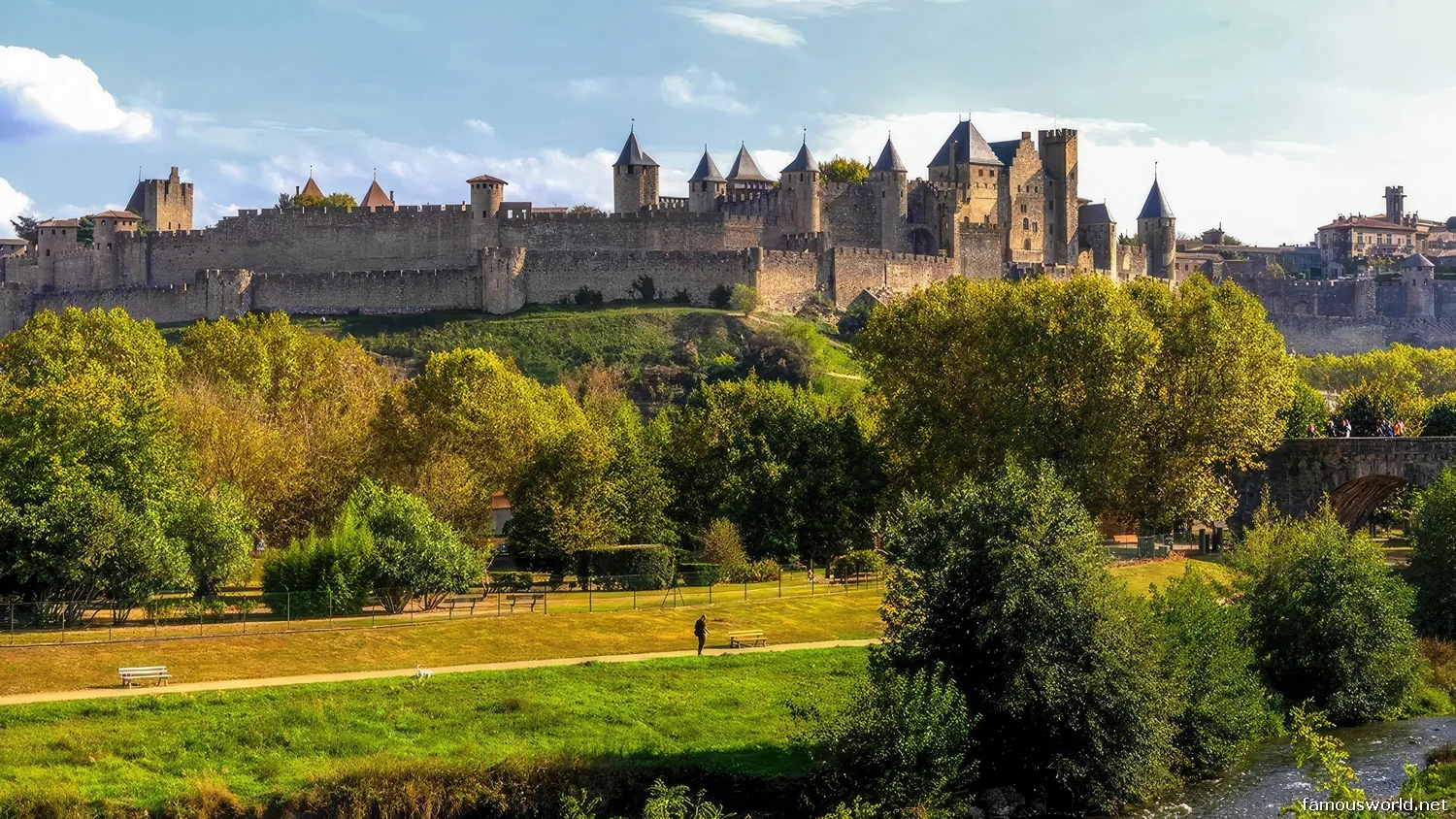
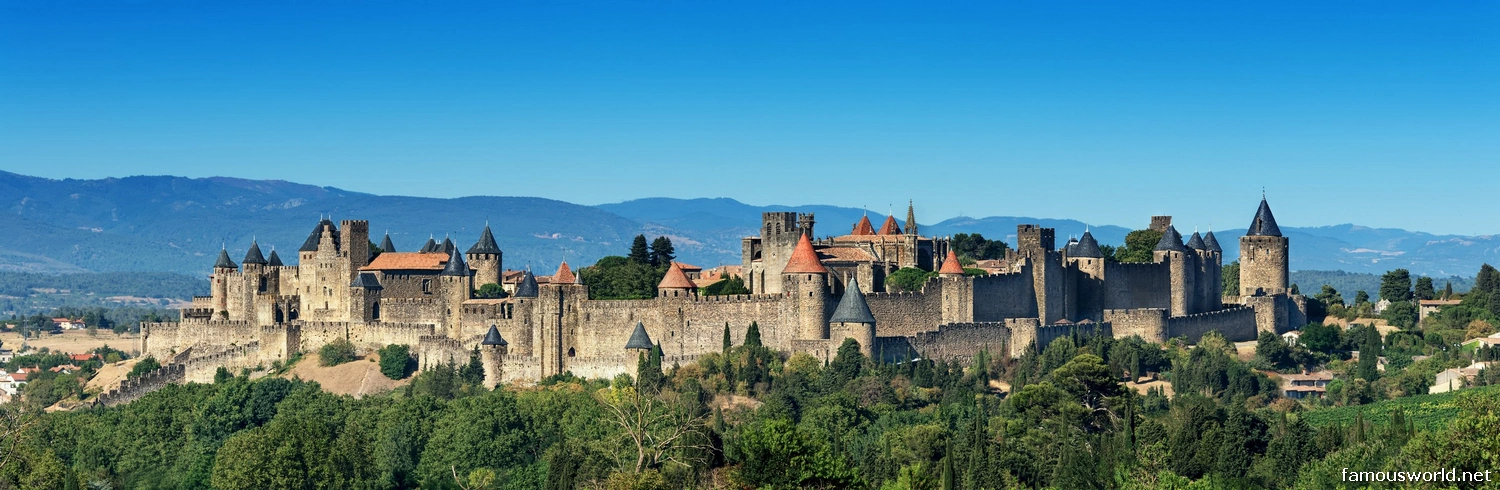


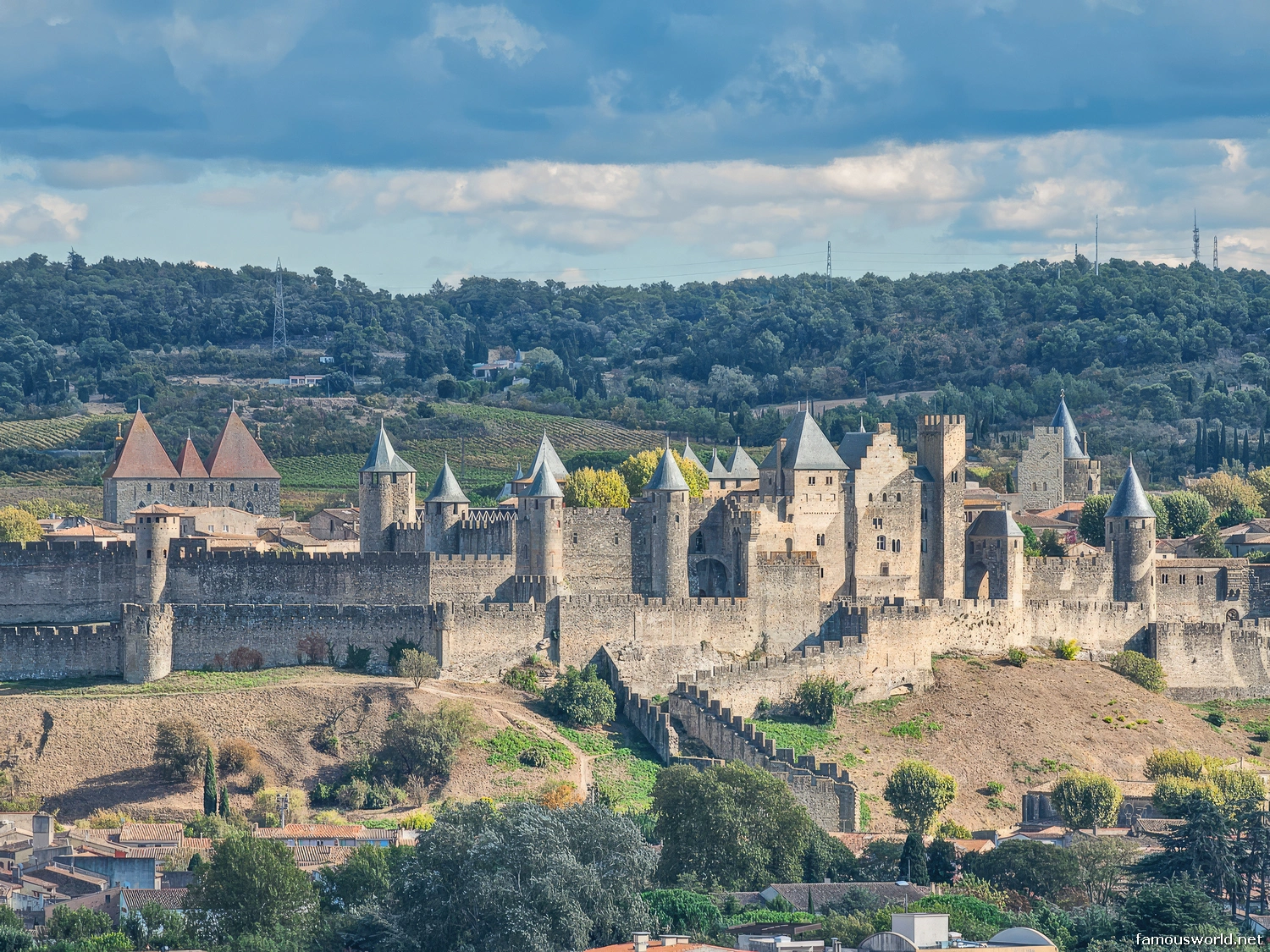

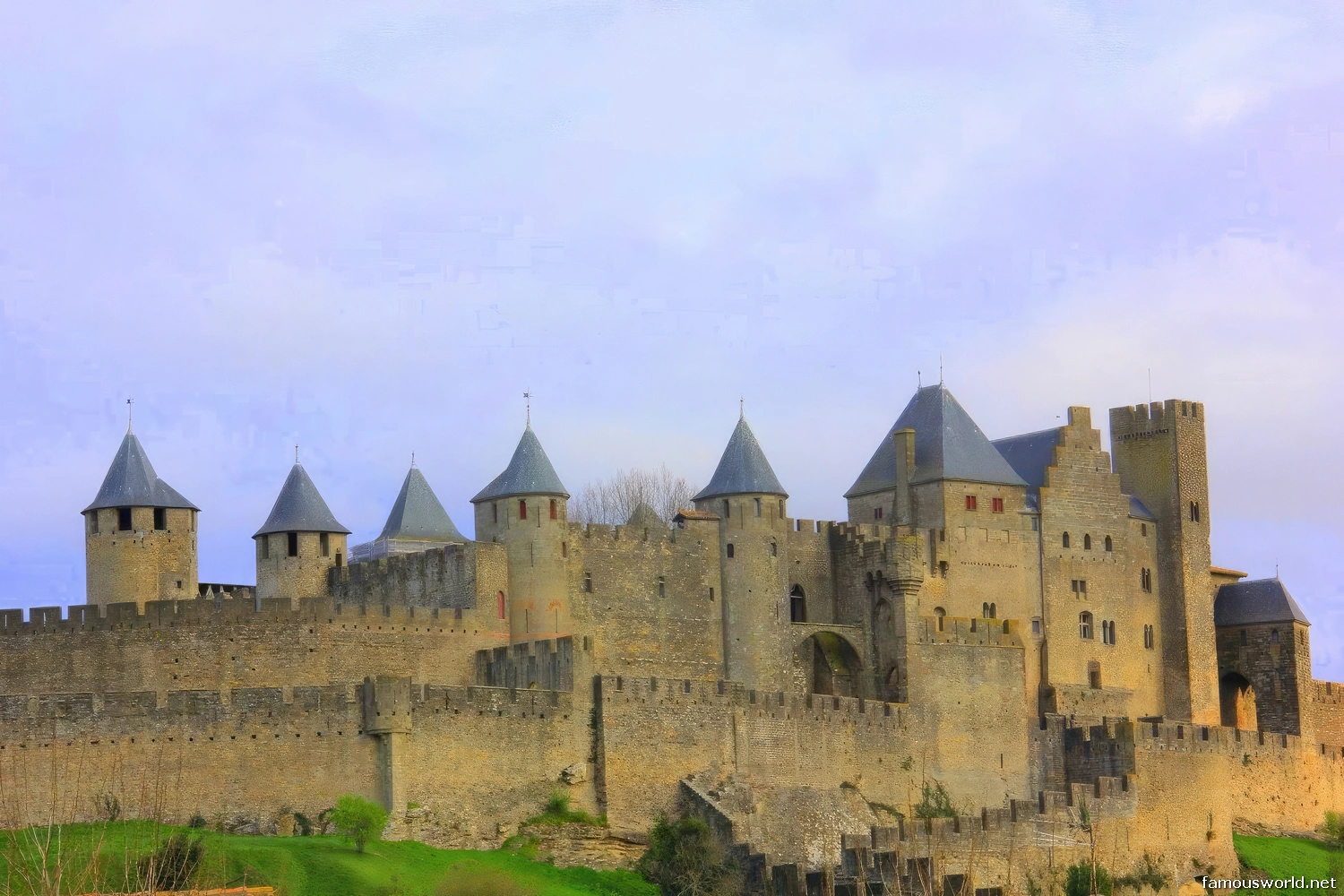
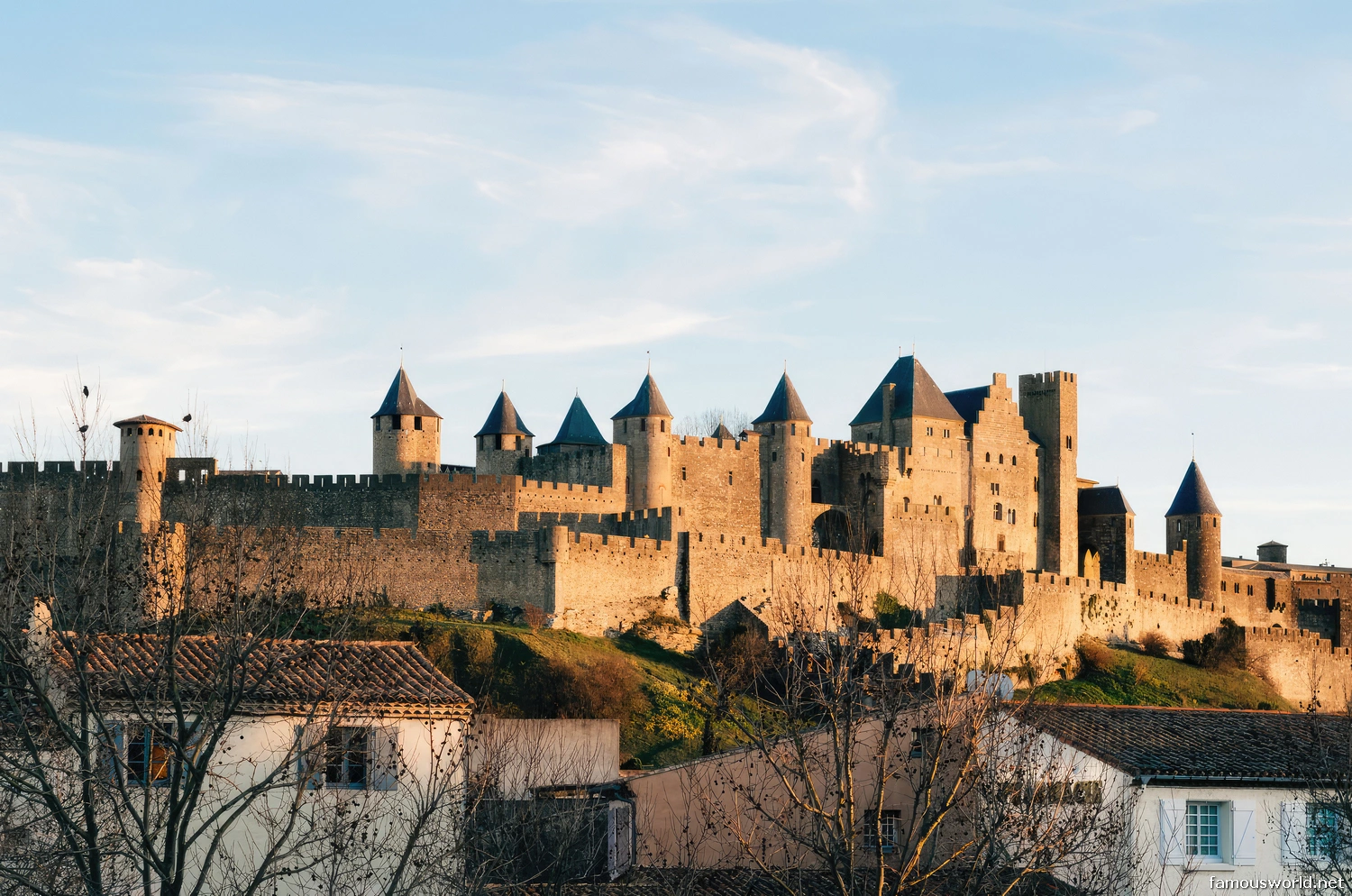
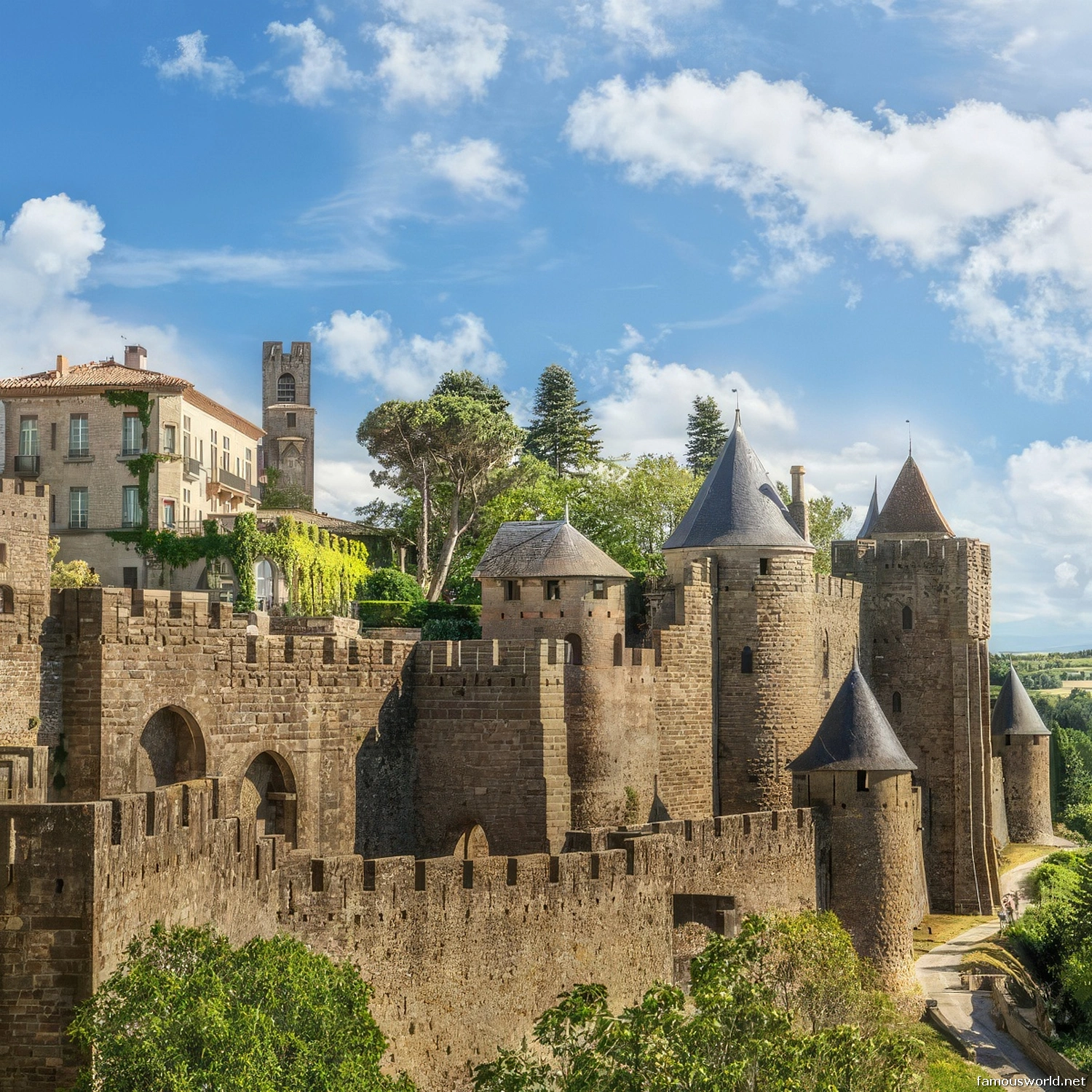
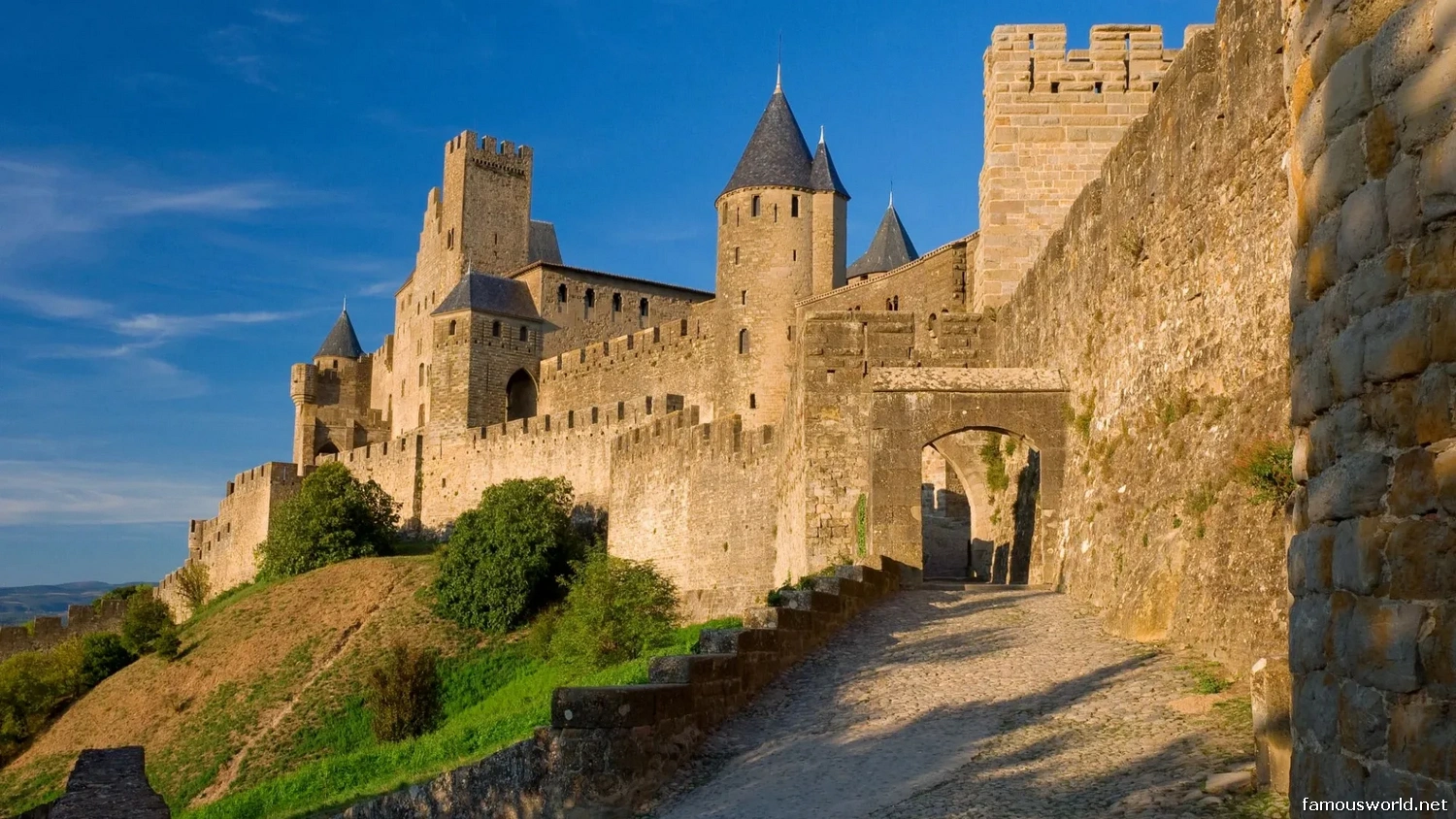
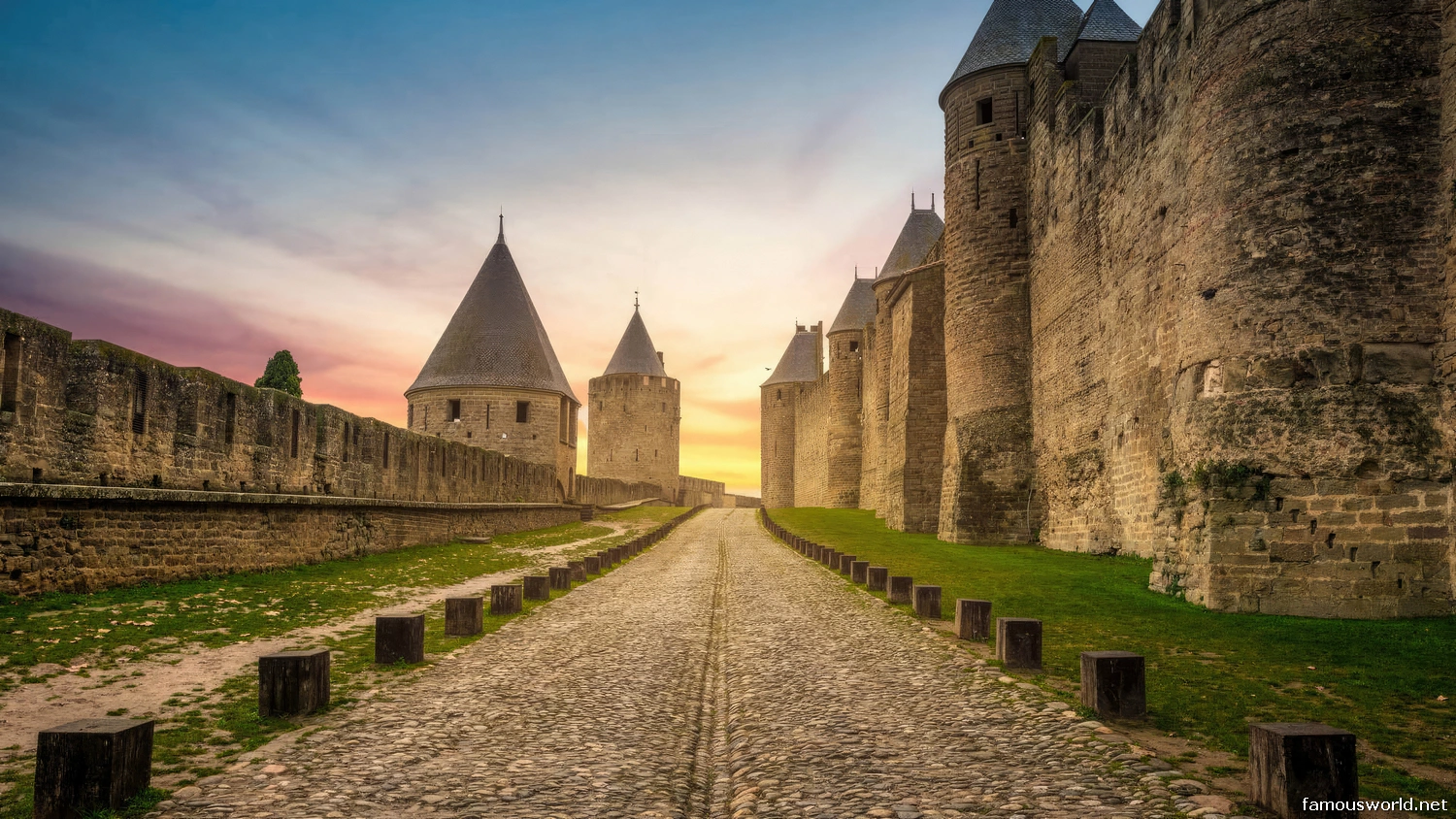
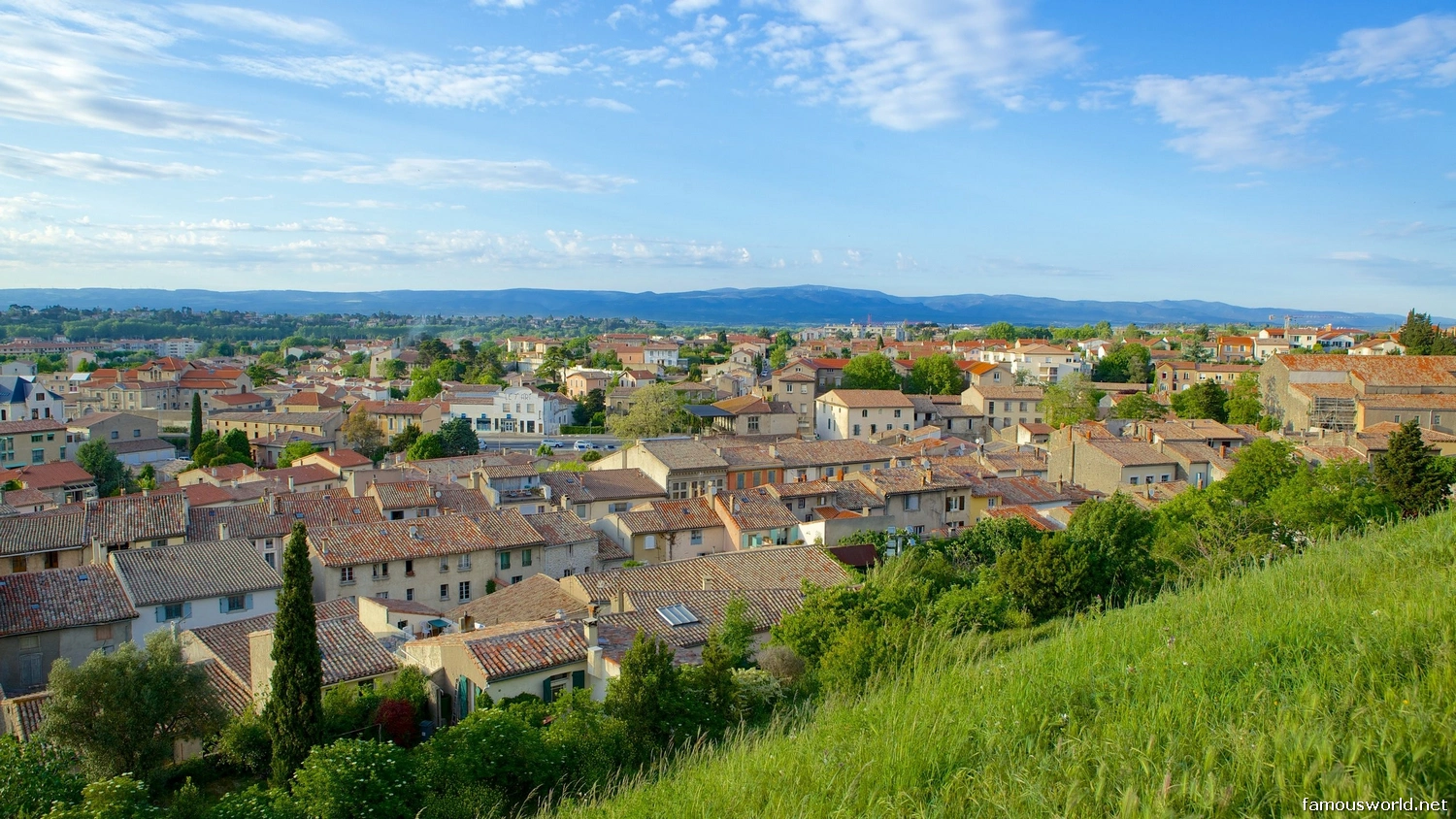
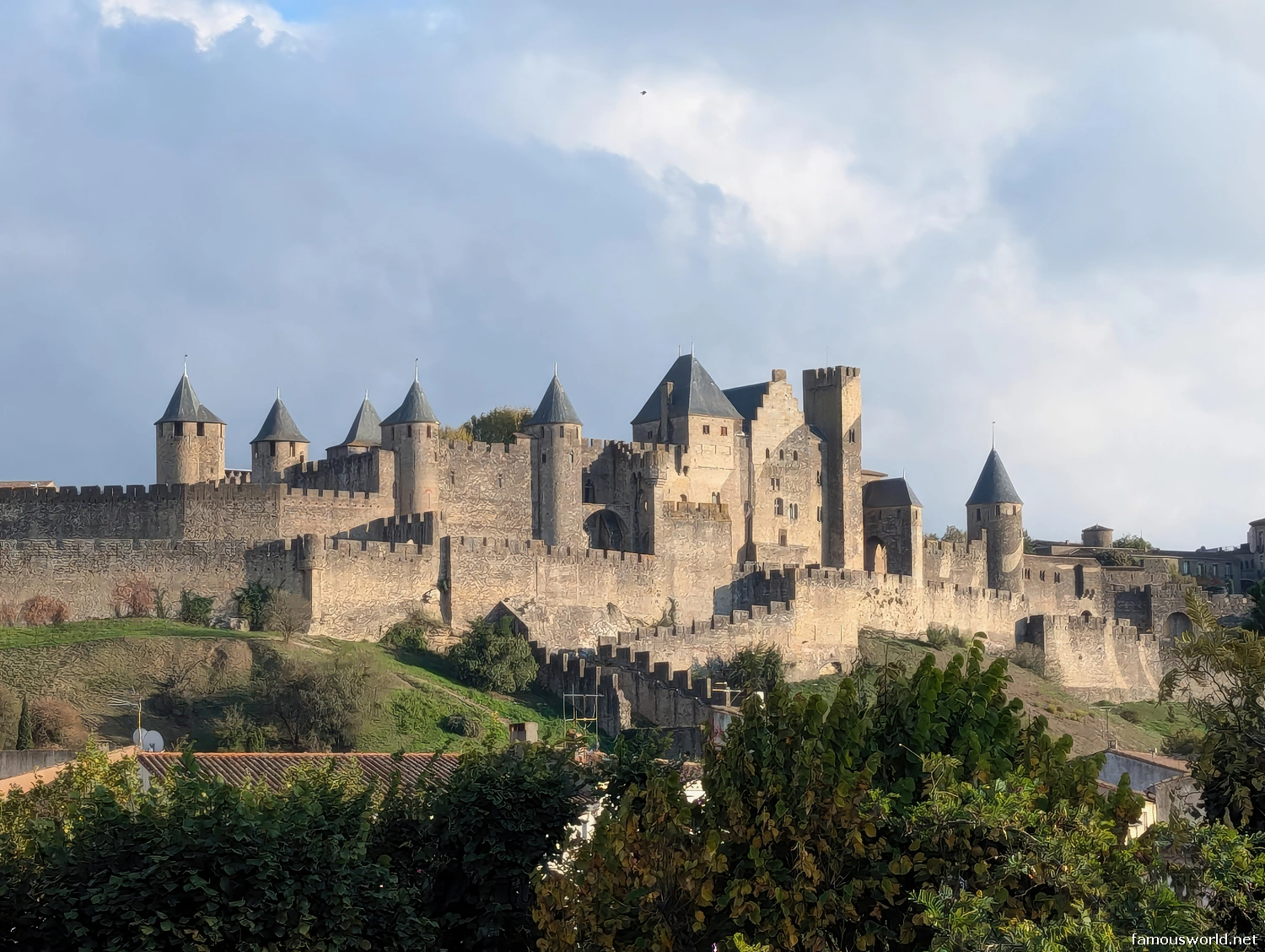
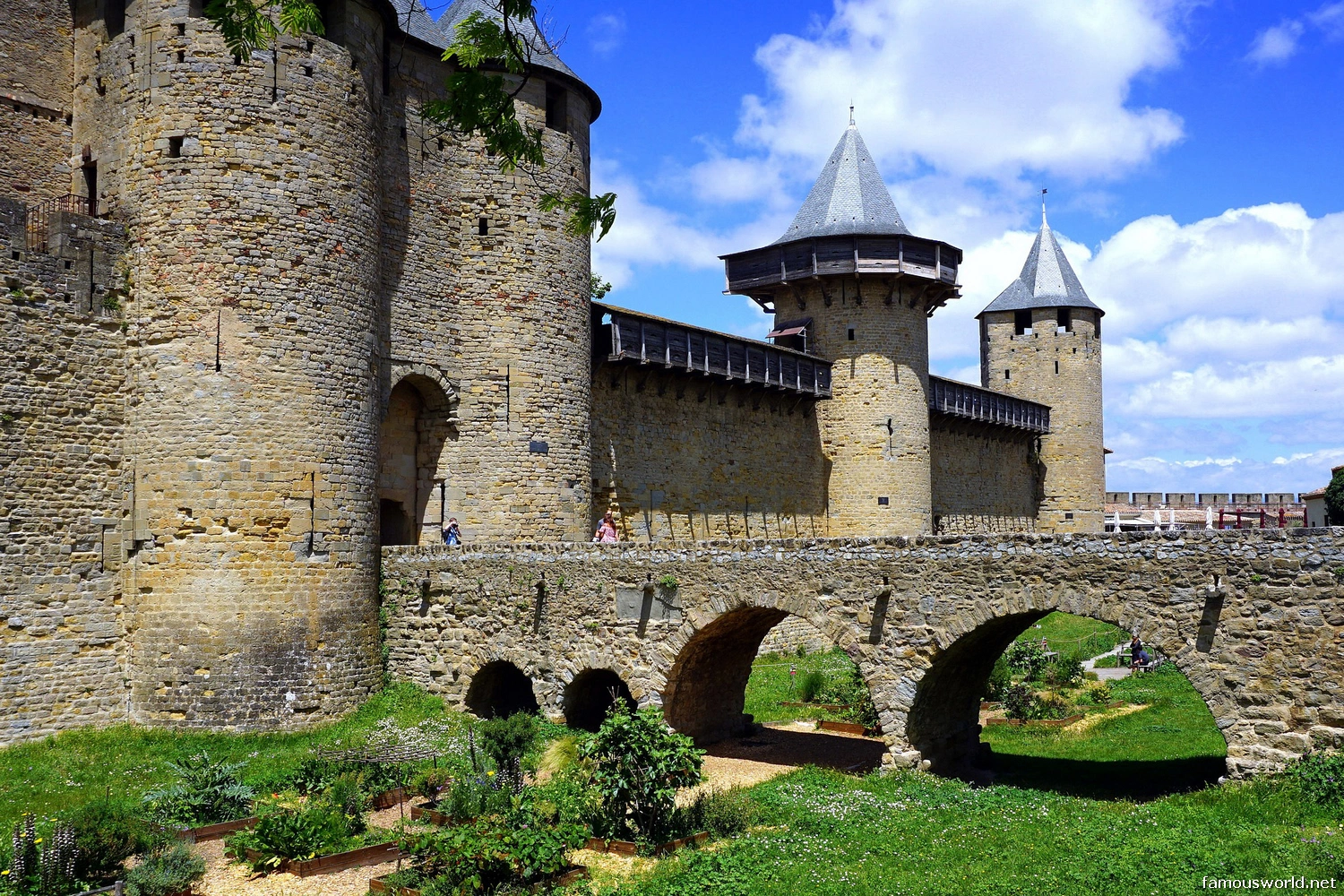

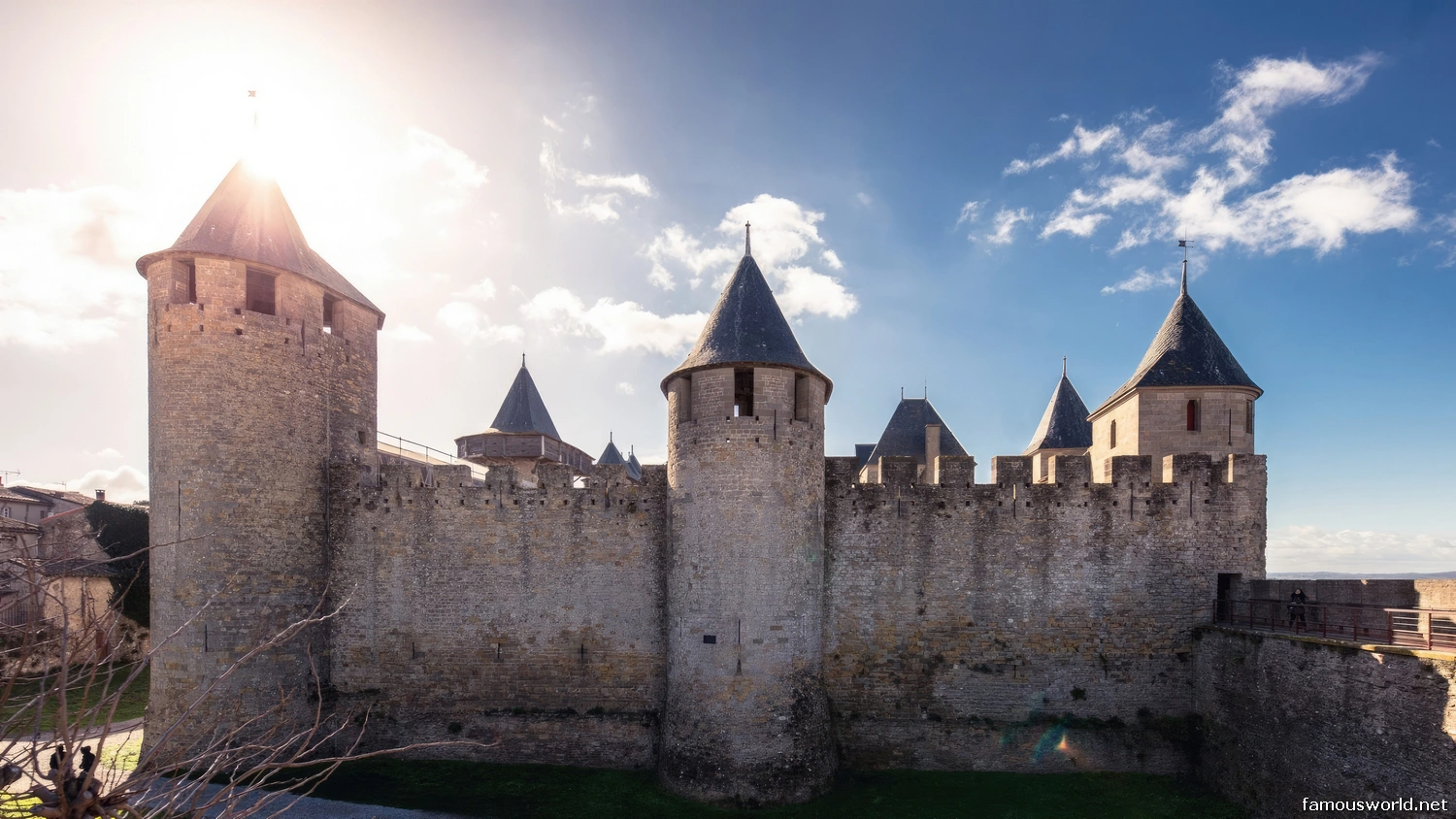

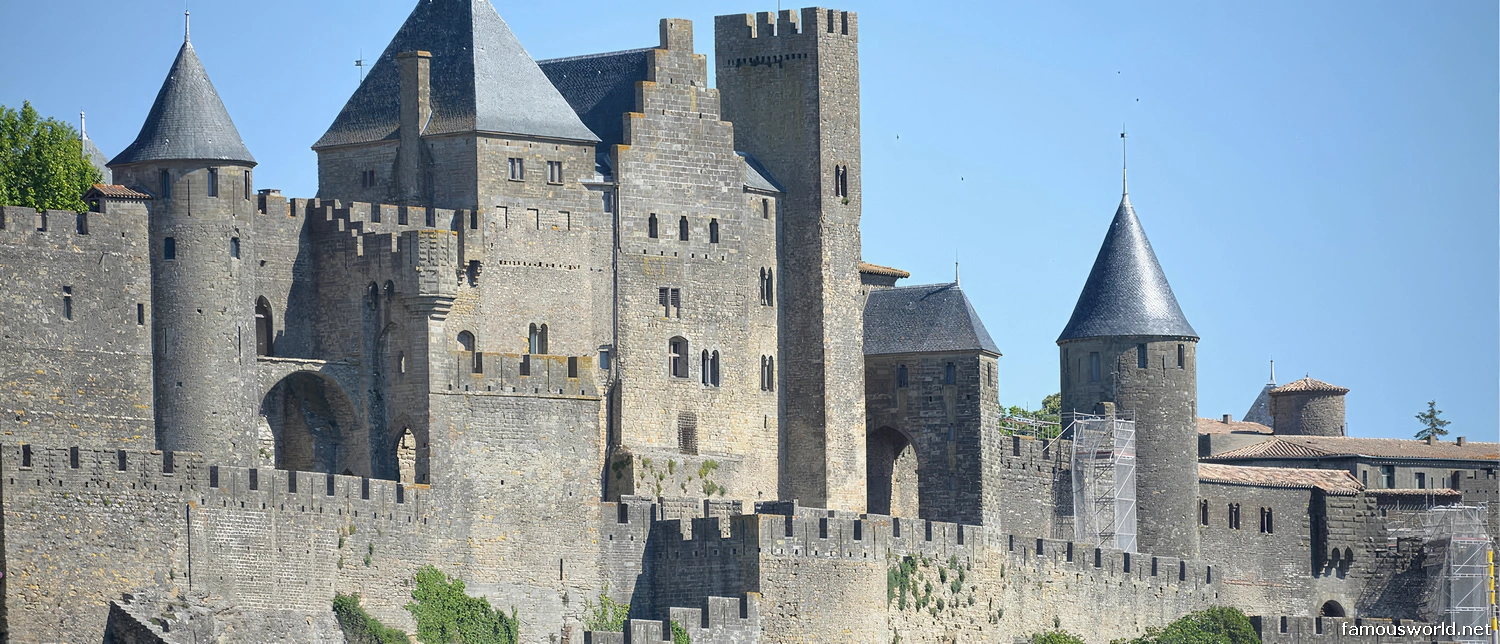
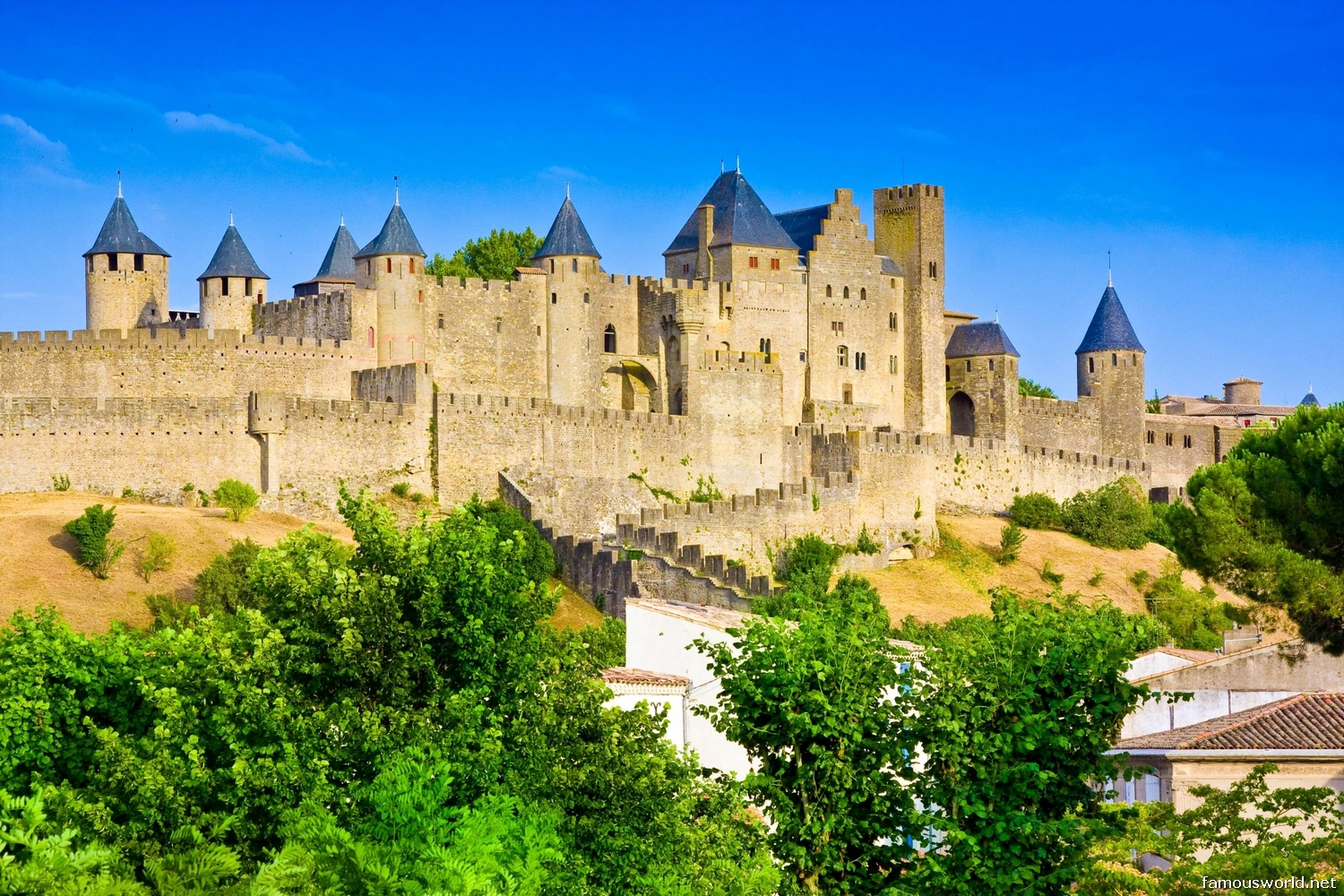
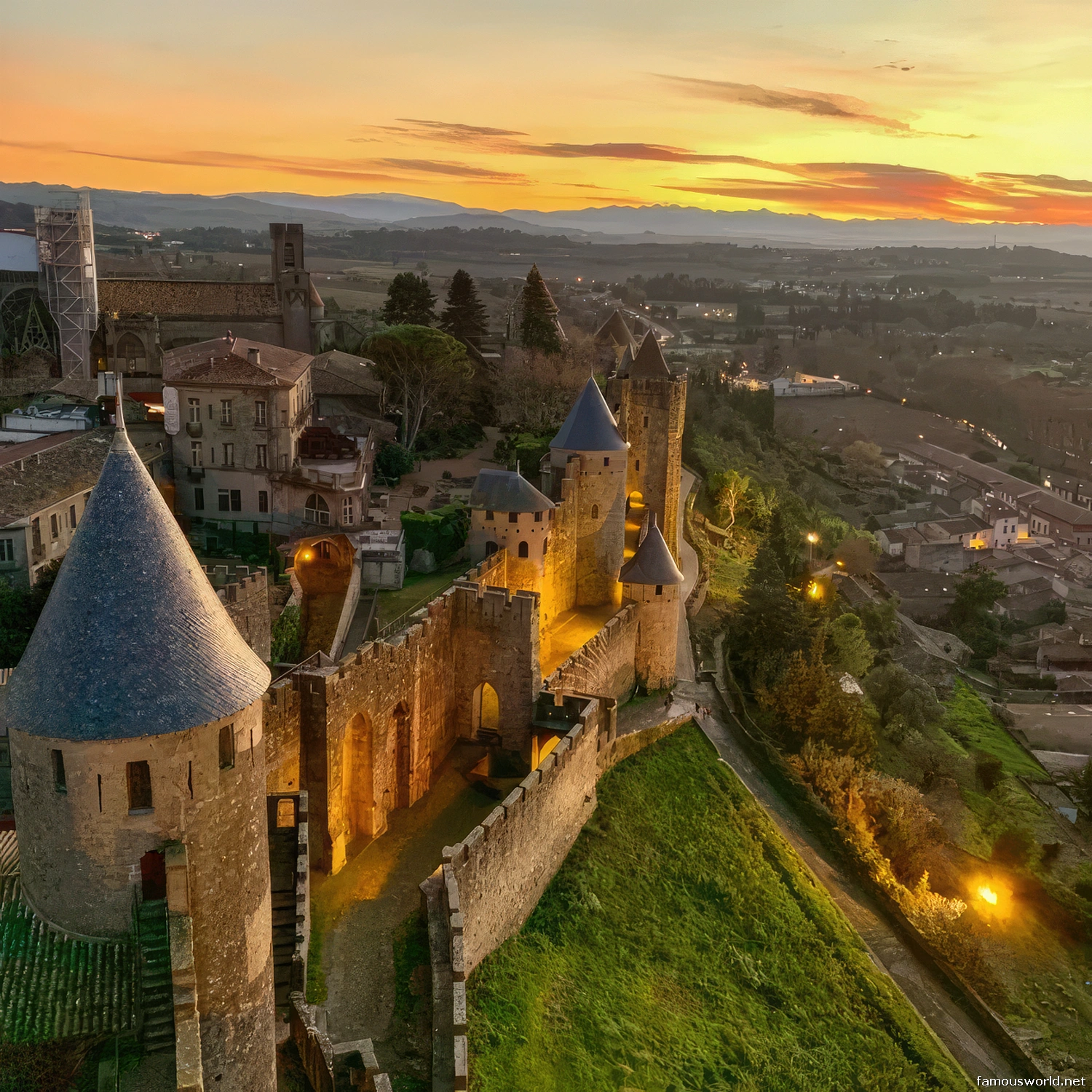



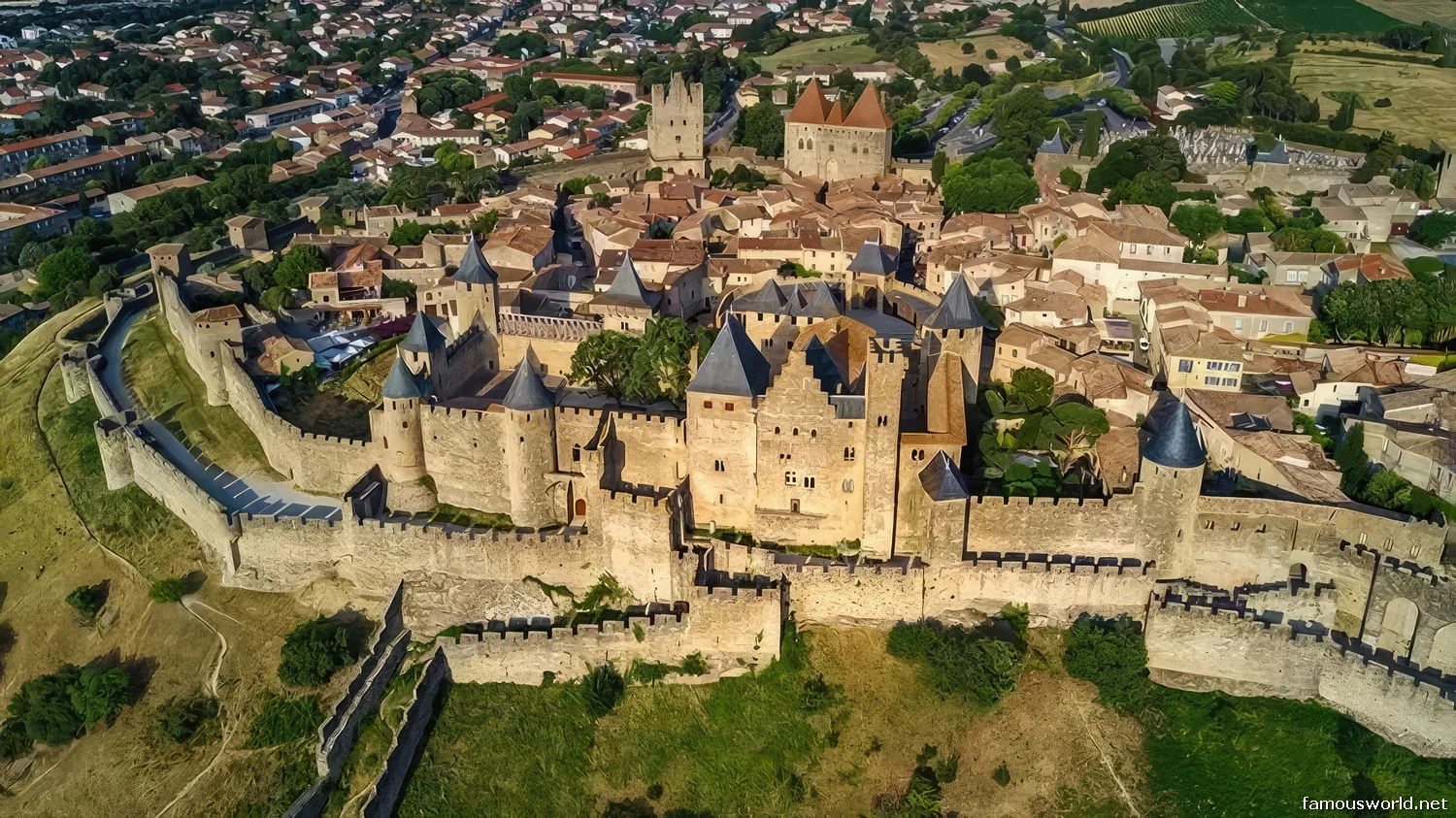


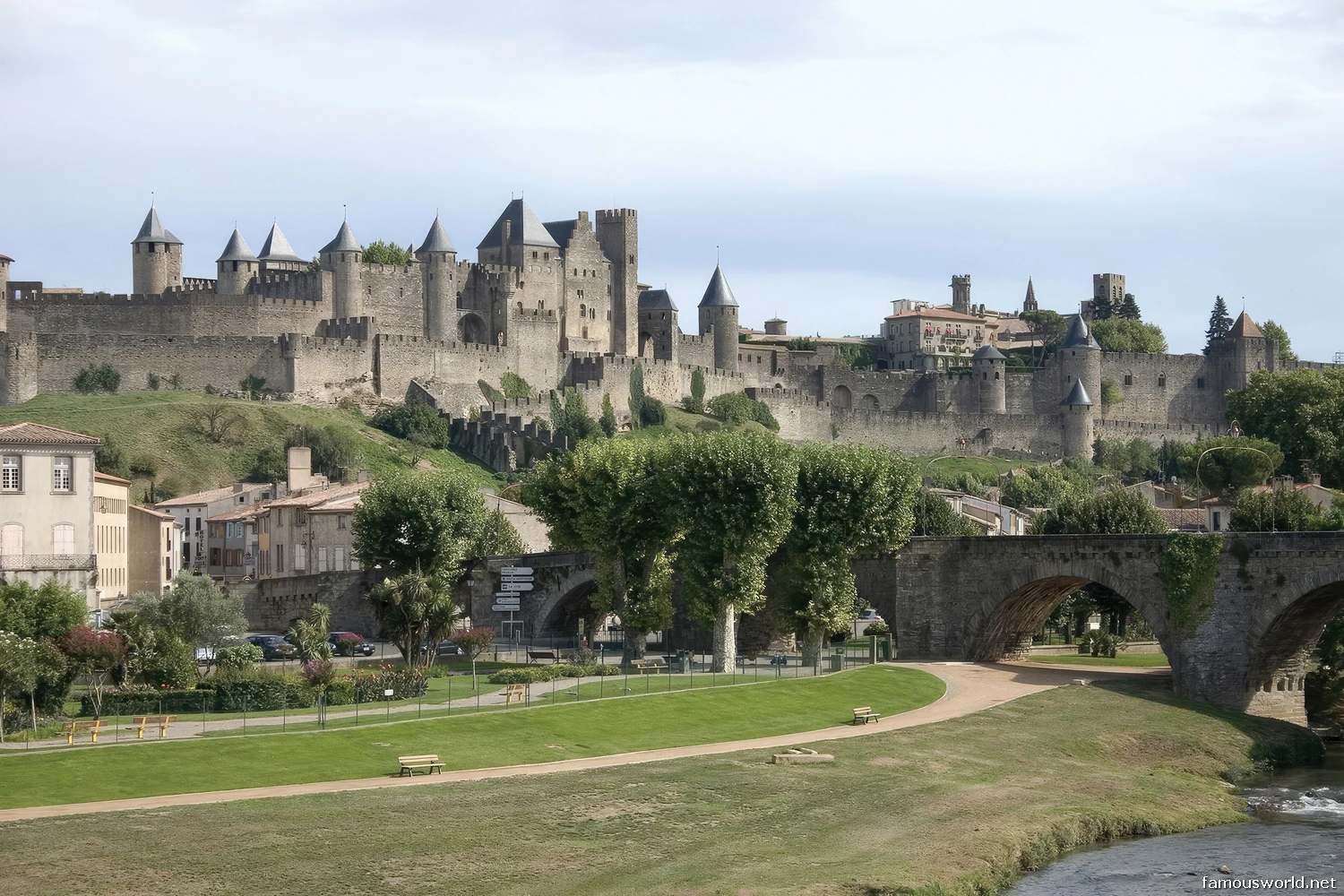

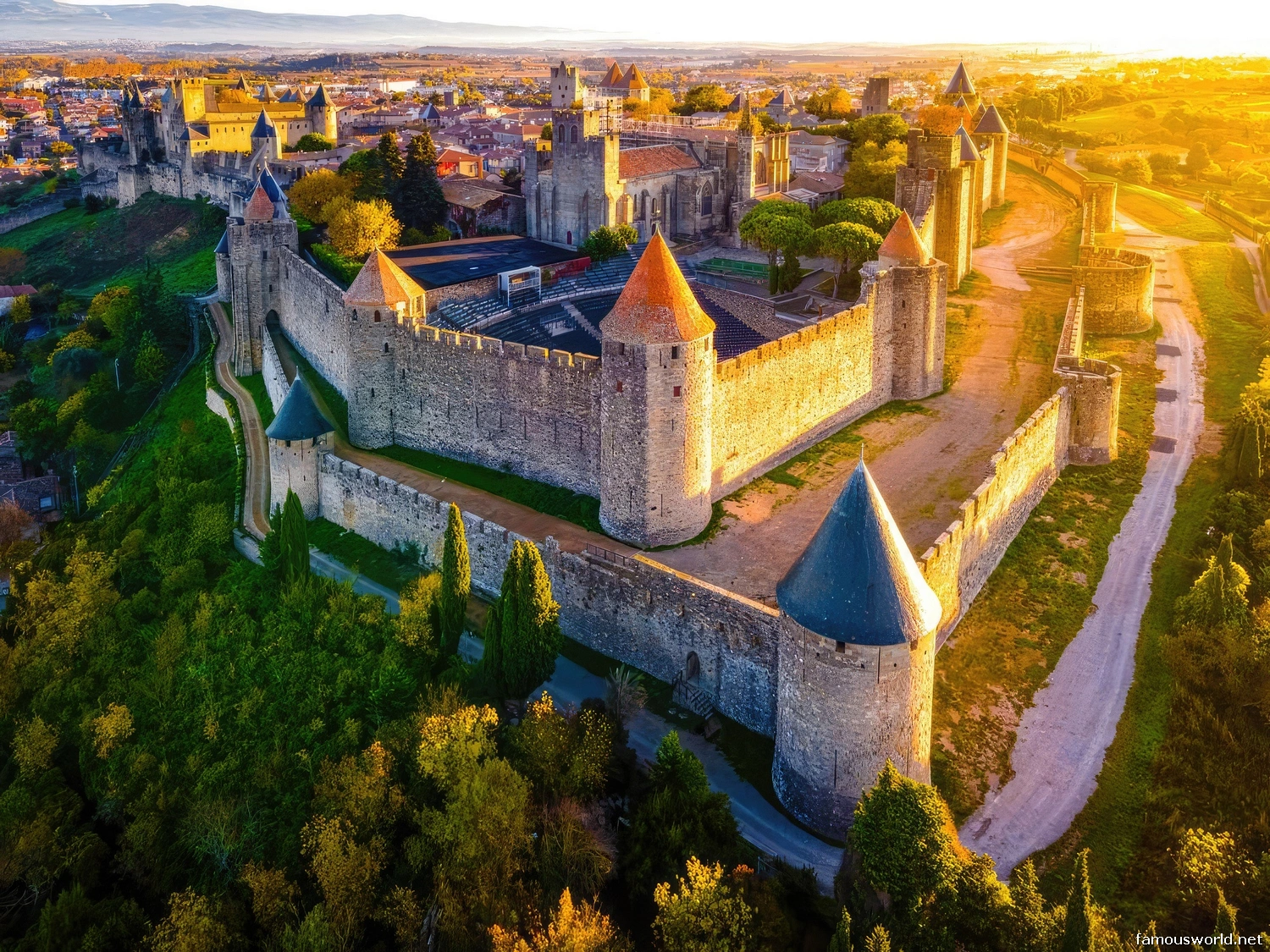
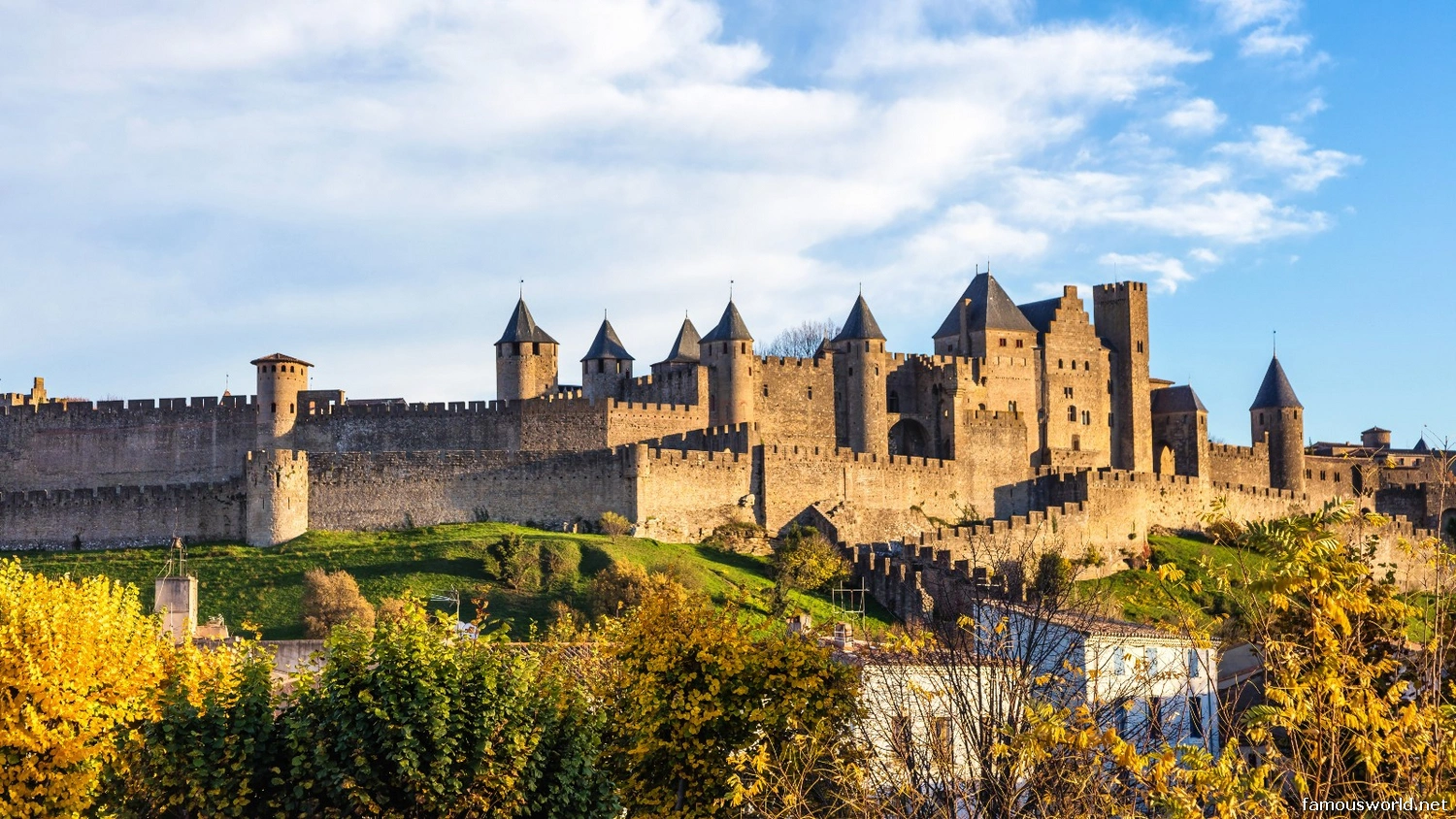
Rising from a hill in the plains of southern France, the Cité de Carcassonne is the archetypal fairytale fortress, a breathtaking vision of medieval power and romance. With its massive double walls, 52 pointed towers, and winding cobblestone streets, it is one of the largest and best-preserved fortified cities in Europe. Rescued from ruin and dramatically restored in the 19th century, Carcassonne is more than just a castle; it is a complete, living medieval town. To cross its drawbridge is to step back in time, into a world of knights, sieges, and architectural splendor that seems torn from the pages of a storybook.
Listen to an introduction about Carcassonne

Name and Location
- Name: Cité de Carcassonne.
- Location: In the city of Carcassonne, within the Aude department of the Occitanie region in southern France.
How to Get There
Carcassonne is a major tourist destination and is well-connected.
- By Air: Carcassonne Airport (CCF) serves budget flights from several European cities. The larger Toulouse-Blagnac Airport (TLS) is about an hour’s drive away and offers more international connections.
- By Train: The main railway station is in the lower, modern town (the Ville Basse), with TGV and regional train services. From the station, it is a 25-minute walk uphill to the Cité, or a short taxi or shuttle ride.
- By Car: The city is conveniently located just off the A61 motorway, which connects Toulouse and Narbonne.
Landscape and Architecture
Carcassonne is a monumental example of medieval military architecture.
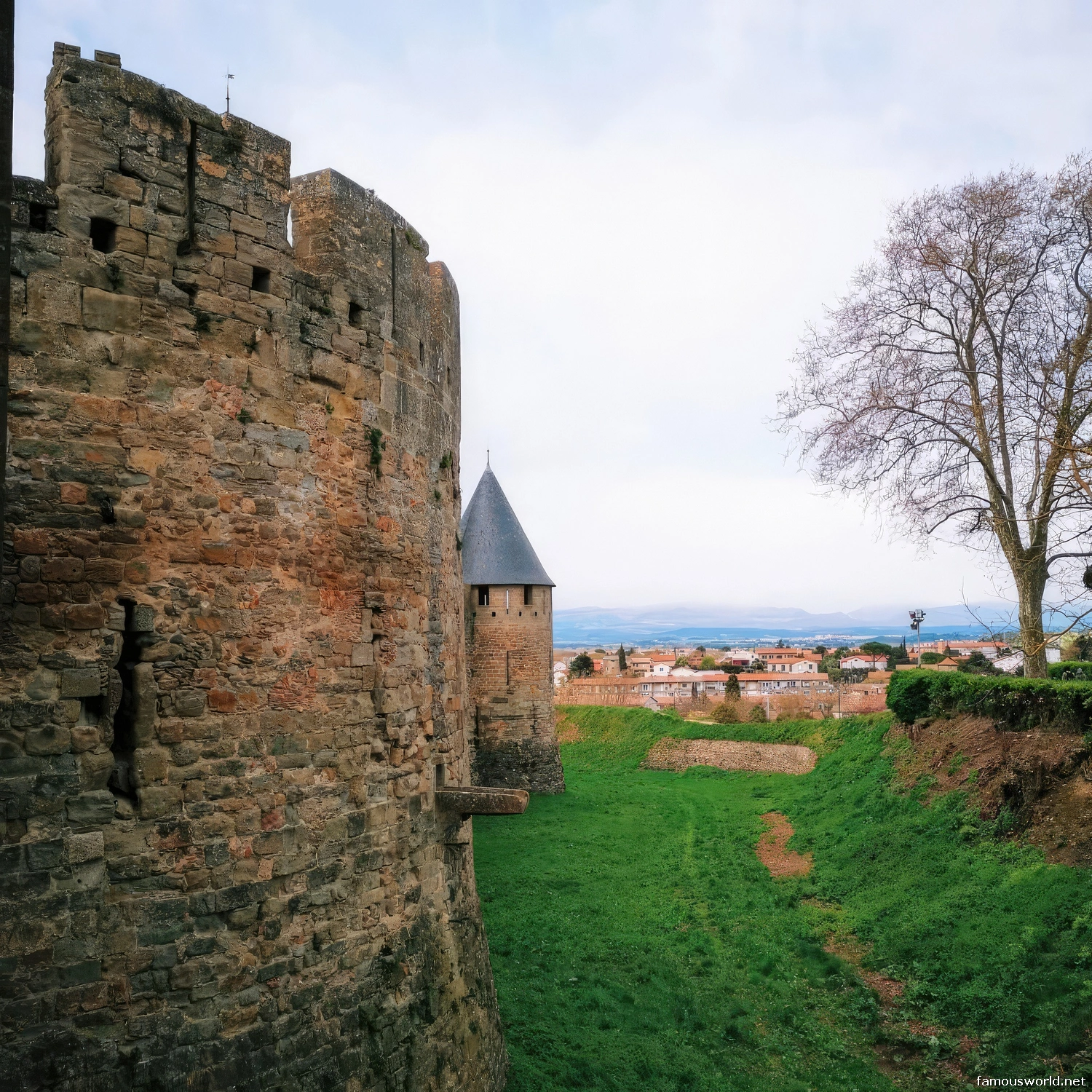
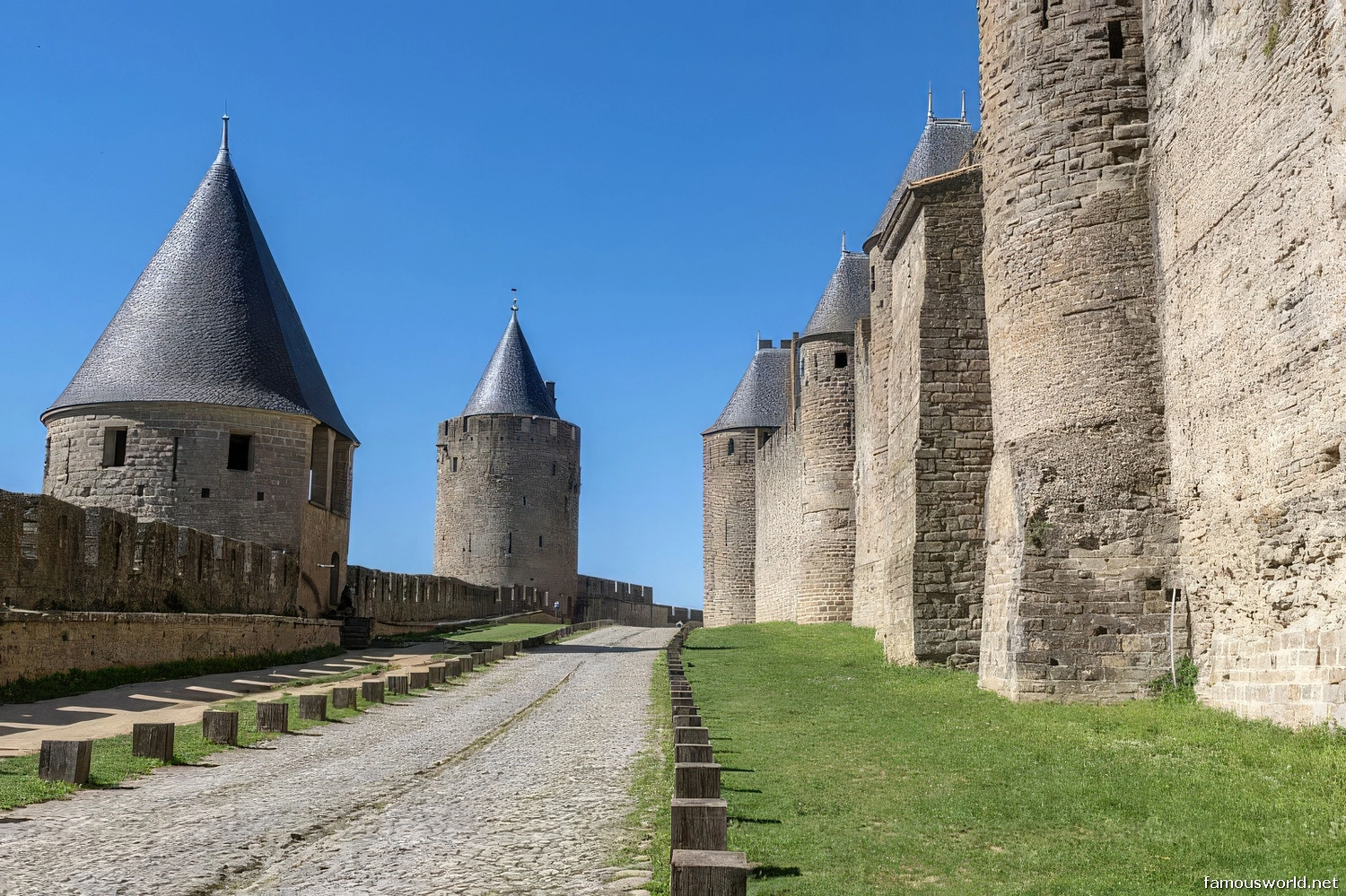
- The Double Walls: The city’s most impressive feature is its two massive concentric defensive walls, known as enceintes, which stretch for nearly 3 kilometers (2 miles). The inner wall contains sections dating back to the Roman and Visigothic periods.
- Towers and Battlements: The walls are punctuated by 52 towers, each with a distinctive conical “witch’s hat” roof—a signature feature of the 19th-century restoration. The entire structure is a textbook of medieval defensive features, including battlements, arrowslits, and murder holes.
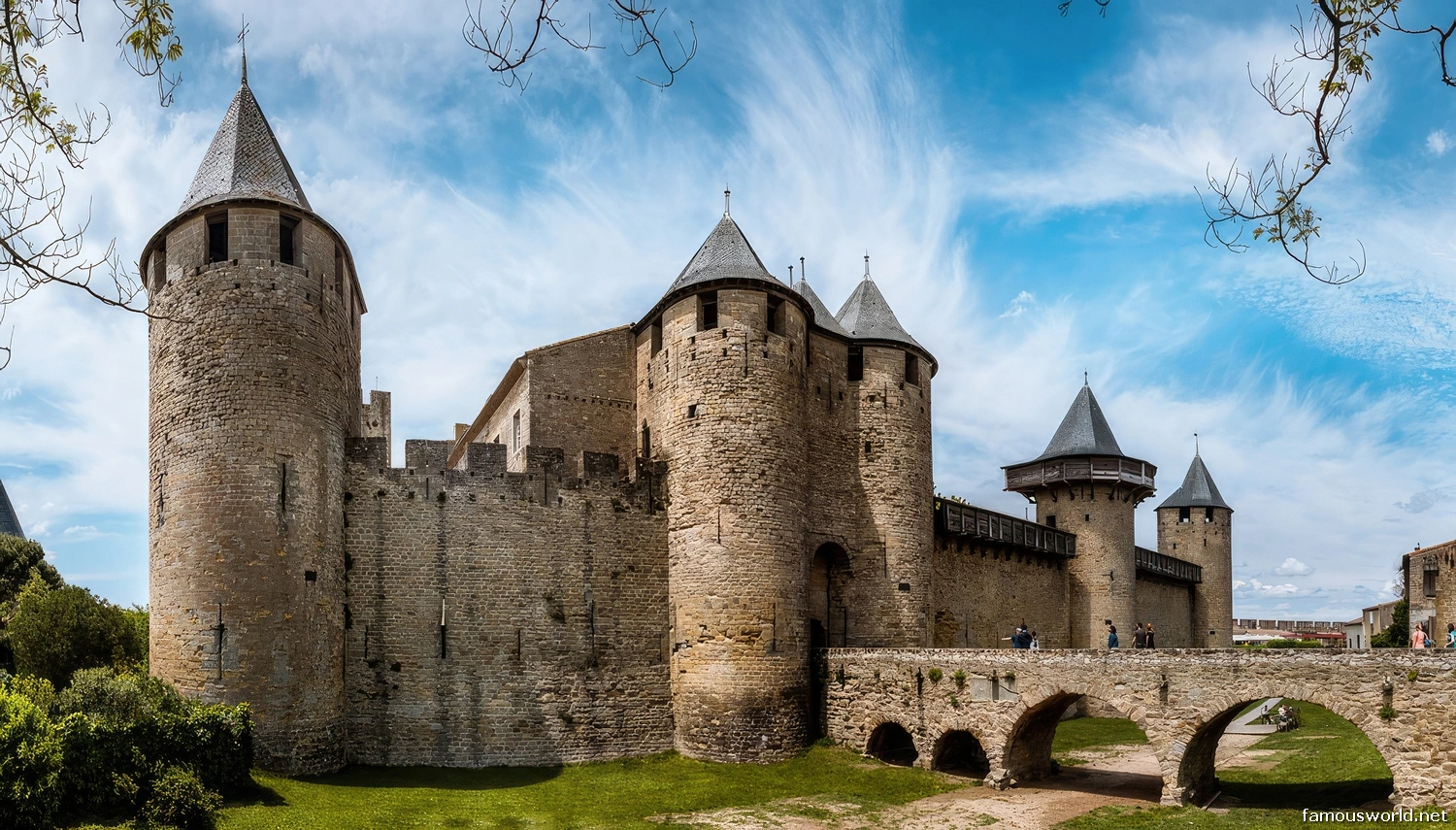
- Château Comtal: Within the Cité is the Count’s Castle, a fortress-within-a-fortress that served as the final line of defense. It features its own moat, drawbridge, and impressive fortifications.
- Basilica of Saints Nazarius and Celsus: A beautiful church within the walls that showcases a harmonious blend of Romanesque and Gothic architectural styles, with some of the finest stained-glass windows in southern France.
- The Restoration: The city’s current, picture-perfect appearance is largely due to the extensive and sometimes controversial restoration work led by architect Eugène Viollet-le-Duc in the mid-19th century, which saved the Cité from being demolished.
What Makes It Famous
Carcassonne is world-famous as the ultimate example of a medieval fortified city and a landmark of architectural conservation.
- Icon of the Middle Ages: Its silhouette is one of the most iconic images of medieval Europe, influencing the popular imagination of what a fairytale castle should look like.
- UNESCO World Heritage Site: It is recognized by UNESCO for its exceptional state of preservation and its outstanding testimony to medieval defensive architecture.
- Cathar Stronghold: The city played a crucial role in the Albigensian Crusade (1209–1229), a brutal conflict against the Cathar heretics who had sought refuge there.
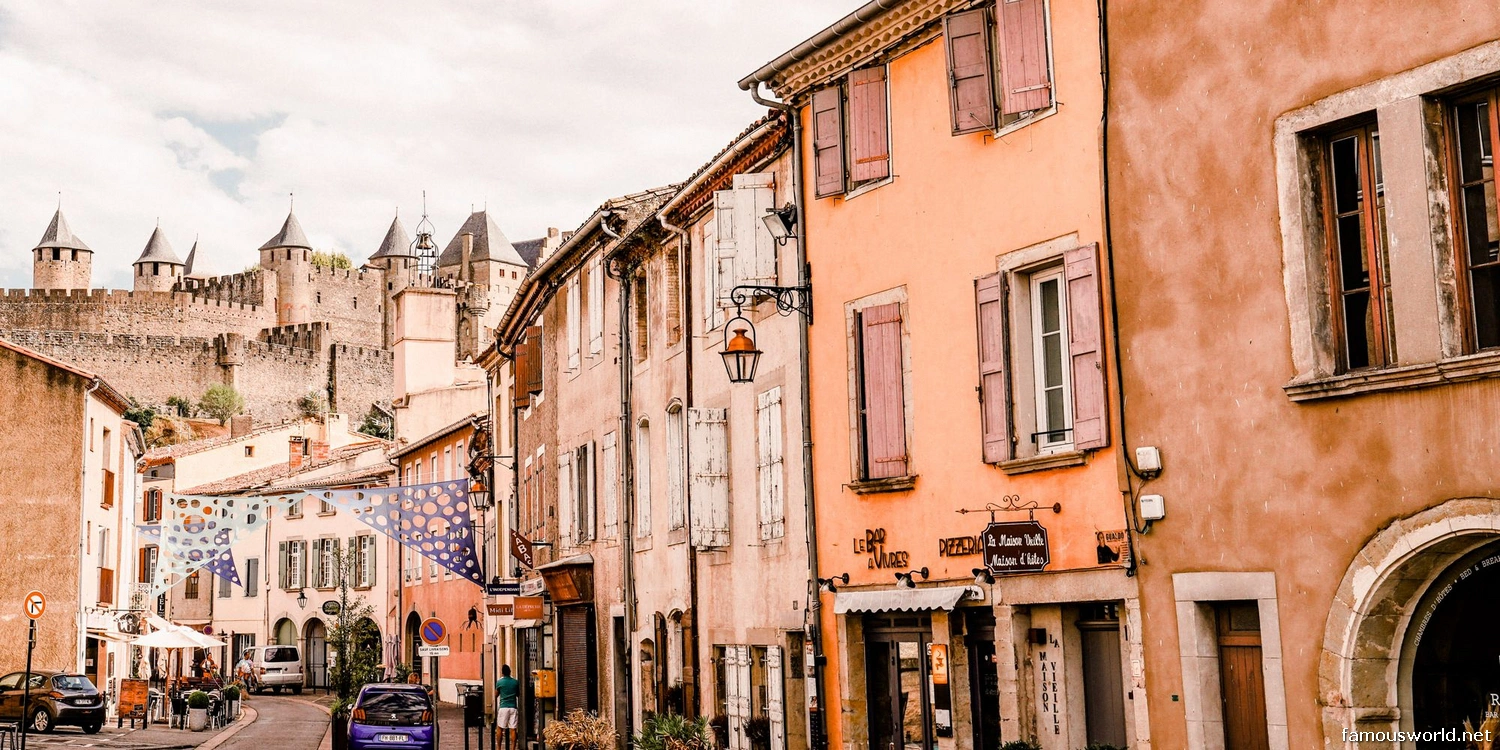
- A Living Citadel: Unlike a ruin, the Cité is a vibrant, inhabited town with hotels, Michelin-starred restaurants, artisan shops, and a year-round population, making for a uniquely immersive experience.
Differences from Other Wonders
The military, medieval identity of Carcassonne offers a profound contrast to the elegant, commerce-driven world of Bordeaux.
- Environment (Fortified Hilltop vs. Grand Port City): Carcassonne is a defensive citadel perched on a hill, designed for war and control. Bordeaux is an elegant, flat port city on a river, designed for trade and prosperity.
- Core Story (Medieval Warfare vs. Enlightenment Commerce): The story of Carcassonne is one of sieges, crusades, and a 19th-century struggle for its preservation. The story of Bordeaux is one of 18th-century global trade, neoclassical elegance, and the culture of wine.
- Primary Attraction (The Fortifications vs. Urban Ensemble & Vineyards): The undeniable primary attraction of Carcassonne is its massive, complete system of walls and towers. The primary attraction of Bordeaux is the harmonious 18th-century cityscape and the surrounding wine châteaux.
- Atmosphere (Theatrical and Historic vs. Elegant and Cosmopolitan): A visit to Carcassonne feels like stepping onto a historical film set, evoking a sense of theatrical medievalism. A visit to Bordeaux feels sophisticated and cosmopolitan, a center of refinement and taste.
Location on world map