








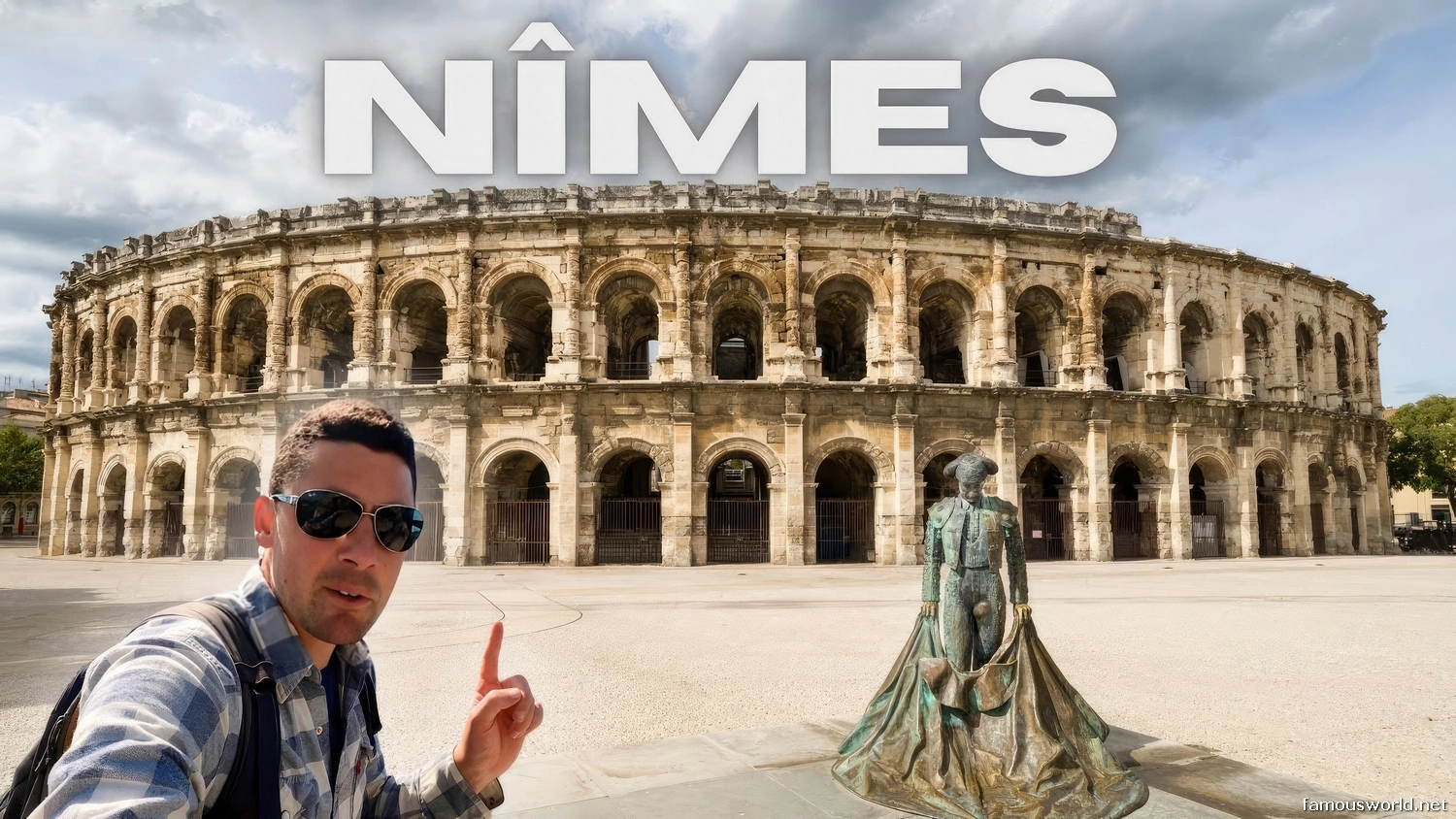
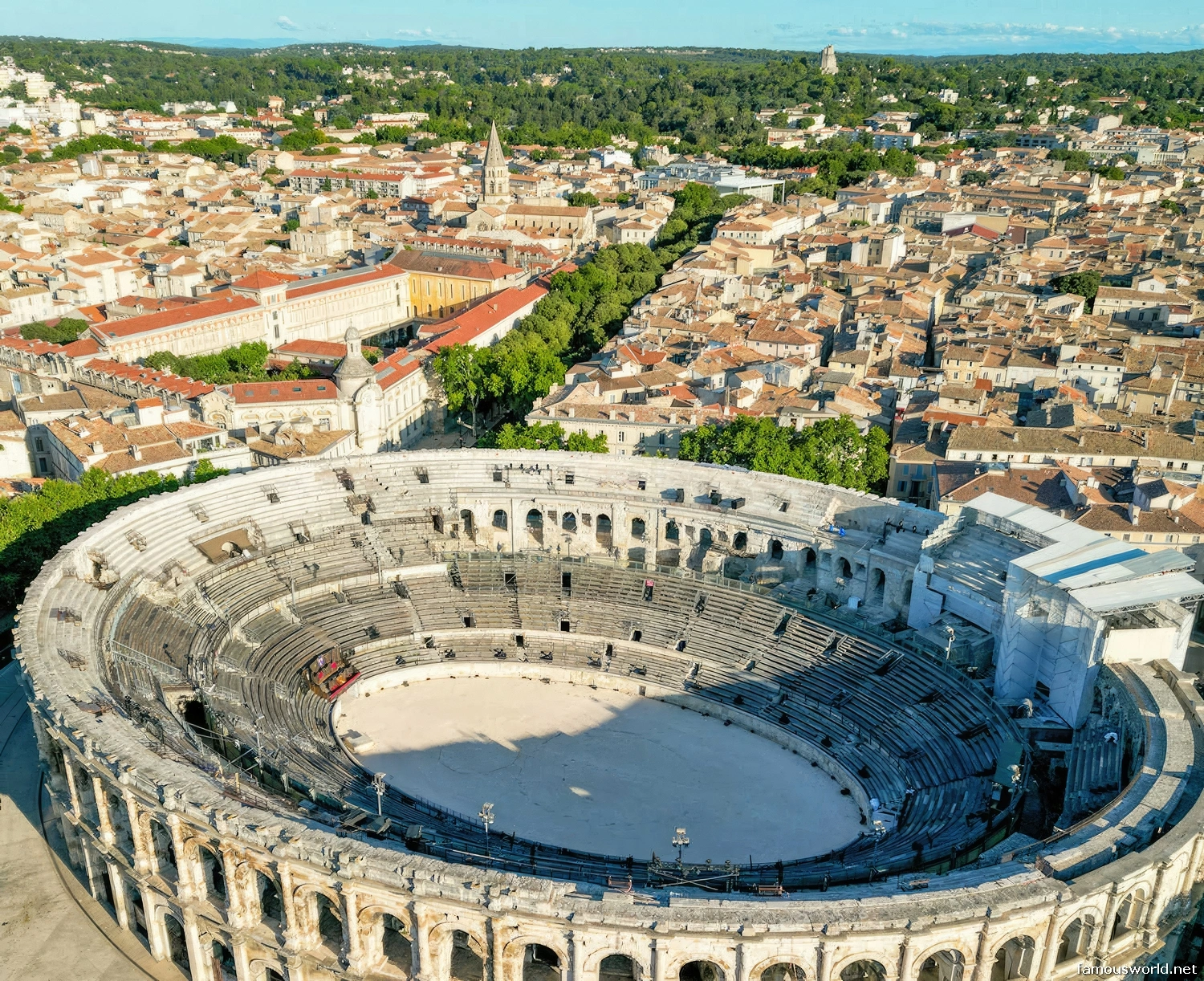
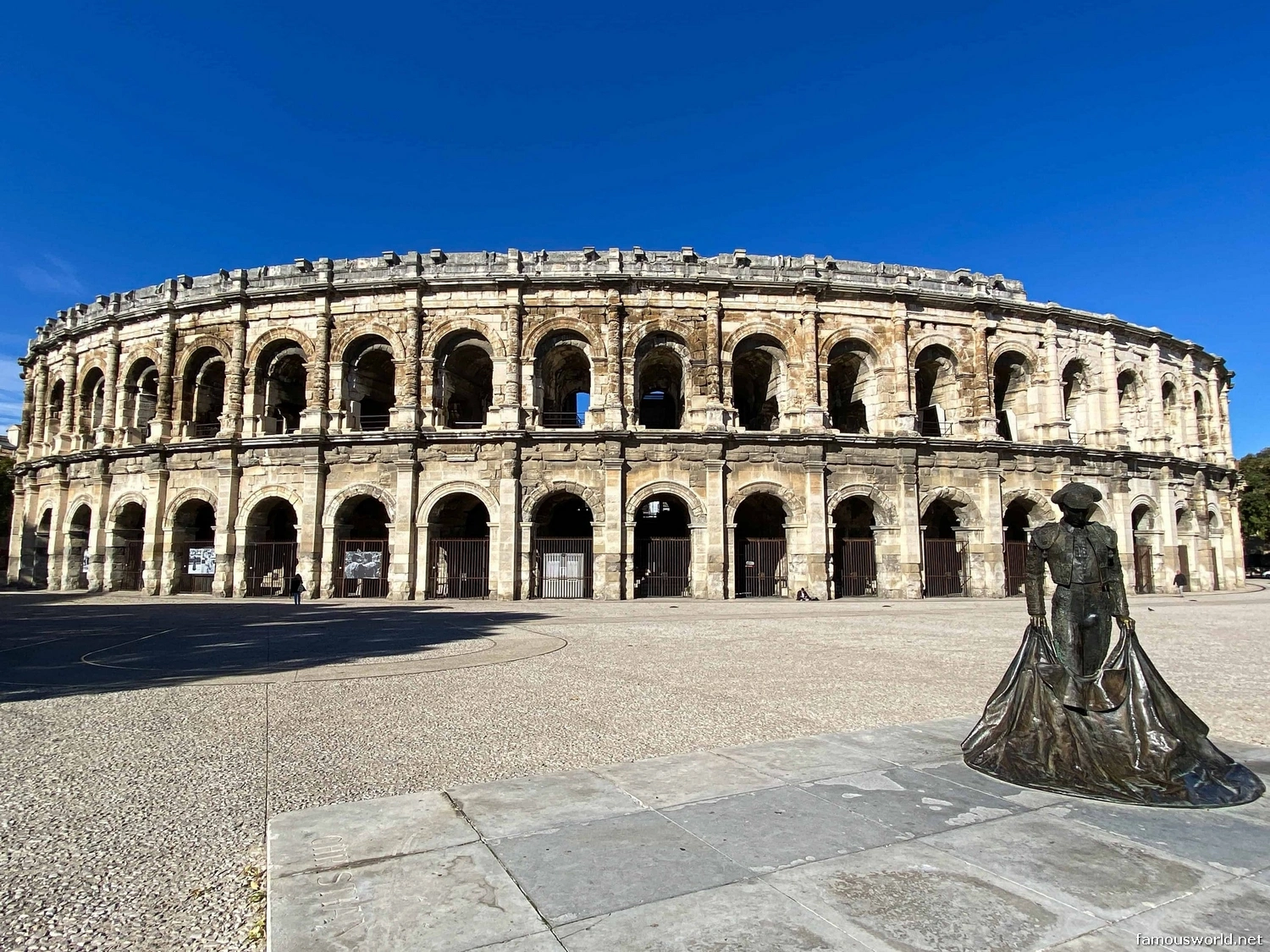
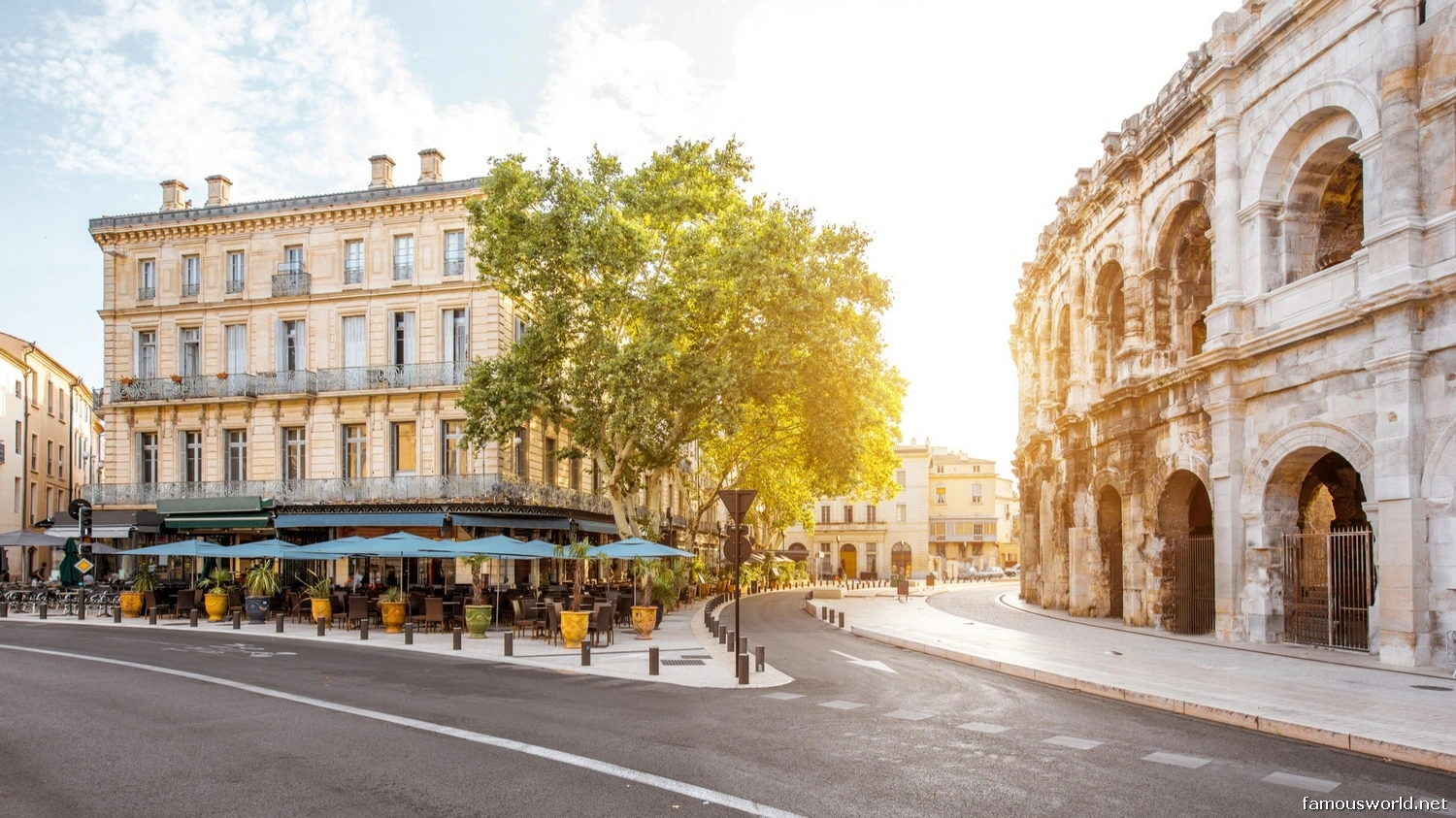
In the sun-drenched landscape of southern France lies a city so rich in classical antiquity that it is often called the “French Rome.” Nîmes is a treasure trove of remarkably preserved Roman monuments, a place where the grandeur of the ancient world is not a distant ruin but a living part of the urban fabric. From its magnificent arena, which still echoes with the roar of crowds, to its stunningly intact temple, the city offers one of the most complete and immersive Roman experiences outside of Italy. To walk the streets of Nîmes is to travel back 2,000 years, exploring the legacy of an empire that profoundly shaped the culture and character of Provence.
Listen to an introduction about Nîmes

Name and Location
- Name: Nîmes. Its ancient Roman name was Nemausus.
- Location: In the Gard department in the Occitanie region of southern France.
How to Get There
As a major city in the south of France, Nîmes is very well-connected.
- By Train: Nîmes is served by high-speed TGV trains connecting it directly to Paris, Lyon, and other major cities. The main station is conveniently located near the city center.
- By Air: The Nîmes-Alès-Camargue-Cévennes Airport (FNI) serves some flights from Europe and the UK. The larger Montpellier and Marseille airports are also viable options, with easy train or bus connections.
- By Car: The A9 and A54 motorways provide direct access to Nîmes from Spain, Italy, and the rest of France.
Landscape and Architecture
The city’s landscape is a showcase of some of the best-preserved Roman architecture in the world.
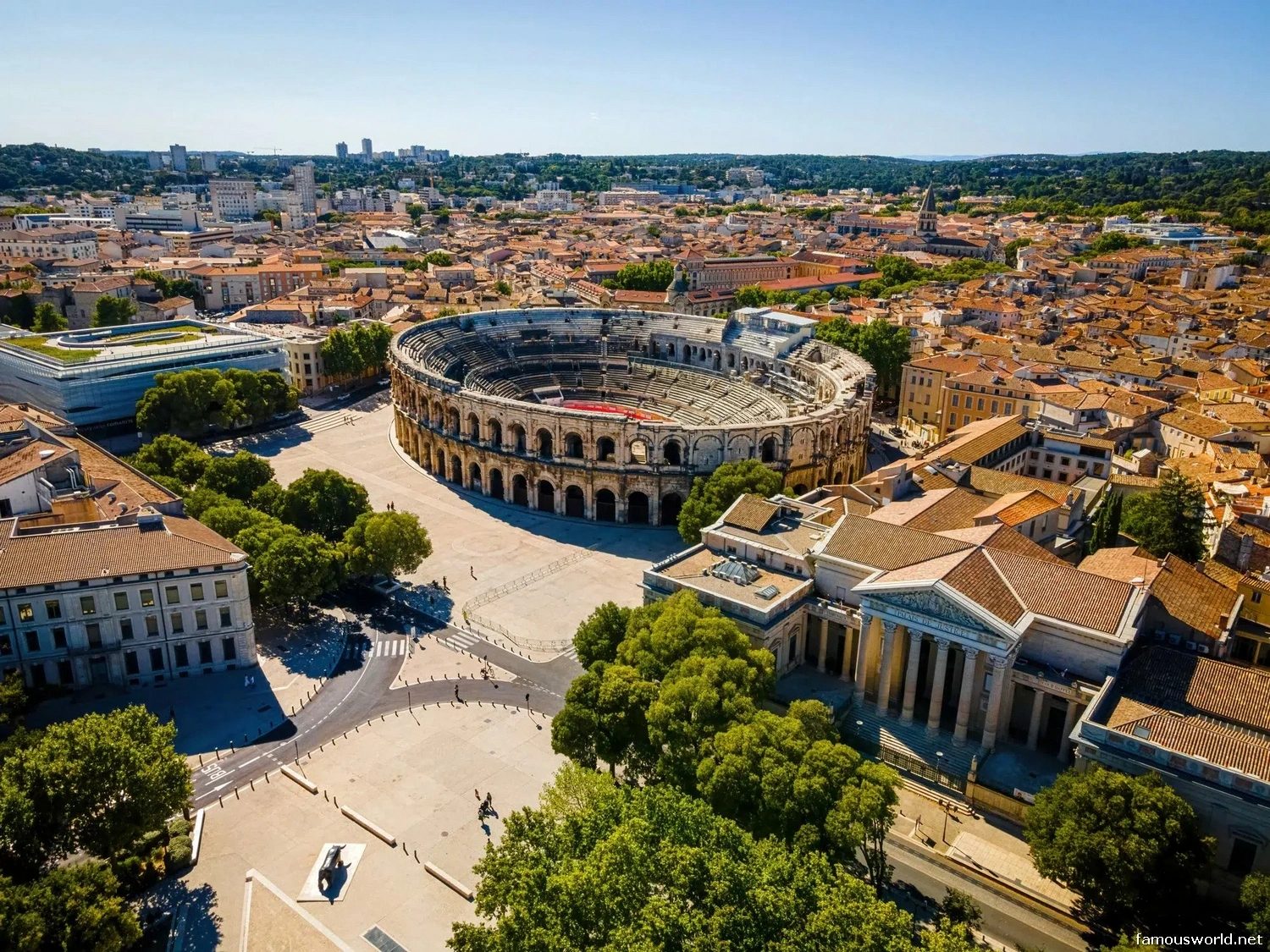
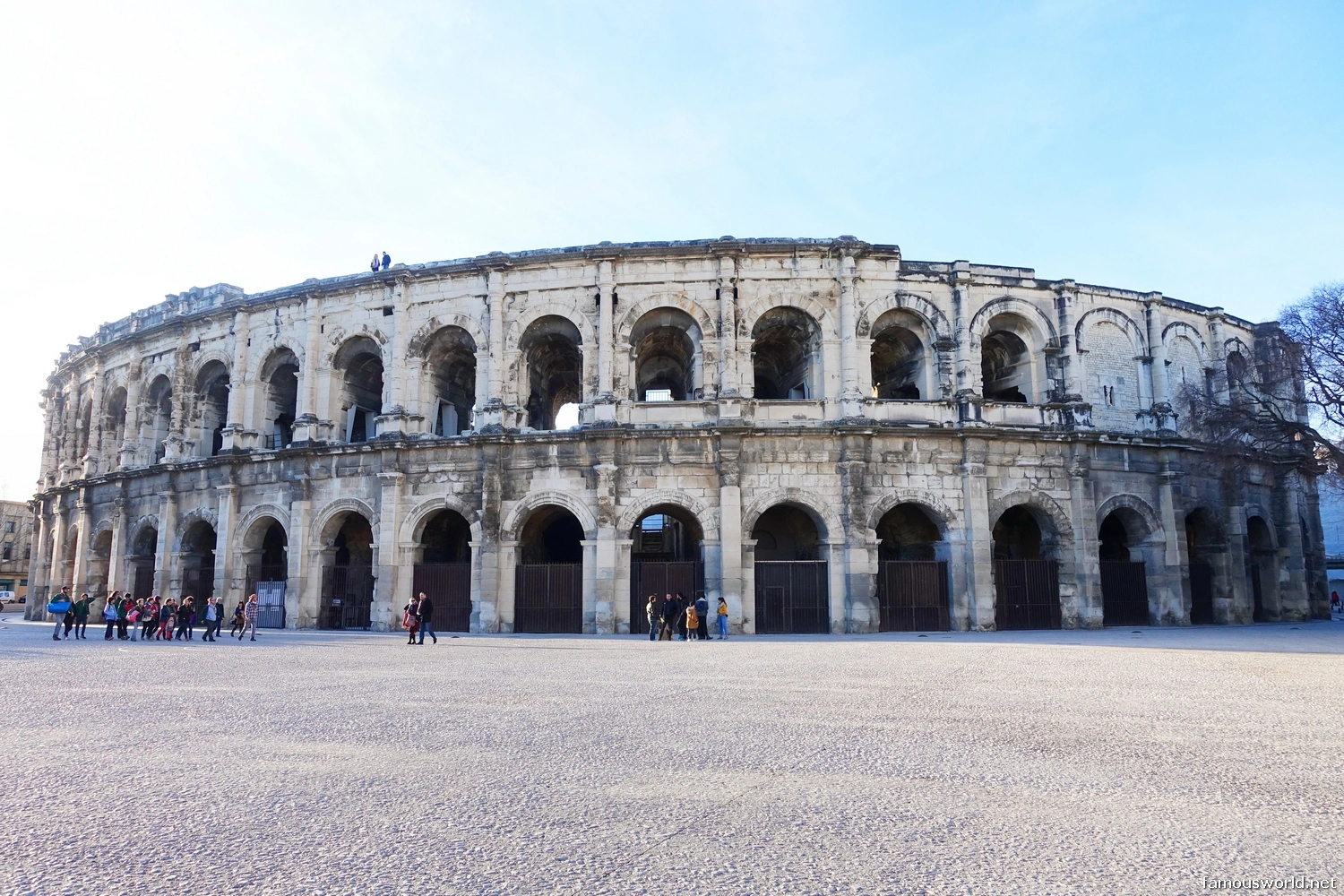
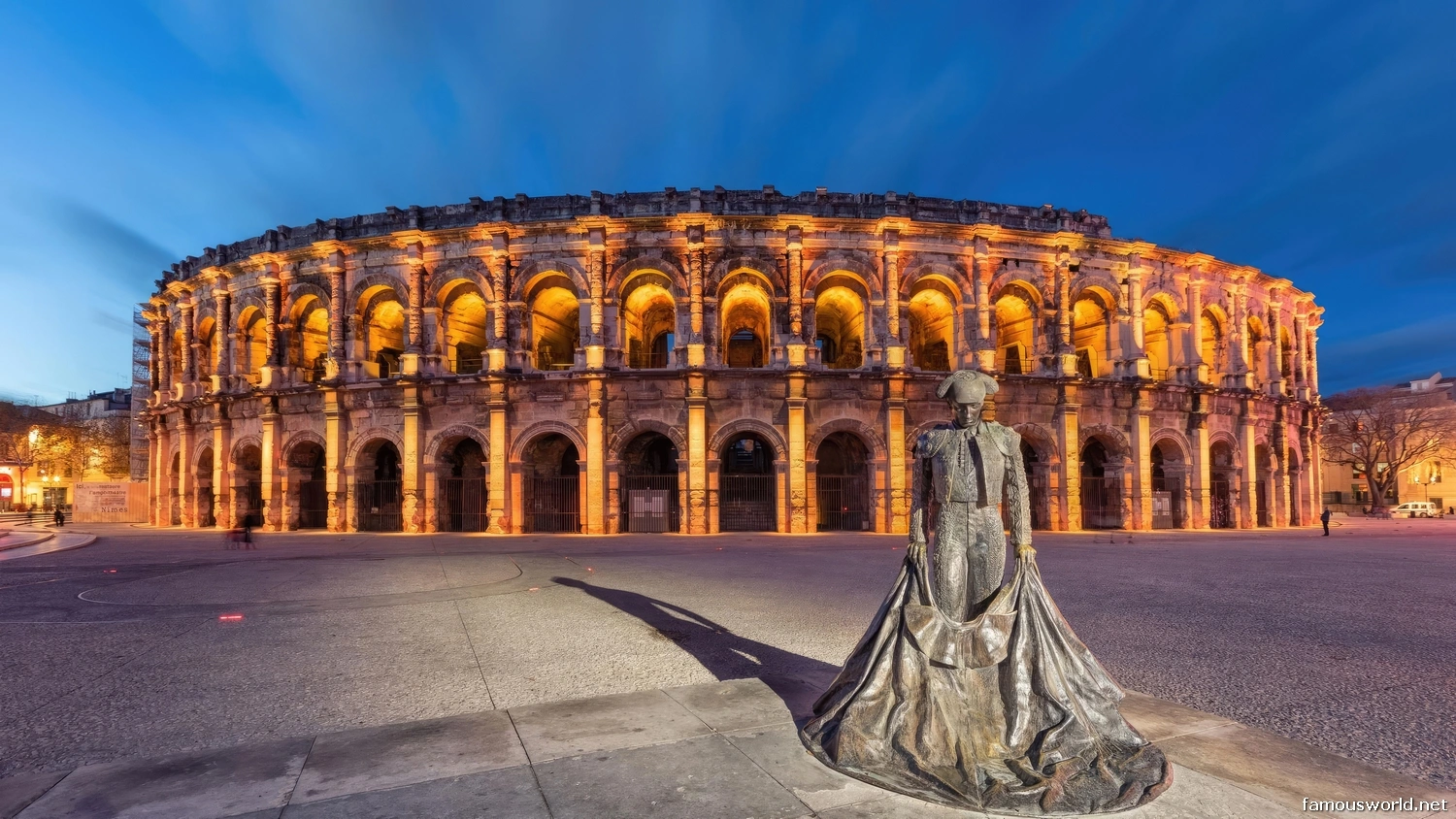
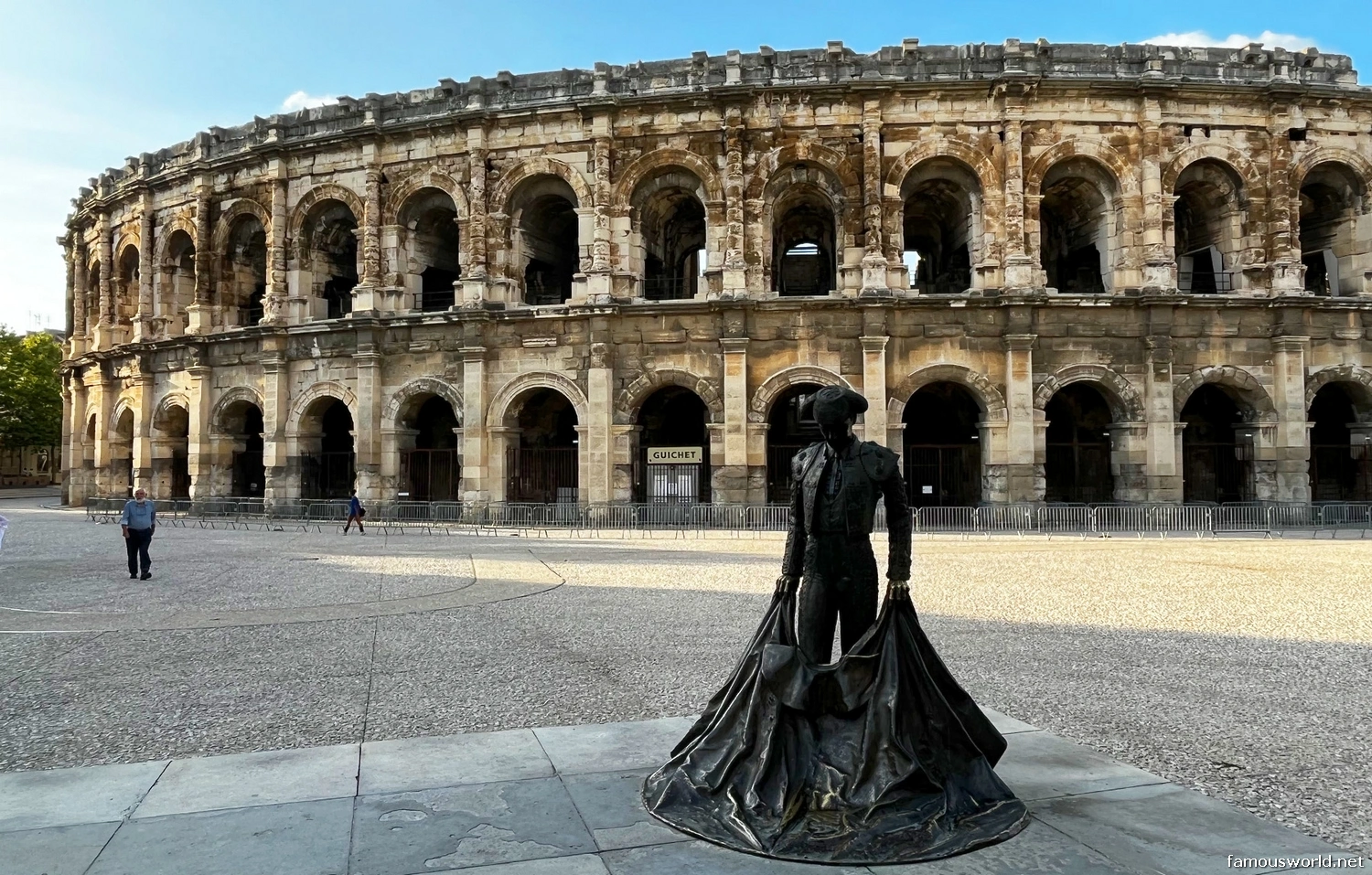
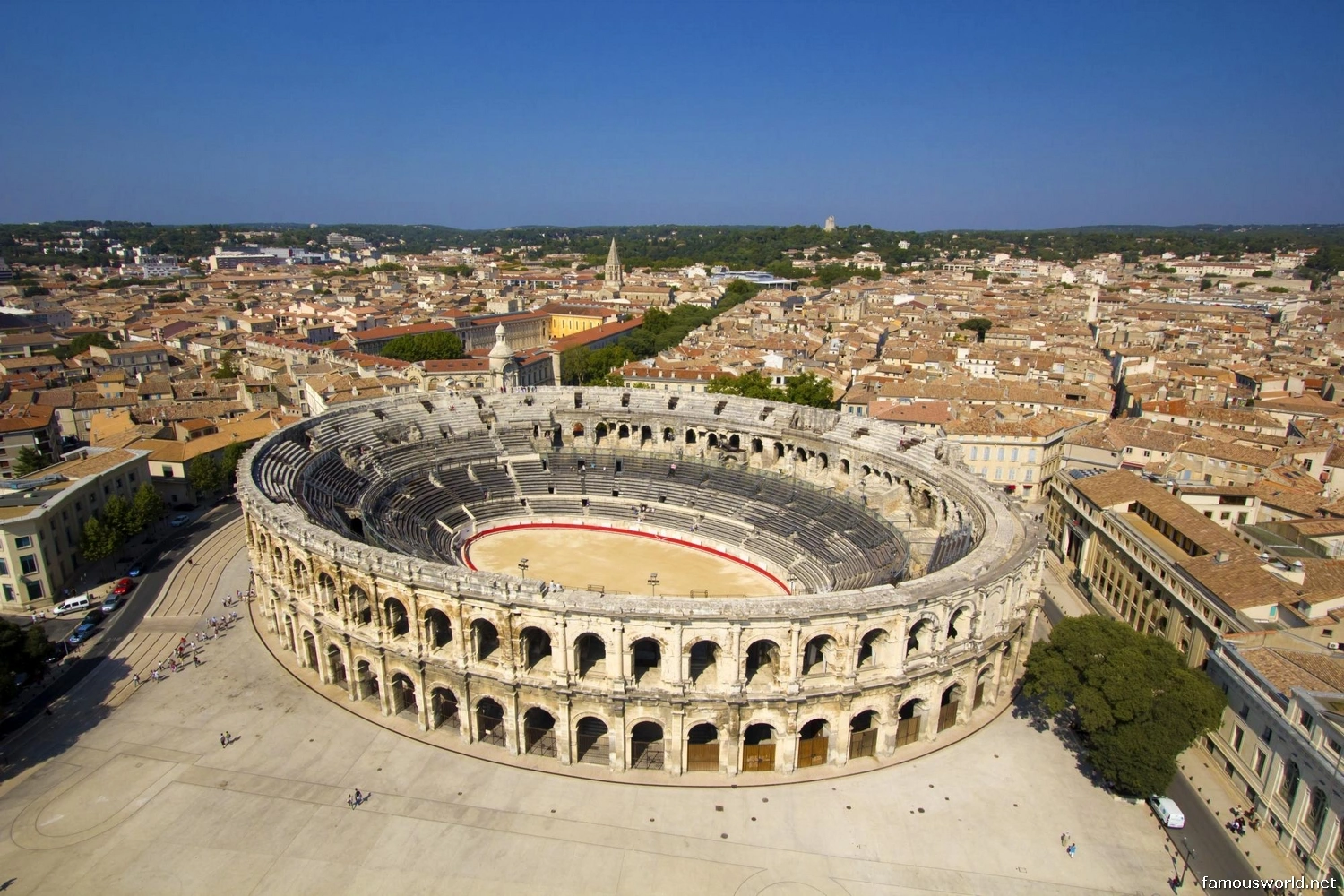
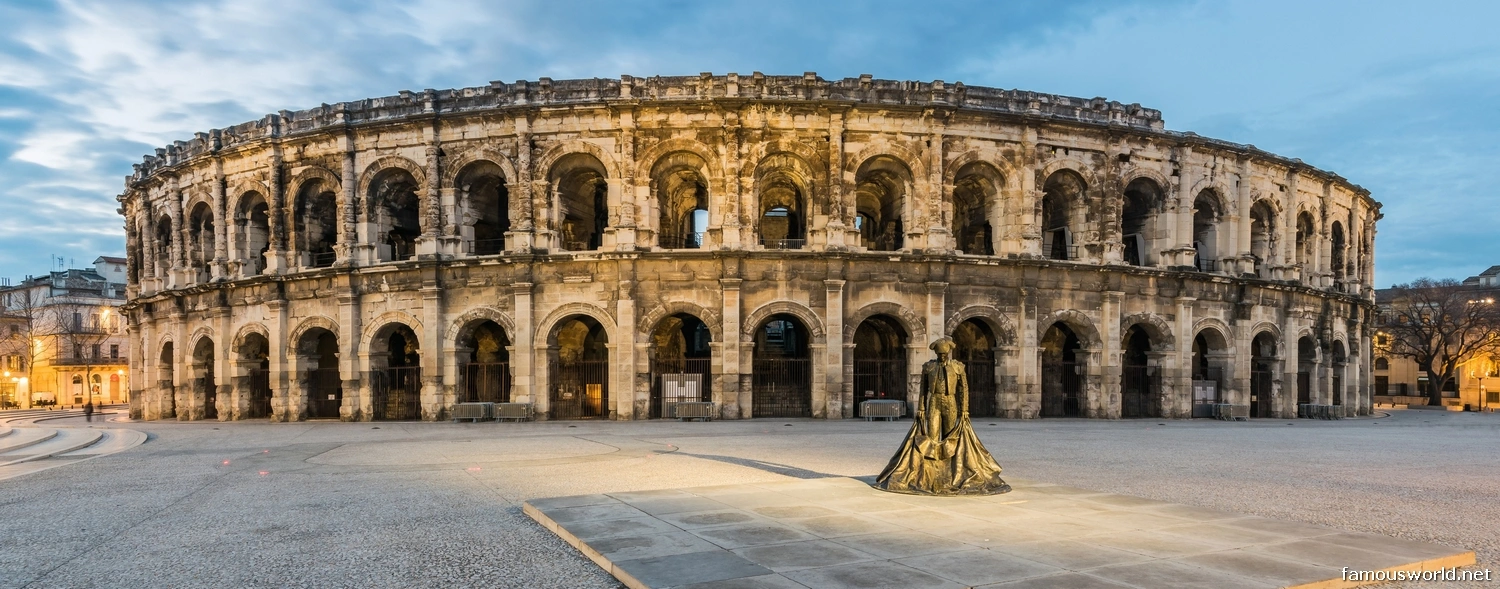
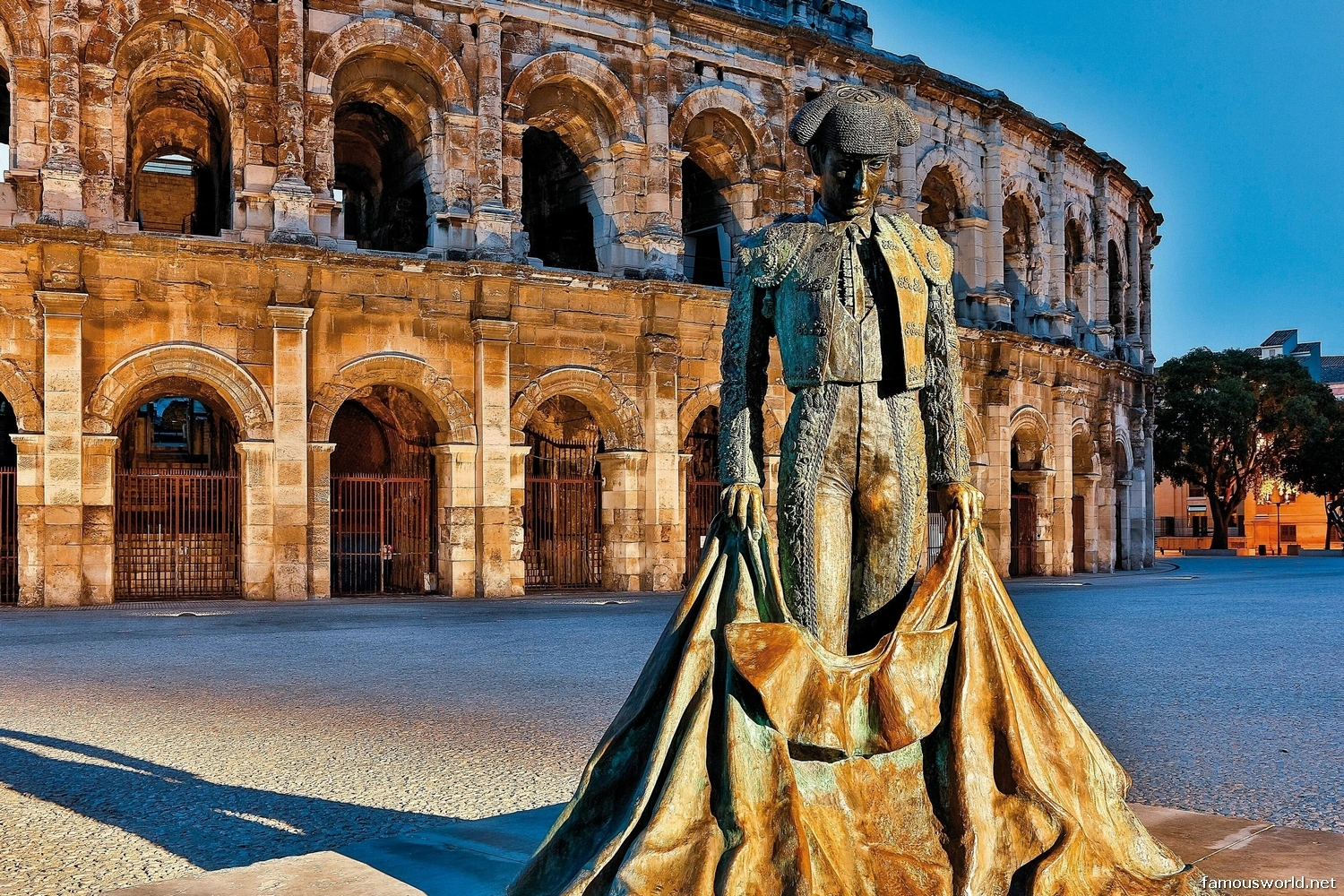
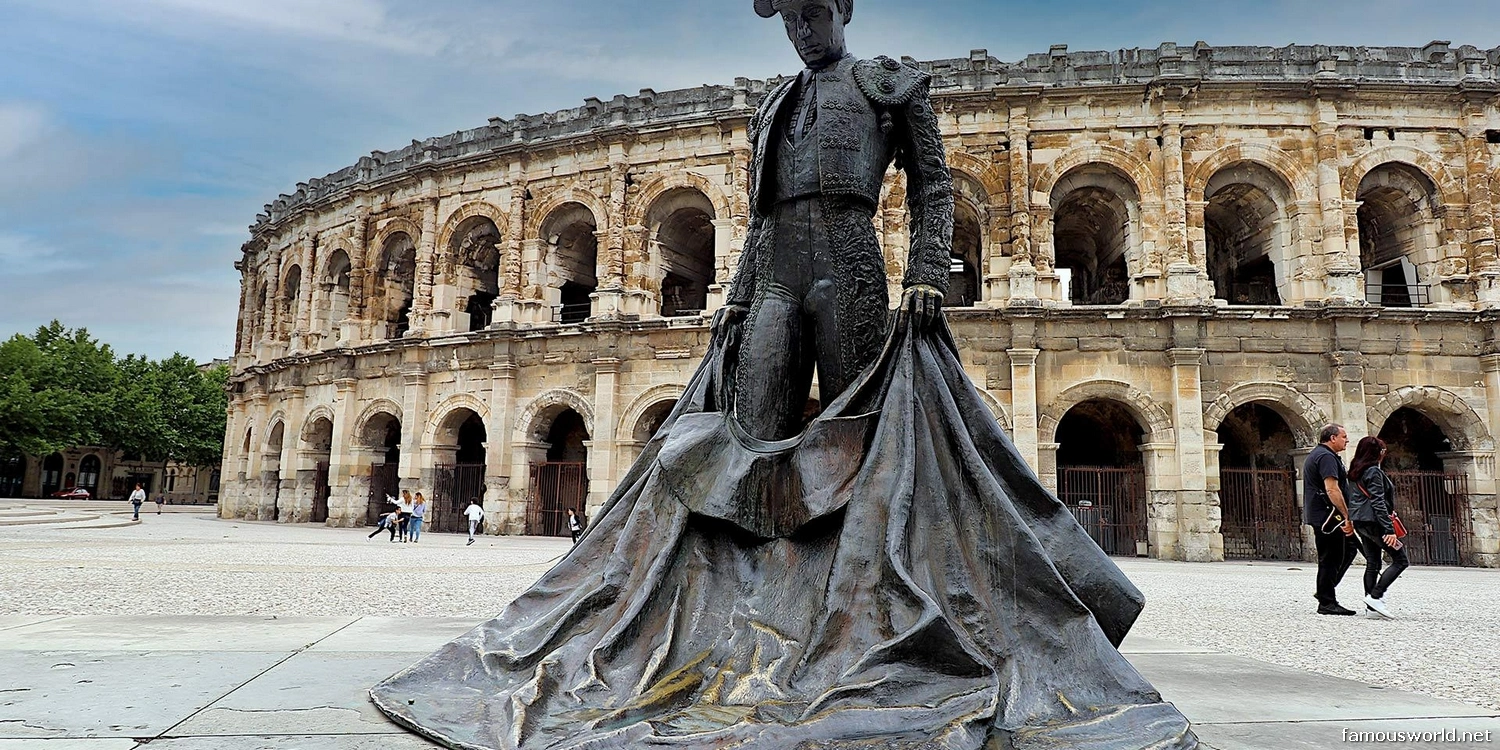
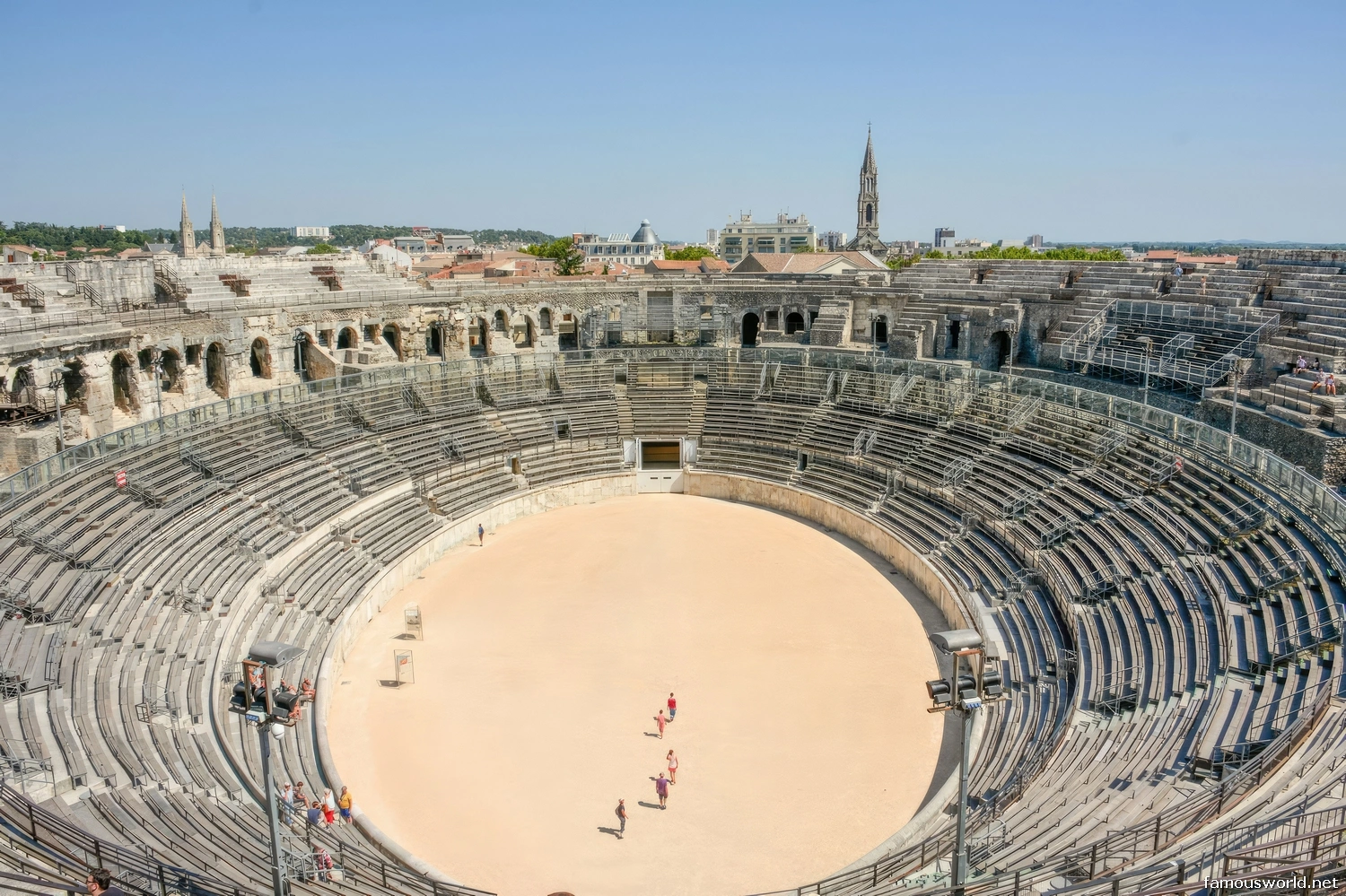
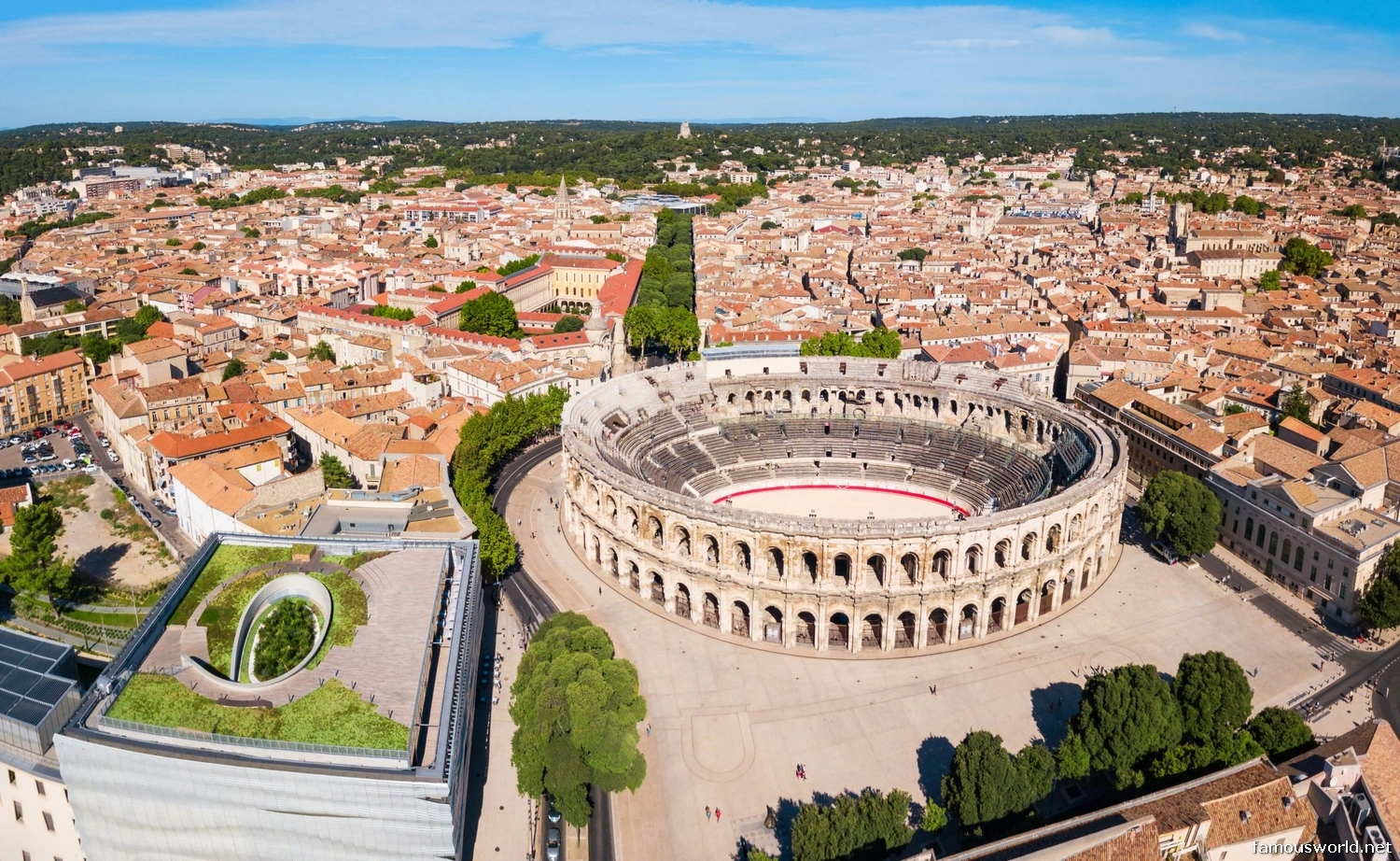
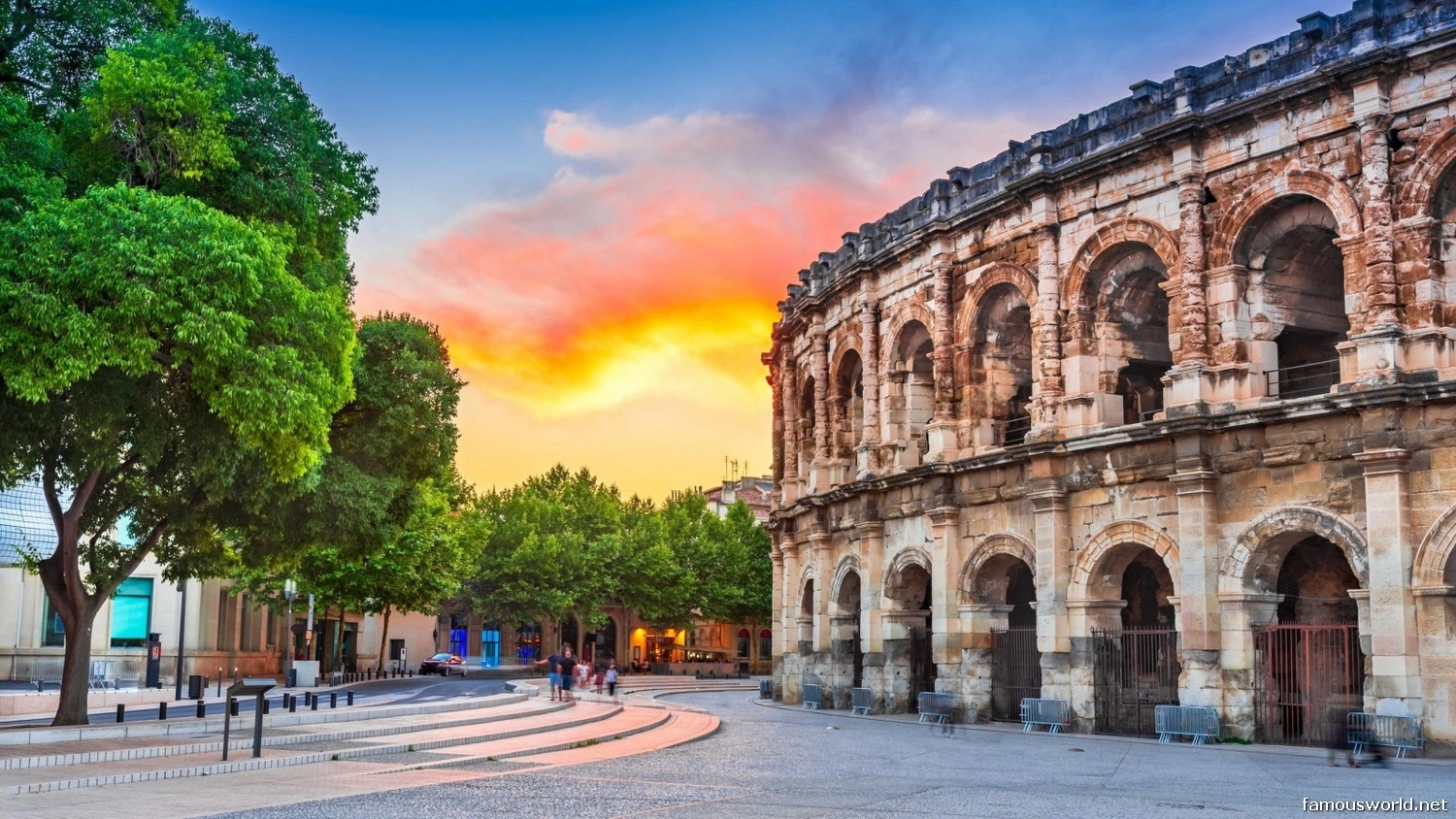
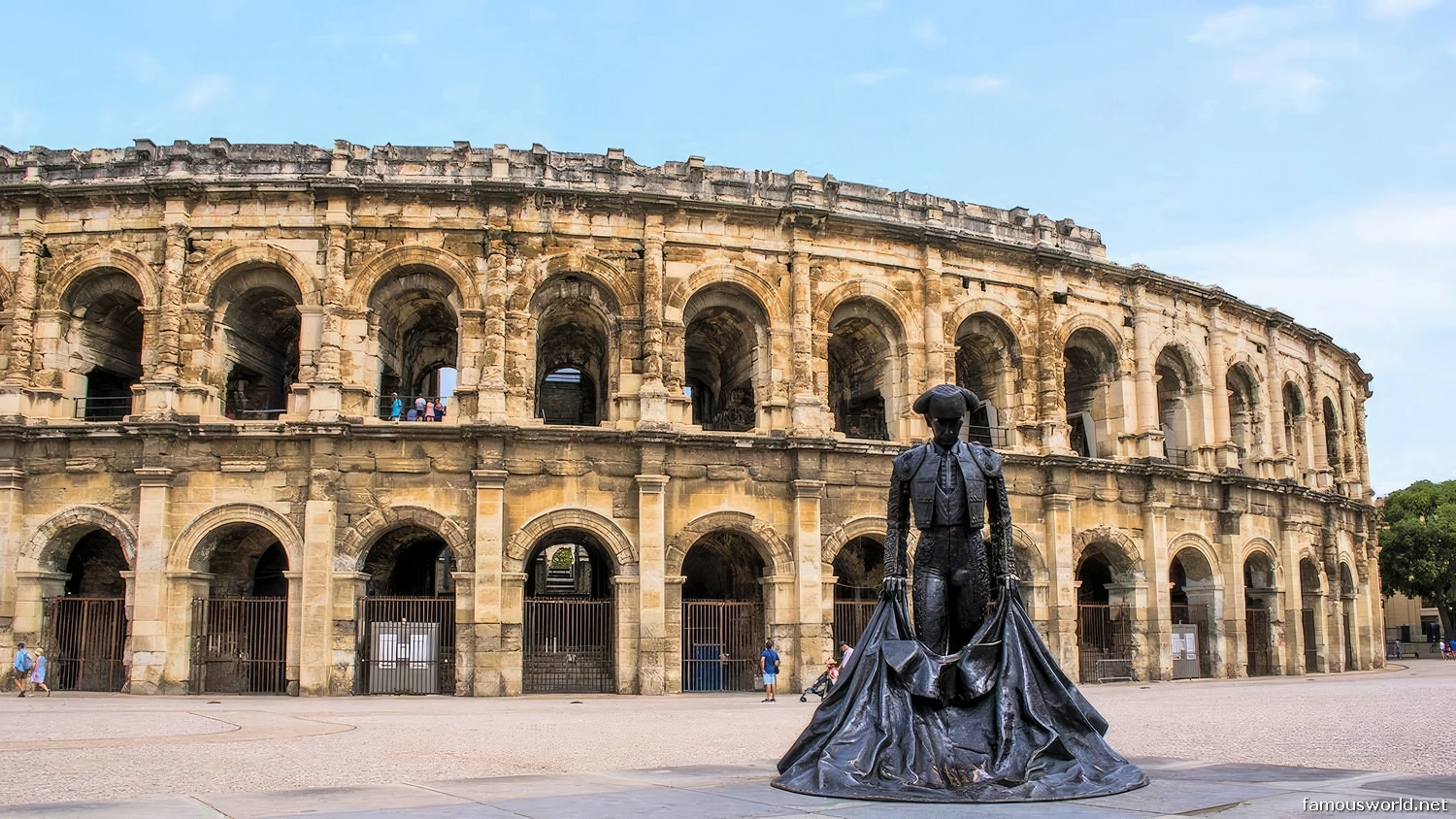
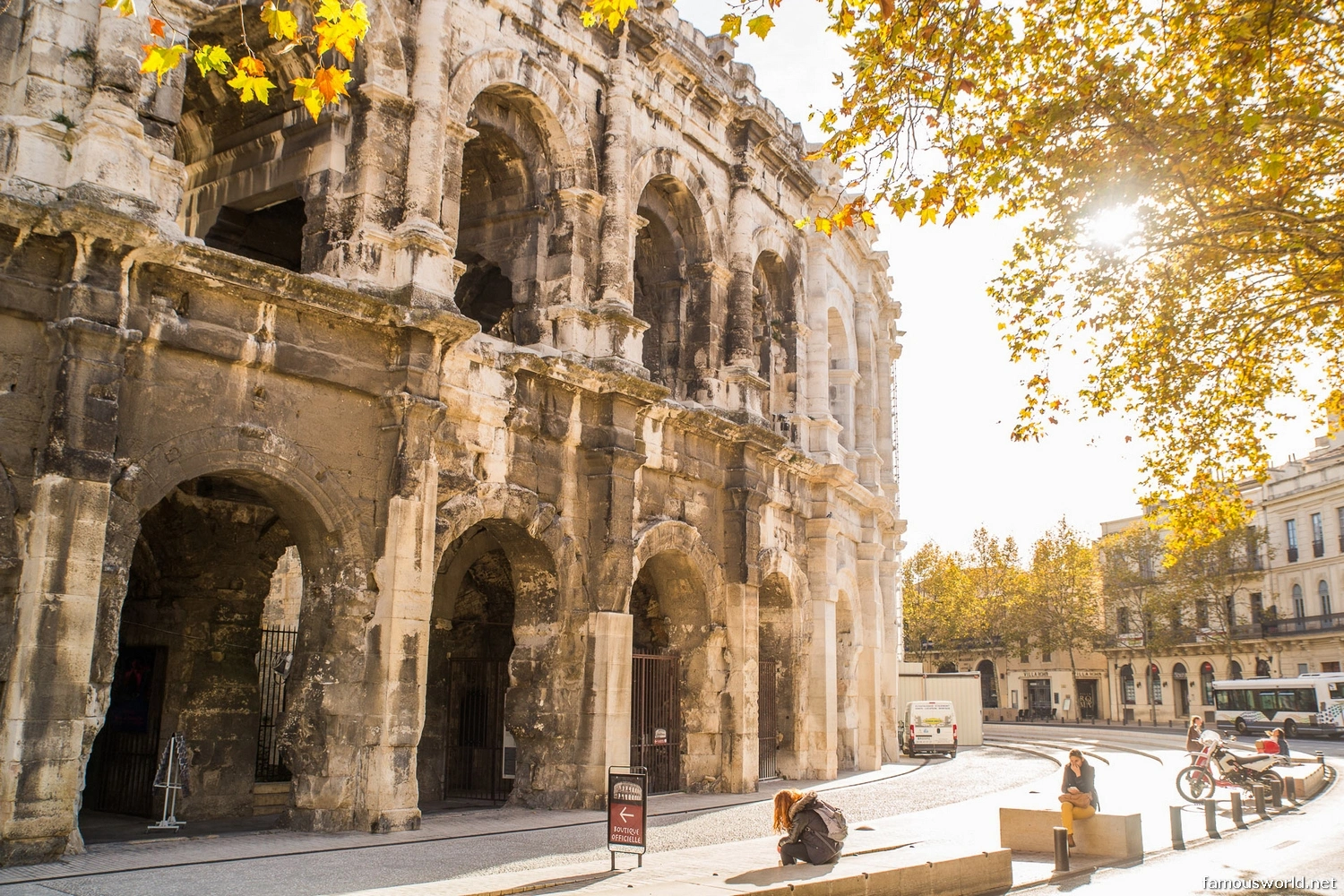
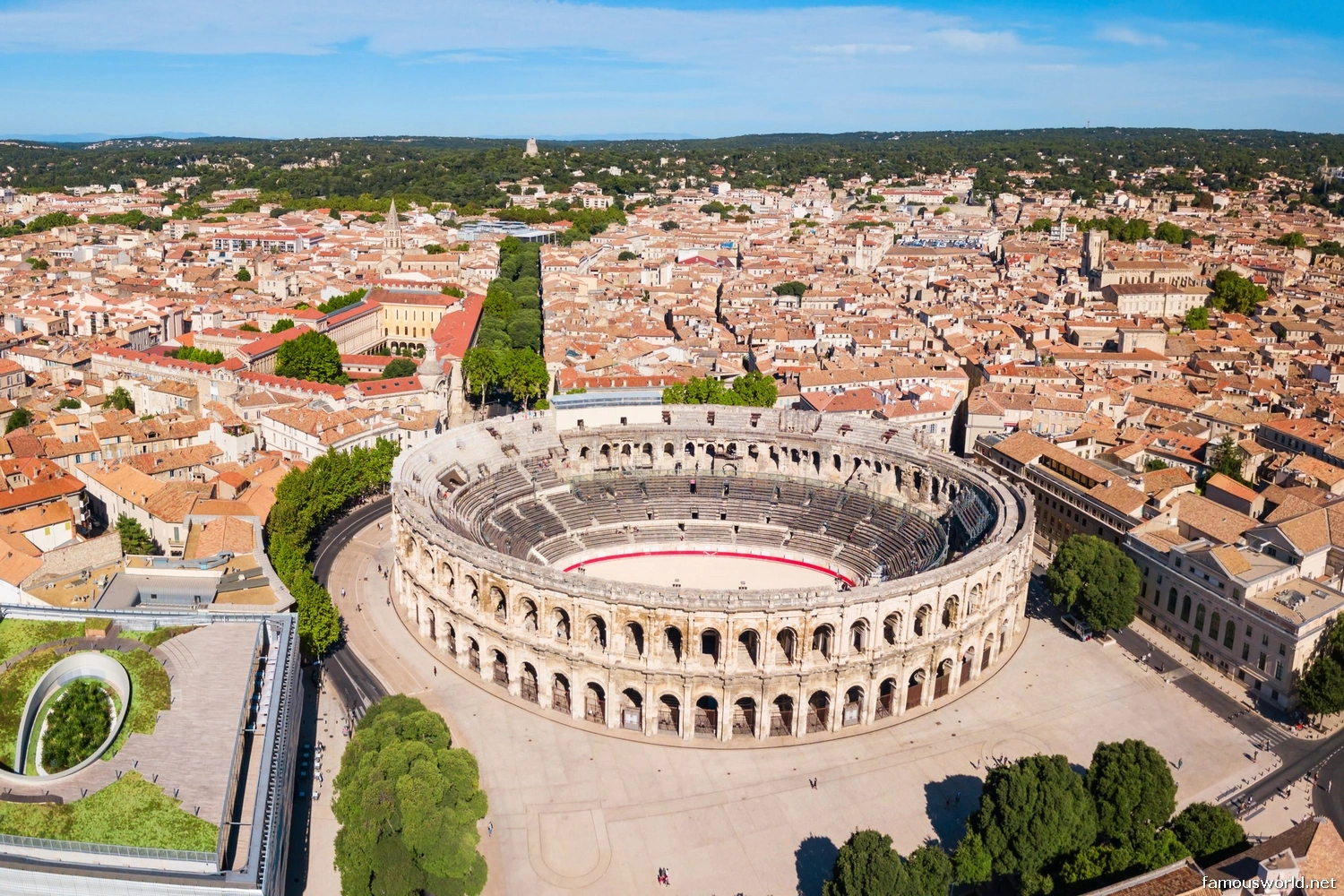
- The Arena of Nîmes: A spectacular Roman amphitheater, modeled on the Colosseum, that is one of the best-preserved in the world. Its two-tiered arcade is remarkably intact, and it originally held up to 24,000 spectators.
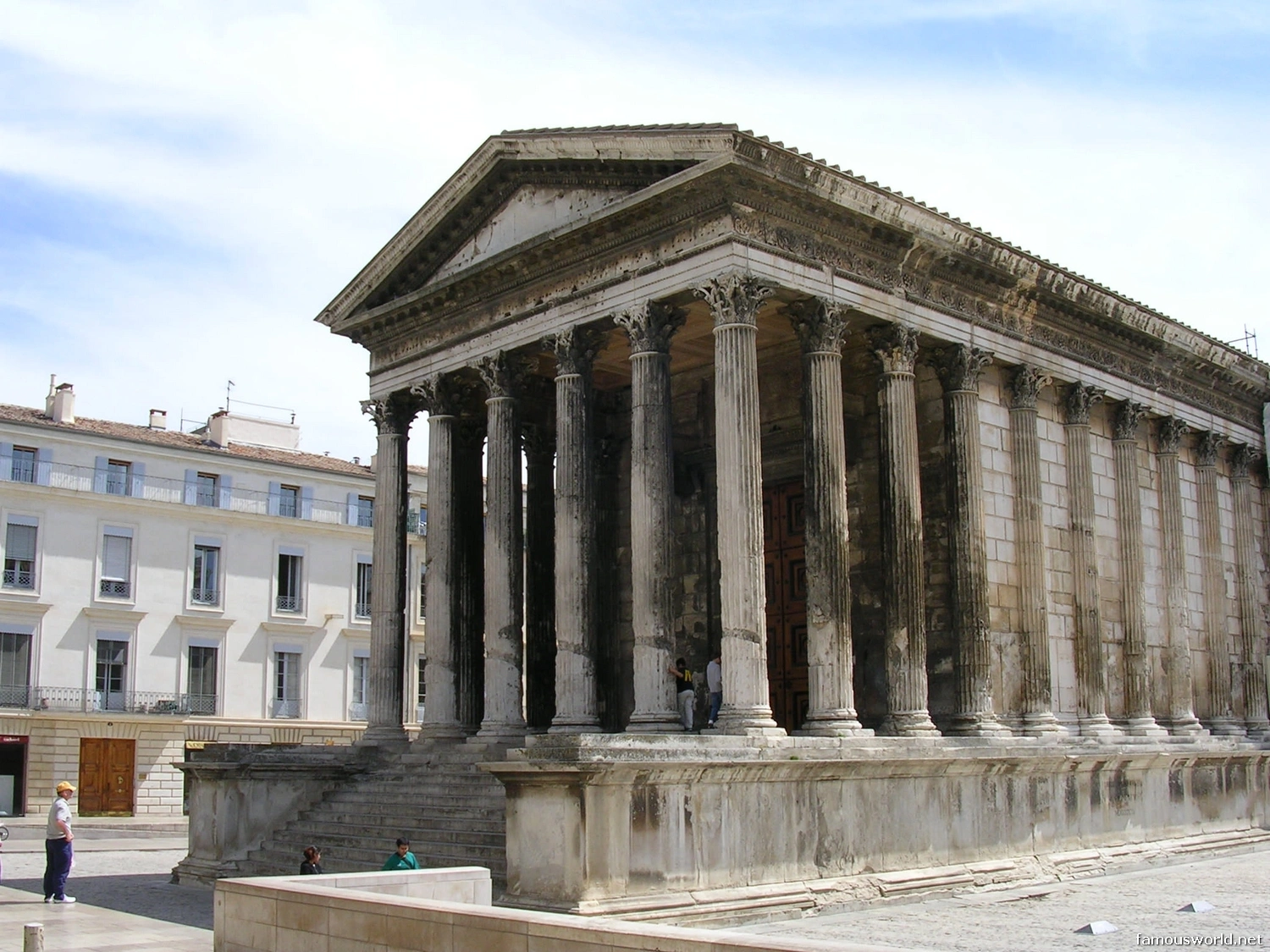
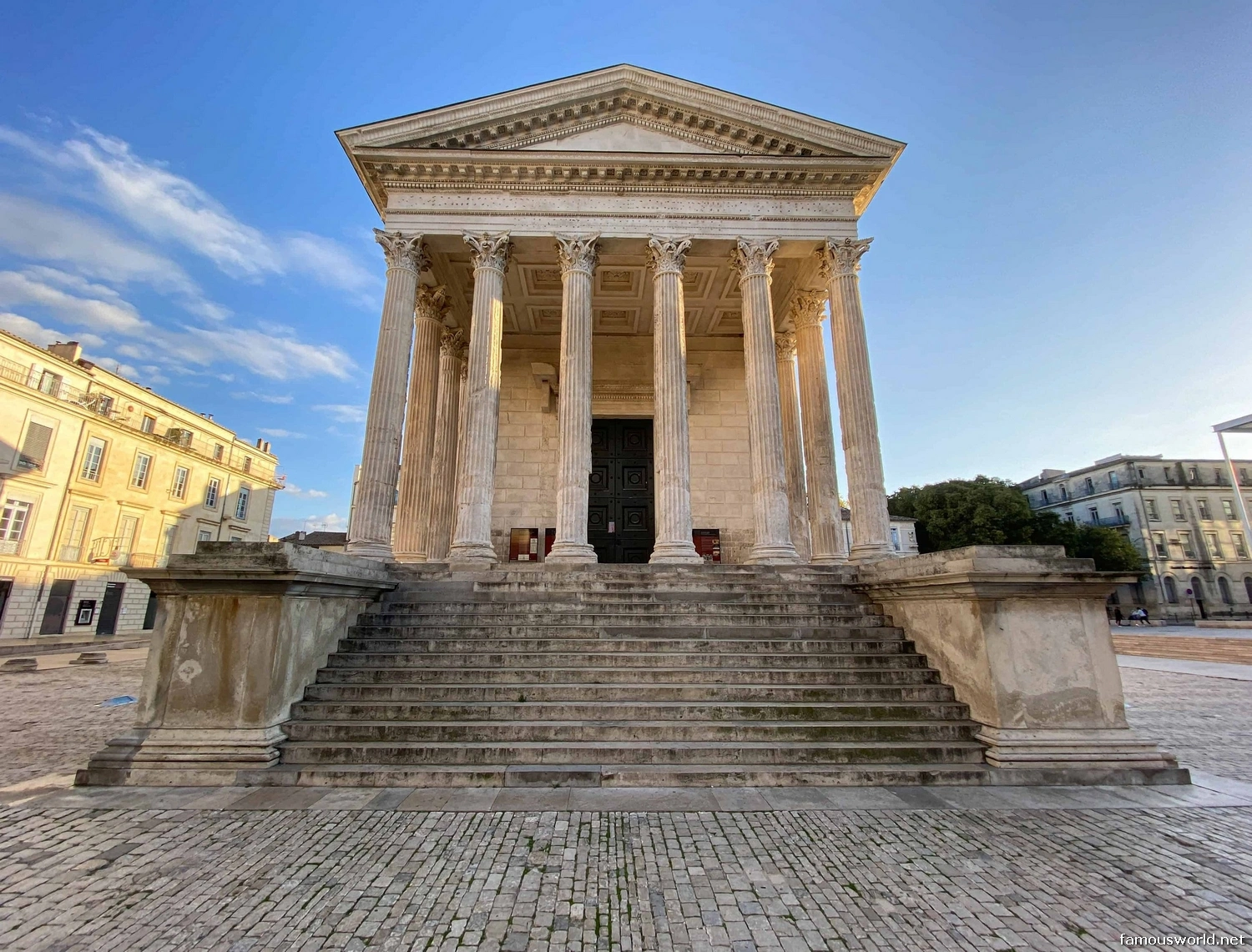
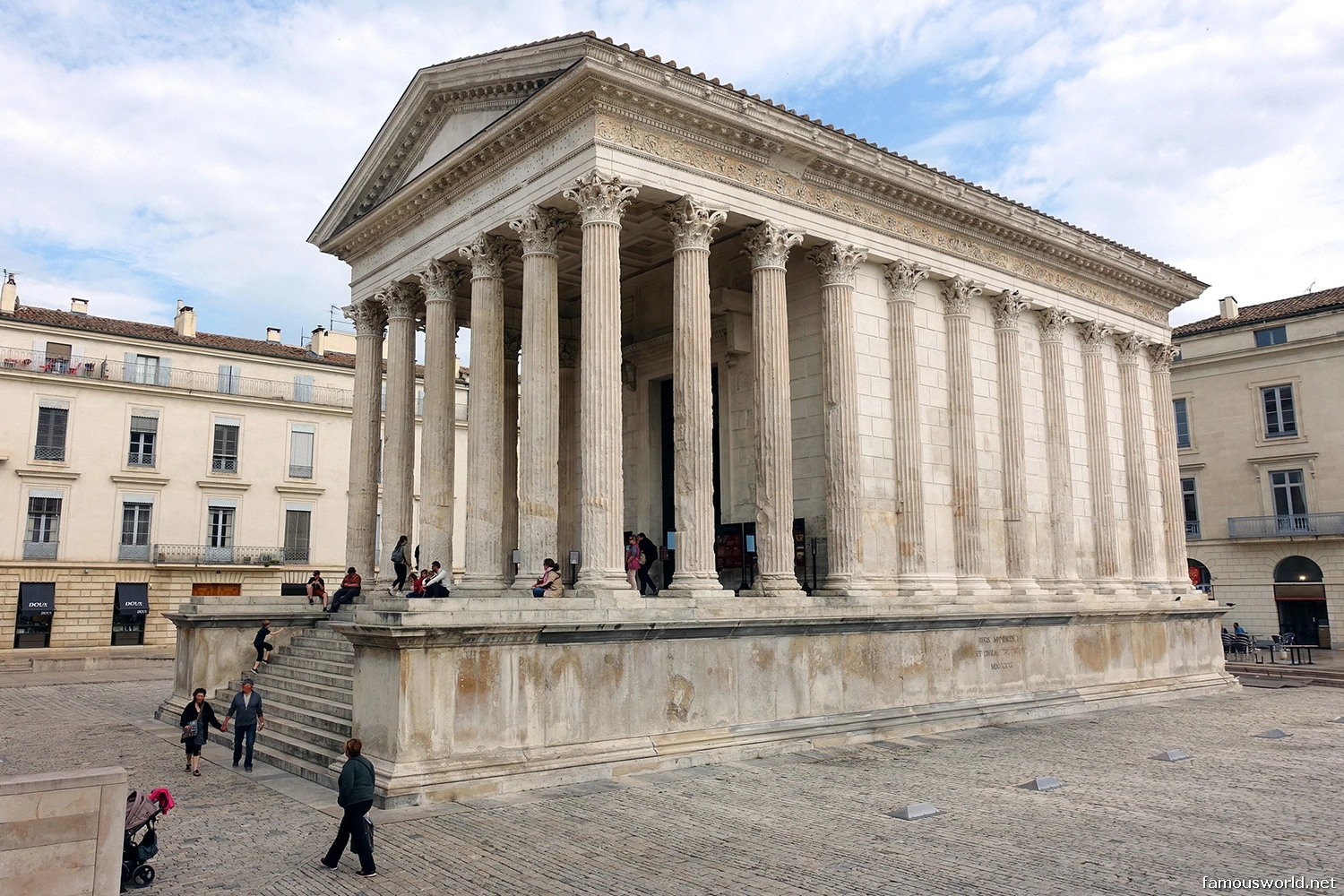
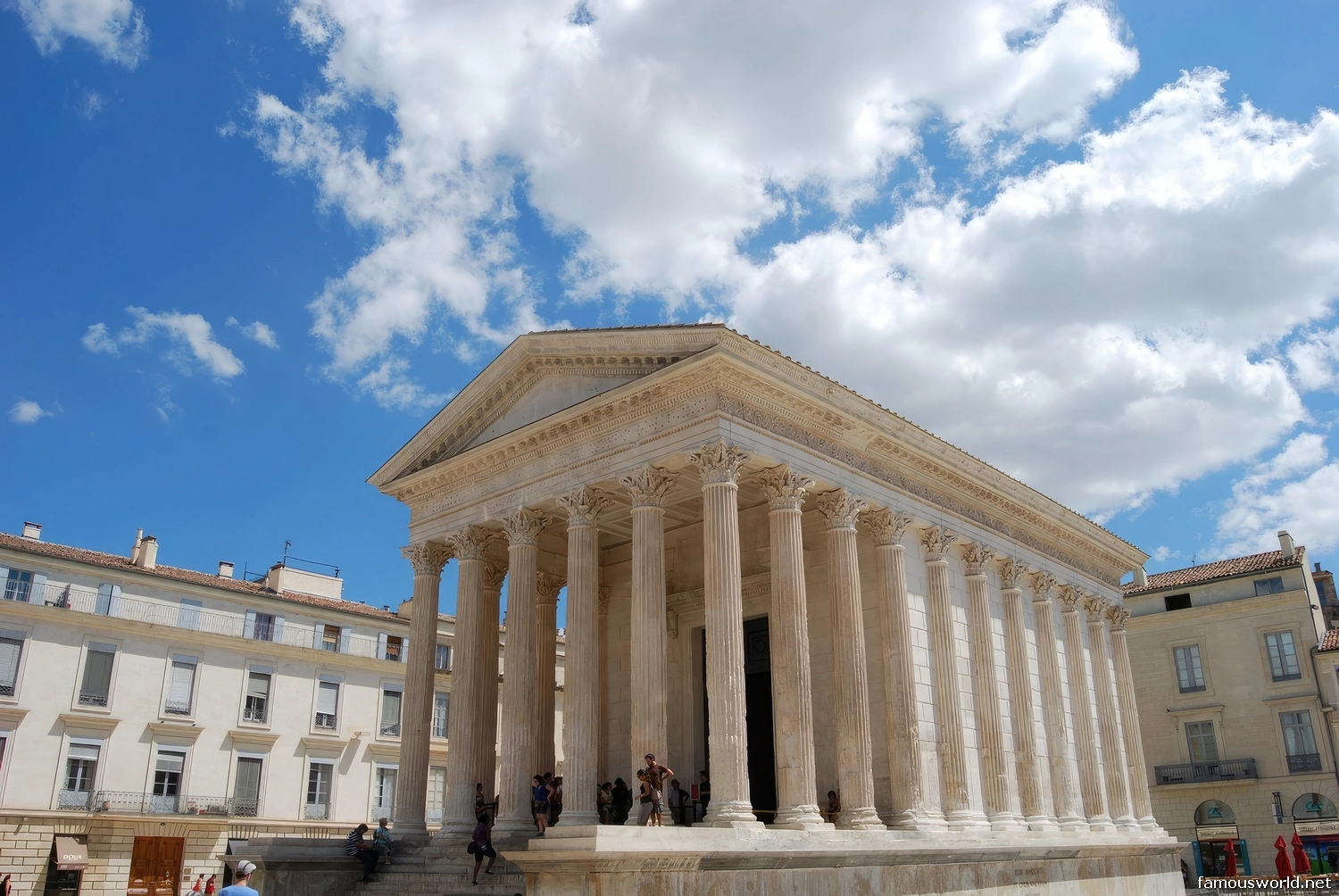
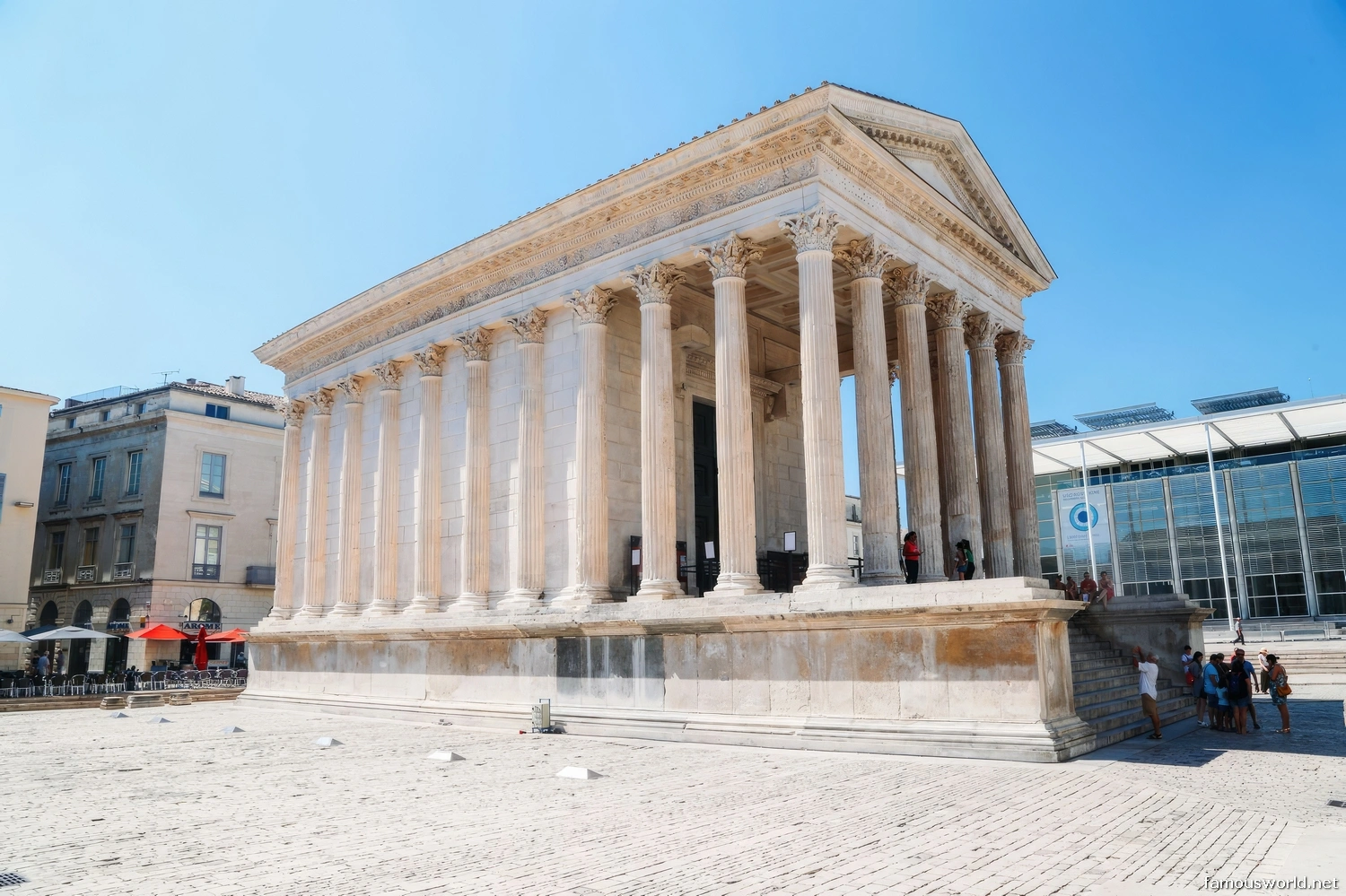
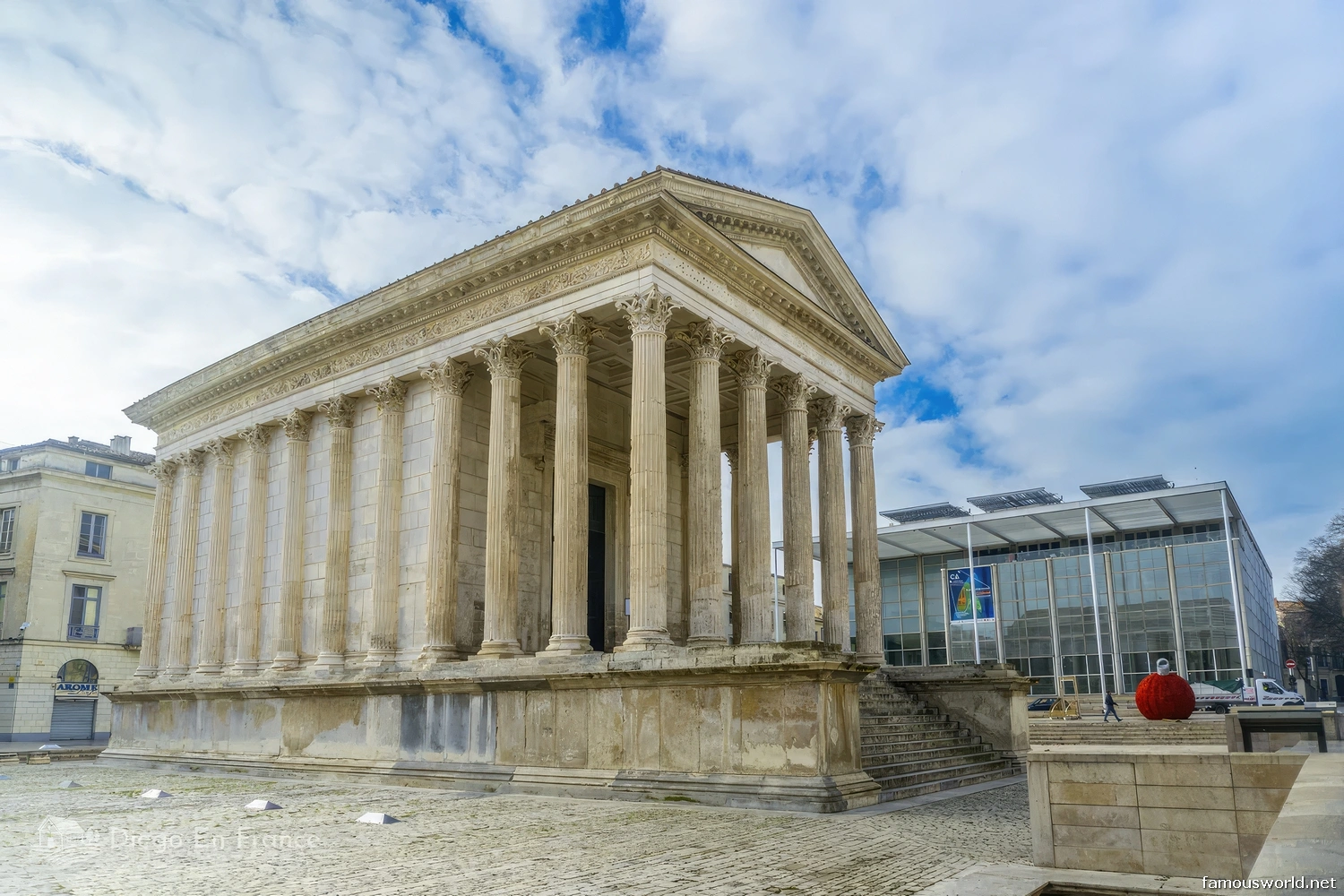
- The Maison Carrée: The city’s crown jewel, this is an exceptionally well-preserved Roman temple dedicated to the grandsons of Emperor Augustus. Its architectural harmony and intricate Corinthian details make it a masterpiece of classical design. It is considered the most complete and beautiful Roman temple left standing.
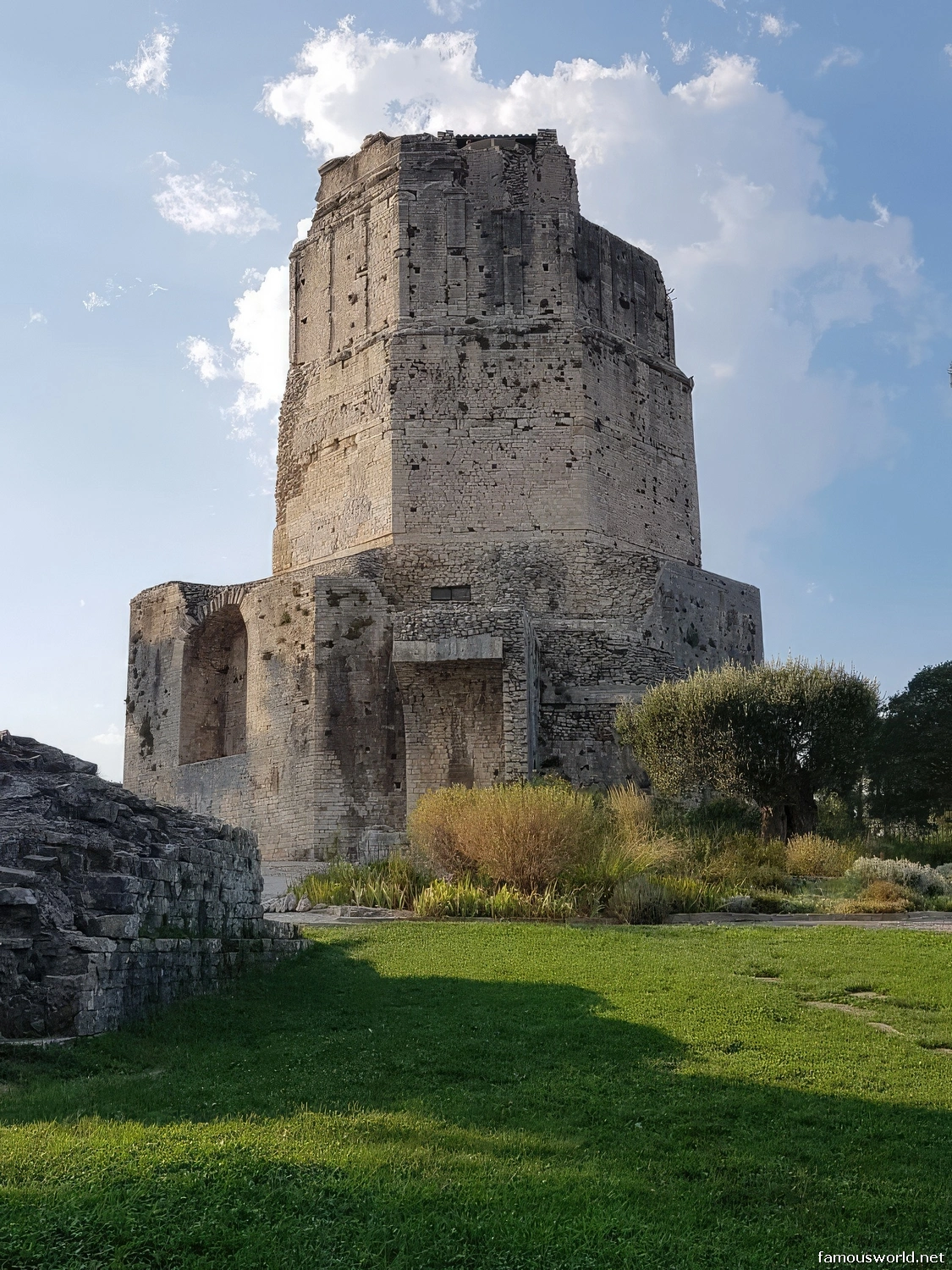
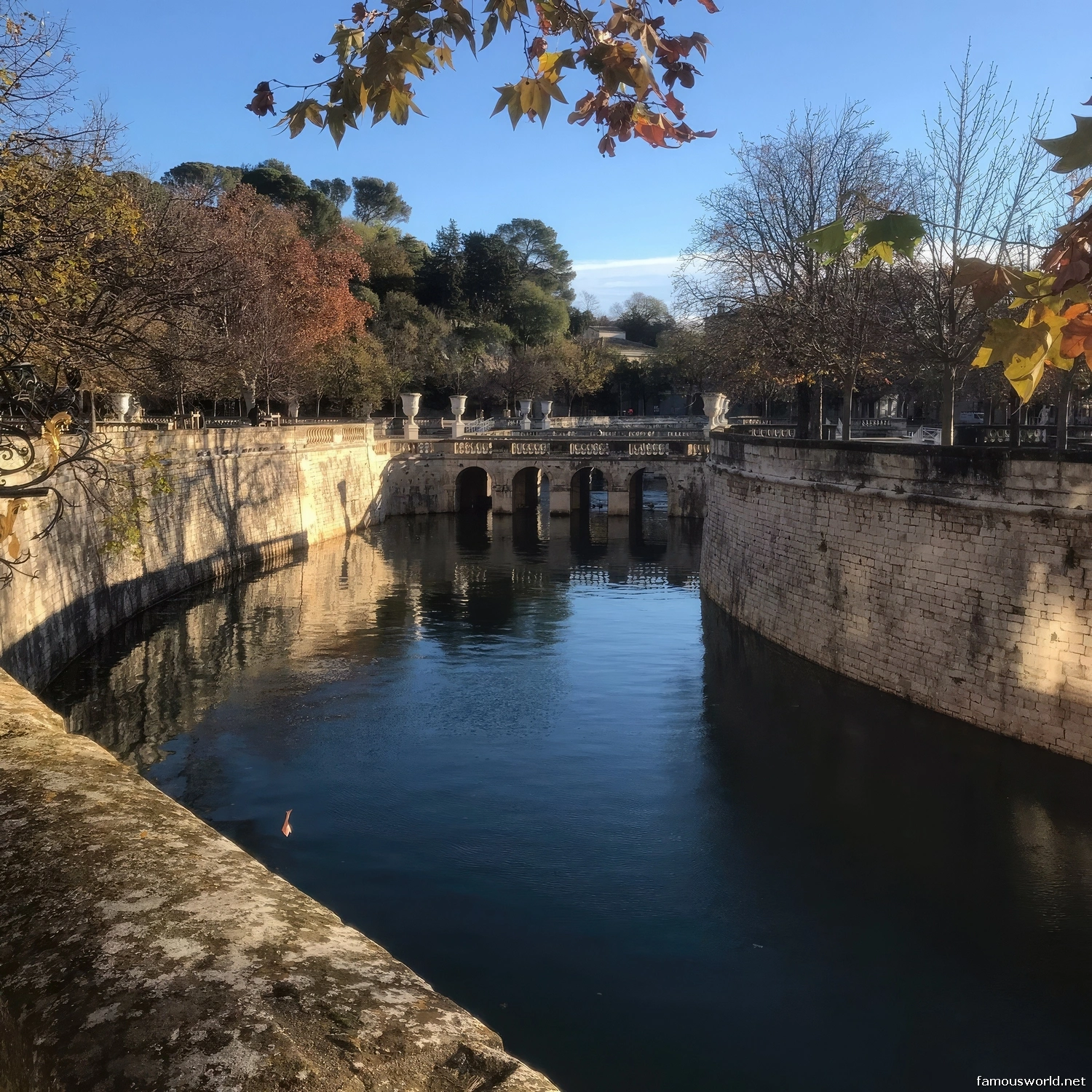
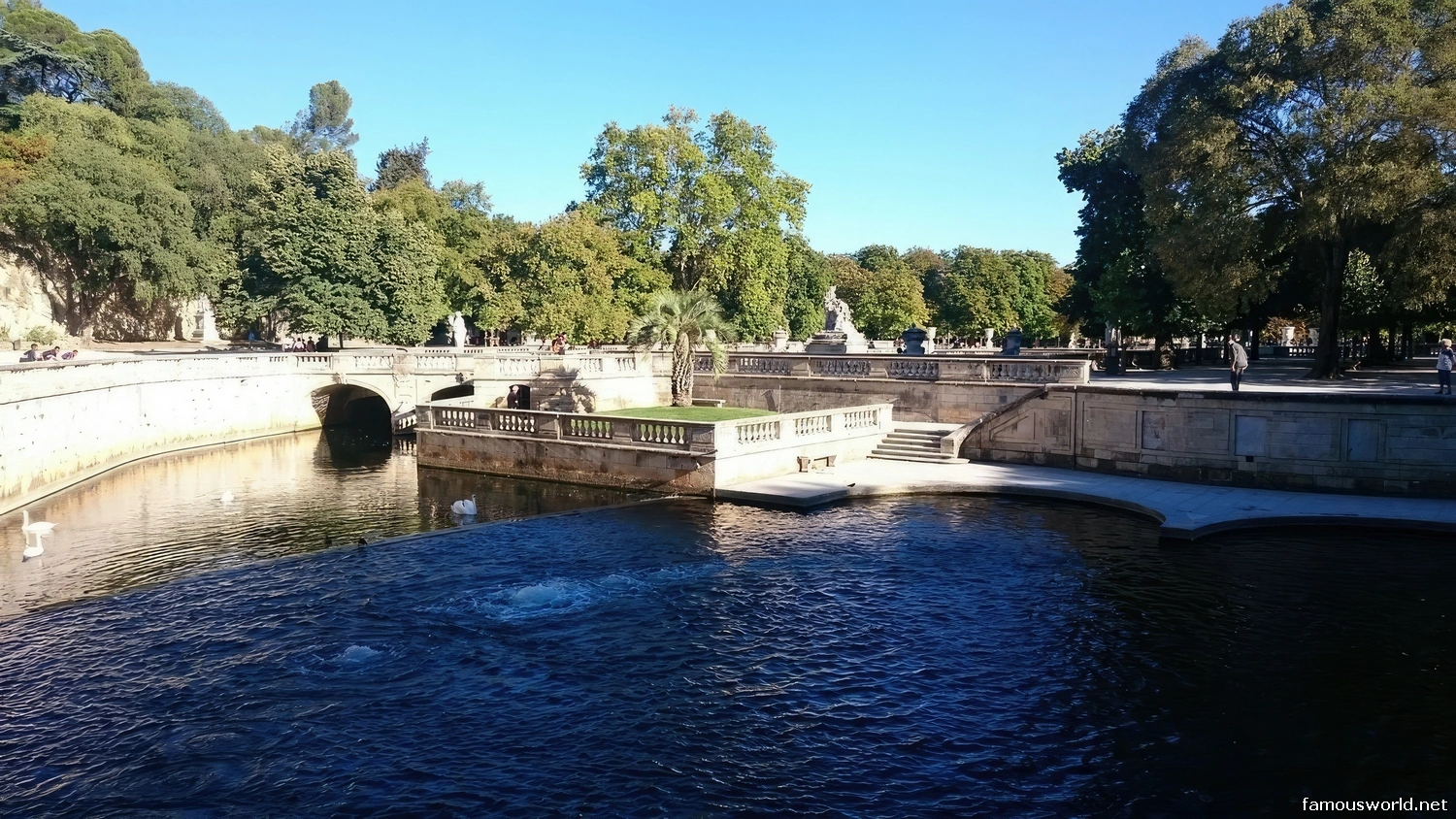
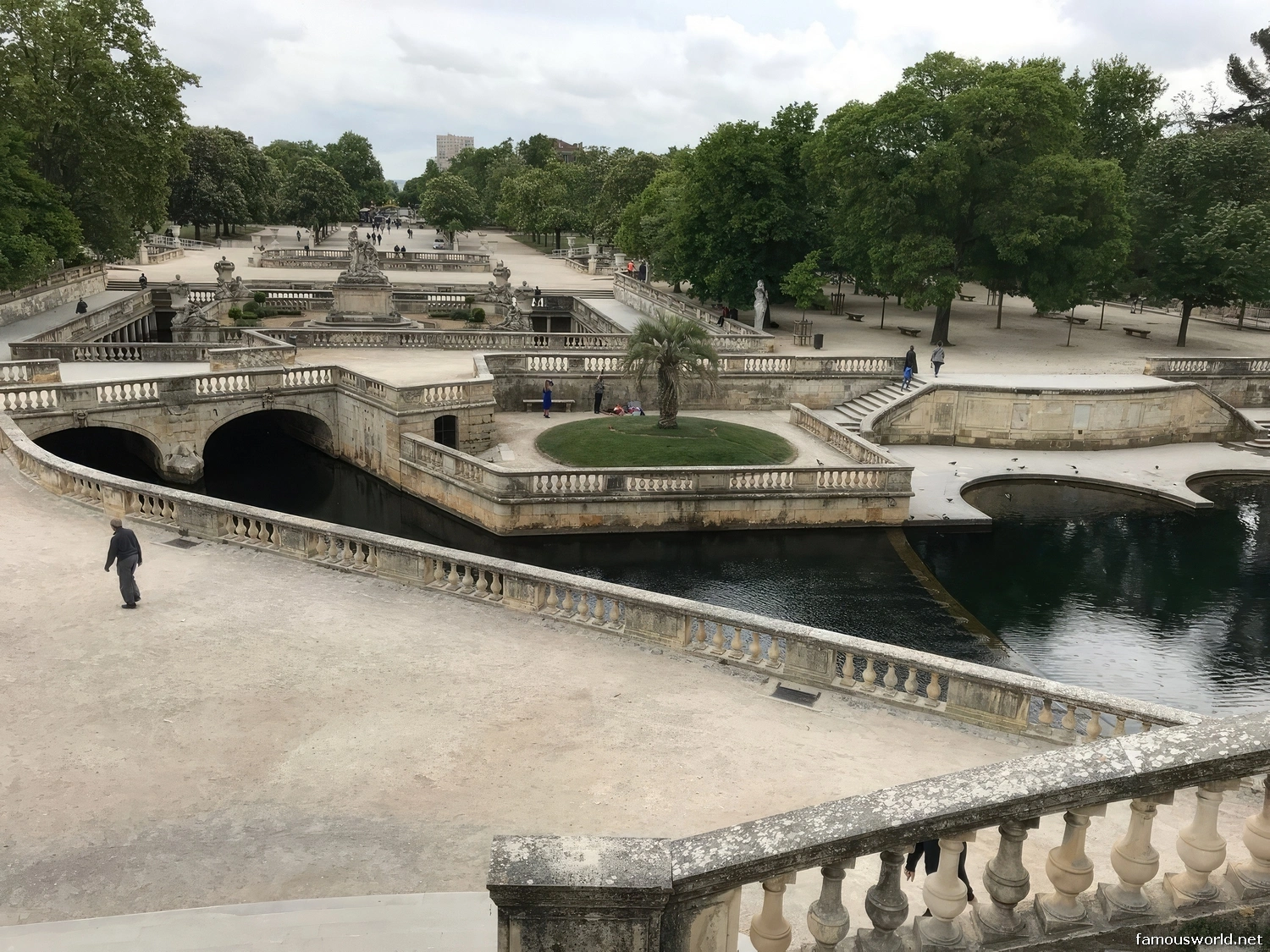
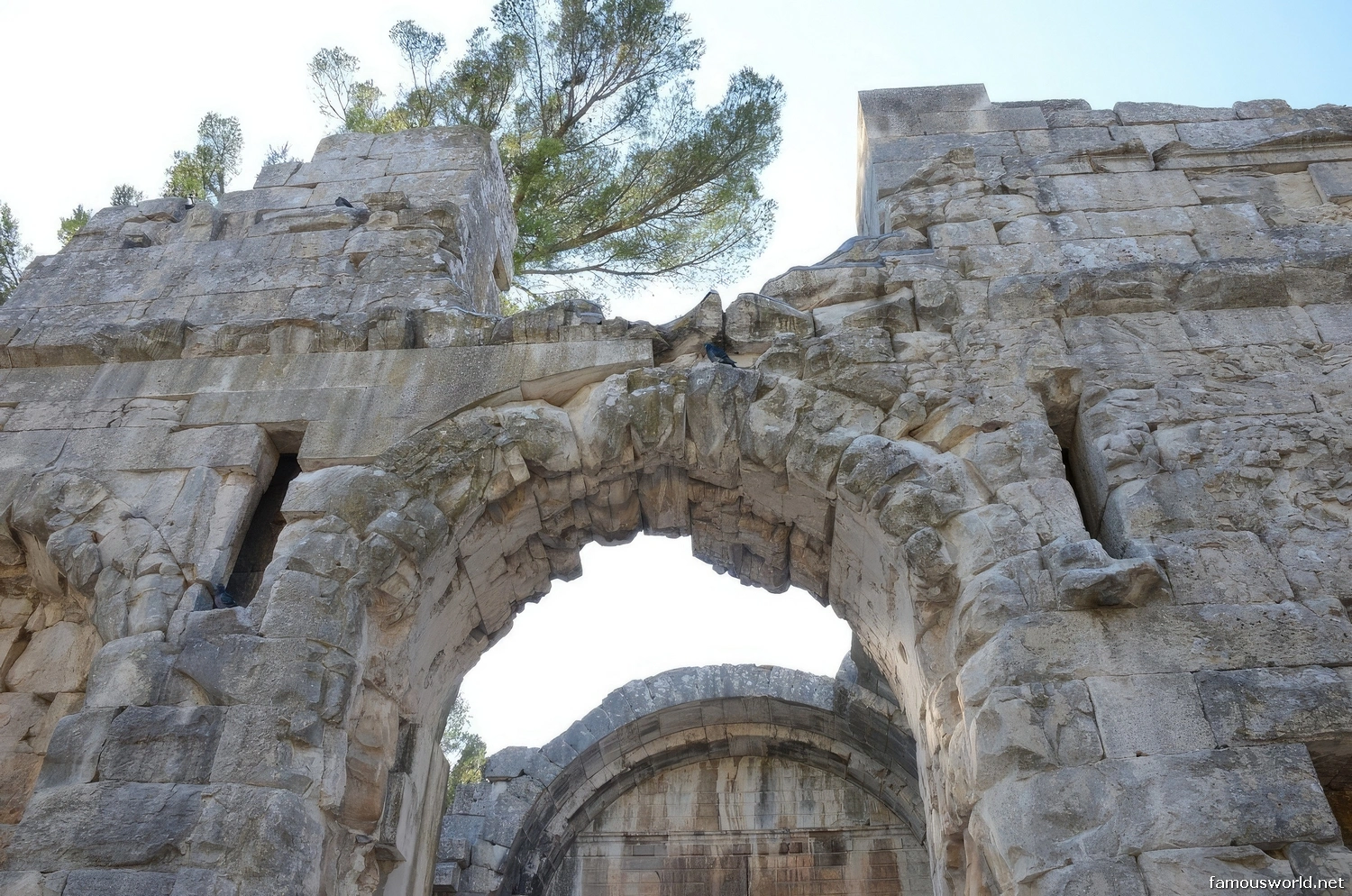
- Jardins de la Fontaine: These grand 18th-century gardens are built around the ancient Roman spring and sanctuary that was the original heart of the city. The gardens incorporate the ruins of the Roman Temple of Diana and lead up to the Tour Magne, a Roman watchtower offering panoramic views.
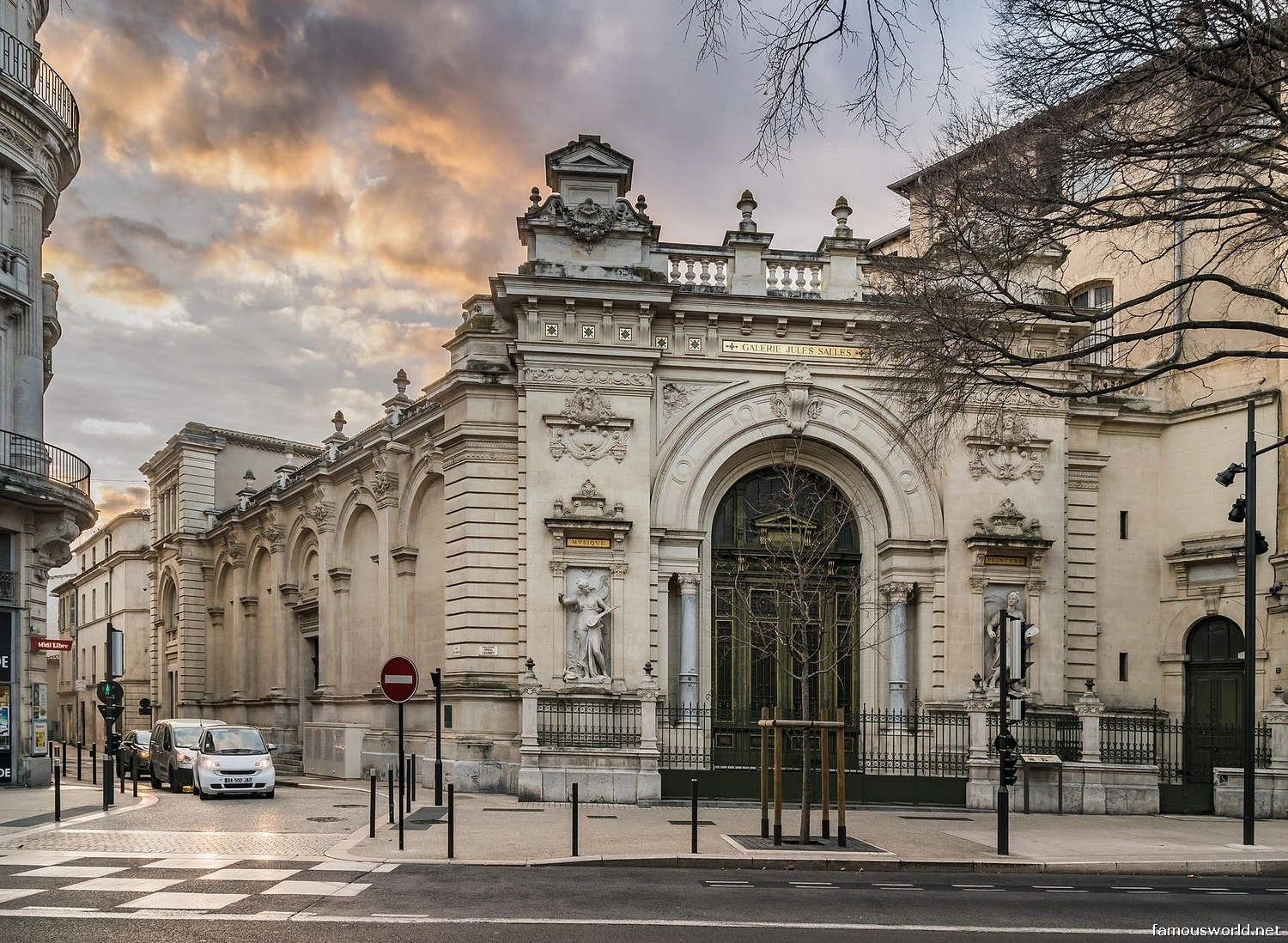
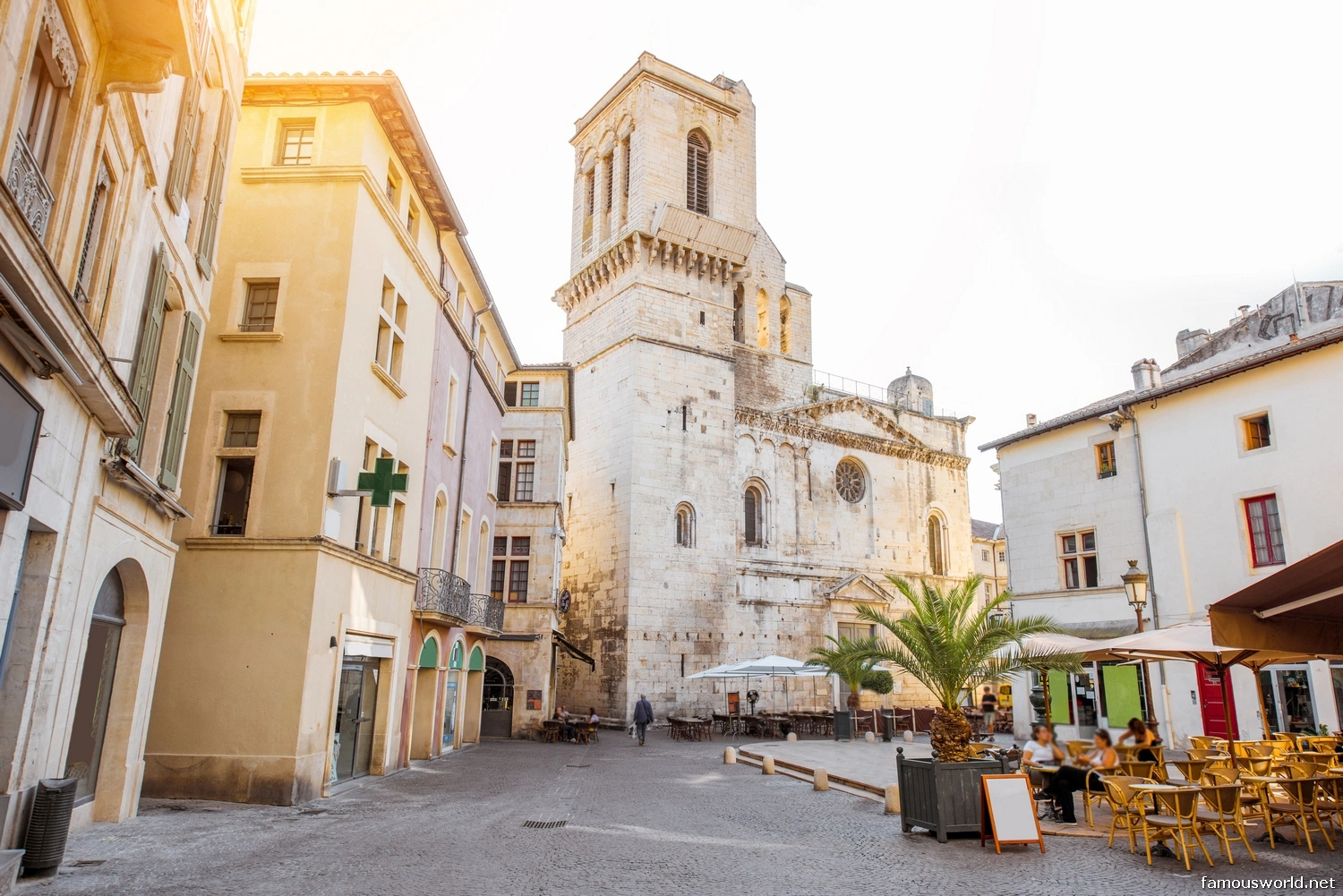
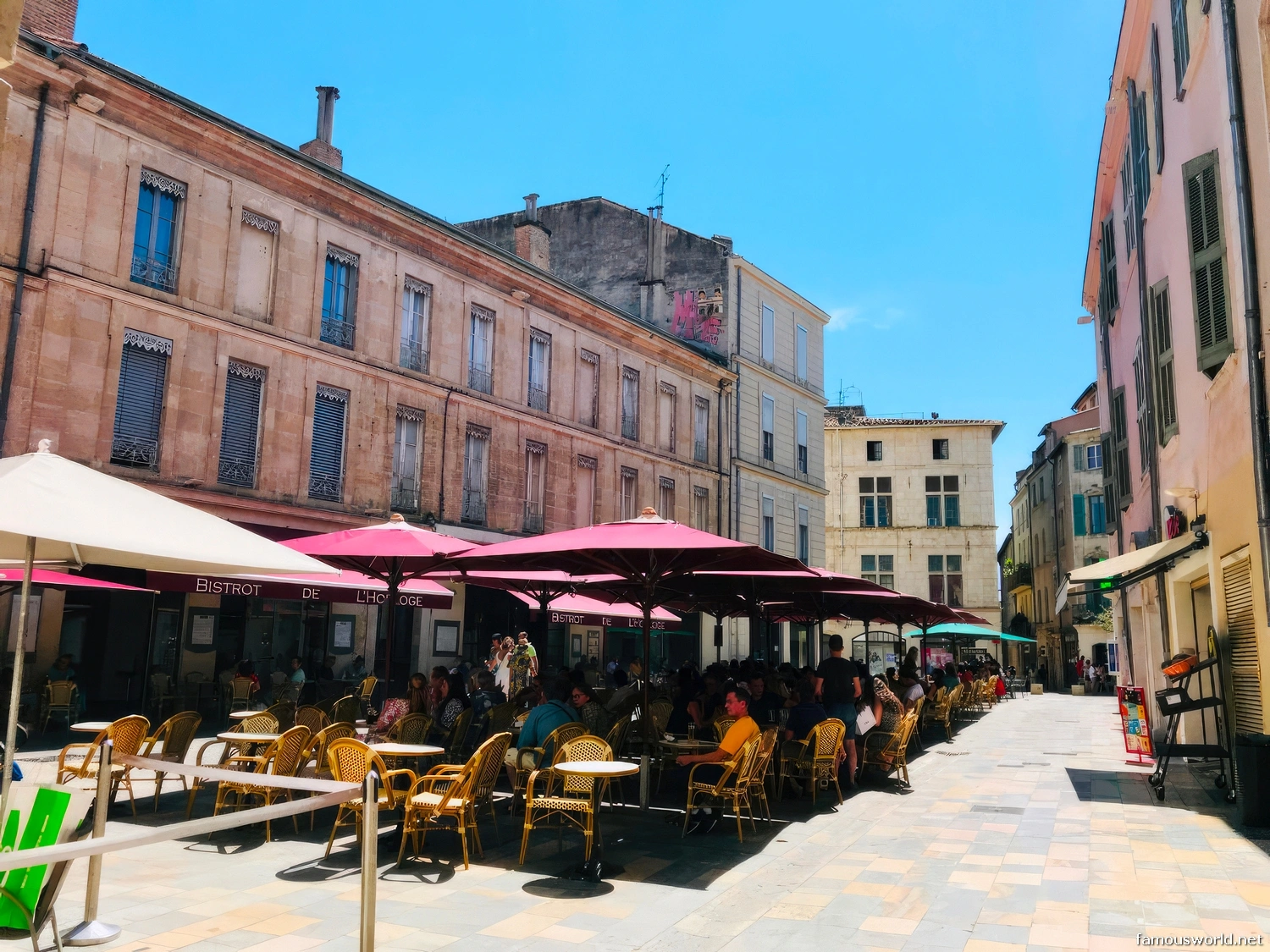
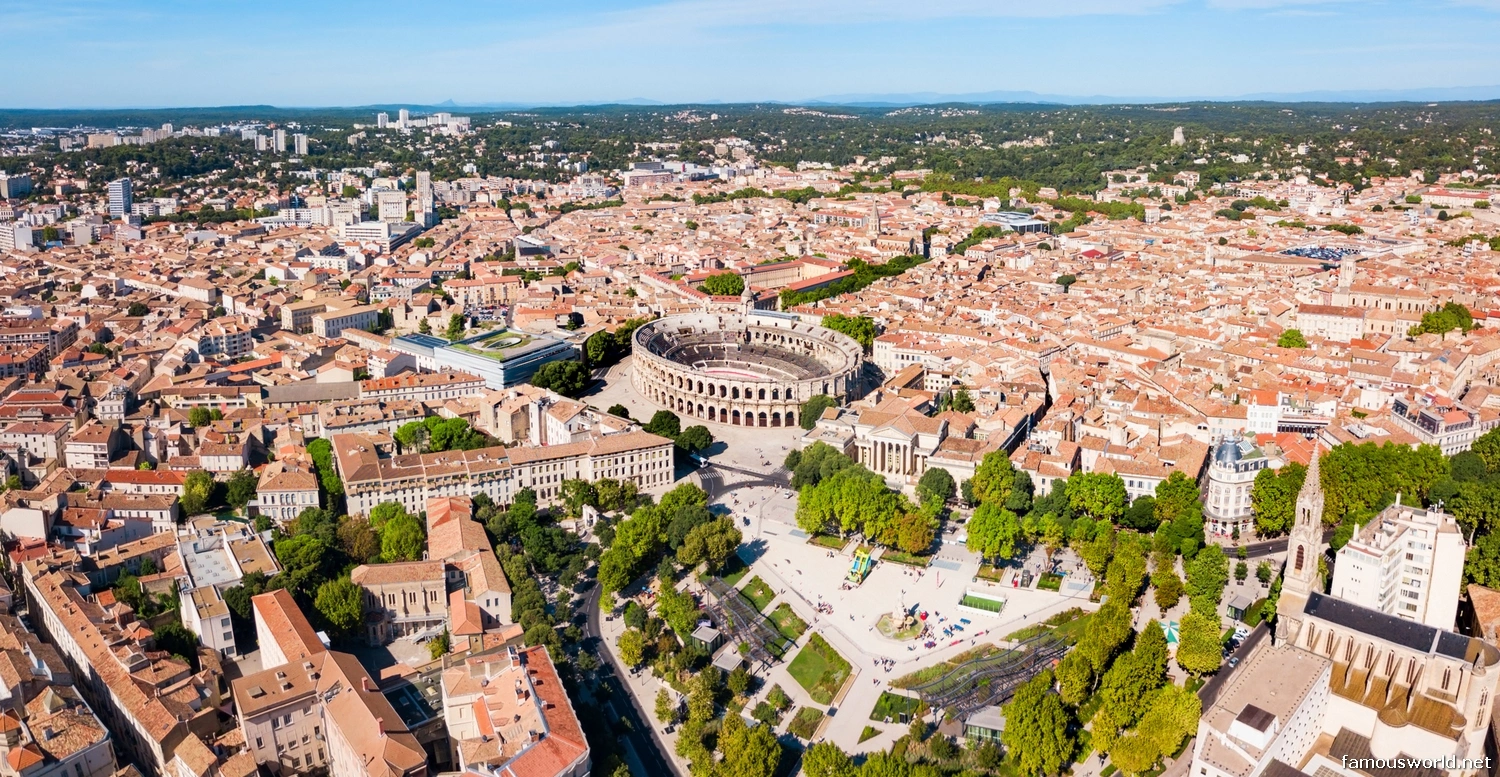
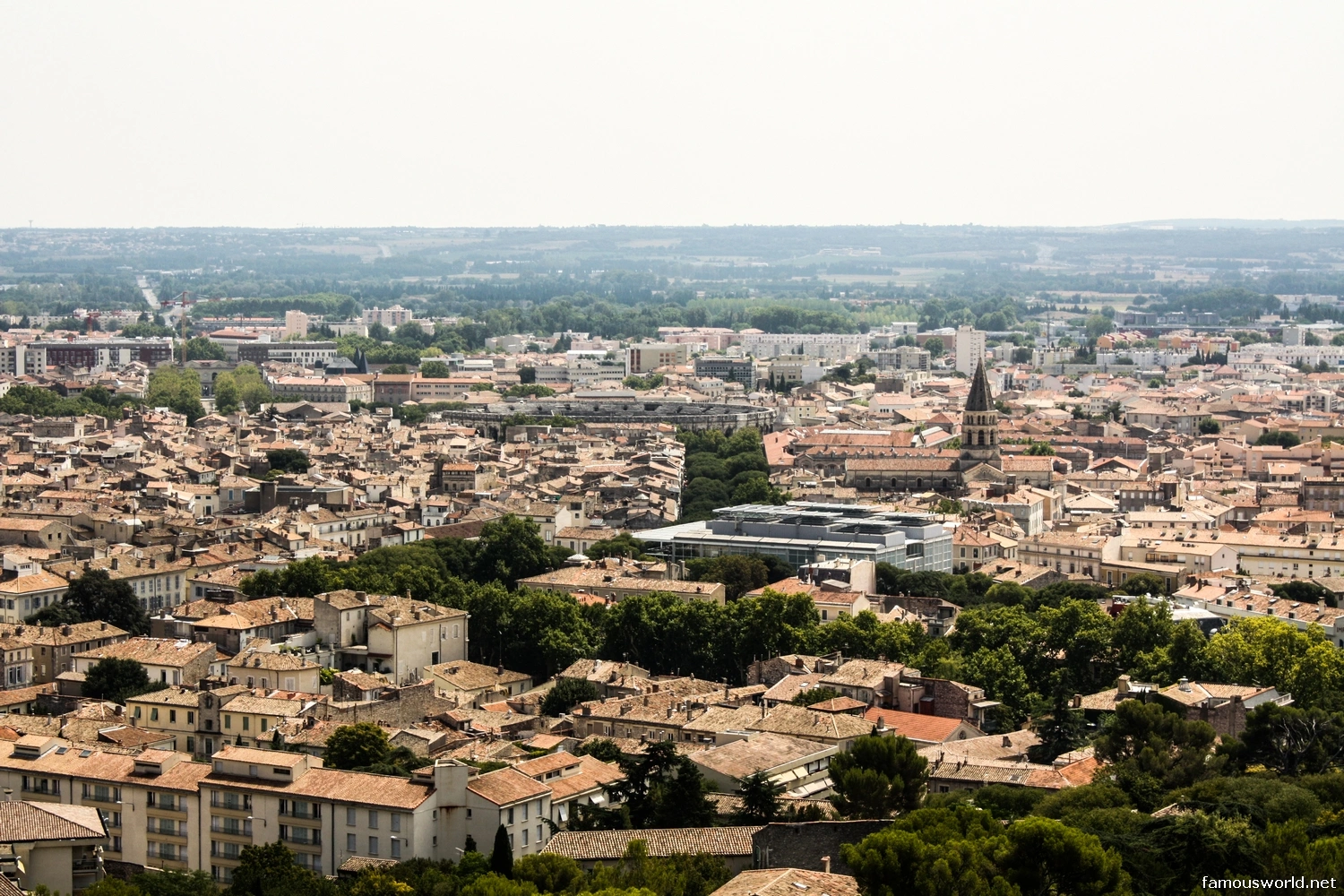
- Urban Heritage: Nîmes blends its Roman monuments with a charming old town of narrow medieval streets and elegant 17th and 18th-century mansions.
What Makes It Famous
Nîmes is famous for its extraordinary collection of Roman monuments and its deep historical roots.
- “The French Rome”: Its reputation is built on having one of the richest and best-preserved collections of Roman buildings outside of Italy.
- UNESCO World Heritage Site: The Maison Carrée was recently inscribed on the UNESCO World Heritage list for its outstanding universal value as a Roman architectural icon.
- Living Arenas: Like in Arles, the Arena of Nîmes is still a major public venue, famous for hosting the “Great Roman Games” (Grands Jeux Romains), a massive historical reenactment, as well as concerts and traditional events.
- The Origin of Denim: The sturdy cotton twill fabric “denim” gets its name from the city. The original material was known as serge de Nîmes (“serge from Nîmes”), which was eventually shortened to “denim.”
Differences from Other Wonders
While both Nîmes and Arles are celebrated for their Roman heritage, Nîmes offers a unique and arguably more complete picture of a Roman provincial capital.
- Environment (Both Urban Roman Centers): Both cities are urban centers where Roman monuments are integrated into the modern city.
- Core Story (The “French Rome” vs. Rome & Van Gogh): While Arles has a powerful Roman story, its identity is also deeply intertwined with the art of Vincent van Gogh. The story of Nîmes is more singularly focused on its identity as a near-complete Roman city.
- Primary Attraction (The Temple & Arena vs. The Arena & Art): Arles’ fame is centered on its spectacular amphitheater and its connection to Van Gogh. Nîmes boasts an equally impressive amphitheater plus the Maison Carrée, a Roman temple of unparalleled preservation, offering a more comprehensive architectural view of Roman civic and religious life.
- Atmosphere (Imperial and Classical vs. Artistic and Historical): A visit to Nîmes, with its temple, arena, and tower, evokes a strong sense of a planned Roman capital with a classical, imperial feel. Arles shares the historical atmosphere but adds a distinct layer of artistic pilgrimage.
Location on world map