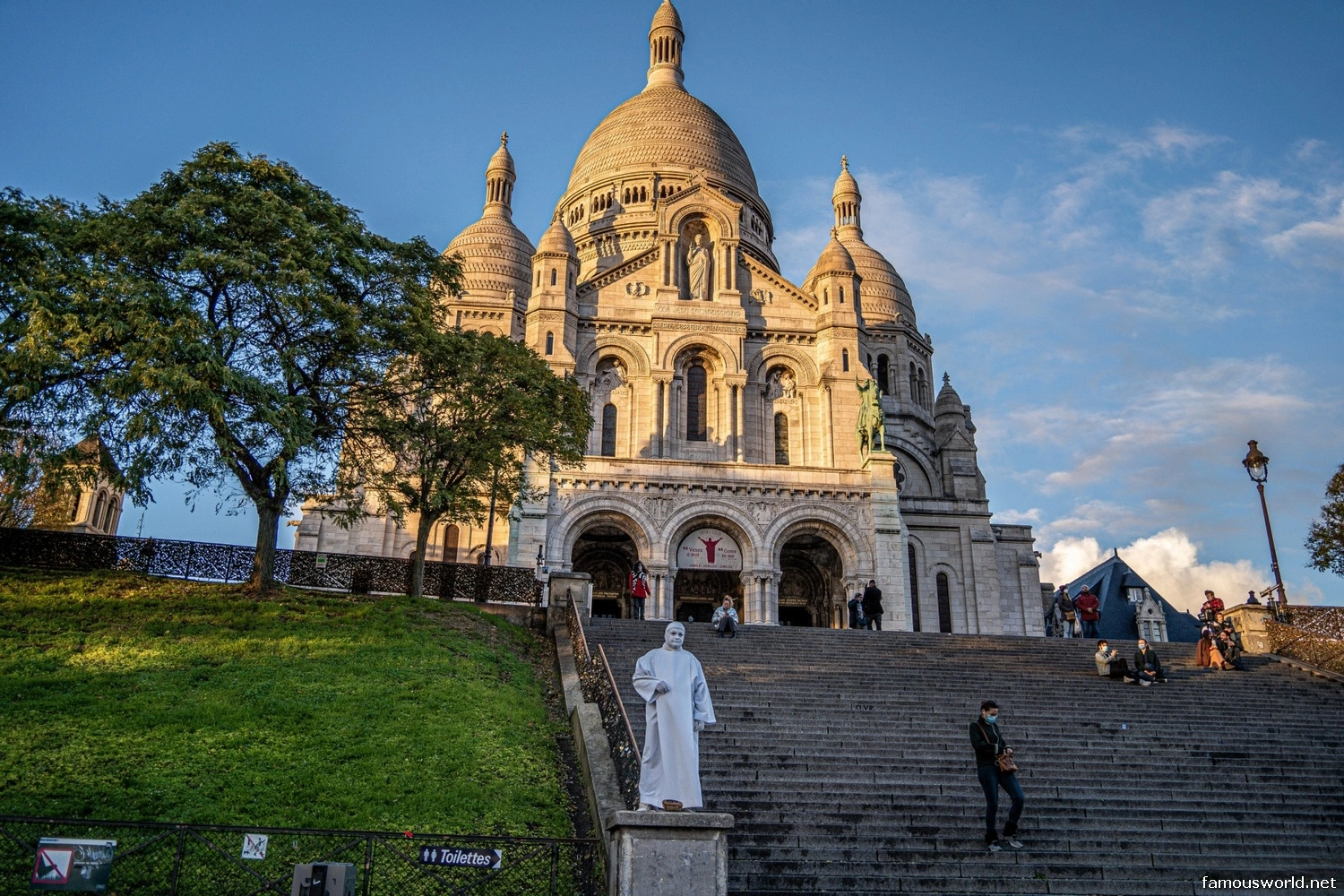
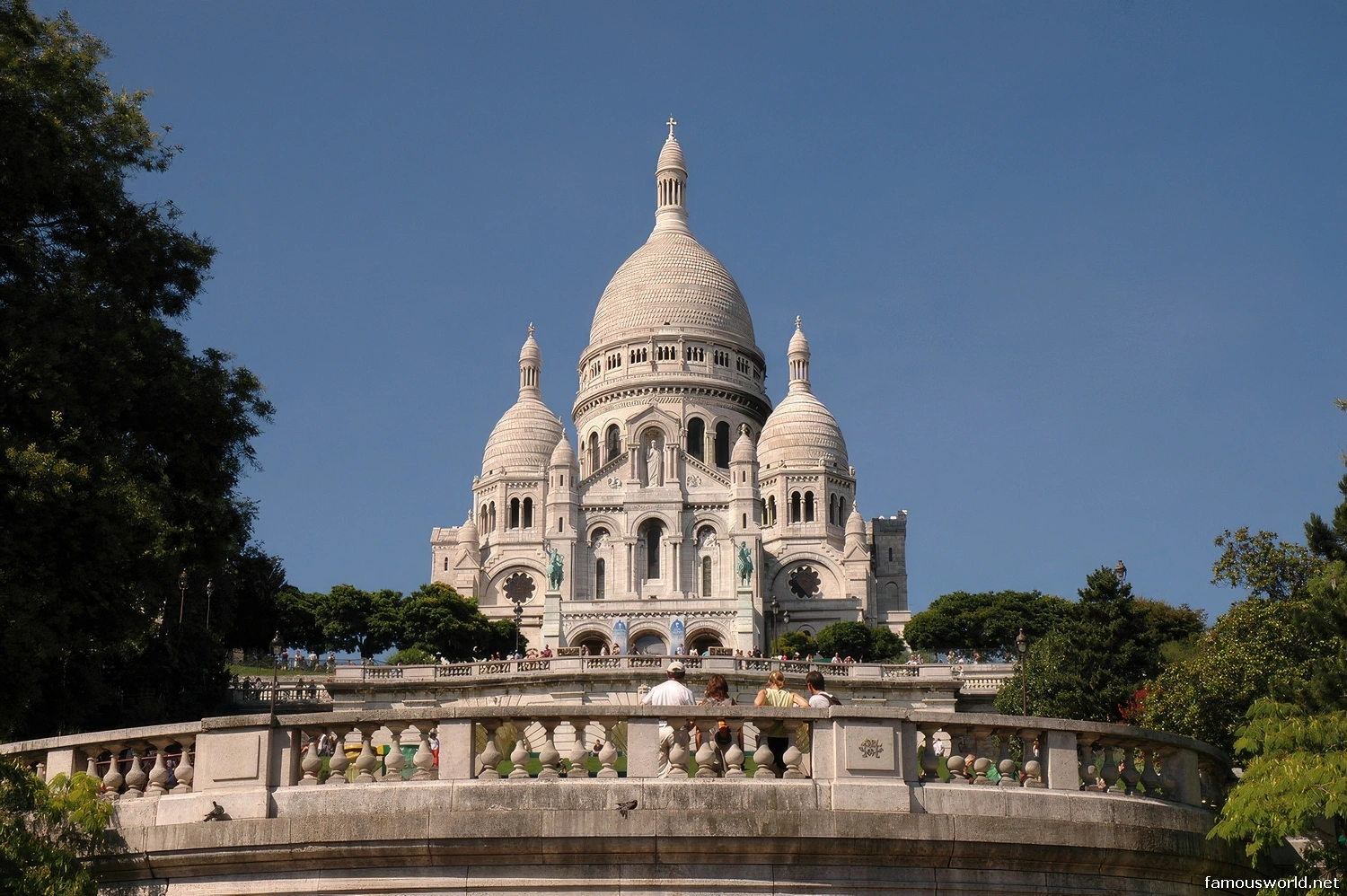


Perched atop the highest natural point in Paris, the Basilica of the Sacred Heart of Paris, known as Sacré-Cœur, is a gleaming white beacon of faith and a beloved city landmark. Its Romano-Byzantine domes rise majestically over the bohemian district of Montmartre, offering a stark and beautiful contrast to the Gothic cathedrals below. Conceived as an act of national penance after a period of war and turmoil, the basilica is both a major Roman Catholic pilgrimage site and a symbol of hope. To climb its famous steps is to be rewarded not only with one of the most breathtaking panoramic views of Paris but also with the serene and uplifting atmosphere of a truly sacred space.
Listen to an introduction about Sacré-Cœur Basilica

Name and Location
- Name: Basilica of the Sacred Heart of Paris (French: Basilique du Sacré-Cœur de Montmartre).
- Location: 35 Rue du Chevalier de la Barre, 75018 Paris, France, at the summit of the butte Montmartre.
How to Get There
Reaching the basilica at the top of the hill is part of the experience.
- By Métro: The most common approach is via Line 2 to Anvers station or Line 12 to Abbesses station, followed by a short walk to the base of the hill.
- By Funicular: The Montmartre funicular provides a quick, scenic ride from the bottom of the hill directly to the esplanade in front of the basilica.
- By Foot: For a more traditional approach, visitors can climb the 222 steps through the gardens of the Square Louise Michel.
Landscape and Architecture
Sacré-Cœur’s unique architecture and commanding location make it an unforgettable sight.
- Architectural Style & Design: Designed by Paul Abadie, the basilica’s Romano-Byzantine style was a departure from the dominant Gothic. Its most striking feature is its brilliant white facade, constructed from travertine stone sourced from Château-Landon. This stone constantly exudes calcite, which bleaches the surface, ensuring the basilica remains a radiant white even with weathering and pollution.
- The Domes and Interior: The structure is defined by its massive central dome, which provides 360-degree views of Paris, and several smaller cupolas. The interior is famous for its vast apse mosaic, Christ in Majesty, one of the largest mosaics in the world.
- Urban Landscape: As the crown of the butte Montmartre, the basilica is visible from across Paris. The grassy terraces cascading down the hill in front of it are a famous and popular public space for Parisians and tourists alike to relax and enjoy the view.
What Makes It Famous
The basilica is renowned for its iconic silhouette, its spiritual significance, and its unparalleled views.
- The White Dome of Paris: Its gleaming, multi-domed silhouette is an instantly recognizable and cherished part of the Parisian skyline.
- The Great Mosaic: The interior’s golden Christ in Majesty mosaic is a breathtaking work of art that covers the entire apse and is a central feature of the basilica’s design.
- Perpetual Adoration: Sacré-Cœur is a very active church and a site of perpetual adoration of the Blessed Sacrament, where uninterrupted prayer has continued day and night since 1885.
- The View from the Dome: The panoramic view from the top of the central dome is one of the most spectacular in Paris, second only in height to the Eiffel Tower.
Differences from Other Wonders
As a place of pilgrimage built on a hill, Sacré-Cœur offers a different experience from the Musée d’Orsay, a cultural institution housed in a riverside train station.
- Environment (Hilltop Basilica vs. Riverside Station): Sacré-Cœur is a sacred place of worship that majestically crowns the highest hill in Paris. The Musée d’Orsay is a secular museum located within a grand, repurposed industrial building on the flat banks of the Seine.
- Core Story (National Penance vs. Artistic Revolution): The story of Sacré-Cœur is one of national atonement, faith, and pilgrimage. The story of the Orsay is one of artistic revolution and the celebration of the birth of modern art.
- Primary Attraction (Sacred Architecture & View vs. Art Collection): The primary attraction of Sacré-Cœur is the basilica itself—its unique architecture, its sacred atmosphere, and the panoramic city view it offers. The primary attraction of the Orsay is the world-class collection of Impressionist art it contains.
- Atmosphere (Spiritual and Uplifting vs. Luminous and Artistic): A visit to Sacré-Cœur is a spiritual and uplifting experience, inspiring a sense of peace and reverence. A visit to the Orsay is a cultural journey, with an atmosphere that is both luminous and deeply artistic.
Location on world map