

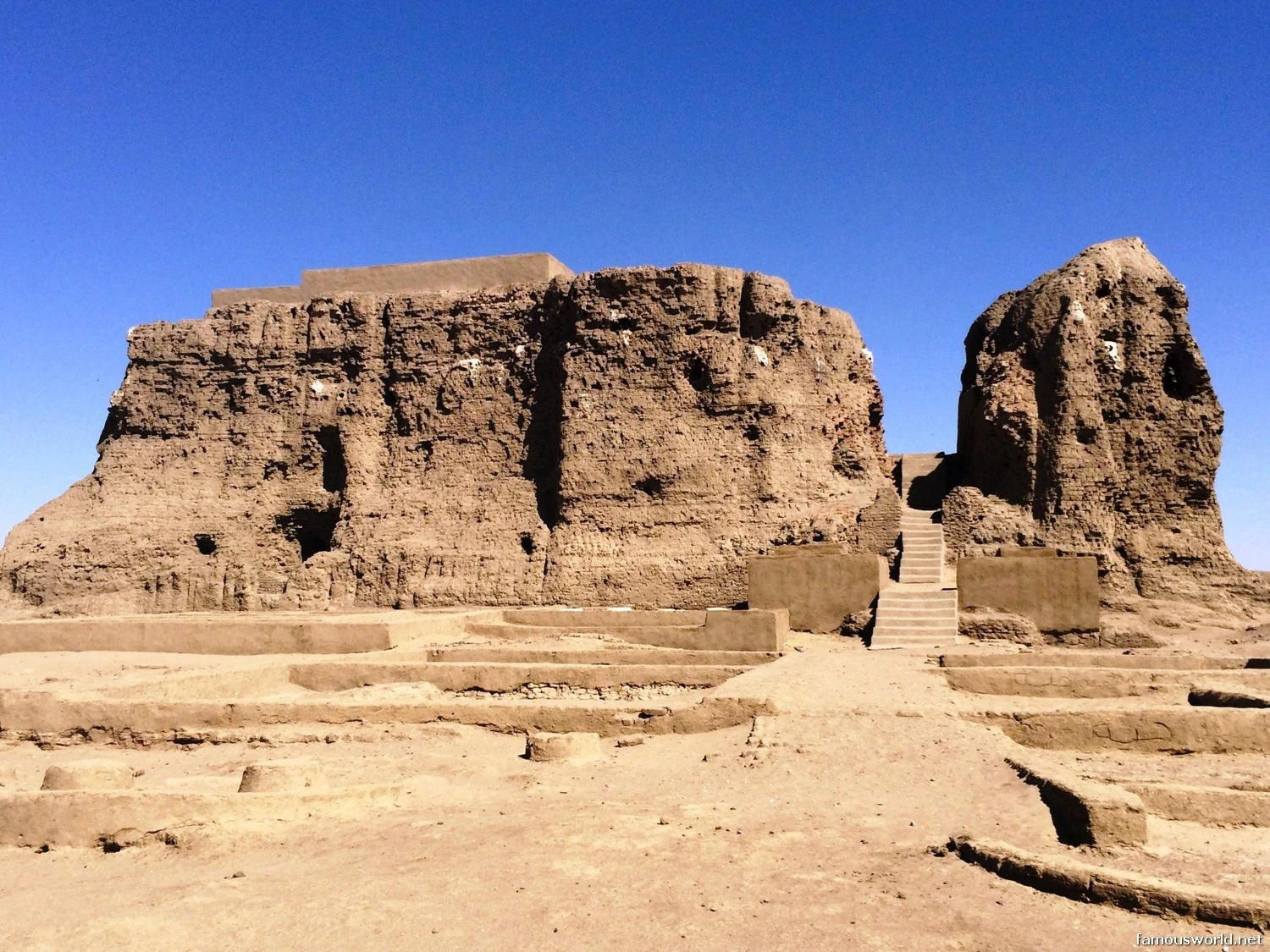

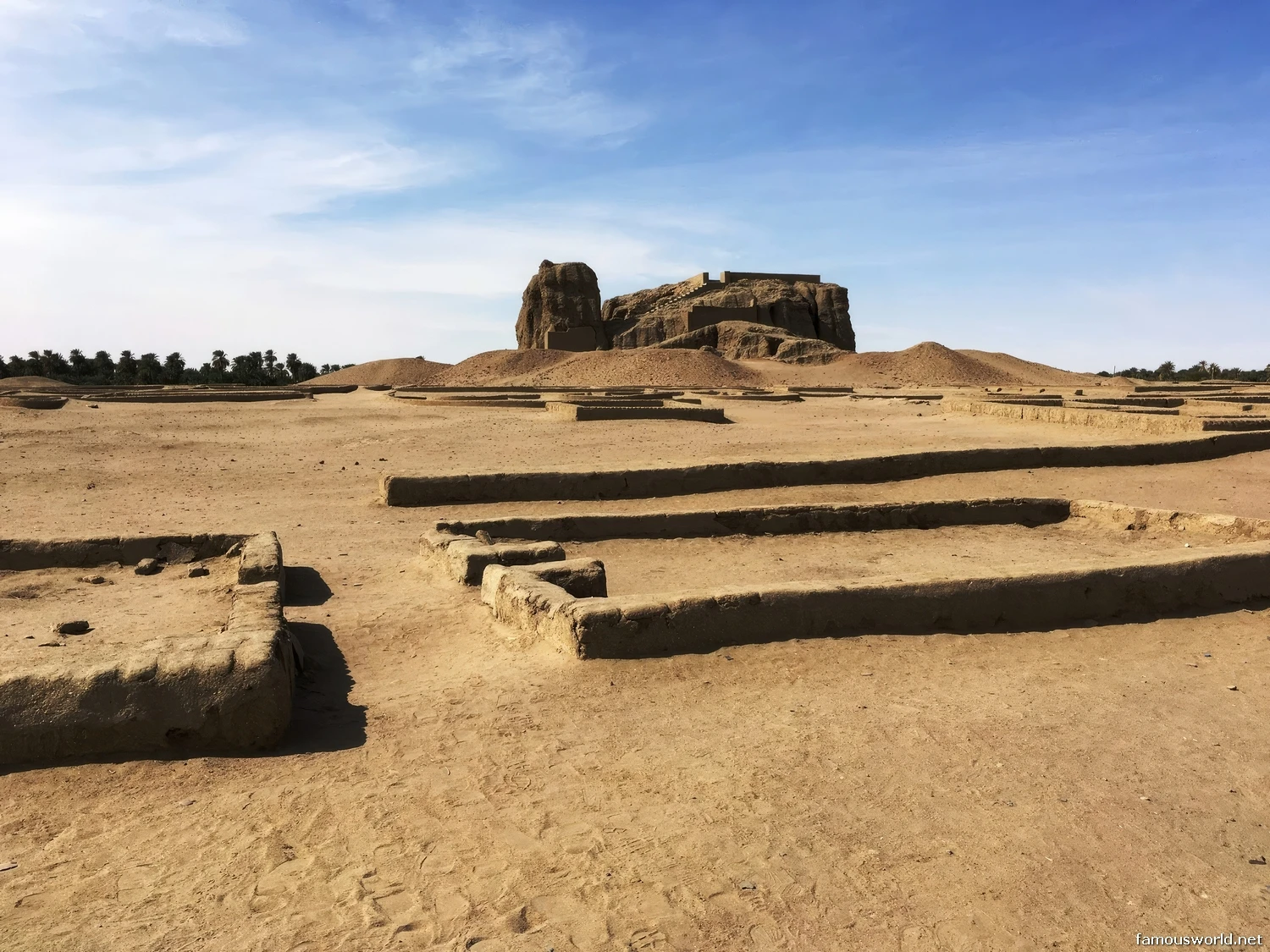
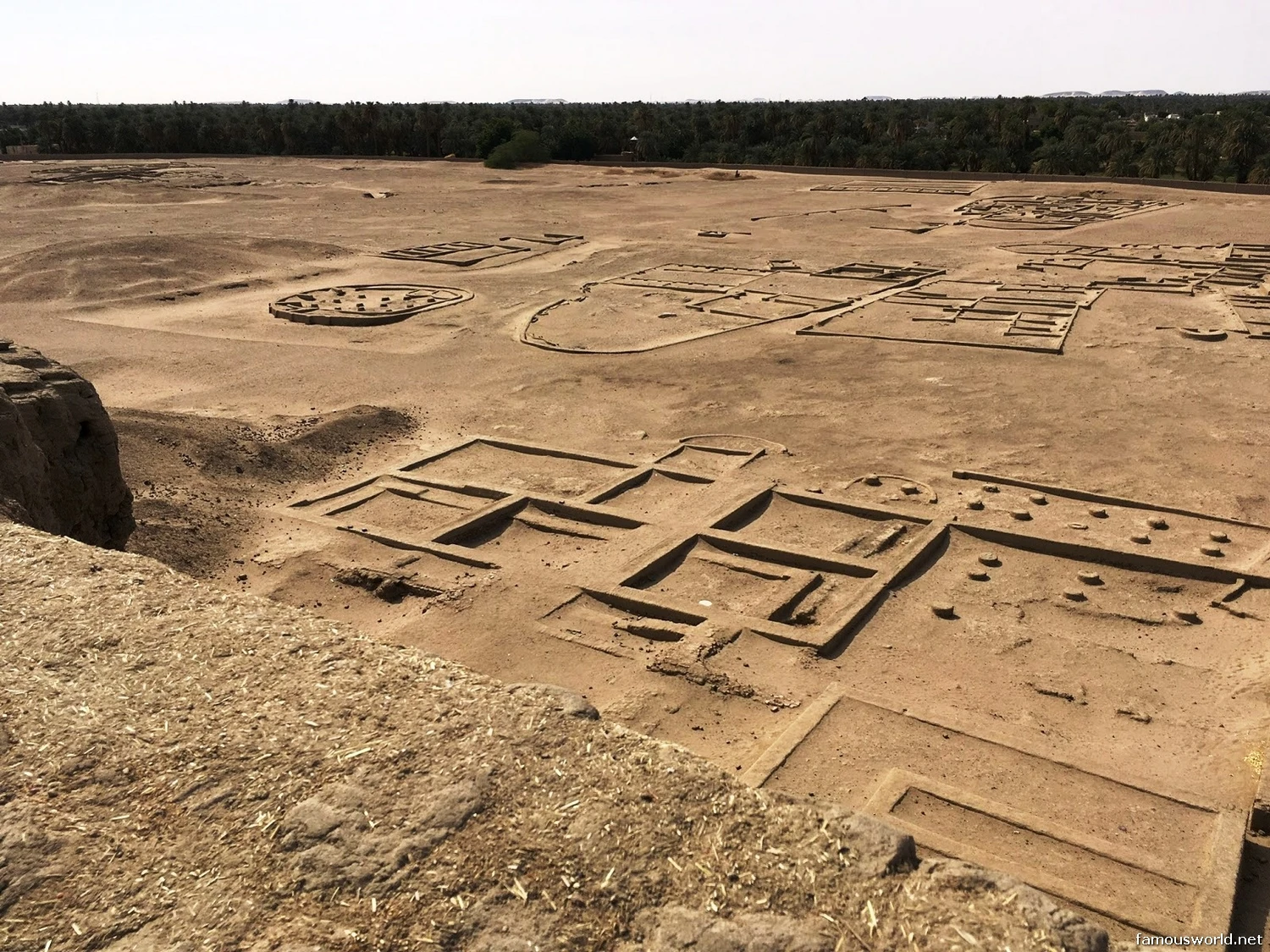

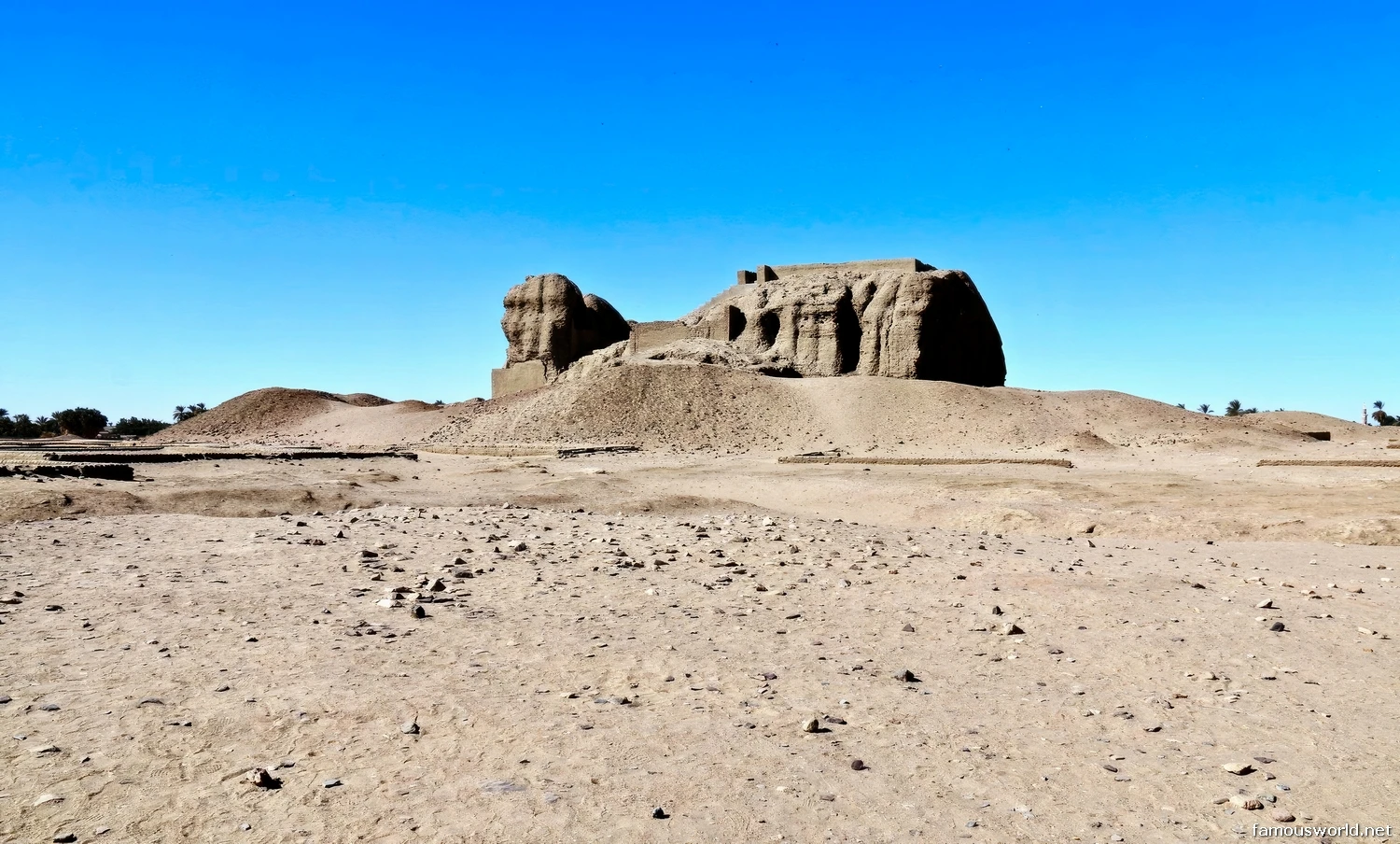
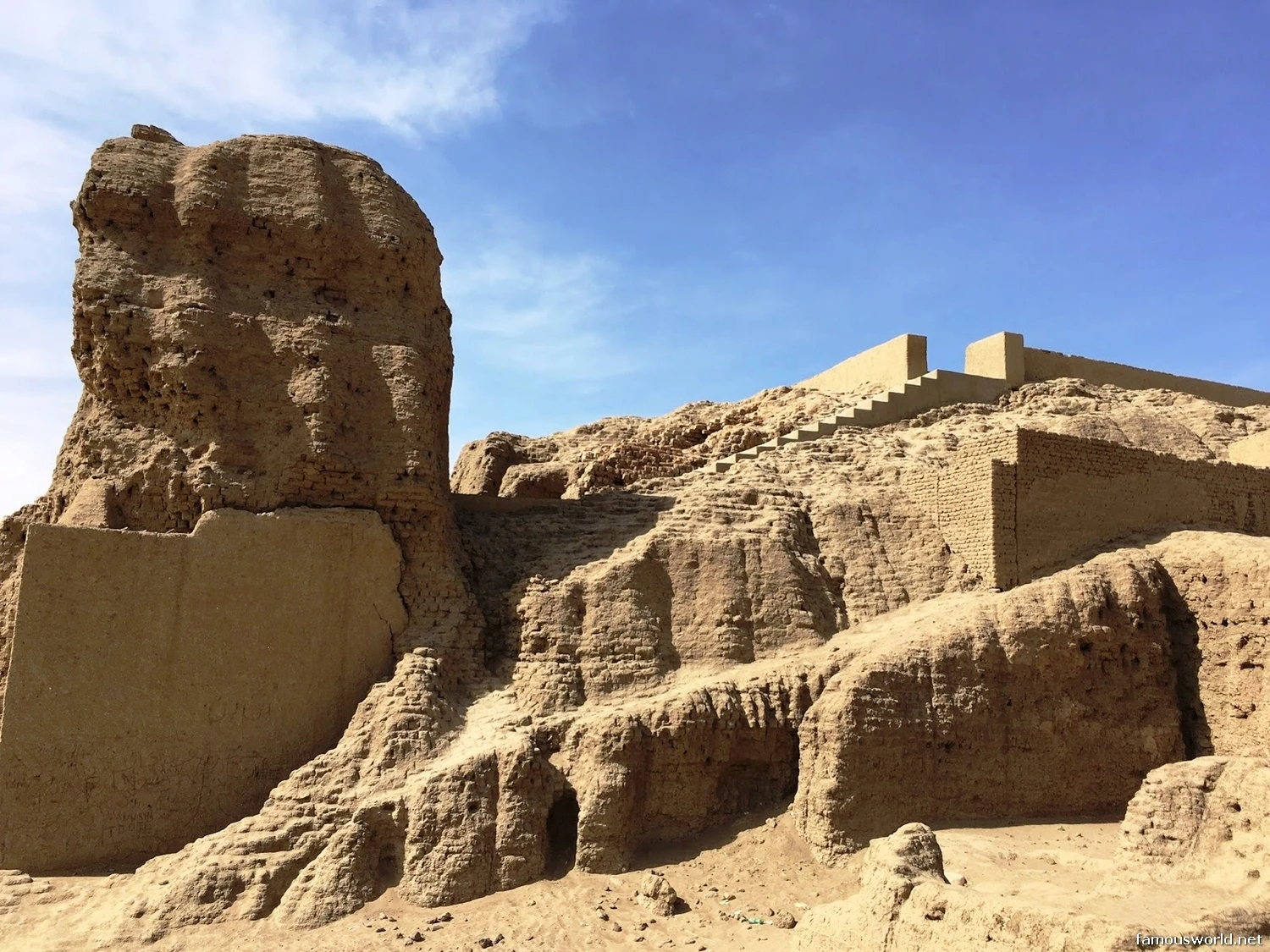



Kerma was the capital of the first Kingdom of Kush, one of the oldest and most powerful urban centers in ancient Africa. Flourishing for nearly a thousand years, this vast city-state controlled the Nile Valley between the fourth and fifth cataracts, long before the rise of the later Kushite kings at Napata and Meroe. The heart of the city was dominated by a colossal mud-brick temple, the Western Deffufa, which remains one of the largest and most impressive ancient structures in sub-Saharan Africa. The ruins of Kerma, including its sprawling city and vast necropolis, provide a rare and compelling look into a sophisticated, indigenous African civilization that rivaled Old and Middle Kingdom Egypt in power and wealth.
Listen to an introduction about Archaeological Site of Kerma

Name and Location
- Name: The Archaeological Site of Kerma.
- Location: In the Northern State of Sudan, on the east bank of the Nile River, just south of the Third Cataract.
How to Get There
Accessing Kerma is typically part of a larger tour of Sudan’s ancient Nubian sites.
- By Road: The most common way to visit Kerma is by road from Khartoum or as part of a circuit from Karima/Merowe. It is often combined with visits to other nearby sites like Jebel Barkal. The journey showcases the desert and Nile Valley landscapes of northern Sudan.
Landscape and Architecture
Kerma’s ruins are a testament to a unique and powerful architectural tradition.
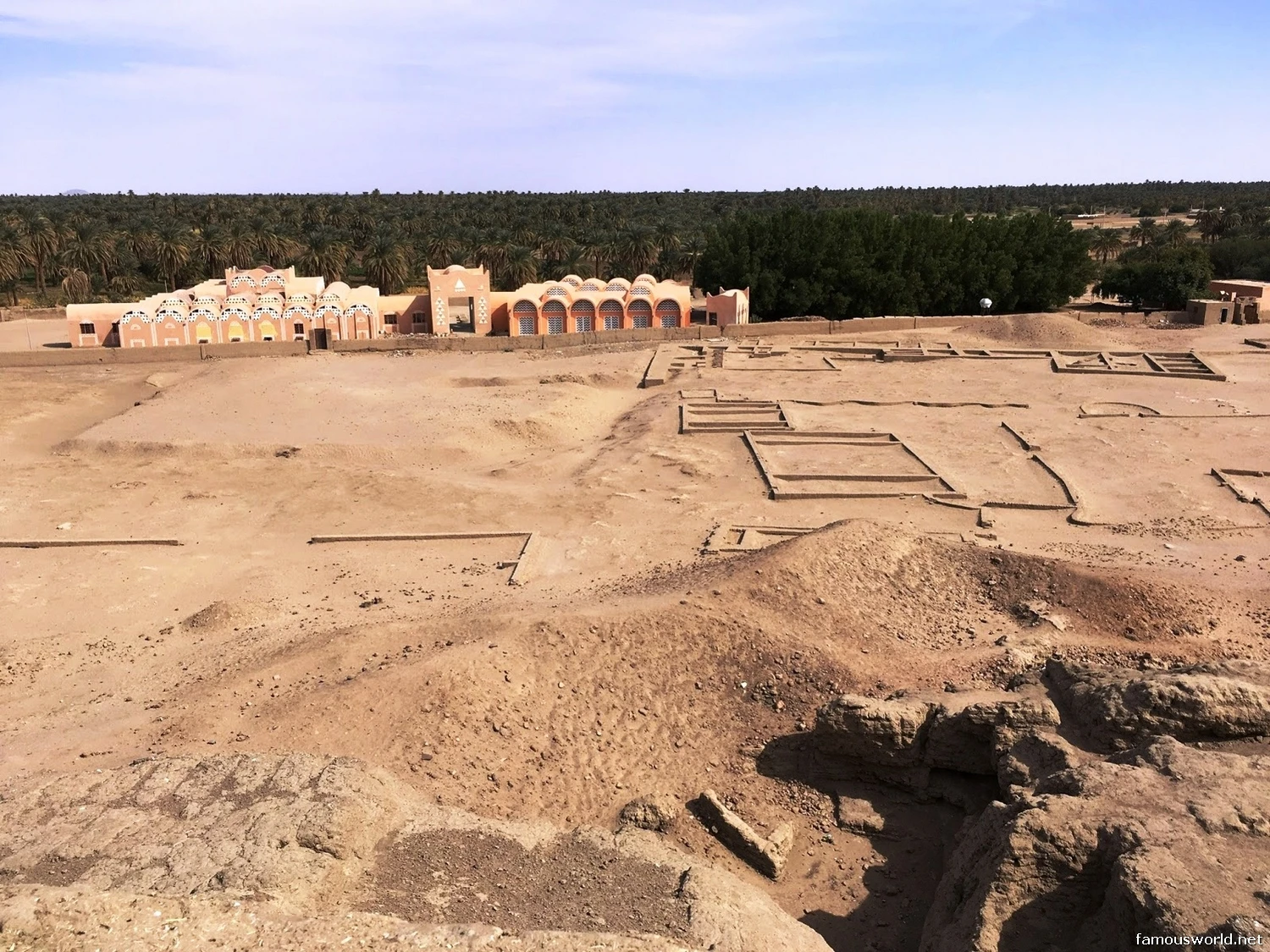
- Natural Landscape: The ancient city was built on a wide, fertile plain along the Nile, allowing for a strong agricultural base. The site is now an open-air archaeological park set against a backdrop of the river, palm groves, and the surrounding desert.
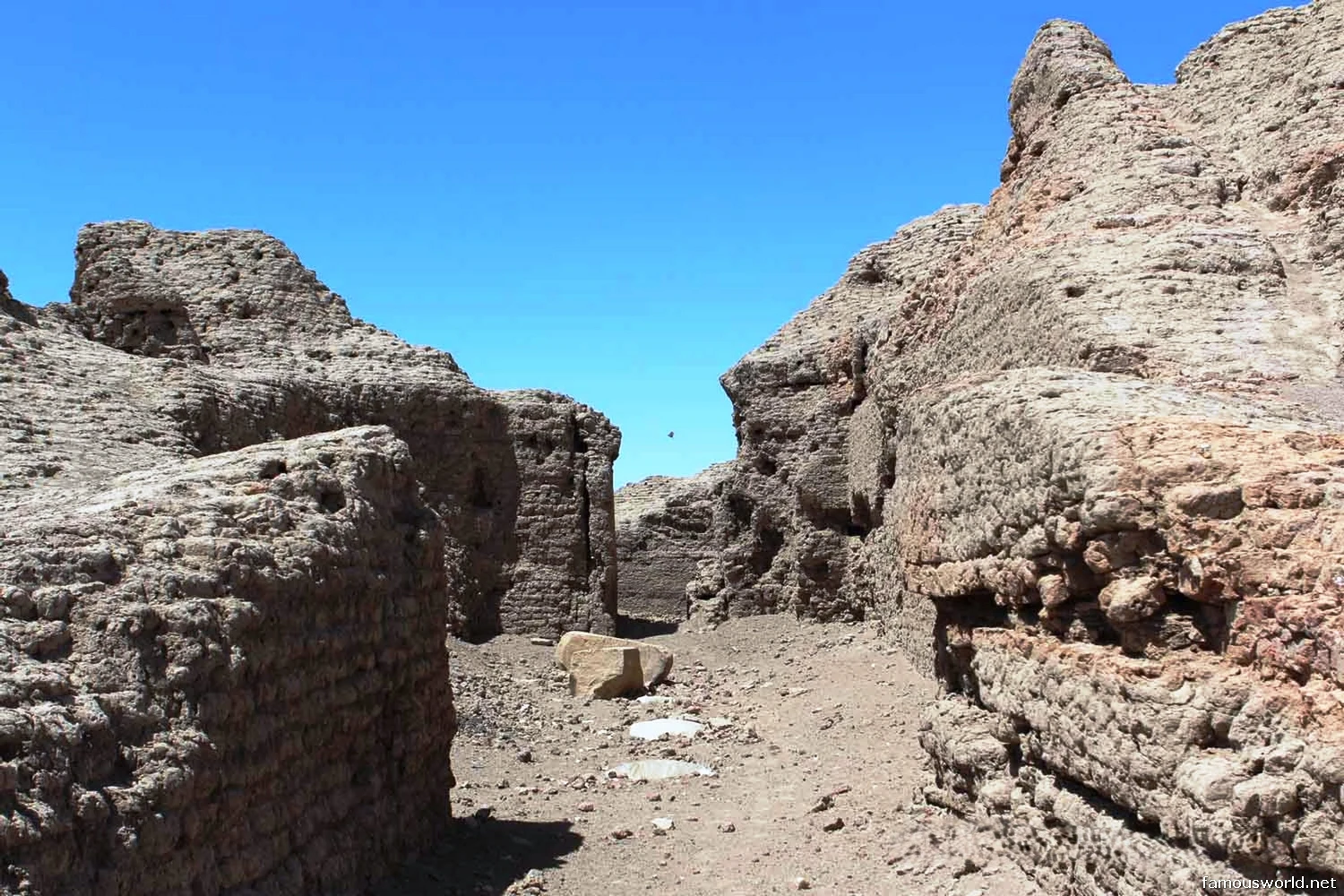
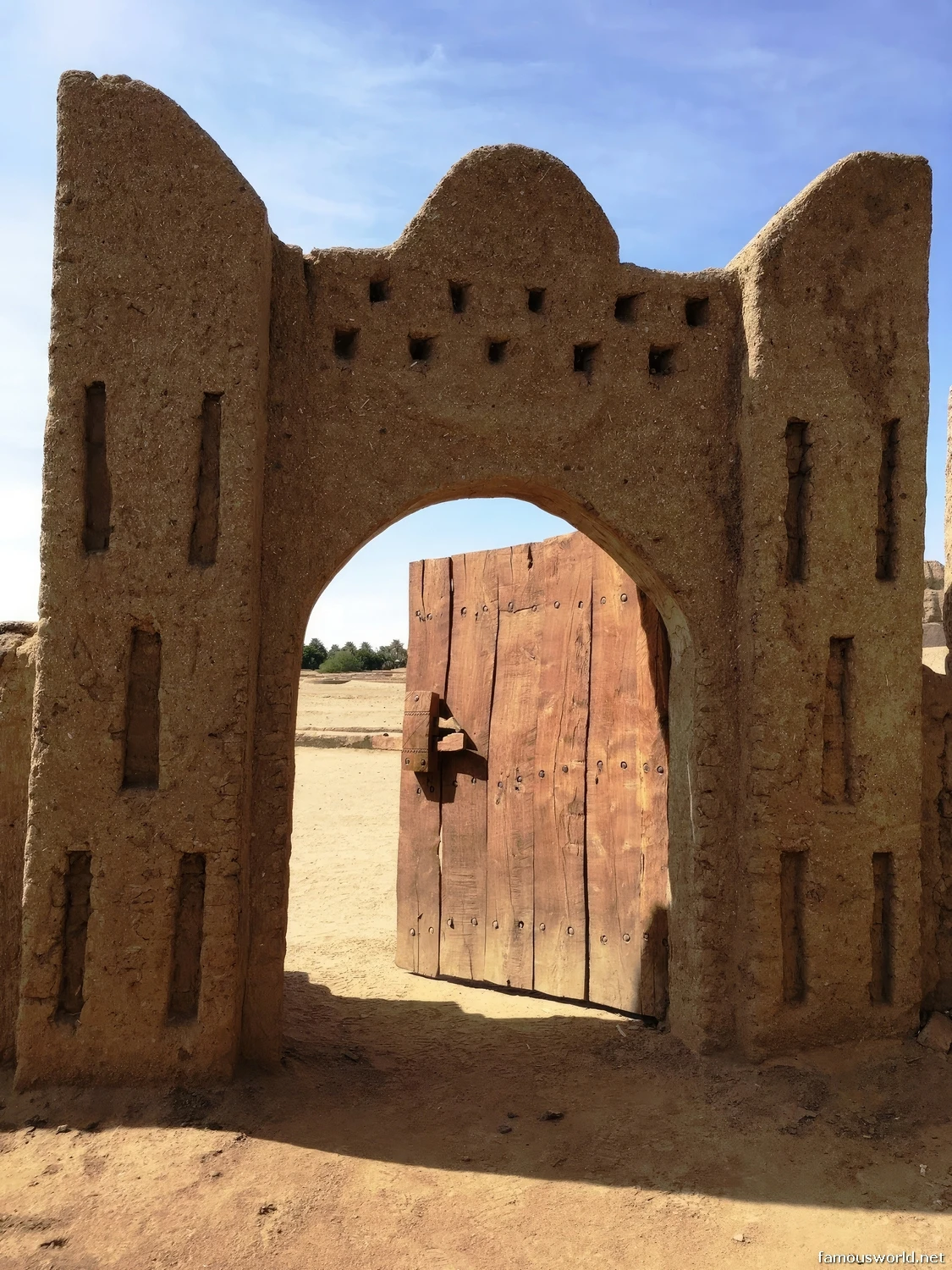
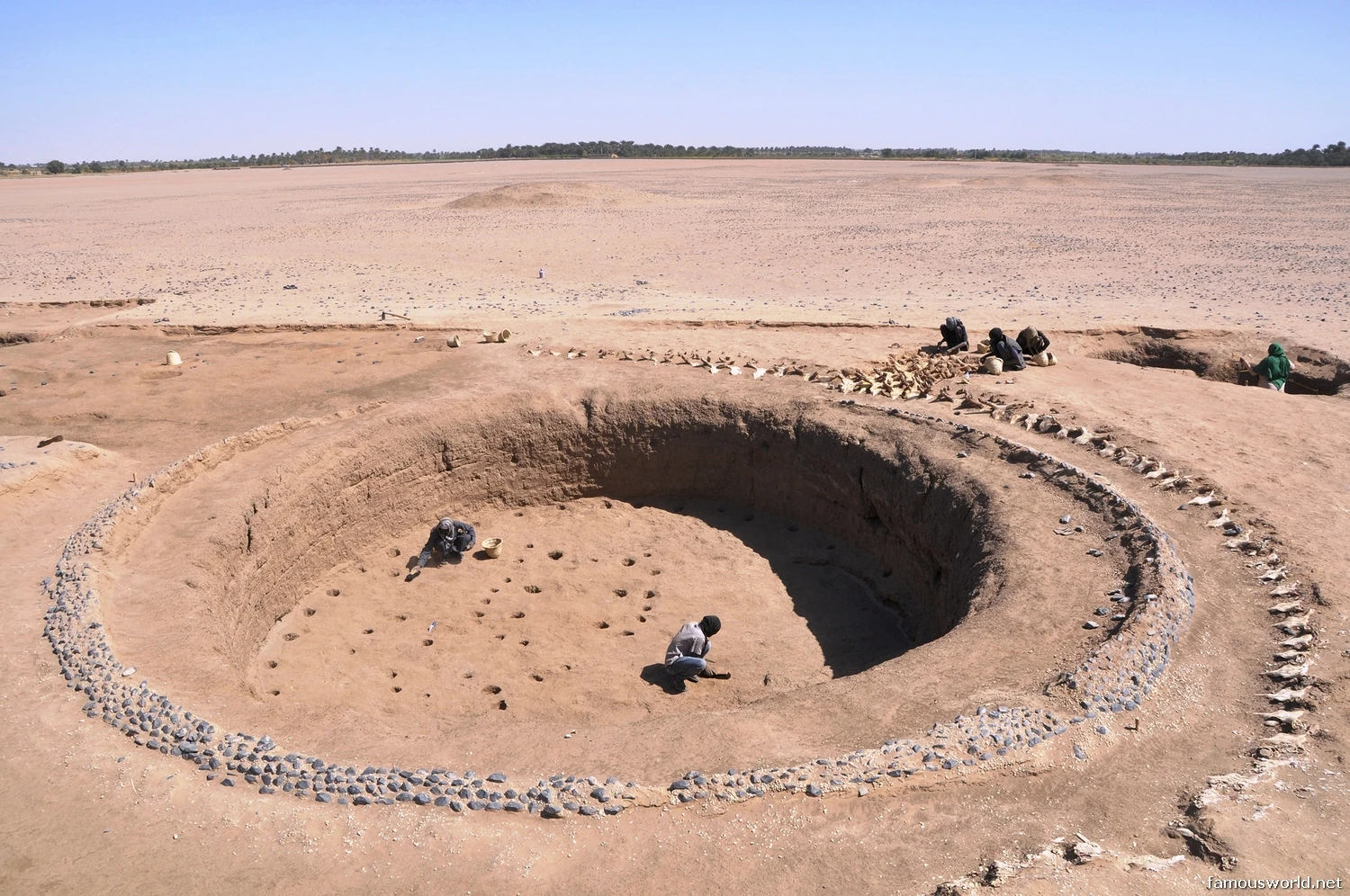
- Architectural Style: The most striking feature of Kerma is its monumental mud-brick architecture. The site is dominated by the Western Deffufa, a massive, solid mud-brick structure that served as the city’s main temple. It is distinct from any Egyptian temple, representing a purely indigenous Nubian design. The city also includes ruins of a royal palace, audience chambers, and a second temple, the Eastern Deffufa, located in the middle of a vast necropolis. This cemetery contains thousands of circular tombs, with the largest royal tumuli being over 90 meters (300 feet) in diameter.
What Makes It Famous
Kerma is renowned as the seat of the first great kingdom in ancient Sudan.
- First Kingdom of Kush: It was the center of the Kerma culture (c. 2500–1500 BCE), the first unified kingdom to arise in Nubia and a major power in the Nile Valley.
- The Western Deffufa: This unique structure is one of the oldest and largest mud-brick buildings in Africa, attesting to the incredible organizational power of the Kerma state.
- Oldest City in Sub-Saharan Africa: Kerma is considered one of the earliest urbanized centers in tropical Africa, with a history of settlement dating back millennia.
- Unique Burial Rites: The royal tombs at Kerma are famous for their evidence of large-scale human sacrifice, where hundreds of retainers were buried with their deceased ruler.
Differences from Other Wonders
The ancient city of Kerma represents an earlier and distinct Nubian power compared to Jebel Barkal.
- Era and Origin (Indigenous Origin vs. Egyptianized Successor): Kerma was the capital of the first Kingdom of Kush, a powerful indigenous culture that rose independently. Jebel Barkal was the spiritual center of the later Napatan Kingdom, which succeeded Kerma after a period of Egyptian domination and was heavily influenced by Egyptian religion and culture.
- Architectural Material (Mud-Brick vs. Stone): Kerma’s monumental architecture is defined by massive, solid mud-brick structures (the Deffufas). Jebel Barkal is known for its carved stone temples and pyramids built in a classic Egyptian style.
- Religious Focus (Indigenous Temples vs. Syncretic Worship): While both worshipped local and Egyptian gods, Kerma’s Deffufa represents a unique, native temple form. The temples at Jebel Barkal were dedicated to the Egyptian god Amun and followed Egyptian design principles, reflecting a deeper cultural fusion.
- Atmosphere (Ancient Urban Center vs. Sacred Royal Site): Kerma feels like the ruin of a vast, ancient city and its associated cemetery. Jebel Barkal feels like a sacred, ceremonial complex centered on a natural religious landmark.
Location on world map