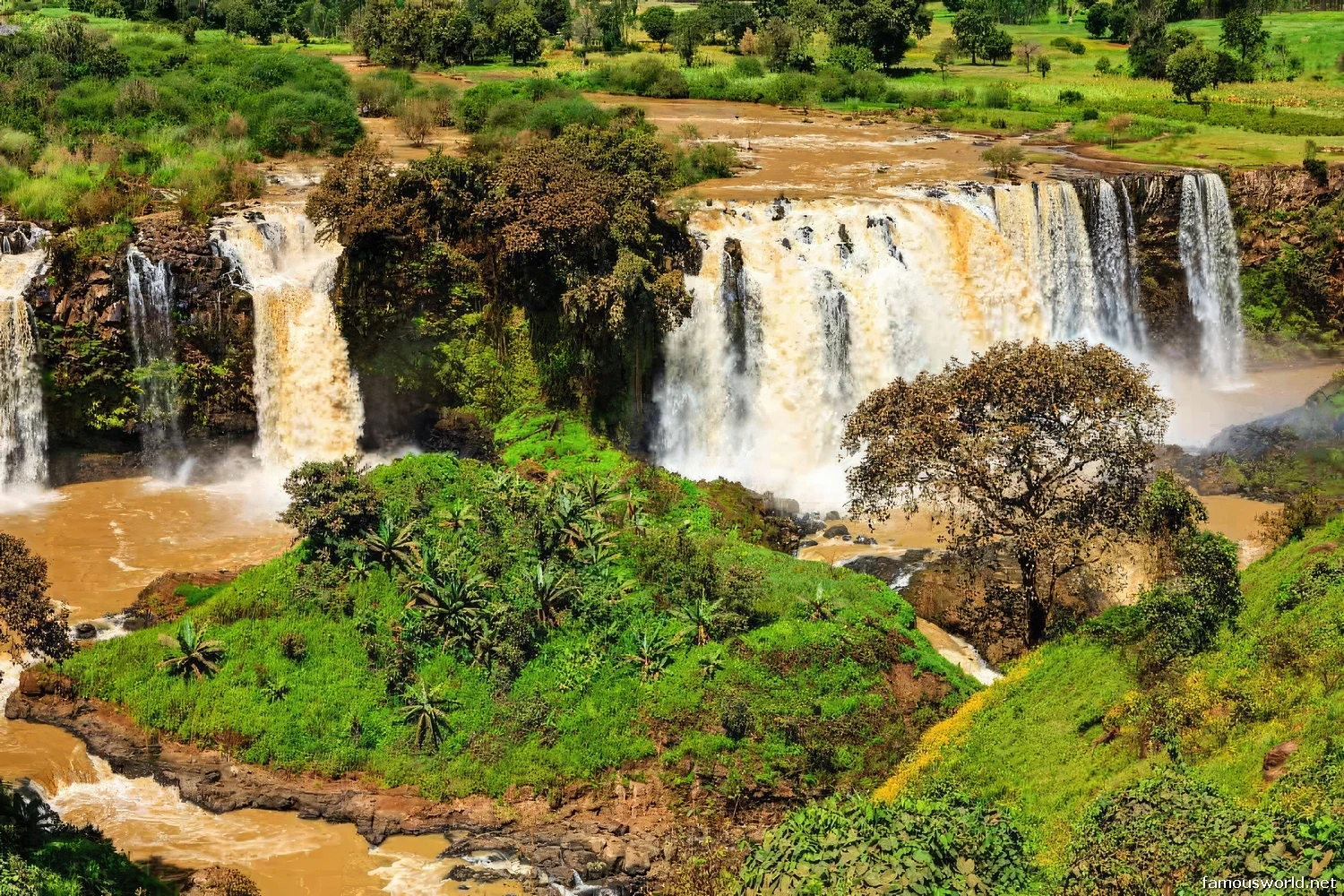


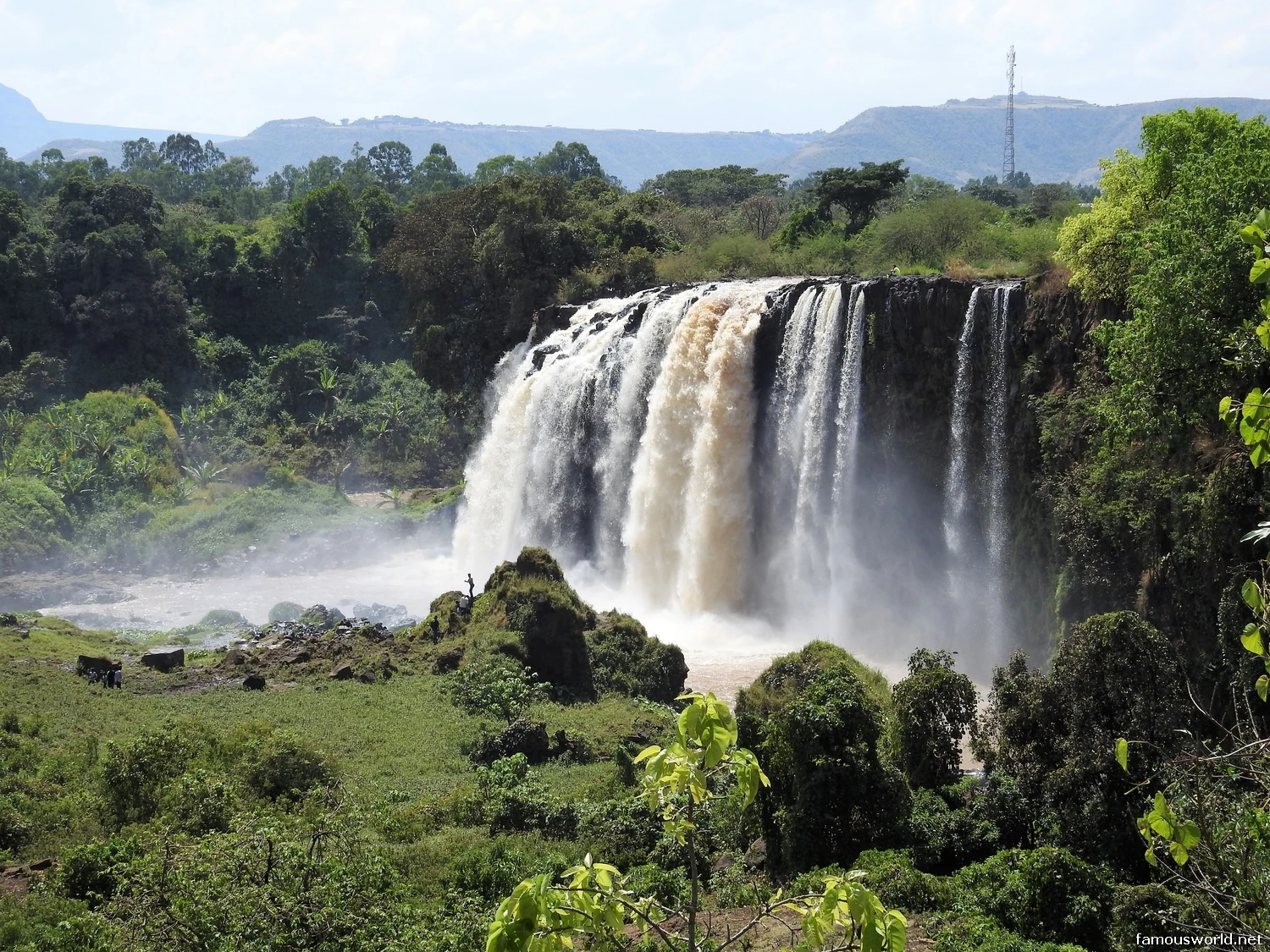
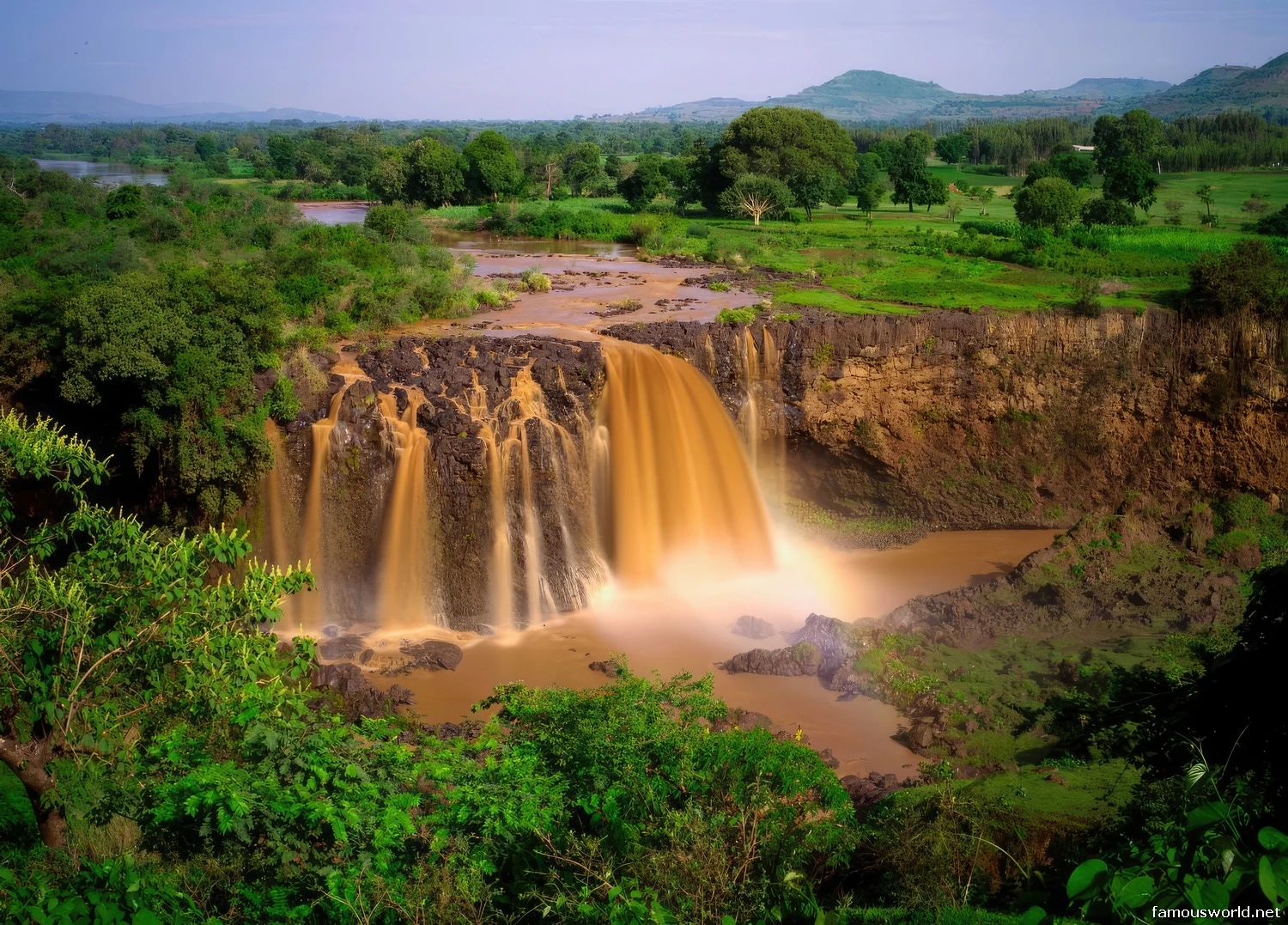
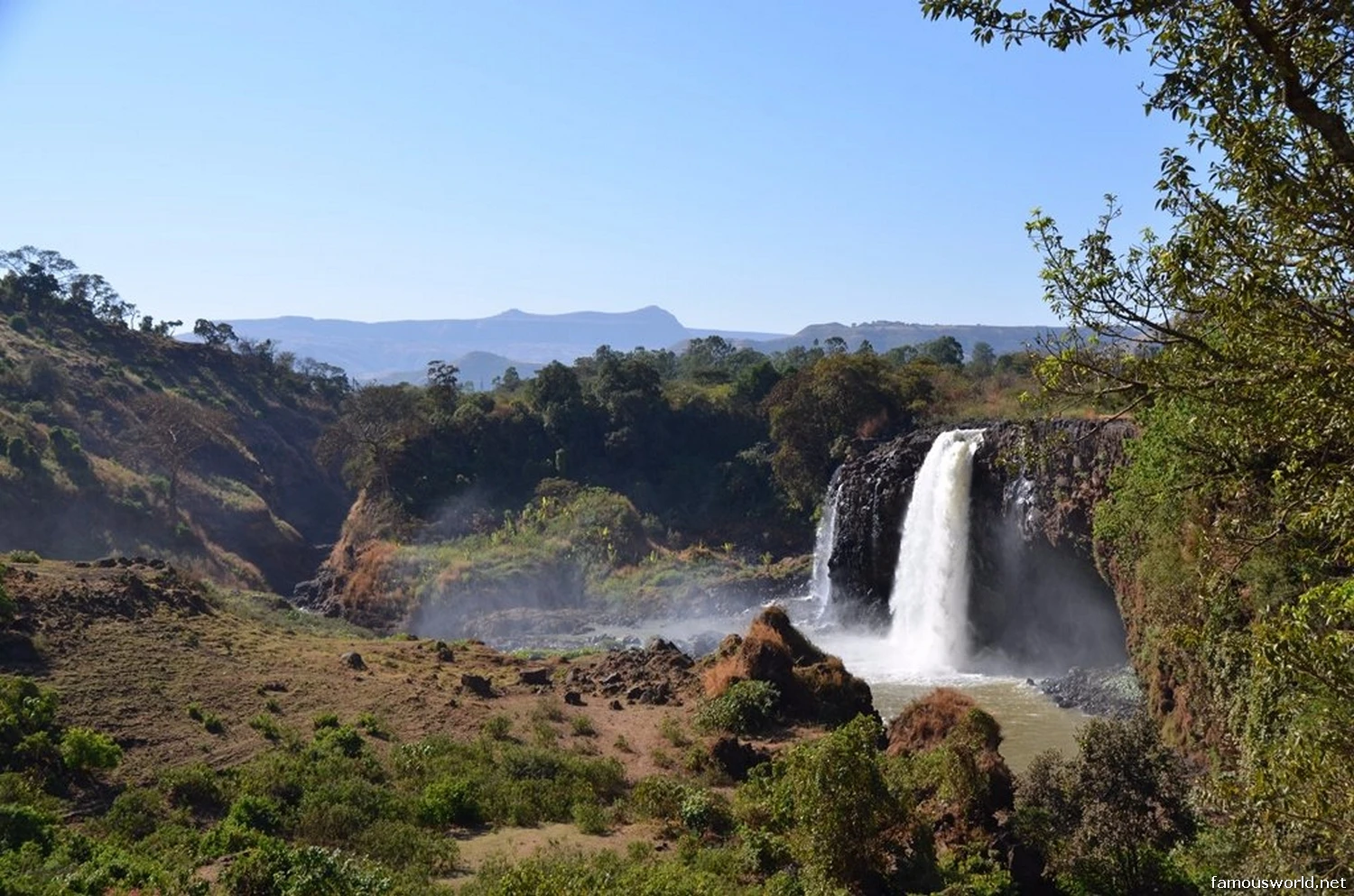

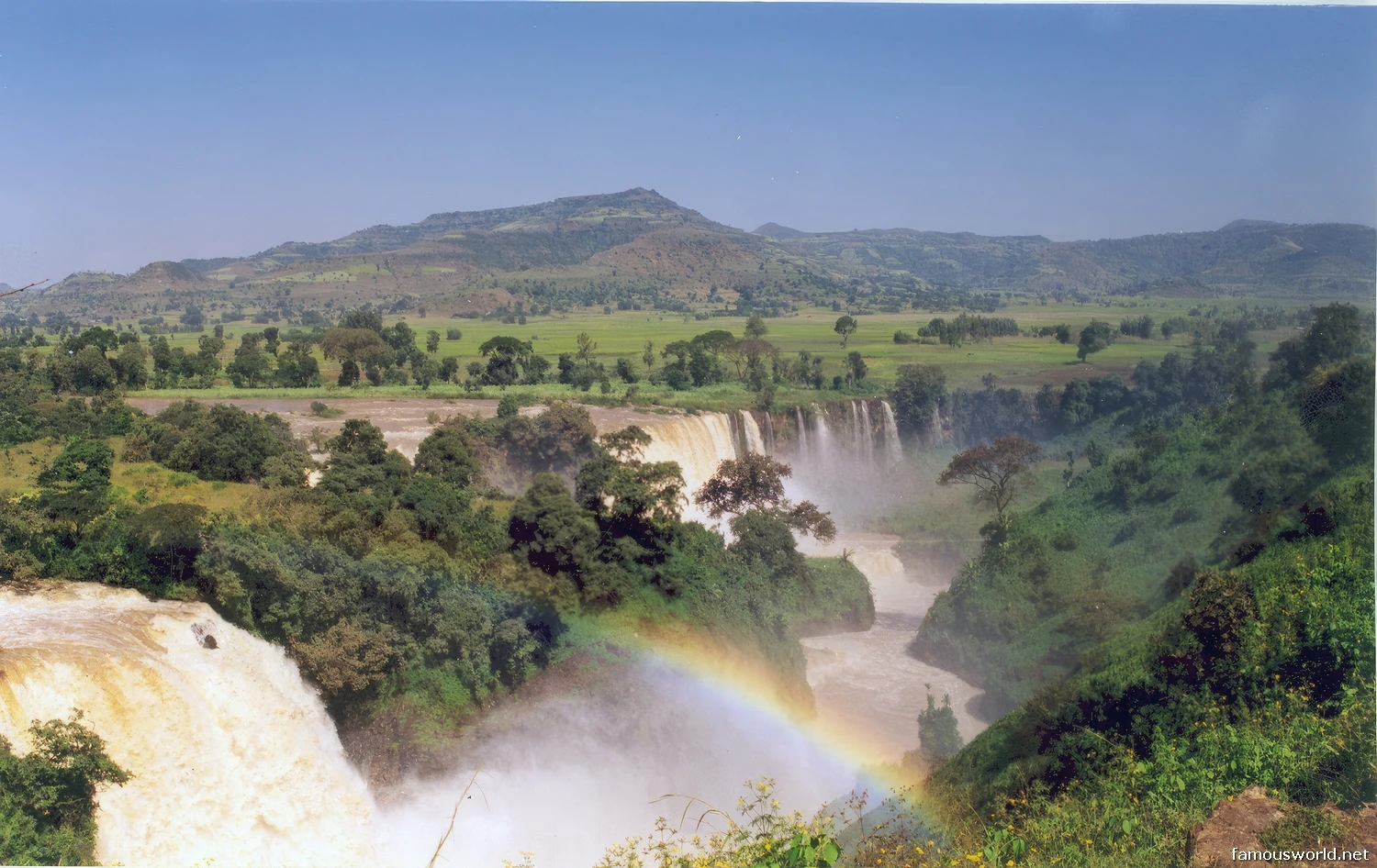

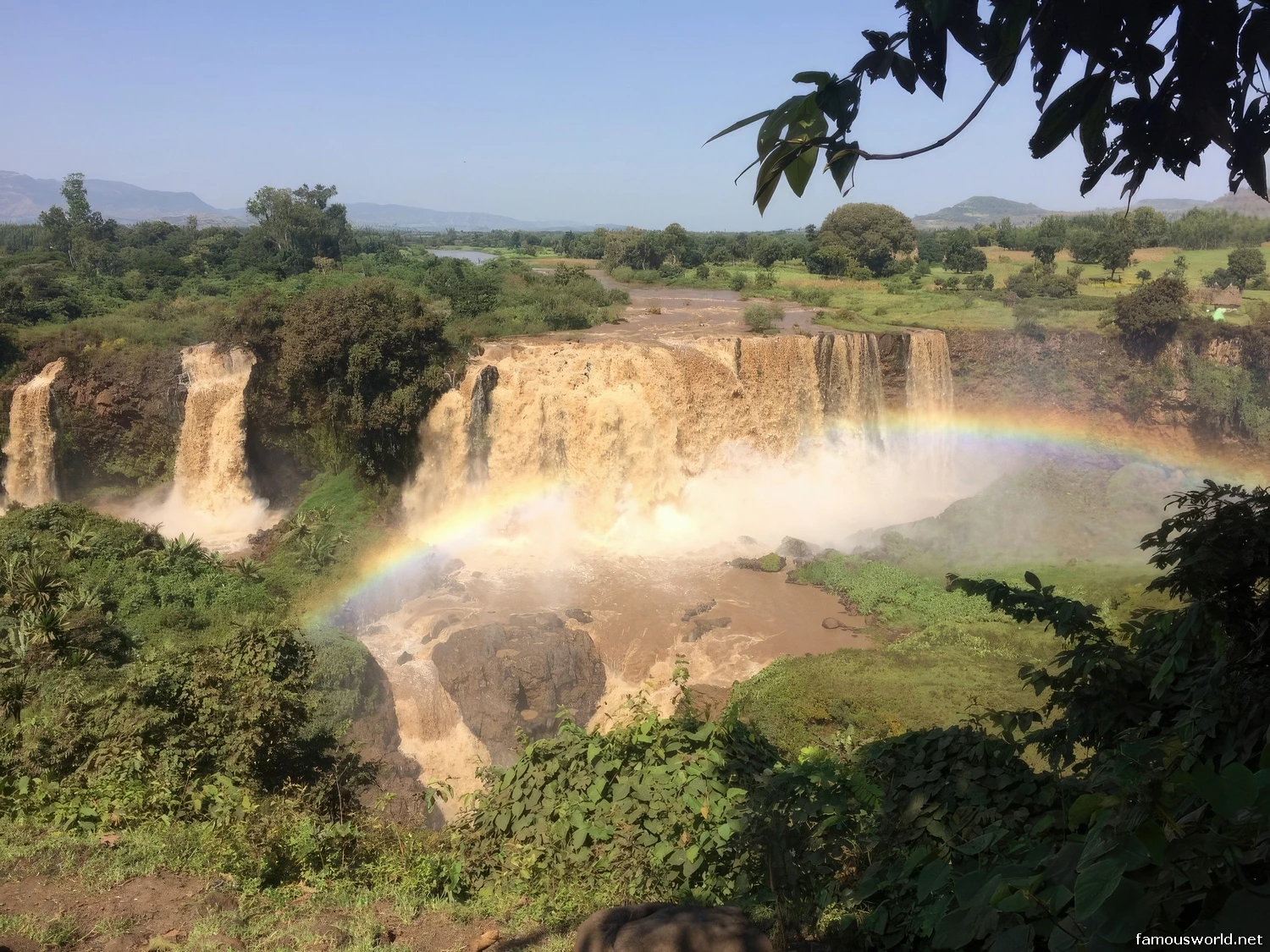
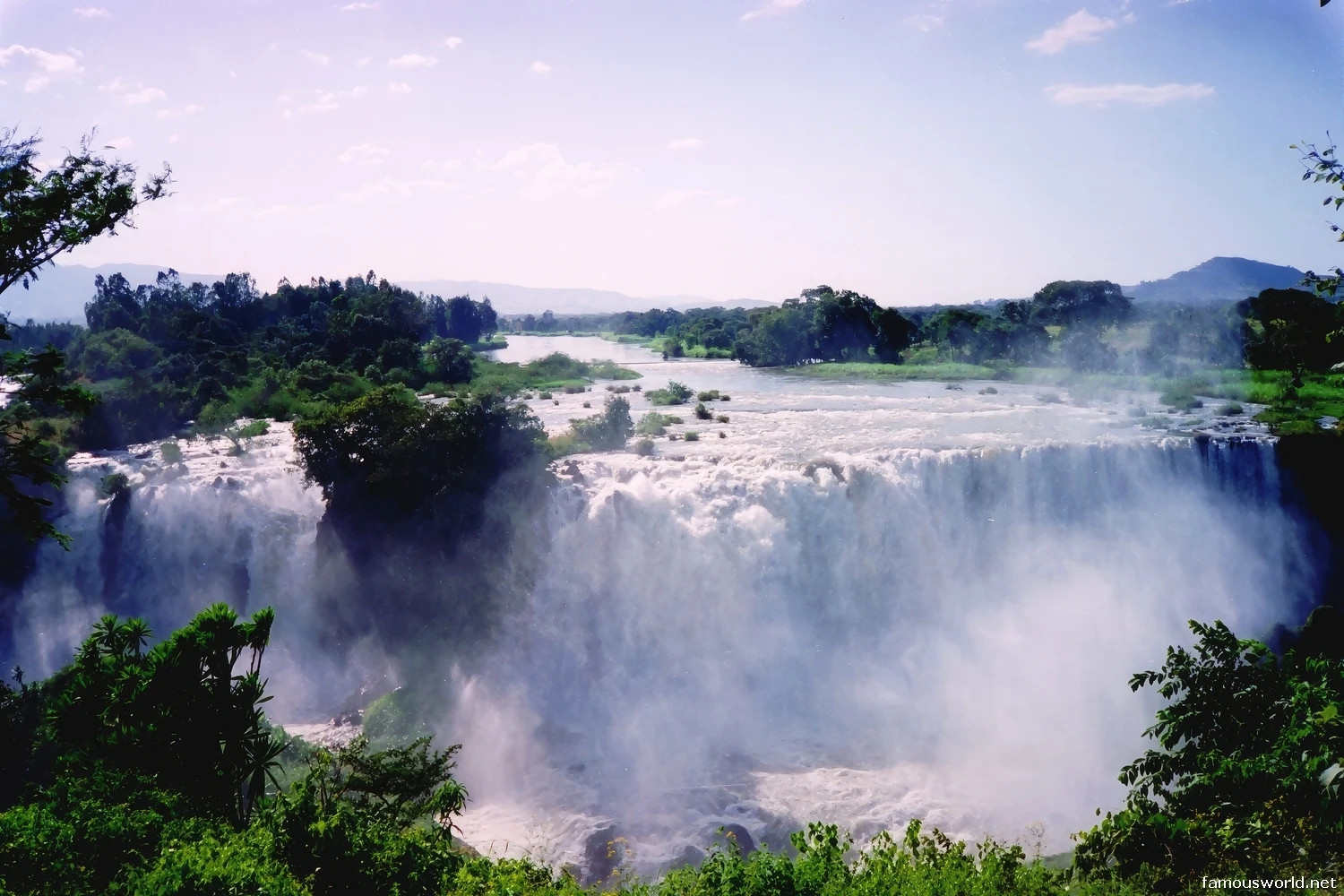
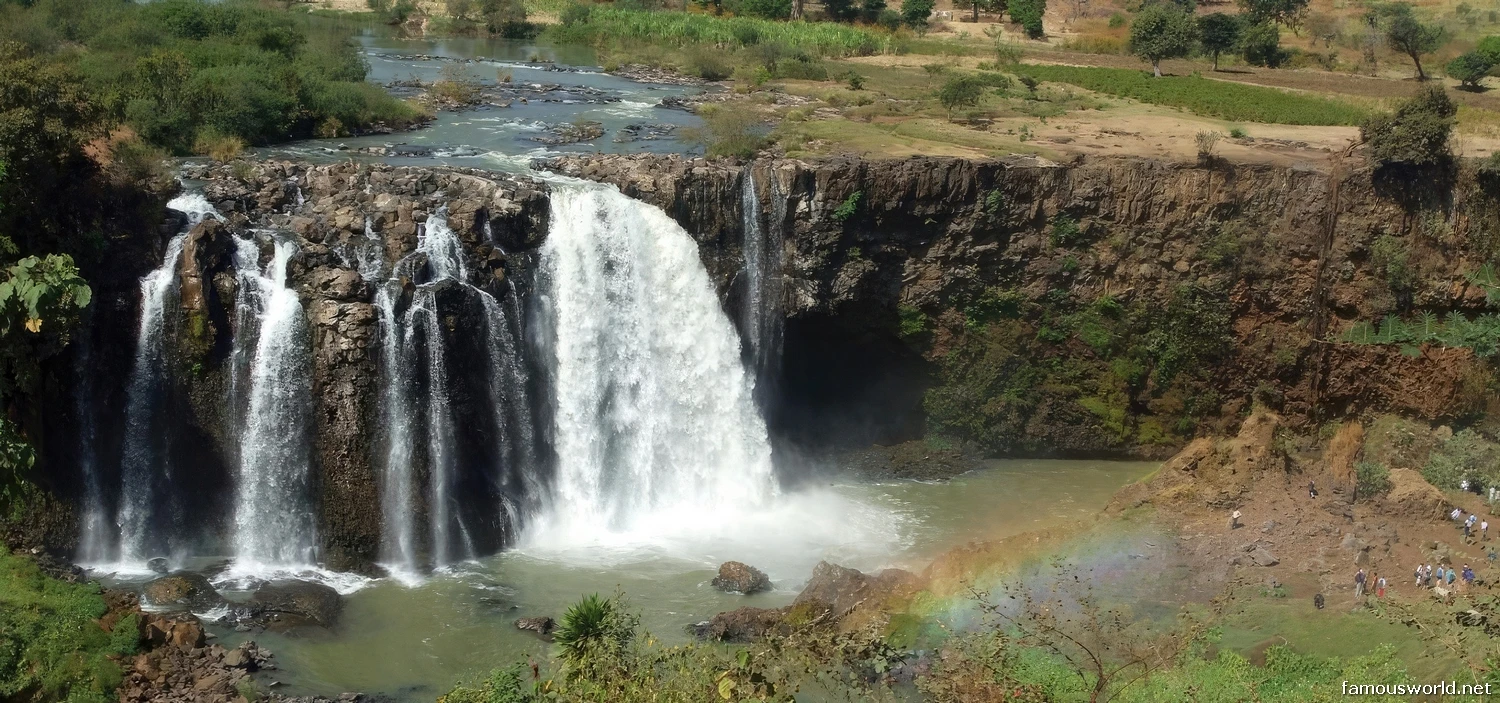
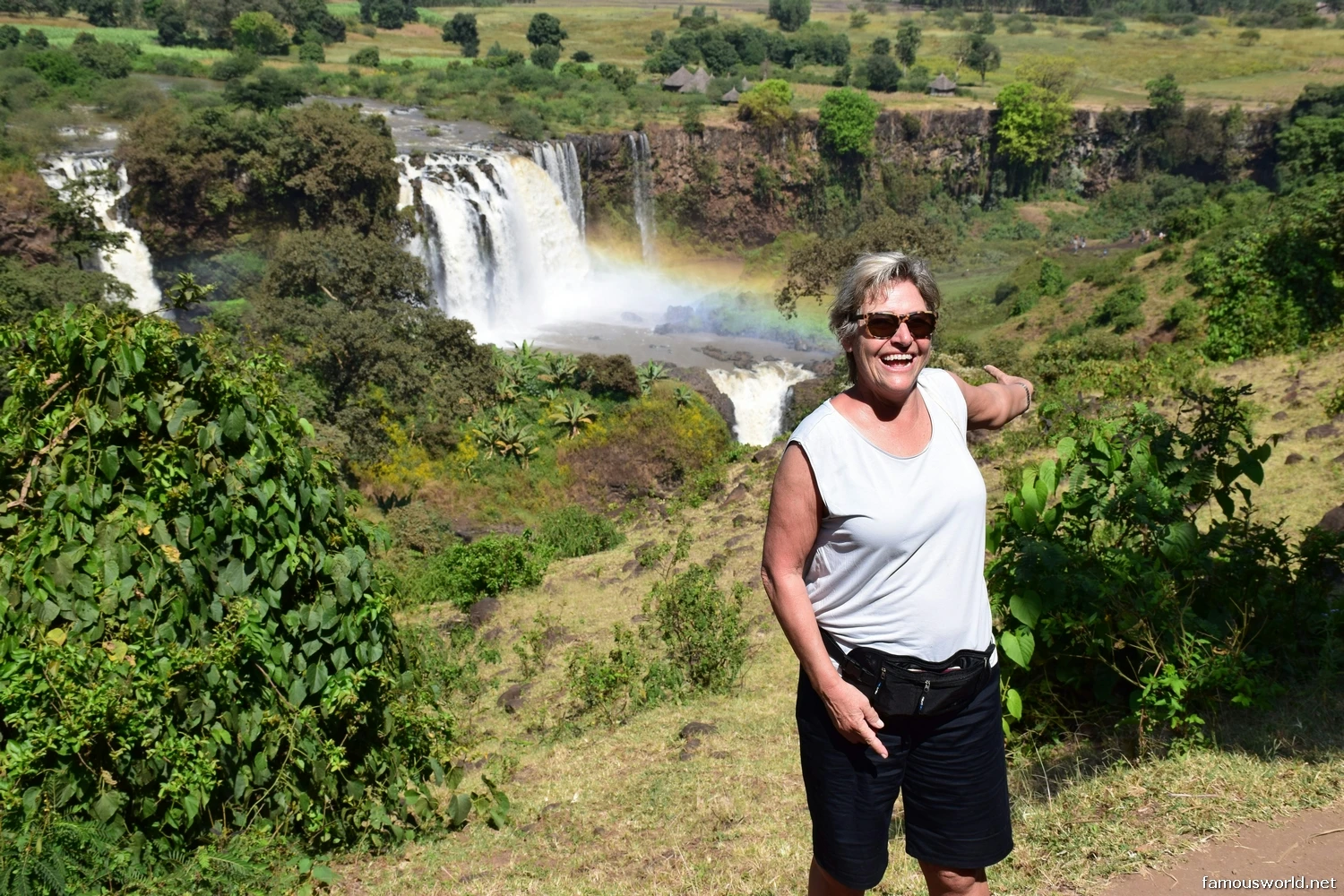
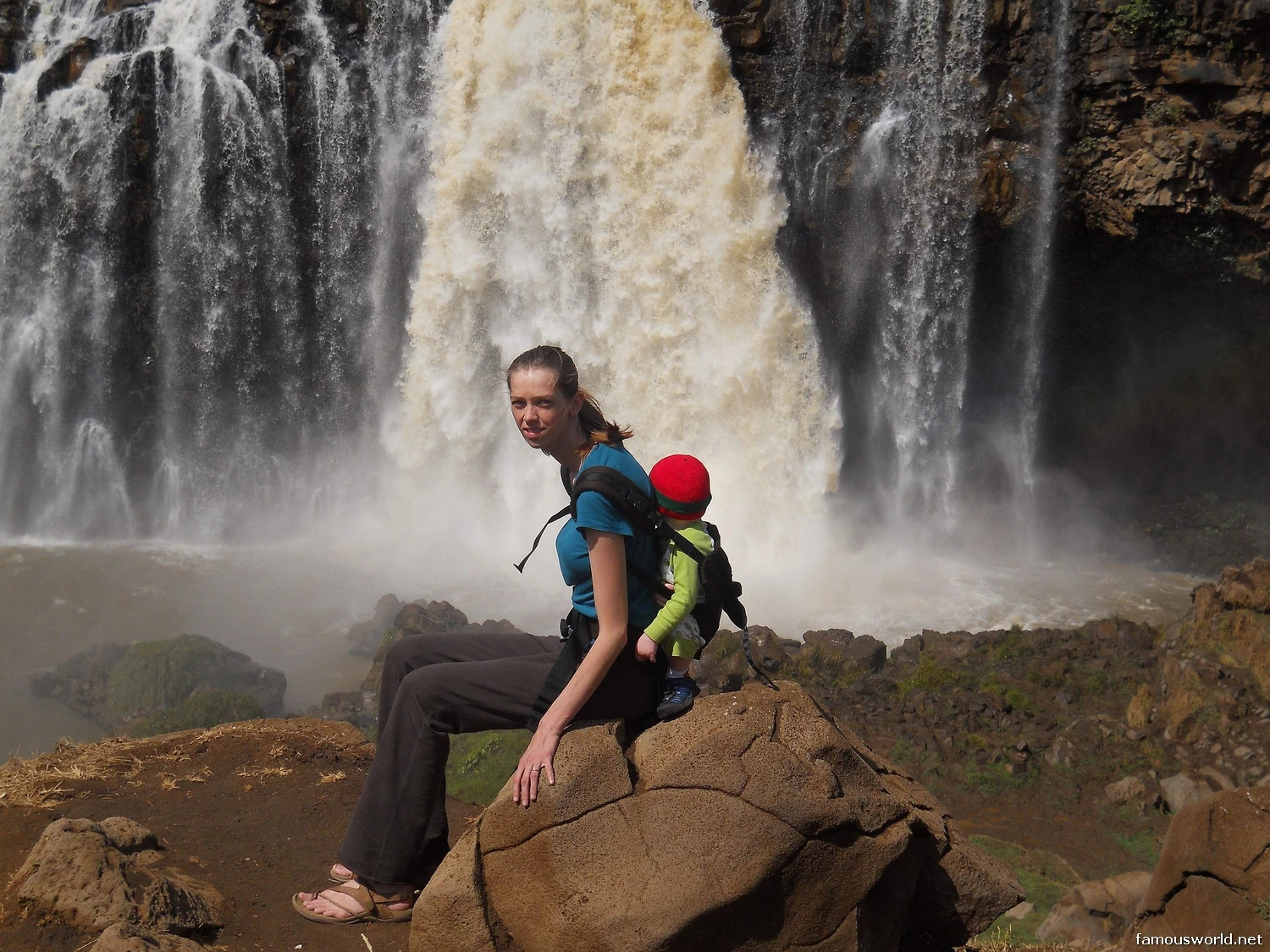
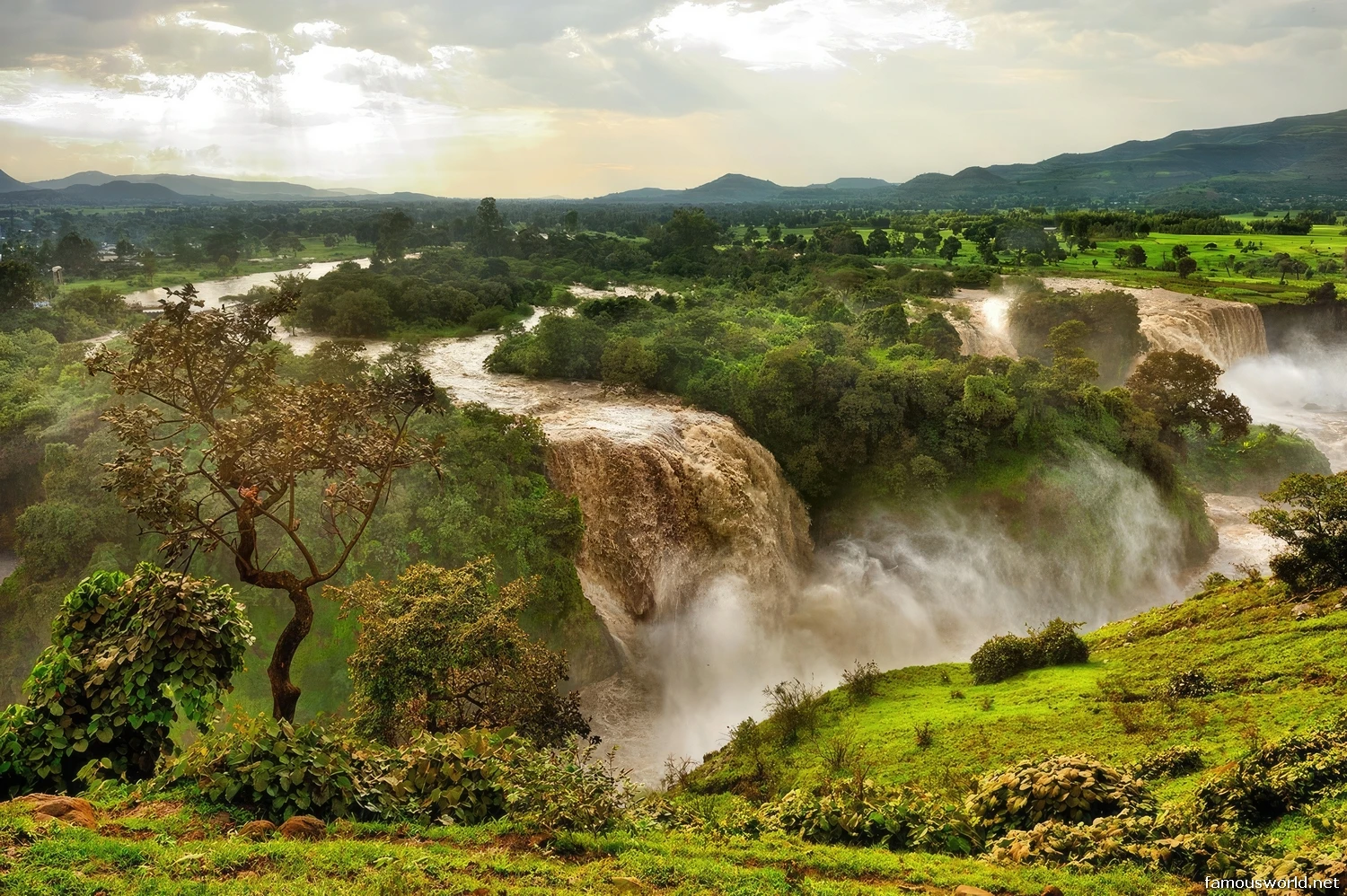
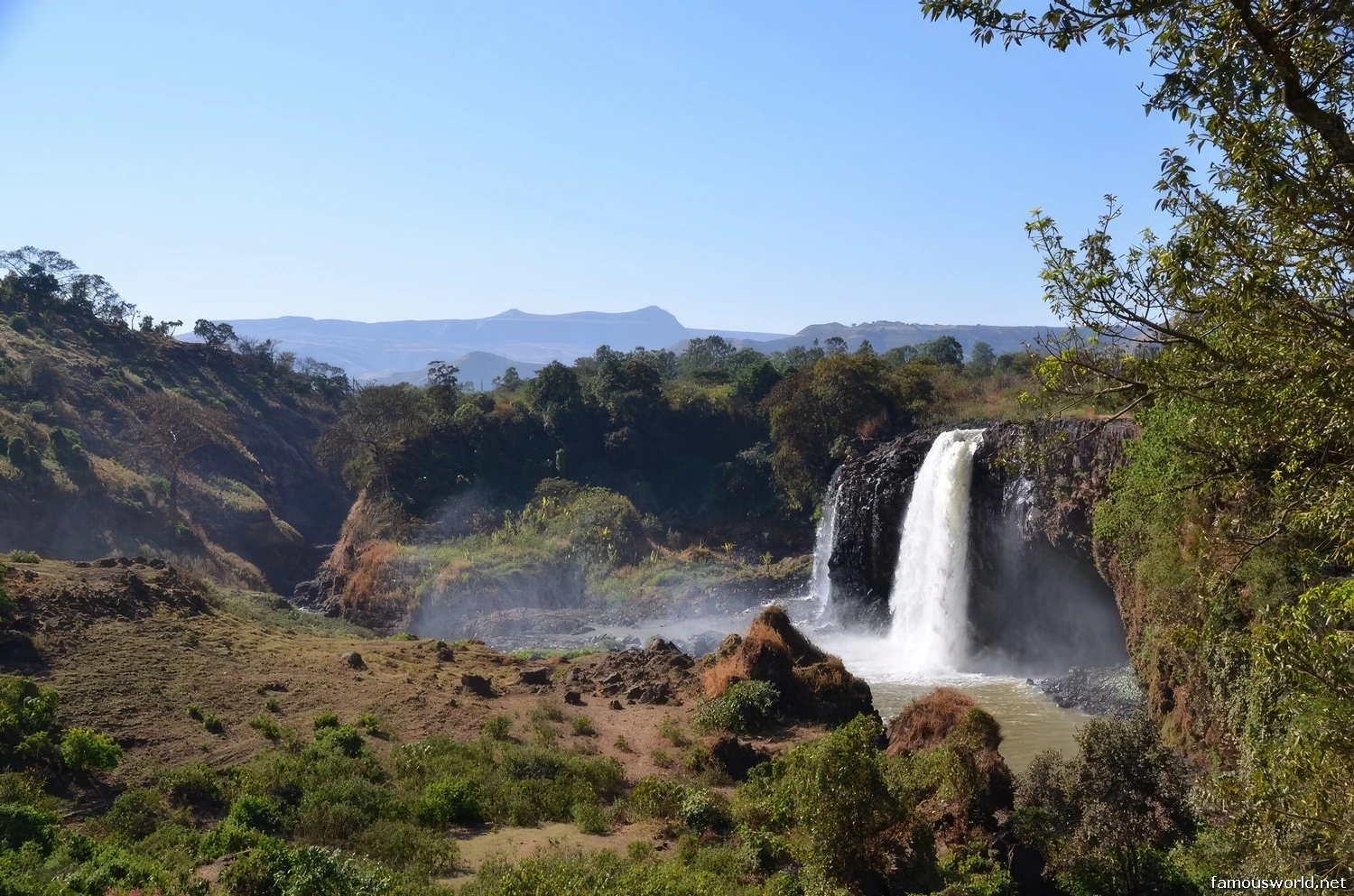
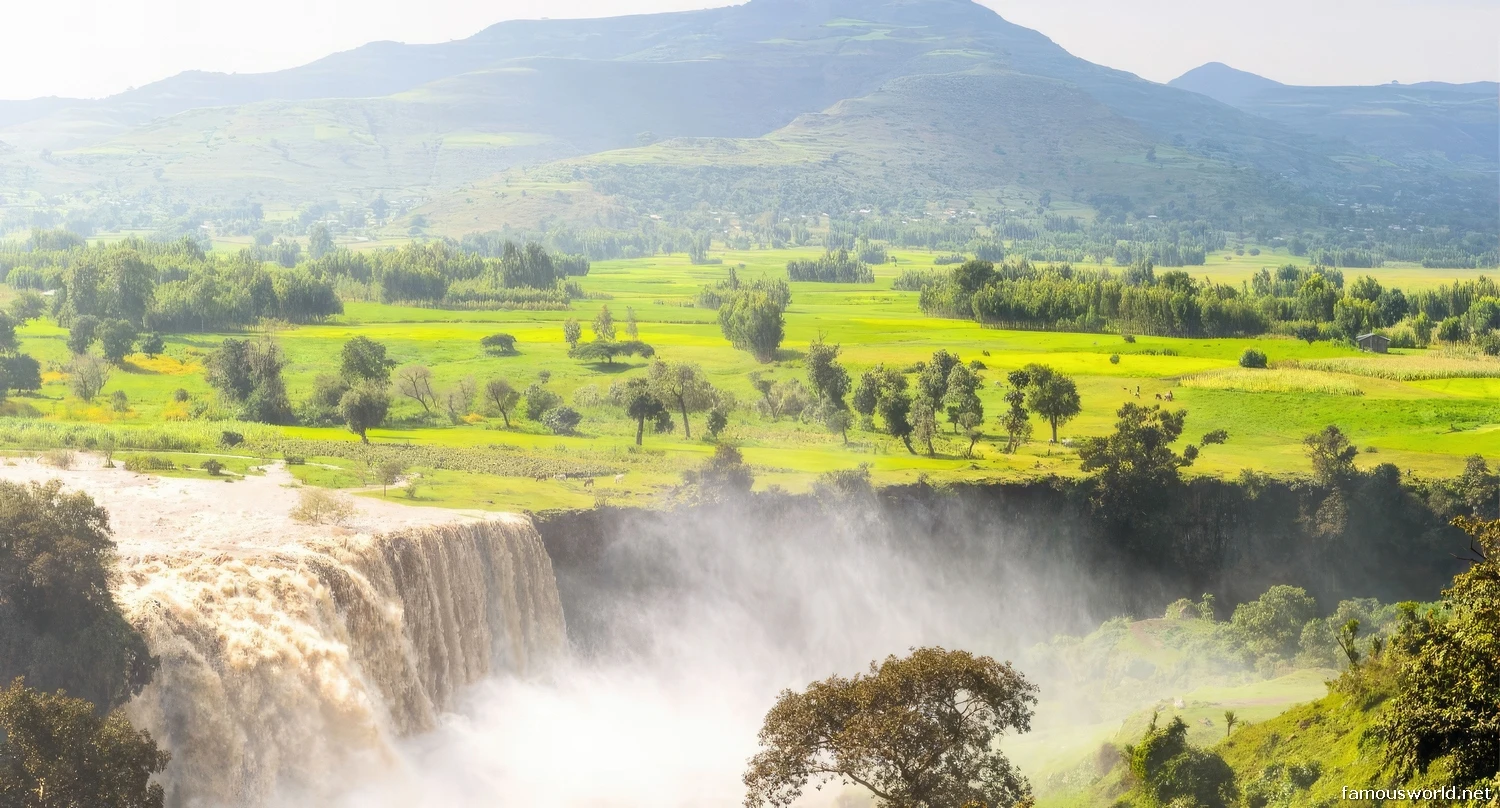
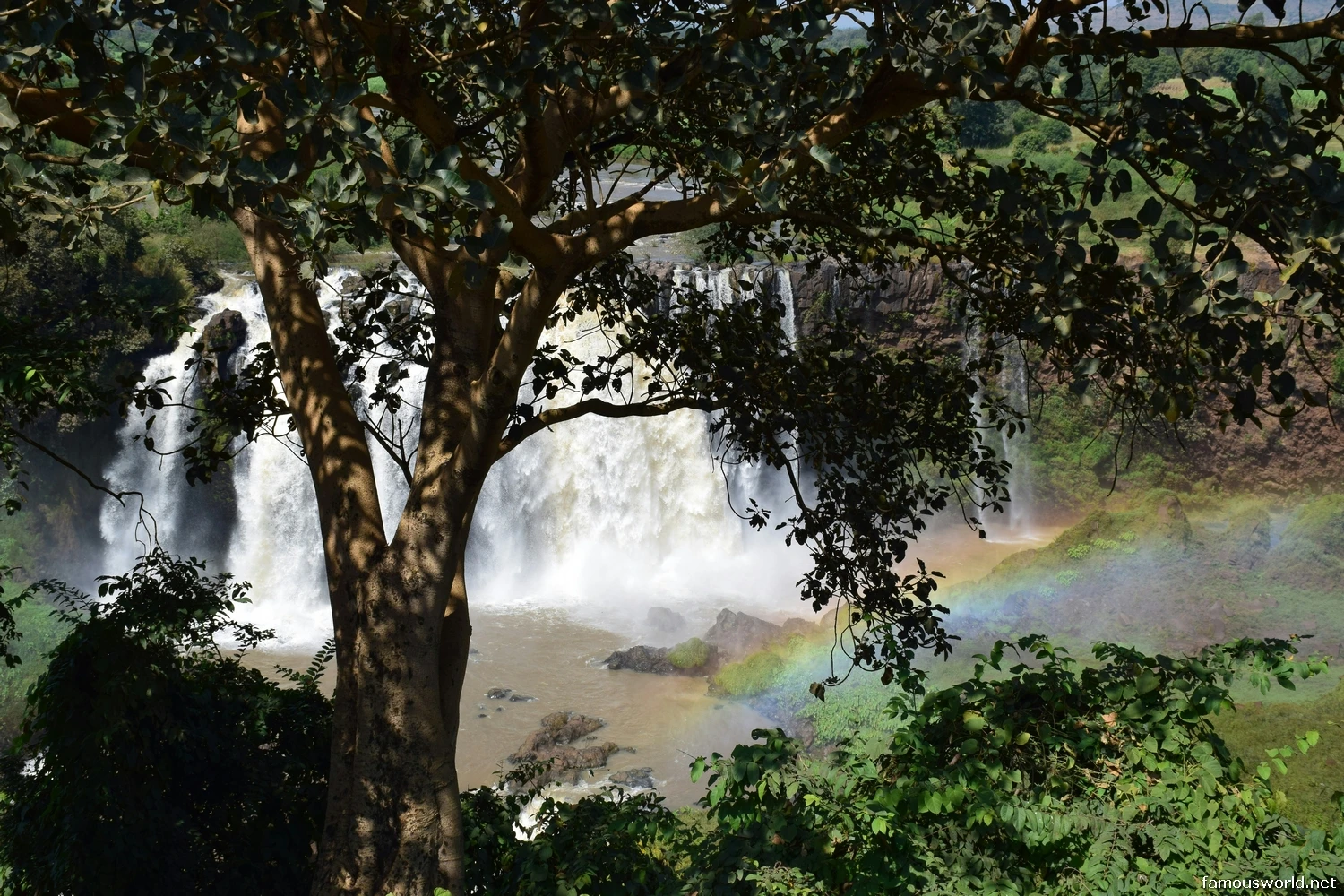
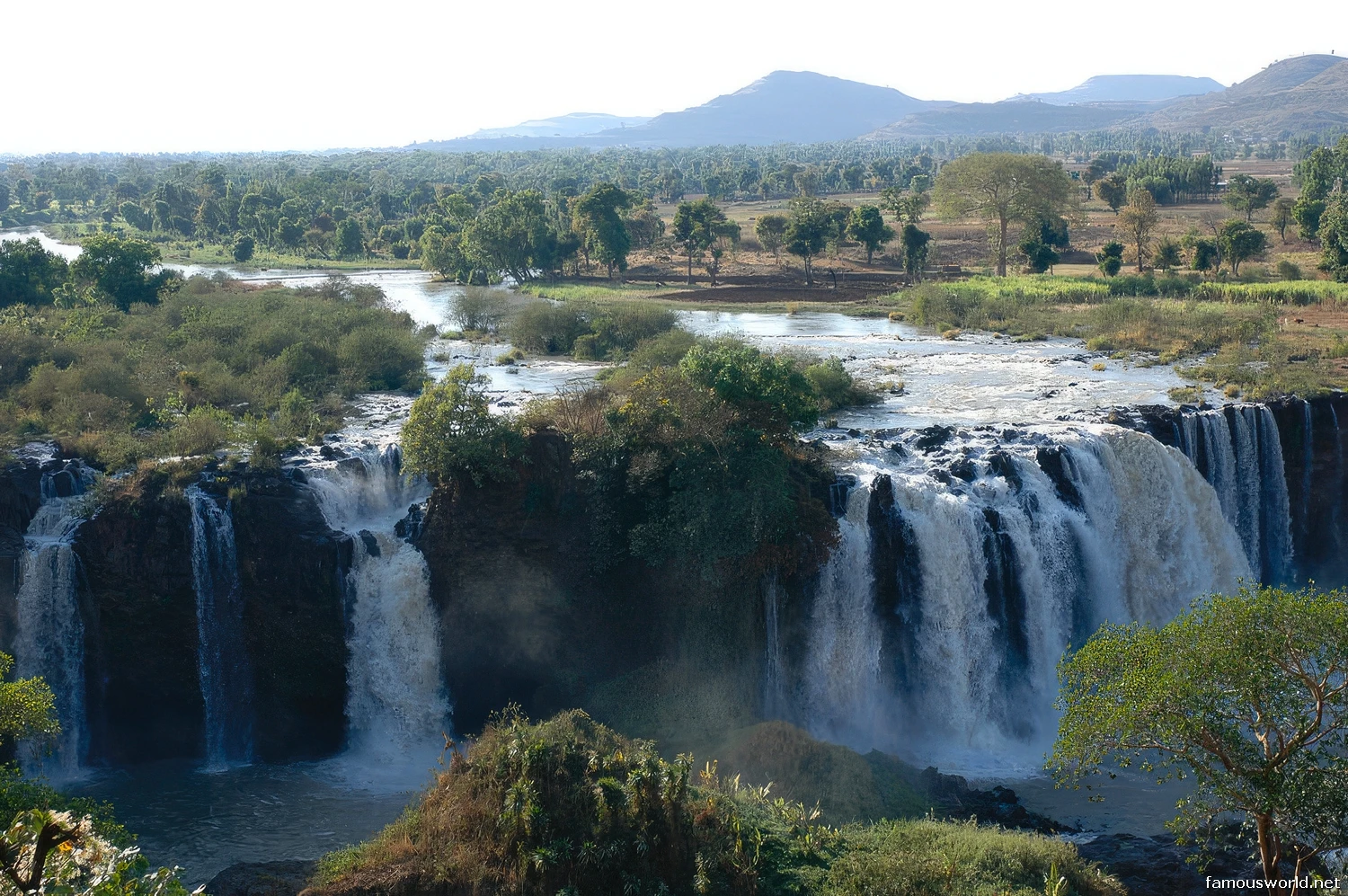
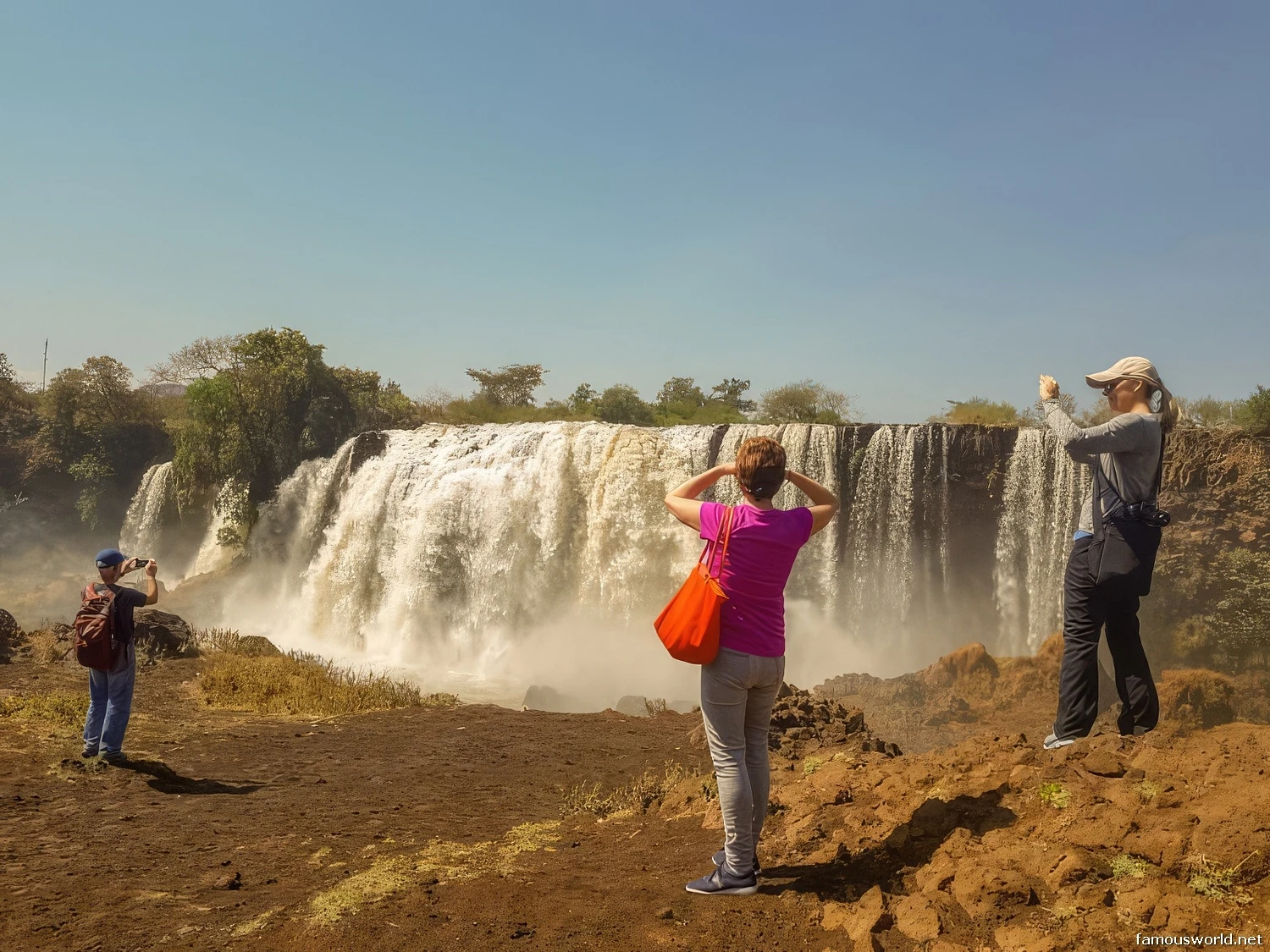
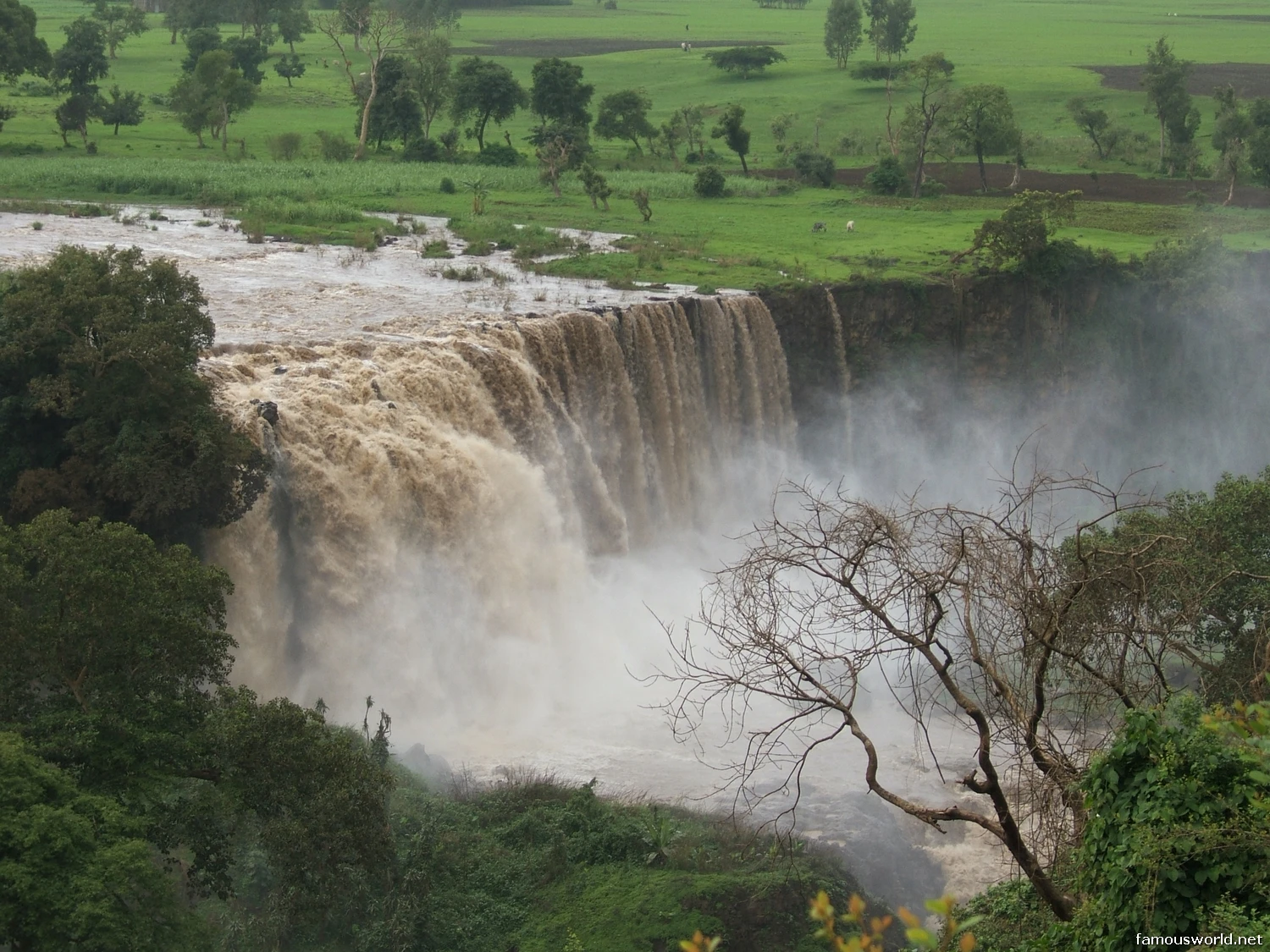
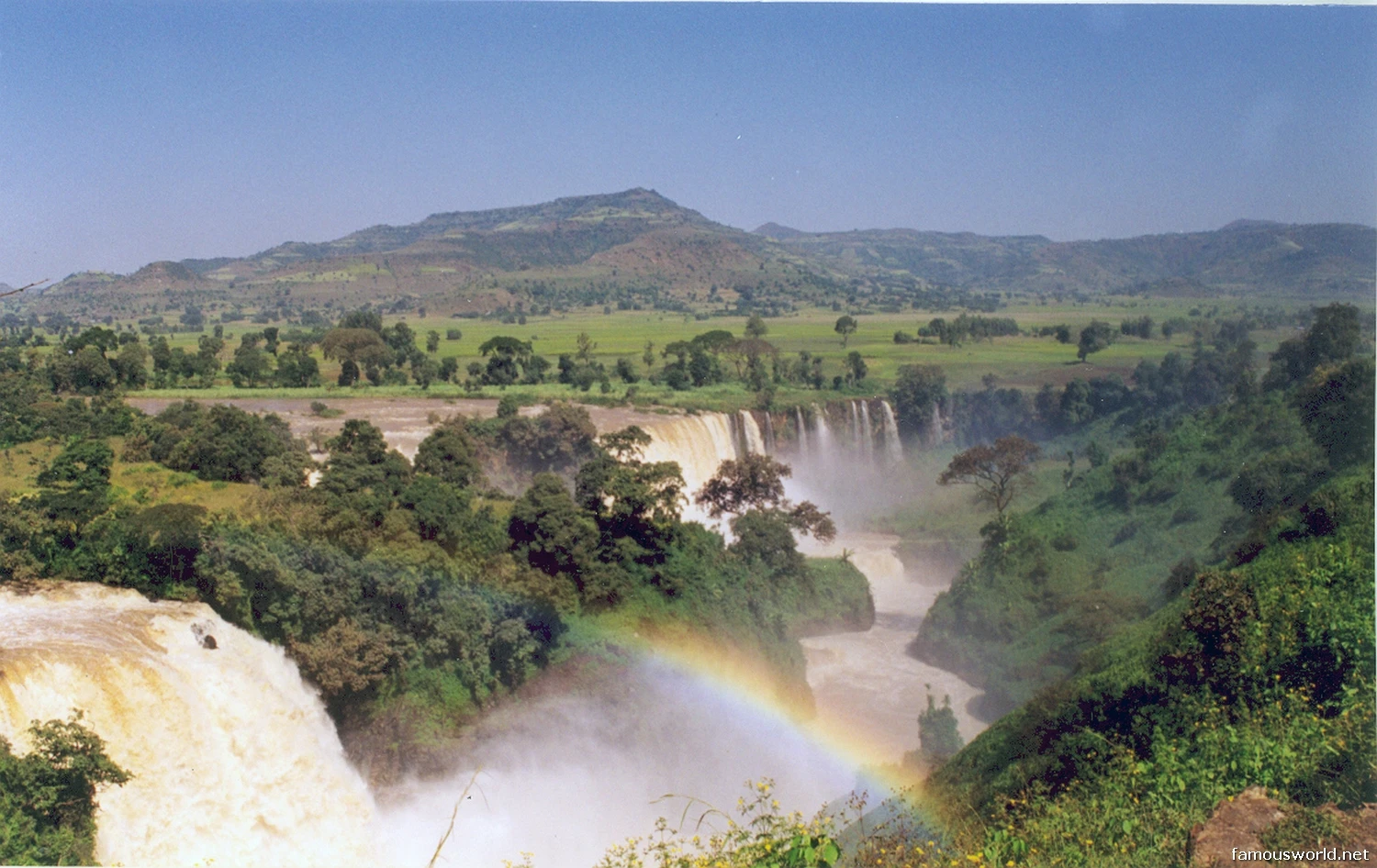
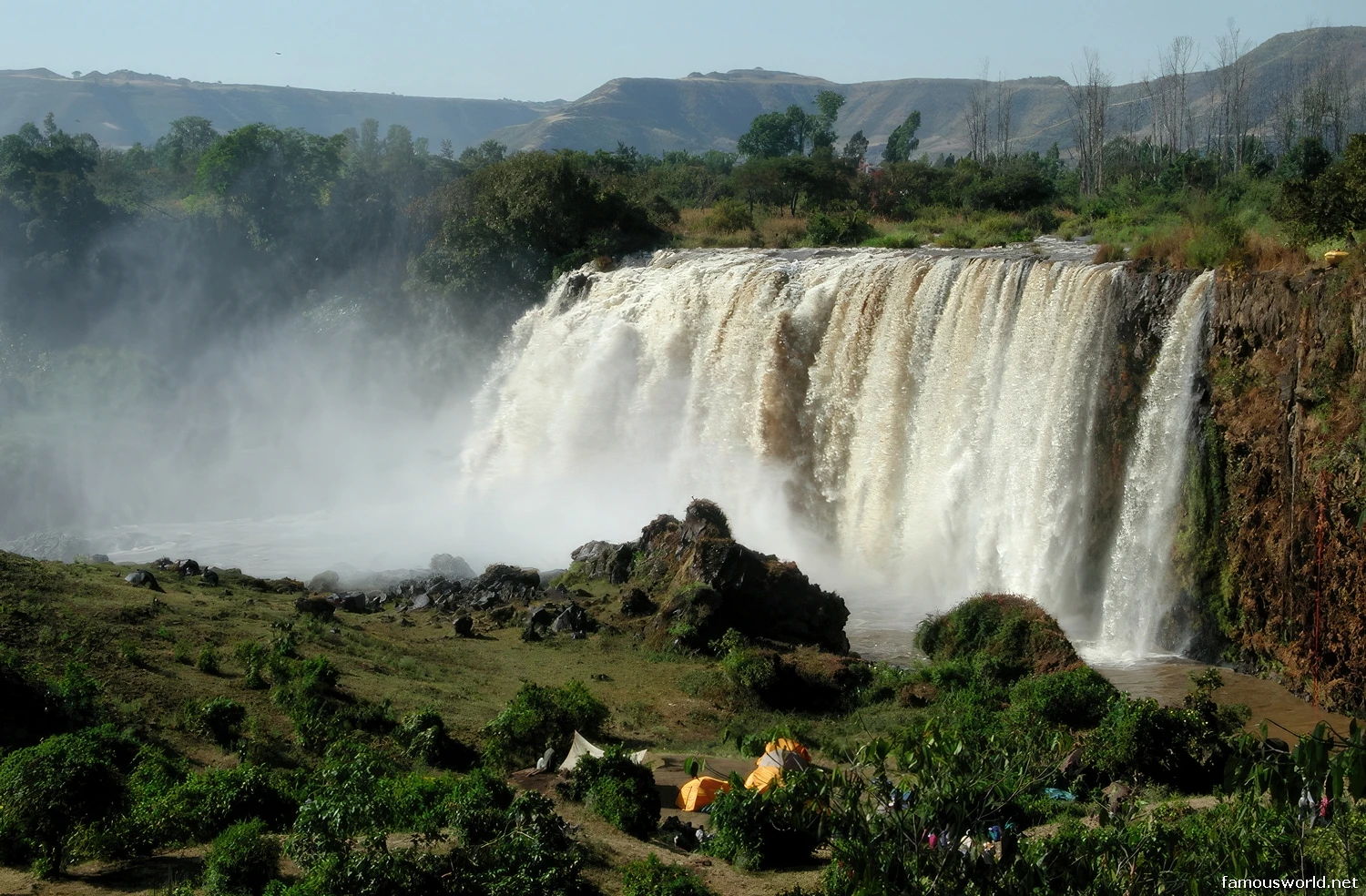
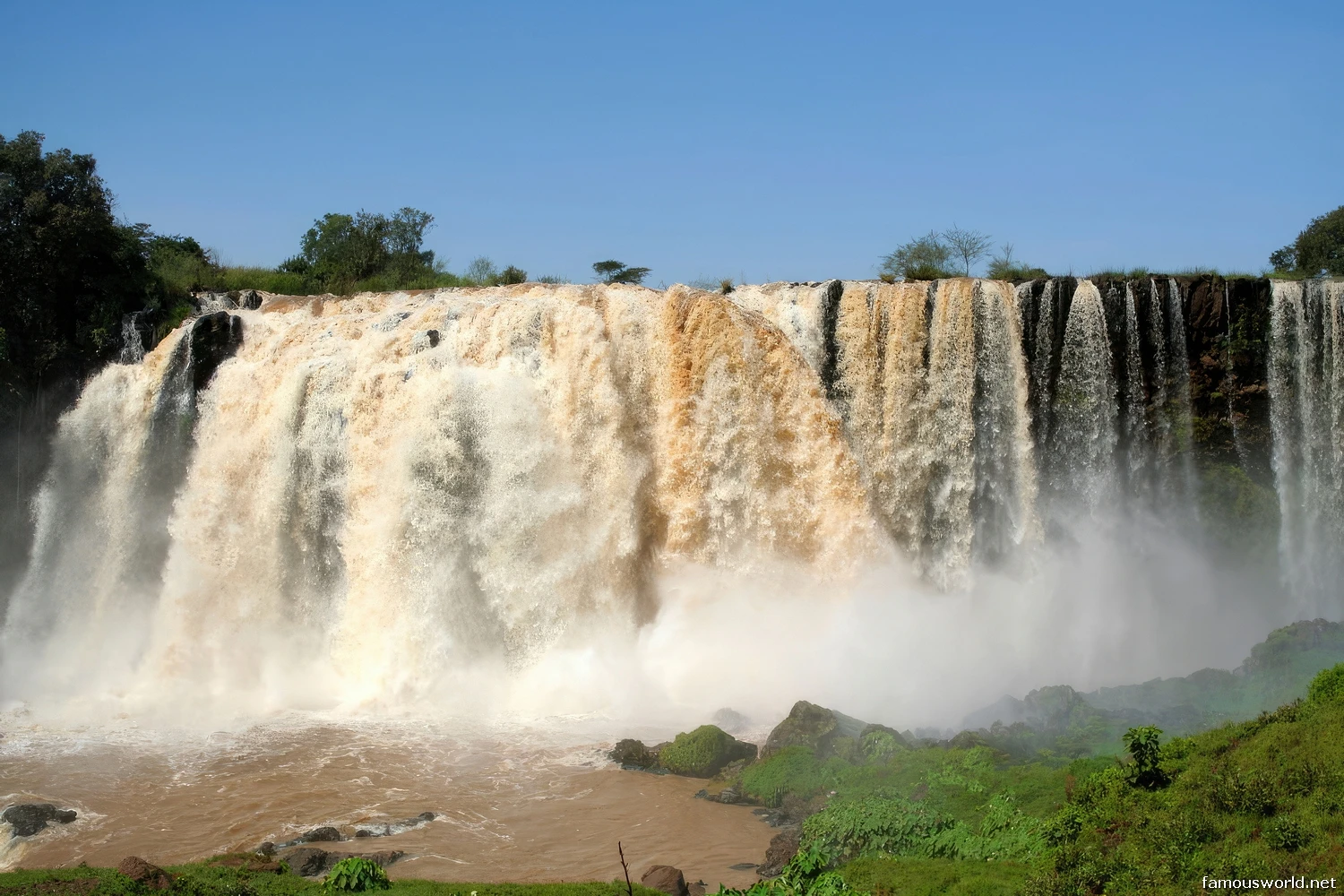
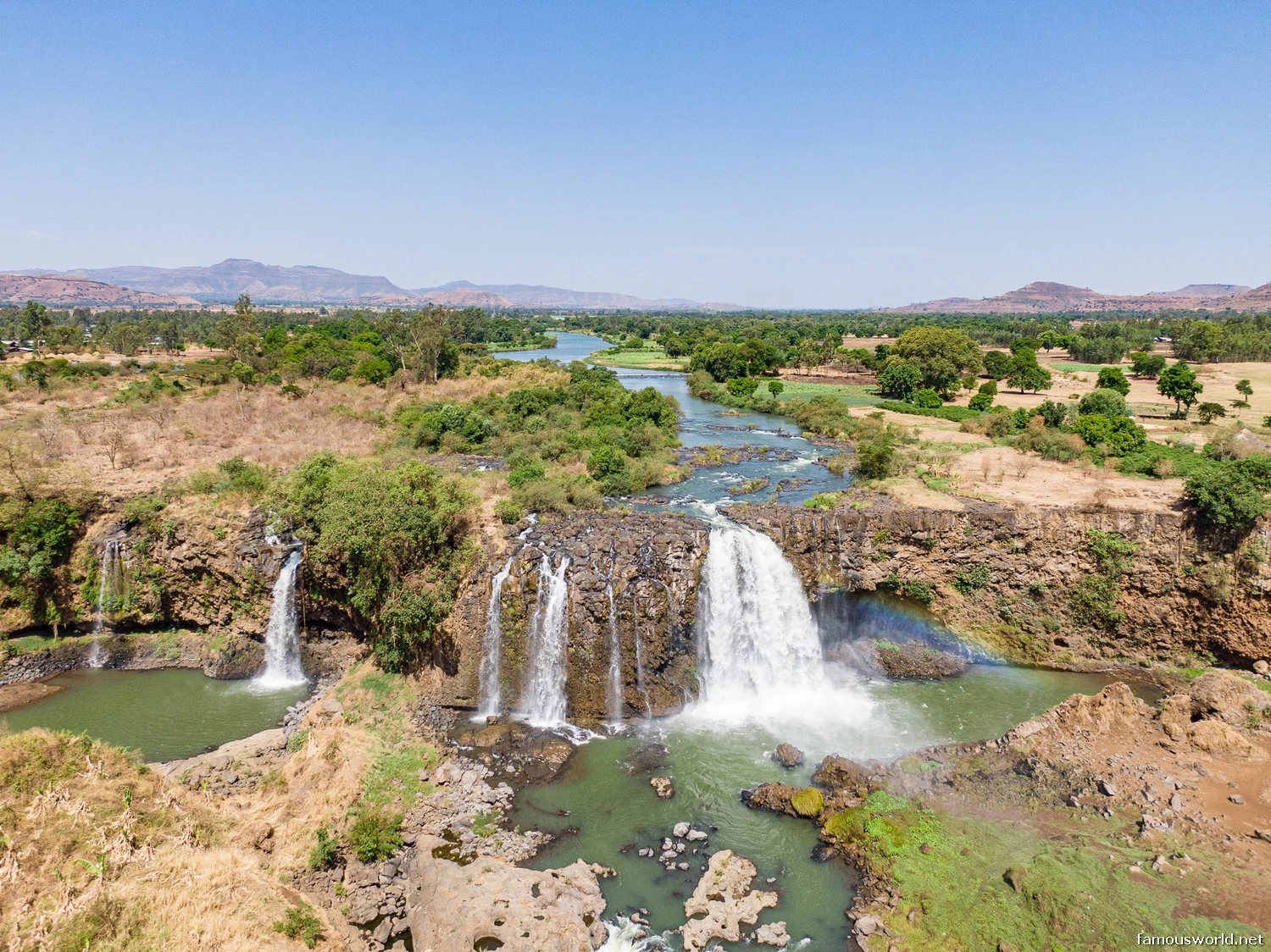
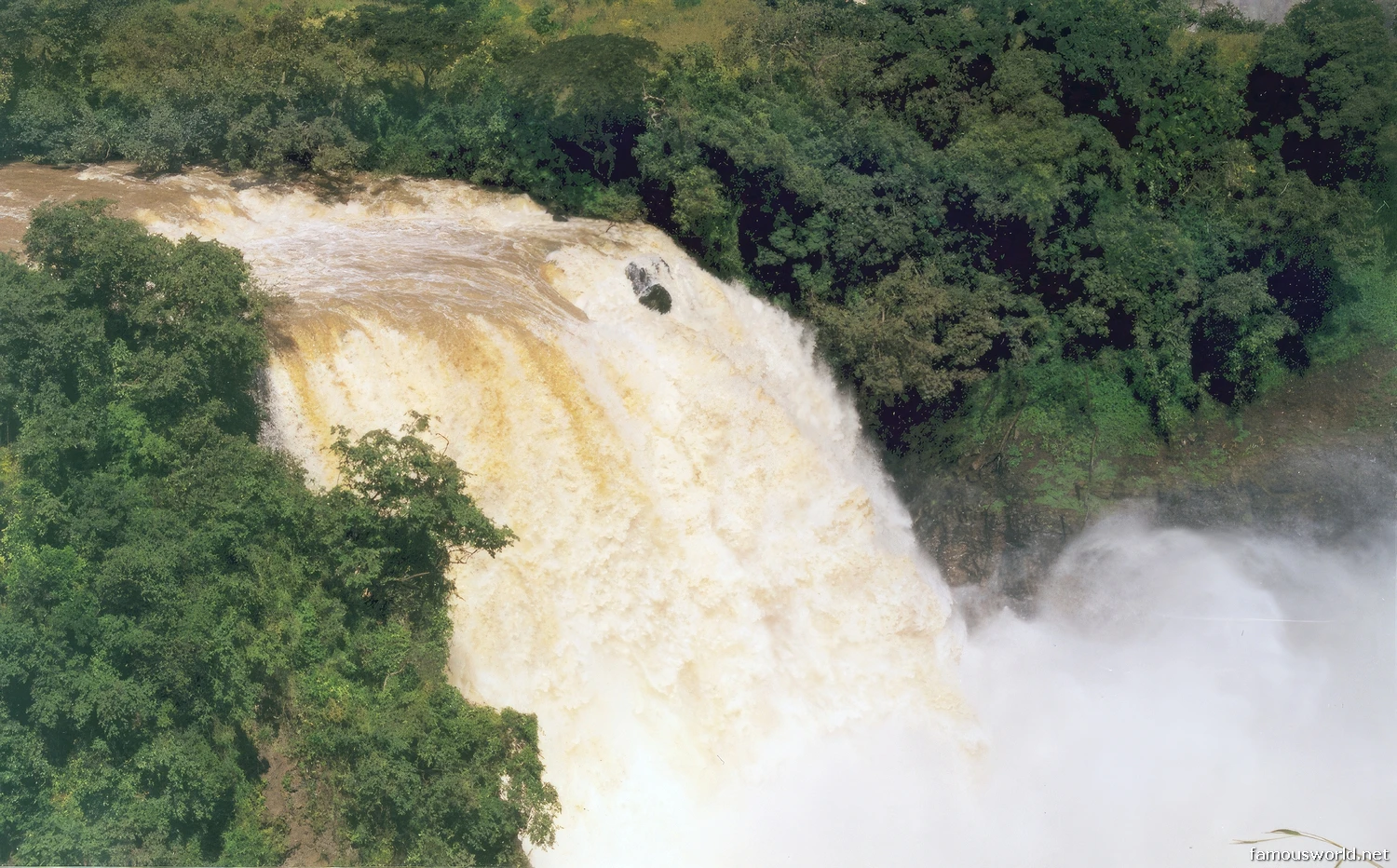
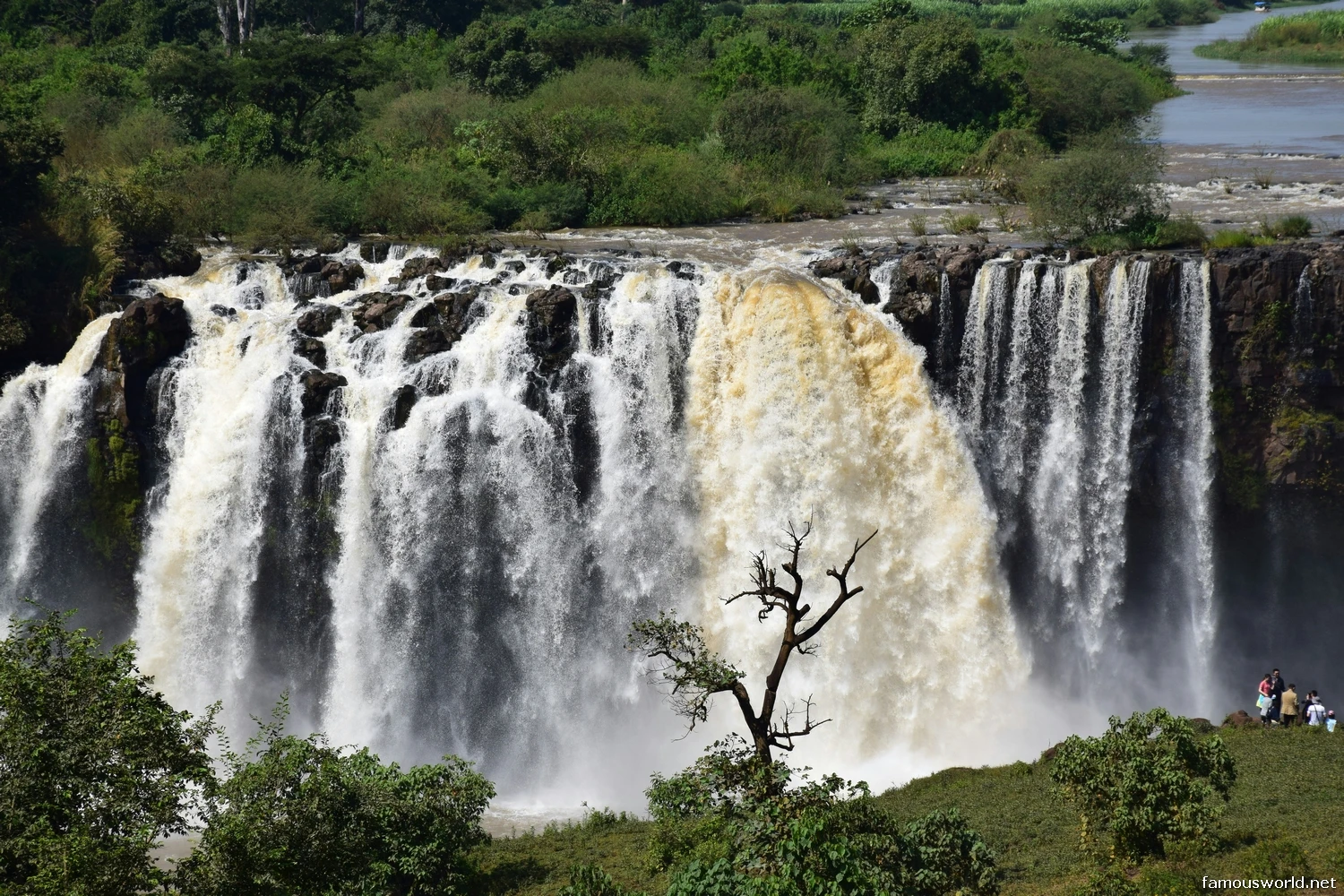
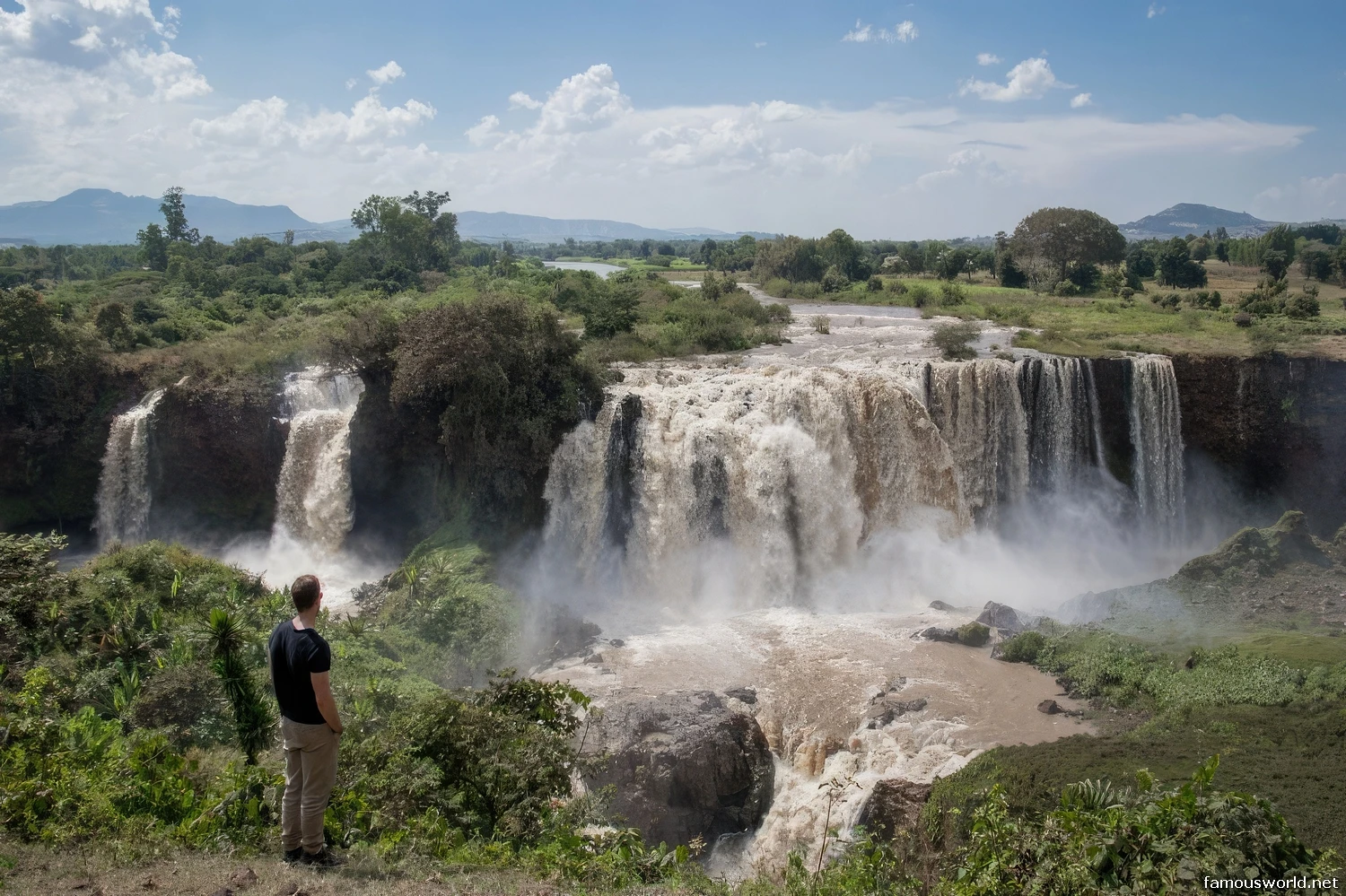

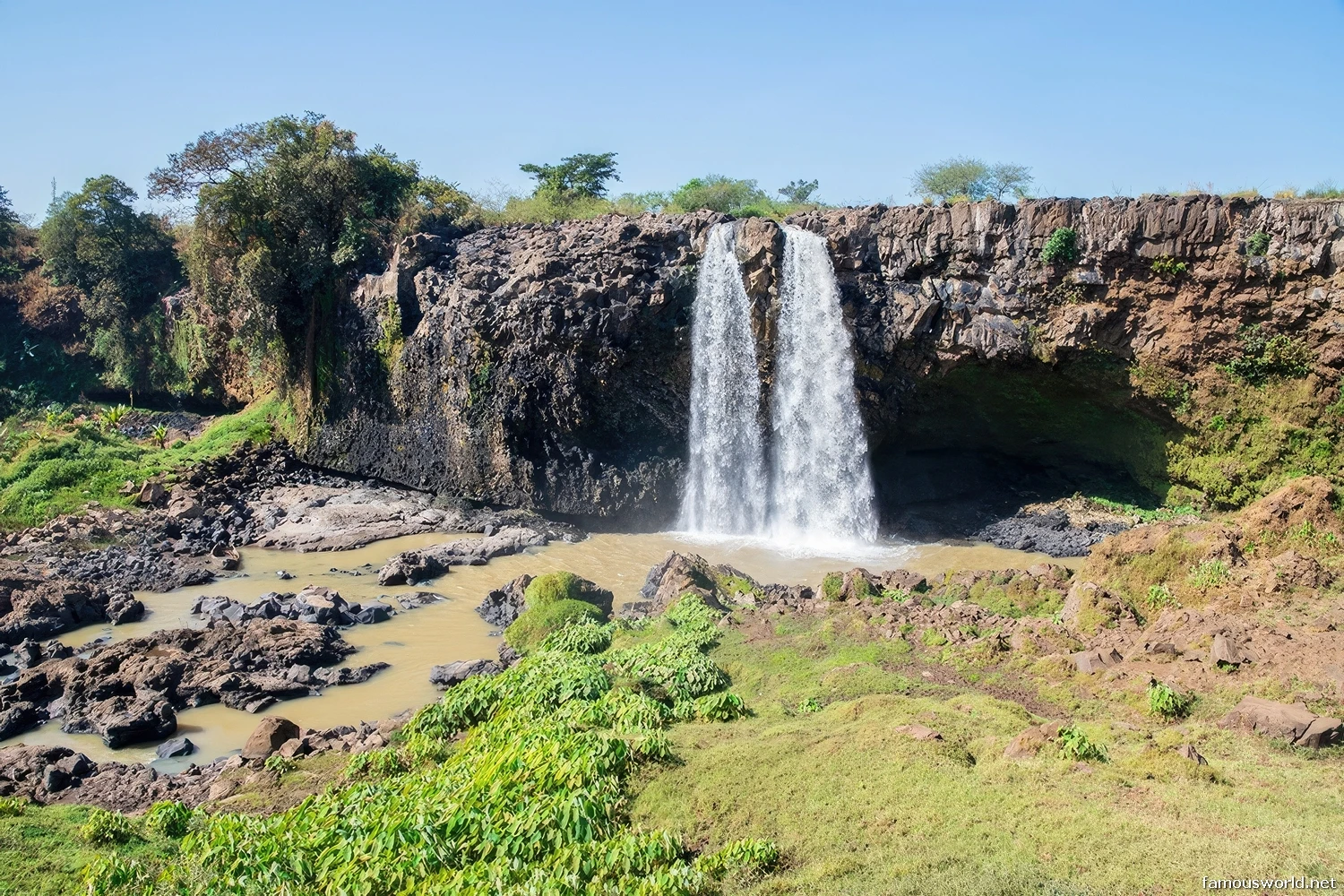
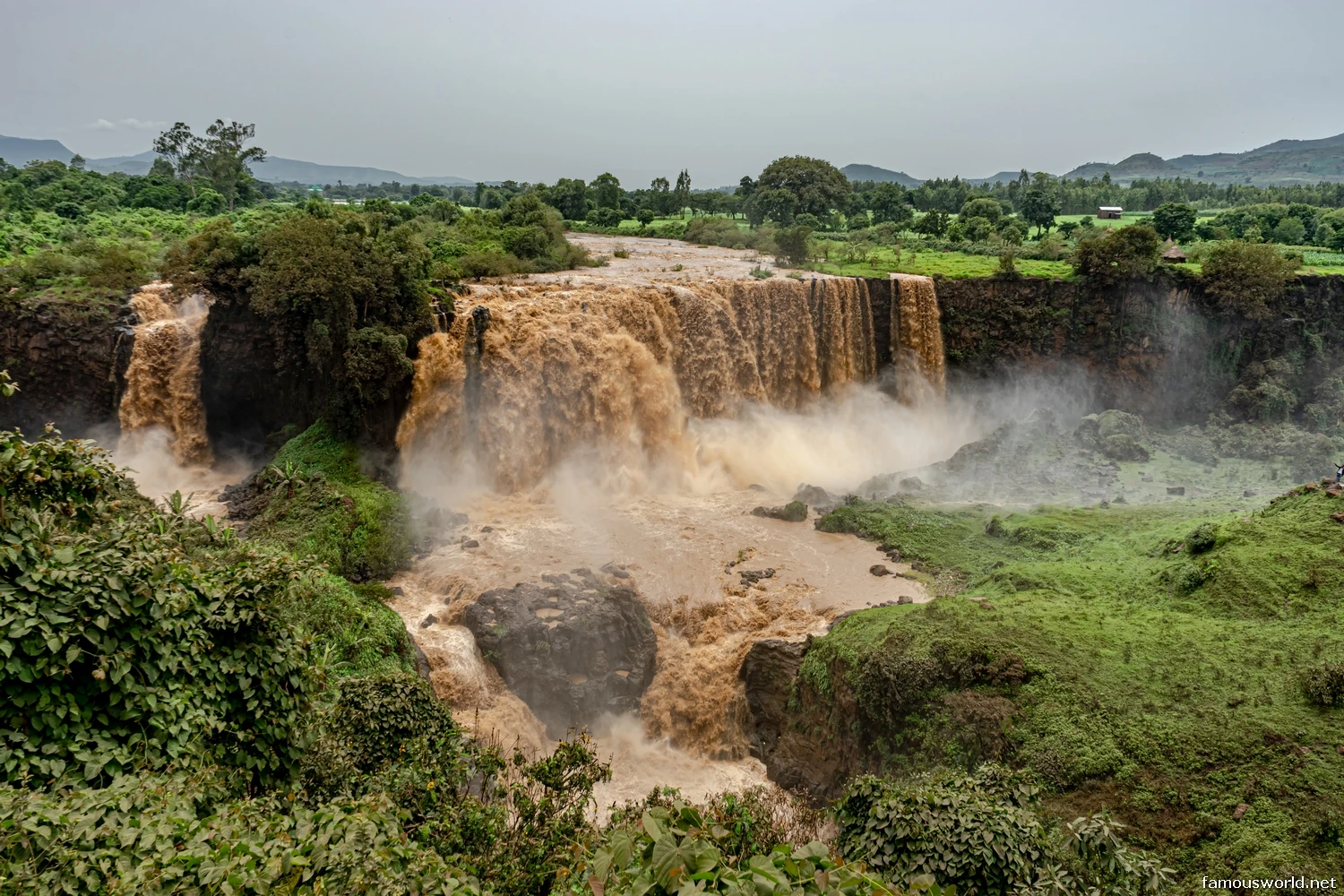
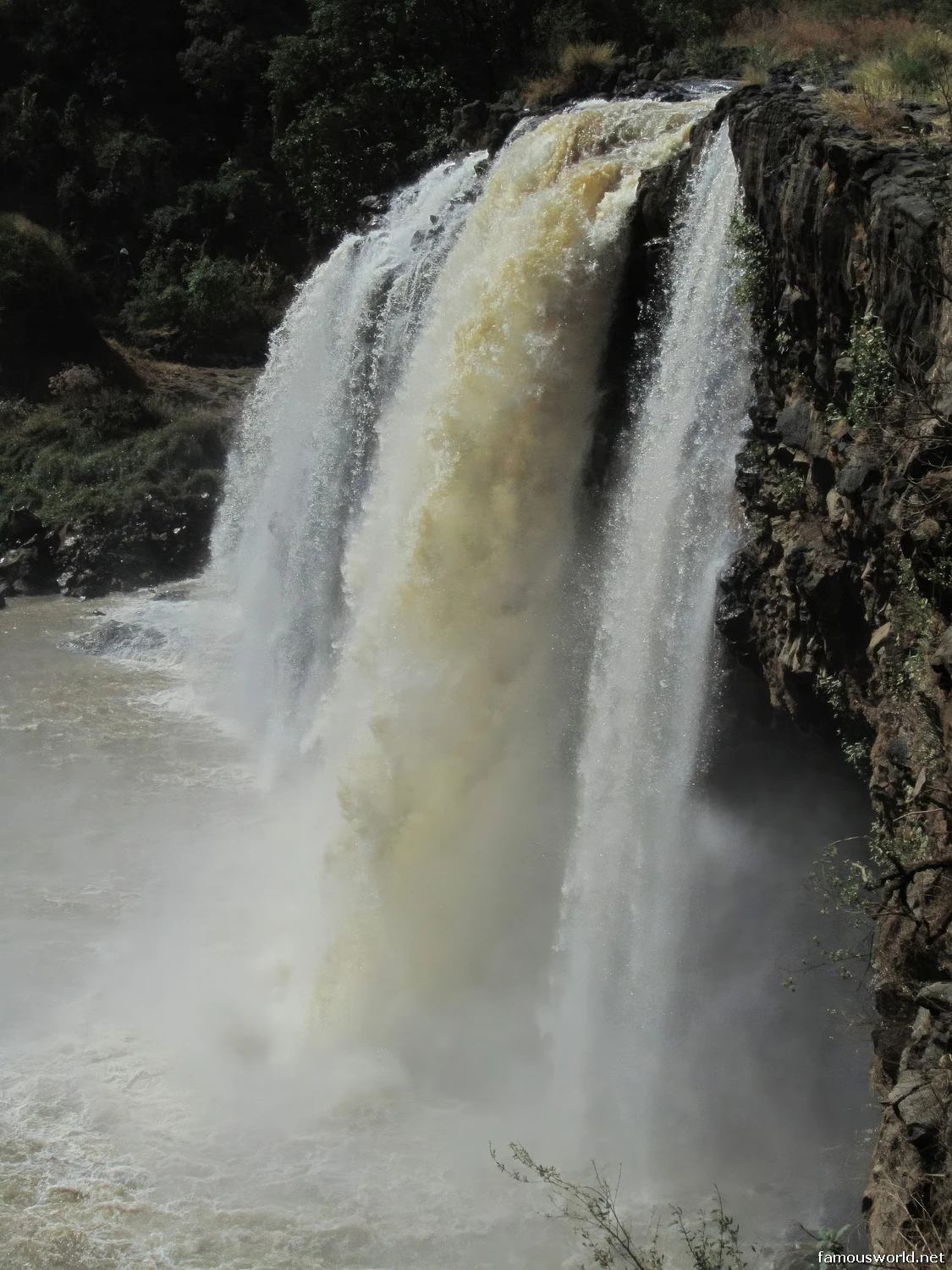
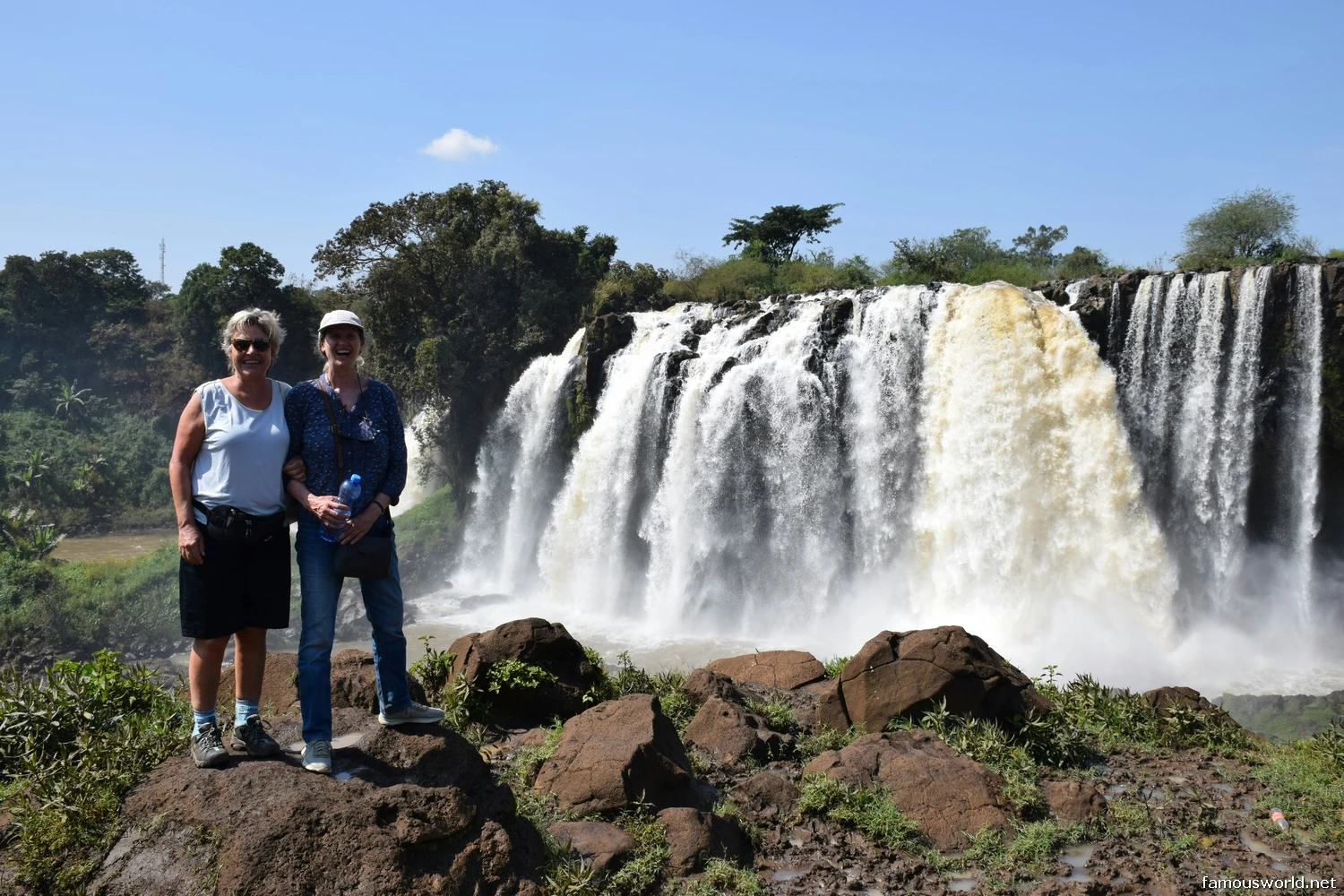
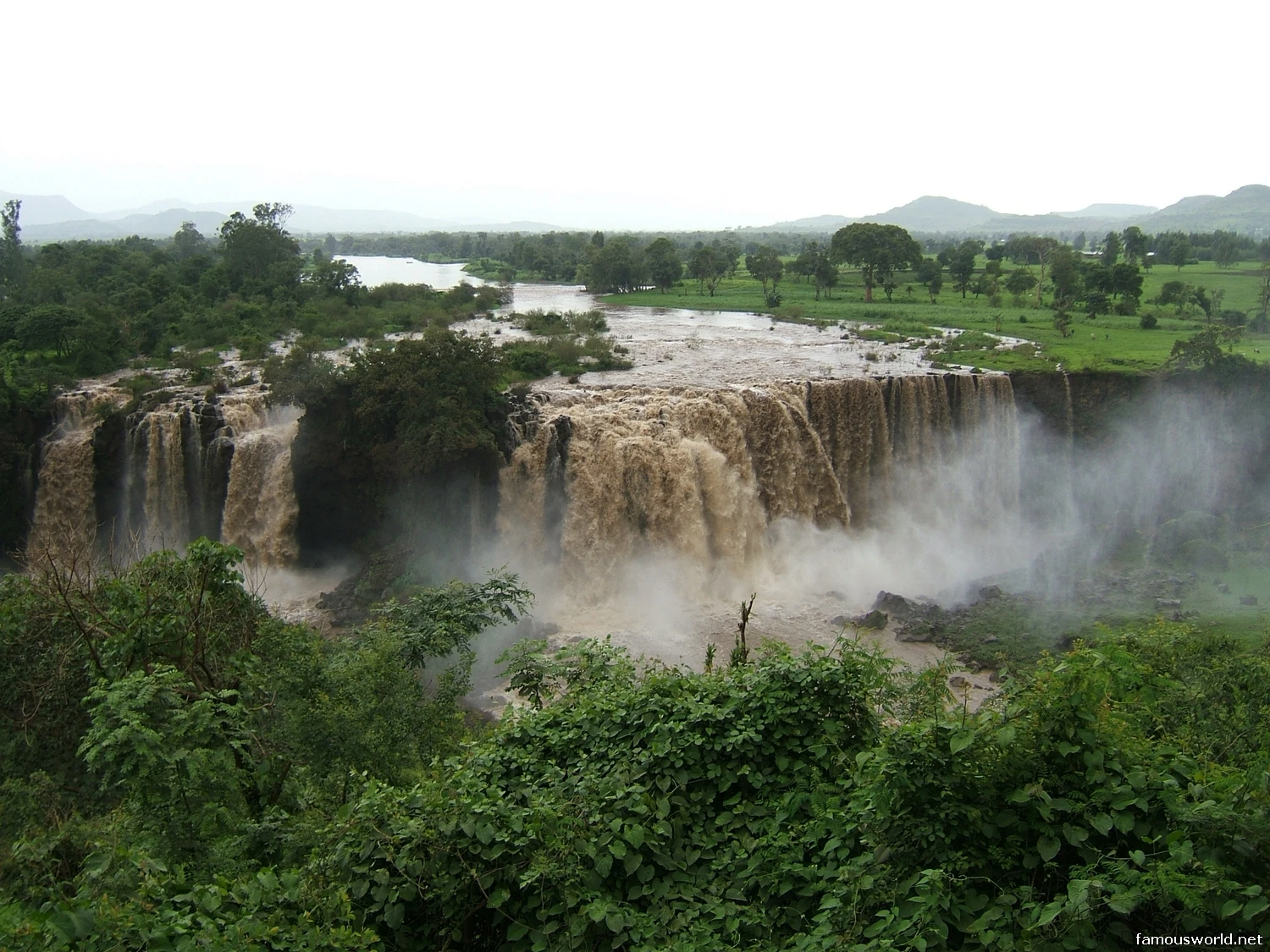
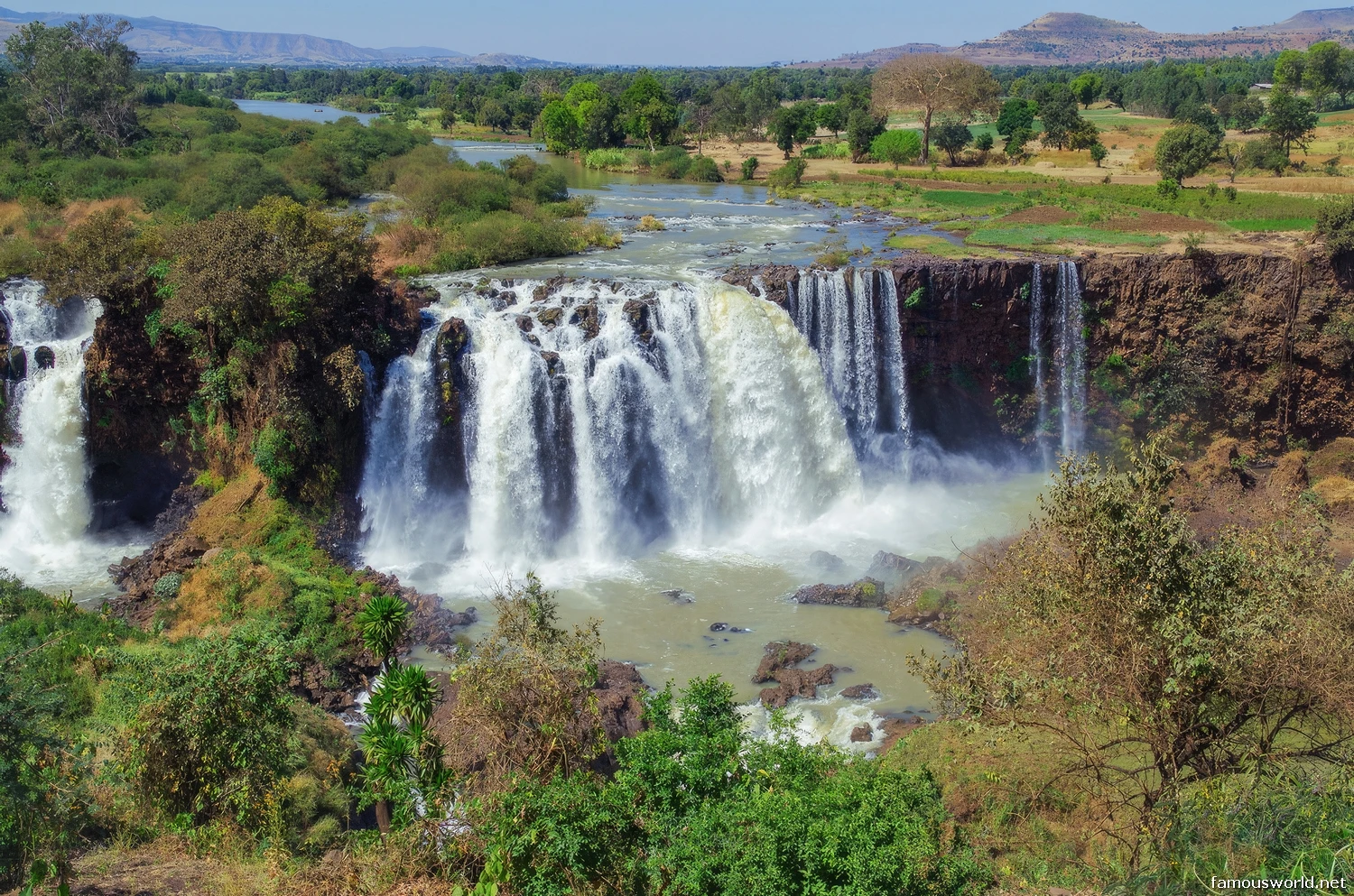
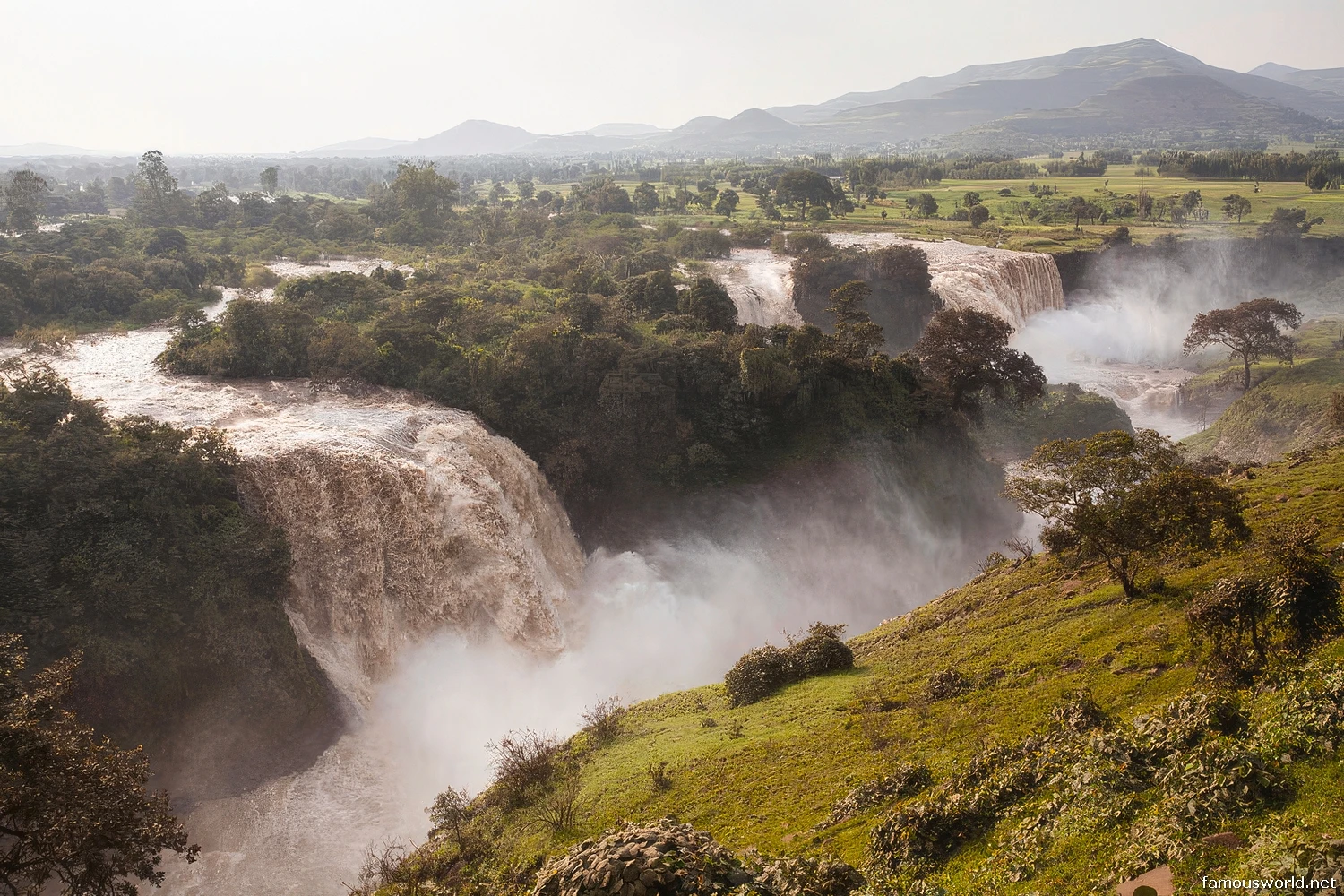
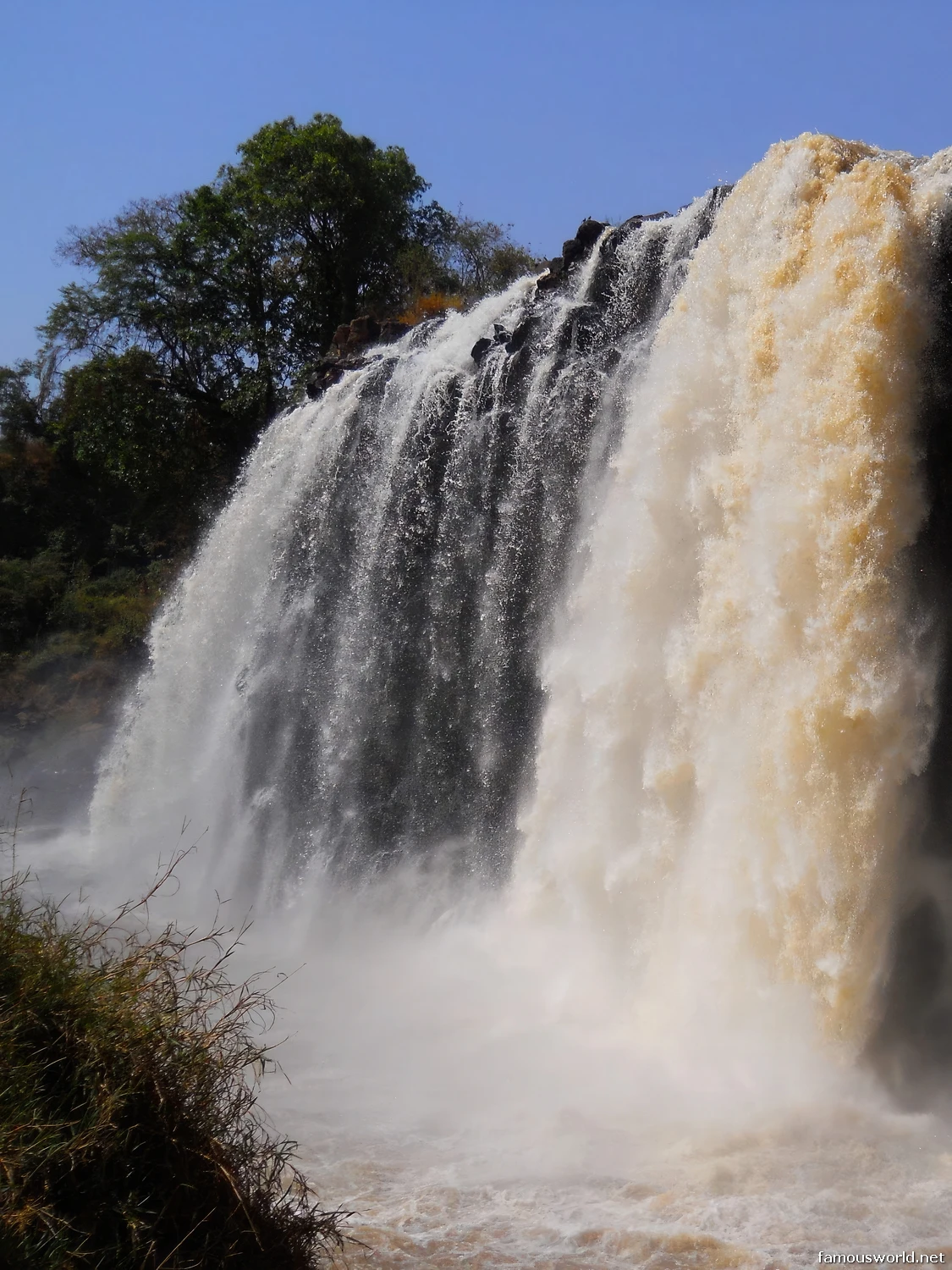
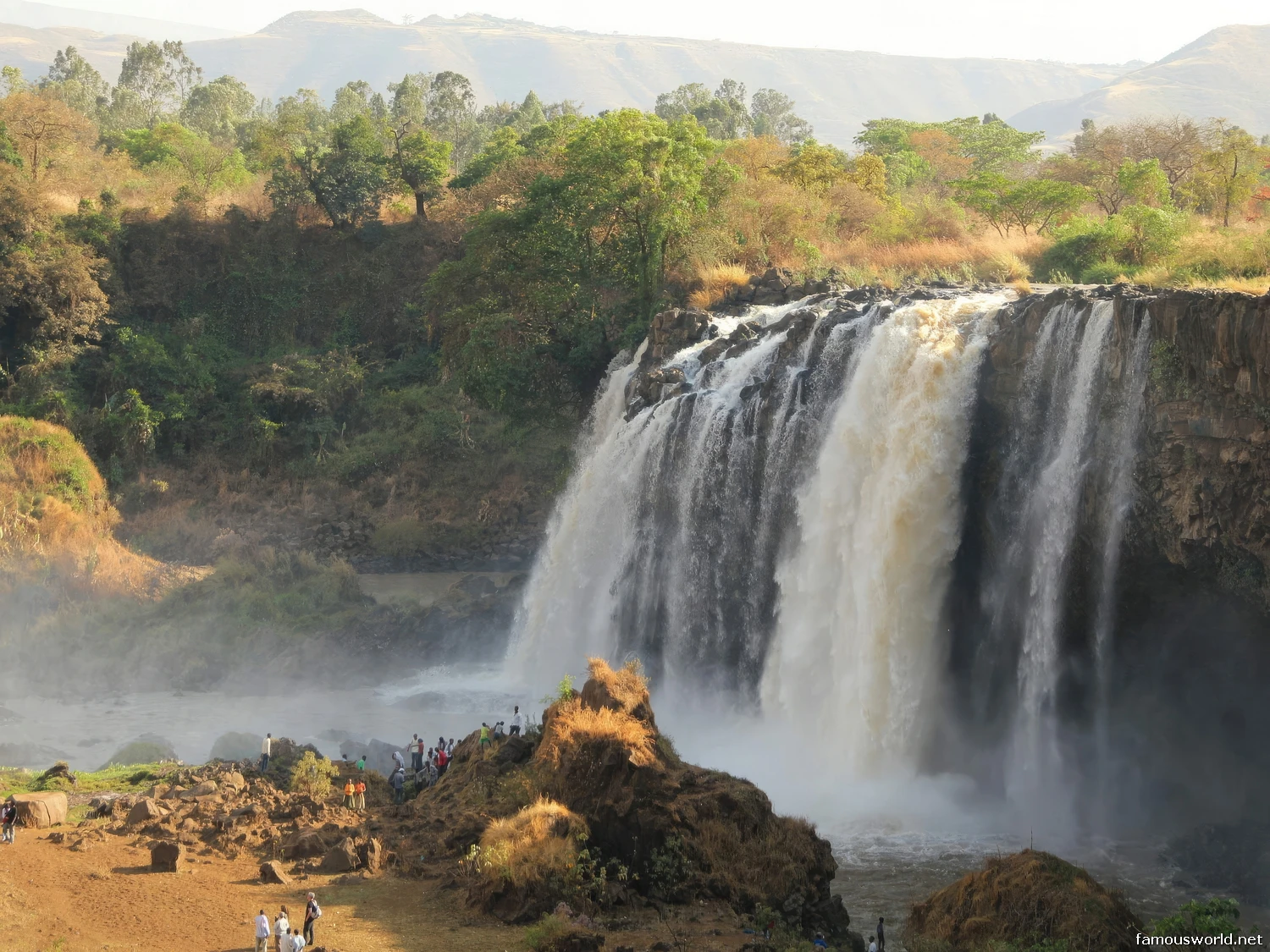
The Blue Nile Falls, known locally as Tis Abay or Tis Issat (meaning “Great Smoke” or “Smoking Water” in Amharic), is a spectacular waterfall on the Blue Nile river in Ethiopia. Located a short distance from the city of Bahir Dar and Lake Tana, the falls are one of Ethiopia’s most famous and dramatic natural landmarks. In full flood, the waterfall once stretched up to 400 meters wide, plunging over a 45-meter-high sheer cliff and creating a thunderous roar and a perpetual, smoke-like spray that could be seen from a great distance. Although its flow has been significantly reduced by a hydroelectric dam upstream, the falls remain a breathtaking sight, particularly after the rainy season, and are set within a beautiful, verdant landscape that offers a glimpse into rural Ethiopia.
Listen to an introduction about Blue Nile Falls

Name and Address
- Name: Blue Nile Falls (Tis Abay).
- Address: Located near the village of Tis Abay, approximately 30 kilometers (19 miles) southeast of Bahir Dar, Amhara Region, Ethiopia.
How to Get There
The falls are a very popular half-day or full-day trip from the city of Bahir Dar.
- By Car/Taxi and Foot (Recommended): The most common way to visit is to hire a vehicle from Bahir Dar for the approximately one-hour drive to the village of Tis Abay. From the ticket office in the village, a 20-30 minute hike is required to reach the main viewpoints. The walk involves crossing a historic 17th-century stone bridge, often called the Portuguese Bridge, and follows a scenic path along the river canyon.
- By Guided Tour: Numerous tour operators in Bahir Dar offer organized trips to the falls, which typically include transportation, a guide, and sometimes a boat trip on the river.
- Visitor Tip: The best time to visit is from August to October, just after the rainy season, when the water volume is at its highest and the falls are at their most powerful and spectacular. During the dry season, the flow can be significantly diminished, sometimes to a mere trickle, due to the hydroelectric dam. Sturdy walking shoes are essential for the hike.
Landscape and Architecture
The “architecture” is a combination of a powerful natural waterfall and historic man-made structures, set within a lush river canyon.
- The Waterfall: The falls are a massive basaltic cliff over which the Blue Nile plunges. At its peak, it is a thunderous curtain of water, creating a dramatic cloud of mist and often a beautiful rainbow. The sheer force of the water has carved a deep and impressive gorge downstream.
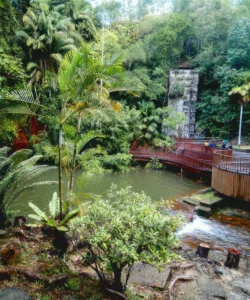
- River Canyon Landscape: The area around the falls is a verdant and fertile landscape. The hike takes you through lush vegetation, past small rural villages, and offers stunning views into the deep canyon carved by the river.
- The Portuguese Bridge: A key architectural feature is the ancient stone bridge located downstream from the falls. Built in 1626, it is a beautiful, multi-arched structure and was the first stone bridge ever constructed in Ethiopia, adding a significant historical element to the natural scenery.
What Makes It Famous
The Blue Nile Falls are famous for being the most dramatic and powerful waterfall on the entire course of the Nile River.
- The “Great Smoke”: Its primary claim to fame is its immense power and the massive cloud of spray it produces, which earned it its local name. It is the most spectacular waterfall in Ethiopia.
- A Key Feature of the Blue Nile: As a major landmark on the Blue Nile shortly after it leaves its source at Lake Tana, the falls are a symbol of the river’s immense power, which has shaped the landscape and history of Ethiopia, Sudan, and Egypt for millennia.
- A Natural and Historical Journey: A visit to the falls is not just a nature walk but a journey through history, crossing the ancient Portuguese bridge and passing through timeless rural landscapes.
Differences from Other Wonders
The Blue Nile Falls offer a powerful, natural spectacle that is distinct from Ethiopia’s other major attractions.
- A Natural Spectacle vs. a Tranquil Lake: While the falls are directly connected to Lake Tana, the experience is completely different. Lake Tana is about serene, expansive water and the quiet, contemplative atmosphere of its island monasteries. The falls are about the raw, thunderous power of nature in motion.
- A Force of Nature vs. a Man-Made Wonder: Unlike the rock-hewn architectural marvels of Lalibela or the ancient stelae of Axum, the Blue Nile Falls are a purely natural wonder. The experience is about witnessing a powerful geological feature, not human craftsmanship.
- River Canyon vs. Mountain Plateau: The landscape of the falls is a deep, lush river canyon. This is a stark contrast to the high-altitude, Afro-alpine moorland of the Simien Mountains National Park. A visit to the falls is a shorter, more focused experience centered on the power of the water.