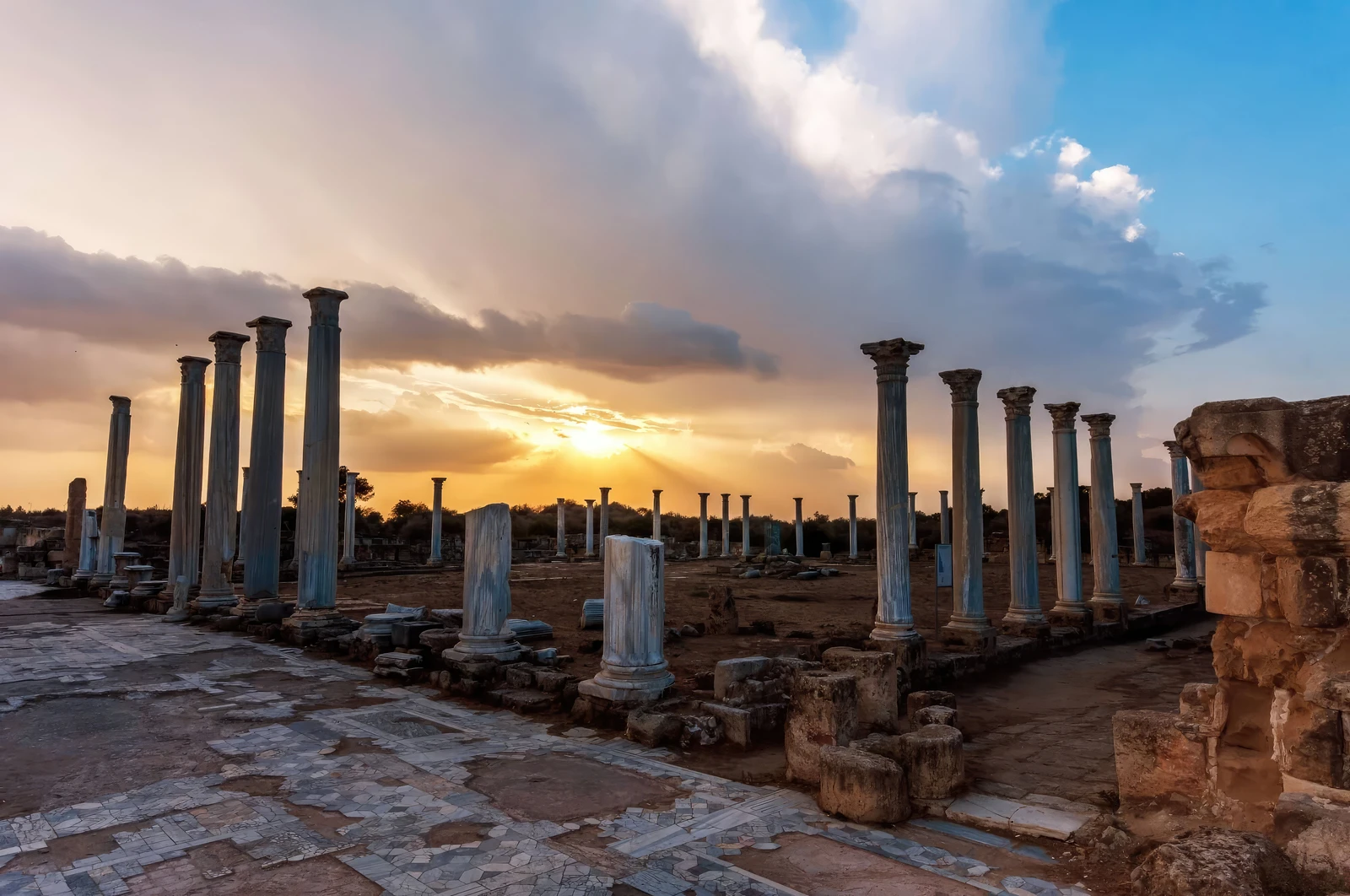


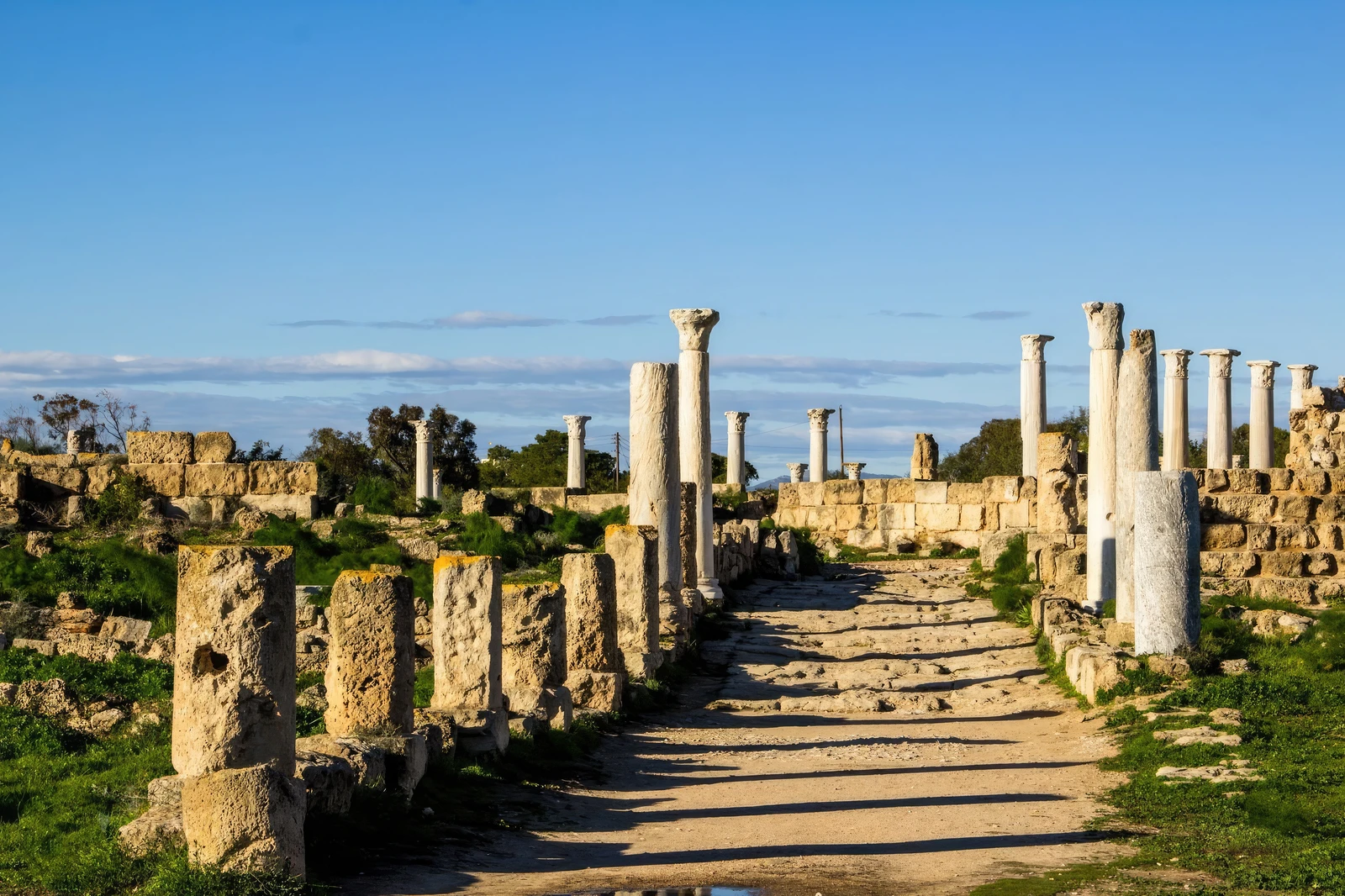
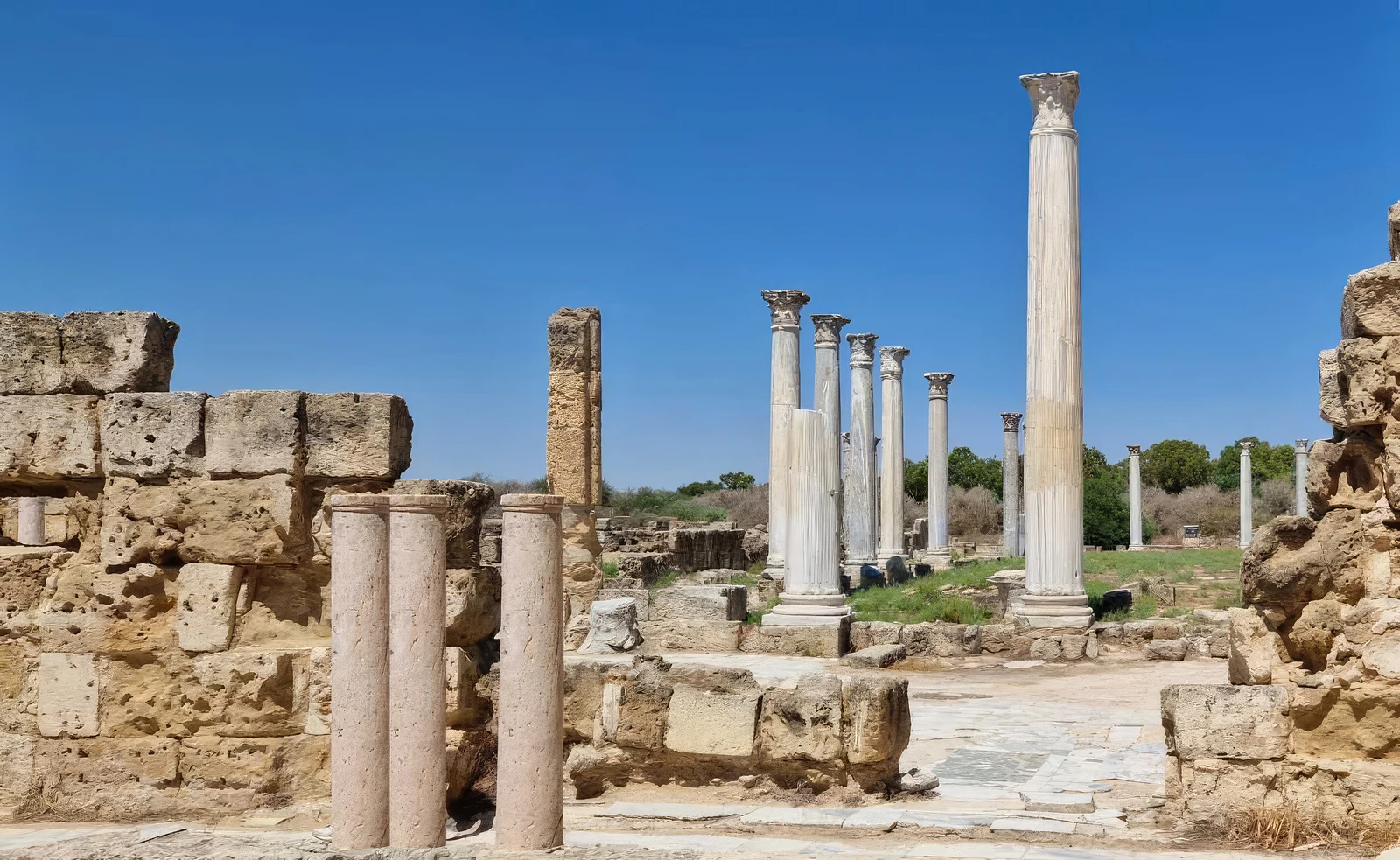
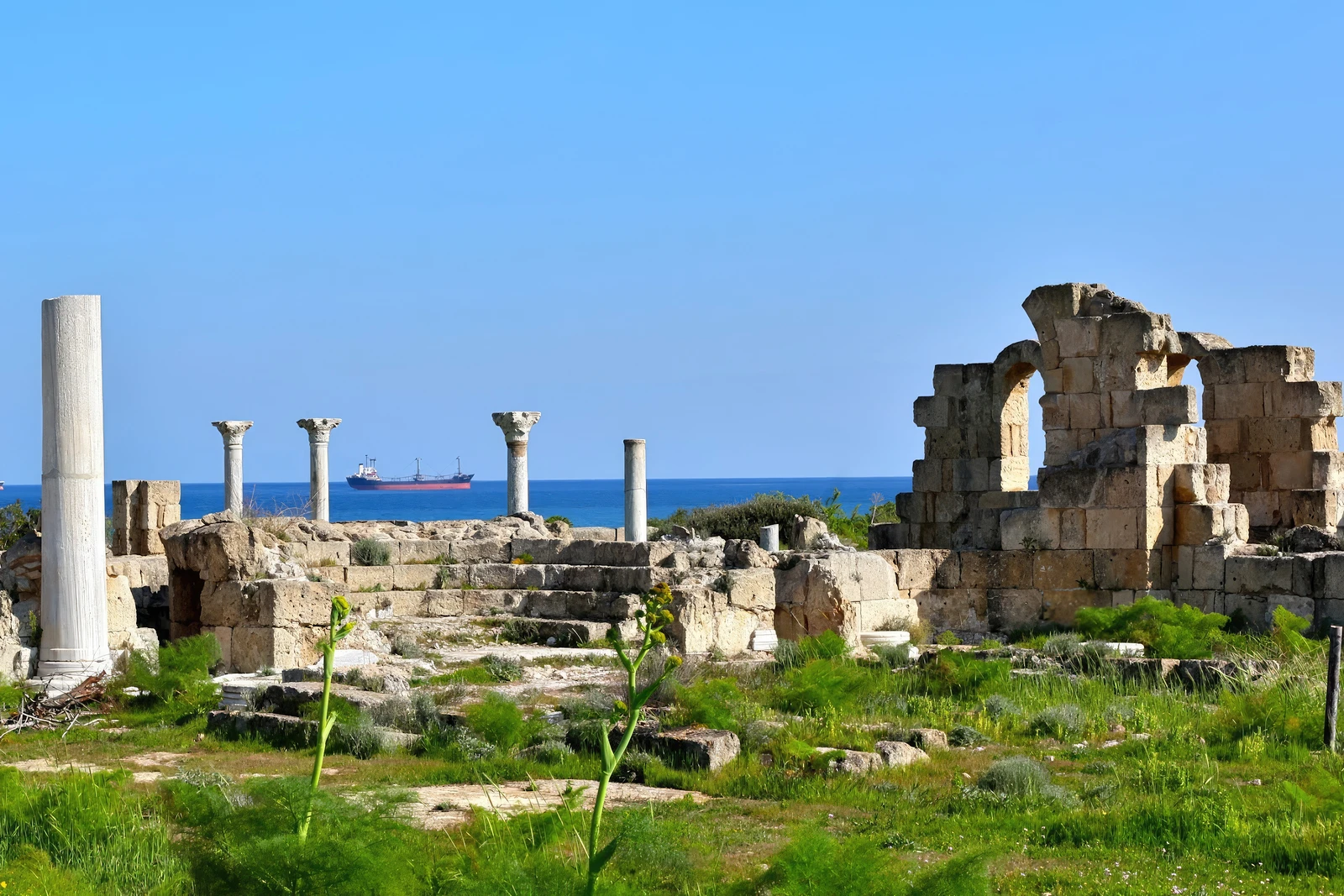

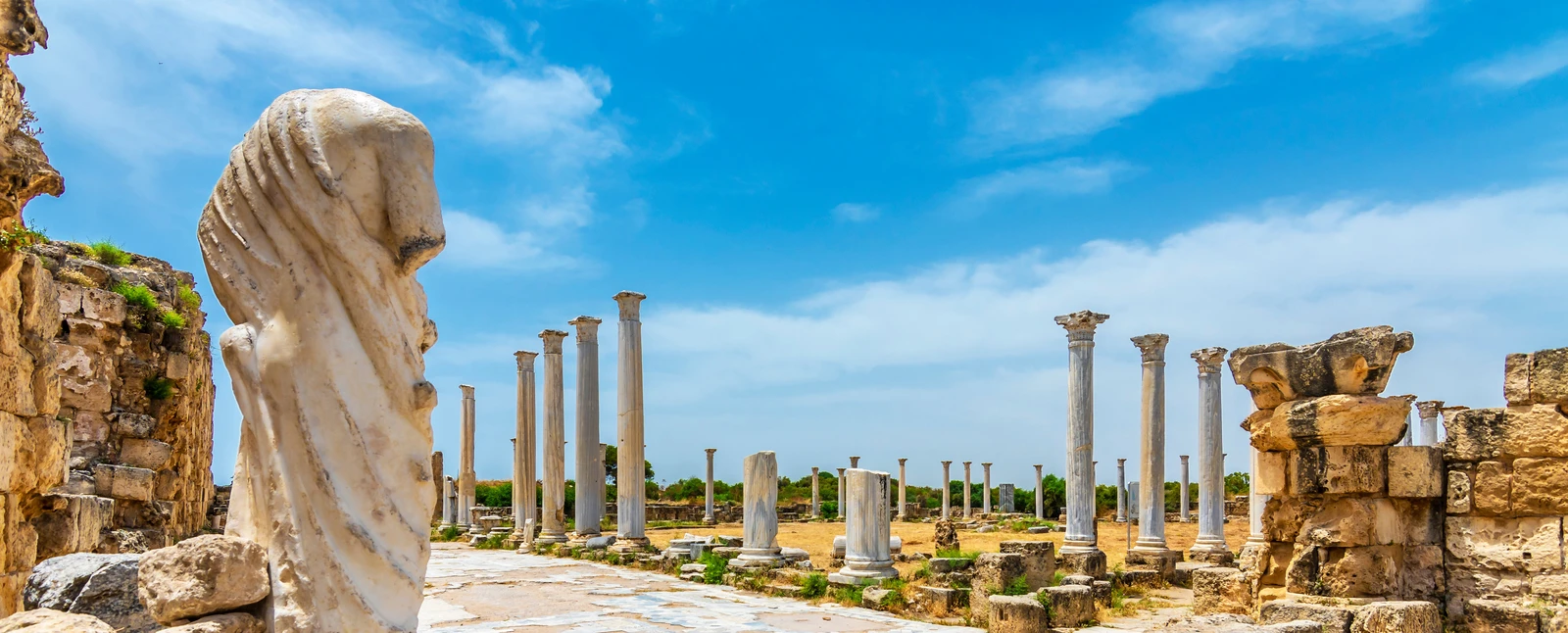
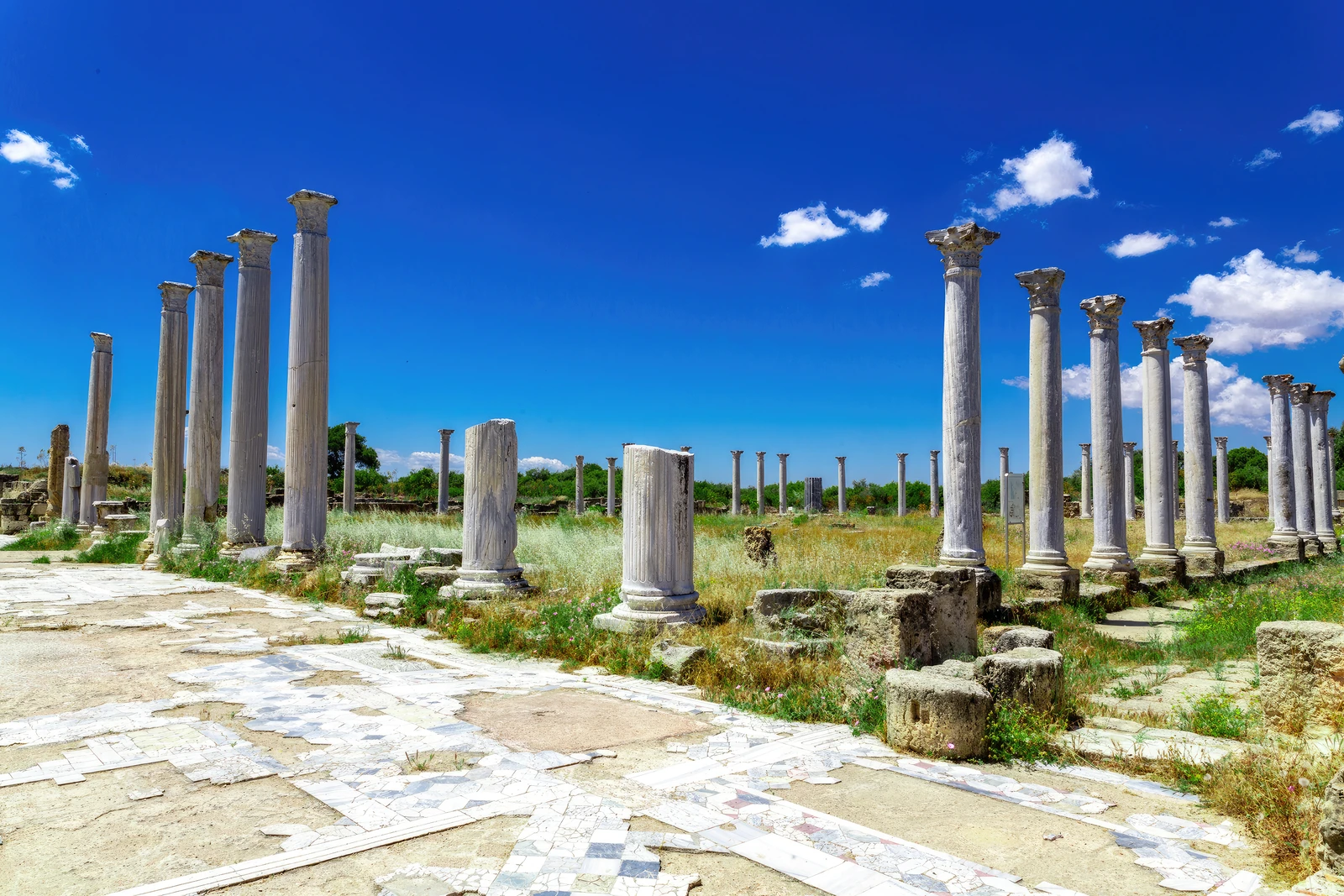
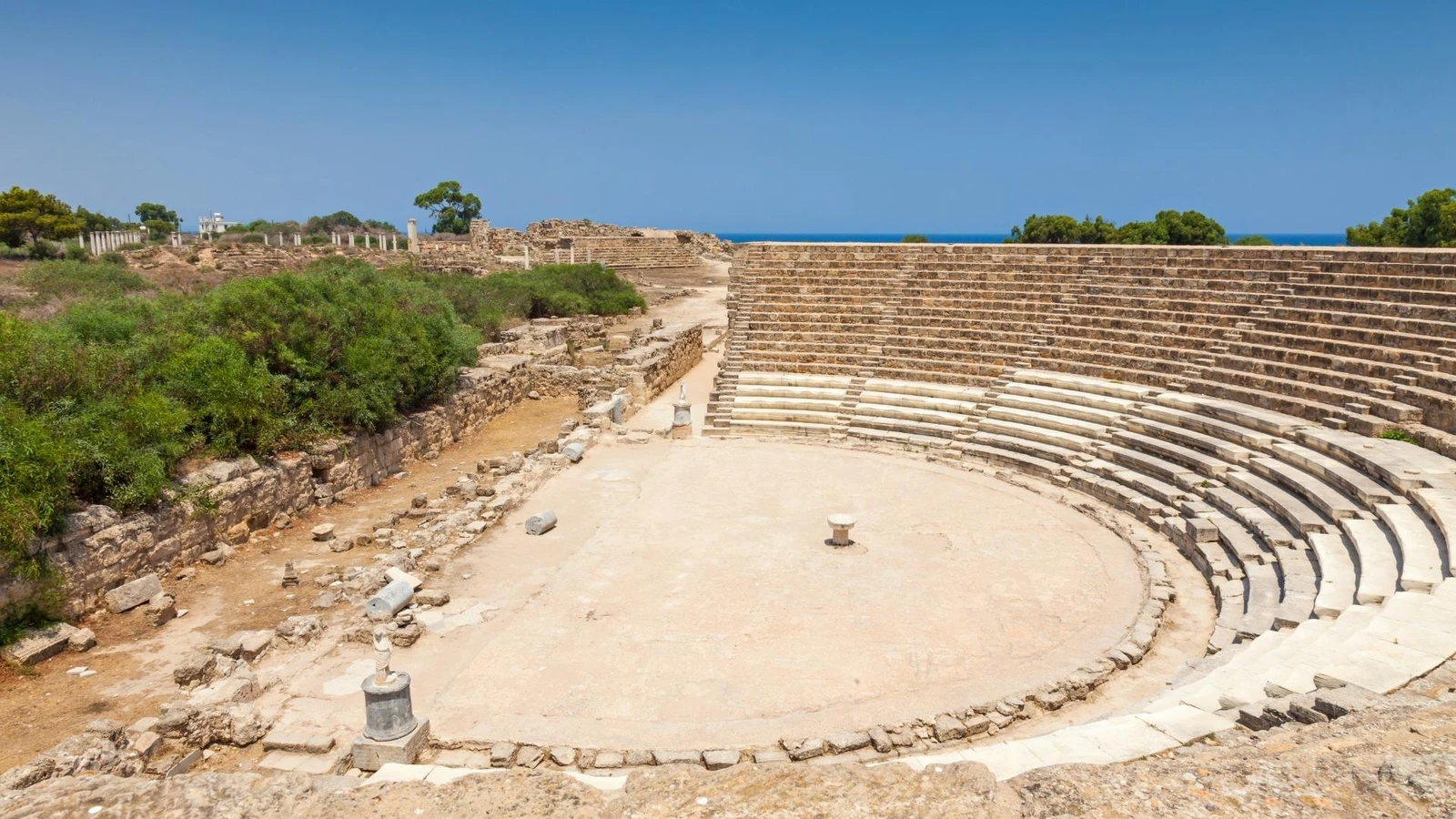
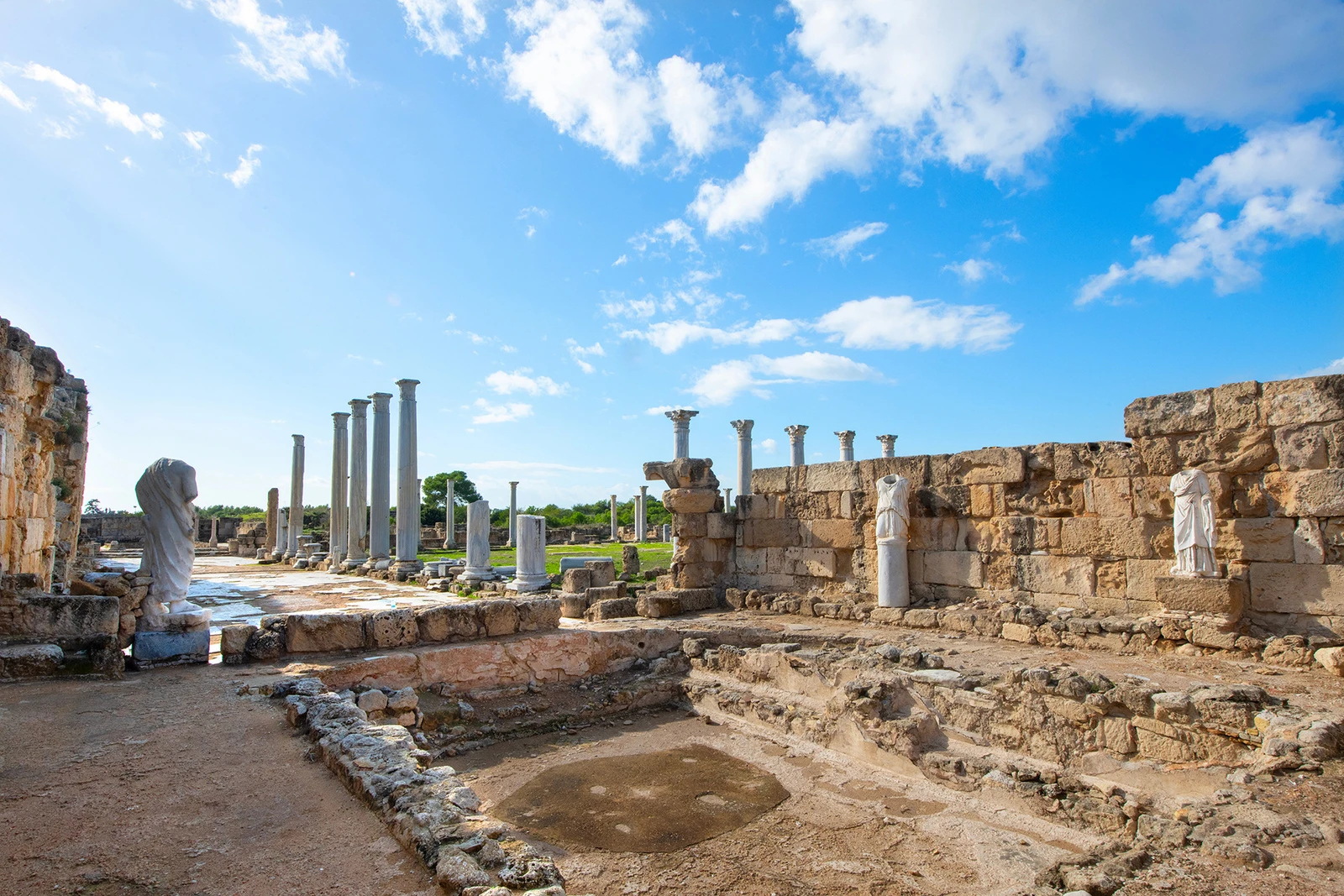
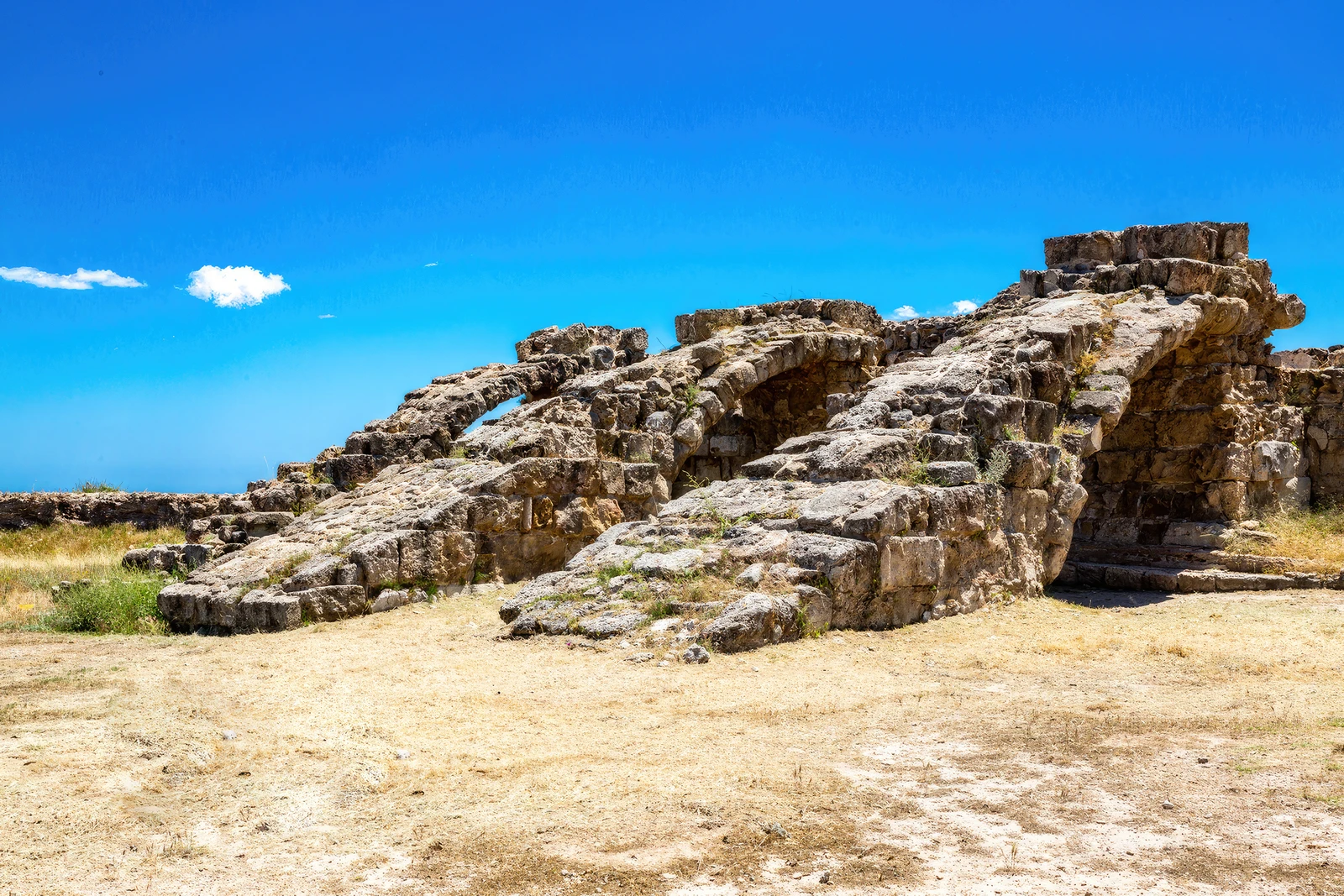
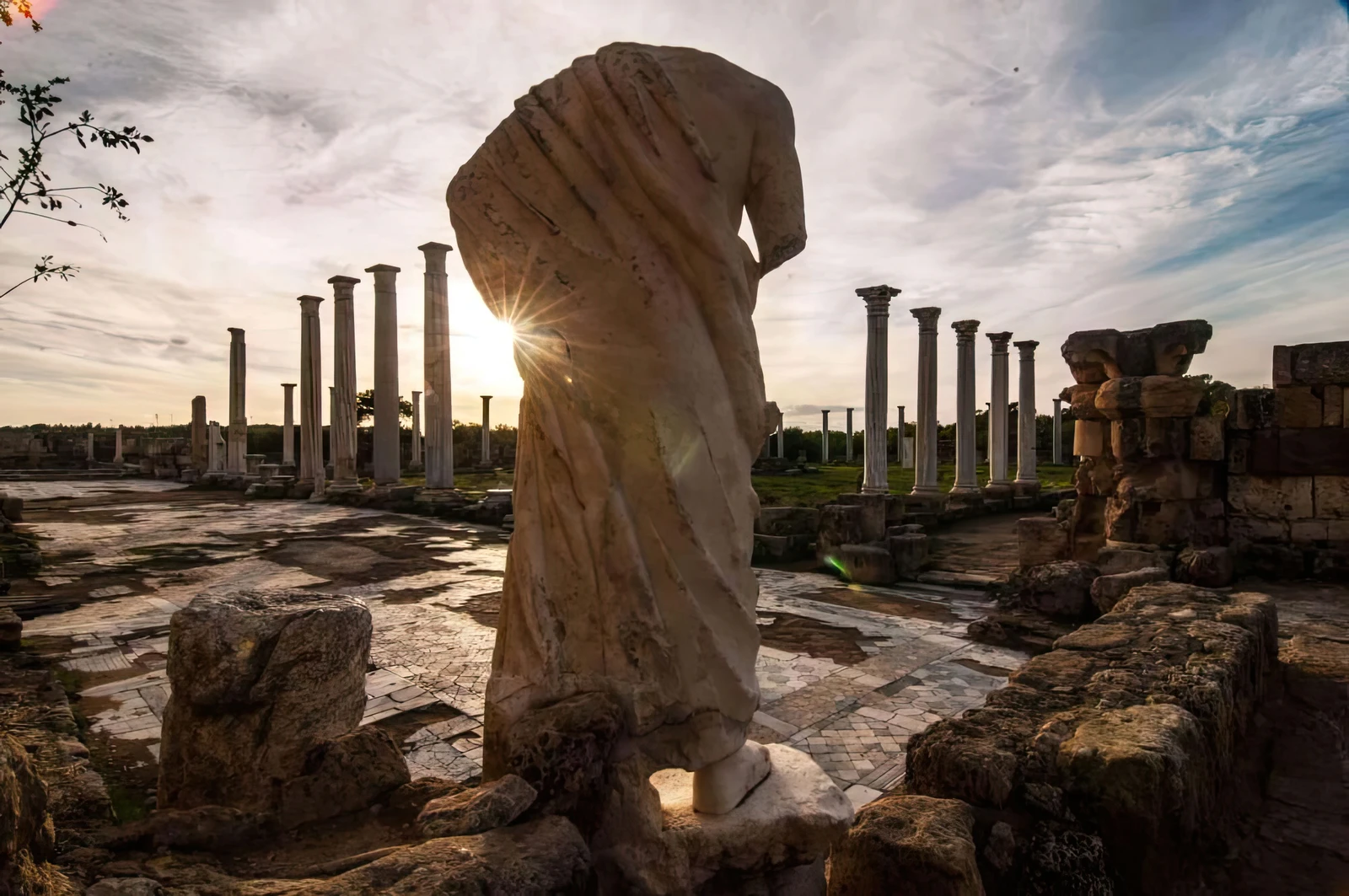
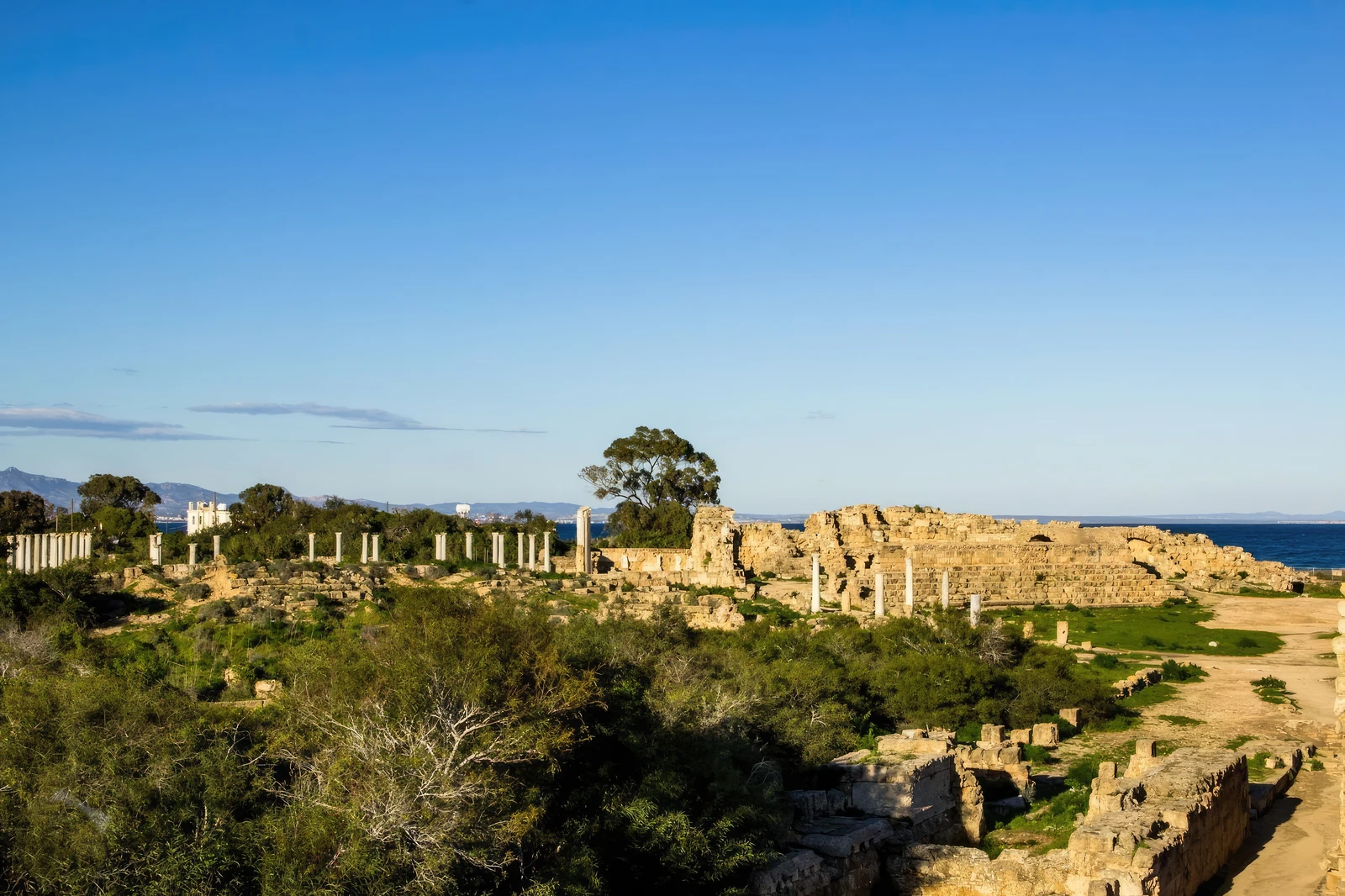
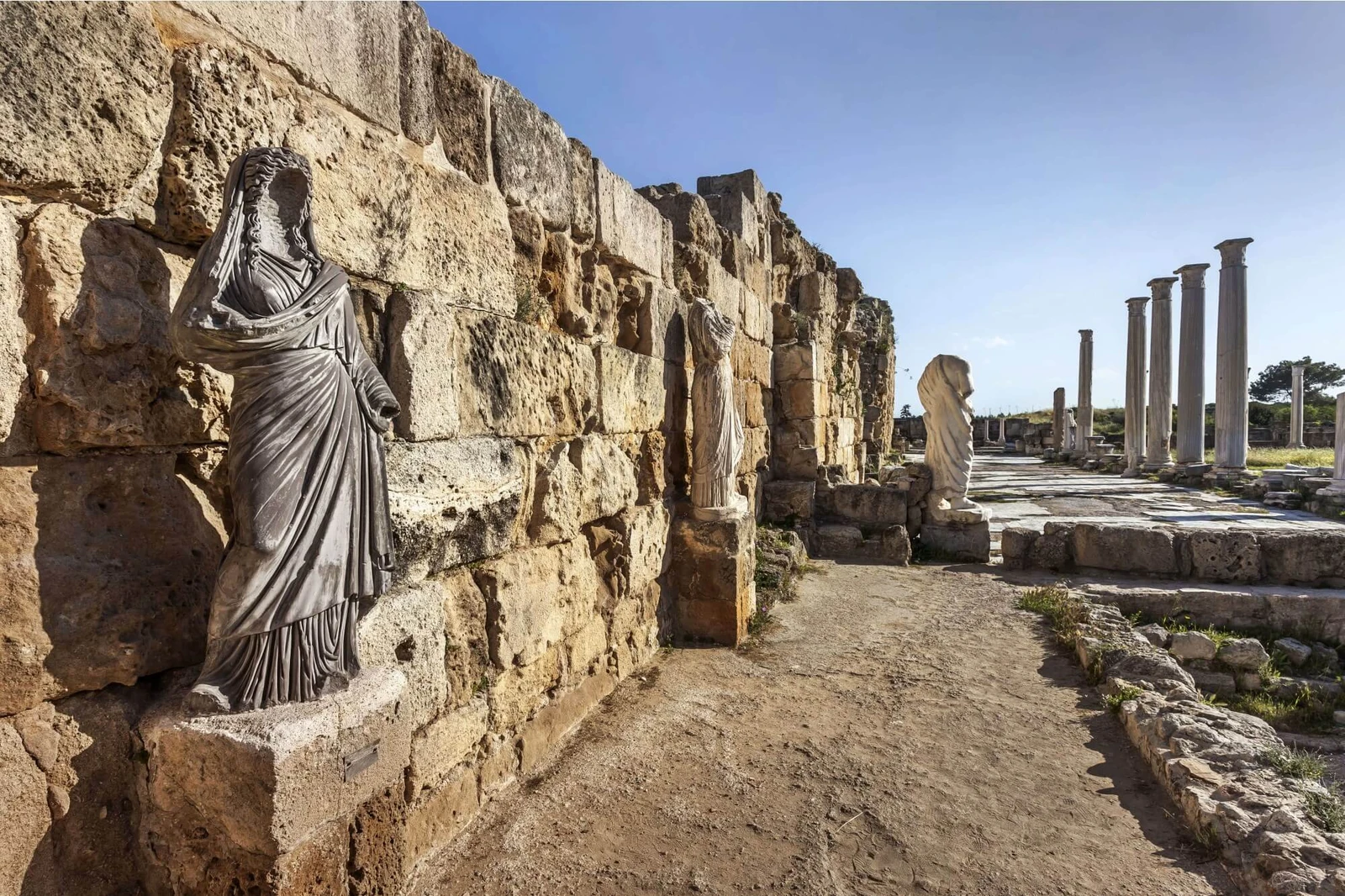
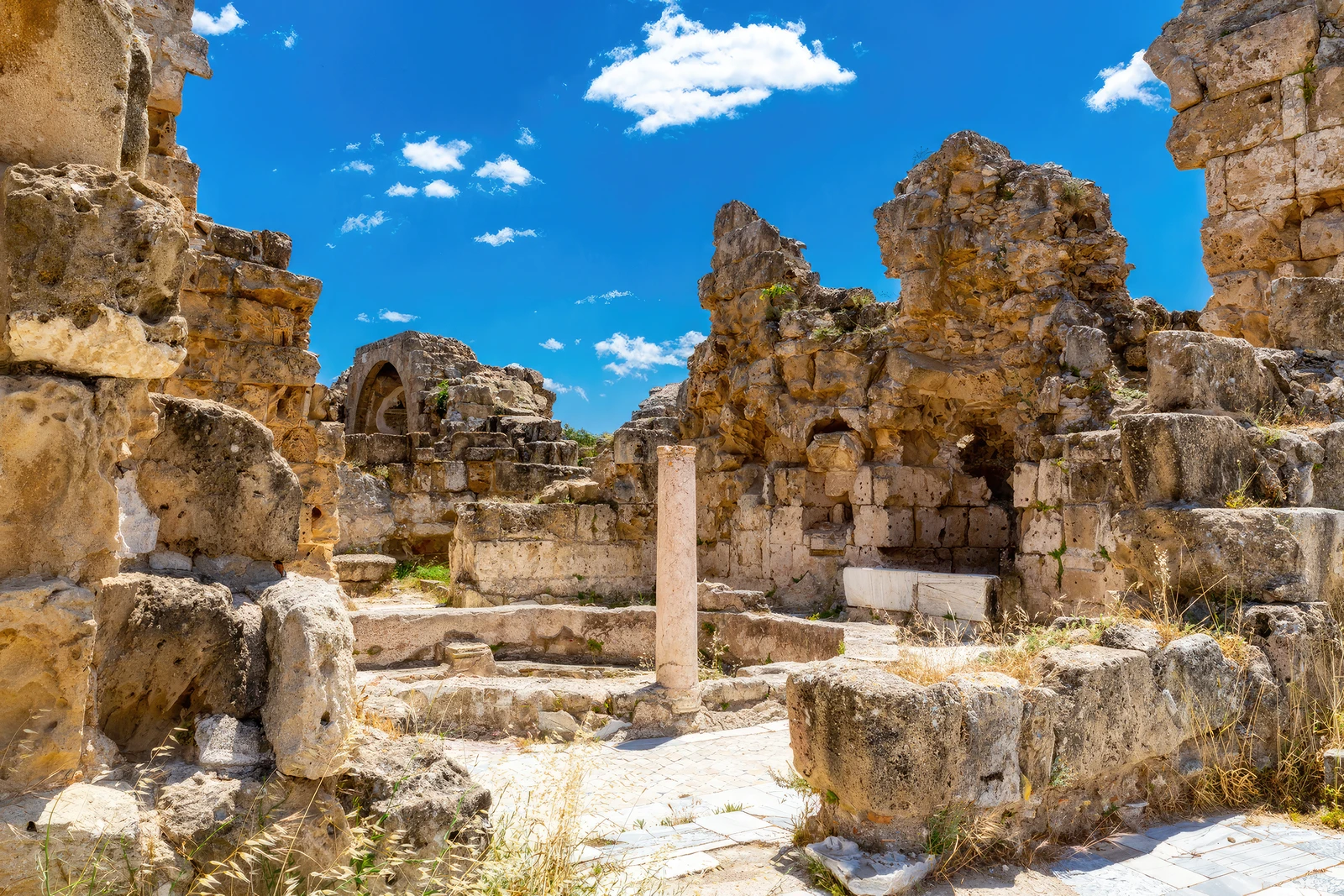
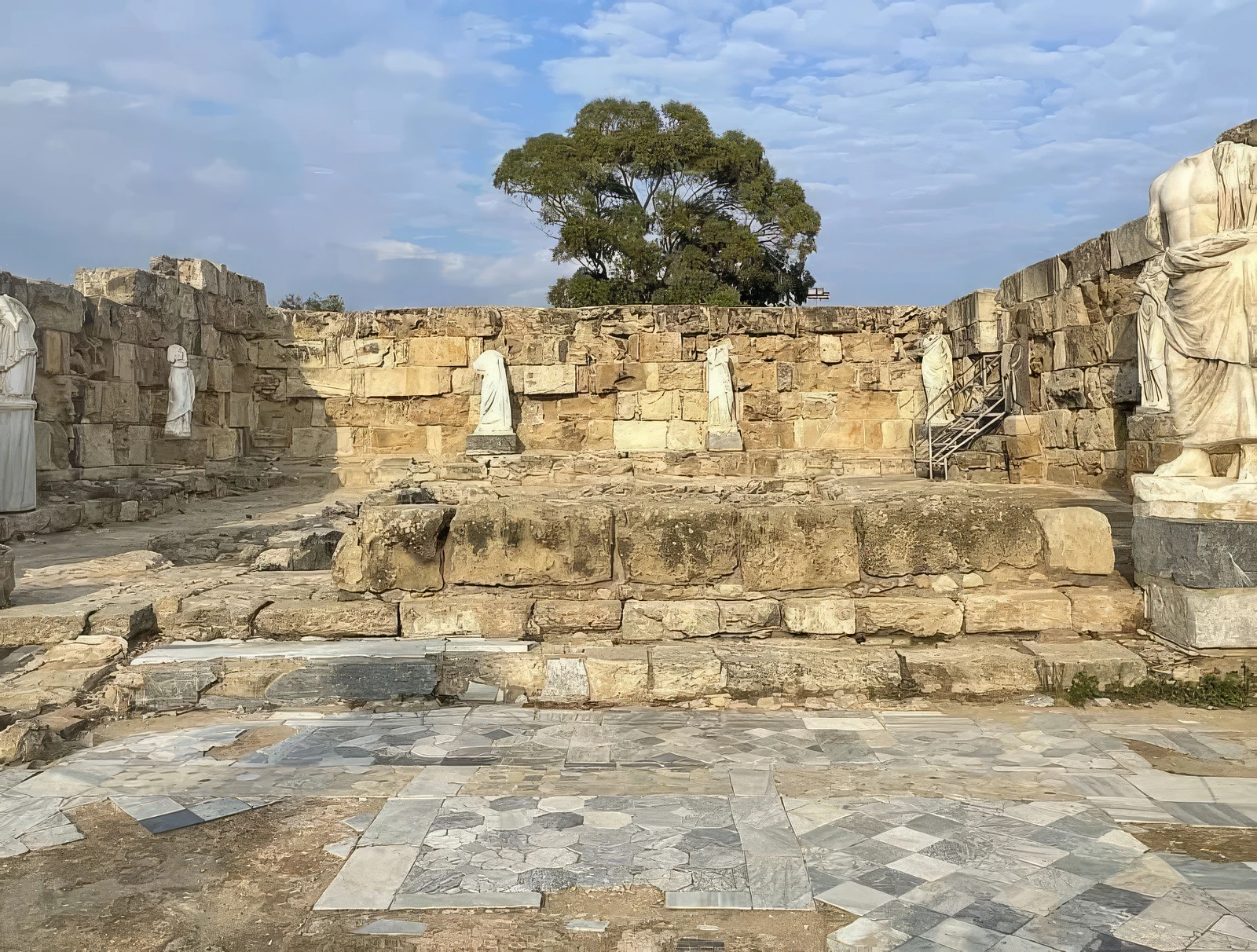
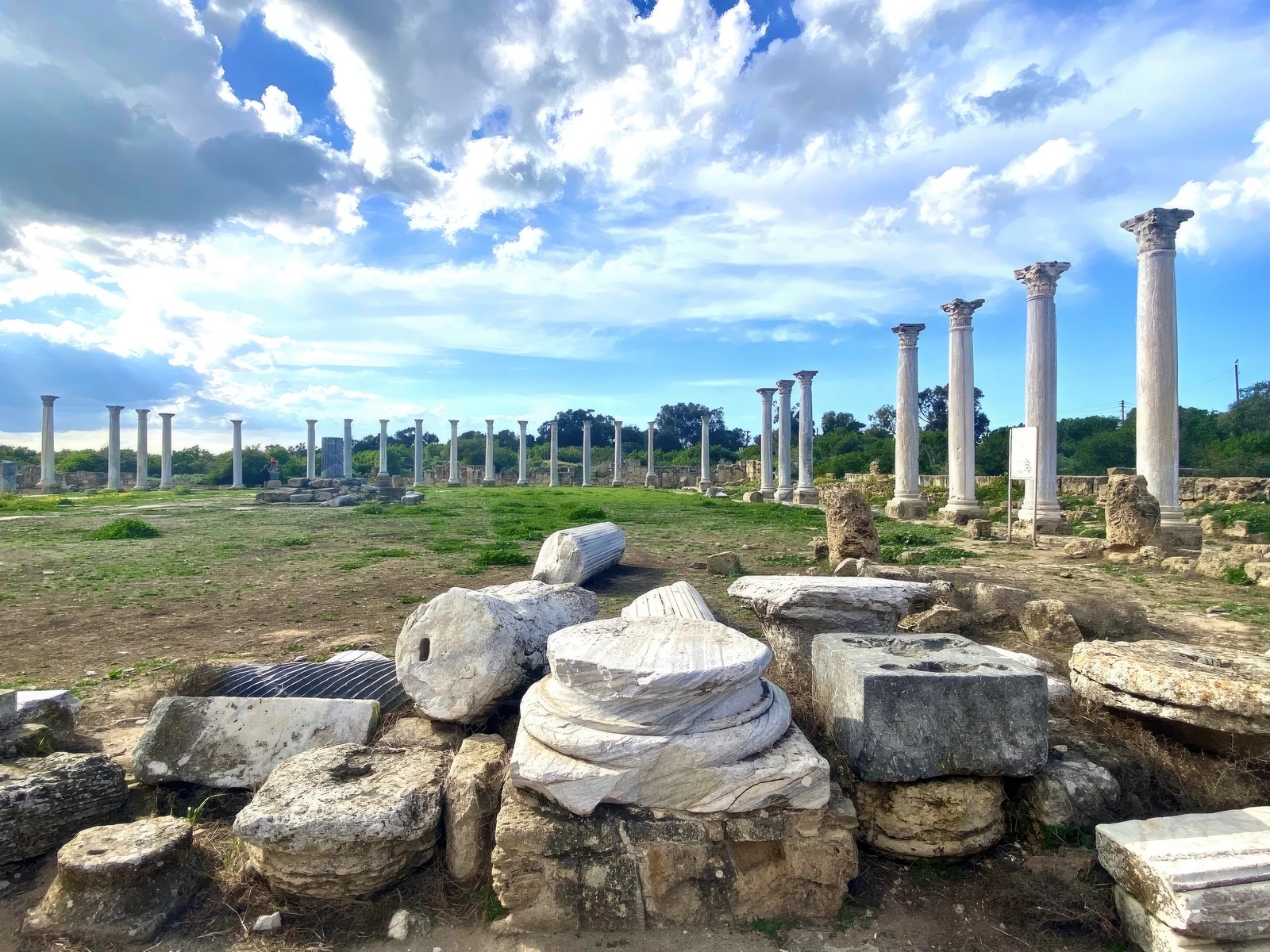
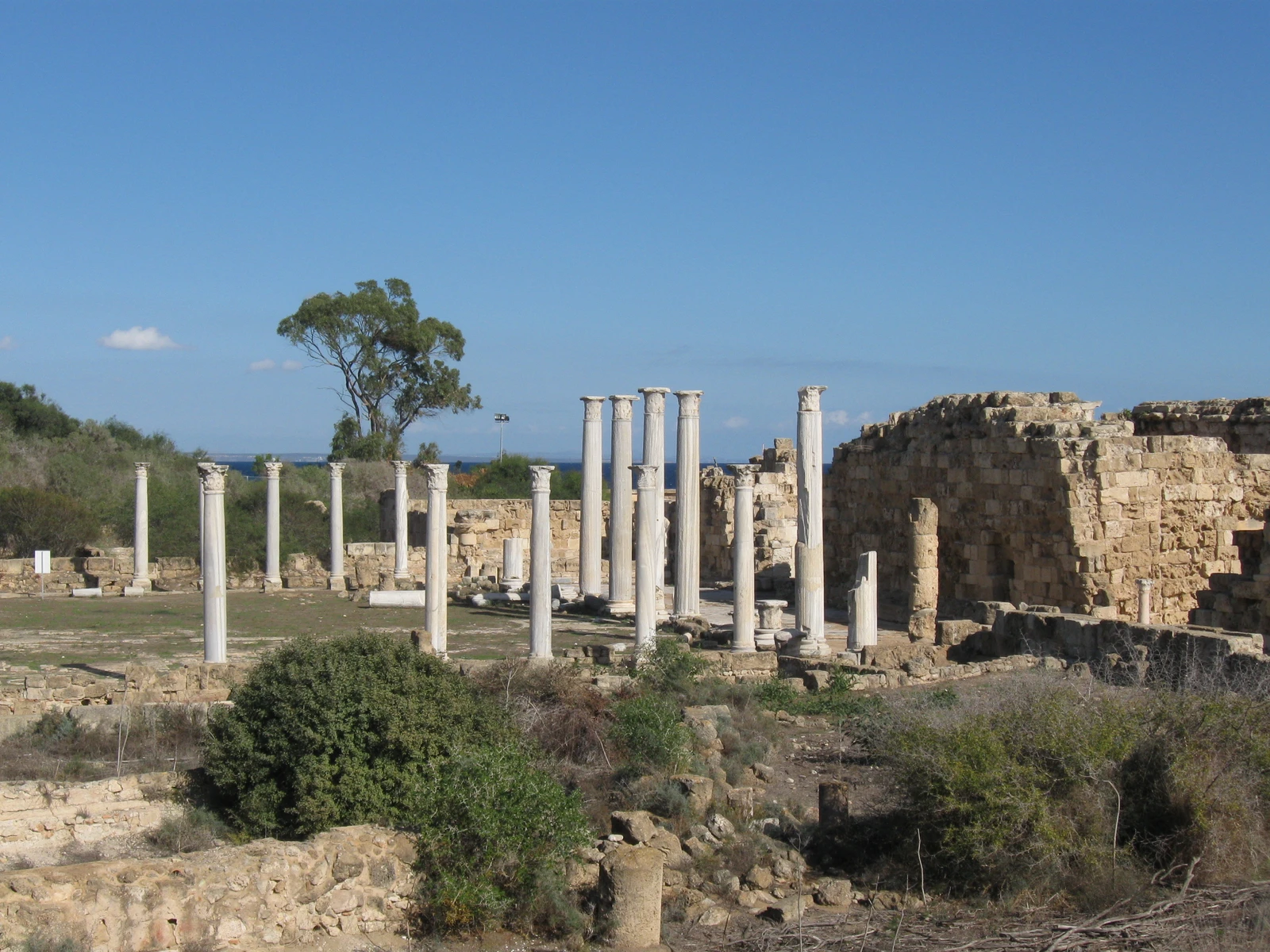
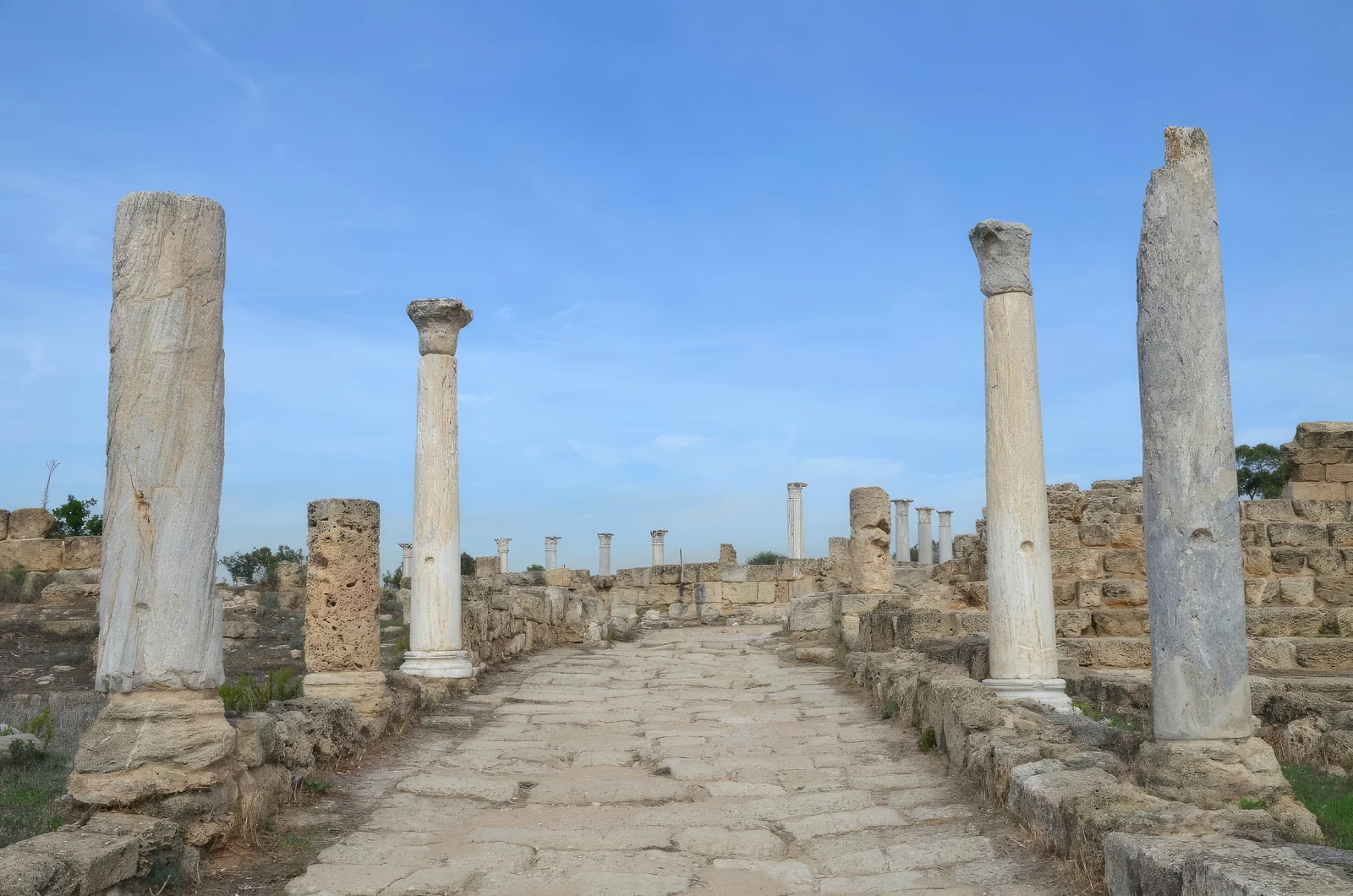
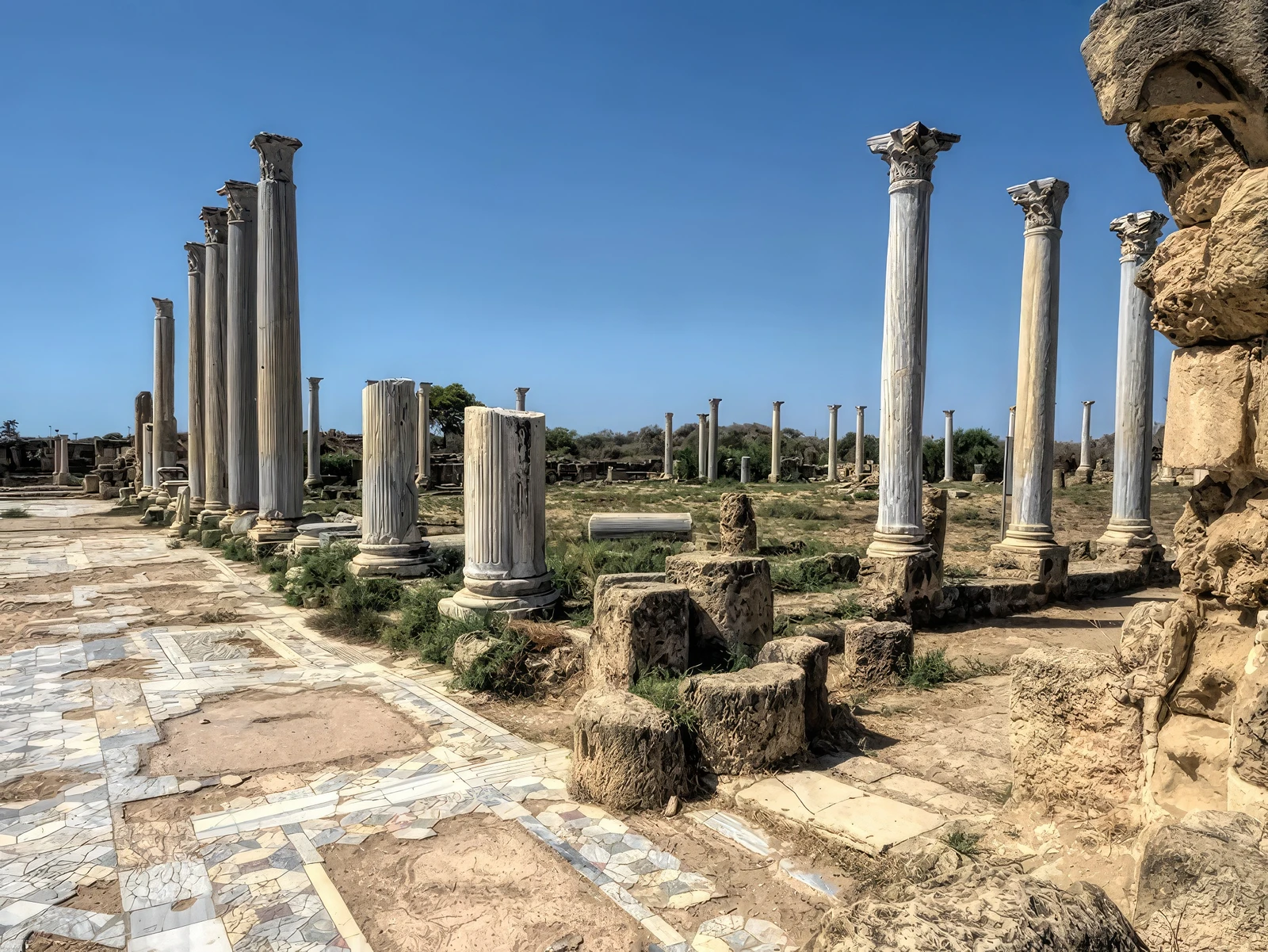
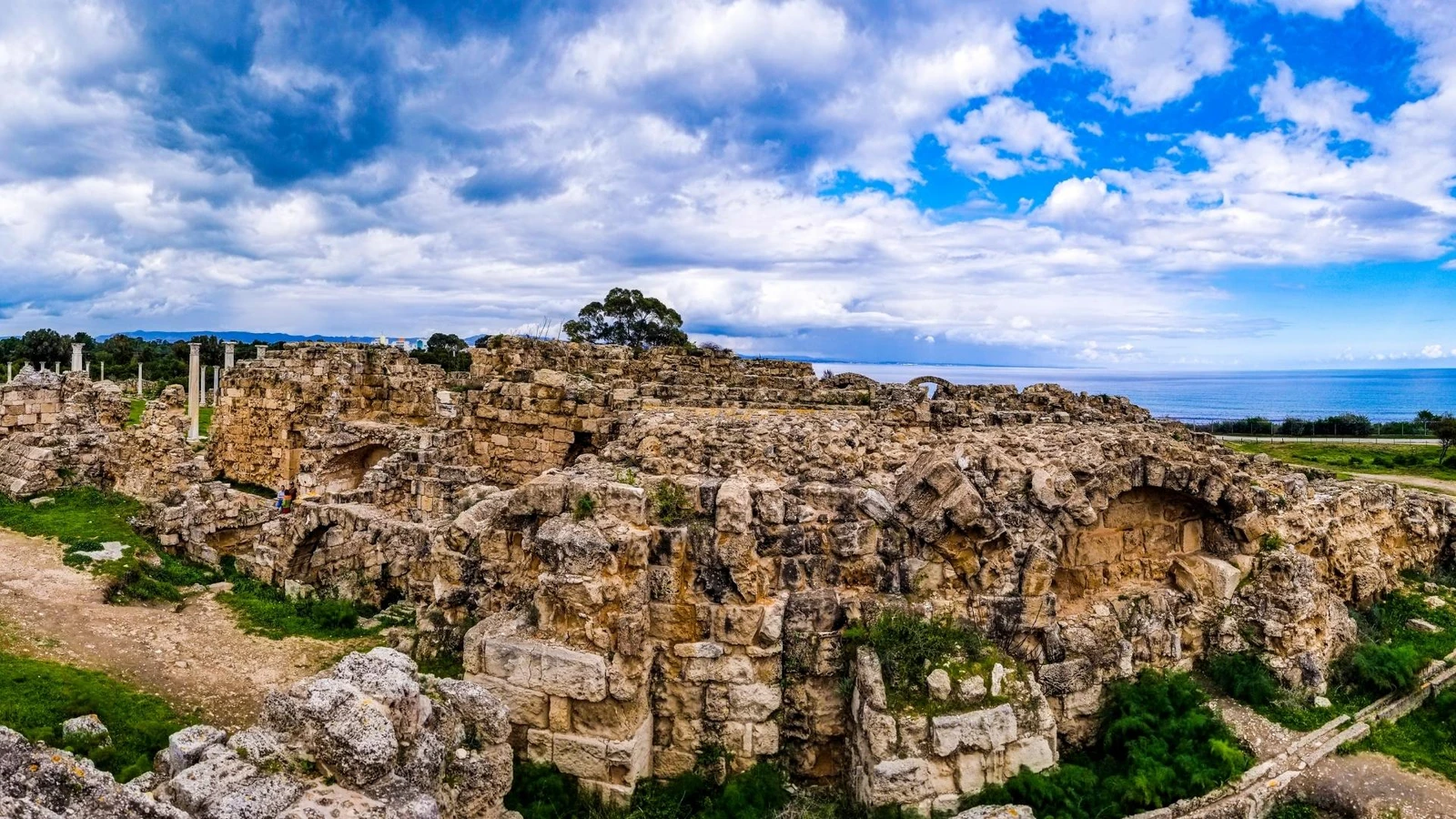
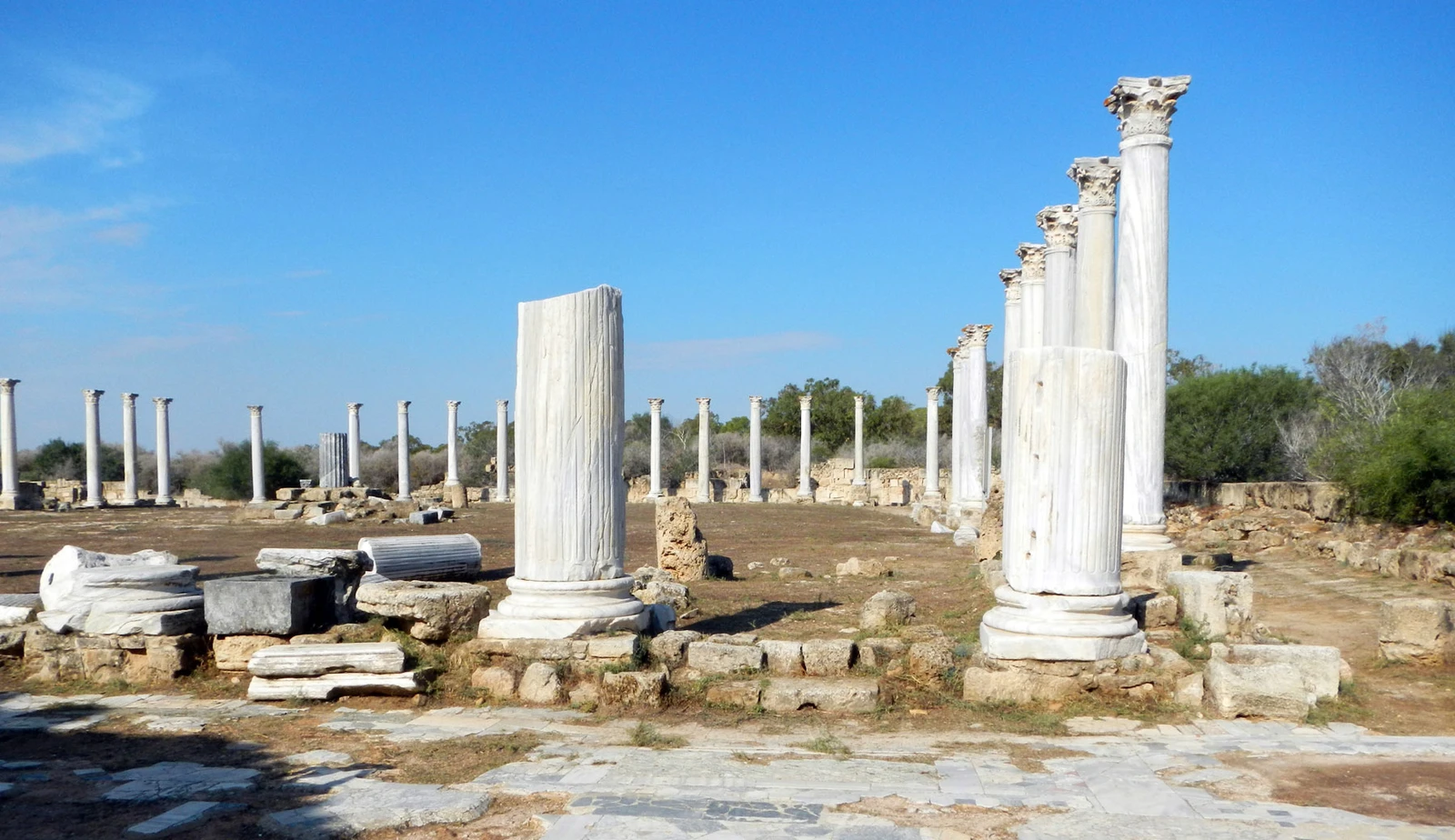
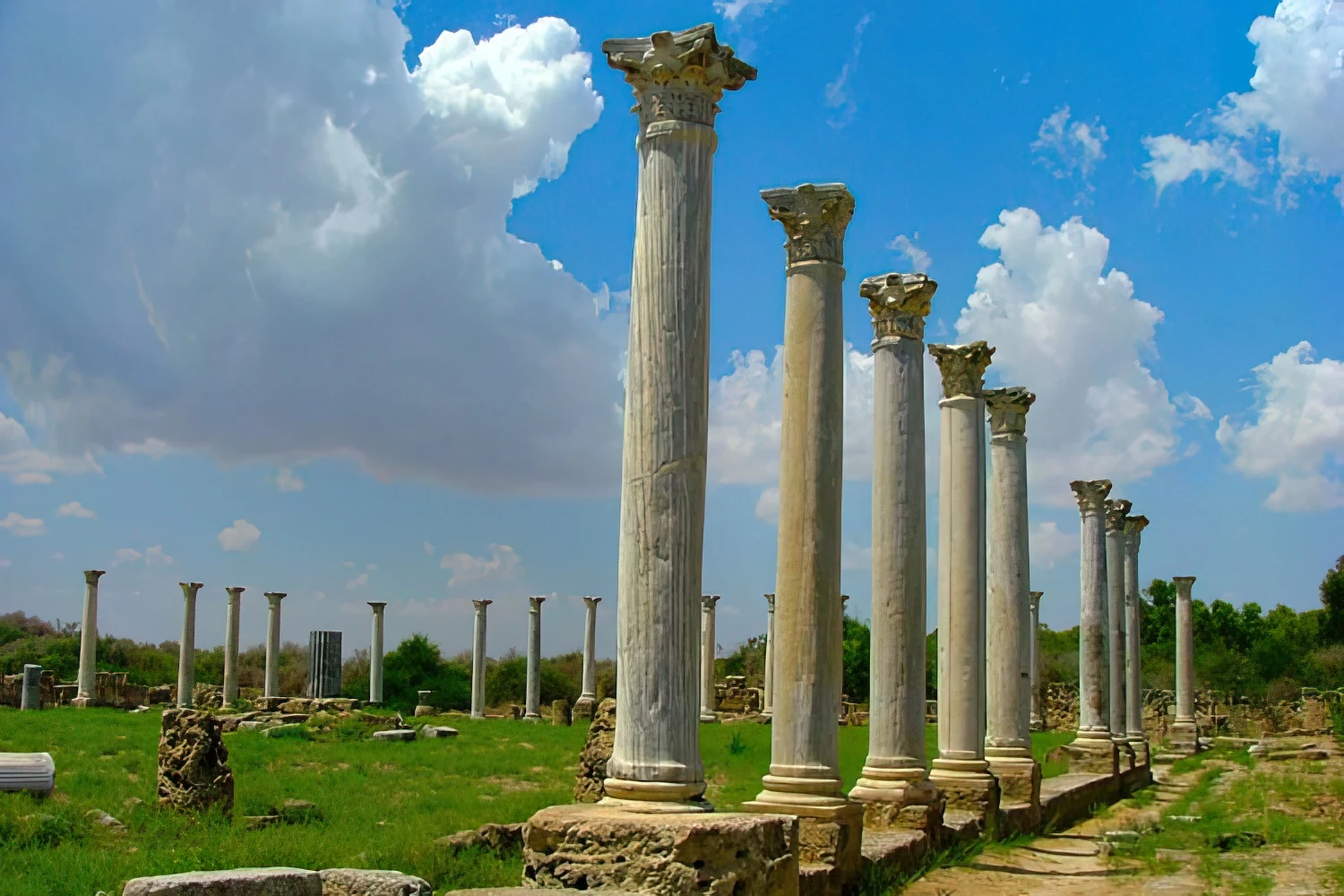
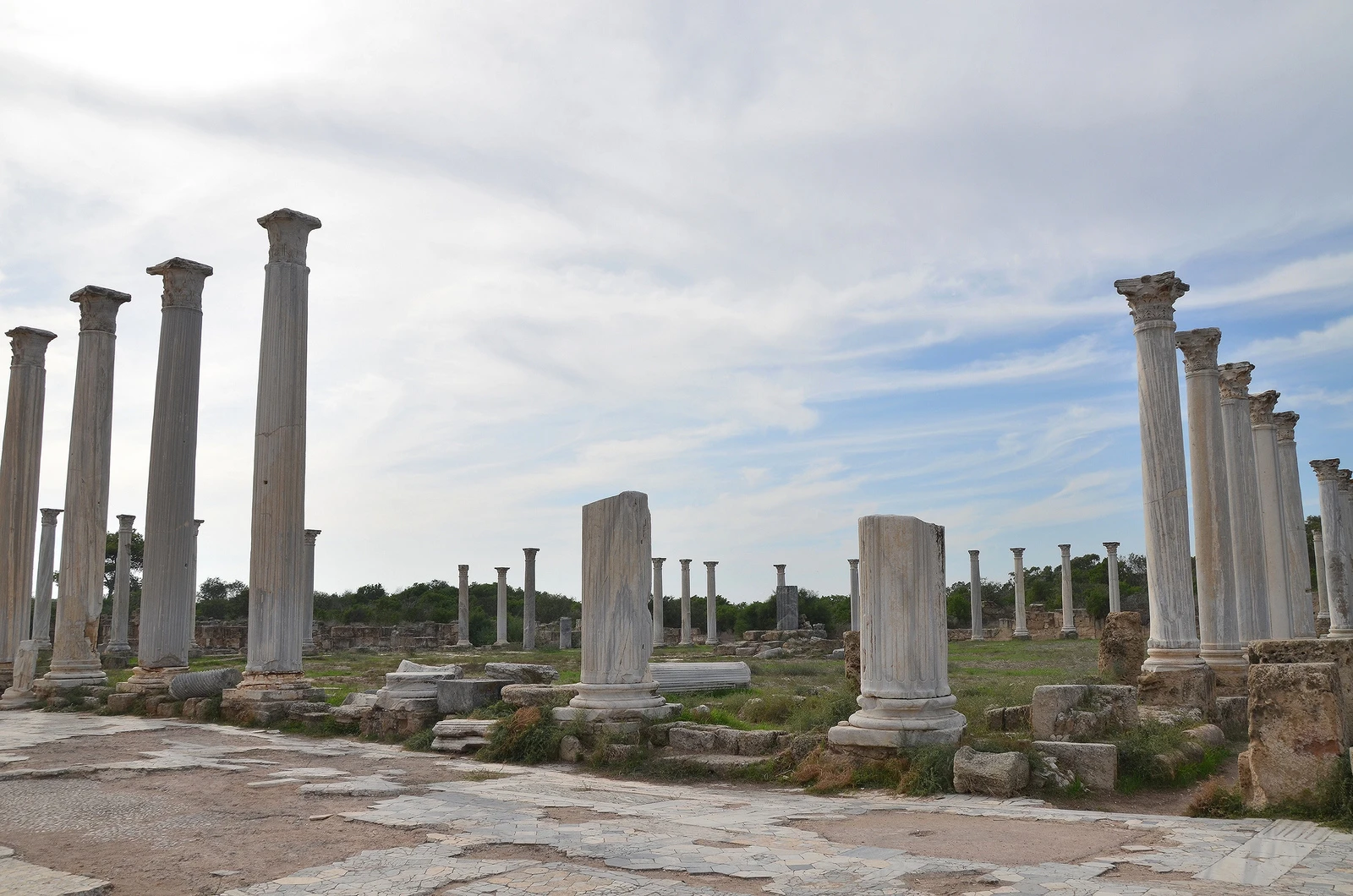
The Ancient City of Salamis, located on the east coast of Cyprus, was once the island’s most important and magnificent city-kingdom. With a history stretching back to the 11th century BC, its origins are steeped in Greek mythology, said to have been founded by the Trojan War hero Teucer. For centuries, Salamis was a major center of commerce and culture, flourishing under successive Assyrian, Egyptian, Persian, Greek, and Roman rule. Today, its sprawling archaeological site is one of the most impressive in the Mediterranean, featuring the extensive ruins of a grand Roman city, including a massive gymnasium, theatre, and public baths, all set against the beautiful backdrop of the sea.
Listen to an introduction about Salamis Ancient City

Name and Address
- Name: Ancient City of Salamis.
- Address: Located 6 kilometers north of the modern city of Famagusta, on the eastern coast of Cyprus.
How to Get There
Salamis is a major archaeological site in the Famagusta region and is best reached by car.
- By Car/Taxi (Recommended): This is the most convenient method. The site is an easy 10-15 minute drive north from Famagusta. Taxis are readily available in the city.
- Guided Tours: Many tour operators in the region offer guided tours of Salamis, often combining it with a visit to the nearby Monastery of St. Barnabas and the walled city of Famagusta.
- Visitor Tip: The archaeological site is vast and spread out. Wear comfortable walking shoes and bring plenty of water, sunscreen, and a hat, as there is very little shade. Allow at least 2-3 hours to explore the main excavated areas properly.
Landscape and Architecture
The landscape of Salamis is a sprawling coastal plain where monumental Roman architecture rises from among sand dunes and pine forests.
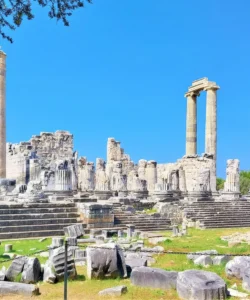
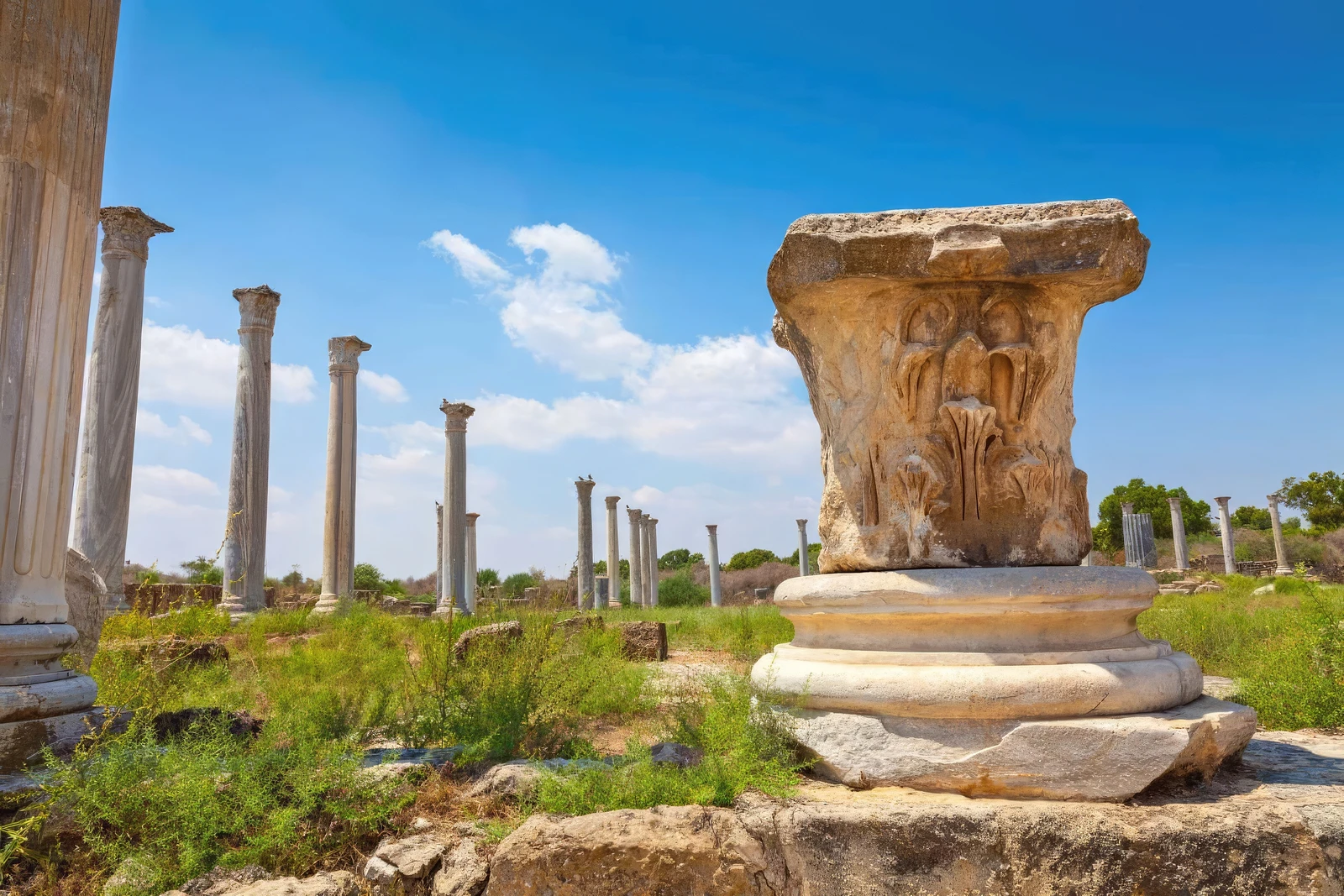
- A Grand Roman City: While its history is much older, the most impressive ruins visible today are from the Roman period. The site features the foundations and columns of numerous grand public buildings, giving a sense of the city’s former scale and opulence.
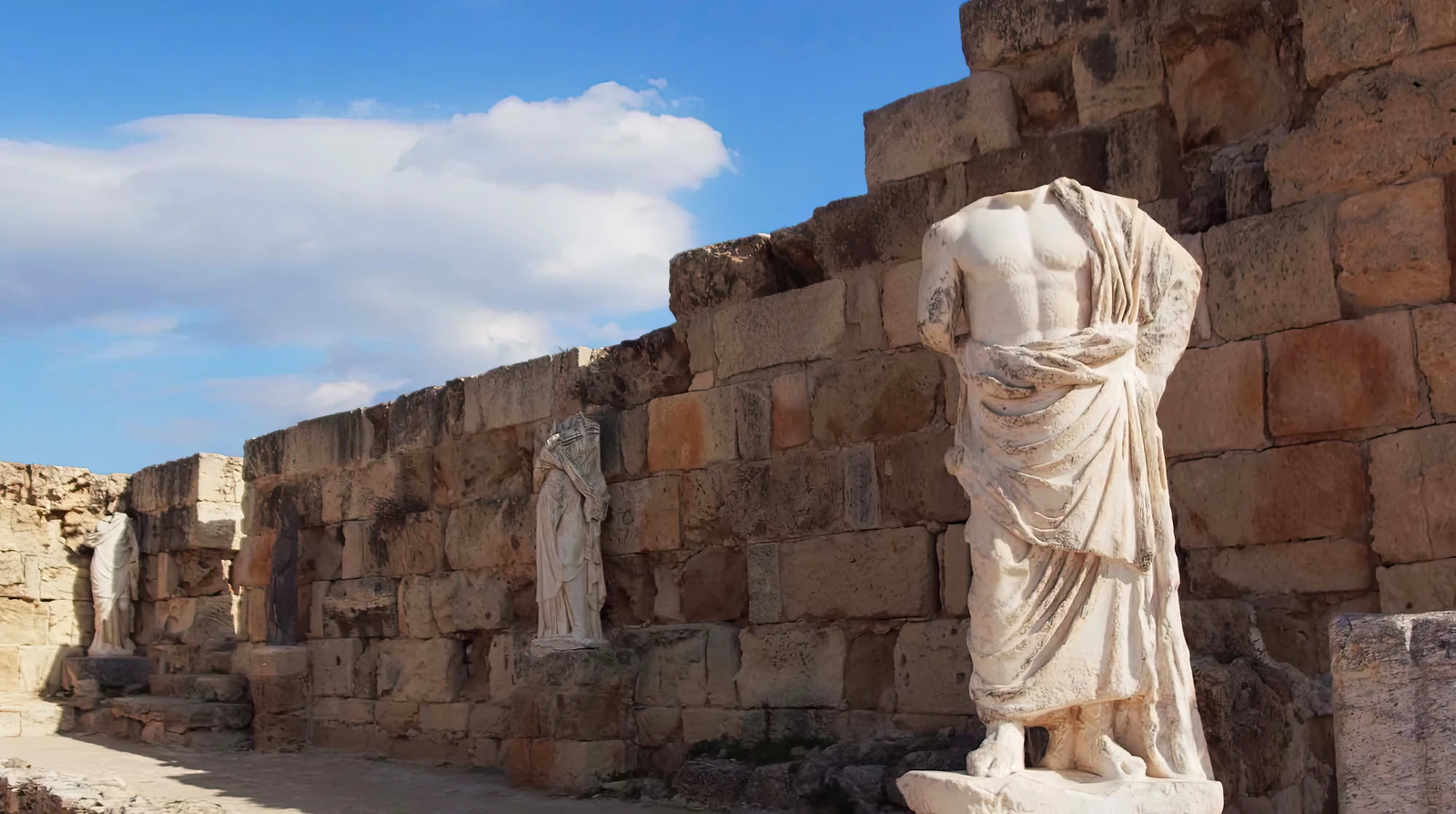
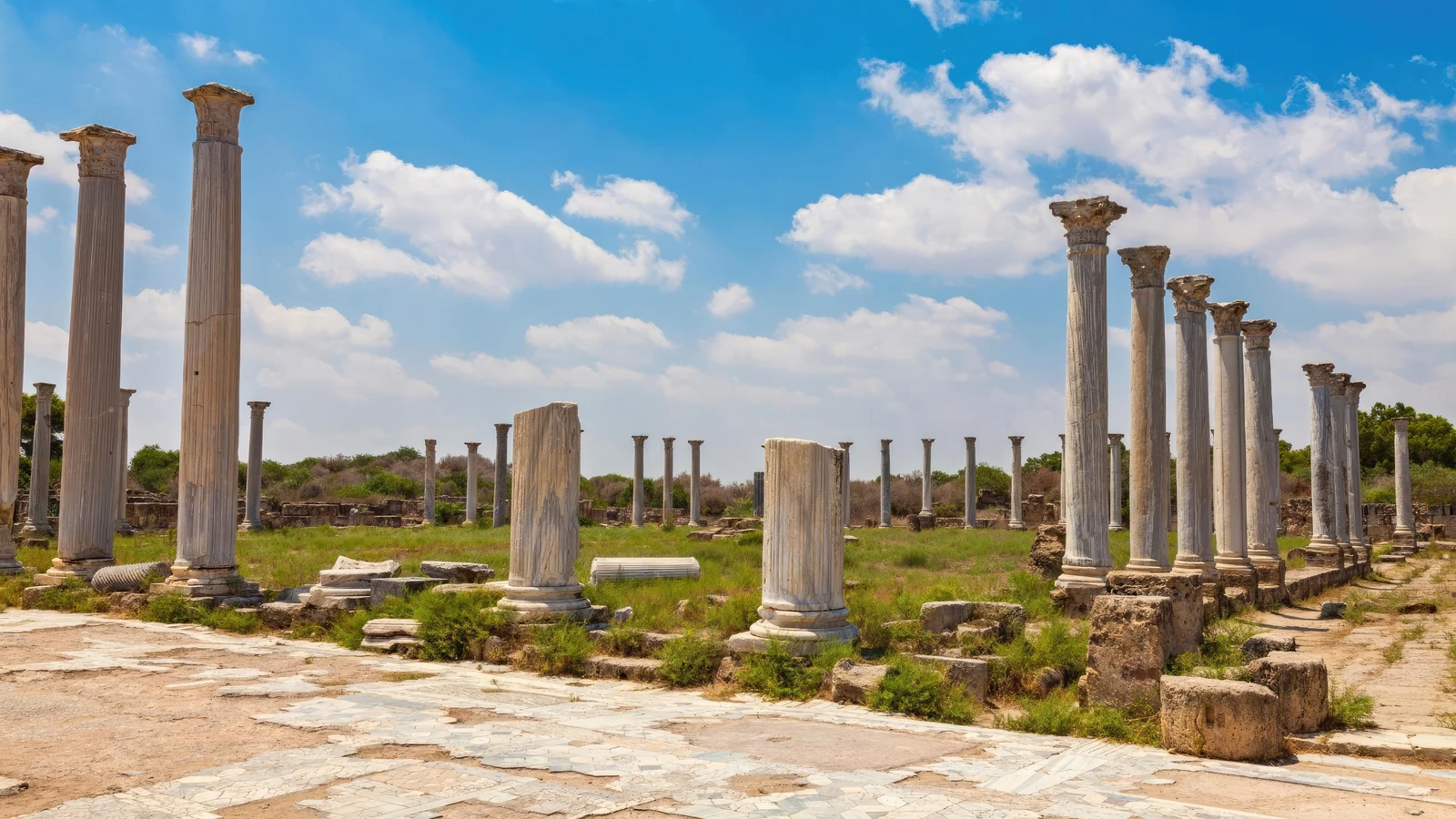
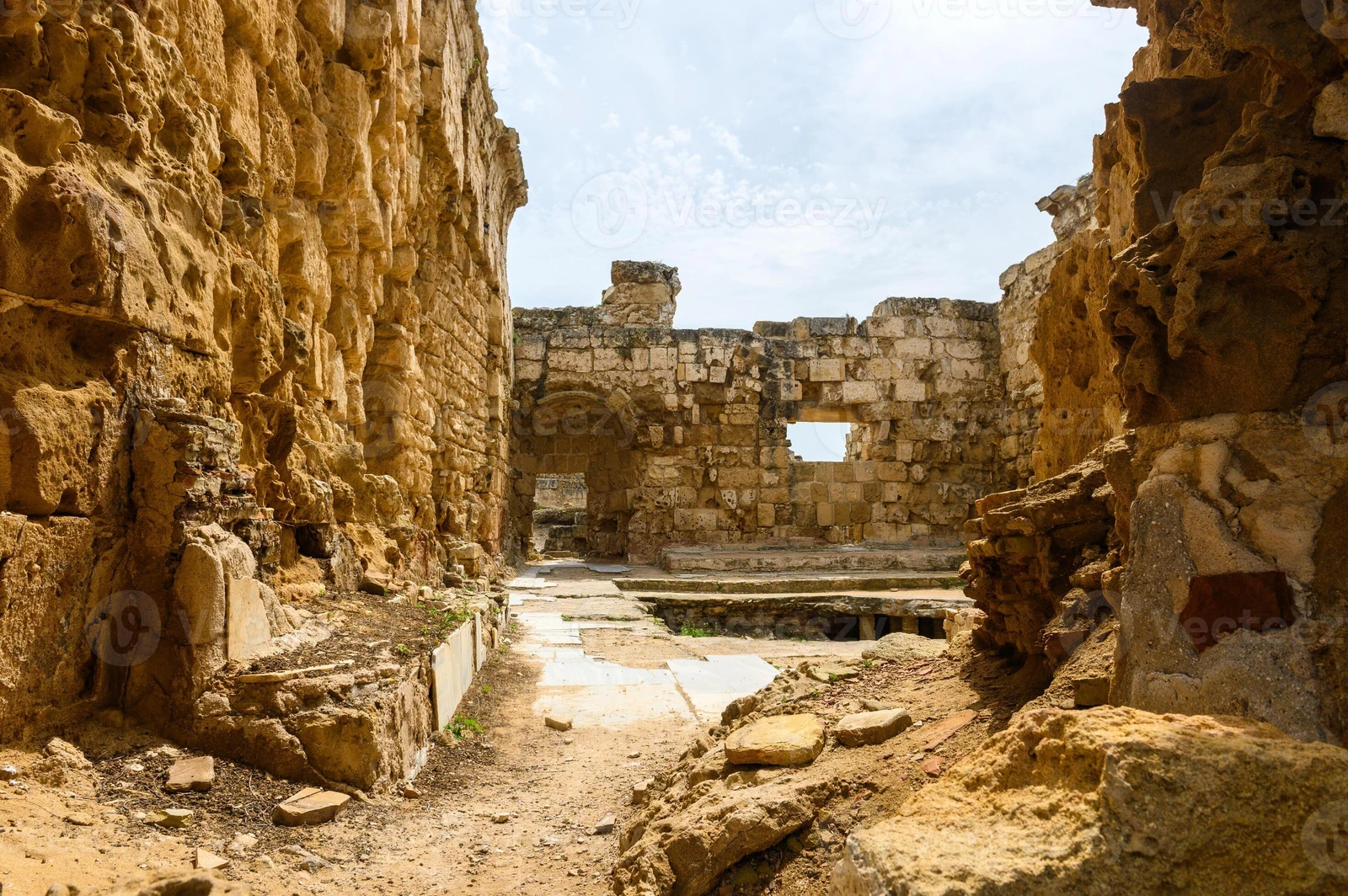
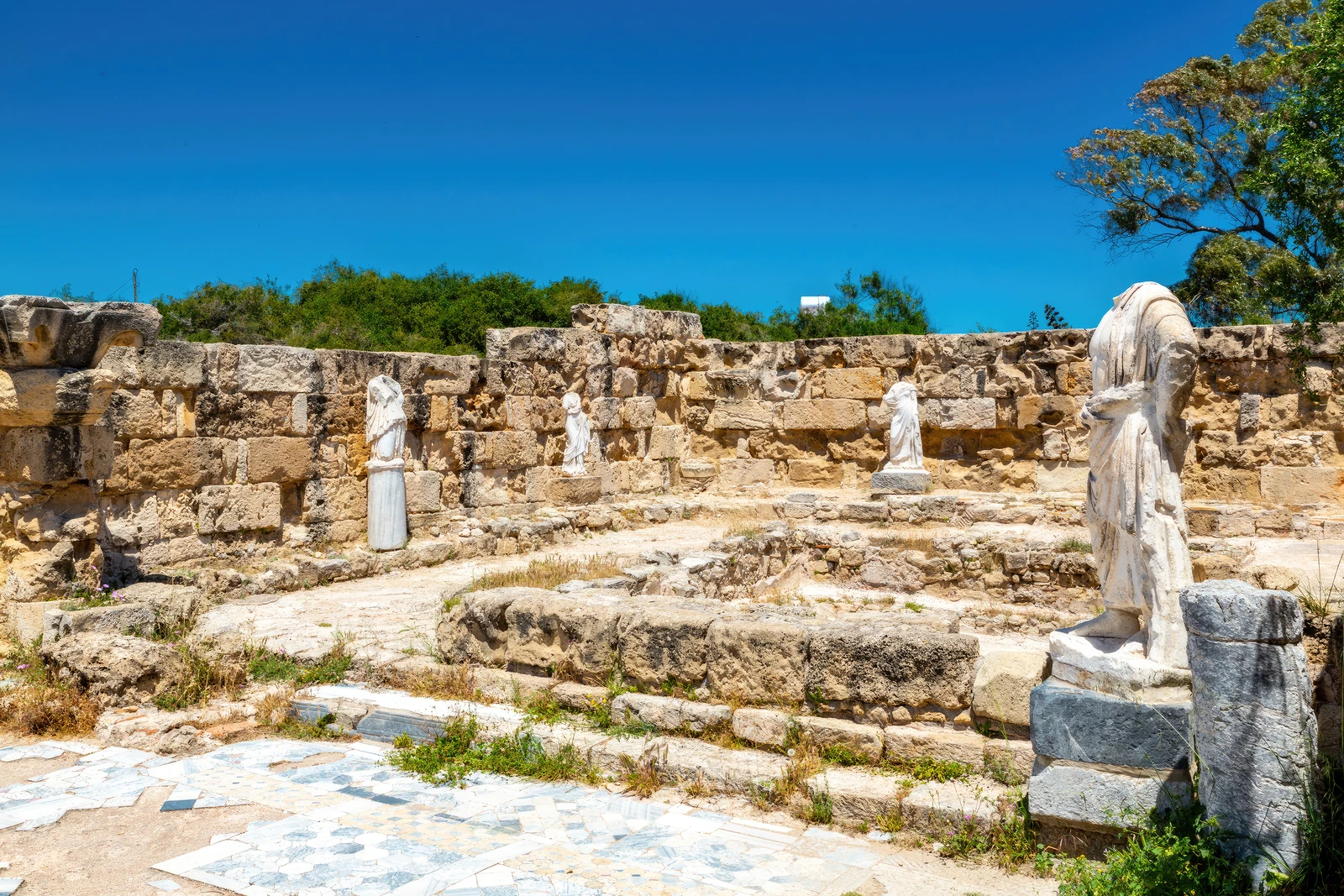
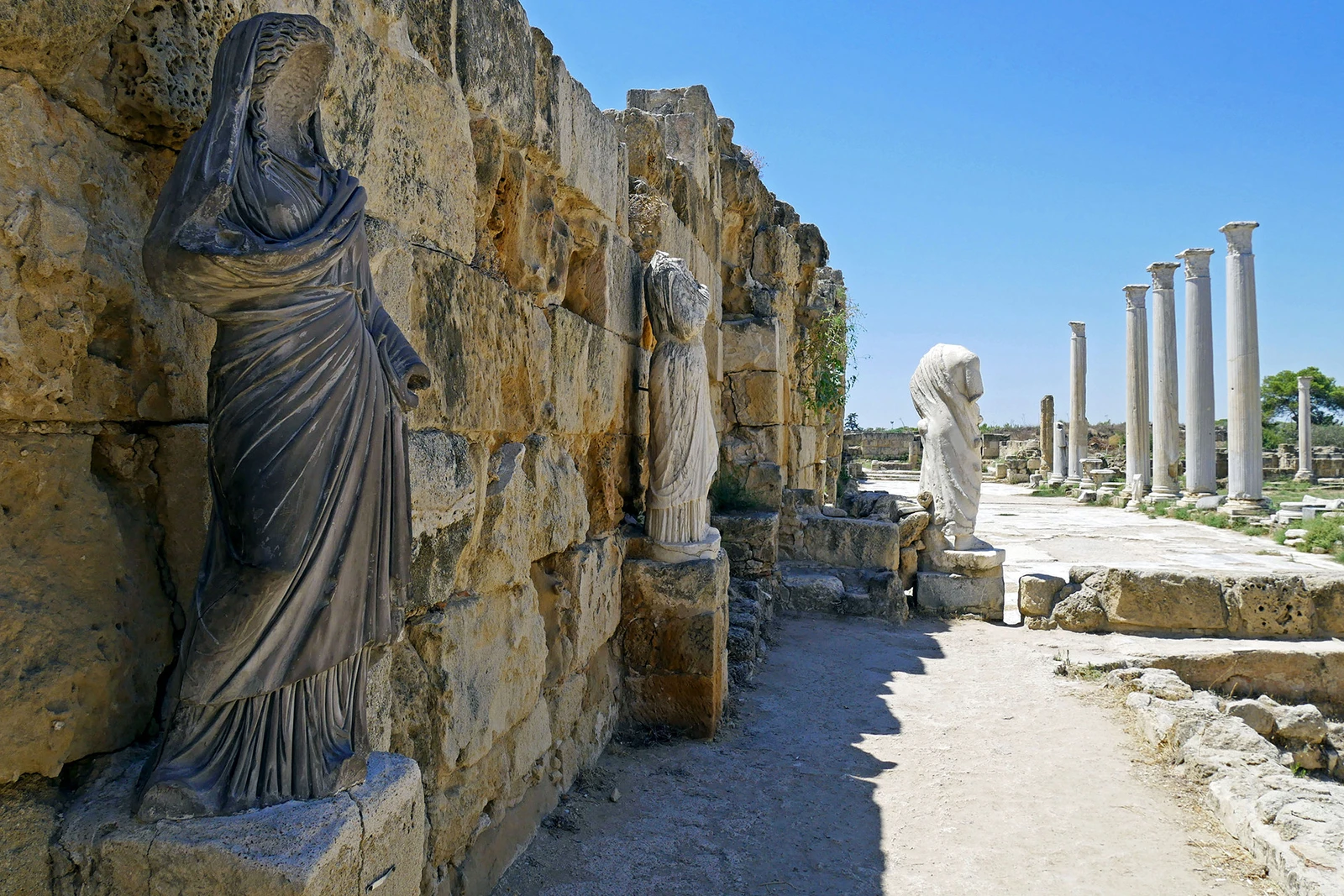
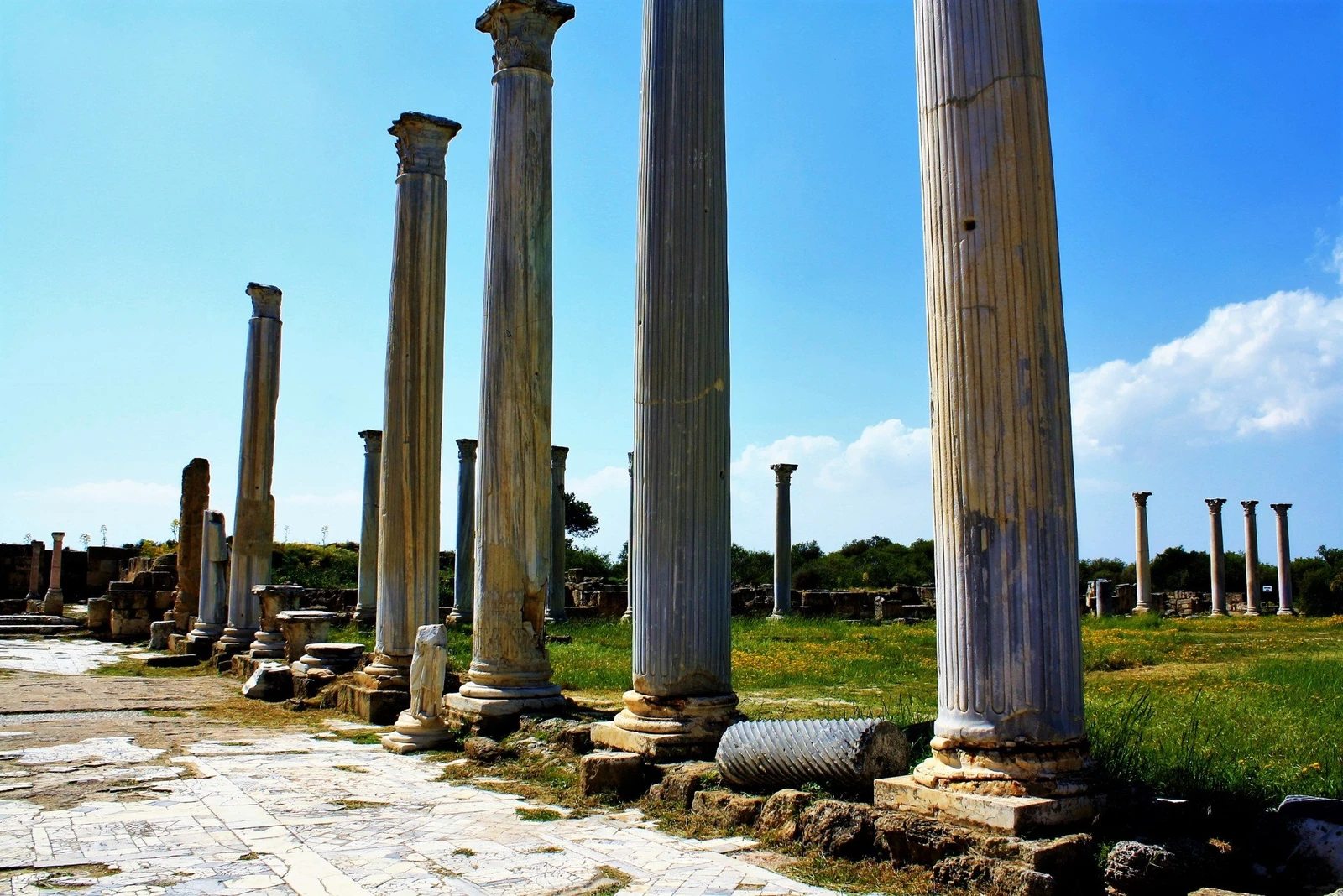
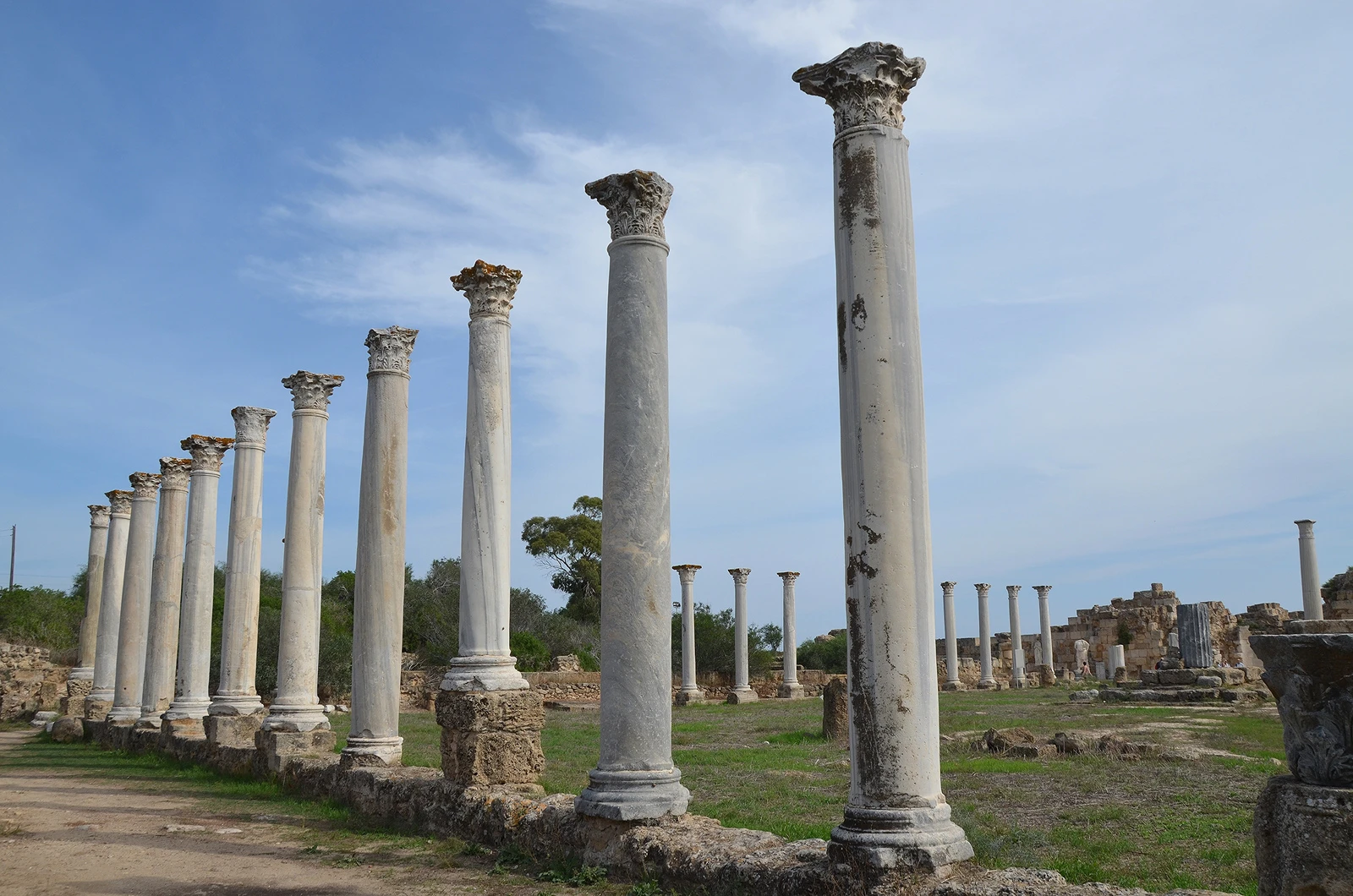
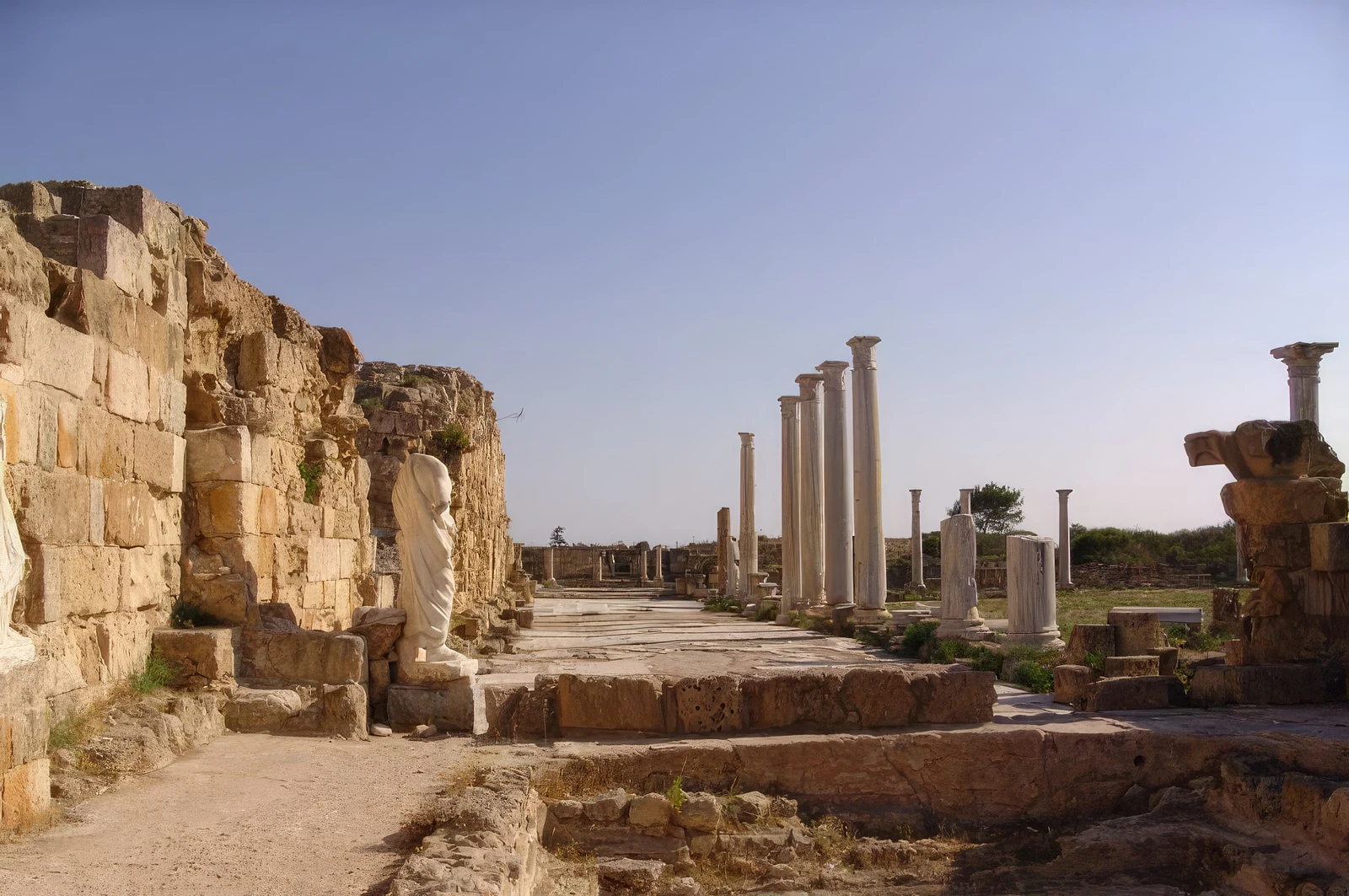
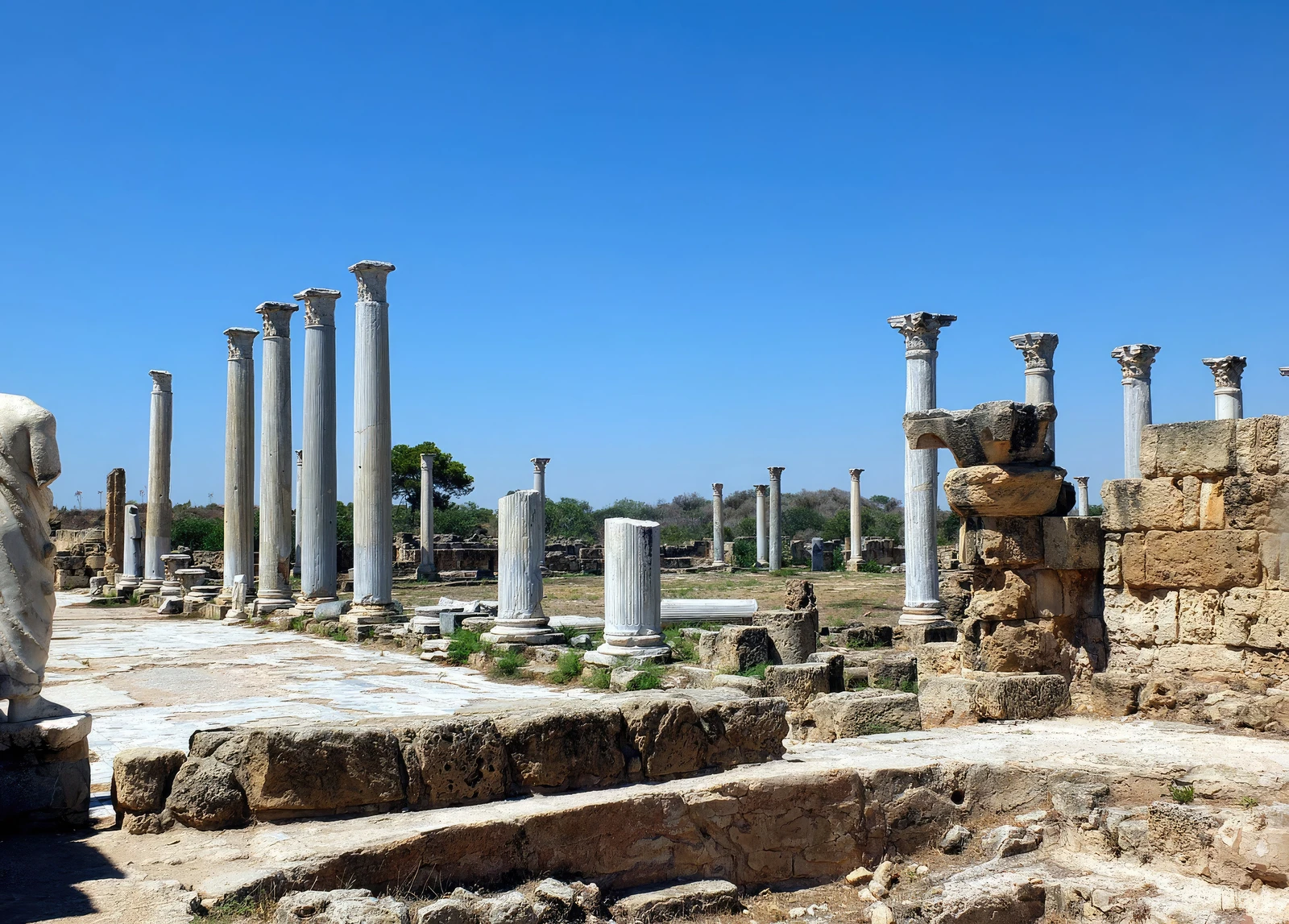
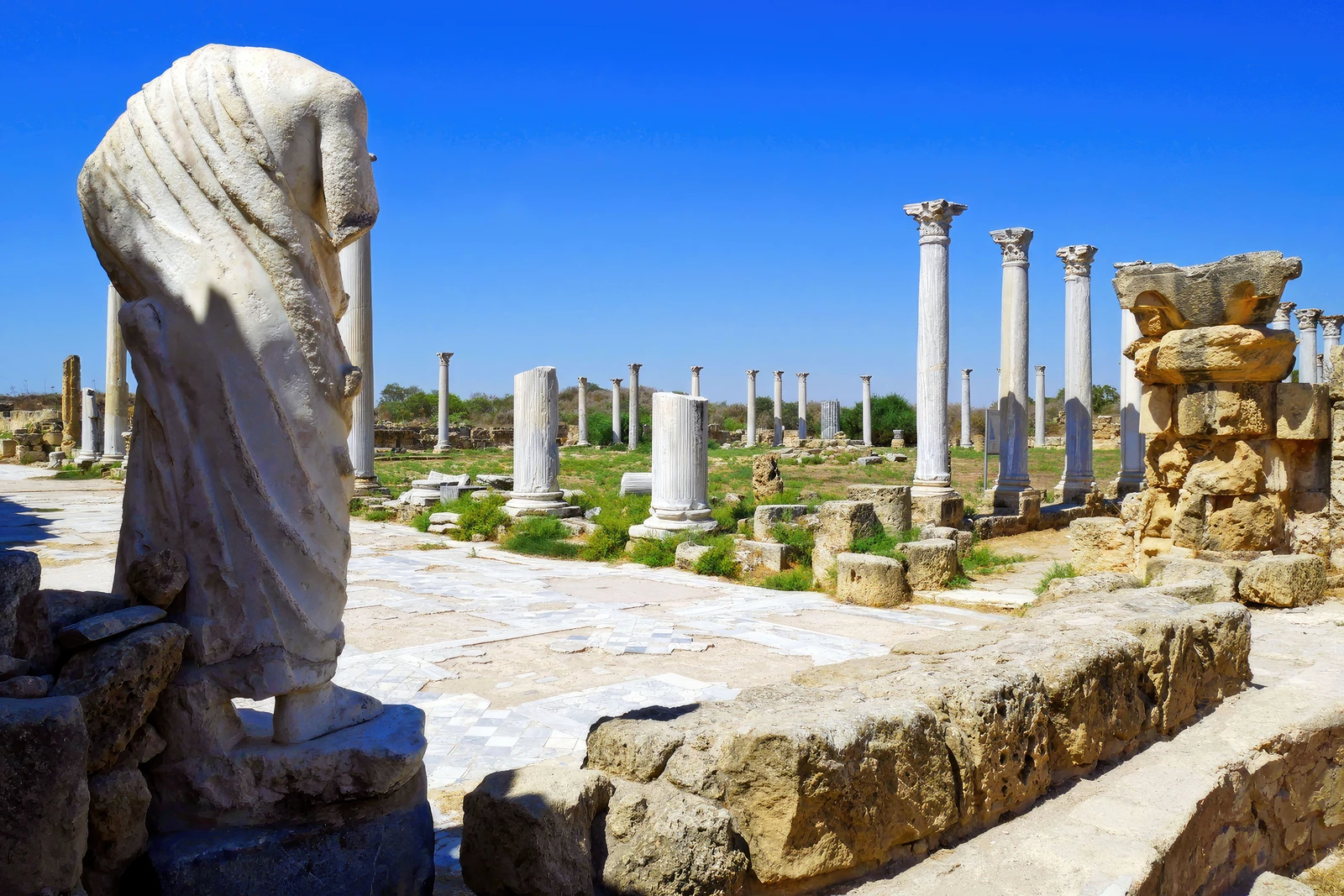
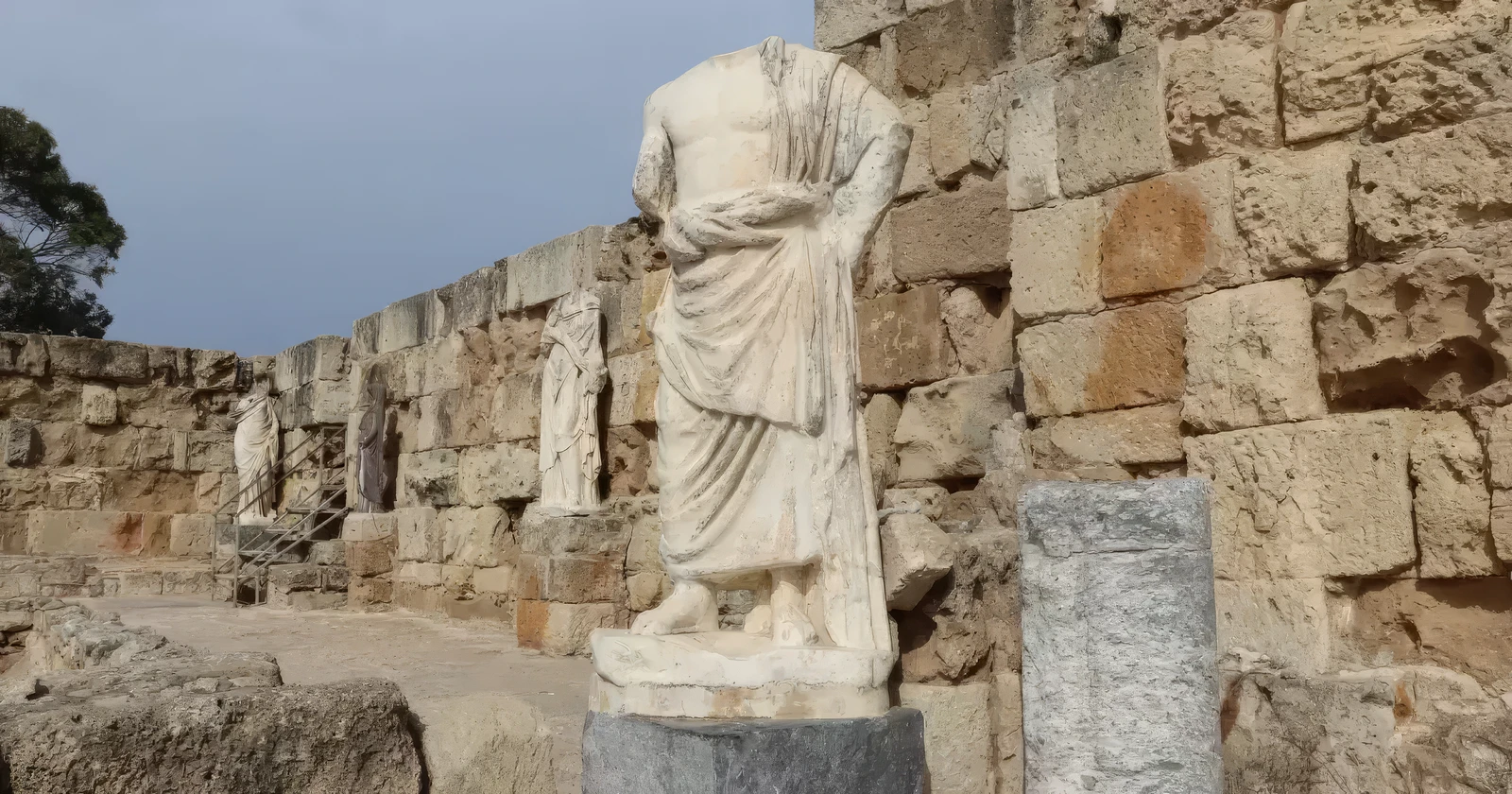
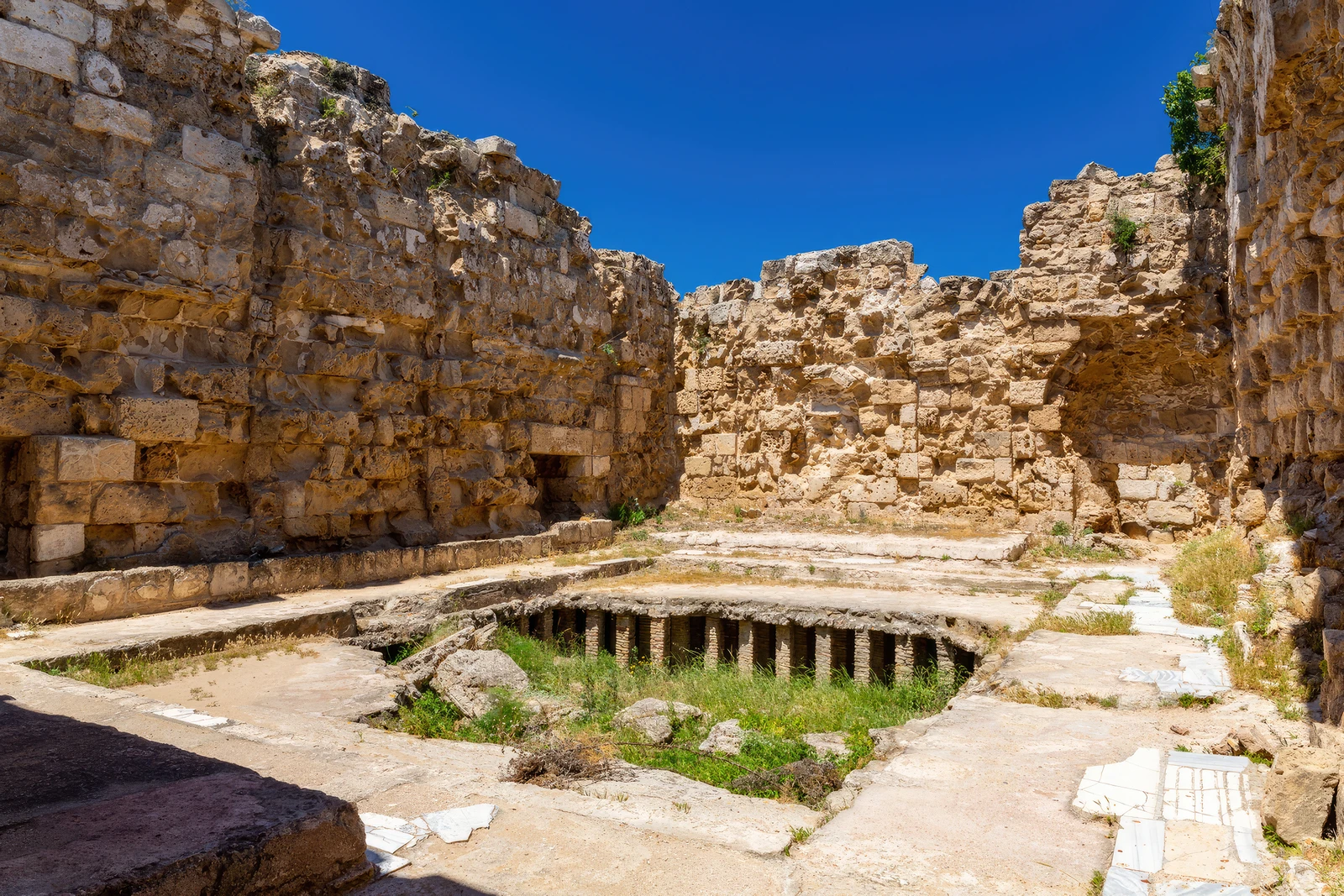
- The Gymnasium and Baths: This is one of the most spectacular parts of the site. It is a massive complex with a large central courtyard (palaestra) surrounded by marble columns, flanked by extensive public baths with their original pools and underfloor heating systems (hypocausts). The complex is adorned with numerous statues, most of which are now headless.
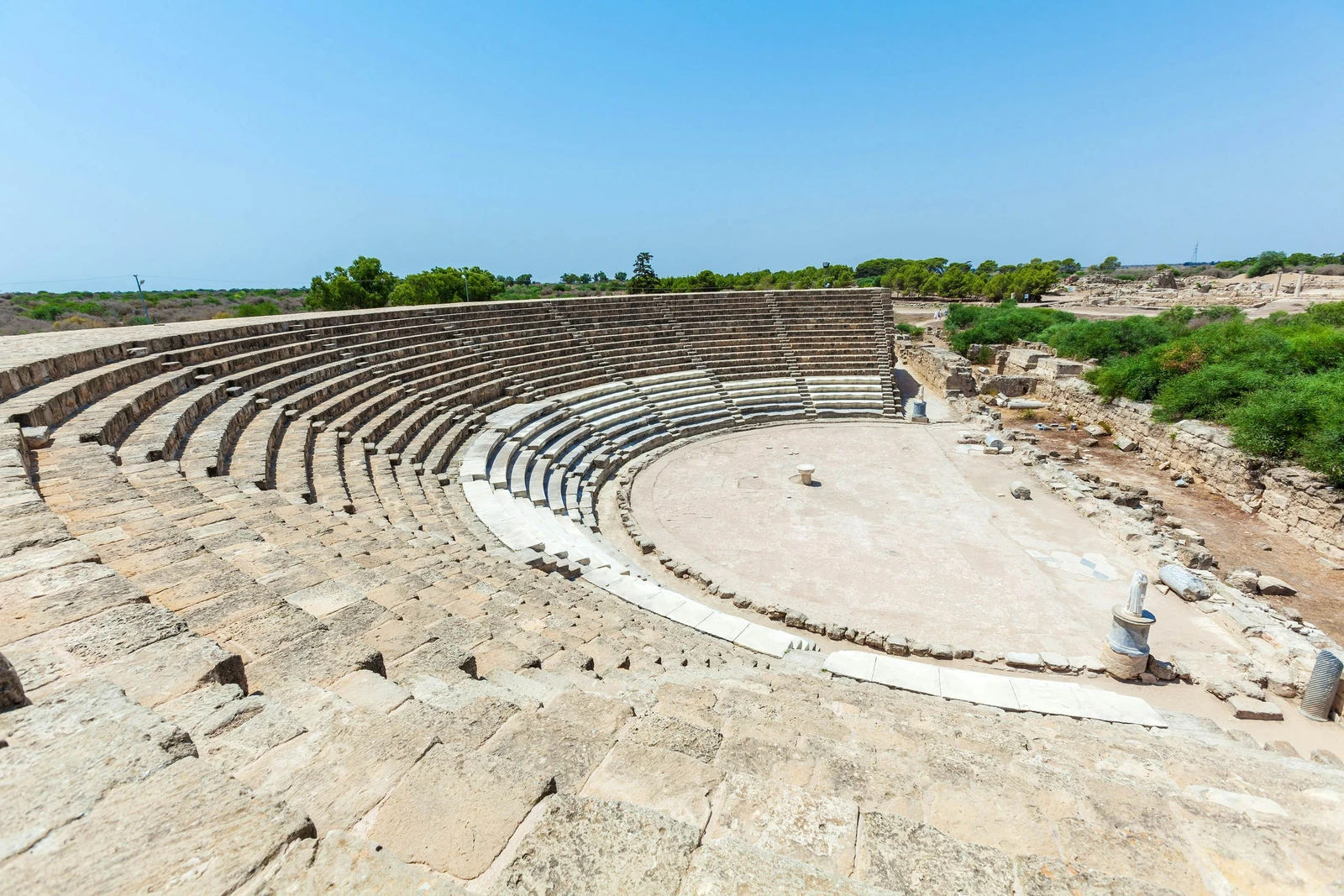
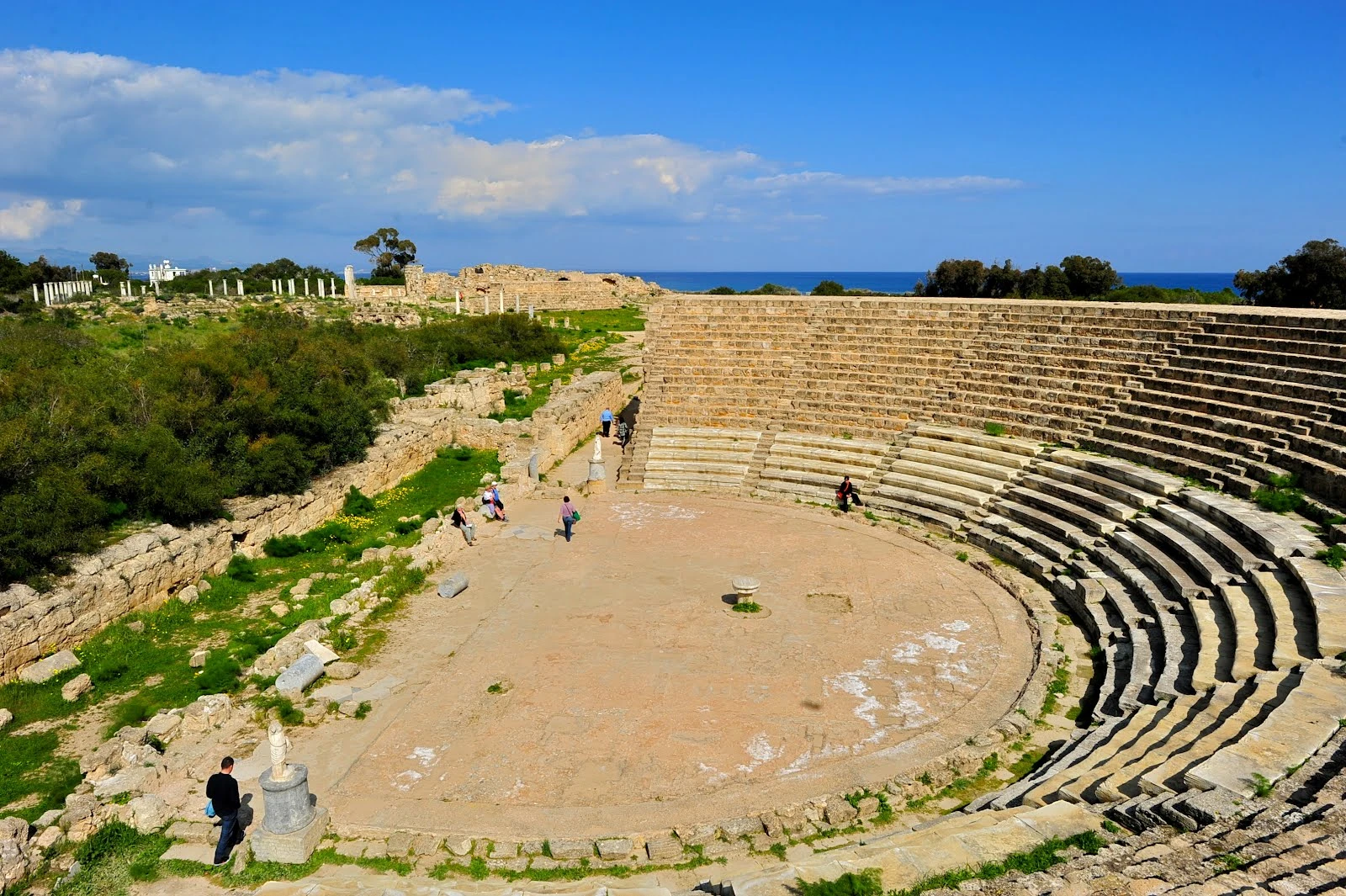
- The Theatre: Salamis boasts a large Roman theatre that could once seat up to 15,000 spectators. Although much of it was dismantled over the centuries, the stage and lower seating have been restored and are occasionally used for modern performances.
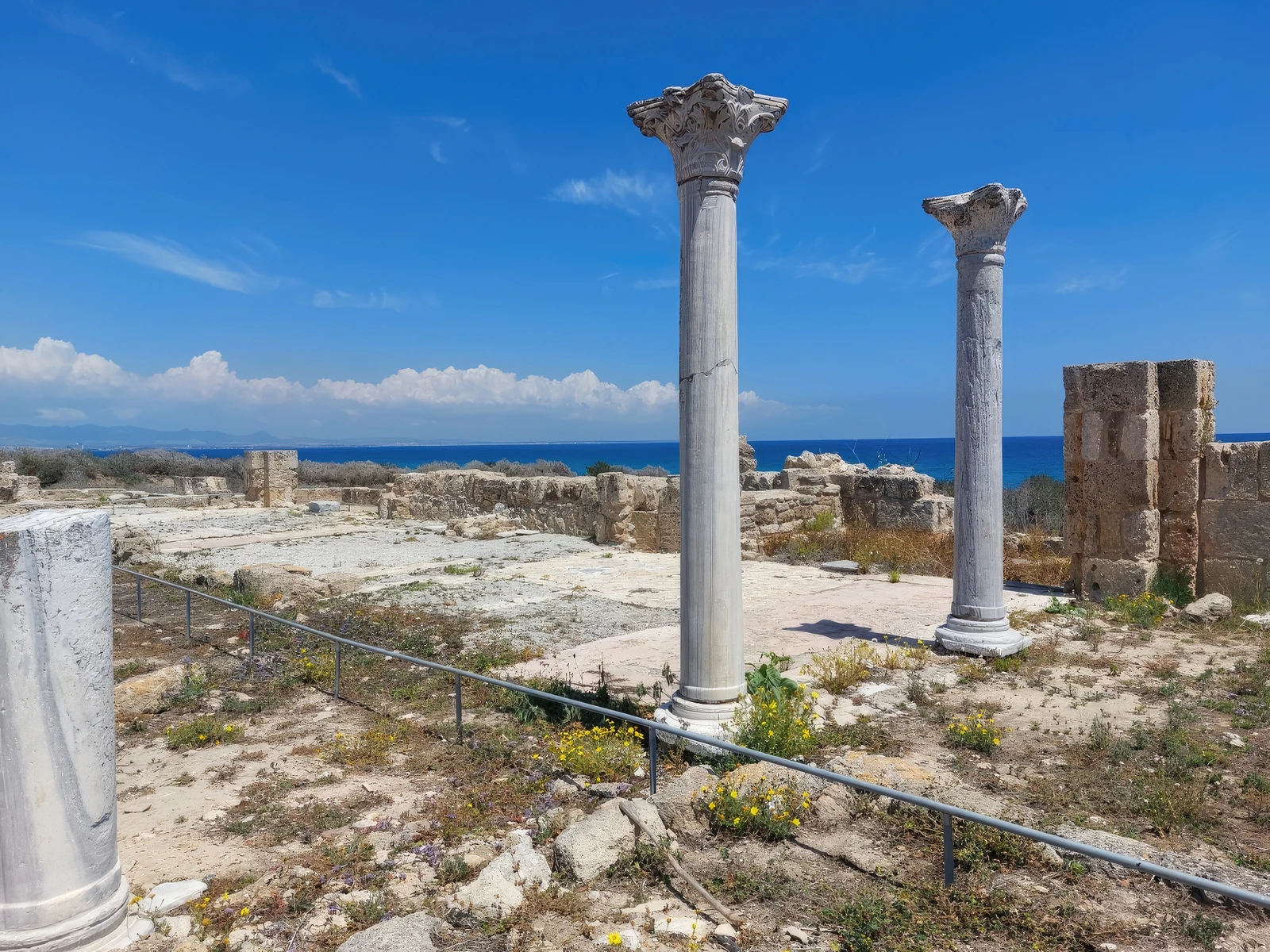
- Other Structures: The sprawling site also includes the remains of a Roman Agora (marketplace), a Temple of Zeus, a Byzantine Basilica of St. Epiphanius, and a complex water cistern system.
What Makes It Famous
Salamis is famous for being the ancient capital of Cyprus and for its vast, impressive Roman ruins.
- Ancient Capital of Cyprus: For much of its history, Salamis was the most powerful and important city-kingdom on the island, serving as its capital before it was moved to Paphos in the Hellenistic period.
- Mythological Founding: Its foundation myth, linking it to Teucer, a hero of the Trojan War, gives it a direct connection to the world of Greek epic and mythology.
- Impressive Roman Gymnasium: The sheer scale and grandeur of the gymnasium and bath complex are a major draw, representing one of the most impressive examples of Roman public architecture on the island.
- Apostolic History: Salamis holds significance in Christian history as the first stop for the Apostles Paul and Barnabas on their first missionary journey to Cyprus, as documented in the Acts of the Apostles.
Differences from Other Wonders
Salamis offers a different scale and historical context compared to other major archaeological sites in Cyprus.
- Scale and Grandeur vs. Hilltop Acropolis: Salamis is a vast, sprawling city built on a coastal plain. This gives it a sense of grandeur and scale that is different from Ancient Kourion, which is a more compact city built dramatically on a high cliff.
- Focus on Public Roman Life vs. Private Villas: While the Kato Paphos Archaeological Park is world-famous for the stunning mosaics found in its private Roman villas, the highlights of Salamis are its massive public structures—the gymnasium, the theatre, the agora. It offers a grander vision of Roman civic life.
- A Ruined Metropolis vs. a Necropolis: Like Kourion and Paphos, Salamis is a city of the living. This contrasts with the Tombs of the Kings, which is a necropolis, or a city built for the dead, with a focus on funerary architecture.
- Eastern vs. Western Power Center: As the long-time capital on the east coast, Salamis had strong ties to the civilizations of the Levant and the Near East (Assyrians, Persians). This gives it a slightly different historical and cultural flavor than Paphos and Kourion on the western side of the island, which were more oriented towards the Greco-Roman world.