






















The Louvre Abu Dhabi is a groundbreaking art and civilization museum located on Saadiyat Island in Abu Dhabi, United Arab Emirates. Opened in 2017, it is the first universal museum in the Arab world, showcasing artworks from across cultures and historical periods with the intent to bridge the gap between Eastern and Western art. It stands as a profound symbol of cultural exchange and architectural innovation.
Listen to an introduction about Louvre Abu Dhabi

Name and Address
- Name: Louvre Abu Dhabi (Arabic: اللوفر أبوظبي; French: Louvre Abou Dabi)
- Address: Saadiyat Island, Abu Dhabi, United Arab Emirates.
- Location: Situated on Saadiyat Island, a developing cultural district planned to house a cluster of world-class cultural assets.
How to Get There
Louvre Abu Dhabi is easily accessible from various points in Abu Dhabi and even from Dubai.
- By Car/Taxi/Rideshare: This is a convenient option for direct travel. From Abu Dhabi International Airport, it’s about a 30-minute drive.
- By Bus: Public bus services are available, with routes (e.g., 094, 032) stopping near the museum. There are also complimentary Cultural Express Shuttle Services from select locations in Abu Dhabi and Dubai.
- Organized Tours: Many tour operators offer guided trips to the museum, often combined with other Abu Dhabi highlights.
- Visitor Access: The museum is open to the public from Tuesday to Sunday, typically from 10:00 AM to 6:30 PM, though hours can vary, so it’s advisable to check their official website for the most current timings. It is closed on Mondays.
- Tickets: Admission tickets are required (e.g., AED 65 for adults), but children under 18 and residents/UAE nationals aged 60+ often enter for free. Booking tickets in advance online is highly recommended to secure preferred time slots and avoid queues.
- Dress Code: While there isn’t a strict official dress code, visitors are encouraged to dress modestly out of respect for local culture.
- Photography: Photography for personal use is generally allowed in permanent exhibition rooms (without flash or lighting equipment), but often restricted in temporary exhibition areas.
Landscape and Architecture
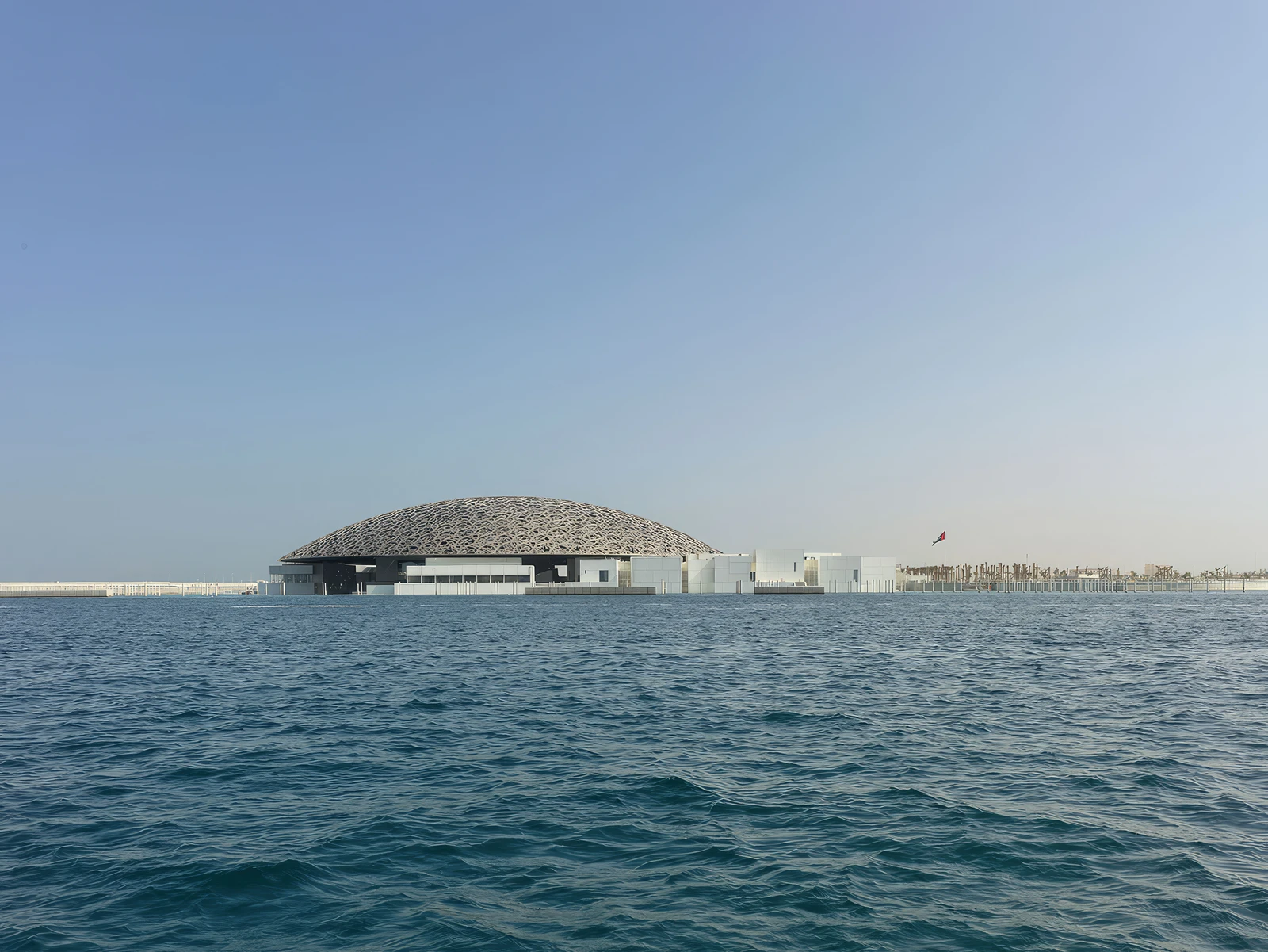
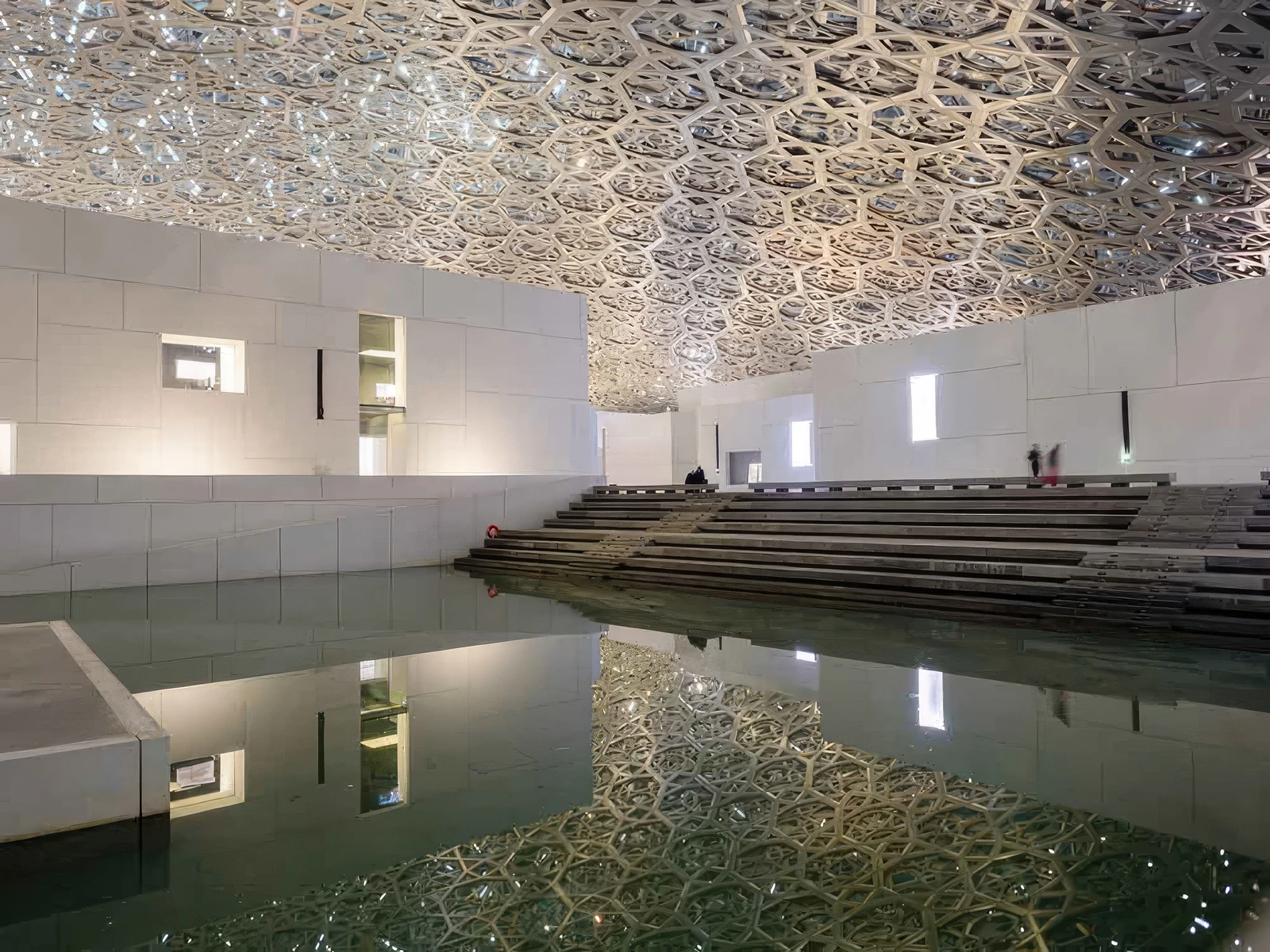
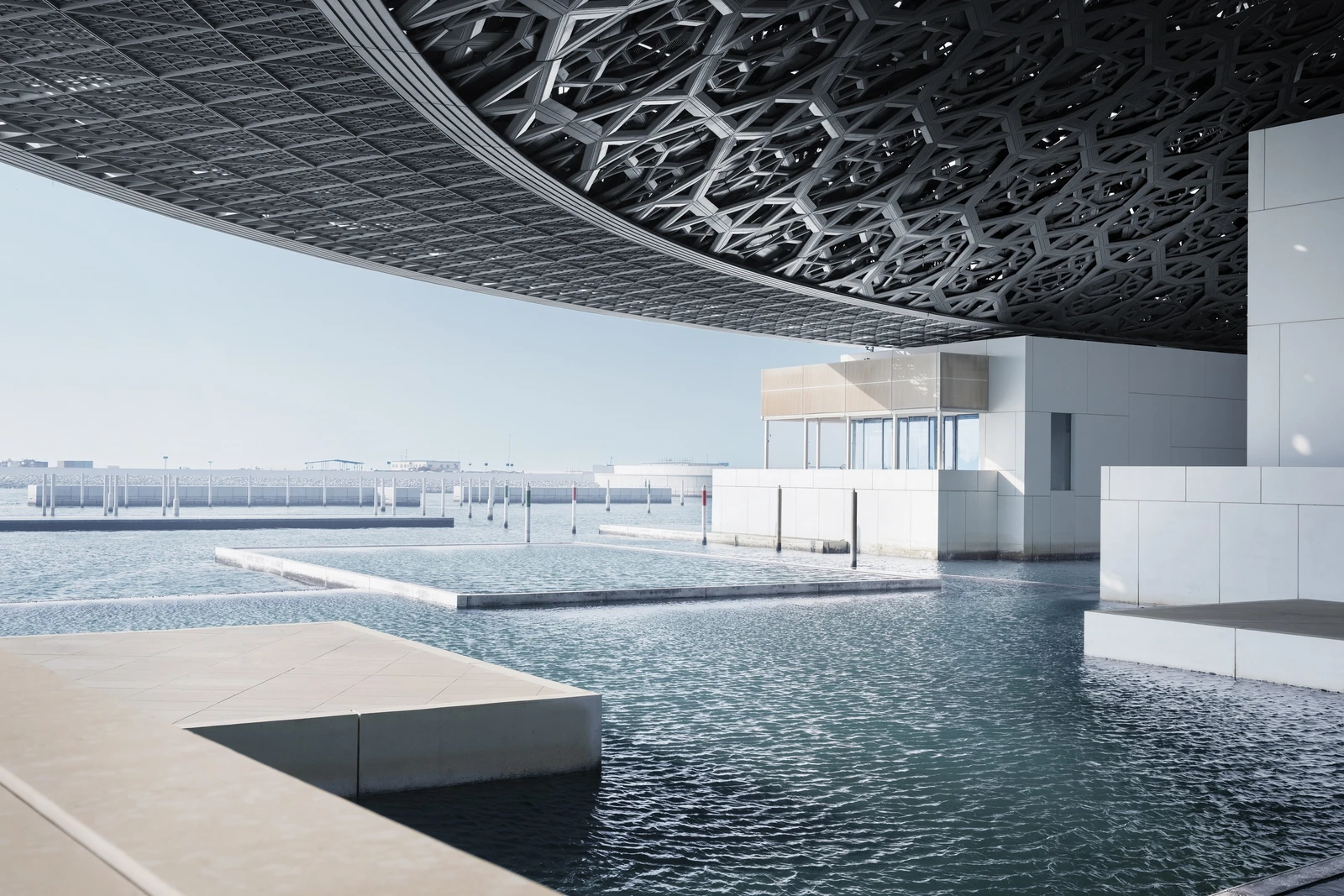
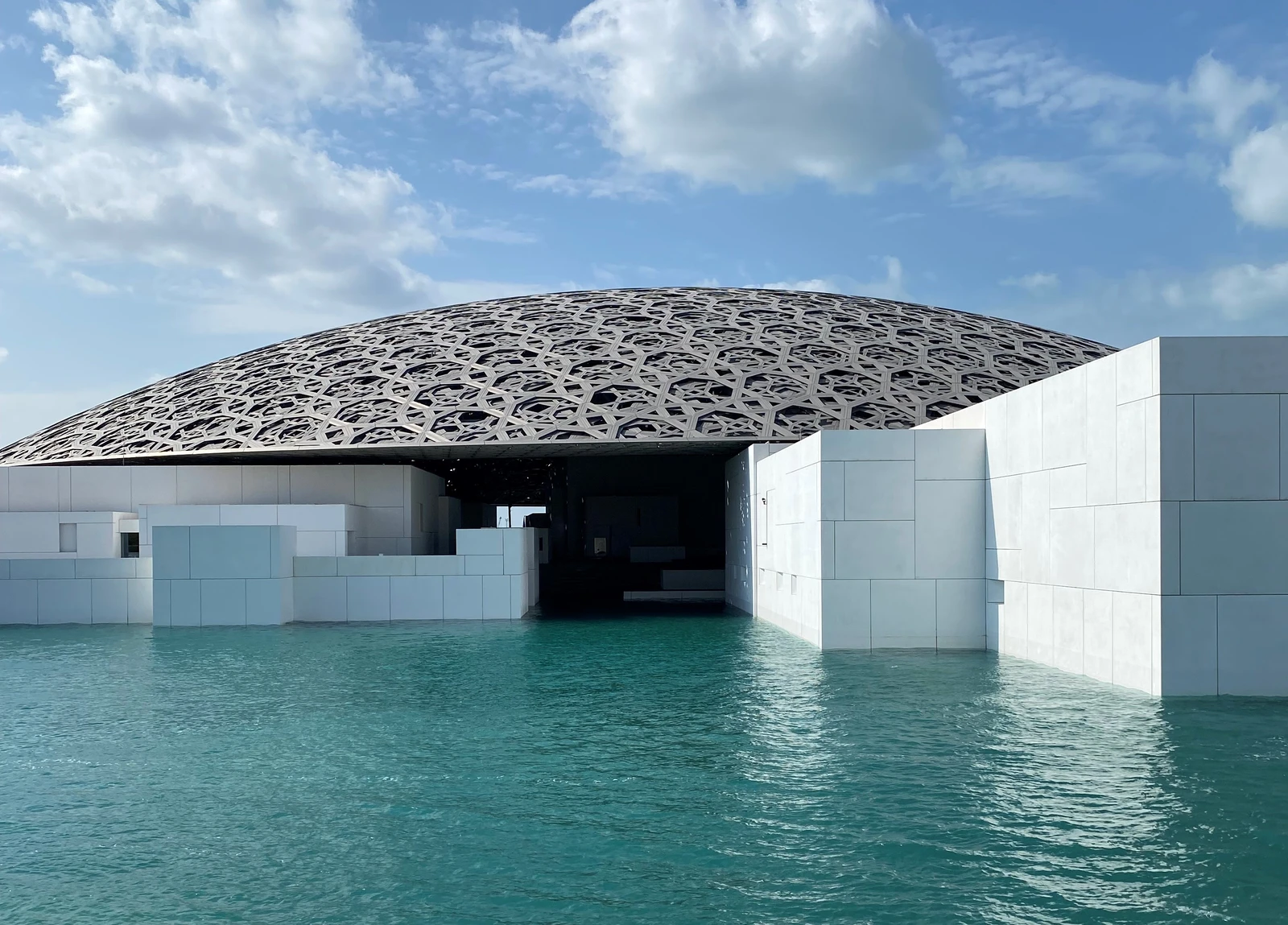
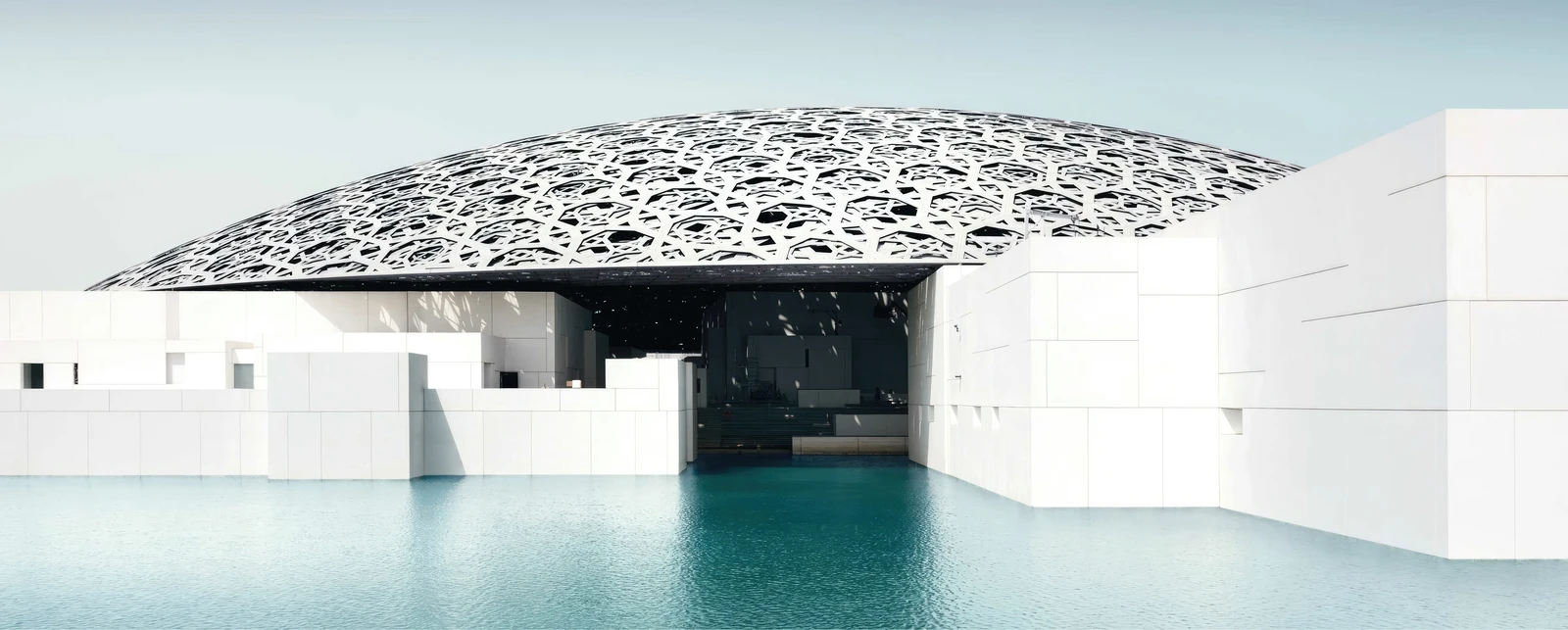
Designed by Pritzker Prize-winning French architect Jean Nouvel, the Louvre Abu Dhabi is an architectural masterpiece inspired by traditional Arabic architectural culture and the interplay of light and shadow in an oasis.
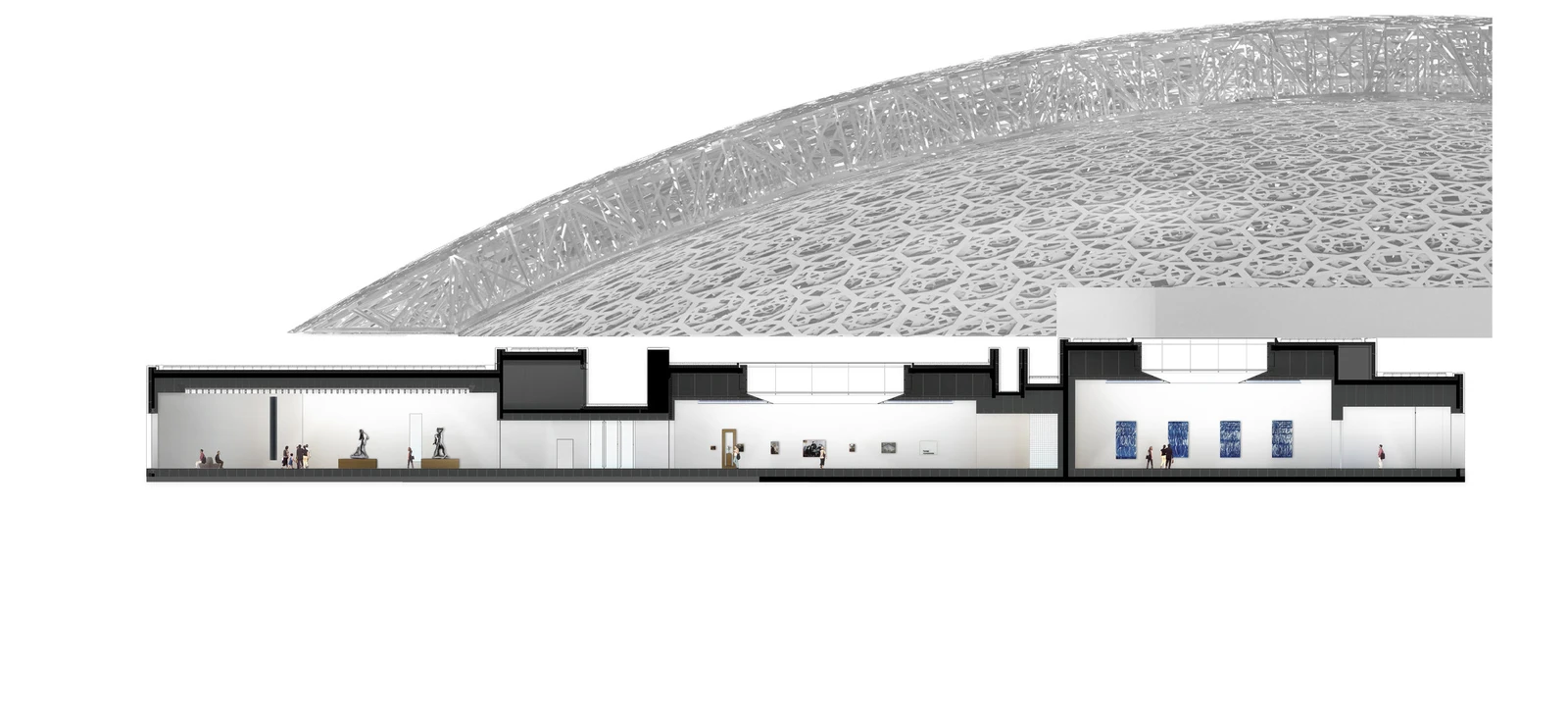
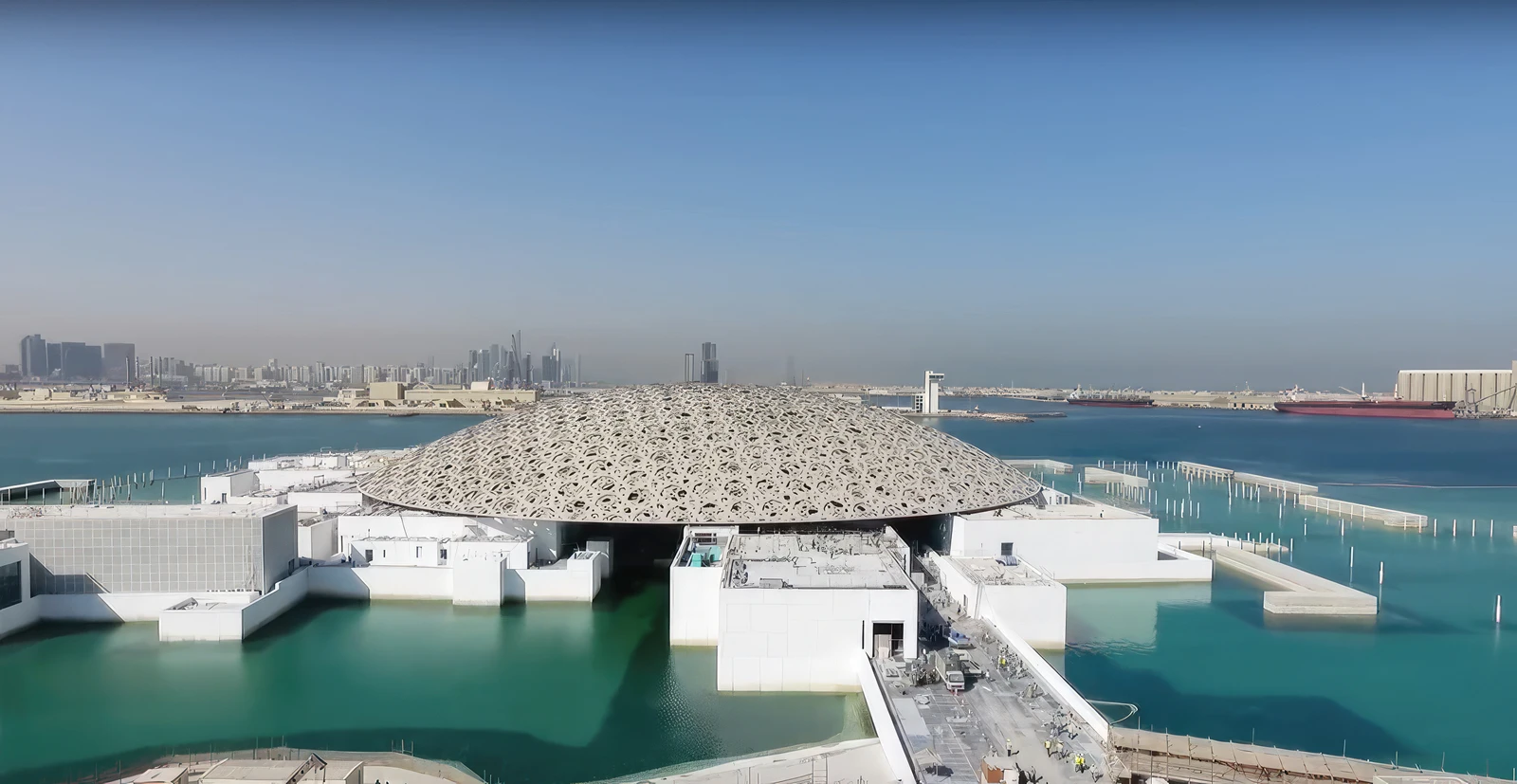
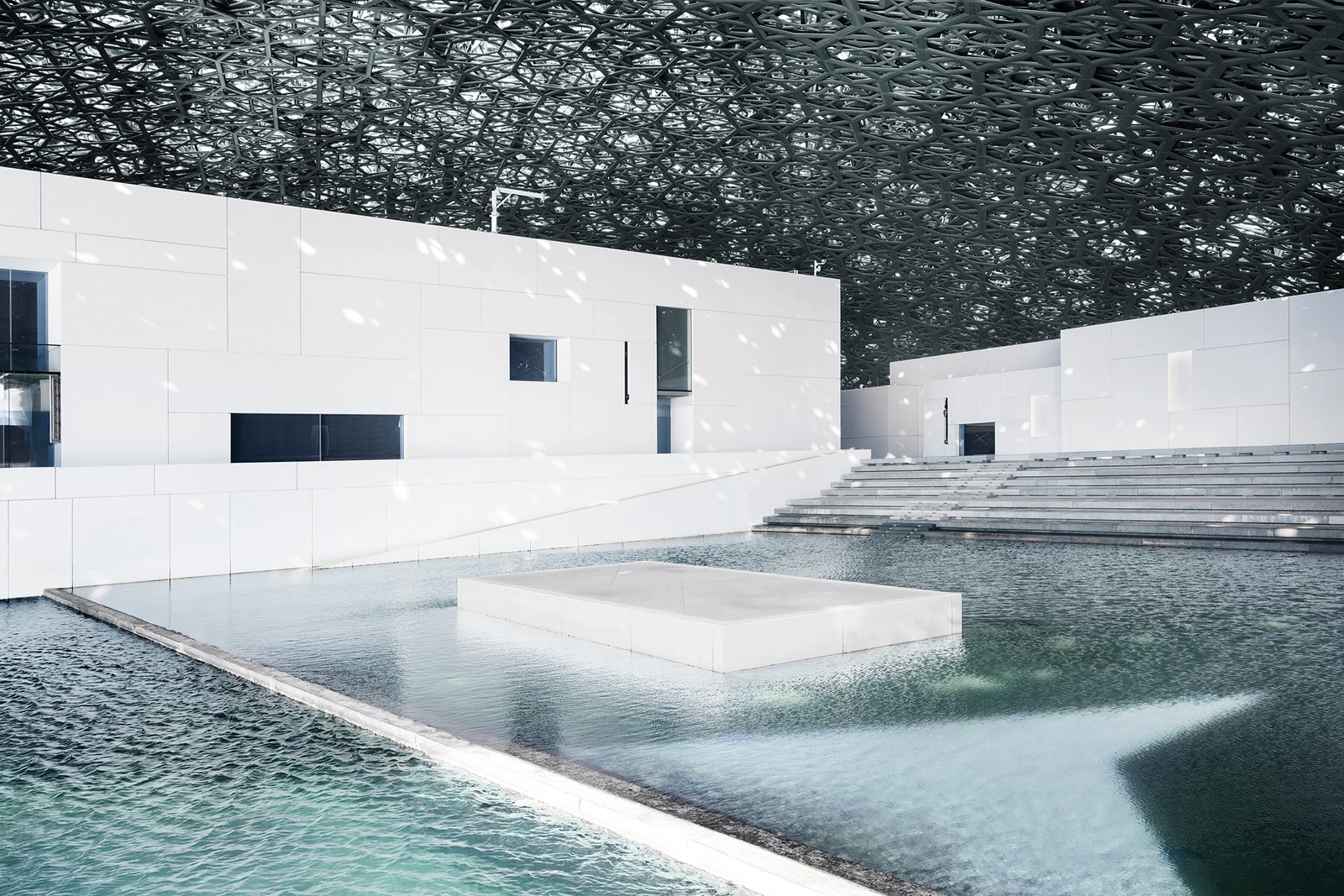
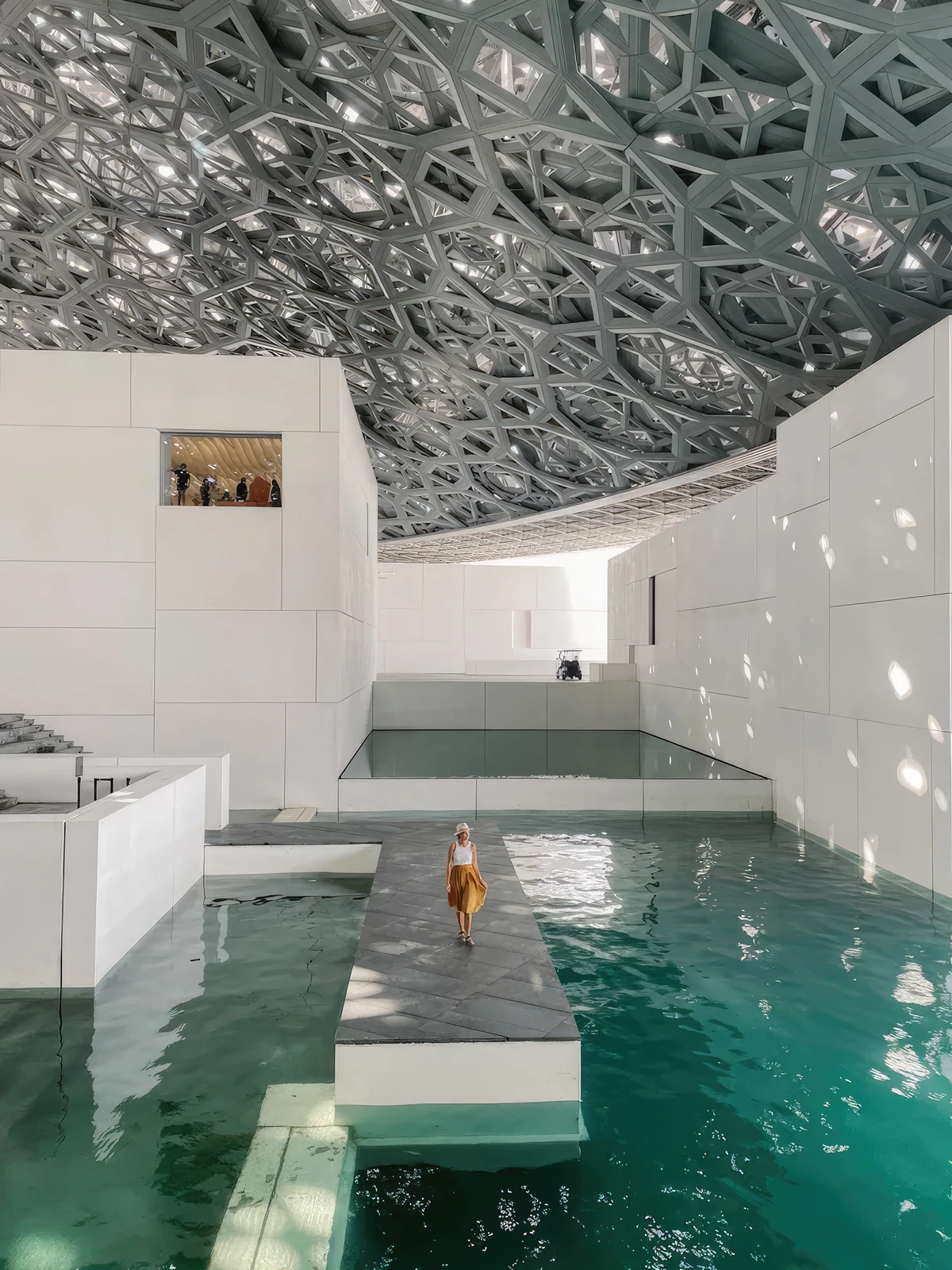
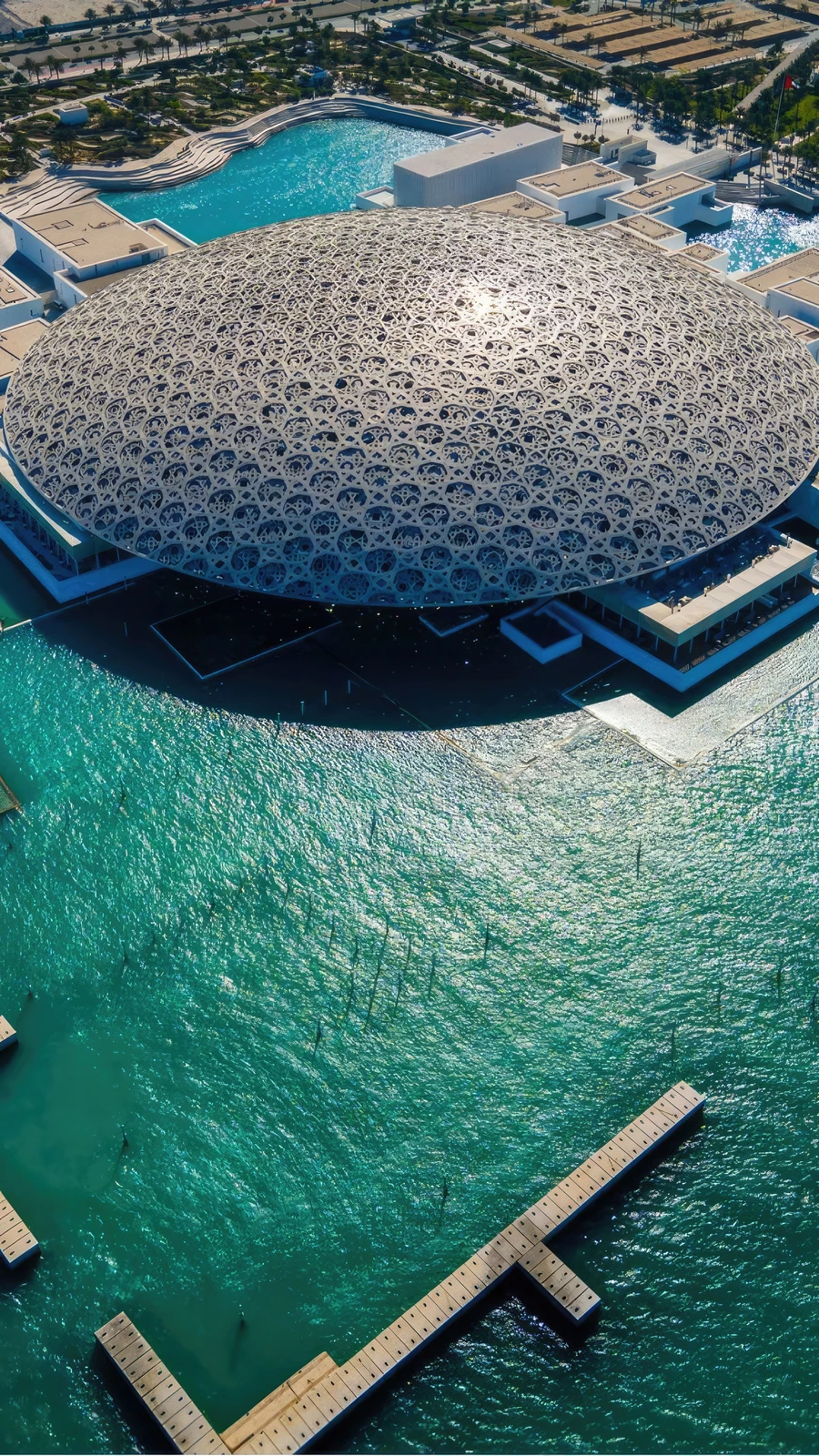
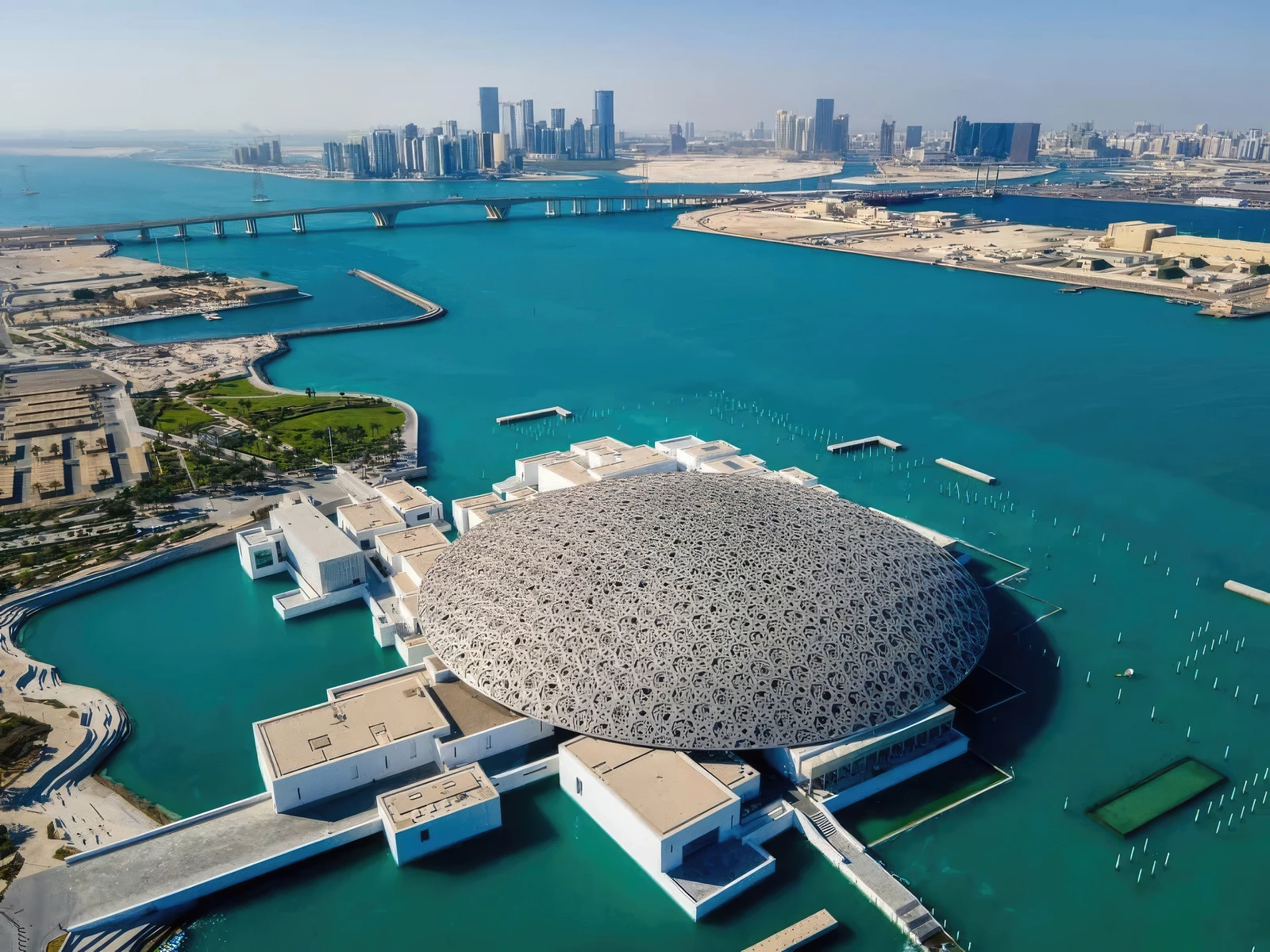
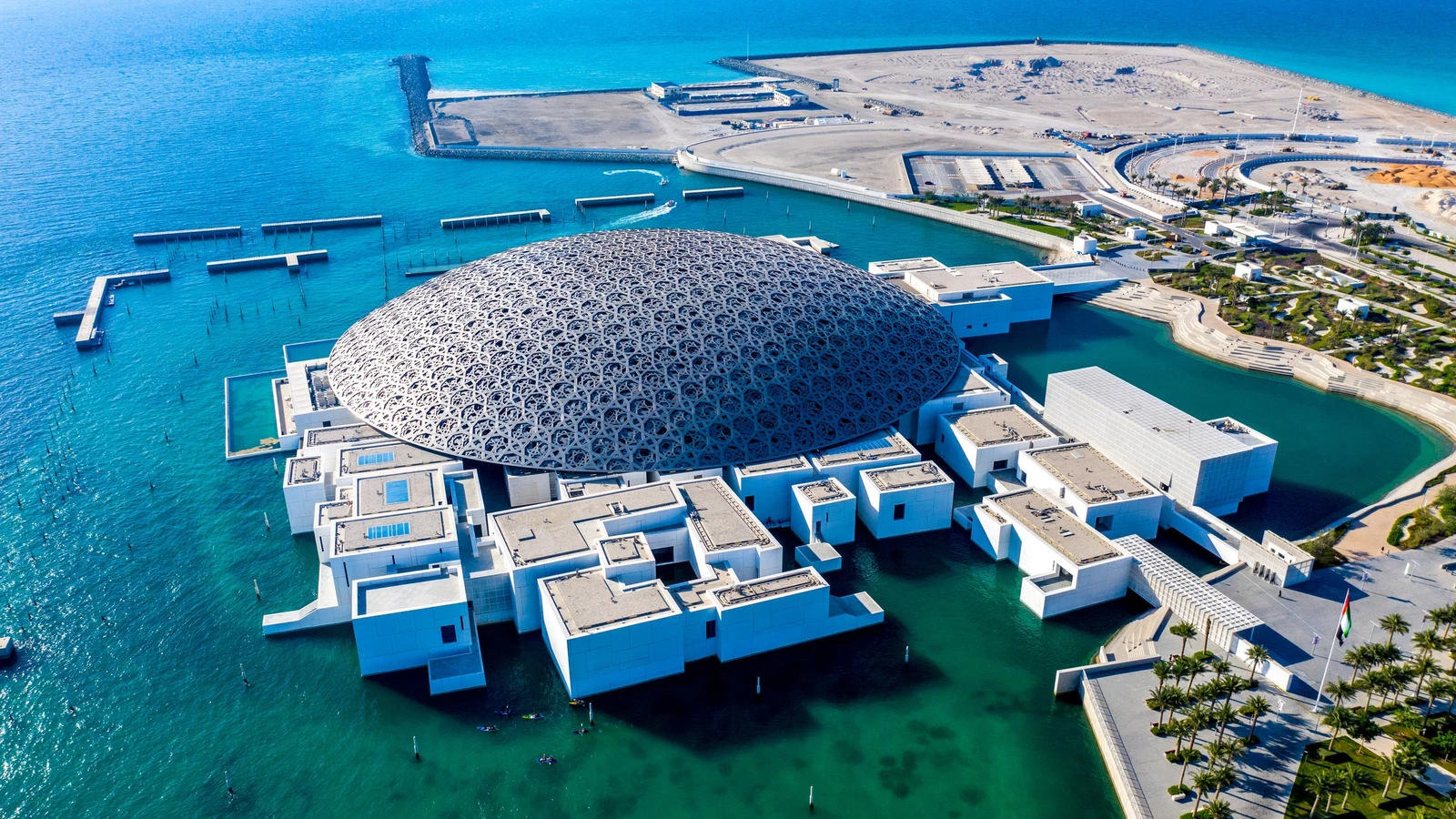
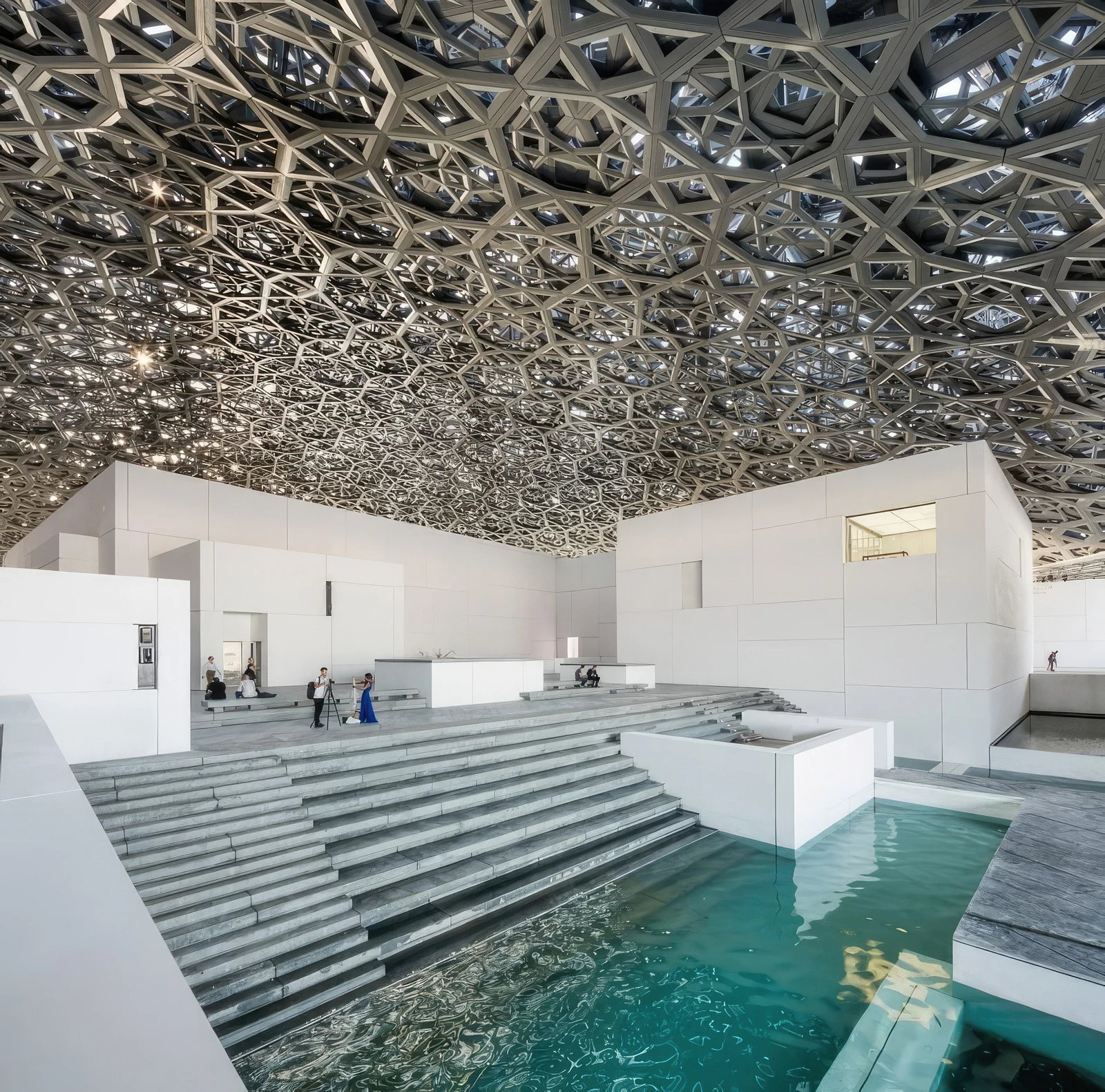
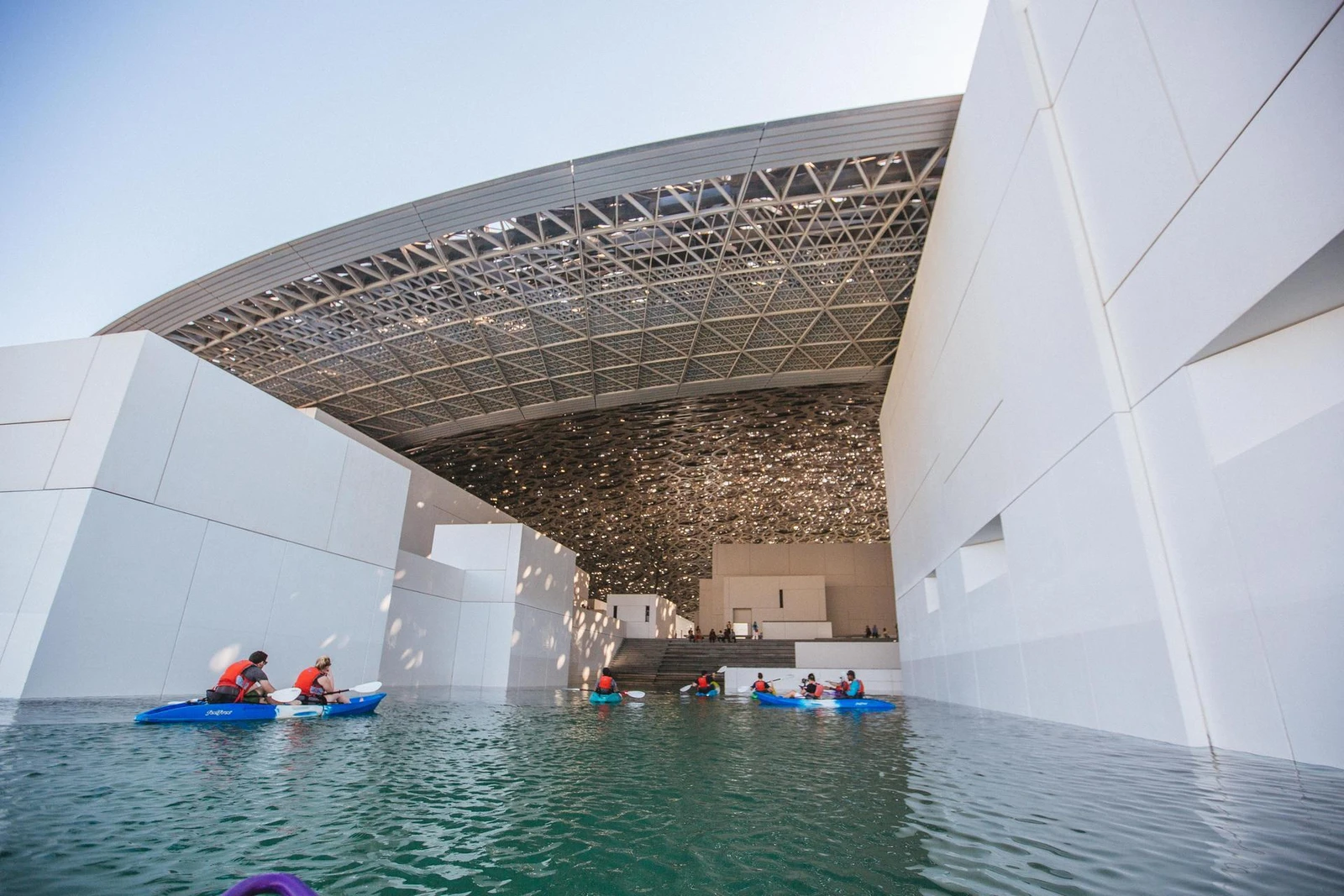
- “Museum City” Concept: The complex is designed as a “museum city” in the sea, comprising 55 individual but connected white buildings (including 26 galleries), resembling a traditional Arab medina.
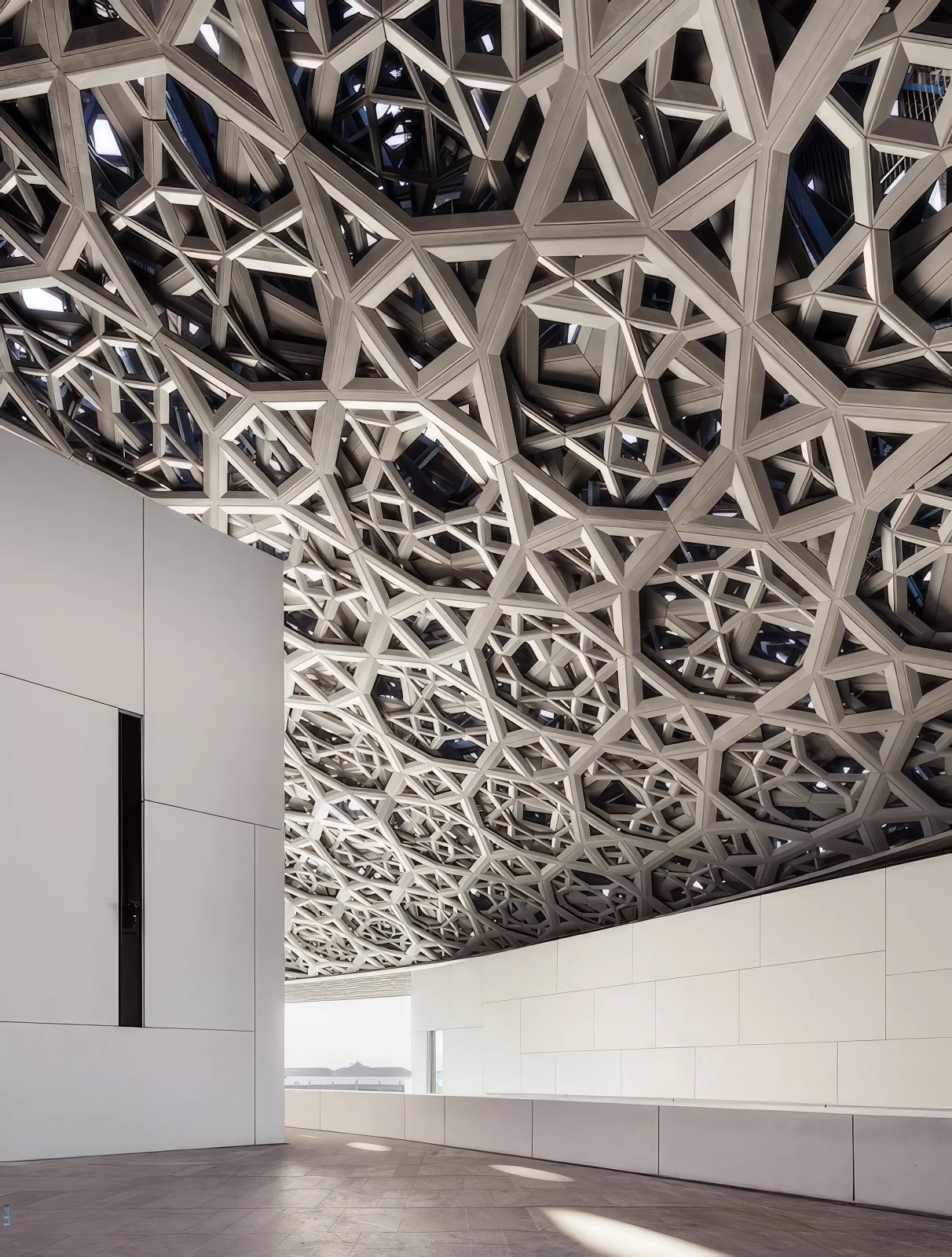
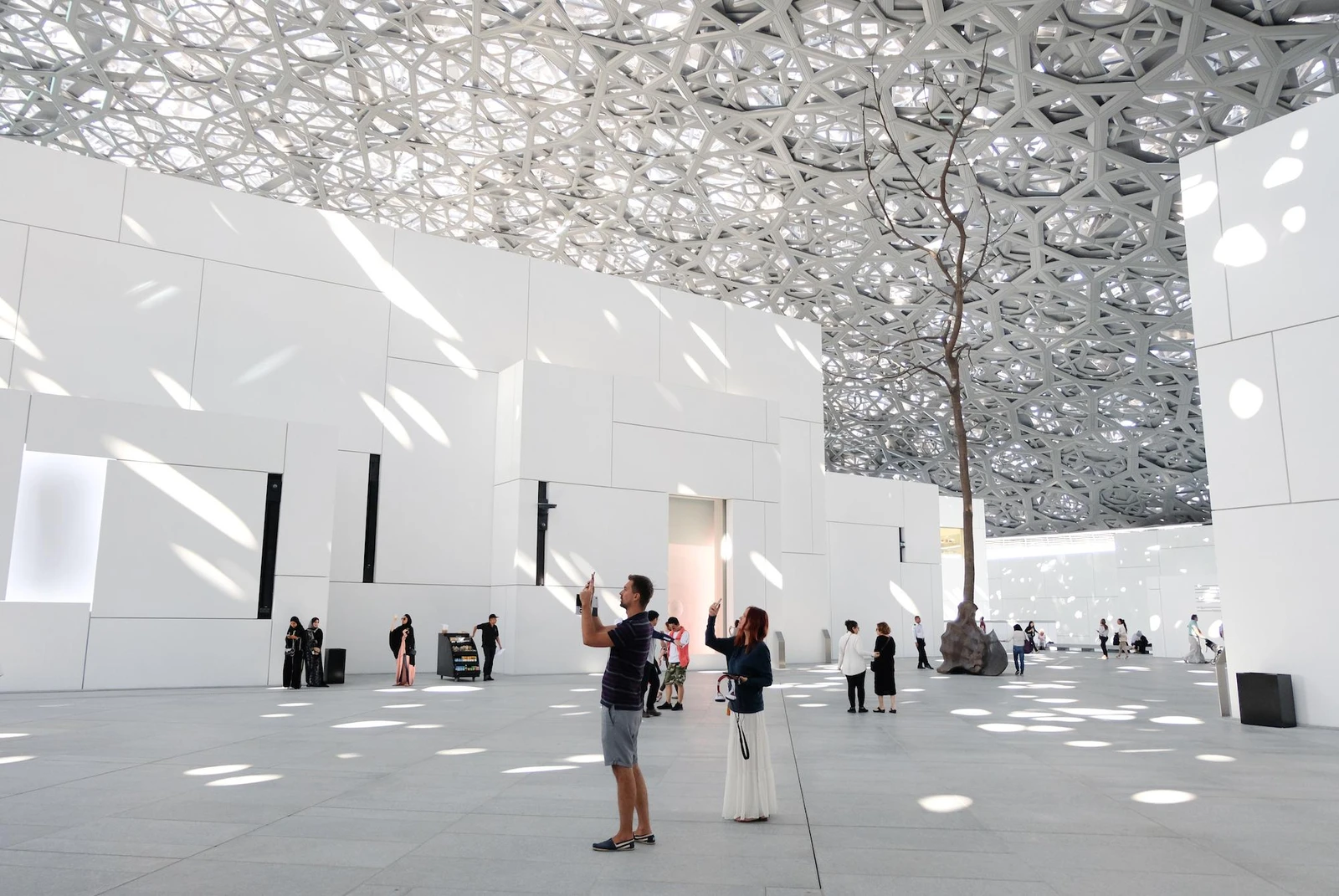
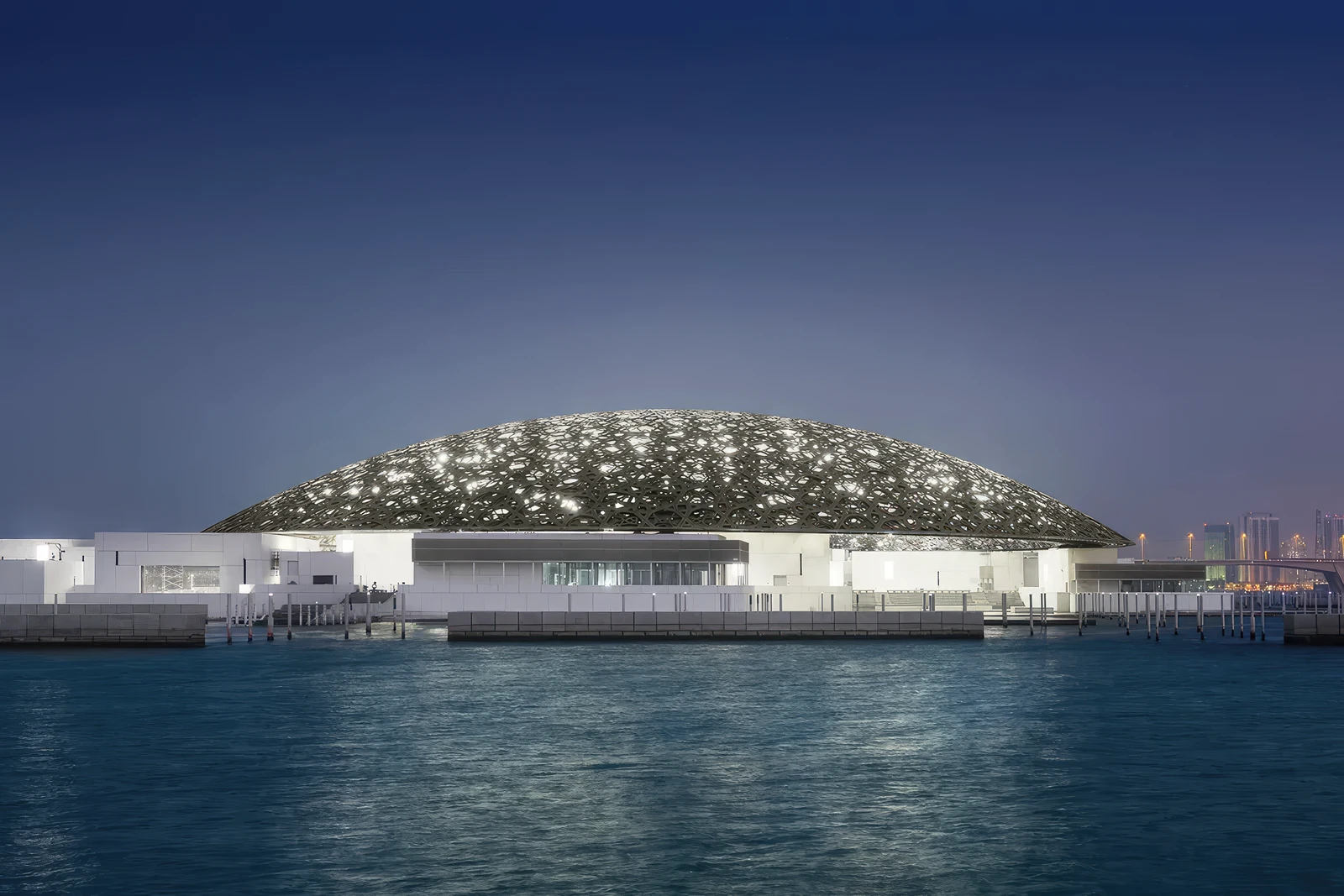
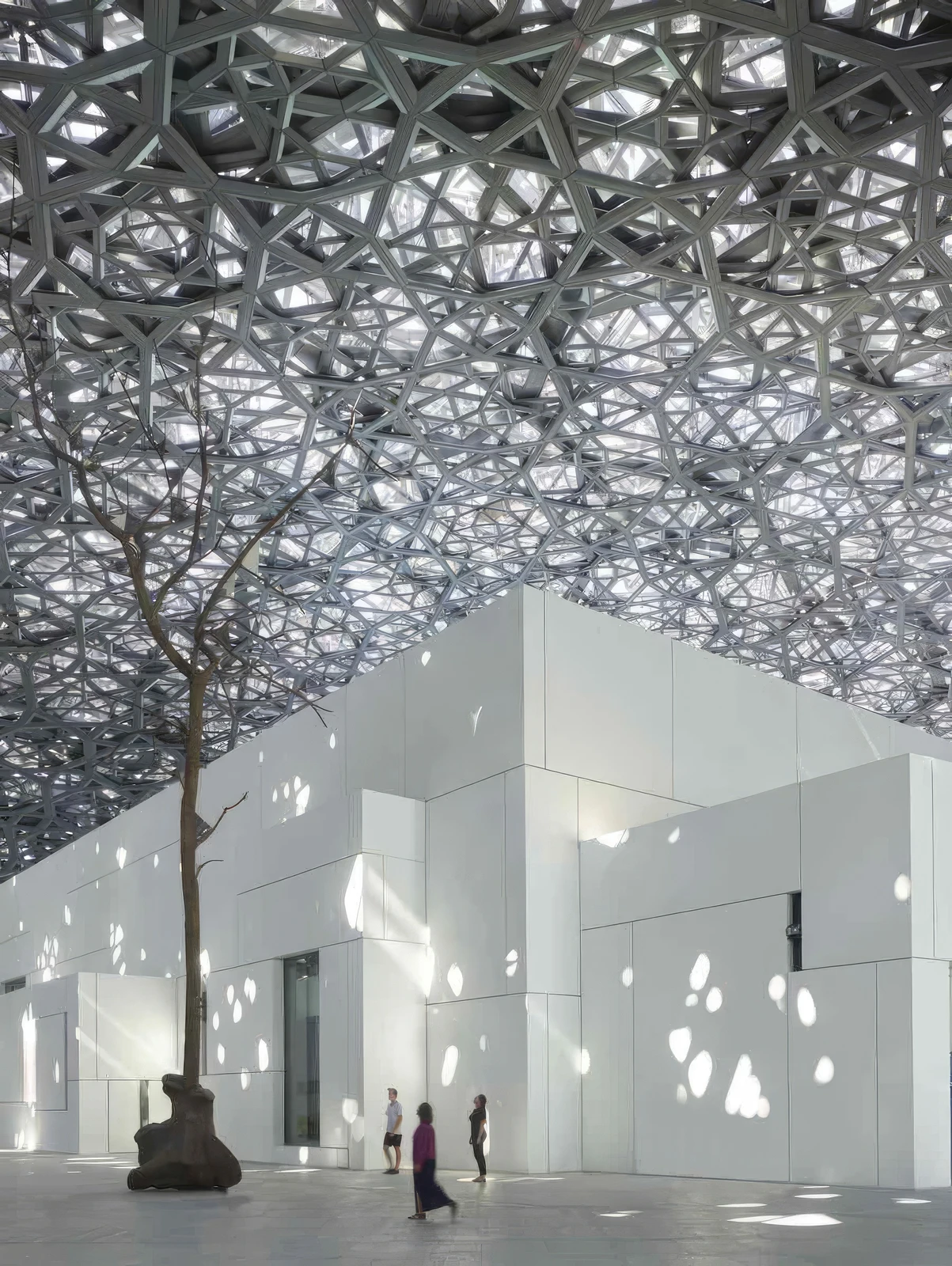
- Floating Dome: Its most striking feature is a massive, seemingly floating dome, 180 meters in diameter and weighing 7,500 tons (similar to the Eiffel Tower’s frame). This intricate structure is composed of eight layers of 7,850 tessellating aluminum and stainless steel stars.
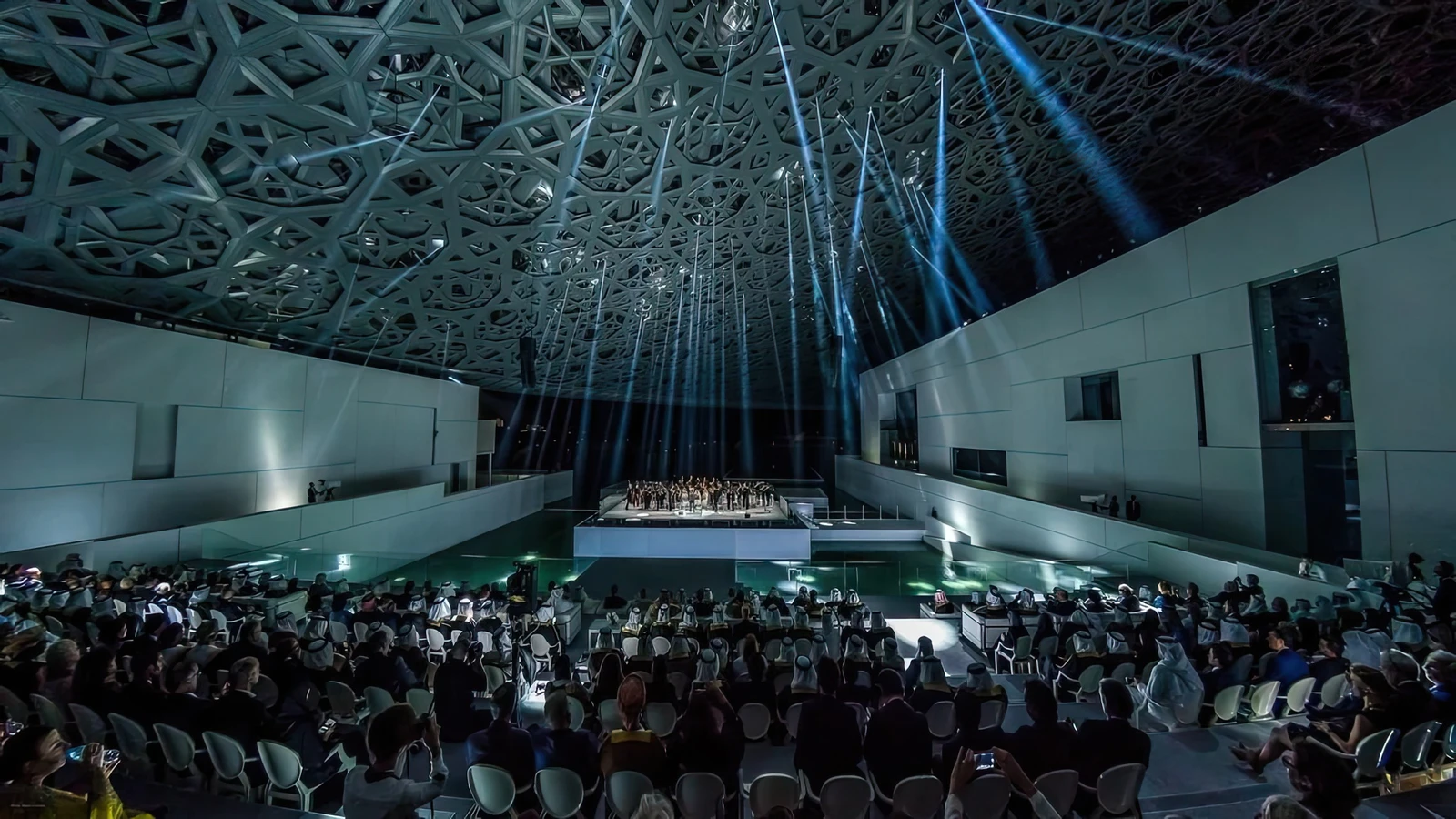
- “Rain of Light” Effect: The dome’s complex geometric pattern allows sunlight to filter through its layers, creating a cinematic “rain of light” effect that shifts throughout the day, reminiscent of sunlight dappling through palm fronds in an oasis. This also helps to naturally cool the spaces below.
- Water Integration: The museum appears to float on water, with tidal pools within the galleries, echoing the historical connection between the Arabian Gulf and its maritime traditions.
- Materials: The facades of the buildings are made of 3,900 panels of ultra-high-performance fiber concrete (UHPC). The interiors feature stone paving, custom typography, and meticulously designed lighting.
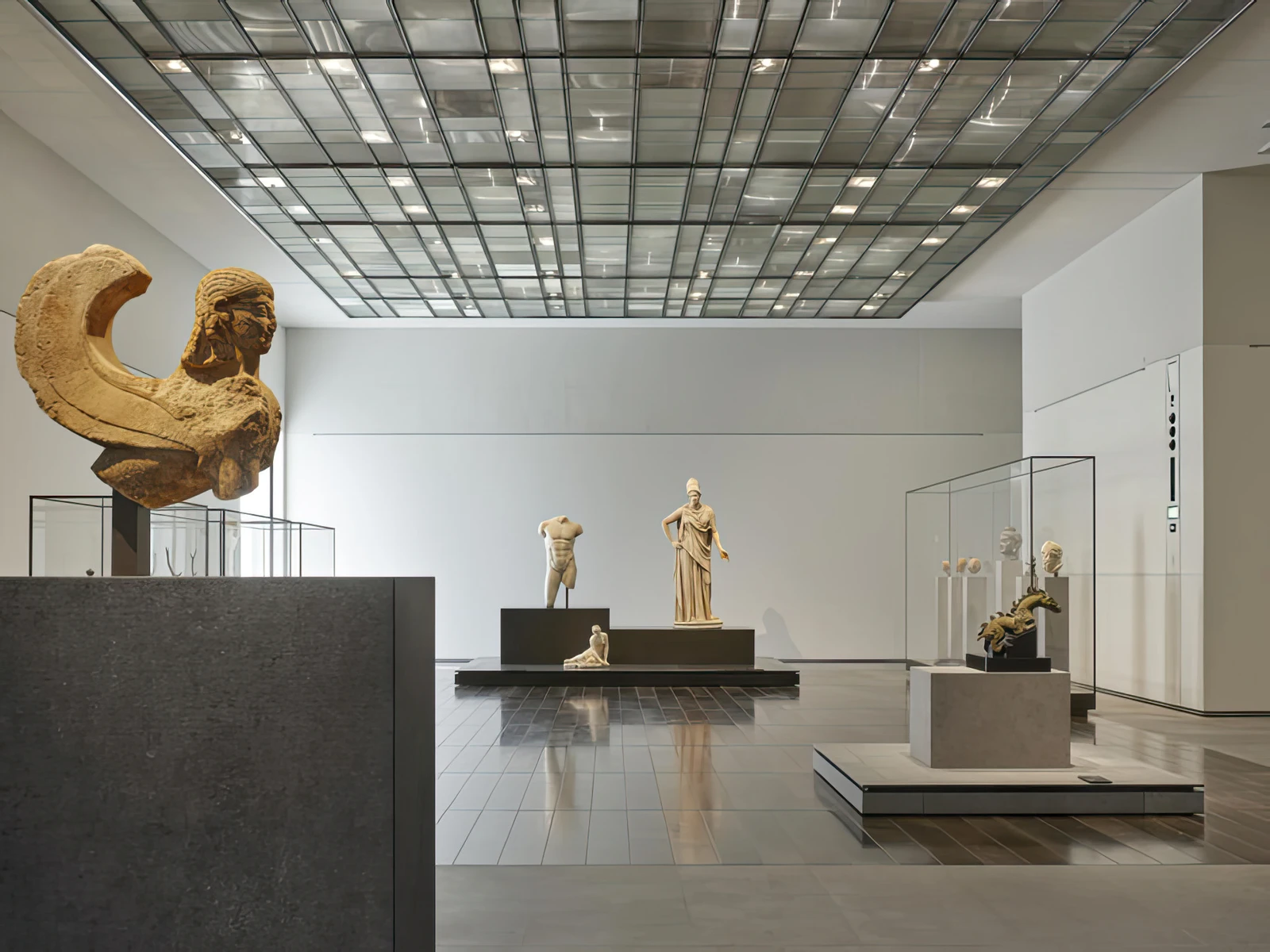
- Galleries: The permanent collection is thoughtfully laid out in 12 chapters, arranged chronologically from prehistory to the present day, aiming to highlight universal themes that connect human civilization across time and geography.
What Makes It Famous
Louvre Abu Dhabi’s global renown stems from its visionary concept, iconic architecture, and universal approach to art:
- First Universal Museum in the Arab World: It is a pioneering institution that presents a narrative of shared human history and creativity across cultures, making it unique in the region.
- Architectural Masterpiece: Jean Nouvel’s design, particularly the “floating” dome and its mesmerizing “rain of light” effect, has garnered international acclaim and made the building an icon in itself.
- Cultural Bridge: It actively aims to foster dialogue and understanding between Eastern and Western cultures through its curated collection and exhibitions.
- World-Class Collection: The museum showcases a diverse array of artworks, from ancient artifacts to contemporary masterpieces, both from its growing permanent collection and through loans from prestigious French museums.
- Immersive Experience: The interplay of light, water, and art within its unique architectural setting creates a deeply contemplative and immersive visitor experience.
Differences from Some Other Landmarks
Louvre Abu Dhabi distinguishes itself from other regional and global landmarks in several key ways:
- Universal Museum Concept: Unlike national museums (e.g., Bahrain National Museum) that focus on a specific country’s history, or specialized art galleries, Louvre Abu Dhabi adopts a universal narrative of human creativity, transcending geographical and chronological boundaries in its curation.
- Architectural Integration with Environment: While other modern structures (e.g., Burj Khalifa, Bahrain World Trade Center) are impressive, Louvre Abu Dhabi’s design is deeply integrated with its coastal environment, using light and water as fundamental architectural elements and creating a self-regulated micro-climate beneath its dome.
- Cultural Partnership Model: It operates under a unique intergovernmental agreement between the UAE and France, a model of cultural collaboration that differs from independently developed or solely nationally funded institutions.
- Art as Dialogue: Its explicit mission to bridge cultures and promote dialogue through art sets it apart from landmarks that serve primarily as tourist attractions, commercial hubs, or places of worship.