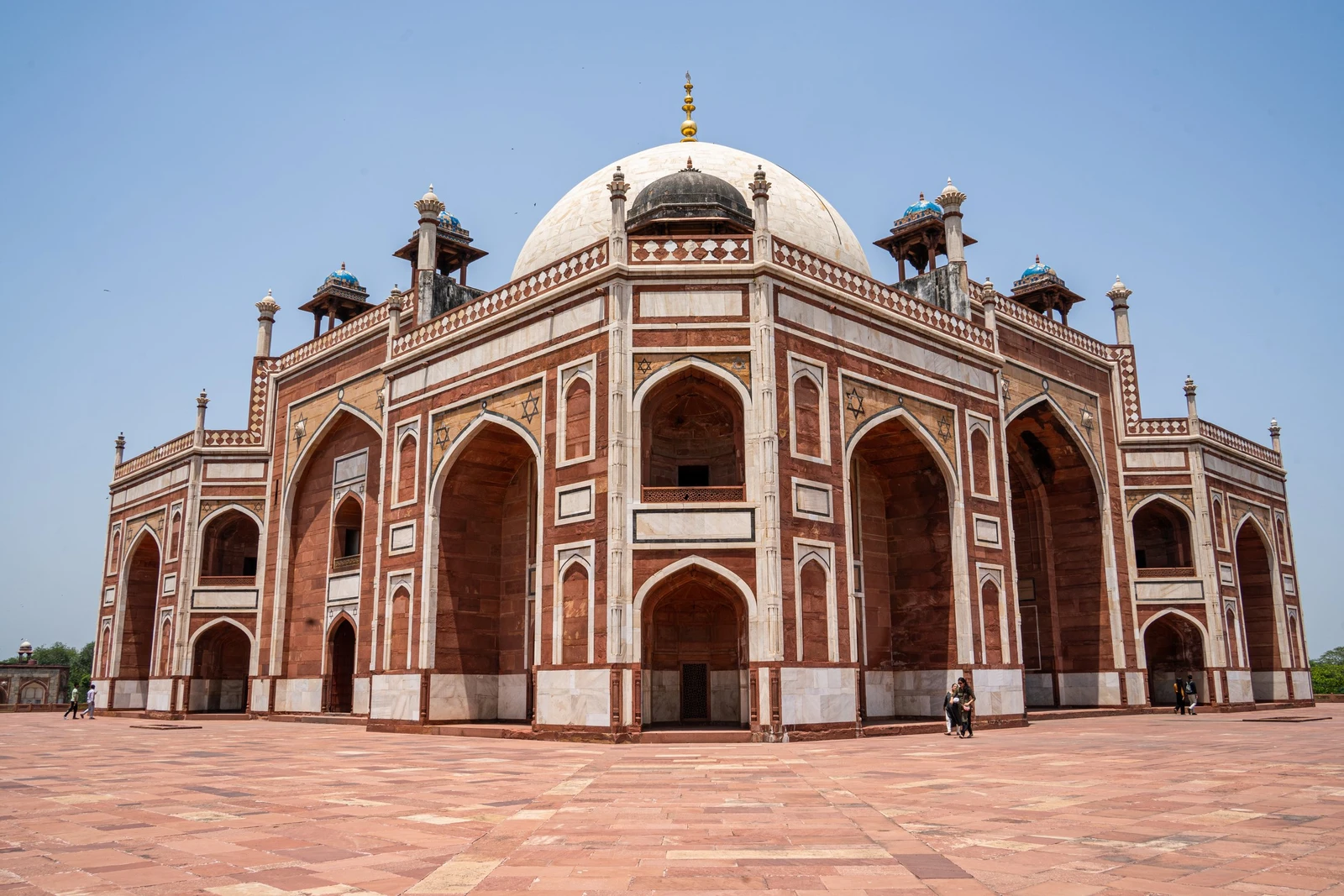
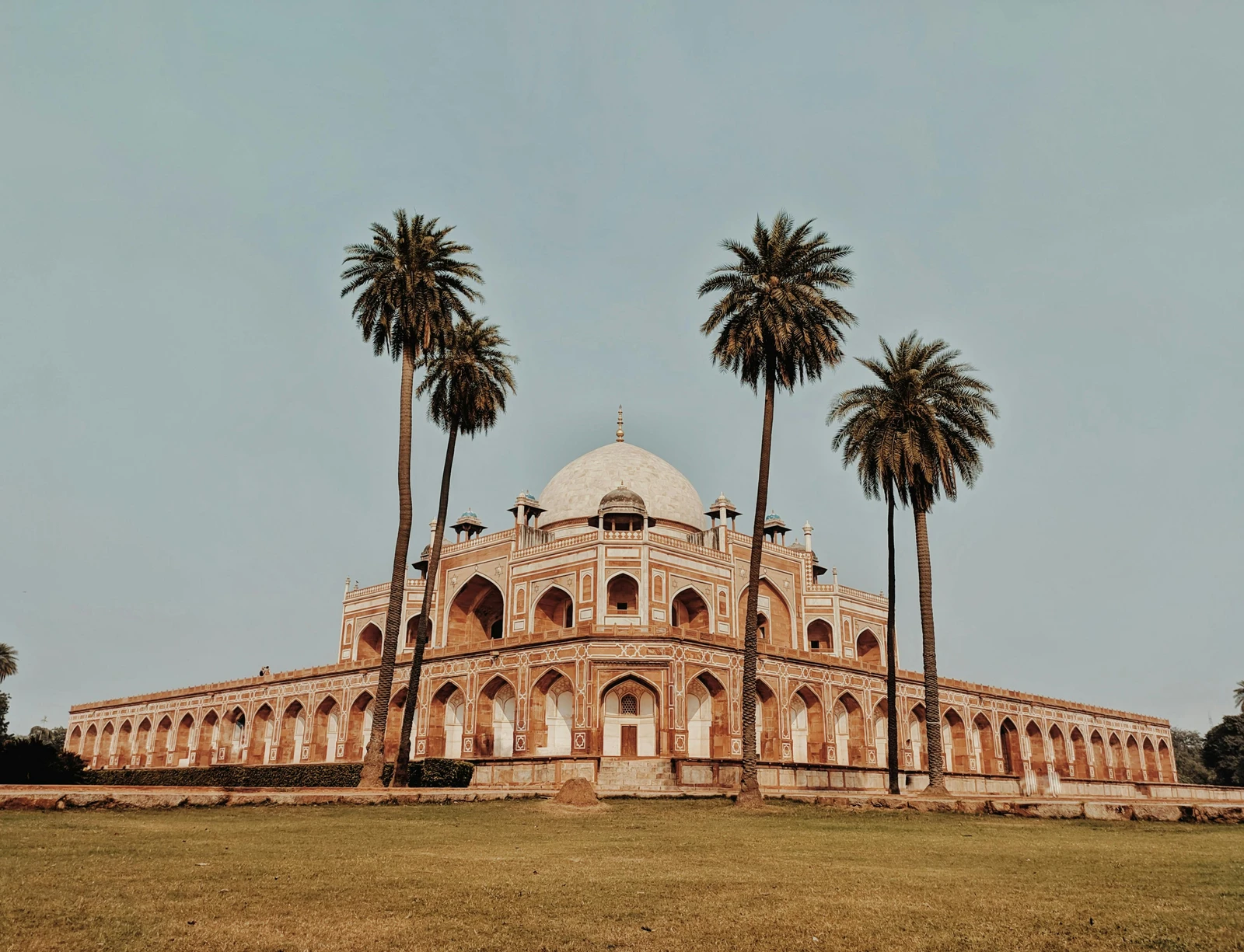
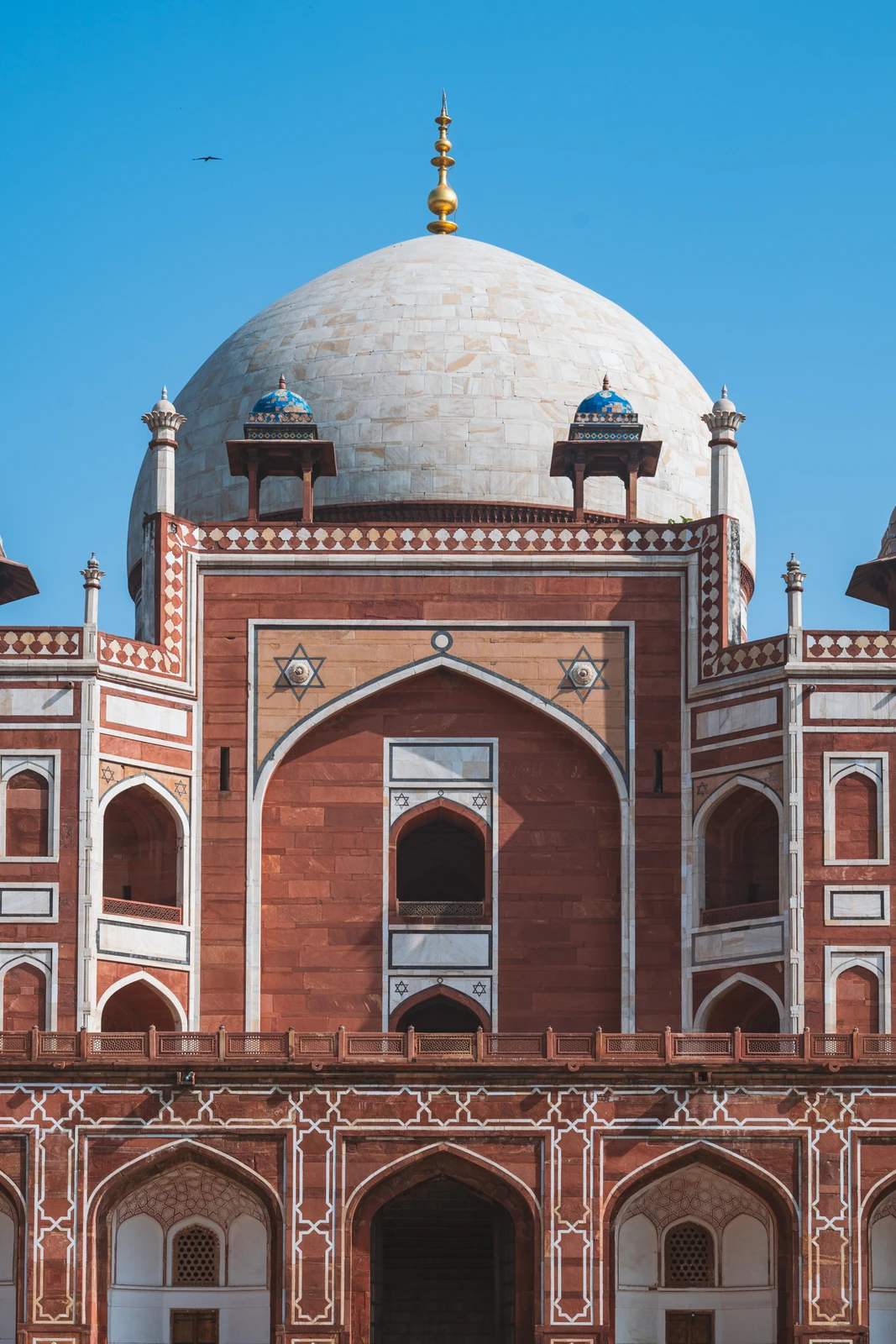
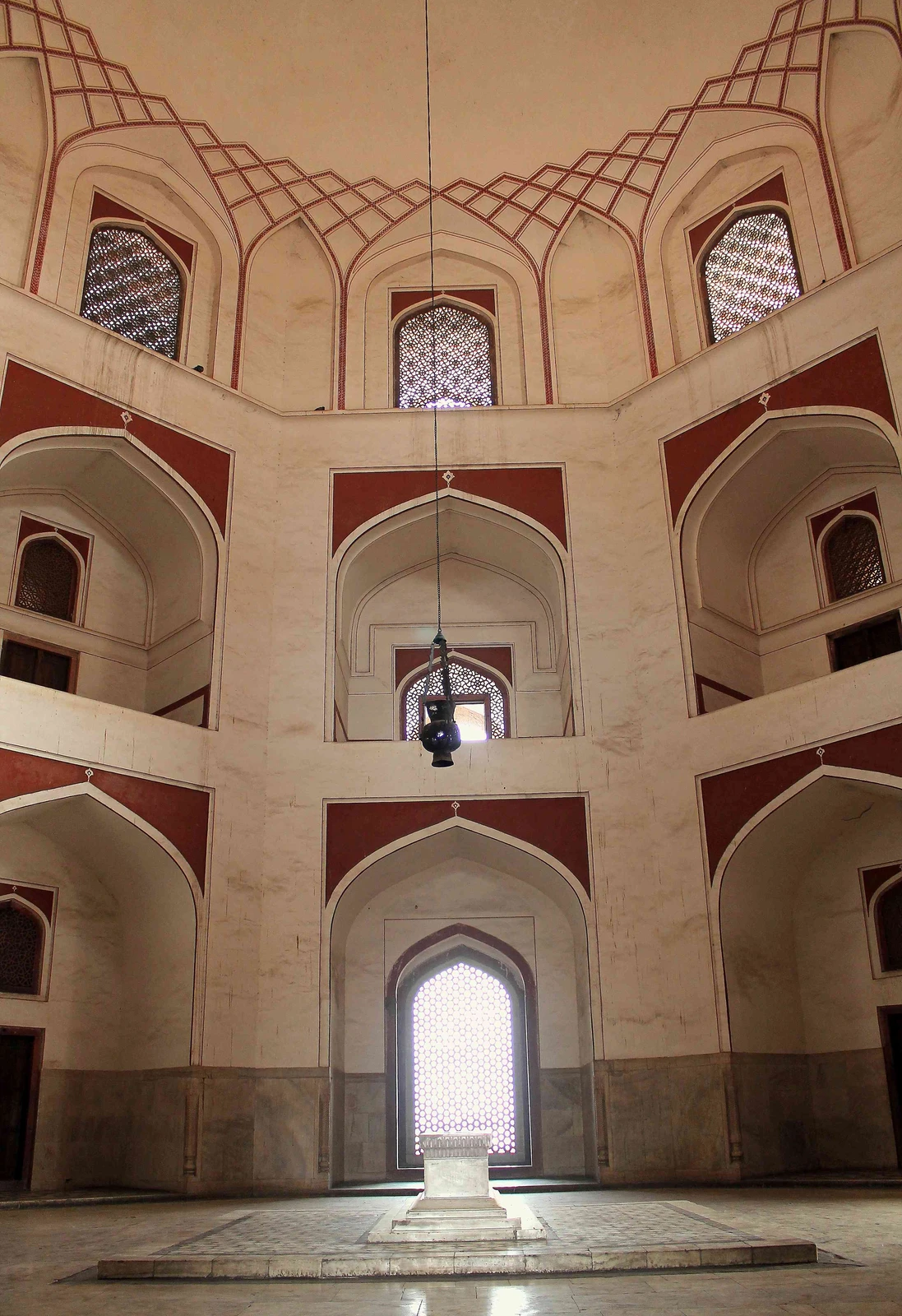
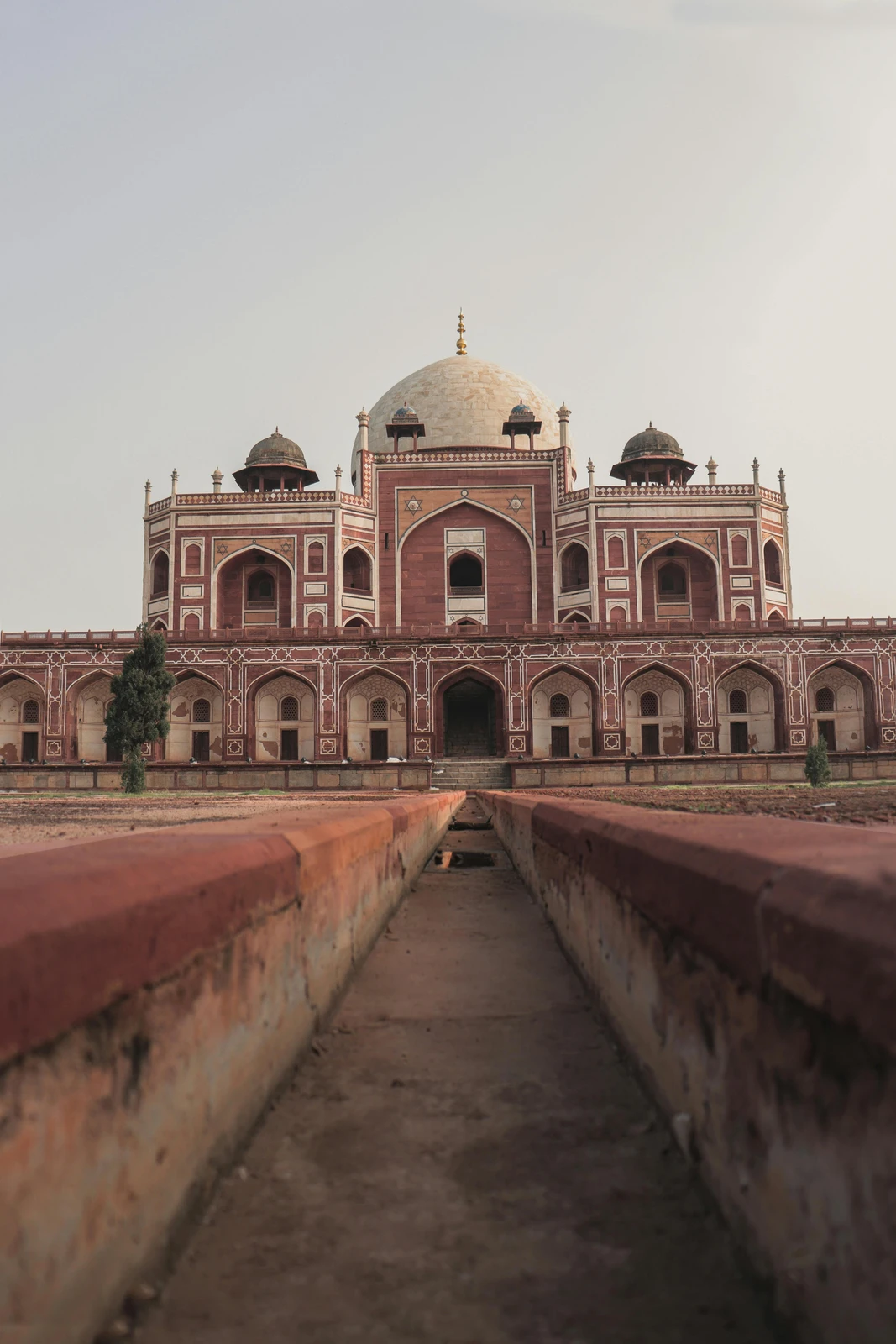
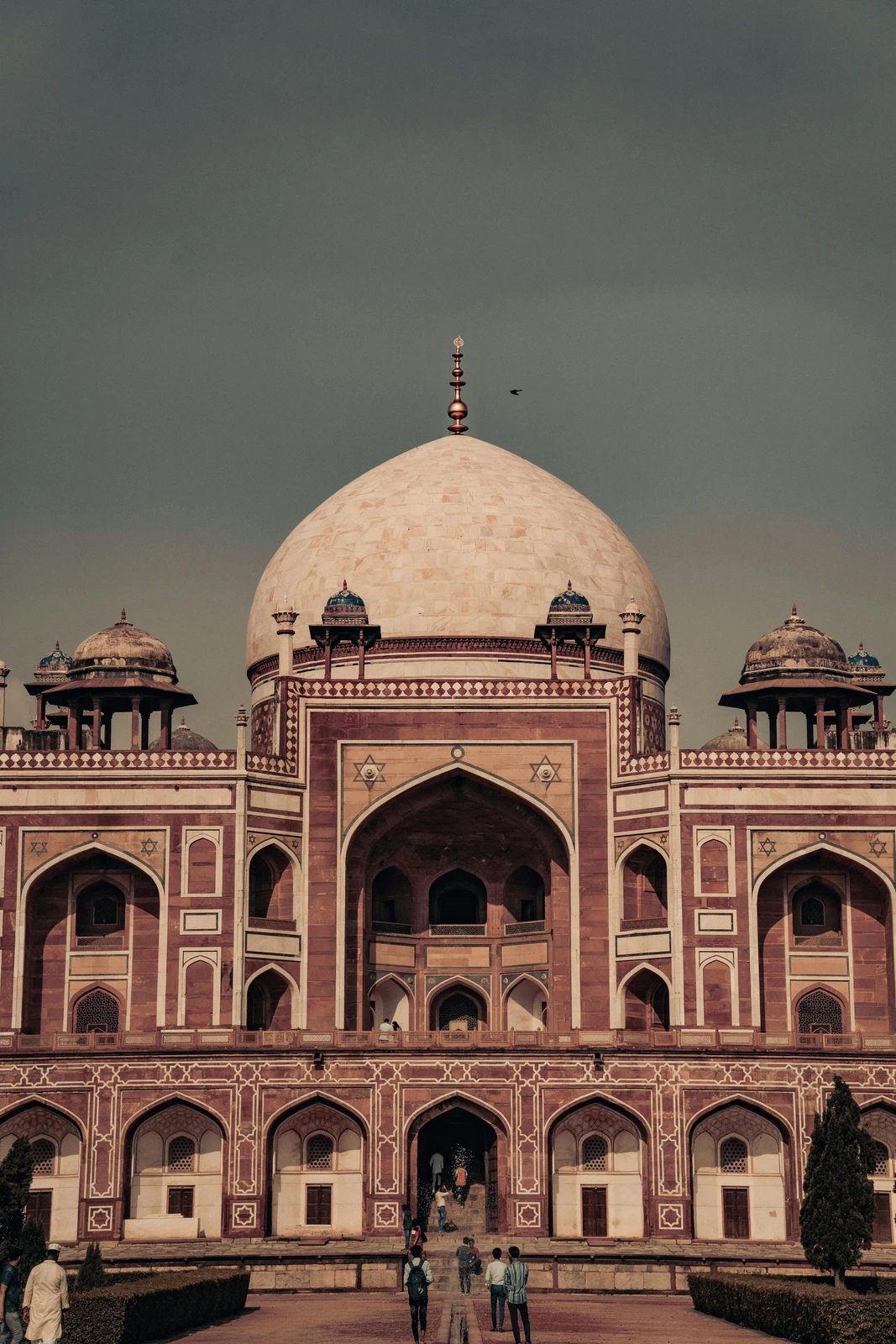
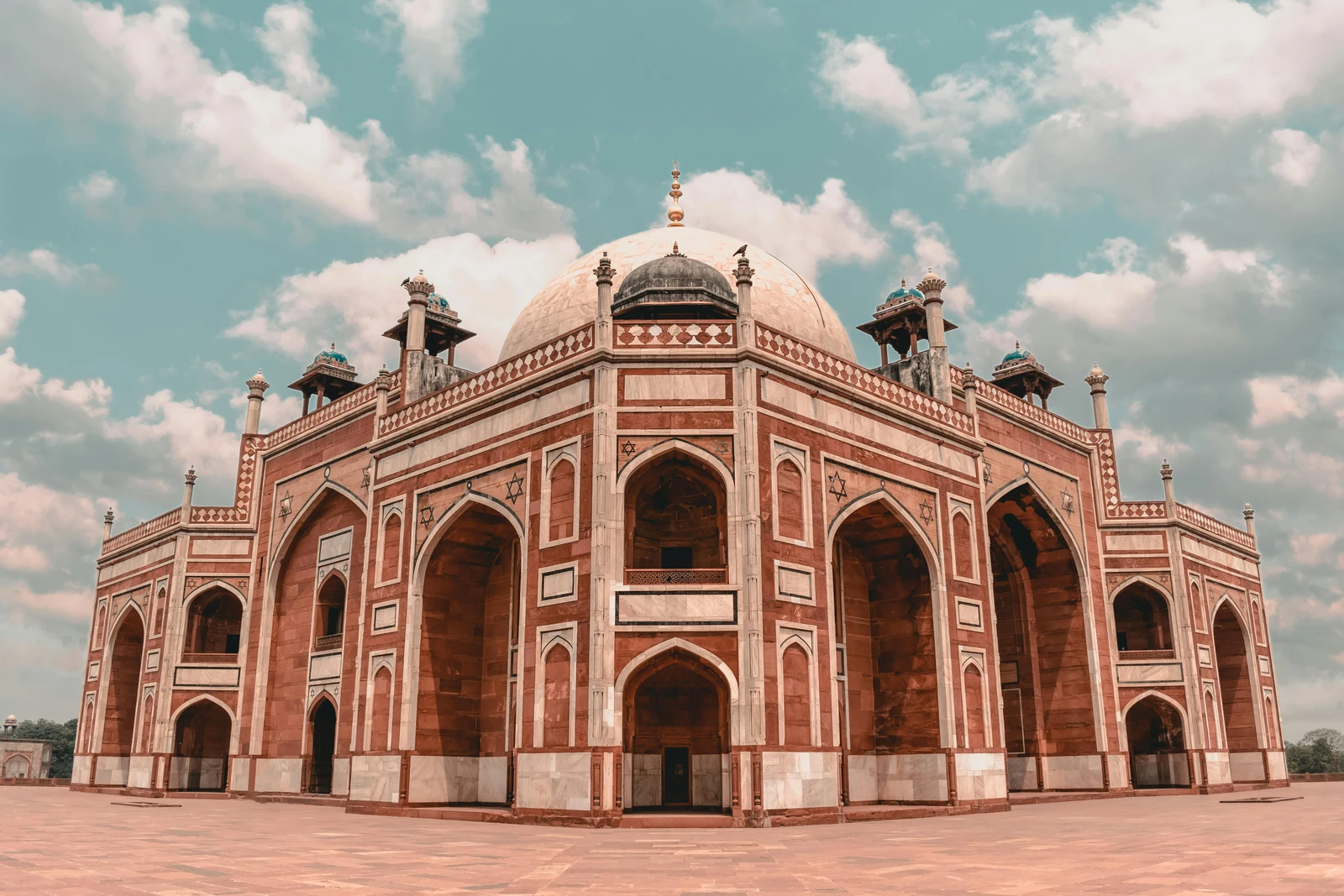

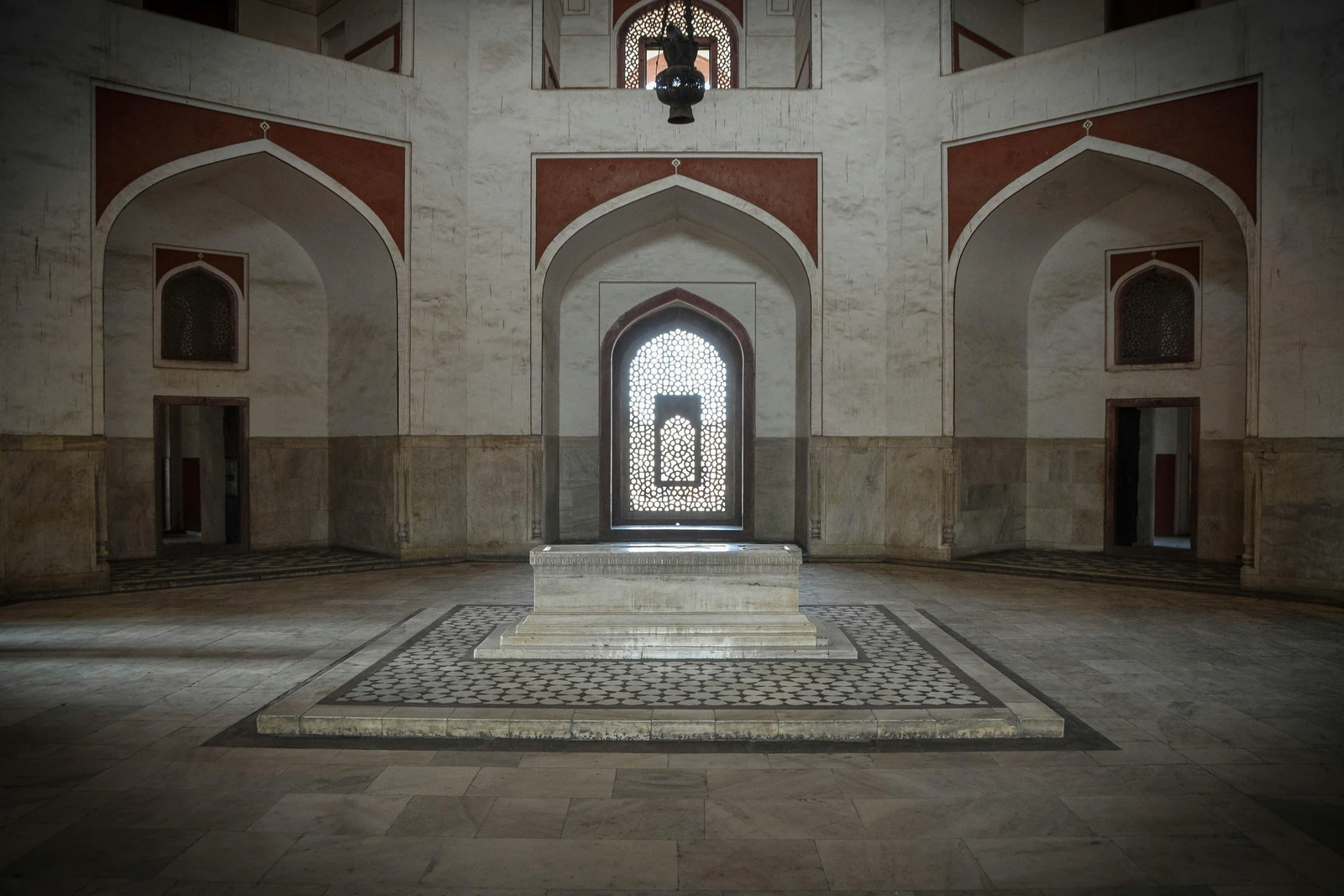
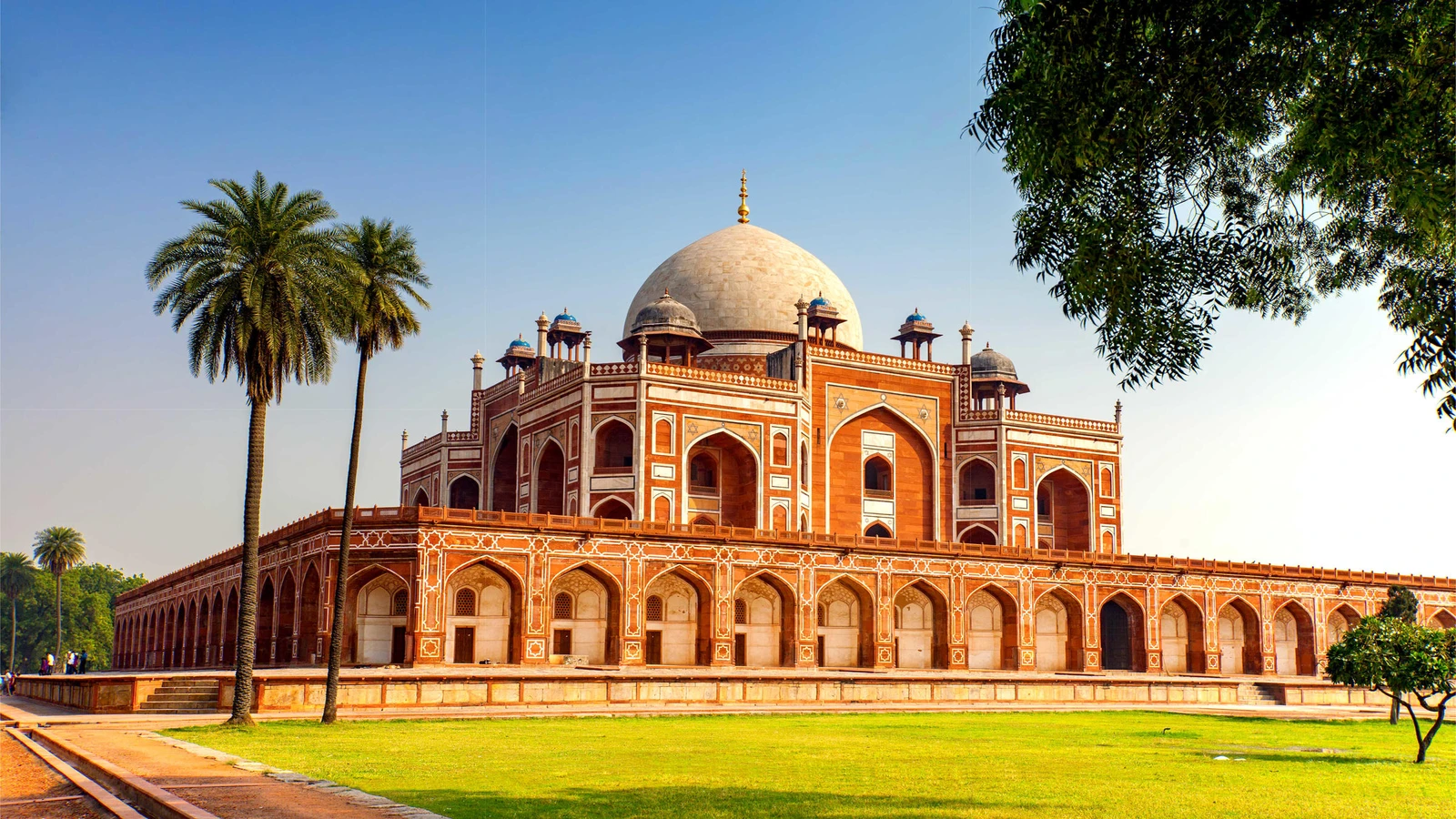
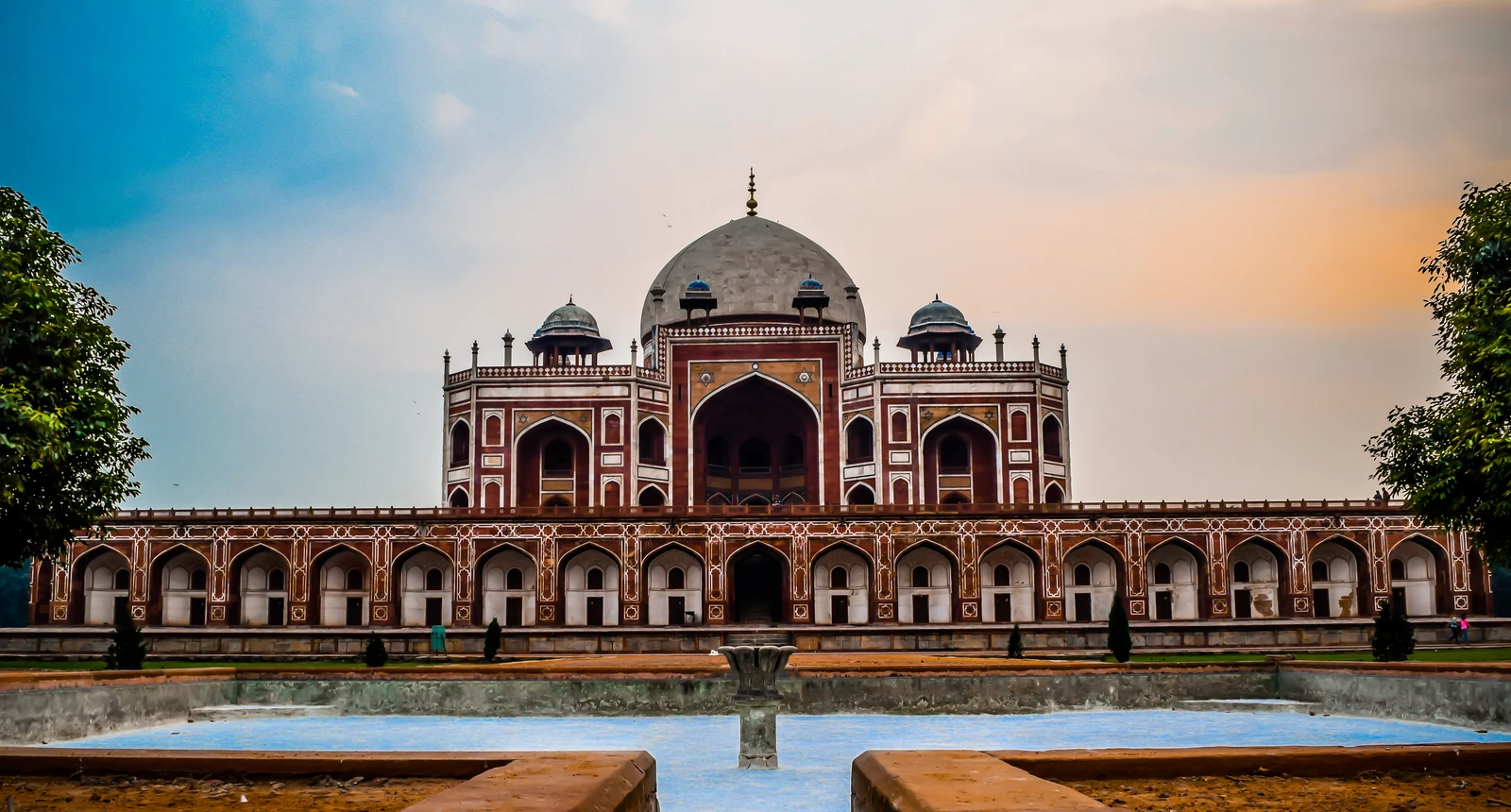
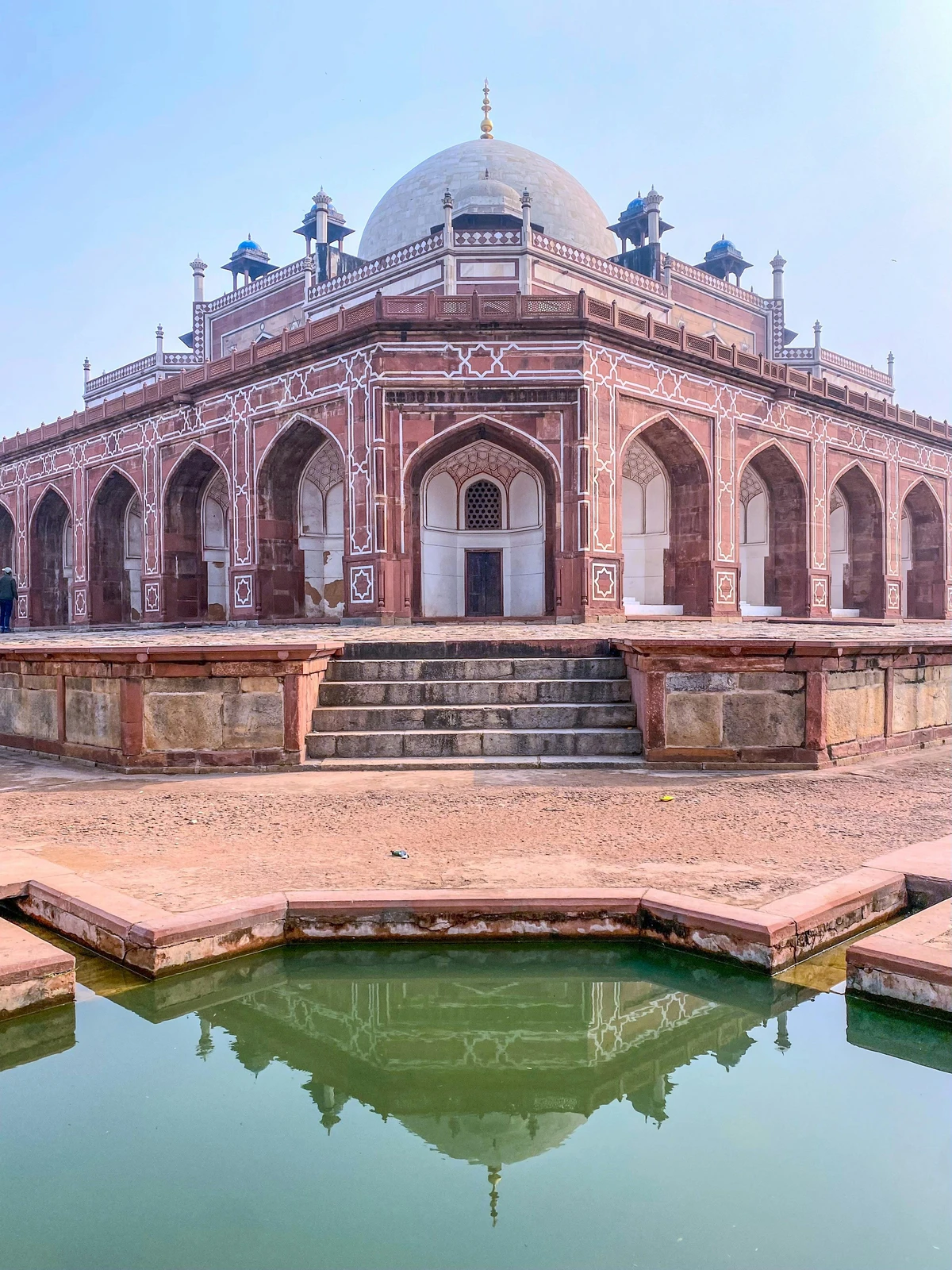
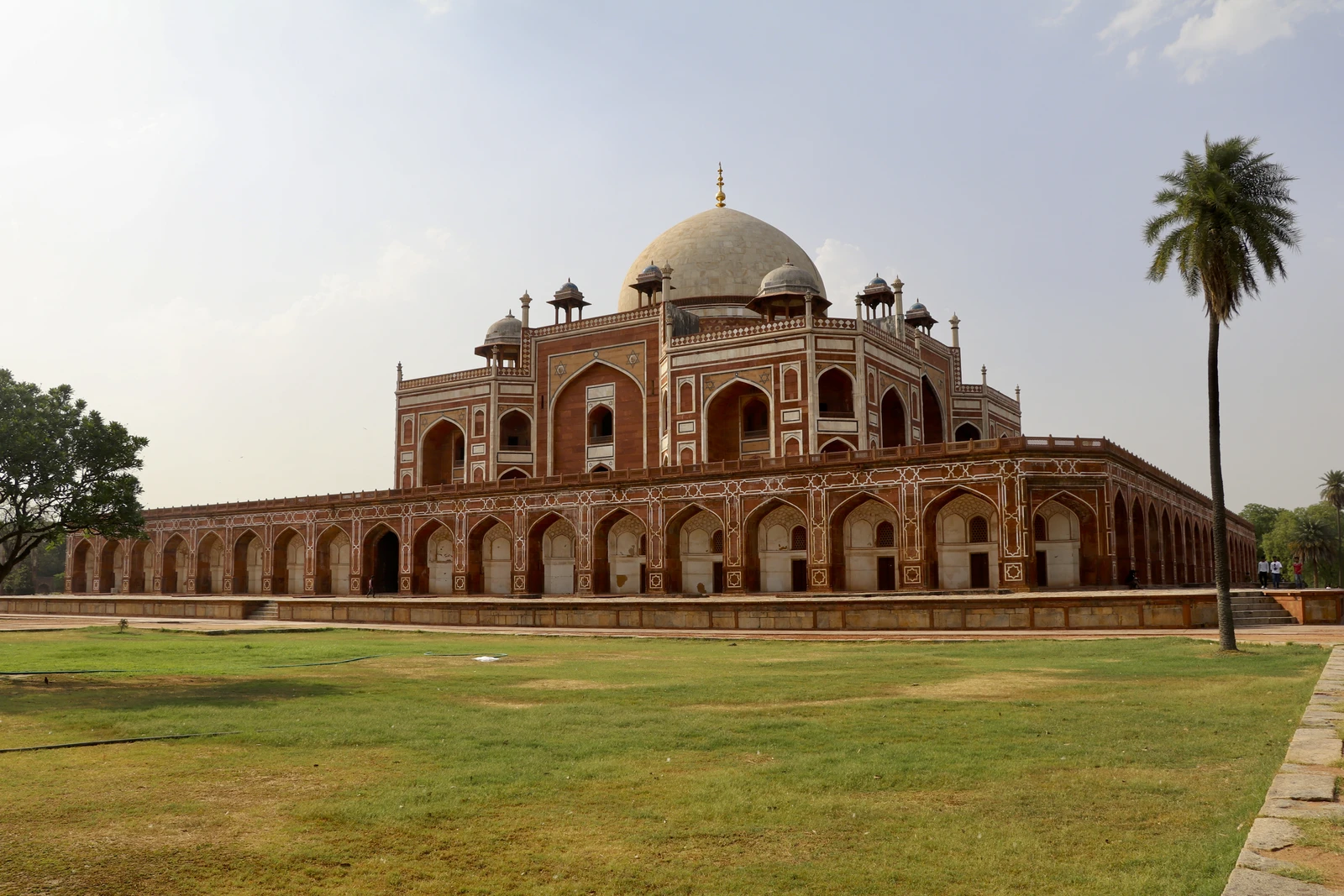
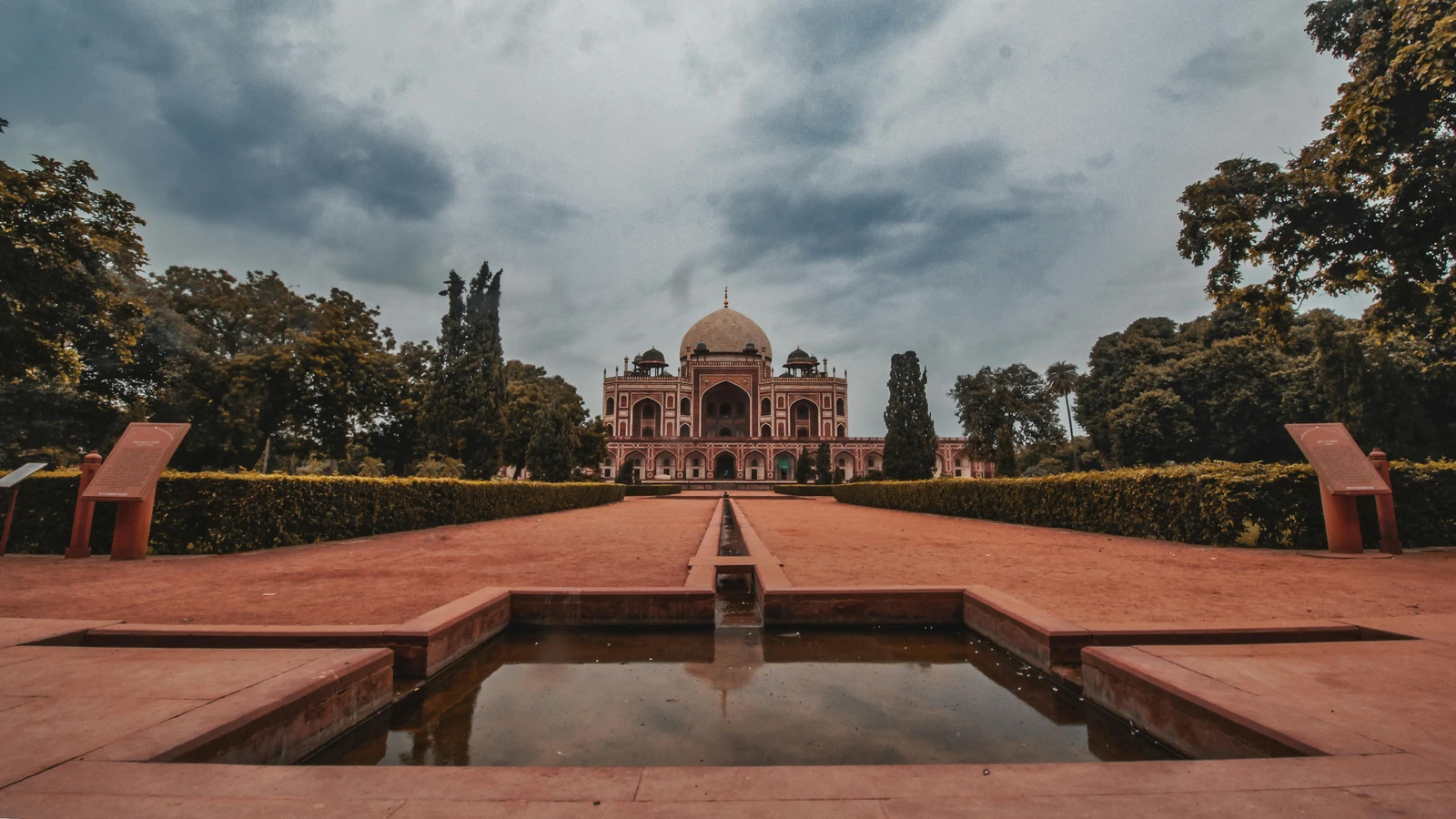
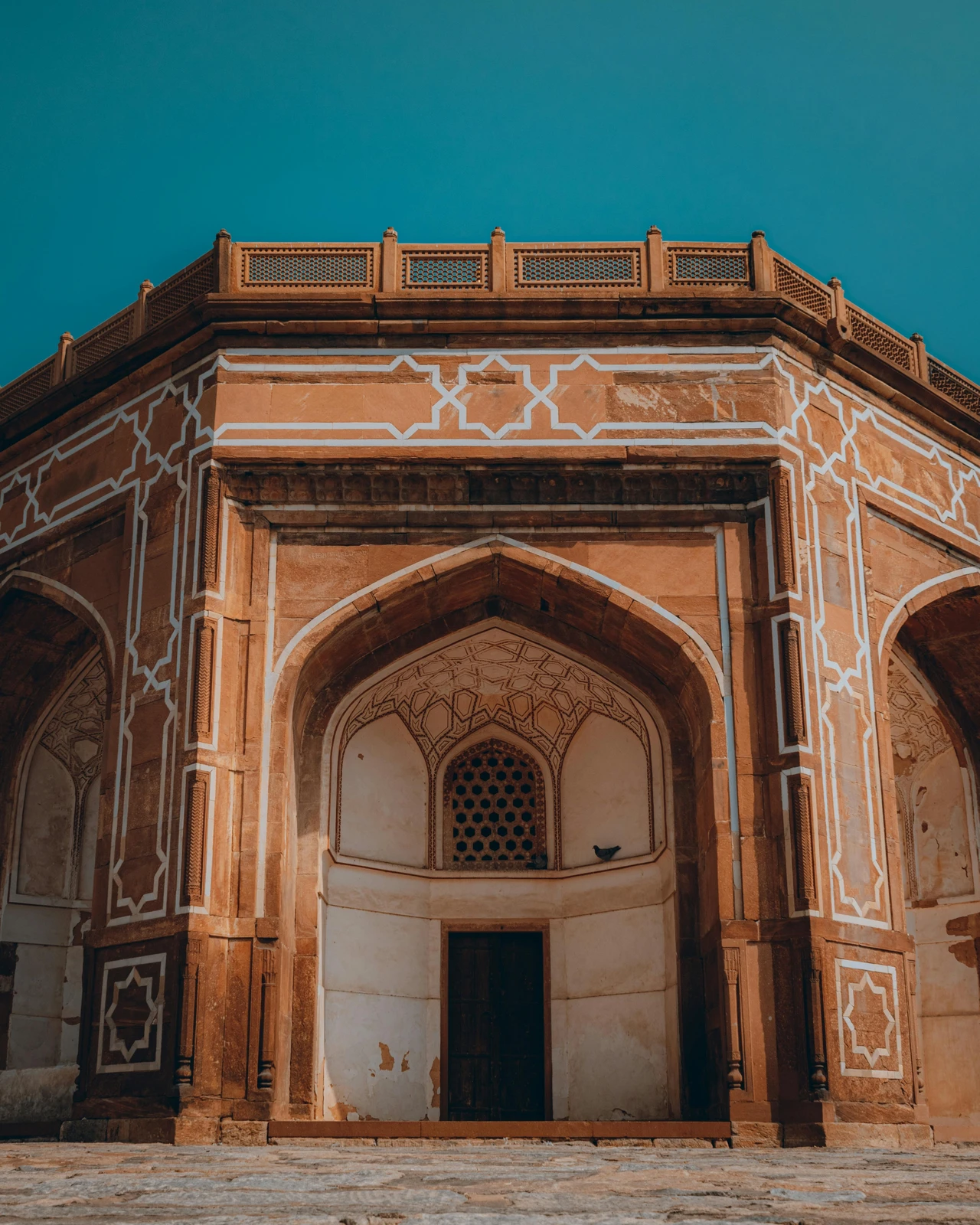
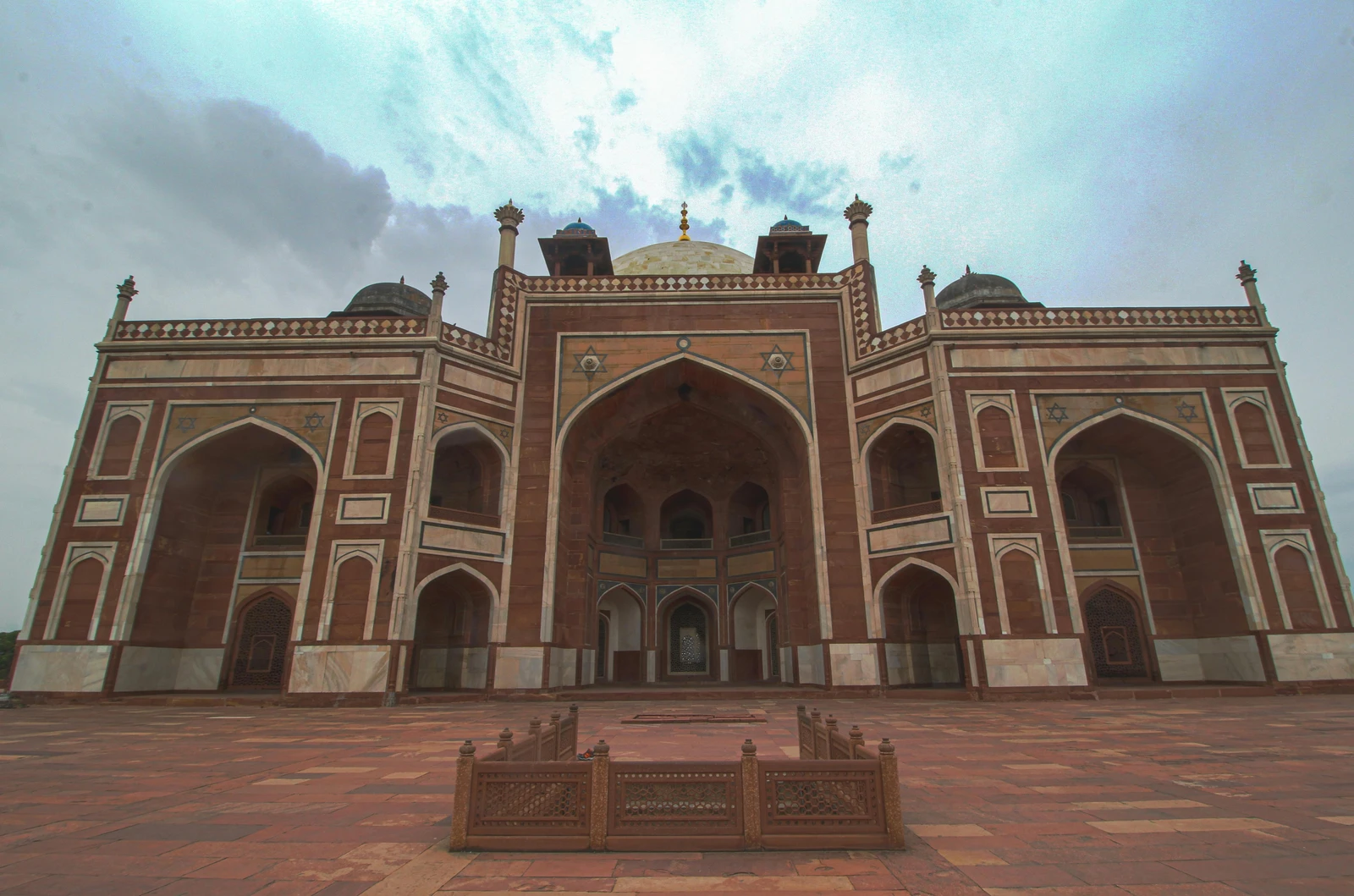
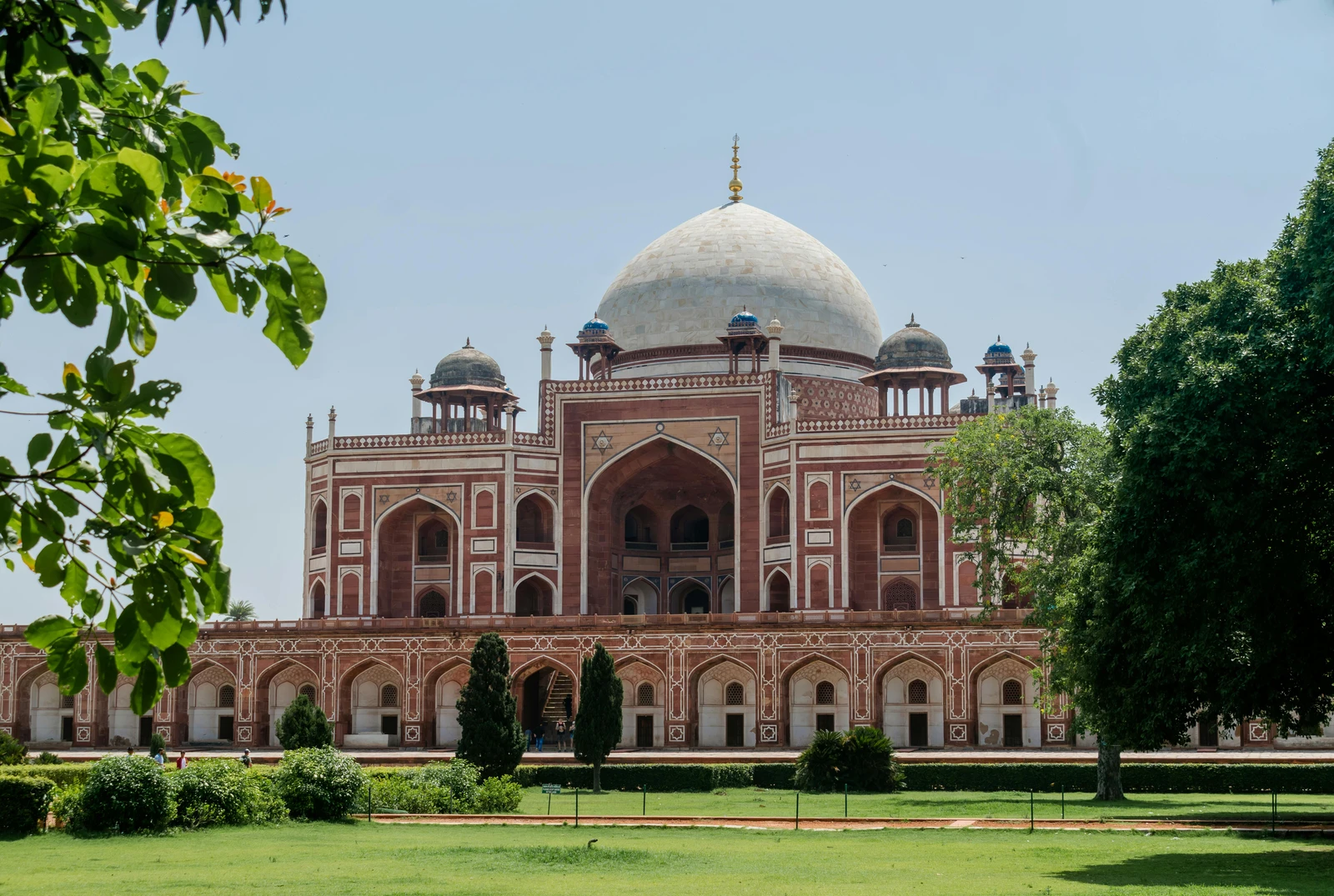
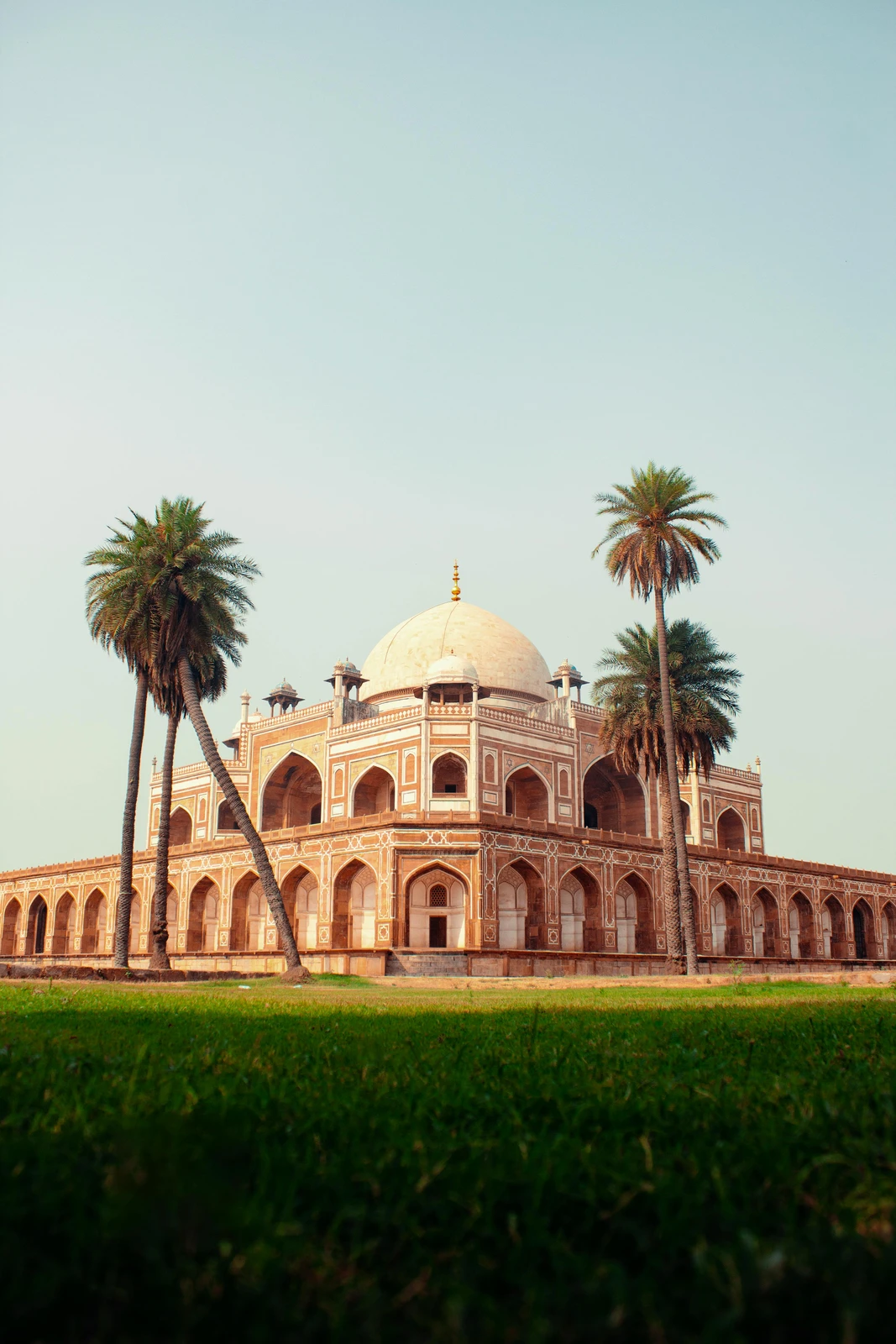
Humayun’s Tomb, located in Delhi, India, is a magnificent Mughal garden tomb that holds immense historical and architectural significance. It served as the inspiration and precursor for many later grand Mughal structures, most famously the Taj Mahal. Commissioned by Humayun’s first wife and chief consort, Empress Bega Begum (Haji Begum), in 1569-70, it houses the tomb of the second Mughal Emperor, Humayun, and numerous other Mughal royals.

Name: Humayun’s Tomb (often spelled Humayun’s Tumb)
Address: Mathura Road, Opposite Hazrat Nizamuddin Aulia Dargah, Nizamuddin East, New Delhi, Delhi 110013, India.
It is situated in the Nizamuddin East area of South Delhi, close to the Sufi shrine of Nizamuddin Auliya.
How to Get There:
Humayun’s Tomb is a major historical site and is well-connected within Delhi’s extensive transport network:
- By Metro (Recommended): The most convenient way. Take the Delhi Metro’s Violet Line to JLN (Jawaharlal Nehru Stadium) Metro Station. From there, it’s about a 2-kilometer (1.2-mile) auto-rickshaw ride or a pleasant 15-20 minute walk to the complex entrance. Alternatively, Jorbagh Metro Station (Yellow Line) is about 5 km away, requiring a taxi or auto-rickshaw.
- By Auto-rickshaw/Cycle-rickshaw/E-rickshaw: Easily available throughout Delhi and can drop you off directly at the complex entrance.
- By Bus: Numerous DTC (Delhi Transport Corporation) bus routes serve the Humayun’s Tomb area.
- By Taxi/Ride-Sharing (Uber/Ola): Convenient for direct travel from any part of Delhi.
- From Indira Gandhi International Airport (DEL): Approximately 13 km (8 miles), taking about 30-45 minutes by taxi.
- From New Delhi Railway Station (NDLS): Approximately 16 km (10 miles), taking about 30-40 minutes by taxi or auto-rickshaw.
- Entrance Tickets: Tickets are required to enter the complex and can be purchased online (recommended to avoid queues) or at the ticket counters. Separate fees apply for Indian citizens/SAARC/BIMSTEC nationals and other foreign visitors.
- Opening Hours: Generally open from sunrise to sunset daily. It’s best to visit in the early morning for pleasant weather and fewer crowds.
Landscape and Architecture:
Humayun’s Tomb is a monumental garden tomb, representing a significant evolutionary step in Mughal architecture, blending Persian and Indian influences.
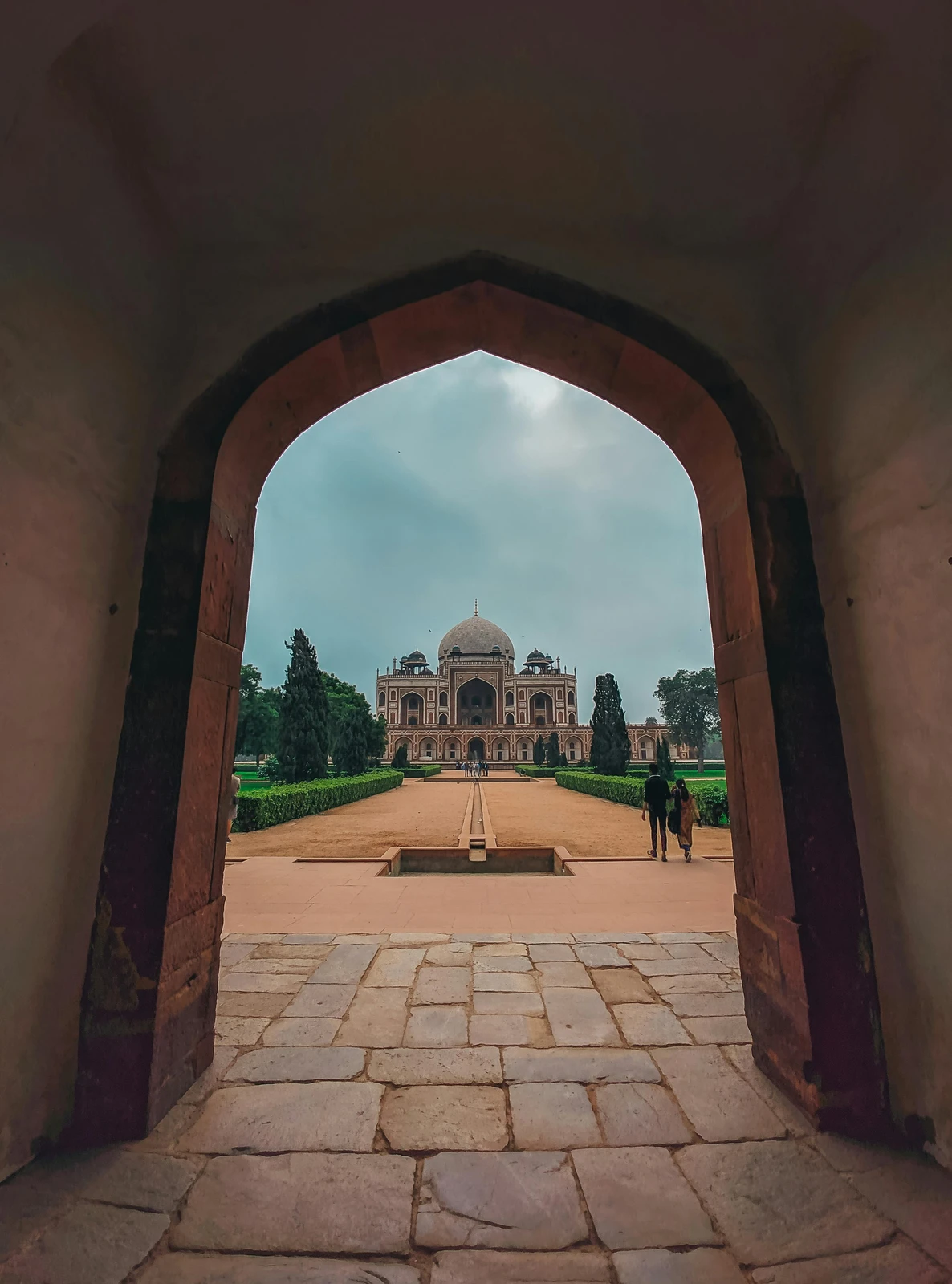
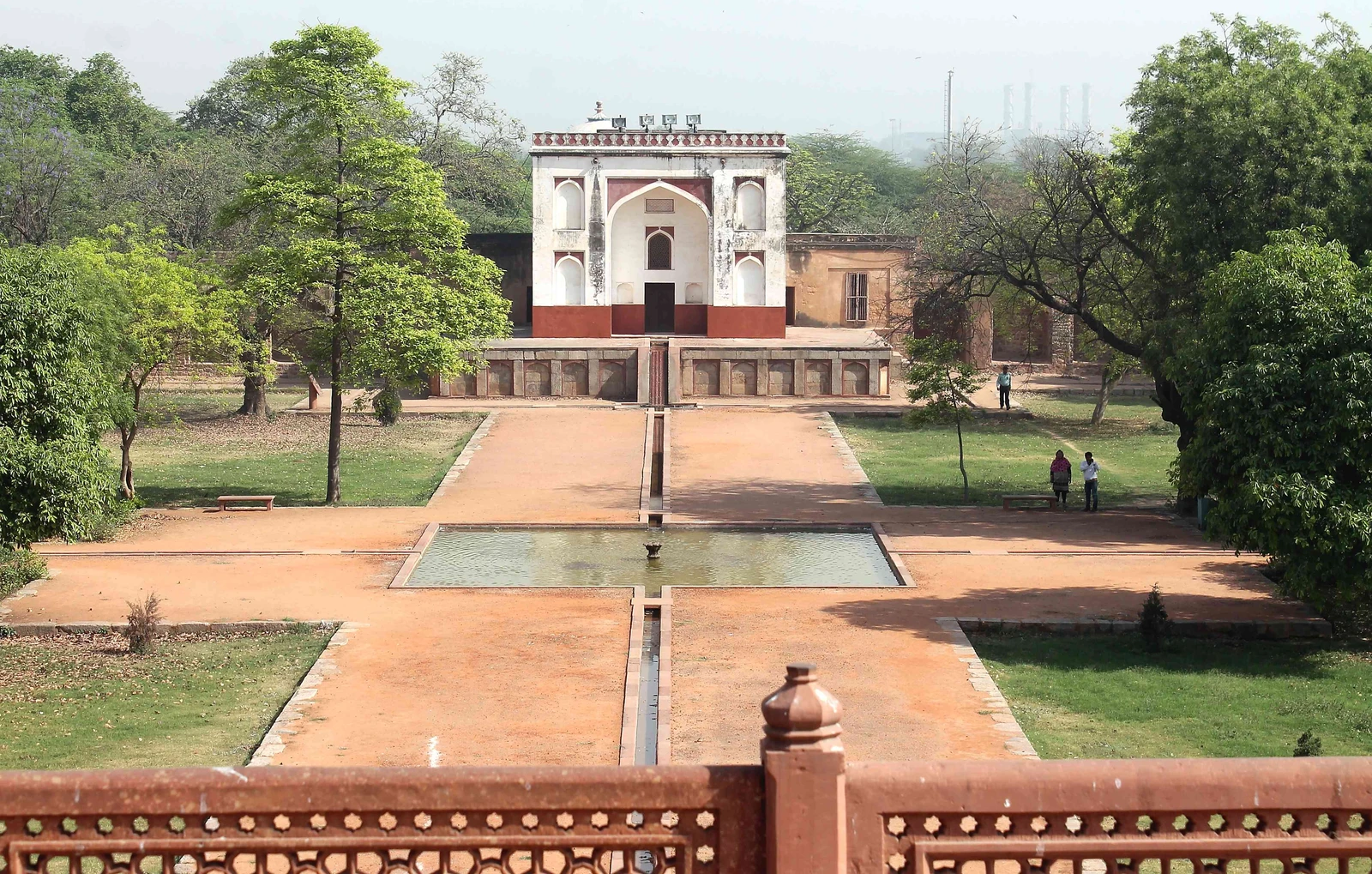
- Charbagh Garden: The tomb stands majestically at the center of a vast, meticulously planned Charbagh (four-part) garden. This Persian-inspired garden design, representing the four rivers of Paradise mentioned in the Quran, is divided into four main quadrants by causeways and shallow water channels. This layout was a significant innovation in India and became a defining feature of later Mughal gardens, culminating in the Taj Mahal.
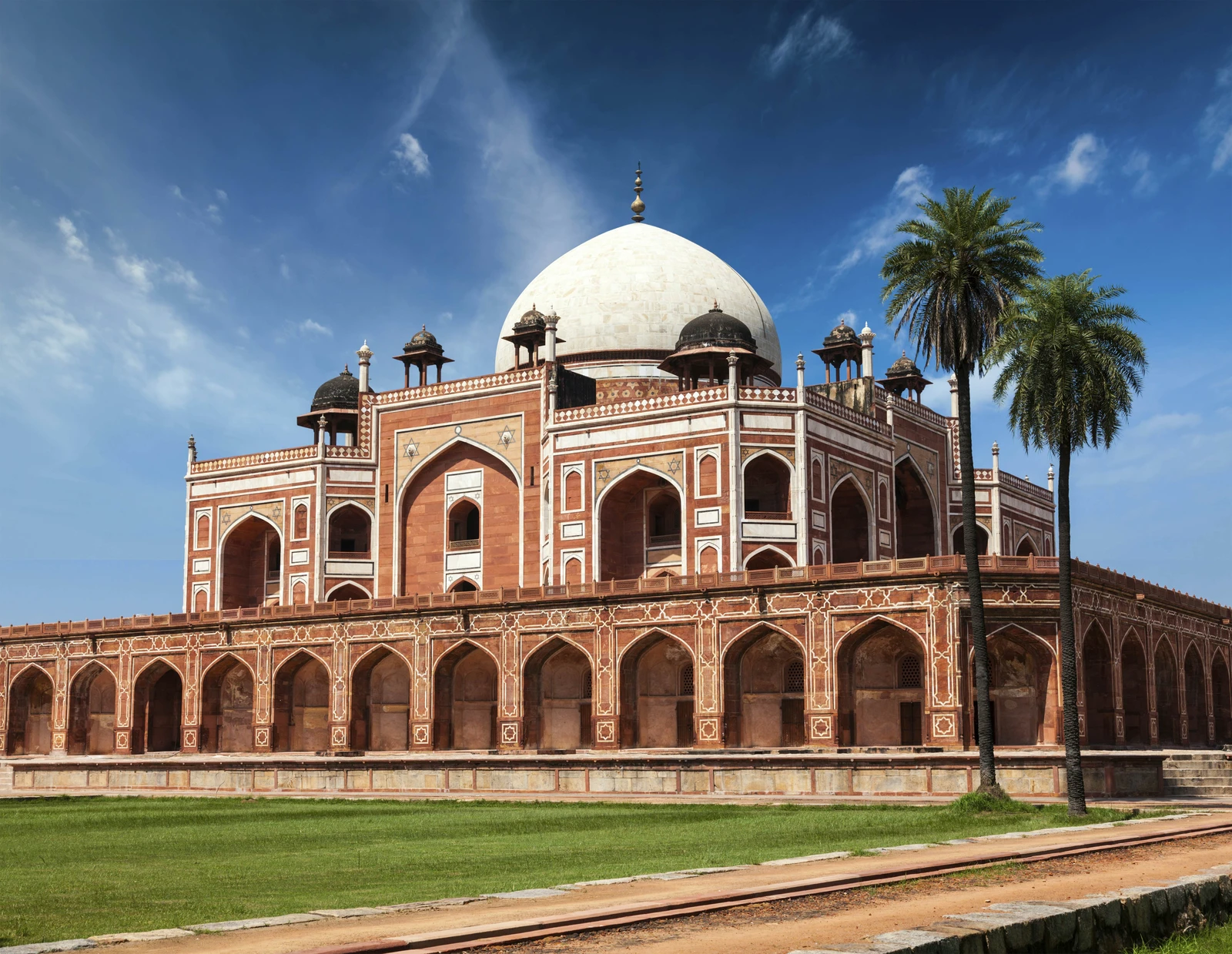
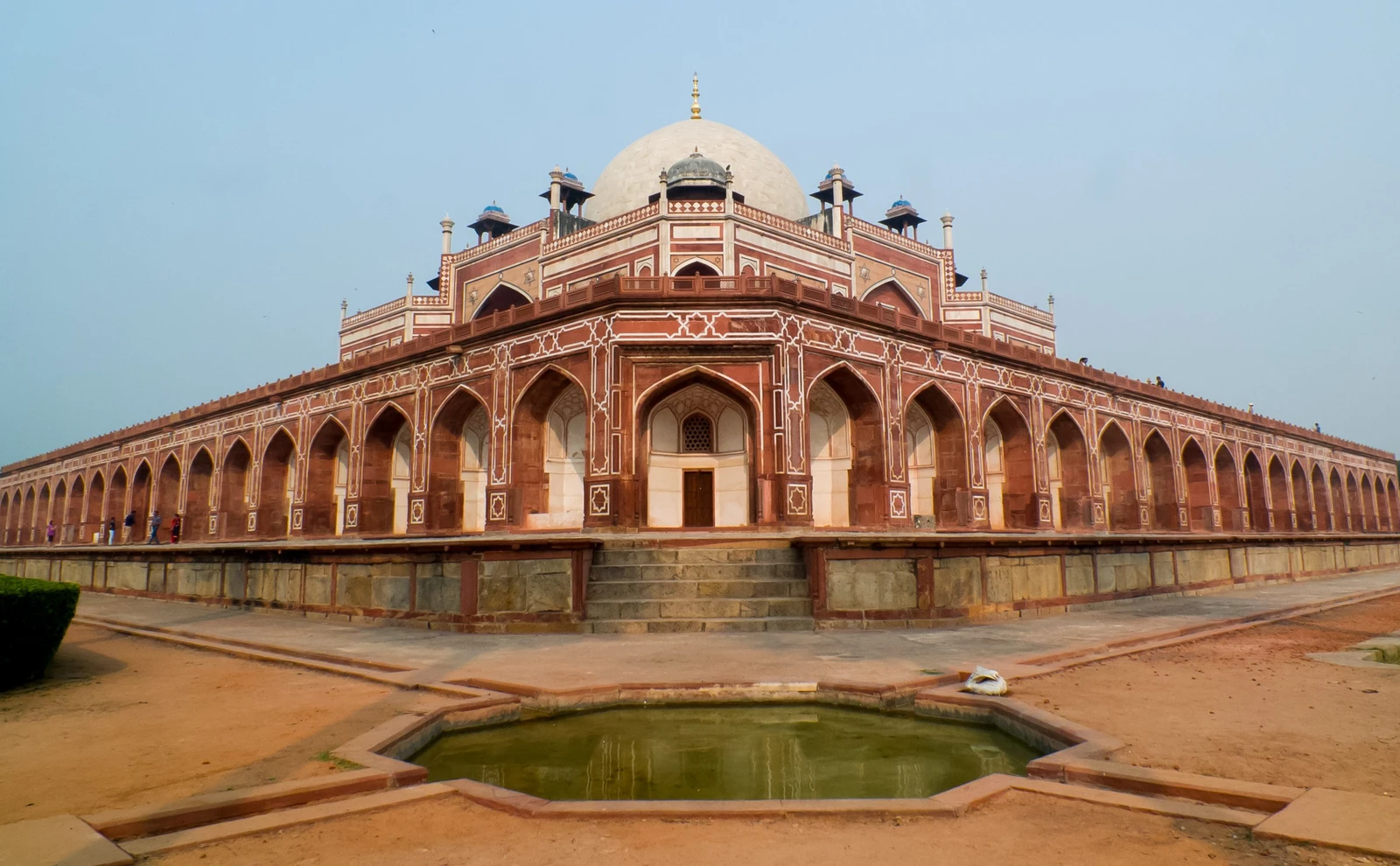
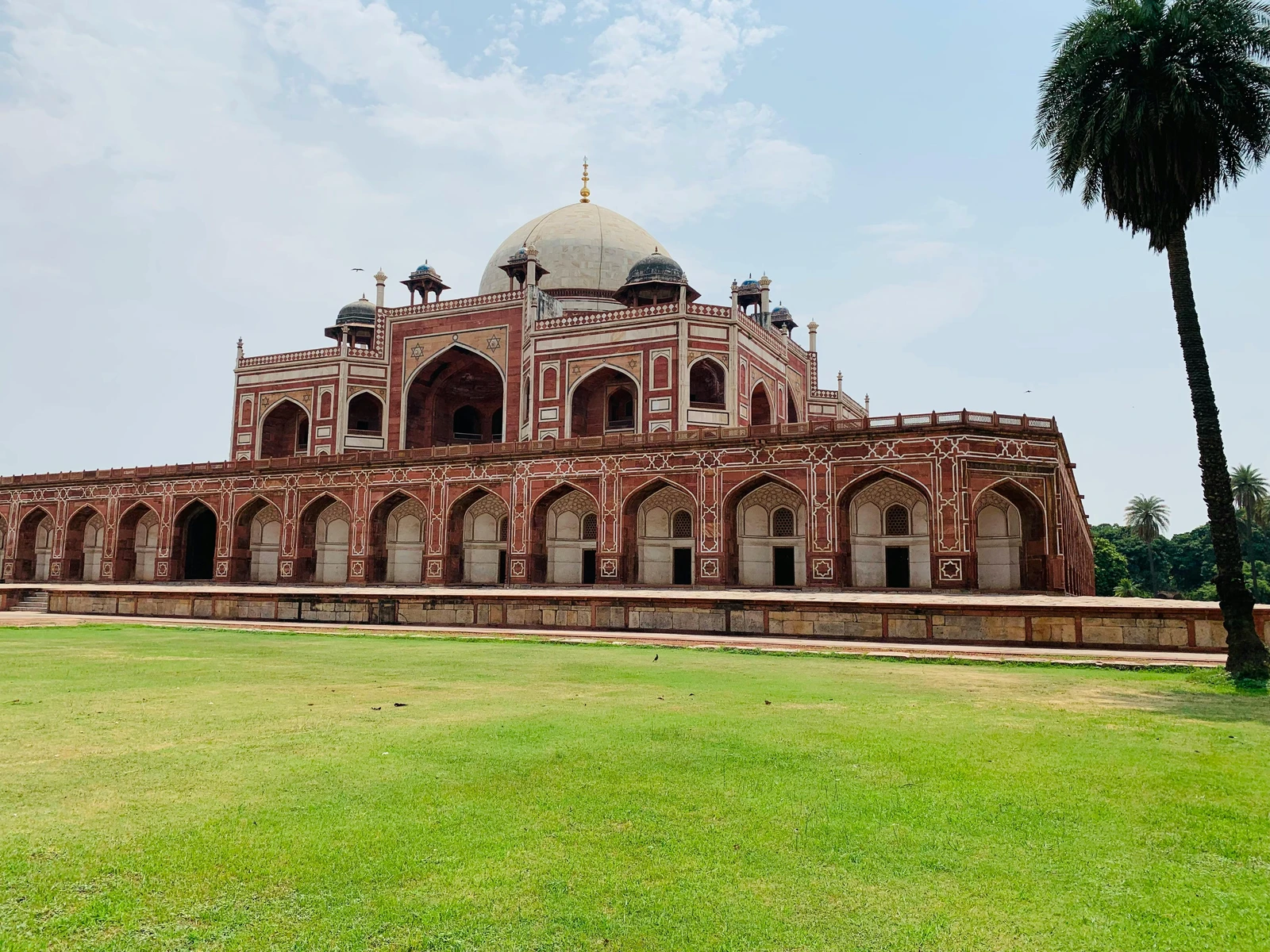
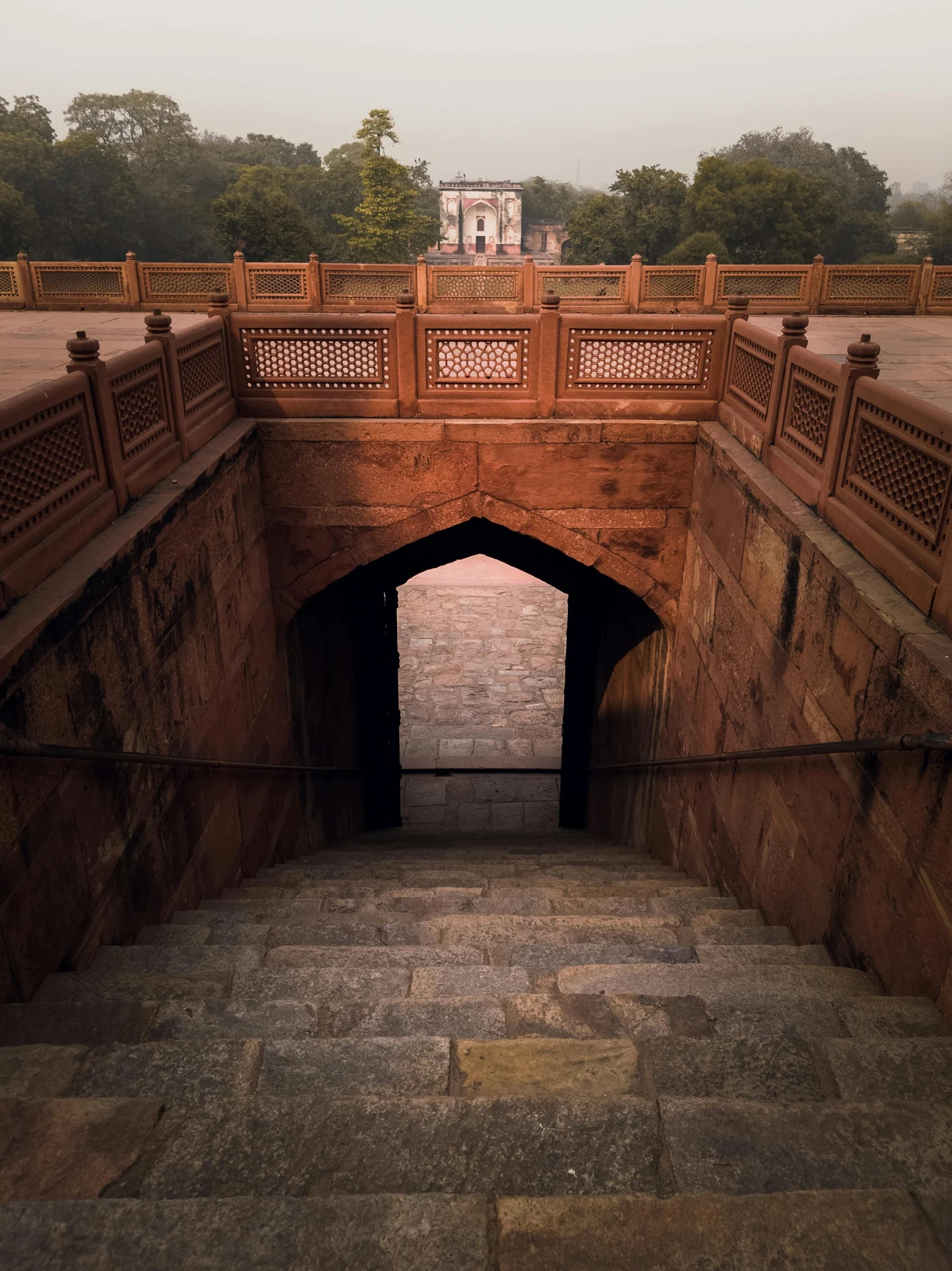
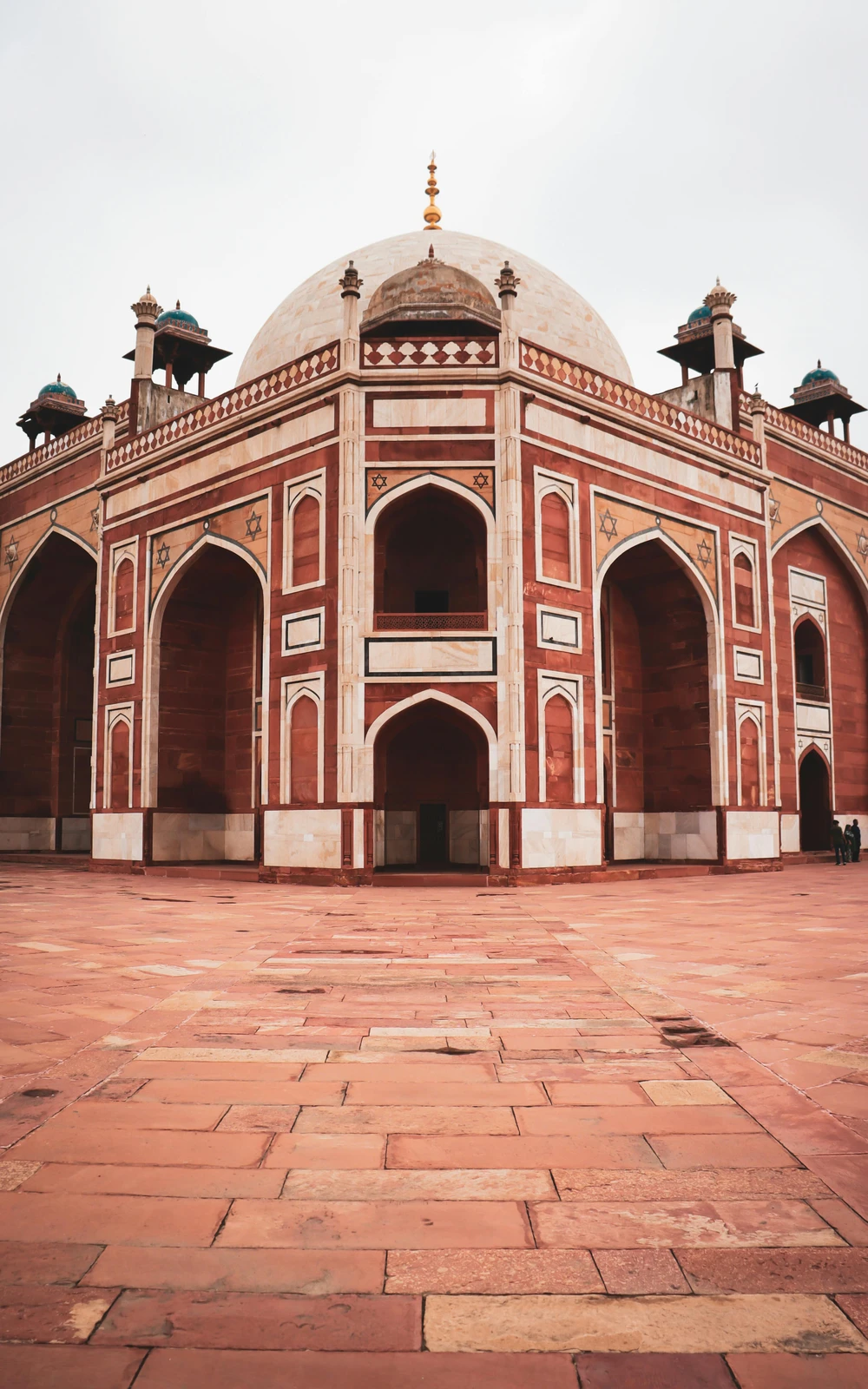
- Irregular Octagonal Plan: The main mausoleum itself is a large, square structure with chamfered (cut-off) corners, giving it an irregular octagonal plan. It is elevated on a massive, high terraced platform that is 7 meters (23 feet) tall, featuring numerous arched cells along its sides.
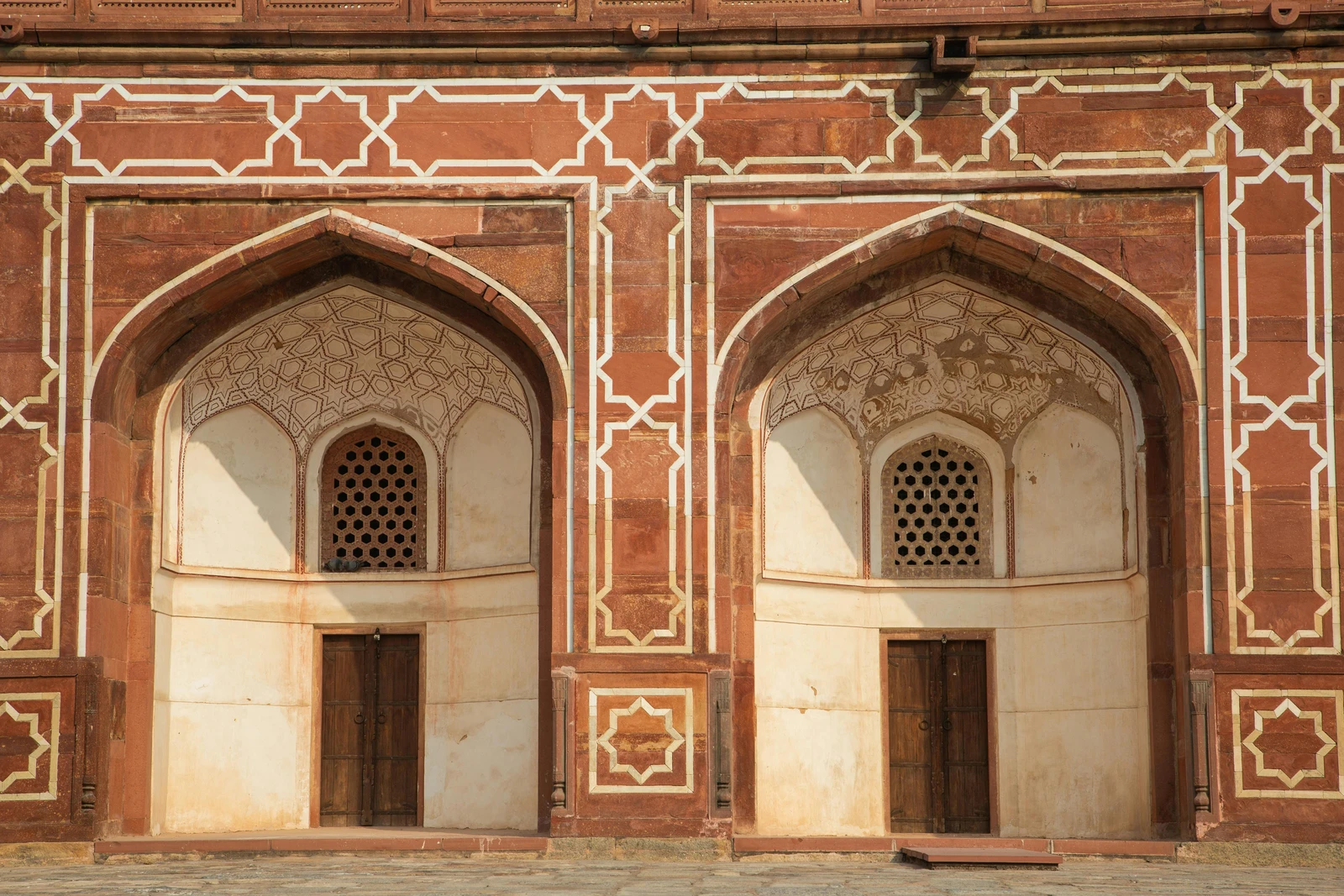
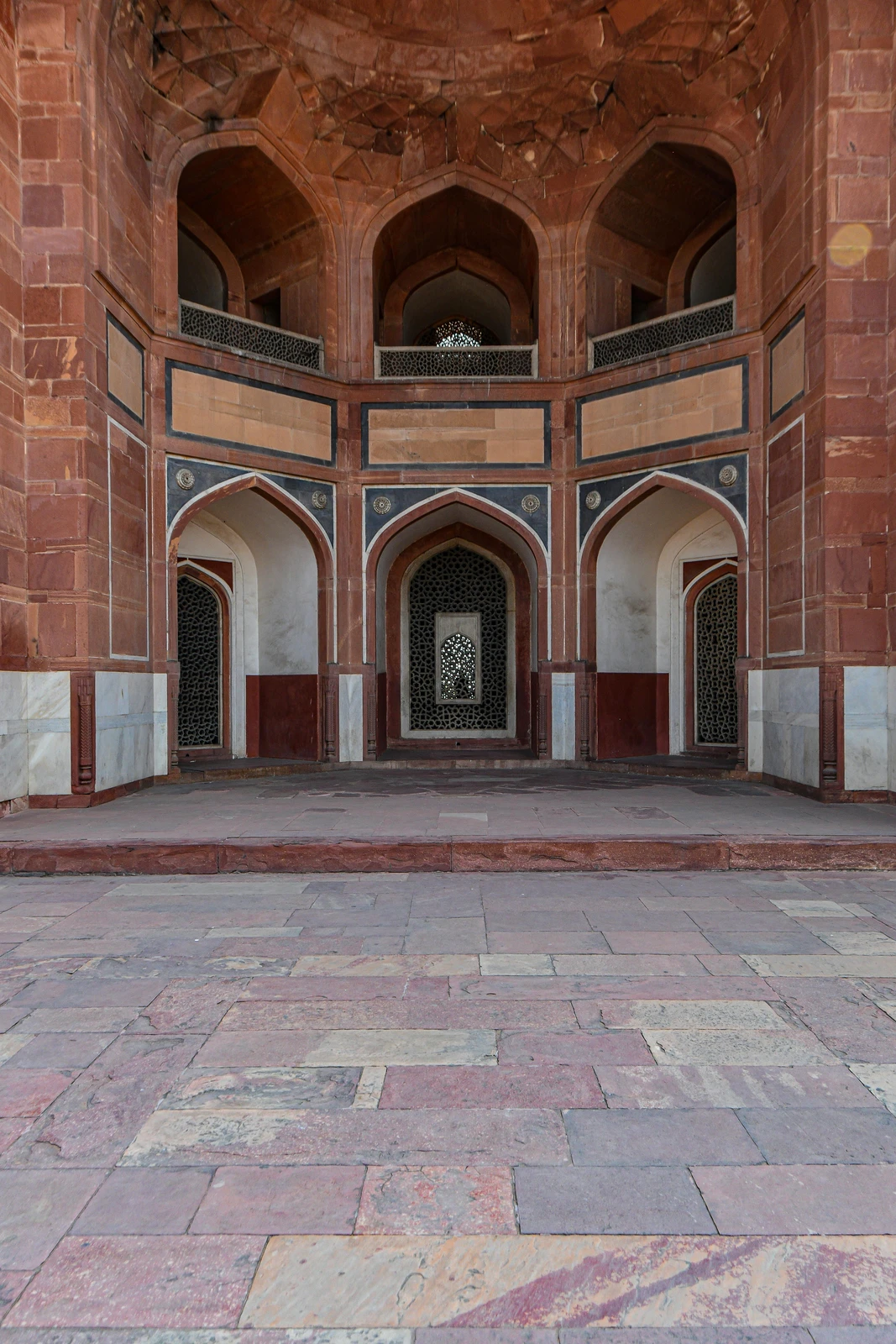
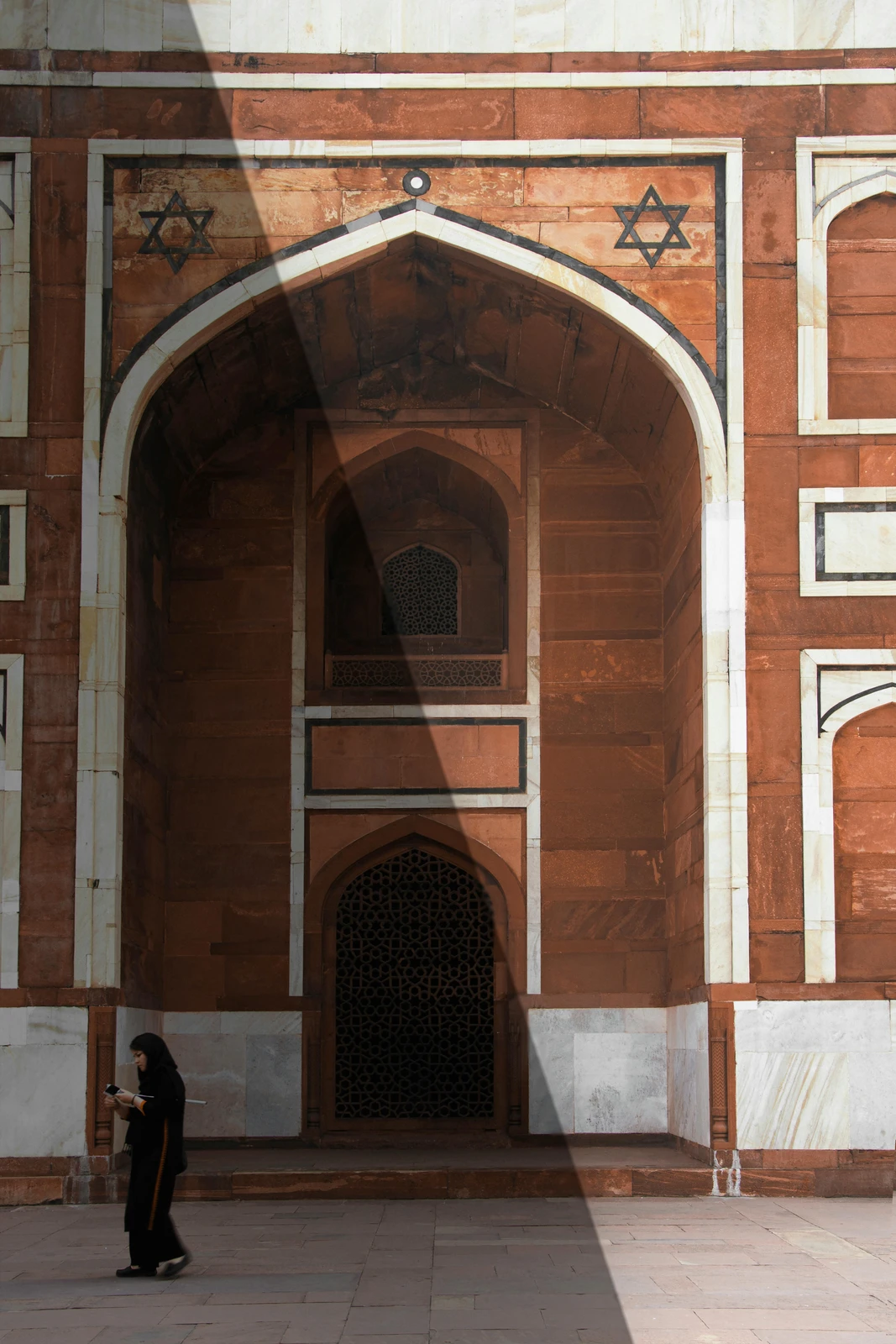
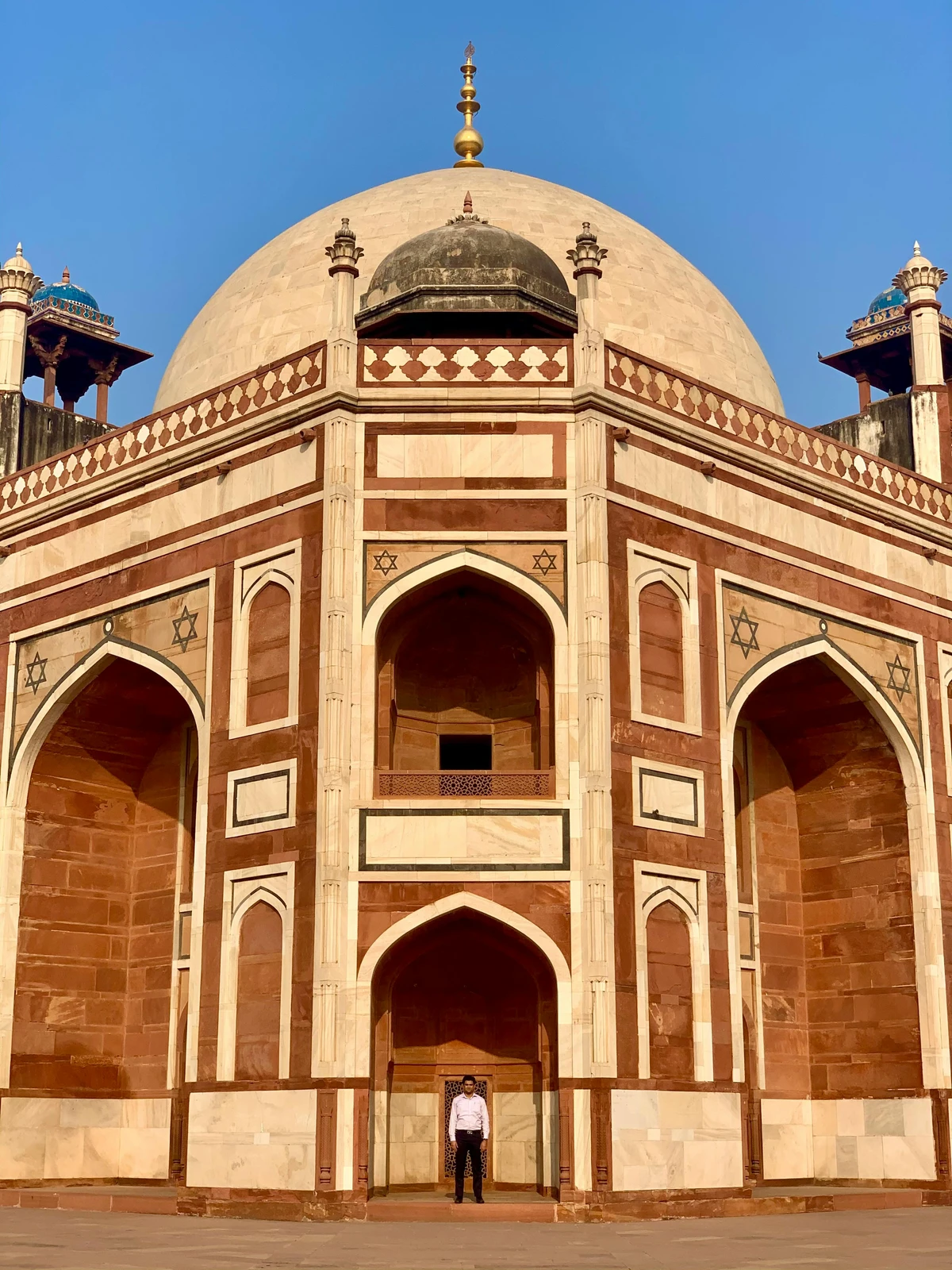
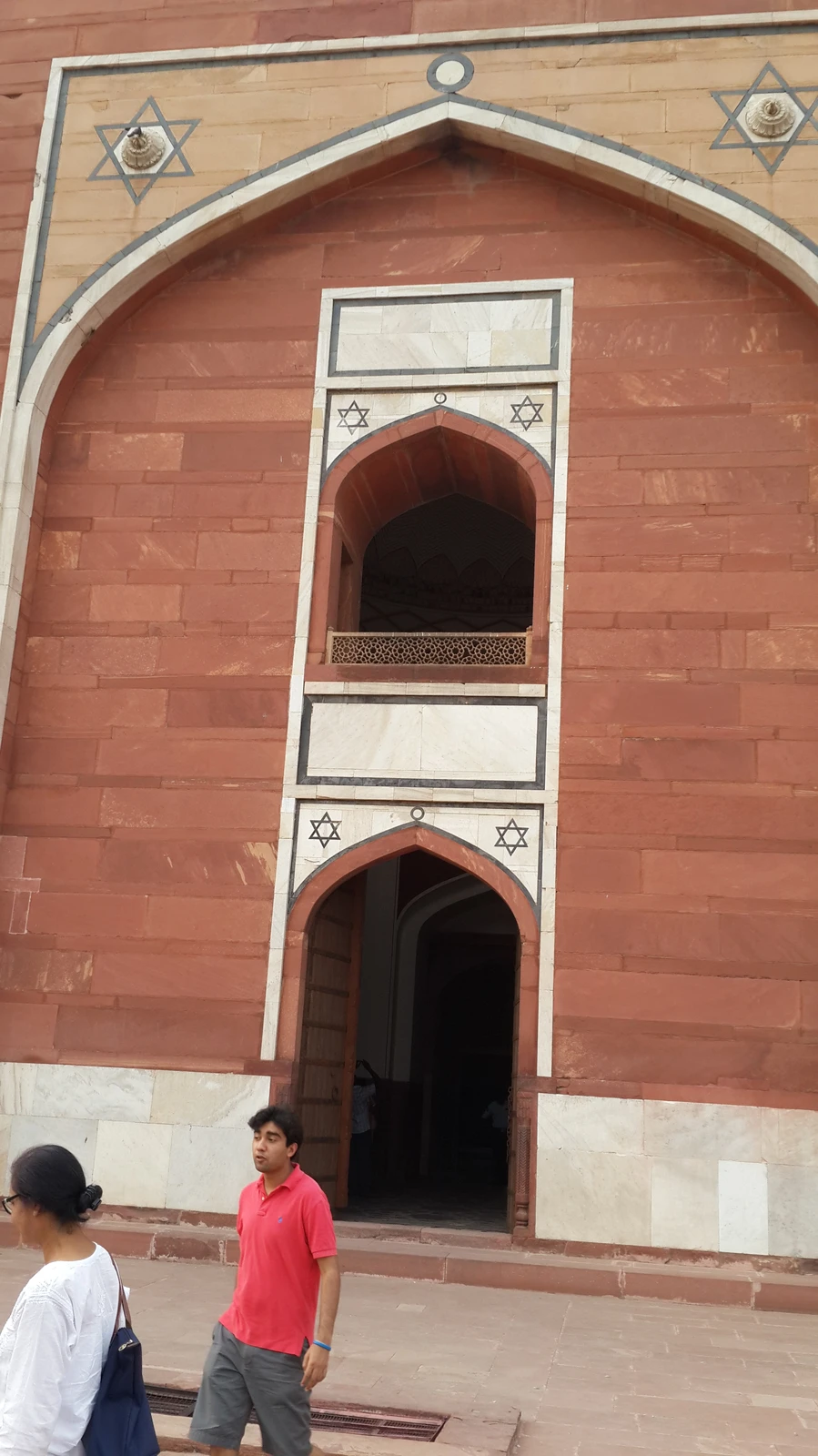
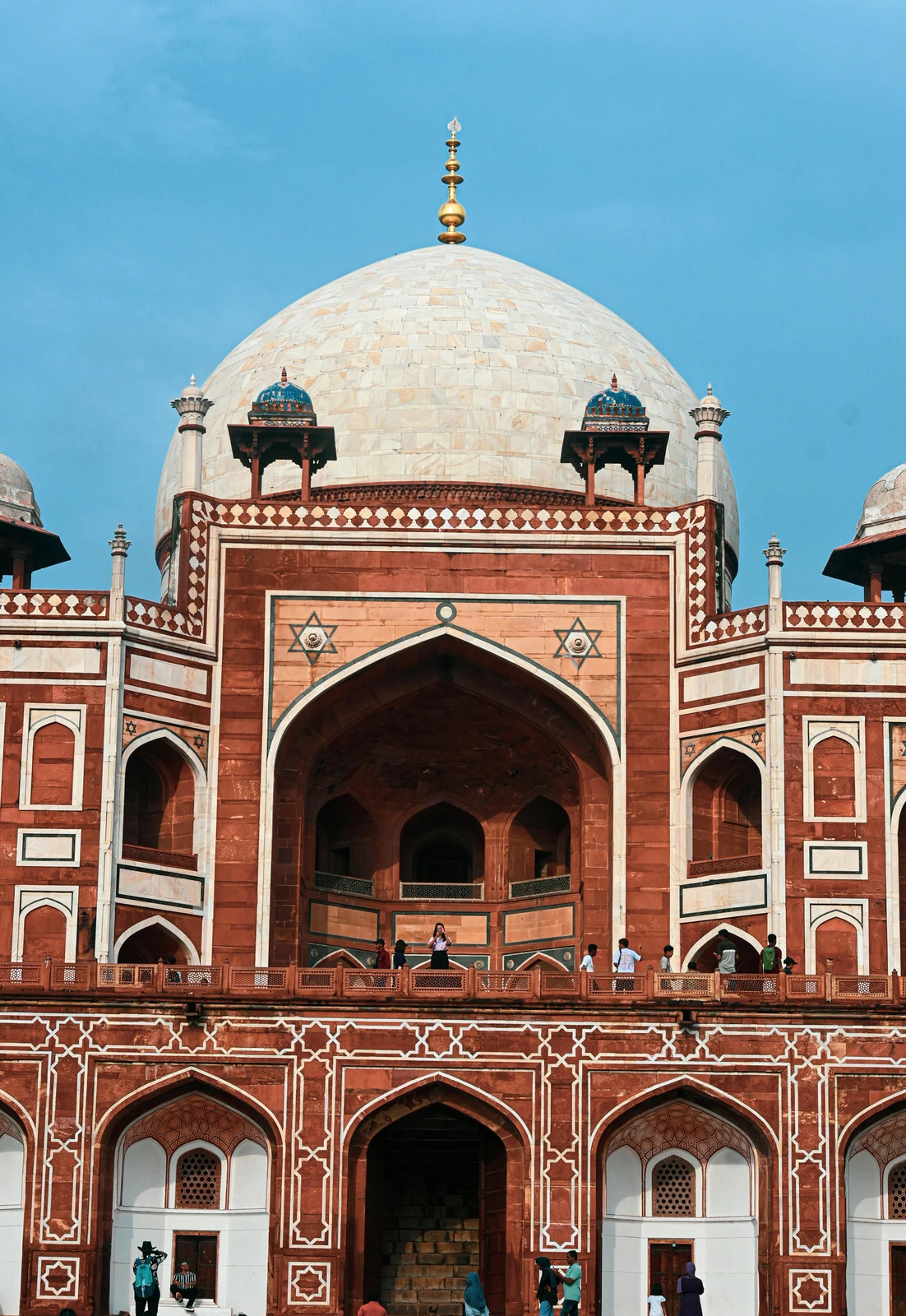
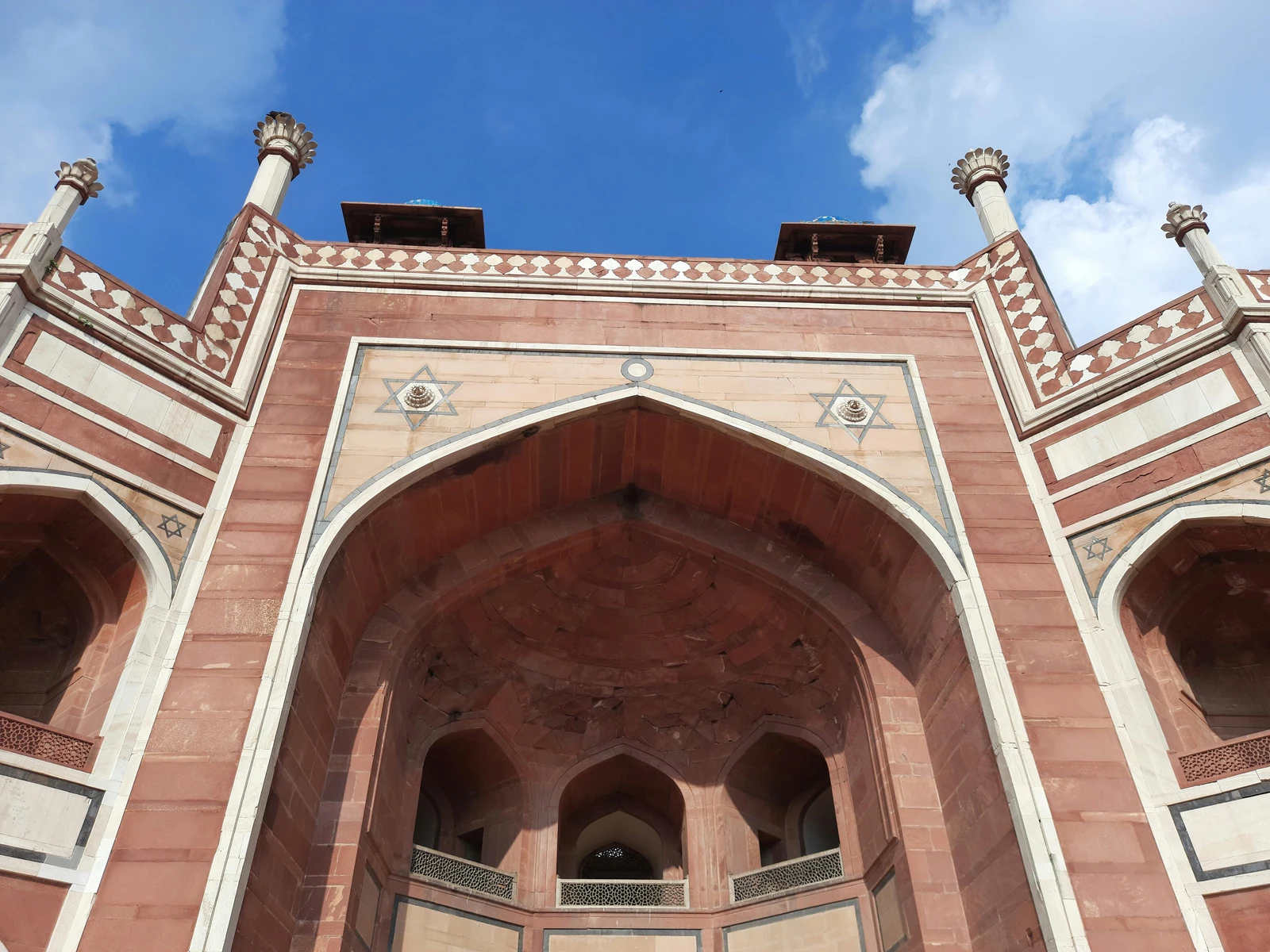
- Red Sandstone and White Marble: The primary construction material is red sandstone, which provides a striking visual contrast with the extensive use of white marble for the double dome, the intricate inlay work, lattice screens (jali), and decorative borders. This combination of red sandstone and white marble became a hallmark of later Mughal architecture.
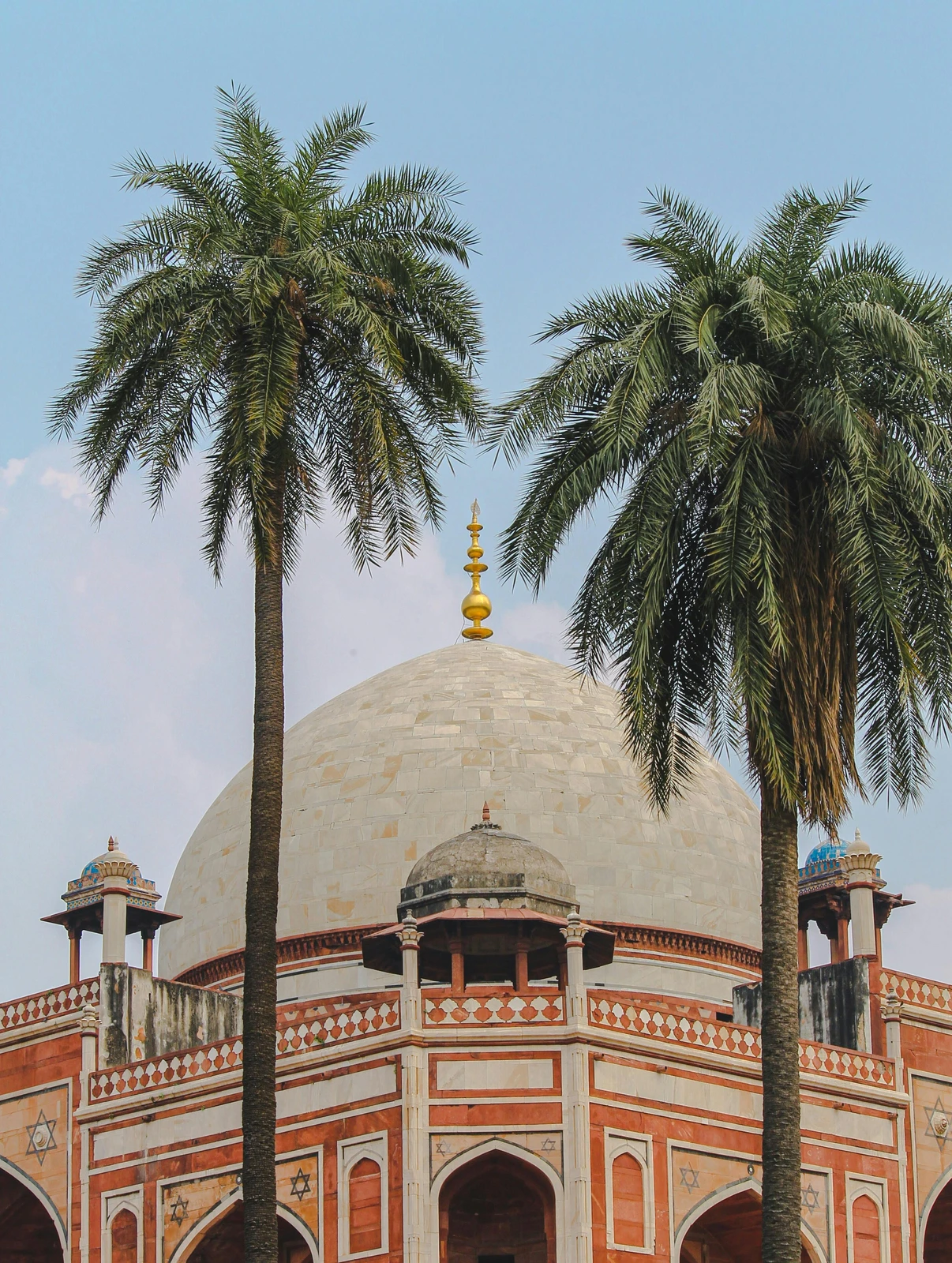
- Double Dome: The tomb is famously crowned by a magnificent, towering double dome, rising to a height of 42.5 meters (139 feet). This innovative double-shell construction, with an inner and outer layer, was a significant Persian influence that allowed for greater height and grandeur while providing internal structural support and insulation.
- Pillared Kiosks (Chhatris): Around the central dome and on the corners of the main platform, there are numerous smaller domed kiosks (chhatris), supported by slender pillars. These chhatris are a distinct Indian architectural element that were skillfully incorporated into the otherwise Persian-influenced design, giving the tomb a pyramidal outline from a distance.
- Arched Alcoves and Recesses: The middle of each side of the mausoleum features deep, large arched alcoves (iwans), with a series of smaller ones set into the facade, creating a grand and inviting entrance on all four sides. The openings are often closed with intricate perforated marble screens (jali).
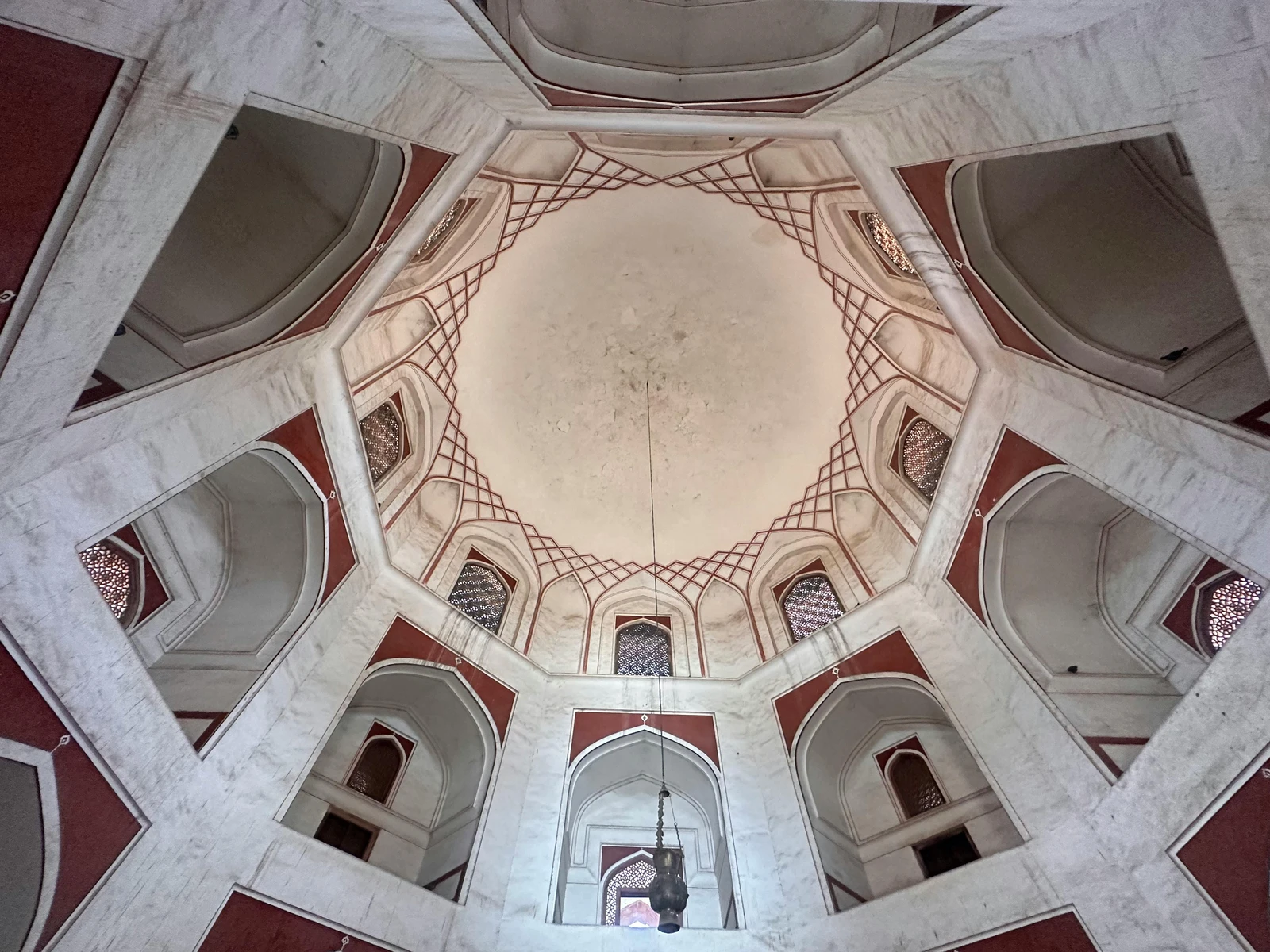
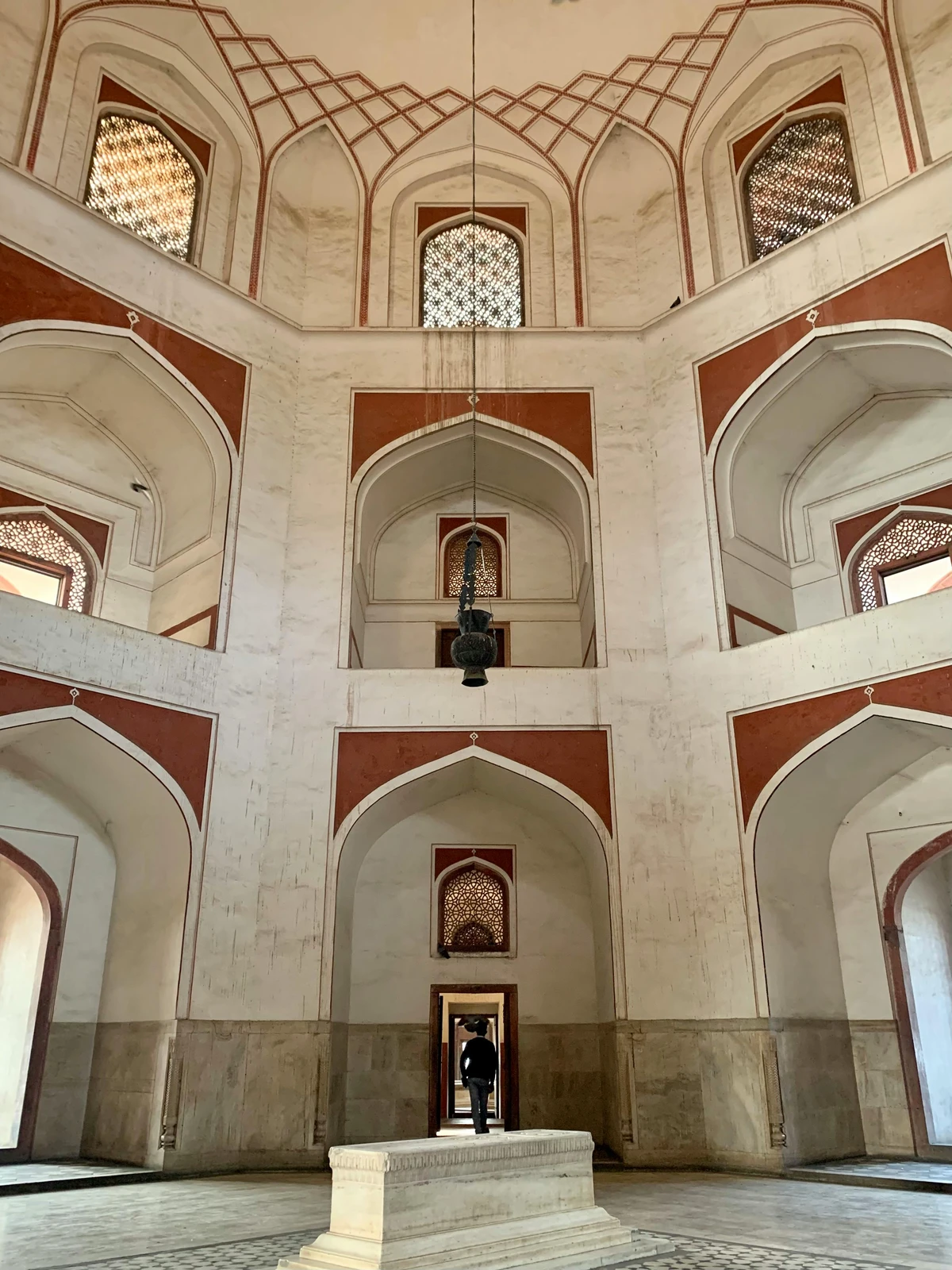
- Interior Layout: The interior of the main mausoleum features a large octagonal central chamber containing Humayun’s cenotaph. This central chamber is connected by galleries or corridors to smaller octagonal chambers at the diagonals, which house the graves of other Mughal family members (over 150 burials, earning it the nickname “dormitory of the Mughals”).
- Associated Structures: The larger complex includes other significant 16th-century Mughal garden-tombs and structures, such as:
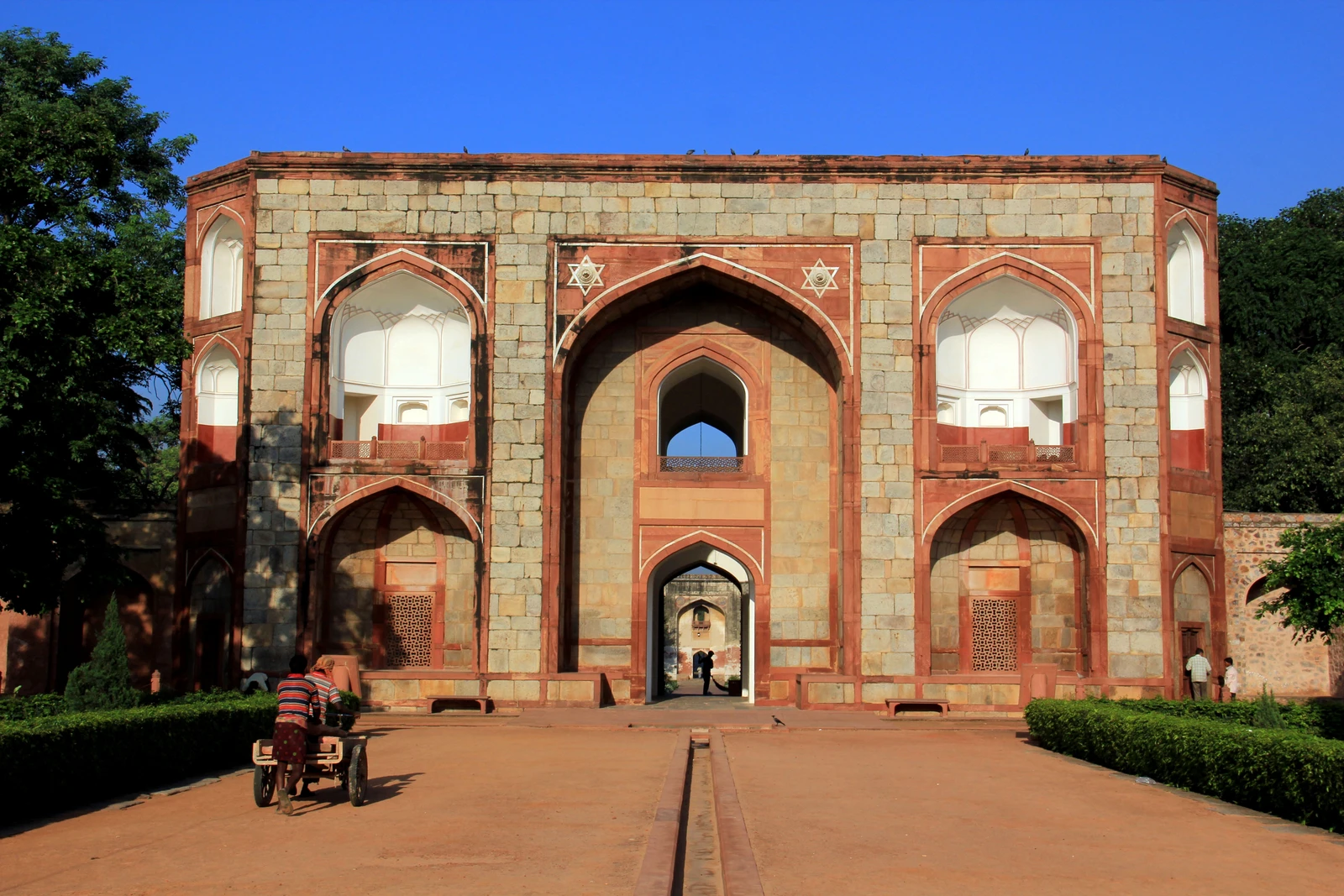
- Isa Khan’s Tomb and Mosque: An octagonal tomb built in 1547 CE, predating Humayun’s Tomb and potentially influencing its design.
- Nila Gumbad: A beautiful tomb outside the complex, known for its vibrant blue-glazed tiles.
- Barber’s Tomb (Nai ka Gumbad): A tomb within the Charbagh, believed to be that of the royal barber.
What Makes It Famous:
- Precursor to the Taj Mahal: Humayun’s Tomb is widely considered the architectural prototype and primary inspiration for the Taj Mahal. Many of the features that make the Taj Mahal world-famous – the Charbagh garden, the use of red sandstone and white marble, the double dome, and the overall symmetrical design – first appeared in grand scale here.
- First Garden-Tomb in India: It holds the distinction of being the first garden-tomb on the Indian subcontinent, introducing a new era of Mughal funerary architecture that emphasized a monumental tomb set within an elaborate garden, symbolizing paradise.
- UNESCO World Heritage Site: Designated a UNESCO World Heritage Site in 1993, recognized for its outstanding architectural grandeur, historical significance as a Mughal mausoleum, and its formative role in Mughal architectural style.
- Fusion of Persian and Indian Architecture: It brilliantly exemplifies the early and successful synthesis of Persian architectural traditions (like the double dome and Charbagh garden) with indigenous Indian elements (like chhatris and intricate ornamentation), laying the foundation for a unique Mughal style.
- “Dormitory of the Mughals”: Its role as the final resting place for over 150 members of the Mughal royal family, including several later emperors, gives it immense dynastic significance.
- Early Mughal Grandeur: Commissioned by a grieving wife for her husband, it set a new standard for imperial Mughal projects, showcasing a scale and grandeur previously unseen in Islamic tomb architecture in India.
- Restoration Success: The extensive restoration work undertaken by the Aga Khan Trust for Culture (AKTC) in partnership with the Archaeological Survey of India (ASI) has sensitively revived the monument and its gardens, making it a model for heritage conservation.
Differences from Some Other Wonders:
- Architectural “Prototype” Status: Unlike other Mughal monuments that represent the culmination (Taj Mahal) or a distinct phase (Red Fort’s extensive fortifications), Humayun’s Tomb is famous for its formative and pioneering role as the “blueprint” for subsequent grand Mughal architecture, particularly garden-tombs.
- Emphasis on Precursor Role: Its fame is intrinsically tied to its influence on the Taj Mahal, often being referred to as the “Mini Taj” or “Taj Mahal’s blueprint,” which gives it a unique relationship to a more globally famous wonder.
- Red Sandstone Dominance with White Marble Accents: While the Taj Mahal is primarily white marble with red sandstone accents, Humayun’s Tomb reverses this, featuring predominantly red sandstone with striking white marble details, showcasing an earlier aesthetic preference in Mughal construction.
- Located within a Dense Historical Landscape: Unlike the standalone grandeur of the Taj Mahal, Humayun’s Tomb is situated within a broader, archaeologically rich precinct in Delhi, surrounded by numerous other contemporary 16th-century Mughal tombs and structures (Isa Khan’s Tomb, Barber’s Tomb, Nila Gumbad), offering a layered historical context.
- More Accessible Interior (for royal family): While its true crypt is inaccessible, the main central octagonal chamber and surrounding smaller chambers within the mausoleum itself are open to visitors, allowing a closer exploration of the burial layout for the extended Mughal family, which is different from the highly restricted access to the main cenotaph area in the Taj Mahal.
- Symbolism of “Dynastic Dormitory”: Its large number of interments (over 150 Mughal royals) emphasizes its role as a dynastic burial ground, giving it a broader historical narrative beyond a single emperor.